
/Eras/Audi Sport Competition Cars R Era /Audi R7 (1993-1998)
MODEL DETAILS
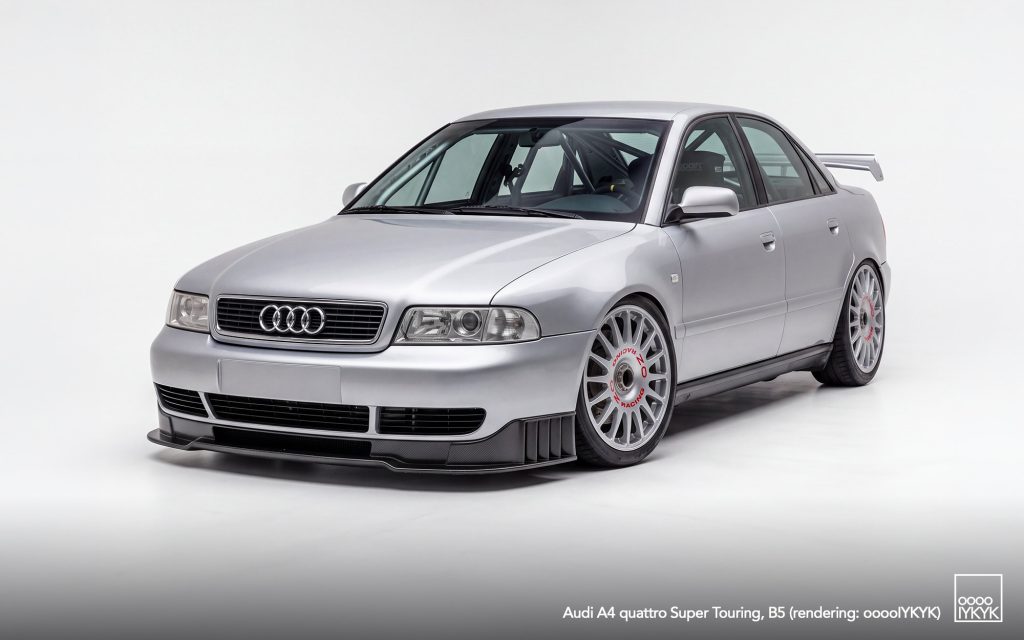
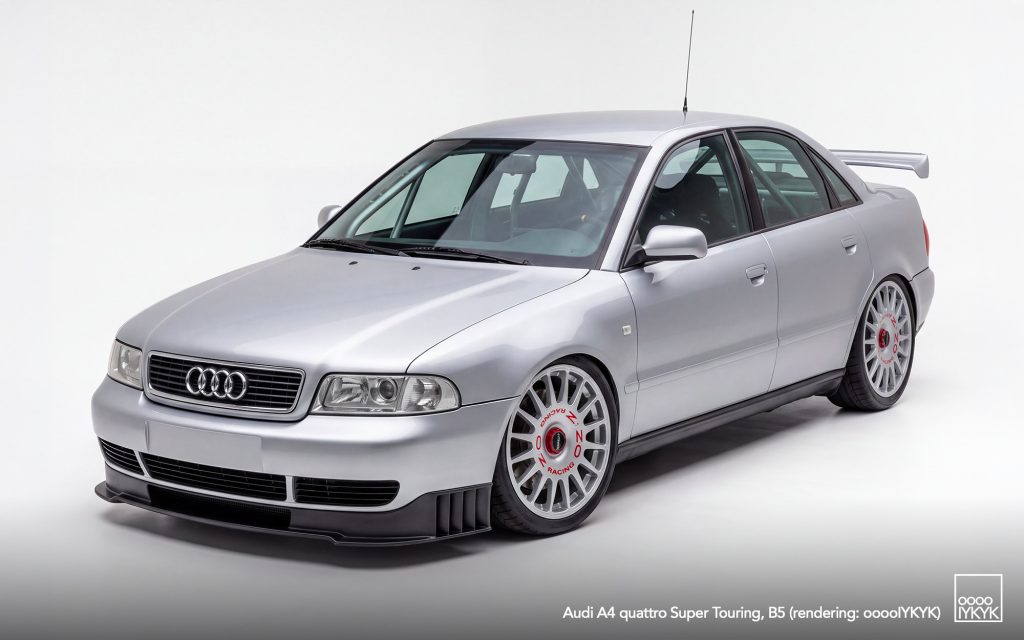
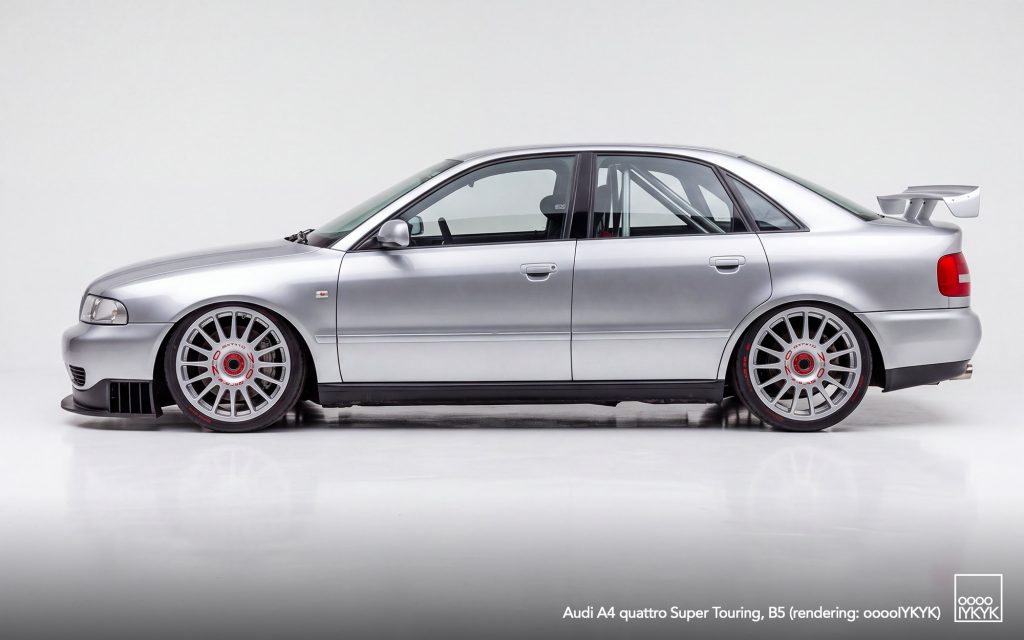
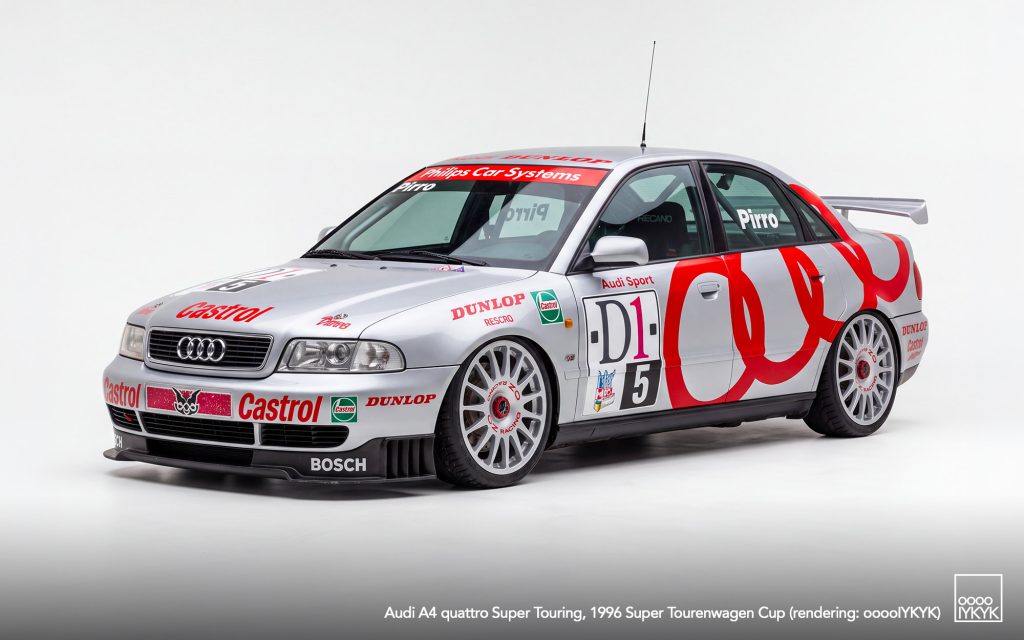
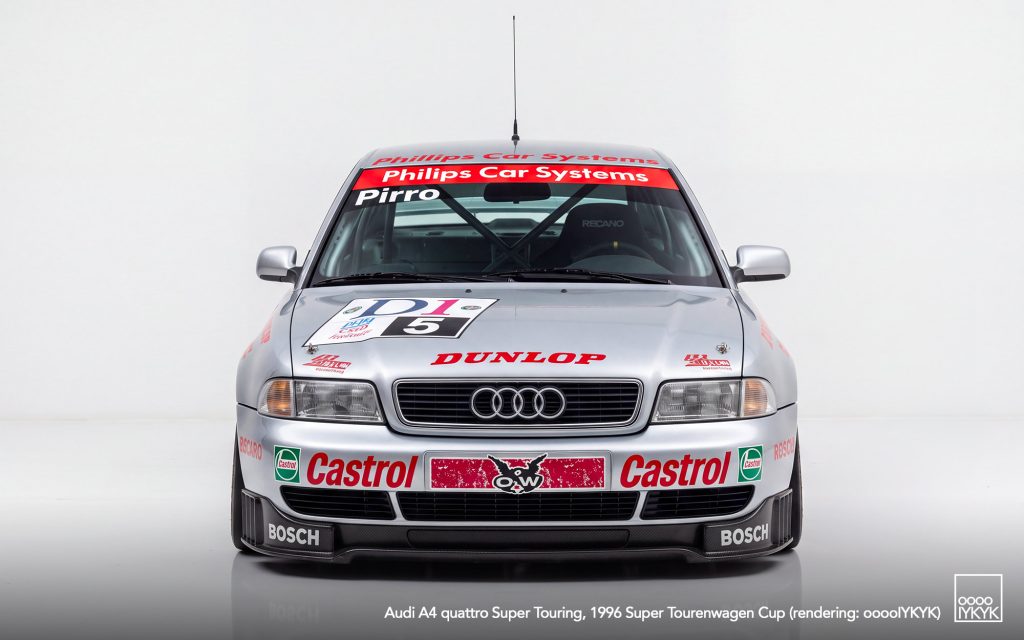
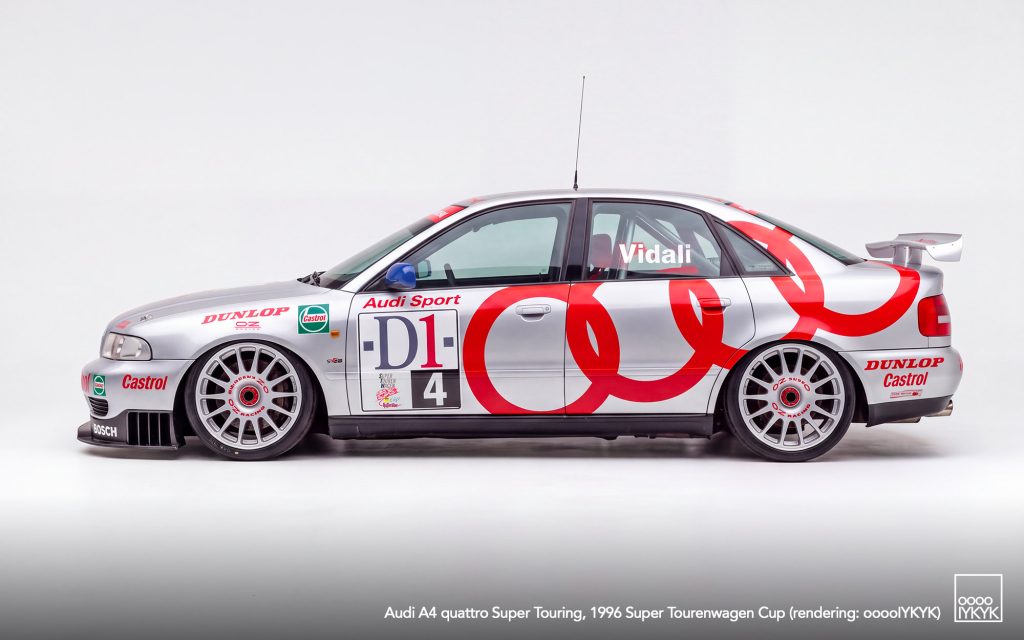
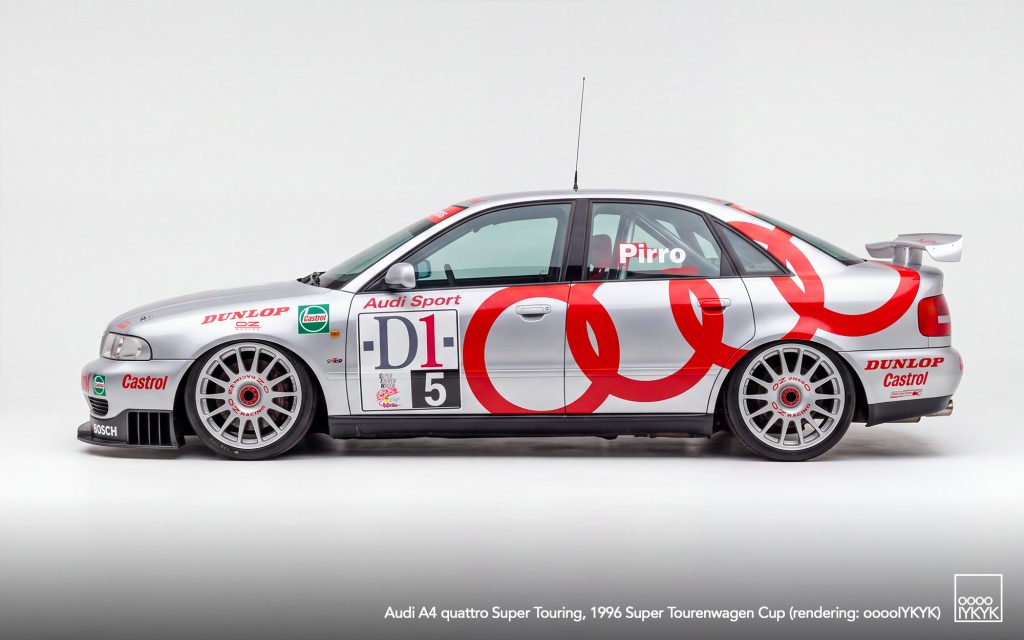
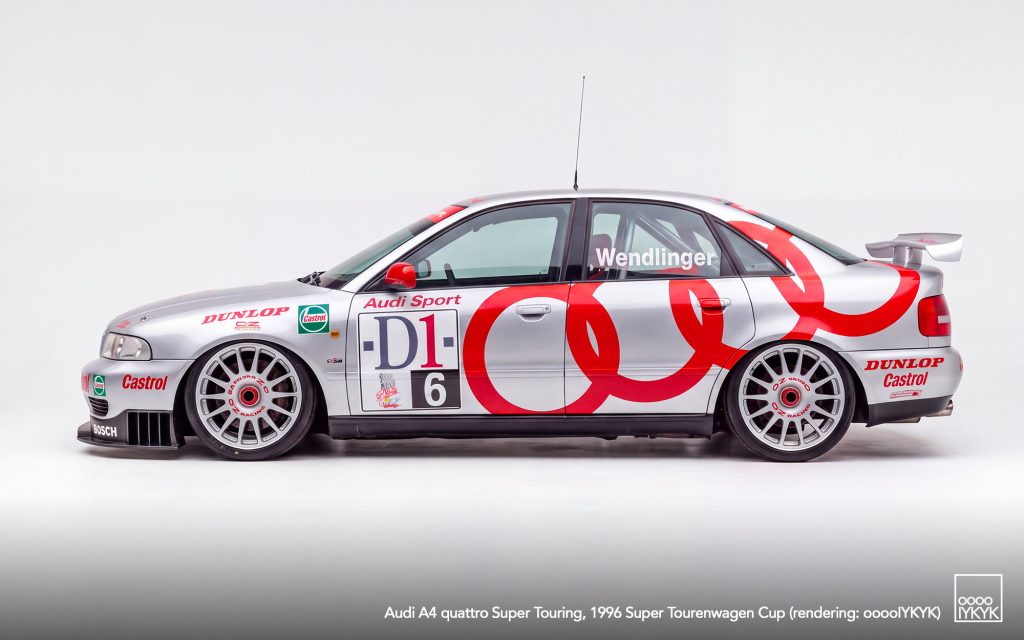
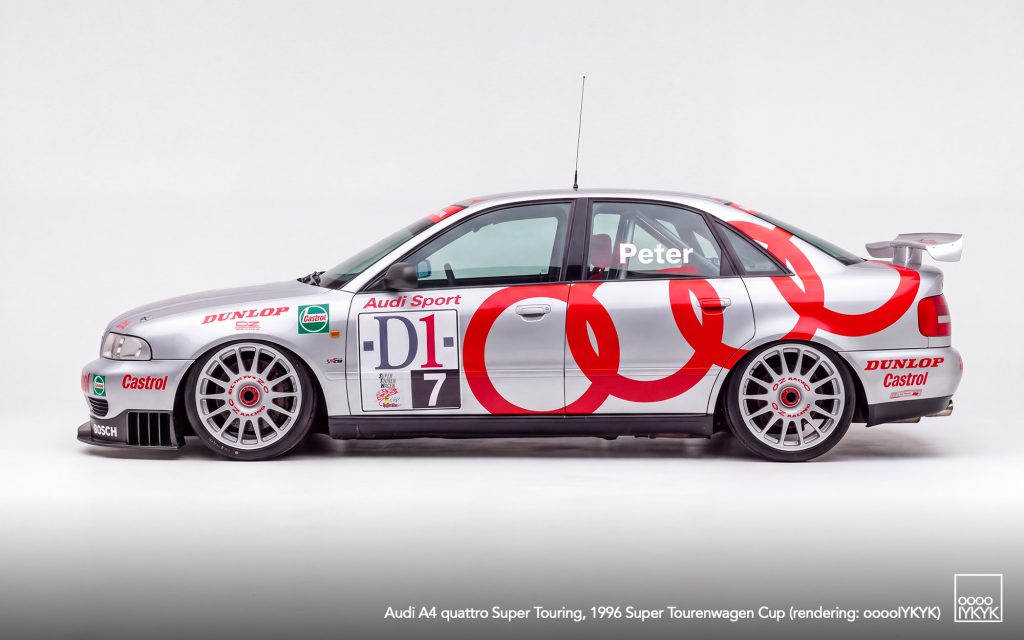
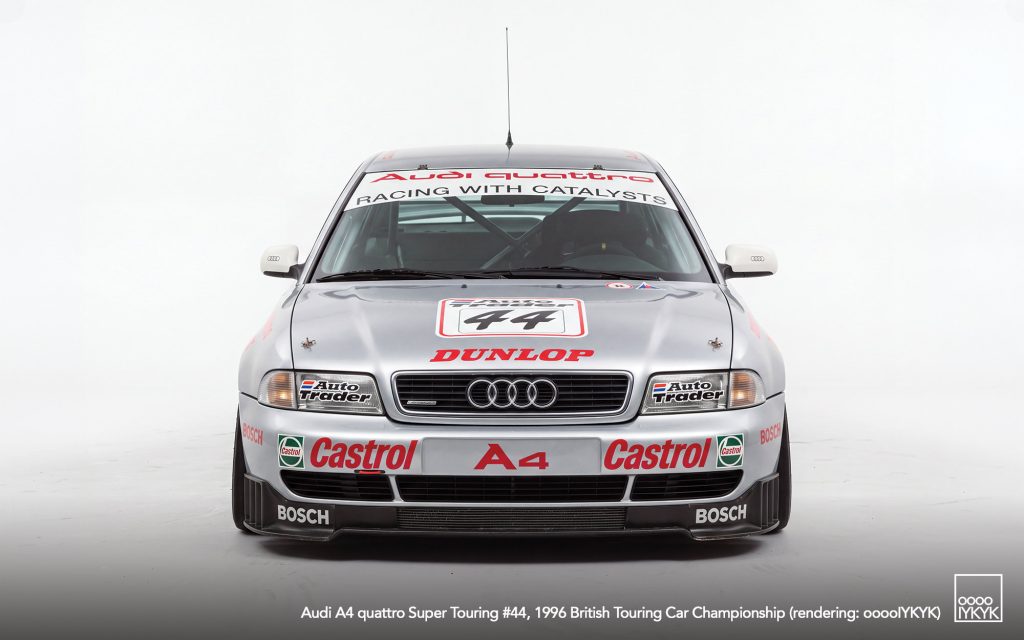
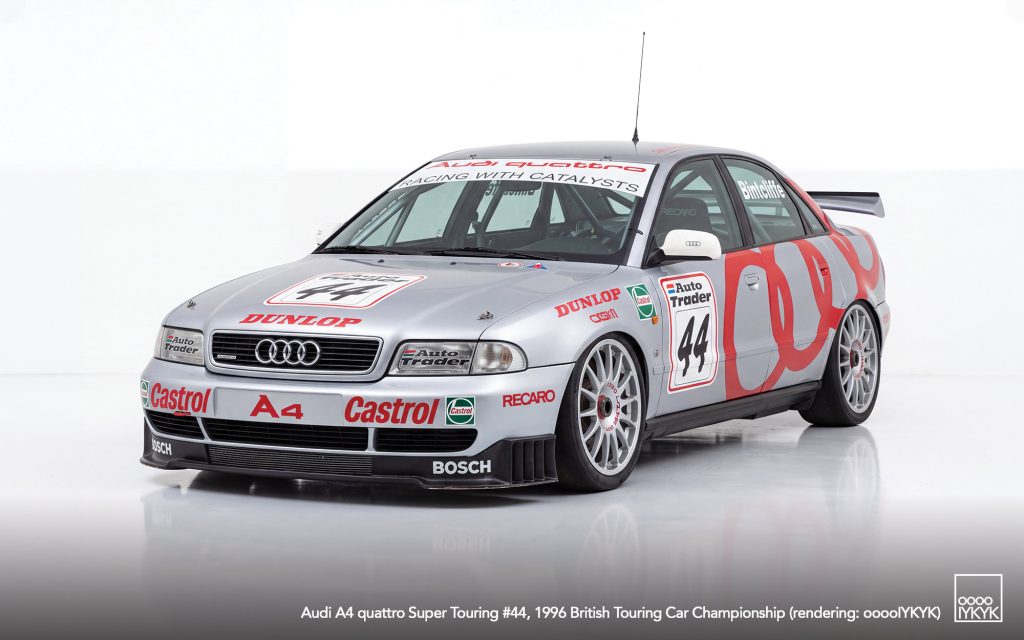
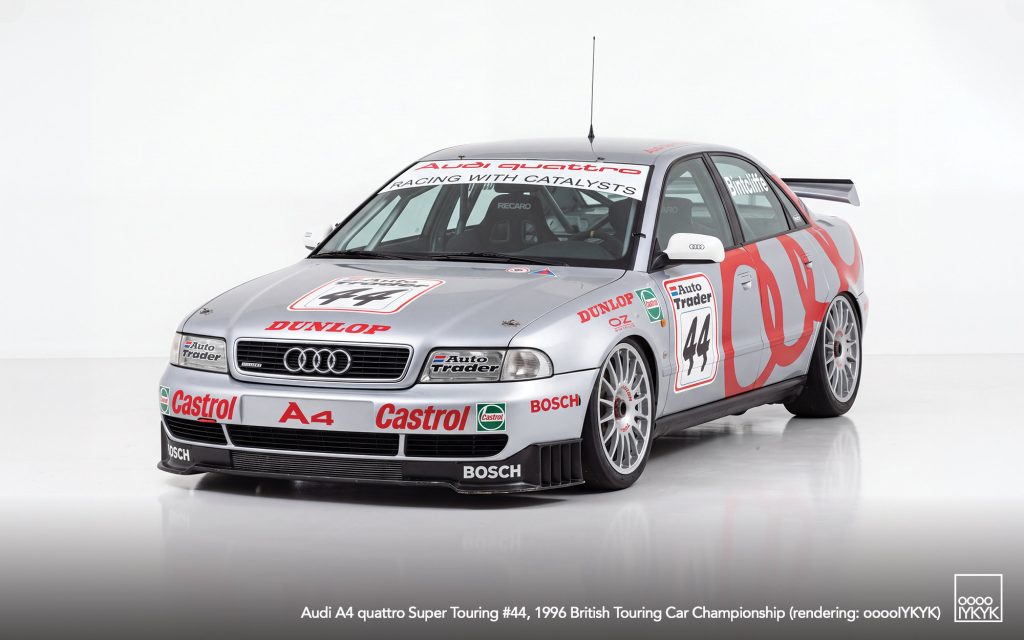
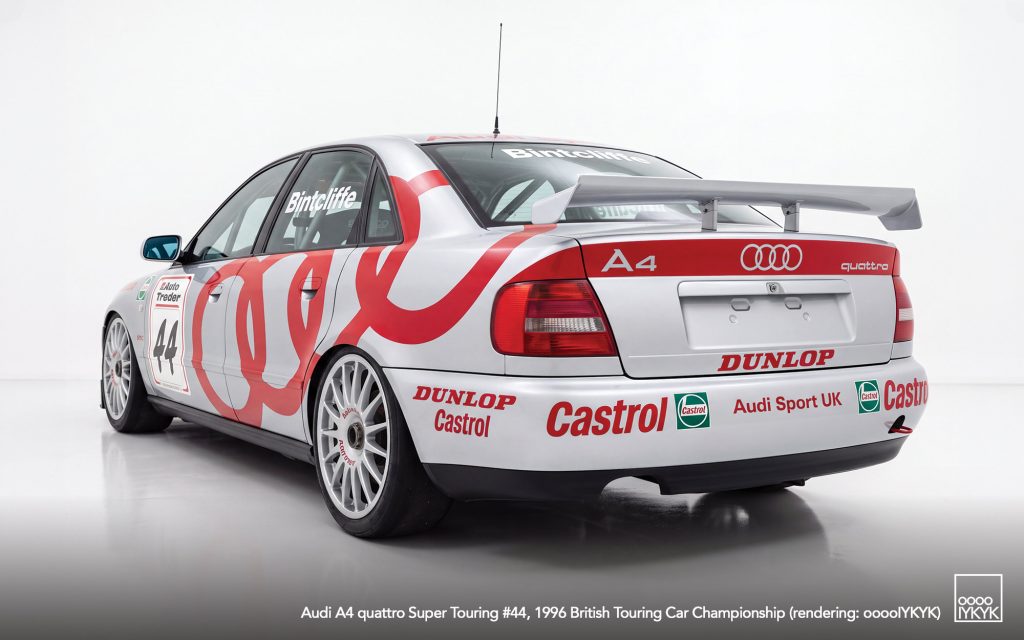
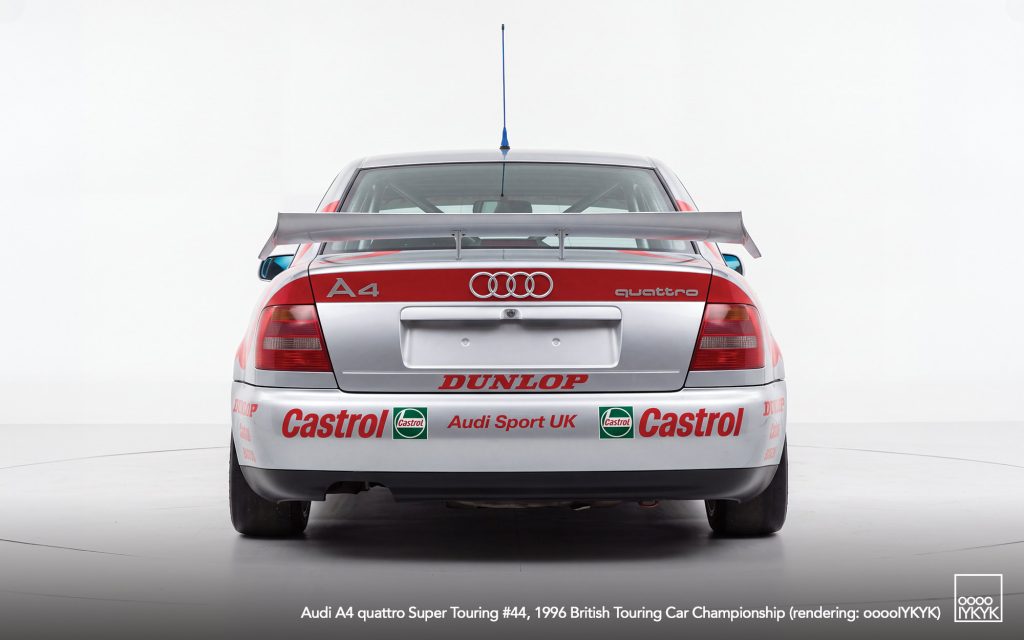
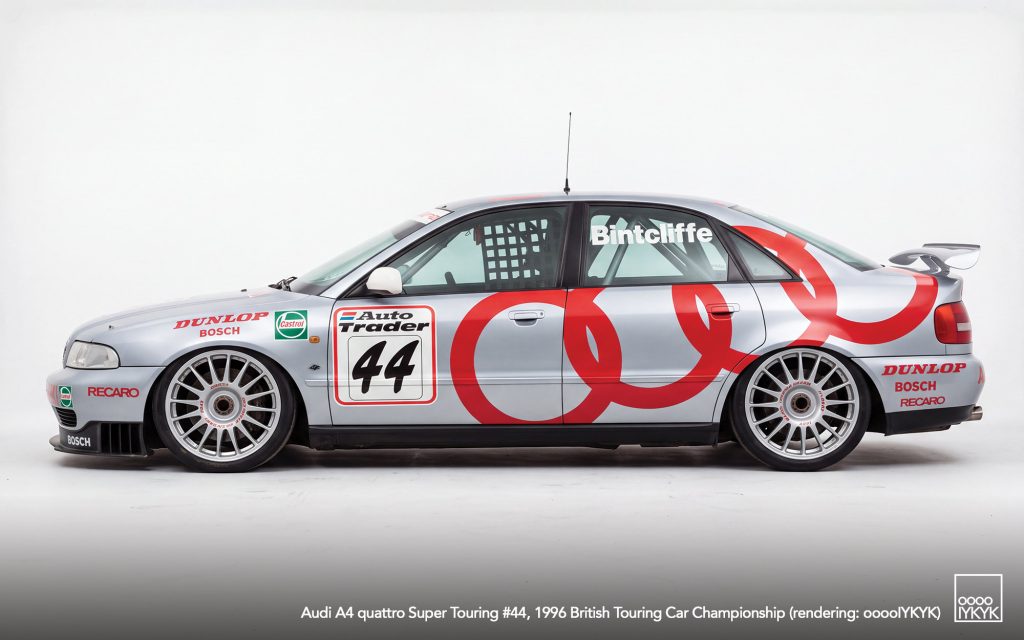
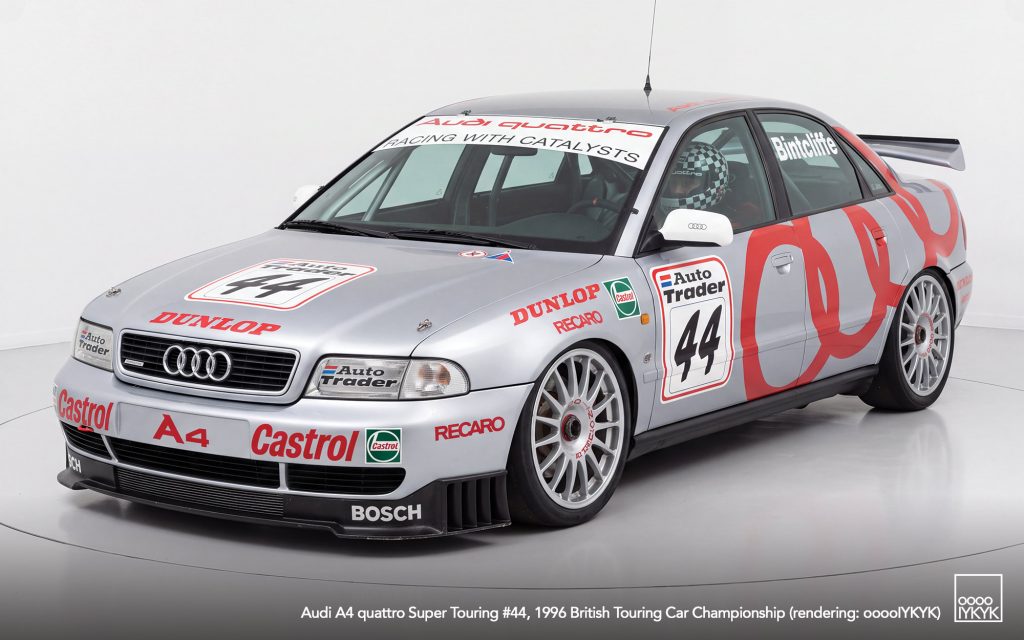
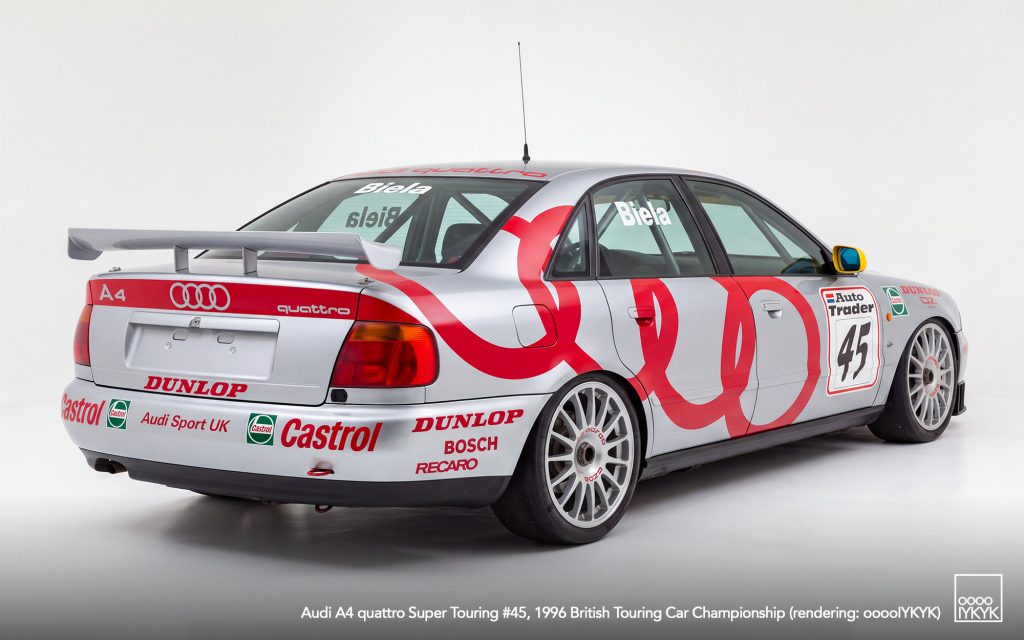
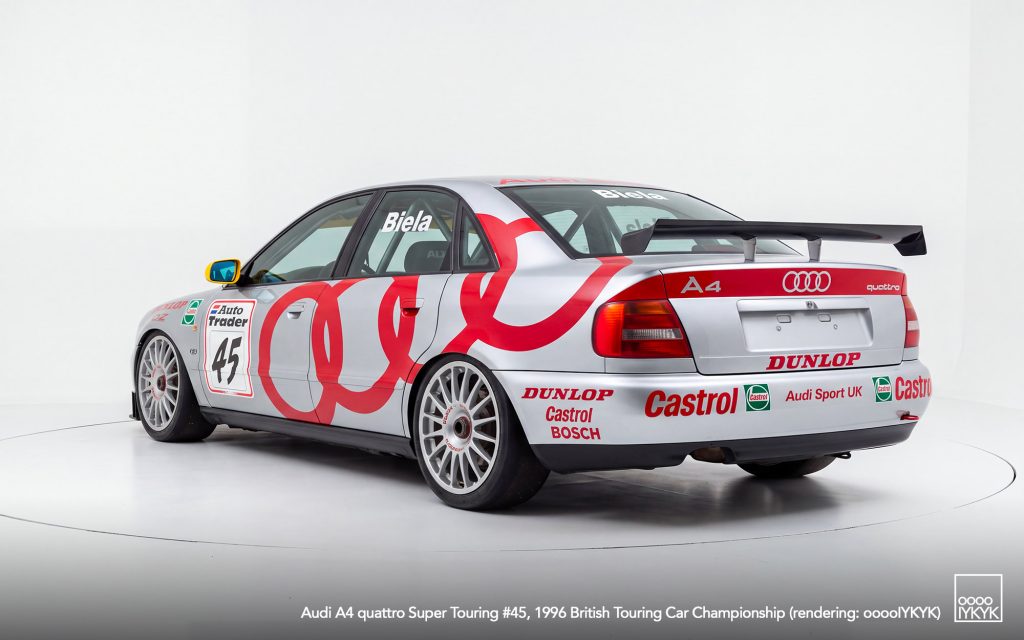
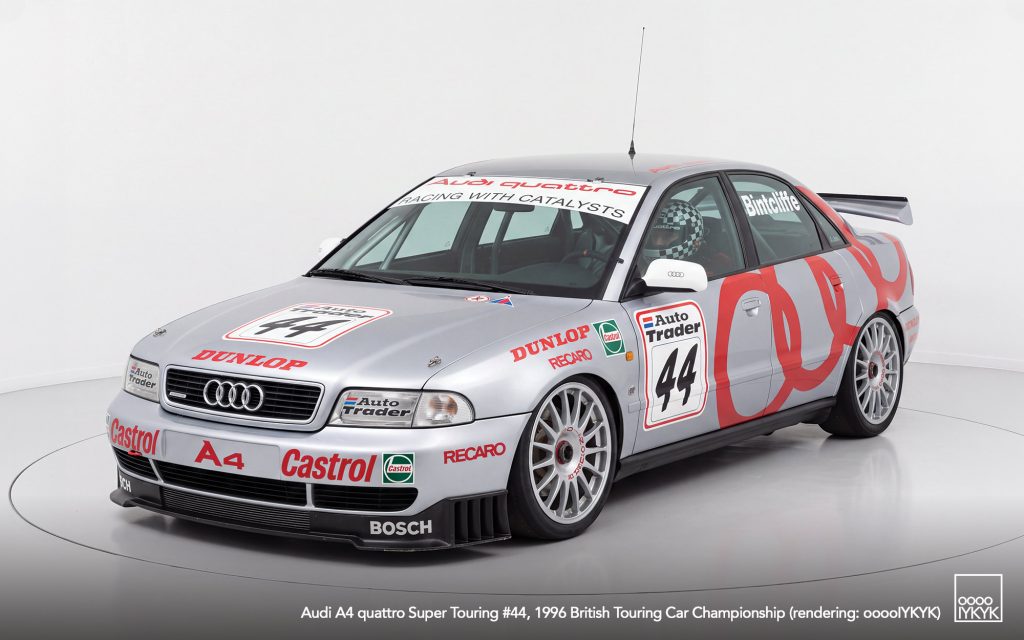
What: Audi A4 quattro Super Touring
Series: Australian Super Touring Championship, Belgian Procar Championship, BTCC, Campeonato de España de Turismos, Campionato Italiano Superturismo, STW
Class: FIA Class 2 / Super Touring
Era: Audi Modern Era
Model Family: A4
Market / Zone: AUS, DE, IT, UK, BE, ES, ZA
Season: 1996
Model / Generation Code(s): type 8D, R7
Chassis / Matrix: B5
OVERVIEW
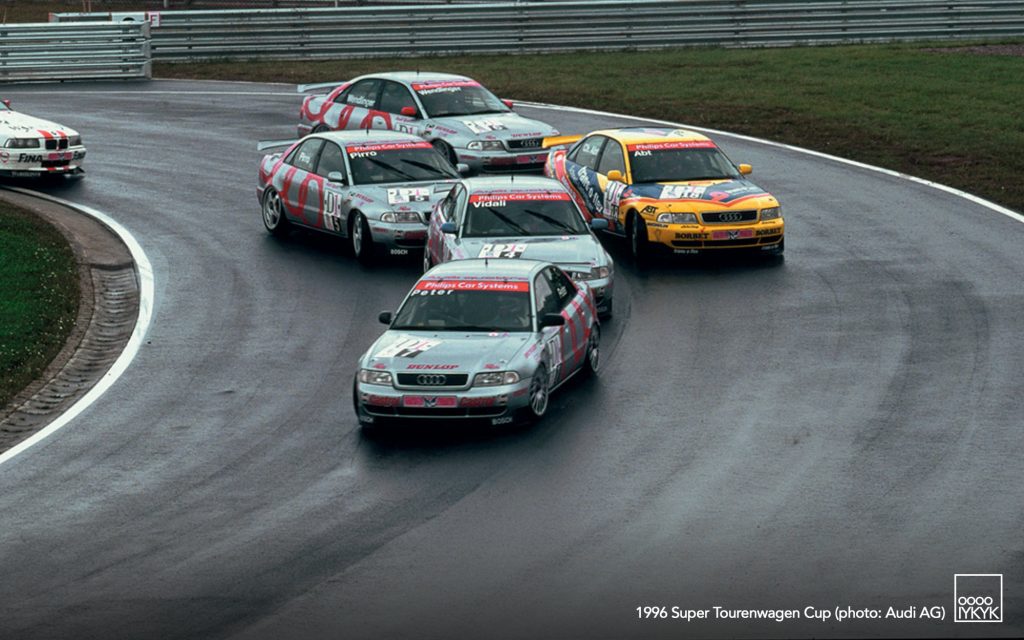
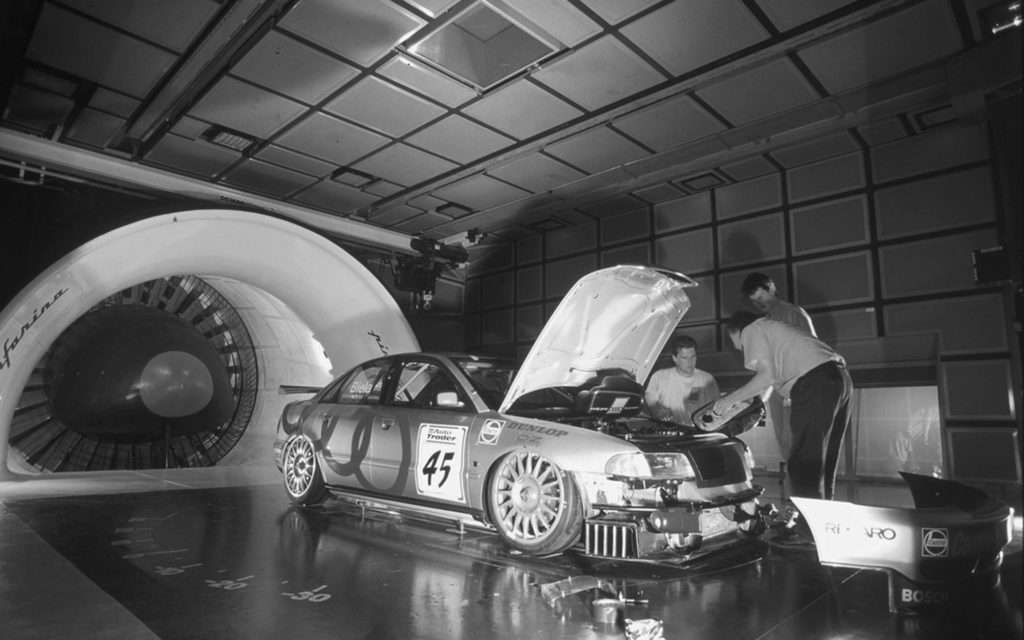
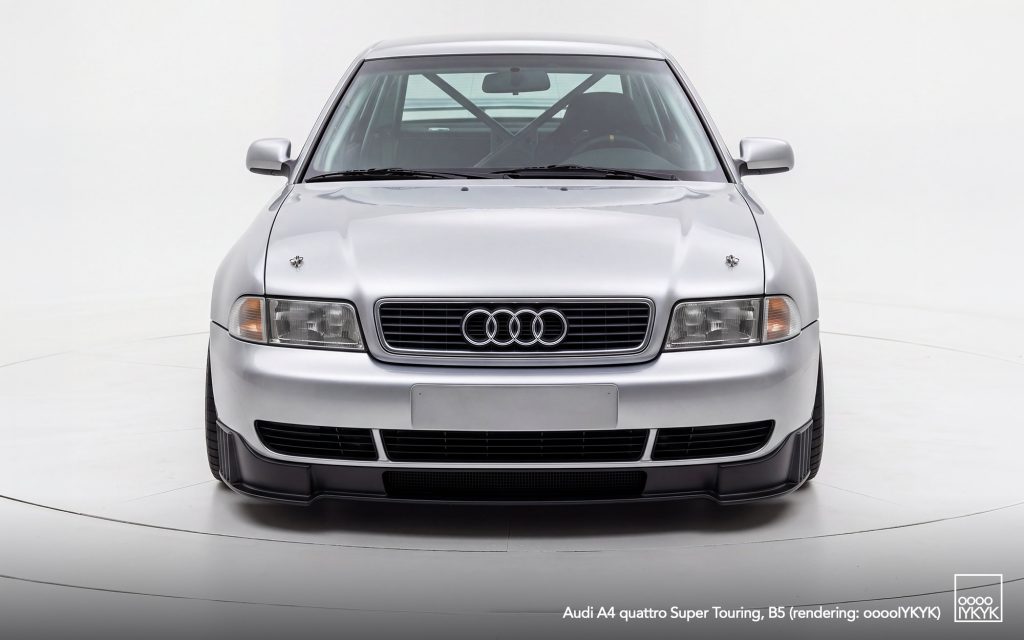
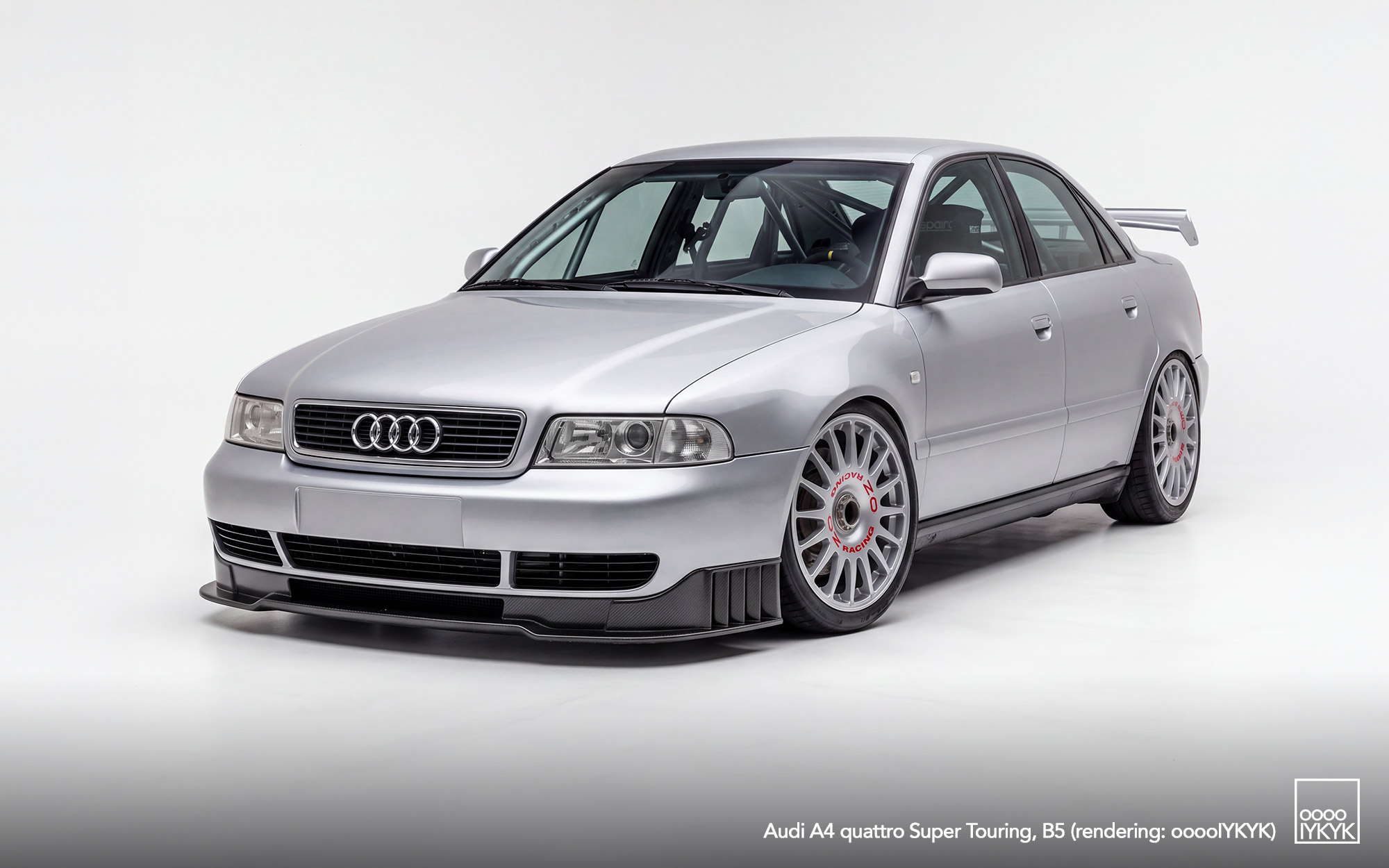
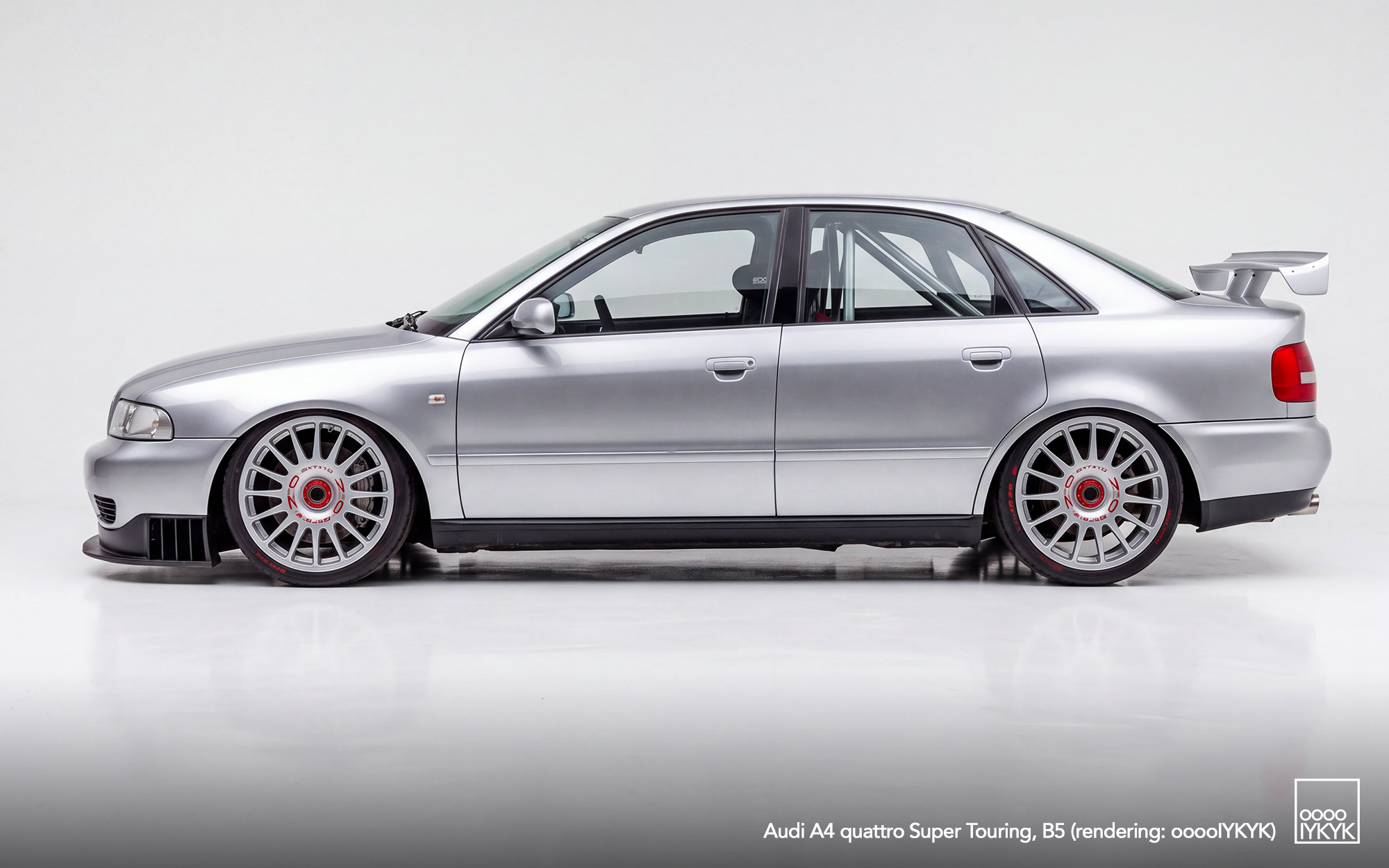
The Audi A4 quattro Super Touring, also known as the Audi A4 STW, is a racing version of the first-generation Audi A4 (B5) developed for the FIA Class 2 / Super Touring regulations. Introduced in 1995 and campaigned internationally through the late 1990s, the A4 quattro became one of the most successful touring cars of its era. Its dominant performance during the 1996 season, in which Audi captured touring car championships in seven countries across three continents, established the model as a landmark in the history of touring car racing and showcased the competitive advantage of Audi’s quattro all-wheel-drive system.
BACKGROUND AND DEVELOPMENT
The A4 Super Touring programme was initiated by Audi Motorsport Director Dr. Wolfgang Ullrich, who sought to expand Audi’s international presence beyond its existing entries in Germany and Italy. Using the newly introduced Audi A4 (B5) as the foundation, Audi engineers developed a fully homologated Class 2 touring car that emphasized aerodynamics, chassis sophistication, and the exploitation of quattro drive—then permitted under the Super Touring rule set.
The first competitive outings occurred in 1995 within the German Touring Car Cup (STW), where the model immediately demonstrated its potential. The 1996 season marked Audi’s full-scale international expansion, supported by national Audi importers in multiple markets.
TECHNICAL SPECIFICATIONS
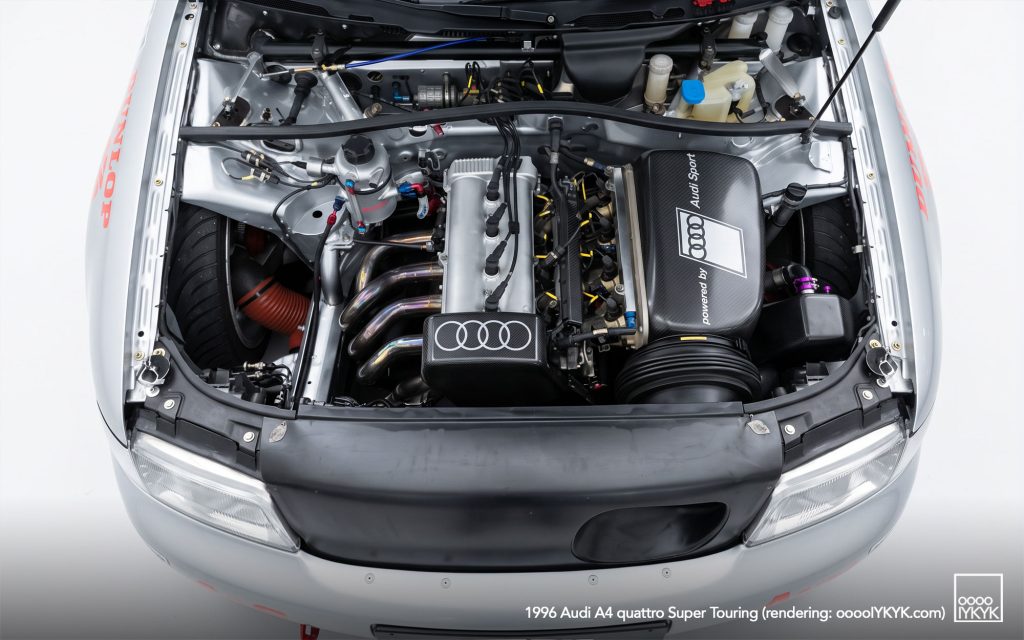
The Audi A4 quattro Super Touring conformed to FIA Class 2 regulations, which mandated production-based chassis, strict weight limits, and two-litre naturally aspirated engines.
Key technical features included:
- Engine: 2.0-litre inline-four, naturally aspirated
- Output: approximately 285 hp
- Drivetrain: permanent quattro all-wheel drive, a major competitive advantage
- Chassis: seam-welded, reinforced monocoque derived from the A4 B5 platform
- Suspension: bespoke racing suspension with adjustable geometry
- Transmission: sequential racing gearbox
- Weight: regulated minimum mass with balance applied through ballast
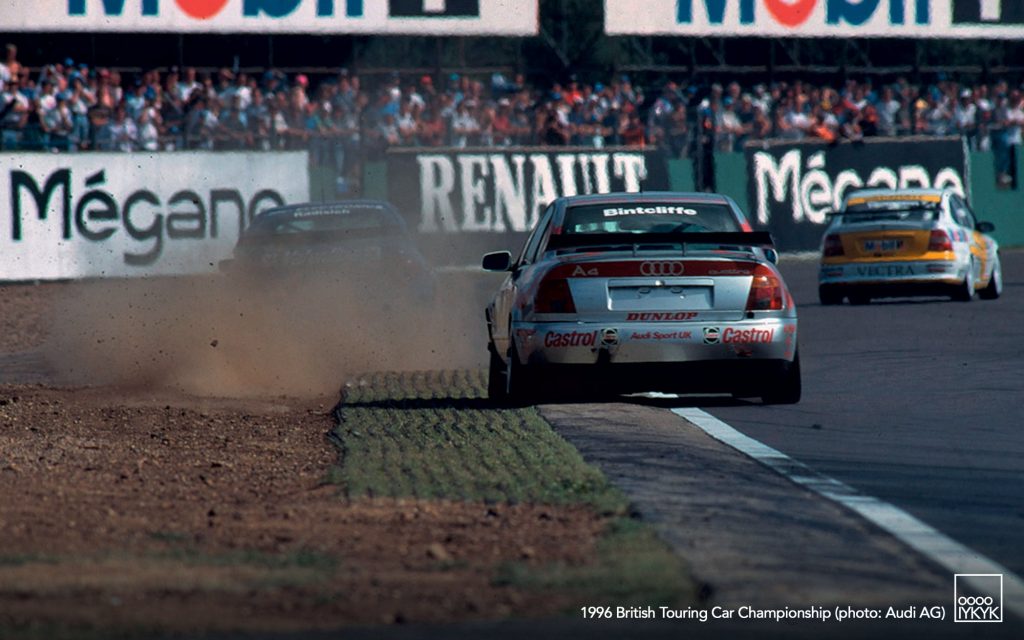
The quattro system’s superior traction—especially in wet or mixed conditions—became the defining feature of the A4 STW, enabling earlier throttle application and greater stability than rear- or front-wheel-drive competitors.
1996: THE YEAR OF INTERNATIONAL DOMINANCE
The 1996 season stands as one of the most dominant years ever recorded in touring car racing. Audi entered the A4 quattro STW into major and emerging national series around the world, resulting in championship titles in:
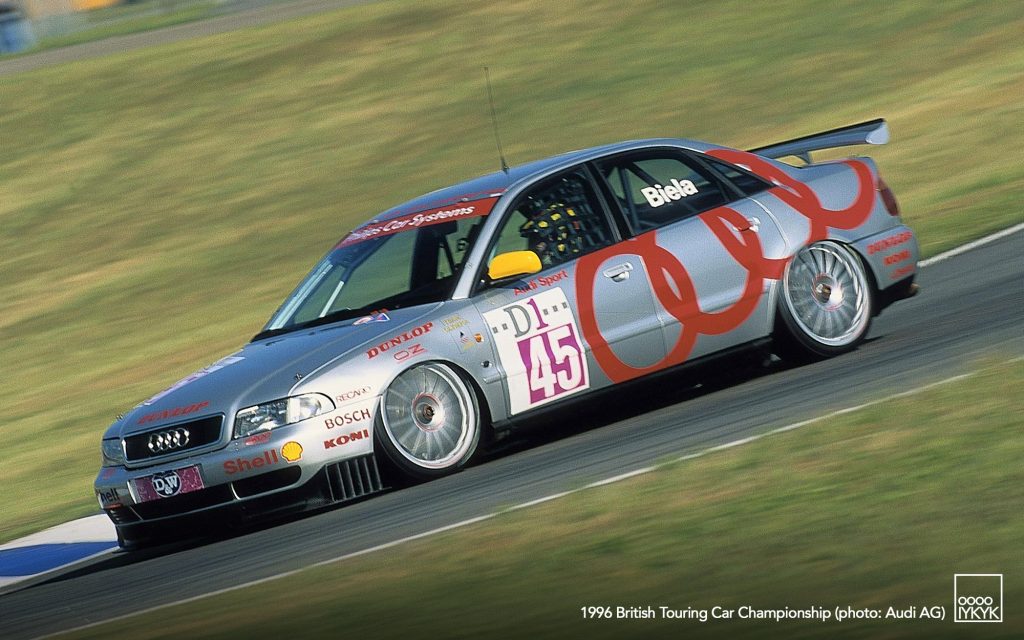
- United Kingdom – British Touring Car Championship (BTCC)
- Champion: Frank Biela
- Germany – Super Touring Championship (STW)
- Champion: Emanuele Pirro
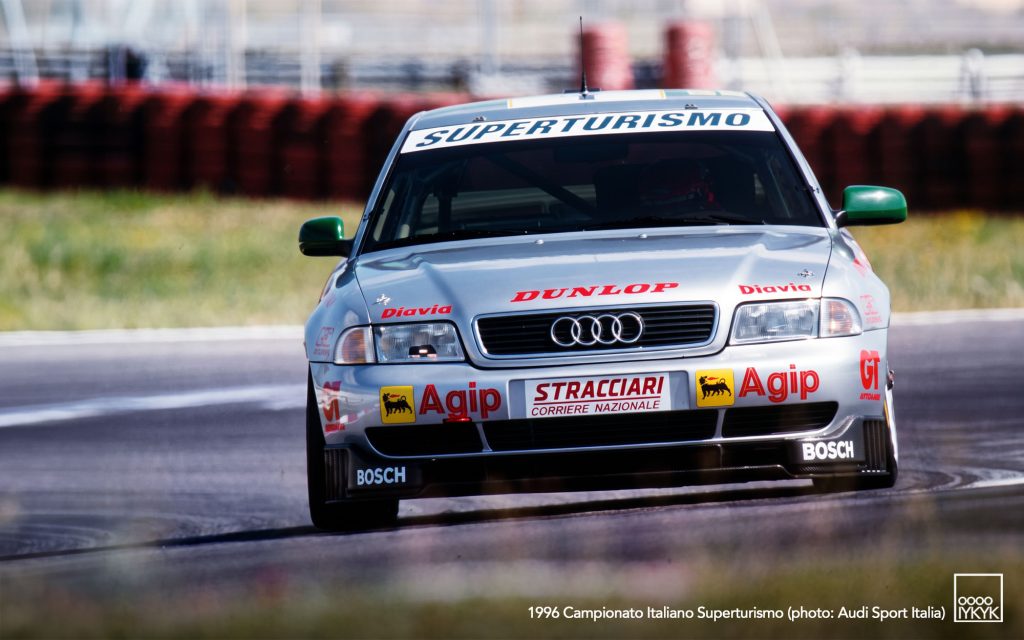
- Italy – Campionato Italiano Superturismo
- Champion: Dindo Capello
- Spain – Campeonato de España de Turismos
- Belgium – Belgian Procar Championship
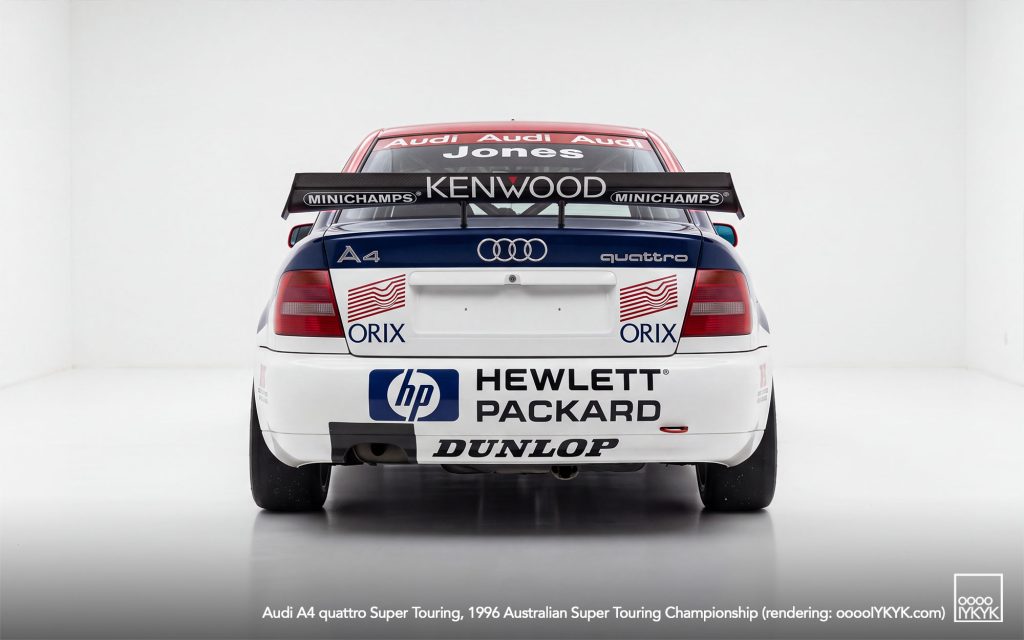
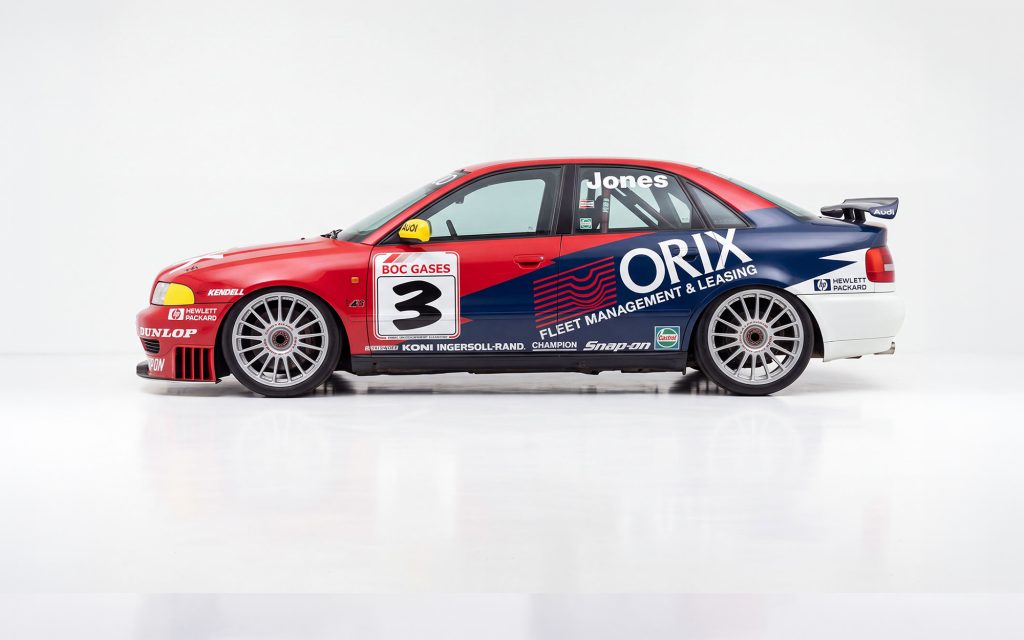
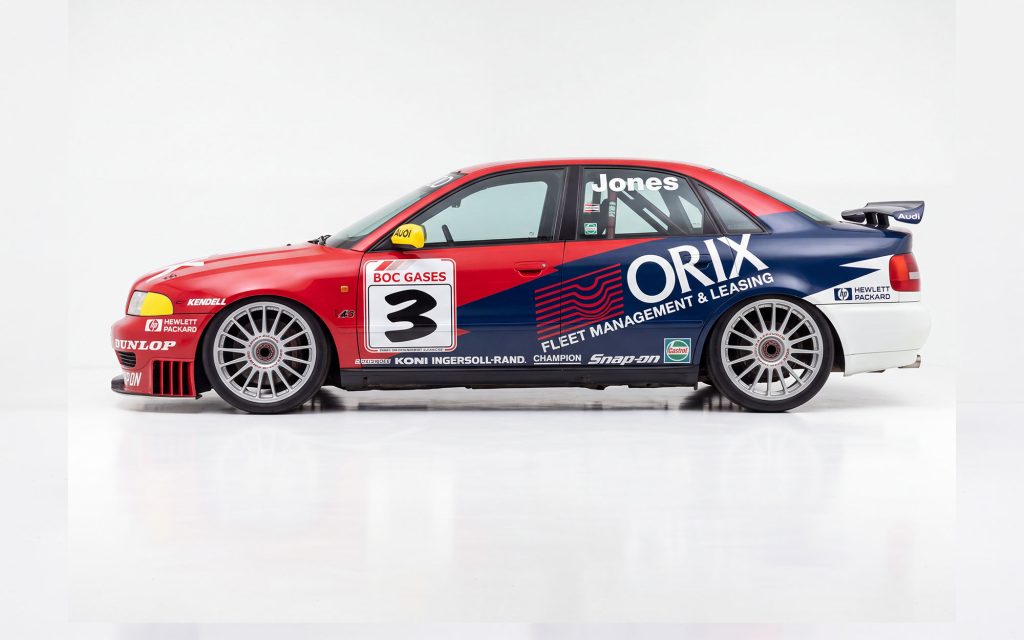
- Australia – Australian Super Touring Championship
- South Africa – South African Touring Car Championship
Audi Tradition describes the 1996 season as an “overwhelming triumph” for quattro technology, noting that championships on three continents demonstrated the system’s universal competitive advantage.
No other touring car in the Super Touring era matched this level of cross-series dominance.
REGULATORY RESPONSE AND SUBSEQUENT SEASONS
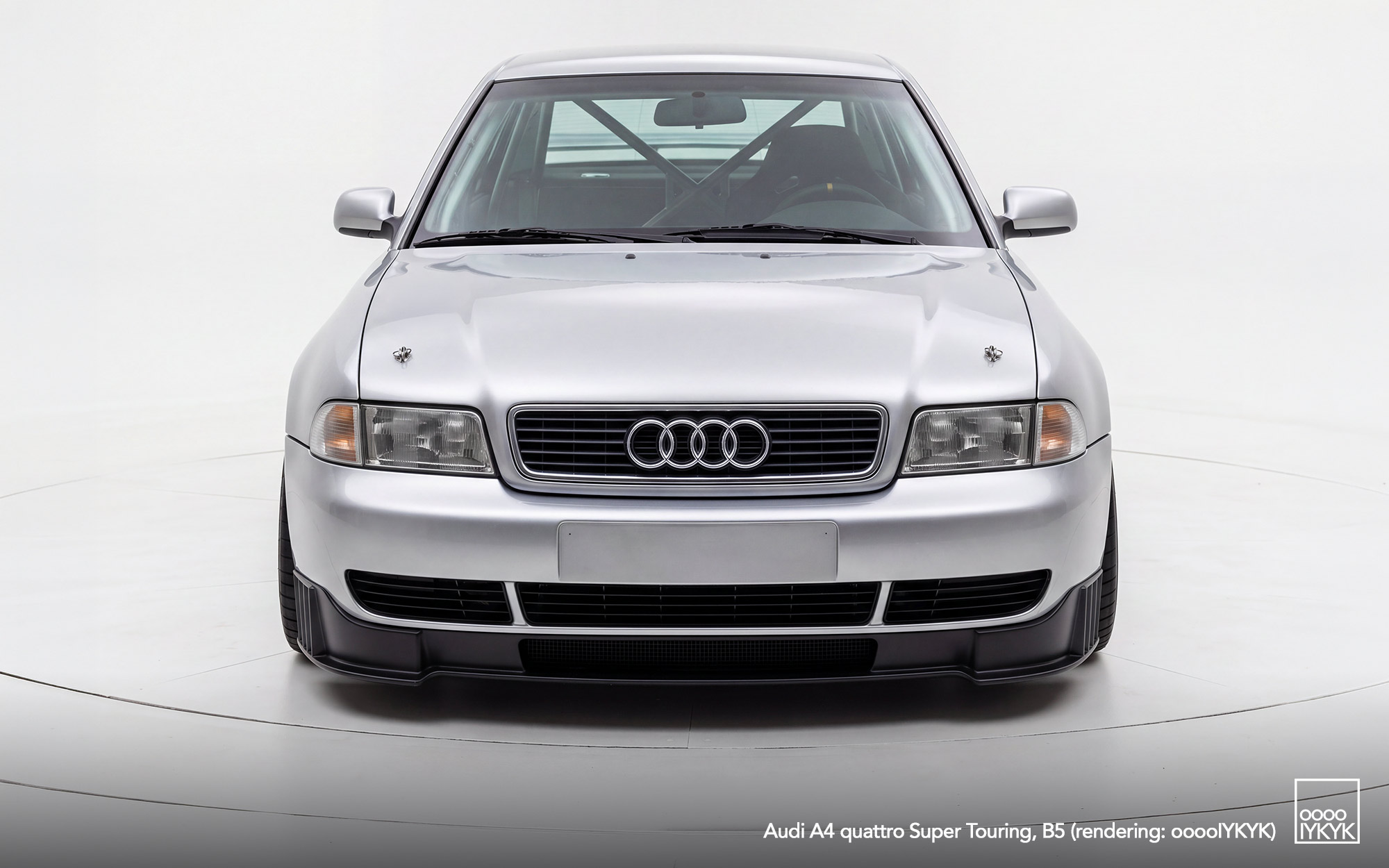
The success of the quattro system led to concerns within several national sanctioning bodies that Audi’s advantages were insurmountable. Beginning in 1997, weight penalties were imposed on Audi entries, reducing their competitiveness. Despite this, the A4 remained a front-running car in many markets.
By 1998, four-wheel drive was banned outright from Super Touring regulations, forcing Audi to compete with two-wheel-drive versions of the A4. Without its signature drivetrain advantage, the car was no longer dominant.
Even so, the A4 quattro programme produced additional notable successes:
- 1999 German STW Championship – won by Christian Abt (Abt Sportsline)
- 1999 Swedish Touring Car Championship (STCC) – won by young driver Mattias Ekström, later a DTM champion and Audi factory star
The A4 Super Touring continued to appear in international series, including the 2001 FIA European Super Touring Car Championship, where drivers Roberto Colciago and Max Pigoli competed for AGS Motorsport. Colciago later won back-to-back STCC titles in 2001 and 2002 with Kristoffersson Motorsport.
FEATURED EXAMPLES
ST03
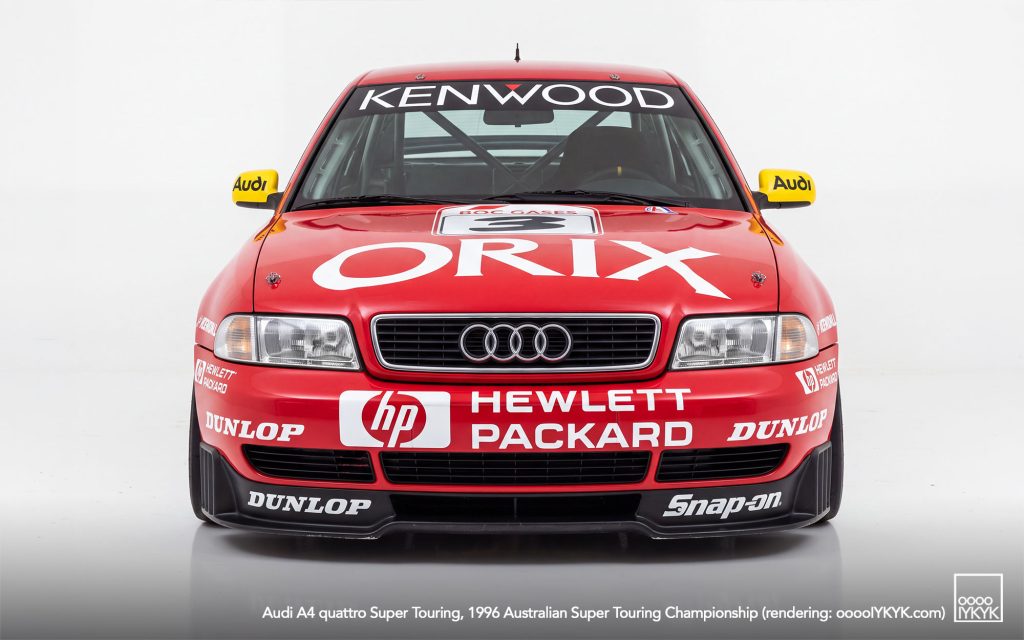
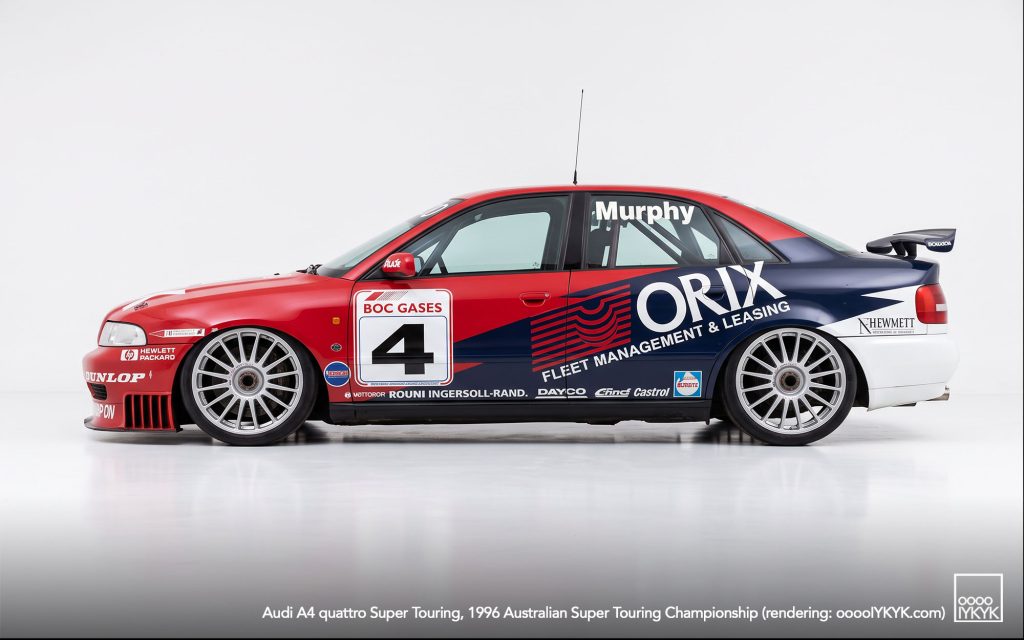
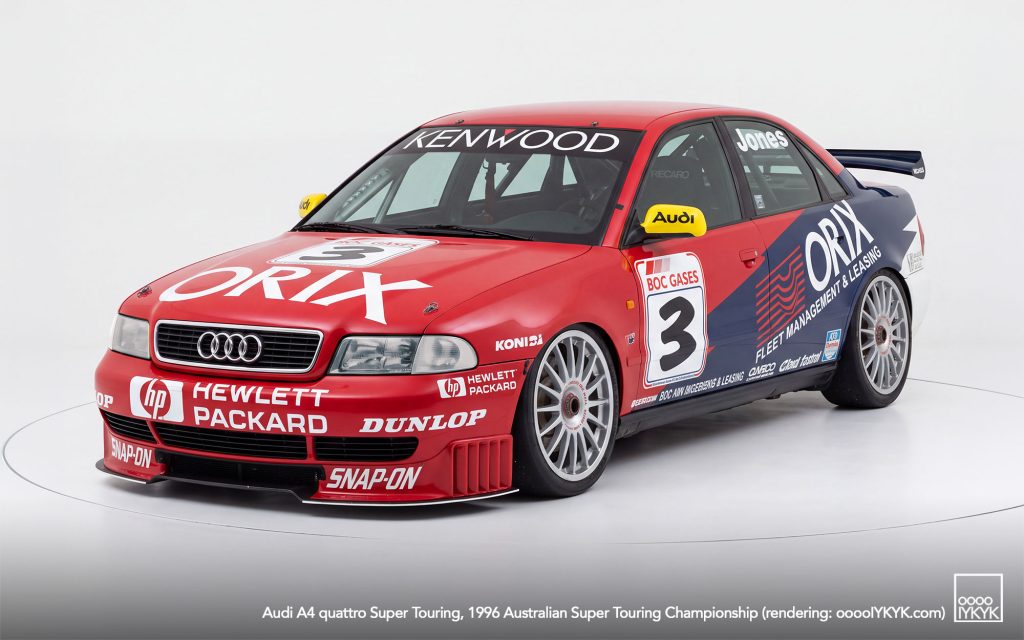
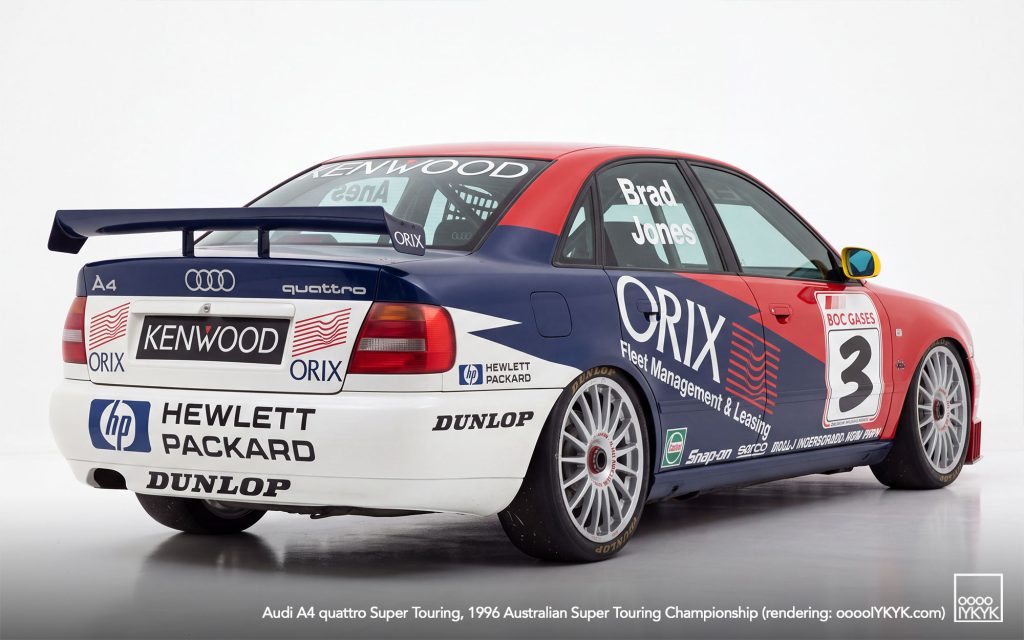
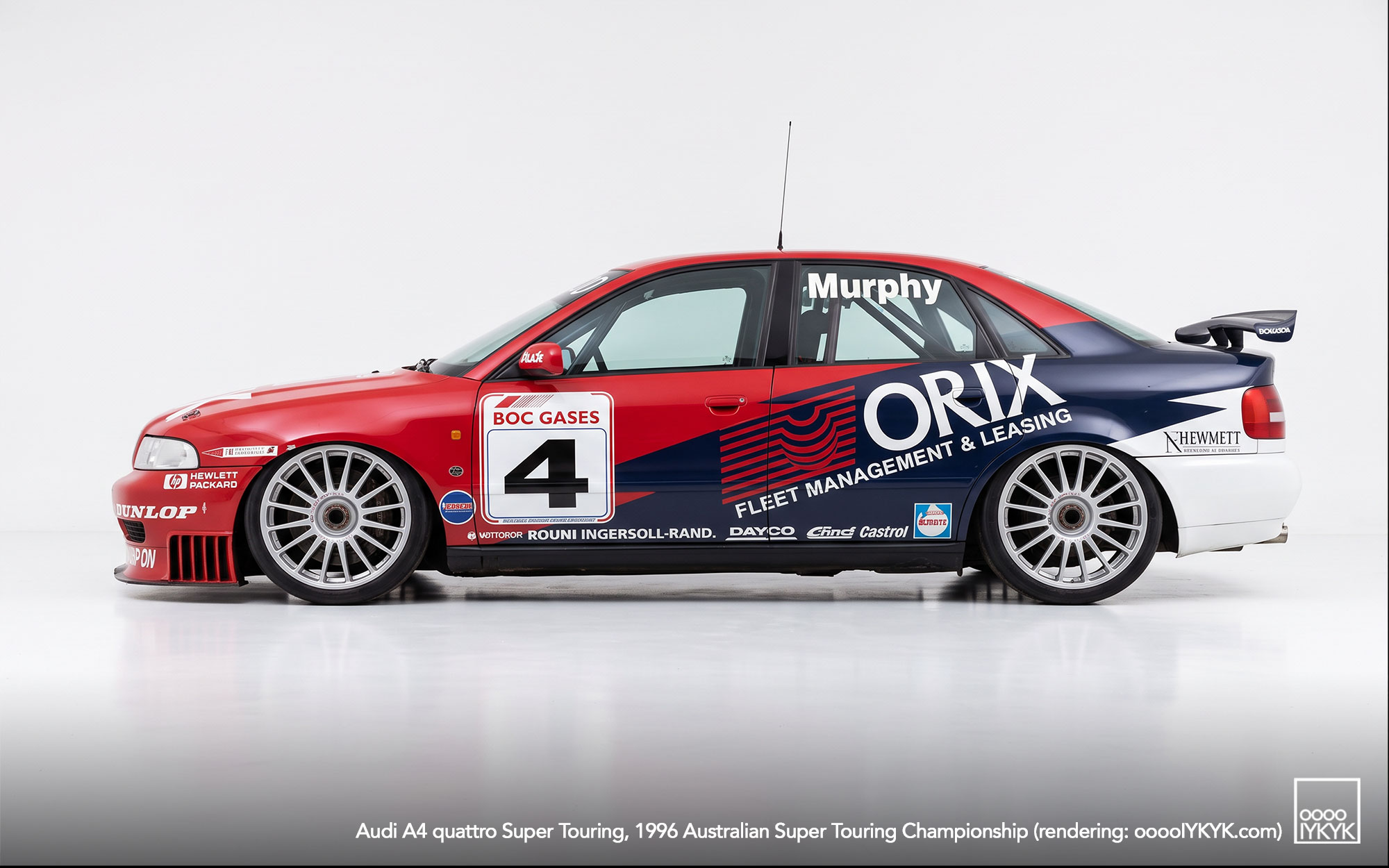
ST03 was built by Audi Sport in 1995 as a spare for its Italian Superturismo campaign, racing with Tamara Vidali at Varano and Emanuele Pirro at Vallelunga. Brad Jones Racing acquired it in 1996, and Jones drove it in the Australian Grand Prix and Gold Coast Indy support races before a heavy Gold Coast accident required repairs. Greg Murphy subsequently raced the repaired chassis in the Australian Super Touring Championship, with Vidali taking over for the Bathurst support races. Alan Jones drove it at the 1997 Australian Grand Prix support meeting, after which it served testing and promotional duties.
ST03 later returned to Europe, although that period remains incompletely documented. After passing through Kyle Chura’s ownership, it was acquired by Neuspeed in early 2003, rebuilt and fitted with a turbocharged engine. Steve Hirst and Ric Wood raced it in the Dutch Supercar Challenge during 2004–2005. Doug Maloney purchased it in late 2006 and shipped it to Barbados, where the register records subsequent Caribbean competition and further modifications, including wider wheel arches and additional rear-mounted radiators.
ST04
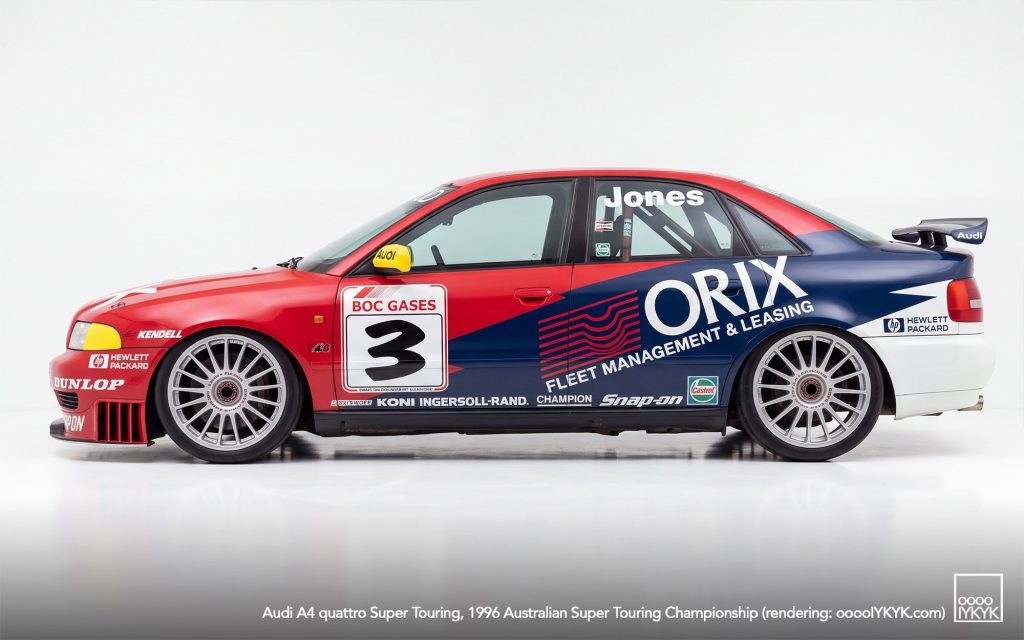
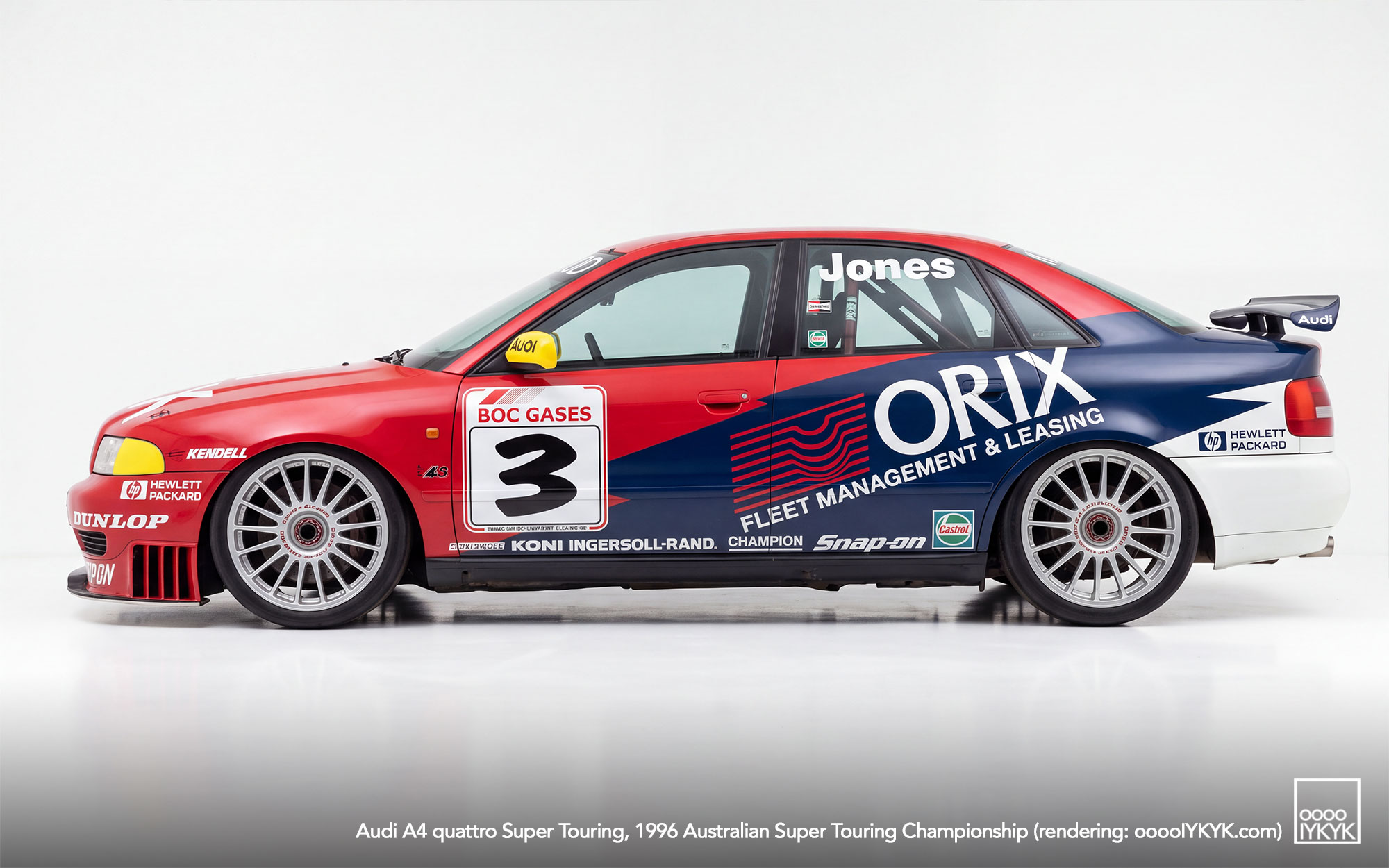
ST04 was built by Audi Sport in 1995 and raced by Rinaldo Capello in Italian Superturismo and the season-ending FIA Touring Car World Cup. Brad Jones Racing acquired it for 1996, initially assigning it to Greg Murphy for the Australian Grand Prix and Gold Coast Indy support races. Brad Jones subsequently took over ST04 for the Australian Super Touring Championship, recording seven victories before switching chassis for the finale. Those results formed the majority of his championship-winning campaign.
Jones also raced ST04 in the 1996 Bathurst 1000 support events and at Macau, where he finished fifth and third in the two Guia Race legs. The Super Touring Register later identifies it with Patrick Herbert’s number 3 Team Verbist entry in the 2001 French Supertourisme Championship. Its documented history therefore spans factory-backed Italian competition, Audi’s Australian championship success and a subsequent return to European racing.
ST06
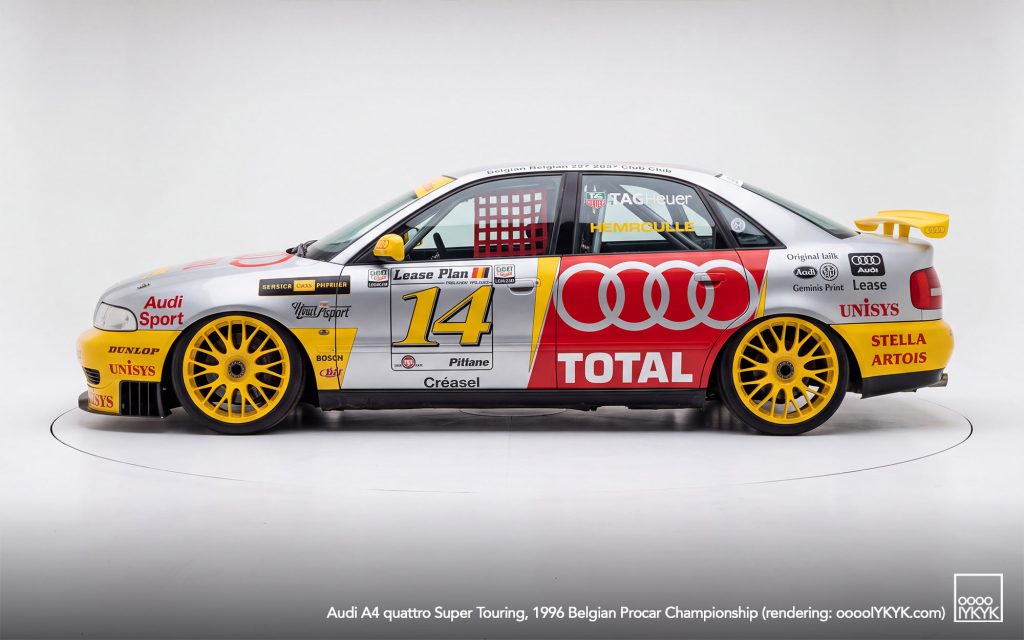
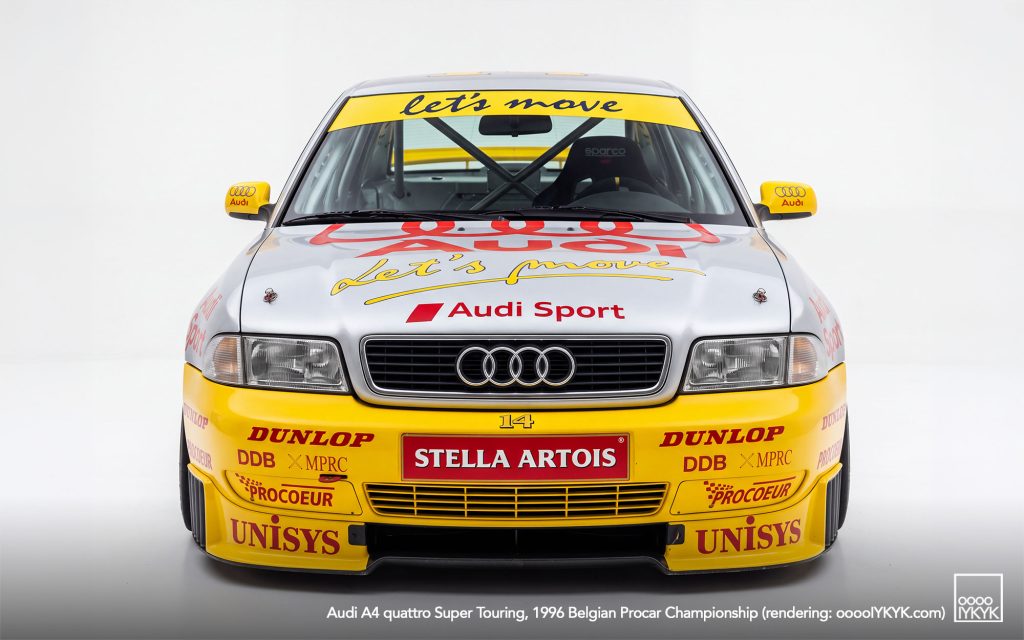
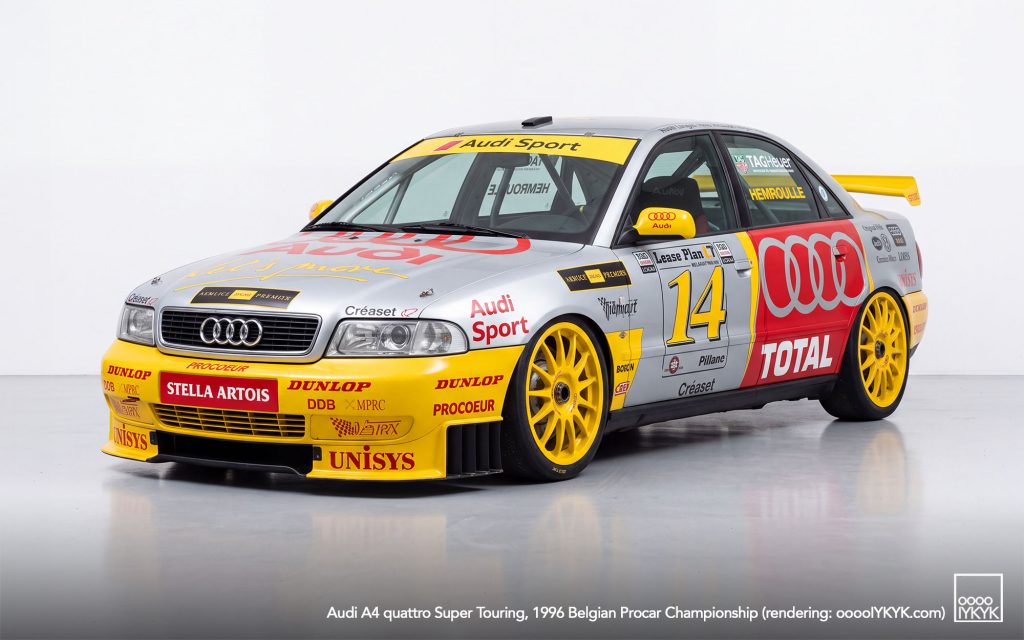
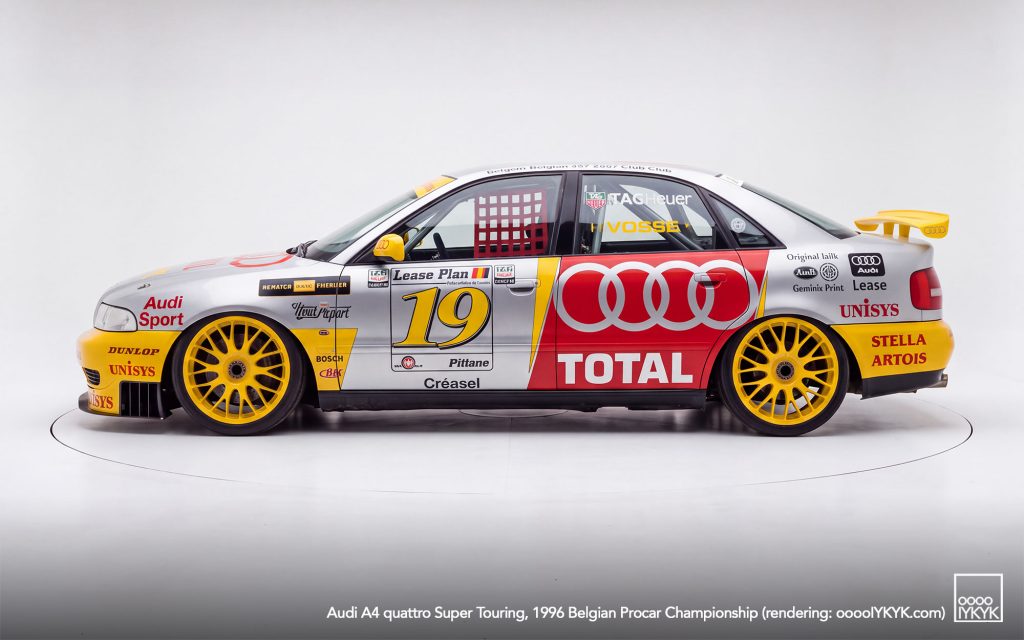
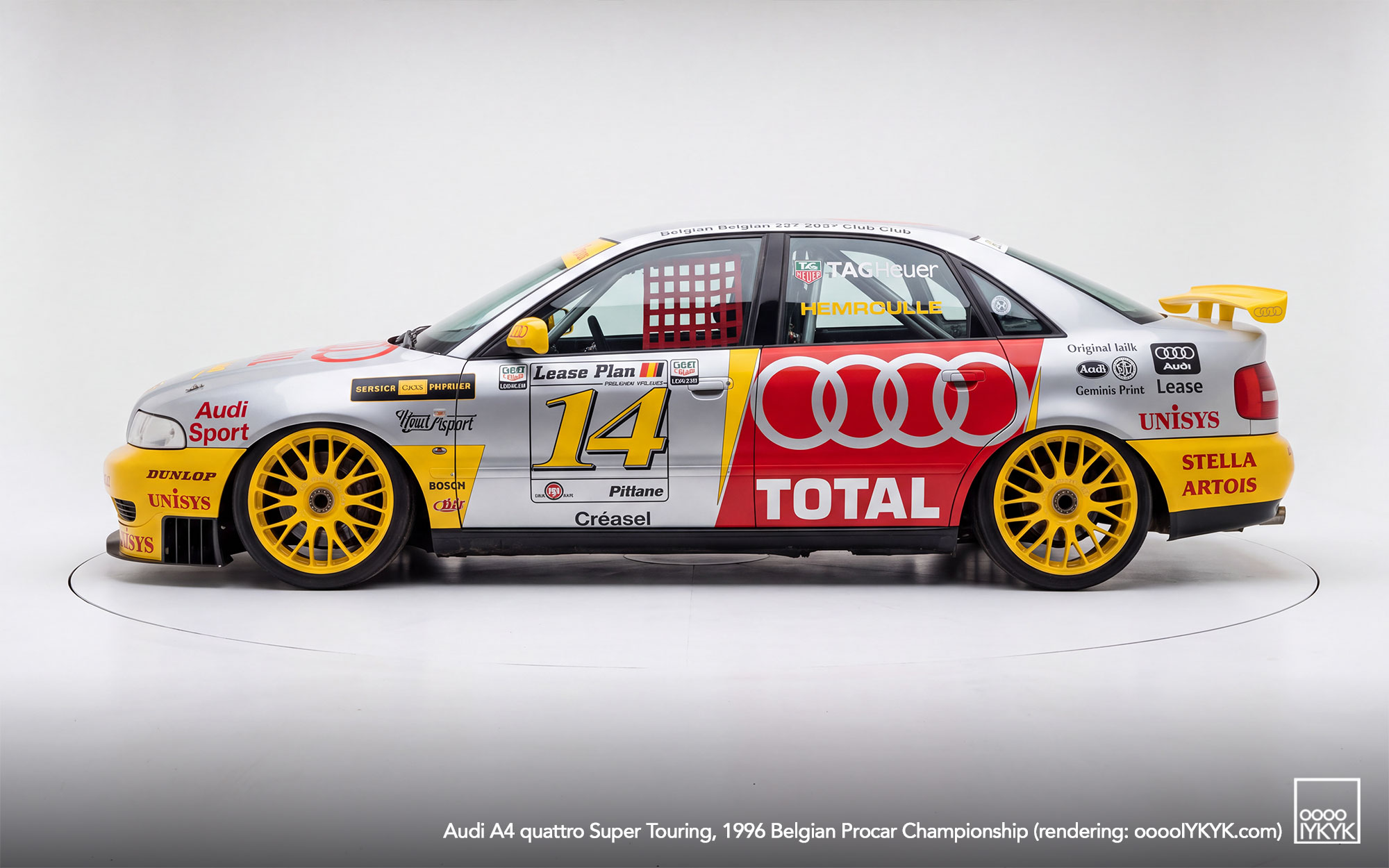
ST06 was built by Audi Sport in 1995 and served as Emanuele Pirro’s primary chassis in that year’s Italian Superturismo Championship. Entered as number 1 by Audi Sport Italia, it recorded ten victories before Pirro switched to the team’s spare car for the Vallelunga finale. ST06 moved to the Belgian VW Audi Club for 1996, where Jean-François Hemroulle raced it during the first six Procar meetings, contributing five credited victories to his Division 1 title campaign. Vincent Vosse took over the chassis for the final two meetings, adding a victory at Spa-Francorchamps.
ST06 continued in Belgian Procar in 1997, primarily with Hemroulle. Terry Moss drove it in the second race at the June Spa meeting and won, while Christophe Dechavanne took over for the season finale. Dechavanne subsequently raced the chassis at Magny-Cours in the French Supertourisme Championship, with the register recording a victory in the opening race. Its documented history links Audi’s Italian factory program with subsequent Belgian and French competition.
ST07
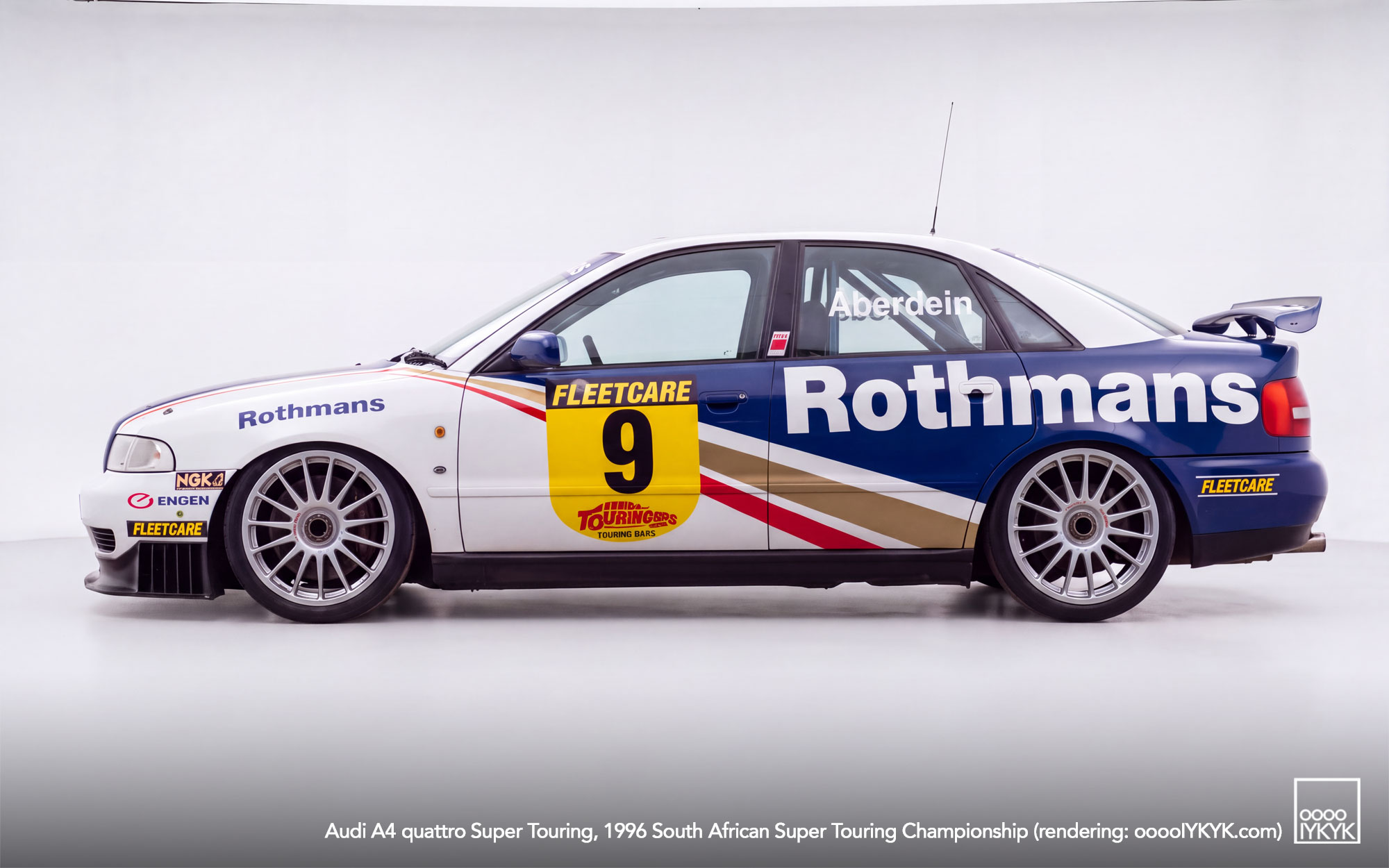
ST07 was built by Audi Sport in 1995 and raced by Hans-Joachim Stuck in the German Super Tourenwagen Cup.It moved to South Africa for 1996, where Chris Aberdein drove it as number 9 for the Rothmans-backed Audi Sport team. Aberdein recorded seven victories, including doubles at the May and September Killarney meetings, and finished runner-up in the championship with 90 points—three behind teammate Terry Moss.
ST07 subsequently entered Spanish hillclimb competition with José Antonio López-Fombona before Ángel Bello acquired it in 2009 and won the Canary Islands championship in 2011. Paul Smith purchased the car in 2014, returning it to Stuck’s original STW livery for appearances at Goodwood and in historic touring car racing. The Super Touring Register later documents competition appearances with Guy Minshaw, Phil Keen and Jon Minshaw.
ST09
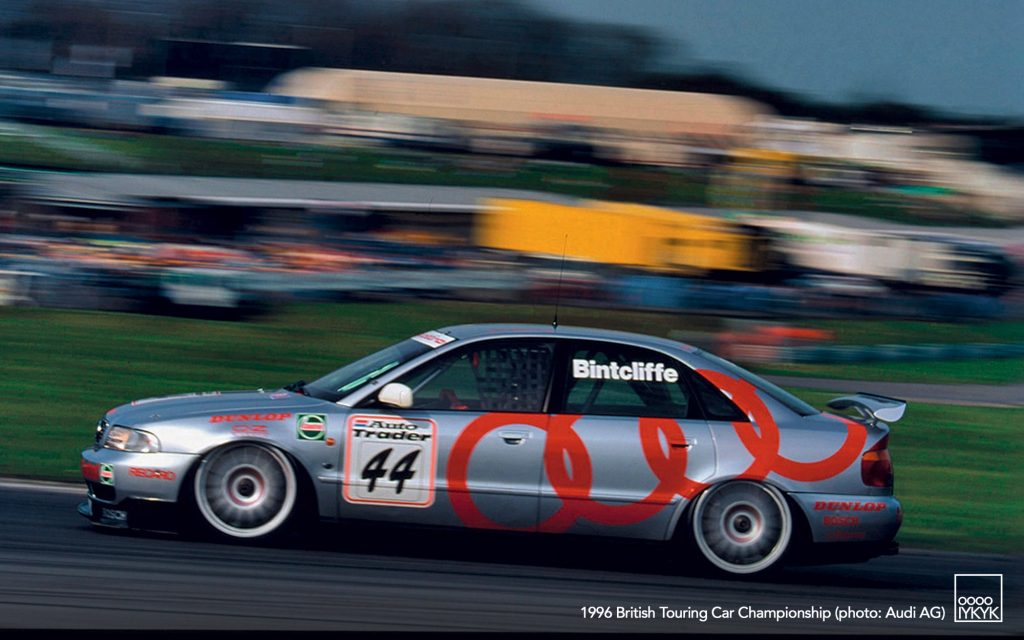
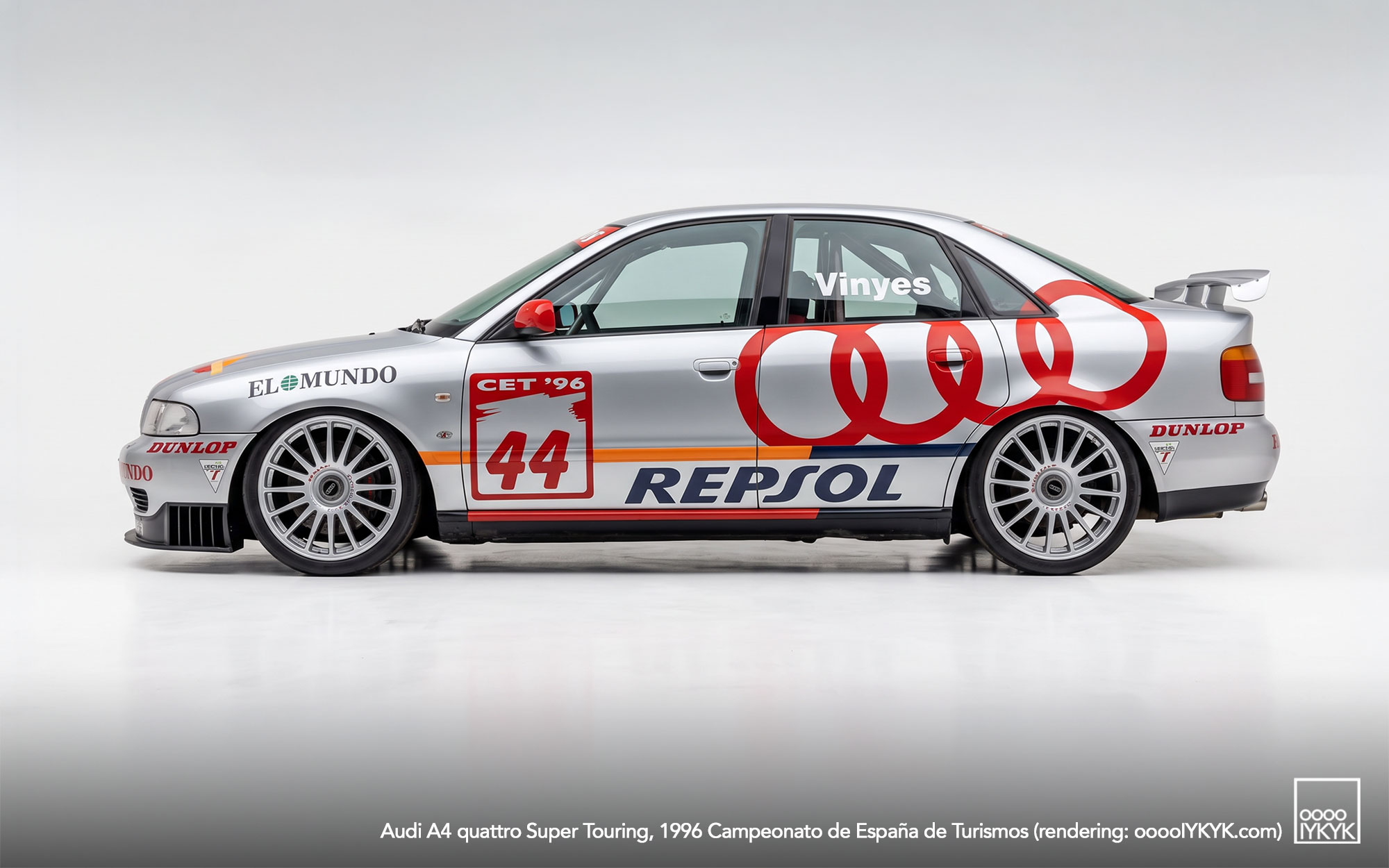
ST09 was Joan Vinyes’s number 44 Audi A4 quattro in the 1996 Spanish Touring Car Championship. Built by Audi Sport in 1995, it was acquired by Audi Spain alongside Jordi Gené’s ST10 and entered by Audi Racing Team España. Vinyes finished fourth in the championship, contributing to Audi’s manufacturers’ title with podium finishes at Jarama, Barcelona, Estoril and Calafat.
The Super Touring Register credits ST09 with victory in the opening Jarama race, although Wikipedia places Vinyes second behind Gené. That result remains disputed between the references. The register documents the chassis throughout the 1996 campaign but supplies no earlier race appearances, subsequent competition history, ownership chronology or present location.
ST10
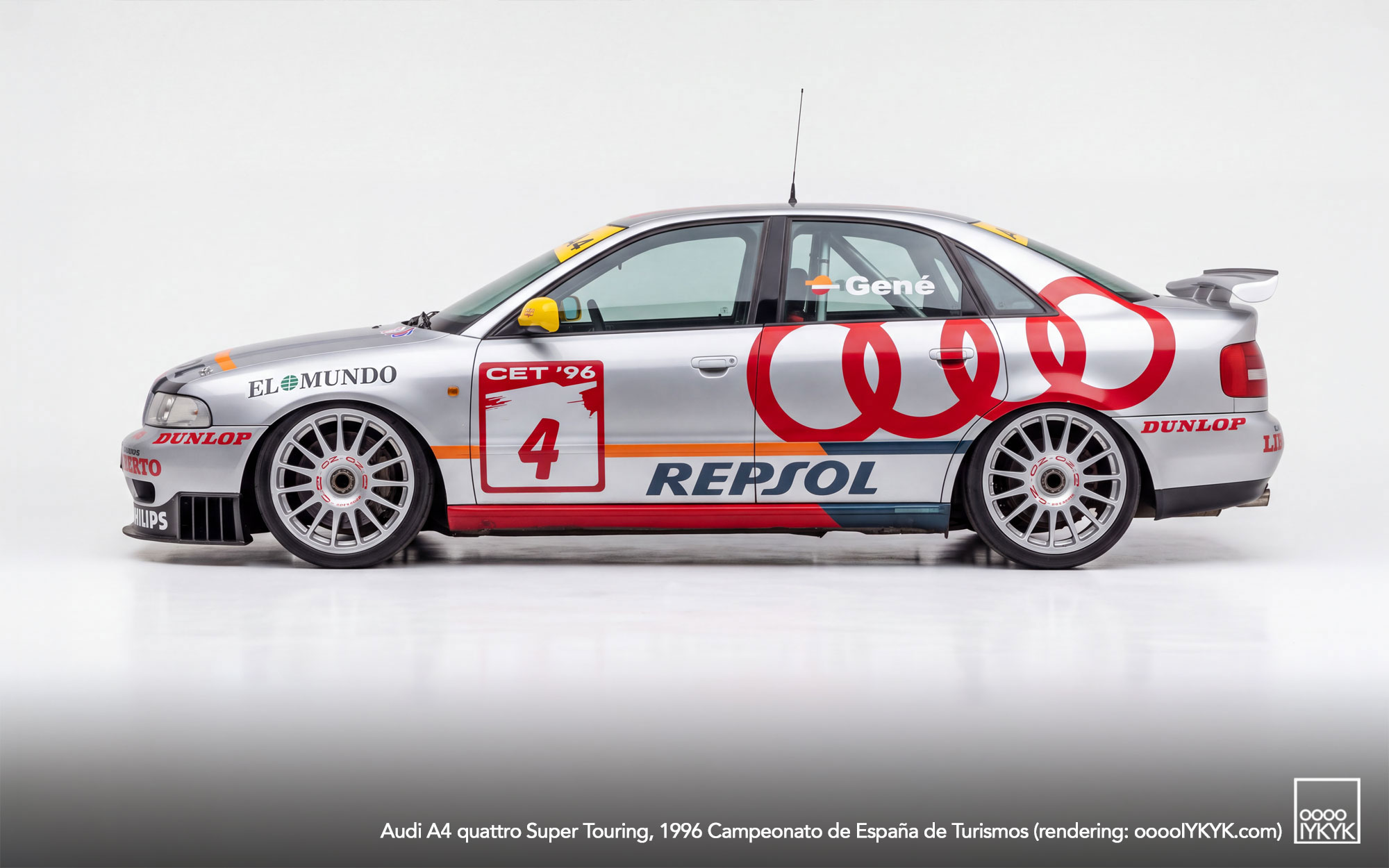
ST10 was built by Audi Sport in 1995 and carried Frank Biela to victory in that year’s FIA Touring Car World Cup at Paul Ricard. Audi Spain acquired it for the following season, entering Jordi Gené as number 4 in the 1996 Spanish Touring Car Championship. Gené won the drivers’ title with 213 counted points, while Audi secured the manufacturers’ trophy. The chassis therefore linked Audi’s World Cup success with its seven-country championship sweep in 1996.
Audi Canarias acquired ST10 in 1997, with Aythami Alonso subsequently campaigning it in the Canary Islands. Roberto Méndez purchased the car in 2001 and won three consecutive Spanish hillclimb championships through 2003. José Antonio Aznar acquired it in 2005 and continued racing it in Spanish hillclimbs through 2013. The Super Touring Register records its purchase by Dermott Simpson in 2016.
ST11
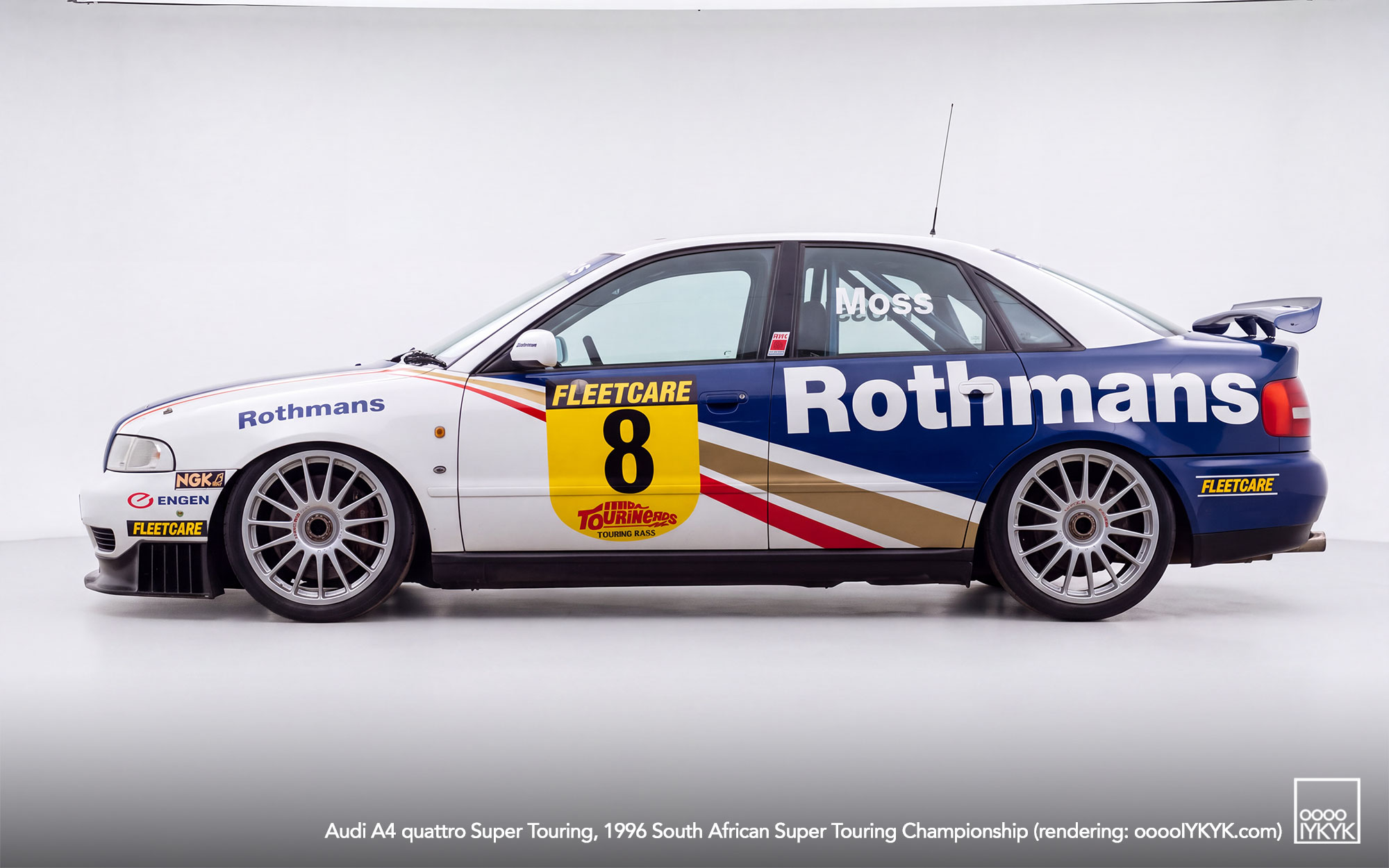
ST11 was built by Audi Sport in 1995 and first raced by Frank Biela in the German Super Tourenwagen Cup. Entered as number 45 by ROC Competition, it recorded five victories, including doubles at Zolder and Hockenheim and a win at Zeltweg. The Super Touring Register assigns eight podium finishes across 16 races to the chassis that season.
Terry Moss drove ST11 as number 8 for the Rothmans-backed Audi Sport team in the 1996 South African Super Touring Championship. Five victories and seven second-place finishes helped him secure the title with 93 points, three ahead of teammate Chris Aberdein. Two second-place finishes at the Killarney finale preserved Moss’s lead and made ST11 part of Audi’s seven-country championship sweep. Its later competition history, ownership and present location are not documented in the cited register.
ST16
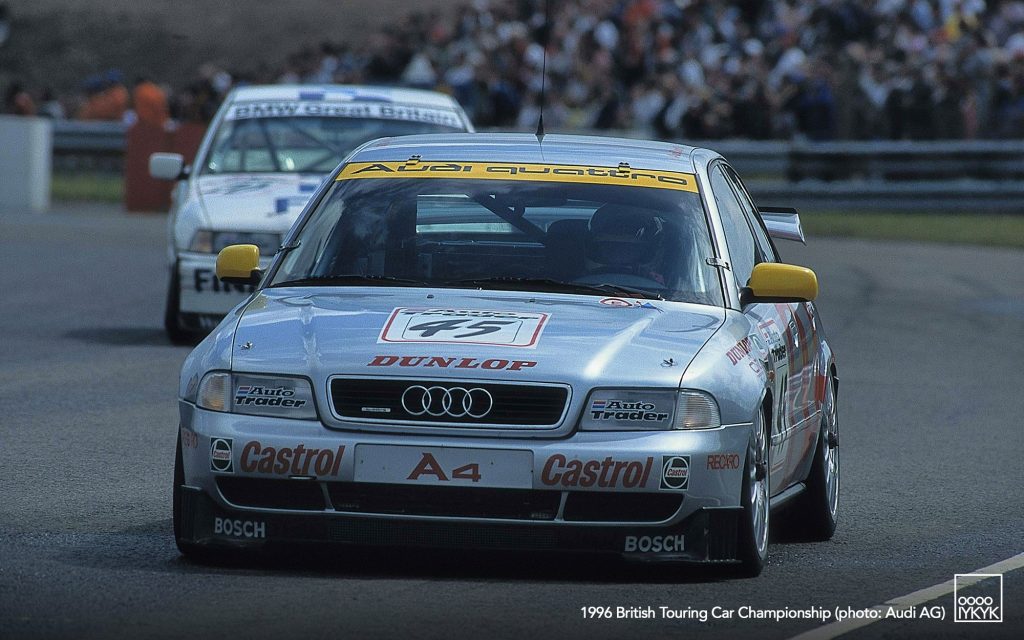
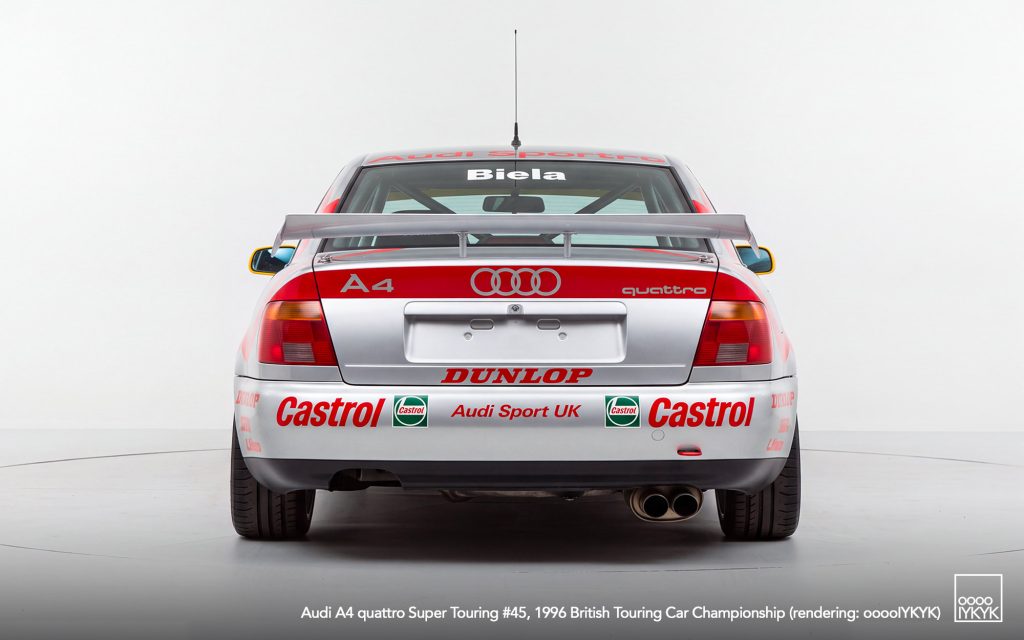
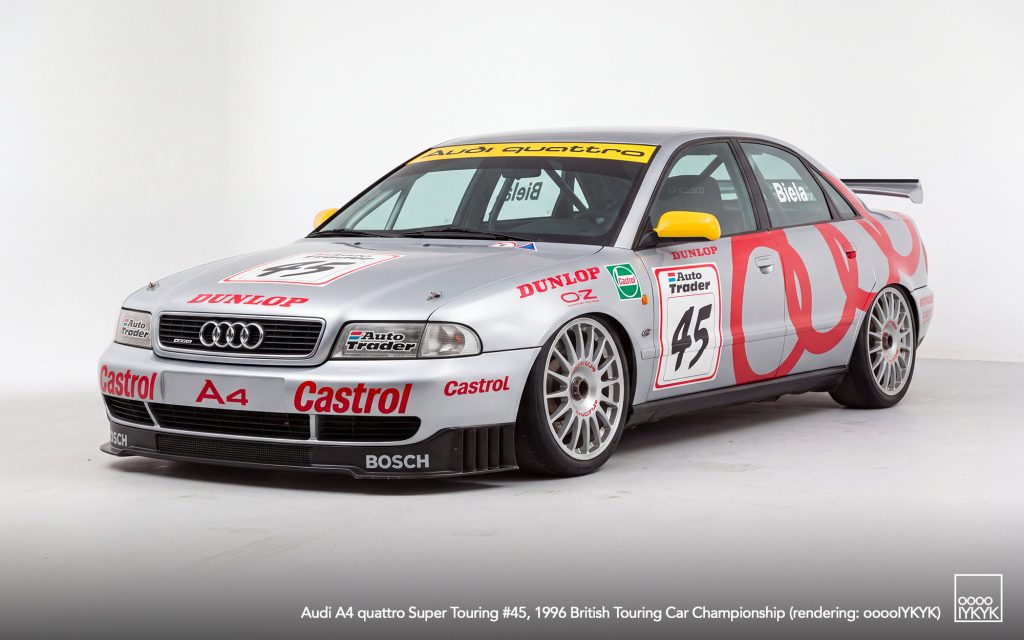
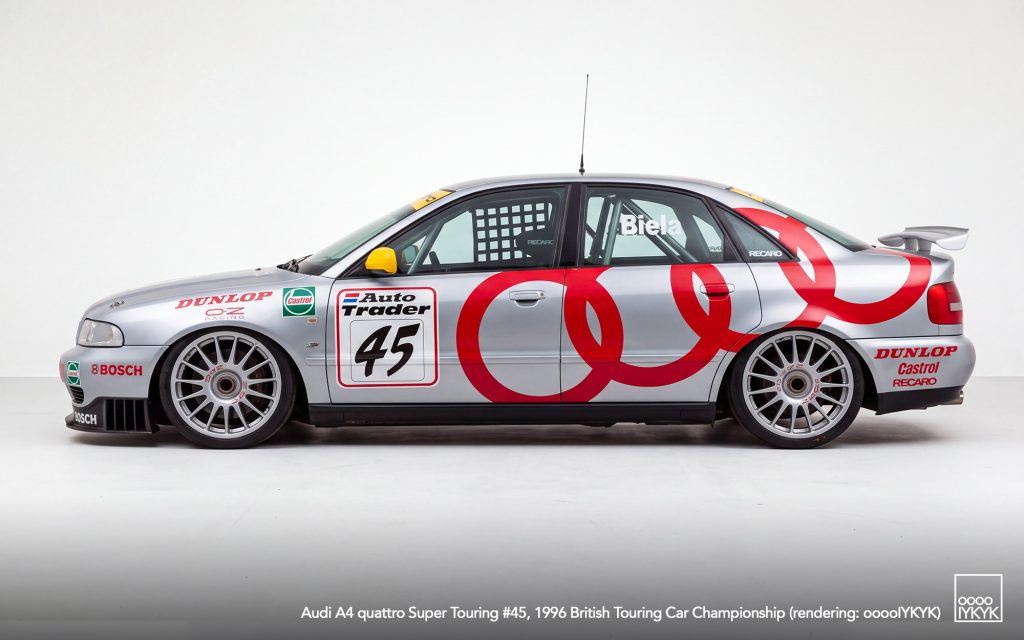
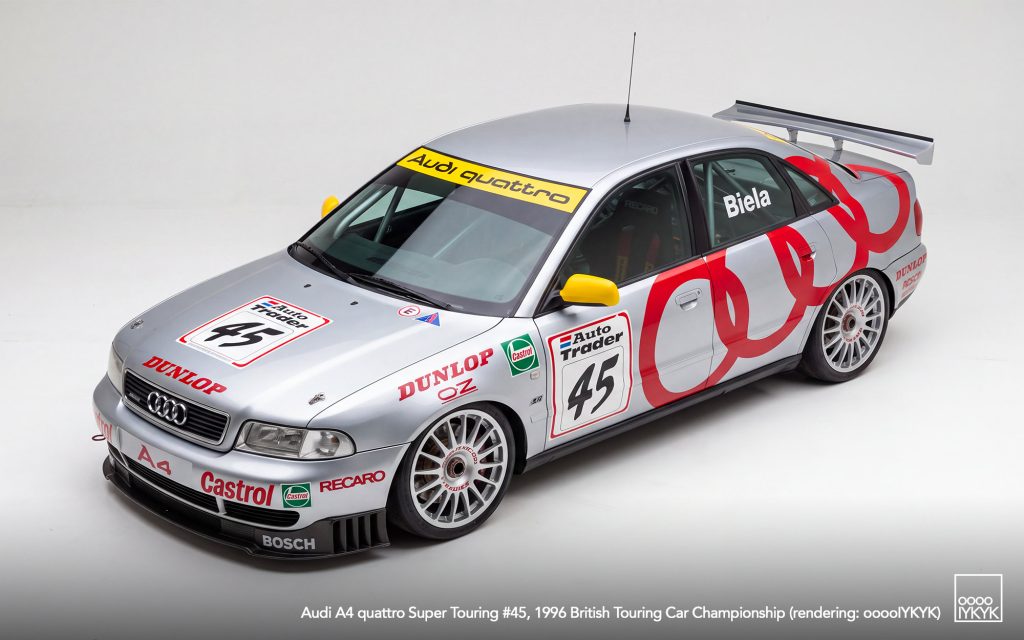
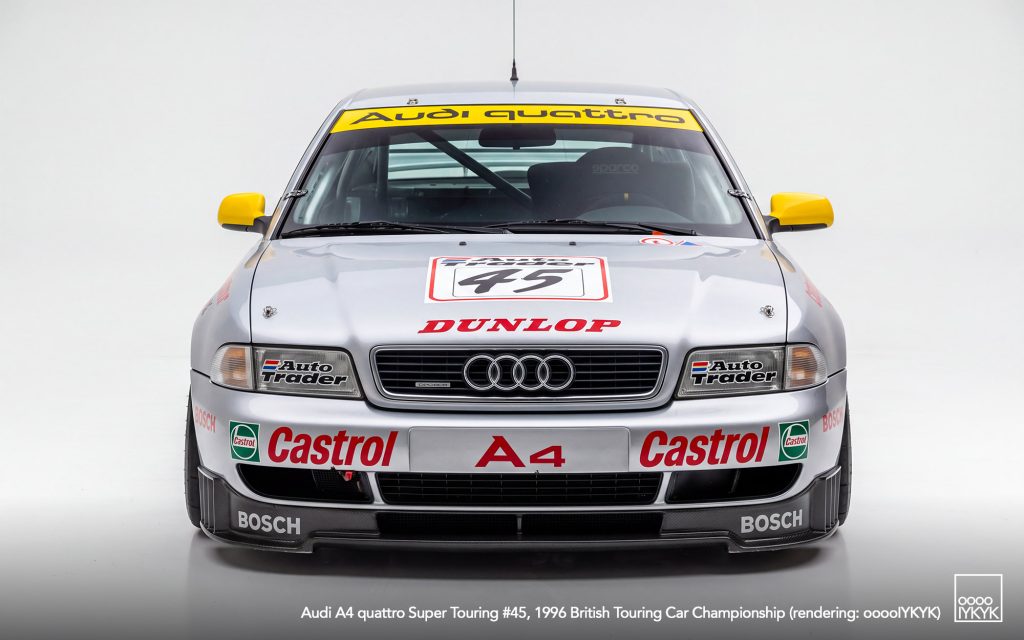
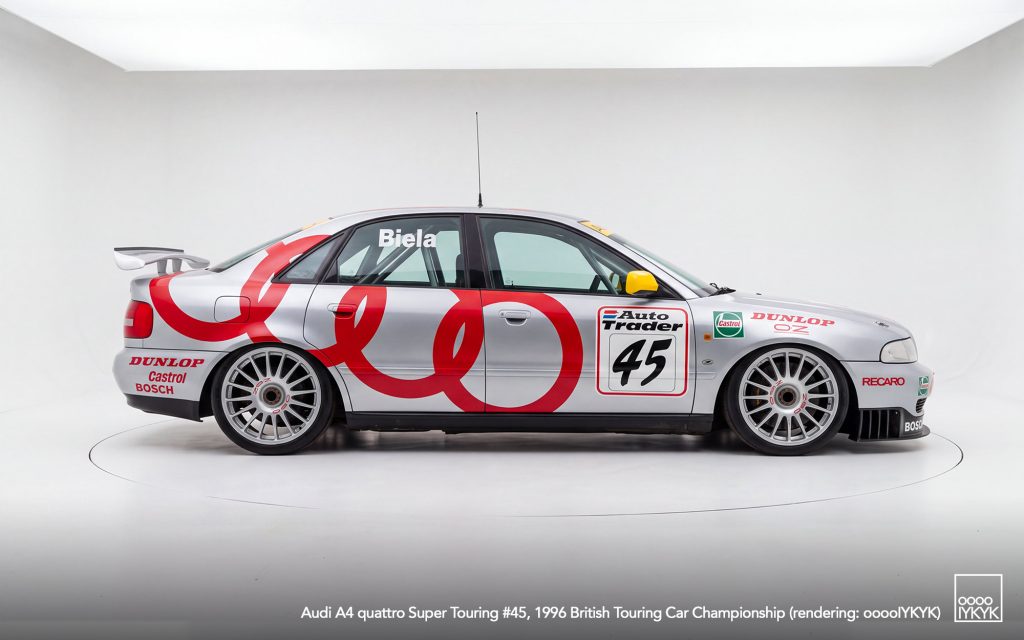
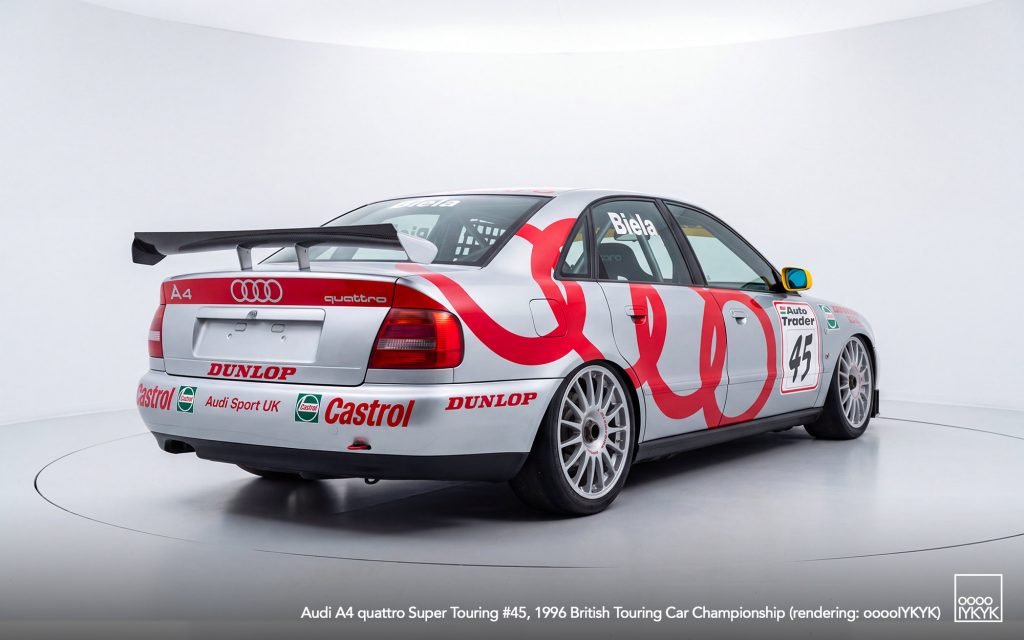
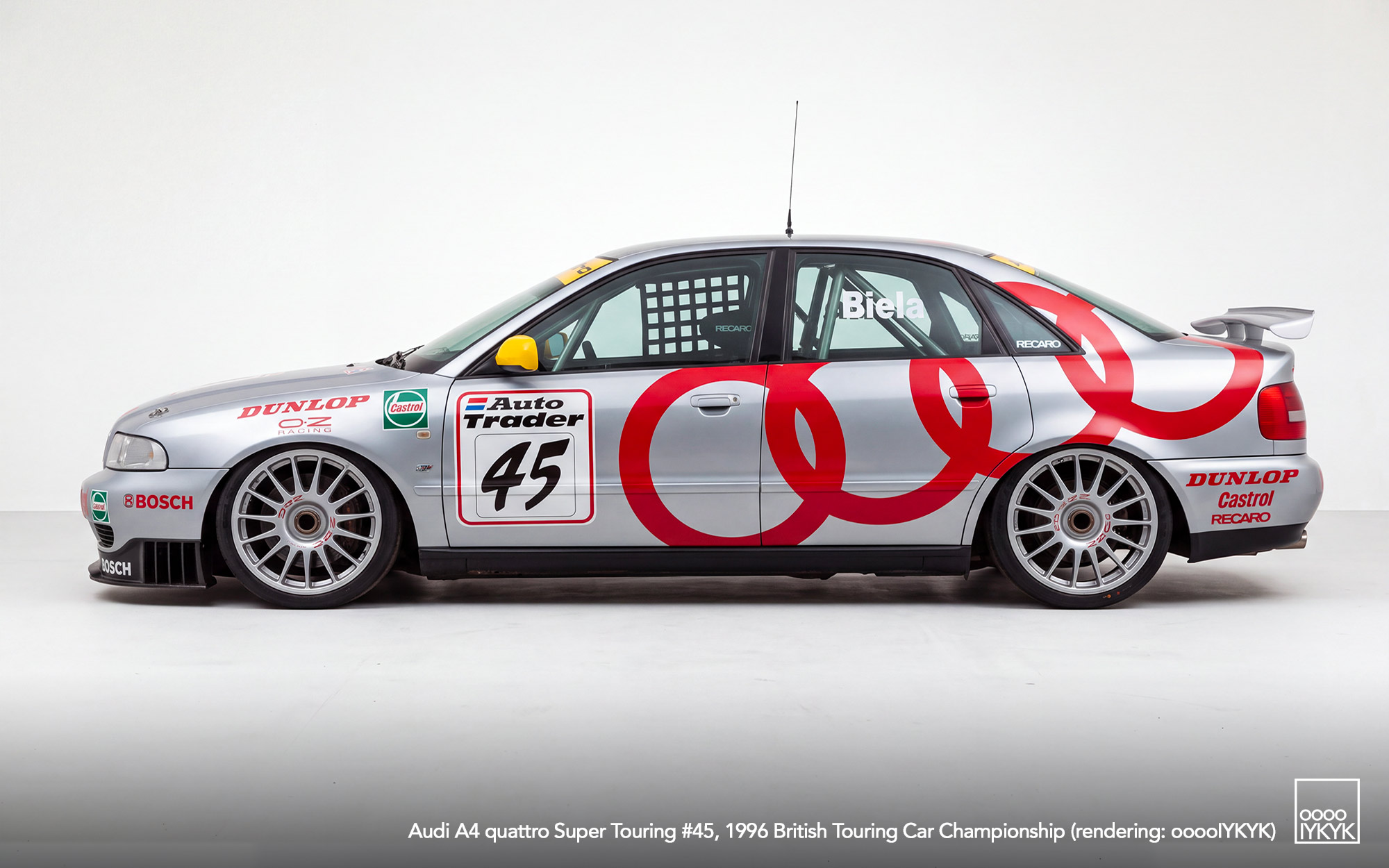
Built by Audi Sport in 1996, ST16 is identified by the Super Touring Register as Frank Biela’s British Touring Car Championship-winning chassis. Entered as number 45 by Audi Sport UK, Biela’s A4 quattro recorded eight victories and 20 podium finishes in 26 races, earning him the drivers’ title with four races remaining. Audi also secured the manufacturers’ championship and Audi Sport UK the teams’ title.
ST16 moved to the German STW series with Tamara Vidali in 1997 before sitting out 1998. Guido Lucchetti Cigarini acquired it in 1999 and raced it in Italian Superturismo, selected German rounds and the European Super Touring competitions of 2000 and 2001, including a third-place finish at Monza in 2000. Following selected Italian outings in 2002, it was retired and stored in a private collection; the register records its acquisition by Stefan Rupp in 2020.
ST18
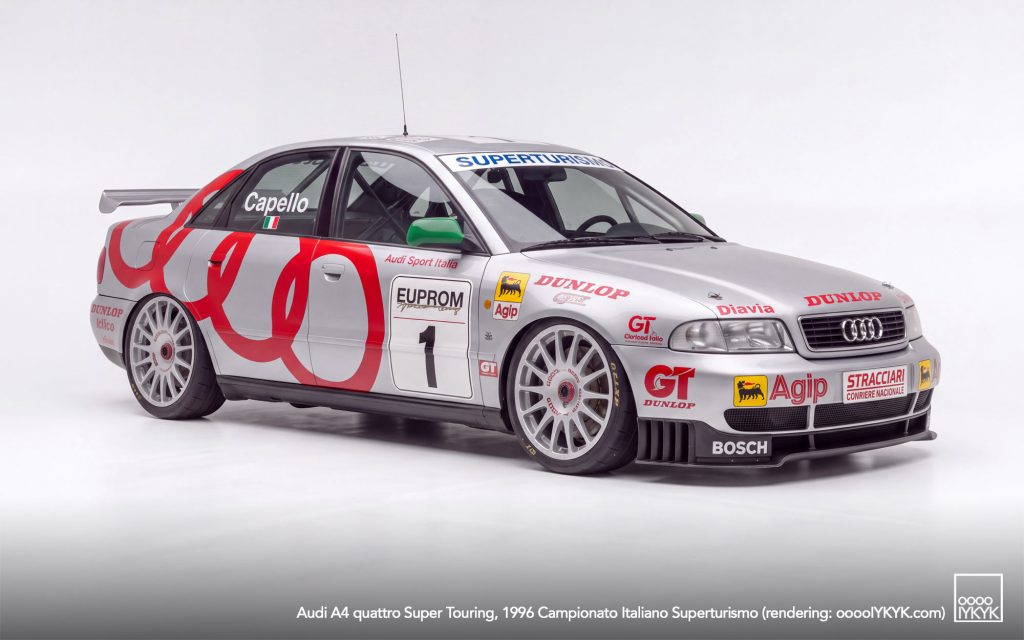
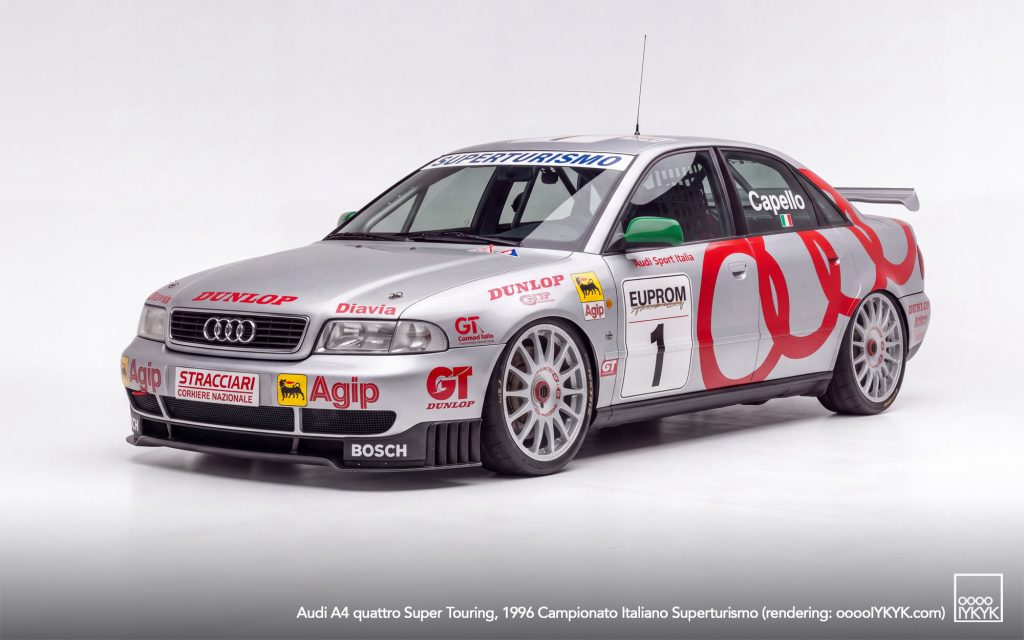
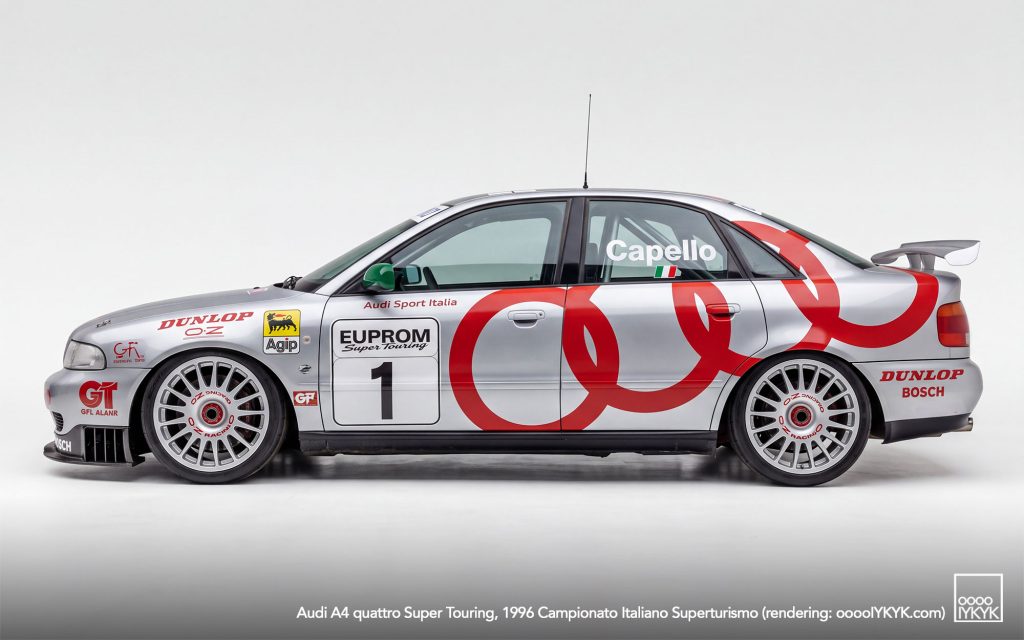
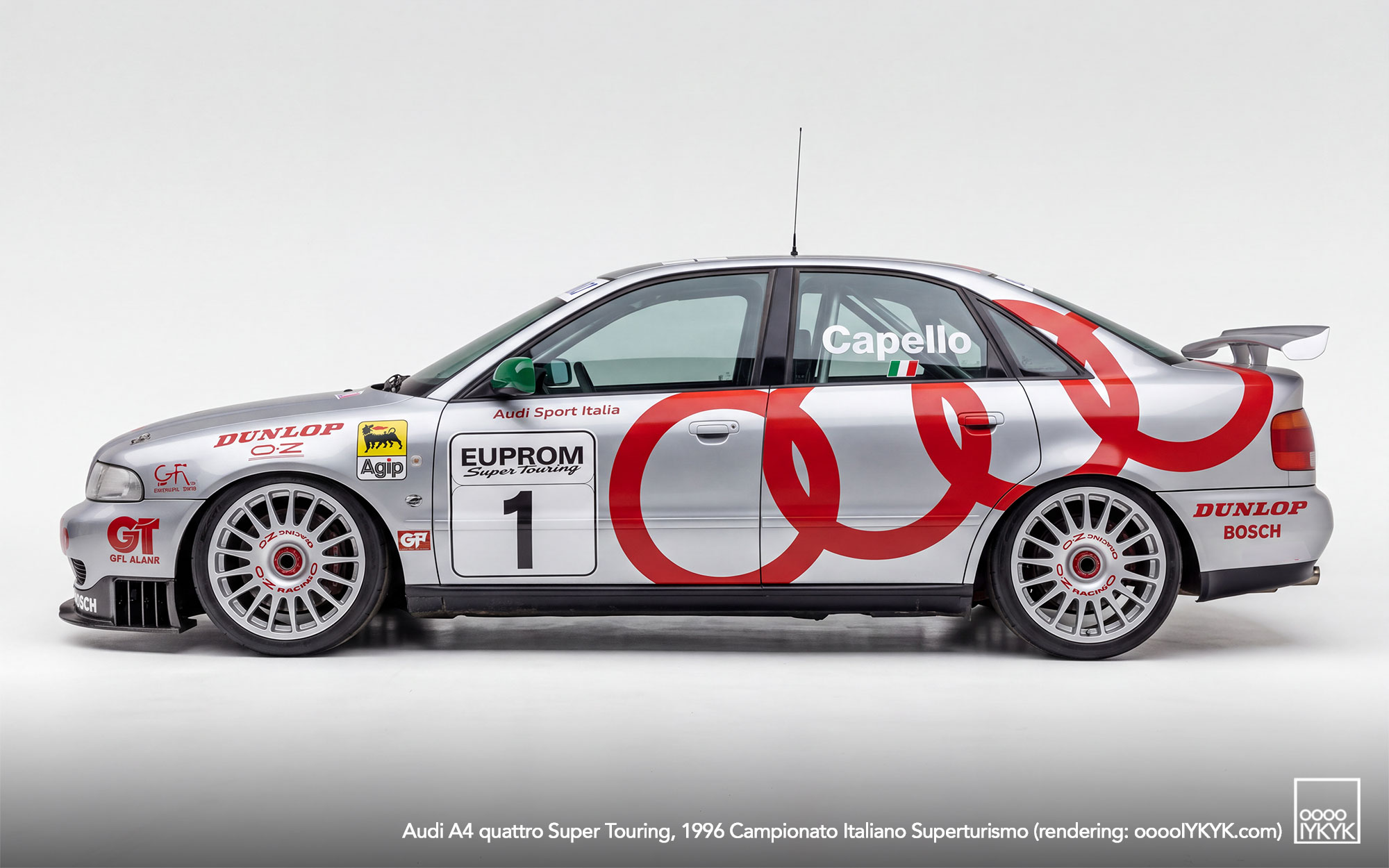
ST18 was Rinaldo “Dindo” Capello’s primary chassis during his championship-winning 1996 Italian Superturismo season. Built by Audi Sport and entered as number 1 by Audi Sport Italia, it carried him to all seven of his victories, including consecutive doubles at Magione, Monza and Binetto. Capello raced ST18 at nine of the ten meetings, securing the title with second- and third-place finishes at the Vallelunga finale.
The Super Touring Register subsequently associates ST18 with Frank Biela’s number 1 Audi Sport UK entry in the 1997 British Touring Car Championship. Biela finished runner-up that season with five victories, although the register does not provide race-by-race chassis assignments establishing which results belong to ST18. Its later ownership and competition history are not documented in the cited record.
ST19
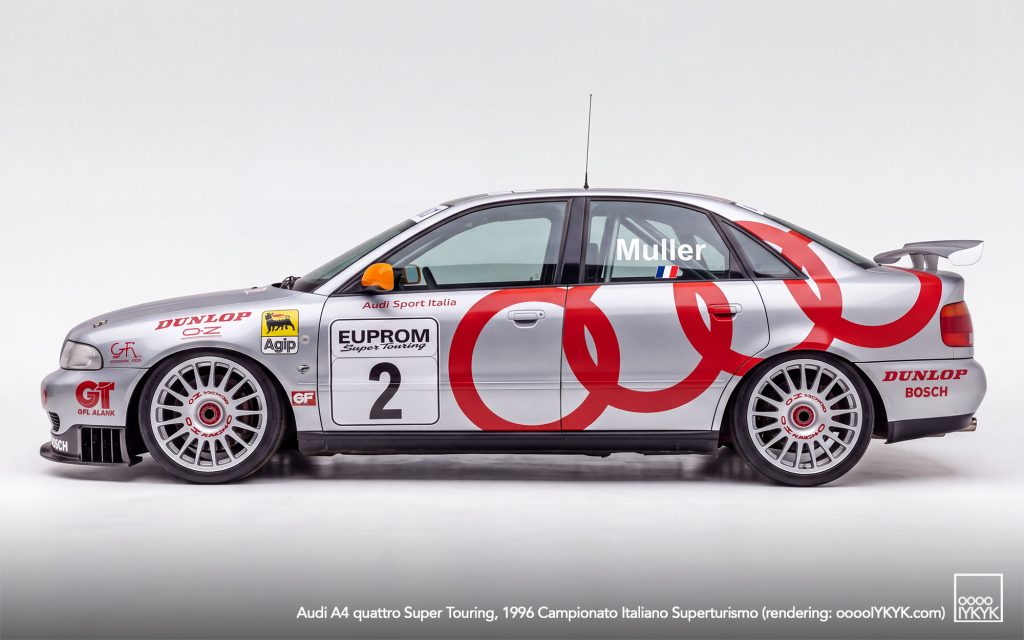
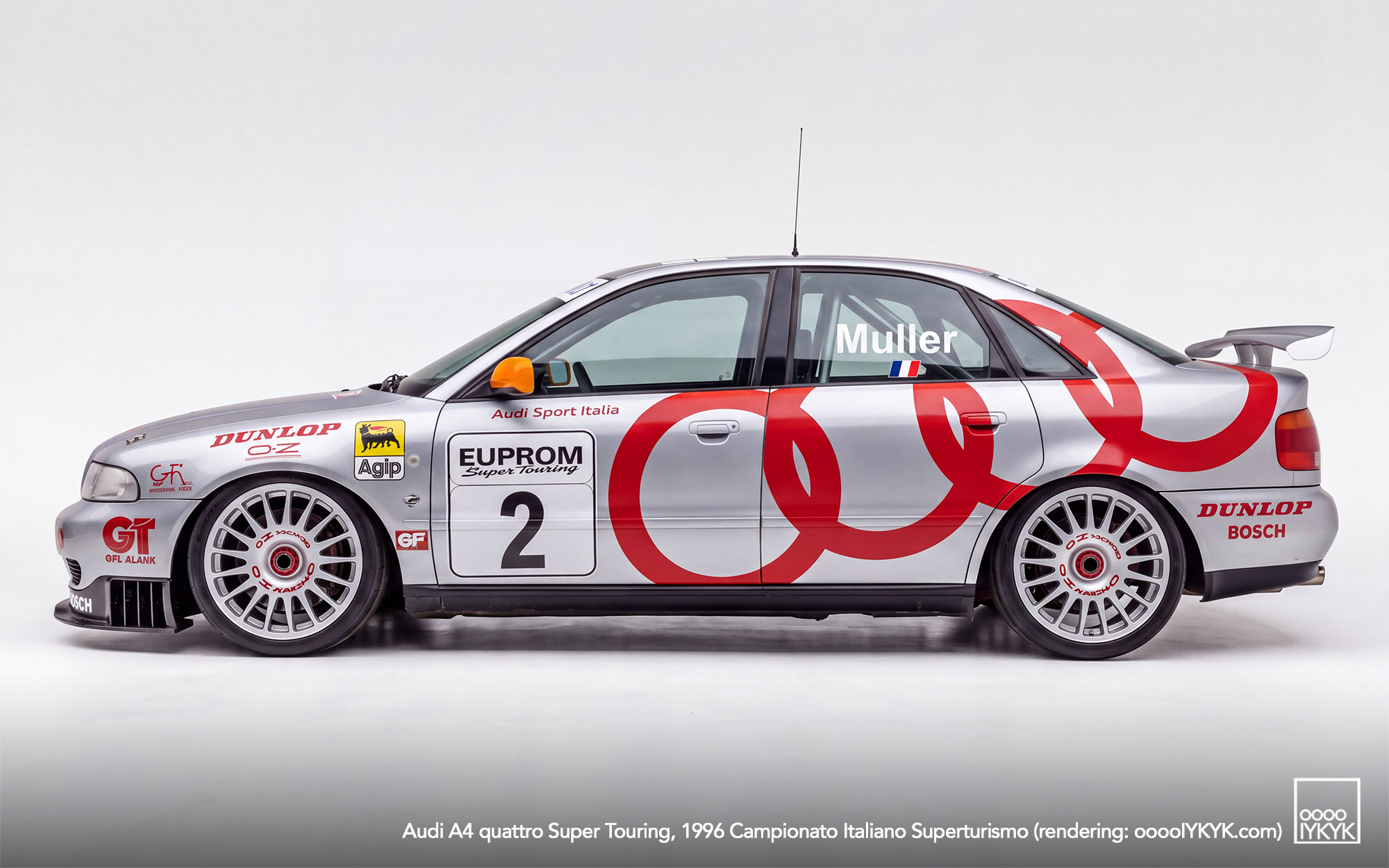
ST19 was Yvan Muller’s primary chassis in the 1996 Italian Superturismo Championship. Built by Audi Sport and entered as number 2 by Audi Sport Italia, it competed alongside Rinaldo Capello’s championship-winning A4 quattro. After the Italian season, ST19 was initially destined for Frank Biela’s Macau entry but was redirected to Australia, where Brad Jones drove it to victory in both races at the Oran Park championship finale.
Cameron McConville raced ST19 in the 1997 Australian Super Touring Championship and shared it with Jean-François Hemroulle at the Bathurst 1000. Retained as a spare for 1998, it also appeared with Paul Glover at the Australian Grand Prix support races and Trevor Sheumack at the championship finale. It subsequently became a passenger ride car before retiring to the National Motor Racing Museum in Bathurst, according to the Super Touring Register.
ST20
ST20 was built by Audi Sport in 1996 as a spare for Audi Sport Italia’s Italian Superturismo campaign. Its documented race appearances that season came at Monza, where Yvan Muller finished second in both races. The Super Touring Register also suggests Rinaldo Capello may have driven ST20 during practice or testing at Magione, although that use remains unconfirmed.
Andrej Studenič subsequently acquired ST20, racing it under the National Team Slovakia banner in Central European Supertouring, German STW and the European Super Touring Cup. Viliam Liedl campaigned it in the 2004 Super Touring Challenge and the Touring Car Trophy in 2004 and 2005. Marek Ďurovkin purchased it in 2006 for European hillclimb competition, while Andreas Marko acquired it in late 2010 for Austrian hillclimbing.
ST22
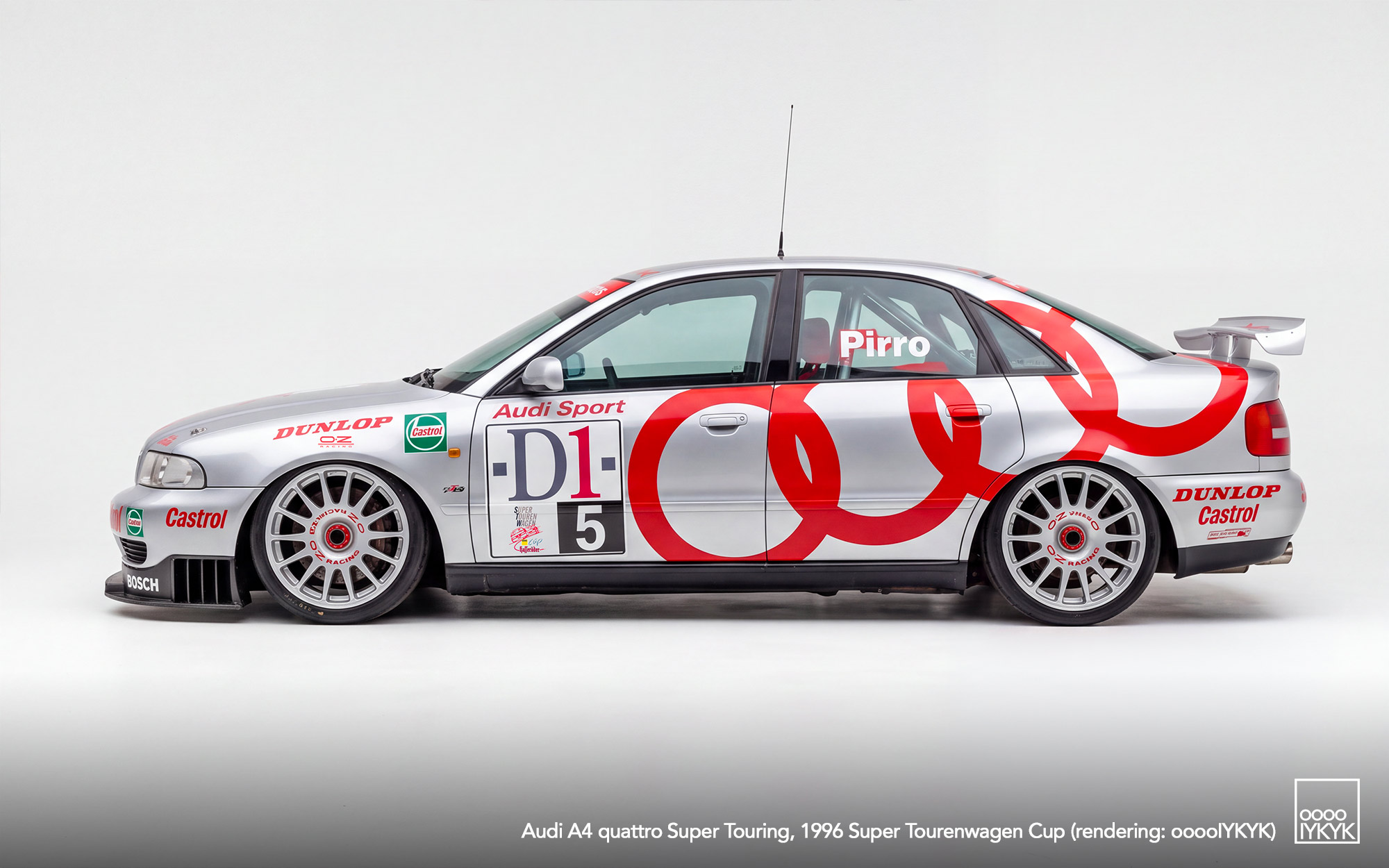
Built by Audi Sport in 1996, ST22 carried Emanuele Pirro to the 1996 Super Tourenwagen Cup (STW) title as the number 5 AZK ROC Competition entry. Pirro recorded nine victories and 15 podium finishes across 18 races, securing the championship before the final meeting. Later that year, Yvan Muller drove the chassis at Jerez in a two-wheel-drive configuration, while Frank Biela raced it at Macau, winning the Guia Race on aggregate with second-place finishes in both legs.
Kristoffersson Motorsport subsequently acquired ST22, entering it for Tommy Kristoffersson in the 1998 Swedish Touring Car Championship. Updated with a newer engine specification, larger brakes and revised suspension, it became Mattias Ekström’s 1999 STCC championship-winning car. Magnus Krokström raced it in 2000 and 2001, and the Super Touring Register records its purchase by Trond Gulbrandsen and Sven Runar Nilsen in 2003.
ST23
ST23 was an Audi Sport Italia spare that contributed two podium finishes to Capello’s 1996 Italian Superturismo title. Built by Audi Sport that year, it replaced his regular ST18 at the penultimate meeting, held at Varano on September 15. Capello drove the number 1 A4 quattro to third place in both races, behind BMW teammates Johnny Cecotto and Emanuele Naspetti.
Capello returned to ST18 for the Vallelunga finale, leaving Varano as ST23’s only documented race meeting in the Super Touring Register. The record does not explain the substitution or identify subsequent competition appearances, owners or the car’s present location. Its documented significance rests on its supporting role in Audi’s championship-winning Italian campaign.
END OF THE SUPER TOURING ERA
The early 2000s saw the end of the FIA Class 2 rule set. Rising costs and technological escalation led the FIA to replace Super Touring with the less complex Super 2000 (S2000) regulations. With this change, the A4 Super Touring’s official factory-backed competitive life effectively ended.
LEGACY
The 1996 Audi A4 quattro Super Touring is widely considered a legend of touring car racing. Its unparalleled multi-series dominance forced regulatory changes, established quattro as a benchmark for traction and handling, and cemented Audi’s reputation as a world-class touring car manufacturer. To this day, the A4 STW is remembered as the car that dominated so thoroughly that its defining technology ultimately had to be banned—a distinction shared only by a handful of motorsport greats.
PHOTO GALLERY