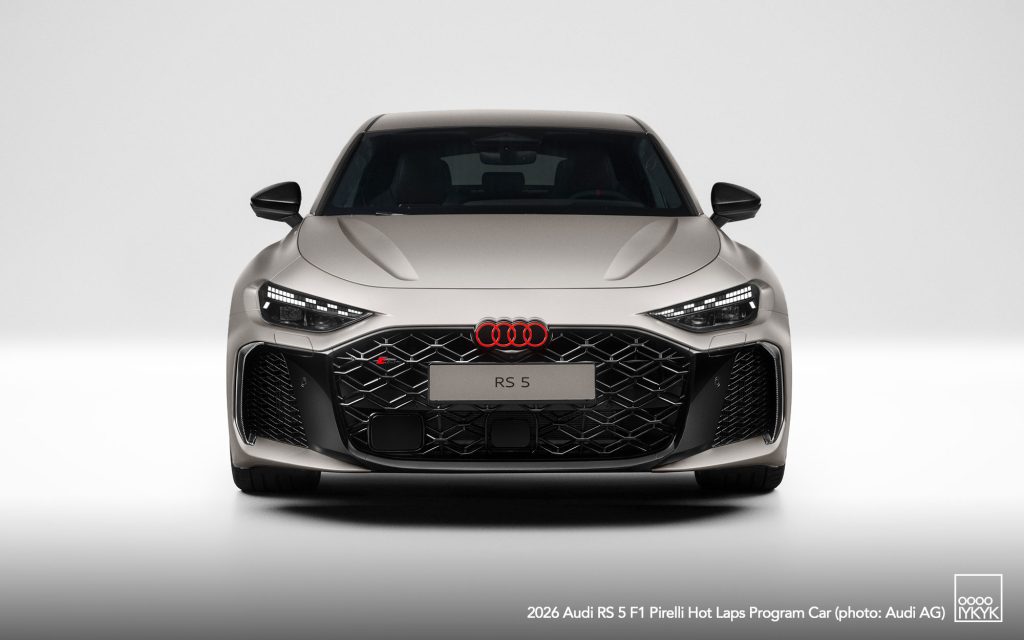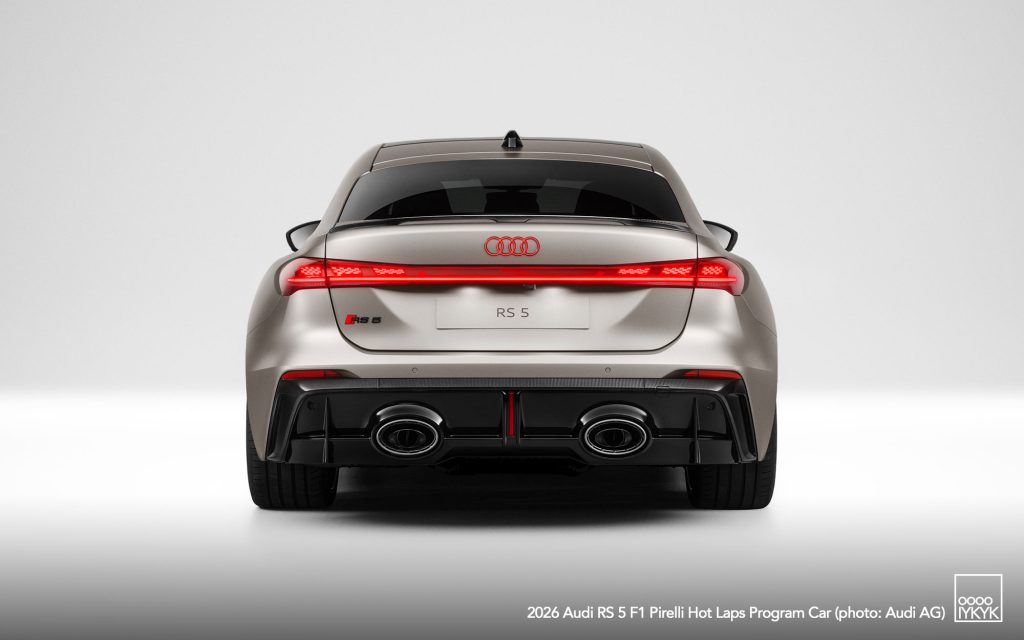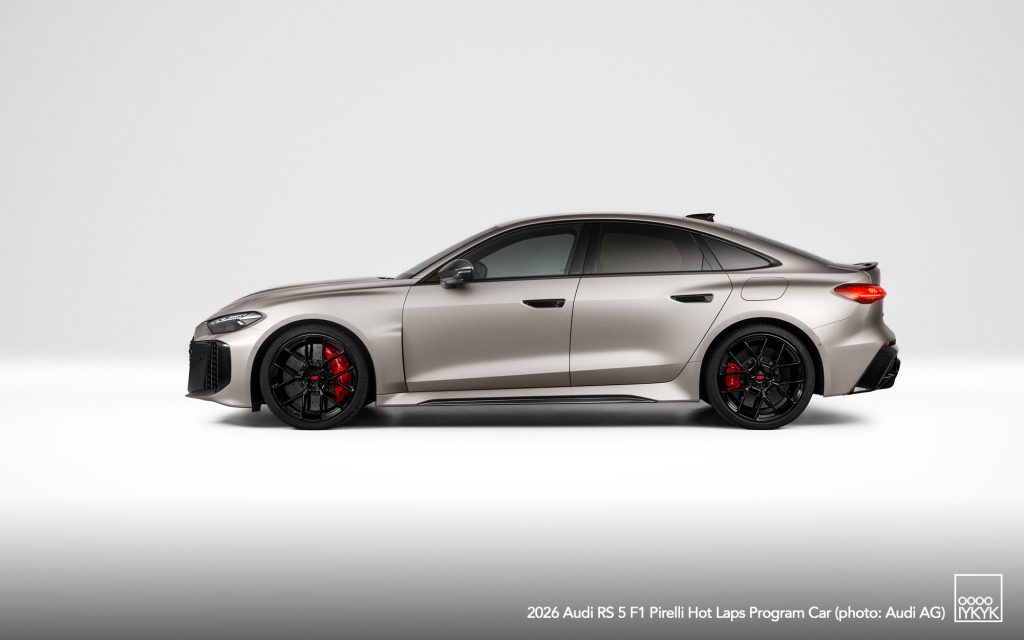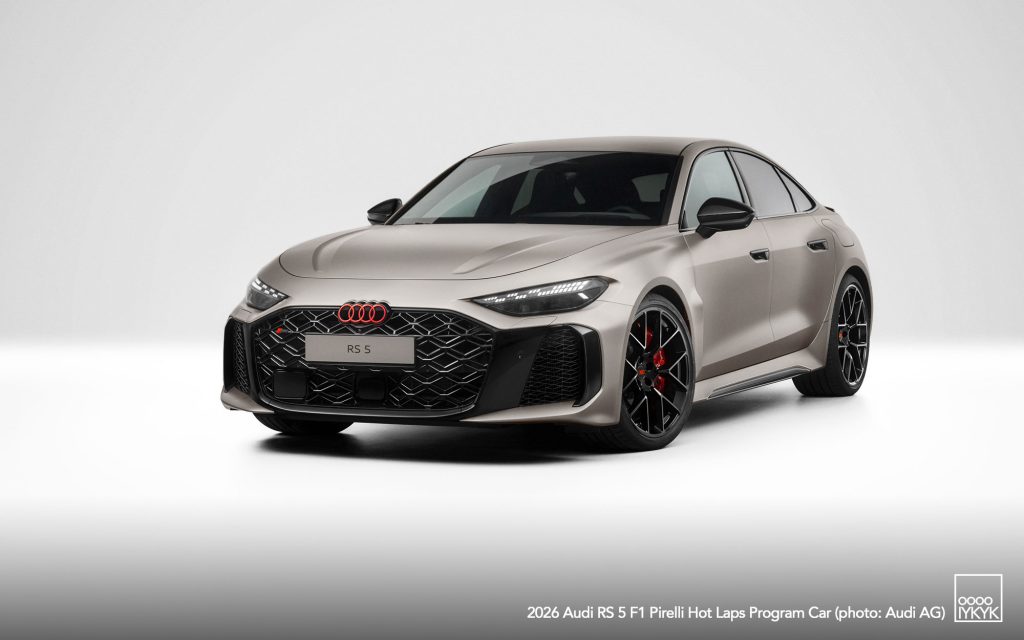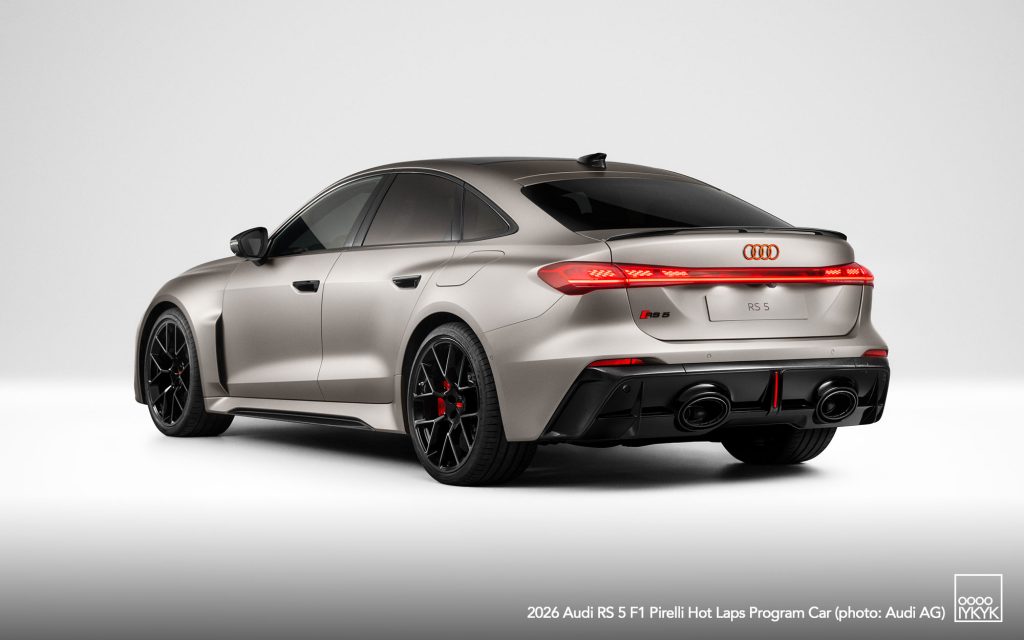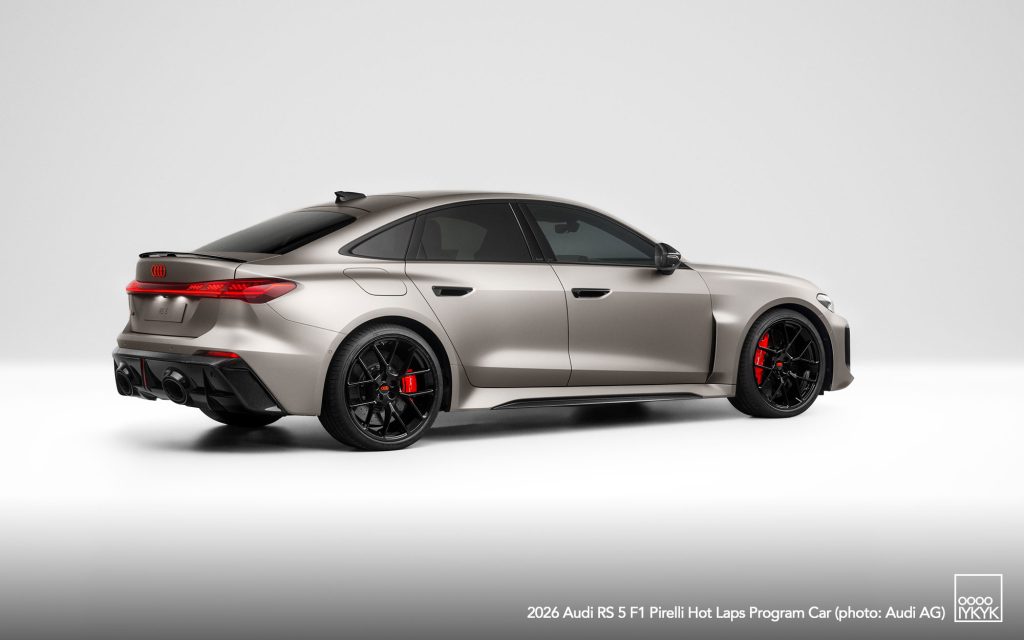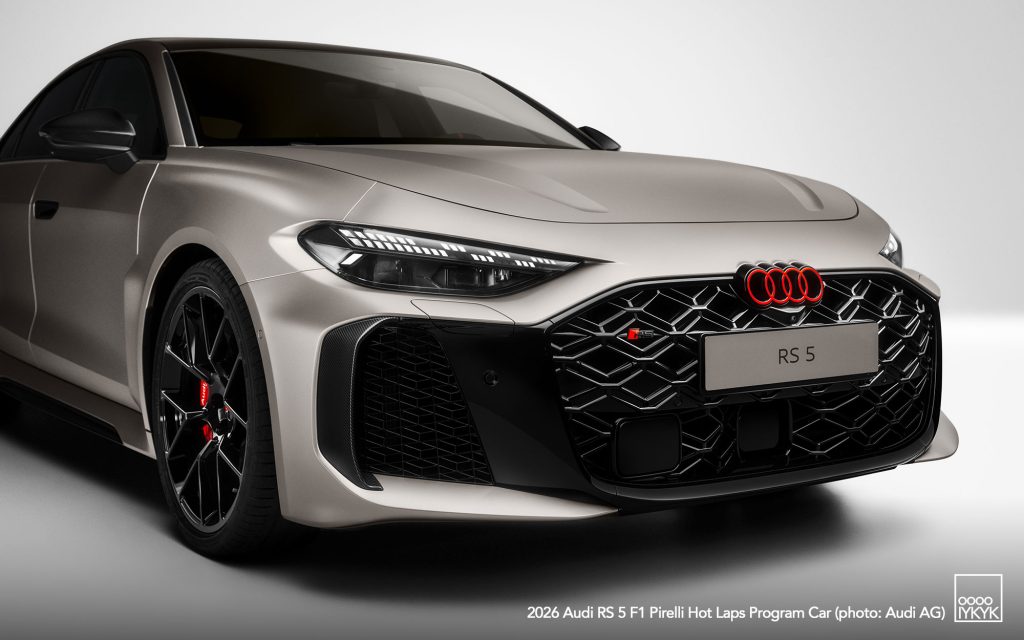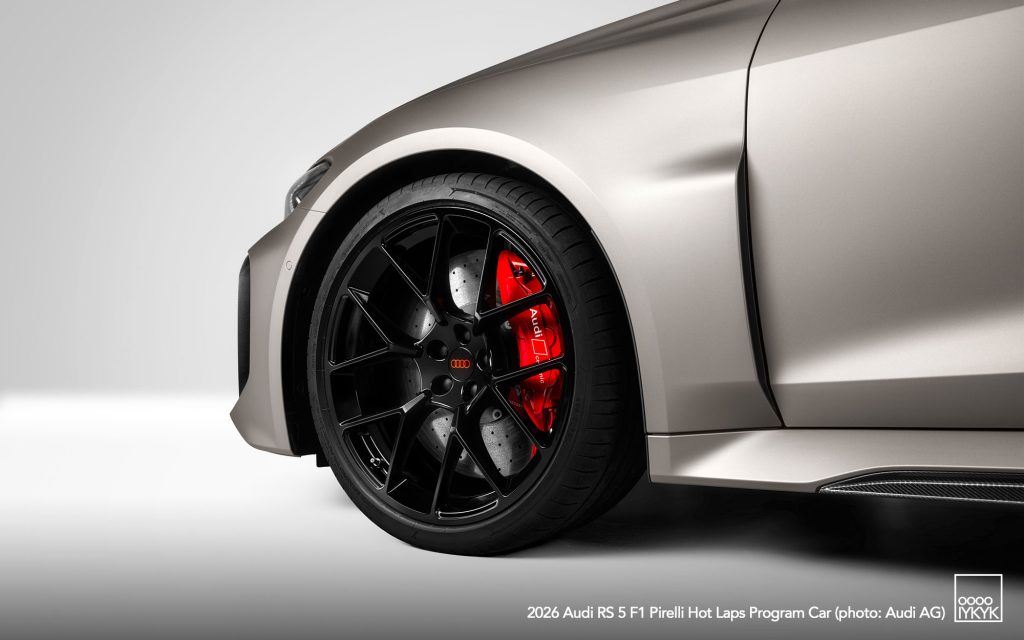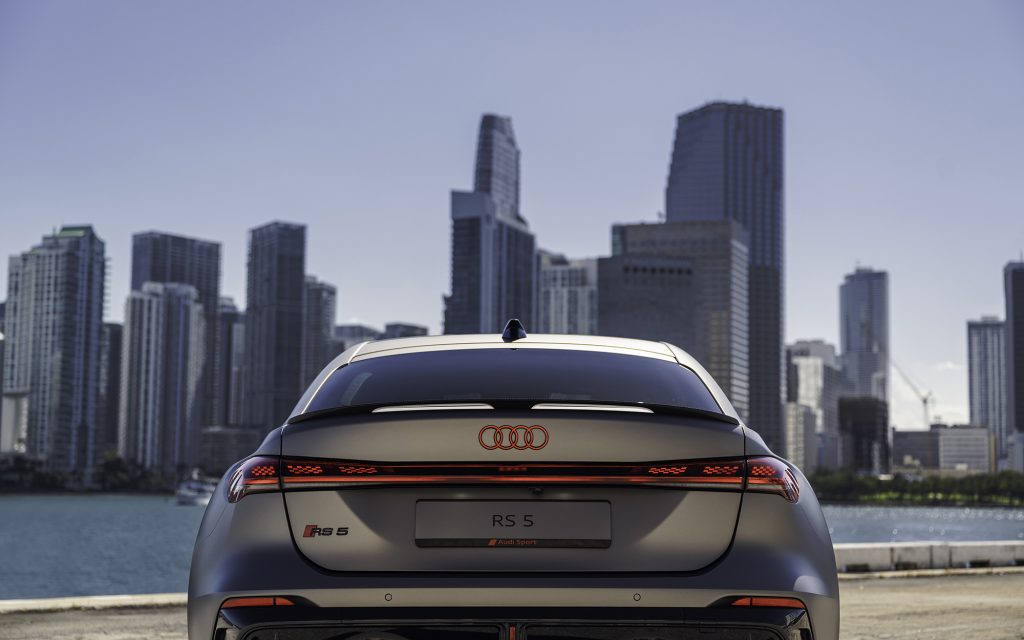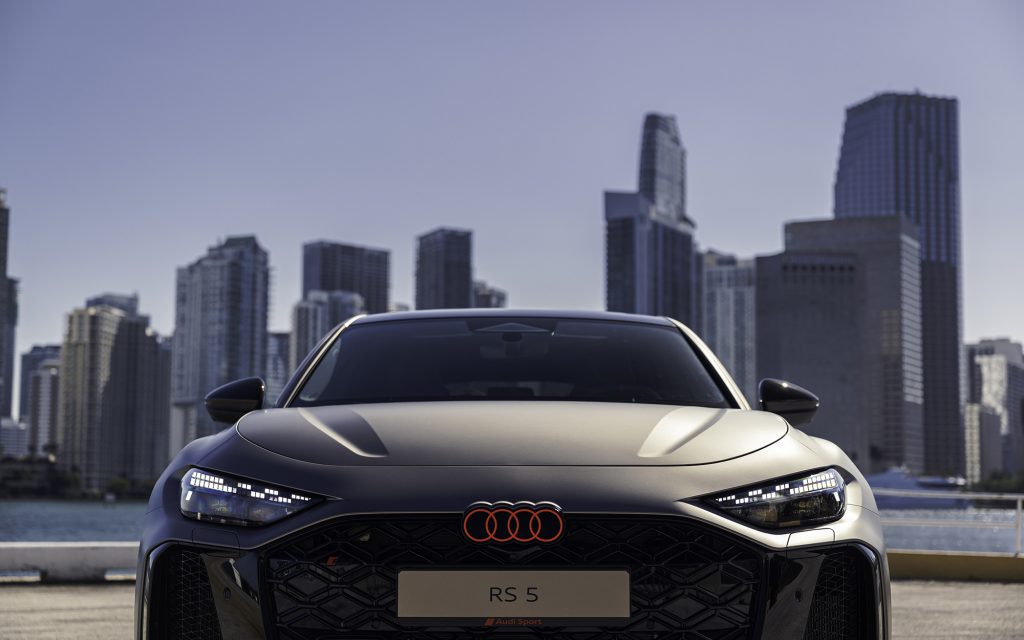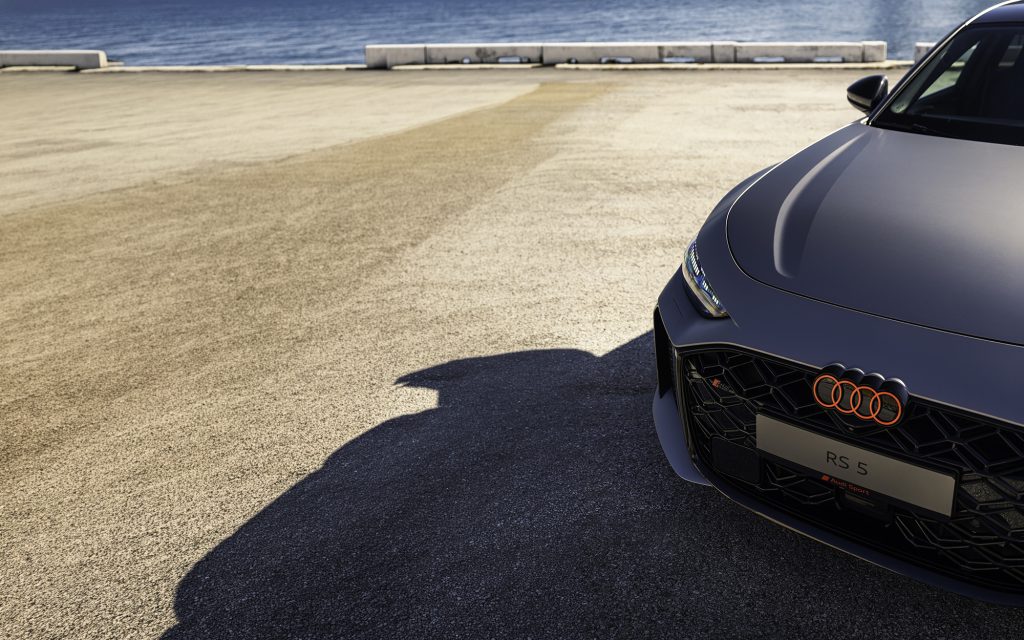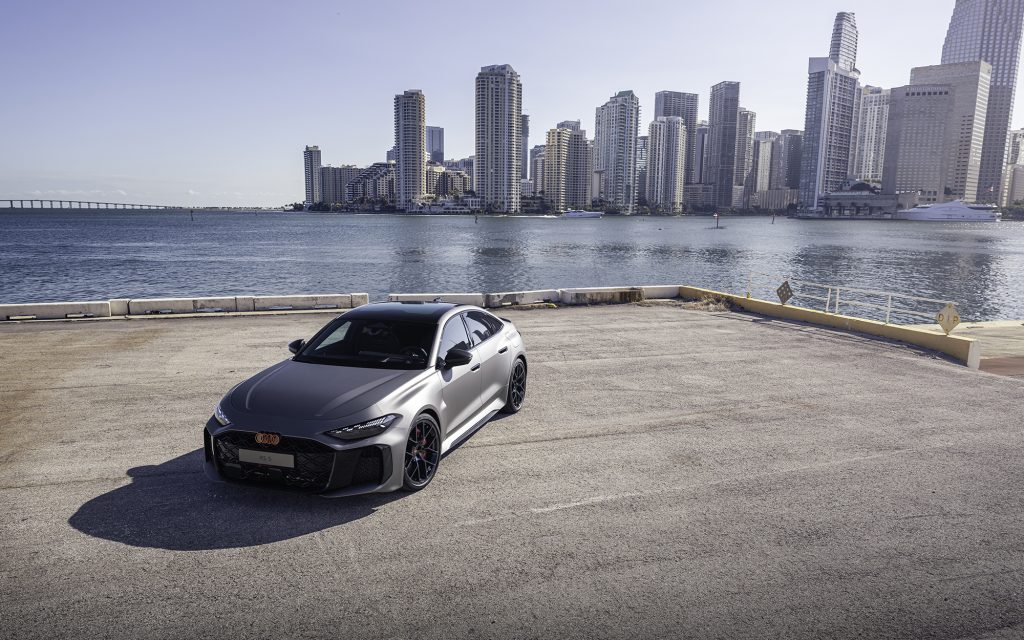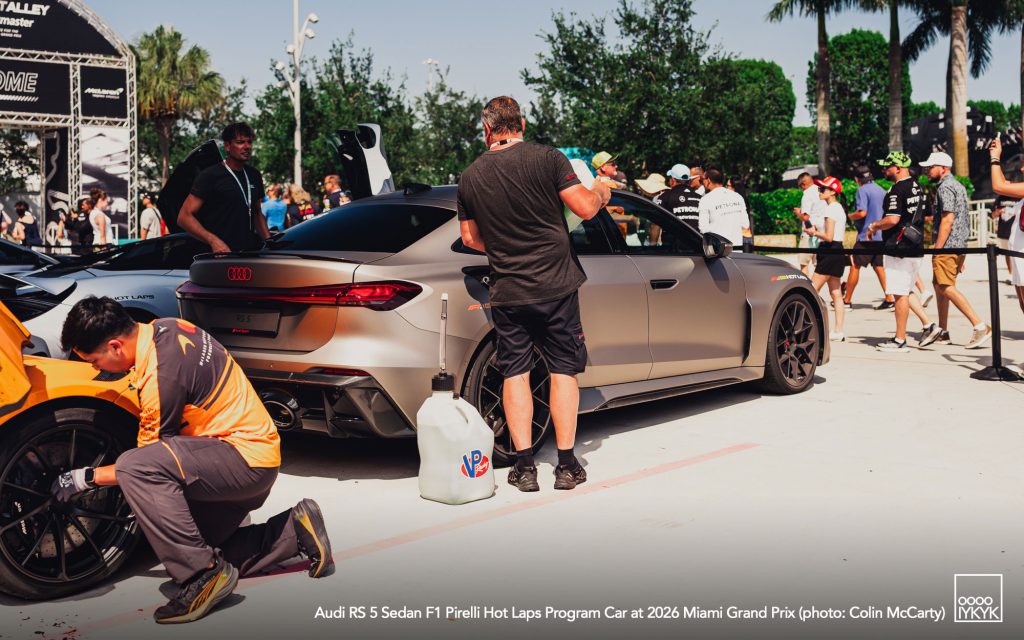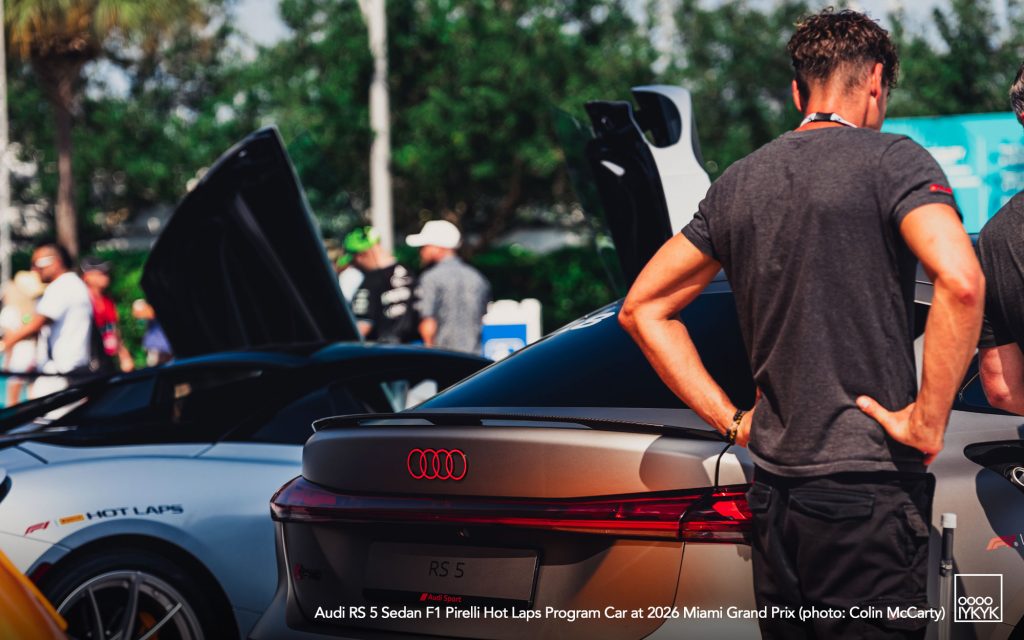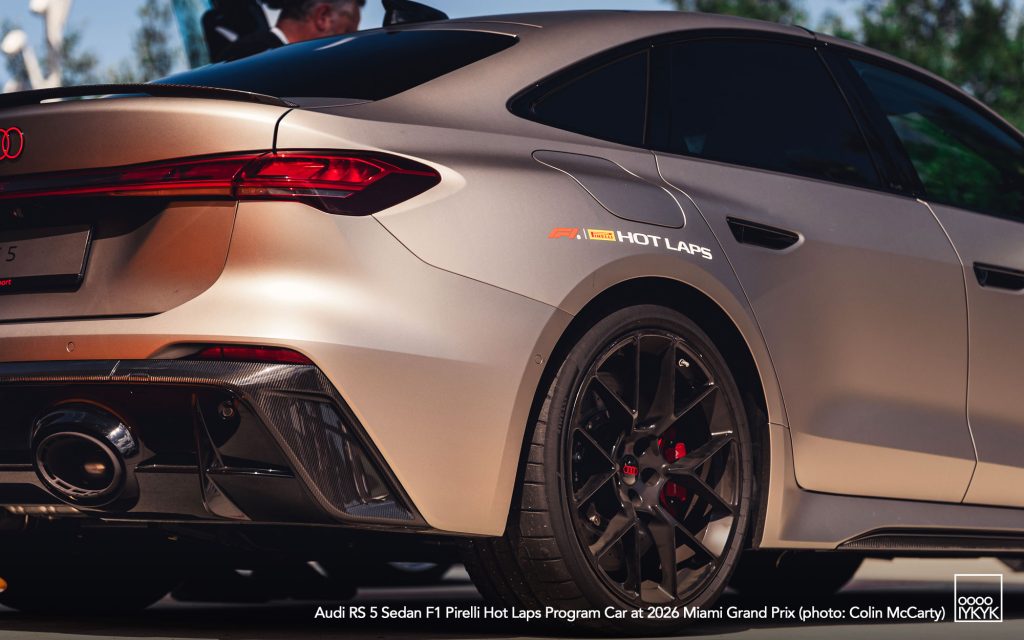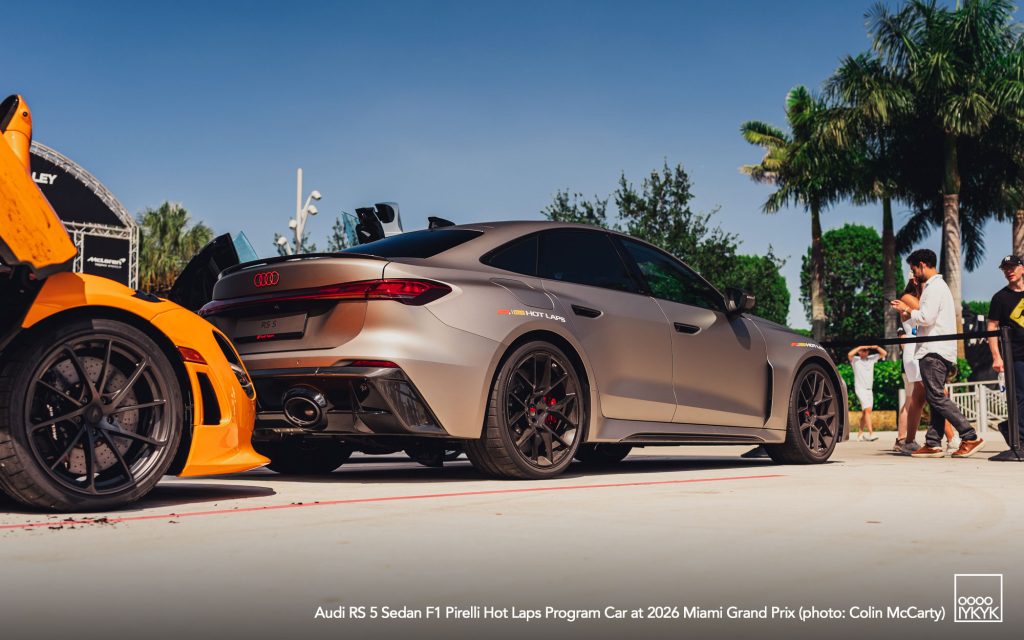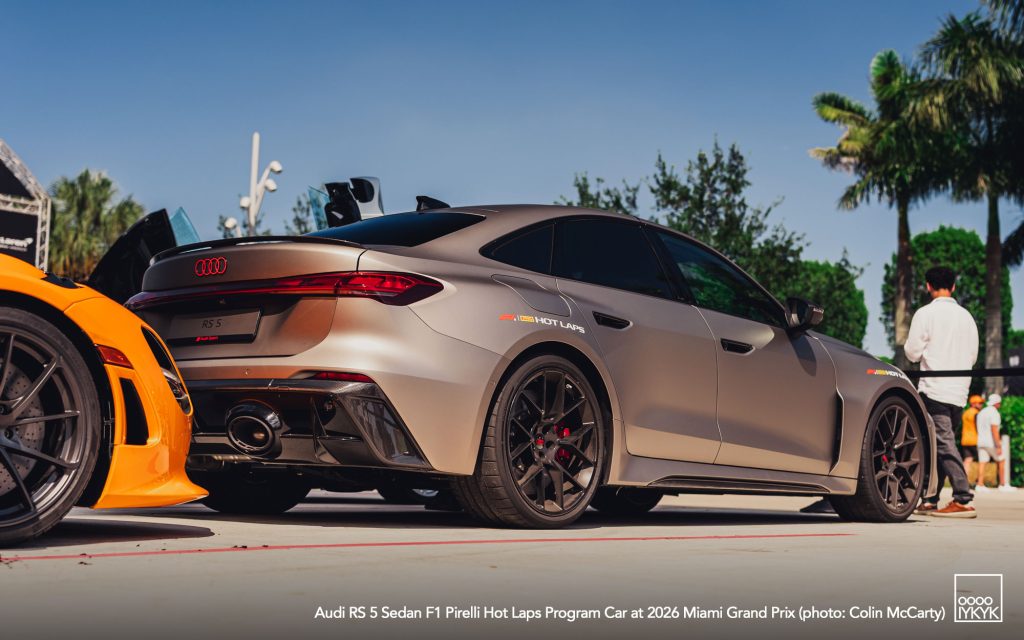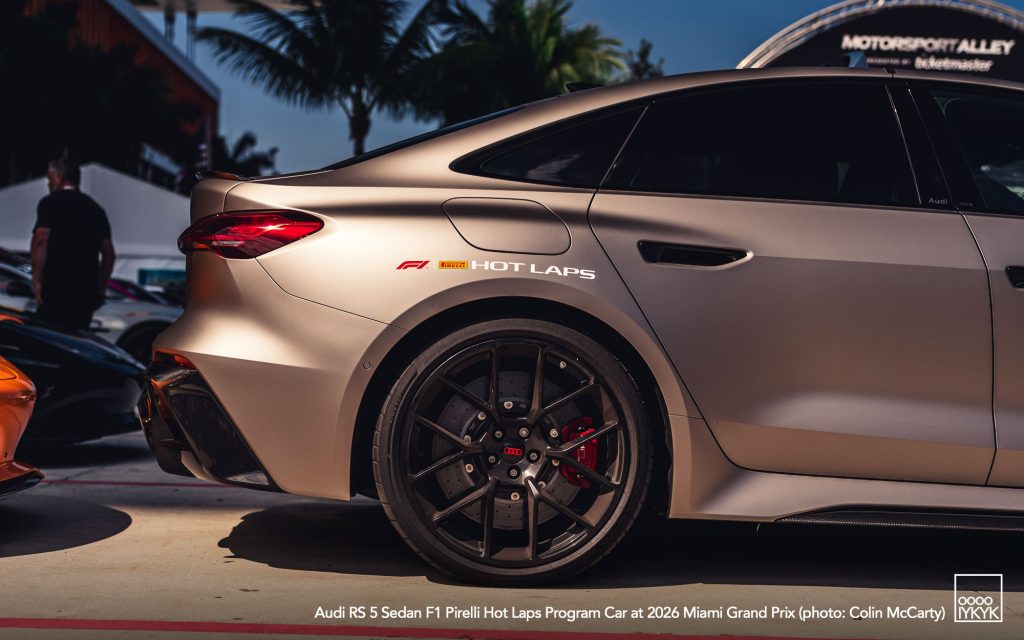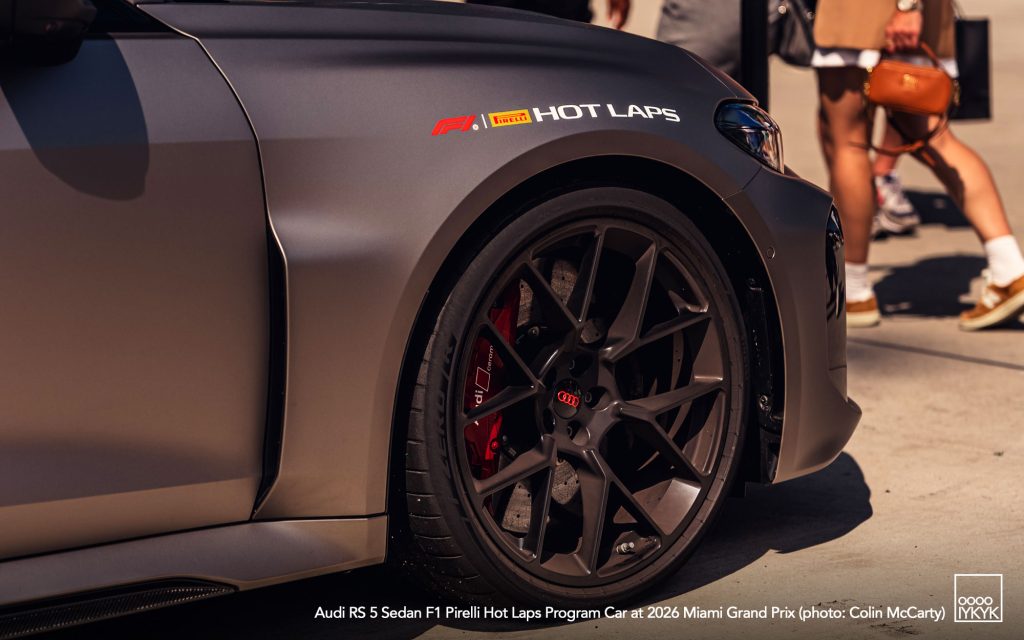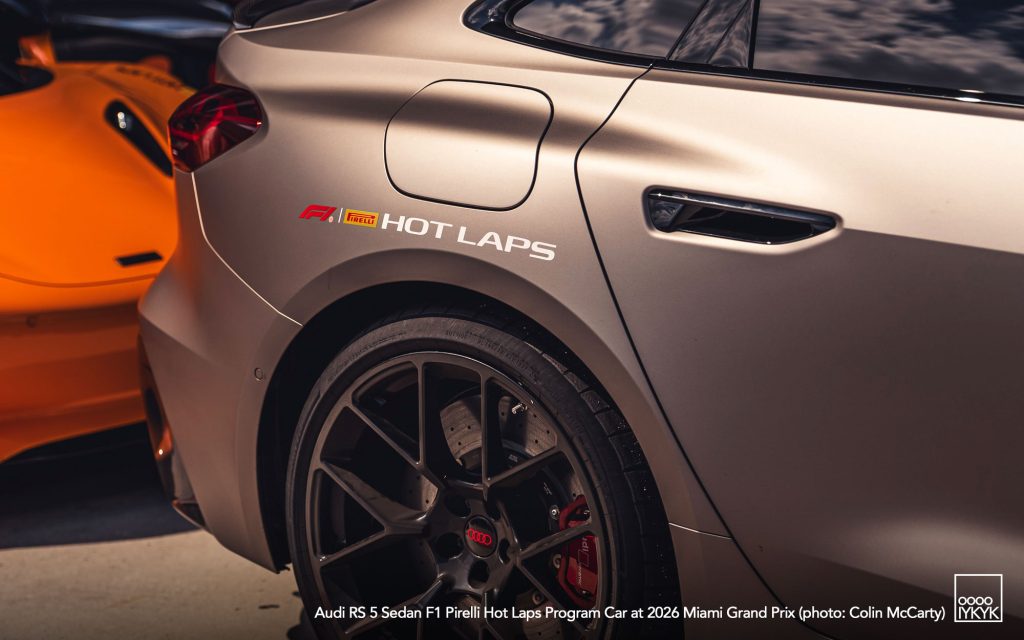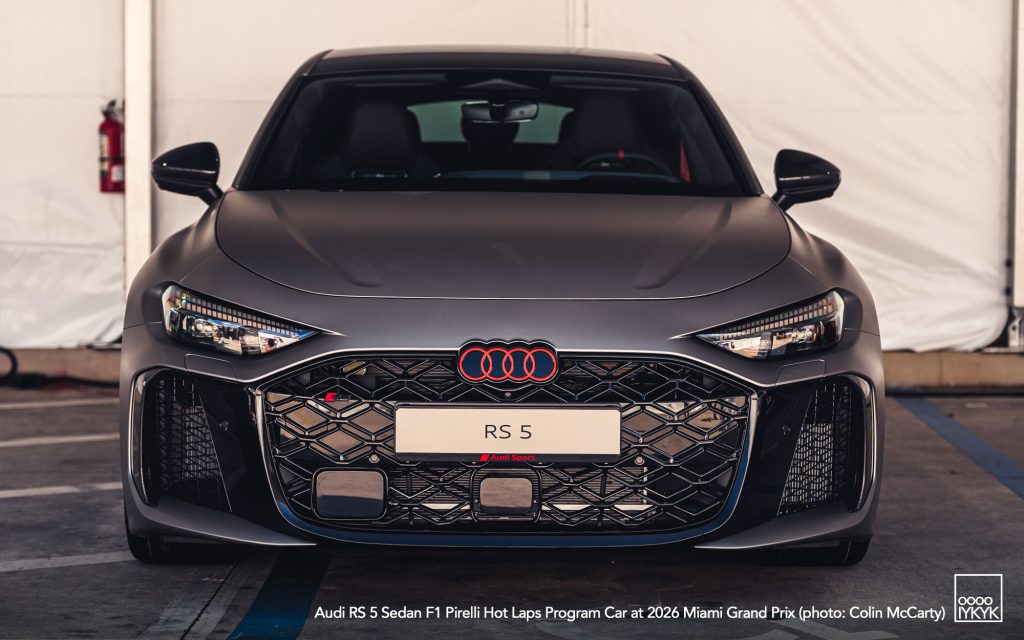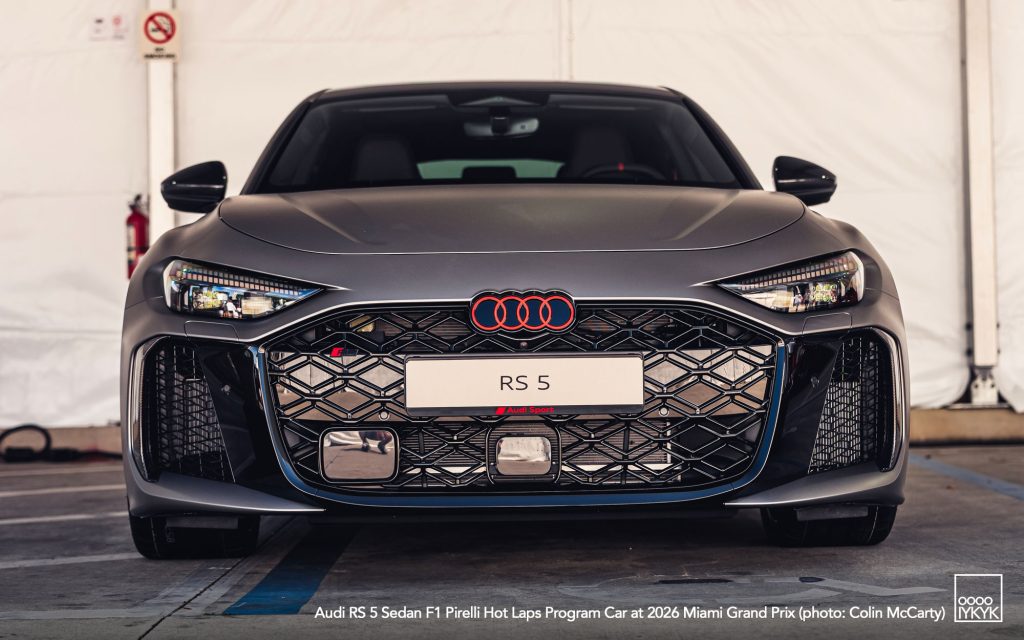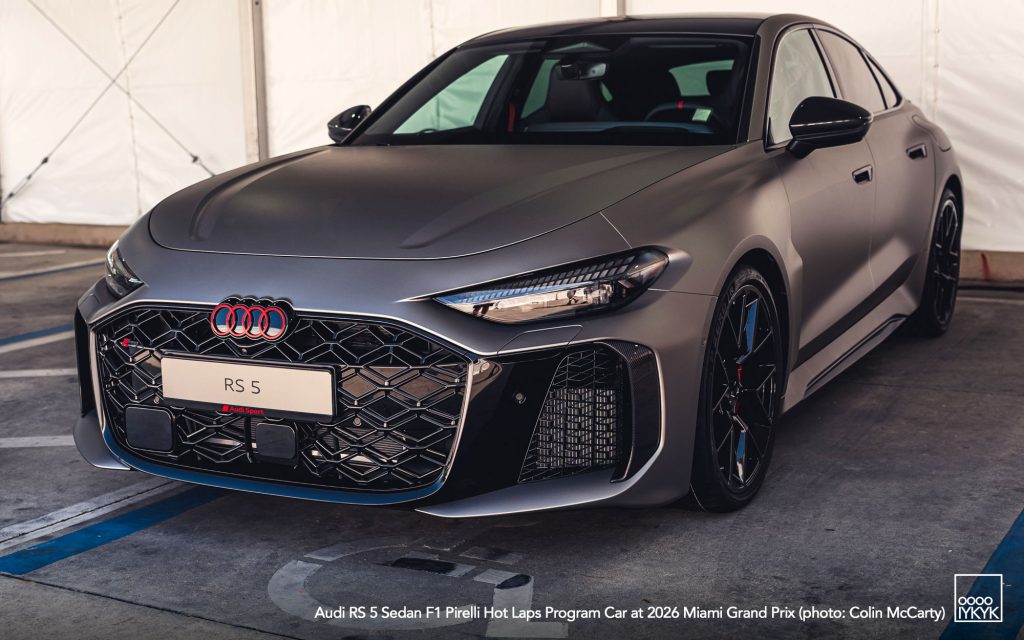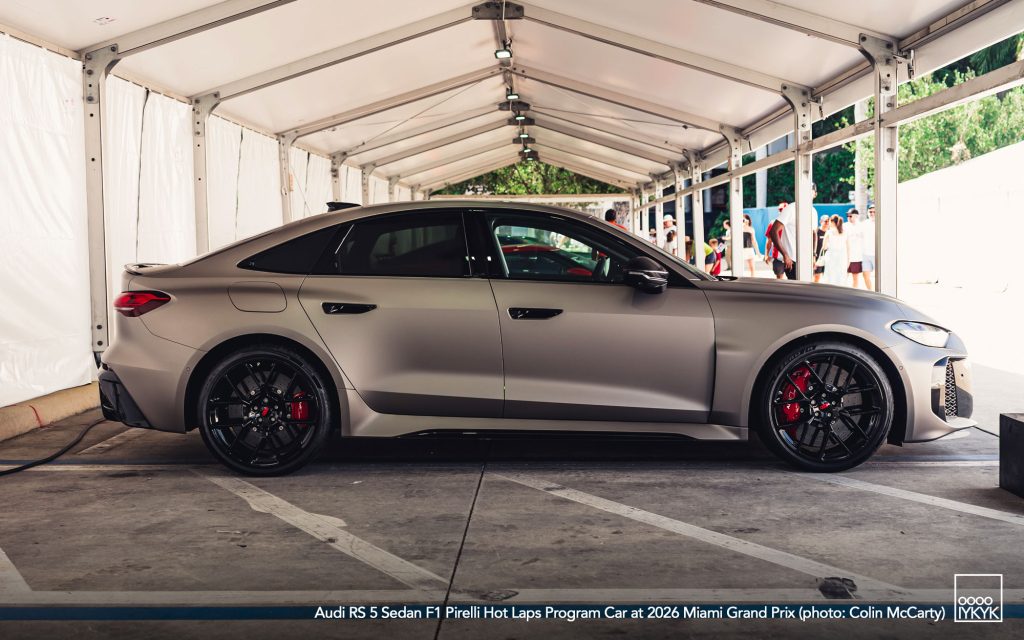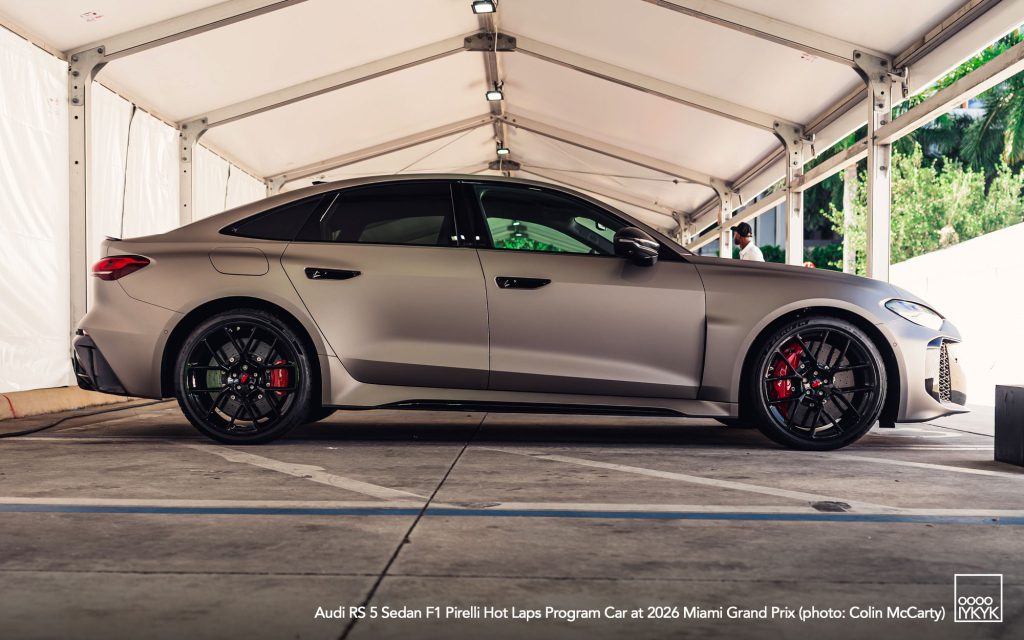

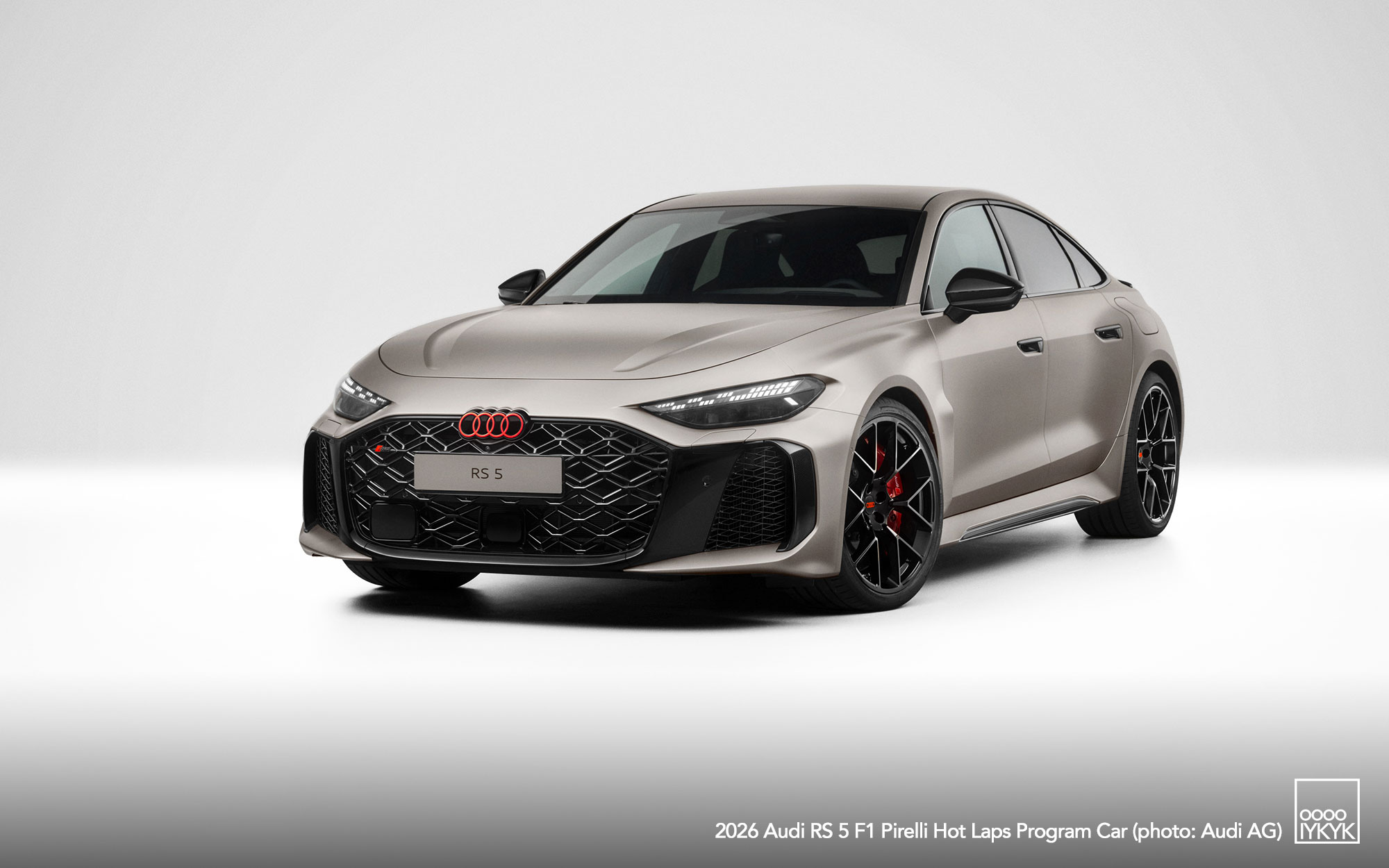

What: Audi RS 5 Sedan
Era: Audi modern era
Model Family: RS 5
Market / Zone(s): Europe
Model Year / F1 Season: 2026
Number Produced: 3 Confirmed, Full Number Unknown
Model / Generation Code(s): B10
Chassis / Matrix: Type FU / PPC
TECHNICAL DETAILS
Body Style(s): Sedan
Drivetrain Configuration: longitudinal front engine, all-wheel drive
Engine(s): 2.9-liter twin-turbocharged V6 (TFSI)
Total Power Output: 470 kW (639 PS)
Horsepower: approx. 631 SAE hp
Torque: 825 Nm, 608 lb-ft
Electric Power: 130 kW (177 PS)
Peak Torque:
Battery Capacity: 25.9 kWh (22 kWh net)
Charging Capacity: 11 kW AC
Electric Range: up to 84 km (52 mi), up to 87 km (54 mi) city
Acceleration (0–100 km / 62 mph): 3.6 seconds
Transmission(s): 8-speed tiptronic automatic (torque converter)
All-Wheel Drive Type: quattro with Dynamic Torque Control and electro-mechanical rear torque vectoring
Steering: RS-tuned electromechanical steering
Steering Ratio: 13:1
Front Brake Diameter: 420 mm (steel), 440 mm (ceramic optional)
Rear Brake Diameter: 400 mm (steel), 410 mm (ceramic optional)
Wheelbase: 2903 mm
Length: 2896 mm
Width: 1952 mm
Height: 1428 mm
Curb Weight: approx. 2,370 kg (5,225 lb)
OTHER DETAILS
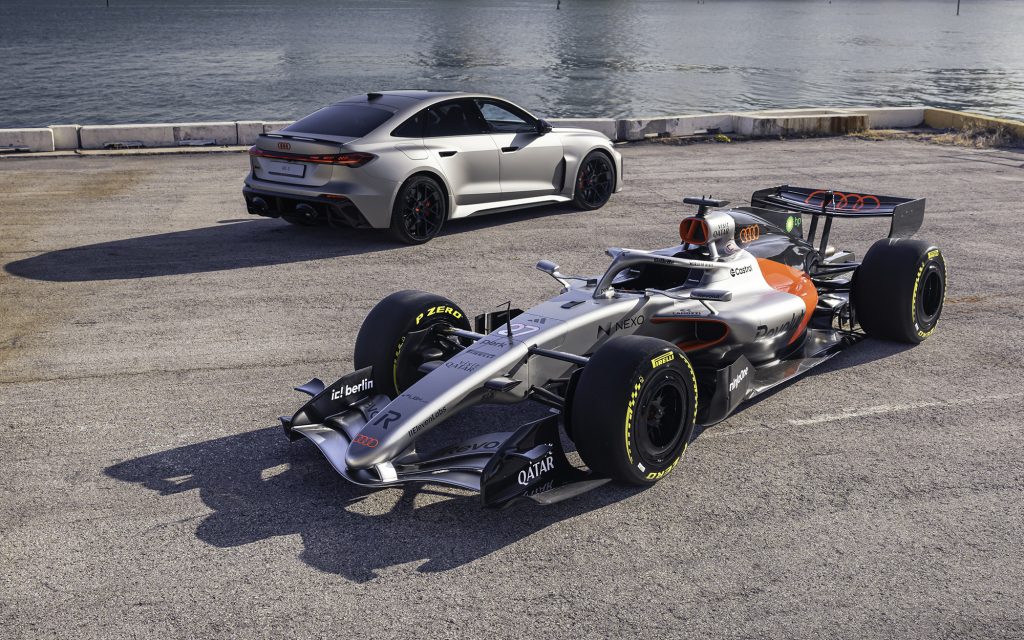
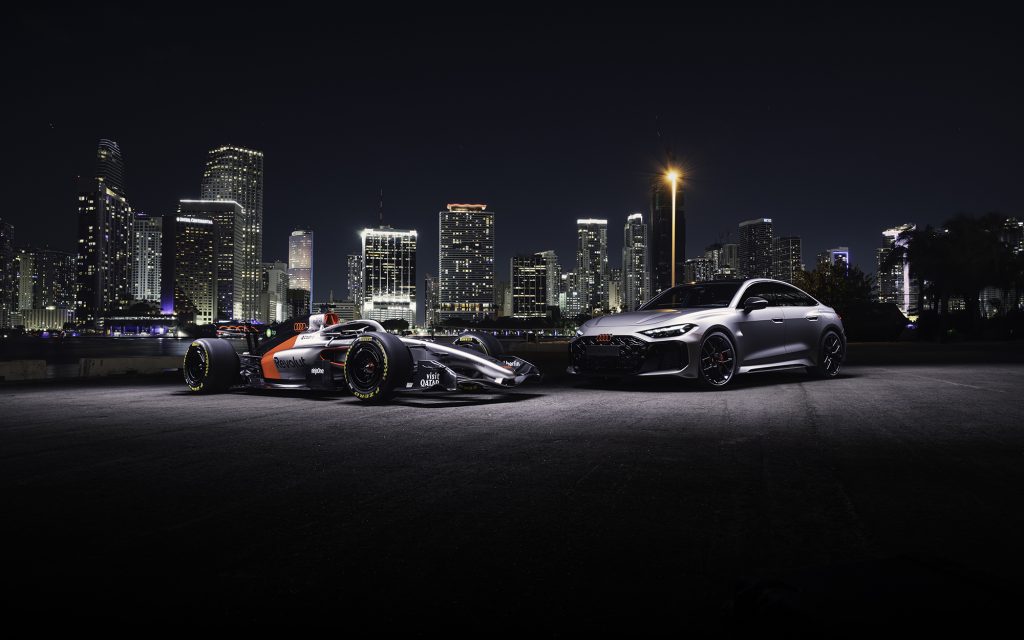
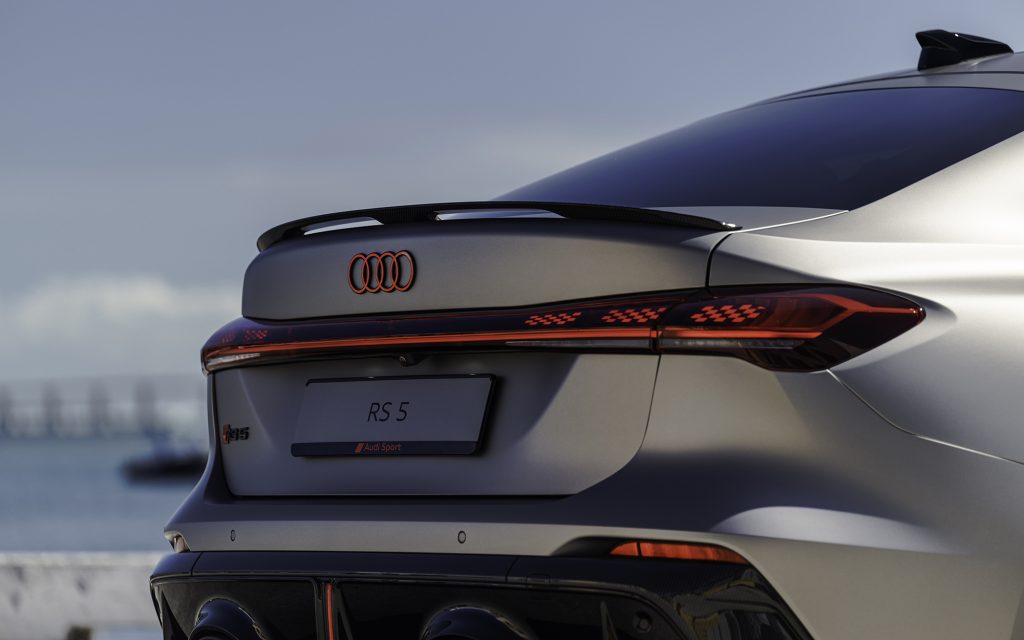
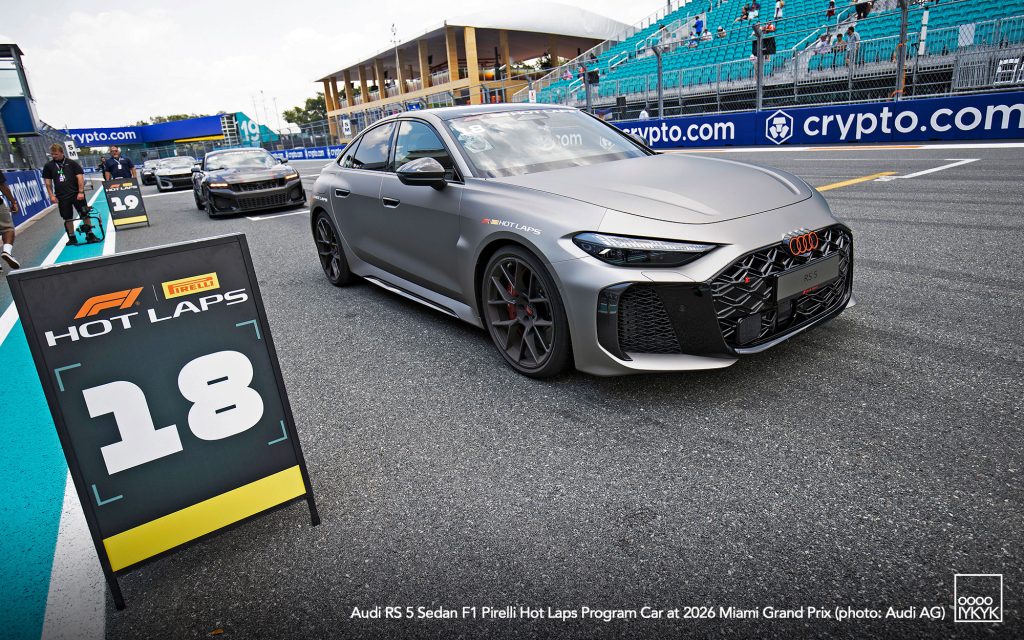
Special Features: Formula 1 Pirelli Hot Laps support car specification, Titanium matte exterior finish, Lava Red Audi rings (front and rear) and wheel cap detailing
Drivers: Dindo Capello, Markus Winkelhock
Debut: 2026 Miami Grand Prix
Status: Formula 1 support vehicle / promotional fleet
BACKGROUND
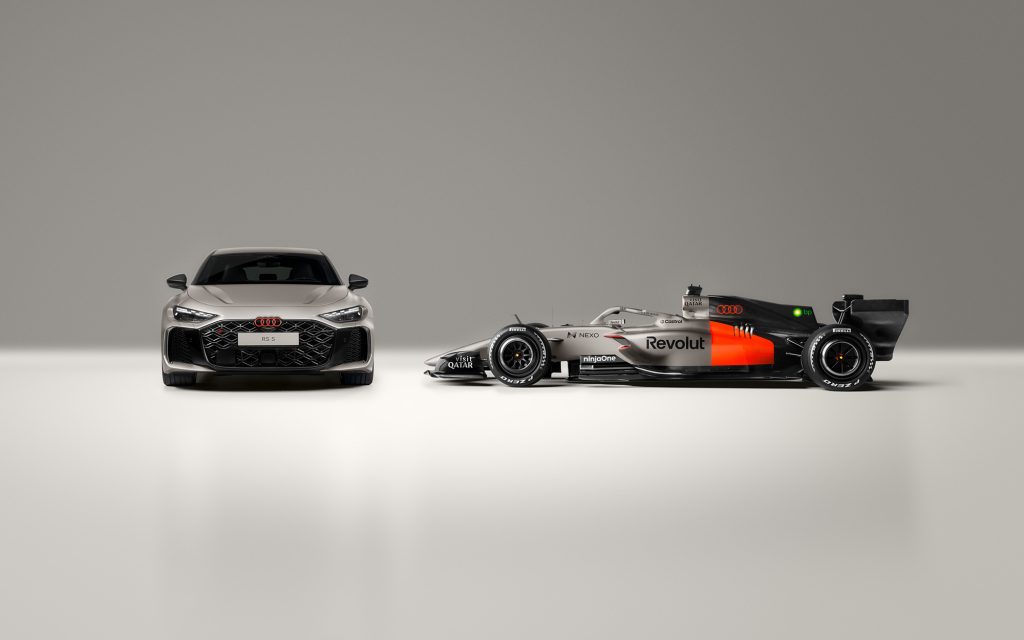
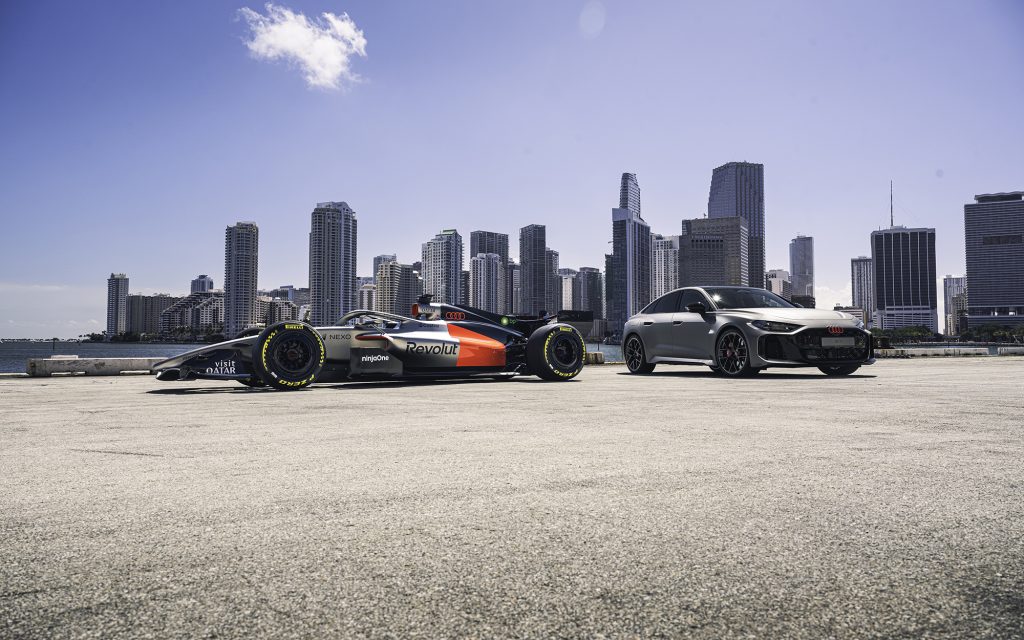
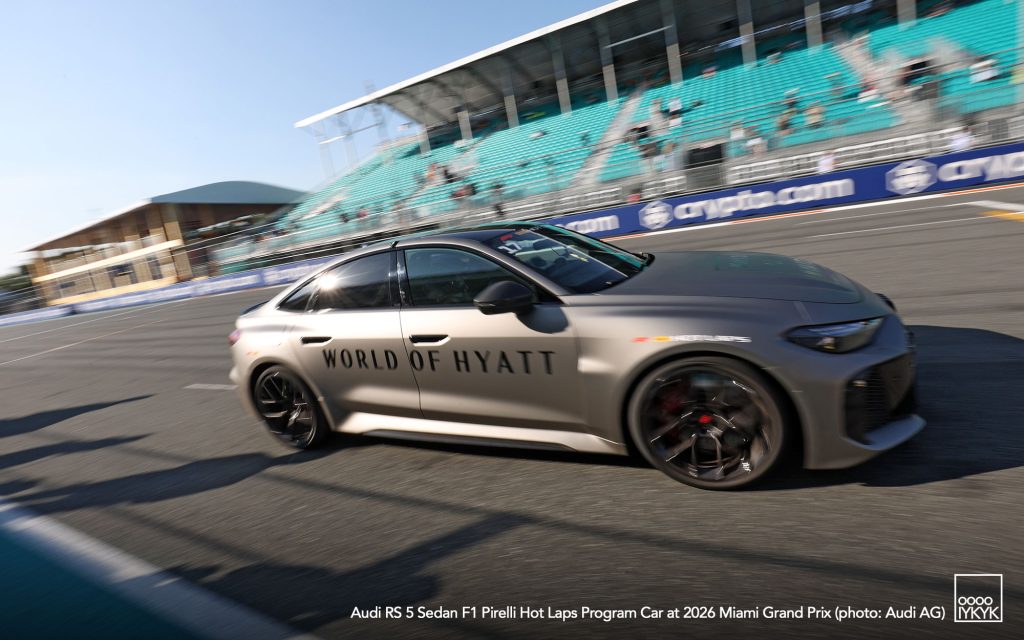
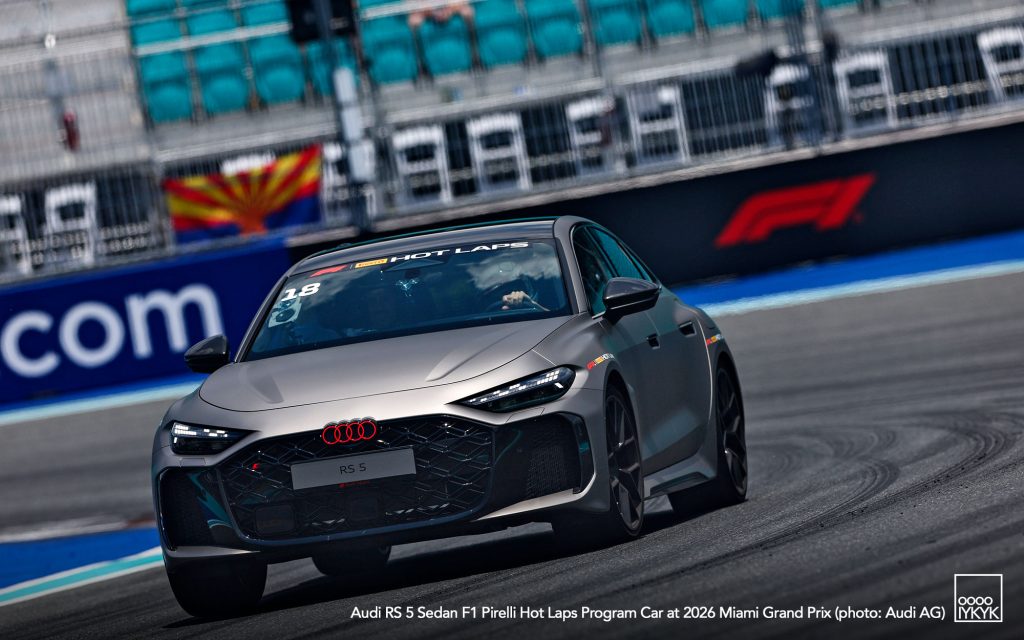
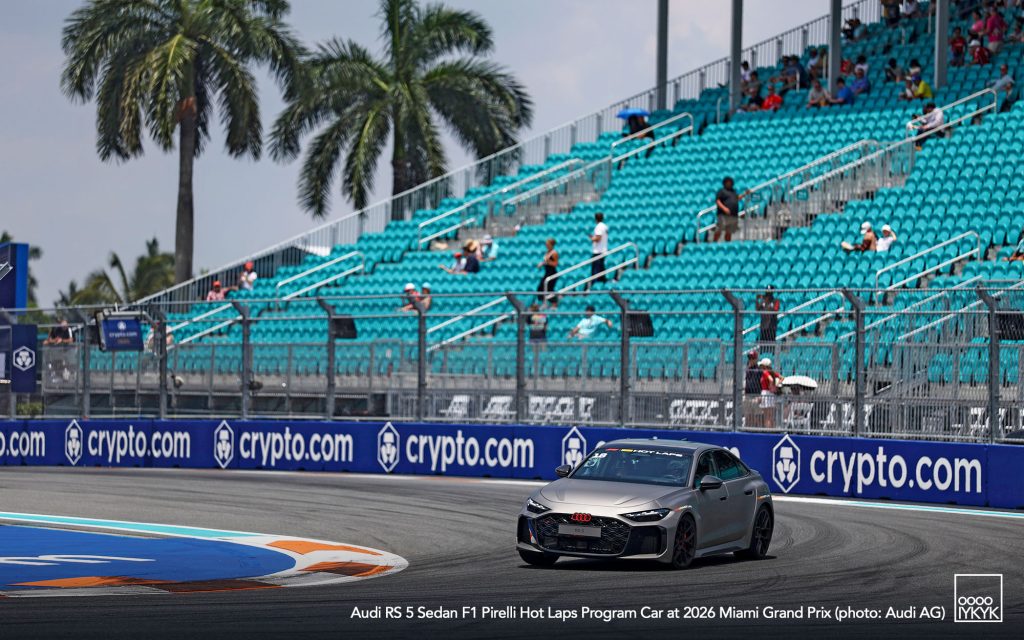
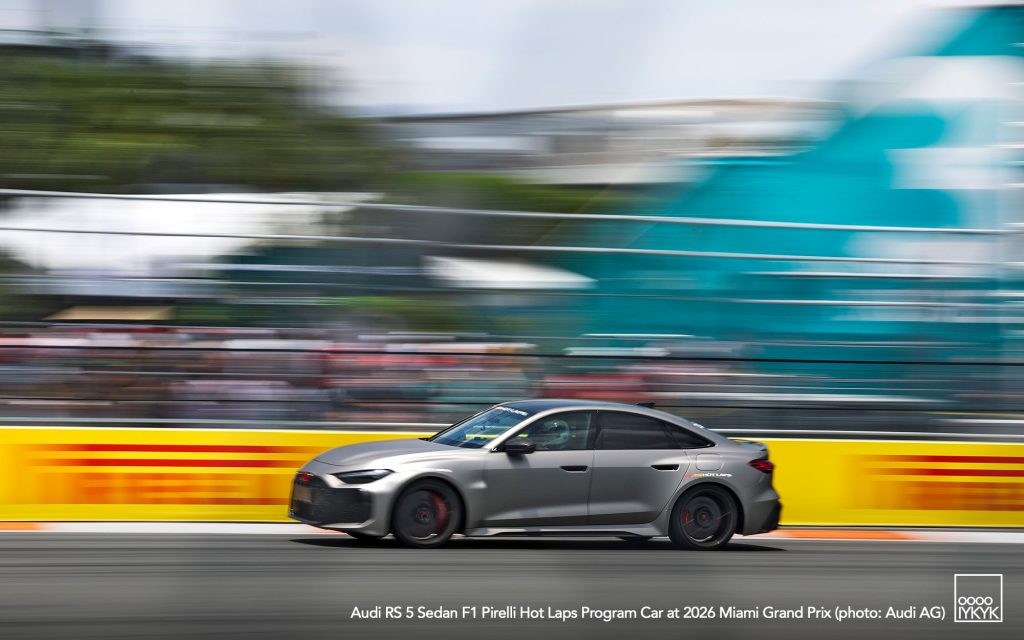
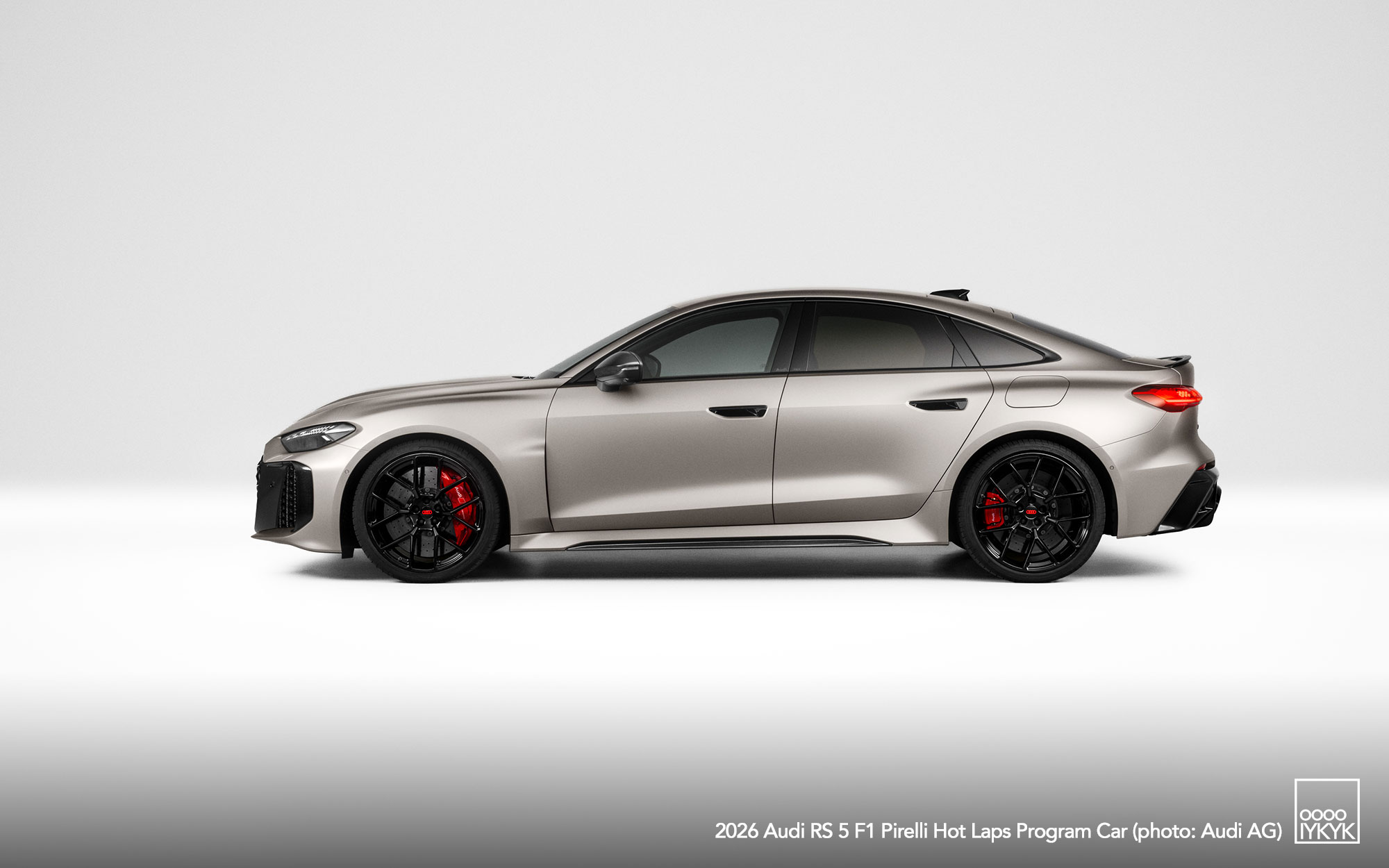
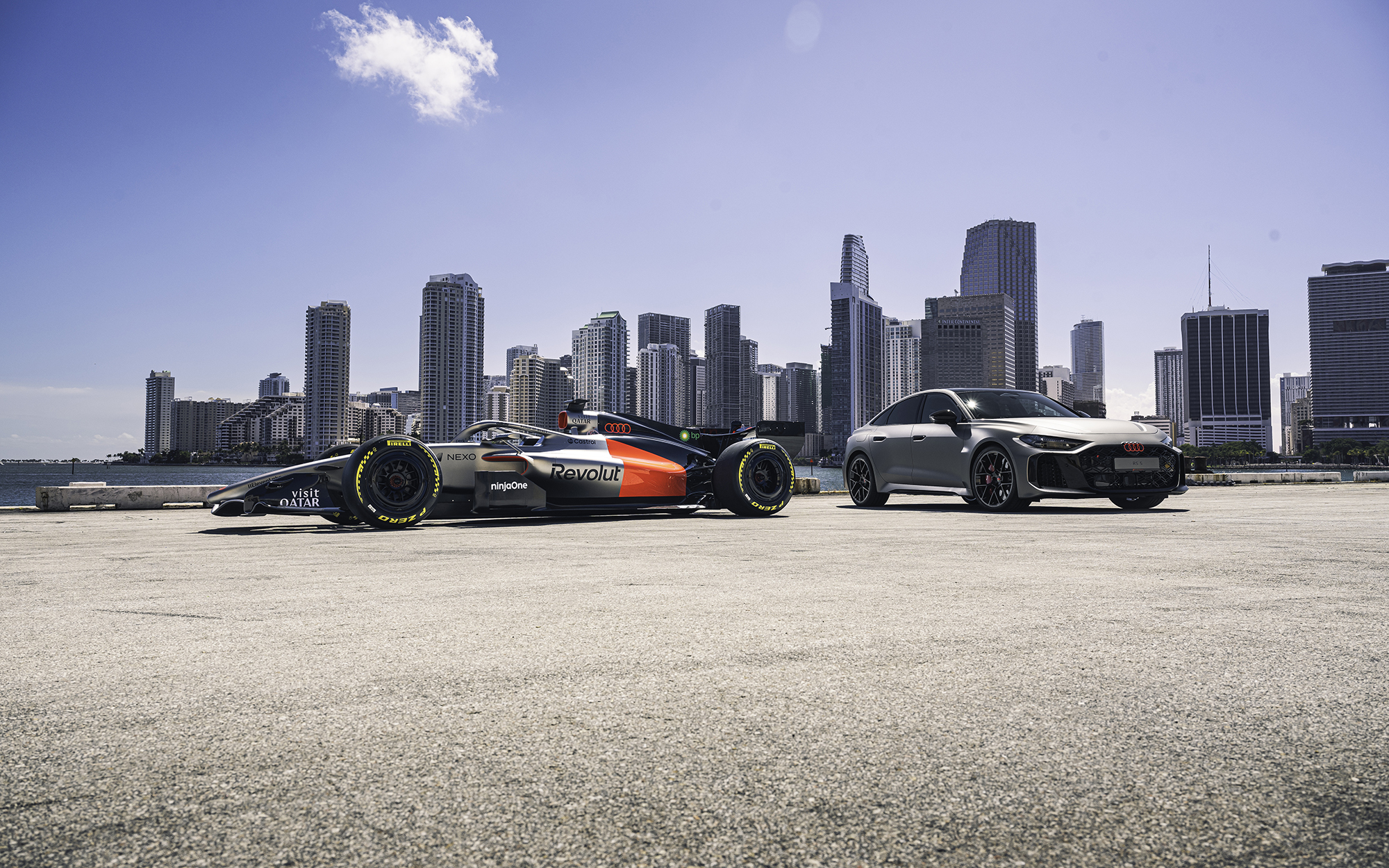
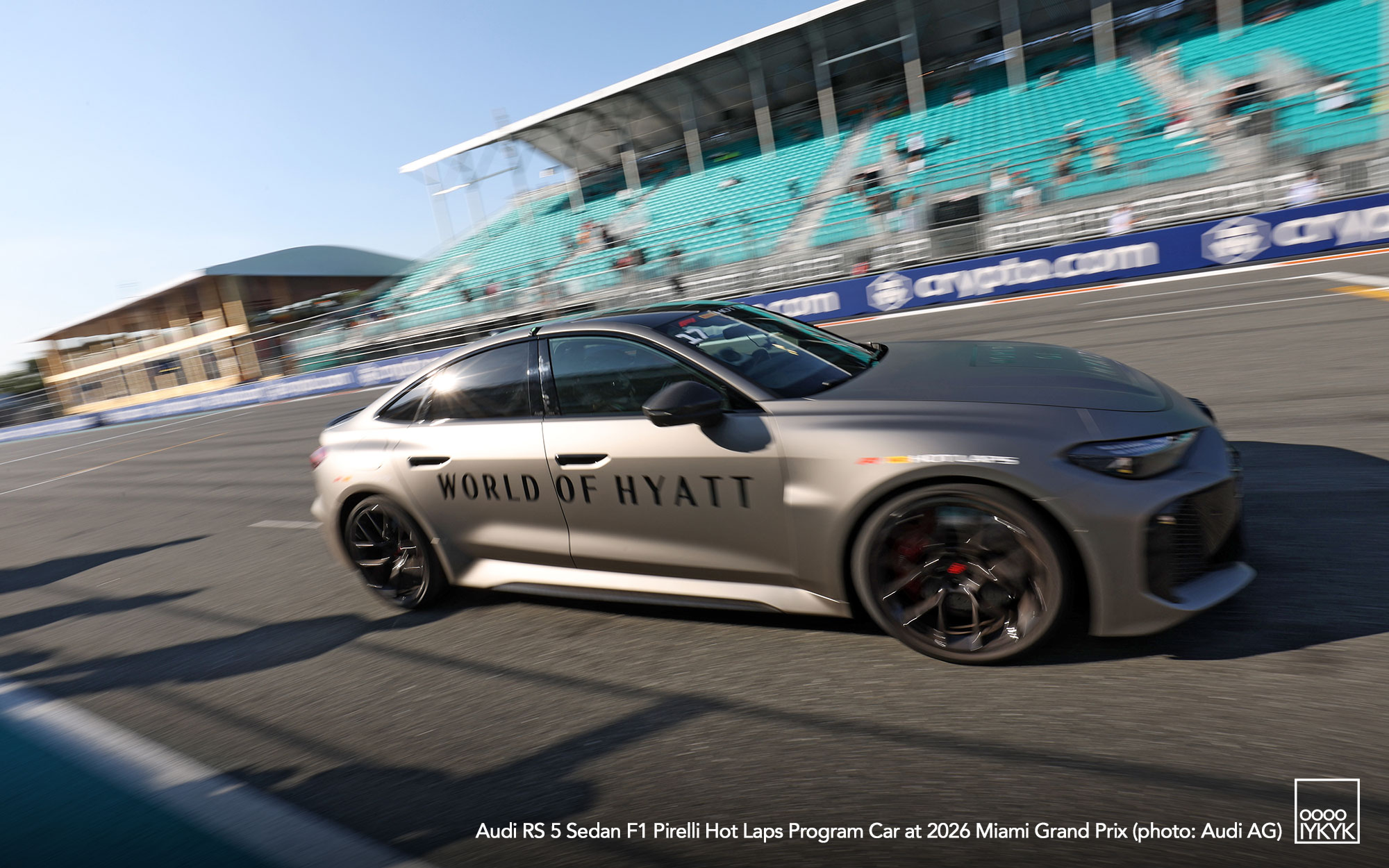
The 2026 Audi RS 5 Sedan F1 Support Car marked the public debut of Audi Sport’s first plug-in hybrid RS model in an official Formula 1 support role. Introduced during the Miami Grand Prix weekend marking the first time the new RS 5 had been seen in the USA as well, the B10-generation RS 5 joined the F1 Pirelli Hot Laps program ahead of Audi’s factory Formula 1 entry planned for 2026.
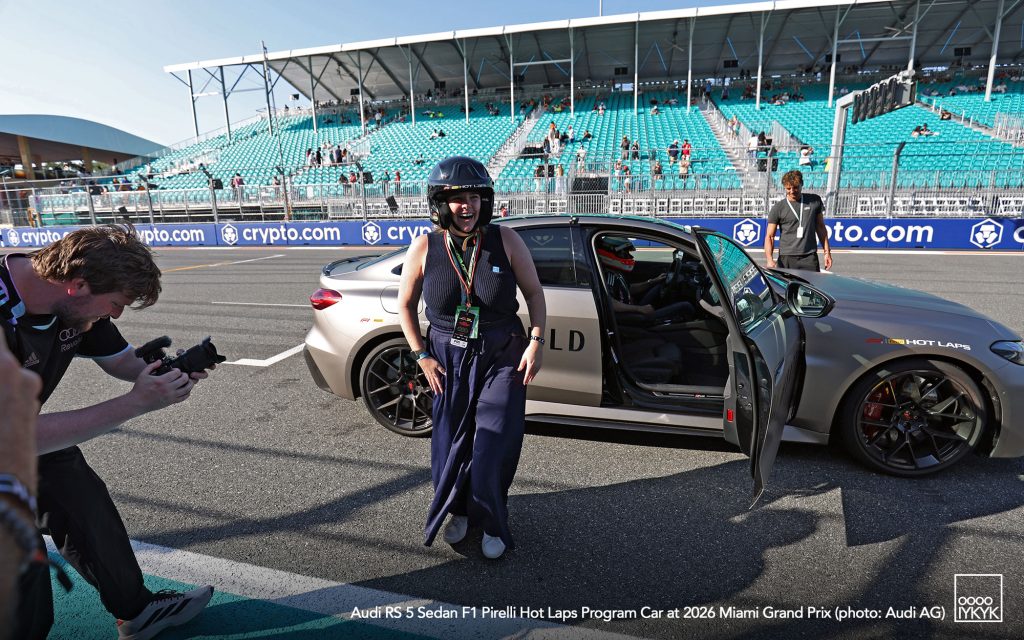
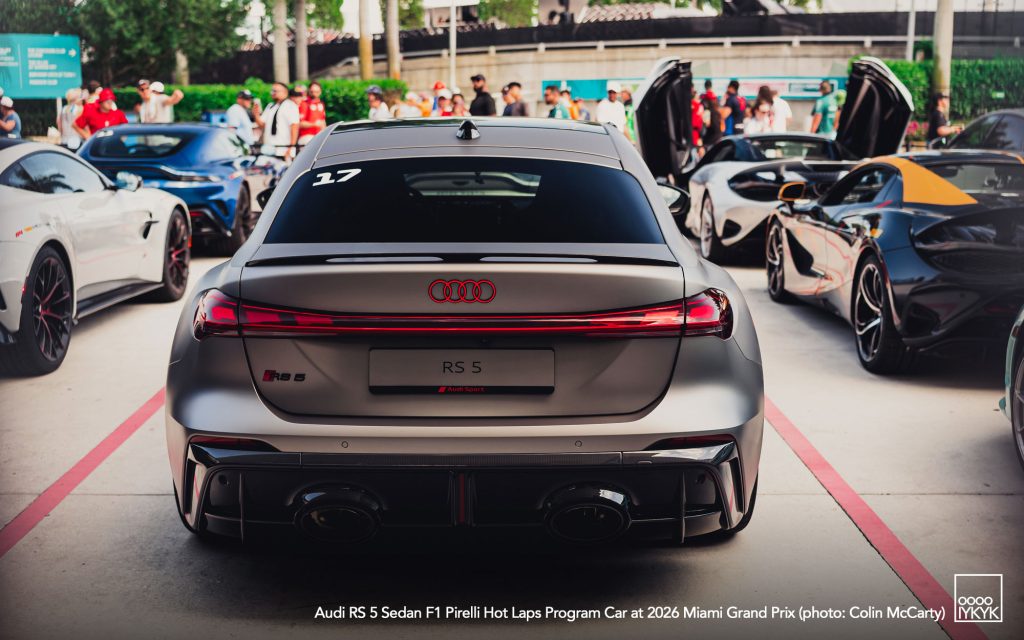
Unlike prior Audi Formula 1-related promotional vehicles, the RS 5 hot lap cars were described by Audi as production vehicles without additional technical modifications. While some photographic evidence shows three cars being shipped in air freight transit, only two appeared in Miami. The pair served both as demonstration vehicles for VIP passenger experiences and as rolling showcases for Audi’s broader transition toward electrified performance.
DESIGN
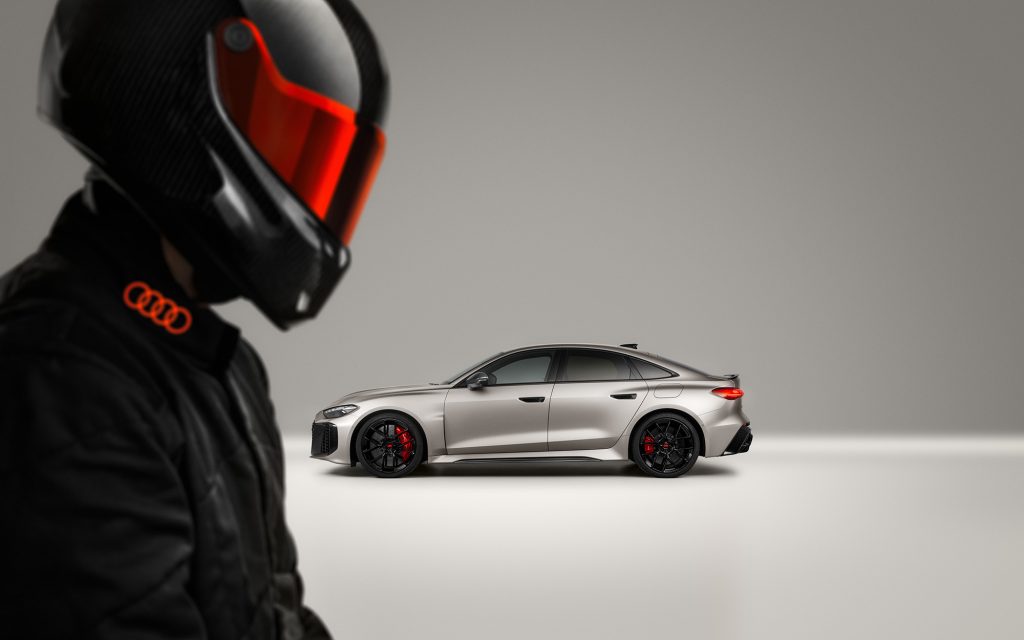
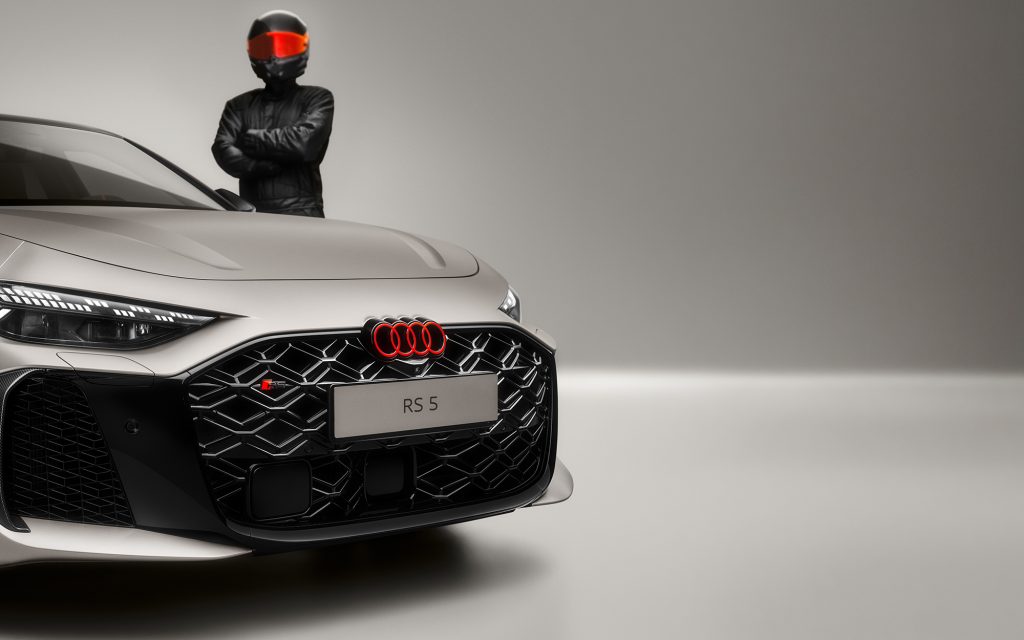
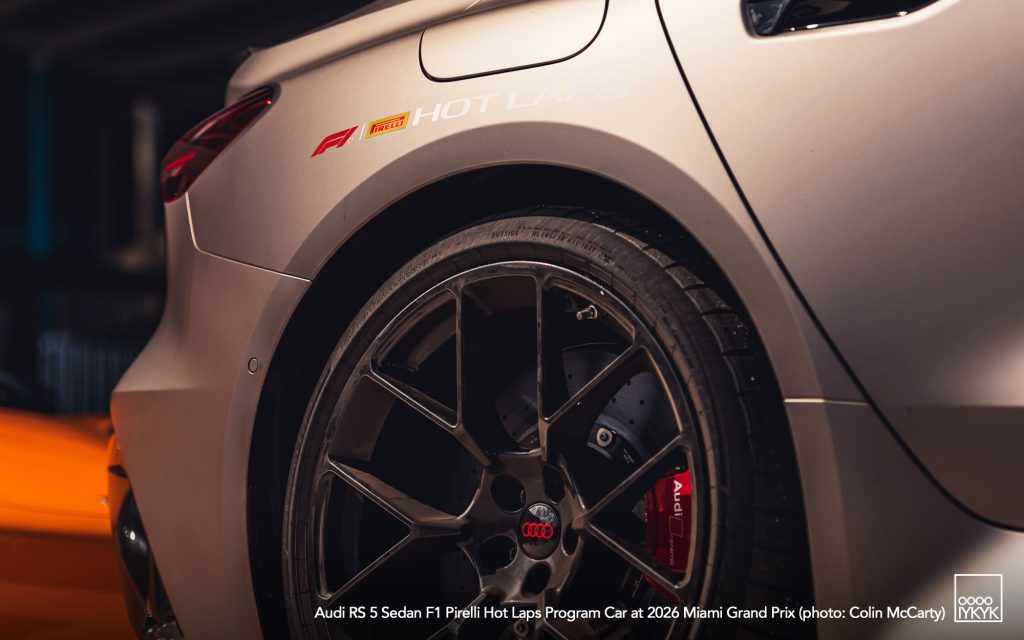
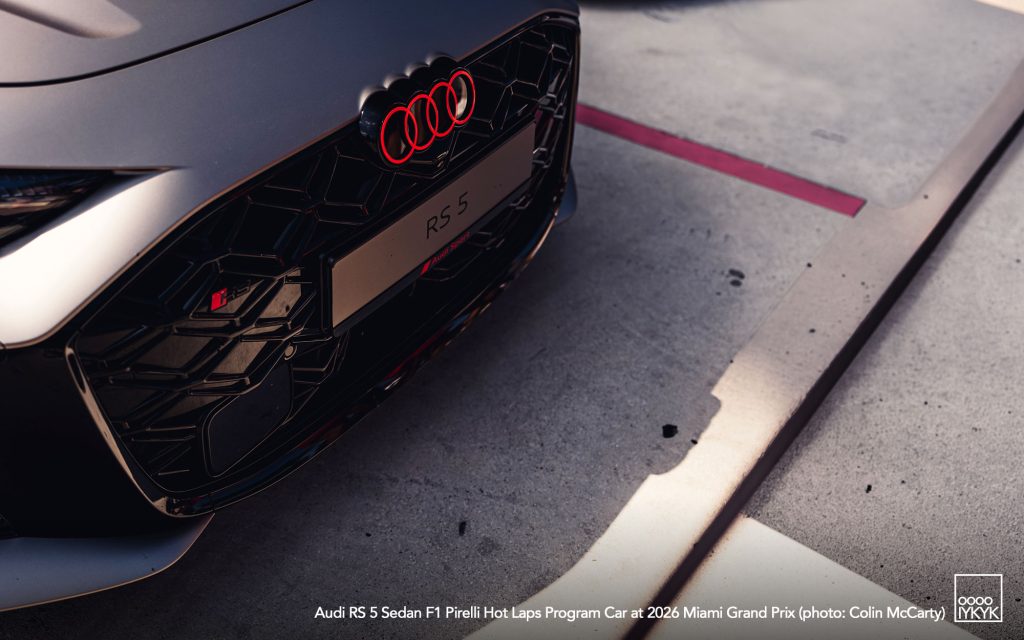
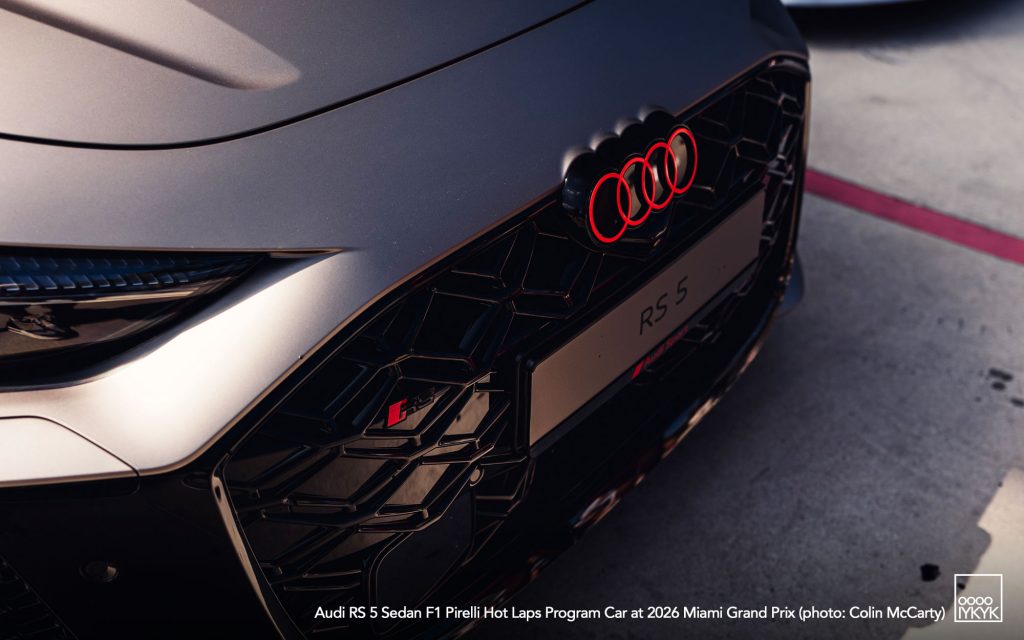
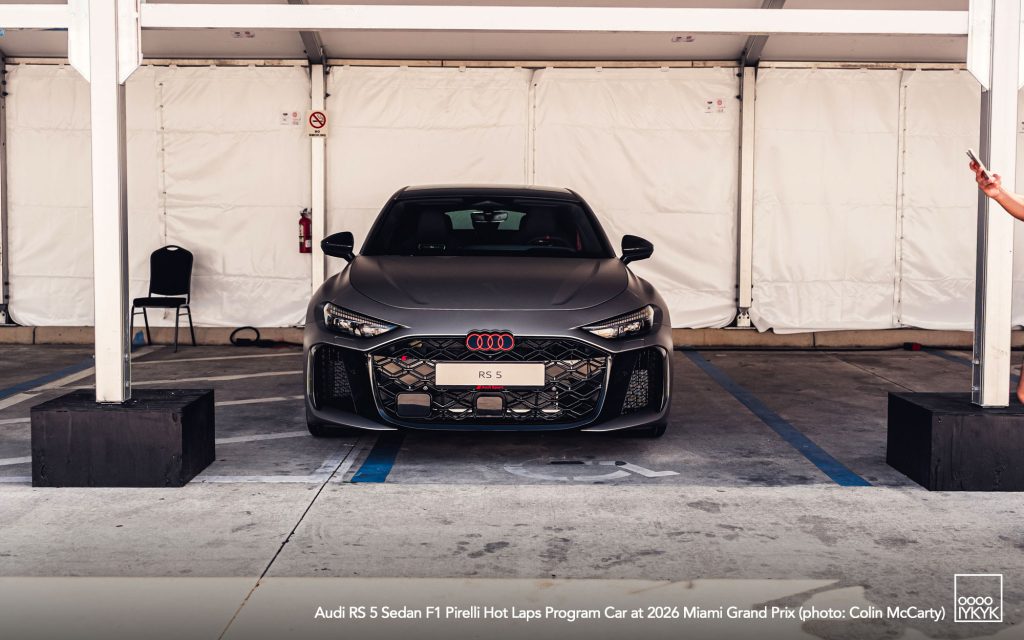
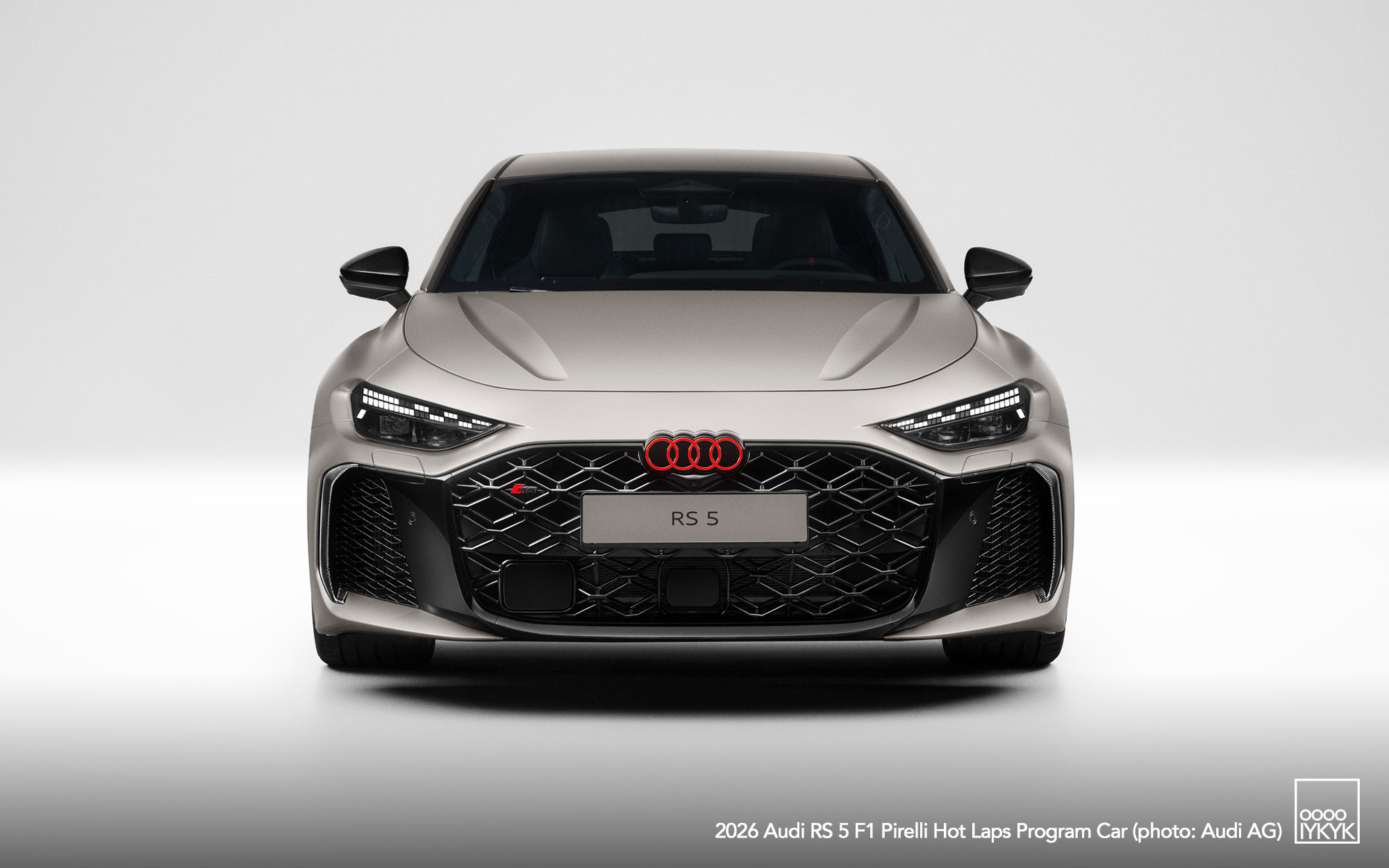
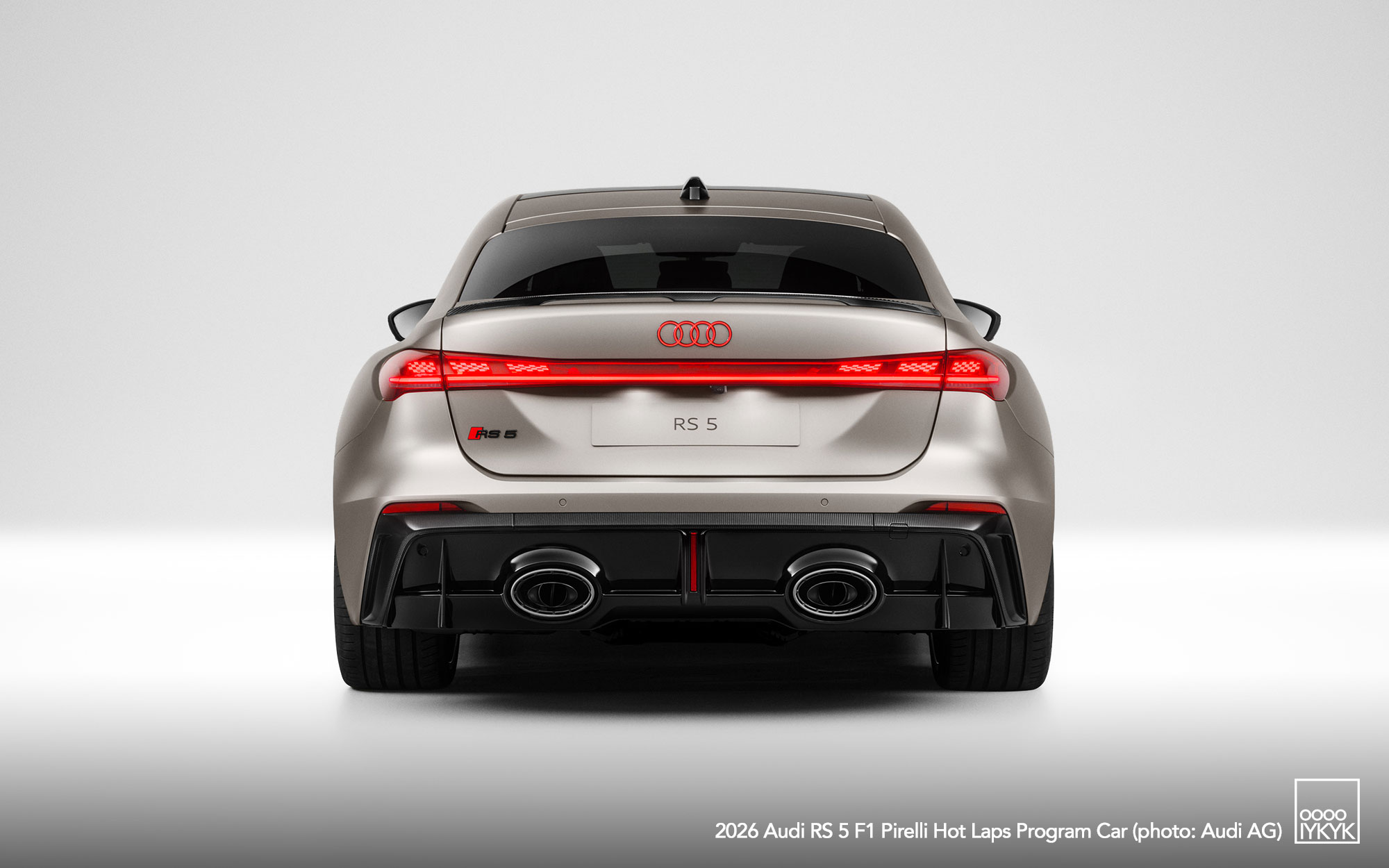
The RS 5 F1 Support Cars featured a unique appearance package inspired by the Audi R26 Formula 1 car. Finished in Titanium, the sedans incorporated Lava Red Audi rings front and rear along with matching red detailing on the wheel hub caps. Black-finished wheels further distinguished the cars from standard RS 5 configurations available at launch.
While subtle, the color combination directly referenced Audi’s Formula 1 branding and represented one of the earliest known public uses of Lava Red exterior detailing on the B10 RS 5 platform. It also followed a model seen previously that season at the Chinese Grand Prix with Audi China’s SQ8 涂装版 (F1 Livery Version) Design Study.
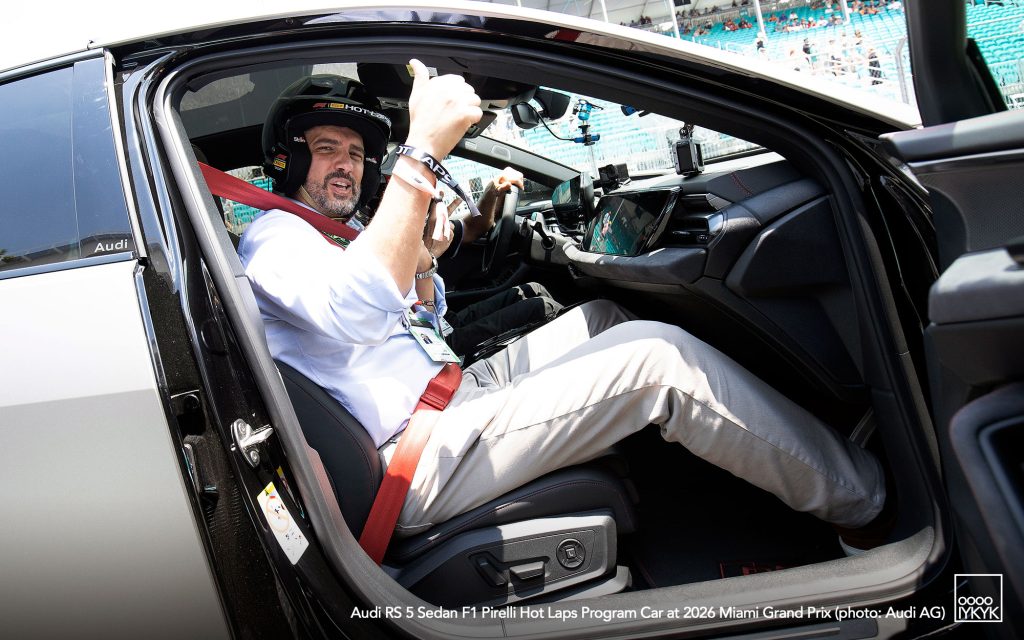
The cars retained full road-going interiors and production bodywork, emphasizing Audi’s position that the vehicle’s performance credentials required no dedicated motorsport conversion to operate in the F1 support role.
TECHNICAL DETAILS
The RS 5 represented a major technical shift for Audi Sport. It became the brand’s first high-performance RS production model to combine a twin-turbocharged V6 with a plug-in hybrid system.
At its core was a 2.9-liter twin-turbocharged V6 producing 510 horsepower (375 kW), paired with a 130 kW electric motor for a combined system output of 639 horsepower (470 kW). Audi positioned the drivetrain architecture as philosophically aligned with Formula 1’s current hybrid powertrain era.
Central to the car’s handling characteristics was the debut of quattro with Dynamic Torque Control. Audi described the system as an electromechanical torque-vectoring setup capable of precisely directing power to the wheel with the highest available grip. Unlike traditional passive torque distribution systems, the arrangement actively redistributed torque during cornering to sharpen turn-in response and improve vehicle rotation.
Audi specifically highlighted the system’s effectiveness during tight, low-speed corners such as those found around Miami’s Hard Rock Stadium circuit.
The RS 5 F1 Support Car carried a quoted top speed of 285 km/h (177 mph), placing it among the fastest production-based support vehicles used in contemporary Formula 1 activities.
FORMULA 1 HOT LAPS PROGRAM
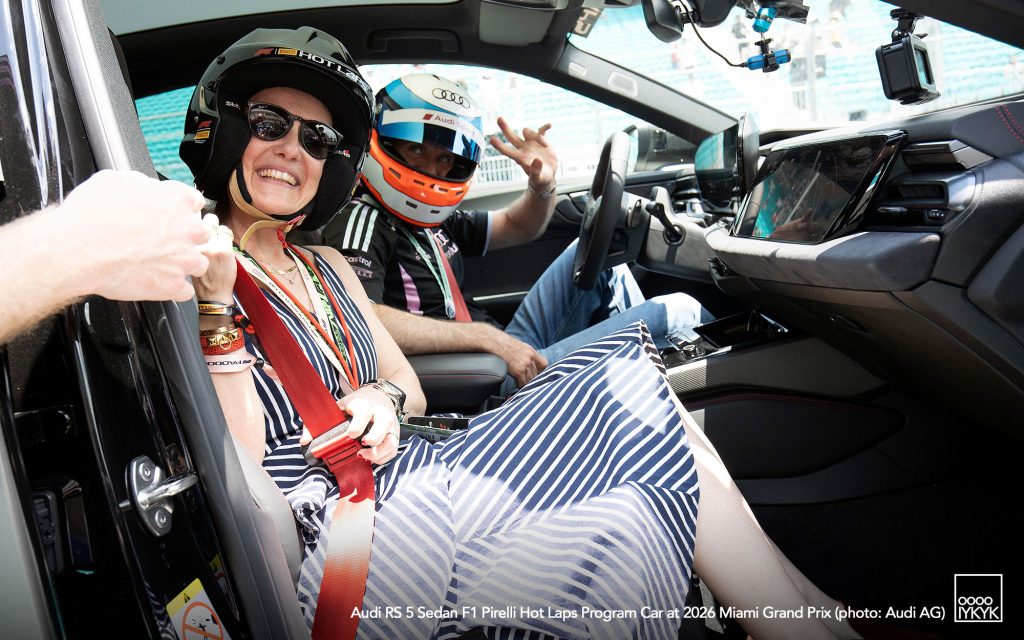
The Formula 1 Pirelli Hot Laps program allows invited guests to experience Grand Prix circuits alongside professional racing drivers in high-performance road cars during race weekends.
Audi assigned two drivers with deep historical ties to the brand for the RS 5 program:
- Dindo Capello
- Markus Winkelhock
Capello was among Audi Sport’s most successful endurance racing drivers, earning multiple victories at Sebring and championships in the American Le Mans Series. Winkelhock brought Formula 1 experience alongside multiple Nürburgring 24 Hours victories with Audi machinery.
Audi Sport engineers prepared and maintained the vehicles throughout the season, though the cars themselves reportedly remained mechanically standard production examples.
SIGNIFICANCE
The RS 5 F1 Support Car served multiple strategic purposes for Audi.
Beyond promoting the forthcoming Audi Revolut F1 Team effort, the vehicle demonstrated Audi Sport’s transition toward electrified high-performance production models. The RS 5 became a public-facing symbol of how Audi intended to merge hybridization with traditional RS performance values.
The car also arrived during a period of significant Formula 1 growth in the United States. Audi specifically referenced sold-out races in Miami, Austin and Las Vegas as evidence of the championship’s expanding influence in North America. The Miami launch additionally coincided with multiple Audi brand activations across the city including collaborations with adidas and Audi’s Formula 1 marketing initiatives.
For Audi enthusiasts, the RS 5 F1 Support Car also represented one of the earliest real-world public appearances of the B10-generation RS 5 prior to full global customer rollout.
PHOTO GALLERY