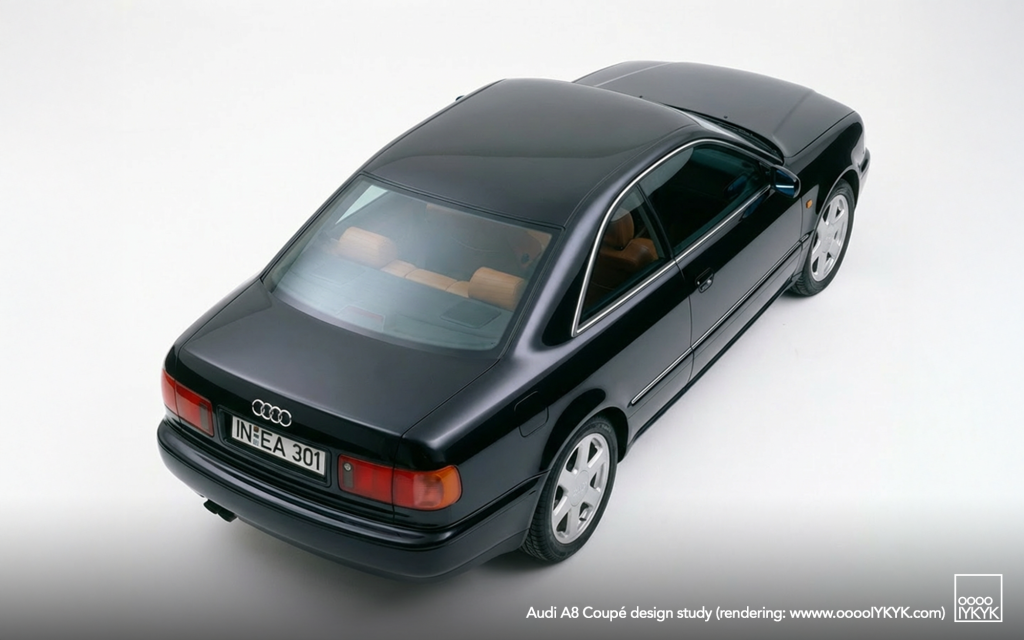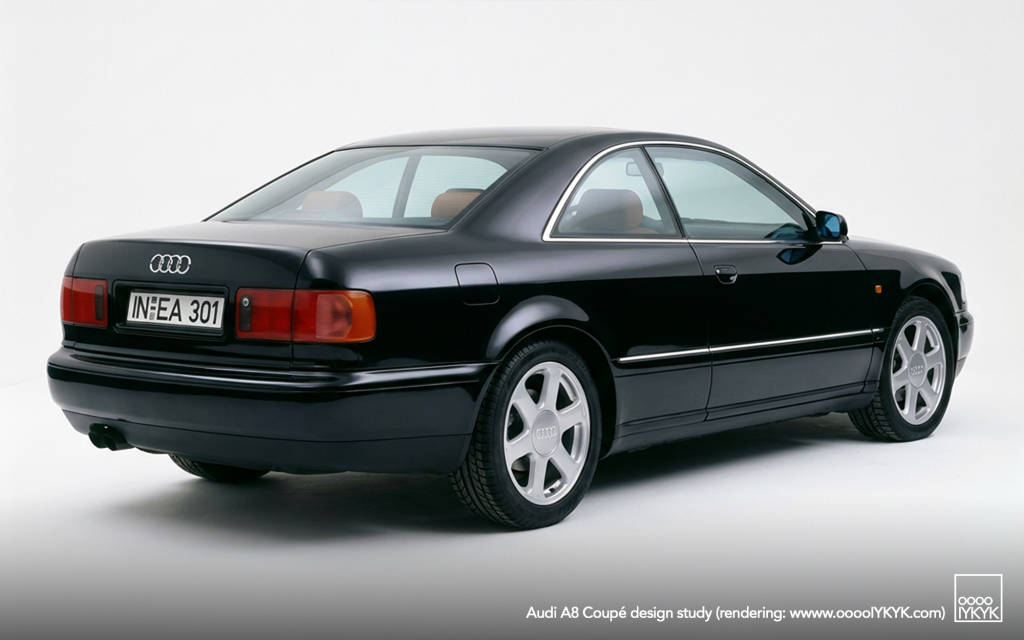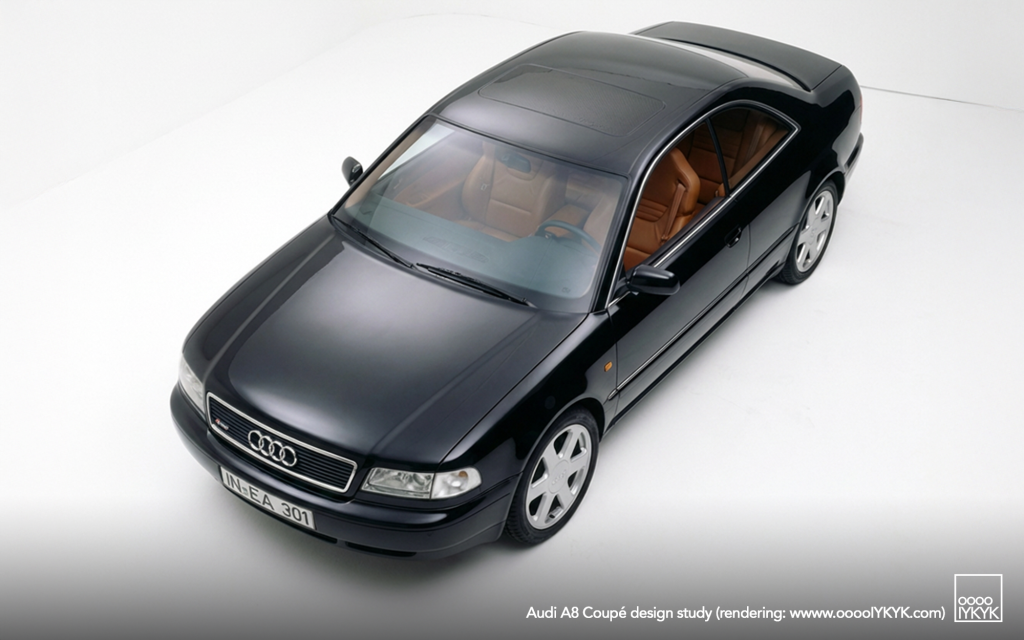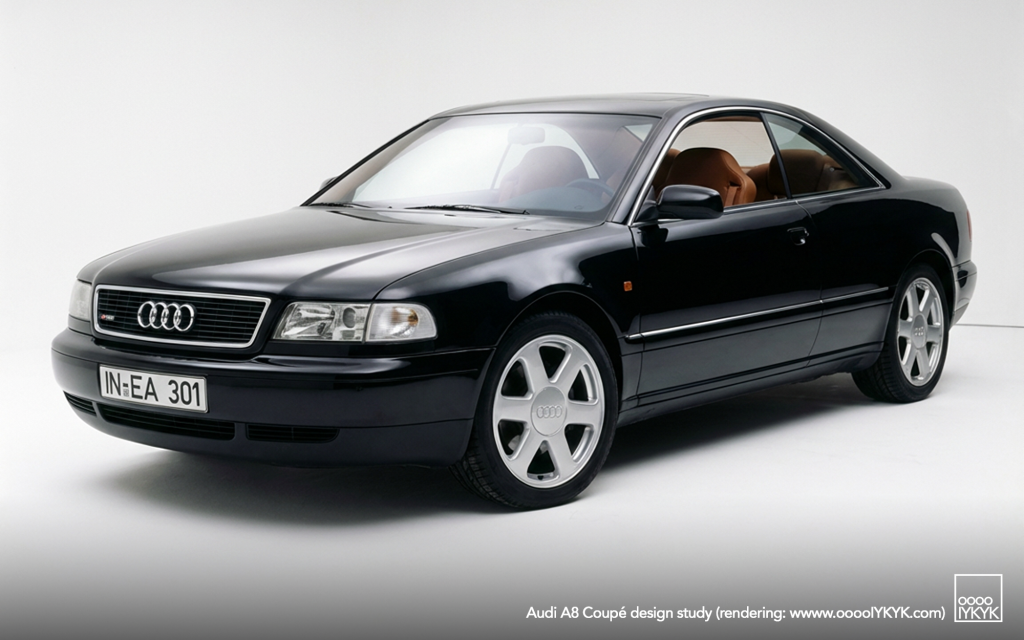

What: Audi A8 Coupé design study
Model Family: A8
Model / Generation Code(s): D2 (Type 4D) ASF
Production: Concept / design study (one-off)
Year: 1997
Registration Plate: IN:EA 301
Status: Audi Tradition collection
Number Produced: 1
Debuted: 1997 Geneva Motor Show
Assembly: Bad Friedrichshall (by IVM Engineering)
Class: Luxury coupé (D-segment)
Body style: 2-door coupé
Layout: Front-engine, all-wheel drive (quattro)
Base model: Audi A8 (D2)
Engine: 4.2-liter V8 gasoline
Power output: 221 kW (300 hp)
OVERVIEW
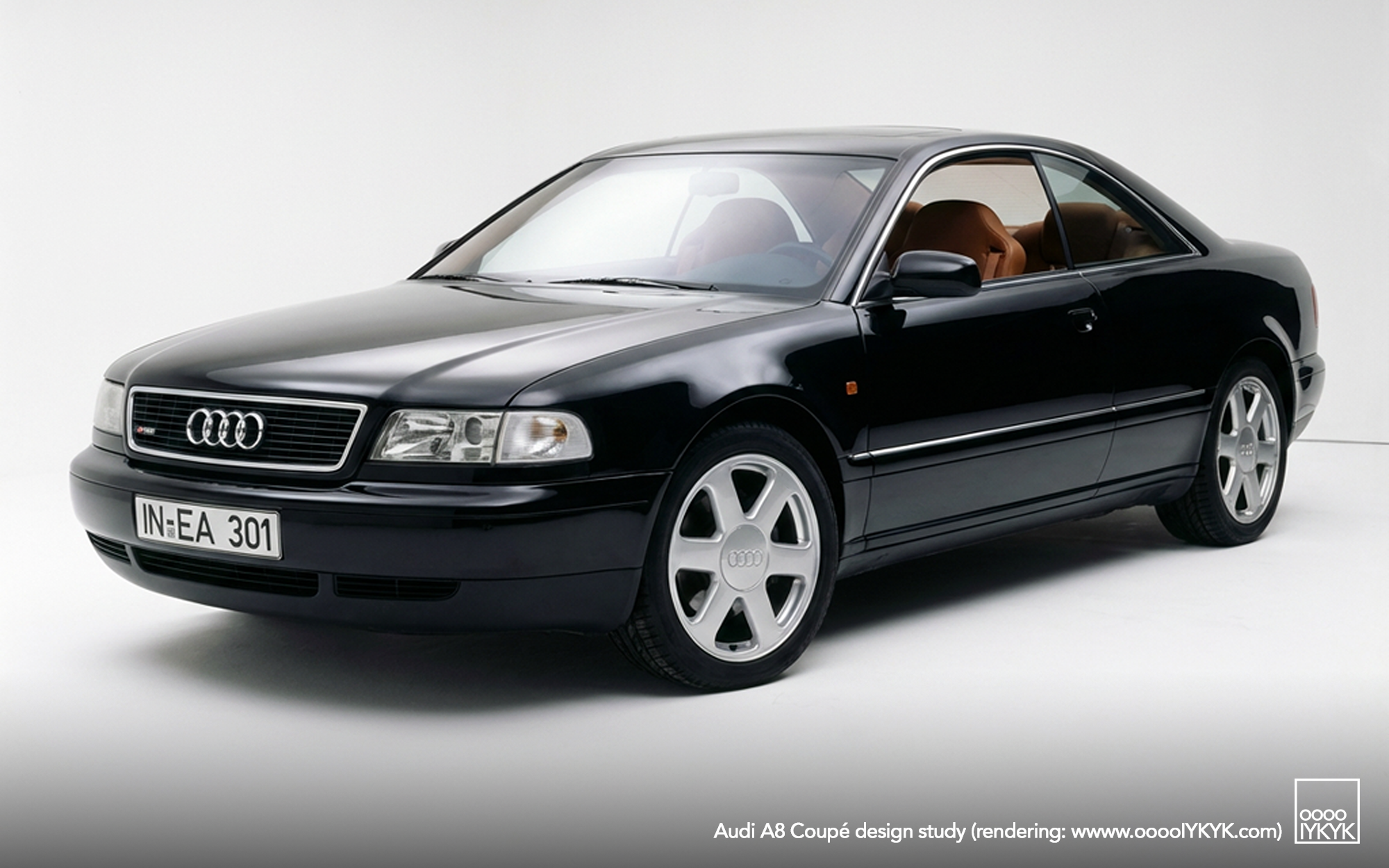
The 1997 Audi A8 Coupé stands as one of the most intriguing “what if” moments in Audi’s modern design history. Developed not in-house but by engineering firm IVM Engineering, the project reimagined the first-generation Audi A8 (D2) as a flagship two-door grand tourer. At a time when Audi was still solidifying its position in the premium segment, the concept aimed to inject greater emotional appeal into the brand’s aluminum-intensive luxury platform.
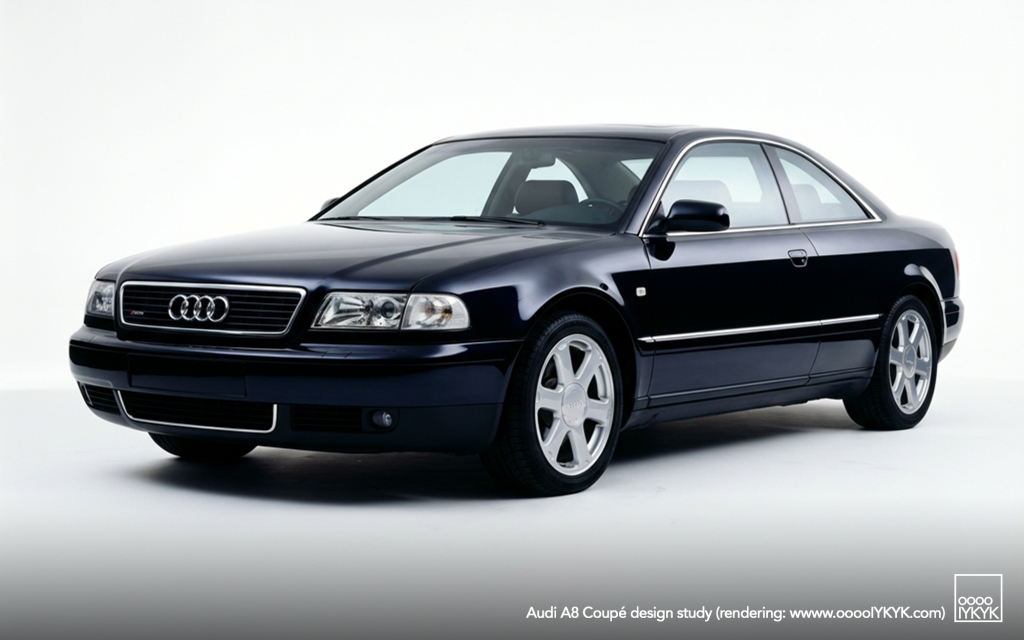
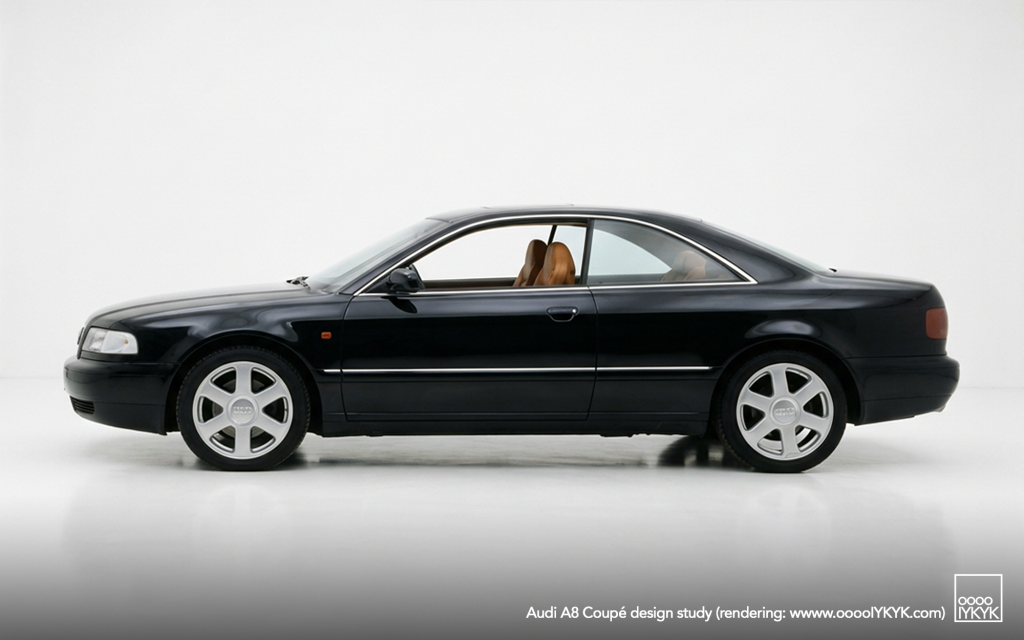
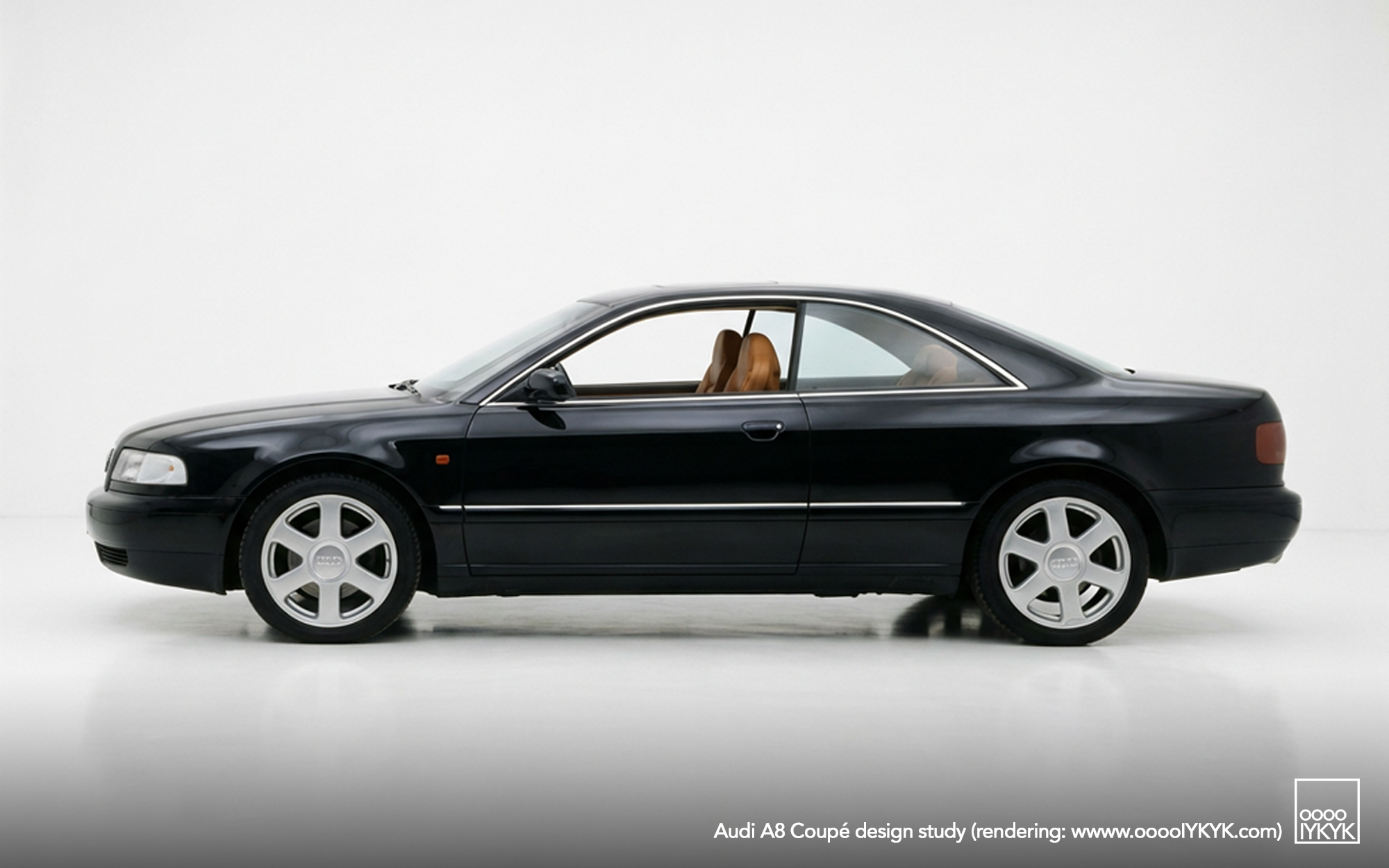
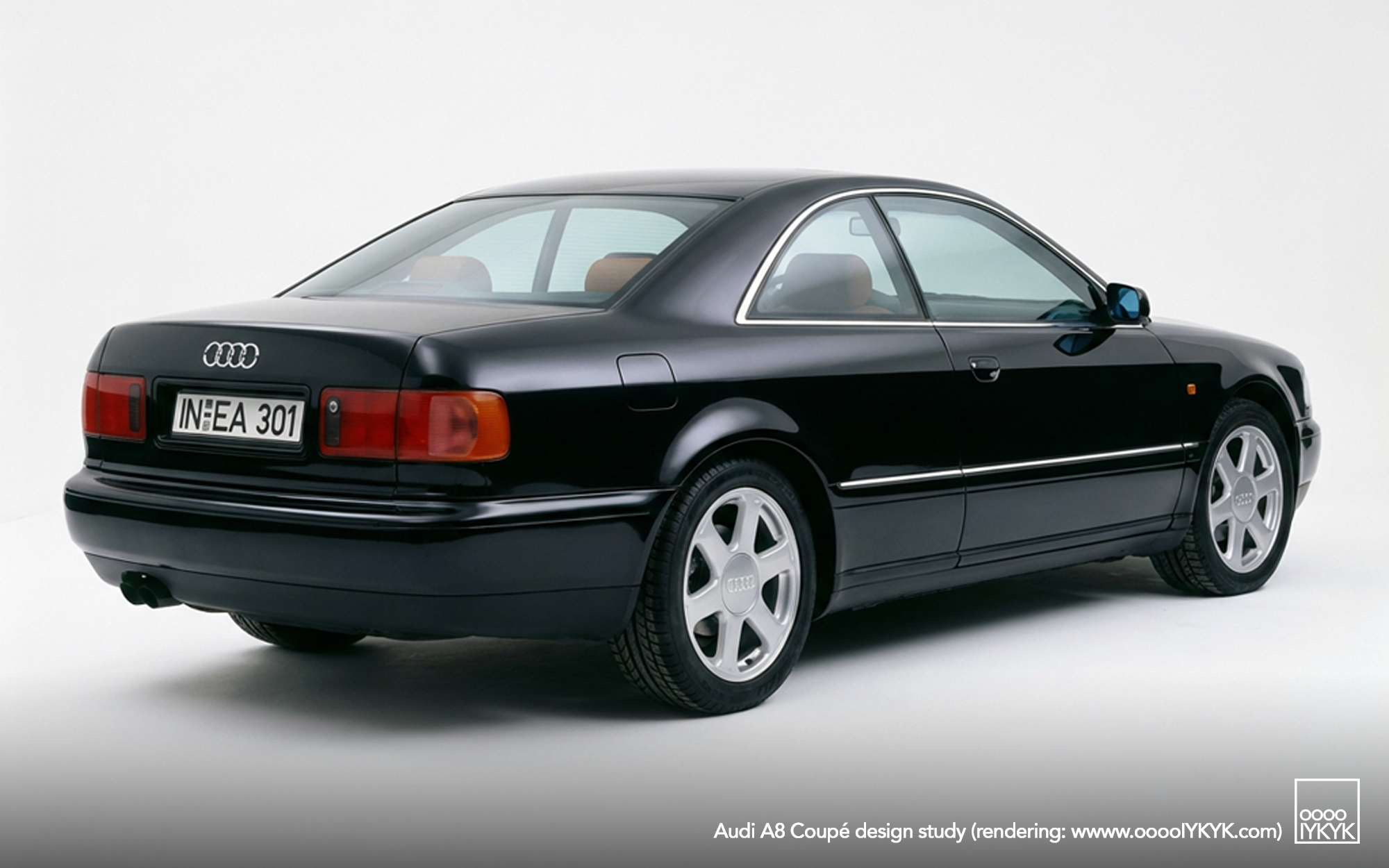
Based on the Aluminum Space Frame architecture of the standard A8, the car underwent extensive structural and visual transformation. Nearly every exterior panel was reworked, including a dramatically revised roofline that eliminated the B-pillar for a cleaner, uninterrupted glasshouse. Longer doors, a bespoke side profile, and a more tapered rear section gave the car a proportionally elegant silhouette that differed markedly from its sedan counterpart.
DESIGN AND ENGINEERING
The A8 Coupé’s design leaned heavily into restraint and proportion rather than overt aggression. Finished in Ming Blue Pearl, the car emphasized subtle surfacing and long, clean lines, aligning with Audi’s late-1990s design language while pushing it toward a more expressive, grand touring identity. The frameless side glass and pillarless construction enhanced both visual lightness and exclusivity.
Underneath, IVM re-engineered significant portions of the Aluminum Space Frame to accommodate the altered body structure. The result maintained the rigidity and lightweight benefits of the original platform while supporting the coupé’s extended doors and revised roof geometry. Power came from the familiar 4.2-liter V8, producing 300 horsepower and paired with Audi’s quattro all-wheel-drive system, reinforcing the car’s positioning as a high-speed luxury GT rather than a pure sports coupé.
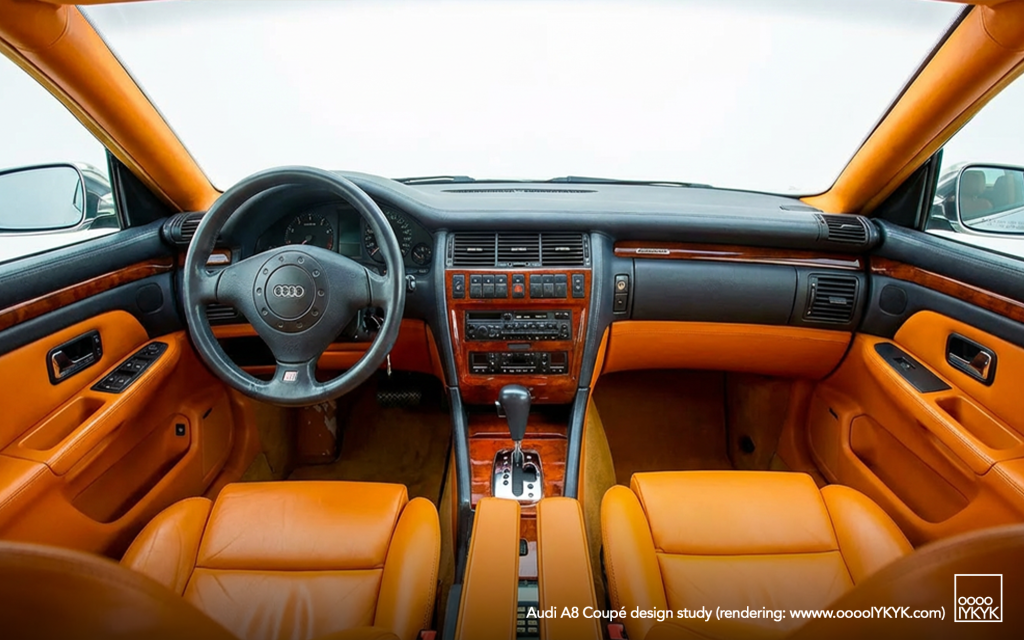
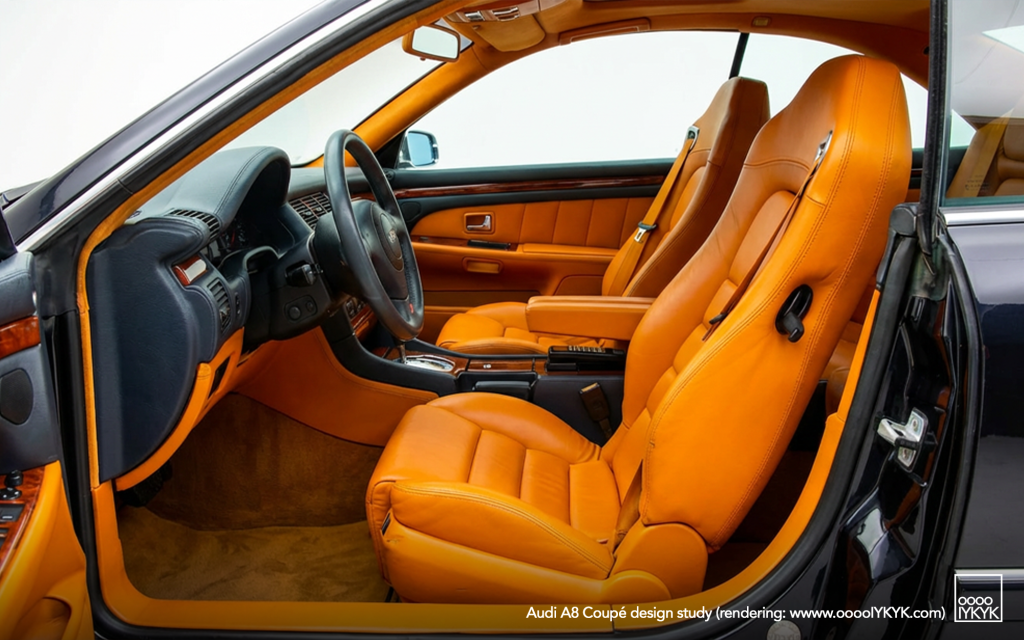
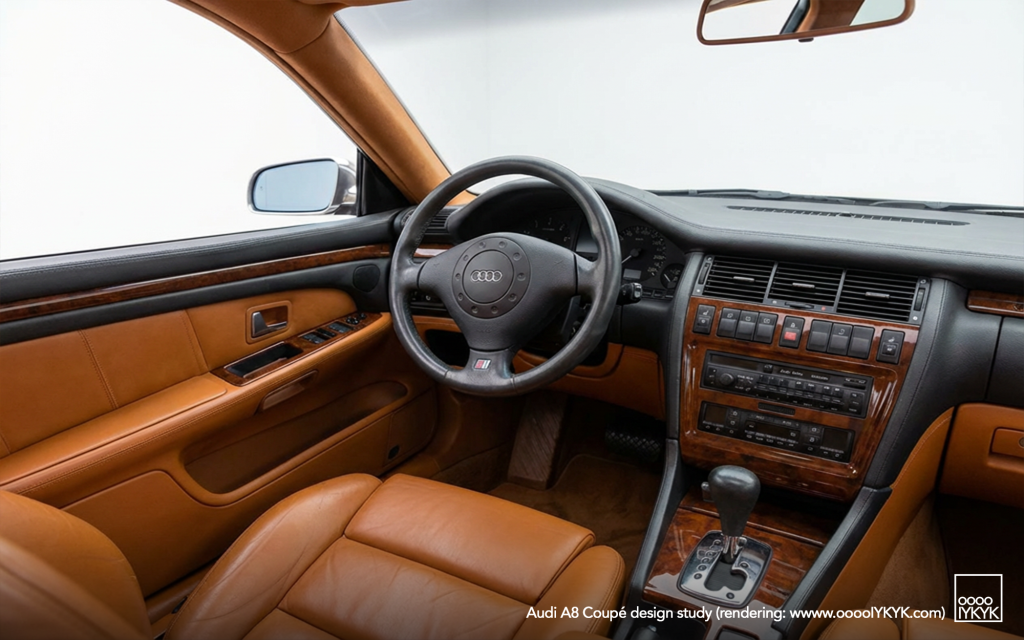
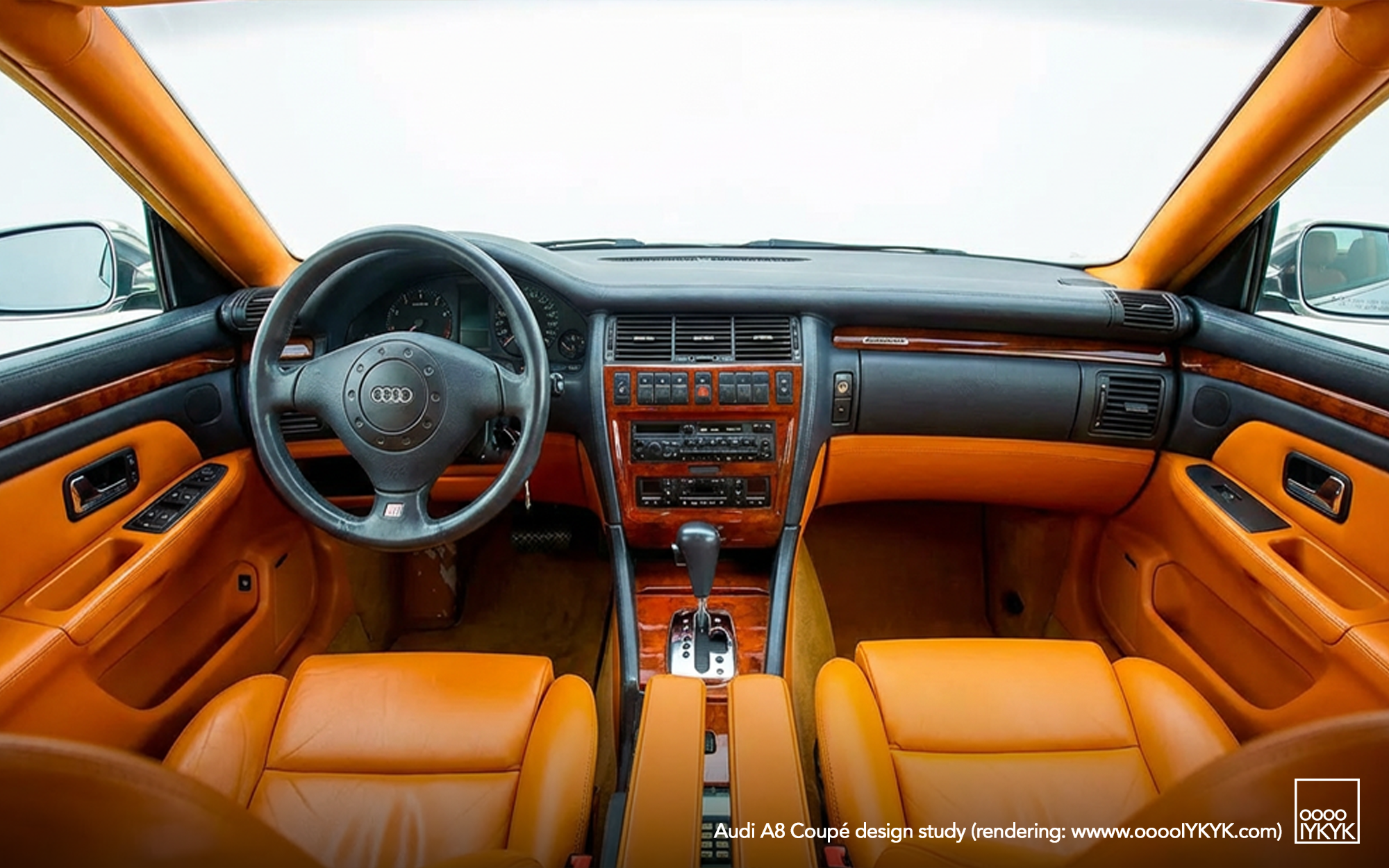
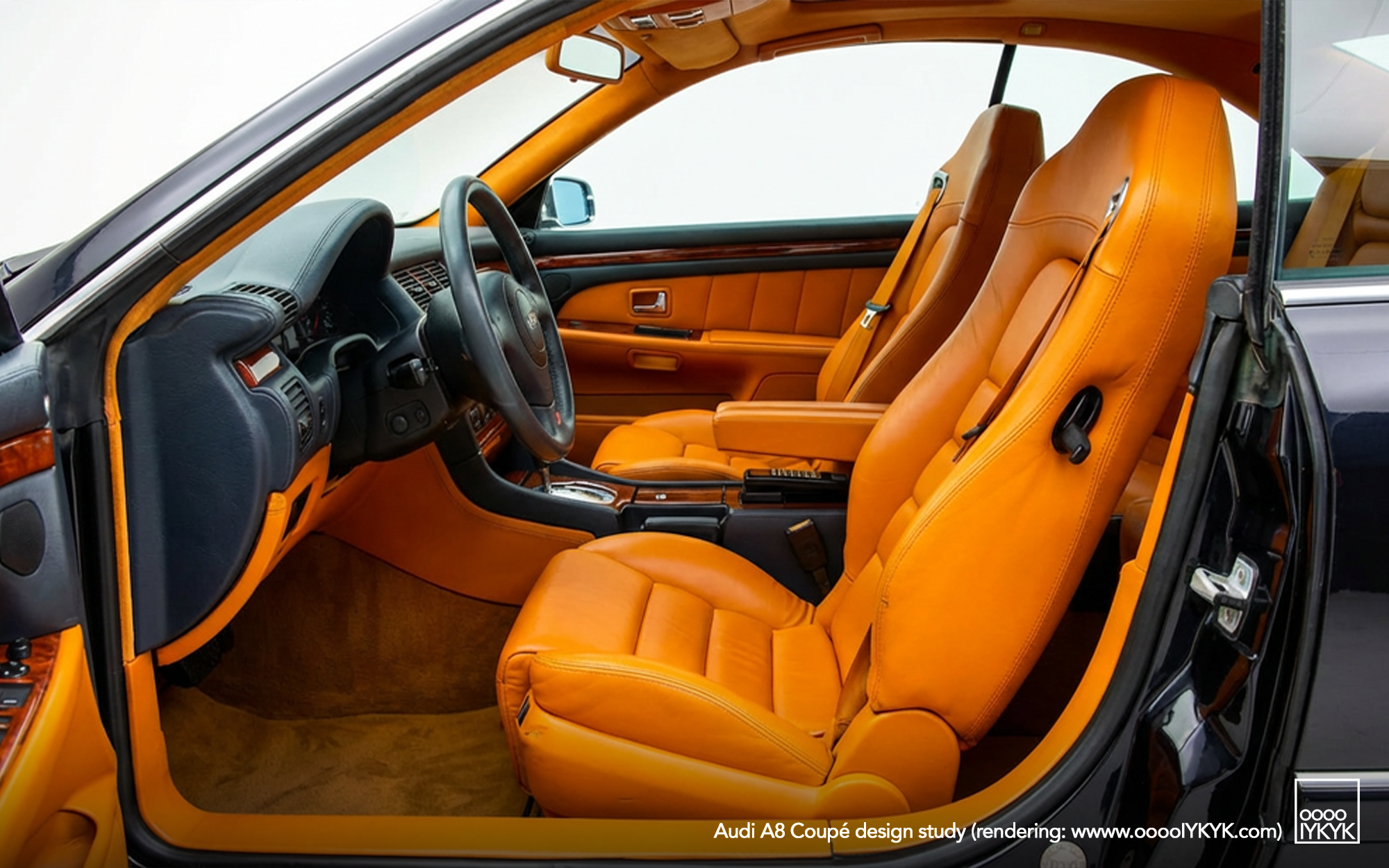
Inside, the cabin was elevated with premium materials beyond typical Audi specification of the time, including high-grade leather sourced from Bentley. The interior blended Audi’s ergonomic layout with a more bespoke, coachbuilt feel, further suggesting near-production intent.
Based on photos of the car over the years, the design study has been seen with two different wheel configurations. Original black and white shots depicting the car with a registration plate depict it with an Avus-style wheel similar to what came on the first-generation S8 (D2) but without the dimple at the end of each spoke. Later shots would show the car with what appear to be polished 5-spoke wheels identical to what was offered on the production A8 (D2).
DEBUT AND RECEPTION
The A8 Coupé made its world debut at the Geneva Motor Show, though notably not on Audi’s official stand. Instead, it was presented discreetly at the IVM booth, underscoring its semi-independent development. Despite this, the car attracted attention for its refined execution and realistic production viability.
However, broader market conditions worked against it. The underwhelming commercial performance of the BMW 8 Series (E31) cast doubt on demand for large, high-end coupés. Coupled with the significant cost of adapting the Aluminum Space Frame for low-volume production, Audi ultimately chose not to pursue the concept further.
LEGACY
Only a single example of the Audi A8 Coupé was produced. It remained with IVM—later part of Semcon—before disappearing from public view after the early 2000s. Today, it is widely regarded as one of the rarest and most elegant Audi design studies of its era.
In hindsight, the A8 Coupé can be seen as a precursor to Audi’s later explorations of luxury coupé forms, as well as a missed opportunity during a formative period for the brand. Its combination of aluminum engineering, understated design, and grand touring intent encapsulates a moment when Audi was actively redefining what its flagship models could be.
REFERENCES
- Audi Tradition App – Apple Store / Google Play
- Autozeitung.de
- Motor1.com
PHOTO GALLERY