

What: Windschnittig
Event Type: Museum Exhibition
Location: Ingolstadt, Bavaria, Germany
Venue: Audi museum mobile
Dates: November 18, 2023 – June 9, 2024
Organizer: Audi Tradition
Theme: Aerodynamics in automotive engineering from its beginnings through 1945
Audi Highlights: Audi Type C Jaray 1:1 model, Audi Front UW Jaray, Auto Union Type C Stromlinie, Wanderer W25K Stromlinie
EXHIBITION
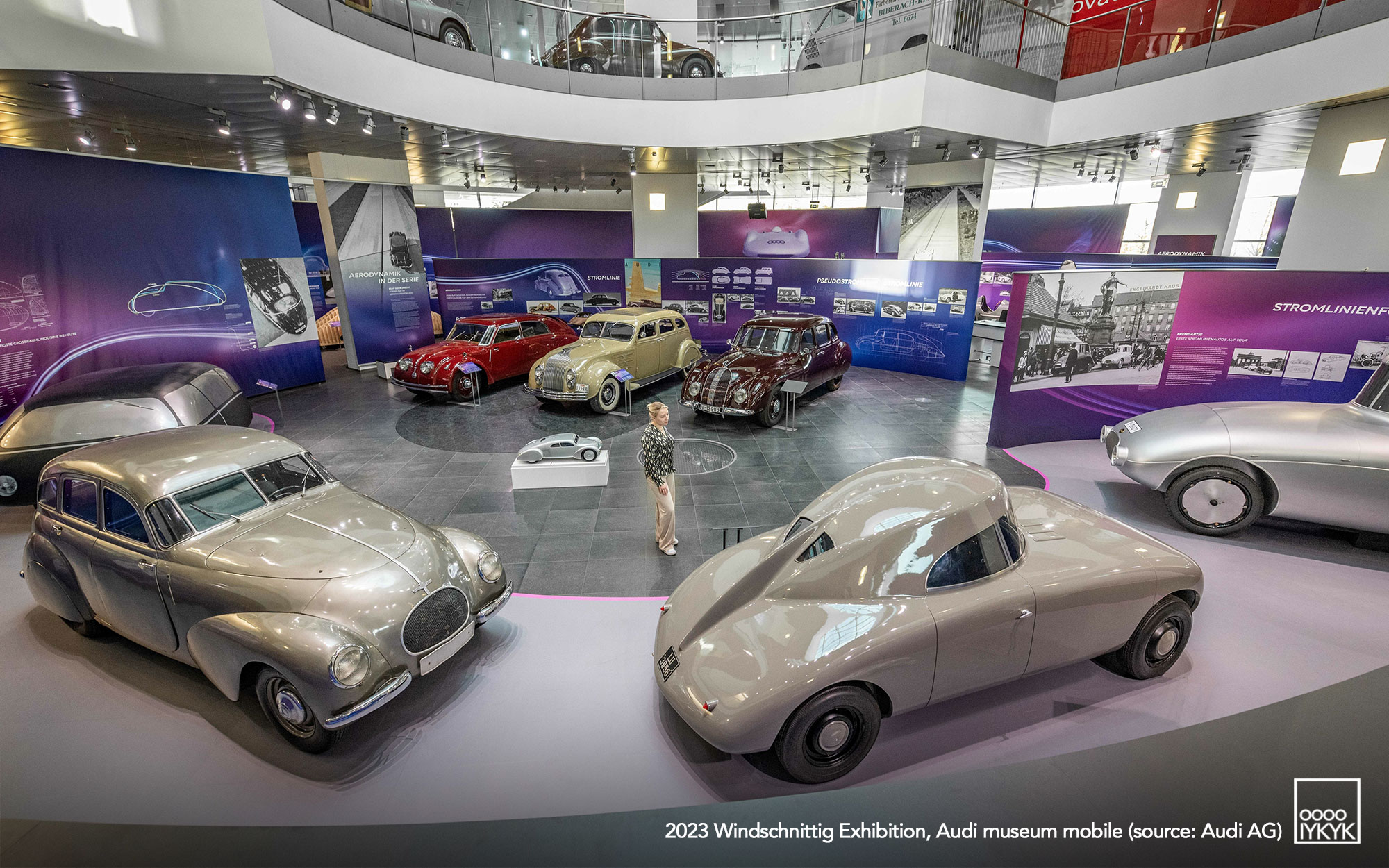
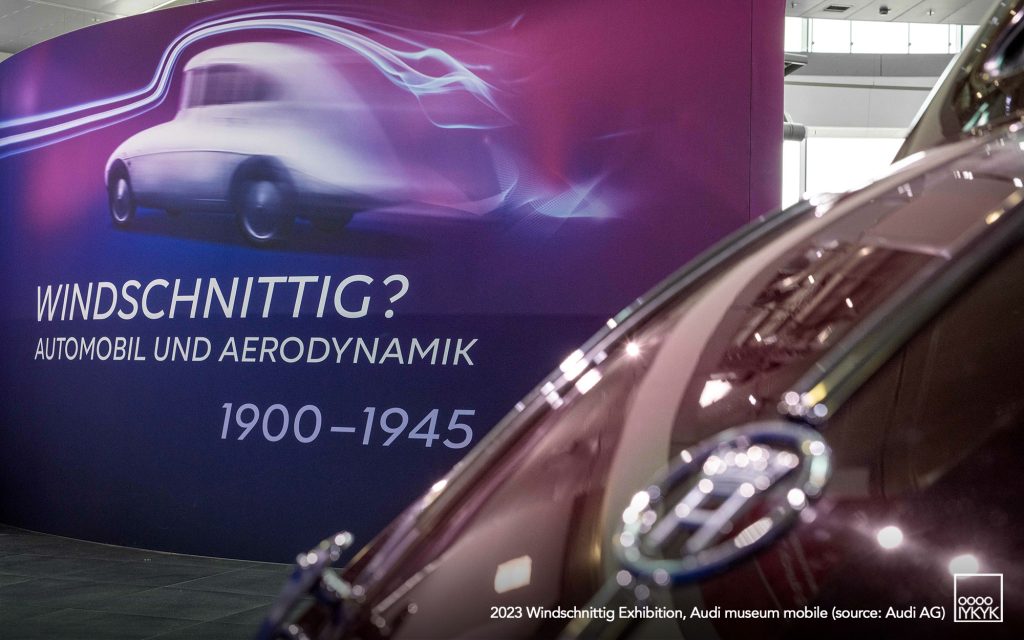
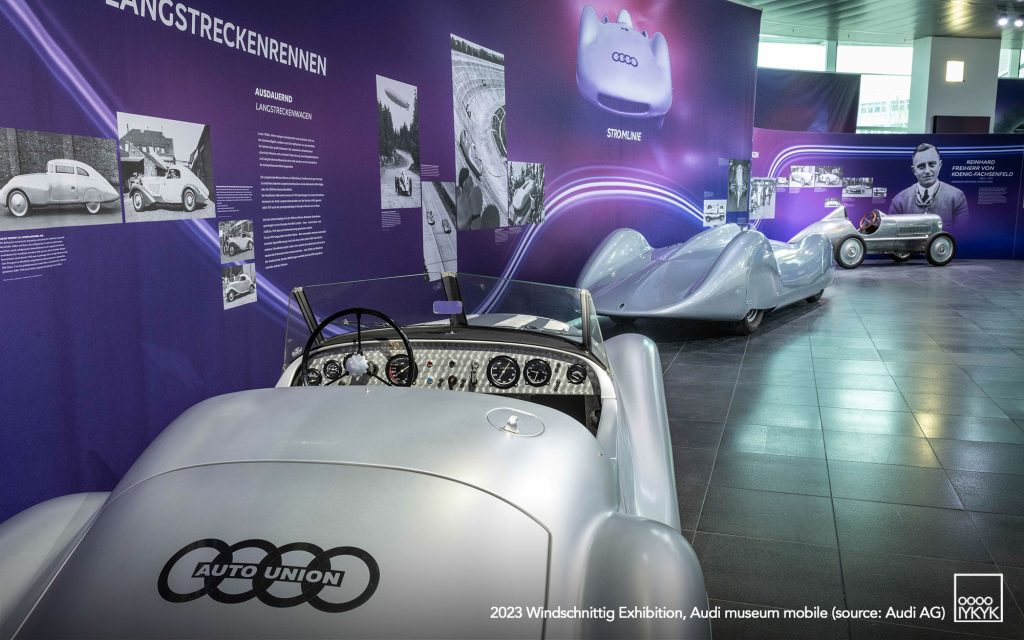
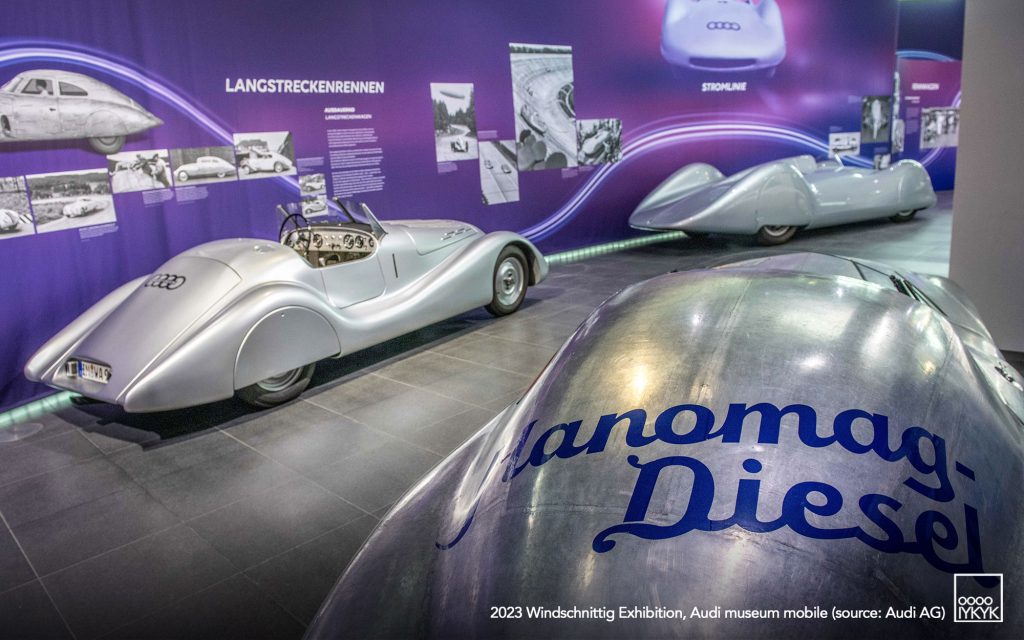
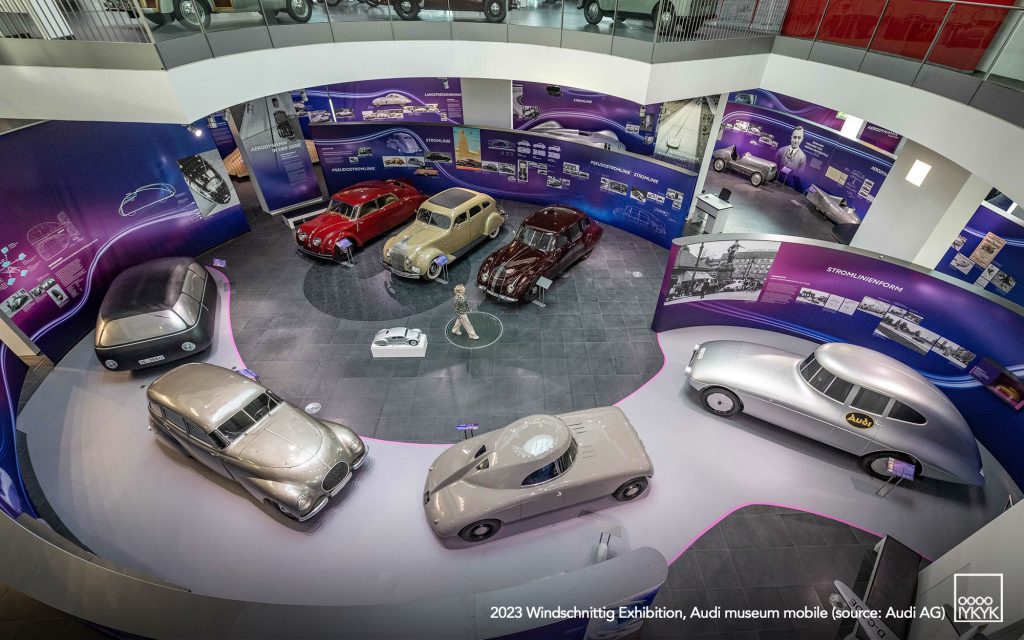
Windschnittig, German for “streamlined,” was a special exhibition staged by Audi Tradition at the Audi museum mobile in Ingolstadt from November 18, 2023 to June 9, 2024. The exhibition examined the beginnings of automotive aerodynamics through 1945, bringing together vehicles, models and historical material documenting the period when engineers first began systematically adapting the automobile’s shape to the movement of air.
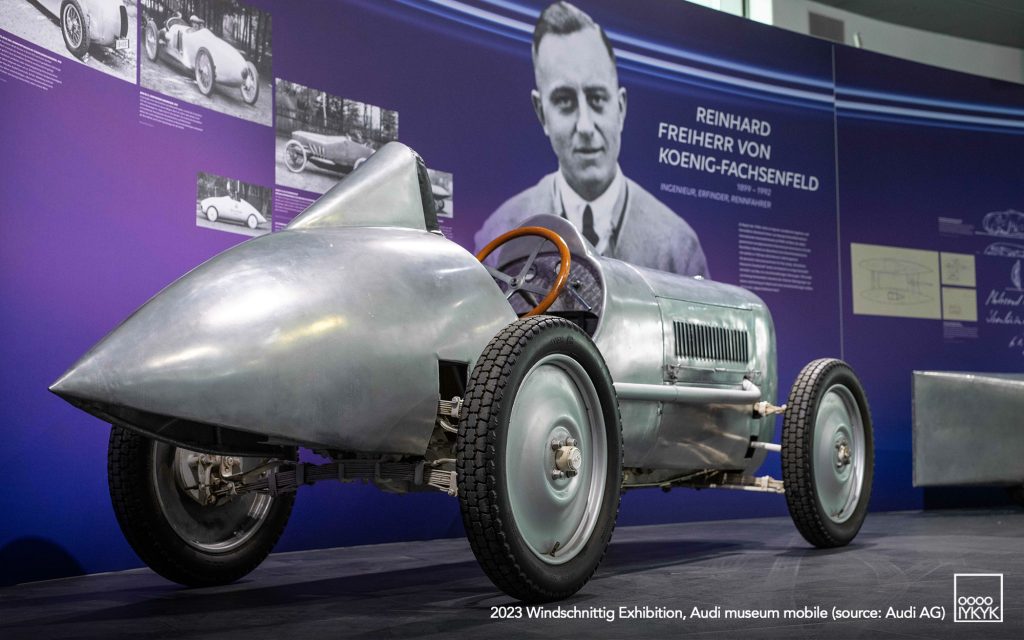
The exhibition focused particularly on three pioneers of early automotive aerodynamics: Edmund Rumpler, Paul Jaray and Reinhard Freiherr von Koenig-Fachsenfeld. Their work helped move automotive design away from conventional bodies composed of largely separate functional elements toward shapes developed with airflow and reduced aerodynamic resistance in mind.
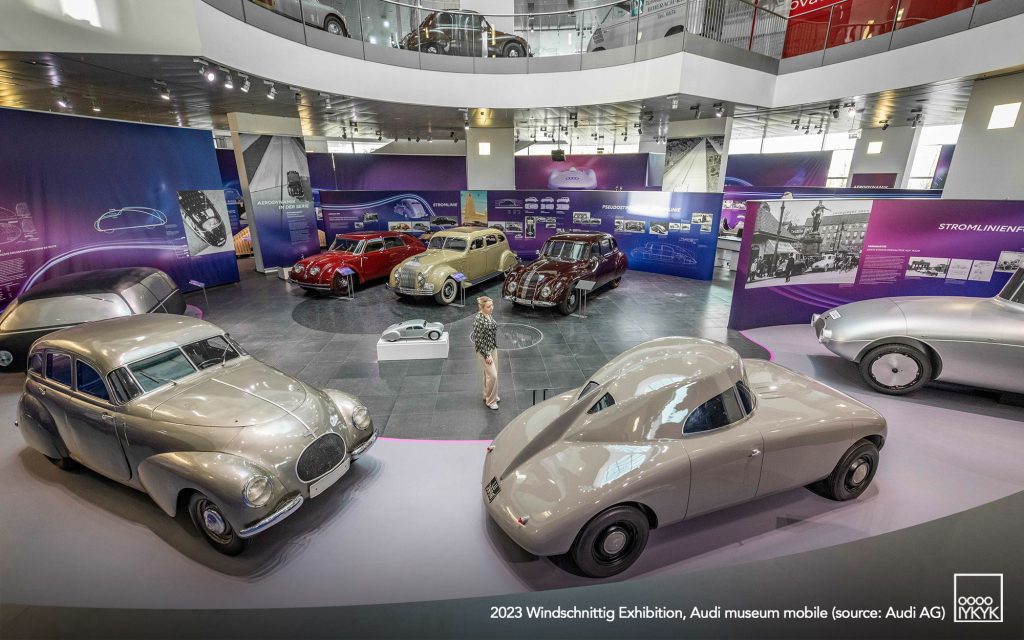
More than a dozen major exhibits were included, ranging from early experimental vehicles to streamlined competition cars. Audi’s own history was represented by projects illustrating the development of aerodynamic thinking across Audi and the companies that would eventually form Auto Union.
PAUL JARAY AND AUDI
Paul Jaray‘s early experiments formed an important part of Windschnittig. Jaray had previously worked in airship development and became one of the pioneers in applying aerodynamic principles to road vehicles.
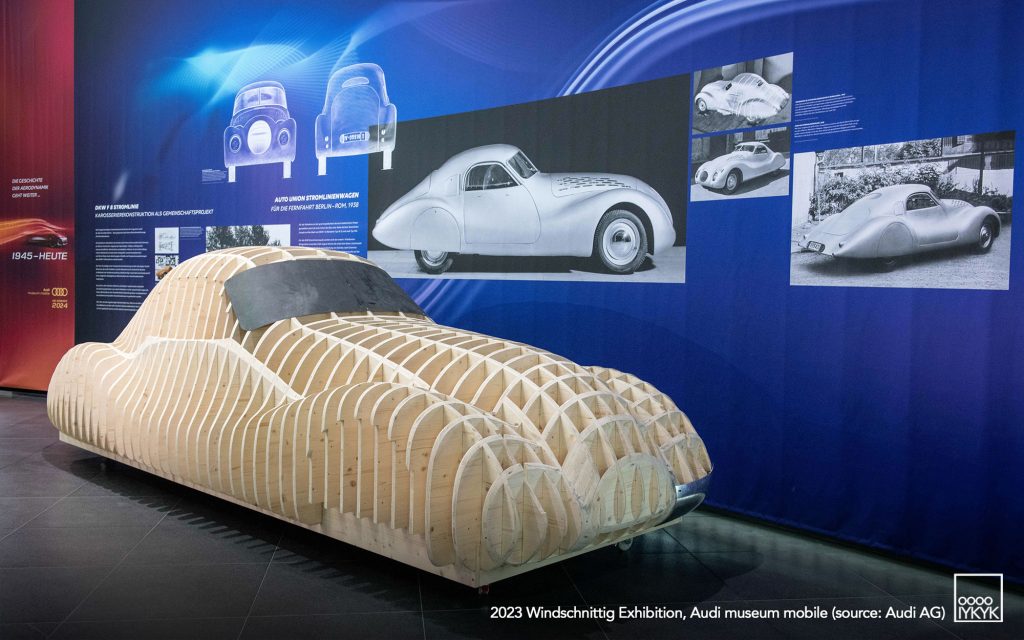
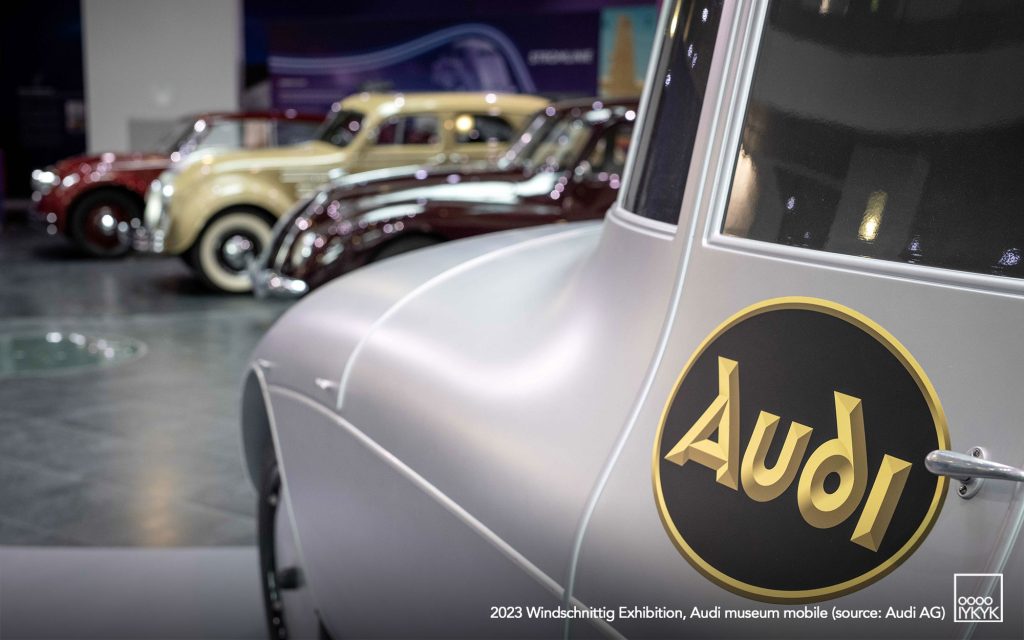
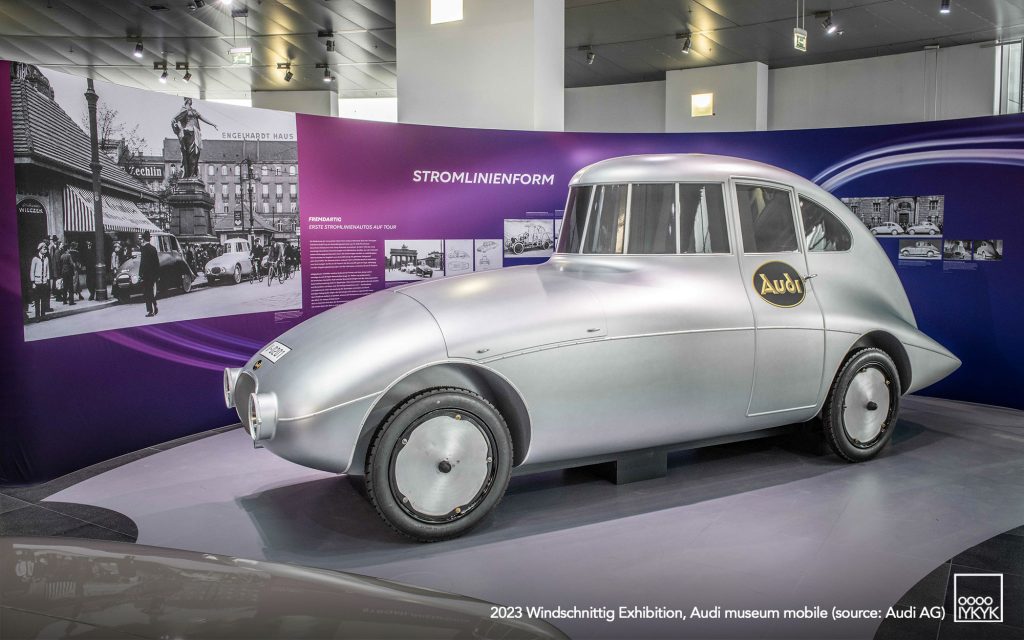
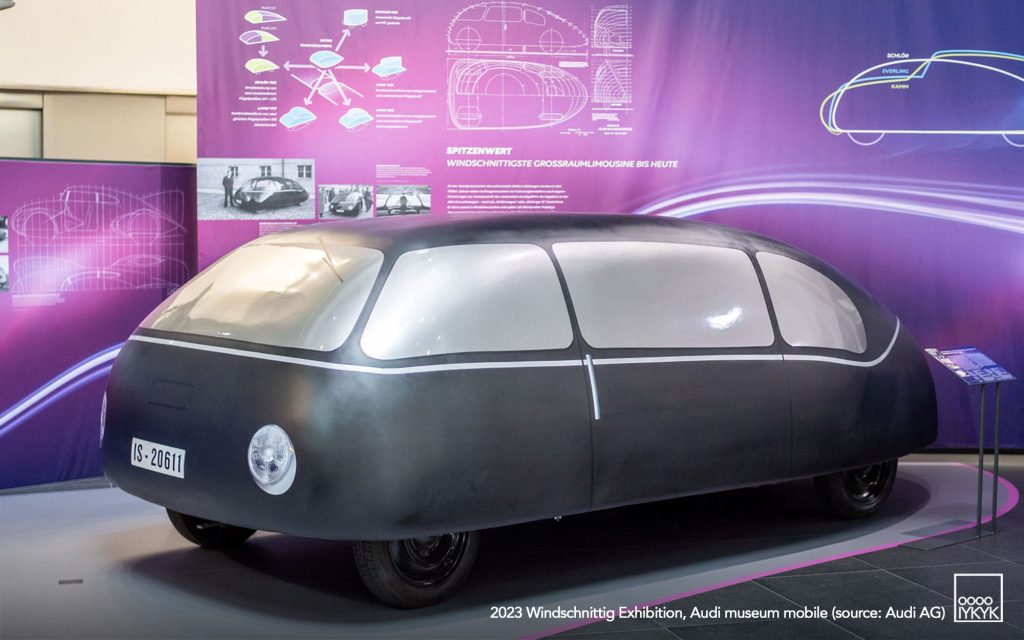
Among the exhibition’s principal exhibits was a newly constructed 1:1 model of the streamlined Audi developed around Jaray’s aerodynamic principles in 1923.
The original car had long been identified as an Audi Type K. Research undertaken in preparation for Windschnittig led historians to reconsider that attribution, with Audi concluding that the underlying vehicle must instead have been an Audi 14/35 PS Type C. Audi Tradition subsequently adopted the Type C identification in its current historical documentation.
The 1923 Audi was one of several related automobiles created to demonstrate Jaray’s aerodynamic principles on chassis from different manufacturers. A surviving photograph from Berlin shows three of these cars together: a Ley 6/16 PS Type T6 from 1922, the Audi 14/35 PS Type C and a Dixi 6/24 PS, both from 1923.
With the original Audi no longer extant, the full-size representation displayed in Windschnittig was created in cooperation with the August Horch Museum and Westsächsische Hochschule Zwickau and completed in 2023. It was an exhibition model rather than a functioning automobile.
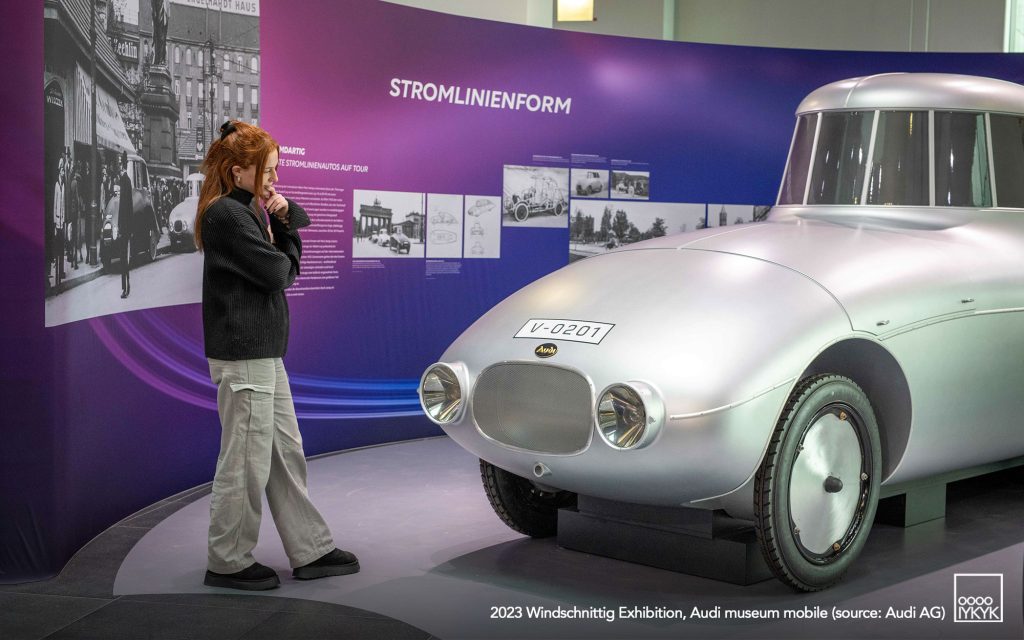
Also displayed was the later Audi Front UW Jaray. Dating from 1934, the radically streamlined car demonstrated how Jaray’s ideas continued to evolve more than a decade after his early experiments.
AUTO UNION TYPE C STROMLINIE
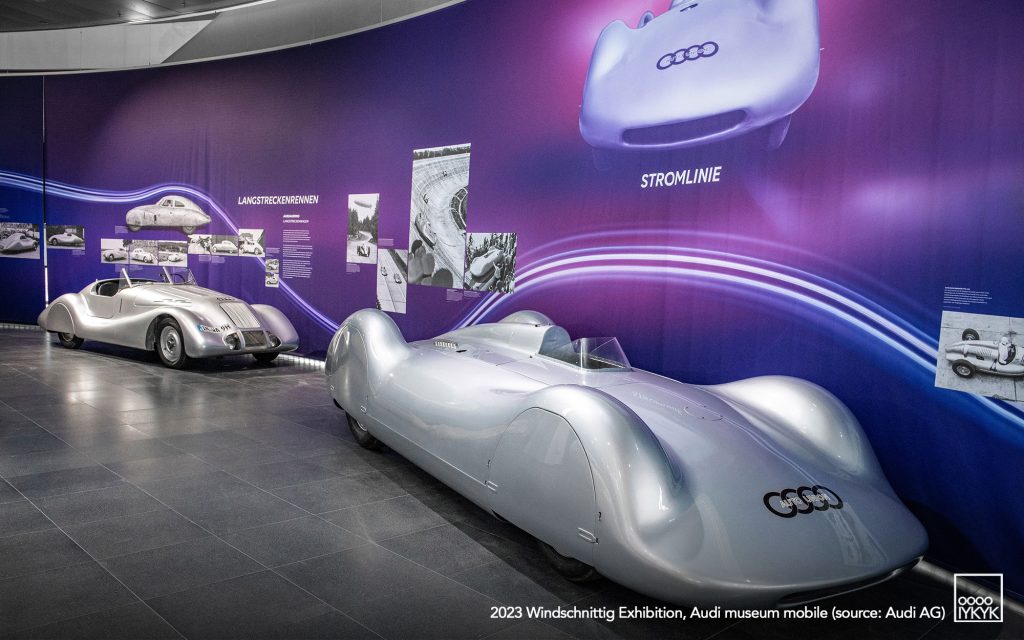
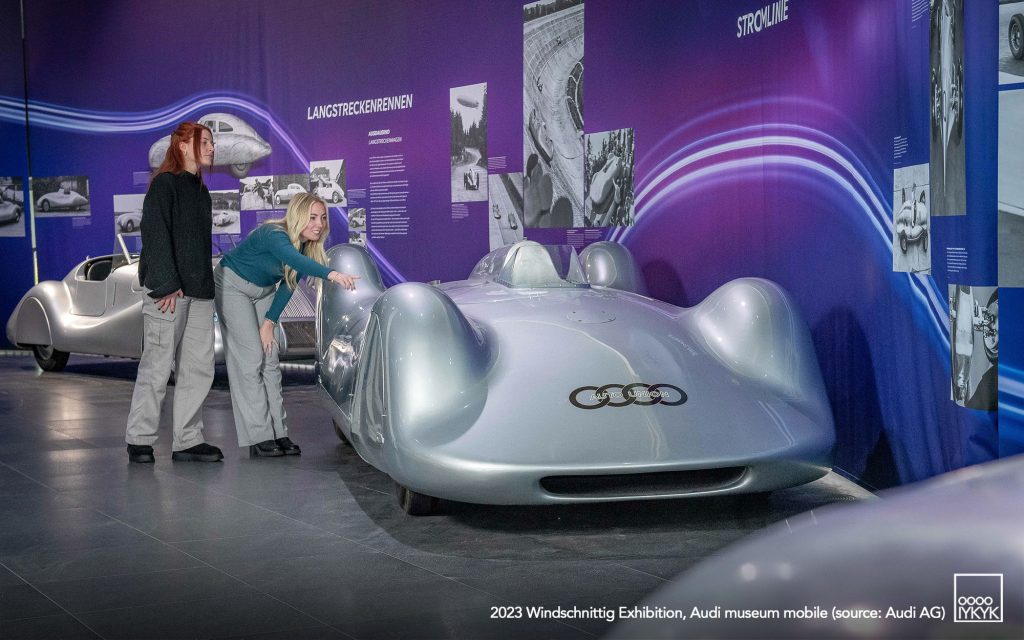
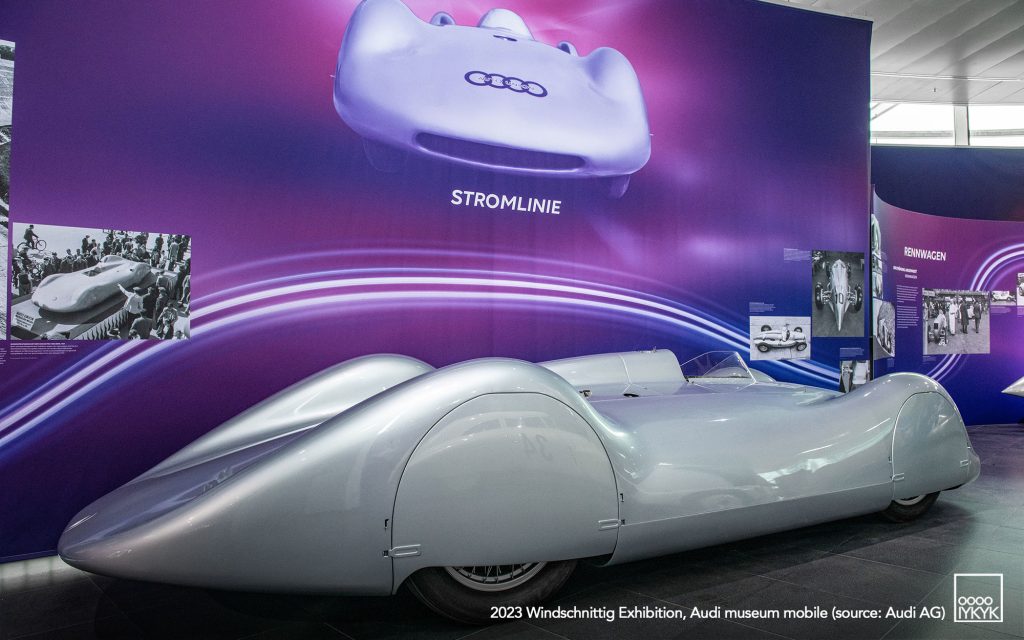
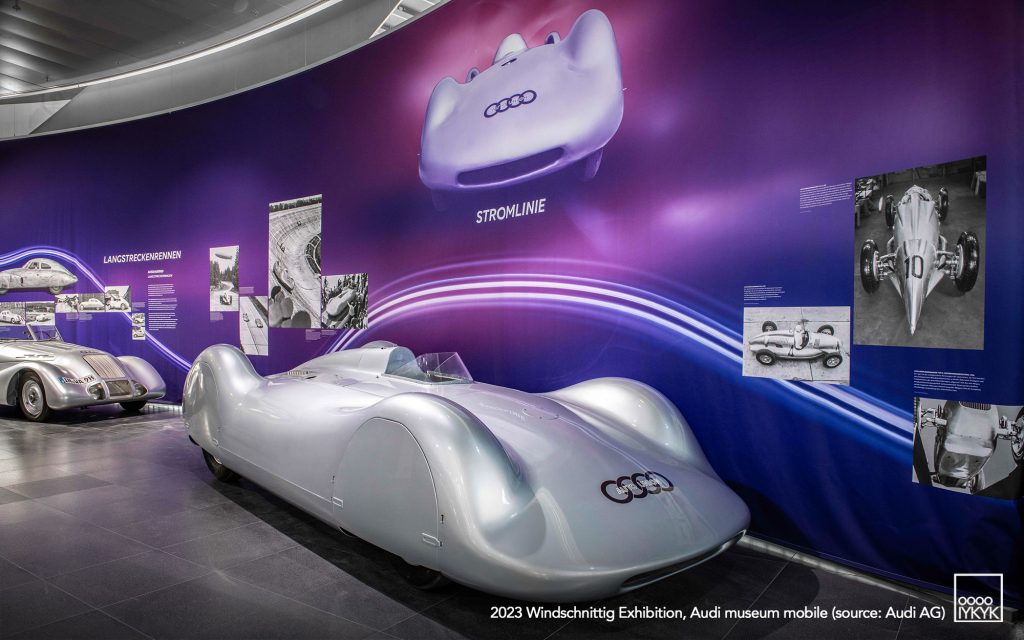
The exhibition also demonstrated the rapid development of aerodynamic thinking during the following decade through the Auto Union Type C Stromlinie.
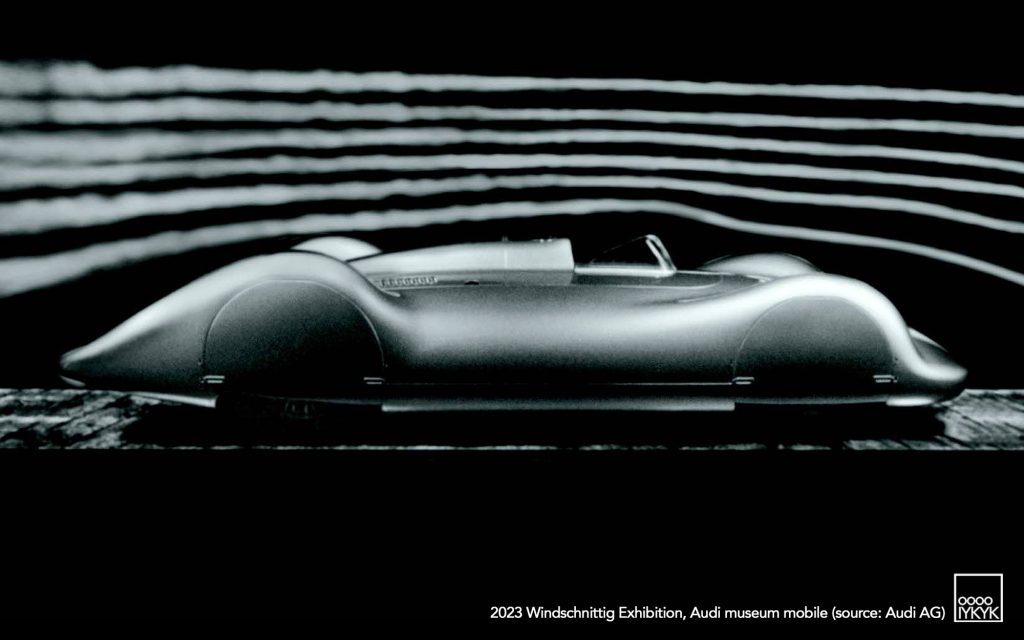
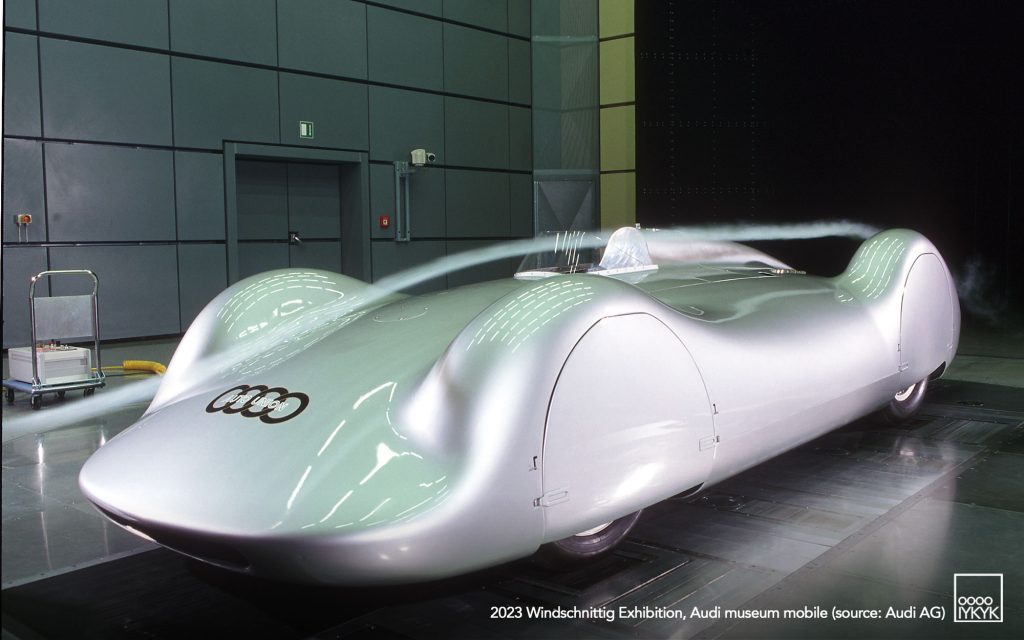
Developed for high-speed competition and record attempts during the Auto Union Grand Prix era, the streamlined Type C represented a fundamentally different application of aerodynamics from Jaray’s early road-car experiments. Its enclosed bodywork was developed around minimizing aerodynamic resistance at extremely high speeds, illustrating how aerodynamics had become an increasingly important part of competition-car engineering by the 1930s.
Historical imagery accompanying Windschnittig also documented the use of wind-tunnel testing during the development of streamlined Auto Union competition cars.
Together, the early Jaray experiments and Auto Union Type C Stromlinie illustrated how dramatically the understanding and application of automotive aerodynamics progressed during the period covered by the exhibition.
SIGNIFICANCE TO AUDI
Windschnittig placed Audi’s aerodynamic history within the broader development of aerodynamic vehicle design rather than presenting it as an exclusively Audi story.
The exhibition began with pioneers including Rumpler, Jaray and Koenig-Fachsenfeld, whose research frequently crossed manufacturers and disciplines, before progressing toward increasingly sophisticated applications of aerodynamics during the Auto Union era.
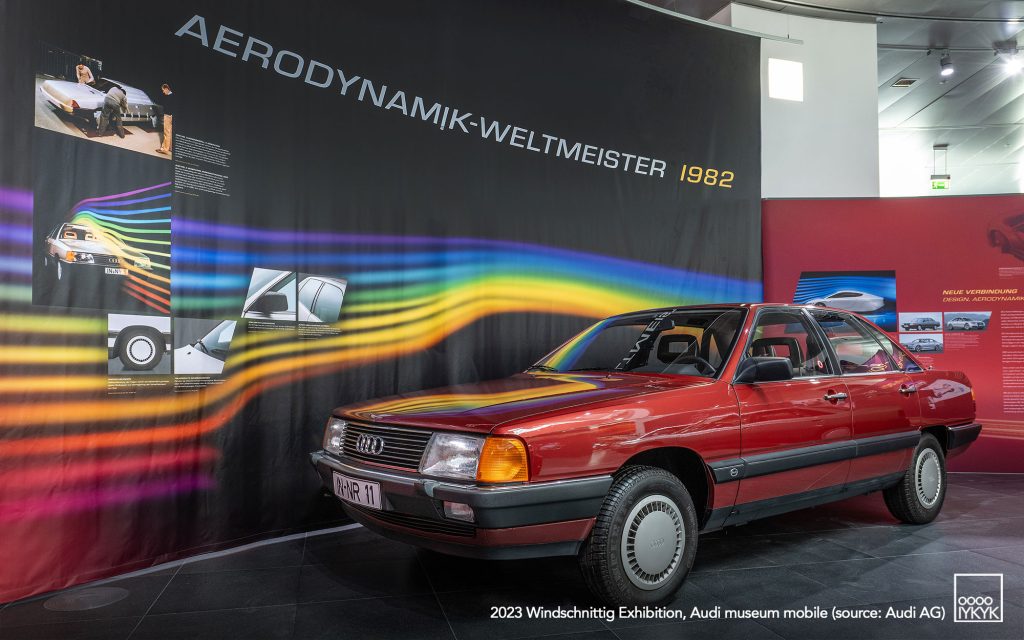
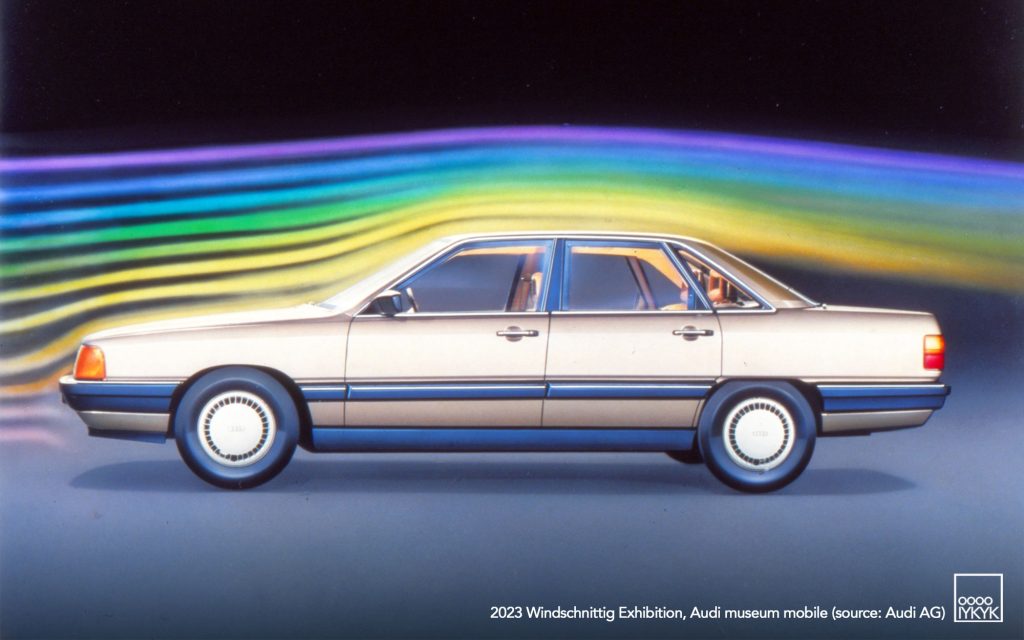
That early work provides historical context for a discipline that would become particularly important to Audi decades later. In 1982, the third-generation Audi 100 established a benchmark among production sedans with a drag coefficient of 0.30. Later models including the Audi A2 pushed aerodynamic efficiency further as part of Audi’s efforts to reduce energy consumption.
The subject also gained renewed relevance with the transition toward electric vehicles, where reducing aerodynamic drag can directly improve efficiency and driving range.
RELATED AERODYNAMICS EXHIBITIONS
Windschnittig formed part of a broader examination of automotive aerodynamics undertaken by Audi Tradition and the August Horch Museum in Zwickau.
While the Audi museum mobile installation concentrated on the beginnings of aerodynamic development through 1945, the related exhibition Form vollendet examined developments from 1945 through the modern era. Exhibits included the Audi 100, Audi 80 Cd concept, Audi A2, Audi 90 IMSA GTO, Audi R18 e-tron quattro and Audi Skorpion concept alongside significant aerodynamic vehicles from NSU, Porsche, Lamborghini and Ducati.
The DKW F9 provided a historical link between the two subjects. Developed before the Second World War, its streamlined form belonged to the period explored by Windschnittig, while its subsequent history was closely connected with the postwar restart of automobile production by Auto Union in West Germany and IFA in East Germany.
Related versions of the aerodynamics exhibitions were also presented at the August Horch Museum in Zwickau. Those installations are treated separately from the November 18, 2023–June 9, 2024 Windschnittig exhibition documented here.
NOTABLE EXHIBITS
- Audi Type C Jaray 1:1 model – 1923 design / 2023 model
- Audi Front UW Jaray – 1934
- Auto Union Type C Stromlinie
- Early aerodynamic vehicles and studies illustrating the work of Edmund Rumpler
- Vehicles and material documenting Paul Jaray’s streamlined body concepts
- Exhibits illustrating the work of Reinhard Freiherr von Koenig-Fachsenfeld
- Historical aerodynamic and wind-tunnel research material
PHOTO GALLERY
SOURCES
Audi MediaCenter – Things are going streamlined at the Audi museum mobile: New special exhibition on the history of aerodynamics, November 17, 2023
Audi Tradition – Windschnittig historical photography and exhibition material
Audi MediaCenter – Record-breaking aerodynamics in flying lawn chairs, blue whales, and dolphins from NSU, February 2024
Audi MediaCenter – Form vollendet: Audi Tradition presents aerodynamics from 1945 to the present day, July 2024
August Horch Museum Zwickau – Aerodynamics exhibition material
RESEARCH NOTES
- Windschnittig was presented at the Audi museum mobile in Ingolstadt from November 18, 2023 to June 9, 2024.
- The exhibition examined the development of automotive aerodynamics from its beginnings through 1945.
- More than a dozen large exhibits were included.
- Audi highlighted aerodynamic pioneers Edmund Rumpler, Paul Jaray and Reinhard Freiherr von Koenig-Fachsenfeld.
- The Audi Type C Jaray displayed in the exhibition was a newly completed 1:1 model rather than the original 1923 vehicle.
- Historical research associated with the exhibition resulted in Audi revising the identification of the 1923 Jaray Audi from the traditionally accepted Type K to Type C.
- Audi’s historical photograph of the Jaray-bodied cars in Berlin identifies the group as a 1922 Ley 6/16 PS Type T6, 1923 Audi 14/35 PS Type C and 1923 Dixi 6/24 PS.
- The Audi Front UW Jaray represented a later application of Jaray’s aerodynamic principles to an Audi chassis.
- Related aerodynamics exhibitions were presented by Audi Tradition and the August Horch Museum but are not included in the dates or event chronology of this Archive entry.
ARCHIVE STATUS
Exhibition Status: Concluded
Opening Date: November 18, 2023
Closing Date: June 9, 2024
Venue: Audi museum mobile, Ingolstadt
Organizer: Audi Tradition
Exhibition Type: Temporary museum exhibition
Documentation Status: Official Audi Tradition press material, exhibition photography and historical imagery survive