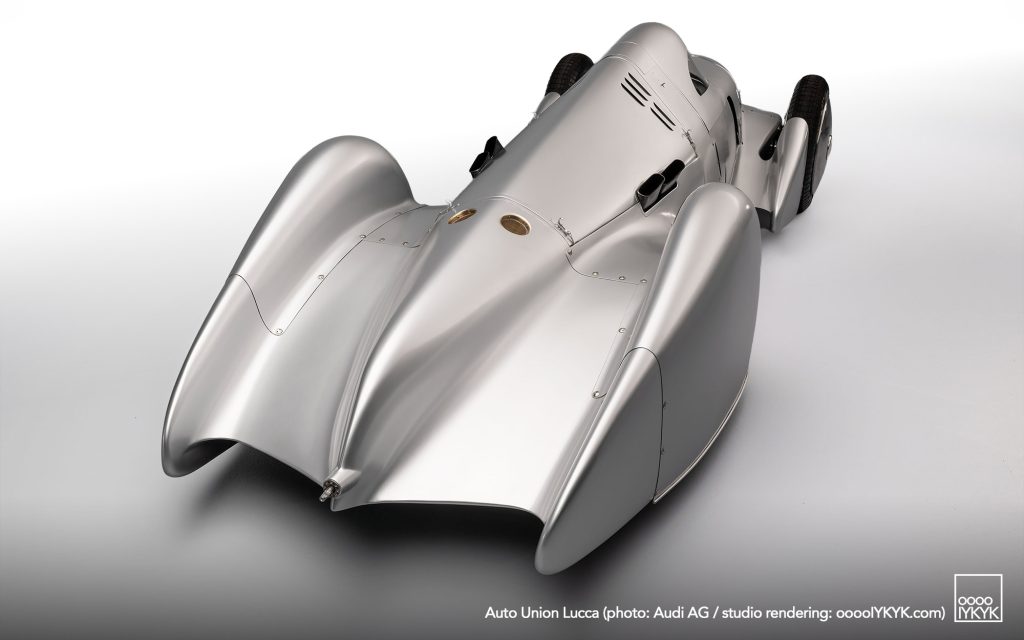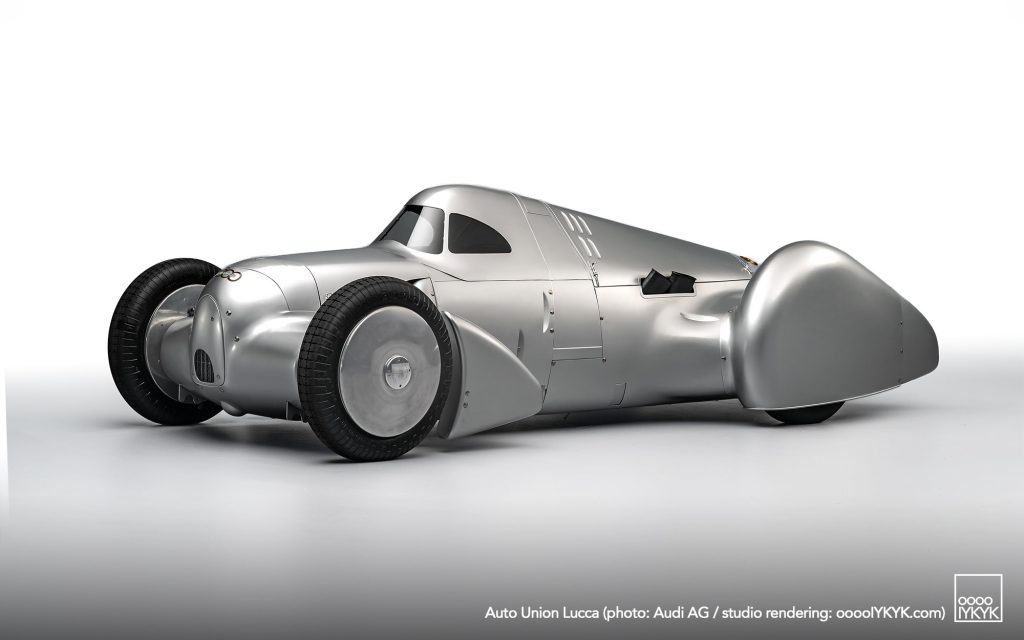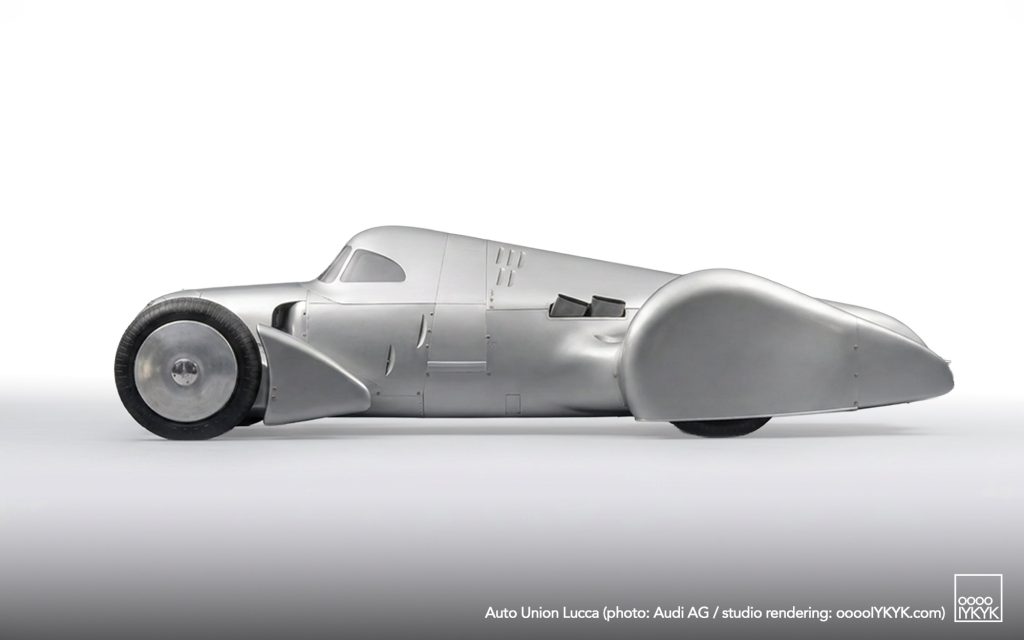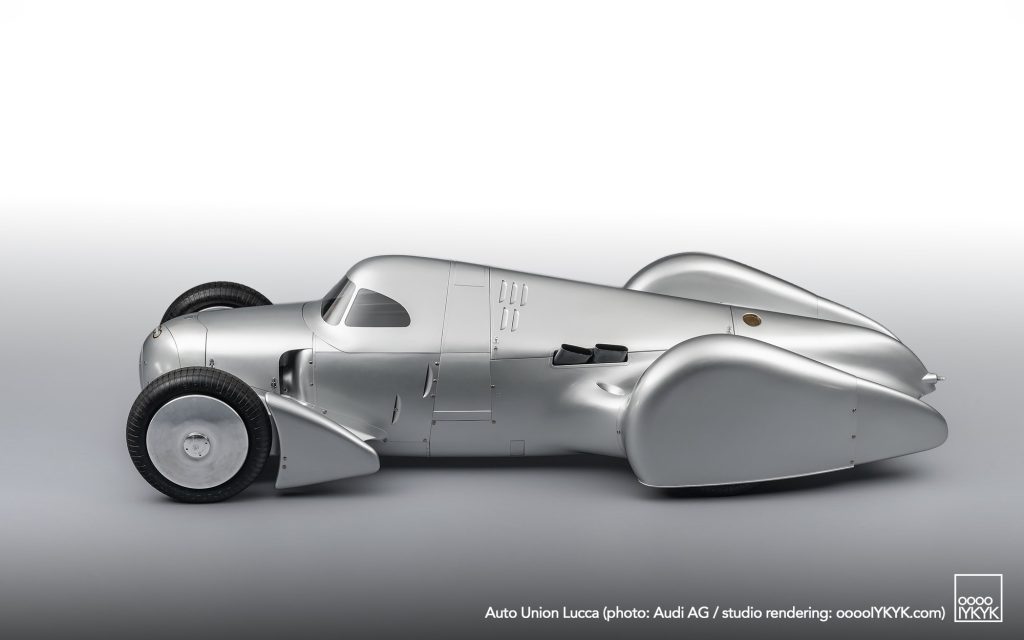

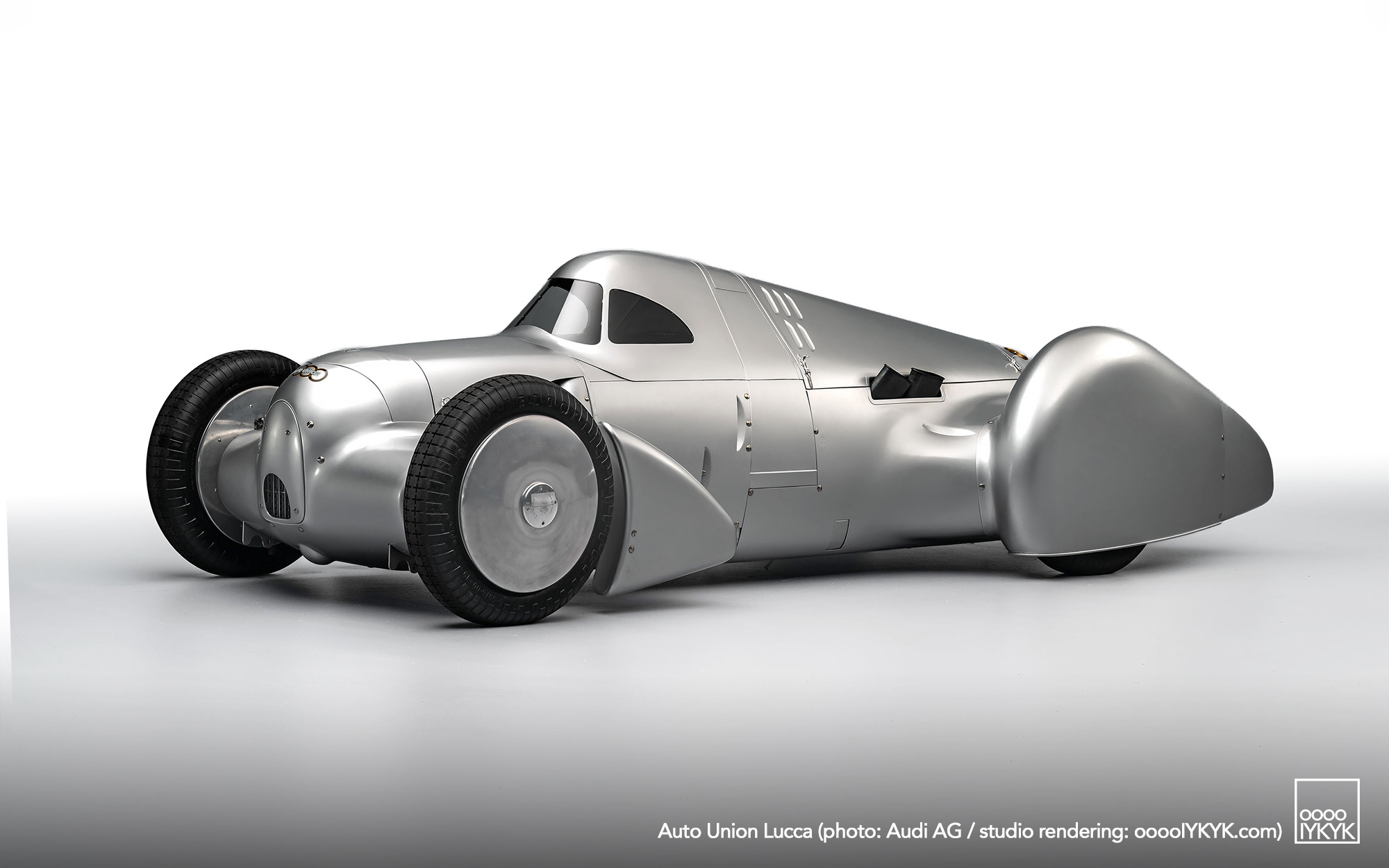

What: 1935 Auto Union Lucca record car replica
Era: Auto Union Silver Arrow Grand Prix Cars
Model Family: Auto Union Rekordwagen
Model Family: Auto Union Type A
Year: 1935 (original), 2026 (replica)
Number Produced: 1
Commissioned By: Audi Tradition
Built By: Crosthwaite & Gardiner
Production Location: United Kingdom
Collection: AUDI AG historic vehicle collection
Original Inspiration: 1935 Auto Union Lucca Rennlimousine record car
First Unveiled: Lucca, Italy, May 6, 2026
Public Debut: 2026 Goodwood Festival of Speed
TECHNICAL DETAILS
Body Style: Streamlined Rennlimousine record-car recreation
Layout: Mid-engine, rear-wheel drive
Engine: Supercharged V16
Displacement: 6,005 cc
Power Output: 520 PS (382 kW) at 4,500 rpm
Fuel: 50% methanol, 40% premium unleaded gasoline, 10% toluene
Exterior Color: Cellulose Silver
Drag Coefficient: 0.426
DIMENSIONS
Length: 4,570 mm
Width: 1,700 mm
Height: 1,200 mm
Wheelbase: 2,800 mm
Curb Weight: 960 kg
OVERVIEW
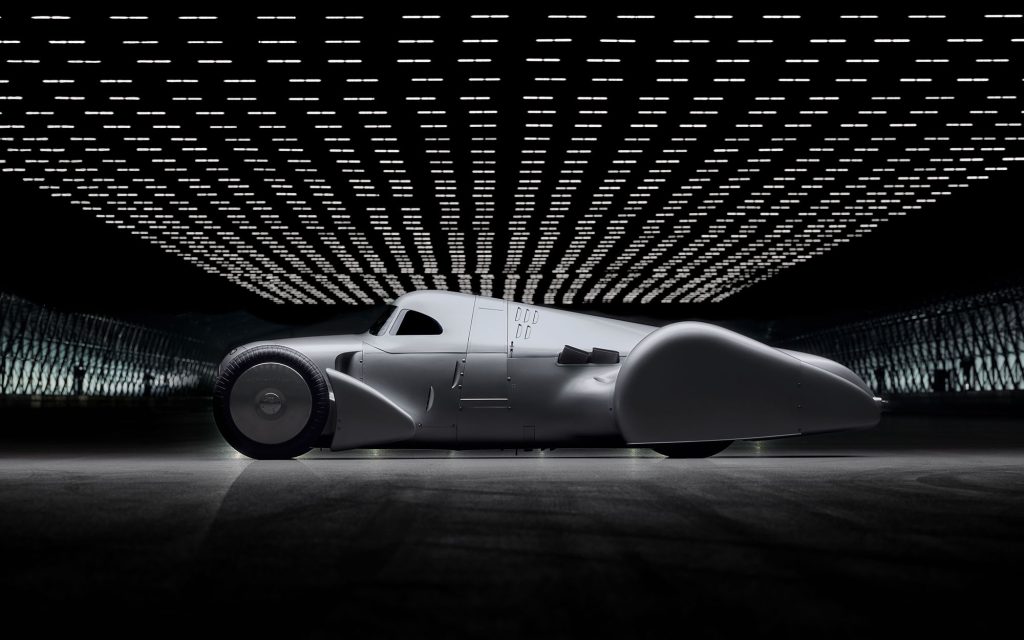
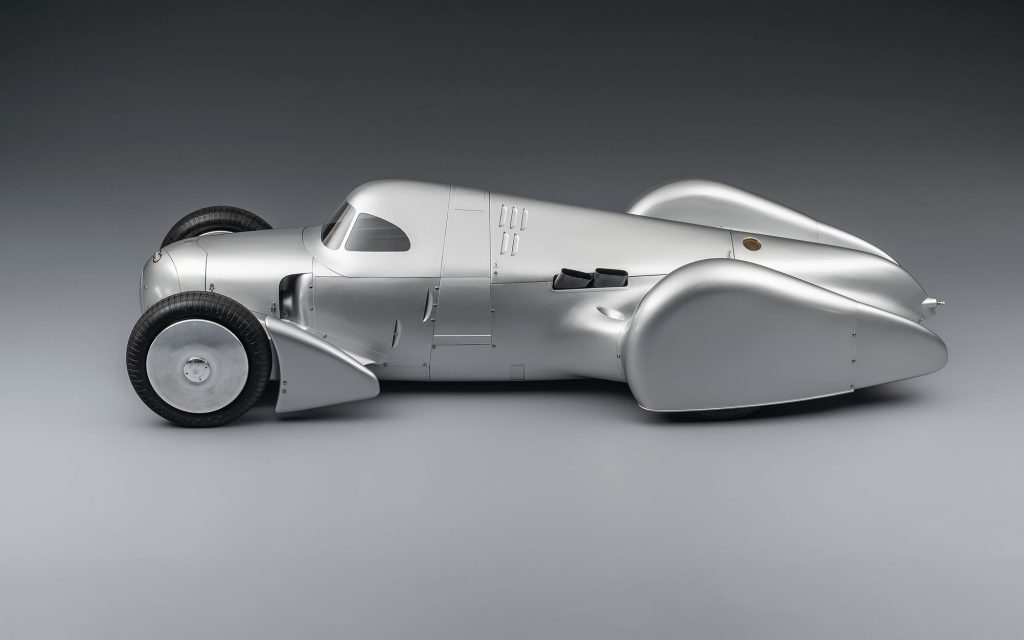
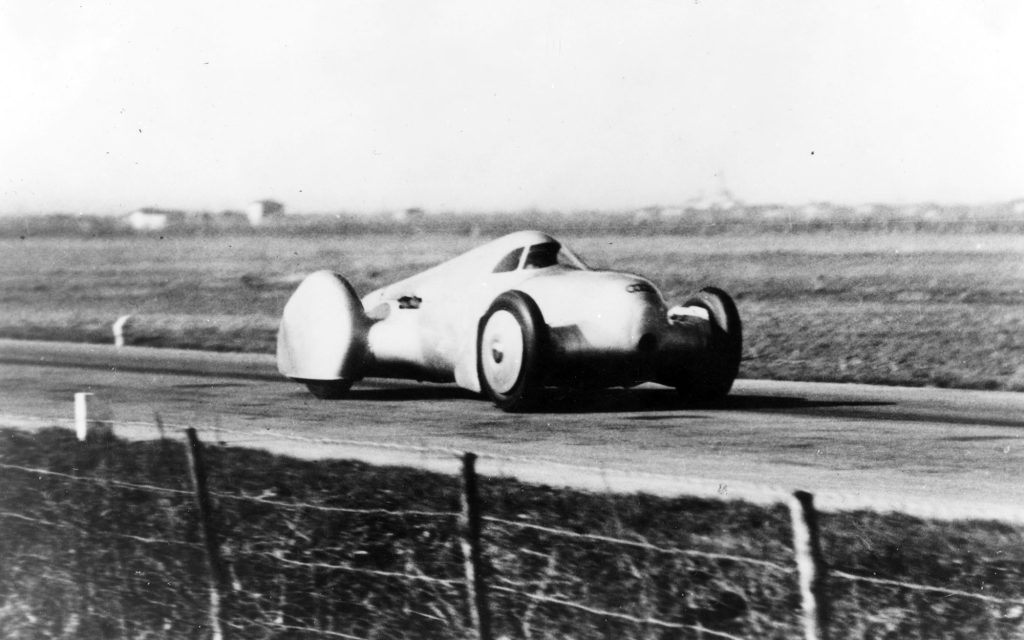
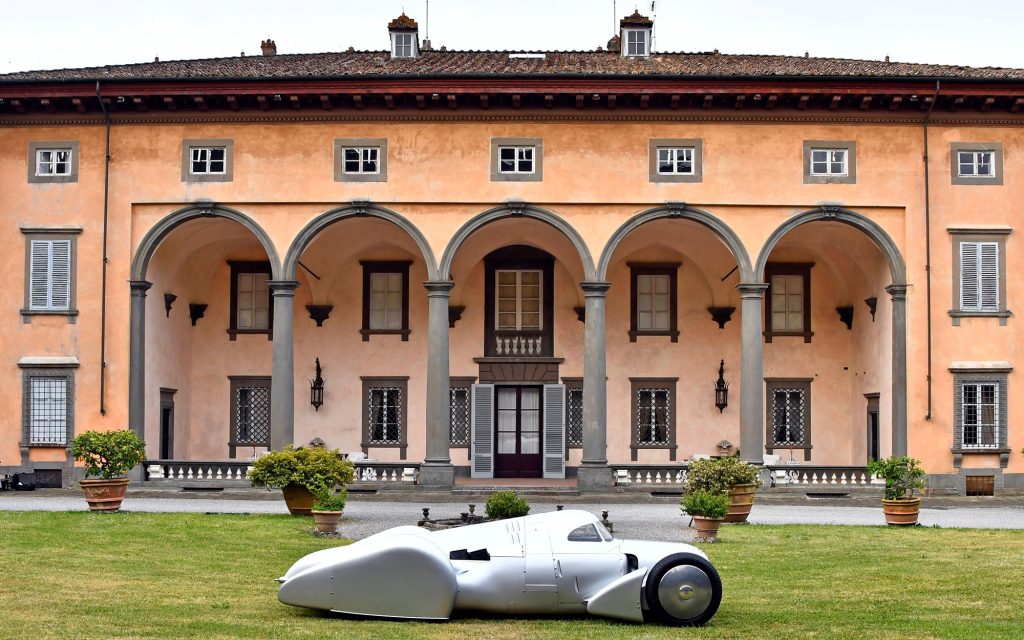
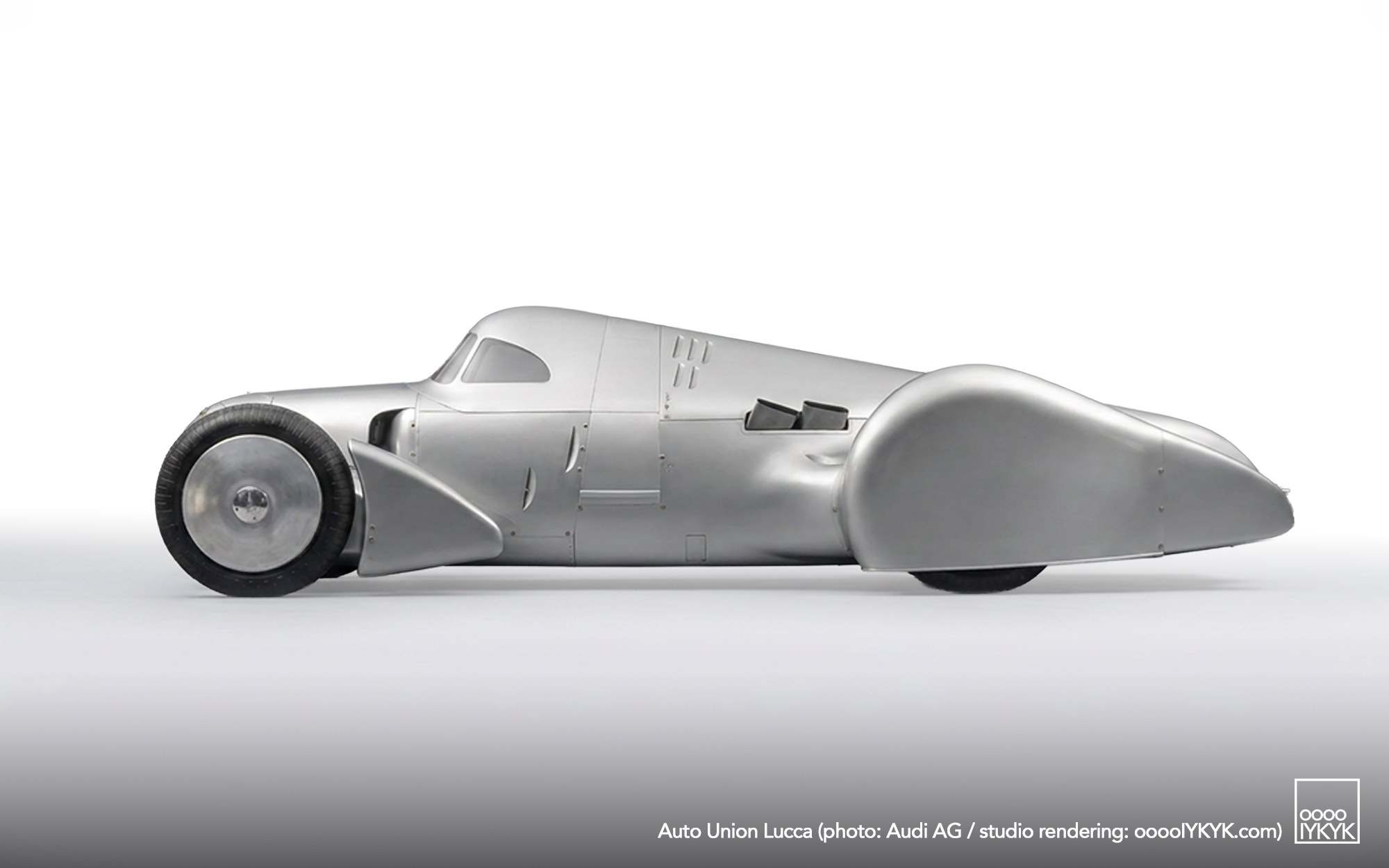
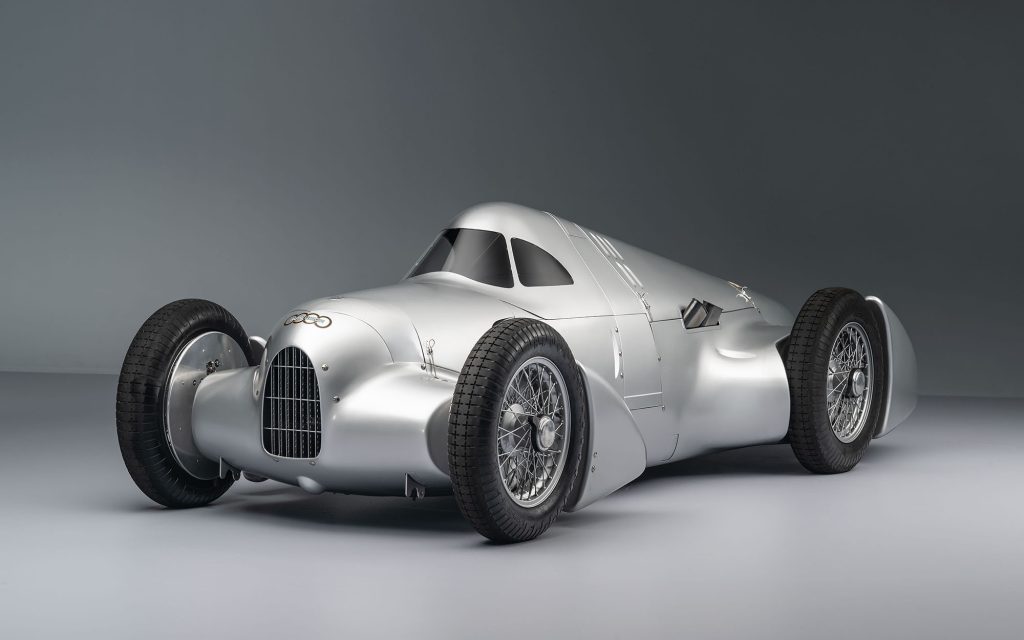
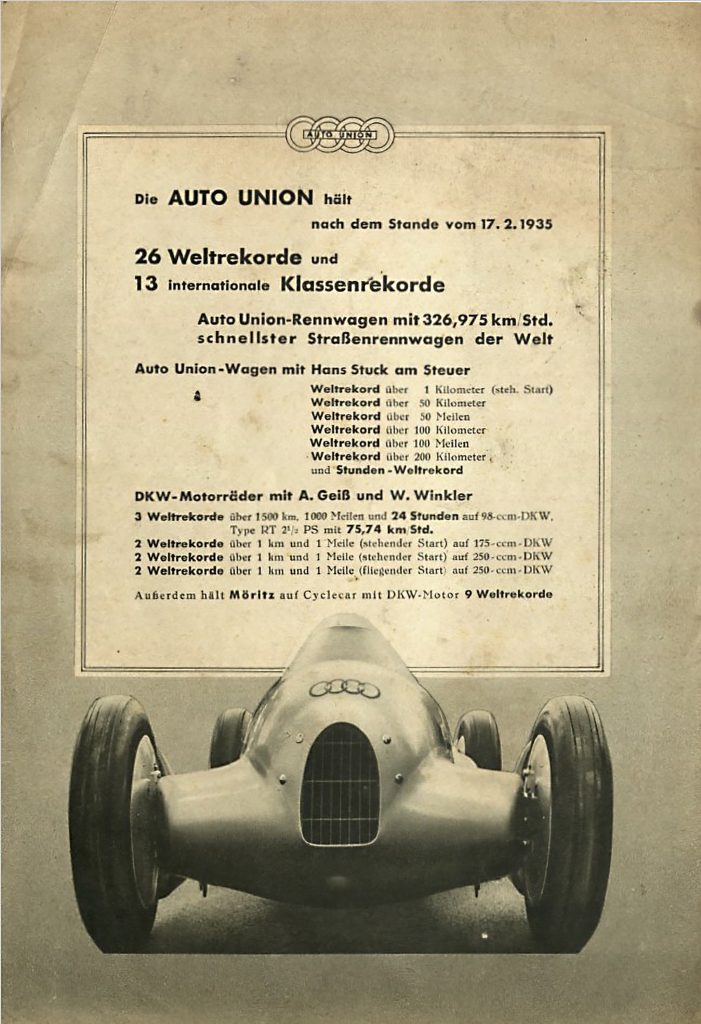
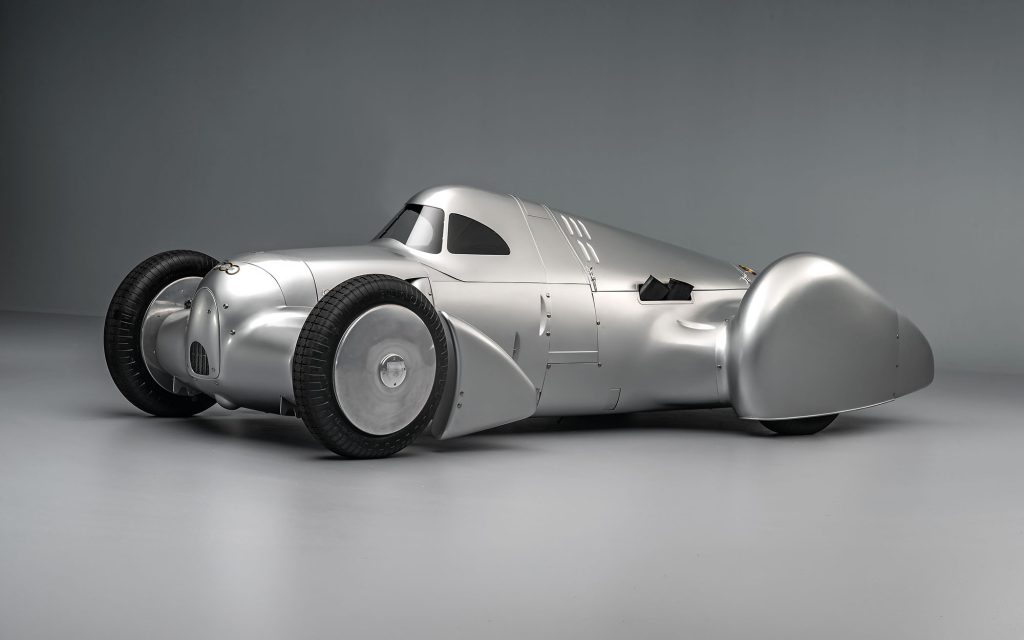
The Auto Union Lucca is a one-off recreation commissioned by Audi Tradition and completed in 2026. Built by Crosthwaite & Gardiner in the United Kingdom over a three-year period, it recreates the streamlined Auto Union record car driven by Hans Stuck near Lucca, Italy, on February 15, 1935.
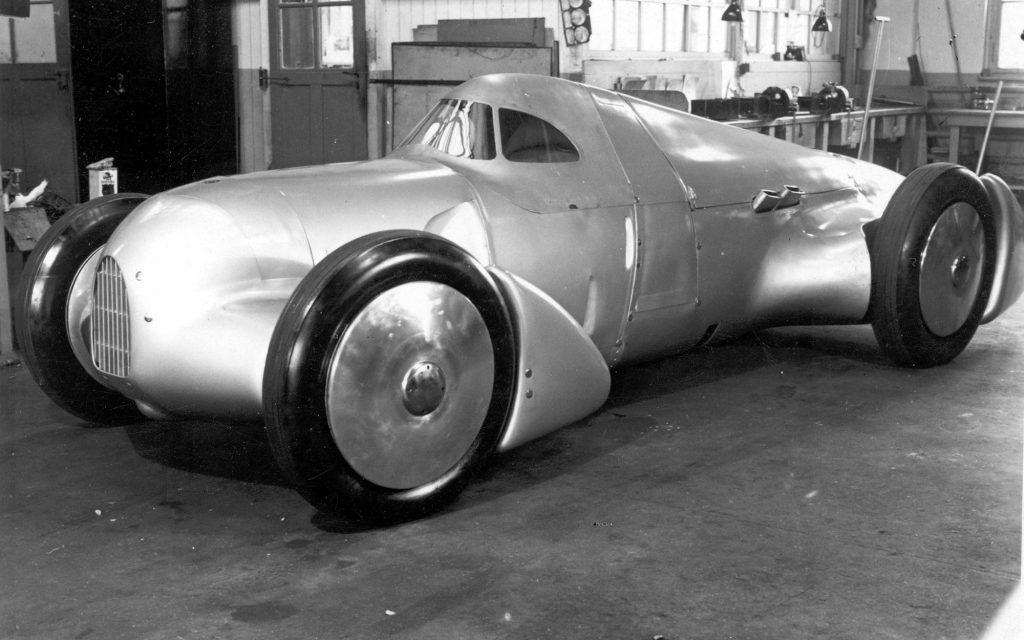
The 2026 Lucca is not an original pre-war Auto Union. It is a modern historic reconstruction created for Audi Tradition to represent a lost chapter of Auto Union’s early Silver Arrow history. The original Lucca record car no longer exists, and Audi did not previously have a racing or record-attempt car from the earliest Auto Union Grand Prix years in its historic vehicle collection. The recreation was therefore intended to fill a specific gap: the beginning of Auto Union’s aerodynamic record-car story.
Although the car is visually and historically based on the 1935 Lucca record machine, the recreation also incorporates selected features from the later AVUS configuration. These changes were made for practical reasons. The original Lucca car was designed for brief record attempts, not repeated demonstration runs at modern events. The recreated car needed to be usable, durable and capable of operating in public while still appearing authentic to the period.
BACKGROUND
Audi Tradition’s Silver Arrow collection has long included important representations of Auto Union’s pre-war Grand Prix history, including later racing cars and recreations. However, the early cars weren’t represented because the originals did not survive. The Lucca project was created to begin to address that absence.
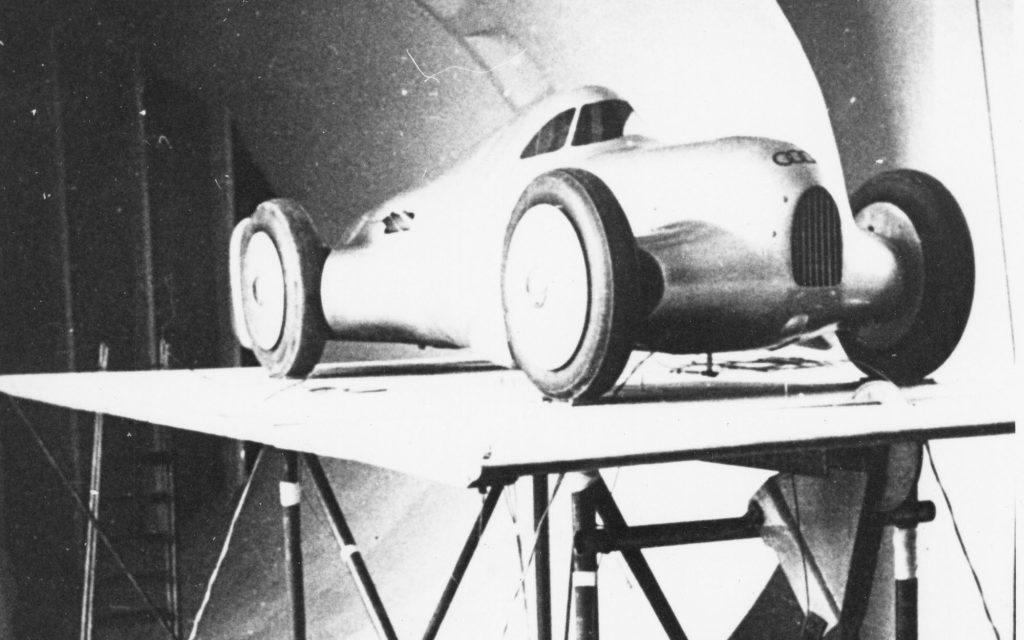
The car chosen for recreation was significant because it stood at the beginning of Auto Union’s aerodynamic record work. The original 1935 Lucca combined a Type A-derived chassis, an early enlarged V16 and a fully streamlined body developed through wind-tunnel testing. It was both a record car and a development tool, helping Auto Union understand how streamlining could be applied to high-speed competition.
CONSTRUCTION
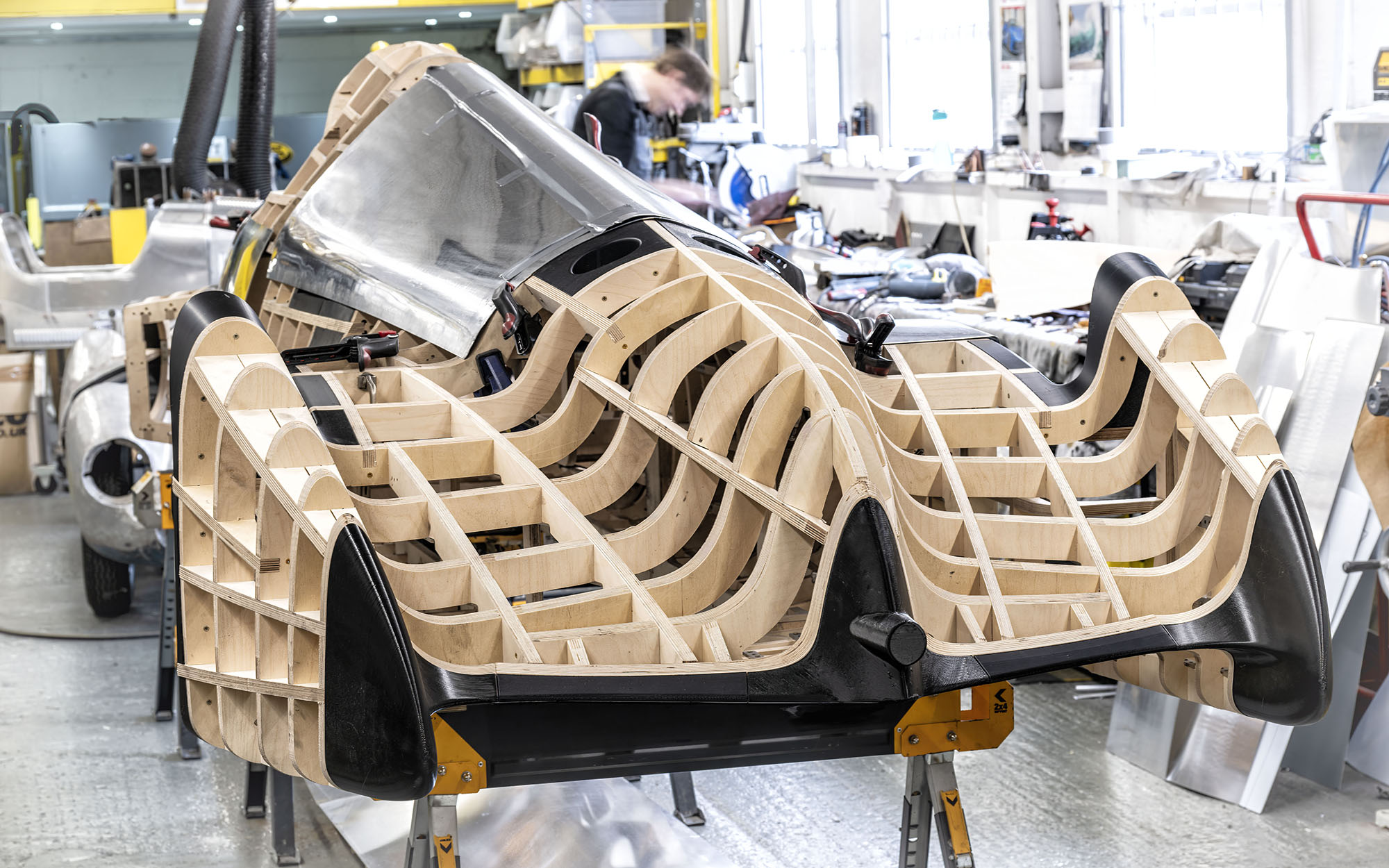
Audi Tradition entrusted the build to Crosthwaite & Gardiner, the British restoration and engineering firm known for recreating and restoring historically significant racing cars. The company had already built several pre-war Auto Union recreations, making it one of the few workshops with the experience and technical understanding necessary for such a project.
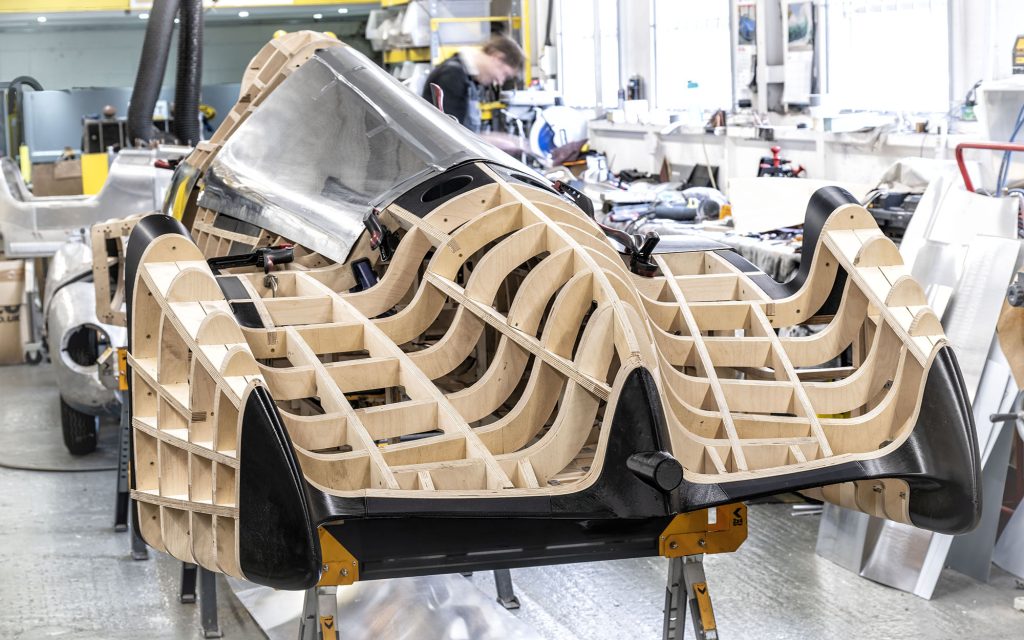
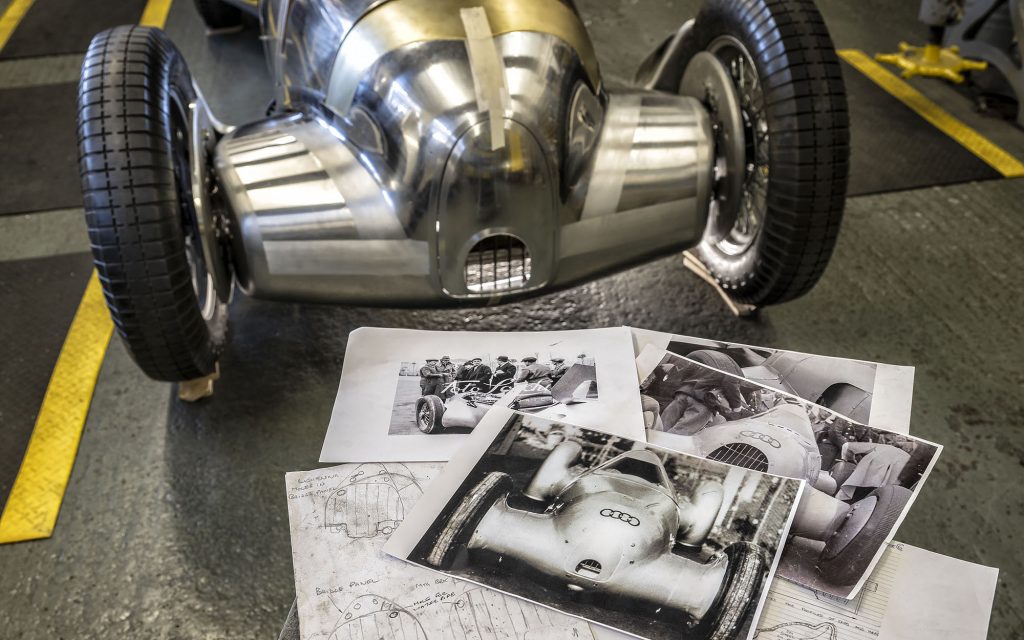
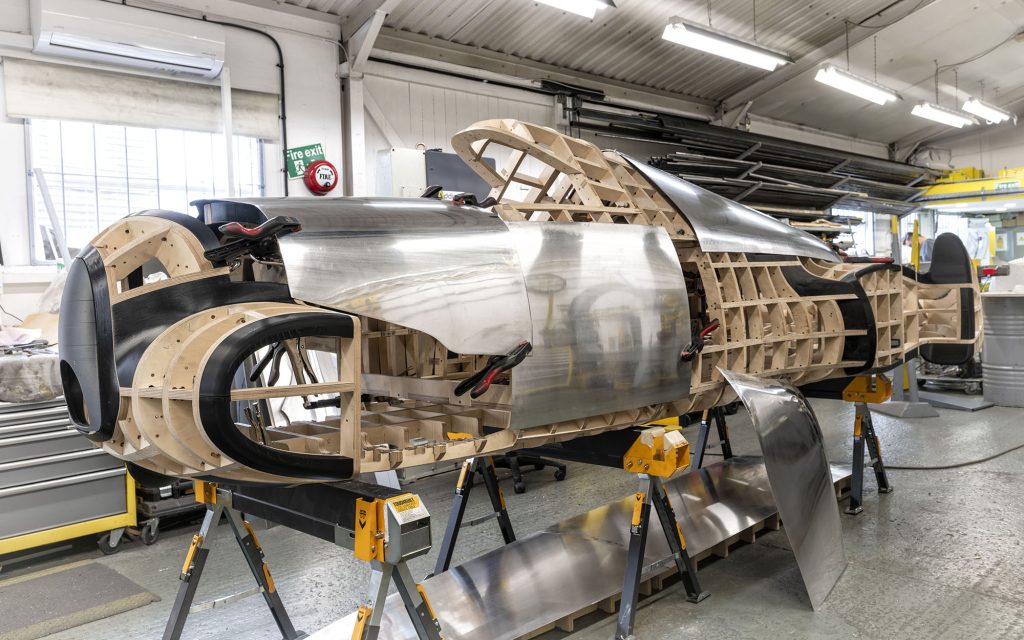
Construction took more than three years. The build relied on surviving period photographs, archive material, historical drawings and engineering research rather than a surviving original car. Every component had to be manufactured specifically for the project.
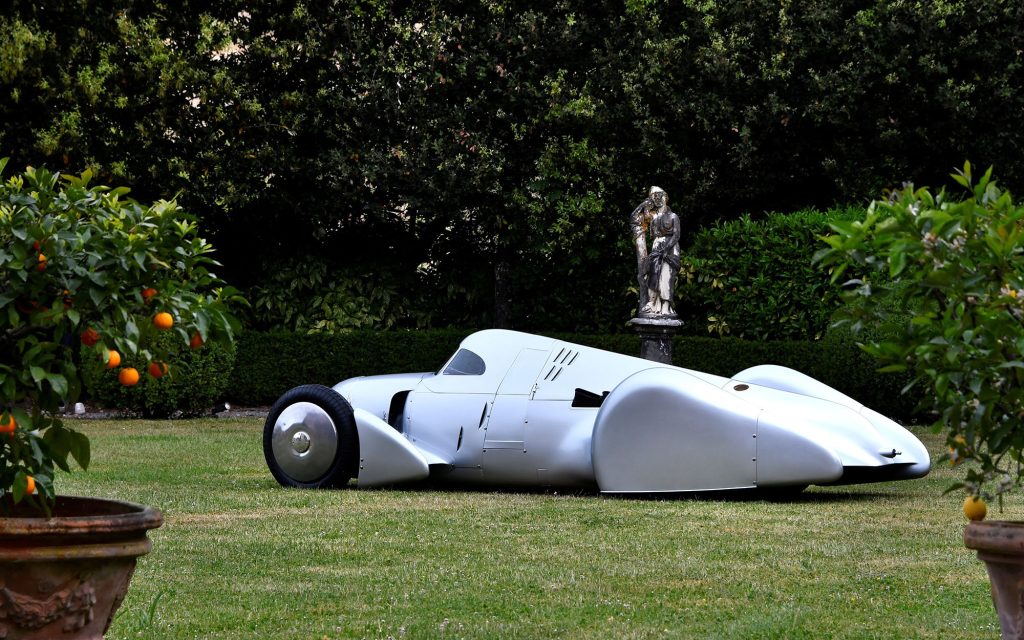
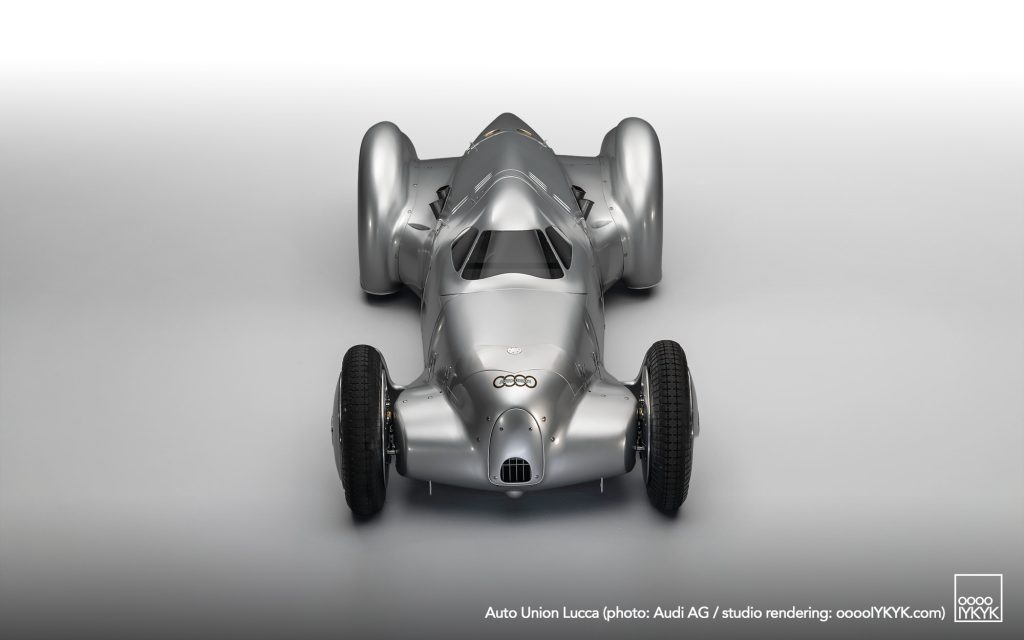
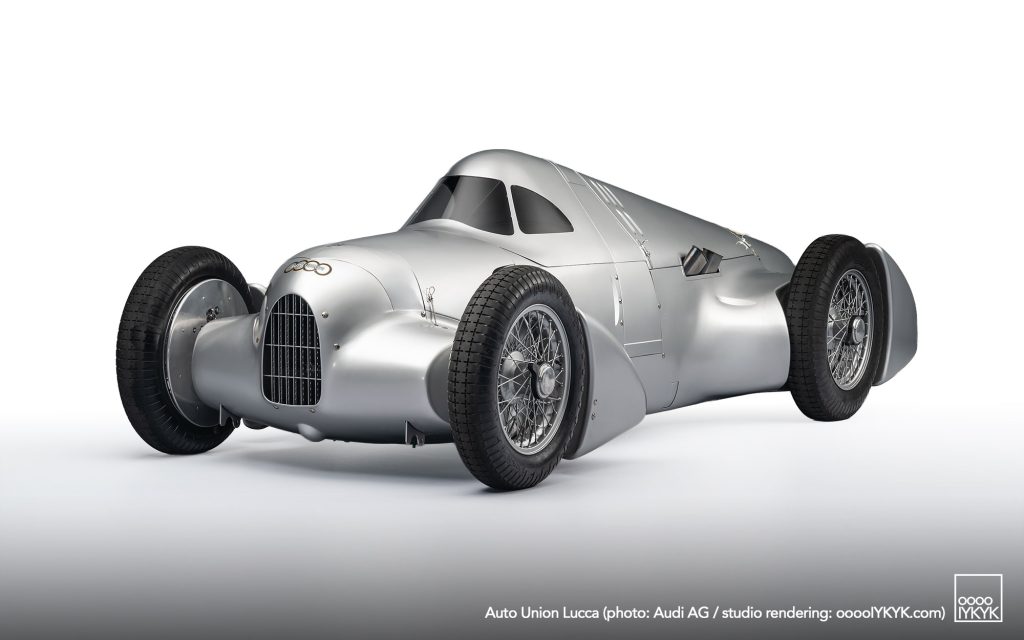
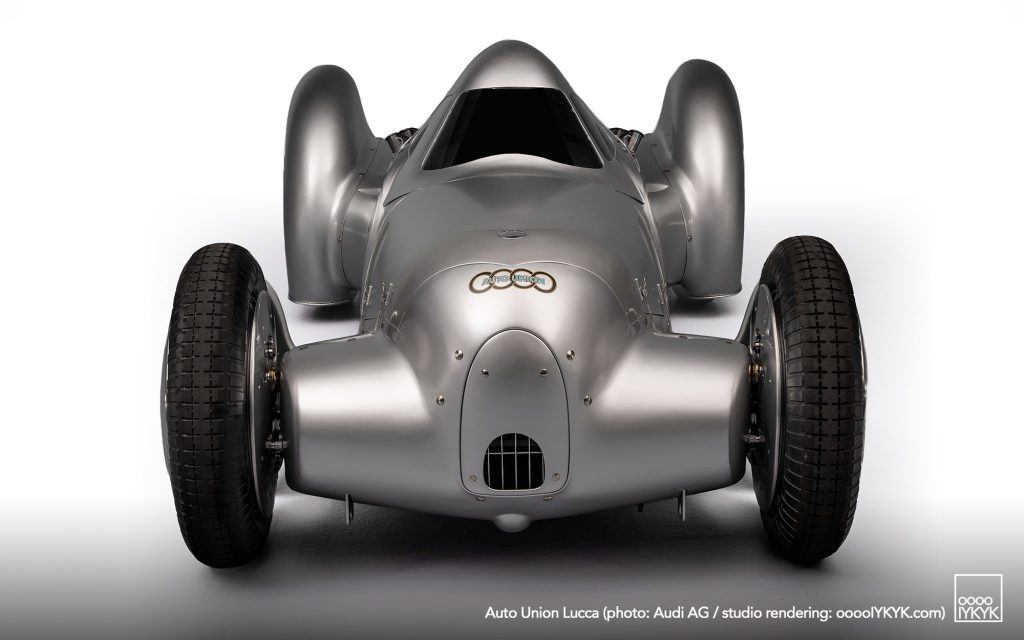
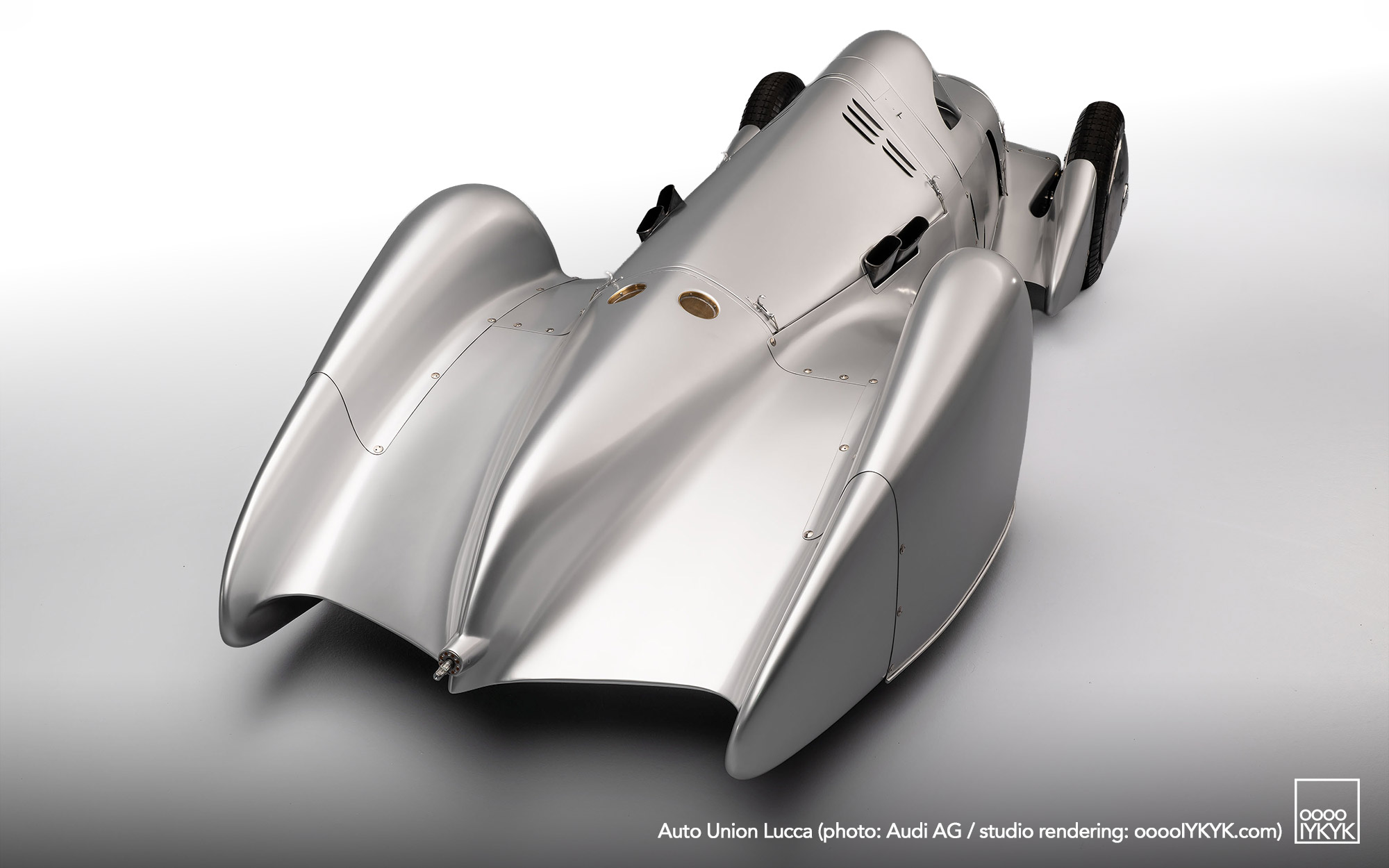
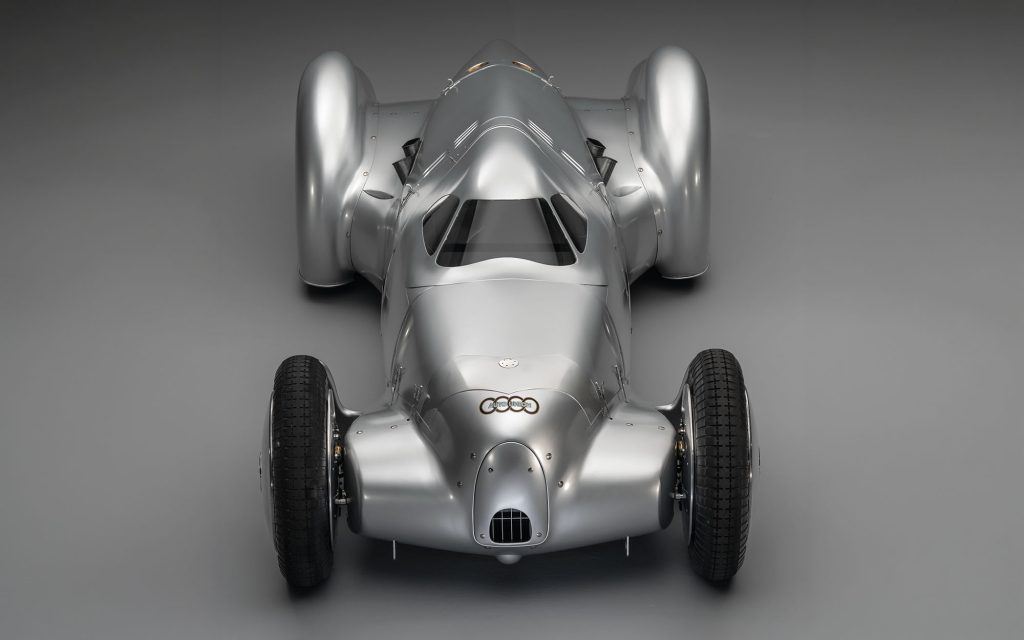
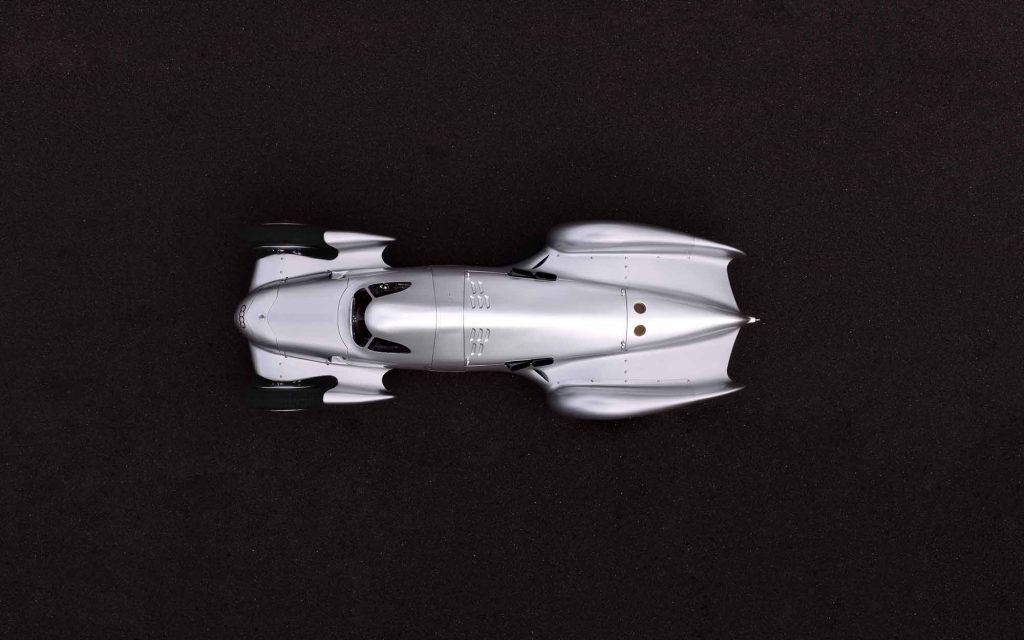
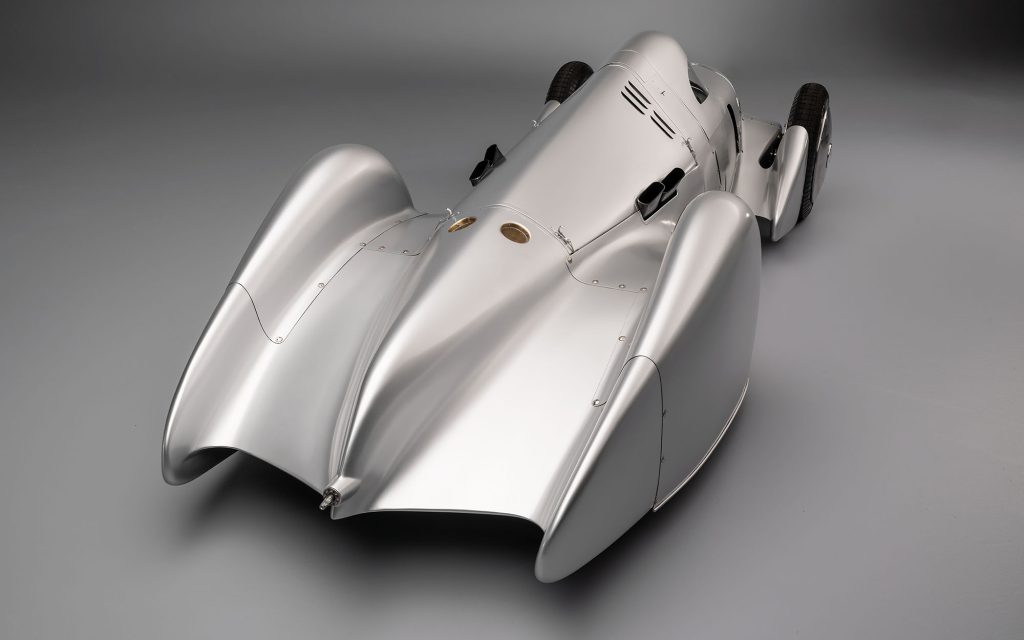
The body was the most demanding part of the recreation. The original Lucca’s form was dictated almost entirely by aerodynamics, with a fully enclosed cockpit, wheel fairings, long tapered tail and integrated intake and exhaust routing. Reproducing those shapes required a mixture of traditional coachbuilding, archival interpretation and modern precision. The cockpit canopy, tapered rear bodywork and underfloor treatment were especially complex because the original car had not been preserved for measurement.
The result was a recreation that captured the visual drama of the 1935 record car while being engineered to function as part of Audi’s historic running collection.
ENGINE AND MECHANICAL SPECIFICATION
The original 1935 Lucca used an early enlarged version of Auto Union’s supercharged V16, with displacement of approximately five liters and output of around 343 PS. For the 2026 recreation, Audi Tradition chose to install the later 6.0-liter V16 engine specification used in the Auto Union Type C.
This was a deliberate practical decision. The 6.0-liter Type C engine is visually very similar to the earlier unit and is interchangeable within Audi Tradition’s Silver Arrow fleet. Using it makes the car easier to maintain and operate while preserving the external appearance of the original record car.
In the 2026 Lucca, the supercharged V16 displaces 6,005 cc and produces 520 PS at 4,500 rpm. The fuel mixture is listed as 50 percent methanol, 40 percent premium unleaded gasoline and 10 percent toluene. The car measures 4,570 mm long, 1,700 mm wide and 1,200 mm high, with a wheelbase of 2,800 mm and a curb weight of 960 kg.
AVUS-SPECIFICATION PRACTICAL CHANGES
The recreation is best understood as a Lucca car with selected AVUS-related modifications rather than an absolutely pure reconstruction of the February 1935 record configuration.
The reason is thermal management. The original Lucca record car was optimized for short, high-speed passes on a straight road. During the record attempt, the radiator opening could be largely covered because the run was brief and the objective was maximum speed. That would not be practical for repeated demonstration use at venues such as Goodwood.
Audi Tradition therefore incorporated cooling and ventilation features associated with the later AVUS version of the Rennlimousine. These changes reduce thermal stress and allow the car to be used dynamically without compromising the overall character of the original. With relatively minor changes to the radiator and body panels, the car can be presented in either Lucca or AVUS configuration.
This makes the 2026 car an archival reconstruction while also being a usable historic vehicle. It is authentic in appearance, but adapted enough to survive the demands of modern running events.
AERODYNAMIC TESTING
After completion, the Lucca recreation was tested in Audi’s wind tunnel in Ingolstadt. This was significant because the original 1935 car had been shaped using wind-tunnel research at Berlin-Adlershof. Testing the recreation in a modern facility created a direct connection between Auto Union’s 1930s aerodynamic experiments and Audi’s contemporary engineering methods.
The recreated Lucca recorded a drag coefficient of 0.426. Audi Tradition rounded this figure to 0.43 in its technical materials. While not especially low by modern passenger-car standards, the figure is remarkable for a shape developed in 1934-1935, especially considering the exposed front tires, mechanical packaging and cooling requirements of a supercharged V16 record car.
The wind-tunnel result confirmed that the original Auto Union engineers had achieved a highly sophisticated aerodynamic form with the tools available to them in the mid-1930s.
PUBLIC DEBUT
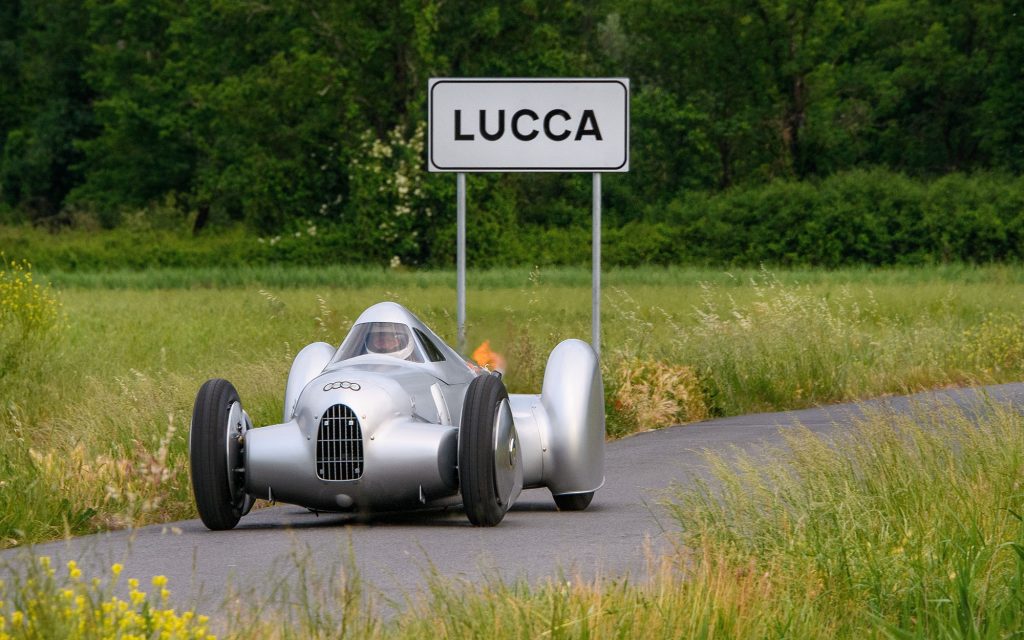
The recreated Auto Union Lucca was unveiled in Lucca, Italy, on May 6, 2026. The location was chosen deliberately, returning the car’s story to the region where Hans Stuck had set Auto Union’s 1935 record.
Following its Italian unveiling, the Lucca made an unofficial appearance at the Audi Forum in Ingolstadt alongside the Audi Nuvolari had was scheduled to make its first public dynamic appearance at the Goodwood Festival of Speed in July 2026. This marked the first opportunity for the public to see the recreated Rennlimousine operating under its own power.
SIGNIFICANCE
The 2026 Auto Union Lucca is significant because it restores physical presence to a lost Auto Union record car that no longer survives. The car is a running recreation built to represent one of the earliest and most dramatic examples of Auto Union aerodynamic development.
The Lucca also expands Audi Tradition’s Silver Arrow collection into an earlier and more experimental period. Previous recreations had helped represent later Grand Prix machinery, but the Lucca addresses the beginning of Auto Union’s record-car program, when engineers were still discovering how far streamlining, lightweight construction, mid-engine layout and V16 power could be pushed.
Its importance is therefore twofold. As a historical object, it explains the 1935 Lucca record and Auto Union’s rivalry with Mercedes-Benz. As a modern recreation, it demonstrates the depth of Audi Tradition’s archival and engineering work, as well as the craftsmanship of Crosthwaite & Gardiner.
The Lucca is not an original 1935 car, and that distinction is central to its identity. It is a reconstruction of a lost record machine, built with modern historical knowledge and practical adaptations, and created to make a missing part of Auto Union history visible again.
PHOTO GALLERY (photos: Audi AG, renderings: ooooIYKYK.com)
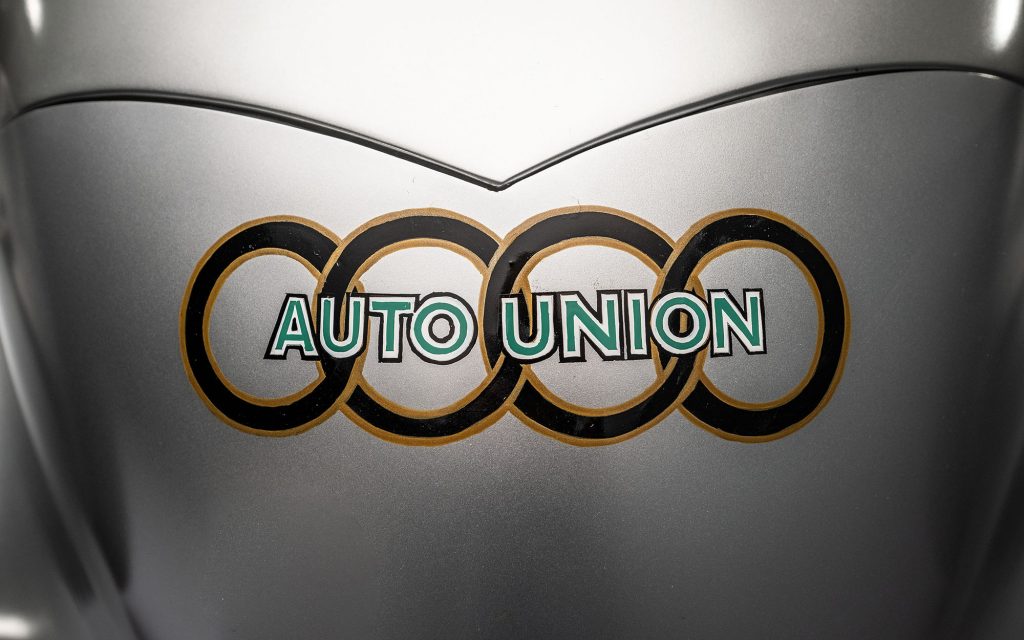
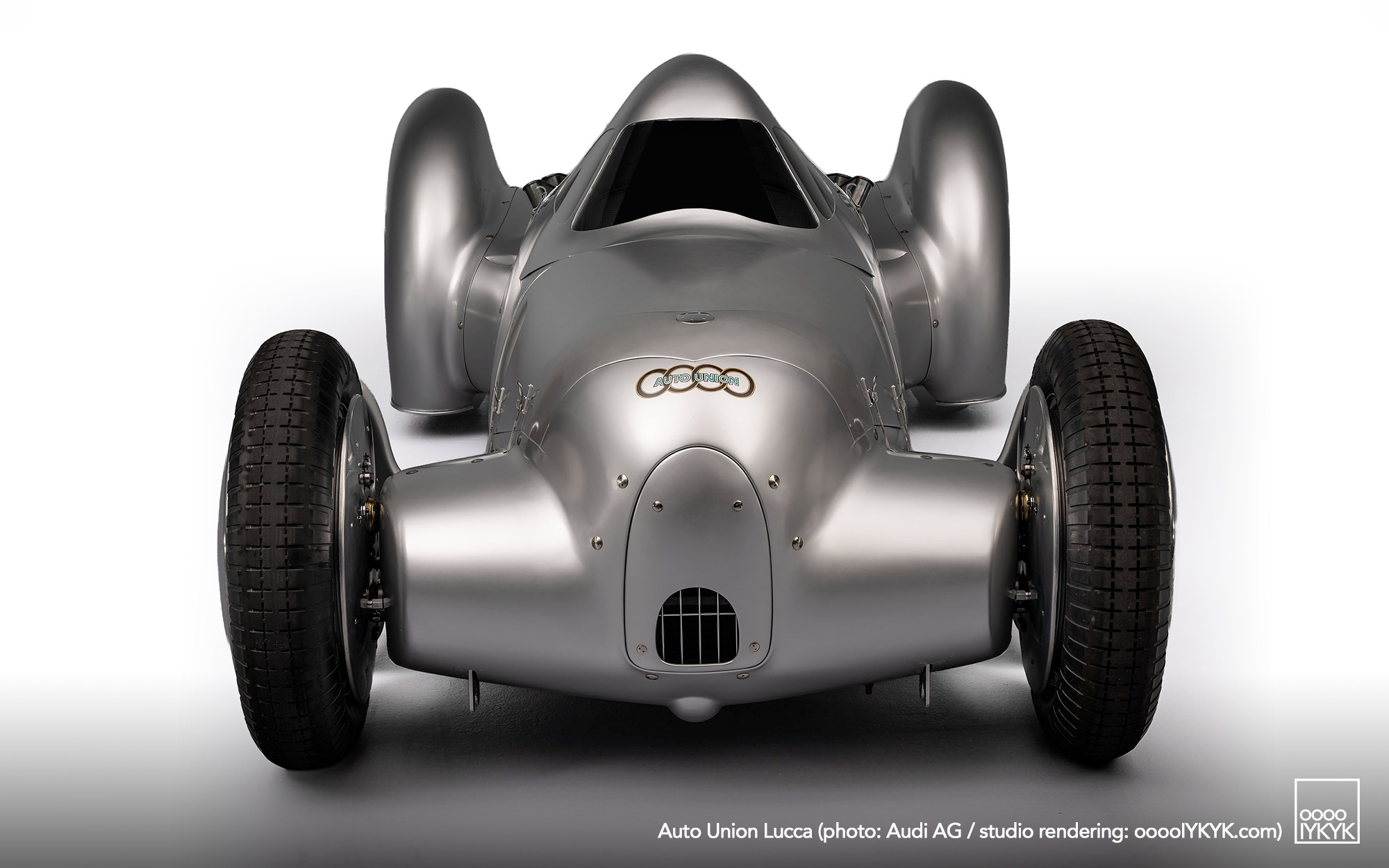
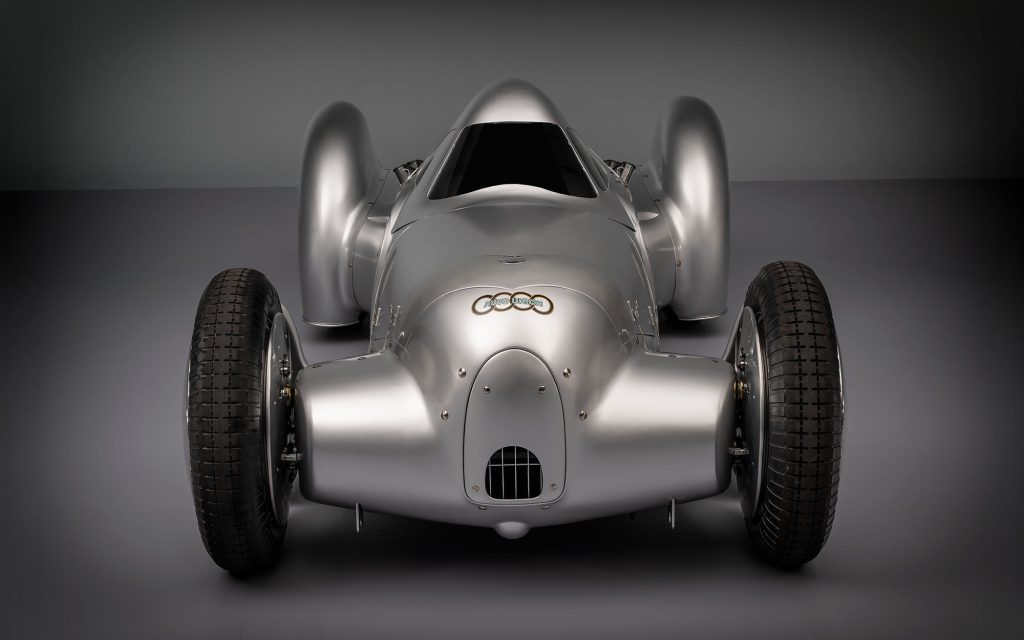
Detail: the Auto Union logo as used on the Auto Union racing cars of the 1930s.
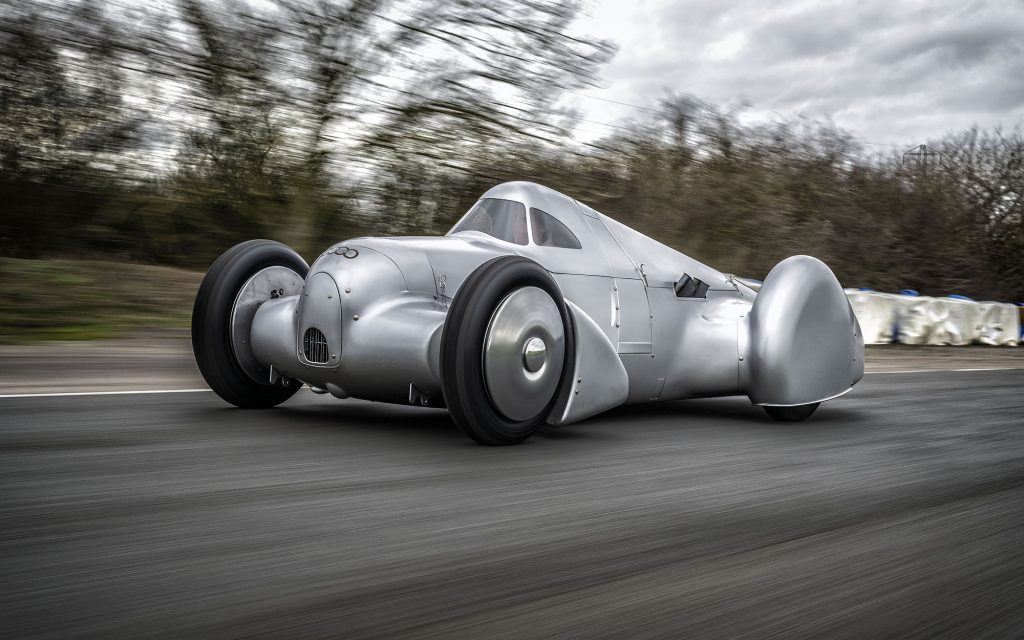
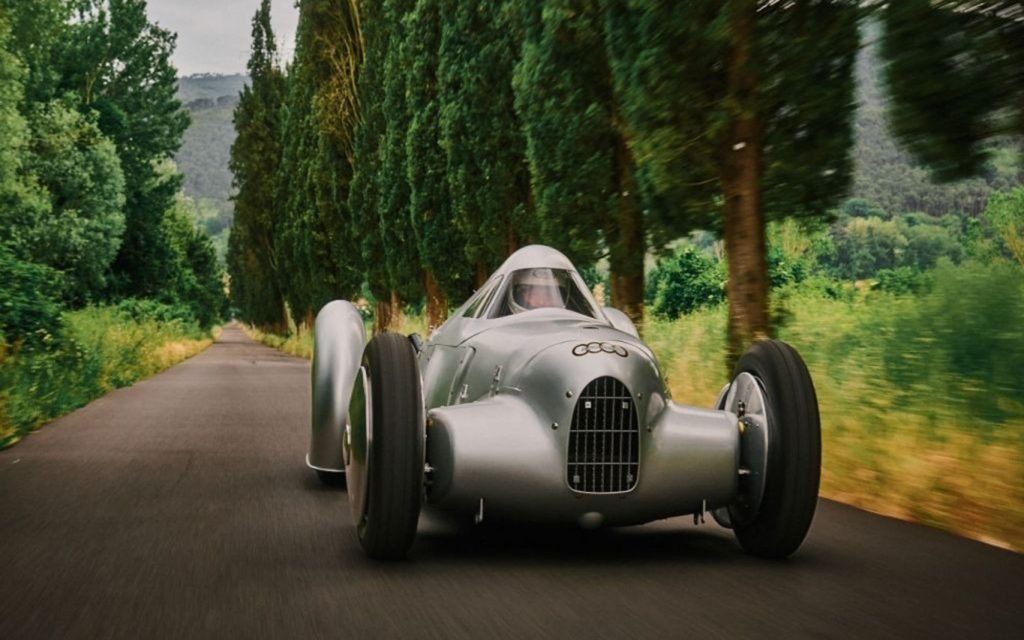
Driving shot at the first roll-out. Side view.
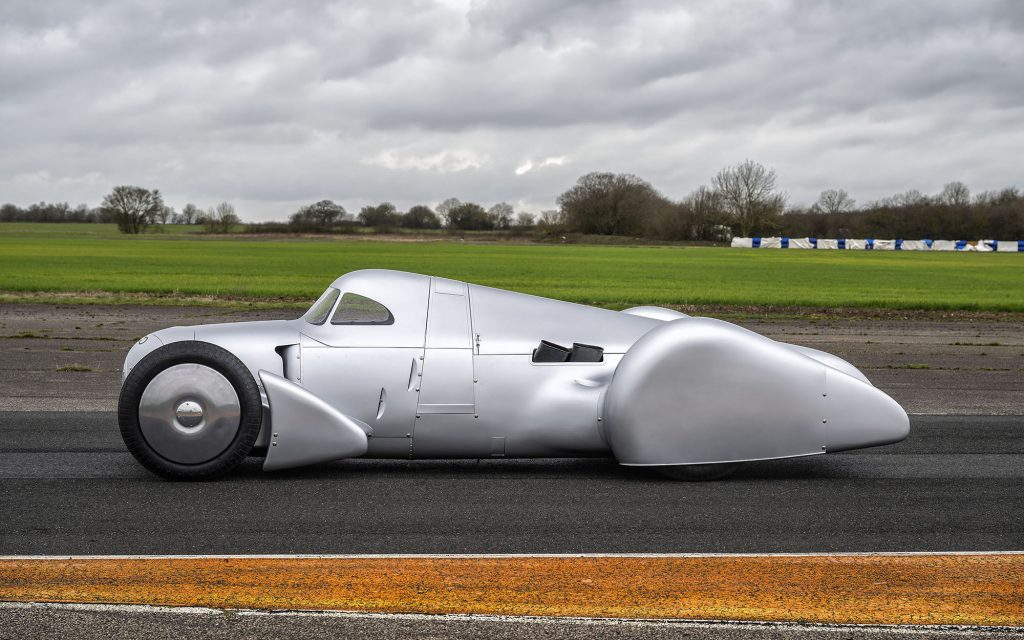
Driving shot at the first roll-out. Side view.
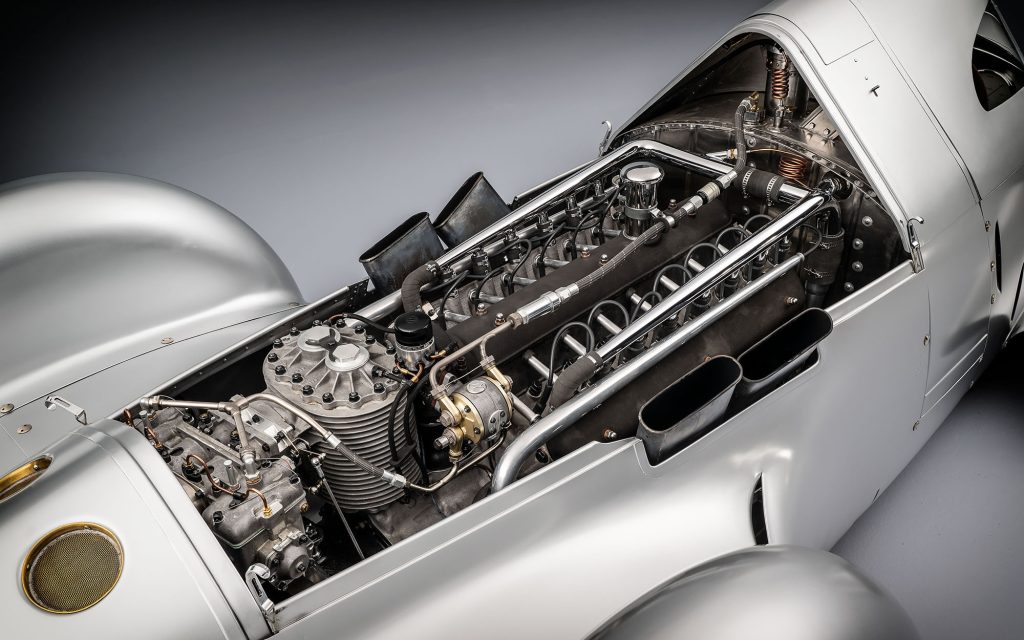
Detail: 16-cylinder-engine with supercharger.