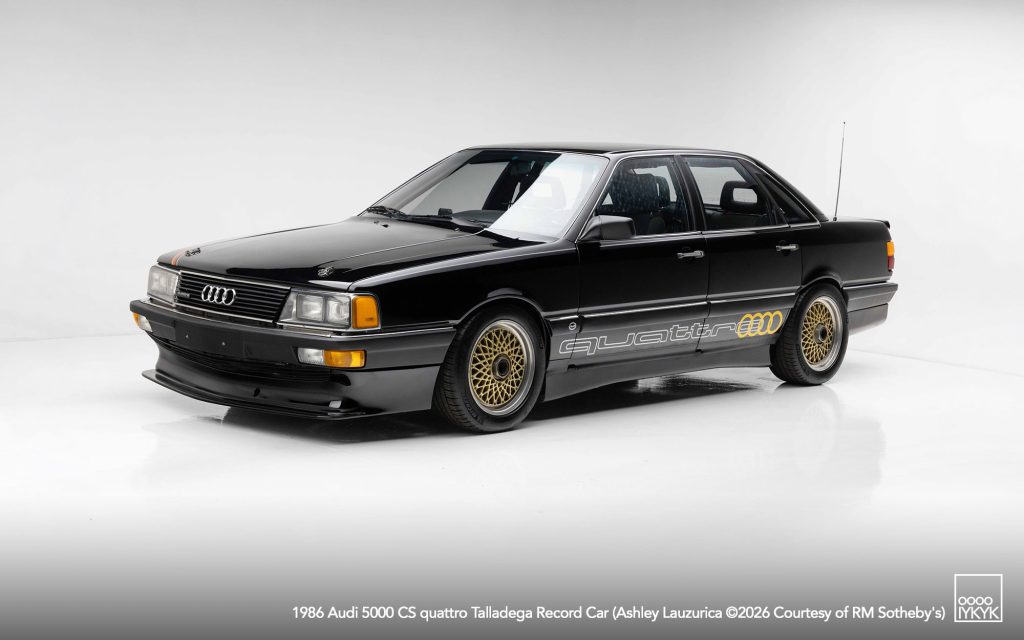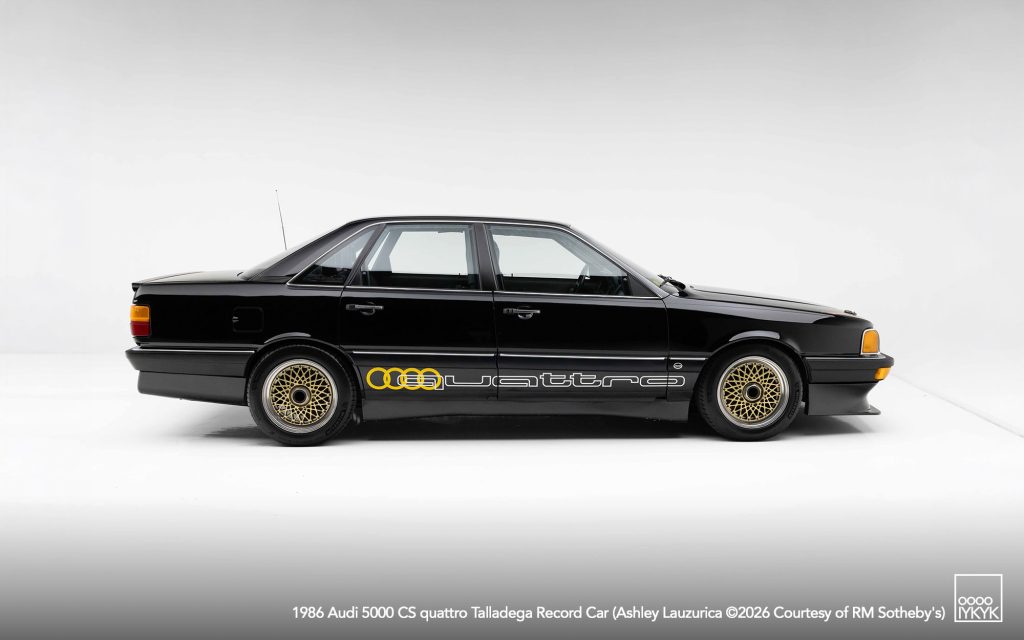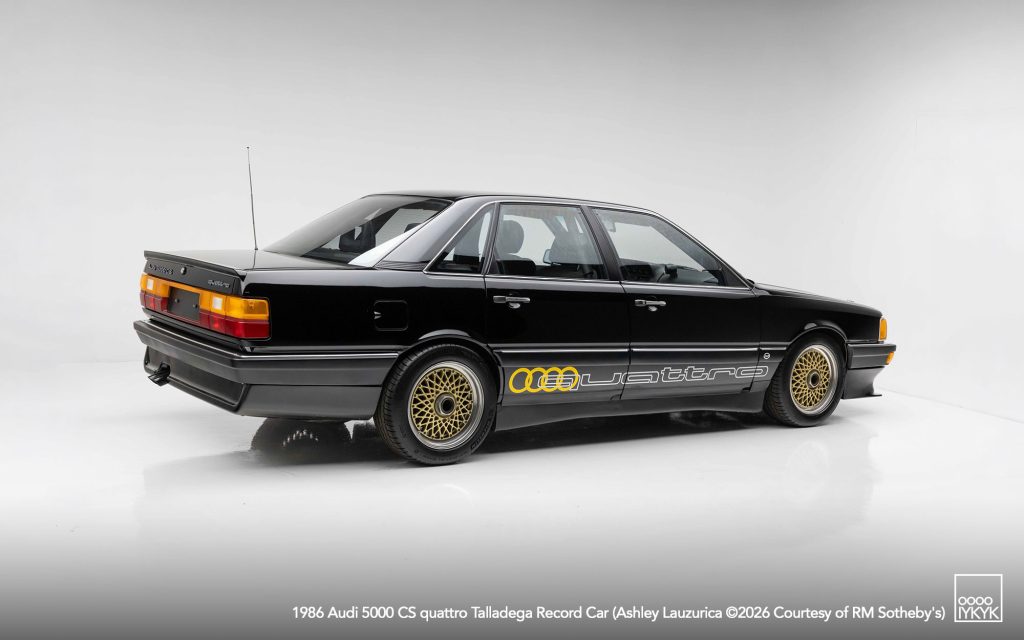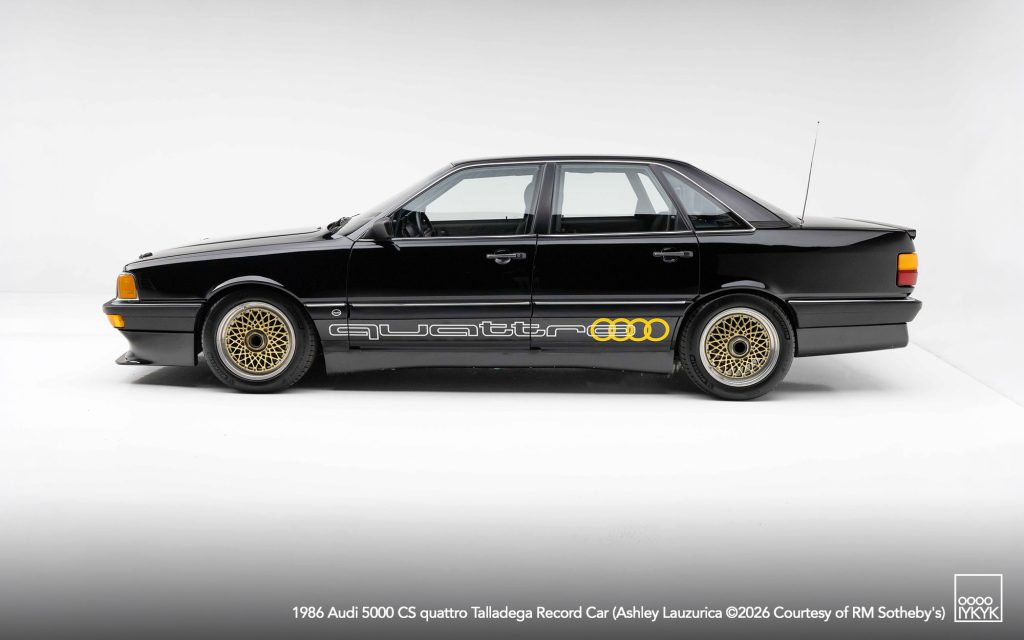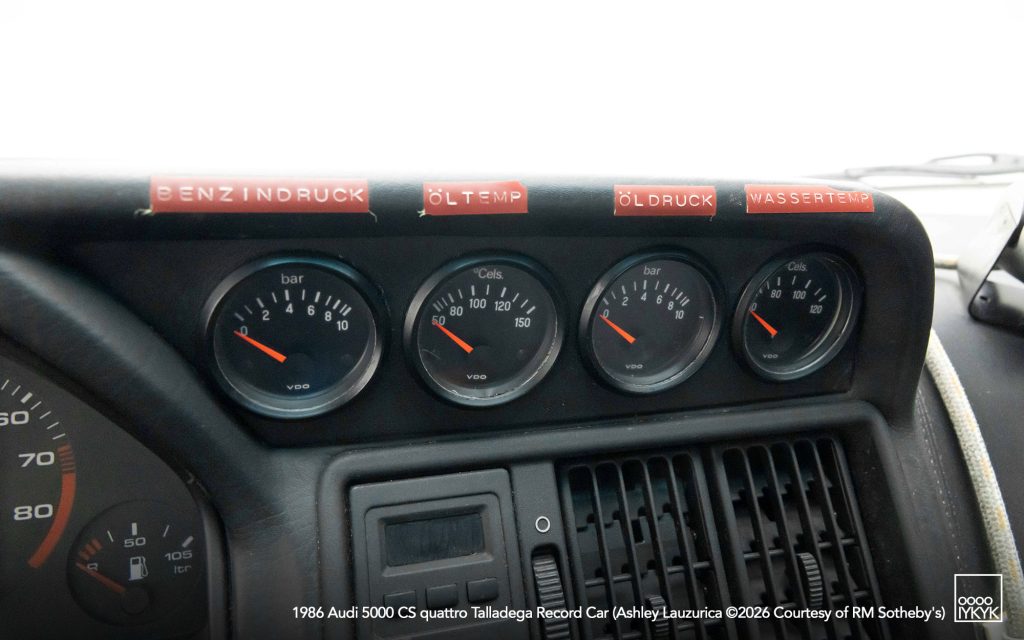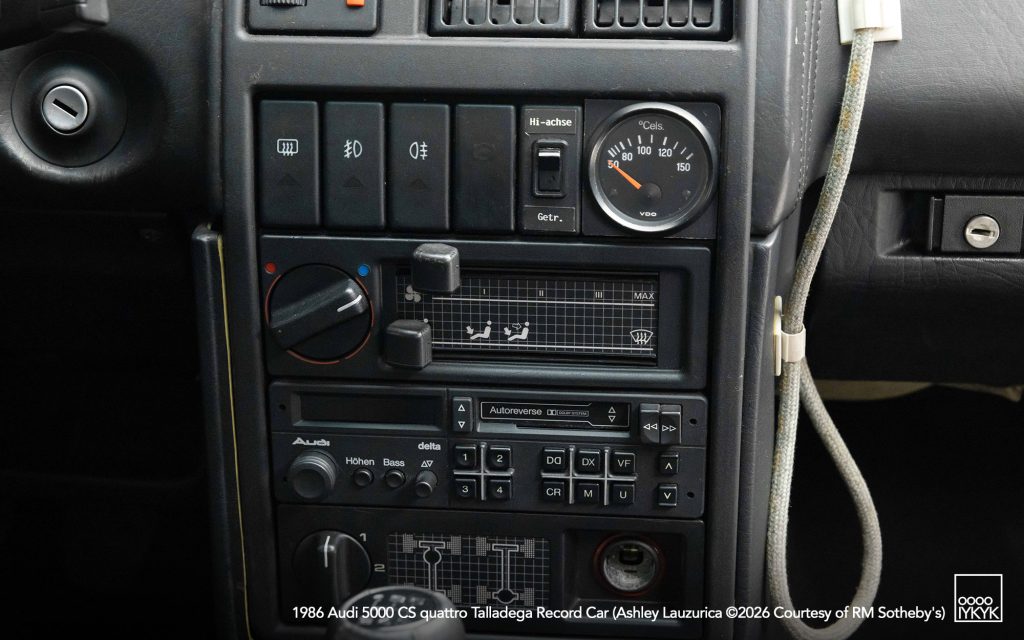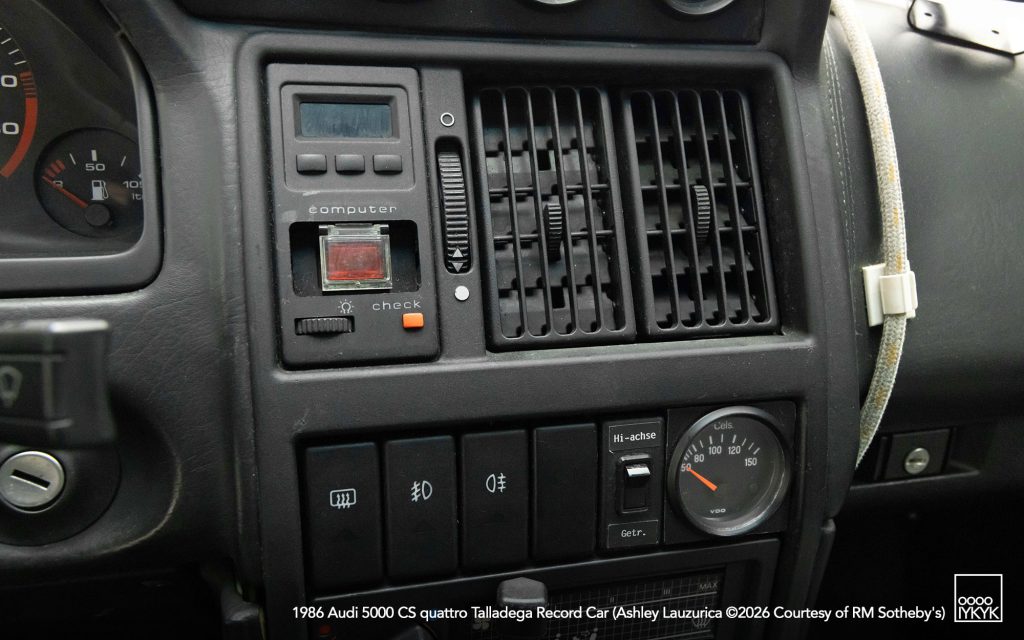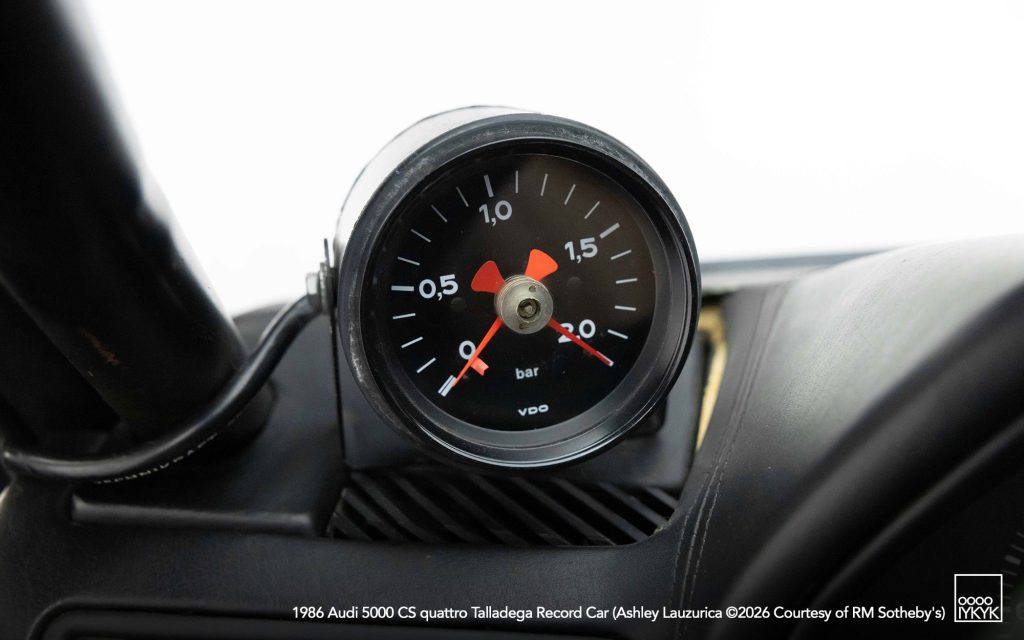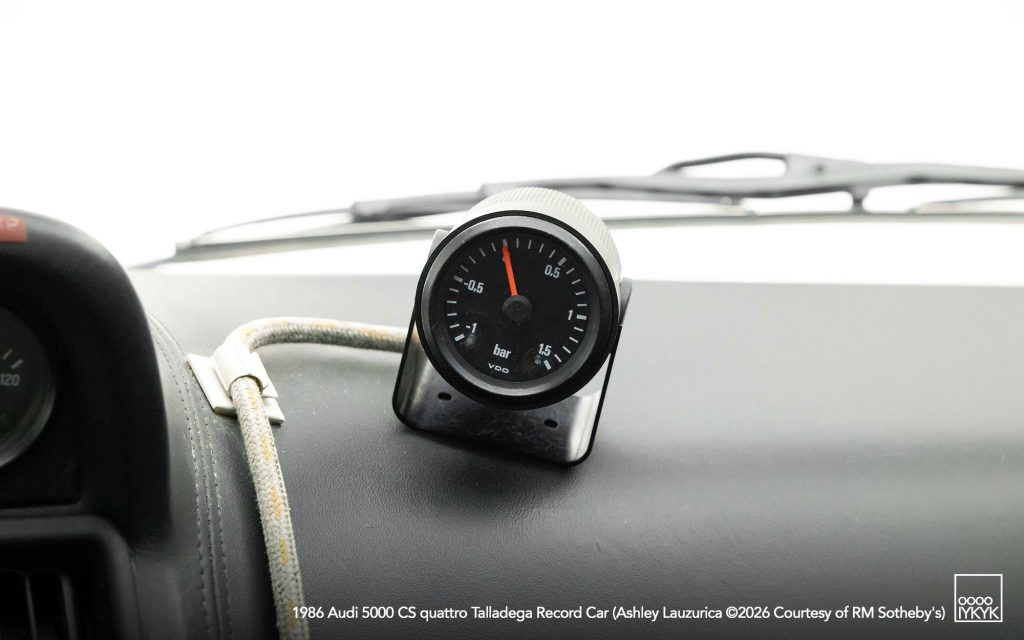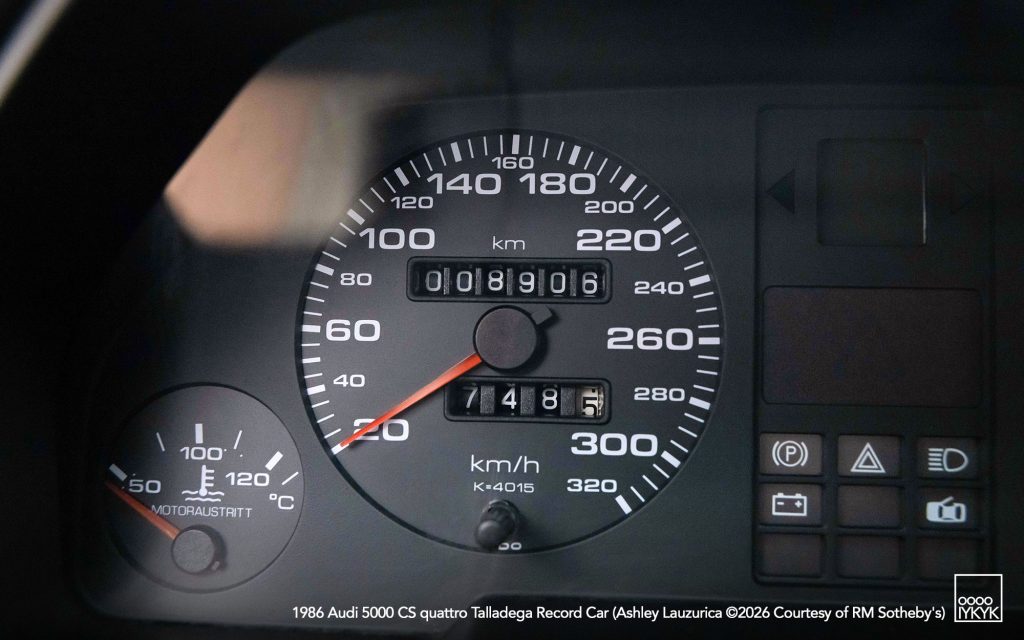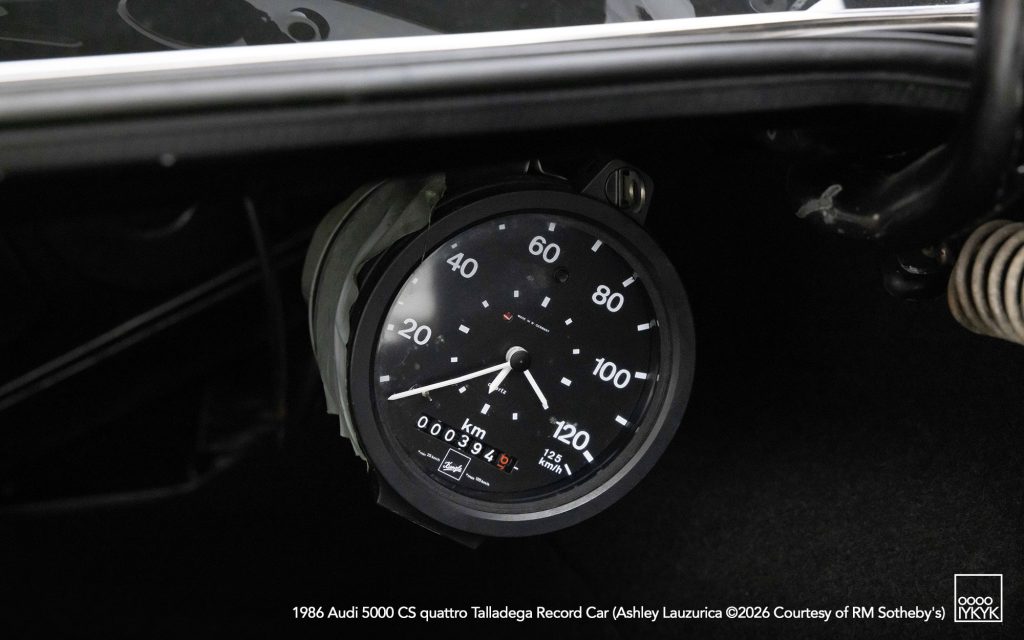
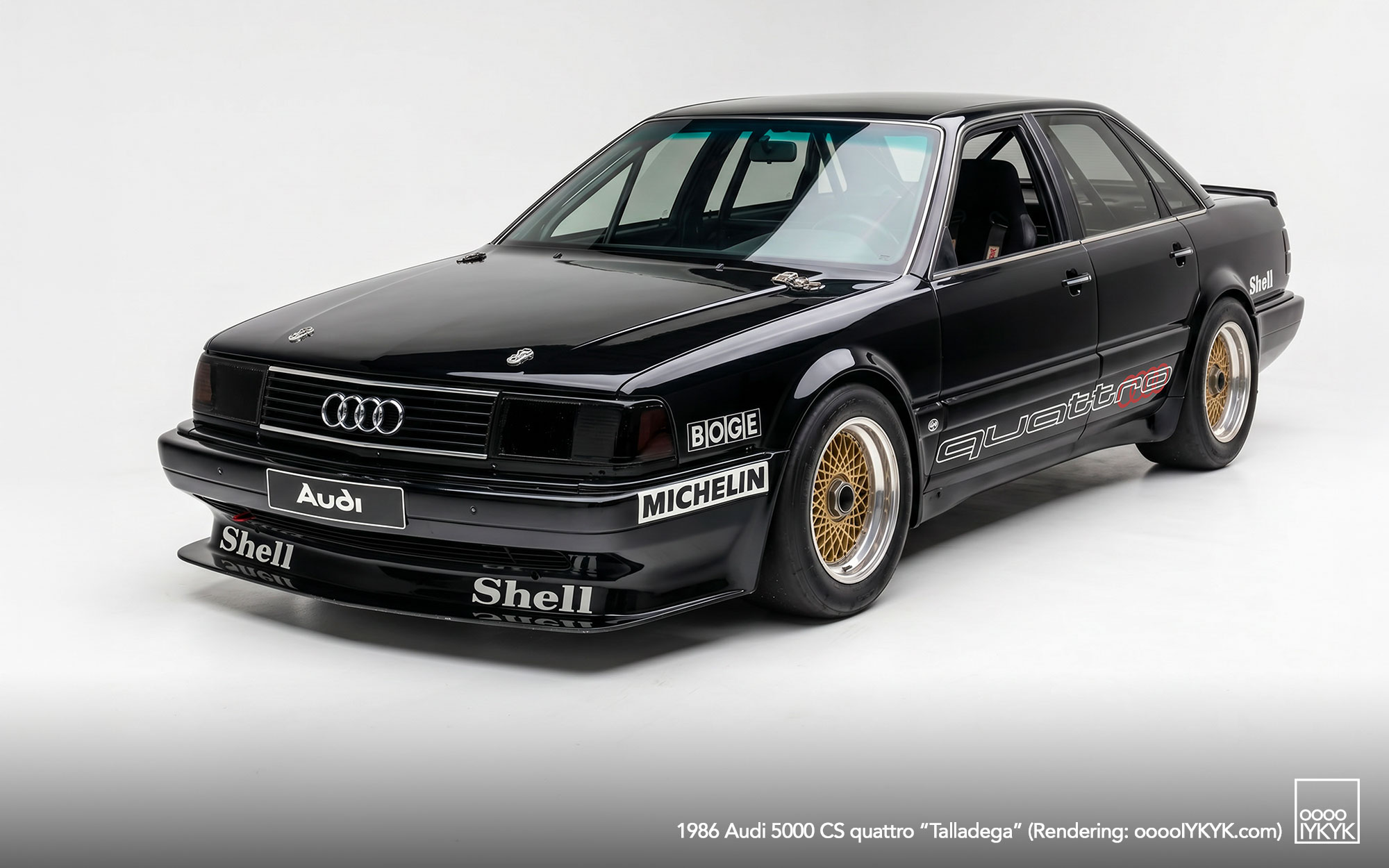

What: Audi 5000 CS quattro ‘Talladega’
Series: none
Era: Audi postwar
Model Family: 5000
Market / Zone: USA
Season: 1986
Model / Generation Code(s): type 44
Chassis / Matrix: C3
TECHNICAL DETAILS
Body Style(s): 4-door sedan
Drivetrain Configuration: Longitudinal front engine, all-wheel drive
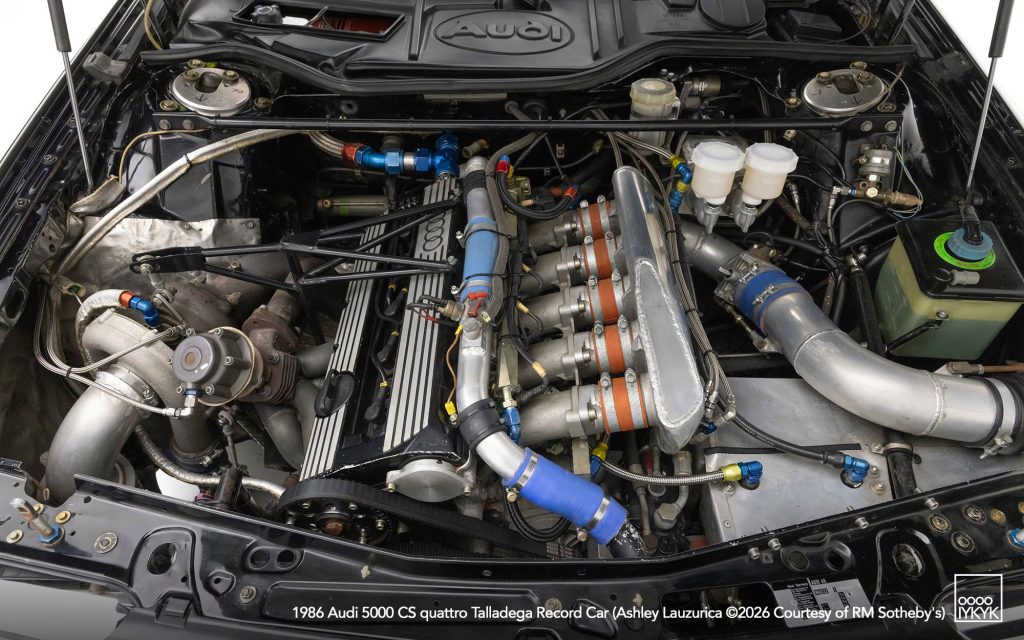
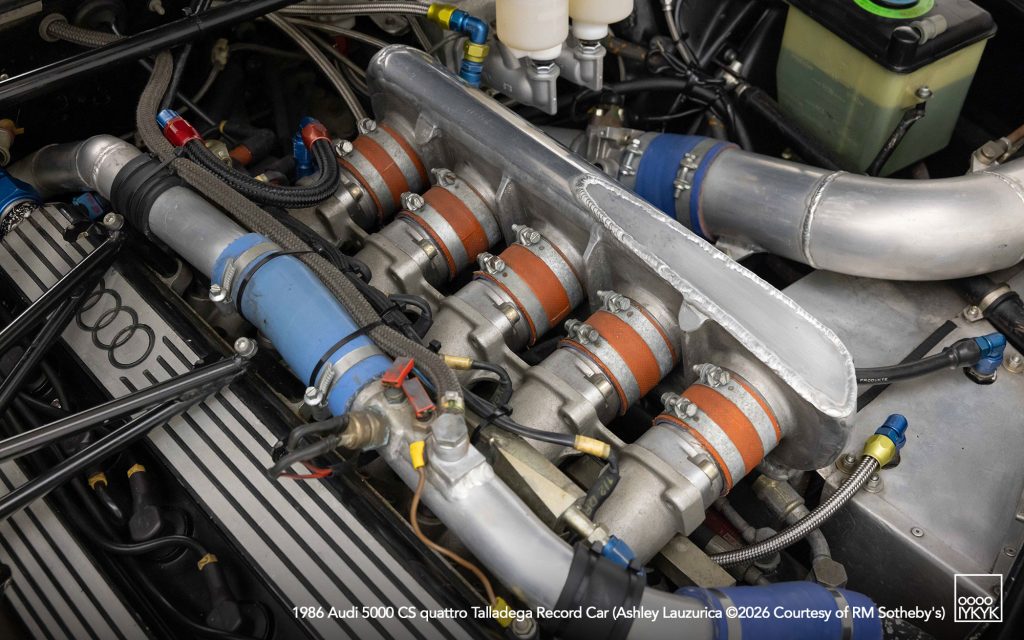
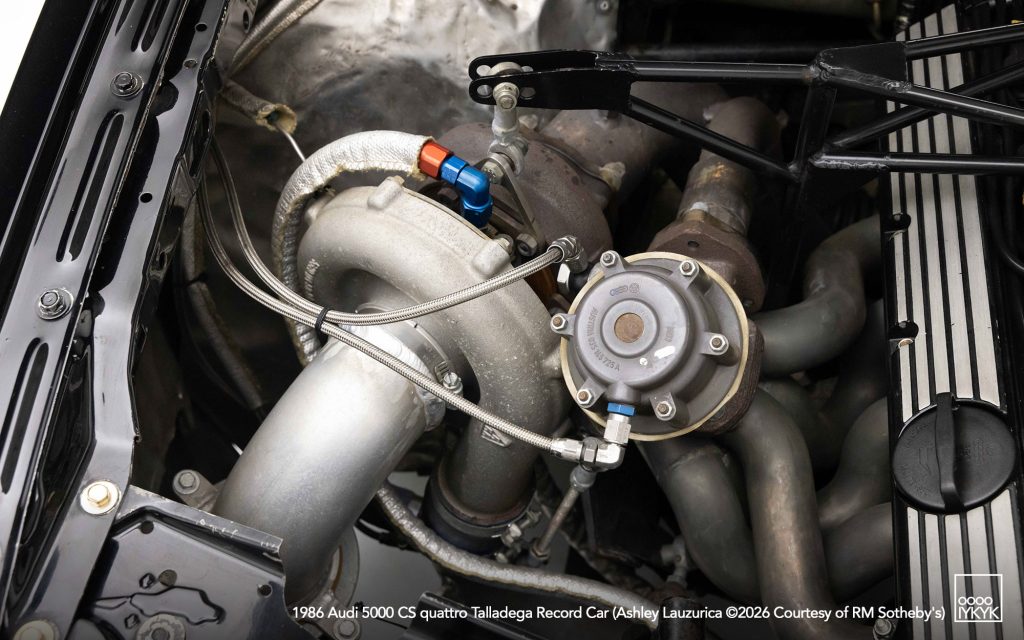
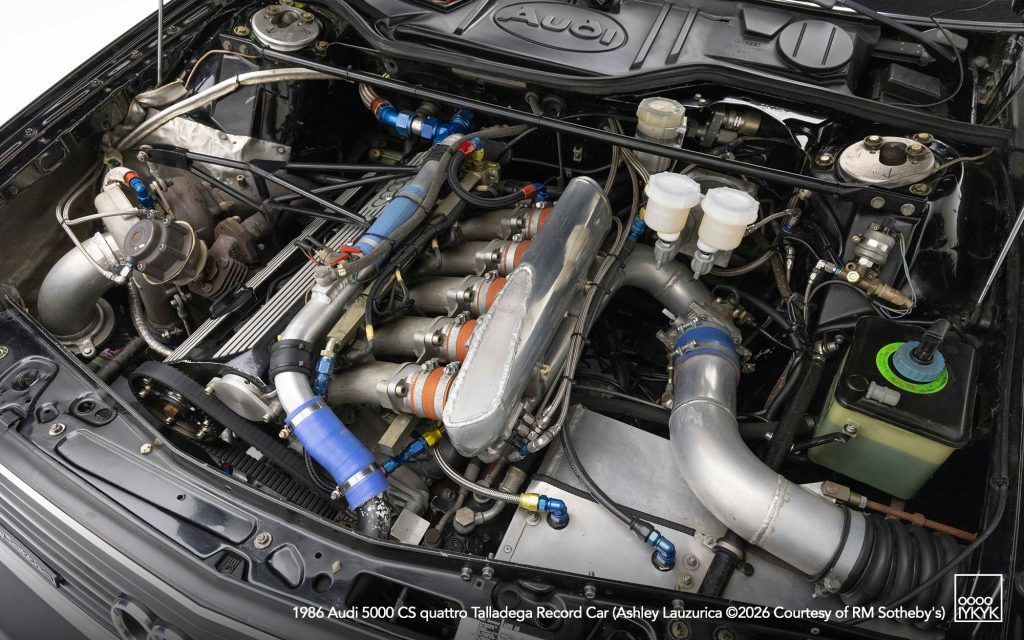
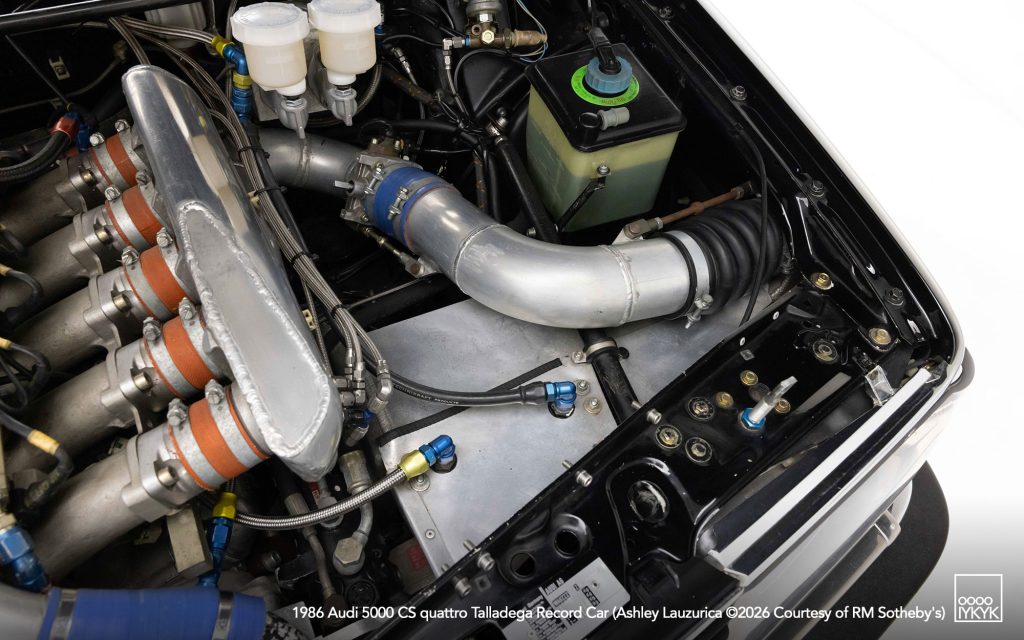
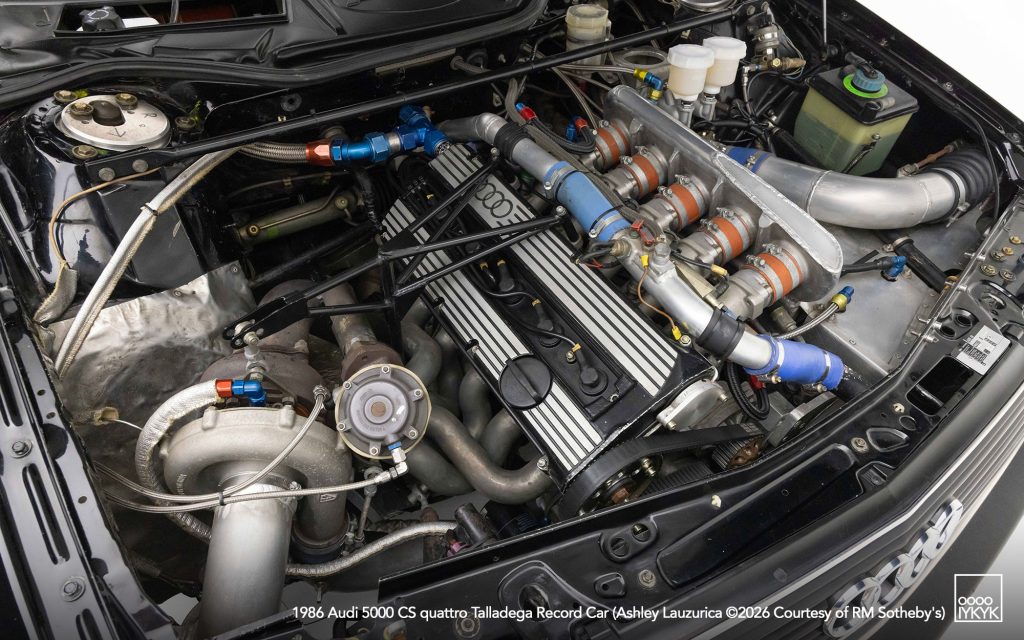
Engine(s): Modified 2.2 L turbocharged inline-5 with five-valve cylinder head and reinforced internals
Power: Approx. 650 hp
Torque: Unknown
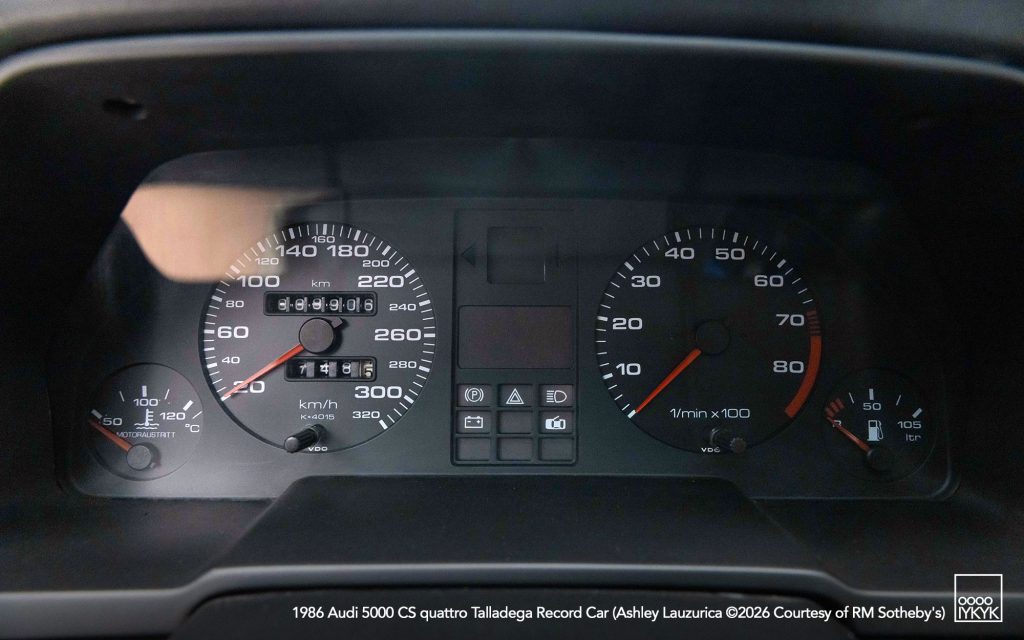
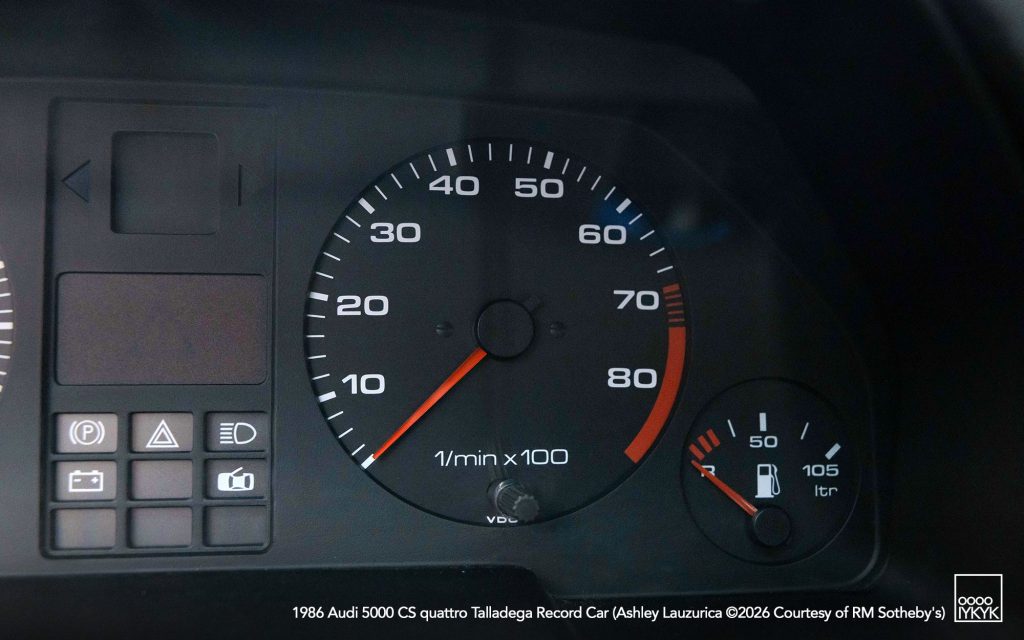
Maximum RPM: Approx. 7,700 rpm (peak power around 7,200 rpm)
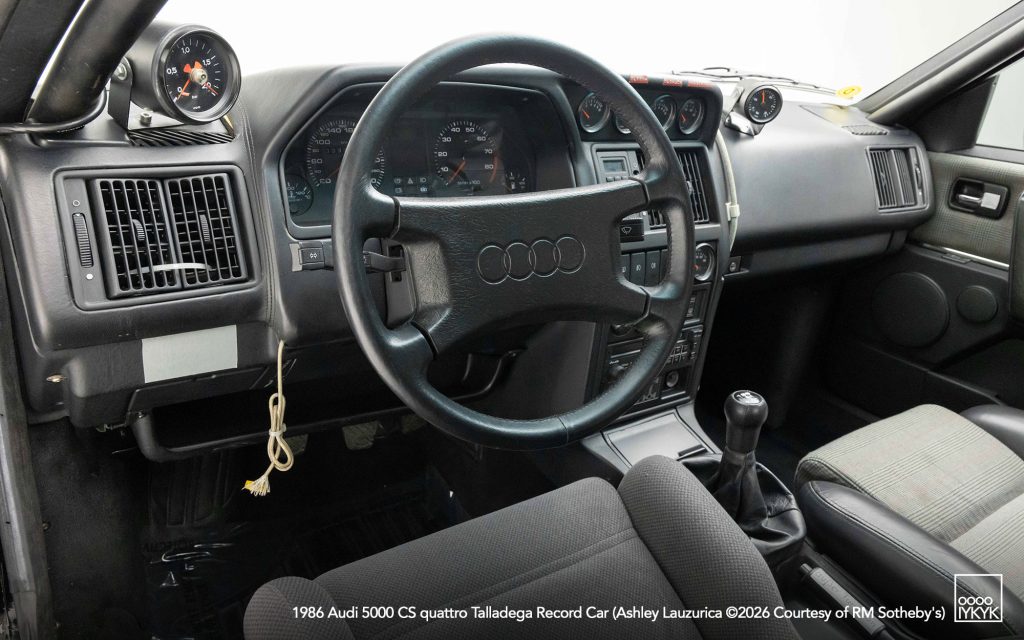
Transmission(s): 5-speed manual
Wheelbase: 2,680 mm
Length: 4,790 mm
Width: 1,775 mm
Height: Approx. 1,390 mm (lowered from the production car)
Kerb Weight: Approx. 1,070-1,075 kg
TEAM DETAILS
Team: Audi Sport North America
OTHER DETAILS
Predecessor: N/A
Successor: N/A
Road Car Equivalent: Audi 5000 CS quattro (Type 44)
Homologations: N/A
SUMMARY
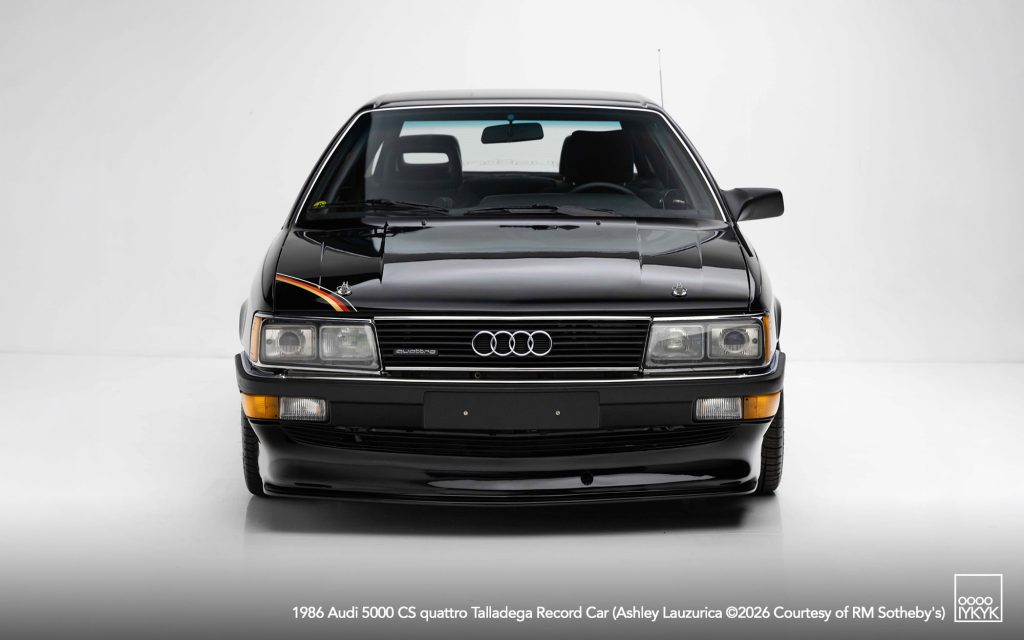
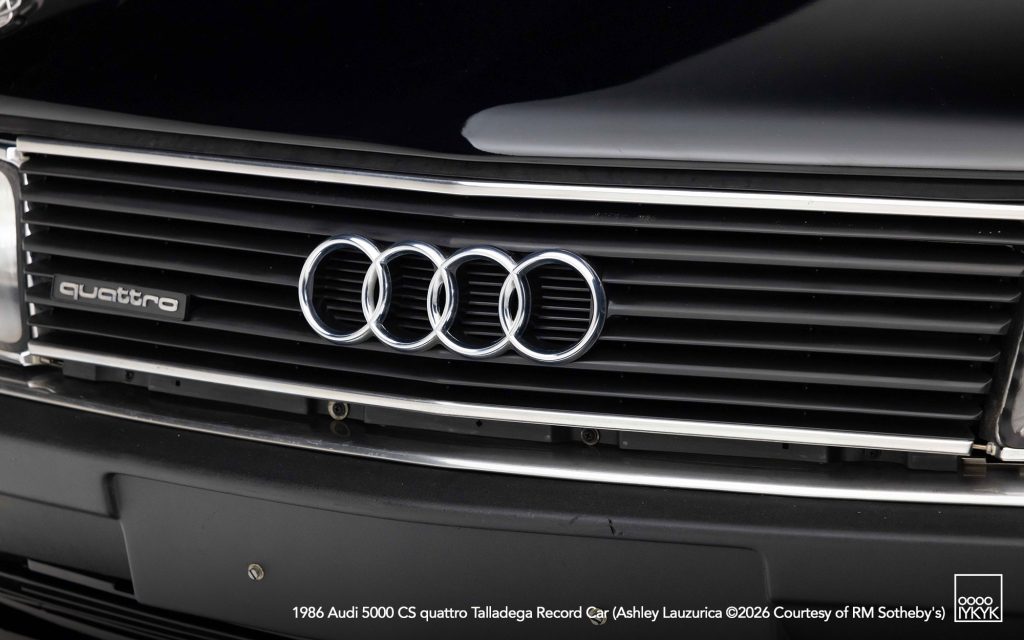
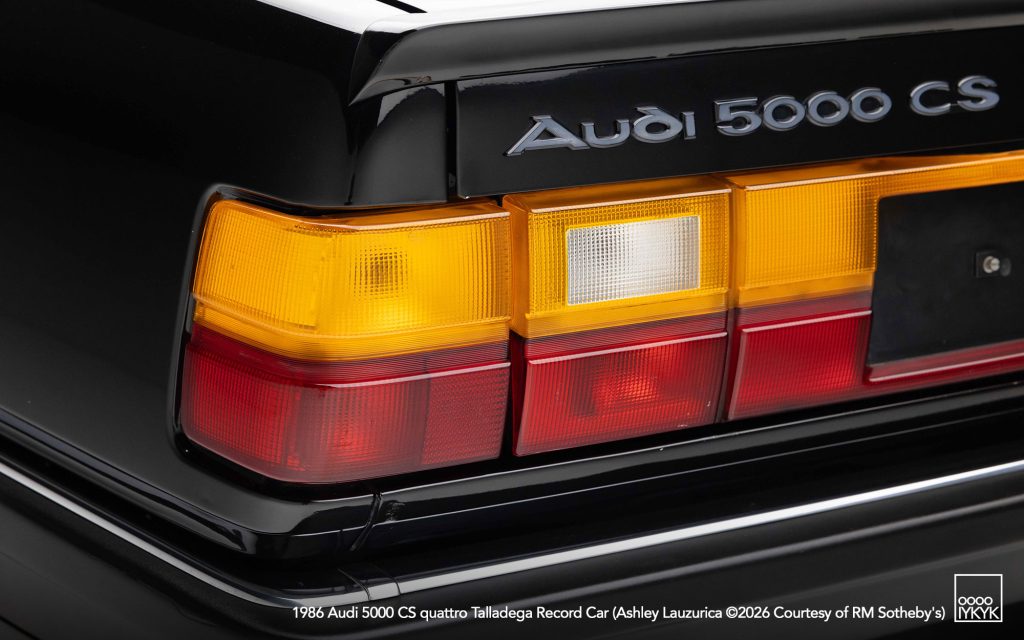
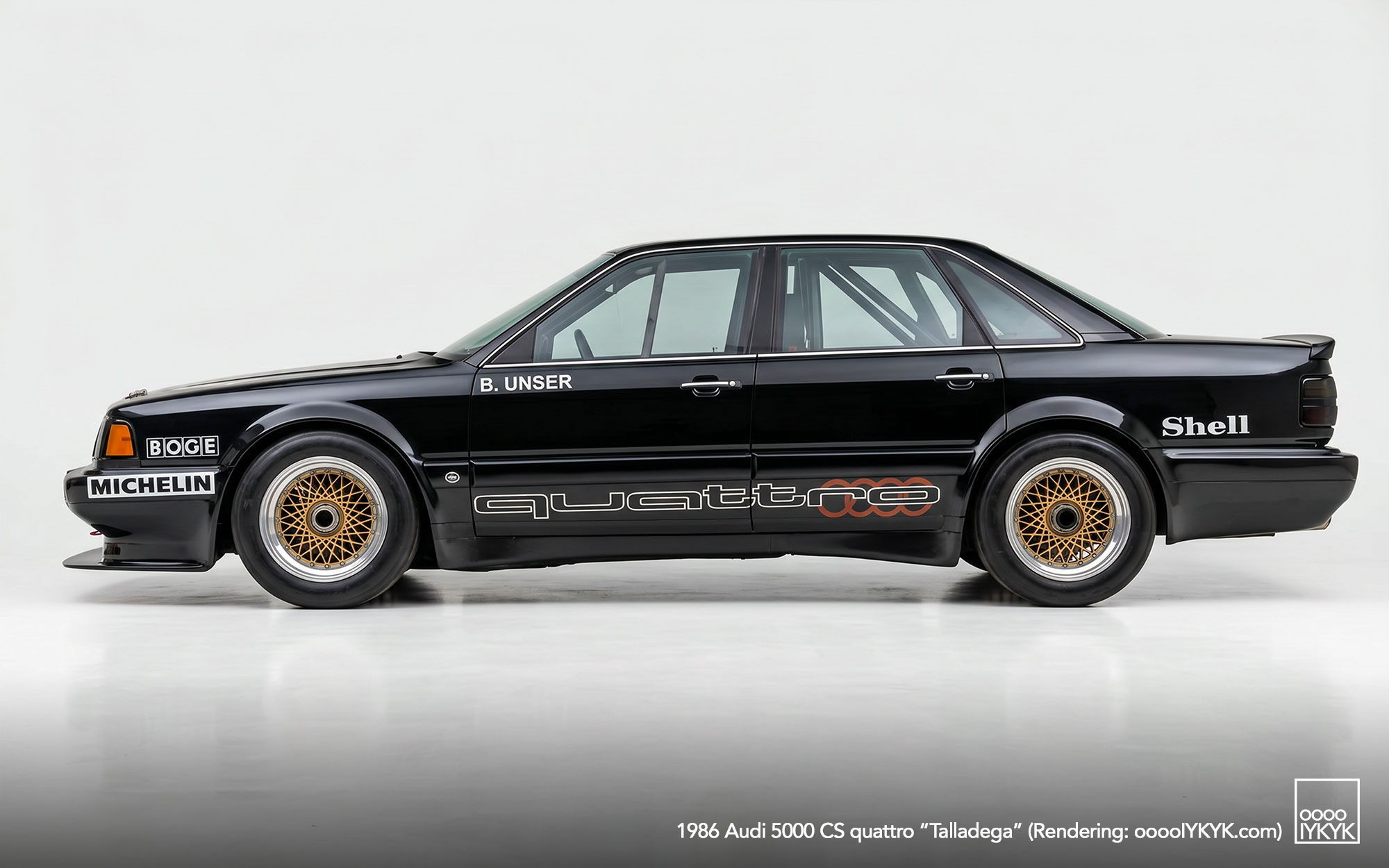
The 1986 Audi 5000 CS quattro “Talladega” was a one-off factory-built speed record prototype developed by Audi to demonstrate the ultimate potential of its turbocharged five-cylinder engine and quattro all-wheel-drive system. Based on a U.S.-market Audi 5000 CS quattro, the extensively modified sedan established 16 international speed records at Talladega Superspeedway in Alabama on March 24, 1986, including a single-lap average speed of 206.3 mph (332 km/h) with three-time Indianapolis 500 winner Bobby Unser behind the wheel.
Created as a showcase for Audi’s engineering capabilities and to raise awareness of quattro technology in the United States, the prototype became one of the most significant factory experimental Audis of the 1980s. After completing its record-setting duties, the car returned to Germany where it narrowly escaped being scrapped before entering long-term private ownership. At the time of writing, the prototype is scheduled to cross the block without reserve at RM Sotheby’s Monterey sale during Monterey Car Week 2026, carrying a pre-sale estimate of $250,000-$300,000 USD.
DEVELOPMENT
Despite dominating the World Rally Championship with the quattro system, Audi recognized that its rally success had only limited influence on road car sales in the United States. Working closely with Audi of America and its motorsport leadership, including racing director Jo Hoppen, the company launched an ambitious speed record program intended to showcase the durability, stability and performance of turbocharging and permanent all-wheel drive on a production-based sedan.
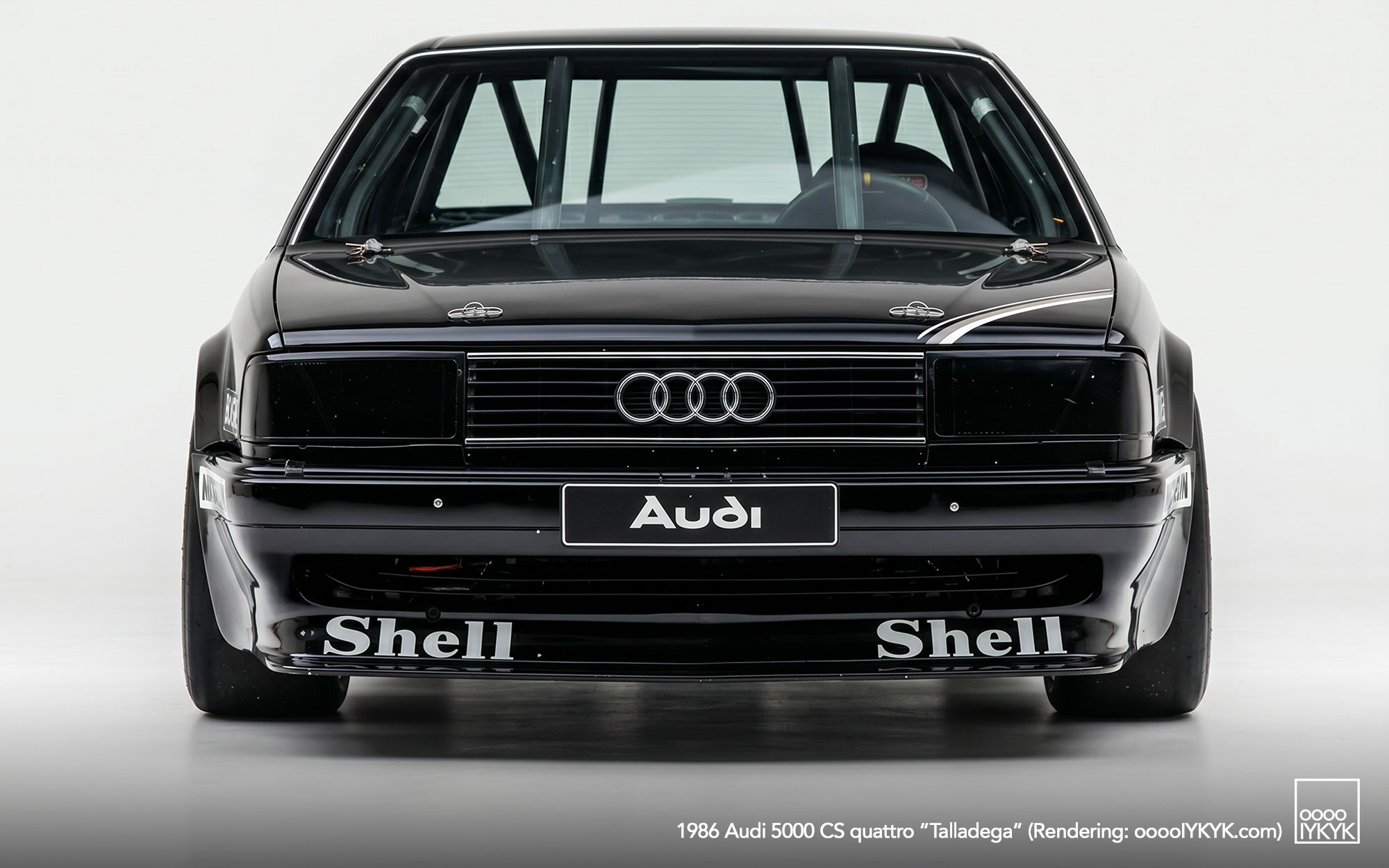
Using the U.S.-market Audi 5000 CS quattro as its foundation, engineers developed several highly modified prototypes over a multi-year period in pursuit of the 200 mph barrier. Virtually every aspect of the car was optimized for sustained high-speed running.
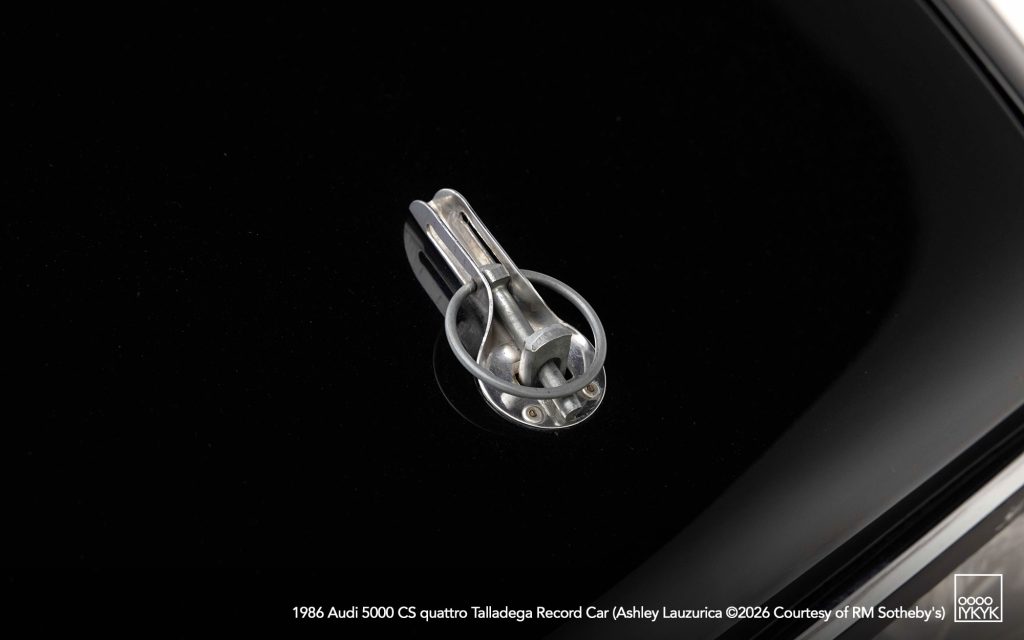
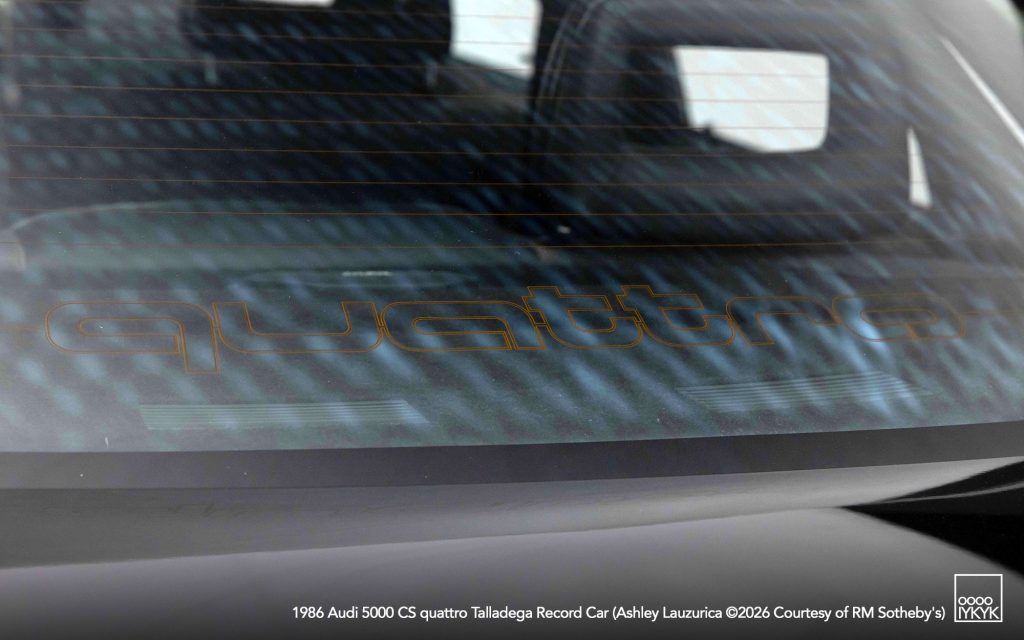
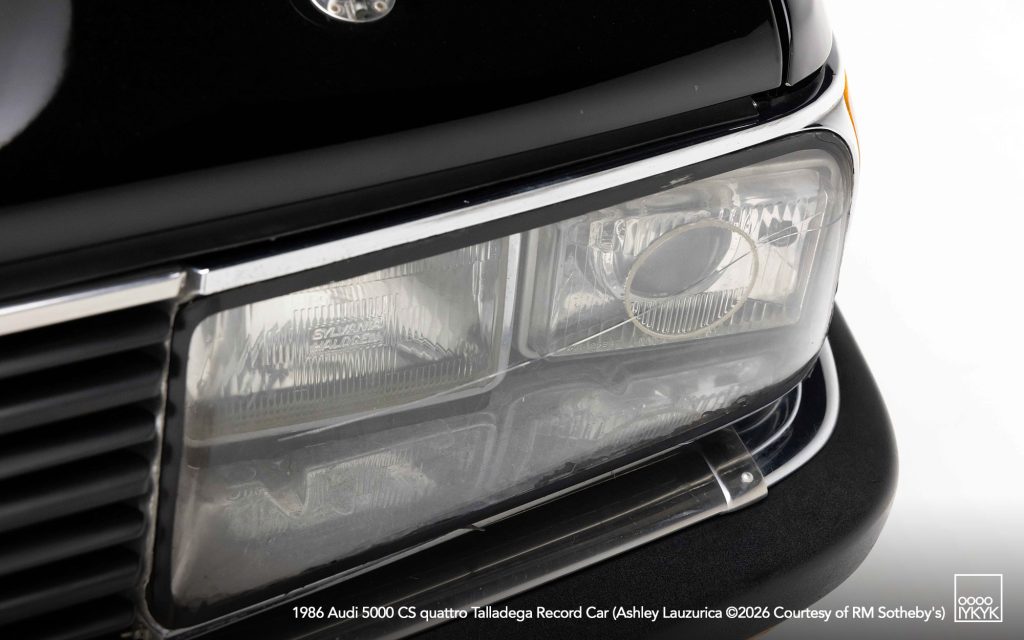
The prototype received a heavily revised 2.2-liter turbocharged inline-five incorporating Audi’s advanced five-valve cylinder head, reinforced internal components and significantly increased boost pressure to produce approximately 650 horsepower. Extensive weight reduction included aluminum and Kevlar body panels, lightweight glazing (with the exception of the windshield), deletion of the exterior mirrors, lowered suspension and numerous aerodynamic refinements. The finished prototype weighed just over 1,070 kg, giving it an extraordinary power-to-weight ratio for the era.
According to information later published by RM Sotheby’s, Audi originally intended factory rally driver Walter Röhrl to conduct the record attempts before ultimately selecting recently retired Indianapolis legend Bobby Unser, whose experience racing on high-speed American oval circuits made him uniquely qualified for the task.
TALLADEGA RECORD RUNS
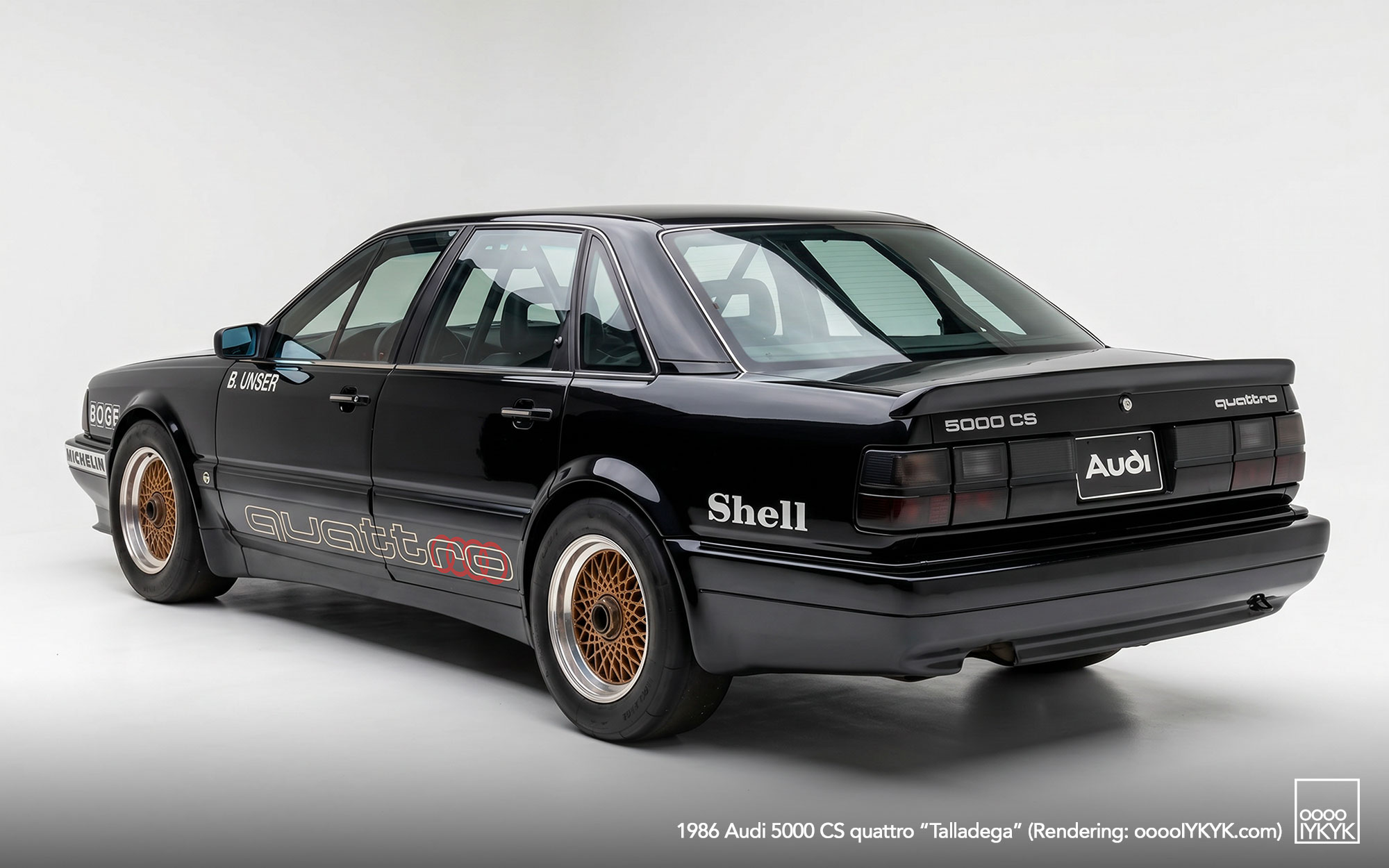
On March 24, 1986, Bobby Unser piloted the modified Audi 5000 CS quattro around Talladega Superspeedway, establishing 16 international speed records during Audi’s record program.
According to RM Sotheby’s, Audi had spent nearly three years attempting to surpass the 200 mph milestone before Unser arrived at Talladega. After applying his preferred chassis setup, he reportedly exceeded 200 mph on his very first run. On a subsequent attempt, he recorded a single-lap average speed of 206.3 mph (332 km/h) around the 2.66-mile oval, making the prototype the fastest production-based sedan of its era.
The achievement demonstrated that Audi’s turbocharged five-cylinder engine and quattro drivetrain could withstand sustained speeds previously reserved for purpose-built racing machinery while reinforcing the brand’s growing reputation for engineering innovation beyond rally competition.
LEGACY
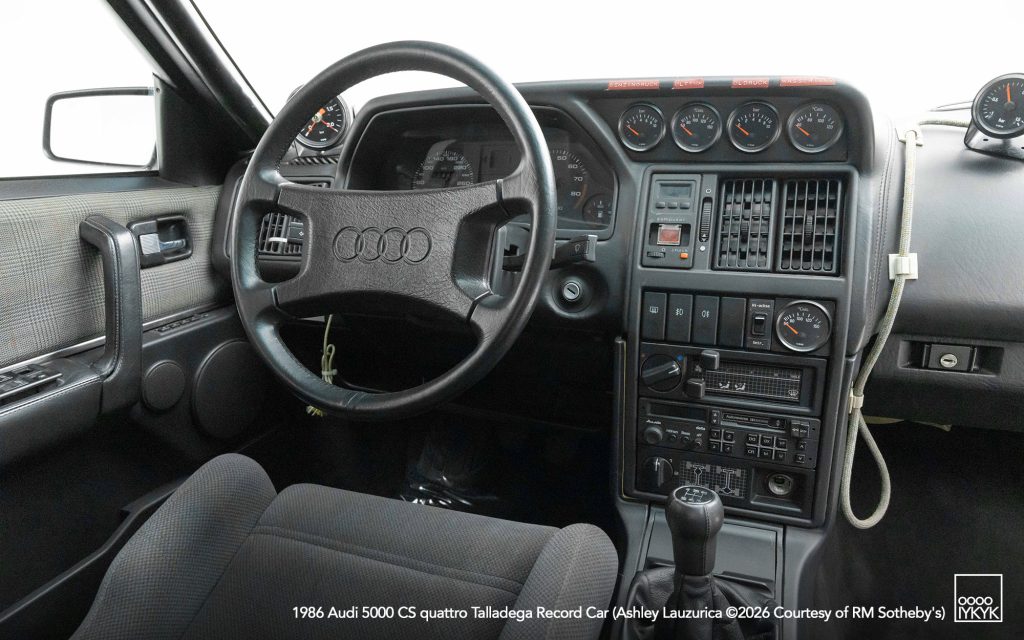
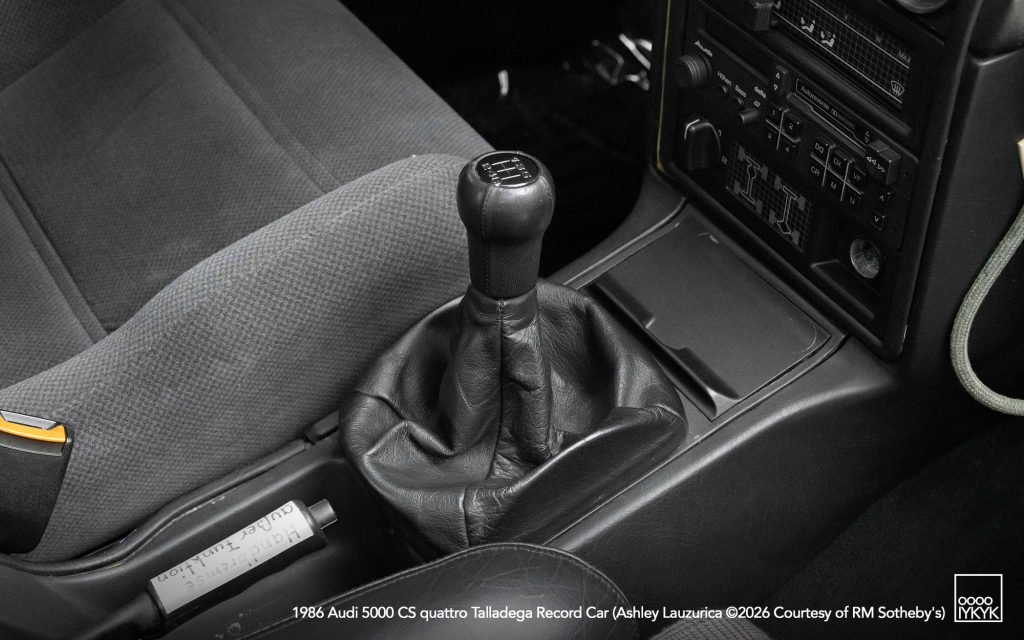
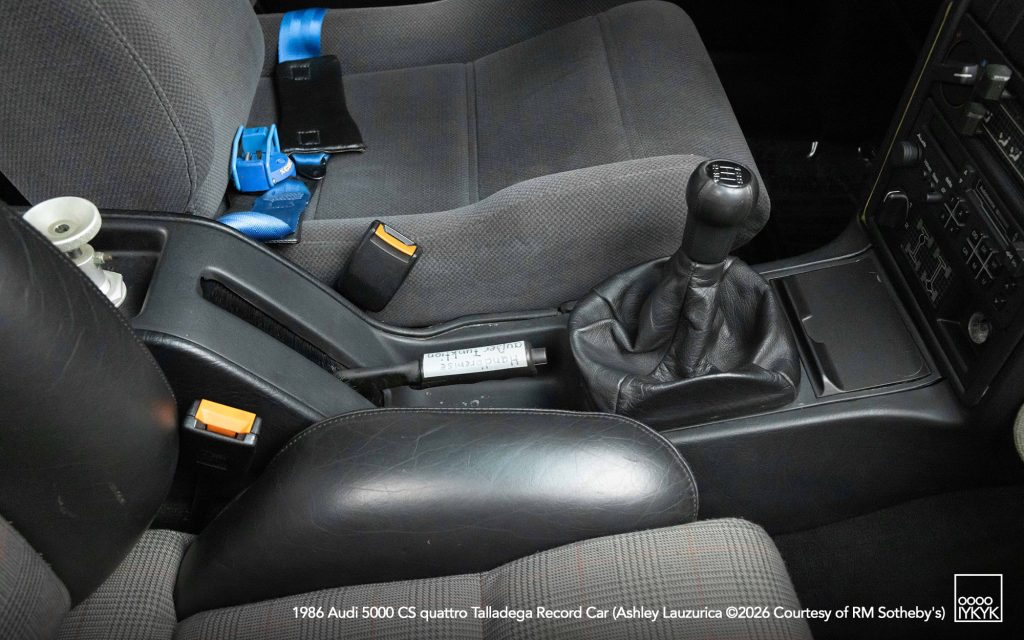
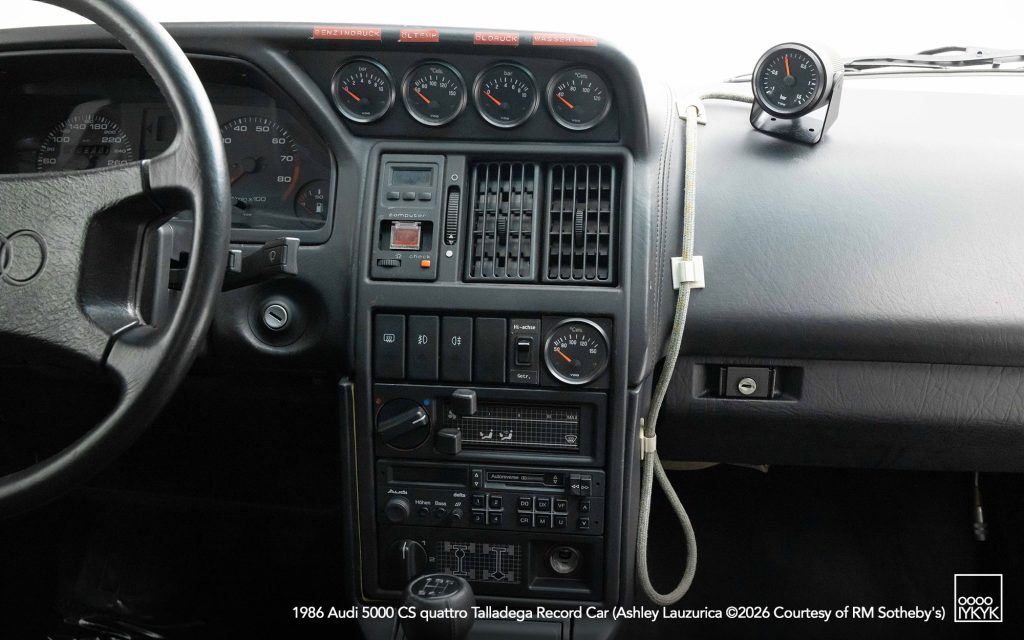
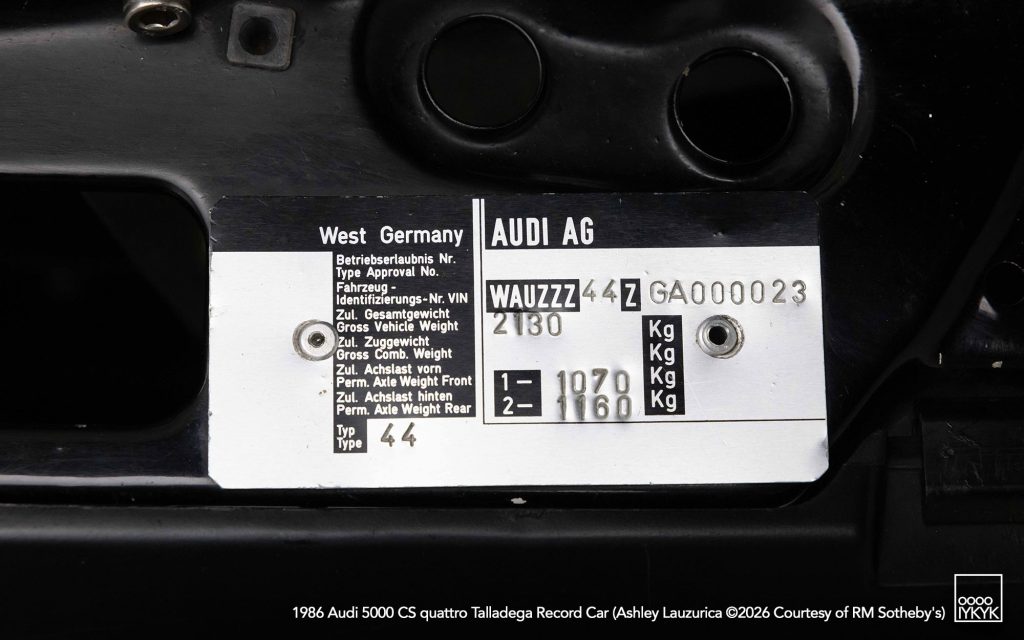
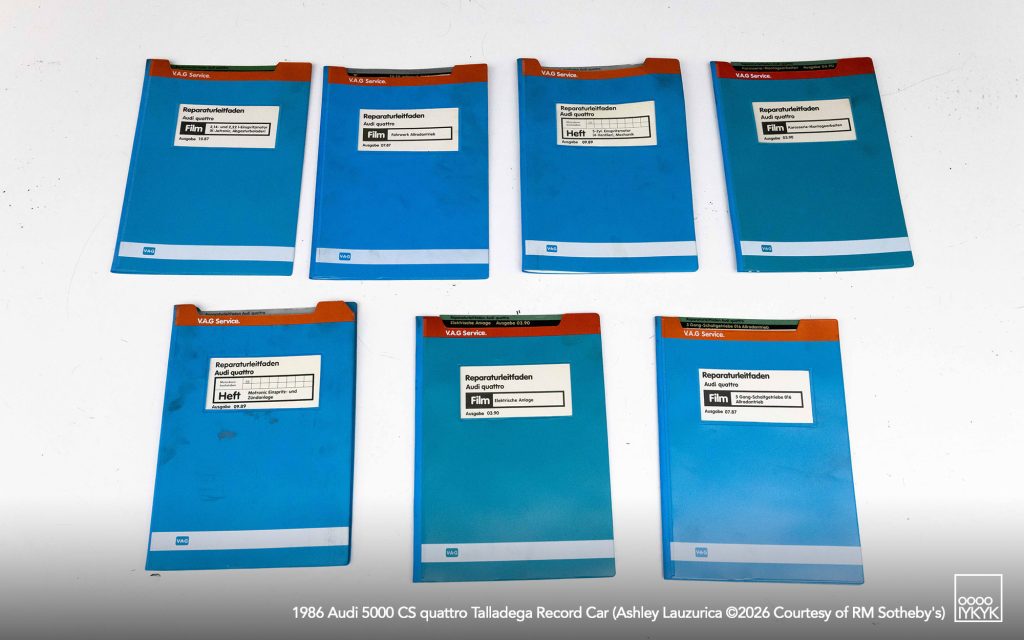
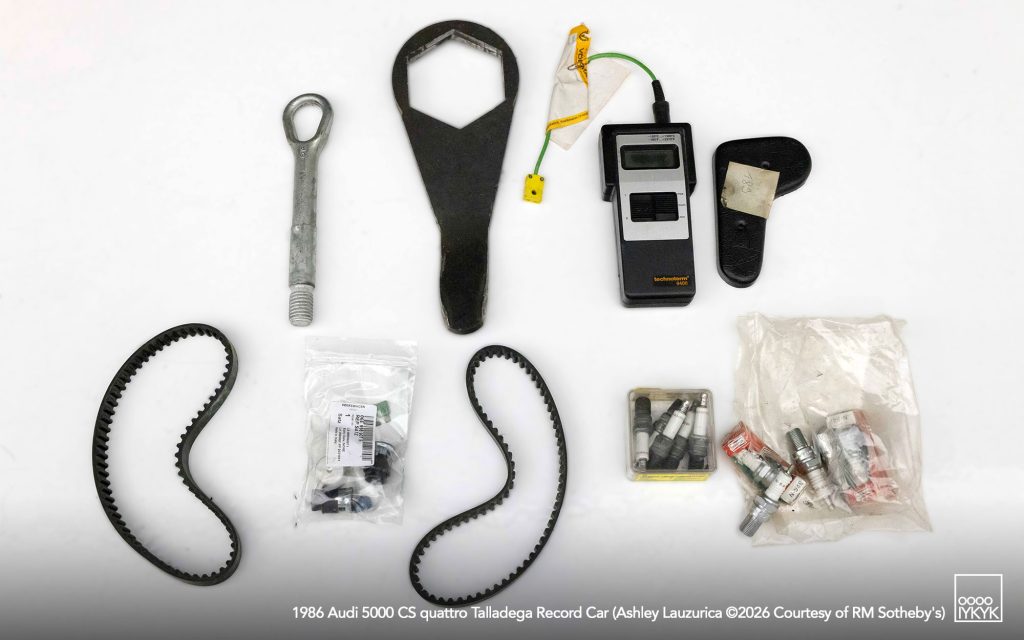
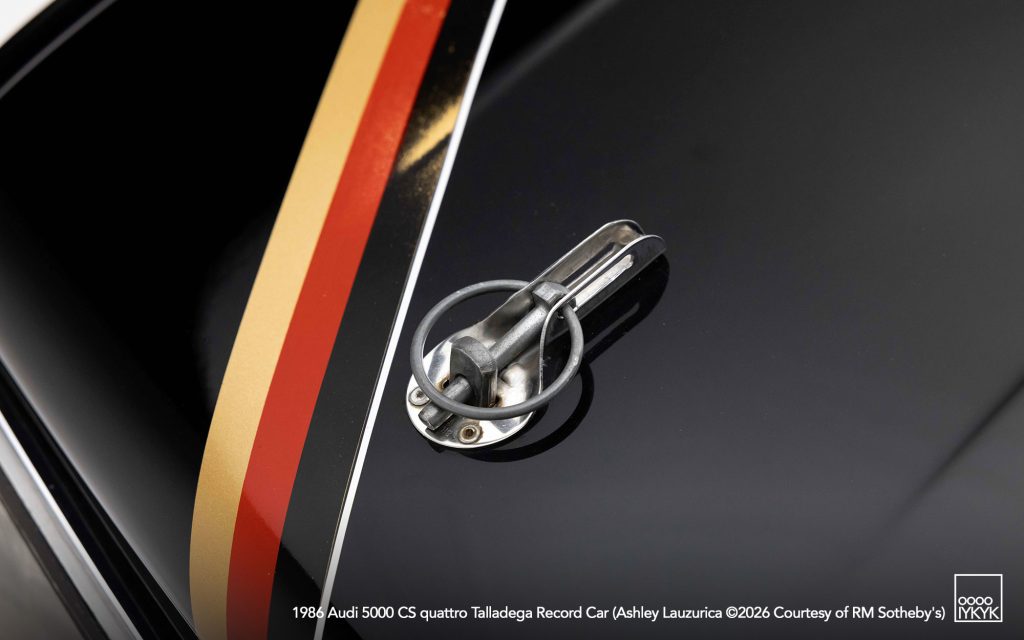
Following its record-setting career at Talladega, the car claiming to be Unser’s Talladega 5000, chassis WAUZZZ44ZGA000023 returned to Germany and was ultimately designated for disposal by Audi. Instead, it was preserved after Dr. Werner Laurenz, then head of Audi motorsport engine development, offered the roadworthy prototype to a German family with whom he had developed a friendship after meeting them during the delivery of their new Audi V8. The family acquired the car directly from Audi and retained it for decades. During their ownership, the paintwork was refreshed and the specialized turbocharged engine was rebuilt by a specialist.
This prototype first reappeared publicly at Bonhams Les Grandes Marques du Monde à Paris in February 2025, where it was offered as the original 1986 Audi 5000 CS quattro Speed Record Prototype driven by Bobby Unser at Talladega. It sold for €120,750 including premium before returning to the public market approximately a year later, when RM Sotheby’s consigned the car to its Monterey 2026 sale with a pre-sale estimate of $250,000-$300,000 USD.
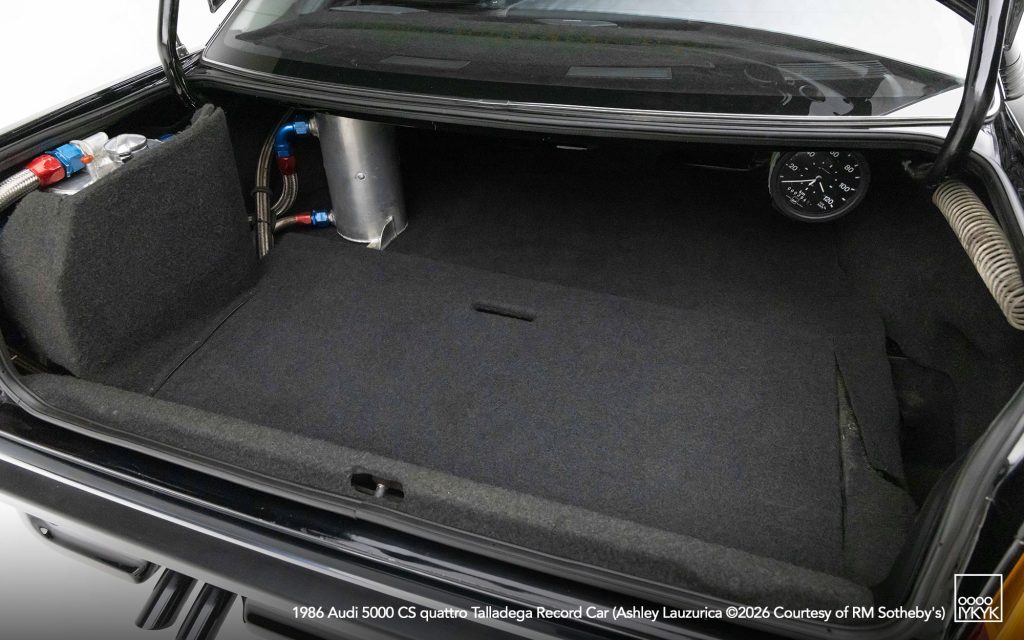
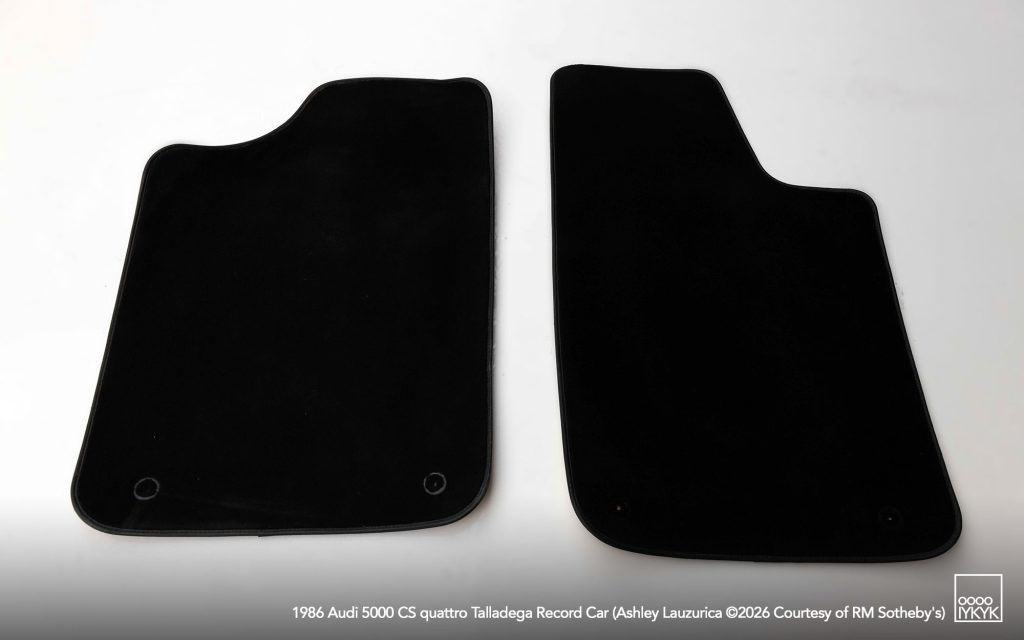
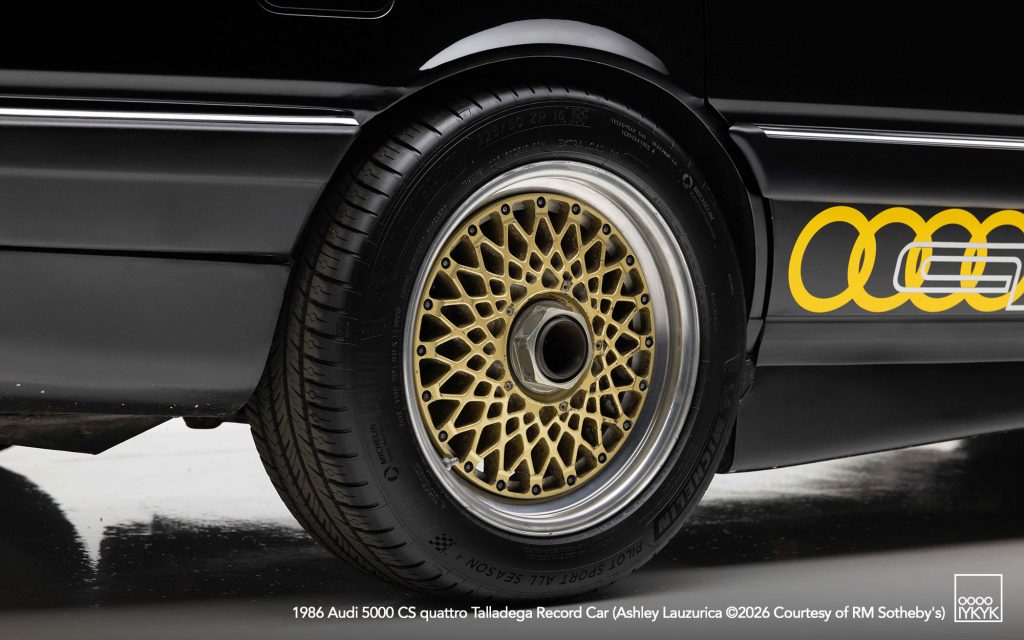
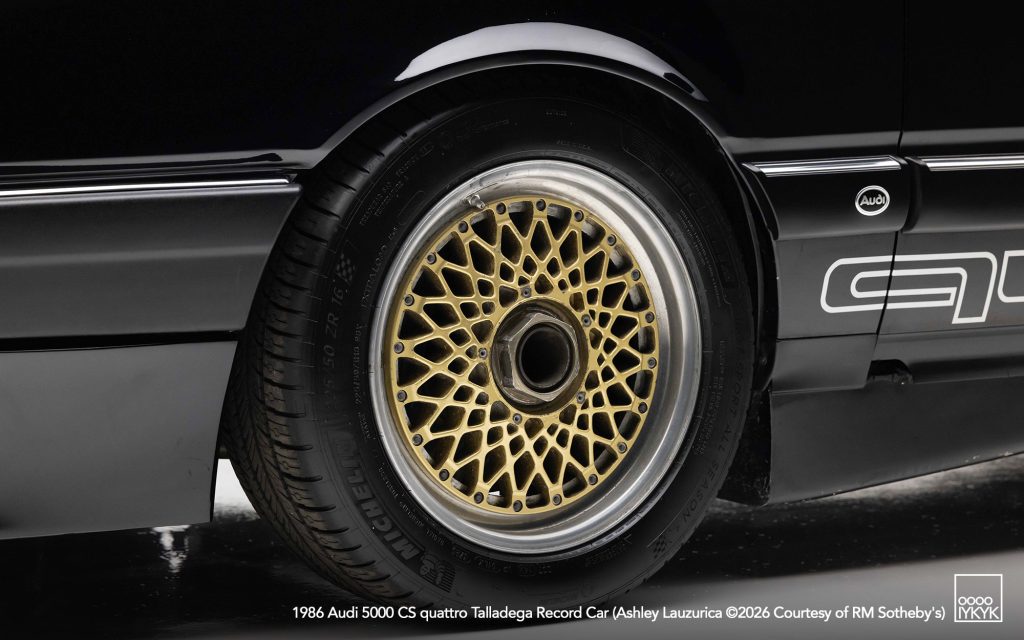
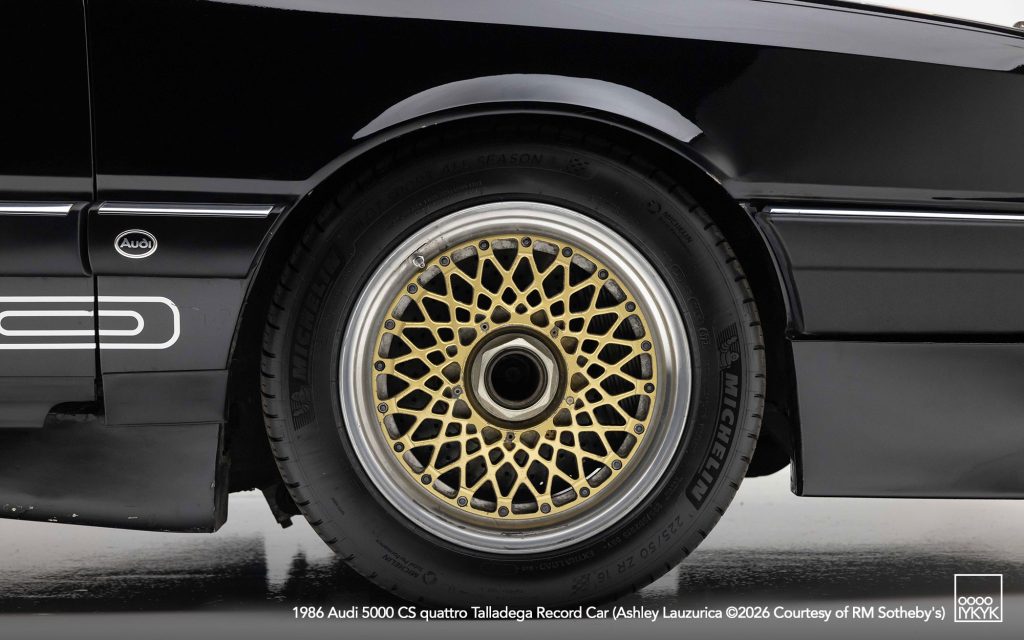
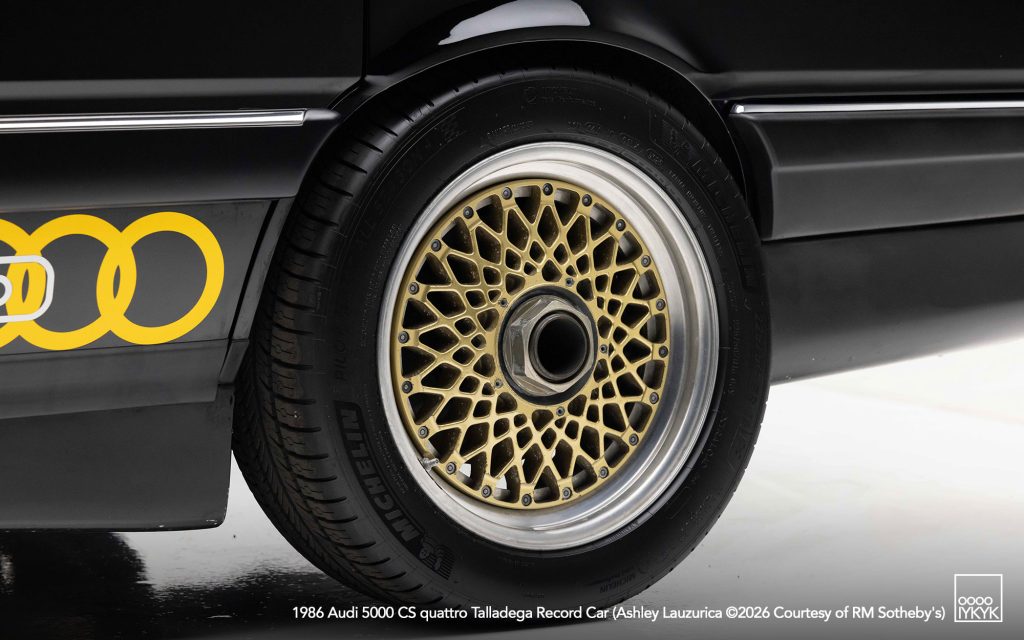
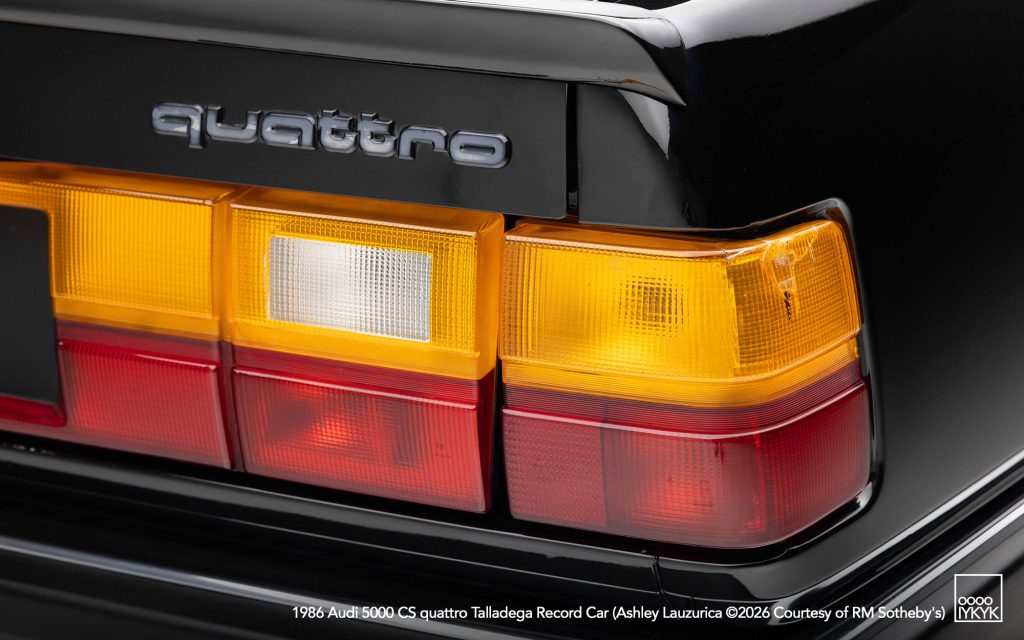
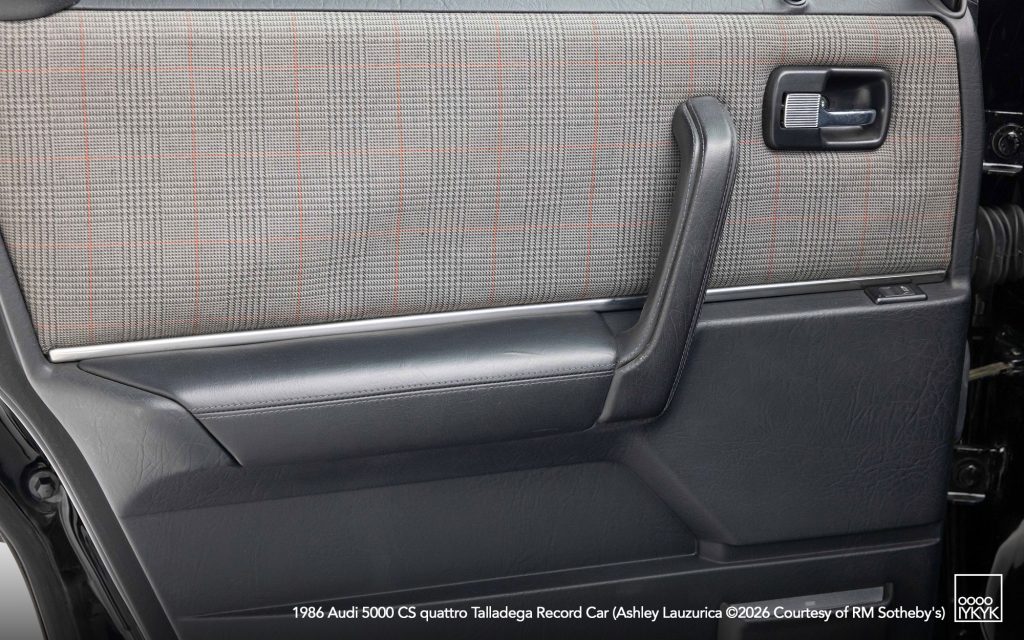
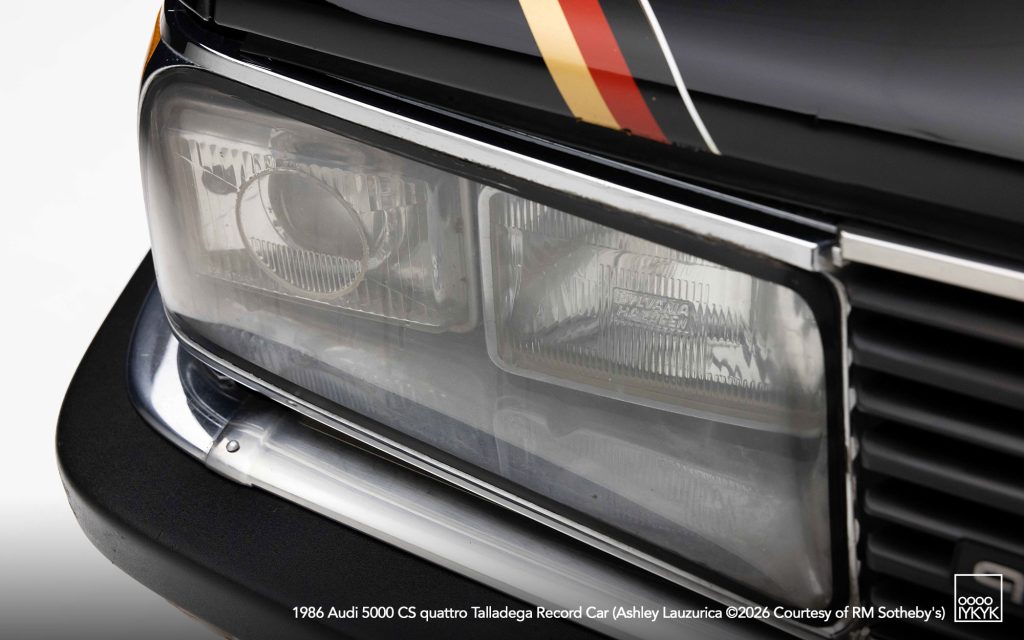
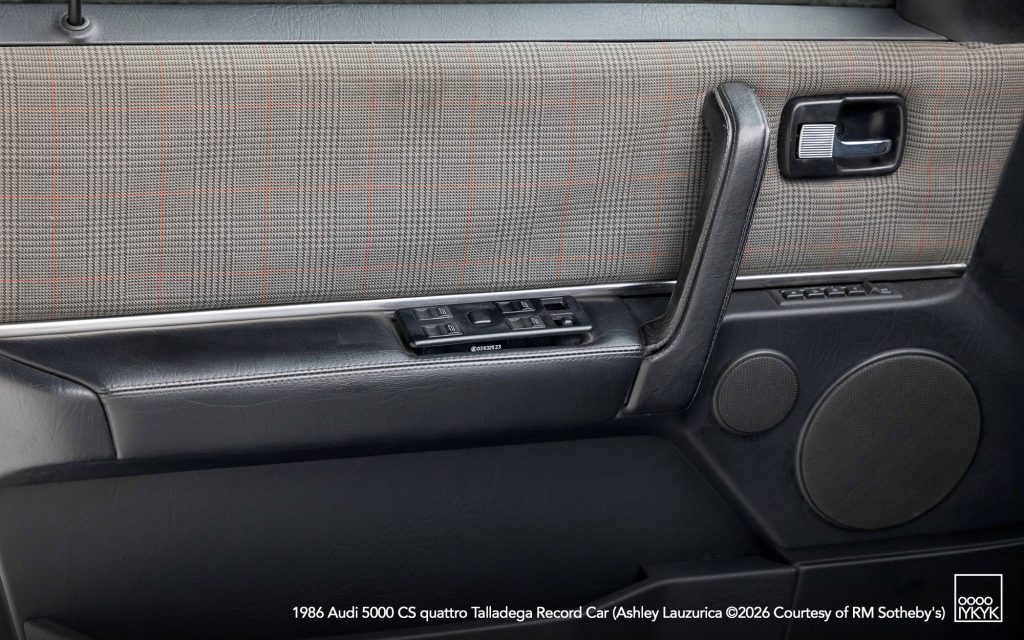
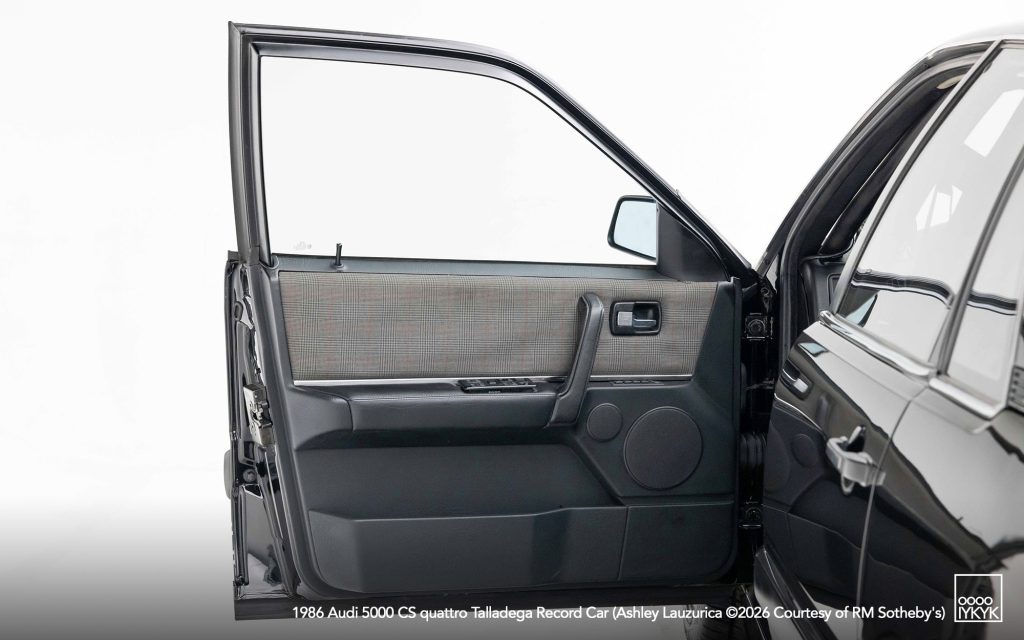
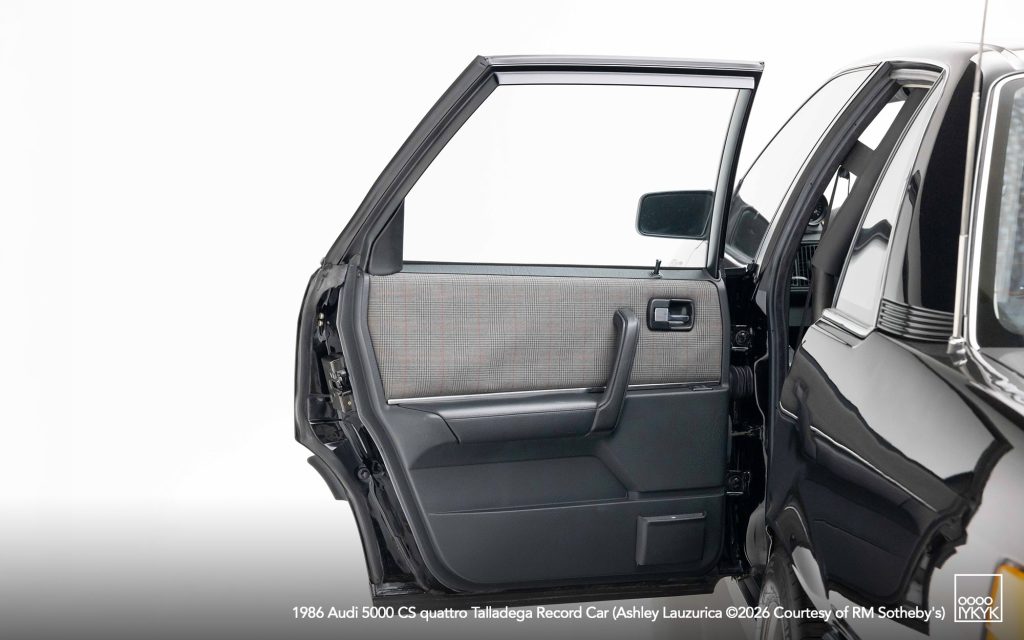
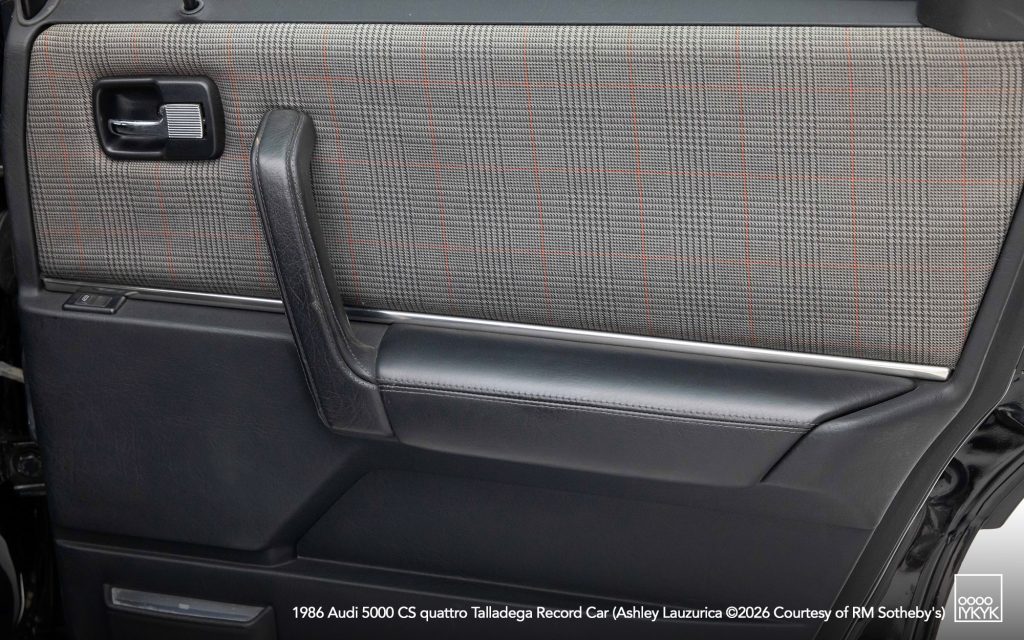
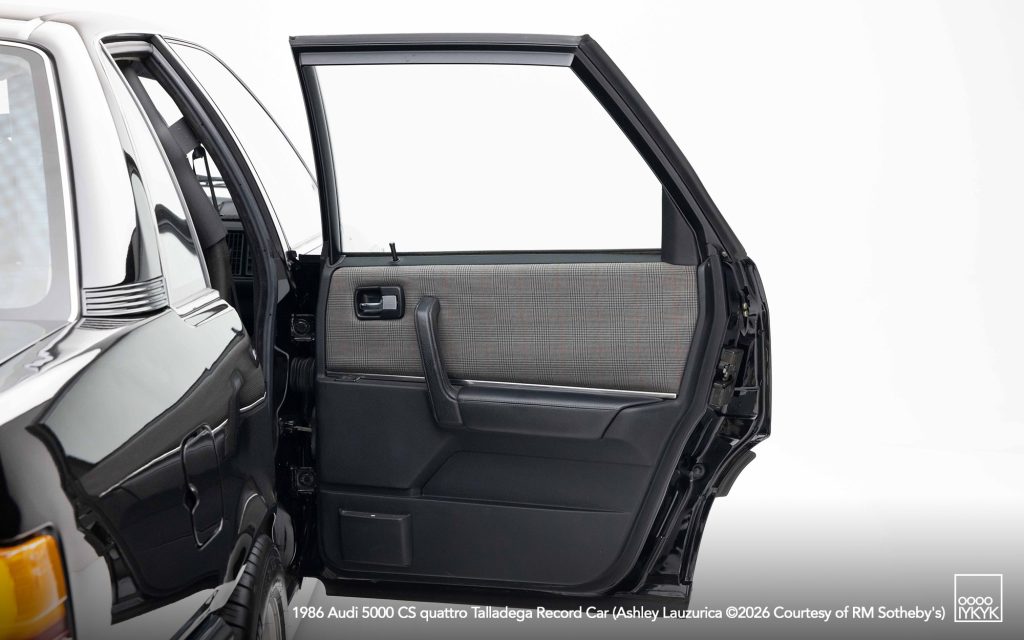
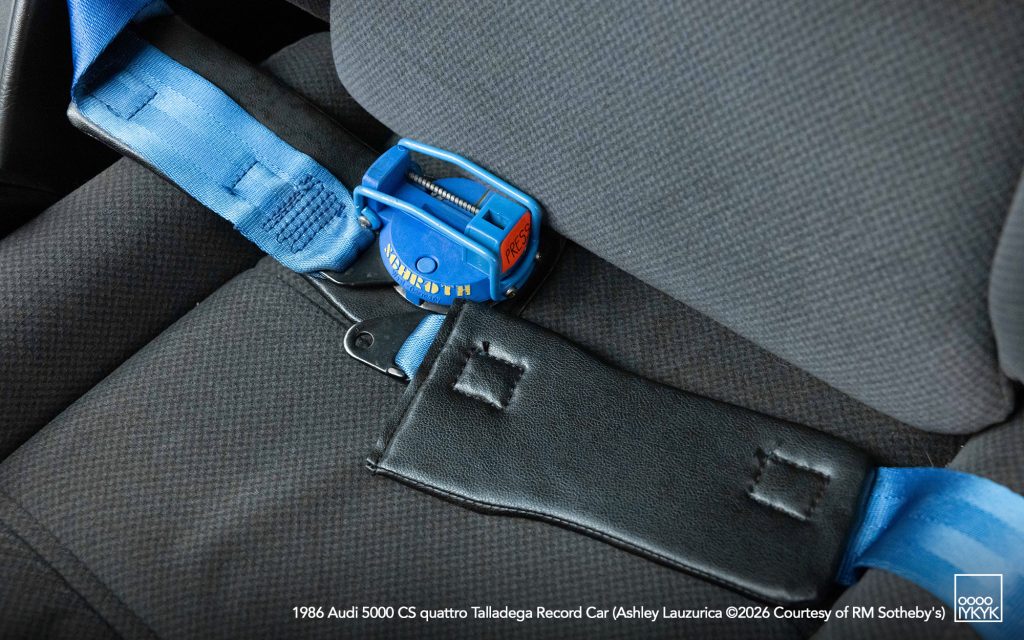
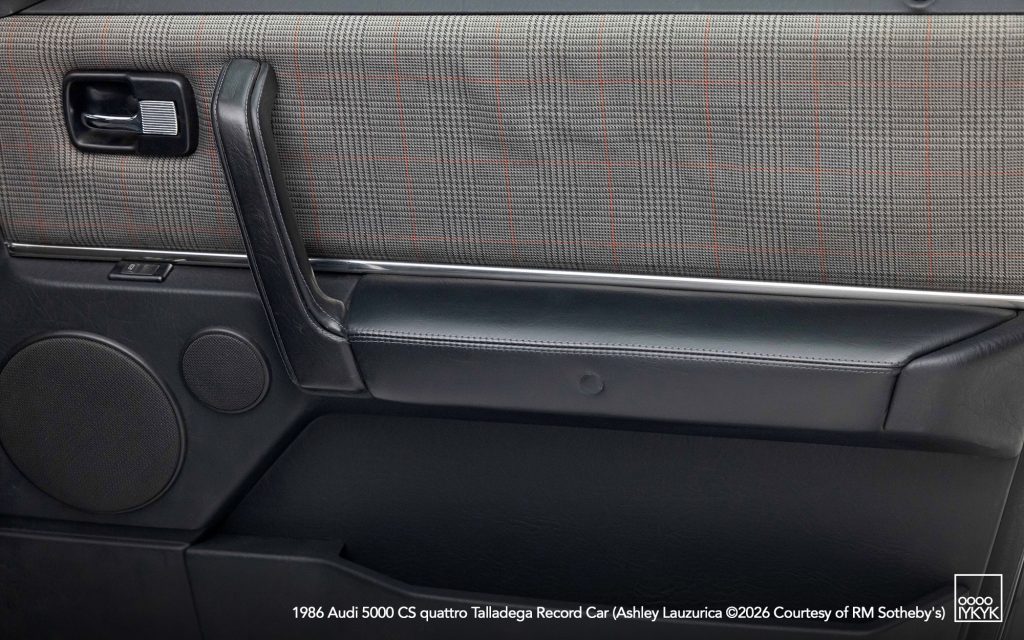
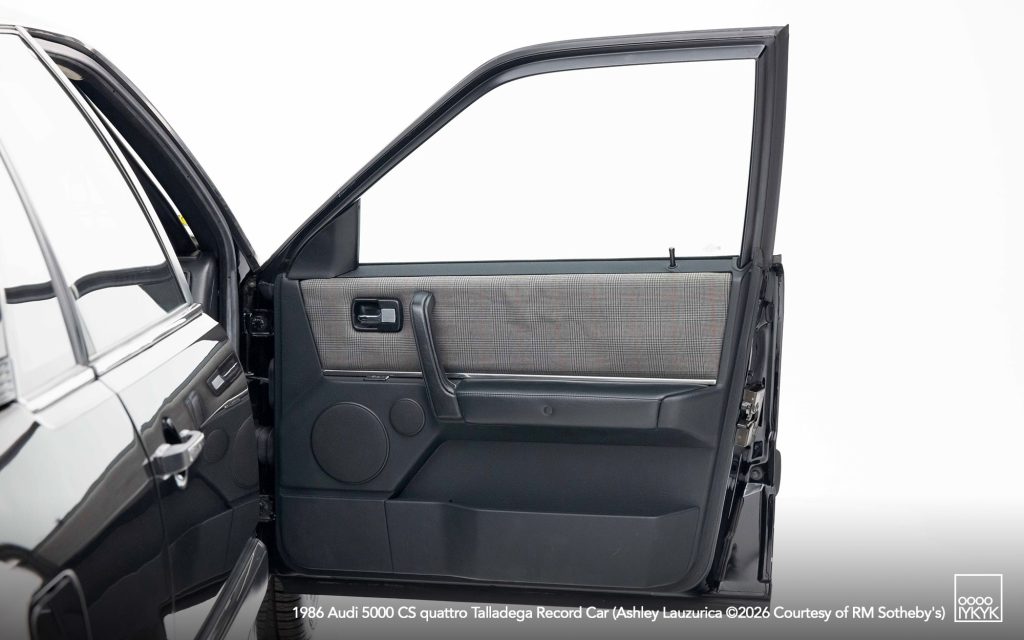
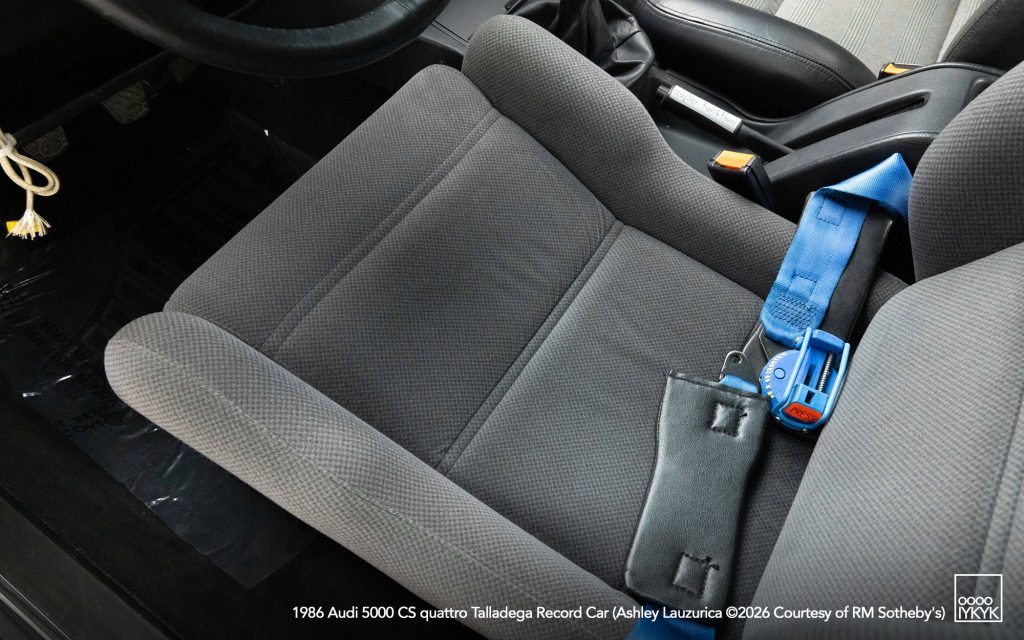
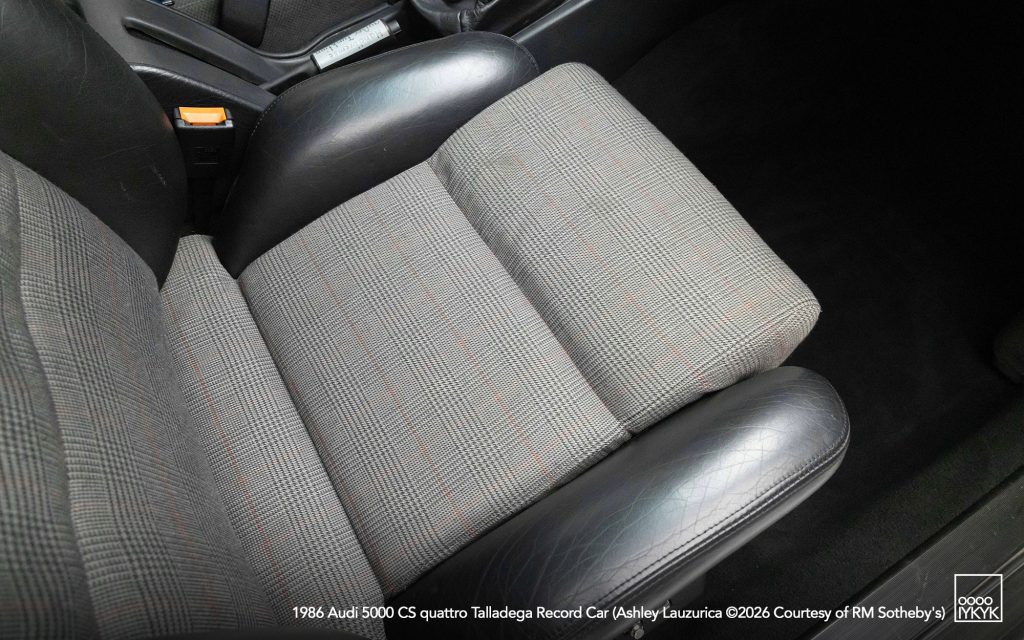
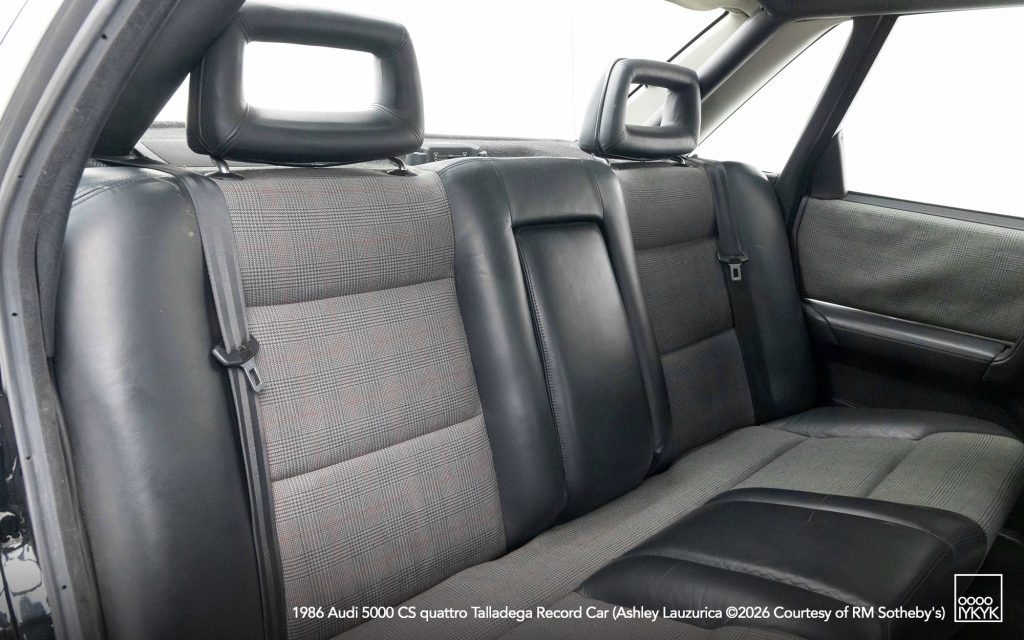
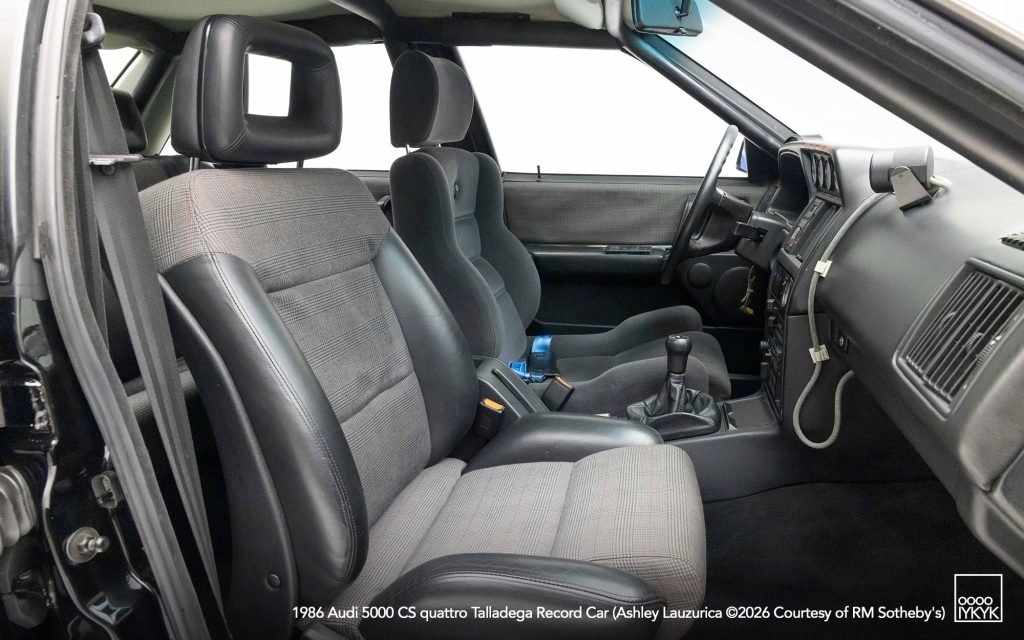
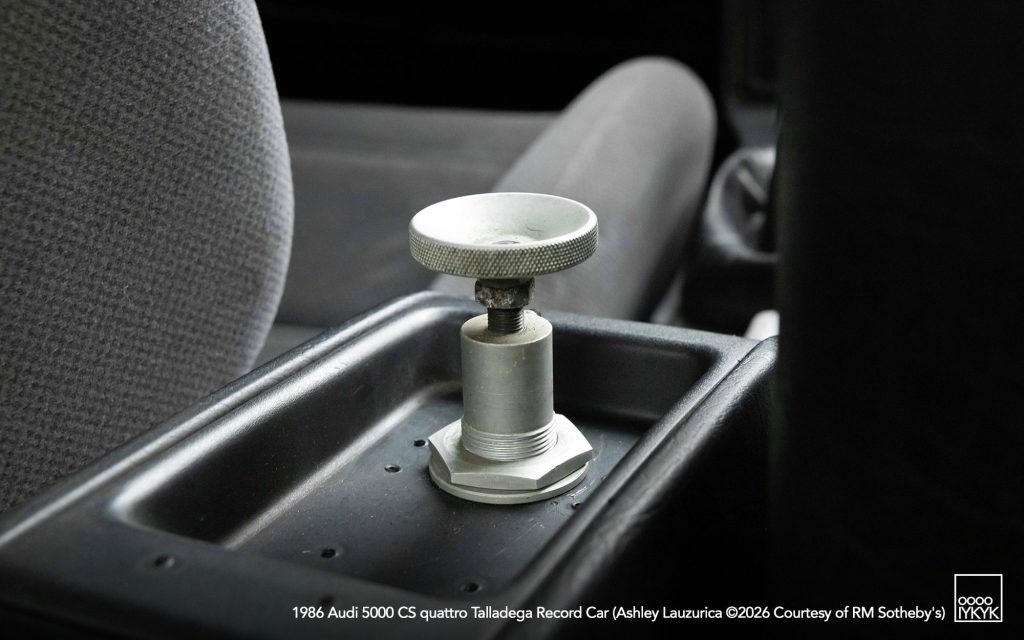
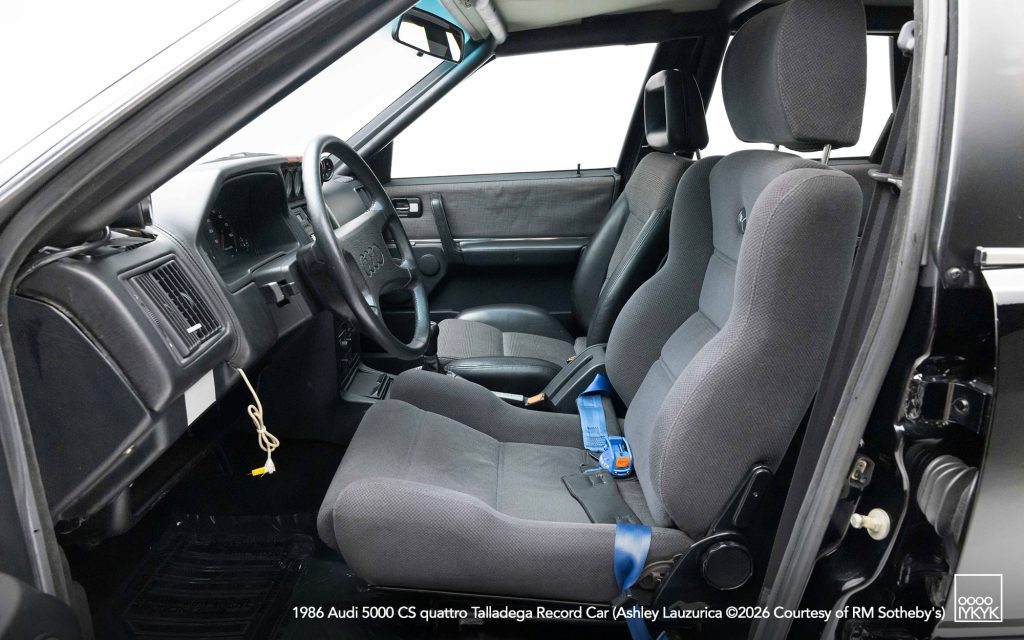
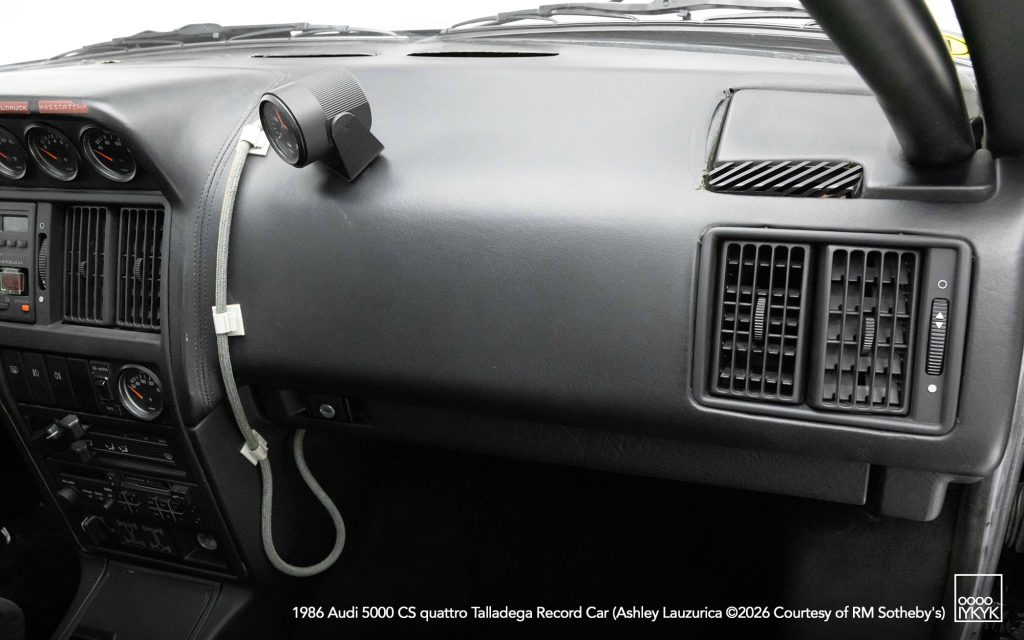
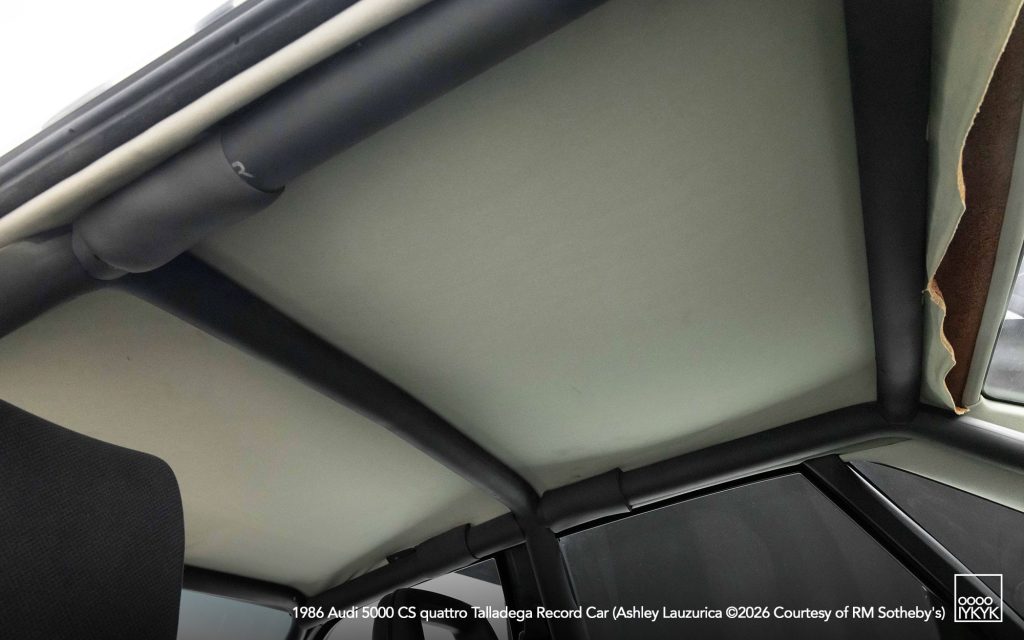
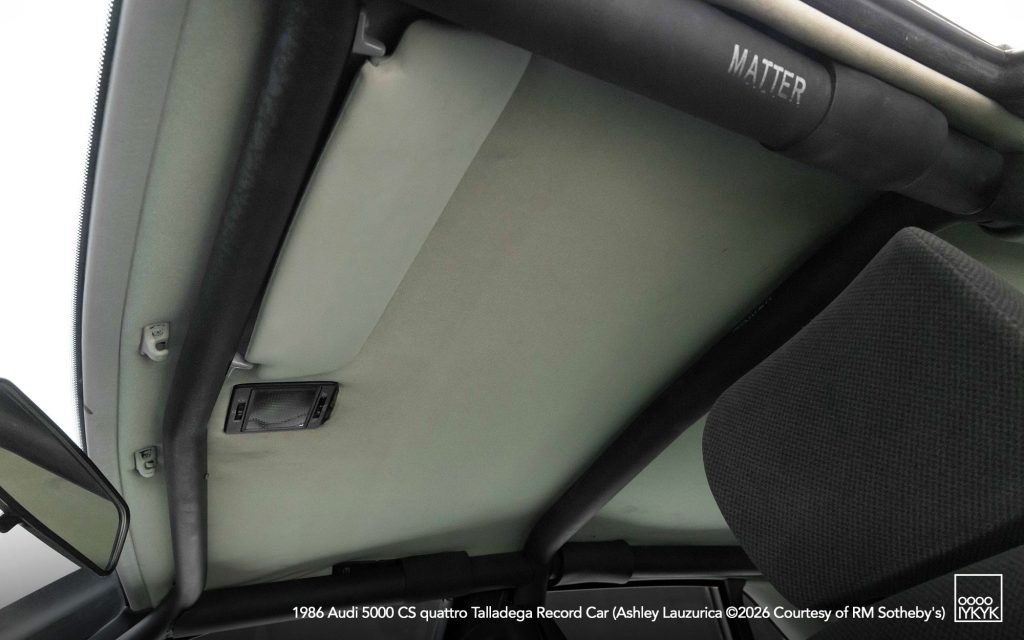
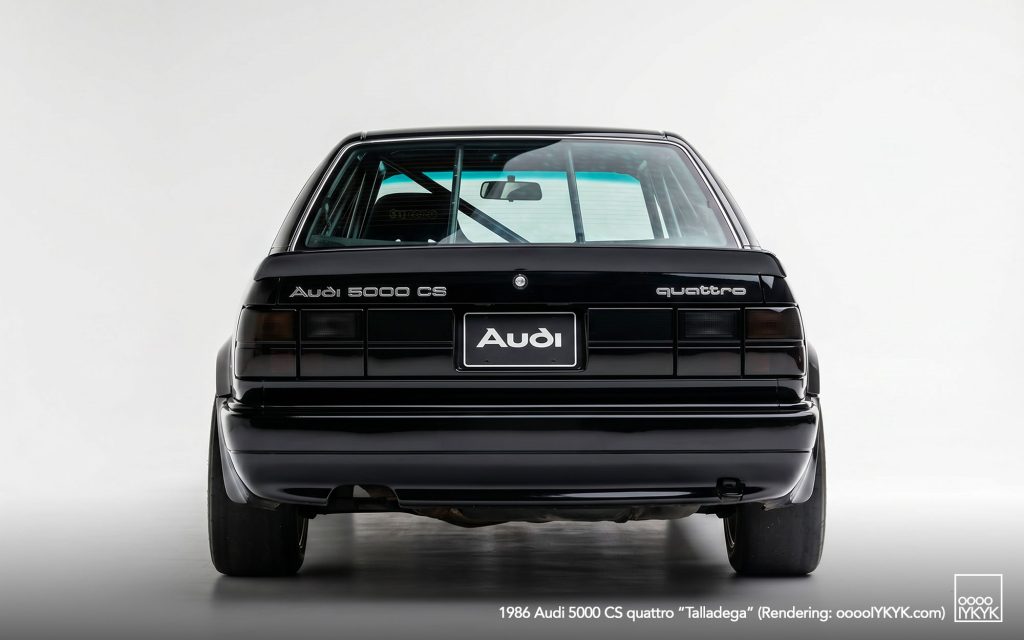
Both auction houses identify chassis WAUZZZ44ZGA000023 as the original Talladega record-setting prototype. However, that car’s present configuration differs in several visible respects from period photographs taken during the March 1986 record program, including the absence of the full roll cage, the presence of a restored production-style interior and differences in the wheel-and-tire package. Whether these changes were made following the completion of the record program to return the car to roadworthy condition or resulted from later restoration work has not been publicly documented by Audi or the auction houses.
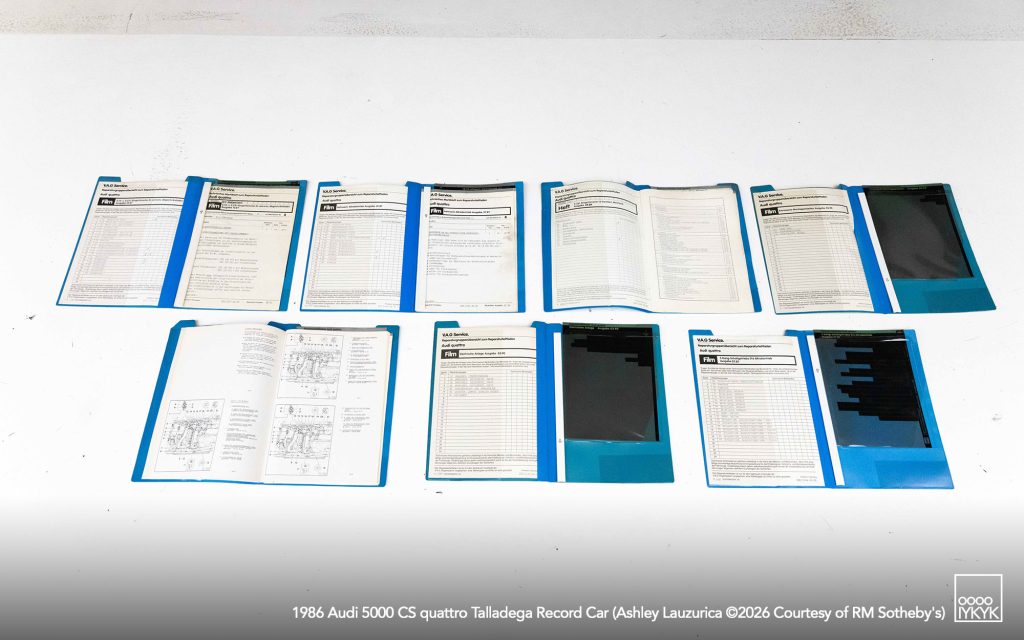
Until additional factory documentation becomes available, chassis WAUZZZ44ZGA000023 remains the only publicly known surviving Audi 5000 CS quattro speed record prototype associated with the 1986 Talladega program, while aspects of its post-record configuration continue to be an area of historical interest and ongoing research.
RELATED LINKS
Audi 5000 CS quattro Talladega from 1986: A Speed Record of 332 km/h | Cockpit
1986 Audi 5000 CS quattro Talladega: AudiStory
PHOTO GALLERY (RENDERINGS)
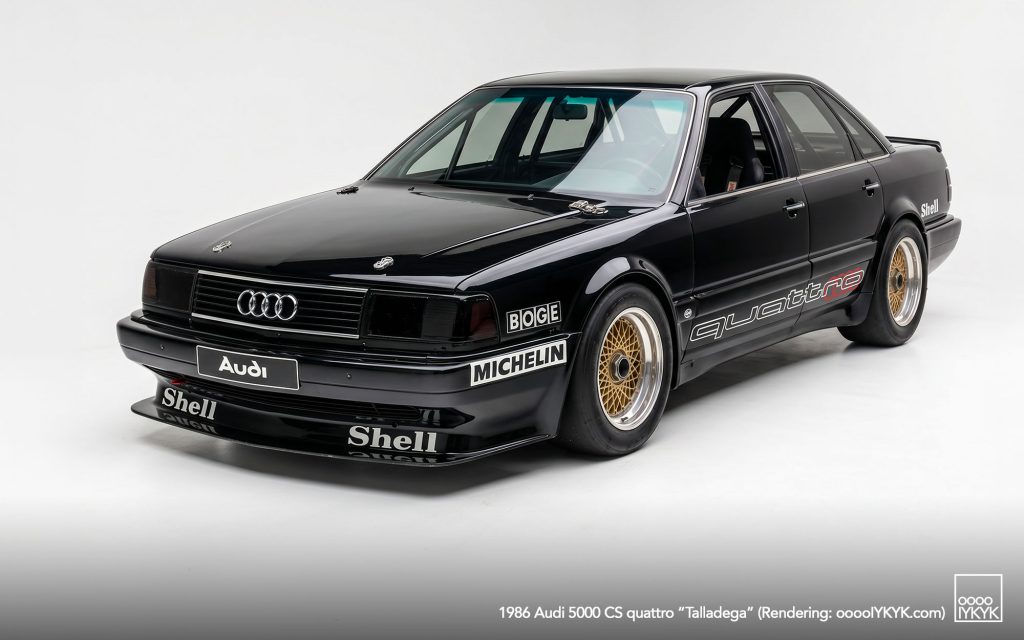
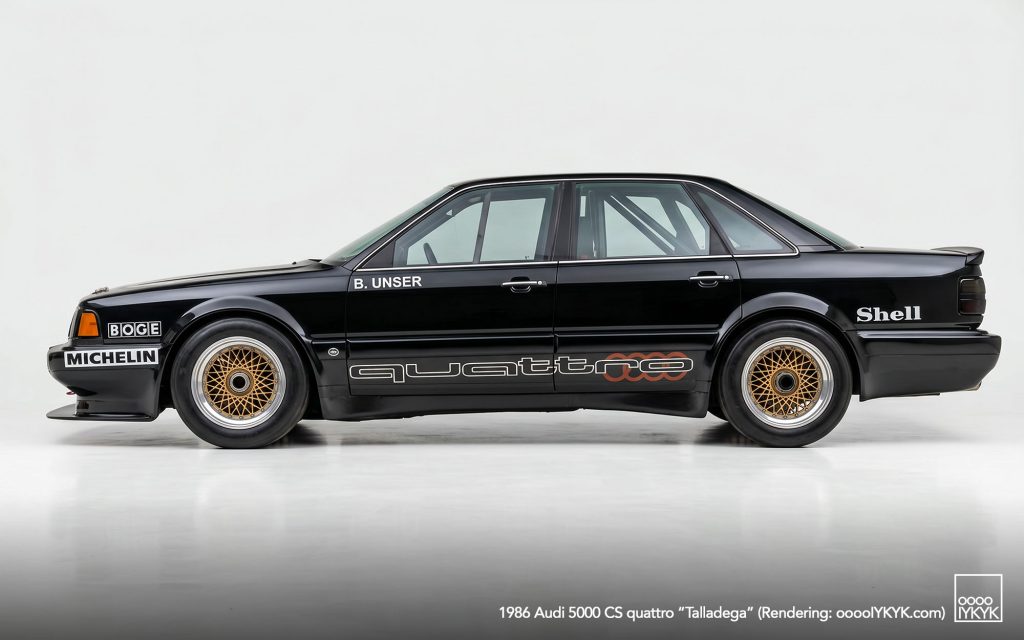
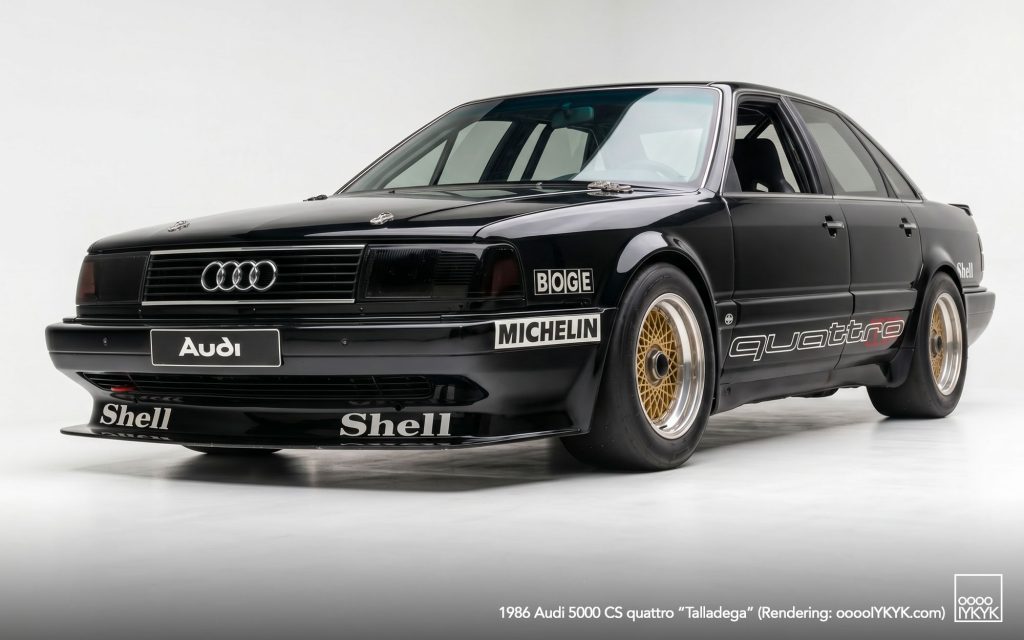
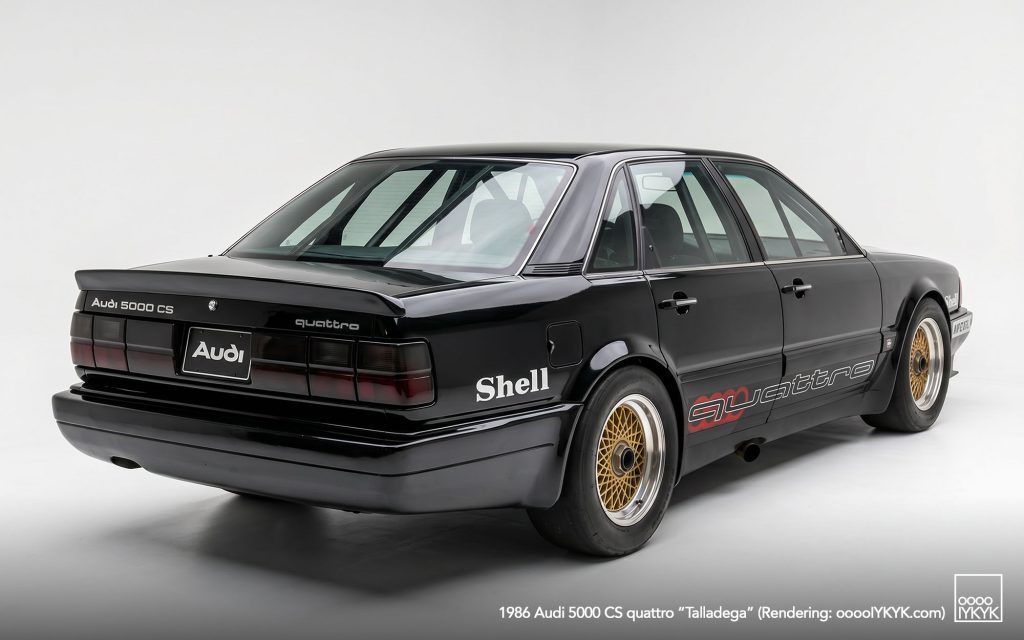
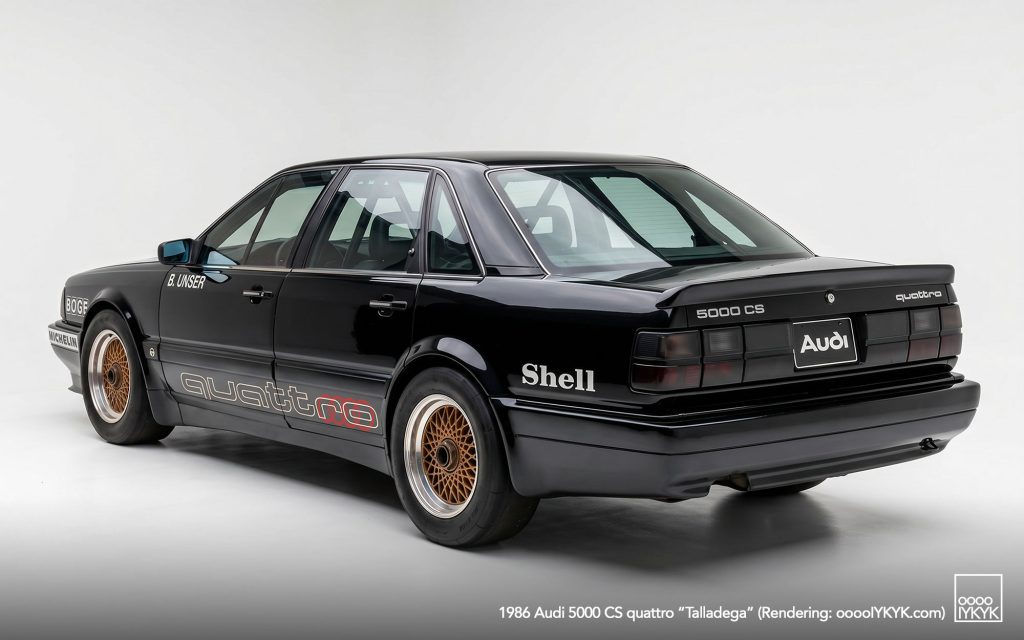
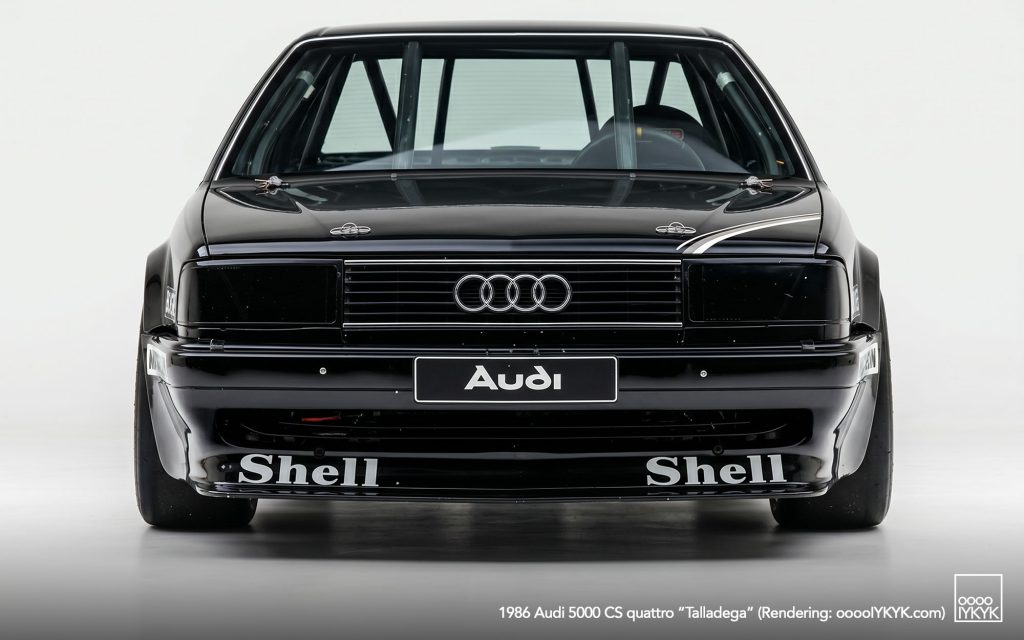
PHOTO GALLERY (PERIOD PHOTOS)
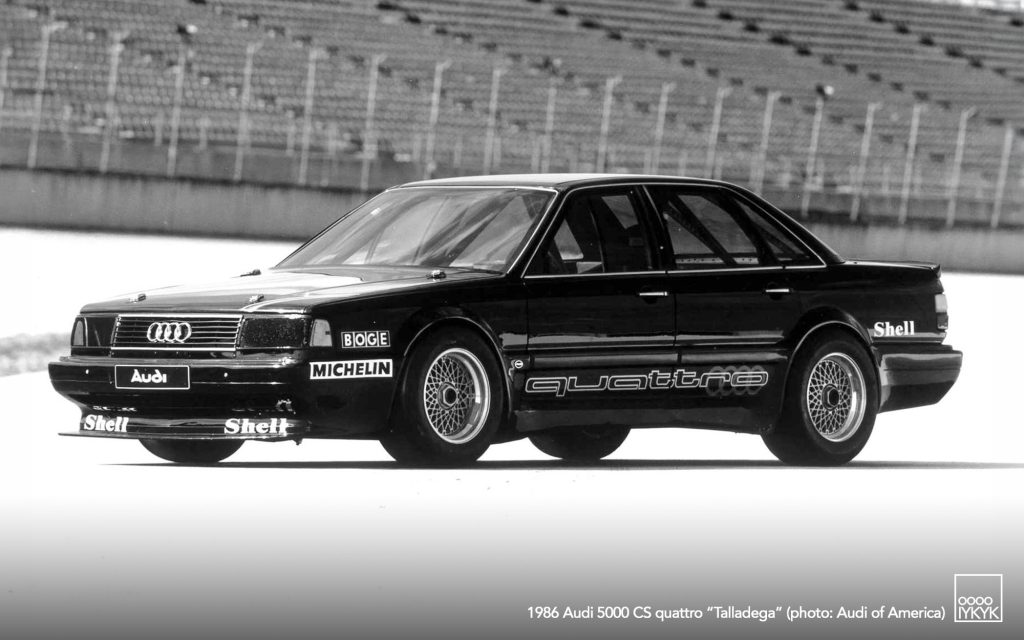
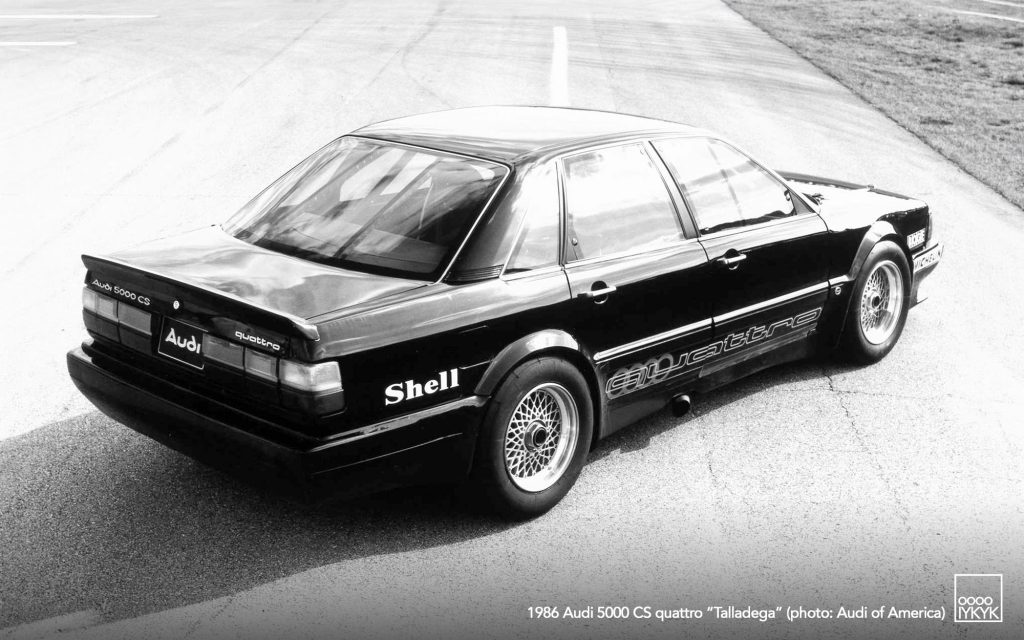
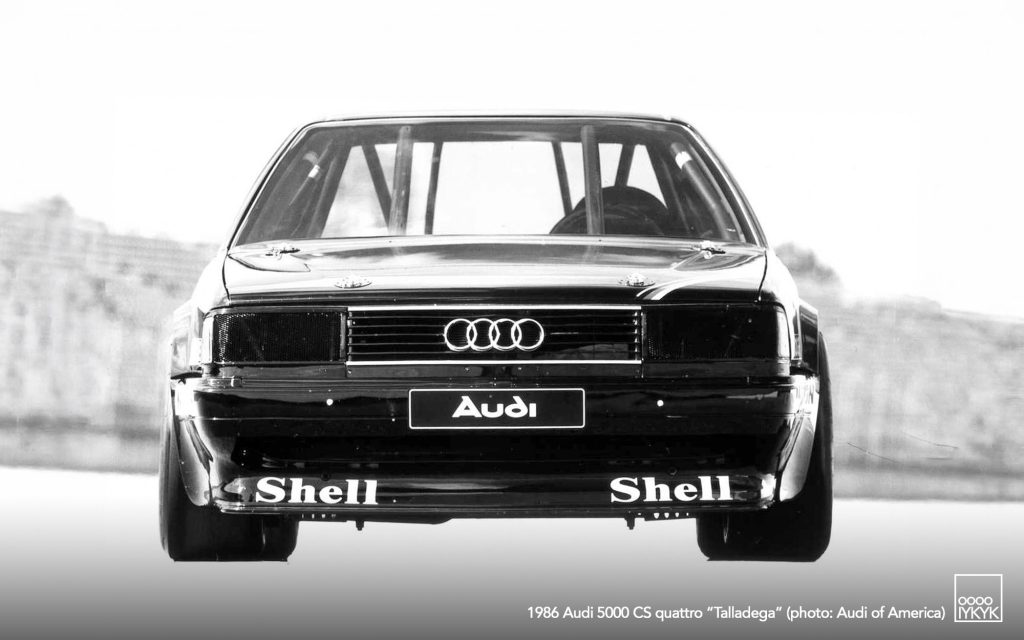
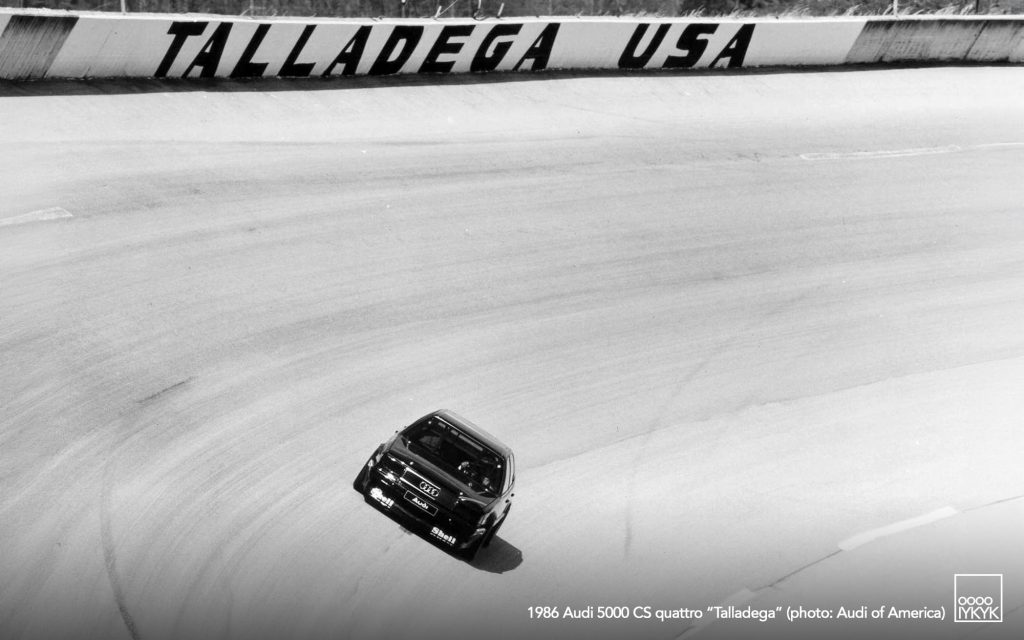
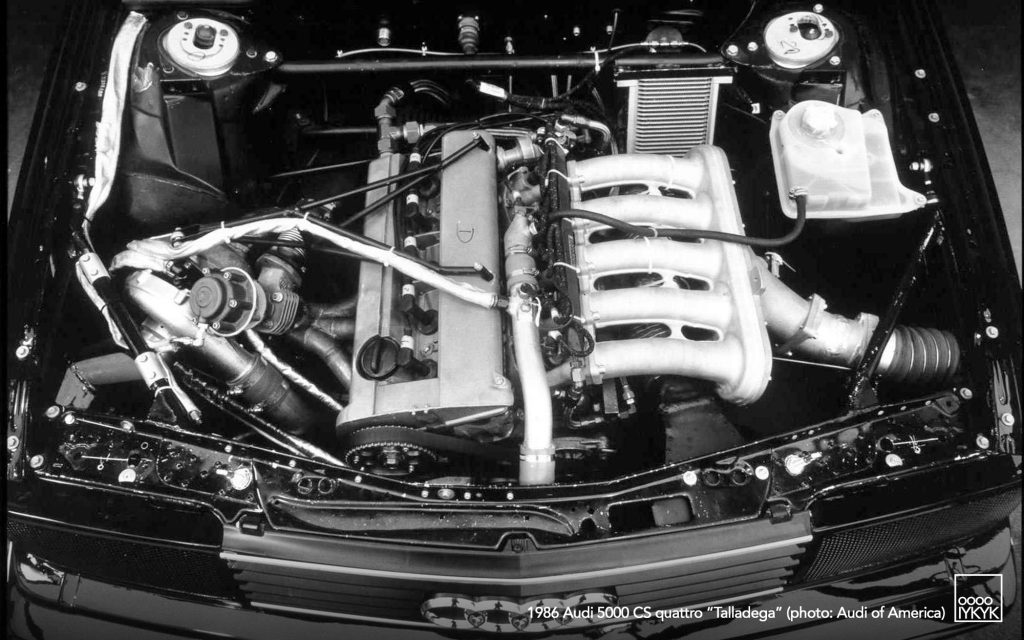
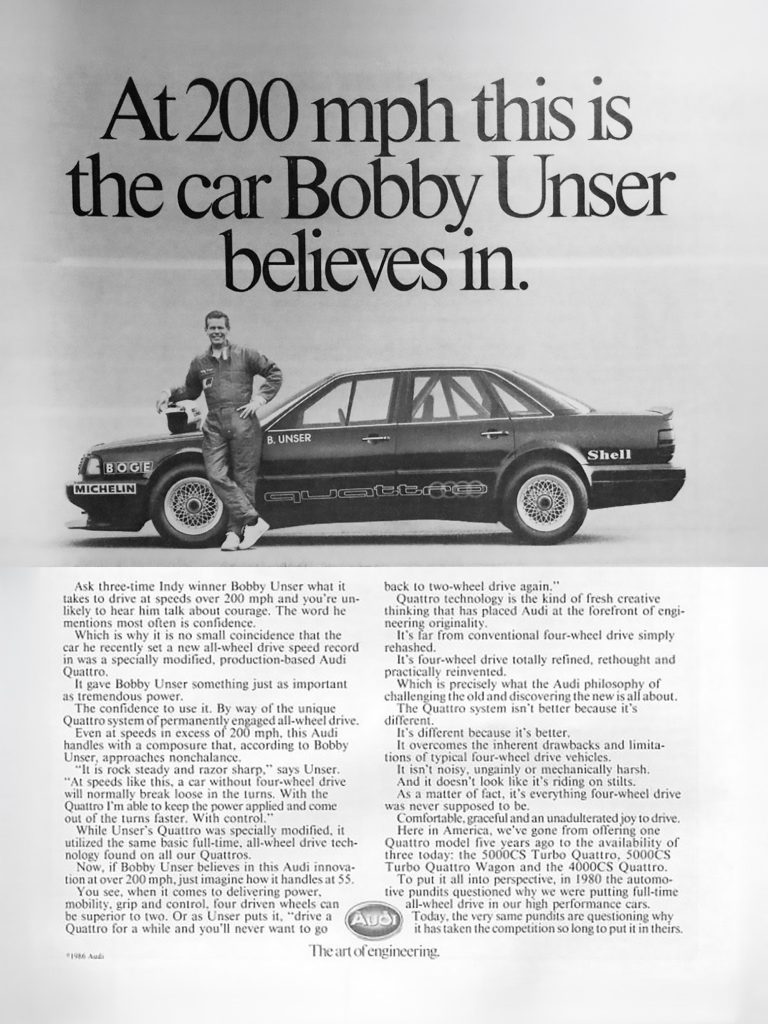
PHOTO GALLERY (RM SOTHEBY’S AUCTION)