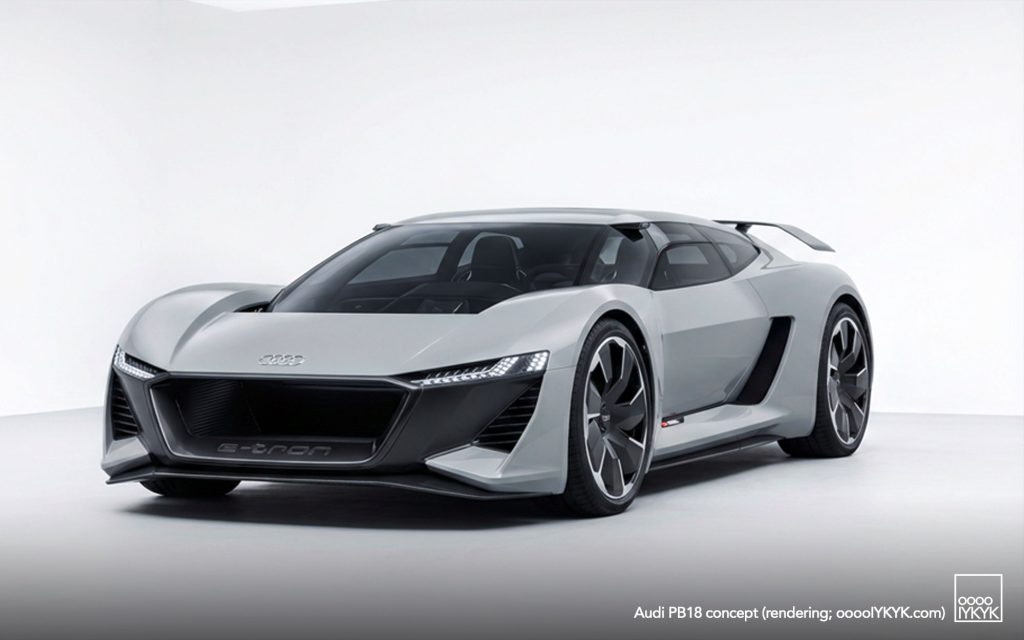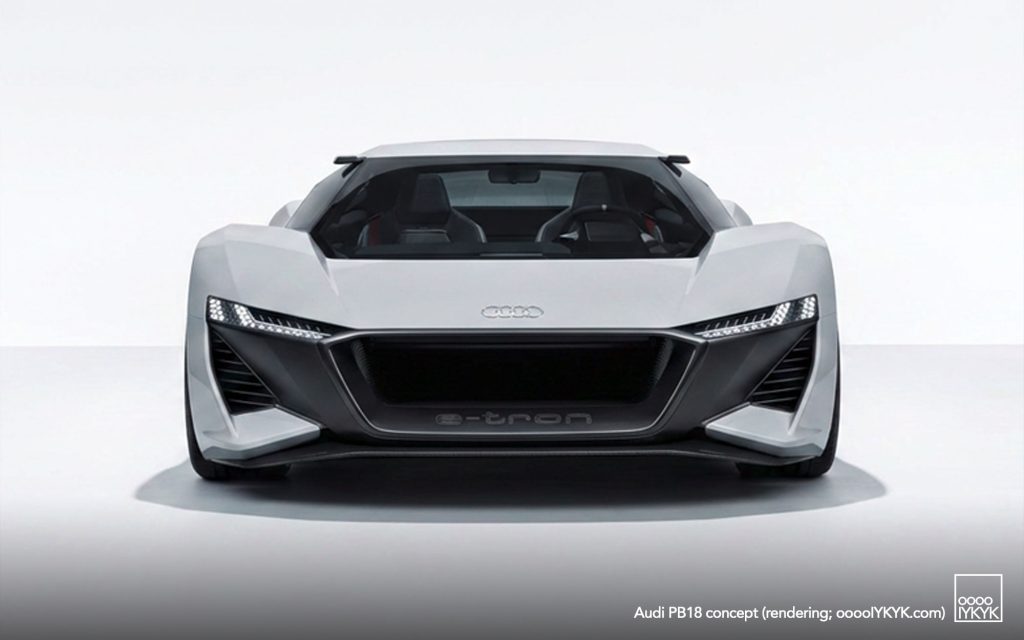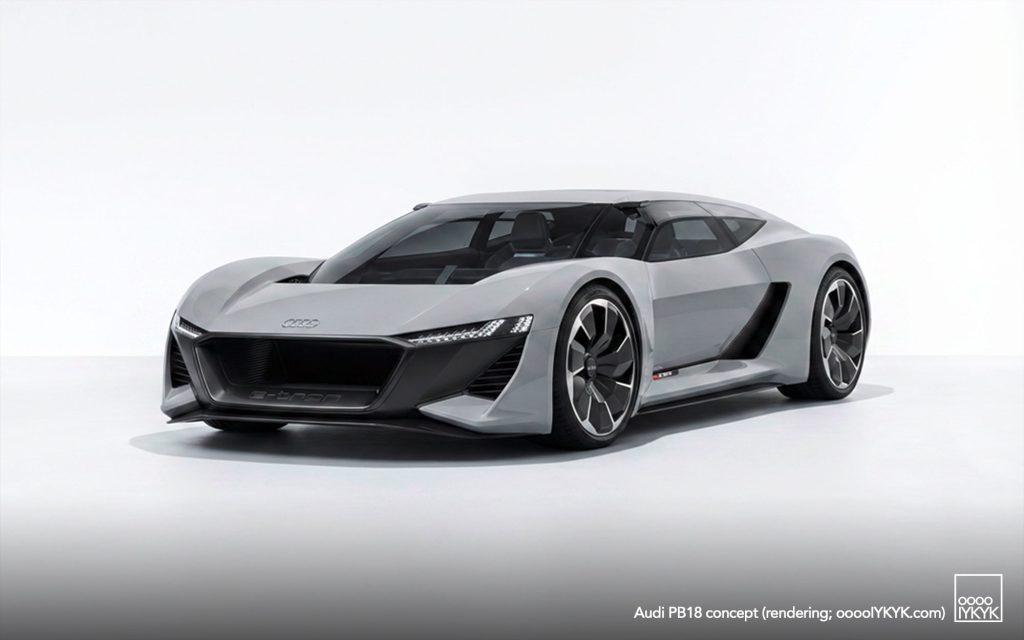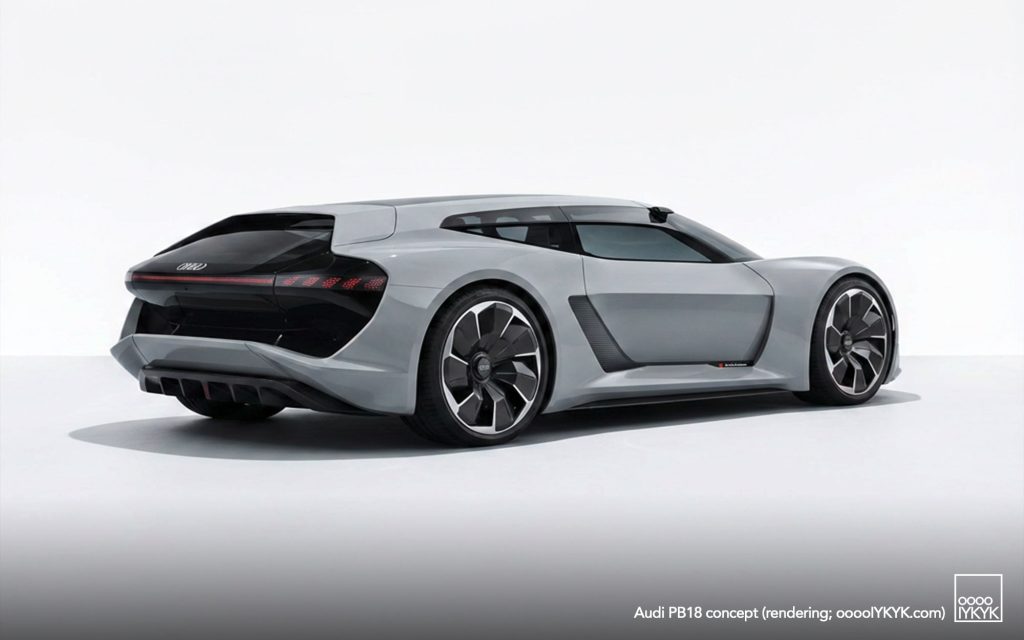

What: Audi PB 18 e-tron concept (a.k.a. Audi AI:RACE)
Model Family: AI concept series
Model / Generation Code(s): —
Production: Concept (one-off)
Year: 2018
Debuted: 2018 Monterey Car Week, 2018 Rolex Monterey Motorsport Reunion, 2018 Pebble Beach Concours, 2018 Paris Motor Show
Designer: Gael Buzyn, Audi Design Loft
Number Produced: 1
Assembly:
Class: Electric high-performance sports car concept
Body style: 2-door coupé (configurable single- or two-seat layout)
Layout: Mid-mounted battery, all-wheel drive (electric quattro)
Base model:
Powertrain: Three electric motors (solid-state battery)
Power output: Up to 570 kW (764 hp, boost)
OVERVIEW
The Audi PB 18 e-tron concept was unveiled during Pebble Beach Car Week as a design and engineering study focused on a future high-performance electric sports car. Internally referred to as “Level Zero,” the concept intentionally rejected automated driving features in favor of a fully driver-focused experience.
Developed by Audi’s design studio in Malibu with engineering input from Audi Sport GmbH, the PB 18 e-tron combined electric propulsion with design and packaging derived from endurance racing. The concept’s naming referenced both its debut location (Pebble Beach) and its technical relationship to the Audi R18 e-tron quattro.
PROPORTIONS AND EXTERIOR DESIGN
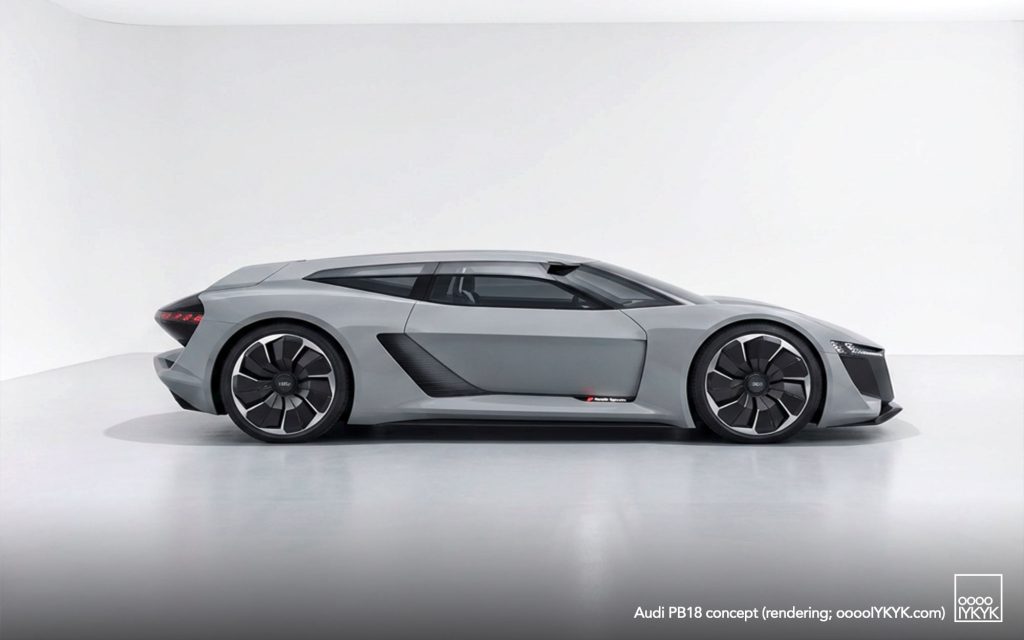
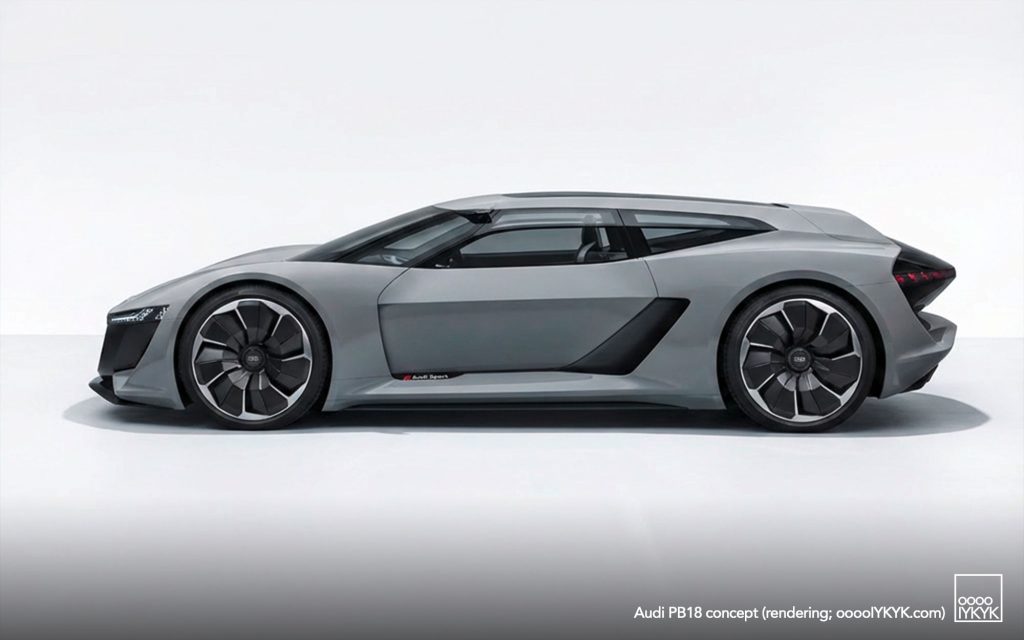
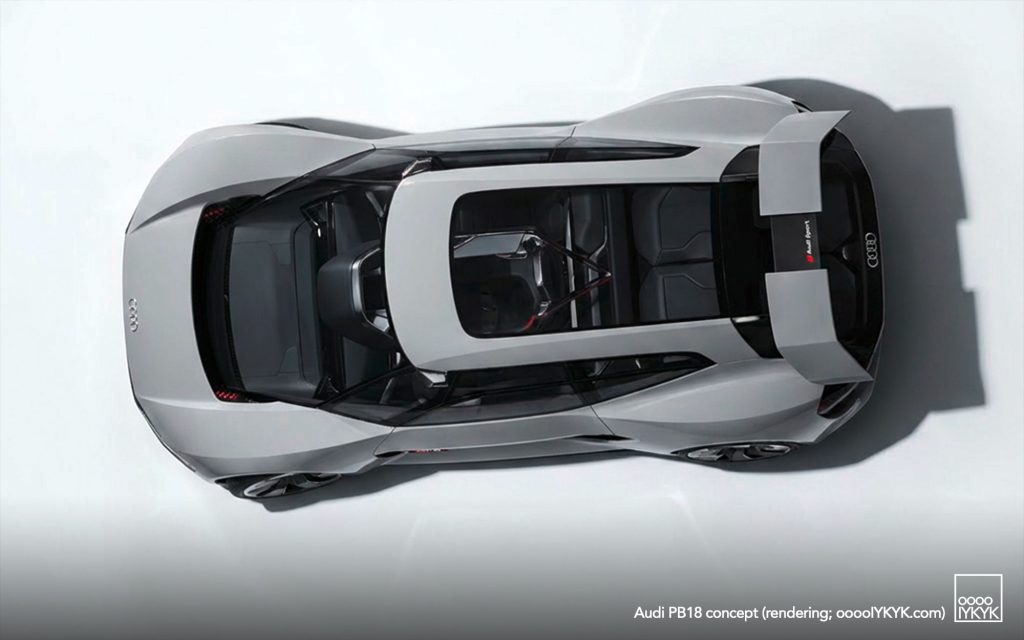
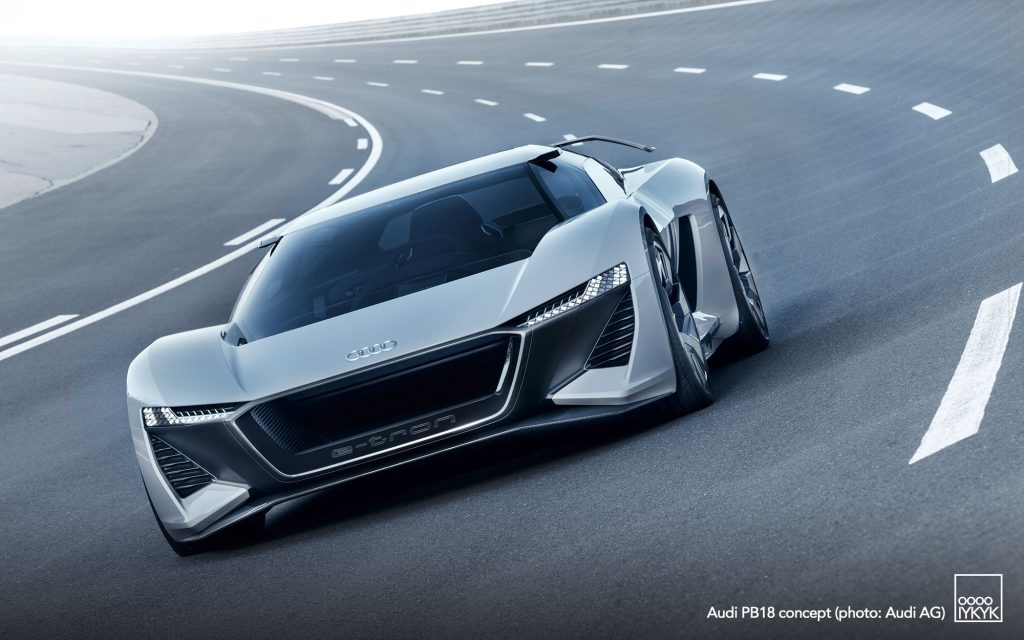
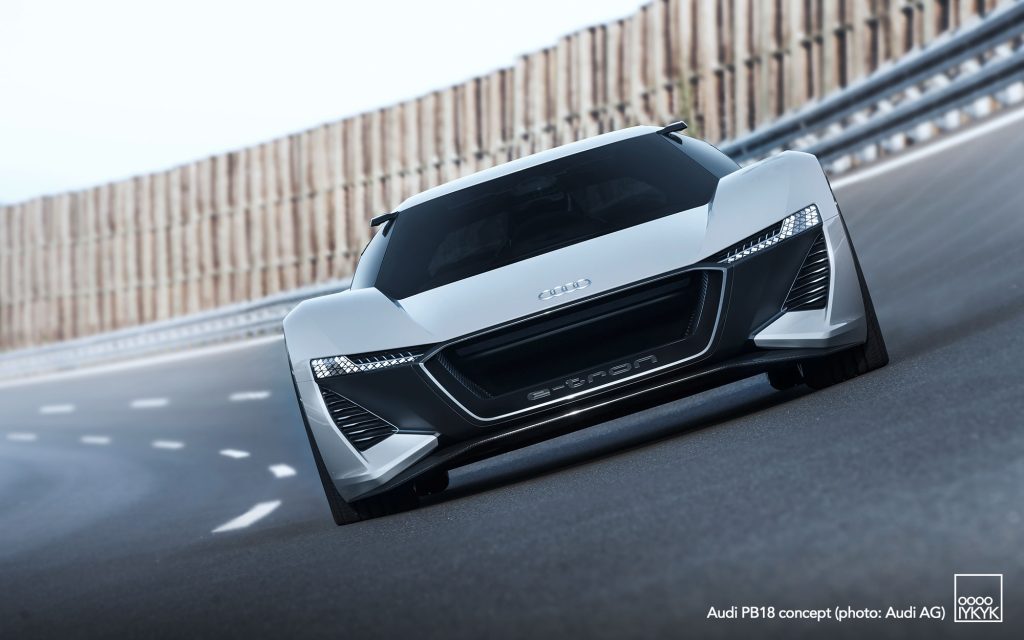
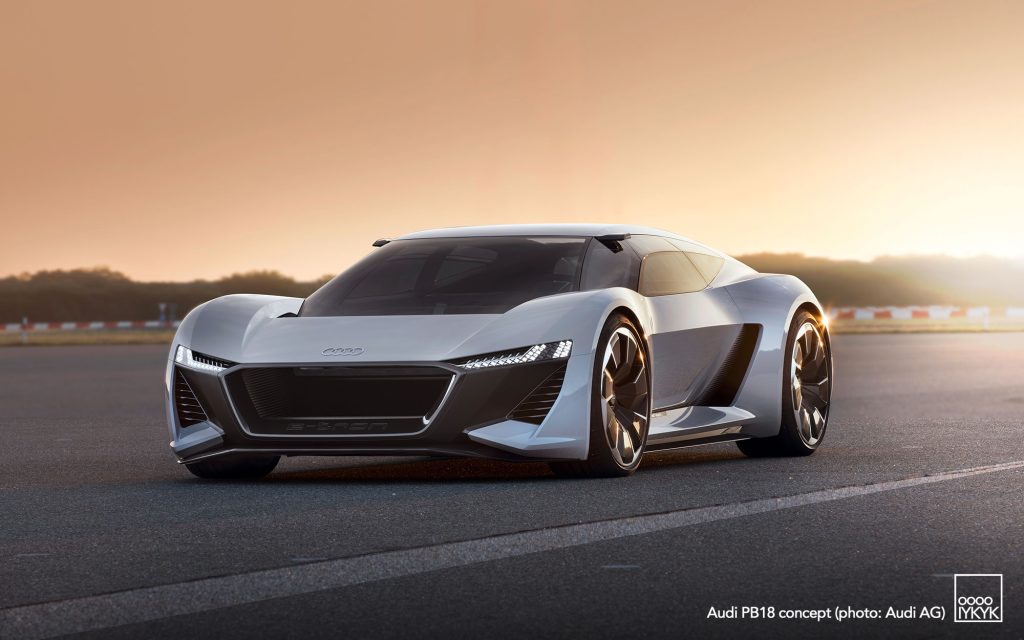
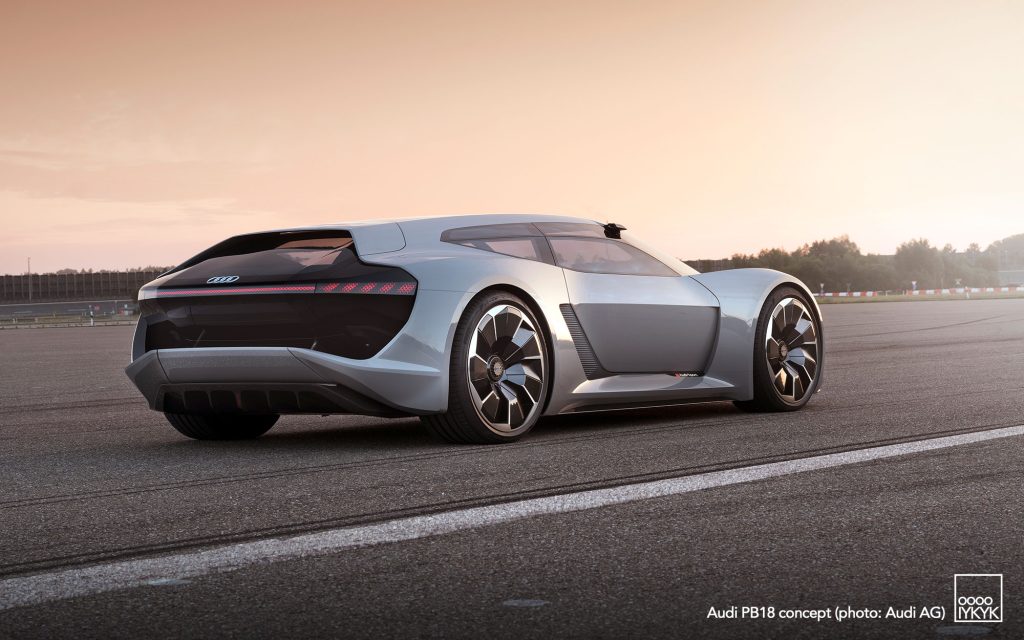
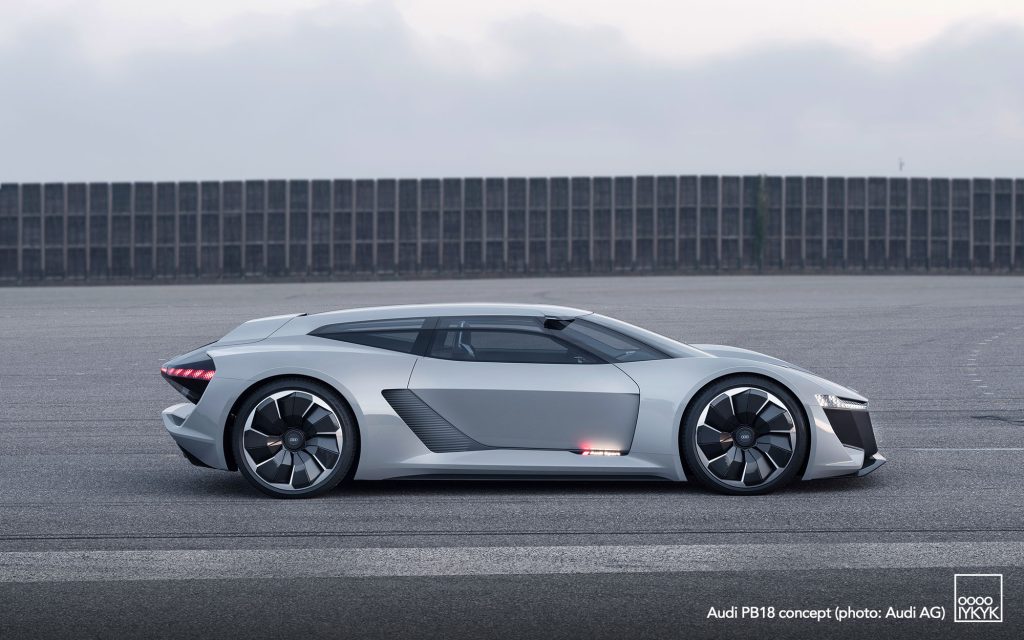
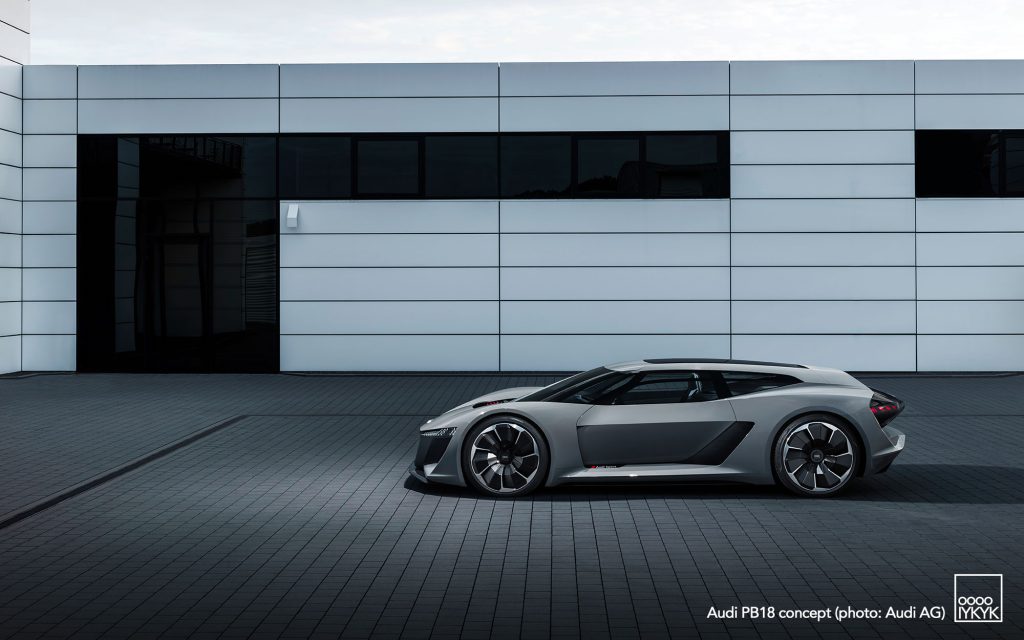
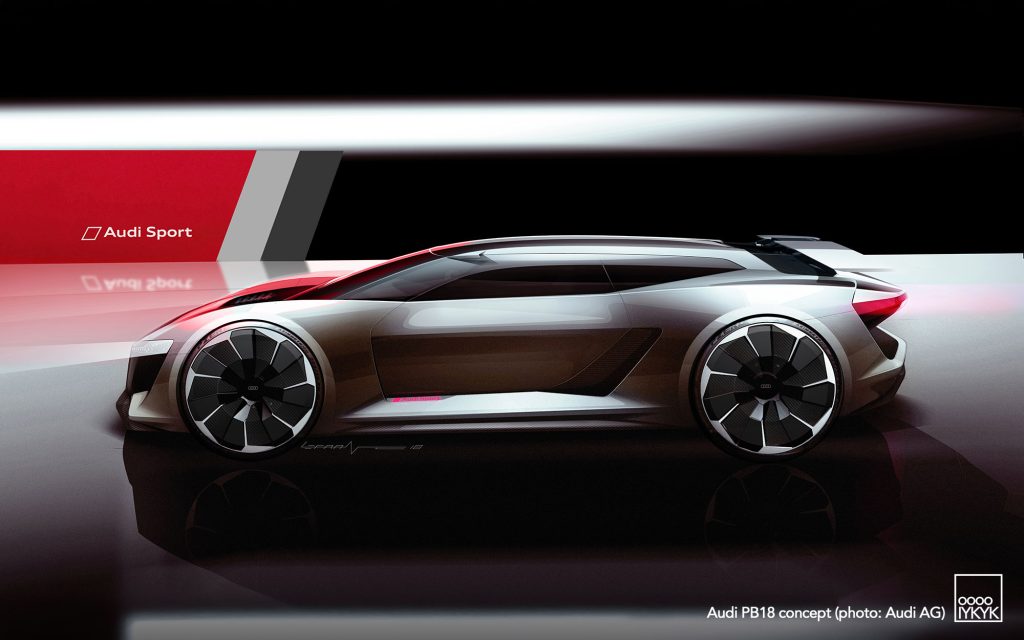
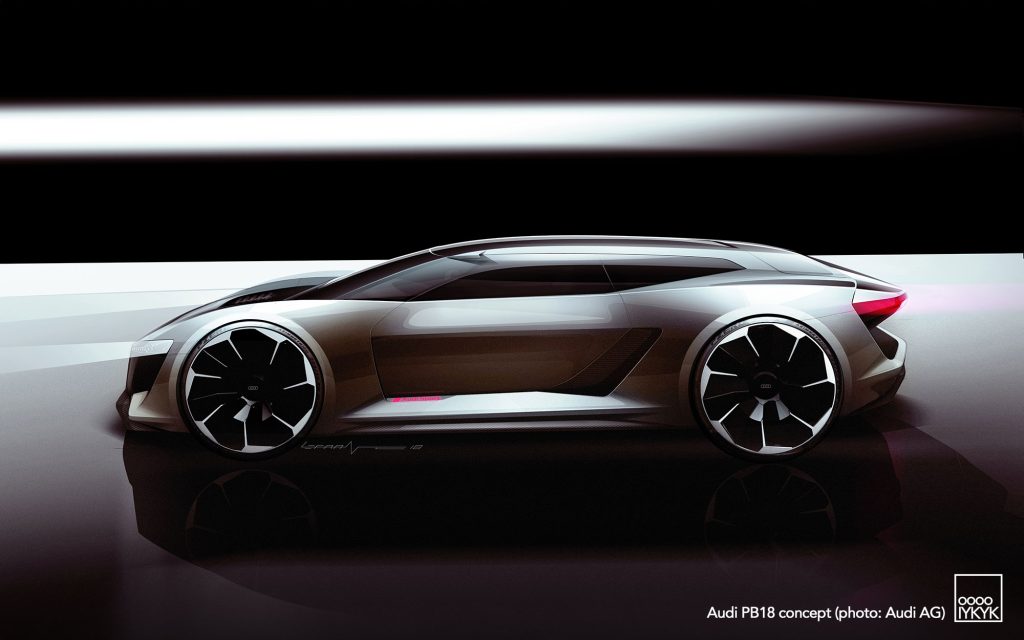
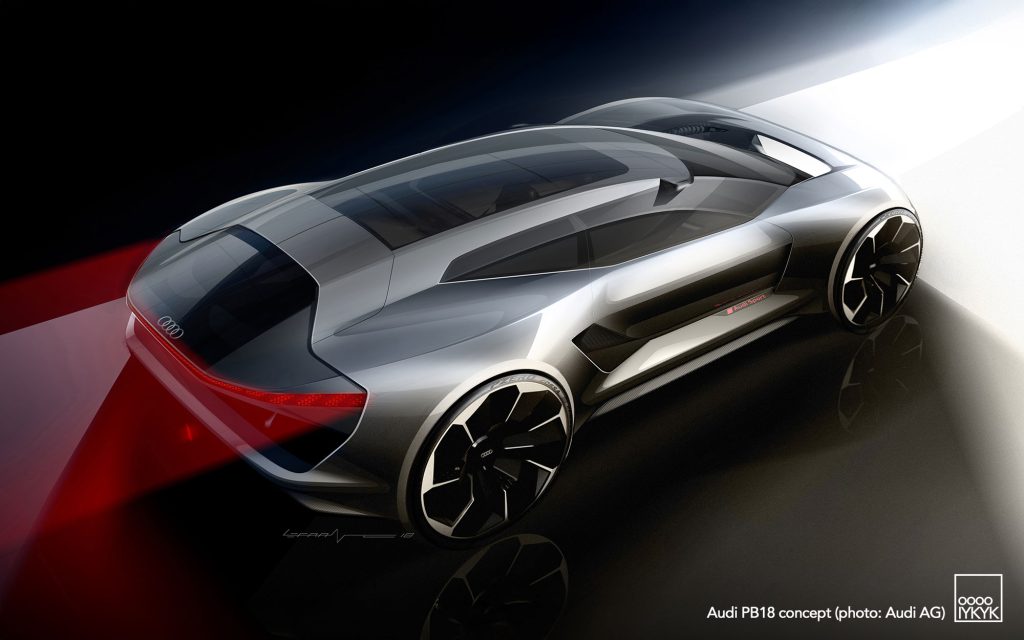
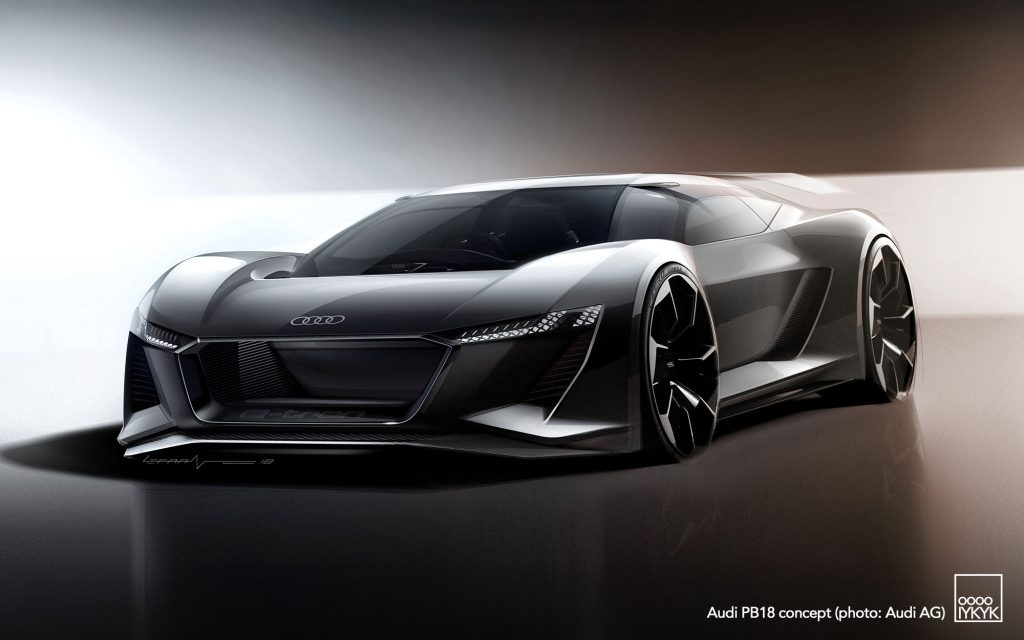
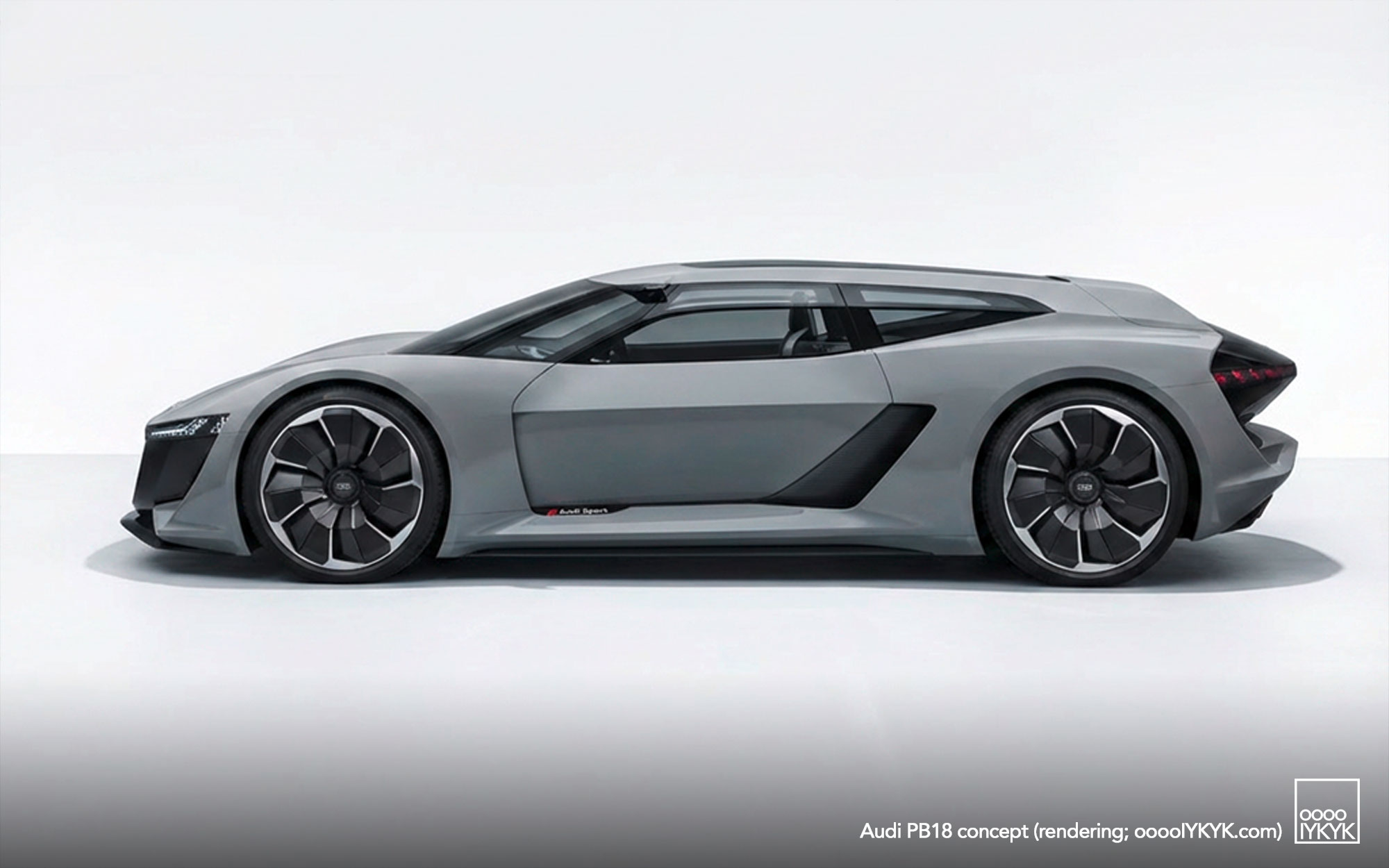
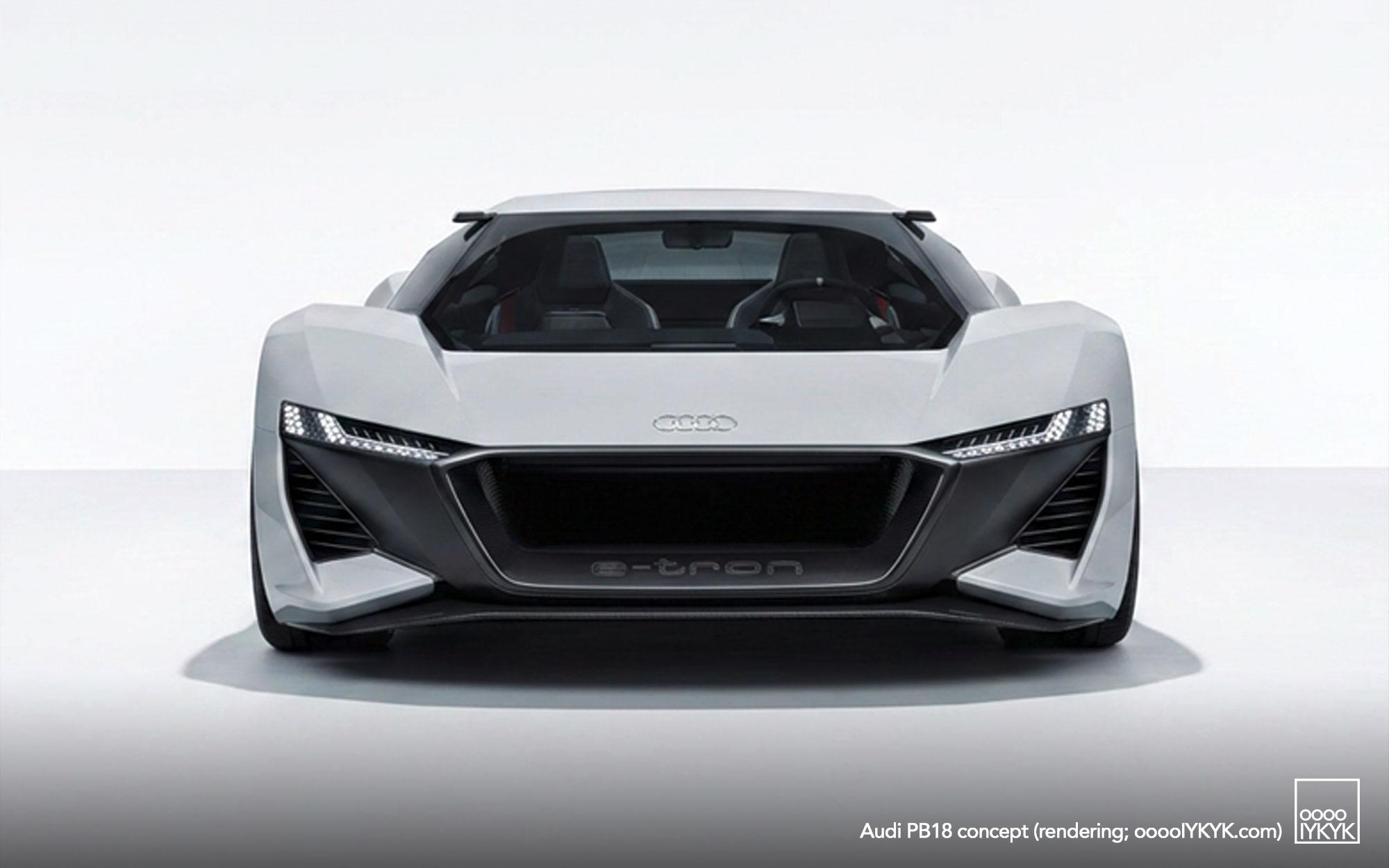
The PB 18 e-tron follows the proportions of a mid-engine sports car, with a forward-positioned cabin and mass concentrated toward the rear axle. Overall dimensions are approximately 4,530 mm (178.3 inches) long, 2,000 mm (78.7 inches) wide, and 1,150 mm (45.3 inches) tall, with a 2,700 mm (106.3 inches) wheelbase.
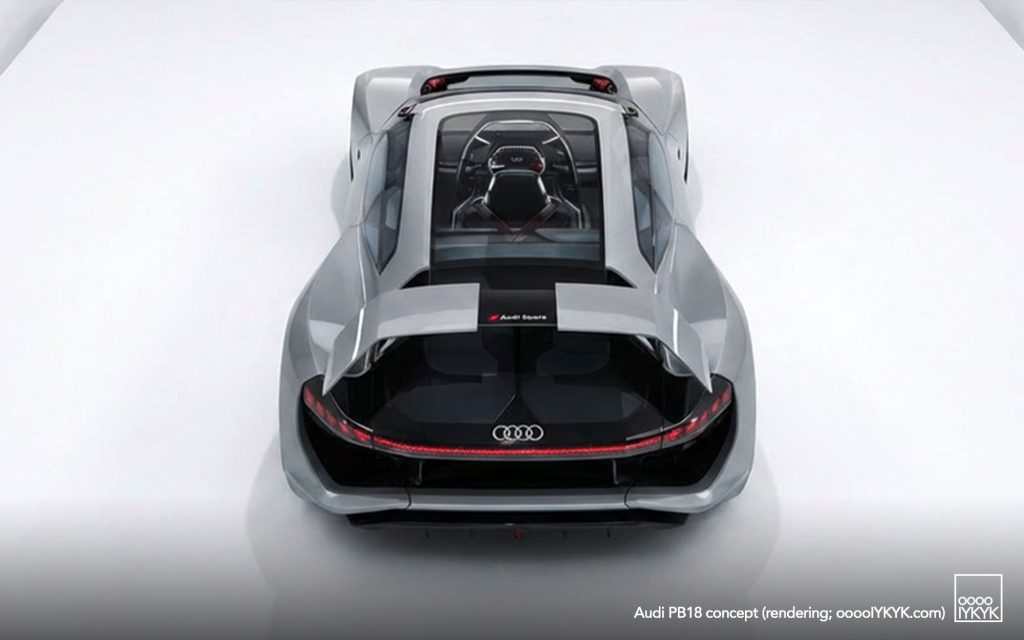
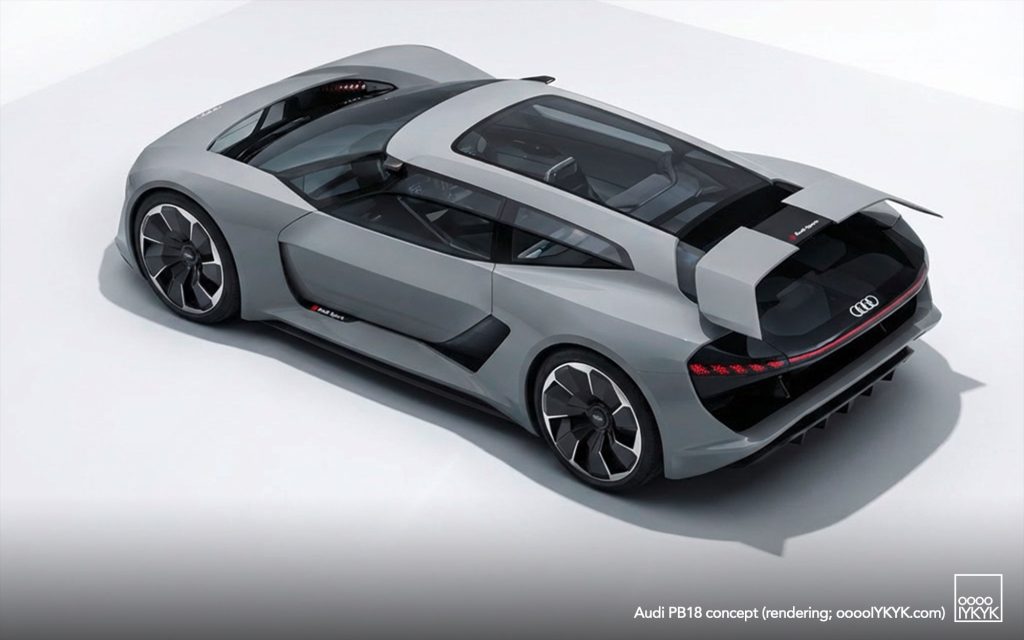
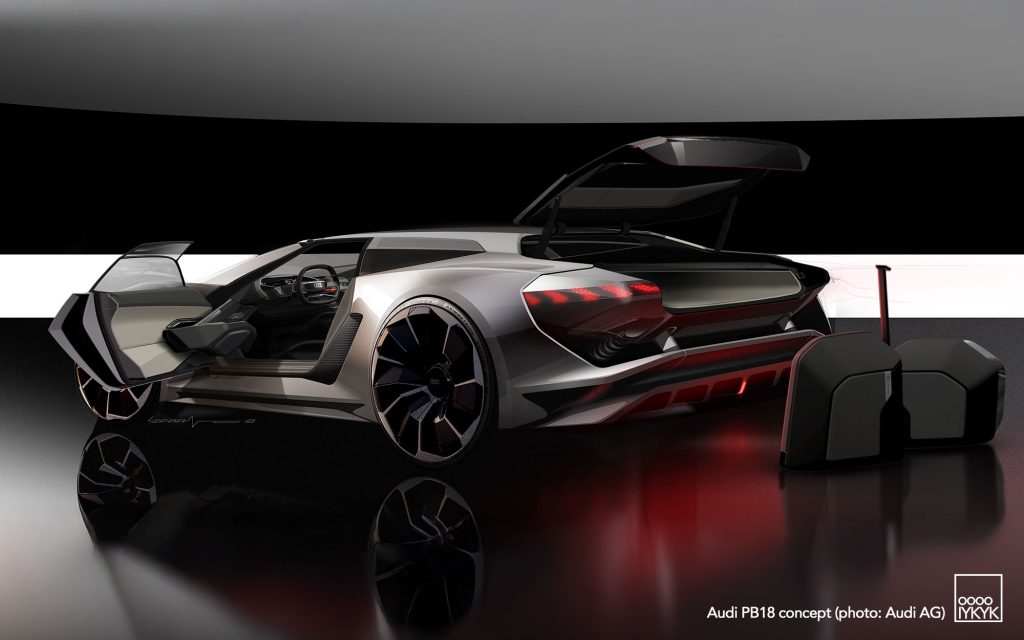
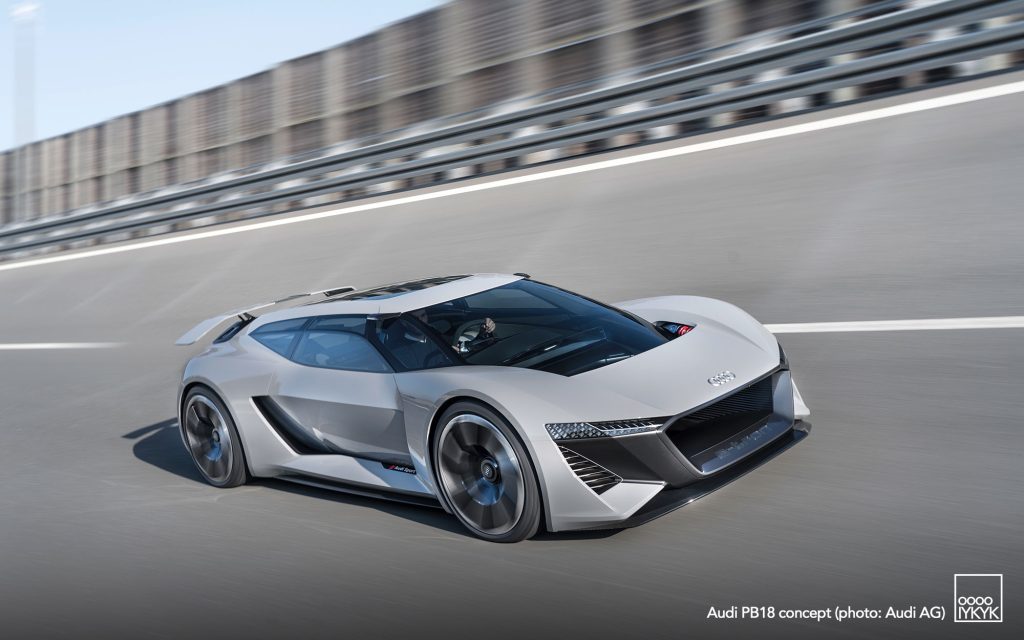
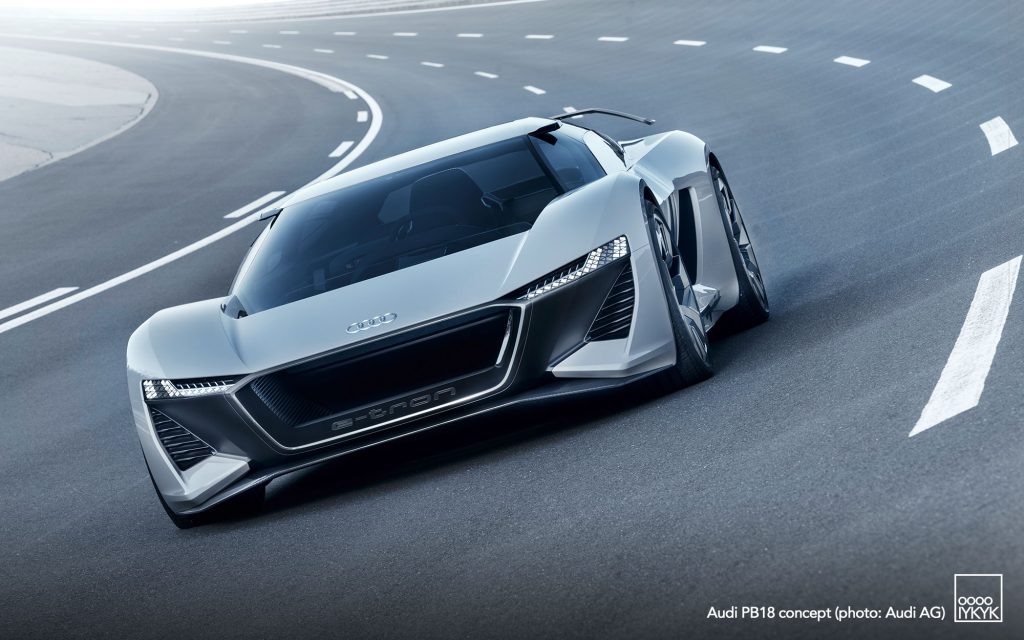
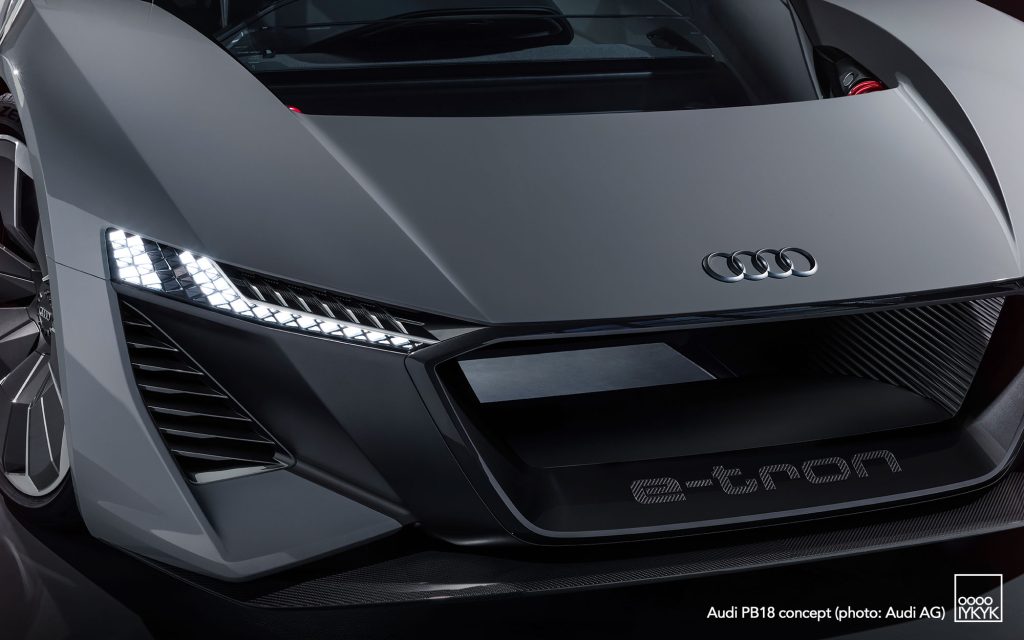
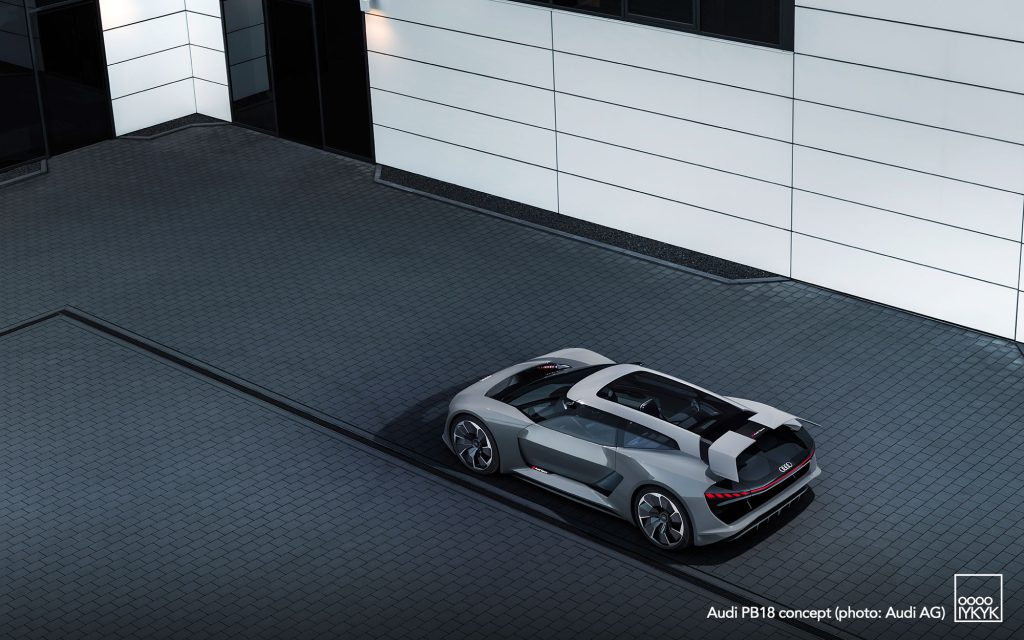
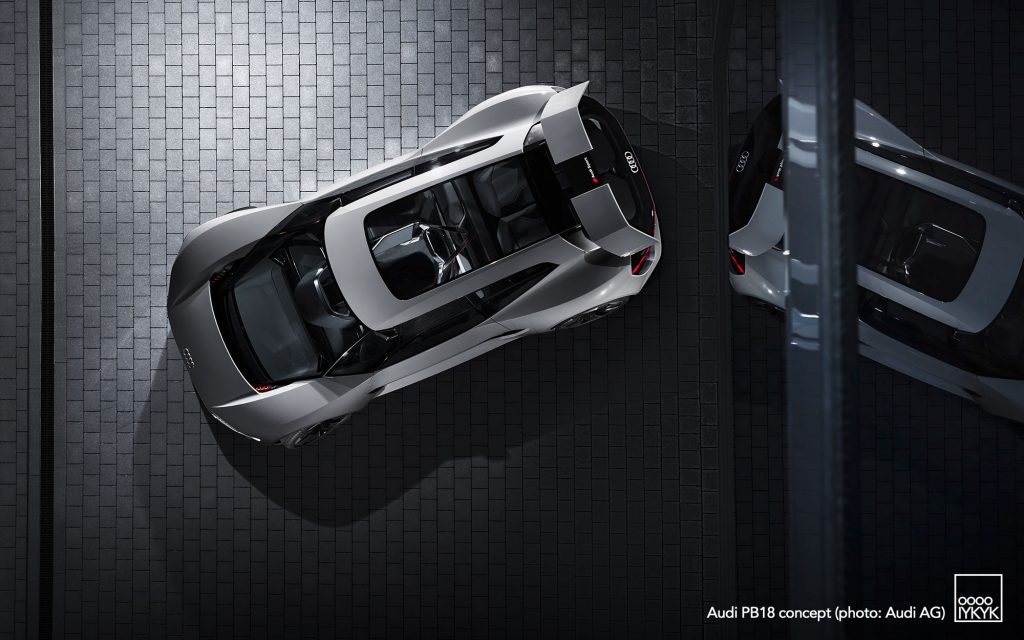
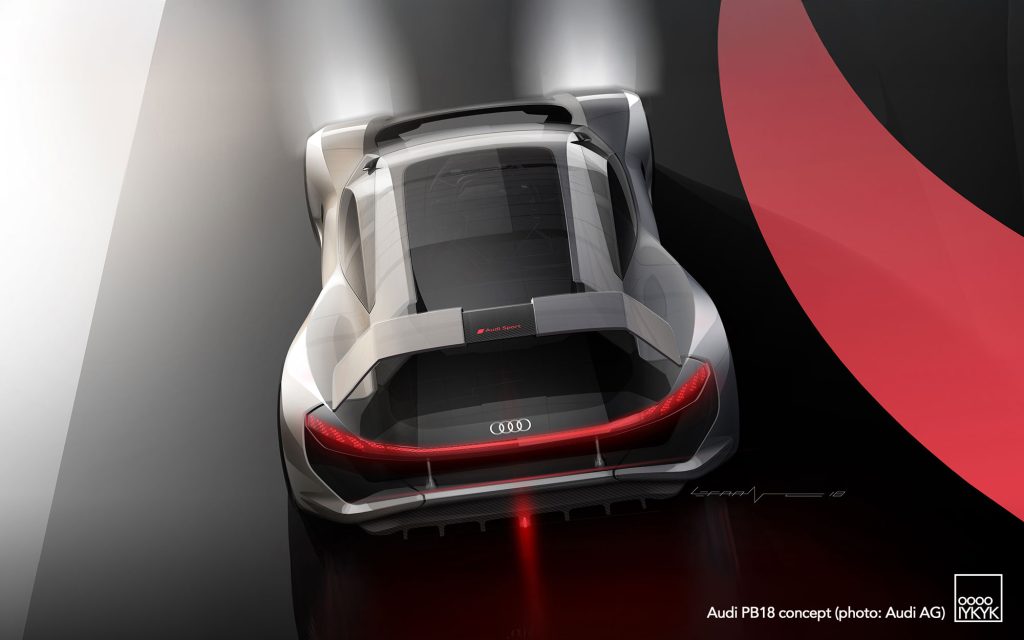
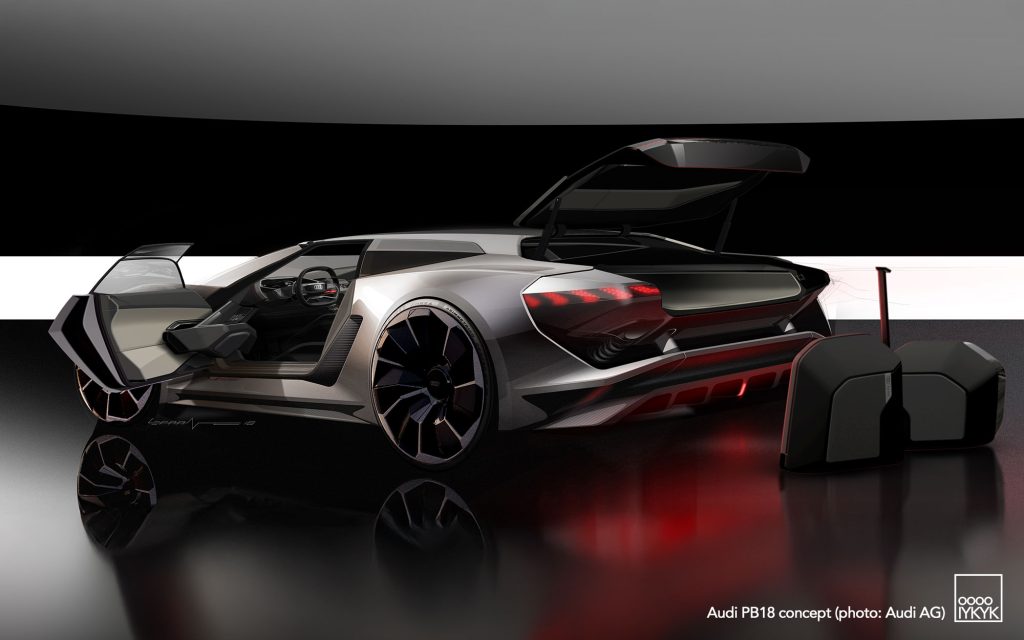
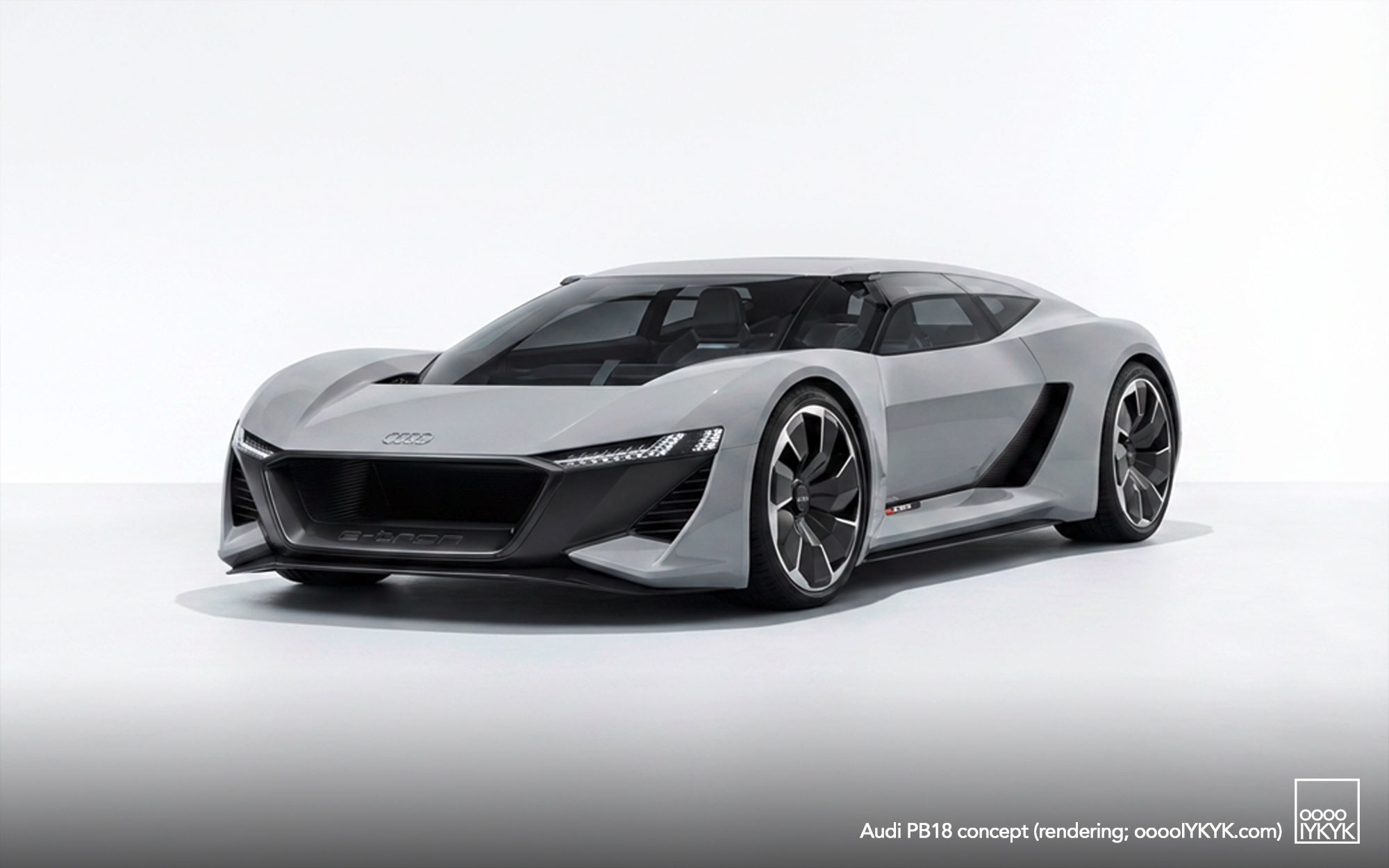
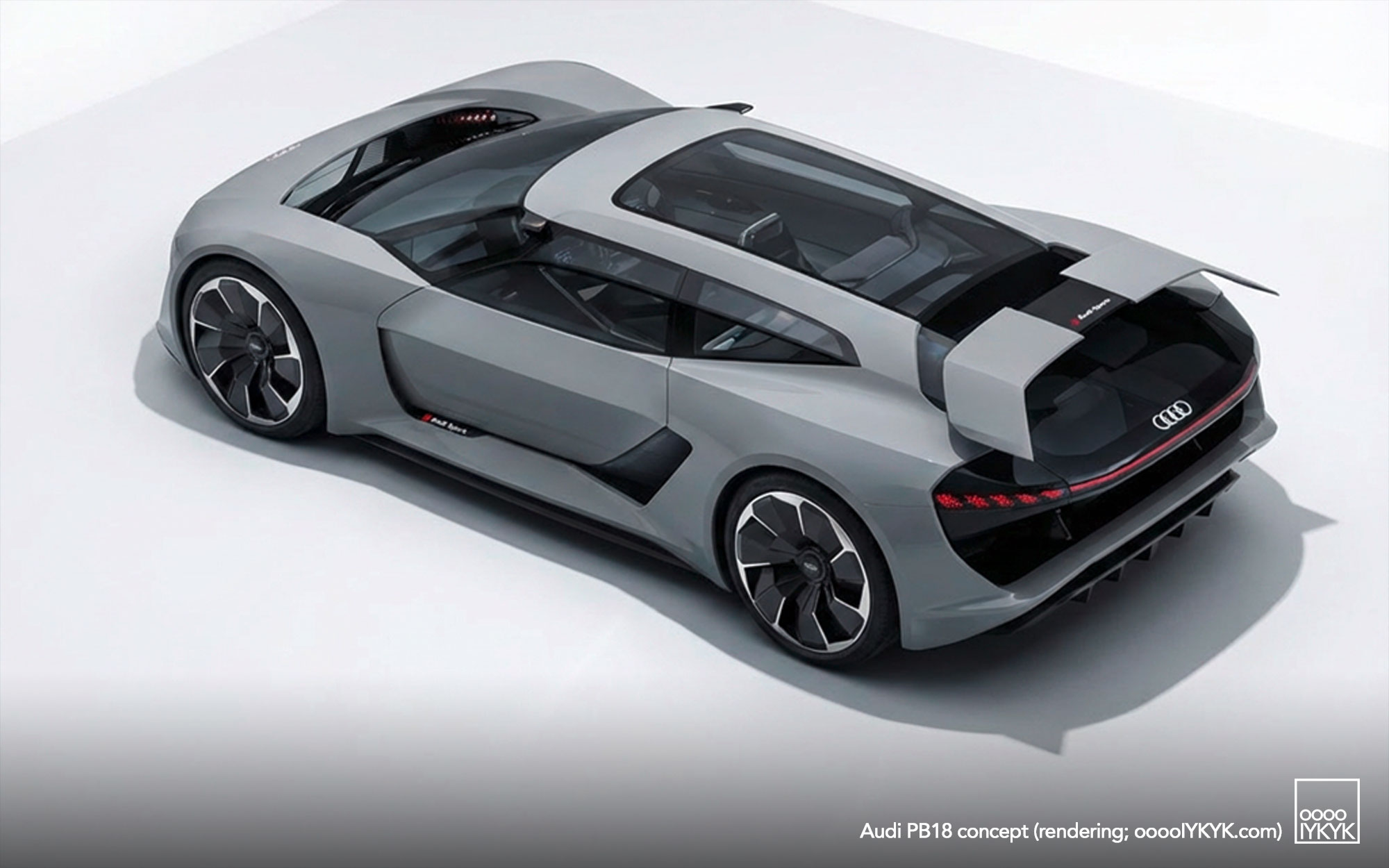
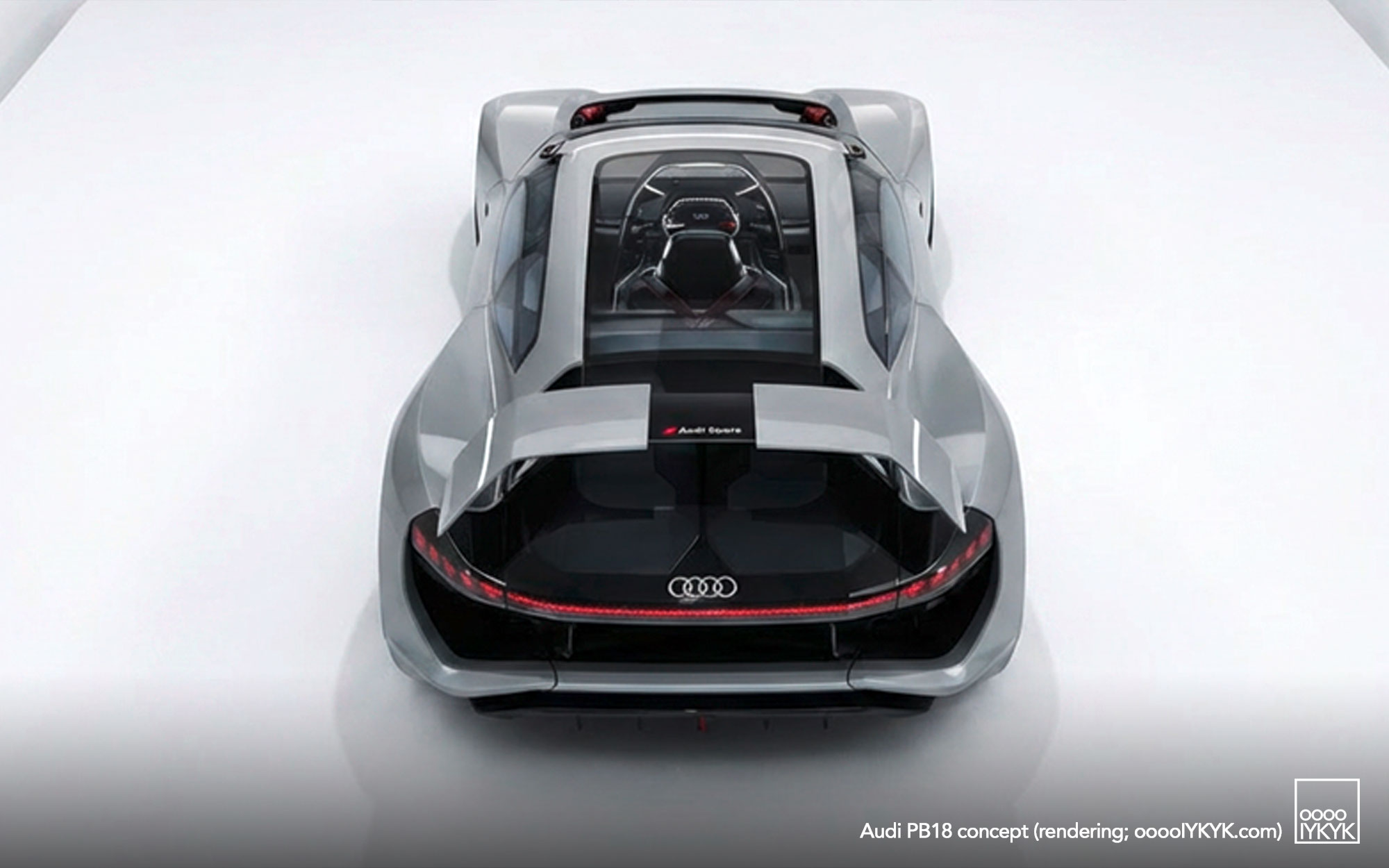
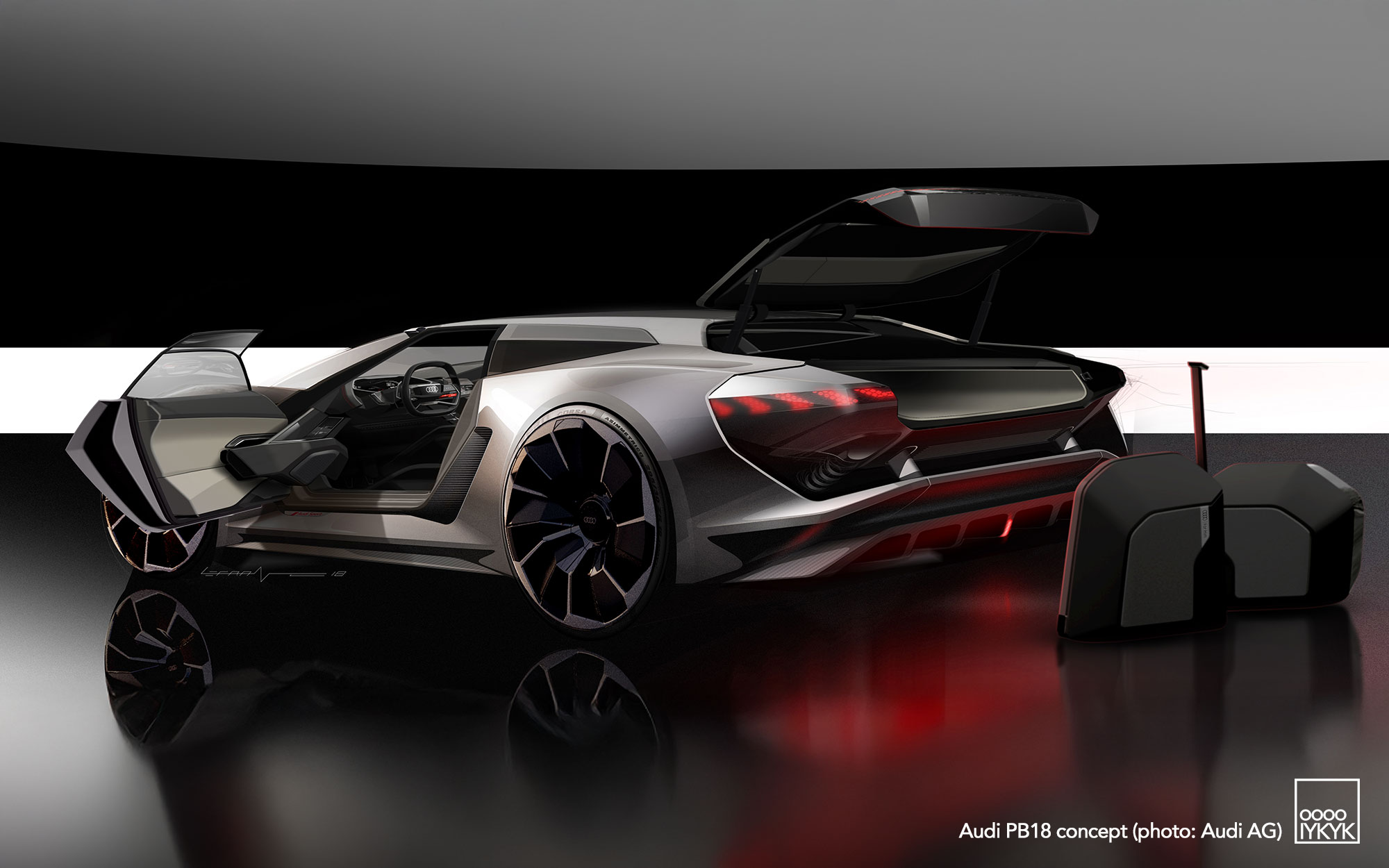
The exterior design emphasizes aerodynamic efficiency and cooling. The body features large air channels, a wide track, and extended wheel arches. A deep front hood incorporates airflow management elements similar to endurance racing prototypes. The rear includes a high-mounted diffuser and an extendable rear spoiler to increase downforce.
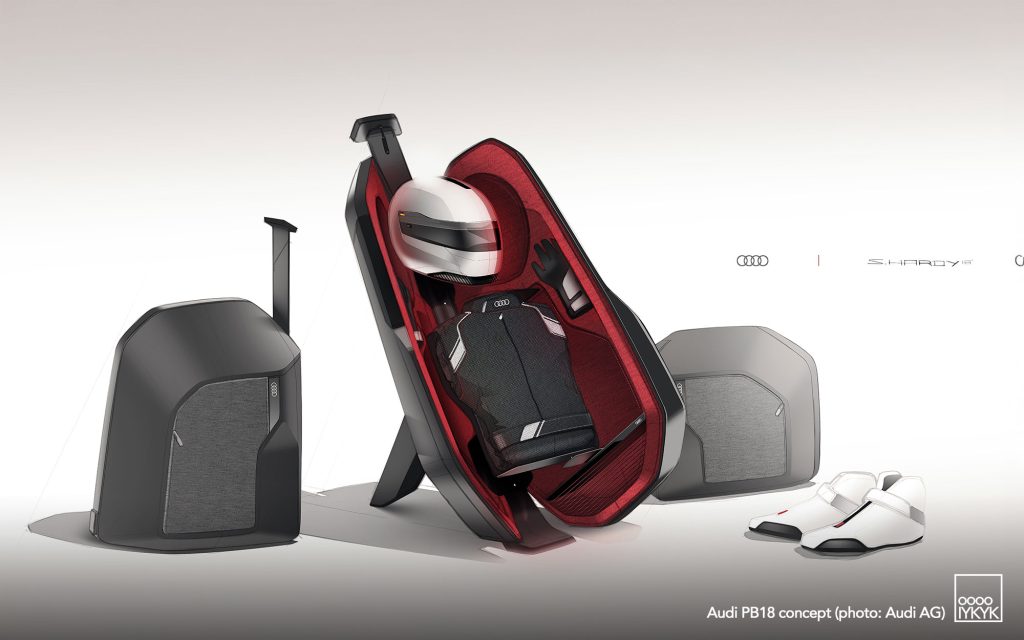
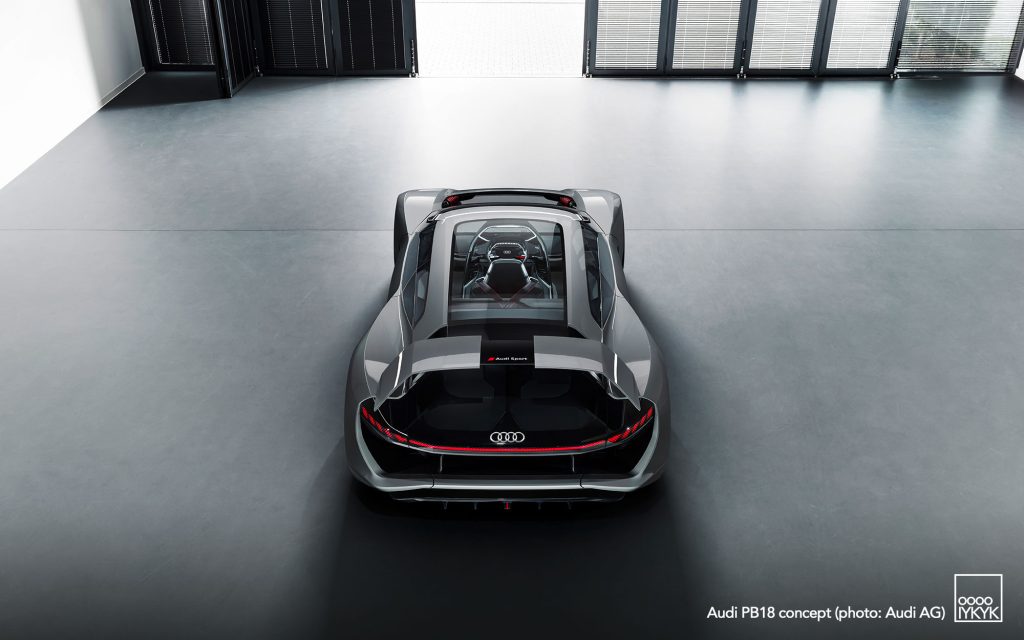
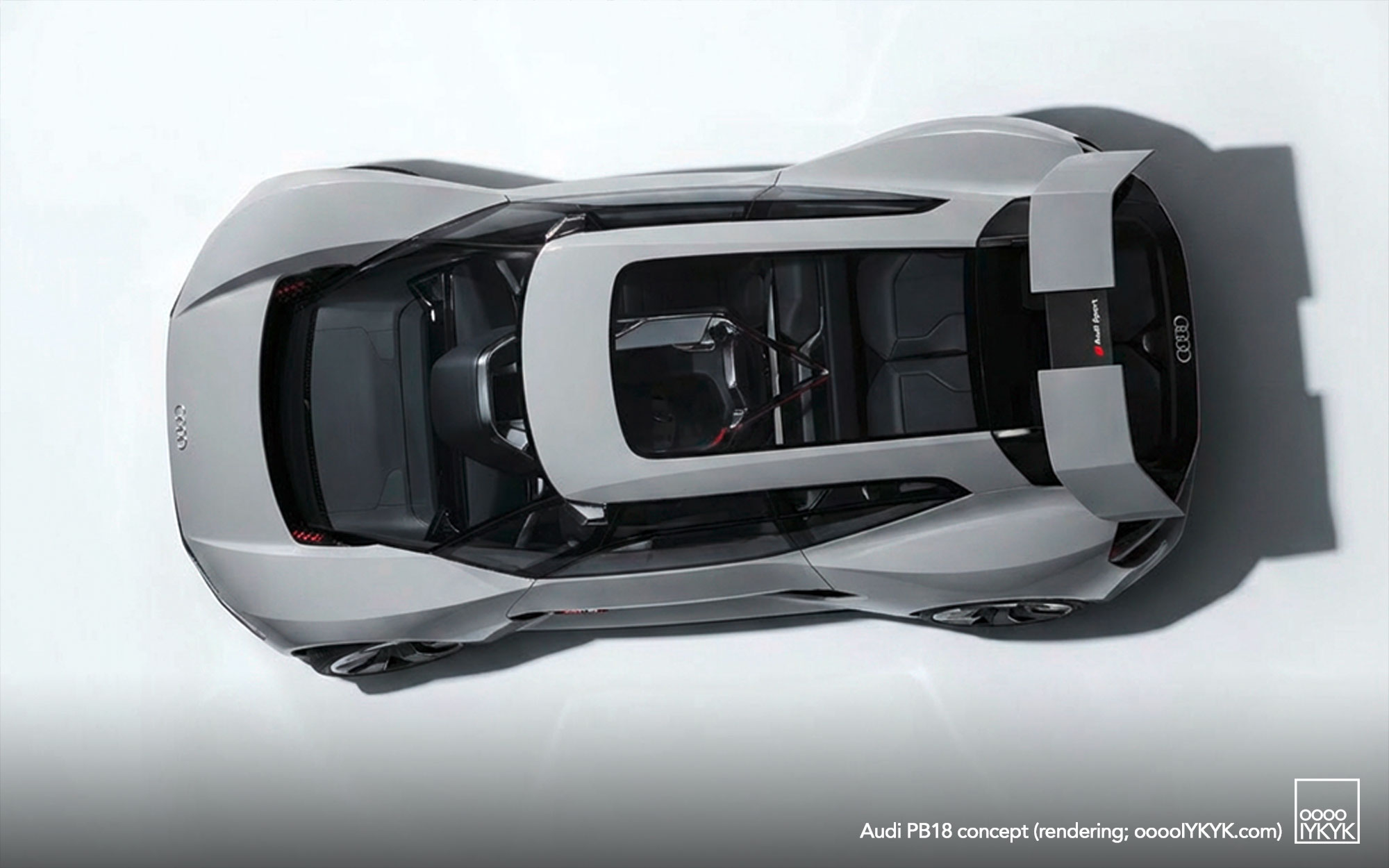
The overall silhouette incorporates elements of both a coupé and a shooting brake, with a long roofline and large rear hatch. Cargo capacity is approximately 470 liters (16.6 cu ft), unusually high for a vehicle in this class.
Lighting uses digital matrix LED and laser high-beam technology, derived in part from motorsport applications.
BODY AND STRUCTURE
The structure uses a multi-material approach combining aluminum, carbon fiber, and composite materials. This construction is designed to minimize weight while maintaining rigidity, with a target curb weight of under 1,550 kg (3,417 lb).
The battery pack is positioned behind the passenger cell and ahead of the rear axle, contributing to a low center of gravity and balanced weight distribution consistent with mid-engine sports car architecture.
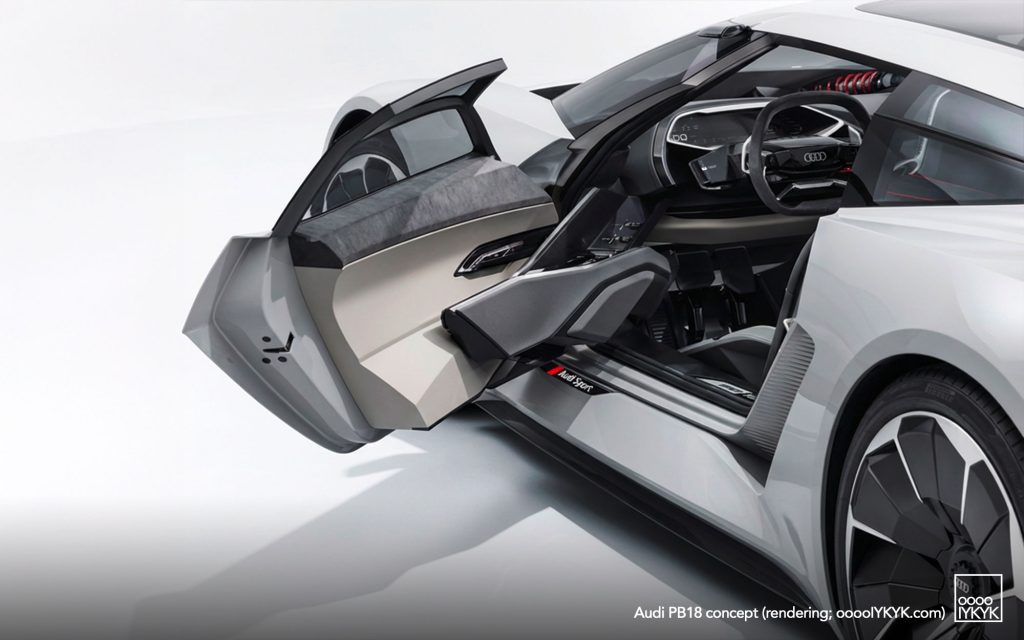
INTERIOR AND DRIVER POSITIONING
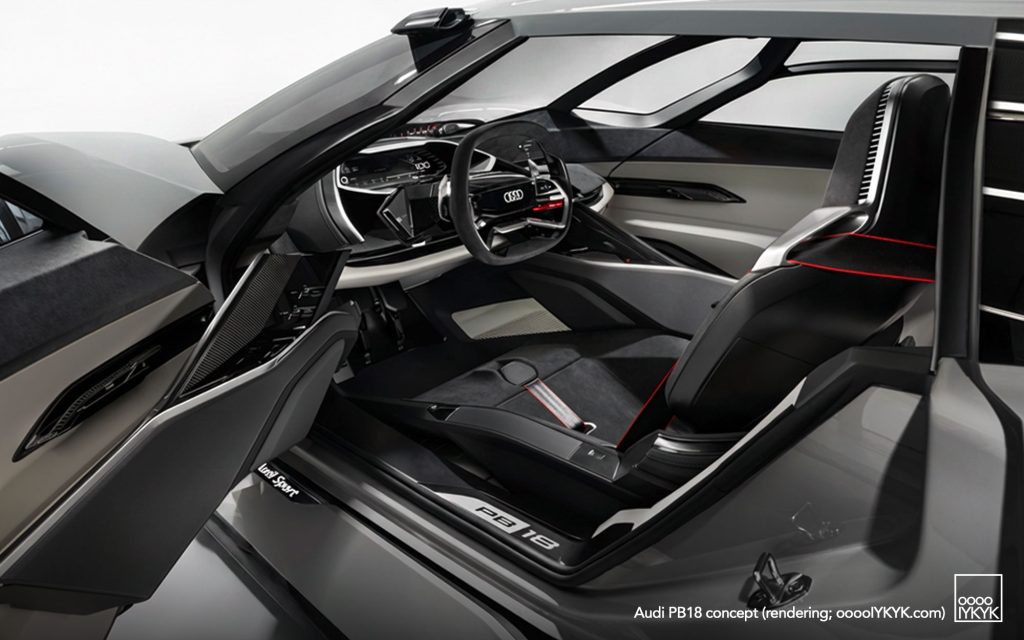
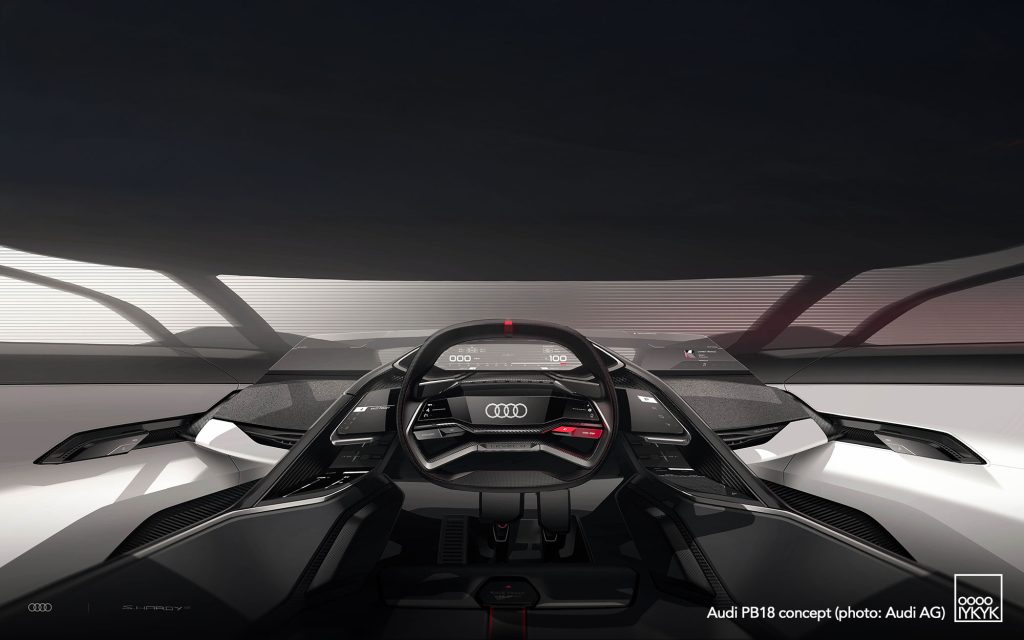
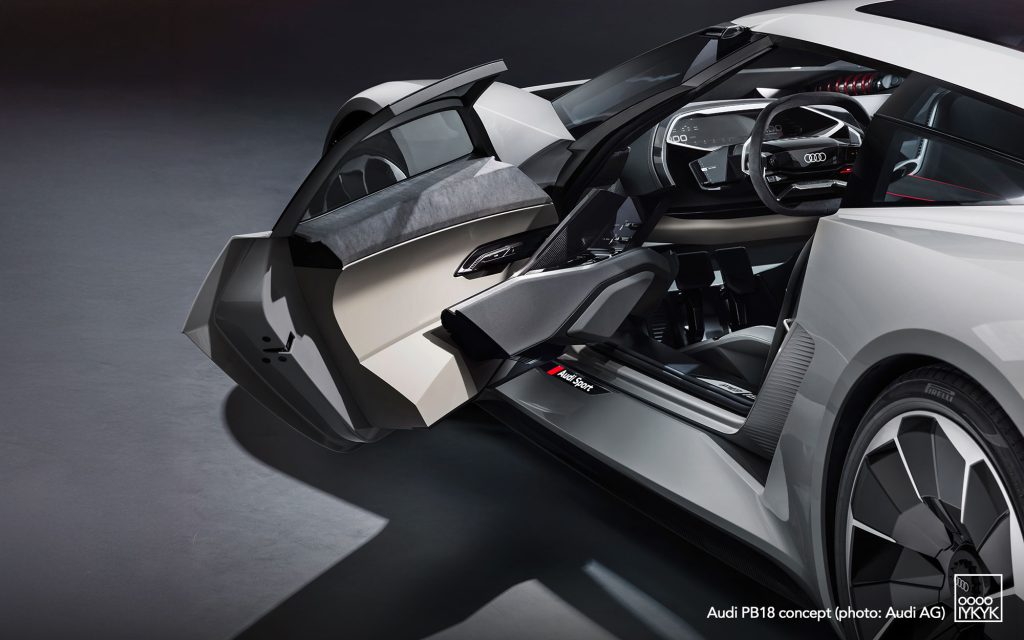
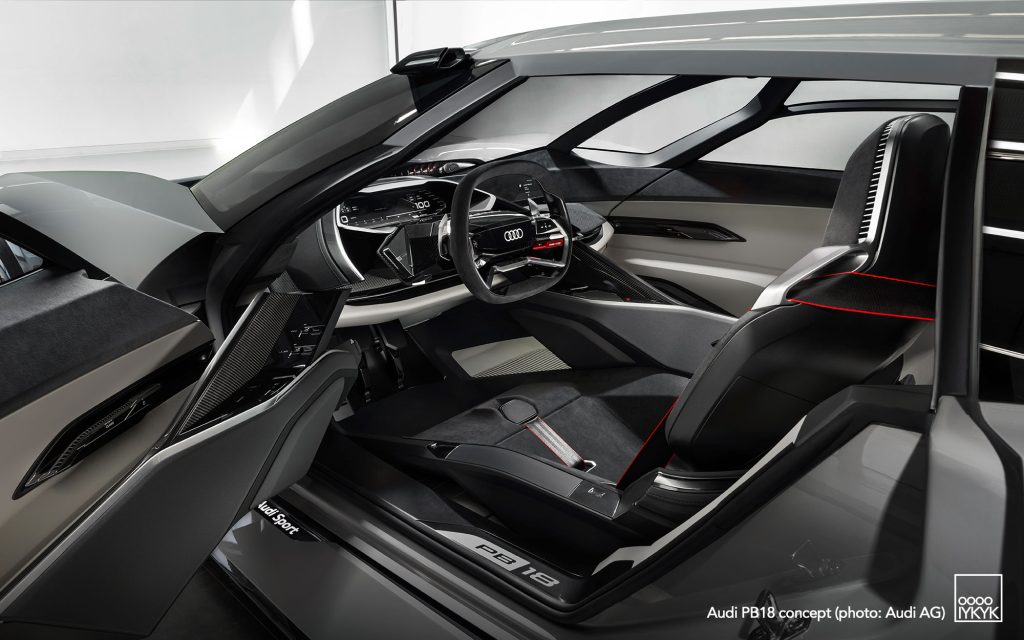
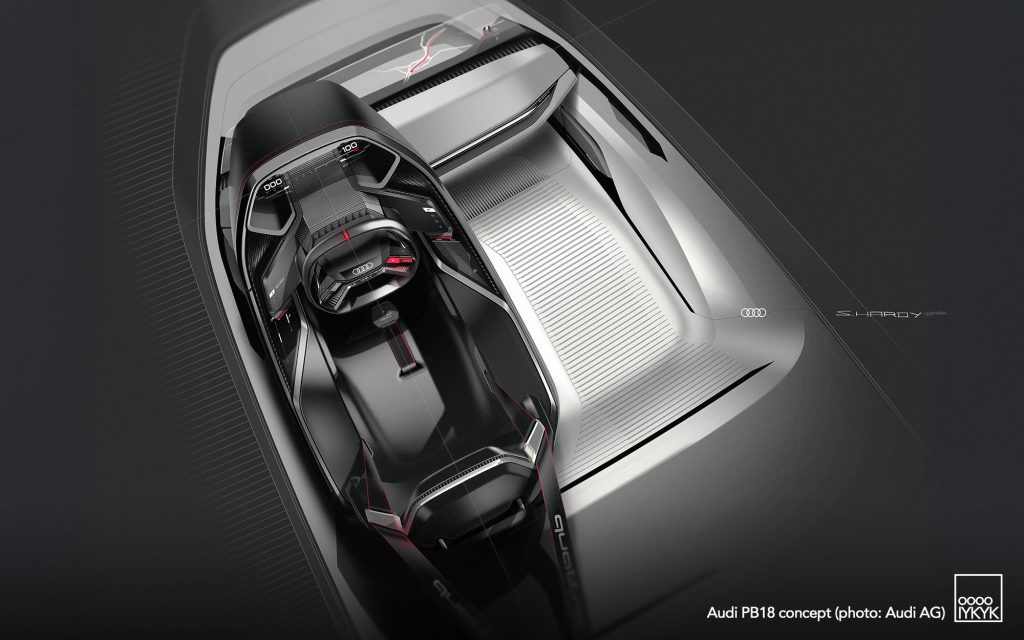
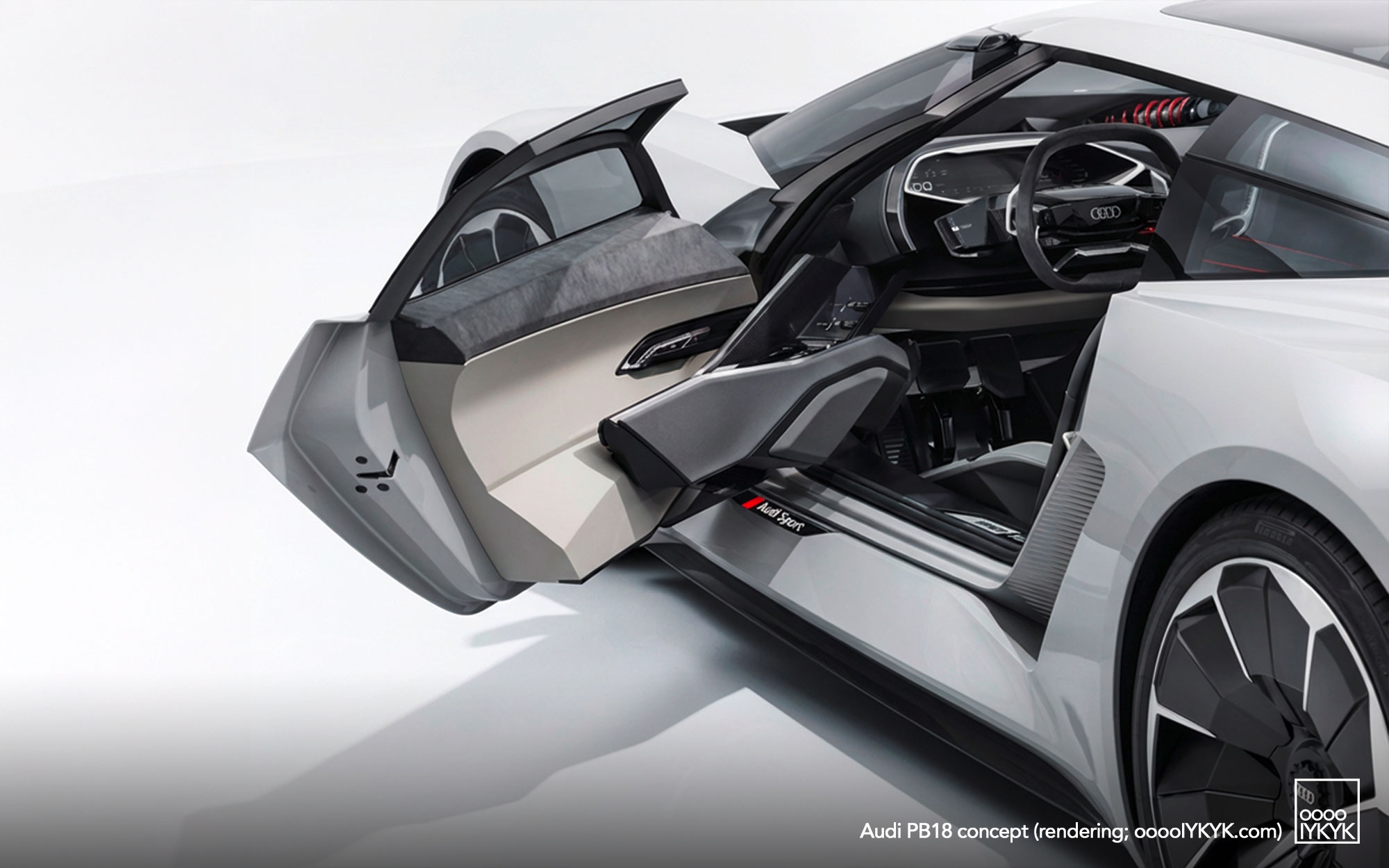
The interior is built around a movable monocoque cockpit. The driver’s seat, steering system, and pedals are integrated into a single unit that can slide laterally within the cabin.
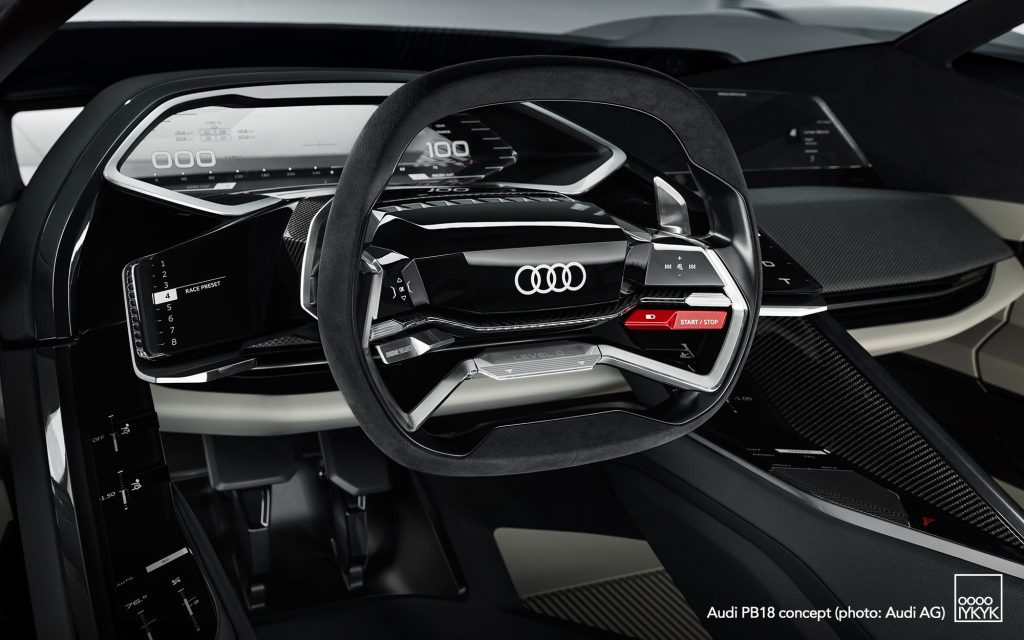
In track configuration, the cockpit is positioned centrally, creating a single-seat (monoposto) layout. In road configuration, it shifts to the left side, allowing space for a passenger seat. This system is enabled by steer-by-wire and brake-by-wire controls, eliminating the need for fixed mechanical connections.
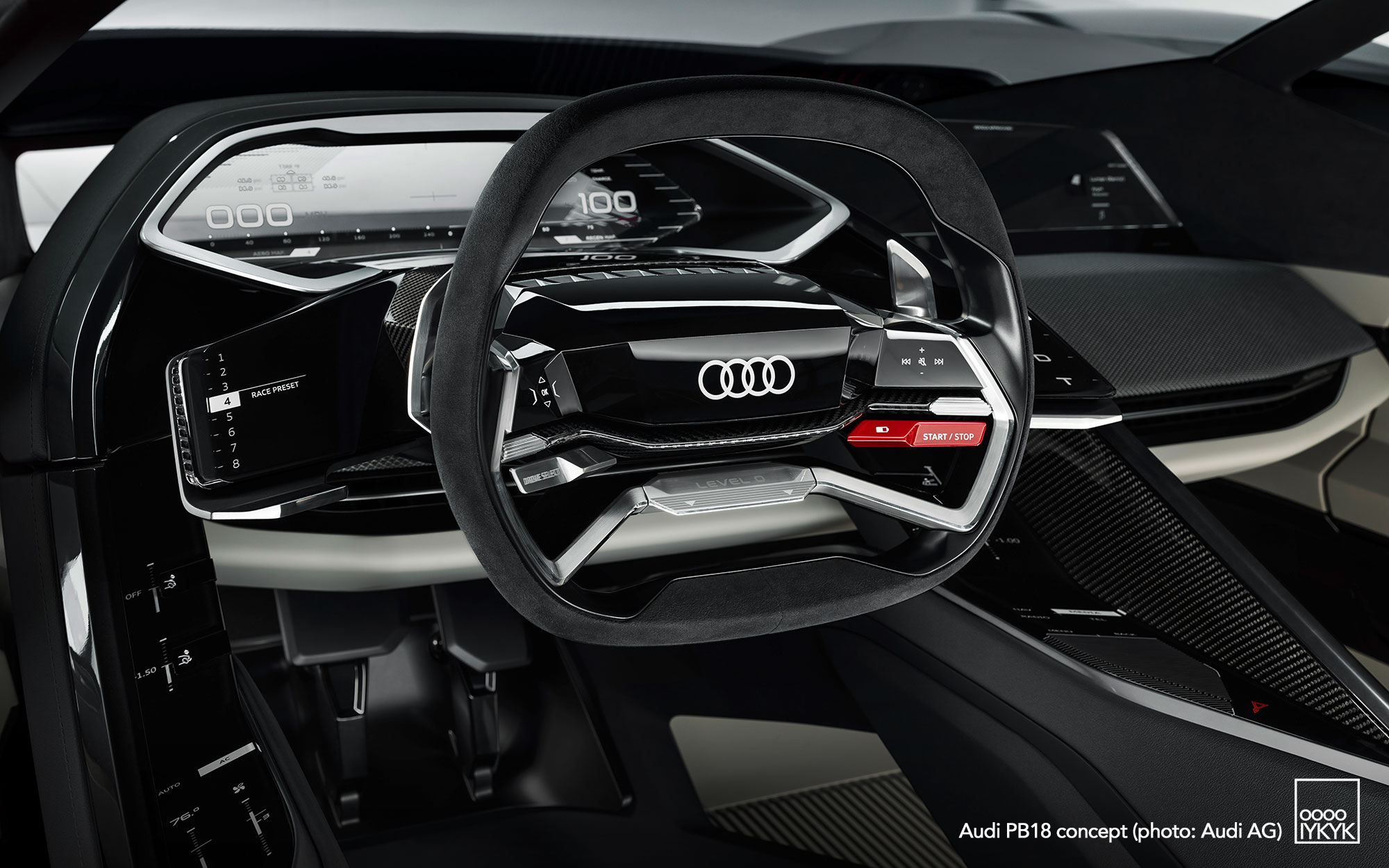
The cockpit display is fully digital and configurable, with different layouts for road and track use. A transparent OLED interface within the driver’s field of view can display navigation or racing line data.
POWERTRAIN AND PERFORMANCE
The PB 18 e-tron uses three electric motors: one on the front axle and two on the rear axle. Combined output is rated at 500 kW (671 hp), with a temporary boost function increasing output to 570 kW (764 hp).
Maximum torque is approximately 830 Nm (612 lb-ft). Acceleration from 0 to 100 km/h (62 mph) is estimated at just over 2 seconds, placing it in the range of contemporary LMP1 race cars.
Power is distributed through an electric quattro system, with independent control of the rear motors enabling precise torque vectoring. Regenerative braking handles most deceleration under normal conditions, with hydraulic brakes used under heavy load.
The solid-state battery has a capacity of 95 kWh and is designed for a range of over 500 km (311 miles) under WLTP conditions. The system supports 800-volt charging, enabling a full recharge in approximately 15 minutes under optimal conditions.
CHASSIS AND SUSPENSION
The suspension system uses double wishbones front and rear, with a push-rod setup at the front axle and a pull-rod setup at the rear. This configuration is directly influenced by endurance racing design, particularly the Audi R18 e-tron quattro.
Adaptive magnetic dampers are fitted, allowing adjustment of suspension characteristics based on driving conditions. The system is tuned for both track performance and road usability.
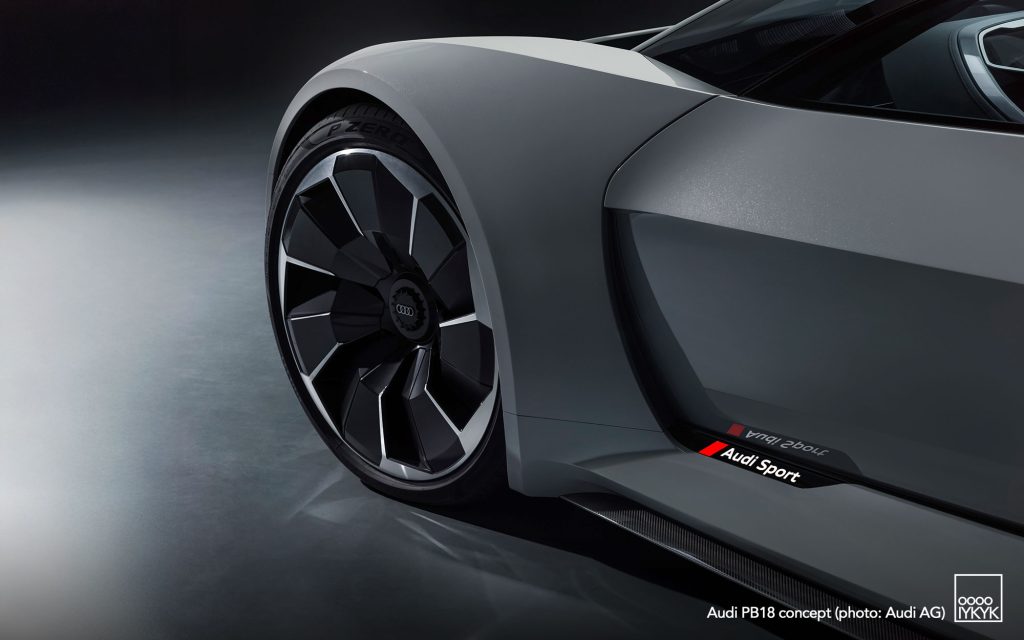
The car rides on 22-inch wheels with staggered tire sizes (275 front, 315 rear). Braking is handled by large carbon discs, supported by the regenerative system.
TECHNOLOGY
The PB18 e-tron incorporates multiple by-wire systems, including steering, braking, and gear selection. This allows flexible packaging and enables the movable cockpit concept.
Charging can be performed via high-voltage DC fast charging or inductive wireless charging using Audi Wireless Charging (AWC).
The concept also reflects Audi’s broader development of electric vehicle architecture, including lessons from earlier projects such as the Audi duo and later e-tron production models.
LEGACY
The PB 18 e-tron remained a one-off concept and was not developed for production. It served primarily as a technical and design study focused on high-performance electric mobility.
The concept is part of Audi’s late-2010s “AI” concept series, which explored different use cases for future mobility. Unlike other concepts in the series that emphasized autonomous driving, the PB 18 e-tron focused exclusively on driver engagement.
Its packaging, electric performance architecture, and driver-centric design approach continue to inform Audi’s exploration of future electric sports cars.
PHOTO GALLERY