
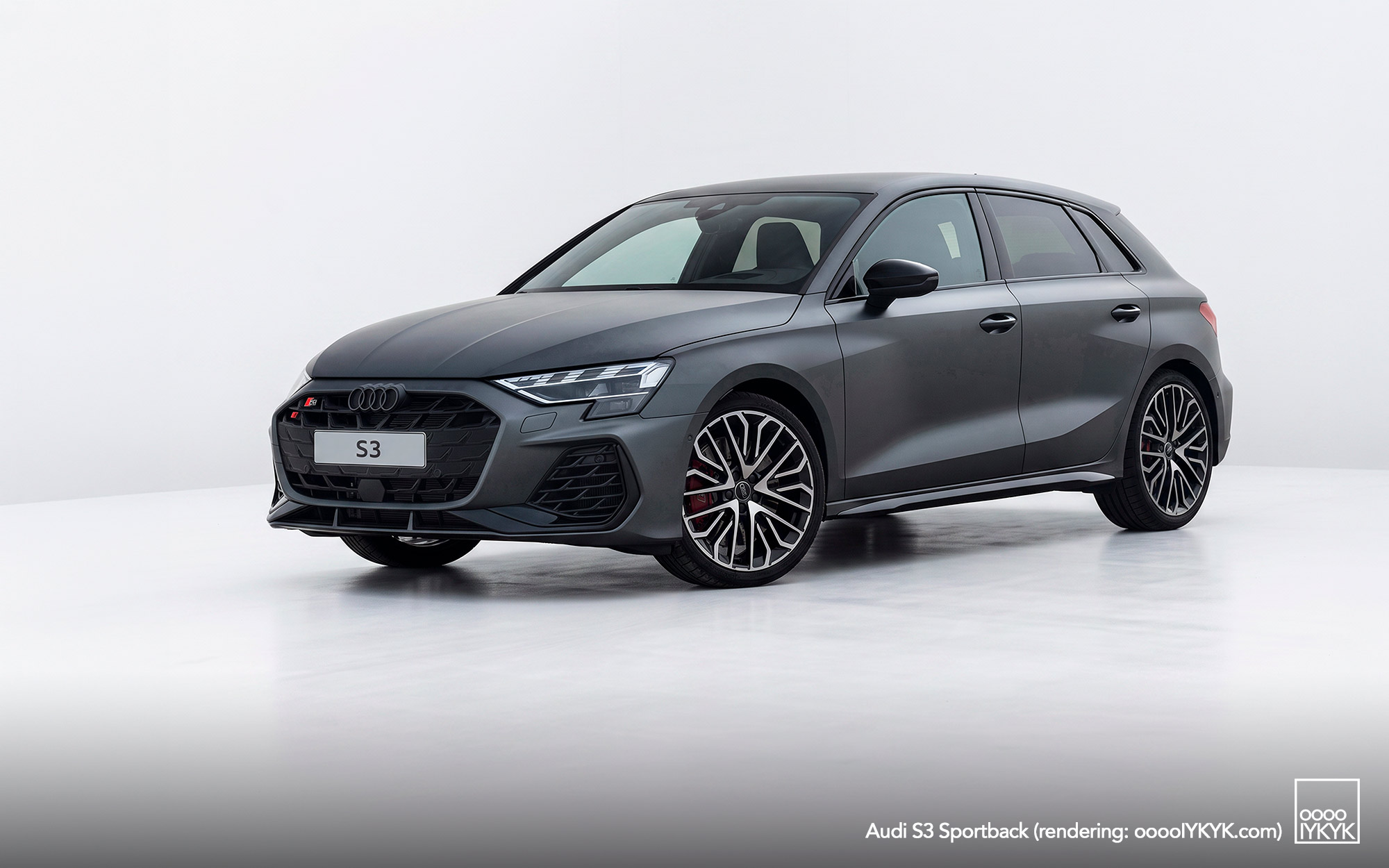

WHAT: S3 Sportback
ERA: Audi Modern Era
MODEL FAMILY: S3
MARKET / ZONE: EU
MODEL YEARS: 2027–Current
PRODUCTION SPAN: 2026–
NUMBER PRODUCED: N/A
GENERATION: Fourth-generation Audi S3 (8Y)
INTERNAL DESIGNATION: 8Y PA2
PRODUCT IMPROVEMENT: PA2 (Second Produktaufwertung)
COMMON ENTHUSIAST DESIGNATION: Second facelift of the 8Y generation
CHASSIS / MATRIX: MQB Evo
INTRODUCTION
Introduced during 2026, the Audi S3 Sportback (8Y PA2) represents the second Produktaufwertung(product improvement) of Audi’s compact performance hatchback. Building upon the fourth-generation S3, the PA2 update combined Audi’s latest digital cockpit architecture with revisions to the vehicle’s chassis, powertrain calibration, and dynamic systems, further refining the balance between everyday usability and high-performance capability that has defined the S3 since its introduction.
Alongside Audi’s panoramic display architecture, expanded Audi connect services, and revised driver assistance technologies, the updated S3 benefited from enhancements to its quattro drivetrain, torque distribution strategy, and chassis tuning. These developments reinforced the S3’s position within the A3 family as the performance-focused derivative designed for everyday driving, while remaining distinct from the more track-oriented Audi RS 3.
OVERVIEW
The Audi S3 Sportback occupies the middle ground between the conventional A3 Sportback and the flagship RS 3 Sportback. Combining increased engine performance, quattro all-wheel drive, sport suspension, and model-specific chassis tuning, the S3 was developed to deliver enhanced dynamic capability without compromising the refinement and practicality expected of Audi’s compact hatchback.
The PA2 update continued this philosophy through targeted engineering revisions rather than fundamental redesign. Audi introduced its panoramic display cockpit, expanded connected services, configurable digital lighting signatures, and revised driver assistance technologies while simultaneously refining the vehicle’s dynamic systems. Chassis calibration, drivetrain software, and electronic control systems were updated to improve responsiveness, agility, and driver confidence.
Rather than pursuing maximum performance, the S3 continues Audi’s long-established approach of integrating performance into a versatile everyday vehicle. The result is a compact hatchback capable of combining comfort, practicality, and year-round usability with performance characteristics that distinguish it from the standard A3 while complementing the more focused character of the RS 3.
HISTORY
The Audi S3 traces its origins to the first-generation A3, where it established a new category of compact premium performance hatchback by combining a turbocharged engine with quattro all-wheel drive. Since its introduction in 1999, successive generations have refined this formula, positioning the S3 between the conventional A3 and Audi Sport’s RS models.
Like the wider fourth-generation A3 family, the S3 Sportback is based upon Volkswagen Group’s MQB Evo matrix architecture. The platform provides the structural foundation for the model while supporting the more powerful drivetrain, quattro all-wheel drive system, sport suspension, and performance-oriented chassis calibration that distinguish the S3 from its A3 counterparts.
The second Produktaufwertung (PA2), introduced during 2026, represented the most comprehensive technological revision of the fourth-generation S3. In addition to adopting Audi’s panoramic display architecture and expanded digital technologies, the updated model received revisions to its dynamic systems intended to further enhance agility, traction, and driver engagement.
Throughout the Audi Archives, Produktaufwertung is used in preference to the enthusiast “.5” designation because it reflects Audi’s documented product development terminology while accommodating multiple product improvements within a single generation.
SIGNIFICANCE
The Audi S3 Sportback (8Y PA2) continues a performance philosophy that has defined the S3 model line for more than a quarter century. Rather than pursuing outright performance, the S3 has consistently emphasized the integration of powerful turbocharged engines, quattro all-wheel drive, and sophisticated chassis engineering within a practical compact hatchback suitable for everyday use.
The PA2 update illustrates Audi’s evolving approach to performance vehicle development during the mid-2020s. Mechanical improvements were accompanied by advances in software, digital interfaces, and electronic chassis management, reflecting the growing influence of integrated control systems on modern vehicle dynamics.
Within the history of the A3 family, the S3 represents the bridge between Audi’s mainstream passenger vehicles and the more specialized products developed by Audi Sport. It demonstrates how advances in drivetrain technology, chassis engineering, and digital vehicle control can enhance performance while preserving comfort, refinement, and everyday usability.
DESIGN
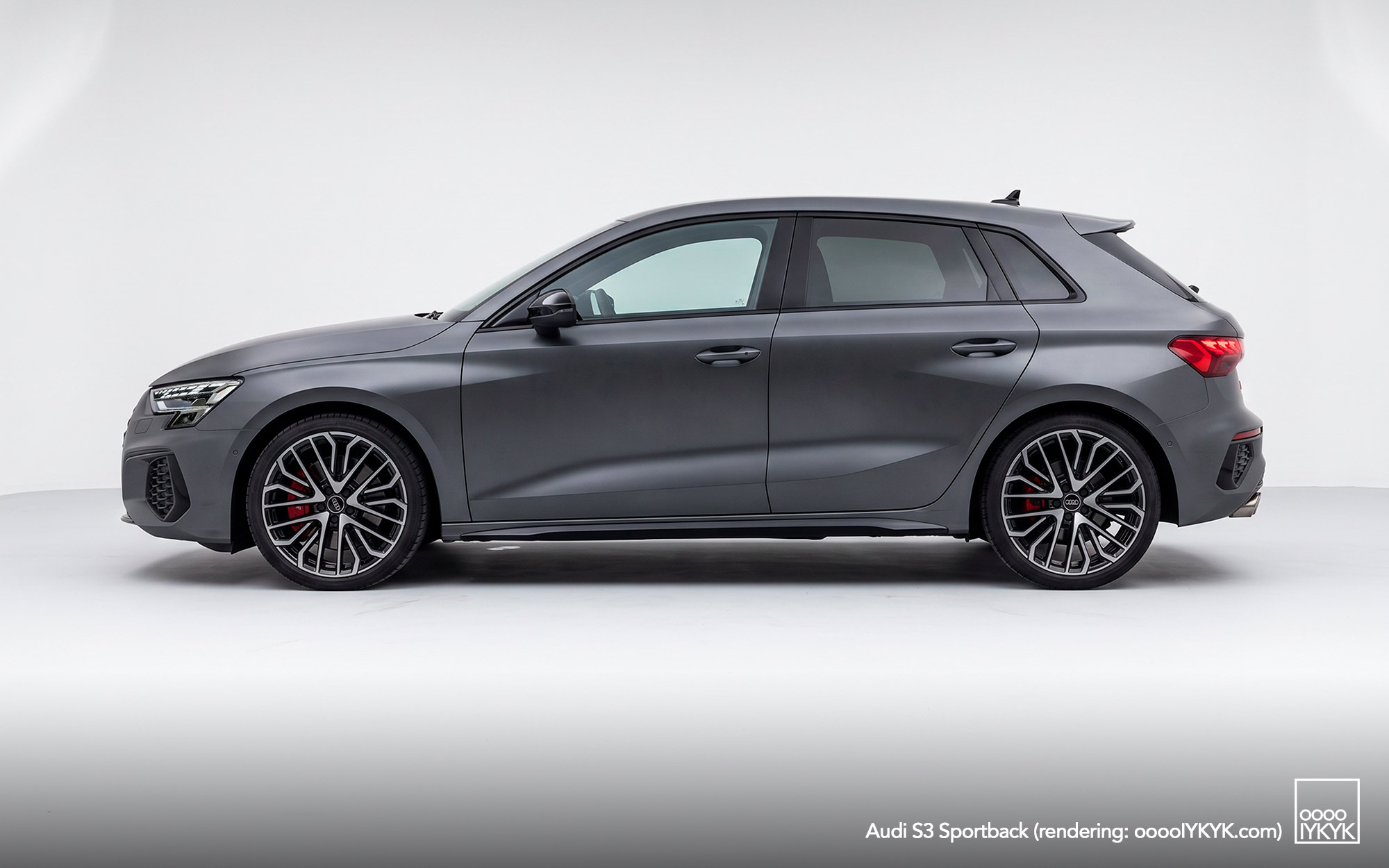
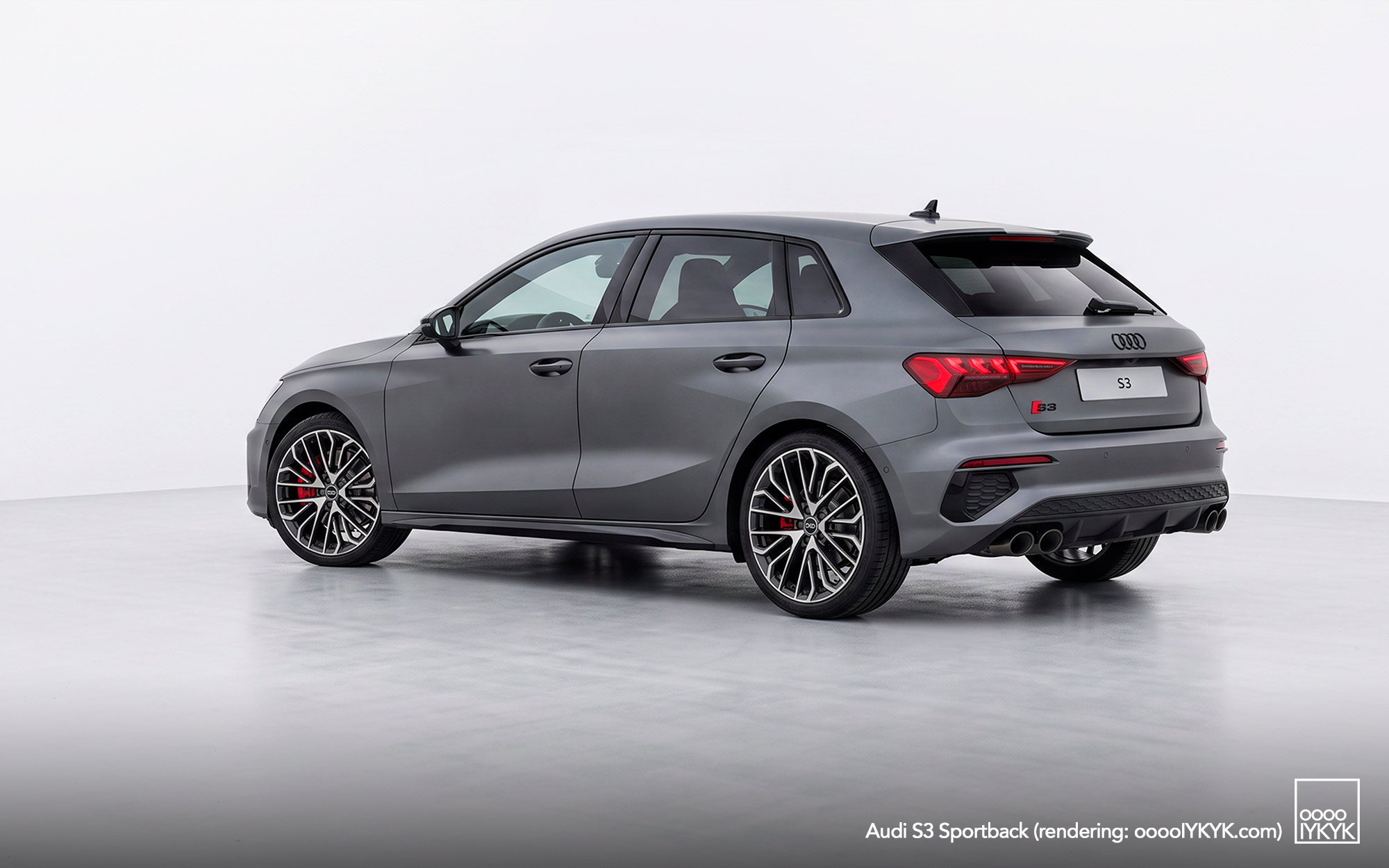
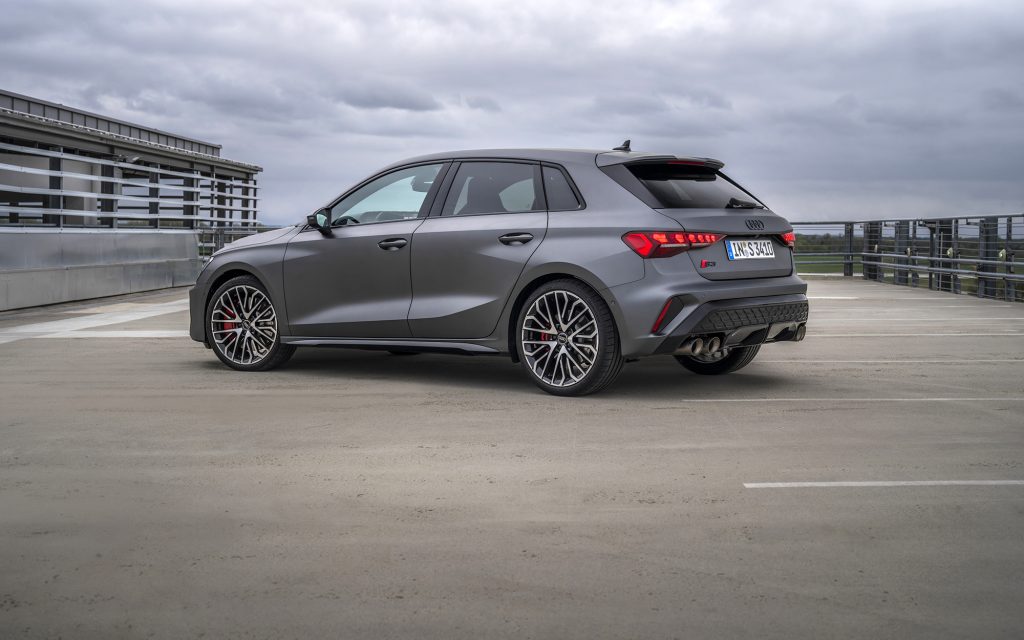
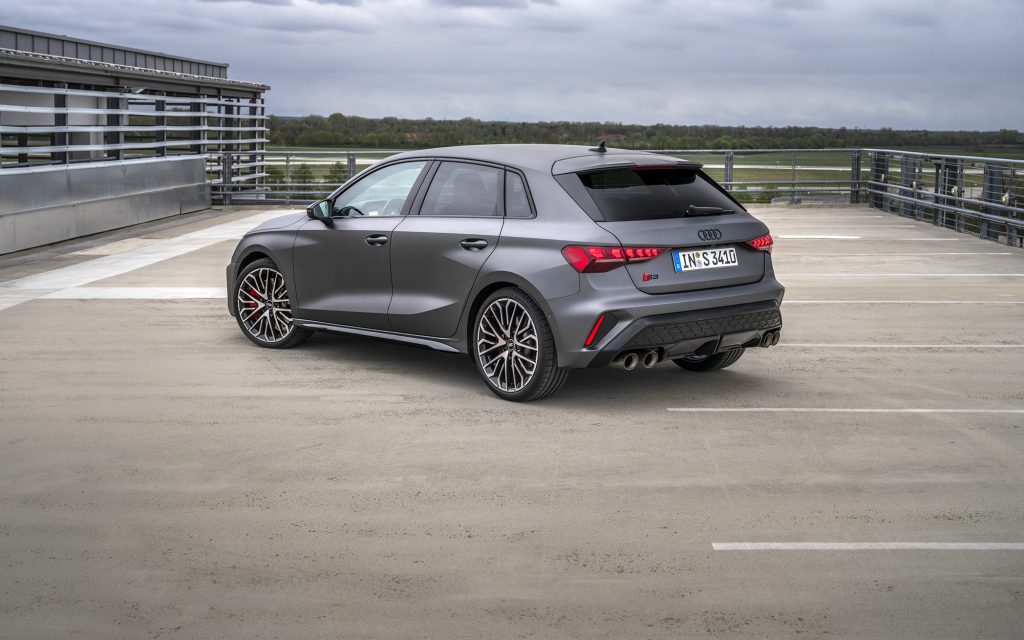
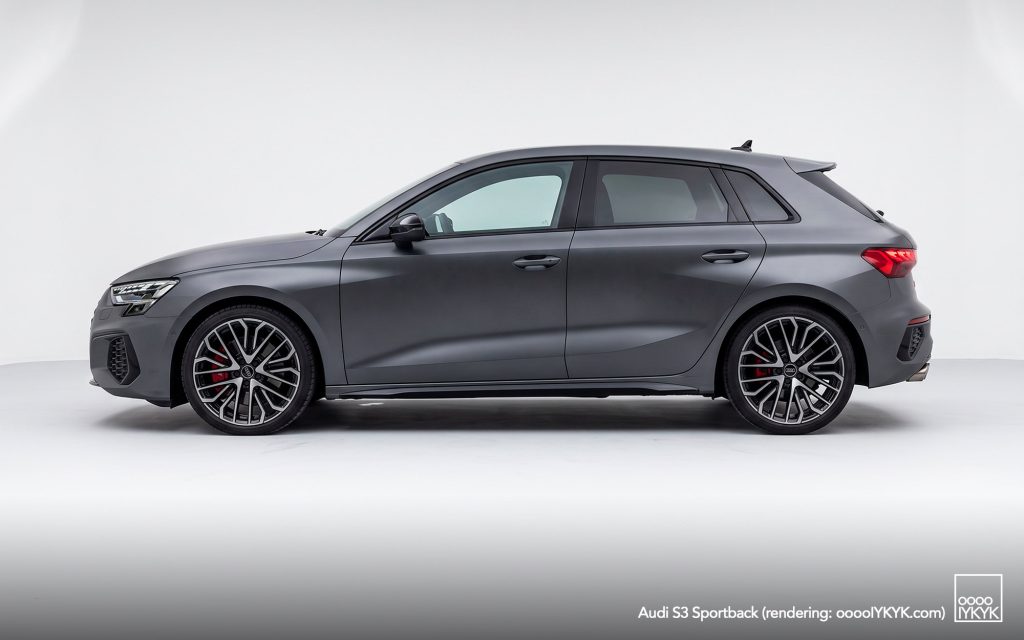
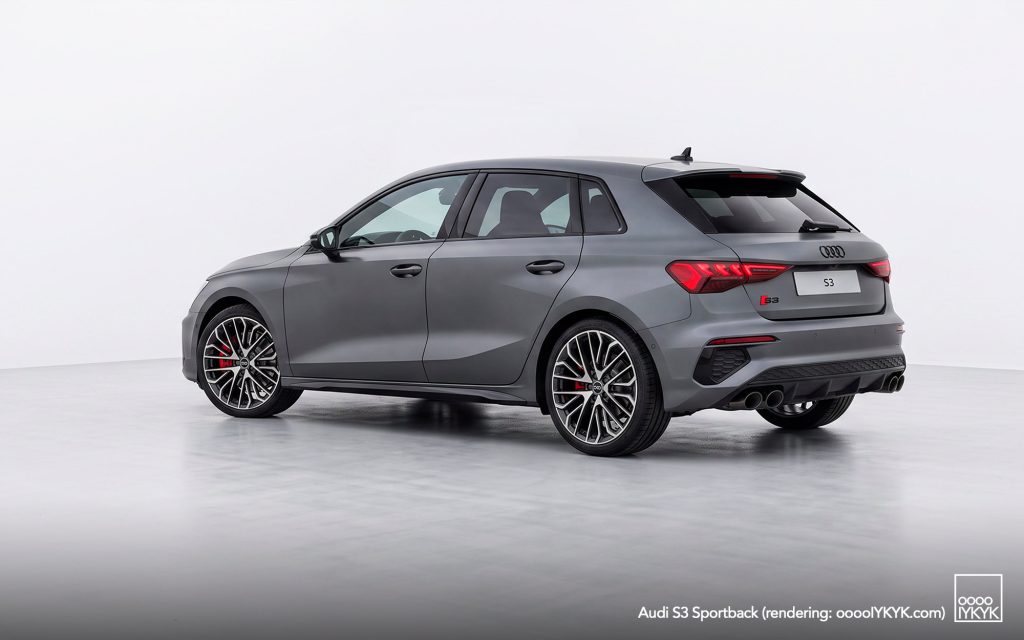
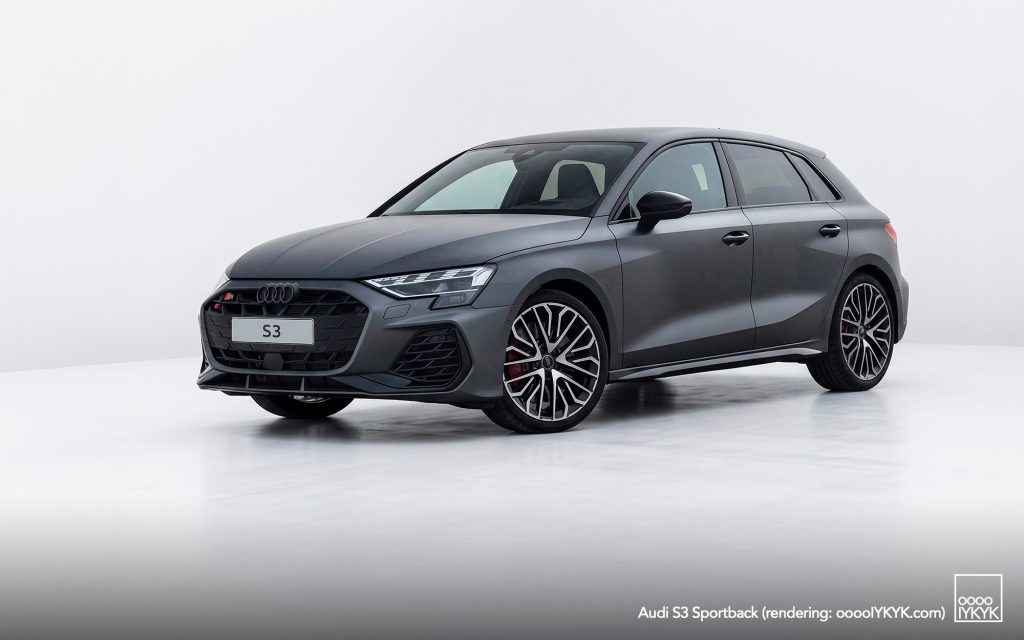
Although visually related to the conventional A3 Sportback, the S3 adopts a number of exterior revisions that communicate its enhanced performance capabilities. Model-specific front and rear fascias, larger air intakes, quad exhaust outlets, distinctive wheel designs, and S-specific exterior detailing differentiate the vehicle while maintaining the restrained design language traditionally associated with Audi’s S models.
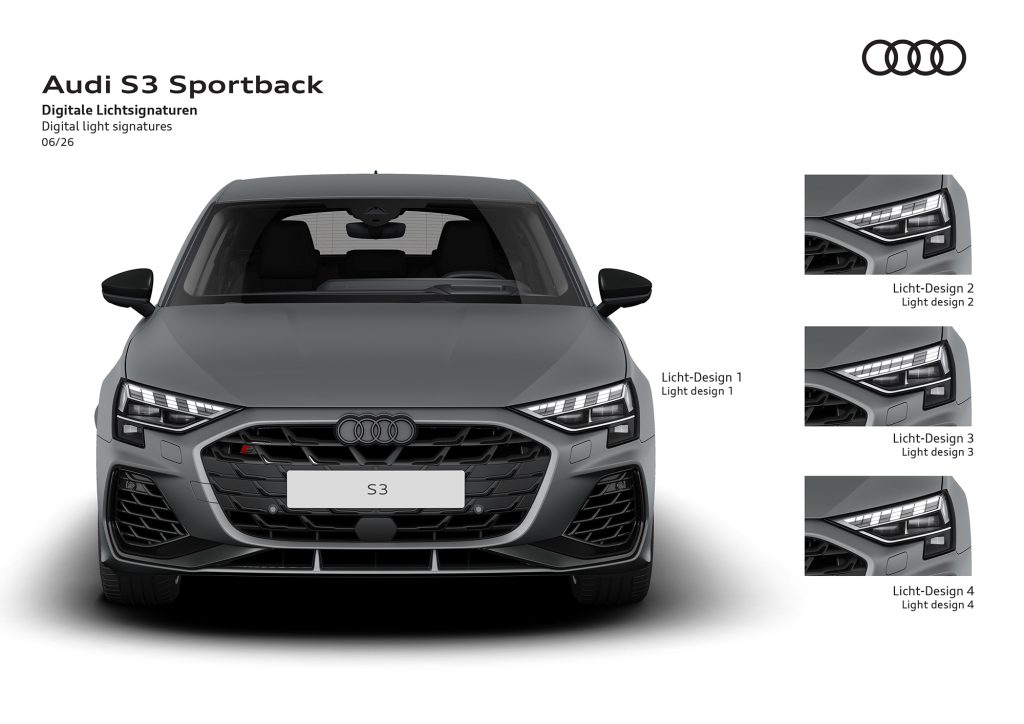
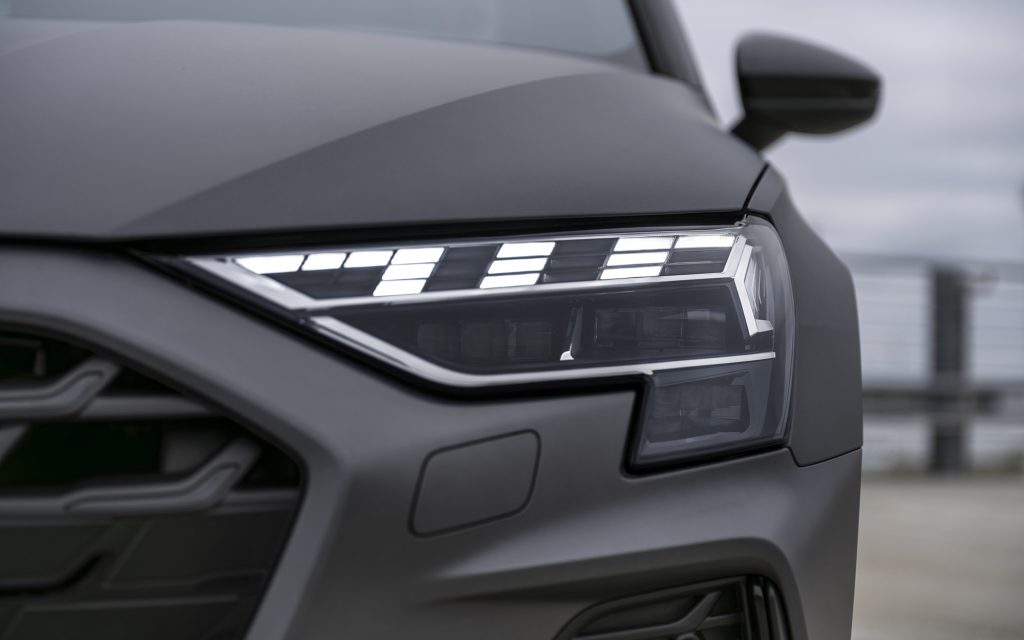
The PA2 update focused primarily on lighting technology and digital personalization rather than comprehensive exterior redesign. Vehicles equipped with Matrix LED headlights introduced four selectable daytime running light signatures, including a unique signature developed specifically for the S3. Drivers could configure these through the Multi Media Interface (MMI), extending Audi’s software-controlled lighting technology into its compact performance range.
Rather than dramatically altering the vehicle’s appearance, Audi refined the S3 through subtle visual changes that complement its performance-oriented engineering while preserving its understated character.
IDENTIFYING FEATURES
EXTERIOR
The Audi S3 Sportback is distinguished from the conventional A3 Sportback by its model-specific front and rear bumpers, enlarged air intakes, quad exhaust outlets, S badging, and performance-oriented wheel designs.
PA2 models equipped with Matrix LED headlights feature a dedicated daytime running light signature unique to the S3. Combined with the revised front fascia and model-specific exterior detailing, these elements provide the clearest visual identification of the second Produktaufwertung.
INTERIOR
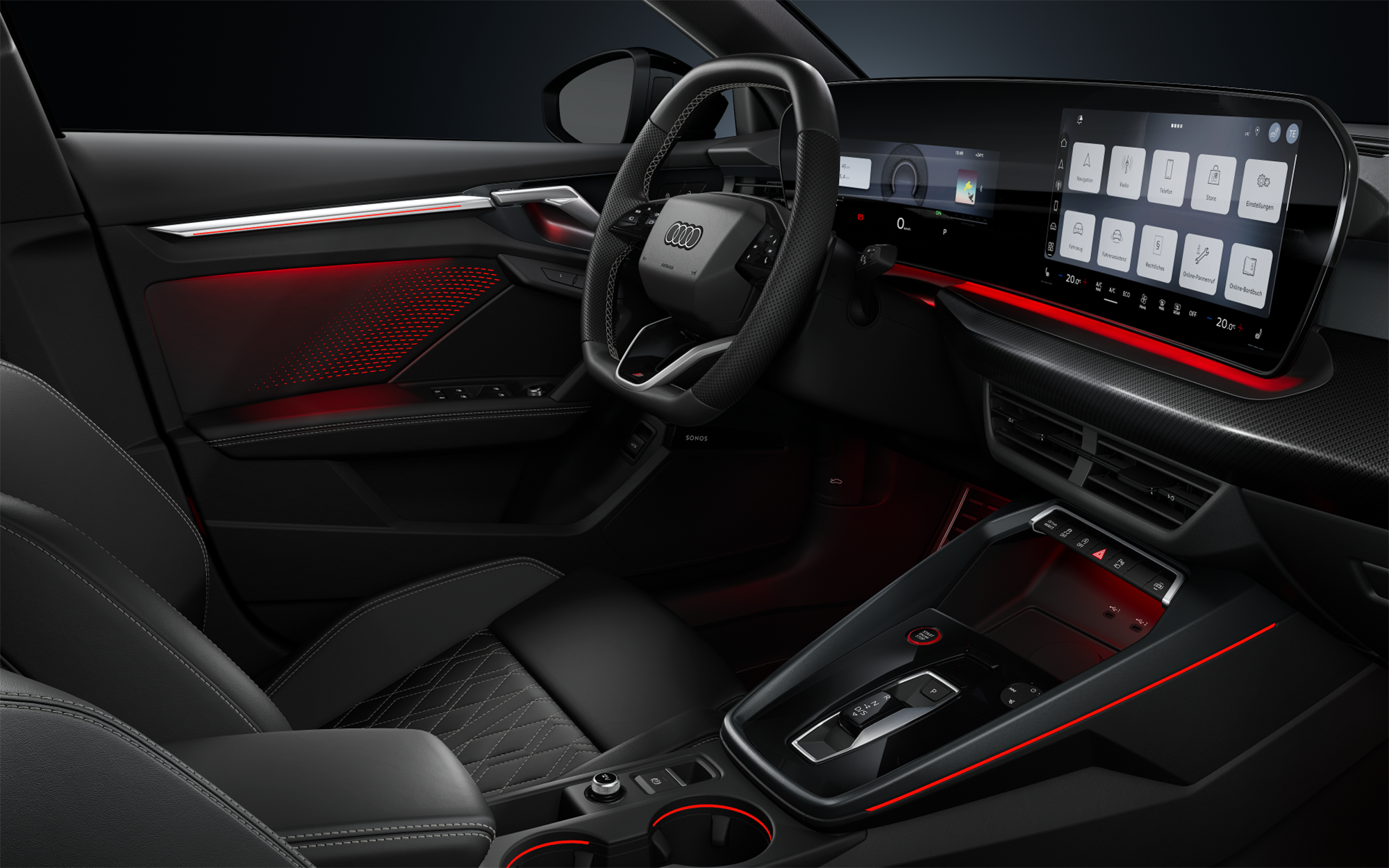
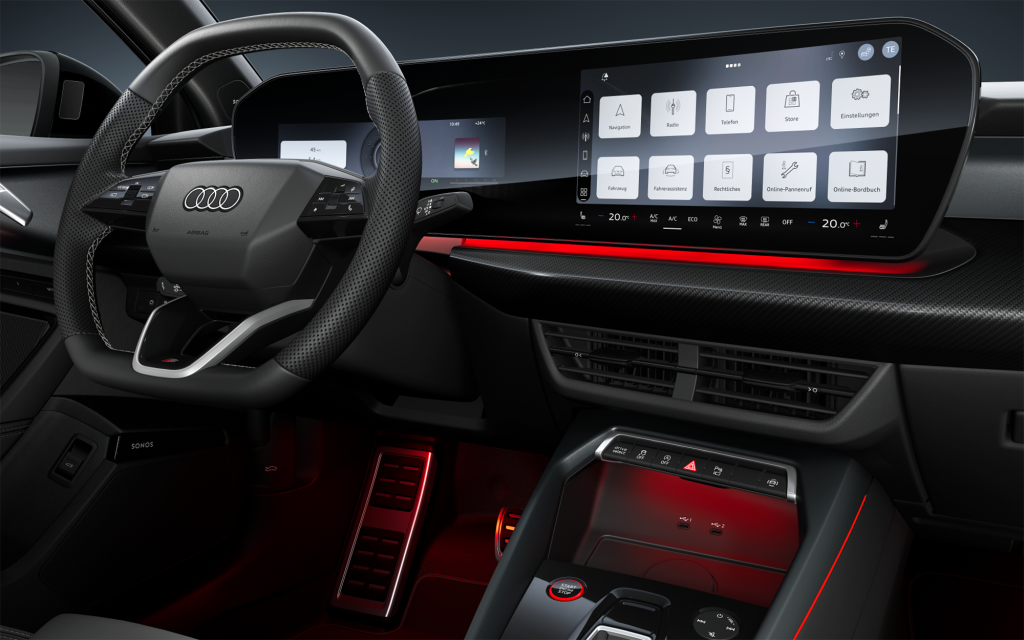
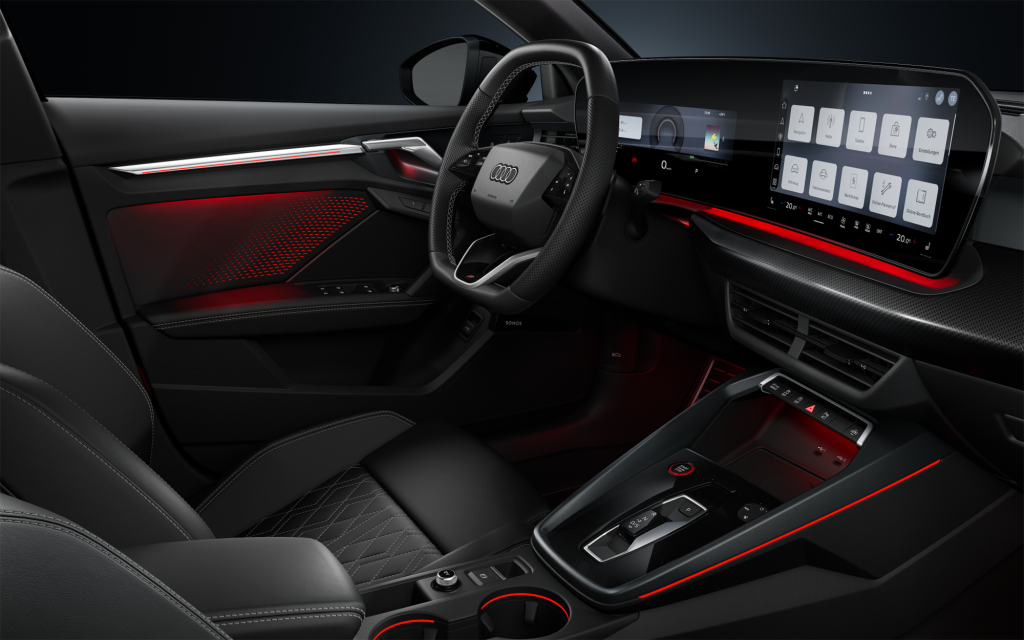
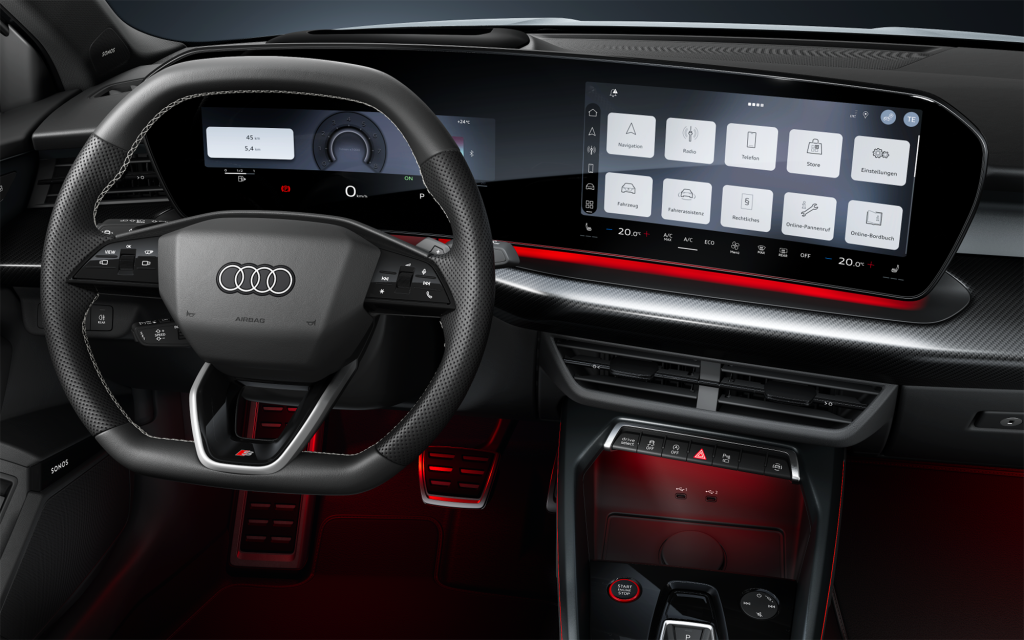
The most significant interior changes introduced during the PA2 update were shared across the fourth-generation A3 family. The S3 Sportback adopted Audi’s panoramic display architecture, replacing the previous dashboard design with a continuous curved display that visually aligned the model with Audi’s latest generation of passenger vehicles.
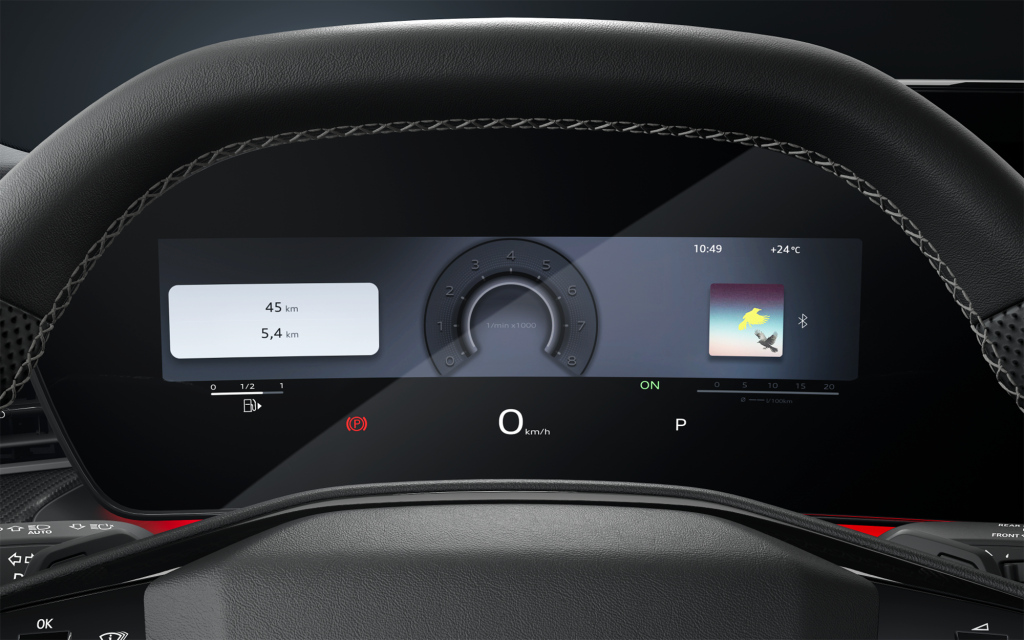
The redesigned dashboard integrates an 11.9-inch Audi virtual cockpit with a 12.8-inch MMI panoramic display, creating a unified interface for vehicle information, navigation, infotainment, connected services, and vehicle dynamics. A continuous decorative trim extends across the dashboard into the passenger door, emphasizing the cabin’s horizontal design while offering finishes including carbon fiber, Dinamica microfiber, Impressum Black textile, and Light Crepe textile.
The center console was revised with a driver-oriented wireless charging tray capable of delivering up to 25 watts for compatible mobile devices. All steering wheels within the updated A3 family adopted a physical scroll wheel integrated into the multifunction controls, while the S3 retained its performance-oriented steering wheel designs and S-specific interior detailing.
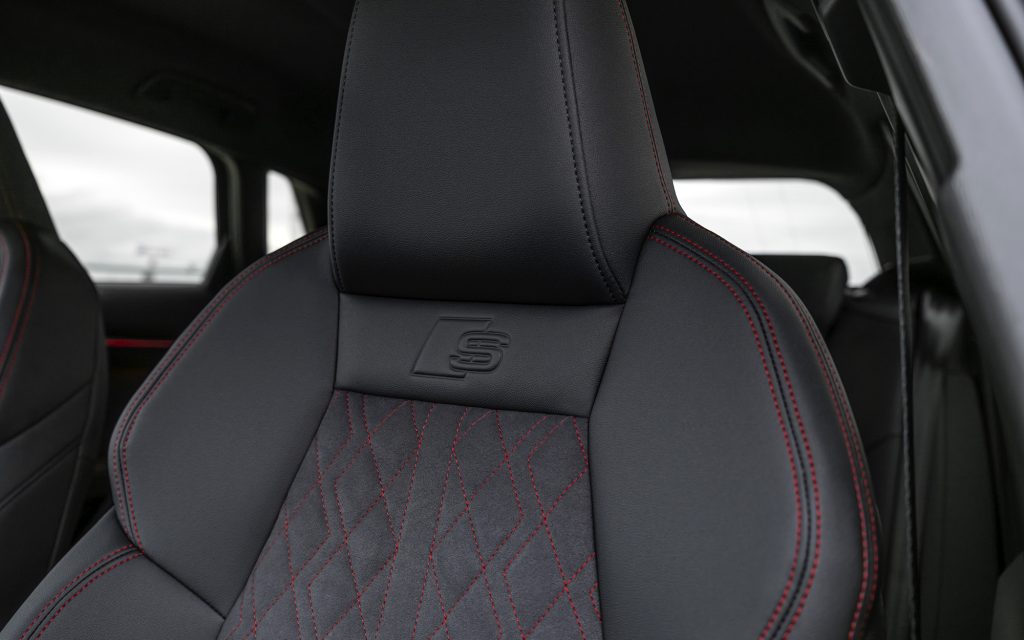
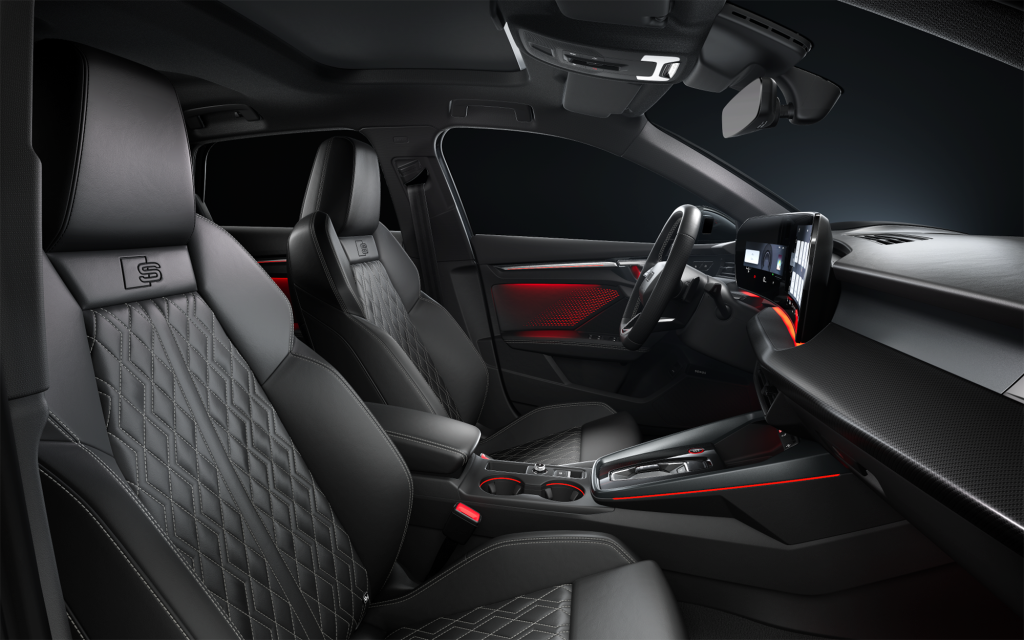
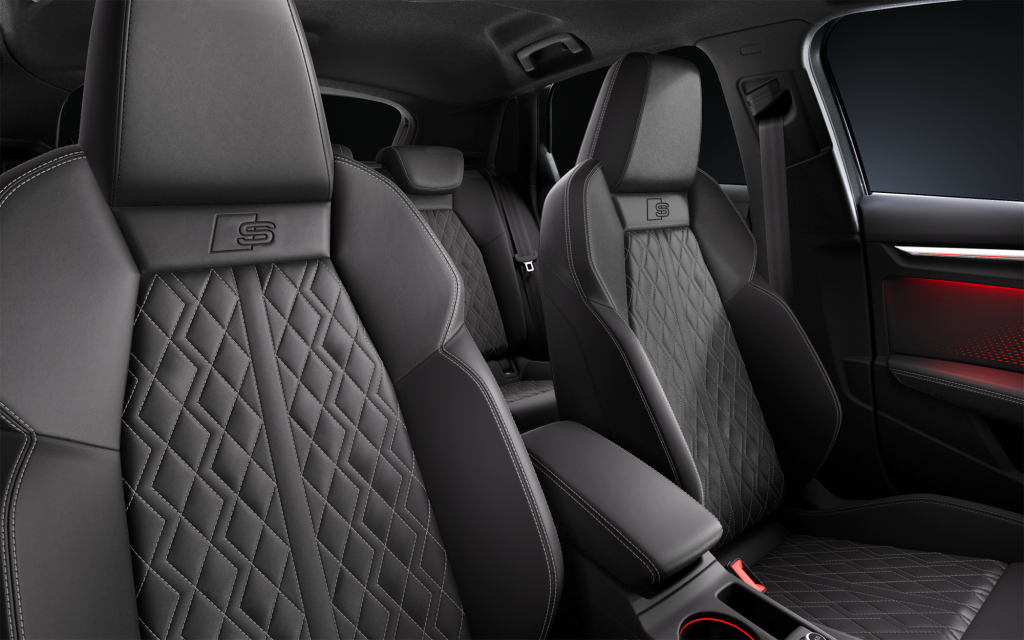
Beyond the shared digital architecture, the S3 distinguishes itself through sport seats, S badging, model-specific trim materials, stainless steel pedals, and performance-oriented instrumentation. The digital displays also incorporate dedicated performance information, allowing drivers to monitor vehicle dynamics alongside traditional vehicle data.
The panoramic display architecture immediately distinguishes the PA2 generation from earlier S3 models. The continuous curved display integrating the Audi virtual cockpit and MMI panoramic display replaces the dashboard layout introduced with the first product improvement.
S-specific interior features include sport seats, performance steering wheel designs, stainless steel pedals, model-specific trim, and dedicated digital instrumentation. Together, these details distinguish the S3 from the conventional A3 while maintaining a cabin that prioritizes everyday comfort alongside enhanced driver engagement.
ENGINEERING OBJECTIVES
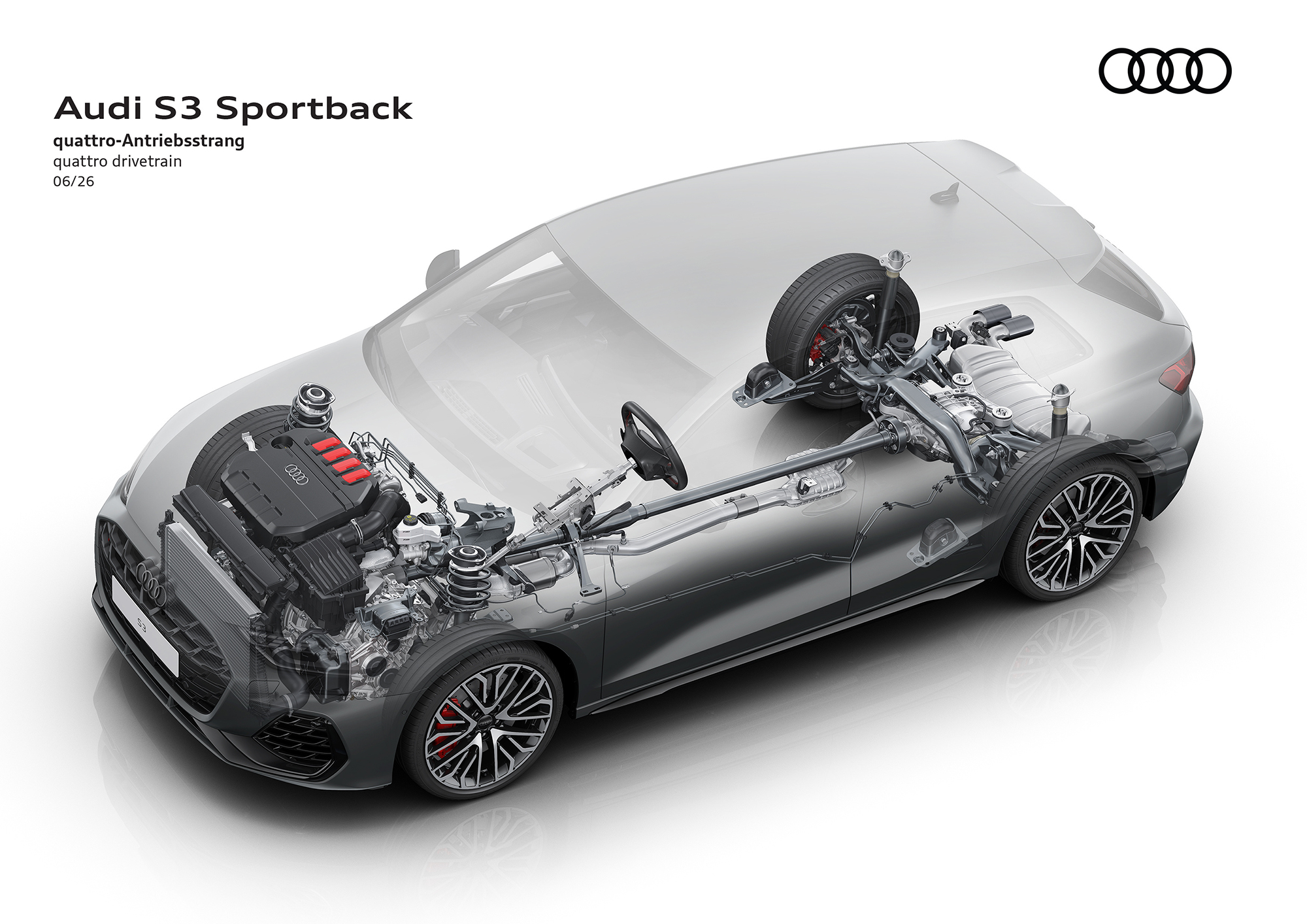
The engineering objective of the PA2 update extended beyond increasing engine performance. Audi focused on improving the relationship between driver, vehicle, and road through refinements to chassis calibration, drivetrain software, steering response, and electronic control systems.
Development concentrated on increasing agility, improving traction, and delivering more precise handling while preserving the refinement and usability expected of the S3. Rather than fundamentally redesigning the vehicle, Audi refined the interaction between its mechanical systems through updated control strategies and performance-oriented software.
This approach reflects Audi’s broader philosophy for S models. Rather than maximizing outright performance, S vehicles are engineered to deliver confident, repeatable performance under everyday driving conditions while maintaining the comfort, practicality, and year-round usability expected of an Audi.
CHASSIS
The Audi S3 Sportback (8Y PA2) continues to utilize Volkswagen Group’s MQB Evo matrix architecture shared across the fourth-generation A3 family.
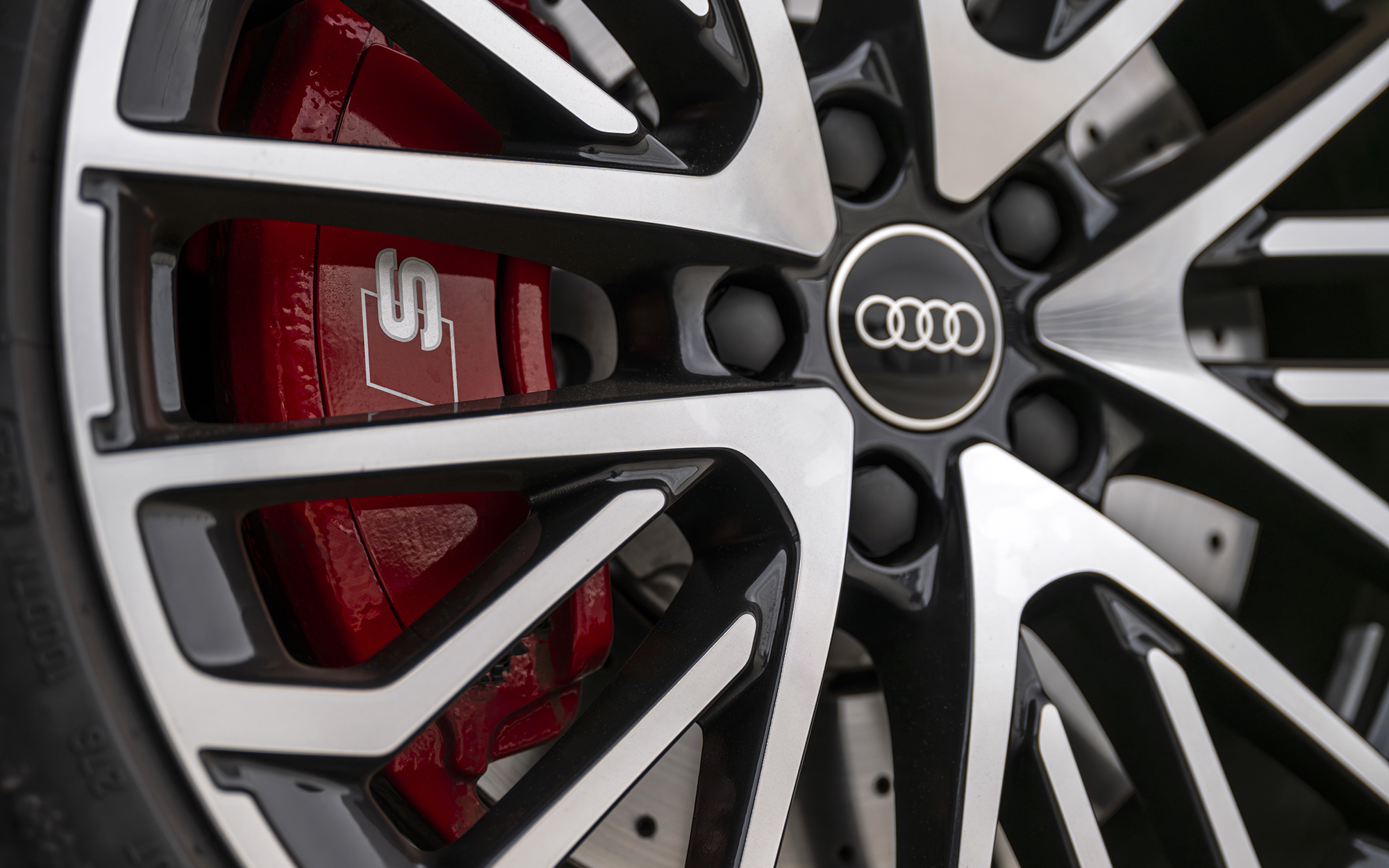
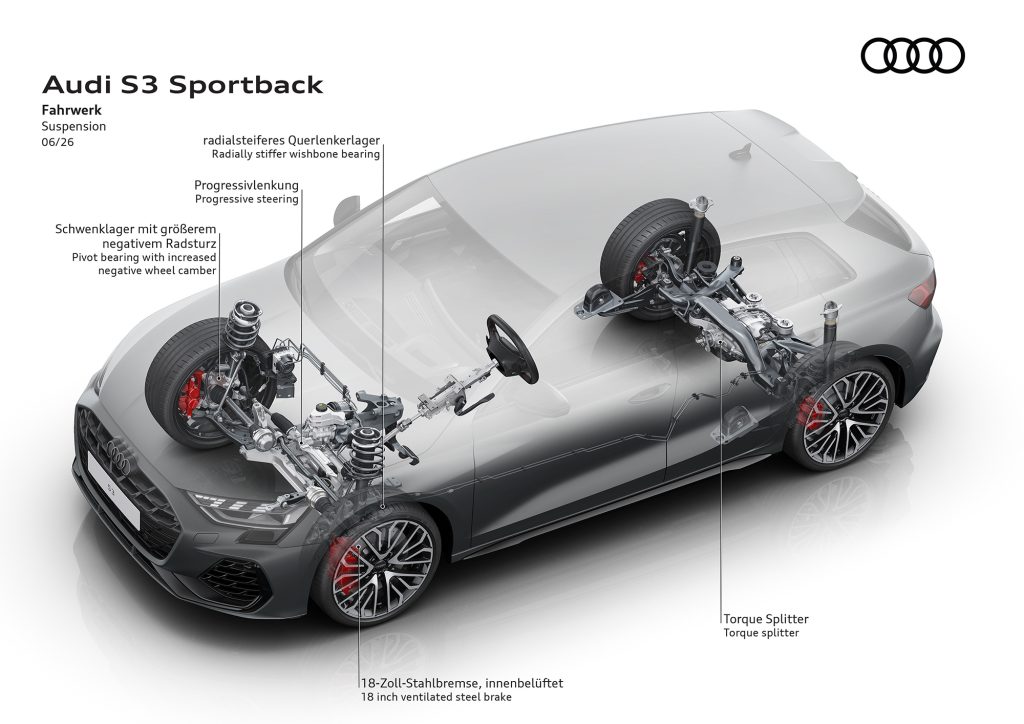
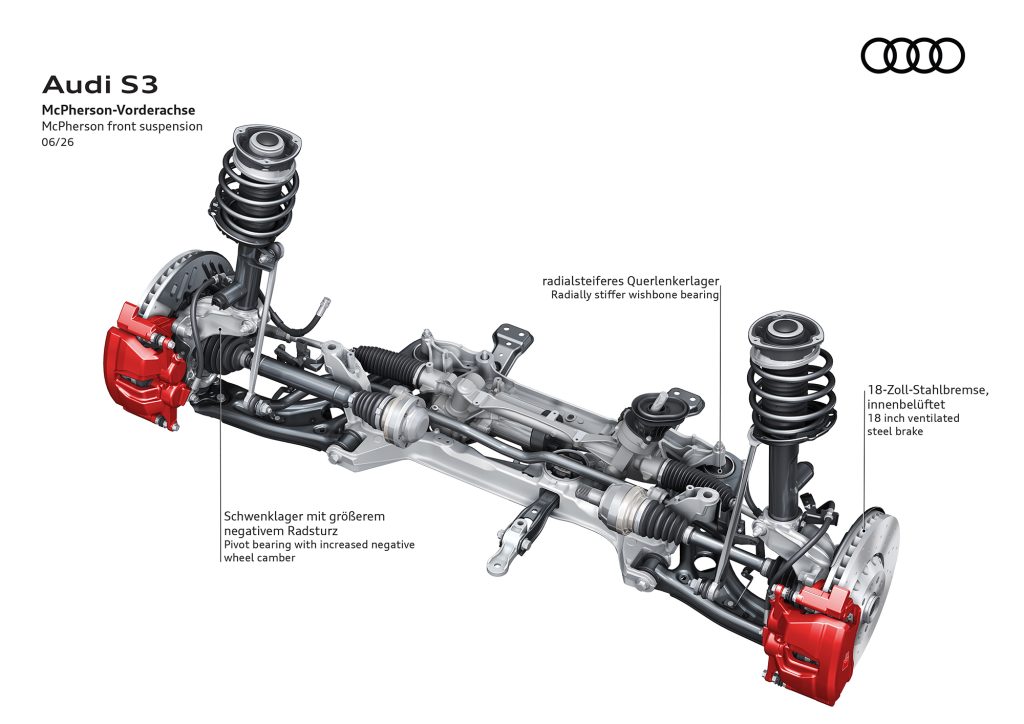
While the structural architecture remains common, the S3 incorporates numerous revisions that distinguish it from the conventional A3 Sportback. These include sport suspension, performance-oriented chassis calibration, larger brakes, quattro all-wheel drive, and electronic control systems developed specifically to enhance dynamic capability.
The PA2 update focused on refining these systems rather than introducing structural changes. Audi revised chassis software, steering calibration, and drivetrain control strategies to improve vehicle response while preserving the balanced handling characteristics that have traditionally defined the S3.
The result is a chassis engineered to provide confident everyday performance across a wide range of road conditions while maintaining the refinement expected of a premium compact hatchback.
POWERTRAIN
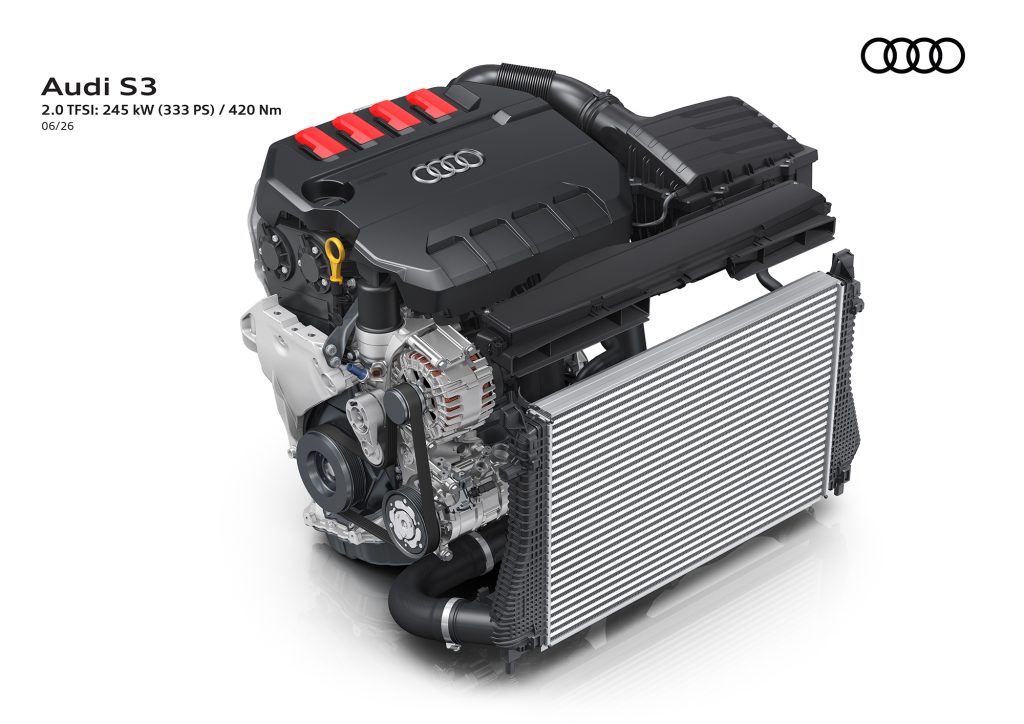
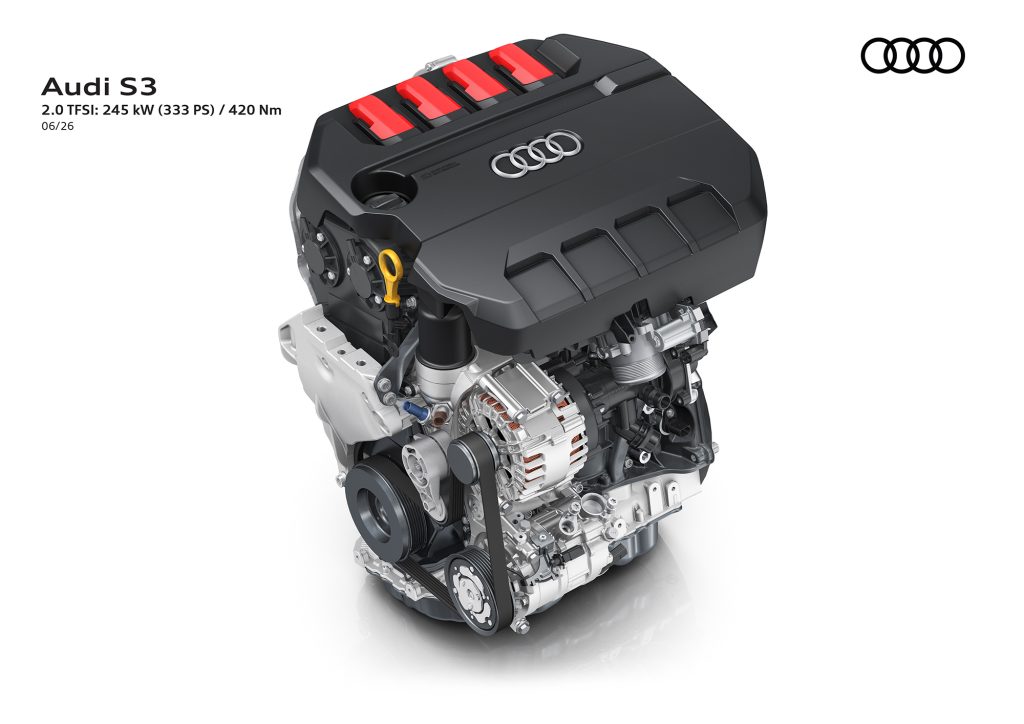
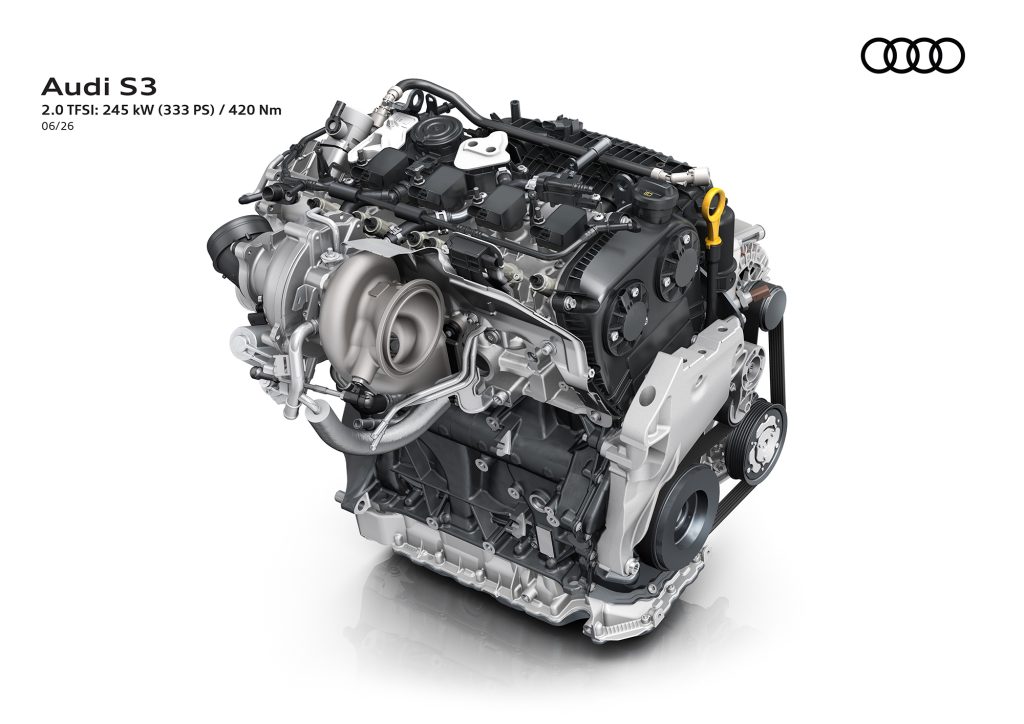
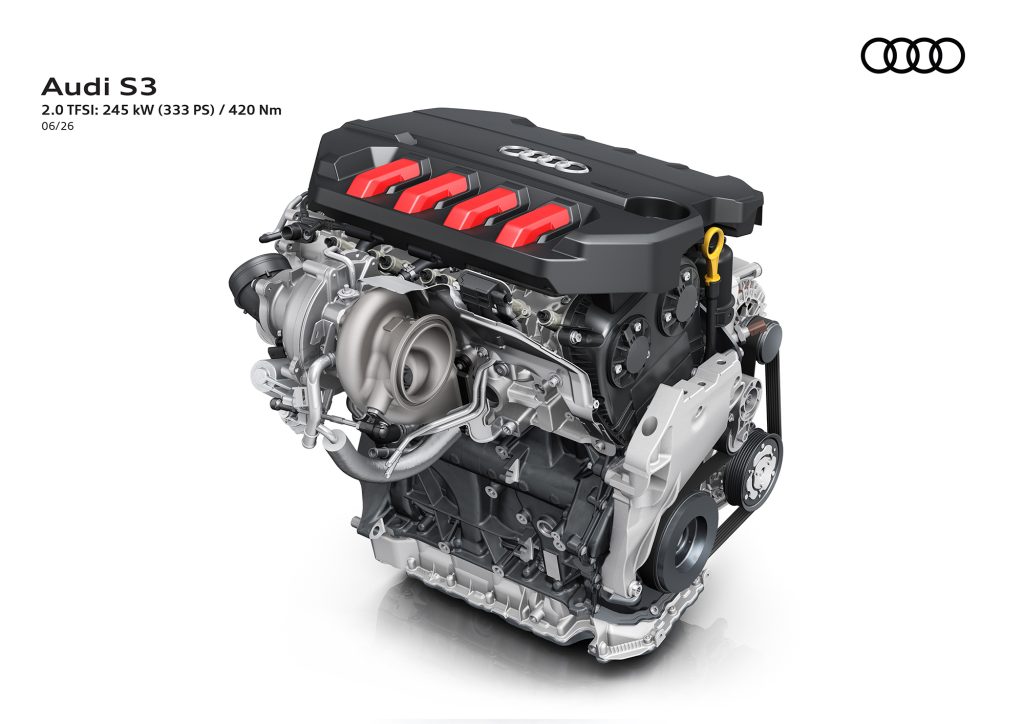
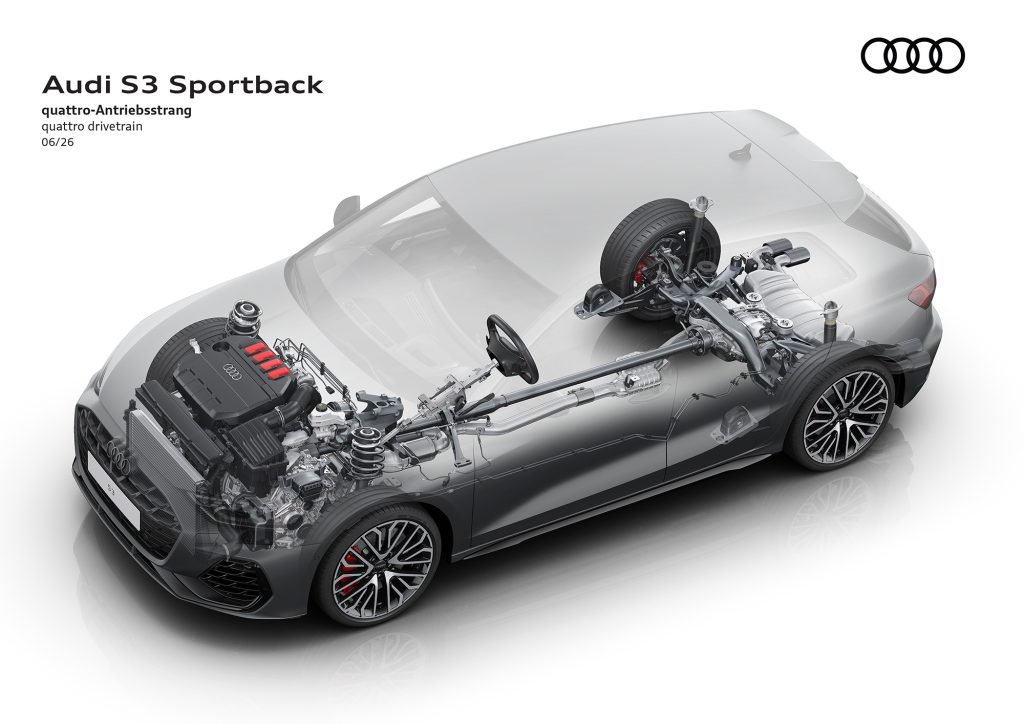
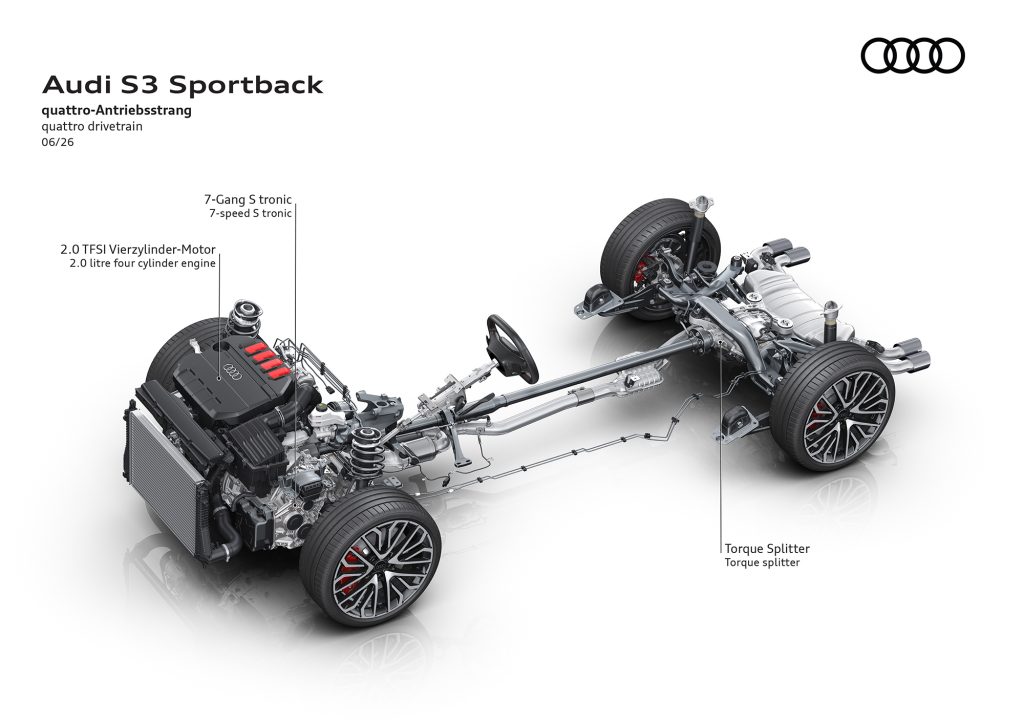
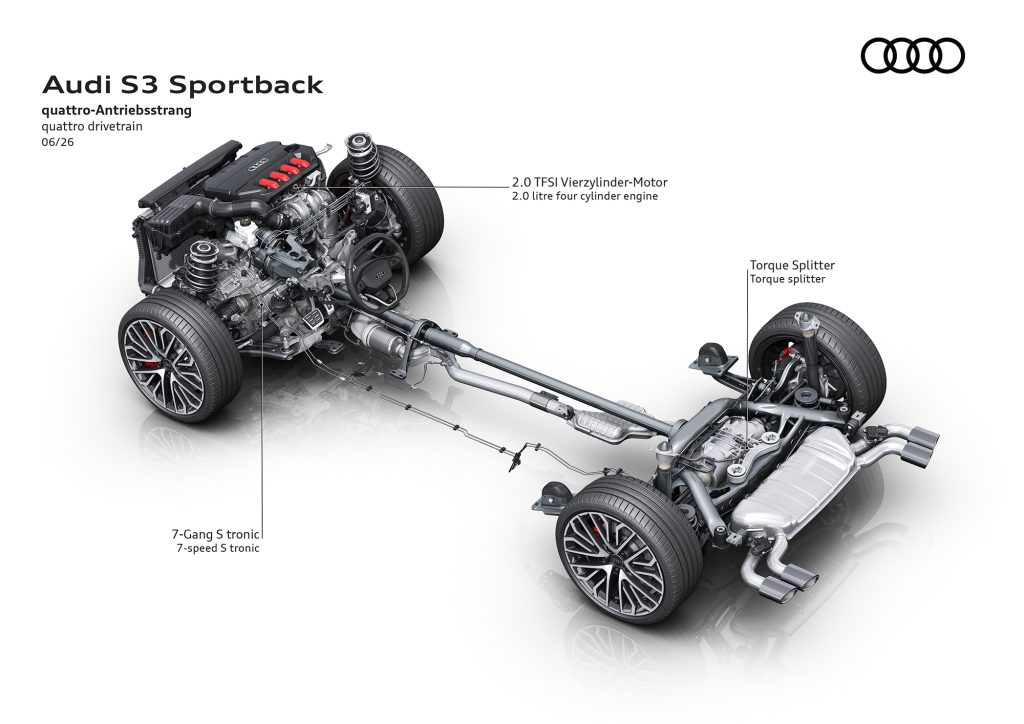
The Audi S3 Sportback is powered by Audi’s EA888 turbocharged four-cylinder gasoline engine, paired with a seven-speed S tronic transmission and quattro all-wheel drive.
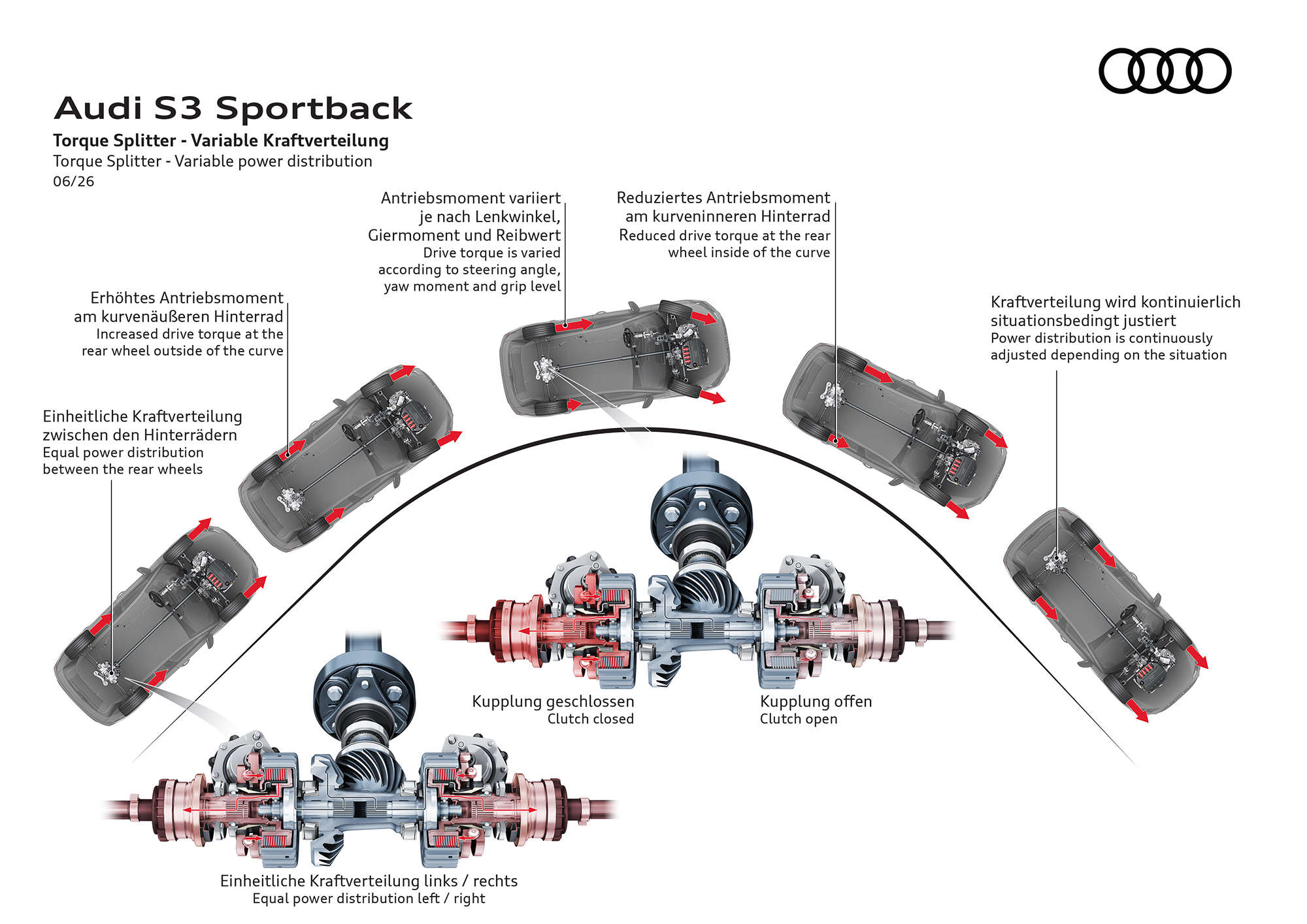
For the PA2 update, Audi concentrated development on improving the delivery of performance rather than significantly increasing output. Revised engine calibration, updated drivetrain software, and enhanced torque distribution strategies contribute to improved responsiveness and more effective deployment of available power.
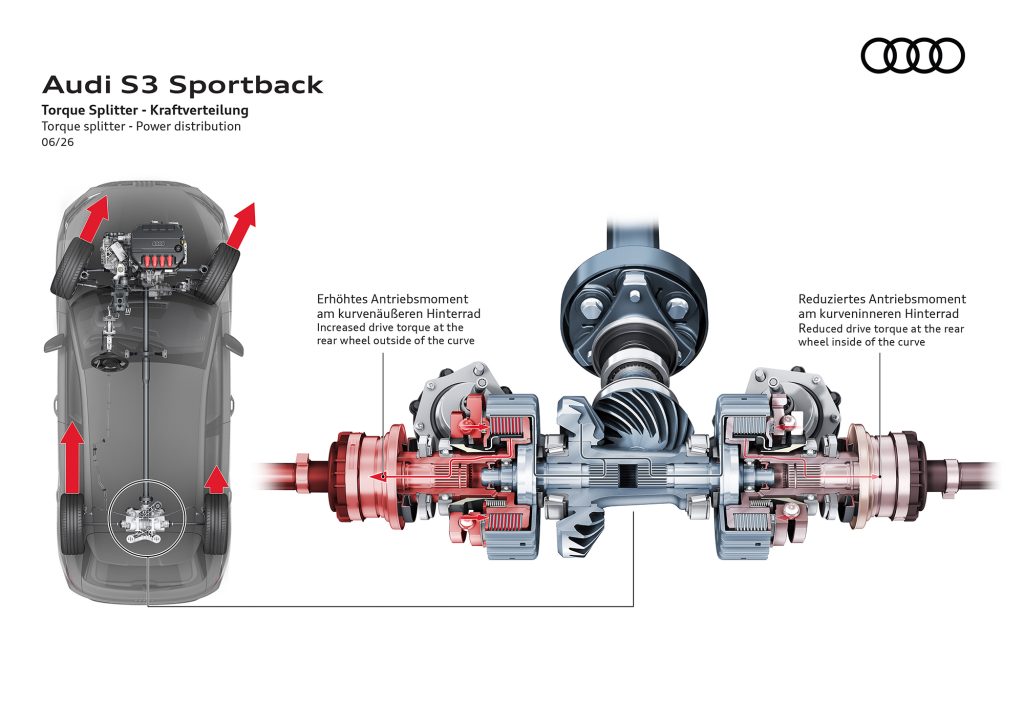
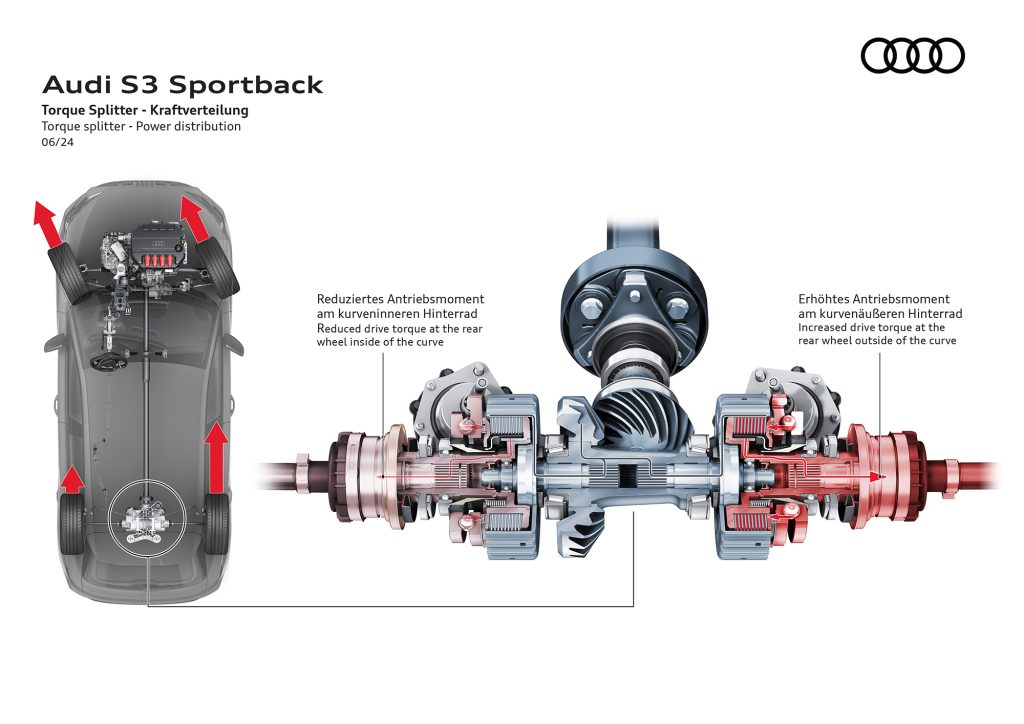
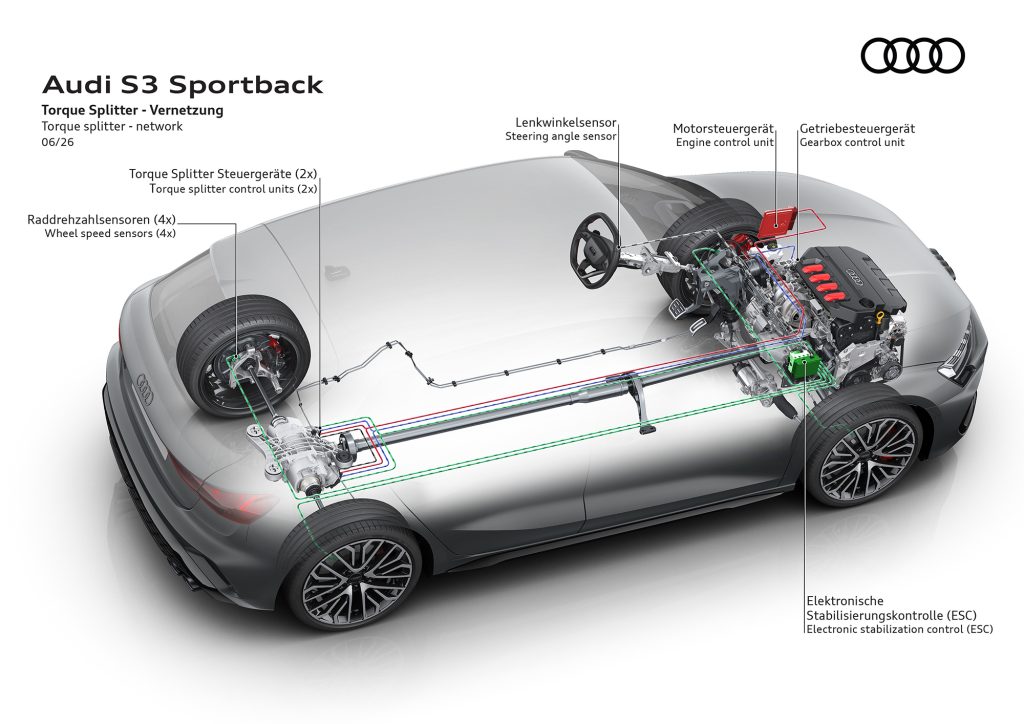
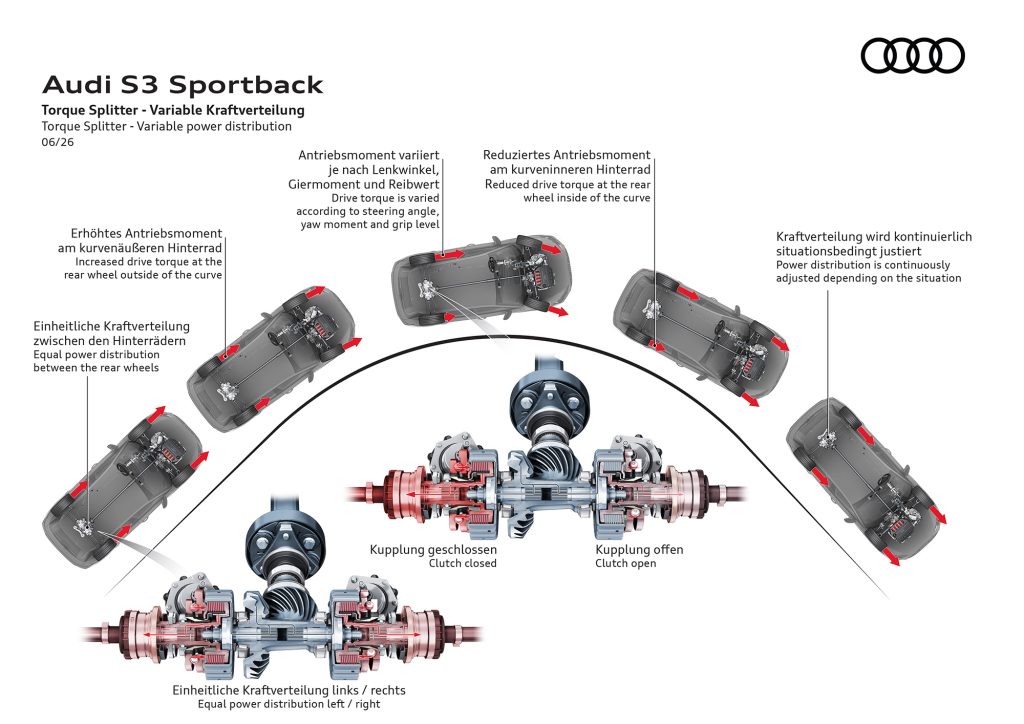
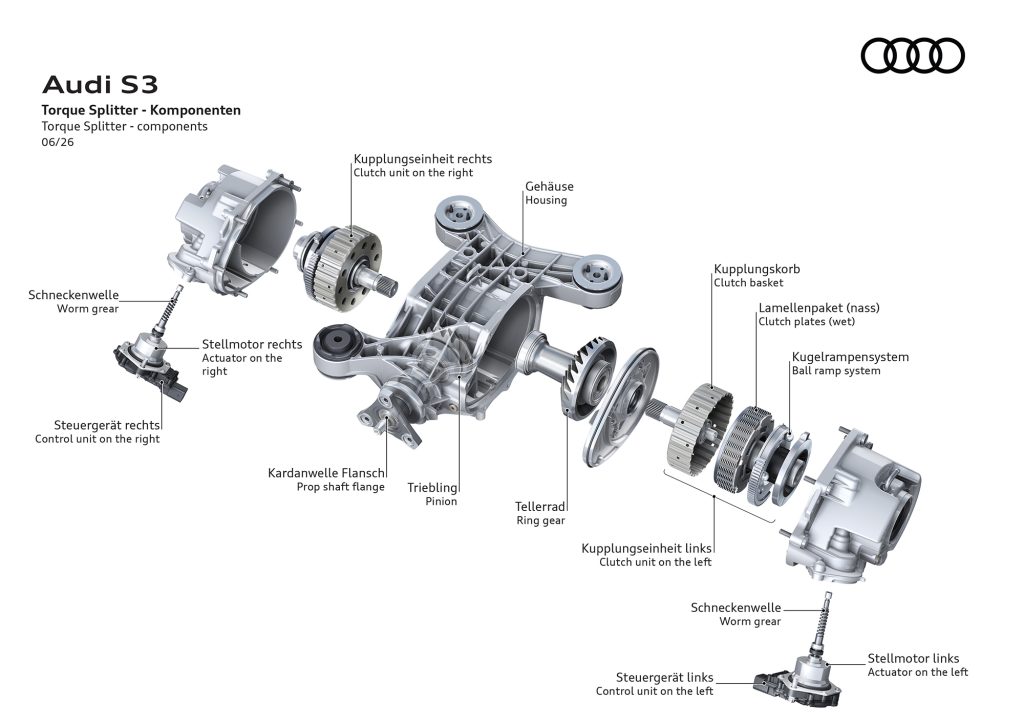
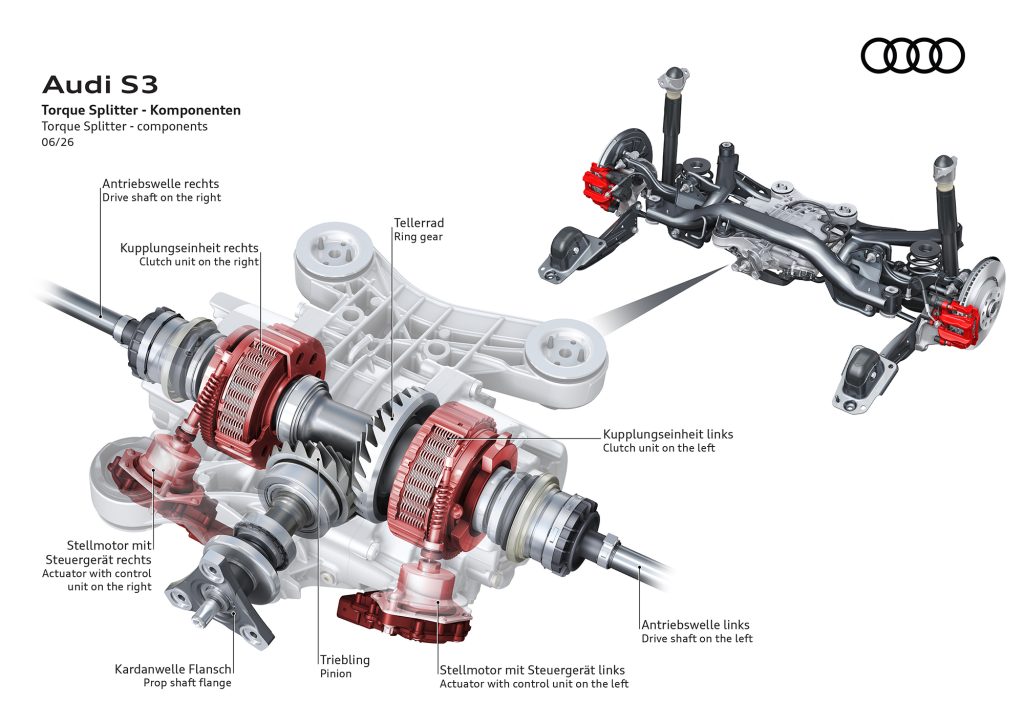
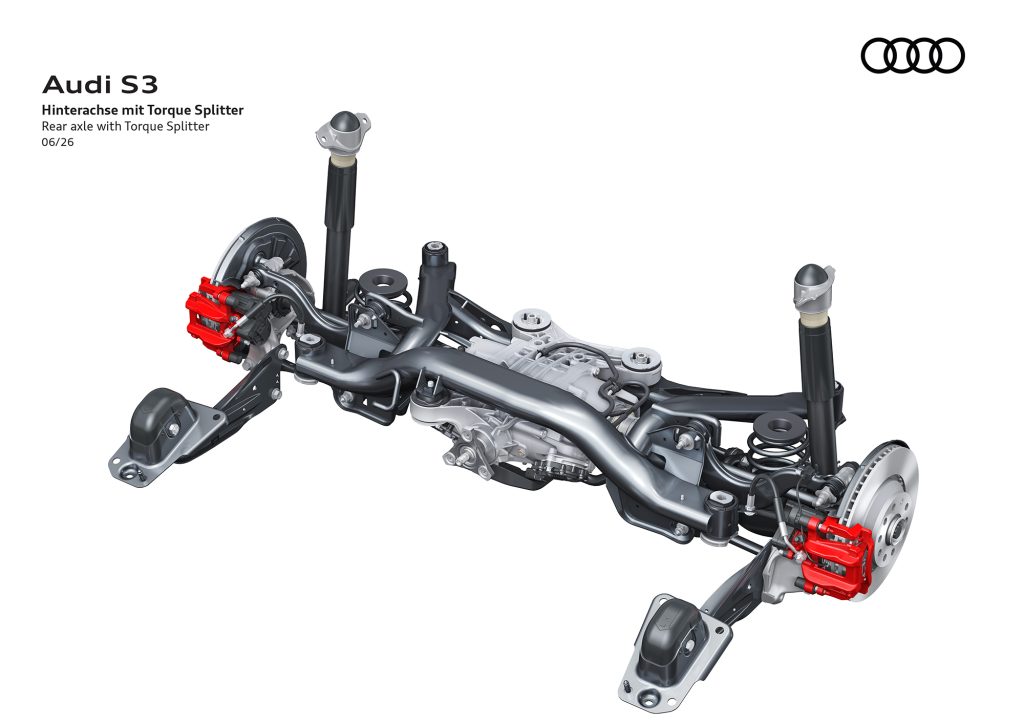
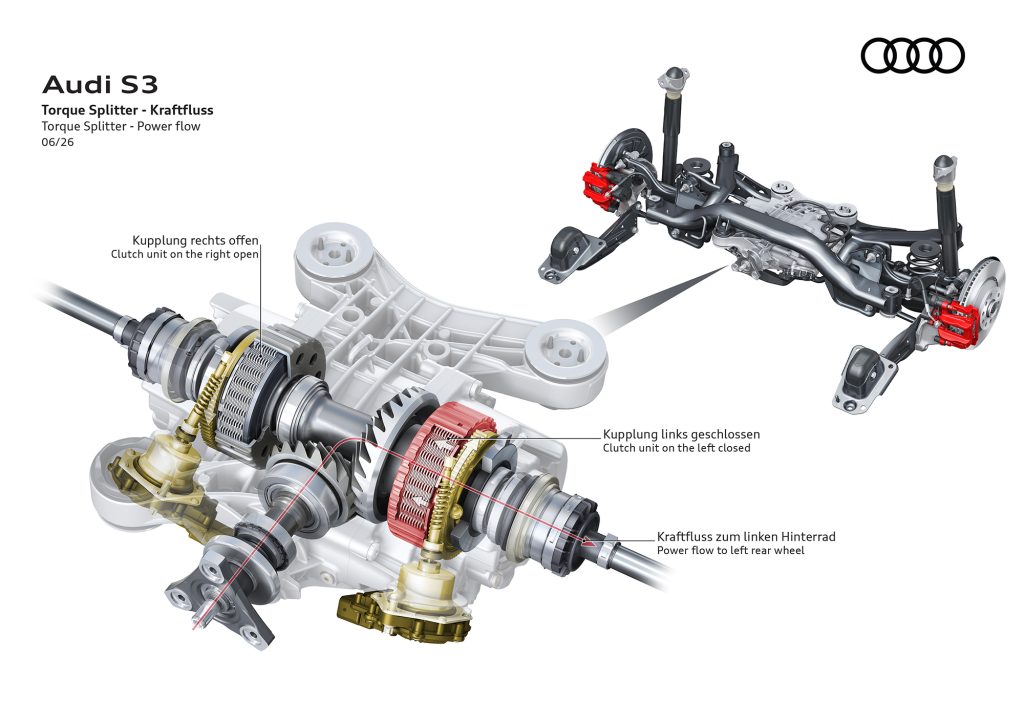
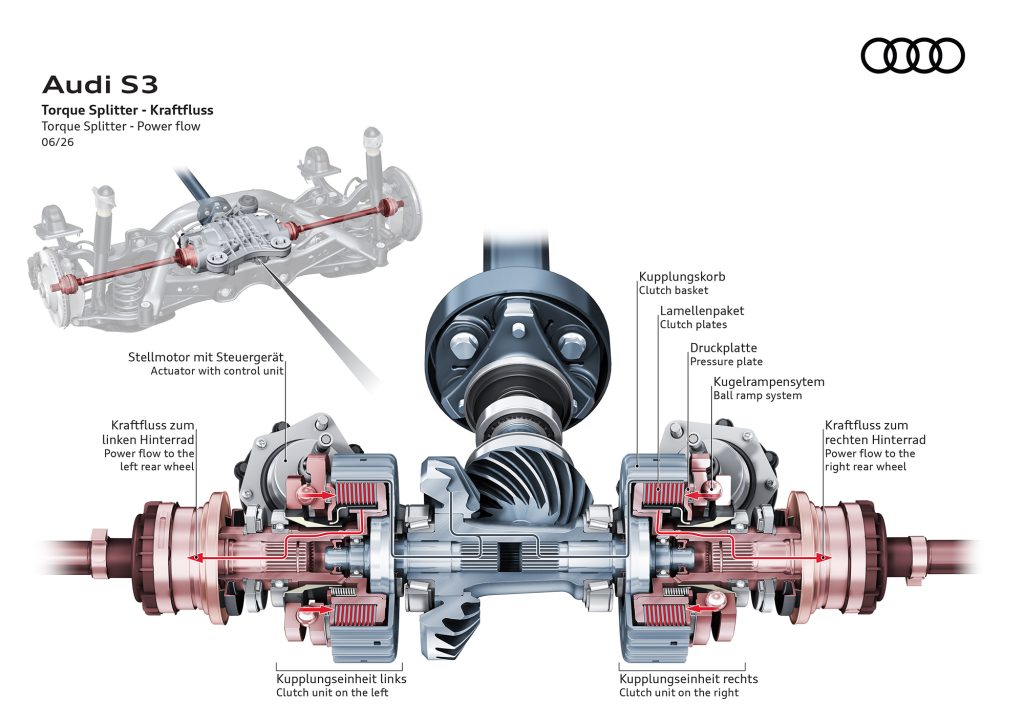
A defining feature of the updated S3 is the adoption of a rear torque splitter. By actively varying torque distribution between the rear wheels, the system improves cornering agility, increases traction during acceleration, and enhances overall vehicle stability. Rather than simply maximizing grip, the system enables more precise rotation through corners while preserving predictable handling characteristics.
Together with the revised powertrain calibration, these developments reinforce the S3’s position as a performance-oriented everyday vehicle capable of delivering engaging driving dynamics without compromising refinement or usability.
TECHNOLOGY
Digital technology became an increasingly important element of the S3’s overall performance philosophy during the PA2 update.
Audi’s panoramic display architecture introduced a new digital interface while integrating vehicle dynamics, navigation, infotainment, and connected services within a single operating environment. Performance-specific displays allow drivers to monitor drivetrain information alongside conventional vehicle data, reinforcing the connection between the digital cockpit and the vehicle’s dynamic capabilities.
Audi connect expanded remote vehicle functionality through the myAudi smartphone application, while Functions on Demand continued to demonstrate Audi’s increasing emphasis on software-enabled vehicle capability.
Beyond infotainment, software assumed a greater role in the operation of the vehicle itself. Chassis control, drivetrain management, torque distribution, and electronic stability systems increasingly worked together to influence the S3’s driving characteristics, illustrating Audi’s broader transition toward software-defined vehicle dynamics.
DRIVER ASSISTANCE
The PA2 update introduced a comprehensive revision of the S3 Sportback’s driver assistance technologies, bringing the model into alignment with the wider fourth-generation A3 family.
Available systems were reorganized into Tech, Tech plus, and Tech pro equipment levels, simplifying specification while grouping complementary technologies together.
Adaptive Cruise Assist Plus combined adaptive cruise control with active lane guidance at speeds of up to 210 km/h while introducing automatic braking at traffic lights, automatic restart following brief stops, and lane guidance supplemented through online swarm data where conventional lane markings were limited.
Parking technologies likewise advanced significantly. Four wide-angle cameras created a fully pannable three-dimensional representation of the vehicle’s surroundings, supporting Park Assist Plus and Park Assist Pro during automated parking maneuvers.
Park Assist Pro additionally introduced Remote Parking through the myAudi smartphone application, while Trained Parking enabled the S3 to memorize up to five frequently used parking maneuvers extending as far as 50 meters before repeating them automatically.
Although these systems substantially increased the vehicle’s capability, Audi continued to present them as driver assistance technologies. Responsibility for the safe operation of the vehicle remained with the driver at all times.
PRODUCTION
Audi introduced the second Produktaufwertung of the fourth-generation S3 during June 2026, with customer deliveries commencing during September 2026.
The PA2 update continued Audi’s long-established philosophy of refining the S3 through carefully considered engineering developments rather than comprehensive redesign. Alongside Audi’s latest digital cockpit architecture, the revised model benefited from updated chassis systems, enhanced drivetrain software, and refinements to vehicle dynamics that strengthened its position within Audi’s compact performance range.
The S3 Sportback continues to occupy the space between the conventional A3 and the Audi Sport-developed RS 3, offering customers a combination of everyday practicality, premium refinement, and confident all-weather performance that has characterized the S3 model line since its introduction in 1999.
SPECIFICATIONS
BODY
Vehicle Type: Compact high-performance hatchback
Body Style: Five-door hatchback
Construction: Steel monocoque utilizing the Volkswagen Group MQB Evo matrix architecture
Doors: Five
Seating Capacity: Five
POWERTRAIN
Engine: 2.0 TFSI turbocharged inline four-cylinder
Engine Family: EA888
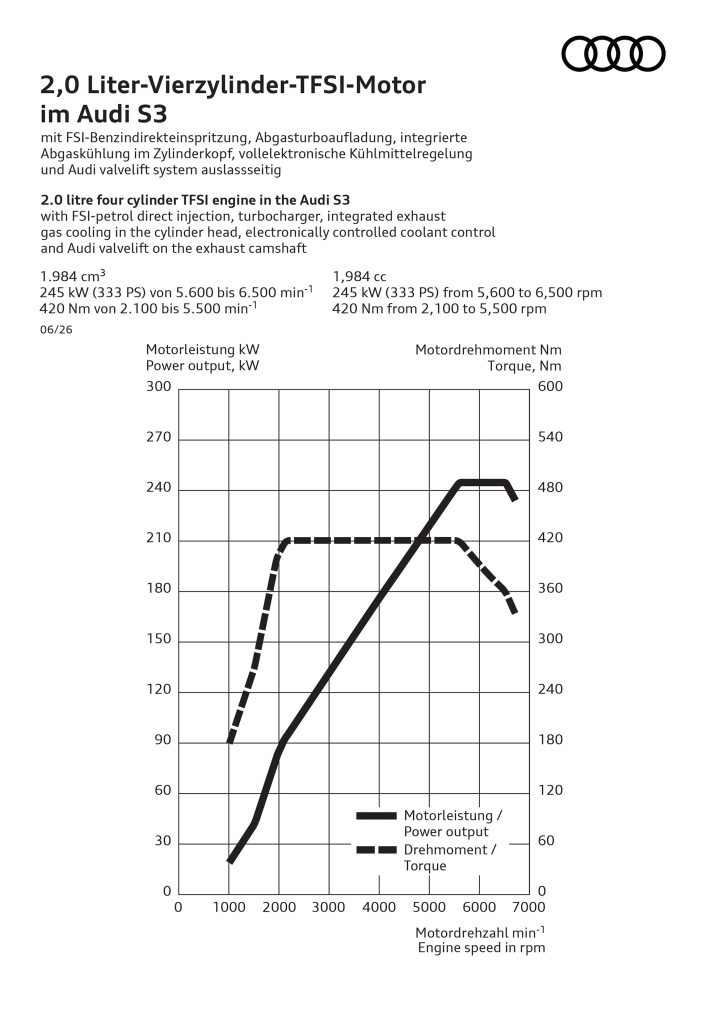
Displacement: 1,984 cc
Maximum Output: 245 kW (333 PS)
Maximum Torque: 420 Nm
Transmission: Seven-speed S tronic
Drive Configuration: quattro permanent all-wheel drive
Rear Differential: Torque splitter
PERFORMANCE
0–100 km/h: 4.7 seconds
Top Speed: 250 km/h (electronically limited)
Drive Select Modes: Efficiency, Comfort, Auto, Dynamic, Individual
DIMENSIONS
Reference values are taken from official Audi dimensional engineering drawings. All dimensions are nominal values measured with the vehicle in an unladen condition.
Overall Length: 4,354 mm
Wheelbase: 2,631 mm
Overall Width (excluding mirrors): 1,816 mm
Overall Width (including mirrors): 1,984 mm
Overall Height: 1,431 mm
Front Overhang: 907 mm
Rear Overhang: 816 mm
Front Track: 1,549 mm
Rear Track: 1,518 mm
Interior Dimensions
Front Headroom (maximum): 1,028 mm
Rear Headroom: 955 mm
Front Shoulder Width: 1,459 mm
Rear Shoulder Width: 1,425 mm
Front Elbow Width: 1,392 mm
Rear Elbow Width: 1,346 mm
Luggage Compartment
Luggage Compartment Width: 1,000 mm
Maximum Luggage Compartment Width: 775 mm
The Audi S3 Sportback retains the compact dimensions of the fourth-generation A3 family while incorporating model-specific chassis, suspension, and performance components. Compared with the conventional A3 Sportback, the engineering drawings reflect subtle dimensional revisions associated with the S3’s performance-oriented suspension, track widths, and exterior styling while preserving the practicality expected of Audi’s compact performance hatchback.
OTHER DETAILS
Predecessor: Audi S3 Sportback (8Y PA)
Successor: N/A
Platform Mates:
- Audi A3 Sportback
- Audi A3 Sedan
- Audi S3 Sedan
- Audi RS 3 Sportback
- Audi RS 3 Sedan
Concept Cars: None documented
Assembly Location(s): Not yet documented
Designer(s): Not yet documented
Motorsport Homologations: None documented
WHEEL / TIRE DETAILS
Wheel & Tire Size(s):
- 18×8.0 Wheels with 225/40 R18 Tires
- 19×8.0 Wheels with 235/35 R19 Tires
Bolt Pattern: 5×112
Center Bore: 57.1 mm
Offset: Varies by wheel specification
RELATED MODELS
Conventional Model
- Audi A3 Sportback – EU 🇪🇺 (8Y PA2, from 2026)
Sedan Variant
- Audi S3 Sedan – EU 🇪🇺 (8Y PA2, from 2026)
Flagship Performance Model
- Audi RS 3 Sportback – EU 🇪🇺 (8Y PA2, from 2026)
SPECIAL EDITIONS
No special editions have been documented for the PA2 generation.
COLORS
Exterior Colors
2027 – Arkona White, Mythos Black, Navarra Blue, Glacier White, Progressive Red, District Green, Ascari Blue, Daytona Grey
Interior Colors
2027 – Black
PHOTO GALLERY
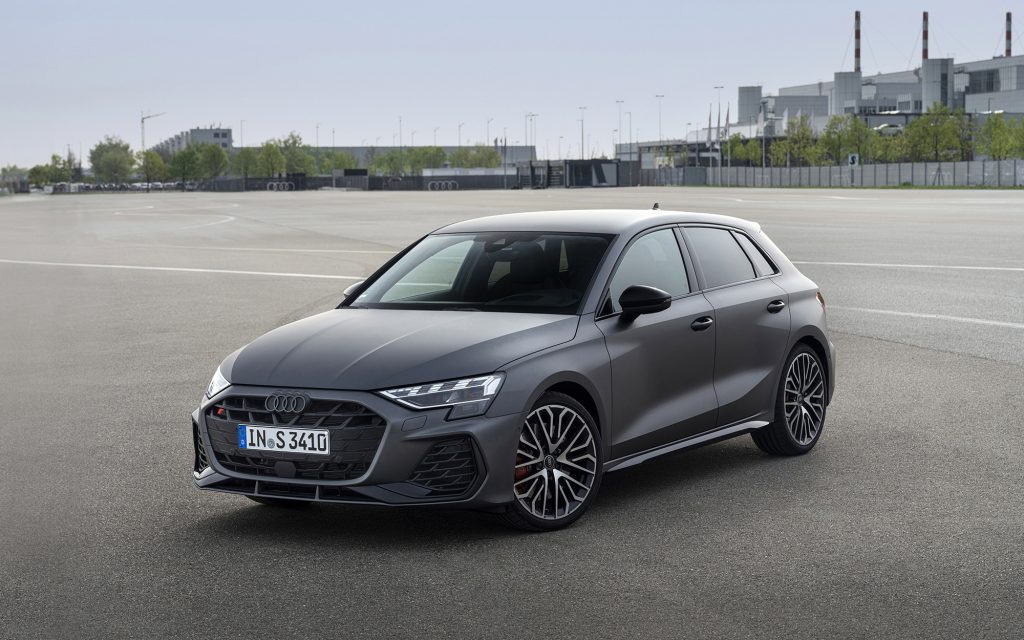
Colour: Daytona Grey matt
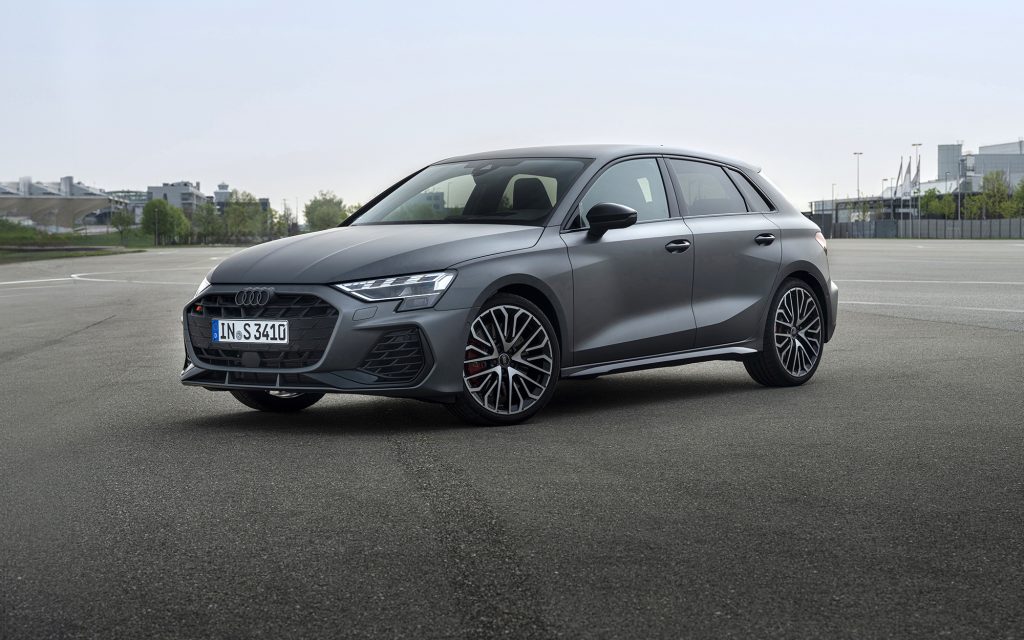
Colour: Daytona Grey matt
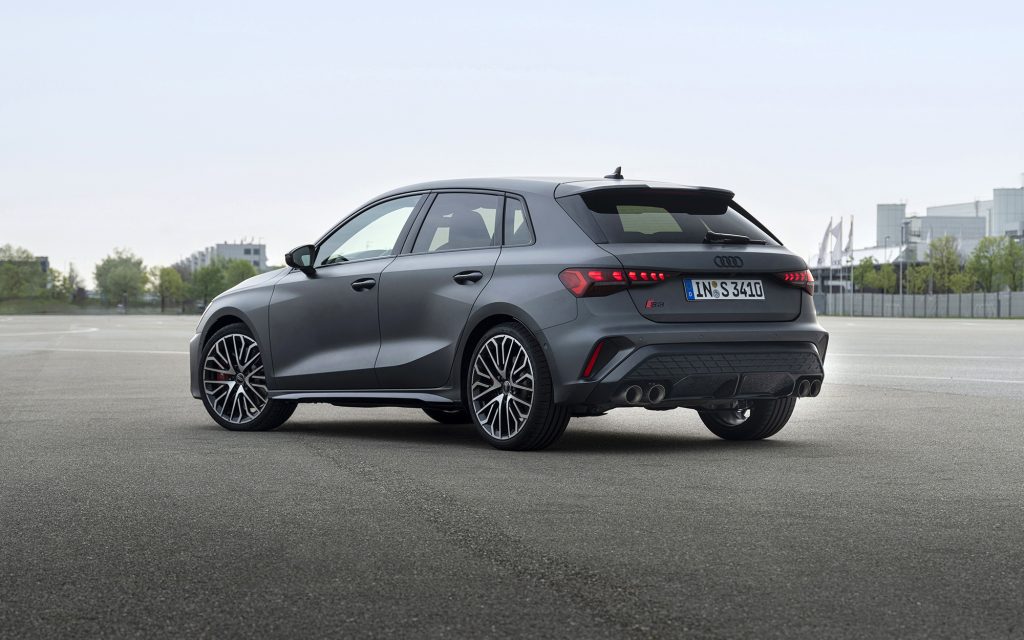
Colour: Daytona Grey matt
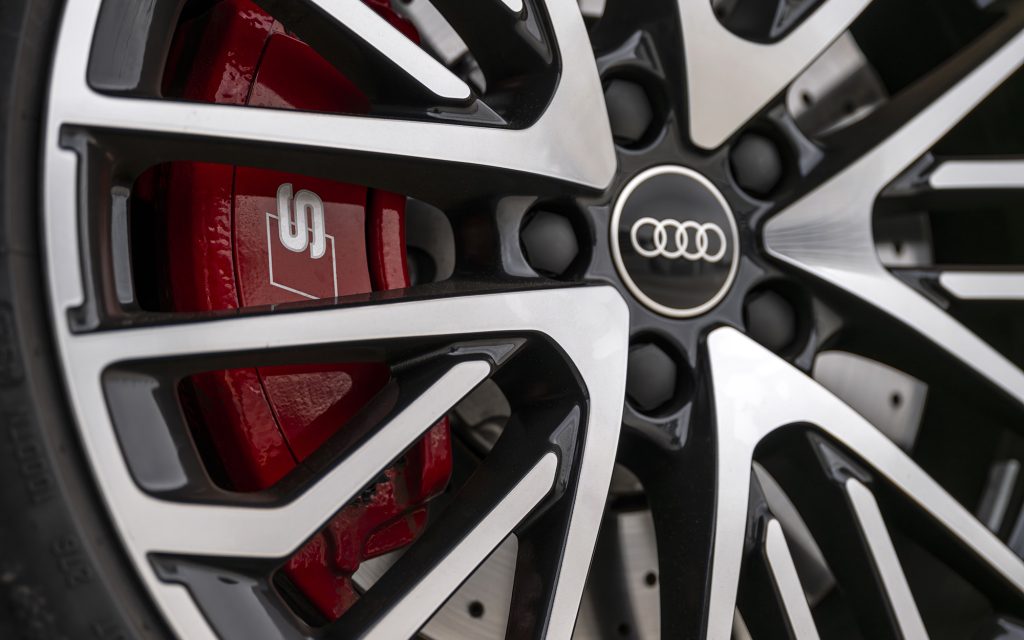
Colour: Daytona Grey matt
Colour: Daytona Grey matt
Colour: Daytona Grey matt
NOTES
Position Within the A3 Family
The Audi S3 Sportback occupies the middle position within Audi’s compact performance hierarchy. It combines substantially enhanced performance, quattro all-wheel drive, and chassis engineering with the practicality and refinement of the A3 Sportback, bridging the gap between the conventional A3 and the Audi Sport-developed RS 3.
PA Nomenclature
Throughout the ooooIYKYK Audi Archives, PA refers to Audi’s internal Produktaufwertung (Product Improvement) designation. This terminology is used in preference to the enthusiast “.5” naming convention because it accurately reflects Audi’s documented product development process and accommodates multiple product improvements within a single model generation.
Accordingly, this model is identified as 8Y PA2, representing the second documented Produktaufwertung of the fourth-generation Audi S3.
Chassis / Matrix Terminology
The Audi Archives use the manufacturer’s engineering terminology wherever practical. Volkswagen Group vehicle architectures such as MQB, MLB, MEB, PPE, and PPC are identified as matrix architectures, reflecting their scalable engineering design rather than referring to them generically as platforms.
SOURCES
Primary Sources
• Audi product announcement introducing the 2026 Audi A3 and S3 family.
• Audi technical specifications for the Audi S3 Sportback.
• Audi official dimensional engineering drawings.
Secondary Sources
None.
RESEARCH NOTES
The following information remains under continuing research pending the availability of additional primary Audi documentation.
• Assembly location(s)
• Designer attribution
• Factory wheel specifications
• Factory wheel offsets
• Exterior and interior color availability
• Production figures
Future revisions should prioritize official Audi engineering documentation, ordering guides, Self-Study Programmes (SSPs), technical specifications, and parts documentation before secondary sources are considered.
ARCHIVE STATUS
Entry Version: 1.0
Documentation Status: Complete from currently available primary Audi documentation.
Primary Source Status: Verified
Last Major Revision: June 2026
Future Revisions Expected: Yes
This archive entry is maintained as a living historical reference. It is periodically reviewed and updated as additional primary source documentation becomes available. The ooooIYKYK Audi Archives are independently produced and are not affiliated with or endorsed by Audi AG.