
/Eras/Audi Sport Competition Cars R Era /Audi R18/R18 RP7
What: 2017 Audi R18 RP7 LMP1, Never-Raced
Series: FIA World Endurance Challenge
Class: LMP1 Hybrid
Era: Audi Sport & Competition R Era
Model Family: R18
Market / Zone: Global
Season: 2017
Model / Generation Code(s): RP7
Chassis / Matrix: N/A
OVERVIEW
The Audi R18 RP7 may be one of the most significant competition cars in Audi Sport history never to have turned a wheel in competition. Developed as the successor to the Audi R18 RP6, the RP7 was well into development when Audi announced its withdrawal from the FIA World Endurance Championship and top-level prototype racing following the 2016 season.
Unlike many unrealized racing projects, the RP7 progressed beyond the concept stage. Physical models were produced, aerodynamic development was underway and construction planning had advanced before the program was terminated. The result was a race car that, while never officially unveiled or tested publicly, offers a glimpse into the next evolution of Audi’s now legendary Le Mans prototype program.
Had Audi remained in endurance racing, the RP7 would have carried forward a lineage that stretched from the Audi R8 through successive generations of diesel and hybrid-powered prototypes. Instead, it became one of the most intriguing “what if” stories in modern motorsport.
END OF AN ERA
Audi concluded its factory LMP1 program at the end of the 2016 season, ending an endurance racing effort that had begun with the Audi R8 in 1999 and produced thirteen overall victories at the 24 Hours of Le Mans.
Speaking to Sportscar365 shortly after images of the car surfaced on Instagram, Audi LMP1 chief Stefan Dreyer confirmed the project had reached an advanced stage.
“It would have been the car to beat,” Dreyer said. “Obviously it had not tested yet but it was very far in development and very far in getting it built.”
Those comments confirmed what many suspected: The RP7 was already becoming reality when the decision was made to leave endurance racing.
UNCONVENTIONAL REVEAL
Unlike other cancelled racing projects that remain hidden for decades, the existence of the RP7 became public almost immediately after the program’s cancellation.
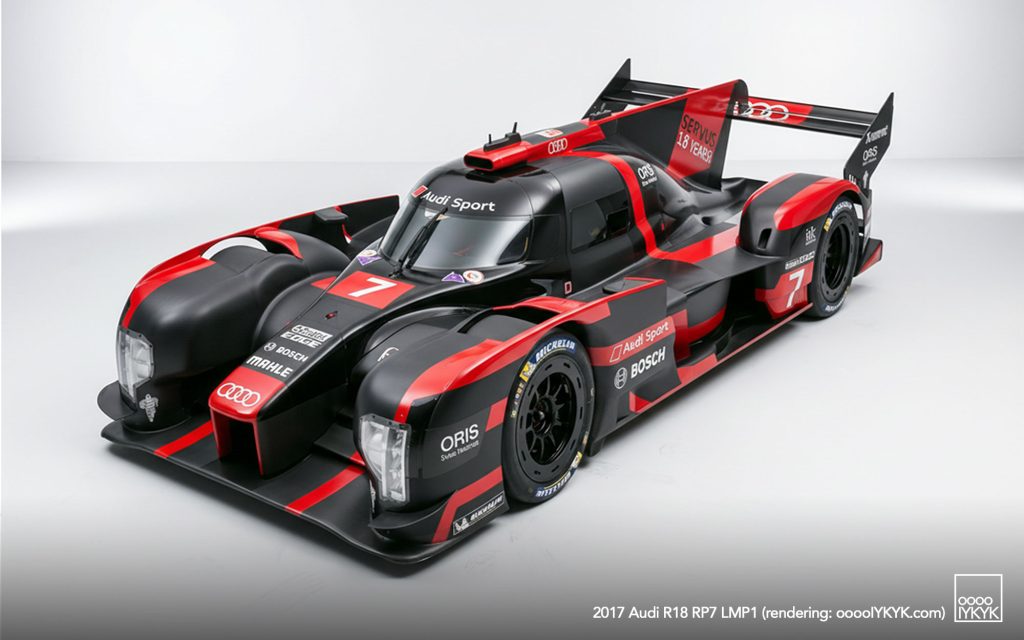
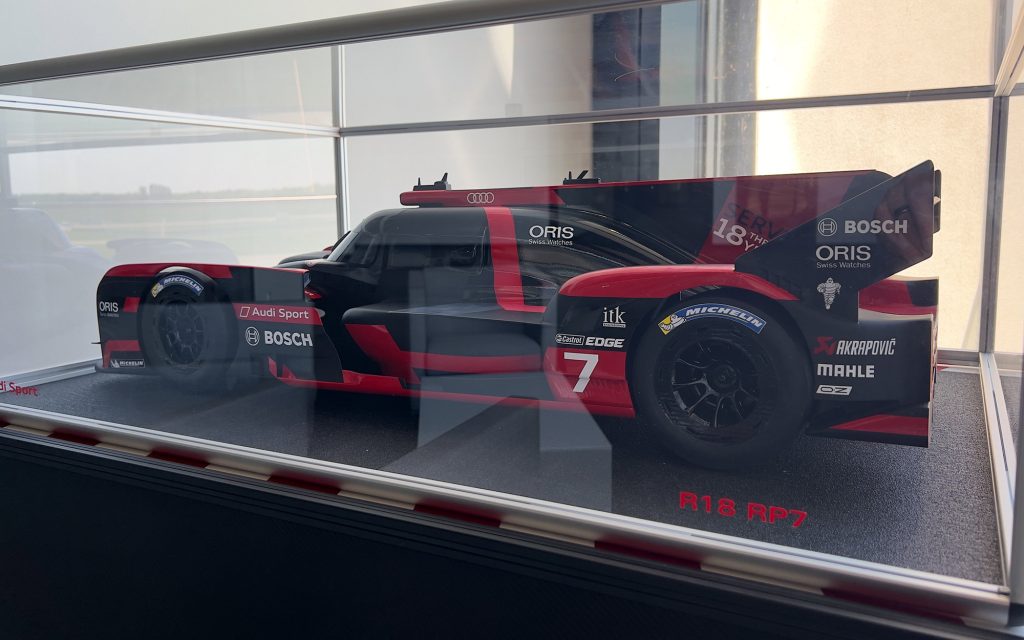
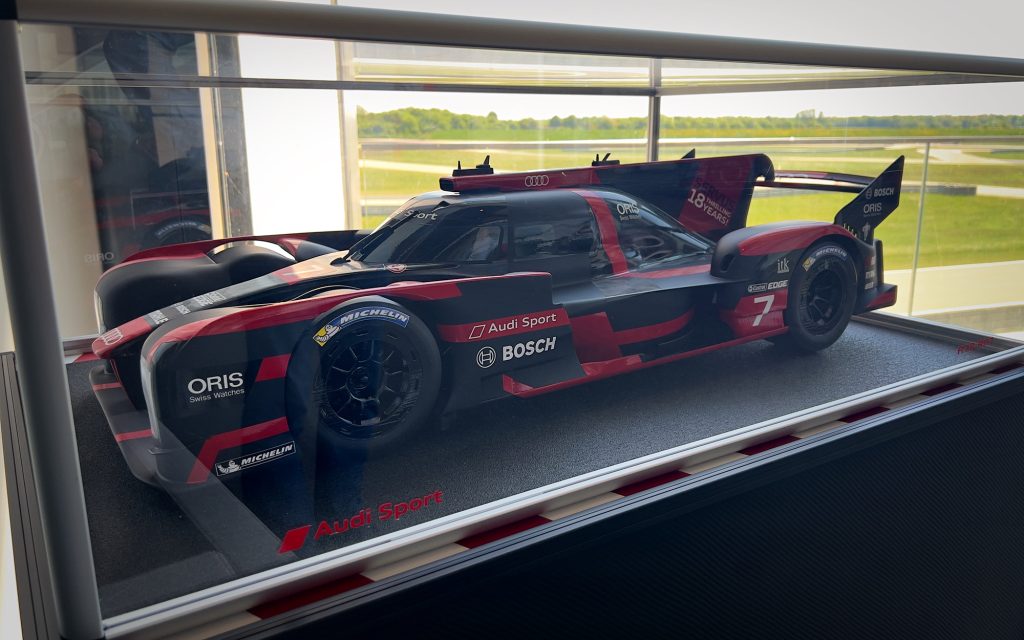
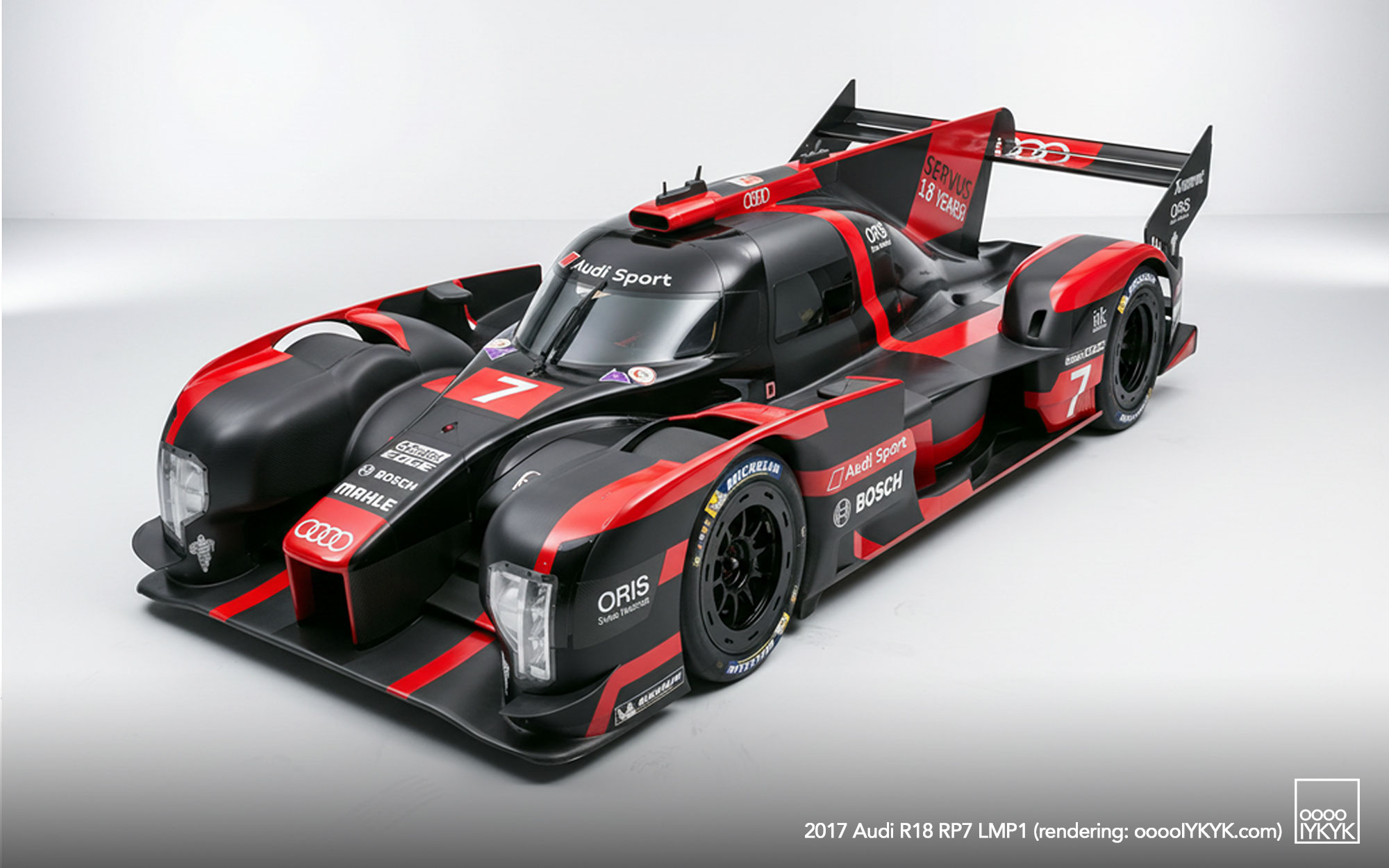
On December 16, 2016, Audi Sport hosted an internal celebration marking eighteen years of endurance racing. Among the displays was a scale model of the RP7 wearing special “Servus 18 Years” graphics.
The graphics were directly inspired by the “Servus 18 Thrilling Years” farewell livery carried by Audi’s final factory-entered R18 RP6 at that car’s final race in Bahrain just weeks earlier.
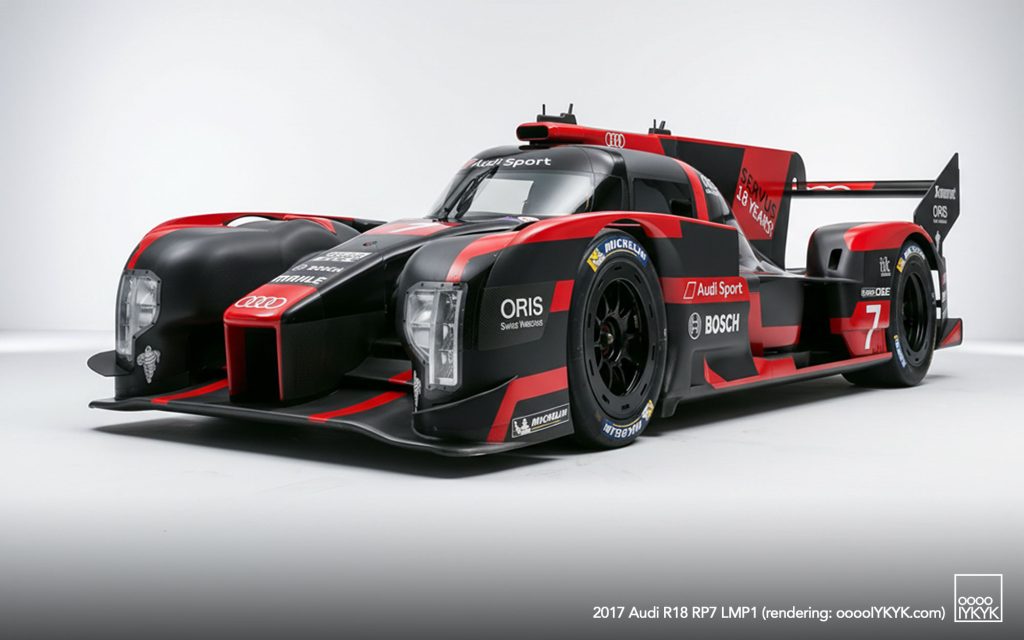
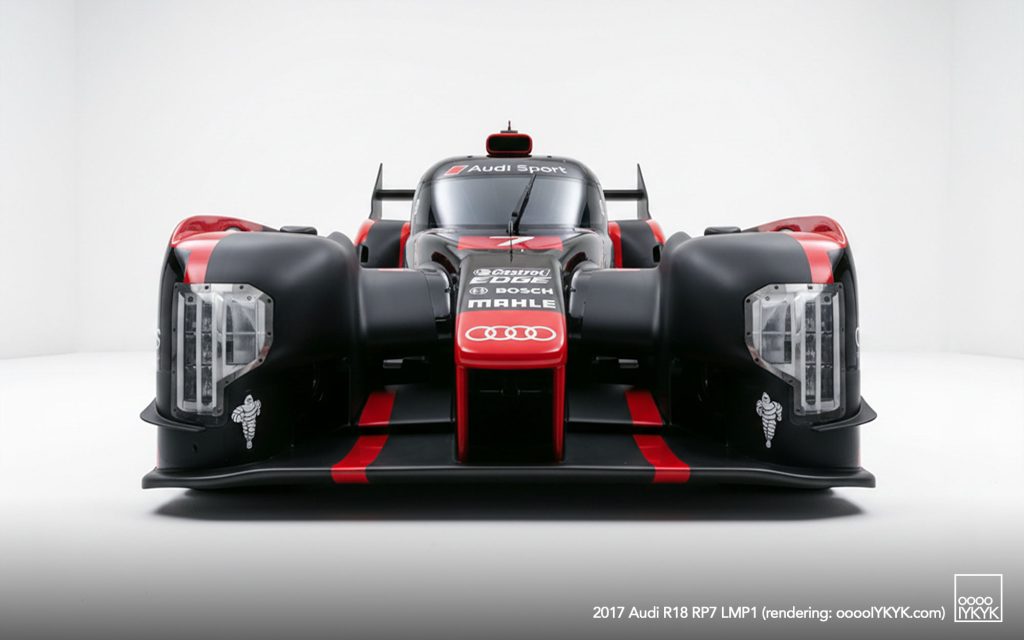
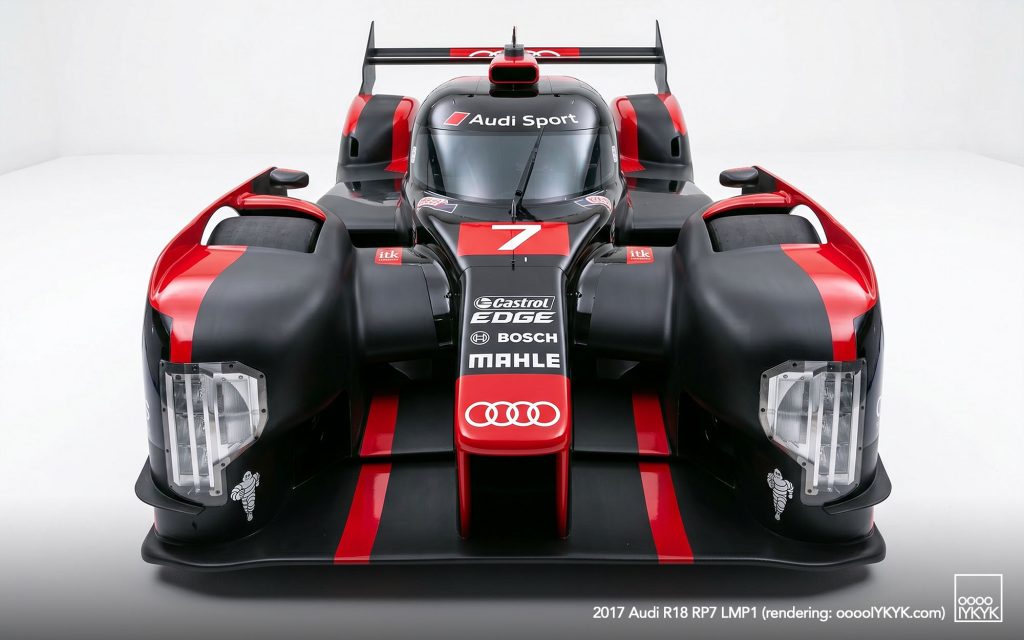
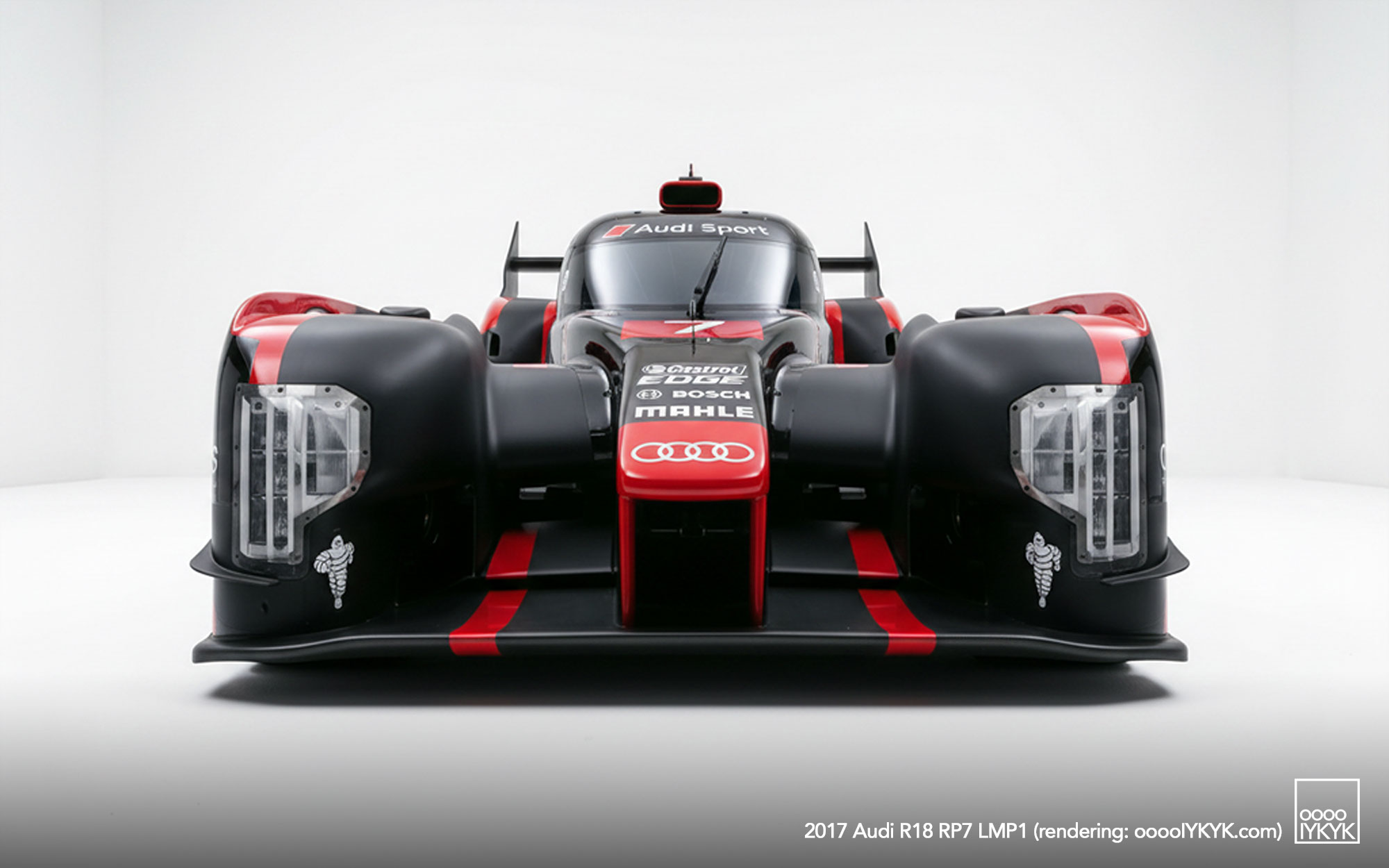
Images of the model soon appeared online through Audi factory drivers Filipe Albuquerque and Loïc Duval, providing enthusiasts with the first public glimpse of the stillborn prototype. Albuquerque shared a front three-quarter view while Duval’s image revealed details of the car’s front design.
A wind tunnel model would also come to light, providing further insight into Audi’s aerodynamic direction for 2017. Together, the scale model and wind tunnel model remain the only known physical representations of the RP7.
The scale model itself has also been seen over the years at Audi Sport facilities, where it remains one of the few tangible reminders of the program.
DESIGN & AERODYNAMICS
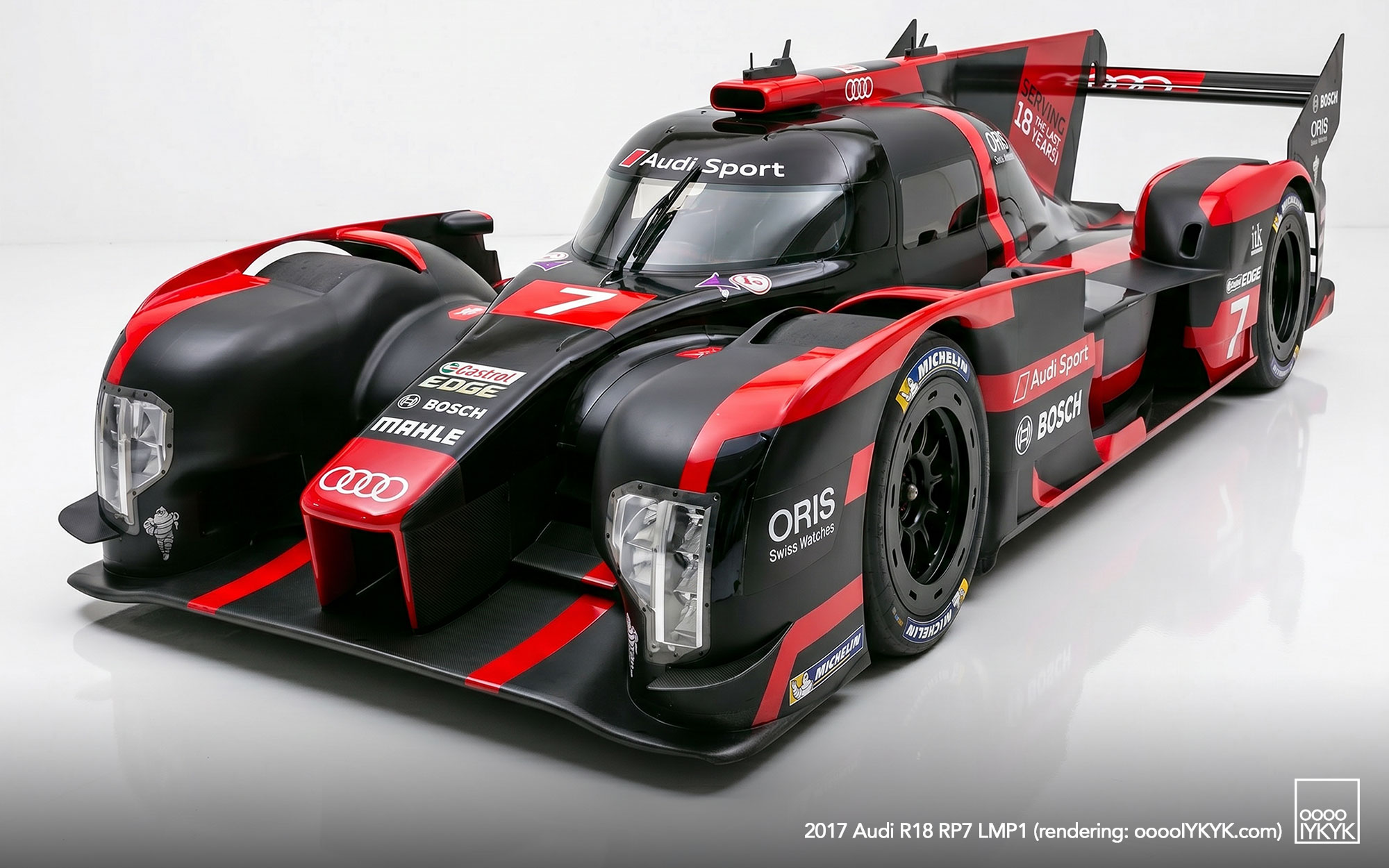
The RP7 appears to have represented a significant aerodynamic evolution of the RP6 rather than a completely clean-sheet design.
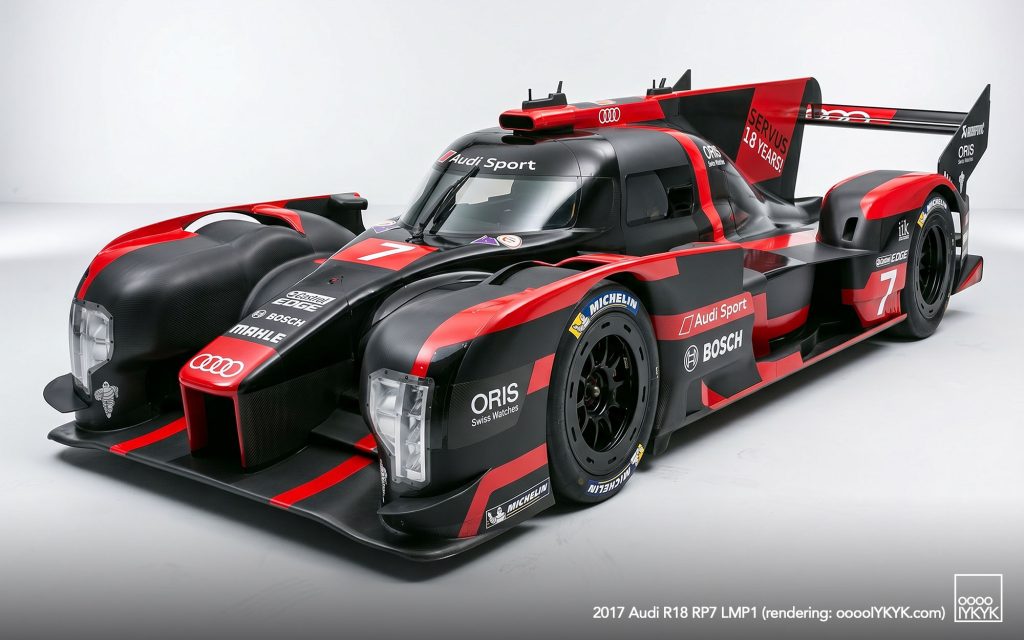
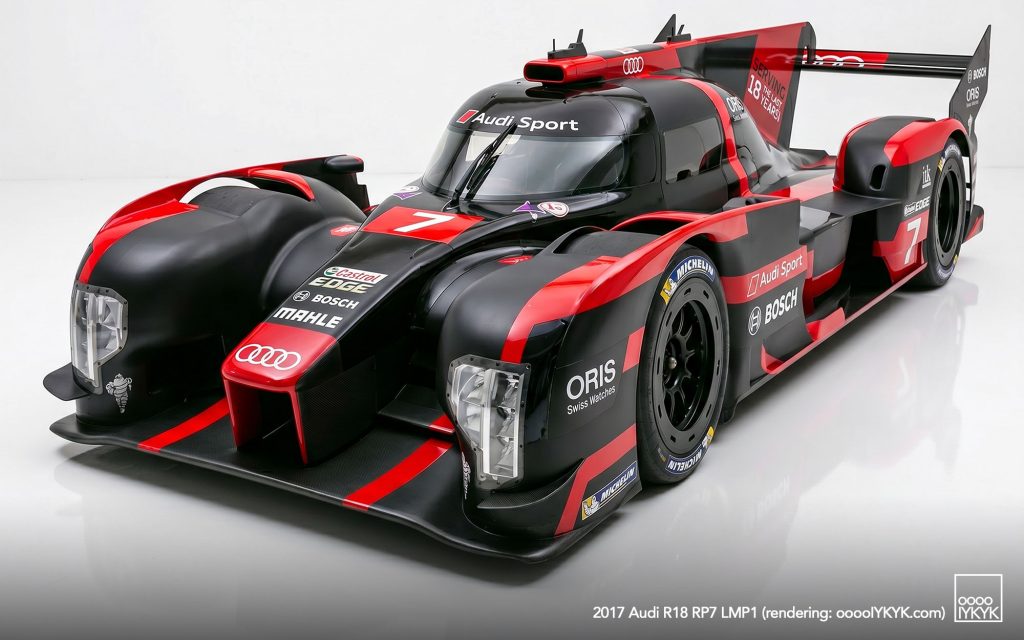
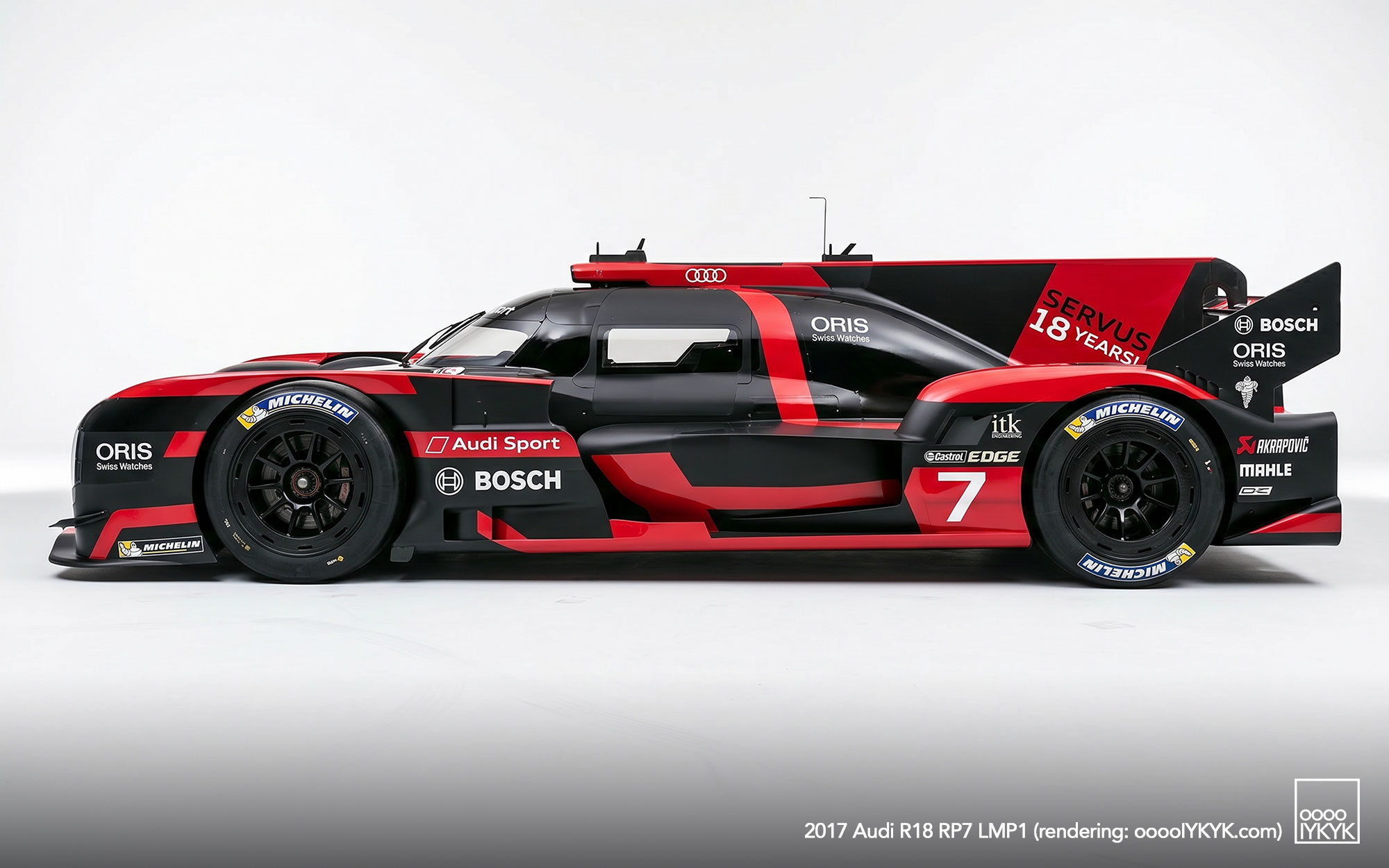
Analysis of the surviving models reveals numerous changes compared with Audi’s final racing R18 RP6. The prominent aerodynamic bridges connecting the front wheel pods to the central fuselage appear to have been removed, creating a cleaner visual appearance and potentially improving airflow management around the front of the car.
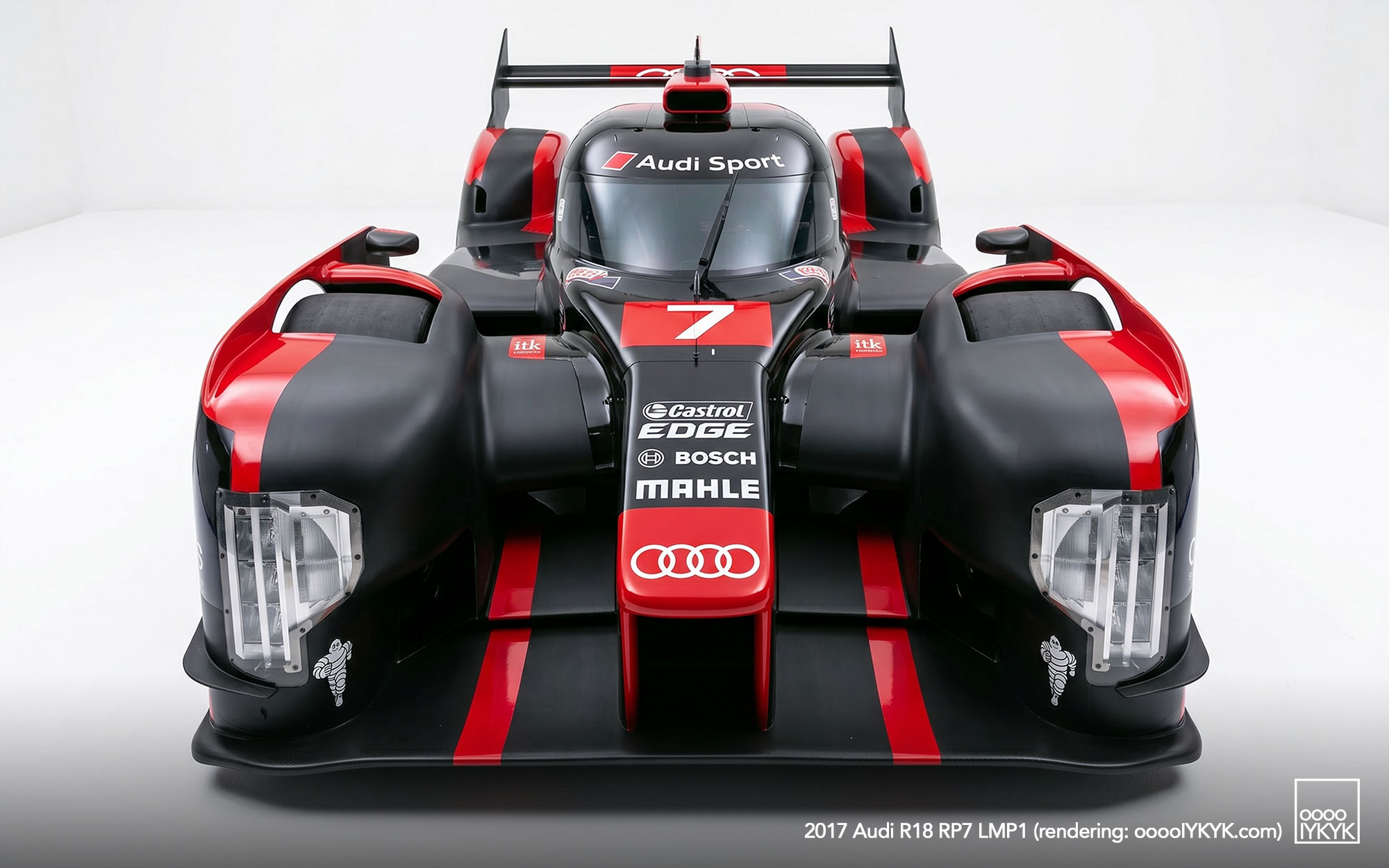
Bodywork surrounding the suspension was revised, while aerodynamic ducting became visible at the outer edges of the front wheel pods. Additional changes appear to include revisions to the front ventilation grille, splitter profile and airflow management around the sidepods.
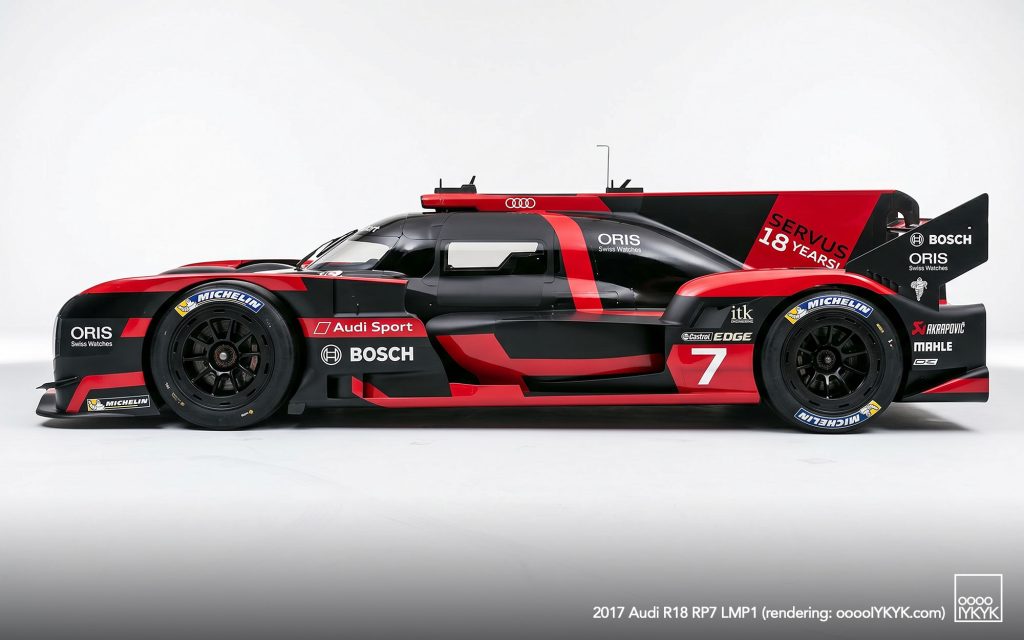
The rear bodywork also evolved significantly. Rear wheel arch treatment was revised, while the rear wing assembly featured larger endplates and a more aggressive overall design than the outgoing RP6.
Motorsport journalist Sam Collins has suggested the underlying monocoque may have carried over from the RP6, allowing Audi engineers to concentrate resources on aerodynamic development and hybrid system evolution rather than an entirely new chassis.
The resulting design appears cleaner, lower and more refined than its predecessor while retaining the unmistakable proportions of the R18 family.
POWERTRAIN
Audi never publicly released technical specifications for the RP7.
Had the program continued, the car would almost certainly have retained Audi’s diesel-hybrid philosophy, representing the final evolution of the technology that had defined the latter years of the R18 program.
According to analysis by Sam Collins, Audi was also preparing to utilize an innovative fuel derived from plant waste and algae, continuing the manufacturer’s long-standing interest in efficiency-focused technologies and alternative fuels.
Because the program was cancelled before testing, the final specification remains unknown.
PRIVATEER POTENTIAL
The end of Audi’s factory program did not immediately end discussion surrounding the RP7.
According to Sam Collins, Audi explored the possibility of making the car available to customer teams after withdrawing from endurance racing. Such a move could have allowed the platform to continue competing despite the absence of a factory-backed effort.
Joest Racing, which had managed Audi’s prototype racing efforts since the debut of the Audi R8 in 1999, reportedly evaluated concepts that would have replaced the diesel-hybrid powertrain with a customer engine package.
Among the possibilities discussed were a Gibson V8 or the naturally aspirated V8 from Audi’s RS 5 DTM program.
The challenges to do so would have been substantial. Audi was considered unlikely to support continued diesel operation, meaning any customer program would have required significant redesign. Converting the chassis to gasoline power would have required changes to the fuel cell, transmission integration, hybrid packaging, electric motor placement, battery installation and overall weight distribution.
Collins has also reported that Audi received a letter of intent from a team interested in racing the car. Ultimately, however, no agreement materialized and the project never progressed beyond exploratory discussions.
PORTFOLIO OF WHAT MIGHT HAVE BEEN
The RP7 was not Audi Sport’s only significant competition car that never reached a starting grid.
Among the most revered unrealized projects is Audi’s Group S rally car, developed during the final years of the Group B era. Intended for the FIA’s proposed Group S regulations, the project became obsolete before it could compete when both Group B and the planned successor category were cancelled.
Another little-known example is an Audi 80-based DTM prototype that has occasionally appeared within Audi Tradition’s collection. Developed as part of Audi’s touring car ambitions, the project never advanced into competition as focus shifted to Super Touring in that era but the completed car survives as evidence of an alternative direction once considered by Audi Sport.
The RP7 also was not the final prototype racing program Audi evaluated.
When LMDh regulations emerged in the early 2020s, Audi pursued a return to top-level prototype racing using the same IMSA-approved Multimatic-sourced chassis that underpins the Porsche 963. The proposed Audi program would have shared its engine and IMSA LMDh spec hybrid system with the Porsche, though having its own bodywork and aerodynamic concept, competing in IMSA’s GTP category and the FIA World Endurance Championship’s Hypercar class at Le Mans, effectively creating an Audi counterpart to Porsche’s successful LMDh effort.
Audi did officially release a sketch of the car during initial promotion and the program is said to have progressed nearly to the testing phases. Whether examples of the car were ever constructed is not publicly known. That program was shelved even later in process as Audi shifted resources towards its bid for F1, leaving Porsche as the sole Volkswagen Group representative in the new era of prototype racing.
Taken together, these projects represent some of the most intriguing “what if” stories in Audi motorsport history.
LEGACY
The Audi R18 RP7 remains the final evolution of Audi’s diesel-hybrid Le Mans prototype philosophy.
Had Audi continued in endurance racing, the RP7 would have succeeded the RP6 and carried Audi’s factory prototype program into the 2017 season and beyond. Instead, it became a snapshot of a future that never arrived.
The surviving scale model and wind tunnel model provide a glimpse into what Audi Sport engineers believed would have been the next benchmark in LMP1 competition.
Today, the RP7 stands as one of the most fascinating competition cars ever developed by Audi Sport—a racing car that never raced.
A NOTE ON IMAGES IN THIS ENTRY
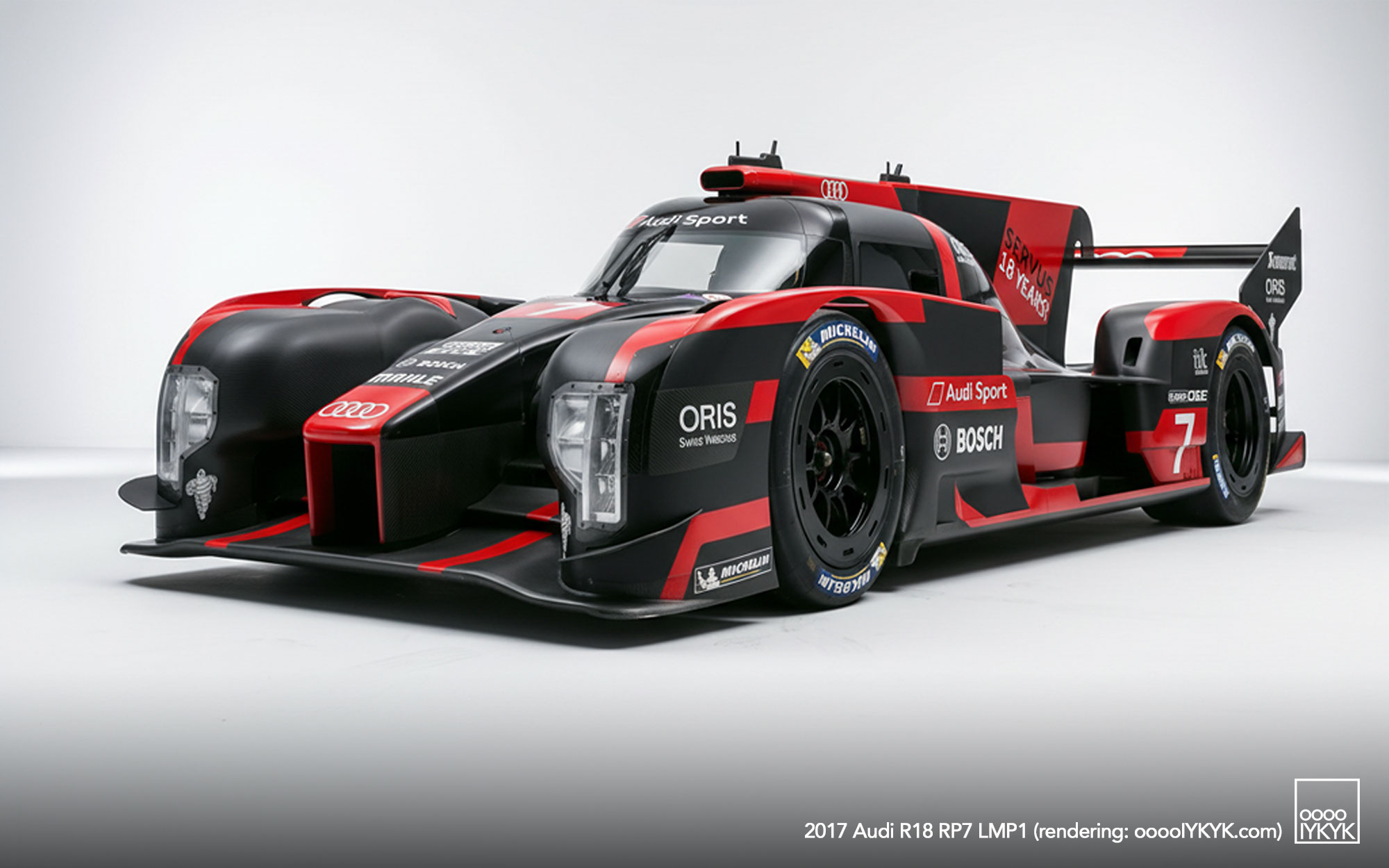
Given models of the car are the only known examples, images for this car are renderings created using AI tools trained on known imagery of the scale model. Though they may appear as real, they are simply renderings.
SOURCES
- Sportscar365, “Audi’s Stillborn 2017-Spec R18 Revealed”
- Sam Collins, Sam’s the Pits, Audi R18 RP7 analysis
- Filipe Albuquerque Instagram post, December 2016
- Loïc Duval social media post, December 2016
PHOTO GALLERY