
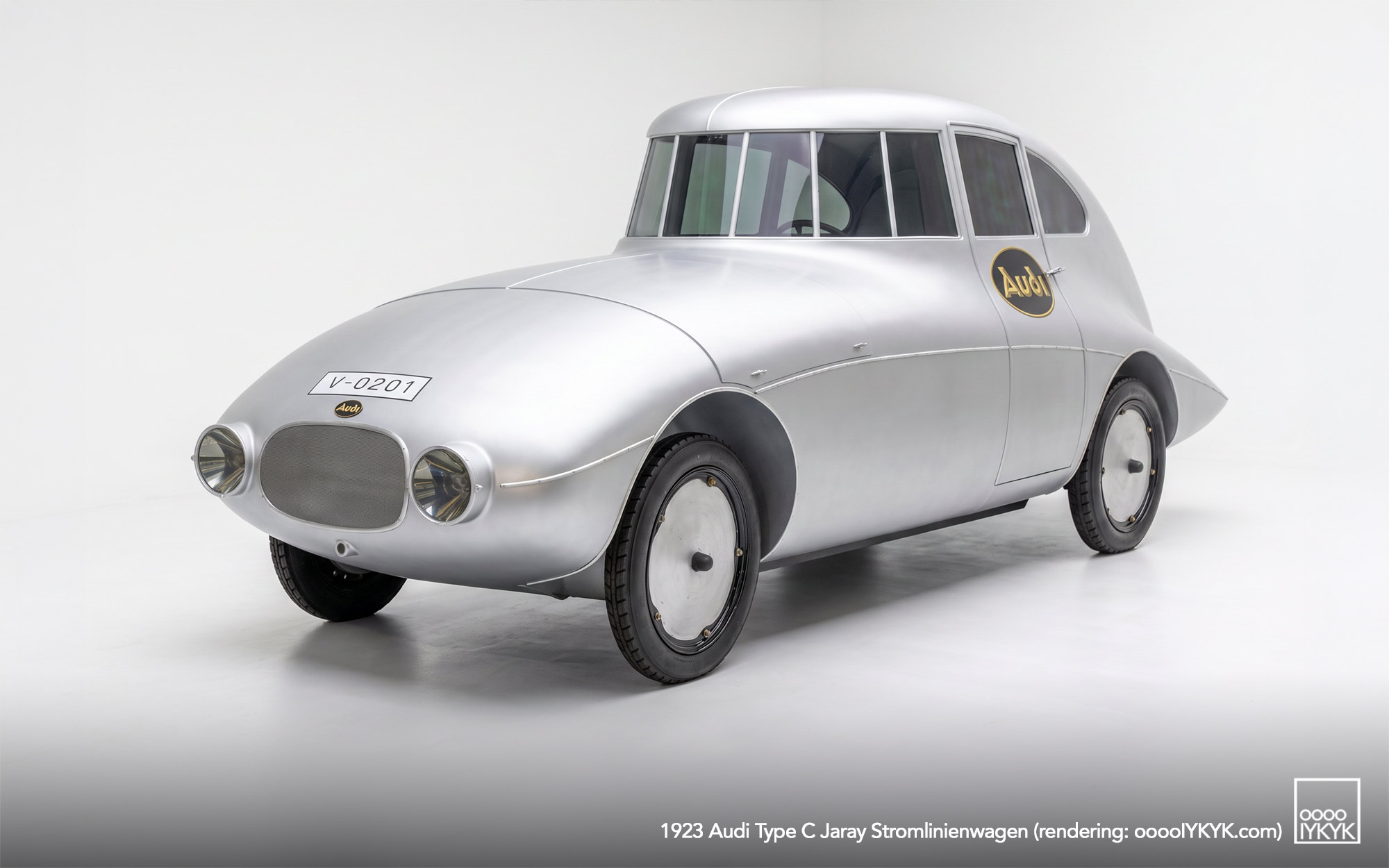

MODEL: Audi Type C Jaray Stromlinienwagen
YEAR: 1923
TYPE: Aerodynamic experimental vehicle, concept car
DESIGNER: Paul Jaray
CHASSIS: Audi Type C, according to current Audi Tradition research
HISTORICAL IDENTIFICATION: Audi Type K
BODY: Streamlined Jaray body
ENGINE: 3,564 cc inline four-cylinder
POWER: 35 PS
DRIVETRAIN: Rear-wheel drive
STATUS: Original vehicle no longer exists; full-size 1:1 model completed in 2023
BACKGROUND
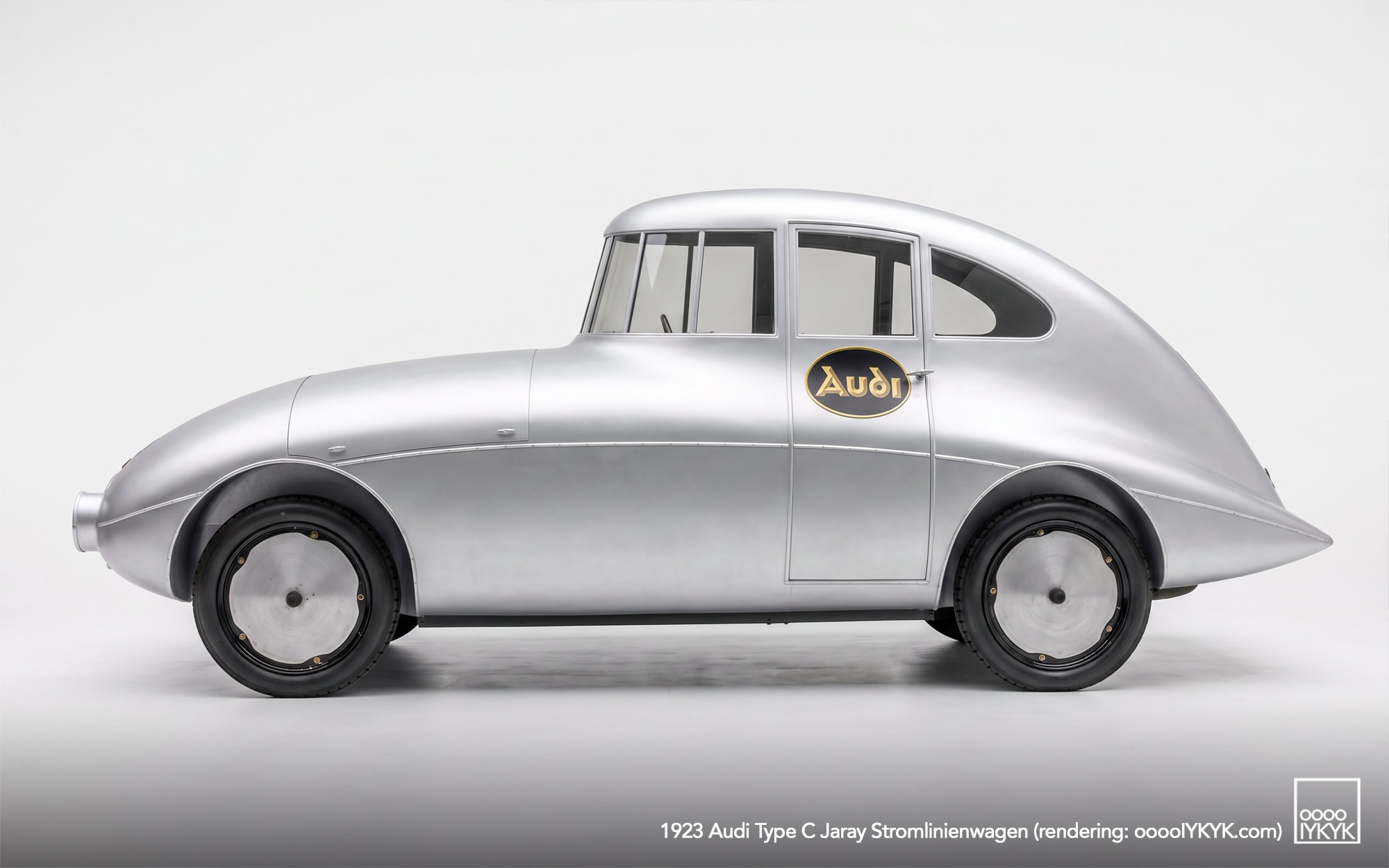
The 1923 Audi Type C Jaray Stromlinienwagen was an early attempt to apply aerodynamic principles developed in aviation and airship design to the automobile. Created around the ideas of engineer Paul Jaray, the radically streamlined Audi was one of several similar experimental cars built on chassis from different manufacturers to demonstrate the potential of Jaray’s aerodynamic body concept.
Jaray had worked for Luftschiffbau Zeppelin, where his experience with airships helped shape his understanding of airflow and drag. After leaving Zeppelin, he pursued the application of those principles to road vehicles, patenting streamlined automobile body forms characterized by a rounded nose, smooth enclosed body and long tapering tail.
Rather than being developed specifically as an Audi design exercise, the 1923 car should therefore be understood as one member of a broader family of Jaray experiments using production chassis from different manufacturers.
AUDI, LEY AND DIXI
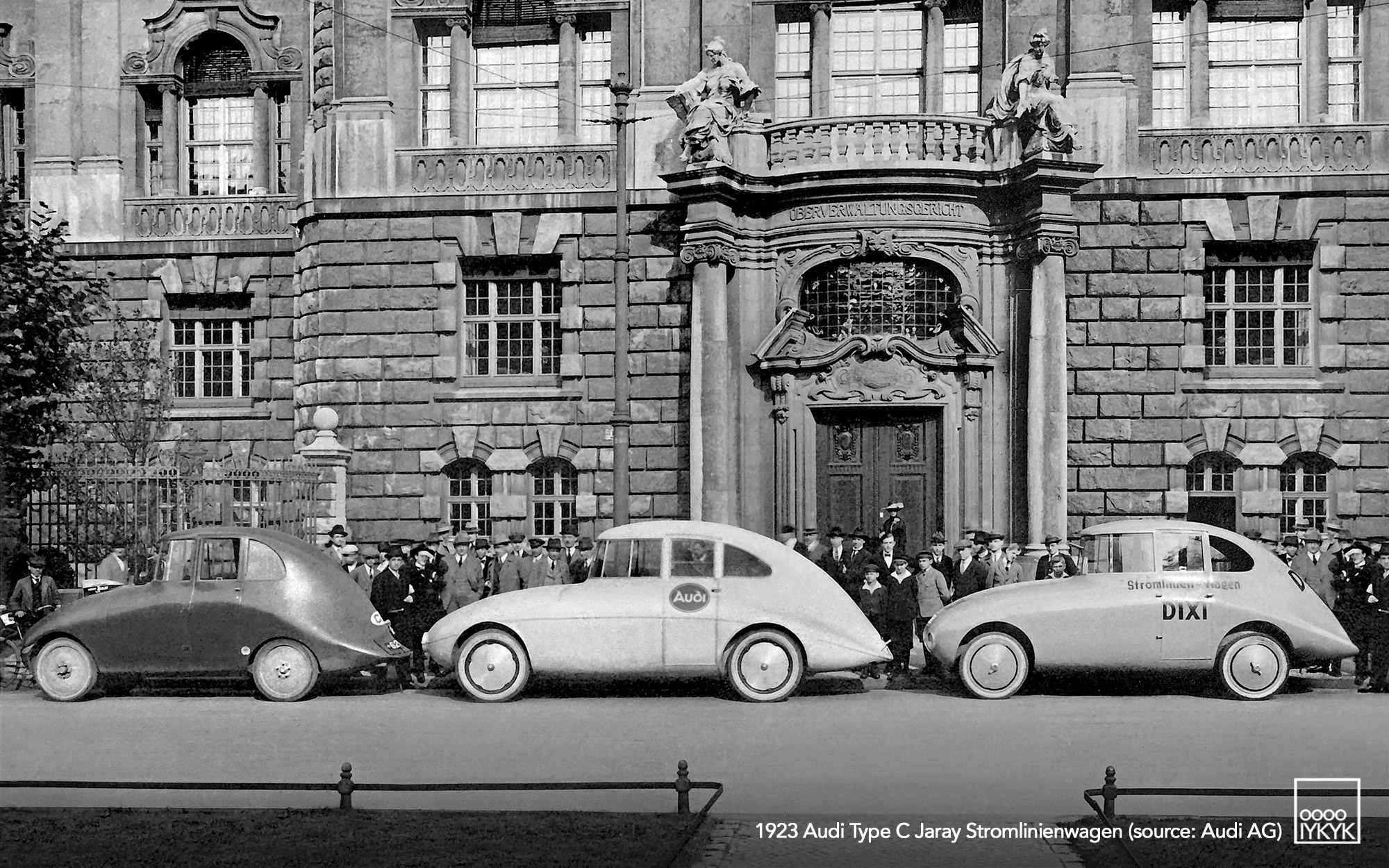
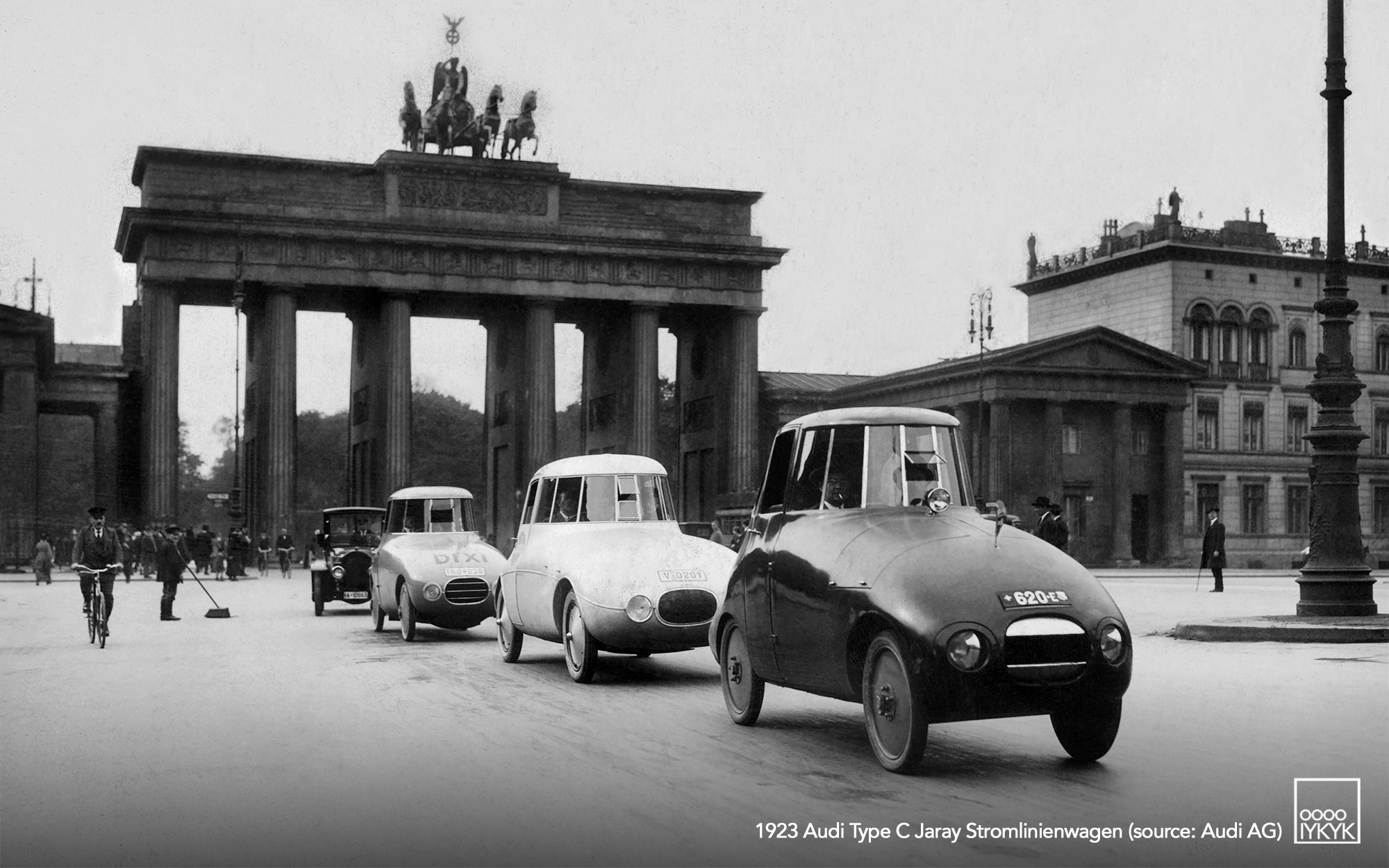
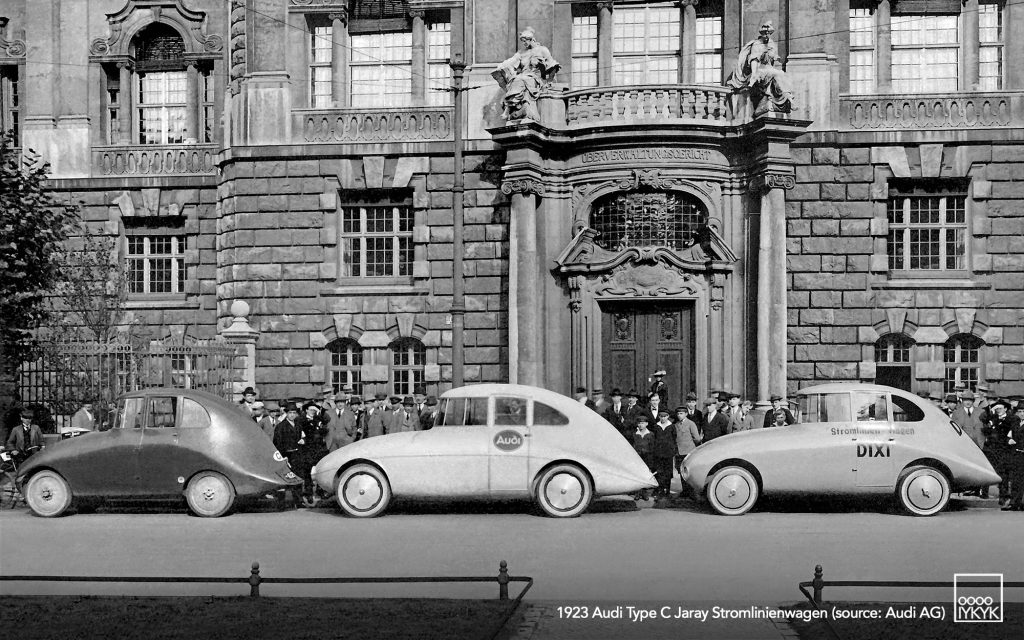
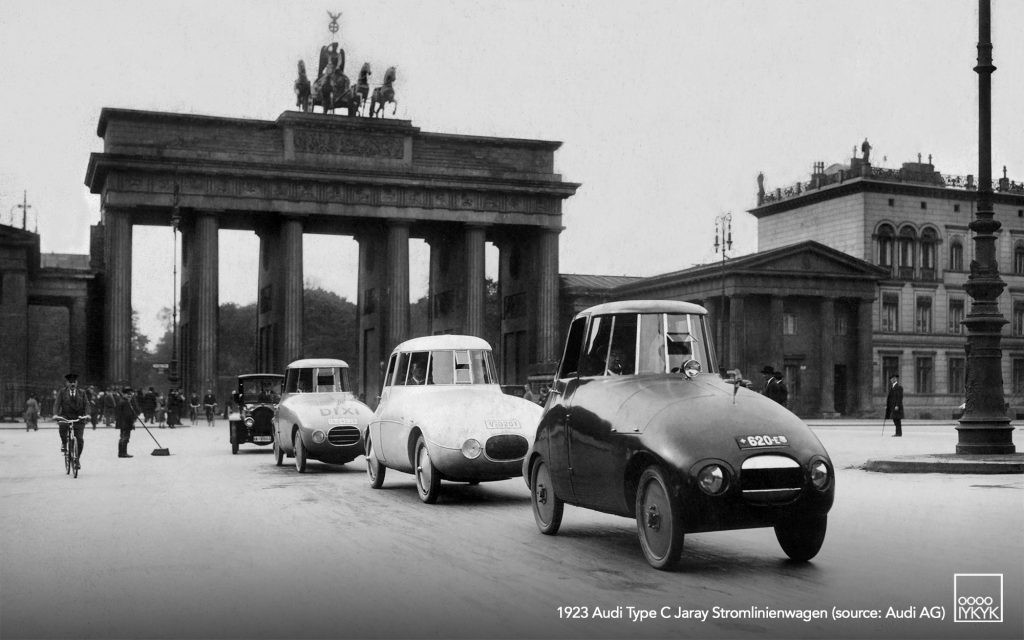
A well-known photograph from Berlin in 1923 shows three closely related Jaray-bodied automobiles traveling together. Audi currently identifies them as a Ley 6/16 PS Type T6 from 1922, an Audi 14/35 PS Type C from 1923 and a Dixi 6/24 PS from 1923.
All three demonstrate essentially the same underlying proposition: Jaray’s aerodynamic principles could be applied across different manufacturers and mechanical platforms.
The relationship makes the Audi less a conventional standalone concept car than one expression of a multi-marque design study. In that respect, the project has parallels with later independent design-house programs such as Italdesign Giugiaro’s Asso series of the 1970s, in which related design ideas were explored using cars from different manufacturers. Audi itself was represented in that later series by the 1973 Audi Asso di Picche.
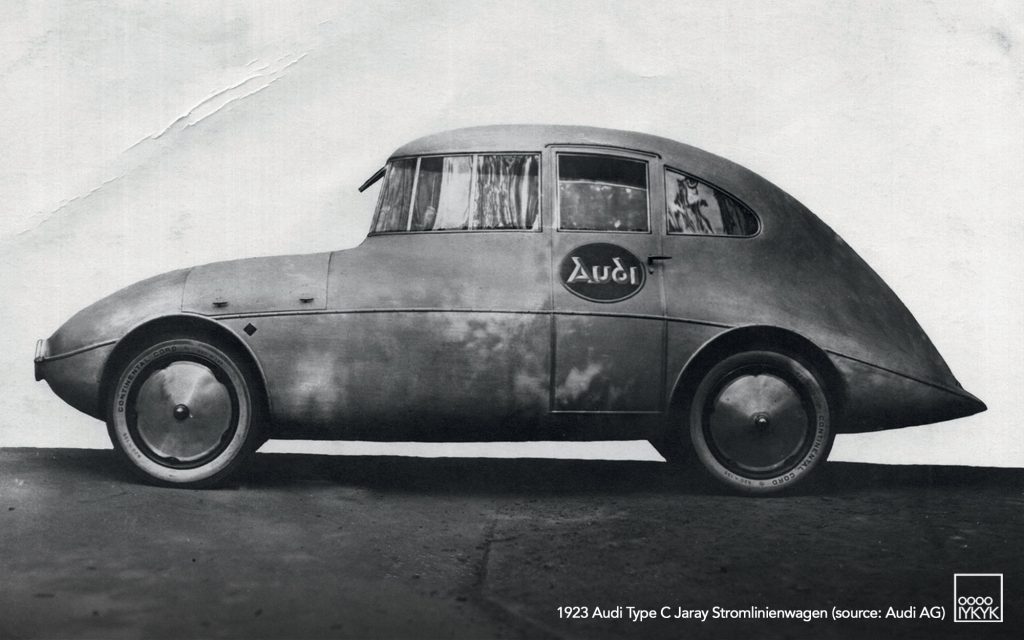
The three Jaray cars are distinguished by details and proportions, but share the extraordinary basic architecture of a narrow passenger compartment incorporated into a much broader, smoothly curved lower body. From above, the body tapered toward the rear in a form heavily influenced by Jaray’s aerodynamic research.
TYPE C OR TYPE K?
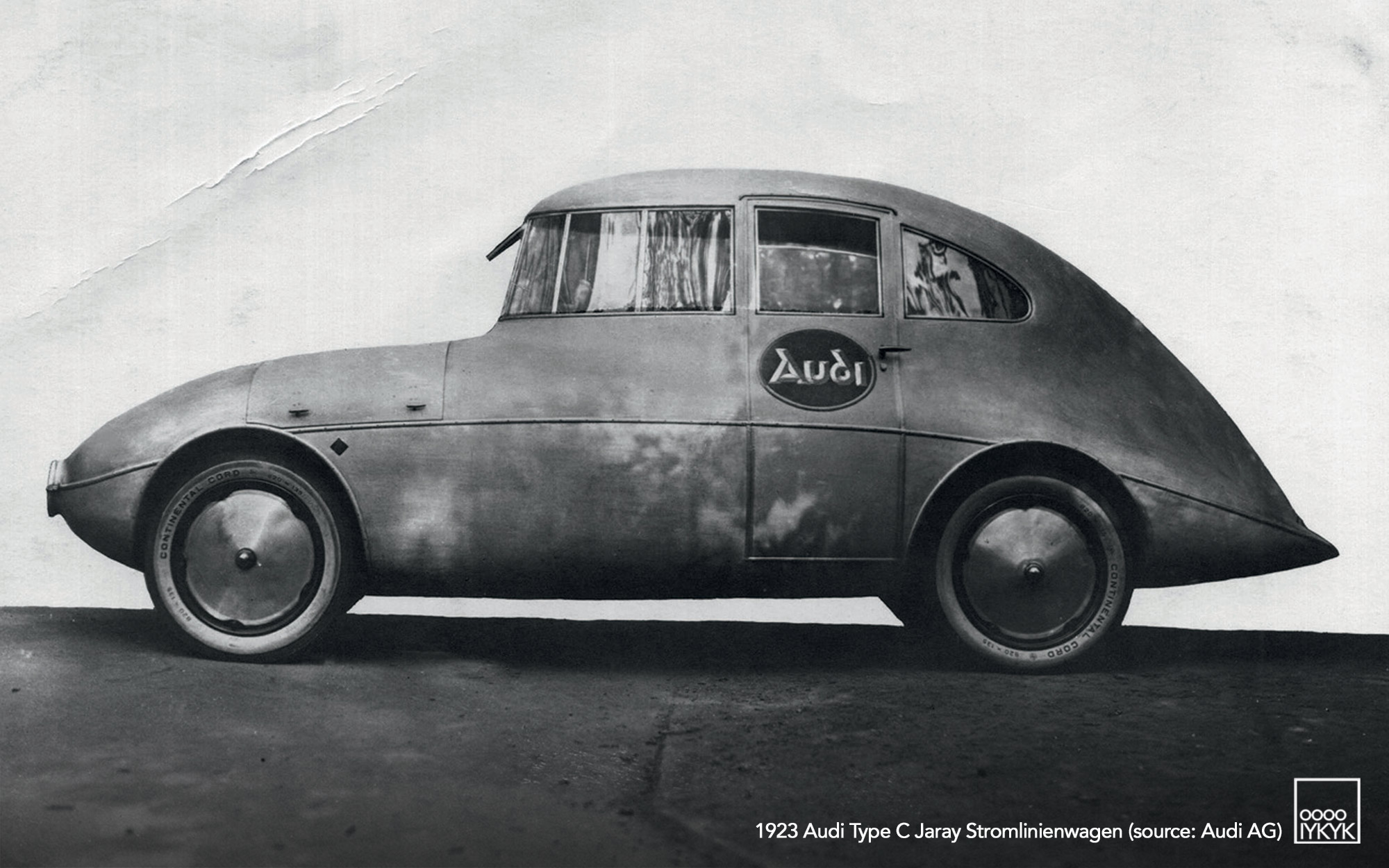
For many years, the Jaray-bodied Audi was identified as an Audi Type K. Numerous historical sources, captions and later accounts continue to use that identification.
Research undertaken in preparation for the Windschnittig exhibition organized by the August Horch Museum and subsequently shown at the Audi museum mobile led historians to reconsider that attribution.
Audi Tradition now identifies the car as an Audi 14/35 PS Type C.
According to Audi, research conducted while reconstructing the vehicle established that the chassis visible in historical documentation could not have been a Type K and instead must have been a Type C. Audi consequently uses the Type C identification in its current museum material and captions of the surviving historical photographs.
The distinction is significant because the Type C and Type K represented different generations of Audi automobile. The Type C was introduced before the First World War and became one of Audi’s most historically important early models, while the newer Type K entered production in the early 1920s.
Because the original Jaray car no longer survives and the Type K identification persisted for decades, both identities remain relevant to its history. Audi Archives follows Audi Tradition’s current Type C attribution while retaining Type K as the car’s historical identification.
AERODYNAMIC DESIGN
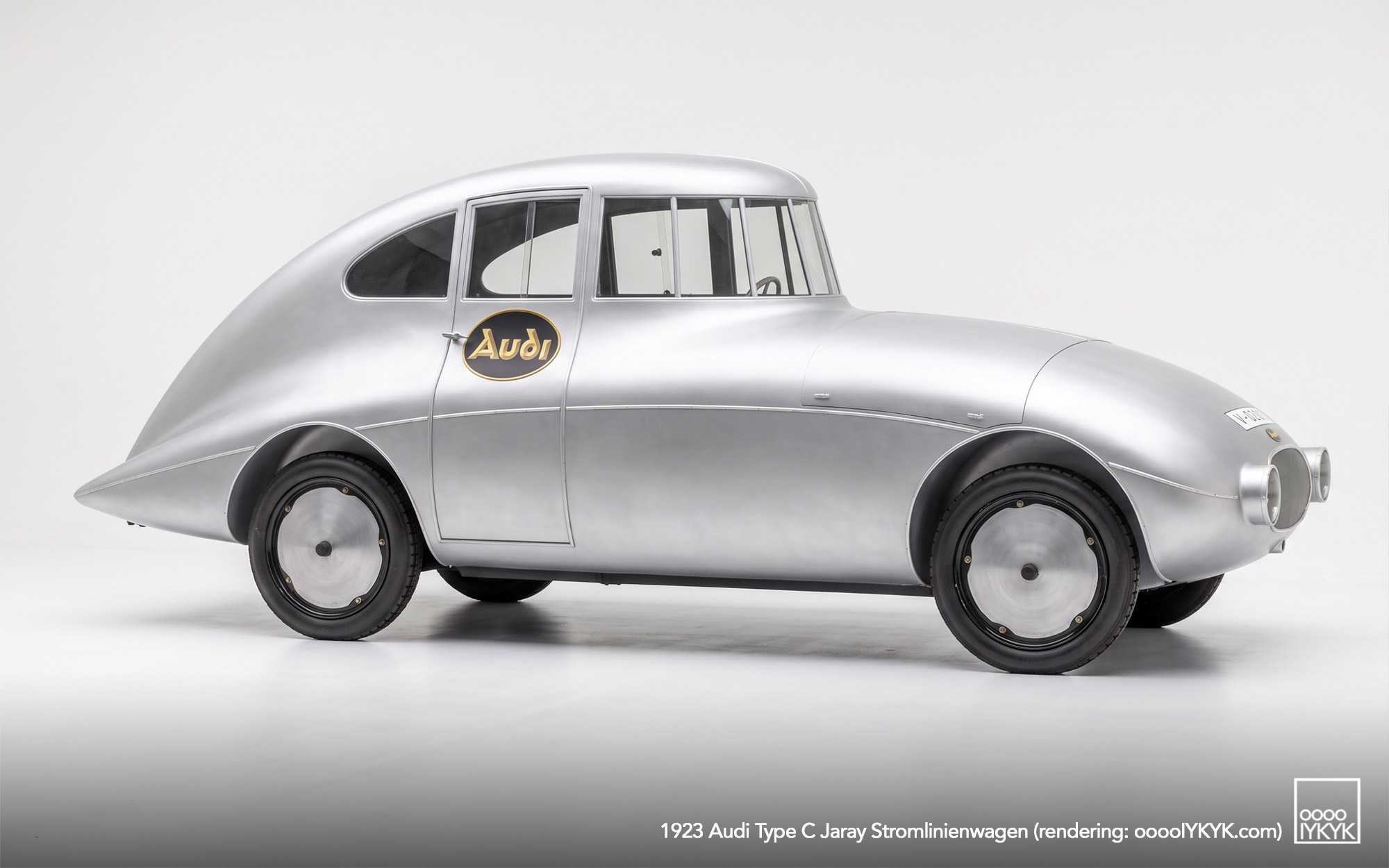
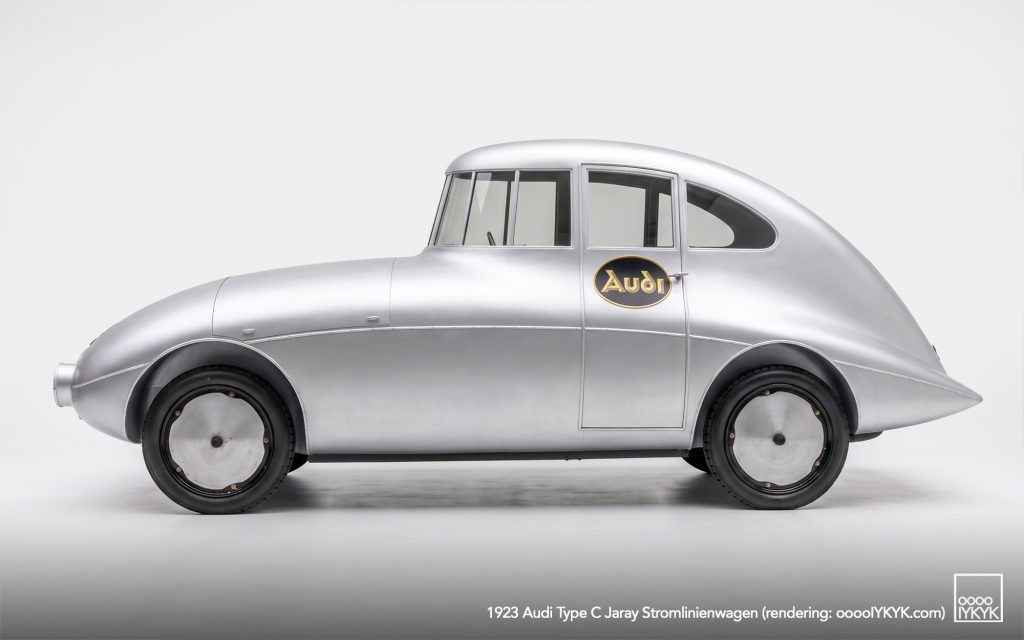
The Jaray Audi bears little visual relationship to the conventional Type C beneath it.
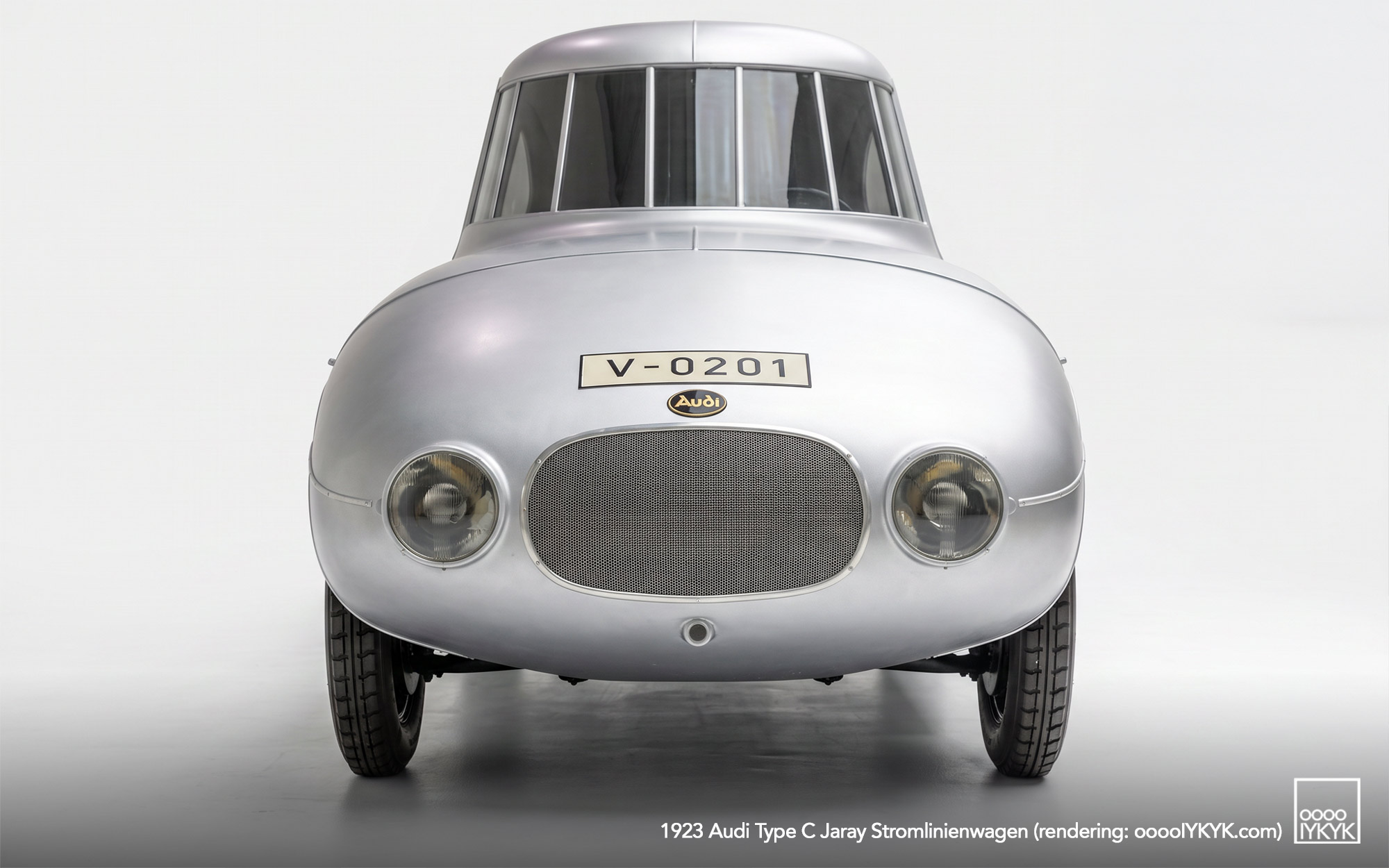
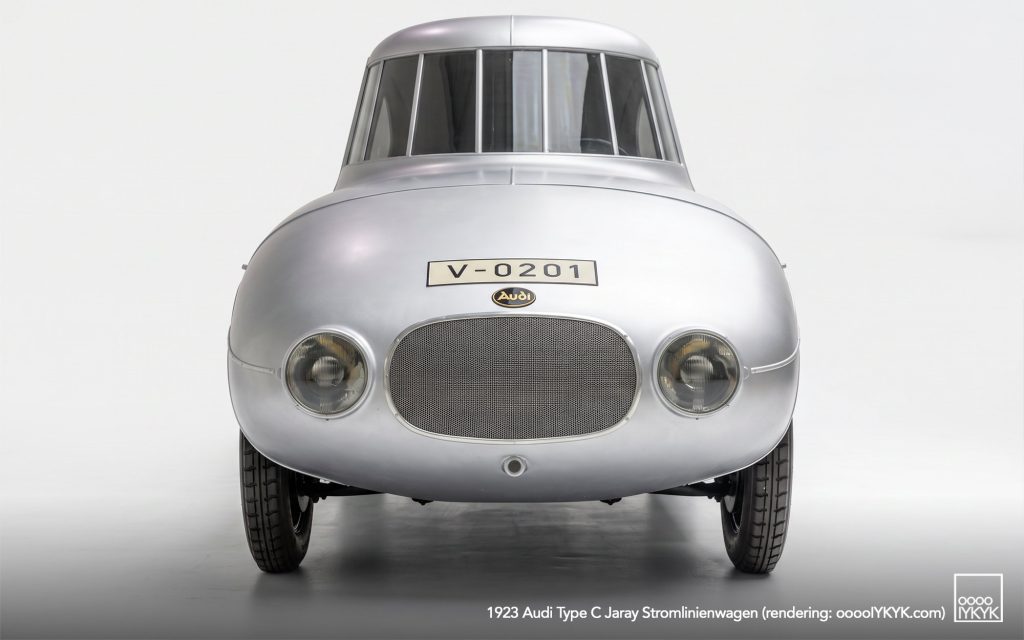
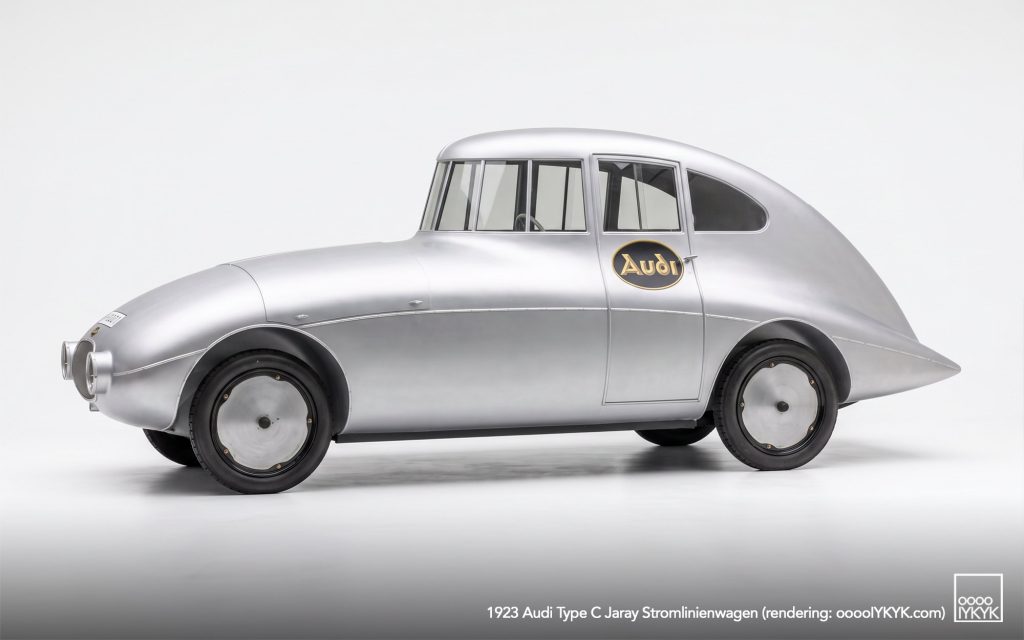
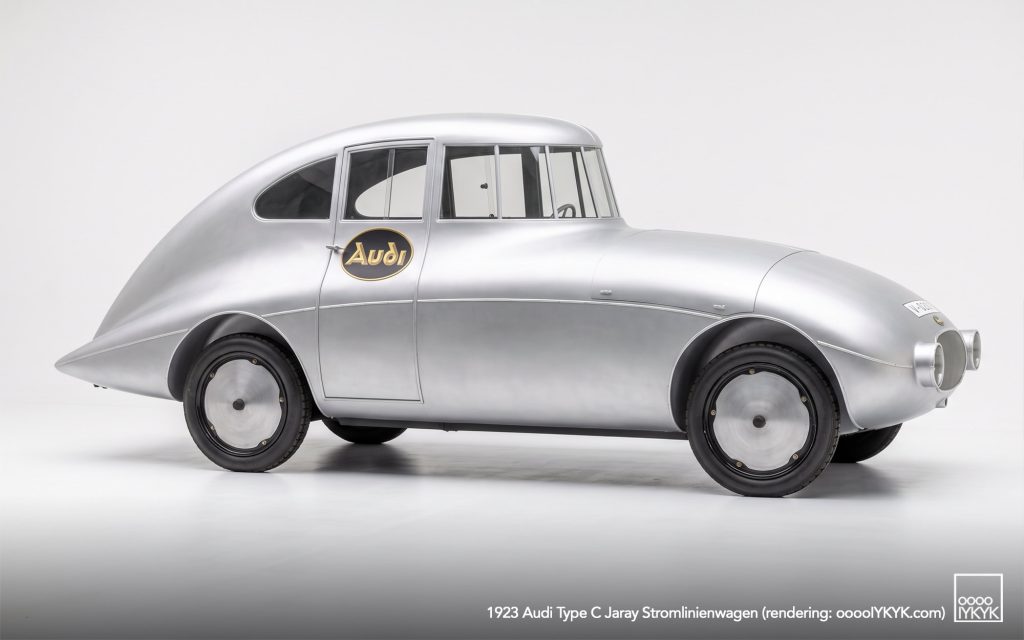
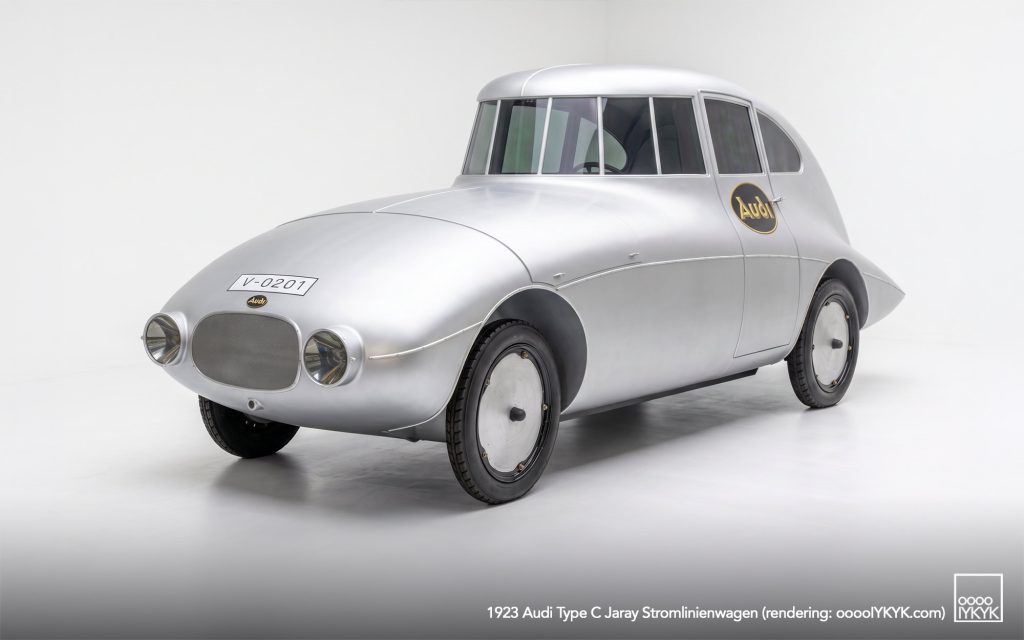
Its streamlined body effectively enveloped the automobile, with a rounded leading surface, enclosed wheels, narrow glazed passenger compartment and a long body tapering toward the rear. Traditional automotive elements such as separate fenders, running boards and an upright exposed radiator were largely absorbed into a single aerodynamic volume.
This approach was radical in an era when most automobile bodies remained collections of visually and aerodynamically separate components.
Jaray’s objective was not simply stylistic. Reducing aerodynamic resistance offered the possibility of substantially increasing speed without requiring a corresponding increase in engine output.
Audi’s modern historical material attributes a top speed of approximately 130 km/h to the streamlined car, compared with approximately 90 km/h for a conventional Type C using the same basic 35 PS engine. Estimates for the Jaray body’s coefficient of drag have been placed around Cd 0.30 to 0.36, an extraordinary figure for a car conceived more than a century ago.
Those figures should be understood as historical or reconstructed estimates rather than results from modern testing of the original vehicle.
HISTORICAL SIGNIFICANCE
The Type C Jaray represents one of Audi’s earliest documented encounters with aerodynamic vehicle design, decades before wind-tunnel development became routine within the automobile industry.
It is also important to distinguish the car from the later Audi Front UW Jaray of 1934. Both applied Paul Jaray’s aerodynamic thinking to an Audi chassis, both featured highly unconventional streamlined bodies and neither original vehicle survives. As a result, photographs and descriptions of the two cars are sometimes incorrectly attributed to one another.
The 1923 car belongs to Jaray’s early group of multi-marque aerodynamic demonstrators. The 1934 Front UW was a separate and considerably later project based on Audi’s front-wheel-drive Front UW chassis.
2023 1:1 MODEL
With the original vehicle long since lost, the August Horch Museum worked with the Westsächsische Hochschule Zwickau to create a full-size representation of the 1923 Jaray Audi.
Completed in 2023, the 1:1 model was produced for the Windschnittig exhibition examining the development of automotive aerodynamics. It subsequently appeared at the Audi museum mobile in Ingolstadt as part of Audi Tradition’s presentation of the exhibition.
The project is particularly significant because research undertaken in connection with the reconstruction prompted the reassessment of the car’s underlying chassis. The vehicle previously regarded as a Type K was reidentified by Audi’s historians as a Type C.
The 2023 object is a full-size exhibition model rather than a functioning automobile and is therefore not treated as a separate vehicle within Audi Archives.
CONNECTION TO THE 1934 AUDI FRONT UW JARAY
Paul Jaray’s involvement with Audi did not end with the early 1920s experiments.
More than a decade later, his aerodynamic ideas were applied to the substantially more modern Audi Front UW. Completed in 1934, that car combined Audi’s front-wheel-drive chassis with another purpose-built Jaray streamlined body and was exhibited at the Geneva Motor Show.
Unlike the 1923 Audi, the Front UW Jaray subsequently remained in use for many years, eventually becoming Jaray’s personal automobile and undergoing a series of modifications and changes in appearance.
The two cars consequently form distinct but related chapters in Audi’s early aerodynamic history.
SOURCES
Audi Tradition / Audi MediaCenter – Things are going streamlined at the Audi museum mobile: New special exhibition on the history of aerodynamics
Audi Tradition – Historical image and caption identifying the 1923 Berlin Jaray group as Ley 6/16 PS Type T6, Audi 14/35 PS Type C and Dixi 6/24 PS
Audi museum mobile – Windschnittig exhibition material
The Classic Car Trust – 1921: Paul Jaray and his Airships on Four Wheels
Coachbuild.com – Paul Jaray historical profile
Motor1 – Audi aerodynamics history and Windschnittig exhibition coverage
RESEARCH NOTES
- The vehicle was historically identified as an Audi Type K and remains described that way in numerous secondary sources.
- Audi Tradition currently identifies the chassis as an Audi Type C following research associated with the 2023 reconstruction and Windschnittig exhibition.
- Because the original vehicle does not survive, the Type C identification represents the current historical conclusion rather than verification from examination of the original car.
- The Audi was one of several related Jaray streamlined cars rather than an isolated Audi factory concept. Contemporary imagery shows related Ley, Audi and Dixi vehicles together in Berlin.
- Reported aerodynamic and performance figures should be treated as historical estimates unless primary documentation of contemporary testing can be established.
- The 1923 Audi should not be confused with the separate 1934 Audi Front UW Jaray. Confusion between the two is relatively common in later descriptions of Jaray’s work.
- The full-size Type C Jaray completed in 2023 is an exhibition model rather than a functioning replica and is documented here rather than given a separate Audi Archives entry.
PHOTO GALLERY
ARCHIVE STATUS
Original Vehicle: No longer extant
2023 1:1 Model: Extant
Collection: August Horch Museum Zwickau / associated museum collection
Historical Identification: Audi Type K Jaray
Current Audi Identification: Audi Type C Jaray
Entry Date: Given the date of introduction is not known, the date here is approximated and only the year should be used as a reference point in the chronological order of this archive.
Documentation Status: Historical photographs and contemporary/reconstructed research survive; precise details surrounding the construction and subsequent fate of the original vehicle remain incomplete