
Full Name: Tazio Giorgio Nuvolari
Born: November 16, 1892 – Mantua, Kingdom of Italy
Died: August 11, 1953 (aged 60) – Mantua, Italy
Nationality: Italian
Occupation: Racing Driver
Known For: Grand Prix racing, endurance racing, motorcycle racing, Auto Union Grand Prix driver
Nicknames: “The Flying Mantuan”, “Nivola”
Years in Competition: 1920–1950
Associated Brands: Auto Union, Alfa Romeo, Bugatti, Maserati, Cisitalia
Audi Relevance: Auto Union Grand Prix driver (1938-1939); one of the most celebrated drivers in the history of the four rings.
OVERVIEW
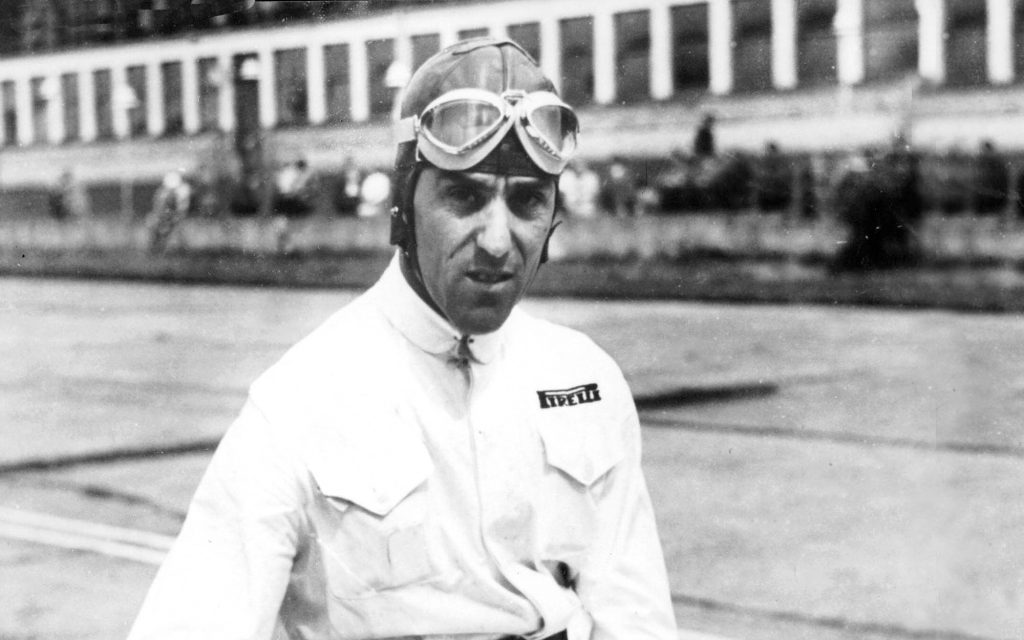
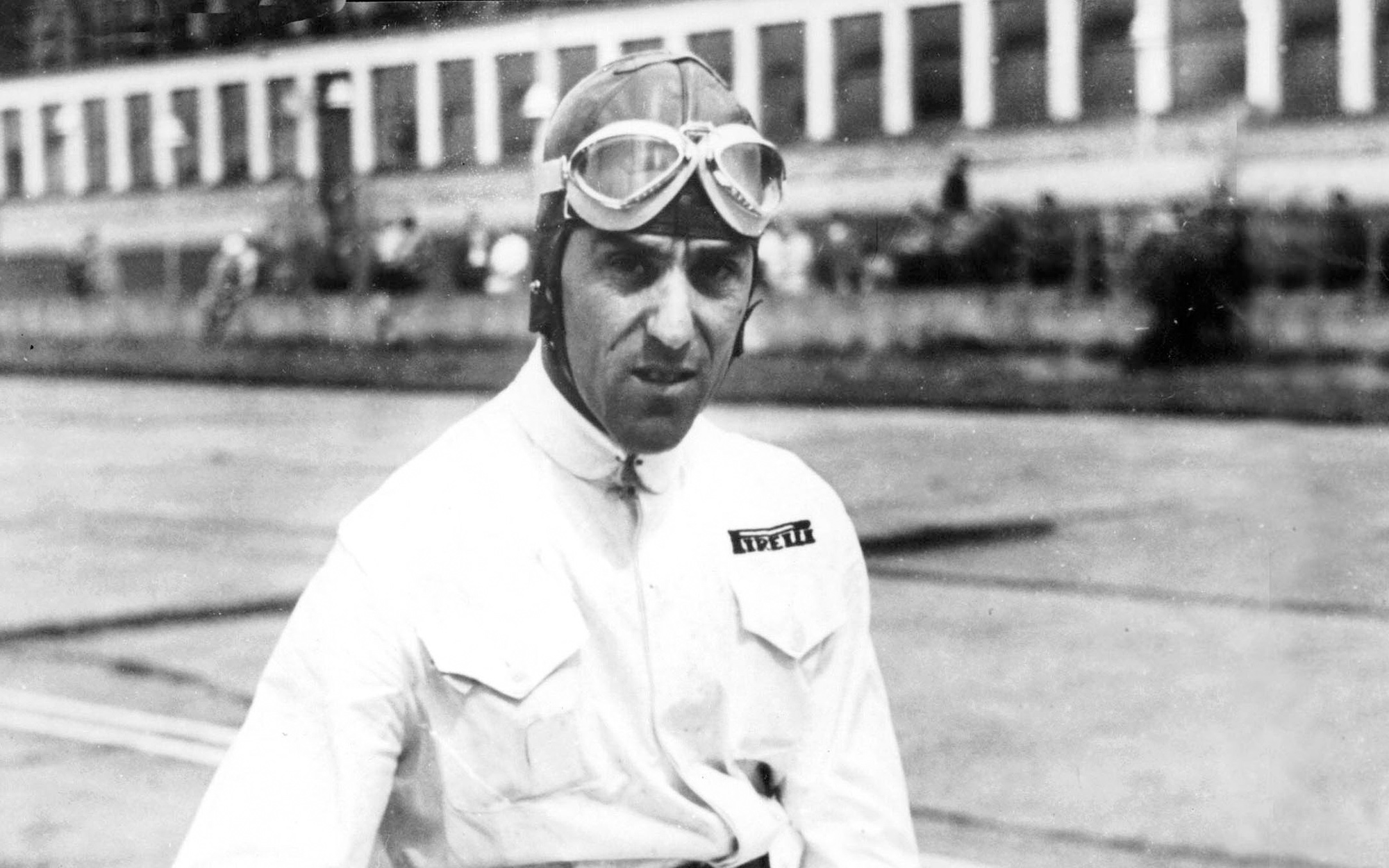
Tazio Nuvolari was an Italian racing driver widely regarded as one of the greatest competitors in the history of motorsport. During a career spanning nearly three decades, he achieved success in motorcycle racing, Grand Prix competition, endurance racing and sports car events, earning a reputation for exceptional speed, determination and bravery.
For Audi and the four rings, Nuvolari occupies a particularly significant place in history due to his association with Auto Union during the late 1930s. Following the death of Bernd Rosemeyer in 1938, Nuvolari joined Auto Union’s Grand Prix program and became one of the defining figures of the company’s pre-war racing efforts. His victories in the Auto Union Type D remain among the most celebrated achievements in the history of Auto Union motorsport.
EARLY LIFE
Tazio Giorgio Nuvolari was born in Mantua, Italy, on November 16, 1892. Growing up in a family with an interest in cycling and competition, he developed an early fascination with speed and mechanical machinery.
Before becoming internationally known as an automobile racer, Nuvolari established himself as a successful motorcycle racer. His aggressive riding style, technical understanding and determination quickly attracted attention, laying the foundation for a career that would eventually span multiple disciplines of motorsport.
RISE TO INTERNATIONAL FAME
During the 1920s and early 1930s, Nuvolari emerged as one of the world’s most successful racing drivers. Competing primarily with Alfa Romeo, he built a reputation for defeating ostensibly faster machinery through a combination of instinct, racecraft and determination.
His victories came across a wide range of events, from Grand Prix races to endurance competitions such as the Mille Miglia and Targa Florio. By the middle of the 1930s, Nuvolari had become one of the most recognizable and respected figures in international motorsport.
His fearless driving style earned him the nickname “The Flying Mantuan,” a reference to both his hometown and his remarkable speed.
AUTO UNION YEARS (1938-1939)
Nuvolari joined Auto Union during one of the most challenging periods in the company’s racing history. The team had lost its star driver Bernd Rosemeyer in January 1938 and was seeking an experienced competitor capable of mastering the difficult mid-engined Auto Union Grand Prix cars.
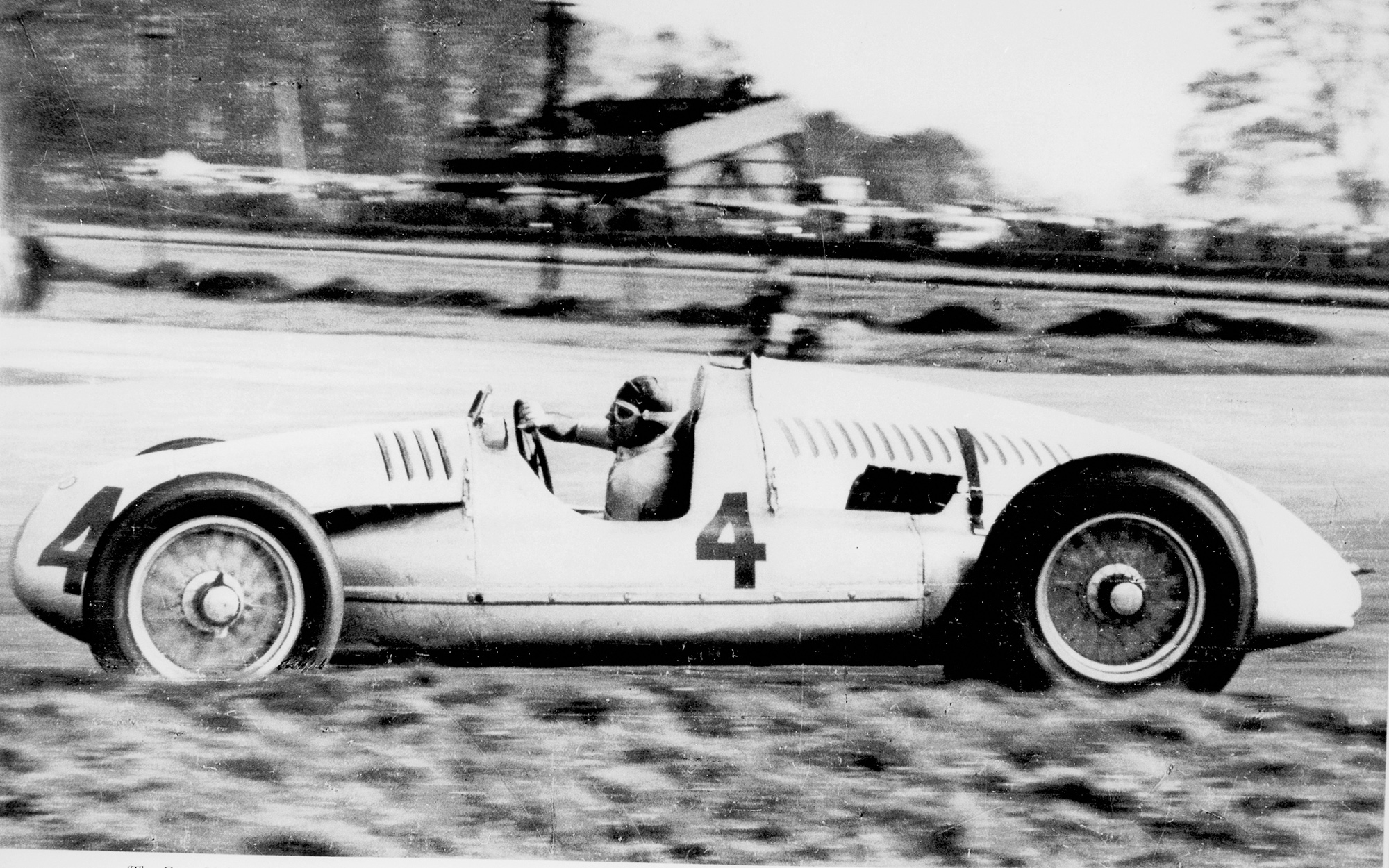
The Auto Union Type D was unlike most contemporary racing machines. Its rear-mounted engine layout produced extraordinary performance but demanded a unique driving style. Many drivers struggled to adapt to the car’s handling characteristics.
Nuvolari quickly demonstrated that he possessed the skill required to extract its potential.
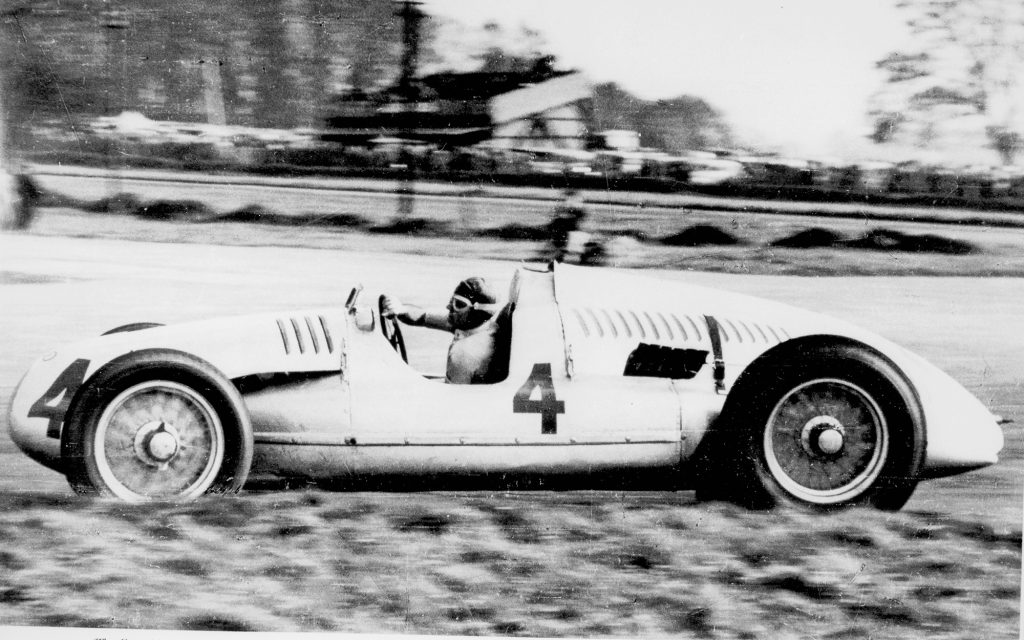
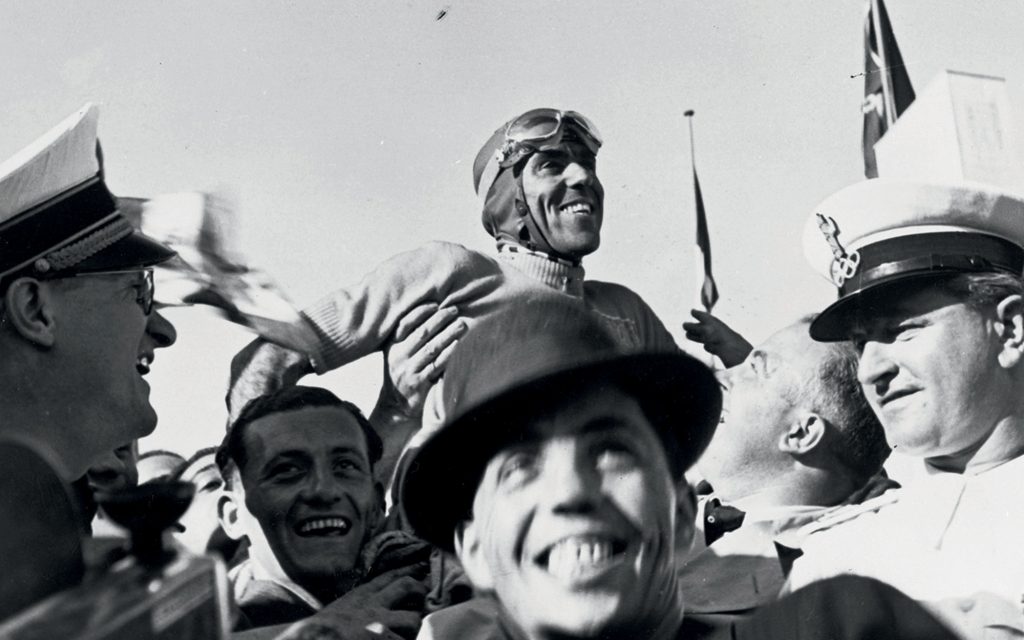
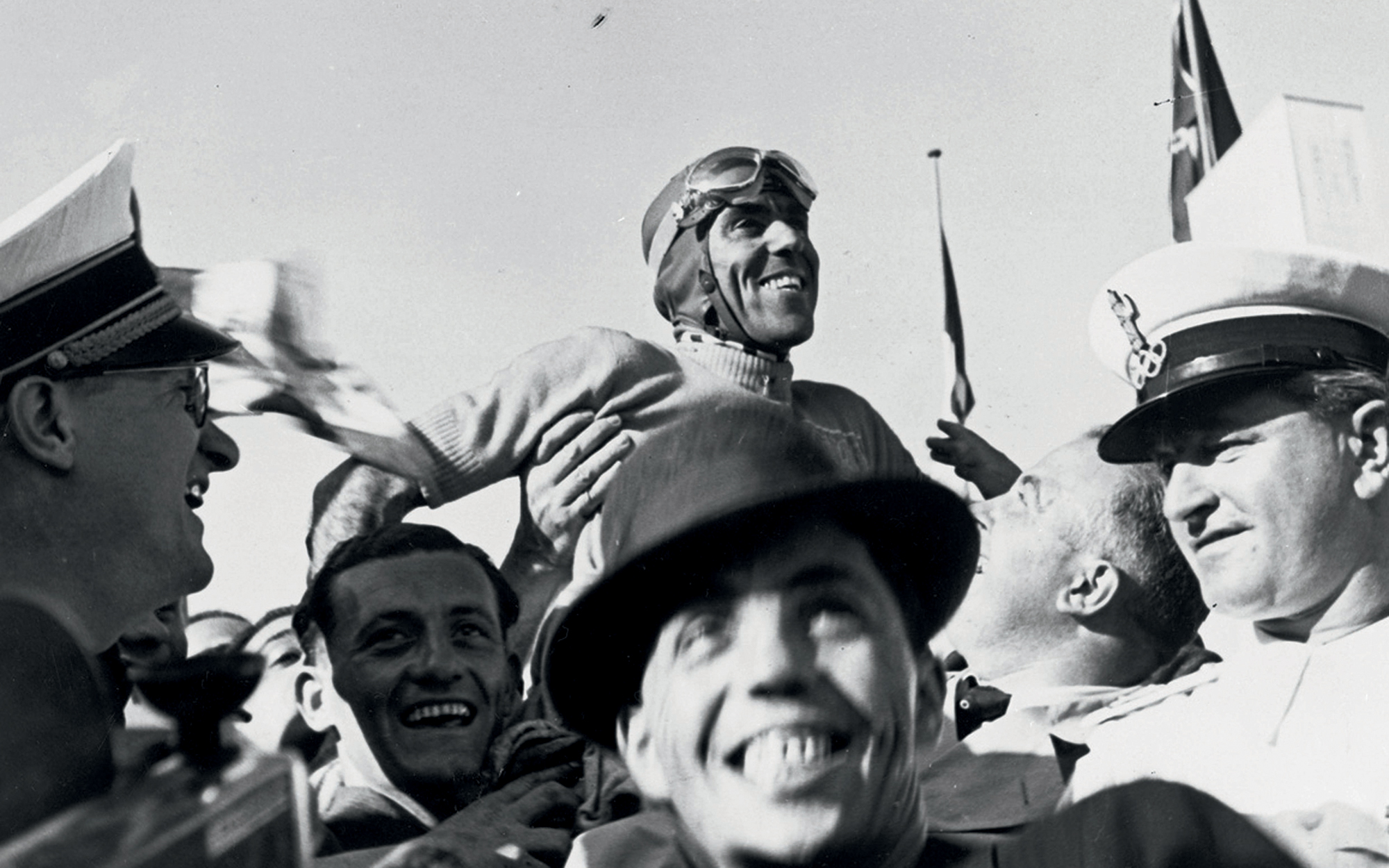
In 1938 he delivered a victory for Auto Union at the Italian Grand Prix and later achieved another landmark win at Donington Park in the United Kingdom driving the Type D. His performances helped restore momentum to the Auto Union racing program and reinforced his status as one of the era’s elite drivers.
Among his most celebrated achievements with Auto Union was victory at the 1938 Donington Grand Prix, driving the V12-powered Auto Union Type D carrying race number 4. The victory is still regarded as one of the defining moments of Auto Union’s pre-war competition history.
Nuvolari remained with Auto Union into 1939, securing another notable victory at the Belgrade Grand Prix shortly before the outbreak of World War II effectively ended international Grand Prix competition. Audi continues to cite the Donington and Belgrade victories among the greatest successes of Nuvolari’s Auto Union career.
DRIVING STYLE
Nuvolari’s reputation was built not only on his results but on the way he achieved them.
He was known for his willingness to push machinery beyond perceived limits and for an extraordinary sensitivity to vehicle behavior. Competitors often attempted to imitate his techniques, though many found that his speed relied on instinct and feel rather than a repeatable formula.
His ability to adapt to vastly different racing machines contributed significantly to his success. Whether competing on motorcycles, front-engined Grand Prix cars or Auto Union’s unconventional mid-engined racers, Nuvolari consistently demonstrated an ability to extract maximum performance.
SIGNATURE LOOK & BRANDING
While its may be commonplace today, one way Nuvolari was ahead of his time was in his recognizability. The Italian incorporated a consistent look with associated iconography and even a personal logo.
Similar to the New York Yankees logo, Nuvolari’s signature mark was that of a T overlapping an N. This was stitched onto his racing uniform and other apparel worn by the driver.
Another identifier was his mascot the tortoise. A gold tortoise pin given to him once as a gift, “the slowest animal for the fastest driver”, Nuvolari saw it as a good luck charm and one that would be immediately synonymous with his personal brand as it was also used in other elements of his presence such as his personal stationary.
Finally, he also favored the color yellow. One of the most recognizable elements of Nuvolari’s public image was the yellow sweater he frequently wore while racing.Over time, the color yellow became strongly associated with Nuvolari and his legacy.
For Audi, yellow has come to symbolize the characteristics that defined his career: fearlessness, ingenuity and dedication. The connection remains relevant within the modern Audi brand. During the 2026 Monaco Grand Prix, Audi adopted yellow as a central theme across its Formula 1 activities and the launch of the Audi Nuvolari supercar, directly referencing the legendary driver and his place within Auto Union history.
LEGACY
Tazio Nuvolari is frequently ranked among the greatest racing drivers of all time. Across motorcycles and automobiles, he amassed 61 Grand Prix victories and numerous international successes while competing against many of the most accomplished drivers of his era.
His influence extends beyond statistics. Nuvolari became a symbol of courage, determination and competitive spirit during one of the most demanding periods in motorsport history.
Within Audi’s historical narrative, he occupies a unique position as one of the most important drivers ever to race for Auto Union. His victories in the Type D helped establish the legacy of the four rings in Grand Prix competition and remain central to the company’s motorsport heritage today.
Today, Nuvolari is honored both in name of the Audi Nuvolari sportscar, and also with the Museo Tazio Nuvolari in his home of Mantua and dedicated to his life and career. Part of that presence is also the Tazio Nuvolari Originals apparel line.
AUTO UNION RACE RESULTS
1938
| Date | Location | Circuit | Car | Result |
|---|---|---|---|---|
| Jul 24 | Nürburgring | Grand Prix of Germany | Auto Union Type D | 4 |
| Aug 14 | Pescara | Coppa Acerbo | Auto Union Type D | Retired |
| Aug 21 | Bern | Grand Prix of Switzerland | Auto Union Type D | 8 |
| Sep 11 | Monza | Grand Prix d’ Italia | Auto Union Type D | 1 |
| Oct 22 | Donington | Donington Grand Prix | Auto Union Type D | 1 |
1939
| Date | Location | Circuit | Car | Result |
|---|---|---|---|---|
| May 21 | Nürburgring | Eifel Rennen | Auto Union Type D | 2 |
| Jun 25 | Spa | Grand Prix of Belgium | Auto Union Type D | Retired |
| Jul 9 | Rheims | Grand Prix of France | Auto Union Type D | Retired |
| Jul 23 | Nürburgring | Grand Prix of Germany | Auto Union Type D | Retired |
| Aug 20 | Bern | Grand Prix of Switzerland | Auto Union Type D | 4 |
| Sep 3 | Belgrade | Grand Prix of Belgrade | Auto Union TYpe D | 1 |
RELATED ARCHIVE TOPICS
- Auto Union
- Auto Union Type D
- Bernd Rosemeyer
- Audi Nuvolari (2027)
- Audi Nuvolari quattro concept (2003)
- Monaco Grand Prix
- Silver Arrows
- Grand Prix Racing
- Restaurant Nuvolari, Audi Forum Ingolstadt
PHOTO GALLERY