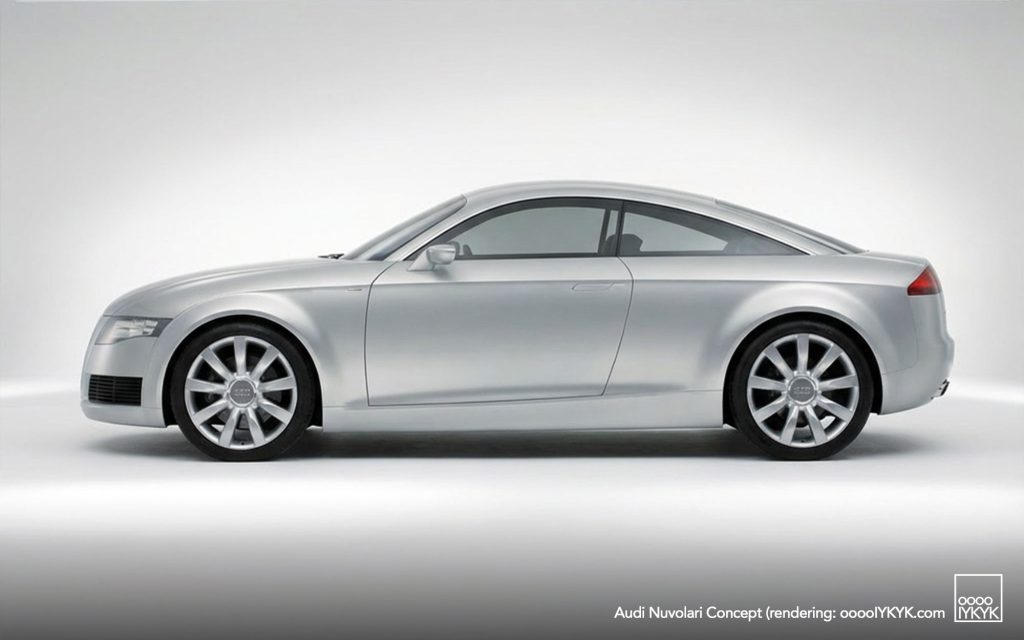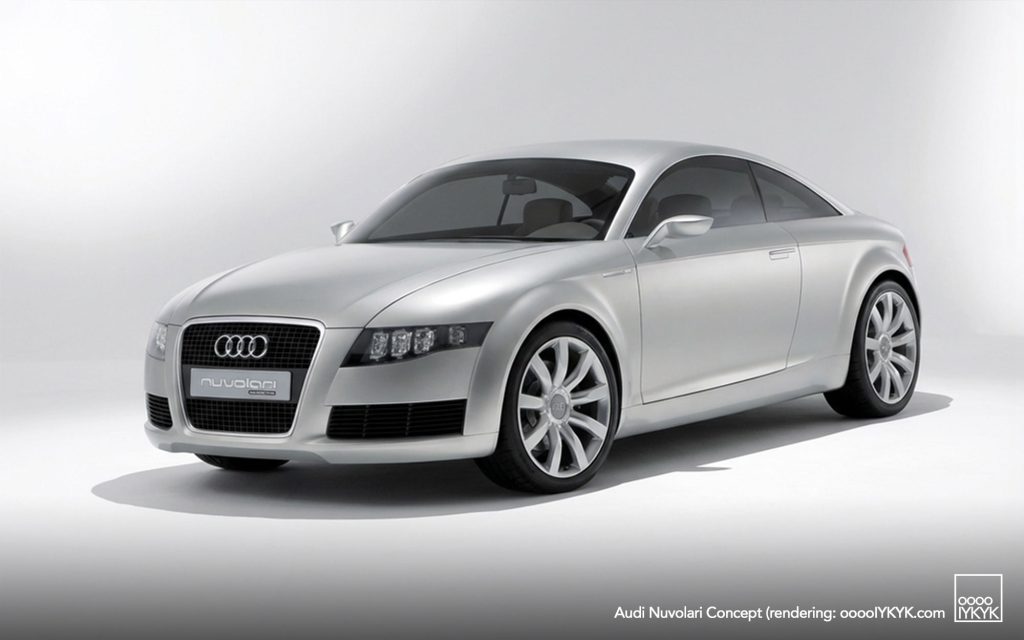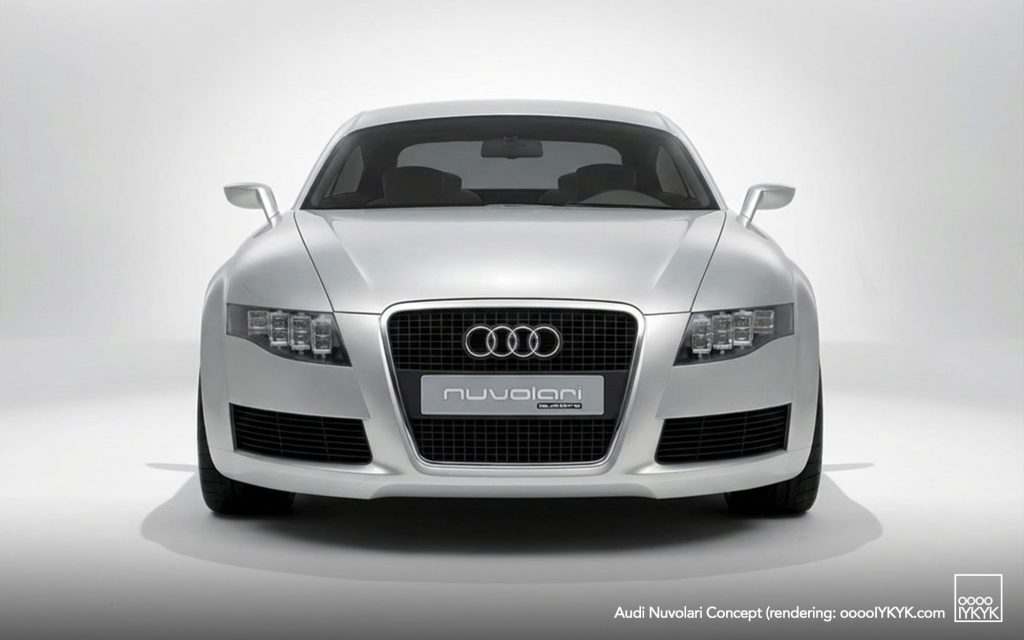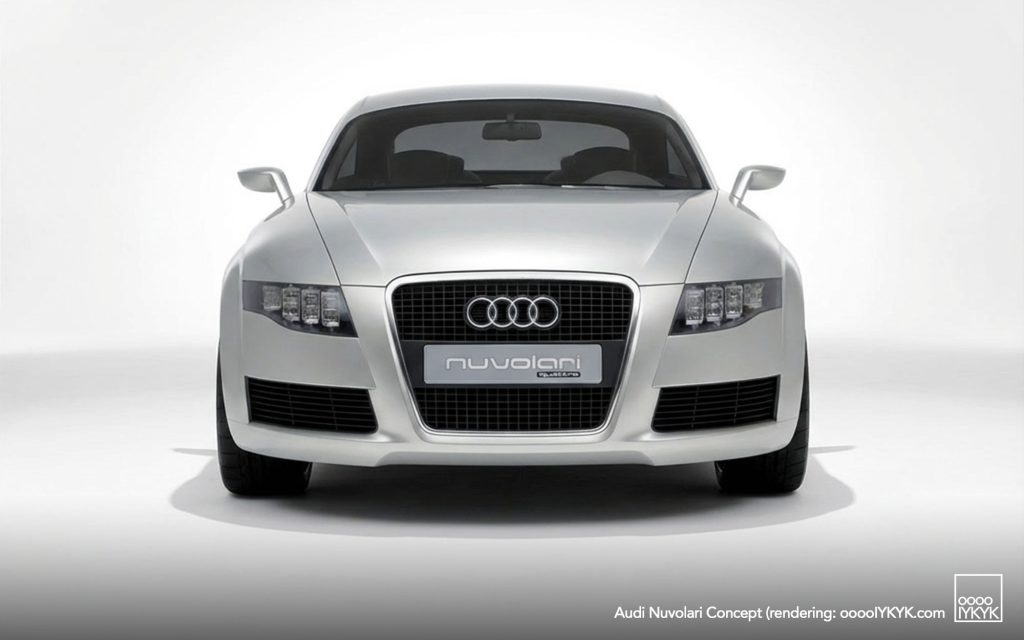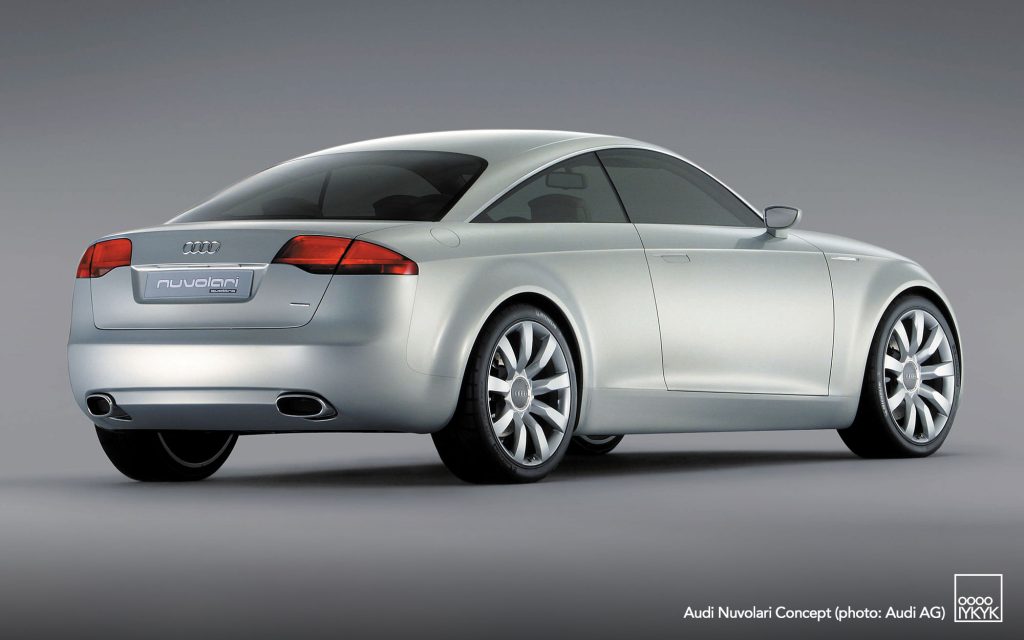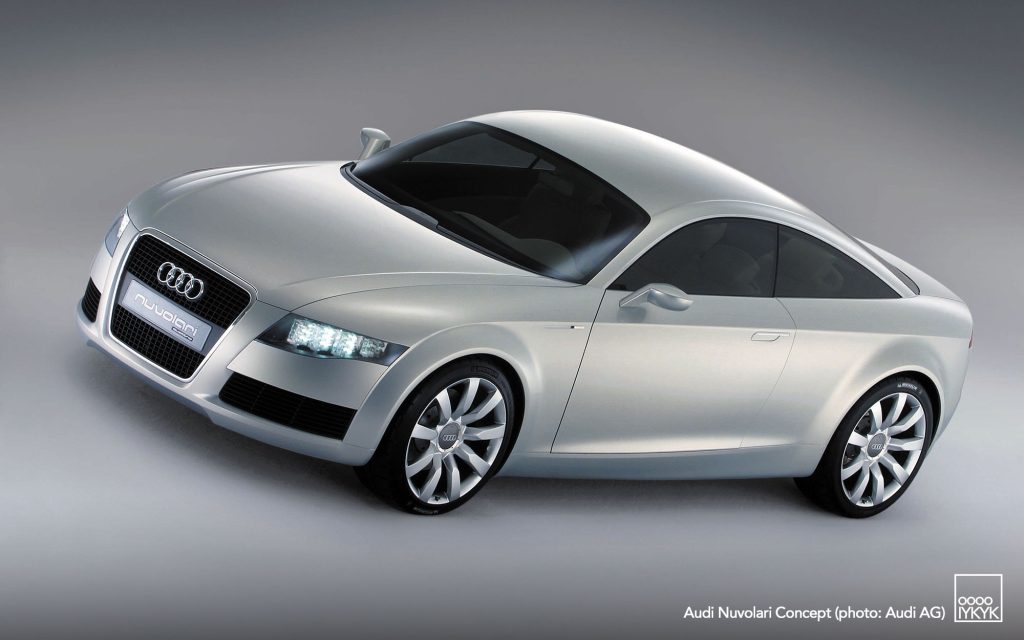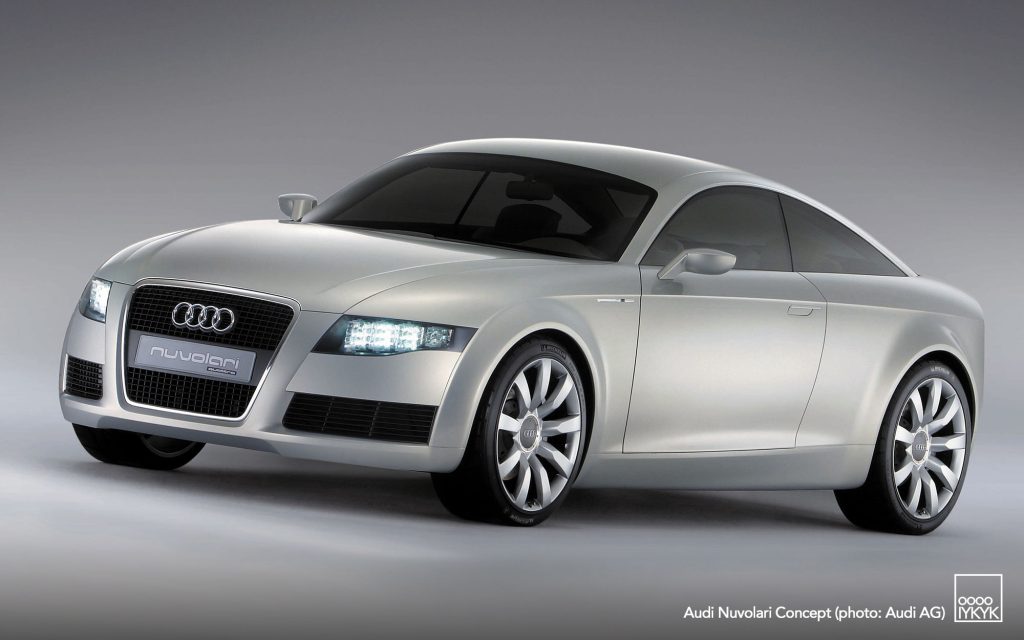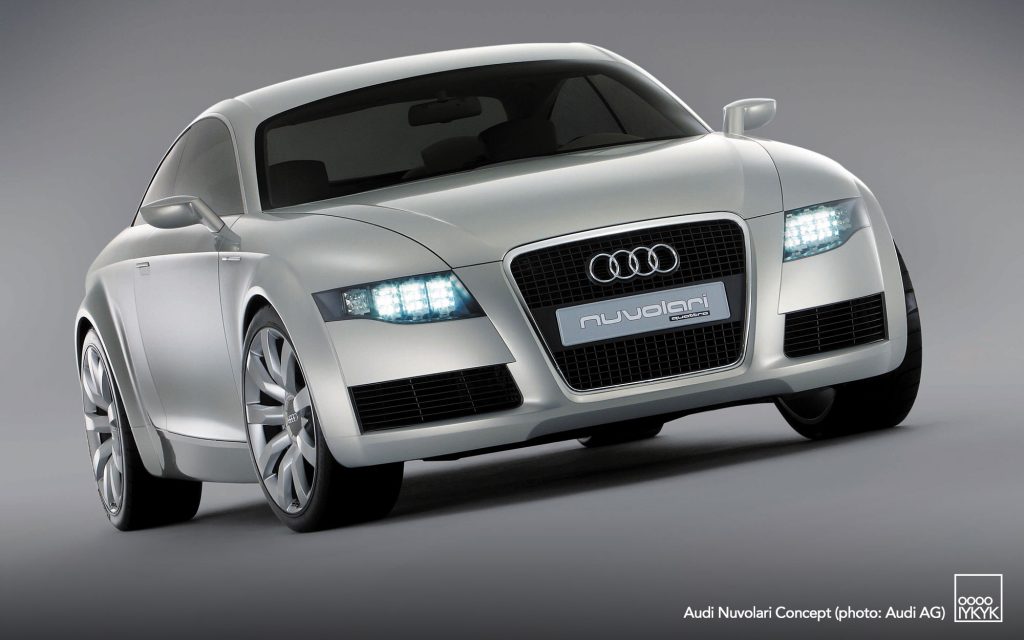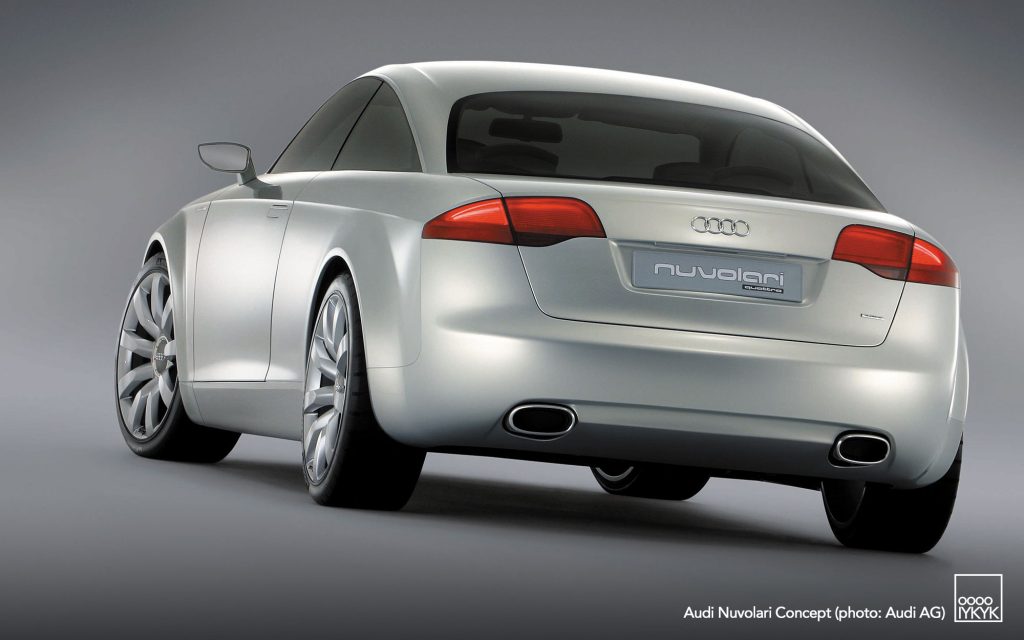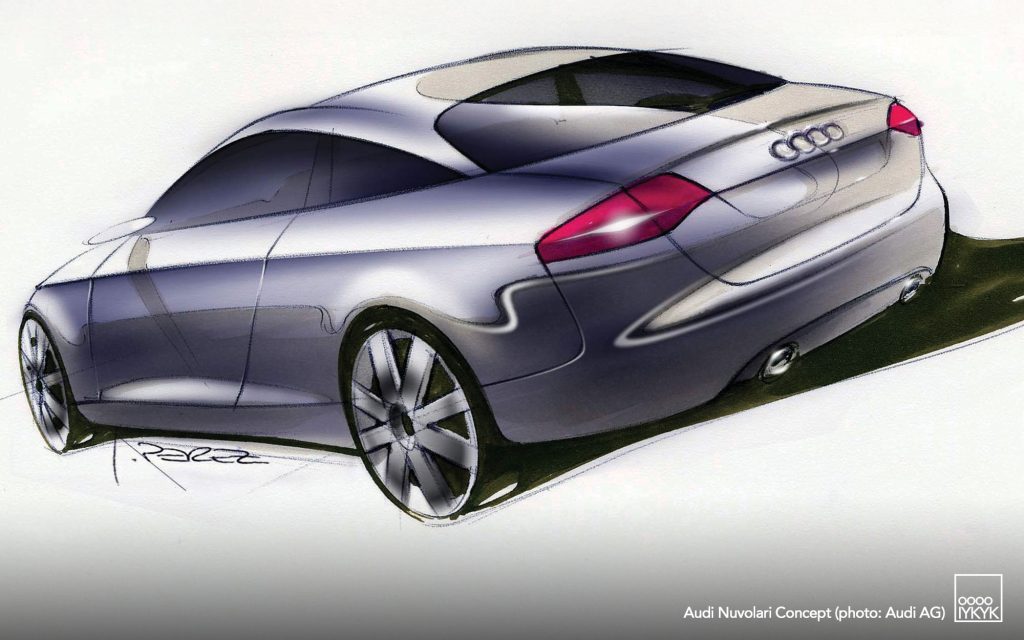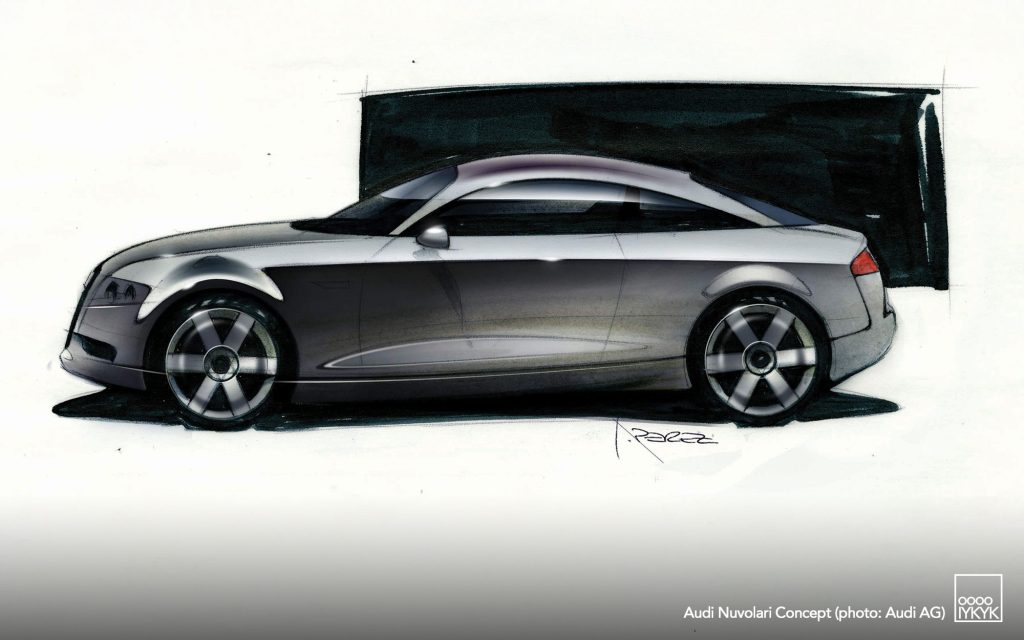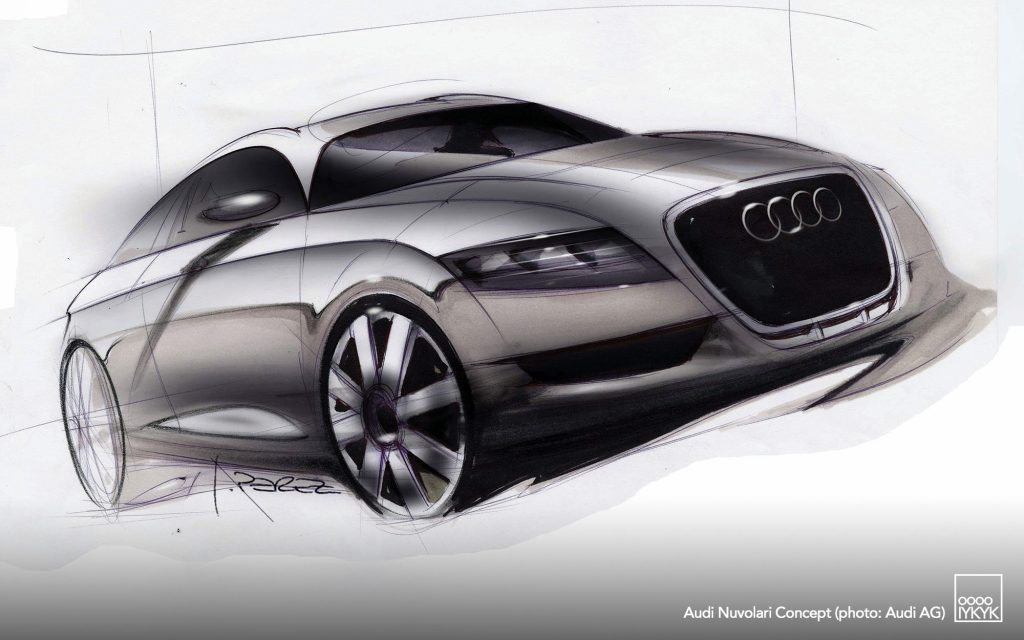

What: Audi Nuvolari quattro concept
Model Family: Audi concept cars
Model / Generation Code(s):
Year: 2003
Debuted: 2003 Geneva Motor Show
Number Produced: 1
Assembly: —
Class: Luxury grand tourer (GT)
Body style: 2-door coupé (2+2 seating)
Layout: Front-engine, all-wheel drive (quattro)
Base model:
Engine: 5.0-liter V10 biturbo with FSI direct injection
Power output: 441 kW (600 hp)
RELATED
Concept Cars: 1997 Audi A8 Coupé Design Study
Road Cars: A5 Coupé (B8, type 8T)
Race Cars:
OVERVIEW
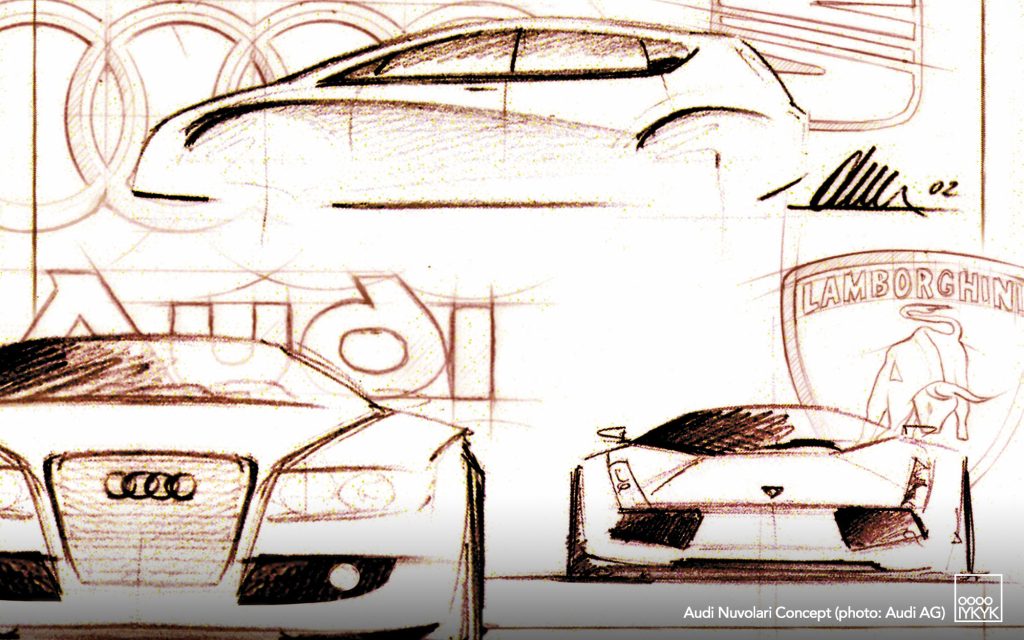
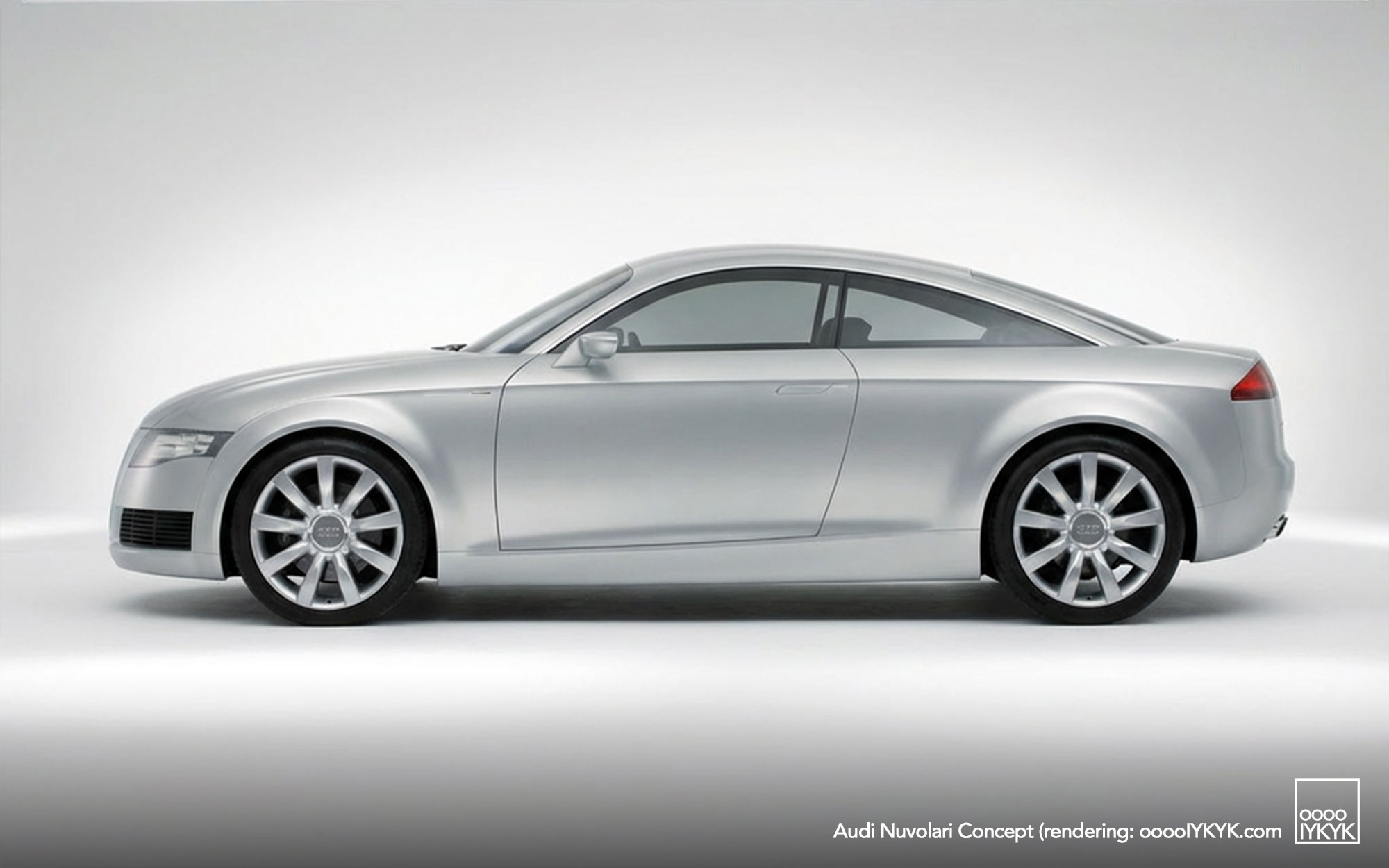
The Audi Nuvolari quattro concept was presented at the 2003 Geneva Motor Show as a design and engineering study for a high-performance grand tourer. It formed part of a broader group of early-2000s concept cars, including the Le Mans quattro and Pikes Peak quattro, used to define Audi’s future direction in design, technology, and positioning within the premium segment.
The concept was named after Tazio Nuvolari, referencing Auto Union’s pre-war motorsport history through one of its star drivers – an Italian legend. The car combined established Audi engineering principles—quattro all-wheel drive and aluminum construction—with a more performance-oriented and coupe-focused design approach.
PROPORTIONS AND EXTERIOR DESIGN
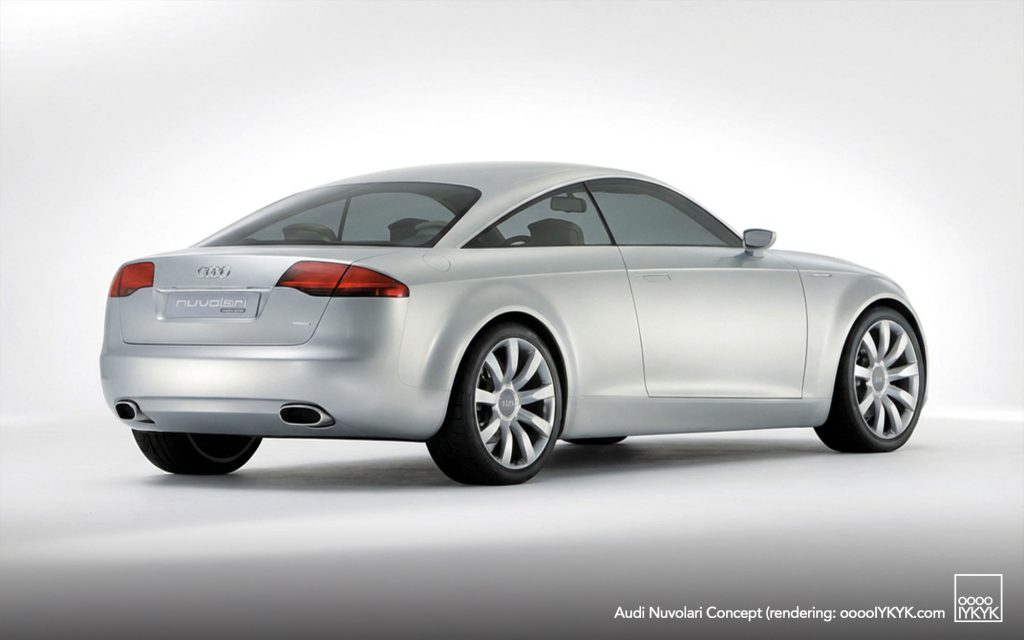
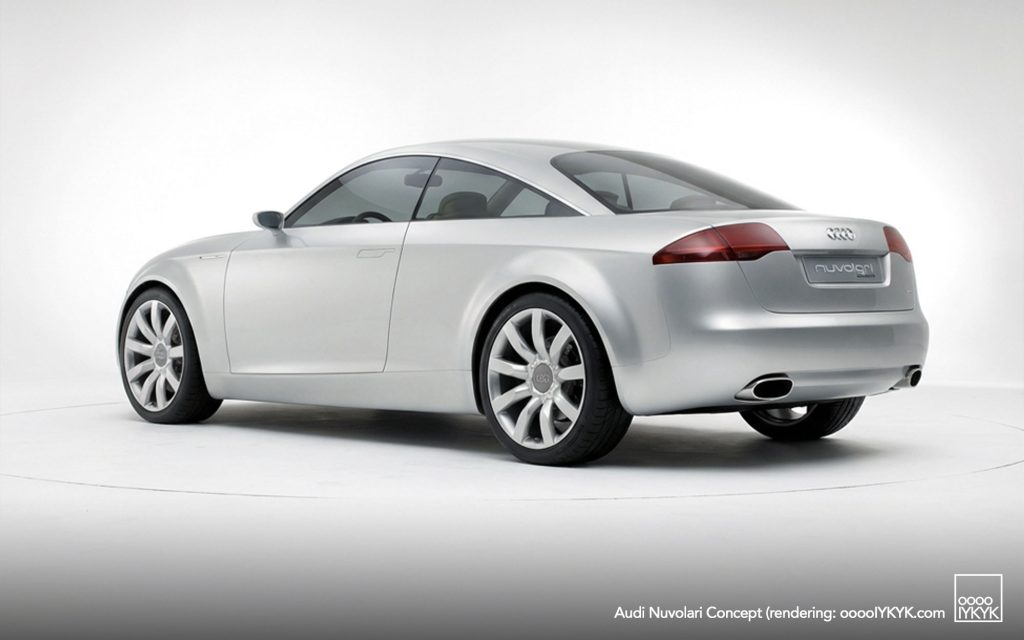
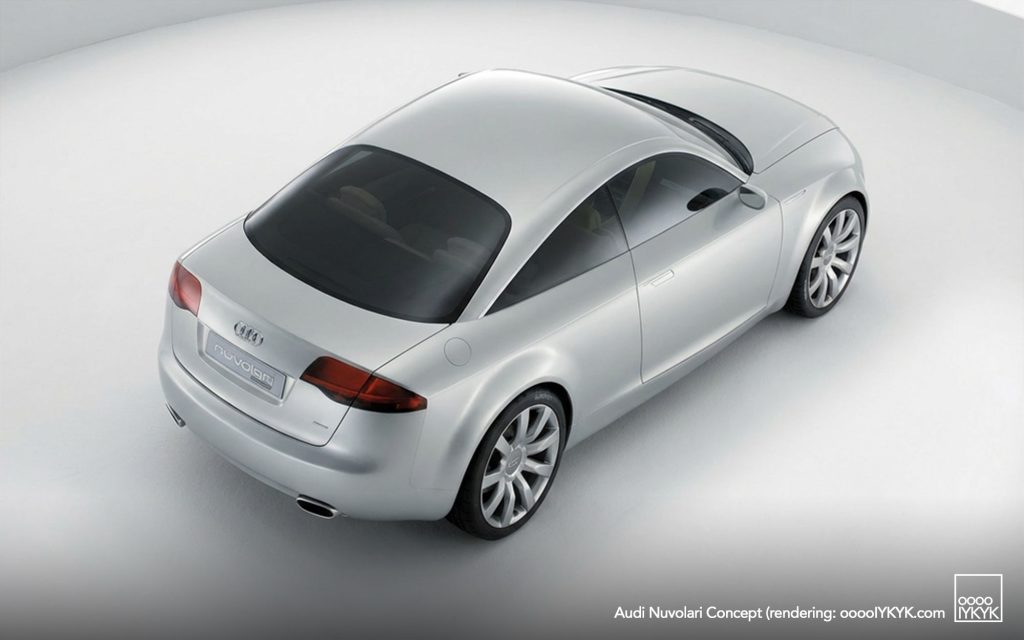
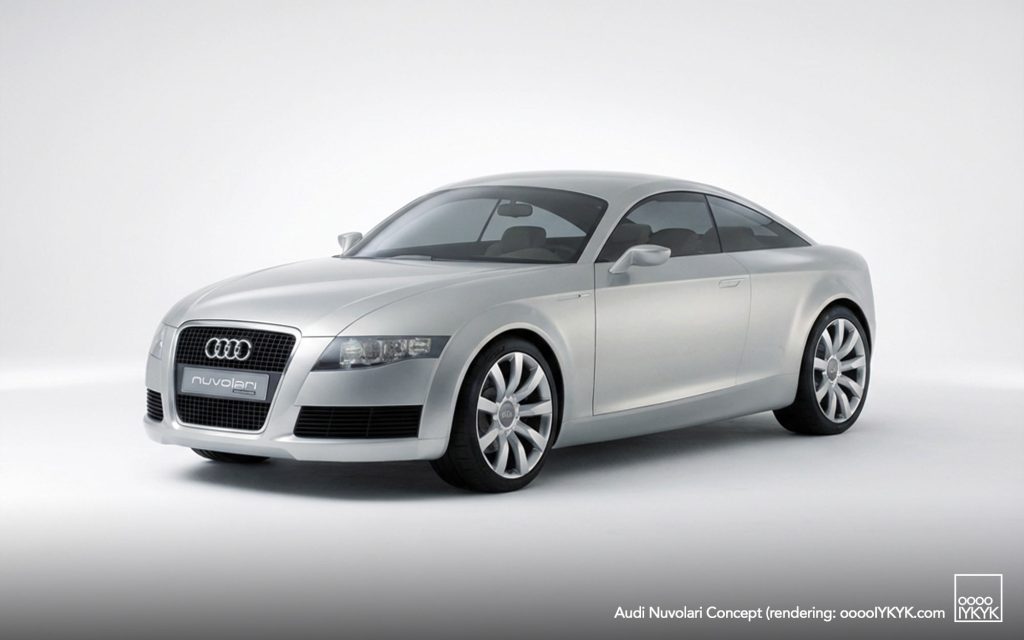
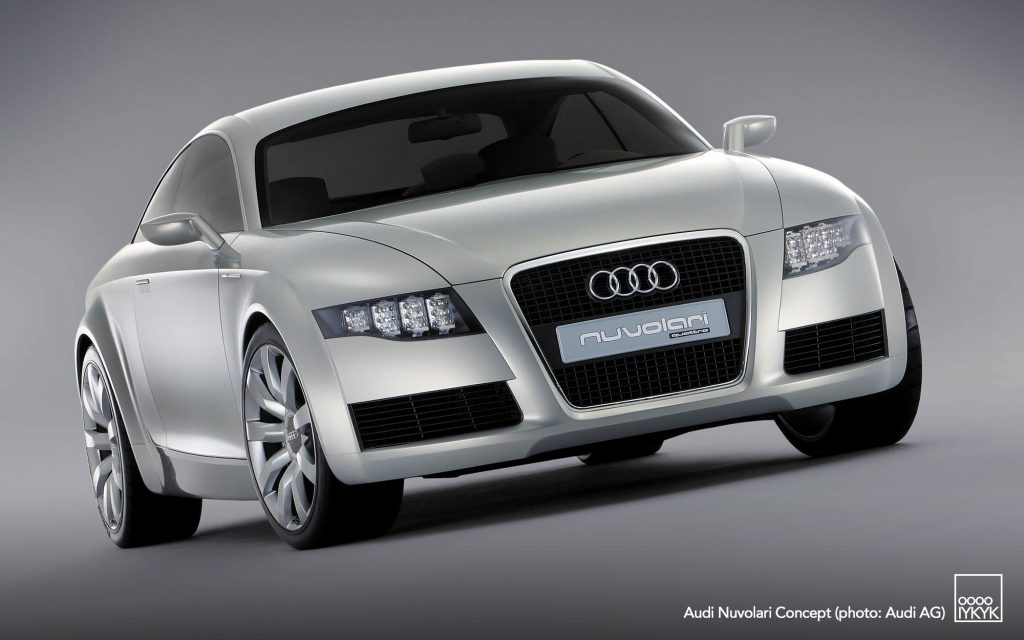
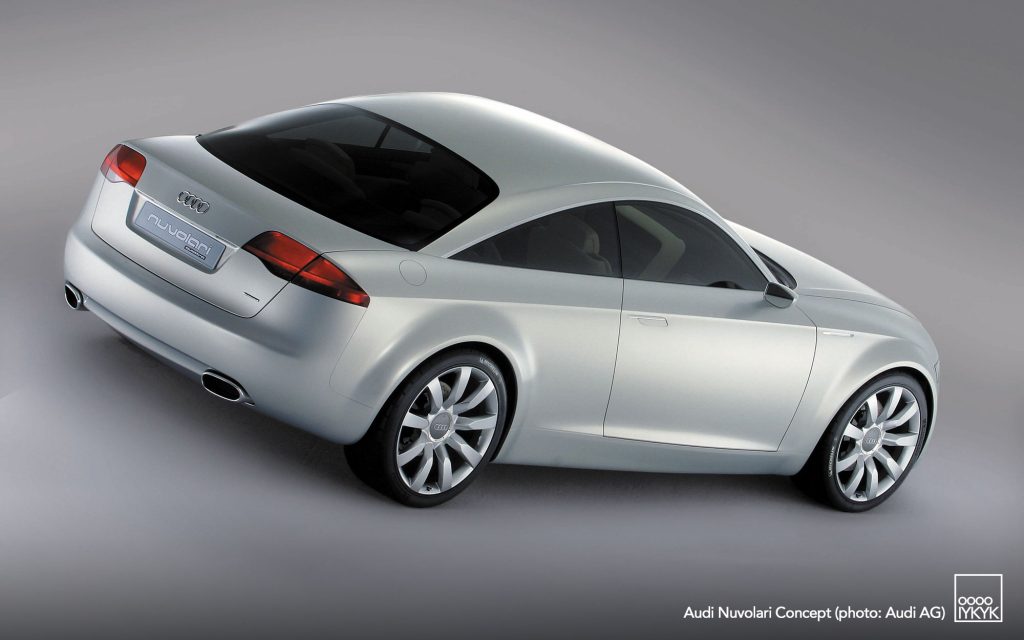
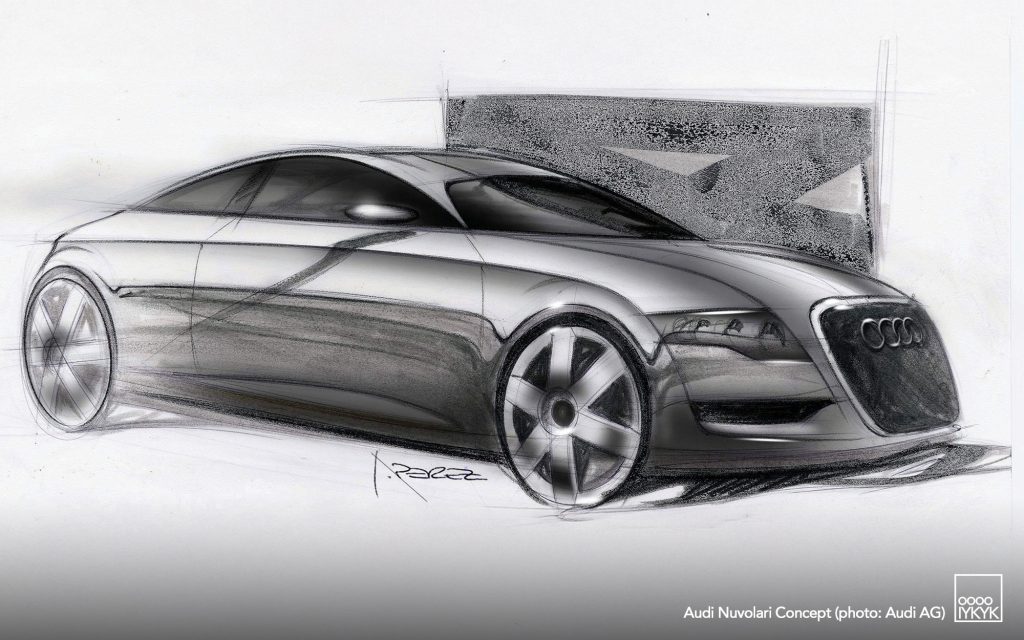
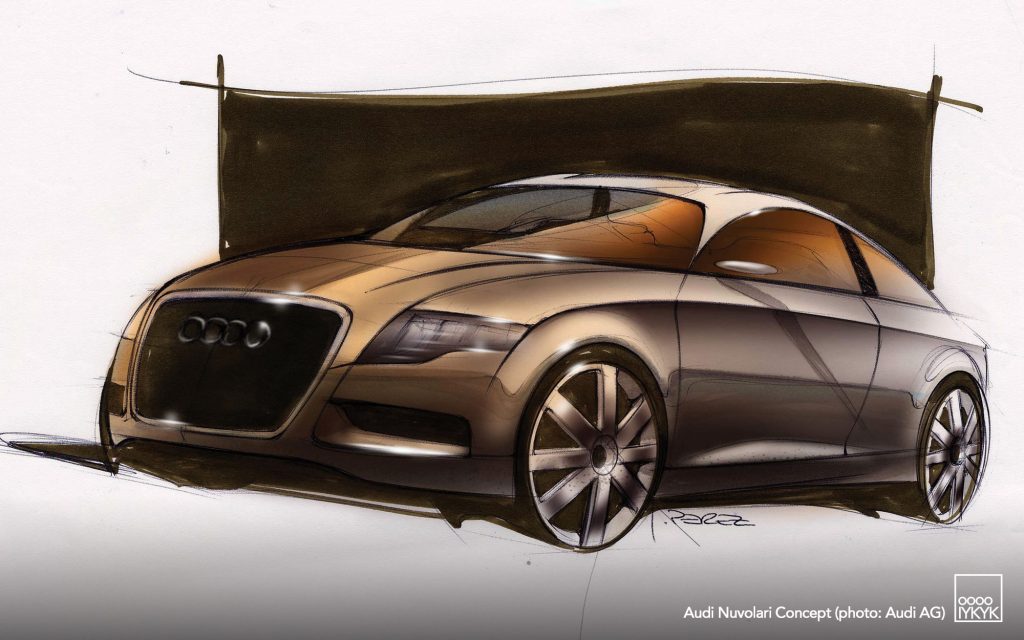
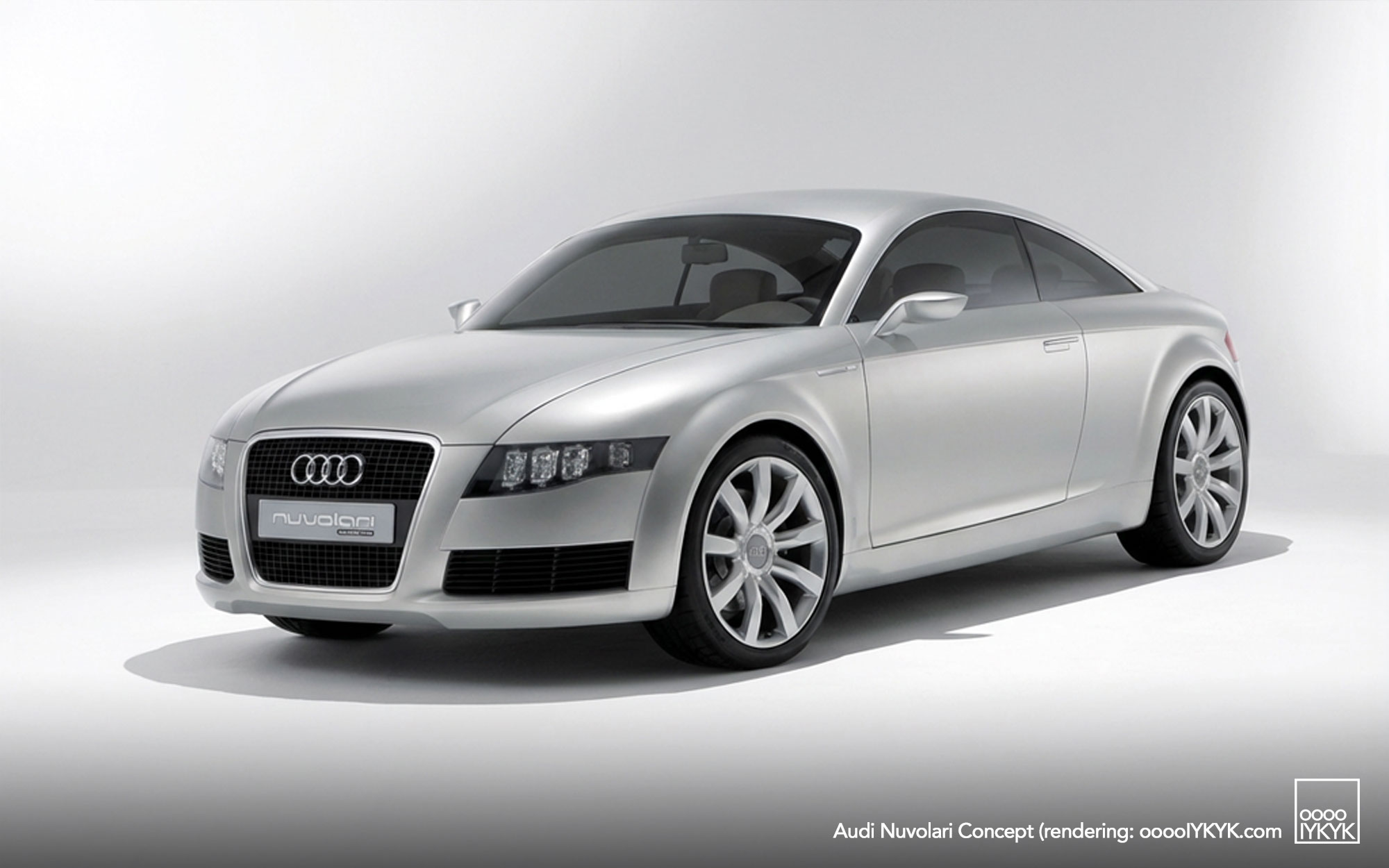
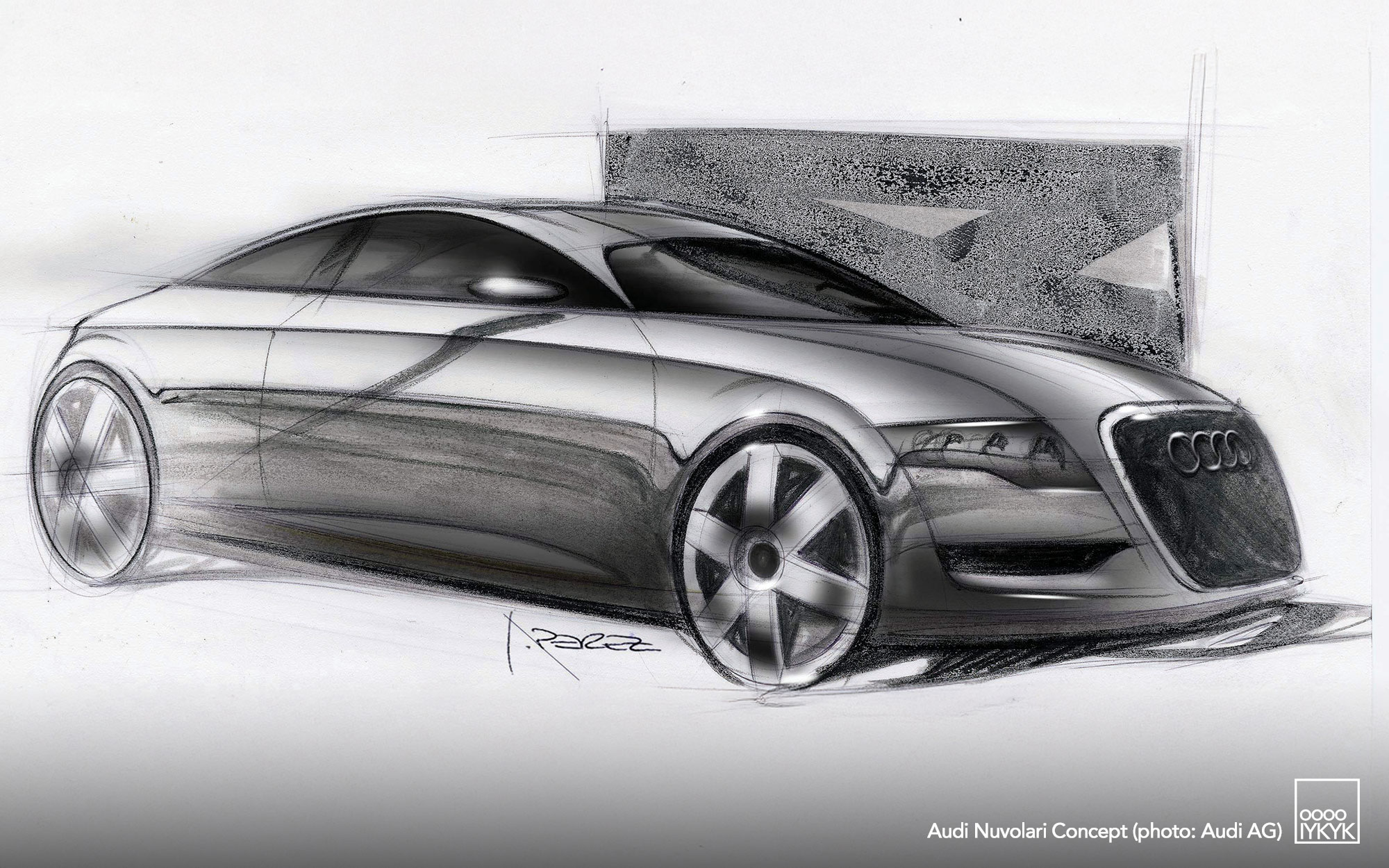
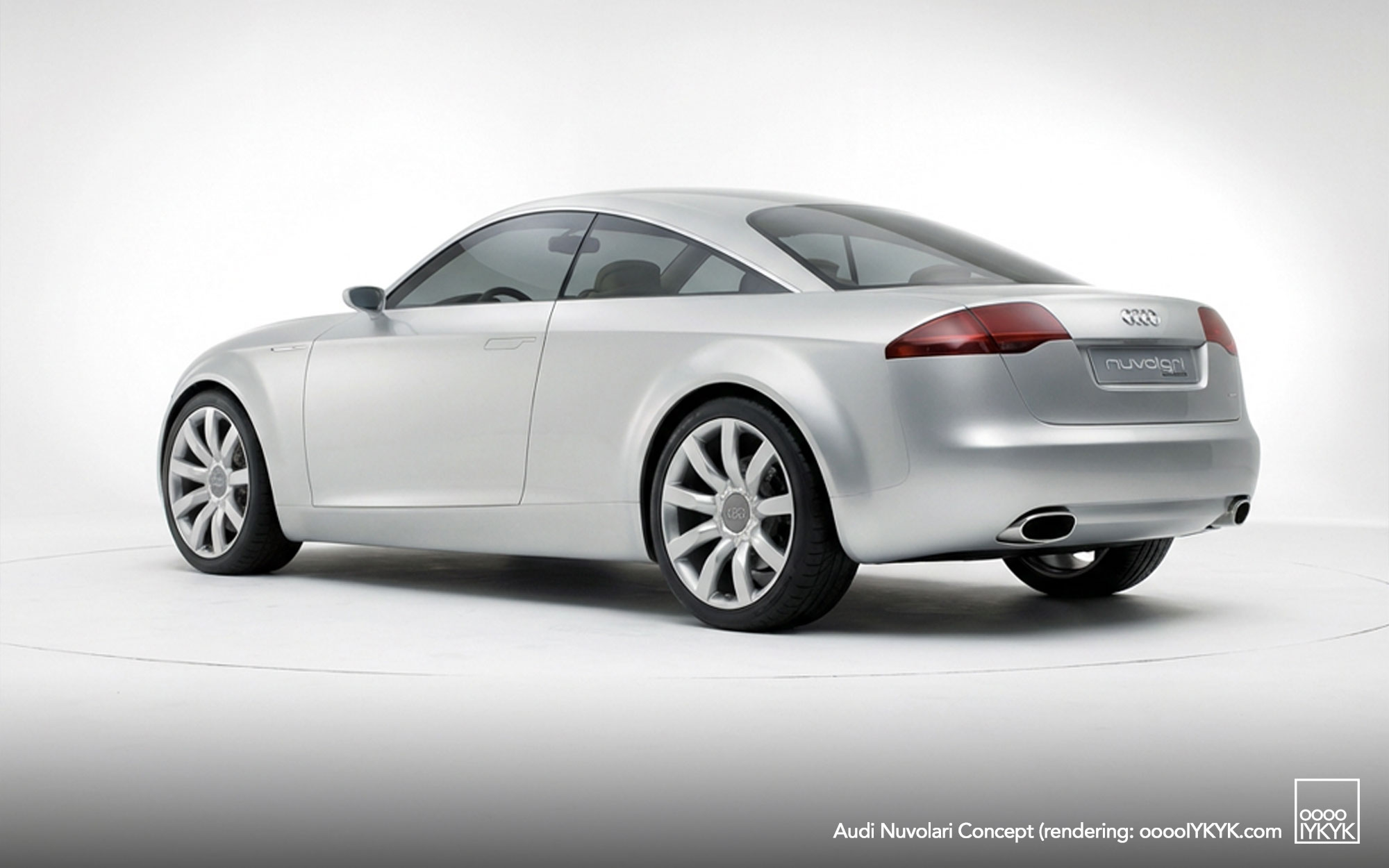
The Nuvolari quattro follows a traditional GT layout, with a long front overhang, short rear overhang, and a wide rear track. Overall dimensions are approximately 4,800 mm (189 inches) in length, 1,920 mm (75.6 inches) in width, and 1,410 mm (55.5 inches) in height.
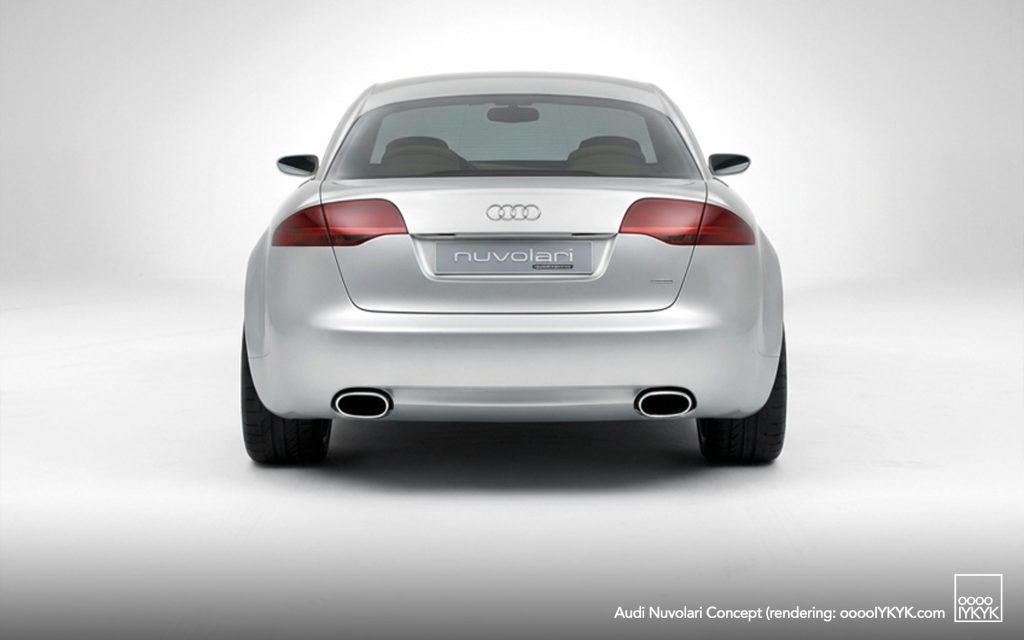
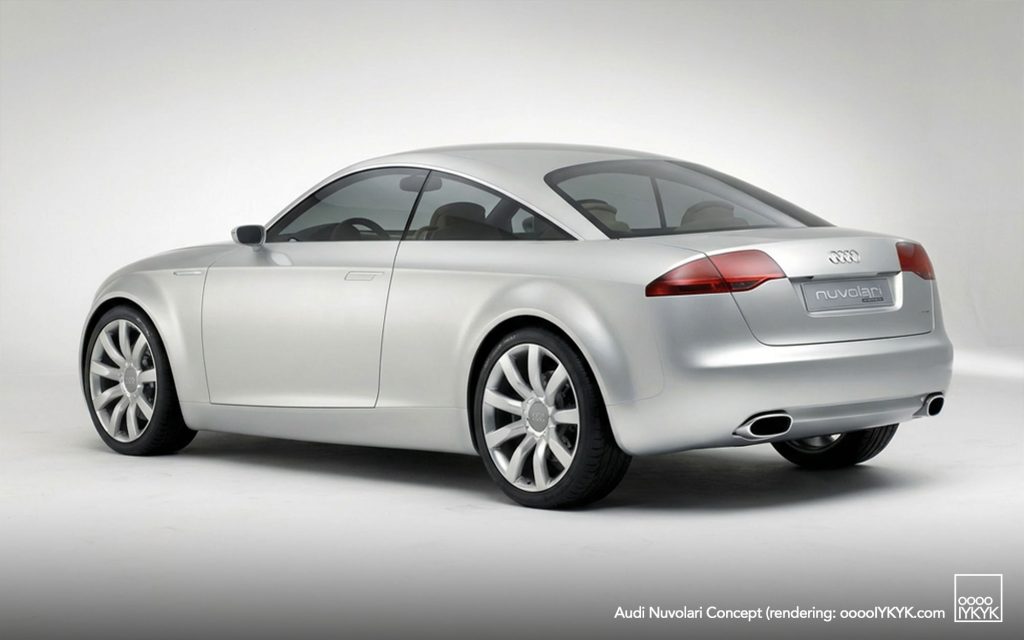
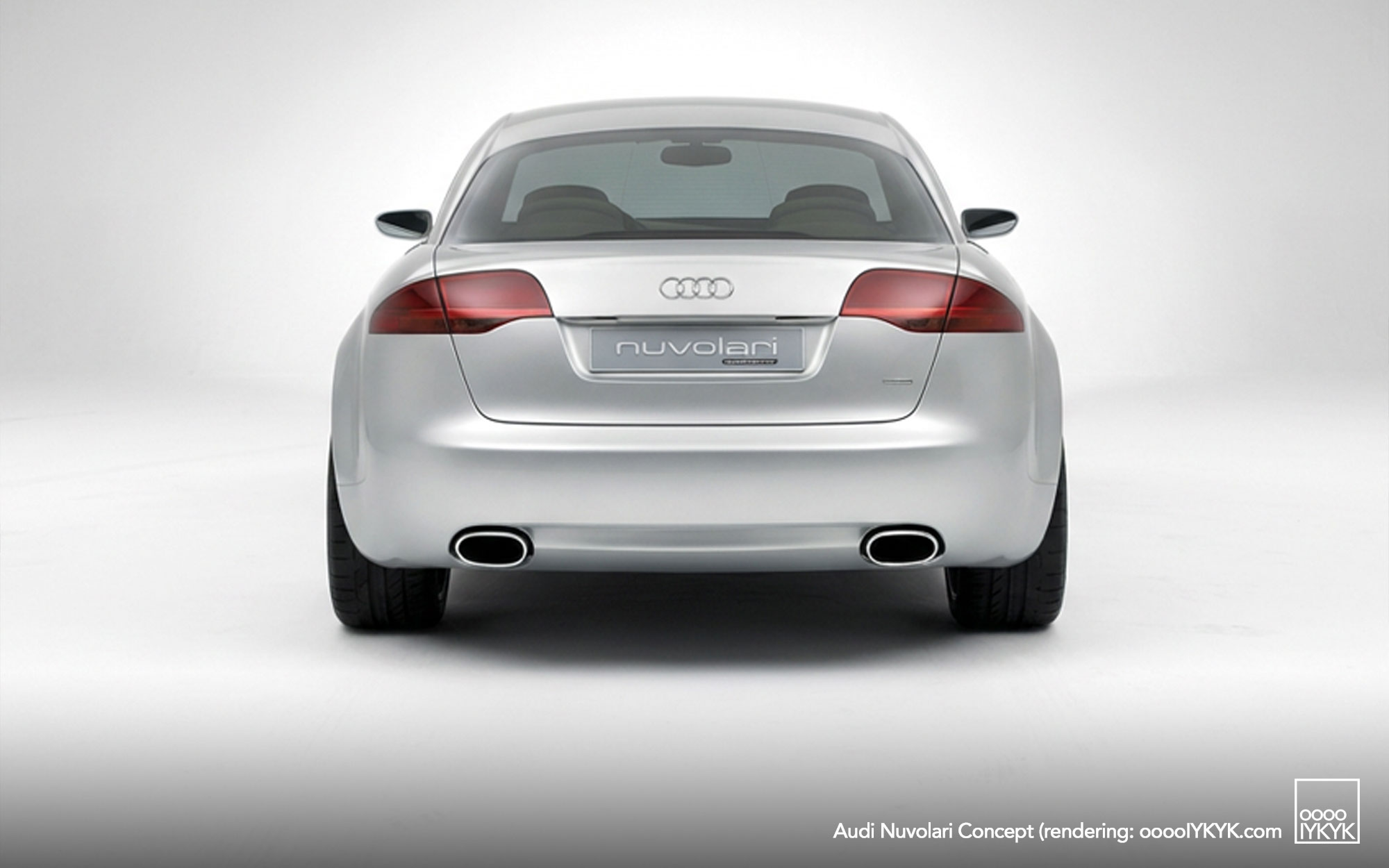
The body features a low roofline, shallow side glass, and a continuous shoulder line running from front to rear. The rear design is characterized by a high deck and integrated oval exhaust outlets. Large 9-arm wheels and short overhangs emphasize the car’s stance and proportions.
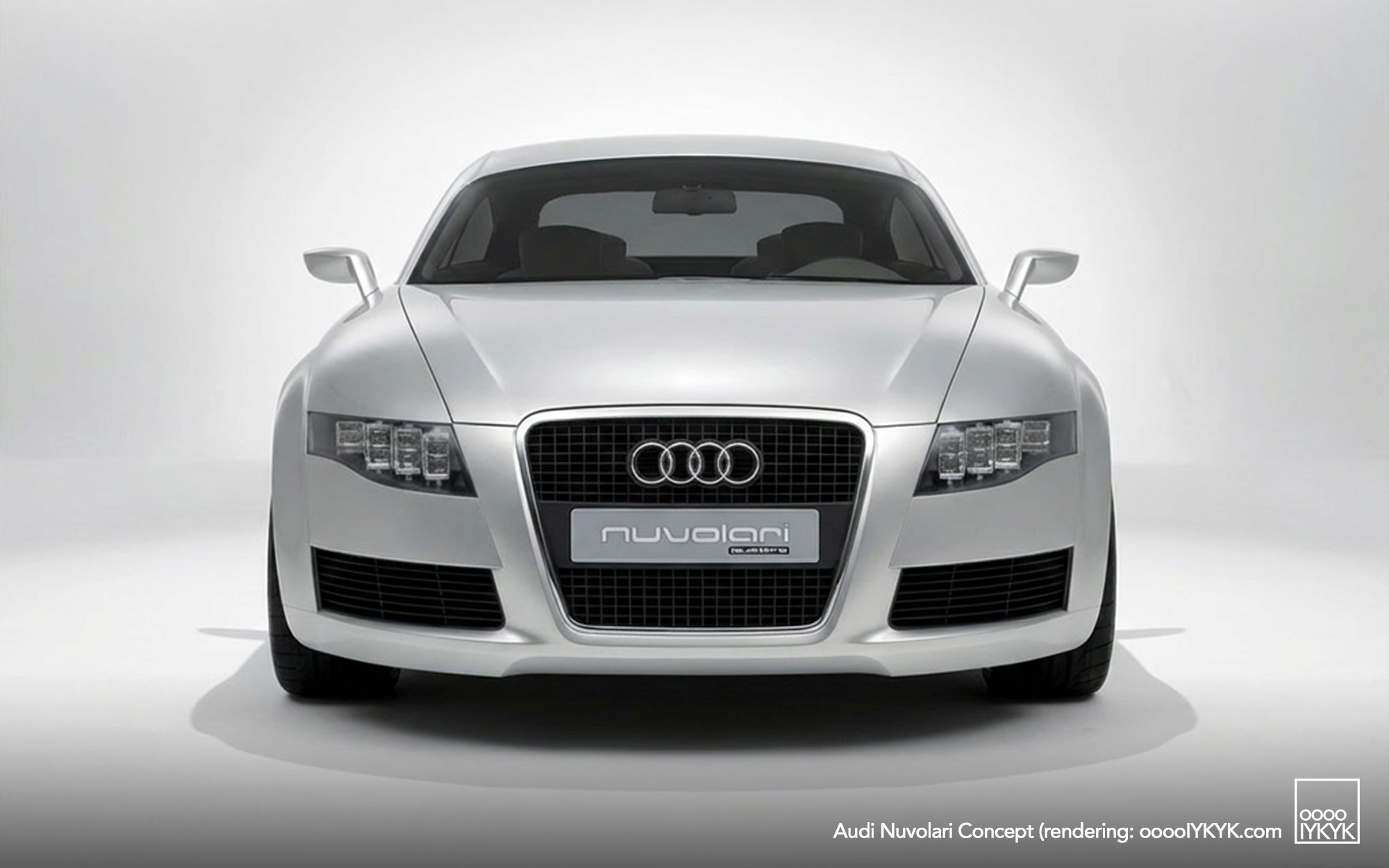
The exterior was finished in Luna Silver and incorporates early development of Audi’s single-frame grille design, which would later appear in production models.
BODY AND STRUCTURE
The Nuvolari quattro uses Audi’s Aluminum Space Frame (ASF) construction. The structure consists of extruded aluminum sections and cast components designed to reduce weight while maintaining rigidity.
This construction approach follows the same principles as the A8. For a high-performance GT, the combination of low mass and high structural stiffness supports both dynamic performance and ride quality.
INTERIOR
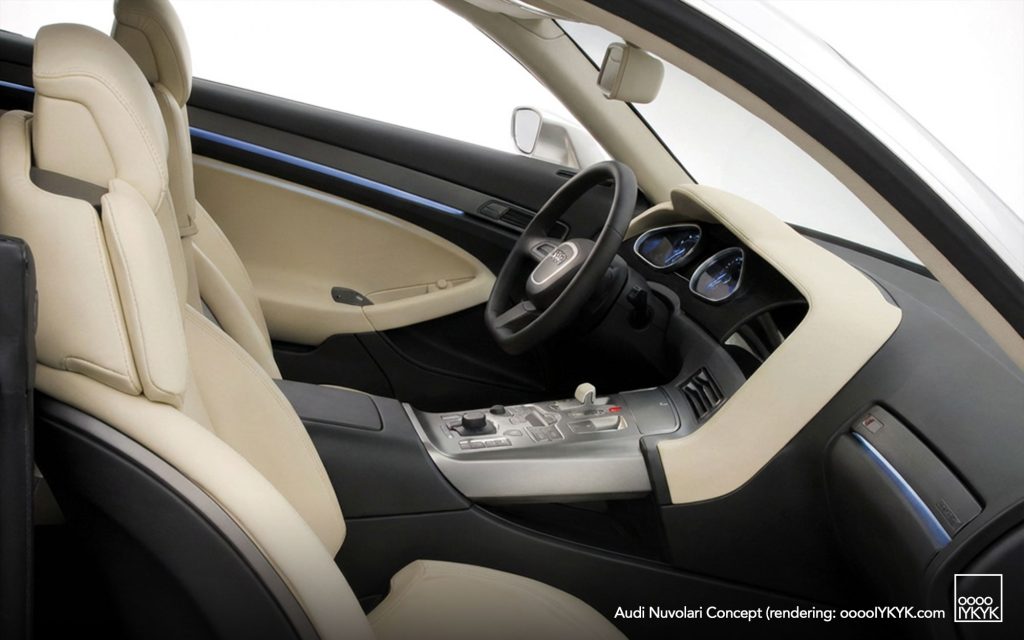
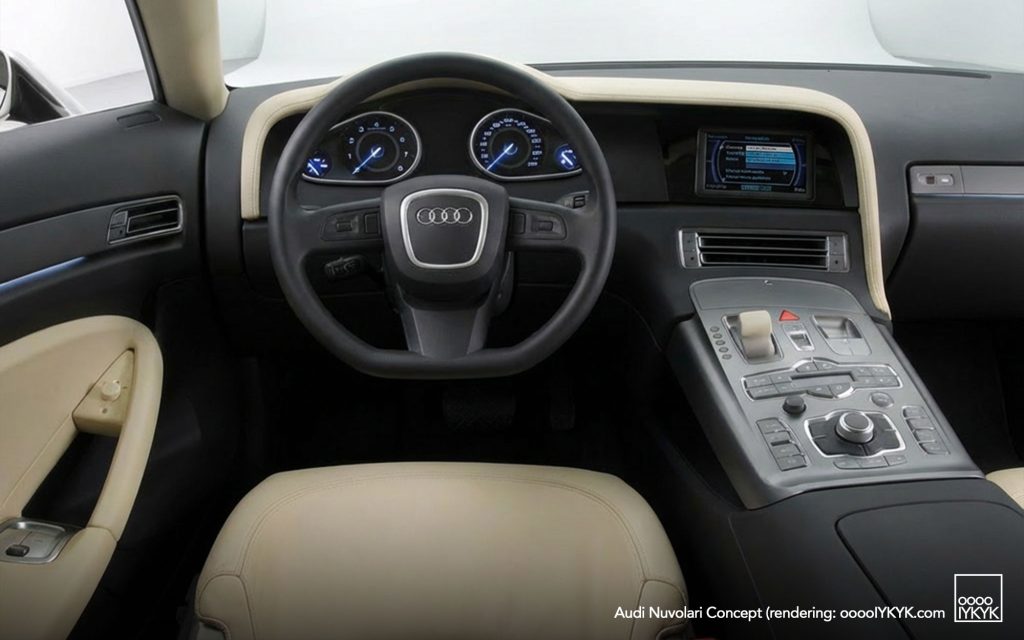
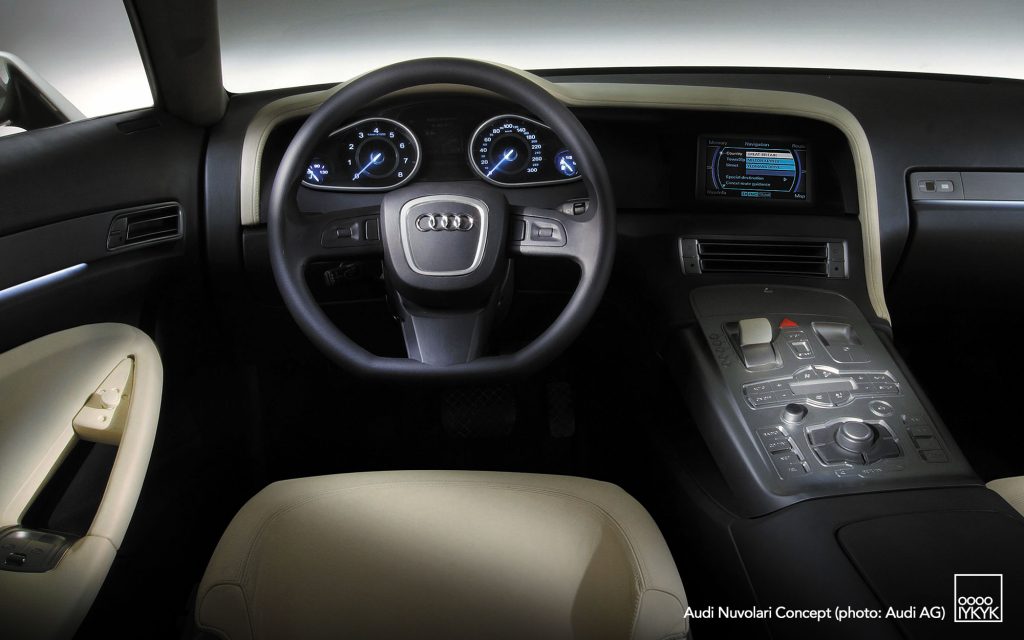
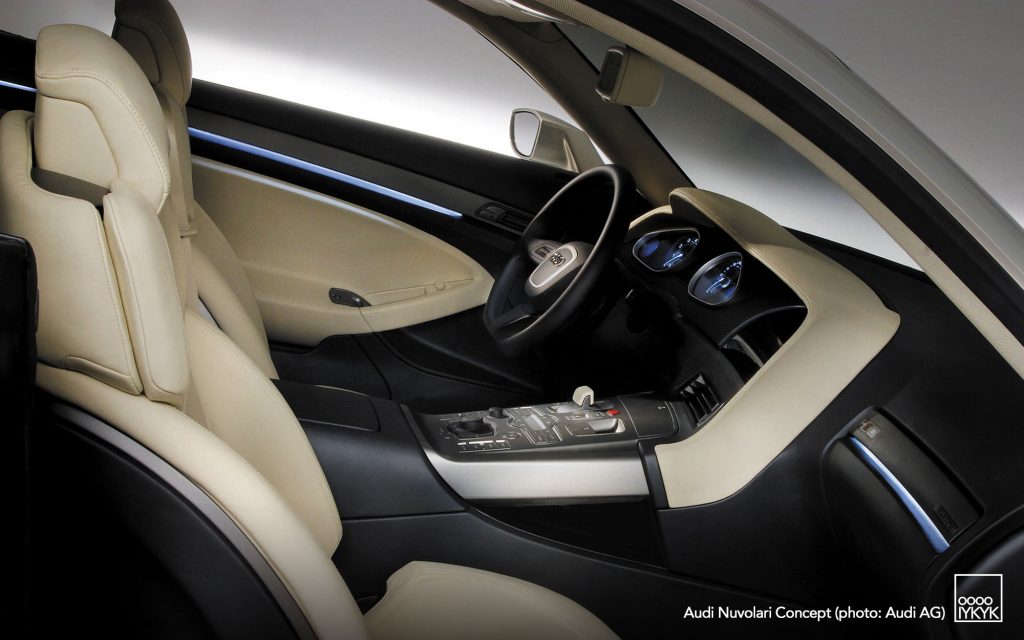
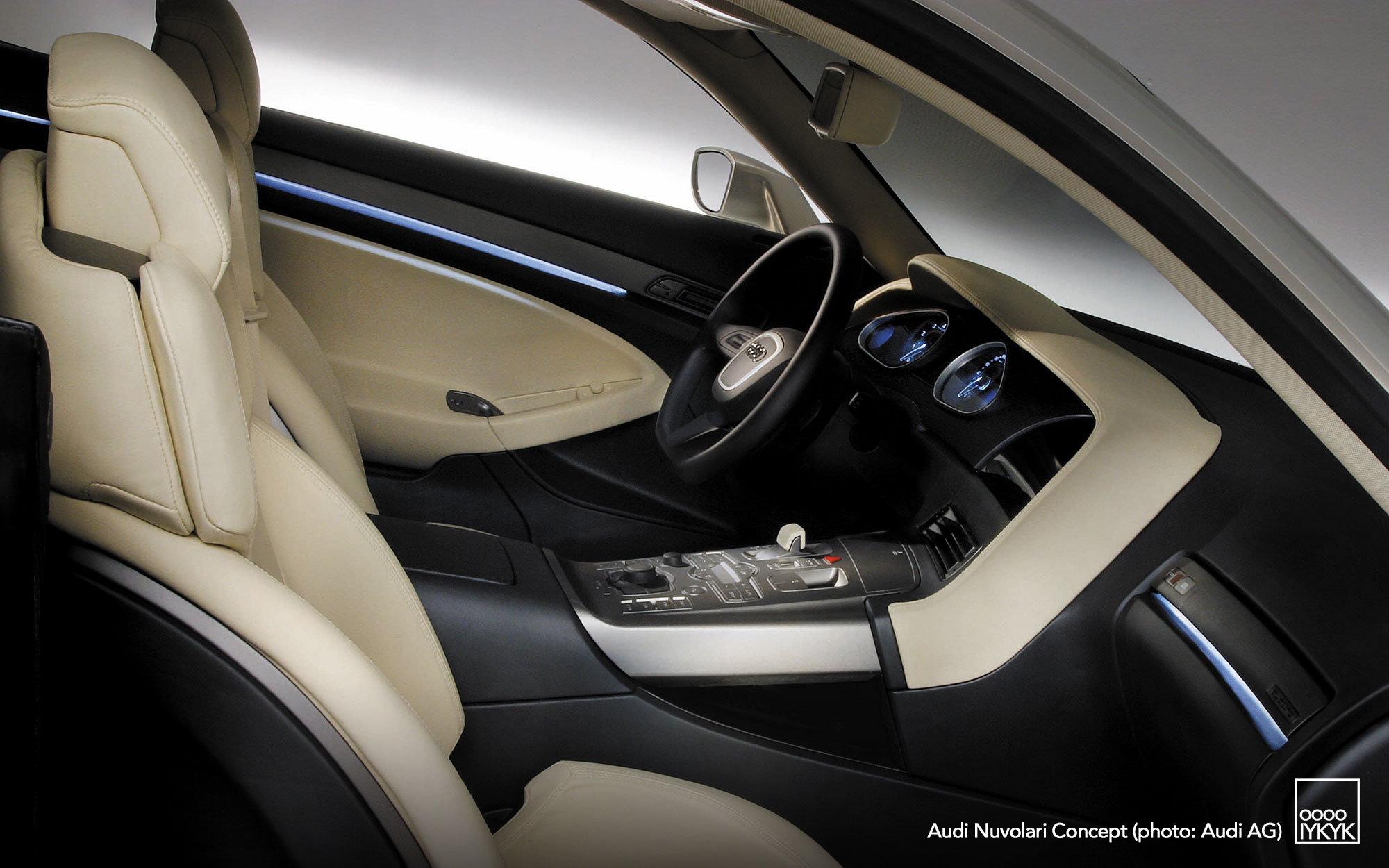
The interior uses a driver-oriented layout with a center console angled toward the driver. Instrumentation includes two large analog dials under a curved hood, with additional functions integrated into an early version of Audi’s MMI system.
Materials include a combination of leather and aluminum. The cabin features a dual-tone scheme with black and white leather surfaces. The gear selector operates in a simplified gate, with manual shifting available via steering wheel-mounted paddles, similar to systems used in the Audi R8 (LMP900).
POWERTRAIN
The concept is powered by a newly developed 5.0-liter V10 engine with twin turbochargers and FSI direct injection. Output is rated at 441 kW (600 hp) with 750 Nm (553 lb-ft) of torque.
Maximum torque is available from 2,000 rpm across a broad range. The car is capable of accelerating from 0 to 100 km/h (62 mph) in approximately 4.1 seconds, with a top speed electronically limited to 250 km/h (155 mph).
Power is delivered through a 6-speed tiptronic automatic transmission with shift-by-wire operation. The drivetrain uses Audi’s quattro permanent all-wheel-drive system.
CHASSIS AND SUSPENSION
The suspension system consists of a four-link front axle and a trapezoidal-link rear axle. The chassis is constructed primarily from aluminum.
An adaptive air suspension system is fitted, allowing adjustment of ride height and damping characteristics. Multiple modes are available, including settings for normal driving, higher-speed operation, and increased ground clearance.
Braking is handled by large cross-drilled discs. The system is designed to match the performance level of the powertrain.
TECHNOLOGY
The Nuvolari quattro incorporates several electronic control systems. Both the transmission and parking brake operate via electronic “by-wire” systems without direct mechanical linkage.
Lighting systems use LED technology at both the front and rear. The taillights include adaptive brightness control based on environmental conditions.
LEGACY
The Nuvolari quattro remained a one-off concept and was not developed for production. Its primary role was to demonstrate design direction and technical capability.
The concept directly influenced later Audi models, particularly the Audi A5, which adopted similar proportions and coupe-focused design themes. It also previewed the integration of high-output forced-induction engines and advanced chassis systems in Audi’s performance-oriented road cars.
REFERENCES
PHOTO GALLERY