
What: Horch 10–12 PS Tonneau
Era: Pre-War / Early Horch / Pre-Auto Union
Brand: Horch
Model Family: 10–12 PS Tonneau
Market / Zone: Germany
Year: 1902, 1903 (Audi museum mobile Example)
Production Period: 1902–1903, according to the museum guide
Model / Generation Code: Type No. 2 / Modell 2
Body Style: Open tonneau with rear passenger entrance
Manufacturer: A. Horch & Cie.
Manufacturing Location: Reichenbach im Vogtland, Germany
Designer / Company Founder: August Horch
OVERVIEW
The Horch 10–12 PS Tonneau represents the early years of August Horch’s automobile business, before the establishment of Audi and decades before the formation of Auto Union. The 1903 example documented in the Audi museum mobile guide combines a two-cylinder engine with shaft drive and an open passenger body accessed at the rear.
Its significance lies in the engineering choices already present in Horch’s early work. While chain-driven rear axles remained common, this car transmitted power through a shaft, anticipating the arrangement that would become conventional in later front-engined, rear-wheel-drive automobiles.
FROM COLOGNE TO REICHENBACH
August Horch established his company in Cologne in 1899 after working for Carl Benz. In 1902, he moved the business to Reichenbach in Saxony’s Vogtland region, where the company continued developing and producing automobiles.
The Horch Club identifies the 10–12 PS as Type No. 2 and records testing of its upright two-cylinder engine and shaft-drive arrangement in 1901, followed by production in Reichenbach in 1902. The company subsequently relocated to Zwickau in 1904.
TWO-CYLINDER ENGINE AND SHAFT DRIVE
Mounted at the front, the approximately 2.5-liter inline two-cylinder engine operates on the four-stroke principle. The museum quotes an output of approximately 10–12 horsepower and a maximum speed of 50 km/h, or 31 mph.
A shaft carries drive to the rear axle. This is one of the model’s defining technical features and reflects August Horch’s early interest in alternatives to the exposed chain-drive systems used by many contemporary manufacturers.
REAR-ENTRY TONNEAU BODY
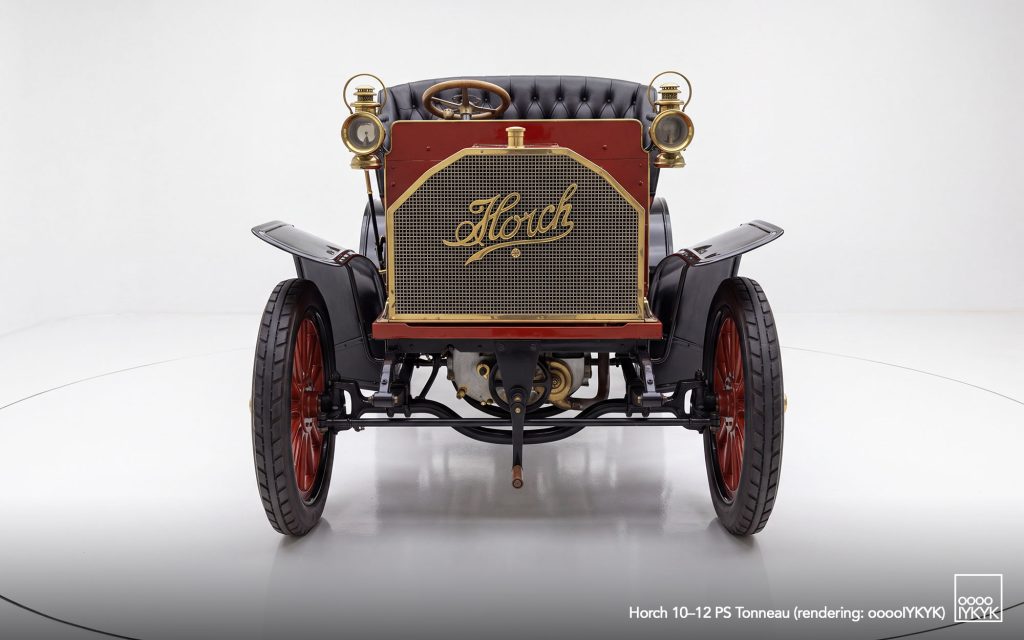
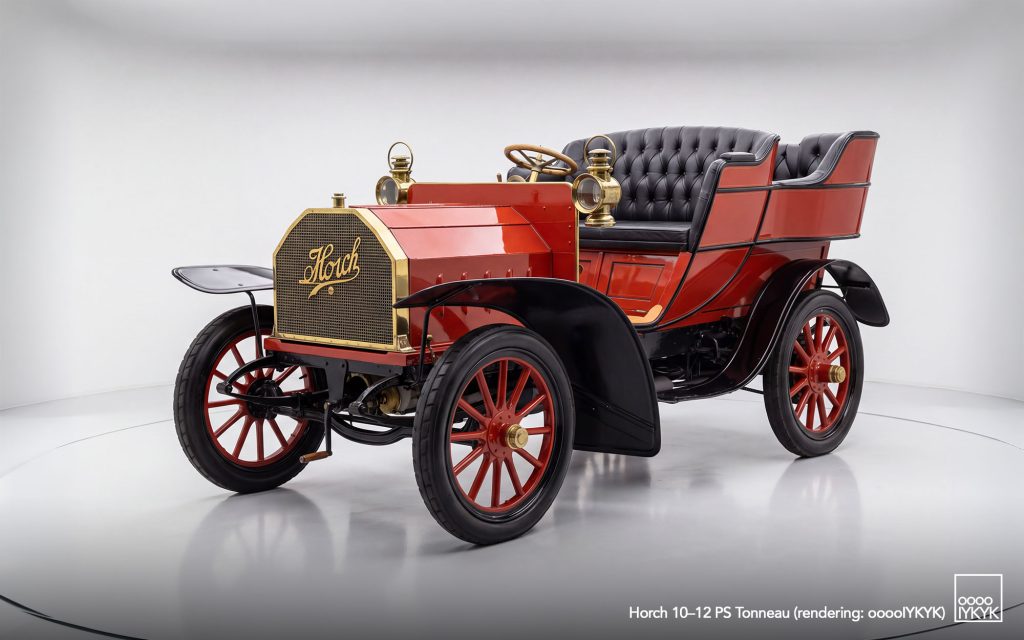
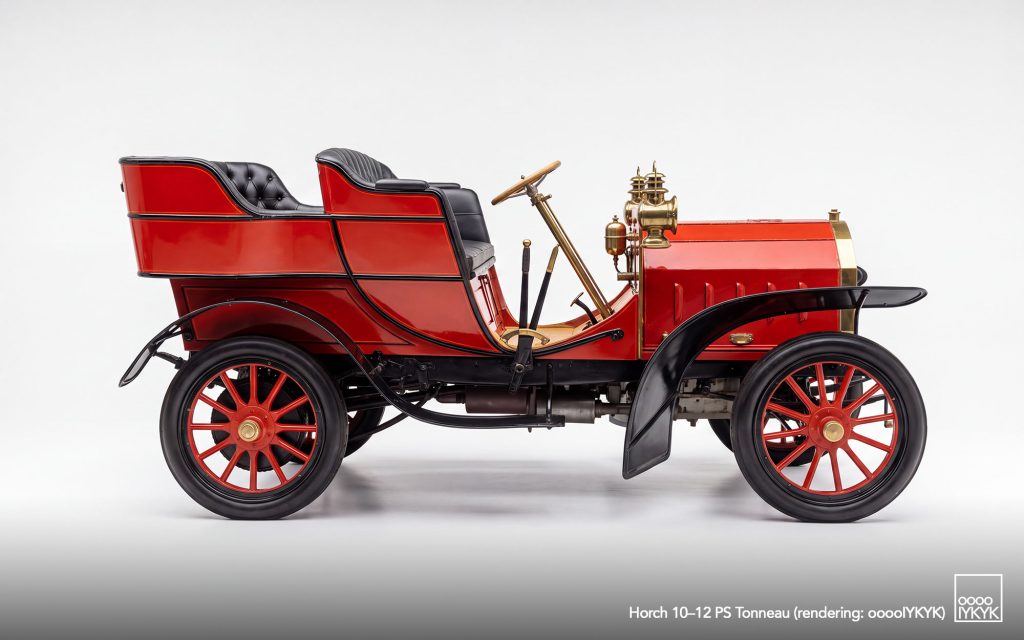
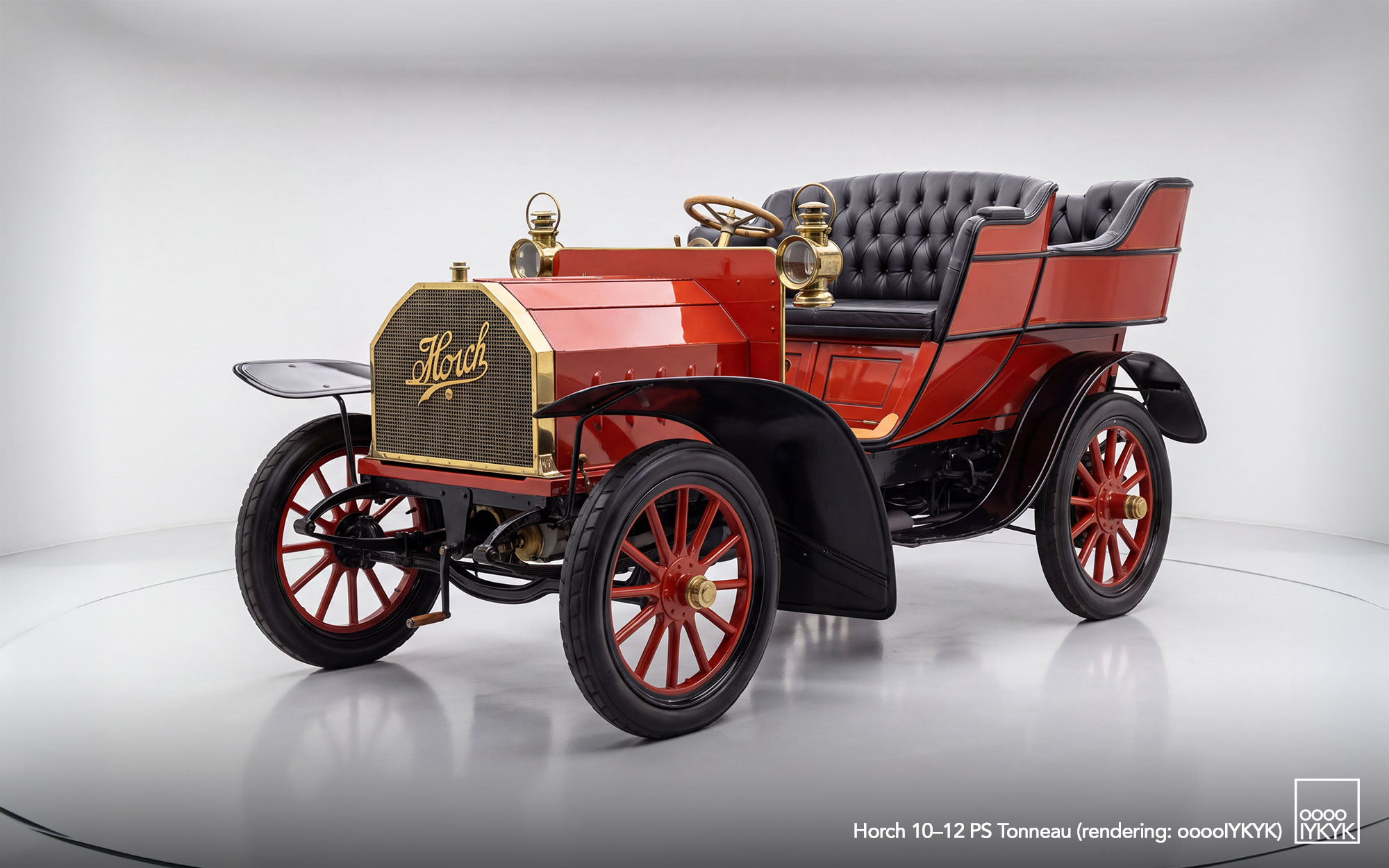
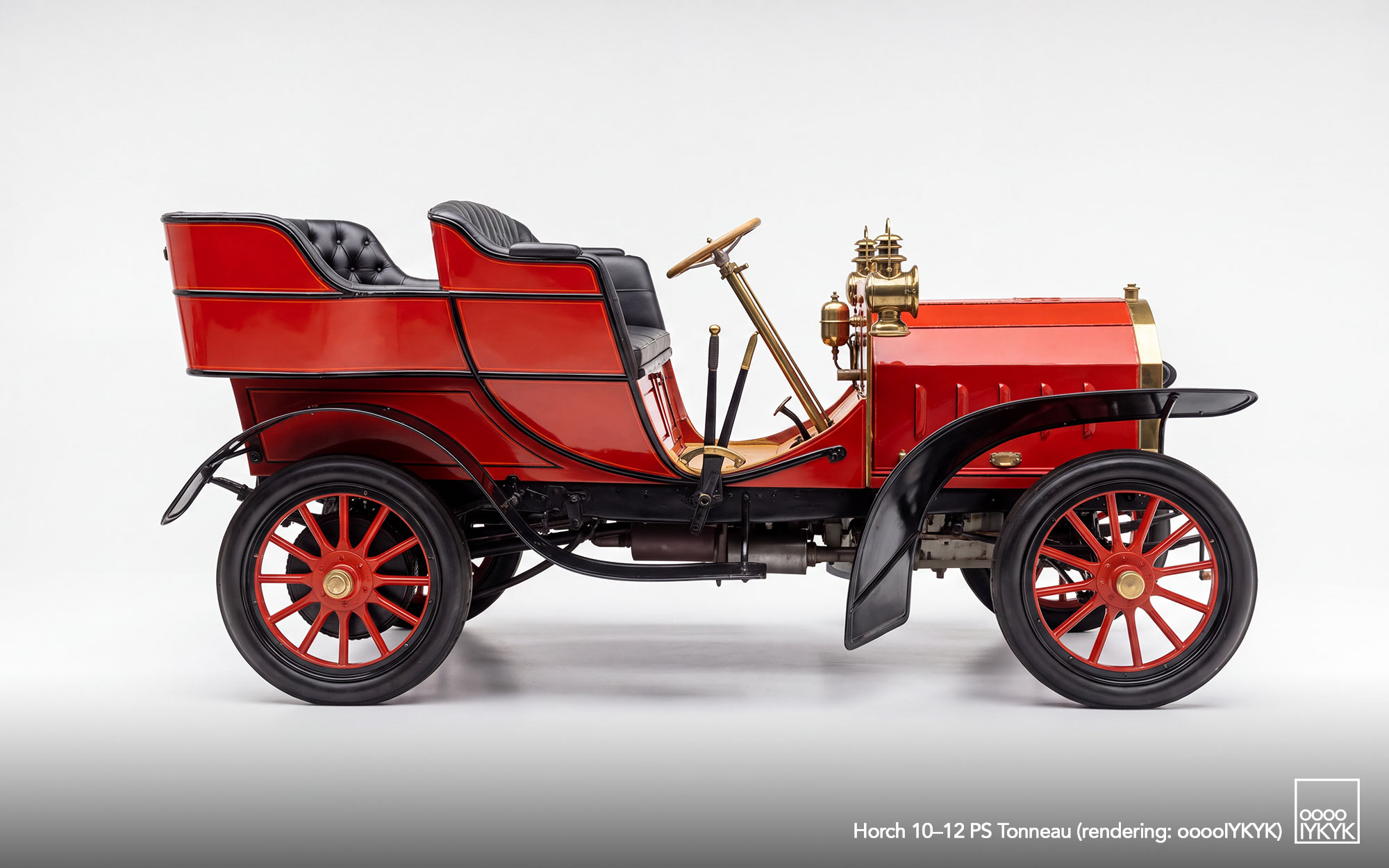
The open tonneau body has two rows of seats, with access to the rear compartment through an entrance at the back. The tall passenger compartment, separate fenders, running boards and wooden-spoked wheels illustrate a period when automobile body design still retained visible links to horse-drawn vehicles.
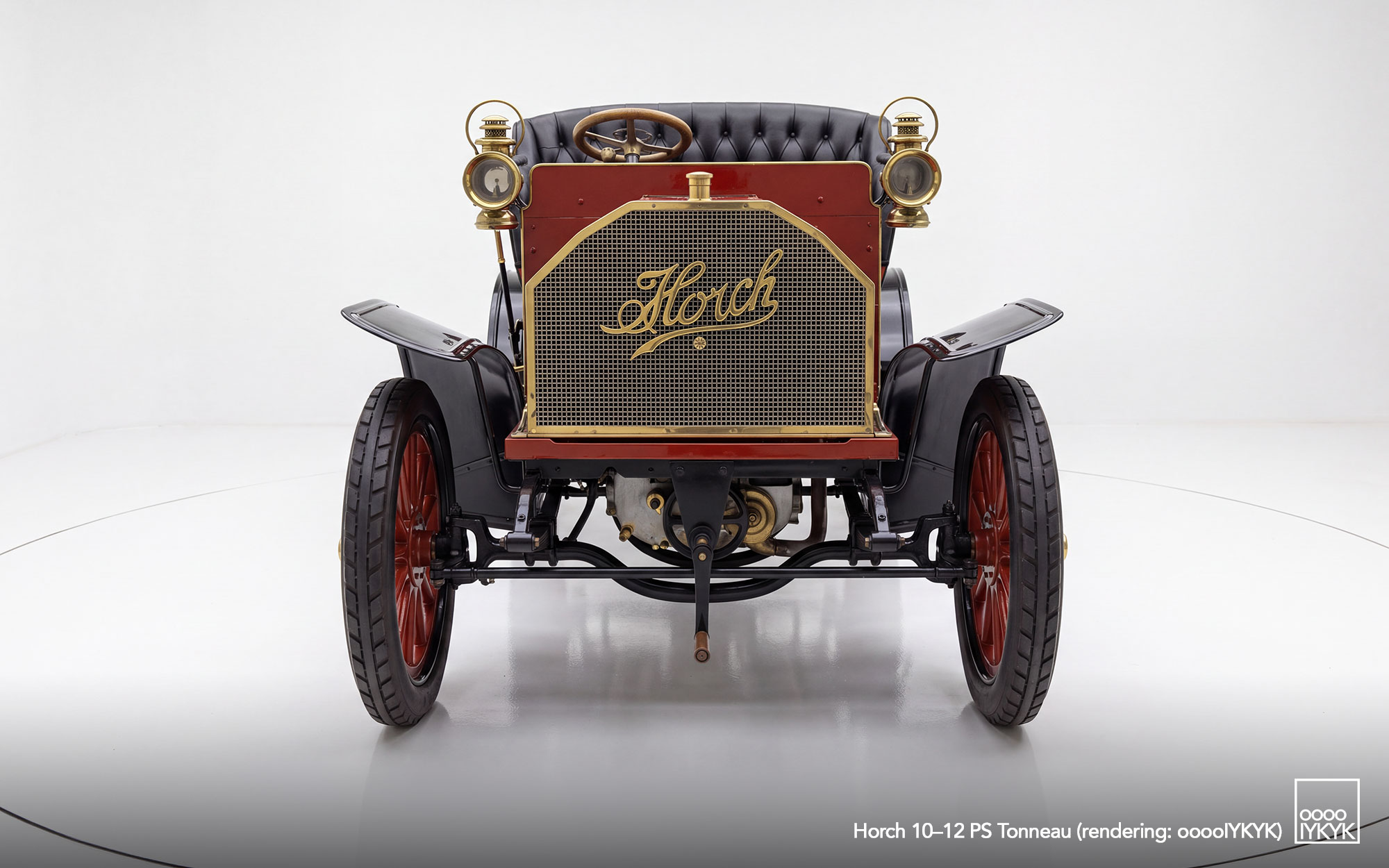
The museum example is finished in orange-red with black trim and upholstery, complemented by brass lamps and fittings.
TECHNICAL DATA
| Specification | Detail |
|---|---|
| Engine | Front-mounted inline two-cylinder, four-stroke |
| Displacement | Approximately 2,500 cc |
| Power | Approximately 10–12 PS |
| Drivetrain | Rear-wheel drive |
| Final drive arrangement | Shaft drive |
| Maximum speed | Approximately 50 km/h / 31 mph |
| Body | Open tonneau, two rows of seats, rear passenger entrance |
| Year of museum example | 1903 |
| Production period | 1902–1903, museum guide |
| Production quantity | Approximately 40, museum guide |
| Museum loan credit | Deutsches Museum, Munich |
PRESERVATION AND HISTORICAL SIGNIFICANCE
The museum guide in the Audi Tradition App identifies the car displayed at Audi’s Ingolstadt facility as a loan from the Deutsches Museum in Munich. It preserves an example of Horch engineering from the company’s Reichenbach period.
Horch later became one of the four constituent brands of Auto Union in 1932, alongside Audi, DKW and Wanderer. This car therefore belongs to the earliest chapter of the corporate history represented by Audi’s four rings.
PRODUCTION RECORD NOTE
The museum guide gives a production period of 1902–1903 and approximately 40 units. Other published references report 18 examples and production continuing into 1904. The figures above follow the museum guide and should be treated as attributed estimates rather than a settled production total.
REFERENCES
- Audi Tradition App & museum mobile digital guide – Apple & Google Play
- Horch Club — August Horch timeline — Type No. 2 development, Reichenbach production and company chronology.
- Audi — Company history — Company relocations and the formation of Auto Union.
- Audi — History of the Four Rings — August Horch’s background and early technical developments.
- German Wikipedia — Horch 10–12 PS — Supplemental model history and alternative production figures.
PHOTO GALLERY