
What: Essen Motor Show
Event Type: Industry Auto Show focused on Tuning & the Aftermarket
Location: Essen, Germany
Venue: Messe Essen
Dates (2004 edition): November 26–December 5, 2004
First Held: 1968
Frequency: Annual
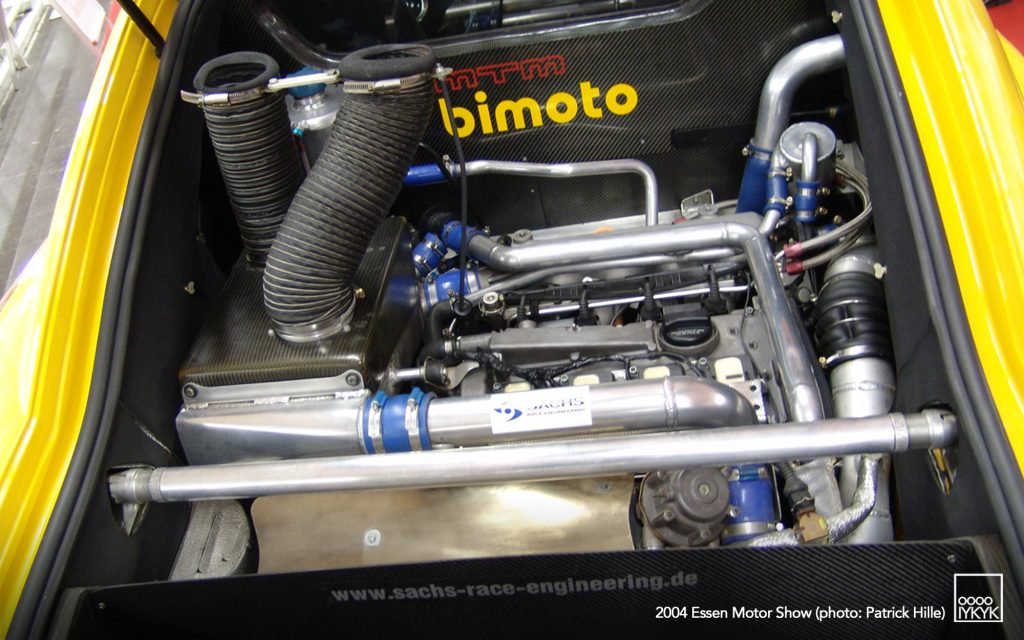
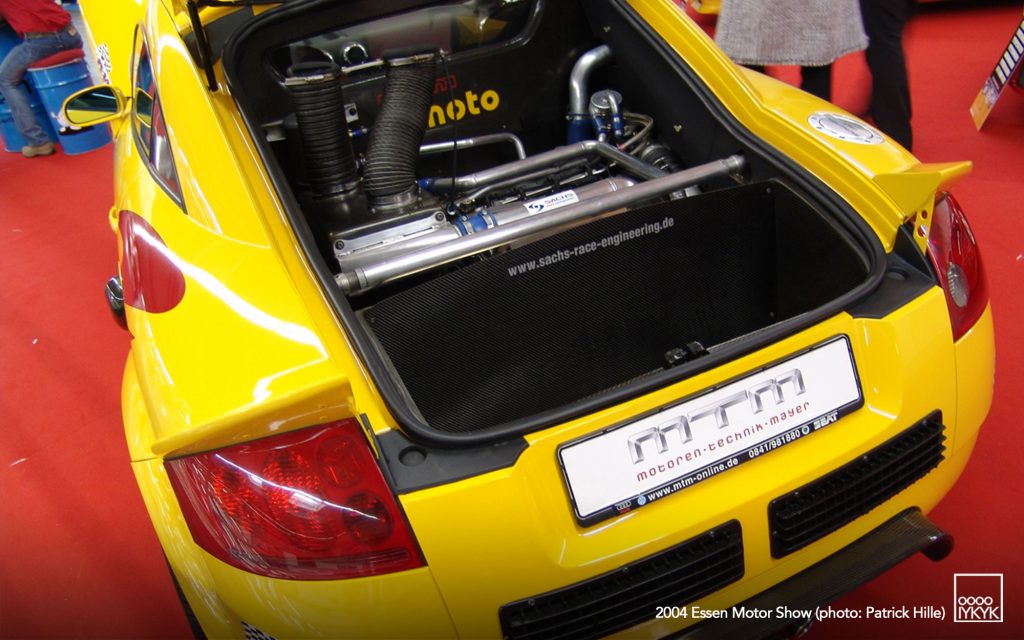
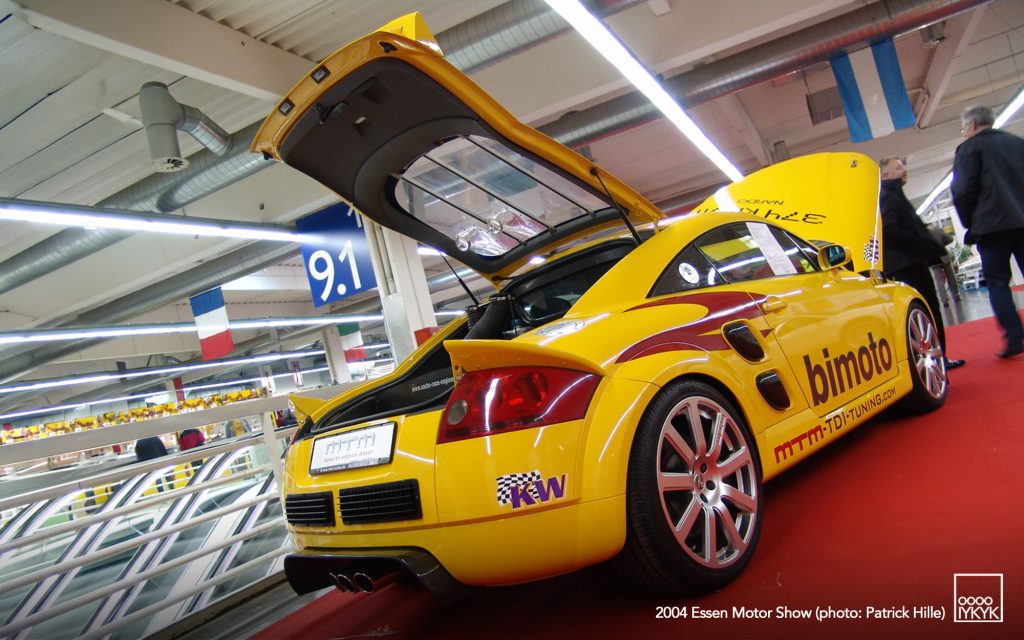
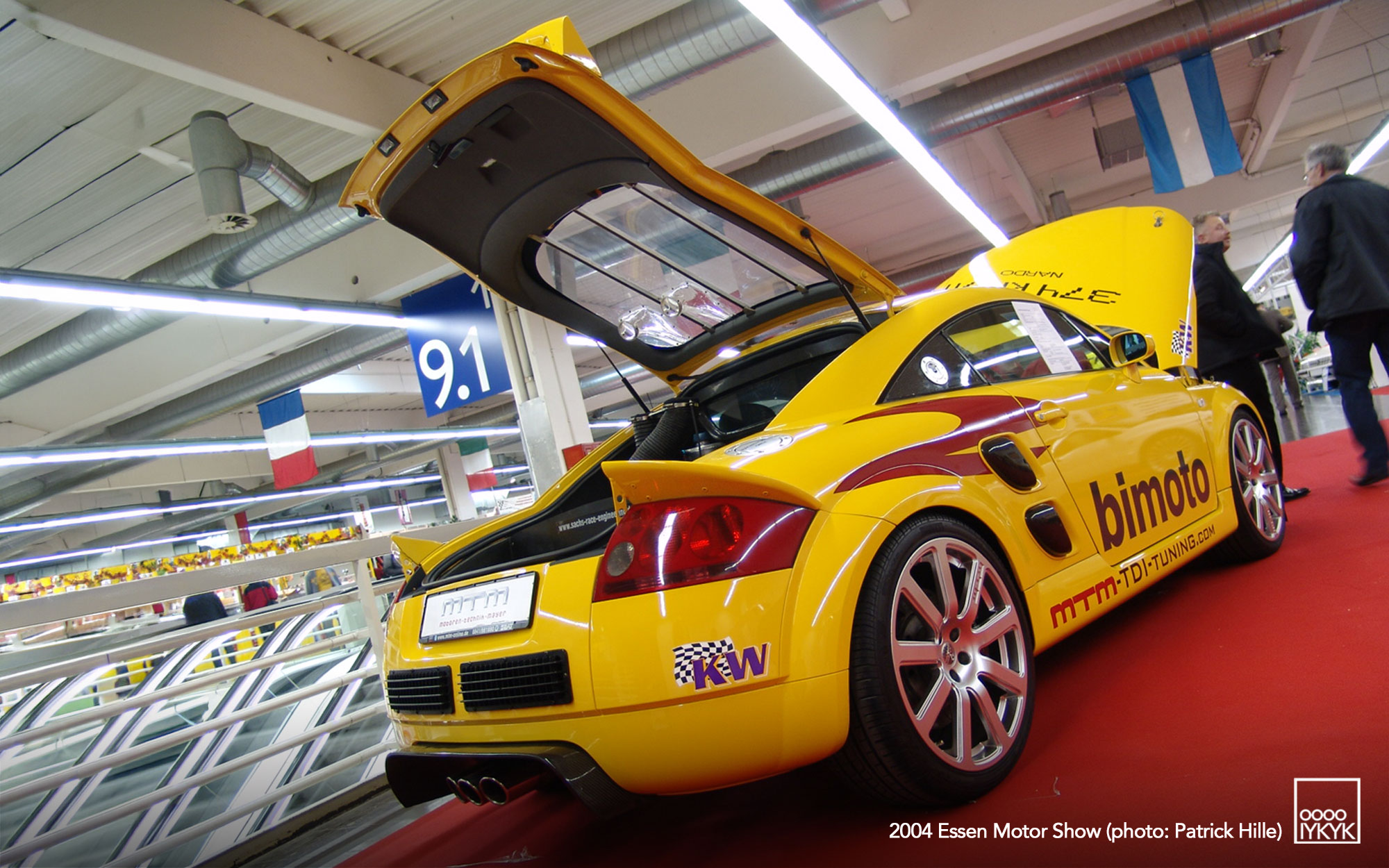
Audi Highlights: A4 DTM Edition (B7) world premiere, S4 Sedan (B7) world premiere, Audi exclusive models, A4 DTM (B6 / R11), R8 LMP1, 2005 Audi Sport program announcements, ABT AS3 Sportback, AS4 and AS6, Oettinger A3 Sportback, PPI RSTT, MTM TT bimoto
AUDI PARTICIPATION
Audi arrived at the 2004 Essen Motor Show following a successful season in motorsport and a period of substantial renewal across its road car range. Its return to the DTM as a works entrant with the A4 DTM (B6 / R11) had delivered the drivers’, teams’ and manufacturers’ championships, while the R8 LMP1 had added another Le Mans victory and championship successes in America and Europe. Essen provided a setting to celebrate those results, announce the following season’s racing plans including the A4 DTM (R12), R10 TDI LMP1 program and connect the competition effort with a new road car from quattro GmbH.
The B7-generation A4 and S4, new A3 Sportback and C6-generation A6 also gave Audi and the aftermarket fresh products to present. Across the Messe Essen halls, factory models appeared alongside everything from restrained styling packages to MTM’s twin-engined TT bimoto.
A4 DTM EDITION DESIGN STUDY
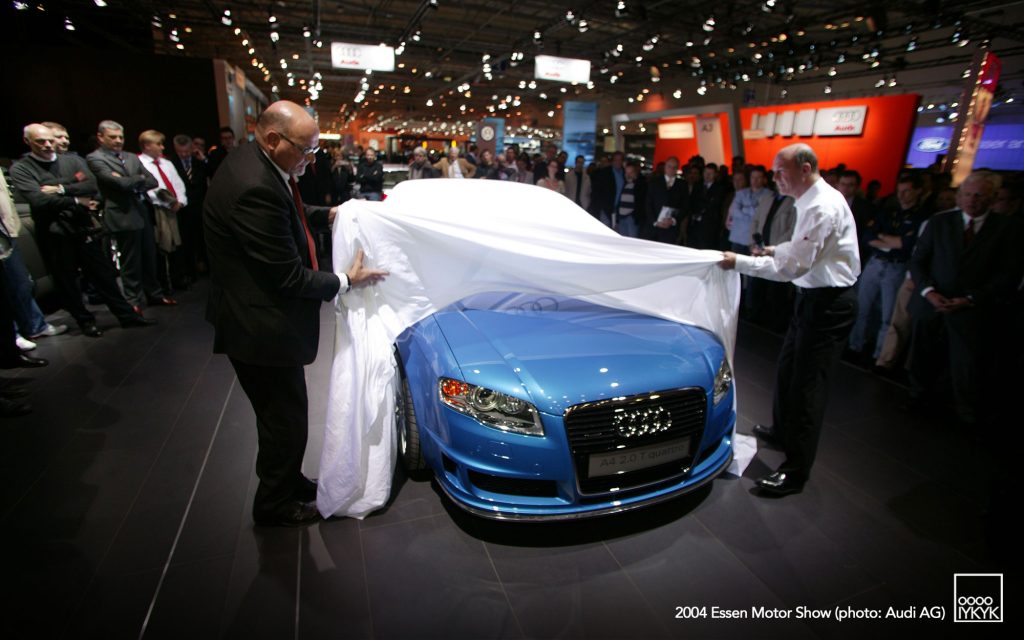
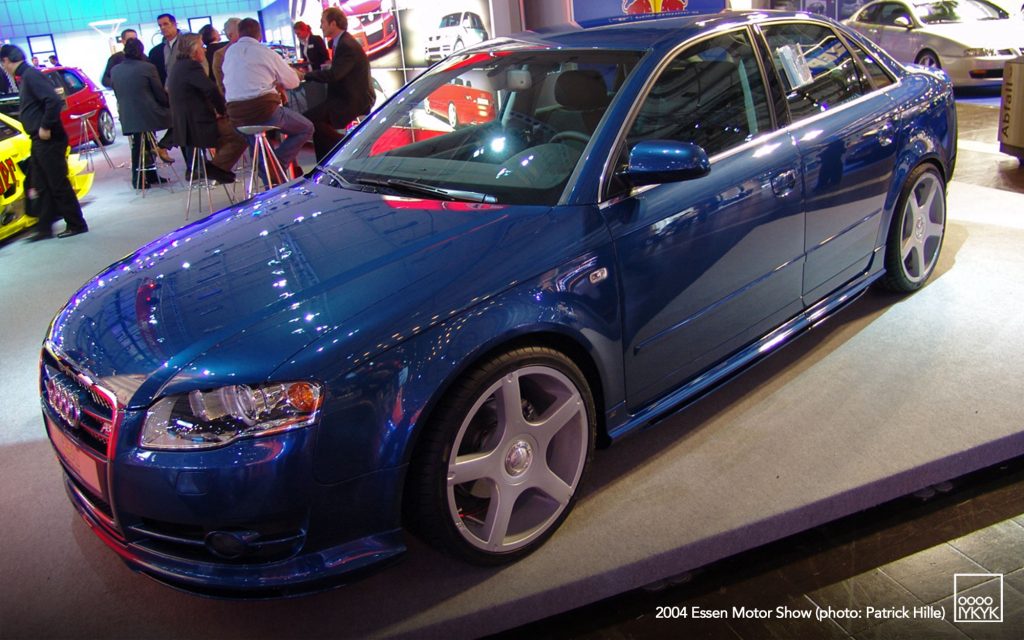
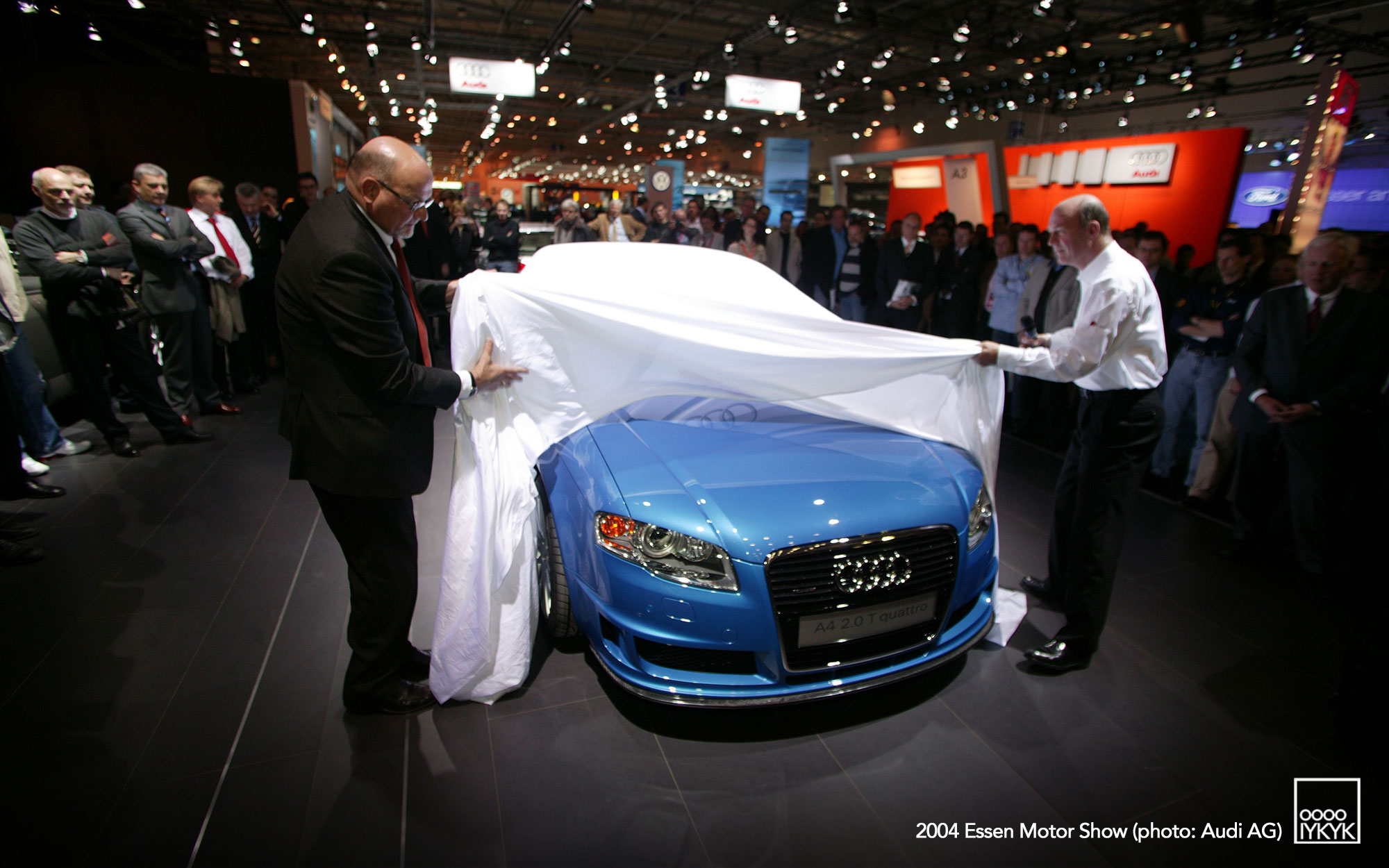
The principal road car premiere was the Audi A4 DTM edition, developed by quattro GmbH to mark Audi’s three-title DTM season. Billed as a design study and based on the new B7 A4 sedan, it previewed a customer model planned for the beginning of the 2005 DTM season.
Its 2.0-liter turbocharged FSI four-cylinder produced a quoted 220 PS and 300 Nm, up from the standard engine’s 200 PS and 280 Nm. Firmer springs lowered the chassis by 20 mm, while 18-inch multi-spoke wheels recalled those fitted to the DTM race car. Drilled front brake discs added another competition reference.
Exterior changes included a Phantom Black Singleframe grille, black accents on the bumpers and mirrors, additional air intakes and DTM identification on the rear door protection strips. Carbon-fiber spoiler details and a rear diffuser further distinguished the study from the standard A4.
The car was painted Sprint Blue, marking one of the earliest showings of the blue color that replaced Nogaro Blue as a popular S-car offering as the B7-generation cars replaced the earlier B6 models. Based on the released PR photos of the A4 DTM Edition, it would appear that the color was designed to closely match that of the blue paint on the Red Bull-sponsored Audi A4 DTM R12 once the 2005 liveries were finally shown.
Inside, Recaro seats combined Alcantara with leather side sections and silver stitching. Alcantara also covered the three-spoke steering wheel, gearshift and handbrake, while carbon-fiber trim came from the S4. DTM logos appeared on the door sills and silver-edged floor mats.
FACTORY DISPLAY
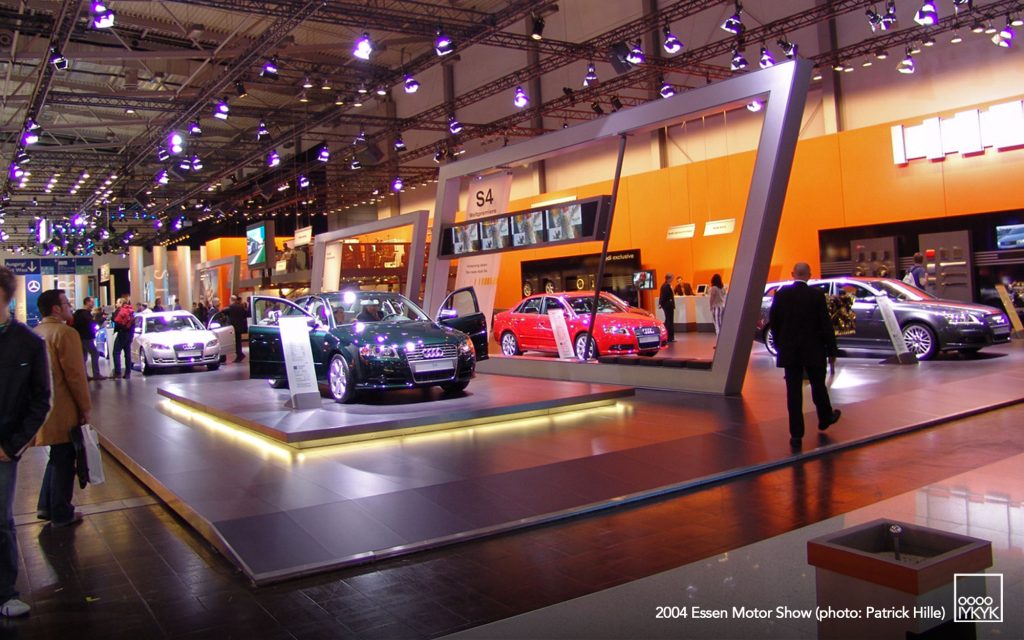
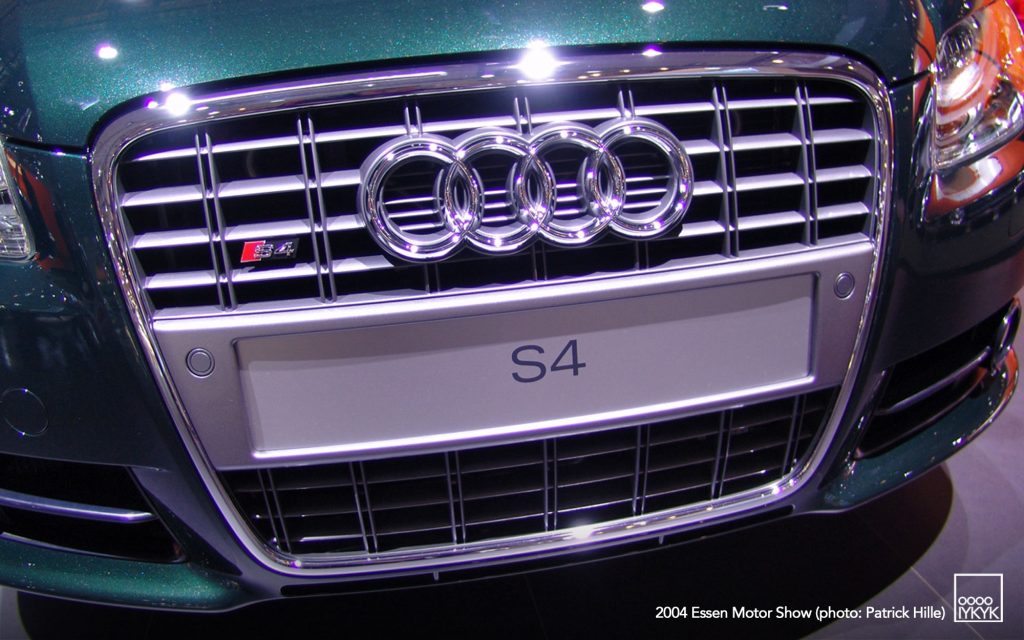
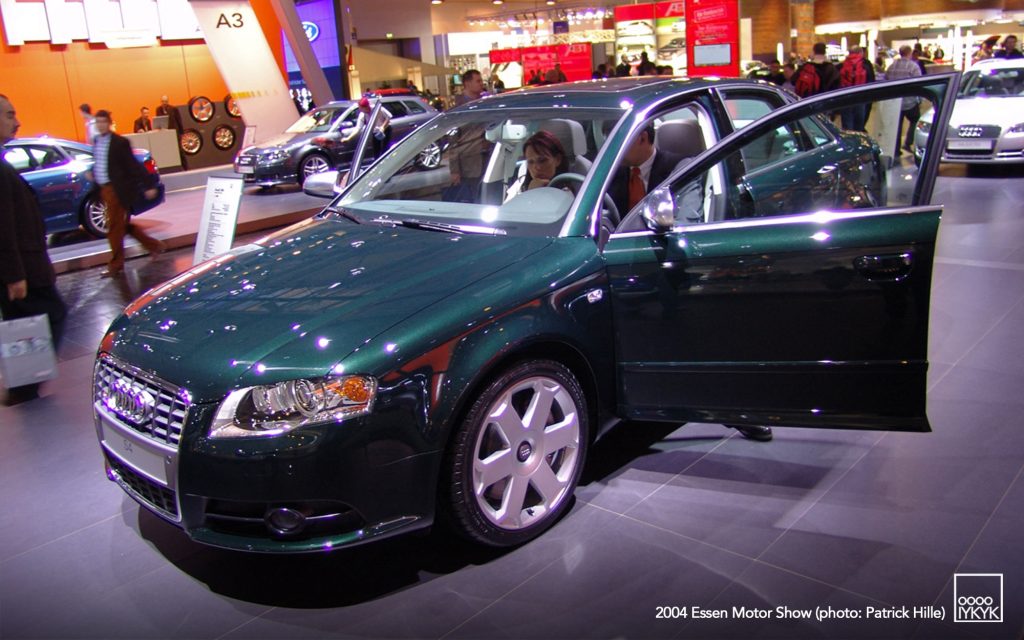
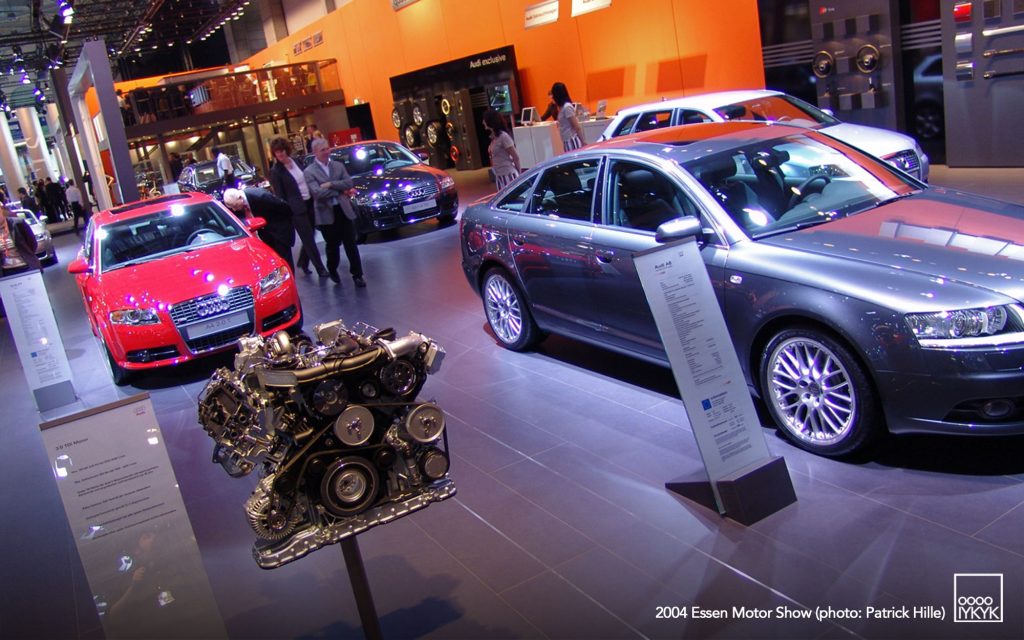
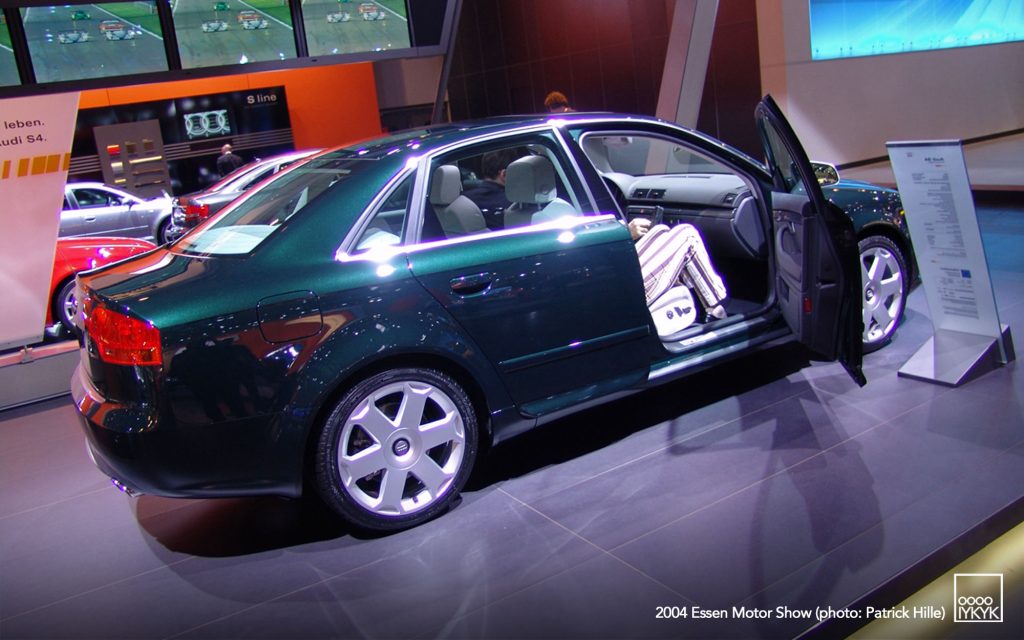
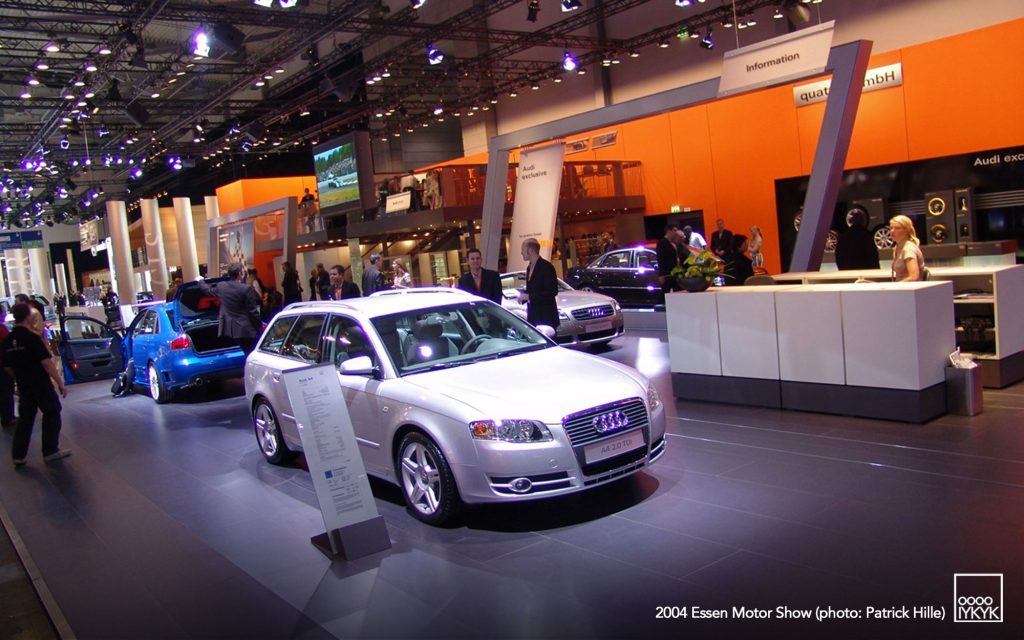
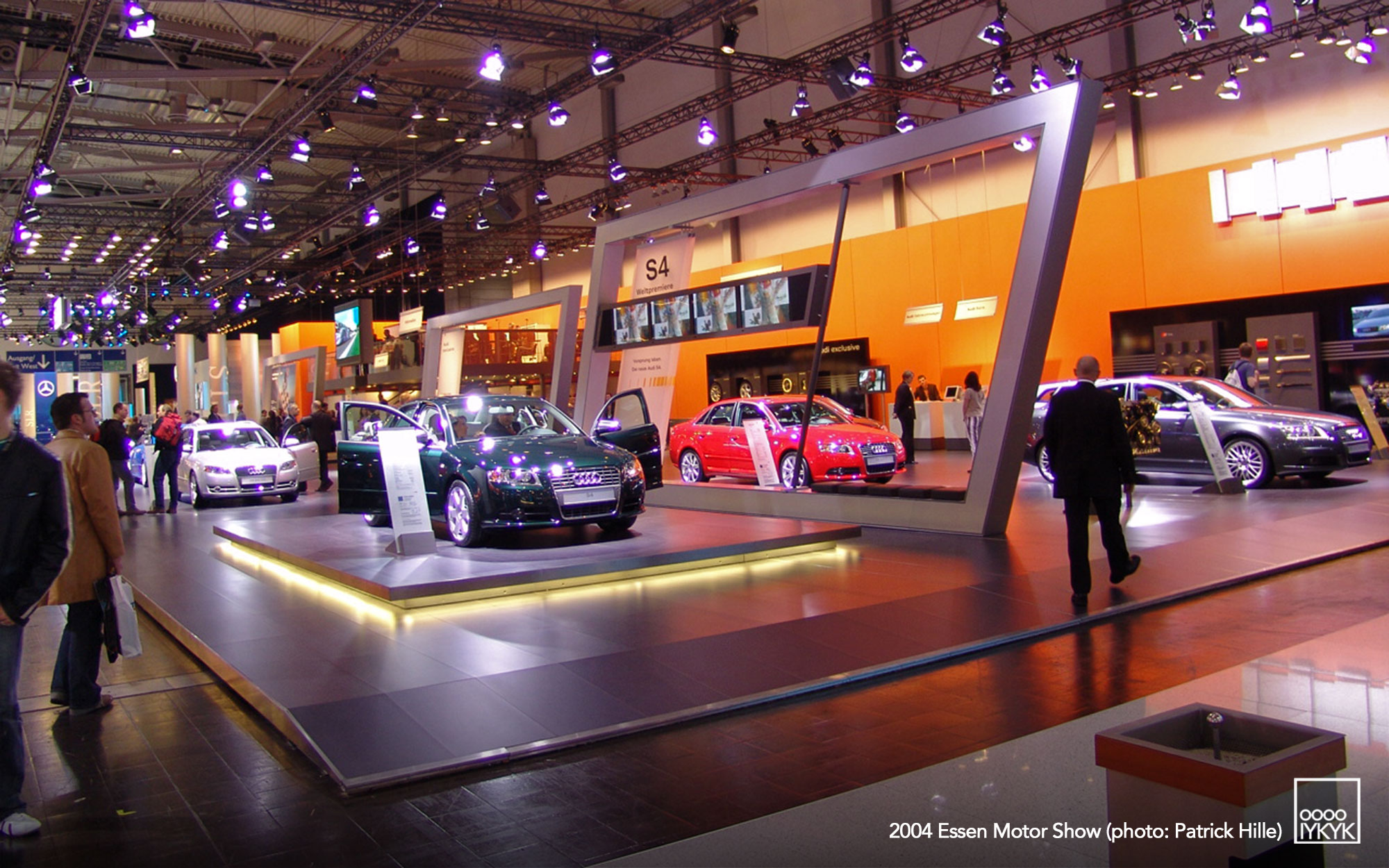
The B7 S4 Sedan made its world premiere at Essen, bringing Audi’s updated design language to the V8-powered sports sedan. Other A4 exhibits included a 2.0 T S line sedan and a 2.0 TDI Avant, while an A6 S line demonstrated the sporting appearance package on the new C6.
Audi’s broader range was represented by an A3 1.9 TDI three-door and an allroad quattro 4.2. At the more individualized end of the display, an Audi exclusive A8 L 6.0 quattro paired the long-wheelbase flagship with W12 power, while an Audi exclusive TT 3.2 quattro Roadster showcased the tailoring program on the original TT.
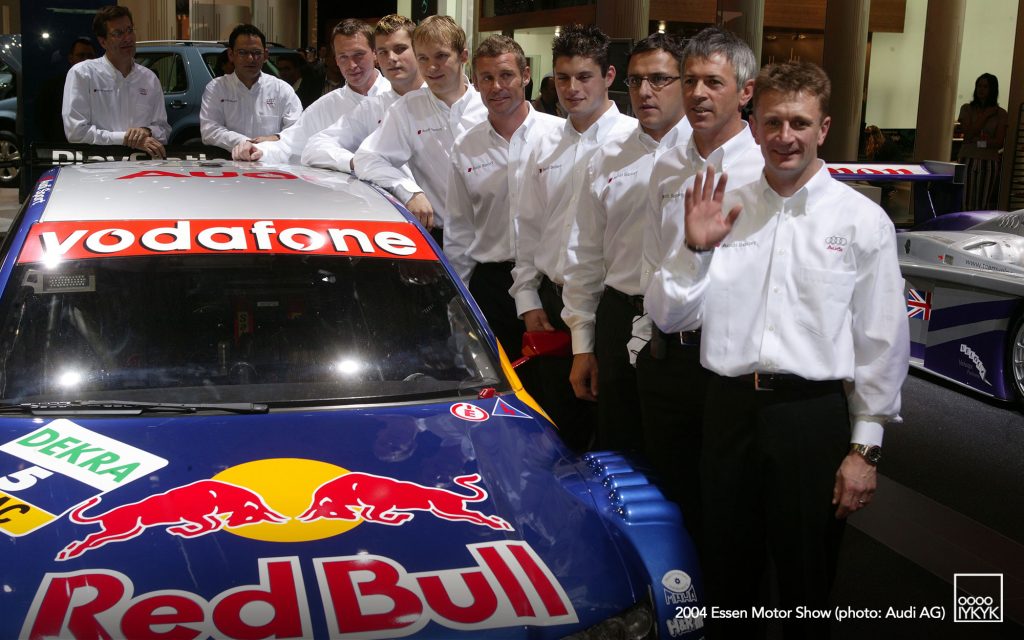
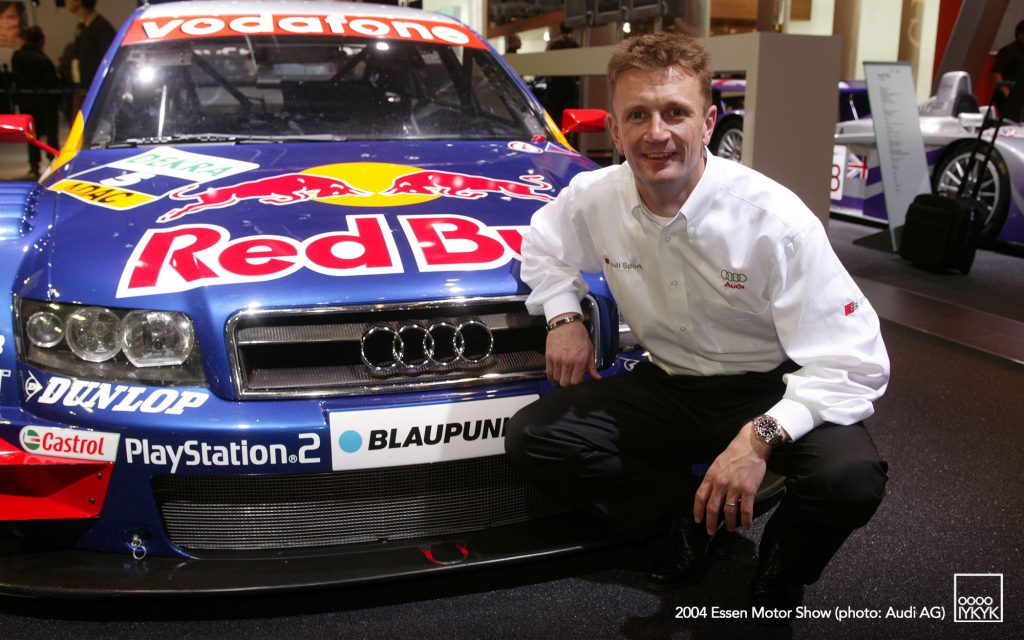
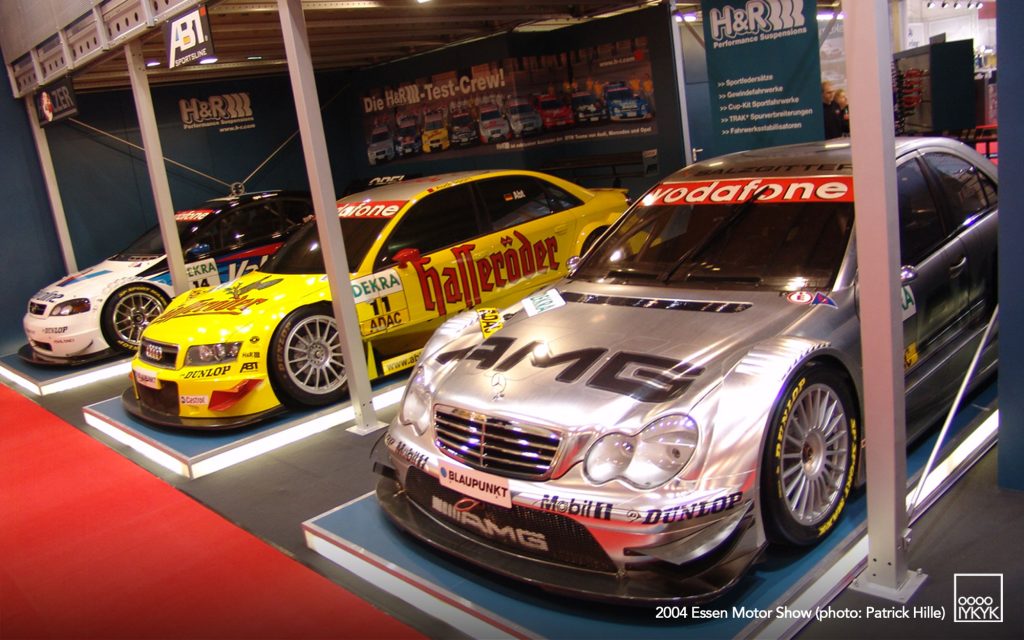
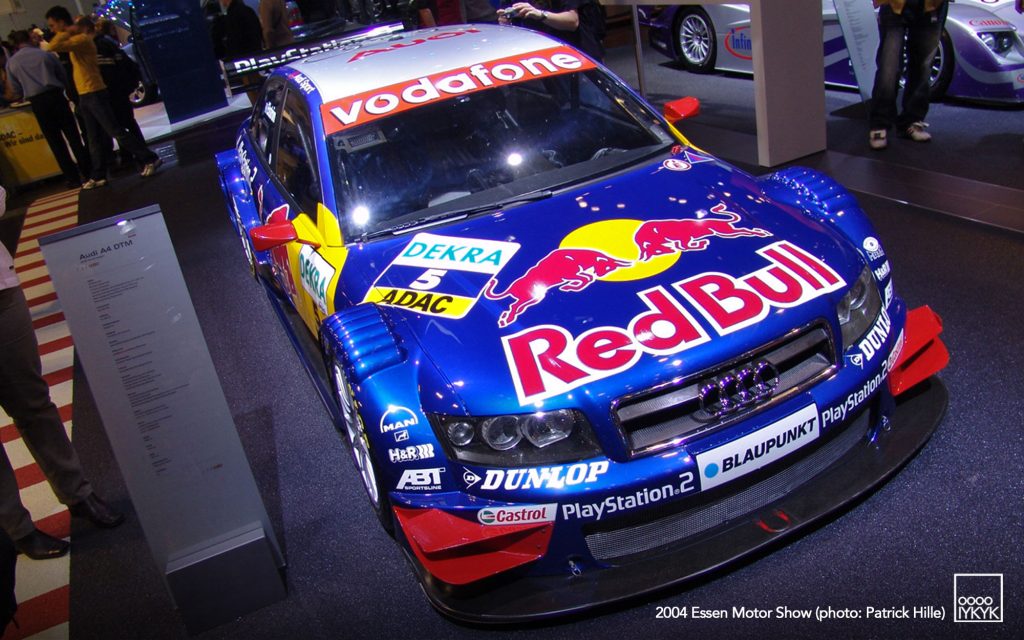
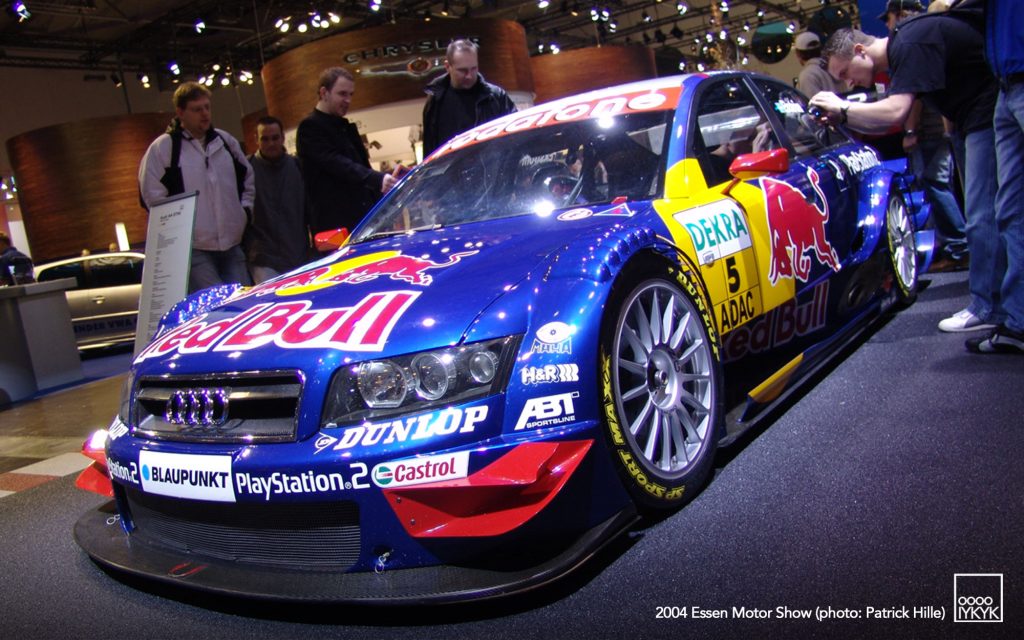
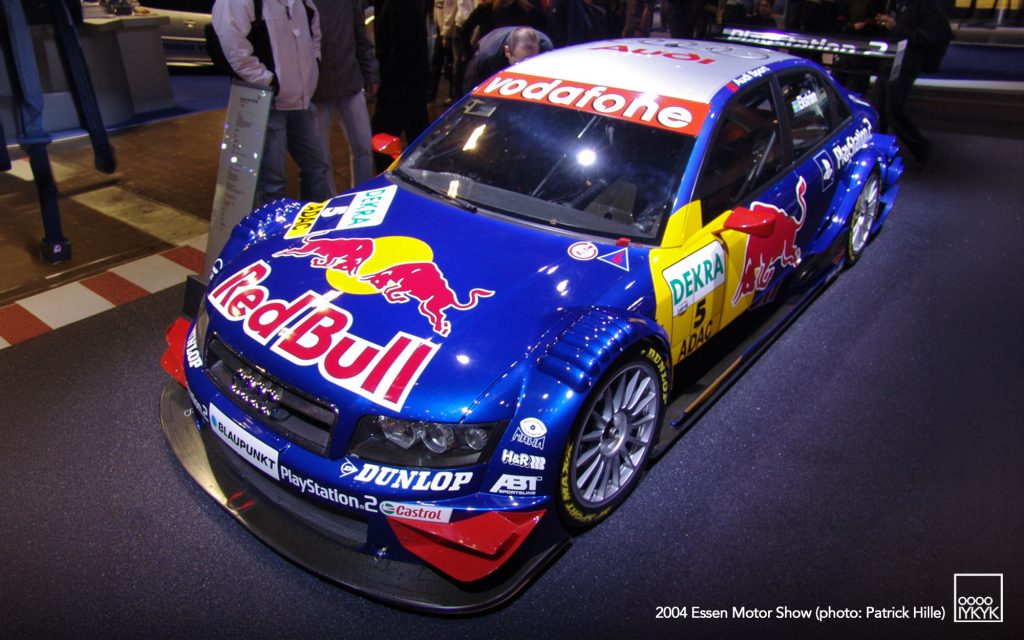
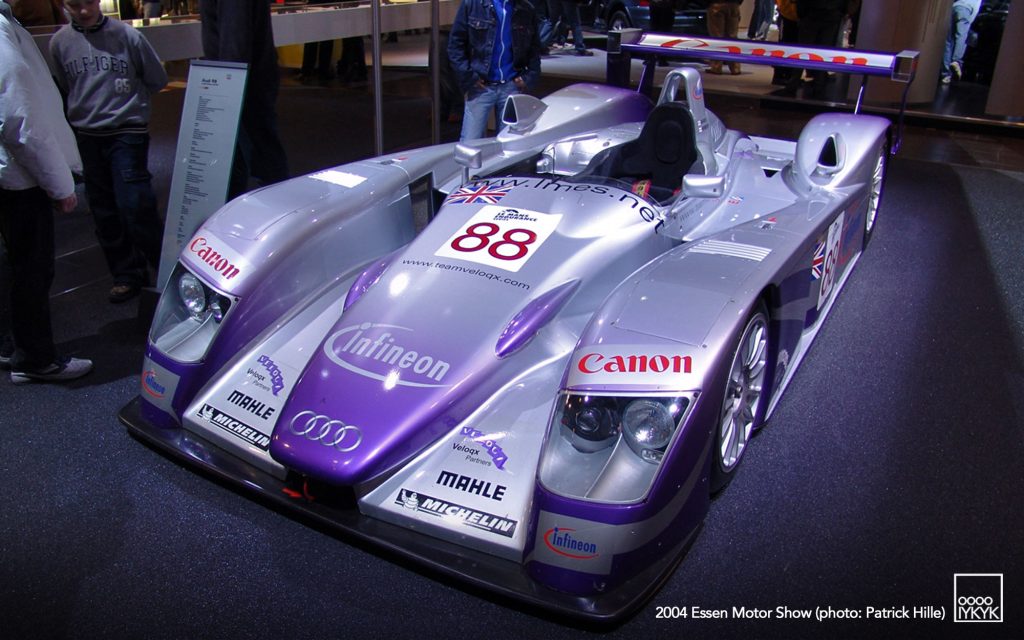
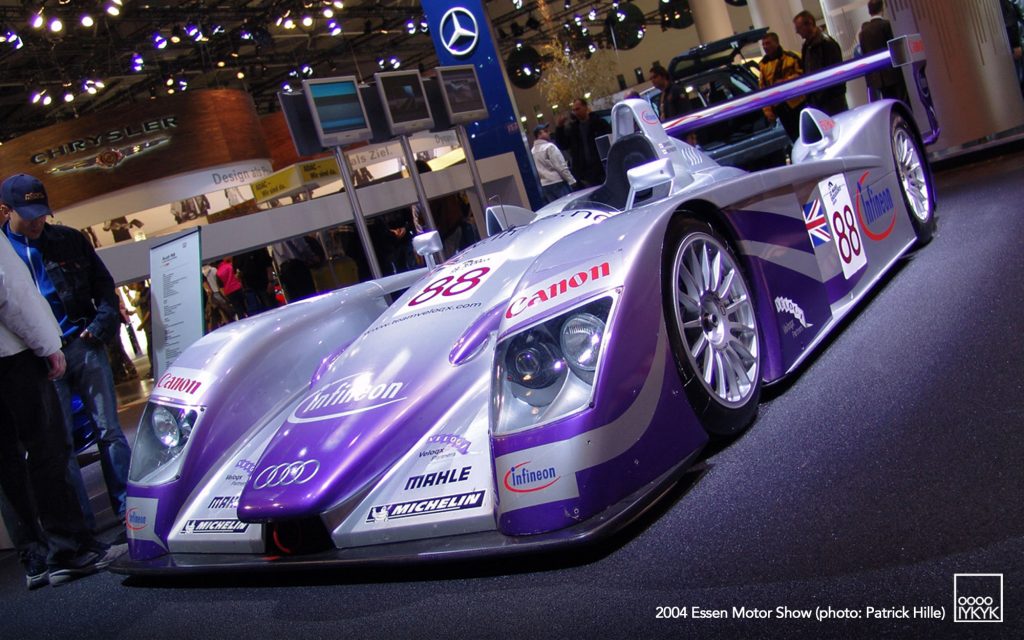
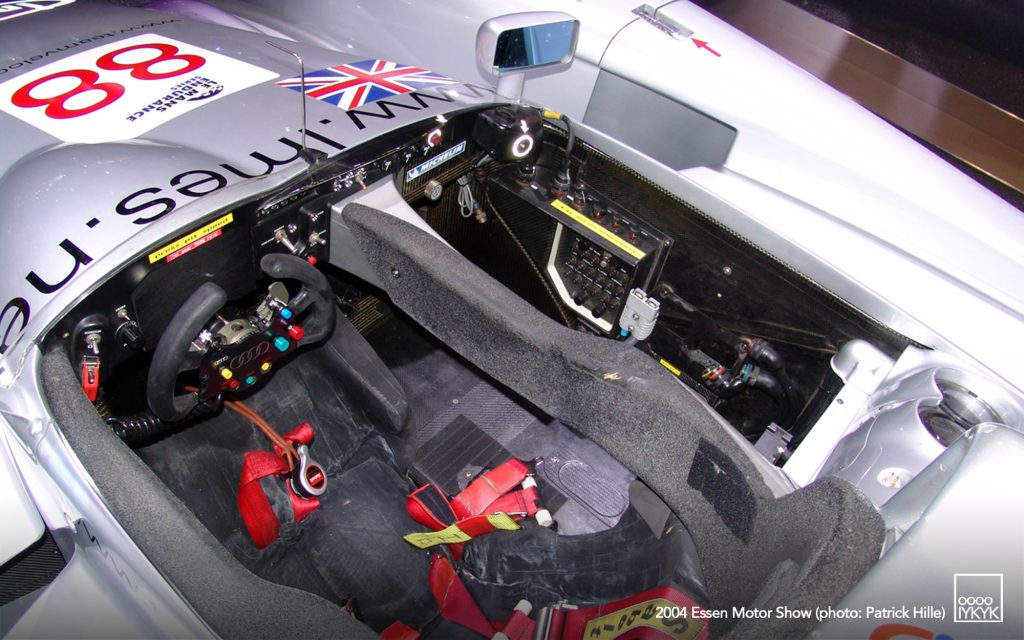
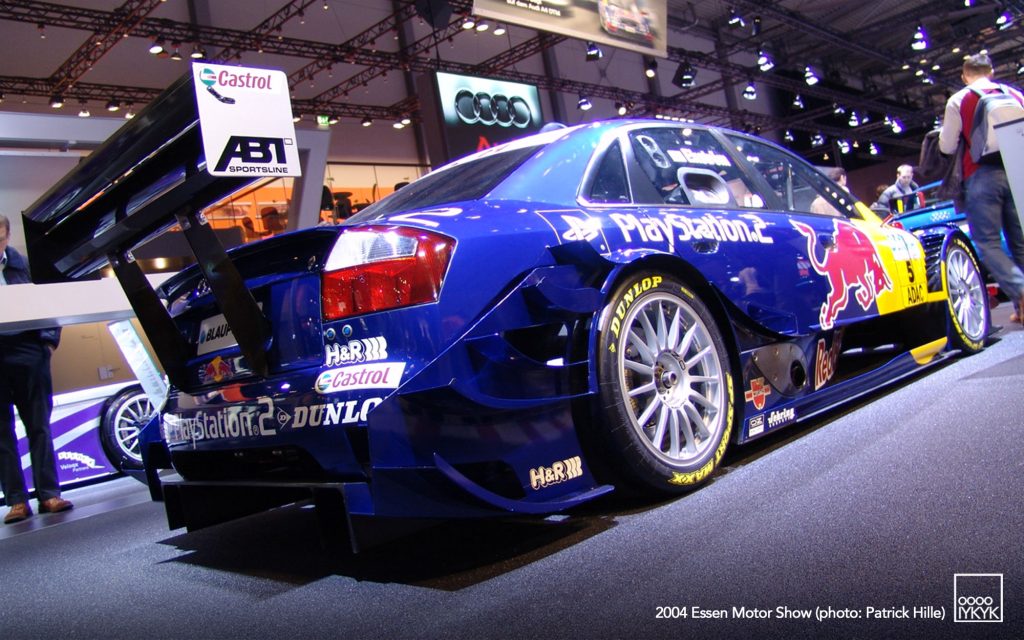
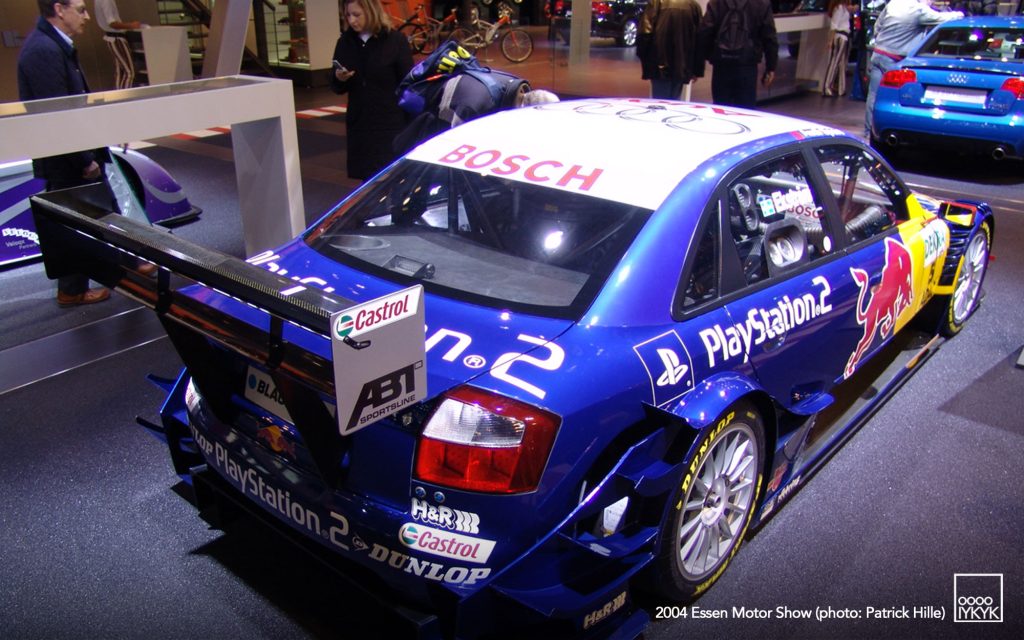
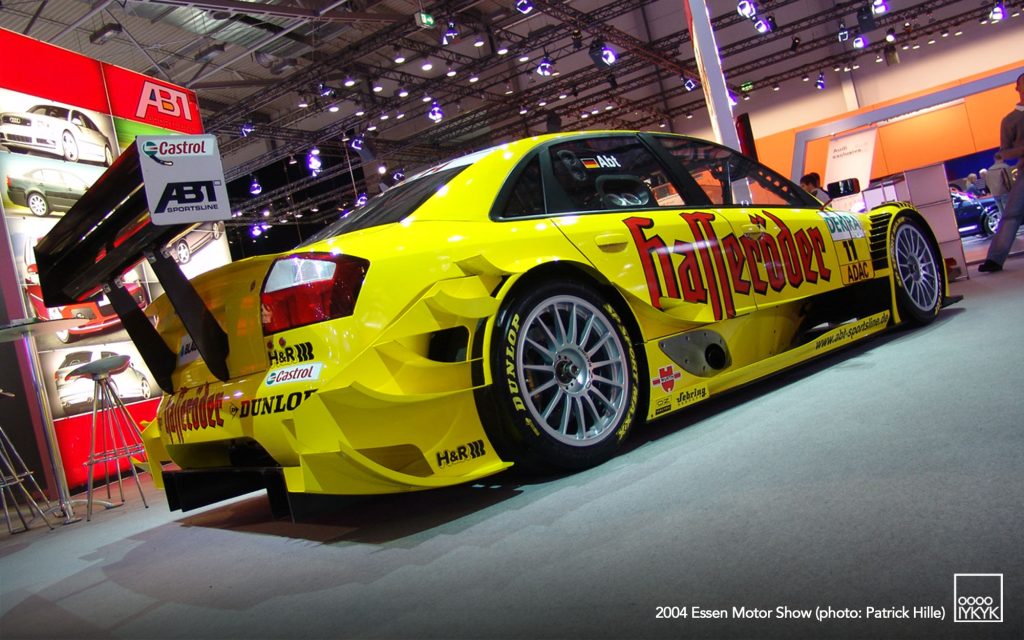
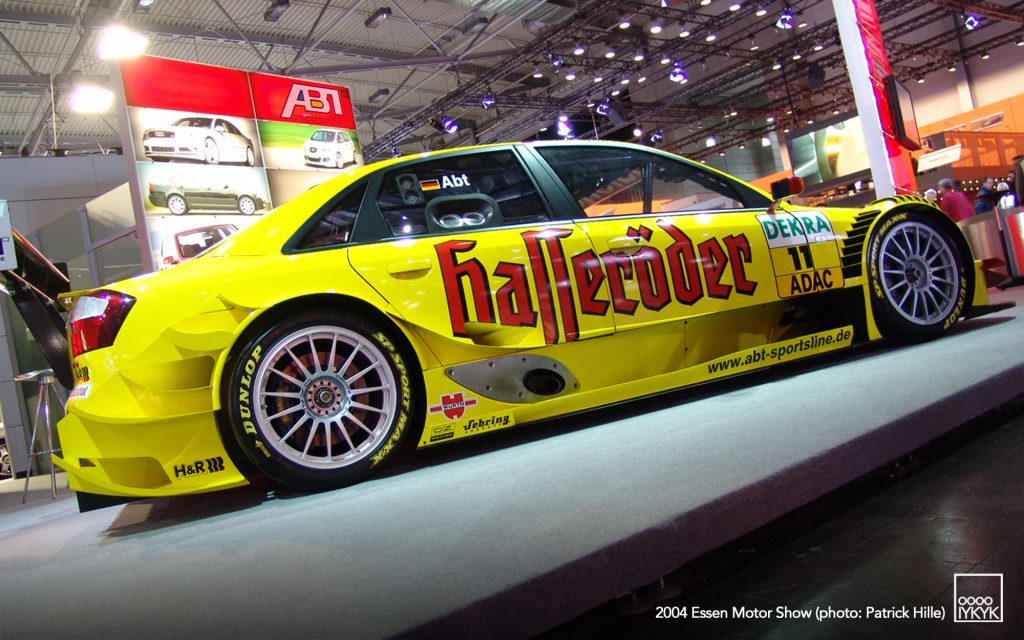
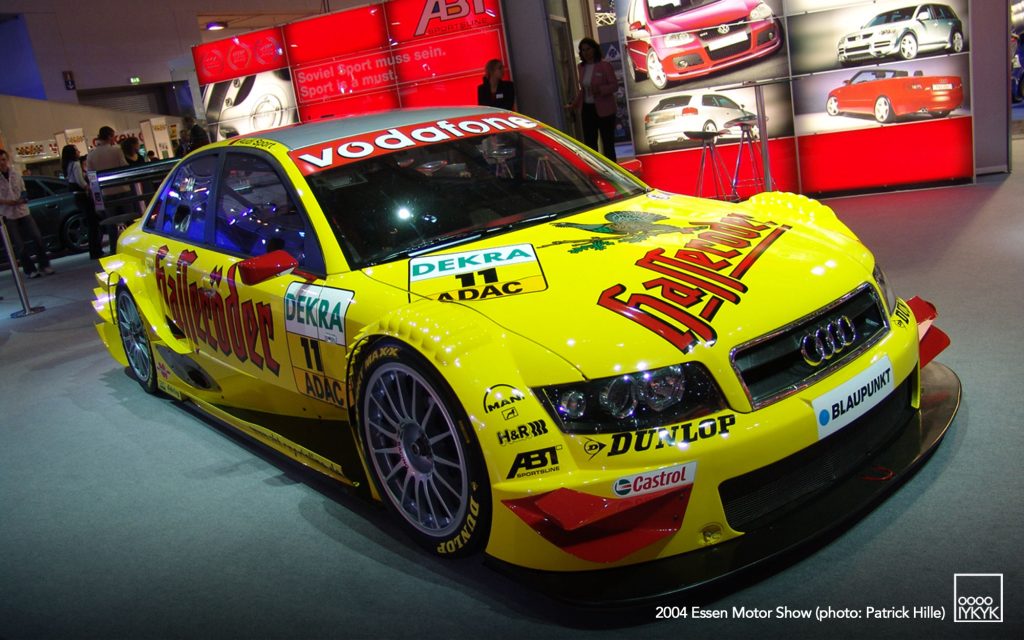
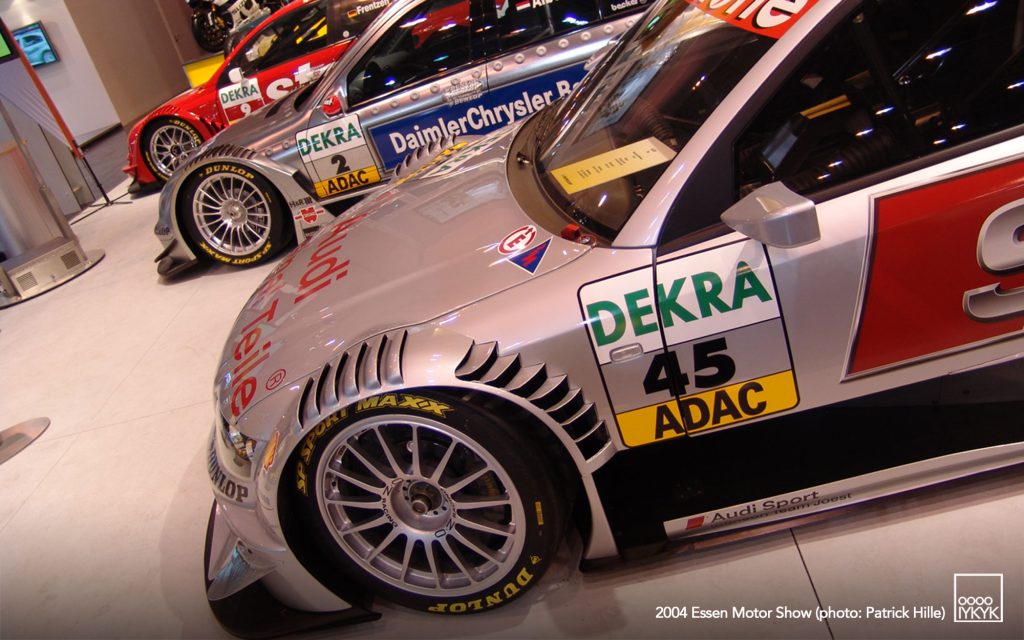
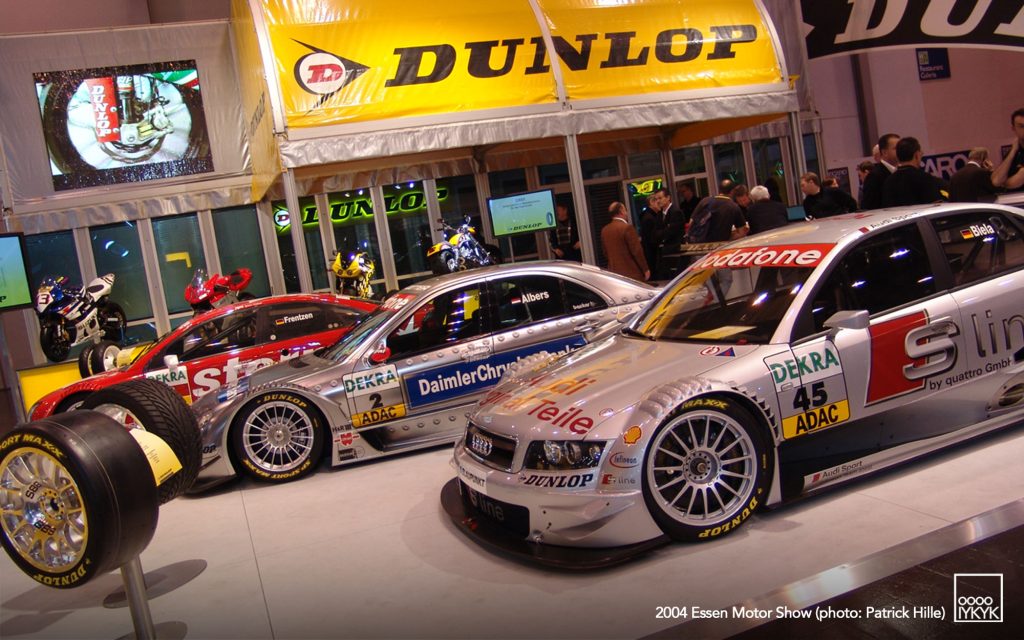
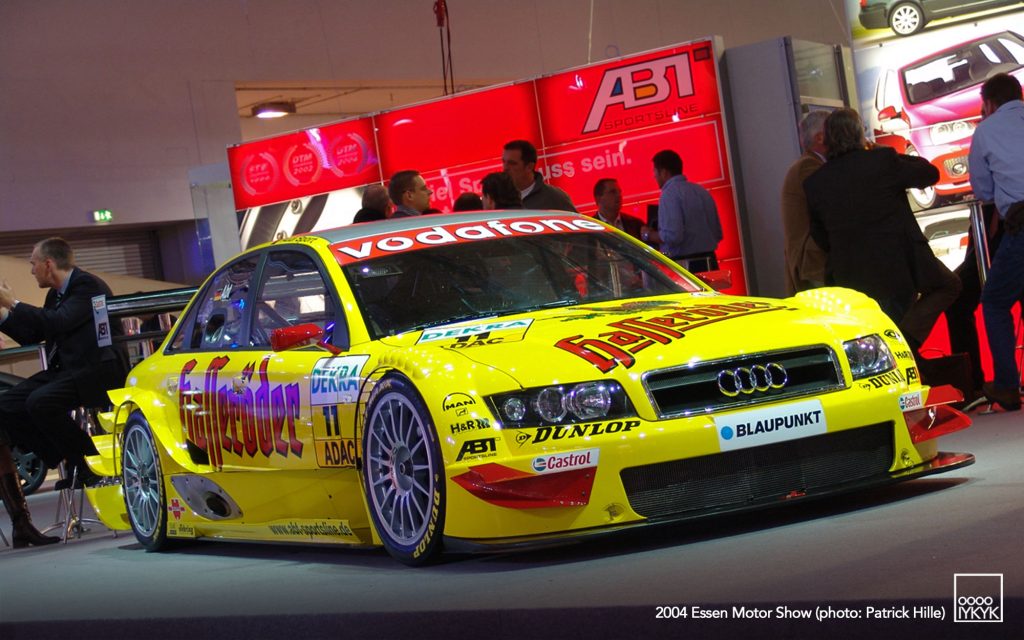
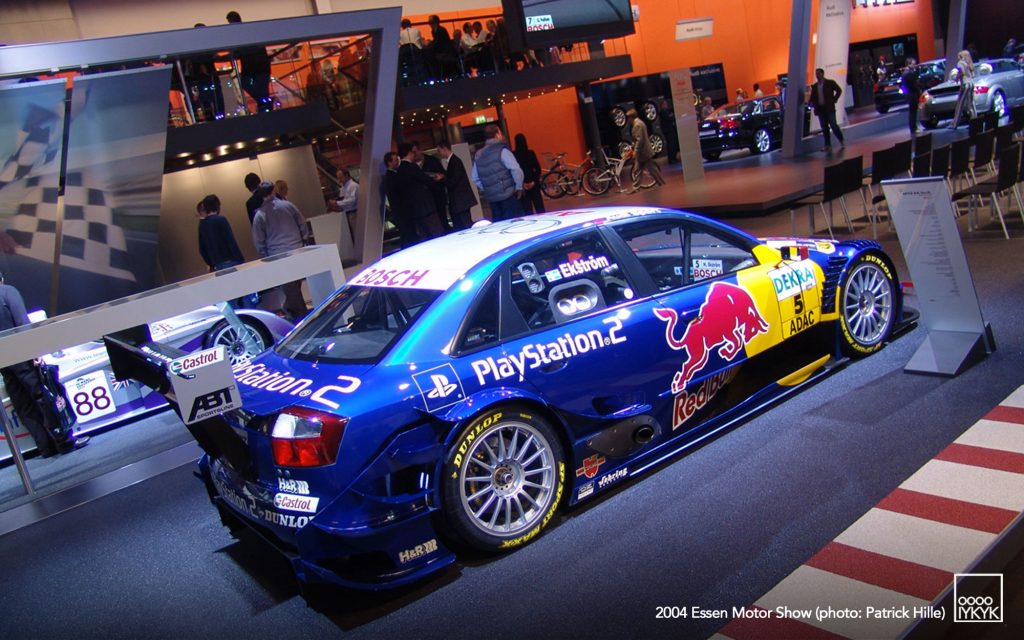
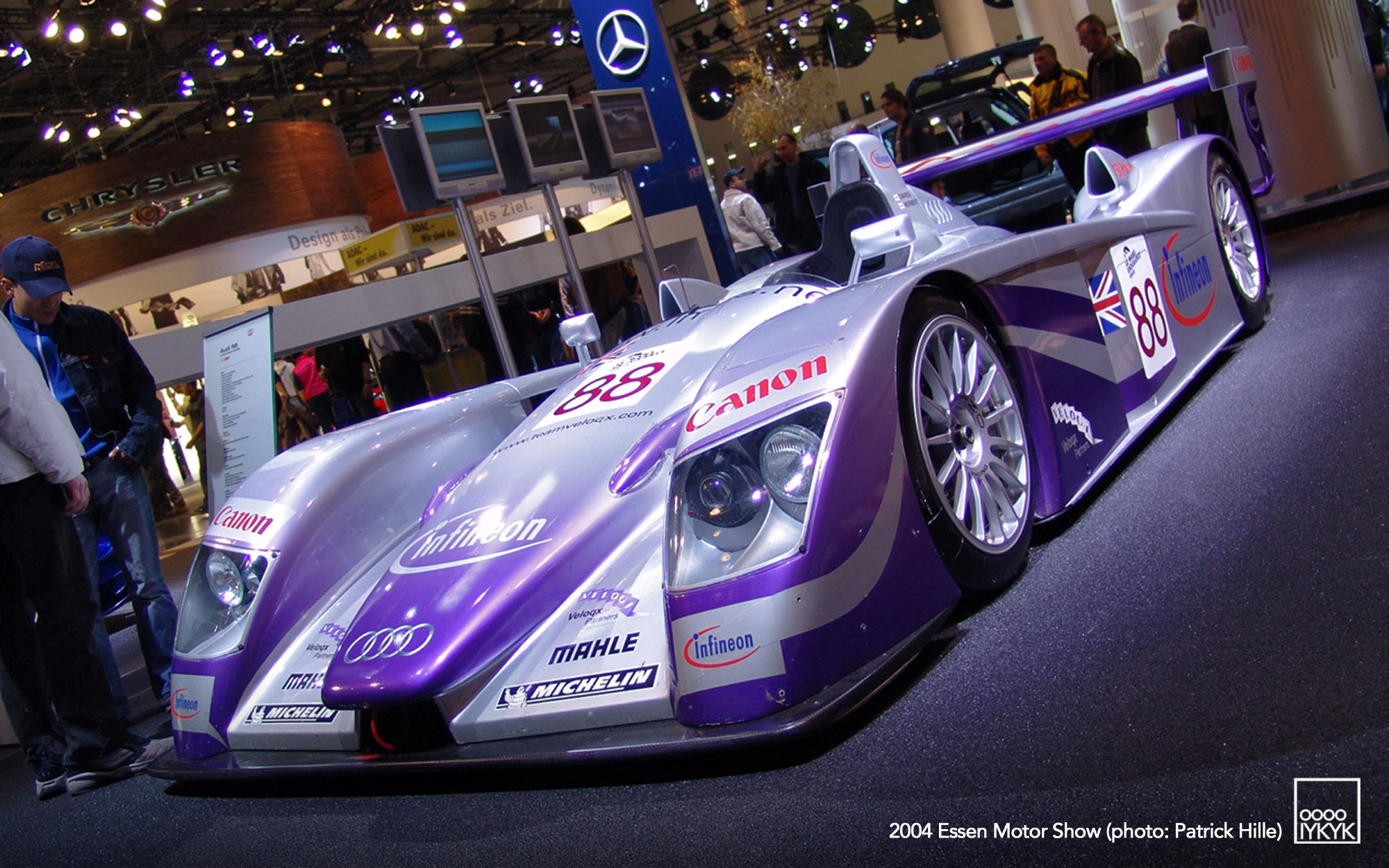
The competition display included two B6-based A4 DTM racers: Mattias Ekström’s championship-winning No. 5 Red Bull car and Christian Abt’s No. 11 Hasseröder entry. Alongside them was the silver-and-purple No. 88 Audi R8 from Audi Sport UK Team Veloqx, representing the Jamie Davies and Johnny Herbert pairing that secured the 2004 Le Mans Endurance Series drivers’ title.
AUDI SPORT: THE 2005 DTM PROGRAM
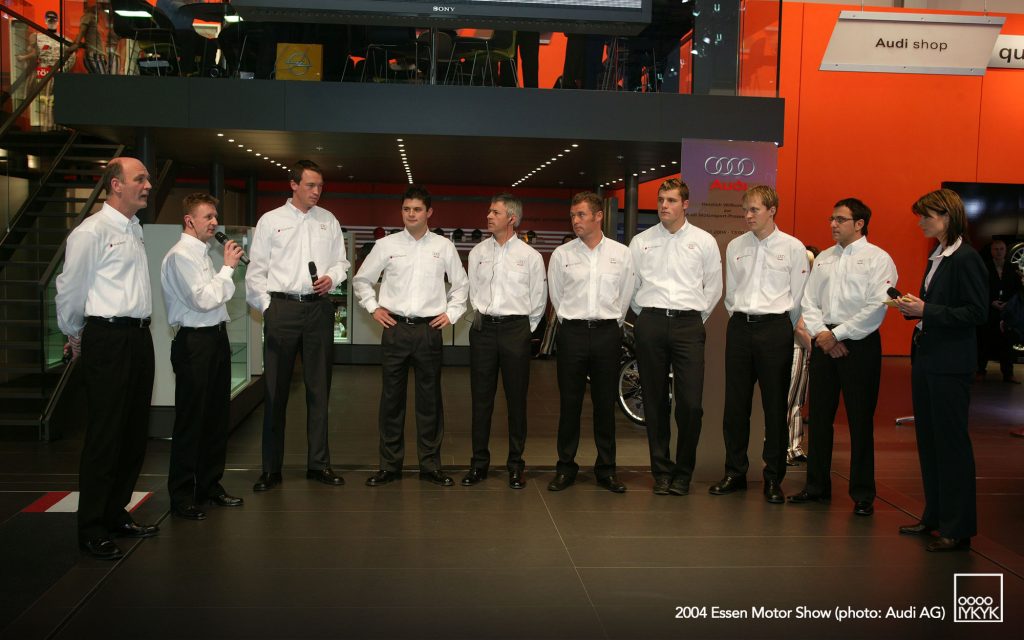
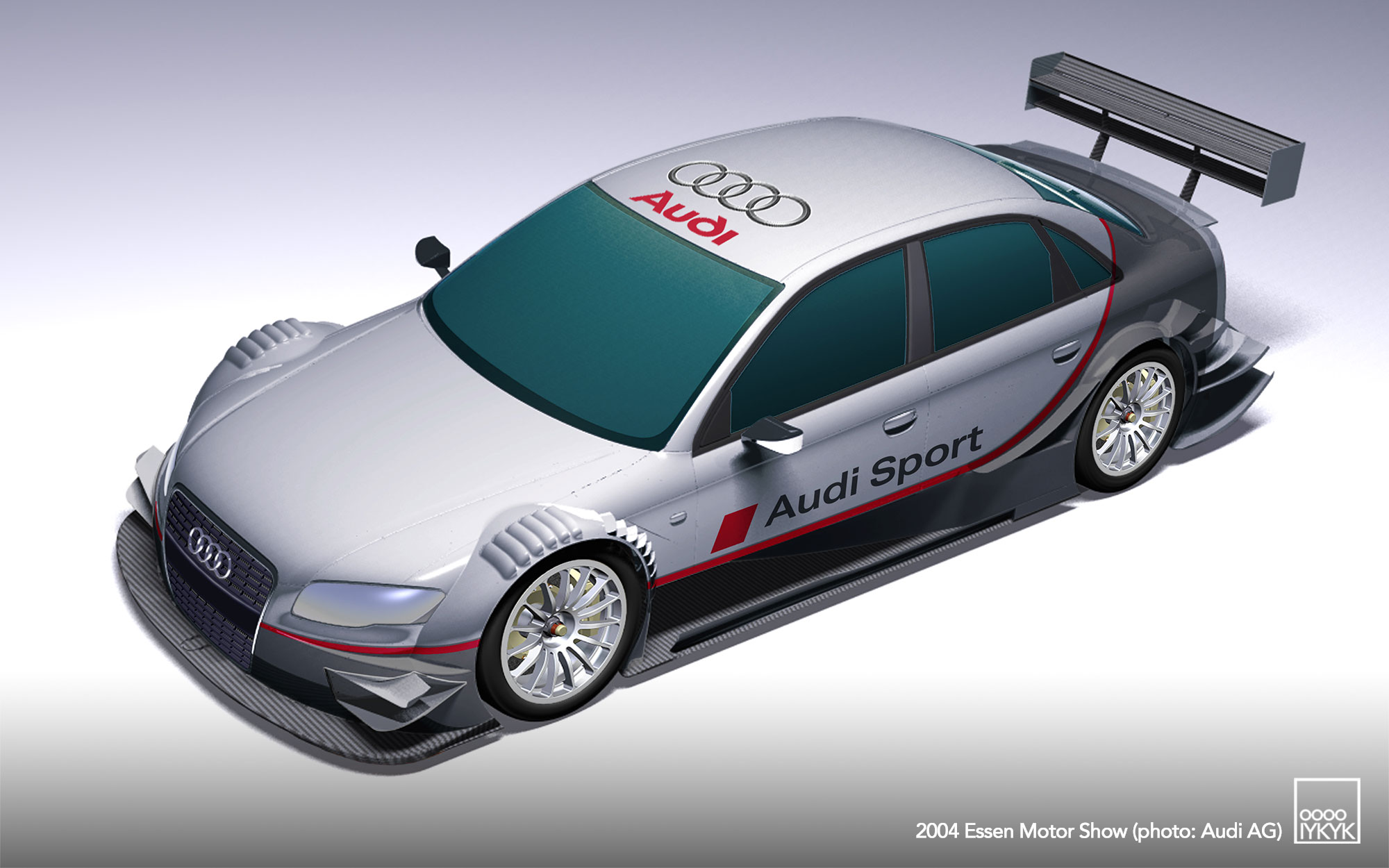
Audi used Essen to confirm an eight-car DTM effort for 2005, again working with Abt Sportsline and Joest Racing. The announcement followed five victories and six pole positions from ten races in 2004, with Ekström taking the drivers’ title and Audi Sport Team Abt claiming the teams’ championship.
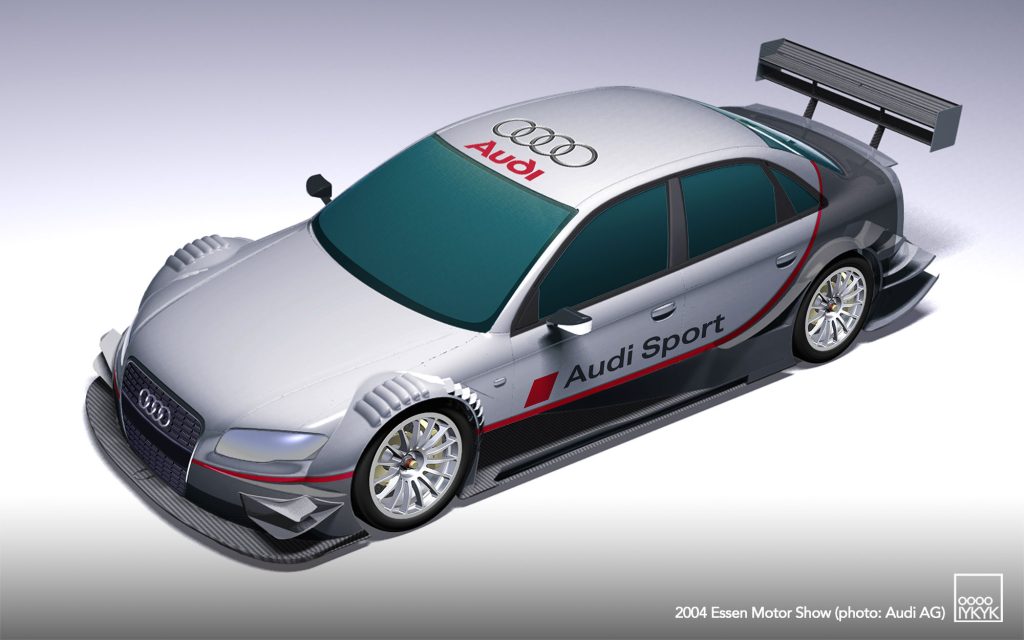
The team shared a teaser rendering of the next A4 DTM (R12) that would adopt the B7 road car’s Singleframe grille and revised body shape, alongside technical changes informed by the first season of racing. Initial testing was scheduled for the end of January 2005.
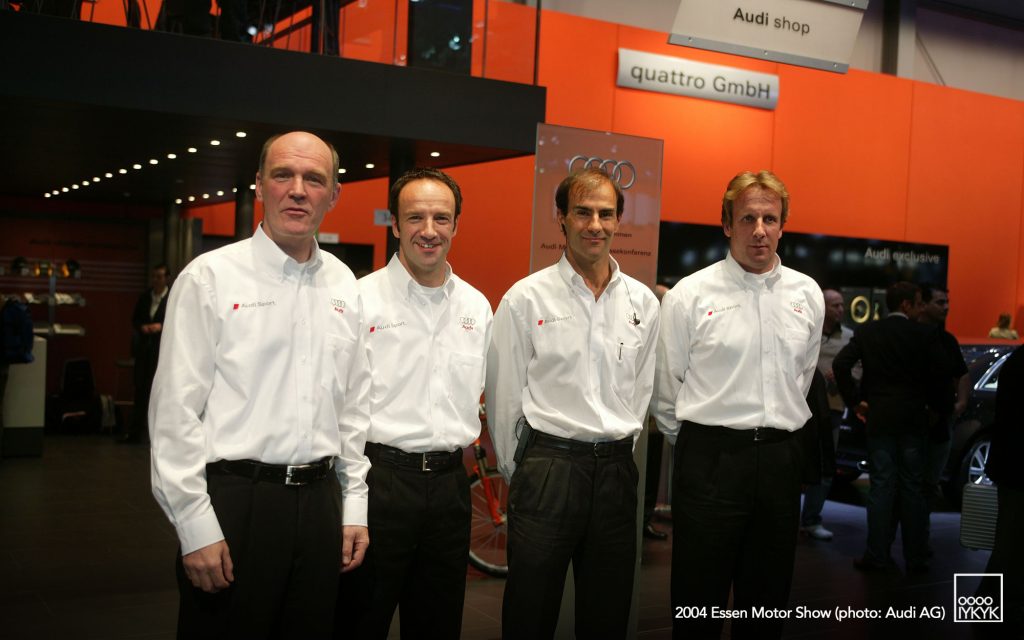
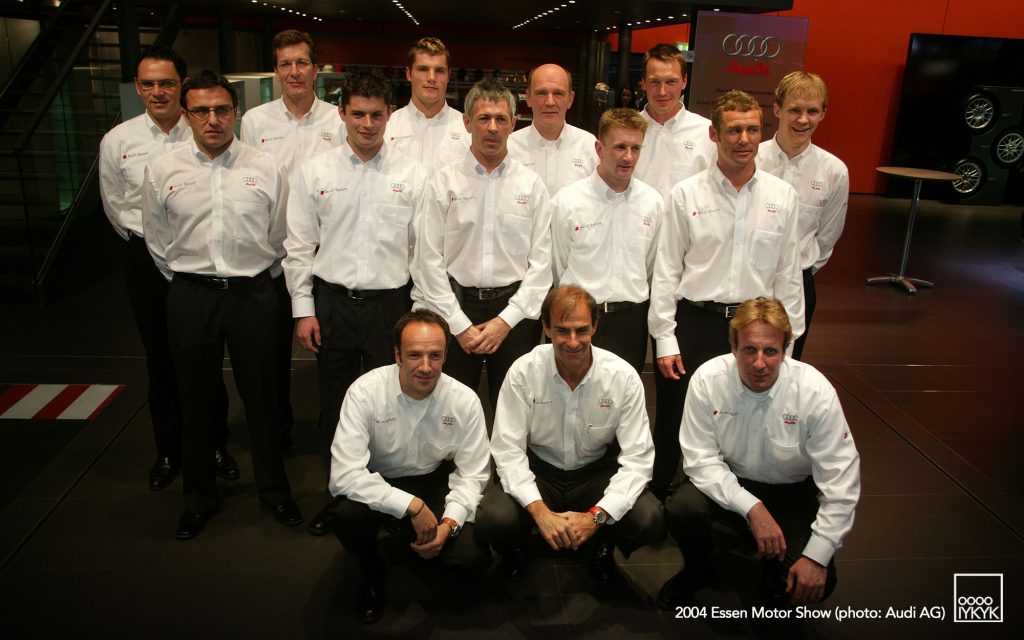
Ekström, Tom Kristensen and Martin Tomczyk would be joined in the new-generation cars by Allan McNish. Christian Abt, Rinaldo Capello, Pierre Kaffer and Frank Stippler were named to drive the previous season’s A4 DTM.
McNish’s move was a notable part of the announcement. The former Formula 1 driver and 2000 American Le Mans Series champion would enter modern touring car racing after returning to Audi’s R8 program in 2004. His appointment also reflected the movement of personnel and experience between Audi’s prototype and DTM efforts.
AUDI R8 AND THE NEXT PROTOTYPE
The R8 display accompanied an announcement outlining Audi’s next steps in endurance racing. Audi credited the prototype with 52 victories from 62 starts, including 13 wins from 14 races in 2004. Its planned 2005 program covered Le Mans, the American Le Mans Series and the Le Mans Endurance Series through works-supported importer teams.
At Essen, Audi described 2005 as the R8’s intended final season and confirmed that a replacement prototype was being planned for 2006. First tests were scheduled for late 2005, with the March 2006 Sebring 12 Hours identified as a proving ground ahead of Le Mans. The announcement did not yet identify the replacement by model name or disclose its powertrain.
Audi anticipated a more difficult 2005 for the R8 under revised regulations, with a higher minimum weight and further power restrictions expected. Frank Biela, Emanuele Pirro and Marco Werner were named among the works drivers supporting the importer programs.
ABT SPORTSLINE
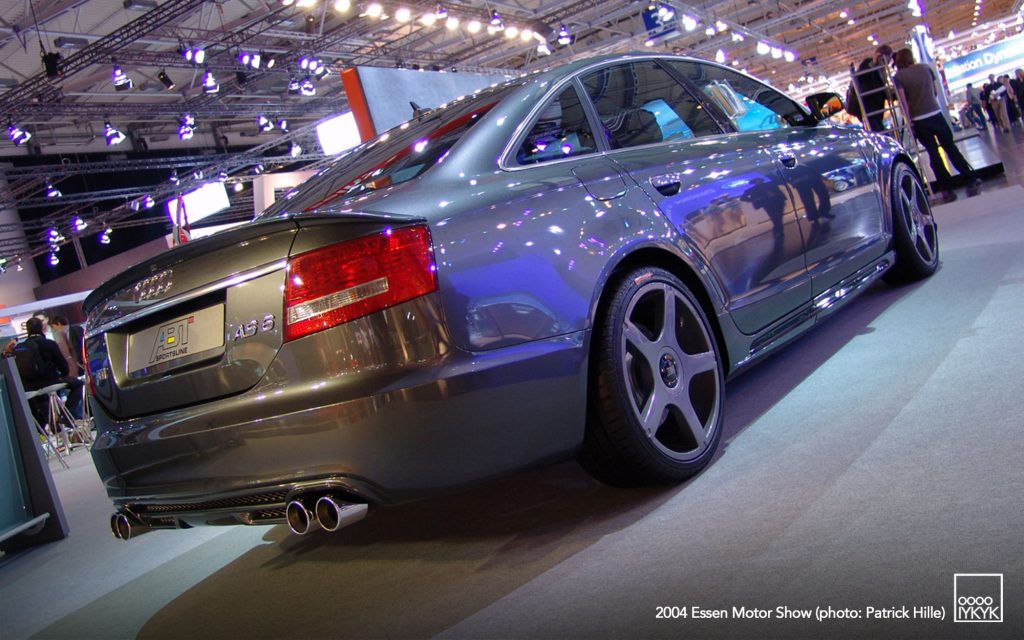
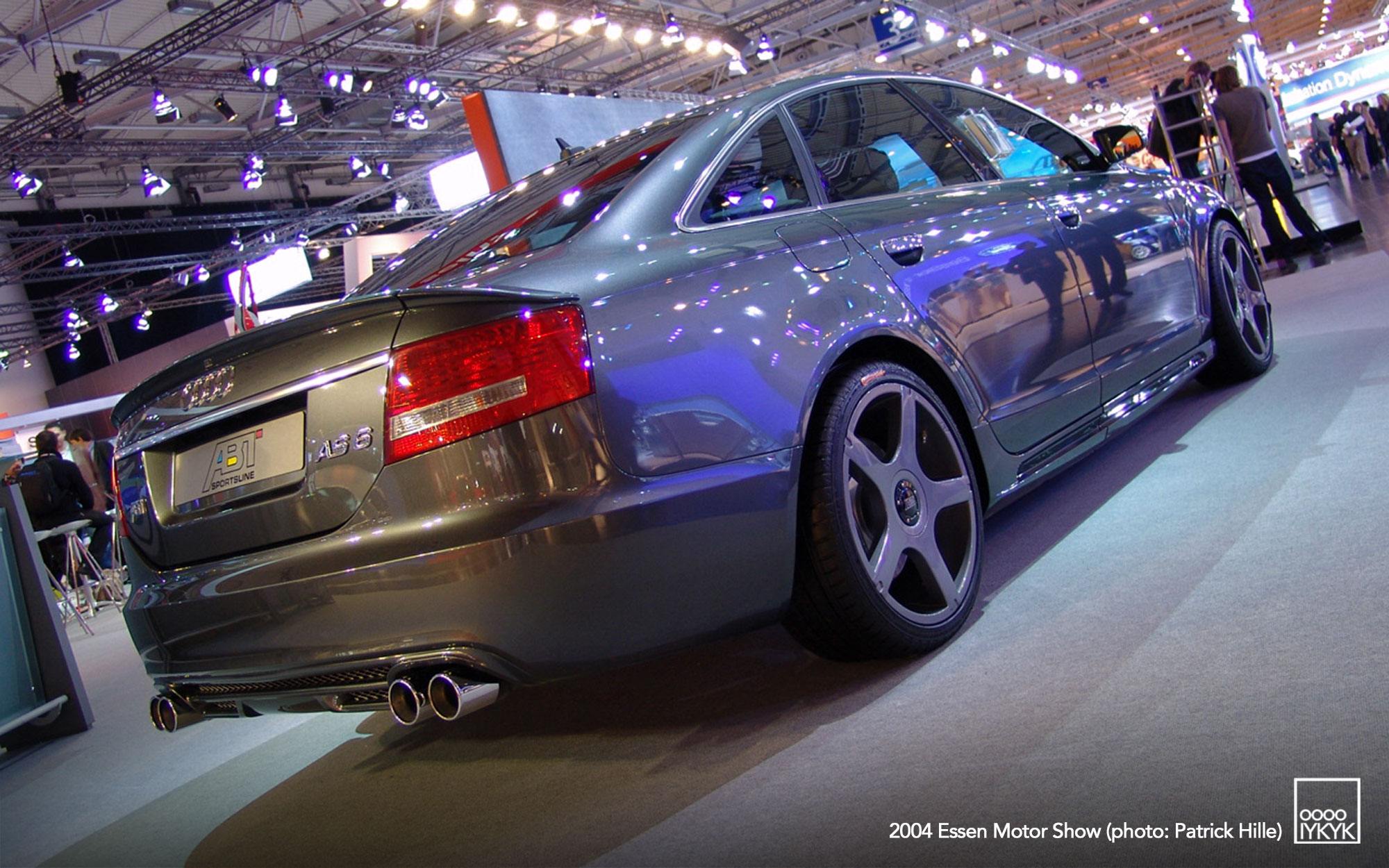
ABT Sportsline connected its newly secured DTM titles with tuning programs for three of Audi’s latest road cars. The Kempten company presented the AS4 based on the B7 A4, the AS3 Sportback based on the five-door A3 and the AS6 based on the C6 A6.
The AS4 combined a grille and front spoiler lip with side skirts, a rear wing and rear skirt. Its 2.0 TDI was increased from 140 to 170 PS, supported by an ABT brake system, a four-outlet rear exhaust and 19-inch SP1 wheels with Dunlop tires.
ABT’s AS3 Sportback exhibit also used a 2.0 TDI upgraded from 140 to 170 PS. Lowering springs reduced ride height by approximately 35–40 mm, while the styling package included a front spoiler lip, grille, side skirts, rear wing and rear skirt. The show car wore SP1 wheels with Continental tires. ABT additionally outlined upgrades for the 1.9 TDI and turbocharged 2.0-liter FSI engines.
The AS6 featured aerodynamic additions, four exhaust outlets and 19-inch SP1 wheels. Its 3.0 V6 TDI upgrade raised output from 225 to 265 PS, with claimed performance of 0–100 km/h in 6.9 seconds and approximately 247 km/h. A height-adjustable suspension was also part of the program.
OETTINGER A3 SPORTBACK
Oettinger presented its own A3 Sportback program, with a front apron, side skirts, rear apron and roof spoiler scheduled for availability in January 2005. Its proposed Stage I upgrade for the 2.0 TFSI quattro raised output to 169 kW, approximately 230 PS, and torque to 340 Nm.
Oettinger claimed 0–100 km/h in 6.3 seconds and a top speed of 242 km/h, with approval still pending at the time of the announcement. Further engine stages targeting up to 300 PS were planned for early 2005.
The range also included a stainless-steel cat-back exhaust, coilover suspension, a 322 mm front brake upgrade and 17- to 19-inch RH wheels. For diesel customers, an upgrade for the 2.0 TDI offered a quoted 177 PS and 380 Nm.
PPI RSTT
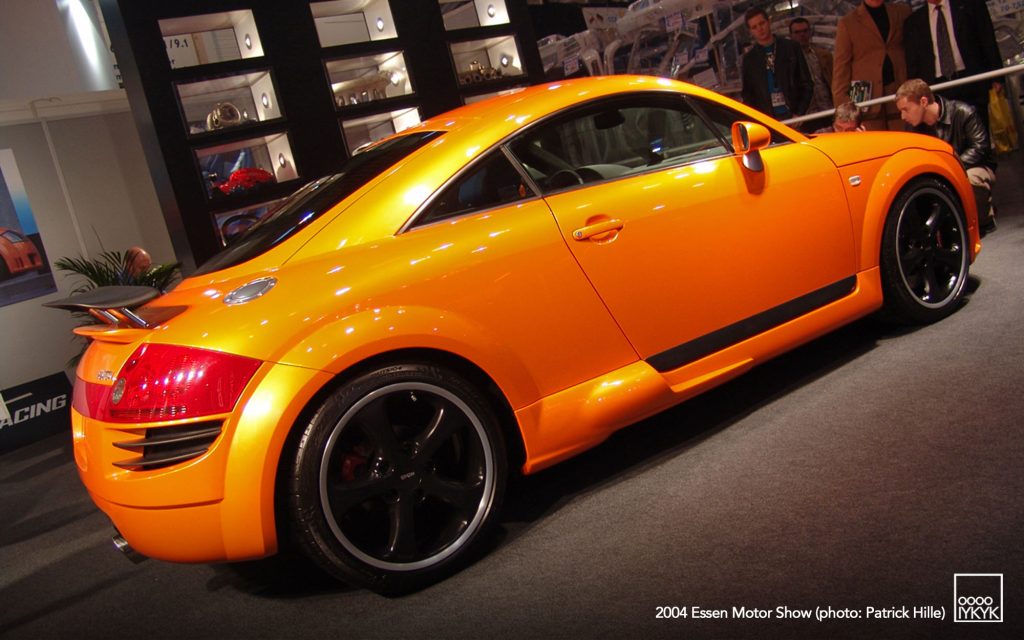
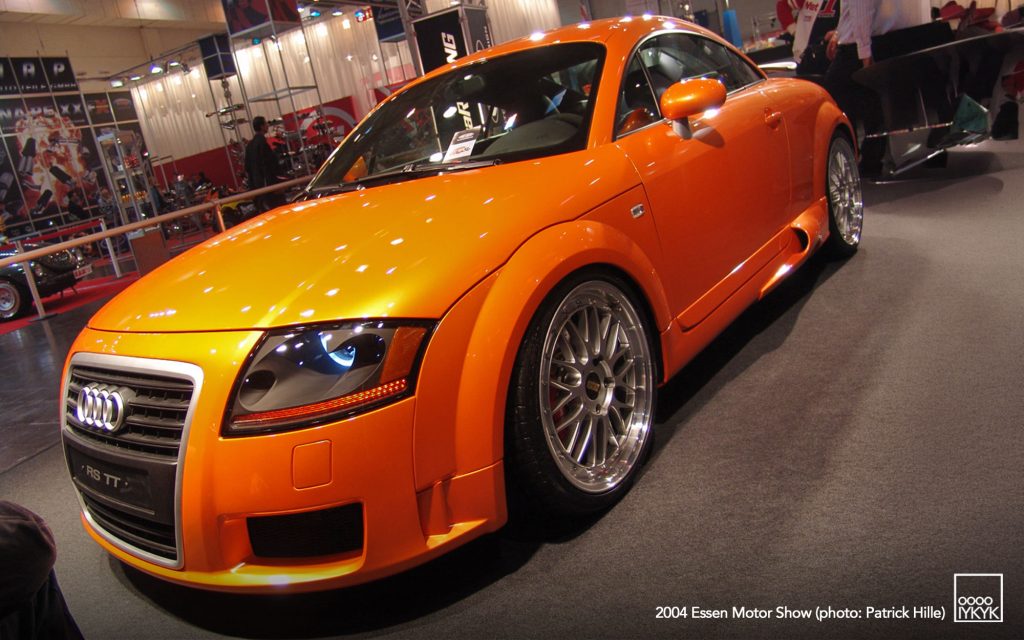
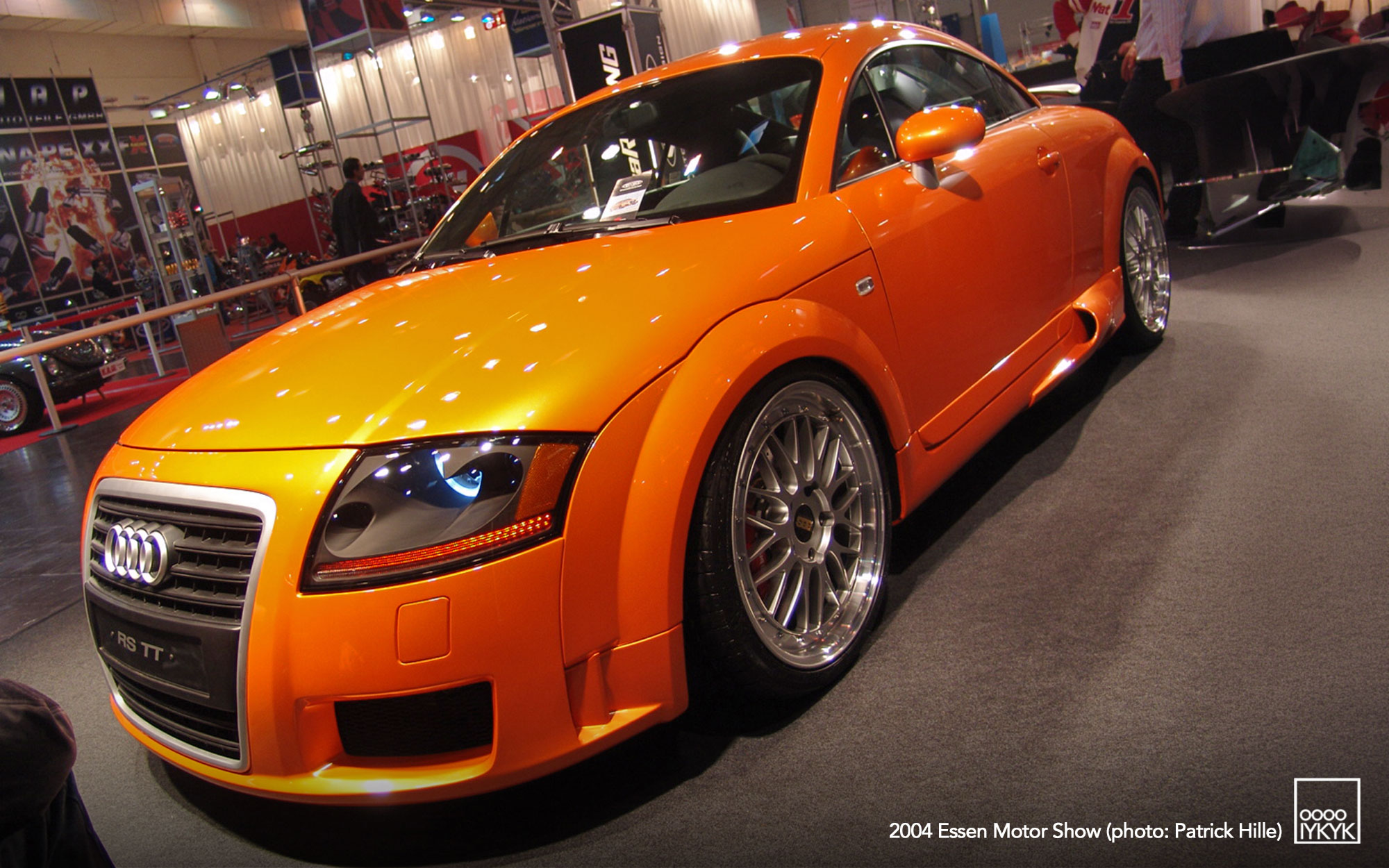
Among the more distinctive TT exhibits was PPI’s RSTT. Finished in eye-catching orange and wearing BBS LM wheels, the Mk1-based car combined an OEMplus approach with a body kit that substantially revised its appearance.
Its most prominent feature was a front-end treatment incorporating the Singleframe grille design then spreading across Audi’s production range. Applied to the original TT’s rounded body, it offered an aftermarket interpretation of how the established model might adopt the brand’s newer face.
ELSEWHERE IN THE SHOW
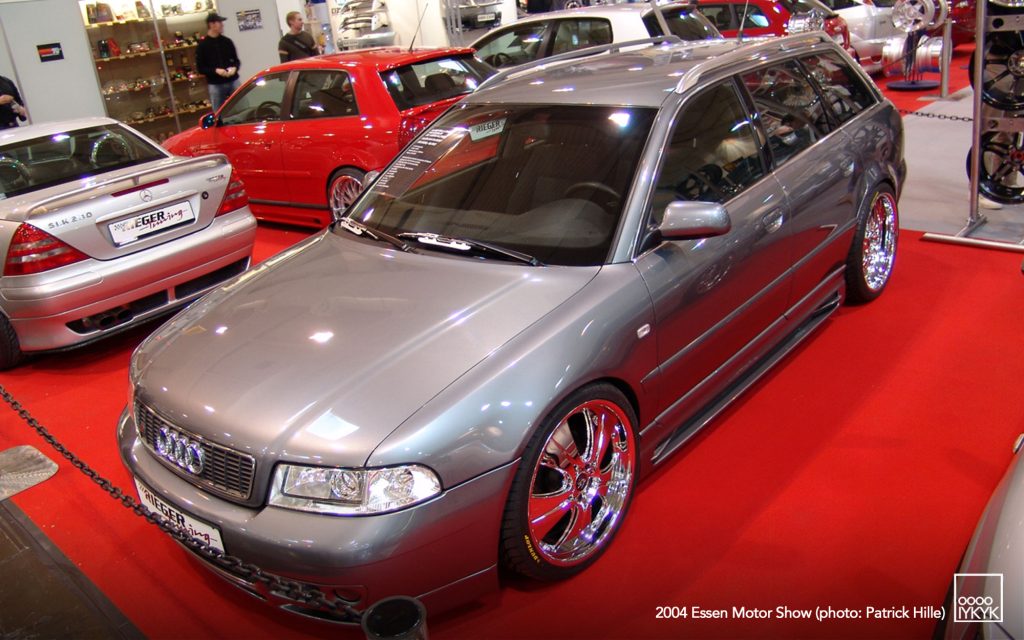
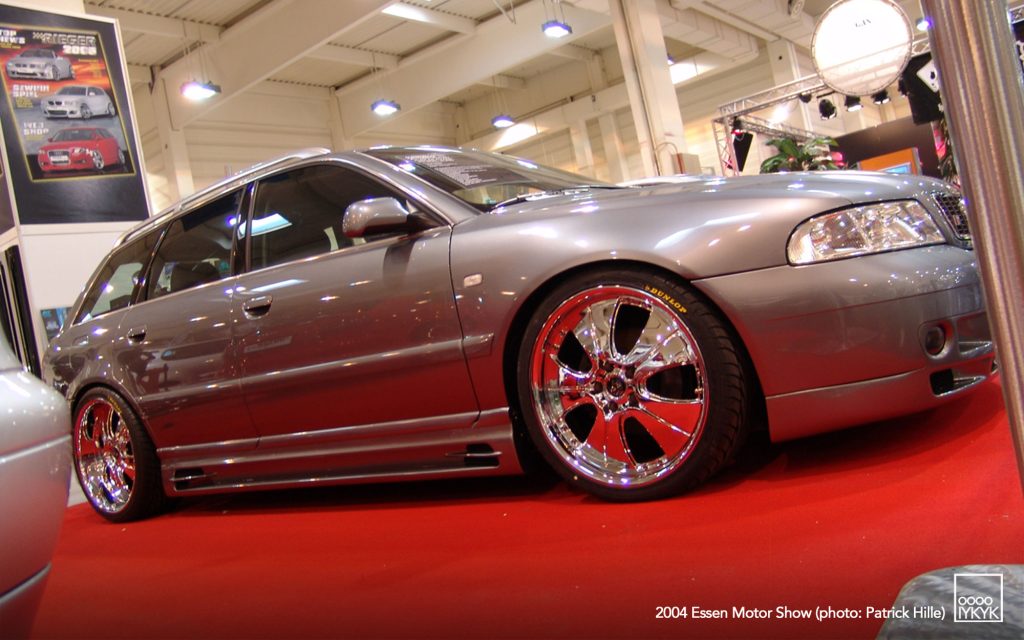
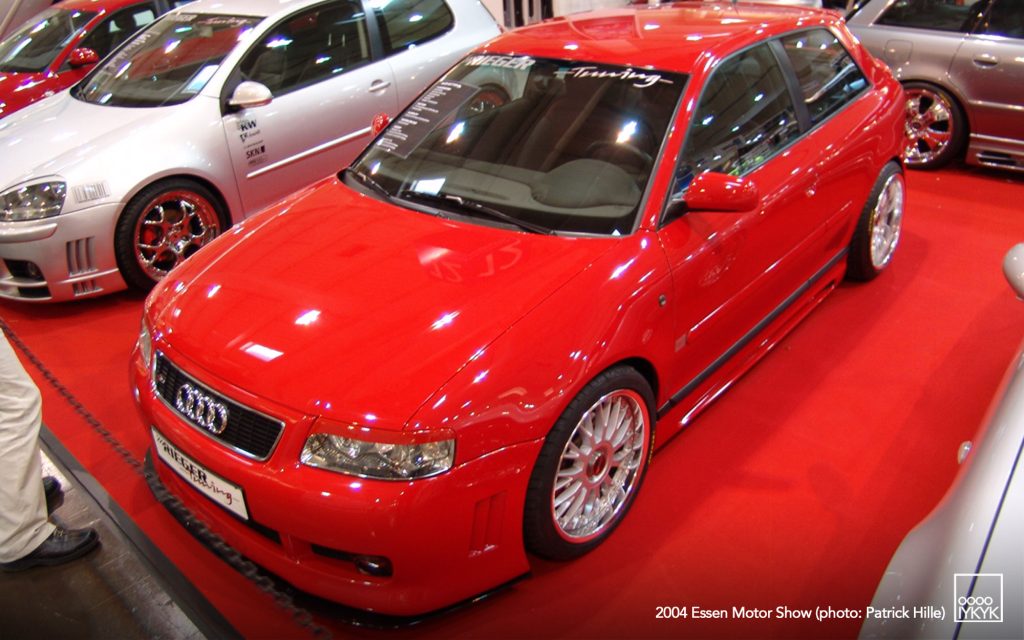
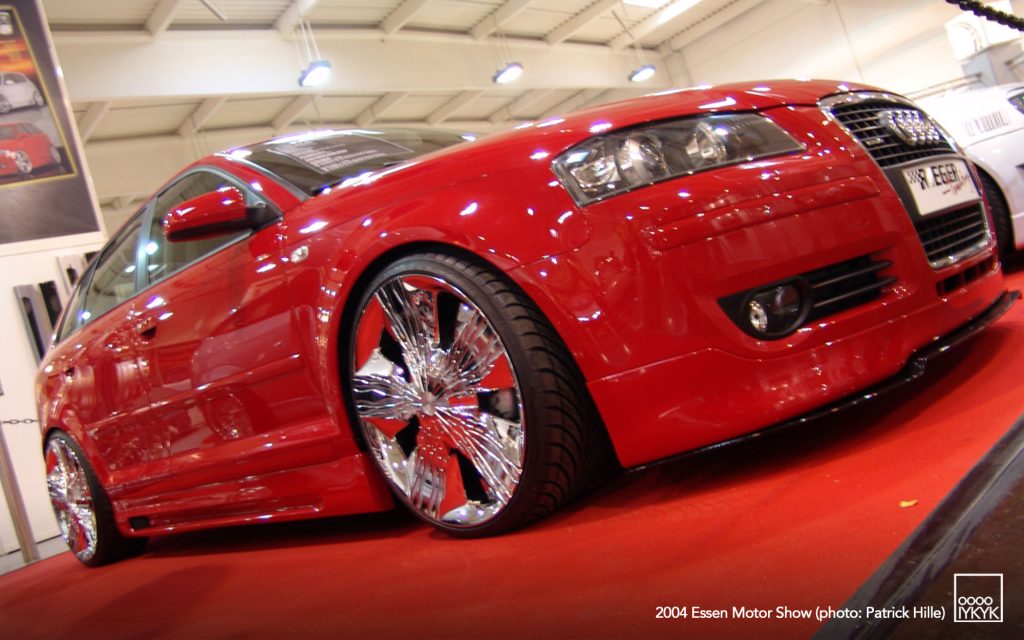
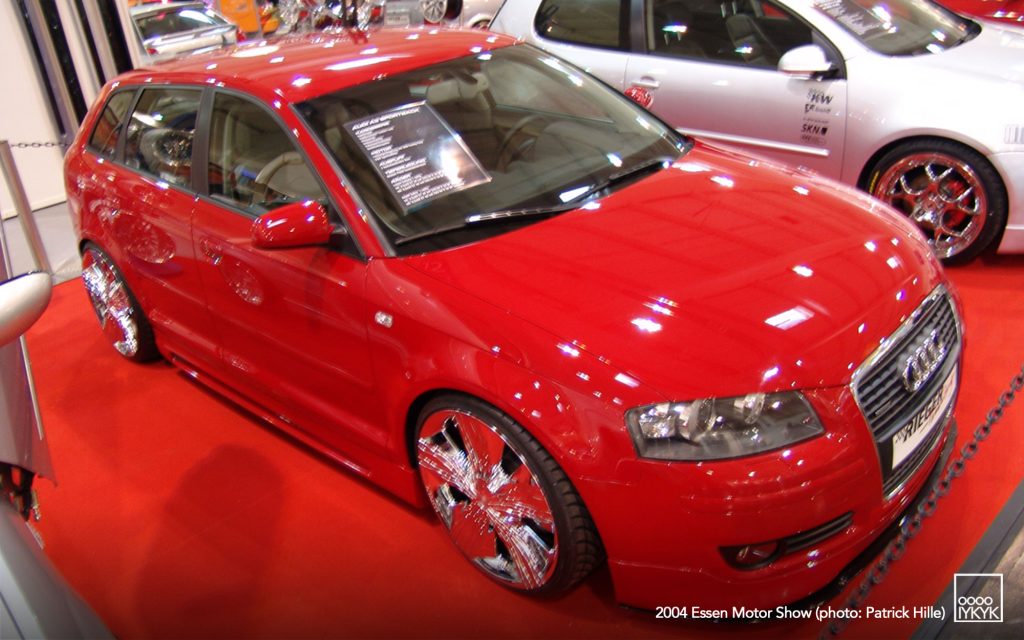
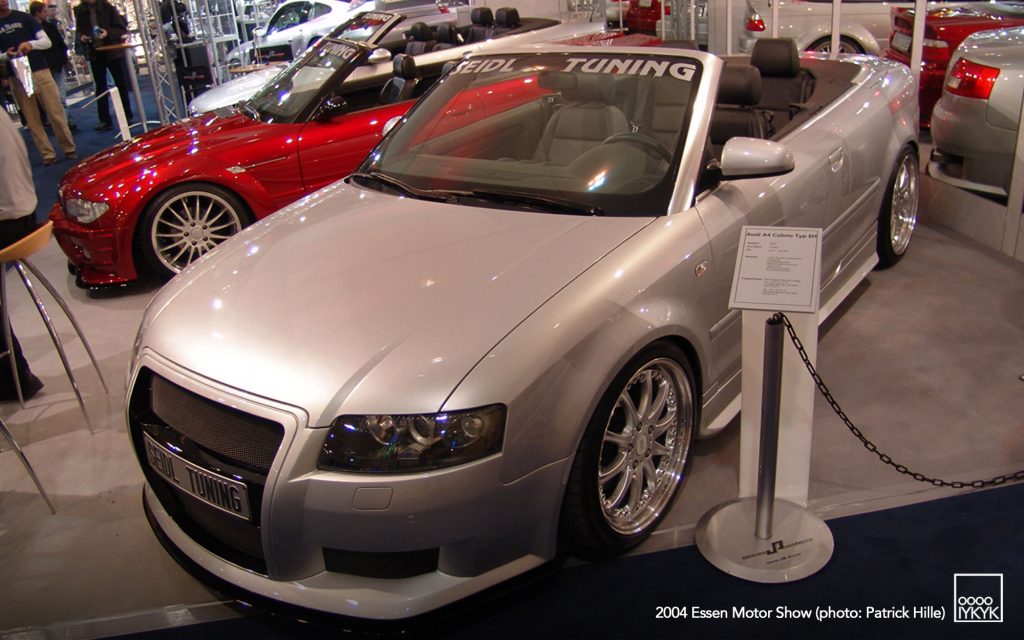
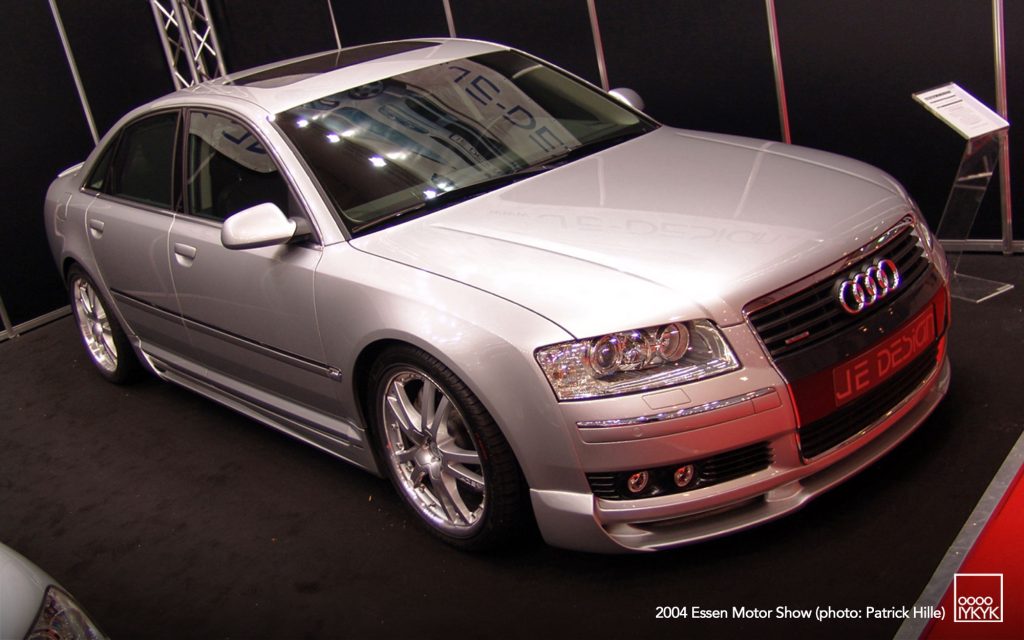
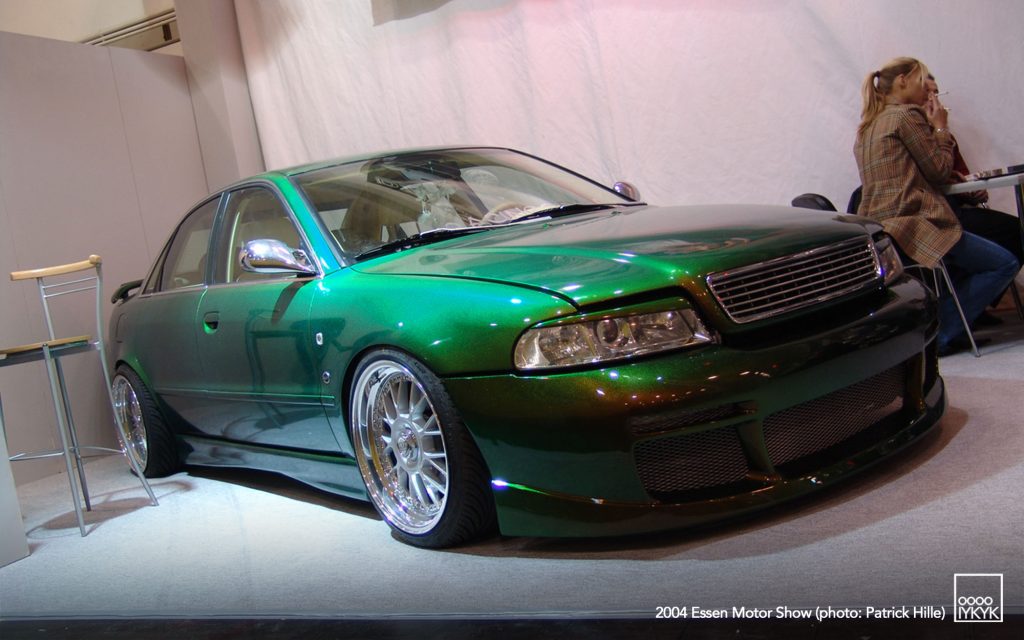
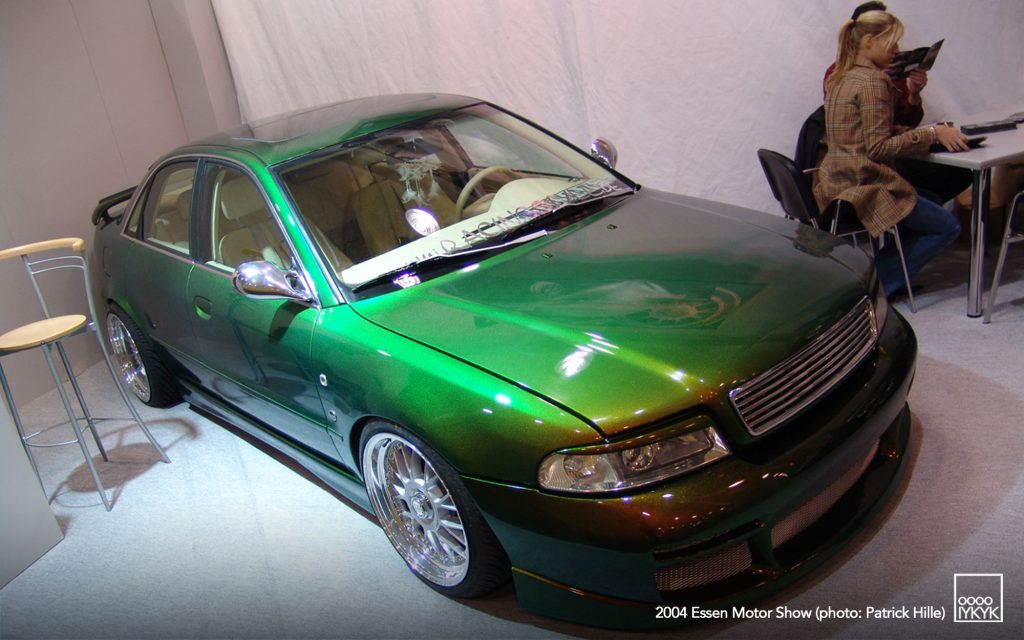
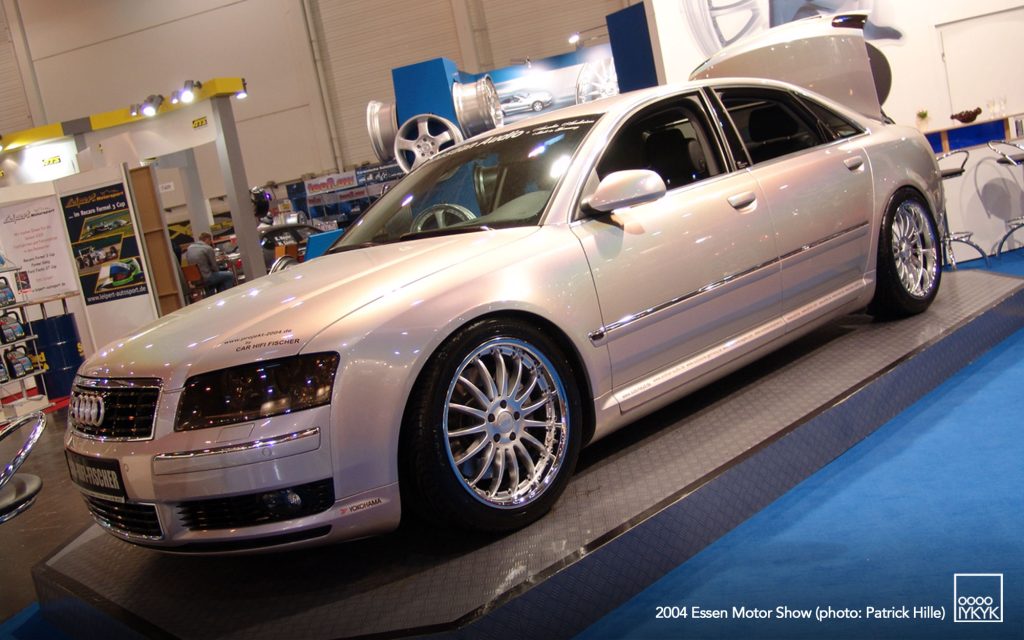
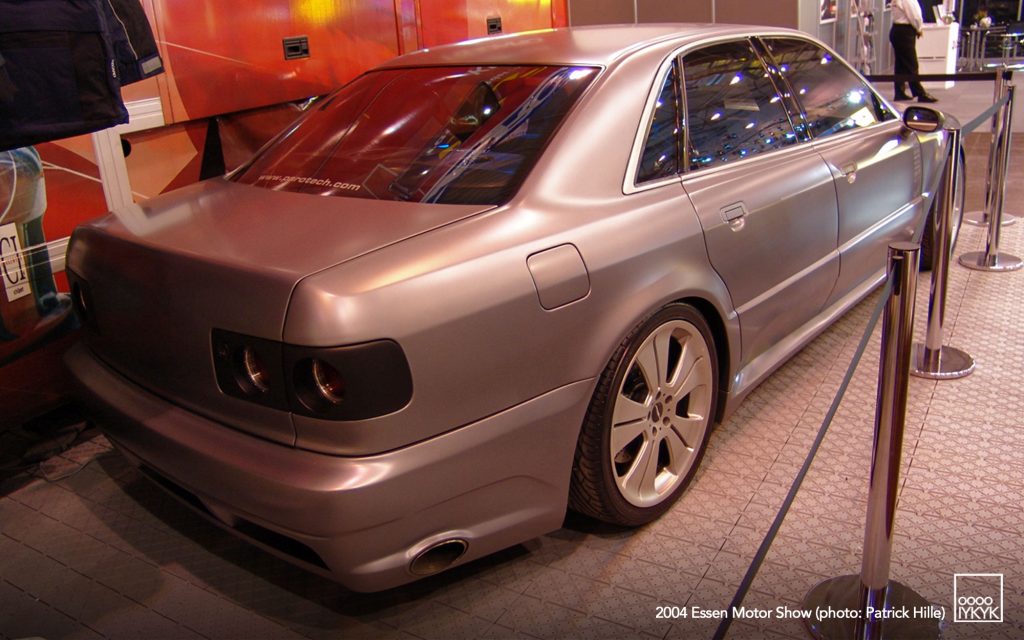
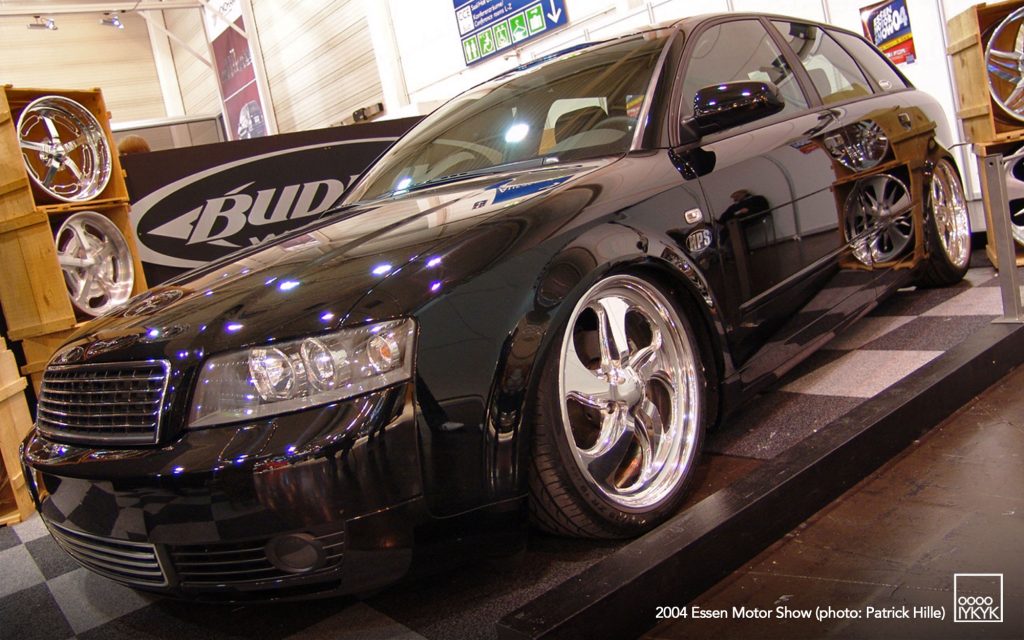
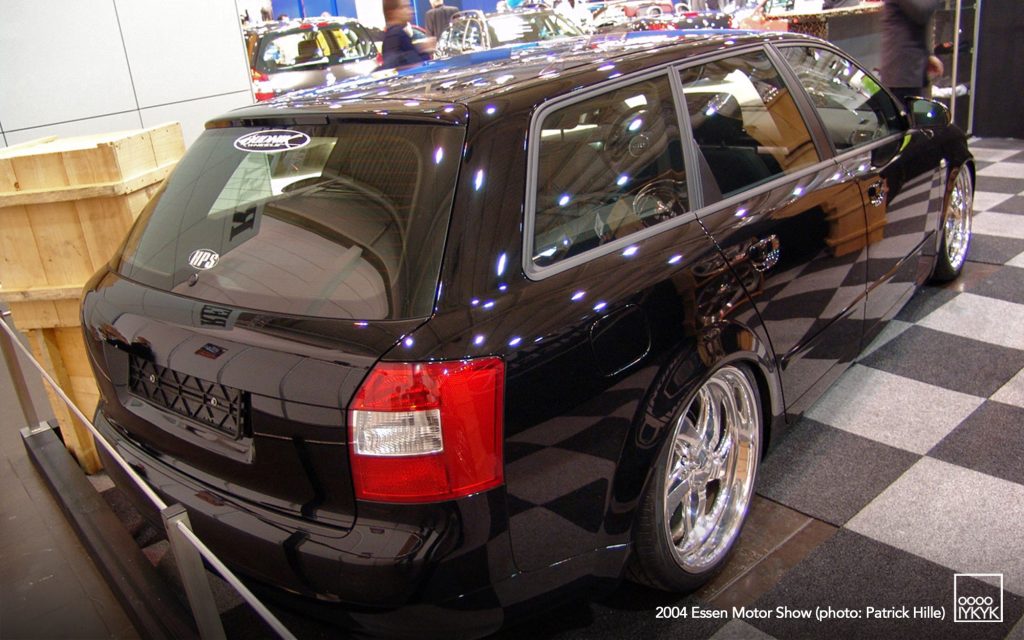
The galleries document a broad range of other Audi-based exhibits. Rieger presented both a B5 S4 Avant and an A3 Sportback, while Seidl Tuning displayed an S4 Cabriolet. JE Design brought an A8, extending the aftermarket presence to Audi’s flagship sedan.
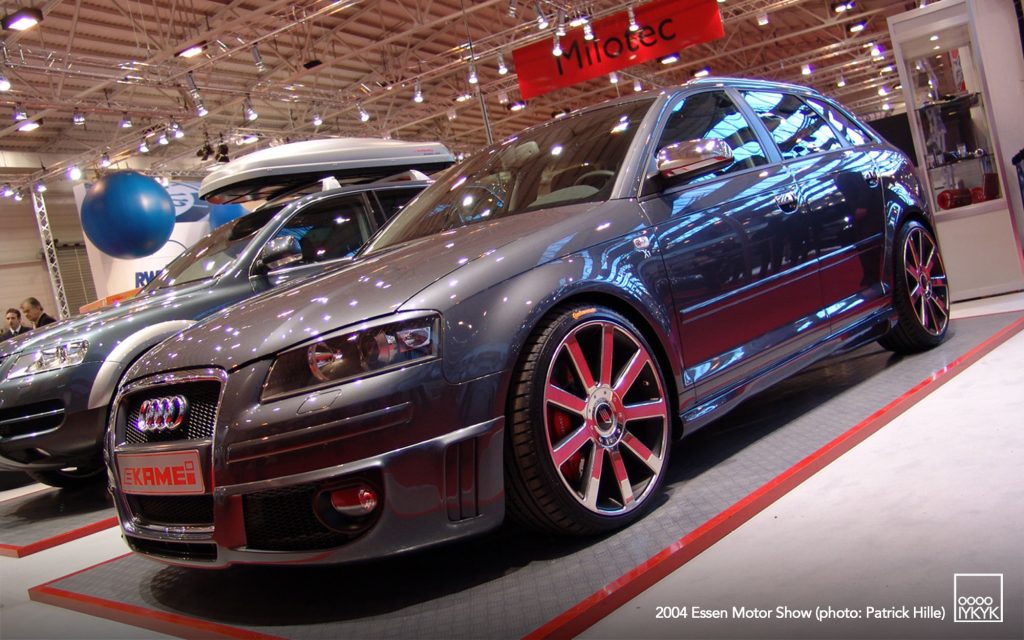
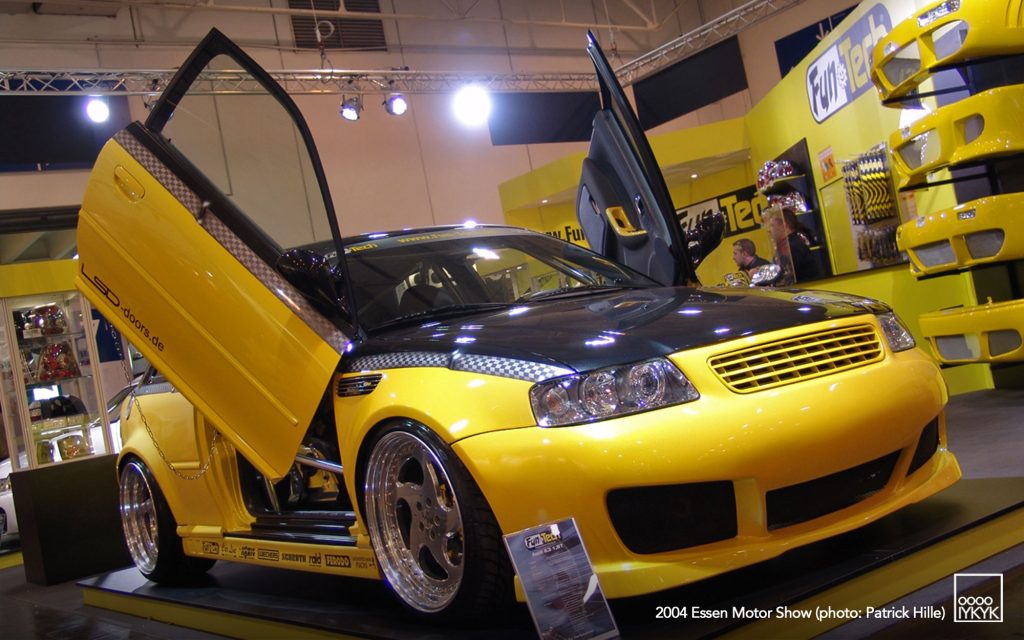
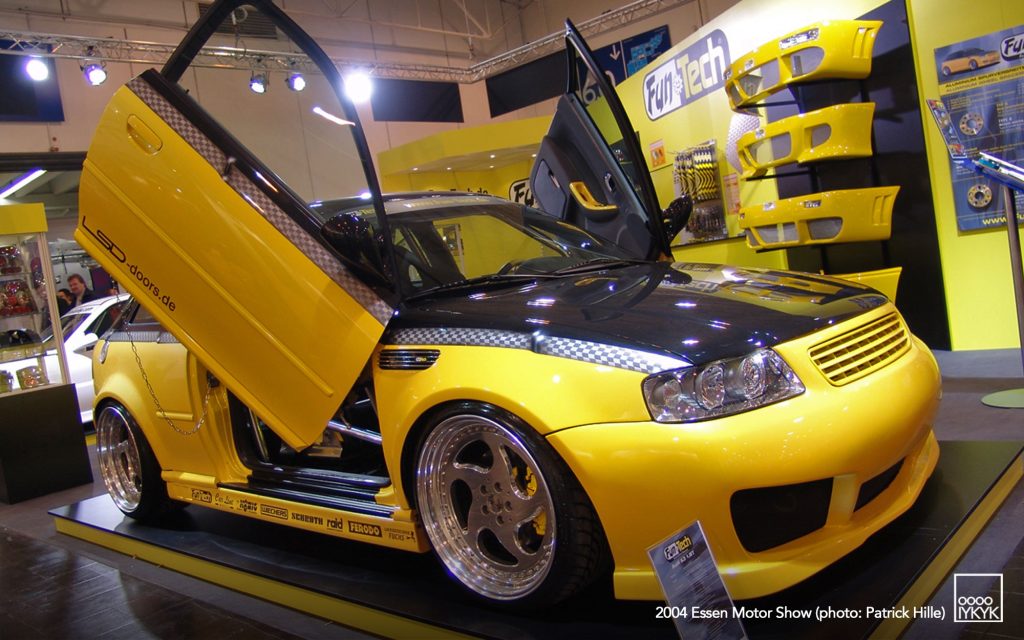
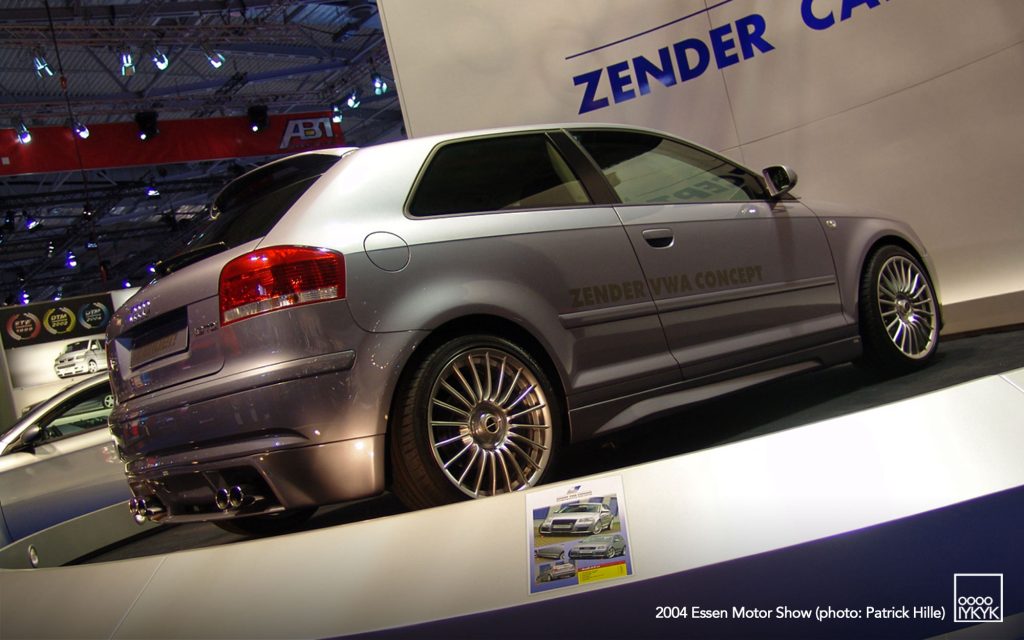
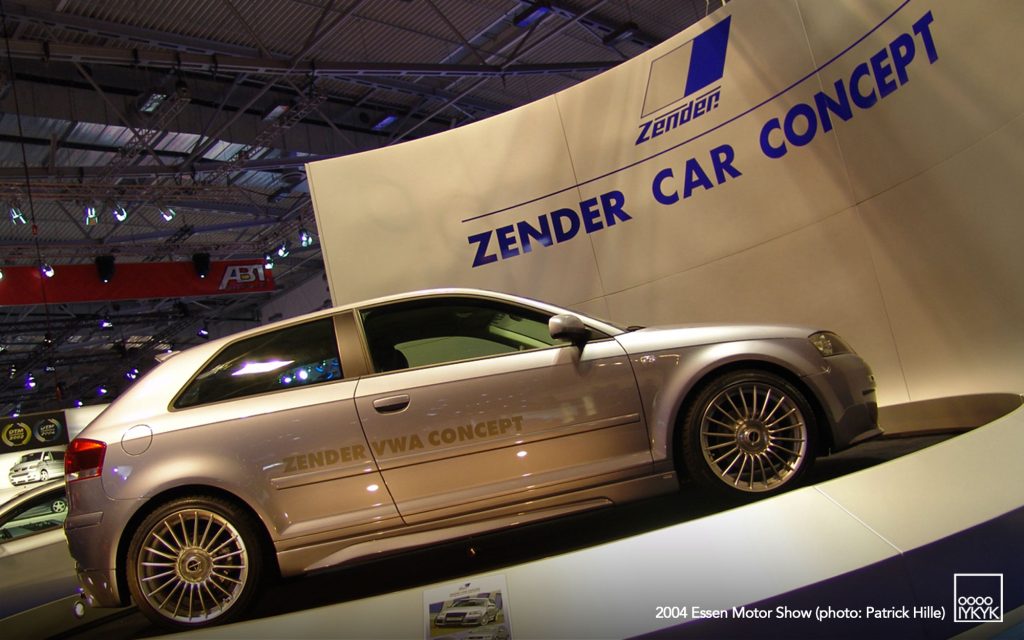
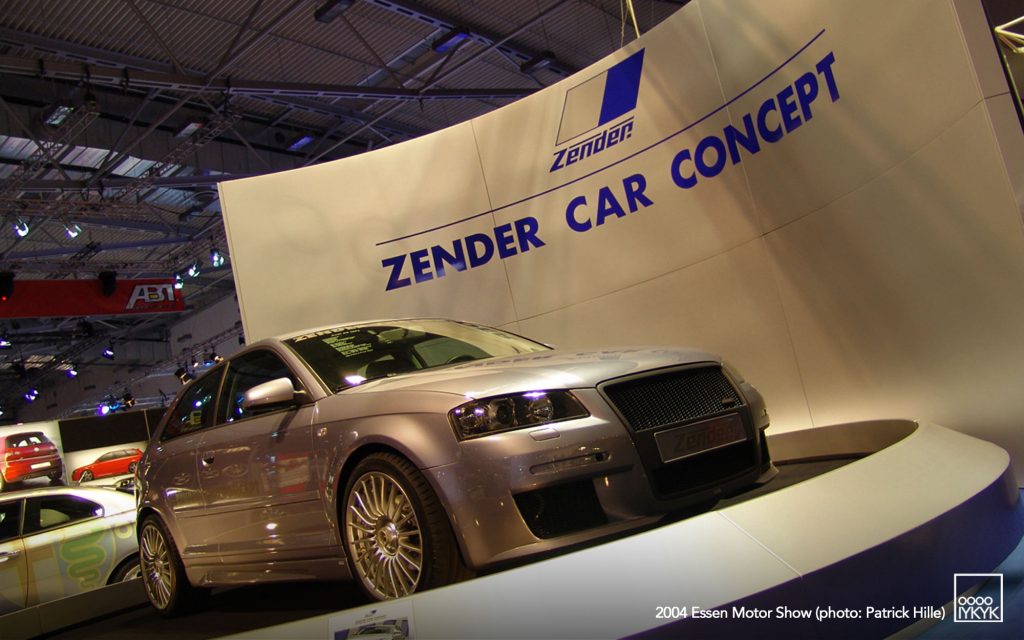
The new A3 was particularly well represented. Alongside the ABT, Oettinger and Rieger cars were a Kamei A3 Sportback and Zender’s VWA Concept based on the three-door A3. Together, they recorded several different approaches to modifying Audi’s compact range as the five-door Sportback joined the established three-door model.
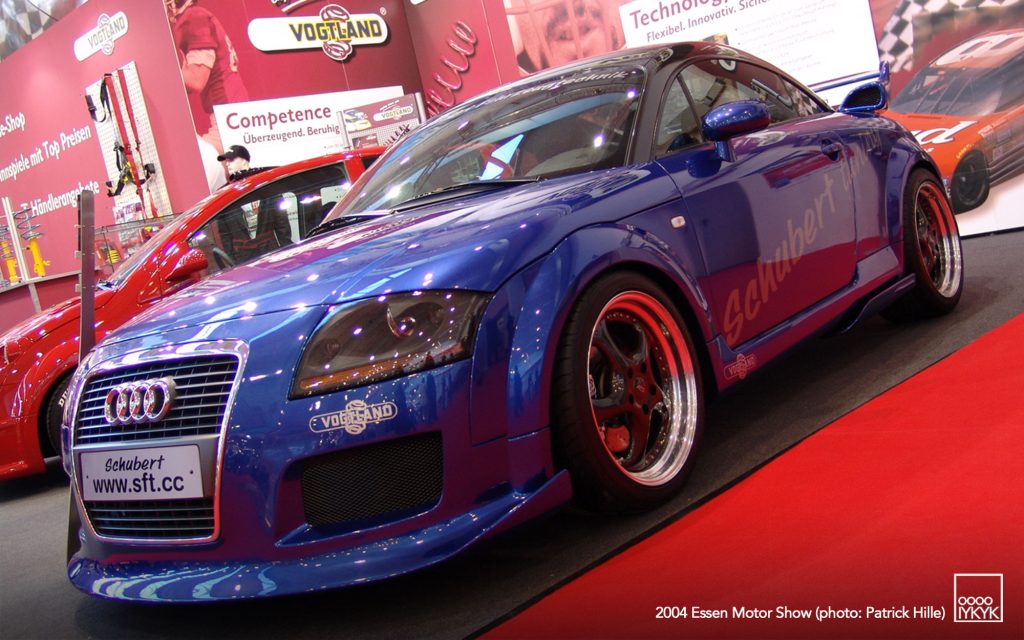
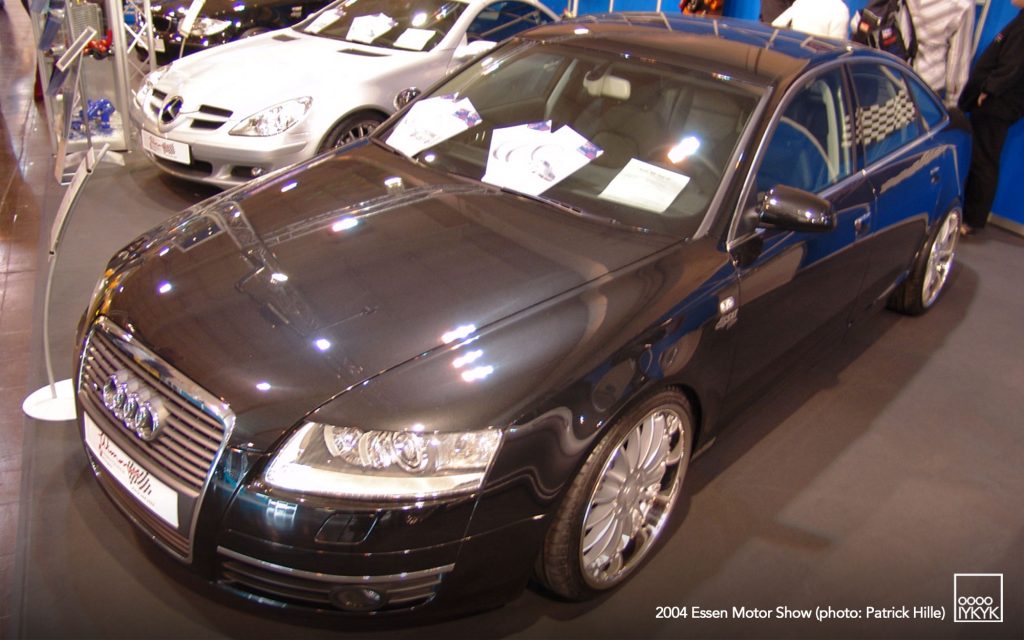
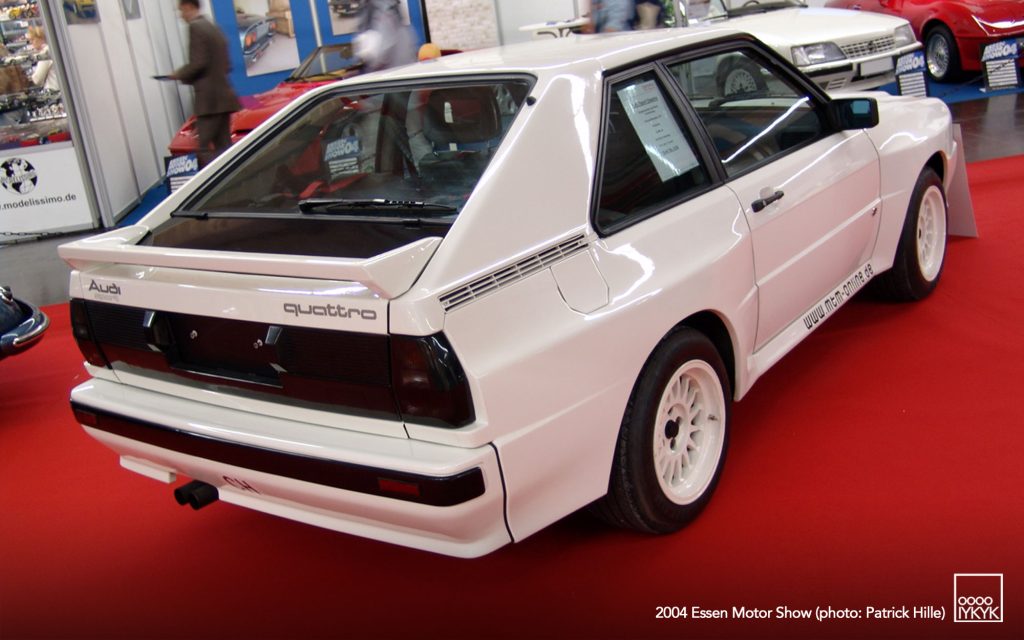
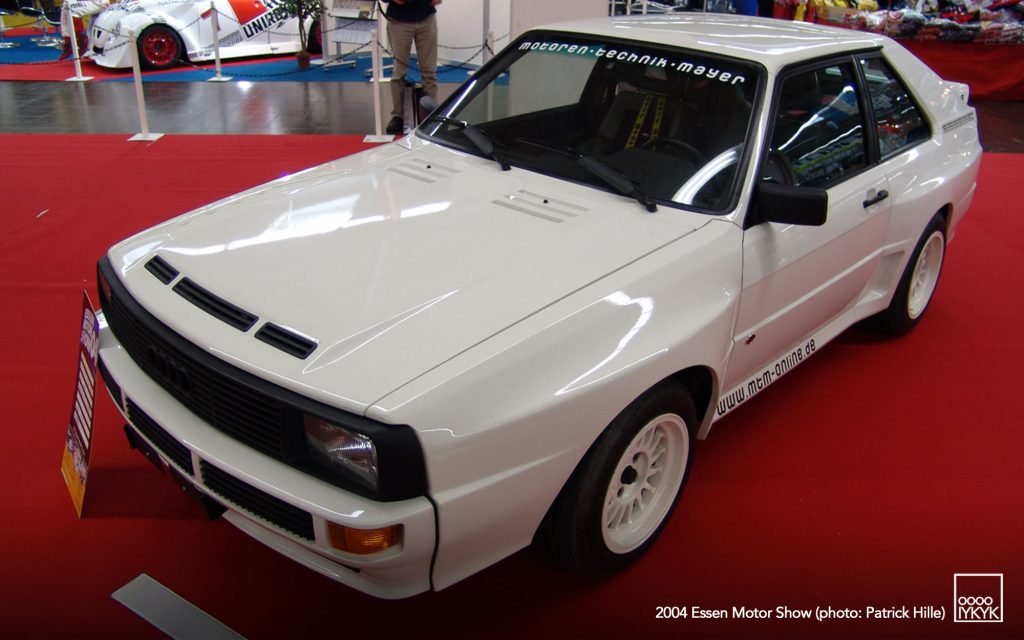
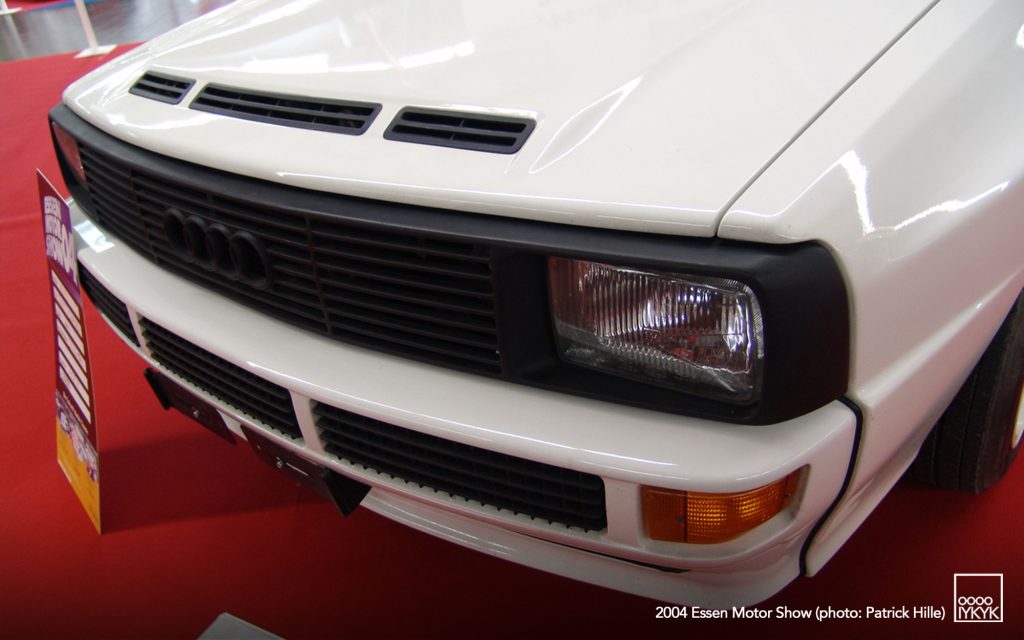
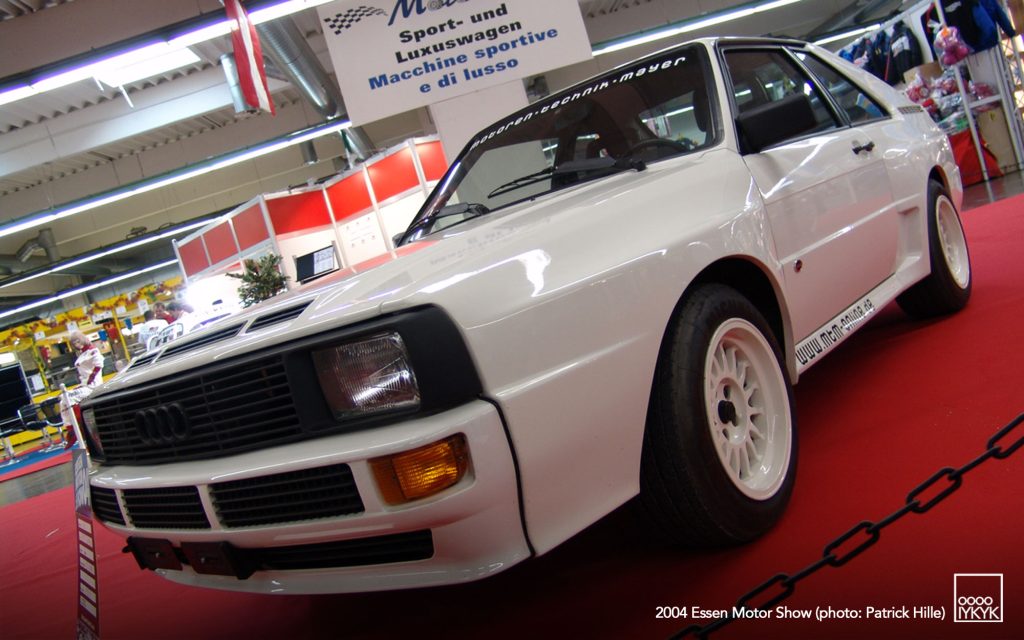
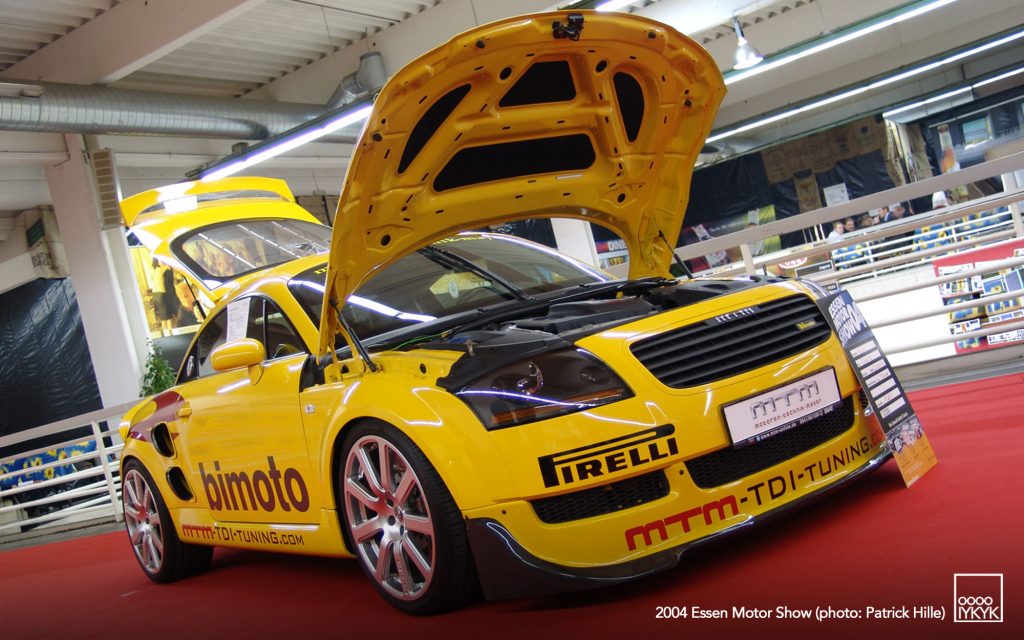
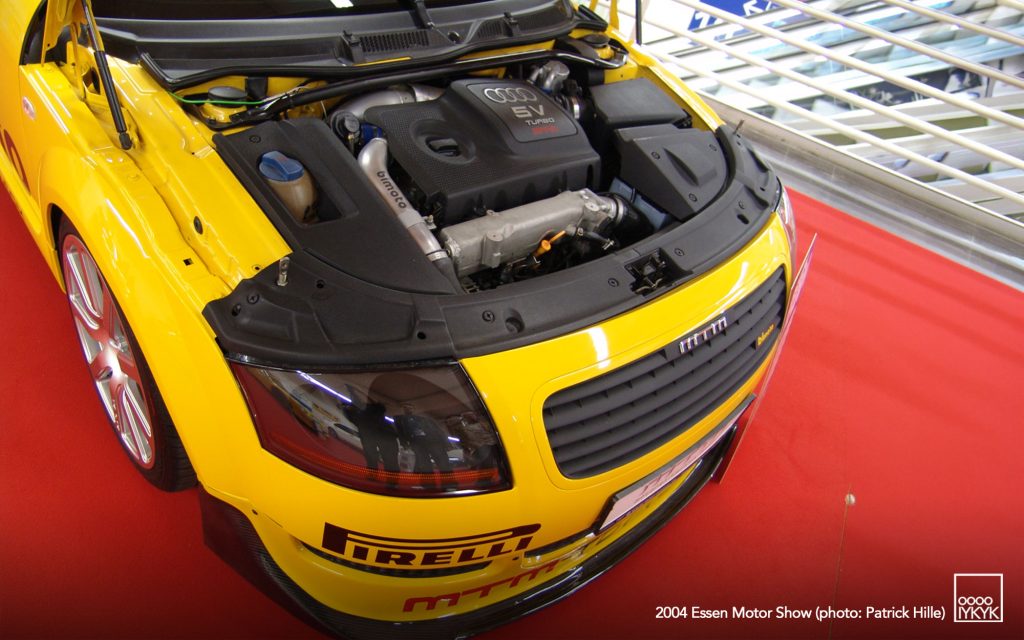
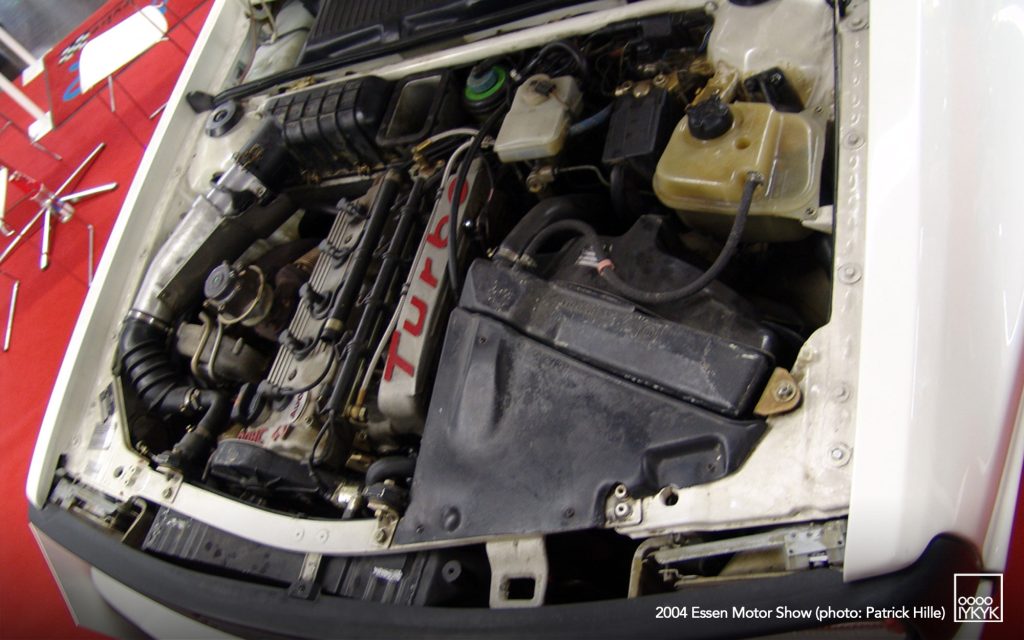
Other displays included a Schubert Audi TT and a KW Audi A6. MTM contributed both a Sport quattro and the TT bimoto, bringing one of Audi’s defining performance cars together with a particularly ambitious reinterpretation of the contemporary TT.
Taken together, the factory and aftermarket exhibits document an active moment for Audi tuning. The B7 A4, C6 A6 and A3 Sportback were generating new programs, while the original TT, B5 S4 and Sport quattro continued to provide platforms for development and display.
PHOTO GALLERY