

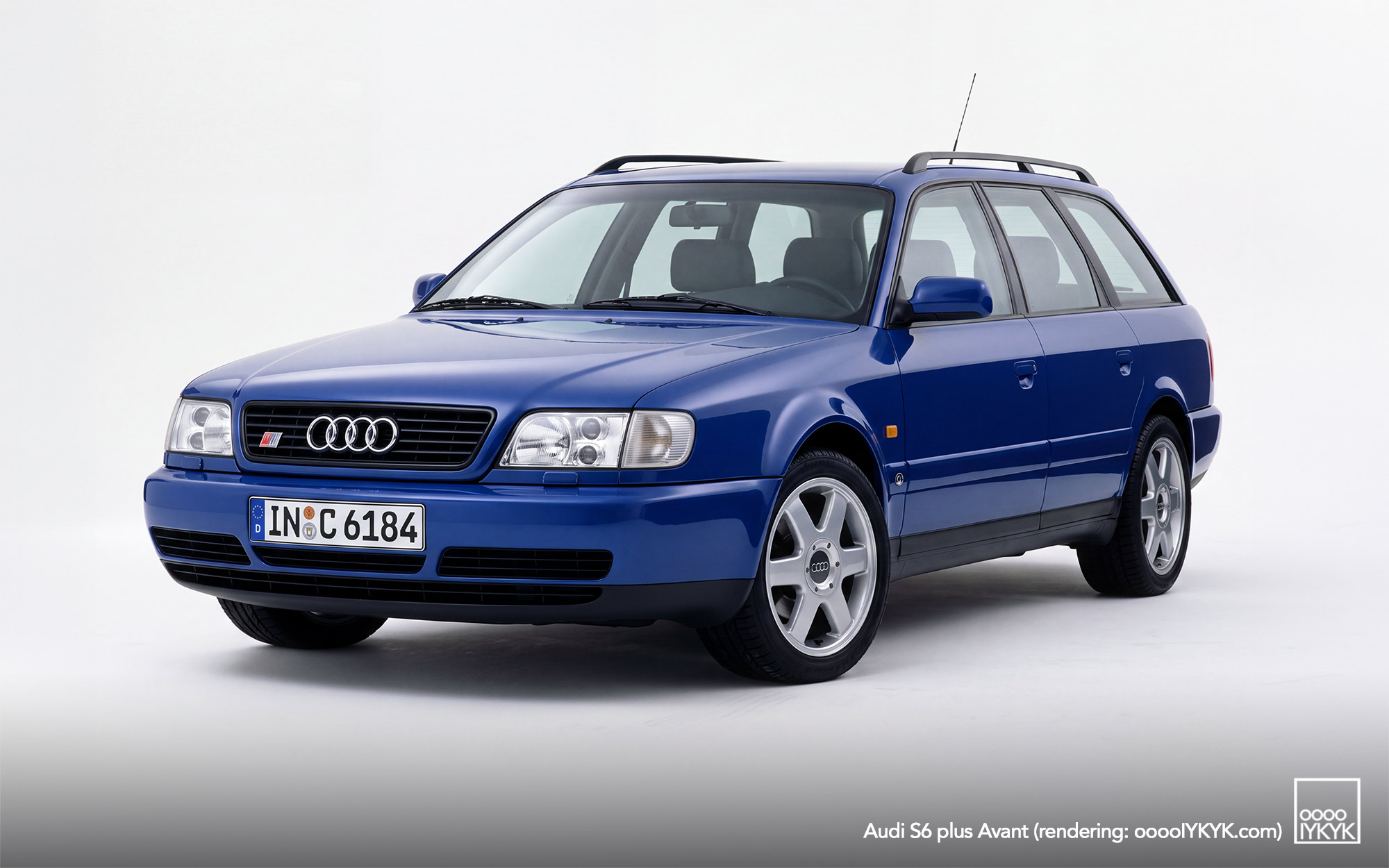

MODEL: Audi S6 plus Avant
ERA: Audi Modern Era
MODEL FAMILY: S6
GENERATION: C4 / Type 4A
INTERNAL PROJECT: Q1
MODEL YEAR: 1997
INTRODUCTION: 1996 Geneva Motor Show
PRODUCTION: 1996–1997
MANUFACTURER: quattro GmbH / AUDI AG
ASSEMBLY: Neckarsulm, Germany
BODY STYLE: Five-door Avant
DRIVETRAIN: Front-engine, quattro permanent all-wheel drive
ENGINE: 4.2-liter naturally aspirated 32-valve V8
OUTPUT: 240 kW / 326 PS (322 hp)
TORQUE: 400 Nm (295 lb-ft) at 3,500 rpm
TRANSMISSION: Six-speed manual
TOP SPEED: 250 km/h (155 mph), electronically limited
PRODUCTION TOTAL: 855 Avants; 952 S6 plus models including 97 sedans, according to published accounts
OVERVIEW
The Audi S6 plus Avant was the first complete automobile offered by quattro GmbH and the model that transformed Audi’s small personalization subsidiary into a vehicle manufacturer in its own right. Developed jointly with AUDI AG under the internal name “Project Q1,” it combined the discreet utility of the C4-generation S6 Avant with a comprehensively reworked V8, a six-speed manual transmission and quattro permanent all-wheel drive.
quattro GmbH presented the S6 plus at the Geneva Motor Show in the spring of 1996. The car was offered as both a sedan and an Avant, although the wagon accounted for the great majority of production. Published totals generally place the 16-month run at 952 cars: 855 Avants and 97 sedans. Its rarity, naturally aspirated V8 and significance as quattro GmbH’s first series-production vehicle have made the S6 plus one of the defining models of the C4 era.
QUATTRO GMBH BECOMES A MANUFACTURER
Founded in 1983, quattro GmbH initially concentrated on protecting and extending the quattro identity through accessories, merchandise and vehicle individualization. By 1995, its individualization work had developed into the program now known as Audi exclusive. The following year, the subsidiary took the larger step of becoming a vehicle manufacturer.
The S6 plus was the result. At its Geneva premiere, quattro GmbH Managing Director Rudolf Gölz summarized the change in ambition: “Today, our brand is mature enough to offer complete vehicles in the exclusive niche segment.” The period catalogue described the new car in similar terms, telling customers that quattro GmbH was offering a complete vehicle for the first time—one intended to combine the performance and driving characteristics of a sports car with the space and equipment of a long-distance luxury car.
The S6 plus was not yet an independently conceived RS model in the manner of the later B5 RS 4. It began with Audi’s existing S6 4.2 and was developed as a joint quattro GmbH and AUDI AG project. Even so, it established the operating model from which quattro GmbH’s high-performance road-car business would grow.
ENGINE AND DRIVETRAIN
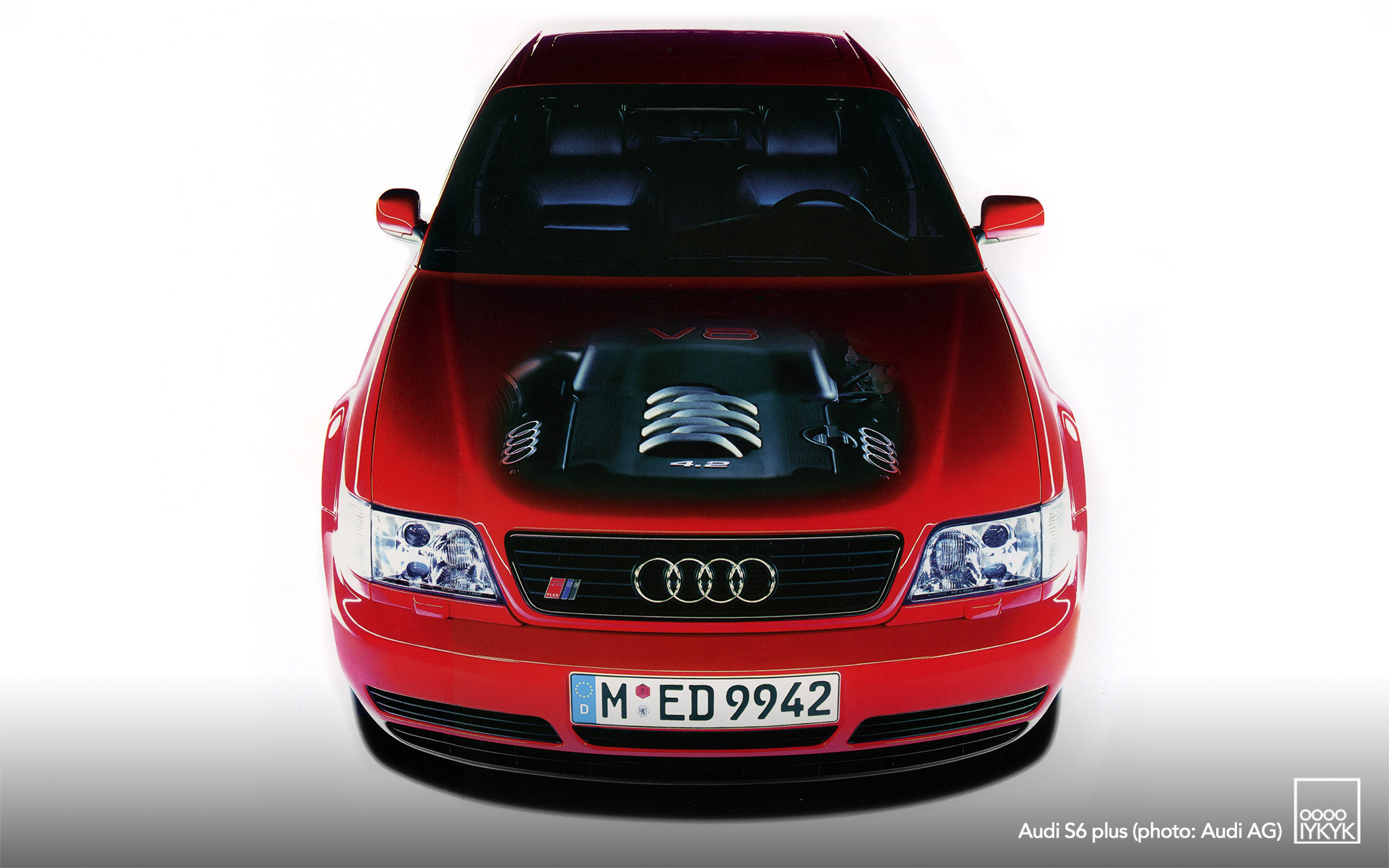
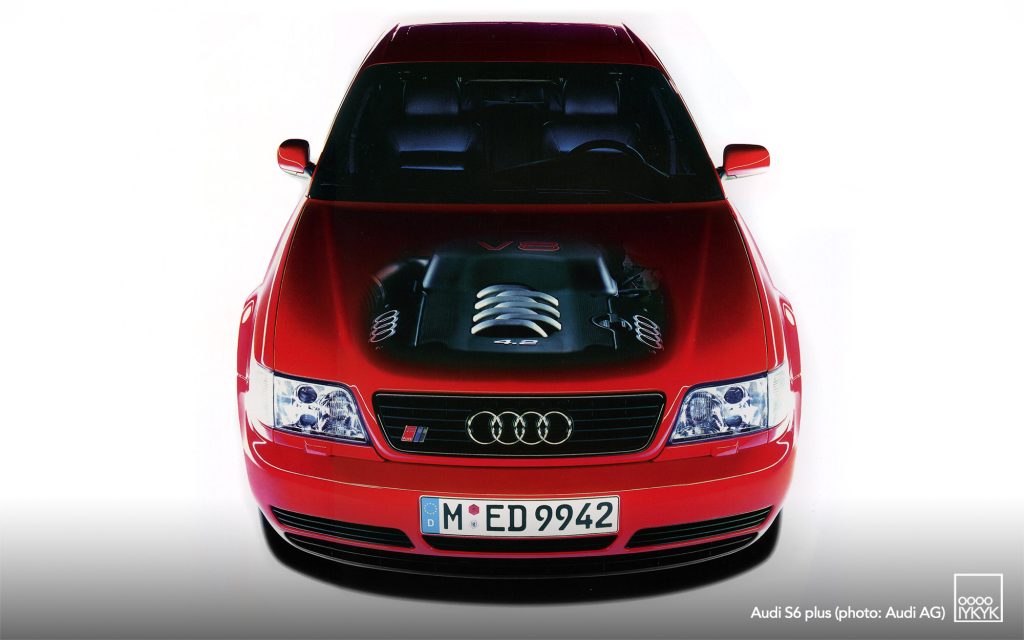
The starting point was the 4.2-liter, 32-valve V8 used in the S6 4.2. quattro GmbH’s engineers increased output from 213 kW / 290 PS to 240 kW / 326 PS. The revisions were considerably more extensive than an engine-control recalibration.
The S6 plus adopted the rotary-valve variable intake manifold from the Audi A8 4.2 quattro, together with a larger mass-airflow sensor and a freer-flowing exhaust system. Revised intake camshafts provided greater lift and altered timing. Mechanical valve-lash adjustment was used on the intake side in place of the production engine’s hydraulic arrangement and the compression ratio increased from 10.8:1 to 11.6:1. A dedicated control unit managed the revised engine.
Peak torque was 400 Nm at 3,500 rpm. Power was delivered through a six-speed manual transmission with shorter ratios from third gear onward and quattro permanent all-wheel drive. Audi quoted 5.6 seconds from rest to 100 km/h and electronically limited maximum speed to 250 km/h. The S6 plus also received a sport suspension and braking and running-gear revisions appropriate to its added performance.
DESIGN
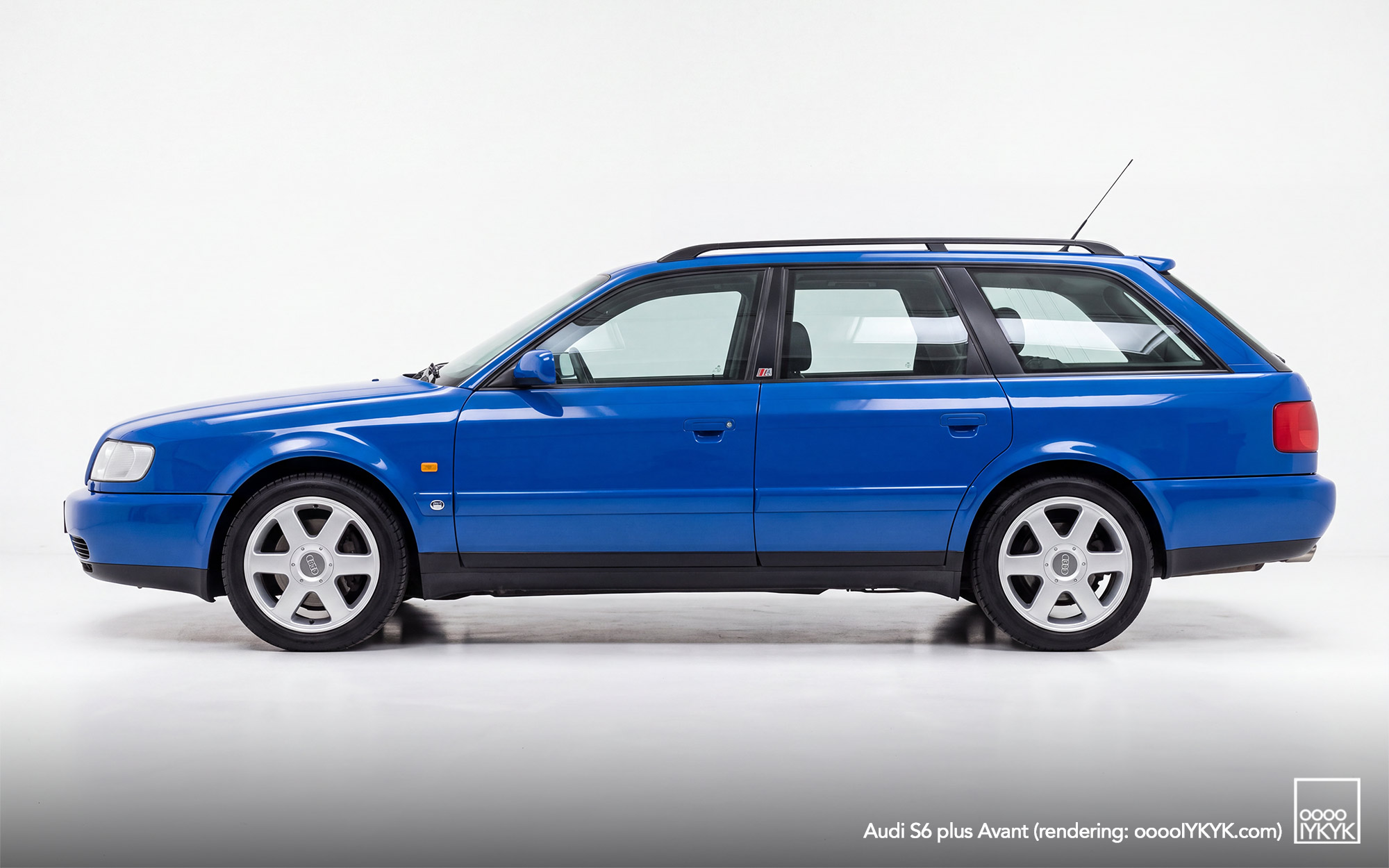
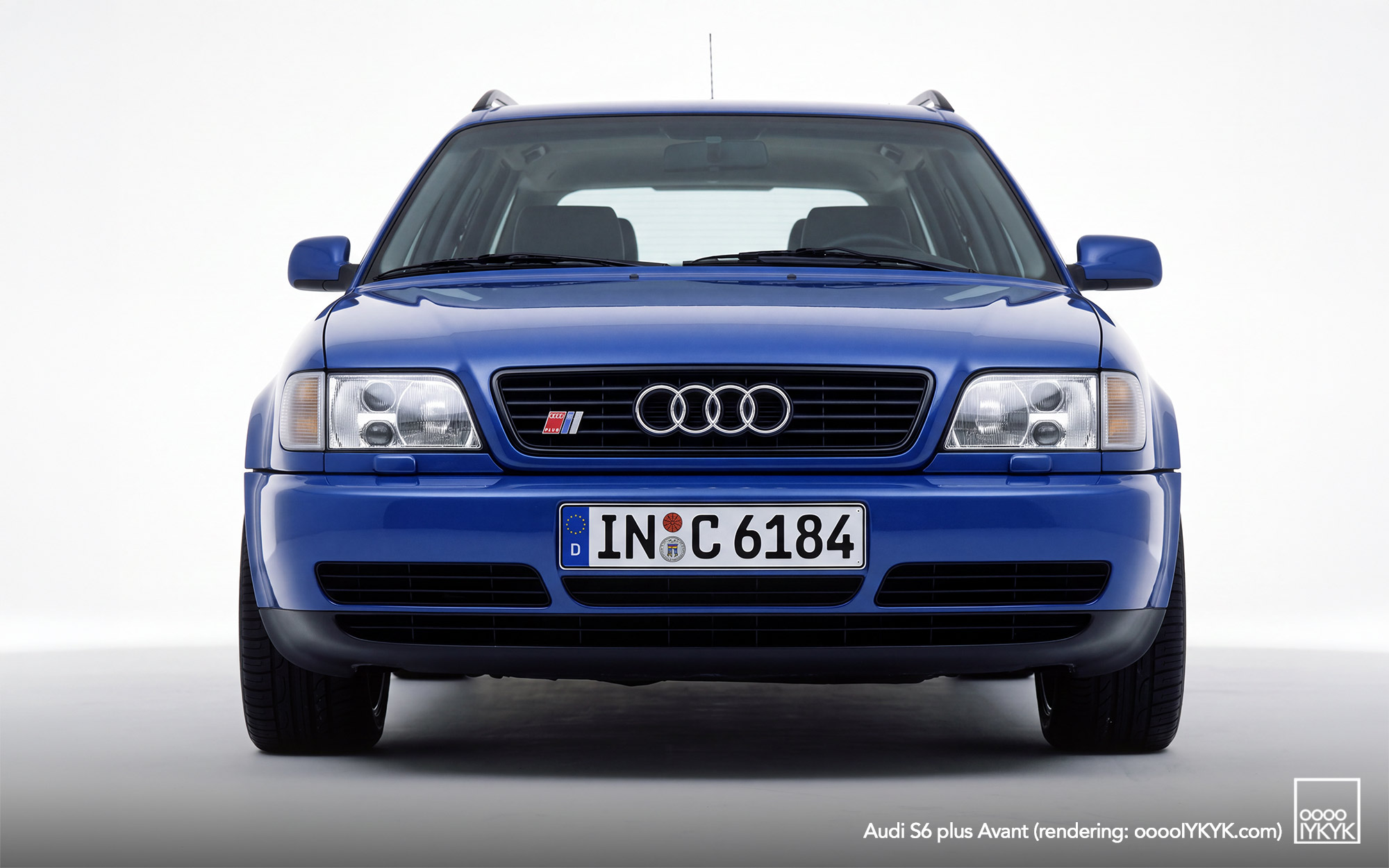
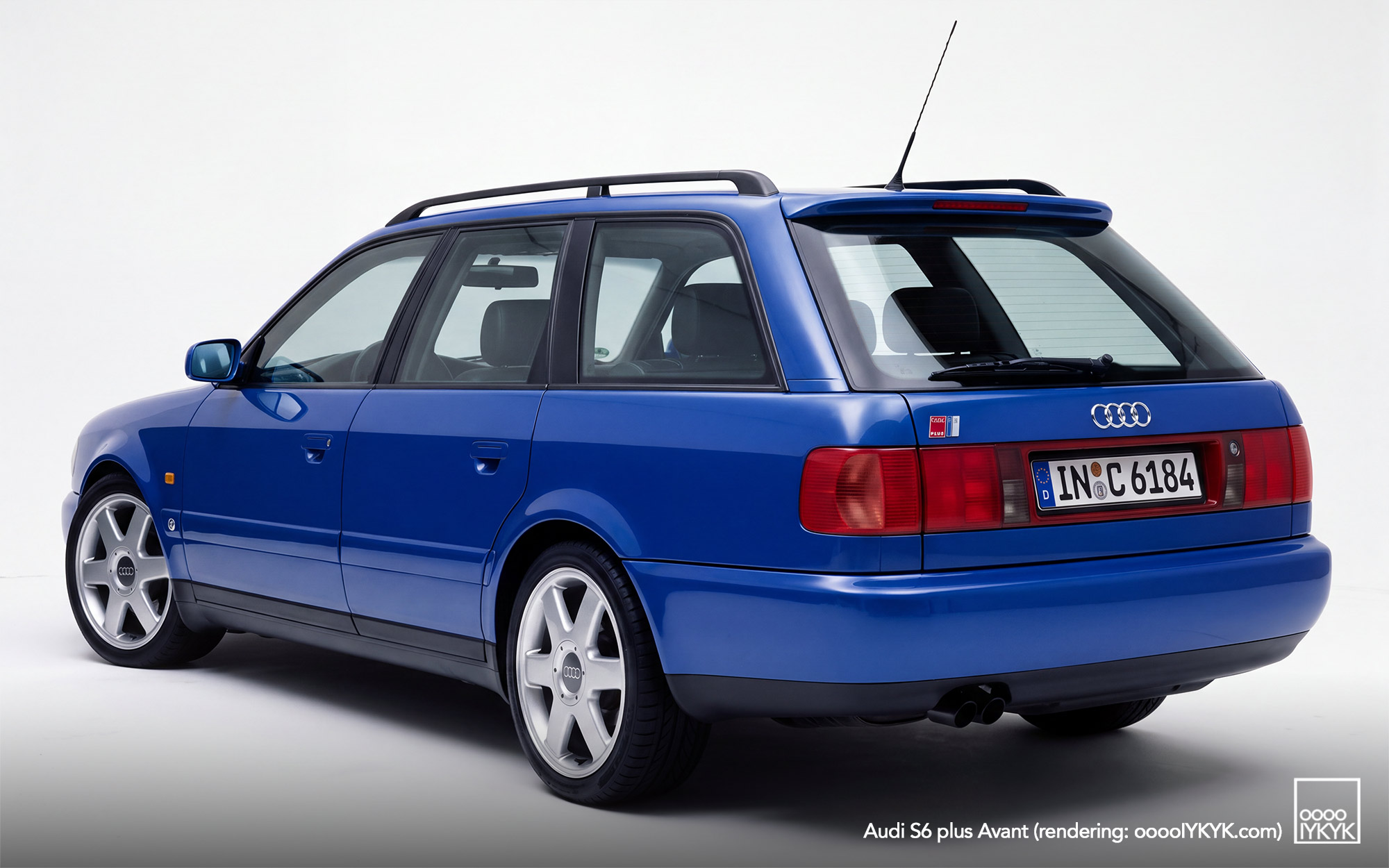
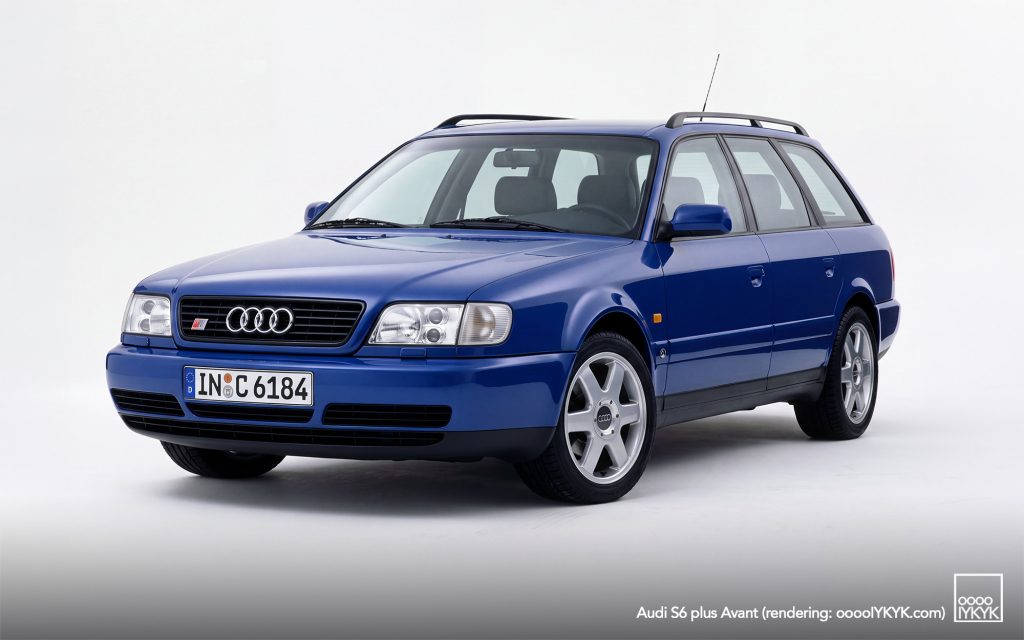
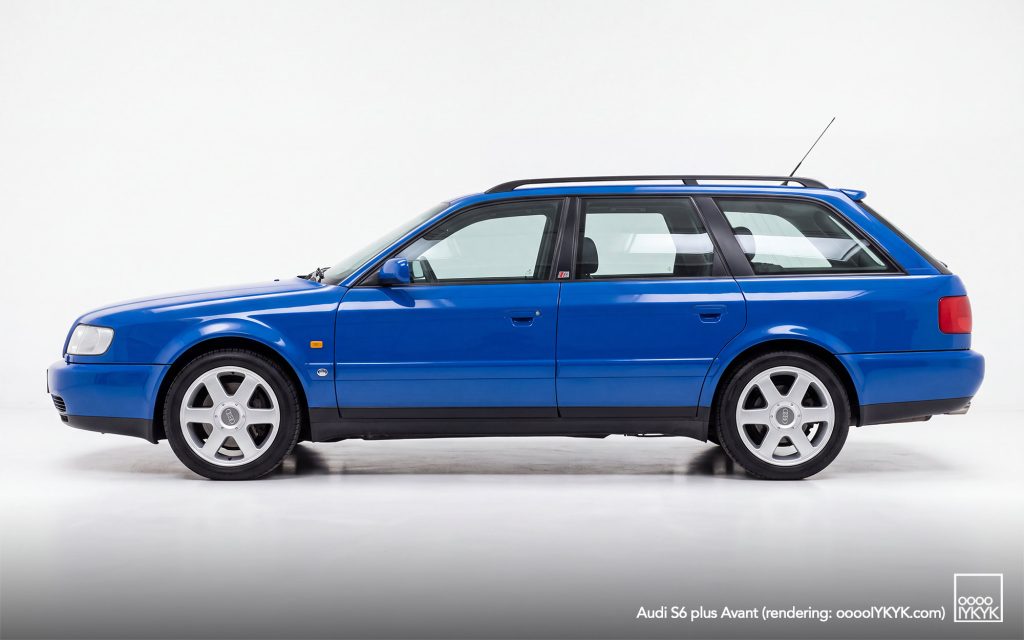
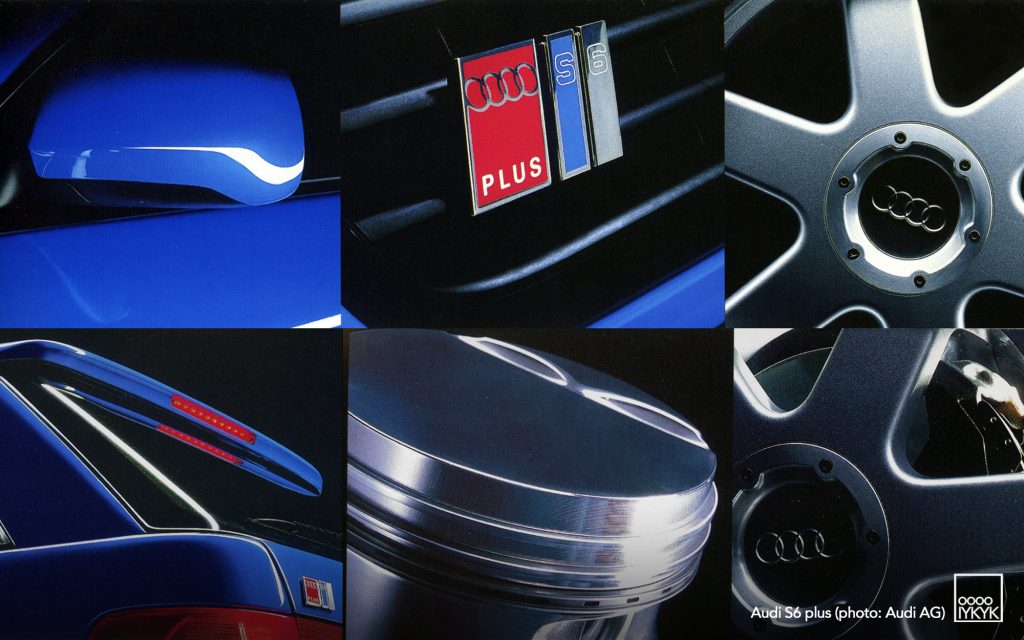
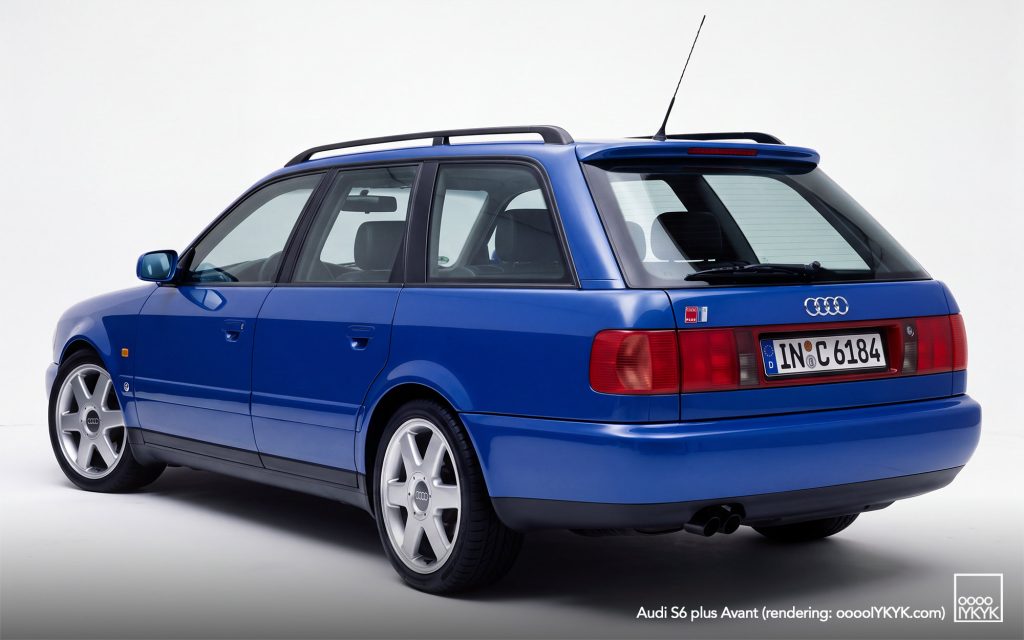
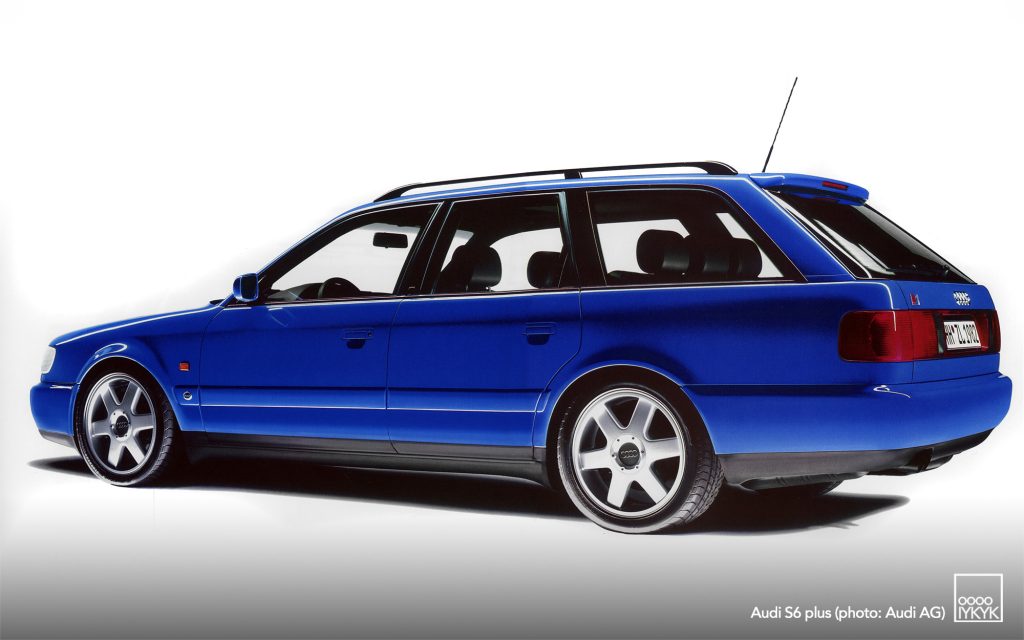
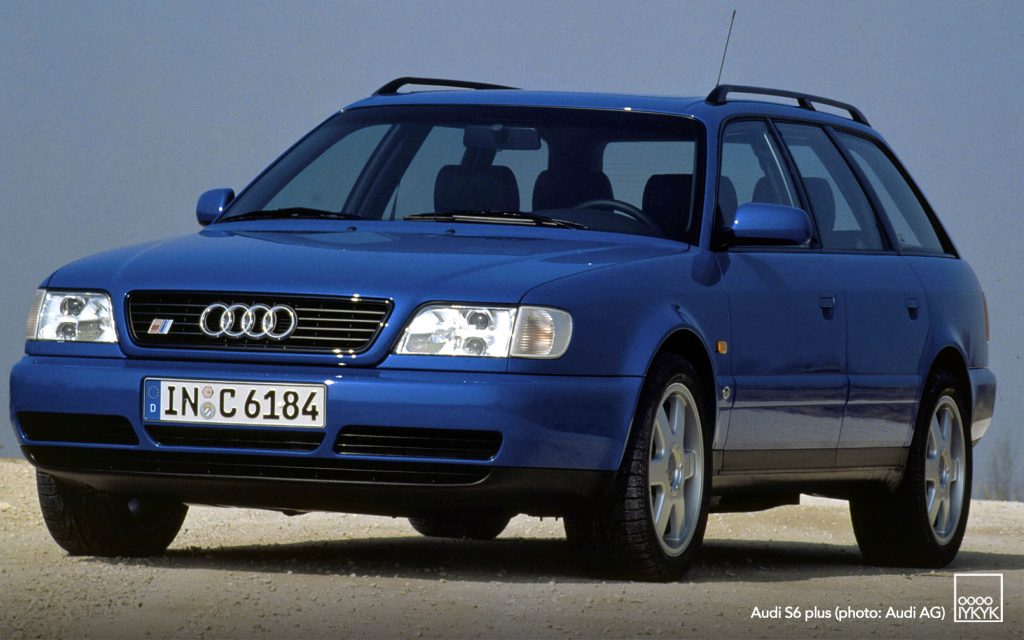
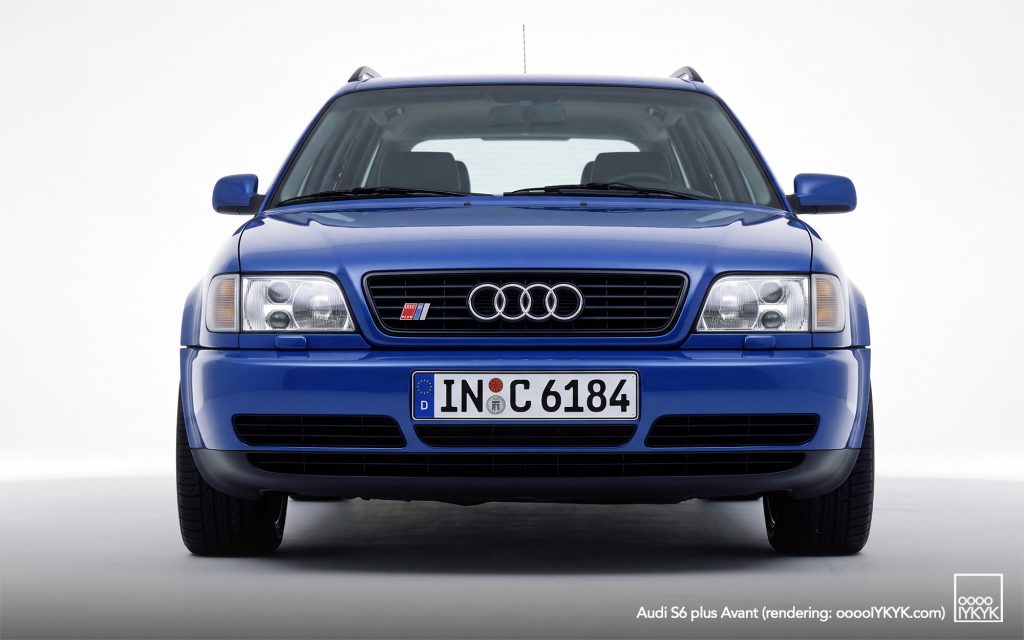
The S6 plus retained the restrained shape of the C4 S6, but quattro GmbH gave it a small set of recognizable details. Six-spoke 17-inch alloy wheels filled its subtly flared wheel arches. The radiator-grille frame and several exterior accents were finished in black, while a model-specific badge combined a red Audi rhombus with blue and silver bars. The Avant also received a roof spoiler incorporating the third brake light.
The catalogue emphasized the car’s understatement. It contrasted the Avant’s useful rear bodywork with the large wings worn by more conventional sports cars and presented the S6 plus as a car whose “innate energy” was matched by “outward restraint.” That theme would become central to later Audi RS Avants.
INTERIOR
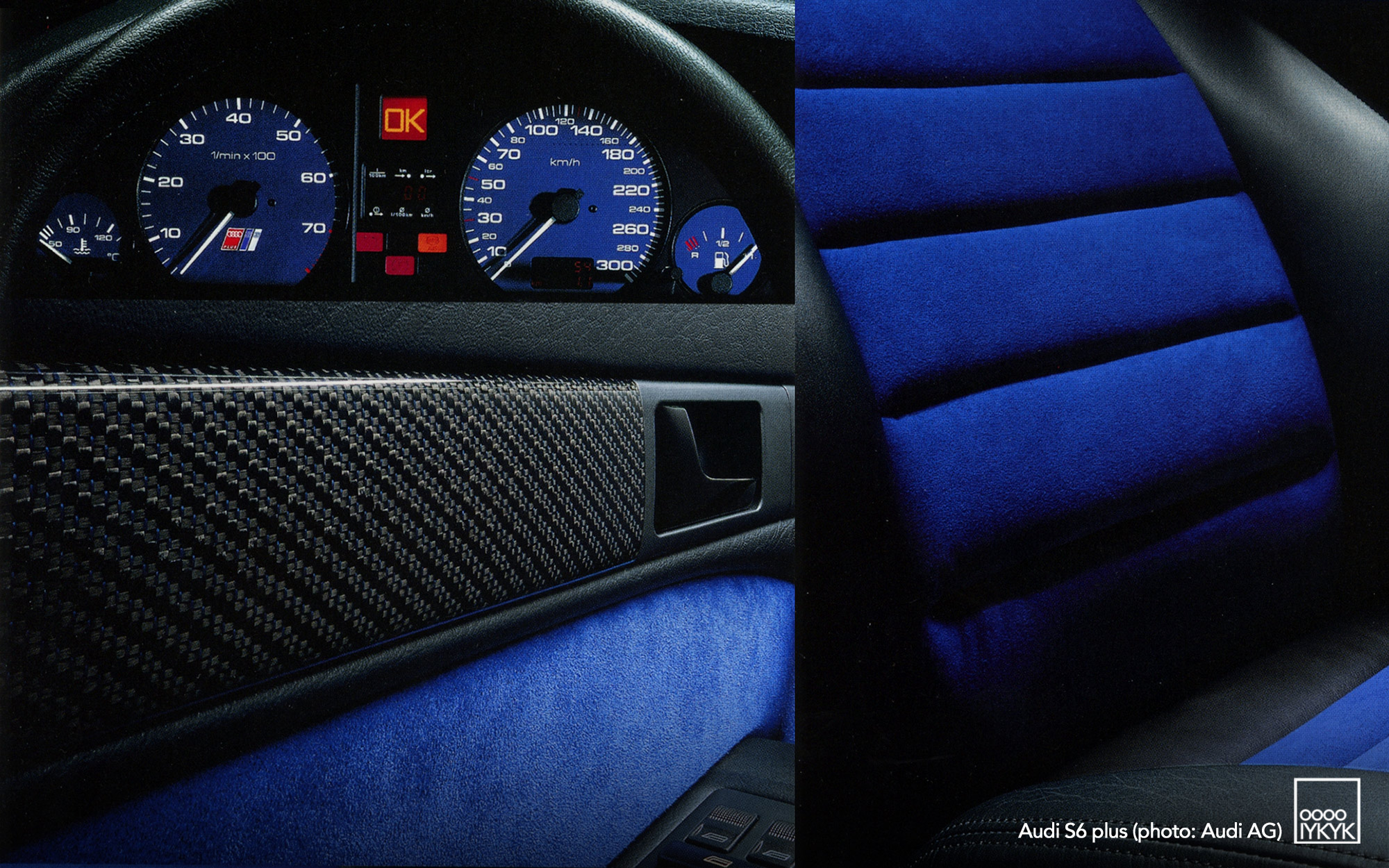
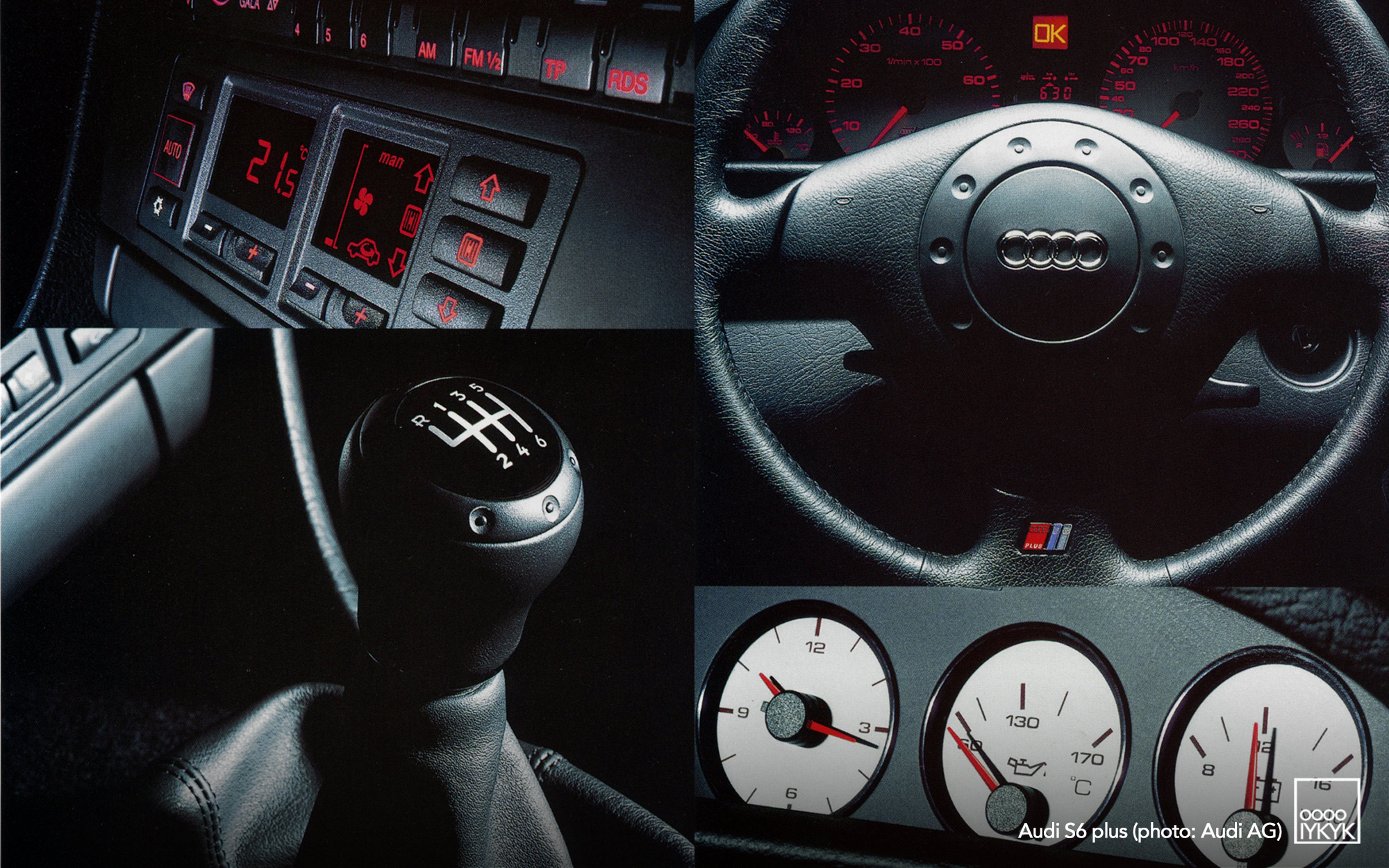
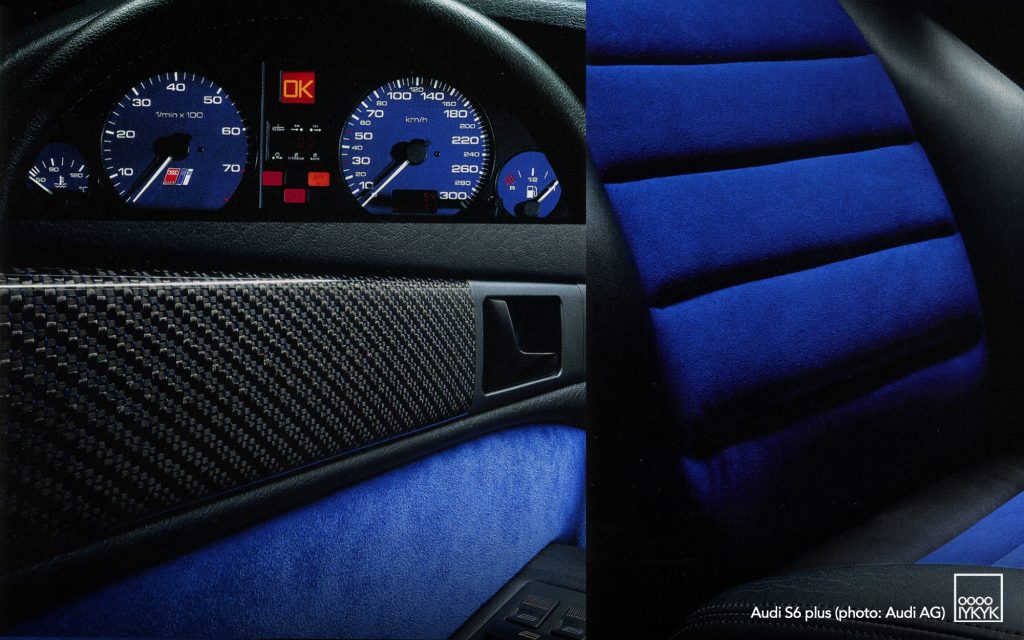
Inside, the S6 plus paired familiar C4 architecture with materials and colors chosen by quattro GmbH. Leather and Alcantara upholstery was offered in Nogaro Blue, silver gray or anthracite, with anthracite natural leather also shown in the launch catalogue. Instrument faces could be specified in blue, light gray or anthracite with black trim rings. Carbon-fiber trim was standard to the catalogue presentation, while burr walnut was available for customers who preferred a more traditional finish.
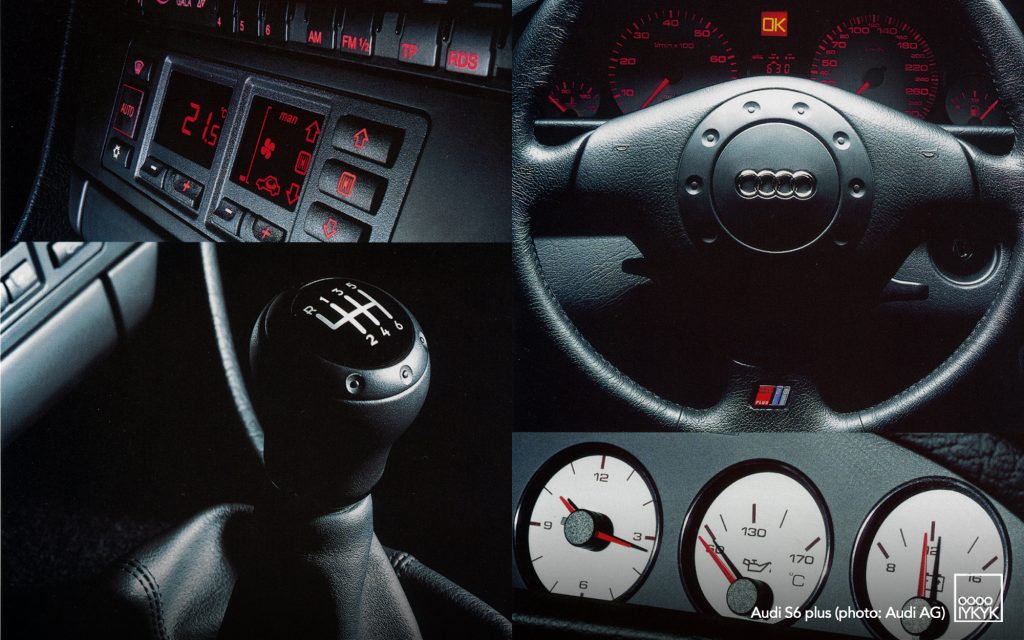
Sports seats, a leather-covered sport steering wheel, auxiliary instruments, air conditioning and the six-speed manual reinforced the car’s dual role as a high-performance machine and a practical long-distance Avant. Beyond the published combinations, quattro GmbH invited customers to request other Audi colors, paint-to-sample finishes and still more individual interior treatments.
COLORS
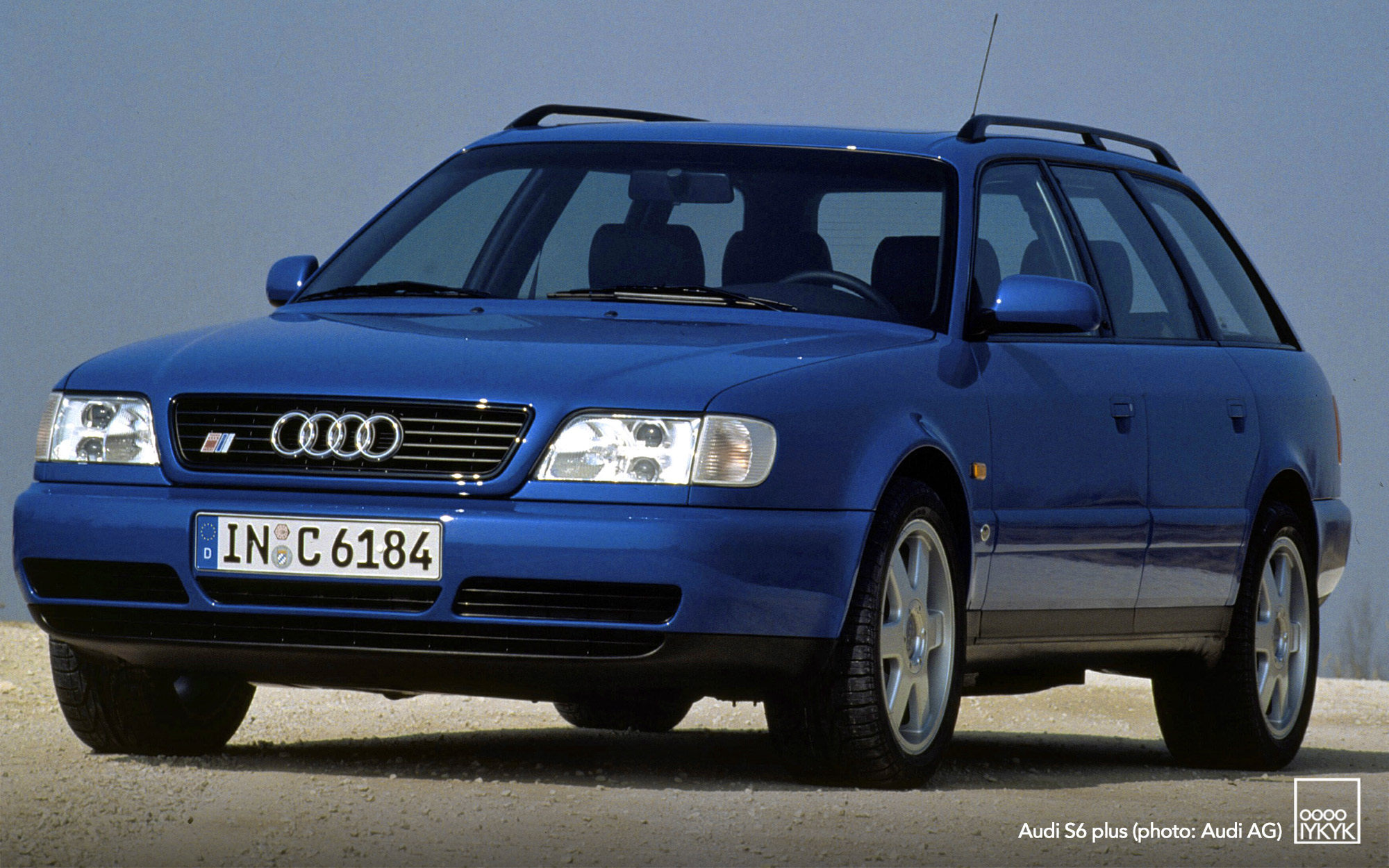
The March 1996 launch catalogue highlighted two exterior colors exclusive to the S6 plus:
- Nogaro Blue pearl effect
- Misano Red pearl effect
Other colors from the Audi range and special-request finishes could be ordered through quattro GmbH’s individualization service.
PRICE
In Germany, the March 1996 price list placed the S6 plus Avant at DM 120,500 including 15 percent value-added tax. The S6 plus sedan was listed at DM 116,300. The catalogue noted that the car carried extensive standard equipment based on the S6 4.2, with additional options described in the contemporary A6/S6 equipment and S6 catalogues.
PRODUCTION
The S6 plus was produced for approximately 16 months during 1996 and 1997 and sold for the 1997 model year. Published accounts identify 952 cars in total, divided between 855 Avants and 97 sedans. Audi’s own historical material confirms that the model was offered in both forms but does not state the production split.
The imbalance is fitting. Although both versions were significant, the Avant most clearly expressed the formula that would become a quattro GmbH specialty: sports-car performance concealed within an understated, all-weather car capable of carrying a family and its luggage.
SIGNIFICANCE
The S6 plus occupies a transitional place in Audi history. It followed the Porsche-assisted Audi Avant RS2, but it was the first complete high-performance car sold by quattro GmbH itself. It also preceded the B5 RS 4 Avant, the first RS model independently developed and brought to production by quattro GmbH.
Its importance therefore extends beyond its output or rarity. Project Q1 proved that Audi’s personalization subsidiary could engineer, specify and market an entire vehicle. The combination it established—an uprated engine, quattro all-wheel drive, restrained visual differentiation, an exclusive cabin and genuine everyday usefulness—became the template for the RS Avants that followed.
KEY DATES
- Spring 1996: Audi S6 plus premieres at the Geneva Motor Show
- March 1996: German-language launch catalogue printed
- 1996: quattro GmbH becomes a vehicle manufacturer in its own right
- 1996–1997: S6 plus production run
- 1997 model year: S6 plus sold as sedan and Avant
PHOTO GALLERY
SOURCES
- quattro GmbH, S6 plus Limousine und Avant, German/English catalogue and price list, 03/96
- Audi Communications, 40 Years of Audi Sport GmbH: High-performance models made by quattro, May 15, 2023
- Dyler, The Original Audi S6 was the True Start of Fast, Luxury Audis, December 22, 2023
EDITOR’S NOTE
The factory material uses S6 plus, with a lowercase “plus.” Output is stated as 240 kW / 326 PS; the direct mechanical-horsepower conversion is approximately 322 hp. Audi’s 2023 English-language history renders the figure as 326 hp, effectively treating PS and hp as equivalent. The catalogue’s original German price and specification language has been retained where it clarifies the car’s launch-market context.