

What: Autodromo Nazionale Monza
Location: Monza, Lombardy, Italy
Opened: September 3, 1922
Circuit Type: Permanent road course / historic combined road and high-speed oval circuit
Current Grand Prix Layout: 5.793 km (3.600 miles)
Direction: Clockwise
Corners: 11
Primary Events: Formula 1 Italian Grand Prix, GT World Challenge Europe, Italian GT Championship, historic racing and national motorsport events
OVERVIEW
Autodromo Nazionale Monza is one of the oldest and most historically significant permanent motor racing circuits in the world. Located within Monza Park north of Milan, the circuit opened in 1922 as the third purpose-built permanent racing venue after Brooklands and Indianapolis. Its combination of long straights, fast corners and exceptionally high average speeds earned Monza its enduring nickname, the “Temple of Speed.”
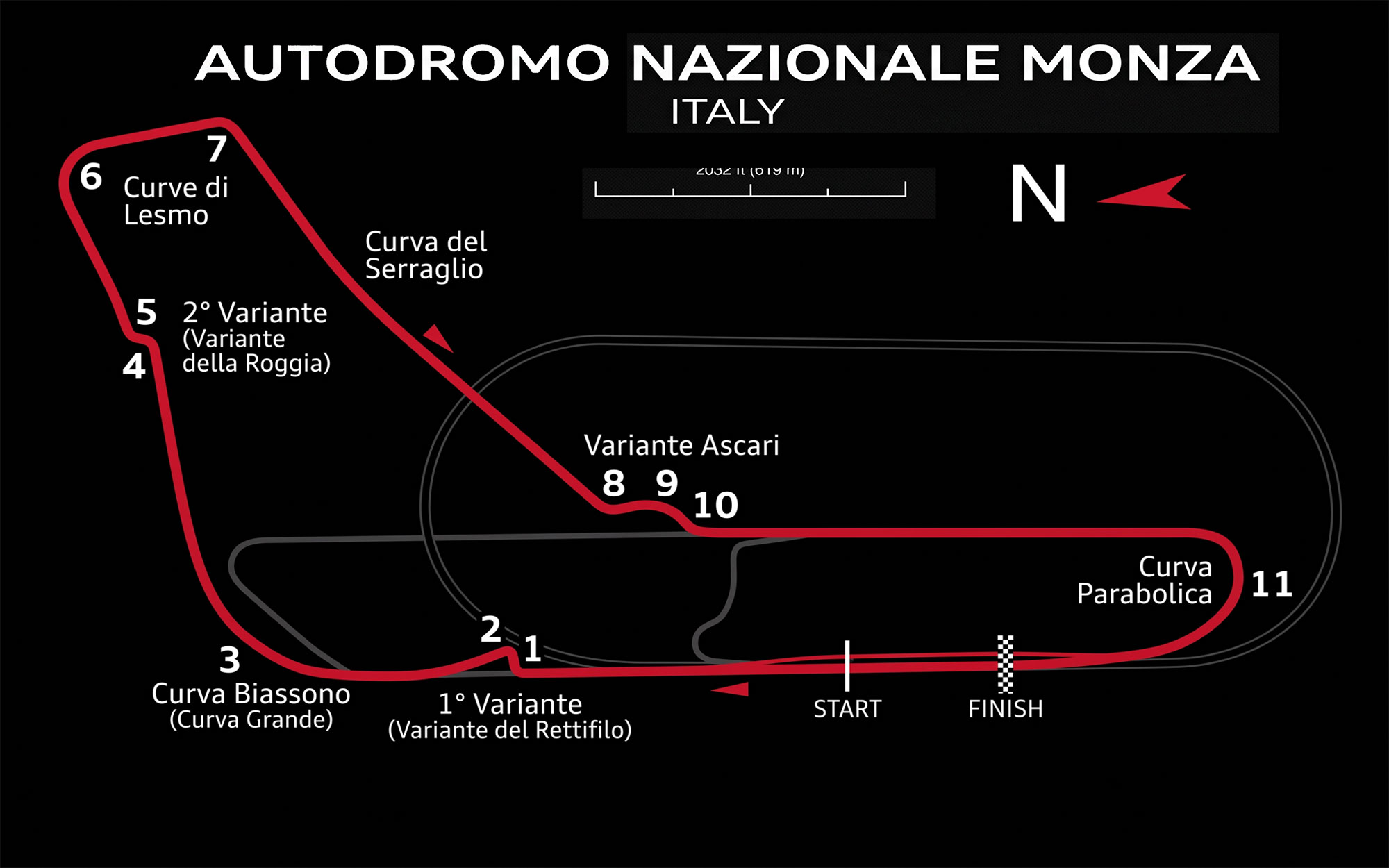
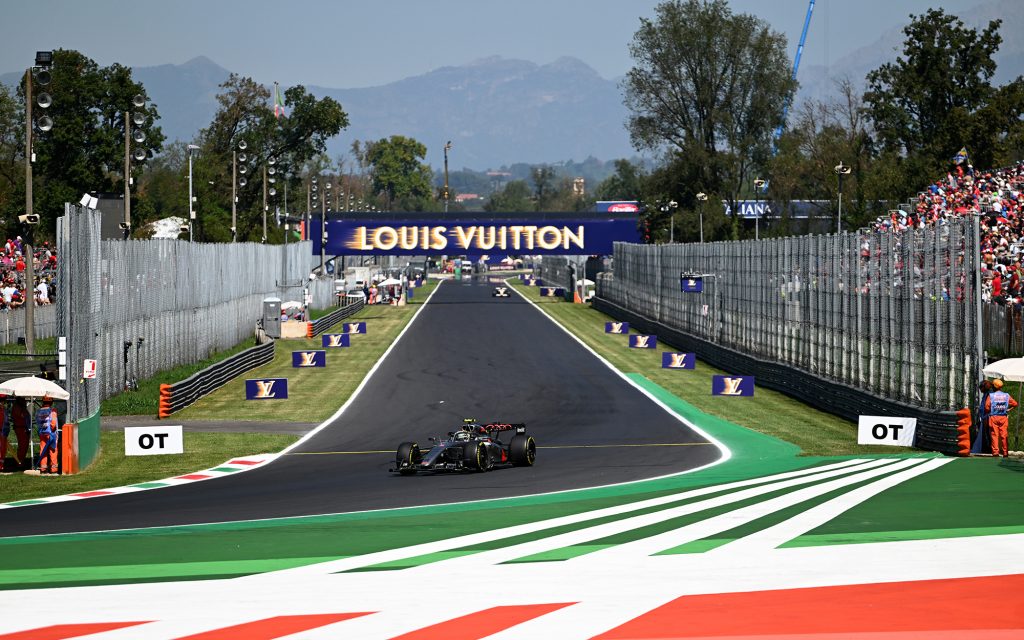
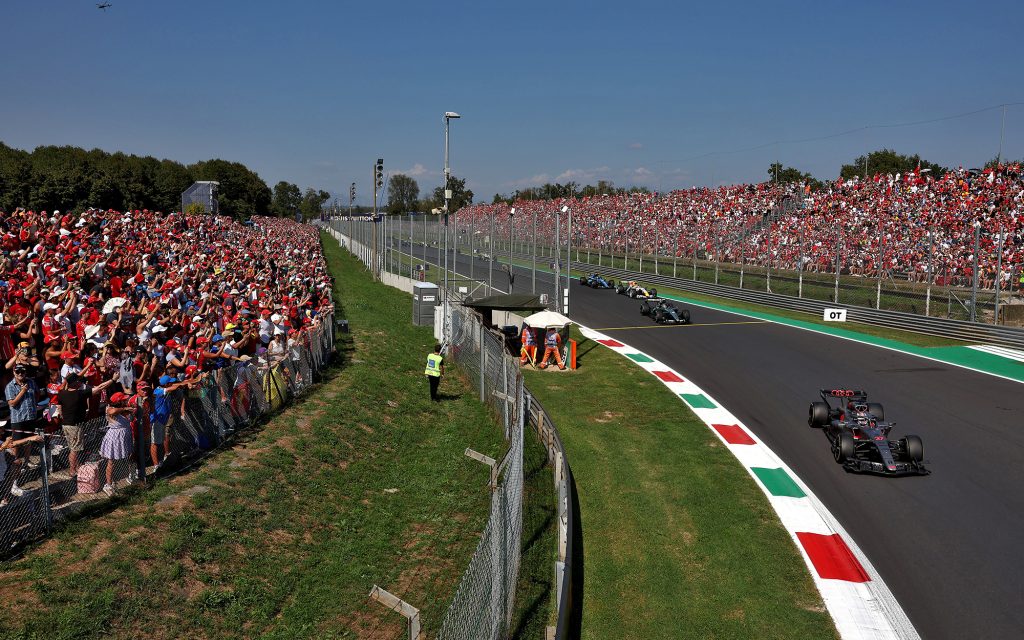
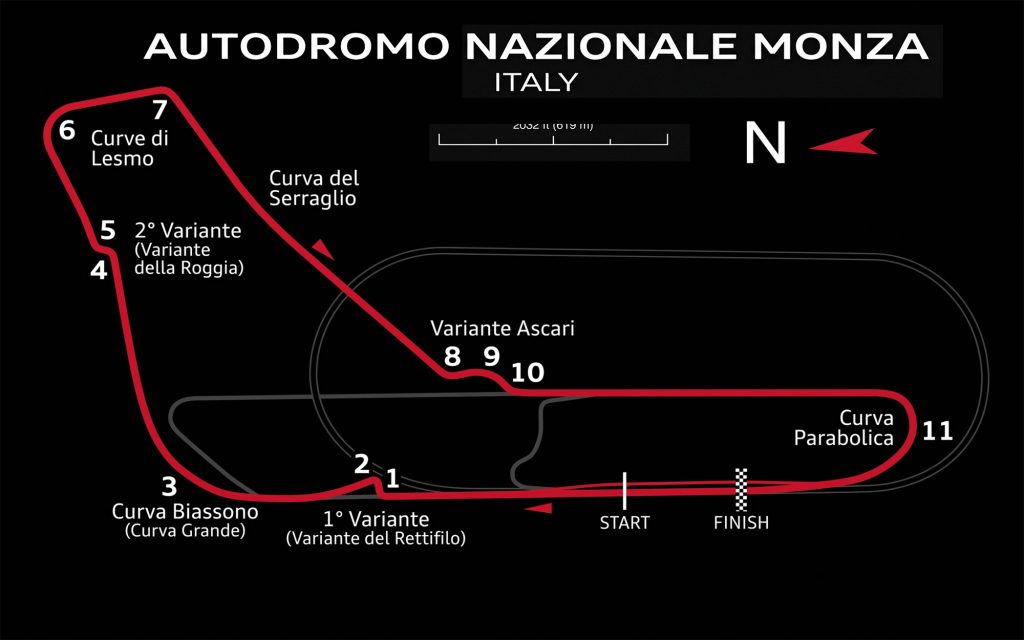
The modern Grand Prix circuit measures 5.793 kilometers (3.600 miles) and runs clockwise through seven right-hand and four left-hand corners. Long periods of full-throttle running are punctuated by heavy braking zones at the Variante del Rettifilo, Variante della Roggia and Variante Ascari, while the Curva Alboreto, historically known as the Parabolica, completes the lap.
Remnants of Monza’s historic high-speed oval remain one of the circuit’s most recognizable features. Its steep concrete banking passes through and above portions of the modern circuit, creating a visible connection to an era when Monza combined its road and oval courses into one of the fastest and most imposing circuits in motorsport.
Monza has hosted the Italian Grand Prix throughout most of the event’s history and joined the inaugural Formula 1 World Championship calendar in 1950. With the exception of 1980, when the Italian Grand Prix was held at Imola, Monza has hosted the Formula 1 Italian Grand Prix every year since.
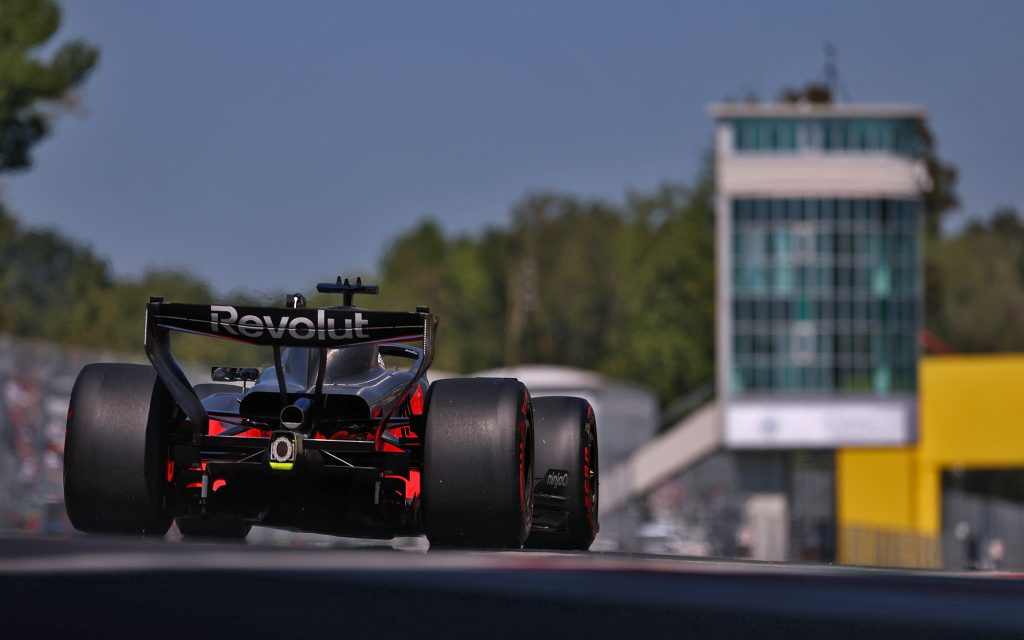
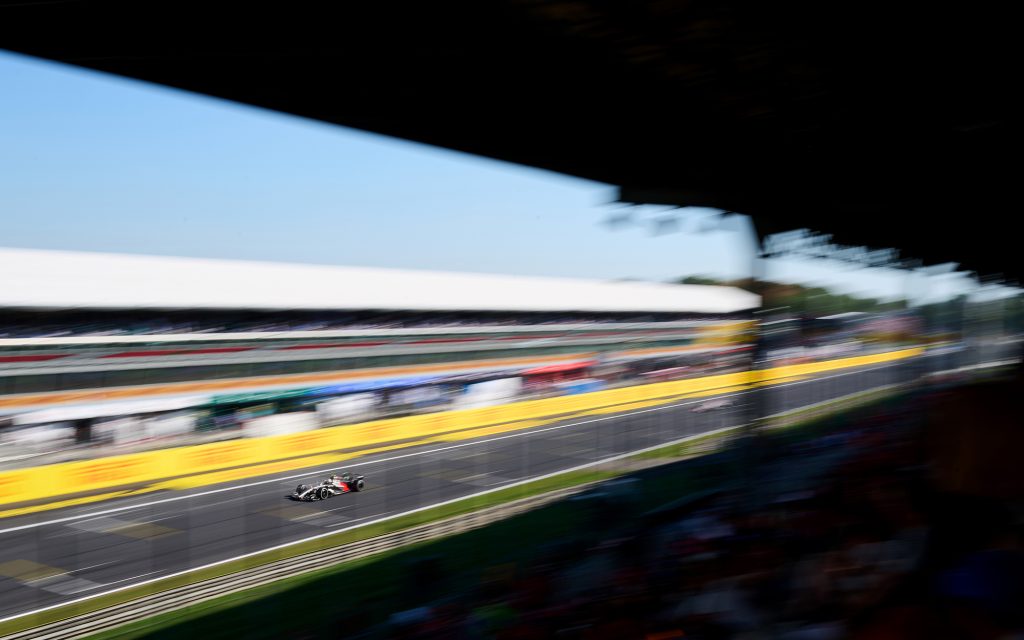
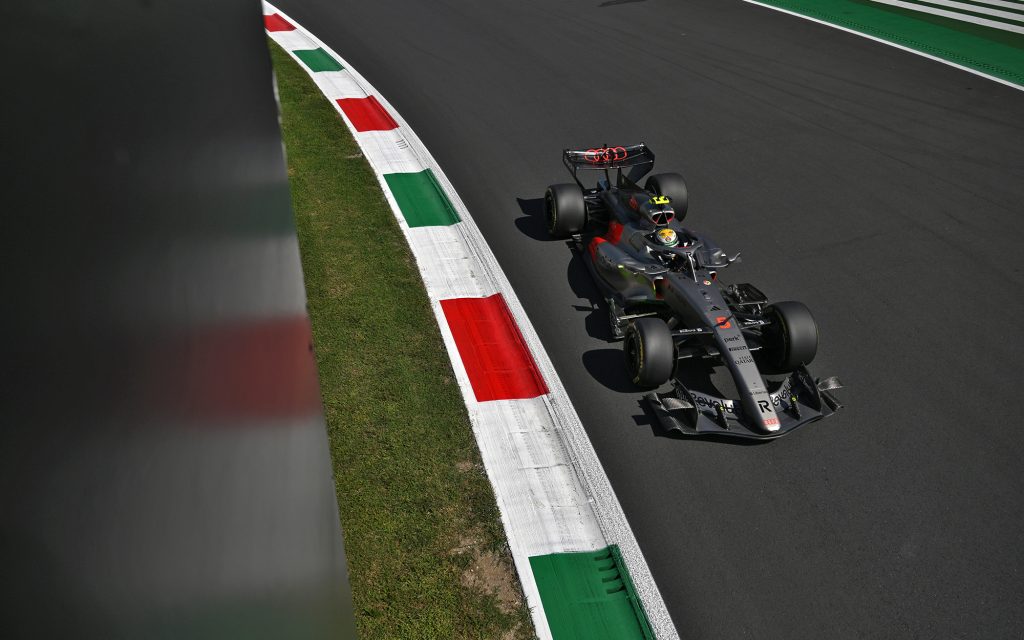
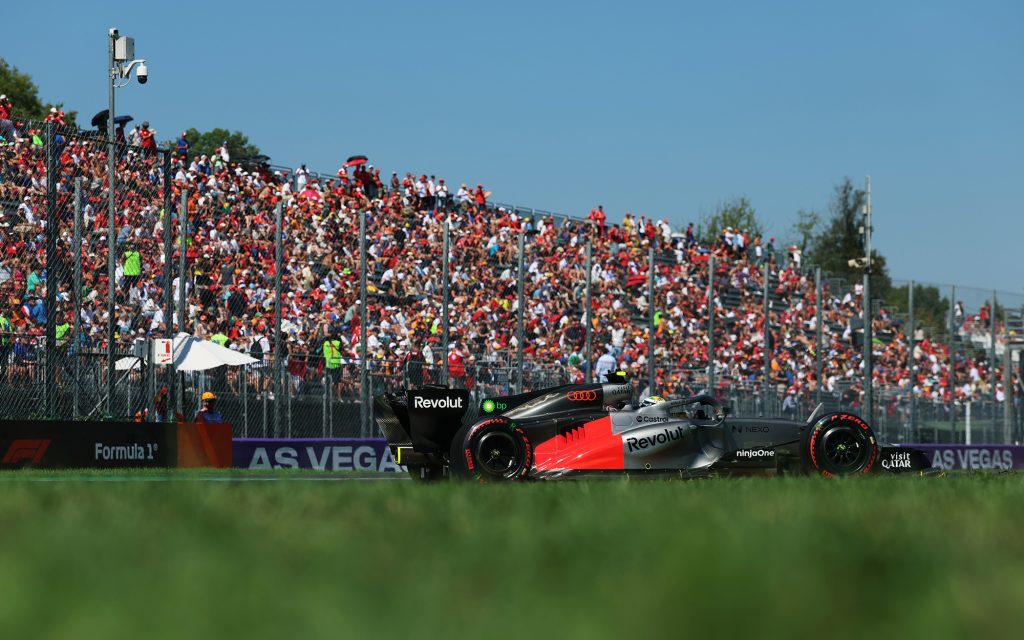
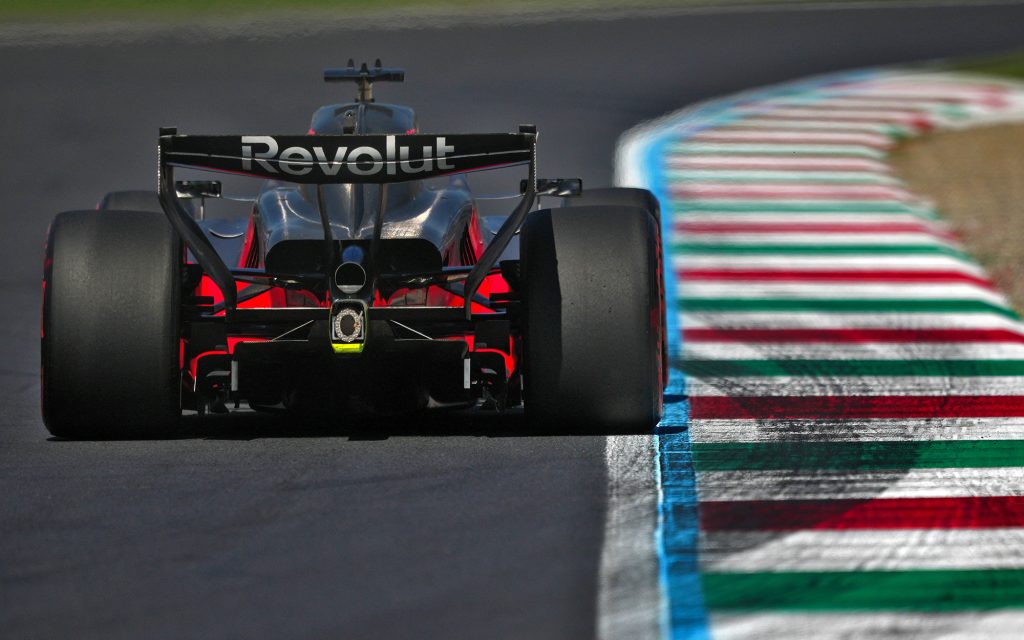
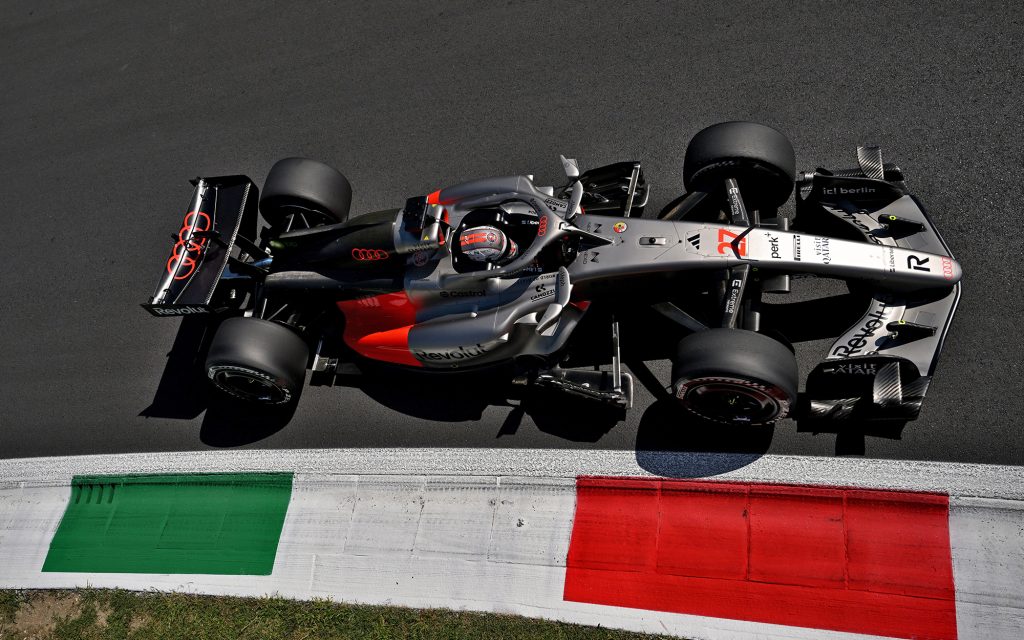
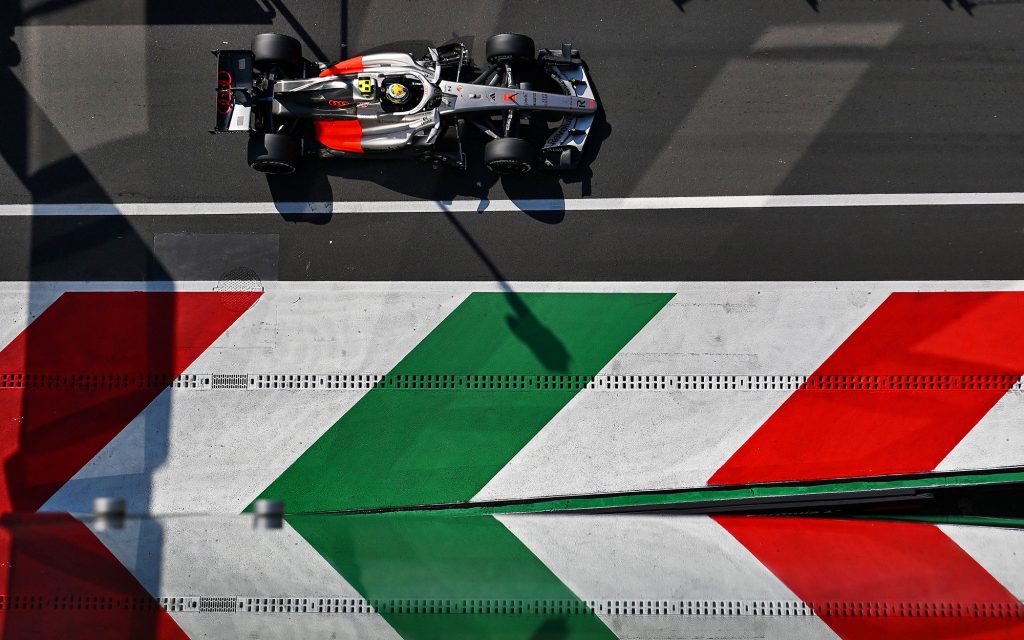
Beginning in 2026, it also becomes a Formula 1 venue for Audi with the arrival of the Audi Revolut F1 Team.
HISTORY
Construction of Autodromo Nazionale Monza was commissioned by the Automobile Club of Milan in January 1922 to commemorate the organization’s 25th anniversary. Work began on May 15 and involved approximately 3,500 workers, 200 wagons, 30 trucks and a temporary five-kilometer railway.
Completed in just 110 days, the original complex combined a 5.5-kilometer road circuit with a 4.5-kilometer high-speed loop to create a 10-kilometer combined course. The high-speed section incorporated two elevated curves connected by straights measuring approximately 1,070 meters each. The two circuits crossed at different levels in the Serraglio area.
Pietro Bordino and Felice Nazzaro completed the first full lap on July 28, 1922 in a Fiat 570. The circuit officially opened on September 3, when Bordino won a race for small cars in a Fiat 501. One week later, on September 10, Monza hosted the Italian Grand Prix.
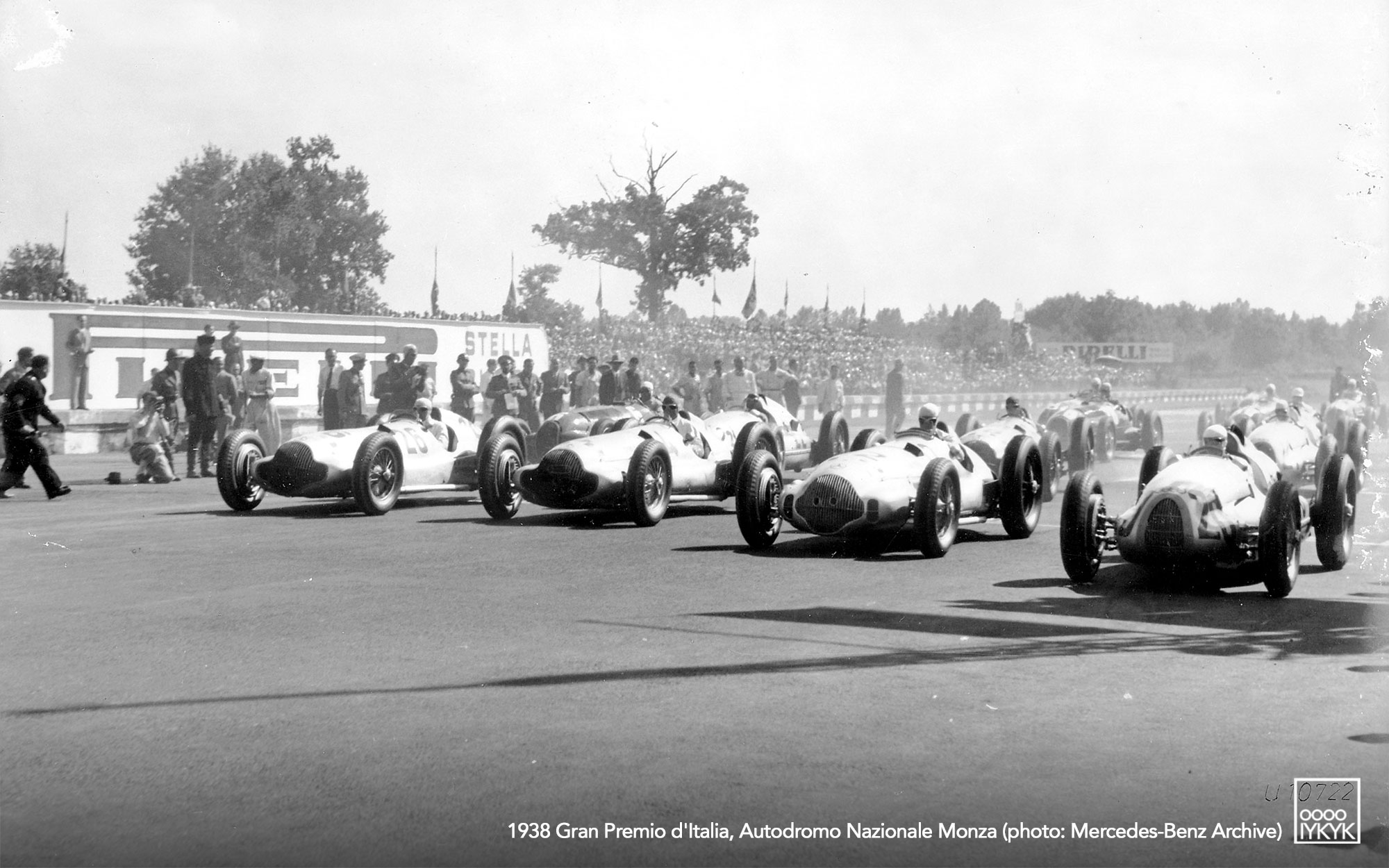
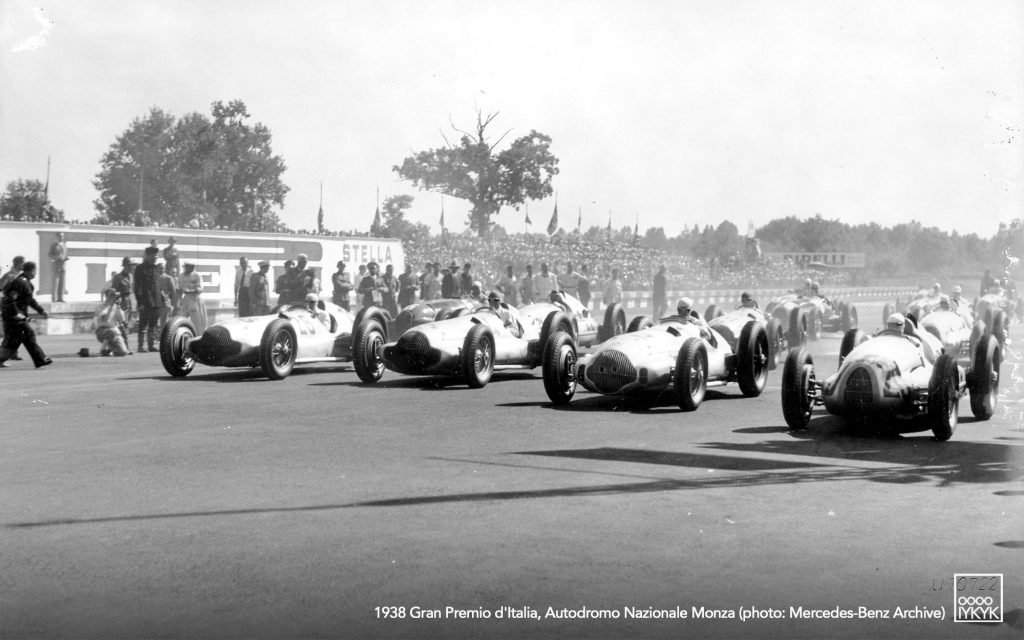
The original high-speed circuit was capable of extraordinary speeds for the period, but serious accidents prompted repeated alterations. Different configurations were used through the 1930s, including the approximately 6.68-kilometer Florio circuit. The Italian Grand Prix of 1938, won by Tazio Nuvolari for Auto Union, used this revised configuration.
World War II suspended racing and left the facility badly damaged. Restoration began in 1948 and racing subsequently returned.
A major redevelopment in 1955 recreated the concept of the original combined circuit. A new 4.25-kilometer high-speed oval was constructed using reinforced concrete, incorporating two steeply banked curves with gradients reaching approximately 80 percent. Combined with the road circuit, it again created a 10-kilometer course. The road course itself was shortened to approximately 5.75 kilometers and a new final corner of increasing radius was constructed, becoming the Parabolica.
The high-speed banking was eventually abandoned for major competition while the road circuit continued to evolve. Chicanes were introduced during the 1970s to reduce speeds, with further revisions following in subsequent decades.
Despite those changes, Monza has retained its fundamental character. The present 5.793-kilometer circuit remains one of the fastest permanent road courses in international motorsport.
AUDI AT MONZA
AUTO UNION GRAND PRIX RACING
Audi’s history at Monza reaches back through its predecessor Auto Union and the pre-war Silver Arrow era.
Auto Union competed at Monza in the Italian Grand Prix beginning in 1934 with its revolutionary rear-mid-engine Grand Prix cars. Hans Stuck and Hermann zu Leiningen finished second in the 1934 Italian Grand Prix with an Auto Union Type A.
The following season brought Auto Union its first Italian Grand Prix victory at Monza. On September 8, 1935, Hans Stuck won in an Auto Union Type B, while the Auto Union shared by Paul Pietsch and Bernd Rosemeyer finished third.
Auto Union repeated the victory in 1936. Bernd Rosemeyer started from pole position, set fastest lap and won the Italian Grand Prix in the Type C, while teammate Ernst von Delius finished third.
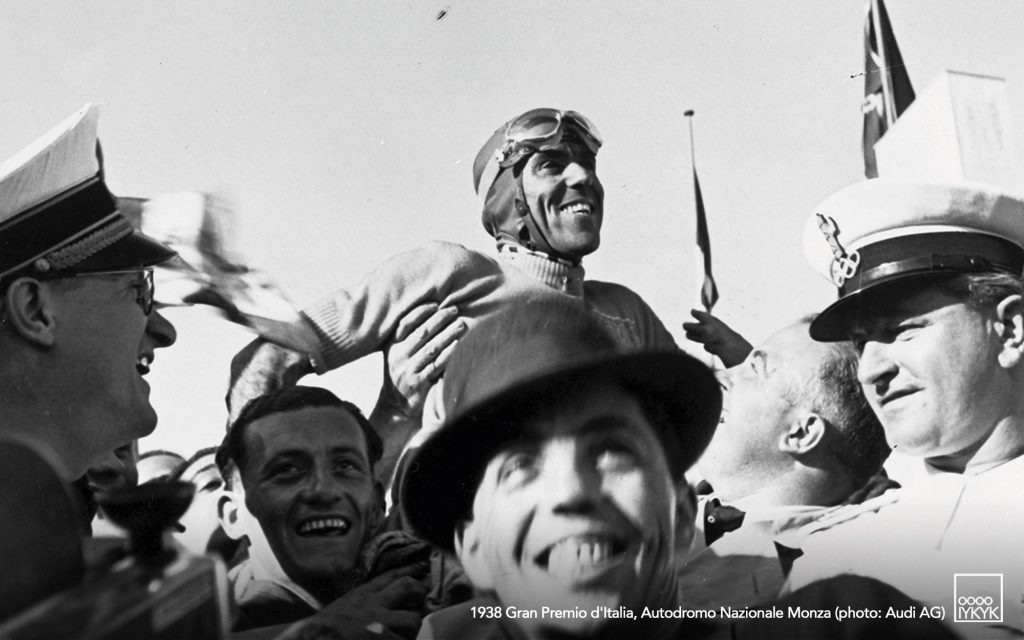
The Italian Grand Prix returned to Monza in 1938 and produced one of the most significant victories of Auto Union’s Grand Prix program. Tazio Nuvolari, who had joined Auto Union following the death of Bernd Rosemeyer earlier that year, won the Italian Grand Prix in the V12 Auto Union Type D.
Nuvolari’s victory against Mercedes-Benz and Alfa Romeo on Italian soil became one of the defining results of his brief period with Auto Union.
Monza therefore accounts for three pre-war Italian Grand Prix victories for Auto Union: 1935, 1936 and 1938.
ITALIAN SUPERTURISMO
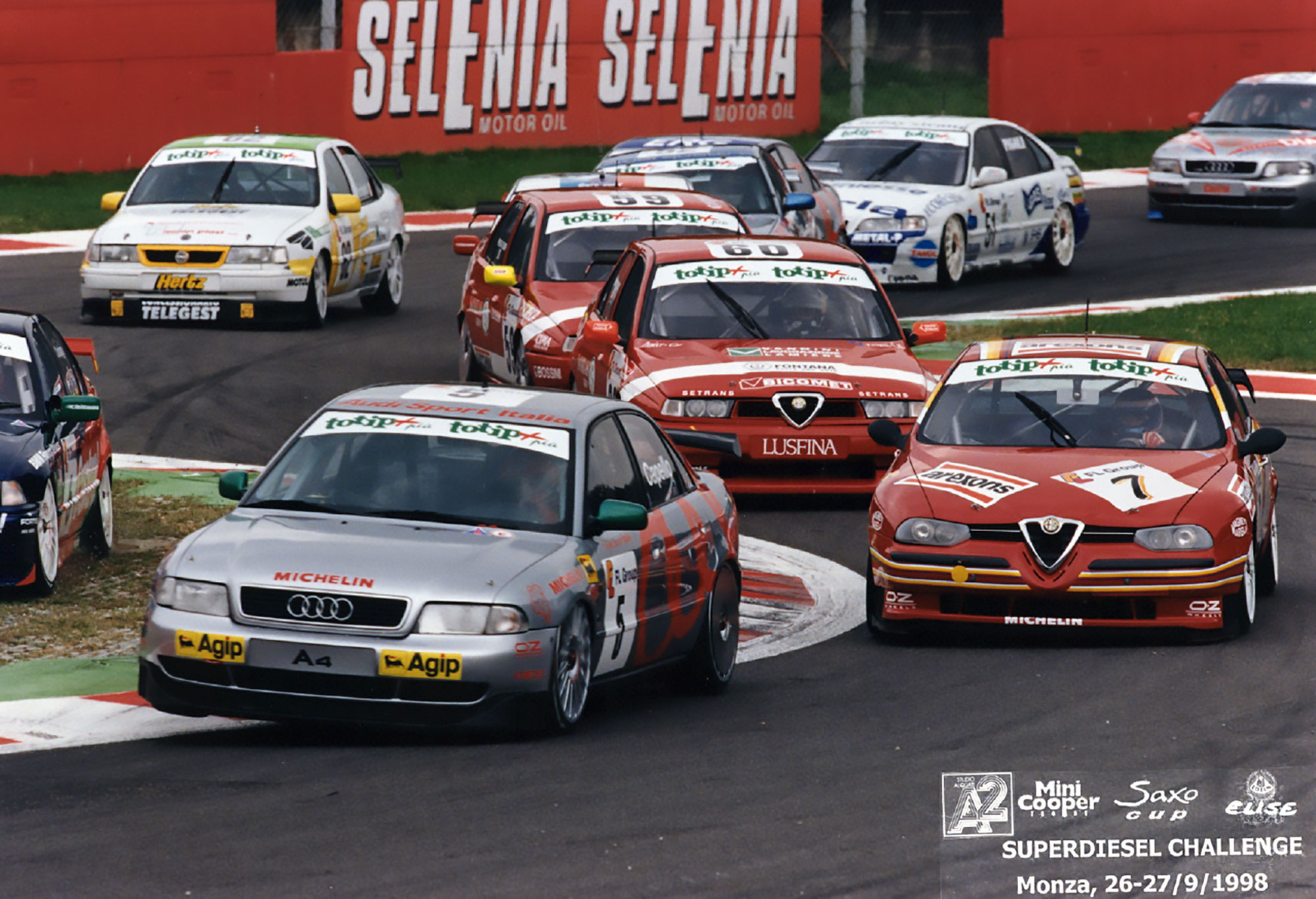
Monza became an important venue for Audi again during the 1990s through the Campionato Italiano Superturismo and Audi Sport Italia.
Dindo Capello joined Audi’s Italian Super Touring effort for 1994, driving the Audi 80 quattro alongside Emanuele Pirro. The 1994 championship opened at Monza on April 10, with Pirro qualifying fourth and Capello seventh.
The Audi 80 quattro proved highly successful over the course of the season. Pirro won six races and the Italian drivers’ championship, while Audi claimed the manufacturers’ title with nine victories. Capello also scored a race victory during the season.
For 1995, Audi replaced the 80 with the new B5-generation Audi A4 quattro Super Touring car. Audi Sport Italia entered Pirro and Capello as its principal drivers, with the new A4 becoming one of the dominant cars of the championship.
At Monza on May 21, Pirro and Capello qualified second and third respectively. Pirro won the first race and finished second in the second, while Capello added another podium. The results formed part of an extraordinary season in which Audi Sport Italia won 14 of the championship’s 20 races and Pirro secured his second consecutive Italian Superturismo title.
Audi’s performance at Monza was even stronger in 1996.
Capello returned as defending Audi machinery was further developed, joined by French touring-car specialist Yvan Muller in a second A4 quattro. At Monza on May 12, Capello won both races. Muller finished second to him in Race 1, producing an Audi Sport Italia 1-2.
The Monza double formed part of a six-race winning streak for Capello across Magione, Monza and Binetto. Attempts to contain the A4 quattro’s performance resulted in additional weight being imposed on Audi during the season, but Capello remained in championship contention and ultimately secured the 1996 Italian Superturismo drivers’ title.
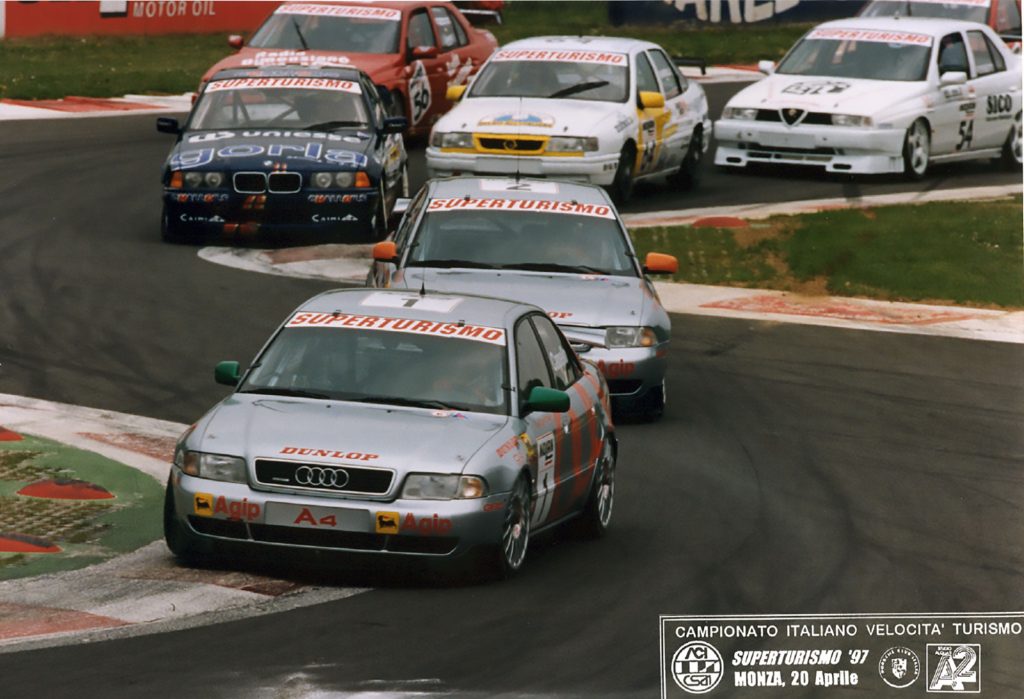
Audi returned to Monza for the opening round of the 1997 championship with Capello and former Formula 1 driver Karl Wendlinger in A4 quattros.
Capello qualified fifth and Wendlinger sixth. In Race 1, Capello finished second behind BMW driver Emanuele Naspetti, with Wendlinger third, putting both factory Audis on the podium. Capello then won Race 2, giving Audi another Monza victory with the A4 quattro.
The 1997 season nevertheless marked the beginning of the end for the four-wheel-drive Super Touring Audi. Additional weight penalties reduced the A4 quattro’s advantage and Audi curtailed development of the four-wheel-drive car ahead of regulations requiring a move to front-wheel drive.
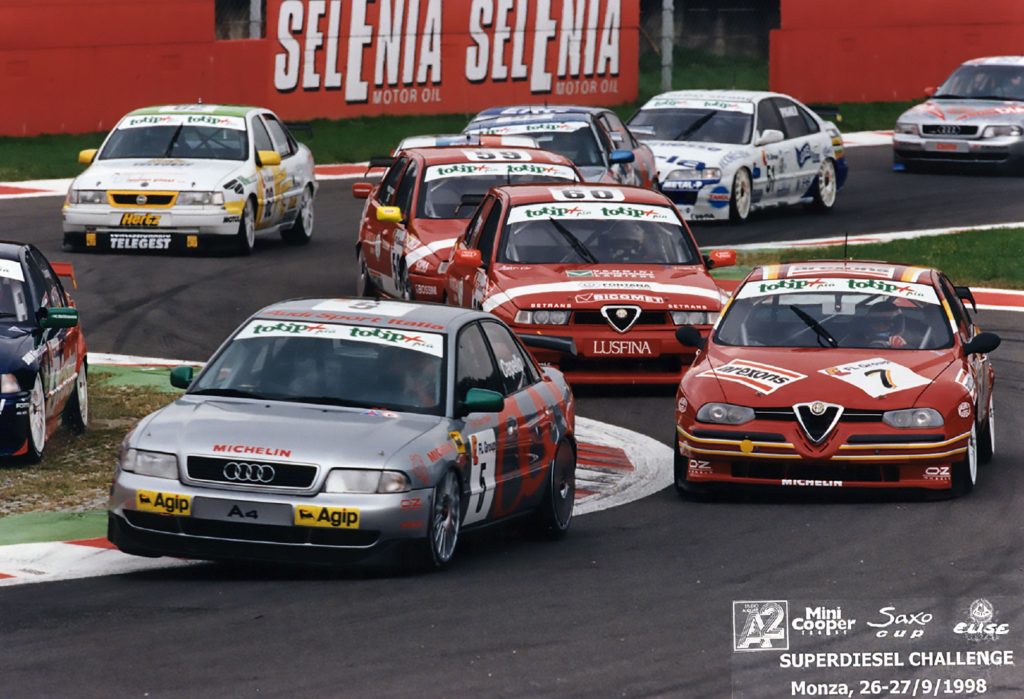
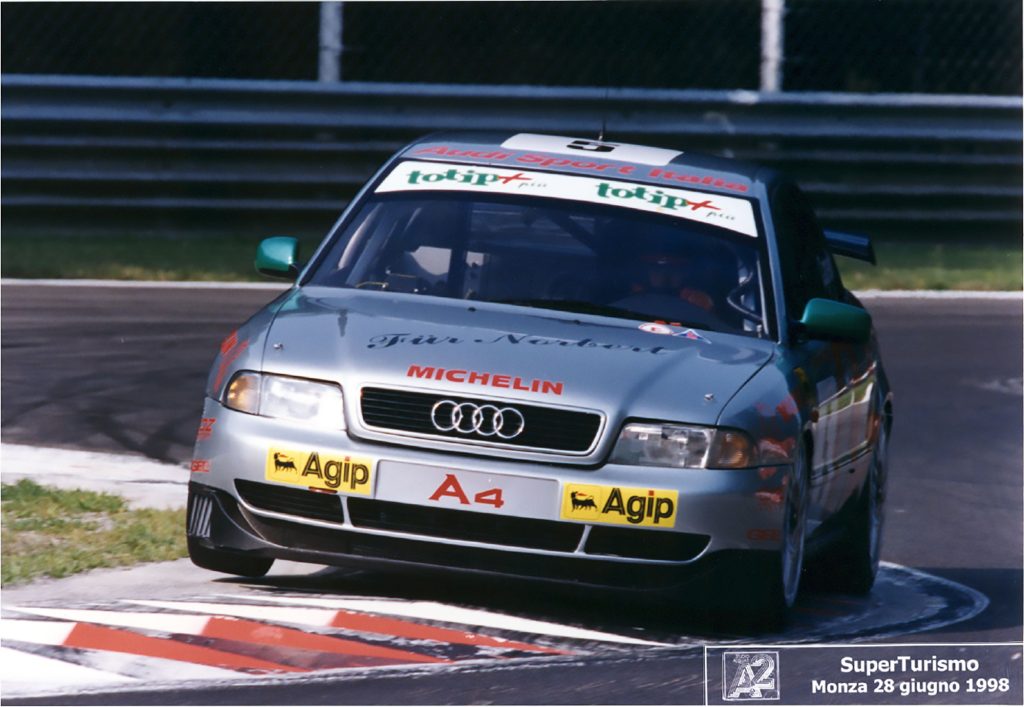
For 1998, Audi Sport Italia introduced a front-wheel-drive version of the A4 for Capello, while older A4 quattros continued to compete in privateer hands.
Monza appeared twice on the 1998 Italian Superturismo calendar.
At the first meeting, Capello qualified the factory front-wheel-drive A4 third. He finished second to Nicola Larini’s Alfa Romeo 156 in Race 1, while privateer Fabian Peroni placed fifth in an A4 quattro. Capello also recorded further points finishes during the weekend.
The championship returned to Monza later in the season. Capello again qualified third with the front-wheel-drive A4. He finished sixth in Race 1 and retired from the second race. Peroni, Moreno Soli and Davide Bernasconi were among the drivers competing at Monza in older A4 quattro machinery.
Audi withdrew its factory effort from Super Touring competition following the 1998 season as Audi Sport shifted its primary motorsport focus toward the new R8R and R8C prototypes and an assault on the 24 Hours of Le Mans.
The Monza races consequently trace much of Audi’s Italian Super Touring story: from the championship-winning Audi 80 quattro, through the introduction and dominance of the A4 quattro, to the final front-wheel-drive A4 immediately before Audi’s transition into prototype endurance racing.
SUPERSTARS
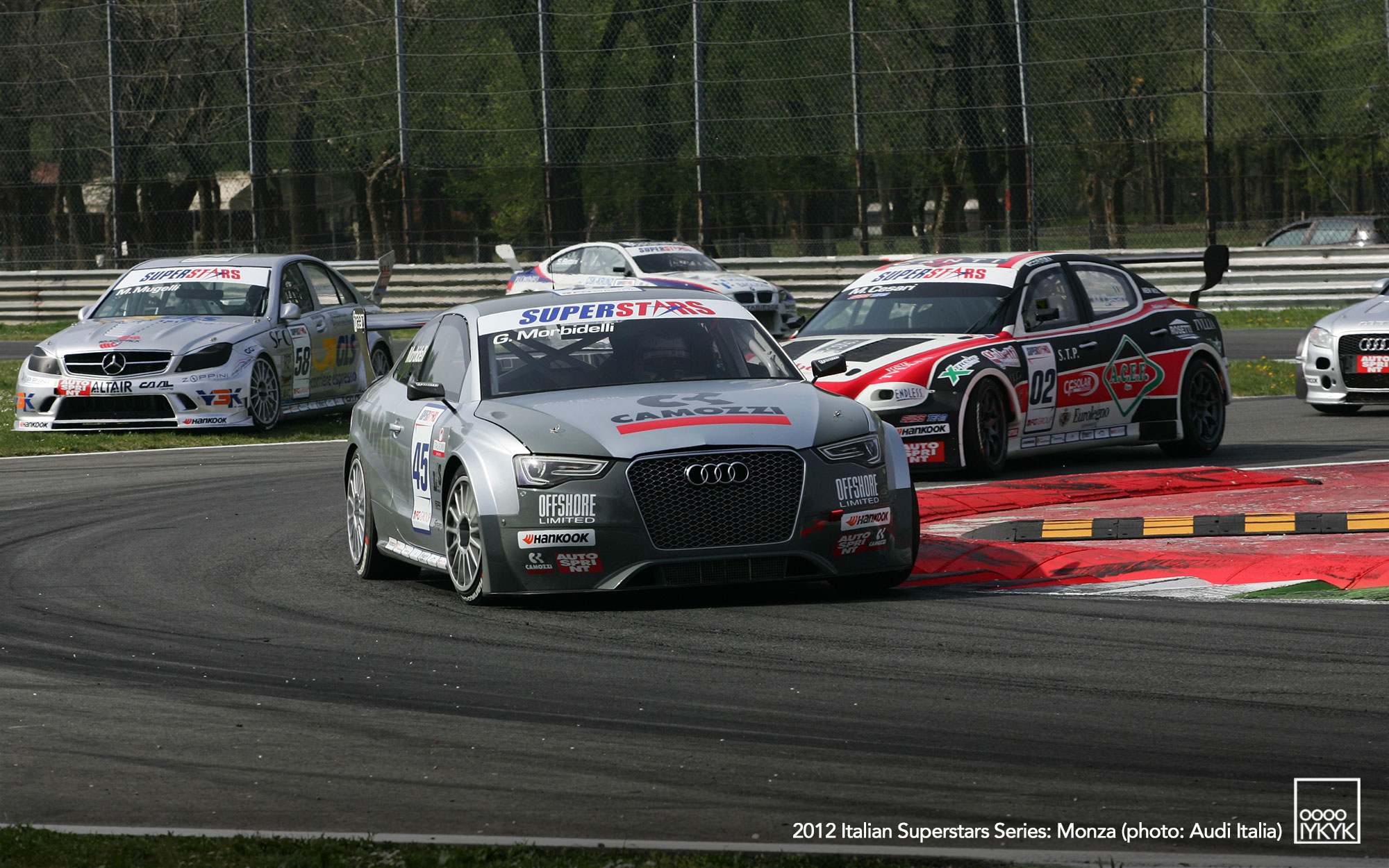
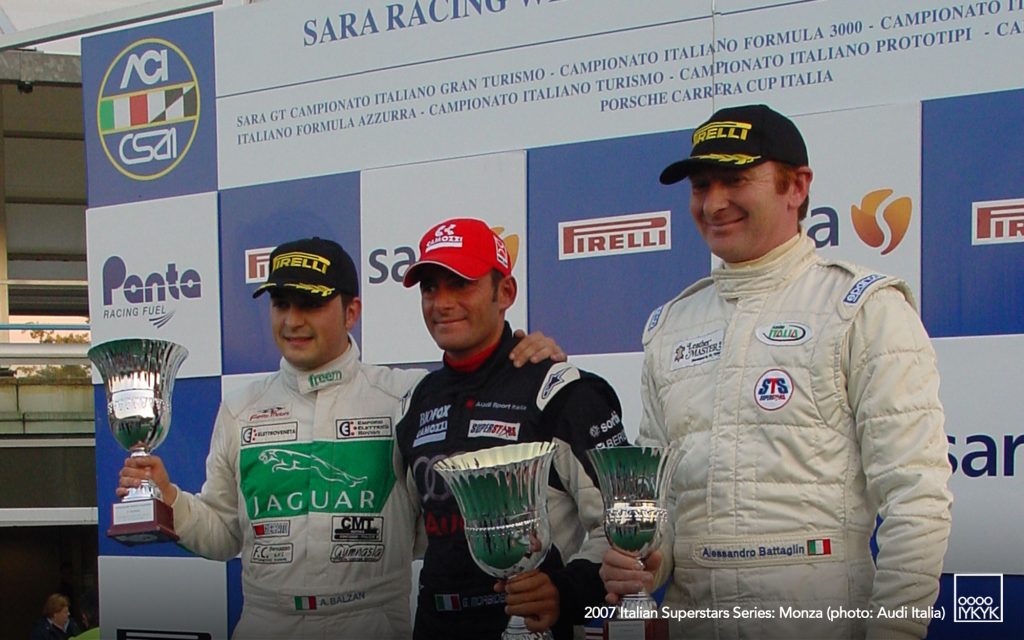
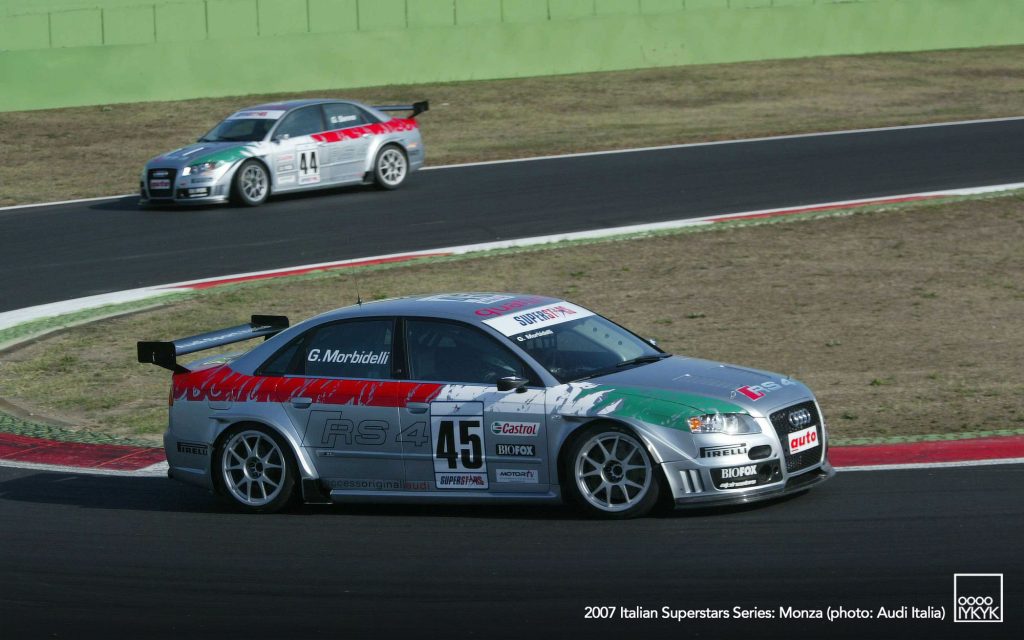
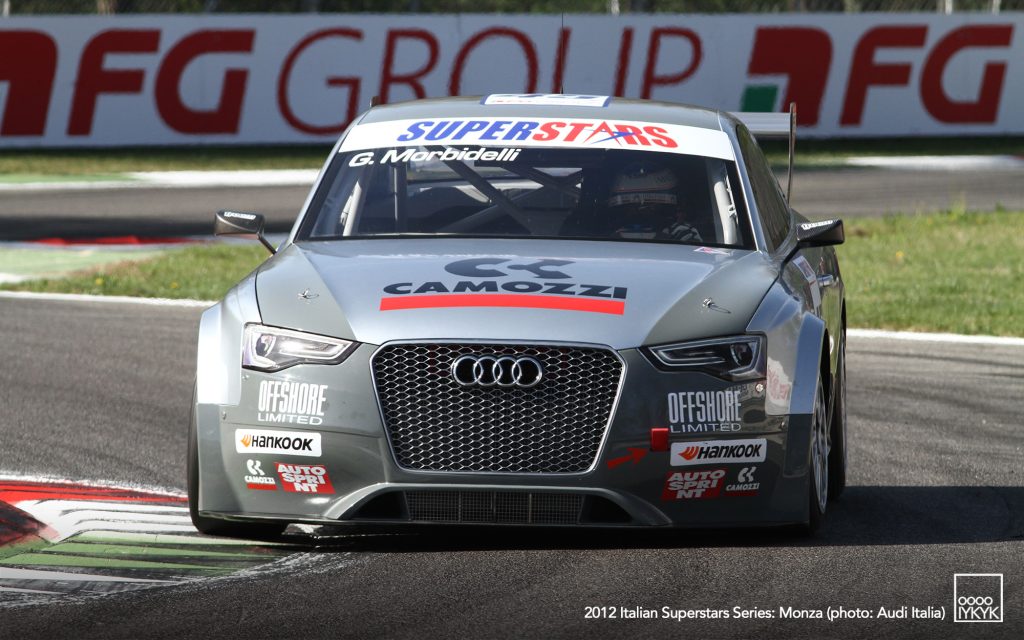
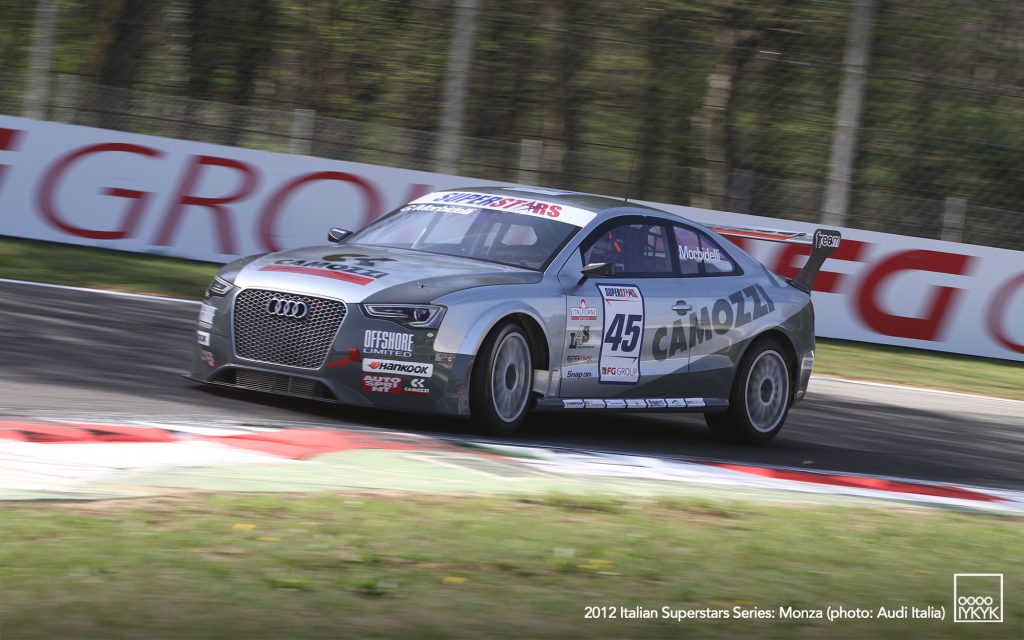
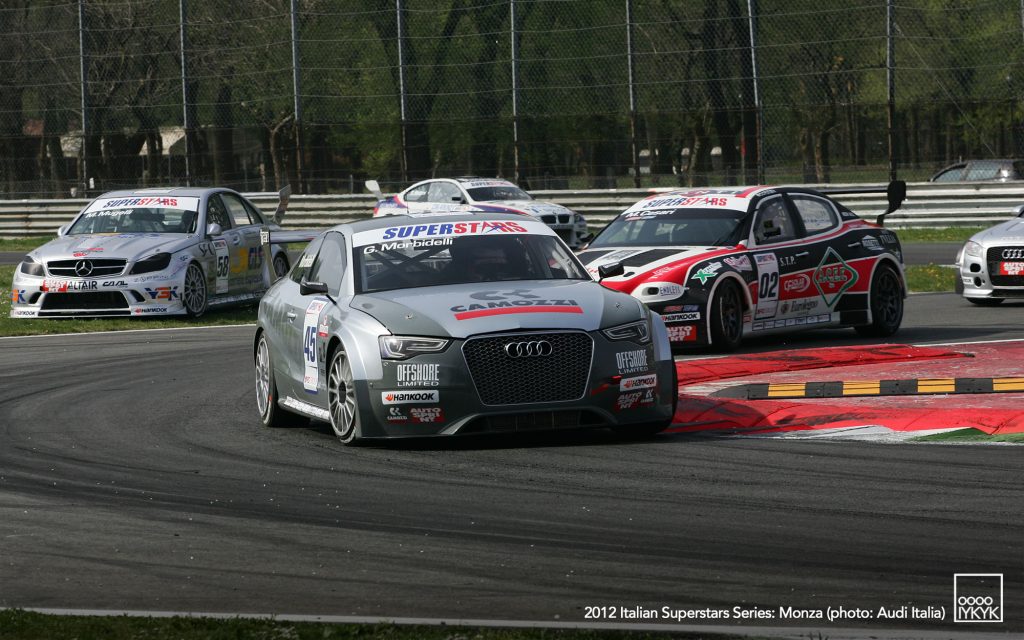
Audi Sport Italia later returned to touring-car competition with the Audi RS 4 in the Italian-based Superstars series.
The championship provided another opportunity for Audi Sport Italia to compete at Monza with production-based touring cars, continuing a relationship between the Italian Audi racing organization and the circuit established during the Super Touring era.
Audi Sport Italia subsequently developed and competed with the RS 5 in Superstars, extending Audi’s presence in the series before the championship ended.
ITALIAN GT AND AUDI SPORT ITALIA
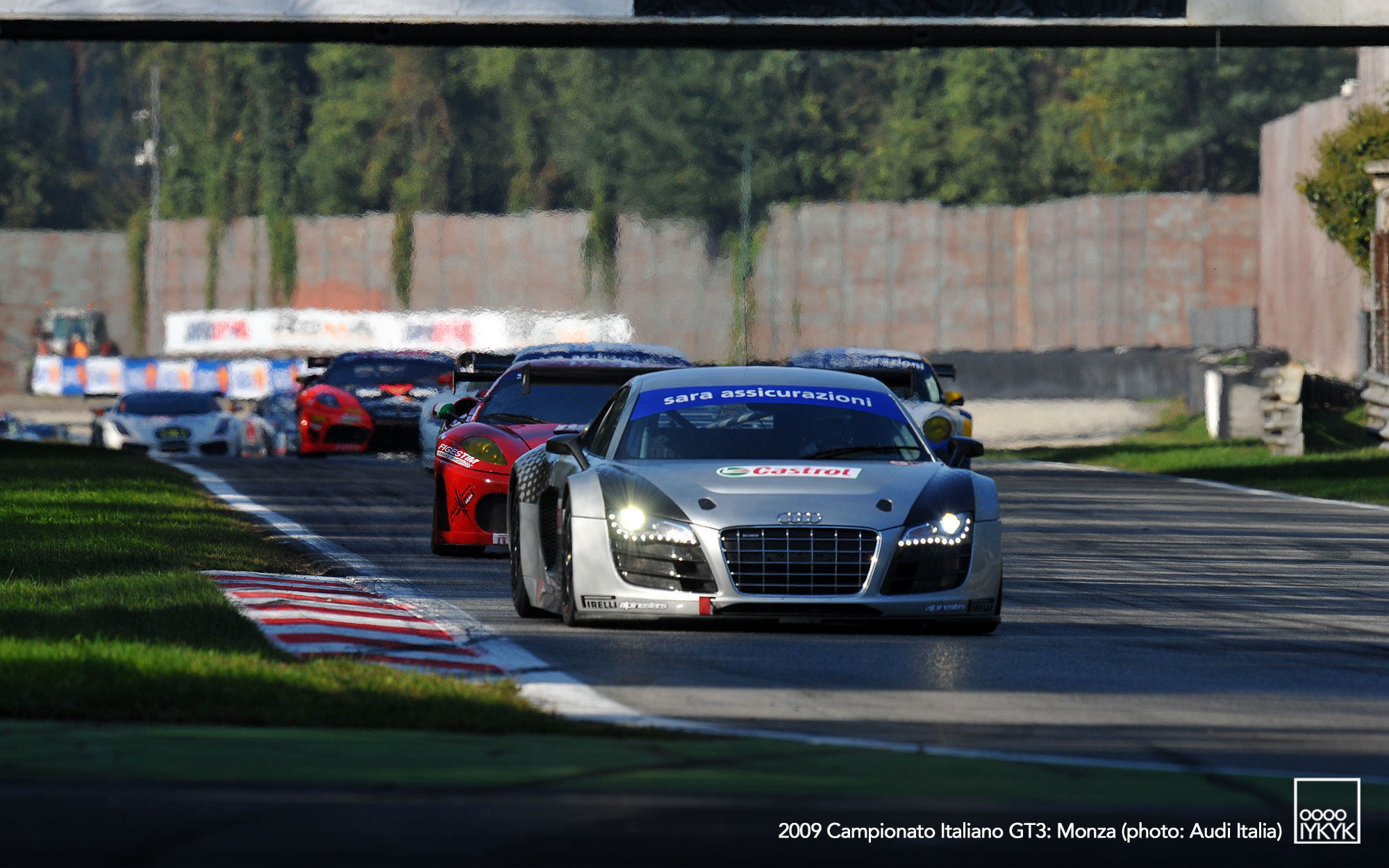
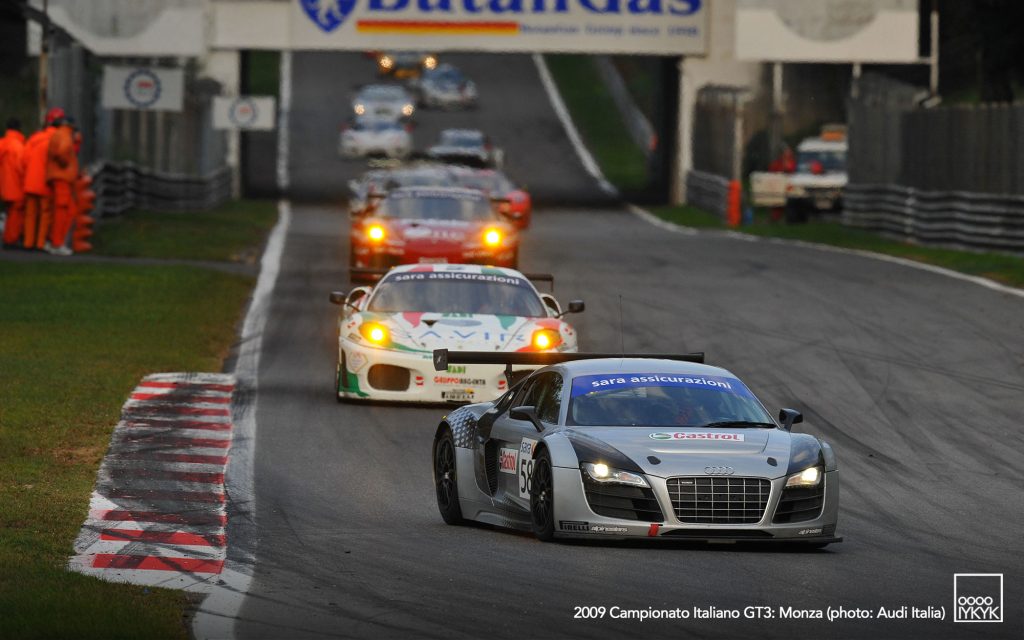
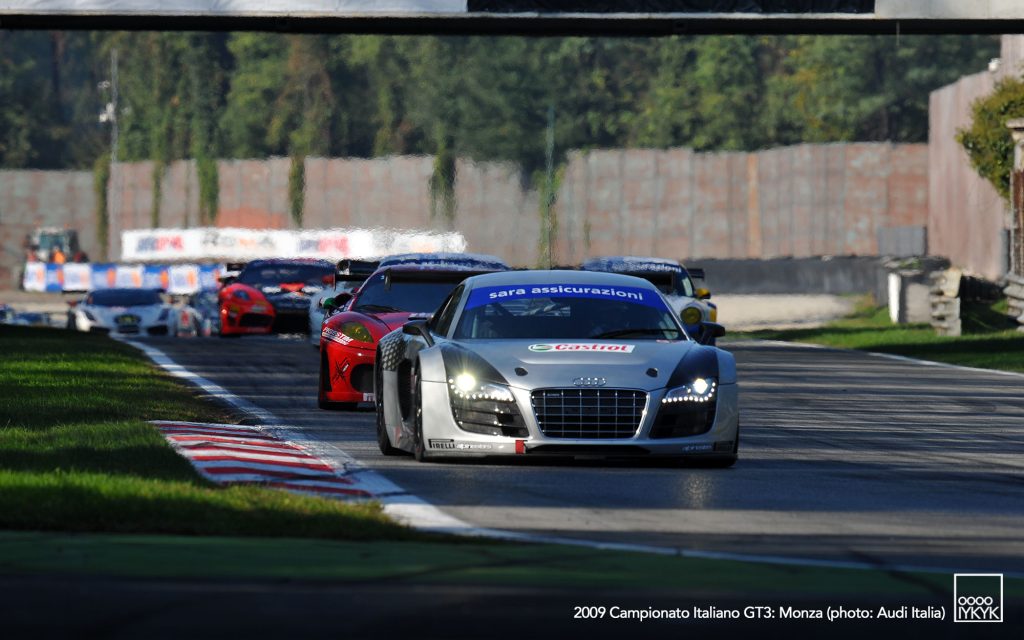
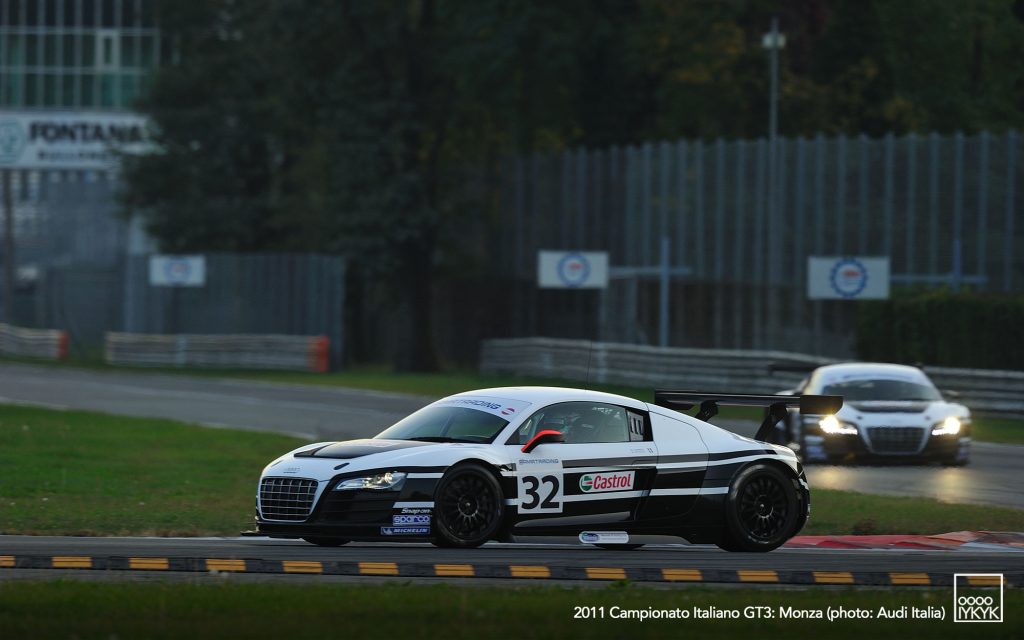
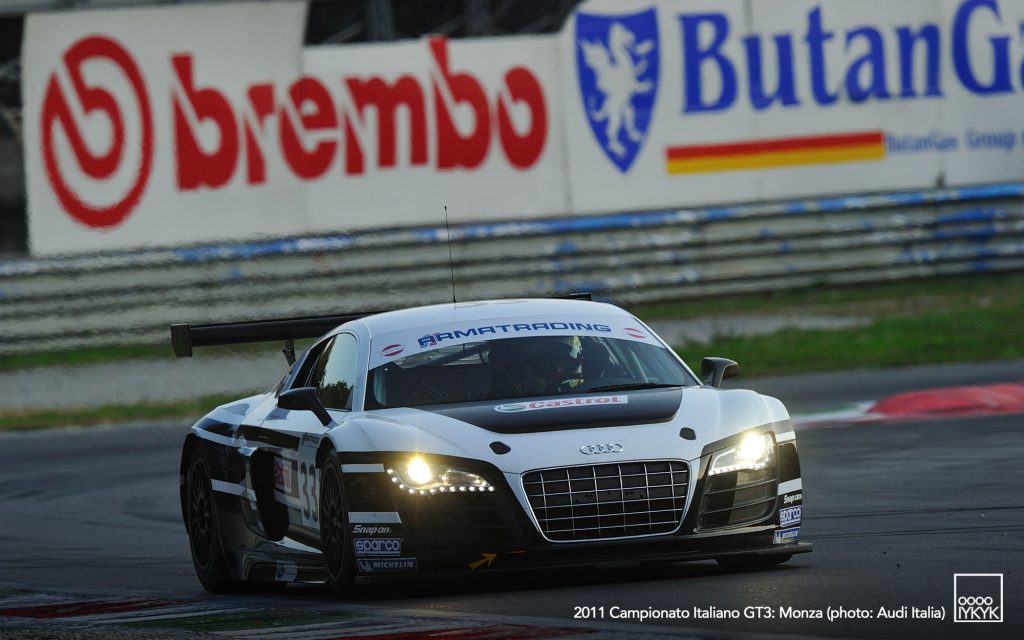
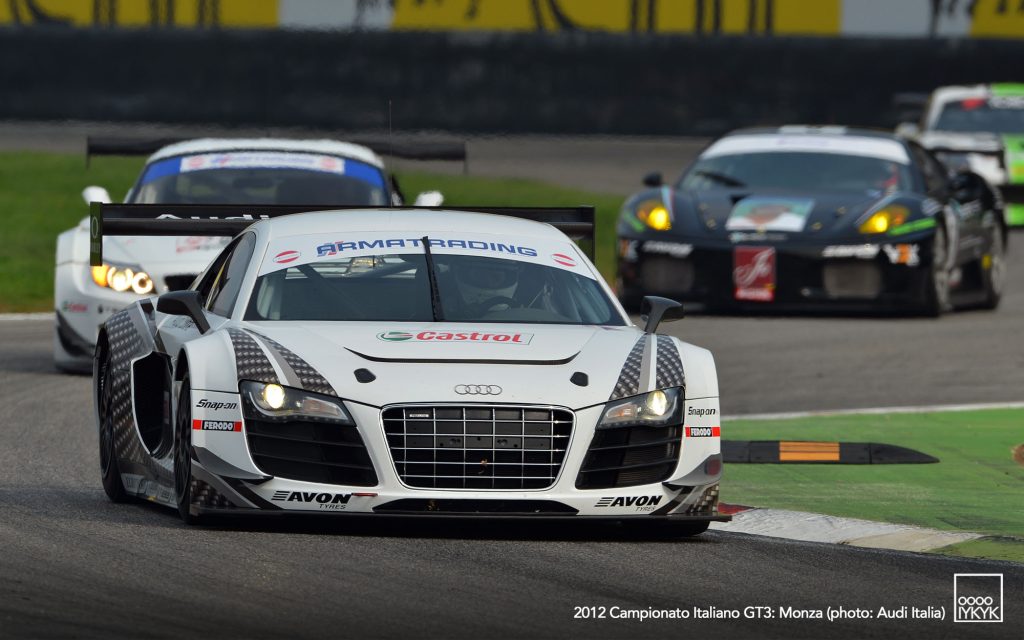
Monza became one of the most important circuits in Audi Sport Italia’s GT racing history following the introduction of the Audi R8 LMS in 2009.
Audi Sport Italia was among the earliest teams to race Audi’s new GT3 car and entered the R8 LMS in the Campionato Italiano Gran Turismo during its debut season.
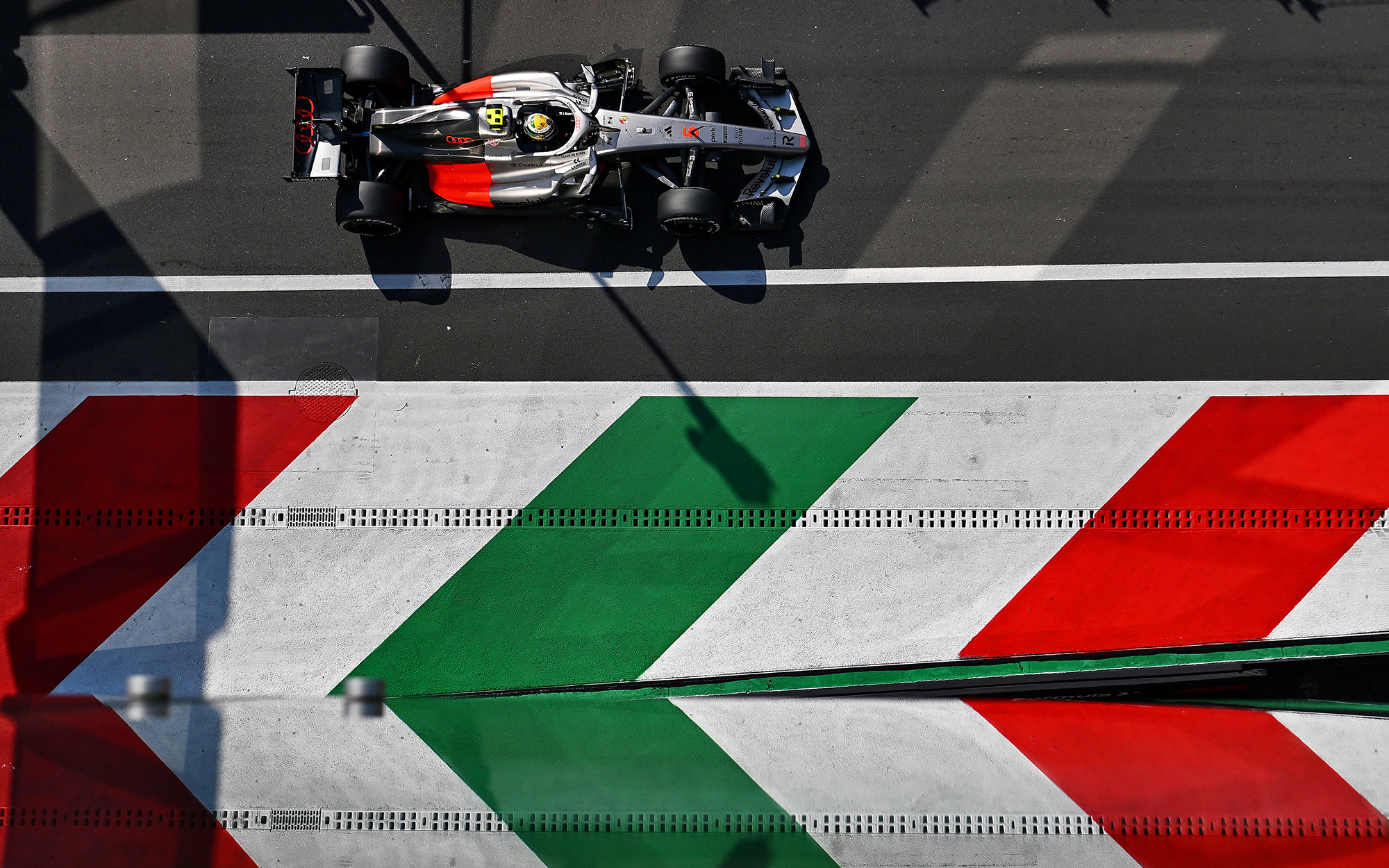
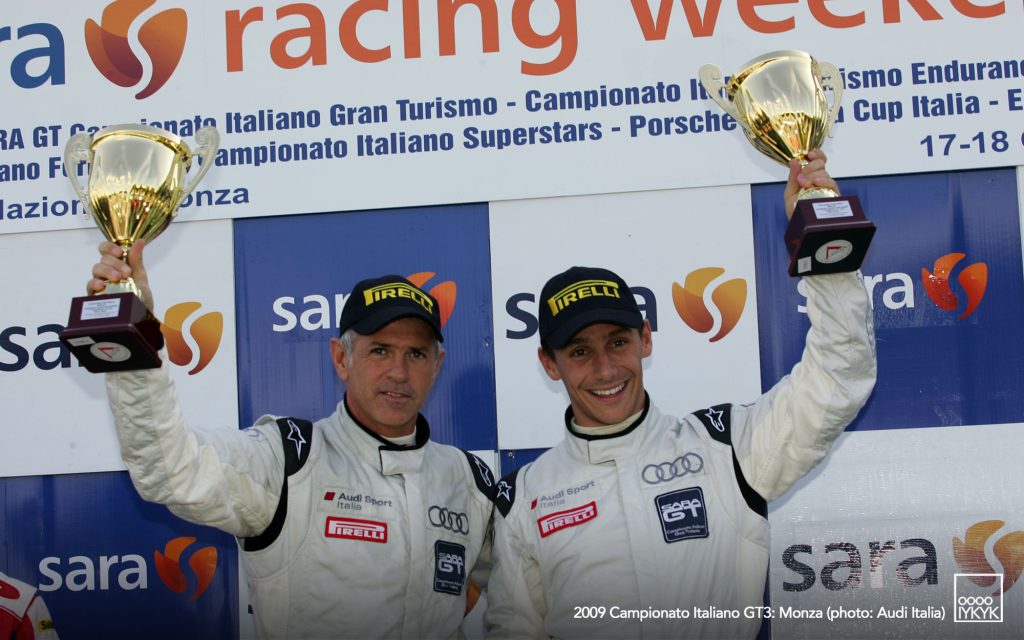
On October 18, 2009, Dindo Capello and Filipe Albuquerque scored an Italian GT victory at Monza with the Audi Sport Italia R8 LMS.
Capello returned the following year and won again at Monza on October 24, 2010, sharing an R8 LMS with Gian Luca Giraudi.
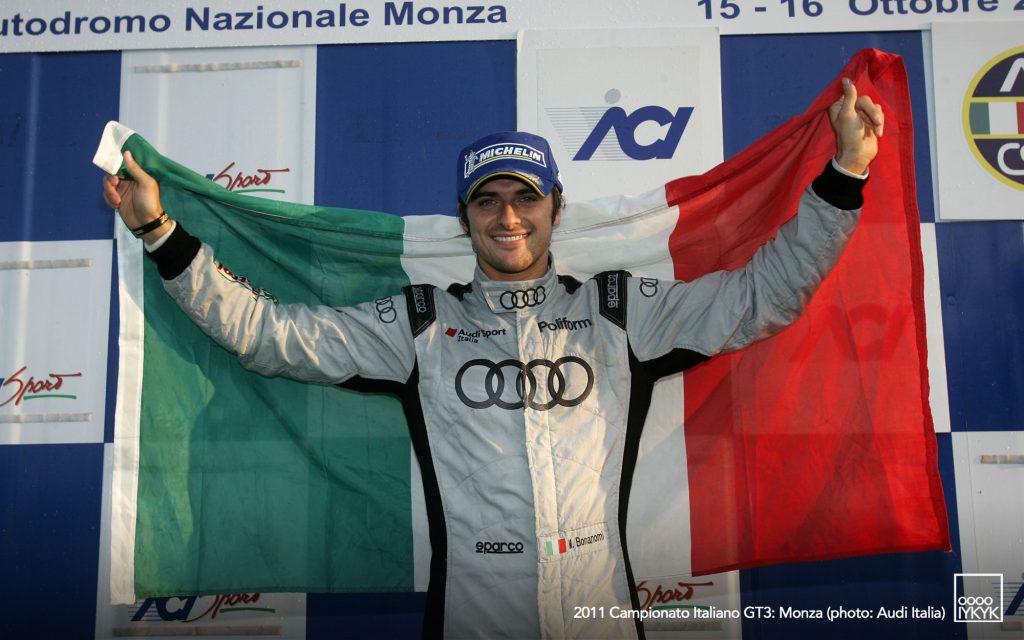
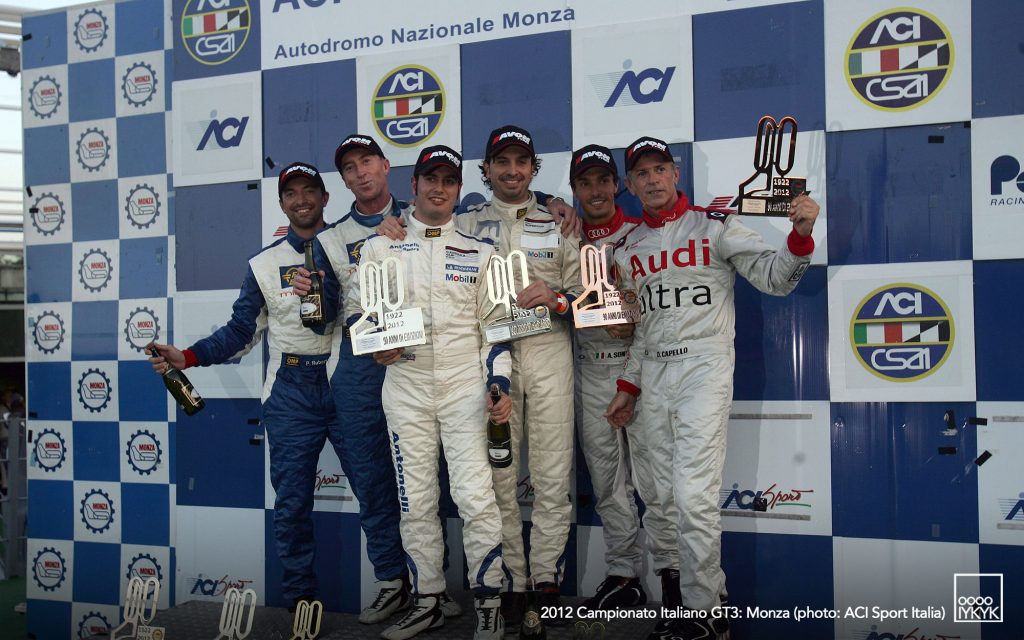
The relationship continued through successive generations of the R8 LMS, with Audi Sport Italia regularly competing at Monza in the Italian GT Championship. Drivers associated with its Audi GT3 programs included Capello, Marco Bonanomi, Andrea Sonvico, Marco Mapelli, Mattia Drudi, Benoît Tréluyer and others.
One of Audi Sport Italia’s most significant Monza results came in the 2021 Italian GT Endurance season finale. Mattia Drudi, Lorenzo Ferrari and Riccardo Agostini won the race in an Audi R8 LMS and secured the 2021 Campionato Italiano Gran Turismo Endurance drivers’ championship.
Audi R8 LMS racing at Monza extended well beyond Audi Sport Italia. The circuit became a regular venue for the Blancpain Endurance Series and its successor, GT World Challenge Europe, resulting in appearances by numerous Audi customer teams including Belgian Audi Club Team WRT, Attempto Racing, Saintéloc Racing and others.
LE MANS ENDURANCE SERIES / LE MANS SERIES
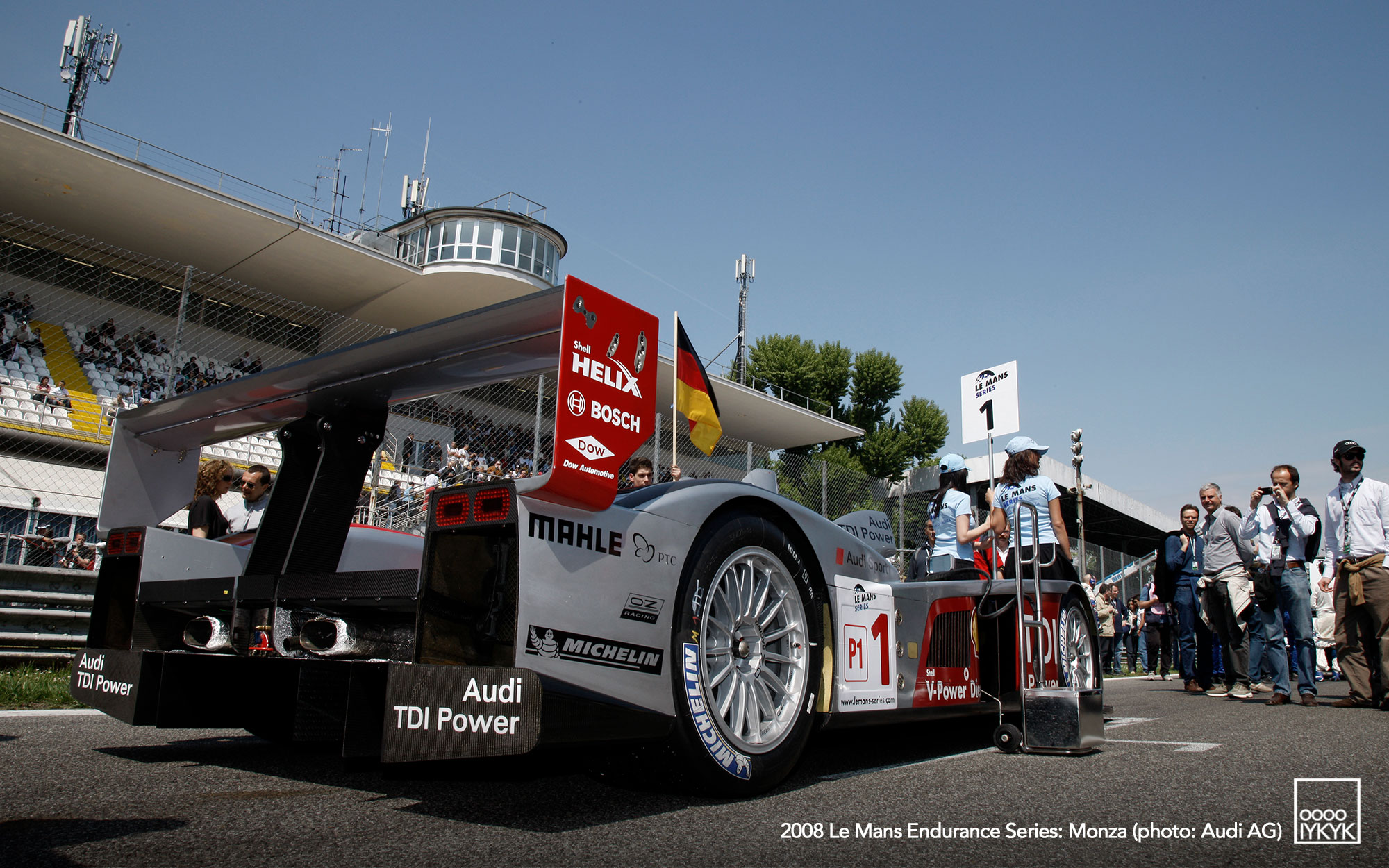
Monza also occupies an important place in Audi’s prototype endurance-racing history.
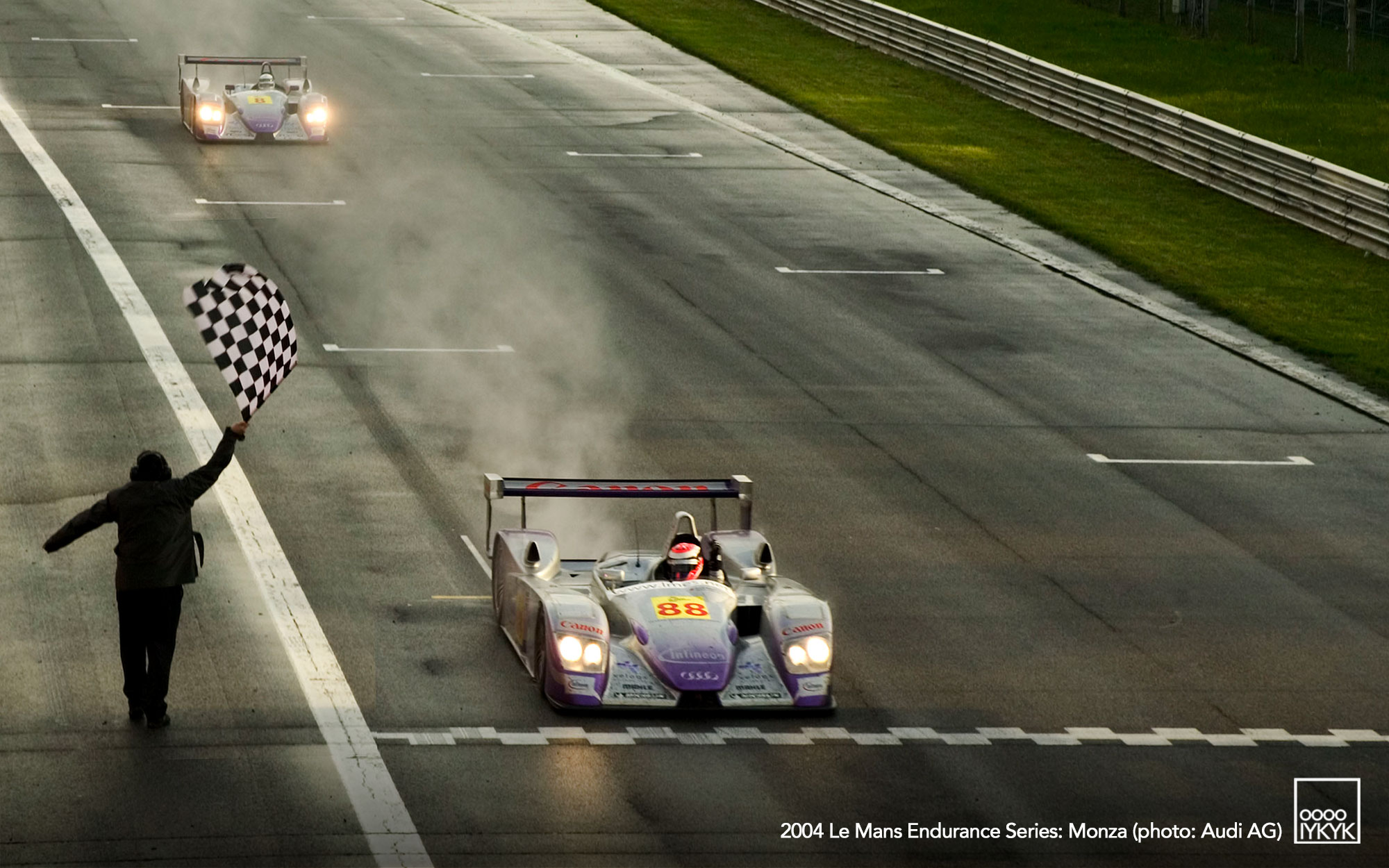
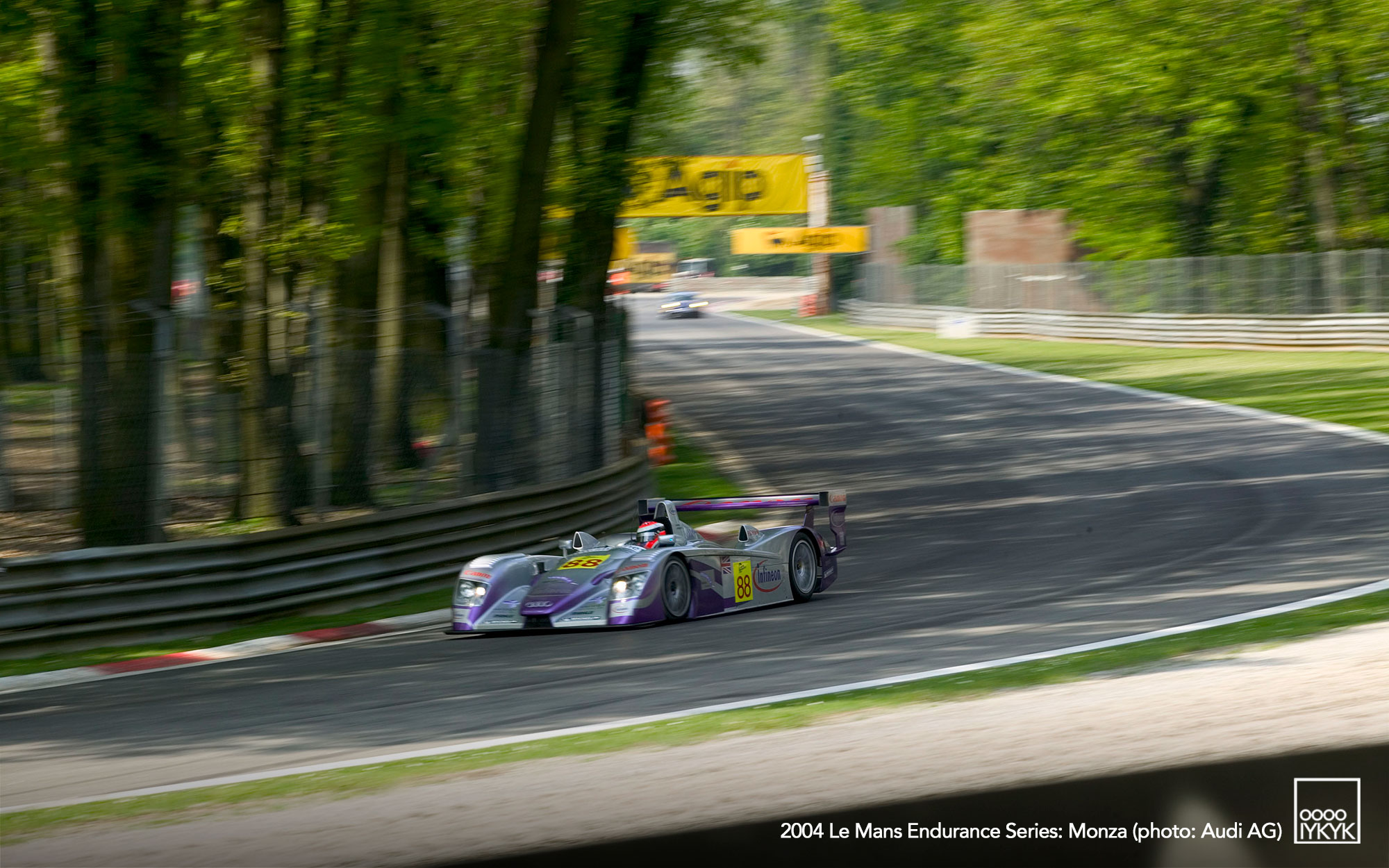
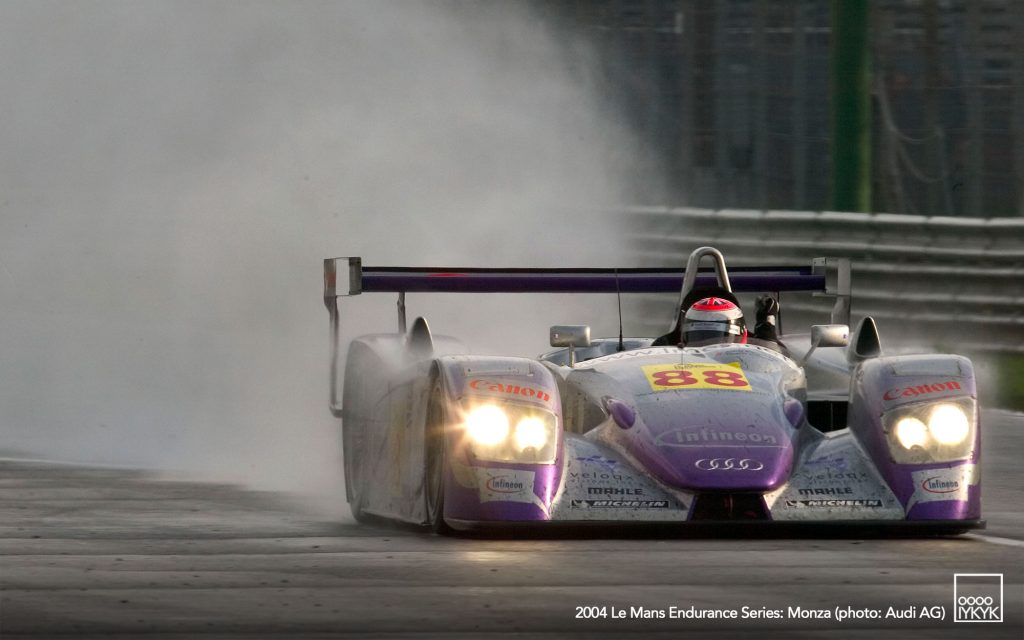
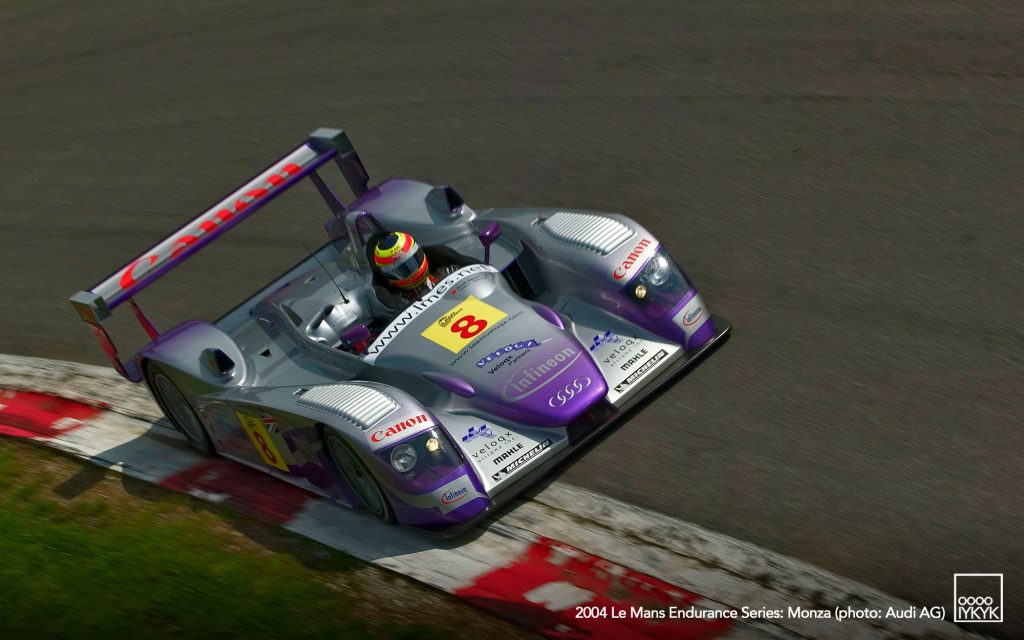
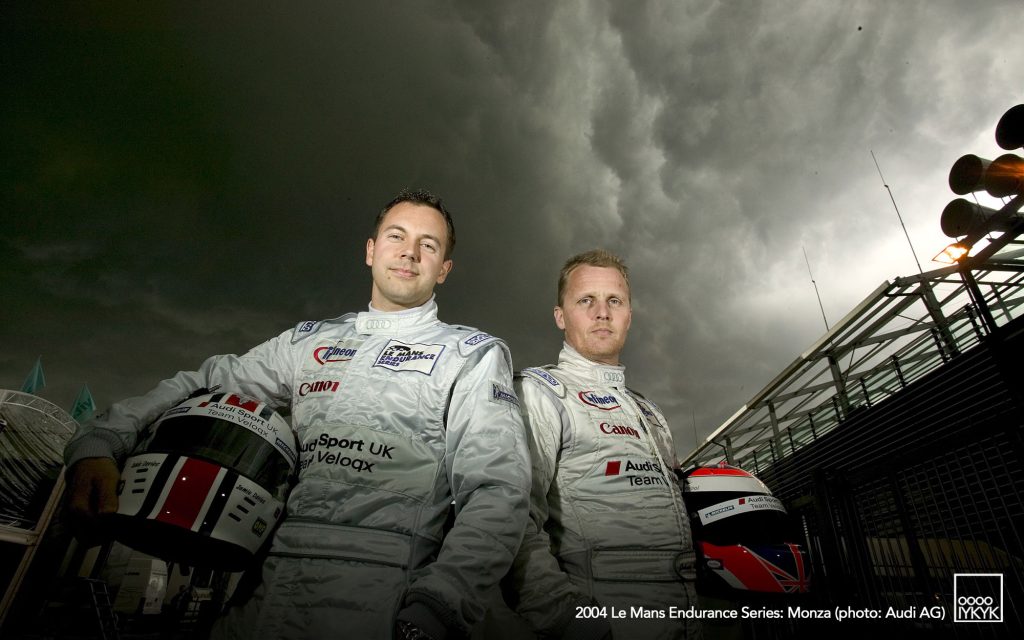
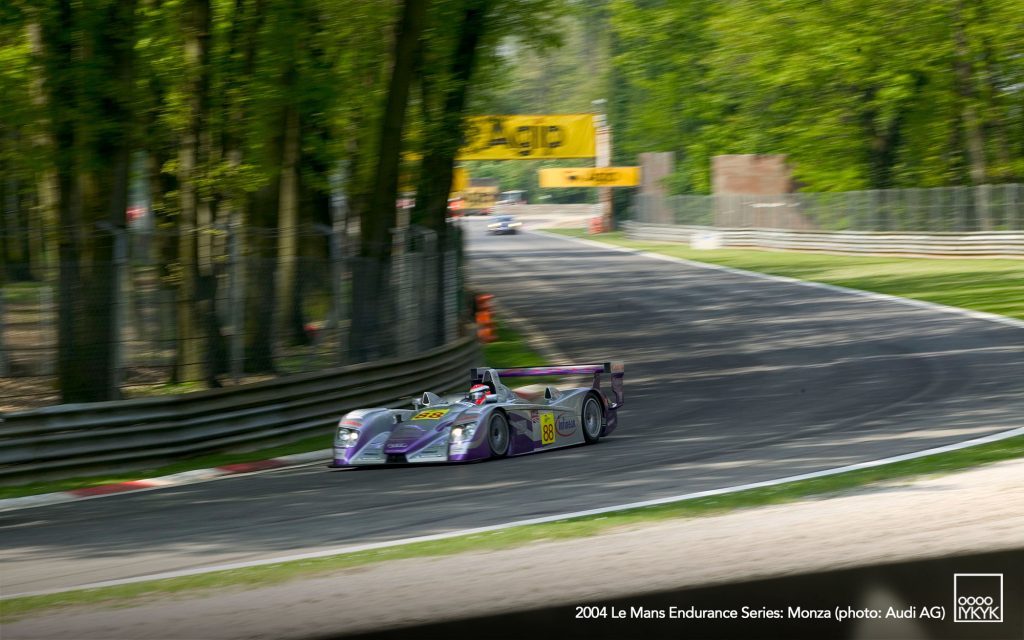
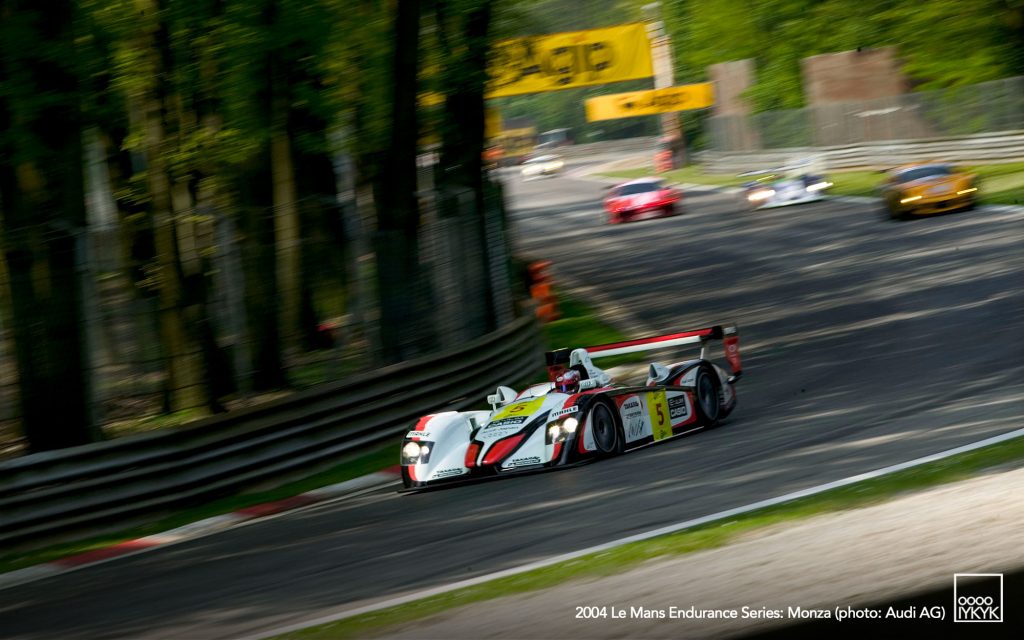
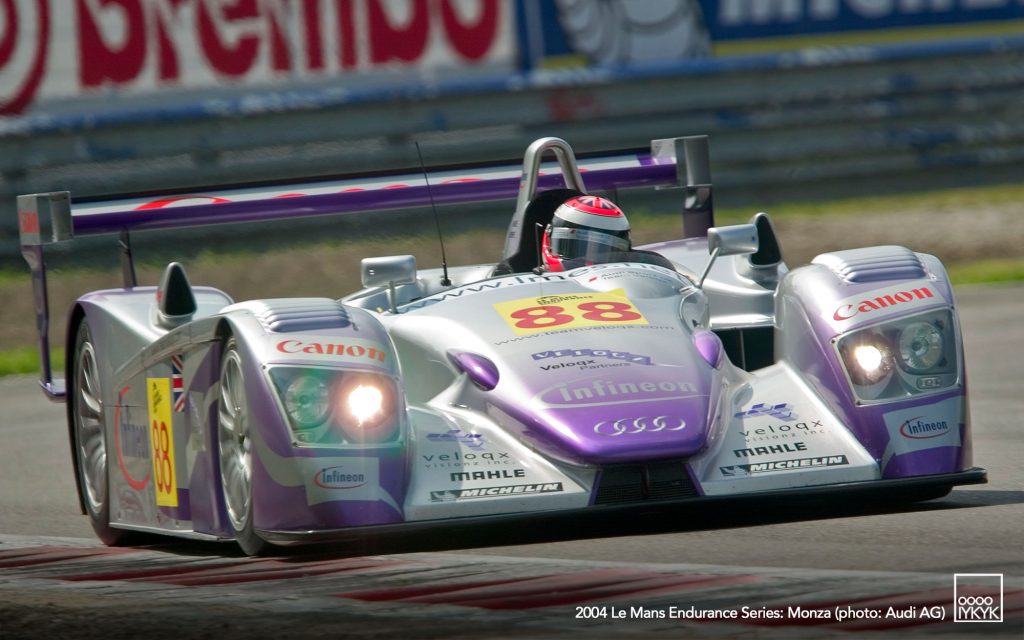
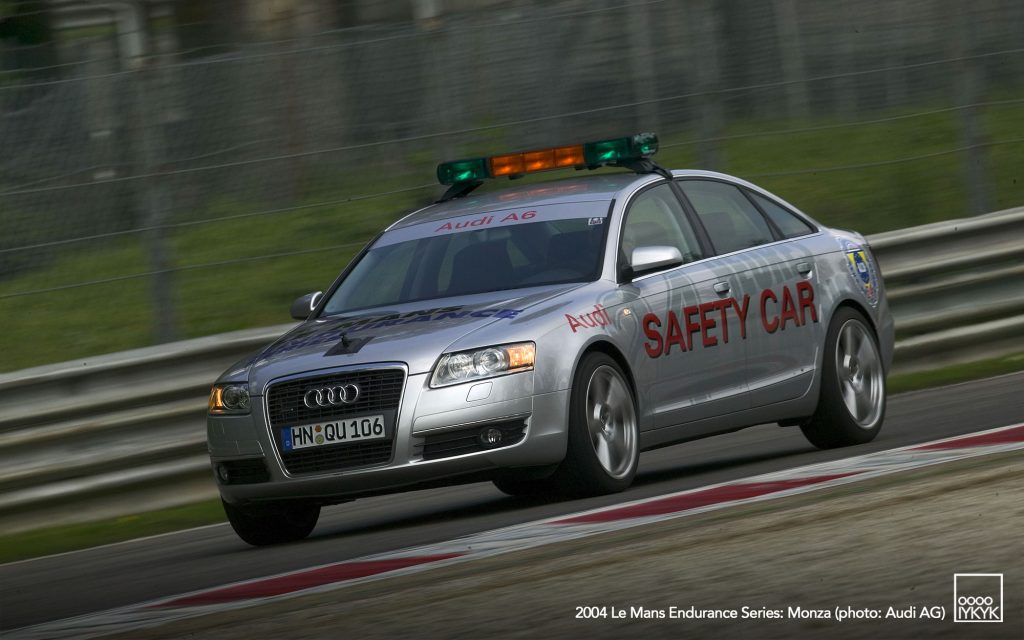
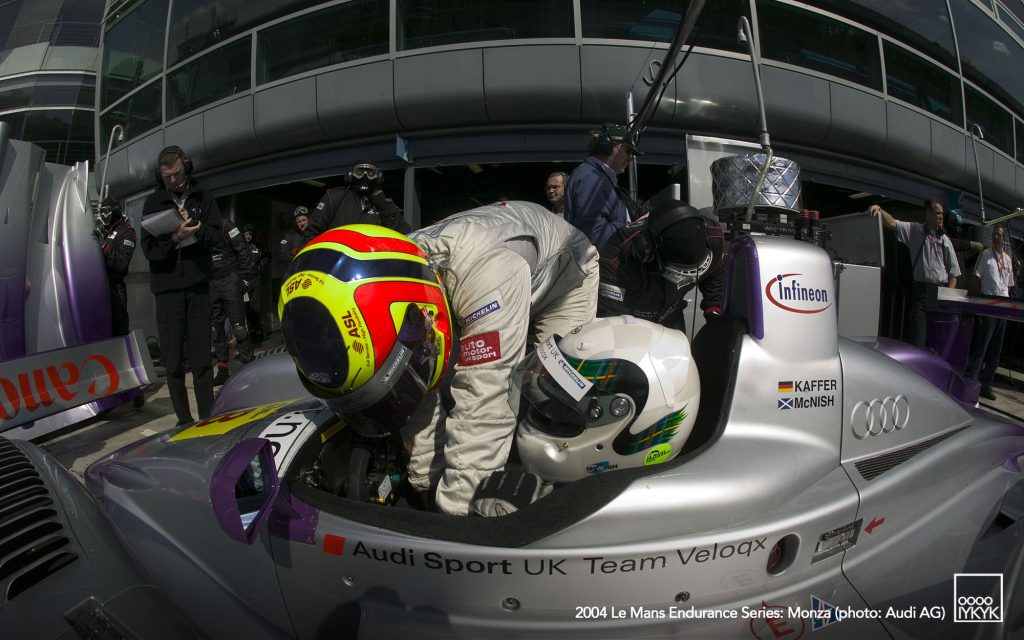
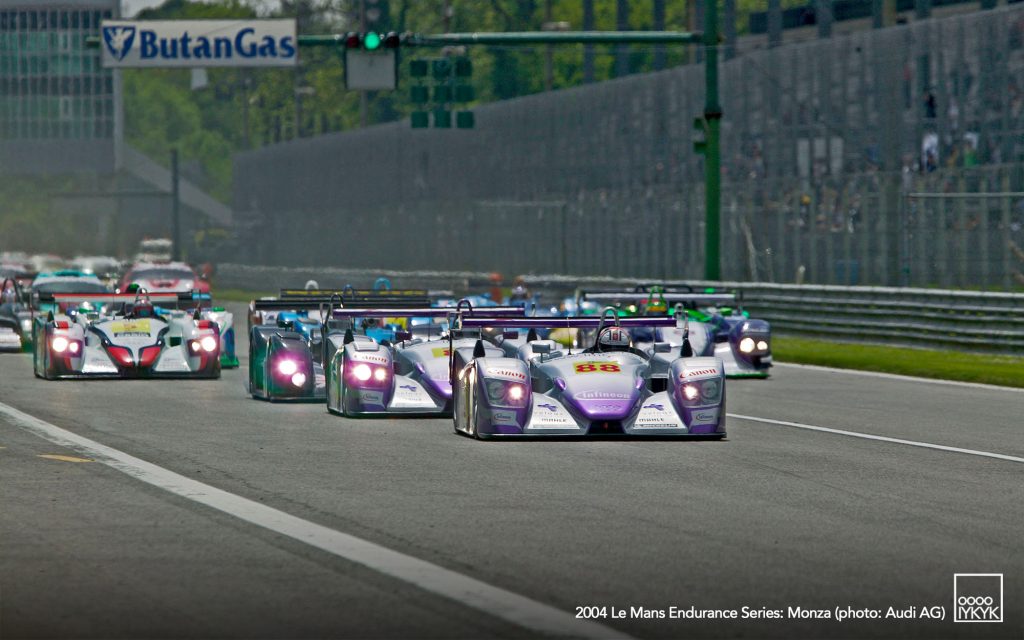
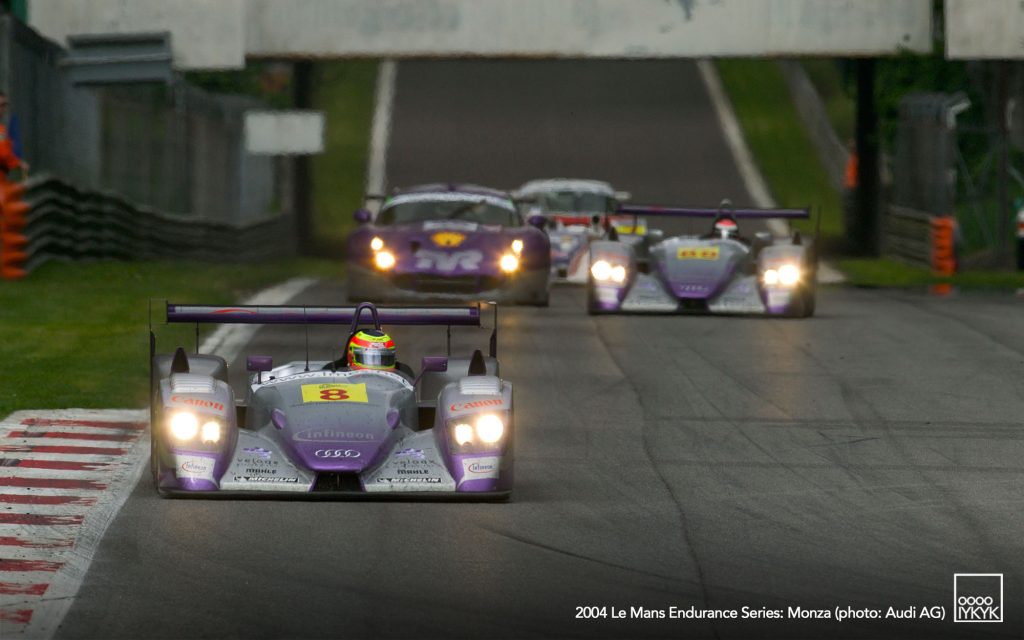
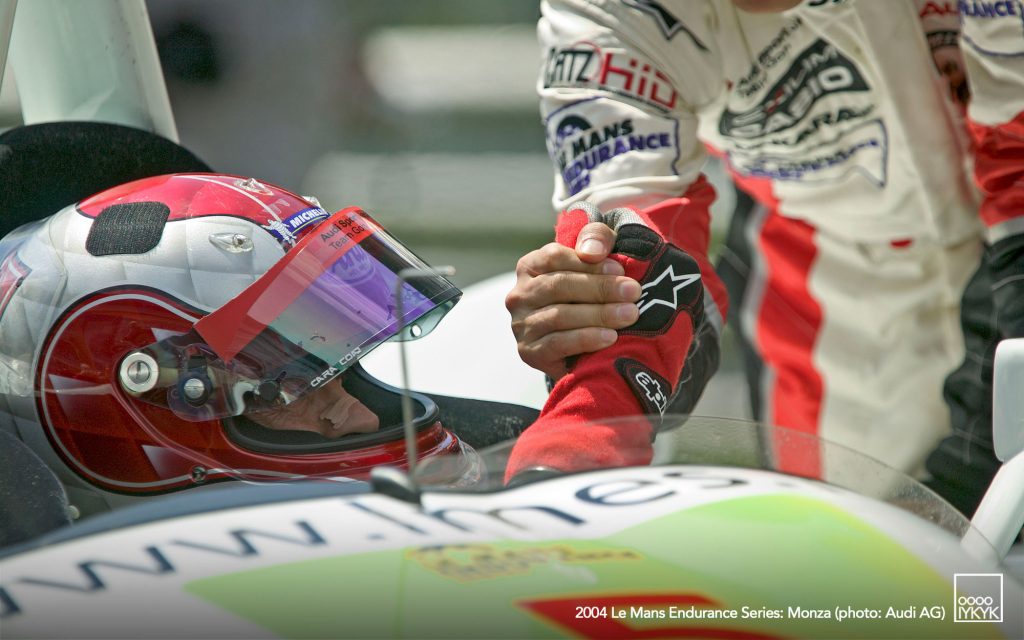
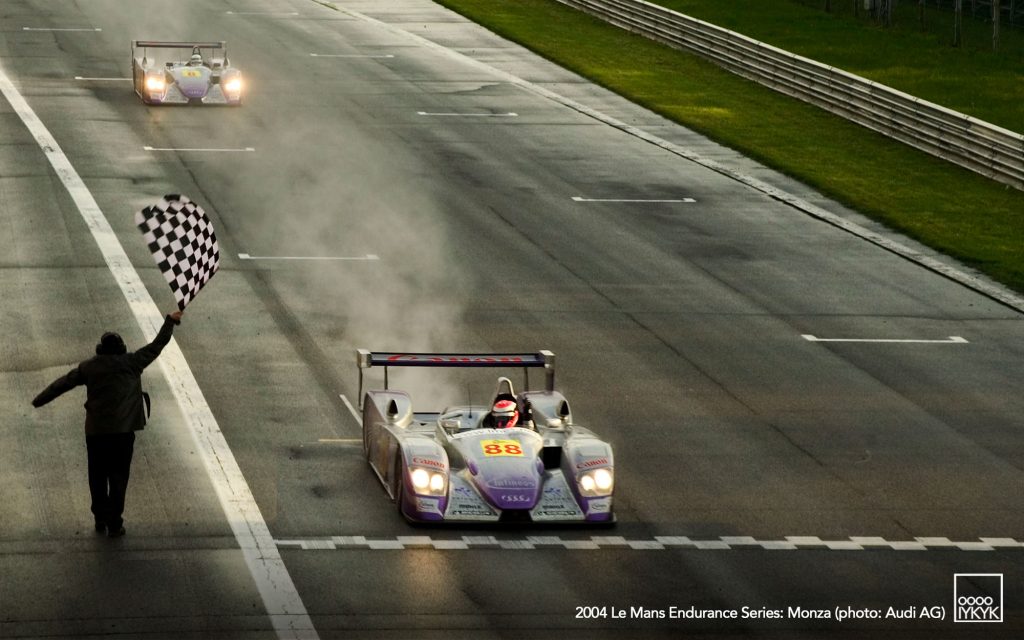
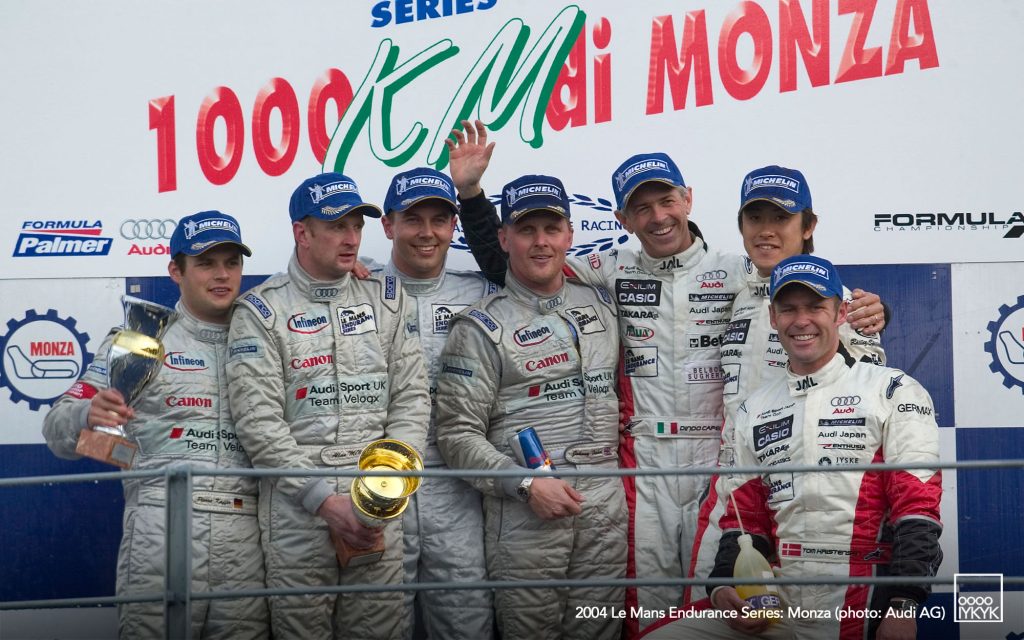
On May 9, 2004, the circuit hosted the opening race of the newly established Le Mans Endurance Series. Audi dominated the 1000 Kilometers of Monza with an Audi R8 1-2-3 finish.
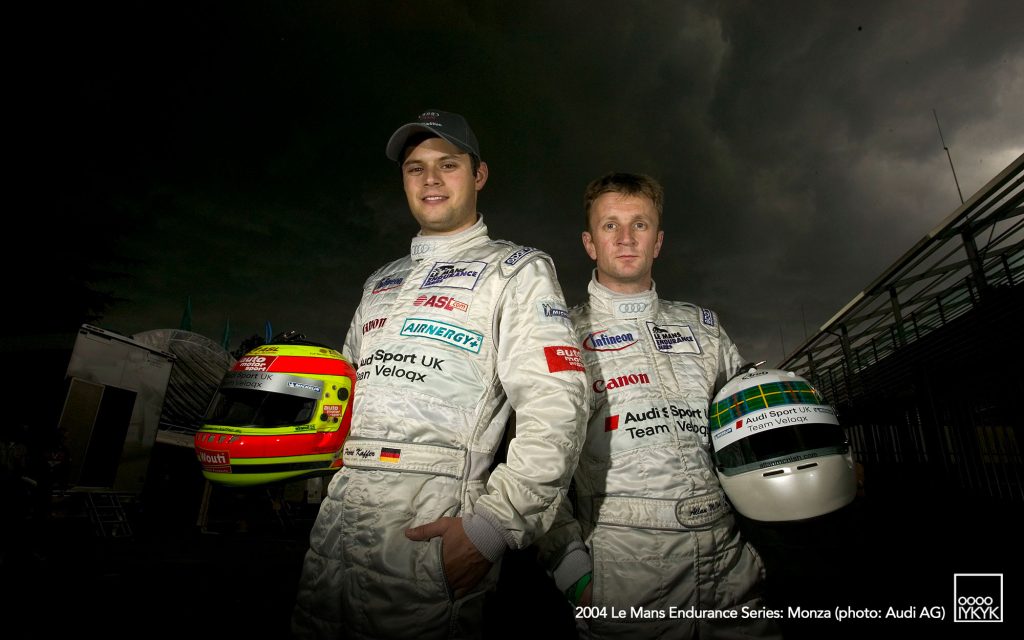
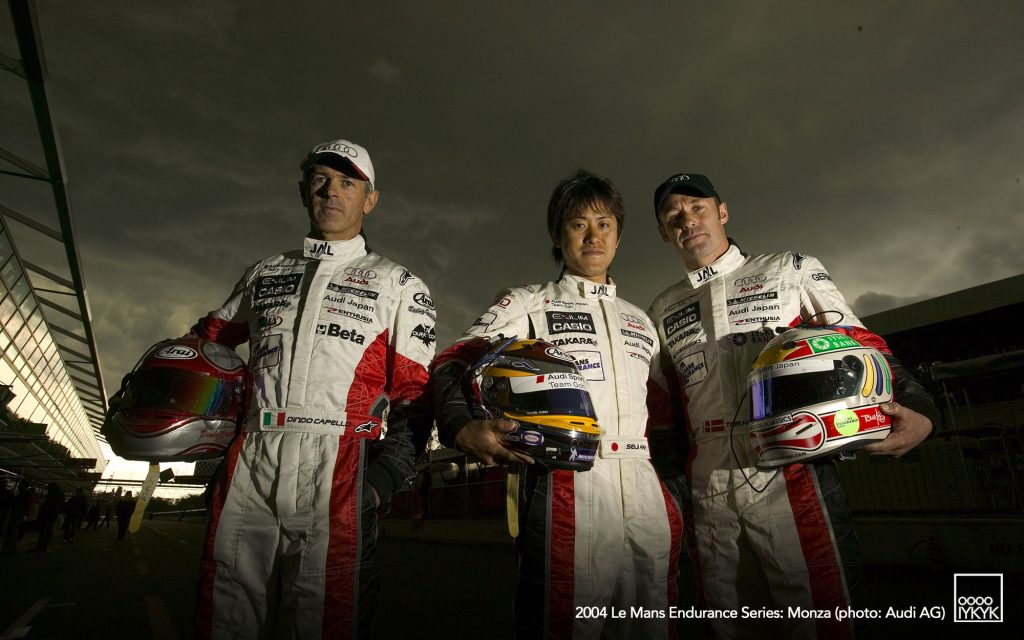
Jamie Davies and Johnny Herbert won for Audi Sport UK Team Veloqx, followed by teammates Pierre Kaffer and Allan McNish. The Team Goh Audi R8 of Rinaldo Capello, Tom Kristensen and Seiji Ara finished third.
The result gave Audi a sweep of the podium in the first championship race of the series that evolved into today’s European Le Mans Series.
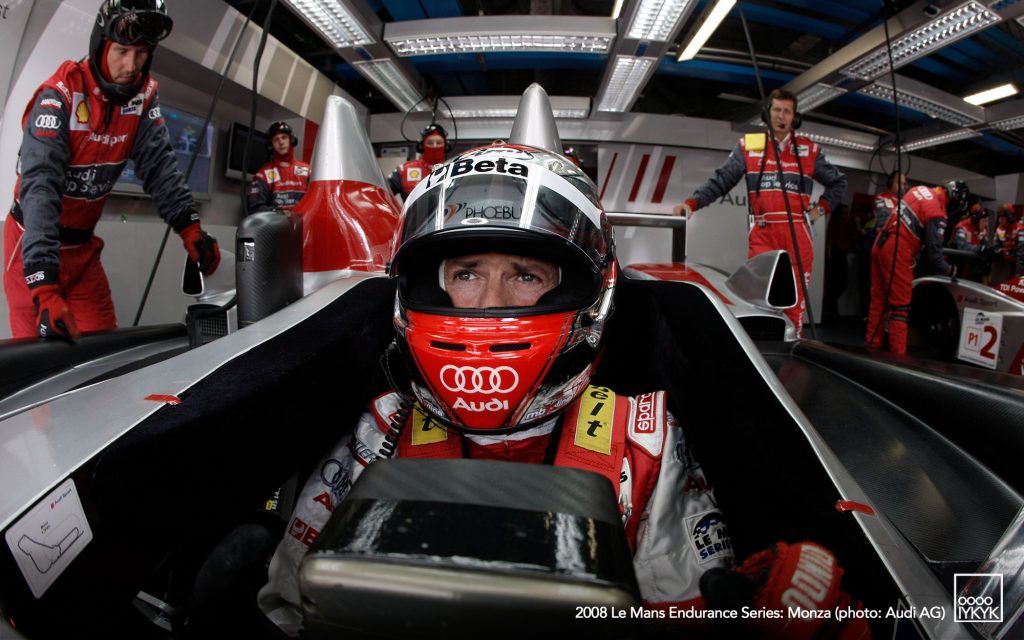
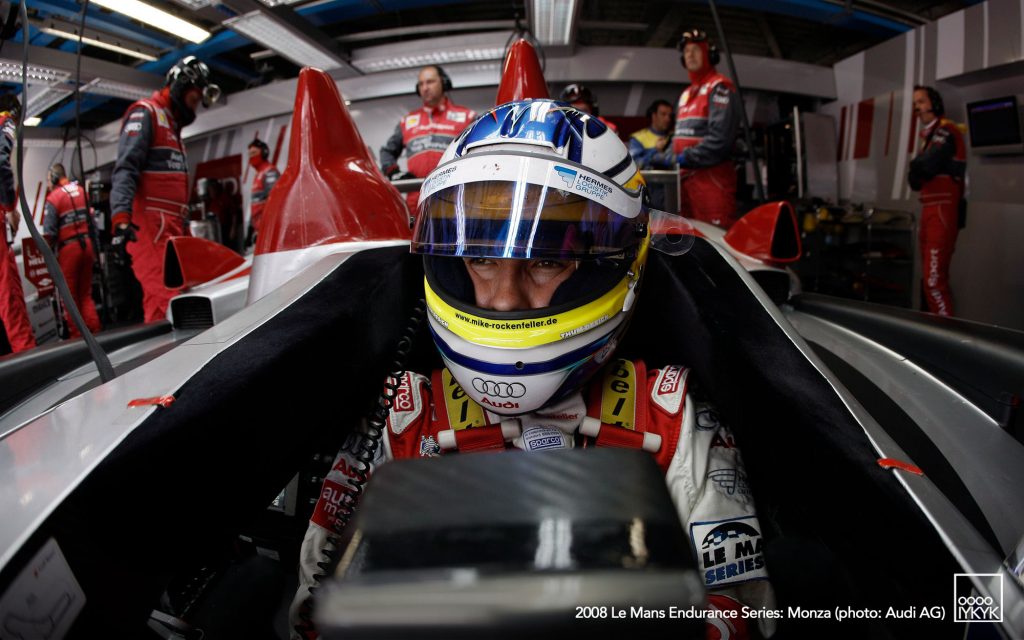
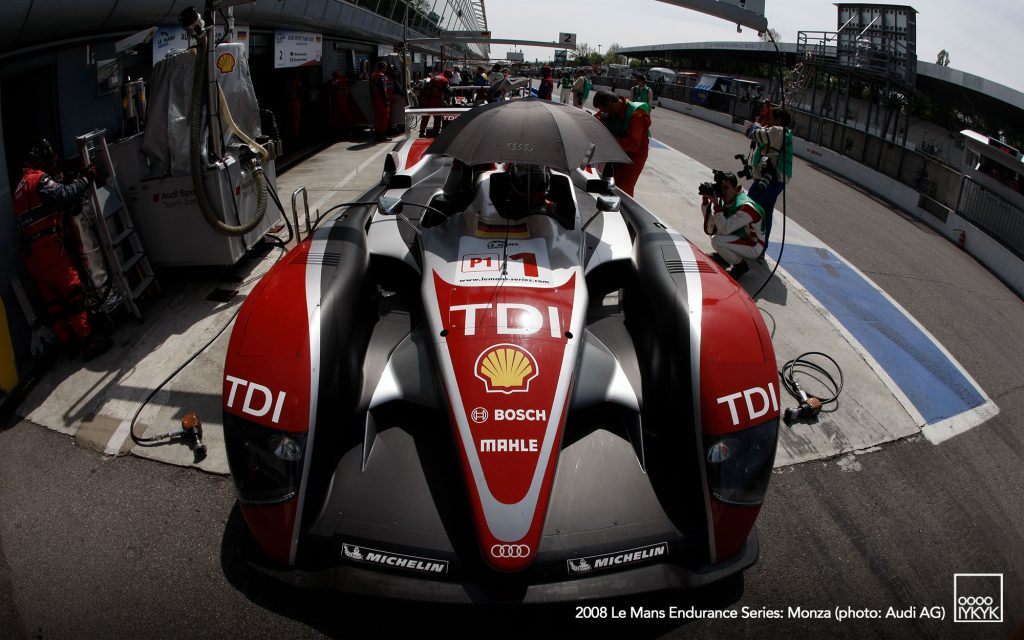
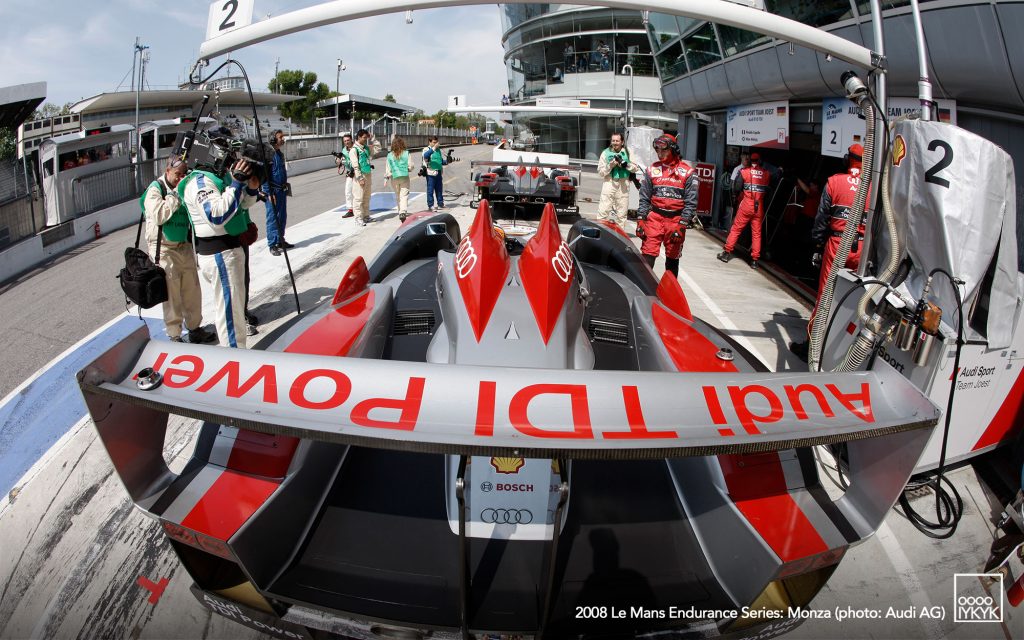
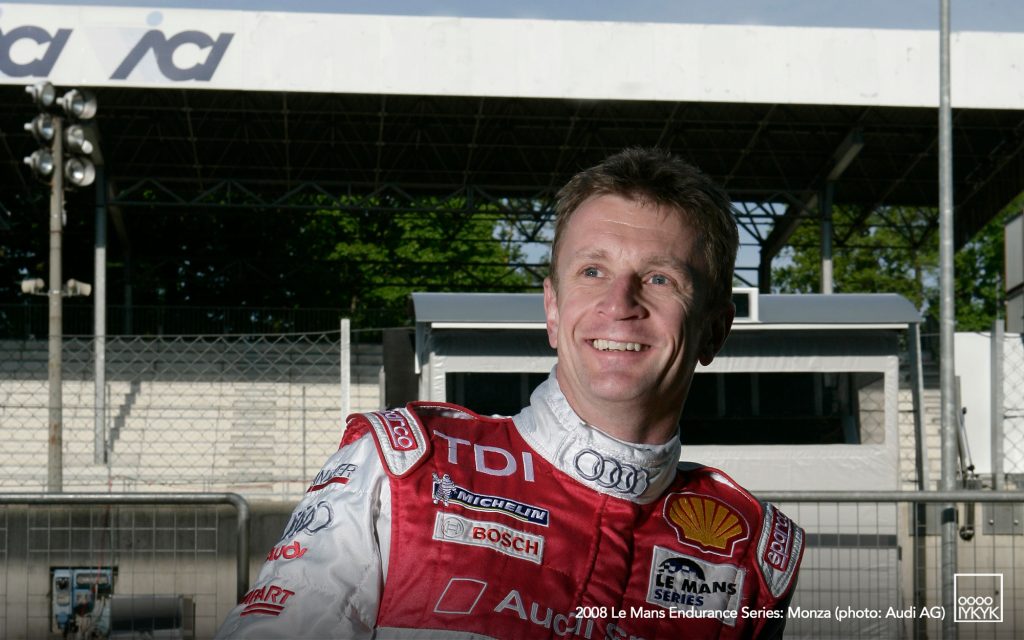
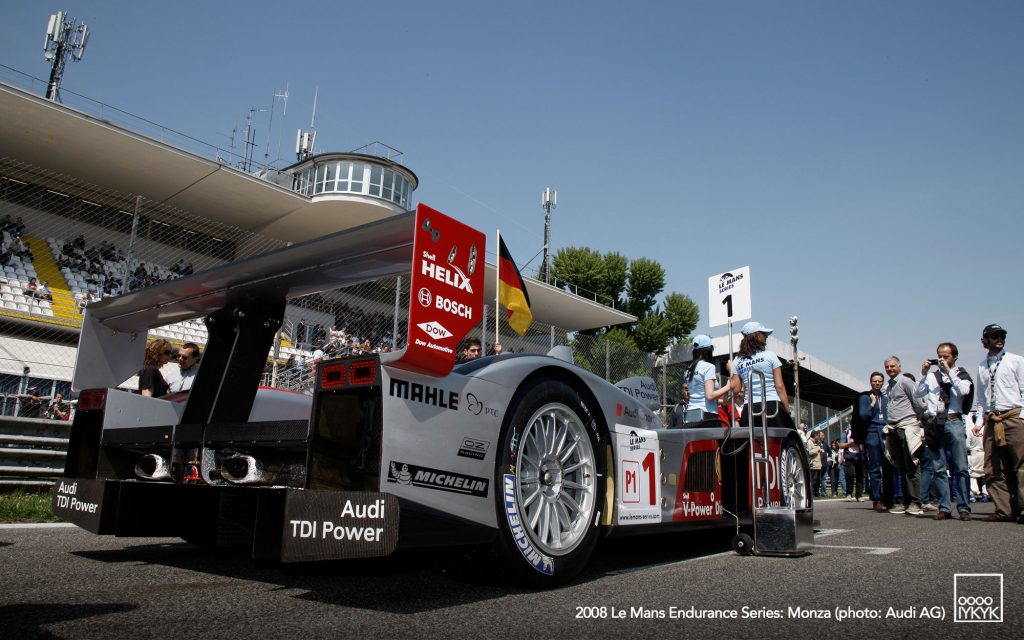
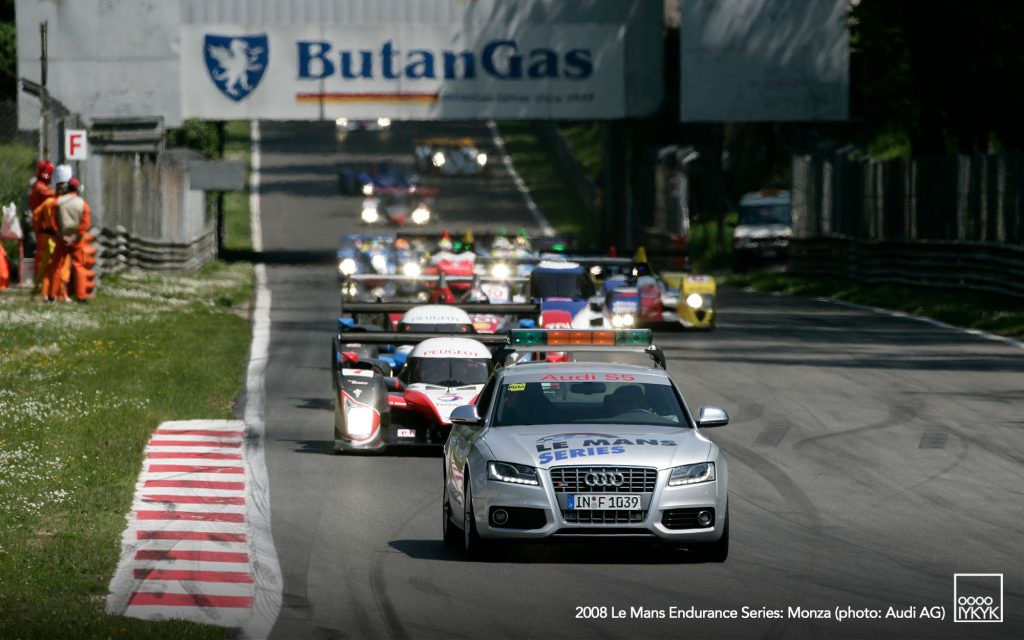
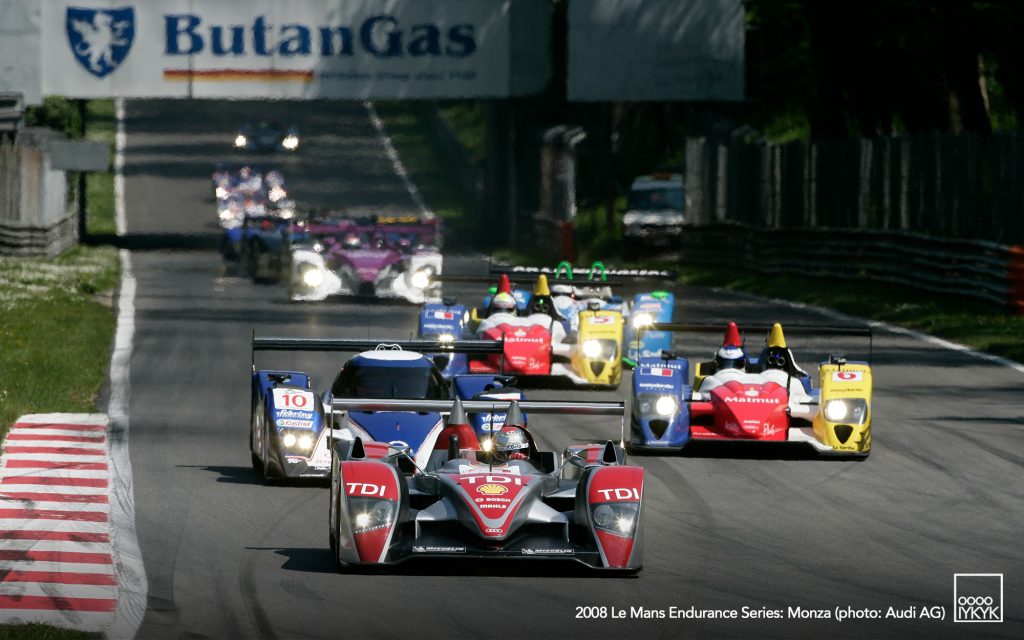
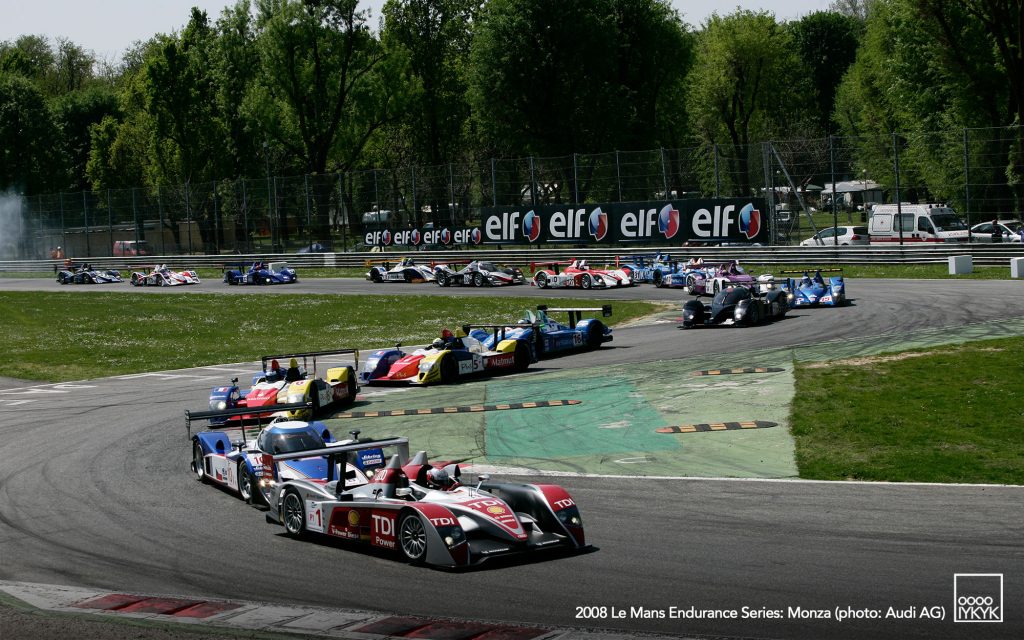
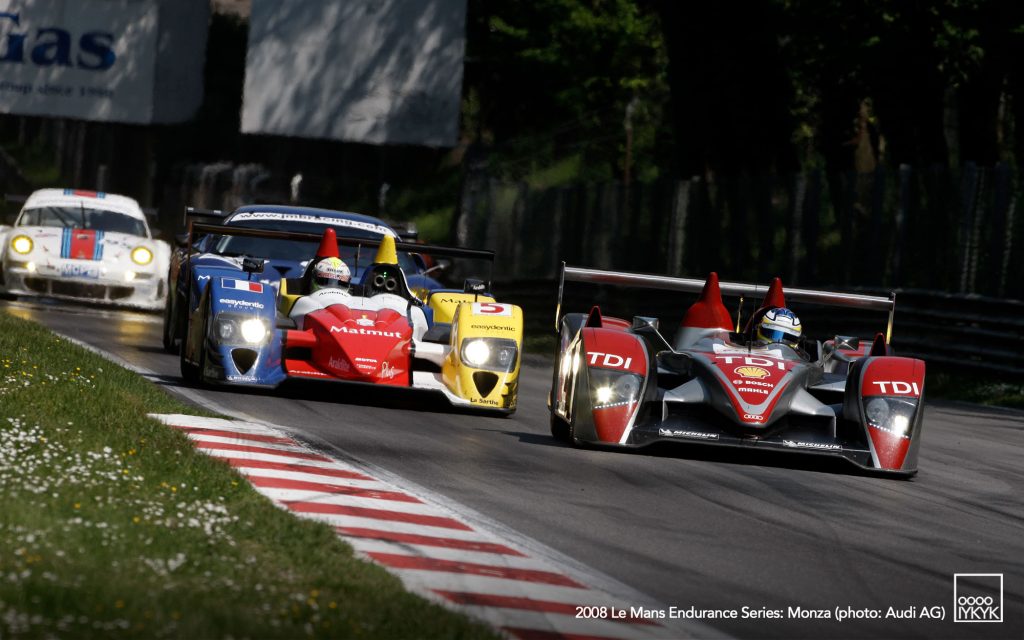
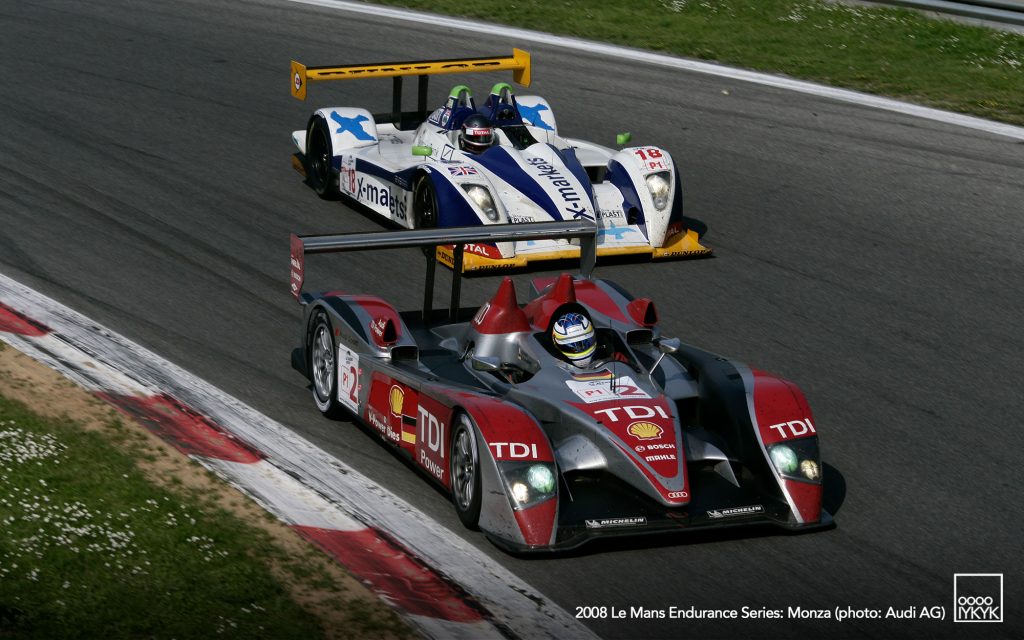
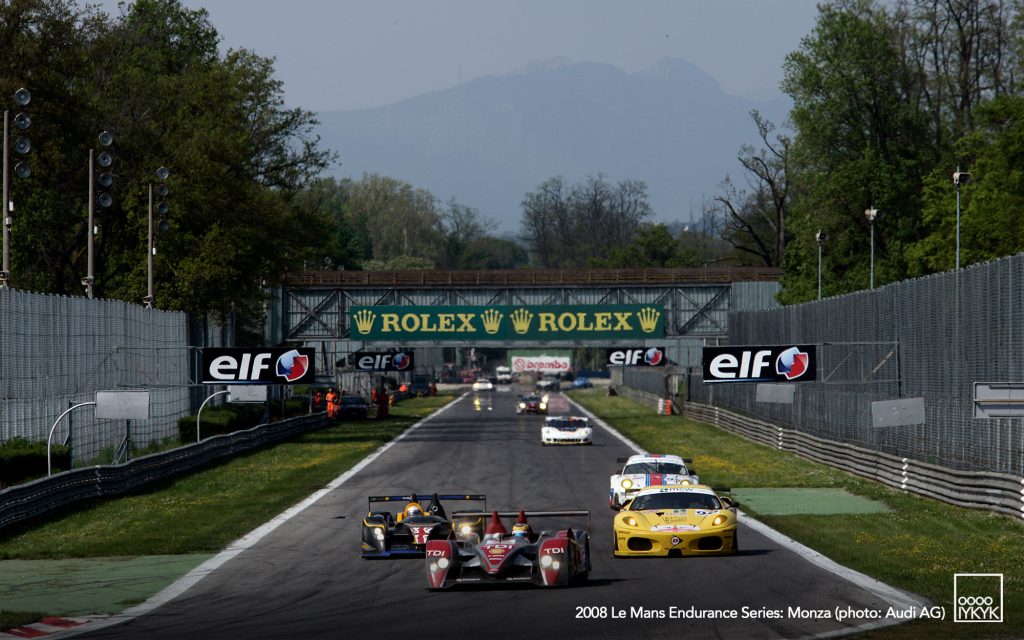
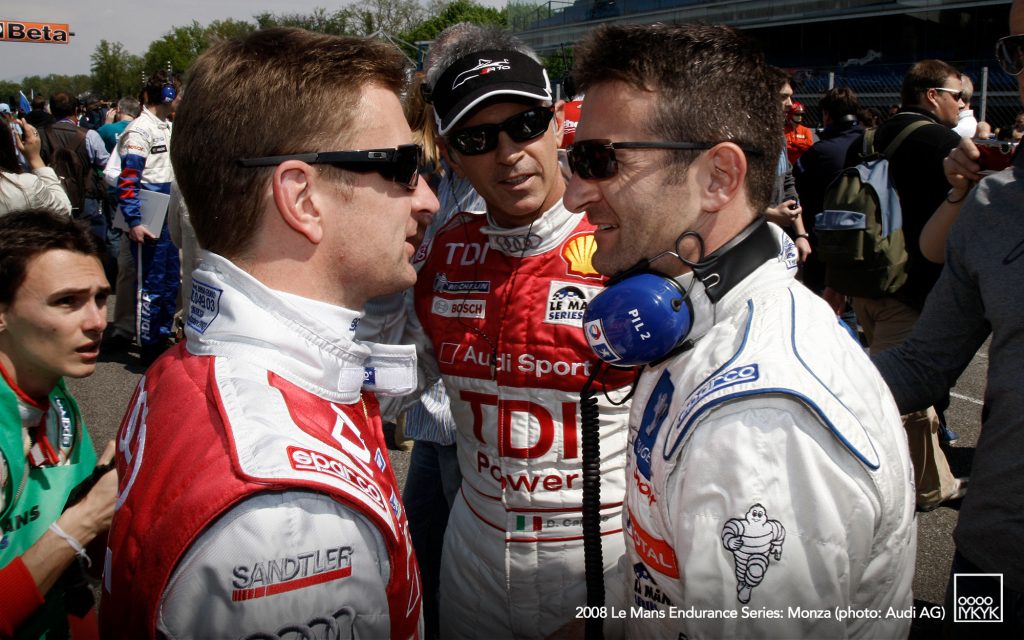
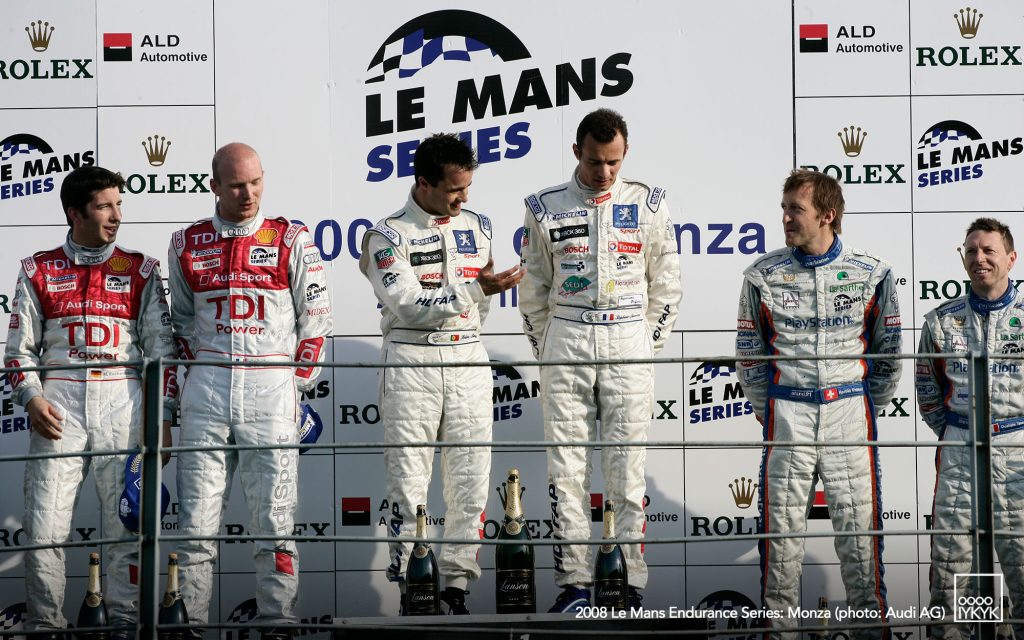
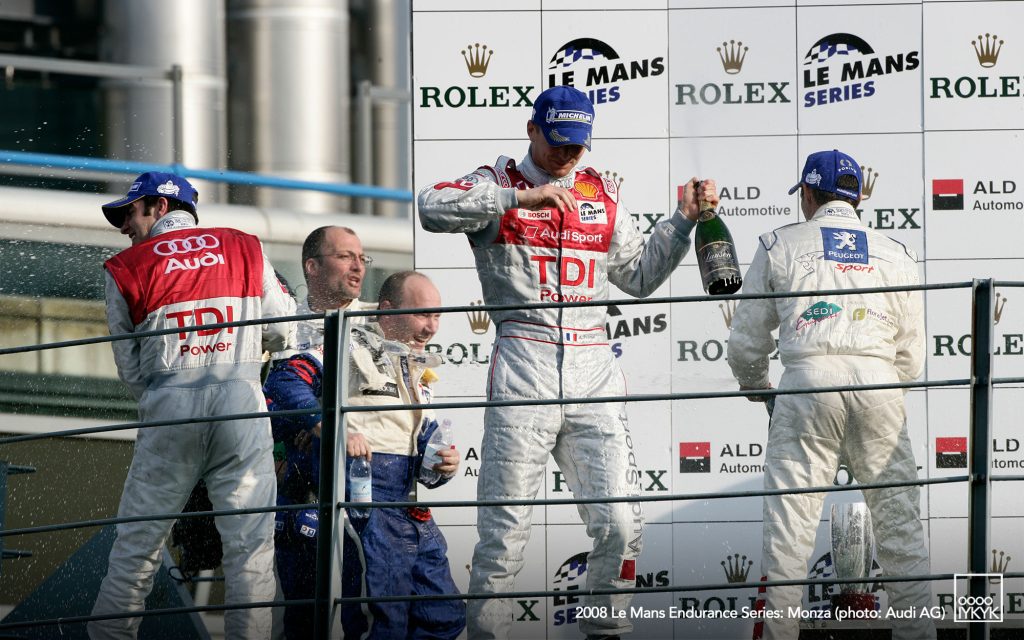
Audi returned to Monza as a factory prototype competitor in the 2008 Le Mans Series. Alexandre Prémat and Mike Rockenfeller finished second for Audi Sport Team Joest in an Audi R10 TDI, behind the winning Peugeot 908 HDi FAP. The second factory R10 TDI of Allan McNish and Dindo Capello finished sixth.
FIA WORLD ENDURANCE CHAMPIONSHIP
Monza later became a venue for the FIA World Endurance Championship, but not during Audi’s LMP1 era.
Audi ended its factory prototype racing program following the 2016 WEC season. Monza did not host its first points-paying FIA World Endurance Championship race until 2021.
As a result, the Audi R18 never contested an FIA WEC championship round at Monza.
Audi’s factory prototype history at the circuit instead belongs to the earlier Le Mans Endurance Series and Le Mans Series periods with the R8 and R10 TDI.
DTM
Monza was not part of the DTM calendar during Audi’s long factory Class One era with the TT-R, A4 DTM, A5 DTM and RS 5 DTM.
The circuit finally joined the DTM calendar in 2021, coinciding with the championship’s transition from Class One prototypes to GT3 machinery.
Audi immediately won at Monza.
Kelvin van der Linde won the Sunday race for ABT Sportsline in an Audi R8 LMS, while Nico Müller finished second in another R8 LMS, producing an Audi 1-2.
Monza therefore forms part of Audi’s DTM history, though specifically during the championship’s GT3 era rather than Audi’s earlier factory DTM programs.
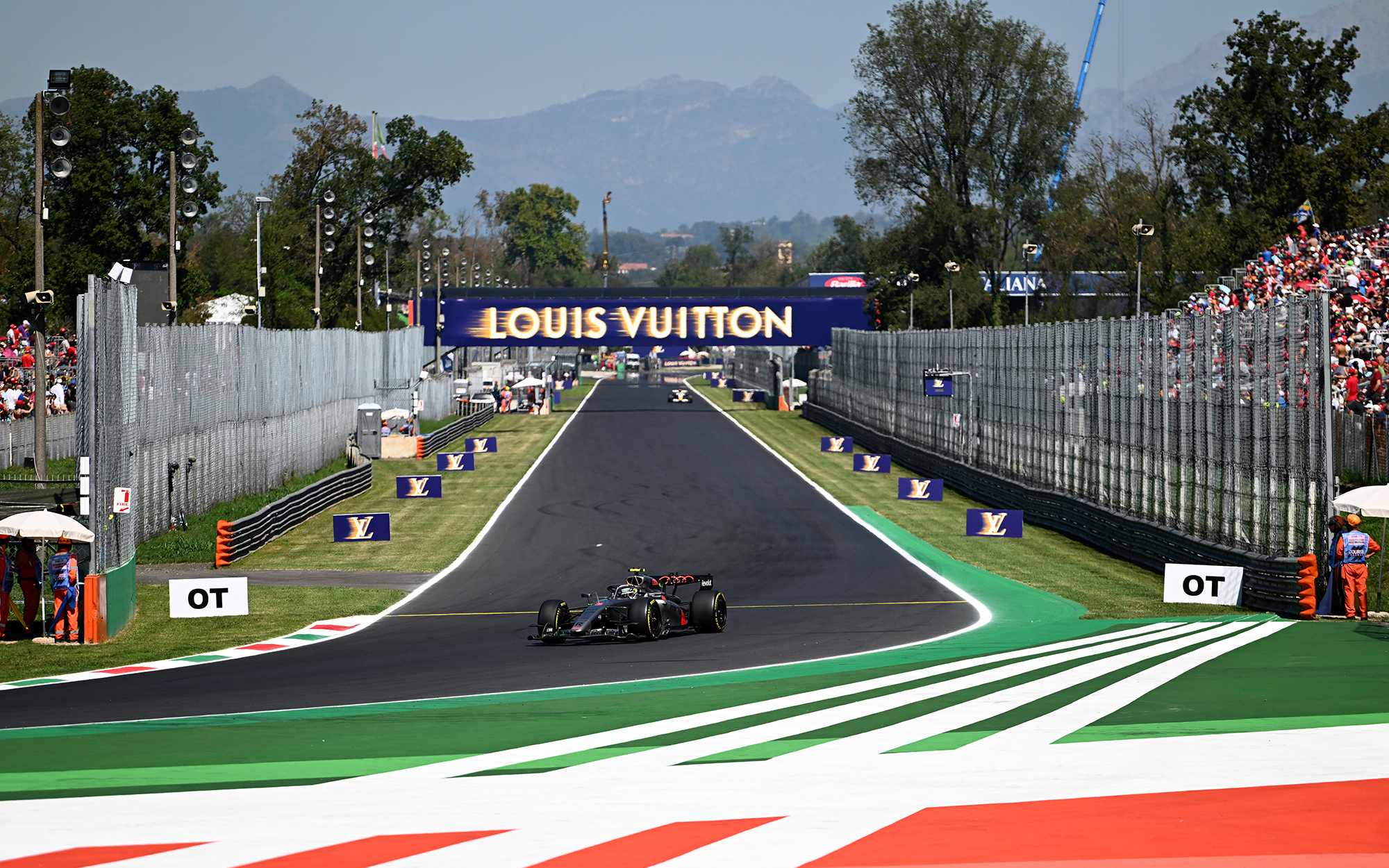
FORMULA 1
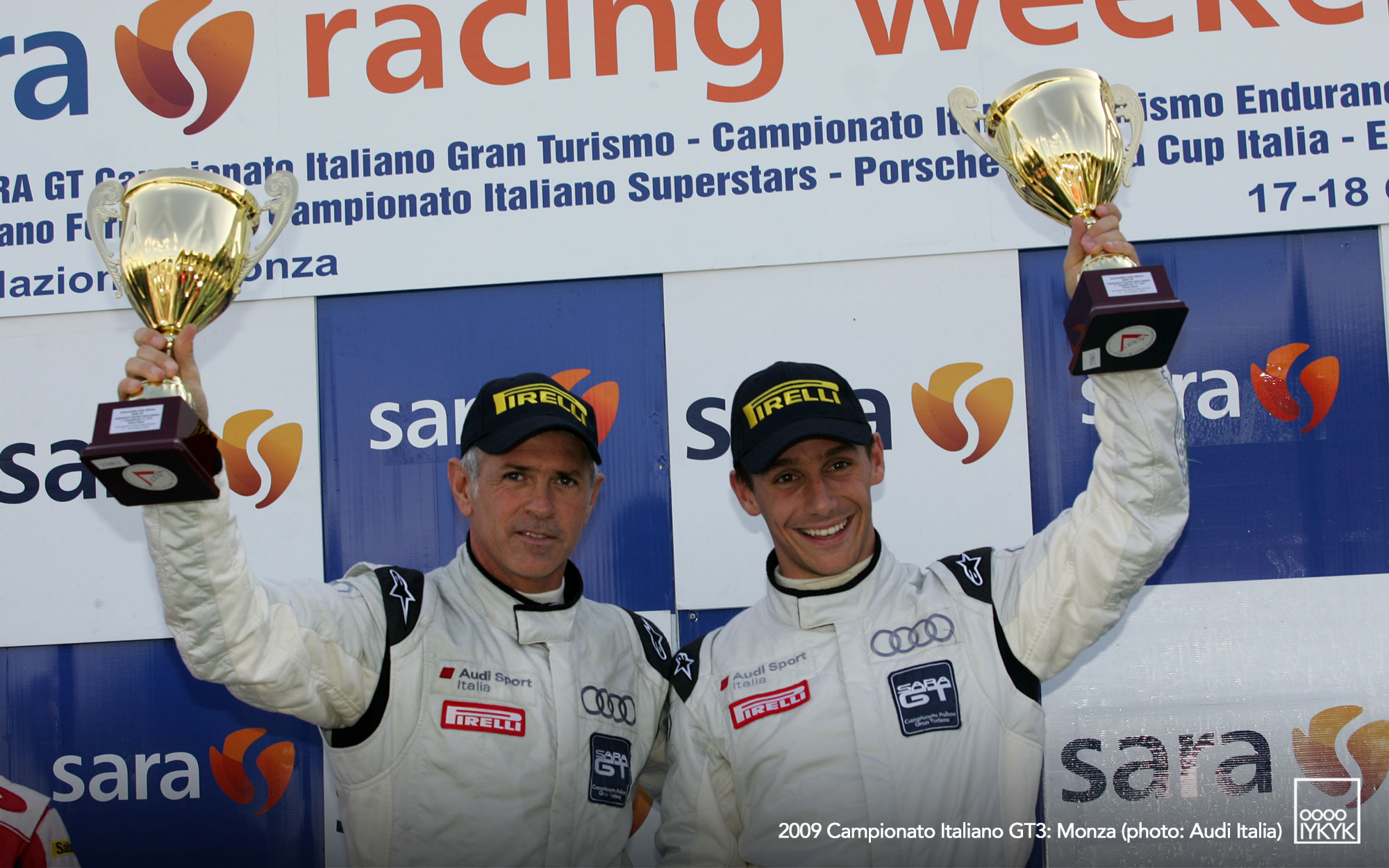
The 2026 Italian Grand Prix begins another chapter in Audi’s history at Monza.
The Audi Revolut F1 Team is scheduled to make its first Italian Grand Prix appearance at the circuit on September 4–6, 2026, during Audi’s inaugural Formula 1 season.
The event effectively reconnects Audi with a Grand Prix venue at which its Auto Union predecessor competed more than 90 years earlier. Auto Union’s rear-mid-engine Silver Arrows won Italian Grands Prix at Monza in 1935, 1936 and 1938. Beginning in 2026, Audi returns to the Italian Grand Prix as a Formula 1 constructor under its own name.
SIGNIFICANCE TO AUDI
- Site of Auto Union Italian Grand Prix victories in 1935, 1936 and 1938.
- Site of Tazio Nuvolari’s 1938 Italian Grand Prix victory in the Auto Union Type D.
- Important venue for Audi Sport Italia during the Italian Superturismo era.
- Venue for the Audi 80 quattro during Audi’s championship-winning 1994 Italian Superturismo season.
- Site of Emanuele Pirro’s 1995 Italian Superturismo victory with the Audi A4 quattro.
- Site of Dindo Capello’s double victory with the Audi A4 quattro in 1996.
- Site of another Dindo Capello A4 quattro victory in 1997.
- Venue for the factory front-wheel-drive Audi A4 and privateer A4 quattros during Audi’s final Super Touring season in 1998.
- Long-running home venue for Audi Sport Italia and the Audi R8 LMS in the Italian GT Championship.
- Site of Audi Sport Italia R8 LMS victories in 2009 and 2010.
- Site where Mattia Drudi, Lorenzo Ferrari and Riccardo Agostini won the 2021 Italian GT Endurance finale and championship for Audi Sport Italia.
- Regular venue for Audi R8 LMS customer racing in international GT competition.
- Site of an Audi R8 1-2-3 in the inaugural Le Mans Endurance Series championship race in 2004.
- Site of an Audi Sport Team Joest R10 TDI second-place finish in the 2008 Le Mans Series.
- DTM venue beginning in the GT3 era, with Kelvin van der Linde leading an Audi R8 LMS 1-2 in 2021.
- Formula 1 venue for Audi beginning with the 2026 Italian Grand Prix.
- No Audi FIA WEC prototype appearance: Monza became a WEC championship venue only after Audi had withdrawn from LMP1.
CIRCUIT DETAILS
Country: Italy
Location: Monza, Lombardy
Opened: September 3, 1922
Current Layout Length: 5.793 km (3.600 miles)
Width: 10–12 meters
Turns: 11 — seven right, four left
Direction: Clockwise
Setting: Monza Park, north of Milan
Notable Corners and Sections:
- Variante del Rettifilo
- Curva Grande / Curva Biassono
- Variante della Roggia
- Prima Curva di Lesmo
- Seconda Curva di Lesmo
- Serraglio
- Variante Ascari
- Curva Alboreto / Parabolica
- Historic Alta Velocità banking
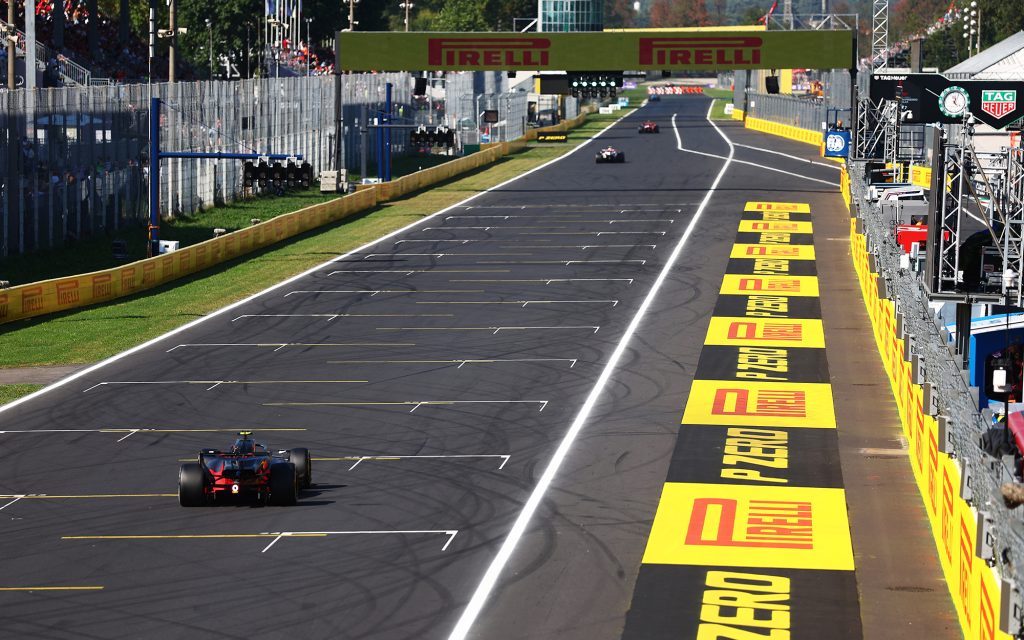
The start/finish straight measures approximately 1.19 kilometers from Curva Alboreto to the Variante del Rettifilo. Cars arrive at the first chicane at exceptionally high speed before braking for one of the slowest sections of the lap.
The surviving banking belongs to the high-speed circuit constructed during the 1955 redevelopment. Its concrete curves incorporated gradients reaching approximately 80 percent and remain visible around and above portions of the present Grand Prix circuit.
MAJOR EVENTS
- Formula 1 Italian Grand Prix
- FIA World Endurance Championship
- Le Mans Endurance Series / Le Mans Series
- GT World Challenge Europe / Blancpain Endurance Series
- DTM
- Italian GT Championship
- Campionato Italiano Superturismo
- Superstars
- European Le Mans Series
- Historic racing
- Italian national racing championships
AUDI TIMELINE AT MONZA
1934 – Auto Union competes in the Italian Grand Prix at Monza with the Type A. Hans Stuck/Hermann zu Leiningen finish second.
1935 – Hans Stuck wins the Italian Grand Prix for Auto Union in the Type B.
1936 – Bernd Rosemeyer takes pole position, fastest lap and victory for Auto Union in the Italian Grand Prix with the Type C.
1938 – Tazio Nuvolari wins the Italian Grand Prix at Monza in the Auto Union Type D.
1994 – Audi Sport Italia opens its Italian Superturismo campaign at Monza with the Audi 80 quattro. Emanuele Pirro goes on to win the drivers’ championship and Audi the manufacturers’ championship.
1995 – The new Audi A4 quattro competes at Monza. Emanuele Pirro wins Race 1 and finishes second in Race 2, with Dindo Capello also scoring a podium during the meeting.
1996 – Dindo Capello wins both Monza Superturismo races in the Audi A4 quattro. Yvan Muller finishes second in Race 1, completing an Audi Sport Italia 1-2. Capello goes on to win the Italian championship.
1997 – Dindo Capello finishes second in Race 1 at Monza before winning Race 2 in the Audi A4 quattro. Karl Wendlinger finishes third in Race 1, giving Audi two cars on the podium.
1998 – Audi Sport Italia competes at Monza with the new front-wheel-drive A4 while older A4 quattros continue in privateer hands. Capello finishes second in Race 1 during the first of two Monza meetings.
2004 – Audi R8s sweep the first three positions in the inaugural Le Mans Endurance Series championship race, the 1000 Kilometers of Monza.
2008 – Audi Sport Team Joest finishes second in the 1000 Kilometers of Monza with the R10 TDI.
2009 – Dindo Capello and Filipe Albuquerque win at Monza with the Audi Sport Italia R8 LMS.
2010 – Dindo Capello and Gian Luca Giraudi score another Audi Sport Italia R8 LMS victory at Monza.
2021 – Kelvin van der Linde wins the DTM Sunday race at Monza for ABT Sportsline, leading Nico Müller to an Audi R8 LMS 1-2.
2021 – Mattia Drudi, Lorenzo Ferrari and Riccardo Agostini win the Italian GT Endurance finale at Monza in the Audi Sport Italia R8 LMS and secure the championship.
2026 – Audi Revolut F1 Team is scheduled to make Audi’s first Formula 1 appearance at Monza during the Italian Grand Prix.
SOURCES
Autodromo Nazionale Monza – Official Website
Autodromo Nazionale Monza – History
Autodromo Nazionale Monza – Circuit
Formula 1 – Autodromo Nazionale Monza Circuit Guide
RacingCircuits.info – Monza
Audi Revolut F1 Team – Italian Grand Prix: The Story of Monza’s Banking
Audi Revolut F1 Team – Italian Grand Prix: The Temple of Speed
Audi Sport Italia – Competition History and Victories
Super Touring Register – Campionato Italiano Superturismo
Audi – Le Mans Endurance Series / Monza 2004
ACI Sport – Campionato Italiano Gran Turismo
DTM – Monza 2021
RESEARCH NOTES
Monza has an unusually broad significance within Audi competition history. Unlike circuits associated primarily with one period or racing discipline, Monza connects the pre-war Auto Union Grand Prix program with Audi’s Italian touring-car activities, GT3 customer racing, prototype endurance racing, DTM and, beginning in 2026, Formula 1.
The Italian Superturismo history is particularly important. Audi’s Monza appearances encompass the Audi 80 quattro, the dominant A4 quattro and the final front-wheel-drive A4. Audi Sport Italia’s continued presence at the circuit through later touring-car and GT programs further strengthens Monza’s position as one of the principal Italian venues in Audi’s postwar competition history.
Monza did host the FIA World Endurance Championship beginning in 2021, but Audi had withdrawn from LMP1 following the 2016 season. Audi’s prototype racing history at Monza therefore belongs to the Le Mans Endurance Series/Le Mans Series rather than the FIA WEC.
The 2026 Formula 1 appearance creates a direct historical connection between Audi’s modern factory Grand Prix program and Auto Union’s Italian Grand Prix appearances at the same venue during the 1930s.
PHOTO GALLERY
ARCHIVE STATUS
Status: Active circuit
Historic Structures: Original/reconstructed high-speed banking survives on site
Audi Competition History: Confirmed
Current Audi Relevance: Audi Revolut F1 Team / Formula 1 Italian Grand Prix from 2026
Archive Notes: Cross-reference Auto Union Type A, Type B, Type C and Type D; Tazio Nuvolari; Audi 80 quattro Competition; Audi A4 quattro Supertouring; Audi R8; Audi R10 TDI; Audi R8 LMS; Audi Revolut F1 Team.