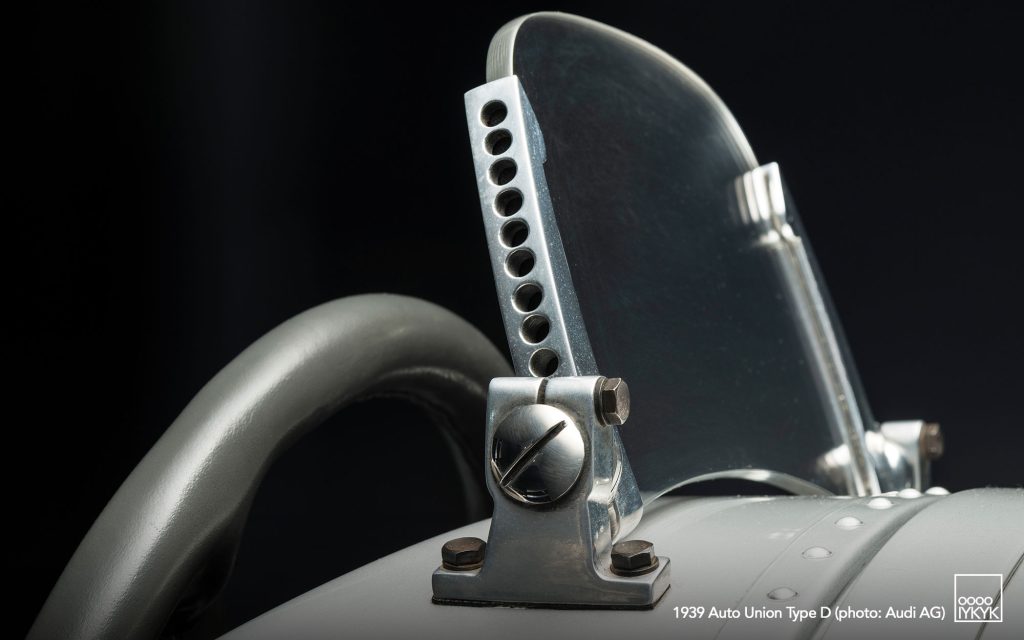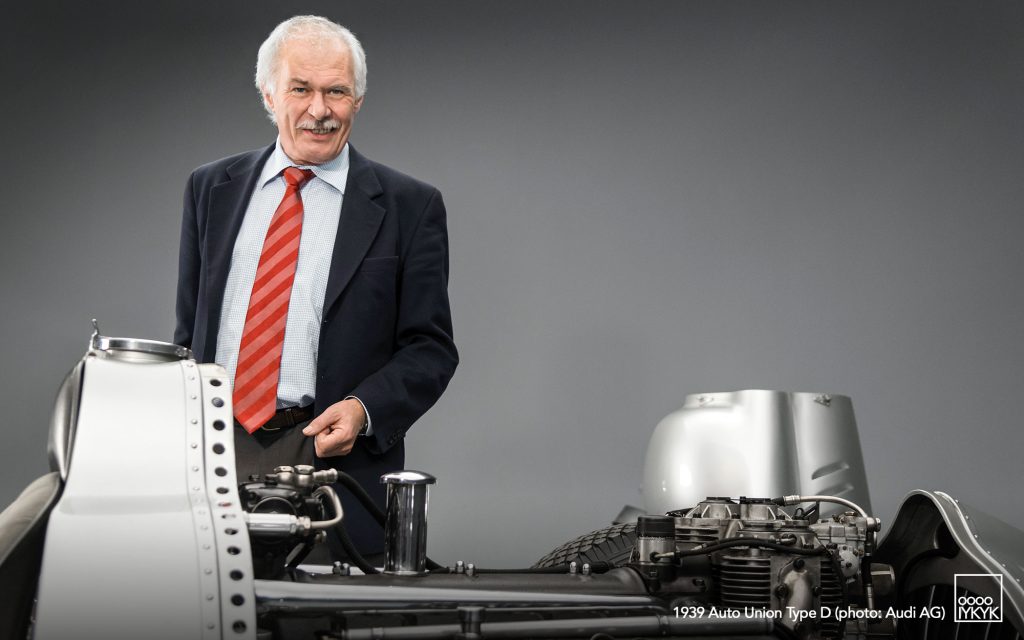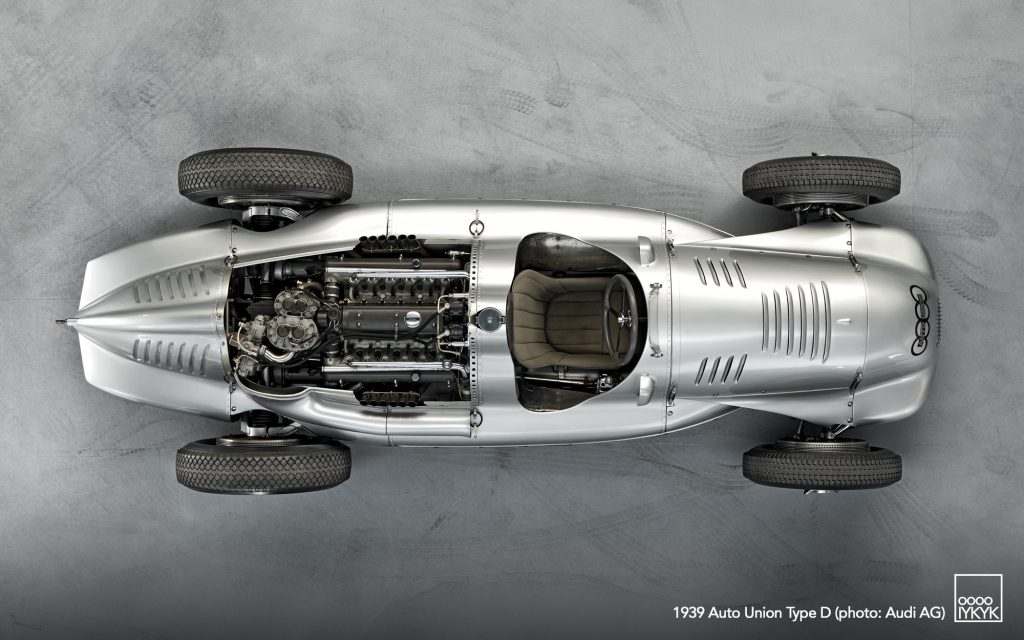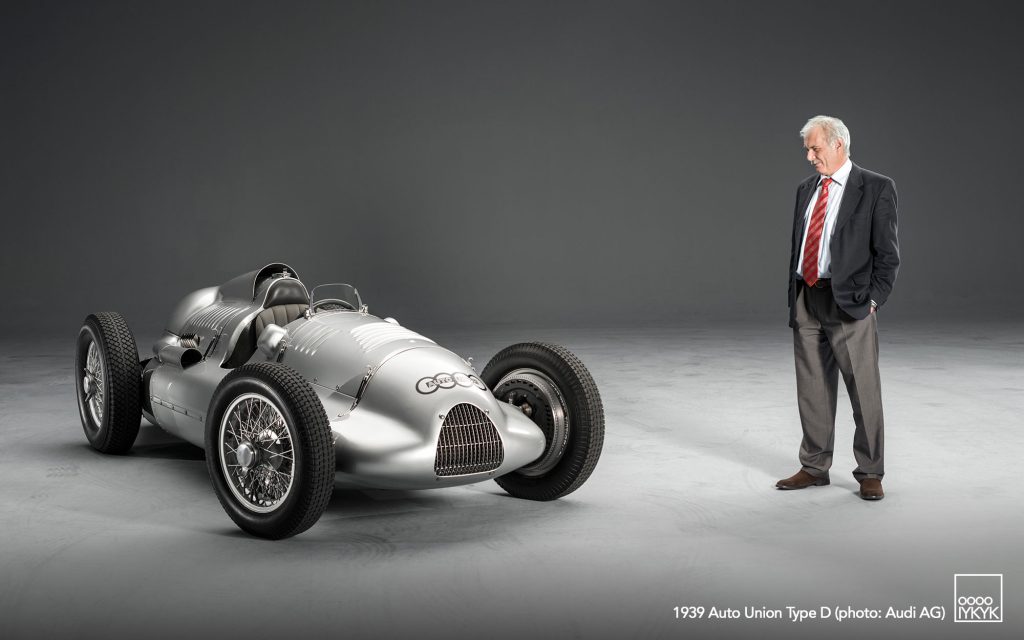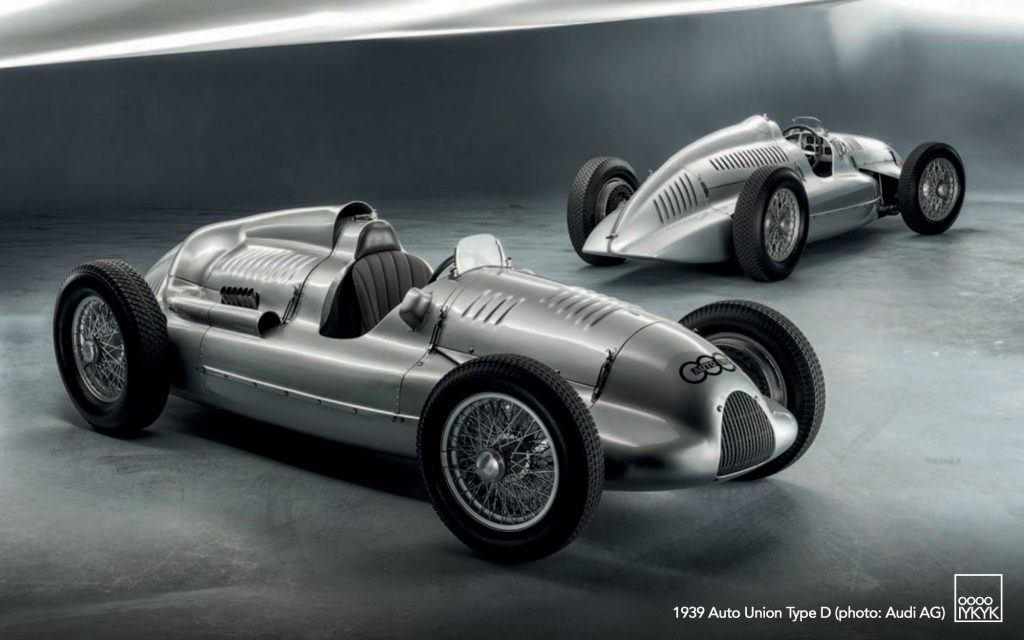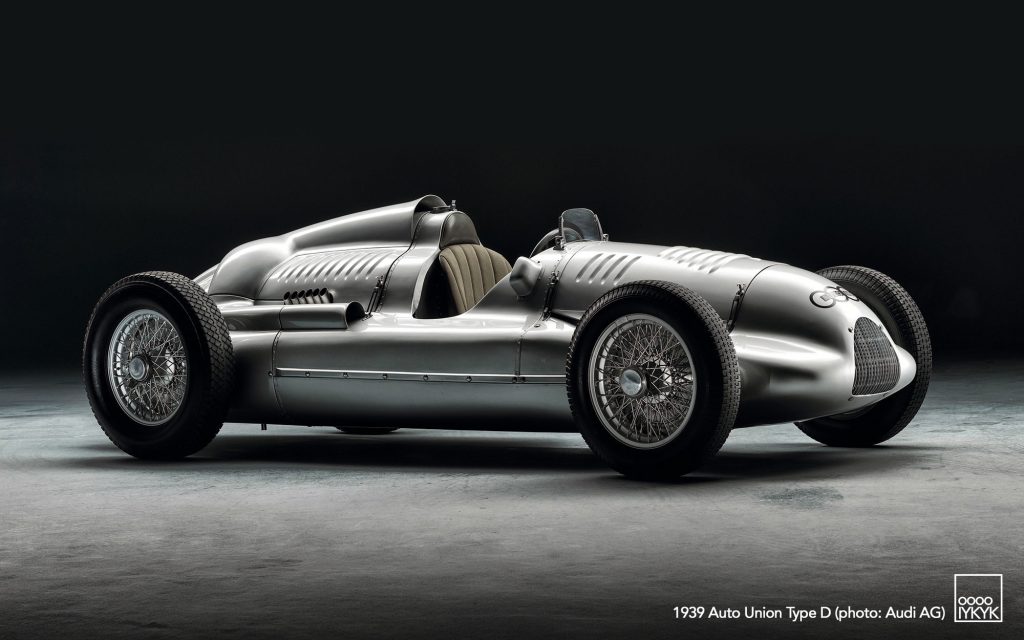
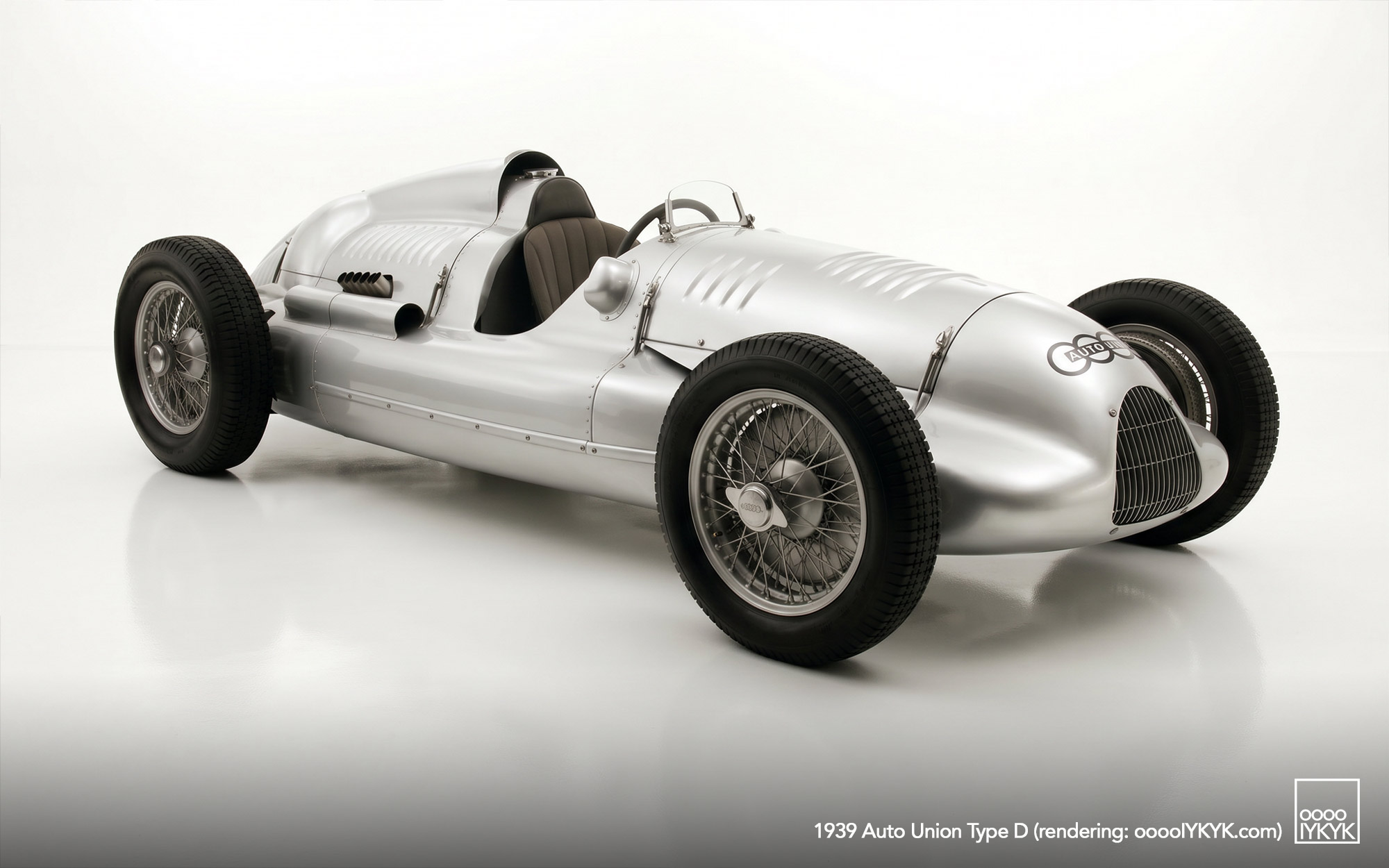

MODEL DETAILS
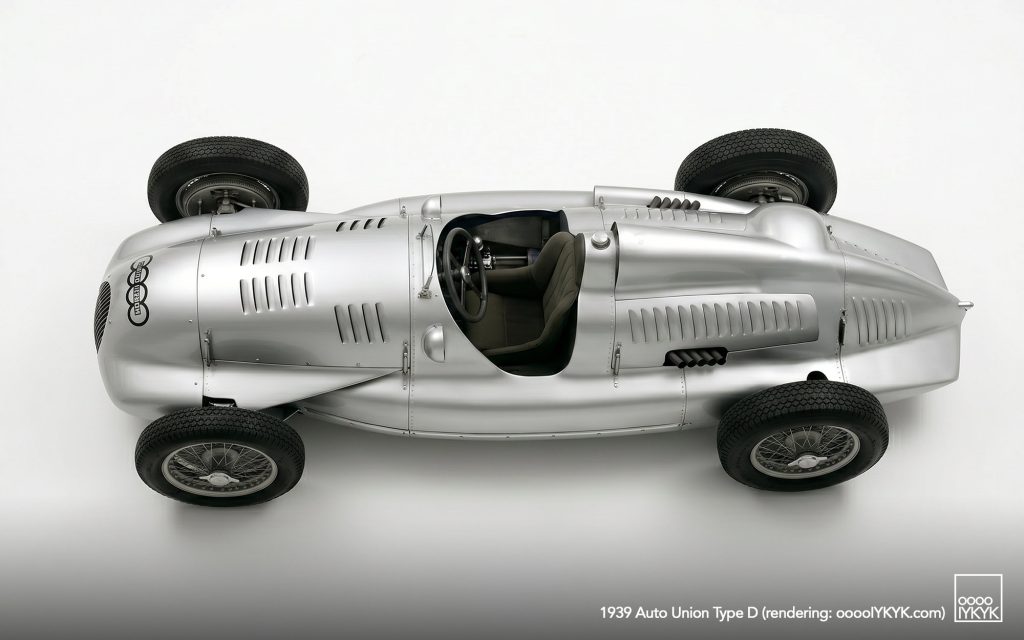
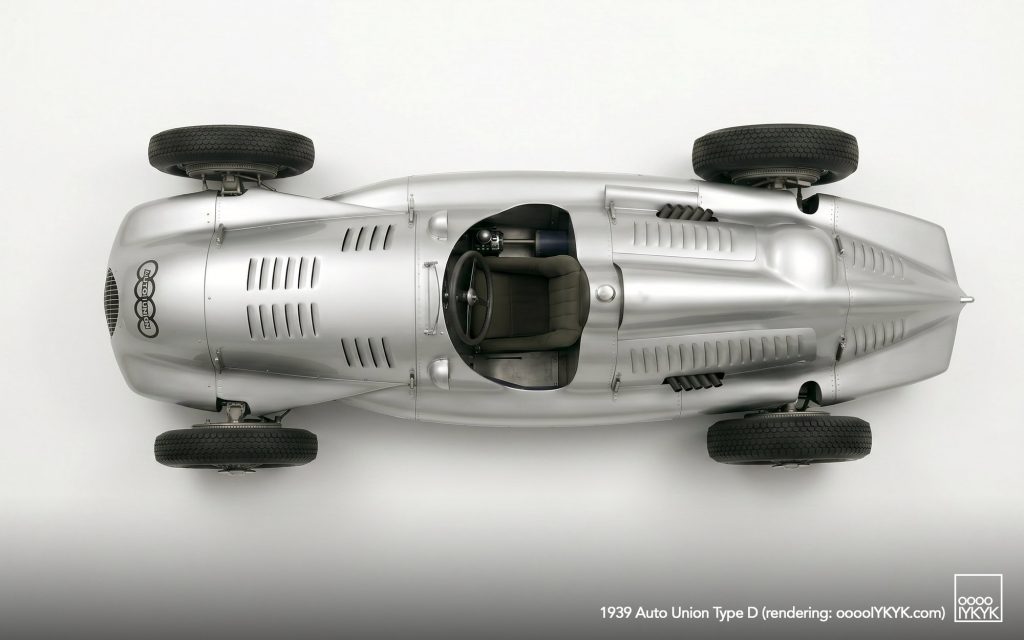
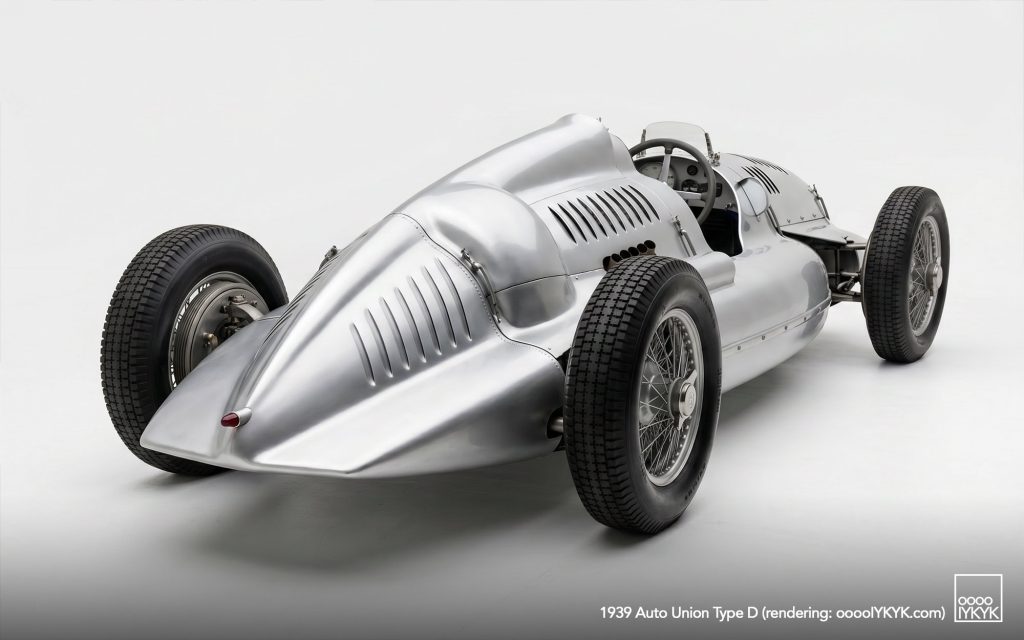
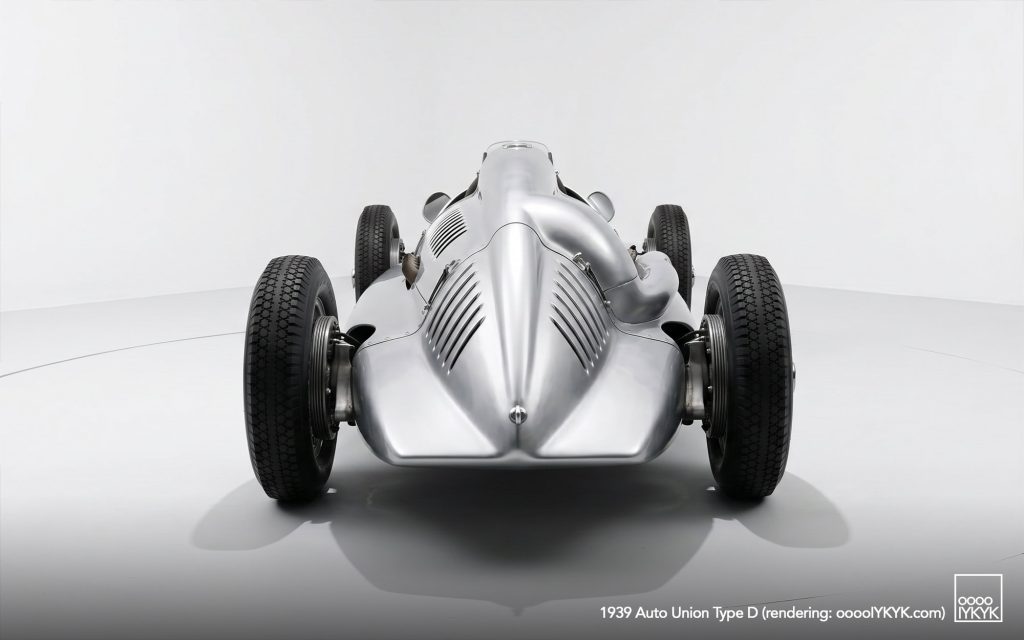
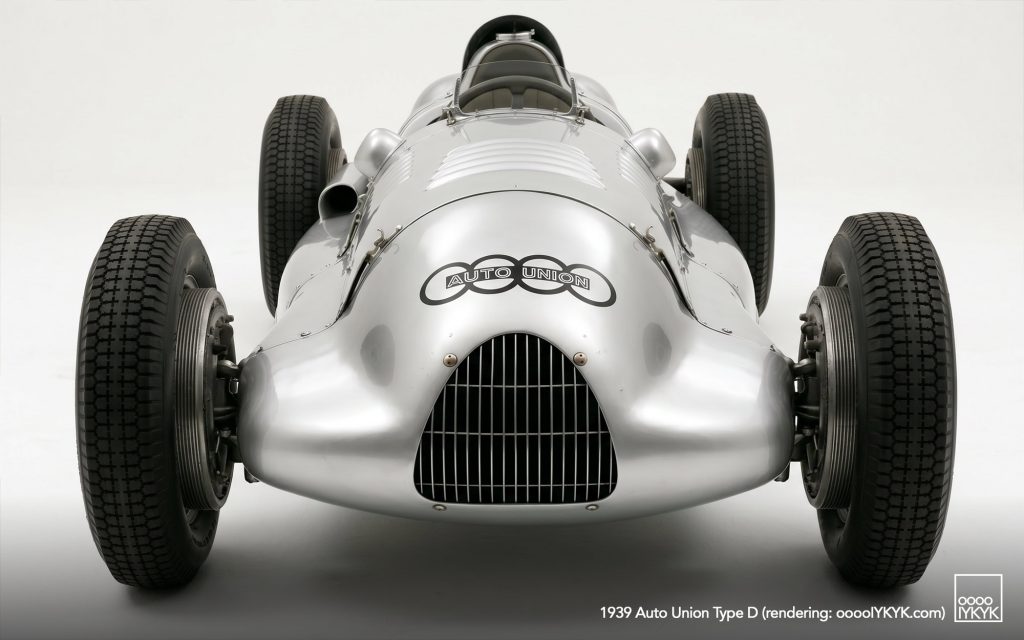
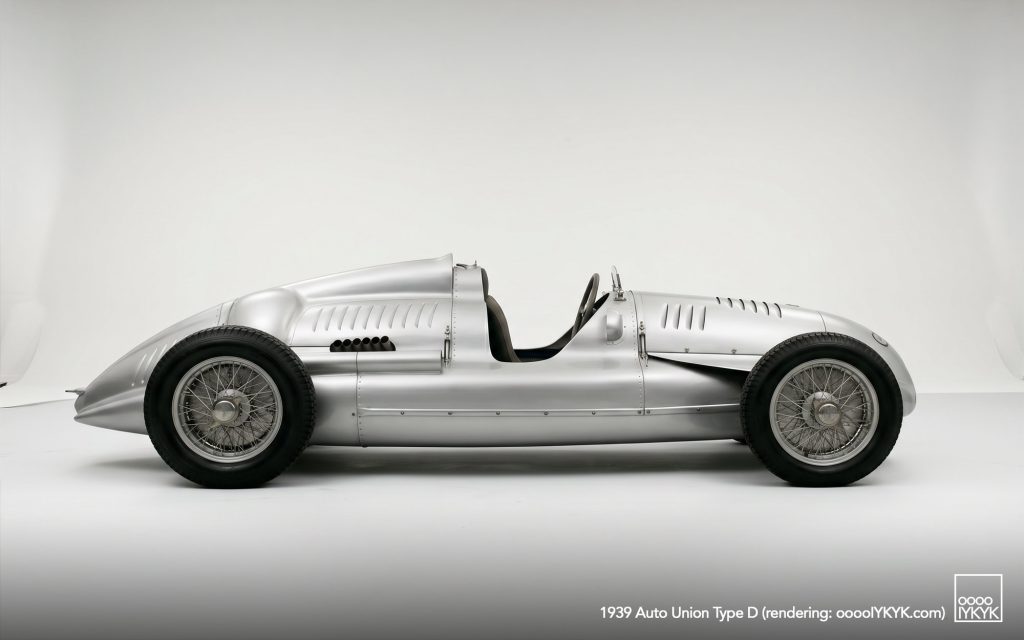
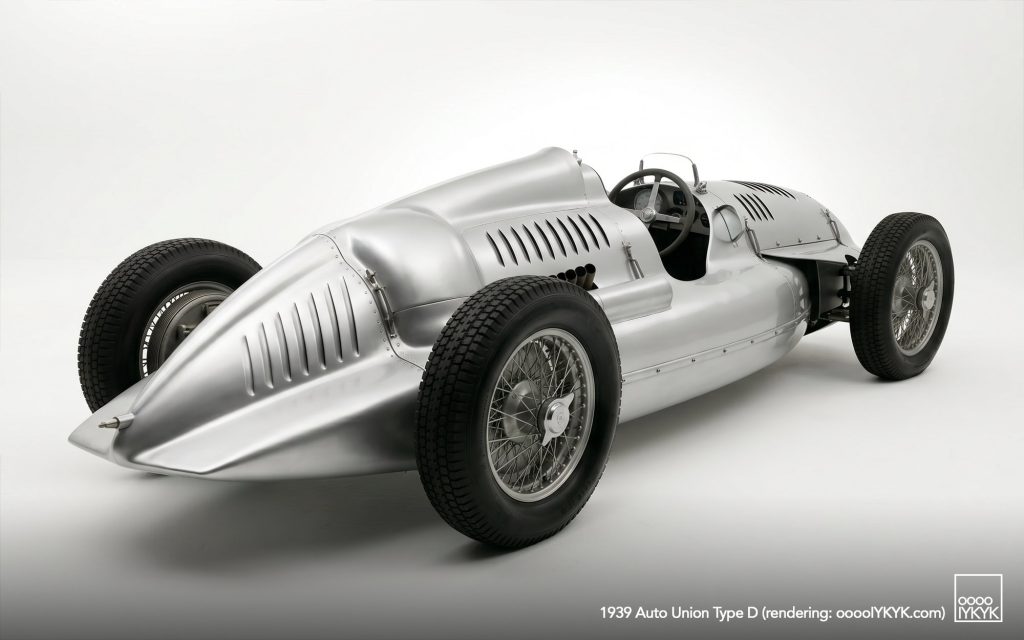
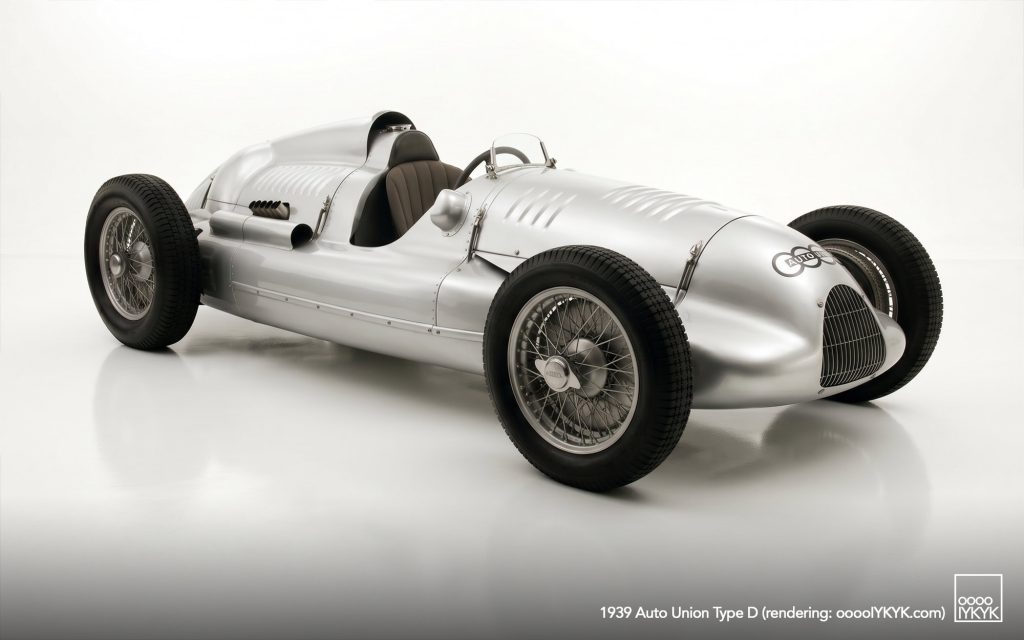
What: Auto Union Type D Grand Prix
Manufacturer: Auto Union AG, Racing Department (Horch Works, Zwickau)
Genre / Series: Grand Prix Racing
Category: 850 kg Formula
Era: Auto Union prewar
Model Family:
Market / Zone: International Motorsport
Season: 1939
Number Produced: 11 chassis (1938–1939)
Model / Generation Code(s): Type D
Chassis / Matrix:
Designer: Dr. Ing. Robert Eberan von Eberhorst
TECHNICAL DETAILS
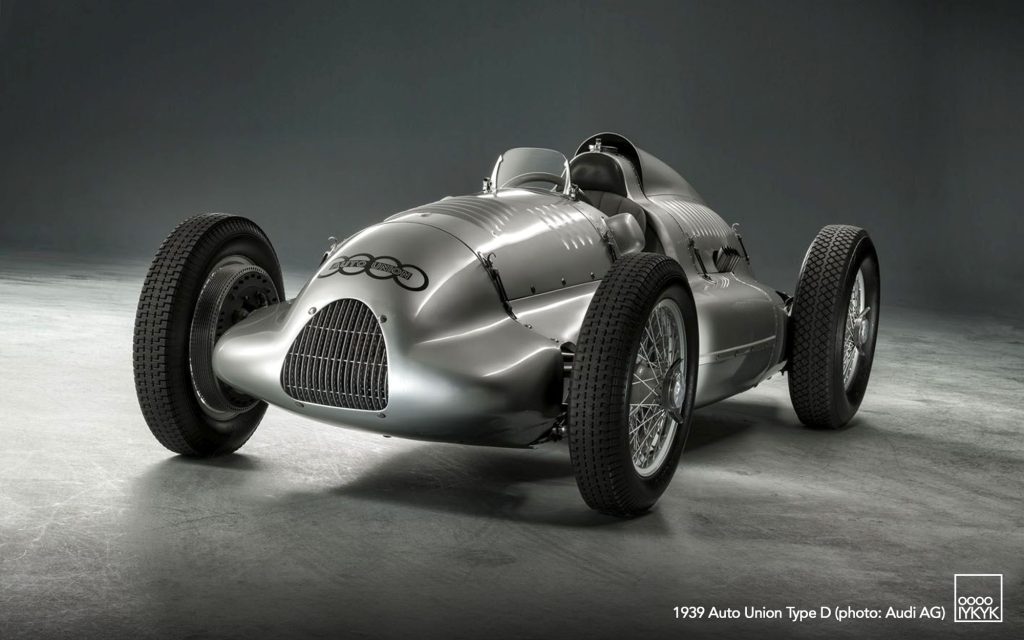
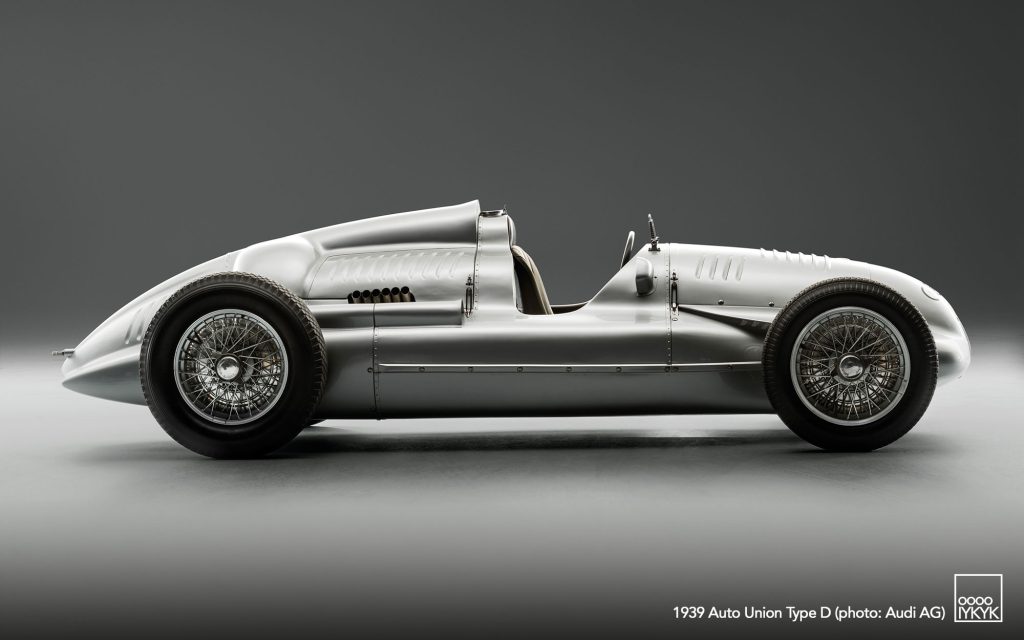
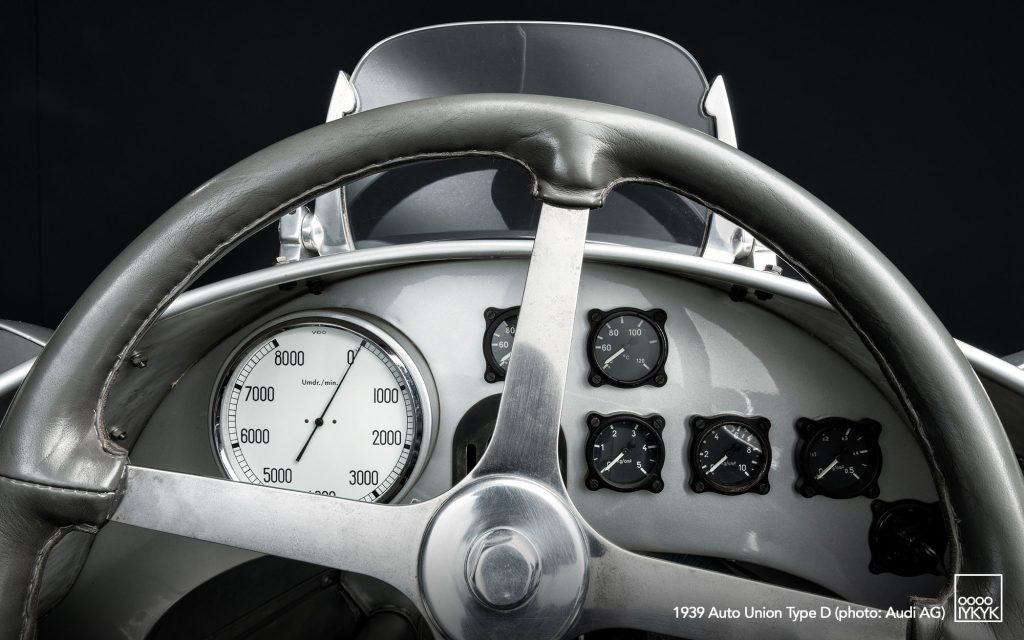
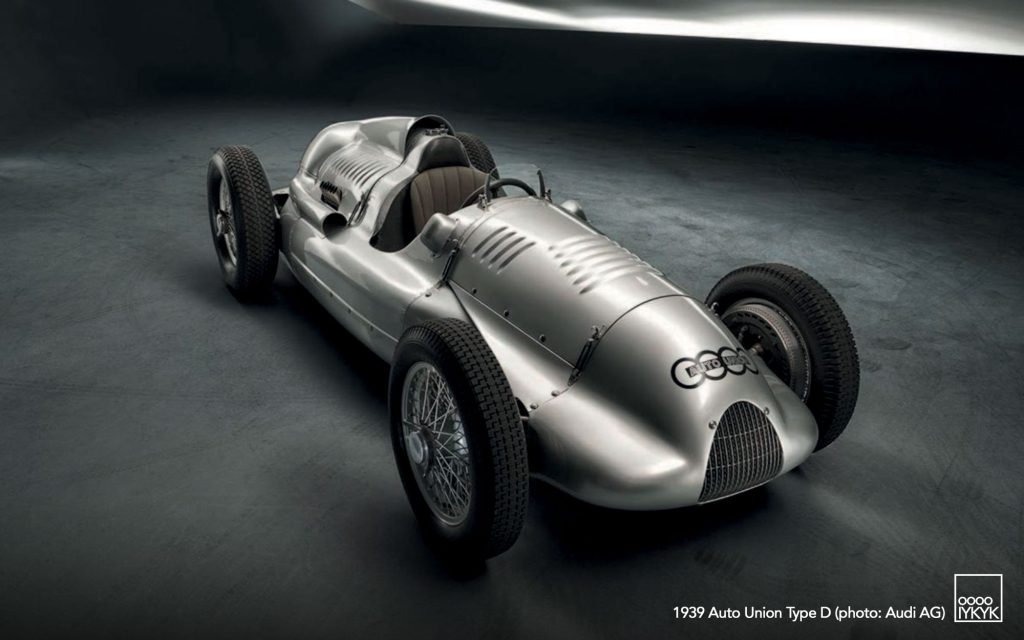
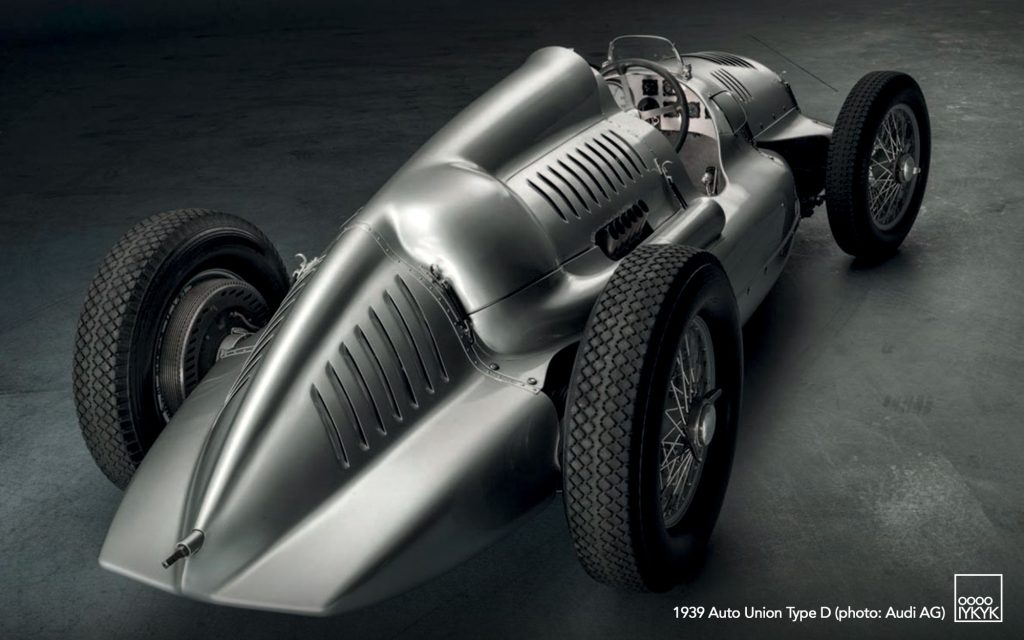
Body Style(s): open-wheel single seat racecar
Chassis Type: Tubular ladder-type frame with aluminium bodywork
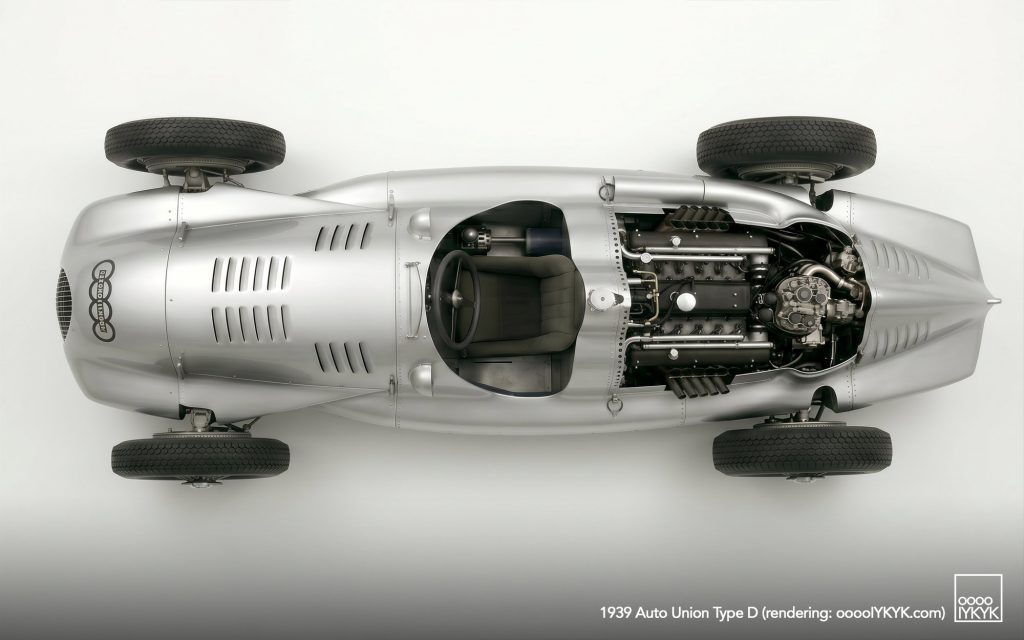
Drivetrain Configuration: longitudinal rear mid-engine, rear-wheel drive
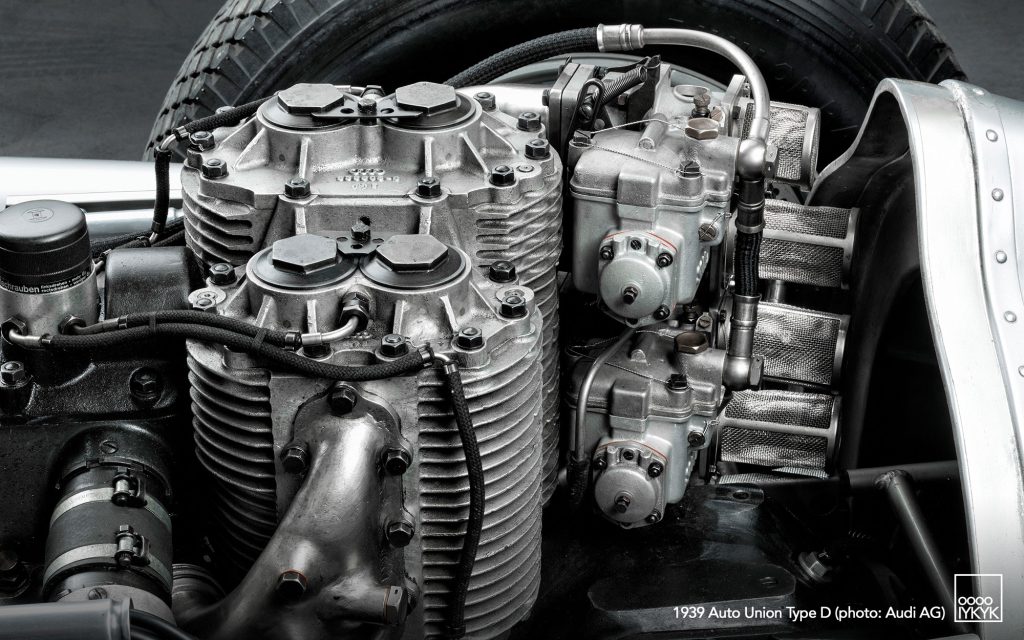
Engine(s): Supercharged V12, 60° bank angle
Displacement: 3.0 litres (2,986cc)
Valvetrain:
– Three cam shaft (central single camshaft for the intake valves and two separate overhead camshafts for the exhaust valves)
– 24 valves total (2 valves per cylinder)
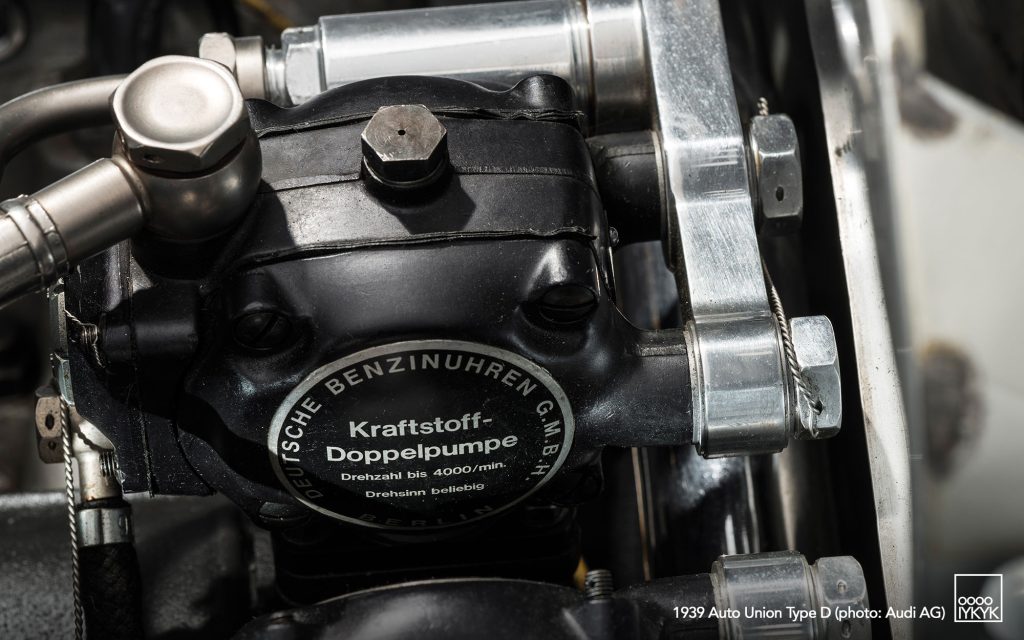
Fuel: High-octane racing blend (alcohol-based racing blend)
Induction: Twin-stage supercharger (~1.65 bar / 24 psi boost)
Power: approx. 485 horsepower at 7,000 RPM
Torque: 550 Nm (or about 406 lb⋅ft)
Cooling: advanced, highly pressurized water-to-ethylene-glycol cooling system
Top Speed: 205 mph (approximately 330 km/h) depending on gearing and circuit
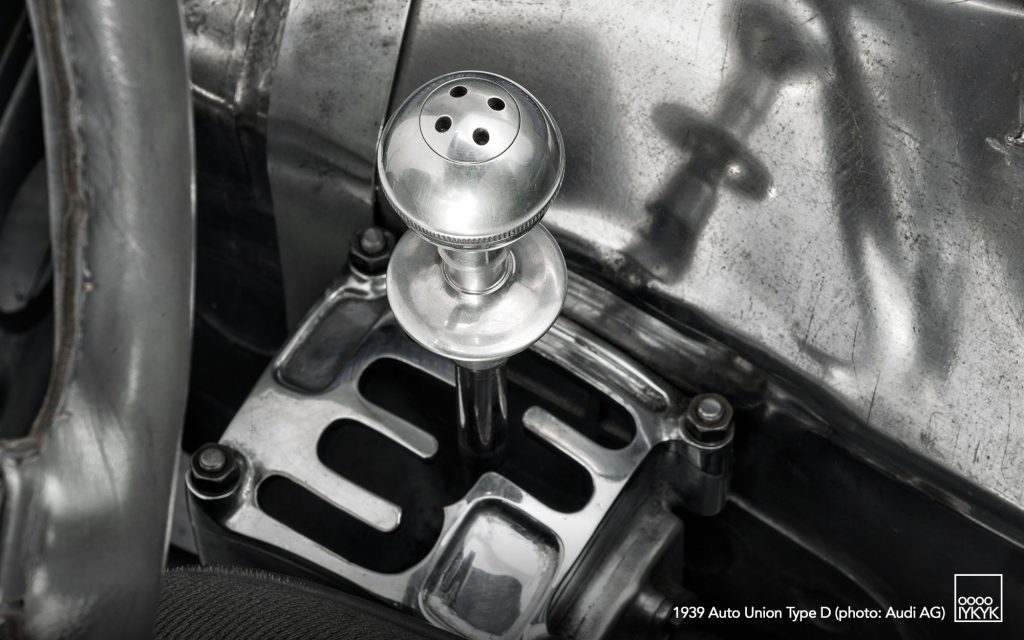
Transmission(s): 5-speed manual transaxle, non-synchronized transaxle paired with a limited-slip differential
Differential: ZF limited-slip differential
Wheelbase: 2,800 mm (approximately 110.2 inches)
Width: 1,660 mm (about 65.4 inches or 5.45 feet
Length: 4,200 mm (about 165.4 inches or 13.78 feet)
Height: 1,060 mm (41.7 inches)
Weight (dry): ≤ 850 kg (regulatory limit; 850 kg (approx. 1,874 lbs)
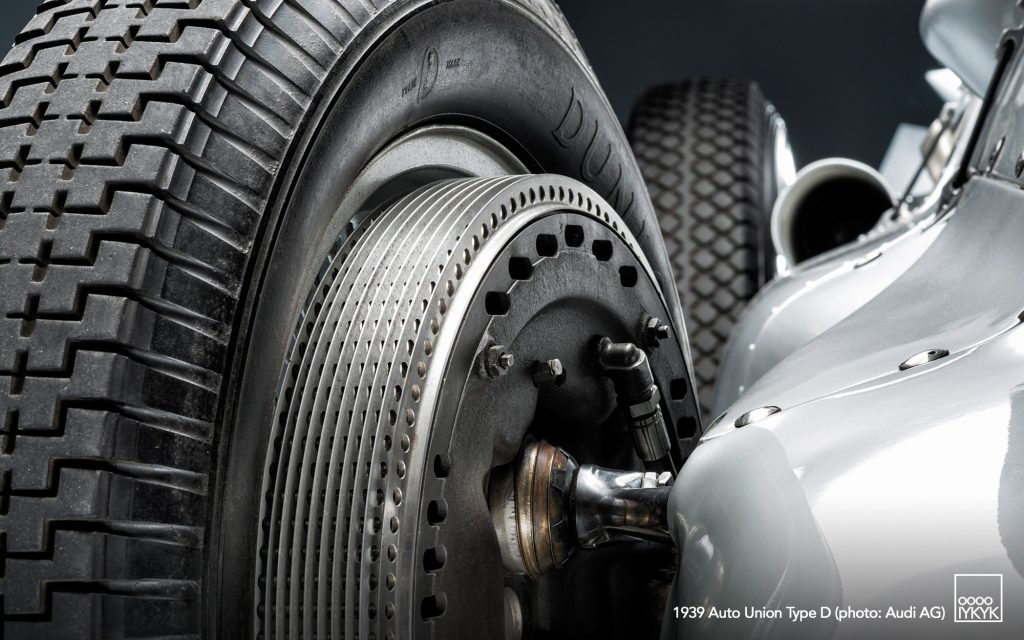
Tires: high-speed, grooved or slick racing tires manufactured by Continental
Wheel Size: staggered wire-spoke wheels, using 17-inch rims on the front and 19-inch rims on the rear
(Note: Dimensions varied slightly depending on circuit and hill-climb bodywork.)
DRIVERS (SELECTED)
• Tazio Nuvolari
• Hermann Paul Müller
• Hans Stuck
• Georg Meier
• Rudolf Hasse
• Walter Bäumer
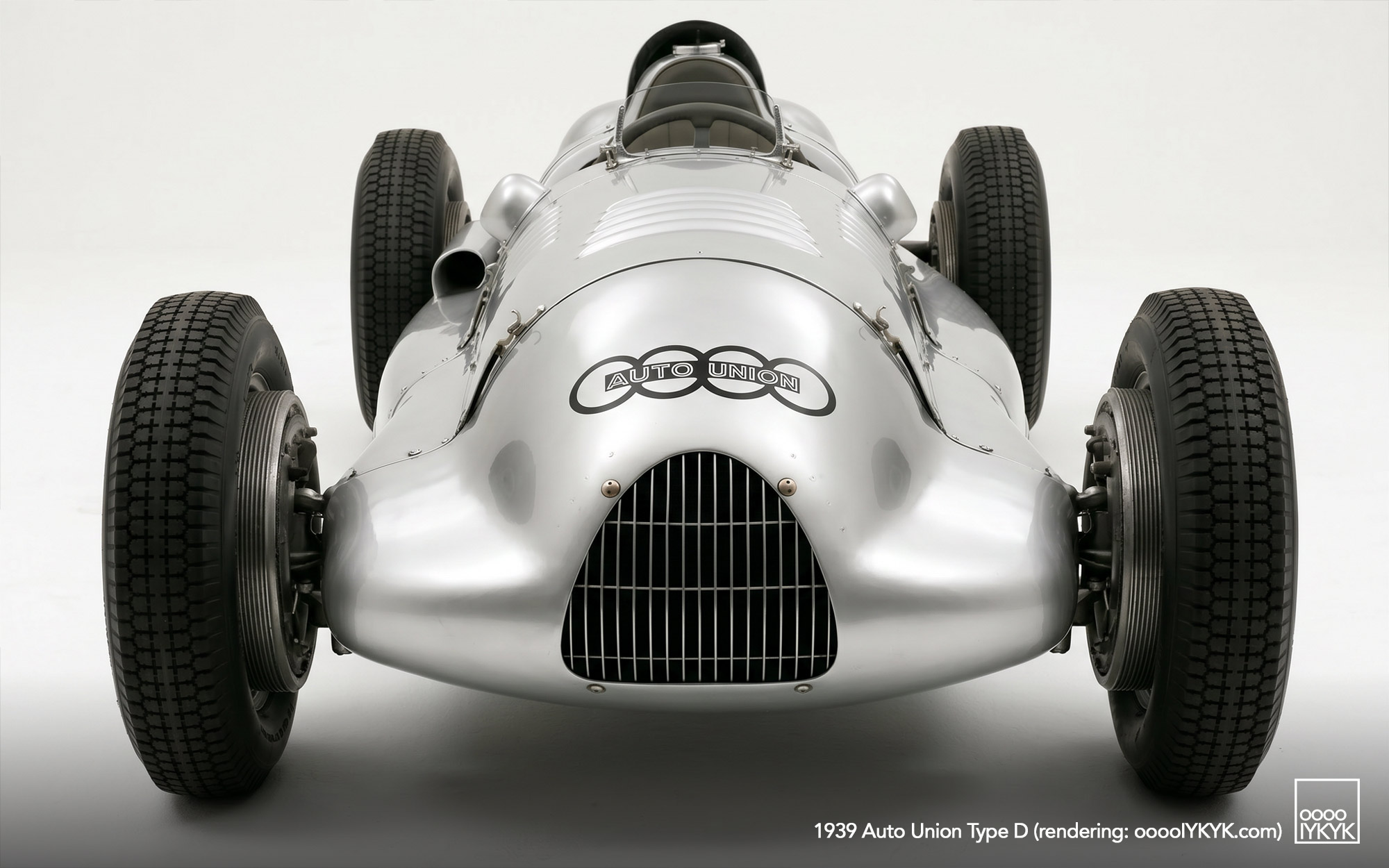
OVERVIEW
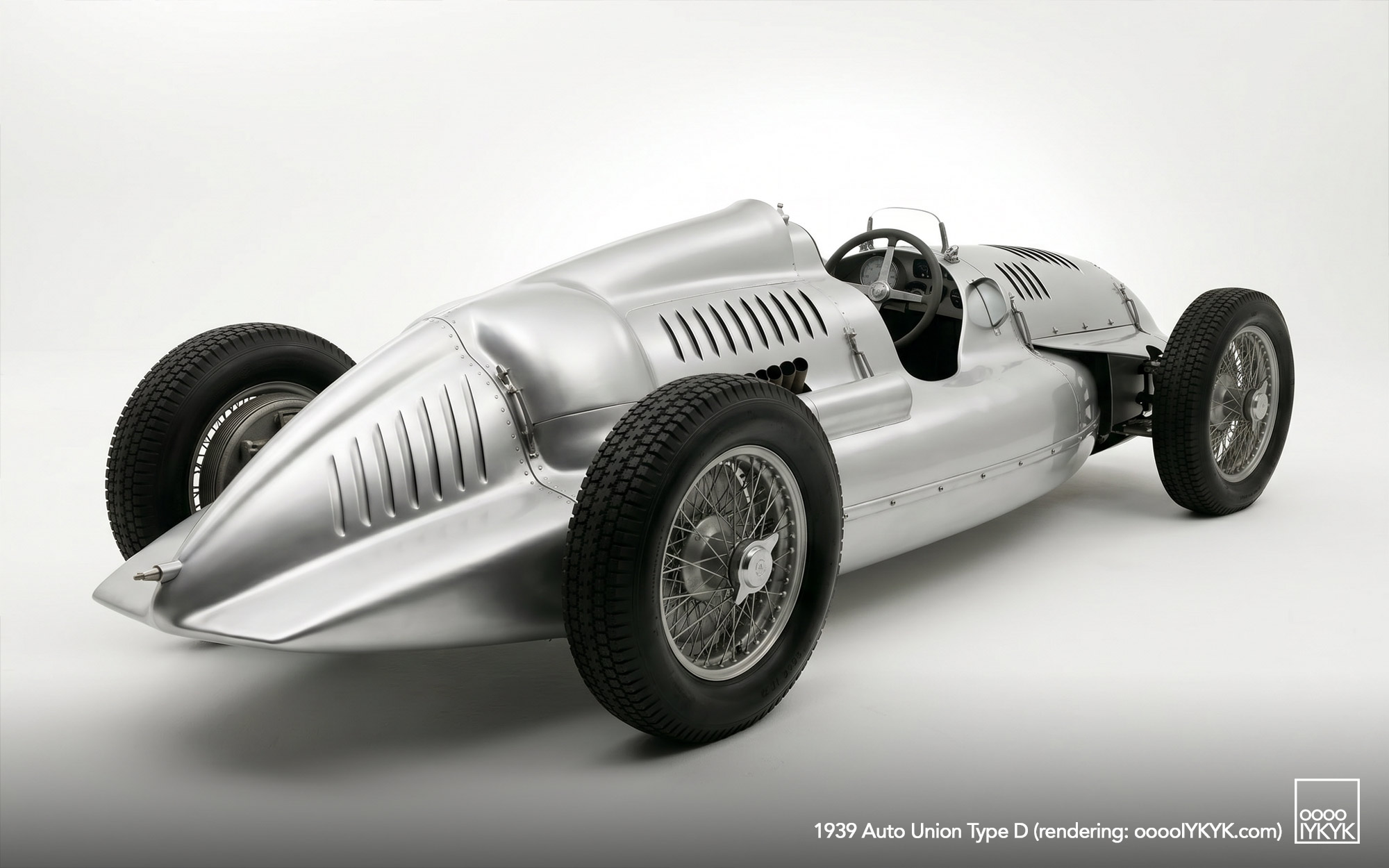
The Auto Union Type D was the final evolution of the famed Auto Union Silver Arrow Grand Prix cars and the last Auto Union racing car developed before the outbreak of World War II. Introduced for the 1938 season in response to new international Grand Prix regulations limiting supercharged engines to 3.0 liters, the Type D replaced the marque’s earlier V16-powered Type A, B and C models with a newly developed supercharged V12 engine.
Designed under the direction of engineer Robert Eberan von Eberhorst, the Type D retained the revolutionary rear-engine layout pioneered by Auto Union and originally conceived by Ferdinand Porsche. The configuration placed the engine behind the driver but ahead of the rear axle, a concept that would not become commonplace in Grand Prix racing for another two decades.
The Type D competed during the 1938 and 1939 Grand Prix seasons and was driven by some of the era’s most notable racers including Tazio Nuvolari, Hans Stuck, Rudolf Hasse, Hermann Paul Müller and Georg Meier.
DEVELOPMENT
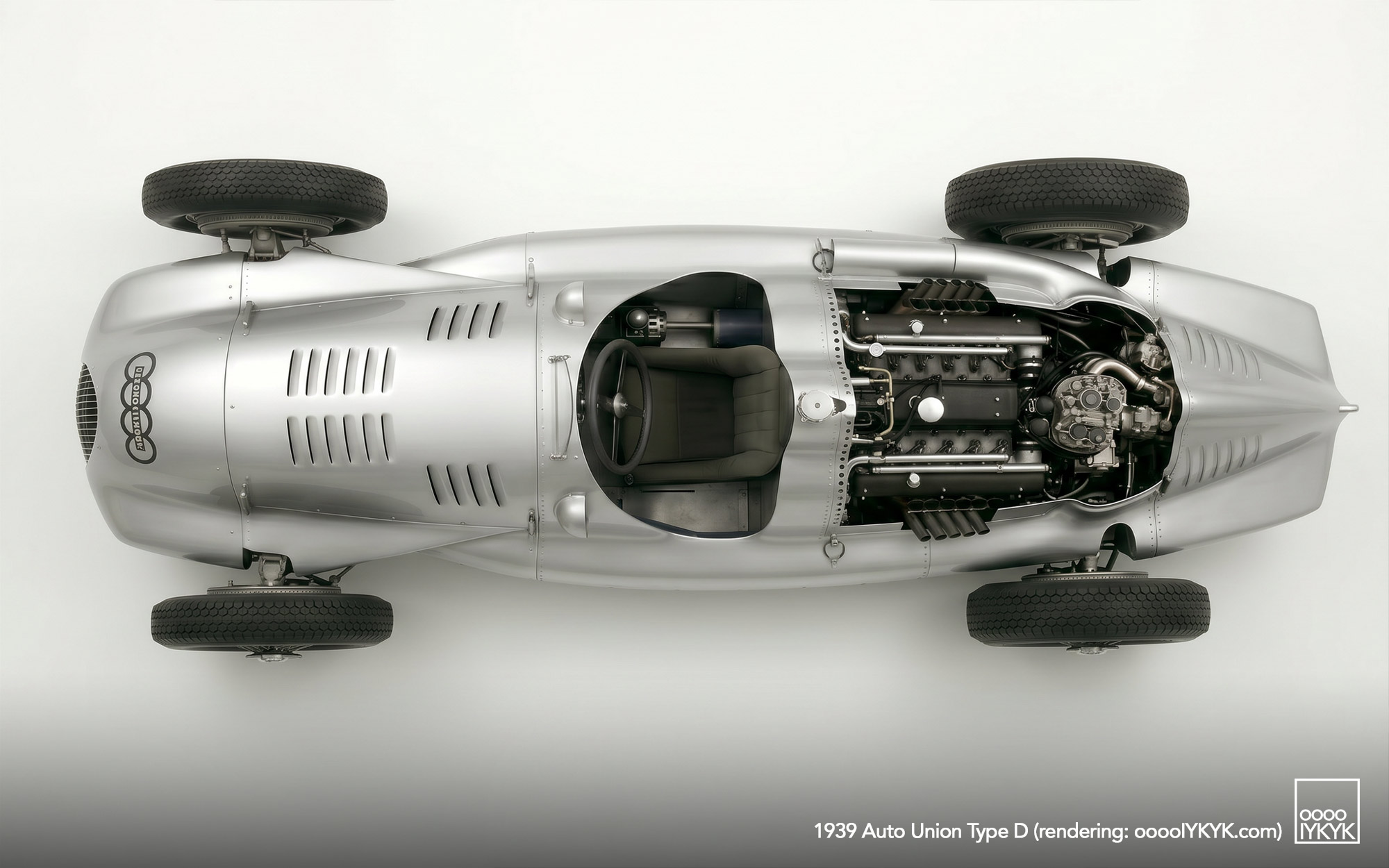
For 1938, Grand Prix regulations reduced maximum engine displacement for supercharged cars from 750 kilograms formula unrestricted engines to a 3.0-liter supercharged limit. Auto Union responded by developing a new 60-degree V12 engine displacing 2,986 cc. Early versions produced approximately 420 horsepower, while a twin-stage supercharged evolution introduced during 1939 increased output to approximately 485 horsepower at 7,000 rpm.
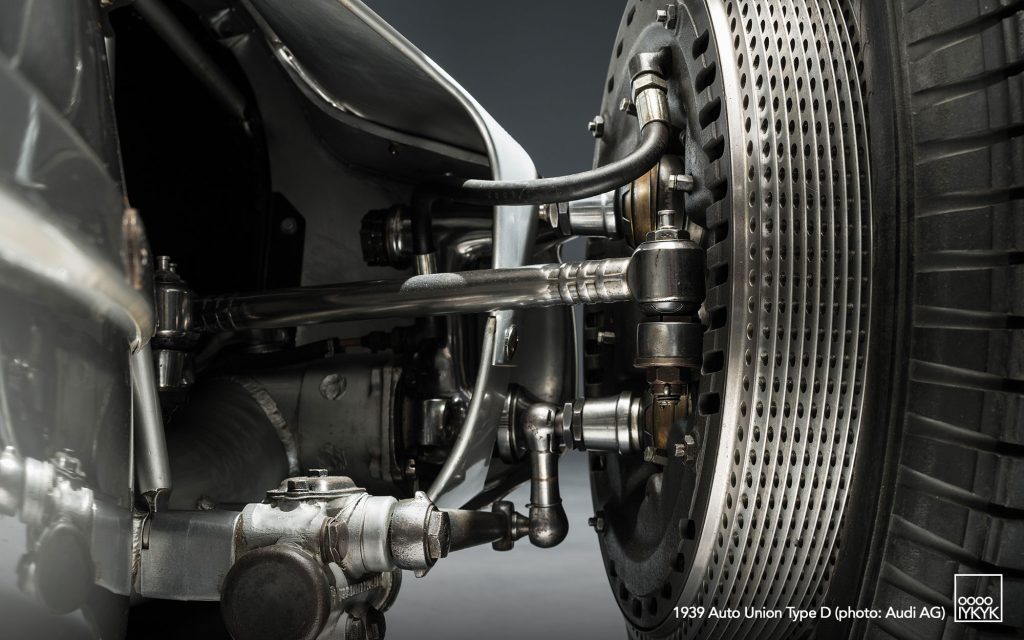
The Type D featured independent front suspension, a de Dion rear axle and centrally located fuel tanks within the wheelbase to improve handling balance. These developments represented a substantial departure from the earlier Type C and were intended to address the challenging handling characteristics for which the earlier Auto Union racers had become known.
COMPETITION HISTORY
The Type D became Auto Union’s primary Grand Prix contender during the 1938 and 1939 seasons. In 1939 the introduction of the twin-stage supercharged V12 significantly improved performance and helped Auto Union challenge the dominant Mercedes-Benz team. At the French Grand Prix at Reims, Auto Union scored a notable victory with Hermann Paul Müller leading a team one-two finish.
The car is most closely associated with Tazio Nuvolari. Driving a Type D, Nuvolari achieved one of the most famous victories of his career at the 1939 Belgrade Grand Prix on 3 September 1939. The race took place on the same day that Britain and France declared war on Germany following the invasion of Poland, making it the final major European Grand Prix before wartime competition ceased.
CHASSIS 19
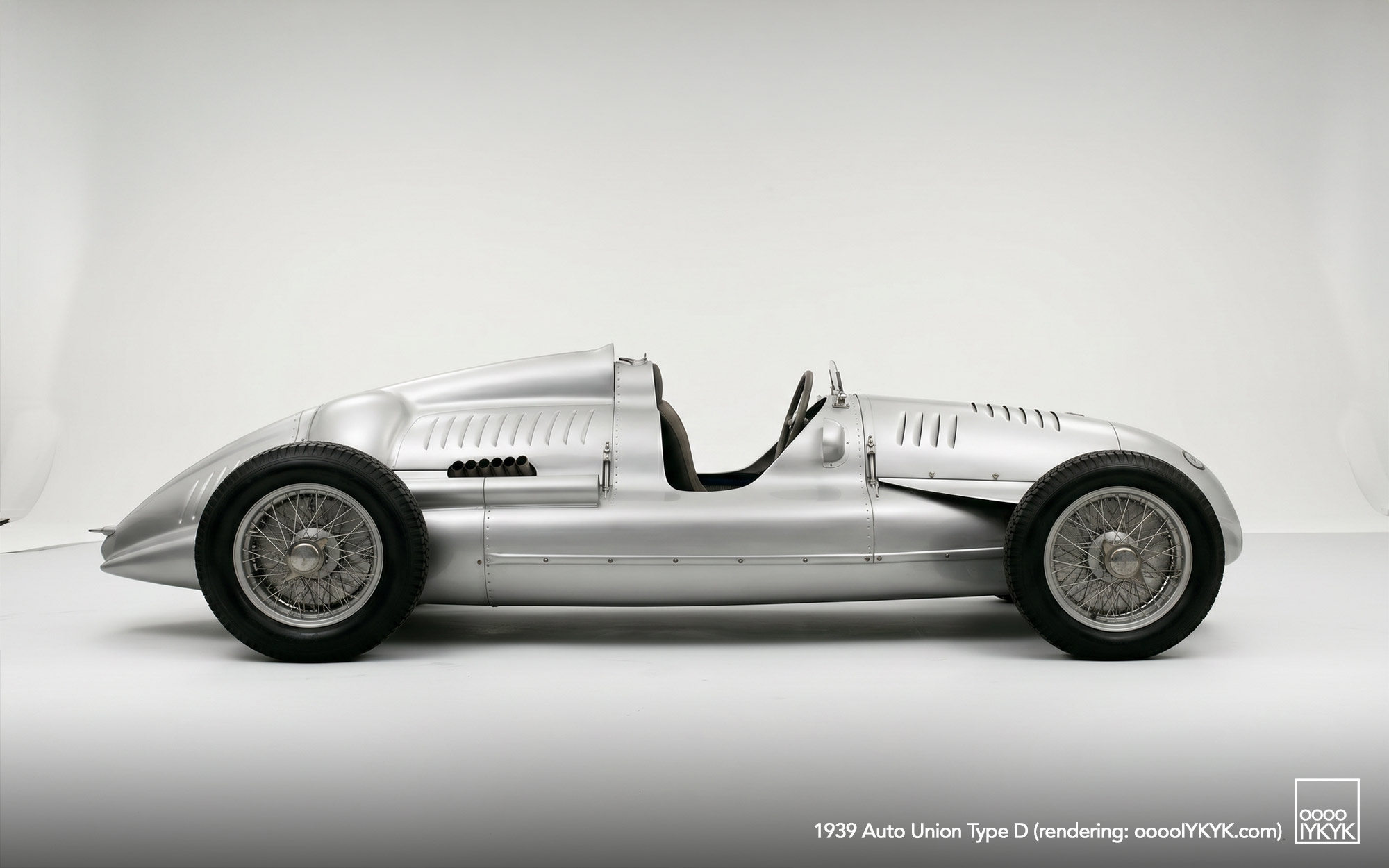
One of the best-documented surviving examples is Chassis 19, originally raced by Rudolf Hasse and Hans Stuck during the 1939 season. Hasse drove the car to fifth place in the Eifelrennen at the Nürburgring, while Stuck later finished sixth with the same chassis at the French Grand Prix at Reims.
Following World War II, Chassis 19 was among the Auto Union racing cars transported to the Soviet Union for technical evaluation. Decades later, components of the car were recovered by collector Paul Karassik and restored by British specialists Crosthwaite & Gardiner. The restoration returned the car to its 1939 twin-stage supercharged specification.
LEGACY
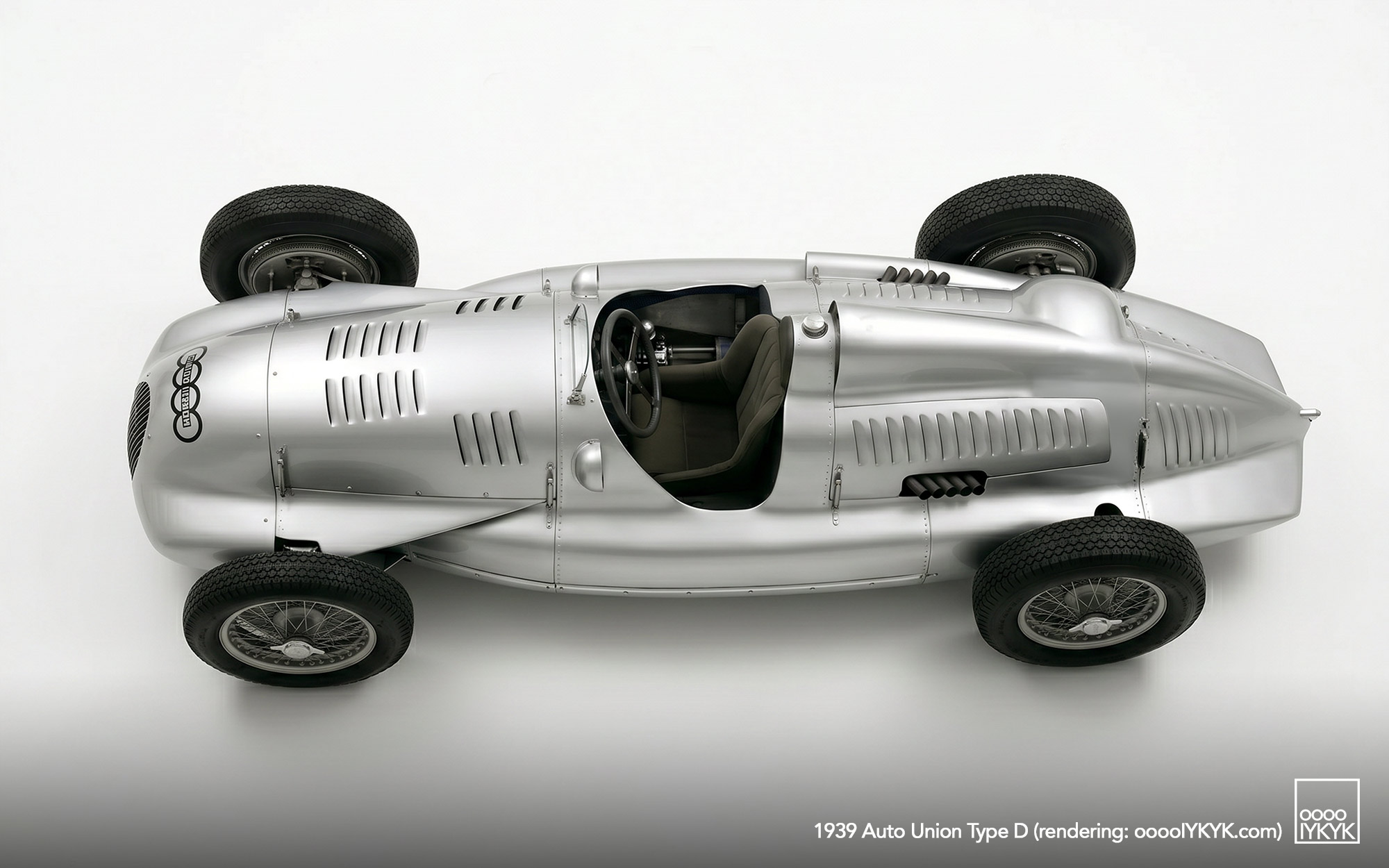
The Auto Union Type D represented the culmination of Auto Union’s pre-war Grand Prix program and the final competitive expression of the original Silver Arrow era. Its rear-engine layout, advanced suspension design and supercharged V12 powertrain were decades ahead of contemporary practice and influenced the future direction of Grand Prix car design. Today, surviving Type D examples are among the most valuable and historically significant racing cars in existence.
RACE RESULTS
Eifelrennen, Nürburgring, Germany – May 21, 1939 🥈
| Driver | Manufacturer | Car Number | Result |
|---|---|---|---|
| Lang | Mercedes-Benz | 16 | 1st |
| Nuvolari | Auto Union | 2 | 2nd |
| Caracciola | Mercedes-Benz | 12 | 3rd |
| von Brauchitsch | Mercedes-Benz | 14 | 4th |
| Hasse | Auto Union | 8 | 5th |
| Bigalke | Auto Union | 10 | 6th |
| Muller | Auto Union | 6 | 7th |
| Hartmann | Mercedes-Benz | 20 | 8th |
| Seaman | Mercedes-Benz | 18 | DNF |
| Stuck | Auto Union | 4 | DNF |
| Meier | Auto Union | 19 | DNF |
Belgian Grand Prix, Spa-Francorchamps, Belgium – June 26, 1939 🥈
| Driver | Manufacturer | Car Number | Result |
|---|---|---|---|
| Lang | Mercedes-Benz | 22 | 1st |
| Hasse | Auto Union | 4 | 2nd |
| von Brauchitsch | Mercedes-Benz | 24 | 3rd |
| Sommer | Alfa Romeo | 12 | 4th |
| Mazaud | Delahaye | 14 | 5th |
| Gèrard | Delahaye | 18 | 6th |
| Seaman | Mercedes-Benz | 26 | DNF |
| Meier | Auto Union | 8 | DNF |
| Nuvolari | Auto Union | 2 | DNF |
| Müller | Auto Union | 6 | DNF |
| Caracciola | Mercedes-Benz | 20 | DNF |
French Grand Prix, Reims, France – July 9, 1939 🥇🥈
| Driver | Manufacturer | Car Number | Result |
|---|---|---|---|
| Müller | Auto Union | 12 | 1st |
| Meier | Auto Union | 14 | 2nd |
| Lebègue | Talbot | 36 | 3rd |
| Etancelin | Talbot | 34 | 4th |
| Sommer | Alfa Romeo | 2 | 5th |
| Stuck | Auto Union | 10 | 6th |
| Nuvolari | Auto Union | 8 | DNF |
| Caracciola | Mercedes-Benz | 16 | DNF |
| von Brauchitsch | Mercedes-Benz | 18 | DNF |
| Lang | Mercedes-Benz | 20 | DNF |
| Seaman | Mercedes-Benz | 22 | DNF |
German Grand Prix, Nürburgring, Germany – July 23, 1939 🥈
| Driver | Manufacturer | Car Number | Result |
|---|---|---|---|
| Caracciola | Mercedes-Benz | 12 | 1st |
| Müller | Auto Union | 6 | 2nd |
| Pietsch | Maserati | 32 | 3rd |
| Dreyfus | Delahaye | 24 | 4th |
| Raph | Delahaye | 26 | 5th |
| Mazaud | Delahaye | 28 | 6th |
| Lang | Mercedes-Benz | 16 | DNF |
| von Brauchitsch | Mercedes-Benz | 14 | DNF |
| Stuck | Auto Union | 4 | DNF |
| Nuvolari | Auto Union | 2 | DNF |
| Hasse | Auto Union | 8 | DNF |
| Meier | Auto Union | 10 | DNF |
| Brendal | Mercedes-Benz | 20 | DNF |
Swiss Grand Prix, Bremgarten, Bern, Switzerland – August 20, 1939
| Driver | Manufacturer | Car Number | Result |
|---|---|---|---|
| Heat 1, Voiturettes | |||
| Farina | Alfa Romeo | 64 | 1st |
| Biondetti | Alfa Romeo | 66 | 2nd |
| Wakefield | Maserati | 54 | 3rd |
| Rocco | Maserati | 60 | 4th |
| Pietsch | Maserati | 28 | 5th |
| Ansell | ERA | 48 | 6th |
| Heat 2, Grand Prix Cars | |||
| Lang | Mercedes-Benz | 16 | 1st |
| Caracciola | Mercedes-Benz | 14 | 2nd |
| von Brachitsch | Mercedes-Benz | 10 | 3rd |
| Nuvolari | Auto Union | 6 | 4th |
| Hartmann | Mercedes-Benz | 12 | 5th |
| Stuck | Auto Union | 8 | 6th |
| Müller | Auto Union | 4 | 7th |
| Final | |||
| Lang | Mercedes-Benz | 16 | 1st |
| Caracciola | Mercedes-Benz | 14 | 2nd |
| von Brachitsch | Mercedes-Benz | 10 | 3rd |
| Müller | Auto Union | 4 | 4th |
| Nuvolari | Auto Union | 6 | 5th |
| Farina | Alfa Romeo | 64 | 6th |
| Hartmann | Mercedes-Benz | 12 | 7th |
| Stuck | Auto Union | 8 | 10th |
German Grand Prix, Nürburgring, Germany – July 23, 1939 🥇🥉
| Driver | Manufacturer | Car Number | Result |
|---|---|---|---|
| Nuvolari | Auto Union | 4 | 1st |
| von Brauchitsch | Mercedes-Benz | 6 | 2nd |
| Müller | Auto Union | 8 | 3rd |
| Milenkovic | Bugatti | 12 | 4th |
| Lang / Bäumer | Mercedes-Benz | 2 | DNF |
| Bäumer | Mercedes-Benz | 10 | DNF |
PHOTO GALLERY