
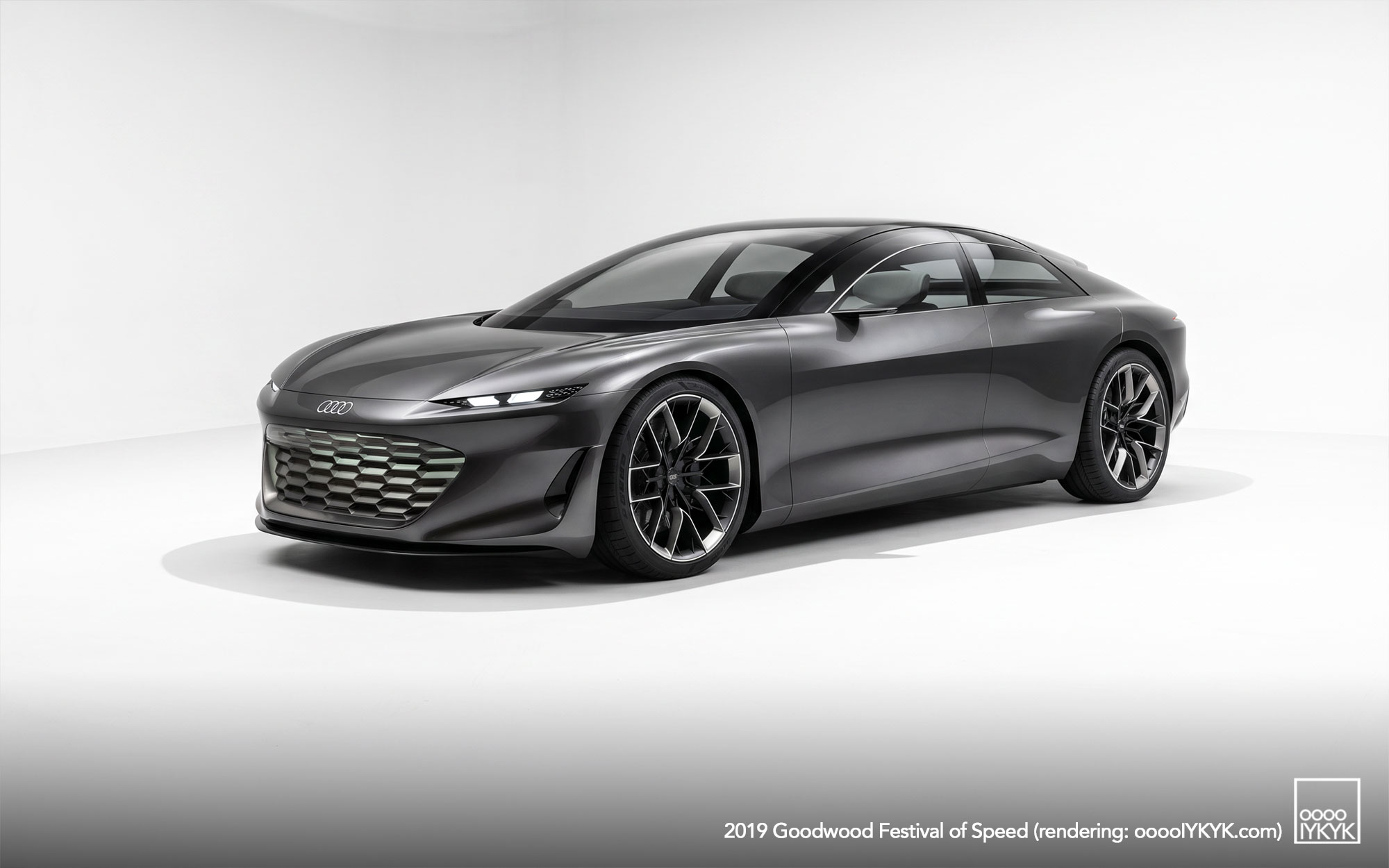

What: Audi grandsphere concept
Type: concept car / show car
Debut: September 2, 2021
Public Debut: IAA Mobility 2021, Munich
Series: Audi sphere concept series
Related Concepts: Audi skysphere concept, Audi urbansphere concept, Audi activesphere concept
Platform: Premium Platform Electric (PPE)
Body Style: Four-door luxury GT / Sportback
Seating: 2+2
Drive: Electric quattro all-wheel drive
Power: 530 kW (710 hp)
Torque: 960 Nm (708 lb-ft)
Battery: Approximately 120 kWh
Electrical Architecture: 800 volts
Maximum Charging Rate: 270 kW
Range: More than 750 km (466 miles)
0–100 km/h: Just over 4 seconds
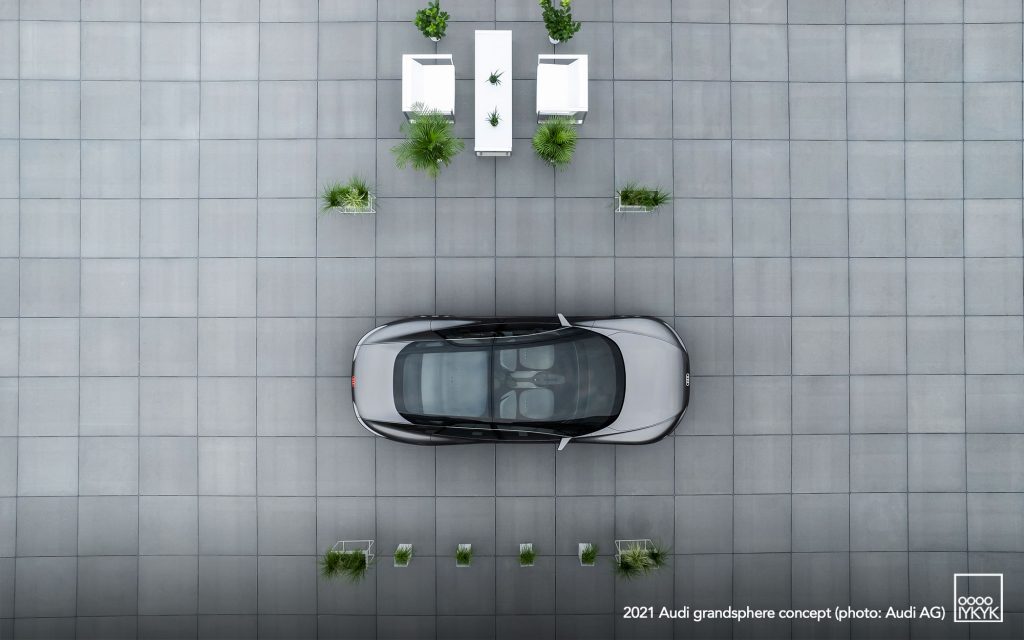
Length: 5.35 m (210.6 in)
Width: 2.00 m (78.7 in)
Height: 1.39 m (54.7 in)
Wheelbase: 3.19 m (125.6 in)
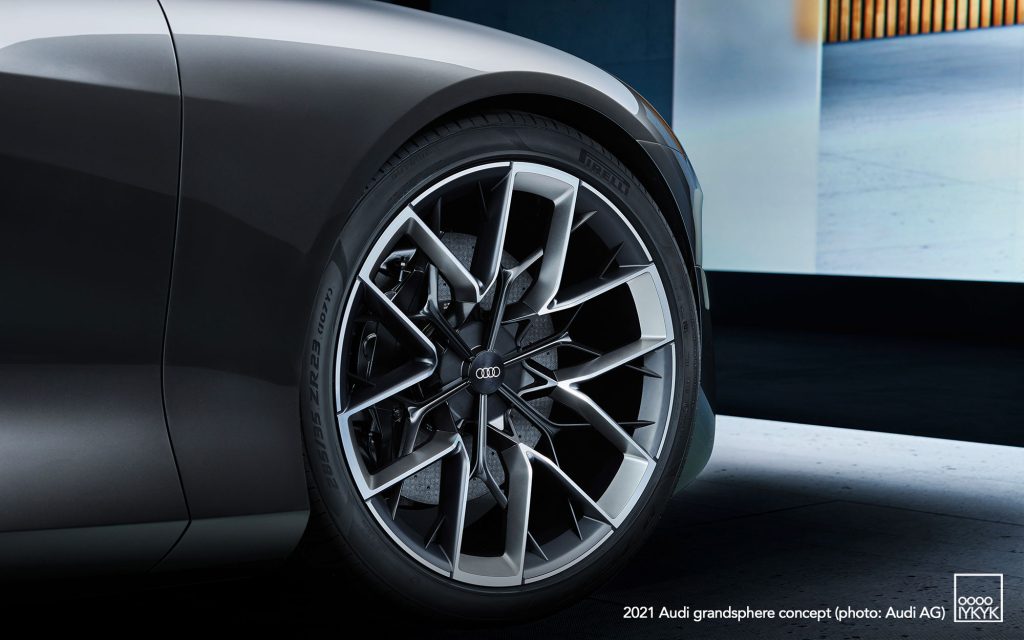
Wheels: 23 inches
Autonomous Driving: Level 4 concept
OVERVIEW
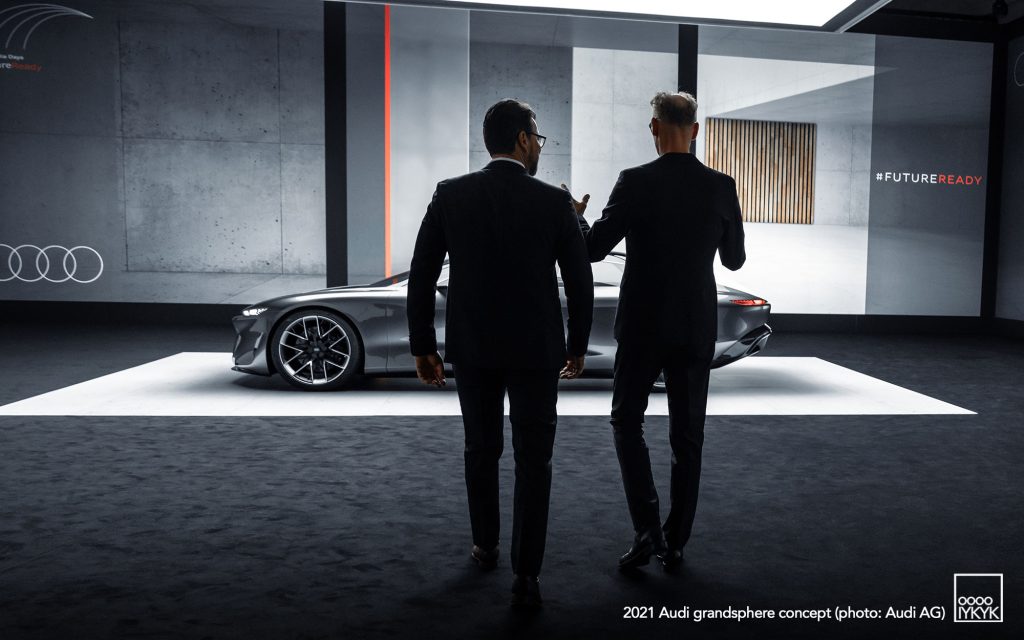
The Audi grandsphere concept was the second model in Audi’s sphere series of concept cars, following the skysphere concept revealed in August 2021. Presented on September 2 ahead of its public debut at IAA Mobility 2021, the grandsphere explored Audi’s vision for a future electric luxury flagship built around Level 4 automated driving and an interior conceived more as a first-class lounge than a traditional automobile cabin.
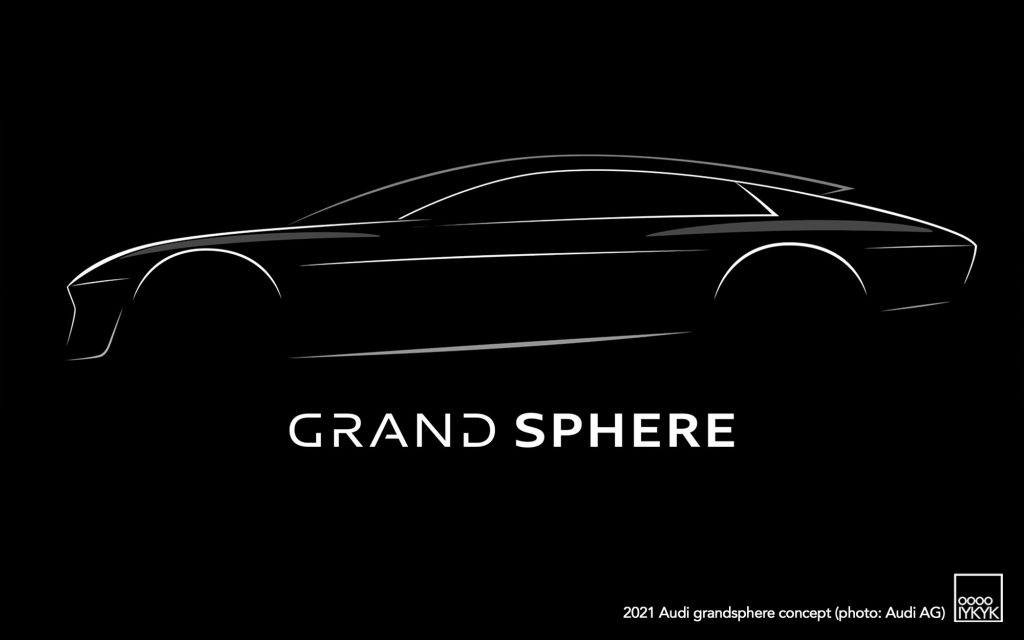
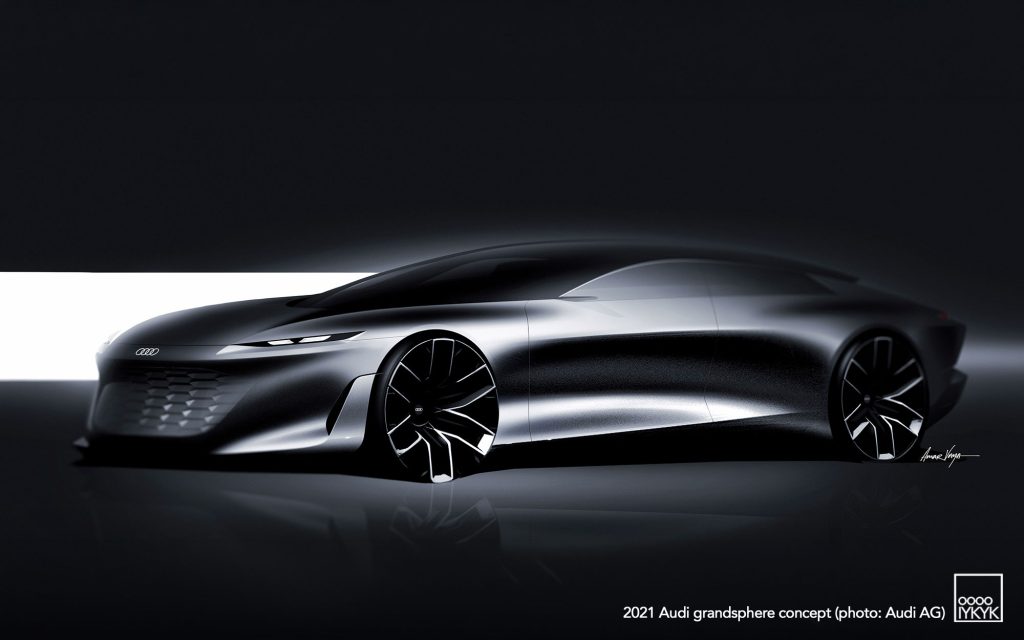
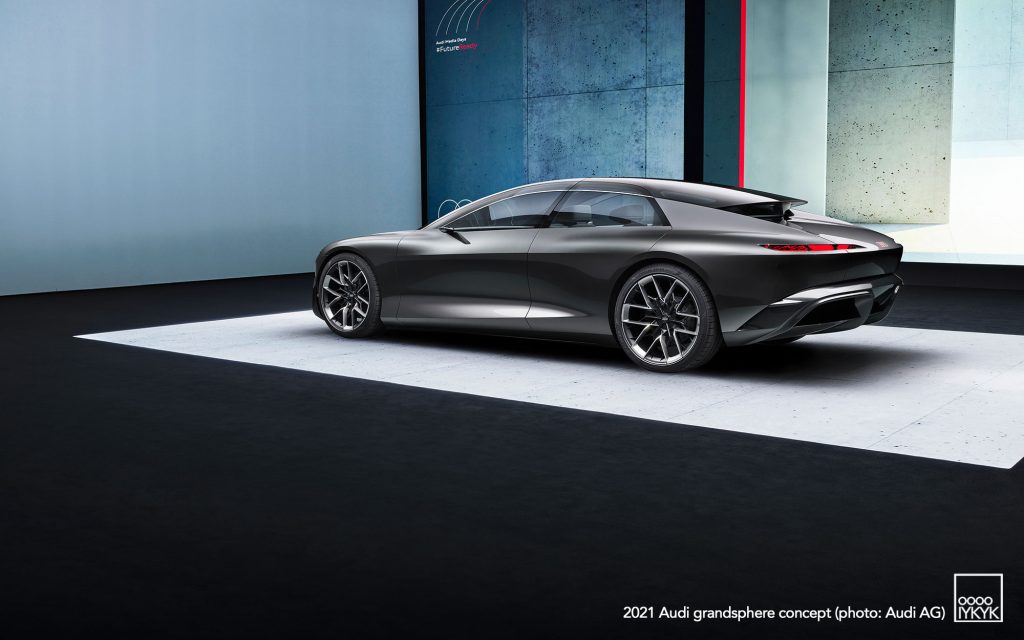
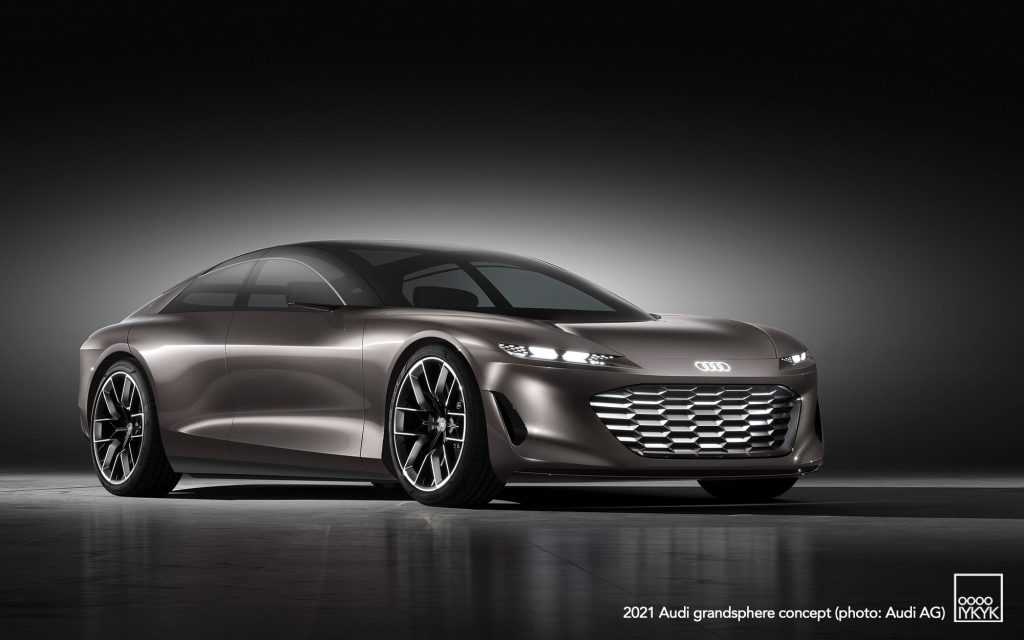
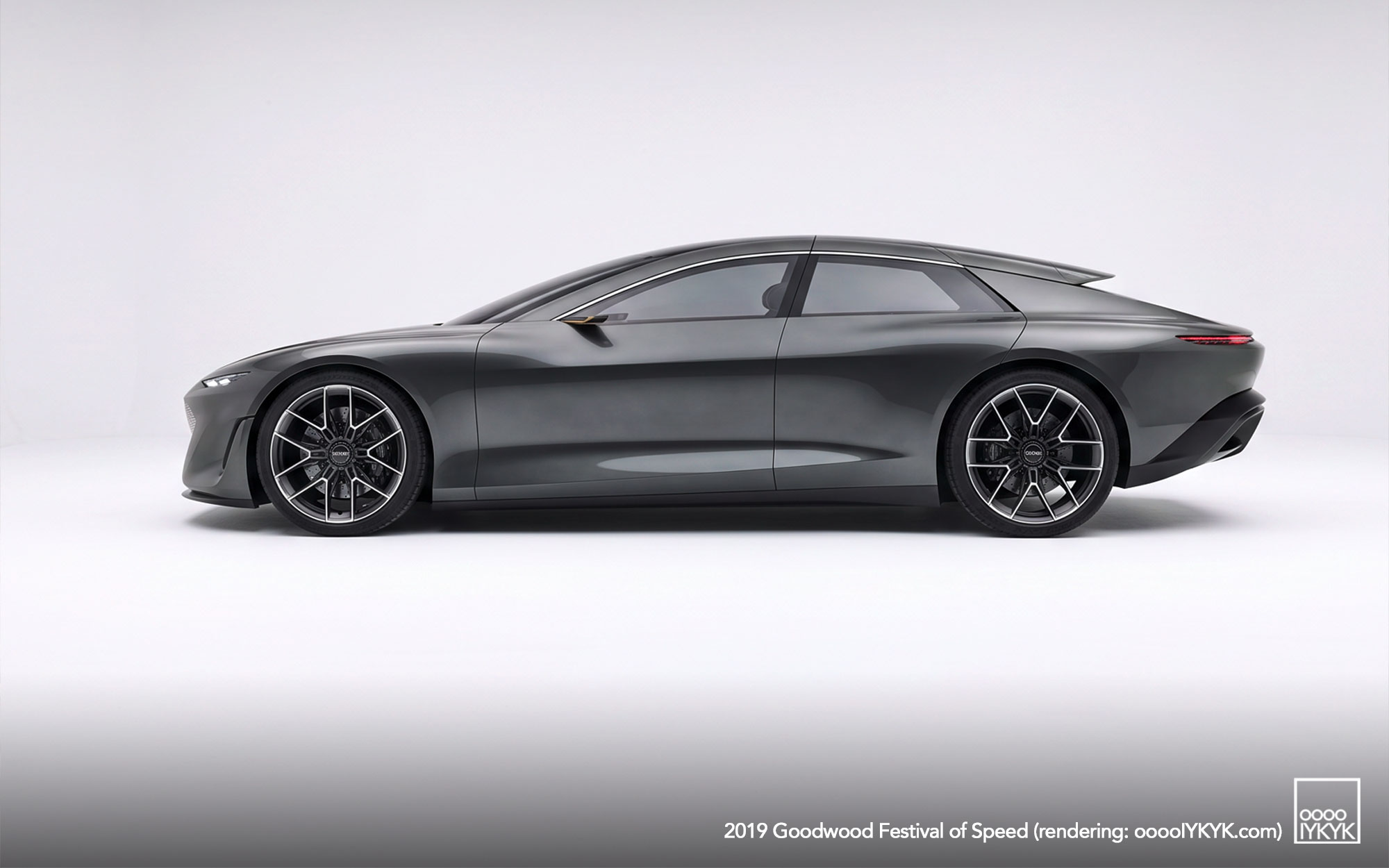
At 5.35 meters long with a 3.19-meter wheelbase, the grandsphere occupied territory traditionally associated with long-wheelbase luxury sedans such as the Audi A8. Its proportions and design, however, were closer to a low four-door grand tourer or Sportback, while its dedicated Premium Platform Electric architecture allowed Audi to rethink the relationship between the exterior dimensions and passenger compartment.
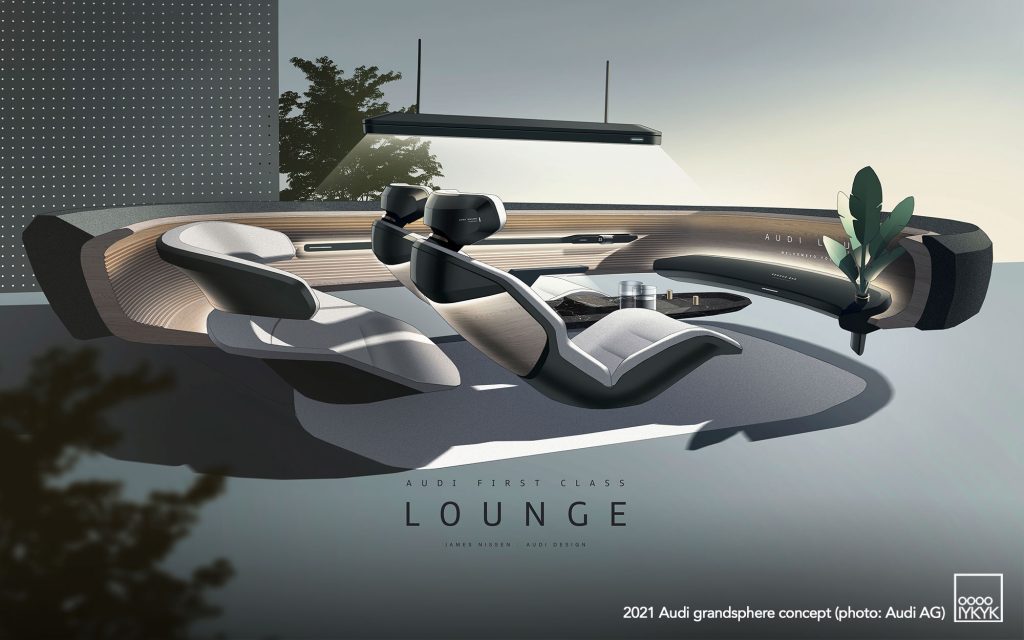
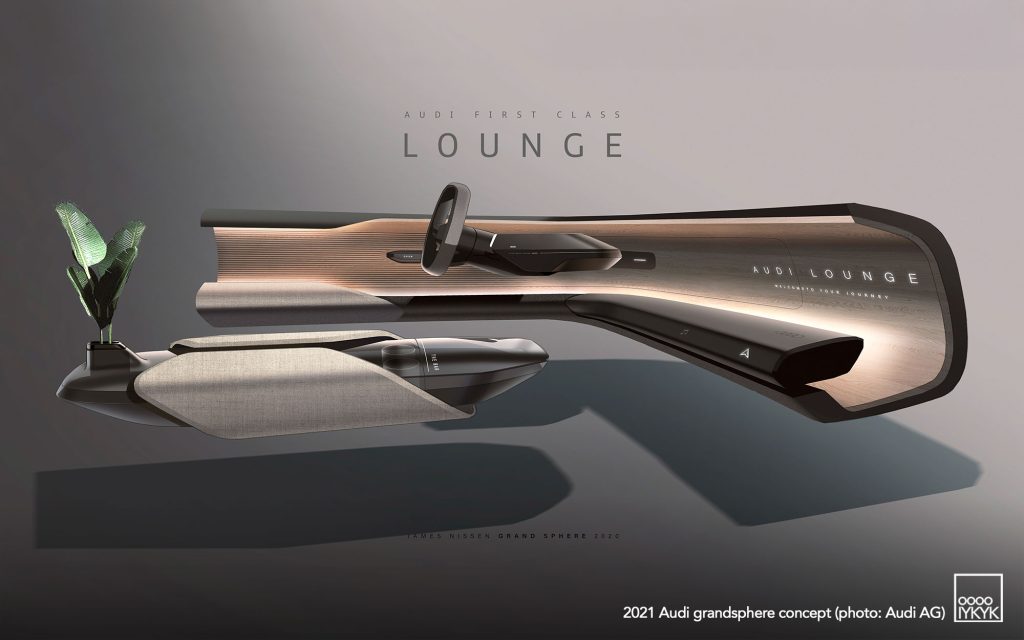
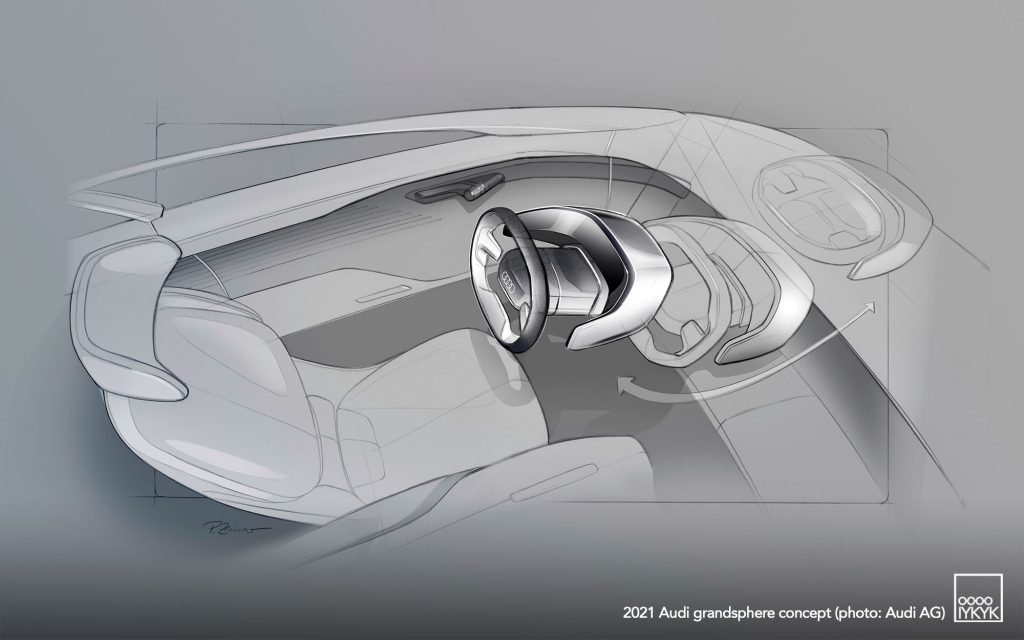
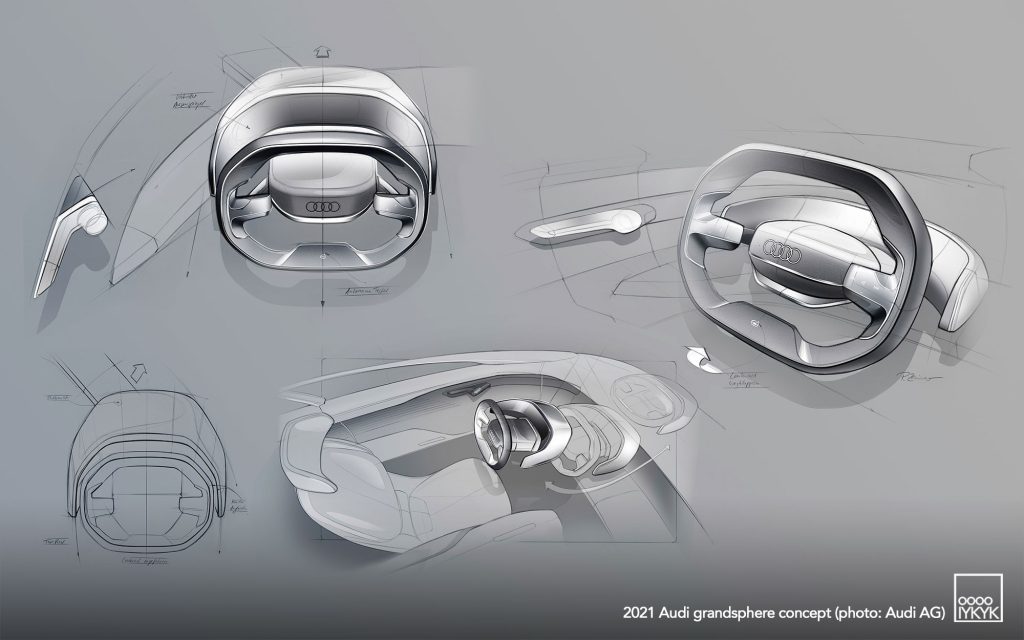
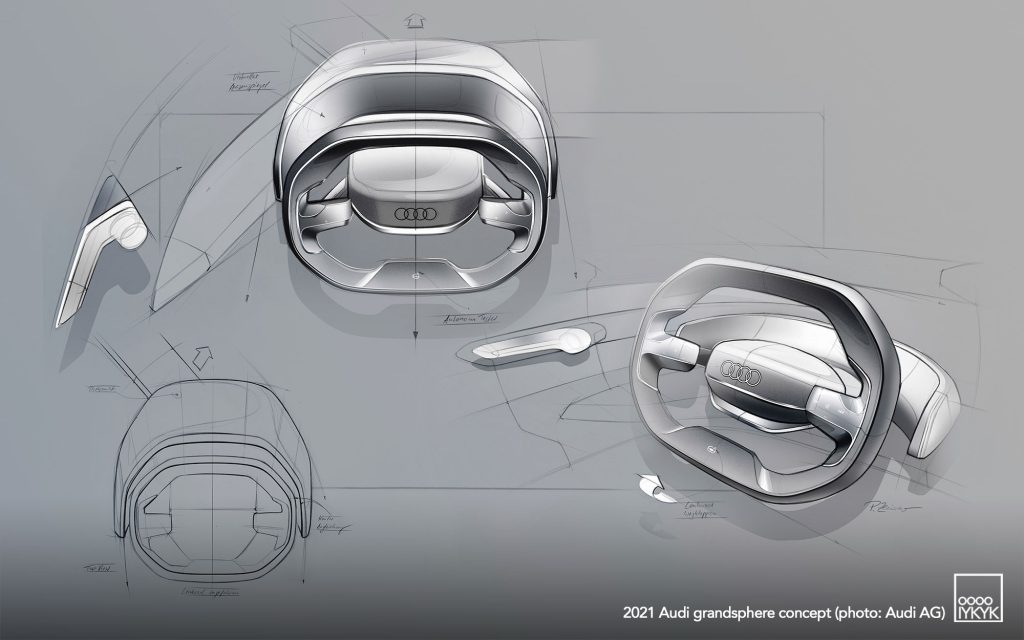
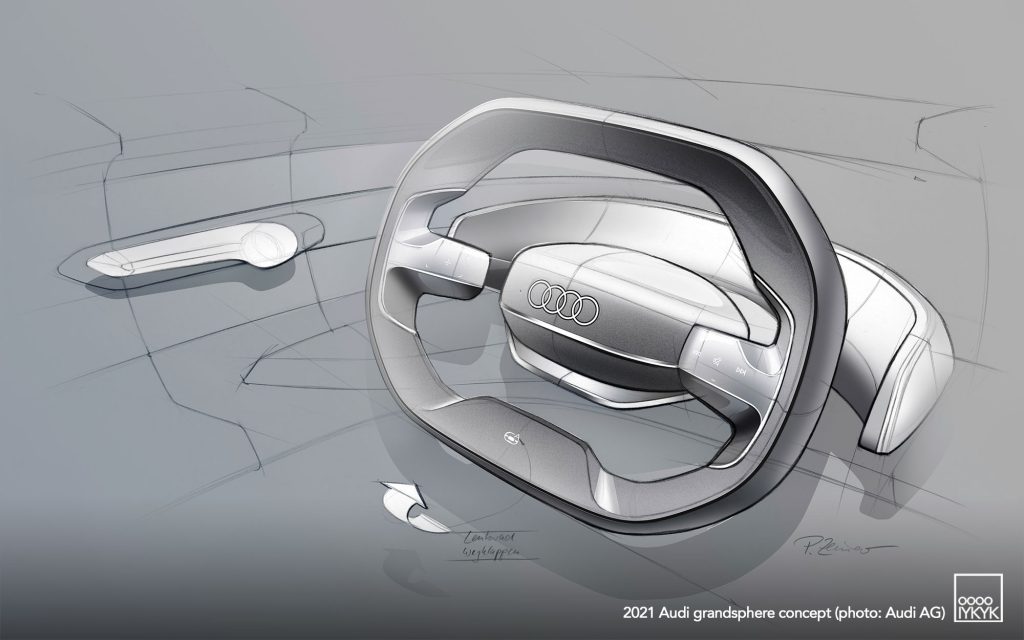
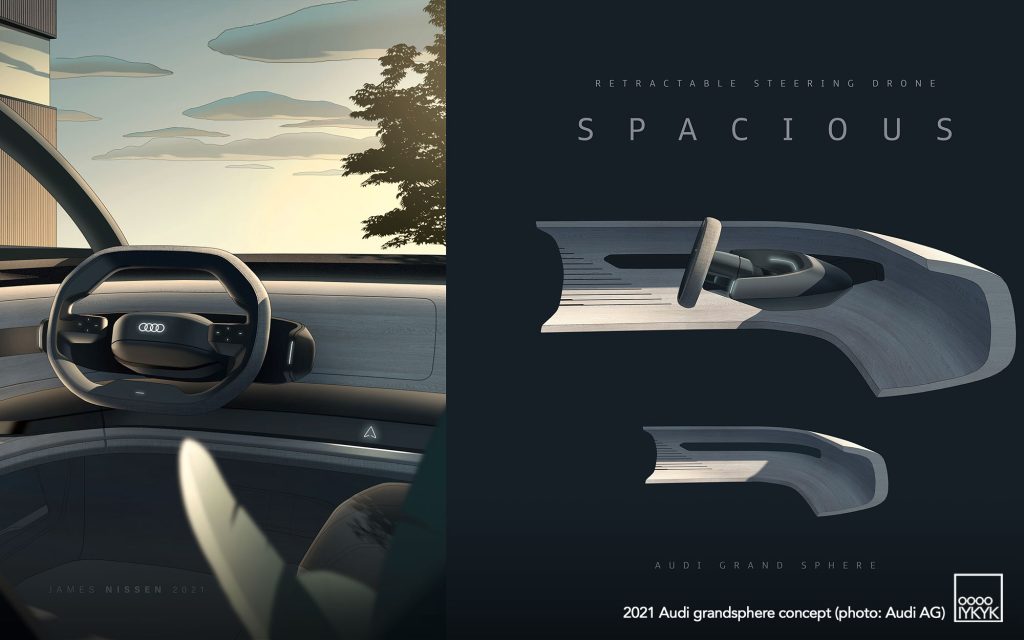
Audi described the concept as a “private jet for the road.” In its proposed Level 4 autonomous mode, the steering wheel, pedals and conventional displays disappeared, allowing the front of the cabin to become the car’s primary luxury space. Audi considered the technology and design ideas explored by the grandsphere particularly significant because elements were expected to influence future series-production models.
SPHERE CONCEPT SERIES
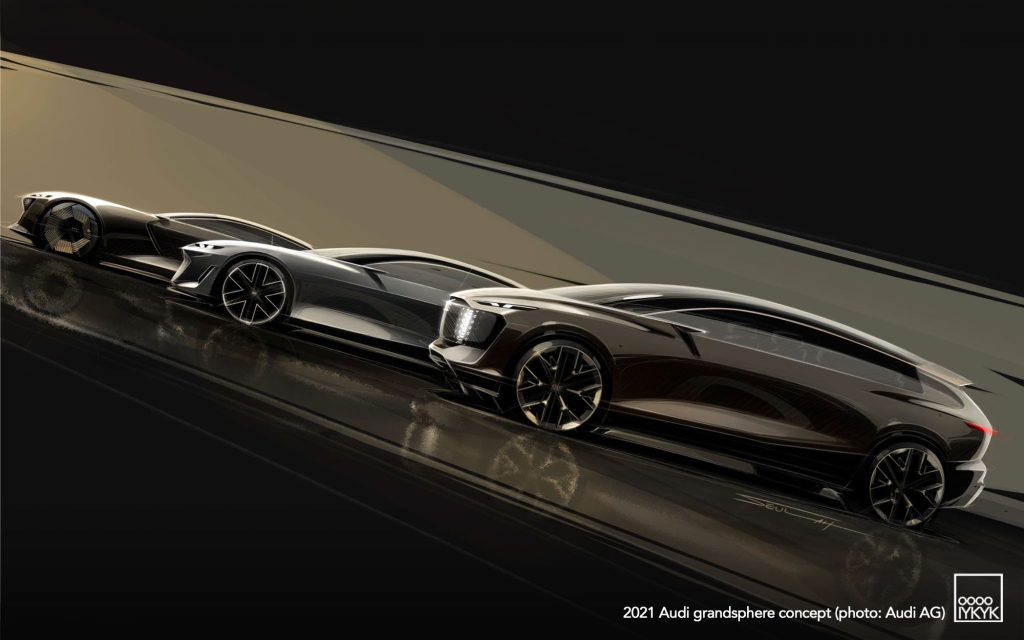
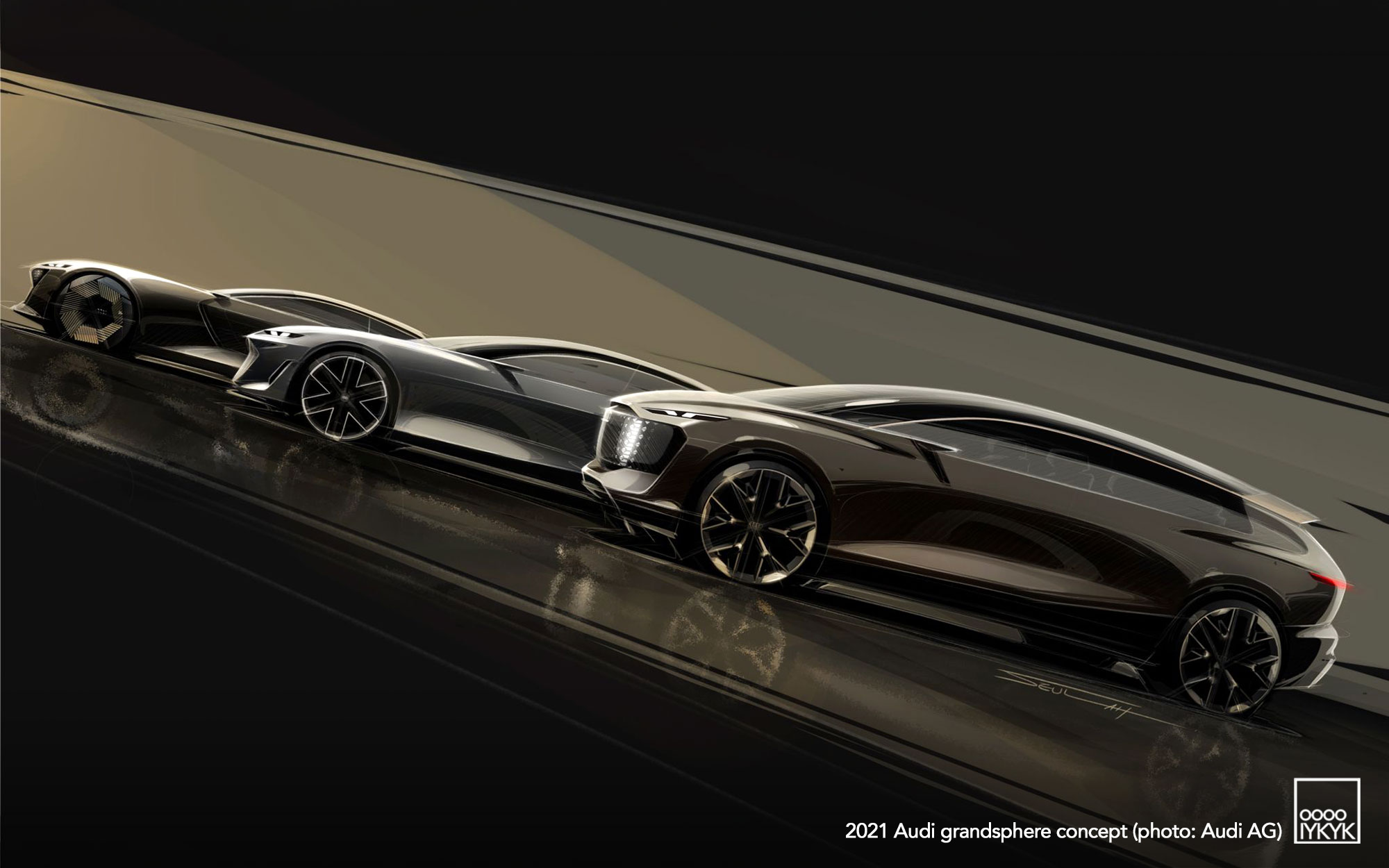
The grandsphere formed part of what was originally conceived as a three-car series exploring Audi’s interpretation of progressive luxury and automated mobility.
The skysphere concept preceded it as a transformable electric roadster, while the urbansphere was planned as the third member of the series for 2022. Audi later added the activesphere as a fourth sphere concept.
Rather than simply previewing individual production models, the sphere concepts were intended to explore a different philosophy for vehicle design. The interior and occupants’ experience became the starting point, with the drivetrain, vehicle package and exterior subsequently designed around that space.
Level 4 automated driving was fundamental to the original concept. By allowing the driver to relinquish control under appropriate conditions, Audi envisioned the automobile changing from a machine centered around driving into what it called an “experience device.”
EXTERIOR DESIGN
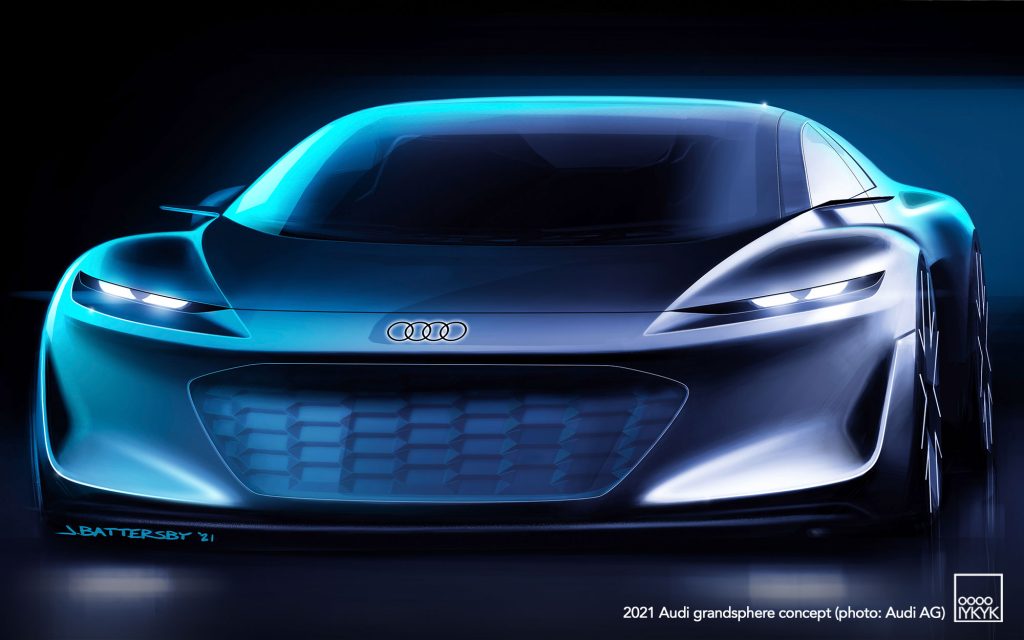
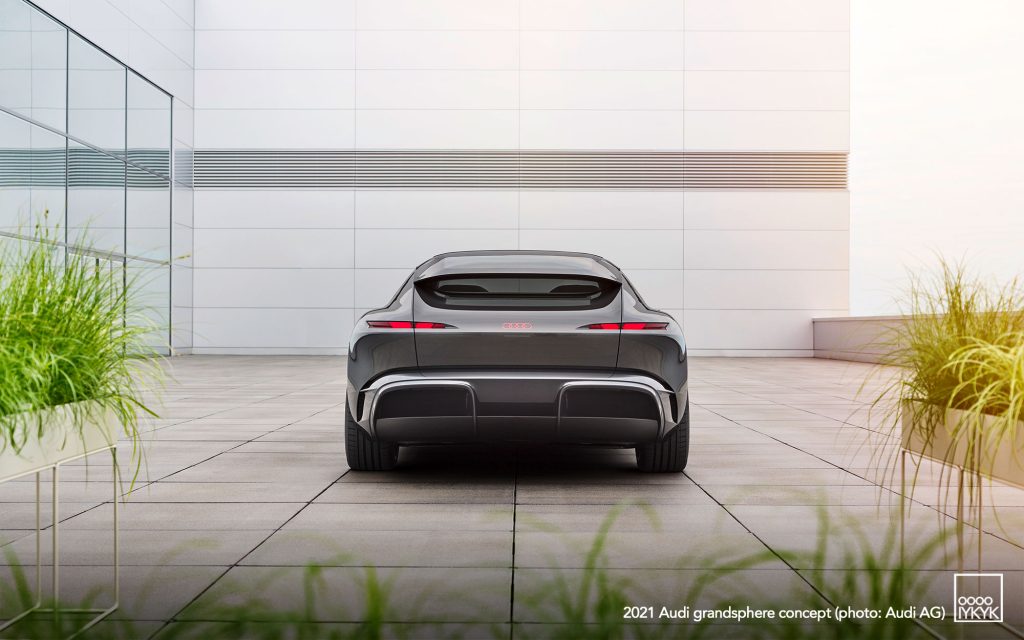
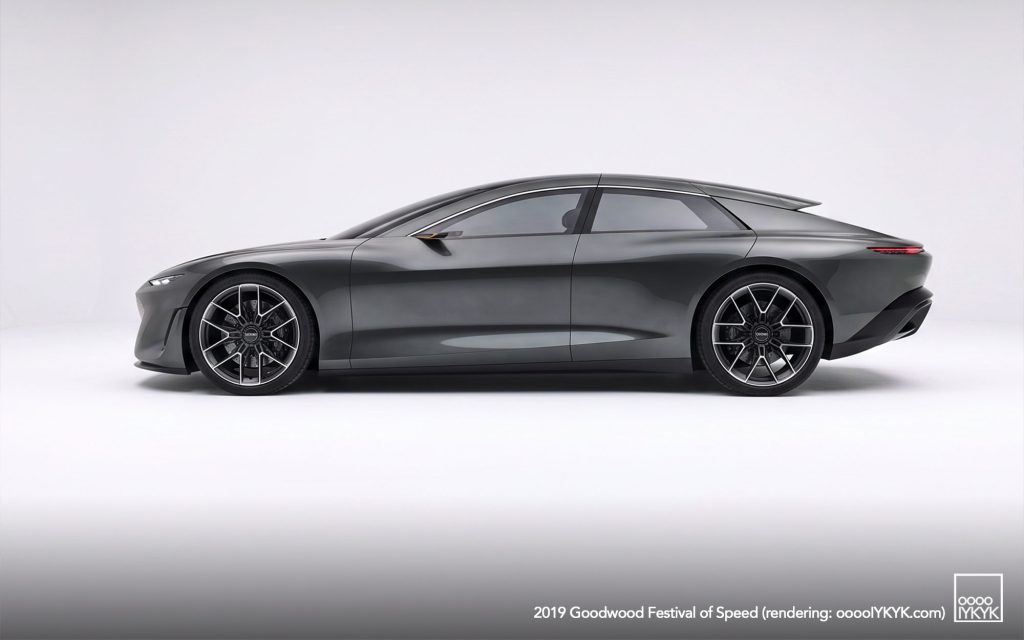
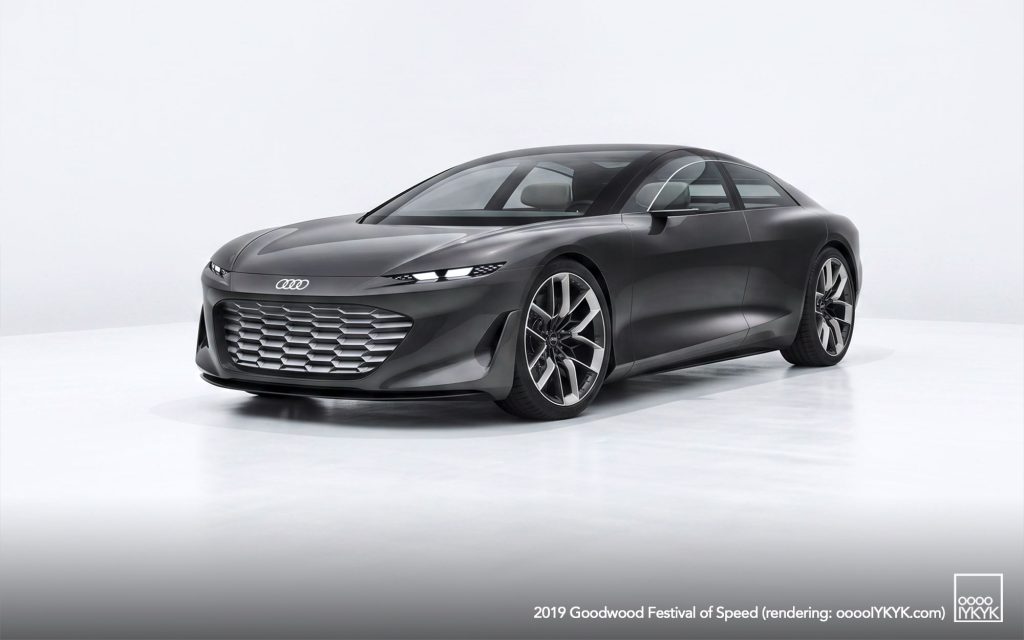
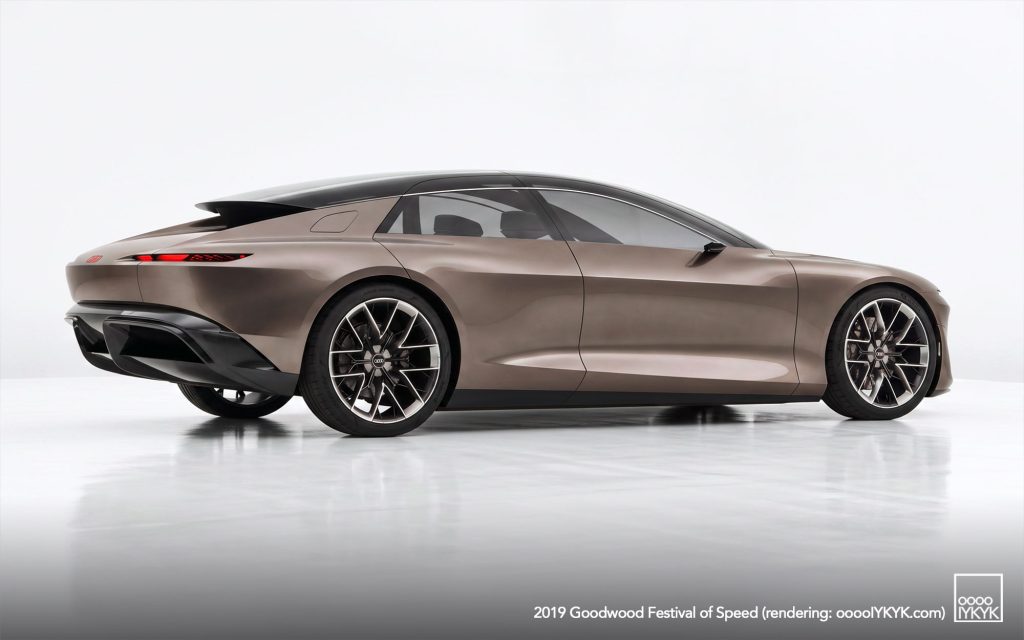
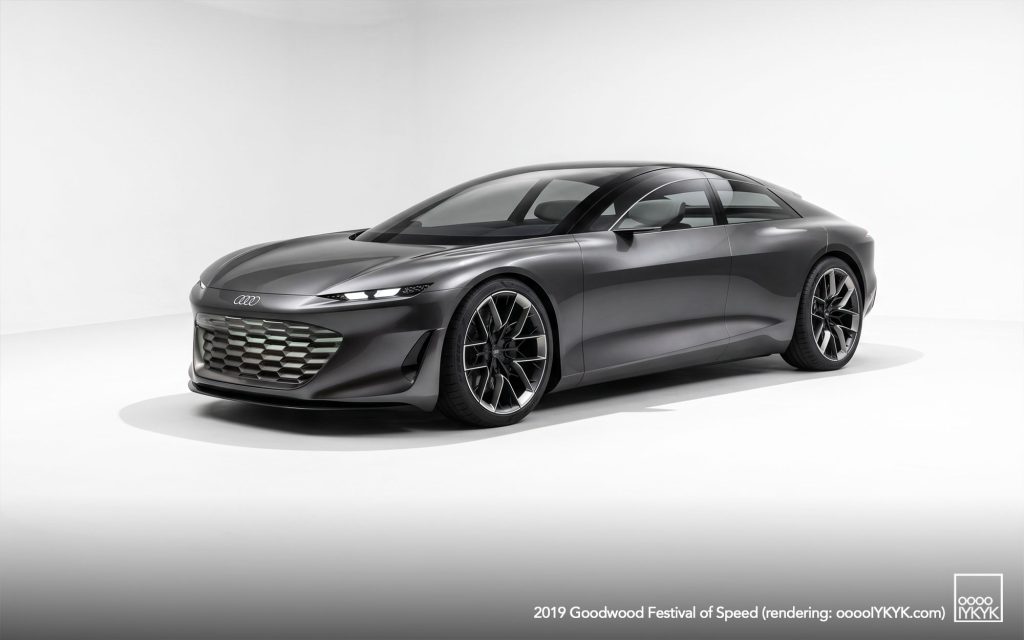
Despite its considerable size, the grandsphere deliberately avoided the proportions of a conventional luxury sedan.
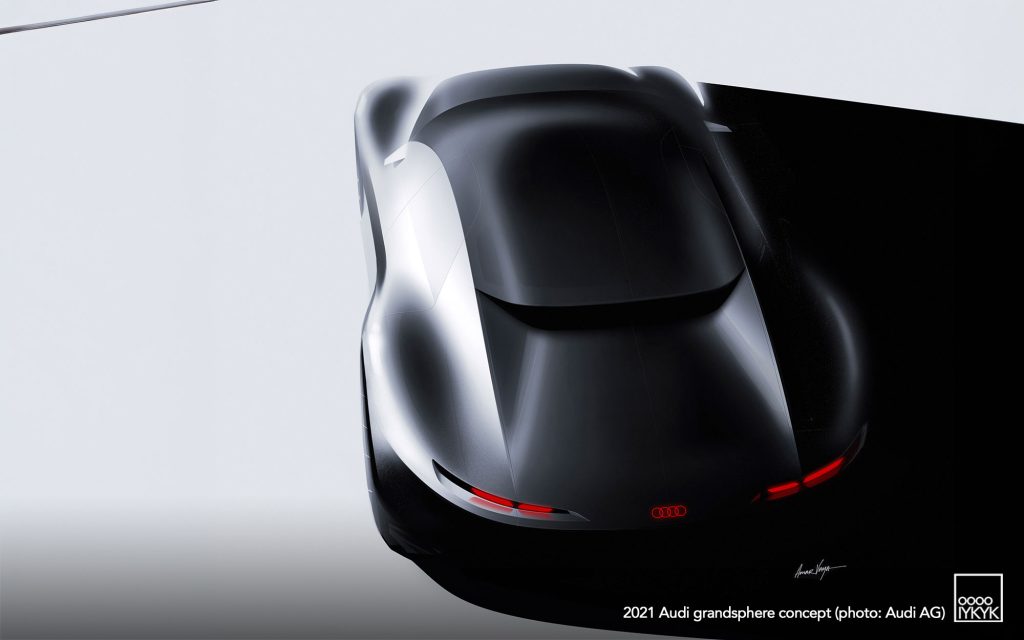
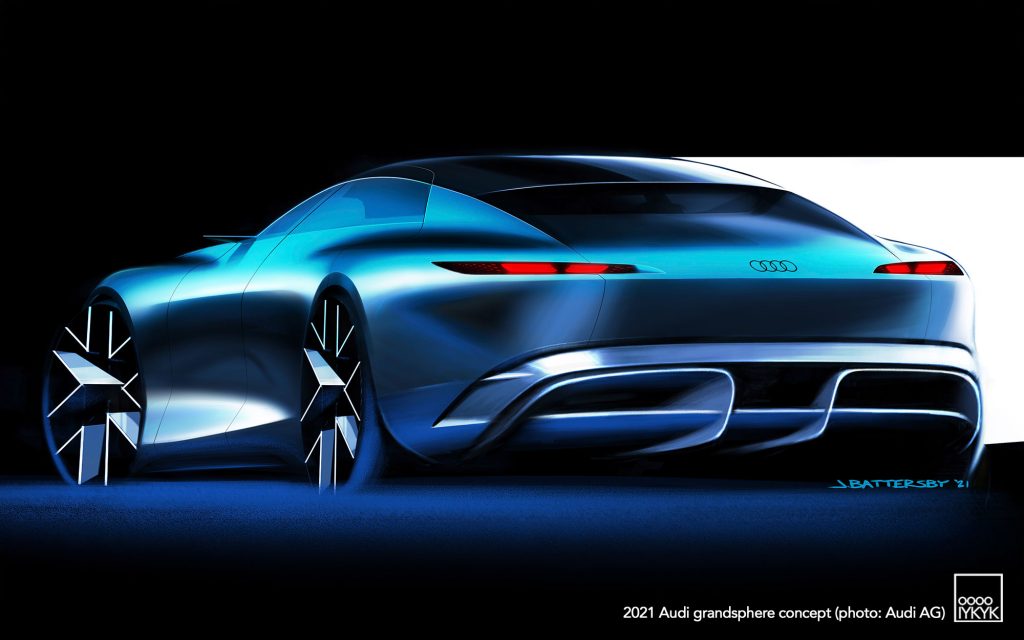
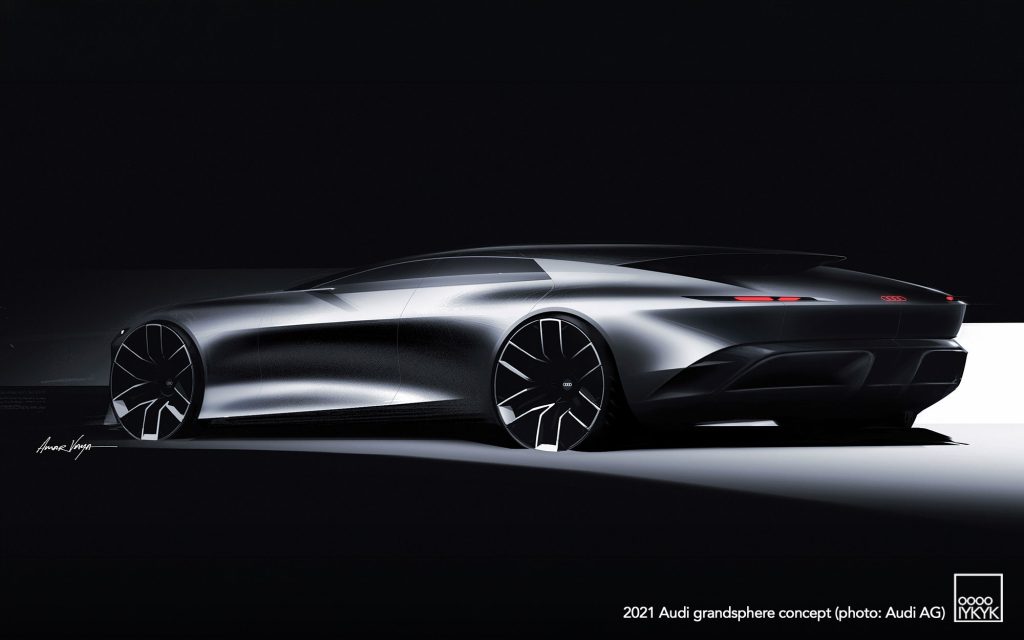
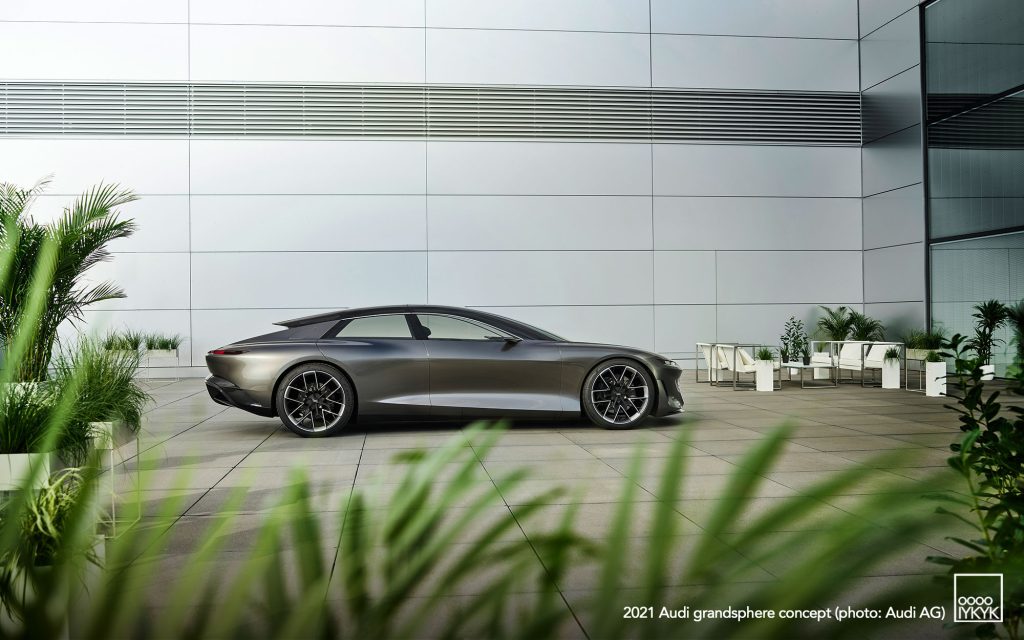
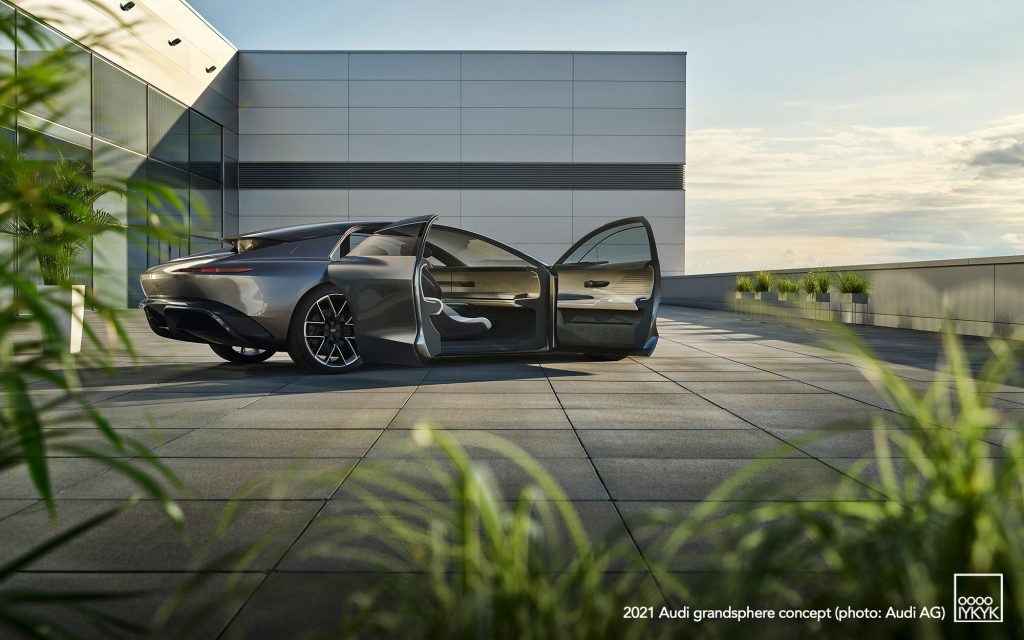
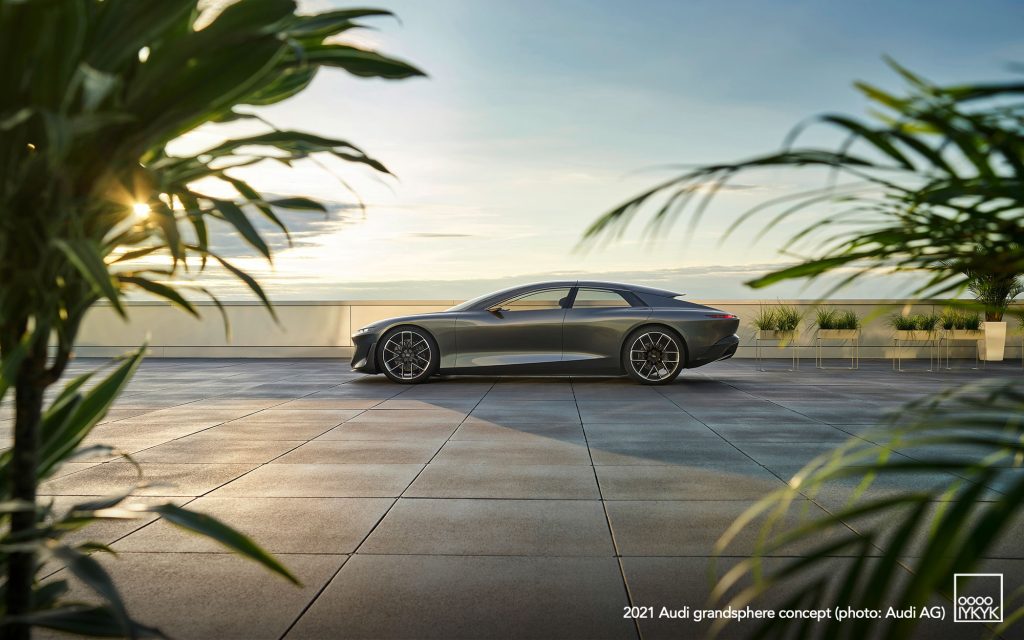
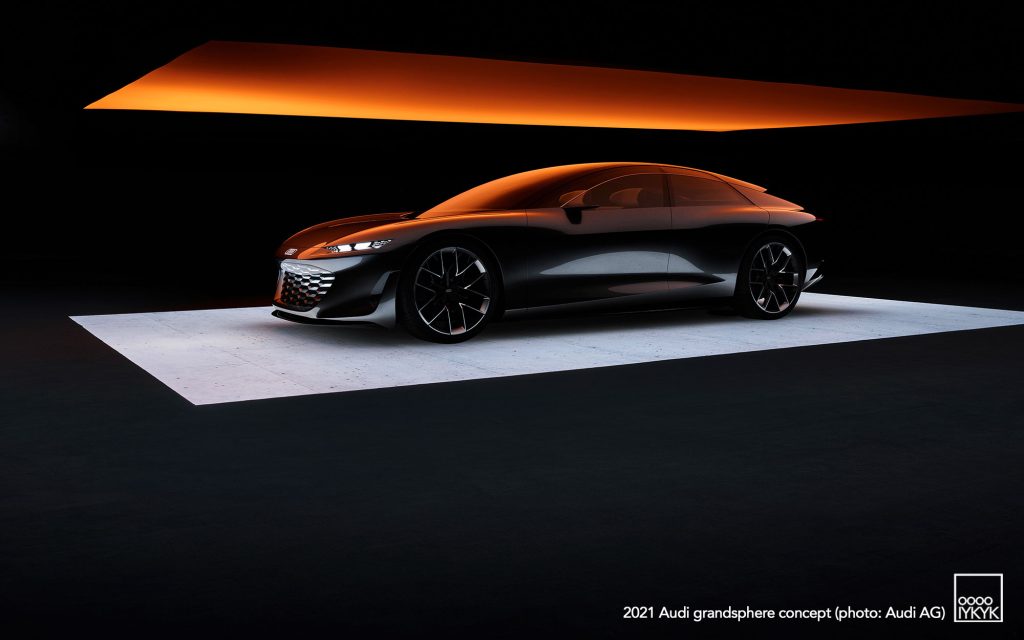
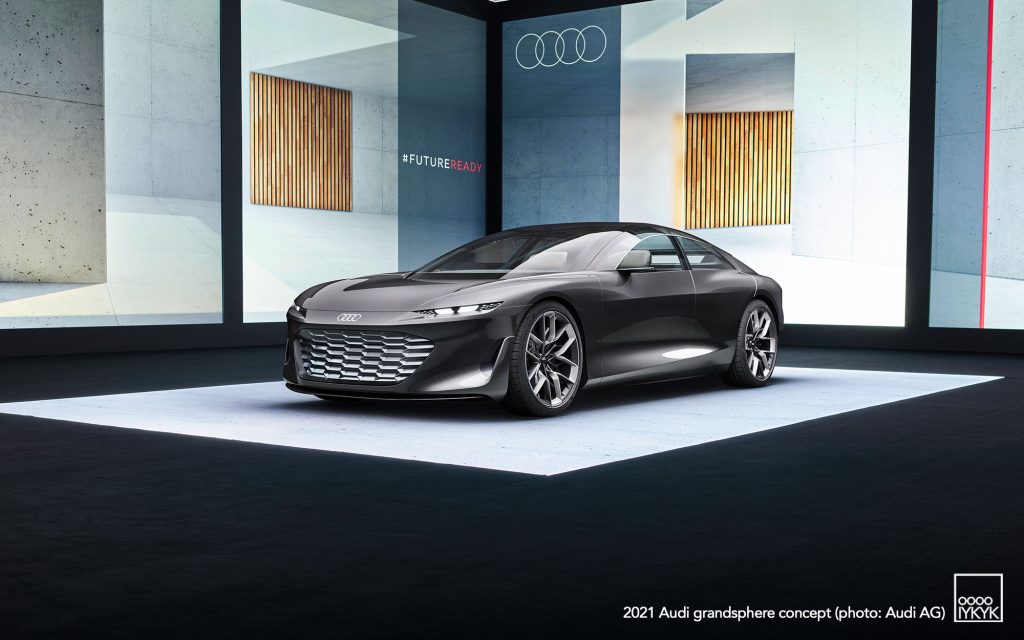
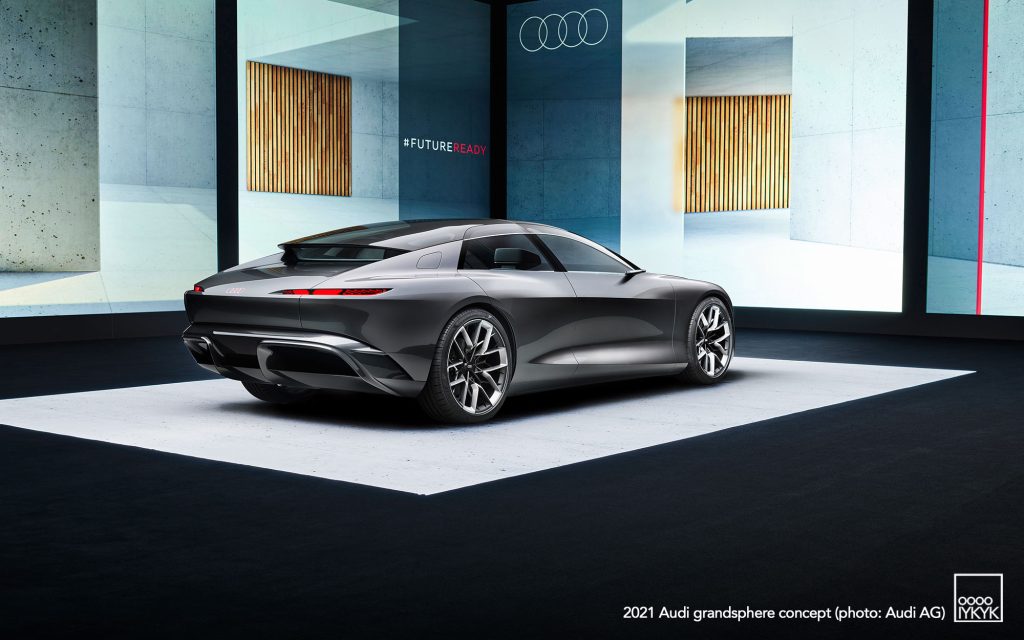
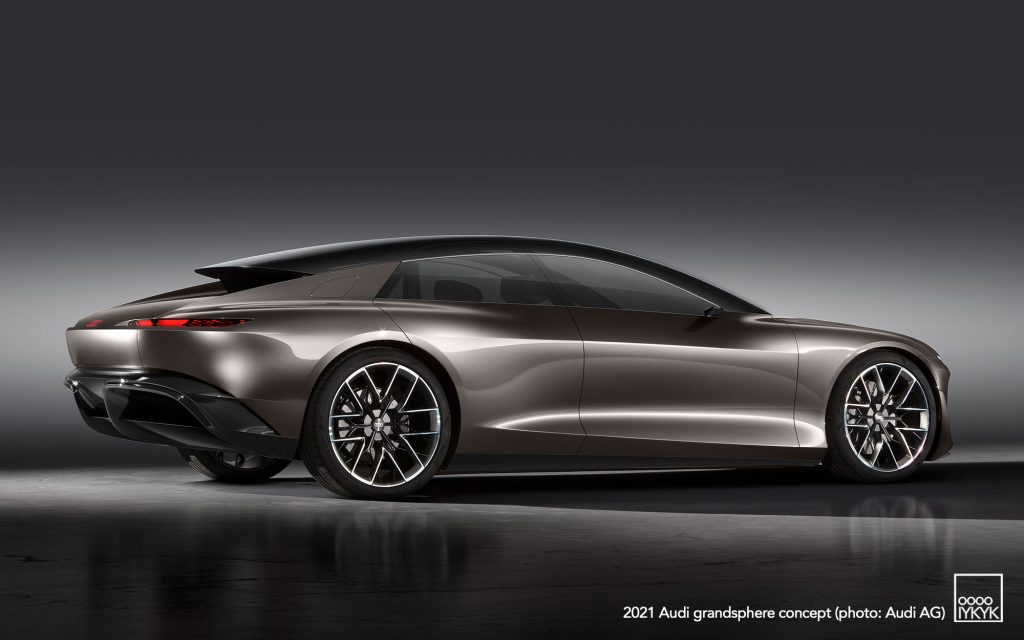
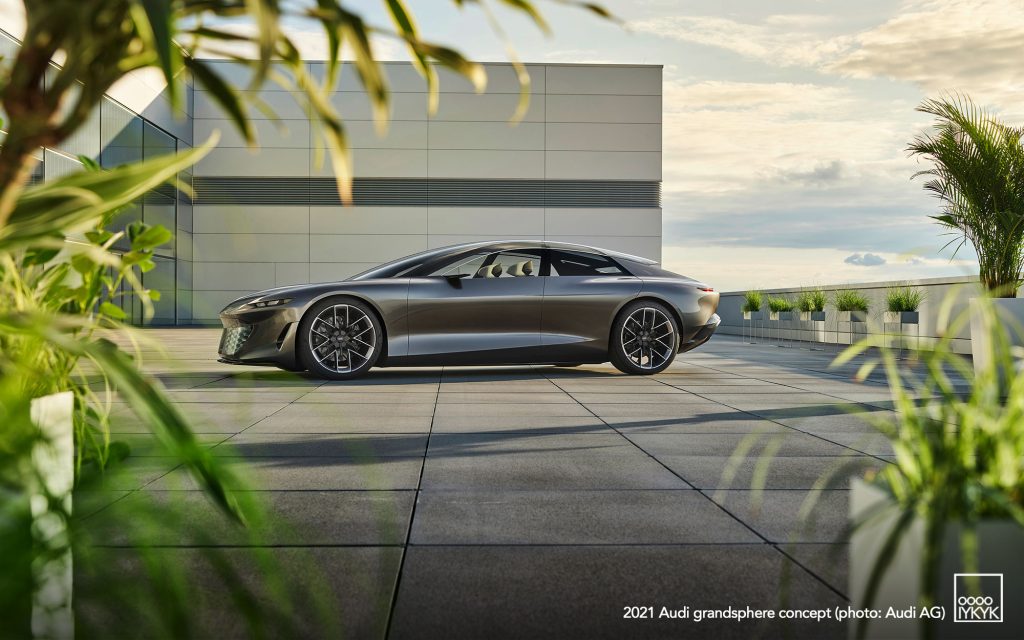
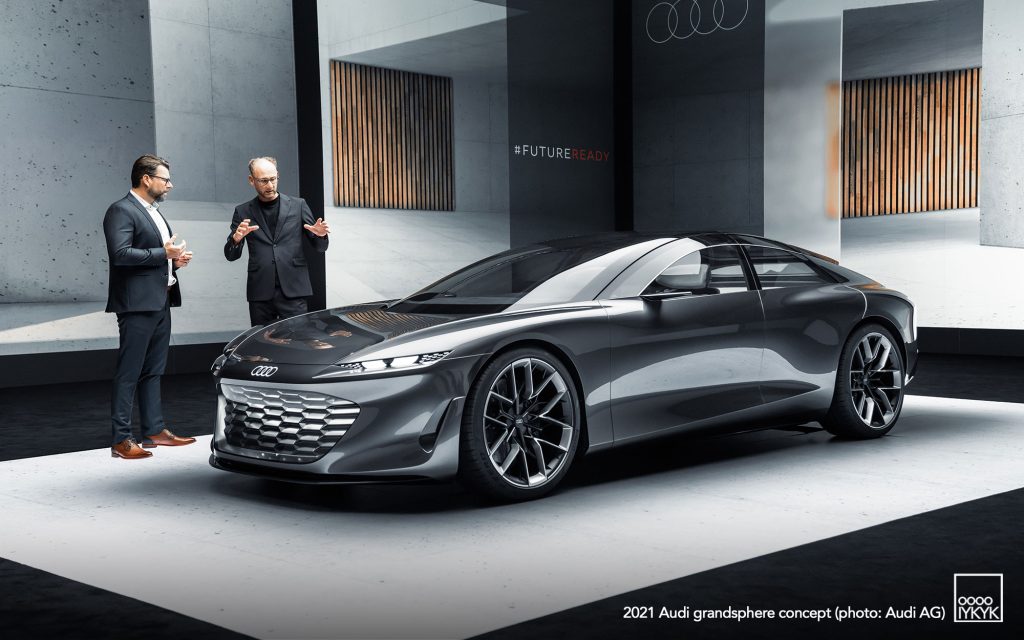
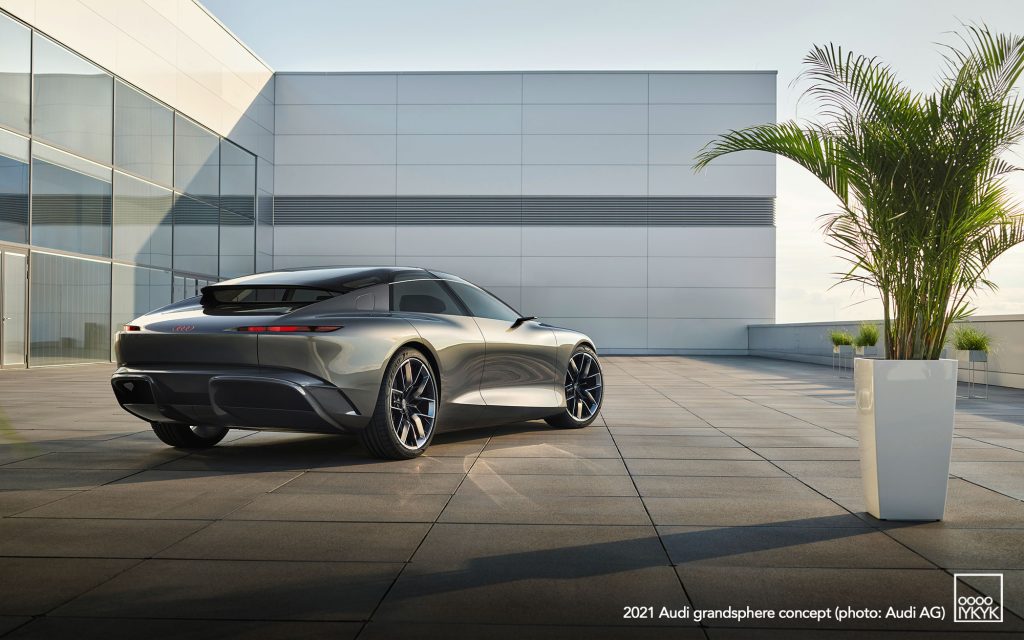
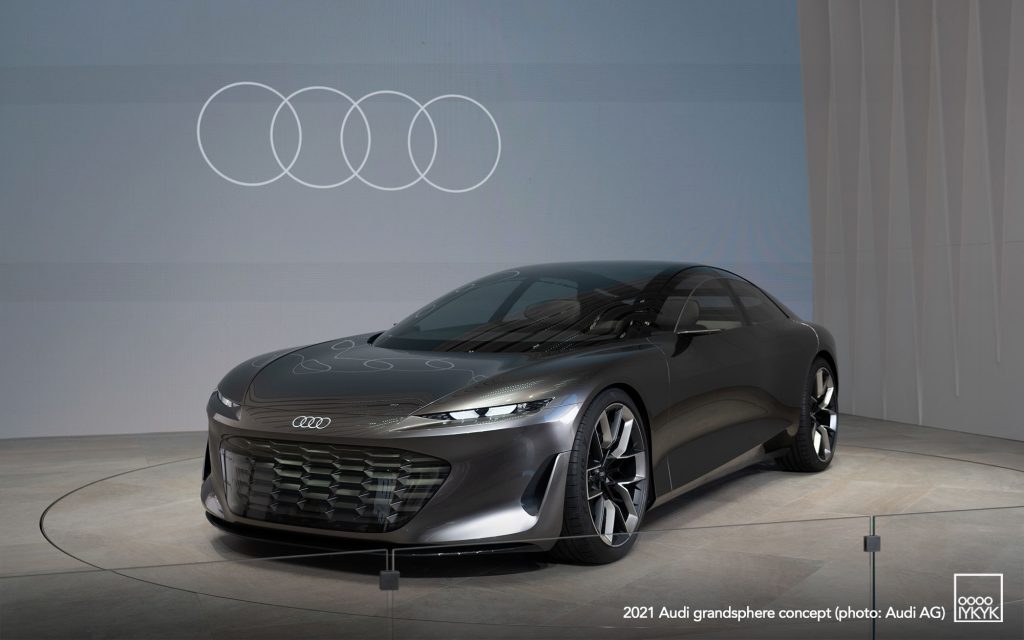
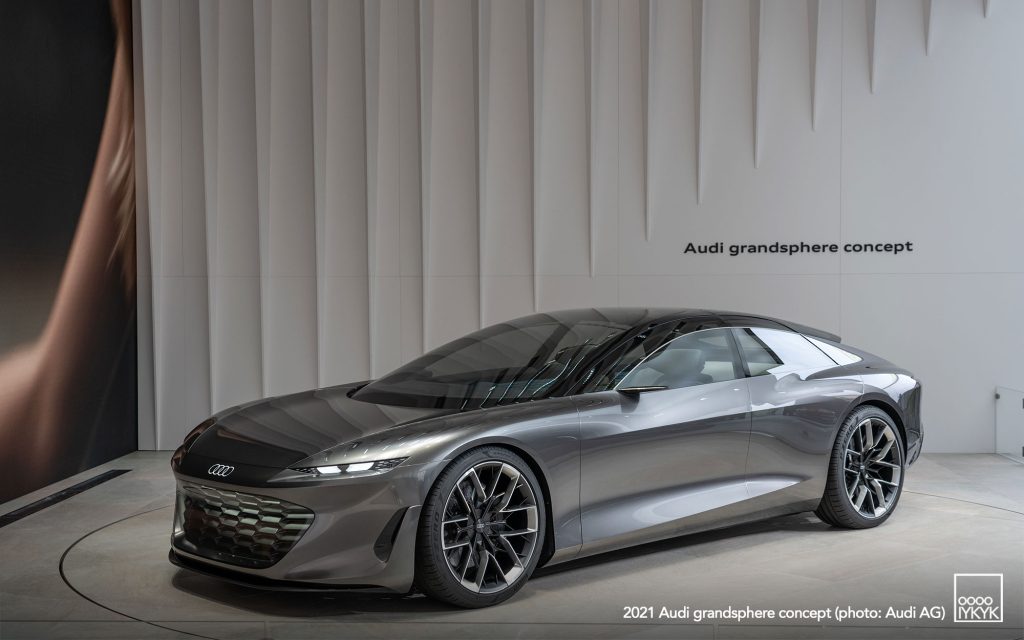
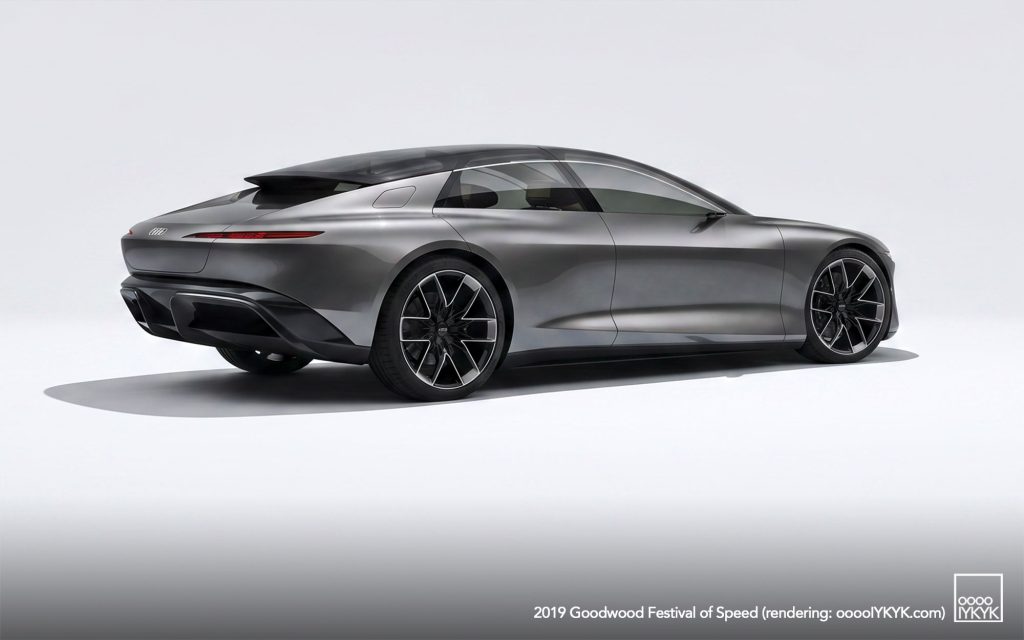
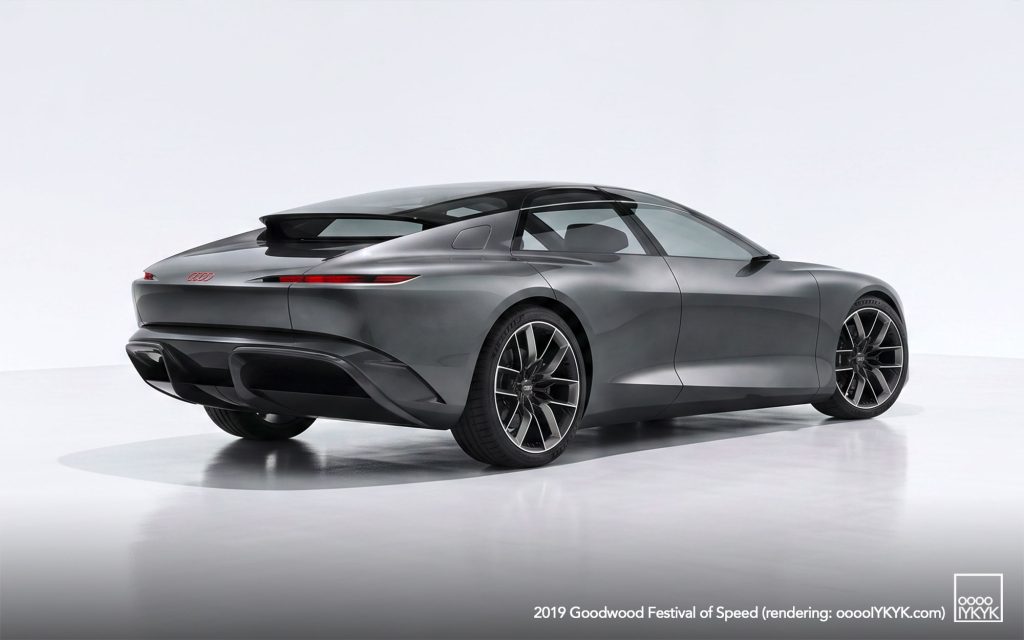
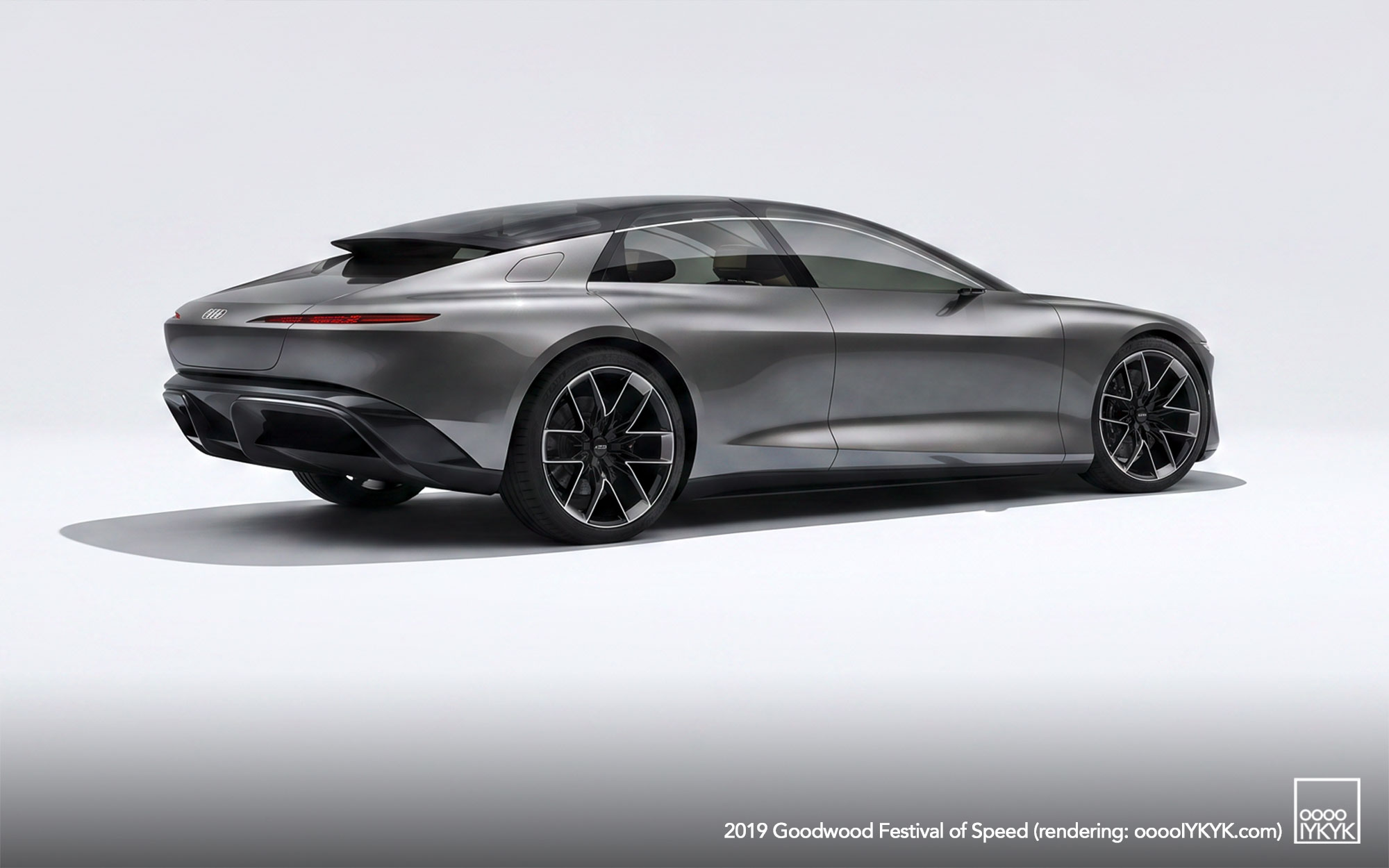
The concept measured 5.35 meters long, 2.00 meters wide and just 1.39 meters high. Its 3.19-meter wheelbase was longer than that of the contemporary long-wheelbase Audi A8, but the body was shaped as a low, tightly drawn four-door GT with a sweeping Sportback-style roofline.
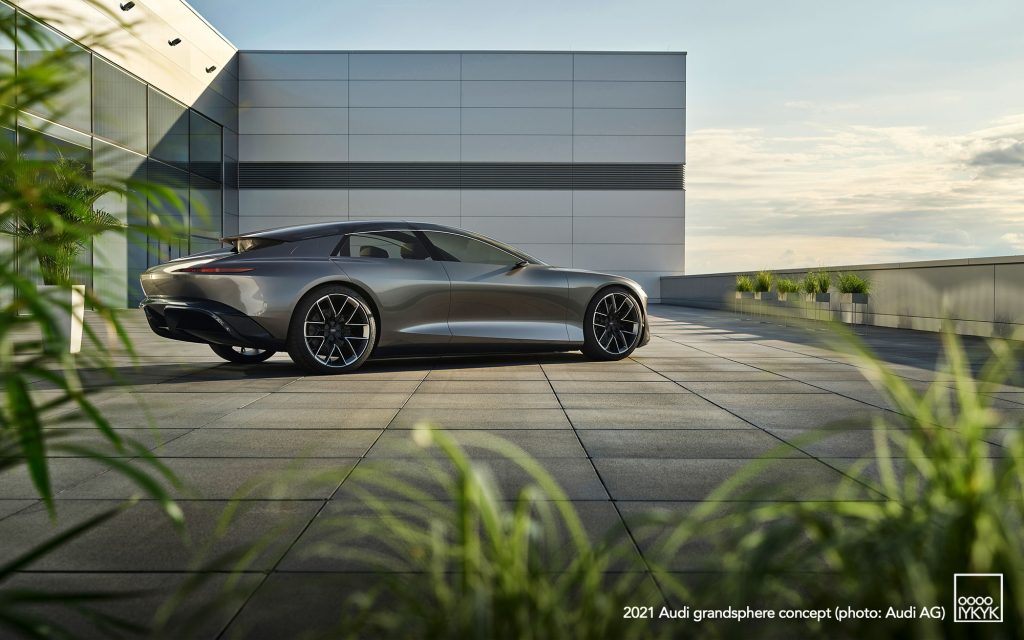
Its dedicated electric architecture allowed for short overhangs, a low hood and a windshield positioned far forward. At the same time, Audi deliberately retained visual characteristics traditionally associated with grand touring cars. The upper edge of the hood extended rearward along the sides to suggest a long engine compartment despite the absence of a combustion engine beneath it.
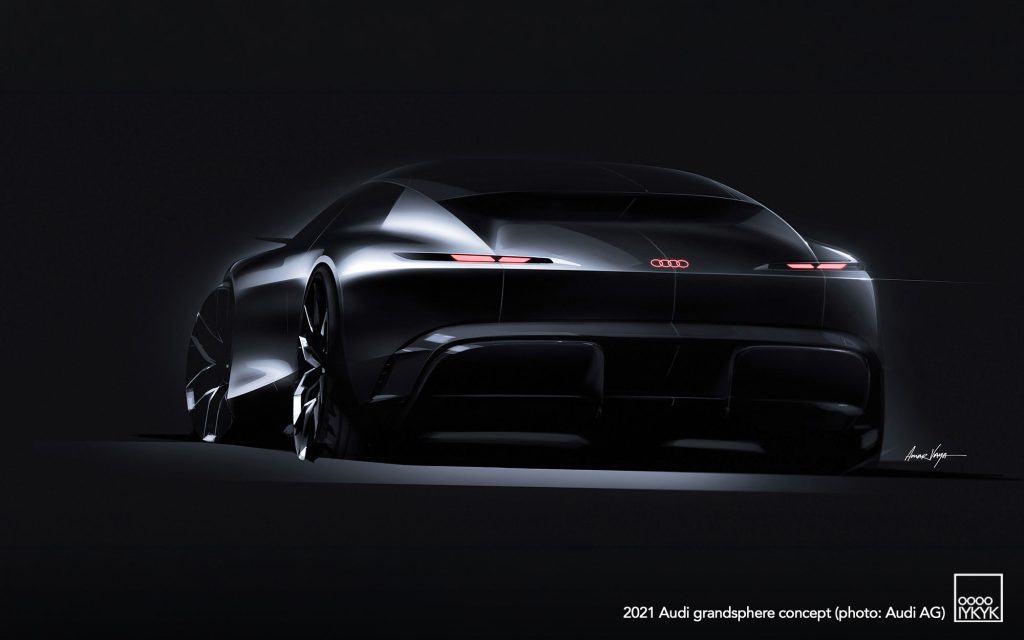
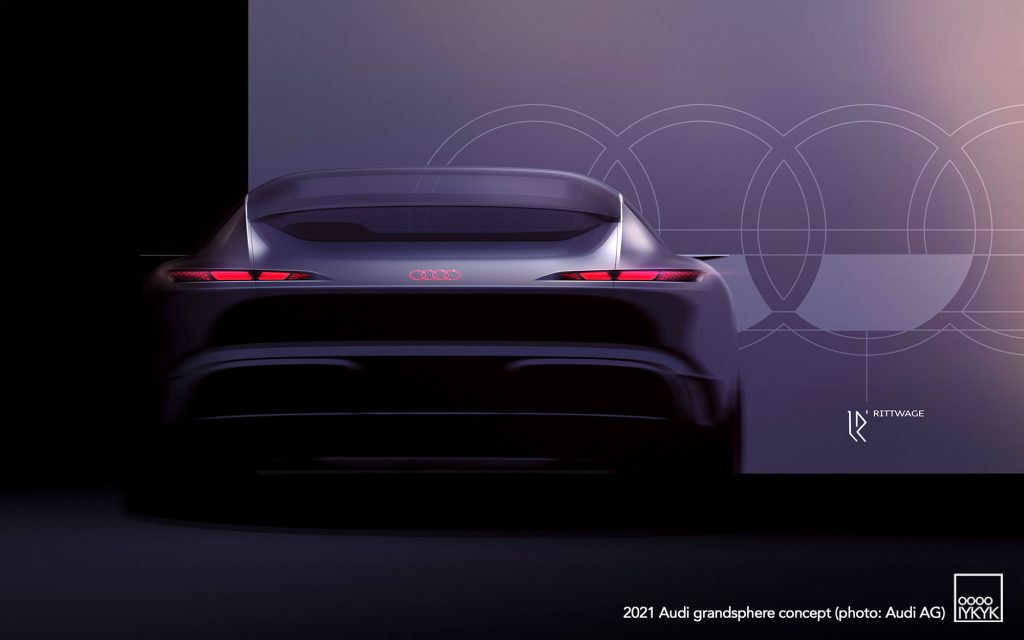
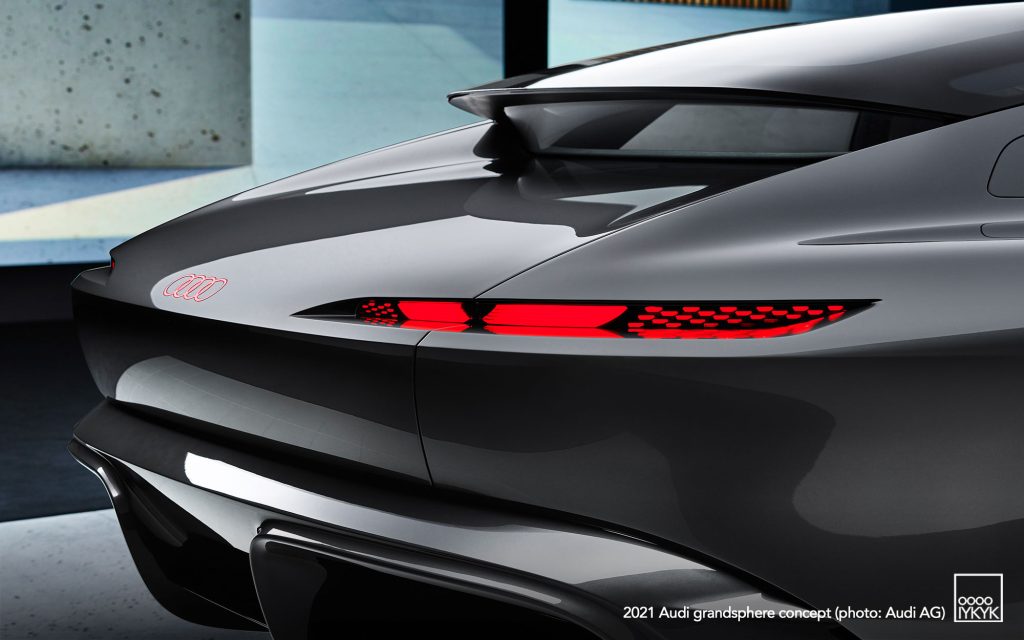
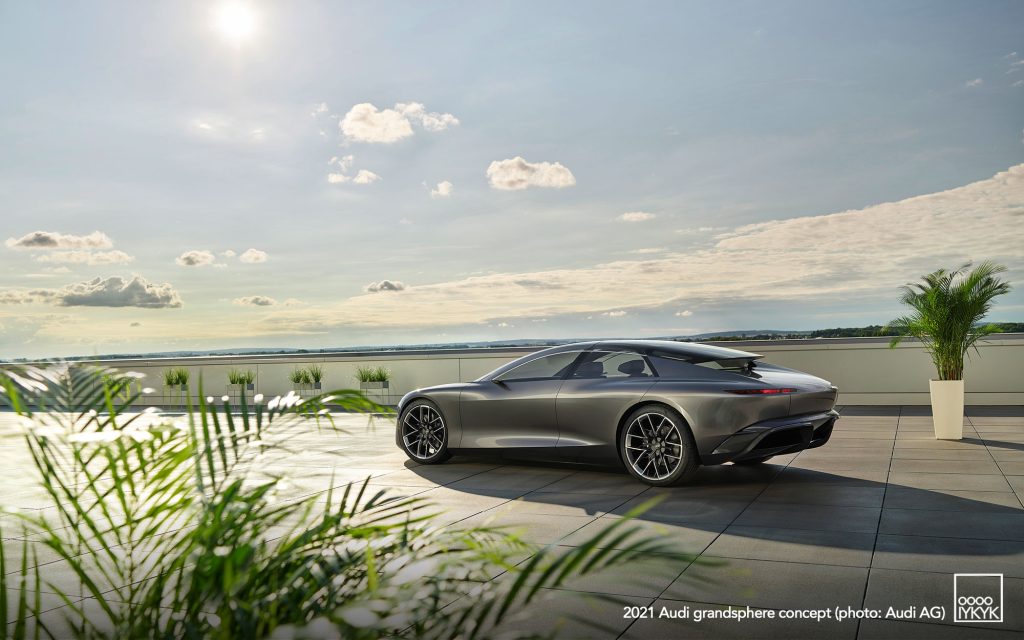
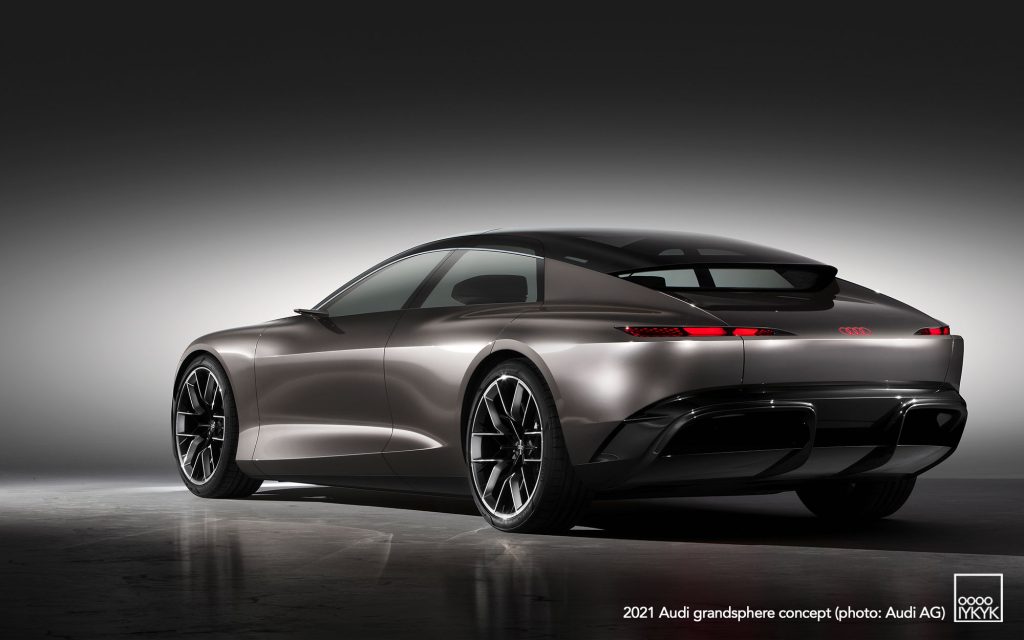
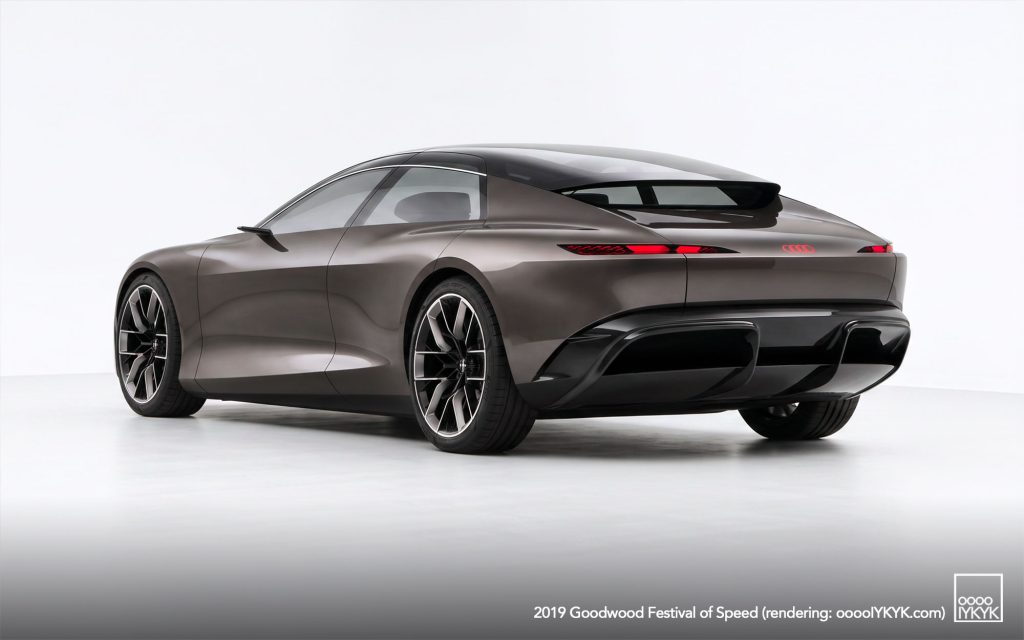
The pronounced wheel arches retained a familiar Audi form, while the tapering rear body referenced traditional aerodynamic streamlining. The roofline connected the grandsphere visually with Audi’s Sportback design tradition.
Its 23-inch wheels also referenced Audi history. The six-double-spoke design was inspired by the wheels of the Audi Avus quattro concept of 1991 while simultaneously referencing lightweight motorsport construction and Audi’s Bauhaus-influenced design tradition.
LIGHTING AND SINGLEFRAME
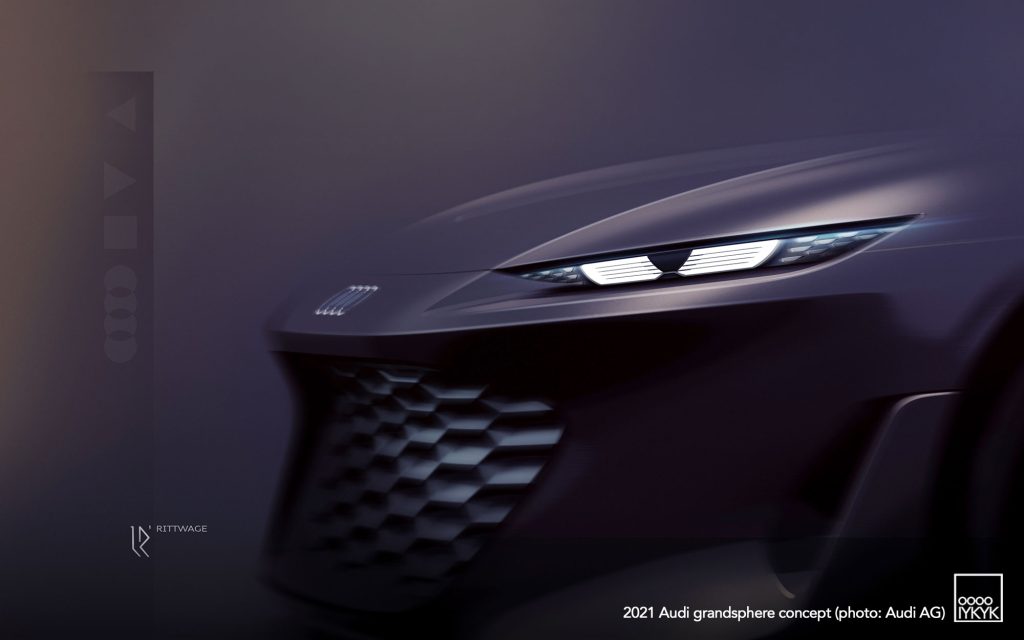
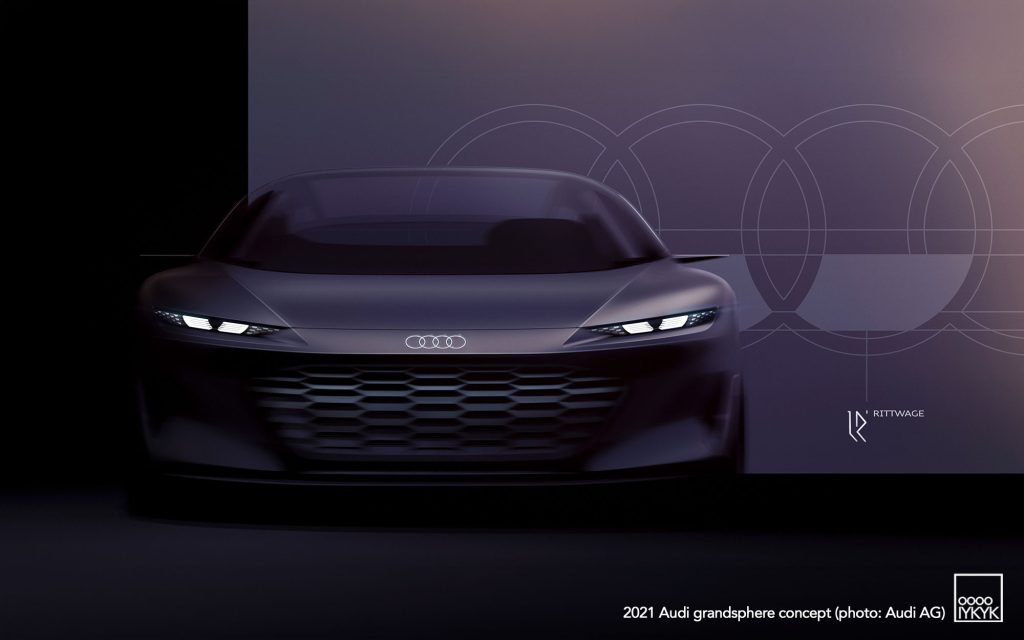
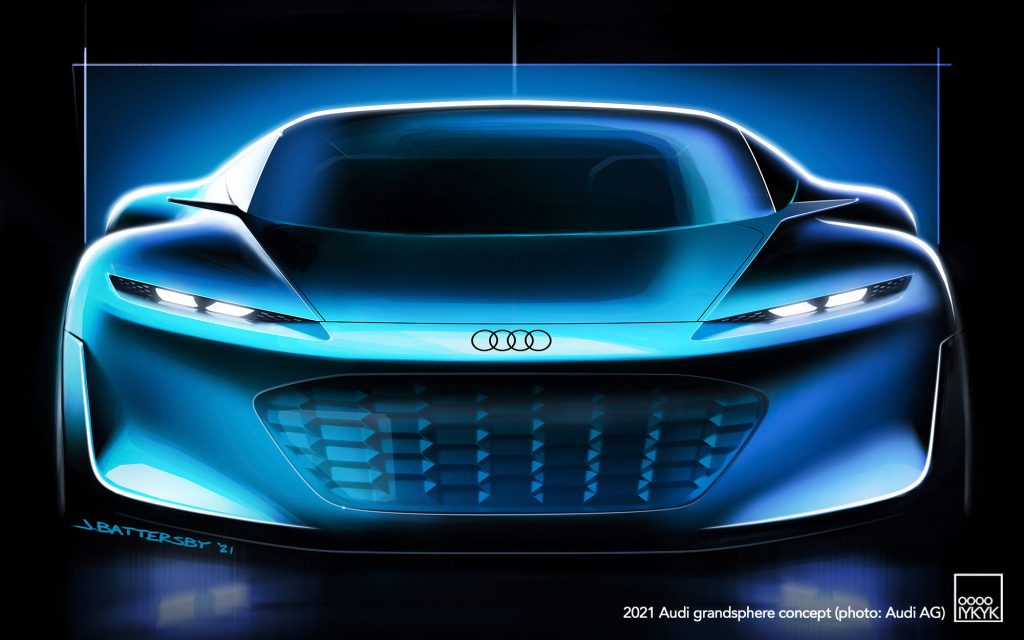
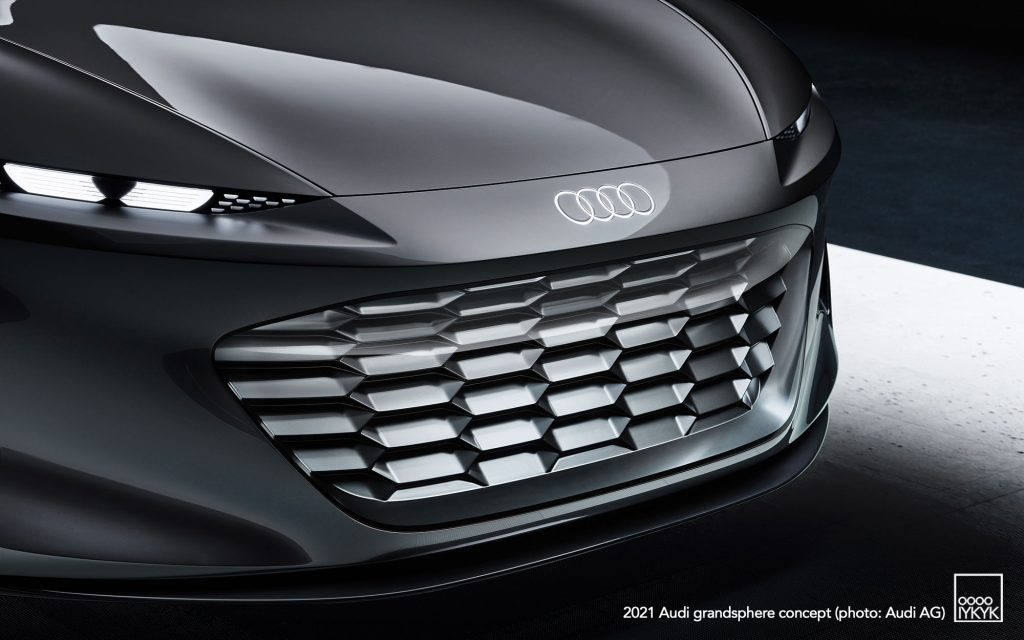
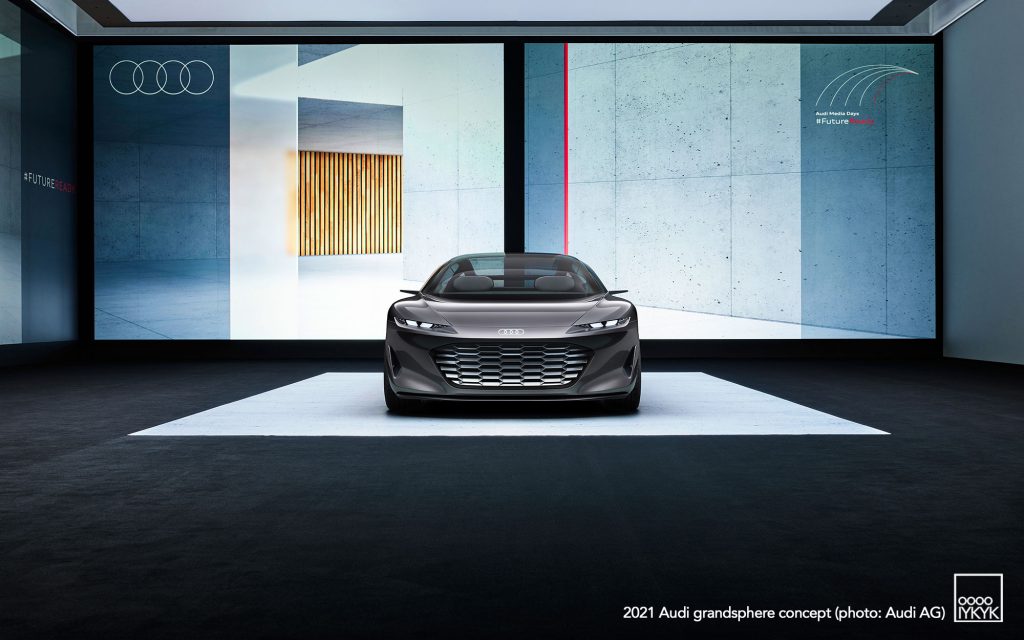
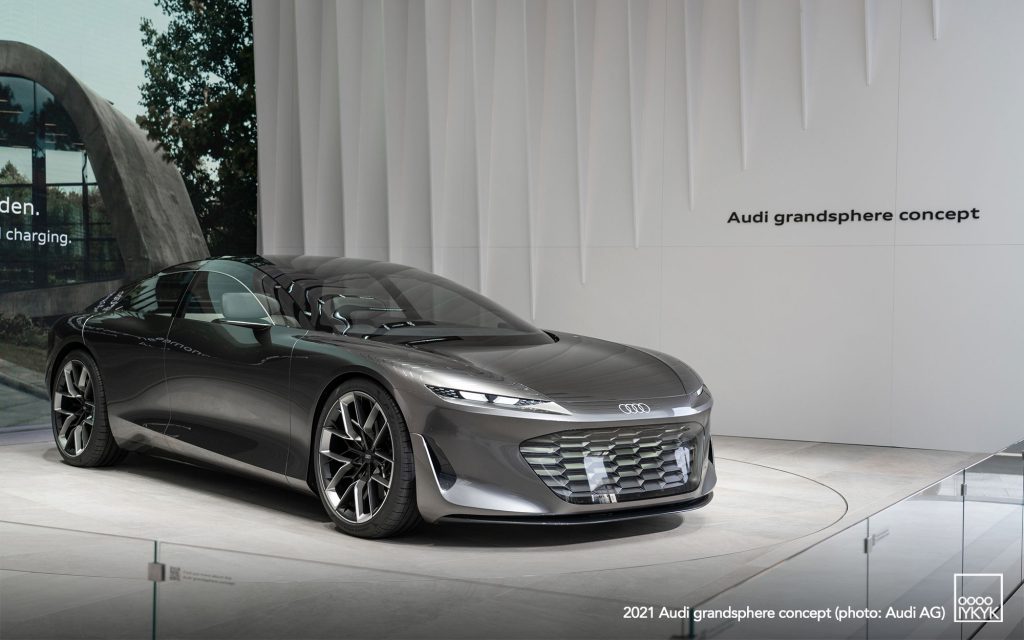
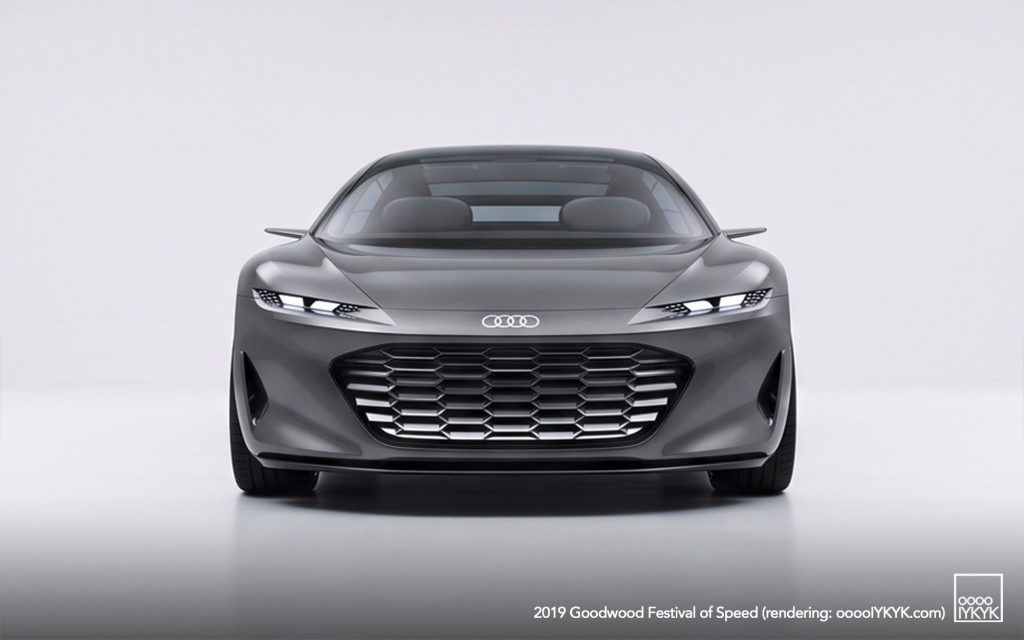
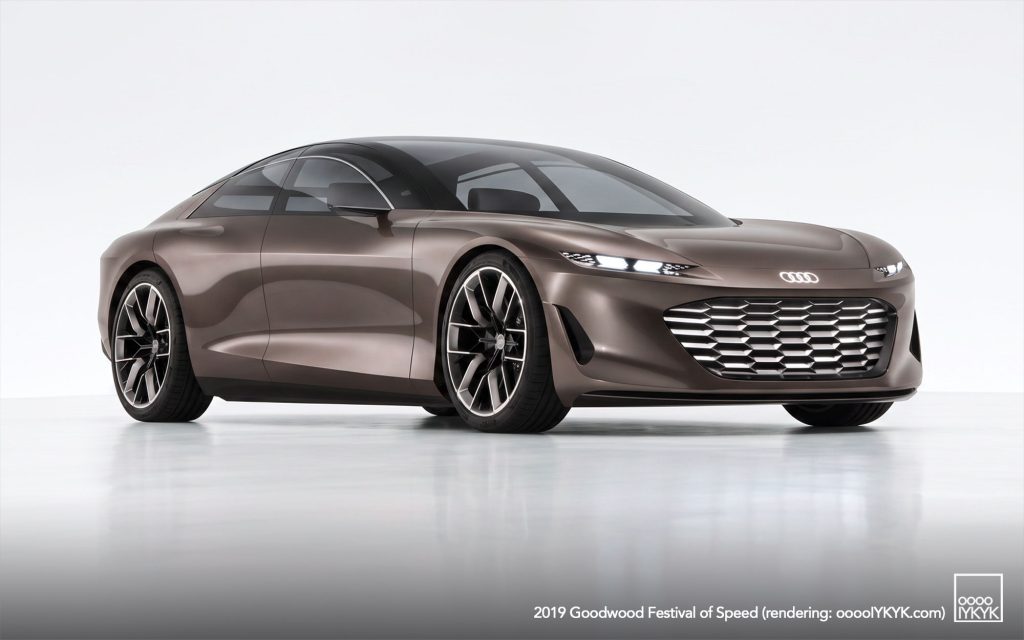
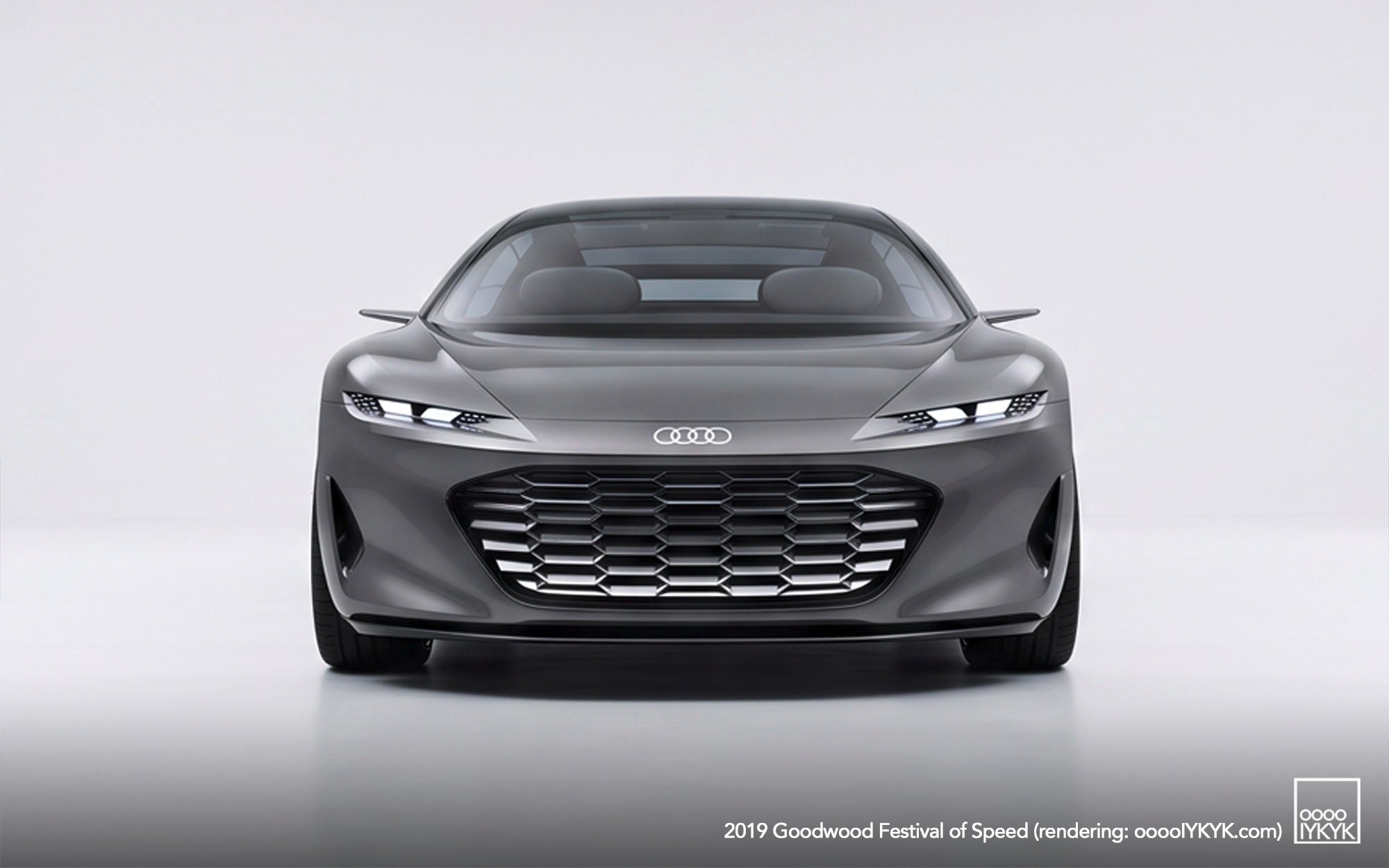
The grandsphere presented a new interpretation of Audi’s Singleframe grille for the electric era.
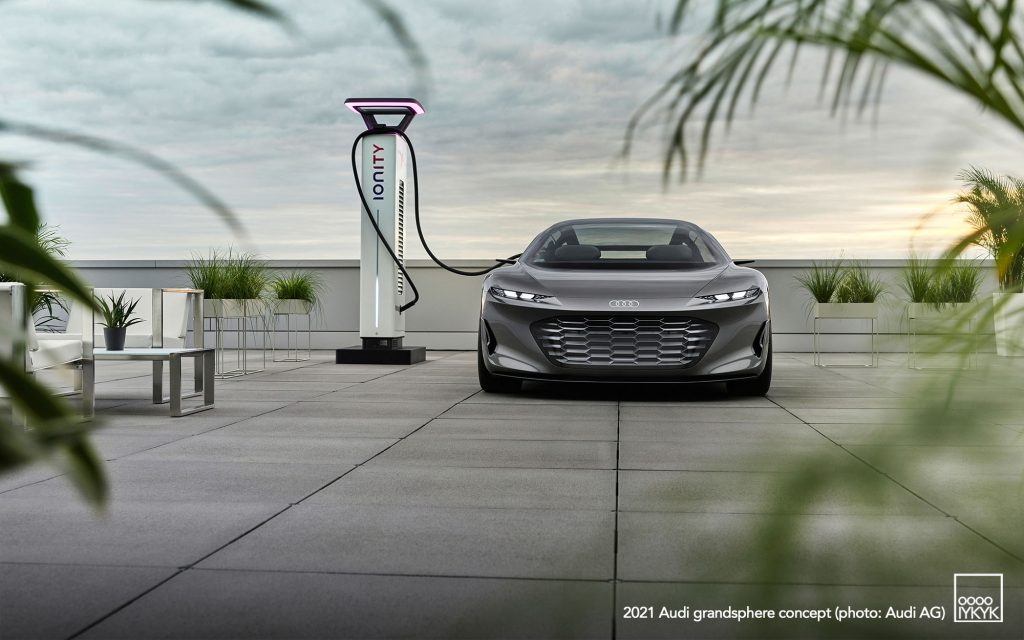
Rather than functioning as a conventional radiator opening, the hexagonal Singleframe incorporated a transparent cover over an internally illuminated diamond-pattern structure. Indirect lighting created a three-dimensional visual effect within the front of the car.
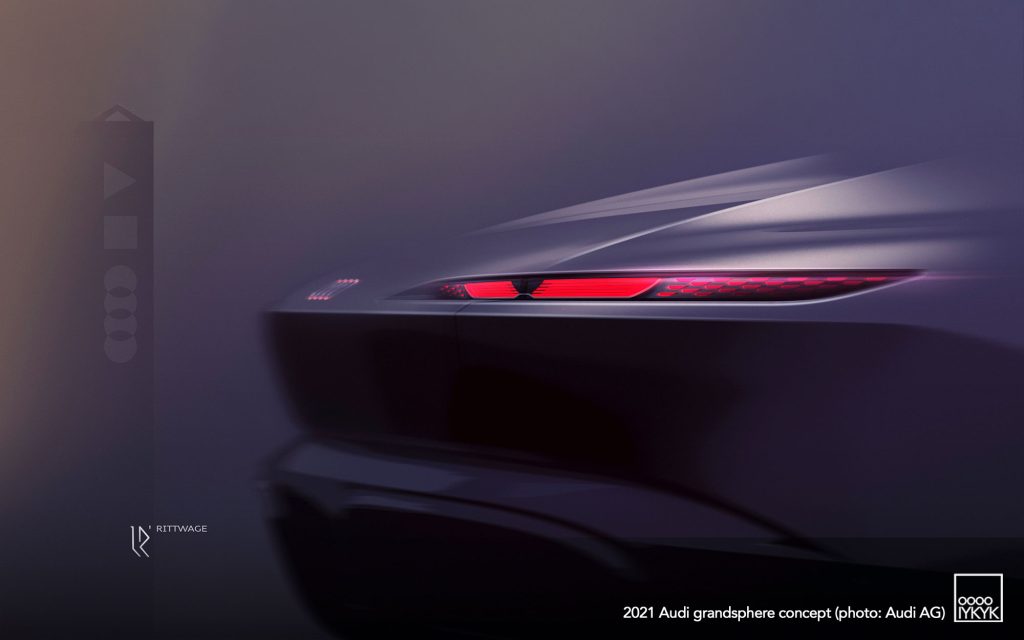
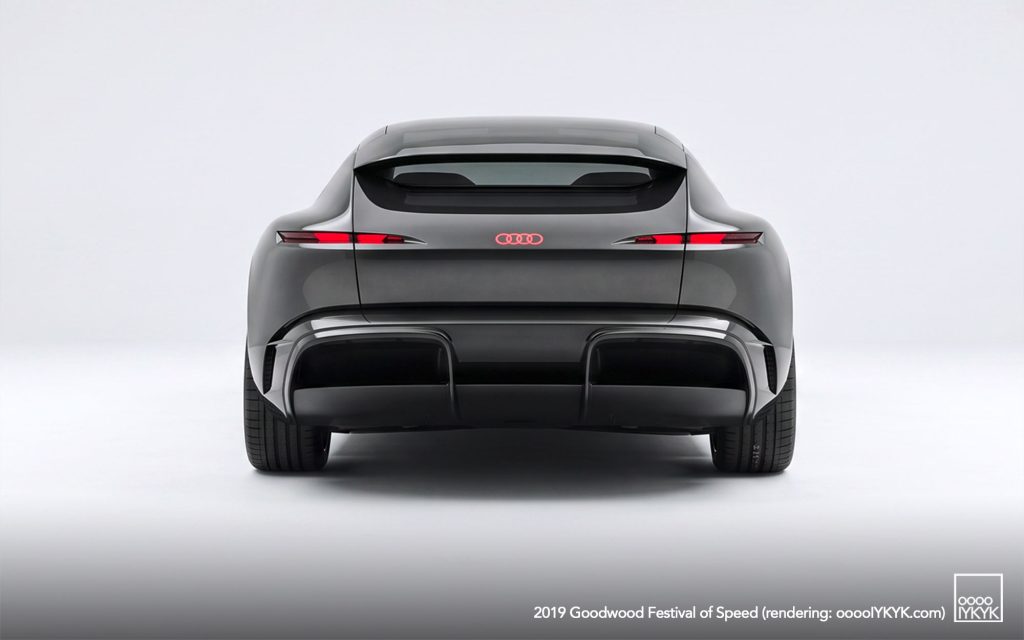
Extremely narrow lighting units sat above it. Their intersecting graphic referenced the overlap of Audi’s four rings, isolating the intersection of two rings to create what Audi described as a new digital light signature.
The illuminated area could change according to function, allowing different presentations for daytime running lights and turn signals. The same graphic appeared in the rear lighting units.
This “Audi eye” theme would subsequently appear on other members of the sphere concept series.
INTERIOR
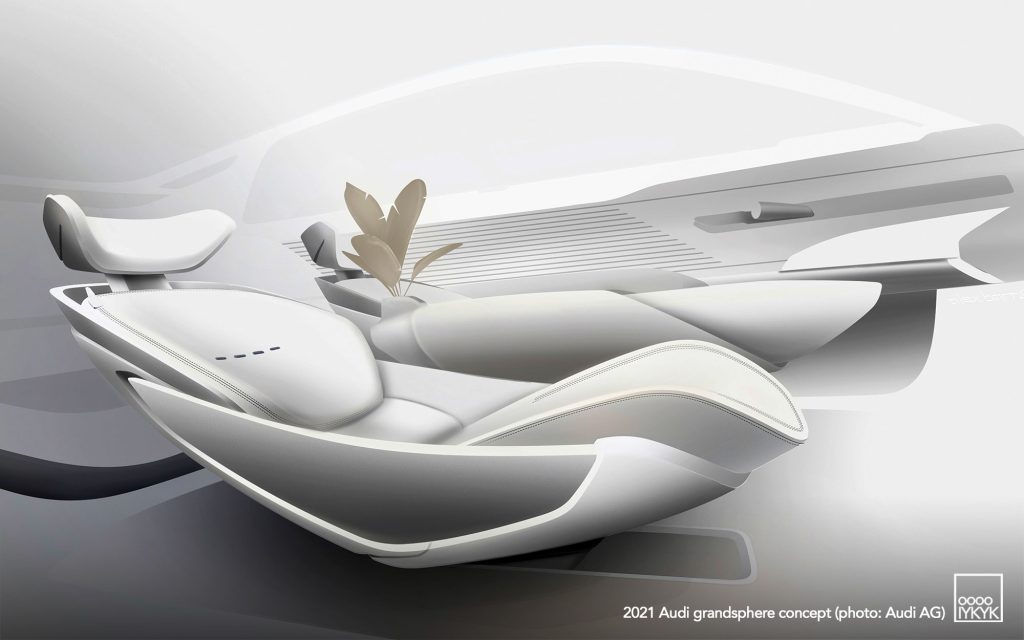
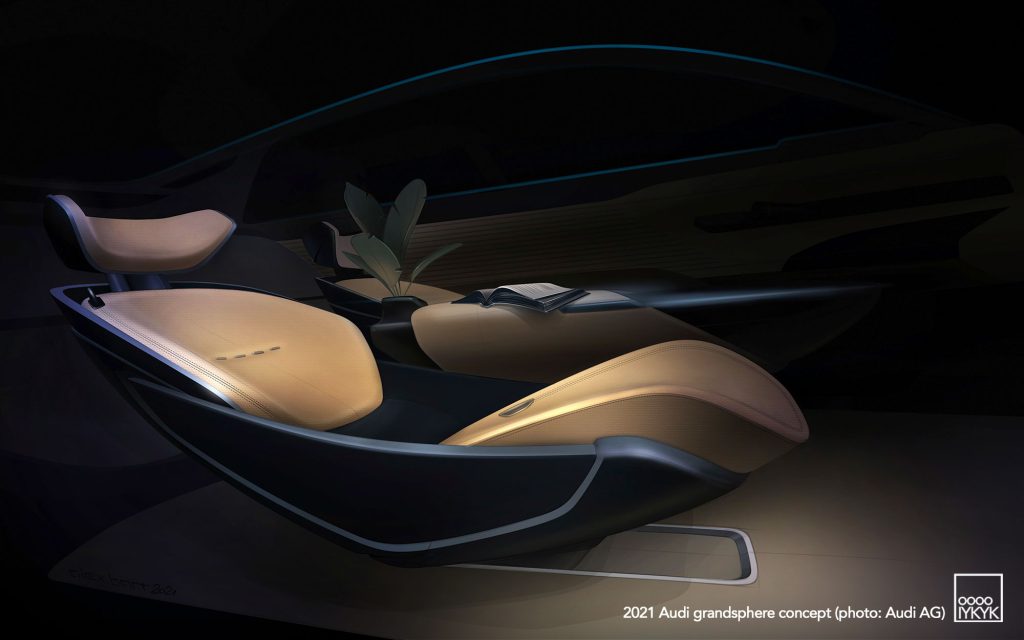
The grandsphere’s interior was the starting point for the entire concept.
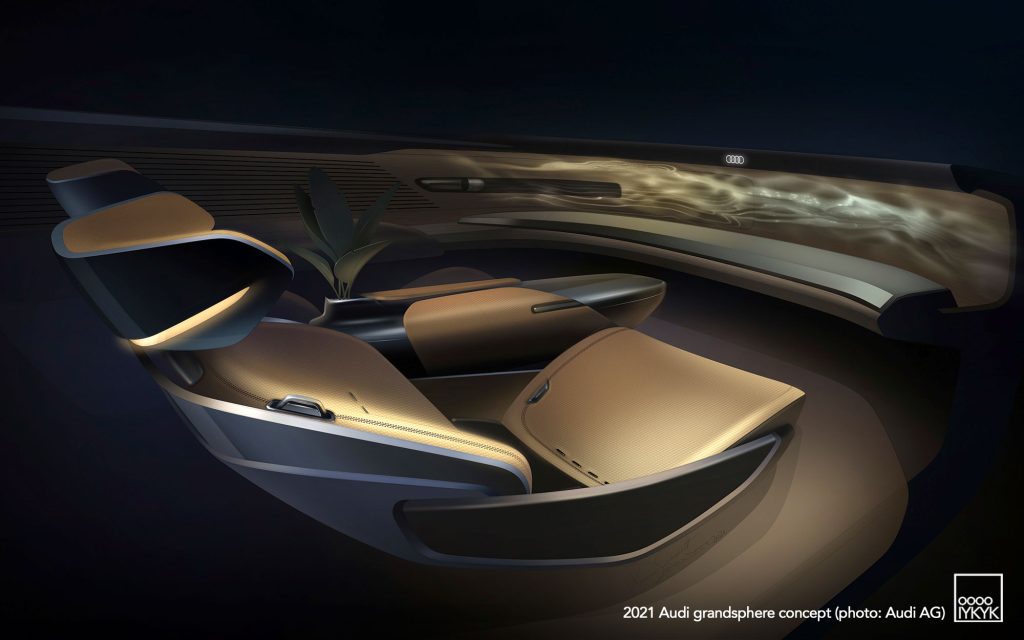
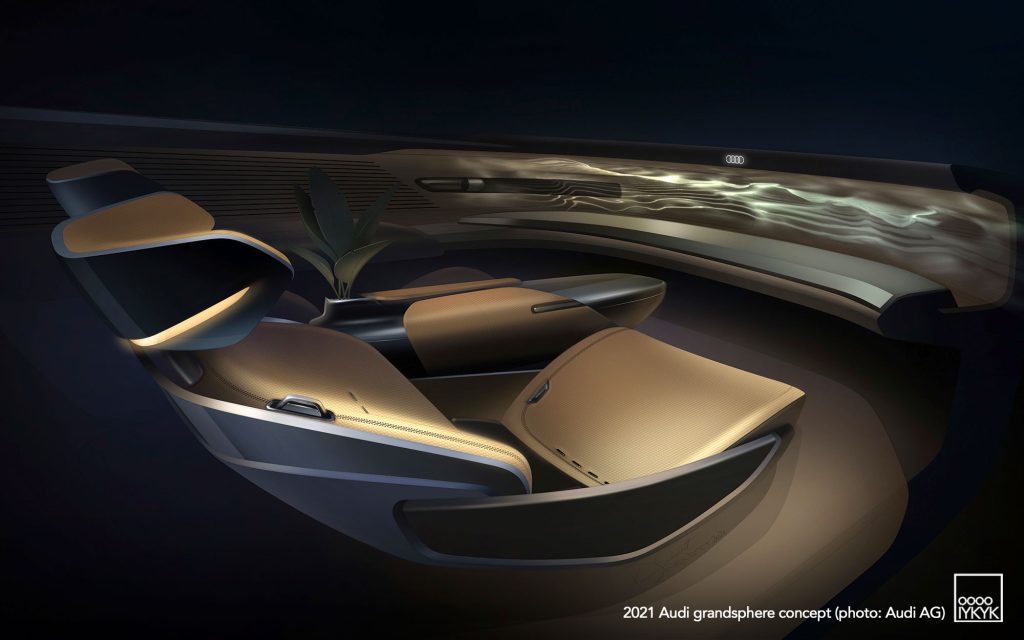
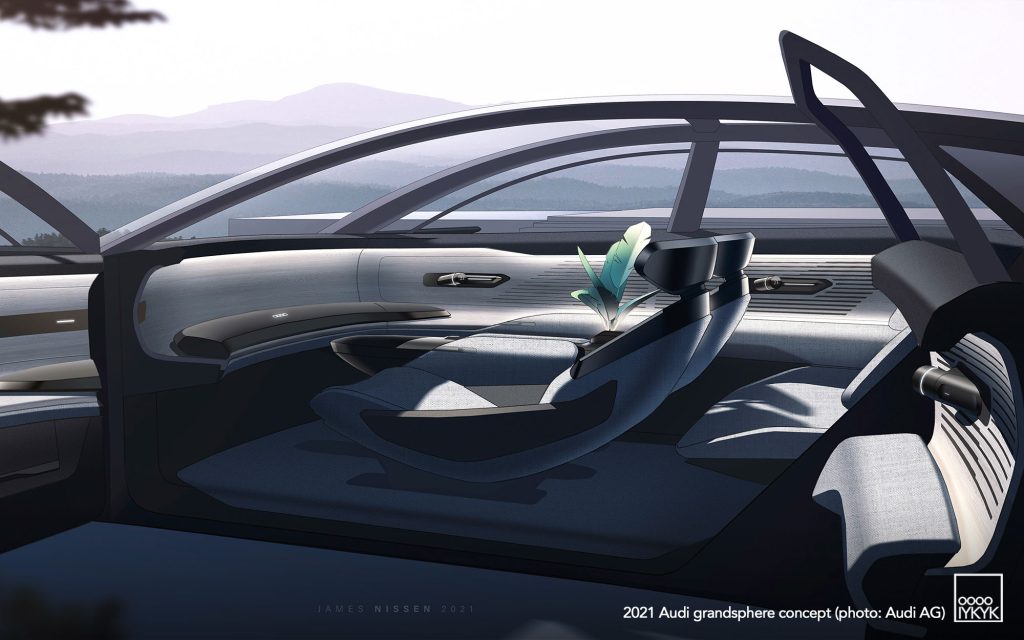
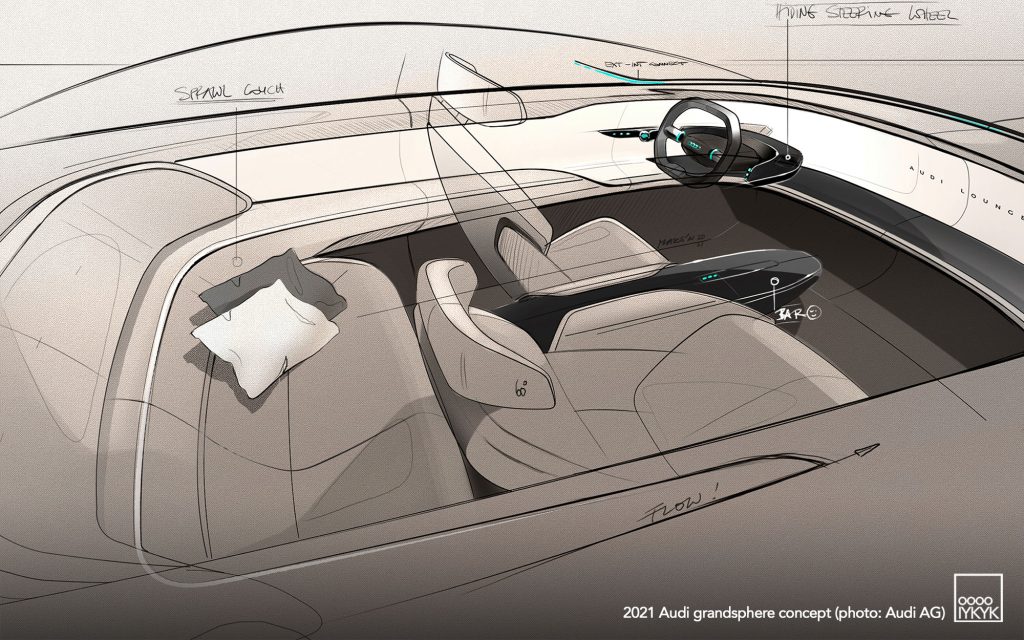
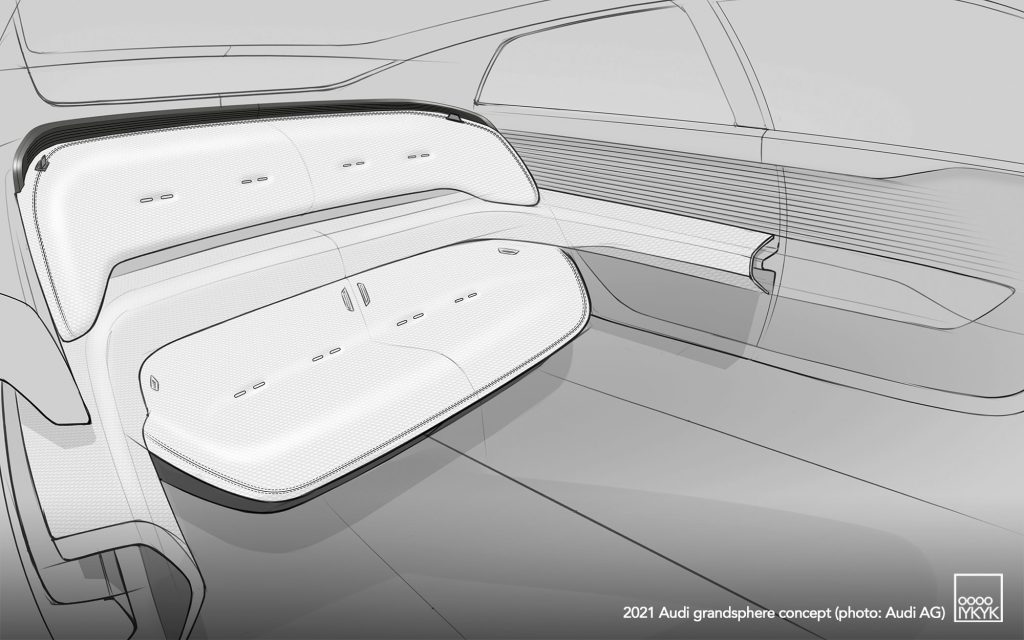
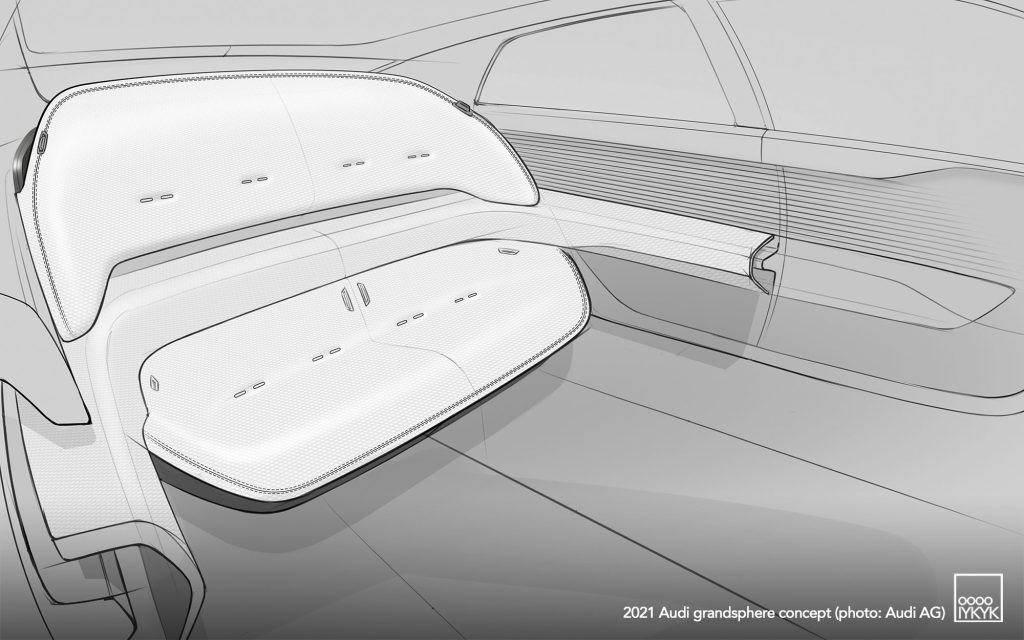
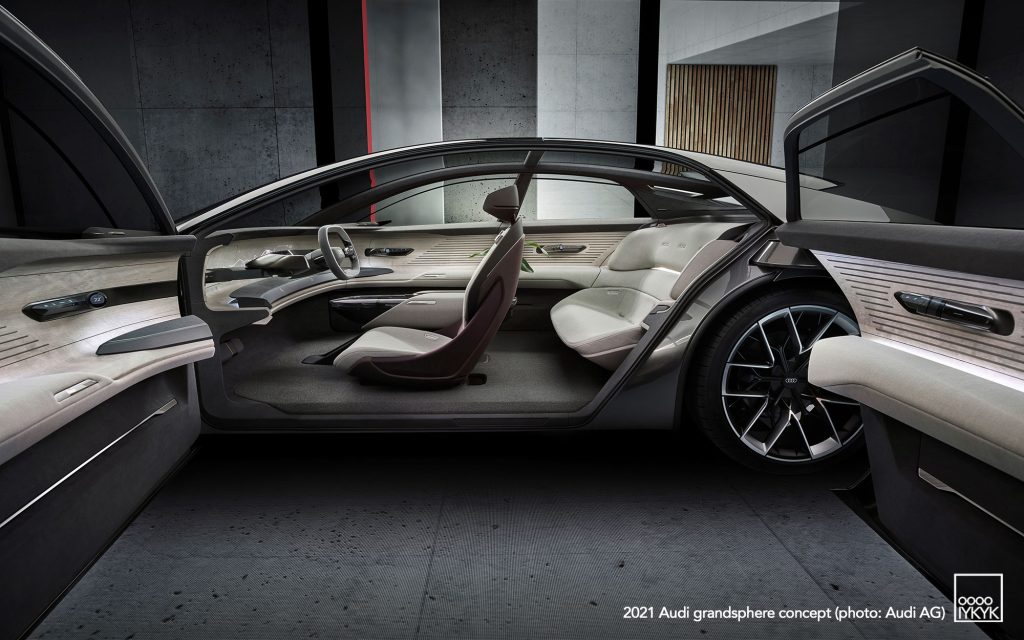
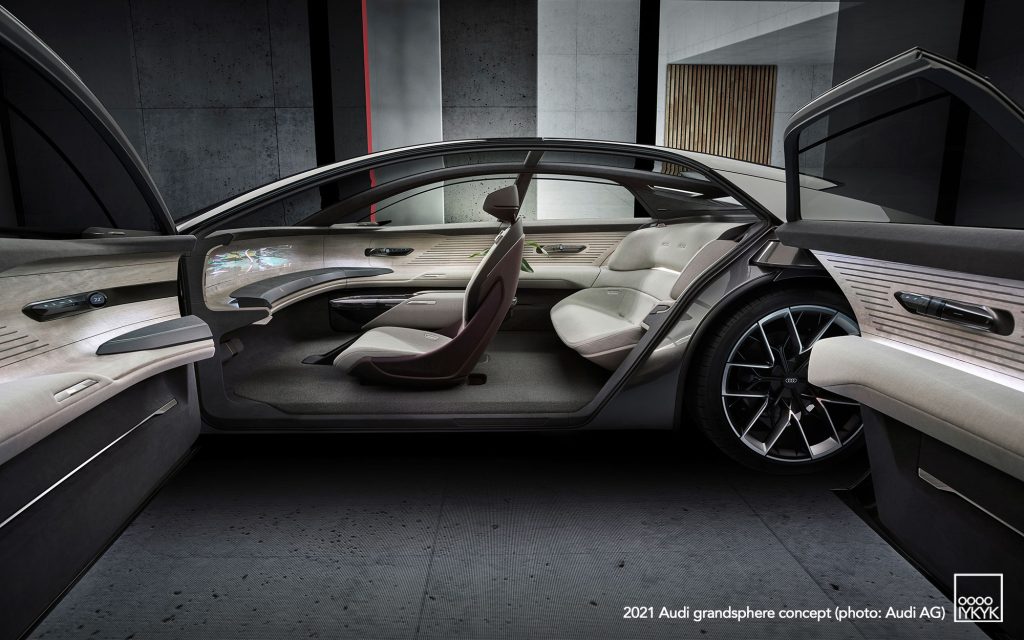
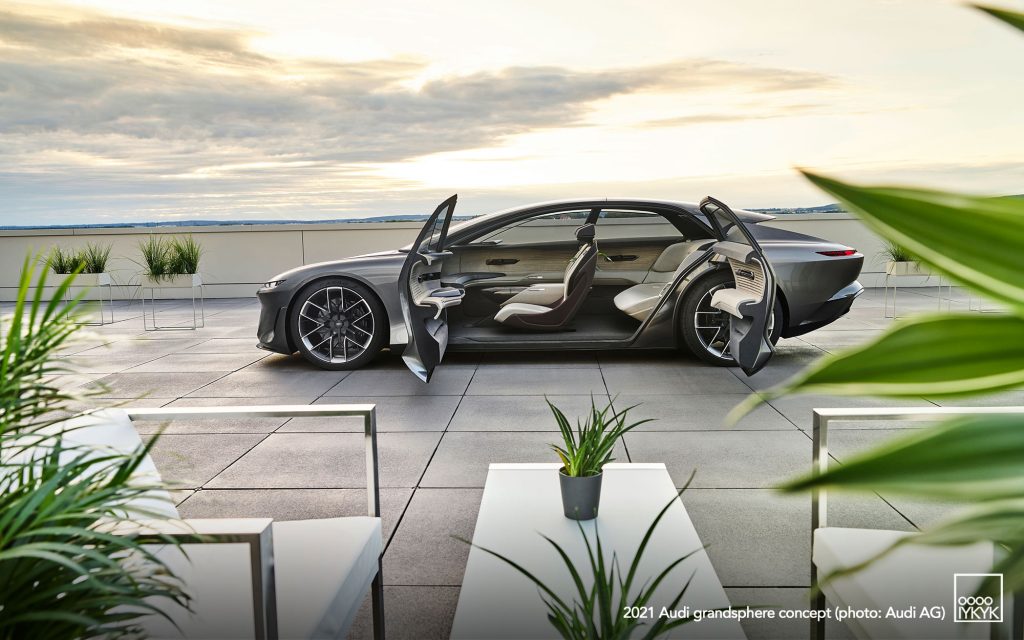
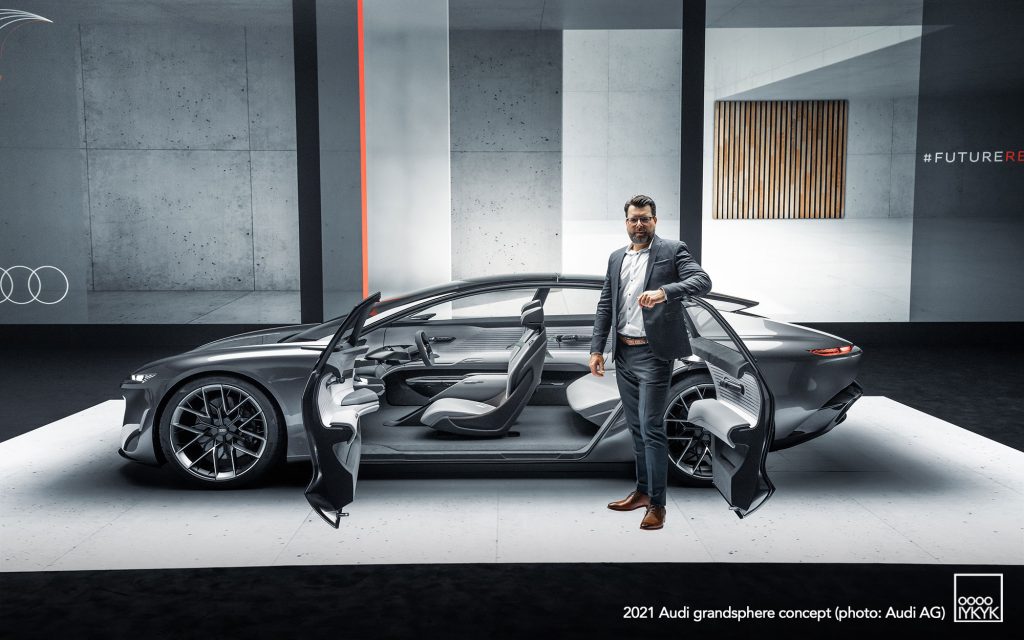
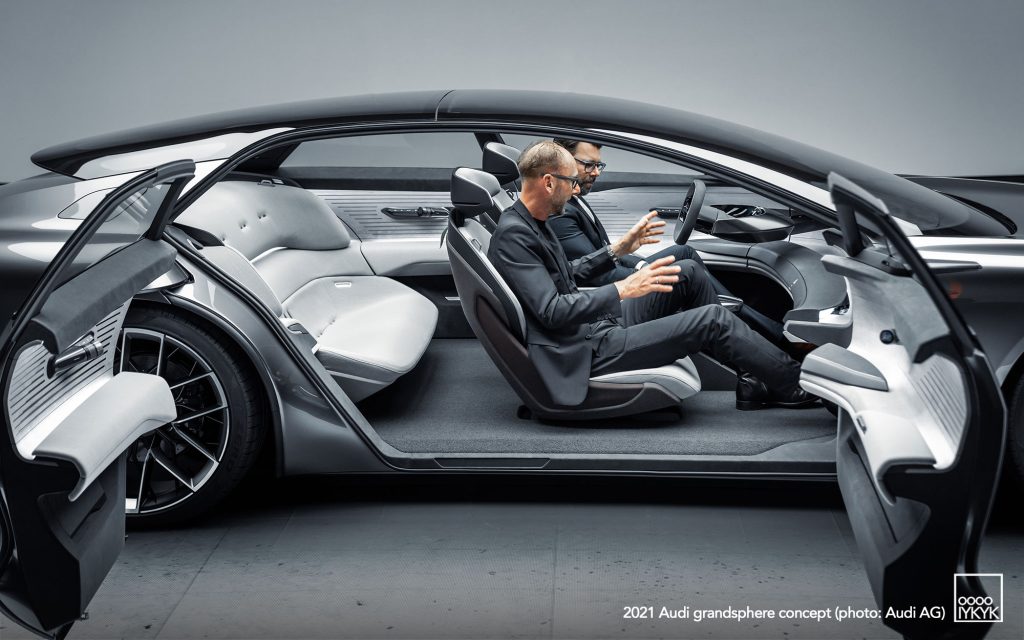
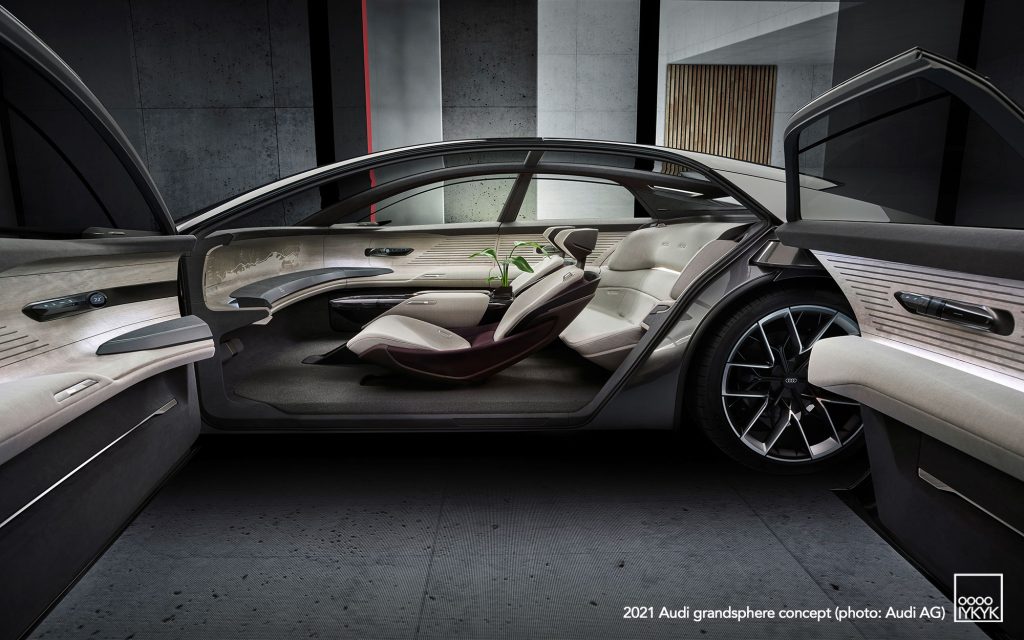
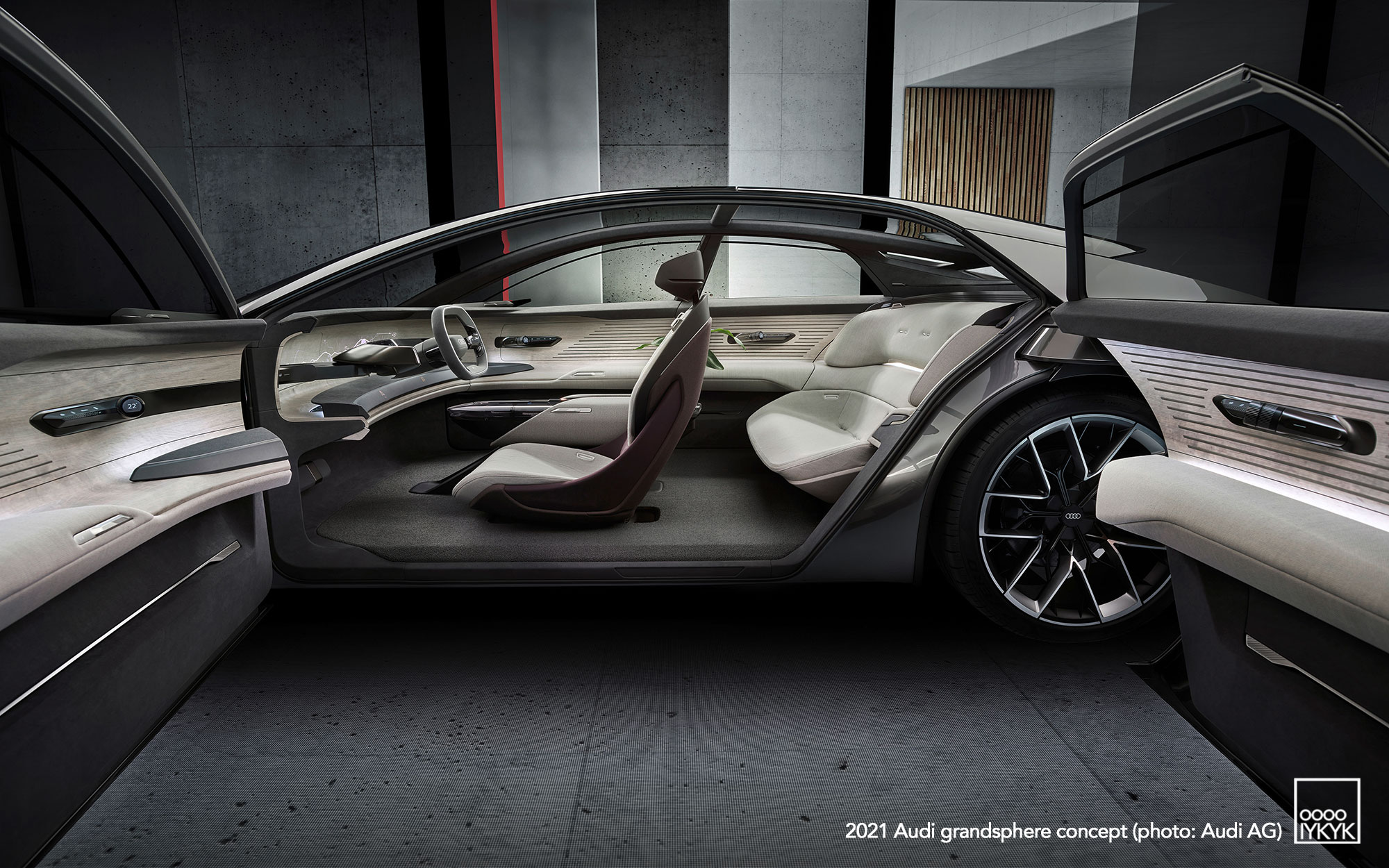
Opposing front and rear doors opened without a B-pillar between them, exposing the full cabin. Before occupants entered, the car was envisioned as identifying them automatically, opening its doors and configuring individual seat positions, climate settings, ambient lighting and digital services according to their stored preferences.
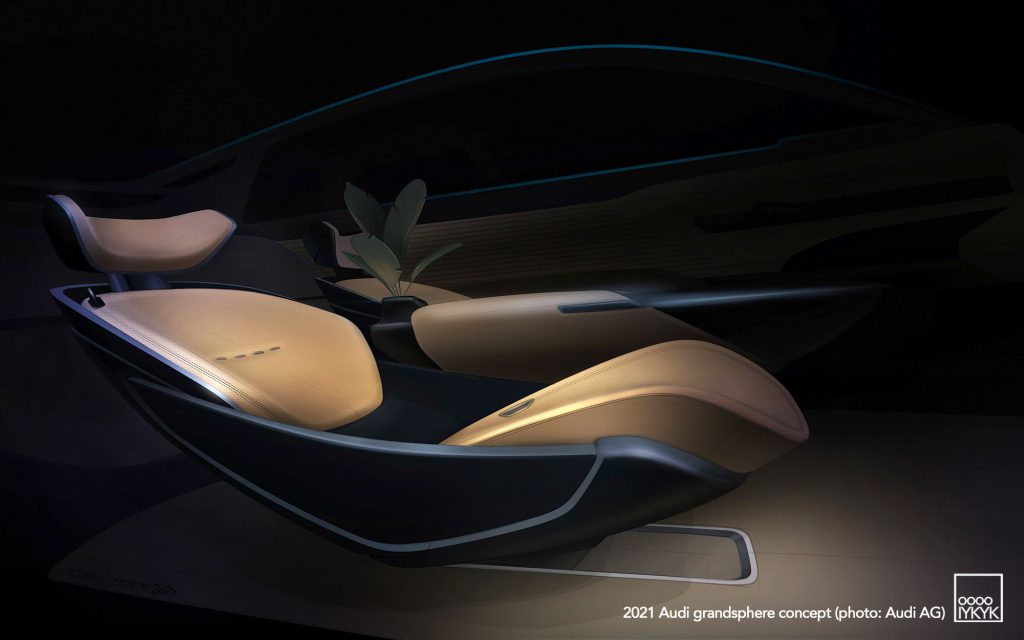
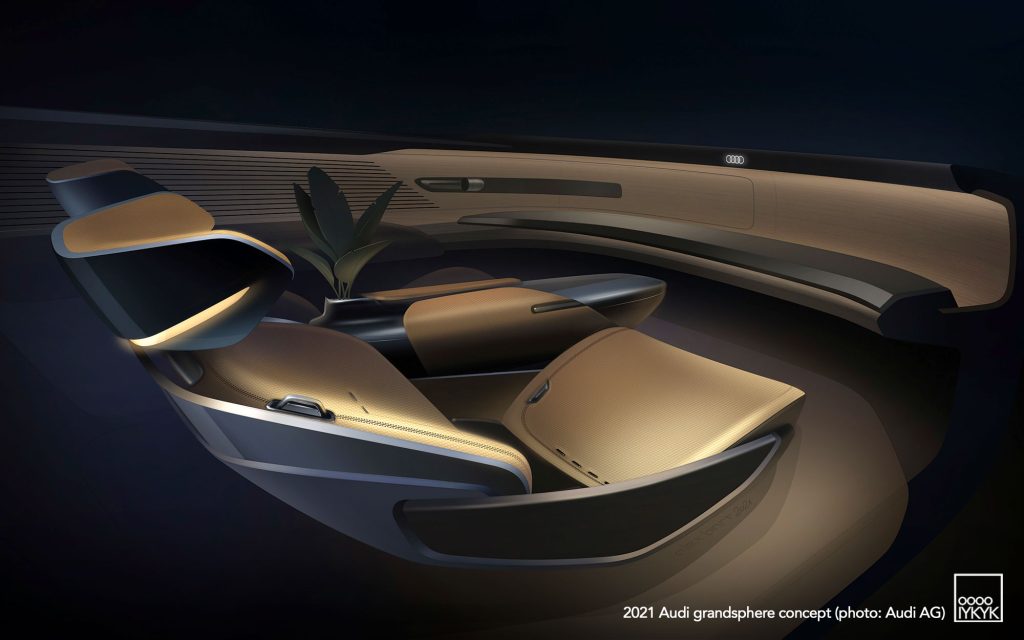
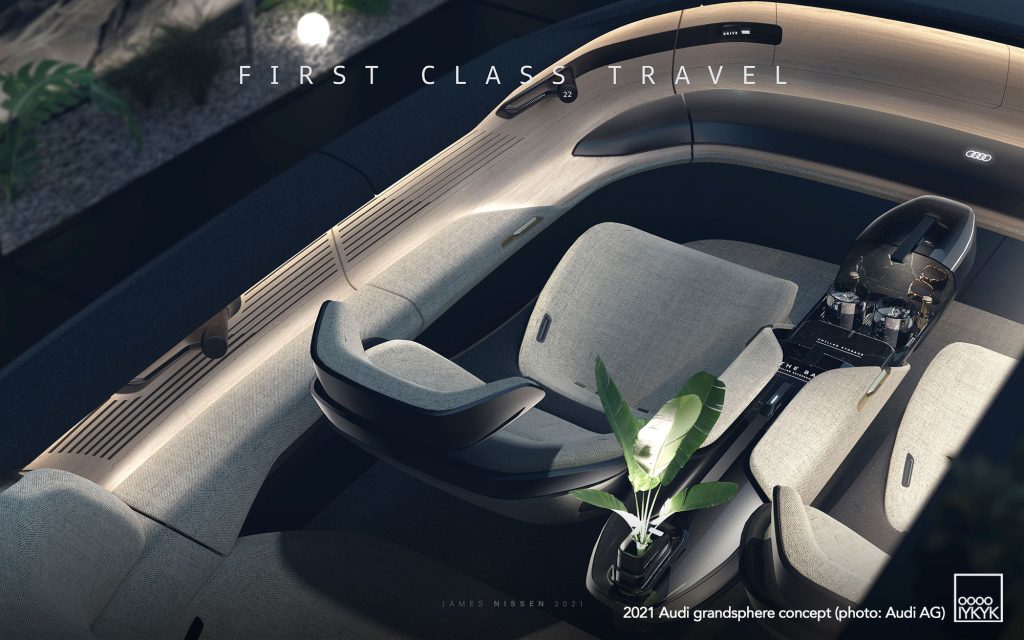
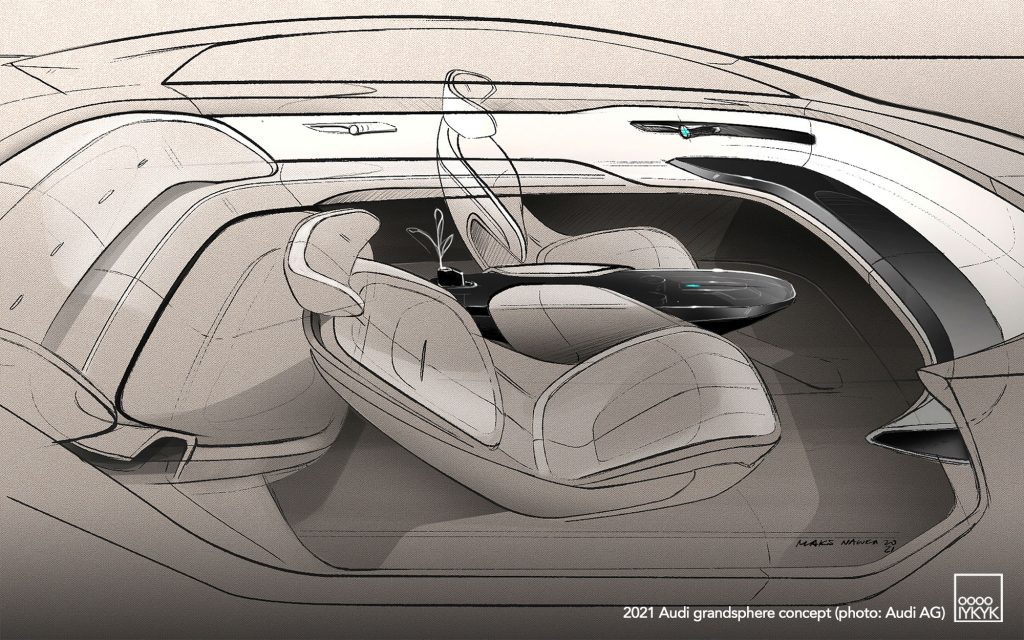
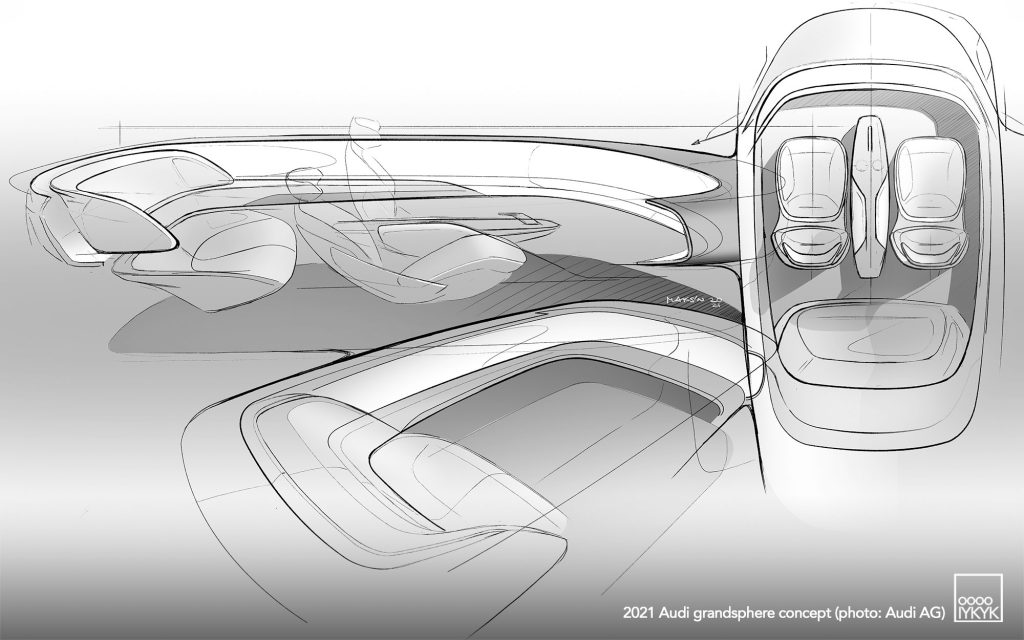
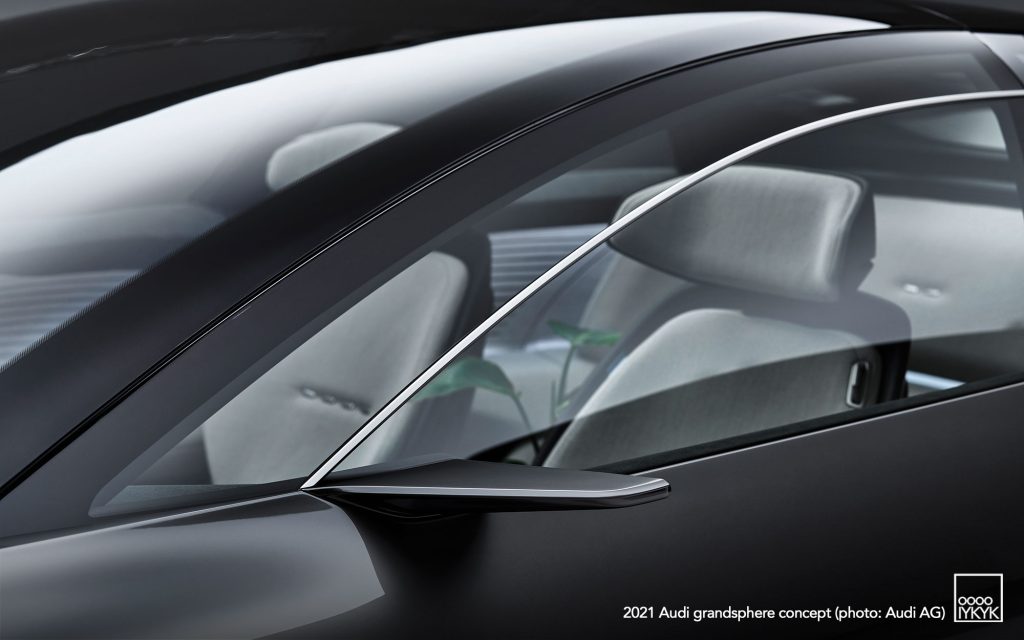
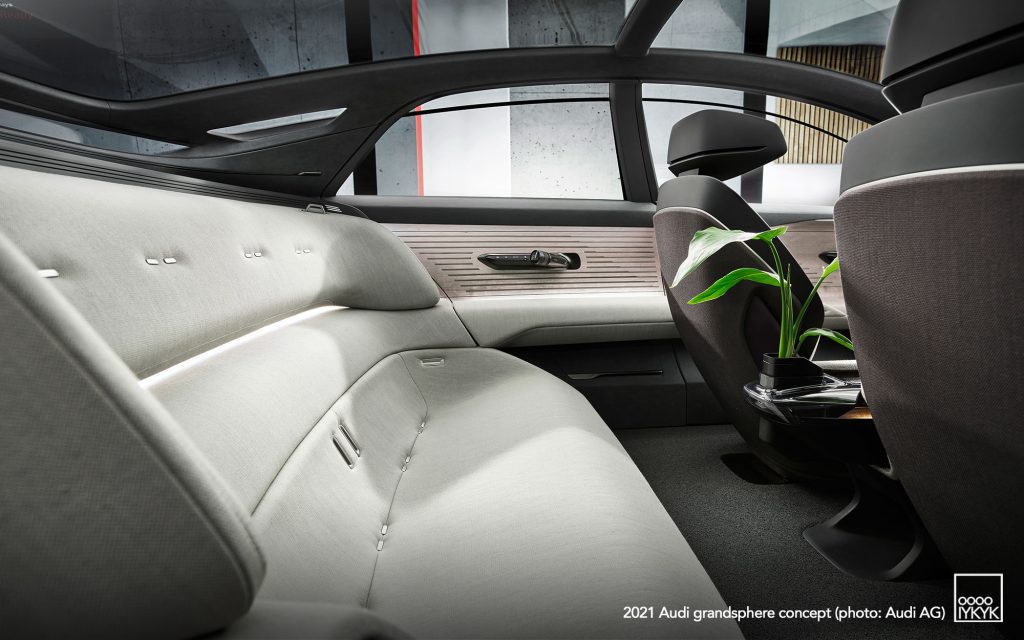
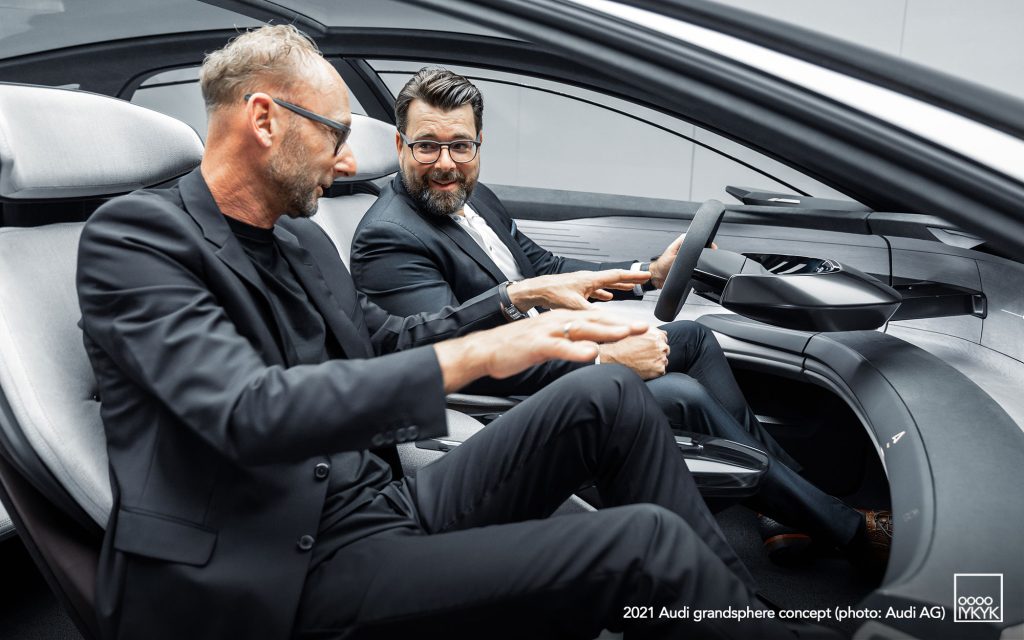
The cabin emphasized horizontal surfaces and openness, aided by an expansive windshield, large side windows and transparent roof.
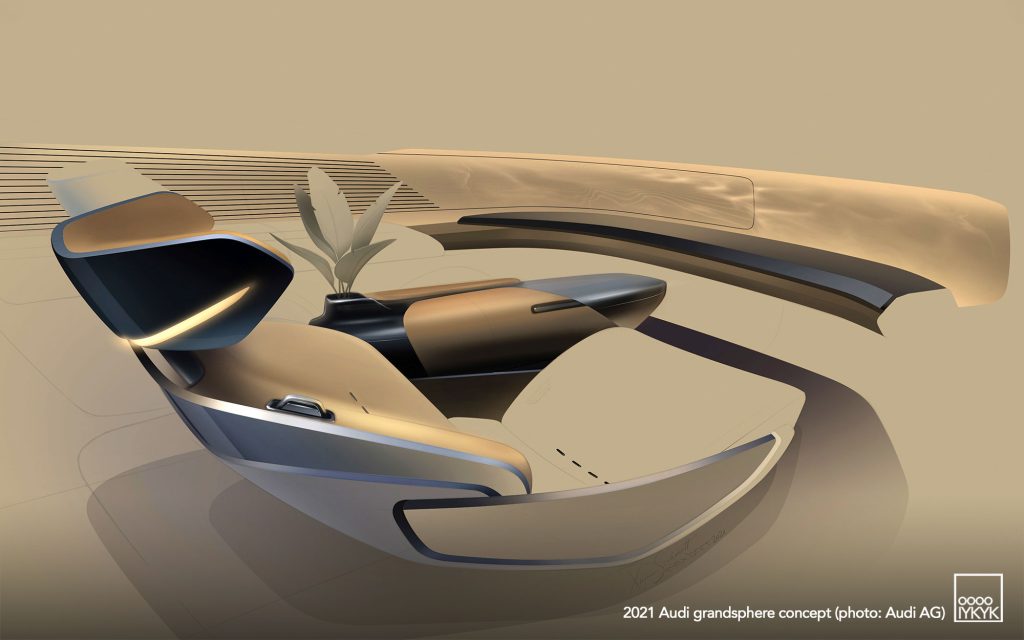
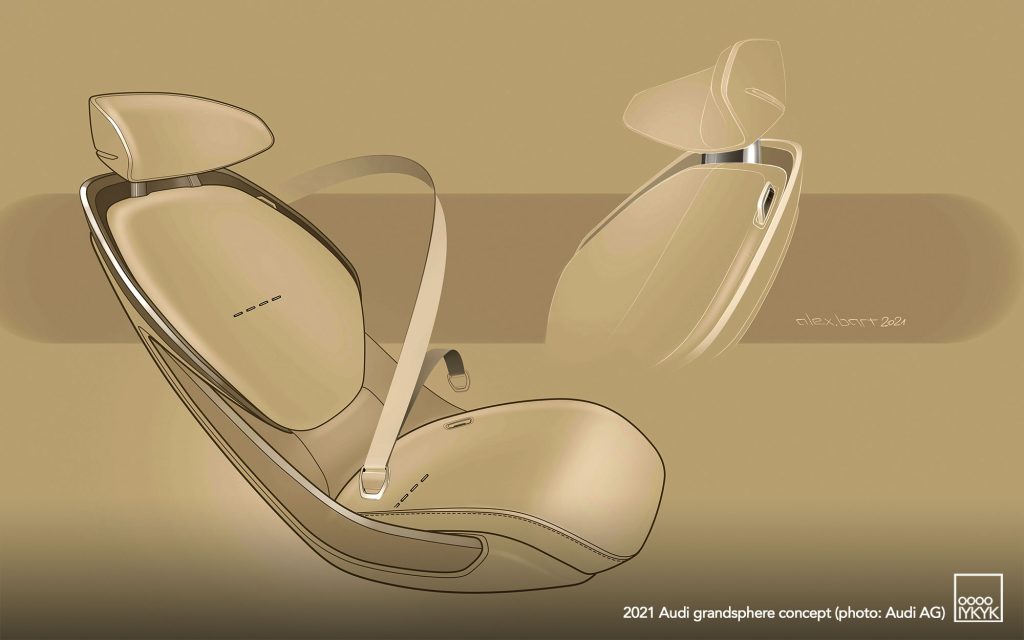
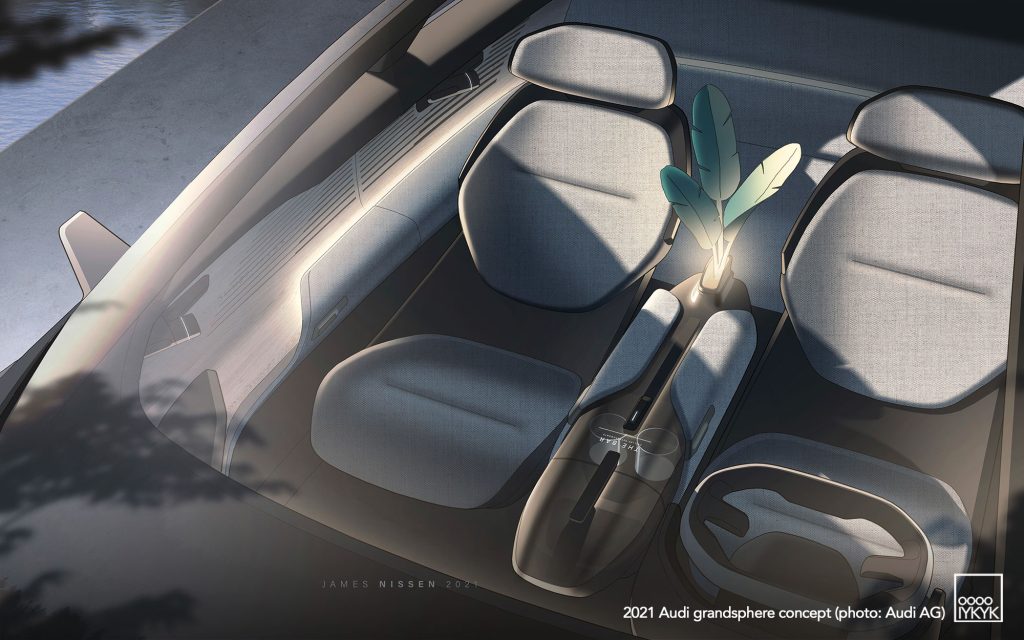
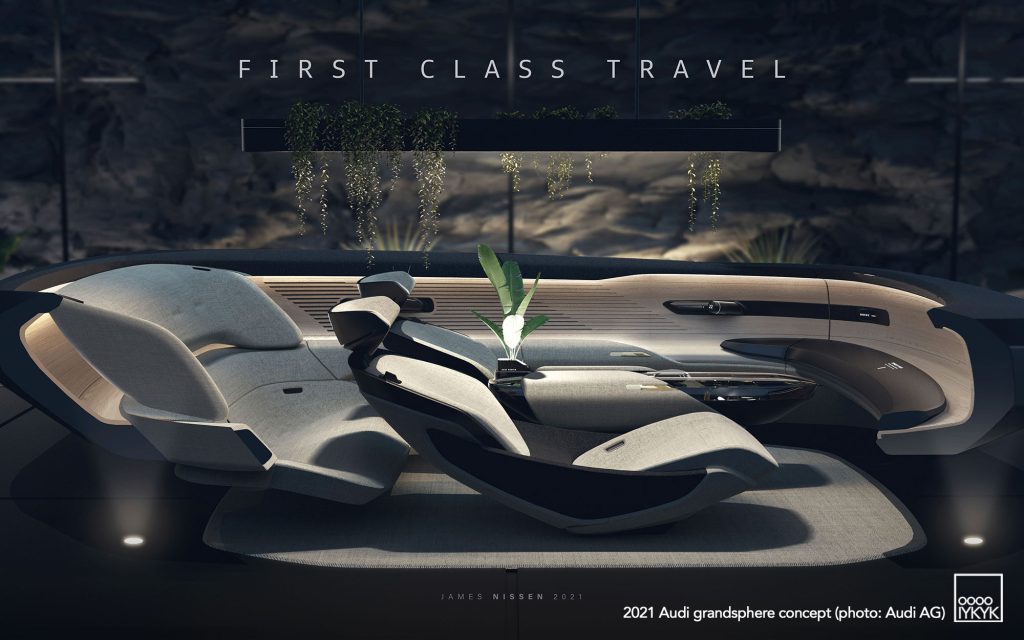
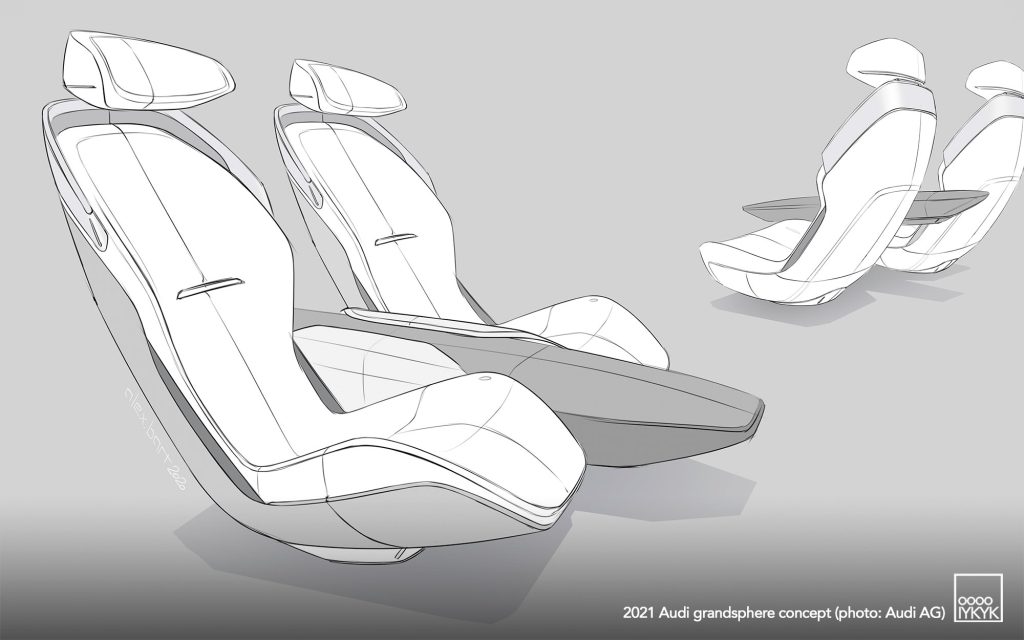
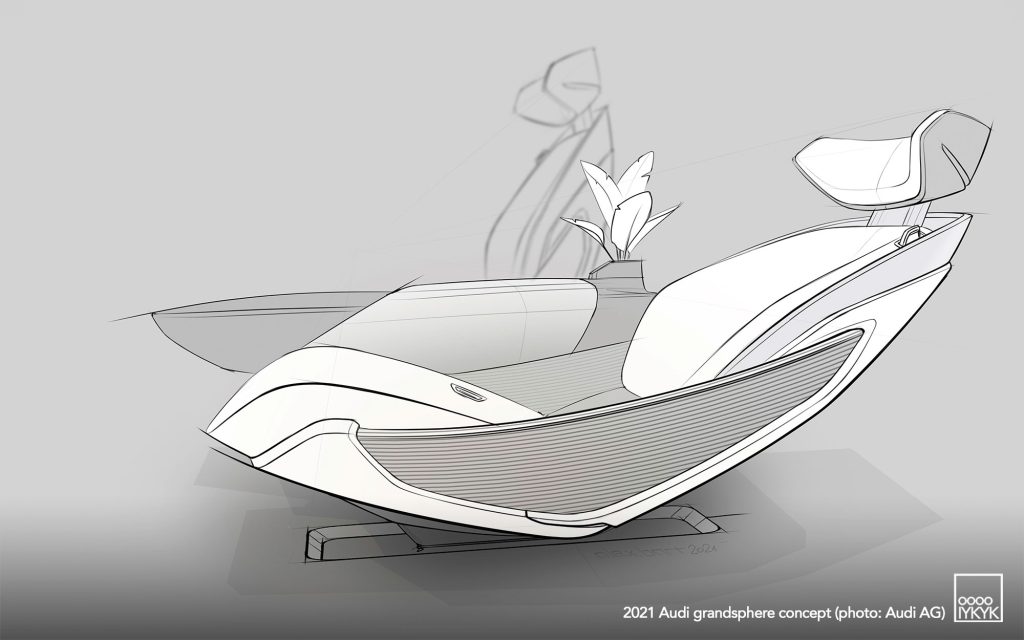
Audi configured the grandsphere as a 2+2. Two individual front seats provided the primary first-class accommodations, while a two-person upholstered rear bench incorporated a wraparound armrest.
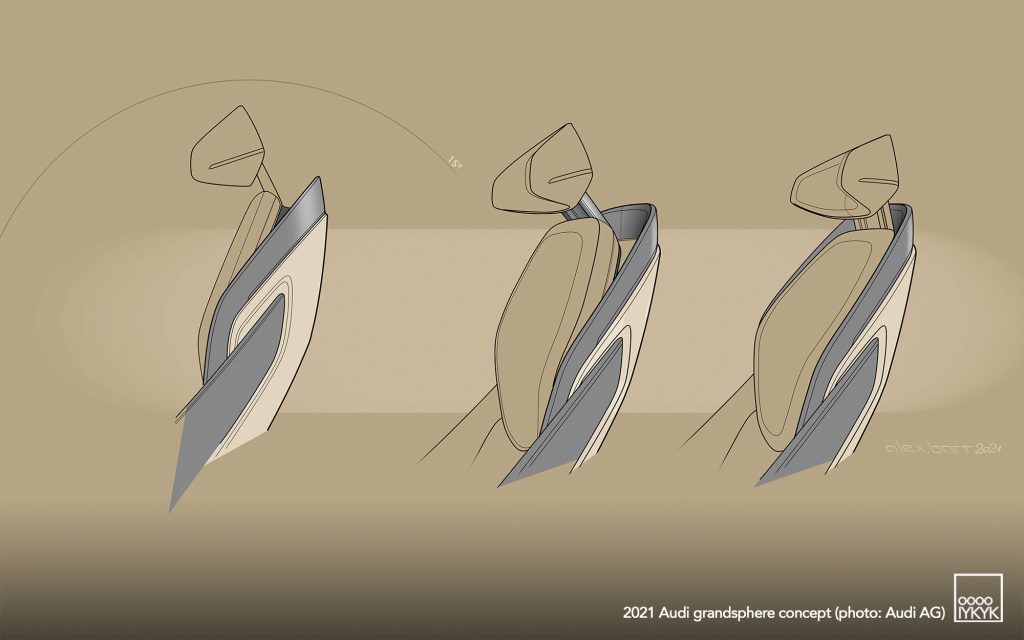
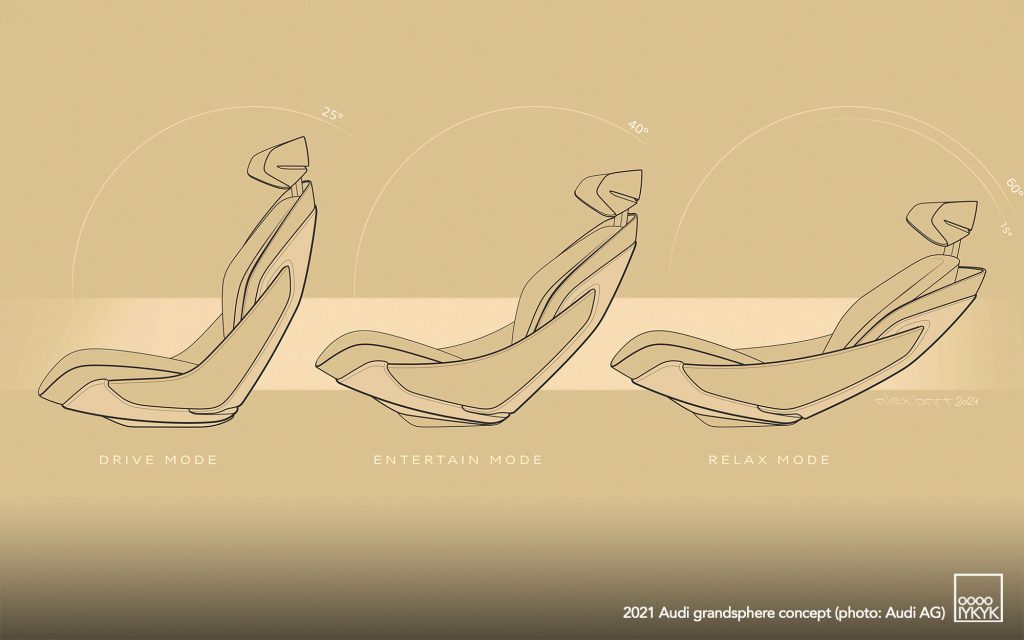
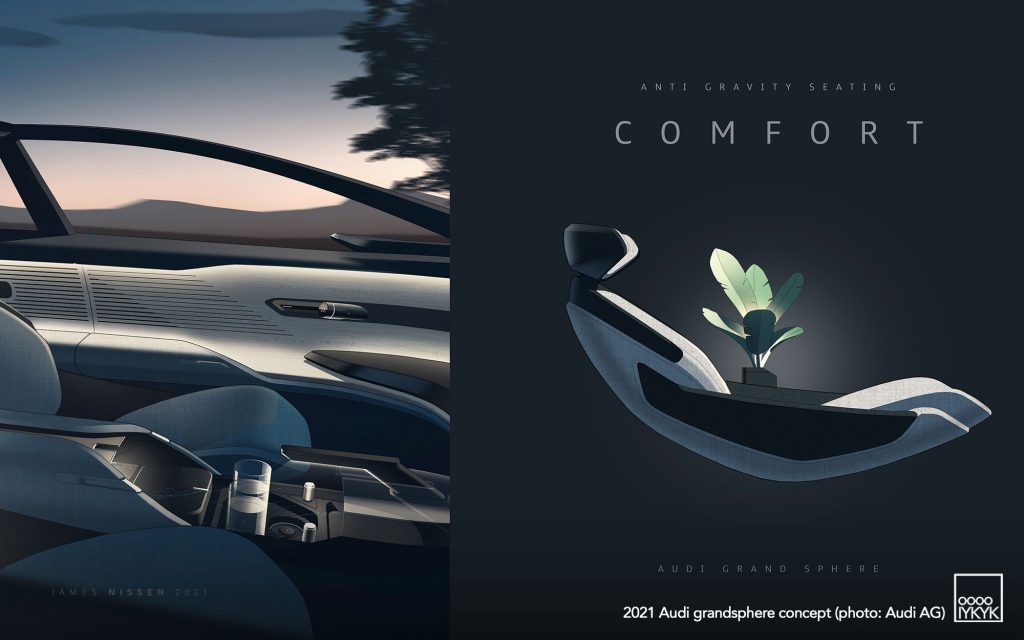
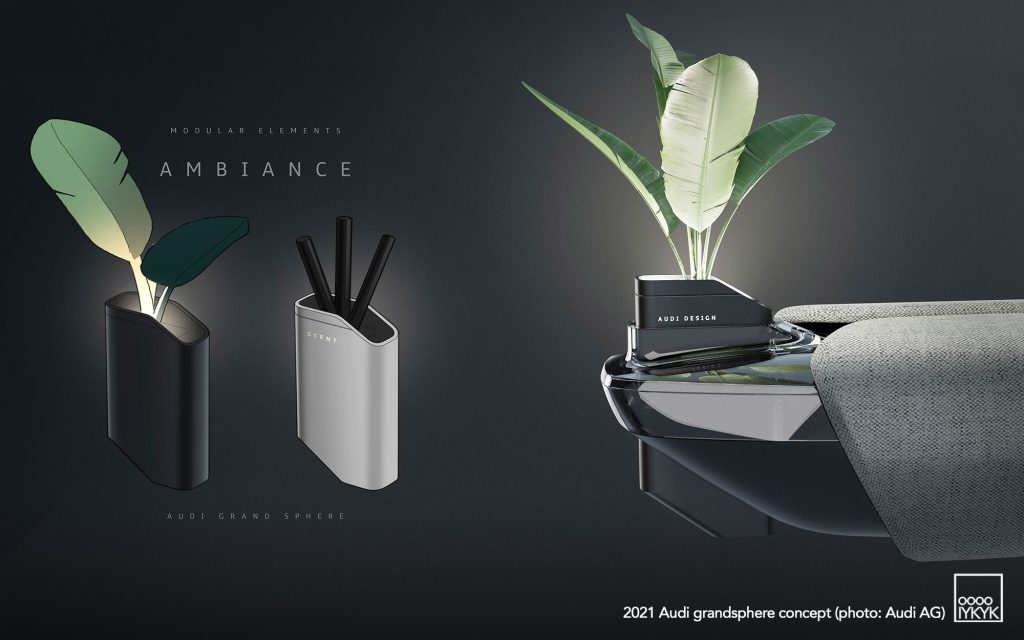
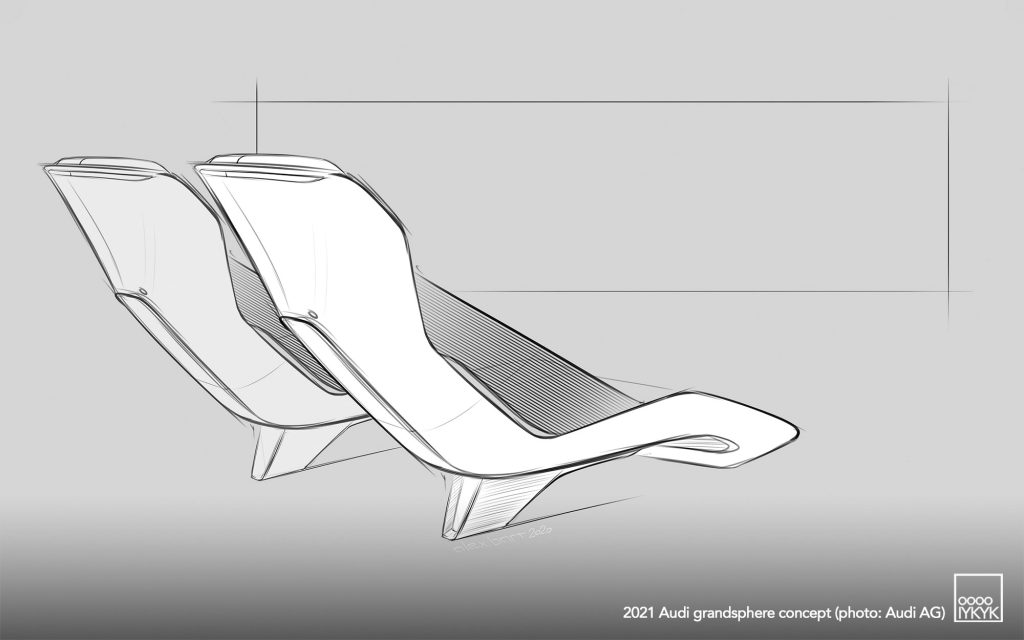
The front seats could assume several positions depending on how the car was being used. An upright position was intended for manual driving, a 40-degree recline allowed occupants to relax while using the infotainment system and a 60-degree recline created a resting position. Integrated air outlets provided filtered, temperature-controlled and optionally scented air, while localized speakers created private audio zones.
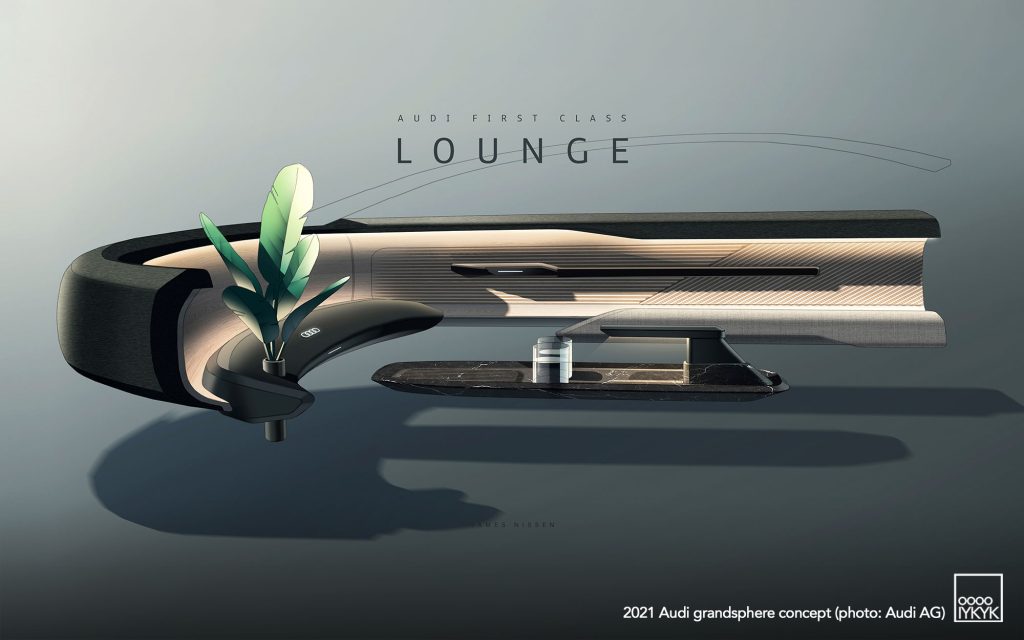
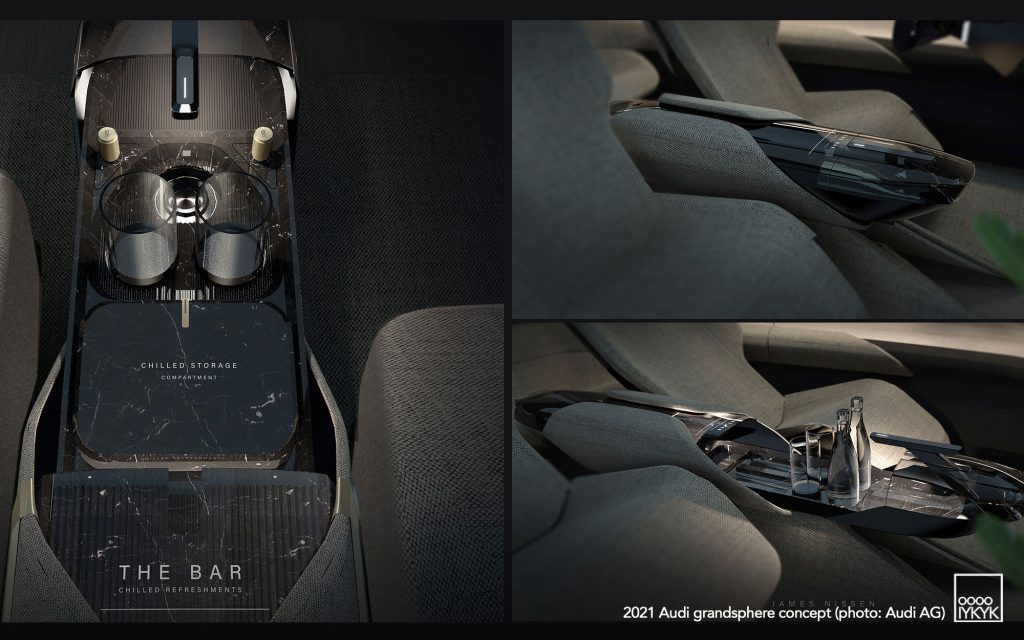
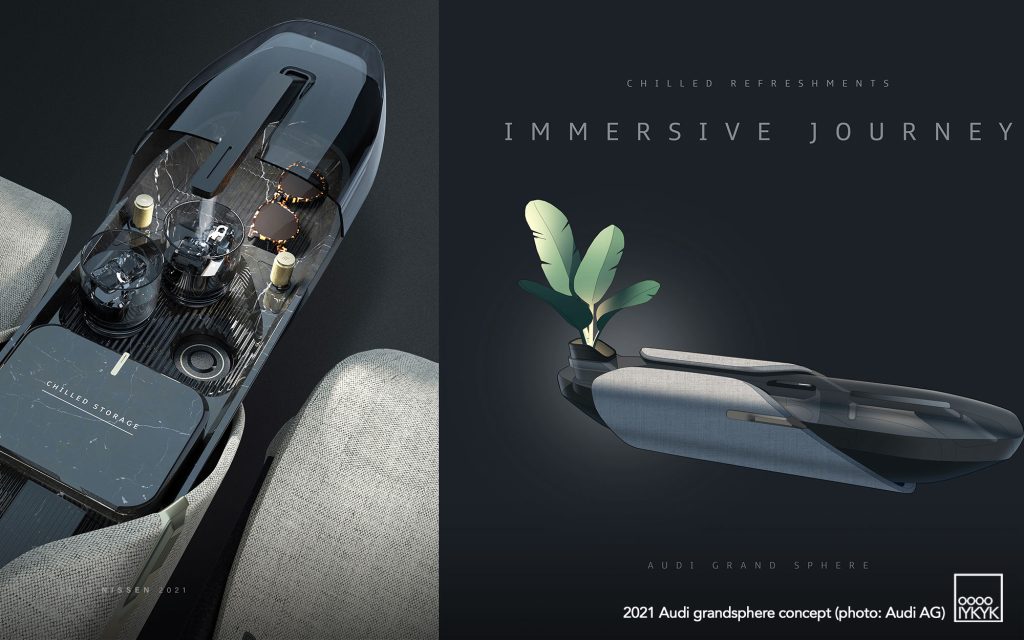
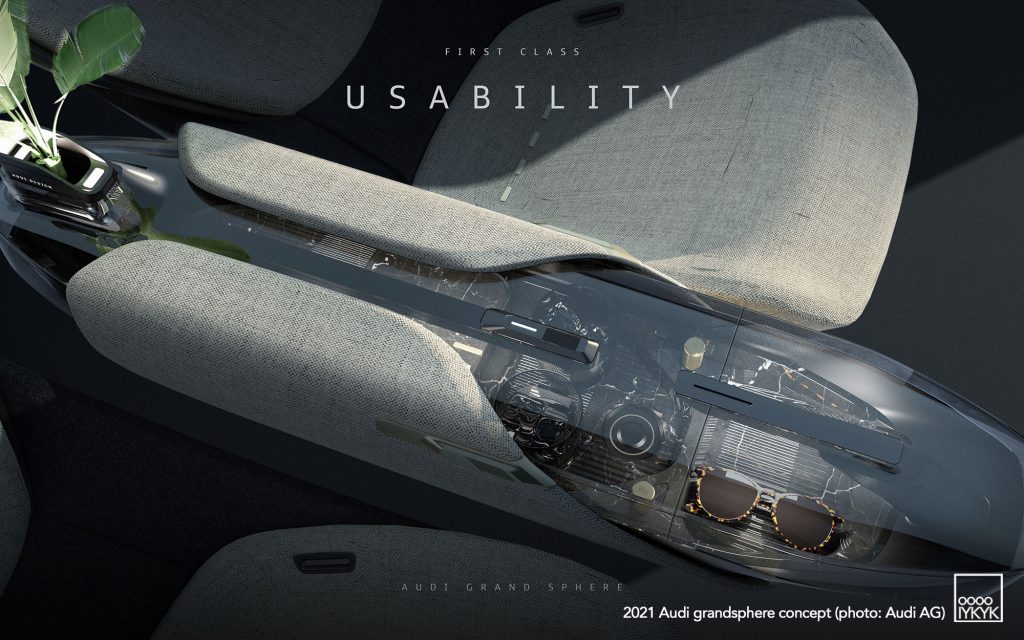
A compact refrigerated compartment between the front seats contained two glasses and a specially designed bottle for soft drinks.
FIRST CLASS MOVES FORWARD
The most fundamental change proposed by the grandsphere was the reversal of the traditional luxury-sedan hierarchy.
In a conventional chauffeur-driven luxury sedan, the most prestigious seats are typically in the rear. Audi argued that Level 4 automated driving could move first class to the front.
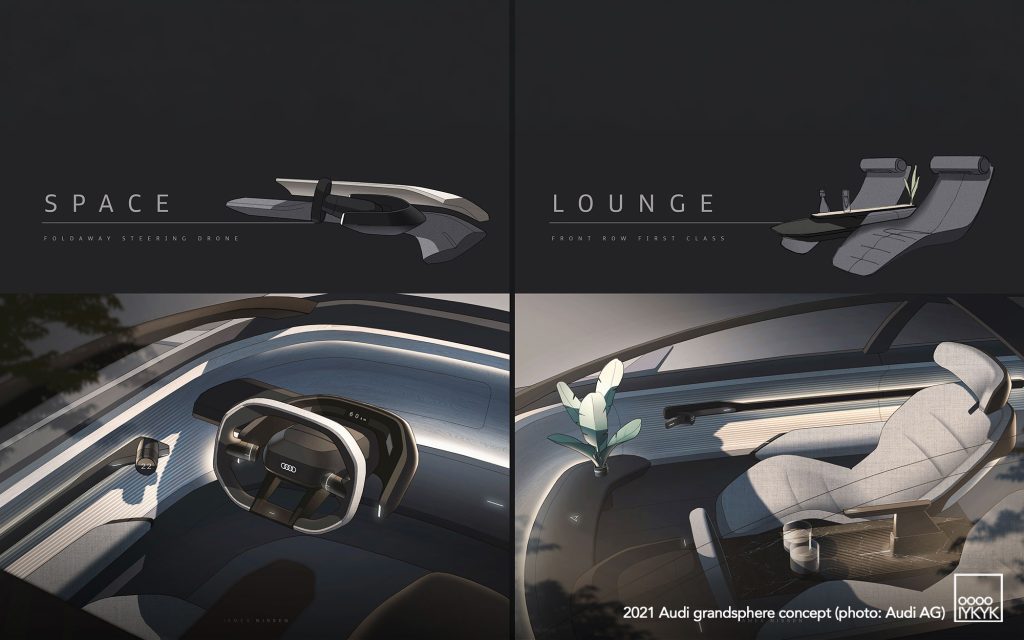
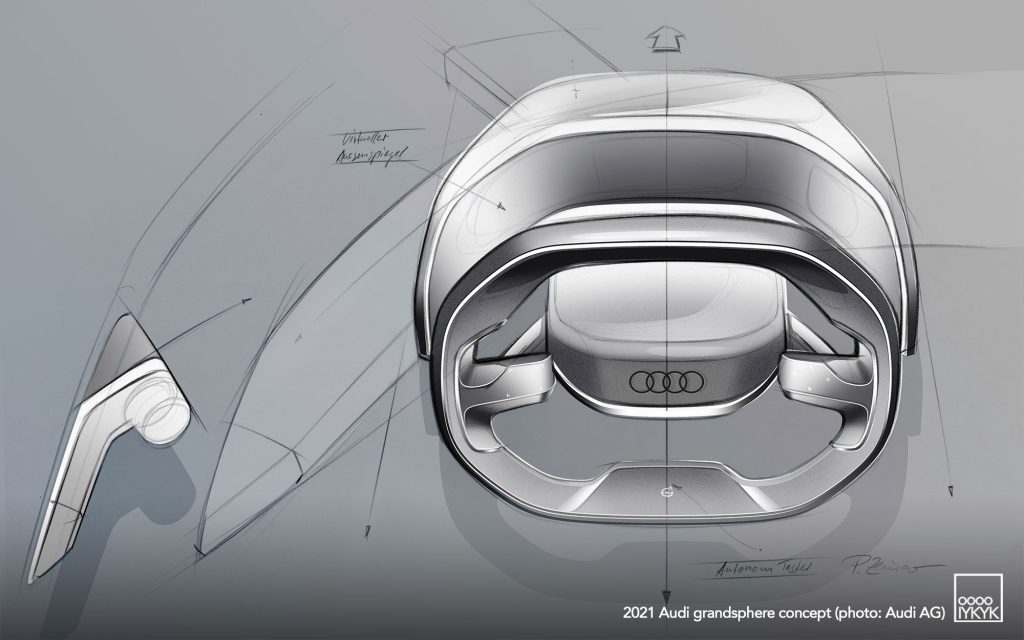
When the automated system assumed control, the steering wheel and pedals disappeared and the front seats could move rearward, opening substantial space ahead of their occupants. The large windshield and side windows then provided an unobstructed outward view.
Rather than designing the rear compartment primarily around chauffeured passengers, Audi therefore envisioned both front occupants becoming passengers whenever automated driving was available.
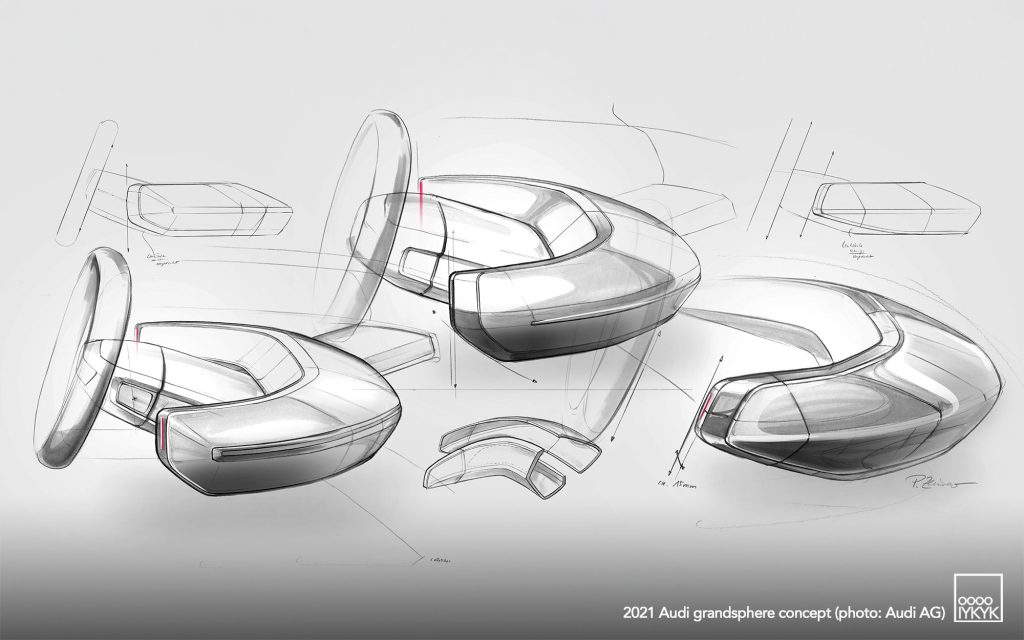
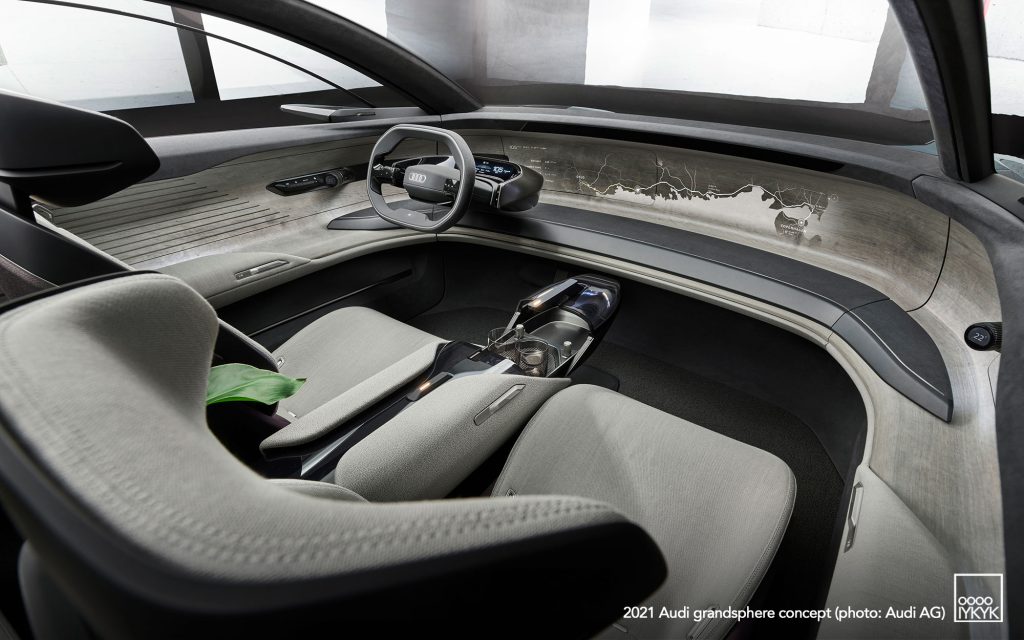
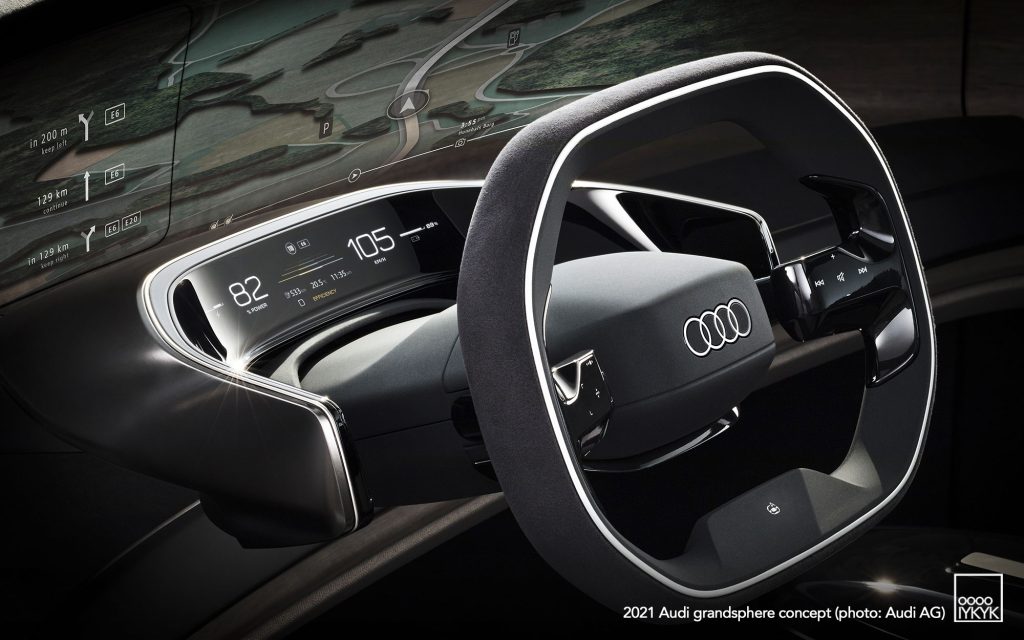
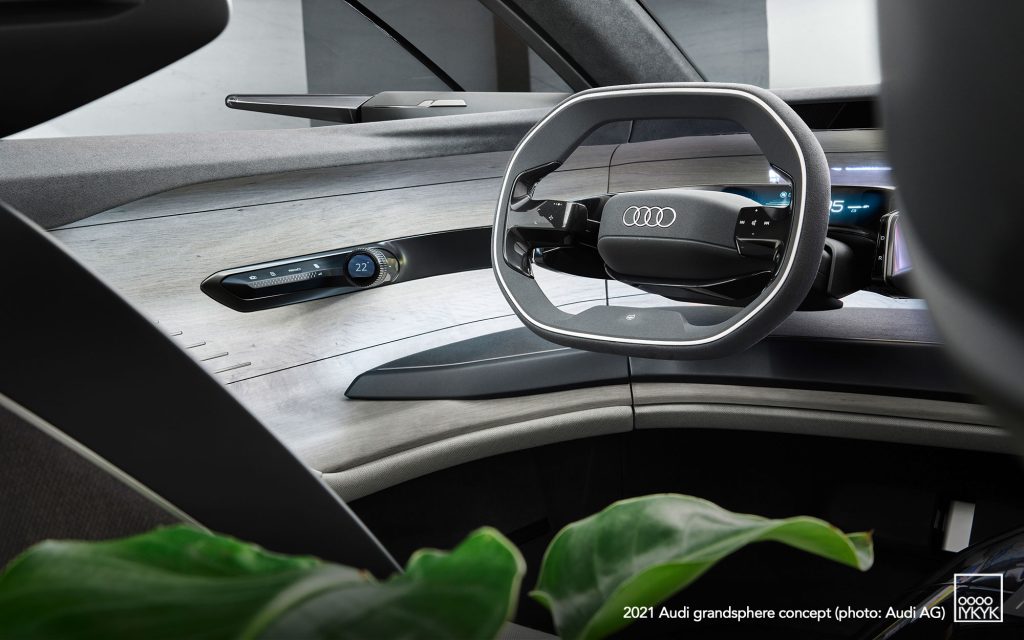
The grandsphere could still be driven conventionally. Outside Level 4 zones, the steering wheel and pedals returned and the driver’s seat moved into the appropriate position.
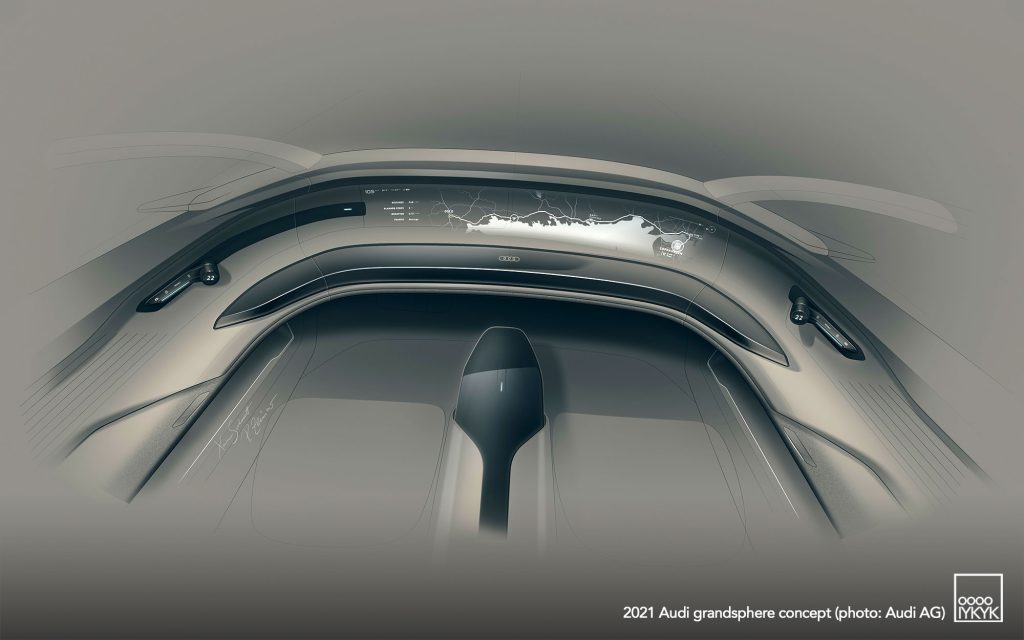
NO SCREENS
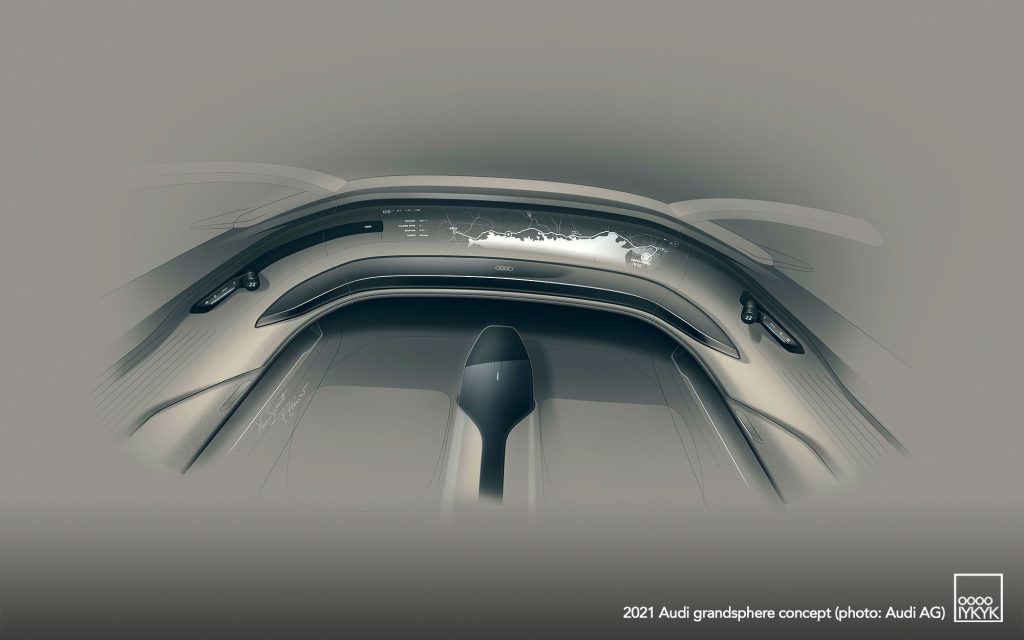
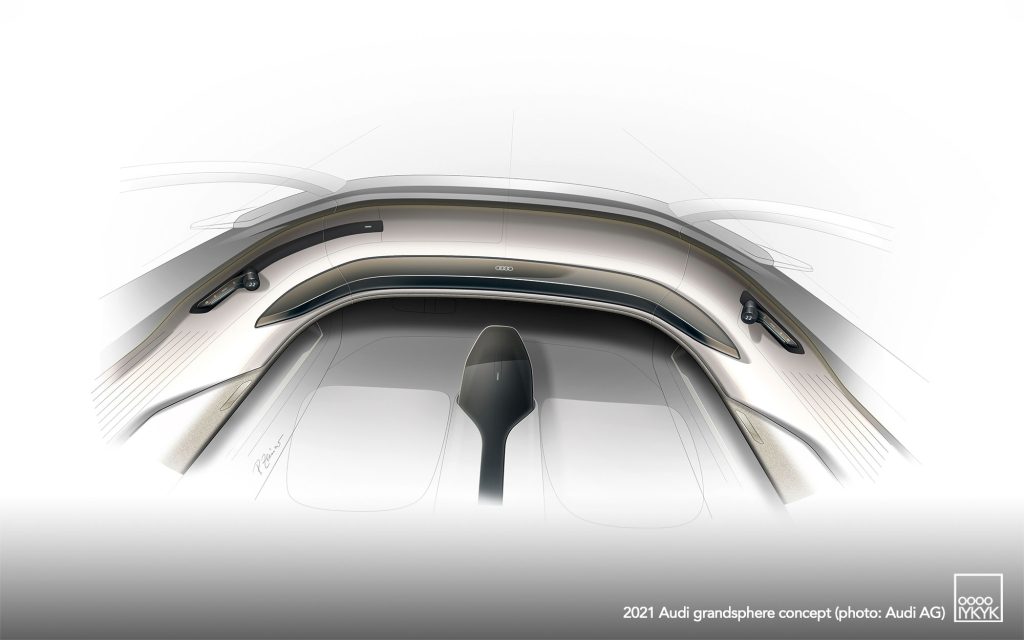
Audi also used the grandsphere to question the increasing proliferation of screens inside modern cars.
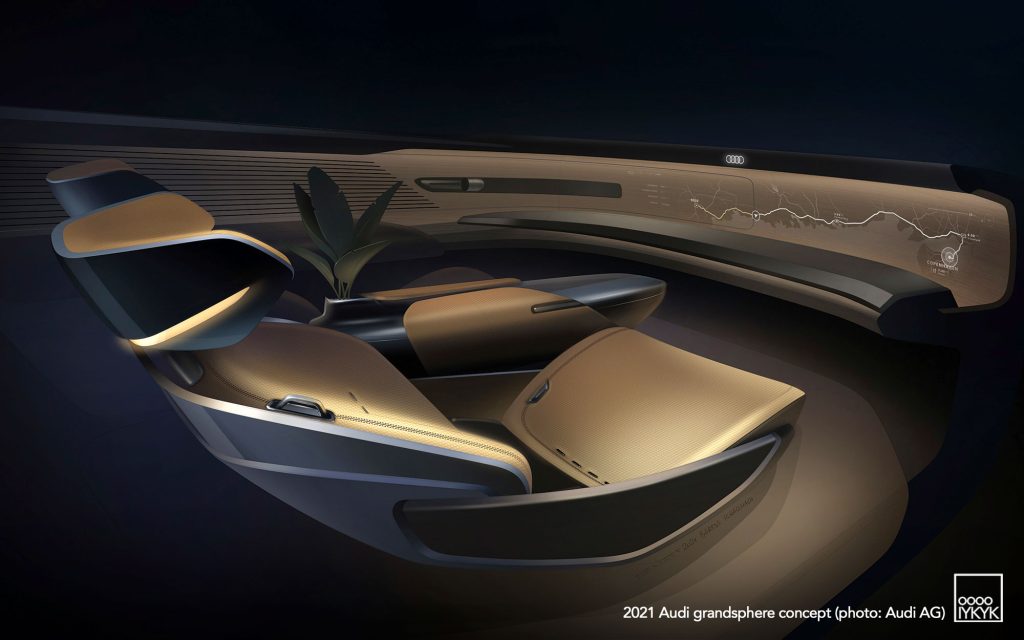
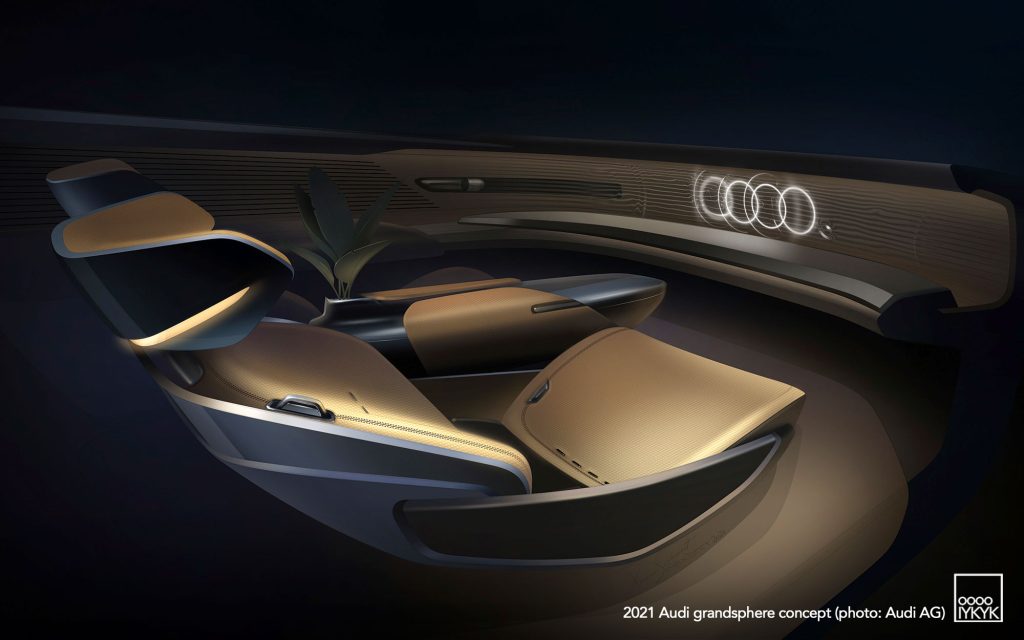
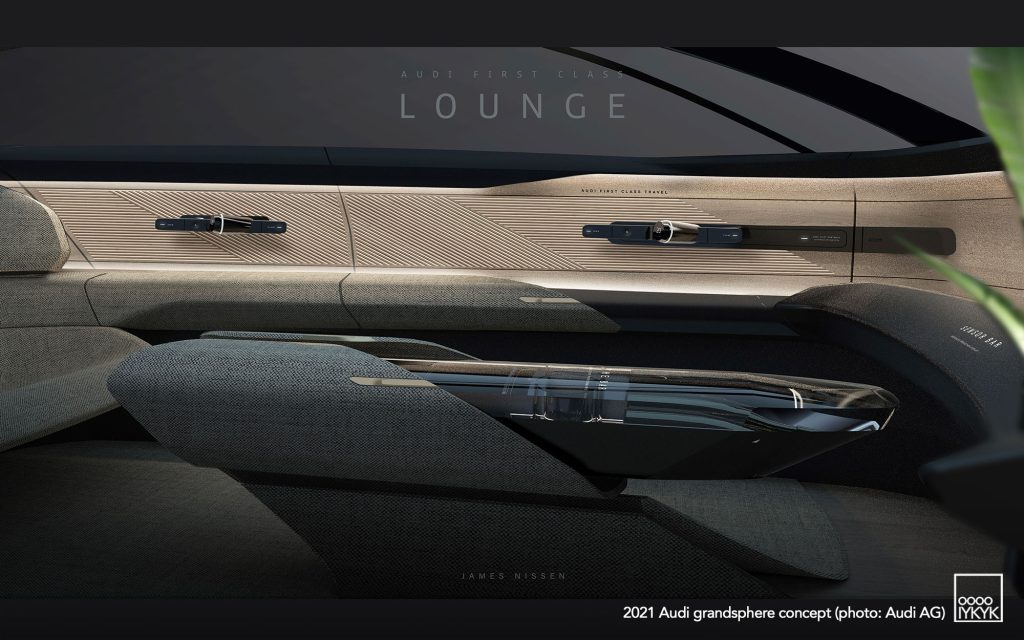
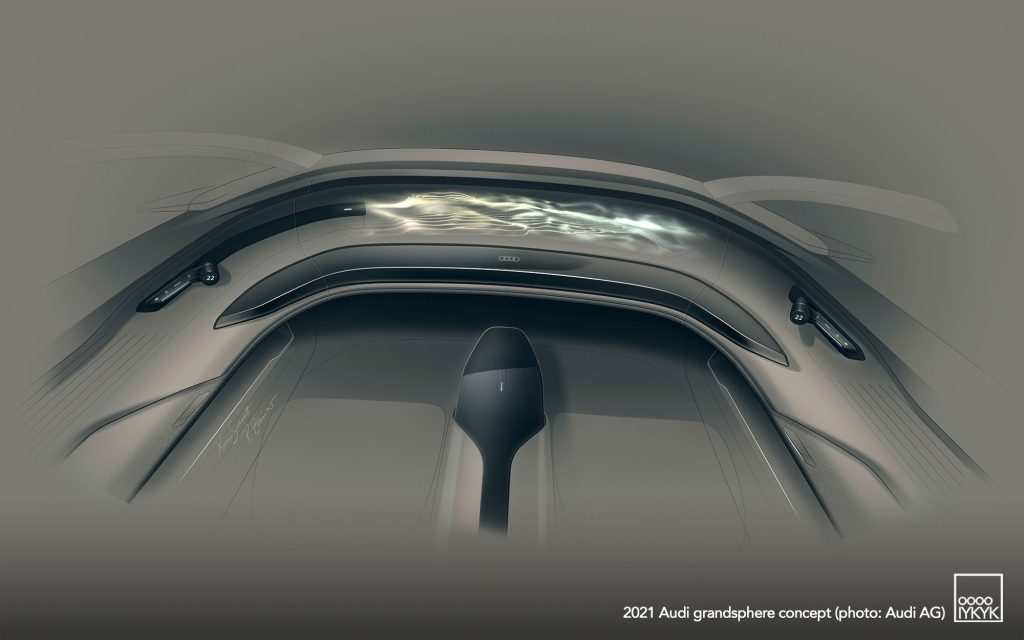
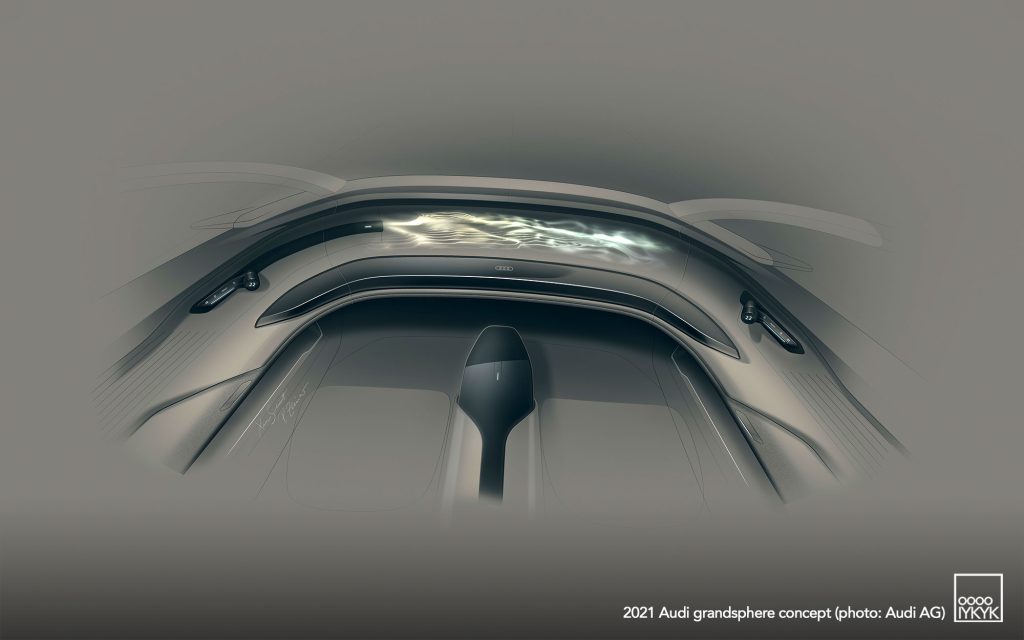
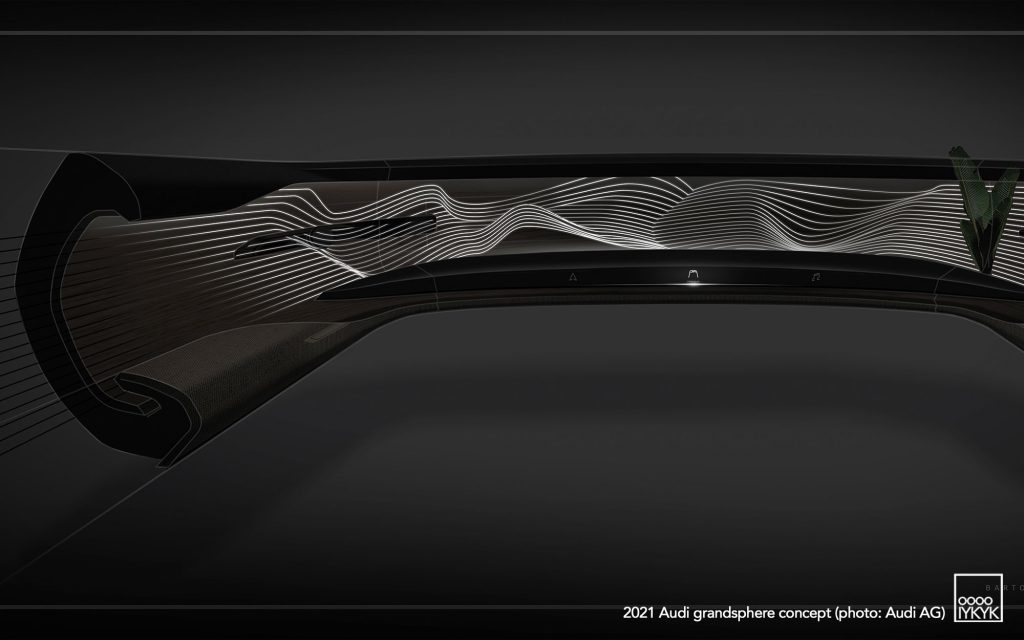
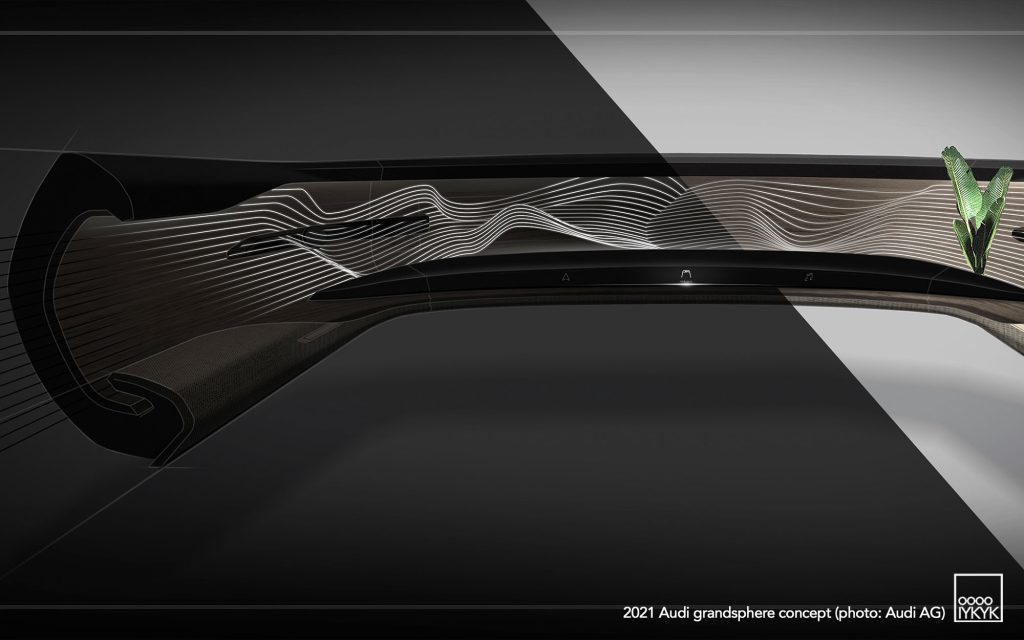
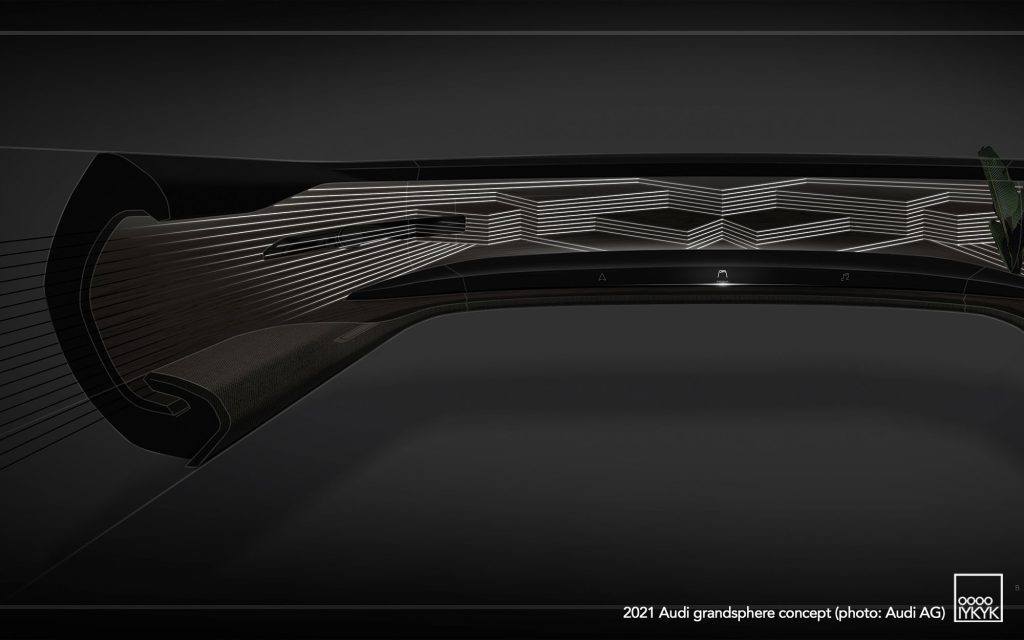
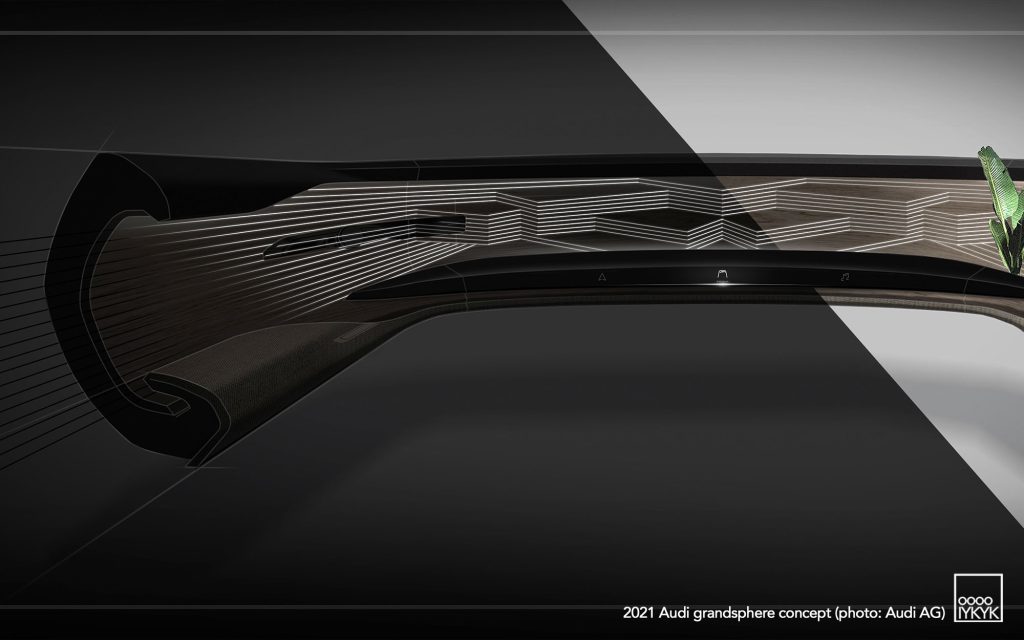
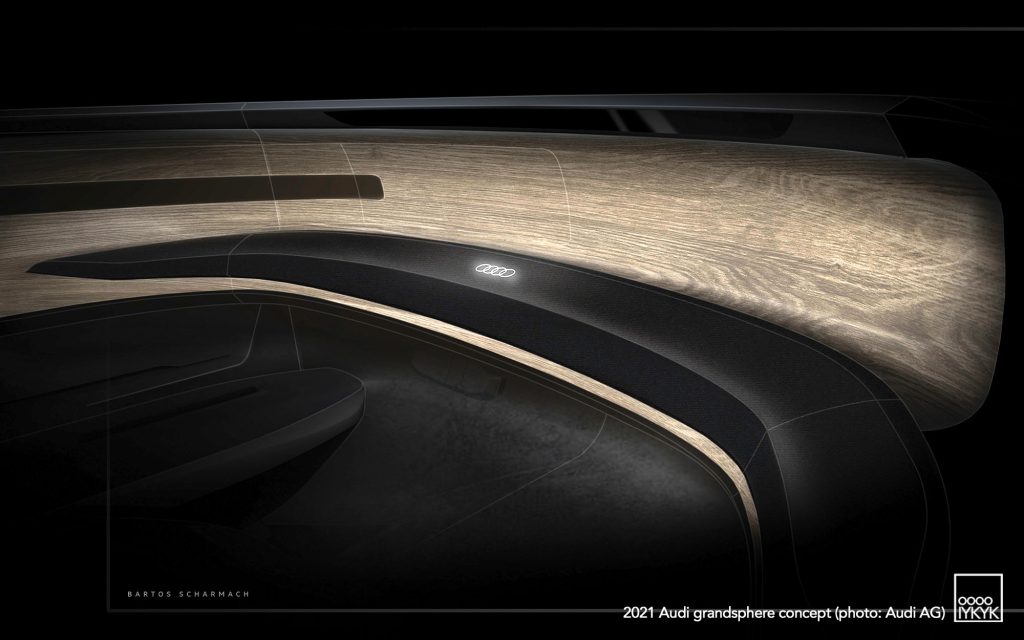
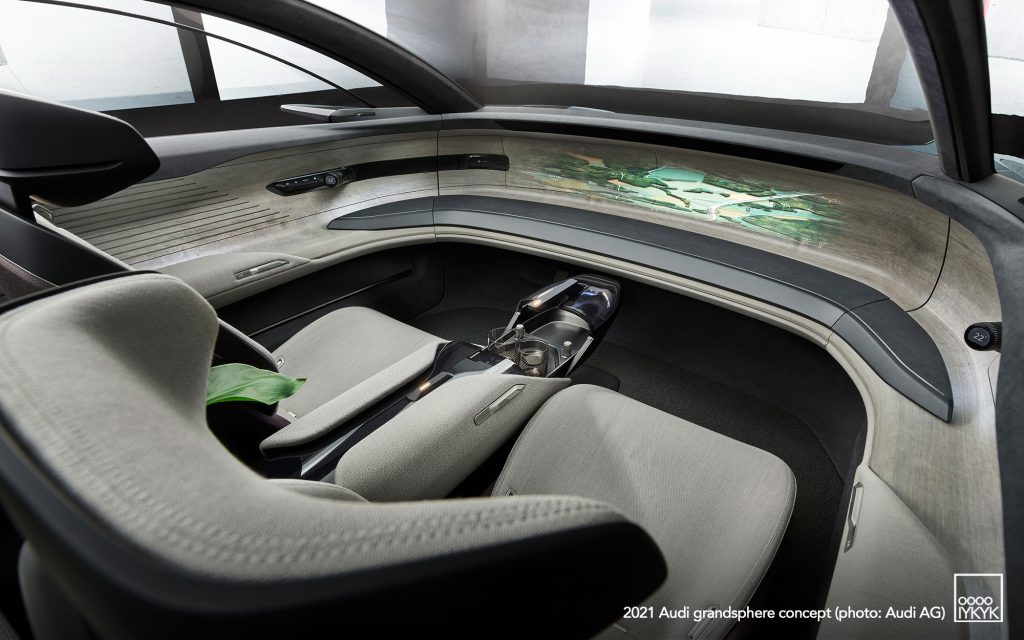
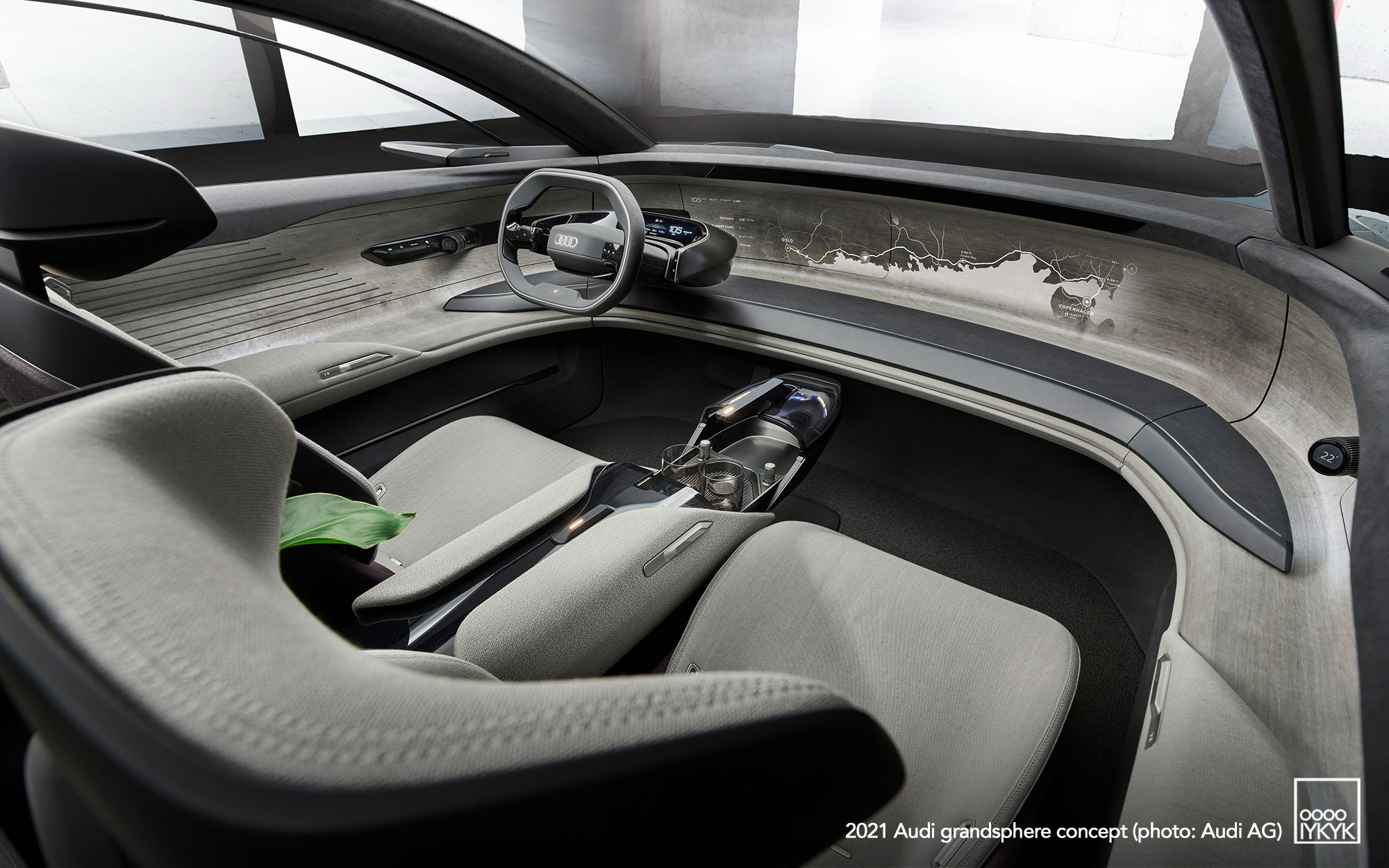
With the vehicle inactive, the cabin contained no conventional instrument cluster or visible infotainment displays. Wood, wool, textiles and metal instead dominated the interior surfaces. Audi also eliminated leather, using materials sourced from more sustainable cultivation or recycled raw materials.
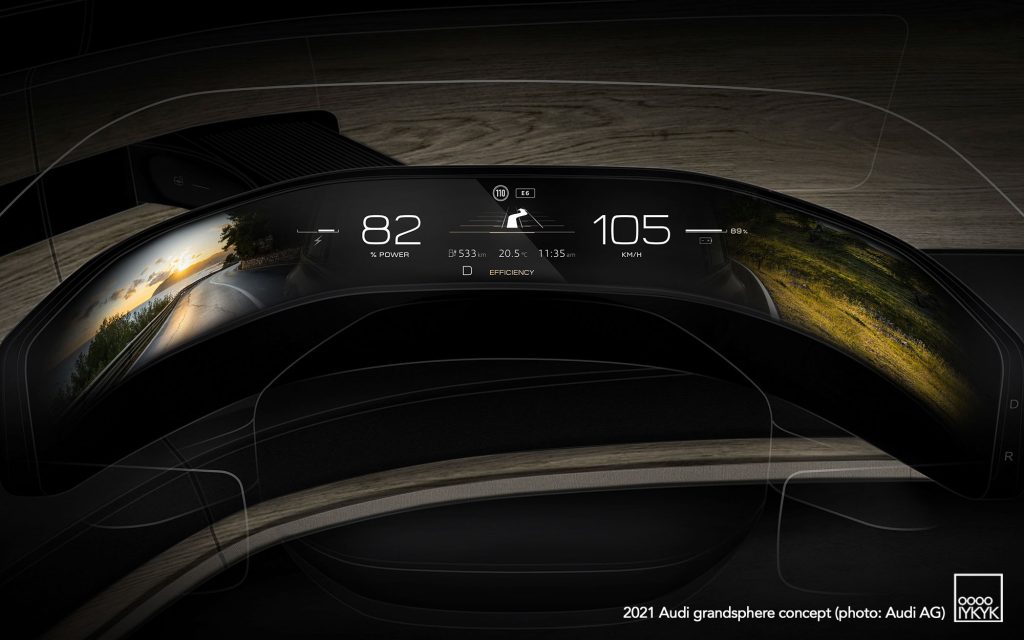
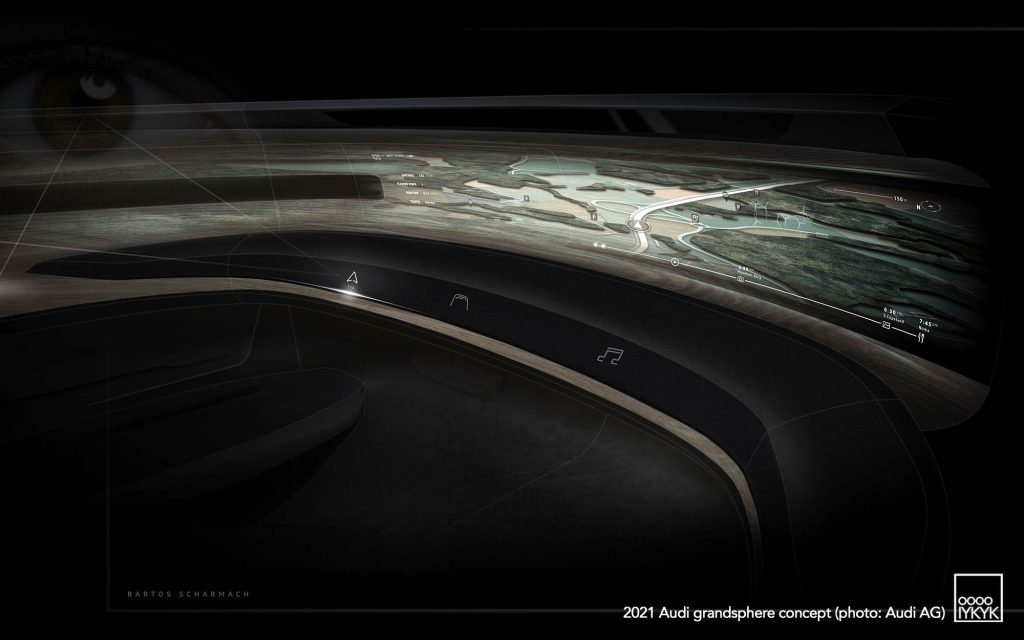
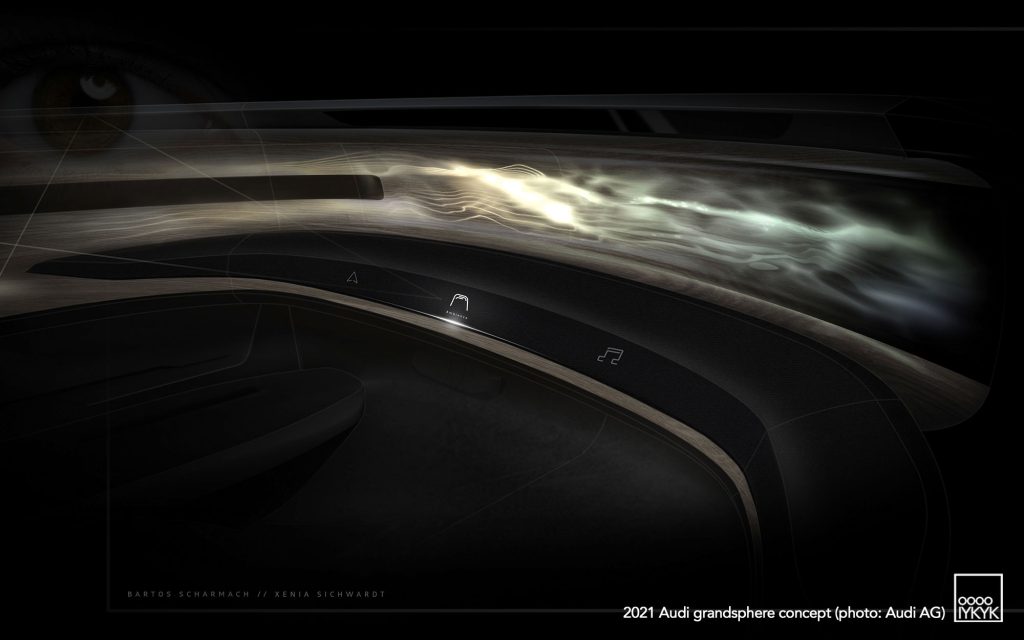
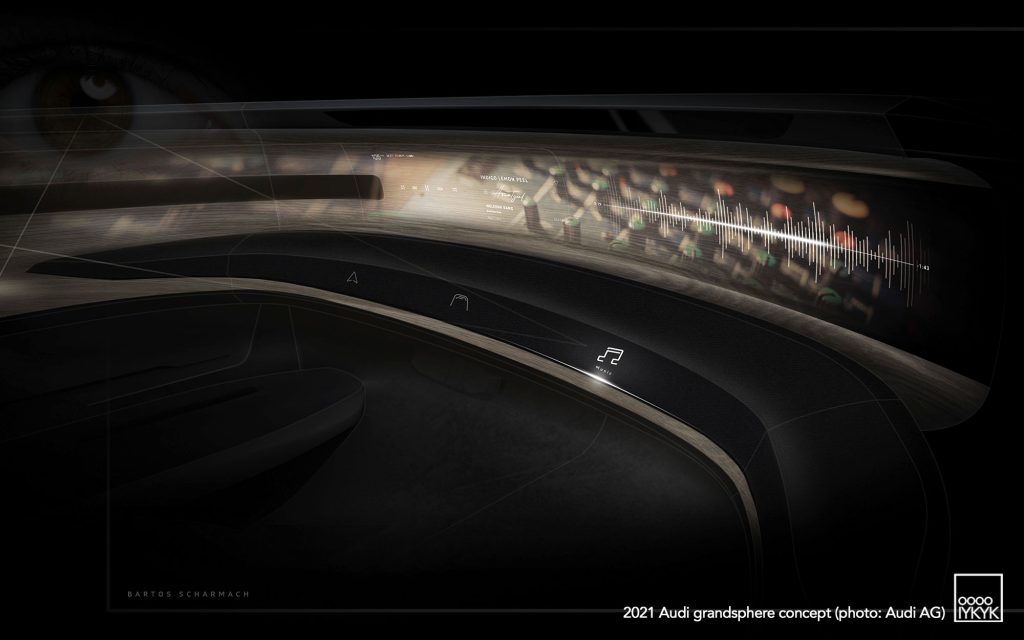
When required, information was projected directly onto the wooden surface beneath the windshield.
During manual driving, those projections could be divided between driver and passenger. In autonomous mode, the entire surface could become a wide-format entertainment display or video-conferencing screen.
The approach allowed Audi to integrate digital functions without permanently filling the cabin with black display panels.
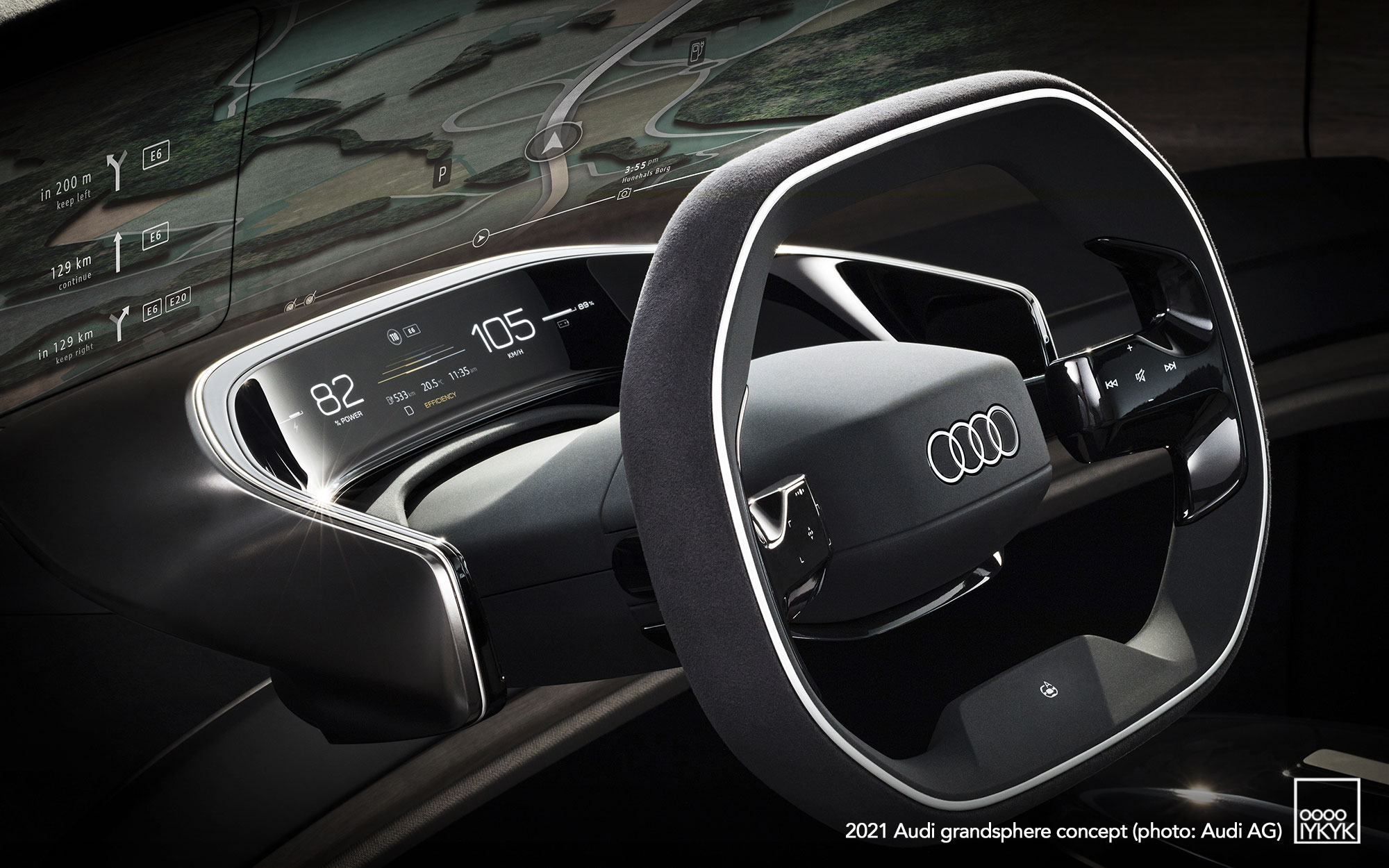
MMI TOUCHLESS RESPONSE
The grandsphere’s experimental MMI touchless response system offered several ways of interacting with the vehicle.
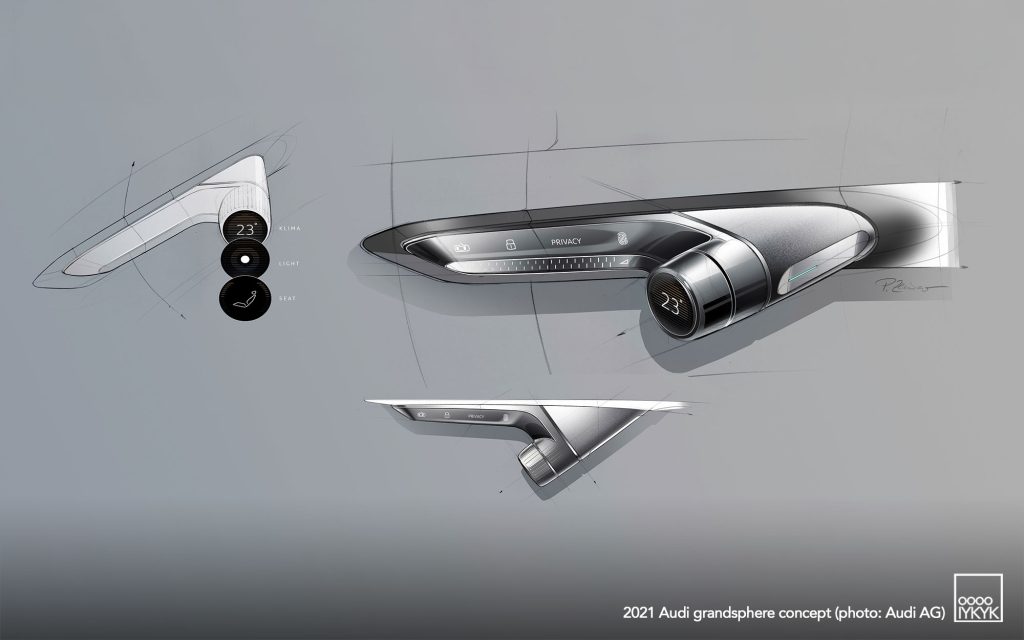
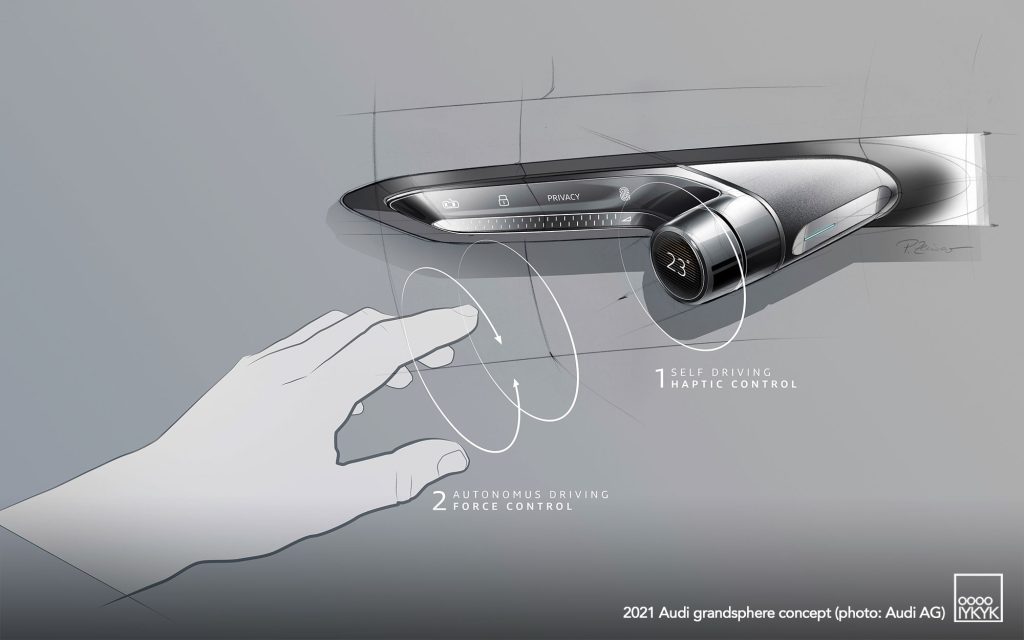
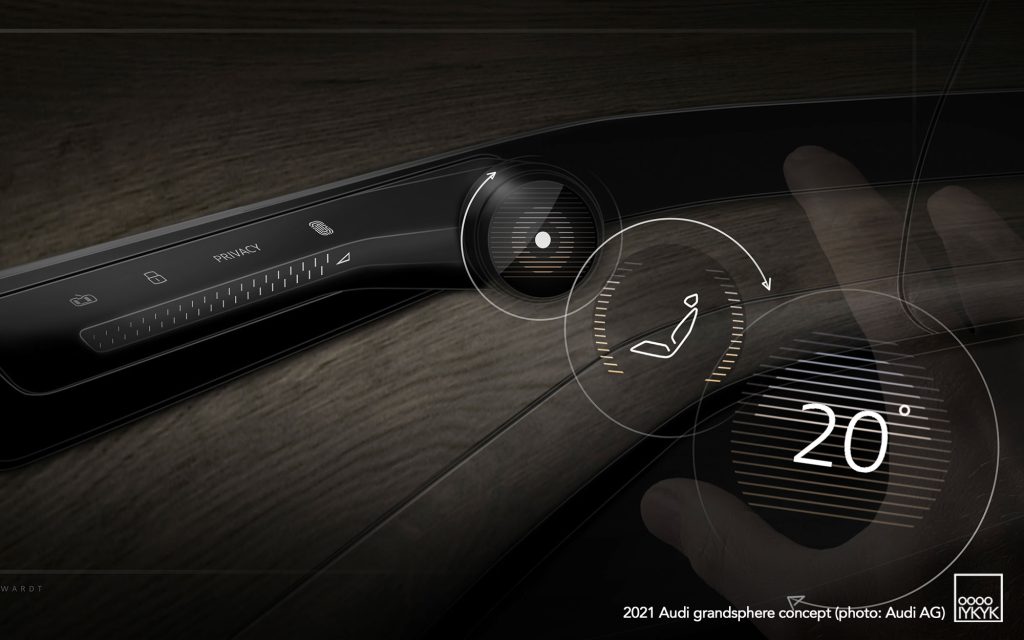
When sitting forward in the conventional driving position, the driver could use a physical rotary ring and buttons mounted near the door opening to navigate menus.
When reclined during autonomous driving, eye tracking and gesture recognition could perform the same functions without requiring the occupant to lean forward or touch a control. The system was also envisioned as supporting voice control, handwriting and conventional touch input.
Audi proposed that the system would learn individual preferences and frequently used functions, allowing it to anticipate commands and make personalized suggestions.
Additional invisible touch surfaces were integrated into the door armrests, while VR glasses stored in the doors could be used with entertainment systems including holoride.
LEVEL 4 AUTOMATED DRIVING
Level 4 automated driving was central to the grandsphere rather than simply another technology incorporated into the concept.
Audi envisioned the vehicle assuming the complete driving task in appropriately equipped areas. The steering wheel and pedals could then retract, physically transforming the cabin from a driver-oriented environment into a passenger space.
The concept extended beyond autonomous movement itself. Audi proposed that a grandsphere could independently collect its passengers, park itself and handle its own charging. Digital services could suggest scenic routes, restaurants and hotels or integrate entertainment and other personalized services into a journey.
Audi was working with Volkswagen Group software organization CARIAD on technologies intended to enable new automated-driving concepts later in the decade.
PPE PLATFORM
The grandsphere was based on the Premium Platform Electric architecture developed specifically for battery-electric vehicles.
Its approximately 120-kWh battery occupied the floor between the axles. The flat battery and absence of a conventional transmission tunnel contributed to the concept’s unusually large passenger compartment.
Separate electric motors at the front and rear provided electric quattro all-wheel drive, electronically coordinating torque distribution according to driving conditions and efficiency requirements.
Combined output was 530 kW (710 hp) and 960 Nm (708 lb-ft) of torque.
Audi estimated acceleration from 0–100 km/h (62 mph) in just over four seconds. Top speed was deliberately limited to preserve driving range.
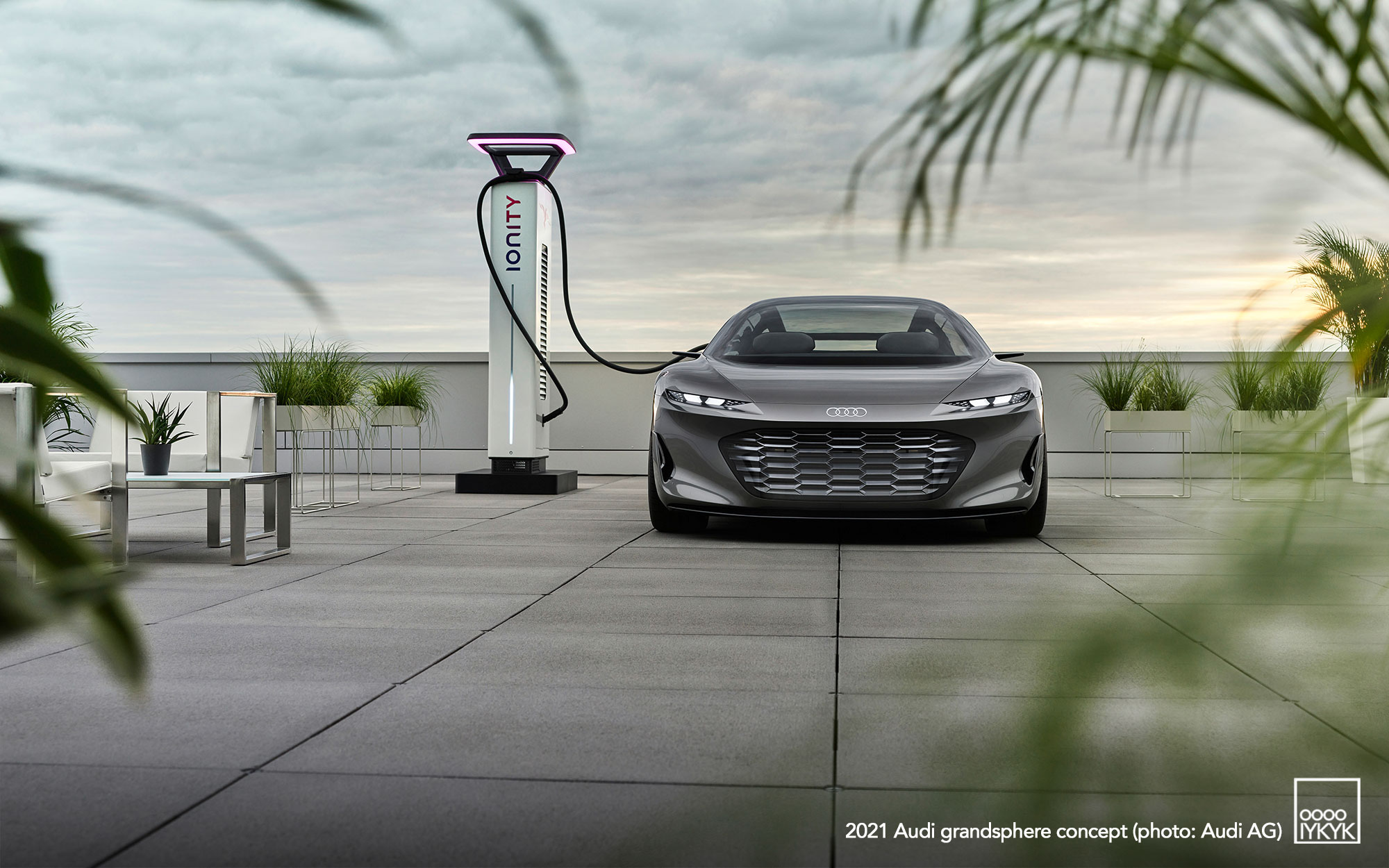
CHARGING AND RANGE
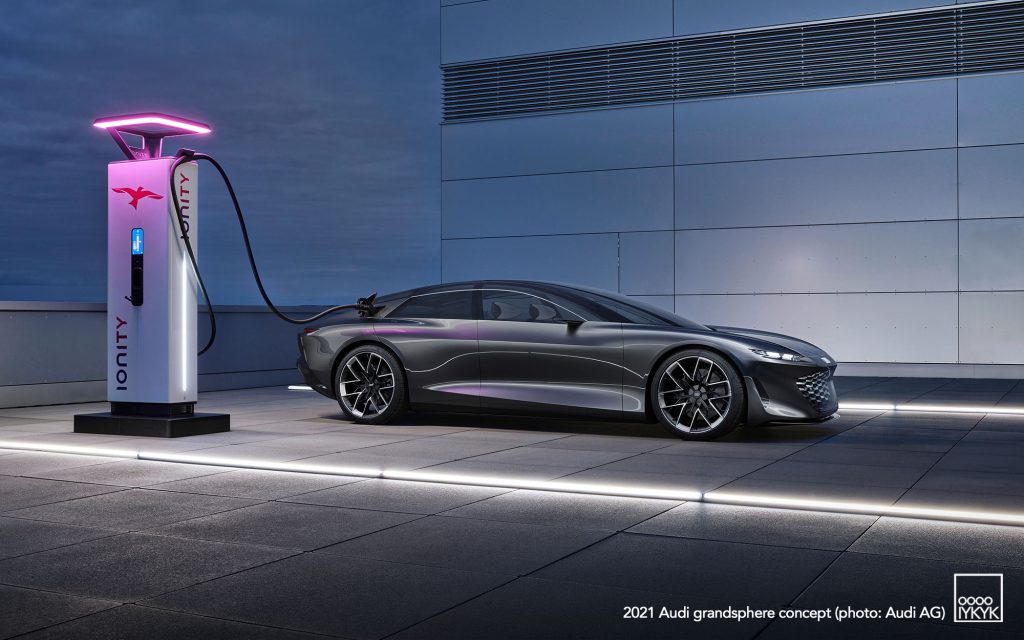
The grandsphere’s PPE architecture incorporated an 800-volt electrical system capable of DC fast charging at up to 270 kW.
Audi claimed a 10-minute charging session could add more than 300 kilometers, or 186 miles, of driving range. Charging the approximately 120-kWh battery from five to 80 percent required less than 25 minutes.
Projected maximum range exceeded 750 kilometers, or approximately 466 miles, depending on vehicle configuration and power output.
SUSPENSION
The grandsphere used five-link front suspension and a multi-link rear axle, both constructed primarily from aluminum. Rear-wheel steering compensated for the concept’s 3.19-meter wheelbase by improving low-speed maneuverability.
Adaptive air suspension combined with electronically controlled dampers provided the basic springing system, but Audi supplemented it with an active electromechanical suspension.
Individual actuators could pull or push each wheel vertically within milliseconds, actively counteracting pitch and body movement during acceleration and braking. A forward-facing camera scanned the road surface so the suspension could react predictively to upcoming irregularities rather than waiting for the wheels to encounter them.
Navigation data could additionally provide information about upcoming curves, gradients and inclines.
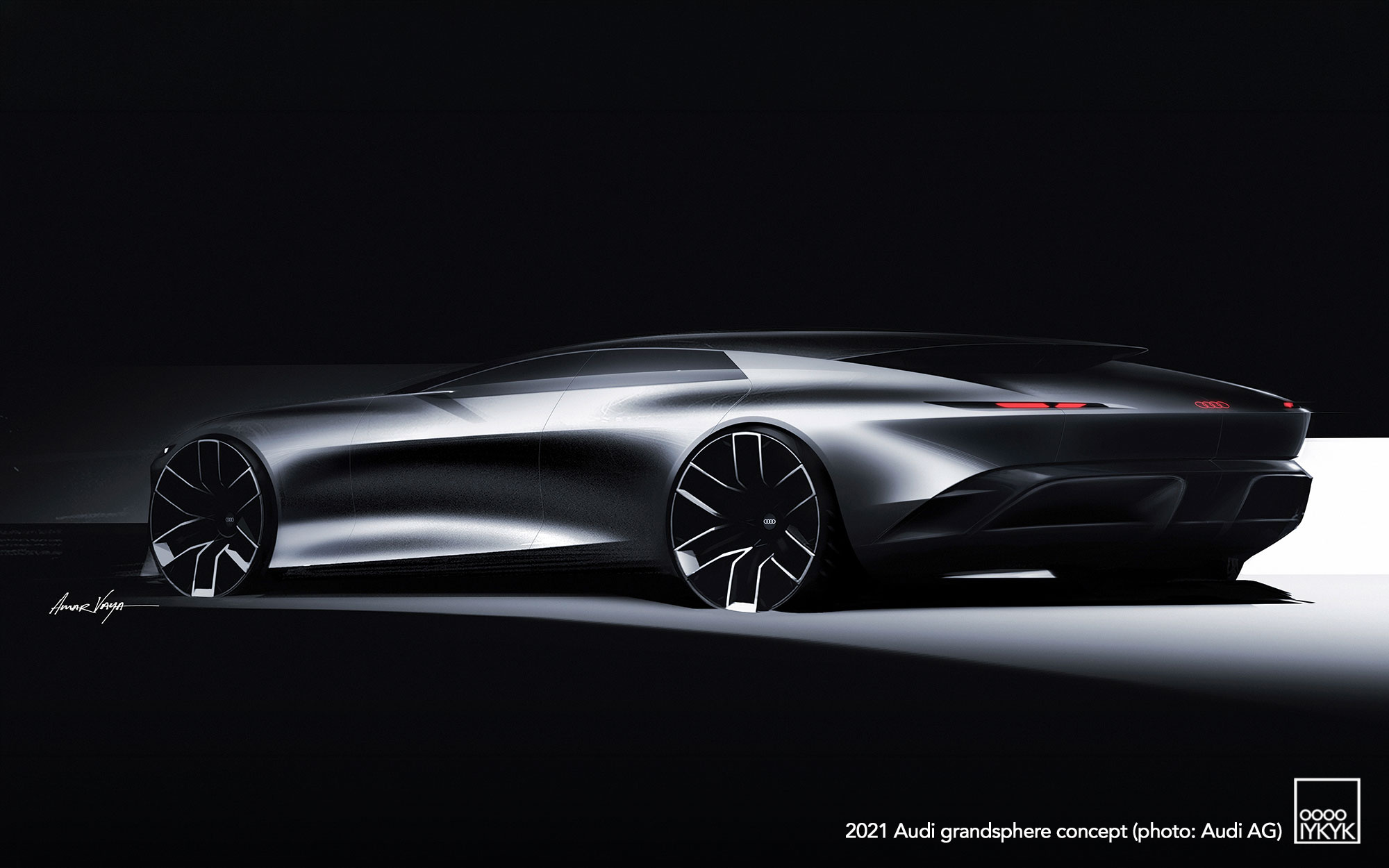
SIGNIFICANCE
The Audi grandsphere concept was one of the clearest expressions of Audi’s early-2020s vision for a successor to the conventional flagship luxury sedan.
Its importance was less about any single feature than the combination of technologies and ideas Audi expected to influence future production vehicles. PPE electric architecture, 800-volt charging, electric quattro, rear-wheel steering and active suspension represented relatively tangible engineering developments. Level 4 automation, retractable controls and the complete reorganization of the luxury-car interior represented a more ambitious vision.
The grandsphere also marked an important shift in Audi design thinking. Despite occupying the same broad size category as an A8, Audi deliberately avoided recreating the proportions of a traditional three-box luxury sedan. Instead, the concept combined the interior space of a flagship with the low roof, sweeping profile and visual character of a four-door grand tourer.
Its 23-inch Avus-inspired wheels, pronounced quattro wheel arches and Sportback roofline simultaneously connected that future-oriented form with recognizable elements of Audi design history.
Most significantly, the grandsphere proposed that automated driving could fundamentally change where luxury existed within a car. Once the driver no longer needed to drive, the front seats ceased being a workplace and became the best seats in the vehicle.
In that respect, the grandsphere wasn’t simply Audi’s proposal for a future luxury sedan. It was a proposal for what might replace one.
RELATED
Concept Cars: Audi skysphere concept (2021), Audi urbansphere concept (2022), Audi activesphere concept (2023), Audi AI:CON concept (2017), Audi Avus quattro (1991)
Production Technology: Premium Platform Electric (PPE), 800-volt electrical architecture, electric quattro
Production Models: Audi A8, Audi e-tron GT
Technology: Level 4 automated driving, MMI touchless response, active suspension, rear-wheel steering
Organizations: Audi, CARIAD
PHOTO GALLERY