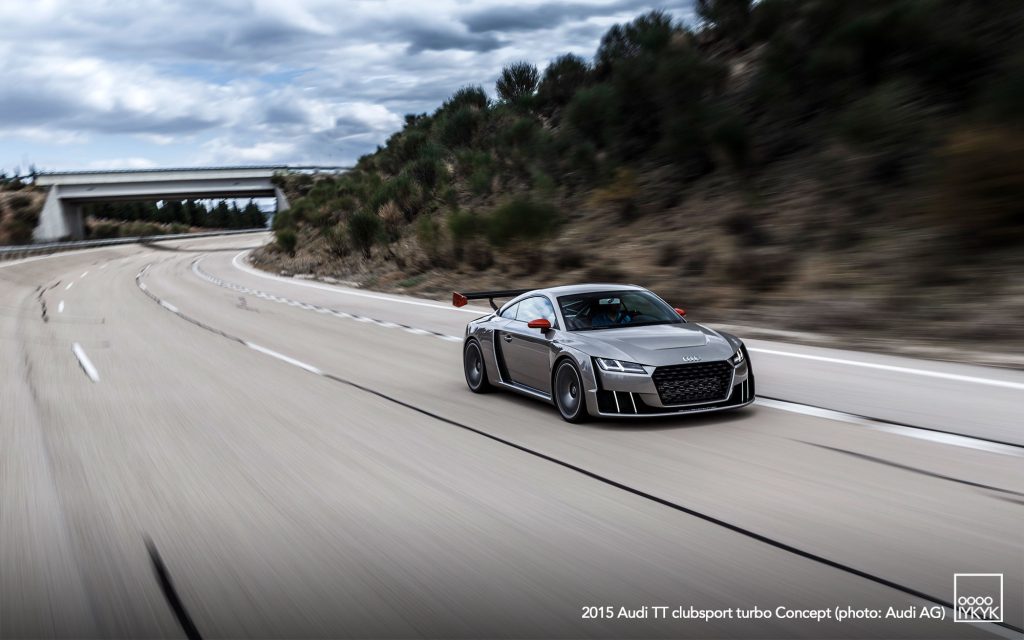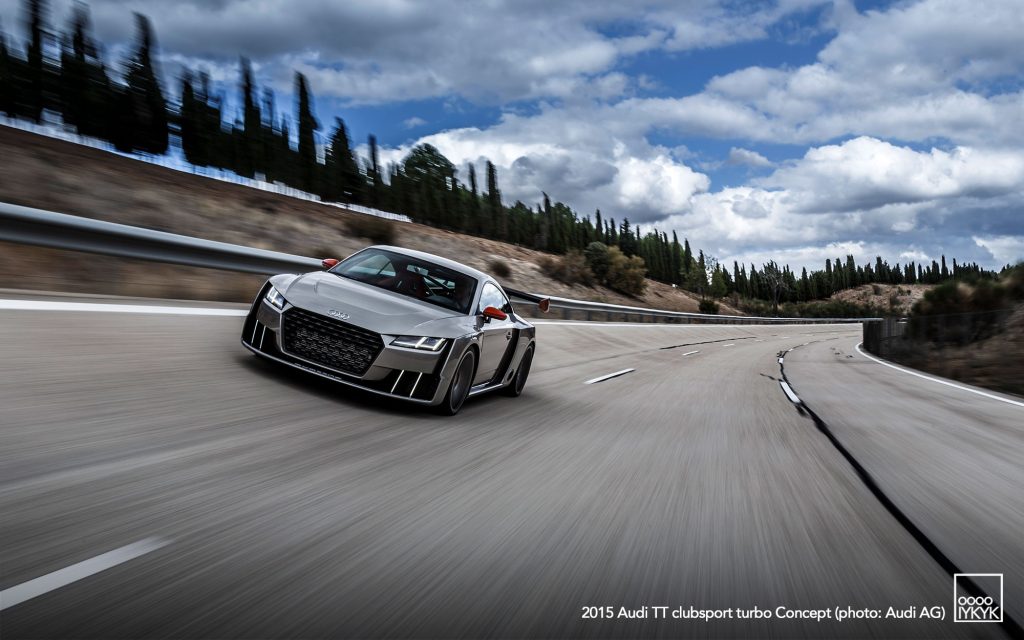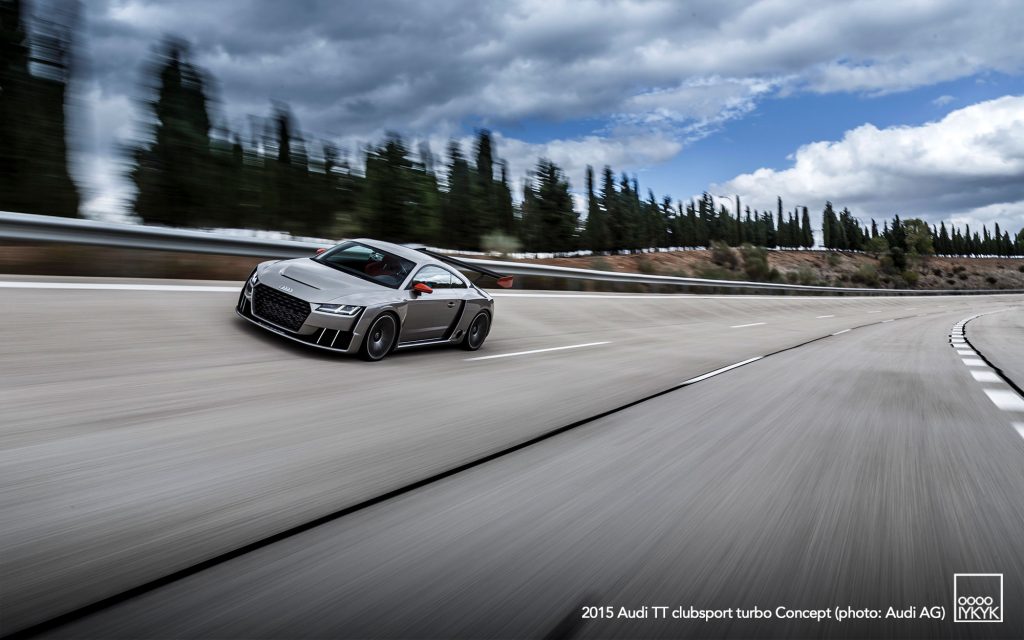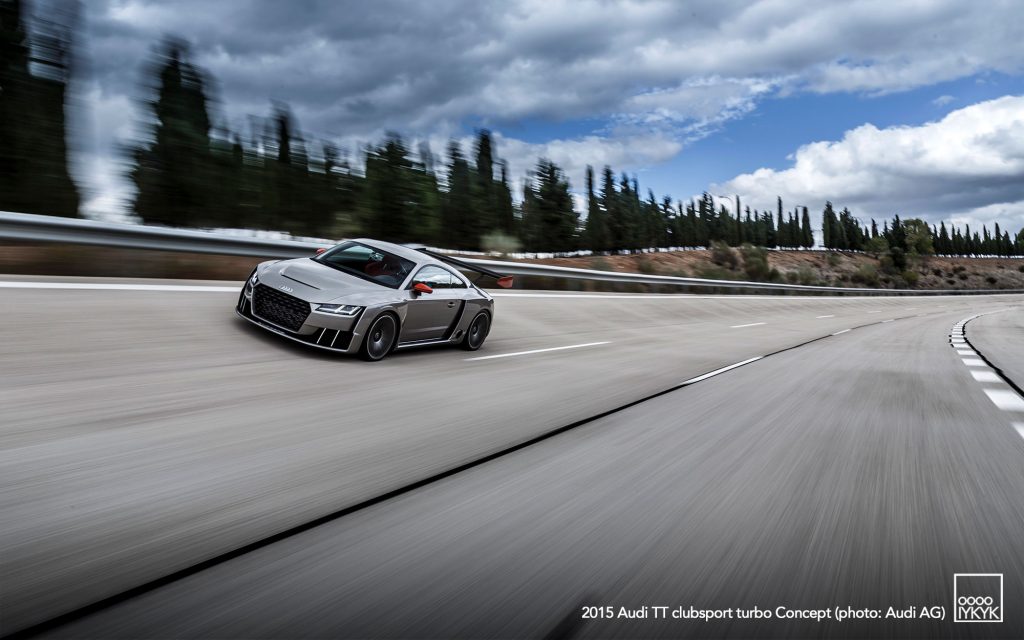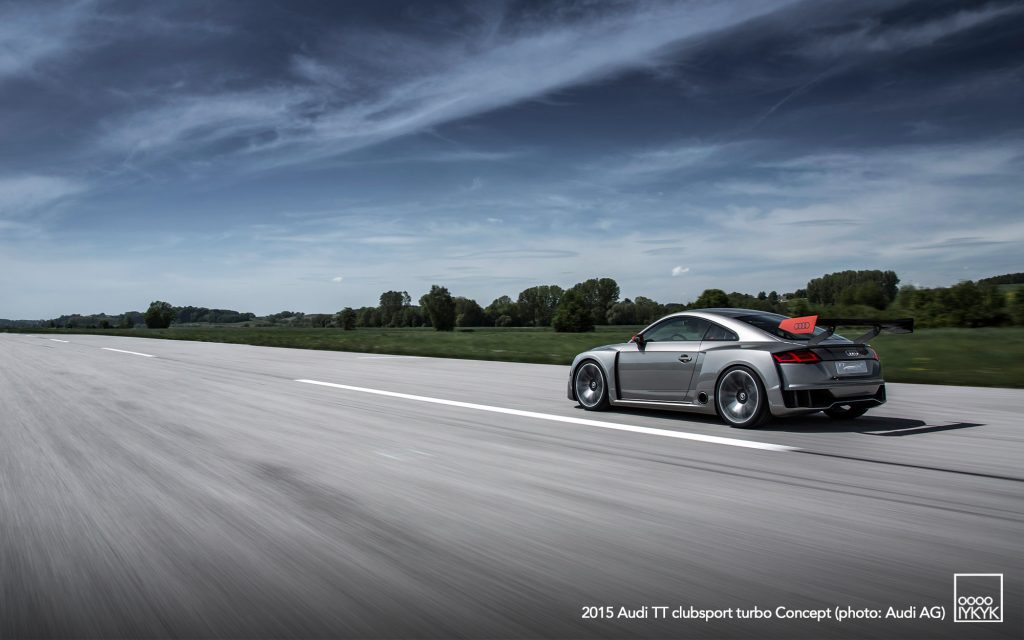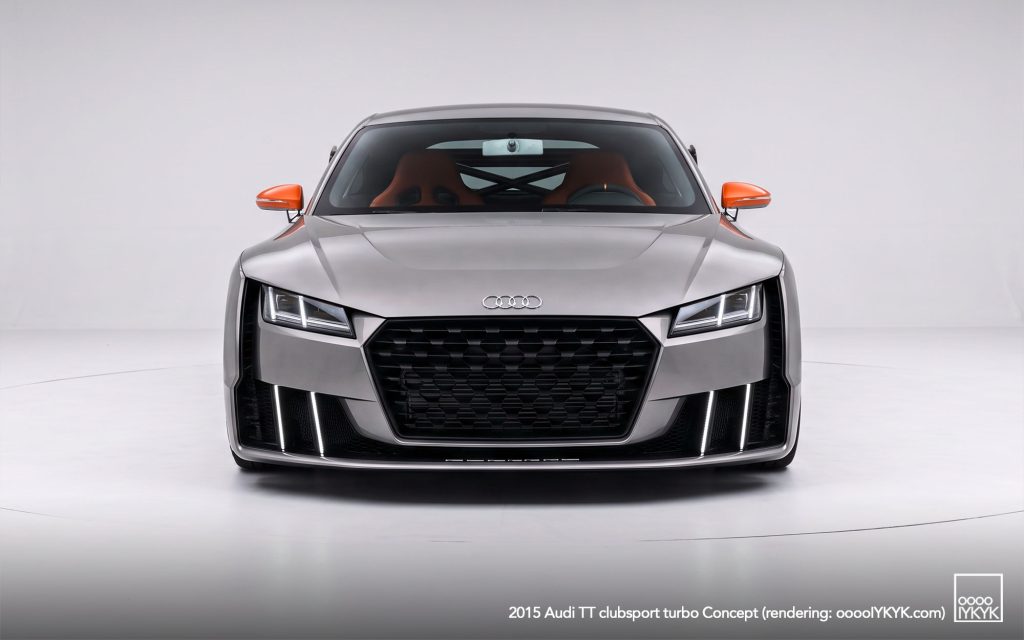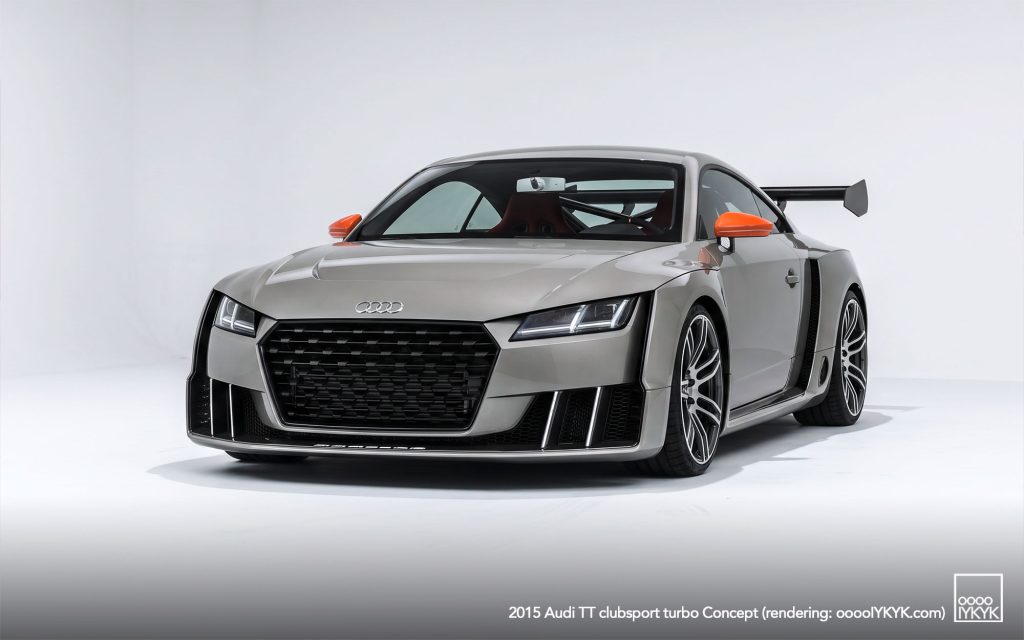

What: Audi TT clubsport turbo concept
Type: concept car / design study
Era: Audi modern era
Model Family: TT
Chassis / Matrix: Type FV / Type 8S
Generation: TT Mk3 (8S)
Announced: May 8, 2015
Debut: Wörthersee 2015, May 13–16, 2015
Debut Location: Reifnitz, Carinthia, Austria
Body Style: Two-seat coupé
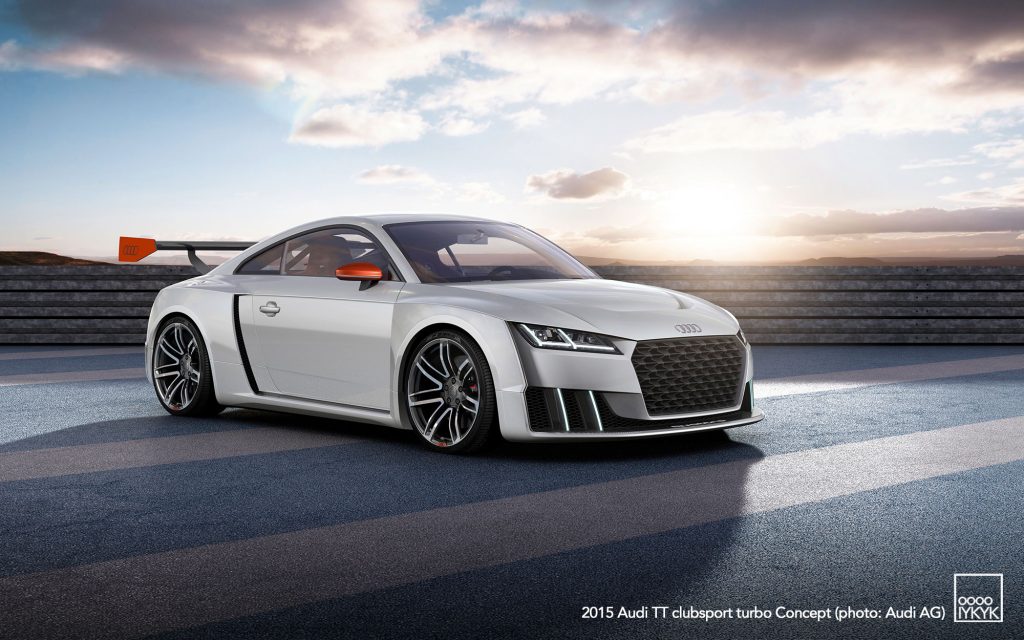
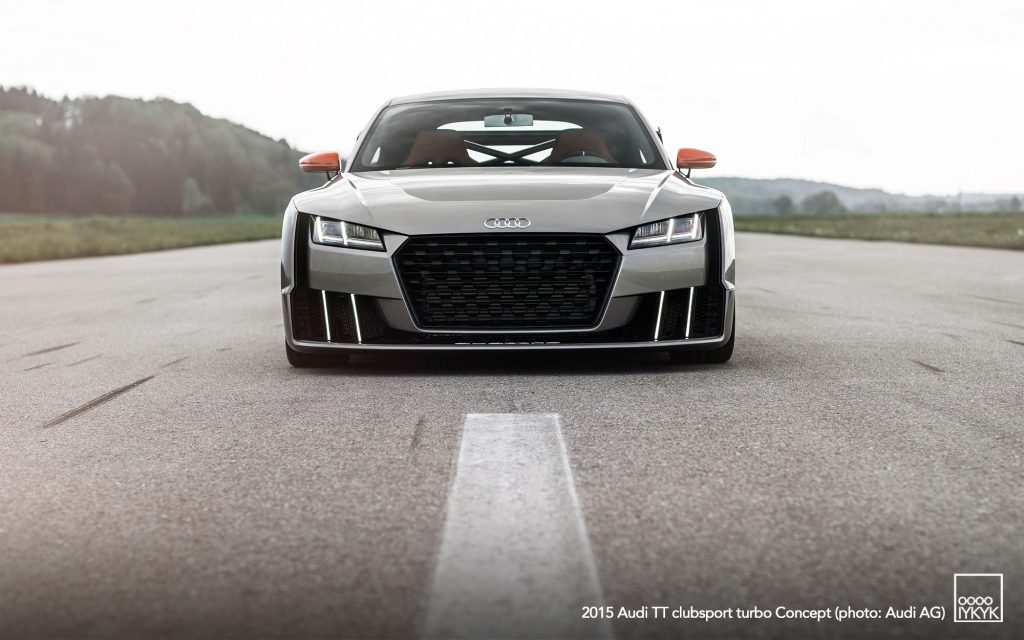
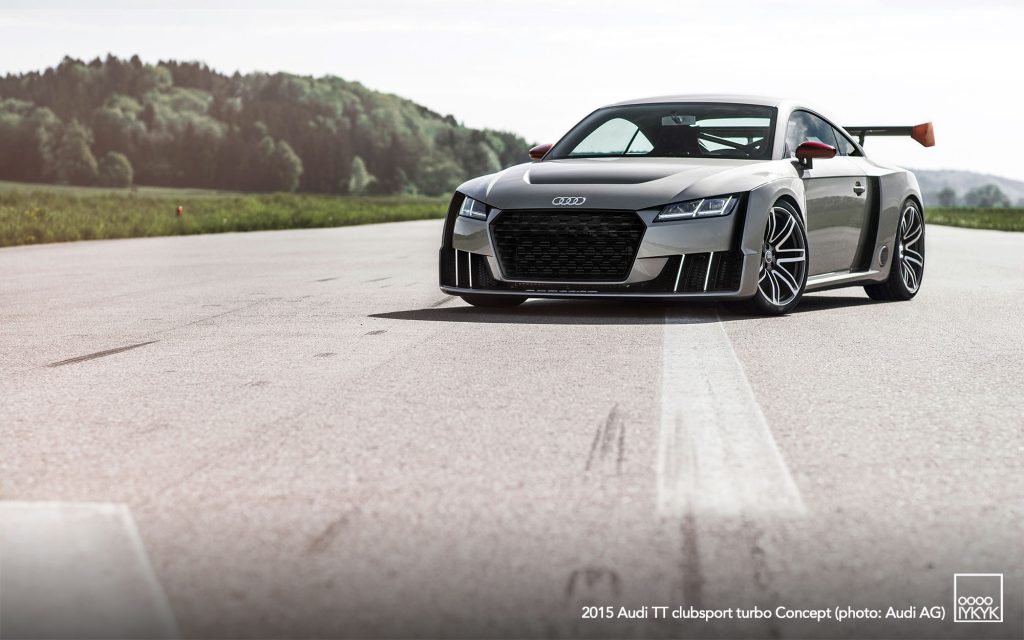
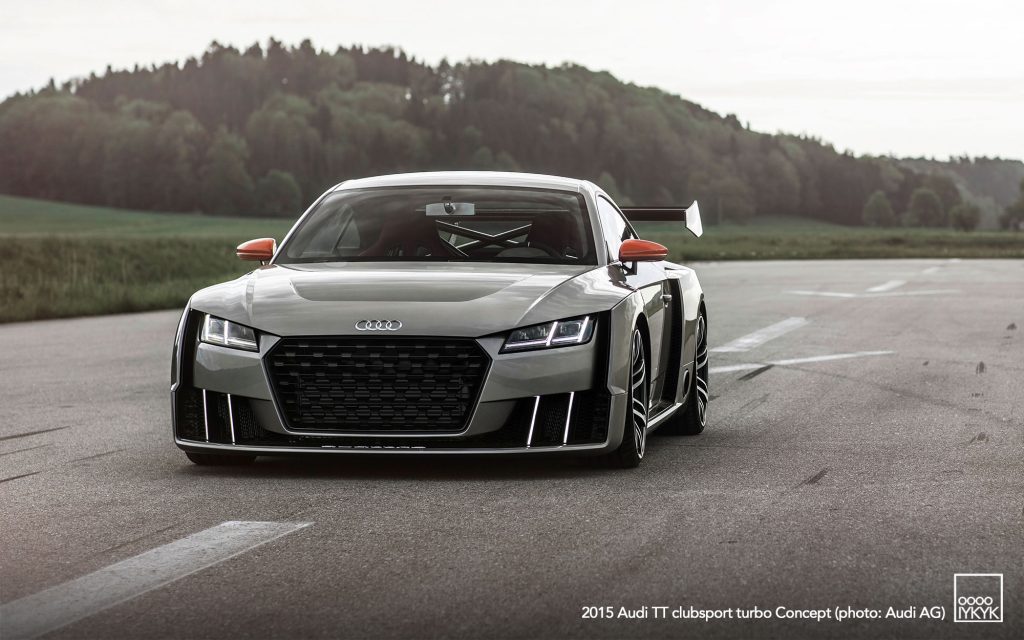
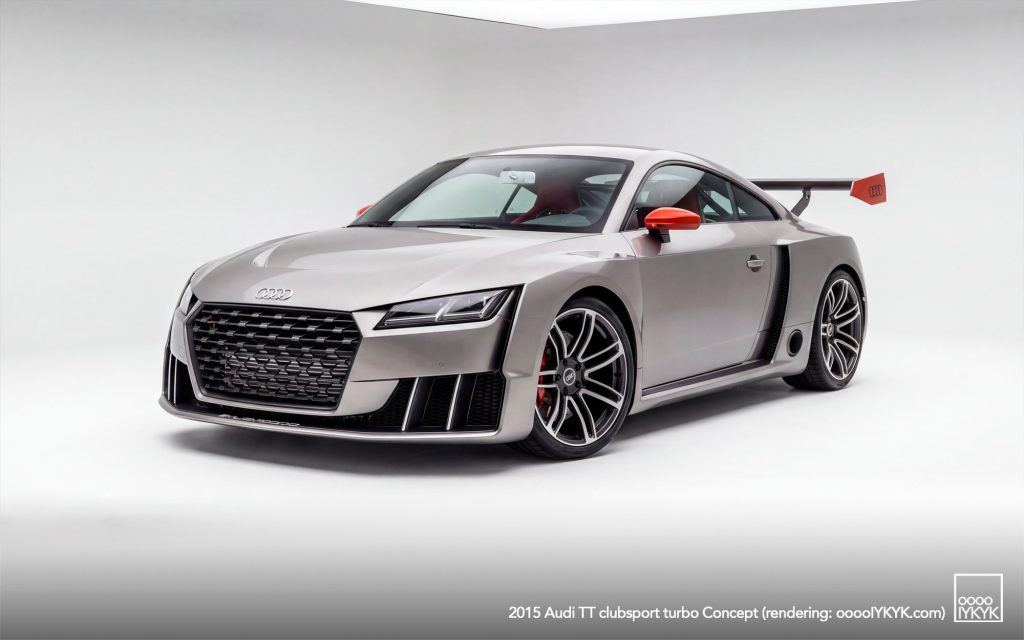
Exterior Color: Ferro Titanium
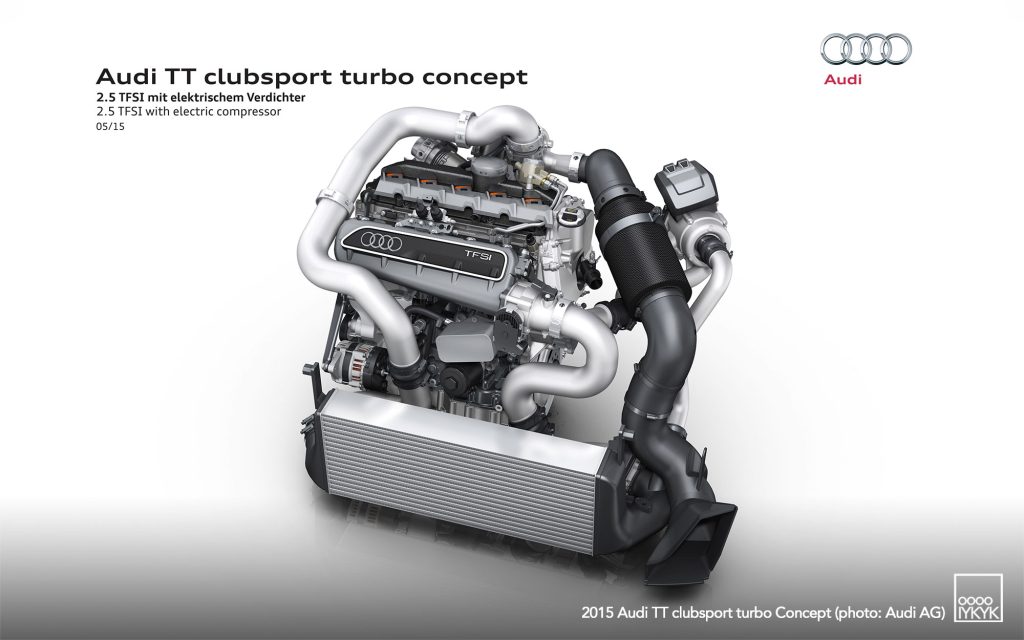
Engine: 2.5 TFSI inline-five, 2,480 cc
Induction: Exhaust-driven turbocharger and electrically driven compressor
Electrical Architecture: Dedicated 48-volt subsystem linked to the 12-volt system
Power: 441 kW (600 PS)
Torque: 650 Nm (479 lb-ft) from 3,000 to 7,000 rpm
Transmission: Six-speed manual with open shift gate
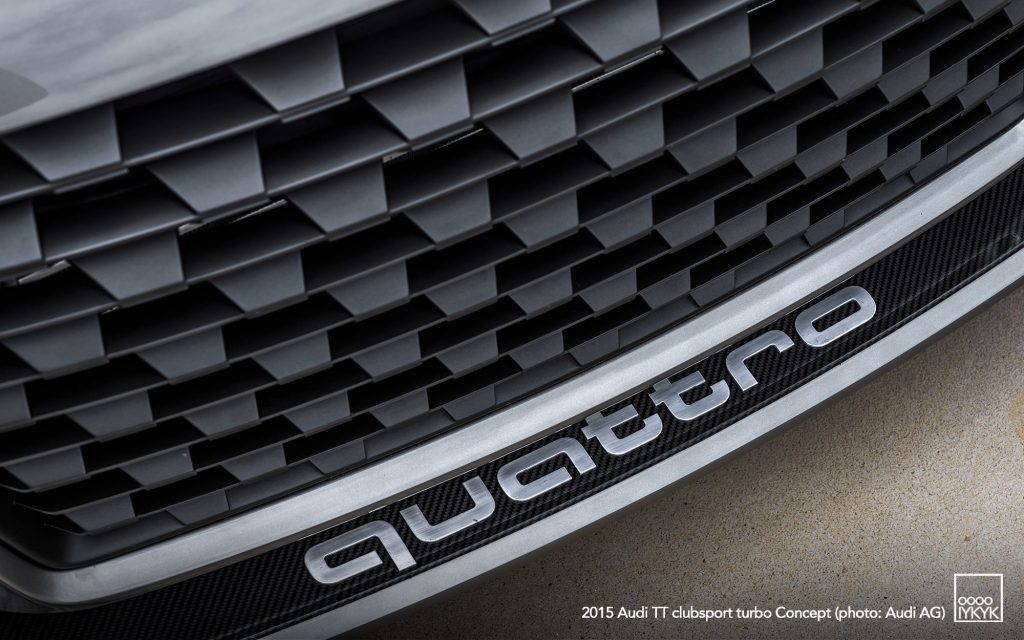
Drive: quattro all-wheel drive
Unladen Weight: 1,396 kg (3,078 lb)
0–100 km/h (0–62 mph): 3.6 seconds
Top Speed: 310 km/h (193 mph)
Length: 4.33 m (170.5 in)
Width Including Mirrors: 1.97 m (77.6 in)
Front Track: 1,736 mm (68.3 in)
Rear Track: 1,729 mm (68.1 in)
Wheels: 20 × 9.5J
Tires: 275/30
Brakes: Carbon-ceramic discs at all four wheels, 370 mm (14.6 in) front discs
OVERVIEW
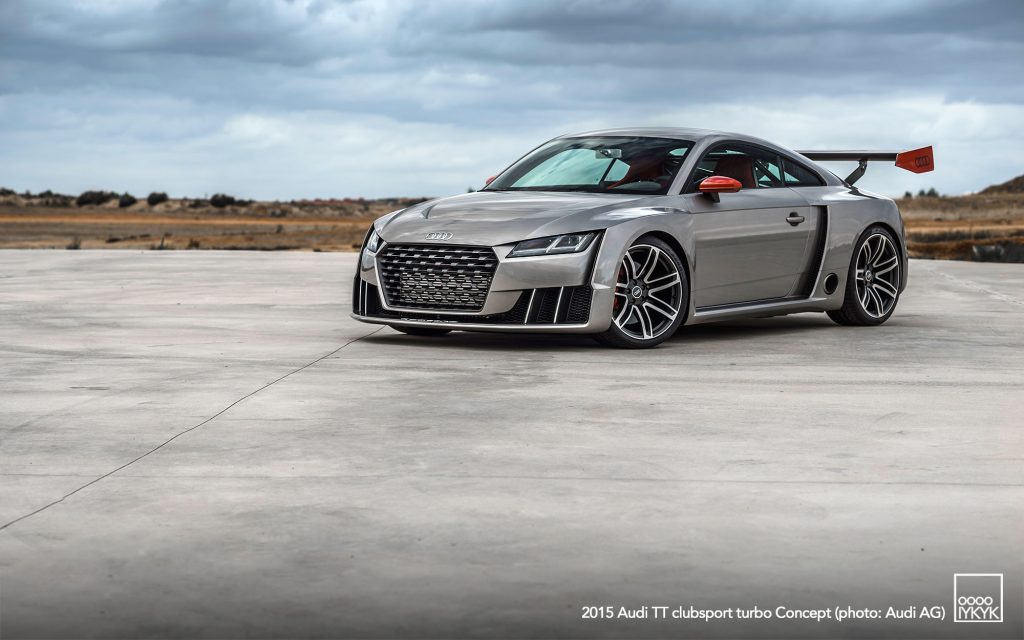
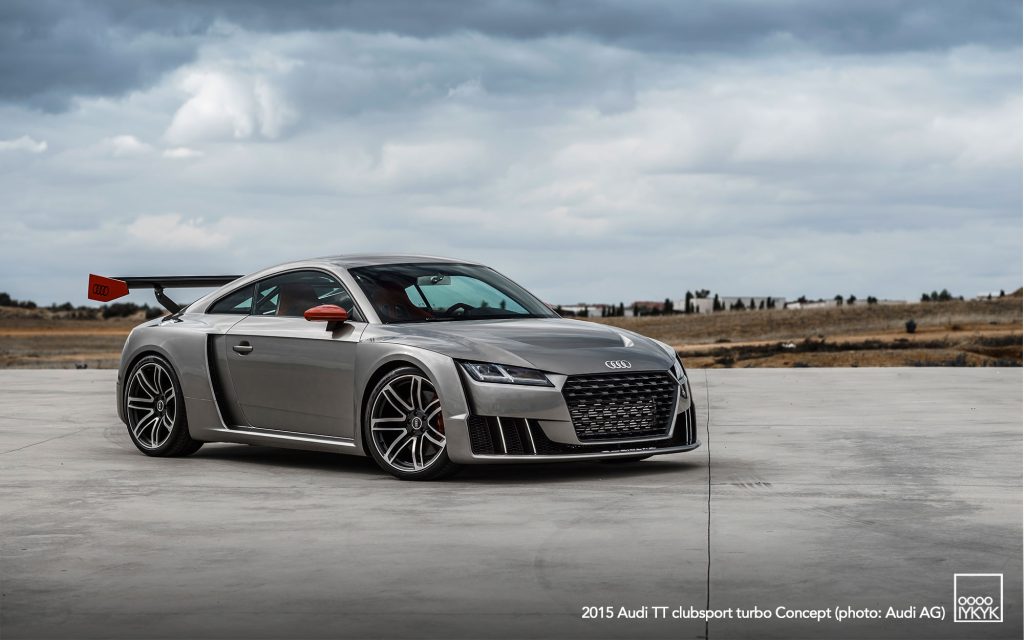
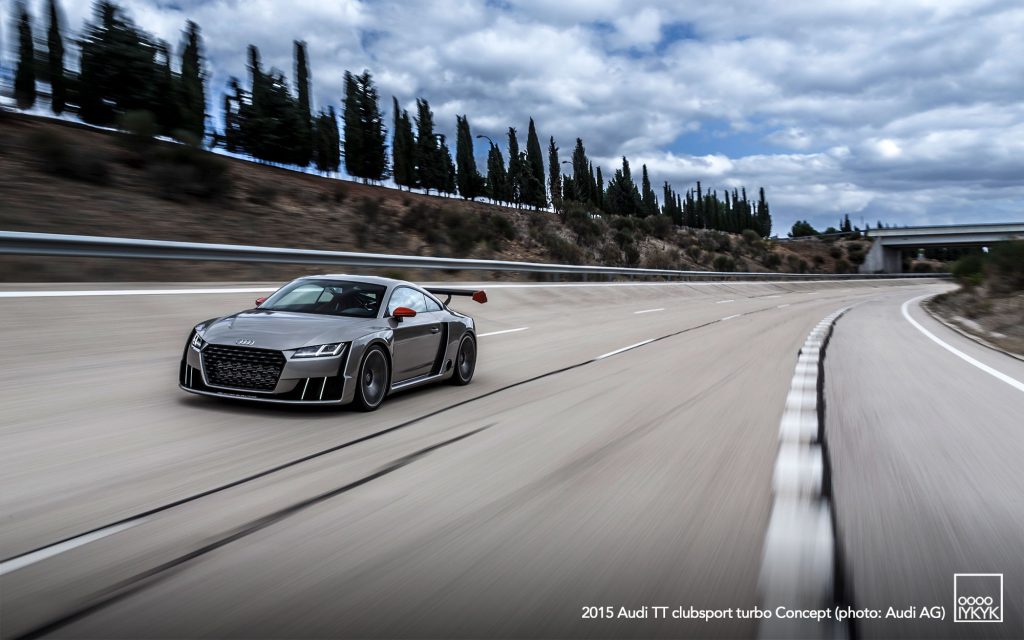
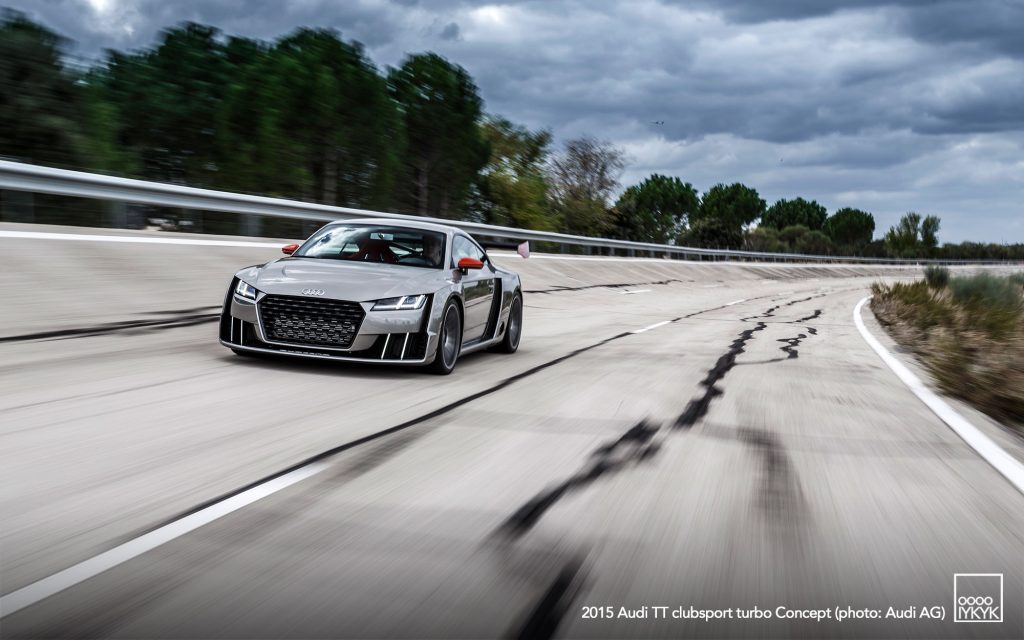
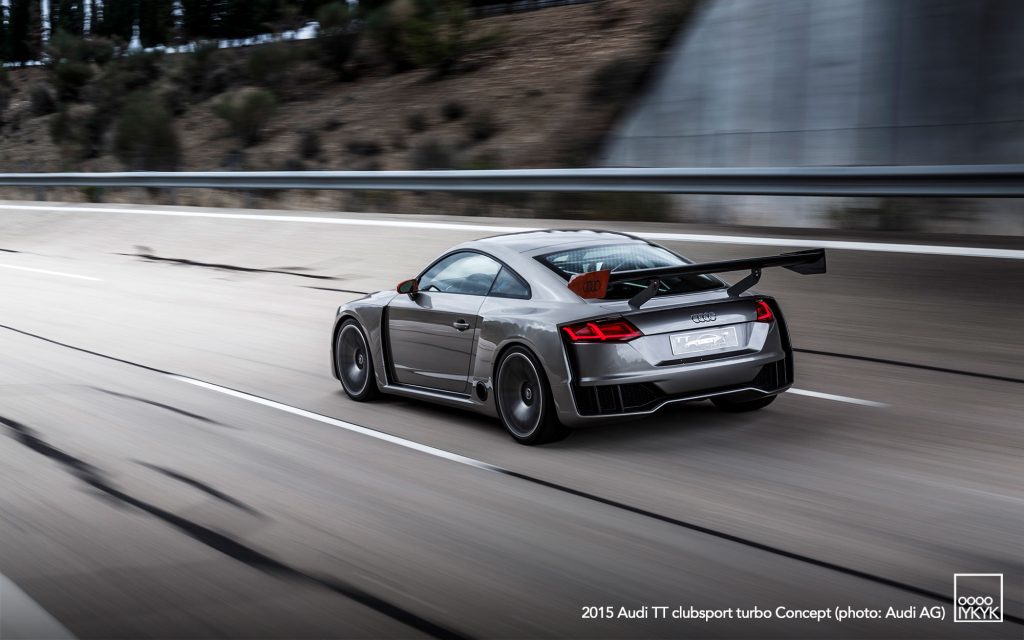
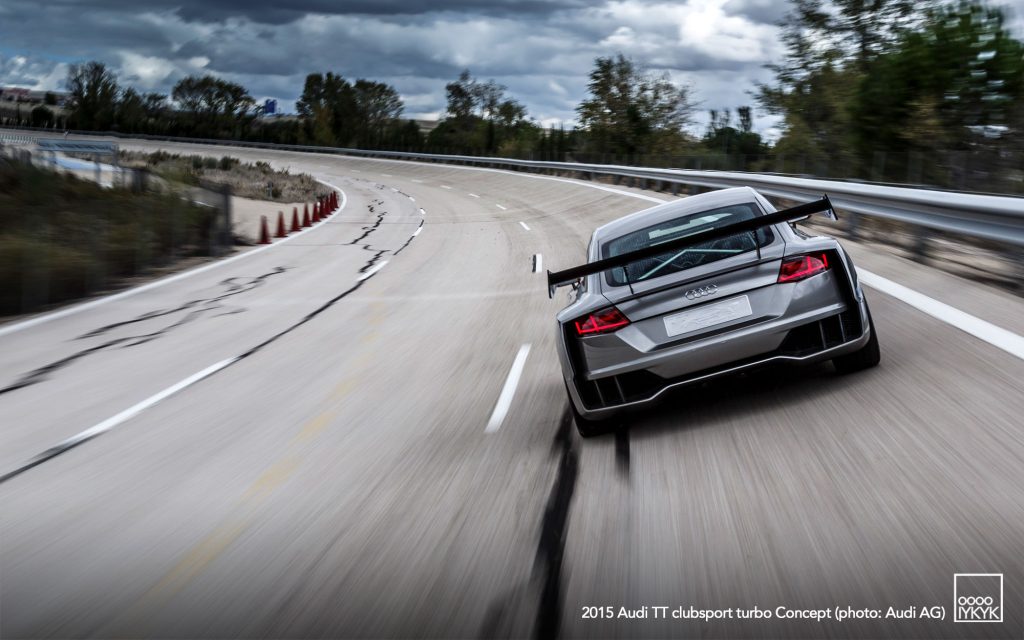
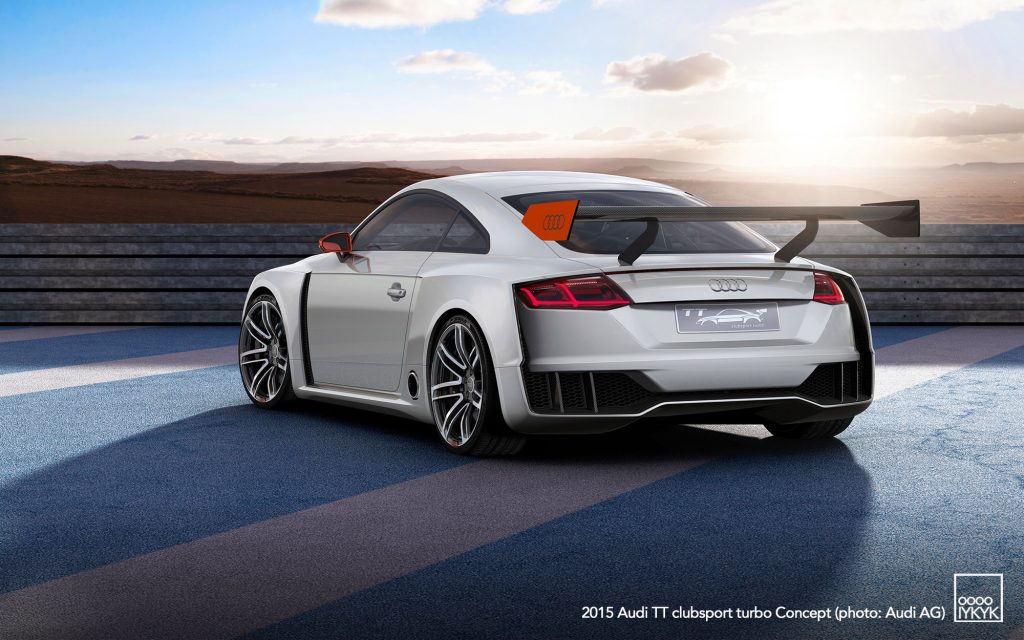
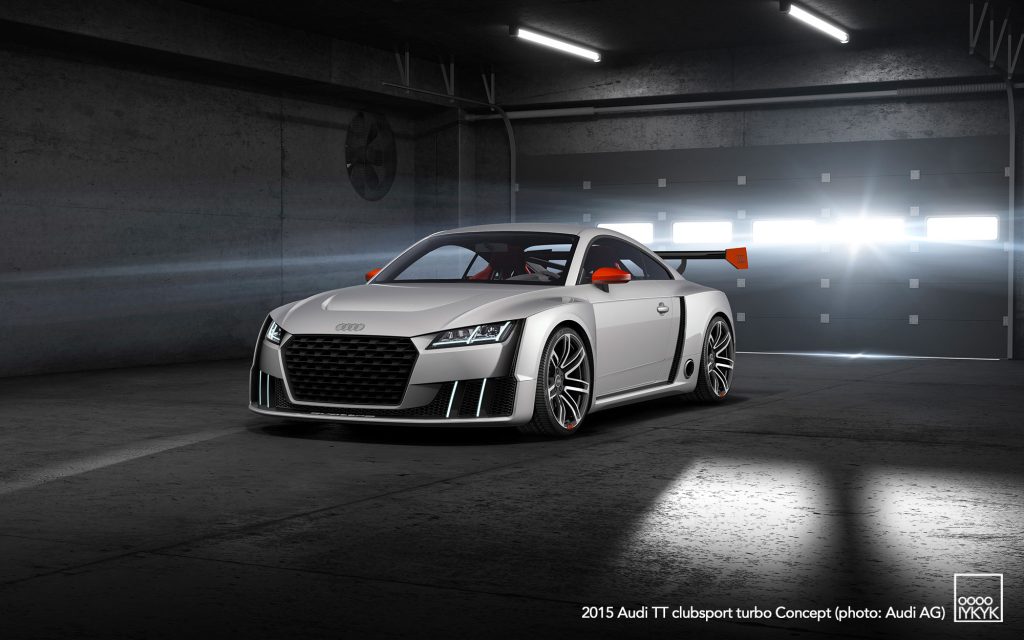
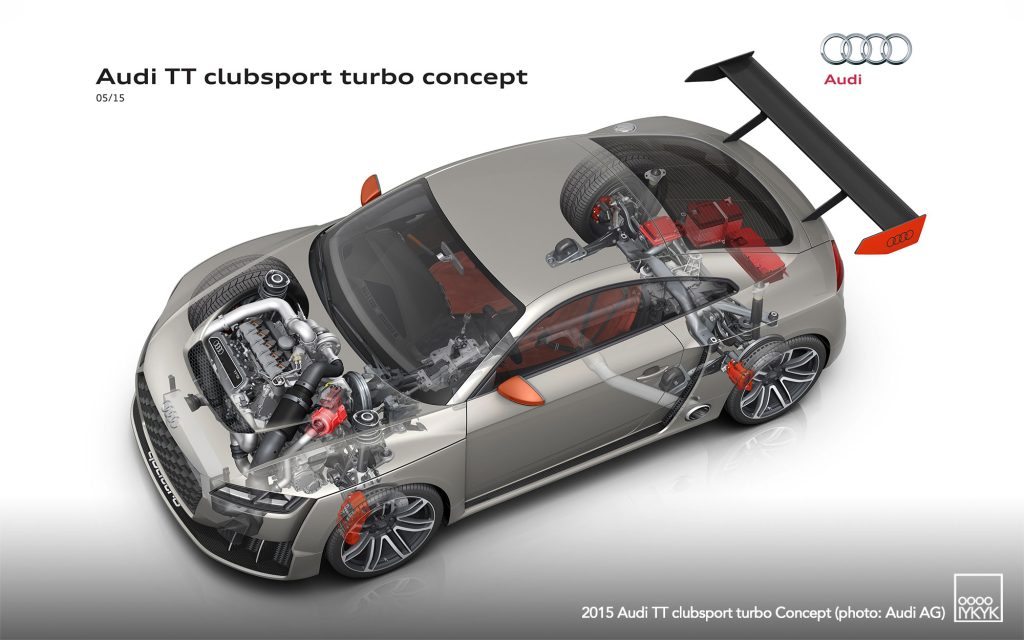
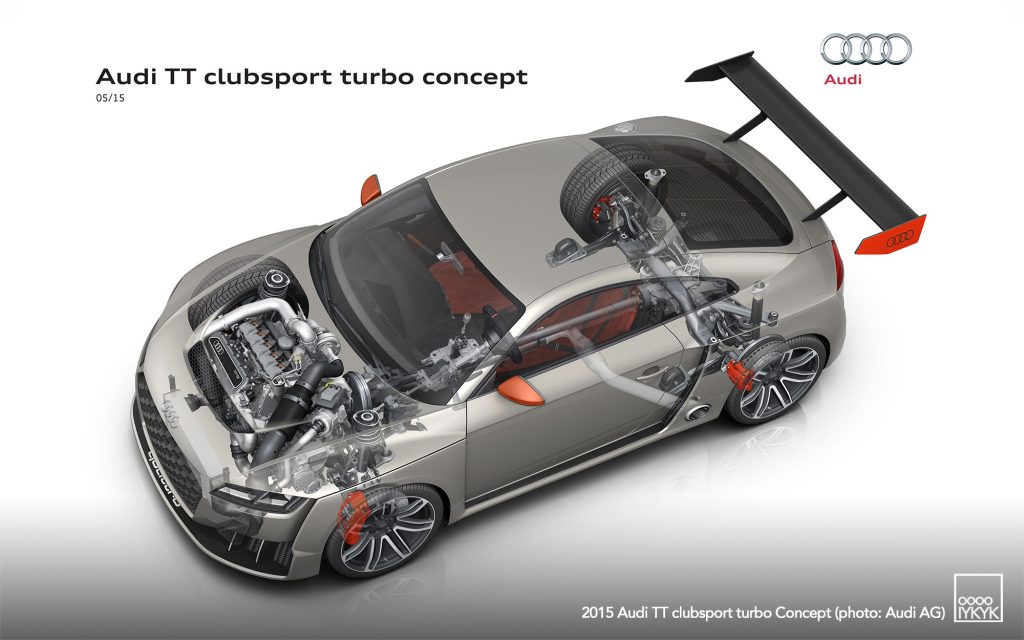
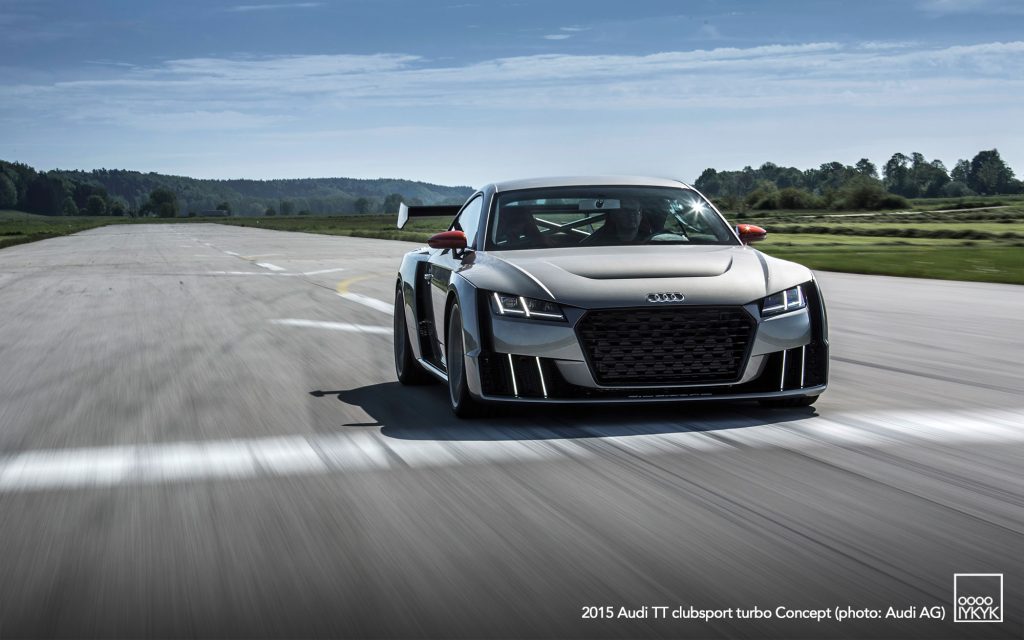
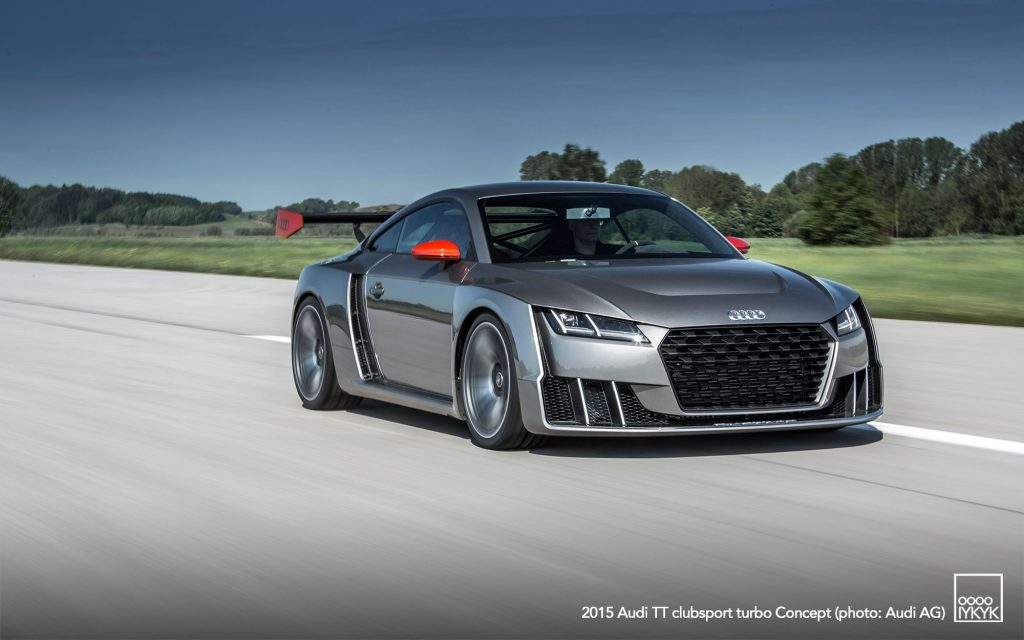
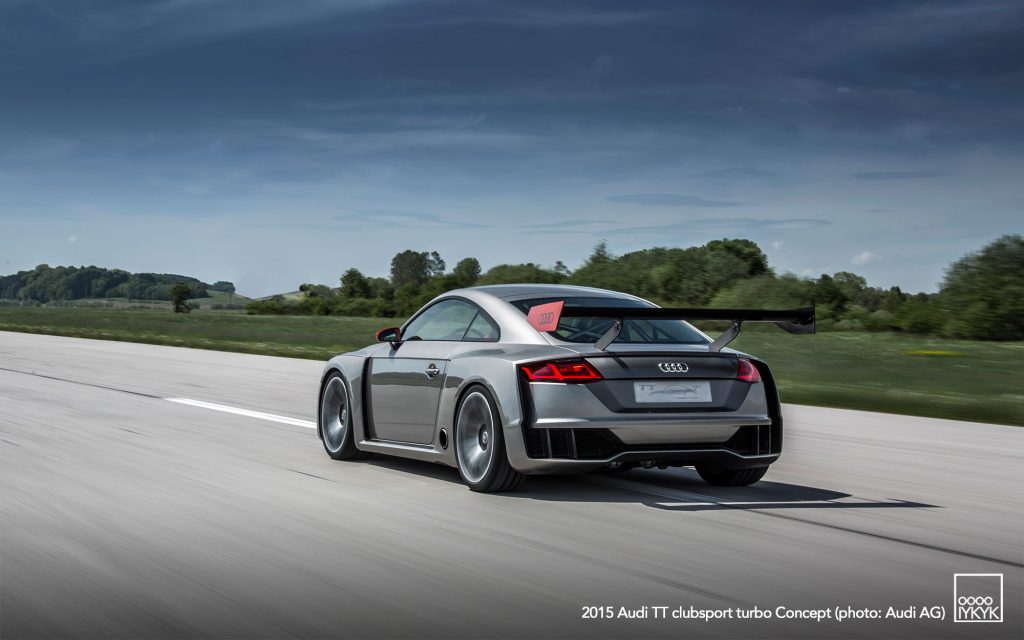
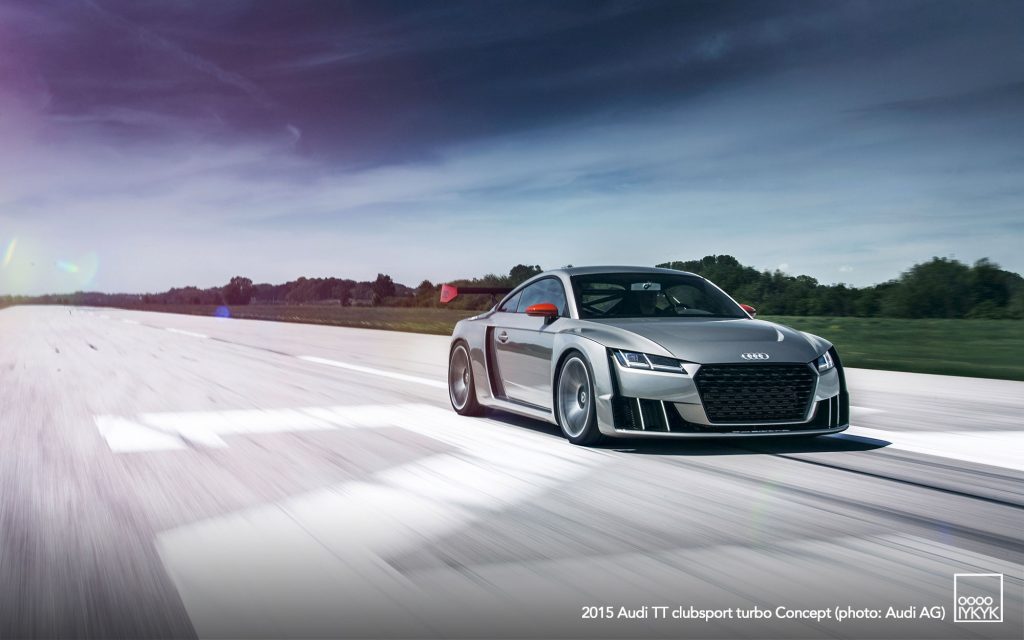
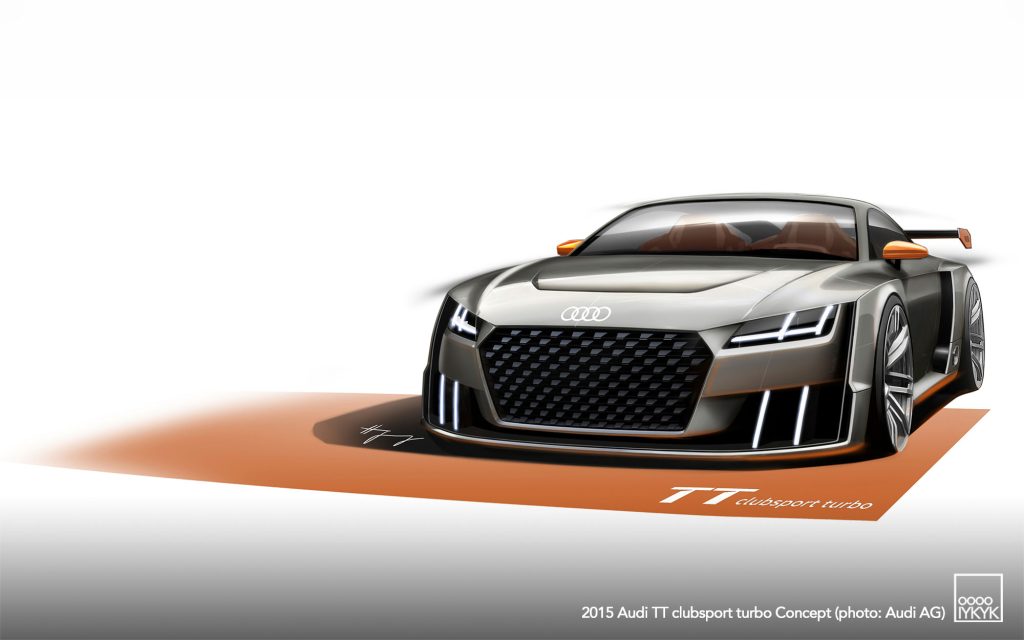
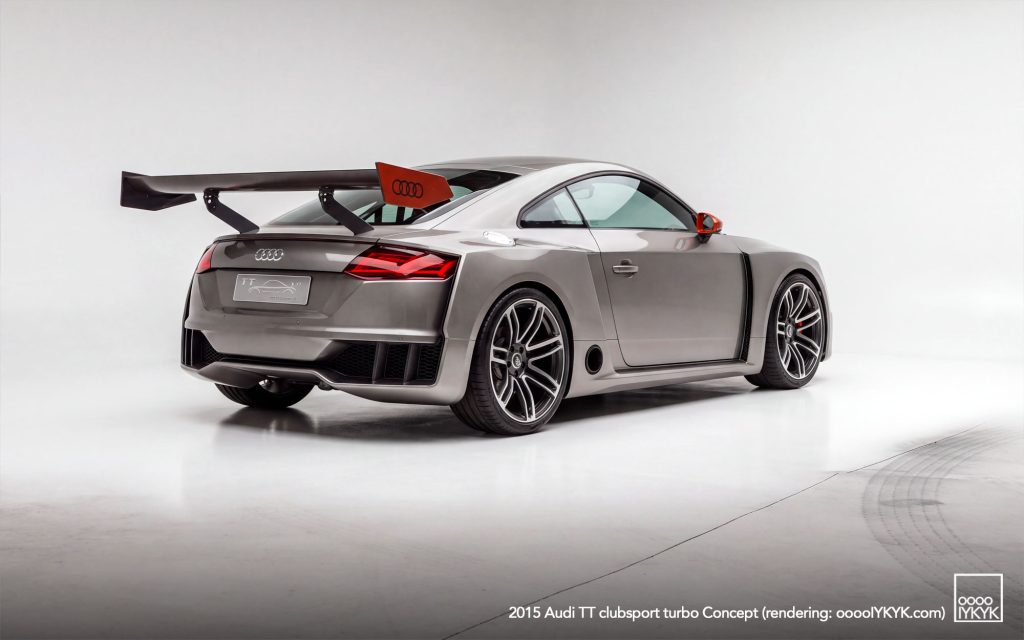
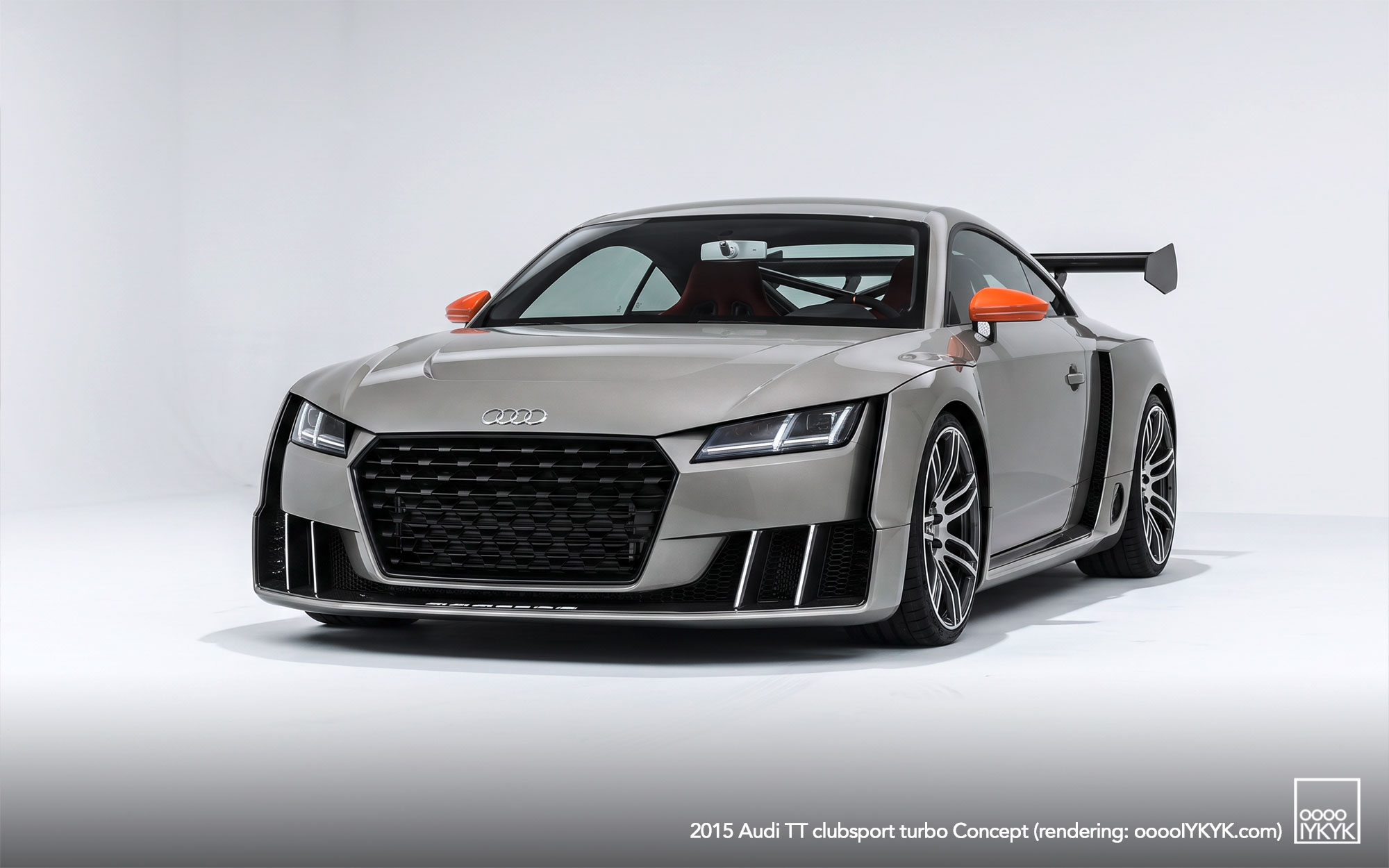
Audi revealed the TT clubsport turbo in its original Ferro Titanium finish at the 2015 Wörthersee Tour. The concept combined a 600 PS five-cylinder, a gated six-speed manual and quattro all-wheel drive with bodywork inspired by the late-1980s Audi 90 IMSA GTO. Its purpose was to demonstrate what Audi called an electric biturbo, pairing a conventional turbocharger with an electrically driven compressor in a gasoline TFSI engine. Audi technical development chief Ulrich Hackenberg said at the launch that the technology was already approaching production readiness in the company’s TDI engines.
EXTERIOR DESIGN
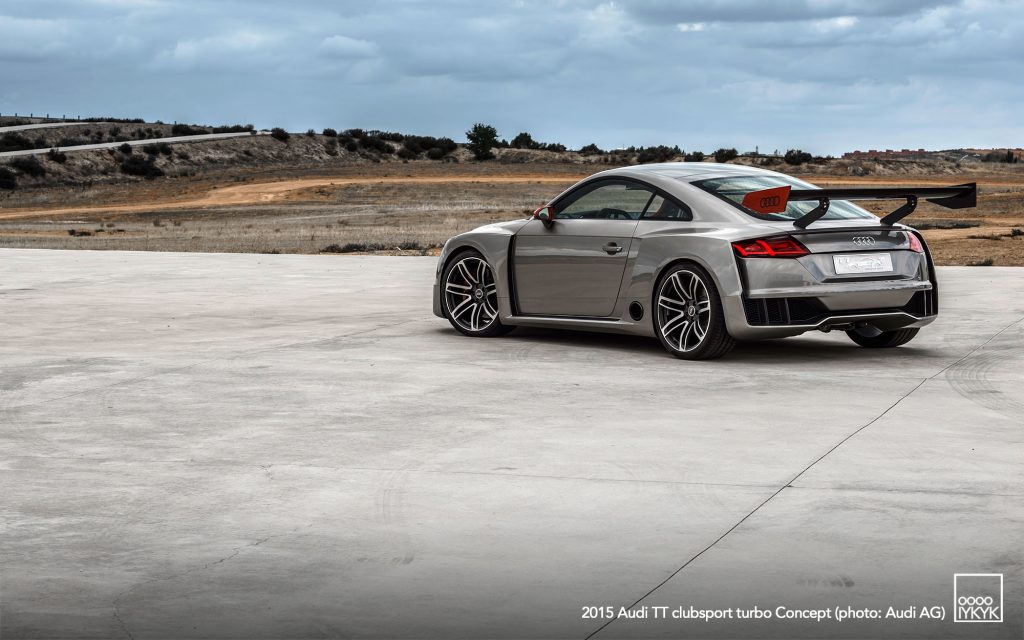
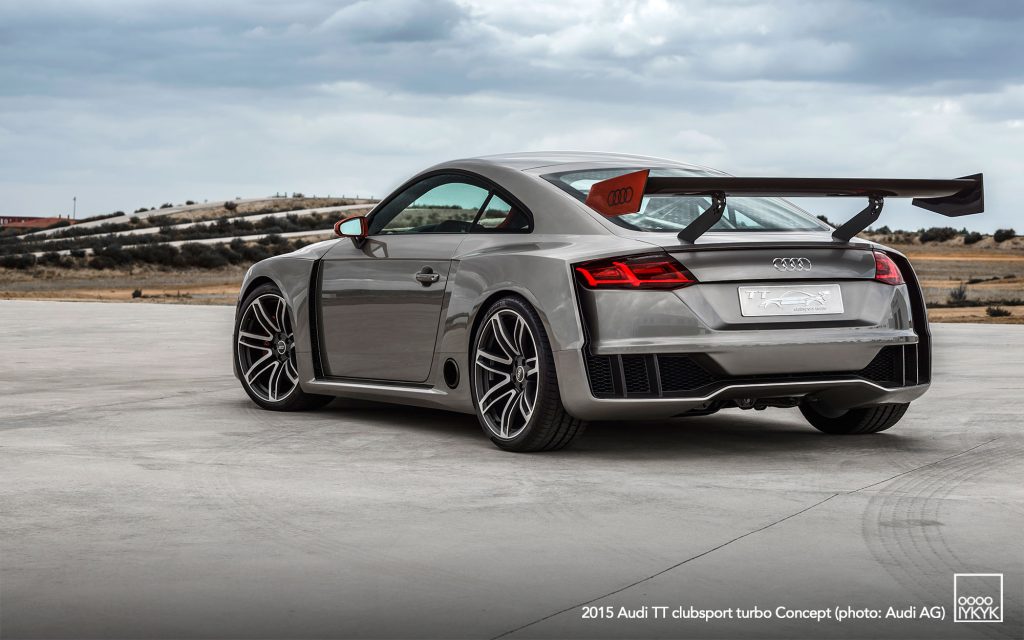
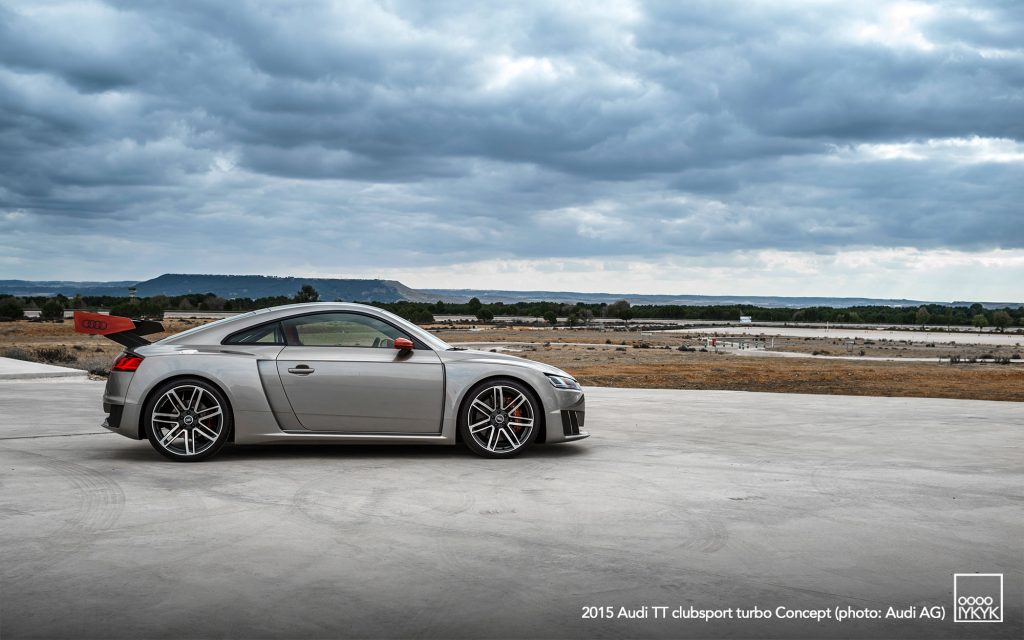
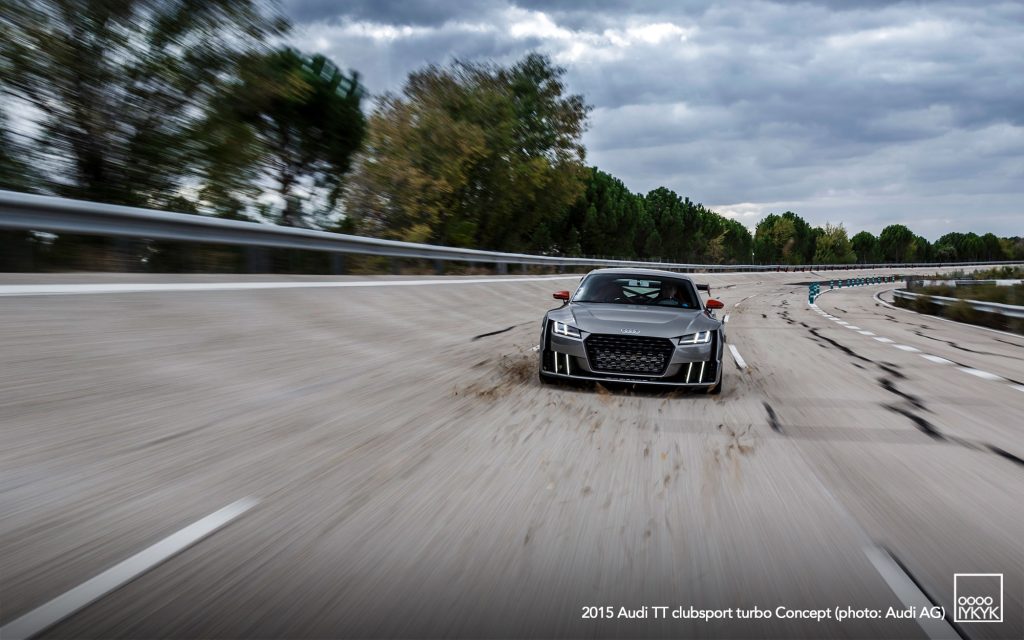
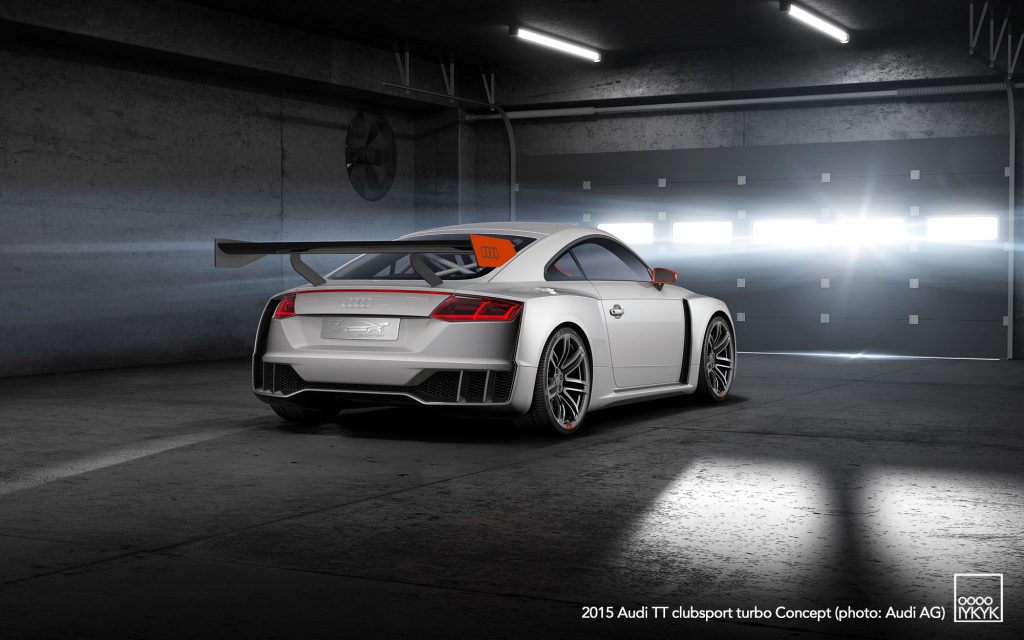
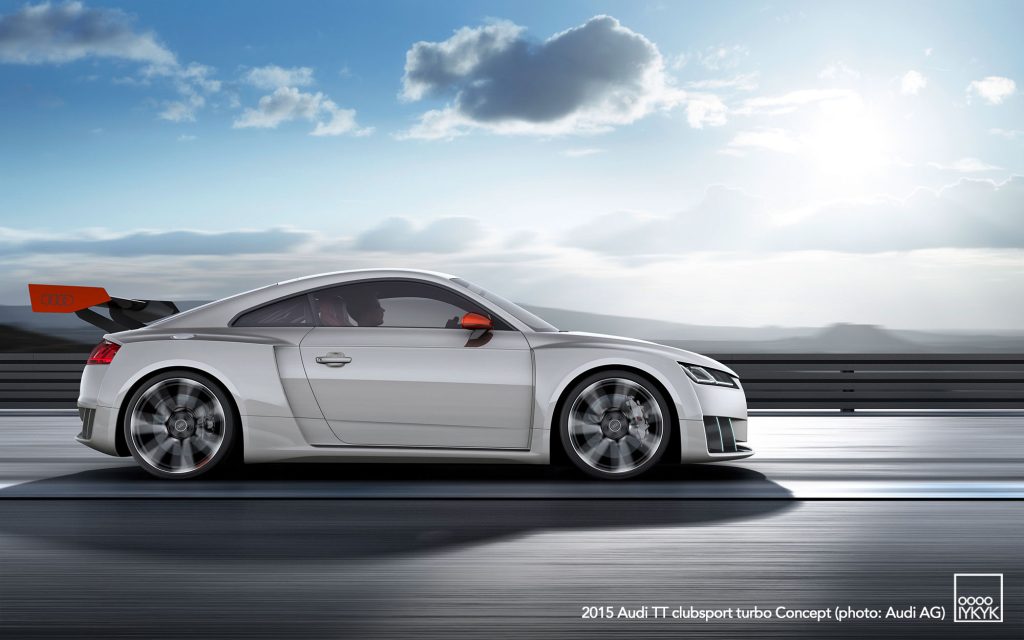
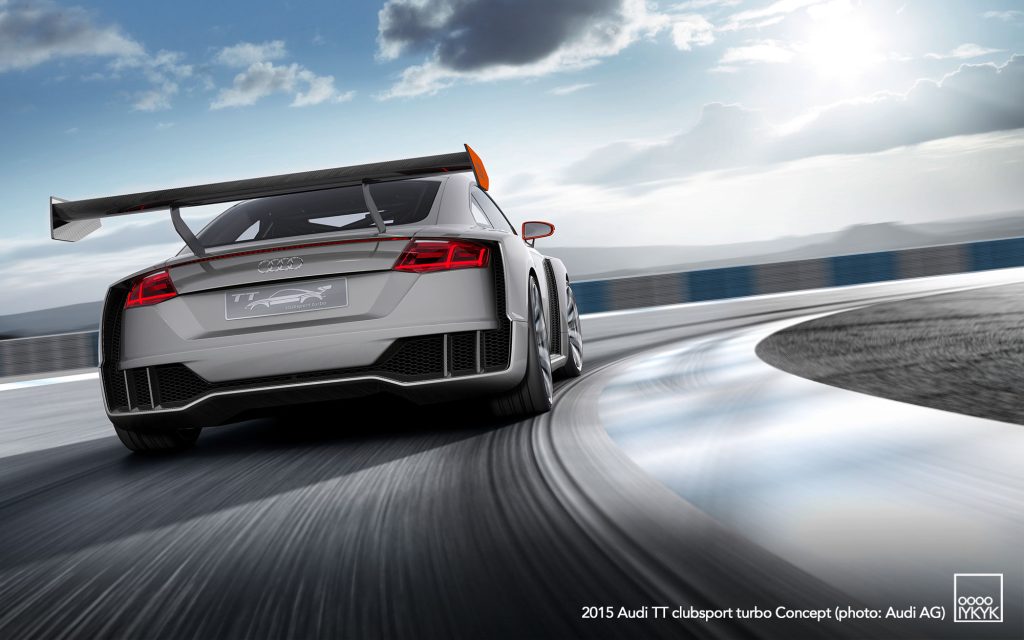
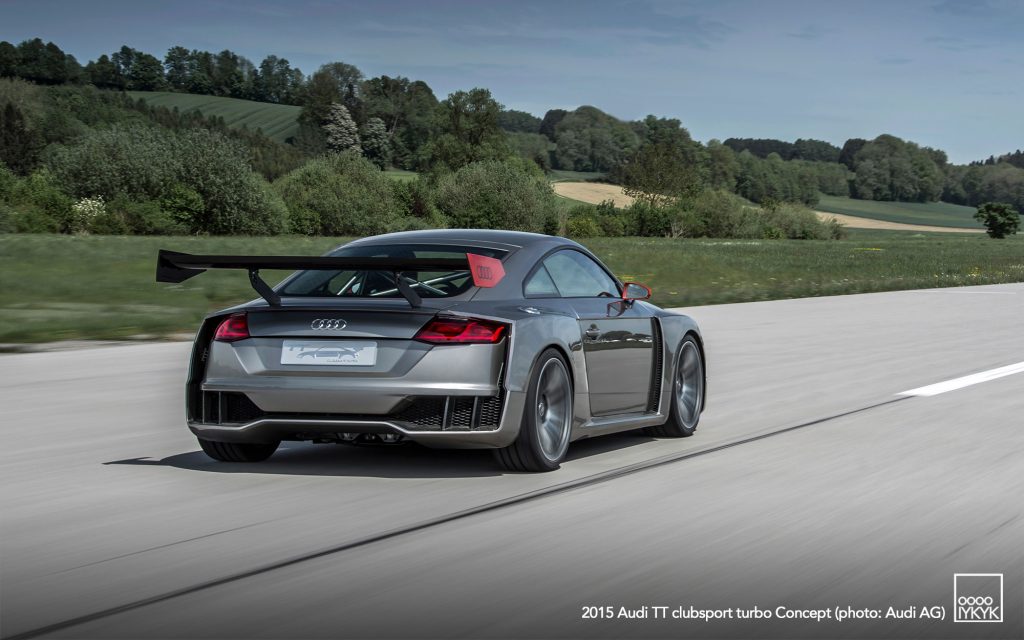
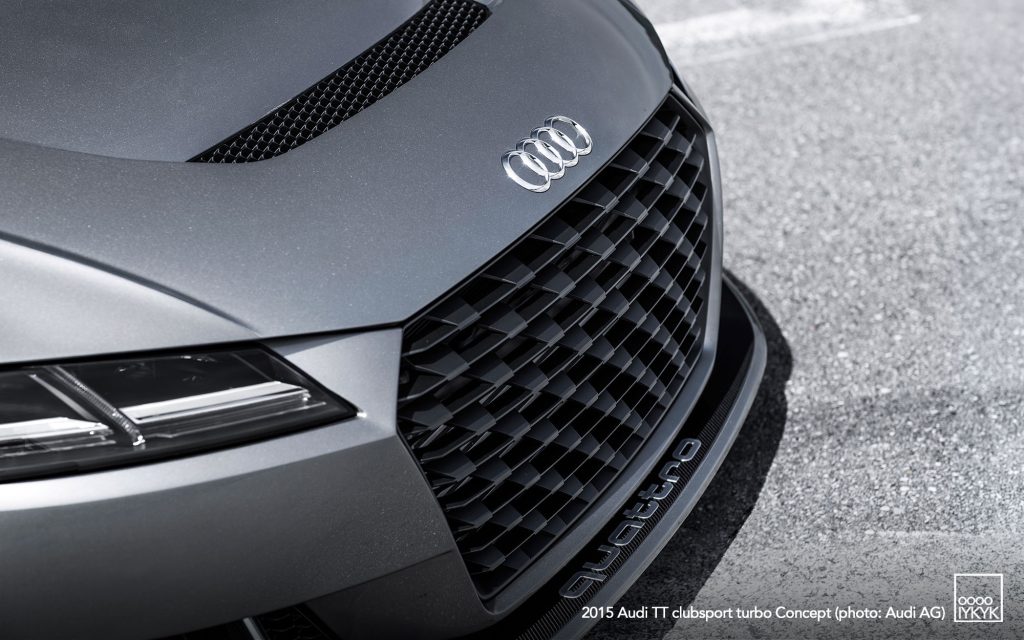
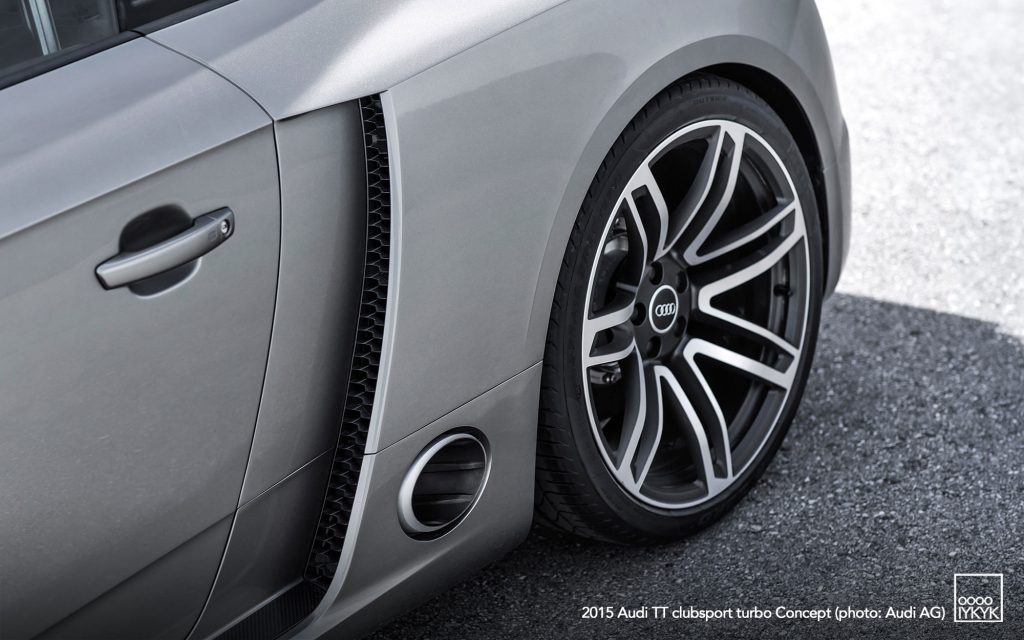
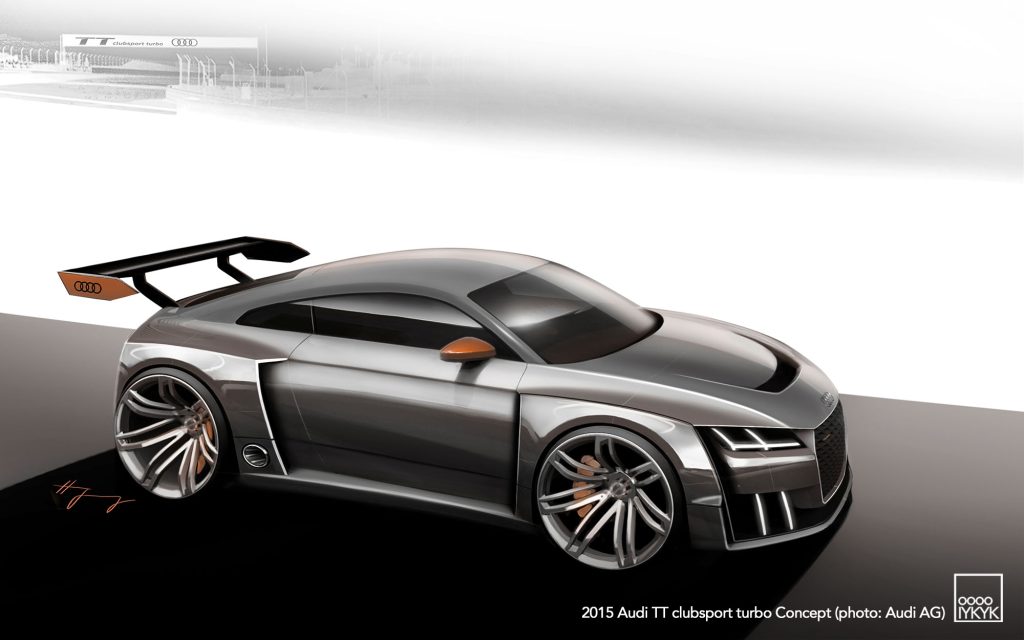
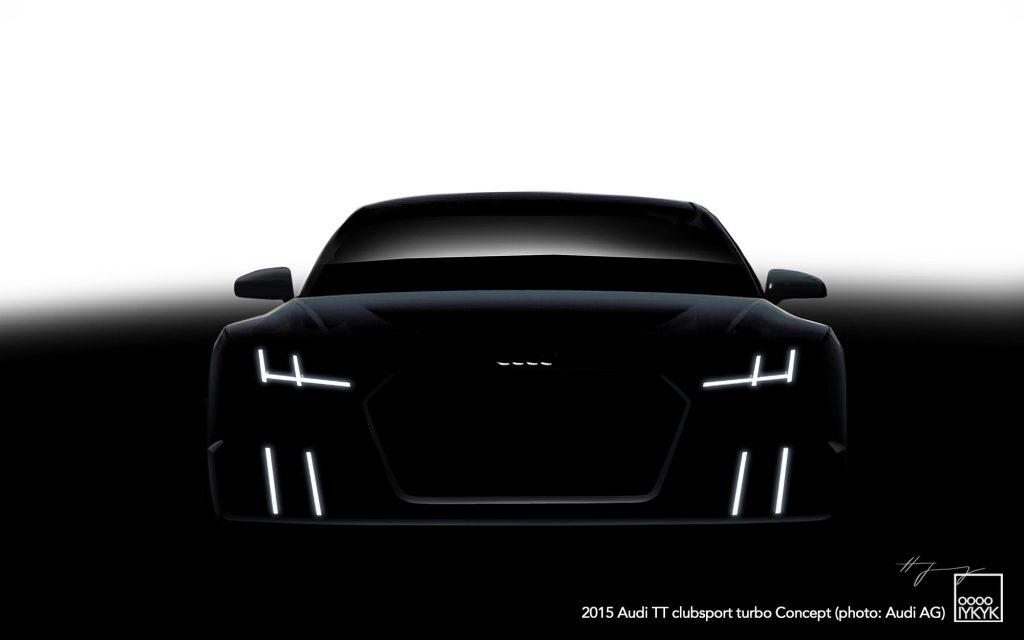
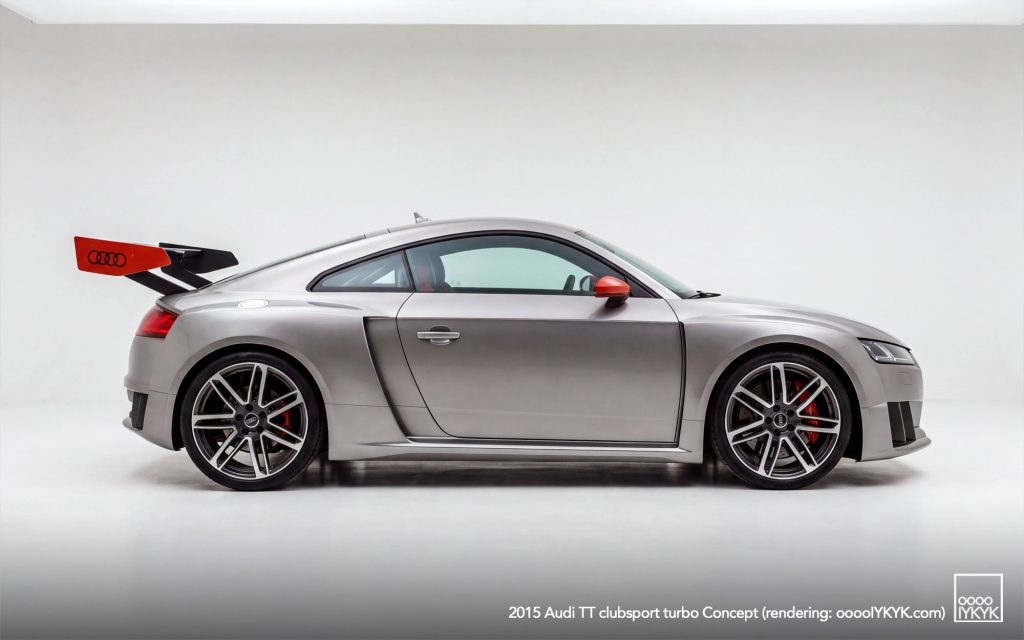
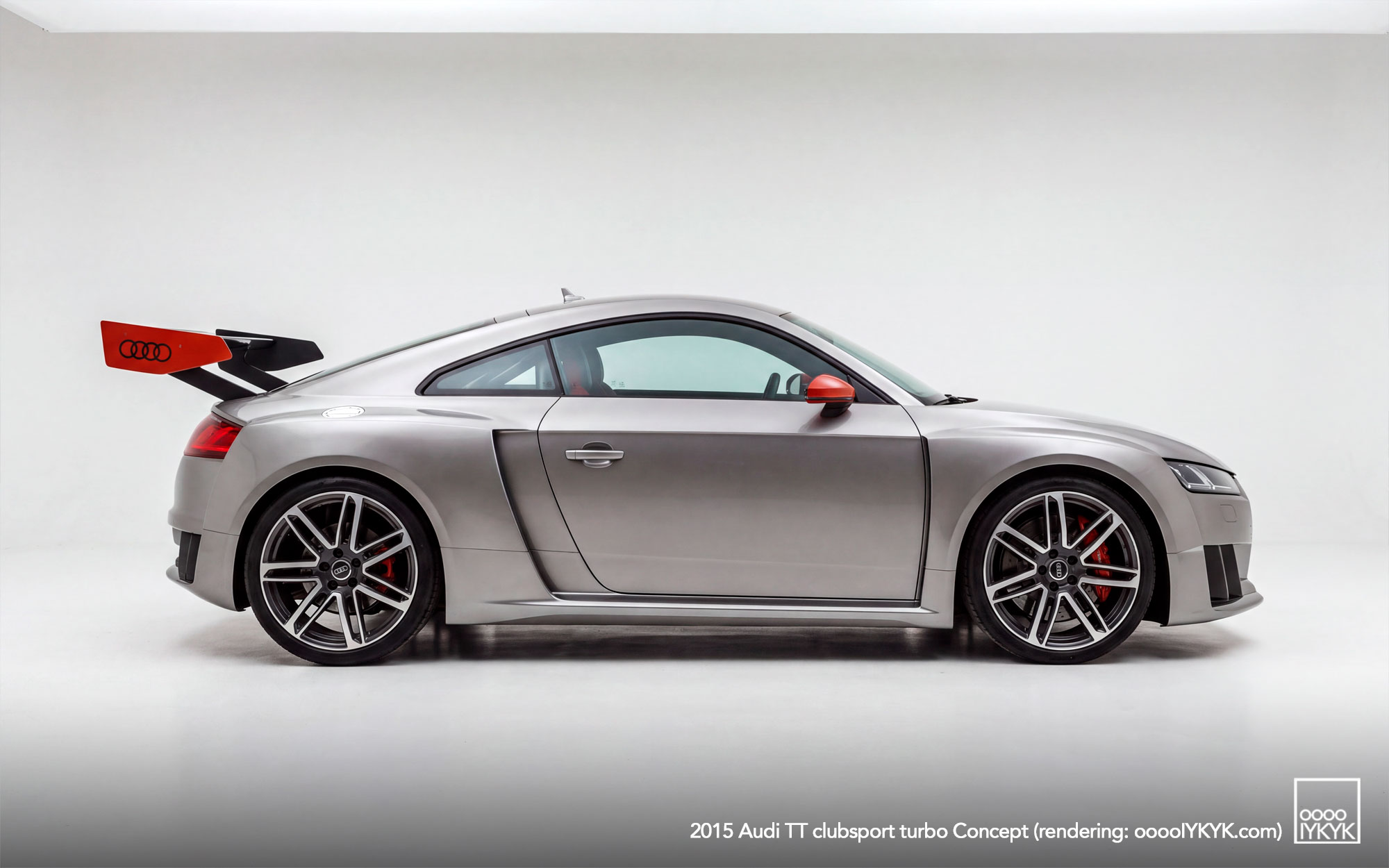
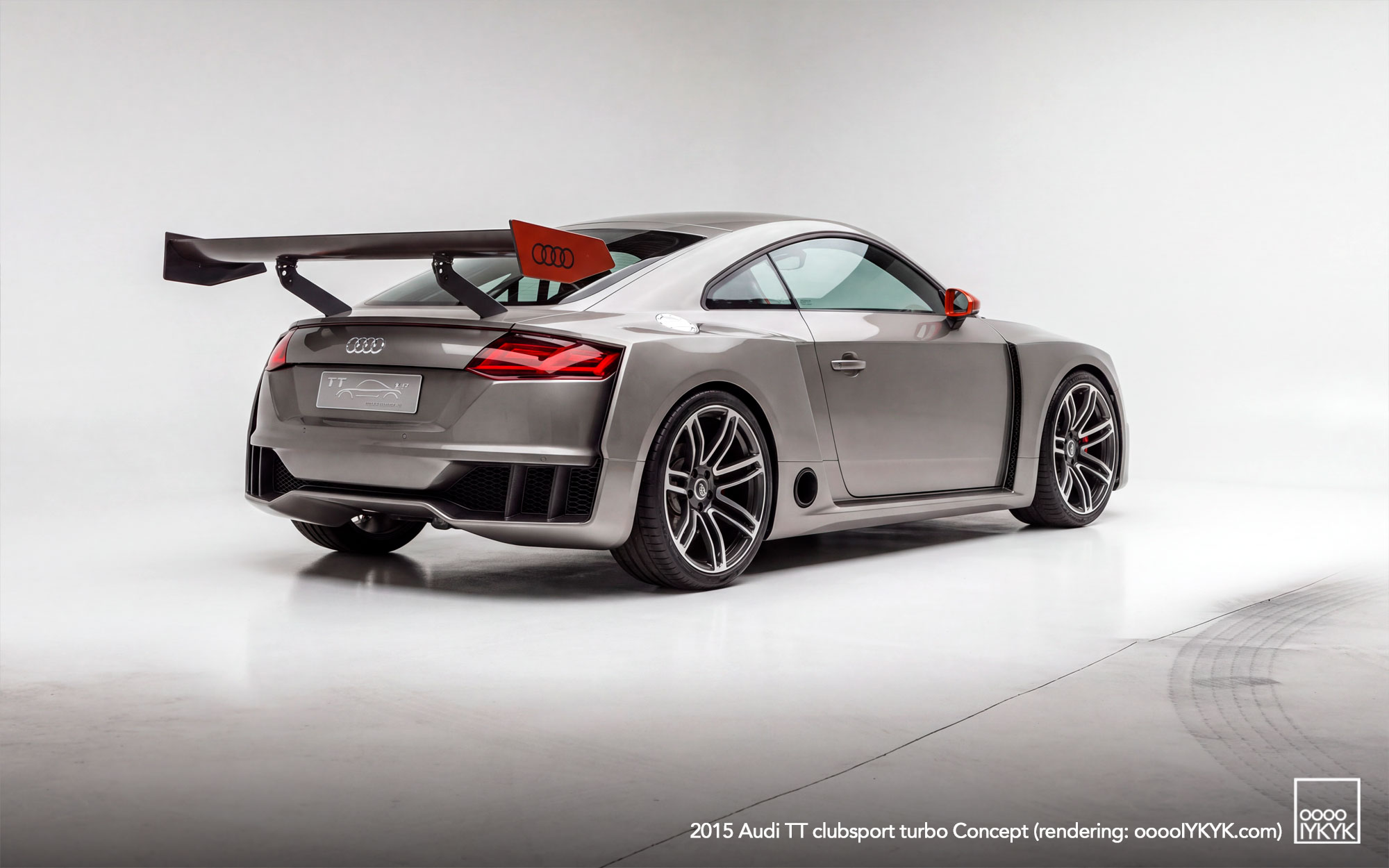
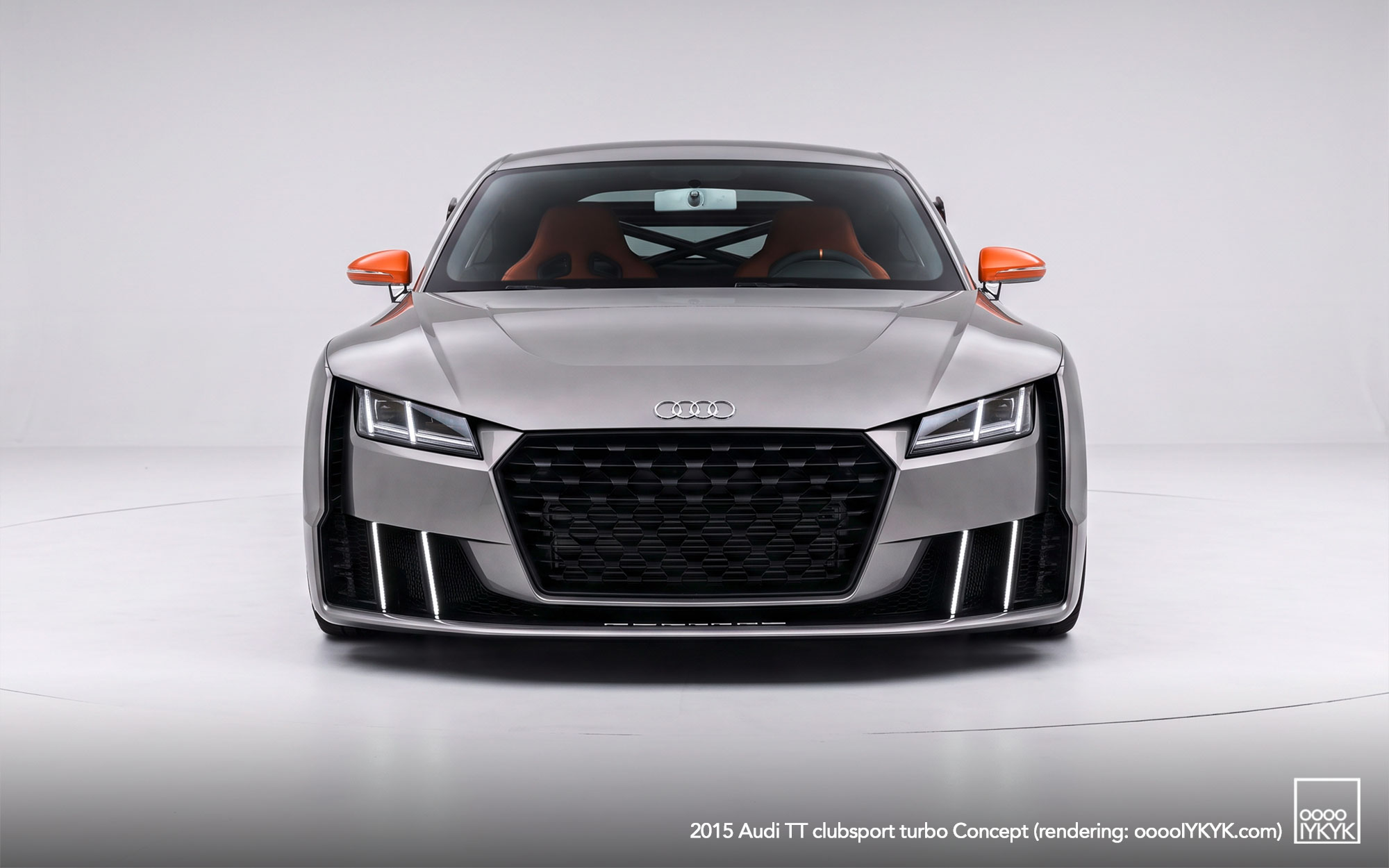
The IMSA connection is clearest in the fenders. The angular extensions project beyond the original body and read as separate shapes, much as they did on the Audi 90 IMSA GTO. The concept was 140 mm (5.5 in) wider than its underlying platform. The front and rear of each extension were open, allowing air to flow through the bodywork and help cool the brakes. At the nose, the vertical fins in the large air intakes continued the graphic of the Matrix LED headlights. The Singleframe grille and intakes were designed to maximize airflow.
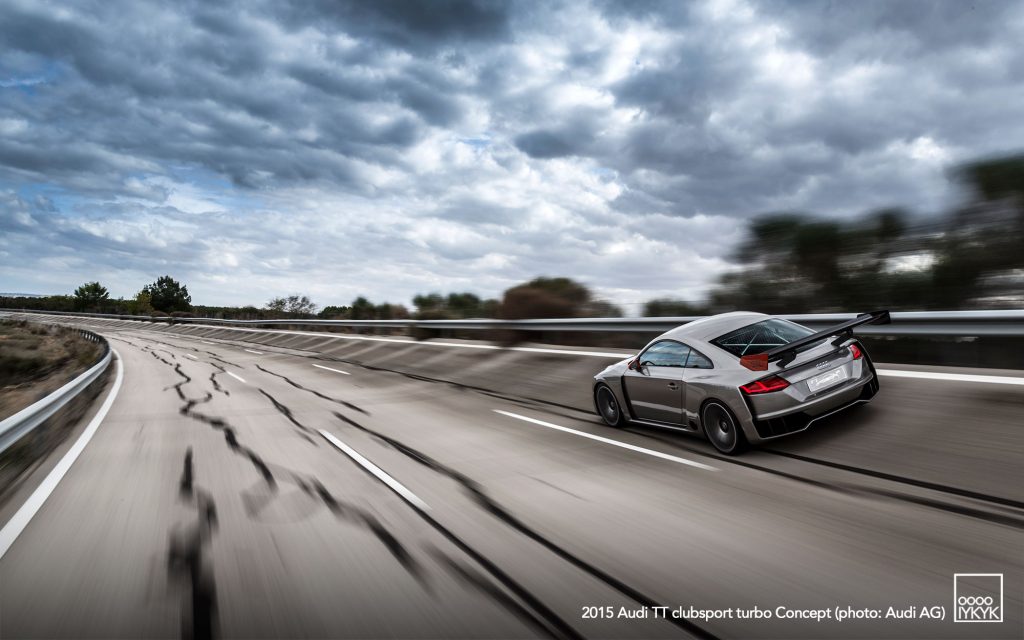
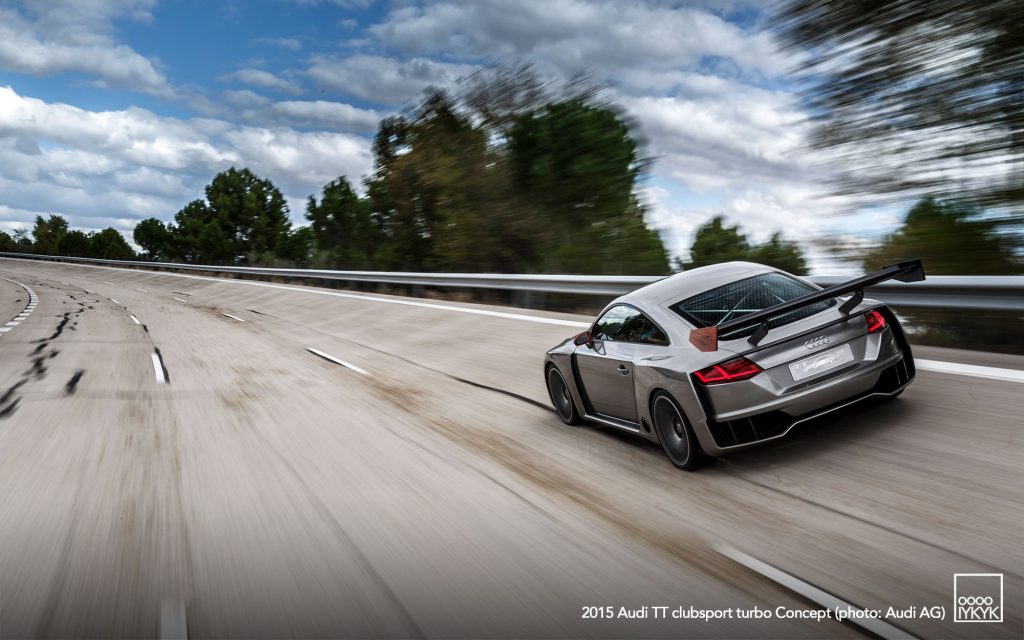
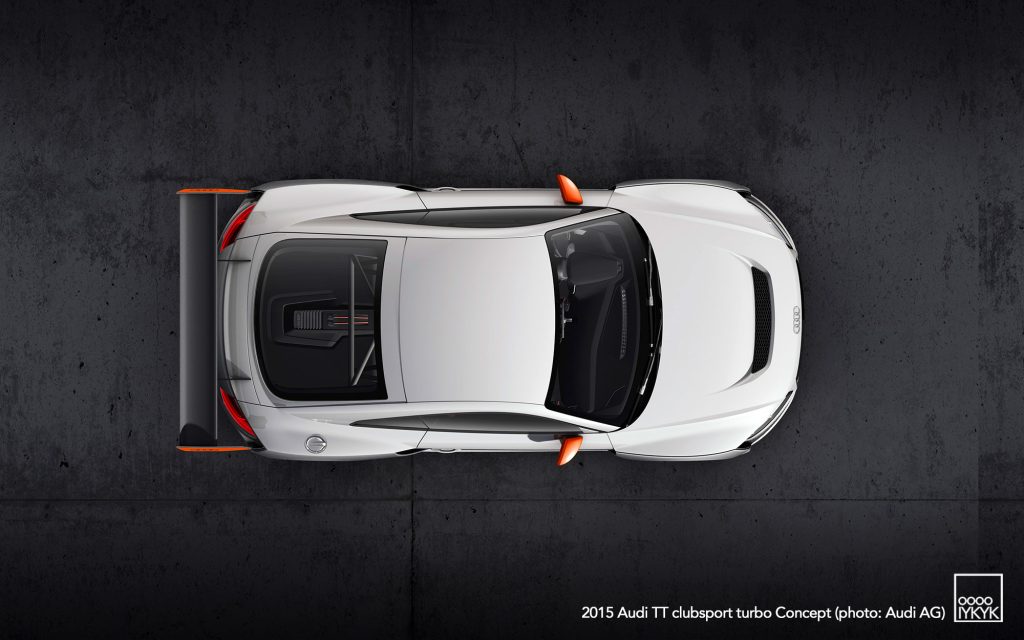
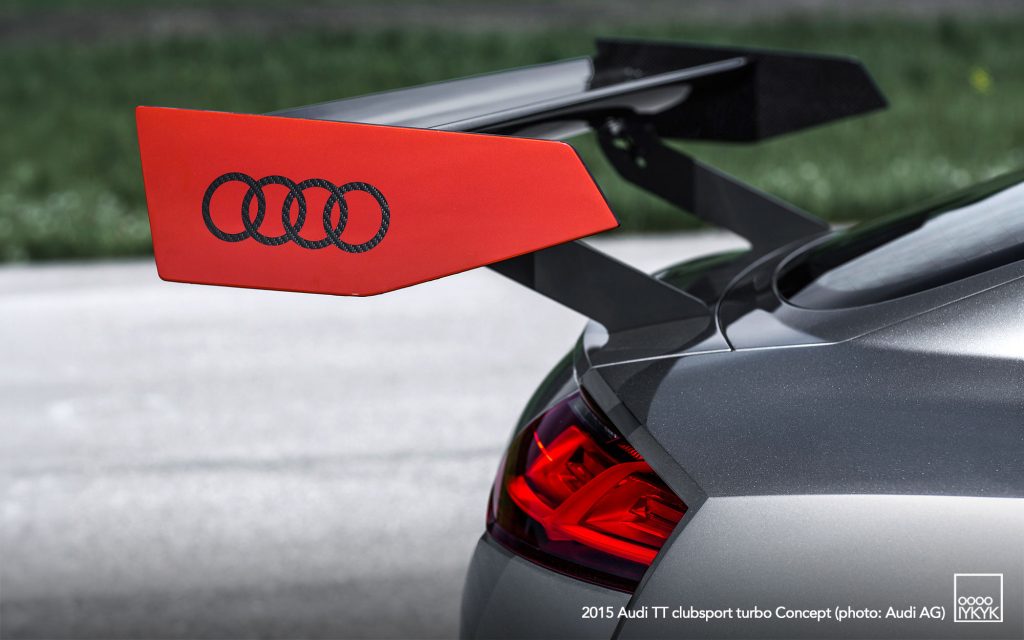
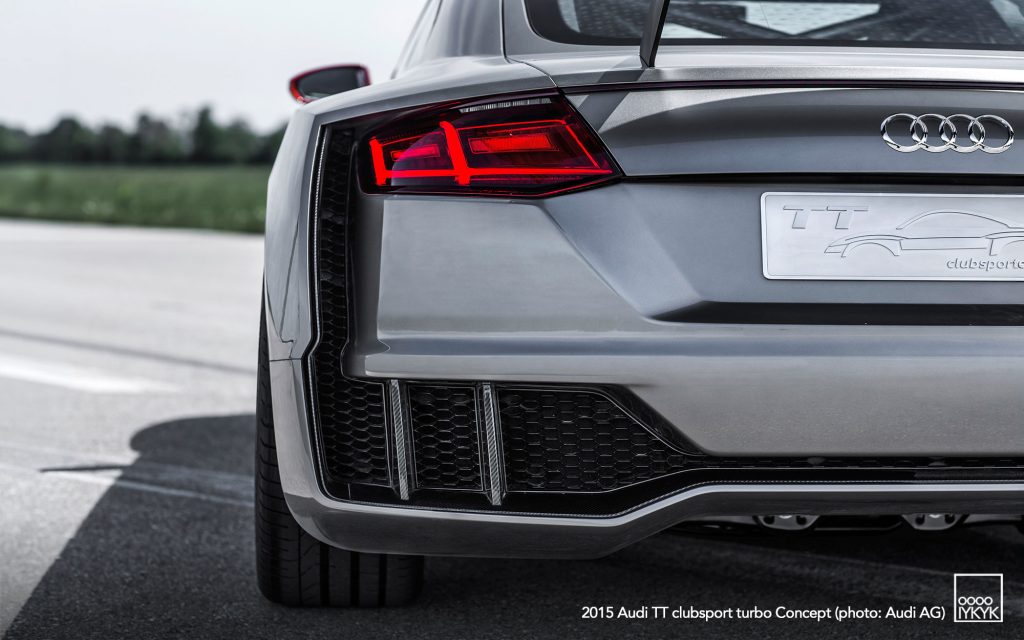
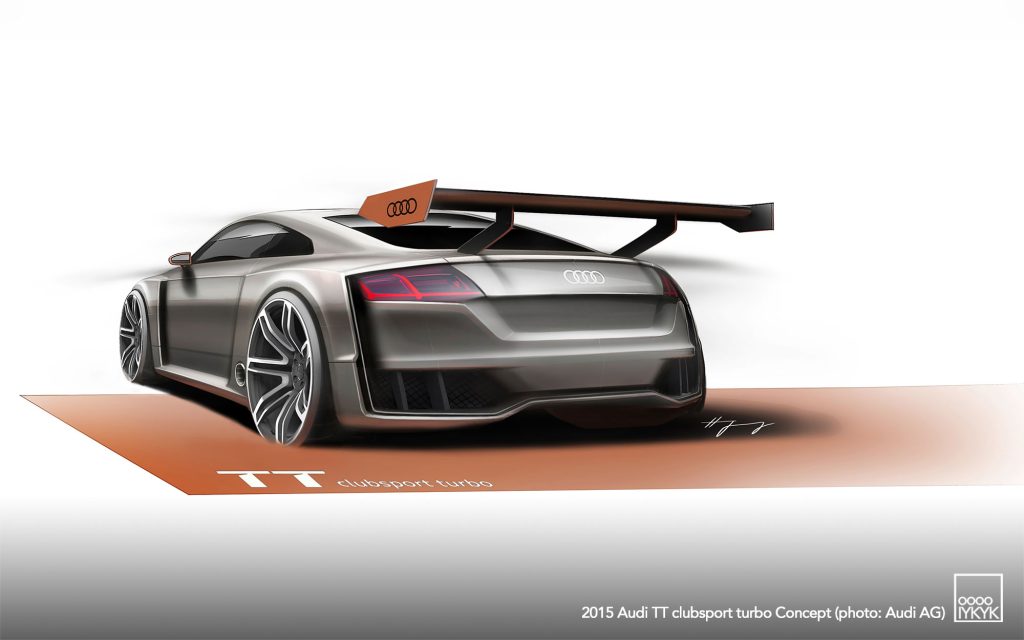
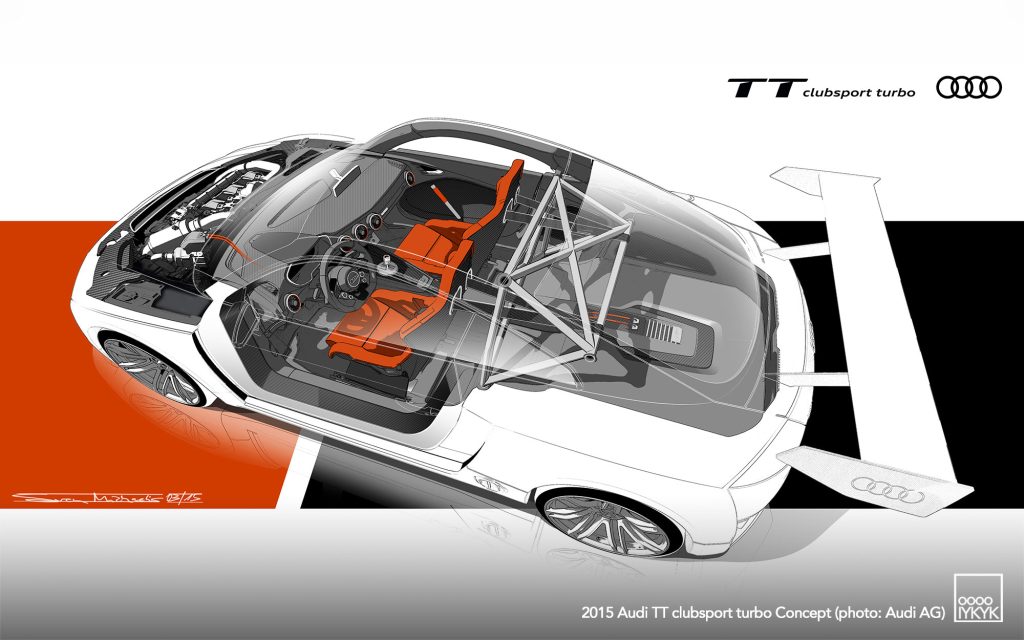
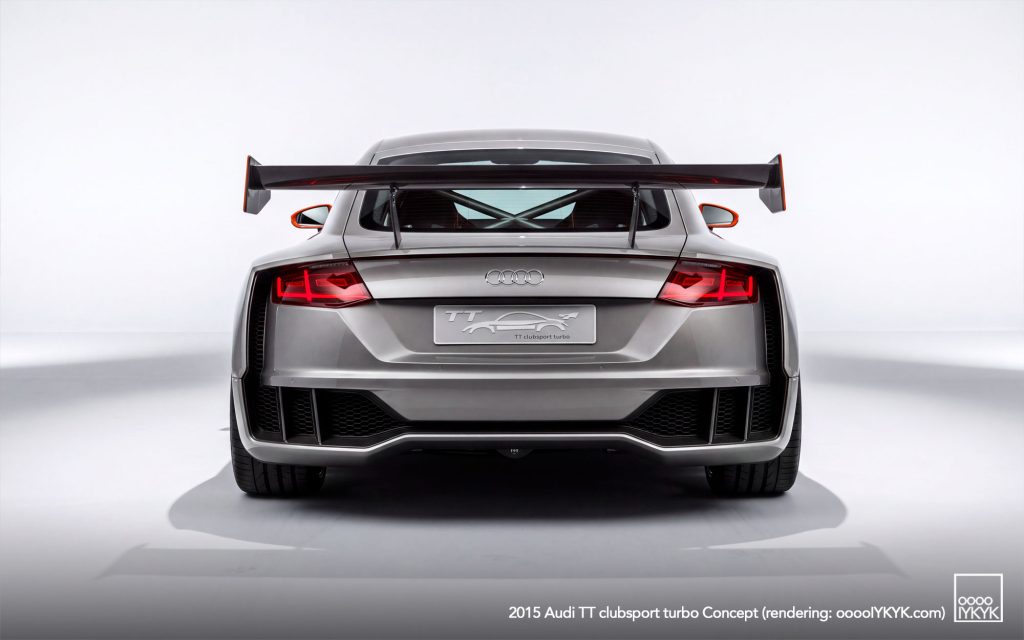
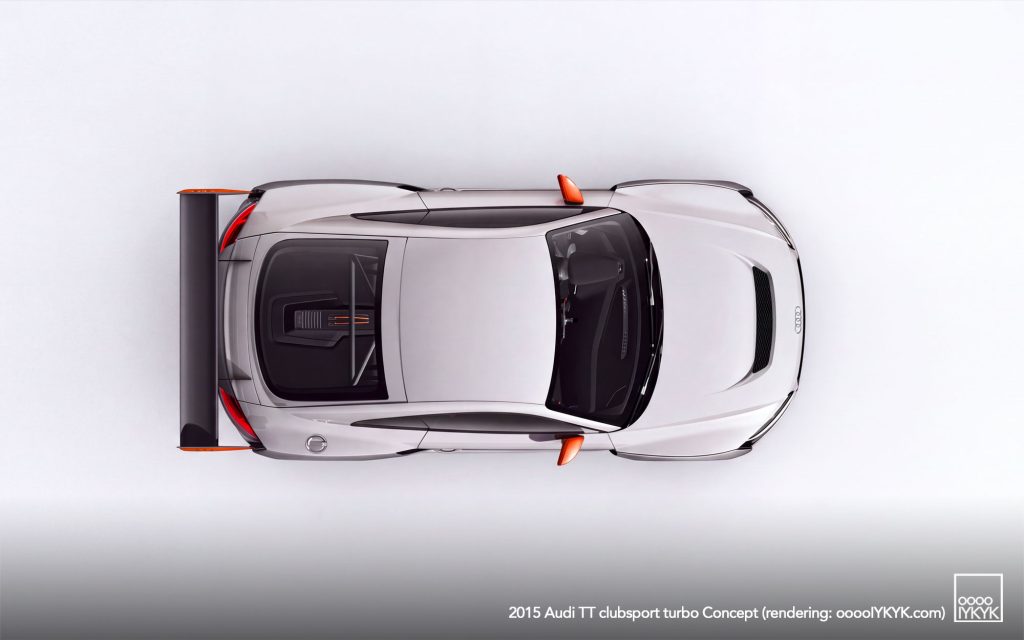
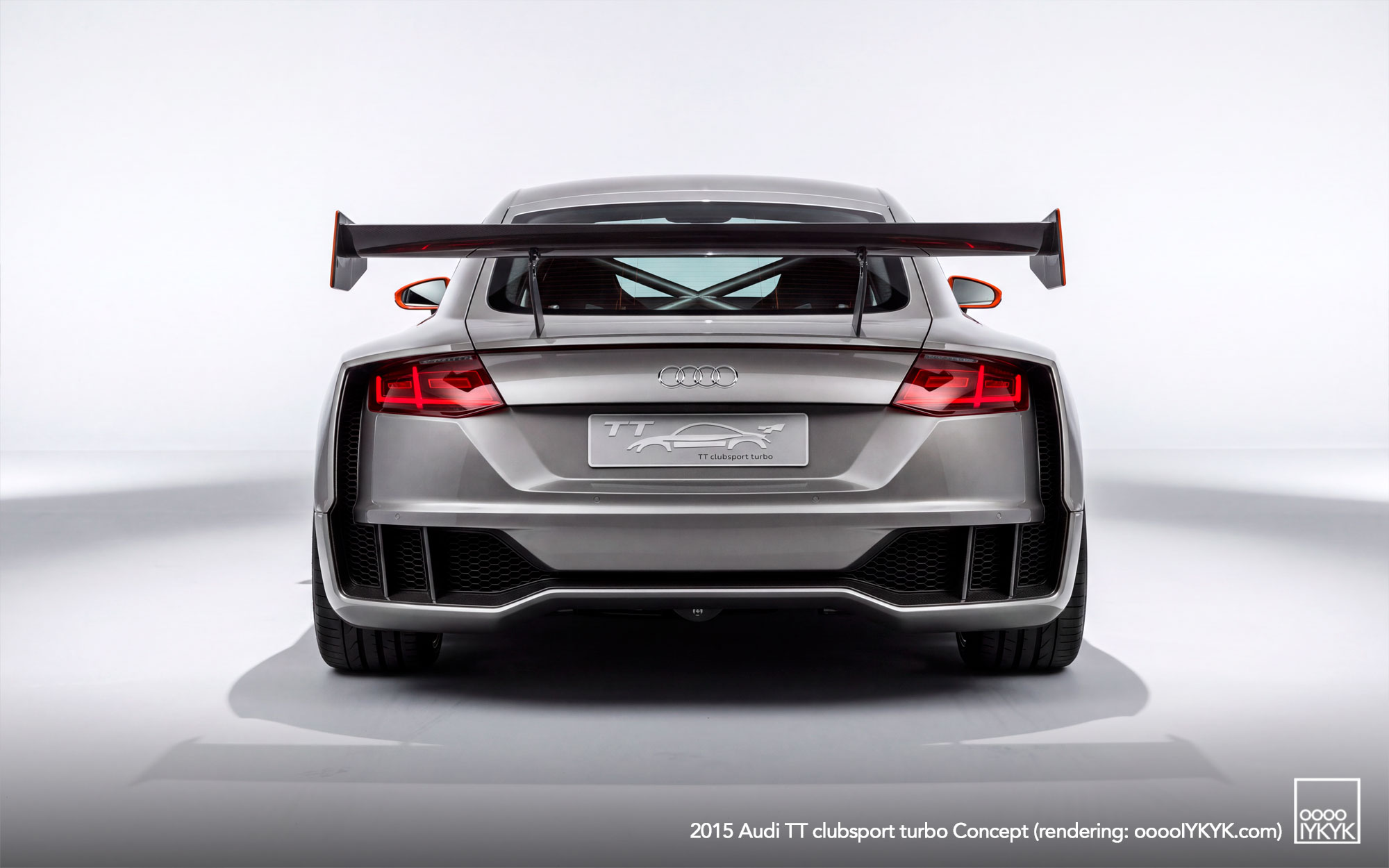
The manually adjustable rear wing was developed from the wing used on the Audi Sport TT Cup race car. Audi widened it by 200 mm (7.9 in) and reshaped the endplates, which carried the four rings. The wing, front intake surrounds, splitter, side panels, sill trim and rear diffuser were made from carbon-fiber-reinforced polymer. The outer sections of the diffuser echoed the shape of the front intakes.
INTERIOR
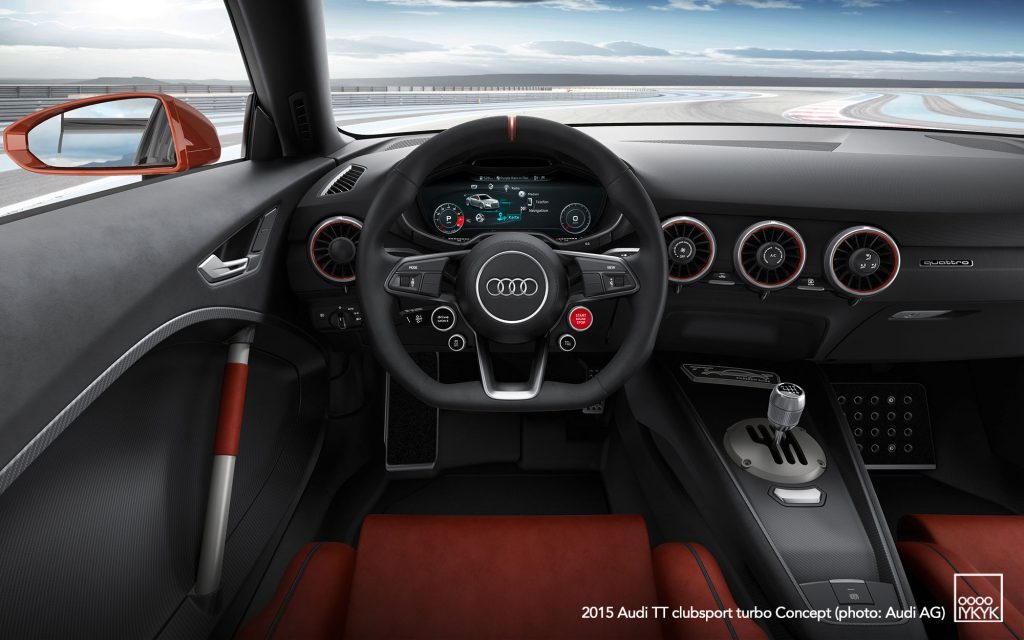
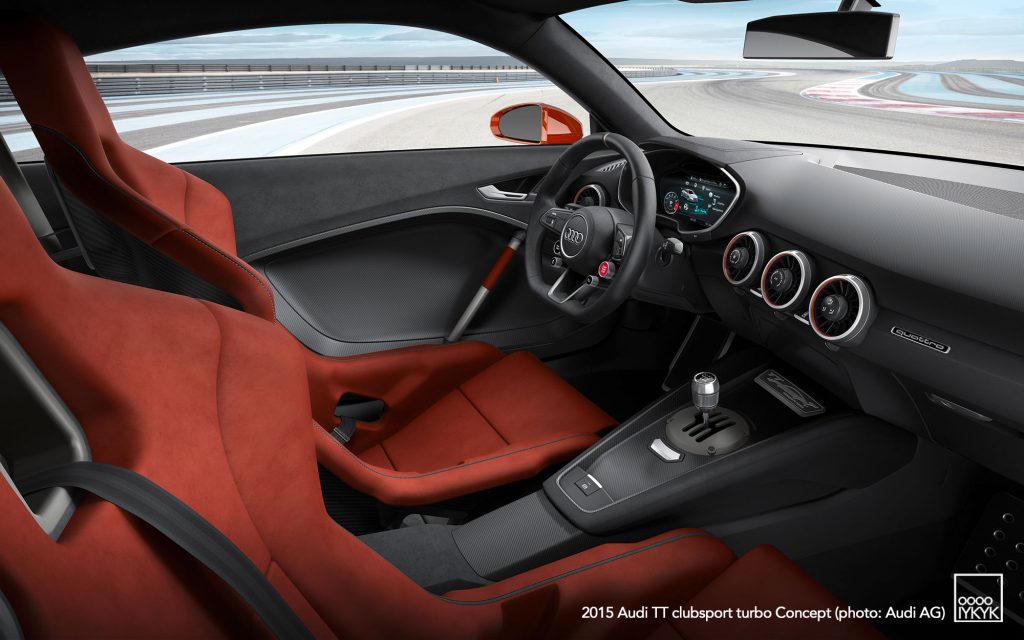
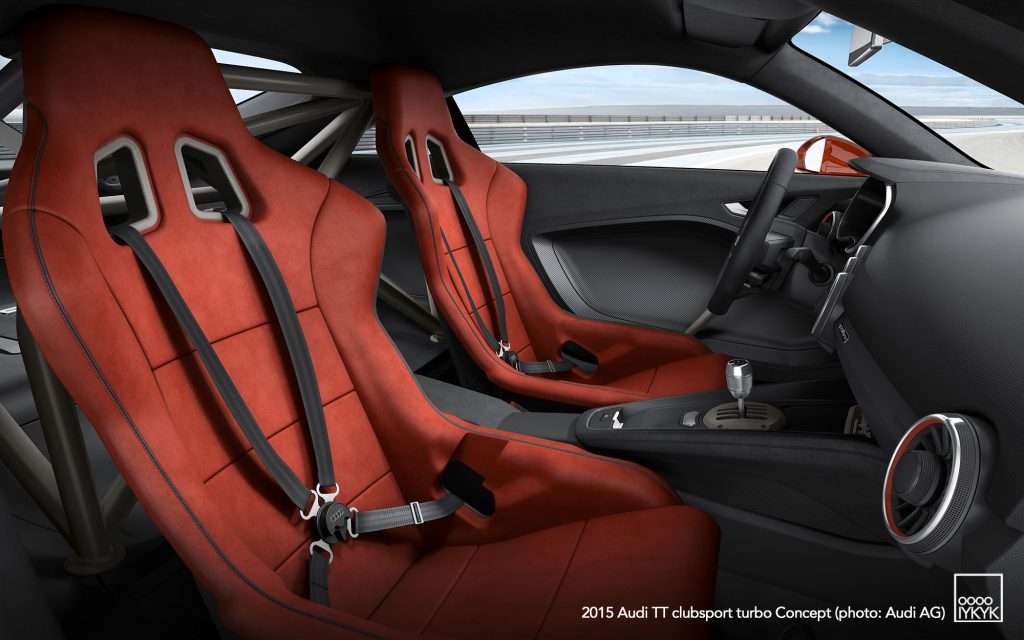
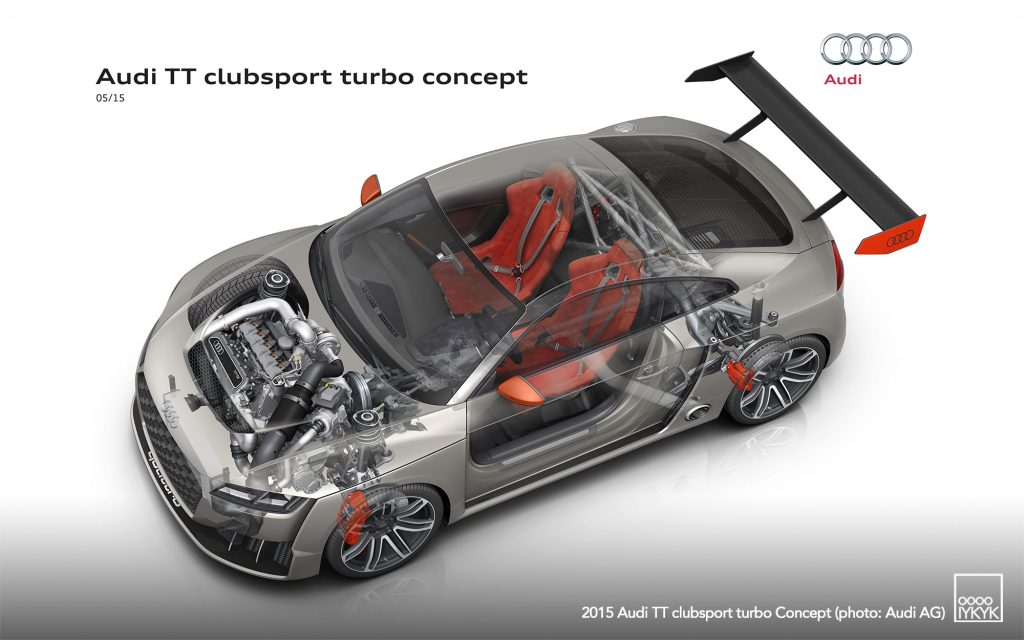
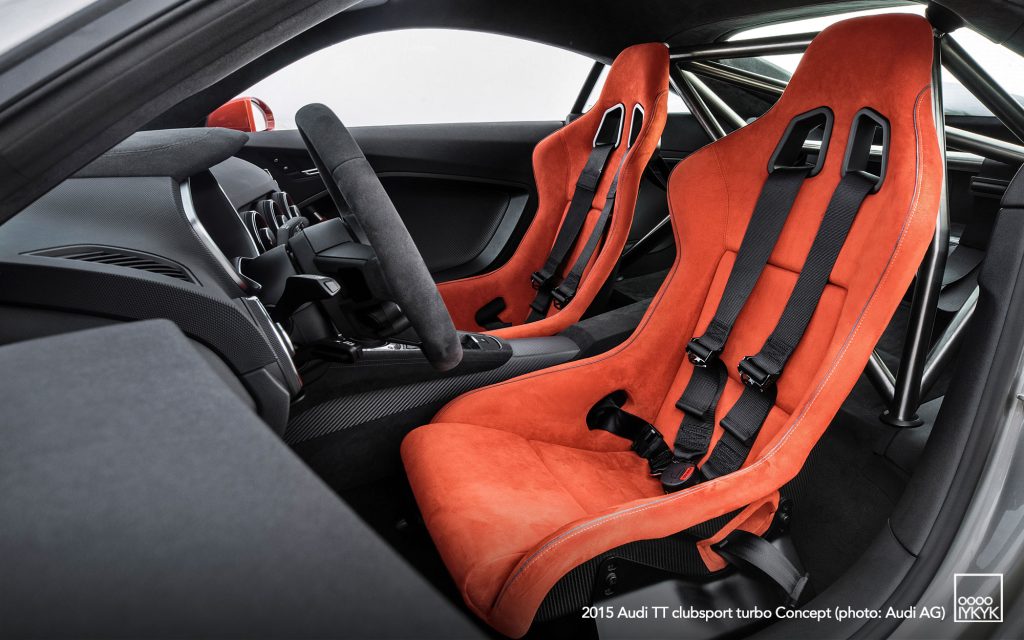
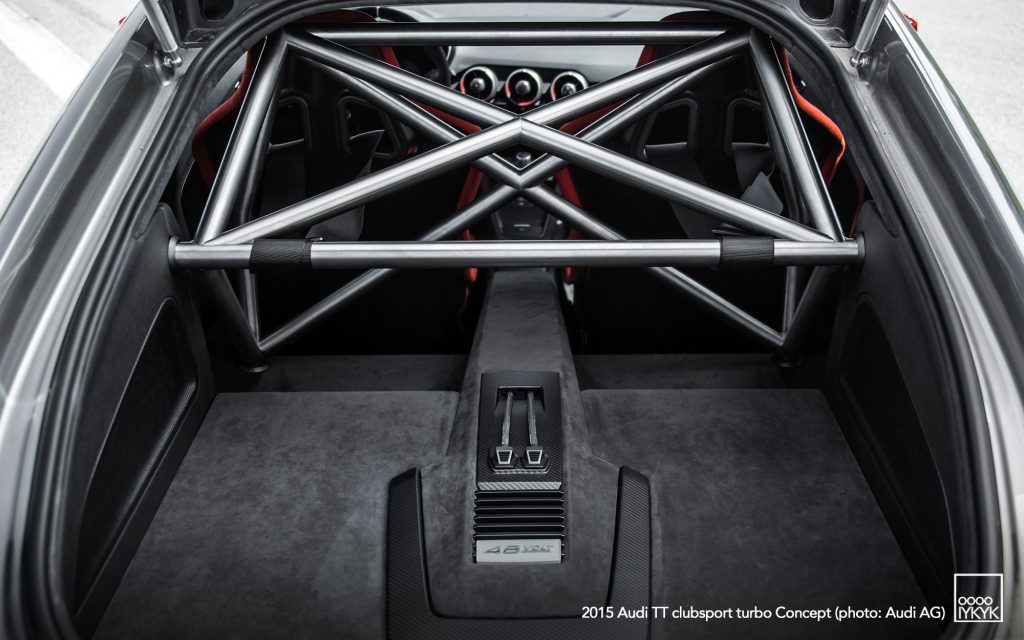
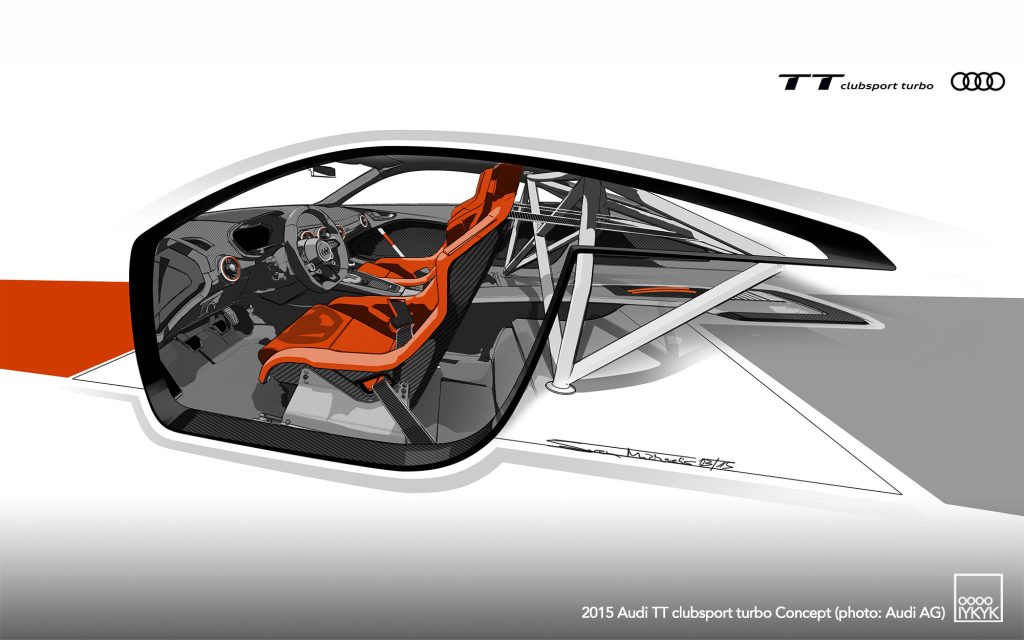
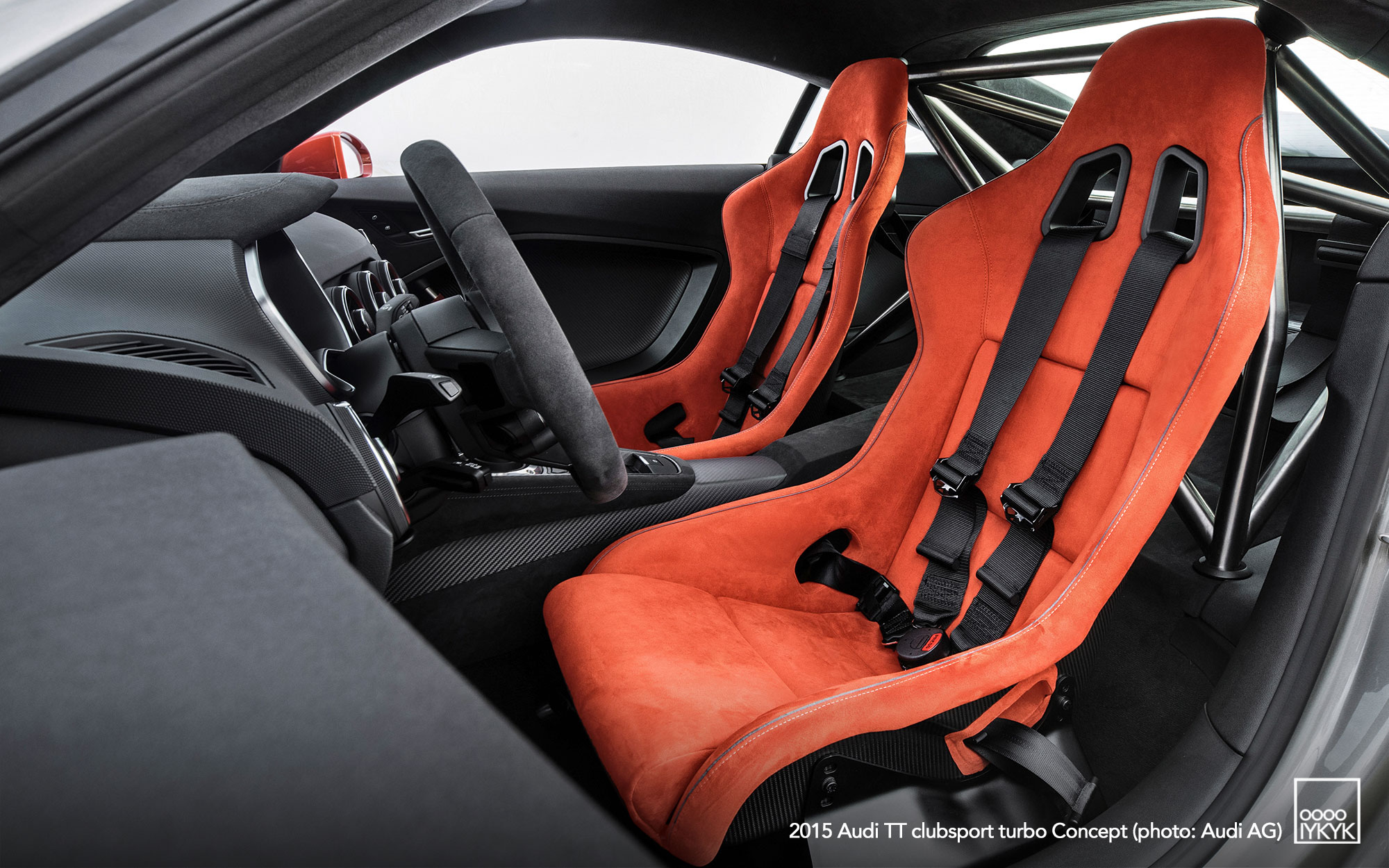
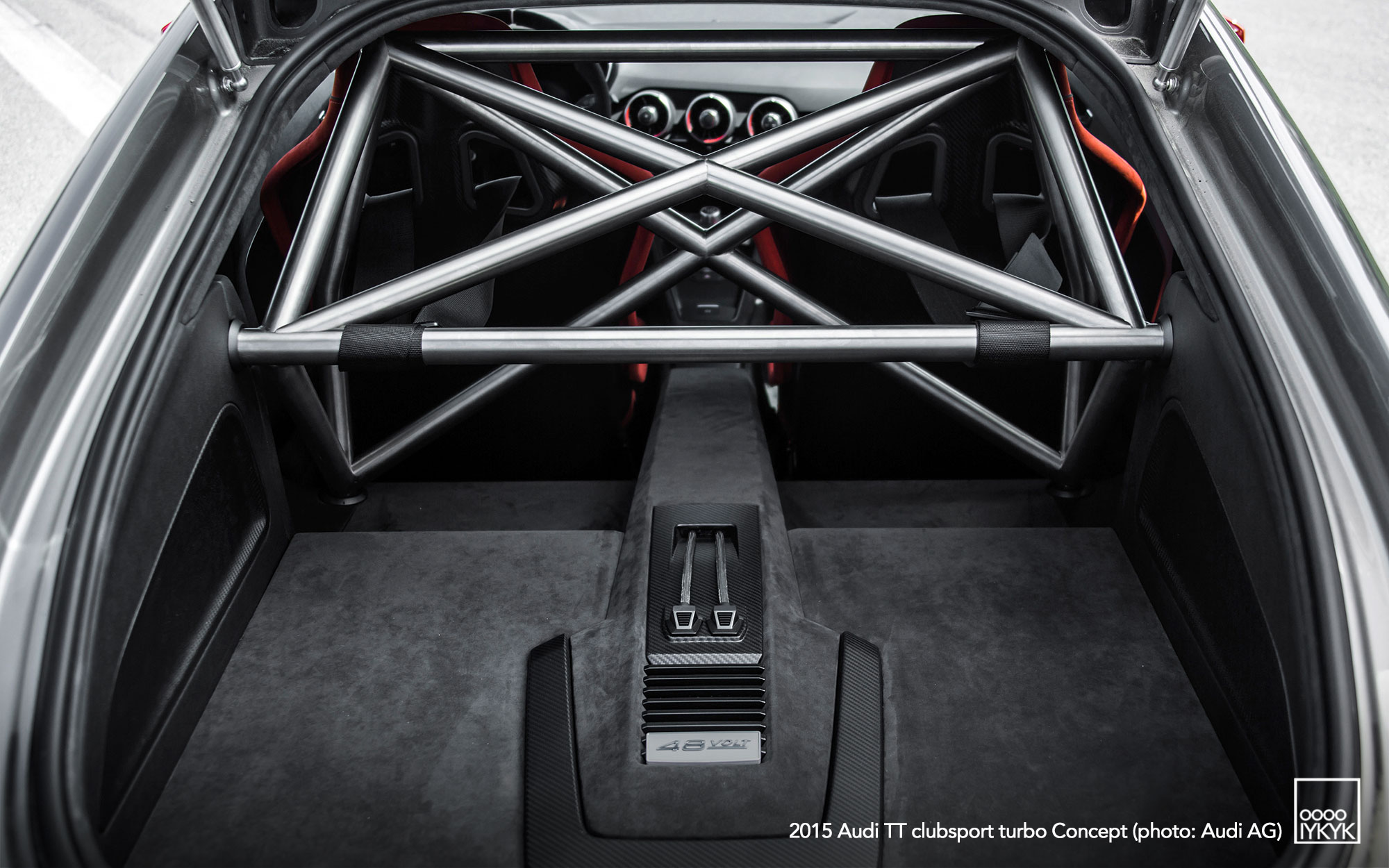
A cage made from high-strength titanium tubing stiffened the rear of the cabin. Up front, the lightweight racing buckets were upholstered in coral-orange Alcantara with contrasting stitching and piping and fitted with four-point harnesses. Black Alcantara and exposed carbon-fiber trim covered much of the rest of the cockpit. The doors used tubular pulls with Alcantara inserts. www.autoevolution.com
The digital Audi virtual cockpit put the displays directly ahead of the driver. Four satellite buttons on the multifunction steering wheel controlled key driving settings. Coral-orange accents carried over to the air vents and shifter, where the aluminum lever moved through an exposed gate. www.autoevolution.com
FIVE-CYLINDER ENGINE AND ELECTRIC BITURBO
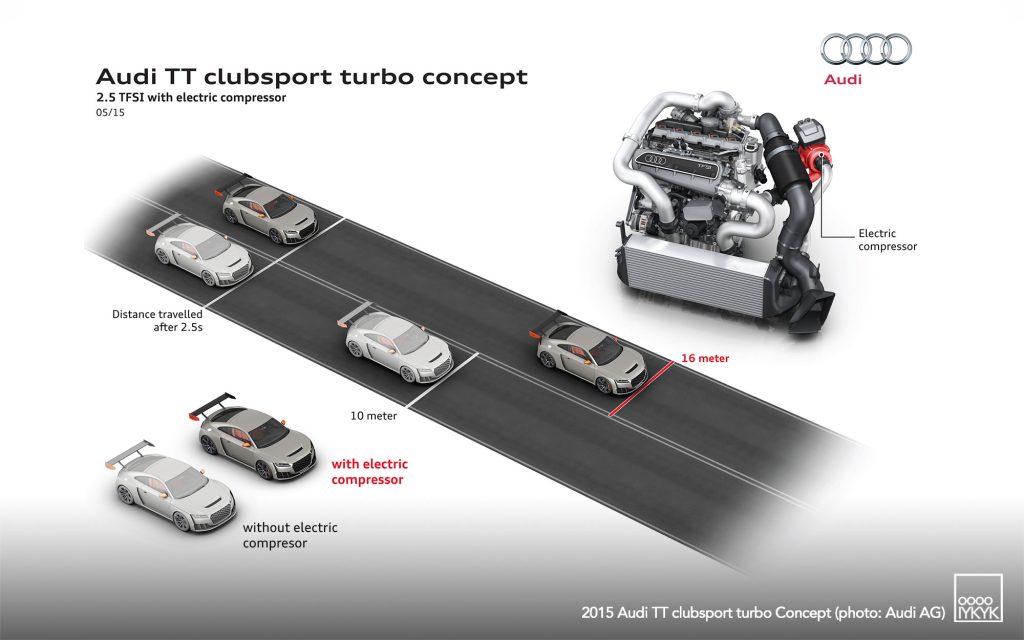
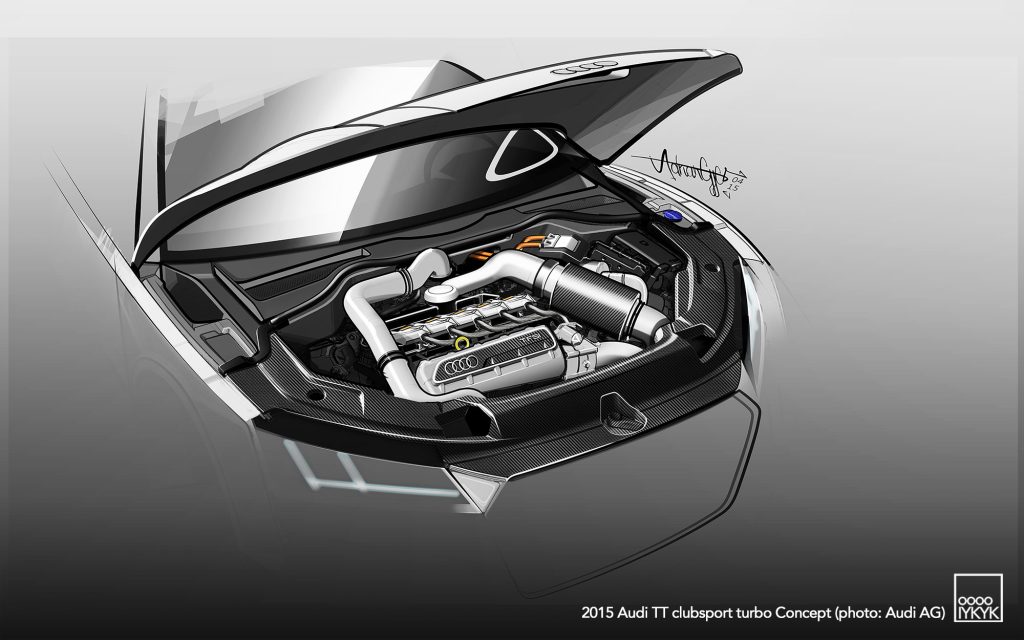
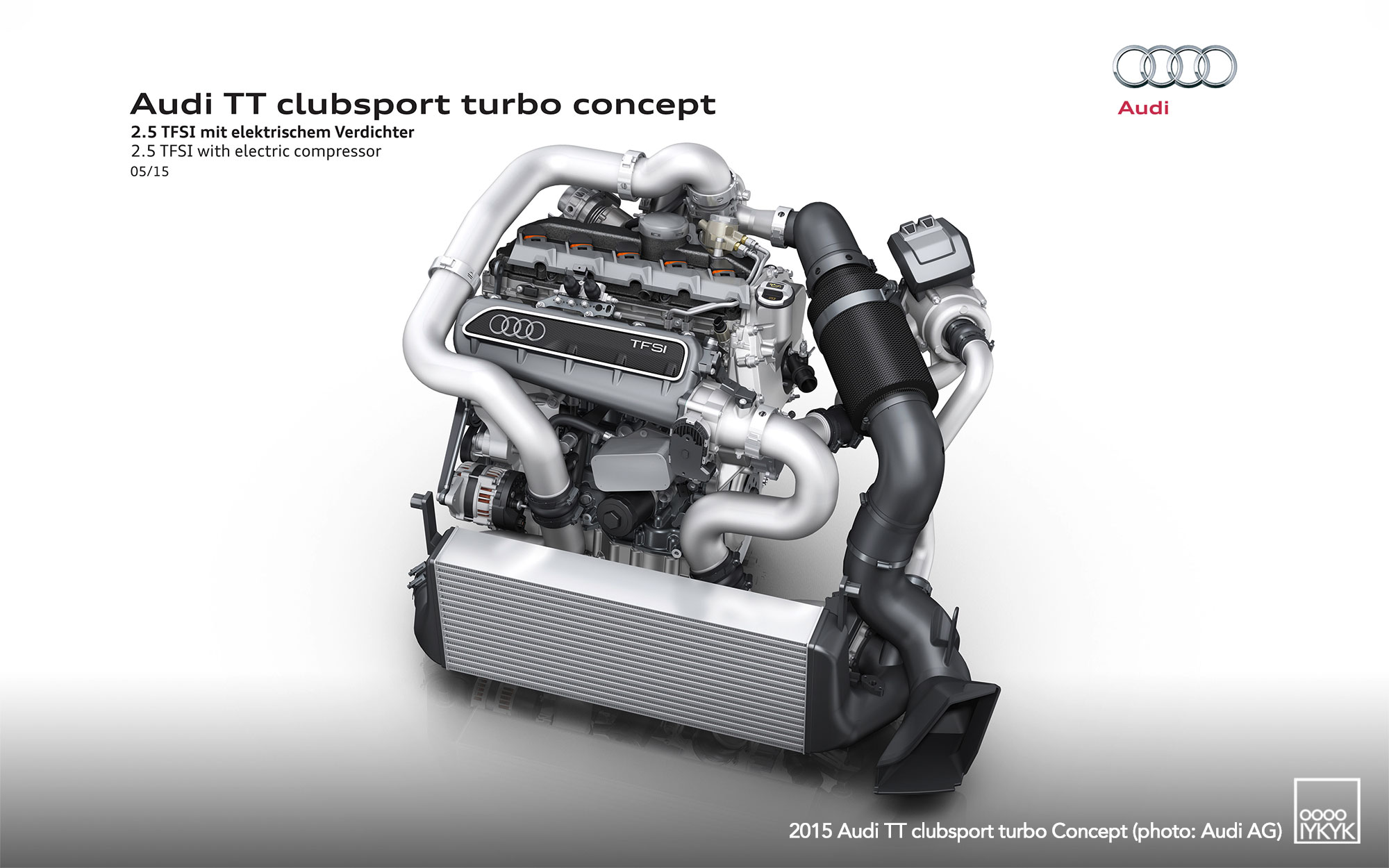
The 2,480 cc five-cylinder produced 441 kW and held its peak 650 Nm across a 4,000-rpm band. At low engine speeds, the electric compressor could build boost before the exhaust had enough energy to drive the conventional turbocharger effectively. That gave engineers room to size the exhaust-driven turbo for higher boost and peak power. Audi claimed the electric compressor added up to 200 Nm (148 lb-ft) at low engine speeds. A racing-type radiator cooled the engine, and the low-back-pressure exhaust used a side outlet immediately after the muffler. www.autoevolution.com
Audi used the first few meters of a standing start to illustrate the difference. The company said the concept could cover up to 16 meters (52.5 ft) in 2.5 seconds, around six meters (19.7 ft) farther than a comparable car without the electric compressor. The claimed 0–100 km/h time was 3.6 seconds. www.autoevolution.com
48-VOLT ELECTRICAL SYSTEM
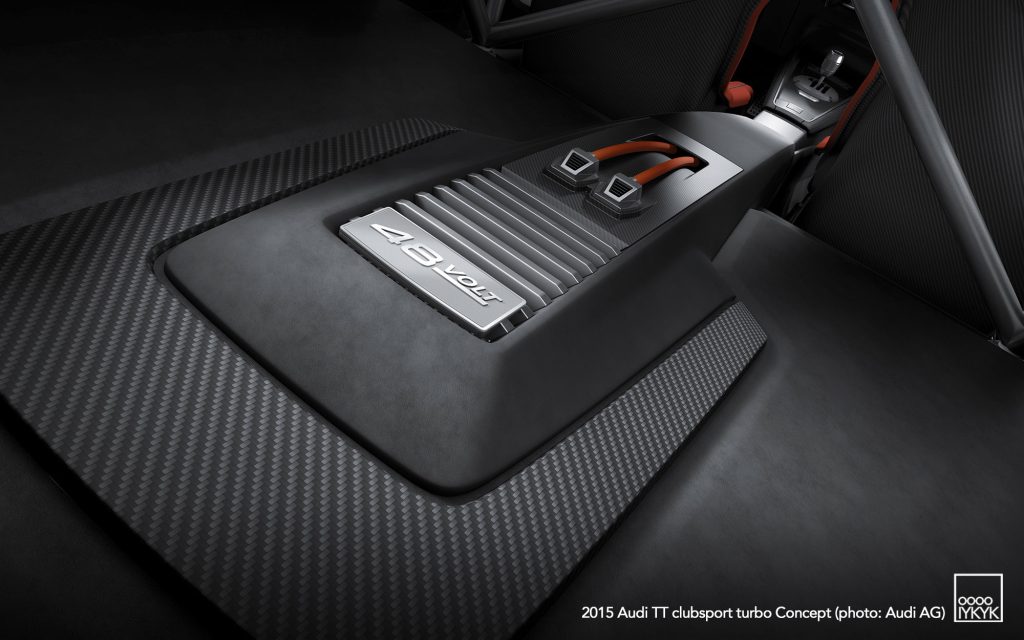
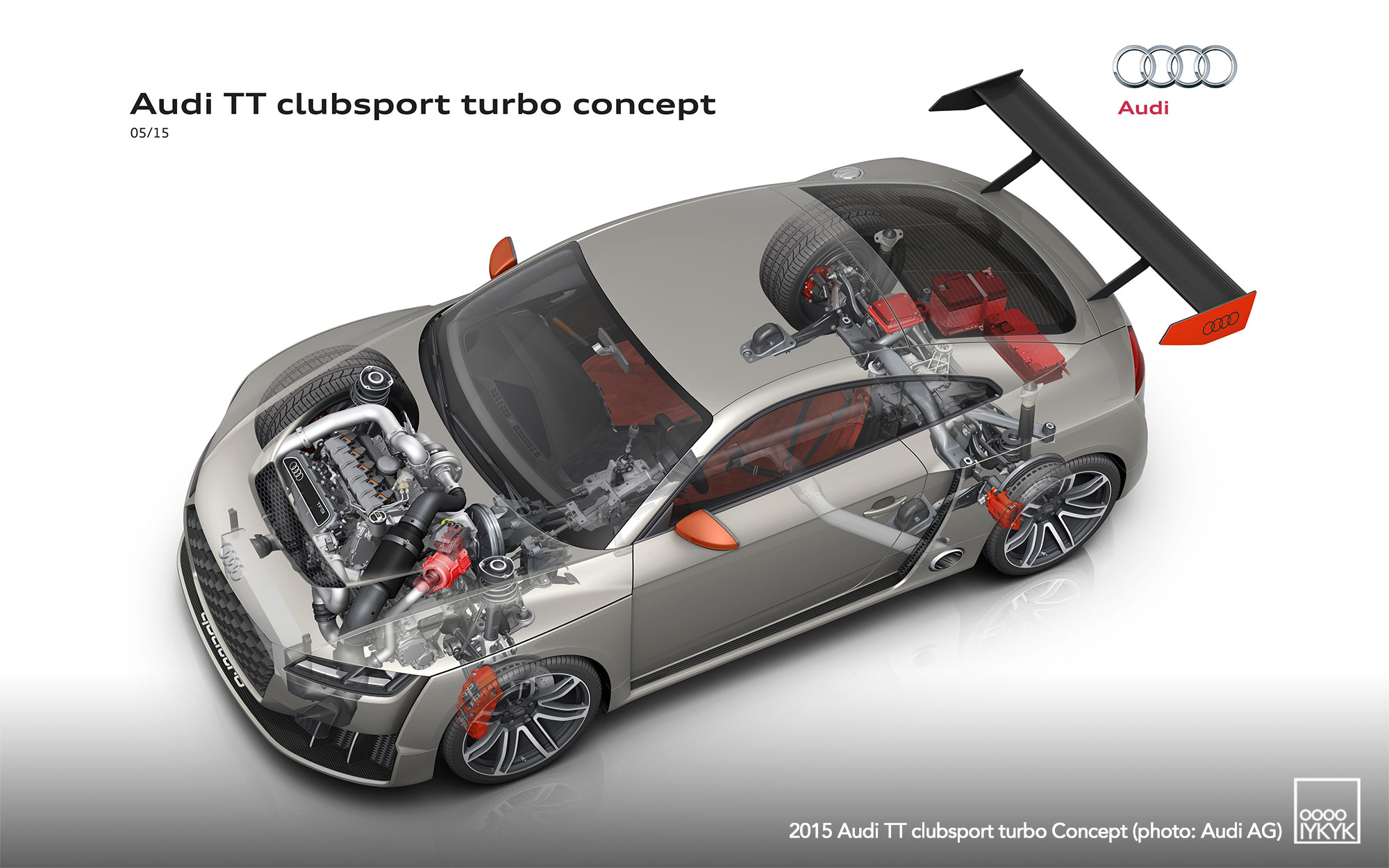
A dedicated 48-volt subsystem supplied the electric compressor. A compact lithium-ion battery in the luggage compartment stored energy recovered while coasting. A DC/DC converter linked the 48-volt subsystem to the conventional 12-volt electrical system. www.autoevolution.com
QUATTRO, SUSPENSION AND BRAKES
The six-speed manual sent power through a quattro system with its multi-plate clutch at the rear axle for better weight distribution. The coilover suspension offered adjustable ride height, compression and rebound, while an electric lift helped the car clear curbs. Electronic stability control and torque vectoring were also fitted. www.autoevolution.com
The 20-inch wheels used a six twin-spoke design with machined faces and matte-black sections. They wore 275/30 tires and housed carbon-ceramic discs at all four corners. The front discs measured 370 mm. www.autoevolution.com
SIGNIFICANCE
Wörthersee gave Audi a setting to demonstrate what the electric compressor changed from behind the wheel. The broad torque plateau and the claimed advantage over the first few meters of a launch showed two sides of the same engineering choice. The electric compressor helped the five-cylinder respond at low engine speeds, while the exhaust-driven turbo could be sized for the output Audi wanted at the top end. The 48-volt system made that combination possible in a TT that still used a conventional six-speed manual. www.autoevolution.com
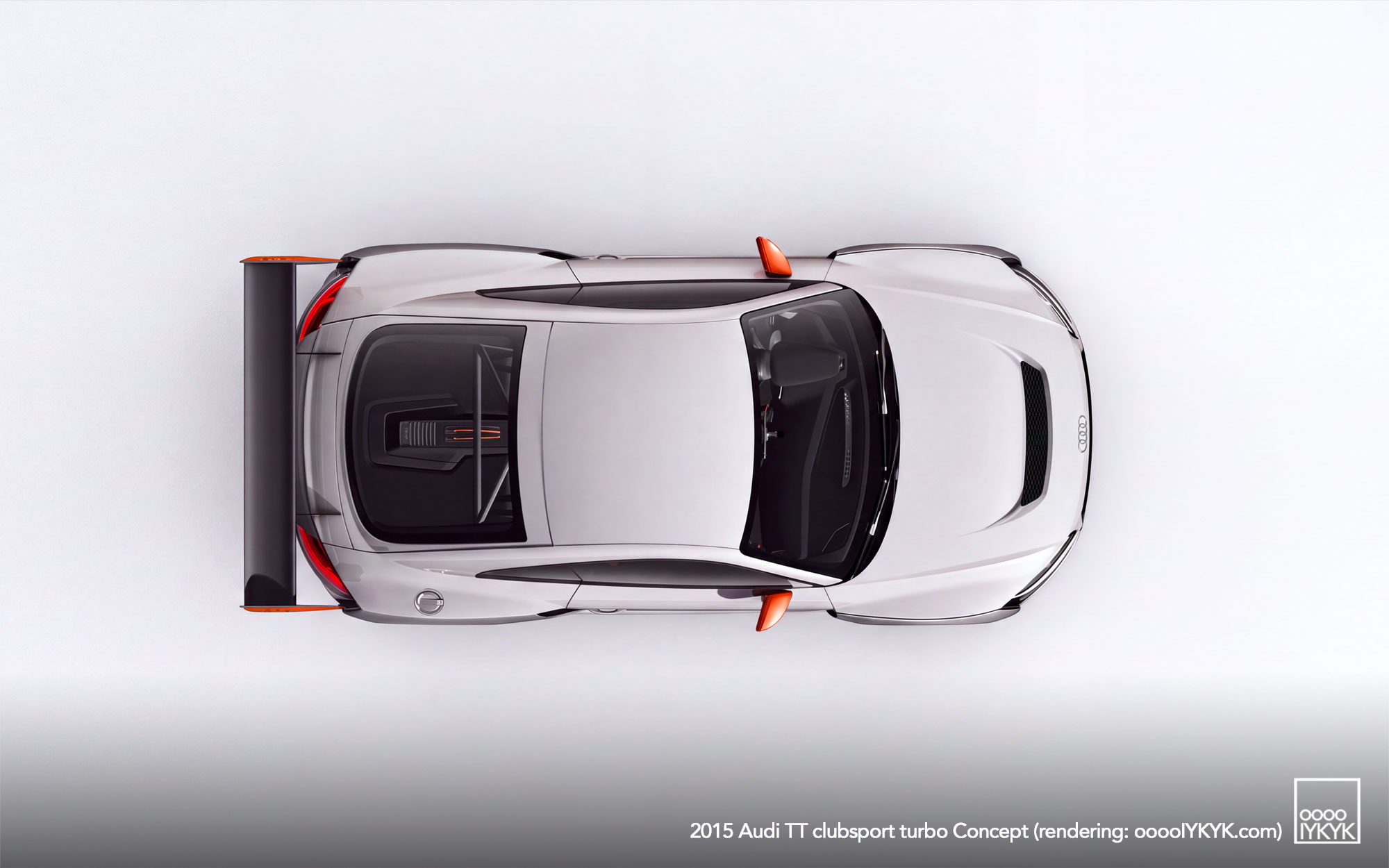
The white No. 1 iteration made its first documented show appearance at SEMA in Las Vegas in 2017. Its hood and side stripes evoke the 1987 Sport quattro S1 Pikes Peak, and the two cars later appeared together in JP Performance’s Pikes Peak film. The abbreviated history of the show car leaves open whether the white version was a refinish of the original Ferro Titanium chassis. www.audiworld.com
TECHNICAL DATA
| Specification | |
|---|---|
| Engine | 2,480 cc 2.5 TFSI inline-five |
| Induction | Exhaust-driven turbocharger and 48-volt electric compressor |
| Power | 441 kW (600 PS) |
| Torque | 650 Nm (479 lb-ft) at 3,000–7,000 rpm |
| Transmission | Six-speed manual with exposed shift gate |
| Drivetrain | quattro all-wheel drive |
| Unladen weight | 1,396 kg (3,078 lb) |
| 0–100 km/h (0–62 mph) | 3.6 seconds |
| Top speed | 310 km/h (193 mph) |
| Length | 4,330 mm (170.5 in) |
| Width including mirrors | 1,970 mm (77.6 in) |
| Track, front / rear | 1,736 / 1,729 mm (68.3 / 68.1 in) |
| Wheels and tires | 20 × 9.5J wheels with 275/30 tires |
| Brakes | Carbon-ceramic discs, 370 mm (14.6 in) at the front |
REFERENCES
RELATED
Concept Cars: Audi TT clubsport turbo concept, white No. 1 iteration (2017)
Motorsport: Audi 90 IMSA GTO, Audi Sport TT Cup, Audi Sport quattro S1 Pikes Peak (1987)
Technology: 2.5 TFSI five-cylinder, electric compressor, 48-volt electrical subsystem, quattro
REFERENCES
- Audi AG, original English-language concept announcement, May 8, 2015. Audi press release (PDF)
- Audi Media, Wörthersee Tour event release. Audi at Wörthersee Tour 2015
- Jens Stratmann, period coverage and photographs from Reifnitz. Audi at the 2015 Wörthersee GTI Treffen
- Audi of America, North American debut announcement. 2017 SEMA press release
- JP Performance, Wir schreiben Geschichte, released December 1, 2017. Part 1 · Part 2
PHOTO GALLERY