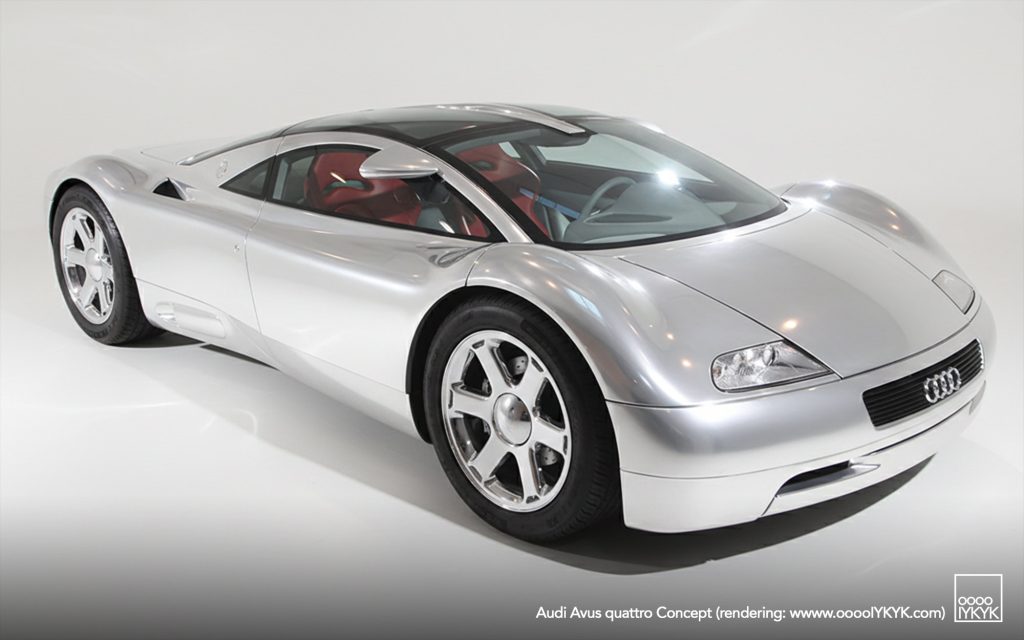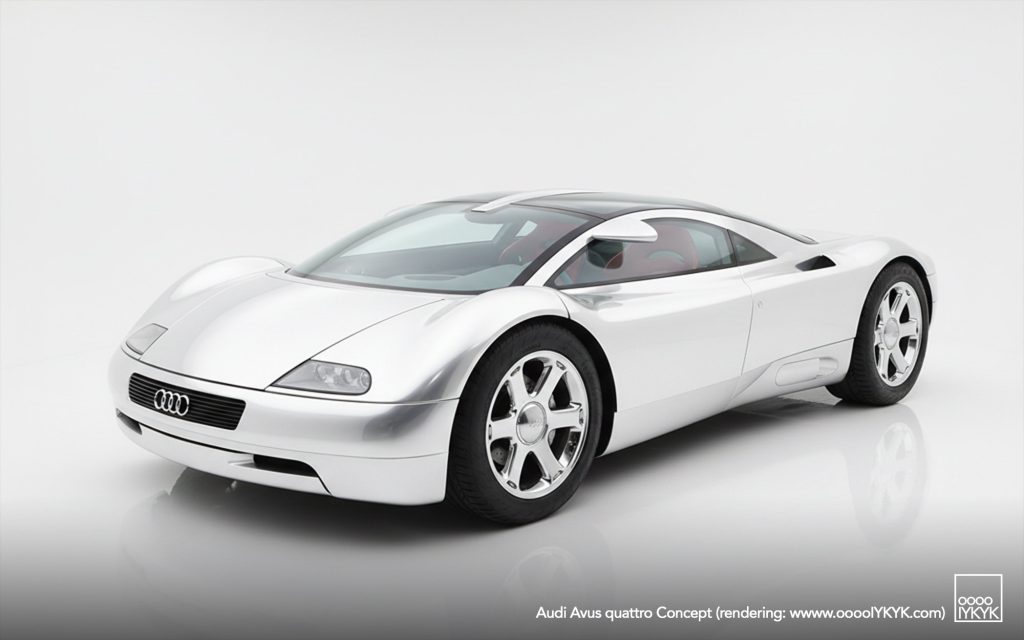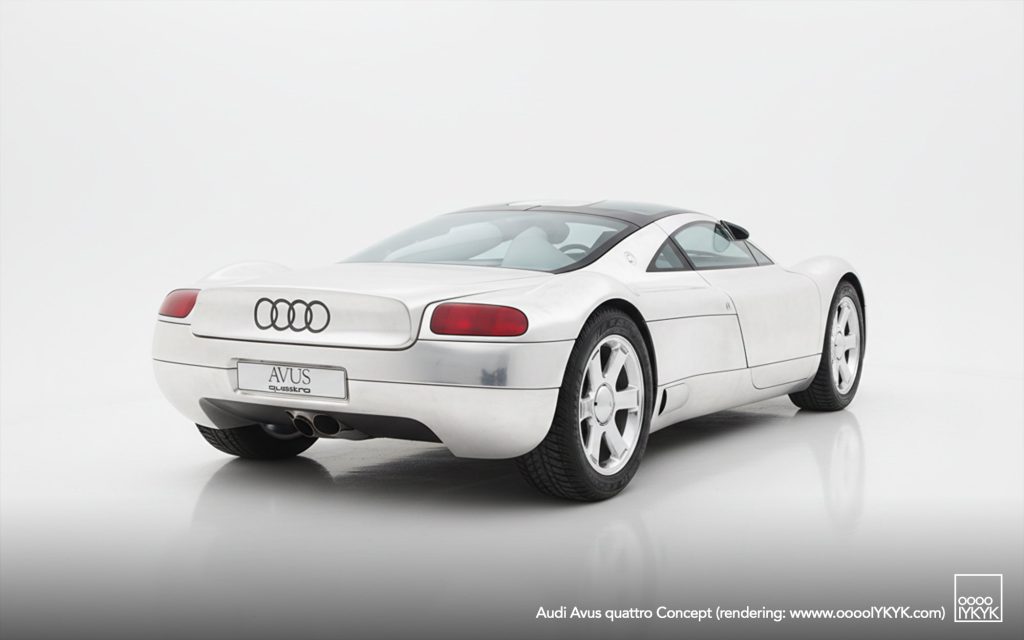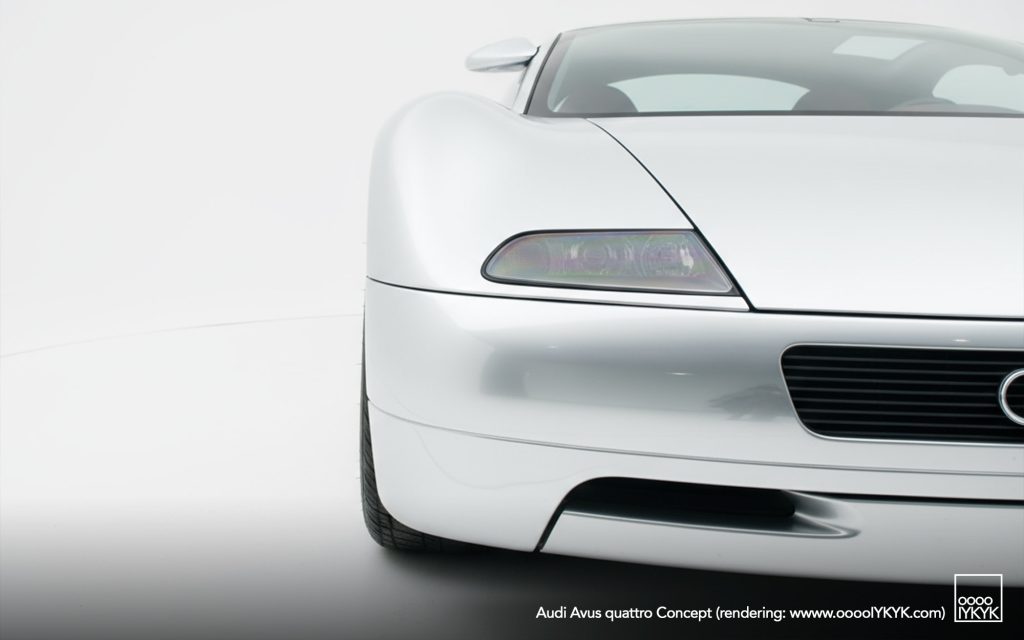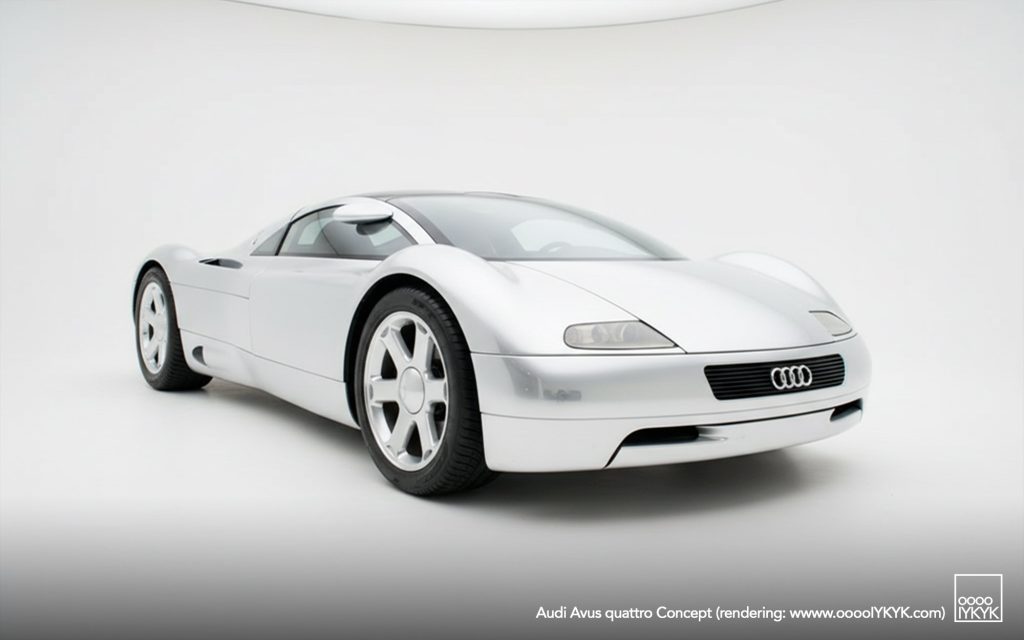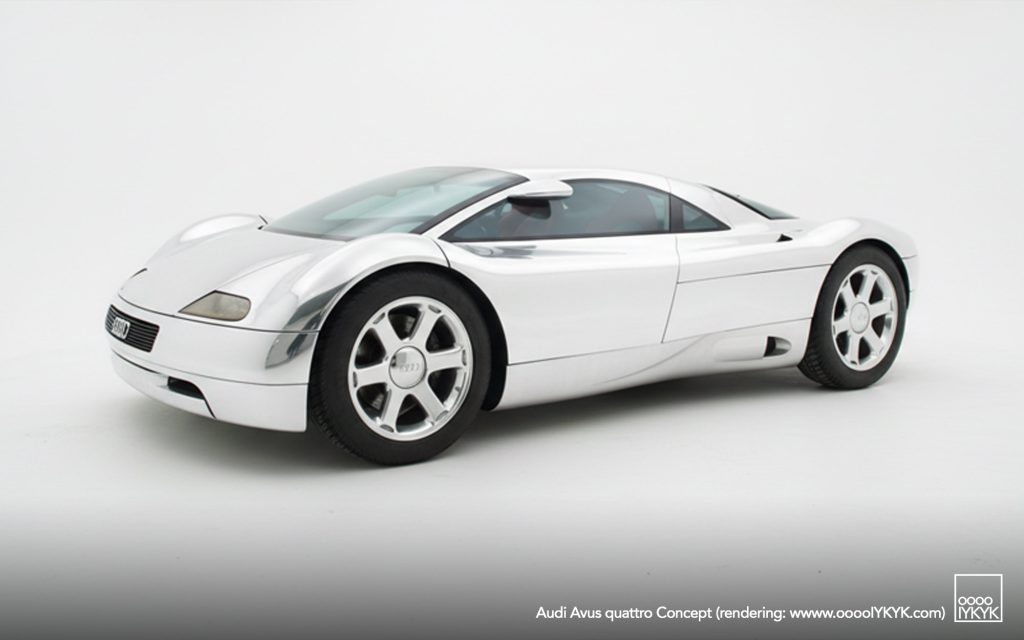


What: Audi Avus quattro Concept car (design and technology study)
Year: 1991
Era: Audi Postwar
Model Family: Audi Concept Cars
Model / Generation Code(s):
Debut: 1991 Tokyo Motor Show
Number Produced: 1 (believed)
Assembly: Audi Design Studio, Munich, Germany
Designers: Hartmut Warkuss (design chief), J Mays (exterior), Graham Thorpe (interior), under Martin Smith at Audi Design Studio Munich.
Class: Mid-engine supercar concept
Body style: 2-door coupe
Layout: Mid-engine, quattro all-wheel drive
Engine: 6.0L W12 (naturally aspirated)
Power output: 509 hp (375 kW)
Transmission: 6-speed manual
Top speed (claimed): 340 km/h (211 mph)
0–100 km/h (62 mph): ~3.0 seconds
DIMENSIONS
Length: 4,420 mm (174.0 in)
Width: 1,980 mm (78.0 in)
Height: 1,170 mm (46.1 in)
Wheelbase: 2,800 mm (110.2 in)
Weight: ~1,250 kg (2,756 lb)
OVERVIEW
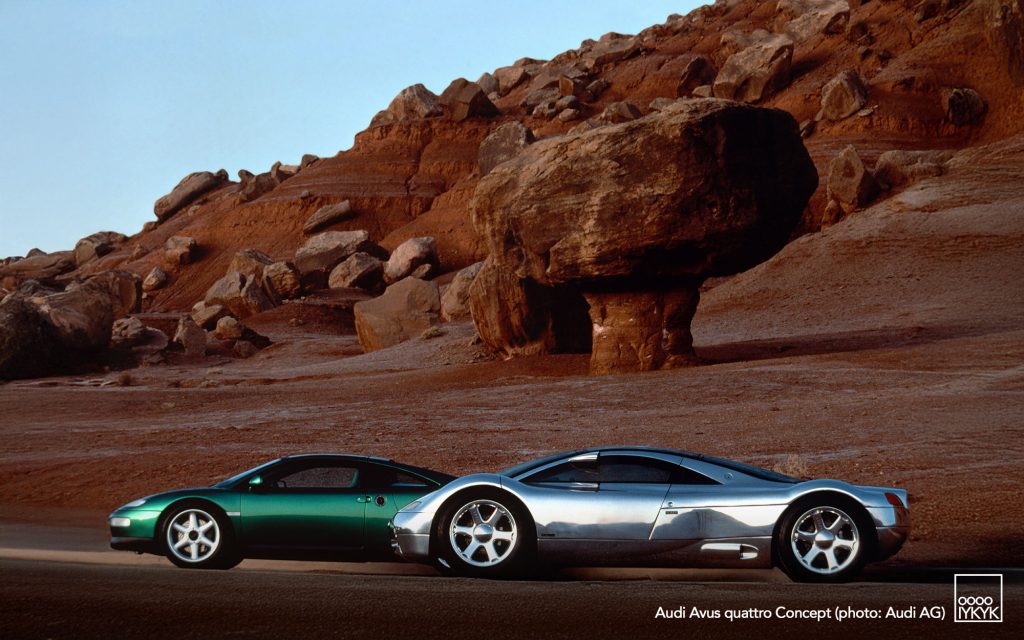
The Audi Avus quattro arrived just weeks after the unveiling of the quattro Spyder, forming part of a deliberate one-two statement by Audi leadership under Ferdinand Piëch. While the Spyder hinted at a production sports car, the Avus quattro was something else entirely—a technological and emotional flagship intended to redefine how Audi was perceived globally.
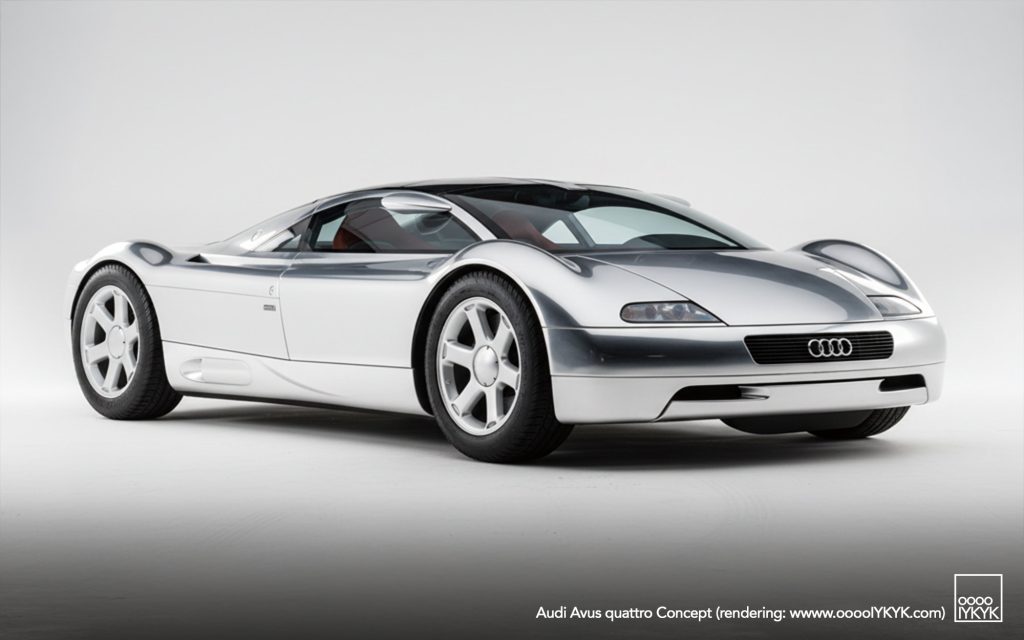
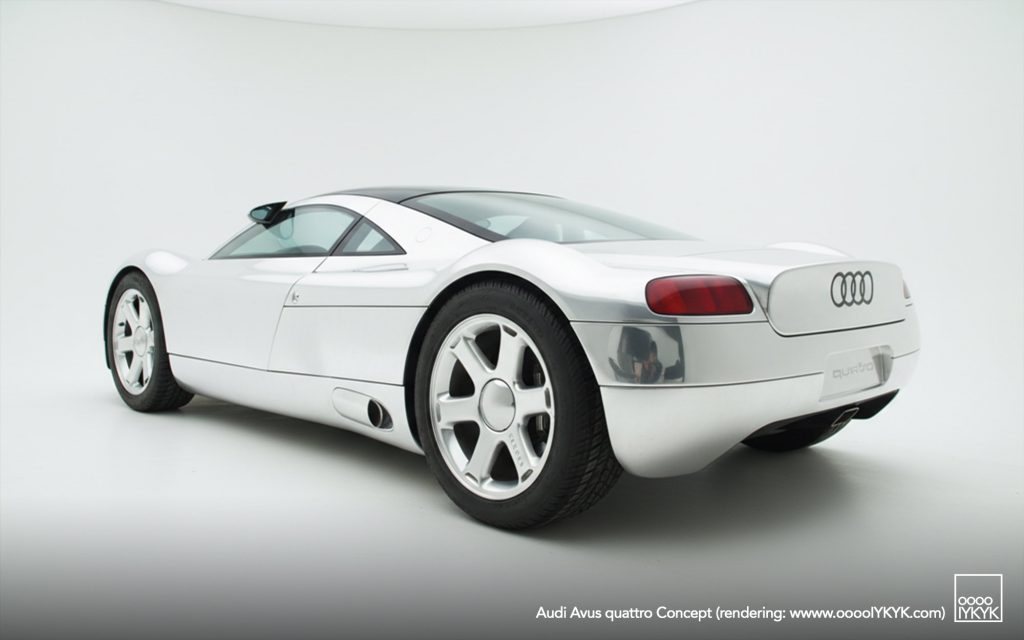
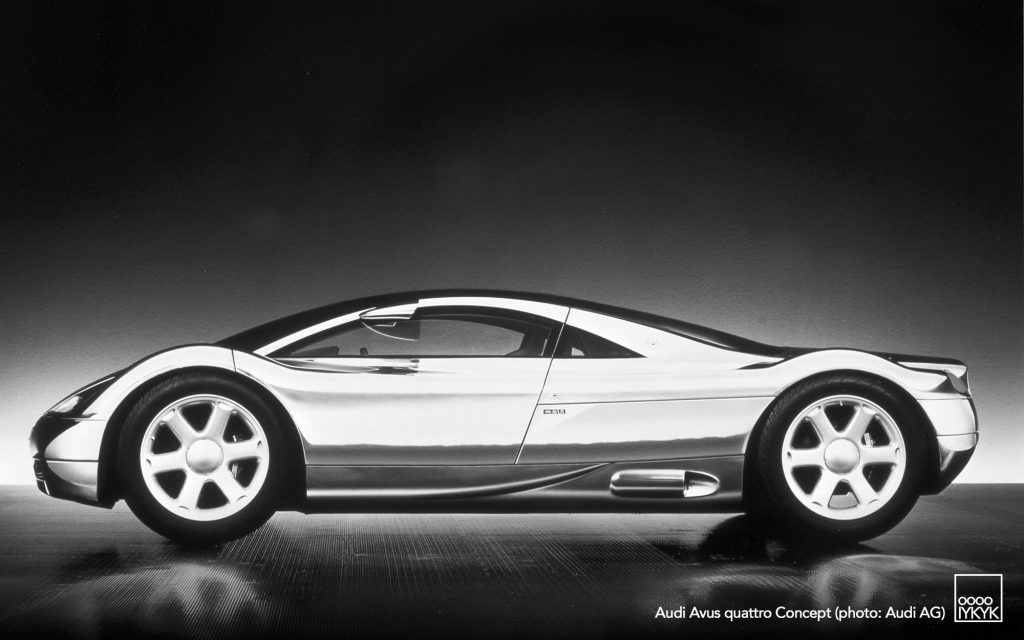
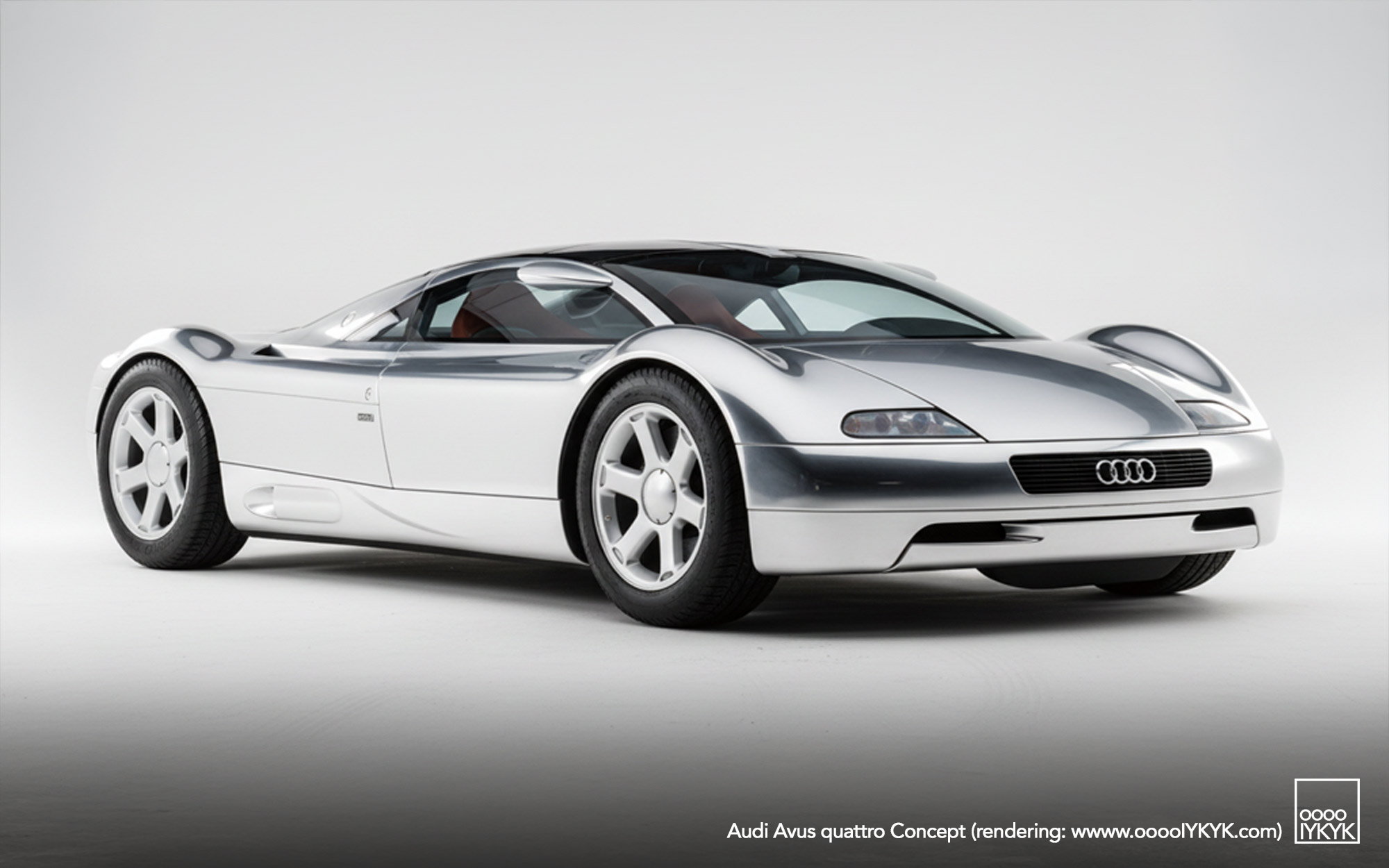
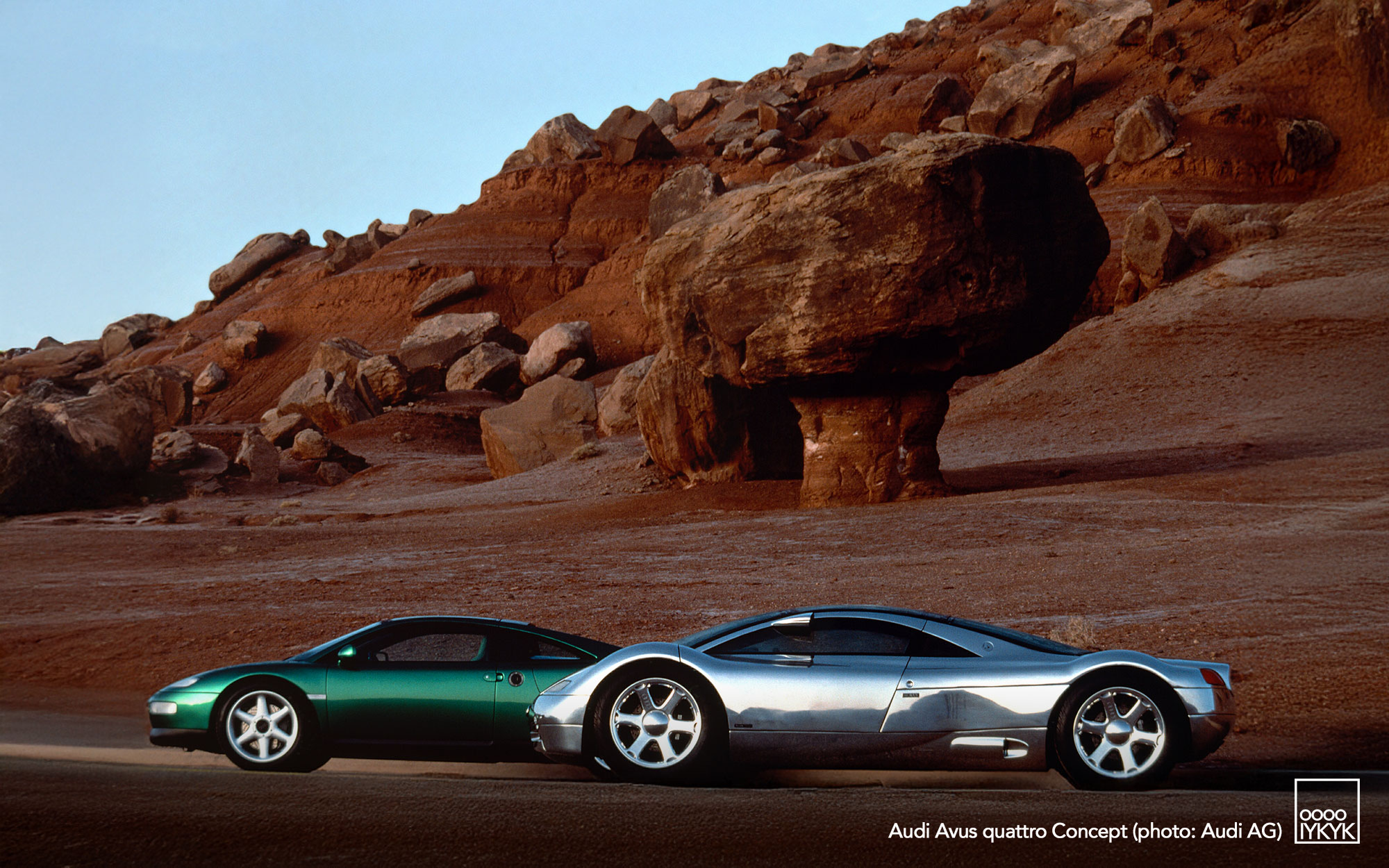
Unveiled without prior announcement at the 1991 Tokyo Motor Show, the Avus stunned both press and public. Its polished aluminum body, extreme proportions and exposed W12 engine transformed it into the centerpiece of the show. Internally, the project was as much about repositioning Audi design as it was about engineering. Under design chief Hartmut Warkuß, the Avus elevated design to equal footing with engineering within Audi’s corporate identity.
The name “Avus” referenced Berlin’s historic Automobil-Verkehrs- und Übungsstraße circuit, a high-speed proving ground synonymous with Auto Union’s pre-war dominance. By invoking this legacy, Audi directly linked the concept to its Silver Arrows heritage and the technological ambition that defined the brand in the 1930s.
DESIGN & FORM LANGUAGE
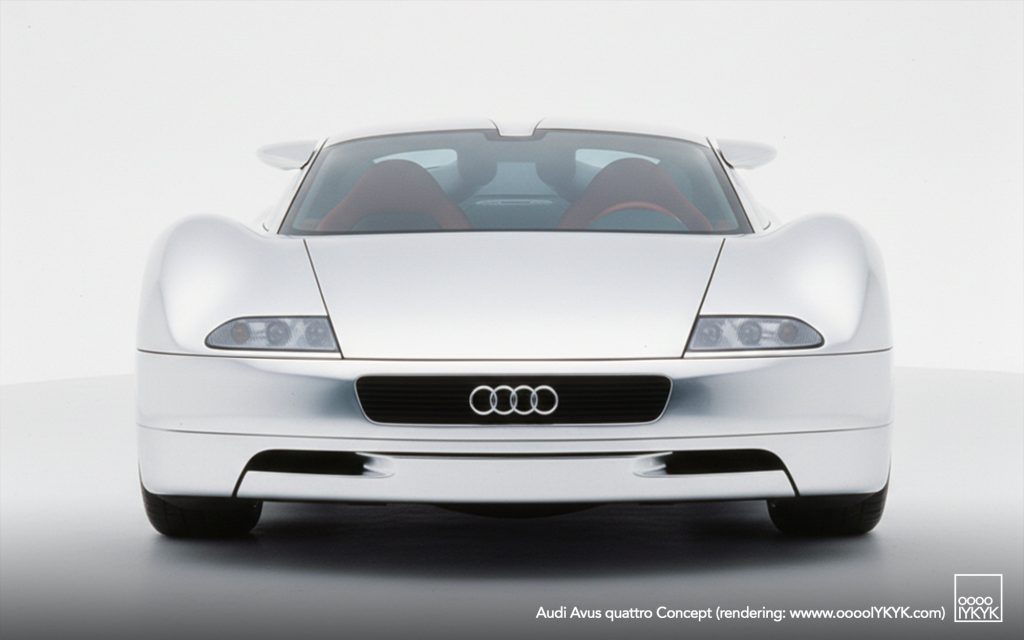
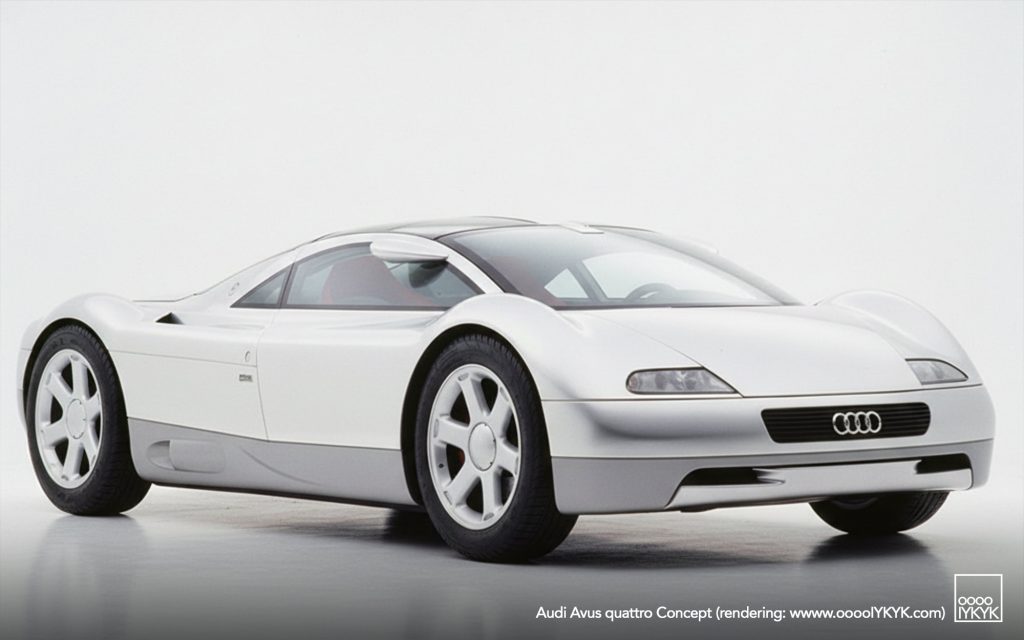
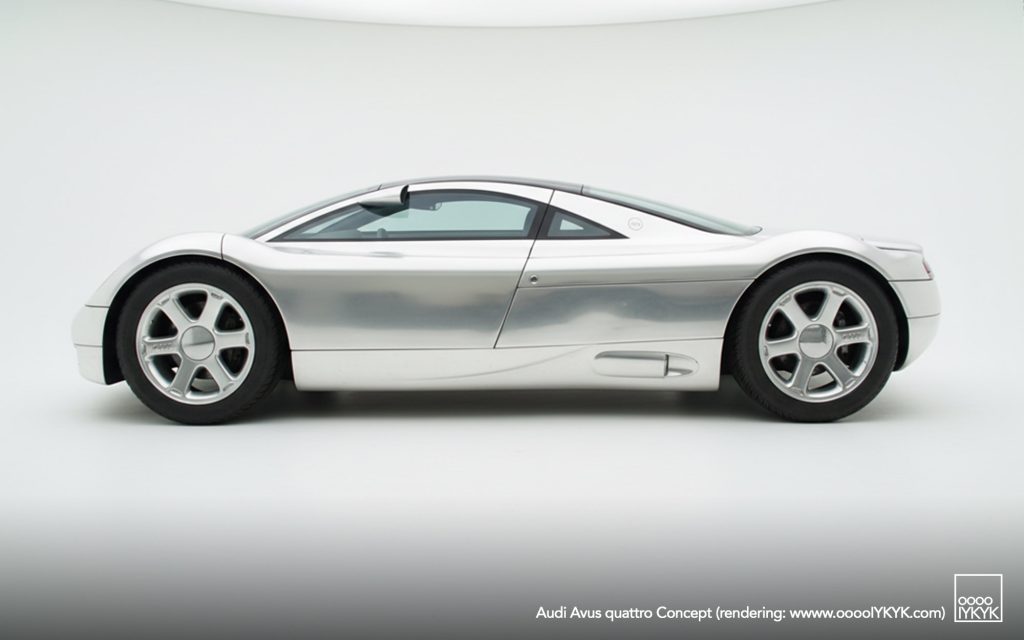
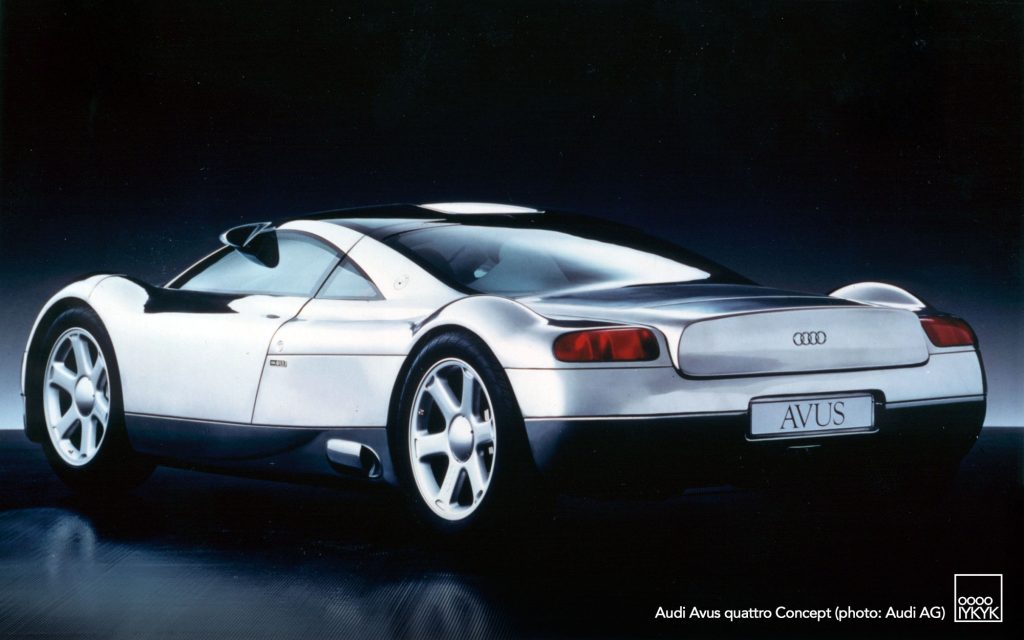
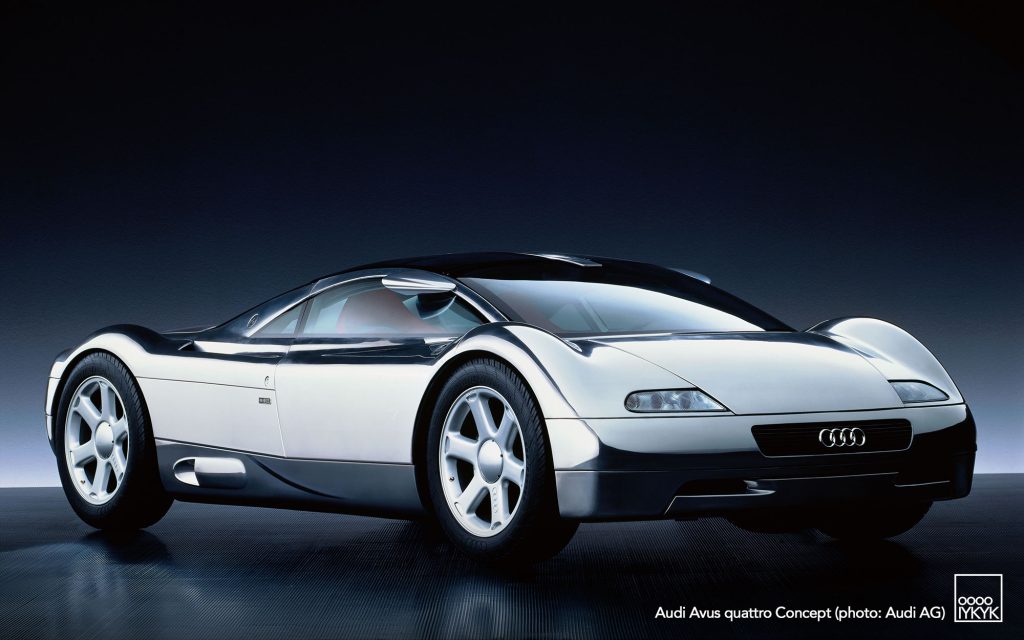
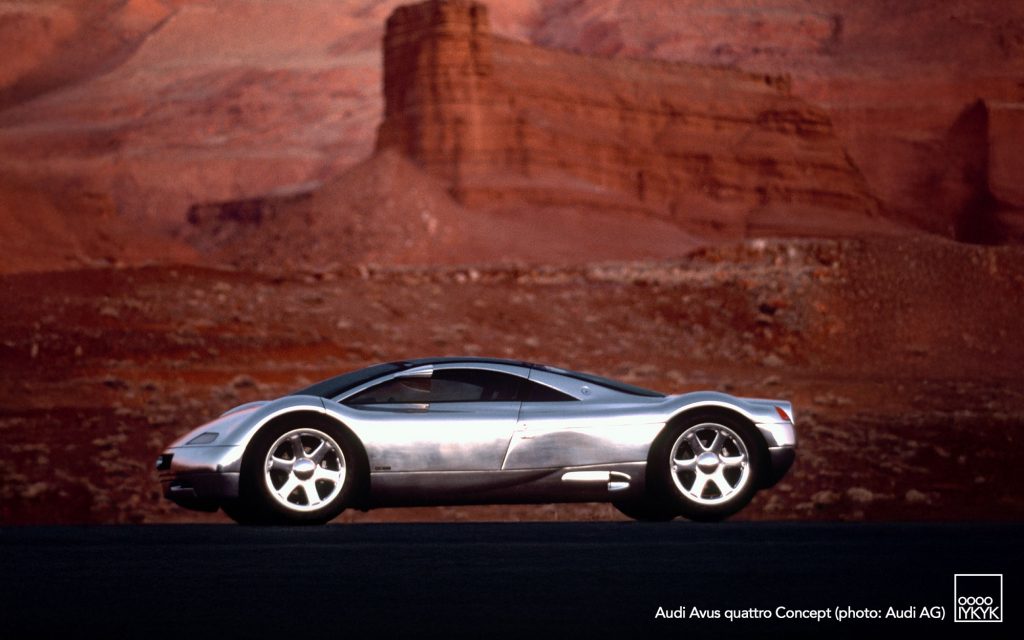
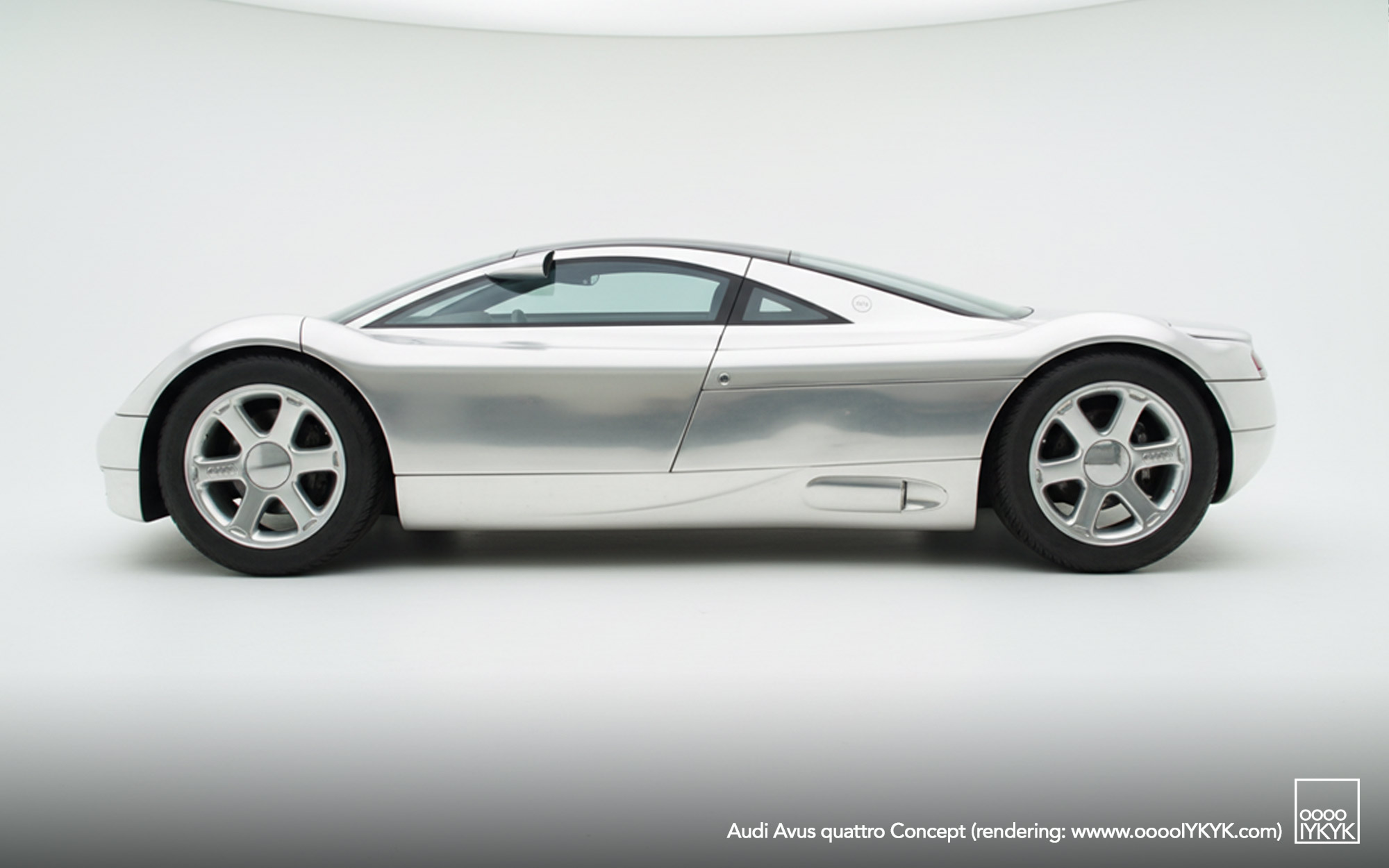
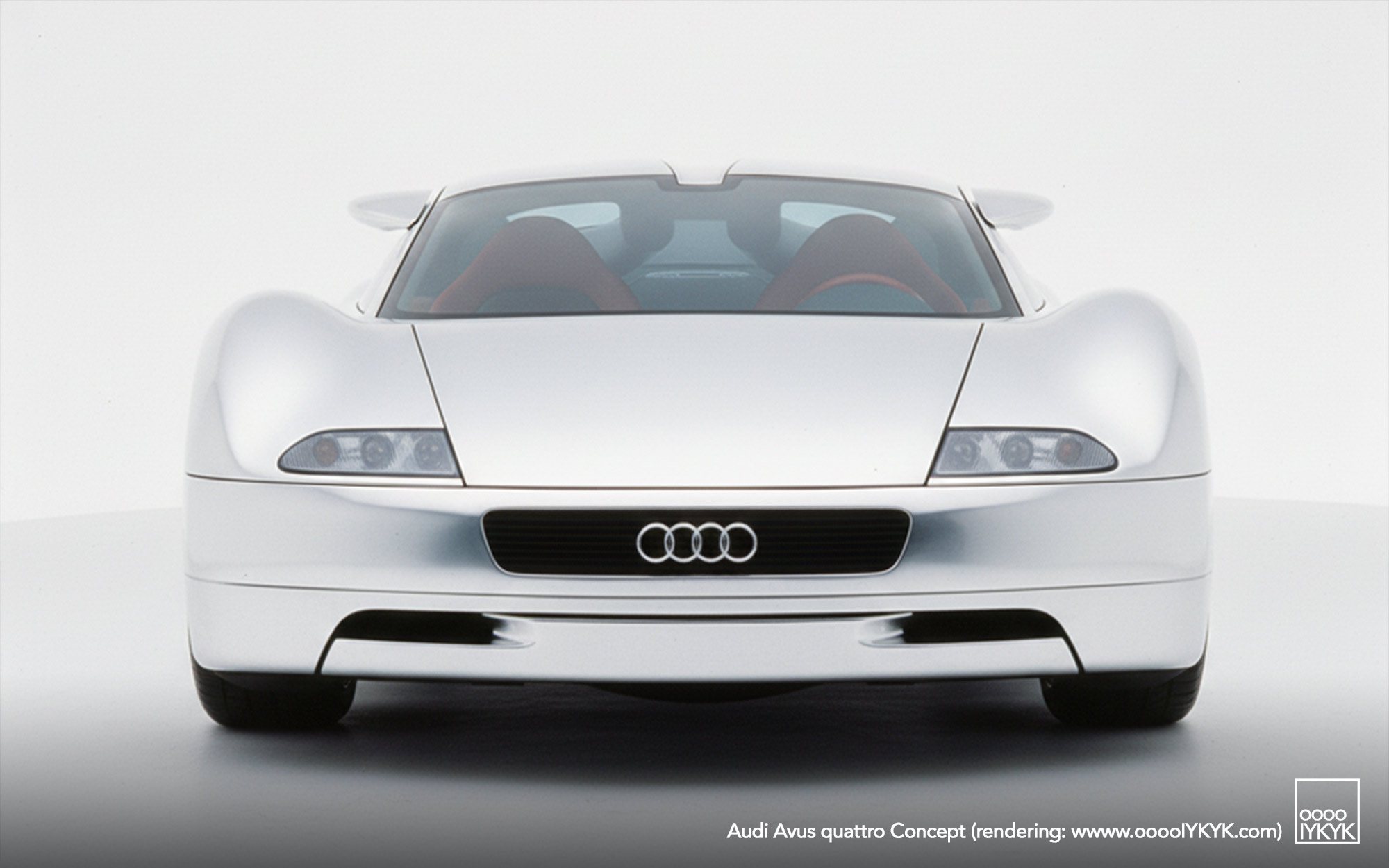
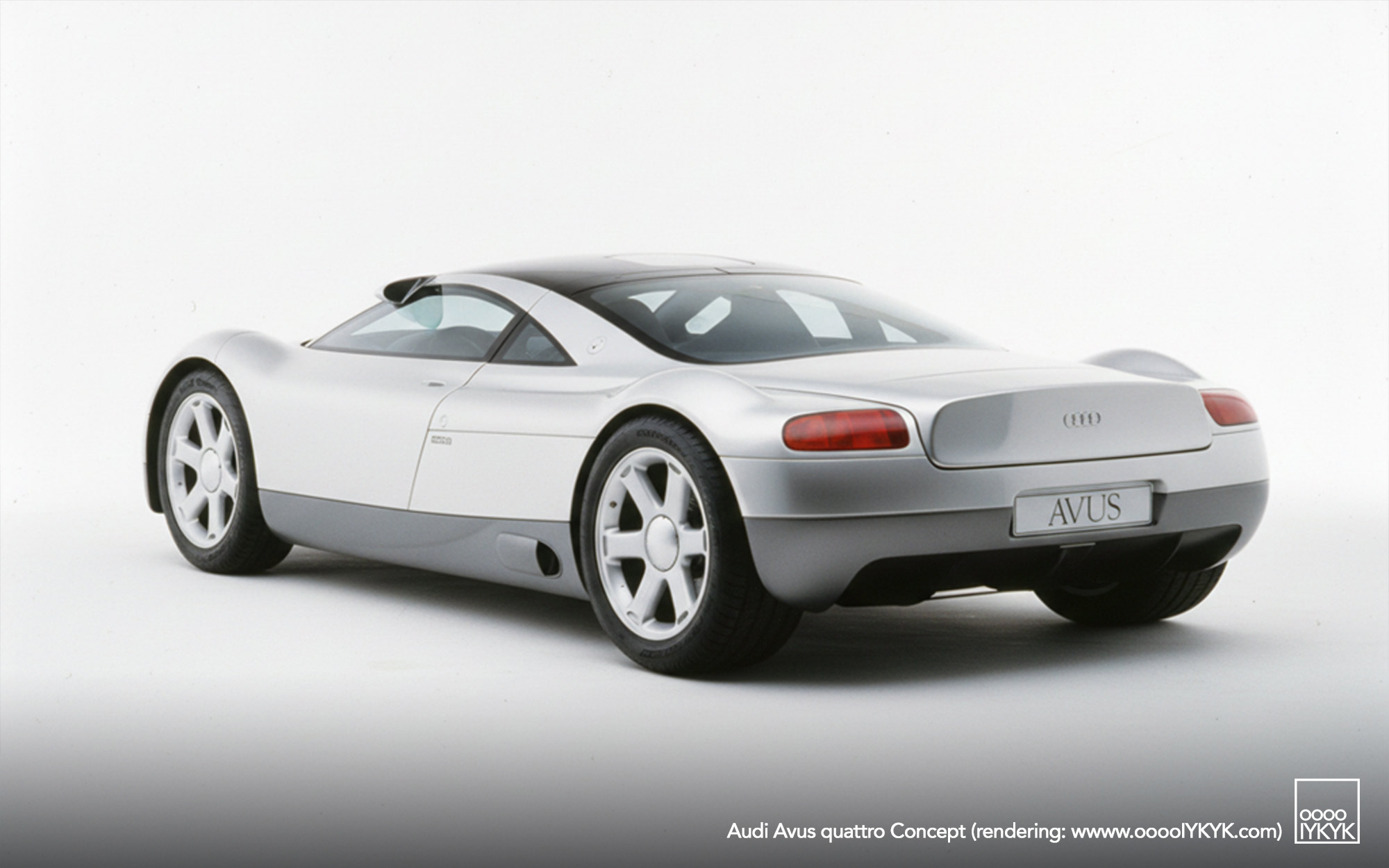
The Avus quattro was conceived as a modern interpretation of Auto Union Silver Arrows Grand Prix racers. Its proportions—low, wide and cab-forward—reflected both aerodynamic efficiency and visual drama. The cockpit sat far forward, while the mid-mounted engine emphasized performance intent.
Key design elements included:
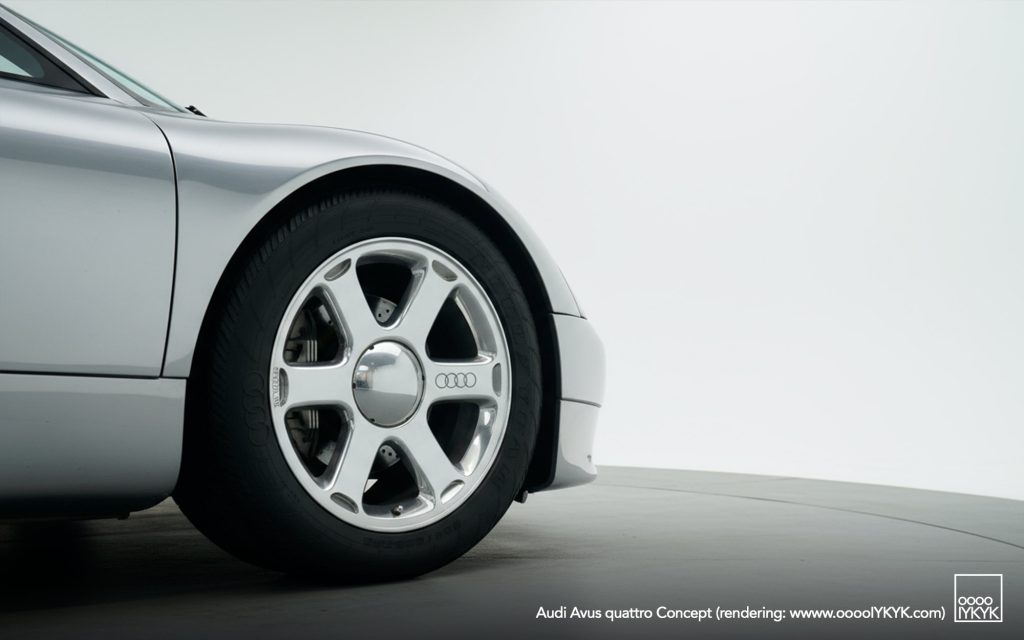
- Dramatically flared wheel arches referencing pre-war racecars
- A near-horizontal shoulder line paired with sculptural lower body forms
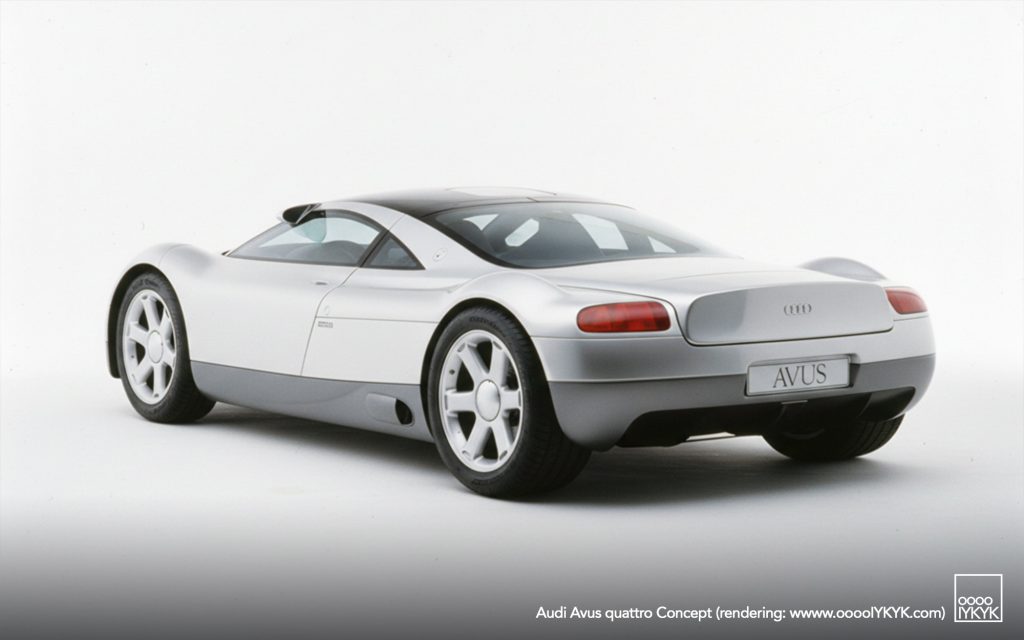
- A teardrop-shaped greenhouse tapering toward the rear
- Minimal overhangs emphasizing mass centralized between the axles
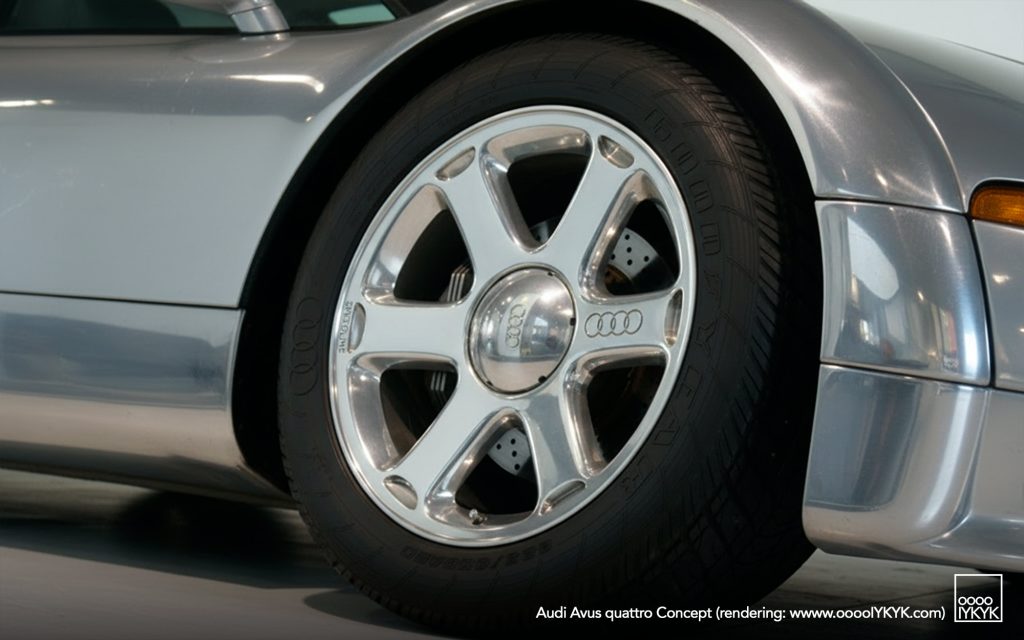
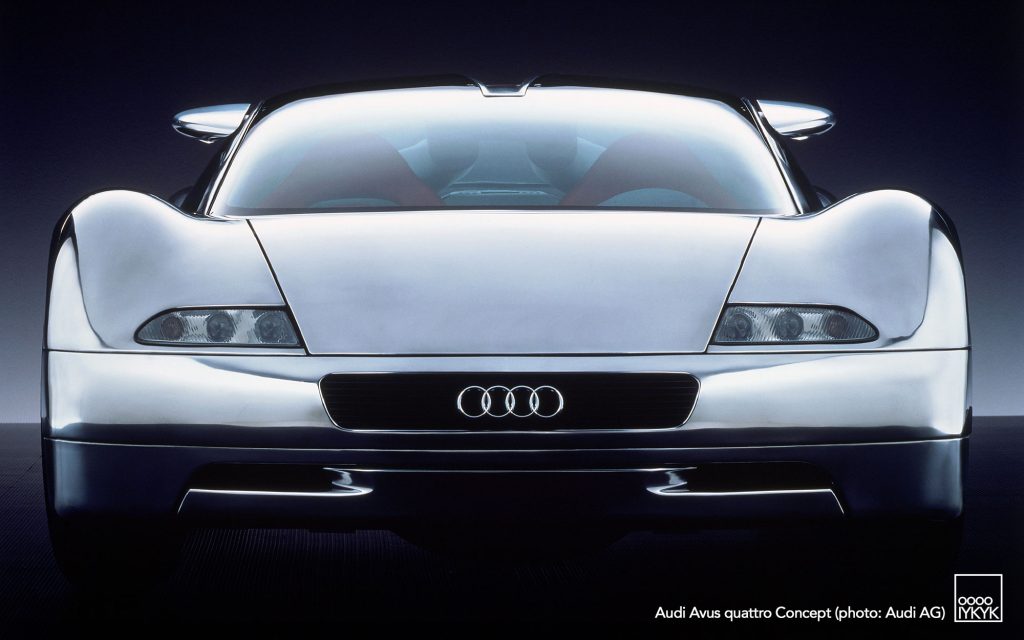
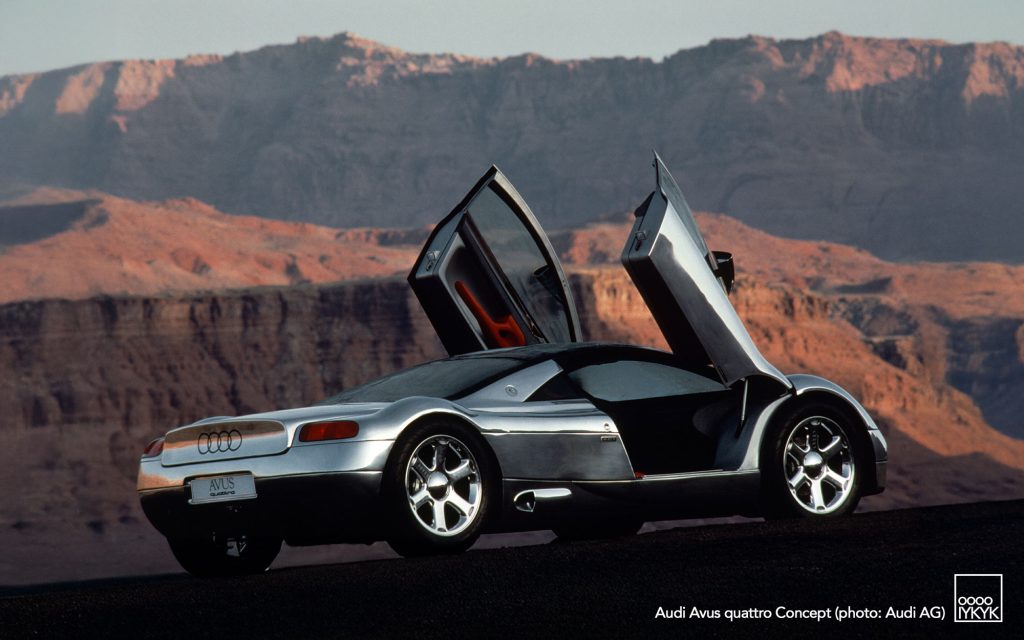
The most defining feature, however, was its unpainted aluminum body. Hand-polished to a mirror finish, the surface eliminated visual noise and emphasized pure form. Audi intentionally avoided paint or decorative elements to ensure the design remained timeless and technically expressive.
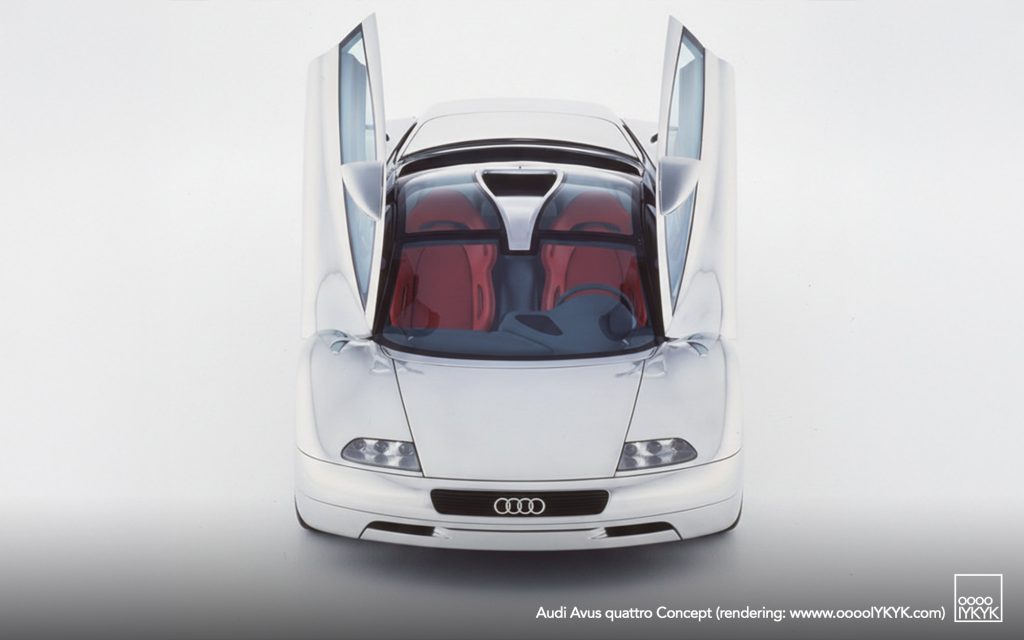
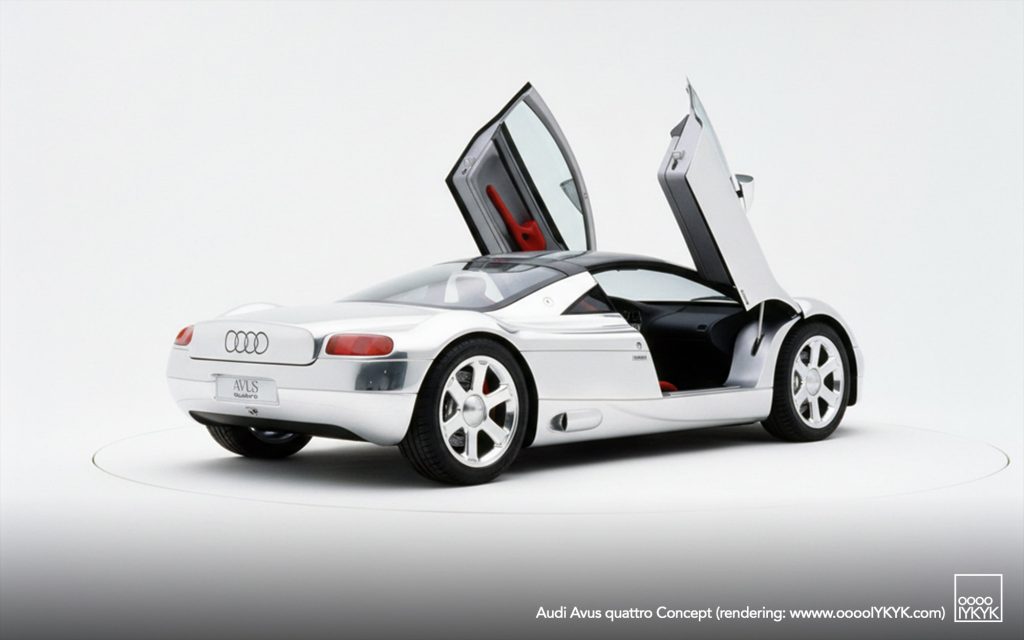
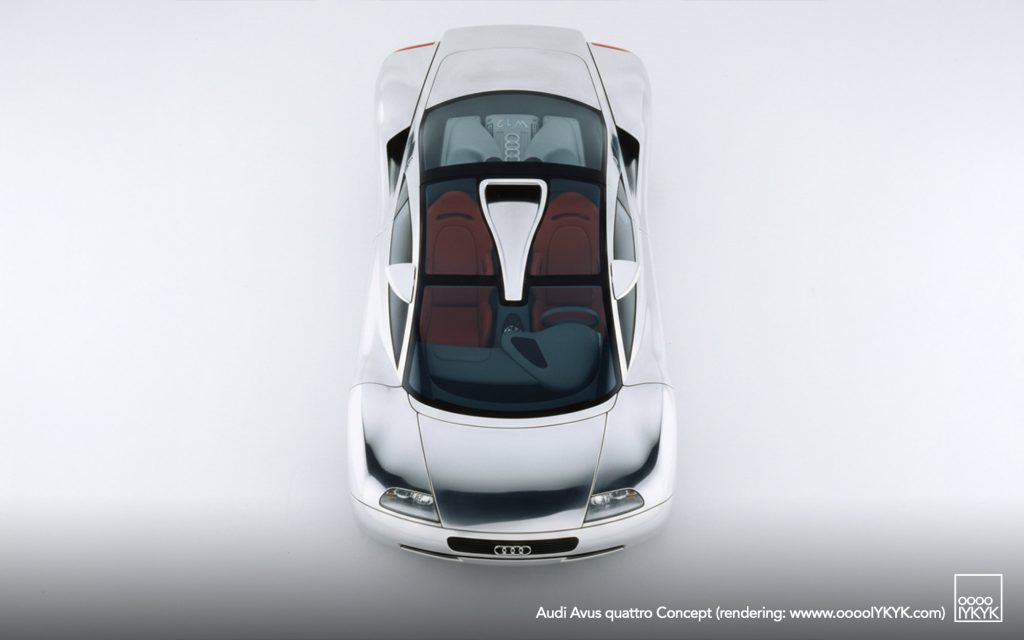
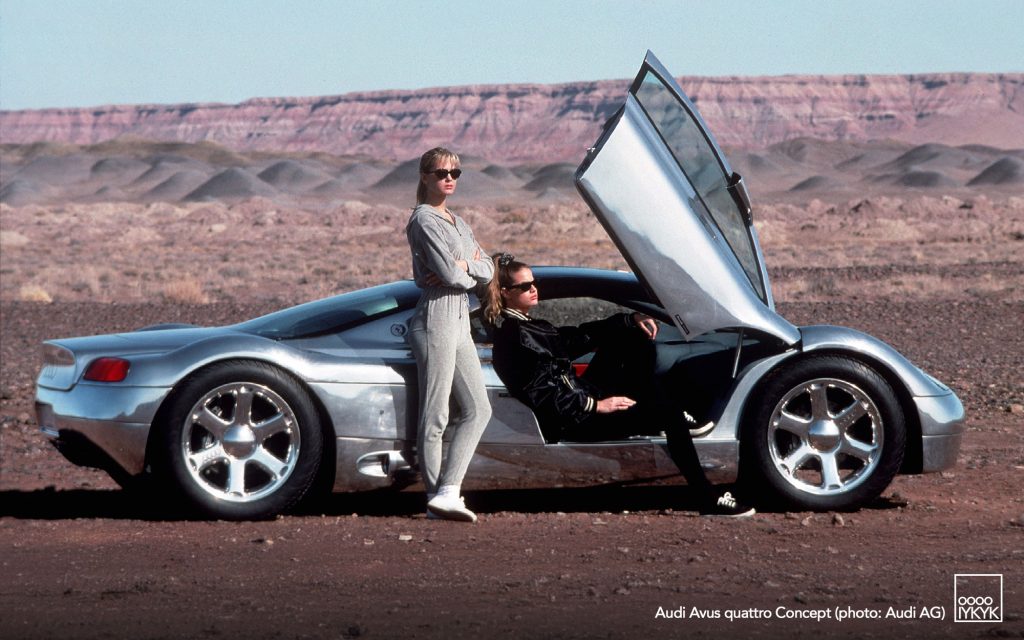
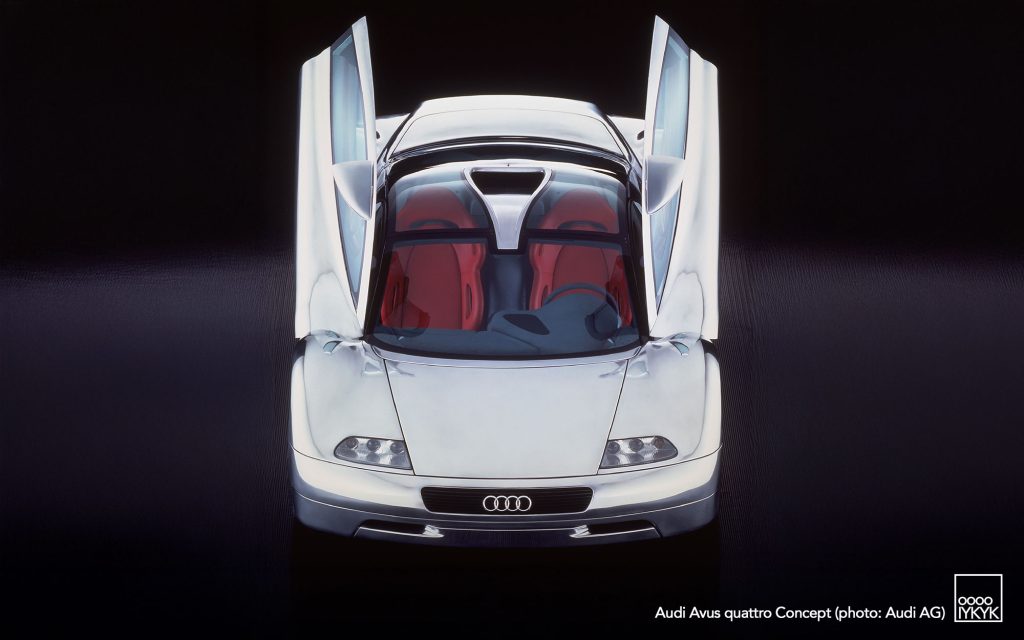
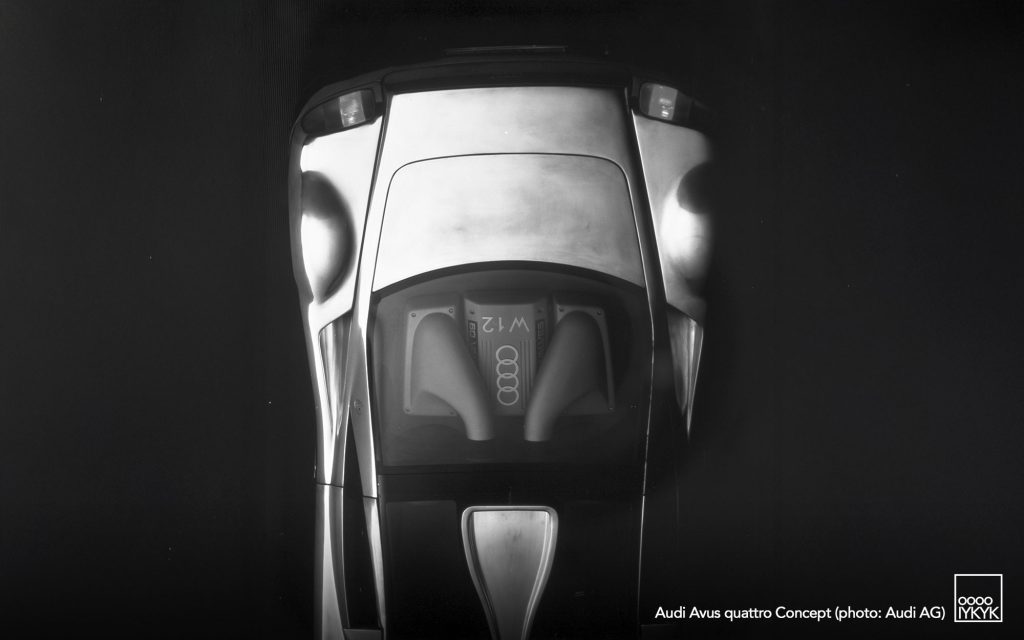
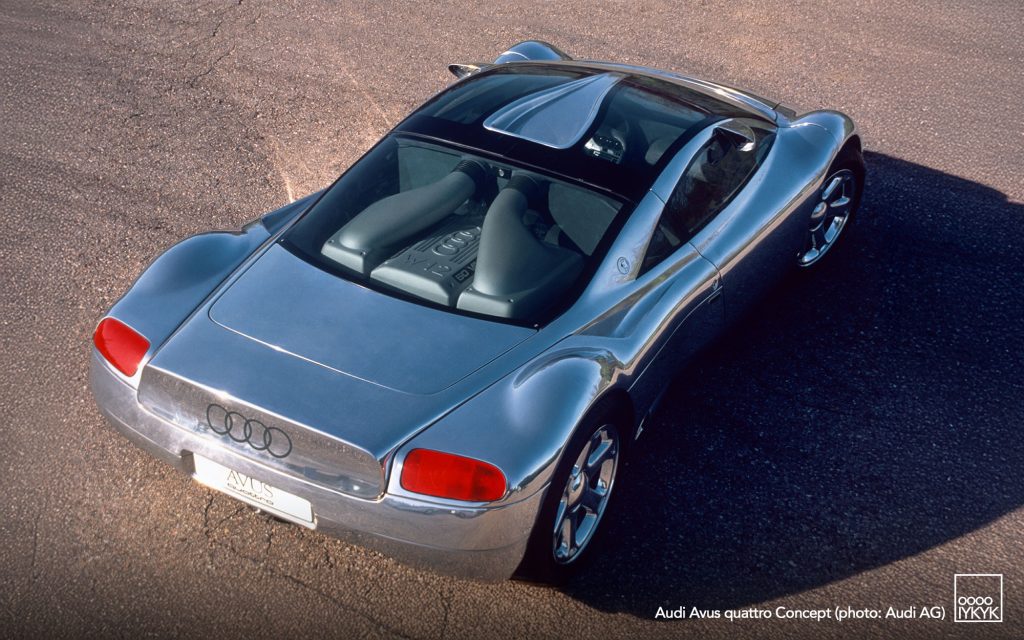
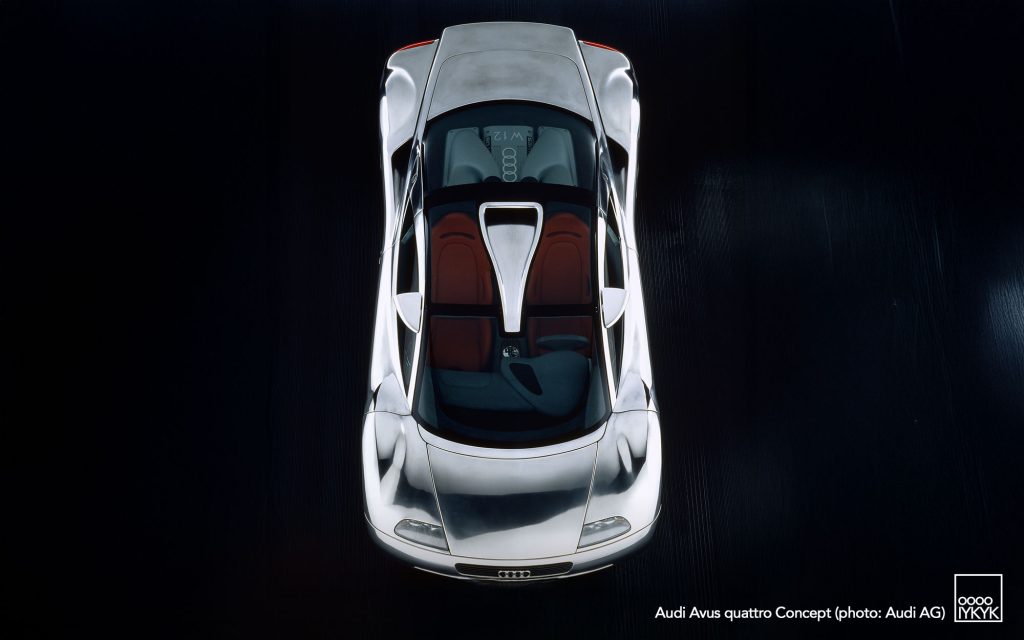
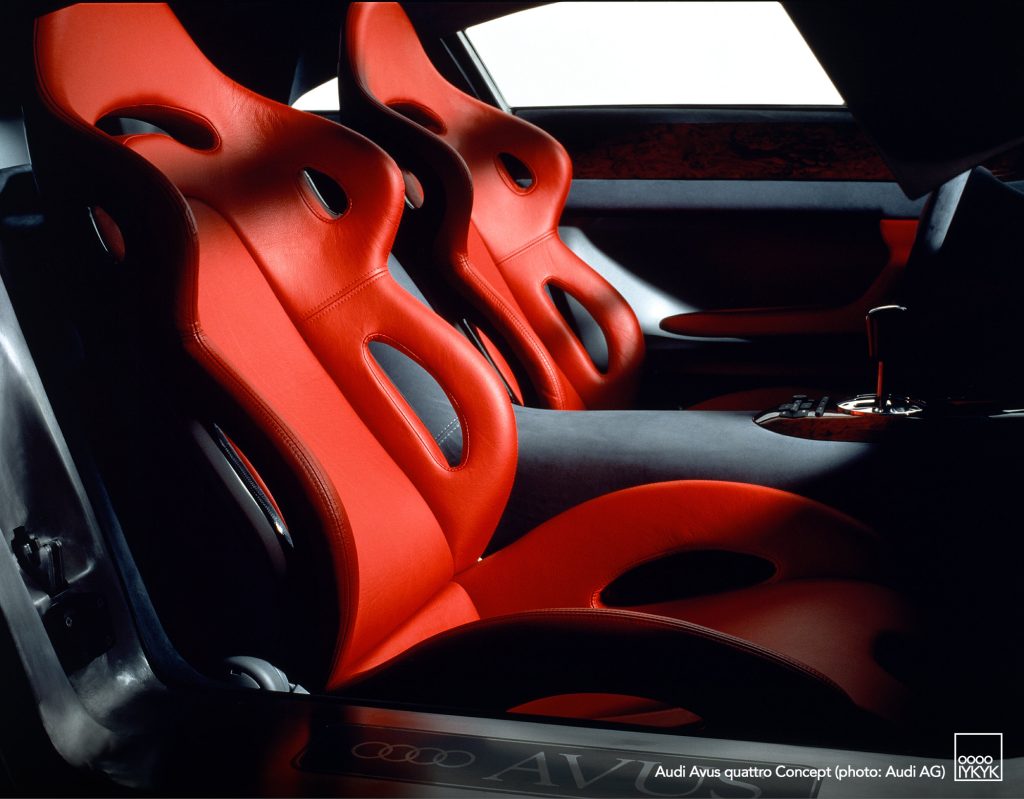
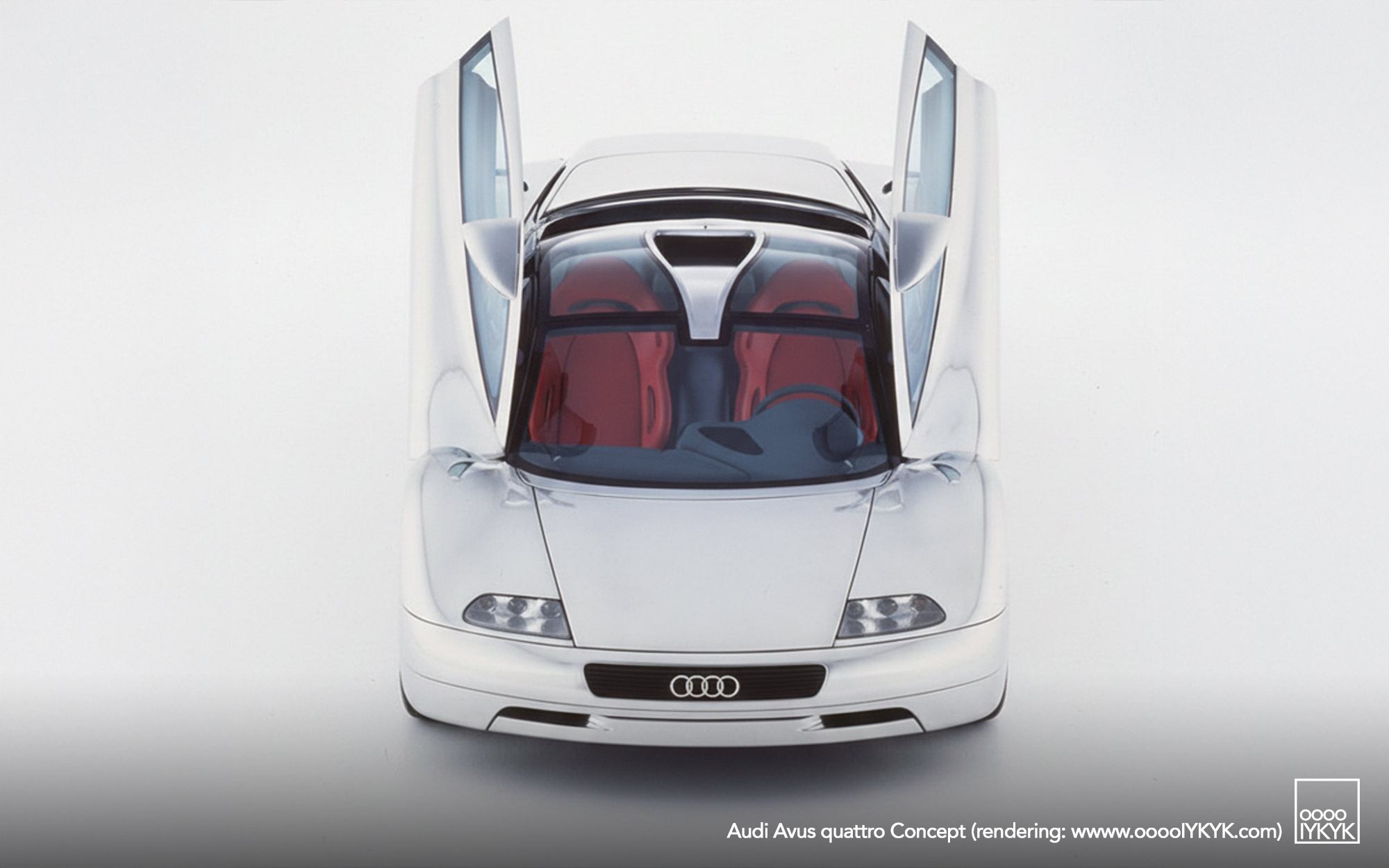
The scissor-style doors opened upward and forward, revealing an interior that contrasted sharply with the exterior’s industrial purity. The glass engine cover further reinforced the concept’s transparency—both literally and philosophically—placing engineering at the center of the visual experience.
ALUMINUM CONSTRUCTION & AUDI SPACE FRAME
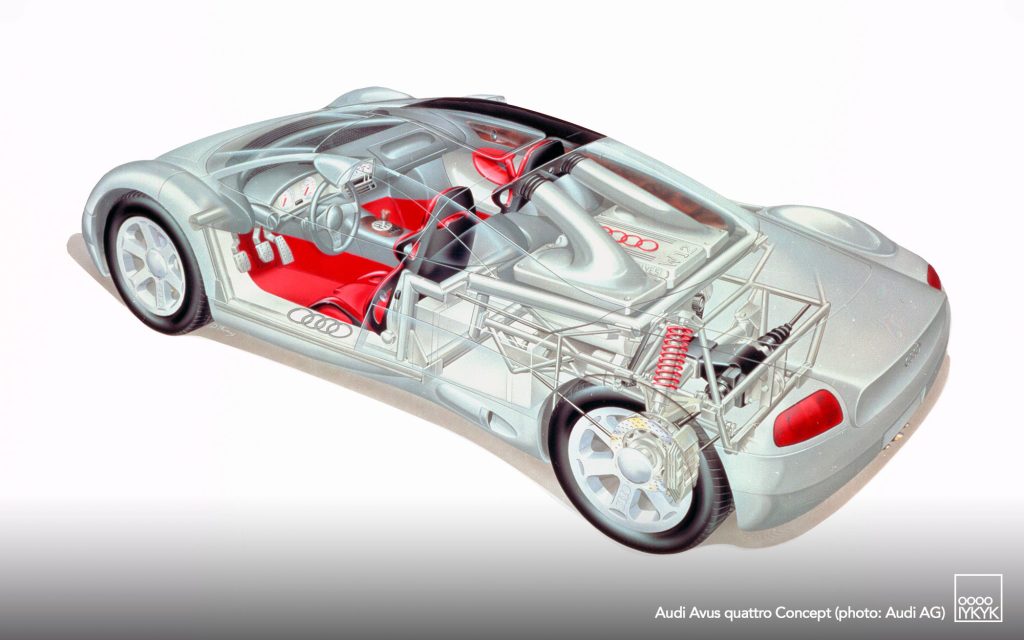
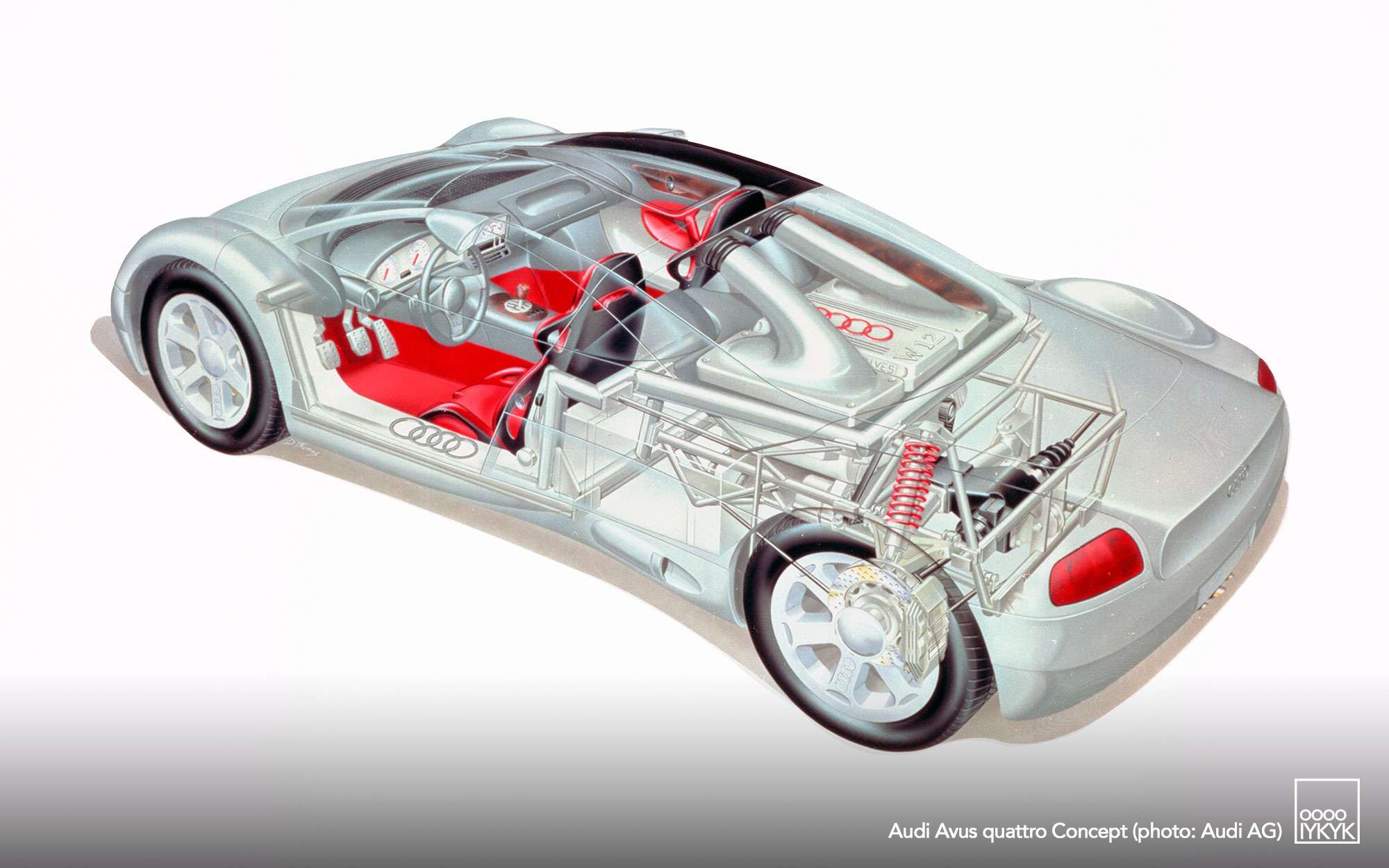
The Avus was not merely a styling exercise. It served as a rolling laboratory for aluminum construction, foreshadowing the Audi Space Frame (ASF) that would debut in production with the Audi A8 later in the decade.
Its structure consisted of:
- A tubular aluminum space frame weighing approximately 52 kg
- Hand-beaten aluminum body panels totaling roughly 100 kg
- A two-part frame allowing removal of the engine and rear assembly
The aluminum skin was crafted using traditional coachbuilding techniques, requiring millions of calculated hammer strikes to achieve its final shape. Despite its artisanal construction, the structure met modern crash safety standards and incorporated Audi’s Procon-ten safety system alongside airbags.
Audi positioned aluminum as both a performance and environmental solution. Reduced mass improved efficiency, braking and handling, while recyclability aligned with emerging sustainability priorities—an unusually forward-looking theme for a supercar concept in 1991.
W12 ENGINE: A TECHNOLOGICAL STATEMENT
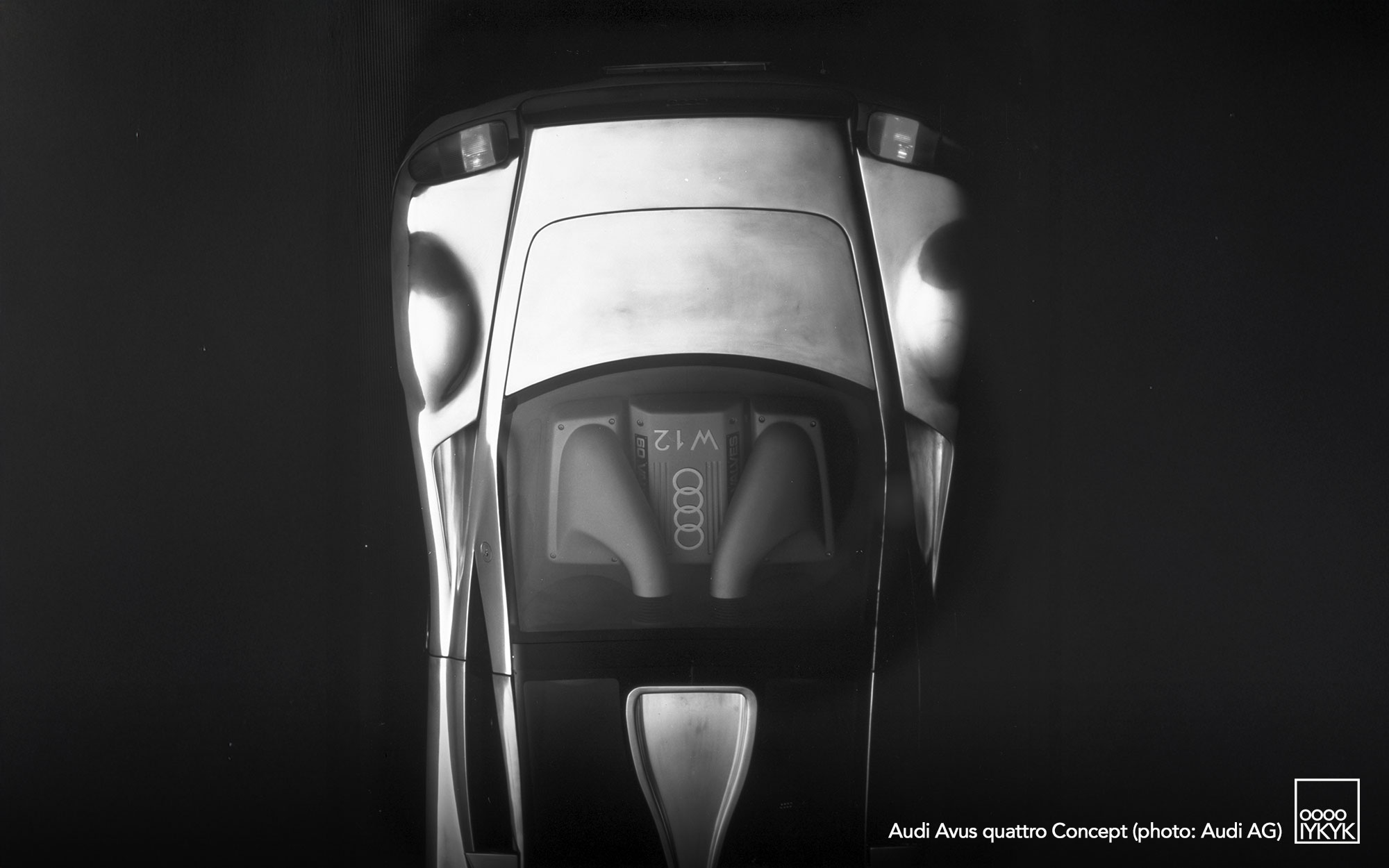
At the heart of the Avus quattro was one of its most significant contributions: the W12 engine concept.
Unlike conventional V12 layouts, Audi engineers developed a compact configuration consisting of three banks of four cylinders. This arrangement allowed the engine to occupy a footprint similar to a four-cylinder unit while delivering the output expected of a flagship supercar.
Key technical highlights included:
- 6.0-liter displacement
- 60 valves (five per cylinder: three intake, two exhaust)
- 509 horsepower output
- Fully electronic engine management with cylinder-selective knock control
- Electrically heated catalytic converters and advanced emissions systems
The compact dimensions of the W12 made it suitable for both mid-engine and front-engine applications. While the Avus itself remained a concept, the architecture previewed future Volkswagen Group W12 engines that would later appear in production vehicles.
DRIVETRAIN & CHASSIS ENGINEERING
The Avus combined its advanced engine with a highly sophisticated drivetrain and chassis configuration:
- Mid-engine layout for optimal weight distribution
- quattro all-wheel drive with Torsen center differential
- Front and rear locking differentials
- Six-speed manual transmission positioned at the front axle
- Rigid central torque tube connecting engine and gearbox
This unconventional layout allowed near-perfect 50:50 weight distribution across the front axle while maintaining mid-engine dynamics.
Chassis development drew heavily from Audi’s motorsport experience, including IMSA GTO and DTM programs. The suspension featured double wishbones at all four corners, optimized for minimal unsprung mass and precise wheel control.
A standout feature was active rear-wheel steering, electronically and hydraulically controlled based on vehicle speed. This system enhanced low-speed maneuverability and high-speed stability, reinforcing the Avus as both a performance and technology showcase.
INTERIOR & MATERIAL EXECUTION
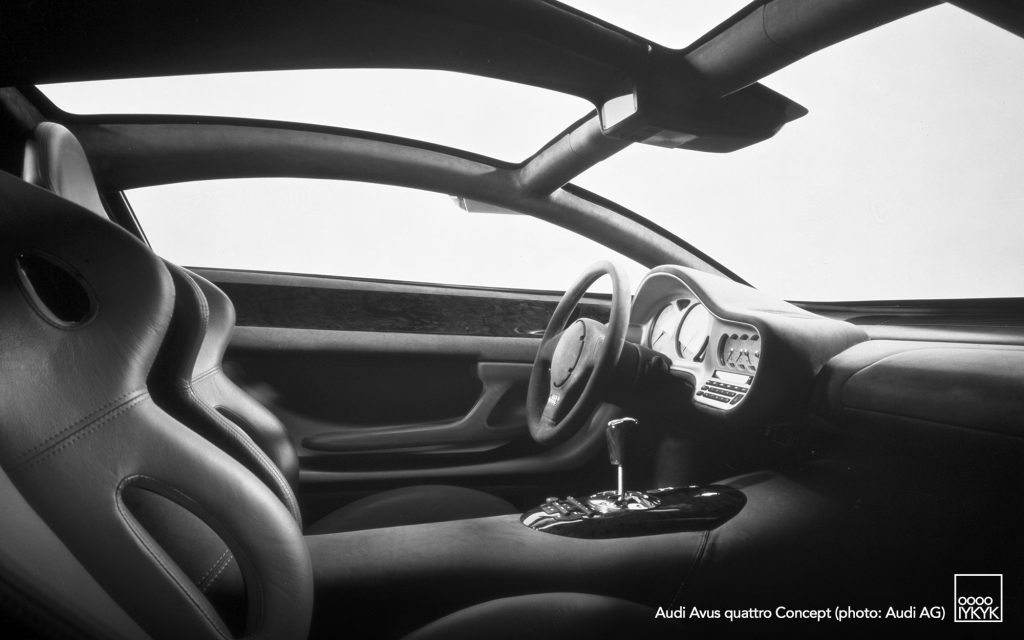
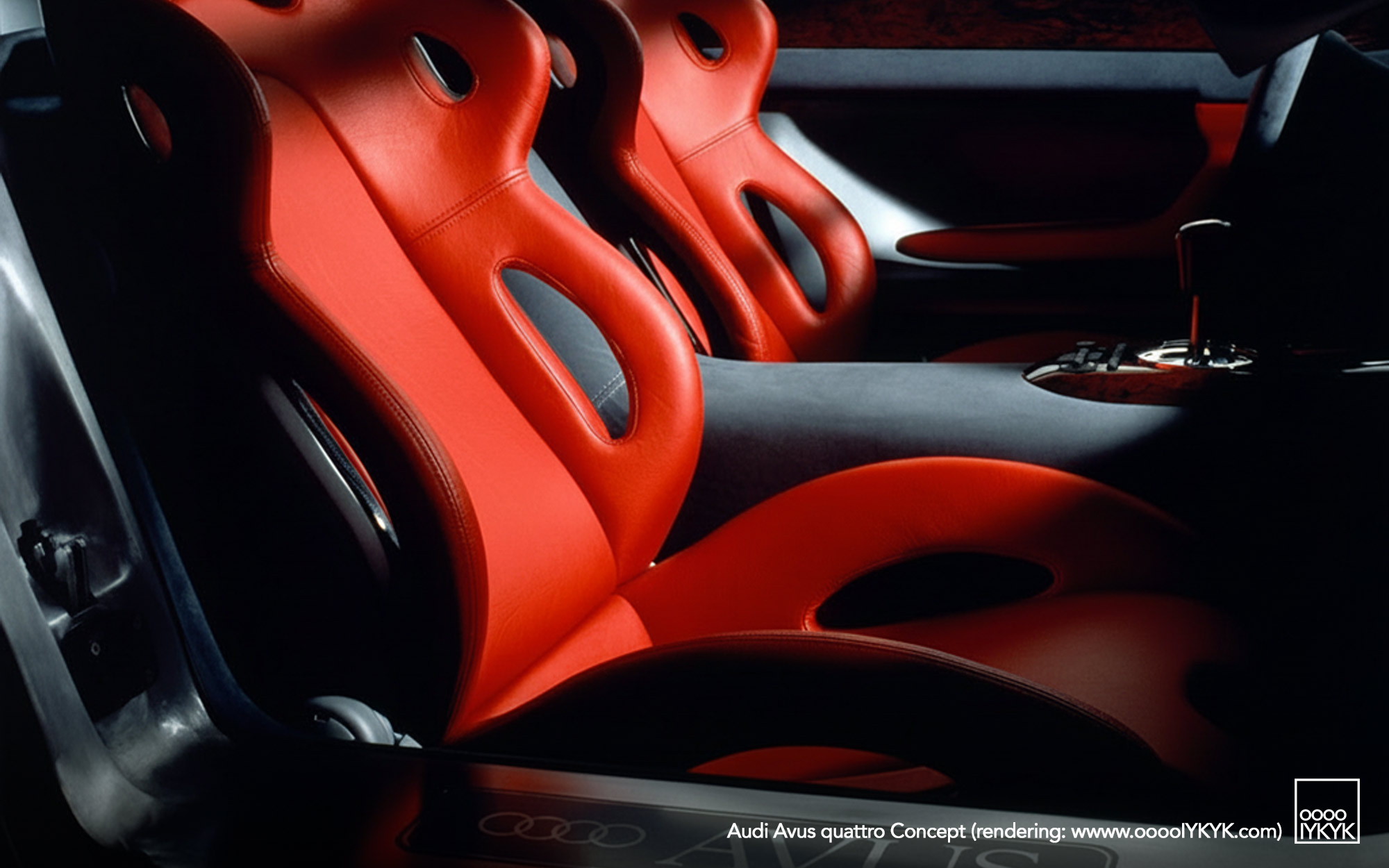
Inside, the Avus balanced technical minimalism with luxury craftsmanship. The cabin was defined by:
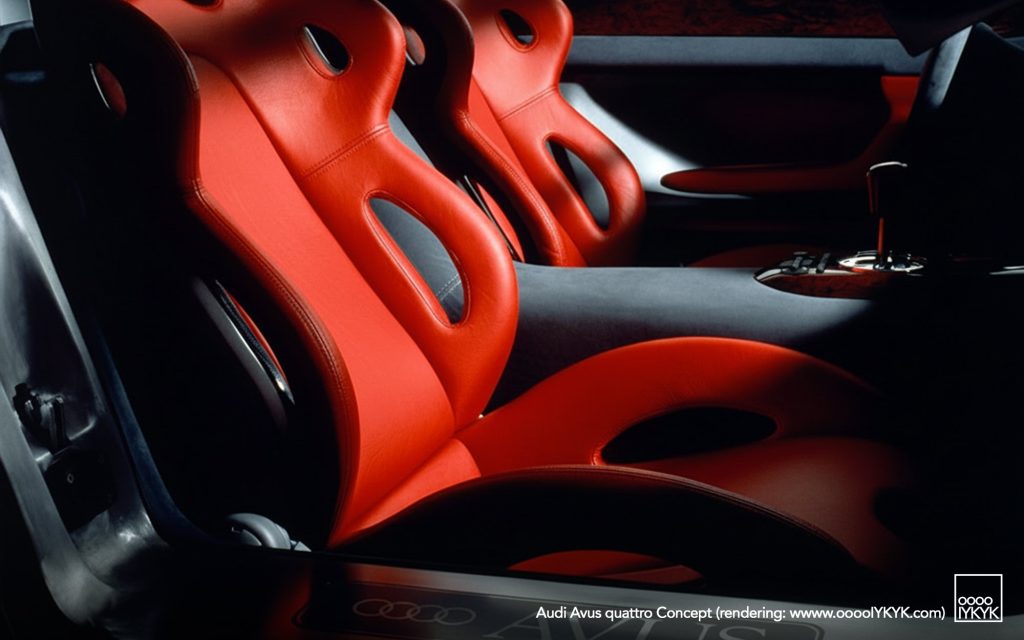
- Extensive use of natural materials including leather, wood and wool
- Kevlar-structured lightweight bucket seats
- Aluminum instrument housings referencing 1930s racecars
- A floating dashboard mounted only at the sides
The central torque tube formed a prominent design element within the cabin, visually and physically separating the occupants. A vertical rear window provided a direct view of the engine, reinforcing the car’s mechanical transparency.
Despite its extreme layout, the Avus offered over 300 liters of luggage capacity across front and rear compartments, suggesting a degree of usability rarely associated with concept supercars.
HISTORICAL CONTEXT & DESIGN LEGACY
The Avus quattro represented a pivotal moment in Audi’s evolution. It marked the point where design became a central pillar of the brand alongside engineering—a philosophy that would define Audi throughout the 1990s and early 2000s.
Its influence can be traced through several key developments:
- The adoption of aluminum construction in production vehicles
- The emergence of Audi’s design-led identity
- The eventual production of W-configuration engines within the Volkswagen Group
- Continued exploration of mid-engine supercar concepts, culminating years later in the Audi R8
Equally important was its symbolic role. By referencing Auto Union’s Silver Arrows and the Avus circuit, the concept bridged Audi’s past and future—linking pre-war racing dominance with modern technological ambition.
INTERPRETATION
Audi’s own messaging around the Avus was clear: this was not a fantasy, but a “real machine” designed to explore the intersection of performance, safety, efficiency and design. It demonstrated that seemingly competing priorities—speed and sustainability, emotion and engineering—could coexist within a single vision.
In retrospect, the Avus quattro stands as one of Audi’s most important concept cars. Not because it previewed a specific production model, but because it redefined the brand’s trajectory—establishing a design and engineering philosophy that would shape Audi for decades to come.
PHOTO GALLERY