

MODEL DETAILS
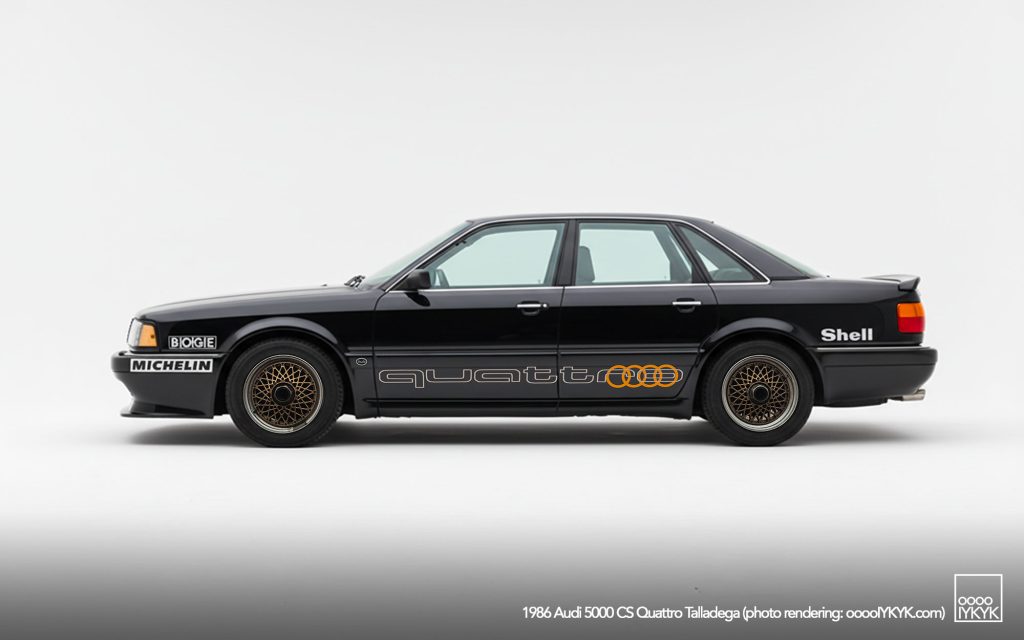
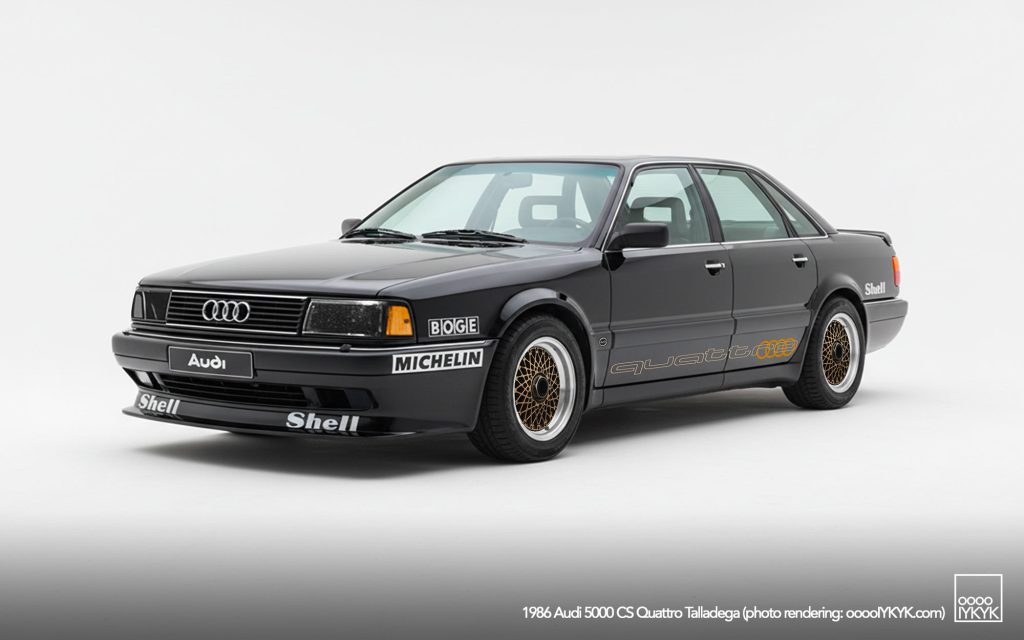
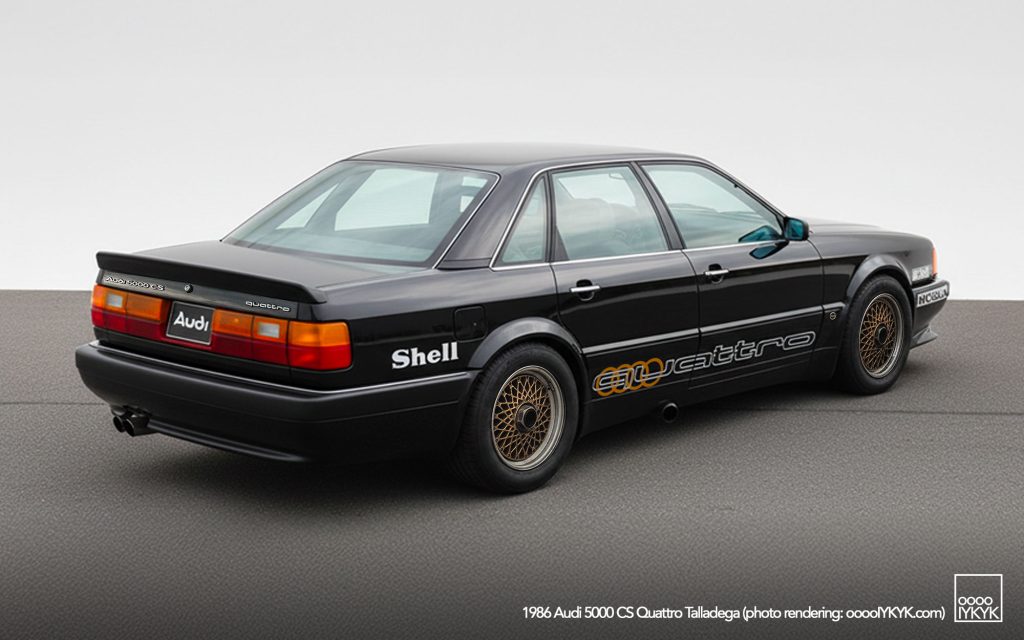
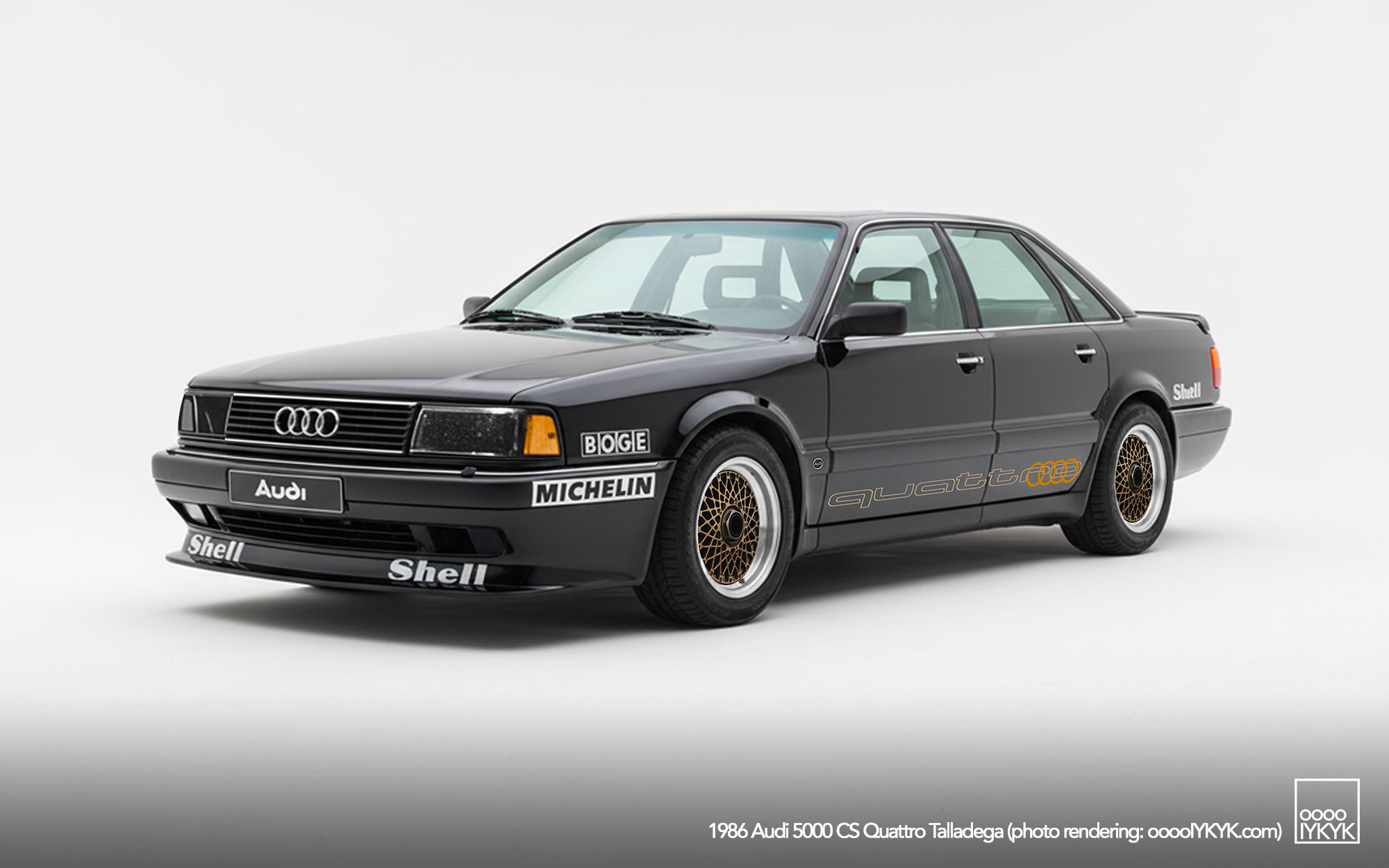
What: Audi 5000 CS quattro ‘Talladega’
Series: none
Era: Audi postwar
Model Family: 5000
Market / Zone: USA
Season: 1986
Model / Generation Code(s): type 44
Chassis / Matrix: C3
TECHNICAL DETAILS
Body Style(s): 4-door sedan
Drivetrain Configuration: longitudinal front engine, all-wheel drive
Engine(s): Modified 2.2 L turbocharged inline-5 with 5-valve per cylinder design
Power: Approx. 650 hp at high RPM (boosted from standard)
Torque:
Maximum RPM: Engine limted around 7,700 rpm; peak power around ~7,200 rpm
Transmission(s): 5-speed manual
Wheelbase: 2,680 mm
Length: 4,790mm
Width: 1,775 mm
Height: ≈ 1,390 mm, (Reduced from the standard car due to lowered ride height and suspension setup)
Kerb Weight: ≈ 1,070–1,075 kg
TEAM DETAILS
Audi Sport North America
OTHER DETAILS
Predecessor: N/A
Successor: N/A
Road Car Equivalent: Audi 5000
Homologations: N/A
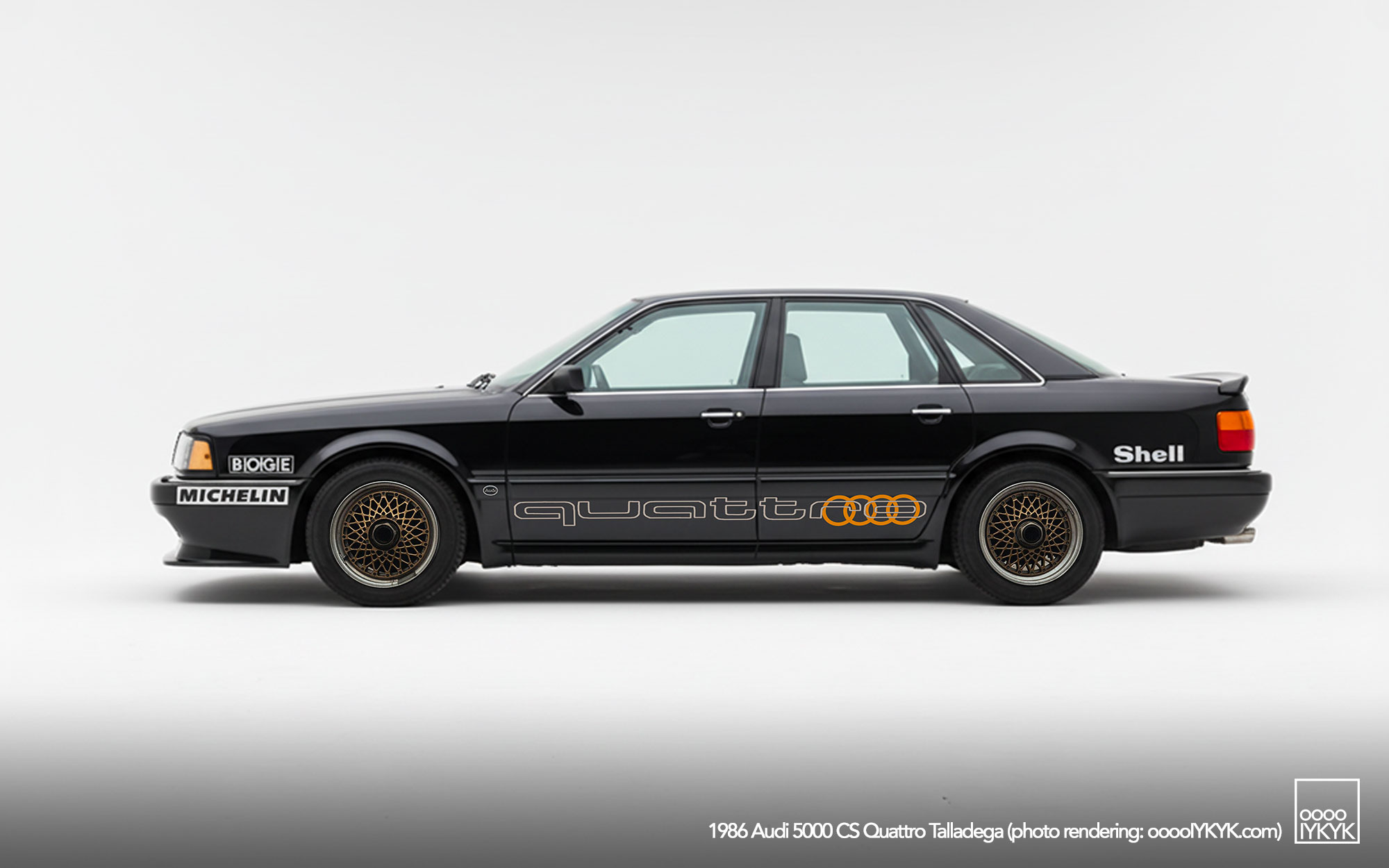
SUMMARY:
The 1986 Audi 5000 CS quattro “Talladega” was a highly modified prototype performance sedan built by Audi to set closed-circuit speed records for all-wheel-drive production cars. In a promotional motorsport effort designed to boost brand visibility in the United States, Audi selected the Talladega Superspeedway in Alabama as the venue and tapped three-time Indianapolis 500 winner Bobby Unser as its driver. On March 24, 1986, the car established a series of records, including a new closed-circuit lap at over 206 mph (approximately 332 km/h).
DEVELOPMENT
Despite rallying success in Europe with the quattro platform, Audi’s World Rally Championship achievements had limited impact on U.S. road car sales. To raise awareness of its quattro all-wheel-drive technology across the Atlantic, Audi embarked on a speed record program using a large sedan based on the C3-platform Audi 200, badged in the American market as the Audi 5000 CS quattro. Multiple cars were prepared in 1985 and 1986 with extensive modifications aimed at reducing weight and drag while increasing power and stability at high speed.
The prototype featured a 2.2-liter turbocharged five-cylinder engine with advanced 5-valve-per-cylinder technology and reinforced internals, producing approximately 650 hp. Weight-saving measures included replacing standard body panels with aluminum and Kevlar, installing plastic windows (excluding the windshield), deleting exterior mirrors to reduce drag, and lowering the suspension. The resulting car weighed just over 1 070 kg and had an optimised aerodynamic profile.
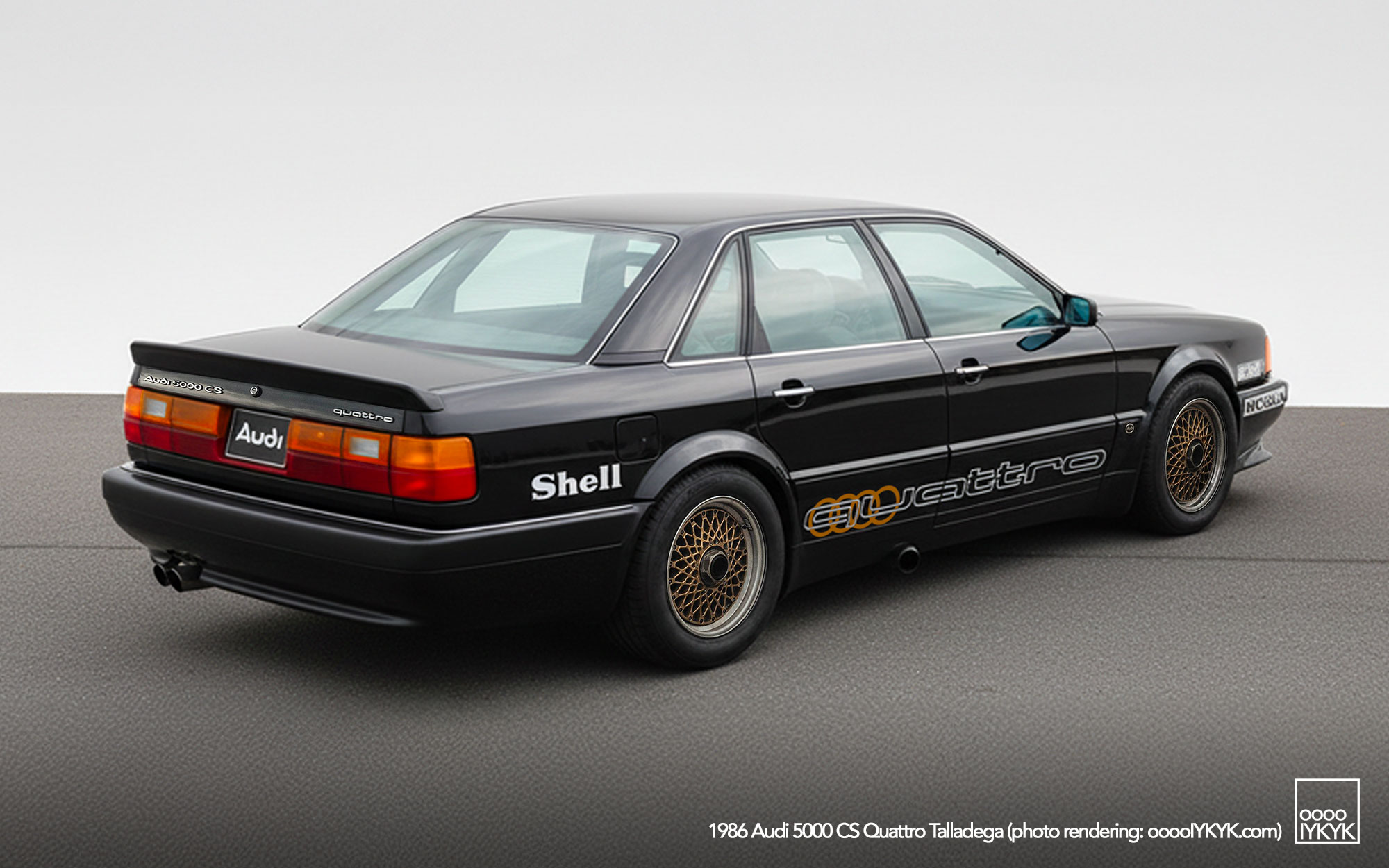
TALLADEGA RECORD RUNS
On March 24, 1986, at the Talladega Super Speedway, Bobby Unser completed multiple high-speed laps in the modified Audi 5000 CS quattro. He recorded a closed-circuit lap in 46 seconds, with an average speed exceeding 206 mph (332 km/h), which set a benchmark for all-wheel-drive vehicles on a circuit. The car’s top speeds on the long straights were reported to exceed 350 km/h, and its average lap speeds demonstrated the effectiveness of Audi’s engineering efforts.
Unser’s expertise in high-speed driving and vehicle setup was an asset for the record attempt. His experience contributed to the successful run and helped Audi demonstrate the quattro system’s capabilities in sustained high-speed conditions on an oval circuit.
LEGACY
The Talladega runs provided Audi with valuable publicity for the quattro system in the U.S., reinforcing the brand’s performance credentials beyond rally competition. The record-setting car was returned to Germany after the event and later escaped being scrapped, eventually entering private ownership. Although Audi’s subsequent promotional activities included other record attempts, the Talladega runs remain a notable achievement from the mid-1980s era of quattro engineering.
PHOTO GALLERY