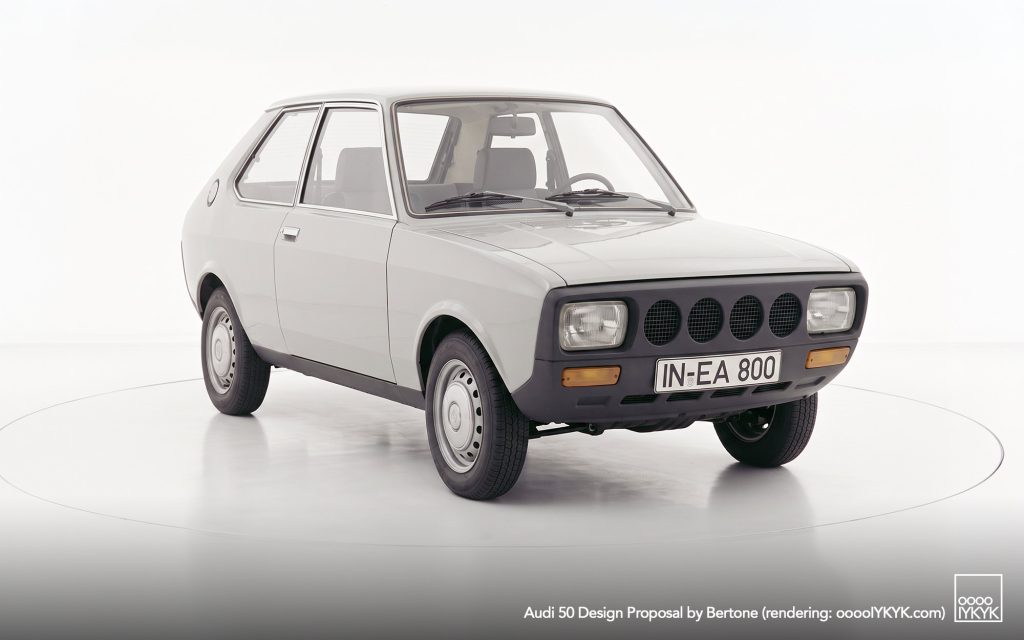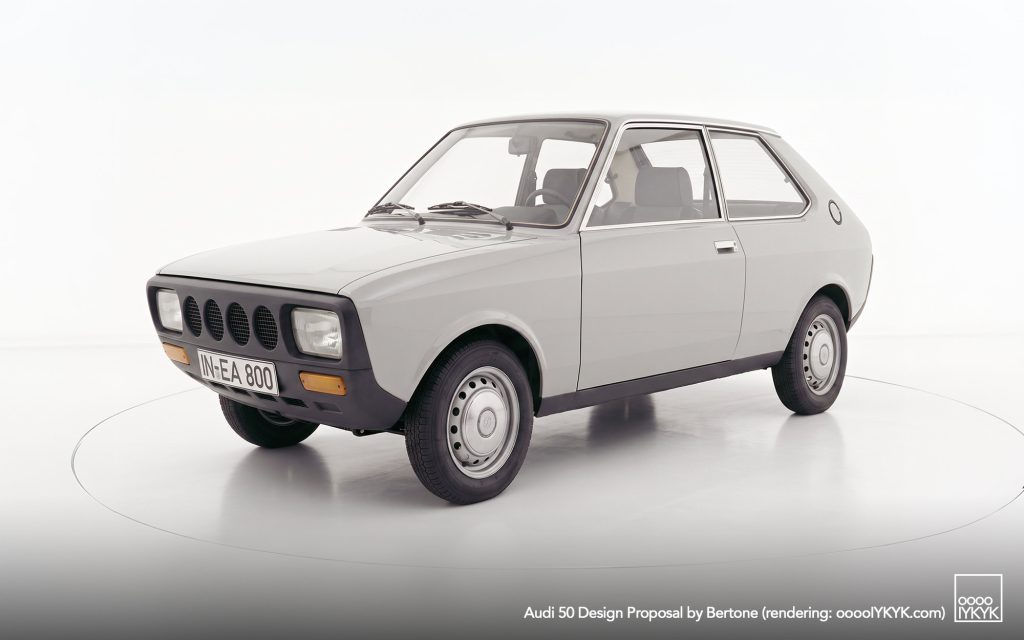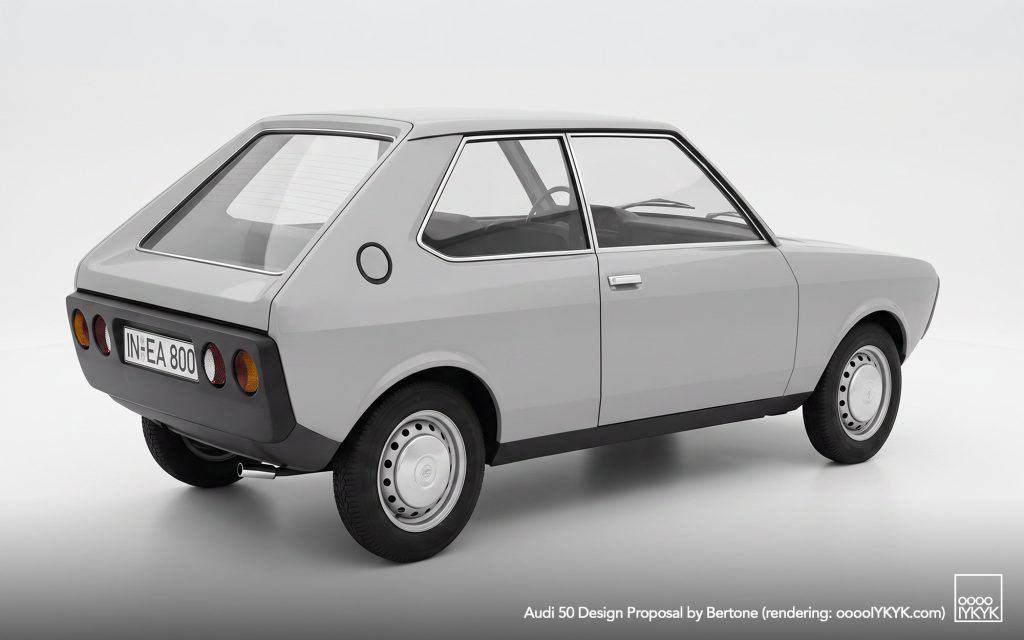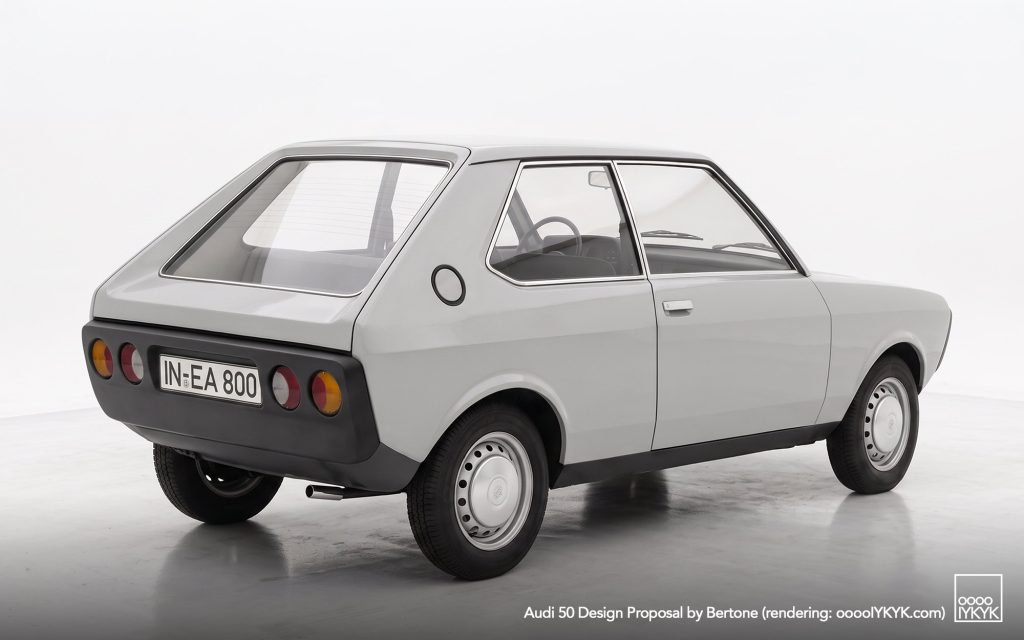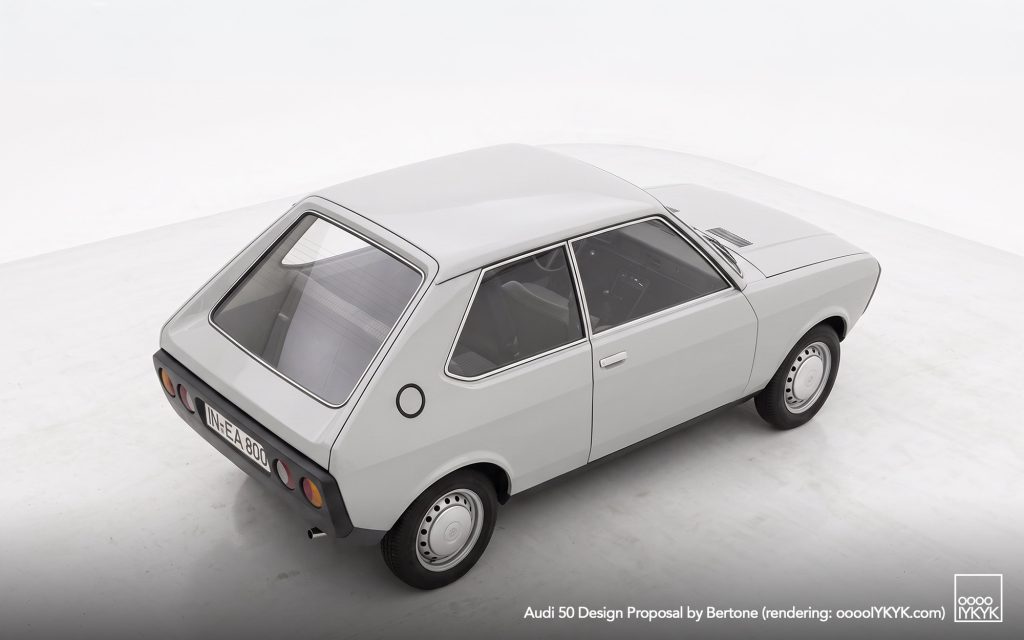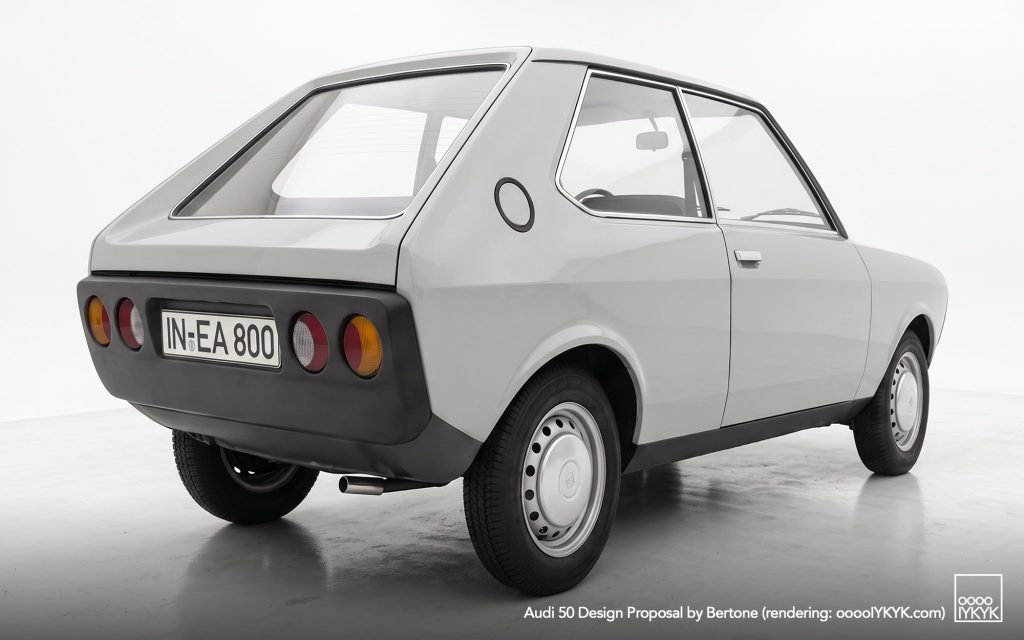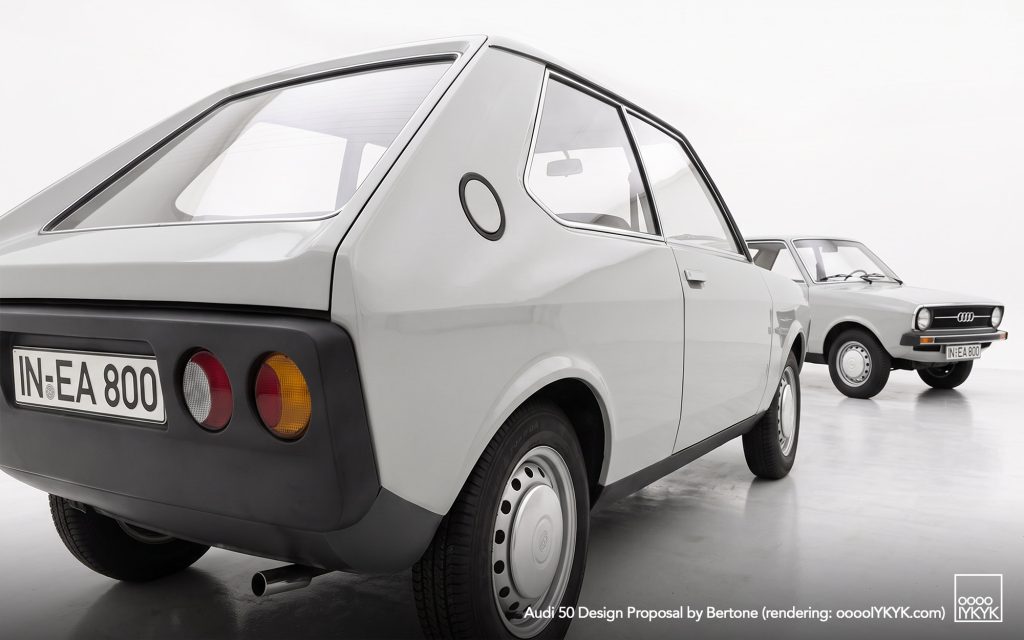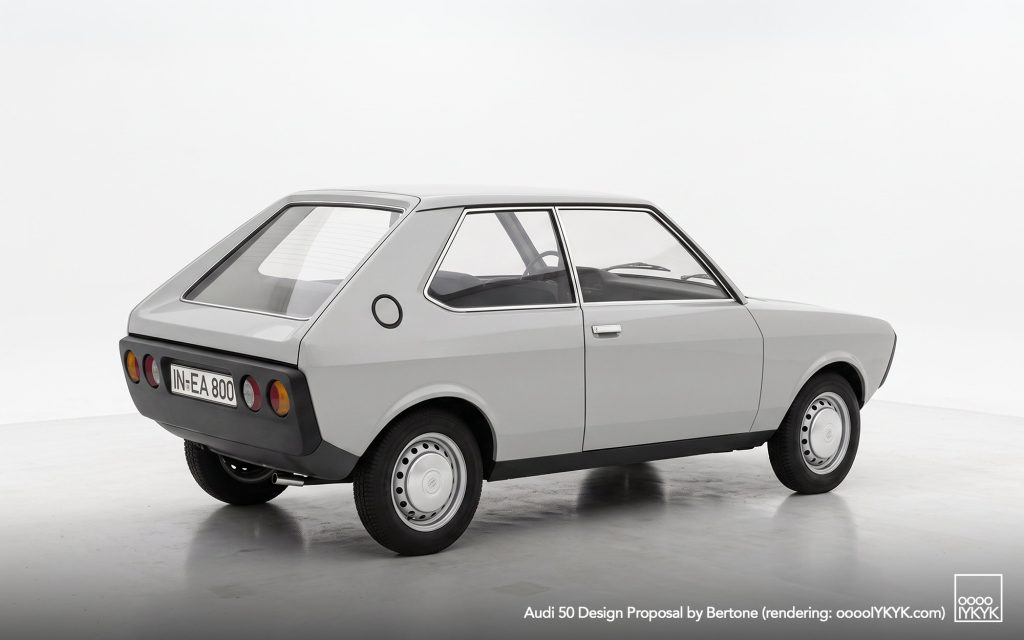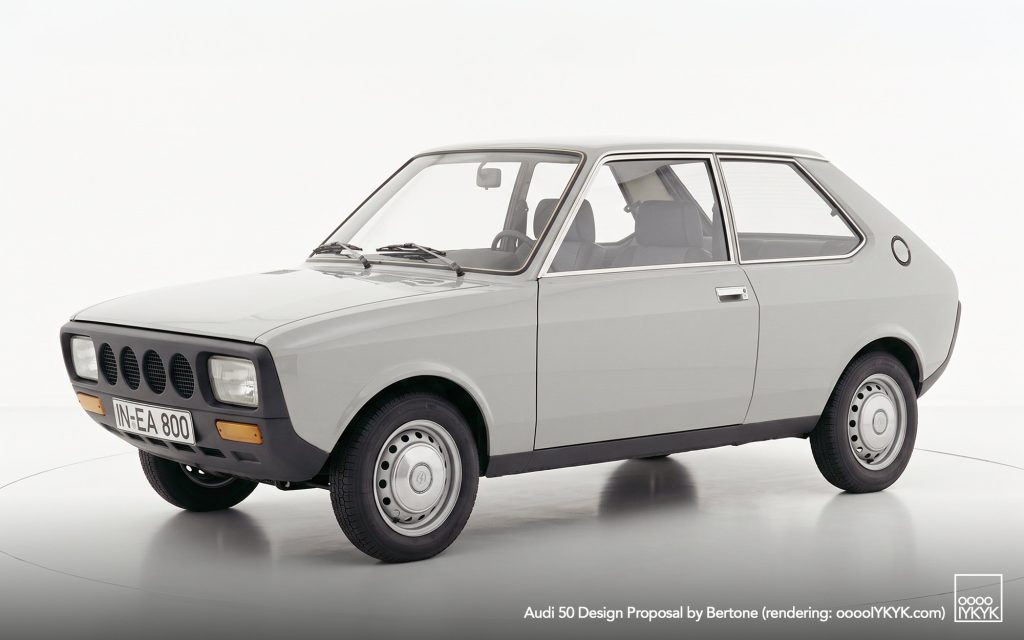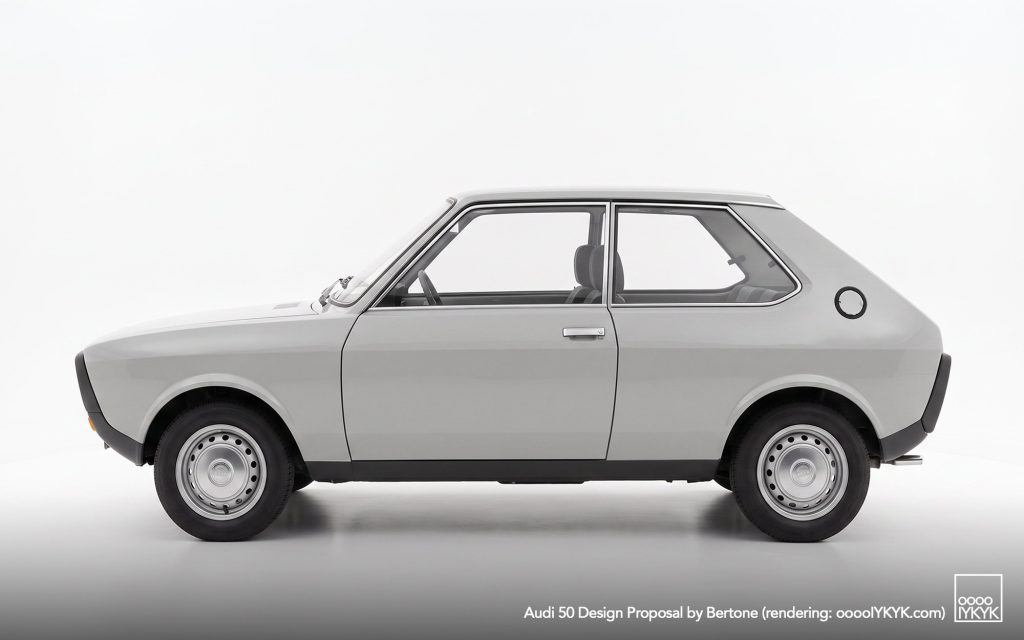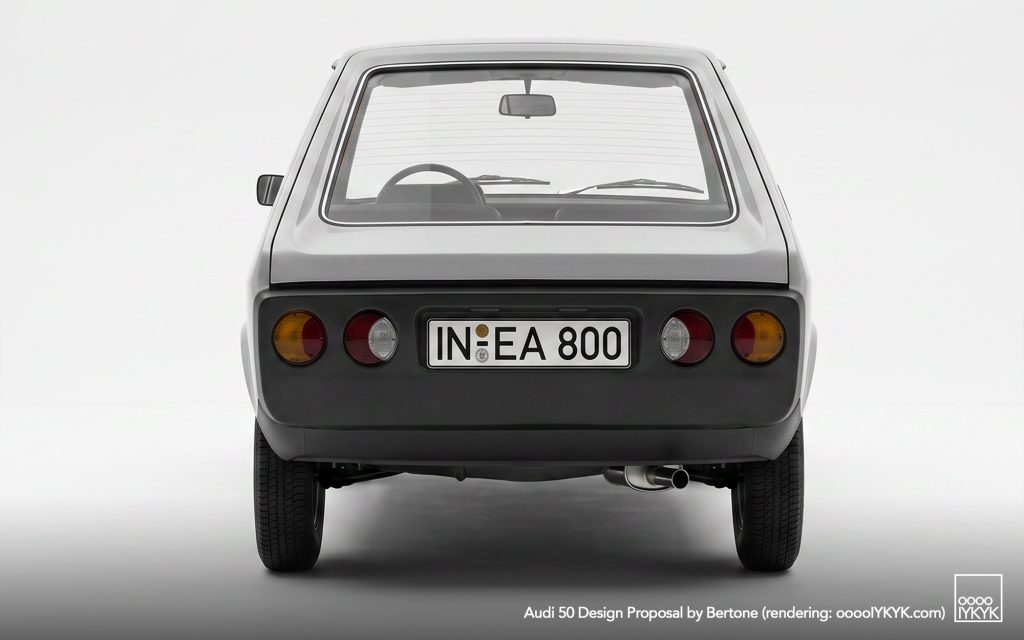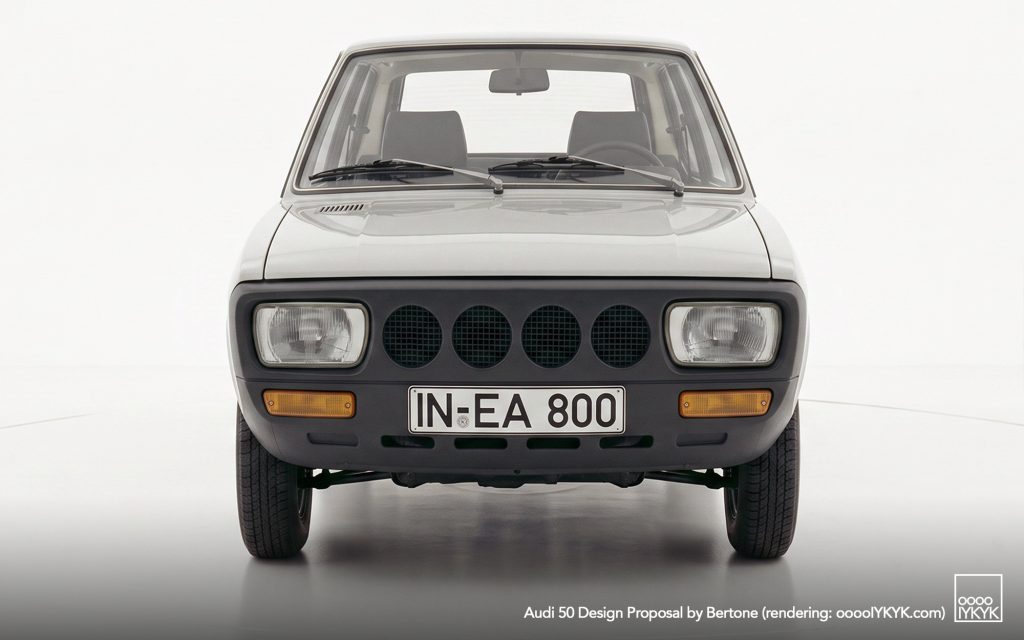
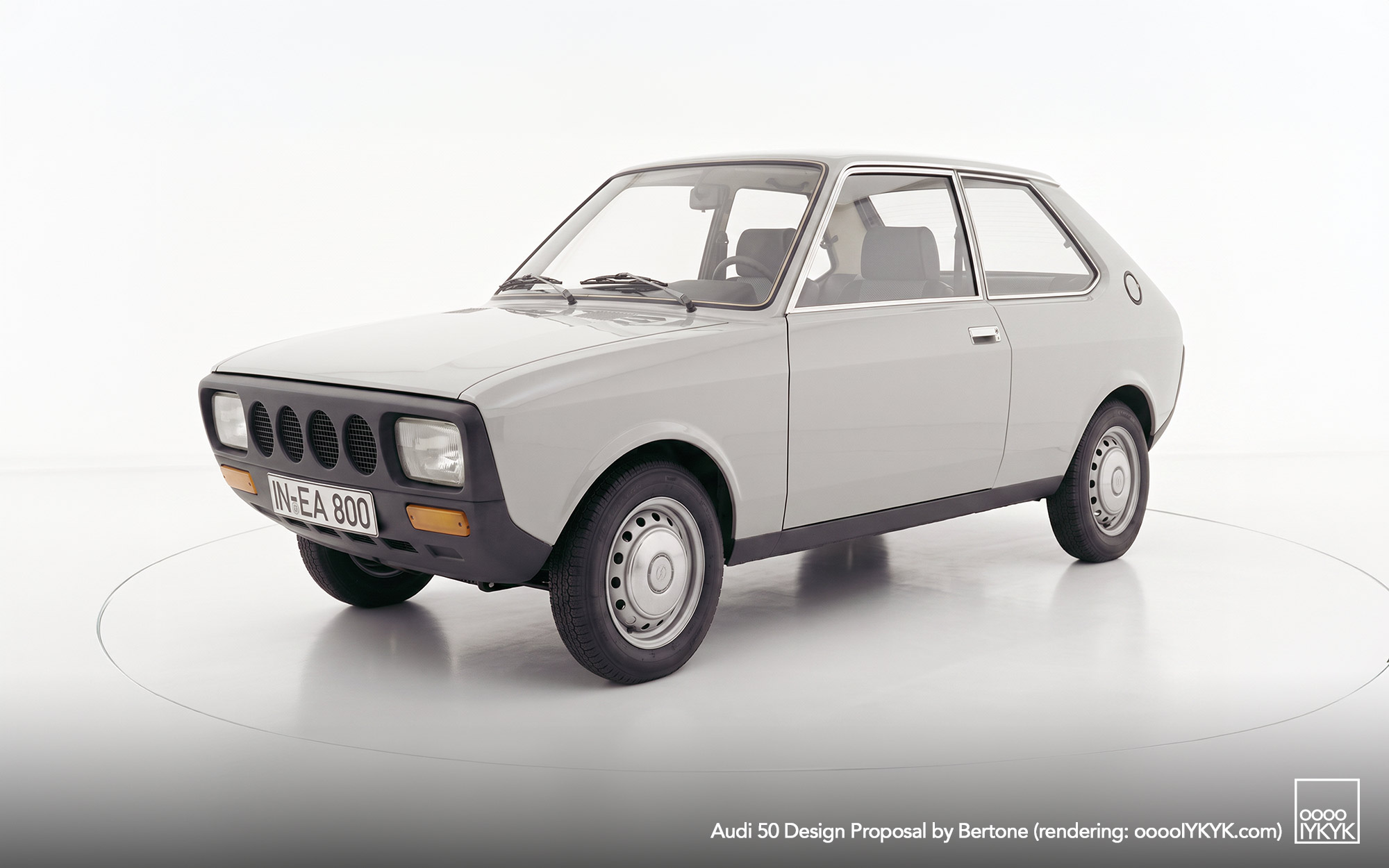

What: Audi 50 a.k.a. NSU K50 Design Proposal by Bertone
Model Family: 50 (A01, type 86)
Debuted: N/A
Year: circa 1970
Registration Plate: IN:EA 800
Status: unknown
Number Produced: unknown, likely 1
Model / Generation Code(s): type 86
Chassis / Matrix: A01
Engine: unknown
Transmission: unknown
Drivetrain: unknown
Power: unknown
Peak Torque: unknown
Weight: unknown
Acceleration (0-100 km / 62 mph: unknown
Length: unknown
Body style: 2-Door Hatchback
Exterior Paint Color: unknown
Wheels: Period Production Wheels 4×100 steel wheel with hub caps
RELATED
Concept Cars:
Road Cars: 1974-1978 Audi 50 (A01, type 86)
Race Cars:
ABOUT
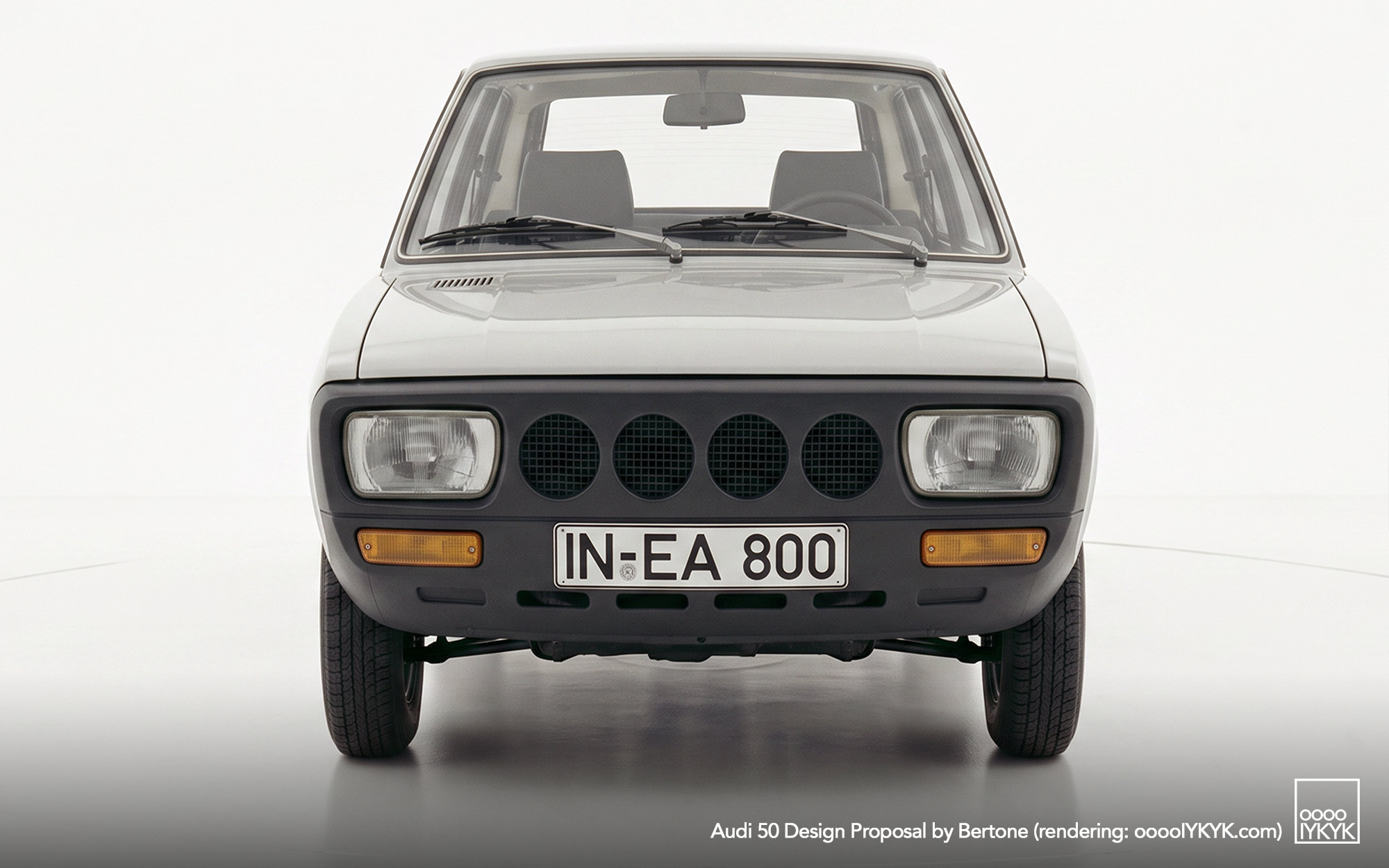
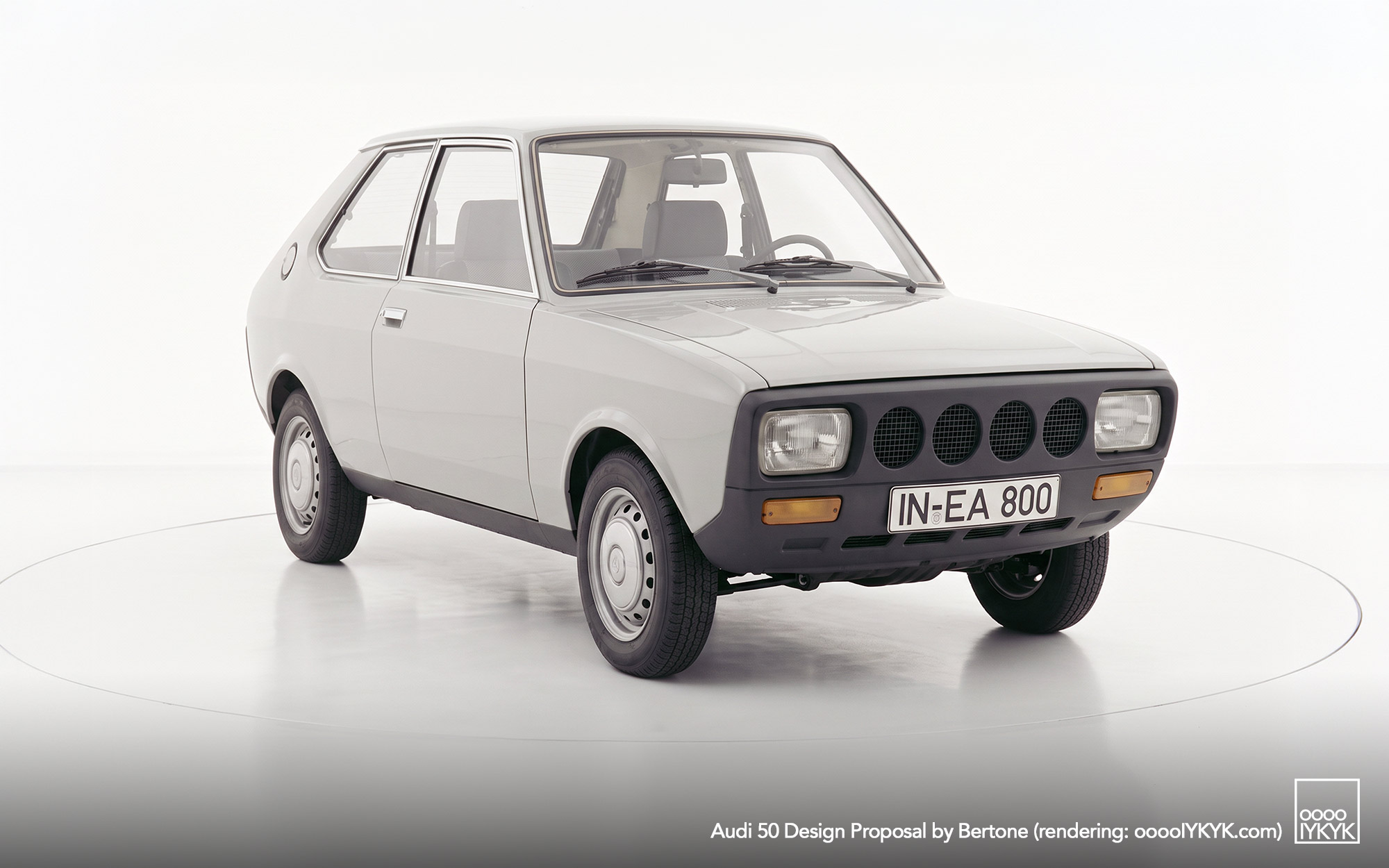
Among the earliest known styling studies for Audi’s K50 program is a little-known proposal developed by Italy’s Stile Bertone believed to have been created around 1970. Although only a handful of period photographs documenting the project are known to survive, the proposal represents an important chapter in the development of what would ultimately become the Audi 50.
Rather than being an isolated design exercise, the Bertone study is reported to have formed part of Audi’s official design program. During development of the K50, Audi commissioned Stile Bertone alongside two internal design teams, evaluating multiple approaches before arriving at the production model introduced in 1974.
The surviving photographs reveal a different interpretation of the compact hatchback, illustrating the more expressive design language associated more with Bertone’s broader portfolio in the time period while retaining the proportions that would define Audi’s first modern supermini.
BACKGROUND
By the end of the 1960s, Audi NSU Auto Union AG had begun work on a new compact front-wheel-drive model intended to become the company’s entry-level offering. The project, internally known as K50, was developed during a period of significant growth within Audi’s design organization following the merger of Auto Union and NSU.
Under Head of Design Georg Bertram, the department had recently expanded with the arrival of former NSU designers including Claus Luthe. An internal decision divided responsibility for the project between two Audi design teams. Team A was led by Hartmut Warkuß, while Team B worked under Claus Luthe. At the same time, Audi commissioned Nuccio Bertone to develop an independent styling proposal, reflecting the company’s practice of evaluating external design studies alongside its own work.
Although surviving documentation does not identify the individual Bertone designer responsible for the proposal, Marcello Gandini was leading Stile Bertone throughout this period and would have exercised creative direction over projects presented to clients. As was typical of Italian design studios, the proposal was almost certainly the product of a collaborative team working under his supervision rather than the work of a single individual.
Wickenheiser further notes that the production Audi 50 was ultimately finalized by Claus Luthe and his team “on the basis of the model by star Italian designer Bertone.” That description suggests the Bertone proposal formed part of the design evolution that led to the production car rather than existing solely as a rejected alternative.
Design
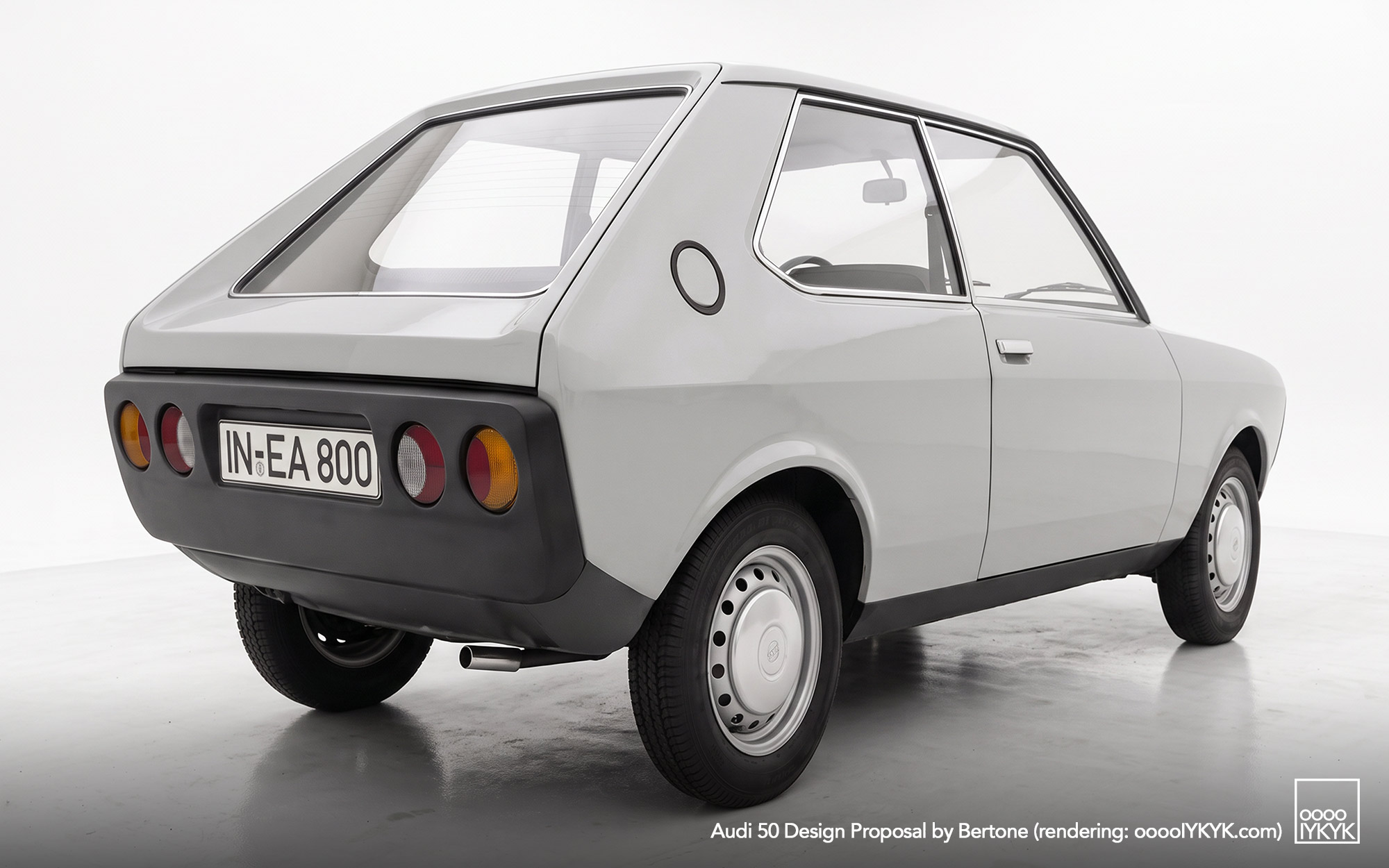
The surviving photographs show a proposal that shares the production Audi 50’s compact proportions while expressing them in a distinctly Bertone manner.
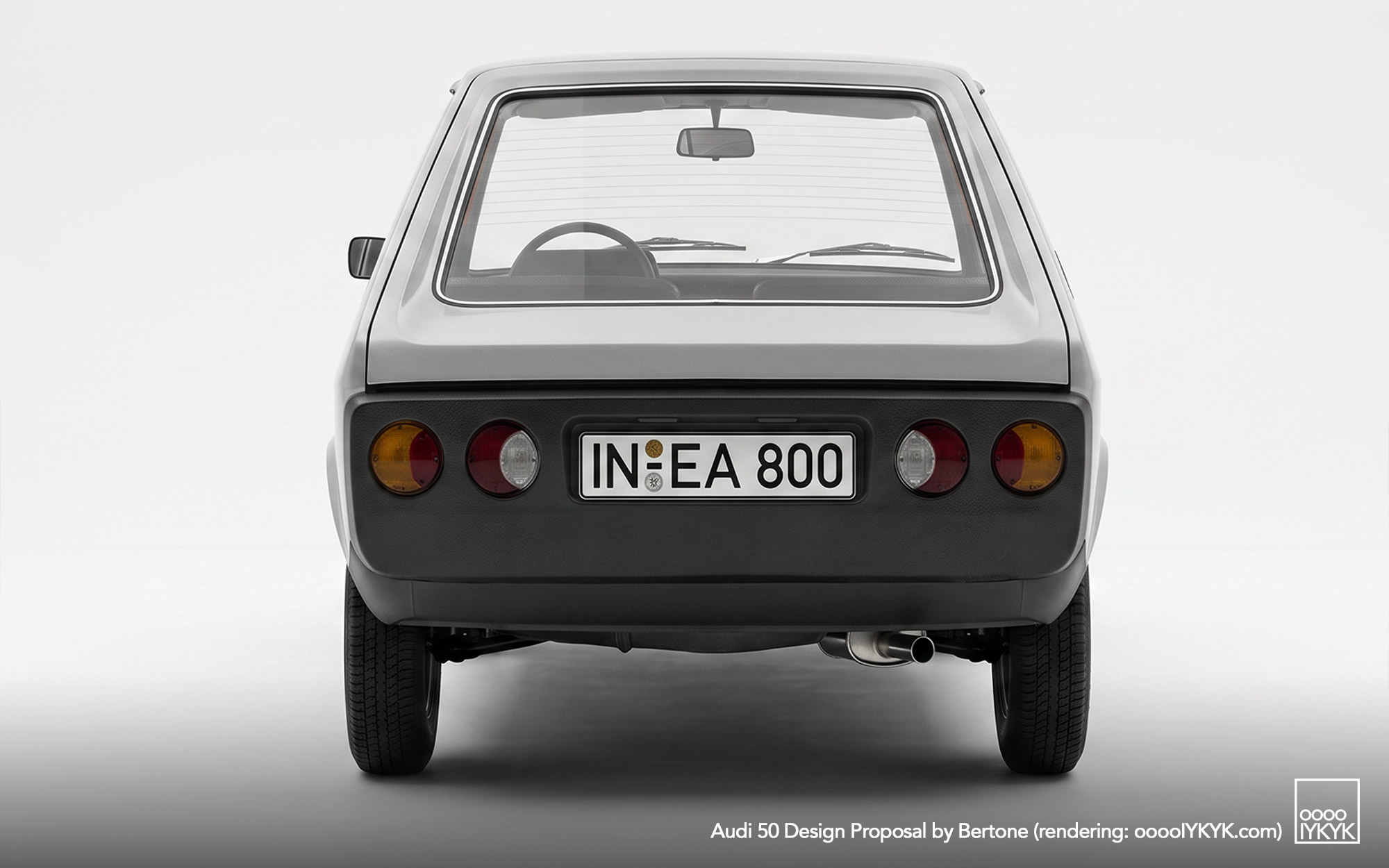
The front fascia foregoes what was Audi’s traditional grille treatment in favor of four circular openings arranged horizontally across the nose. Sculpted front and rear bumper forms sweep upward into the bodywork, giving the car a far more dynamic appearance than the restrained production model.
At the rear, Bertone continued the circular theme with four segmented round taillamps incorporating overlapping red, amber and clear lenses. Together with the sculptural bumpers, these details provide a level of visual drama absent from the eventual production Audi 50 while remaining recognizably related to the underlying K50 package.
Period photographs appear to depict a full-size styling model rather than a scale model. Whether the proposal incorporated production body panels beneath its unique exterior treatment remains unknown.
LEGACY
The production Audi 50 that debuted in 1974 was considerably more restrained than the surviving Bertone proposal. Its front-end treatment drew inspiration from the contemporary Audi 80, reinforcing Audi’s emerging design identity while positioning the new compact model as a premium alternative within its class.
Although many of Bertone’s more expressive styling themes disappeared during development, Wickenheiser’s account indicates that the Italian studio’s work nevertheless formed part of the design process that produced the final Audi 50. Claus Luthe and his team refined the concept into the production model, while Hartmut Warkuß’s parallel team contributed to the broader development program.
The project also captures a transitional moment in Audi’s design history. During the early 1970s the company routinely sought outside creative input from leading Italian studios while simultaneously building its own in-house capability. Over the following decades, Audi Design would evolve into one of the industry’s foremost manufacturer studios, reducing its reliance on external design houses as its own design language matured.
Today, only a handful of period photographs documenting the Bertone proposal are known to survive, making it one of the less documented styling studies associated with the development of the Audi 50. As a result, it offers a rare glimpse into an alternative future for Audi’s first modern compact hatchback.
Details
Project: Audi 50 – Bertone Design Proposal
Internal Program: K50
Project Date: c. 1970
Design House: Stile Bertone
Creative Direction: Marcello Gandini (attributed)
Audi Design Leadership: Hartmut Warkuß
Project Type: Full-size styling proposal (believed)
Status: Design study only
Production Outcome: Not selected
Related Production Vehicle: Audi 50 (Type 86, 1974–1978)
Related Vehicle: Volkswagen Polo (Type 86, 1975–1981)
Known Surviving Example: Unknown
EDITORIAL NOTES
Because documentation surrounding this proposal is limited, several aspects of its history remain unconfirmed. The attribution to Marcello Gandini, the reported design revisions requested by Audi and the existence of a full-size styling model are based on surviving secondary sources and period photography rather than official Audi or Bertone archival documentation. Nevertheless, the proposal is widely recognized as an authentic Stile Bertone study developed during the Audi K50 program and represents an important record of the collaborative design process employed by Audi during the early 1970s.
SOURCES
Audi Design: Evolution of Form by Othmar Wickenheiser
PHOTO GALLERY
Illustration Note: The images in this archive entry are historically informed digital reconstructions created from the limited surviving period photography. They are intended to accurately represent the design, although some details remain subject to interpretation due to the scarcity and quality of original reference material.