
/ Eras / Auto Union Postwar / 1000
MODEL DETAILS
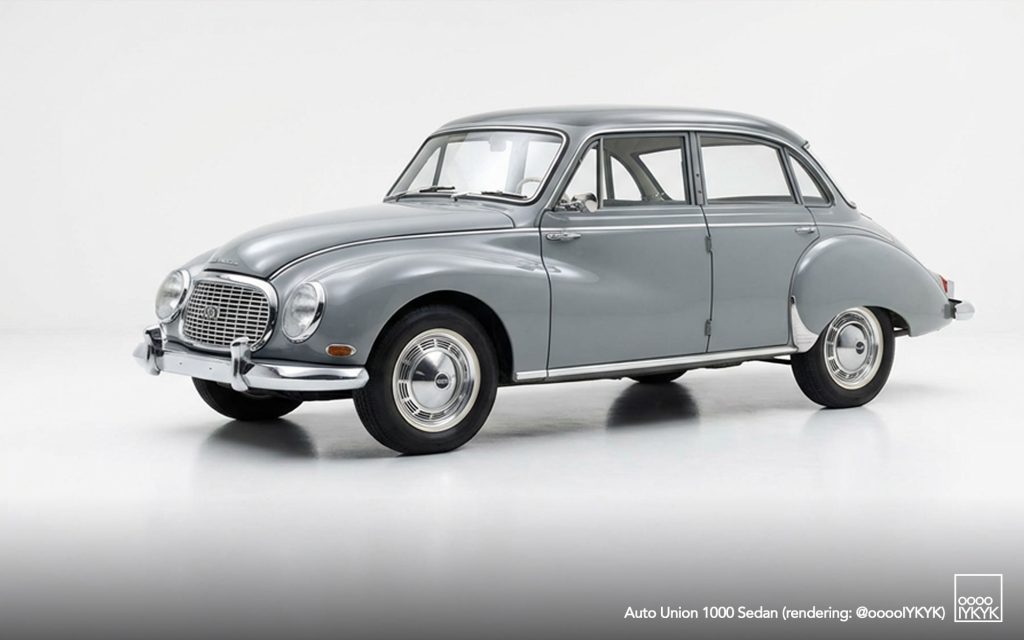
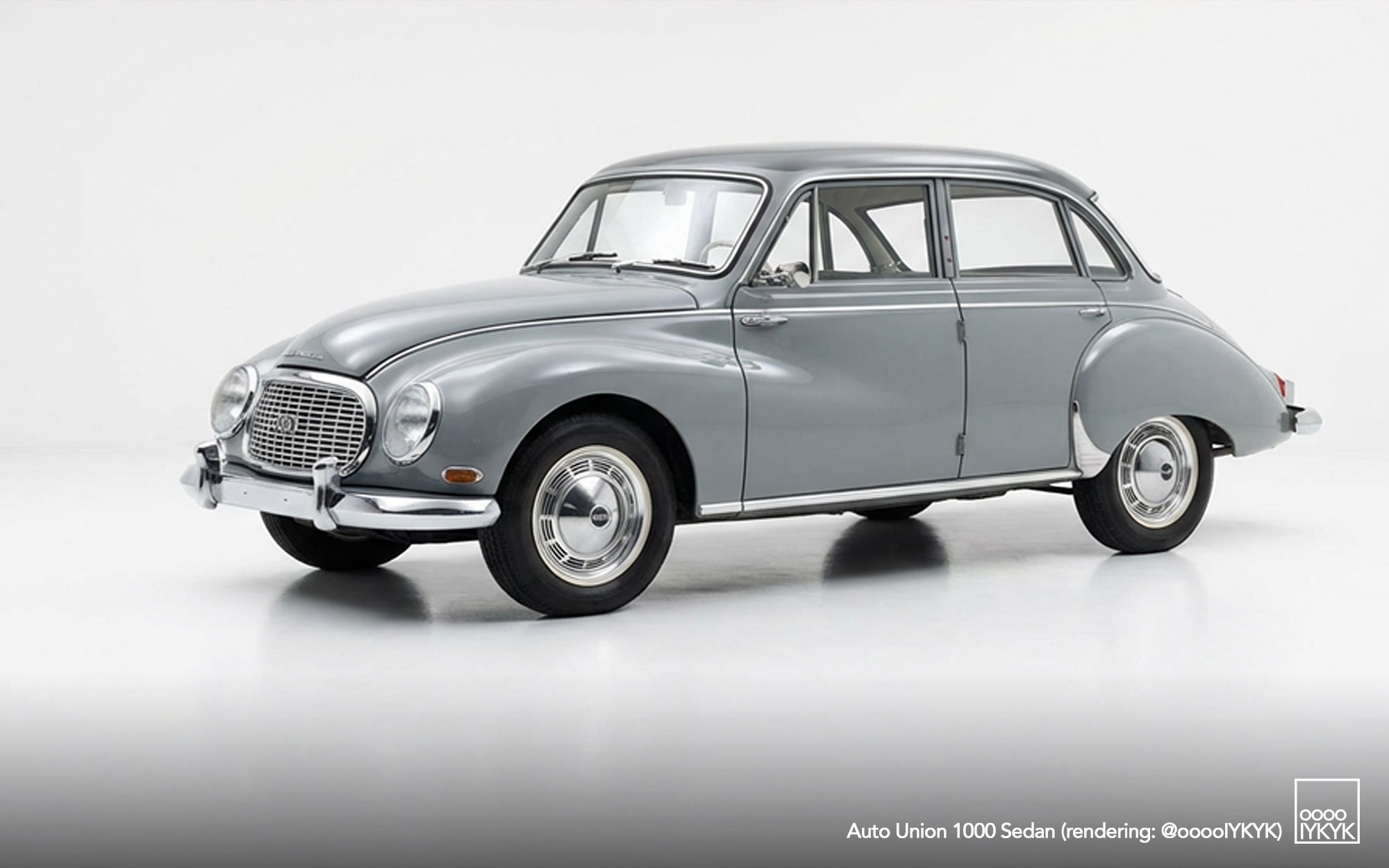
What: Auto Union 1000 (Sedan)
Era: Auto Union Postwar Automobiles
Manufacturer: Auto Union GmbH (West Germany)
Model Family: 1000
Market / Zone: West Germany; export markets
Model Years: 1958, 1959, 1960, 1961, 1962, 1963
Production Span: 1958–1963
Number Produced:
Model / Generation Code(s):
Chassis / Matrix:
TECHNICAL DETAILS
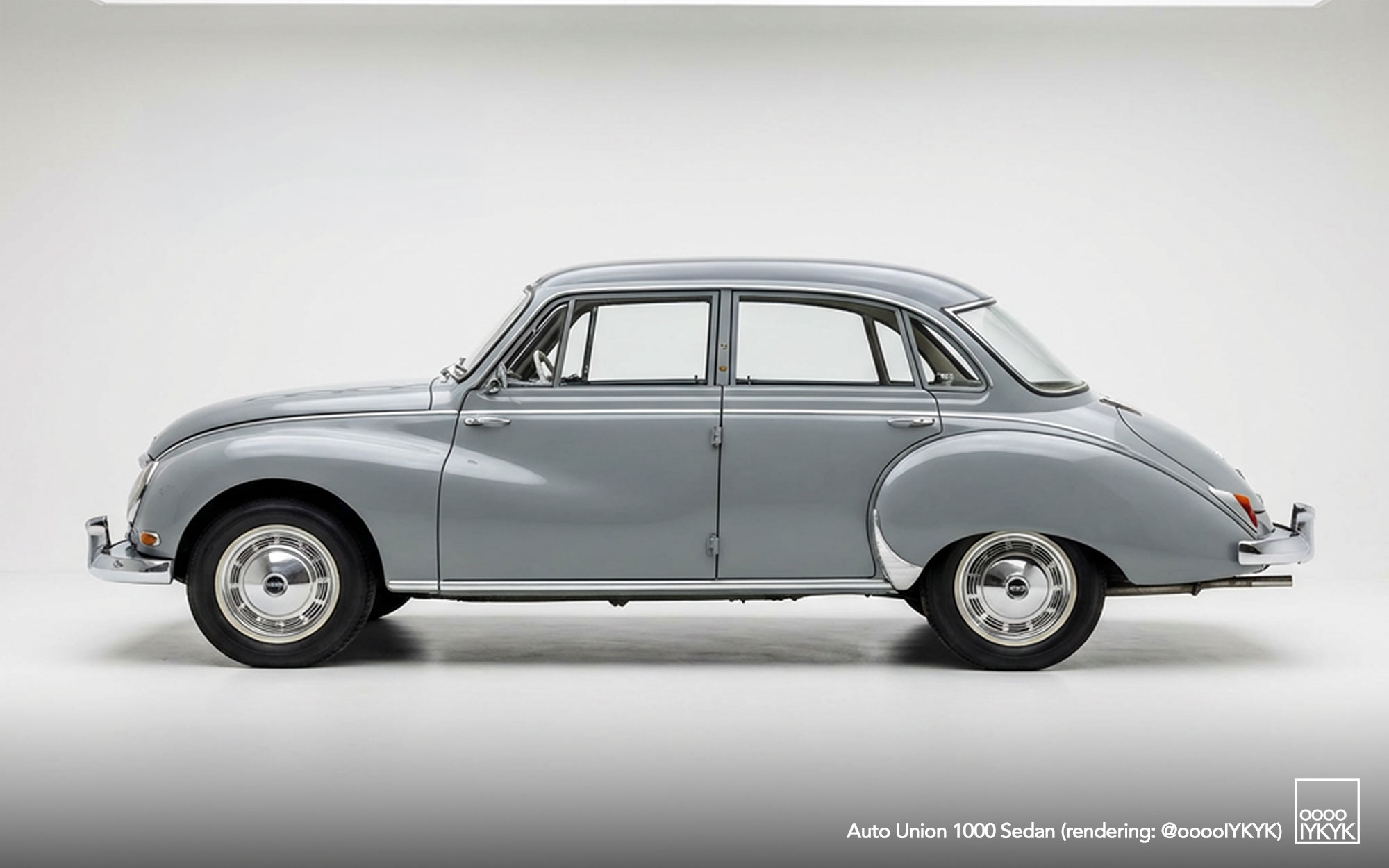
Body Style(s): 2-door sedan, 4-door sedan
Drivetrain Configuration: longitudinal front engine, front-wheel drive
Engine(s): 981 cc inline 3-cylinder, two-stroke
Transmission(s): 4-speed manual
Wheelbase:
Length:
Width:
Height:
Kerb Weight:
OTHER DETAILS
Predecessor: DKW 3=6
Successor:
Platform Mates: Auto Union 1000 Universal, Auto Union 1000 SP, Auto Union 1000 S Coupé de Luxe
Concept Cars:
Assembly Location(s): Düsseldorf; Ingolstadt
Designer(s):
Homologations:
WHEEL / TIRE DETAILS
Wheel Diameter(s):
Tire Size(s):
Bolt Pattern:
Offset:
SUMMARY
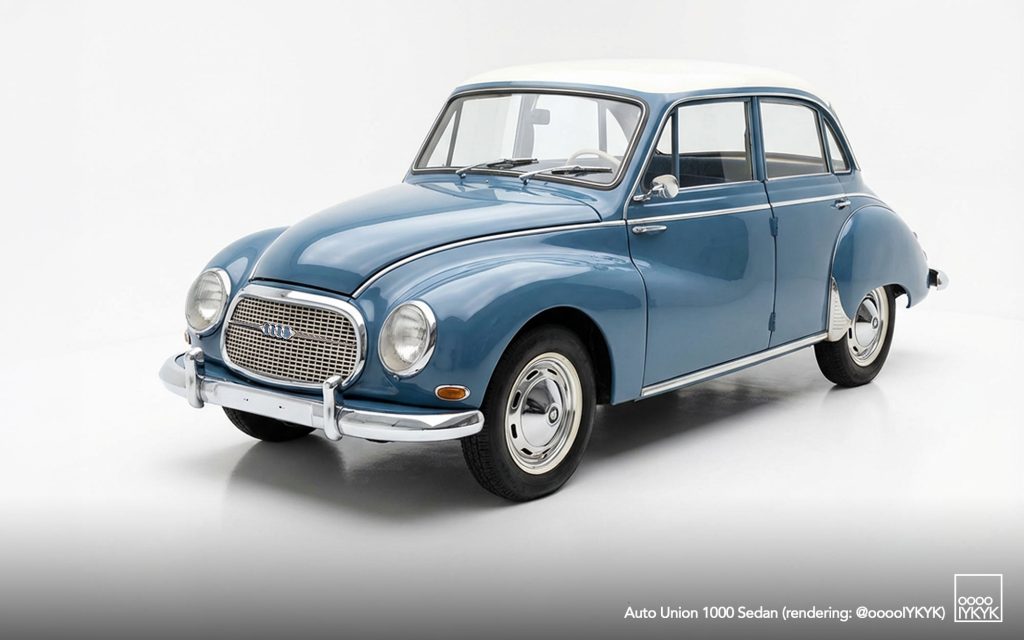
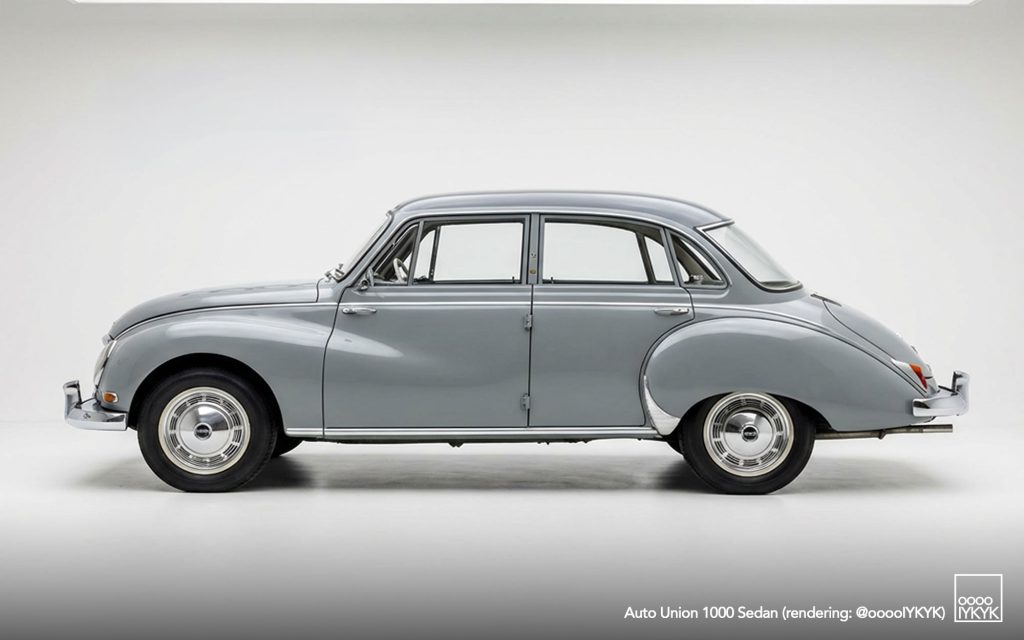
Introduced in 1958 as the successor to the DKW 3=6, the Auto Union 1000 sedan represented the final large-scale development of Auto Union’s postwar two-stroke passenger car platform. In September 1959, the 1960 model year update debuted at the Frankfurt IAA with a panoramic wraparound windshield. Production transferred from Düsseldorf to Ingolstadt beginning in summer 1961 for the 1962 model year. The sedan remained in production until September 1963.
DESIGN & ENGINEERING
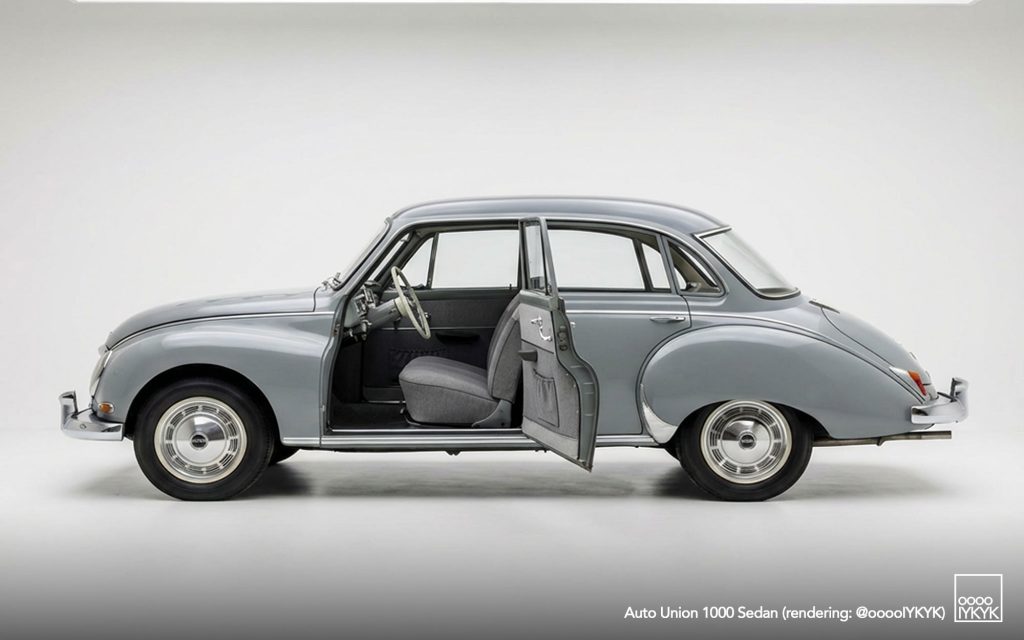
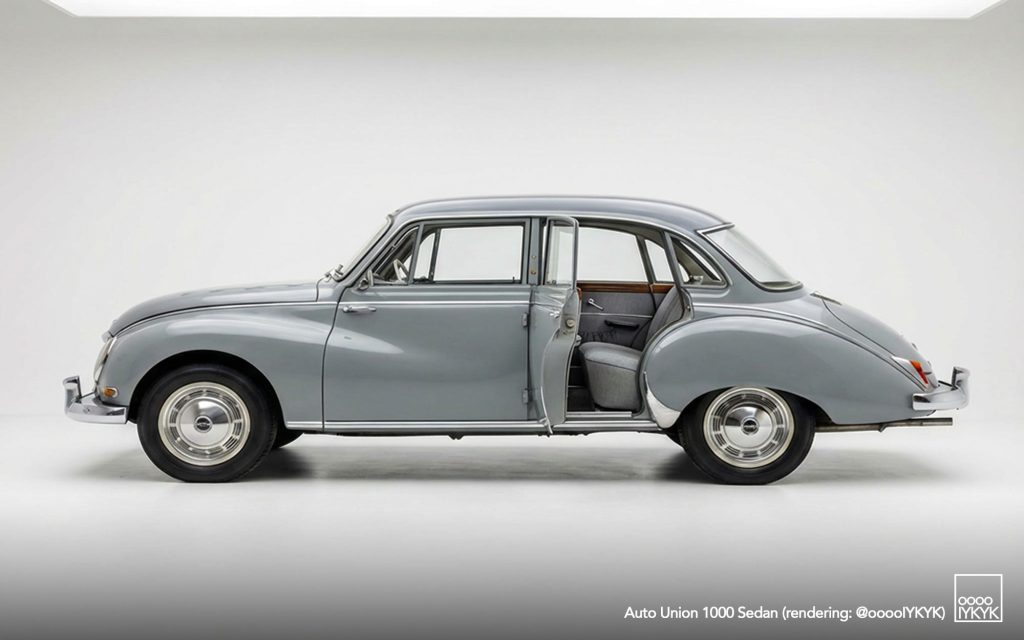
The Auto Union 1000 featured a unibody design and front-wheel-drive layout—both unusual for its era. It was powered by a 981 cc two-stroke three-cylinder engine producing roughly 44 horsepower, driving the front wheels through a four-speed manual gearbox. Its body design evolved from the DKW F93 platform, incorporating smoother lines and more contemporary styling.
VARIANTS & BODY STYLES
Beyond the base sedan, the range included the sportier 1000 S and the stylish 1000 Sp coupé and convertible, often called the “baby Thunderbird” for its resemblance to the Ford model. These versions were built with more refined trim and offered higher performance options, appealing to export markets and younger buyers.
MARKET POSITION & LEGACY
The Auto Union 1000 was positioned as a reliable, modestly priced family car, especially popular in West Germany and Scandinavia. Though two-stroke engines were becoming outdated, the model maintained loyal demand until its replacement by the four-stroke-powered DKW F102 in 1963. The F102’s development ultimately led to the creation of the Audi brand identity under Volkswagen ownership, making the 1000 a key link in that lineage.
PHOTO GALLERY