

What: KTM X-BOW GT-XR Spyder
Manufacturer: KTM X-BOW Onroad GmbH
Debut: 2026
Production: 2027-Current
Configuration: Mid-engine, rear-wheel drive
Chassis: Carbon-fiber monocoque
Body Style: Two-seat sports car with removable roof panels
Engine: Audi-sourced 2.5 TFSI turbocharged five-cylinder, EA855 evo
Engine Code: DNWA, per GT-XR type-approval records
Displacement: 2,480 cc
Power: 500 PS (493 hp), standard GT-XR; 600 PS (592 hp) with Factory 600 package
Torque: 581 Nm (429 lb-ft), standard GT-XR; up to 680 Nm (502 lb-ft) with Factory 600 package
Transmission: 7-speed dual-clutch DSG, DQ500
Production Location: Graz, Austria
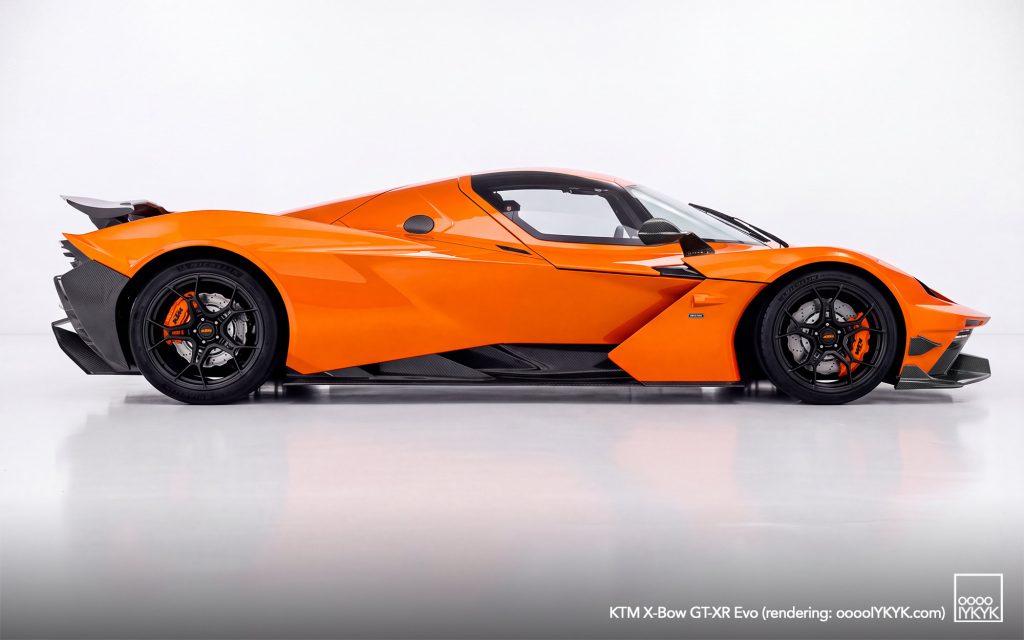
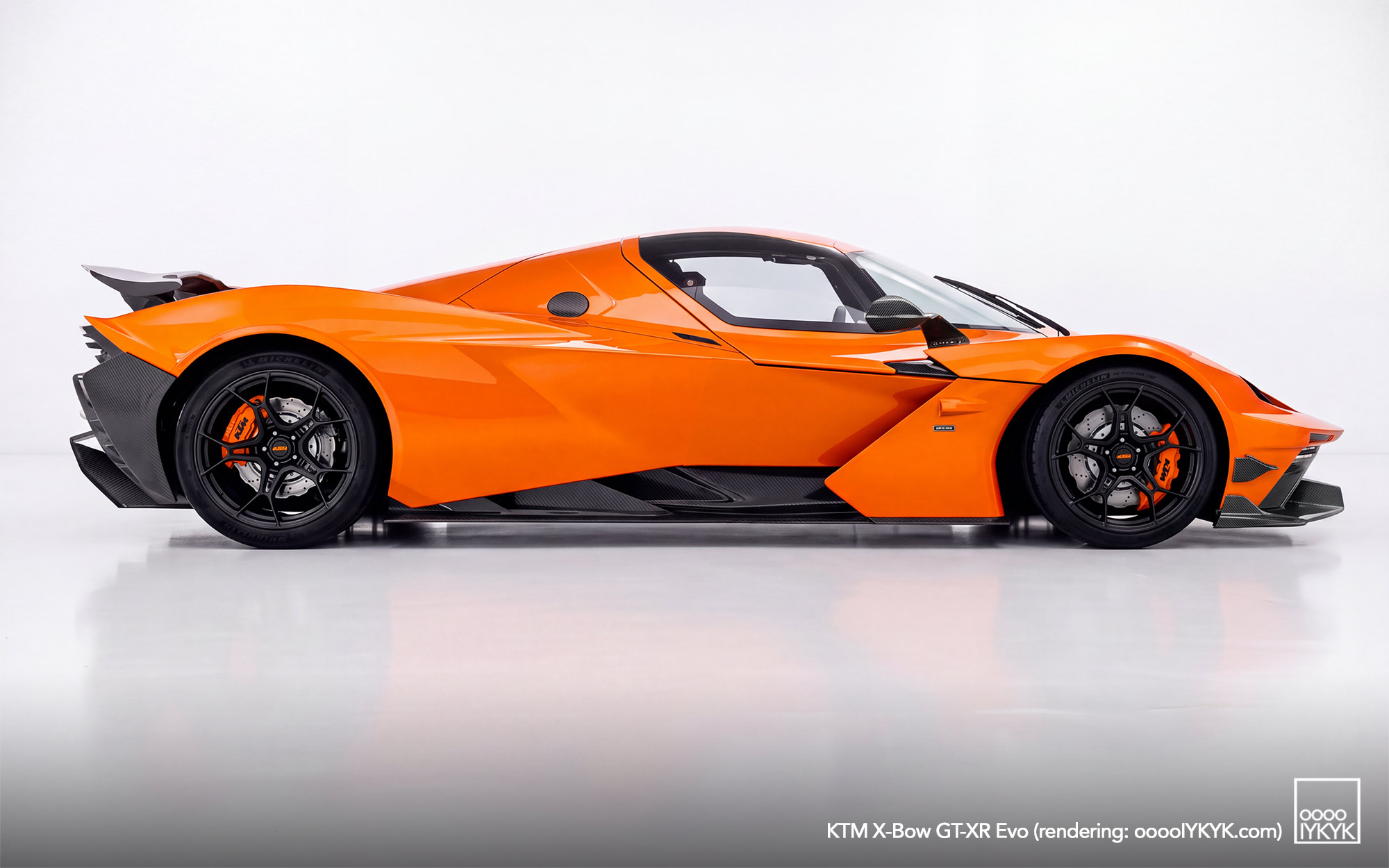
Photographed Car: GT-XR Spyder; Factory 600 and EVO Aero Kit specification not confirmed
AUDI CONNECTION
The KTM X-BOW GT-XR Spyder uses an Audi-sourced 2.5-liter turbocharged five-cylinder engine, placing it among a small group of sports cars from independent manufacturers built around Audi powertrains.
The engine is related to the five-cylinder used in the Audi RS 3 and TT RS. In the GT-XR, it sits behind the cockpit and drives the rear wheels through a seven-speed dual-clutch transmission—a different application from its transverse, all-wheel-drive arrangement in those Audi models.
KTM’s relationship with Audi engines began with the original X-BOW, which used a 2.0-liter turbocharged four-cylinder. The five-cylinder subsequently entered the X-BOW competition range before becoming the basis of the road-going GT-XR.
OVERVIEW
The GT-XR Spyder was introduced in 2026 as an open-roof version of KTM’s race-derived sports car. Its removable roof panels can be stored in the luggage compartment, while a removable wind deflector is designed to reduce turbulence and wind noise when driving with the roof open.
The Spyder builds on the GT-XR first presented in 2022. That car drew its technical foundation from the X-BOW GT2 racer, combining a carbon-fiber monocoque and enclosed cockpit with equipment required for road use.
The orange car shown here is identified as a GT-XR Spyder, photographed with its roof panels installed. Its exact engine and aerodynamic specifications have not been confirmed.
DESIGN & ENGINEERING
The GT-XR Spyder retains the low, wide proportions of the GT-XR and its competition-derived chassis. The removable roof provides an open-air option while preserving the windshield and surrounding cockpit structure.
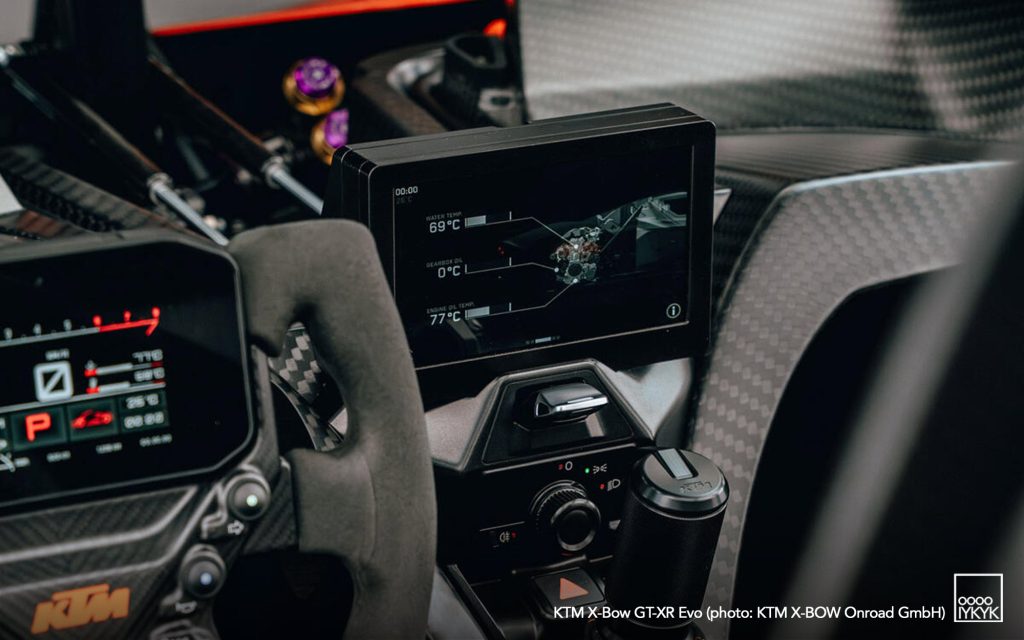
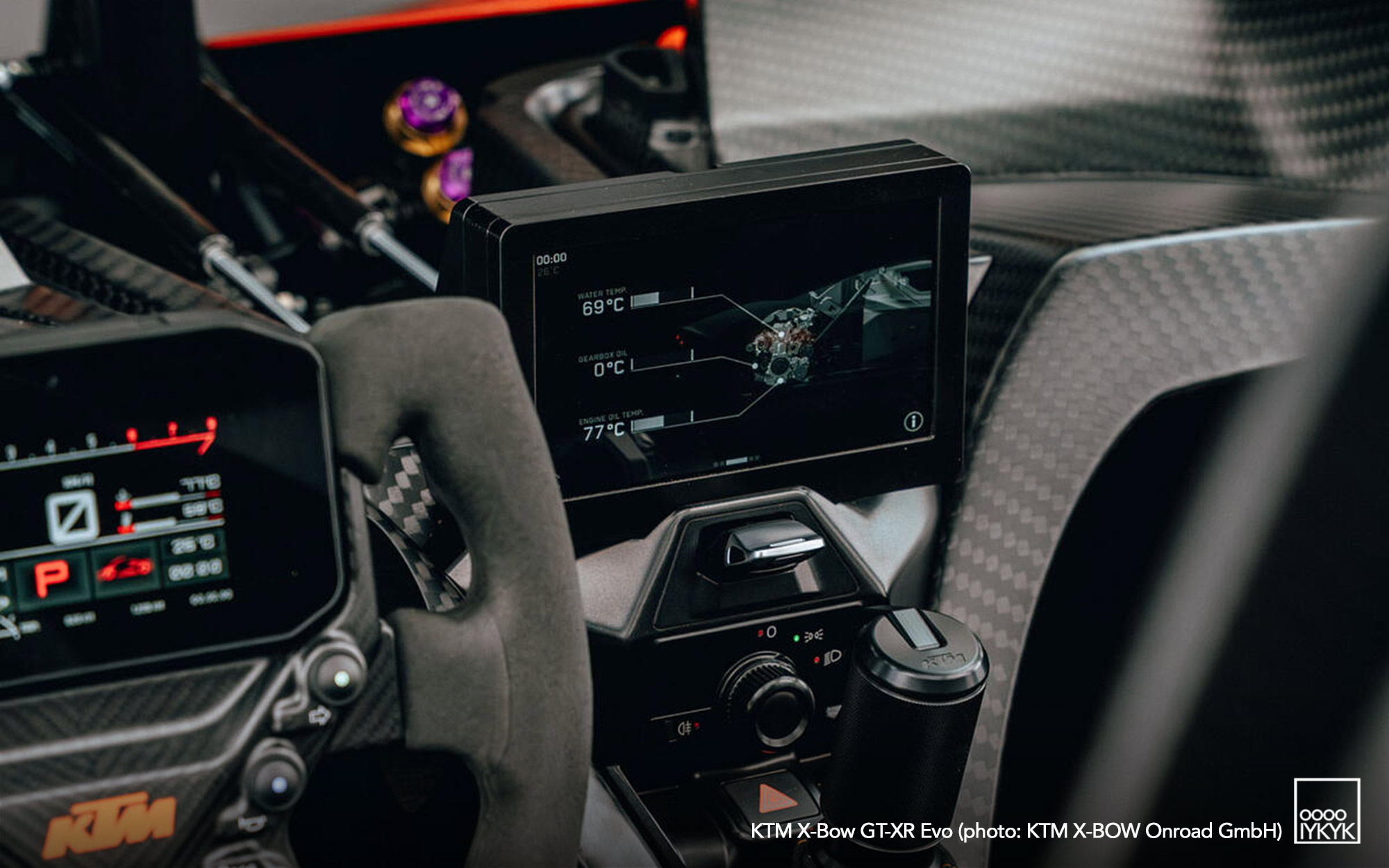
The 2026 update also brings a 7-inch central display with Apple CarPlay and Android Auto. On track, the screen can show information including lap times, a G-meter and temperatures. Conventional carbon-fiber side mirrors replace the earlier camera-based rear-view system as standard equipment, with cameras remaining available as an option.
Alongside the Spyder, KTM X-BOW introduced the GT-XR EVO, which combines the Factory 600 engine package with the EVO Aero Kit. The engine upgrade raises output from 500 PS to 600 PS and torque from 581 Nm to 680 Nm through changes including a larger intake manifold, modified turbocharger, revised air intake and upgraded intercooler.
The carbon-fiber aero kit adds a revised front splitter, dive planes and wheel-arch louvers. Published reports say both the engine and aero packages can be retrofitted to existing GT-XRs. The photographed Spyder has aero details resembling those described for the EVO kit, but its full specification remains unconfirmed at the time of writing.

SHARED DNA
KTM is one of several independent manufacturers to have used Audi or Volkswagen Group engines in low-volume sports cars. Like Donkervoort, Spyker and the original Gumpert Apollo, the X-BOW combines a powertrain associated with Audi production models with a chassis and character developed by another manufacturer.
The GT-XR is a particularly distinctive application of Audi’s five-cylinder engine. While the RS 3 and TT RS pair the engine with quattro all-wheel drive, the KTM places it behind the occupants and sends its output exclusively to the rear wheels. The Factory 600 upgrade also demonstrates how the engine has been developed for use beyond its standard Audi applications.

KNOWN HISTORY
2008 – The original KTM X-BOW enters production with an Audi-sourced 2.0-liter turbocharged four-cylinder engine.
2020–2021 – The X-BOW GTX and GT2 competition models introduce Audi-sourced 2.5-liter five-cylinder power to the larger X-BOW platform.
2022 – KTM presents the road-going X-BOW GT-XR, developed from the GT2 race car and powered by the Audi five-cylinder.
October 2025 – A Belgian investment group led by rally-raid driver Guillaume de Mévius takes over the X-BOW car operation. The business now operates as KTM X-BOW Onroad GmbH.
2026 – KTM X-BOW announces the GT-XR Spyder, with removable roof panels, and the GT-XR EVO, combining the Factory 600 engine package and EVO Aero Kit. The company also introduces its ICONIX personalization program.
SIGNIFICANCE
The GT-XR Spyder extends a relationship between KTM and Audi powertrains that began with the original X-BOW. Its Audi five-cylinder connects it mechanically to the RS 3 and TT RS, while its rear-wheel-drive layout and racing-derived carbon chassis give the engine a different role.
The 2026 update is also significant for KTM X-BOW as a business. Under a new owner and the KTM X-BOW Onroad GmbH name, the manufacturer is continuing the GT-XR while expanding the range through open-roof, performance and personalization options.
PHOTO GALLERY