

MODEL DETAILS
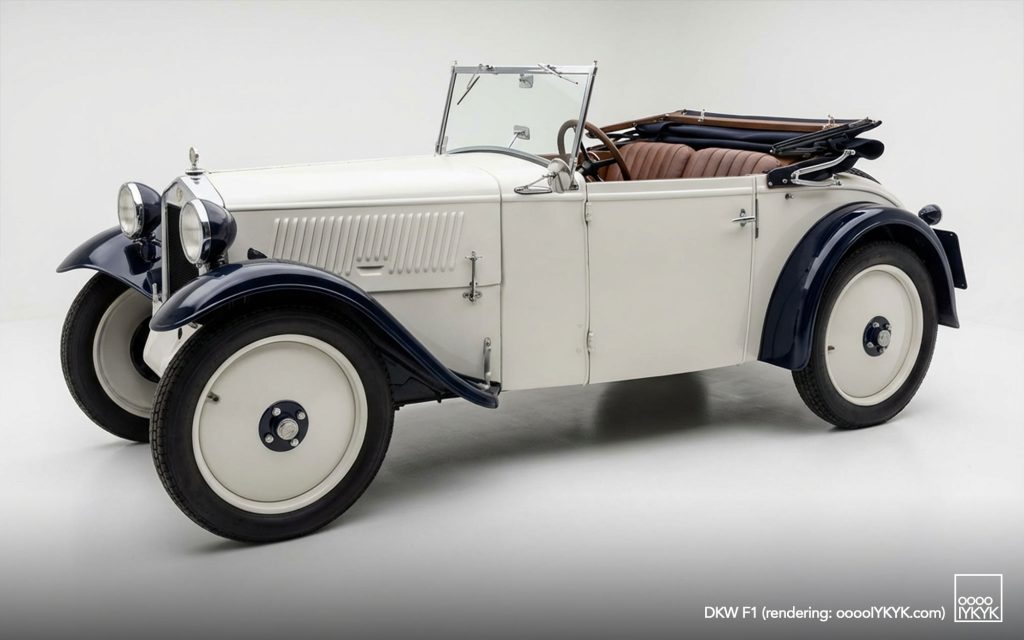
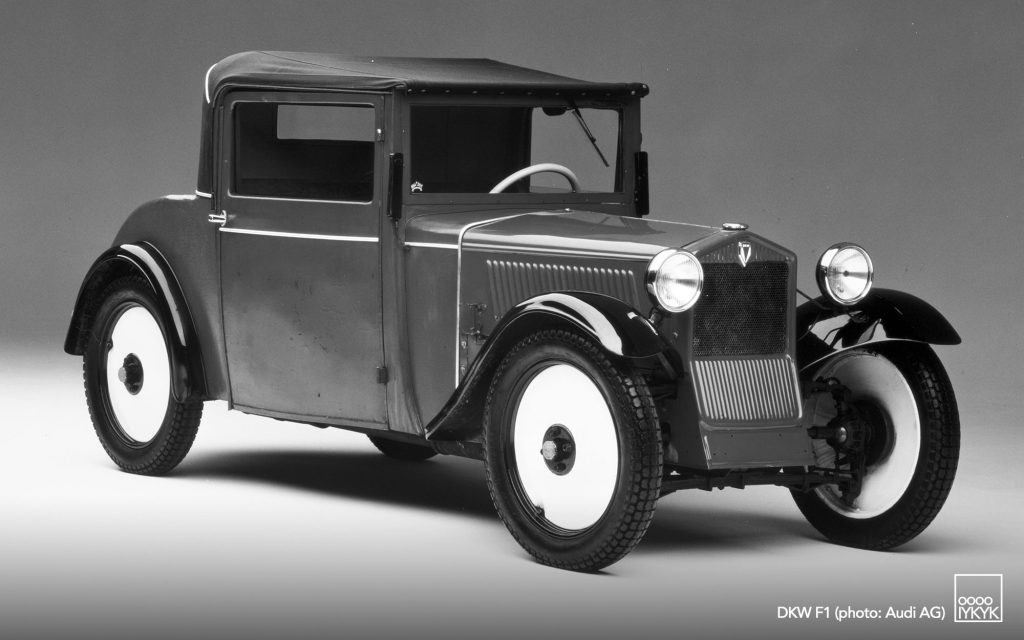
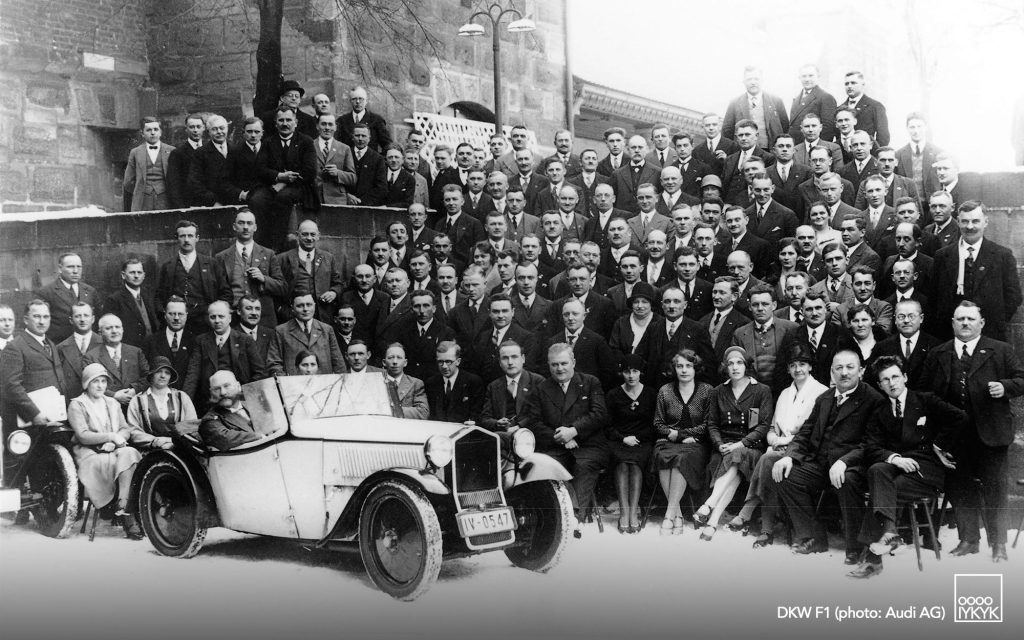
What: DKW F1
Brand / Era: DKW Prewar
Model Family: F1
Market / Zone:
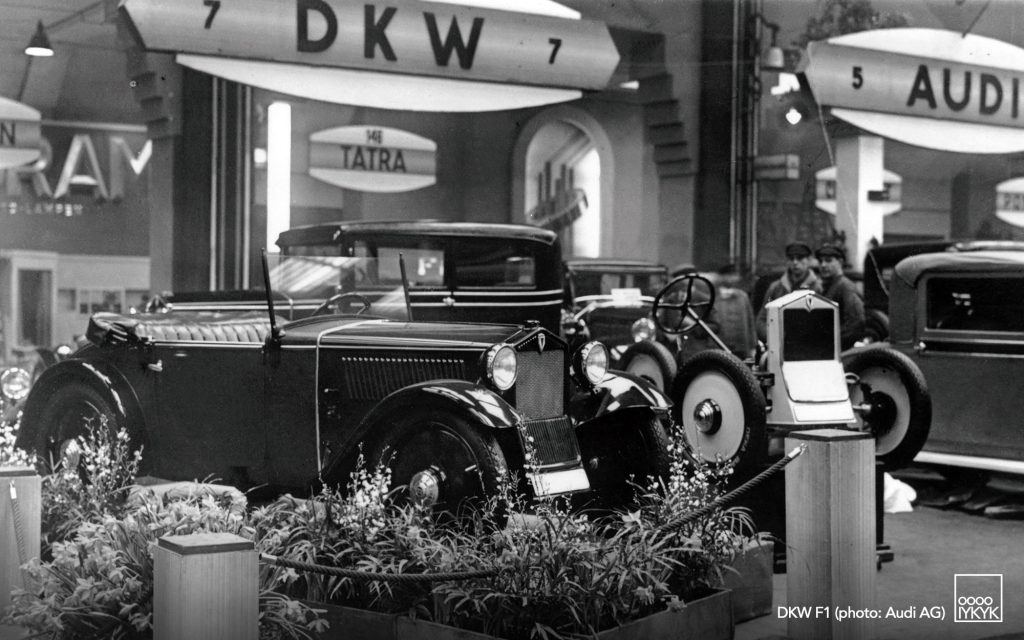
Debuted: 1931 IAA, Berlin, Germany
Factory: Audi Works, Zwickau, Germany
Year: 1931, 1932, 1933, 1934, 1935, 1936, 1937, 1938, 1939, 1940, 1941
Number Produced: 270,000
Model / Generation Code(s):
Chassis / Matrix:
Engine: water-cooled 2-cylinder, 2-stroke
Displacement: 584 cc
Fuel Delivery: Carbureted
Fuel Type(s):
Horsepower: 15 PS (11 kW) at 3500 rpm
Peak Torque:
Transmission: 3-speed Manual
Top Speed:
SUMMARY
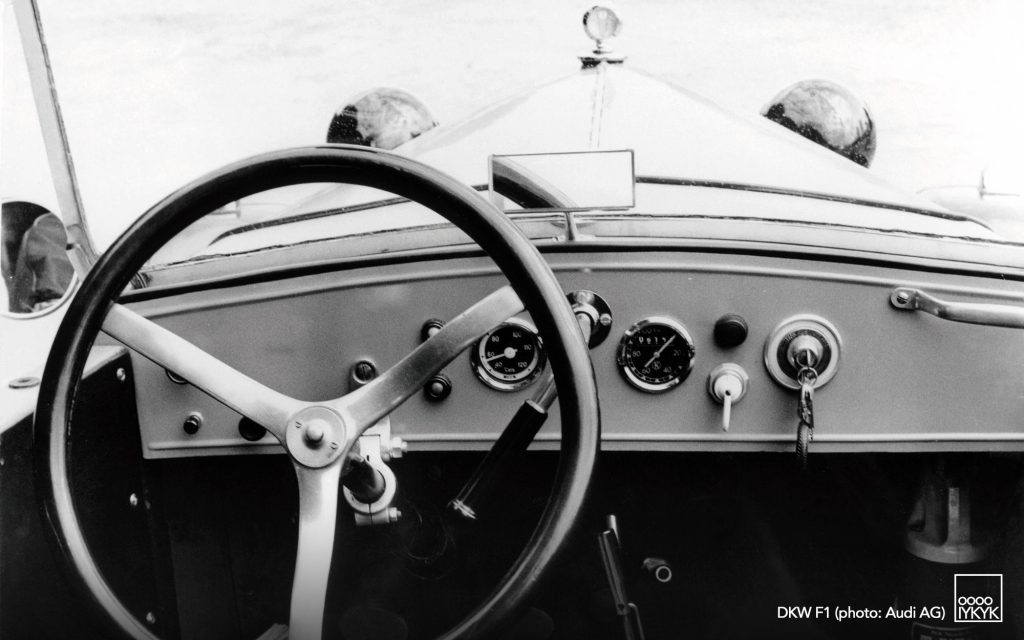
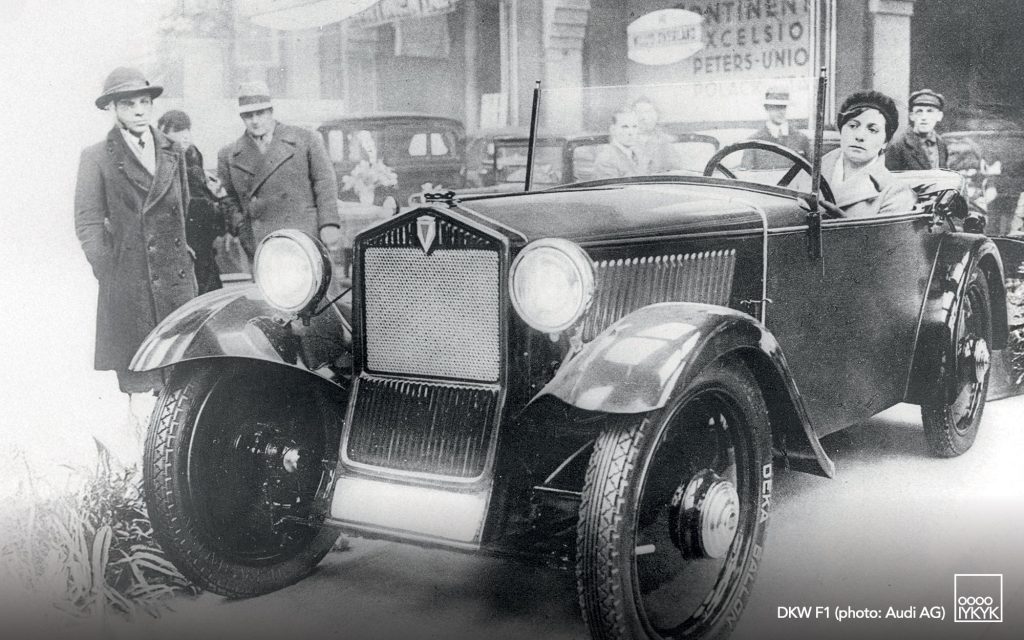
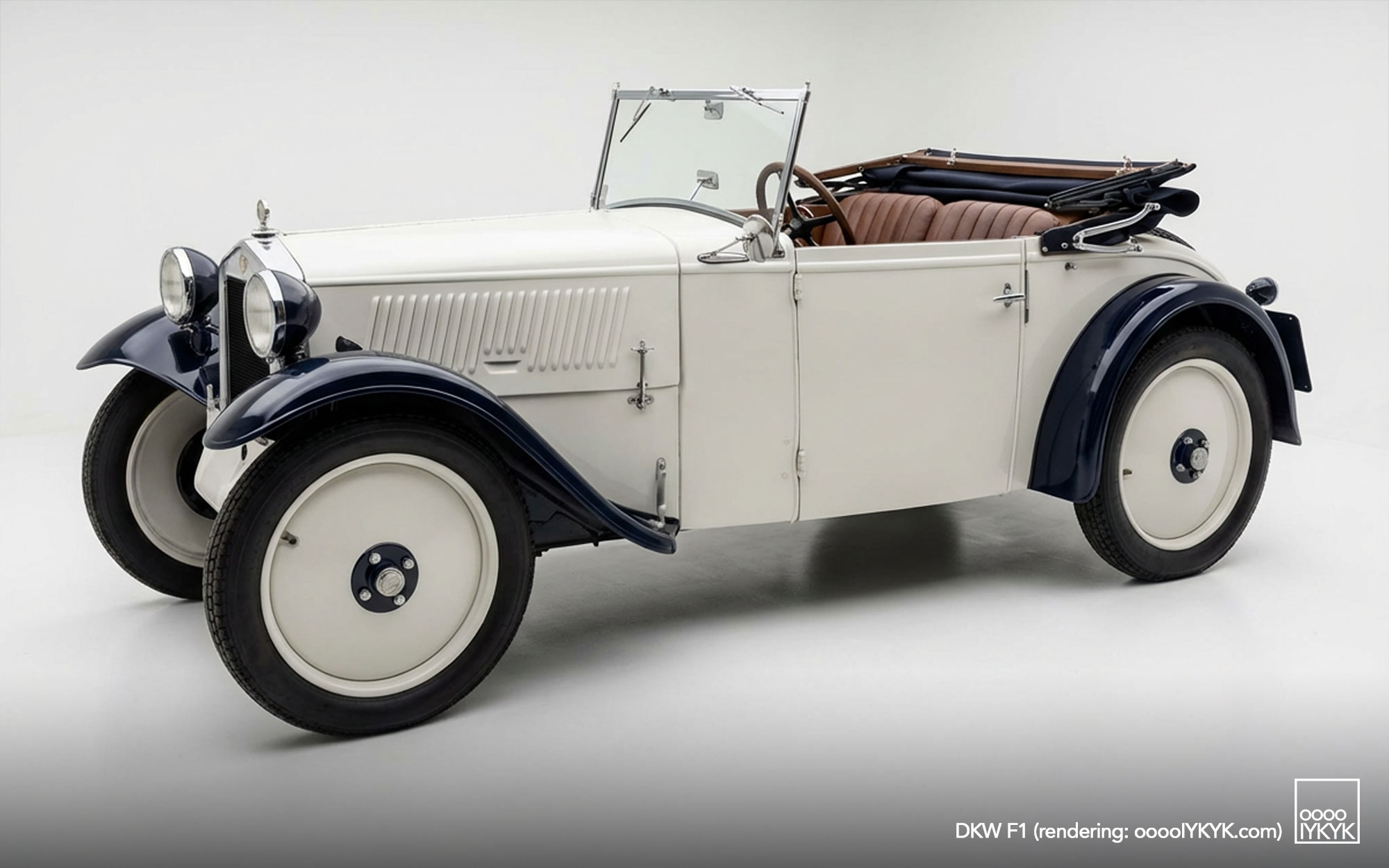
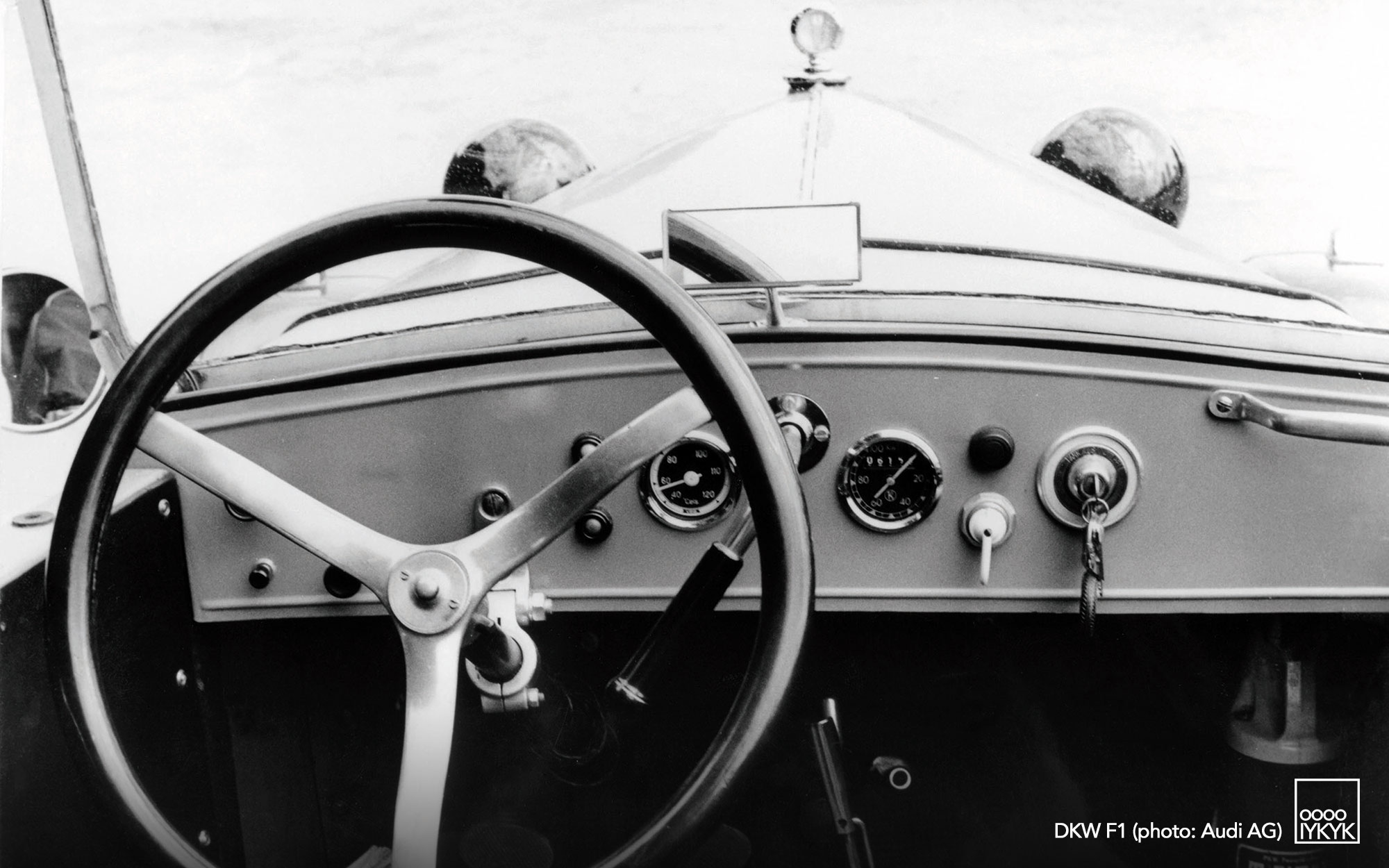
The DKW F1 is a small front-wheel-drive automobile introduced in 1931 by DKW, one of the four founding brands of Auto Union. Presented at the 1931 Internationale Automobil-Ausstellung (IAA) in Berlin, it was the first series-produced DKW passenger car with front-wheel drive and became a cornerstone of the company’s pre-war success. The F1 played a central role in securing the financial stability of Audi Werke AG during the early years of the Great Depression and ultimately evolved into one of the most prolific model lines within Auto Union before the Second World War.
BACKGROUND
By the late 1920s, Audi Werke AG was struggling. Jörgen Skafte Rasmussen, industrialist and owner of DKW, had acquired a majority shareholding in Audi in August 1928. Audi’s model policy at the time focused on large six- and eight-cylinder luxury cars equipped with engines produced under Rasmussen’s direction. These models fared poorly in the marketplace, facing stiff competition from American imports and collapsing demand as the global economic crisis intensified after 1929.
Audi Werke required an urgently marketable product to survive. Rasmussen recognised the need for a smaller, affordable automobile and sought to leverage DKW’s strengths in lightweight construction and two-stroke engine technology.
DEVELOPMENT
The development of what would become the DKW F1 began abruptly in October 1930, when Rasmussen appeared in Audi’s design office with a mandate to create an entirely new small car. He specified three critical design requirements:
- Use of a DKW motorcycle engine
- Adoption of front-wheel drive
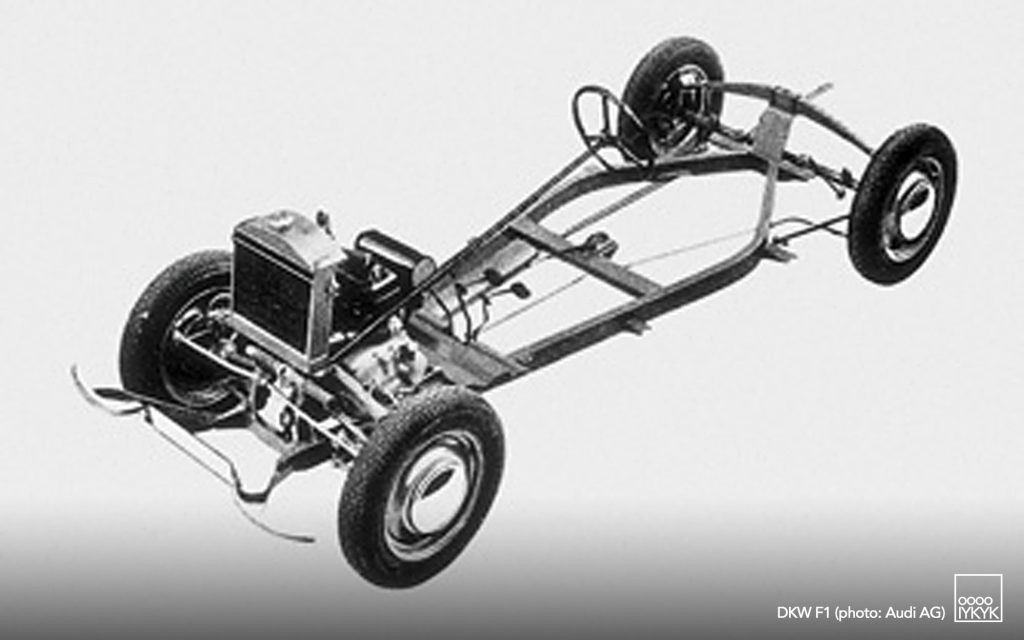
- Construction around a lightweight steel chassis
Rasmussen allotted a maximum of six weeks for the complete design and prototype build — a timeline widely considered unrealistic. Nevertheless, by the end of November 1930, the first prototype of the front-wheel-drive DKW completed its initial test run, demonstrating the feasibility of the concept.
INTRODUCTION
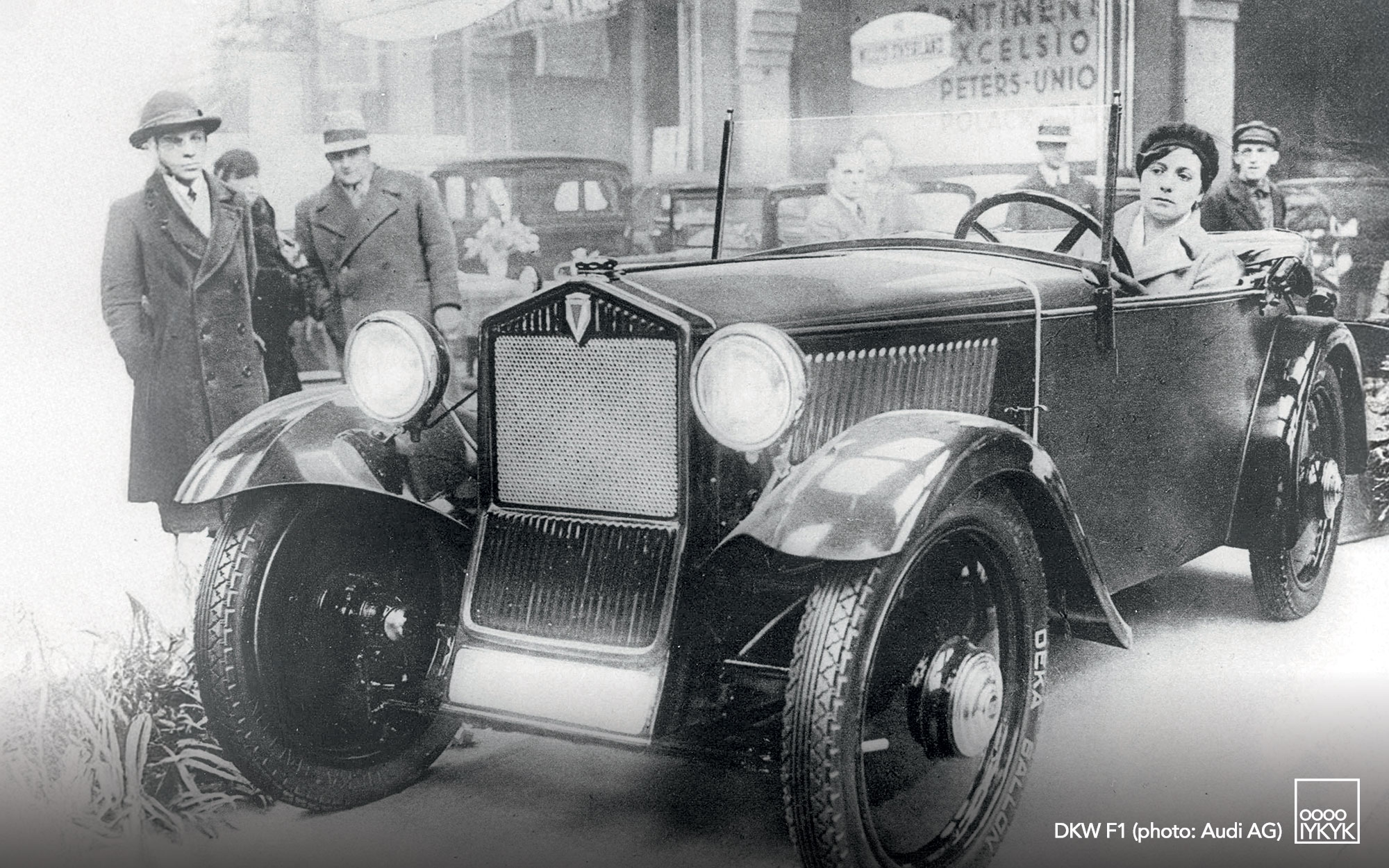
The DKW F1 made its public debut in February 1931 at the IAA in Berlin. It was introduced as an inexpensive, modern car with technically progressive features for its class. The use of a lightweight body, compact two-stroke engine and front-wheel-drive layout distinguished it from competitors and aligned with the economic realities of the early 1930s.
TECHNICAL CHARACTERISTICS
While specifications varied across later versions, the early DKW F1 models generally featured:
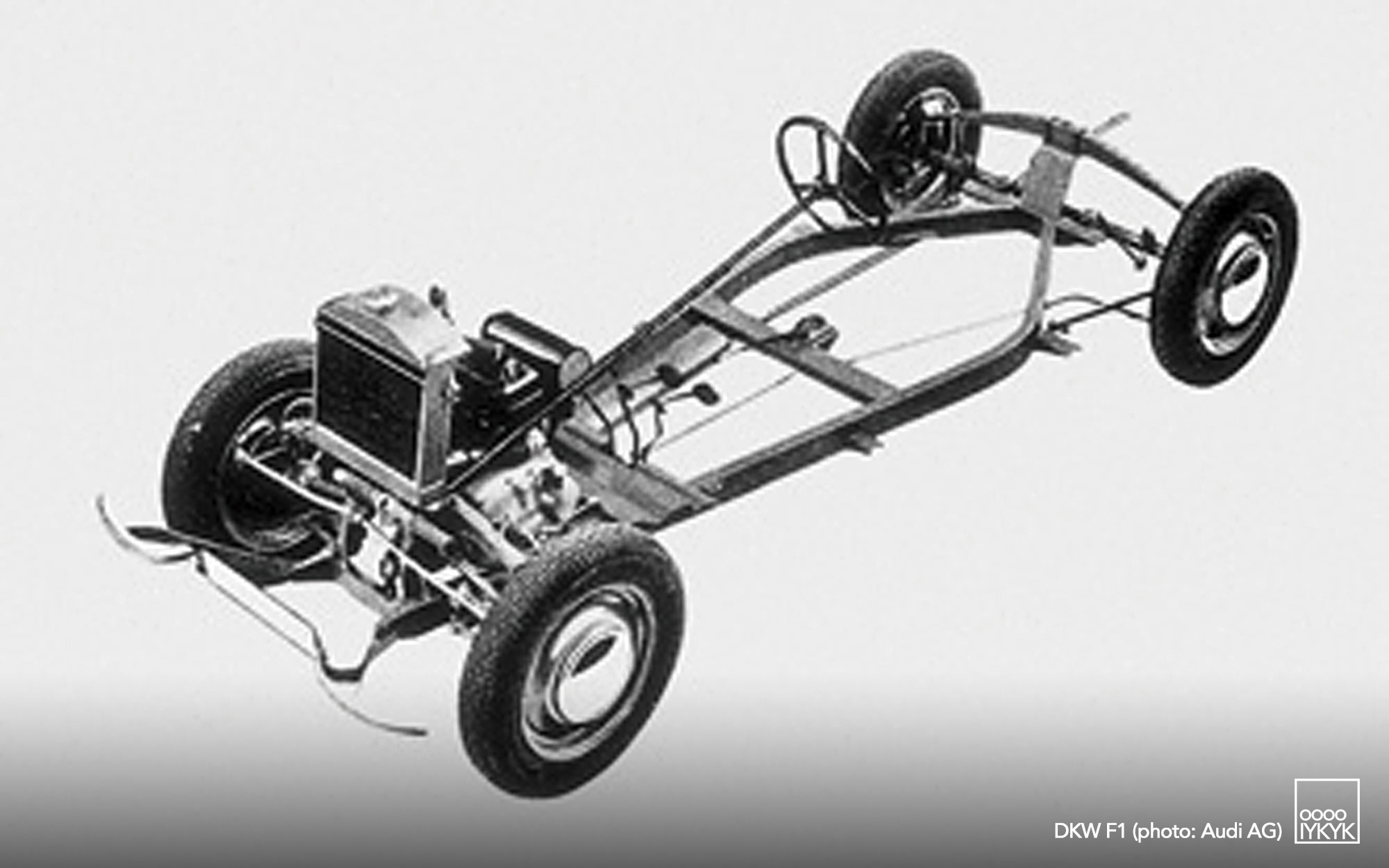
- A two-stroke, two-cylinder engine sourced from DKW’s motorcycle range
- Front-wheel drive, which improved traction and interior packaging compared with rear-driven contemporaries
- A light lightweight steel frame with fabric bodywork in early versions, consistent with DKW’s tradition of weight-conscious design
The layout was simple, inexpensive to build and maintain, and surprisingly effective for its intended market.
PRODUCTION & EVOLUTION
The F1 inaugurated what became one of Auto Union’s most successful model families. Produced at the Audi works in Zwickau, the front-wheel-drive DKW series grew into seven separate model generations between 1931 and 1942. Collectively, these models reached nearly 270,000 units — a significant figure for the period and a major commercial achievement for Auto Union.
The strong sales of the DKW front-wheel-drive cars helped stabilise Audi Werke financially and ensured that the company could contribute effectively to Auto Union following its formation in 1932.
LEGACY
The DKW F1 holds an important place in automotive history as:
- One of the earliest mass-market front-wheel-drive cars
- The foundation of DKW’s high-volume small car program
- The model that helped secure Audi’s survival during the Great Depression
- A precursor to the post-war DKW F-series cars that would revive Auto Union in the 1950s
The success of the F1 and its successors cemented DKW’s reputation for technical ingenuity and efficiency, shaping the engineering philosophy that ultimately fed into the heritage of the modern Audi brand.
PHOTO GALLERY