

/Concept Cars & Design Studies
What: NSU Trapeze Concept by Bertone
Model Family: N/A
Era: NSU Postwar
Debuted: 1973 Paris Motor Show
Year: 1973
Registration Plate: N/A
Status: Bertone collection
Number Produced: 1
Model / Generation Code(s): unknown
Chassis / Matrix: unknown
Layout: Mid-engine, 2+2
Engine: 2-rotor Wankel Rotary Engine (derived from NSU Ro80)
Transmission: 3-speed semi-automatic / manual with torque converter
Drivetrain: Rear-wheel drive
Power: approx. 115 bhp
Weight: unknown
Length: ~4,080 mm
Width: ~1,830 mm
Height: ~1,100 mm
Wheelbase: 2,480 mm
Exterior Paint Color: unknown two-tone white and blue
Wheels: unknown
BACKGROUND
By the early 1970s, NSU existed in a precarious position. Once a pioneering German automaker—particularly in the development of the Wankel rotary engine—the company had been absorbed into Volkswagen following mounting financial strain tied to the ambitious but troubled Ro80 program.
At the same time, Volkswagen Group was in the process of rationalizing its portfolio, ultimately consolidating around Audi as its premium brand. NSU’s future was uncertain, and within that uncertainty lay an opportunity.
Italian design houses recognized this moment. Bertone, fresh off its work on the Audi 50, sought to strengthen ties with Ingolstadt. Meanwhile, Giorgetto Giugiaro and Italdesign were pursuing a parallel path with the Audi Asso di Picche. The Trapeze emerged as Bertone’s counterpoint—a deliberate move to demonstrate design leadership and secure future collaboration.
Rather than compete directly under the Audi nameplate, Bertone chose NSU as its canvas. The result would be one of the most unconventional concept cars of the decade.
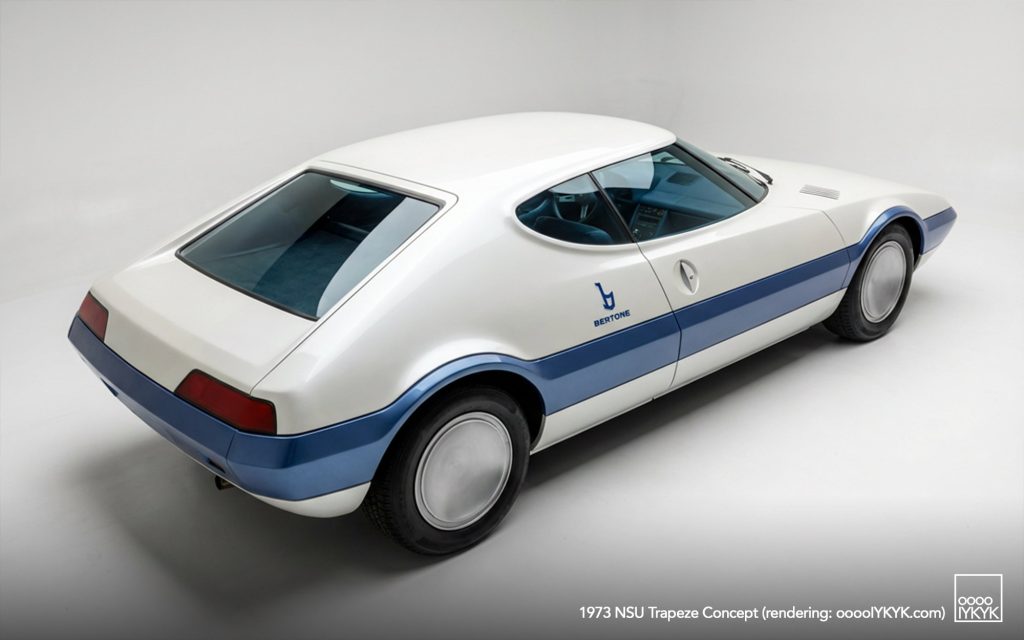
CONCEPT AND MISSION
The Trapeze was conceived as a halo concept—an attempt to reposition NSU as a forward-thinking performance brand while showcasing the architectural advantages of the Wankel rotary engine.
Compact, lightweight, and capable of being mounted midship, the rotary offered something traditional piston engines could not: packaging freedom. Gandini, who historically expressed reservations about mid-engine practicality, saw an opportunity to rethink the format entirely.
The brief was ambitious. Not simply a sports car, but a mid-engine 2+2 capable of accommodating four full-sized adults—a near impossibility within conventional packaging constraints.
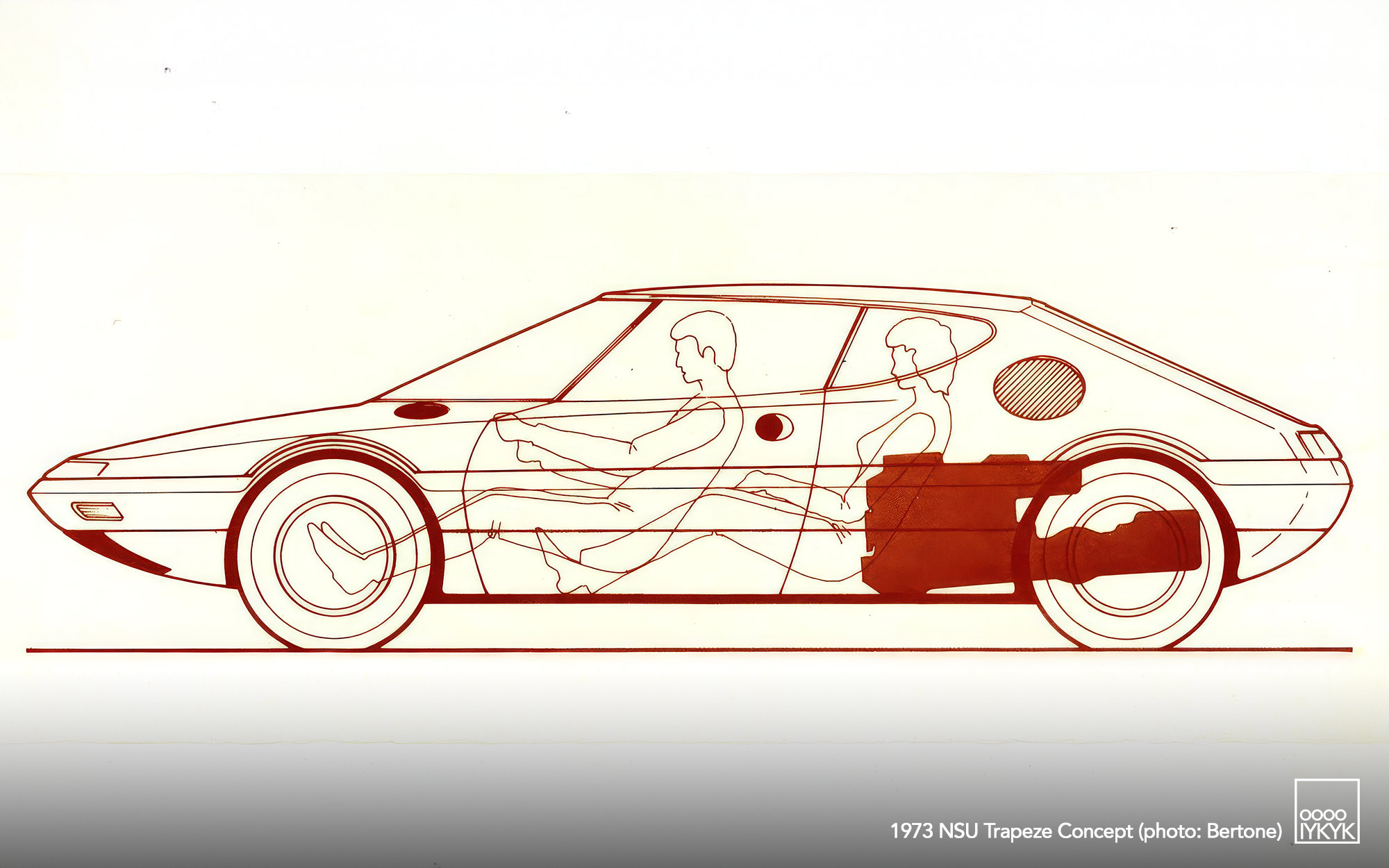
DESIGN AND ARCHITECTURE
The defining innovation of the Trapeze lies in its seating architecture.
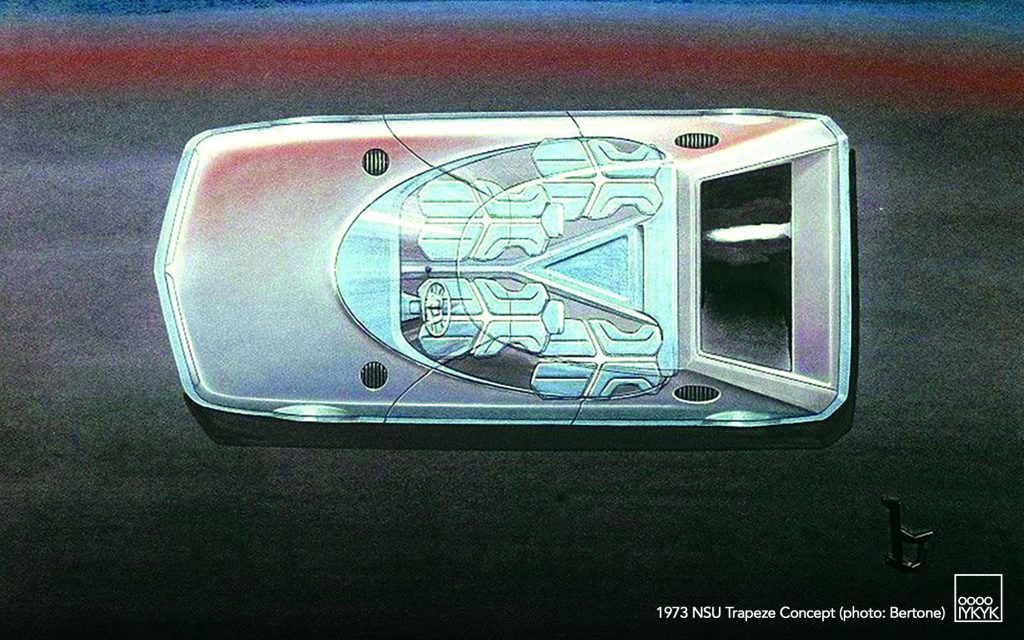
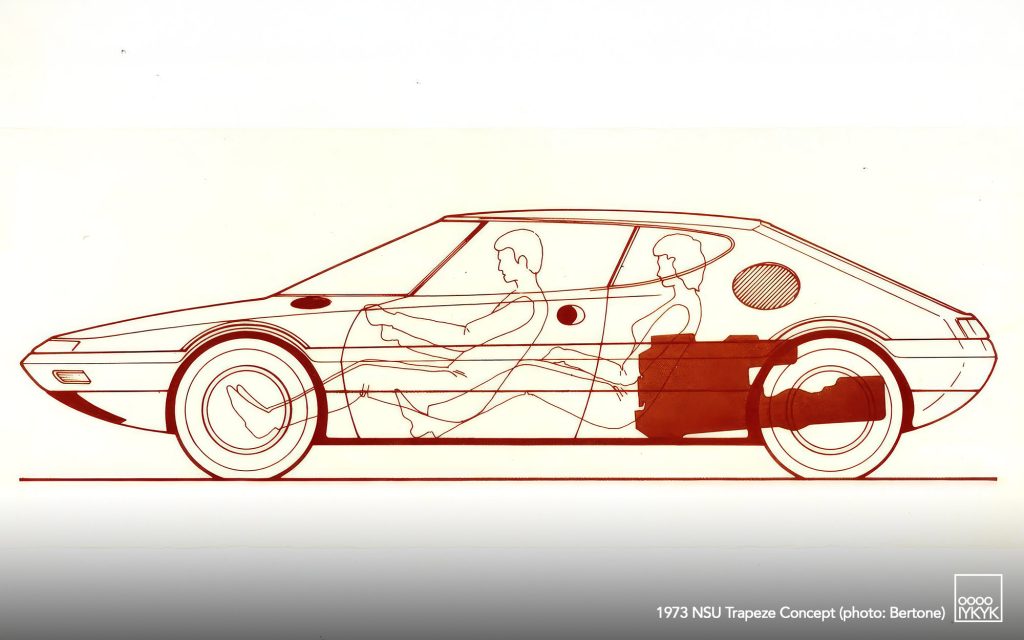
Rather than placing rear passengers behind the front seats, Gandini positioned them outboard on either side of the centrally mounted engine, creating a trapezoidal layout when viewed from above – thus the name “Trapeze”. The front occupants sat tightly grouped at the centerline, while the rear seats flanked the engine.
This configuration achieved several objectives:
- Enabled true four-passenger accommodation in a mid-engine layout
- Reduced overall vehicle length without sacrificing cabin space
- Created a safety buffer between occupants and the doors
- Allowed for improved legroom and visibility for rear passengers
The concept itself traces back to a 1967 patent by French engineer Jean Celle, though Bertone adapted the idea into a fully realized automotive form.
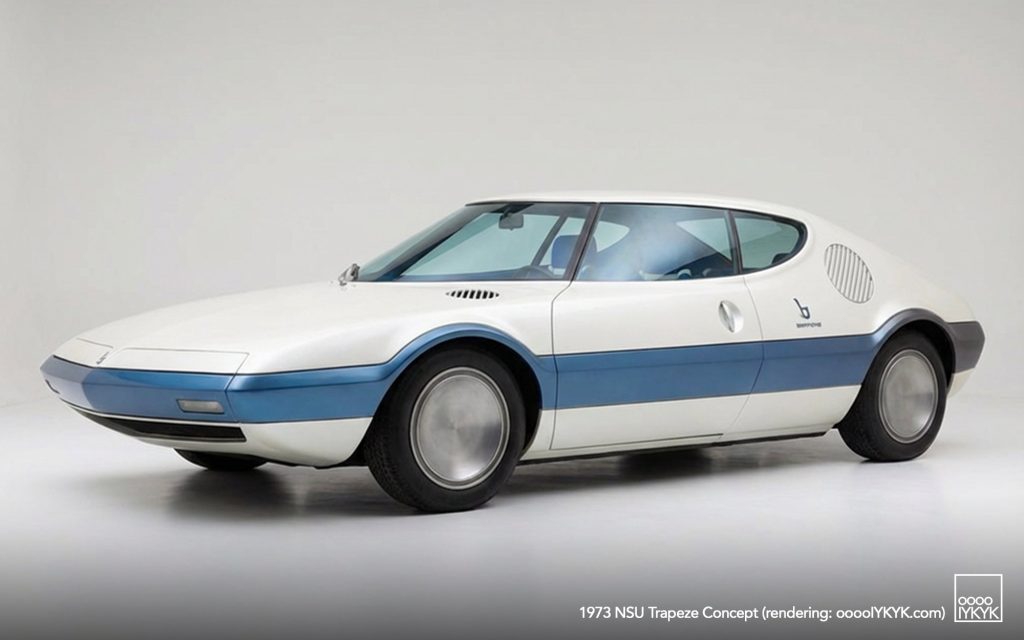
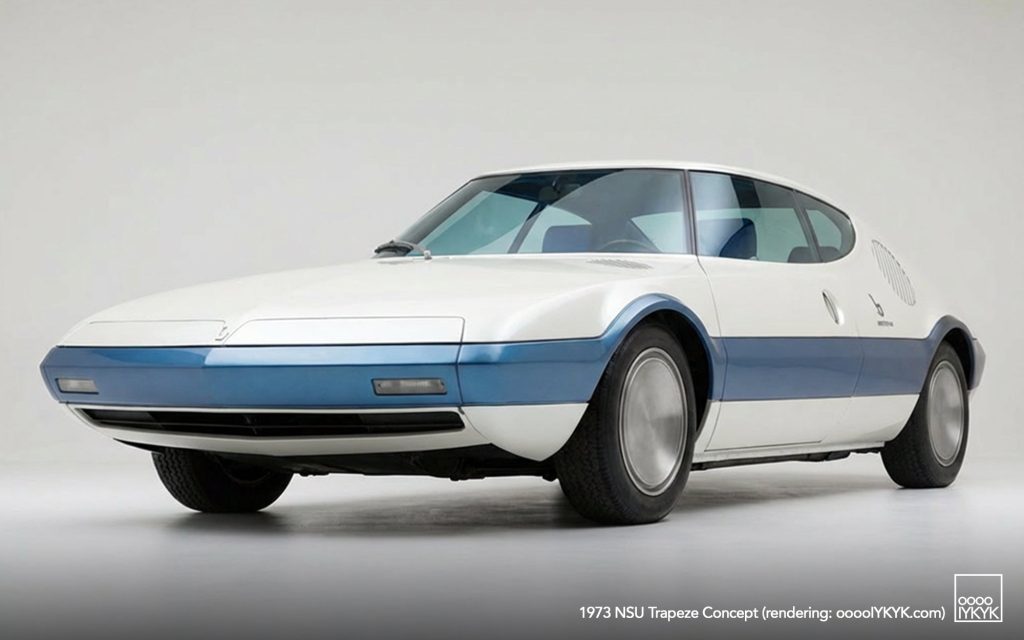
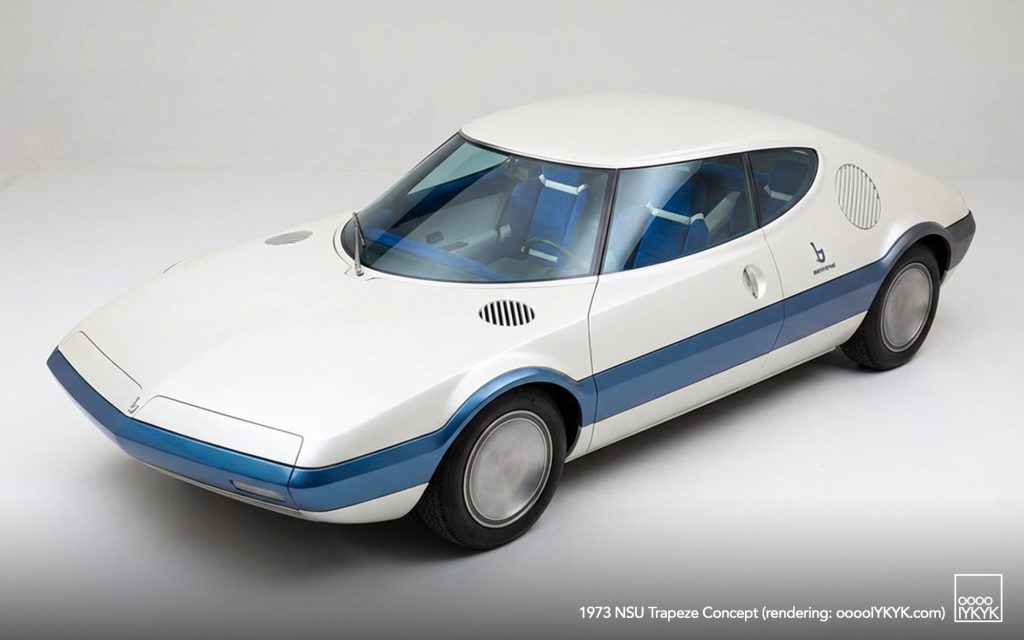
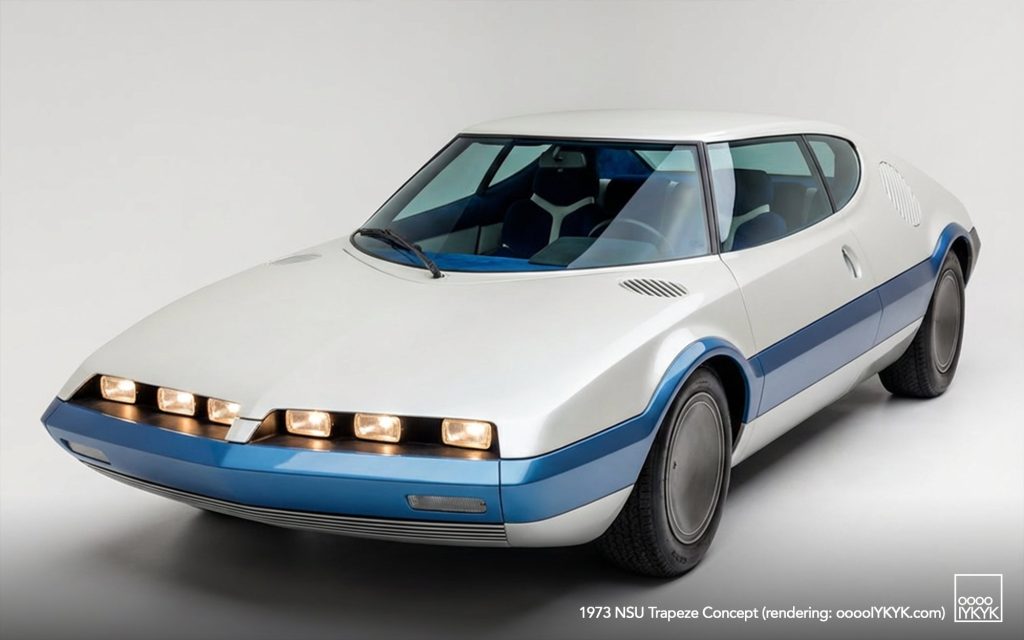
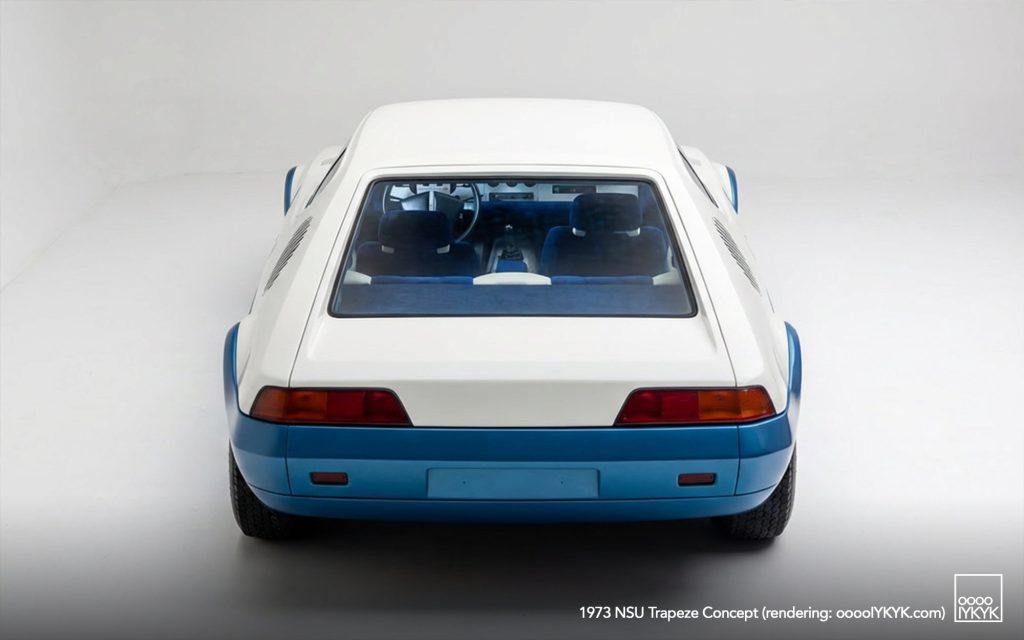
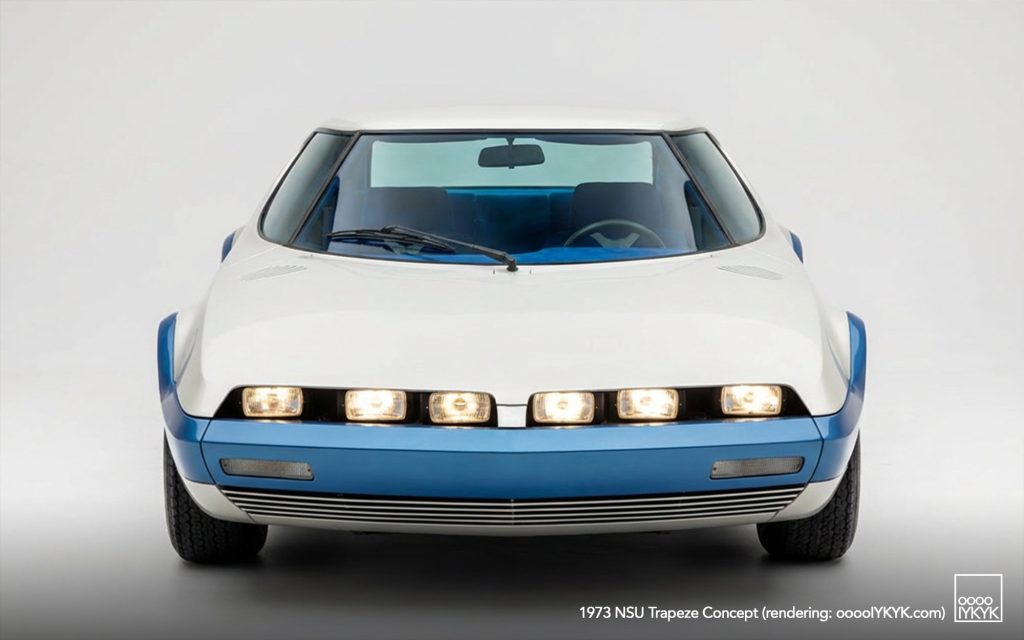
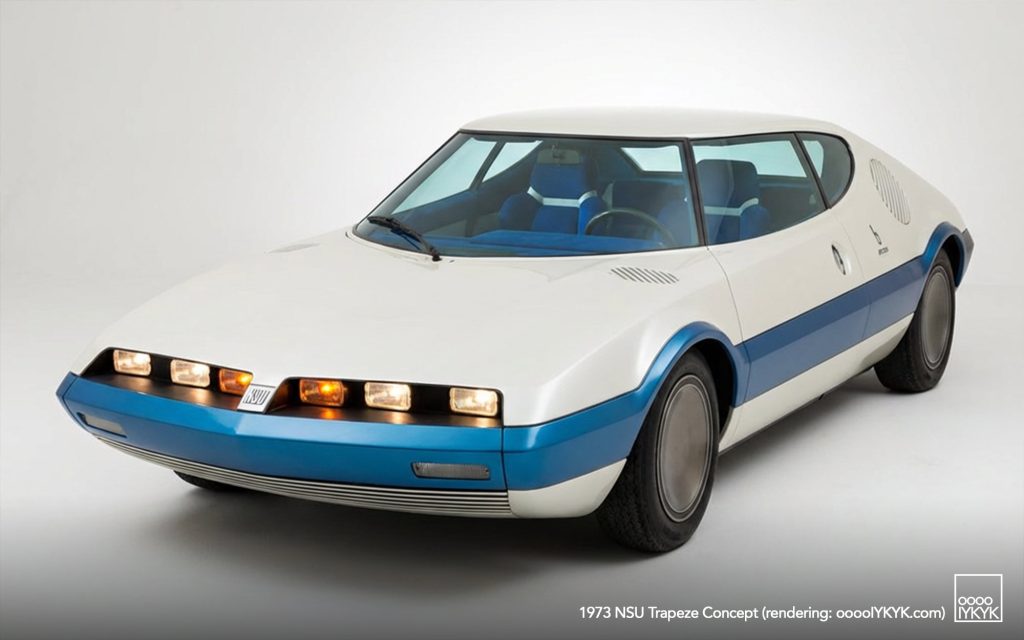
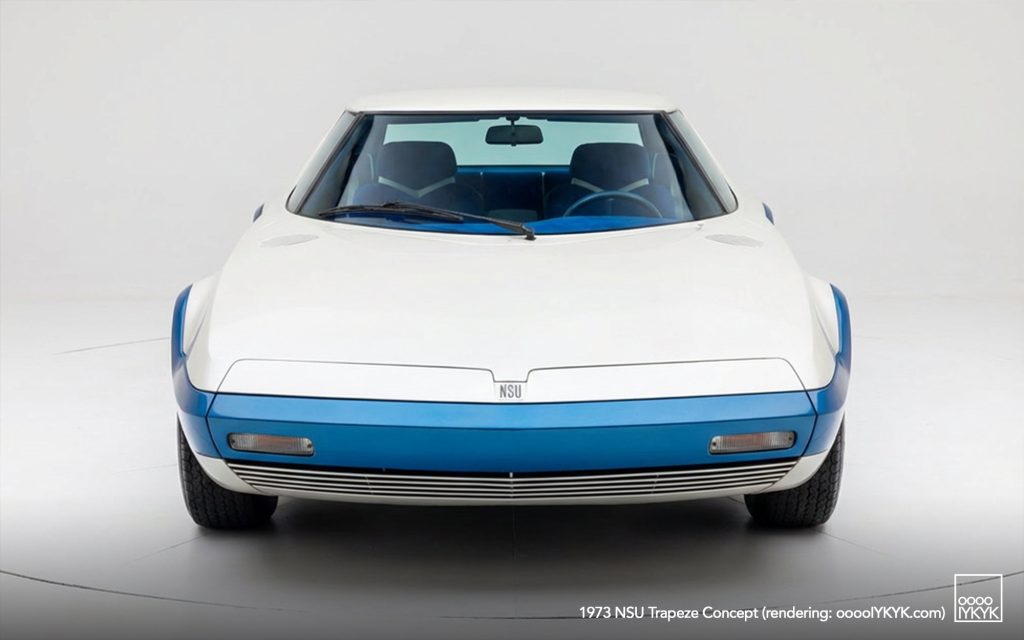
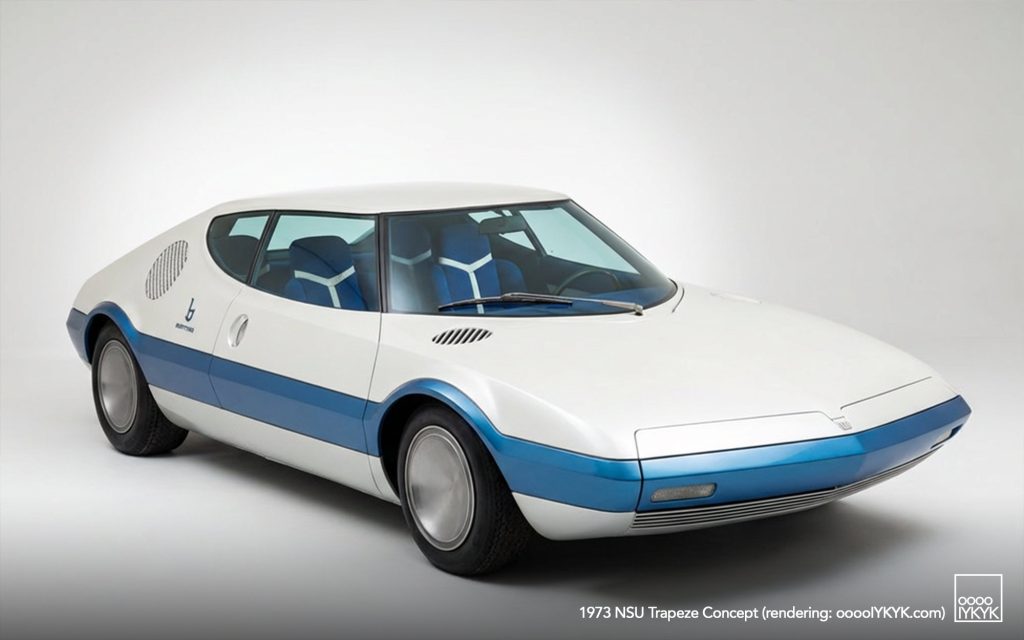
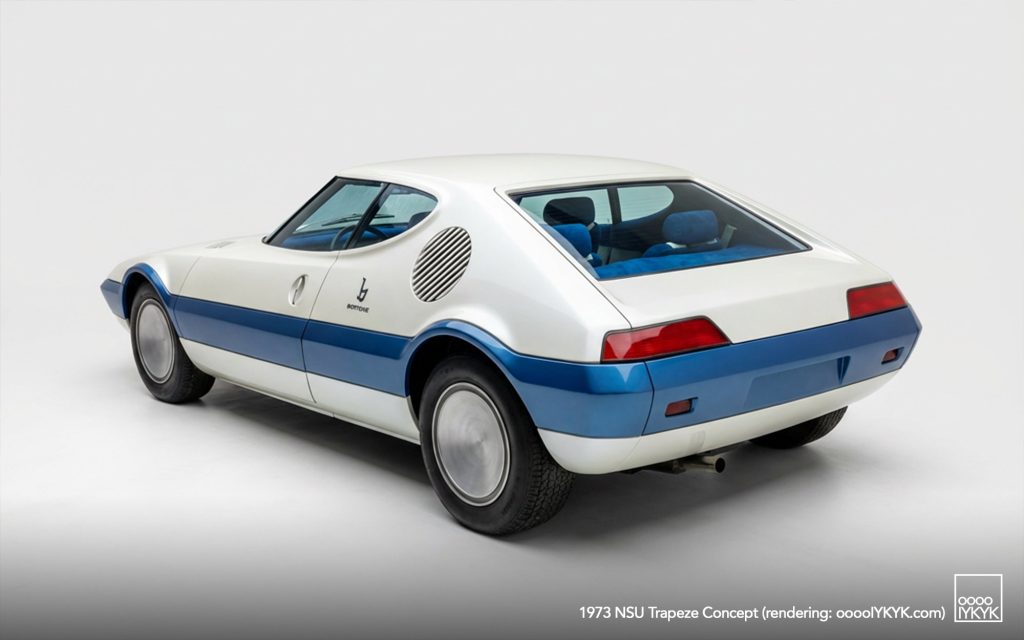
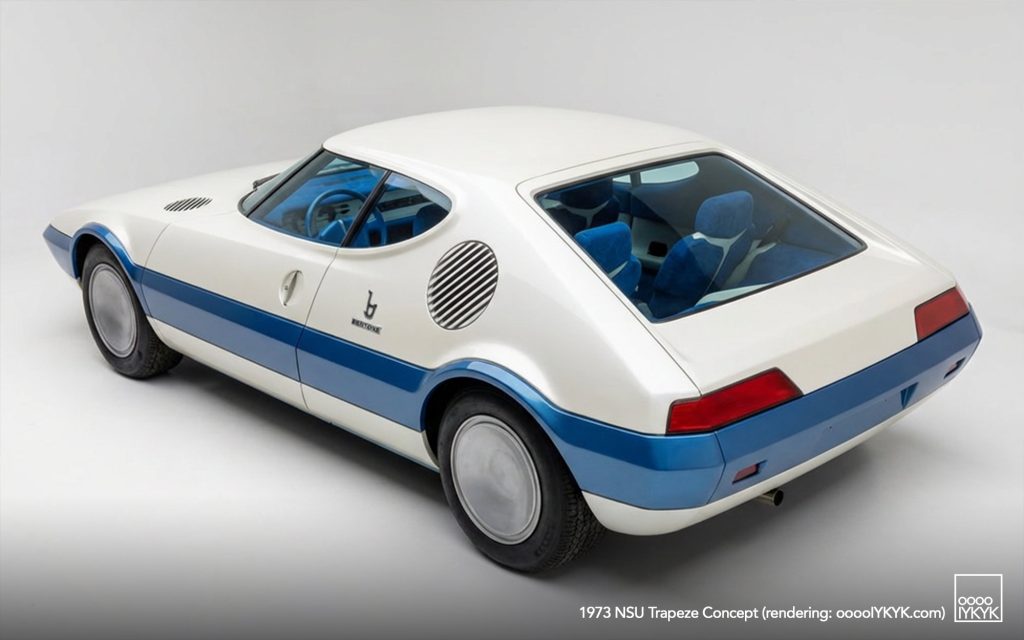
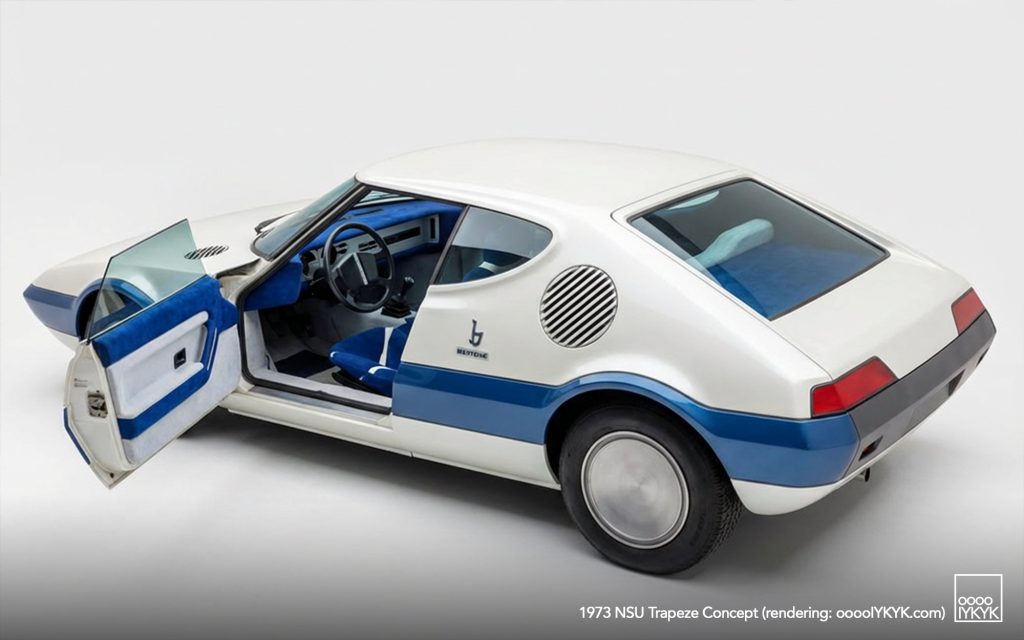
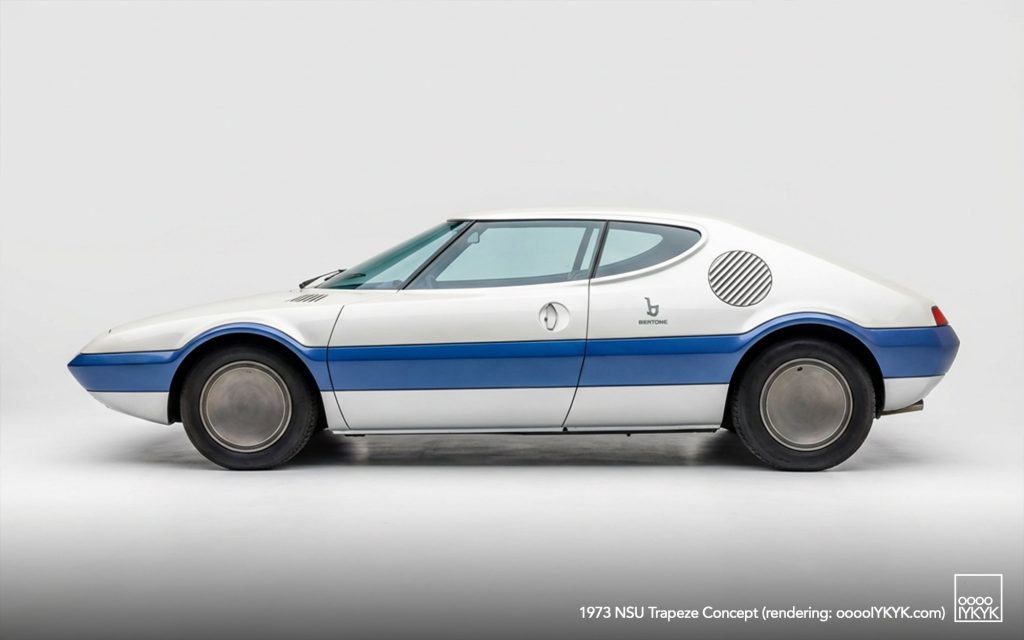
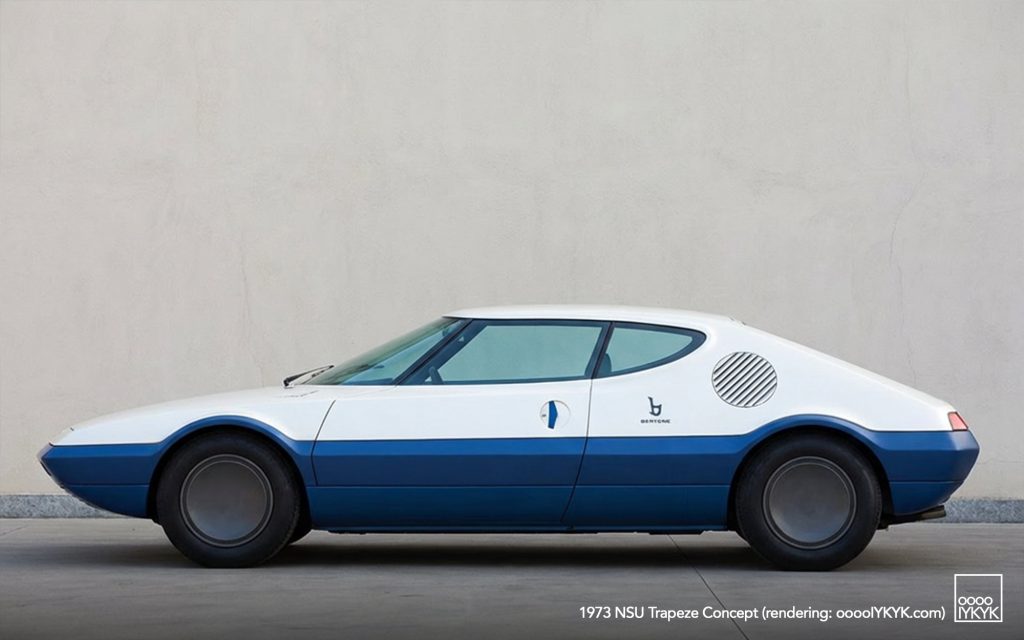
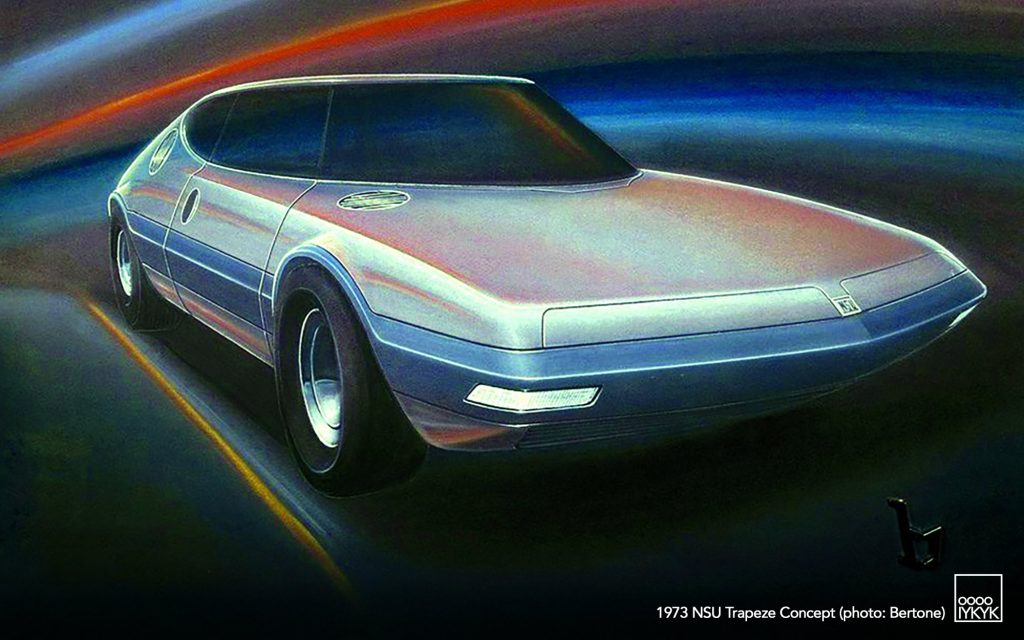
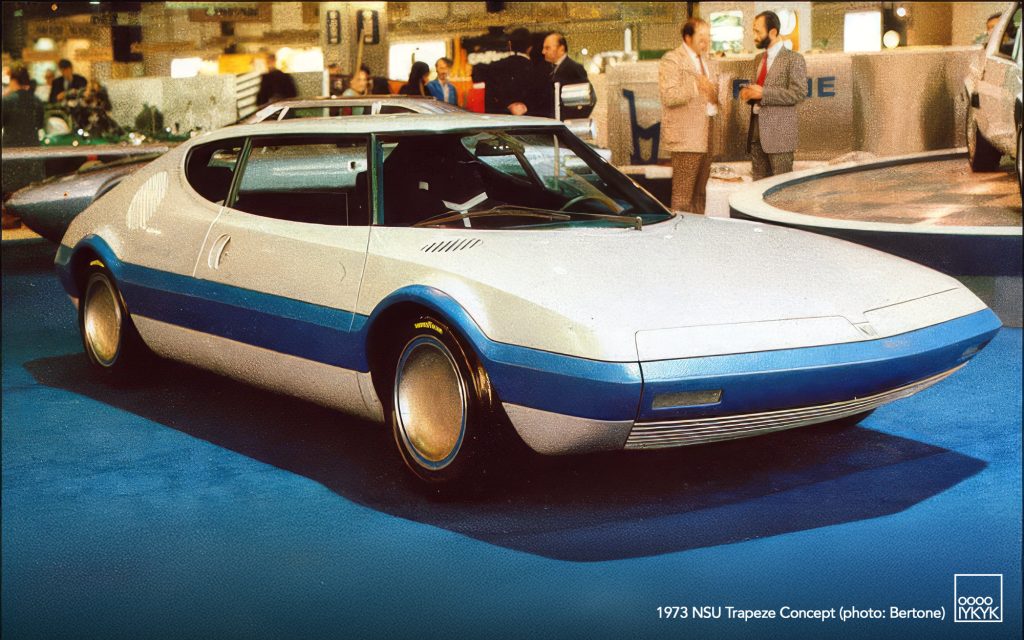
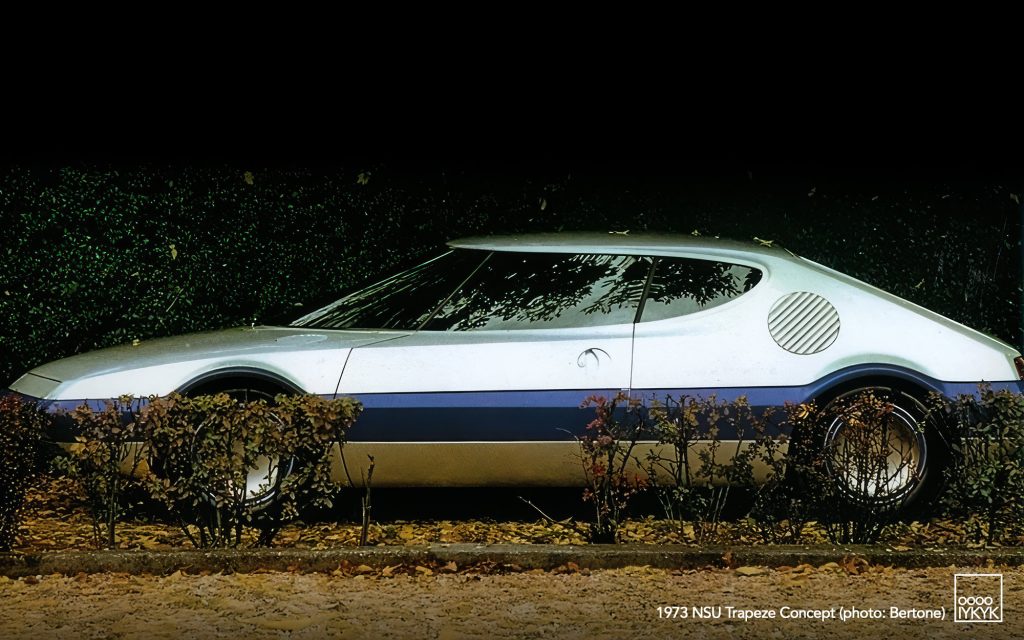
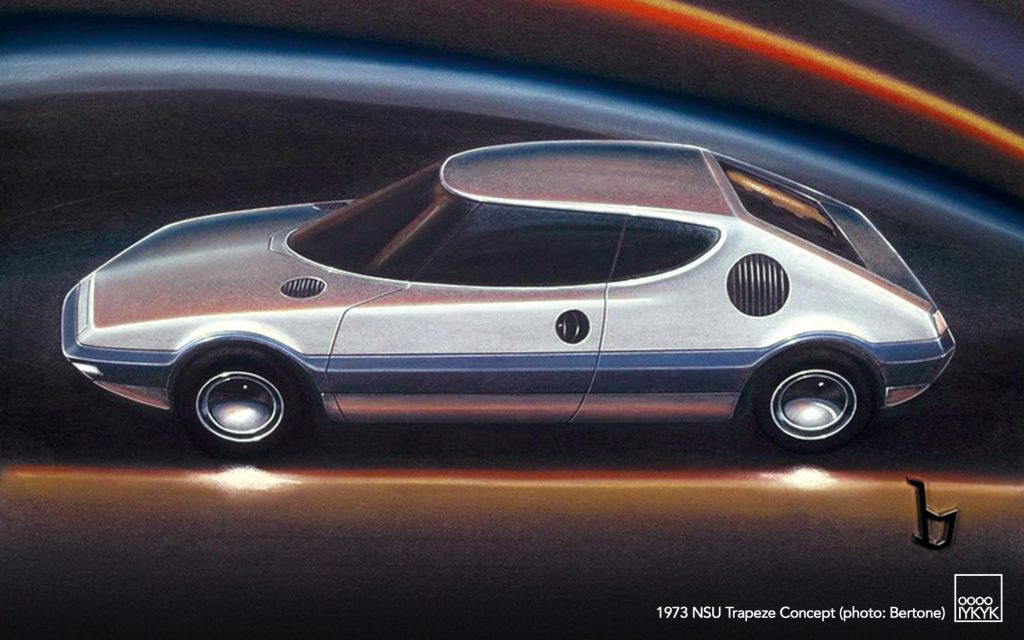
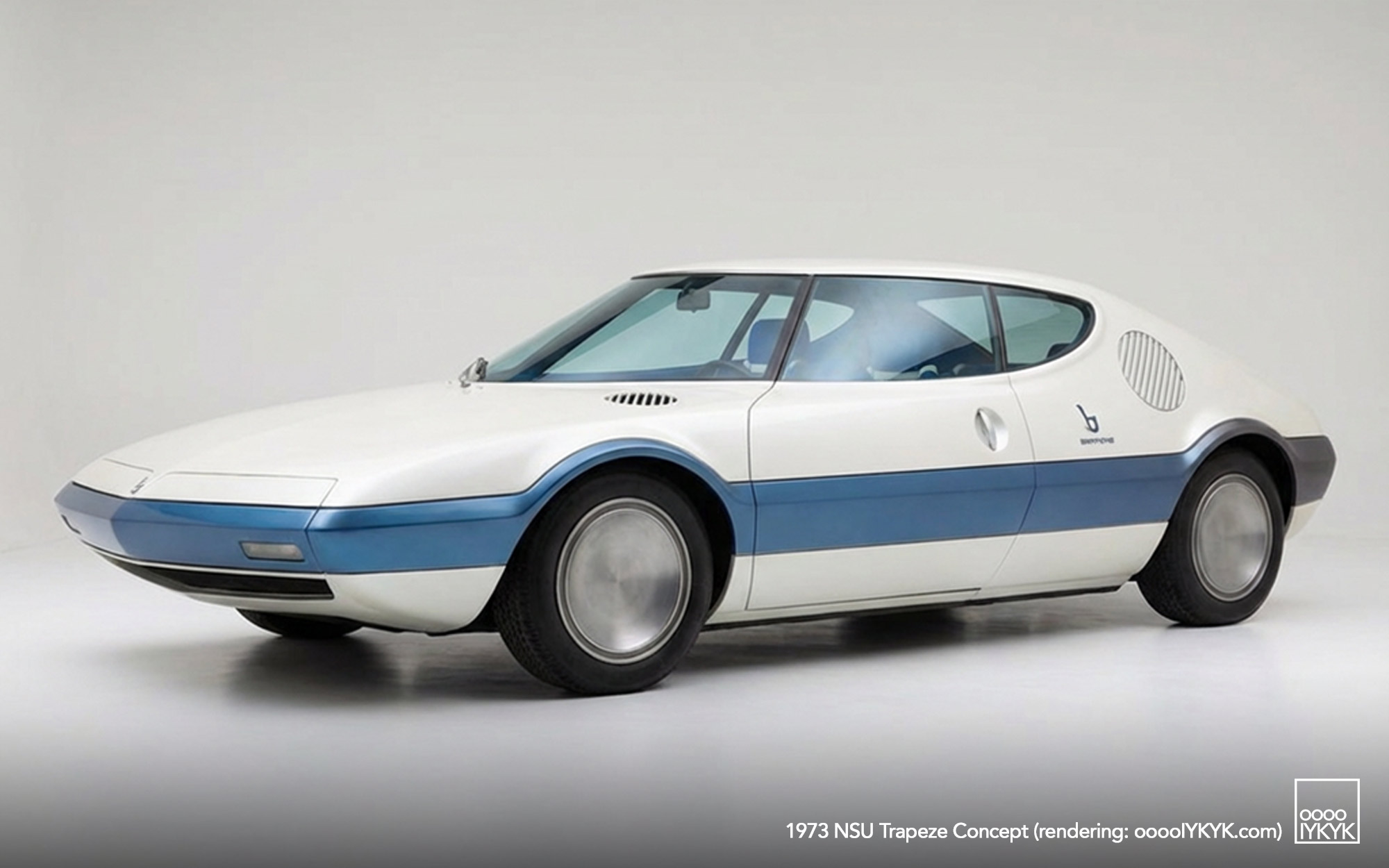
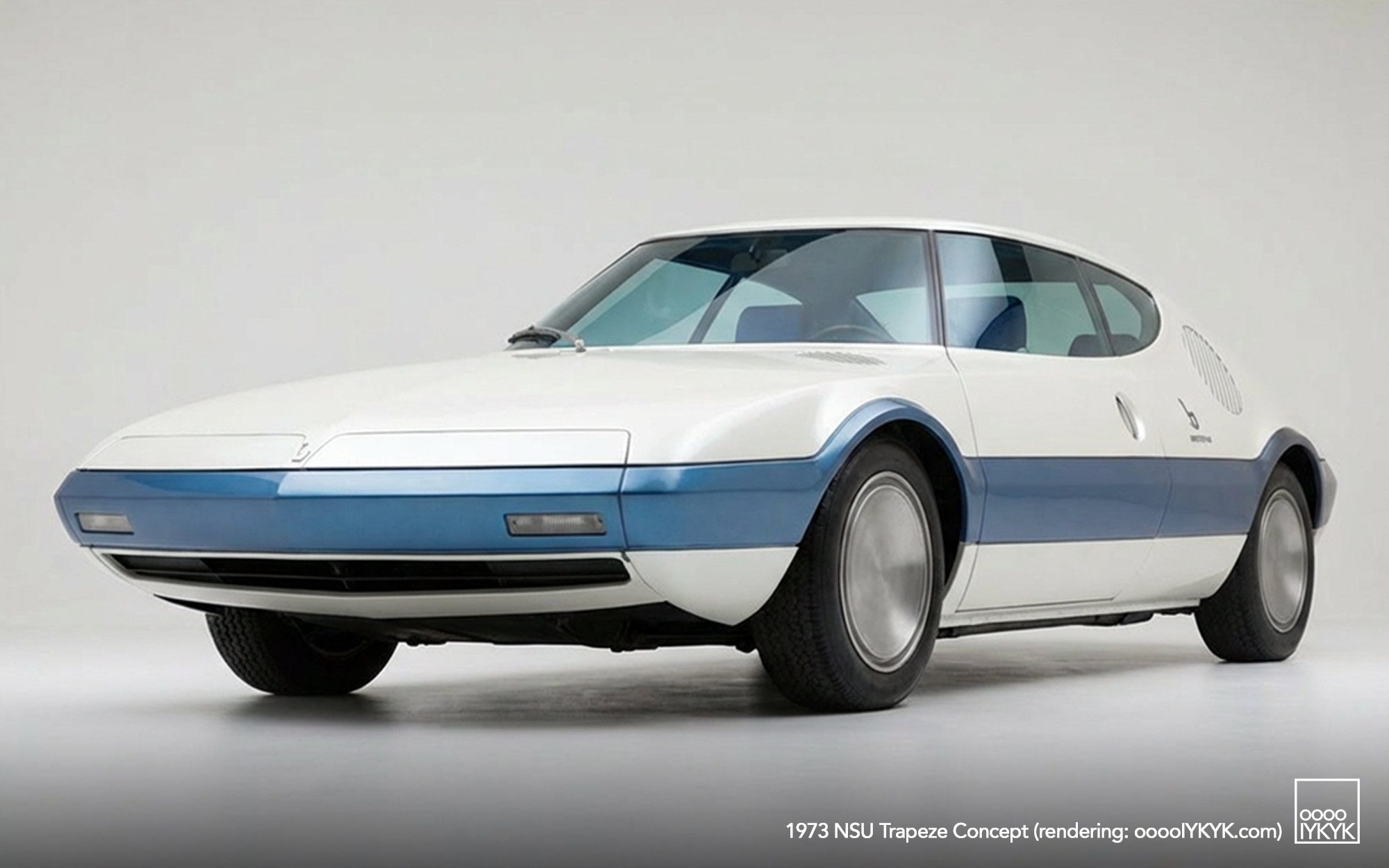
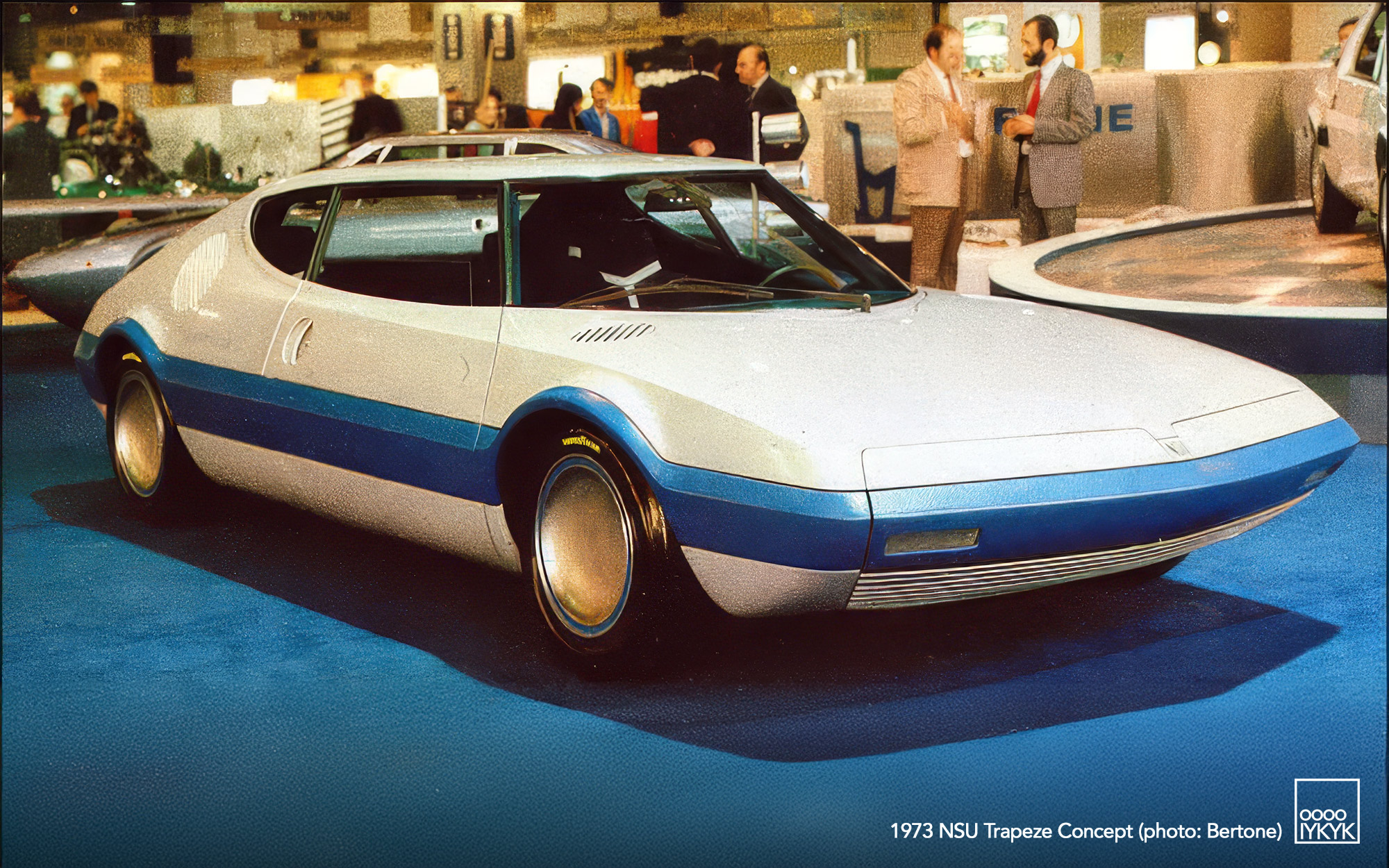
Visually, the Trapeze reflects Gandini’s wedge-era design language. Strong parallels can be drawn to the Lancia Stratos, particularly in the dramatic wraparound windshield that envelops the cabin like a visor.
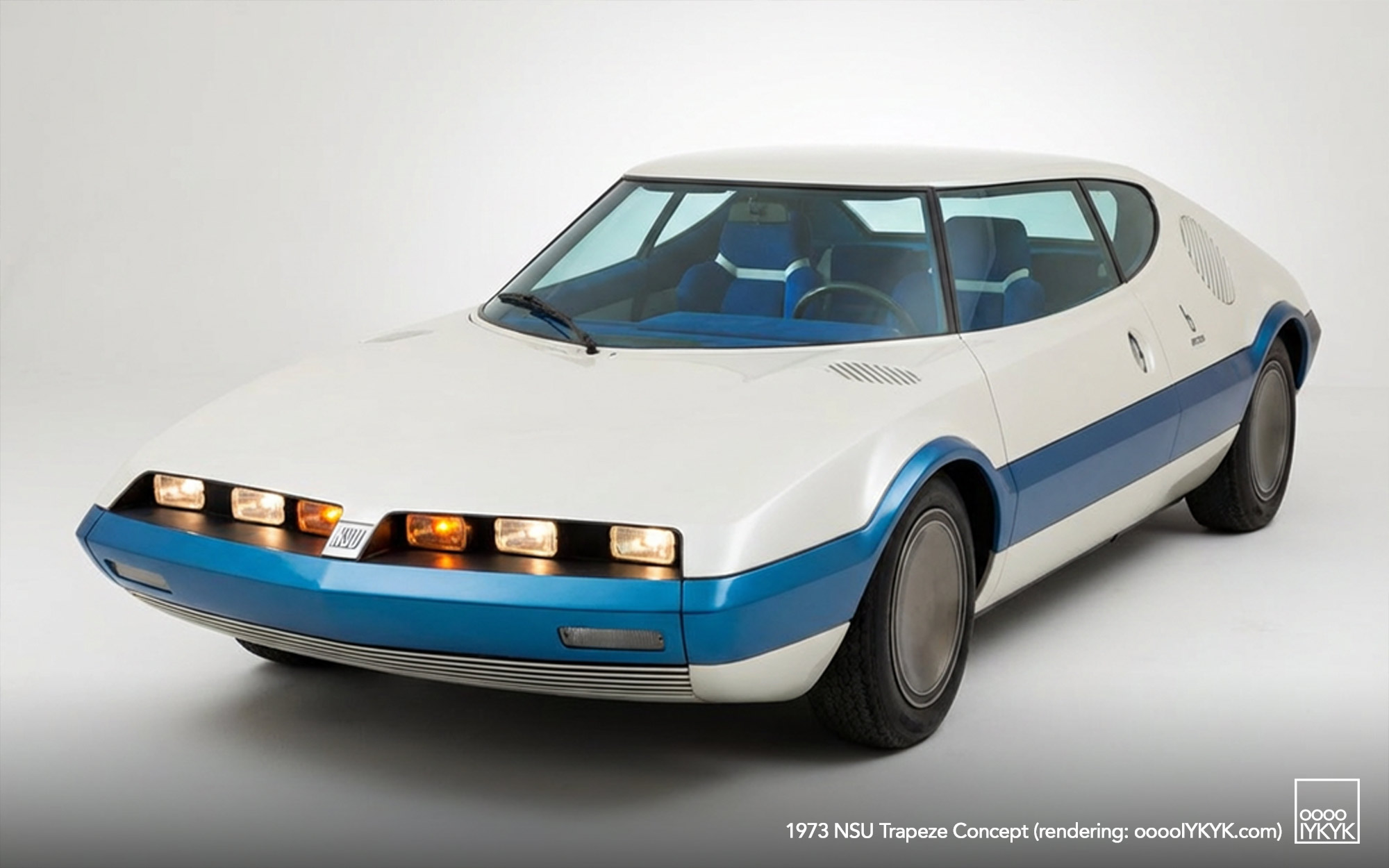
Other notable exterior features include:
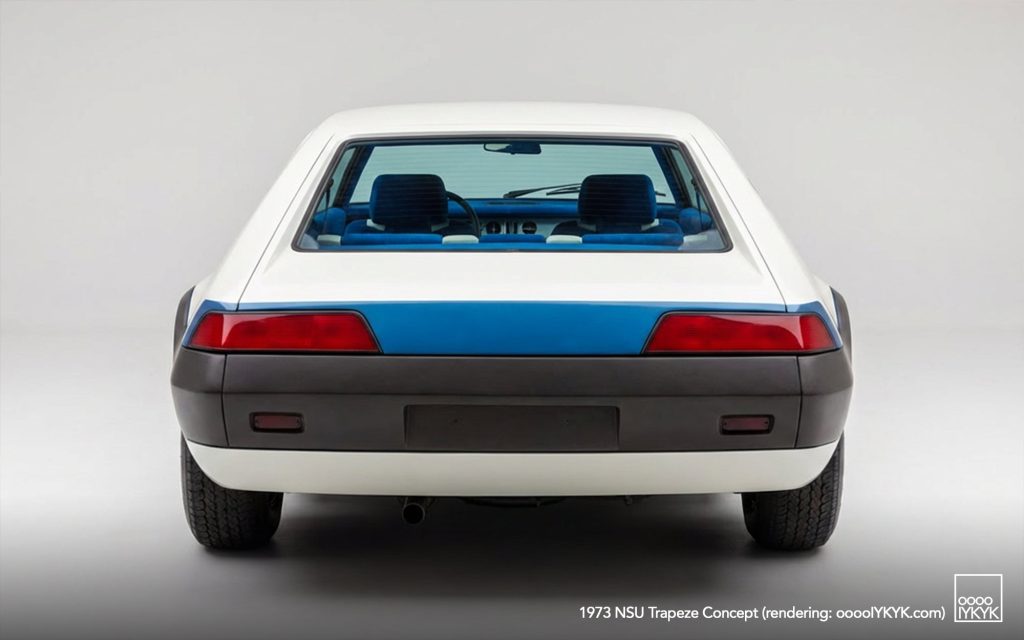
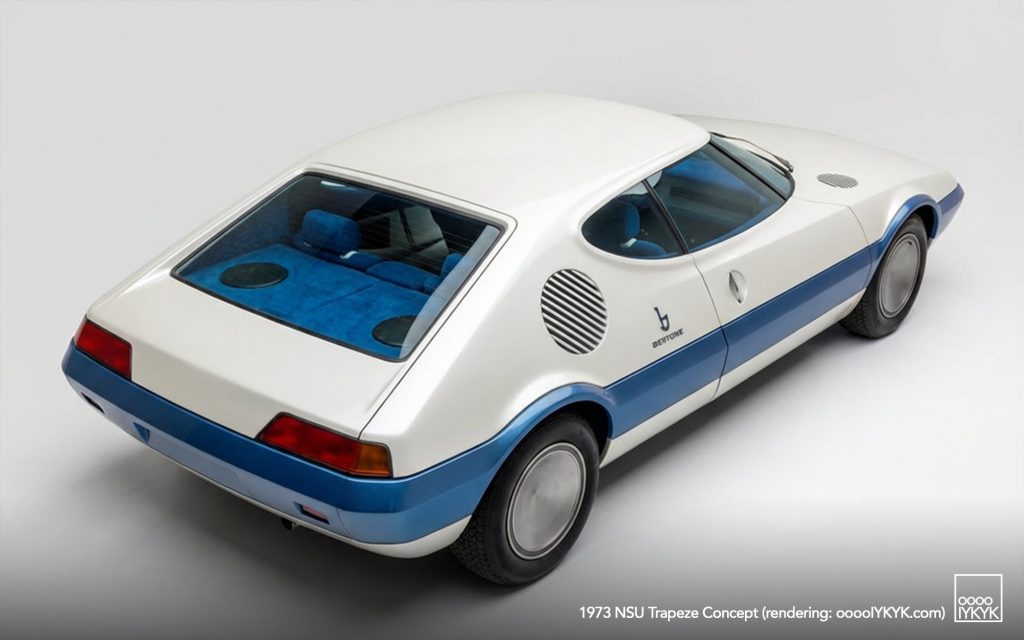
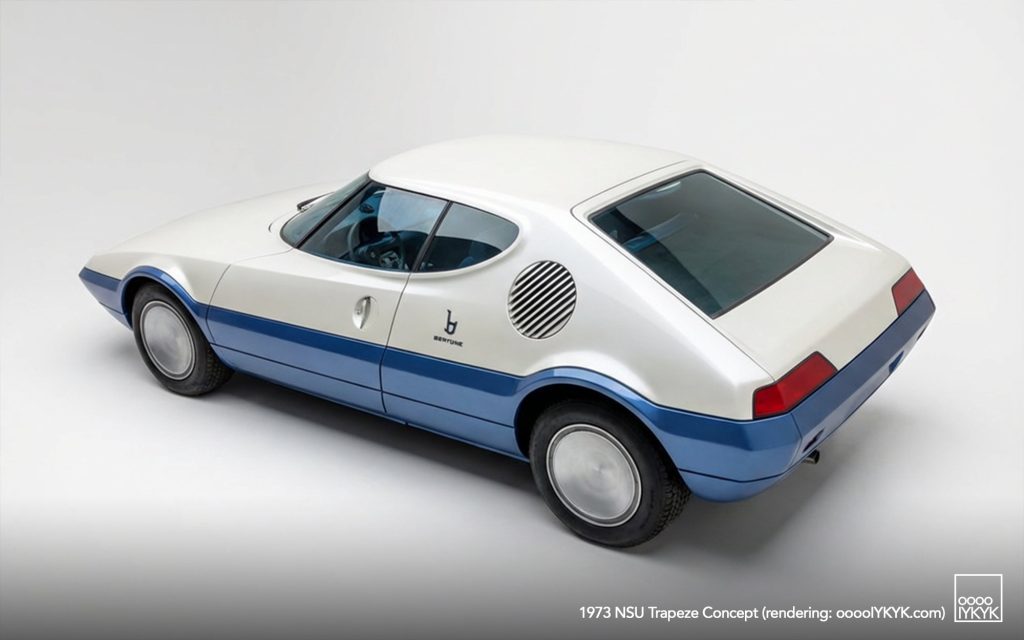
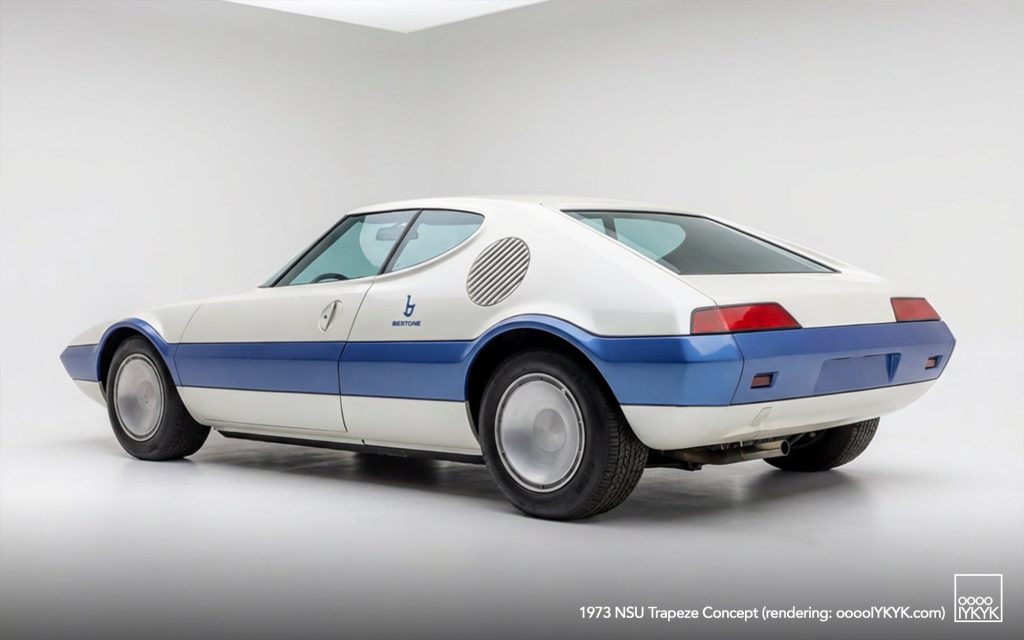
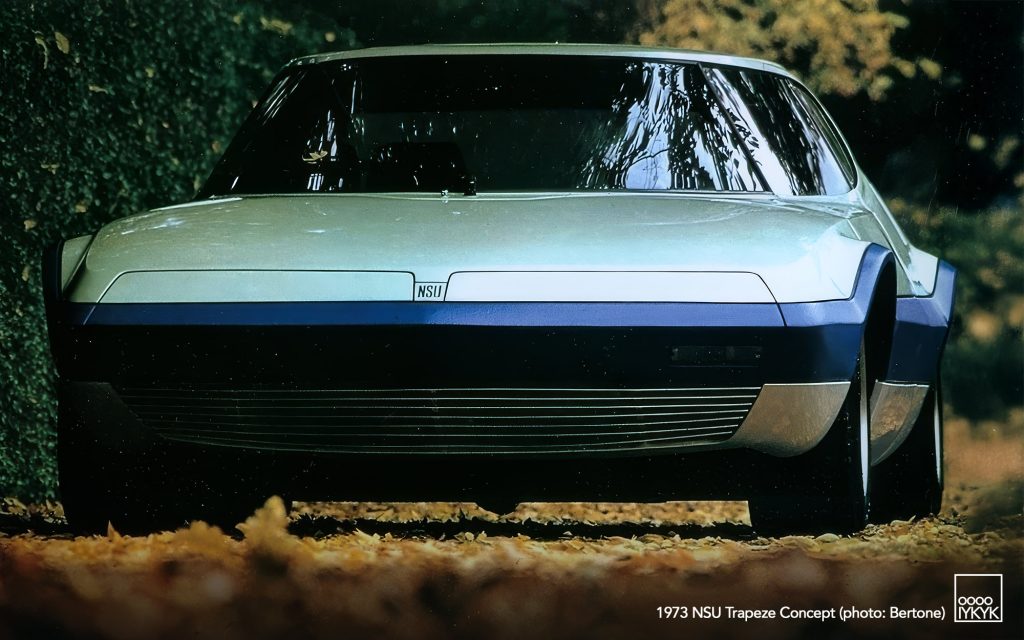
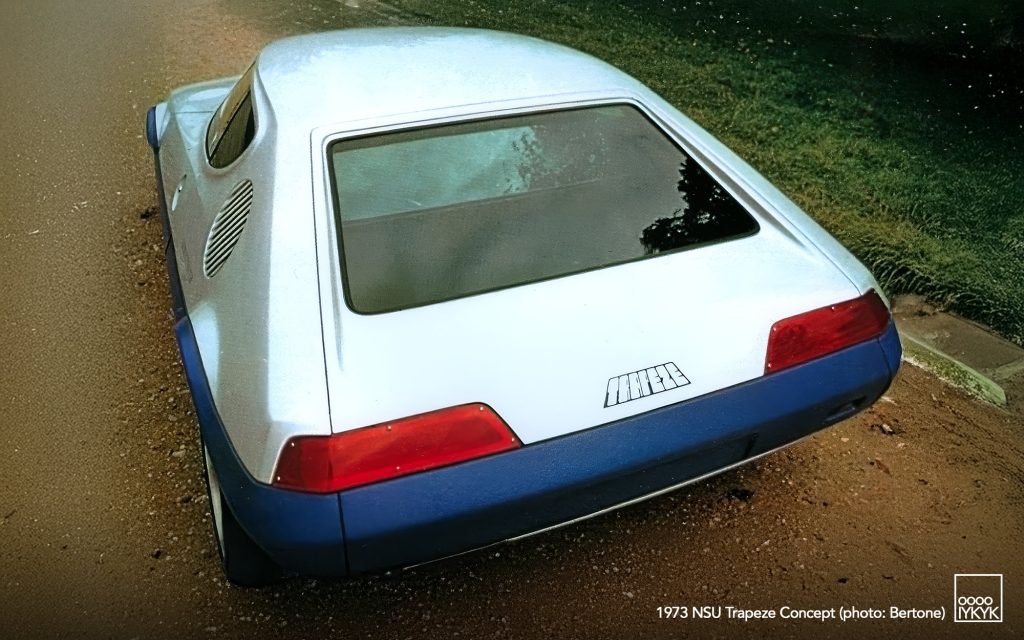
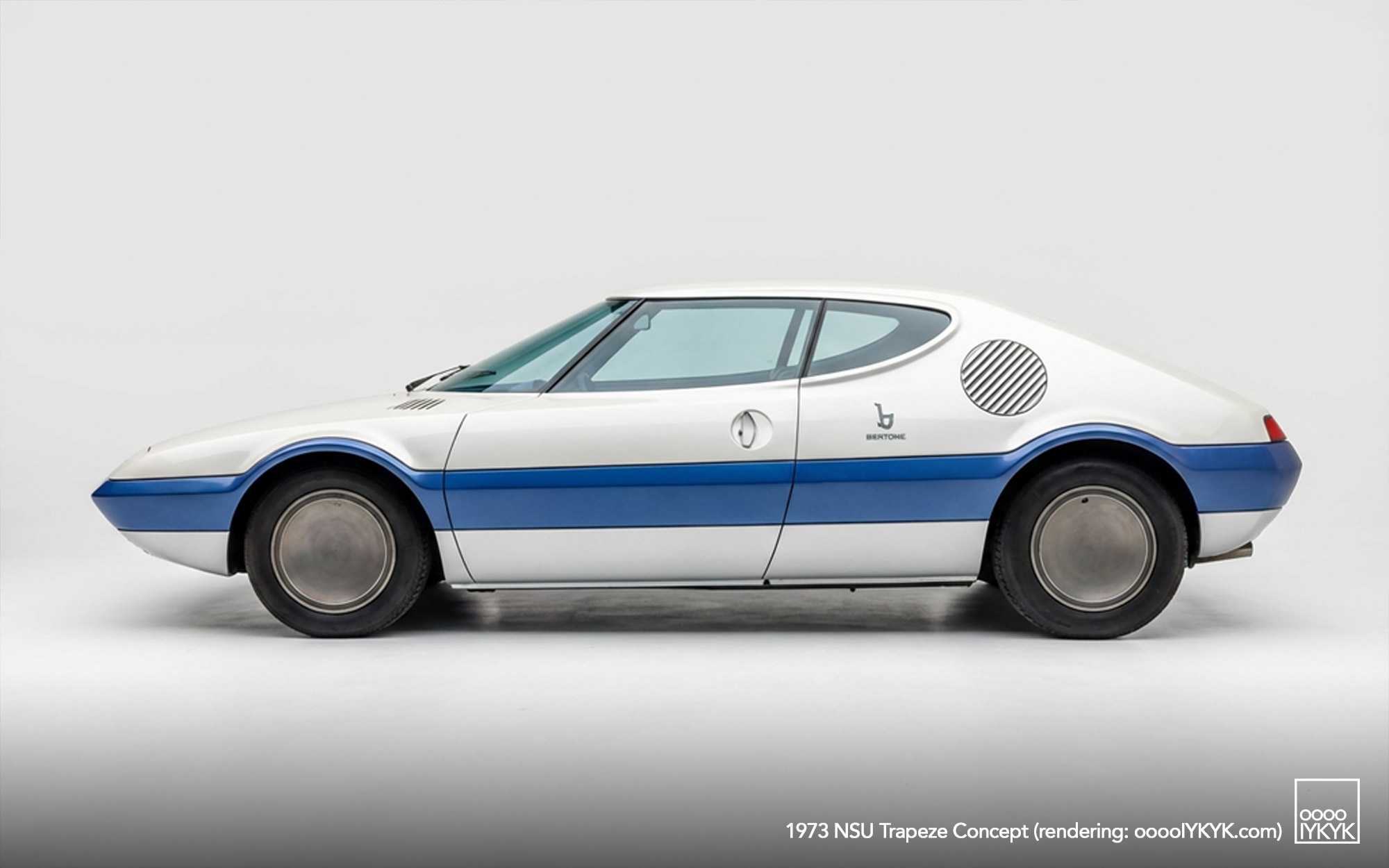
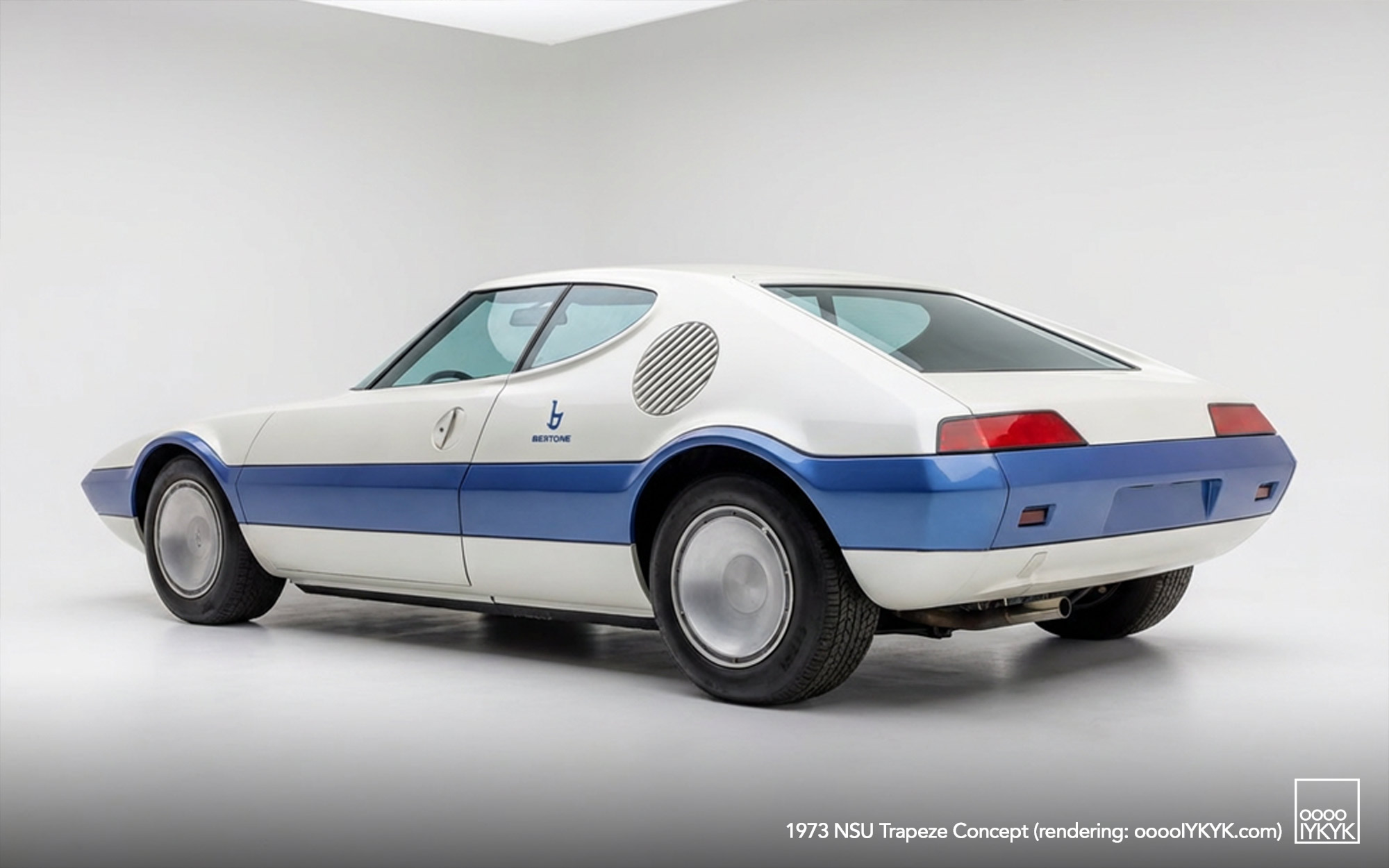
- A continuous perimeter bumper band encircling the car
- Six concealed headlights integrated into the nose
- Clean, geometric surfacing with strong horizontal emphasis
- Circular design motifs referencing the rotary engine itself
The result is both futuristic and functional—a design rooted as much in engineering logic as visual identity.
Editor’s Note: Photos in this entry include period sketches, photos and diagrams as well as AI-generated studio photos since few photos of the car exist. Notably, the Bertone concept of a trapezoidal seating position centered around the rotary engine is so unconventional that it proved practically unrepeatable with the AI tools being used. In as much, those studio images show a more conventional 2+2 configuration that doesn’t match the original design.
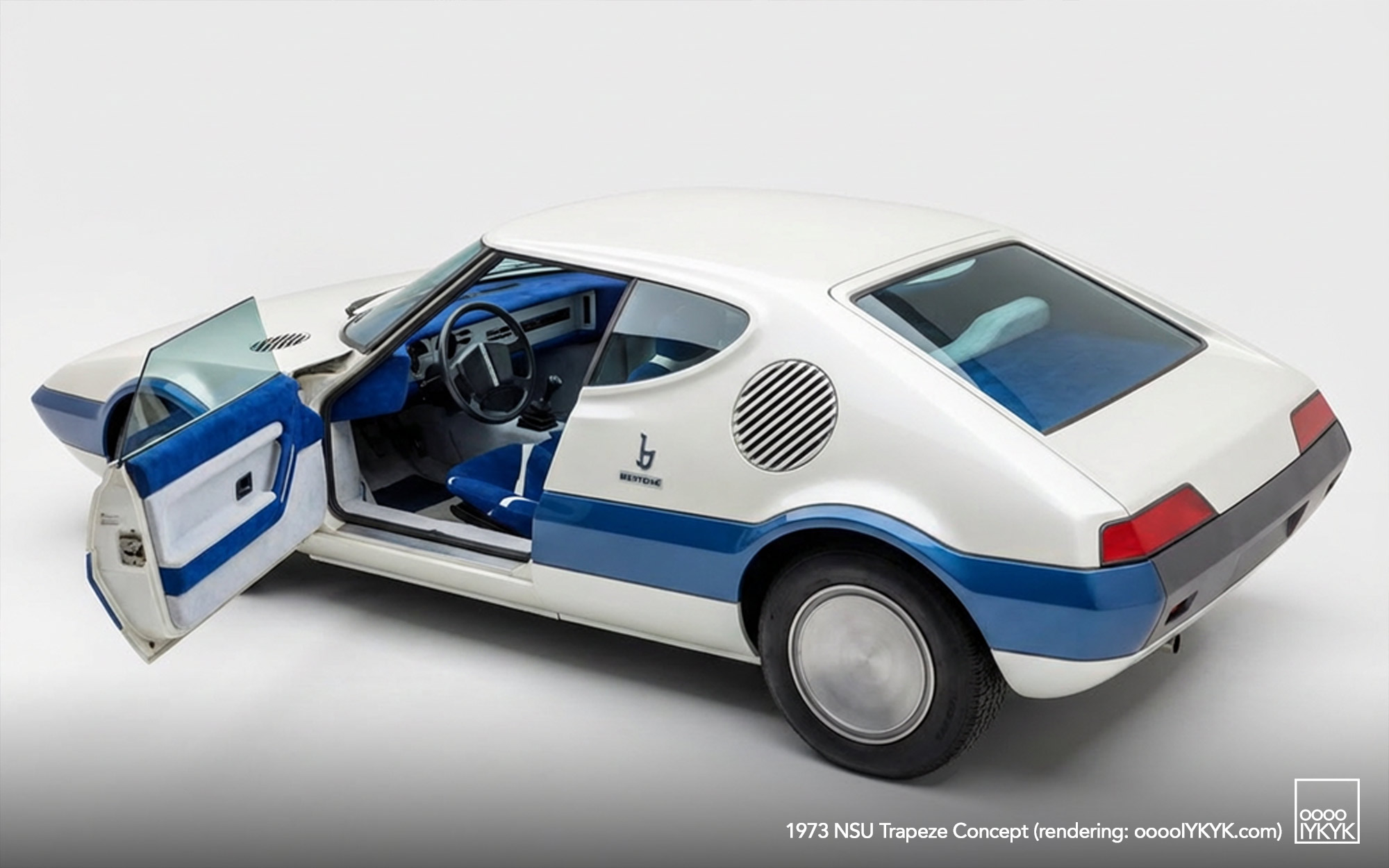
ENGINEERING AND POWERTRAIN
At the heart of the Trapeze sits a two-rotor Wankel engine derived from the NSU Ro80. Displacing approximately 1.0 liter (497.5 cc per rotor), the unit produced around 115 horsepower and was mounted longitudinally in a central rear position.
Its compact size was critical to the Trapeze’s architecture. Unlike a traditional inline or V-engine, the rotary’s reduced footprint allowed Gandini to build the cabin around it rather than compromise passenger space.
The drivetrain was paired with a semi-automatic transmission, consistent with NSU’s existing rotary-powered applications. While it wasn’t particularly sporting, one can assume this decision came to the fore as a way to further convince Audi-NSU of the car’s production viability by using existing components.
Despite its innovation, the Wankel engine carried well-documented drawbacks—namely fuel consumption and durability concerns—which would ultimately limit its viability.
SAFETY AND INNOVATION
Beyond packaging, the Trapeze also served as a study in safety.
The inward positioning of the front seats created additional lateral space between occupants and the doors, effectively acting as a primitive crumple zone in side-impact scenarios.
Externally, the wraparound bumper system anticipated regulatory changes in the United States, integrating impact protection into the vehicle’s design language.
This dual focus—architecture and safety—placed the Trapeze ahead of its time, even if its solutions were too unconventional for production.
DEBUT AND TIMING
The Trapeze debuted at the 1973 Paris Motor Show, a moment that would prove historically ill-timed.
Just days after its unveiling, the outbreak of the Yom Kippur War triggered the global oil crisis. Fuel prices surged, and the industry rapidly pivoted away from experimental, fuel-hungry technologies like the Wankel engine.
Simultaneously, Volkswagen Group faced internal financial pressures and strategic realignment. NSU, already weakened, was ultimately phased out as resources were concentrated around Audi.
Though well received at its debut, the Trapeze never progressed beyond concept stage.
LEGACY
Photos of the Trapeze over the years appear to confirm that the car was repainted at some point. The car was white with blue accents as can be seen in these images, though later shots show it as a darker teal-blue with grey accents and without the NSU badge on the nose.
The NSU Trapeze stands today as one of Marcello Gandini’s most unconventional works—less celebrated than the Countach or Stratos, yet arguably more radical in its own way, particularly in its approach to architecture.
It represents:
- One of the earliest attempts at a mid-engine (a.k.a. mittelmotor) four-seat layout
- A bold exploration of Wankel-powered sports car potential
- A design study that blended safety, packaging, and aesthetics into a single concept
While it failed to alter NSU’s fate, the Trapeze remains a fascinating “what if” within the broader Audi lineage—a conceptual outlier born at the intersection of innovation and uncertainty.
The original car survives today within the Bertone collection, preserved as part of the studio’s historic archive.
REFERENCES
- https://en.wikipedia.org/wiki/NSU_Trapeze
- https://www.carrozzieri-italiani.com/listing/nsu-trapeze/
- https://magazine.derivaz-ives.com/when-bertone-tried-to-save-the-german-brand-nsu-with-an-innovative-concept-car/
- https://www.motor1.com/features/193528/concept-we-forgot-nsu-trapeze/
- https://www.cardesignnews.com/cars/concept-car-of-the-week-nsu-trapeze-1973/442627
- https://audiclubna.org/gandini-tribute-1973-nsu-trapeze/
PHOTO GALLERY