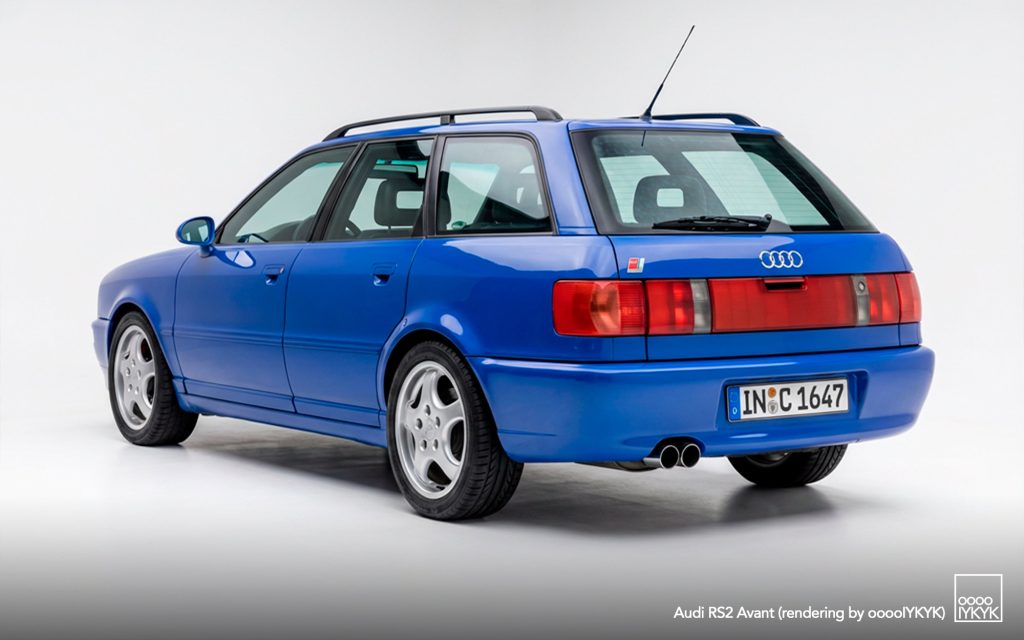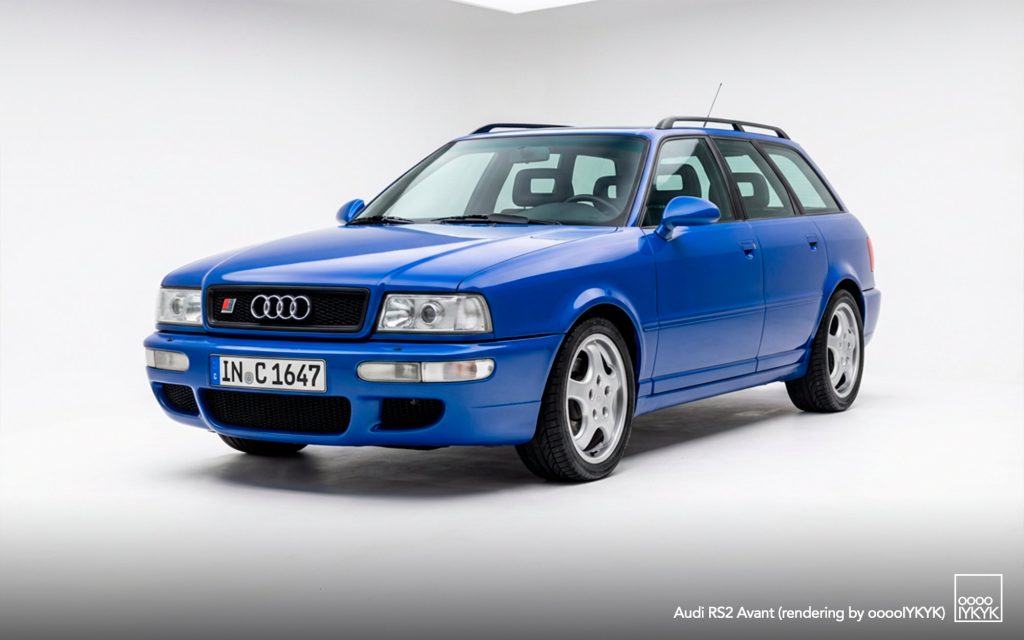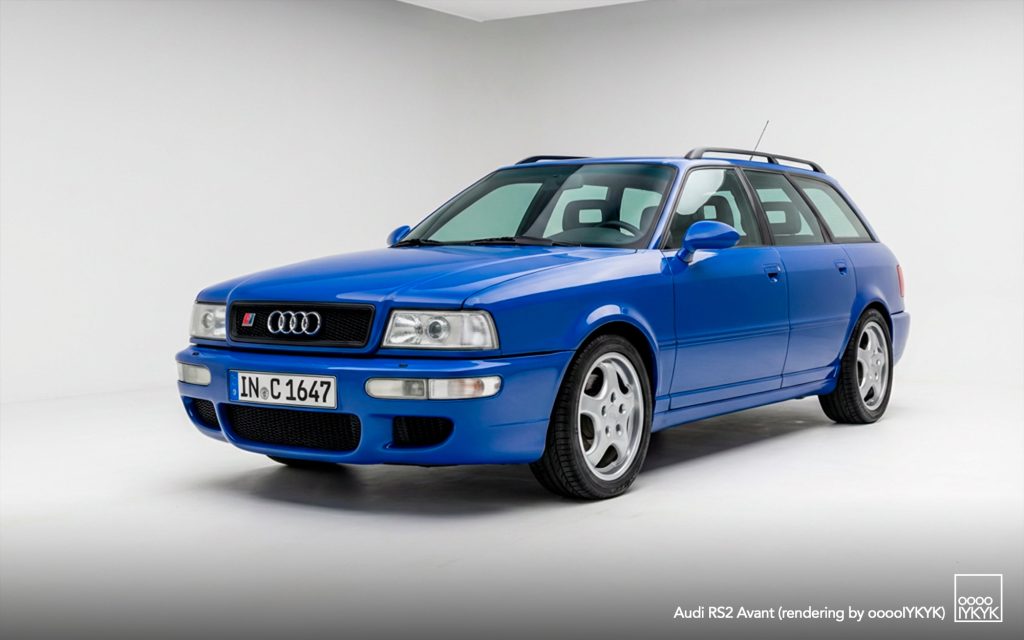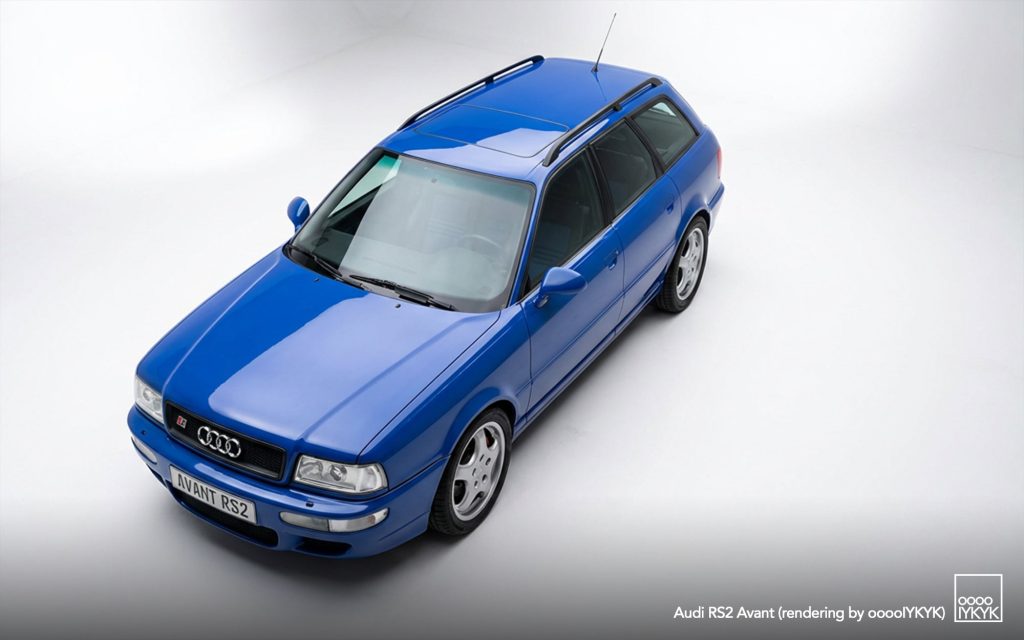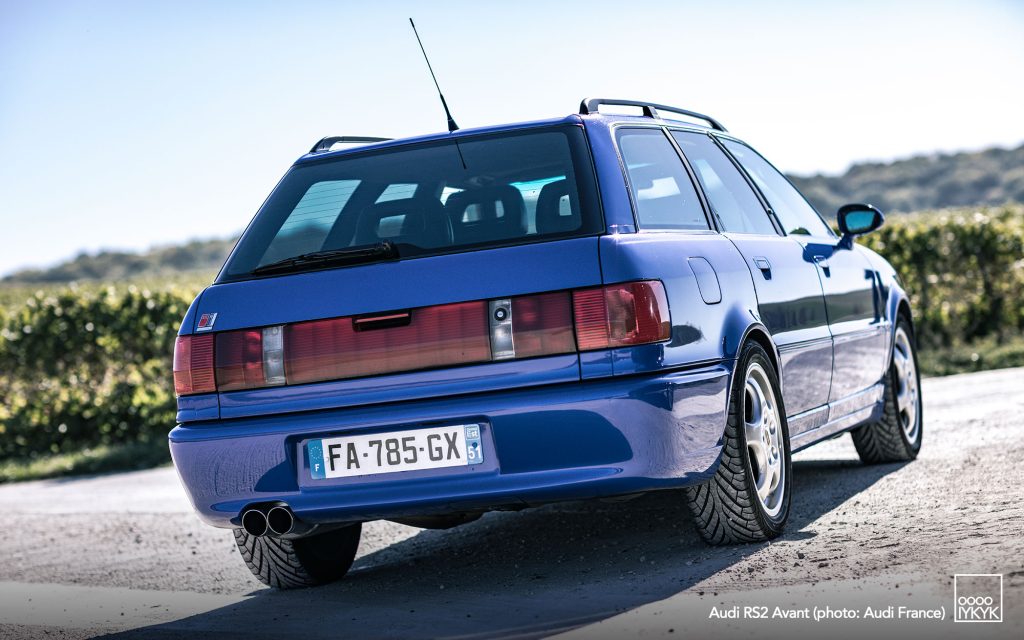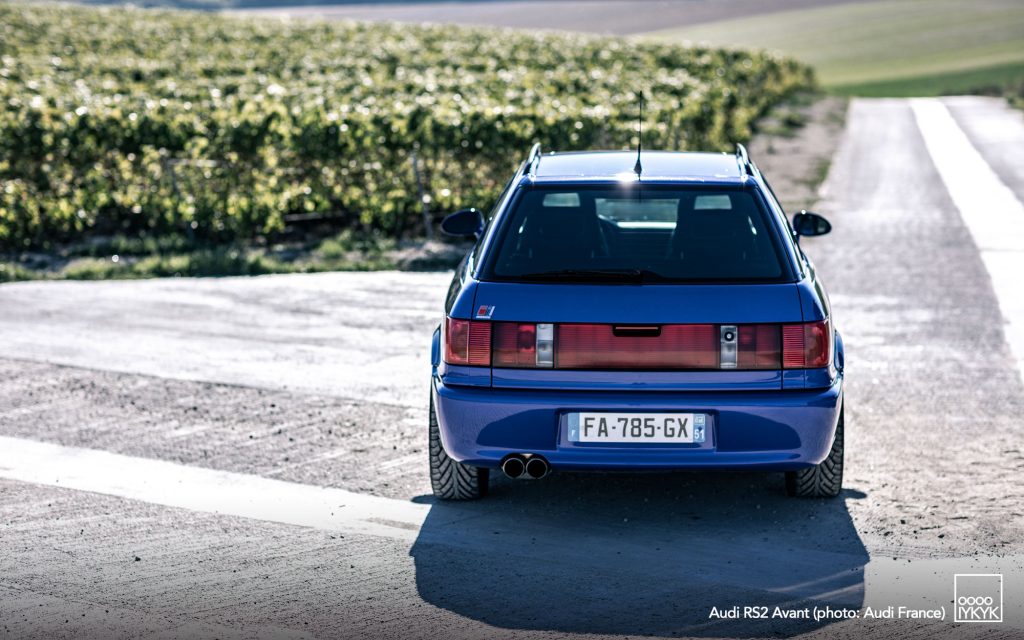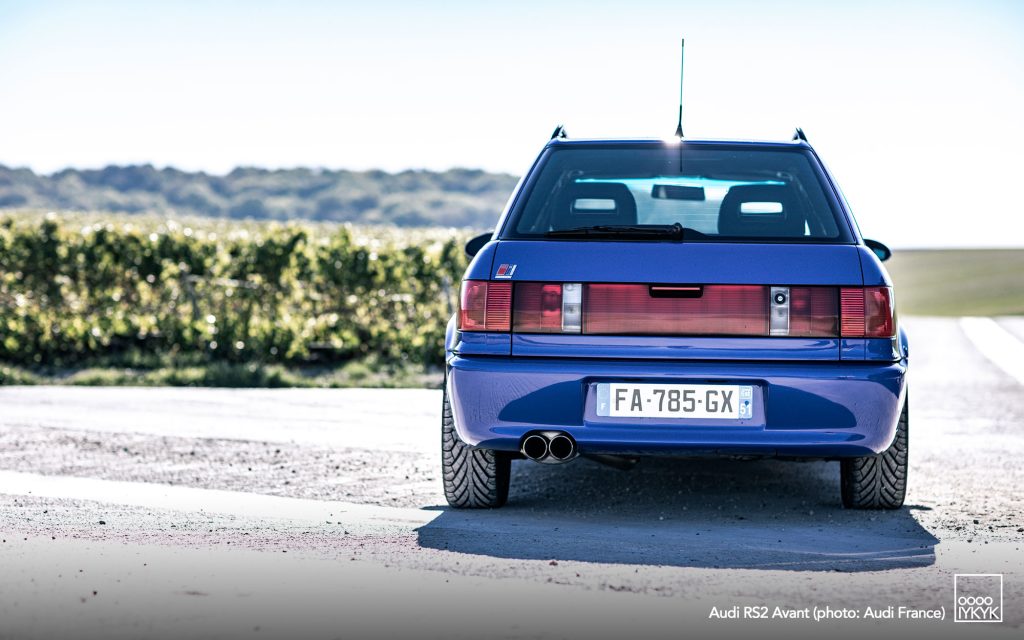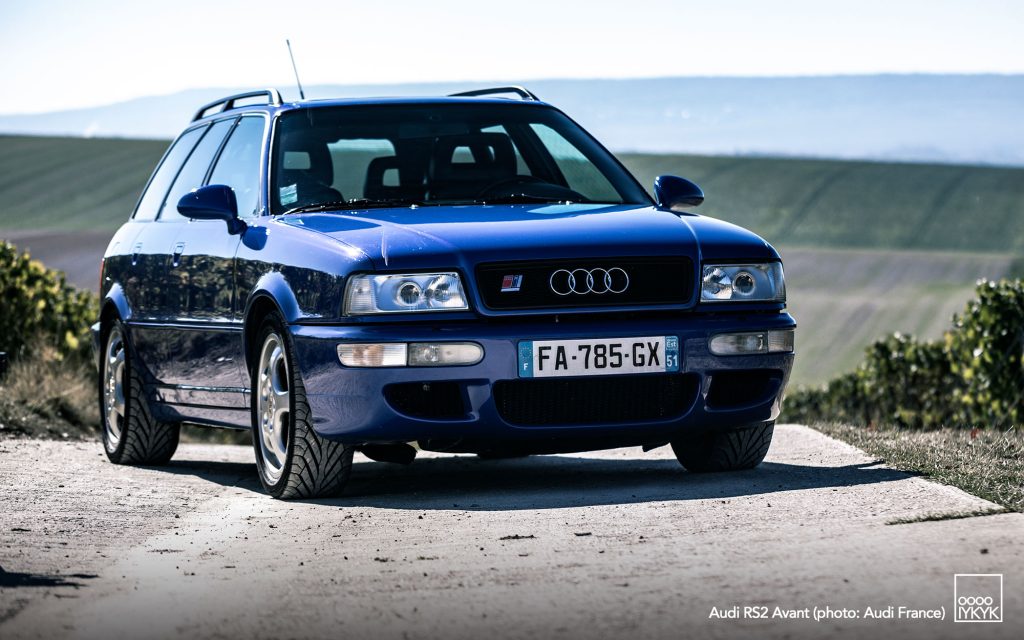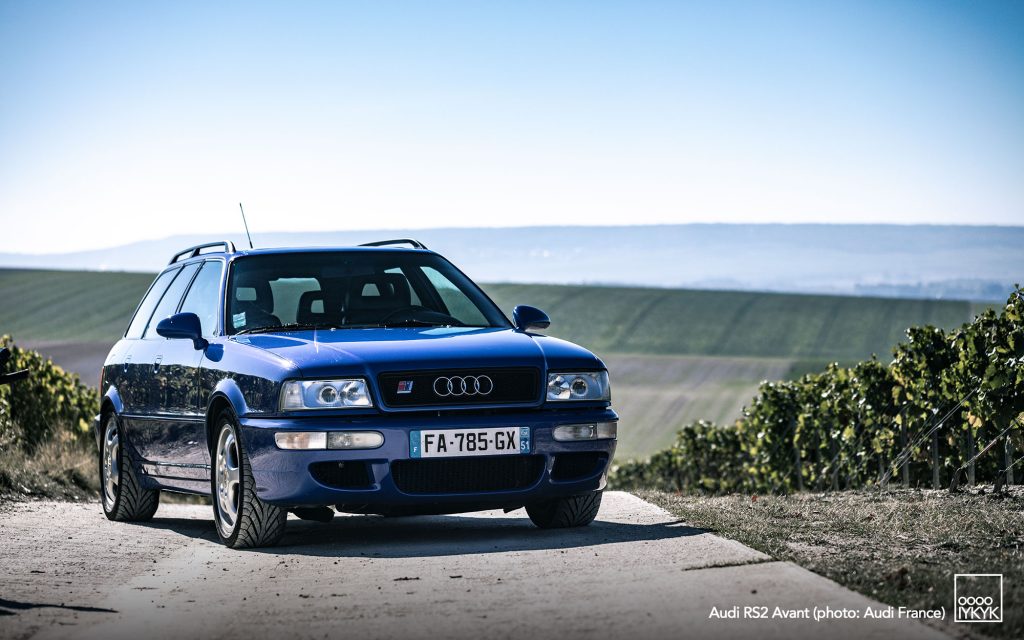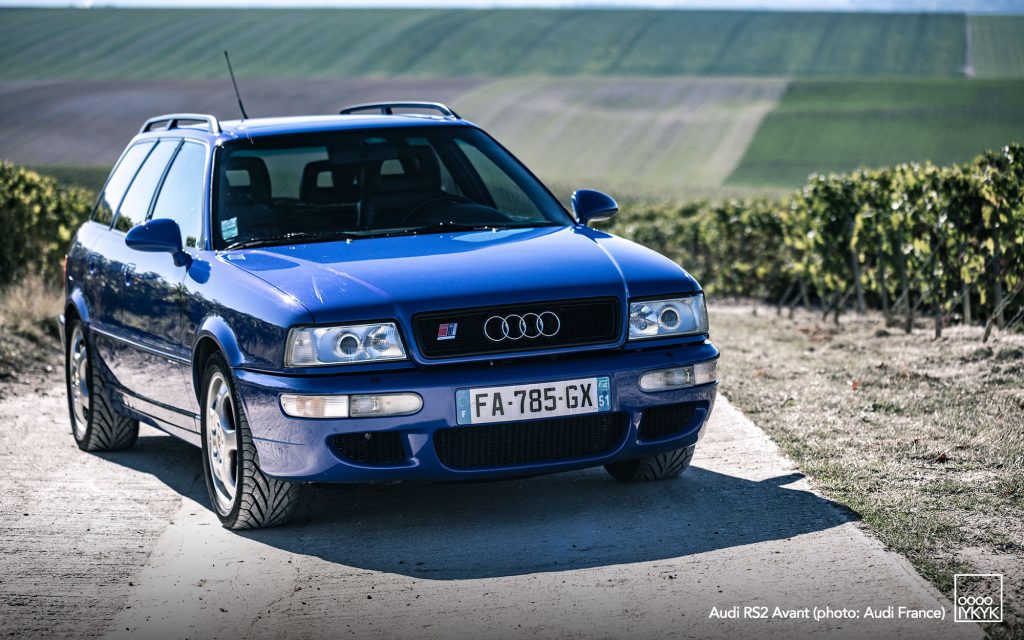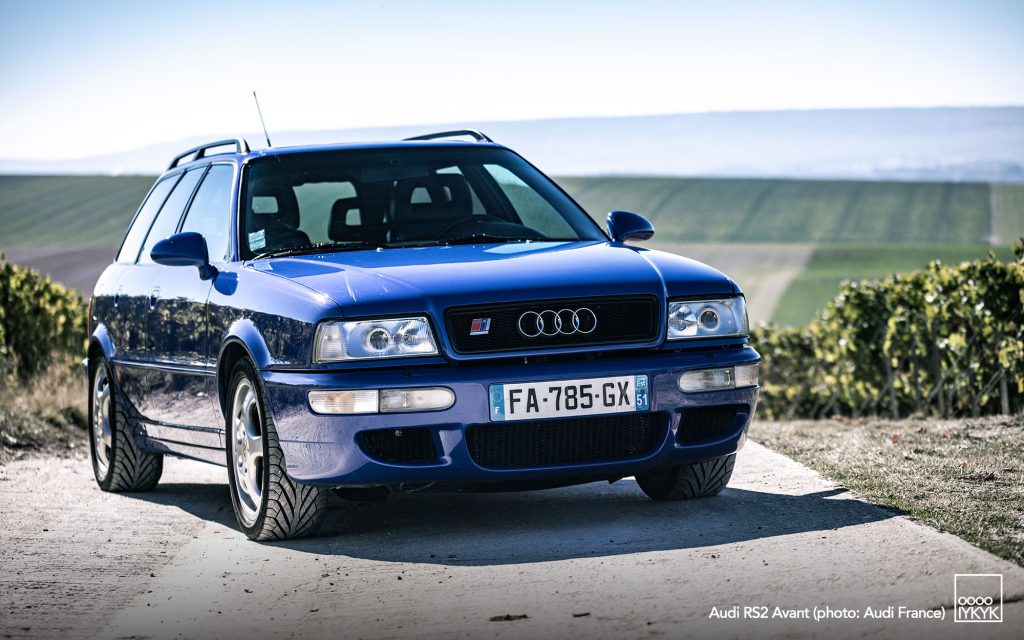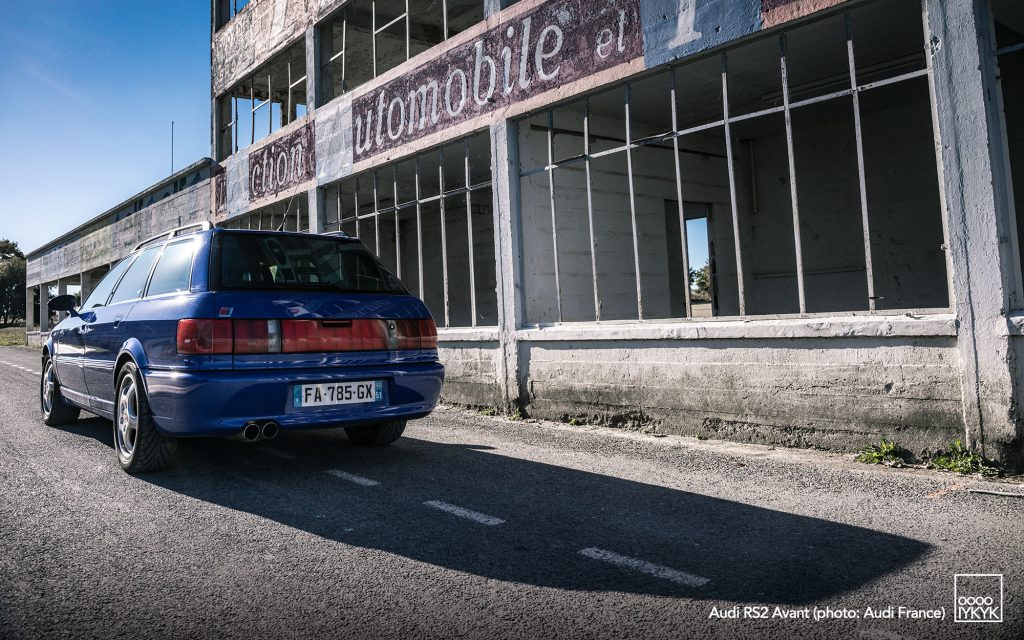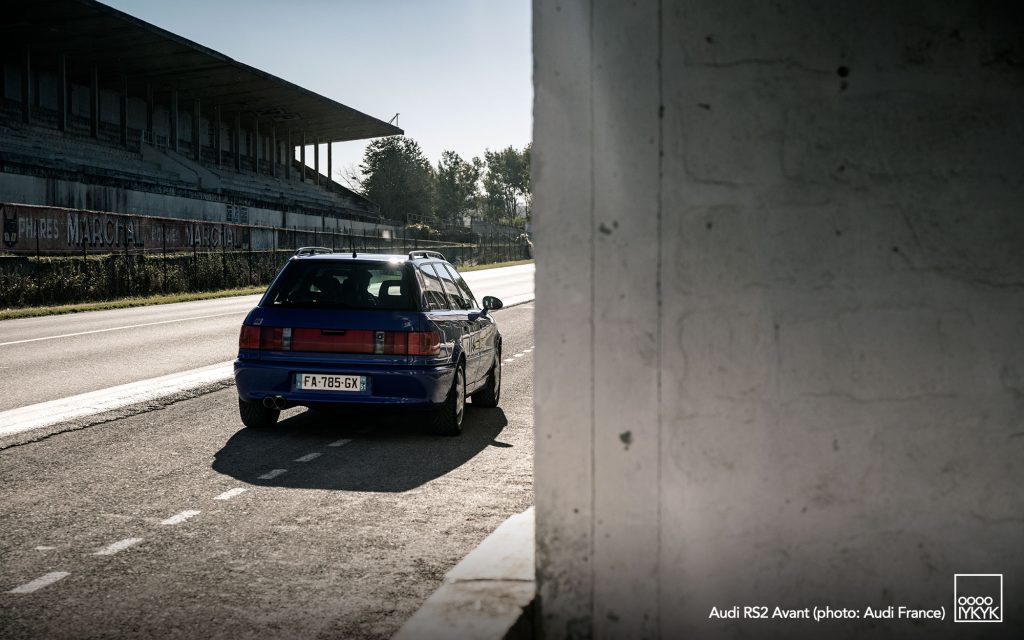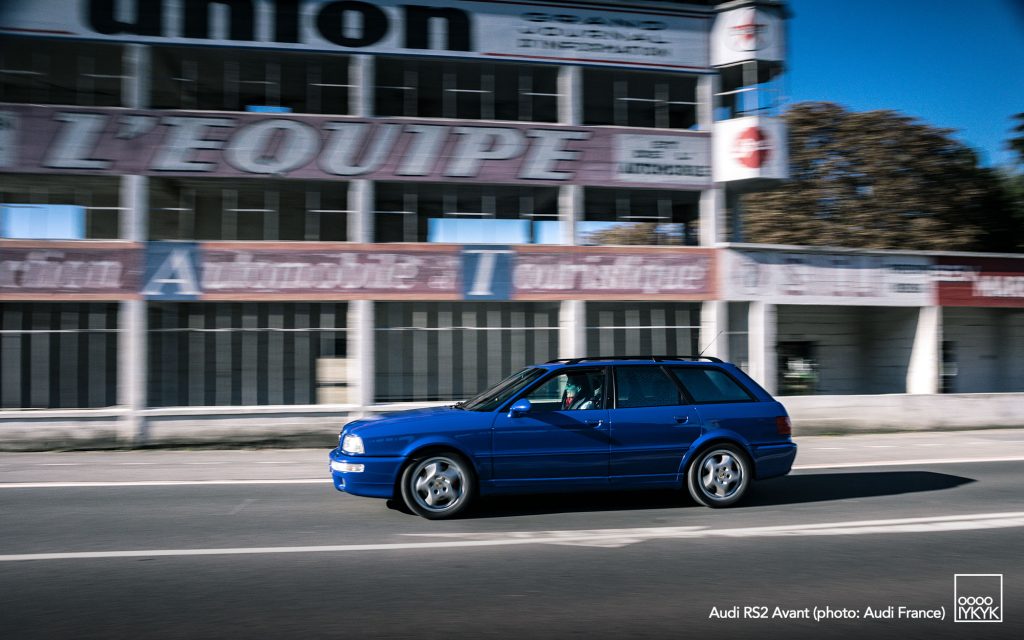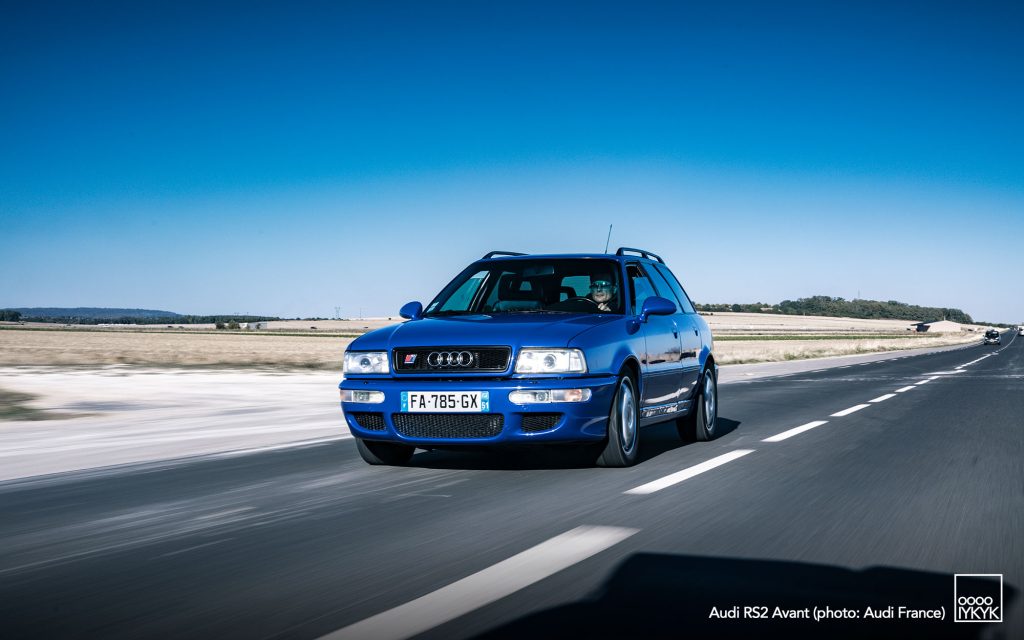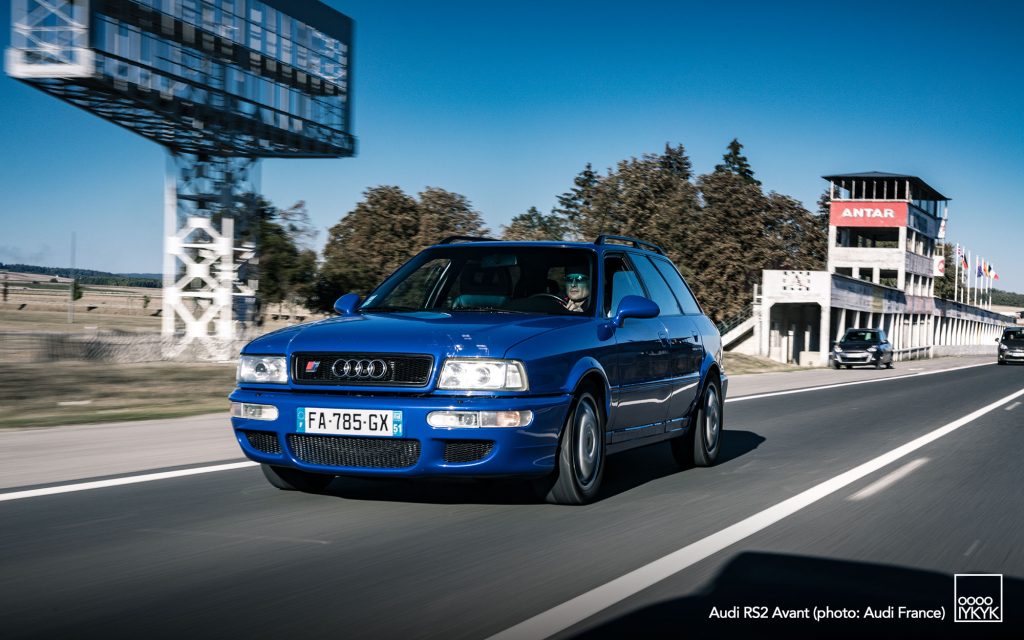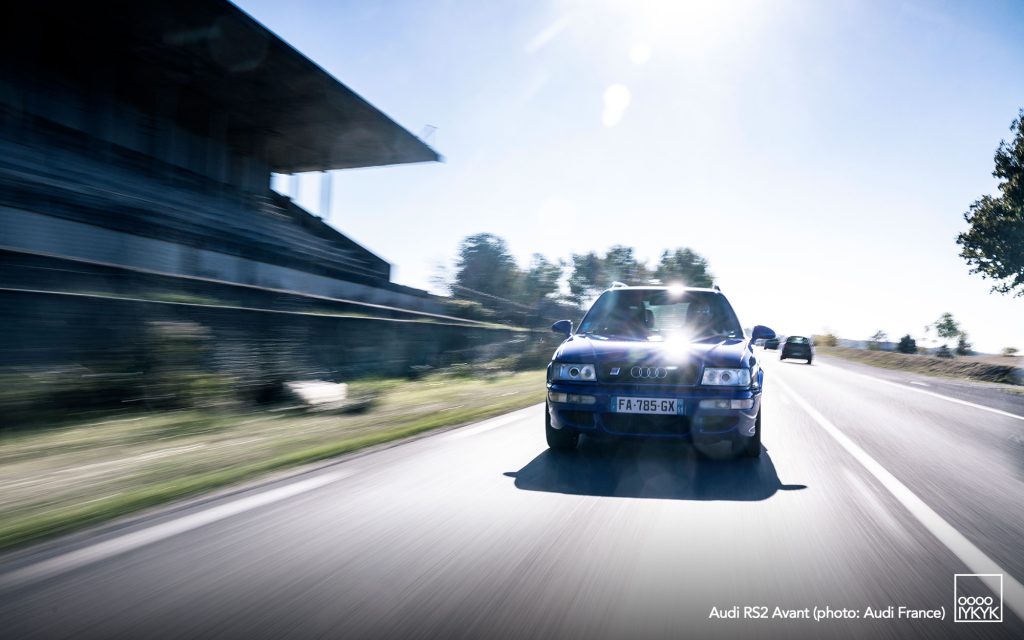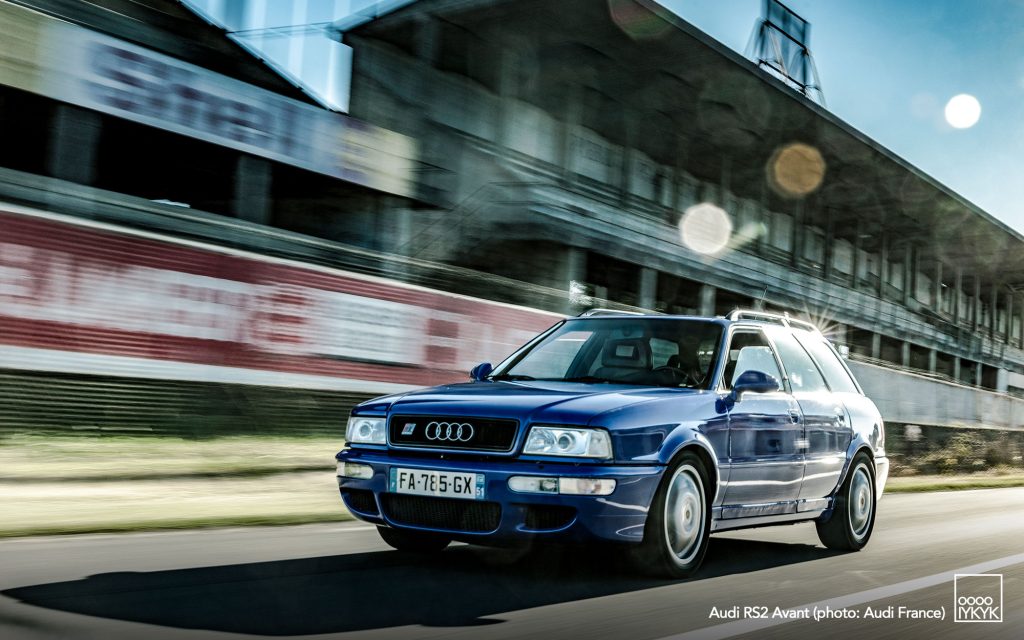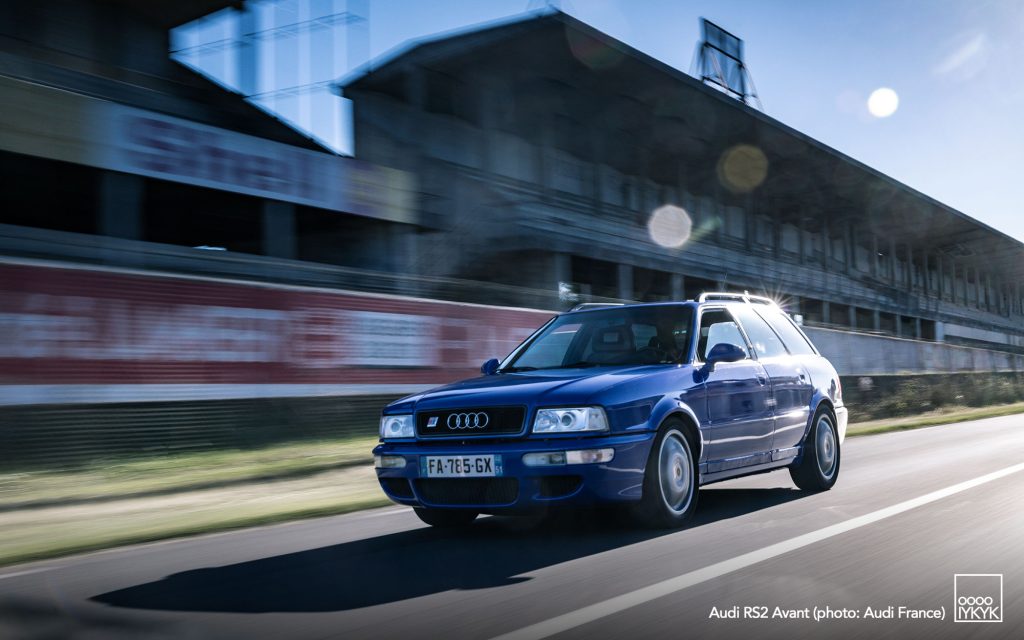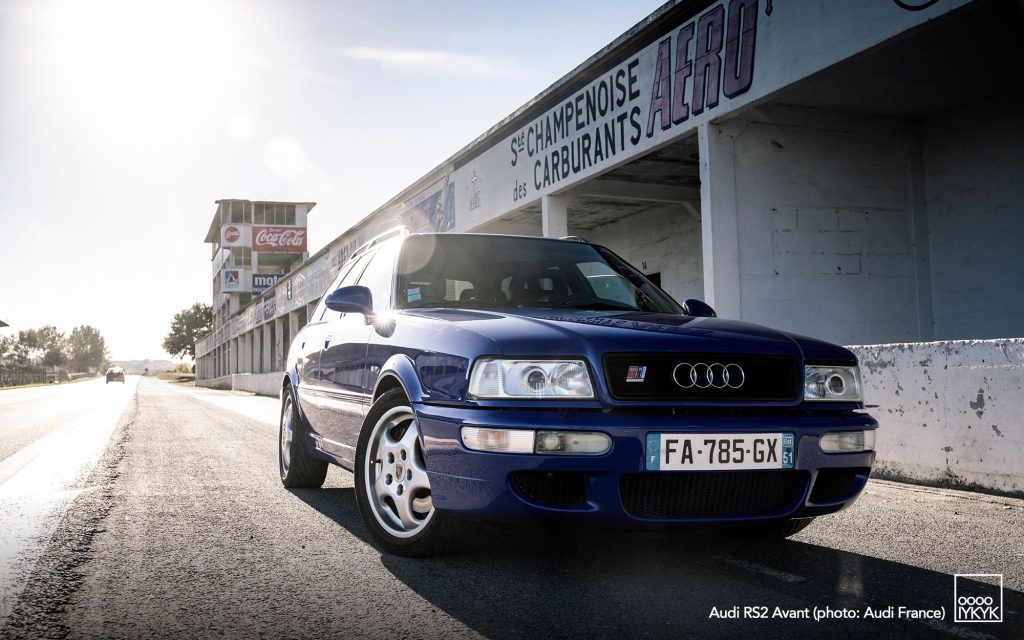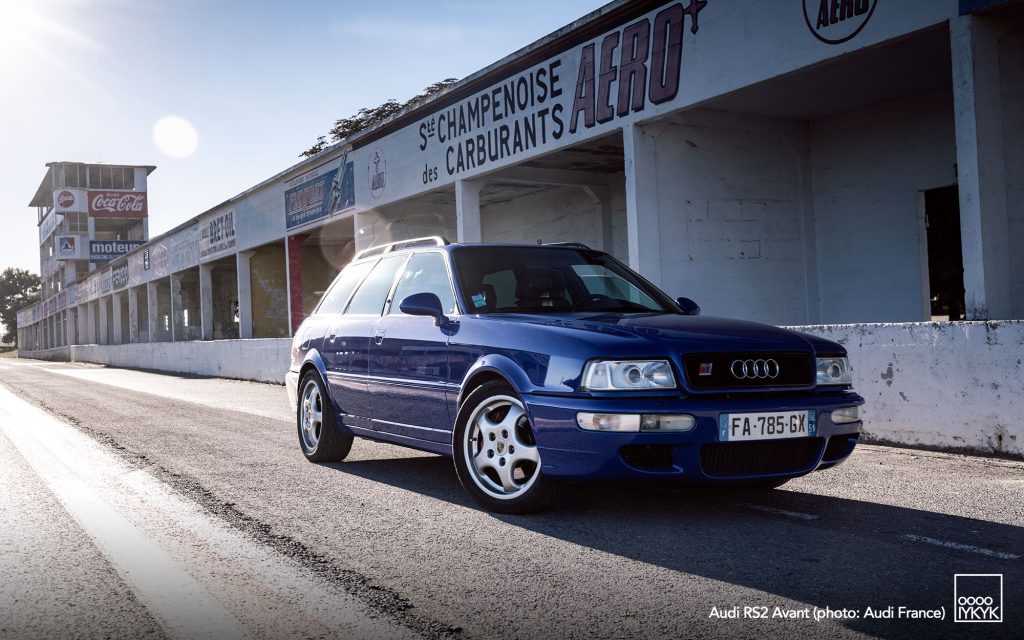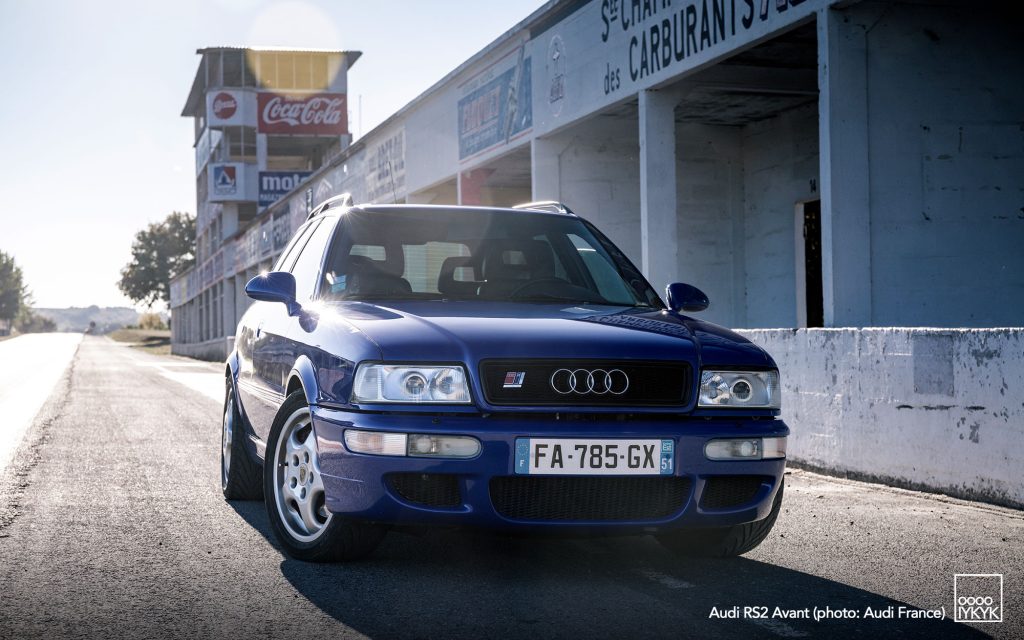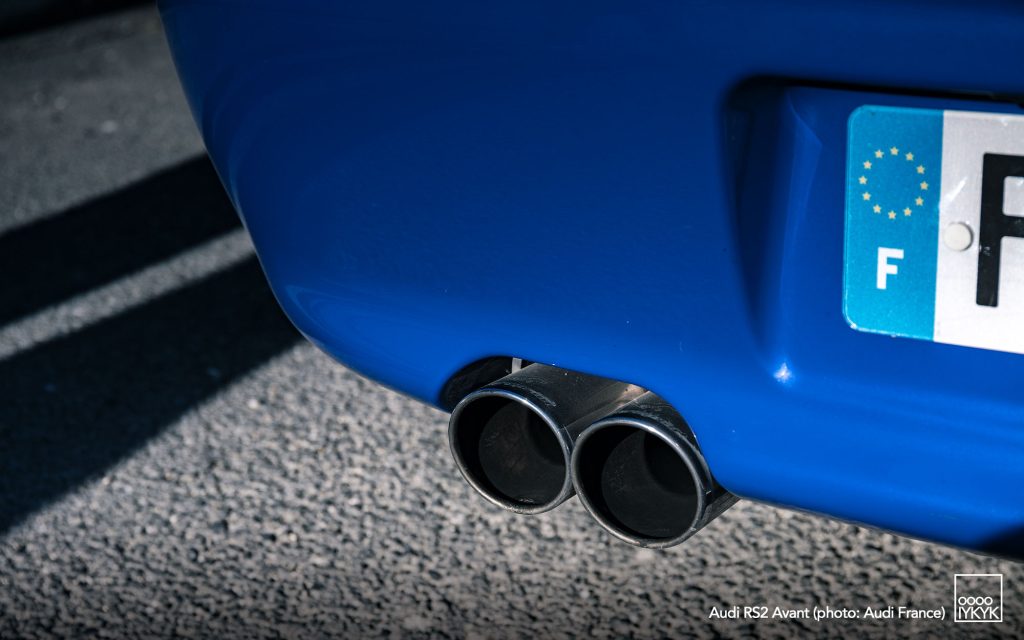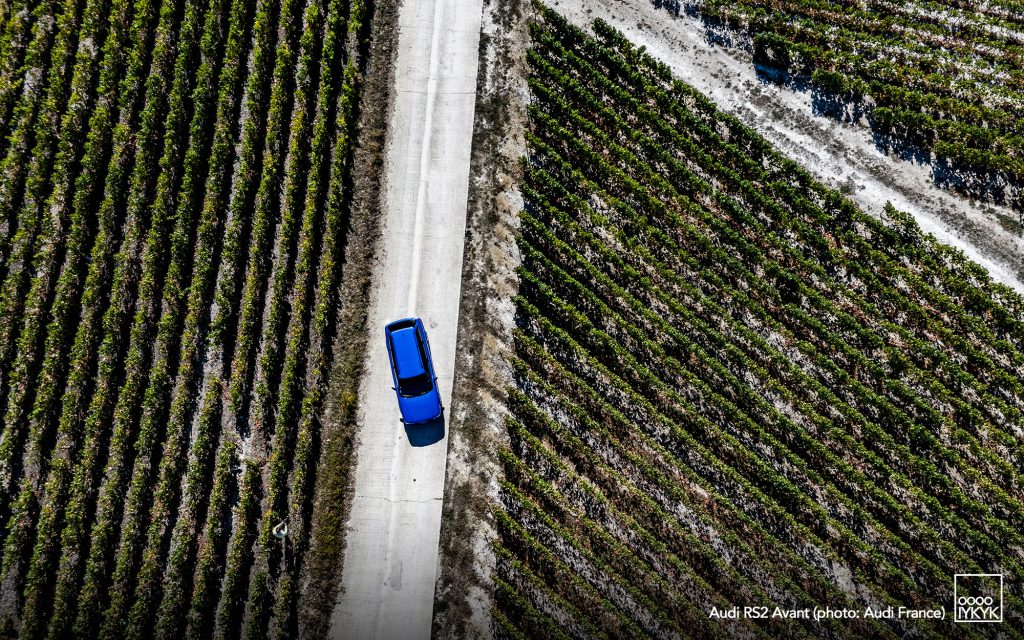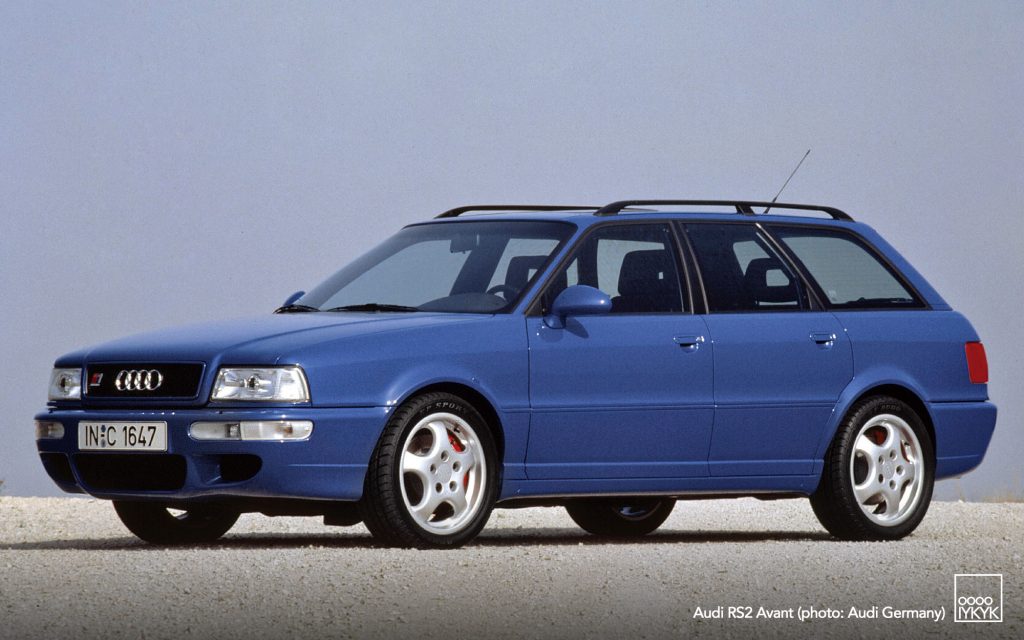

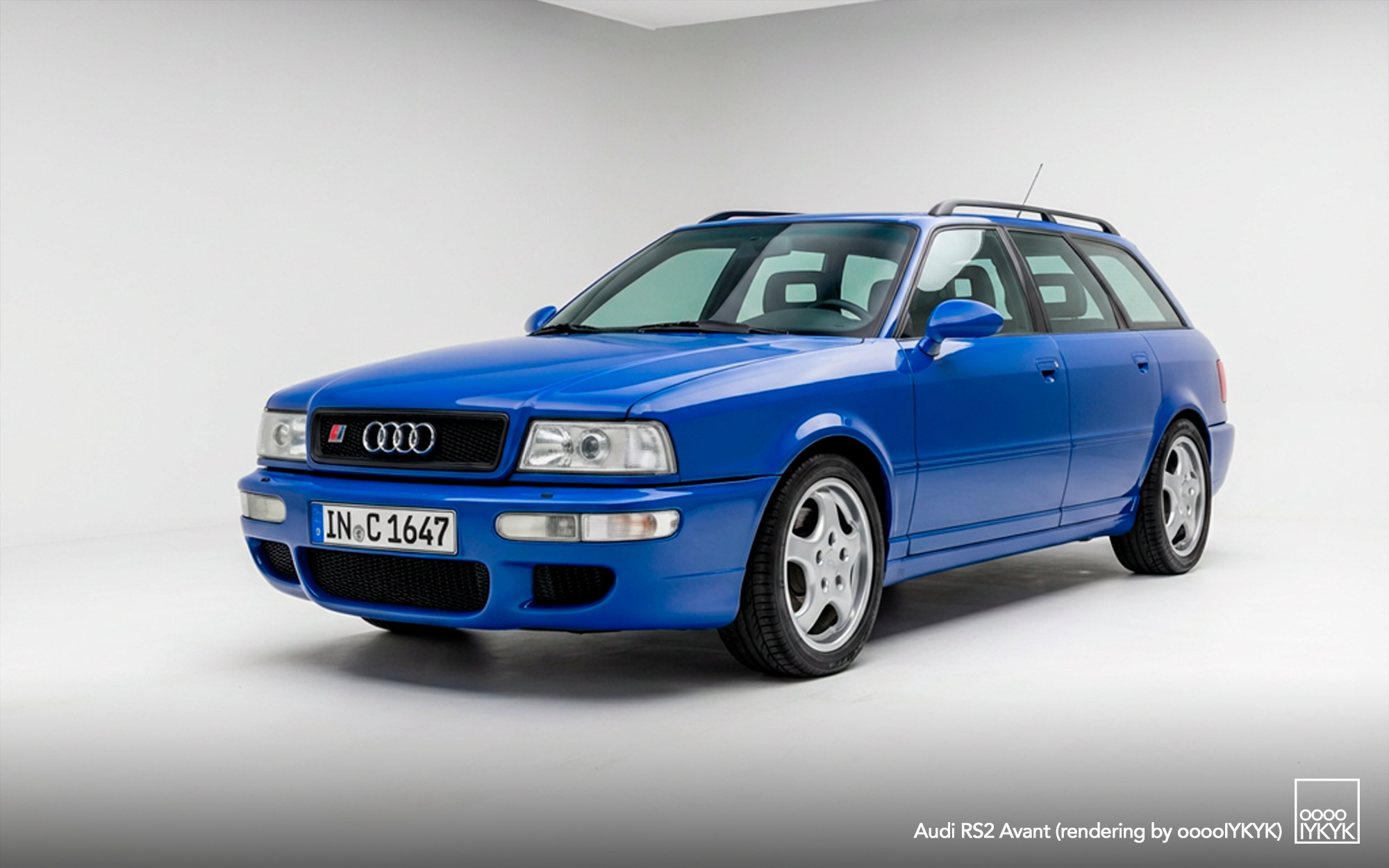

What: Audi RS2 Avant
Era: Audi modern era (origin of the RS lineage)
Model Family: 80 / RS2
Market / Zone(s): Europe (select additional markets)
Model Years: 1994, 1995
Debut: 1993 Frankfurt IAA
Production Span: March 1994–July 1995
Number Produced: 2,891
Model / Generation Code(s): P1 / B4
Chassis / Matrix: B4 / Volkswagen Group B-platform
TECHNICAL DETAILS
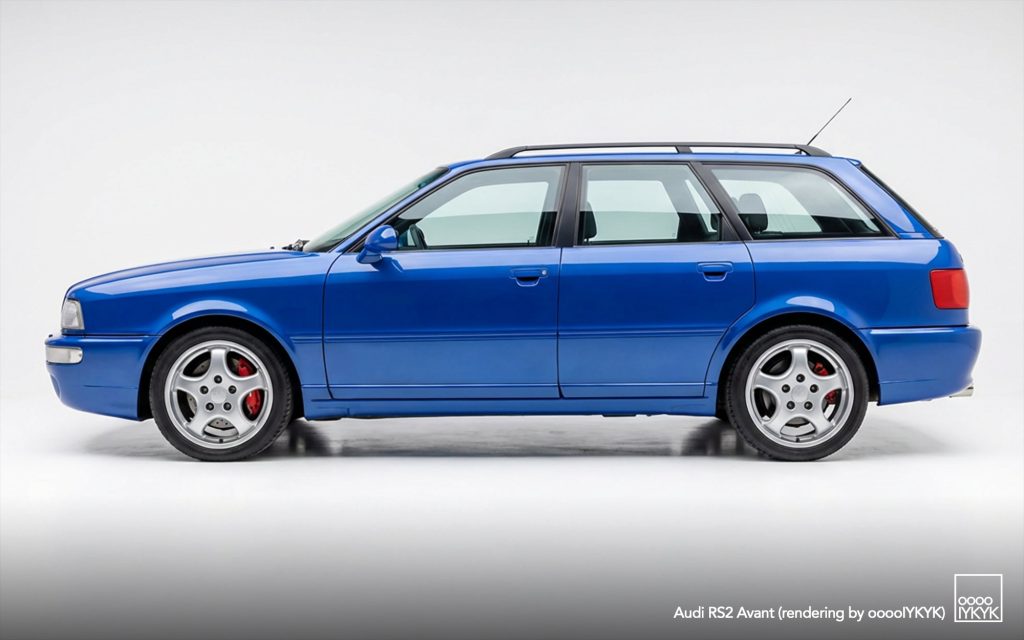
Body Style(s): 5-door Avant (estate)
Drivetrain Configuration: Longitudinal front engine, permanent all-wheel drive
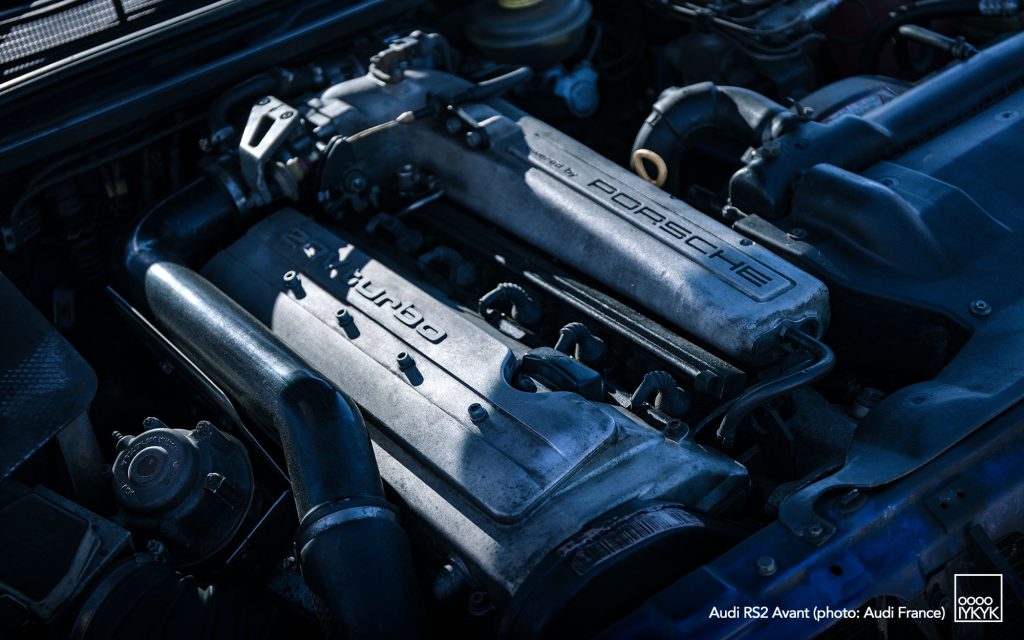
Engine(s): 2.2-liter (2,226 cc) DOHC 20-valve inline five-cylinder, turbocharged
Bore x Stroke: 81.0 mm × 86.4 mm
Compression Ratio: 9.3:1
Turbocharging System: Single turbocharger with intercooler
Engine Management: Bosch Motronic with five-cylinder knock control and dual mass air sensors
Power: 232 kW (315 PS; 311 hp) @ 6,500 rpm
Torque: 410 Nm (302 lb-ft) @ 3,000 rpm
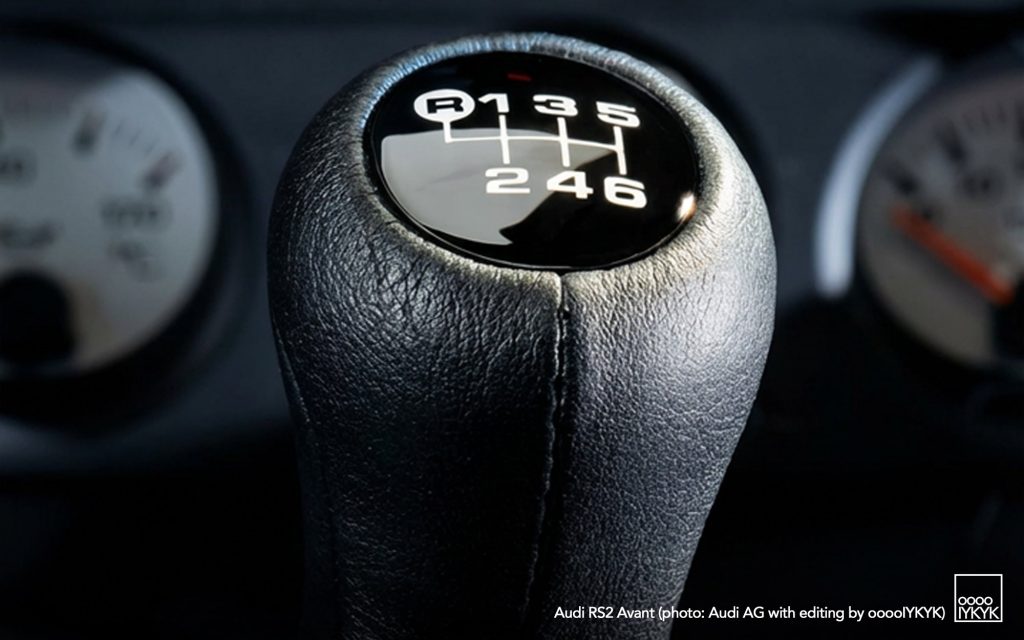
Transmission(s): 6-speed manual (close-ratio)
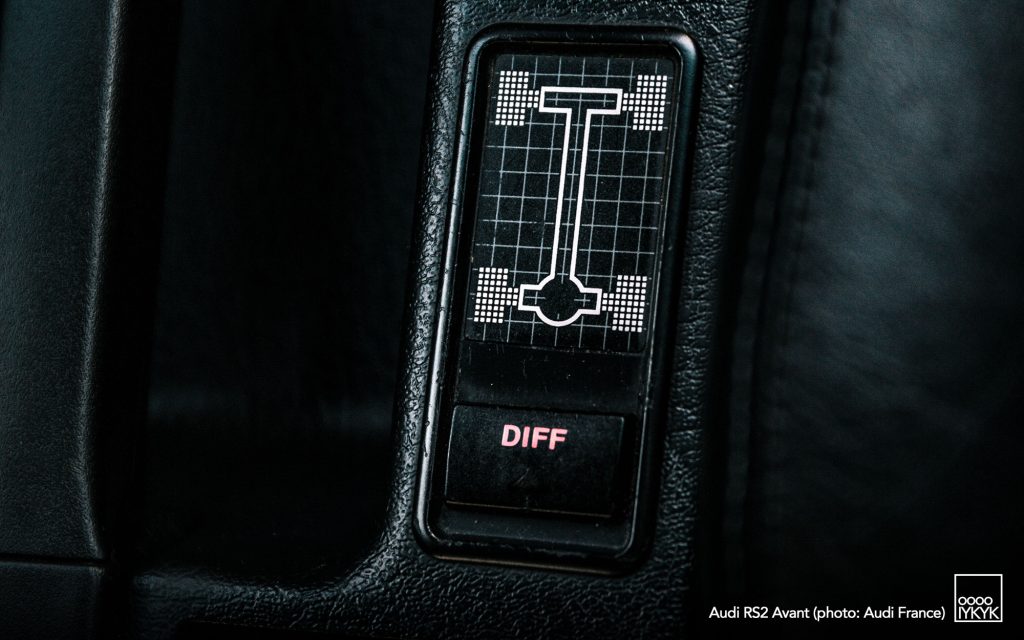
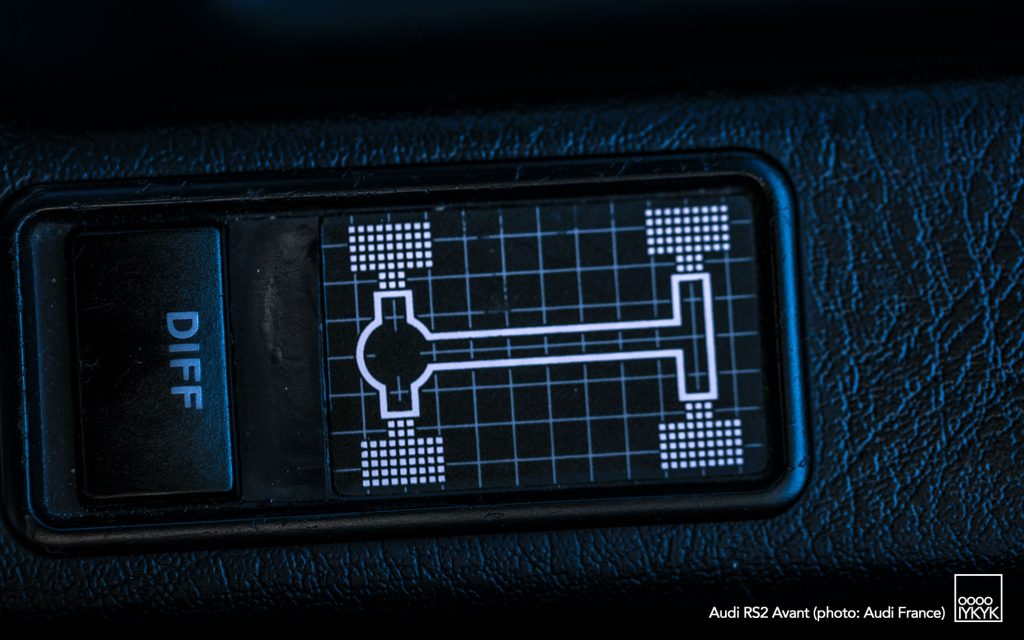
All-Wheel Drive Type: quattro permanent AWD with Torsen torque-sensing center differential; manually lockable rear differential (automatically disengages at 25 km/h / 15 mph)
Front Suspension: McPherson strut with anti-roll bar
Rear Suspension: Double wishbone with anti-roll bar
Steering: Rack-and-pinion power steering
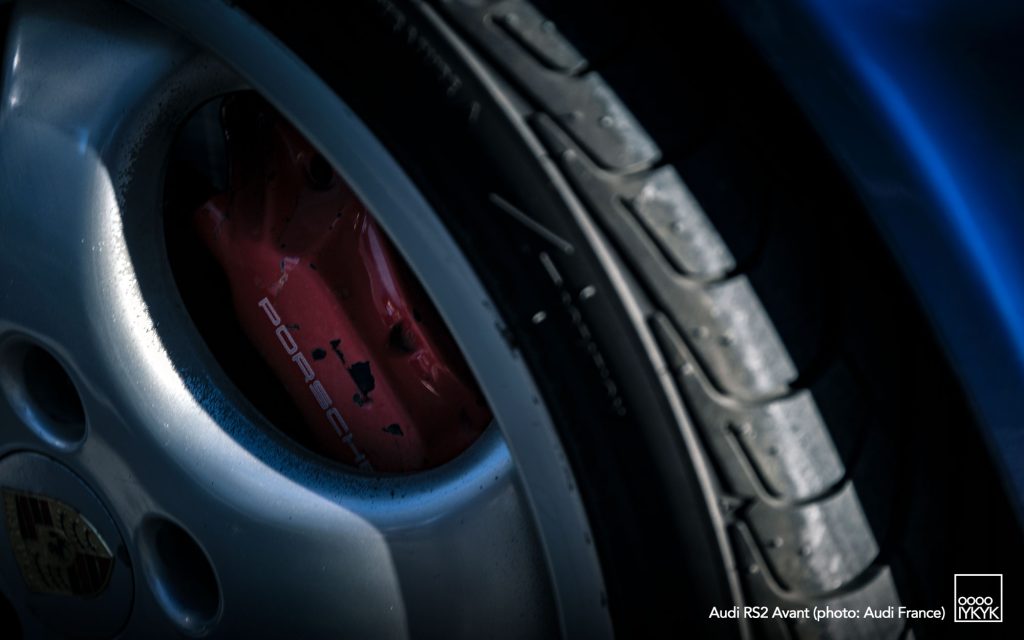
Brake System: Porsche-developed braking system with fixed four-piston calipers and internally ventilated discs
Front Brake Diameter: 304 mm
Rear Brake Diameter: 299 mm
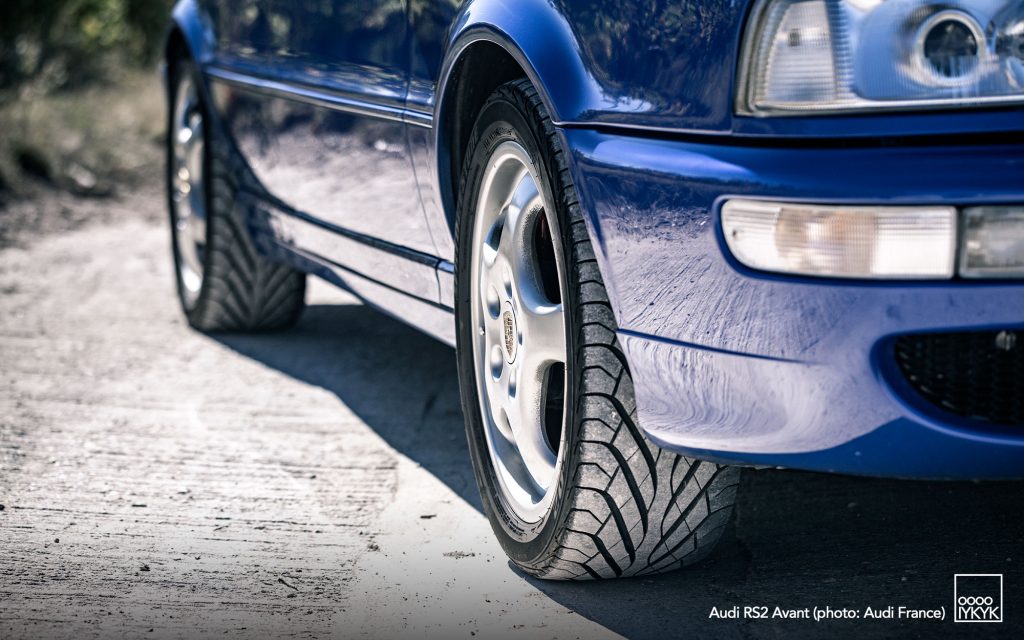
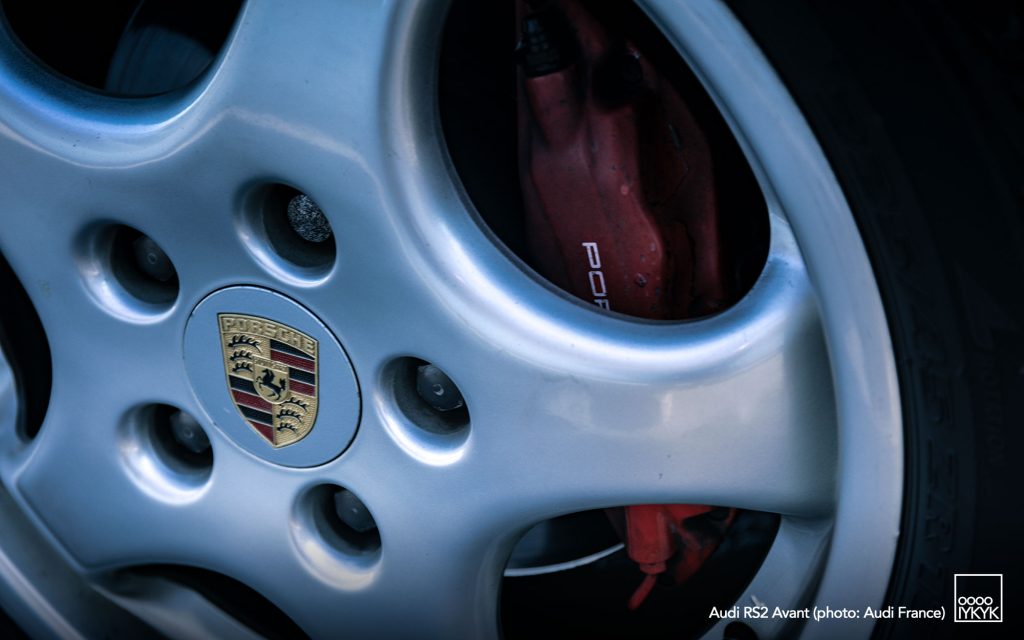
Wheel Size(s): 7.0J × 17 Porsche Cup design
Tire Size(s): 245/40 ZR17
Bolt Pattern: 5×130
DIMENSIONS / WEIGHTS
Length: 4,580 mm
Width: 1,695 mm
Height: 1,410 mm
Wheelbase: 2,611 mm
Track (Front / Rear): 1,476 mm / 1,475 mm
Curb Weight: 1,595 kg
PERFORMANCE
Acceleration (0–100 km/h / 0–62 mph): 5.4 seconds
Standing 1 km: 25.4 seconds
Top Speed: 262 km/h (163 mph)
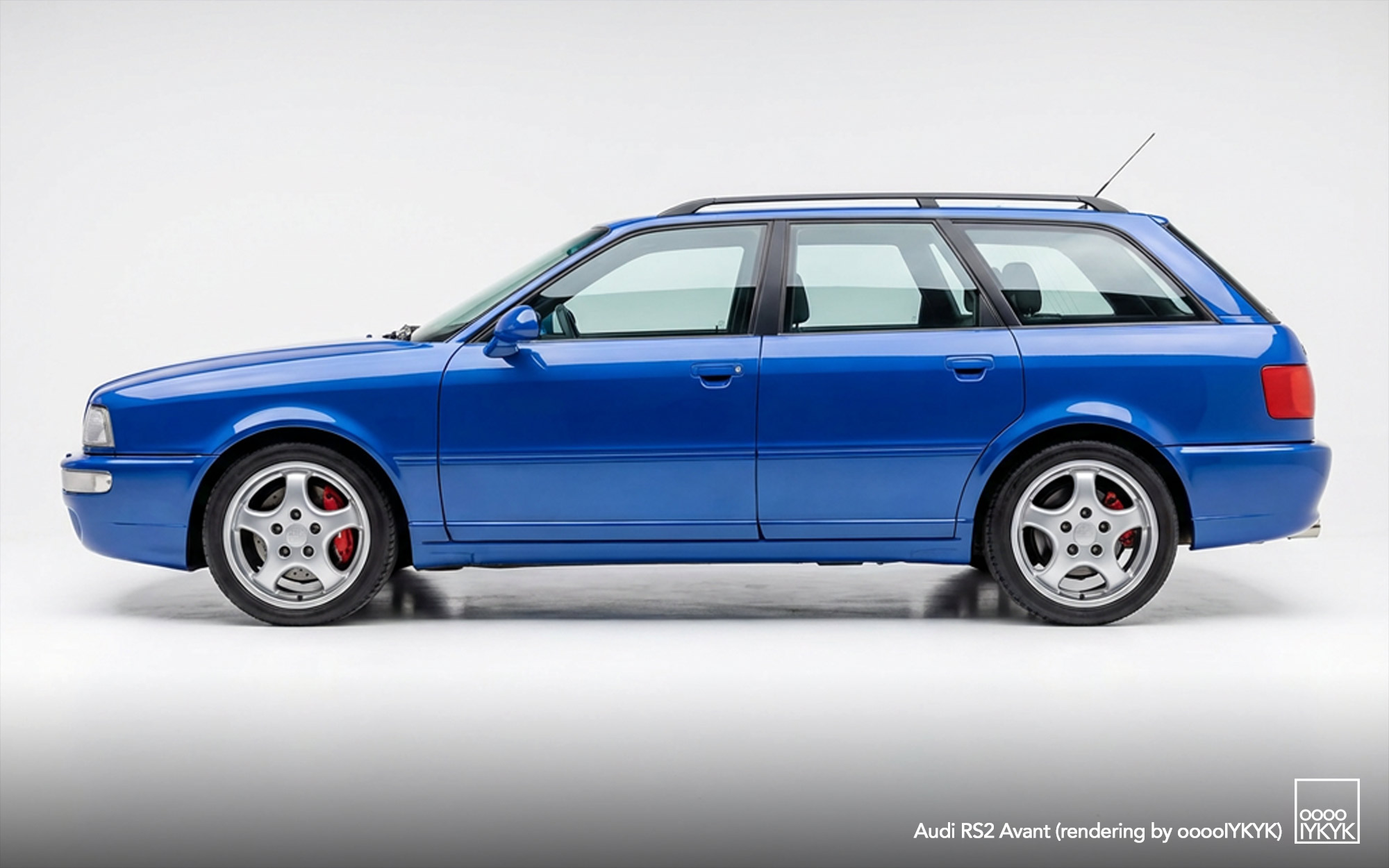
EQUIPMENT AND FEATURES (PERIOD LITERATURE)
Exterior
- Porsche-designed door mirrors
- Porsche brake calipers and wheel hardware
- 17-inch Porsche Cup wheels
- RS badging front and rear
- Color-keyed bumpers with integrated fog lamps
- Enlarged front air intakes for improved cooling
Interior
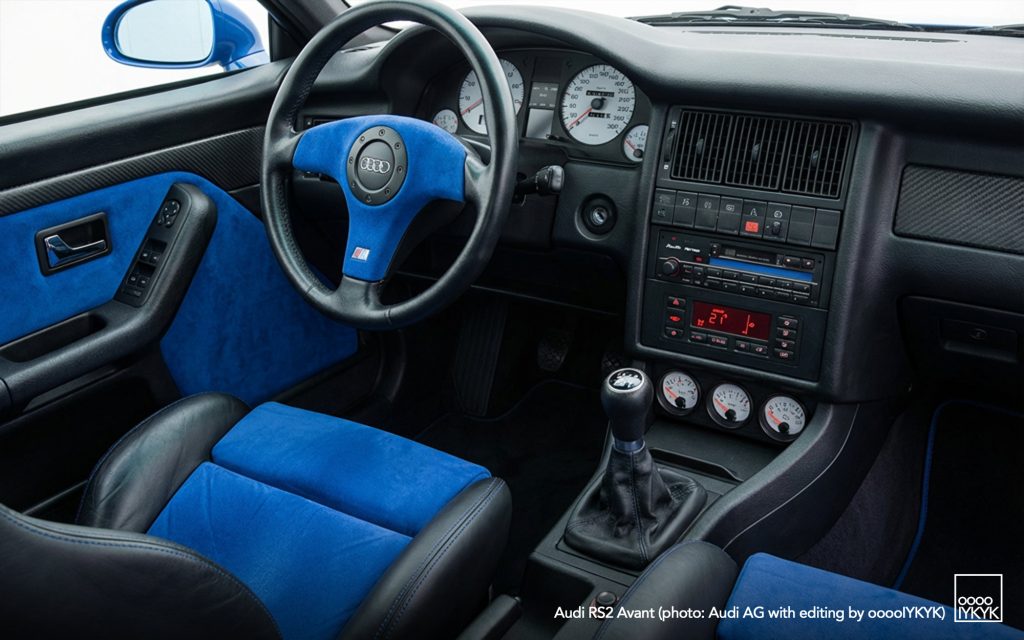
- Recaro sport seats in leather or leather/Alcantara
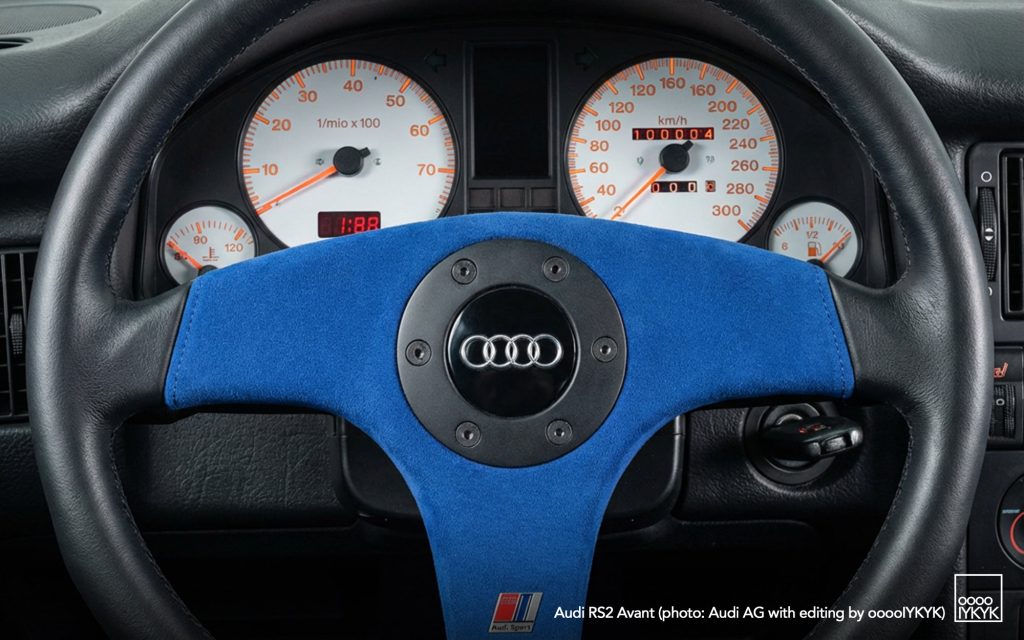
- RS-branded steering wheel
- Leather-trimmed gear lever and gaiter
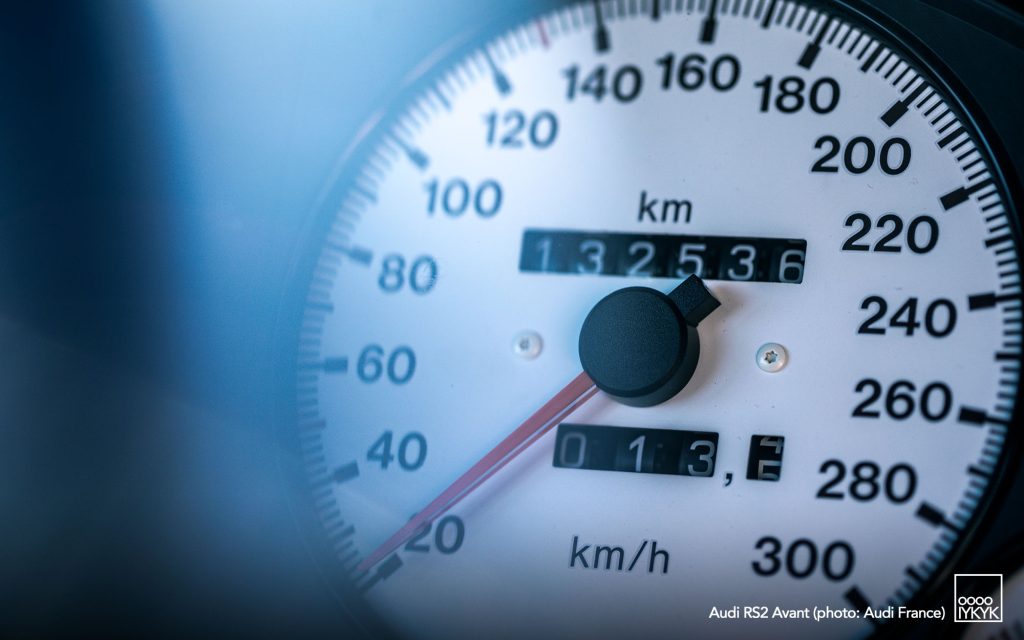
- White-faced instrument cluster
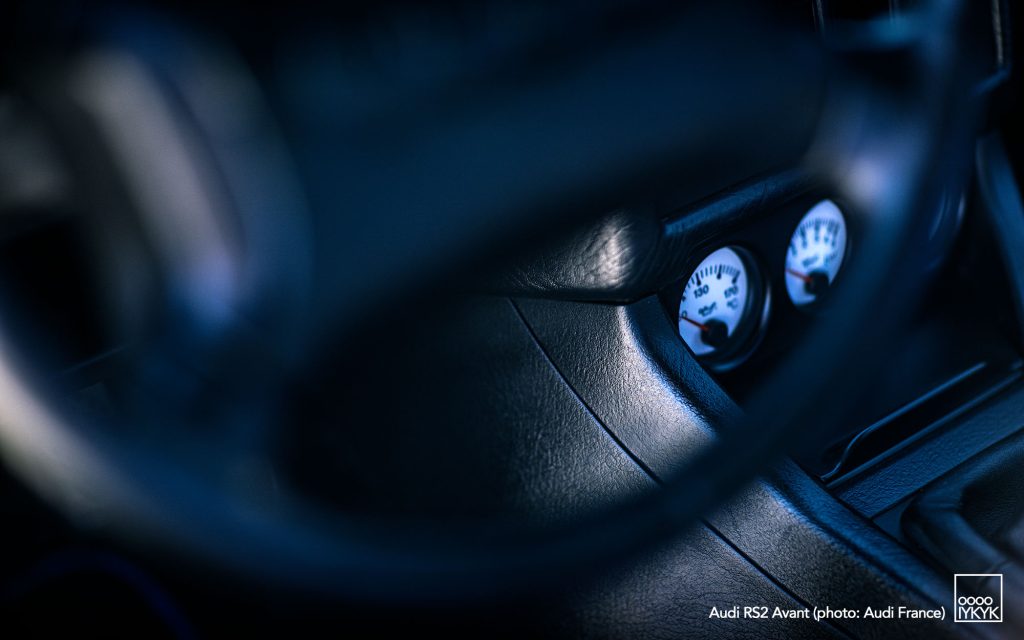
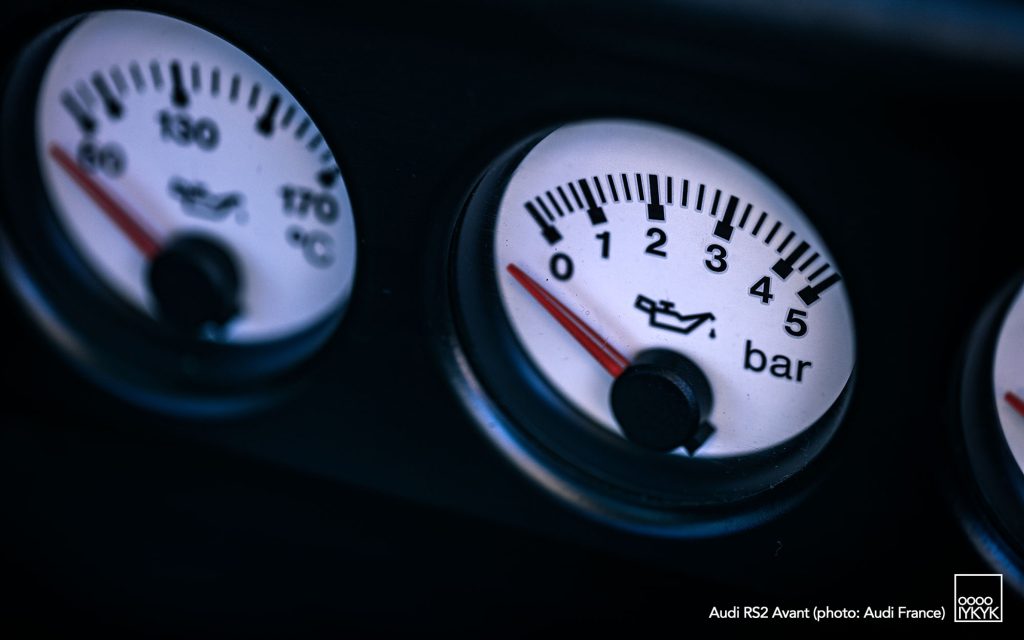
- Auxiliary gauges (oil temperature, oil pressure, battery voltage)
- On-board computer
- Driver and passenger airbags
- Electric windows and heated mirrors
Cargo and Practicality
- Split-folding rear seat
- Retractable luggage compartment cover
- Expandable ski bag
- Multiple tie-down points
OTHER DETAILS
Predecessor: Audi S2 Avant
Successor: Audi RS4 Avant (B5)
Platform Mates: Audi 80 (B4); Audi S2; Audi Coupe
Assembly Location(s): Porsche Rossle-Bau facility, Zuffenhausen, Germany
Designer(s): Joint Audi / Porsche engineering program
Motorsport Homologations:
OVERVIEW & DEVELOPMENT
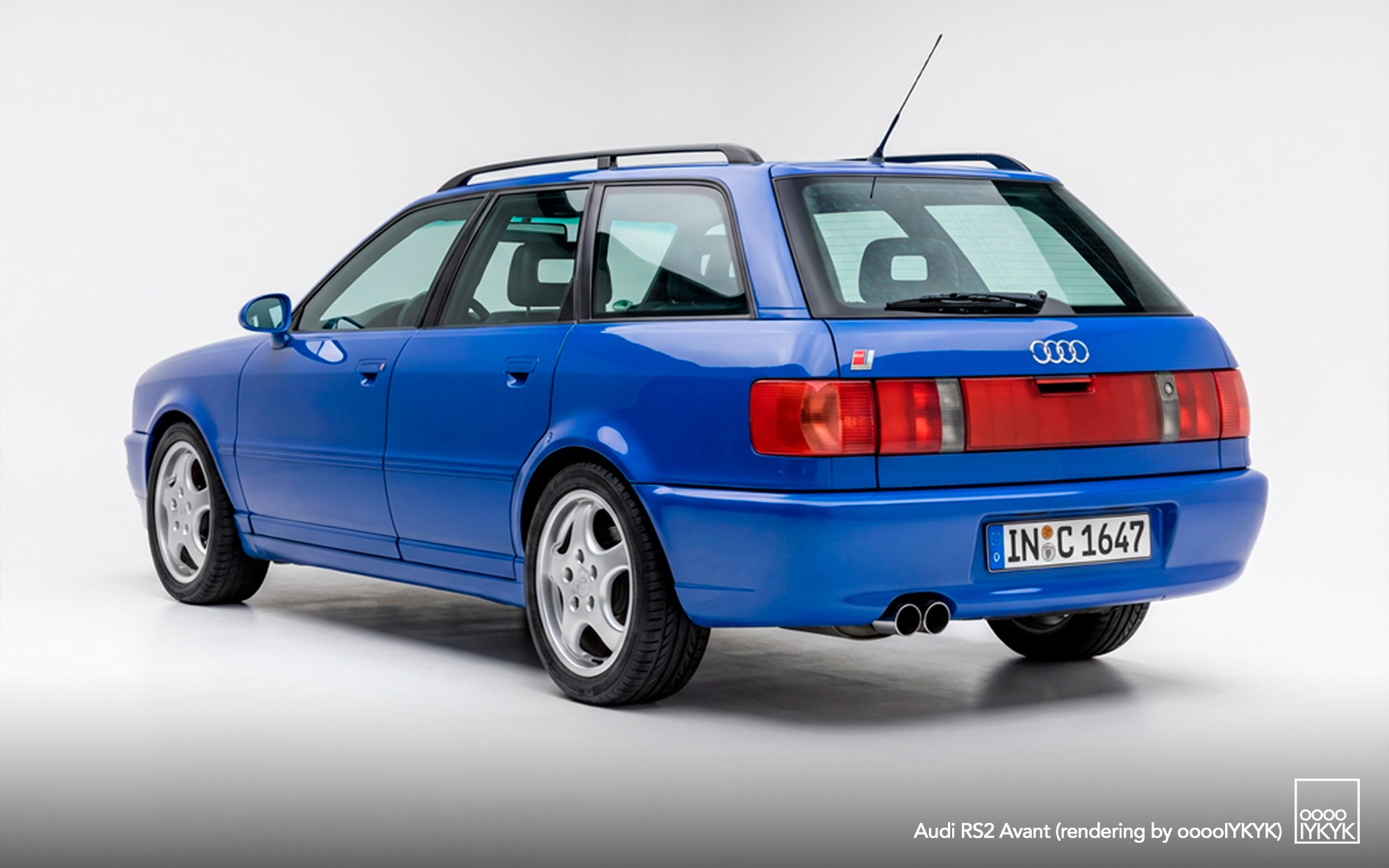
The Audi RS2 Avant occupies a singular place in Audi history as the first production model to carry the “RS” designation—RennSport—and as the car that defined the philosophy of the modern Audi performance wagon. Conceived in the early 1990s, the RS2 emerged during a period of transition for Audi, as the brand sought to translate its rallying and quattro heritage into a new generation of high-performance road cars.
The project began as an evolution of the Audi S2, itself powered by the turbocharged inline five-cylinder engine that traced its lineage to Audi’s Group B rally dominance. Audi sought to elevate this formula into something more exclusive and technically ambitious. To accomplish this, the company turned to Porsche, a manufacturer experienced in limited-volume production and precision chassis development.
The collaboration was not merely symbolic. Porsche engineers were deeply involved in revising the engine’s breathing, turbocharging system, camshafts, intercooling, and engine management calibration. The result was a significant increase in output to 315 PS and 410 Nm of torque. The power unit retained the distinctive uneven firing order and acoustic signature of Audi’s five-cylinder engines, but delivered markedly stronger mid-range thrust and sustained high-speed performance.
Assembly of the RS2 was entrusted to Porsche at its Rossle-Bau facility in Zuffenhausen, the same site previously used for specialized projects such as the Mercedes-Benz 500 E. Bodies supplied by Audi were transported to Porsche for final assembly, chassis tuning, and quality inspection. This manufacturing arrangement reinforced the RS2’s status as something more than a modified Audi—it was a joint engineering product.
CHASSIS & BRAKING
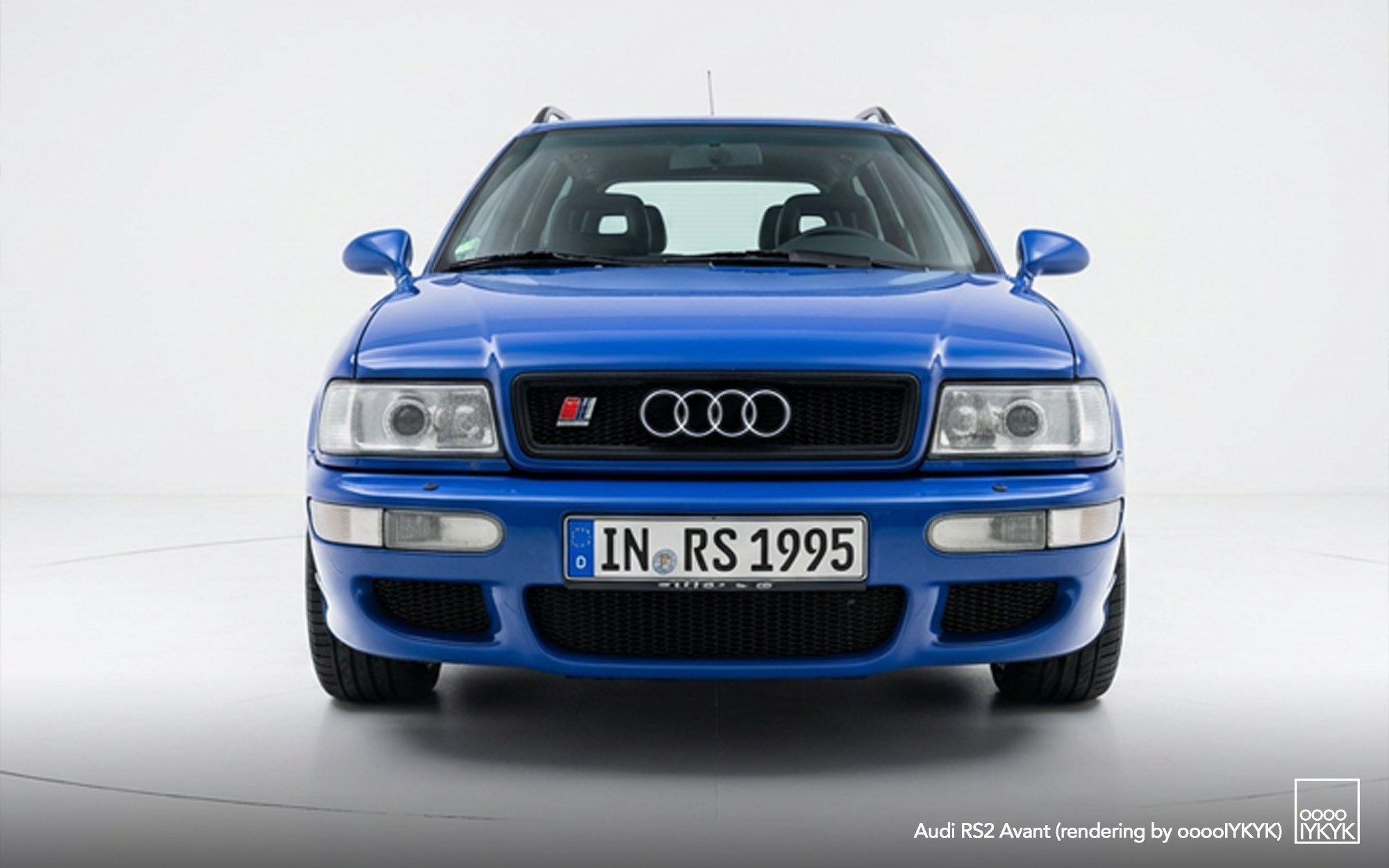
Period literature emphasized that the RS2 was not defined solely by engine output. Porsche-developed braking hardware formed a central element of the car’s character. Fixed four-piston Brembo calipers acted on large ventilated discs, delivering braking performance comparable to contemporary sports cars. The use of Porsche Cup wheels required adoption of a 5×130 bolt pattern, unique within the Audi range at the time.
The quattro permanent all-wheel drive system incorporated a Torsen center differential for automatic torque distribution between the axles. A manually lockable rear differential was retained for low-speed traction scenarios, disengaging automatically above 25 km/h. Together with the close-ratio six-speed gearbox, the drivetrain provided secure traction in all conditions while preserving driver engagement.
Suspension revisions included stiffer springs, recalibrated dampers, and anti-roll bars tuned for higher lateral loads. The result was a car capable of both long-distance stability and responsive cornering behavior.
EXTERIOR & DESIGN IDENTITY
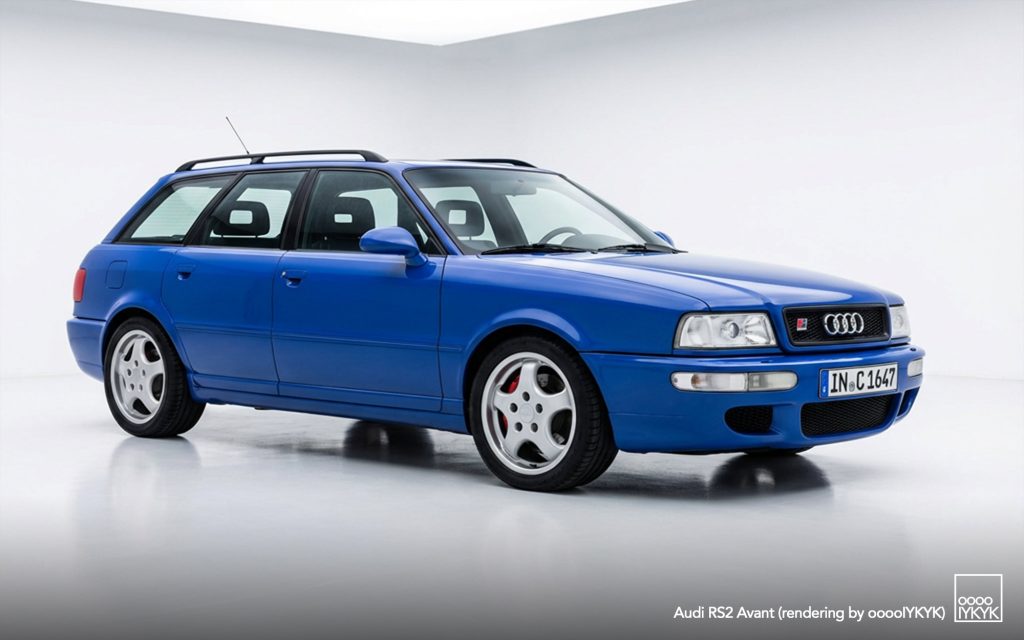
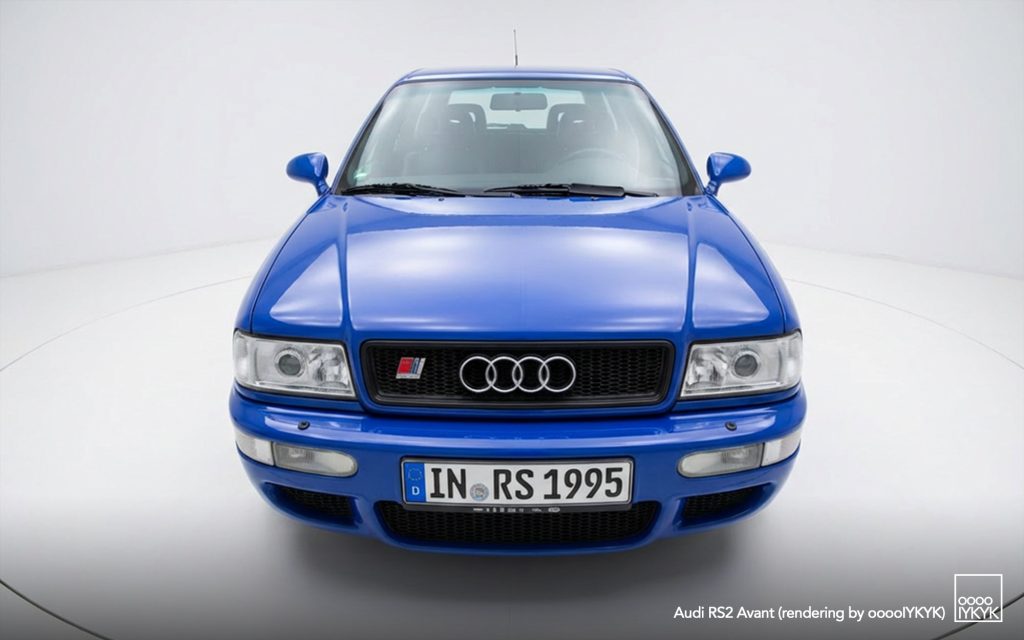
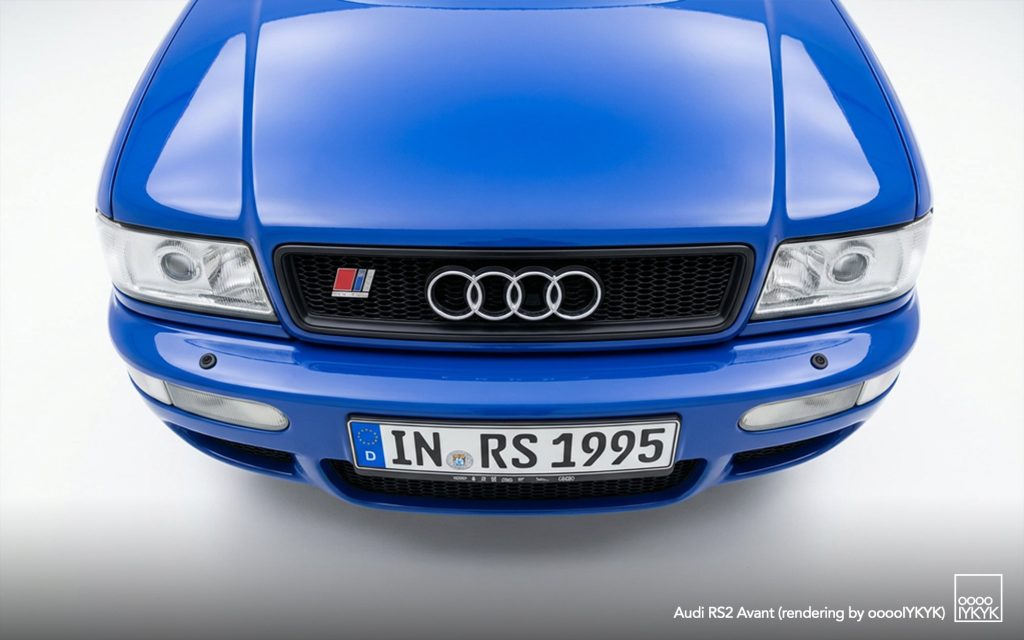
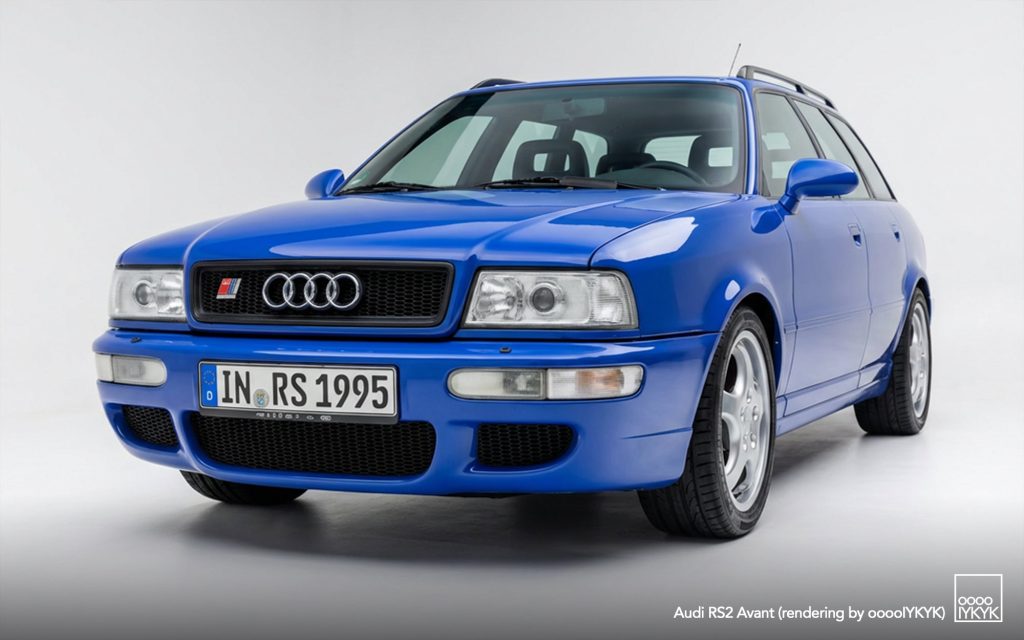
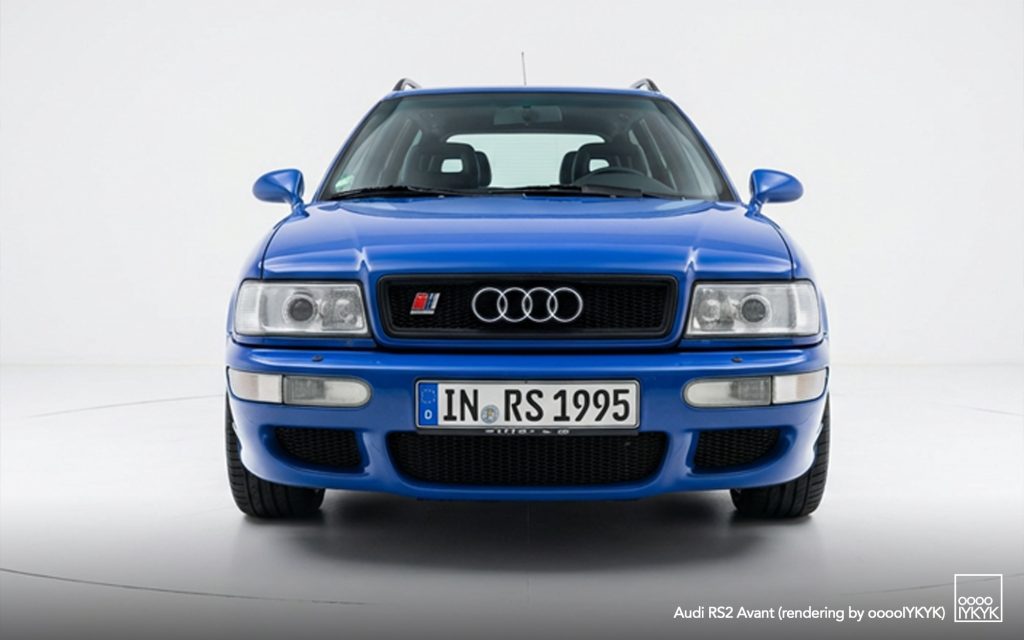
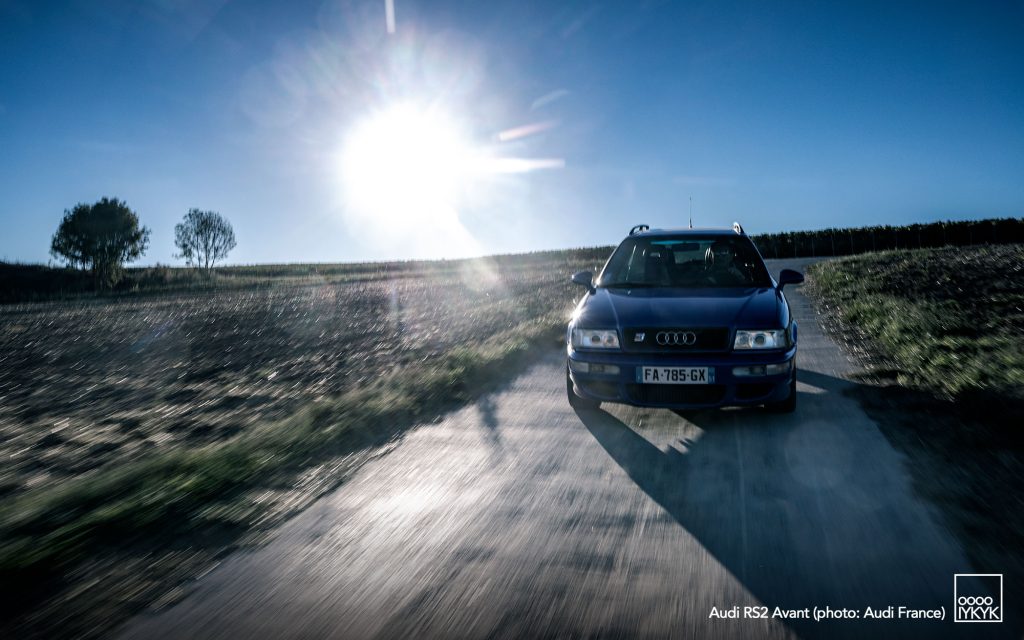
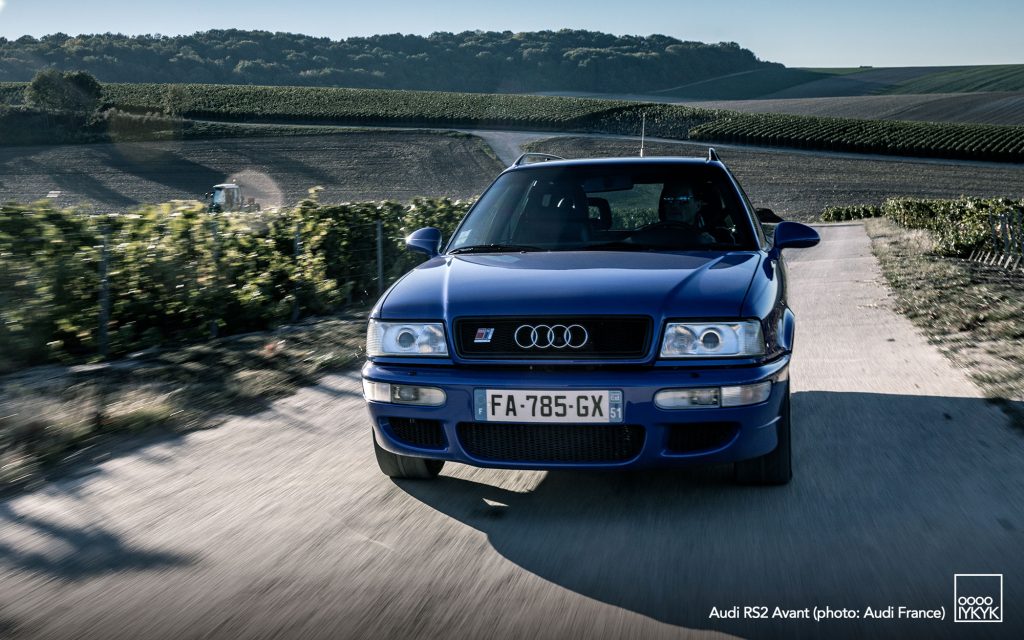
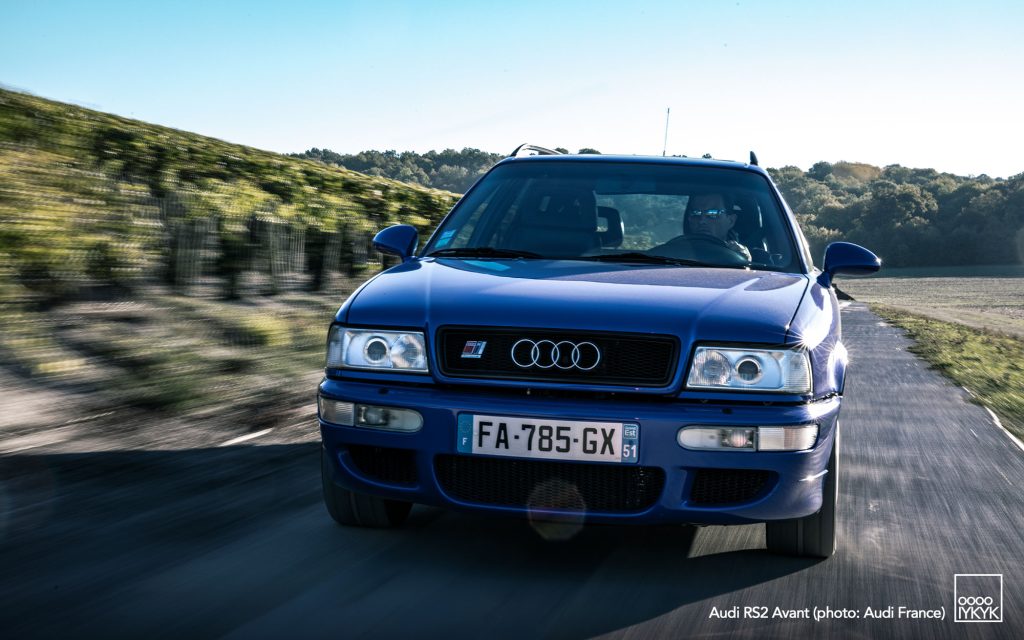
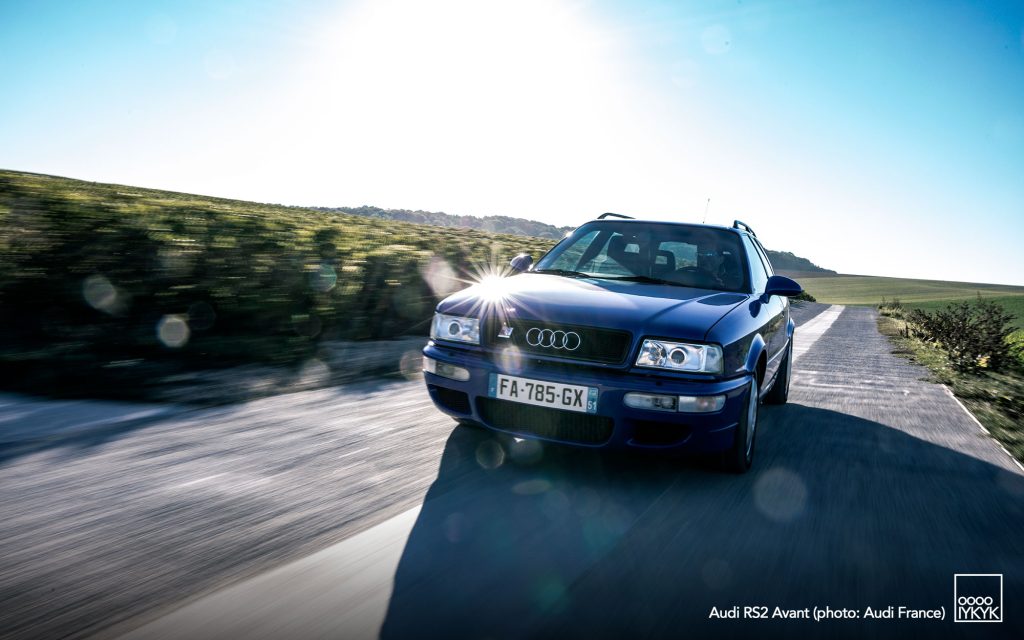
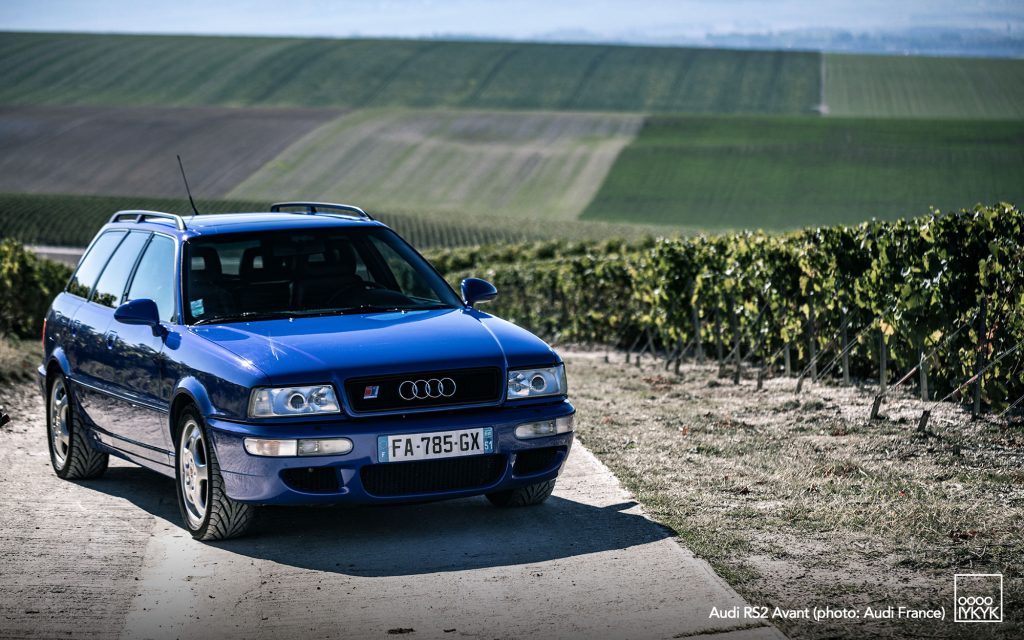
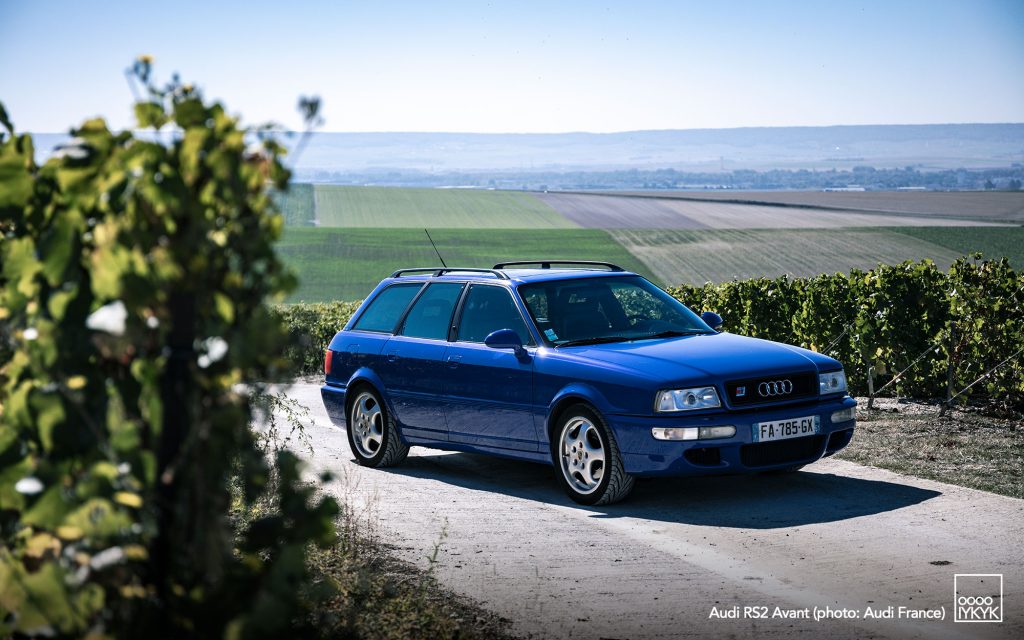
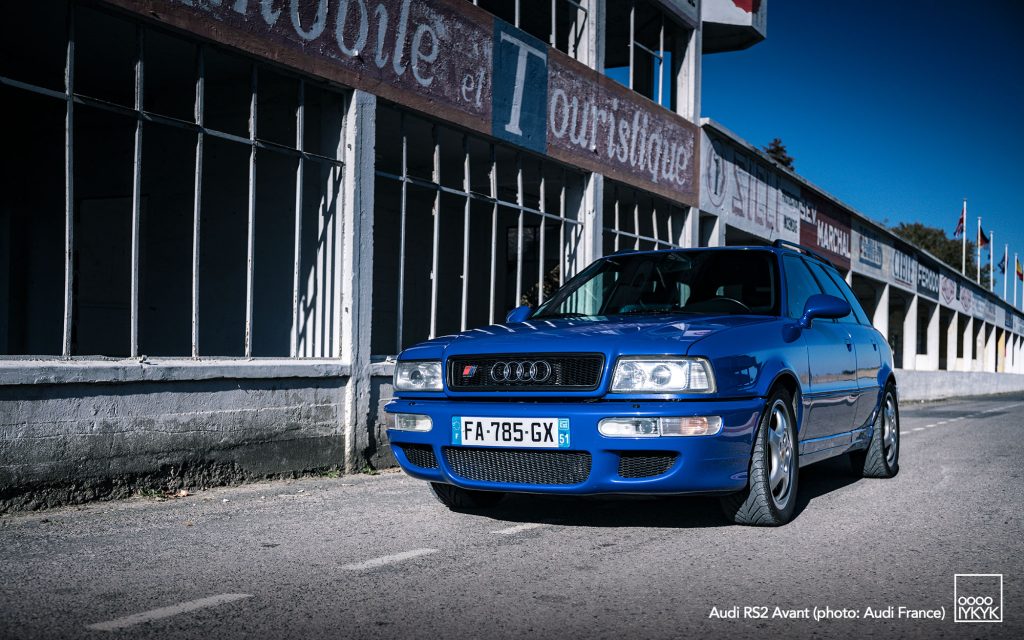
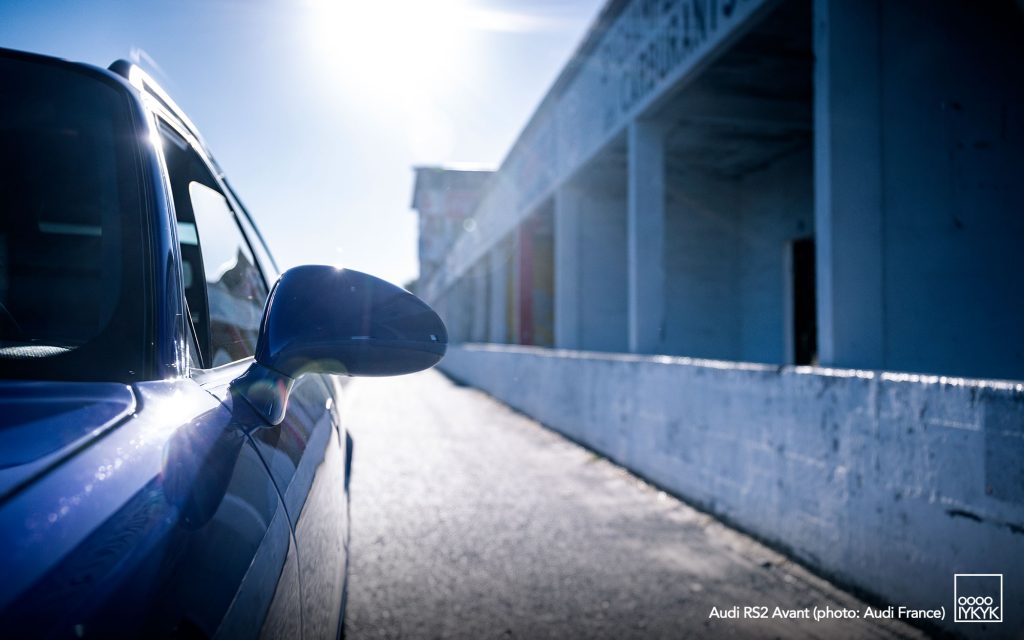
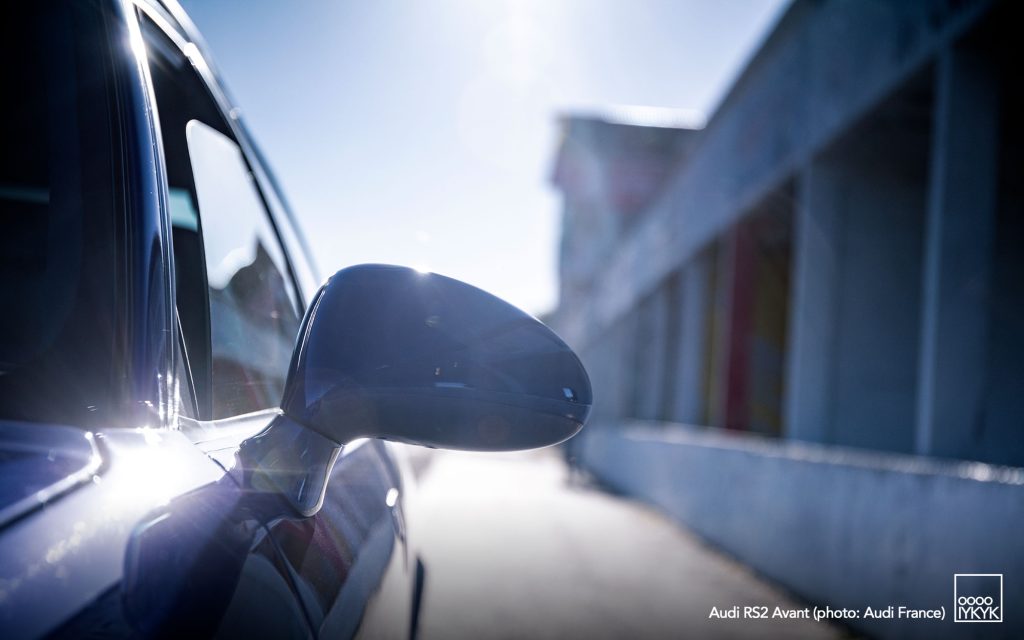
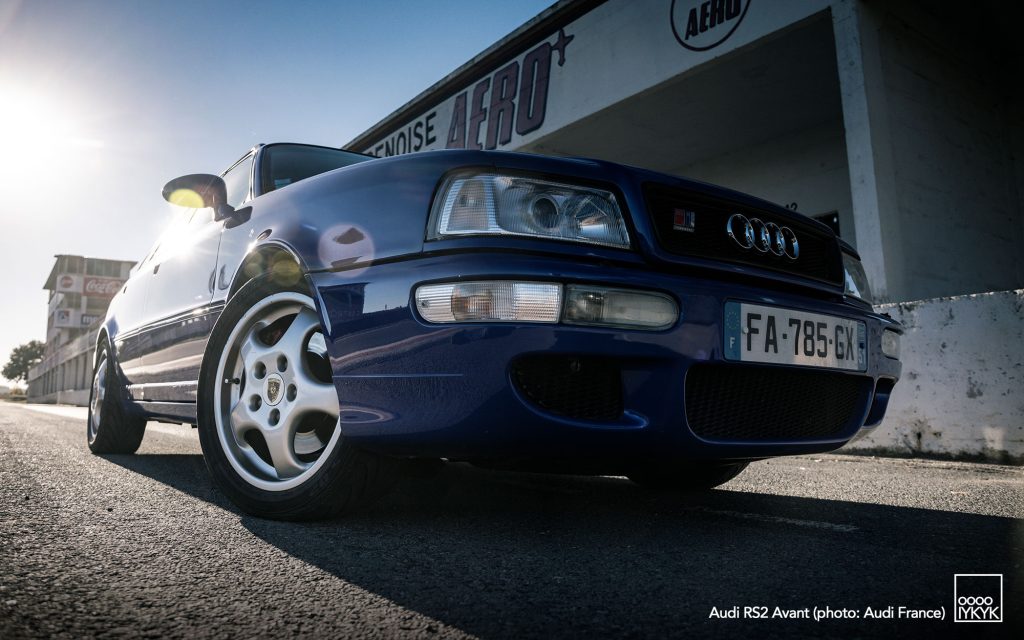
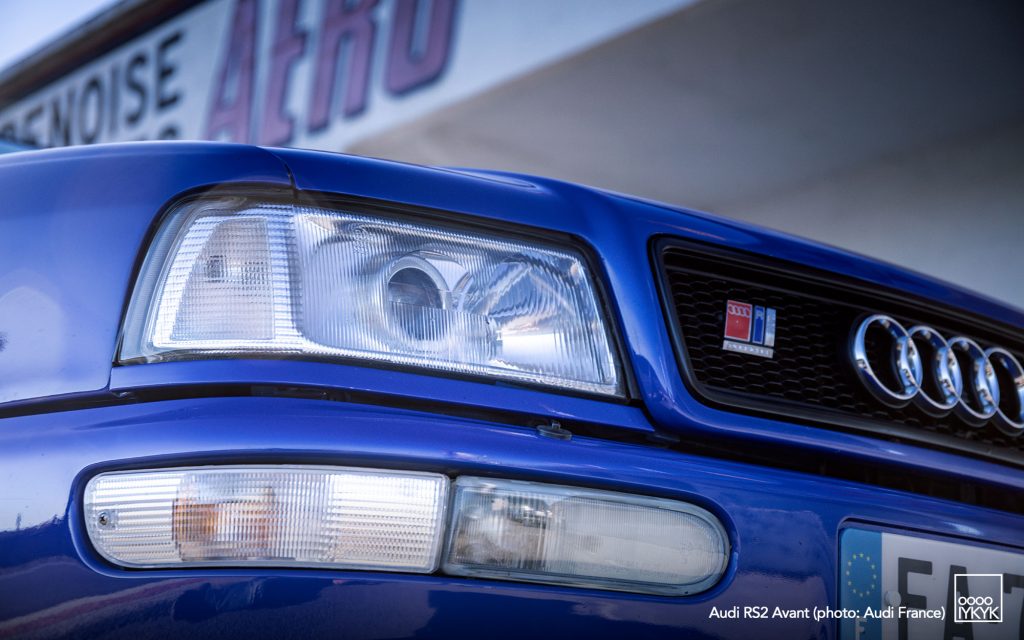
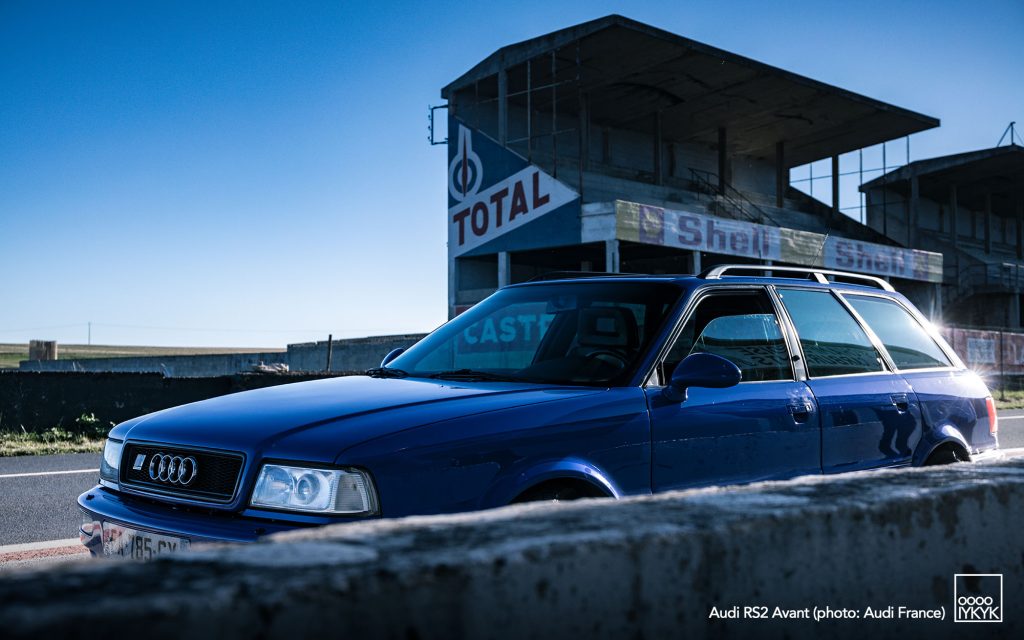
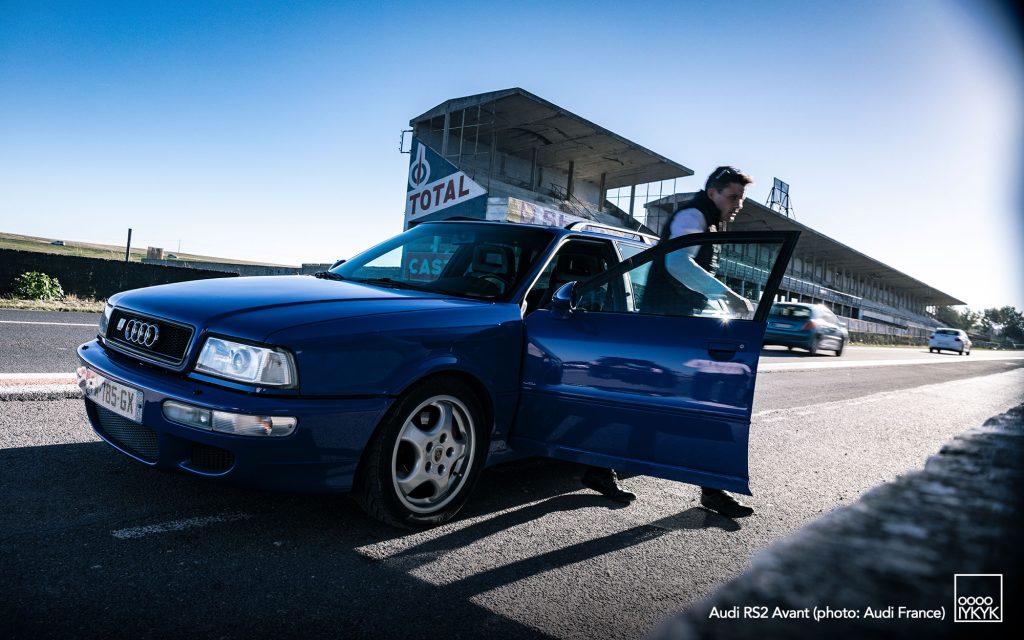
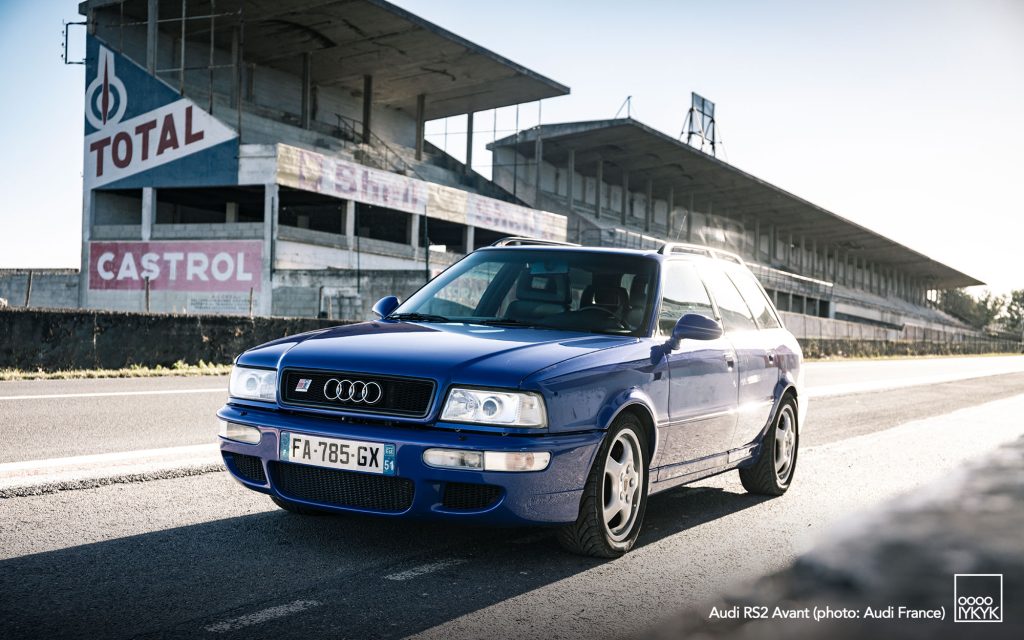
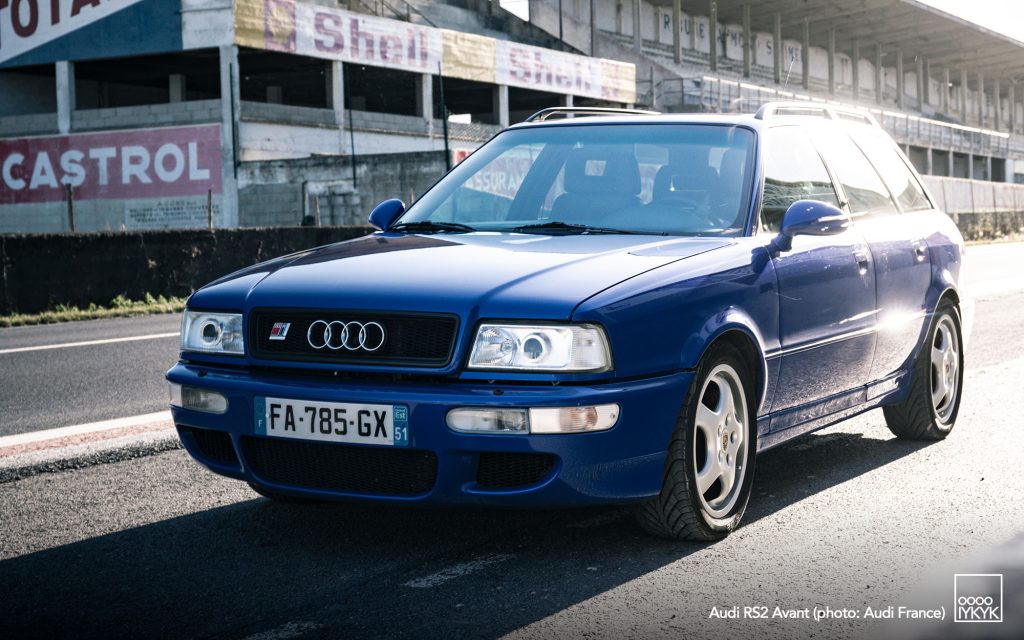
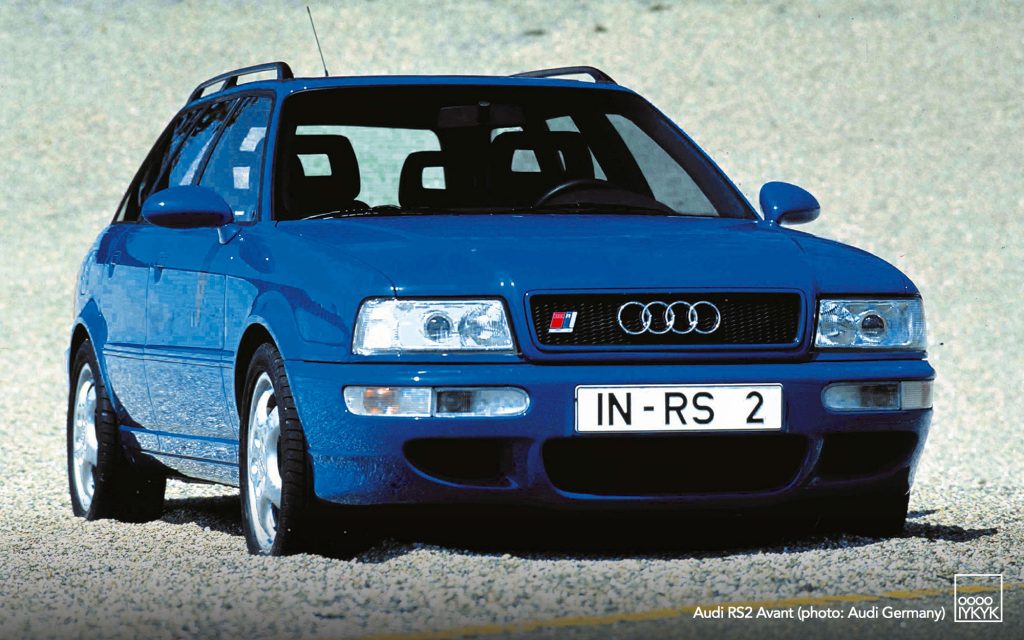
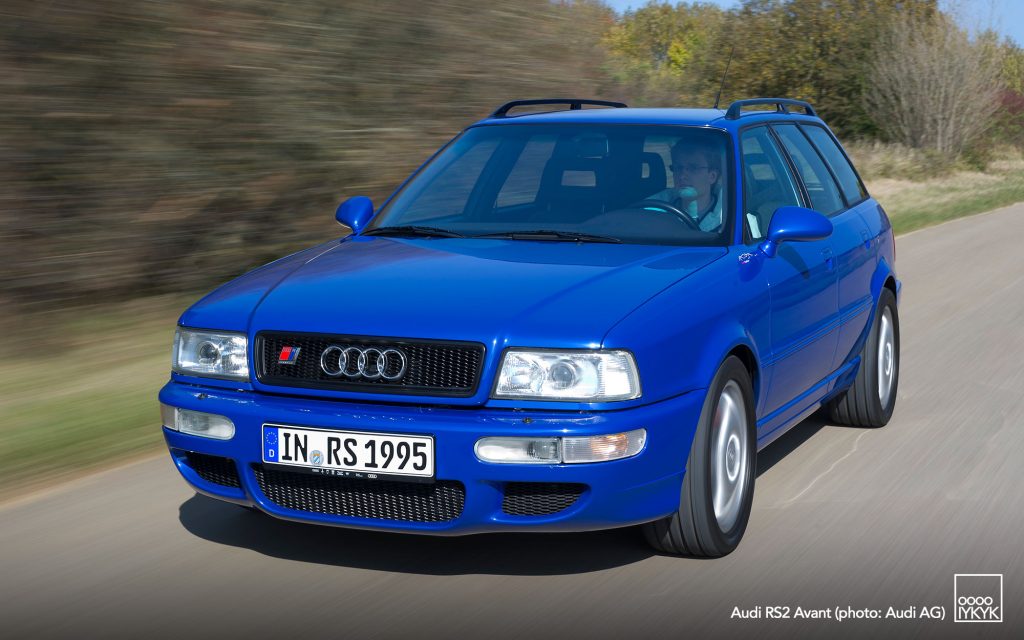
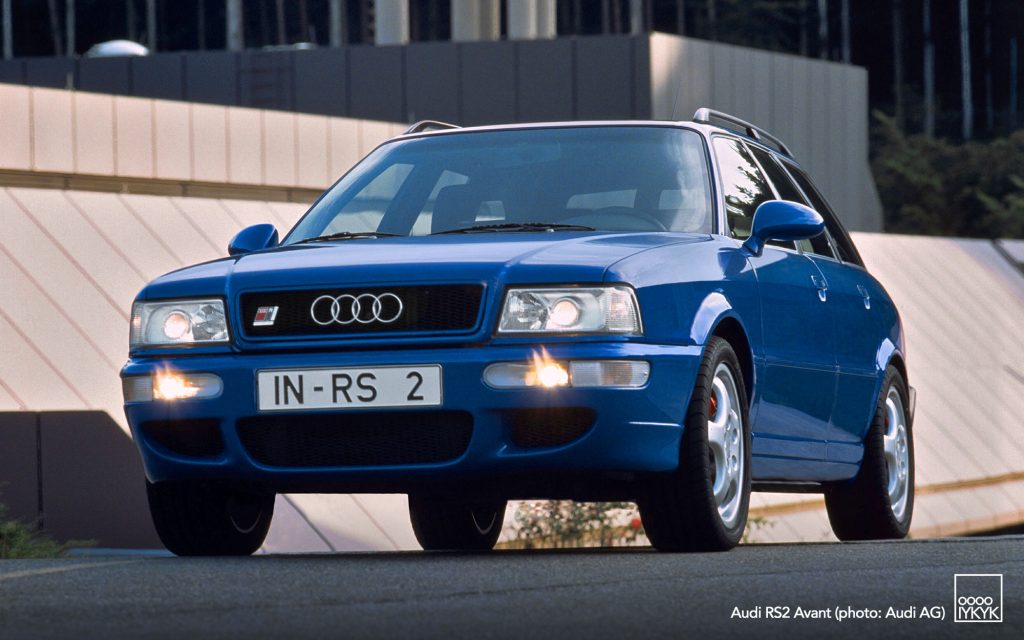
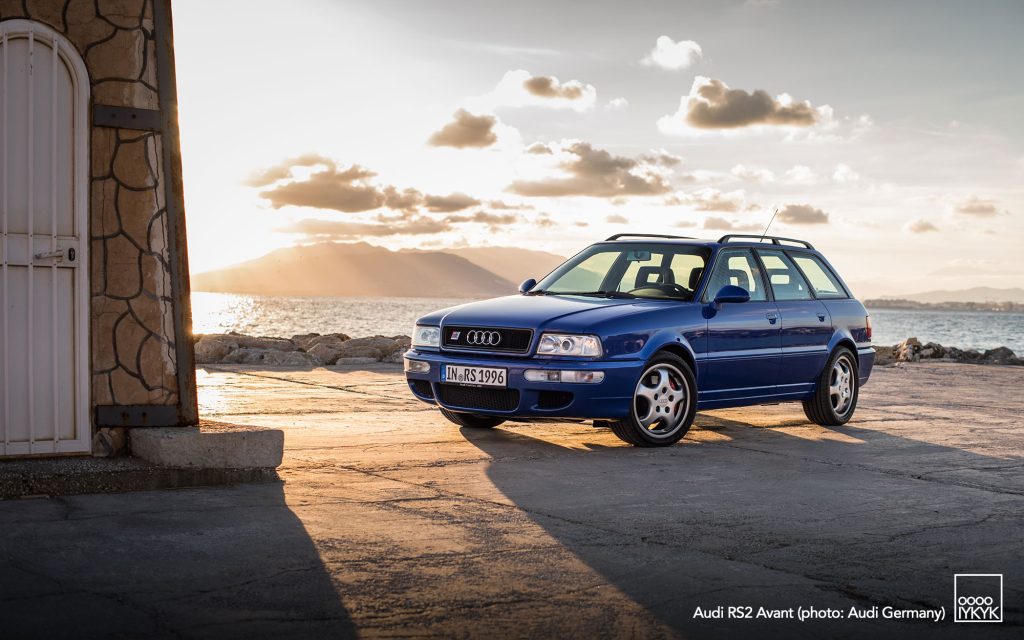
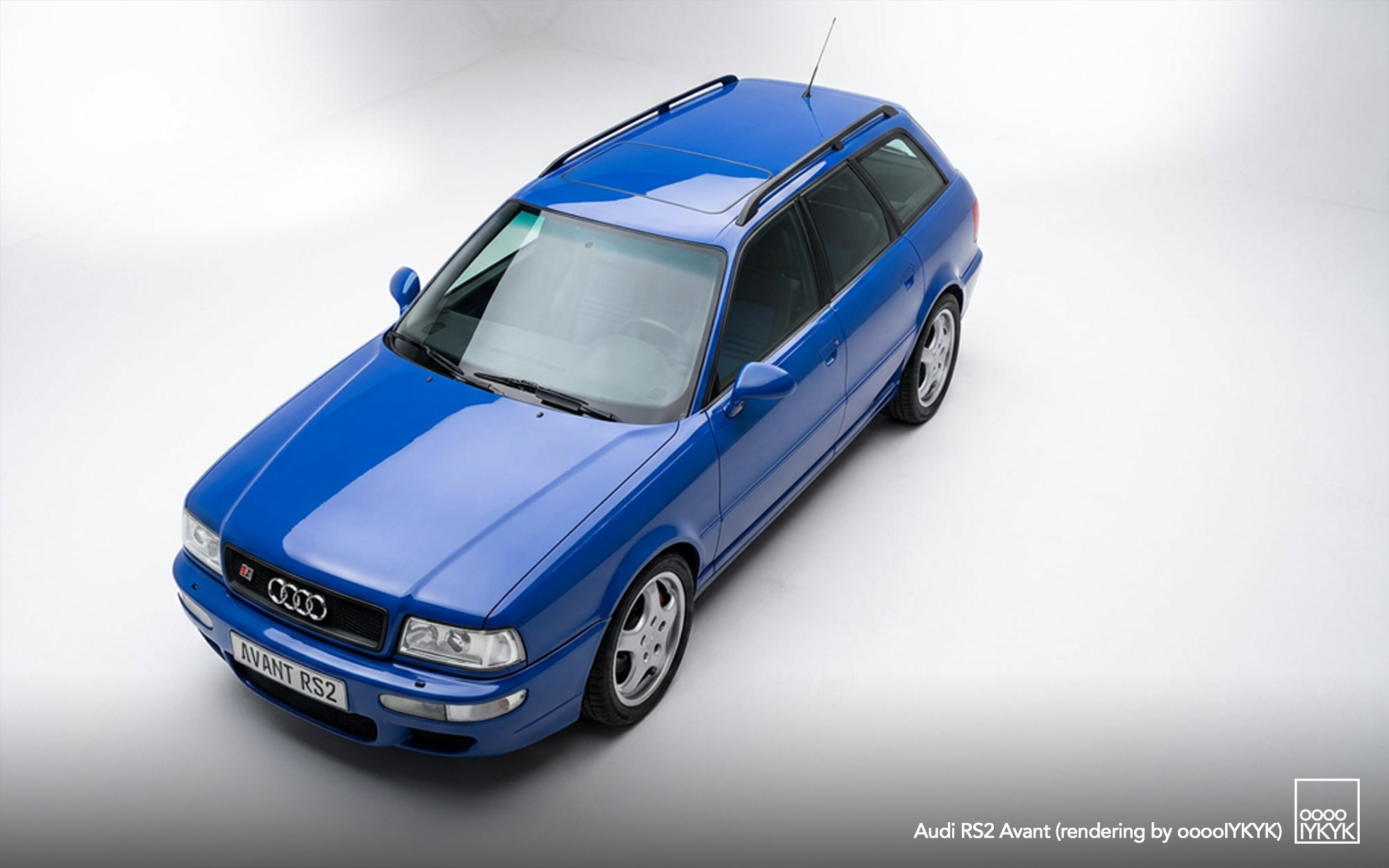
Visually, the RS2 maintained the practicality of the Audi 80 Avant while integrating distinctive performance cues inspired by Porsche and in some cases directly used by Porsche. Enlarged front air intakes supplied additional cooling to the turbocharged engine and braking system. Porsche-sourced side mirrors and lighting elements subtly signaled the collaboration. RS badging in red and silver identified the car’s position within the range.
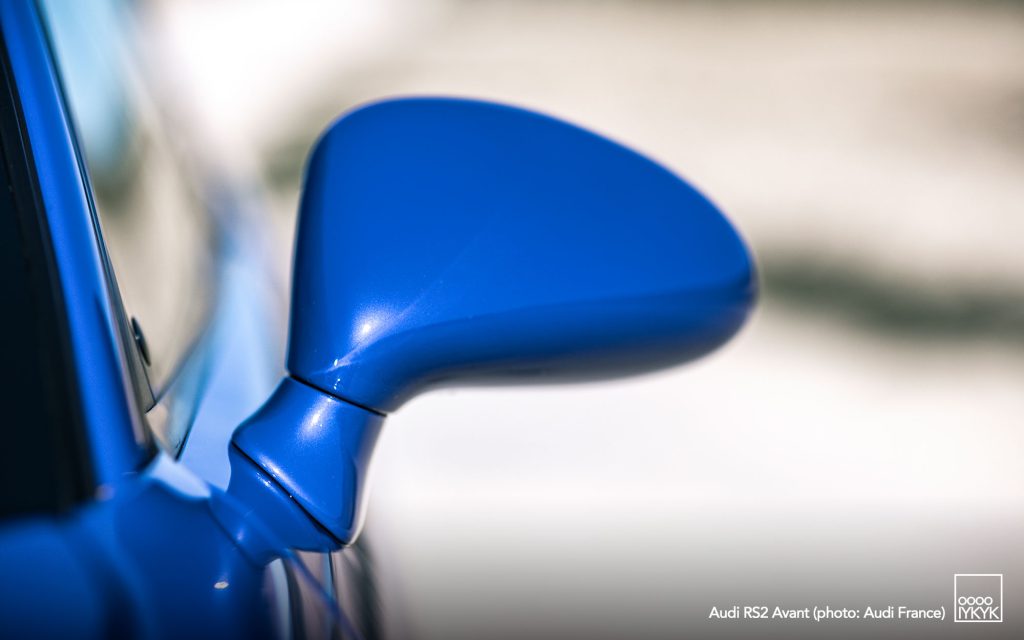
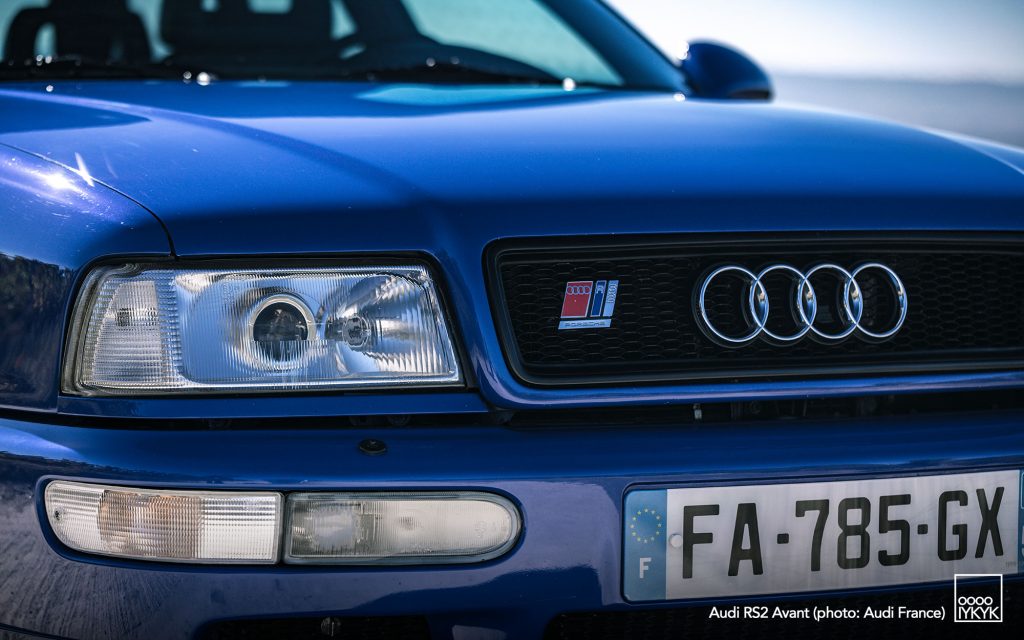
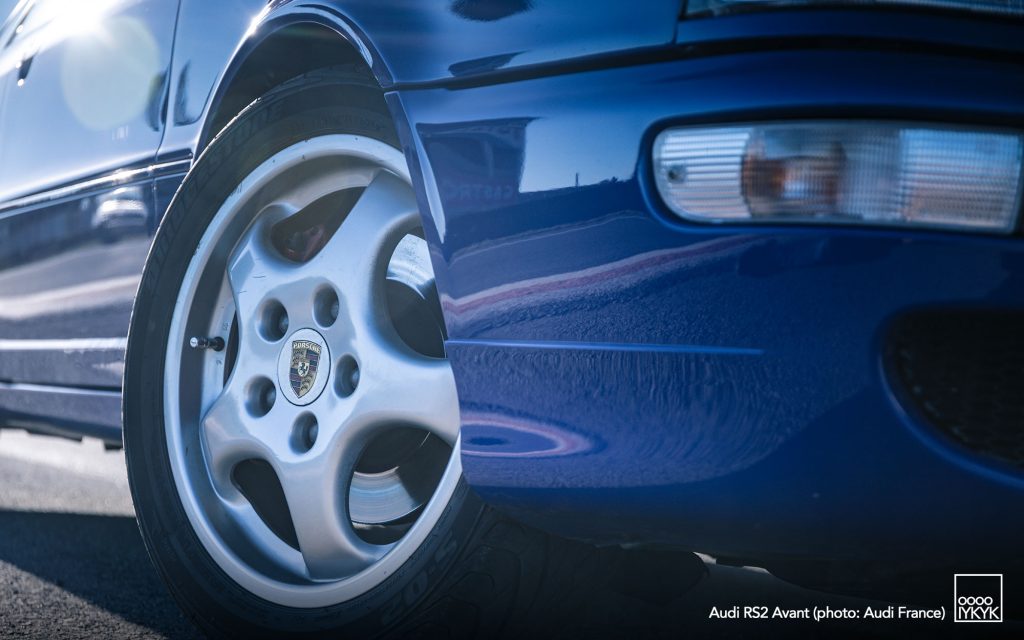
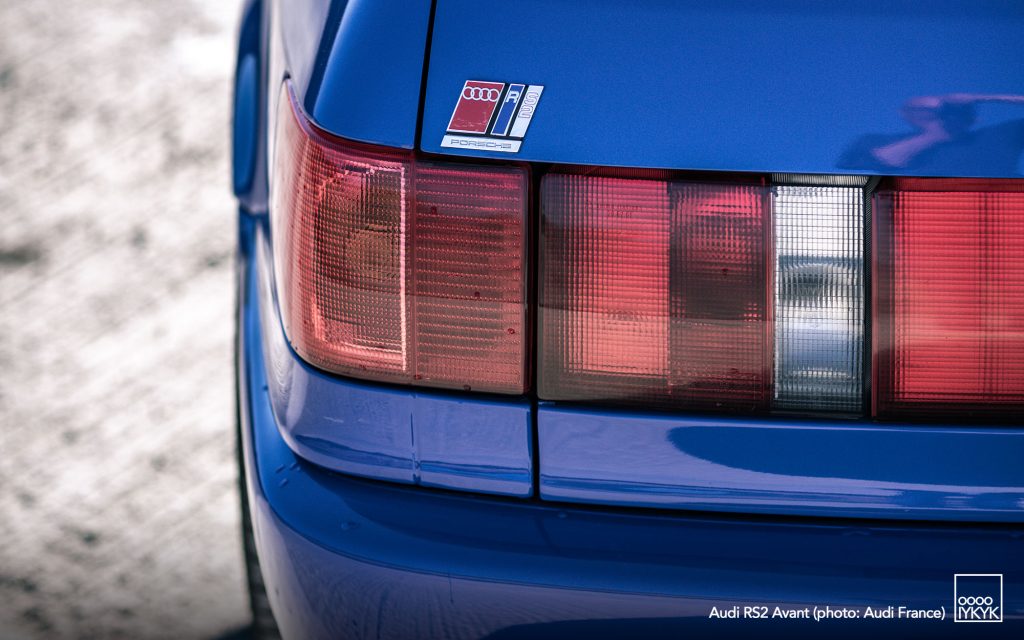
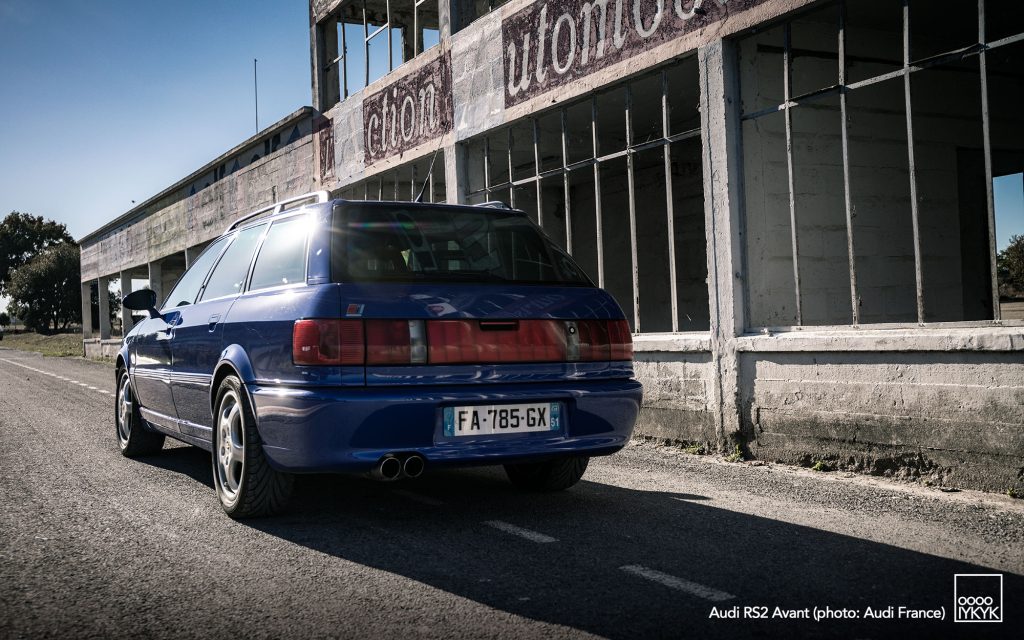
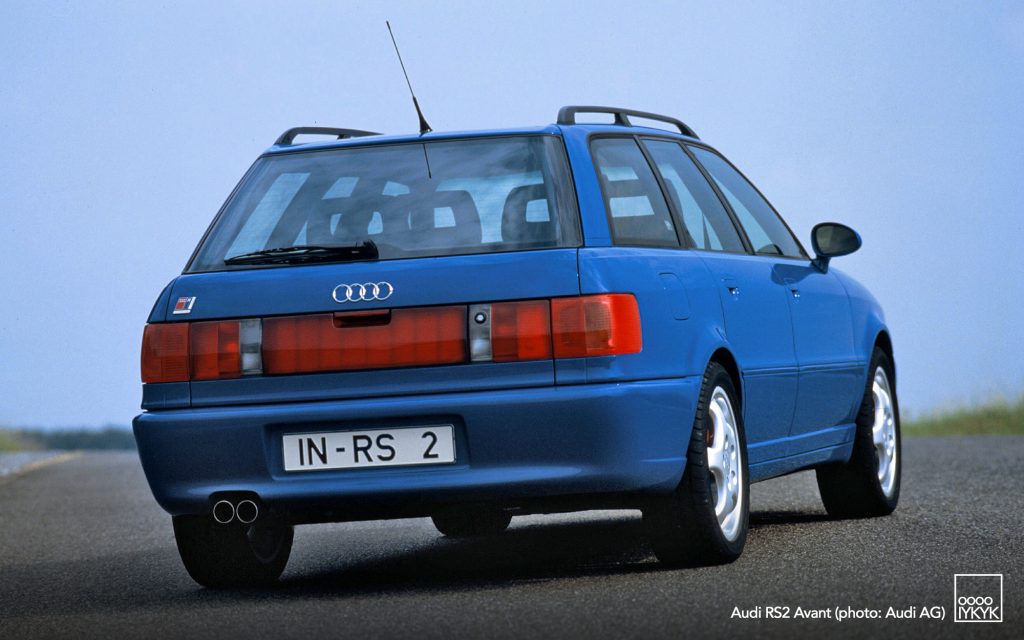
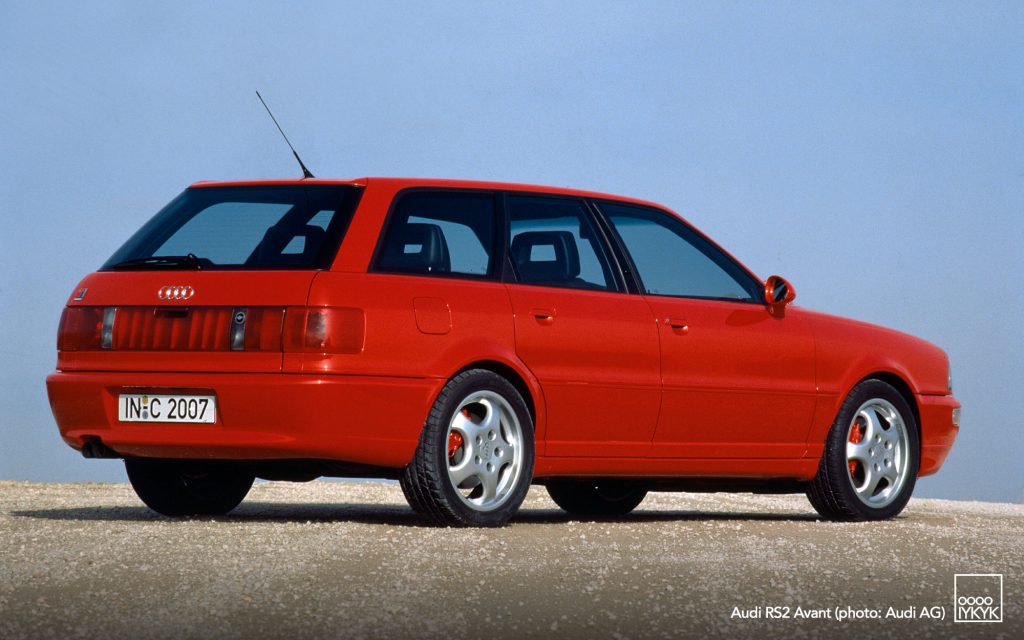
In addition to the Porsche Cup alloys and “big red” brakes, other examples of Porsche components include front foglight and turn signal assemblies from the Porsche 968 and so-called “teardrop” mirrors from the 911 (type 993). Other unique parts included side skirts and a “heckblende” light panel that connected the rear taillights in order to appear as one full assembly.
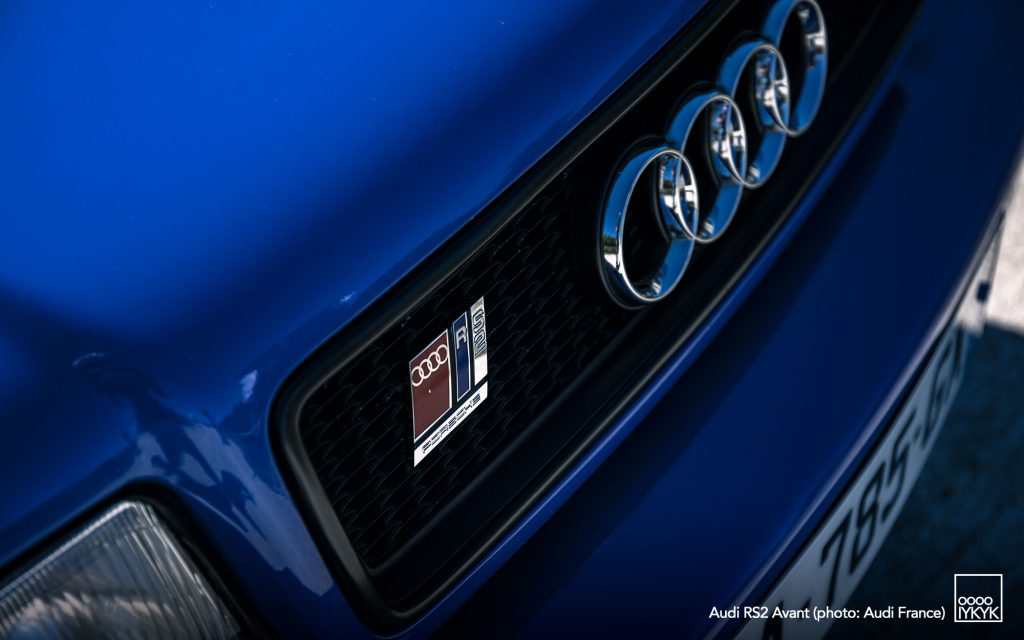
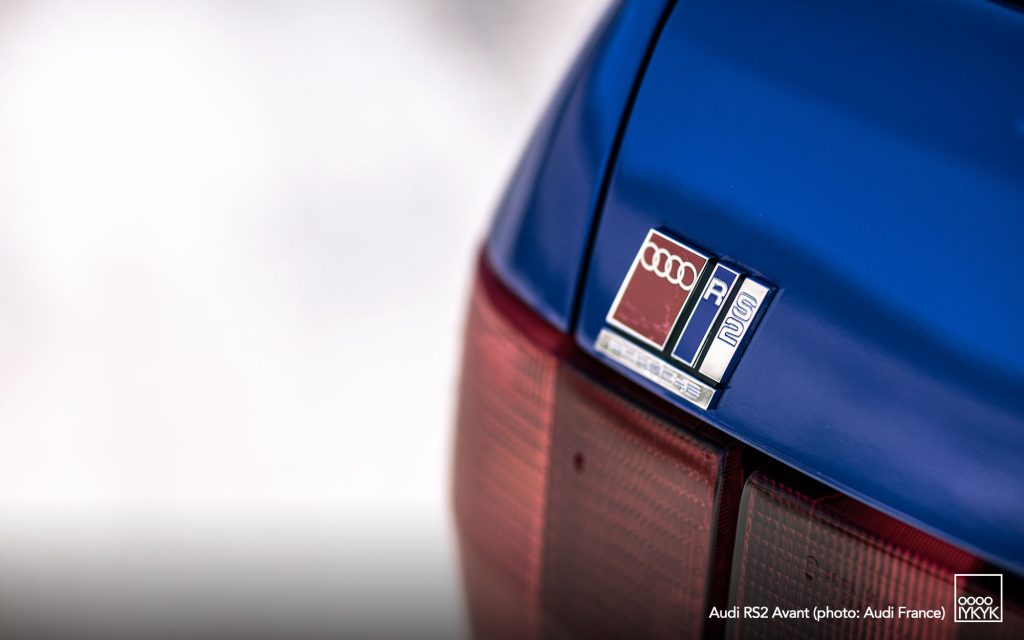
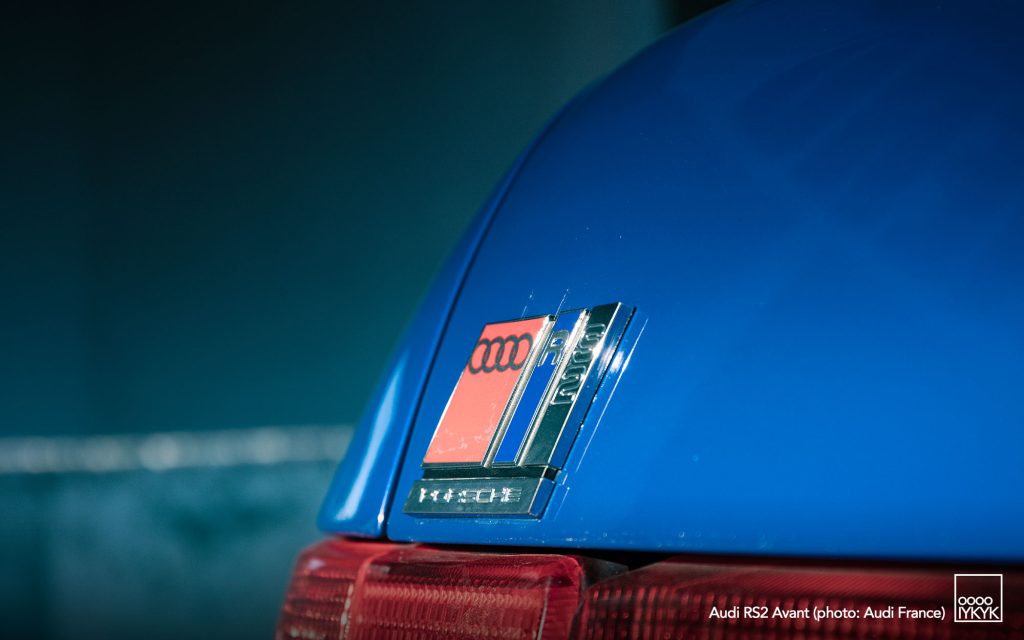
Further identification came from the badging. The RS2 utilized a badge similar to the silver and red Audi Sport badges featured on Audi’s S2 and S4 models with further segmentation in blue designating the Porsche partnership visually and a third panel that added the “R” in RS2.
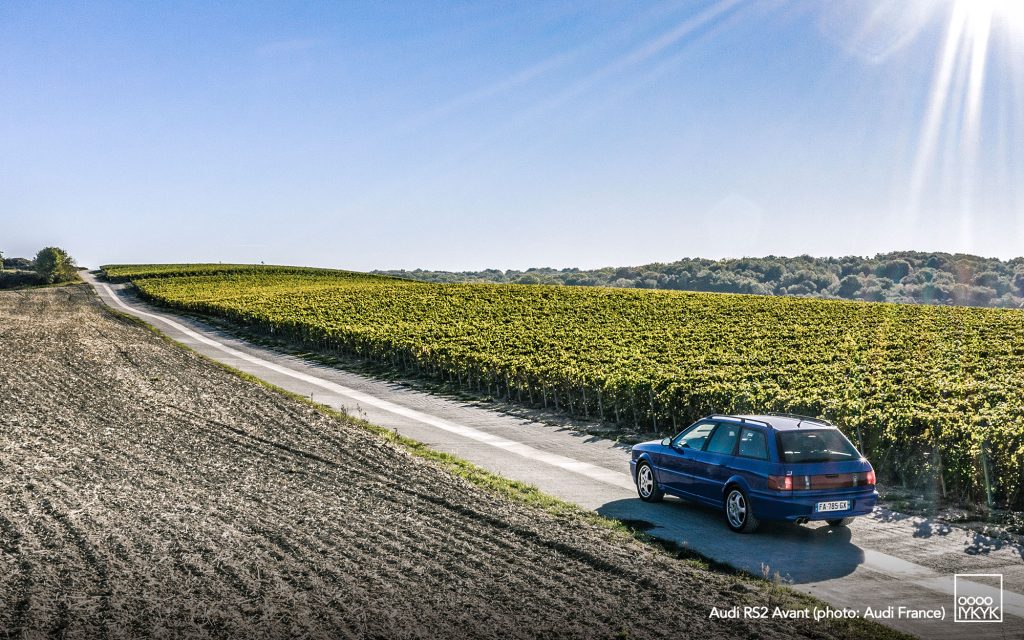
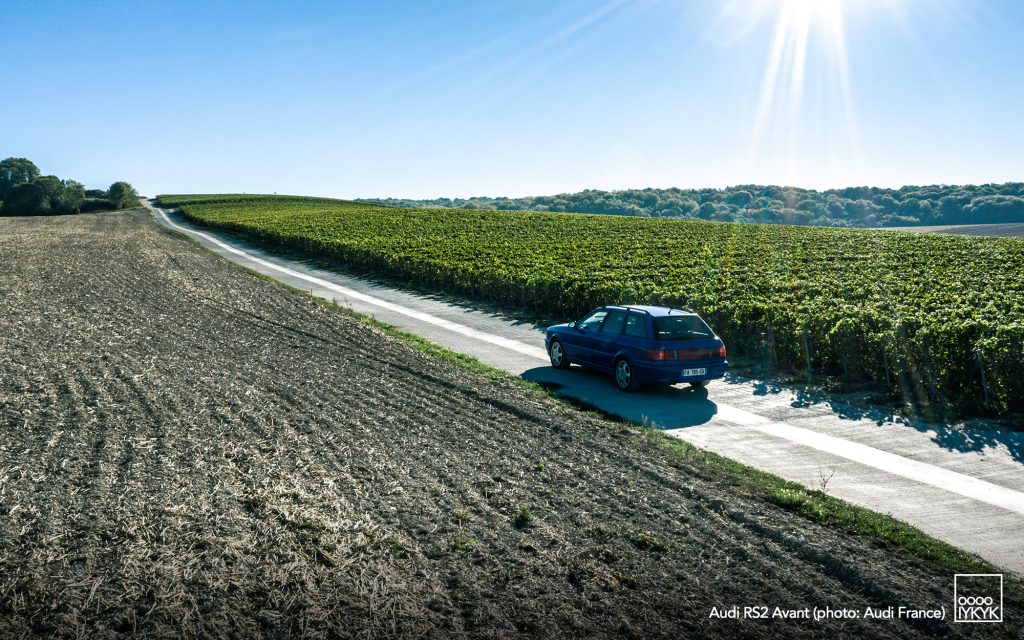
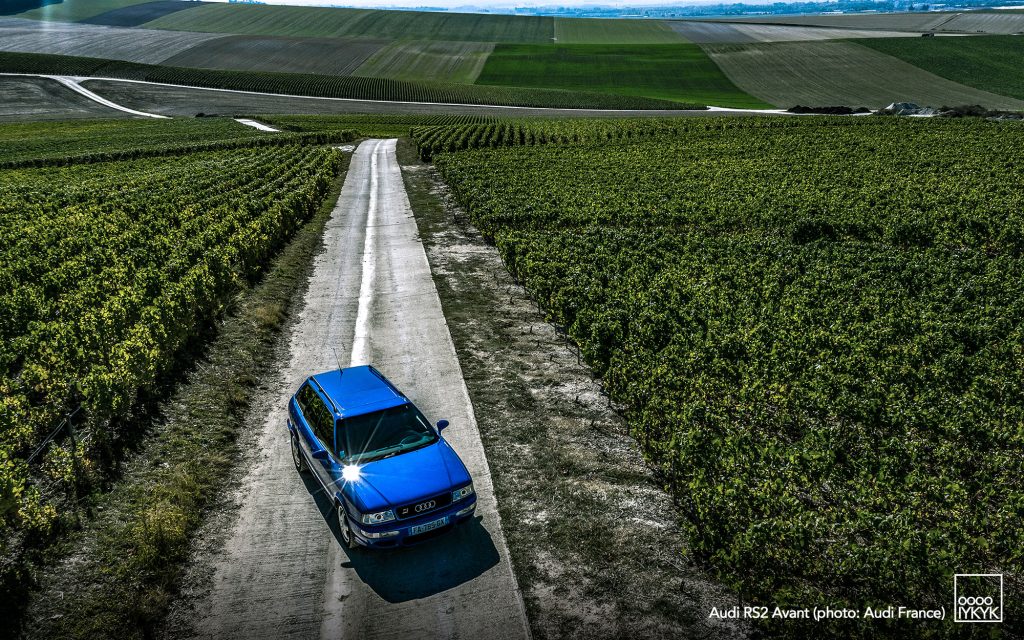
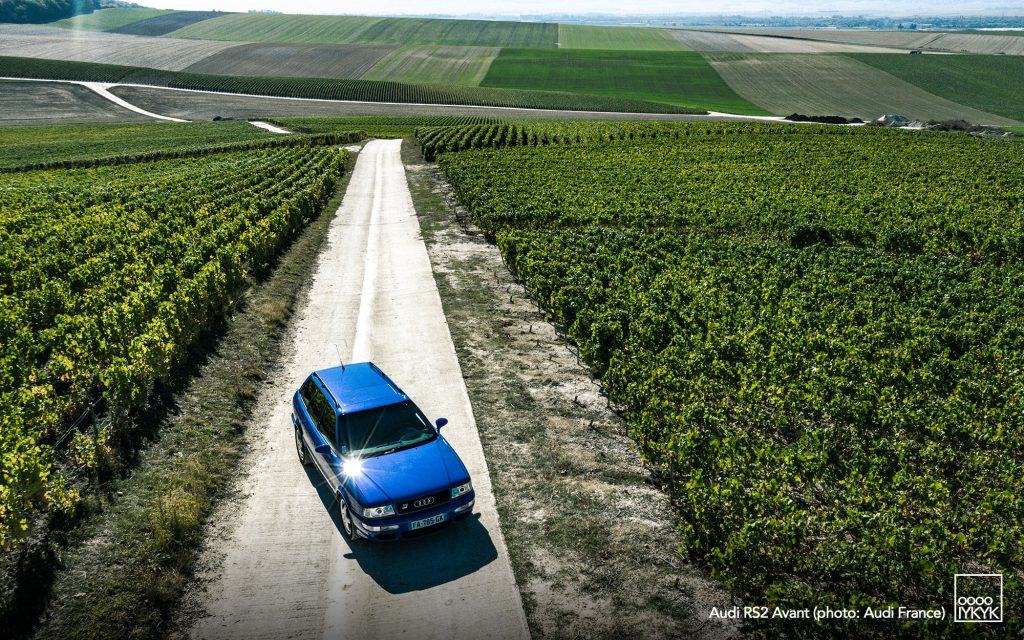
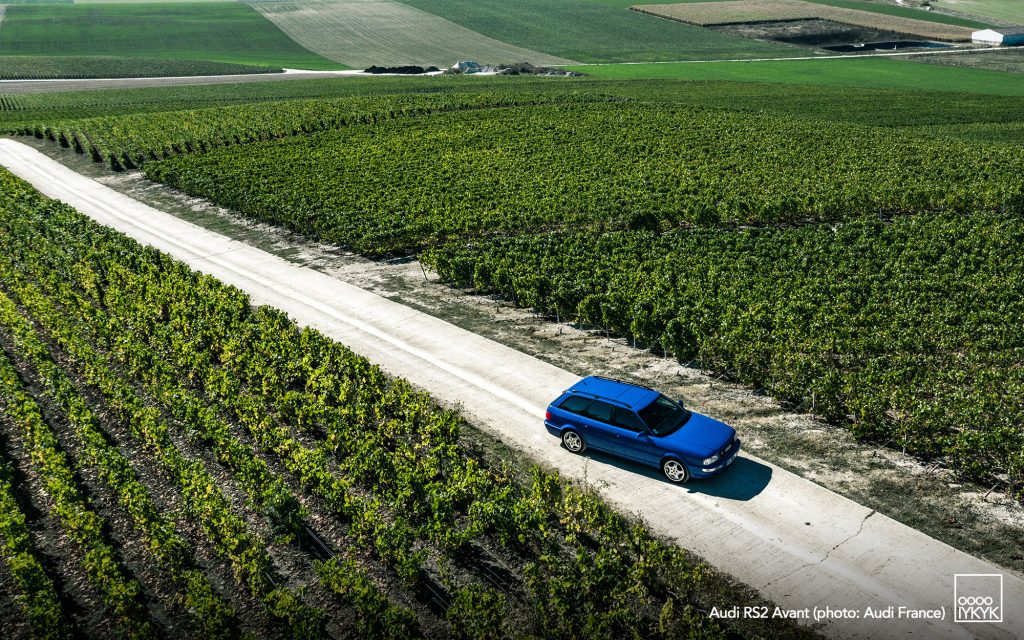
Most examples were finished in RS Blue, a vivid color that had its name changed to Nogaro Blue in the B5 era. It is and was closely associated with the RS2 and later RS models. However, additional colors were available, including black, silver, and red, as period literature confirms.
INTERIOR & PRACTICALITY
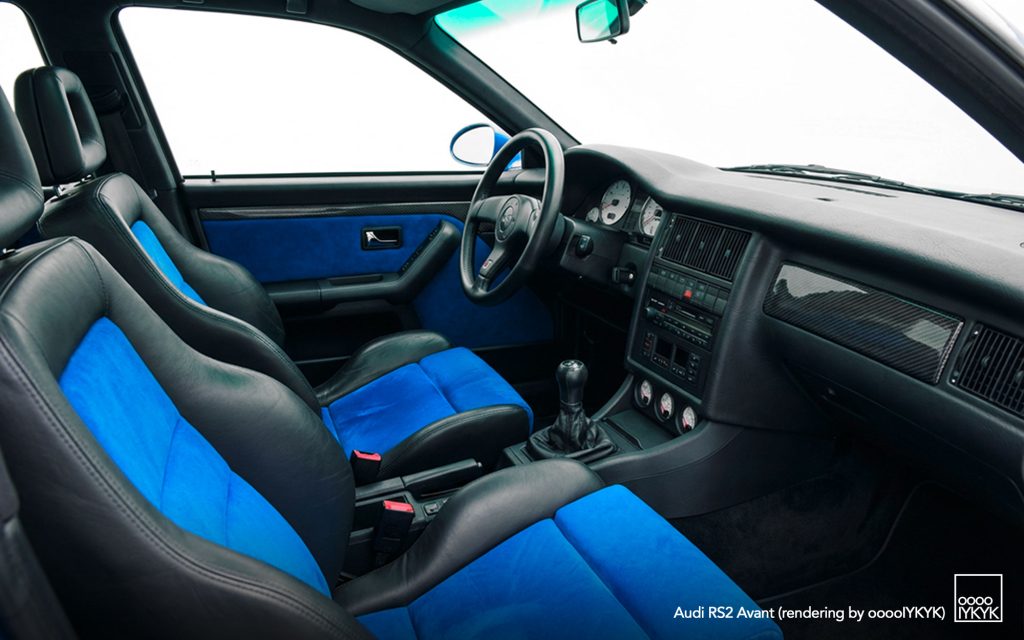
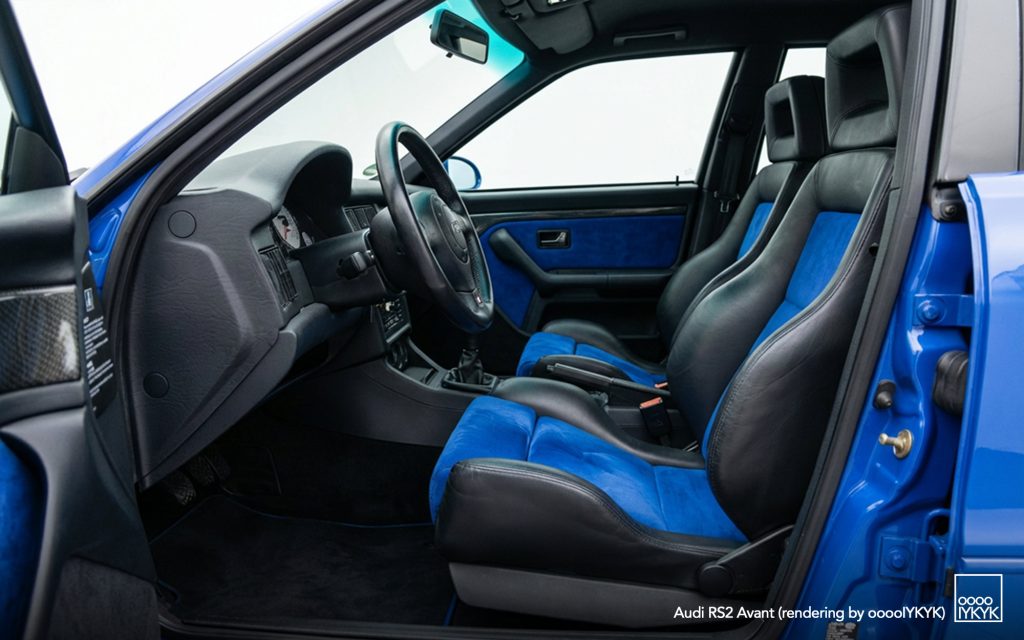
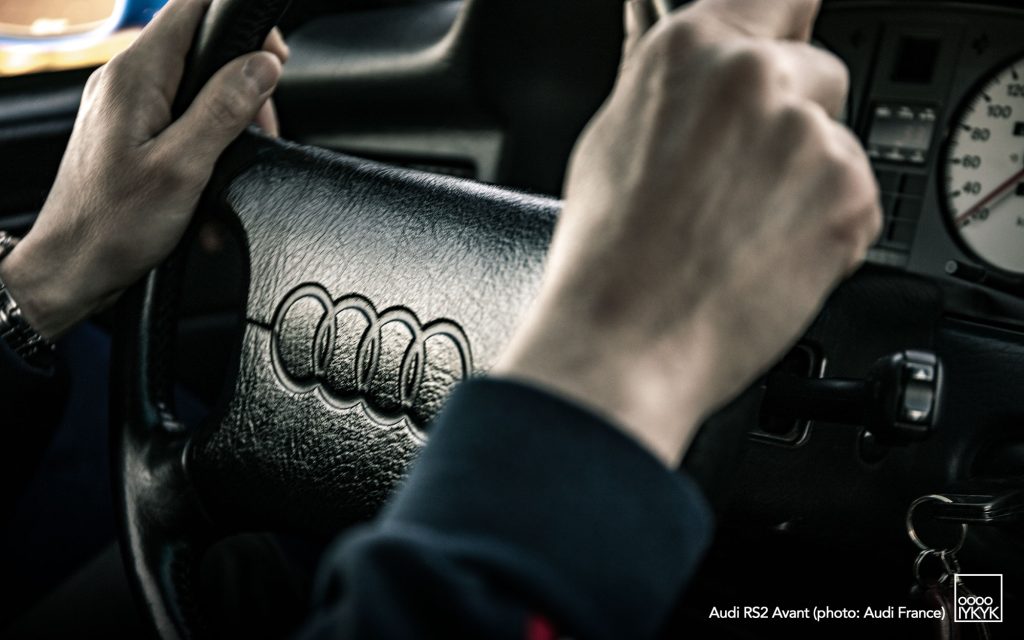
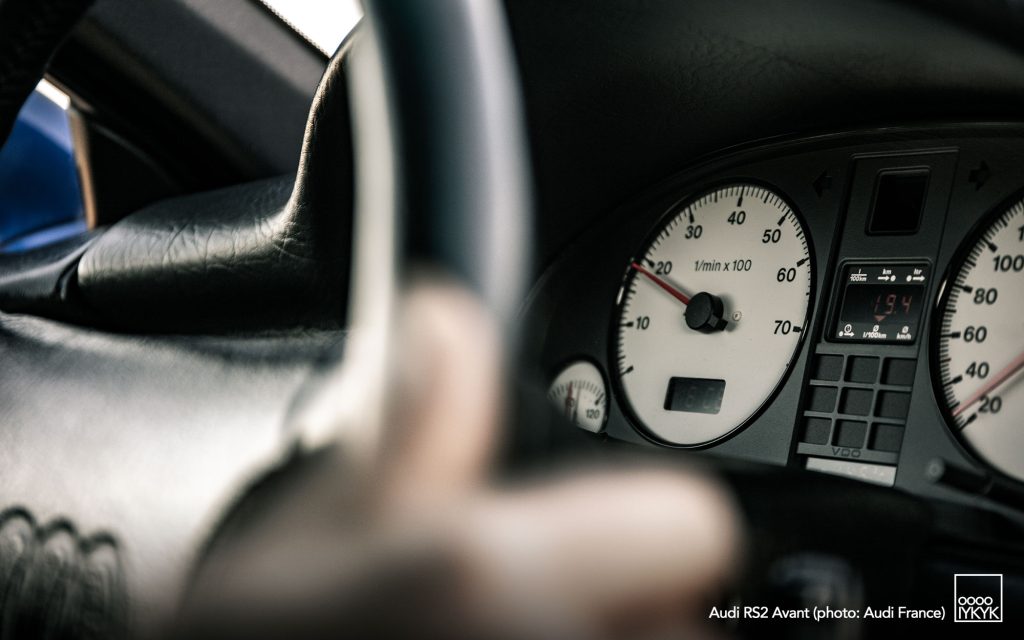
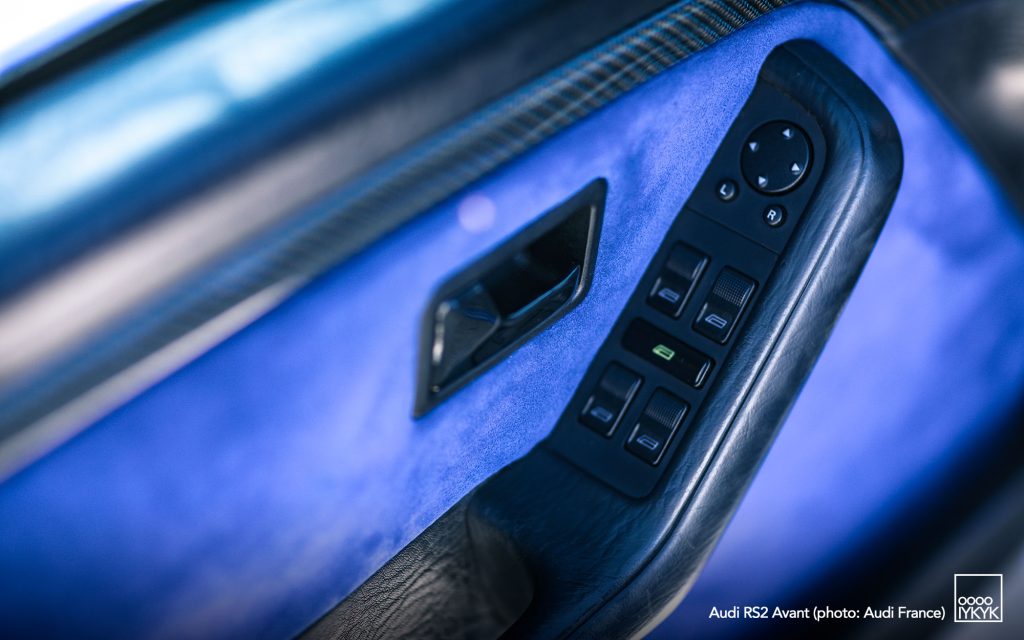
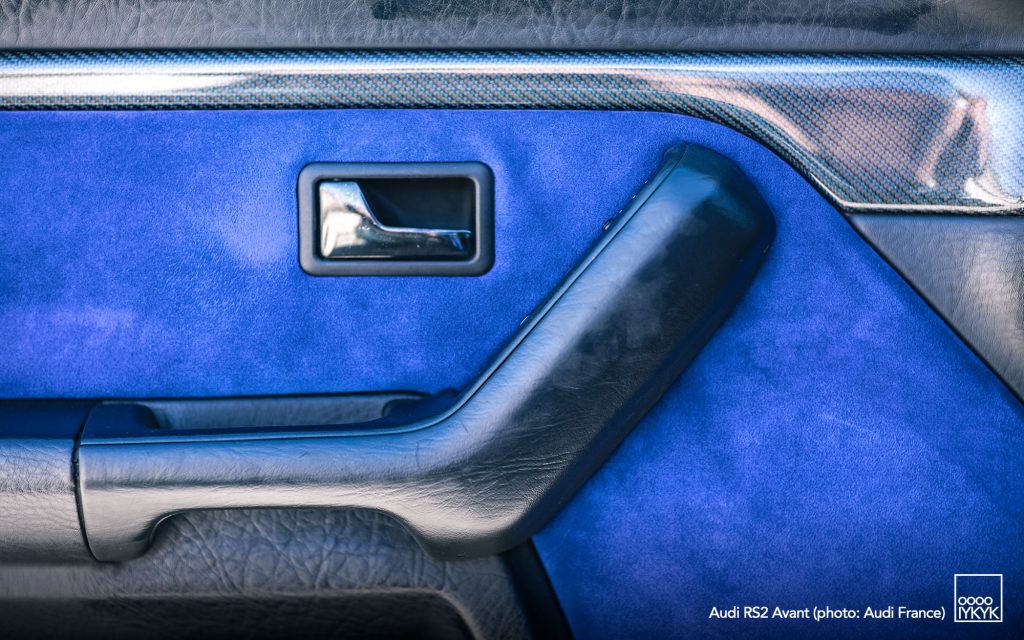
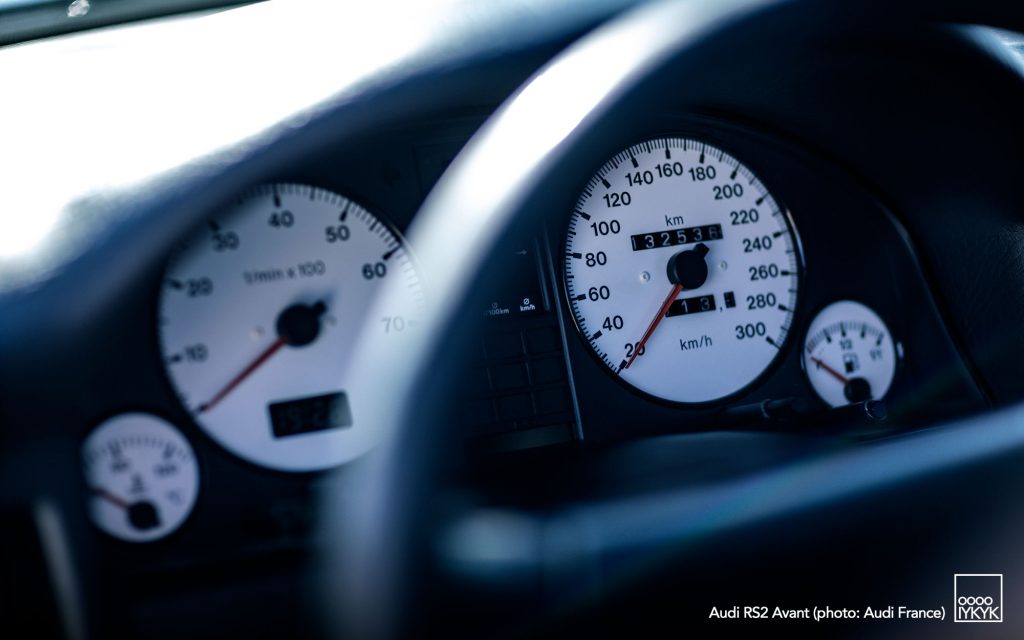
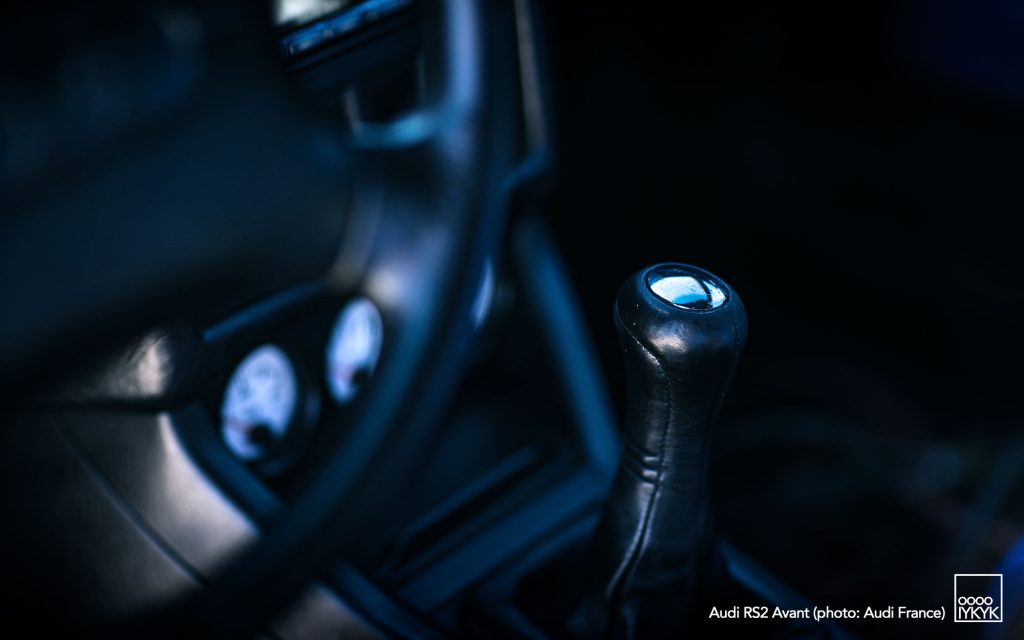
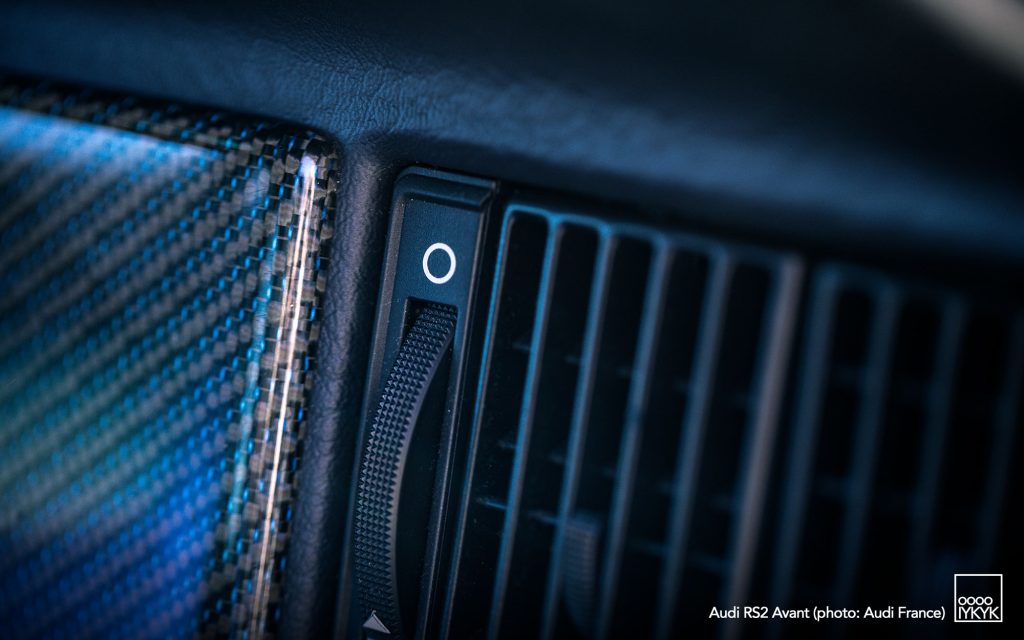
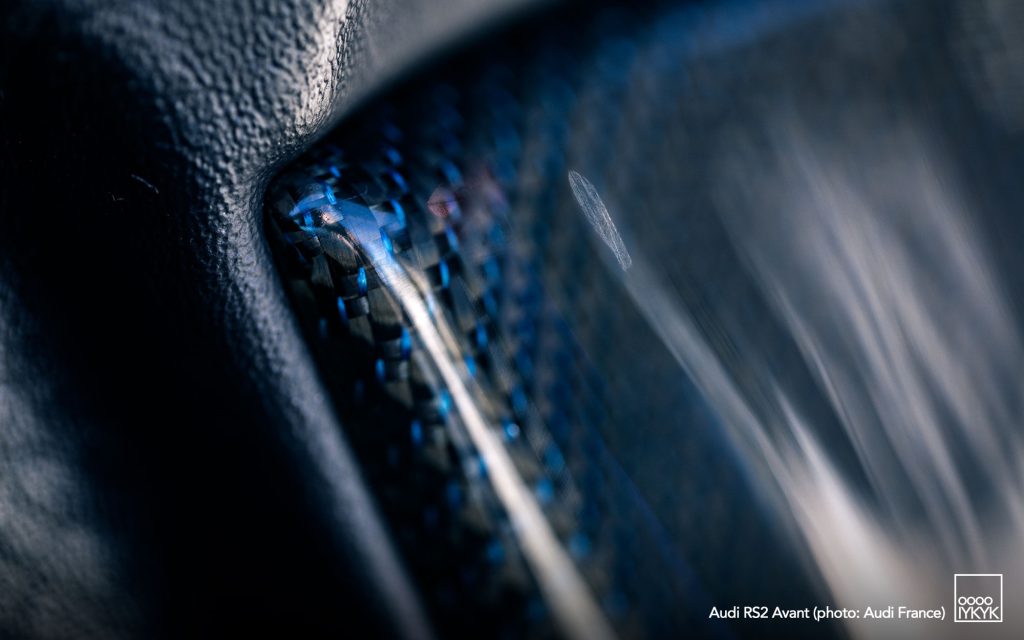
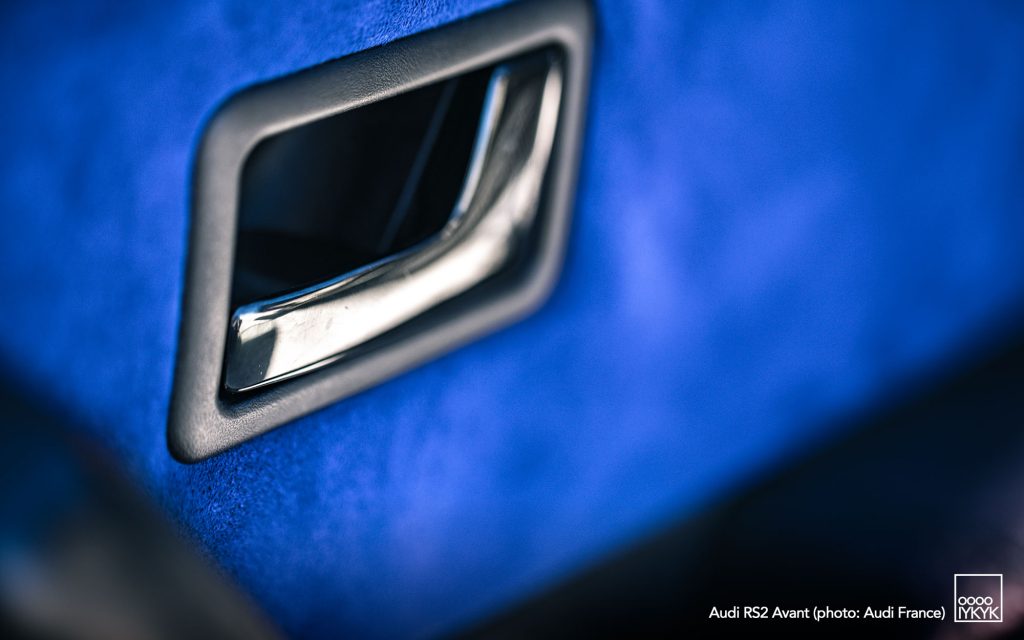
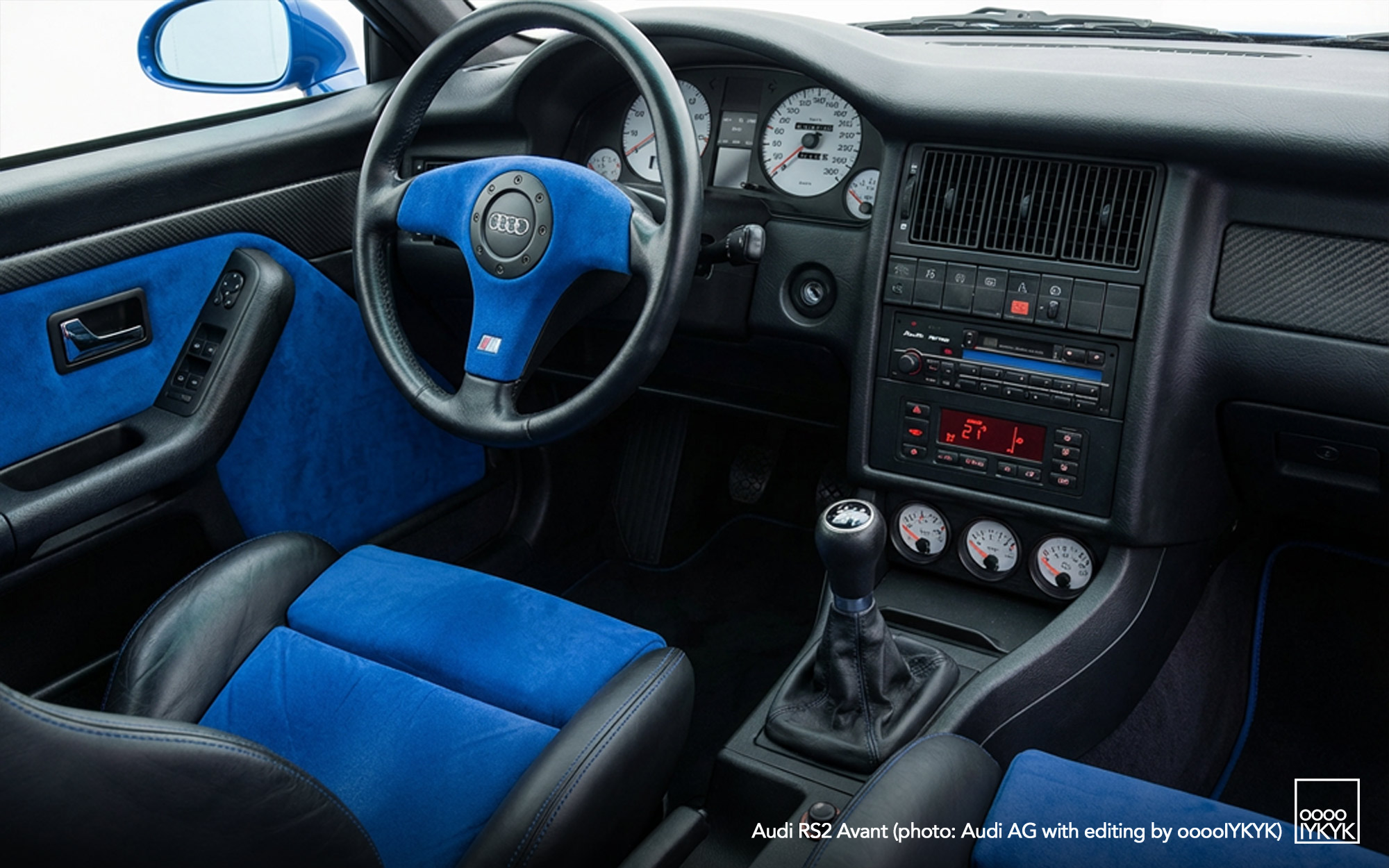
Inside, the RS2 blended motorsport elements with everyday usability. Recaro sport seats were standard, upholstered in leather or leather and Alcantara combinations. Blue Alcantara center panels became an iconic configuration when paired with Nogaro Blue exteriors, while carbon fiber trim featuring blue flecks created an even more tailored appearance. The steering wheel, gear lever, and trim elements reinforced the sporting focus, while white-faced gauges and auxiliary instrumentation for oil temperature, oil pressure, and battery voltage emphasized mechanical transparency.
Despite its performance, the RS2 retained full Avant practicality. The split-folding rear bench, retractable cargo cover, ski bag, and multiple tie-down points ensured that it could function as a family estate or long-distance touring car. Period marketing materials emphasized this duality: power and space combined, practicality plus performance equaling pure driving pleasure.
MECHANICAL UPGRADES & ENGINE TUNING
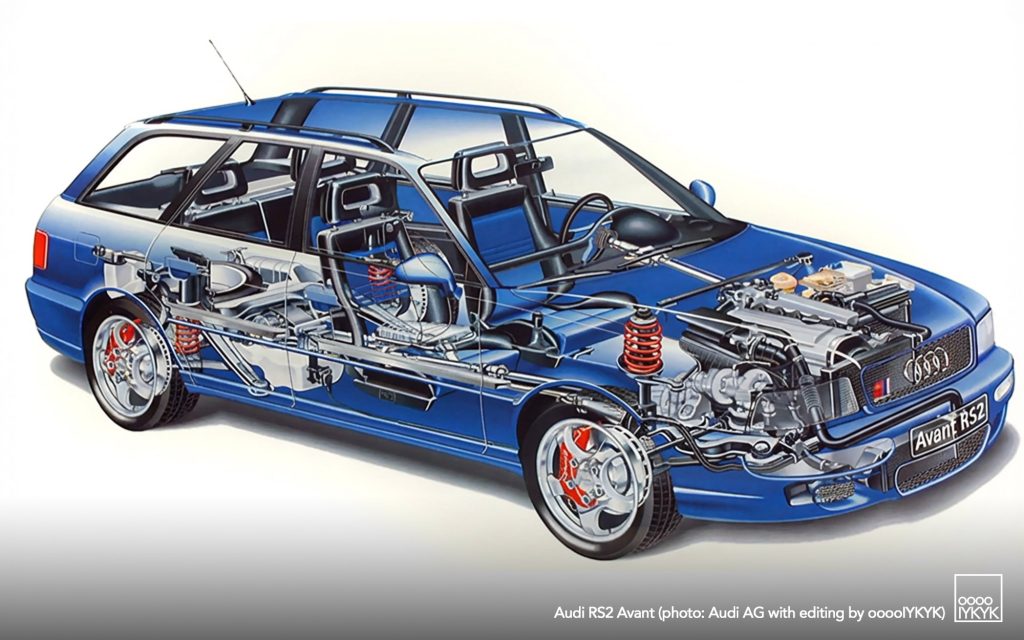
The Audi RS2 Avant’s defining characteristic was not simply its increased output, but the comprehensive reengineering of its powertrain and chassis systems. Although based on the Audi S2’s iron block 2.2-liter 20-valve turbocharged inline five-cylinder engine (engine code ADU), the RS2 received substantial mechanical upgrades through the collaboration with Porsche.
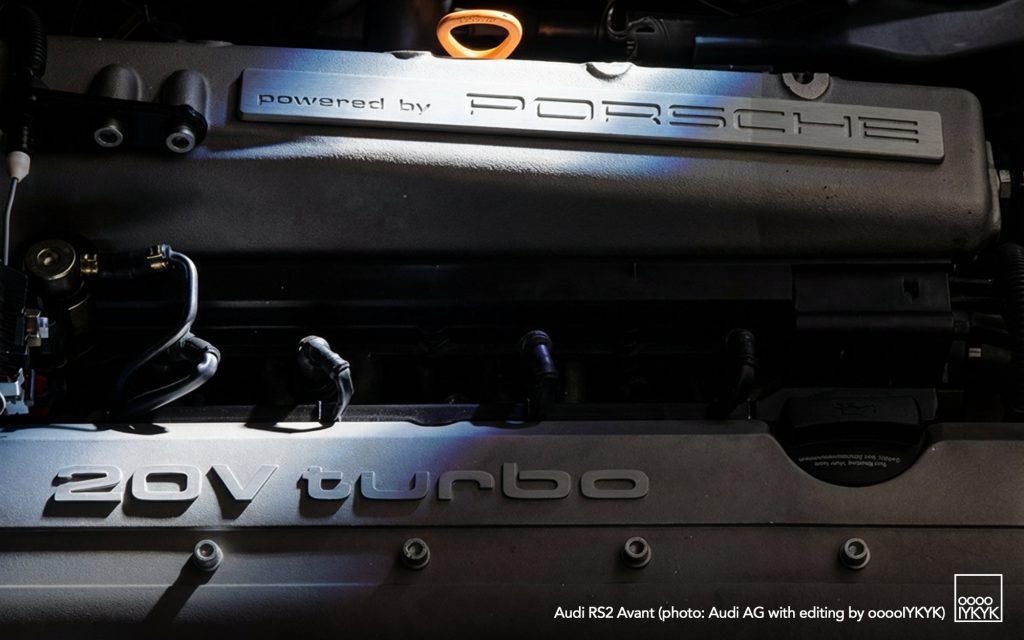
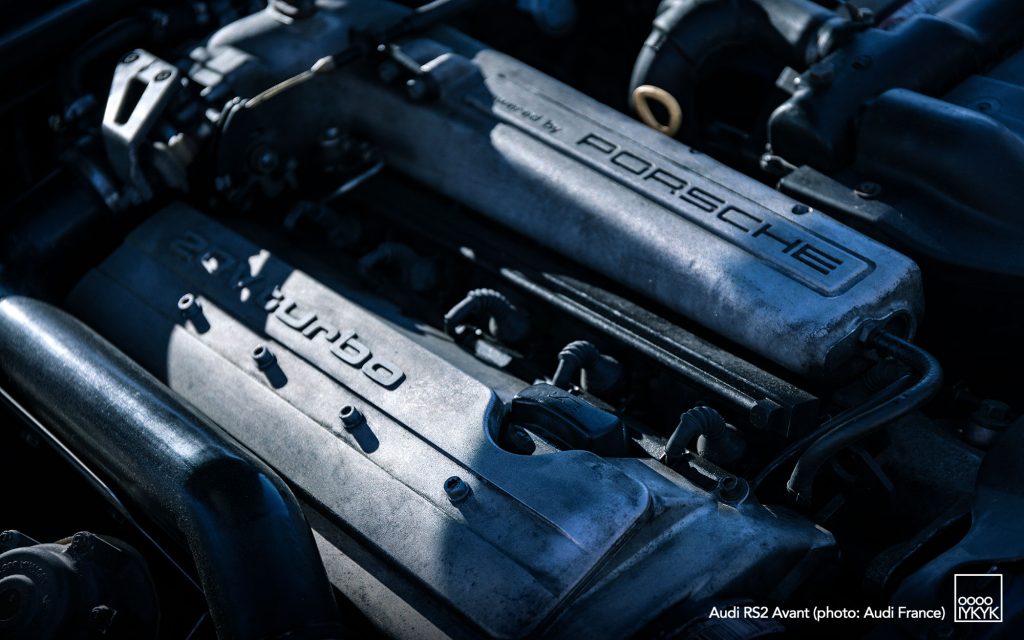
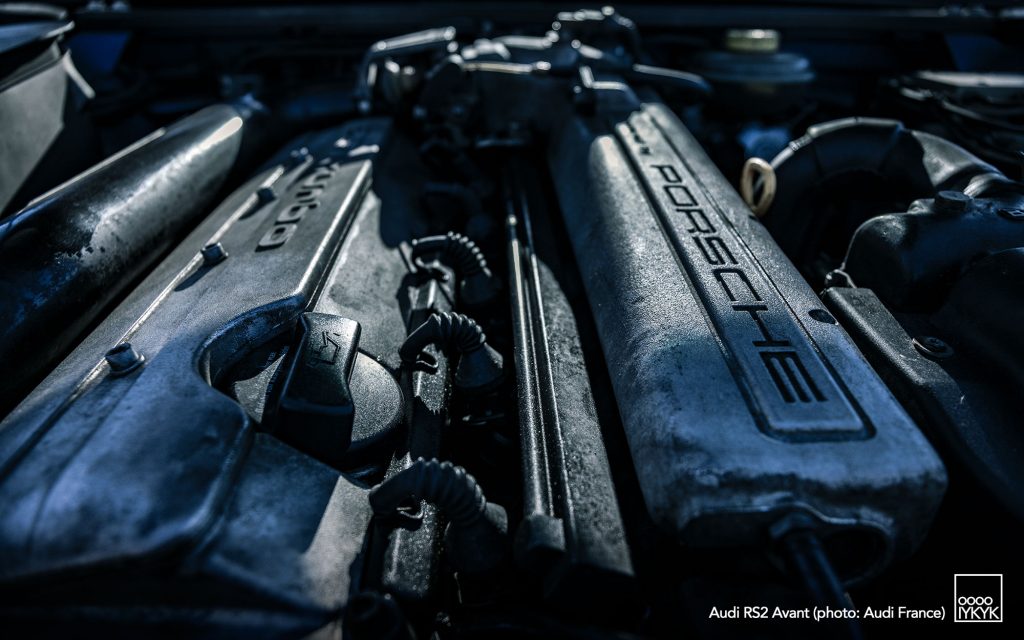
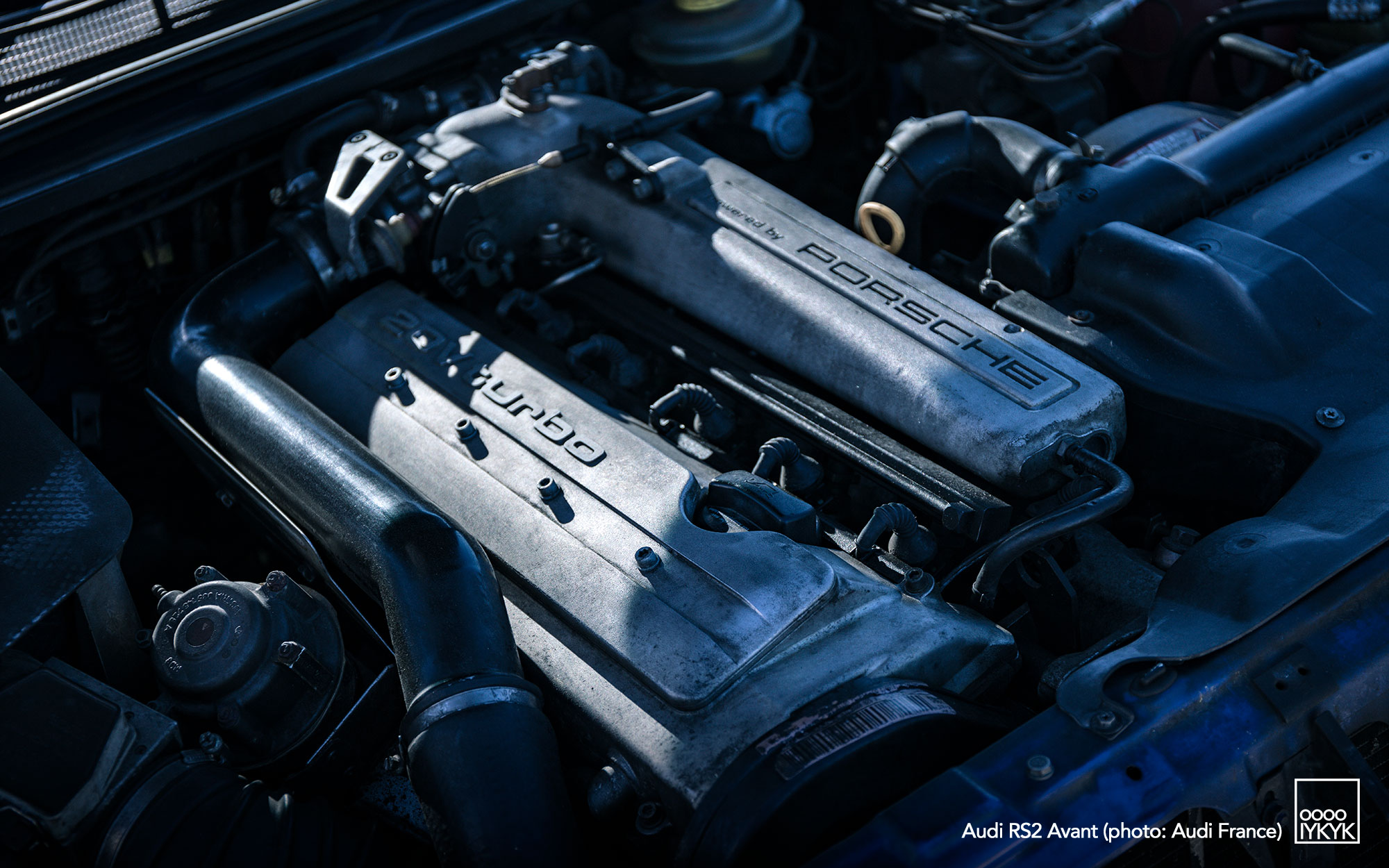
The turbocharging system was revised with a larger turbocharger operating at higher boost pressure. To accommodate the increased airflow, the intake tract was reworked with unique intake cast with “Powered by Porsche” identification and paired with a more efficient intercooler. The camshafts were modified, and the engine management system was recalibrated using Bosch Motronic control optimized specifically for the RS2 application. The five-cylinder unit retained its 2,226 cc displacement but achieved a higher state of tune, producing 315 PS at 6,500 rpm and 410 Nm of torque at 3,000 rpm. Period literature also noted that at least 400 Nm of torque was available across a broad mid-range band, enhancing real-world drivability.
The compression ratio was set at 9.3:1, relatively high for a turbocharged engine of the era, reflecting careful combustion and knock control calibration. Five-cylinder knock detection and dual mass air sensors were employed to maintain engine safety and consistent performance under high load.
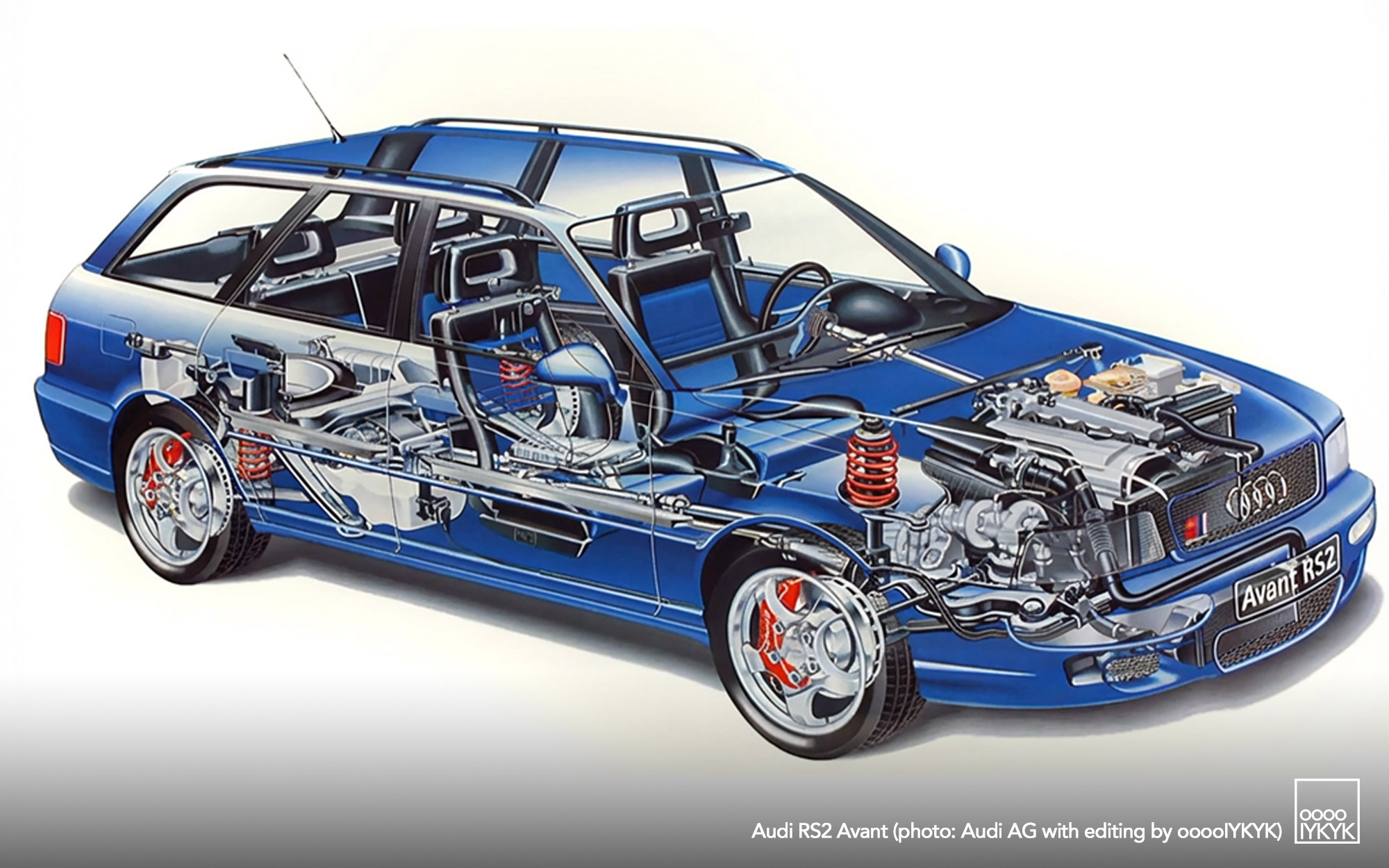
Beyond the engine itself, the RS2’s drivetrain was strengthened to handle the increased output. A close-ratio six-speed manual gearbox replaced the five-speed unit found in earlier S2 variants, allowing the engine to remain within its optimal torque band during spirited driving. The quattro permanent all-wheel drive system used a Torsen torque-sensing center differential for automatic torque distribution between front and rear axles, while a manually lockable rear differential enhanced traction at low speeds.
Chassis upgrades were equally significant. Suspension tuning included stiffer springs and dampers calibrated to Porsche specifications. The braking system represented one of the most visible mechanical enhancements: fixed four-piston Brembo calipers and large ventilated discs (304 mm front, 299 mm rear) provided braking performance comparable to contemporary Porsche models. The adoption of Porsche Cup 17-inch wheels required a 5×130 bolt pattern, unique within the Audi lineup at the time.
Taken together, these mechanical upgrades transformed the RS2 from an enhanced S2 into a distinct high-performance model. The combination of strengthened internals, increased boost pressure, recalibrated engine management, close-ratio transmission, and Porsche-developed braking and suspension components produced a vehicle capable of accelerating to 100 km/h in 5.4 seconds and reaching a top speed of 262 km/h. These figures placed the RS2 among the fastest production cars of the mid-1990s and established a technical benchmark for future Audi RS models.
PERFORMANCE & LEGACY
With that 0–100 km/h time of 5.4 seconds and a top speed of 262 km/h, the RS2 matched or exceeded many contemporary sports cars. Its acceleration in everyday driving, particularly in the mid-range, was frequently cited in period reviews as a defining attribute.
A total of 2,891 examples were produced between March 1994 and July 1995. Although production numbers were limited, the RS2’s influence was profound. It established the RS designation as Audi’s highest performance tier and set the template for subsequent RS Avants, including the RS4 and RS6.
The RS2 Avant is widely regarded as the origin point of Audi’s modern RennSport lineage. It demonstrated that a high-performance estate could combine engineering rigor, everyday usability, and motorsport credibility in a single vehicle—an idea that would become central to Audi’s identity in the decades that followed.
PHOTO GALLERY