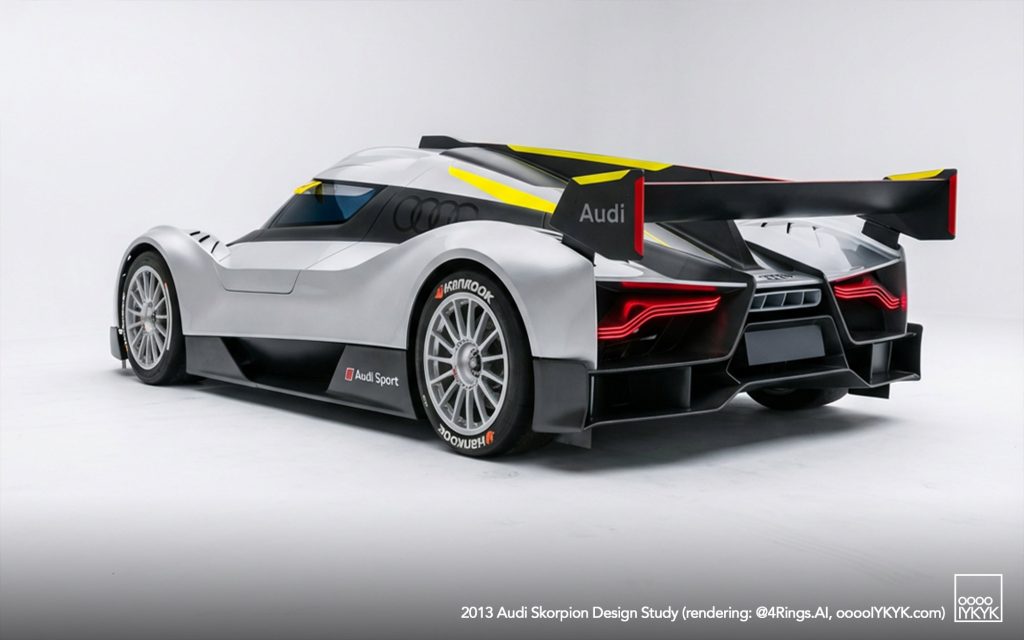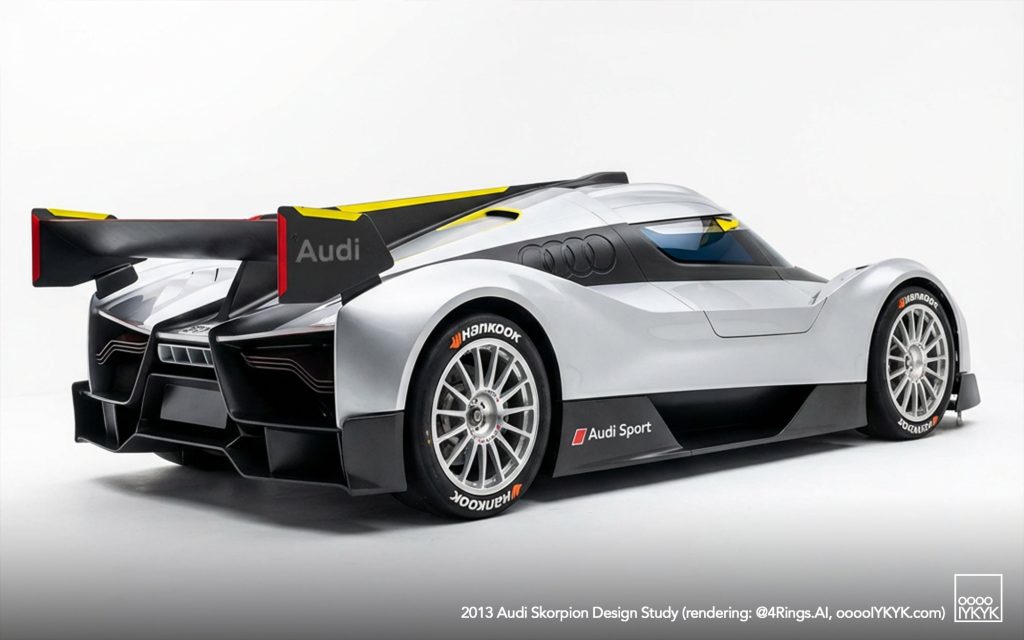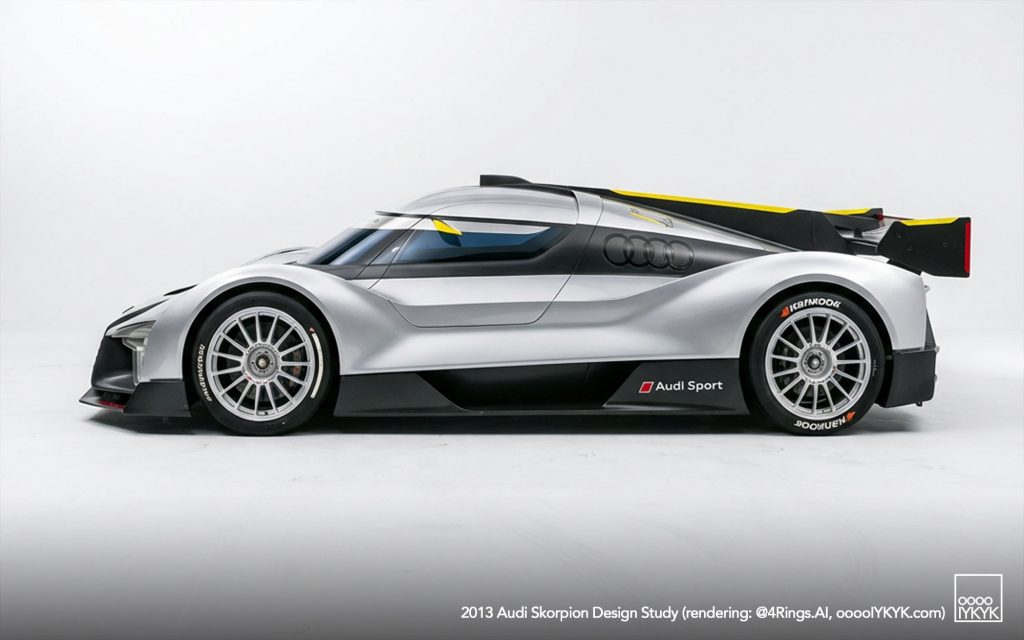

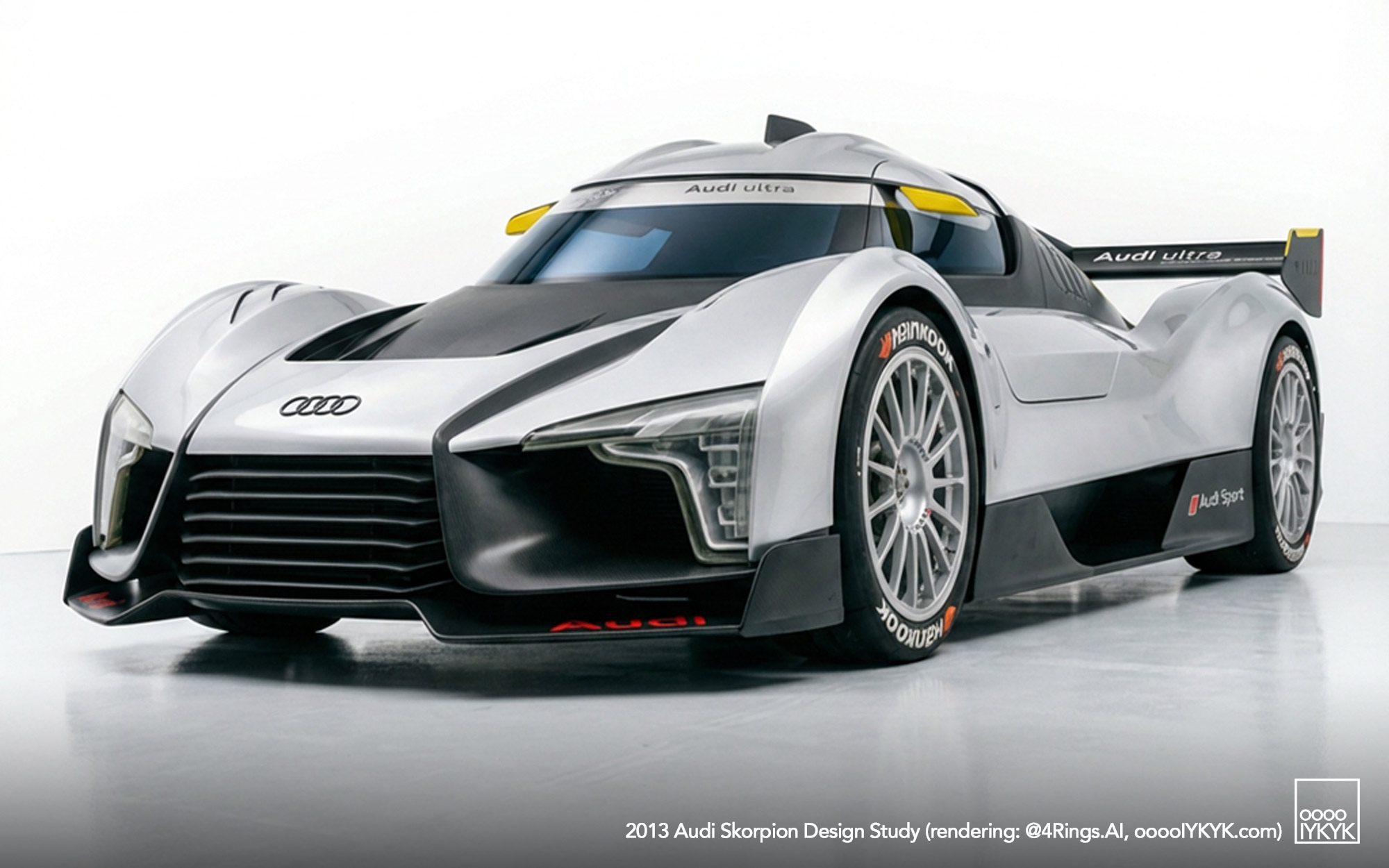

What: Audi Skorpion Design Study
Model Family: N/A
Debuted: N/A
Year: 2010 , 2011, 2012, 2013
Registration Plate: N/A
Status: Maintained by Audi Tradition
Number Produced: 1
Model / Generation Code(s): unknown
Chassis / Matrix: unknown
Engine: unknown
Transmission: unknown
Drivetrain: unknown
Power: 650-700 (estimated)
Peak Torque: 775 lb-ft (estimated)
Weight: unknown
Acceleration (0-100 km / 62 mph: < 3 seconds (estimated)
Top Speed: > 200 mph (estimated)
Length: unknown
Body style: 2-Door Hypercar
Exterior Paint Color: Silver
Wheels: OZ, size unknown
RELATED
Concept Cars:
Road Cars:
Race Cars: R18
SUMMARY
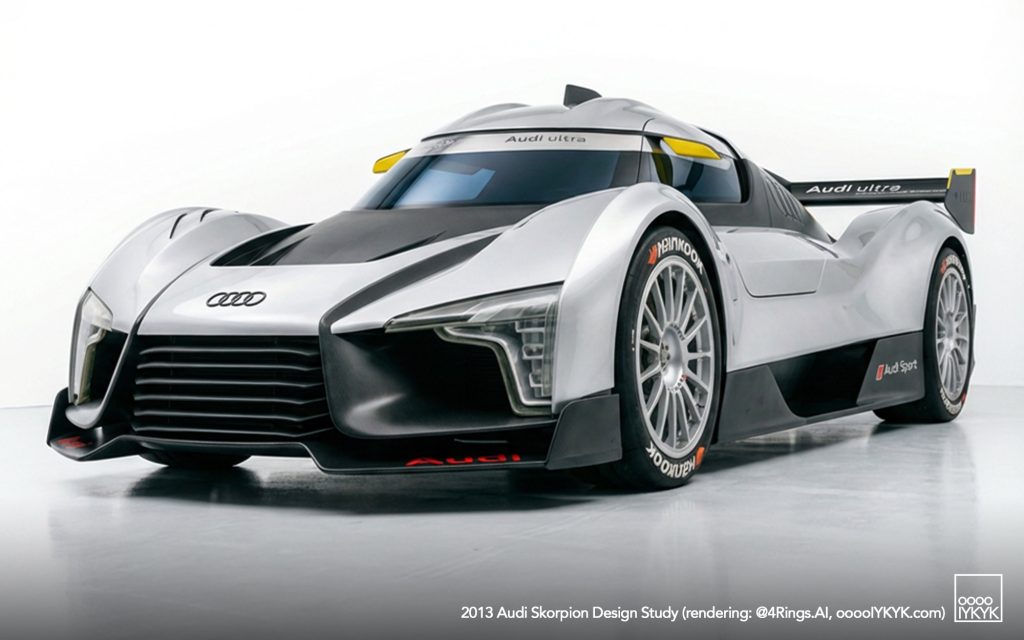
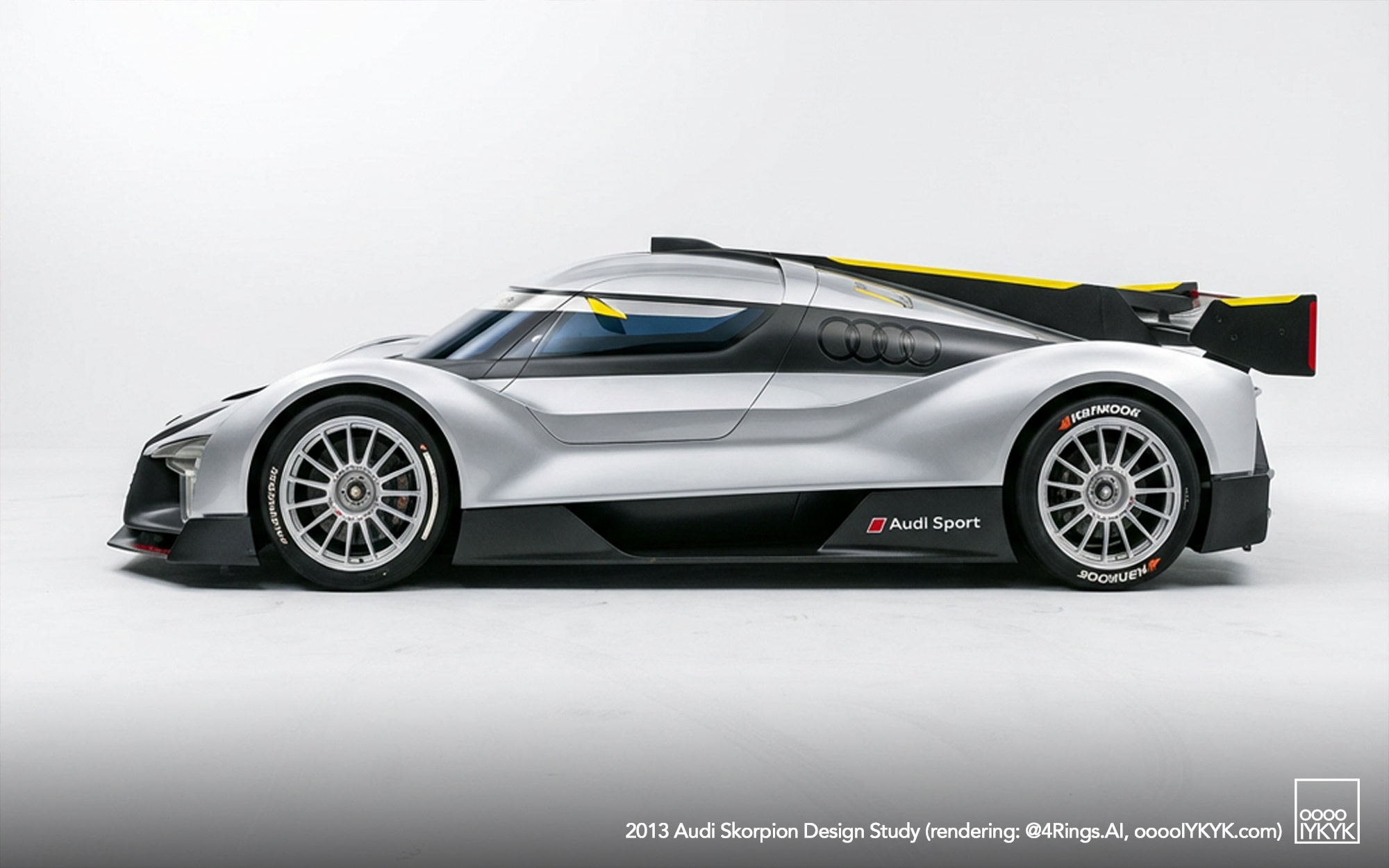
Audi Skorpion was a never-produced concept sports car and design study developed by Audi between about 2010 and 2013. Intended as an extreme halo model that could sit above the Audi R8 in the brand’s lineup, it drew inspiration from Audi’s endurance racing machinery, particularly the Audi R18 series. The project was ultimately cancelled and the vehicle remains a design study with only limited public exposure.
OVERVIEW
The Skorpion (sometimes spelled “Scorpion” in media coverage) was conceived as a high-performance road car that borrowed aerodynamic and stylistic concepts from Audi’s Le Mans prototype and DTM racing programs. Though never announced formally by Audi at the time, a non-functional design study surfaced at the August Horch Museum in Zwickau, Germany as part of a temporary motorsport-focused exhibition in 2024, revealing the original concept’s bodywork and basic details.
DEVELOPMENT & BACKGROUND
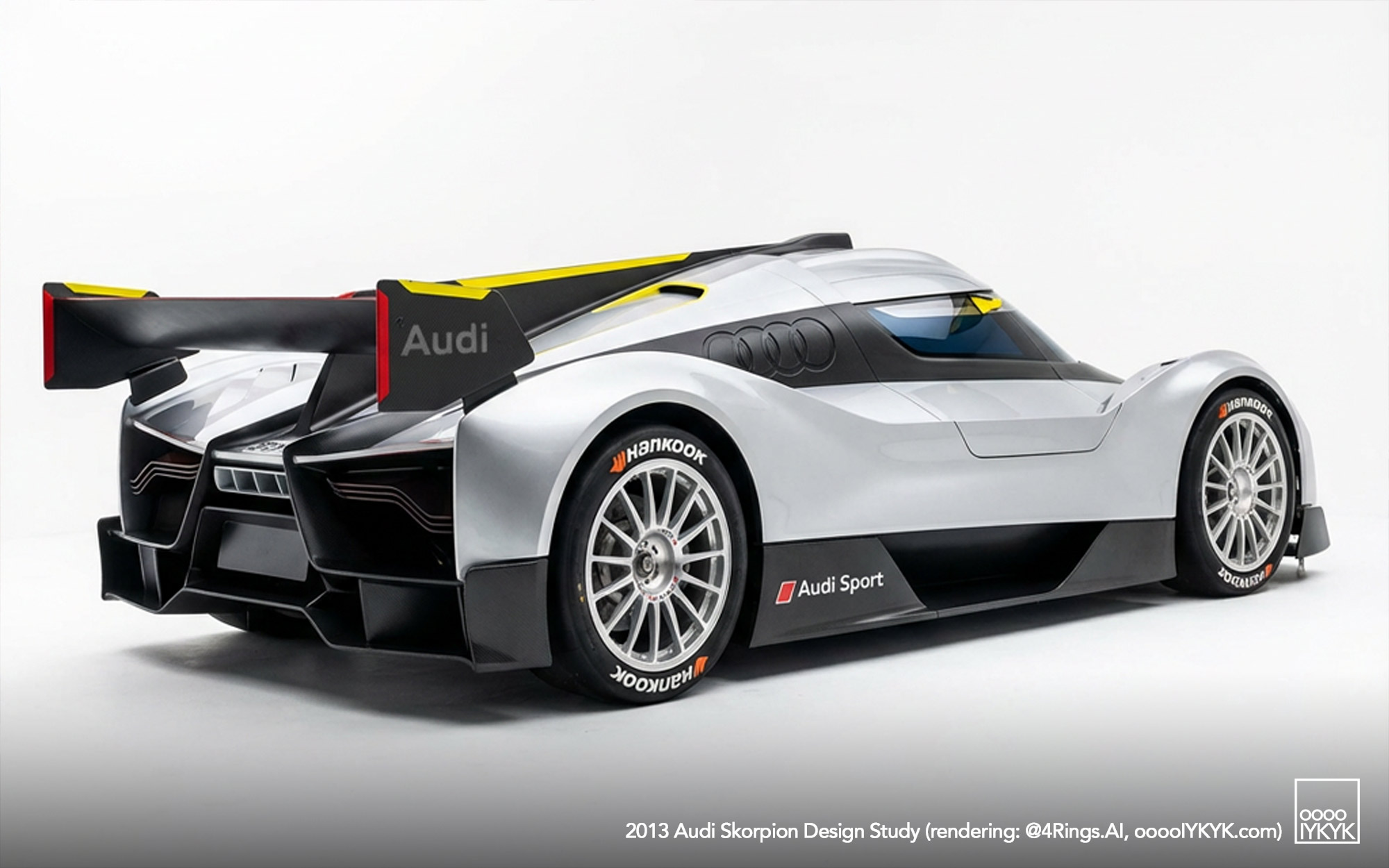
Development of the Skorpion reportedly took place roughly from 2010 to 2013, during the period when Audi was achieving substantial success in endurance racing with the R18 series. Like the Audi R8 had done before, the car aimed to translate some of the prototype’s aerodynamic efficiency and distinctive styling into a road-going form that could act as a flagship vehicle above the R8 while channeling the brand’s endurance-racing dominance into a halo hypercar.
Around 2012, newly appointed R&D chief Wolfgang Dürheimer—whose résumé included overseeing the Porsche Carrera GT—encouraged internal studies of a diesel-electric hybrid concept aligned with the technology used in Audi’s R18 prototypes. Media speculation quickly attached the informal nickname “R10,” a nod to Audi’s earlier diesel-powered Le Mans winner, even though no such model name was ever officially adopted.
Had the project progressed beyond the study phase, it likely would have featured a bespoke carbon-fiber structure or an advanced multi-material architecture related to what was then being developed for the second-generation Audi R8 and its Lamborghini siblings. For the design and packaging exercises, however, engineers reportedly worked with a race-derived chassis already available within the company, underscoring how closely the vision was tied to Audi’s motorsport programs. The intent was not merely to build another fast road car, but to create a technological showcase that translated prototype-racing efficiency, aerodynamics, and hybridization into a limited-production statement piece.
Momentum behind the concept faded as leadership priorities shifted. Dürheimer’s move to head Bentley and Bugatti in 2013 removed a key internal advocate, and Audi’s performance strategy began to pivot toward electrification, including experimental electric versions of the R8. In parallel, tightening global emissions standards were already increasing the cost and complexity of advanced diesel systems, making such a powertrain a tougher sell for a niche halo model.
The industry’s broader reassessment of diesel technology in the mid-2010s further dimmed prospects. What had been viewed as a core engineering strength for Audi—efficient, high-torque diesel performance—became a far more complicated proposition in key markets, particularly the United States, where consumer appetite for diesel passenger cars fell sharply. Across Europe, too, buyers and regulators increasingly shifted attention toward hybrids and battery-electric vehicles. In that environment, a diesel-hybrid hypercar, however technically compelling, no longer aligned with the strategic direction of the brand.
While Audi had publicly hinted at interest in a diesel-powered supercar in the early 2010s, the Skorpion project remained unannounced until images of the design study were displayed decades later by the August Horch museum itself.
DESIGN & AERODYNAMICS
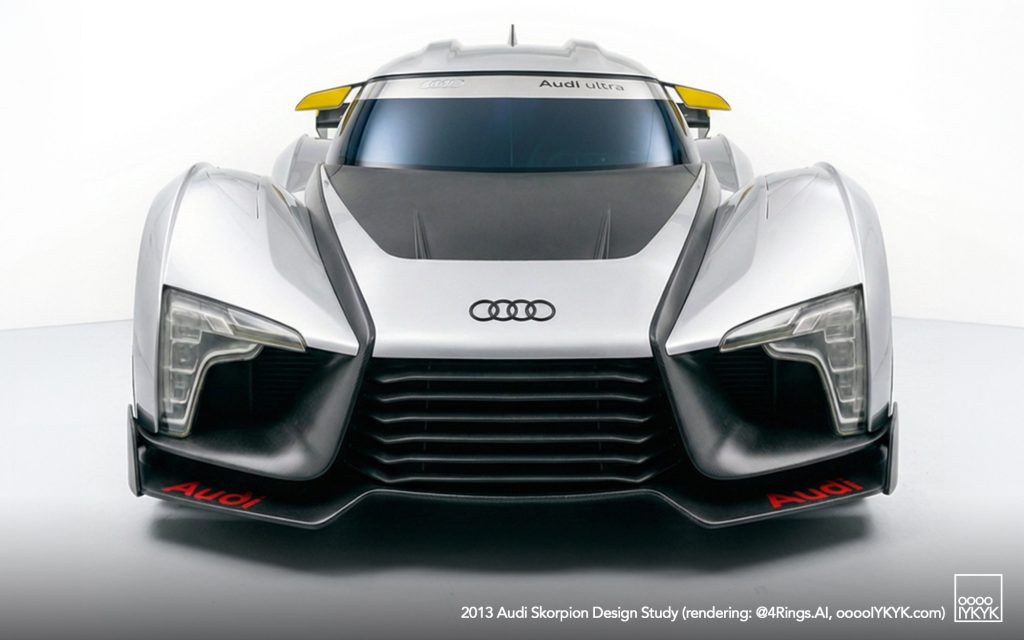
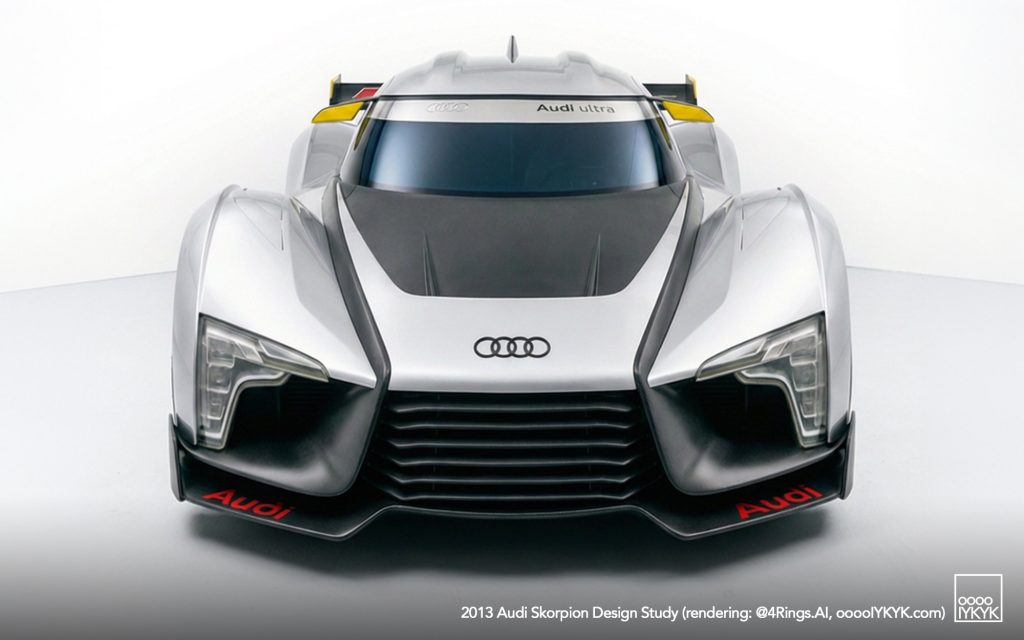
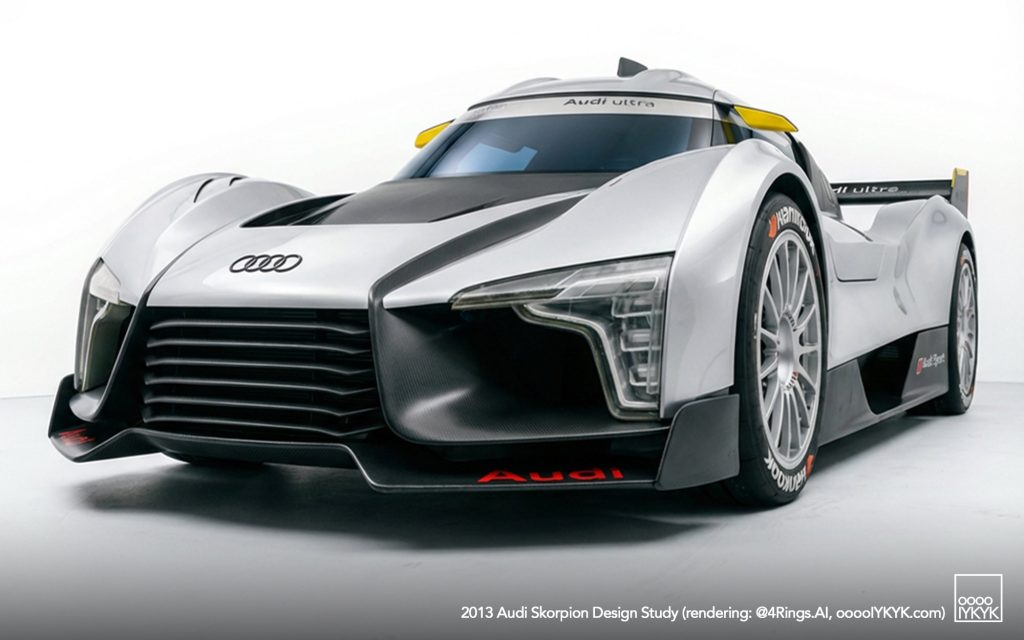
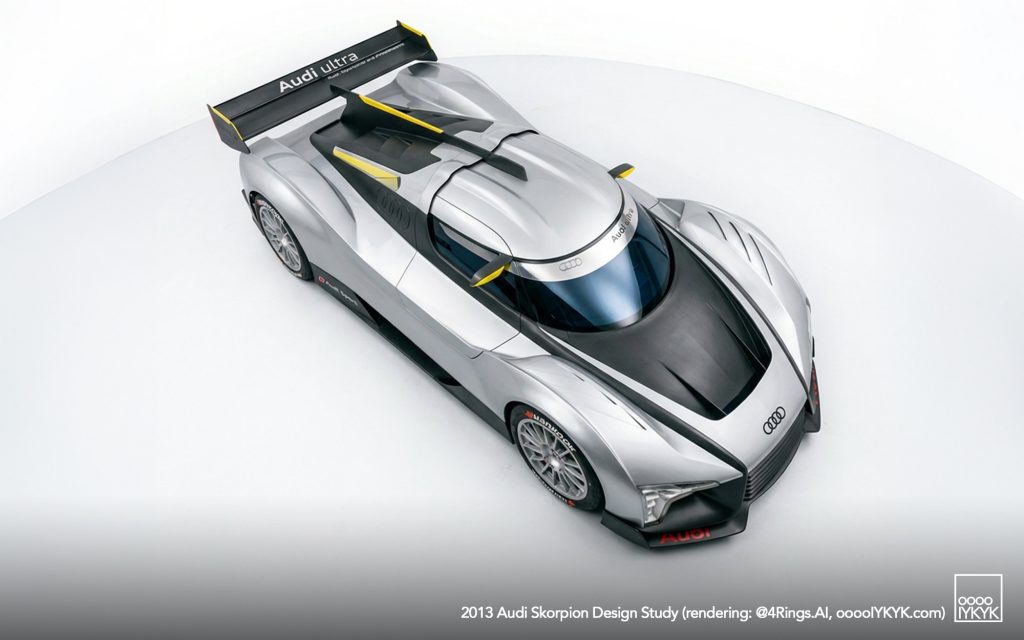
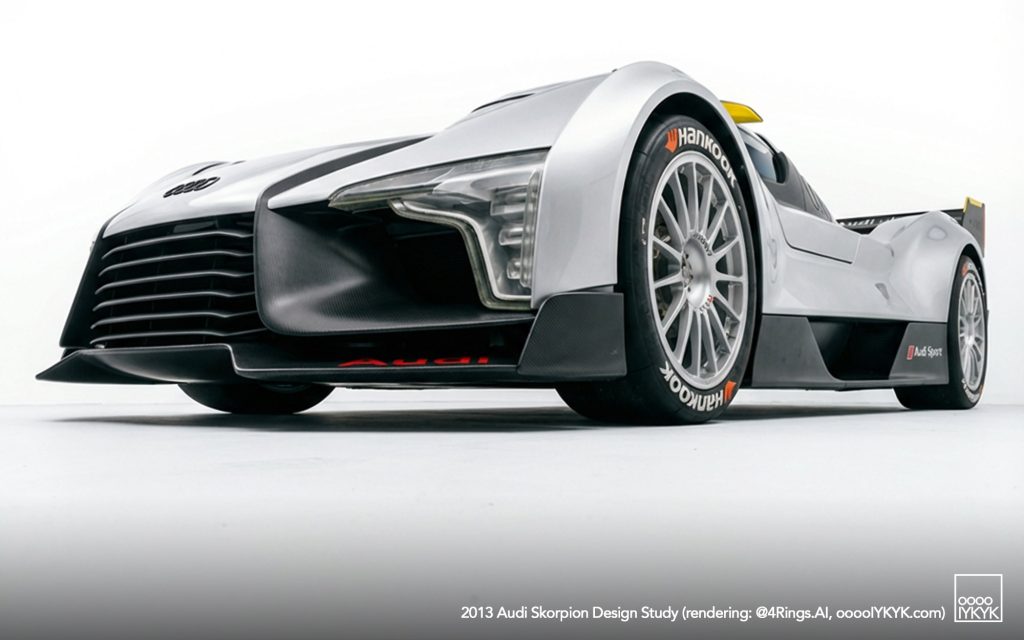
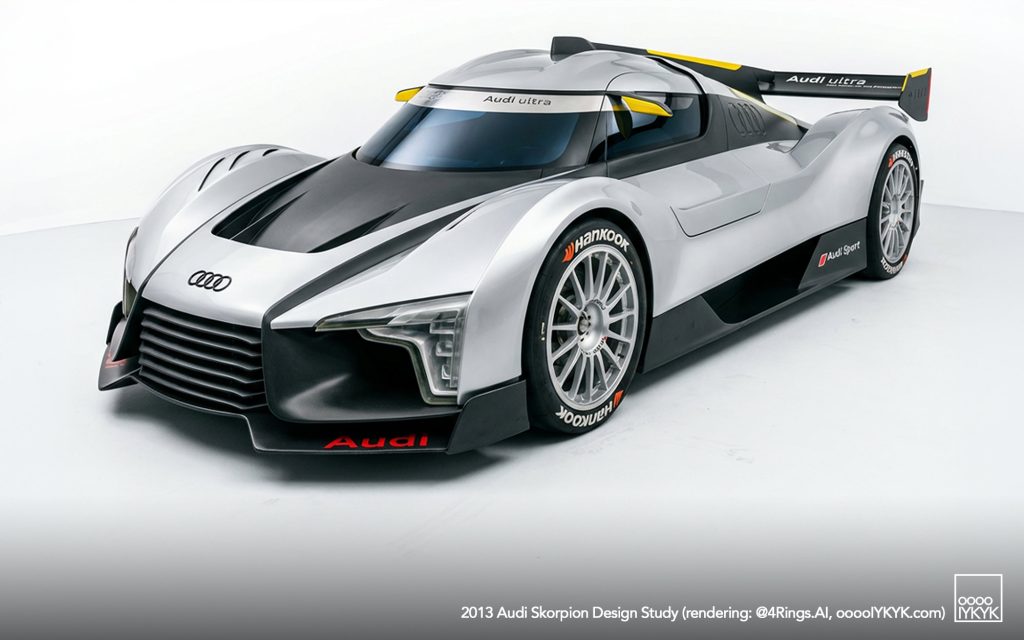
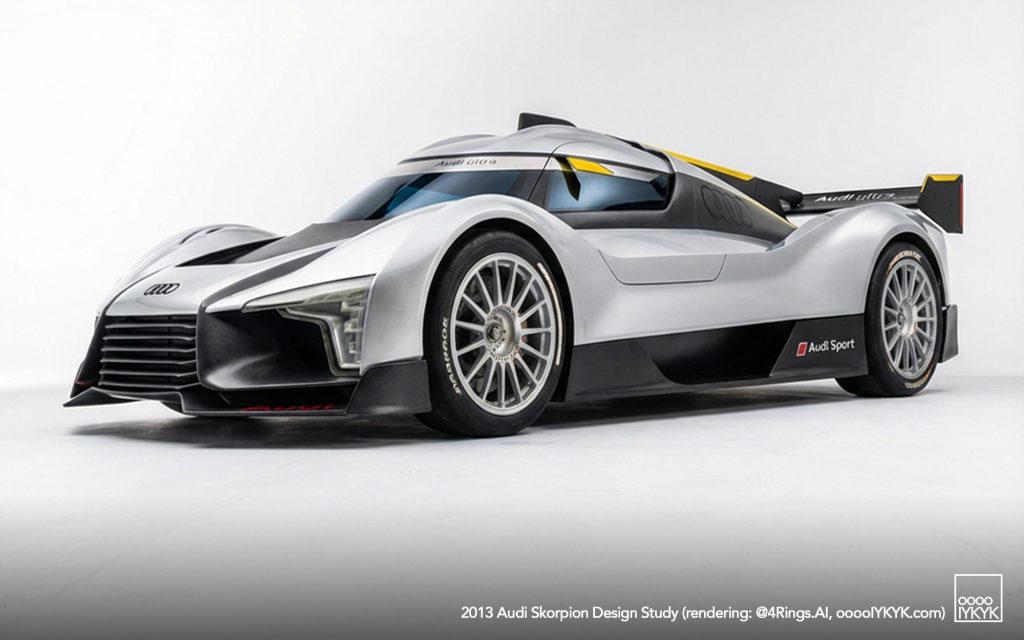
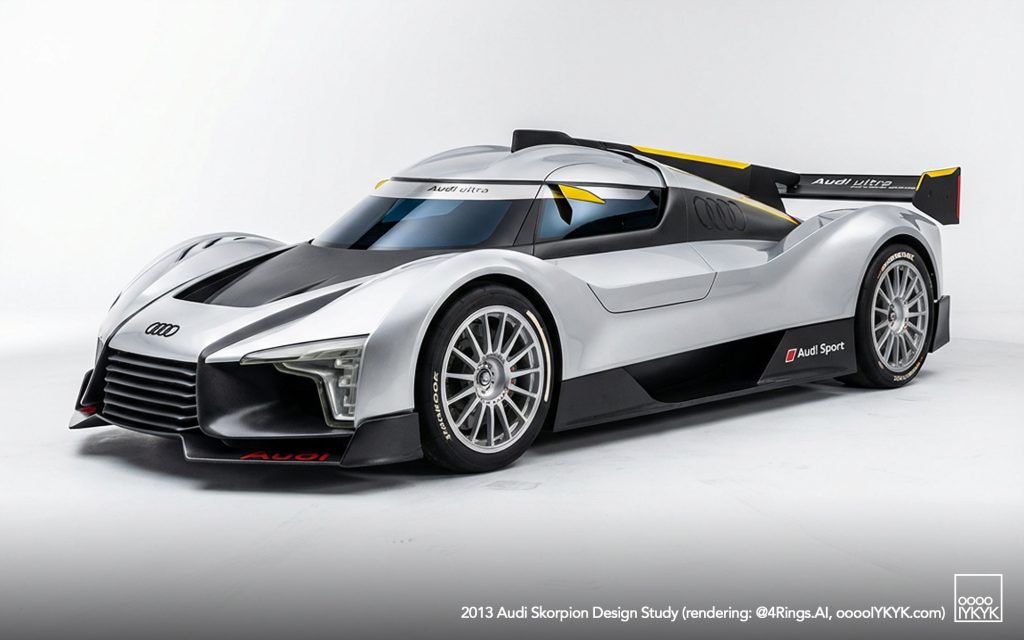
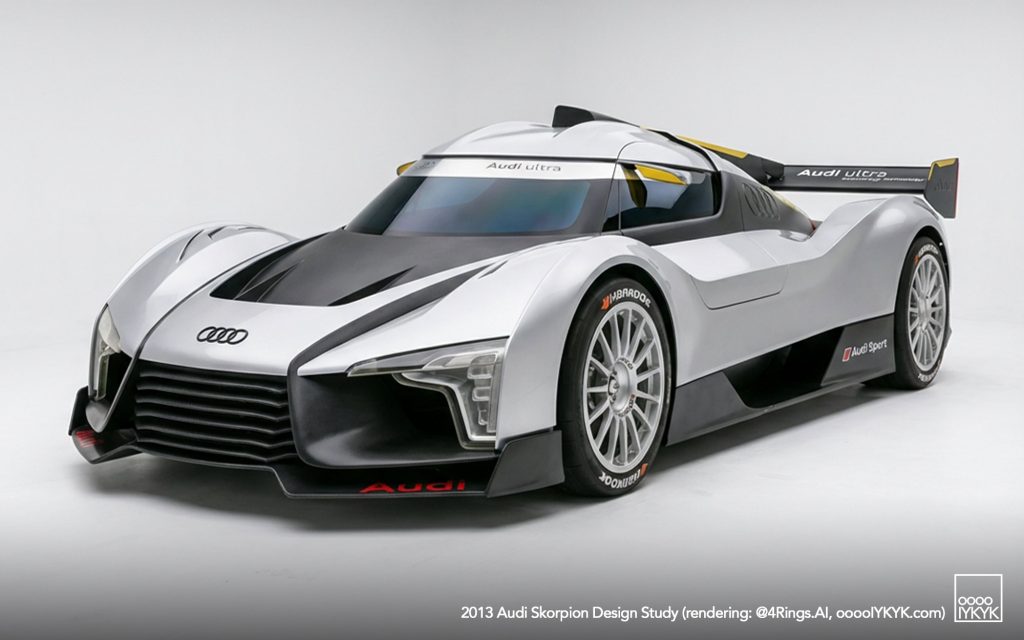
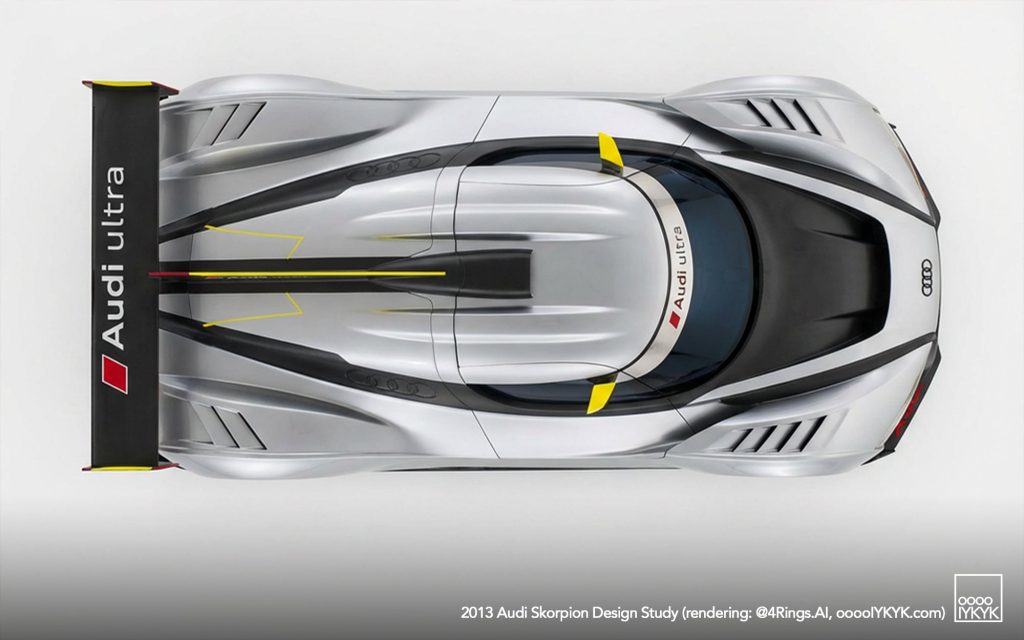
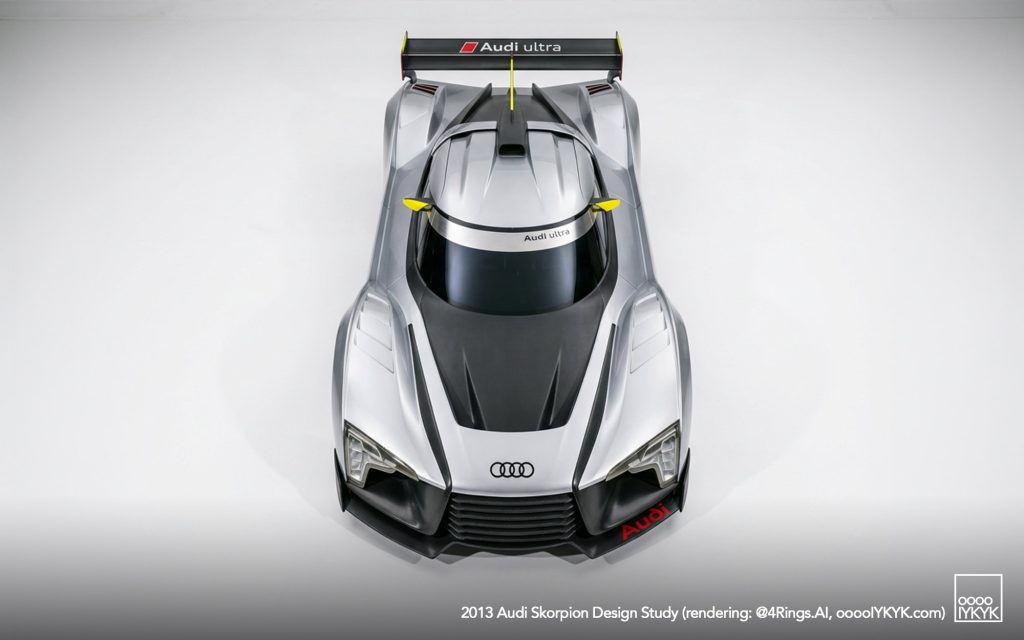
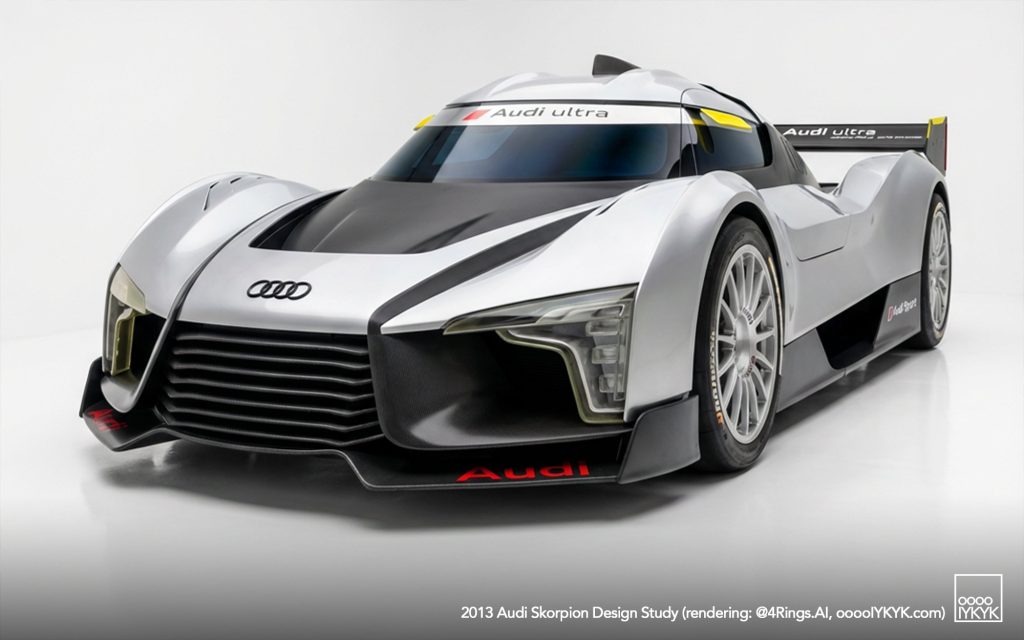
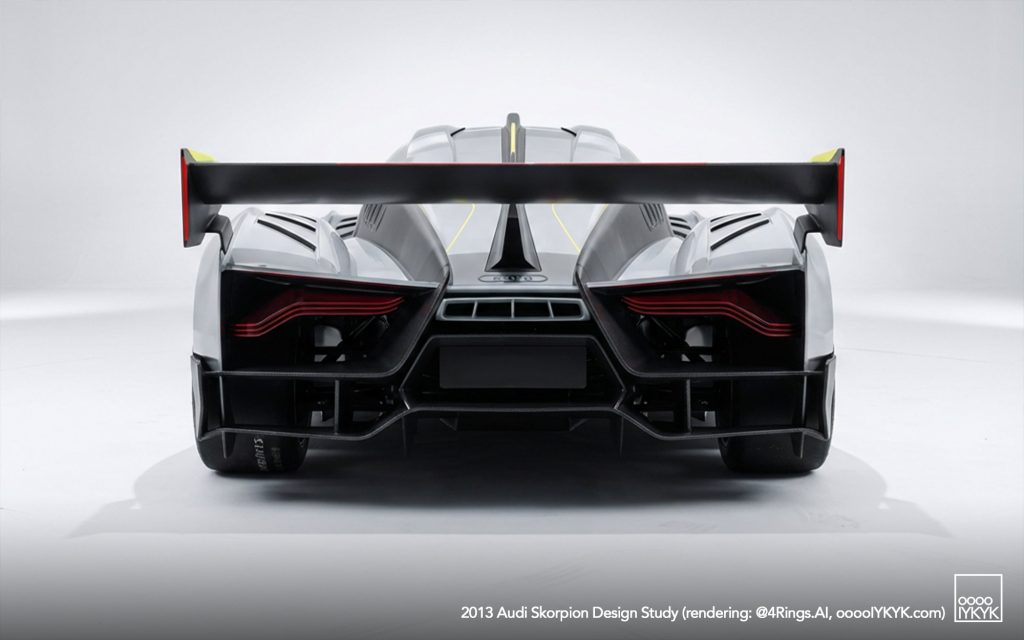
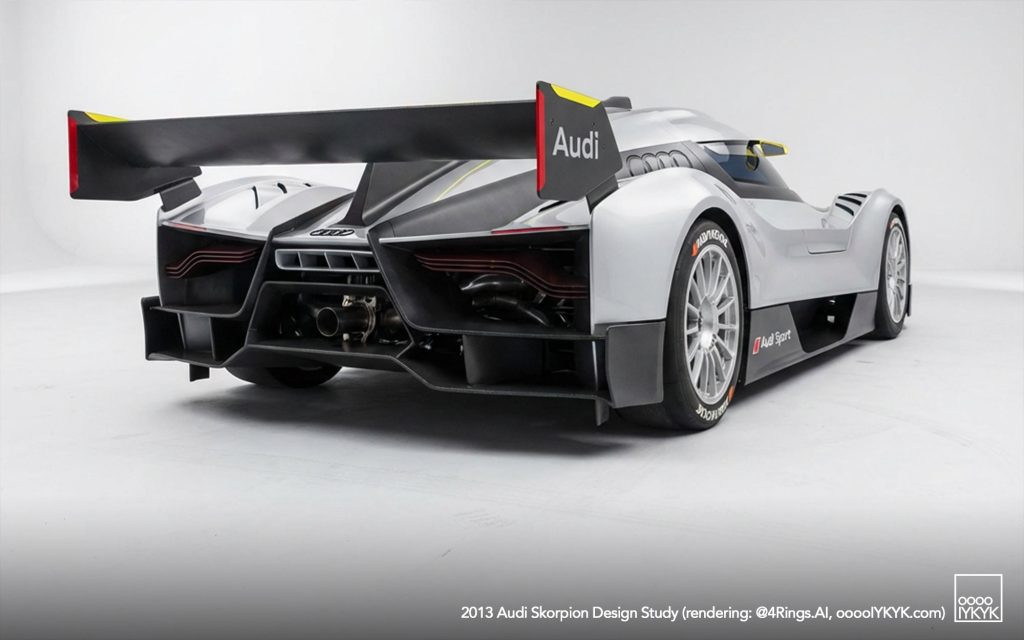
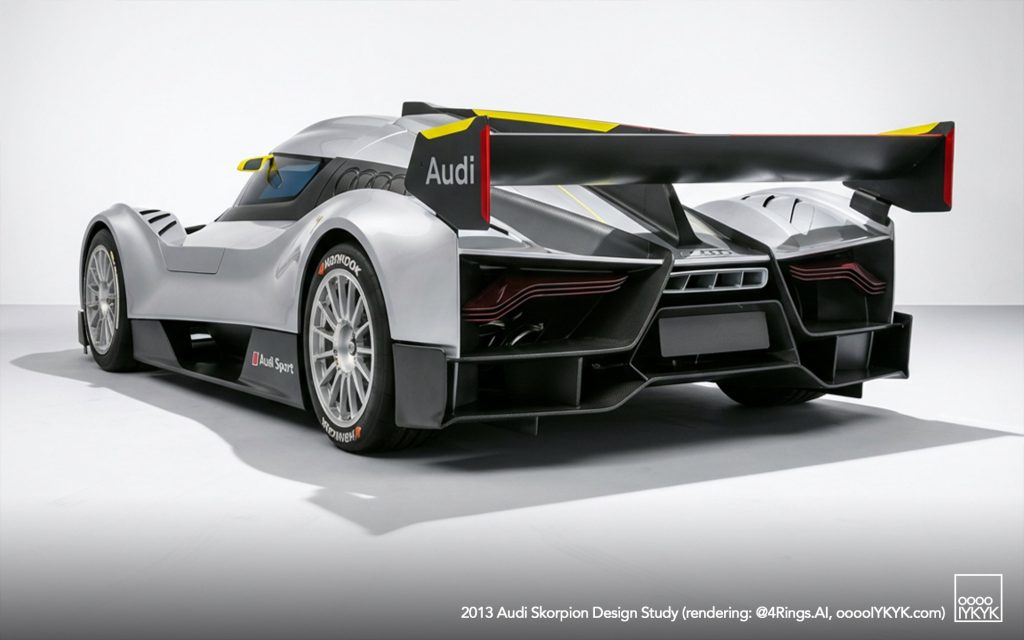
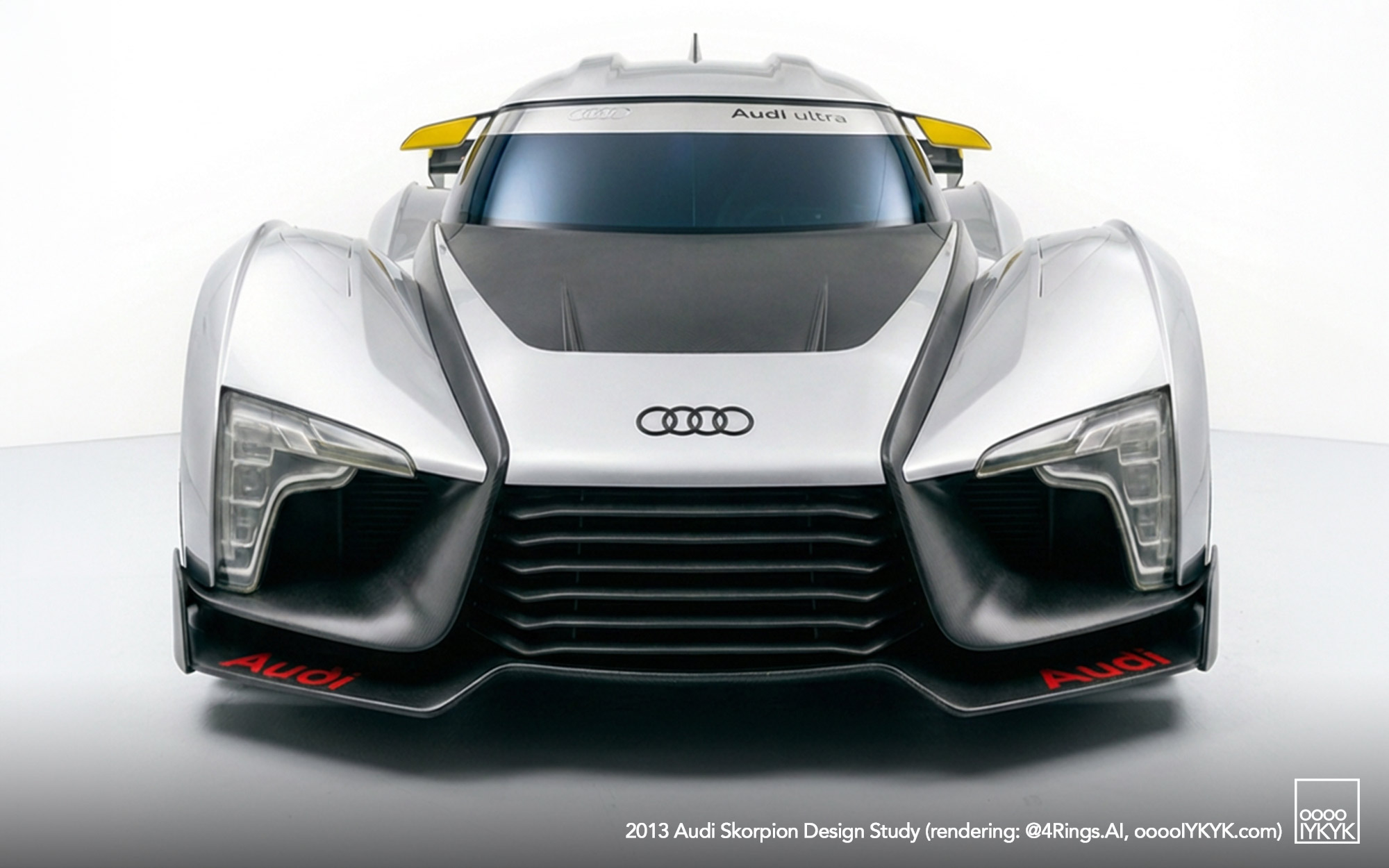
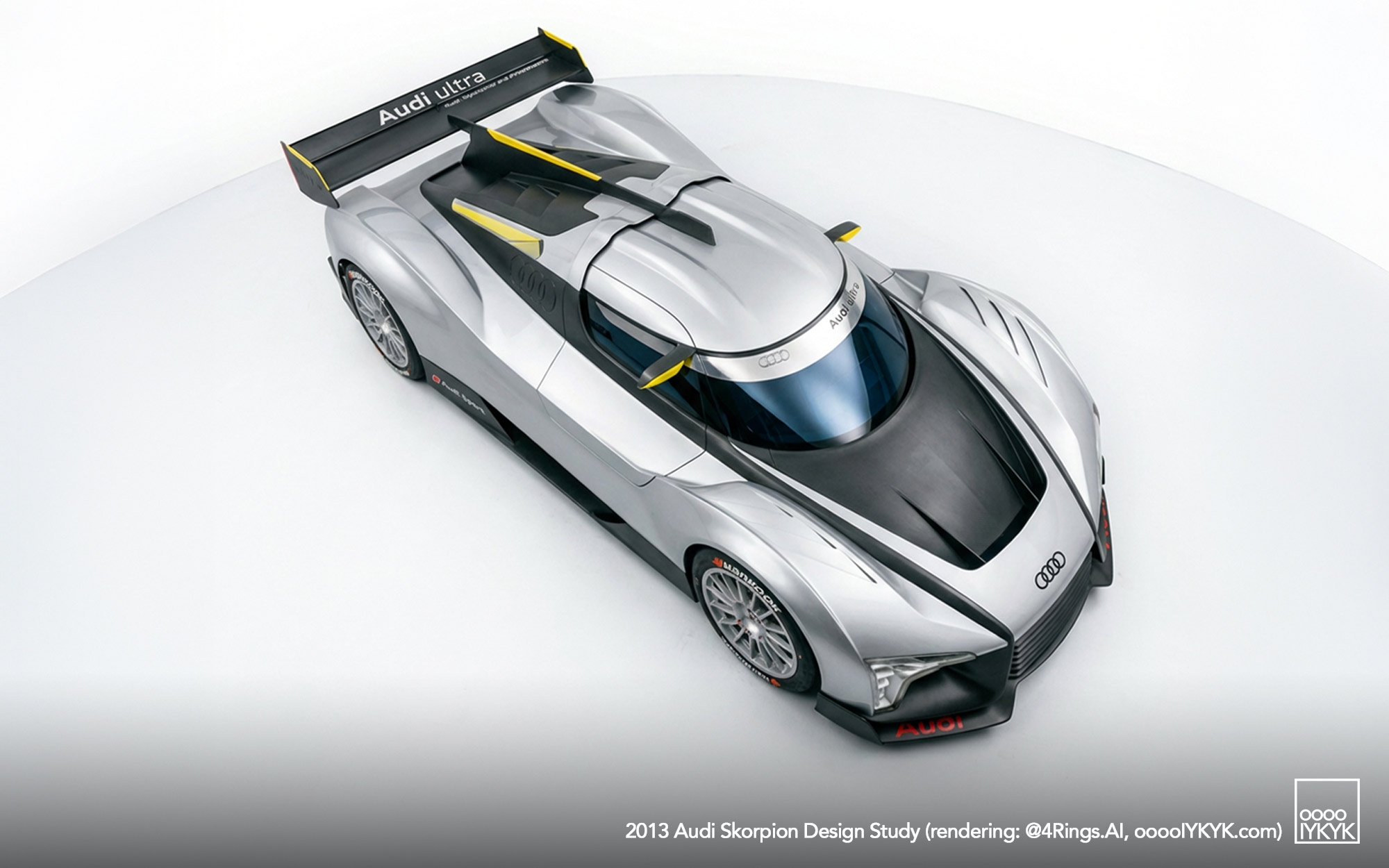
The Skorpion design study incorporated visual cues from both endurance prototype race cars and touring car aerodynamics. Externally, the streamlined passenger cell and aggressive profile were reminiscent of the R18’s body shape, while its aerodynamic concept was influenced by Audi’s contemporary DTM entries. The body featured a compact, low-slung silhouette with a shortened wheelbase and sculpted surfaces intended to balance minimal drag with high downforce.
POWERTRAIN & TECHNICAL CONCEPTS
Though technical specifications for the Skorpion were never finalized, various reports suggest that Audi explored multiple powertrain options. These included internal combustion engines — both gasoline and diesel — producing in the estimated range of 400–550 hp, as well as hybrid configurations combining electric motors with combustion power. All-wheel-drive and rear-drive layouts were reportedly under consideration. At least one earlier proposal involved utilizing diesel technology derived from Audi’s R18 TDI endurance racers, potentially making the Skorpion a unique diesel-powered high-performance vehicle if it had ever reached production.
Since the engine choice for the car may never have been finalized based on the early status of the car’s cancellation, it’s hard to know for sure what the final outcome is. That said, there may be clues from the markings on the car itself. Like an R18 racecar, the car does wear some branding and logos on its bodywork and notably they are consistent with the R18 ultra that raced alongside the R18 e-tron quattro at Le Mans in 2012.
At the time, “ultra” designated Audi’s most optimized lightweight design. The two different types of R18 that ran in 2012 both used similar design, however the ultra skipped the heavier all-wheel drive flybrid hybrid system of the e-tron quattro. In as much, it was a lighter rear-wheel drive variant powered by a V6 TDI engine.
Audi had been producing a V12 TDI that could have been used, fitted in the Q7 from 2008 to 2012 so that is one possible option that would have been closer in spirit to the Audi R10 Le Mans car, and that engine was only ever fitted to the Q7. It would have been the more exotic engine choice for a serious hypercar, though Audi’s 3.0 V6 TDI had also just arrived in 2012 as the only European engine option for the then-new SQ5 TDI (B8) so that may have also been an option. By the summer of 2014, Audi would show an even higher-performance version of the 3.0 TDI as the RS 5 TDI concept where the engine sported an experimental electric turbo. Any of these engines could have served in such a car given the timing and the branding it features.
PUBLIC EXPOSURE & MUSEUM DISPLAY
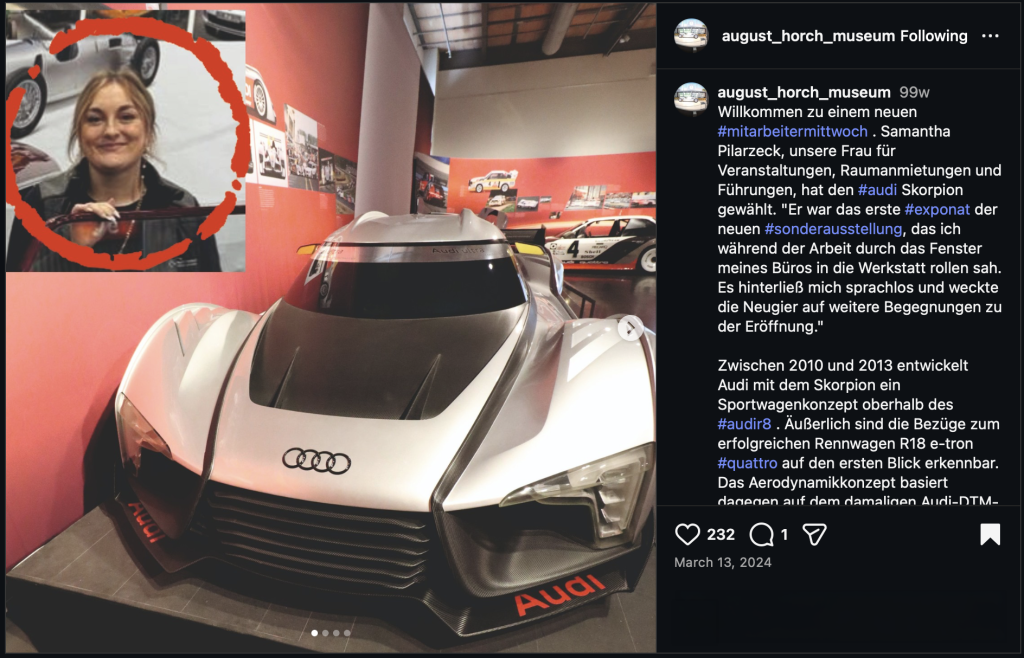
After decades of obscurity, the Skorpion study was publicly revealed in March, 2024 when the August Horch Museum exhibited the vehicle in its design and racing heritage displays. Photos shared by one of the museum when one of their employees Samantha Pilarzeck picked the car as her favorite on display as part of an #EmployeeWednesday by the museum’s Instagram account. The photos highlighted the prototype’s aerodynamic shape and prototype-inspired bodywork, prompting renewed interest in Audi’s lost concept.
Given the potential significance the car could have had were it to have been built, its final coming out was largely obscure. To this day, photos posted by the museum or a few visitors are some of the only images that can be found on the internet. Studio imagery you see here were generated with AI tools as are most of the studio images found in this archive. Audi themselves have never offered much of an explanation of the car even though they manage it within the factory collection maintained by Audi Tradition.
CANCELLATION & LEGACY
Despite its promising design and connection to Audi’s racing heritage, the Skorpion project was never green-lit for production. Factors such as cost, technical complexity, and shifting market conditions likely contributed to its cancellation. Plans for limited production — including reports of a potential 333-unit run just like the original R8 GT — never materialized.
The emergence of emissions scandals and the broader industry shift away from diesel power further diminished the likelihood of the Skorpion reaching customers.
Although the Skorpion-related studies never reached production, they remain an intriguing “what if” in Audi’s performance history. The project illustrates a moment when Audi seriously considered turning its Le Mans-winning know-how into an ultra-exclusive road car, bridging the gap between prototype racing and the street. Its cancellation marked not just the end of a specific concept, but the close of a brief era when diesel performance still seemed poised to play a starring role at the very top of the supercar world.
Skorpion remains a compelling example of Audi’s exploration of extreme performance concepts and its willingness to experiment with translating racing technology into road-going applications. Its existence underscores a period when supercar aspirations briefly intersected with prototype aerodynamics and endurance racing success.
REFERENCES
- Secret Audi Skorpion R18 road car design study display at August Horch Museum, AudiClubNA report.
- Motor1 coverage of the forgotten Skorpion concept.
- CarBuzz on cancelled Audi diesel hypercar plans.
PHOTO GALLERY