

MODEL DETAILS
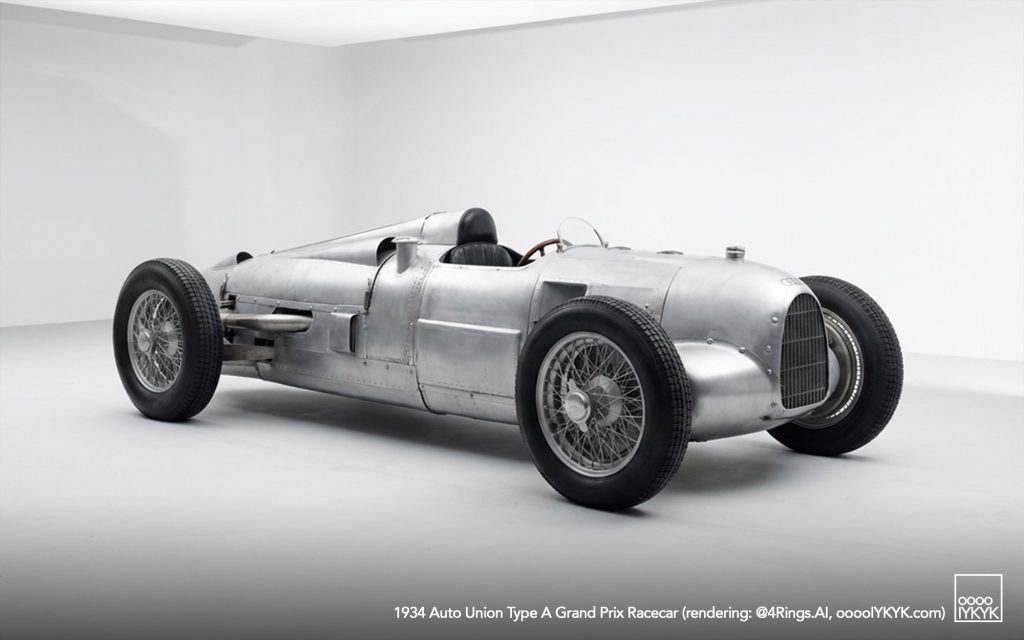
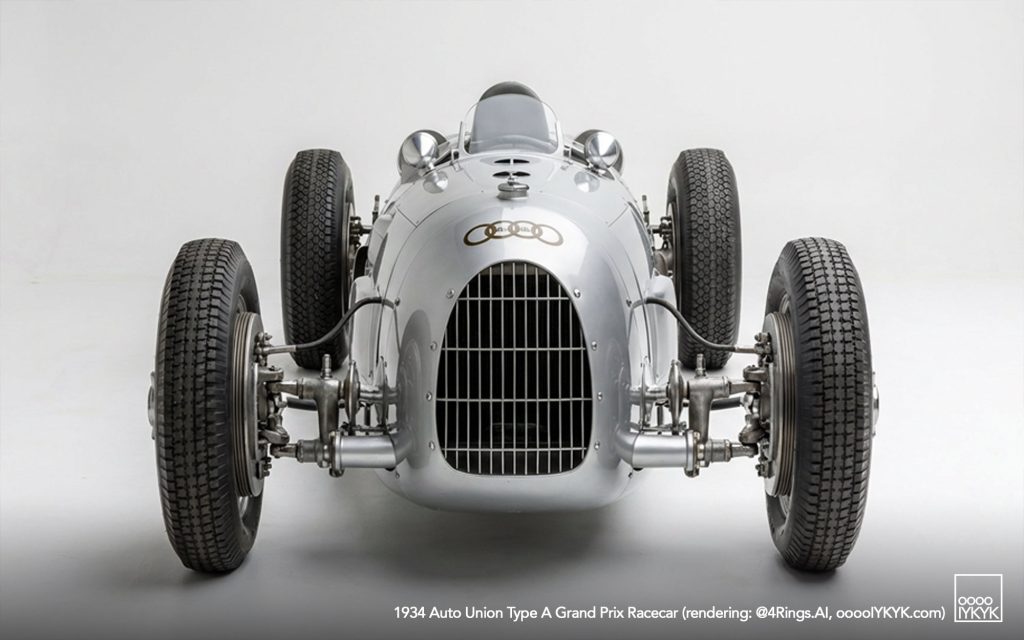
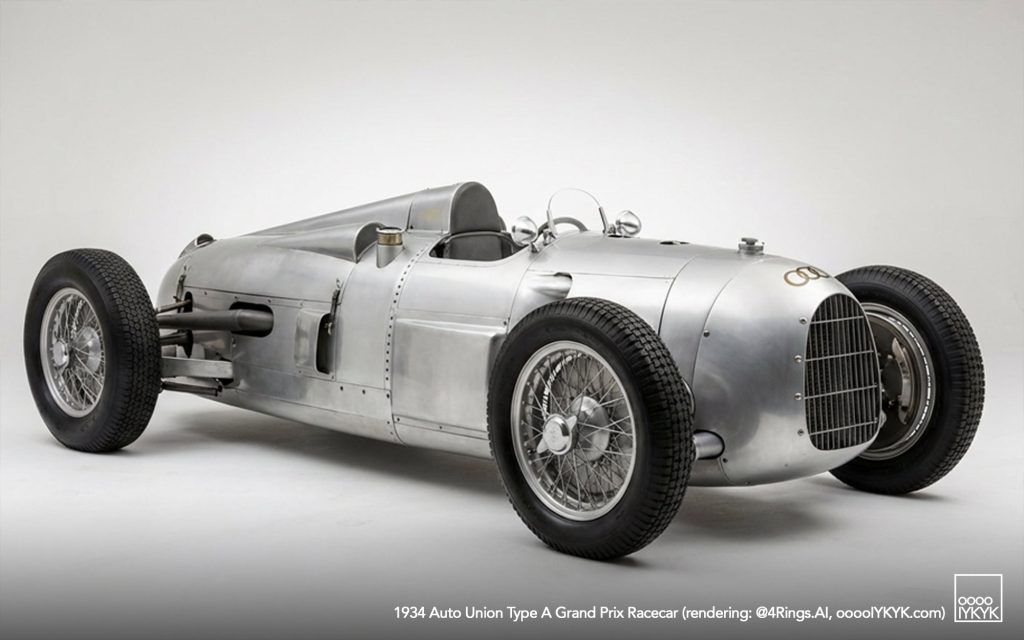
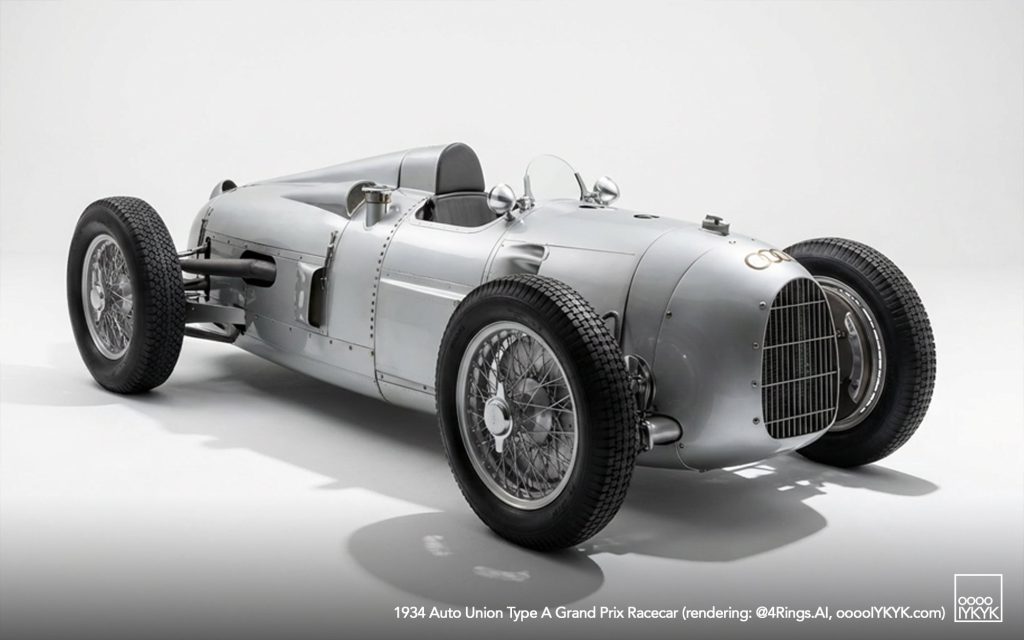
What: Auto Union Type A Grand Prix
Manufacturer: Auto Union AG, Racing Department (Horch Works, Zwickau)
Genre / Series: Grand Prix Racing
Category: 750 kg Formula
Era: Auto Union prewar
Debut: 26 May 1934, AVUS, Berlin
Model Family:
Market / Zone: Germany
Season: 1934
Model / Generation Code(s): Type A
Chassis / Matrix:
Designer: Ferdinand Porsche (P-Wagen design lineage)
TECHNICAL DETAILS
Body Style(s): open-wheel single seat racecar
Chassis Type: Tubular ladder-type frame with aluminium bodywork
Drivetrain Configuration: longitudinal rear mid-engine, rear-wheel drive
Engine(s): 4.3-liter Supercharged V16, 45° bank angle
Displacement: 4.3 litres (4,358 cc)
Fuel: High-octane racing blend (typically 70–80% methanol with acetone, benzene, ether, and castor oil variations)
Induction: Roots supercharger, Solex twin flat–flow carburetion
Power: approx. 295 hp
Torque:
Top Speed: ~280 km/h (174 mph) depending on gearing and circuit
Transmission(s): 5-speed manual racing gearbox, Rear transaxle integrated with final drive
Weight (dry): 825 kg
Tires: Racing cross-ply tyres from Continental
Wheel Size: Varied by circuit (approx. 19-inch wheels typical)
(Note: Dimensions varied slightly depending on circuit and hill-climb bodywork.)
DRIVERS (SELECTED)
- Hans Stuck
- Hermann Prinz Zu Leiningen
- August Momberger
SUMMARY
The Auto Union Type A was the first Grand Prix racing car developed by Auto Union AG following the formation of the four-brand conglomerate in 1932. In 1933, Auto Union commissioned Ferdinand Porsche to design a racing car capable of competing under the newly introduced 750 kg Grand Prix formula, which limited vehicle weight but placed no restriction on engine displacement. The project originated from Porsche’s earlier P-Wagen concept and was initially designated Type P.
Development began in March 1933 at the Horch factory in Zwickau, where Auto Union established a dedicated racing department. The completed car was officially designated Auto Union Type A and prepared for competition in the 1934 European Championship season.
DEVELOPMENT & DESIGN
In 1933, Ferdinand Porsche began development of a Grand Prix racing car for the newly formed Auto Union AG. Initially designated Type P, construction commenced at the Horch works in Zwickau following the establishment of Auto Union’s racing department. The project was completed in early 1934 and officially designated Auto Union Type A.
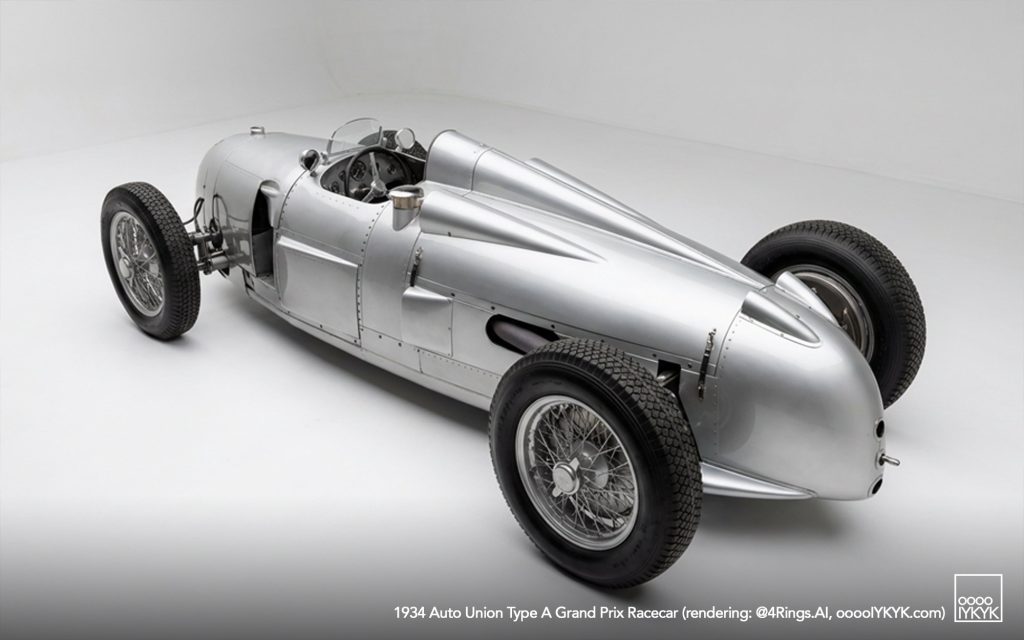
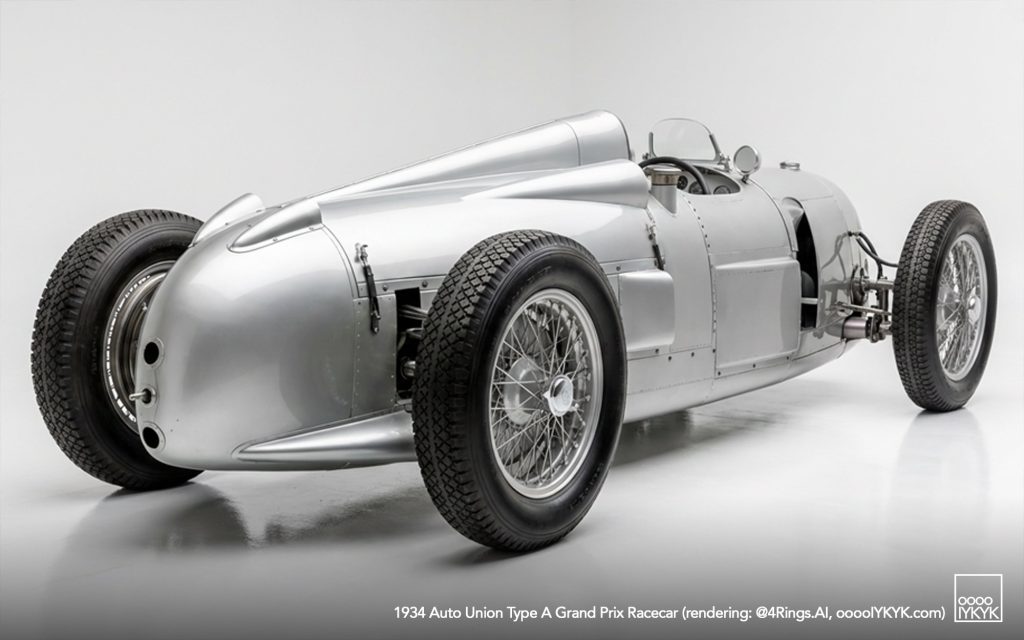
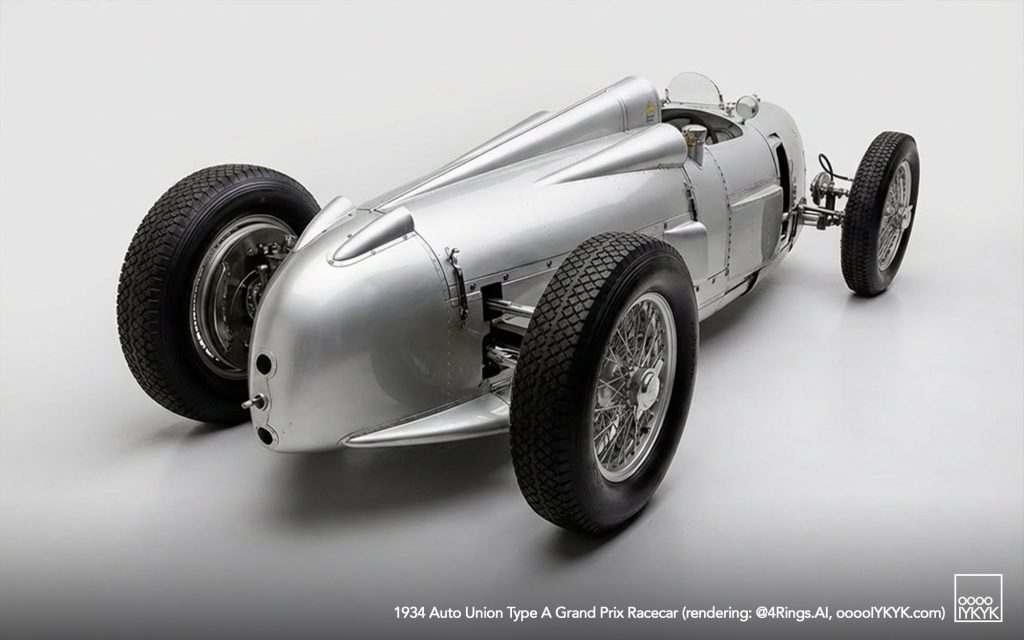
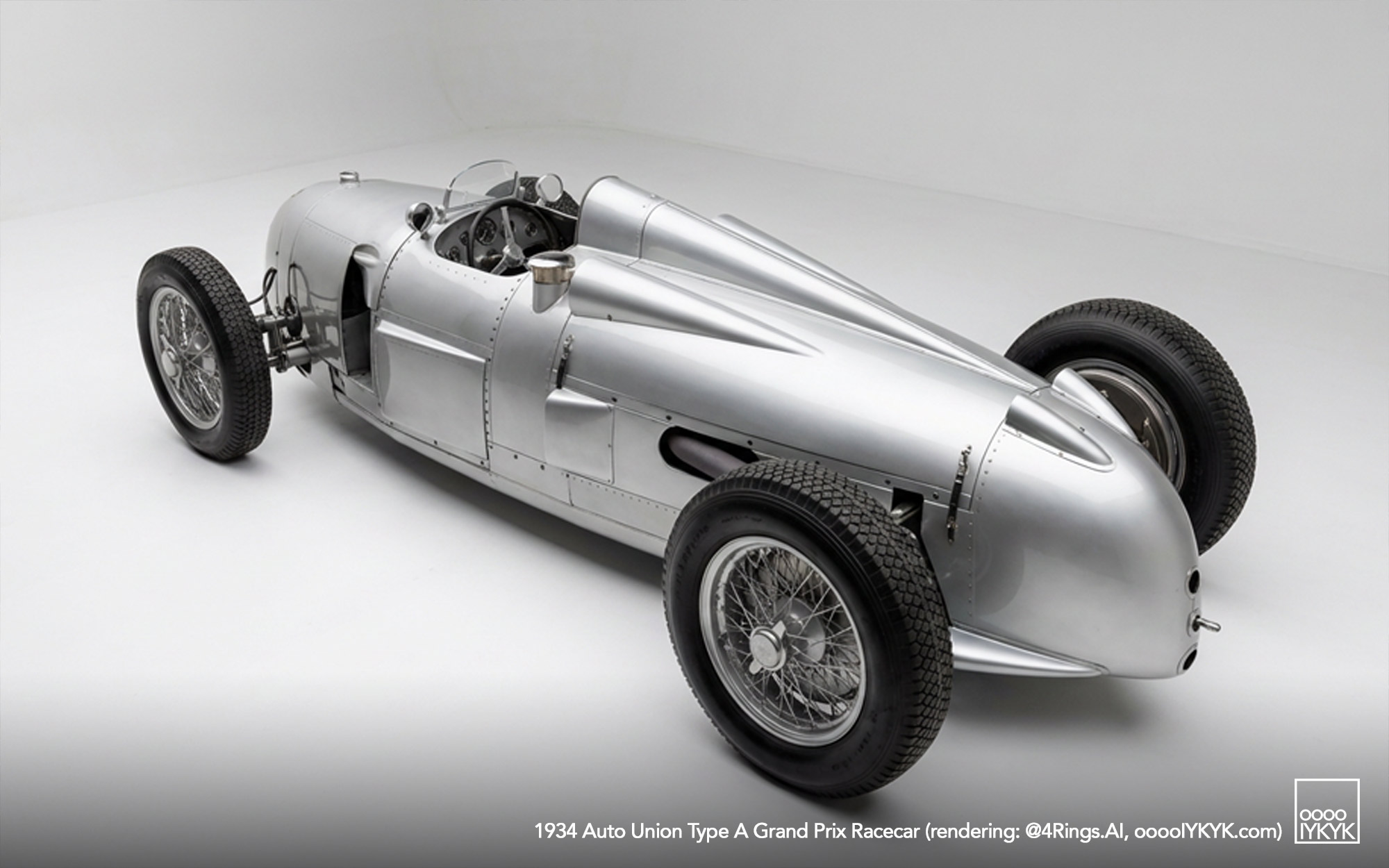
The Type A’s defining innovation was its mid-engine layout, with the engine positioned behind the driver but ahead of the rear axle. This configuration was unprecedented in Grand Prix racing at the time and contrasted sharply with the front-engine designs used by competitors such as Mercedes-Benz. The layout significantly influenced future racing car design and later became the dominant configuration in Formula One and other forms of circuit racing.
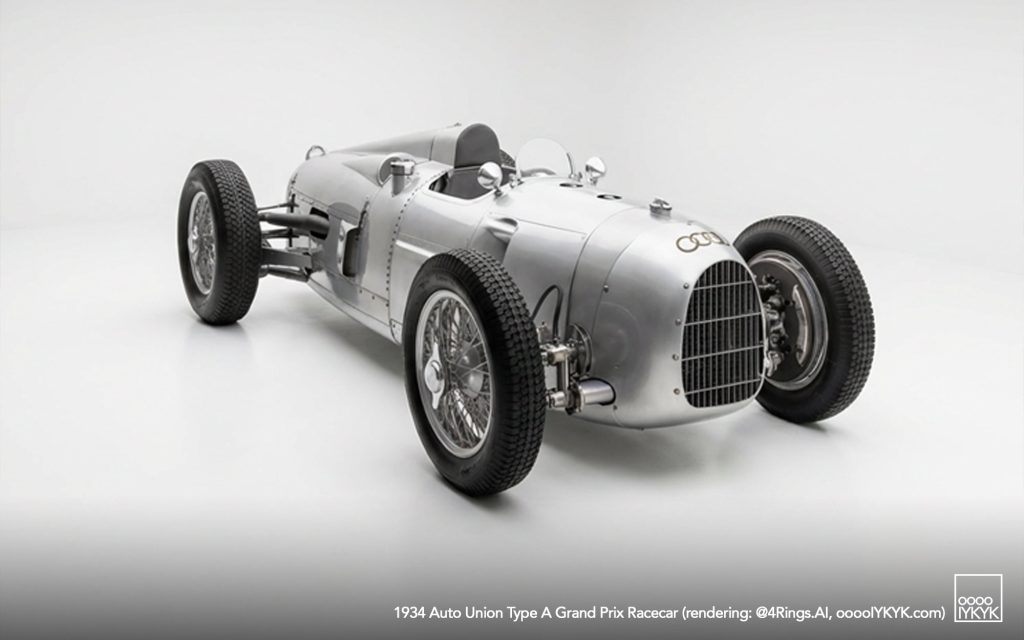
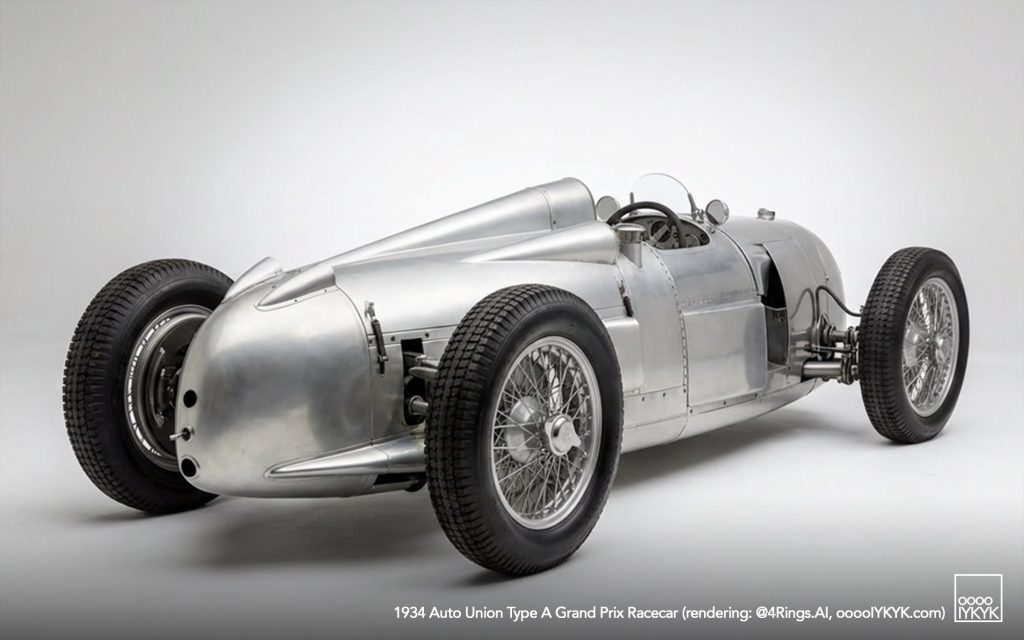
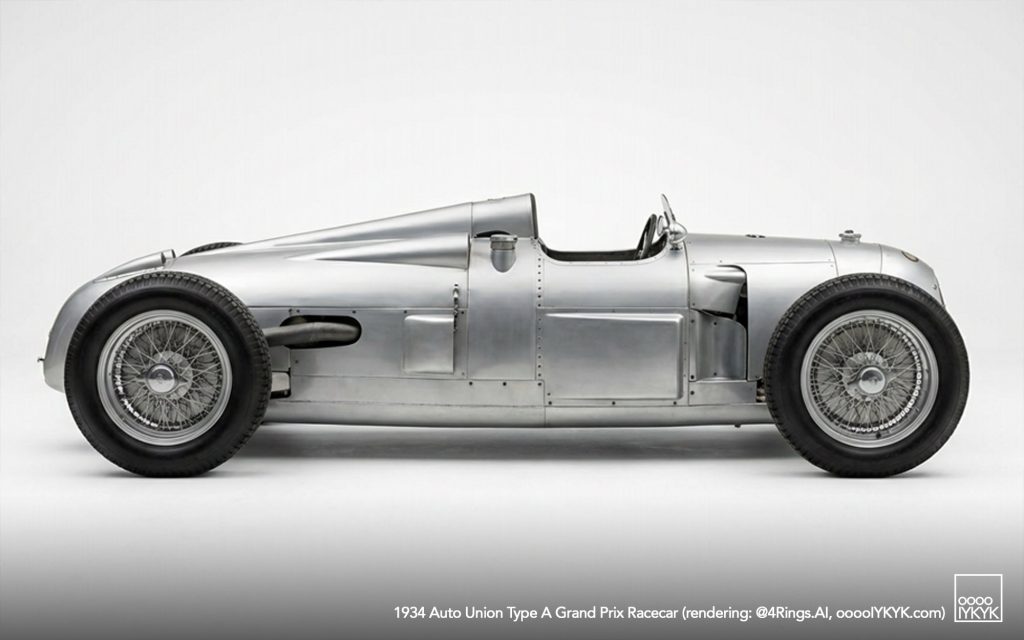
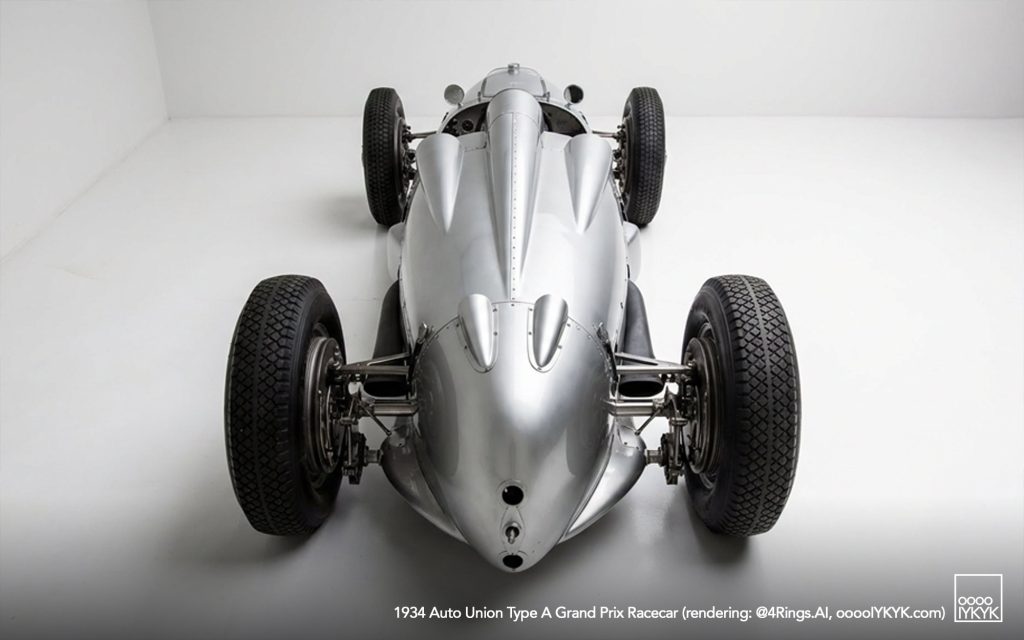
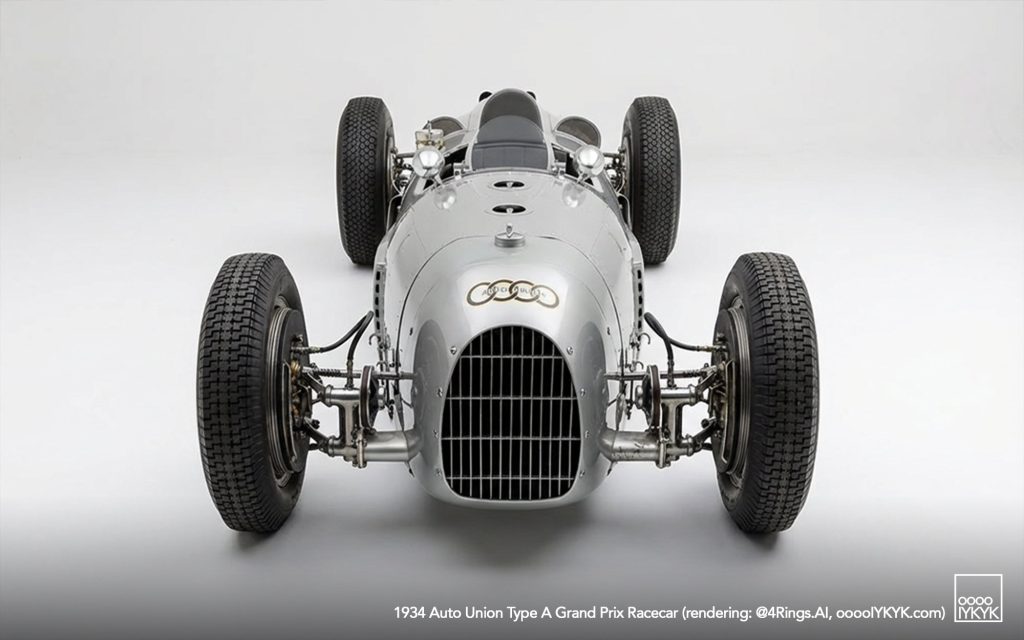
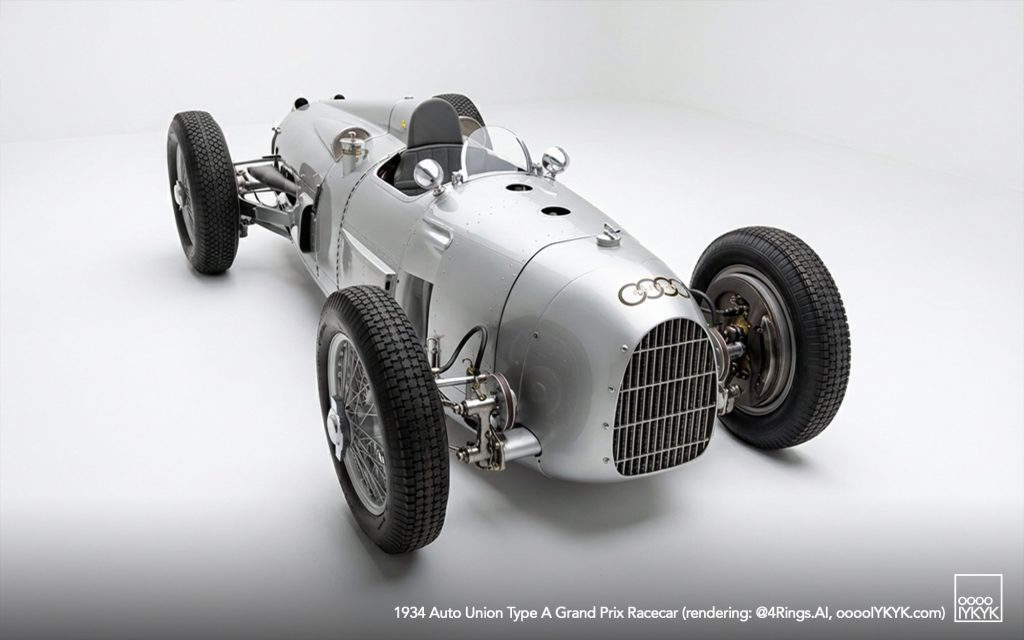
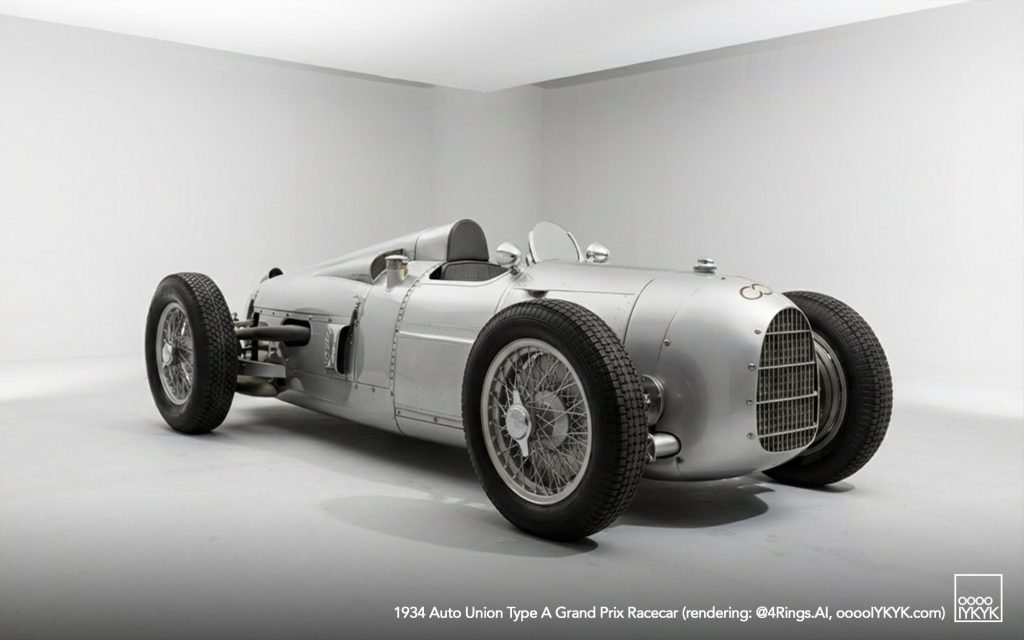
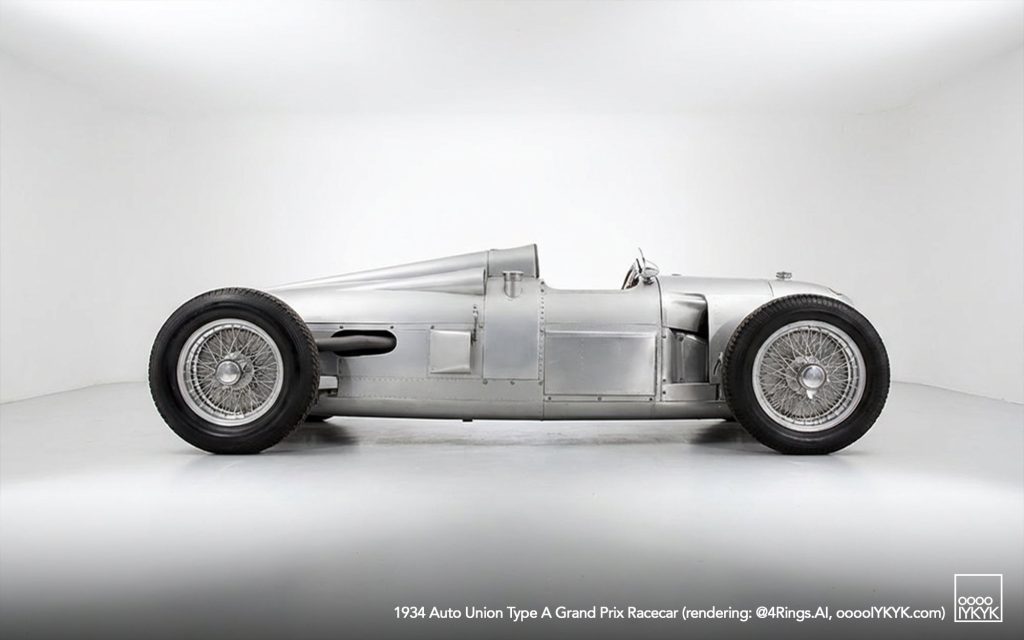
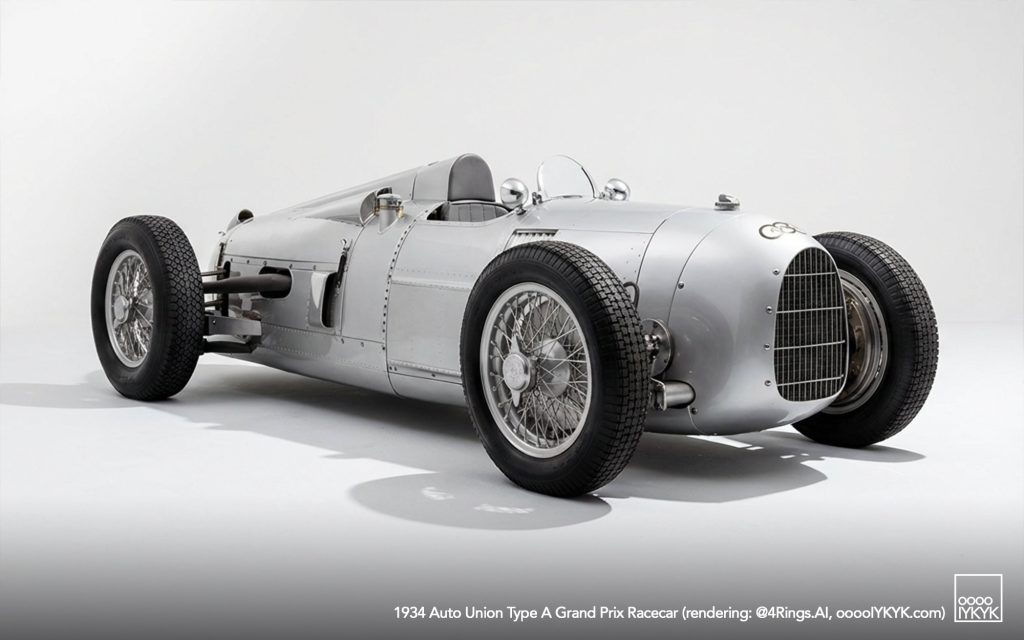
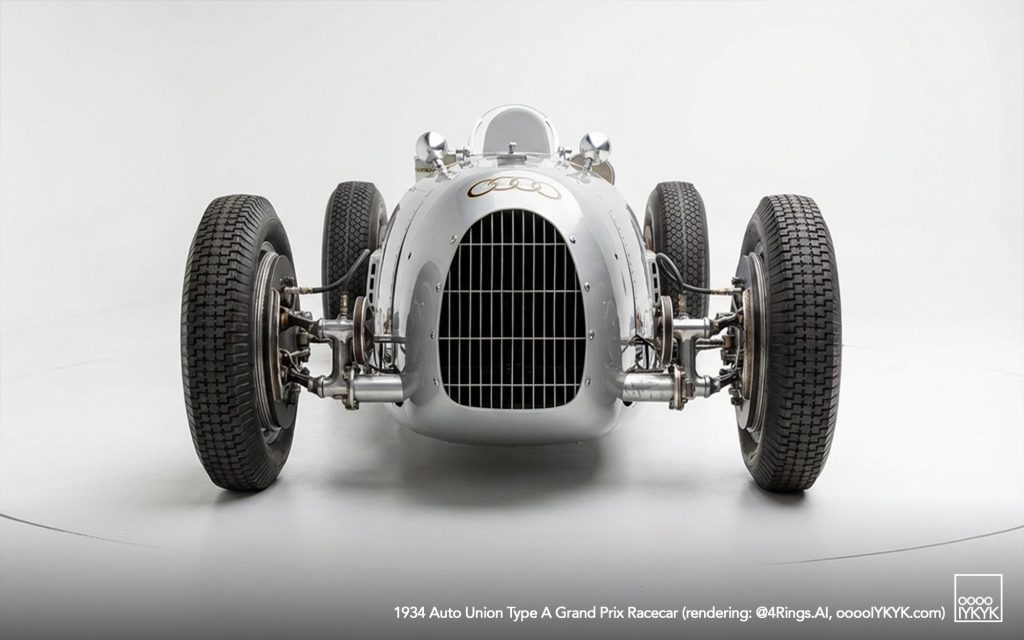
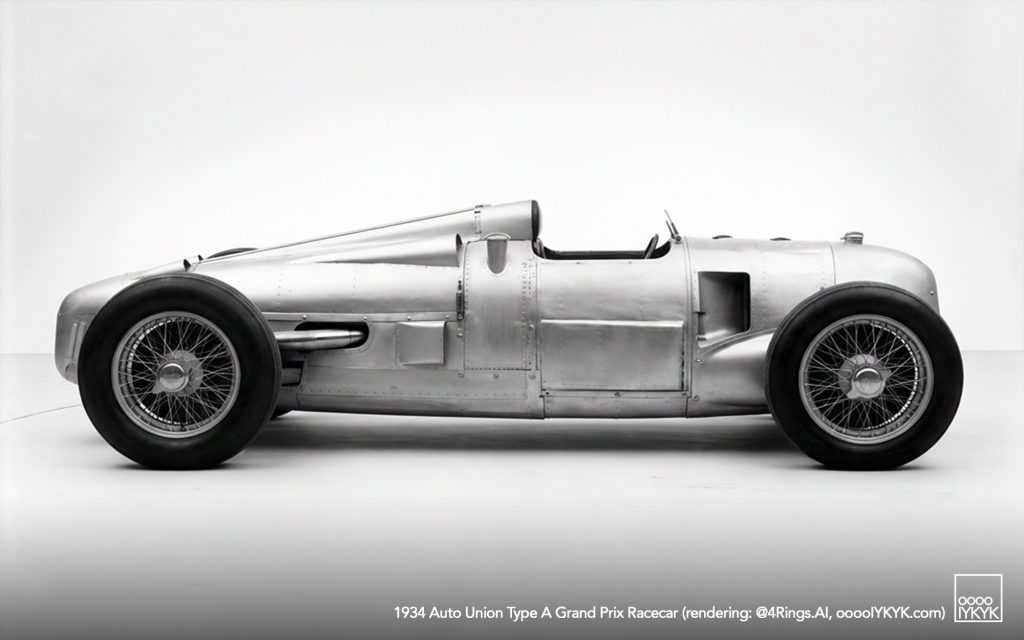
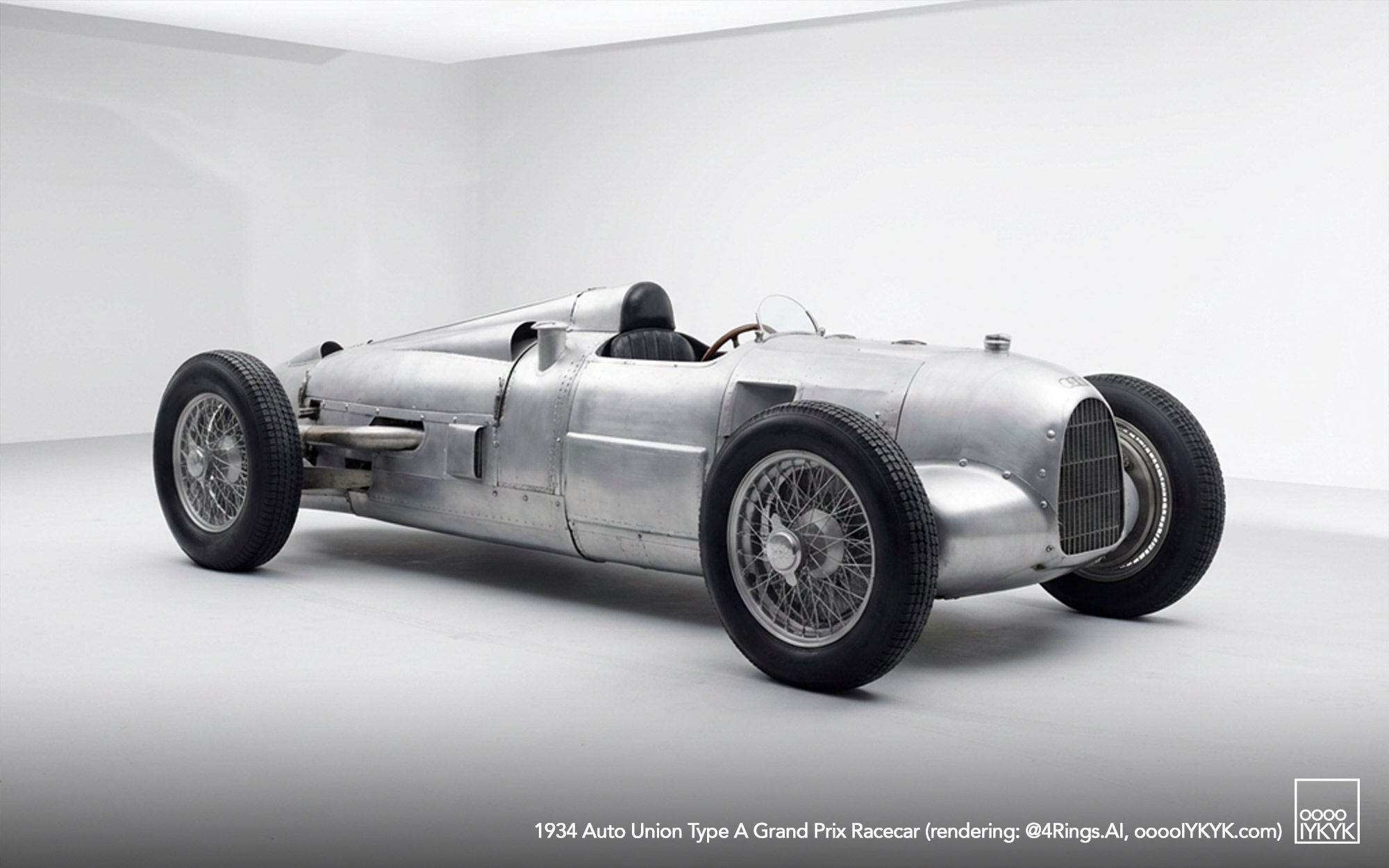
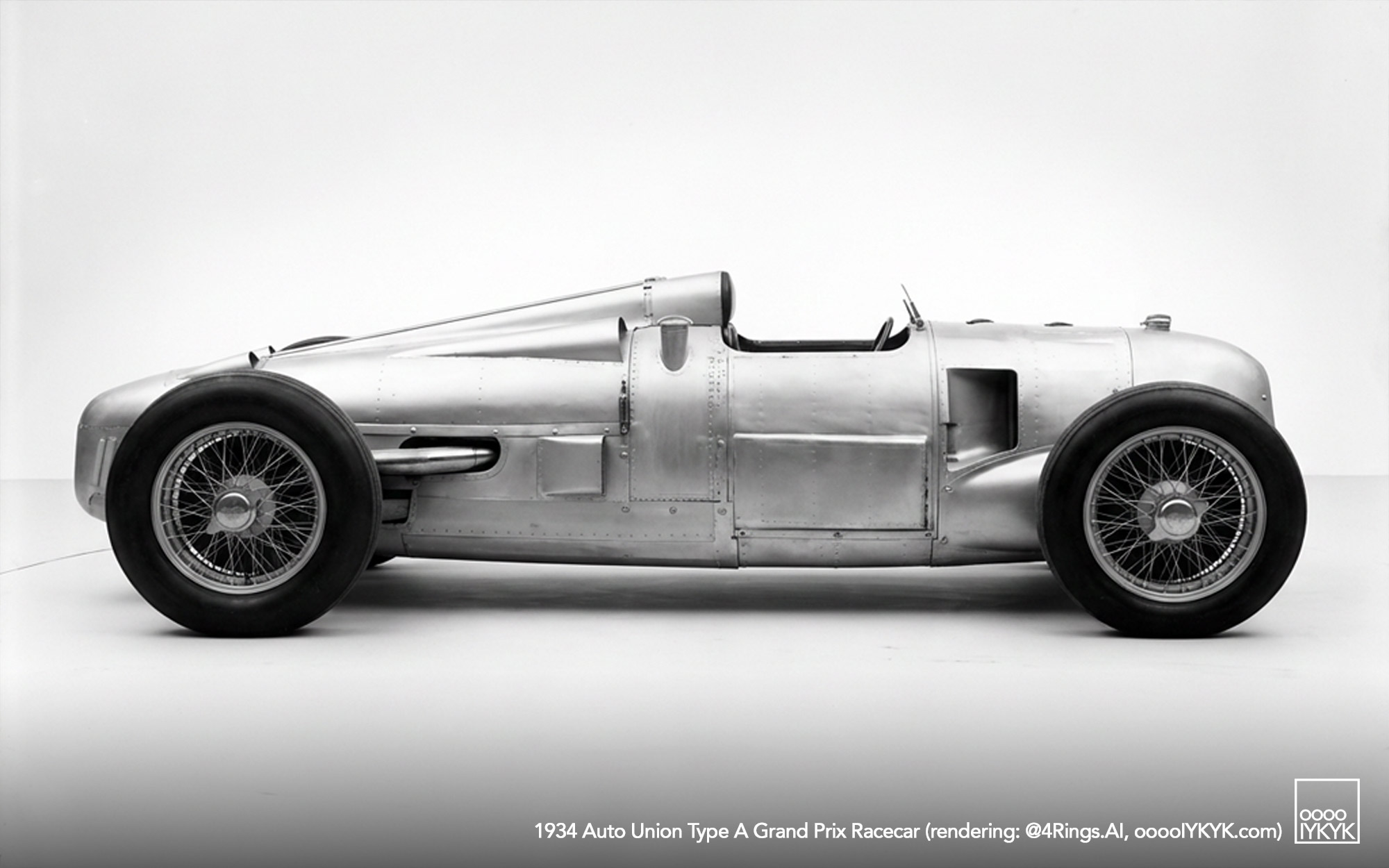
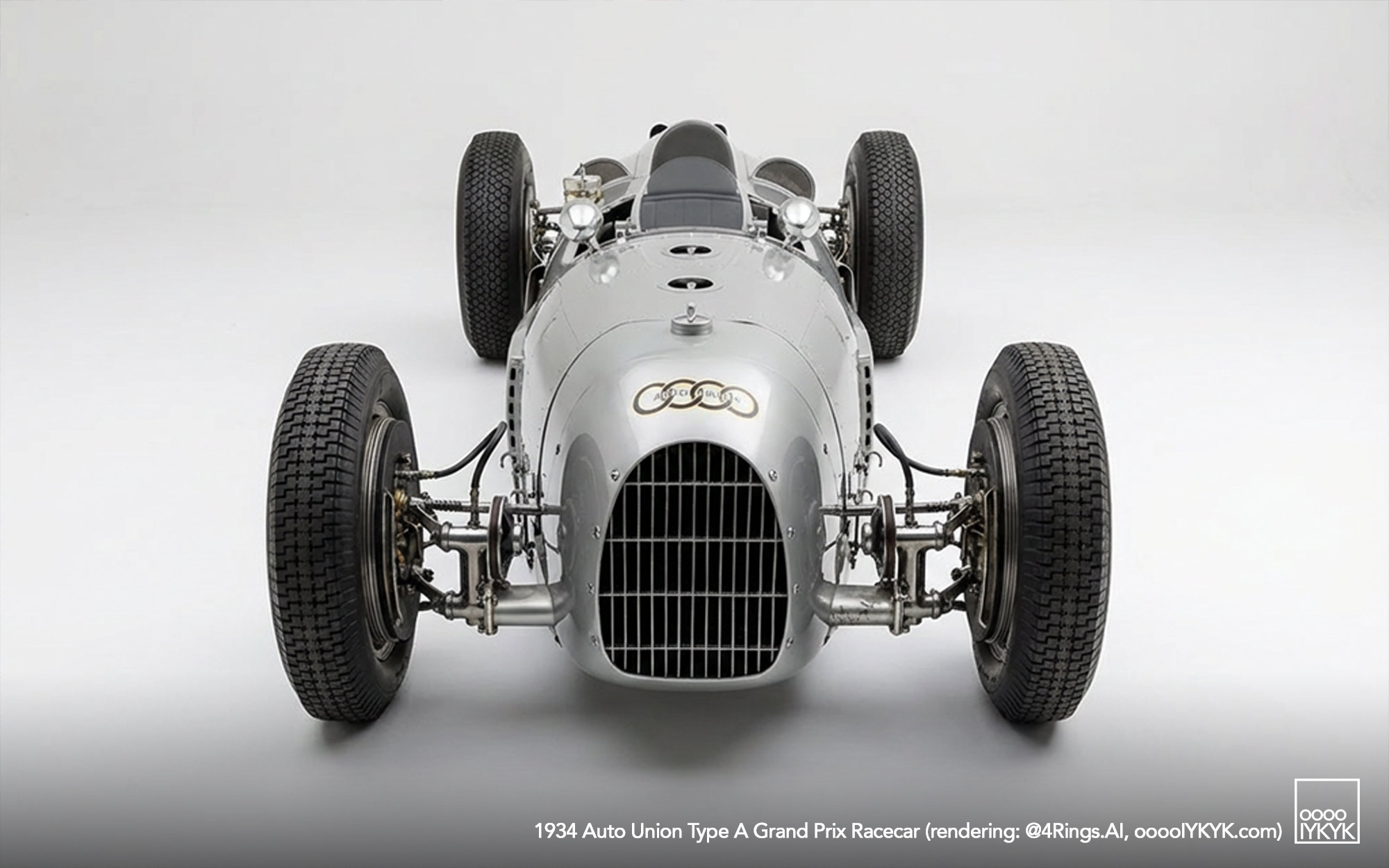
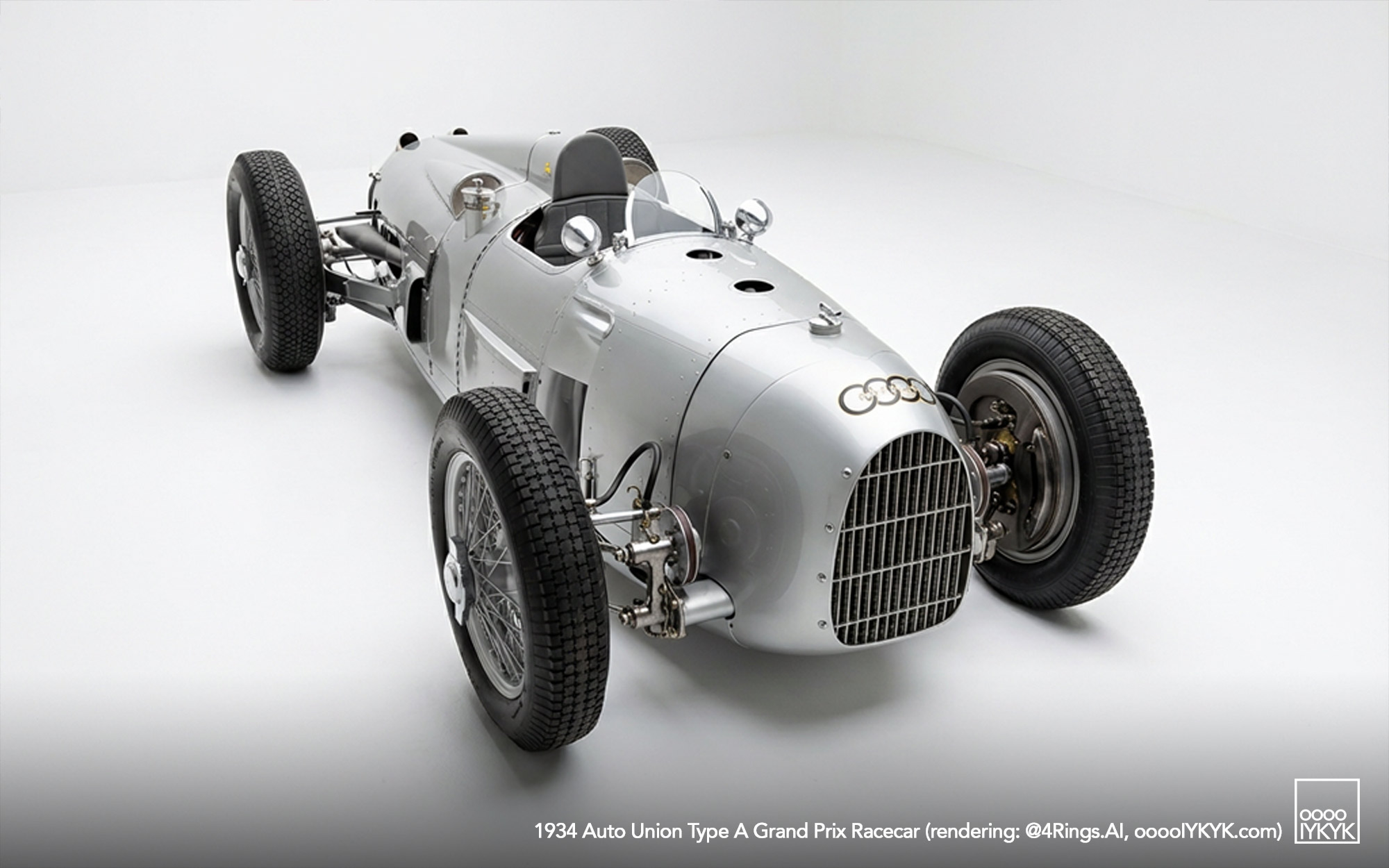
This first iteration of Audi’s mid-engine silver arrow is most easily spotted at the front for its flat-faced Auto Union grille, combined with single routed horizontal tailpipes unlike later versions of the cars that would get convex rounded grilles that matched the curvature of the car’s nose and direct pipes pointed up out of the back of the car.
TECHNICAL OVERVIEW
The Type A was powered by a 4.3-litre V16 engine equipped with a Roots supercharger, producing approximately 295 horsepower. The engine featured a centrally mounted camshaft operating the intake valves directly, while the exhaust valves were actuated via pushrods. Fuel delivery was handled by a Solex double flat-flow carburetor.
Cooling was achieved through a liquid-cooling system integrated into the chassis, with coolant supplied and drained via the frame’s longitudinal members—an unconventional but space-efficient solution. Power was transmitted to the rear wheels through a five-speed manual gearbox.
While the car’s advanced layout delivered exceptional straight-line speed, it also introduced challenging handling characteristics due to rearward weight distribution, particularly on narrow or uneven circuits.
COMPETITION HISTORY
The Auto Union Type A made its racing debut on 26 May 1934 at the AVUS race in Berlin, part of the European Championship calendar. Prior to its competition debut, the car demonstrated its performance potential when Hans Stuck set multiple speed records at AVUS, achieving speeds exceeding 265 km/h.
Throughout the 1934 Grand Prix season, the Type A emerged as a serious challenger. Hans Stuck secured Auto Union’s first major Grand Prix victory at the German Grand Prix at the Nürburgring, followed by a win at the Swiss Grand Prix at Bremgarten, where Auto Union finished first and second. The car also achieved victory at the Czechoslovakian Grand Prix and proved highly successful in hillclimb competitions, a discipline well suited to its high power output and traction.
Hans Stuck was the most successful driver of the Type A, securing victories in:
- 1934 German Grand Prix
- 1934 Swiss Grand Prix
- 1934 Czechoslovakian Grand Prix
Other drivers of the Type A included August Momberger and Hermann Prinz zu Leiningen. Although Auto Union did not secure the European Championship title in 1934, the Type A’s victories and consistent performances established the marque as a leading force in Grand Prix racing alongside Mercedes-Benz.
PERFORMANCE CHARACTERISTICS
The Type A was capable of top speeds approaching 280 km/h, particularly on high-speed circuits such as AVUS. However, its rear-biased weight distribution and swing-axle rear suspension made the car demanding to drive, especially on narrow or uneven tracks. These handling traits would influence further development, leading to refinements in subsequent Auto Union Grand Prix cars.
LEGACY & SURVIVING EXAMPLES
The Auto Union Type A laid the groundwork for the development of the Type B, Type C, and Type D, which would go on to achieve greater success in the mid-to-late 1930s. Its mid-engine layout is now regarded as one of the most influential design choices in racing history, anticipating the configuration that would dominate Formula One from the late 1950s onward.
No original Type A cars are known to have survived the Second World War. All existing examples are reconstructions or replicas built using period drawings and technical documentation preserved by Audi Tradition. A roadworthy replica has been displayed at the Audi museum mobile and at major historic motorsport events, preserving the legacy of Auto Union’s first Grand Prix racing car. The example shown during the Audi museum mobile’s Grand Prix display was on loan from D’Ieteren, Brussels.
REFERENCES
- Auto Union racing cars, Wikipedia
- UltimateCarPage.com – Auto Union Type A
- Supercars.net – 1934 Auto Union Type A
- Audi Club North America – Silver Arrows Revisited: Auto Union’s 1934 Grand Prix Entrance
PHOTO GALLERY