

What: Audi quattro Spyder Concept (design study, mid-engine sports car)
Year: 1991
Era: Audi Postwar
Model Family:
Market / Zones: Global concept (IAA debut)
Debut: 1991 Frankfurt Motor Show (IAA), September 12, 1991
Number Produced: 1 (confirmed surviving example in Audi Tradition collection)
Chassis / Matrix: Aluminum spaceframe ASF) with tubular structure
Designer: Peter Schreyer
TECHNICAL DETAILS
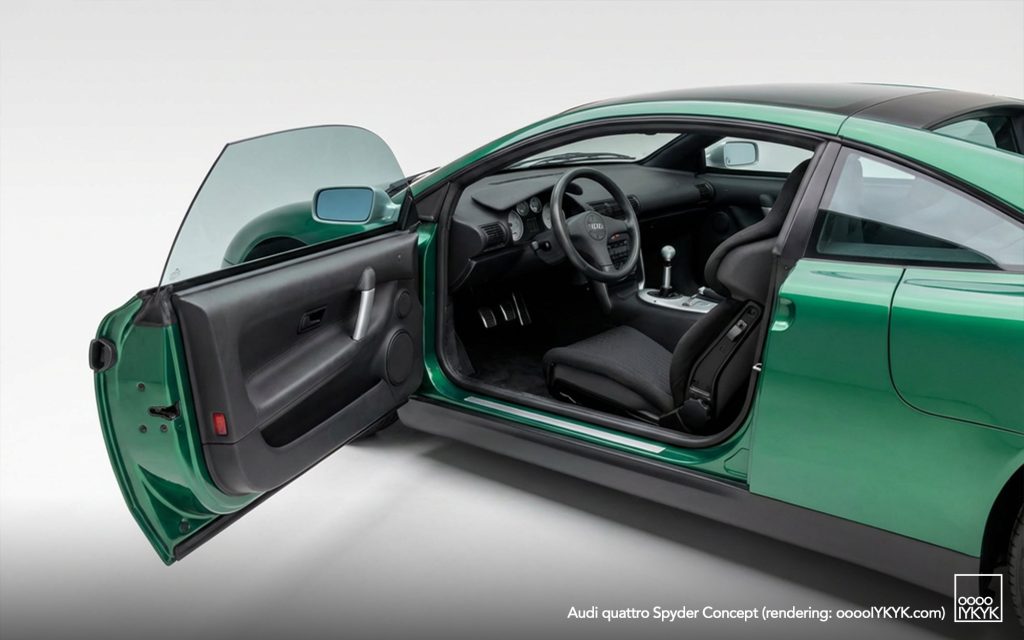
Body Style(s): Two-door targa-style coupe (removable glass roof)
Drivetrain Configuration: Mid-engine, all-wheel drive
Engine(s): 2.8L V6 (Audi 100-derived)
Output: 128 kW (174 hp), 245 Nm
Transmission(s): 5-speed manual
All-Wheel Drive Type: Torsen-based permanent quattro
Chassis: Aluminum tubular frame with aluminum body
Suspension: Double wishbone front, multi-link rear
Weight: Approx. 1,100 kg
Acceleration: 0–100 km/h: < 6.0 seconds
Top Speed: ~250 km/h
HISTORICAL CONTEXT
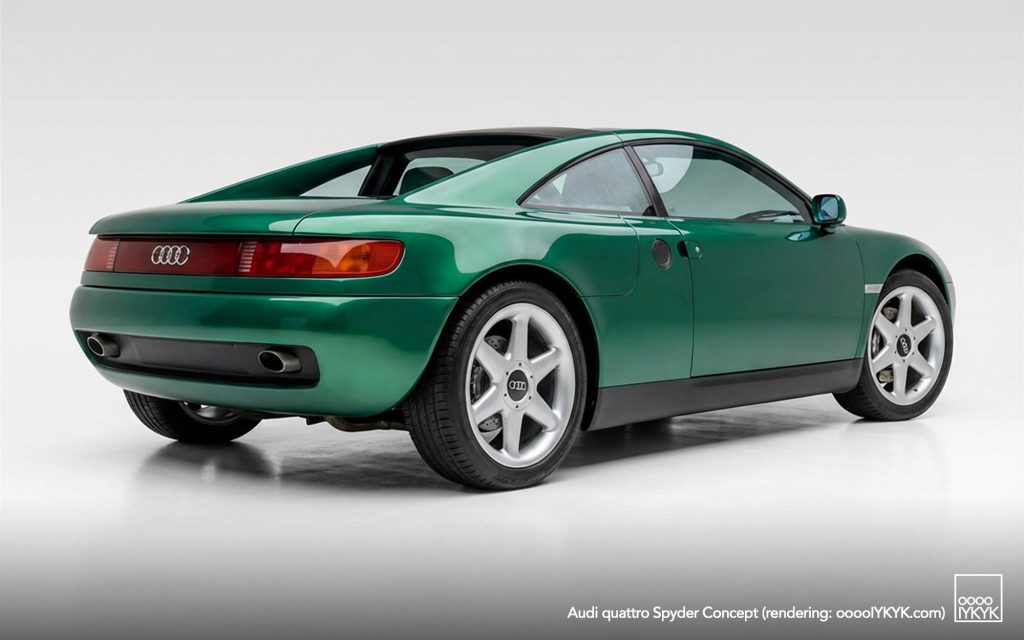
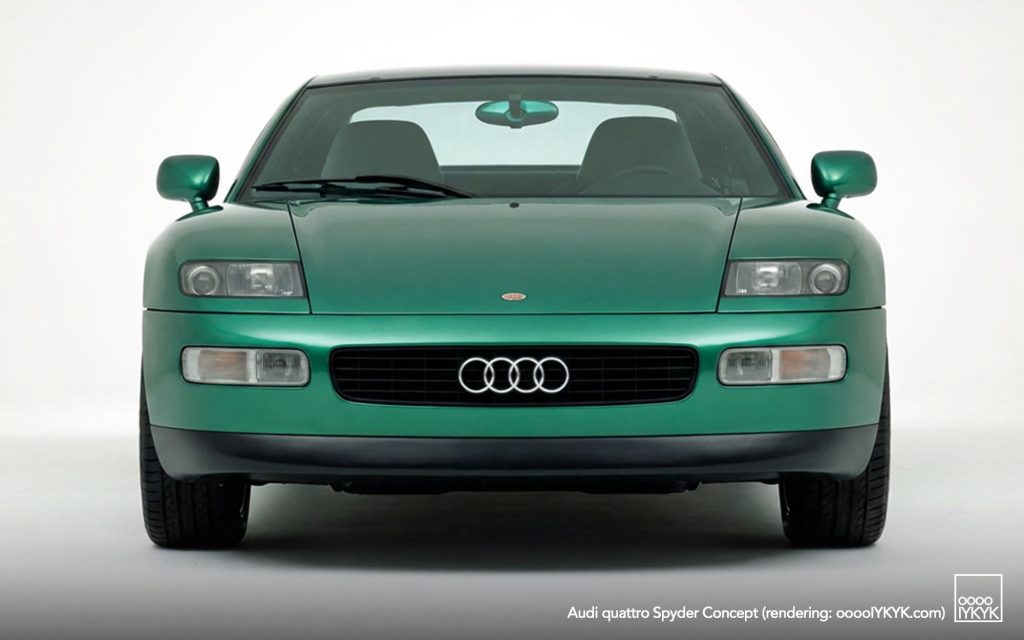
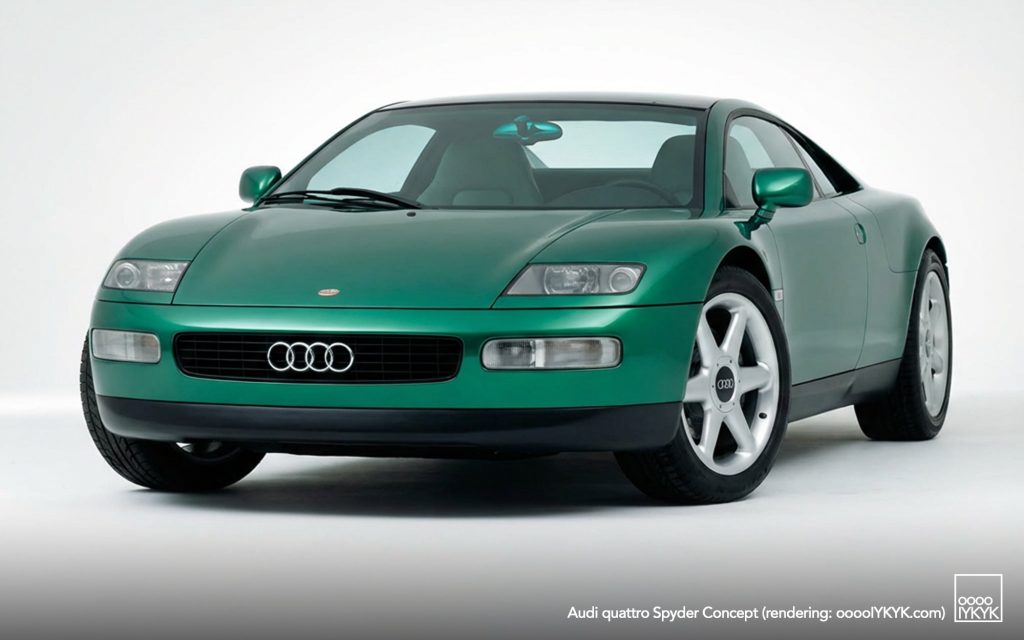
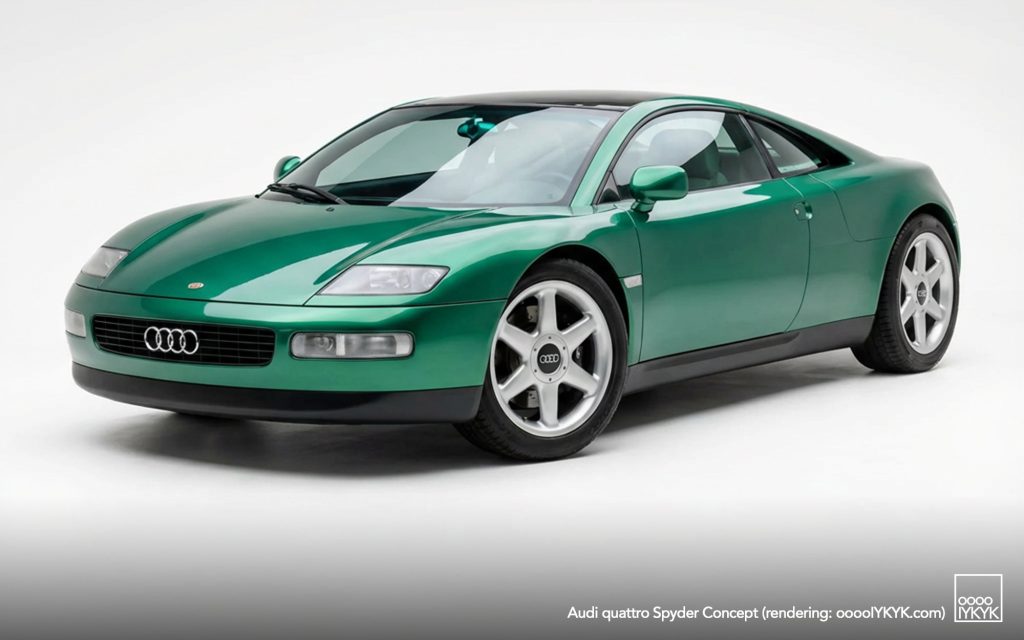
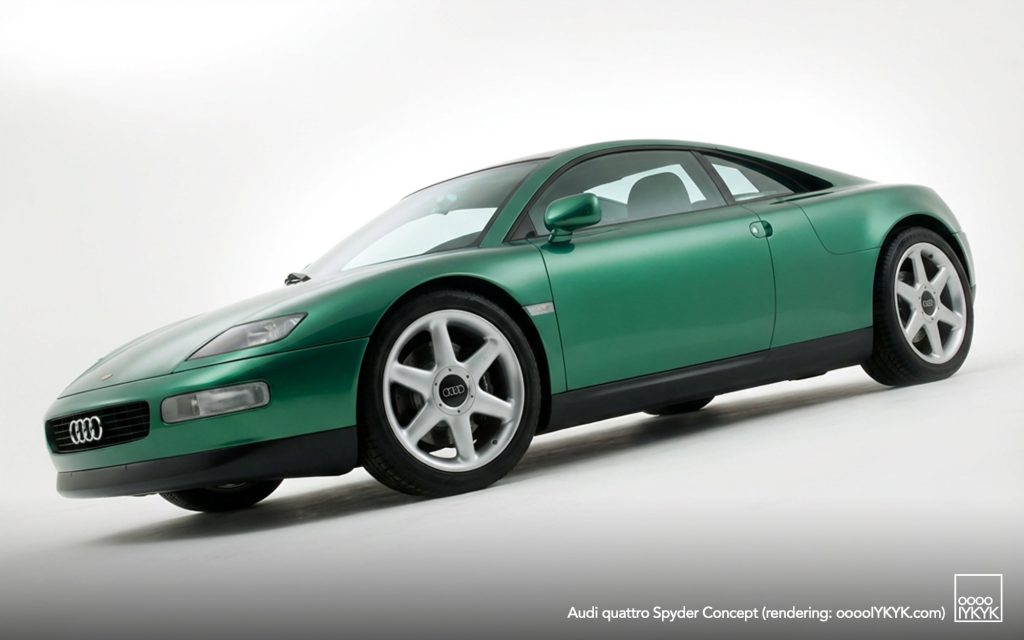
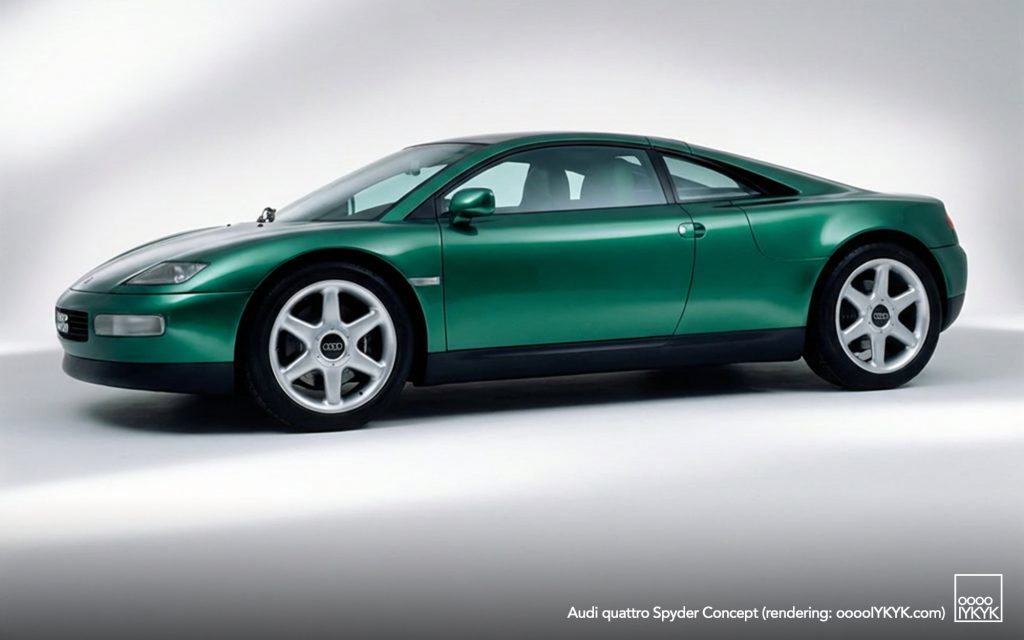
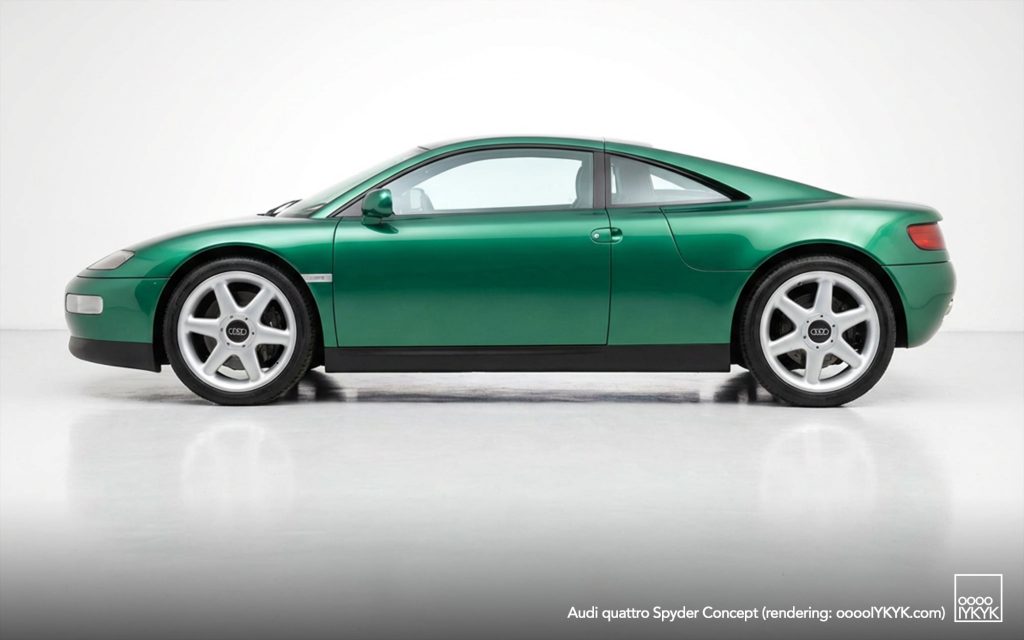
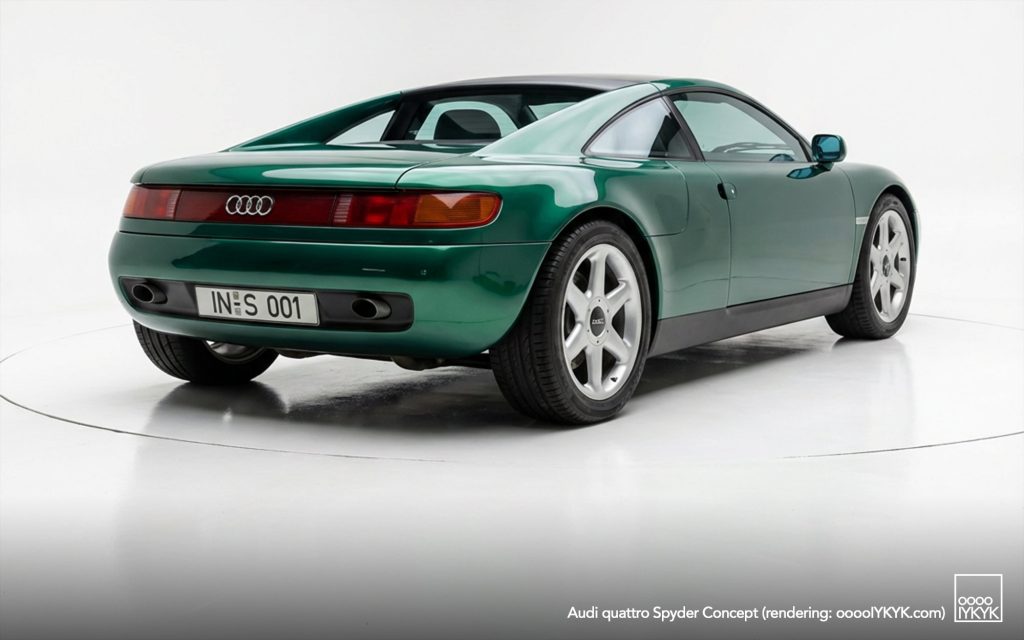
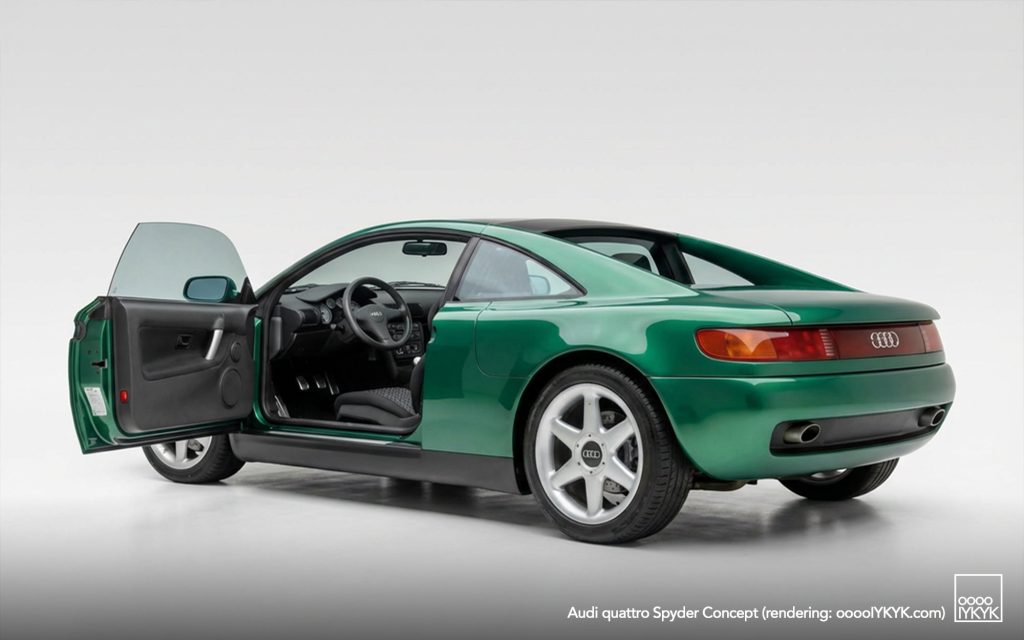
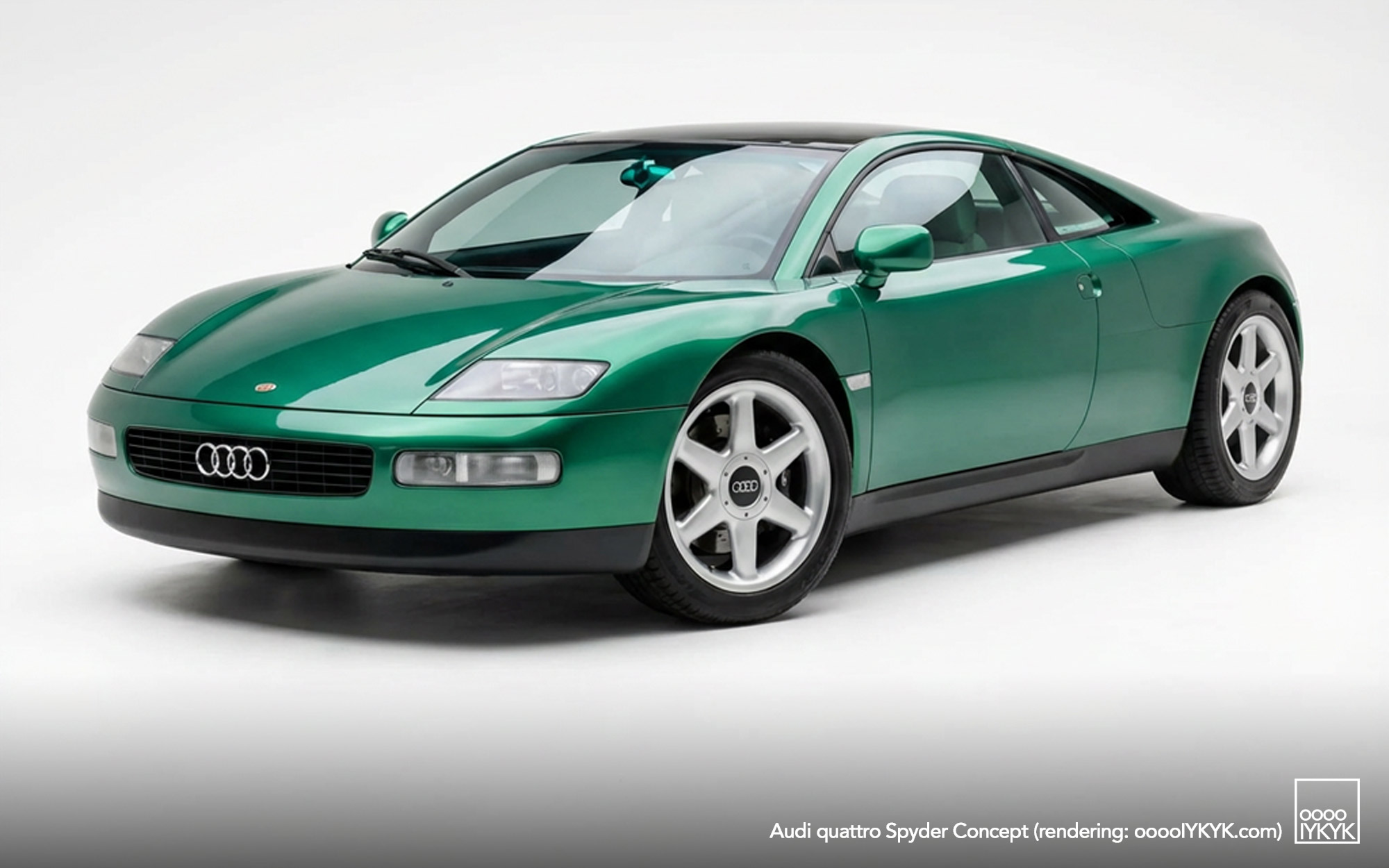
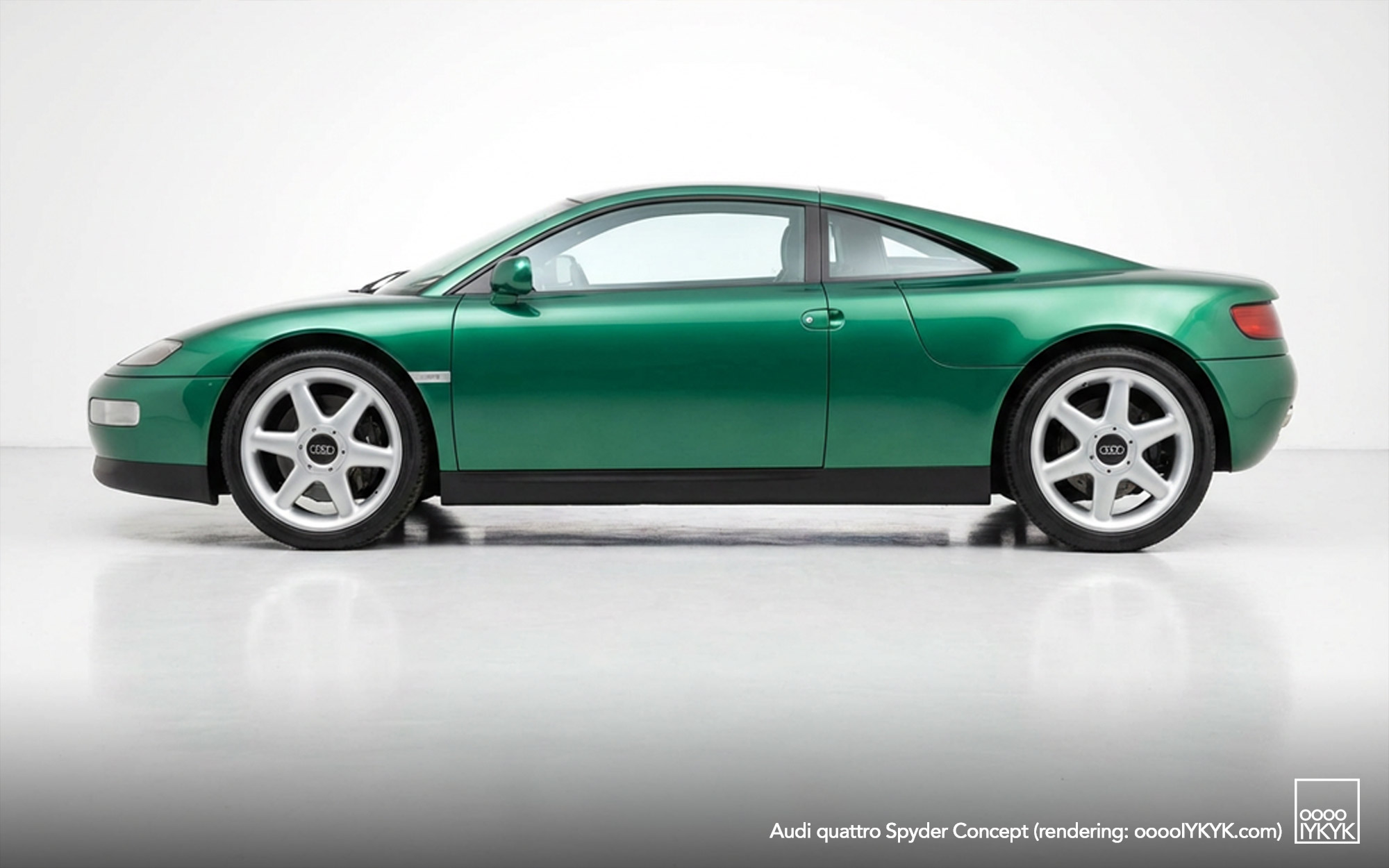
Following the 1991 Frankfurt IAA debut of the Audi quattro Spyder (Fidji Orange), the quattro Spyder entered a second phase of visibility through global press distribution and media features. During this period, the car appeared in a distinctly different configuration—finished in a dark green metallic tone and photographed extensively, most notably in desert environments.
This version became widely known through:
- International press photography
- Magazine features (late 1991–1992 cycle)
- Brochure and promotional material
Notably, the supplied materials include coverage from Road & Track (January 1992) featuring the orange car, reflecting how both visual identities circulated simultaneously in media.
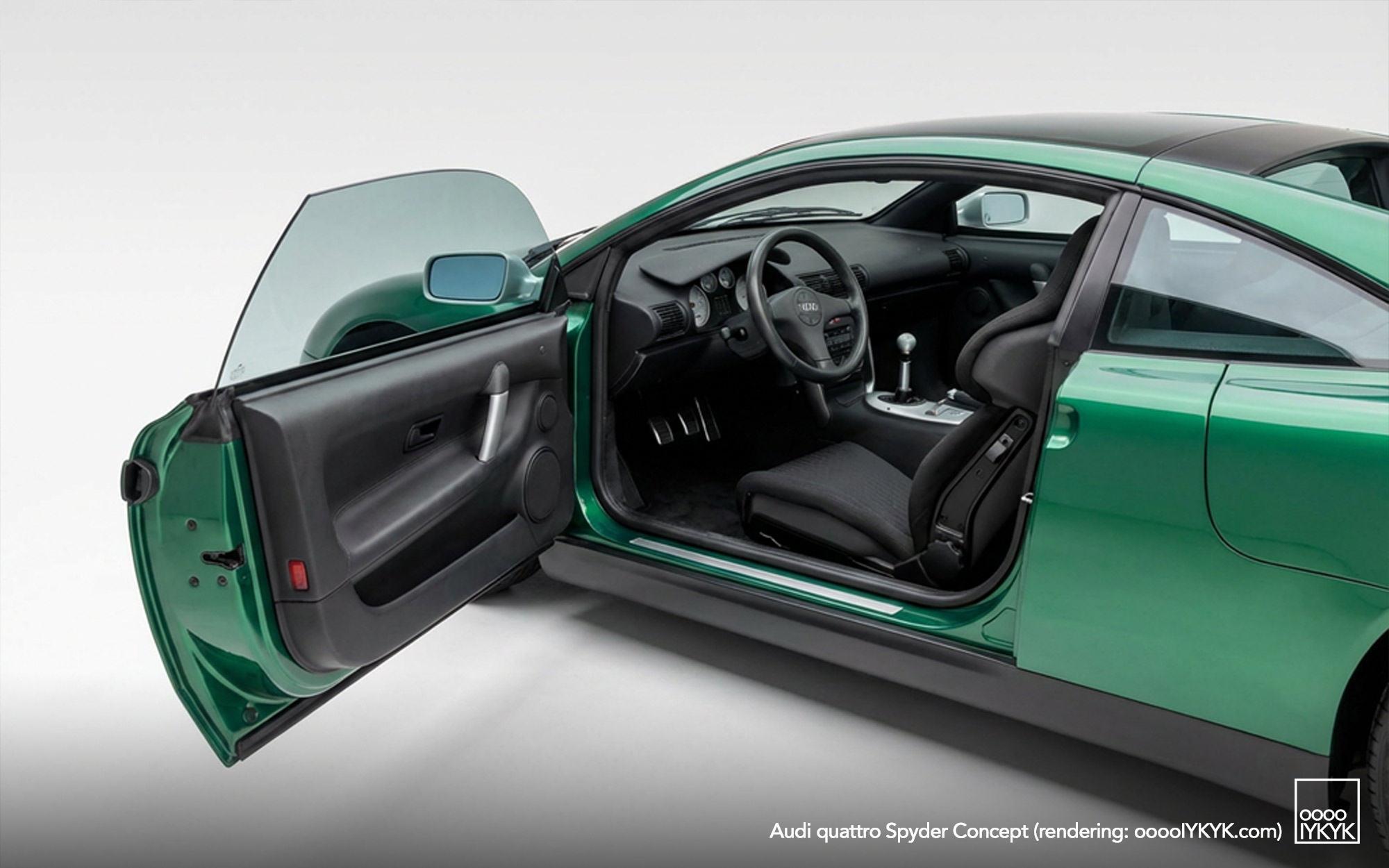
THE GREEN CAR: REPAINT OR SECOND PROTOTYPE?
Primary Theory (Most Supported) – Repainted Single Prototype
Evidence strongly supports that the green version represents the same car repainted:
- Only one confirmed surviving chassis is known to exist (Audi Tradition collection)
- No factory documentation in period press material indicating multiple complete prototypes
- The green imagery aligns with controlled press photography cycles, not engineering testing
- Repainting concept cars is common practice for concept cars.
This interpretation is consistent with Audi’s own practice at the time—refinishing concept cars to extend media lifespan.
Alternate Theory – Second Prototype
Some secondary period sources suggested:
- Two prototypes (orange and green)
- A progression from show car to development car
However, these claims:
- Lack primary documentation
- Likely stem from simultaneous circulation of both color variants in media
- Are not supported by surviving physical evidence
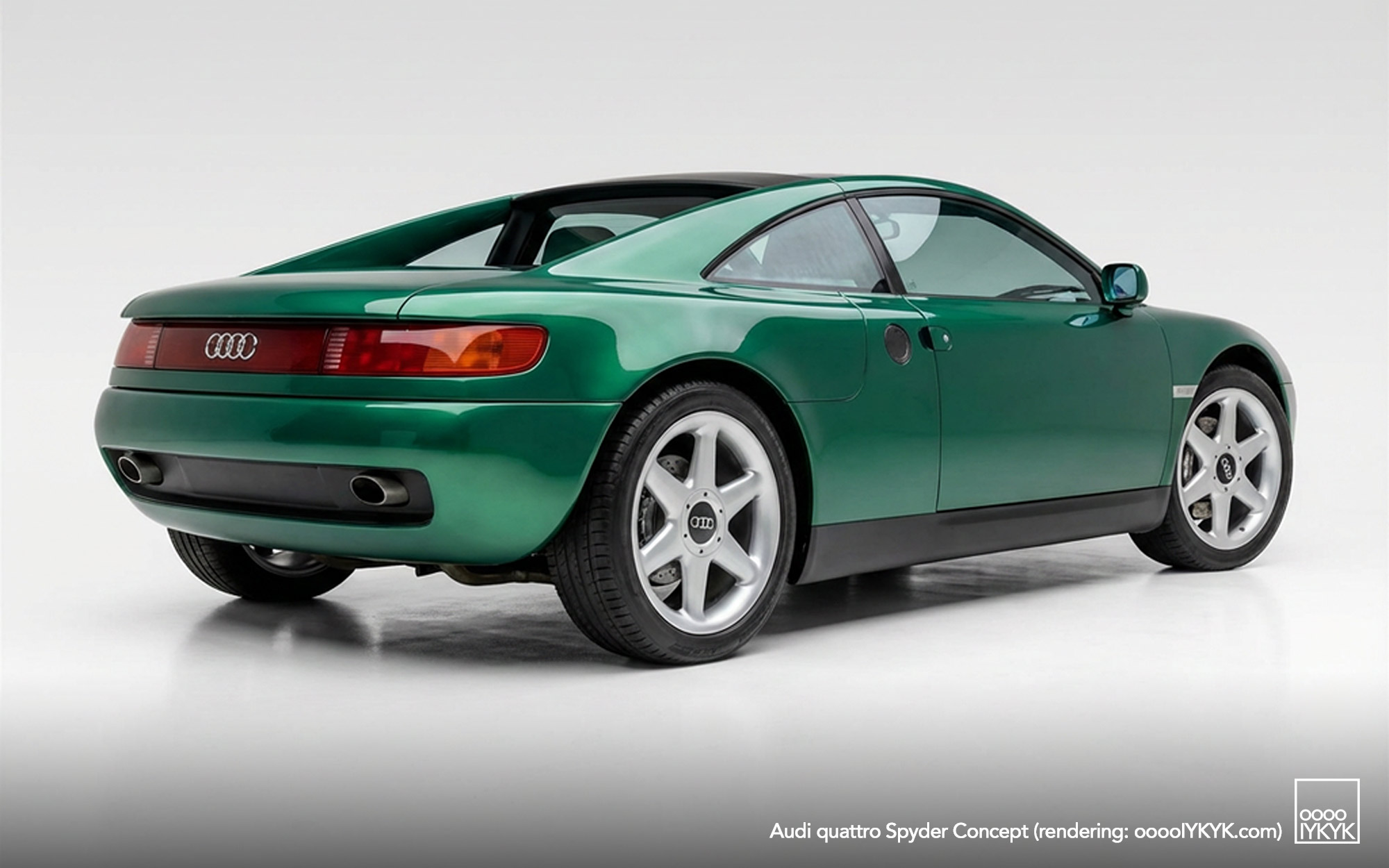
ROLE OF THE GREEN VERSION
The green repaint appears to have served a deliberate purpose:
- Present the Spyder in a more subdued, production-adjacent tone
- Extend global media coverage beyond Frankfurt
- Support ongoing internal evaluation and public interest
The desert-based imagery—likely from a U.S.-focused shoot—helped reposition the car visually from showpiece to usable sports car.
DESIGN & SPECIFICATION
Mechanically and structurally, the green version is understood to be identical to the Frankfurt car:
- Same aluminum construction
- Same mid-engine V6 layout
- Same quattro drivetrain
Any perceived differences are attributable to:
- Lighting and photography
- Minor presentation details
- Color influencing
ARCHIVAL POSITION
The green quattro Spyder represents a post-debut presentation phase of the original 1991 concept, most likely achieved through repainting the Frankfurt show car for press and promotional use. While claims of multiple prototypes persist, the absence of supporting factory documentation and the survival of only a single example strongly indicate that the Spyder program produced one fully realized vehicle.
PHOTO GALLERY