

What: 80 Estate (B1)
Model Family: 80
Market / Zone: UK
Production Location: Ingolstadt, West Germany
Debut:
Year: 1975, 1976
Number Produced:
Model / Generation Code(s): Type 80
Chassis / Matrix: B1
Layout: Front-engine, front-wheel drive
Engine(s): 1.3l 4-cylinder, 1.5l 4-cylinder, 1.6l 4-cylinder
Transmission(s): 4-speed Manual
Wheelbase: 2,470 mm (97.2 in)
Length: approx. 4,180 mm (164.6 in)
Curb weight: approx. 900 kg (1,984 lb), depending on specification
Designer:
Predecessor: Audi 60 / Audi 75 (type F103)
Successor: Audi 80 Estate (B1.5, type 82)
OVERVIEW
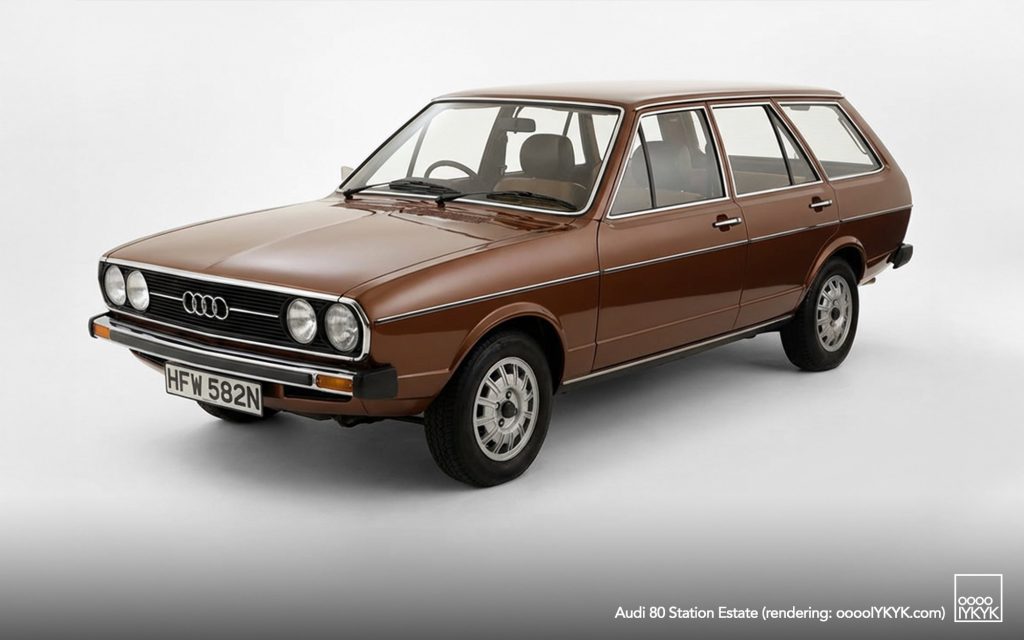
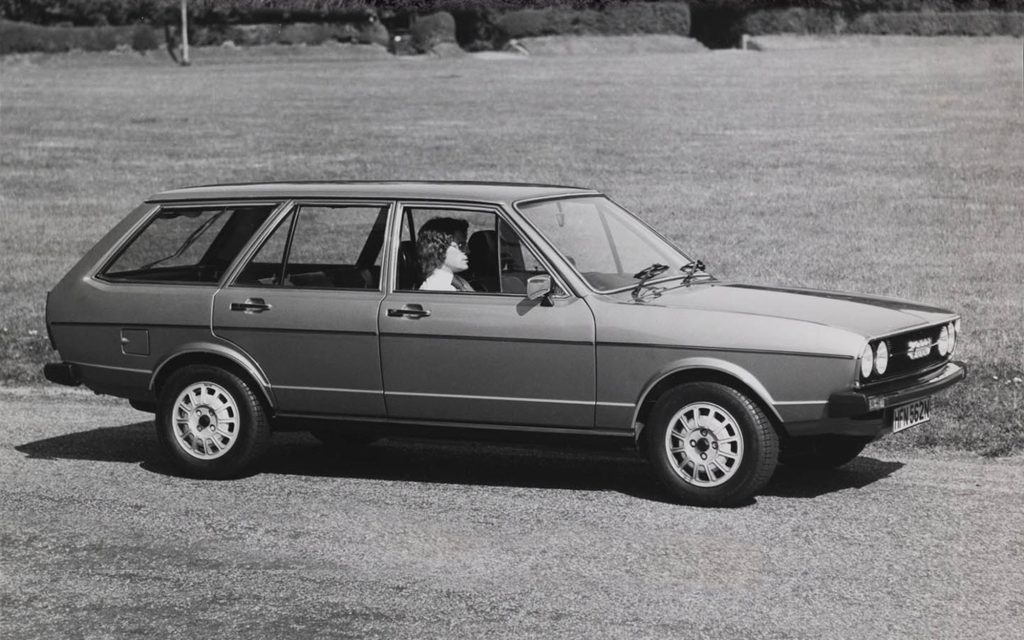
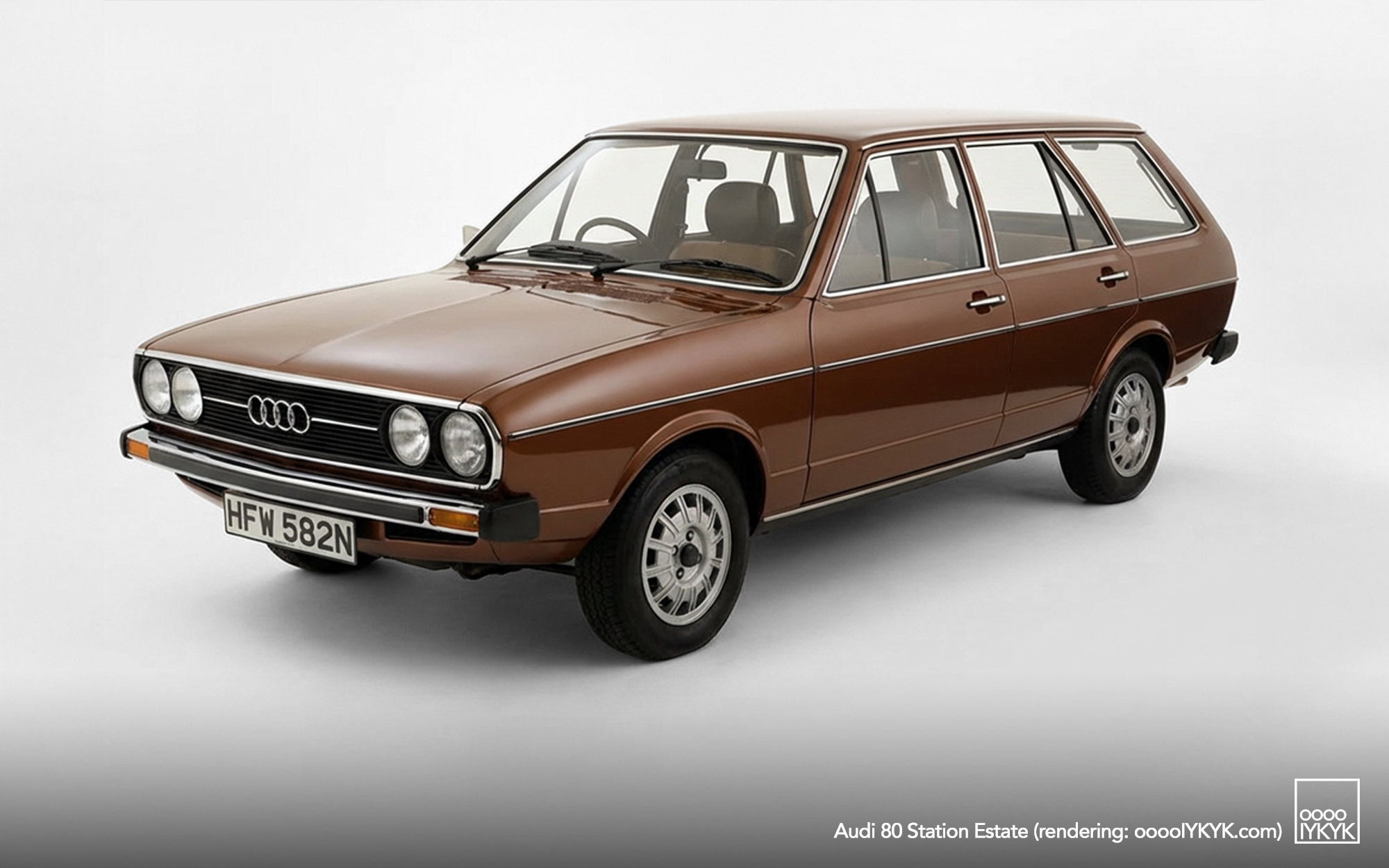
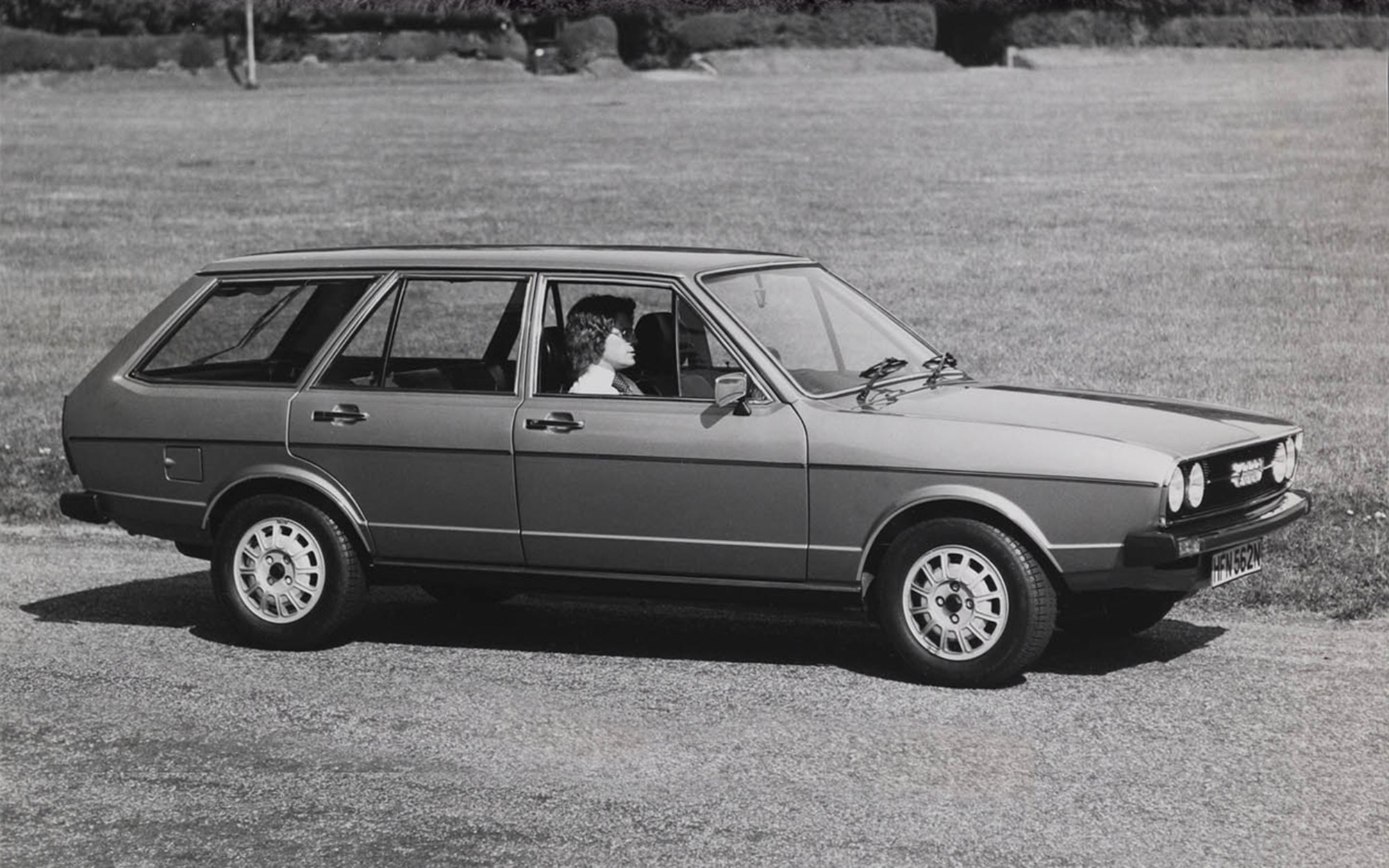
The Audi 80 (B1) Variant, produced from 1975 to 1976, was a station wagon derivative of the first-generation Audi 80 developed specifically for select export markets, most notably the United Kingdom. Unlike the Audi 80 sedan and two-door models, the Variant was not offered for sale in Germany, making it one of the more unusual and market-specific body styles in Audi’s early B-series history.
Introduced late in the B1 production cycle, the Variant combined the compact dimensions, lightweight construction, and front-wheel-drive layout of the Audi 80 sedan with increased cargo capacity. Its brief availability and limited geographic reach have since made it one of the rarest production versions of the Audi 80 B1.
DEVELOPMENT & CONCEPT
The Audi 80 Variant was developed to address market demand in the United Kingdom for compact station wagons that offered passenger-car handling with improved practicality. During the mid-1970s, estate cars held stronger cultural and commercial appeal in the UK than in Audi’s domestic German market, influencing the decision to limit sales accordingly.
Built on the standard B1 sedan architecture, the Variant retained the same wheelbase, drivetrain layout, and mechanical components. Development followed the same efficiency-focused philosophy established by Ludwig Kraus, emphasizing low weight, durability, and fuel economy.
DESIGN & BODY STYLE
The Audi 80 B1 Variant shared its front-end styling, doors, and greenhouse with the sedan, while the rear bodywork was redesigned to incorporate an extended roofline and full-height tailgate. The nearly horizontal roof maximized cargo volume while preserving compact exterior dimensions.
Styling remained restrained and functional, consistent with Audi’s early-1970s New Objectivity design language. Large glass areas improved rearward visibility, and the upright tailgate emphasized utility over sportiness. Exterior trim and detailing closely followed UK-market Audi 80 sedan specifications.
CHASSIS & SUSPENSION
The Variant retained the sedan’s chassis layout, with MacPherson struts and lower wishbones at the front and a torsion crank axle with spring dampers at the rear. This configuration provided predictable handling characteristics and adequate load stability for everyday use.
Rack-and-pinion steering with negative steering roll radius enhanced stability under braking, including when the vehicle was loaded. The braking system featured diagonally split hydraulic circuits, improving safety in the event of partial brake failure.
Despite the increased cargo volume, overall weight gain compared to the sedan was modest, preserving the Audi 80’s reputation for efficiency and composure.
ENGINES & POWERTRAIN
UK-market Audi 80 B1 Variant models were offered with inline four-cylinder gasoline engines from the EA827 engine family. These engines featured a single overhead camshaft, toothed-belt camshaft drive, and maintenance-free hydraulic tappets.
Engine displacements ranged from 1.3 to 1.6 liters, with power outputs comparable to those offered in UK-market Audi 80 sedans of the same period. Power was delivered to the front wheels through a four-speed manual transmission.
Fuel efficiency was a key selling point, particularly in the years following the 1973 oil crisis, aligning the Variant with broader UK market priorities.
MARKET RECEPTION & PRODUCTION
Introduced in the UK in 1975, the Audi 80 Variant occupied a niche position within Audi’s British lineup. It appealed primarily to buyers seeking a compact estate car with modern front-wheel-drive packaging, differentiating it from more traditional rear-wheel-drive competitors.
Production volumes were limited, and the Variant was never marketed in Germany or widely exported beyond the UK. As a result, surviving examples are rare, and the model remains relatively obscure even among Audi enthusiasts.
Production ended in 1976, with no direct replacement until the introduction of the Audi 80 Avant (B2) in 1978, which expanded wagon availability across multiple markets.
LEGACY
The Audi 80 B1 Variant represents an early and highly market-specific chapter in Audi’s station wagon history. Although short-lived, it demonstrated the viability of a wagon body style on the B-platform and foreshadowed the importance of estates in Audi’s future product strategy.
The lessons learned from the UK-only B1 Variant informed the development of the Audi 80 Avant (B2), which would establish the Avant name as a core pillar of Audi’s brand identity. As such, the B1 Variant stands as a rare precursor to one of Audi’s most enduring and successful body styles.
REFERENCES
PHOTO GALLERY