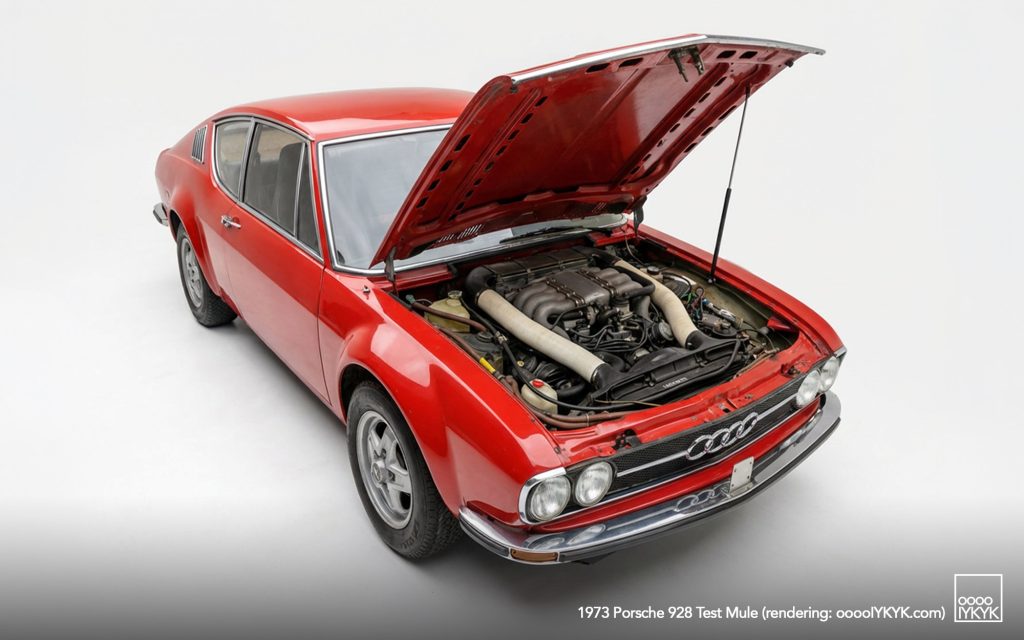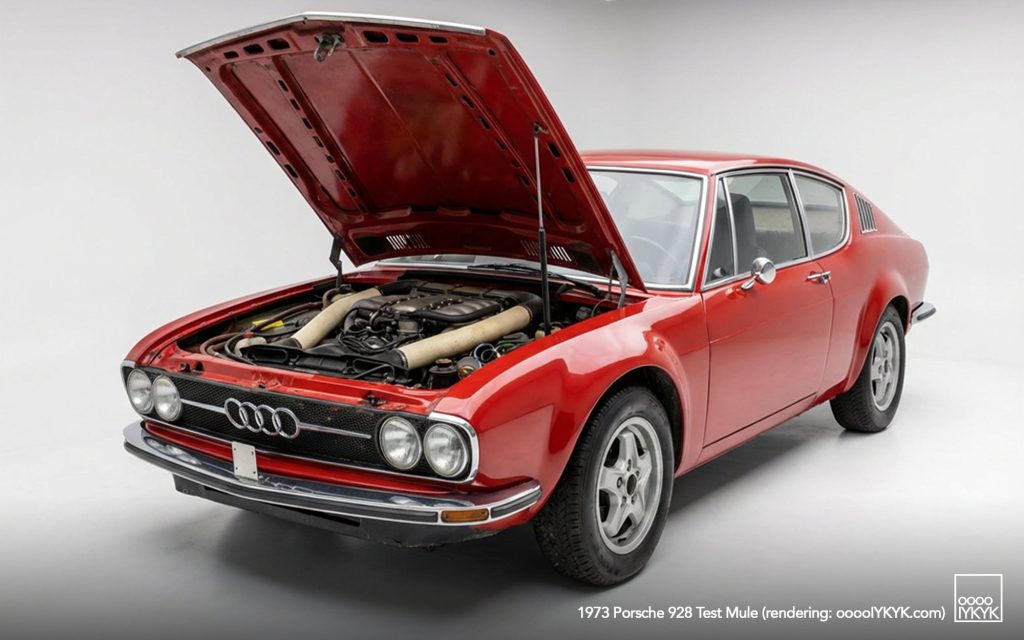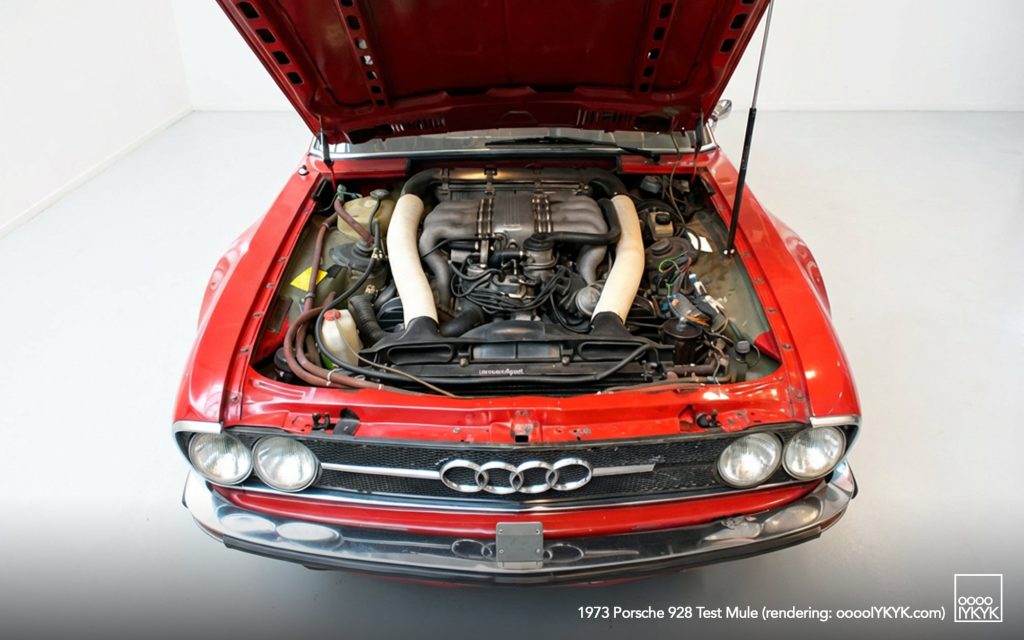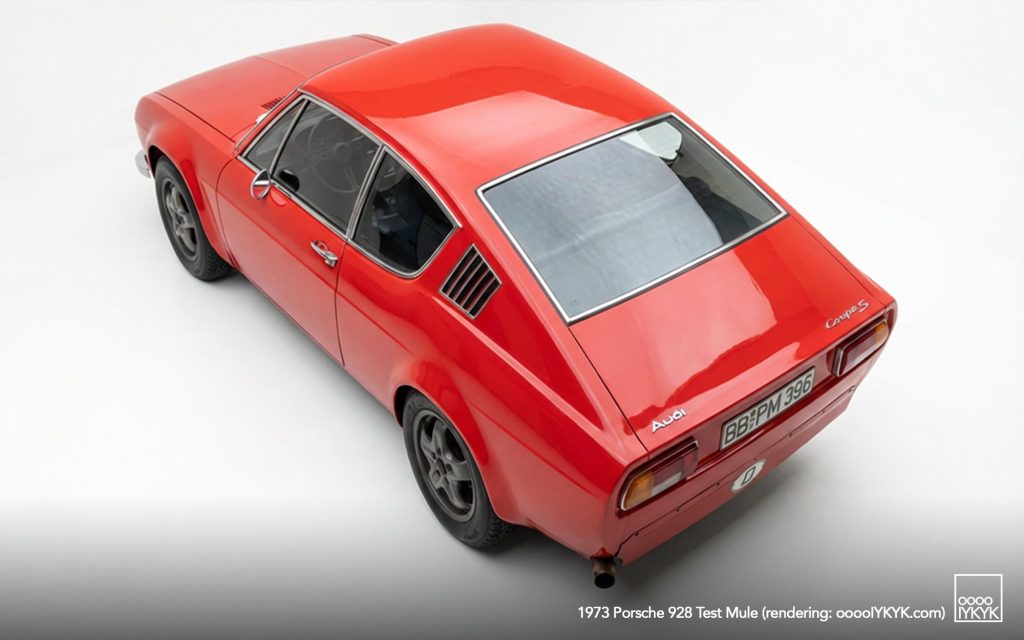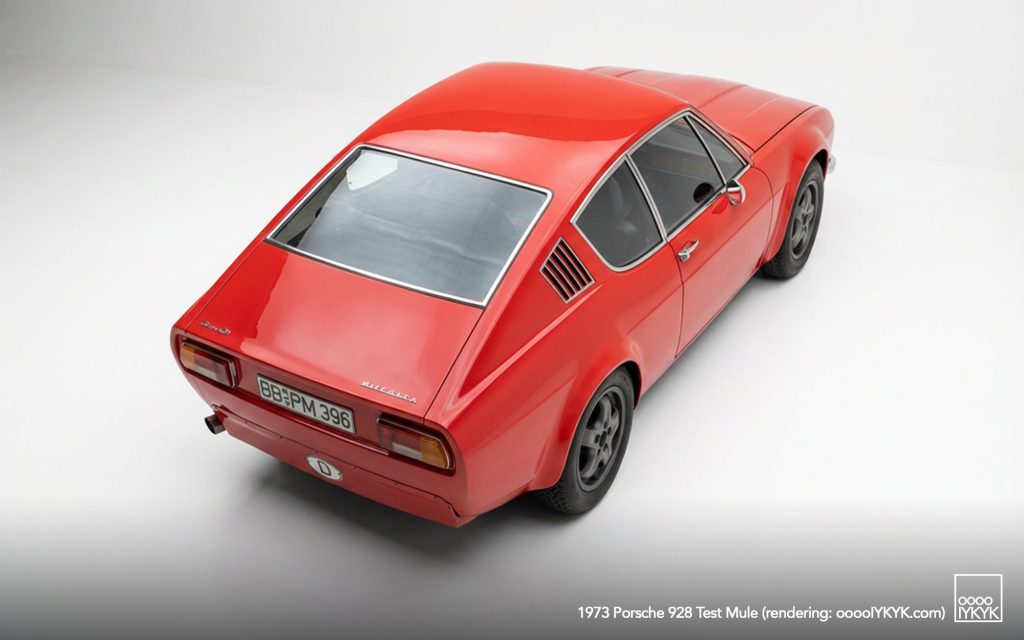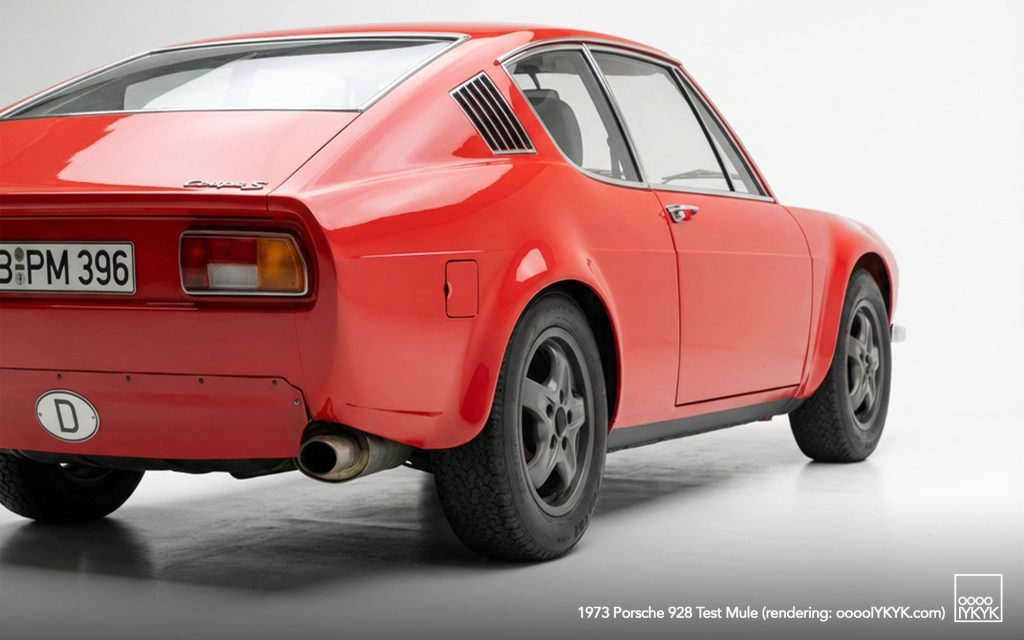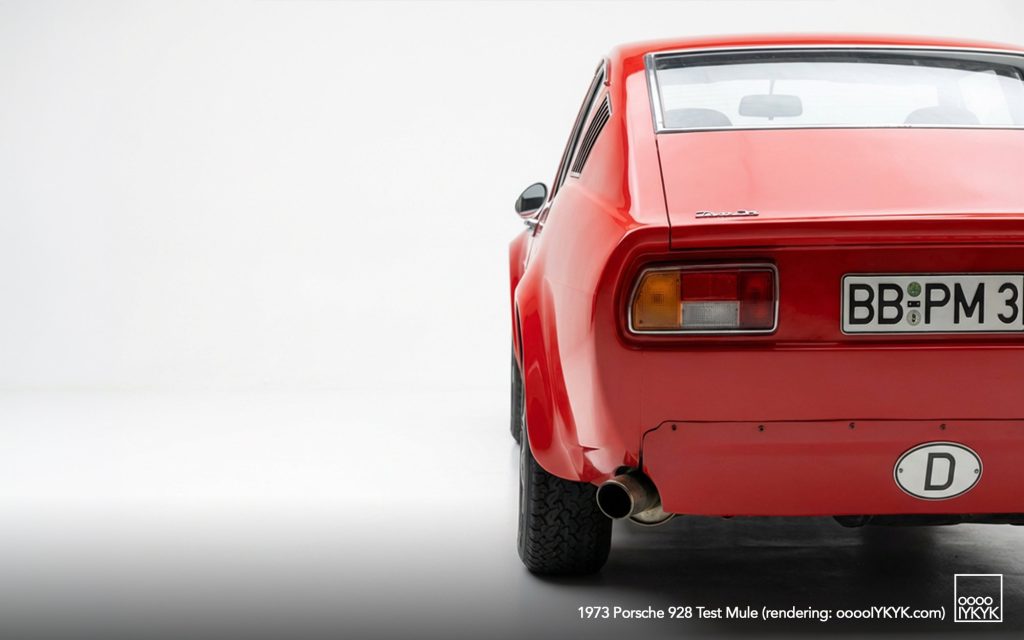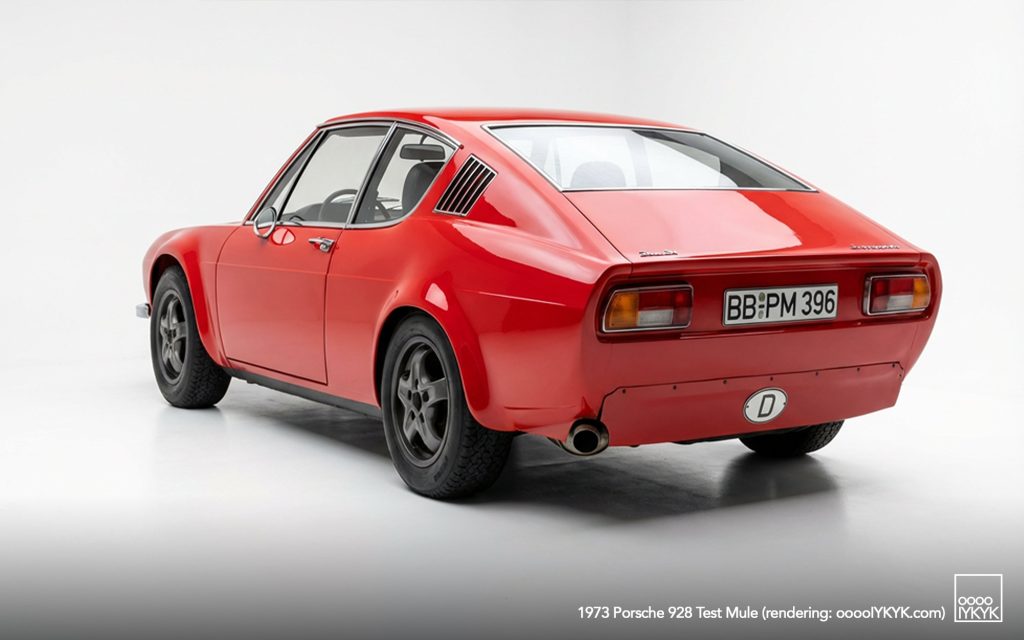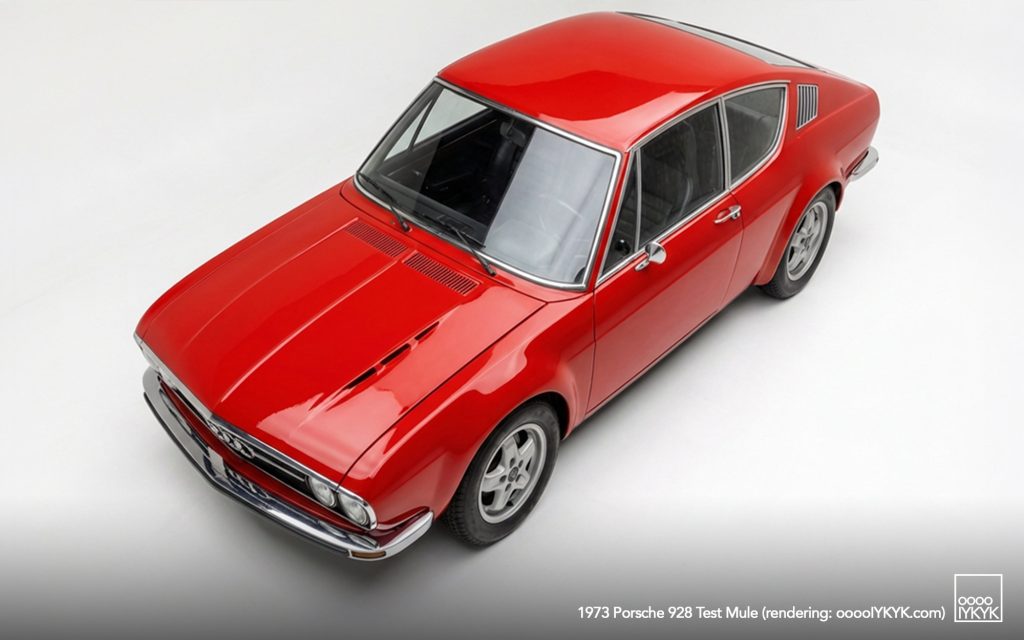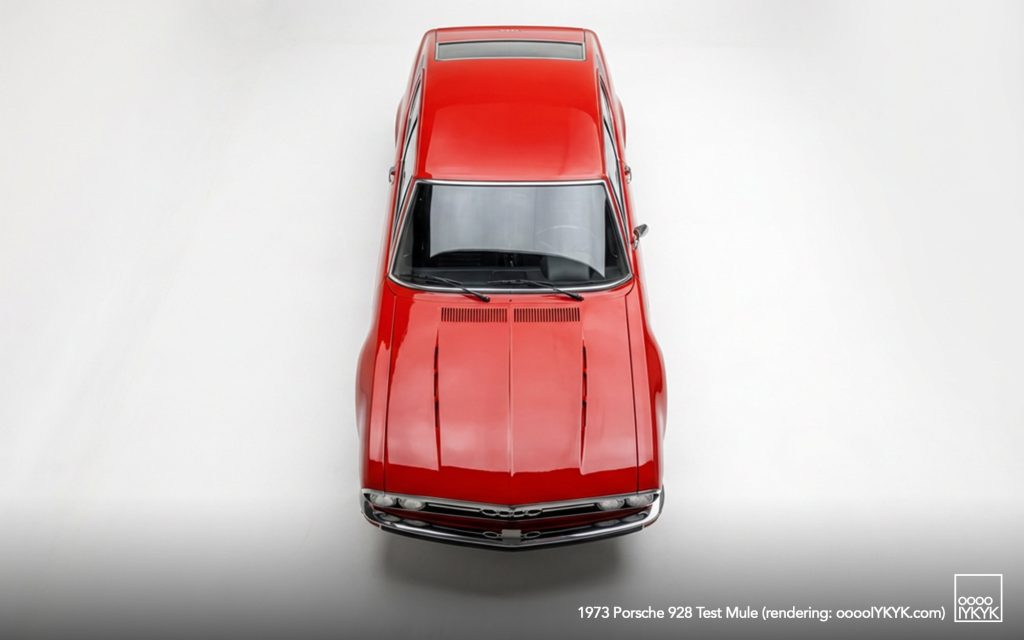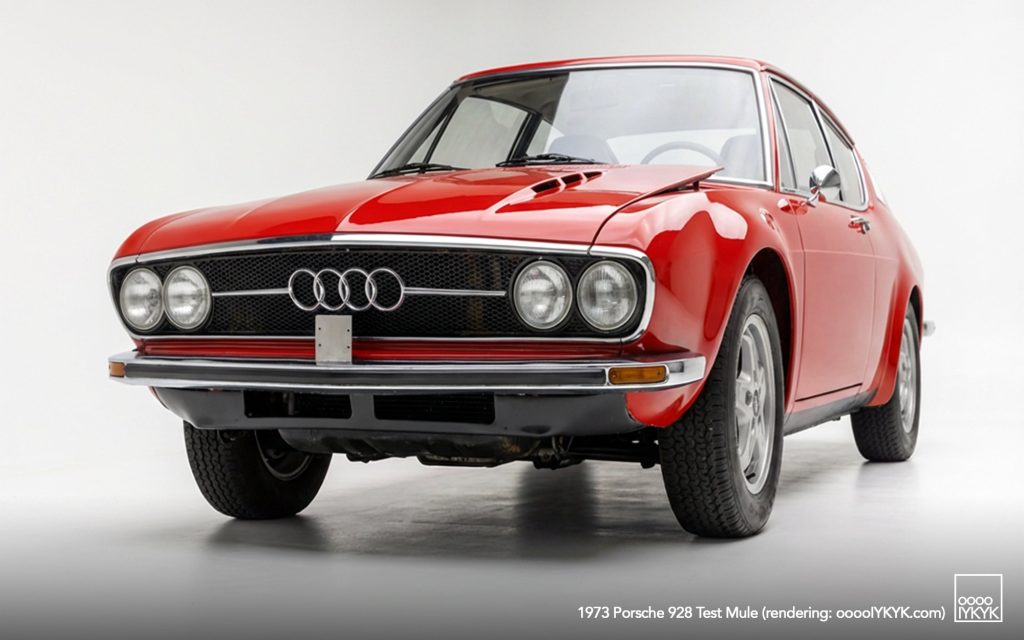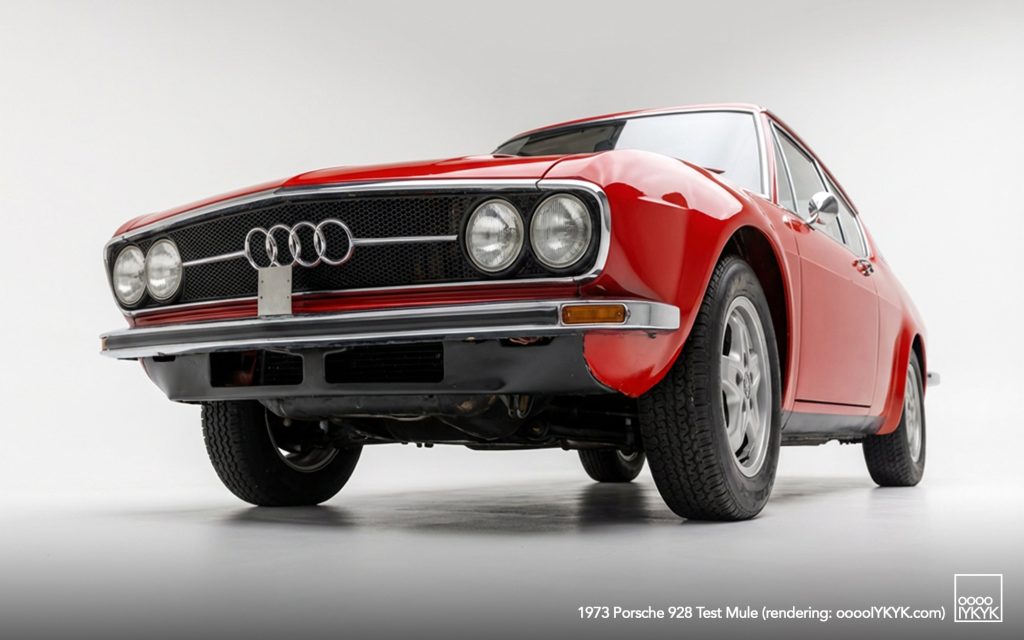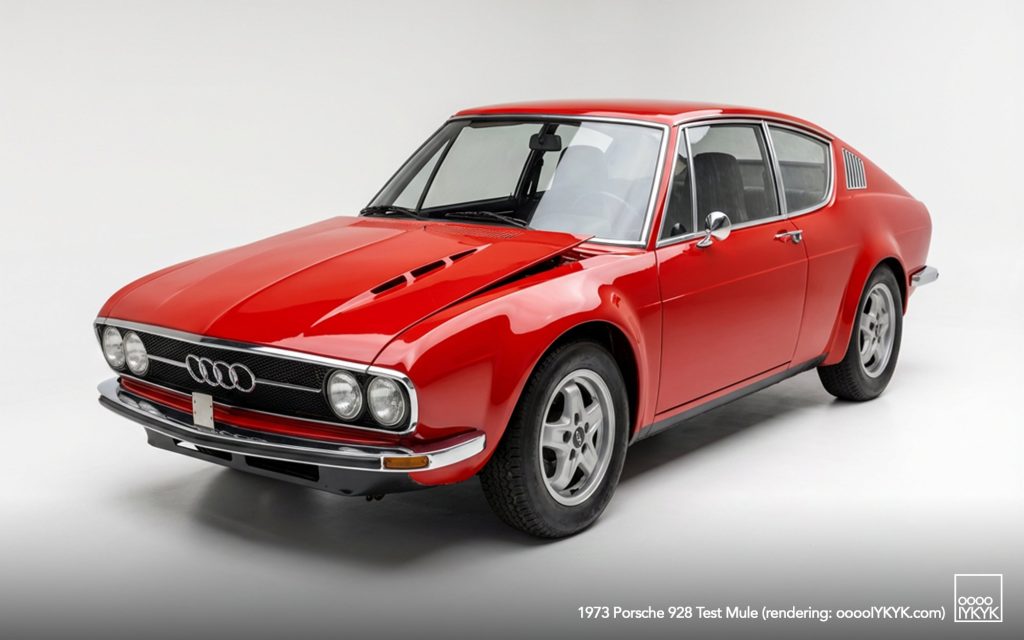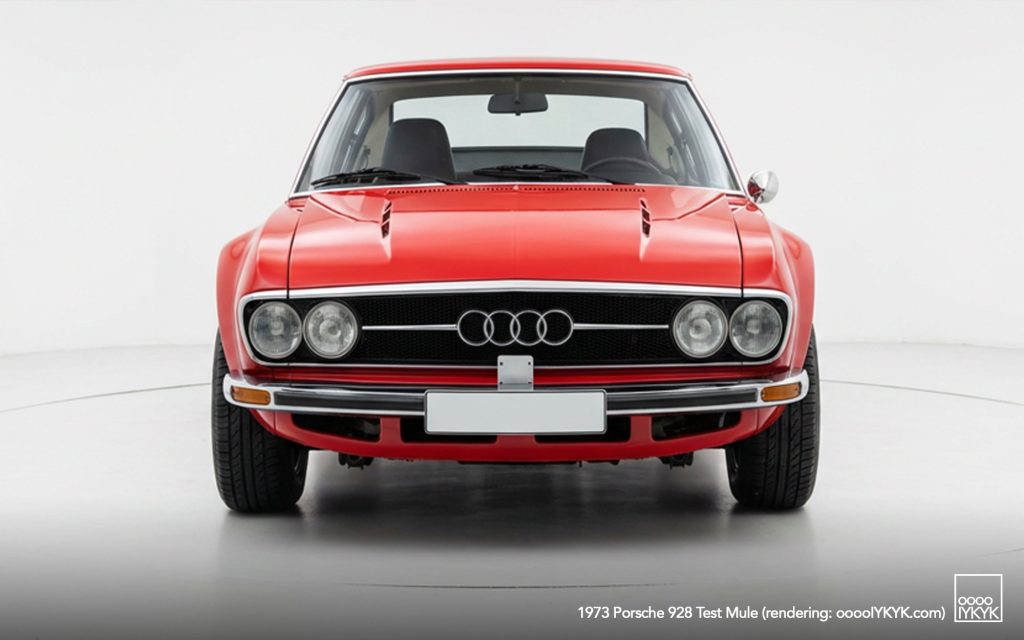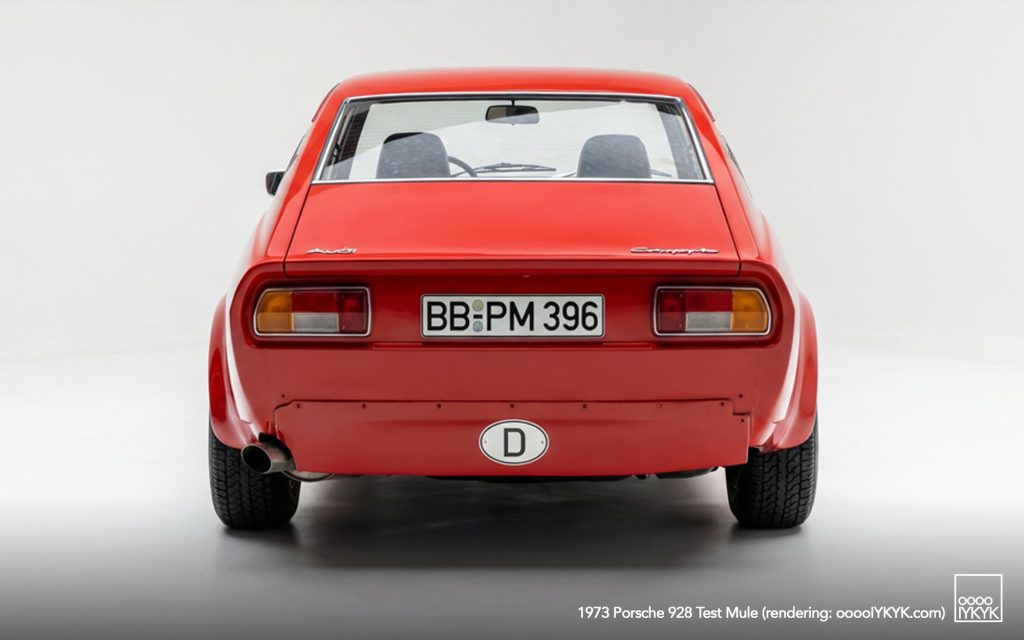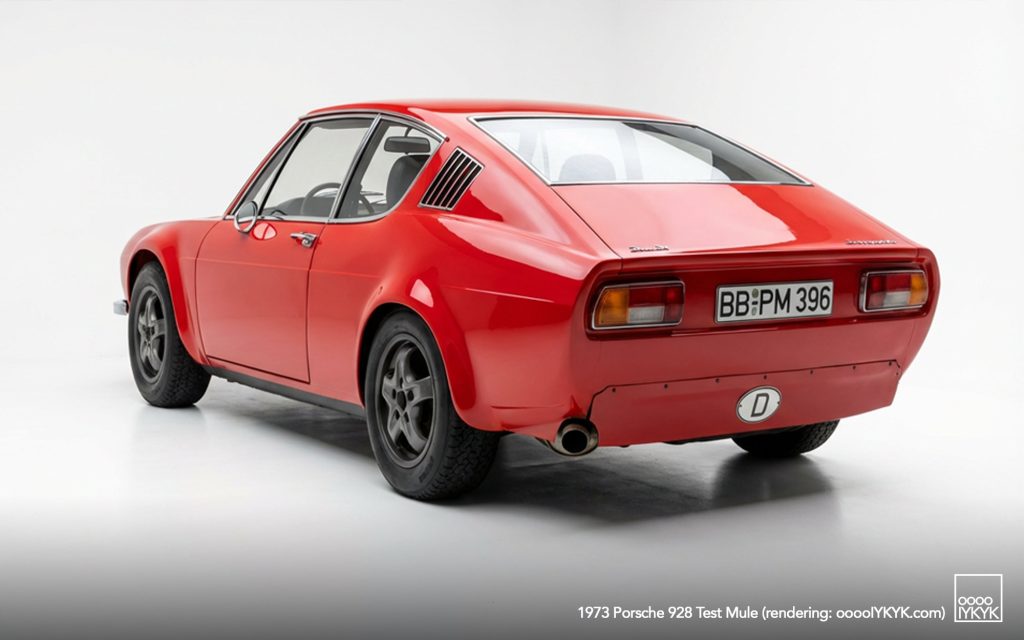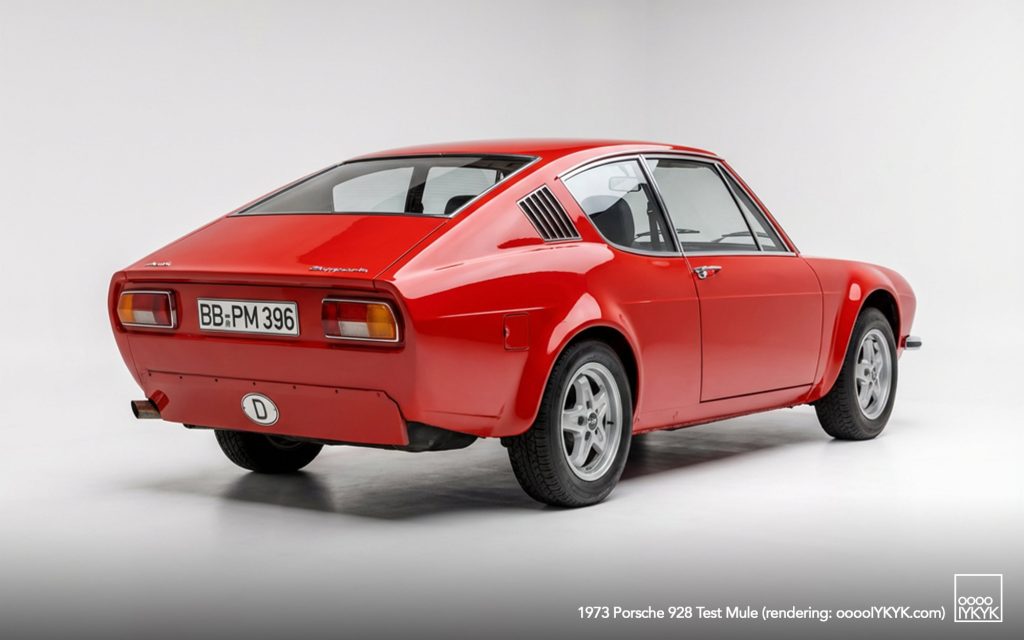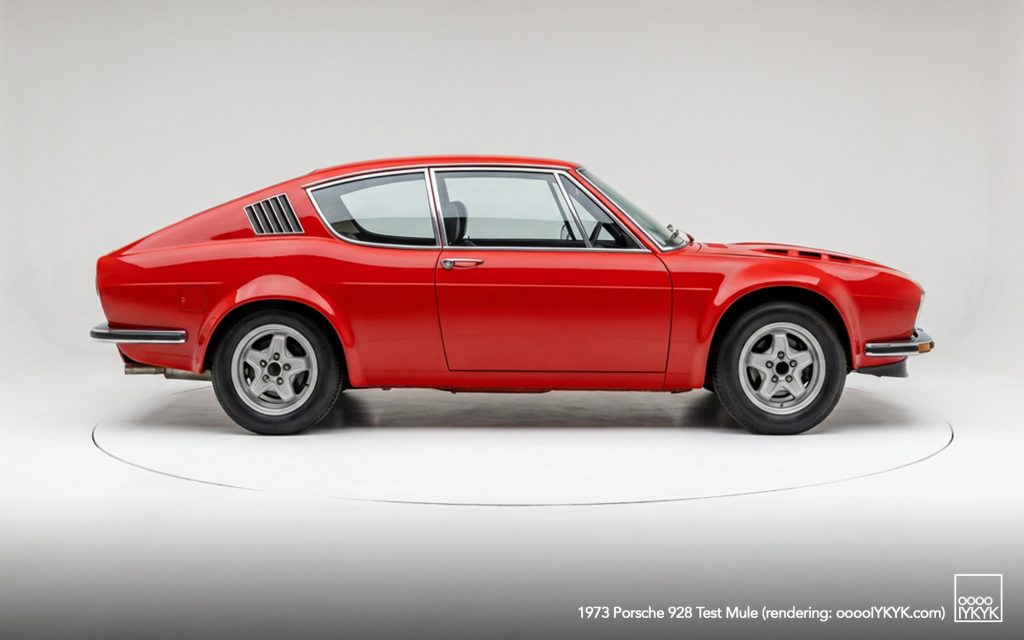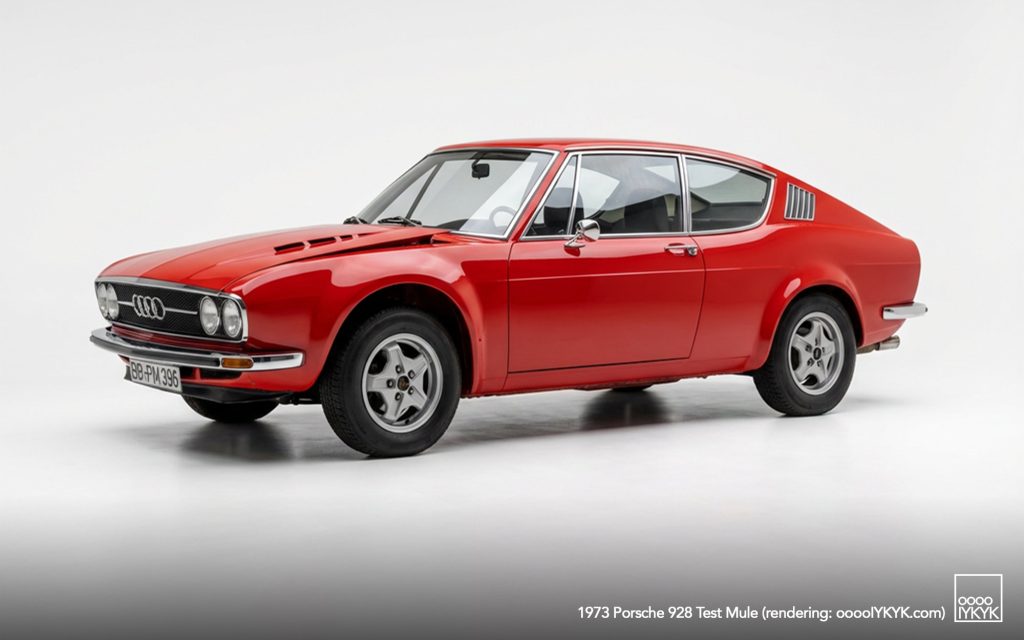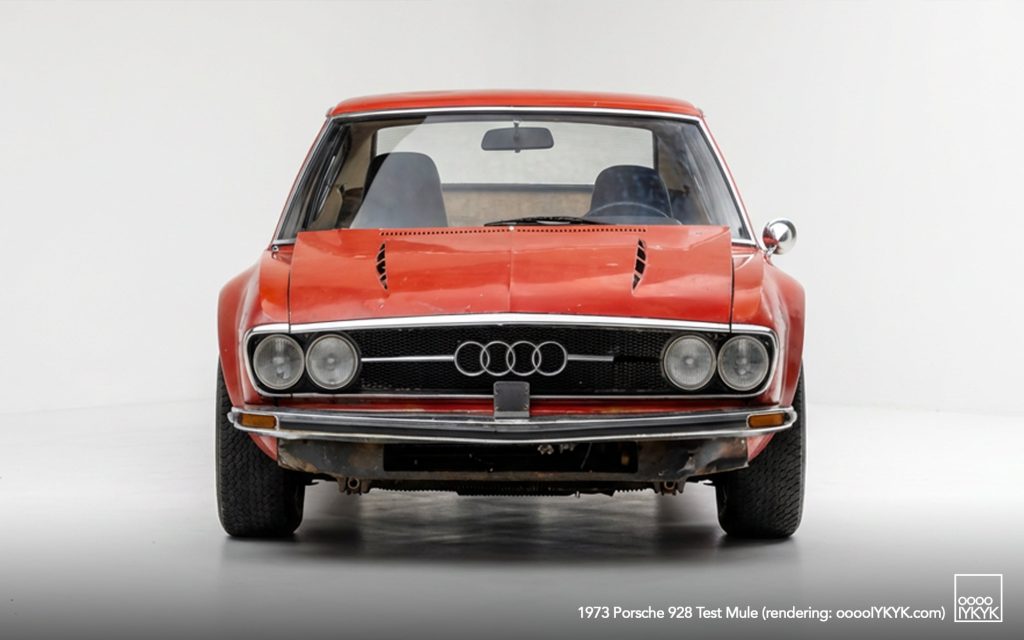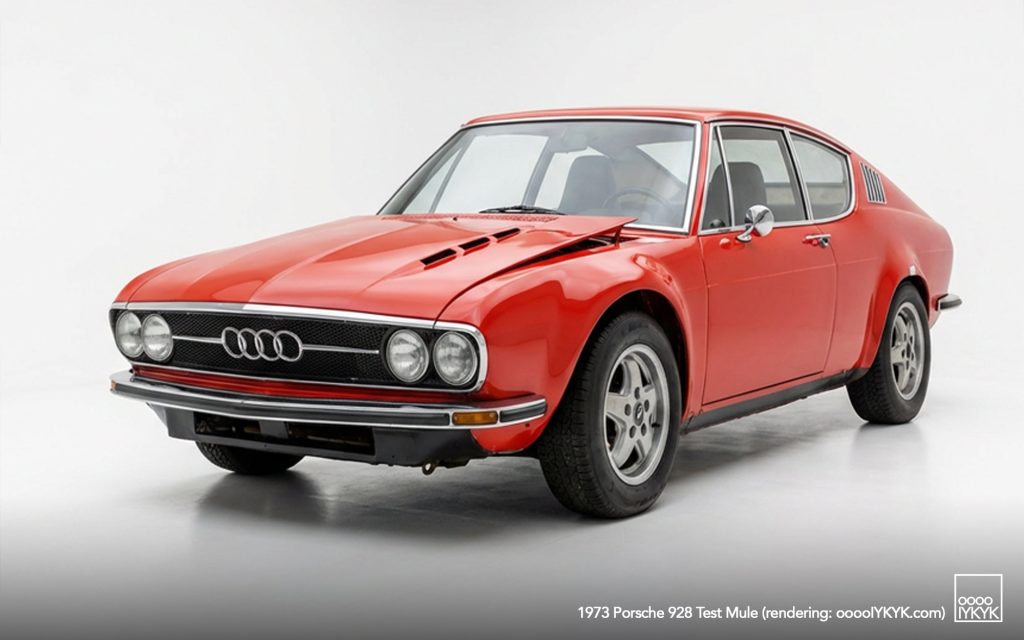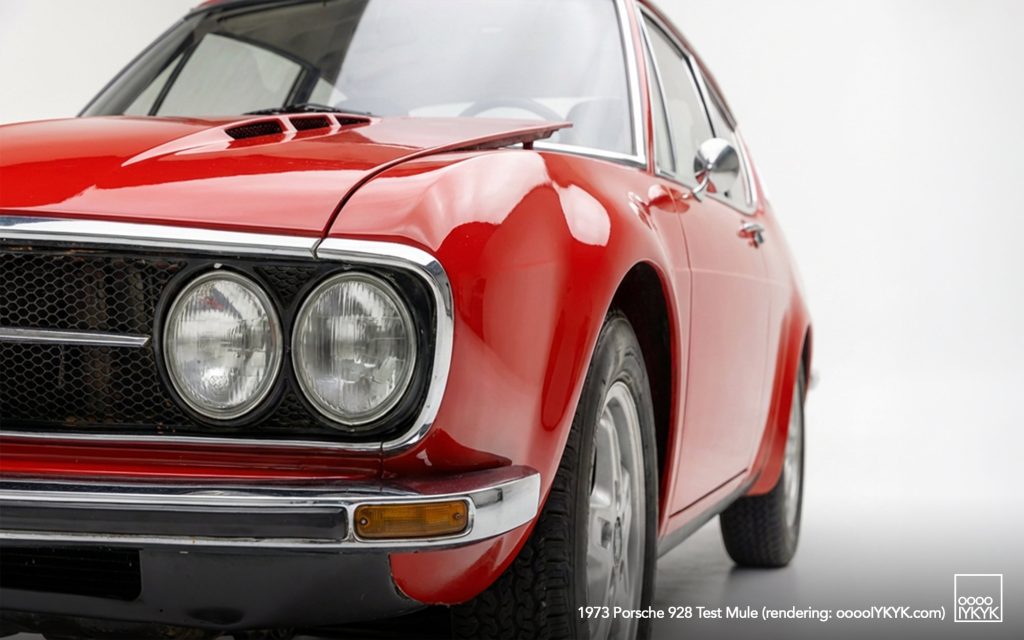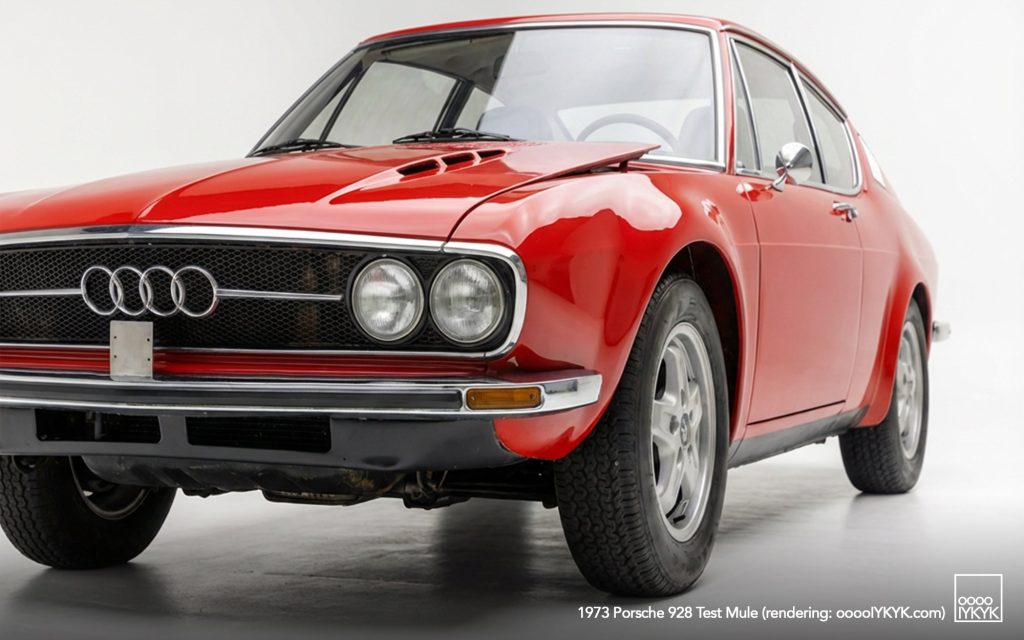
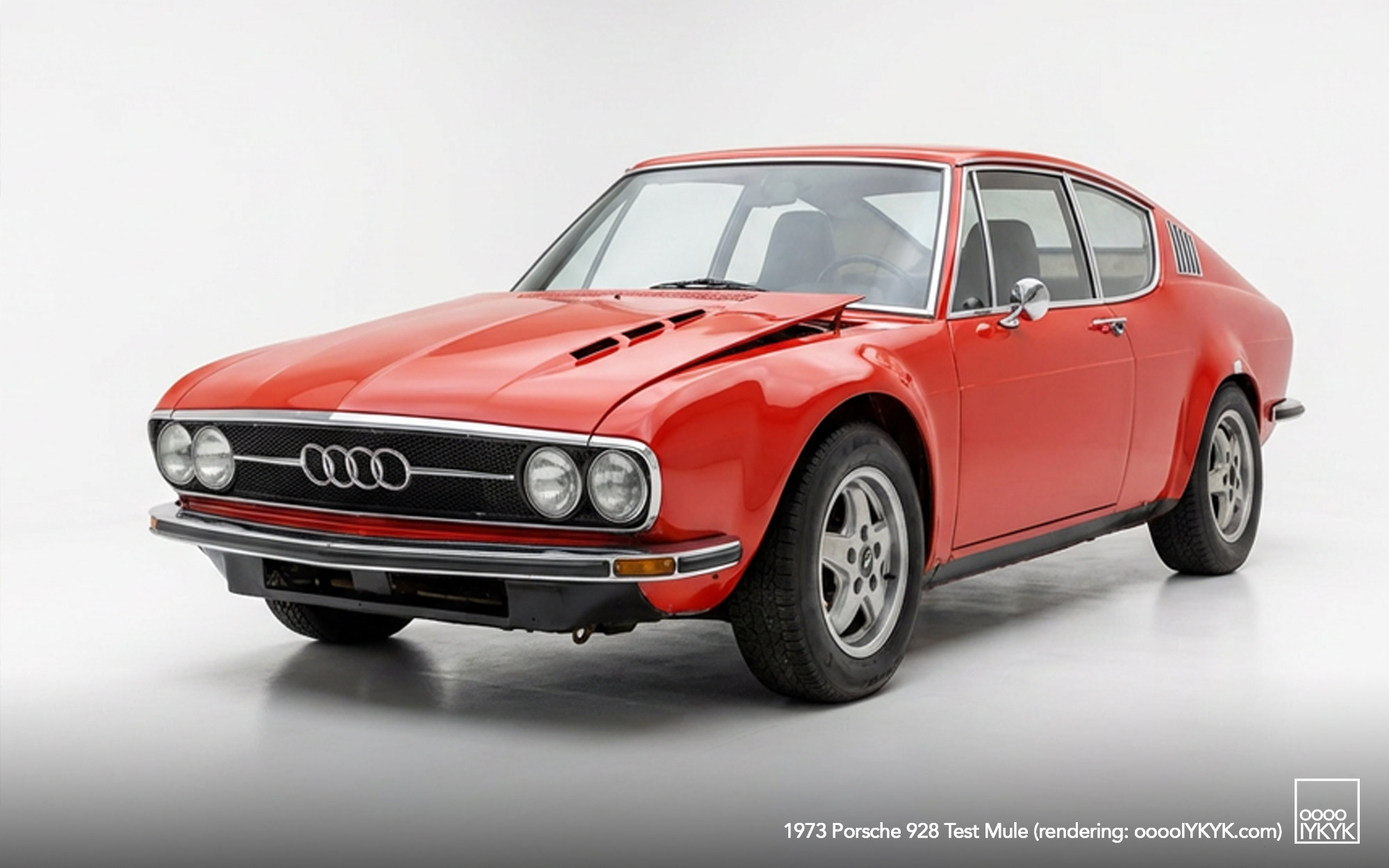

What: Porsche 928 Development Mule (Audi 100 Coupé S Body)
Model Family: Porsche development prototypes, Audi 100
Model / Generation Code(s): V3, V4, V5 test vehicles (C1 Body)
Production: Experimental development mules
Year: 1973, 1974, 1975
Debuted: Internal Porsche testing program (not publicly revealed)
Number Produced: Approximately 3 Audi-bodied prototypes
Assembly: Porsche Engineering, Weissach, West Germany
Class: Experimental drivetrain and chassis test mule
Body style: 2-door coupe (Audi 100 Coupé S body shell, modified)
Layout: Front-engine, rear transaxle, rear-wheel drive
Base model: Audi 100 Coupé S (C1)
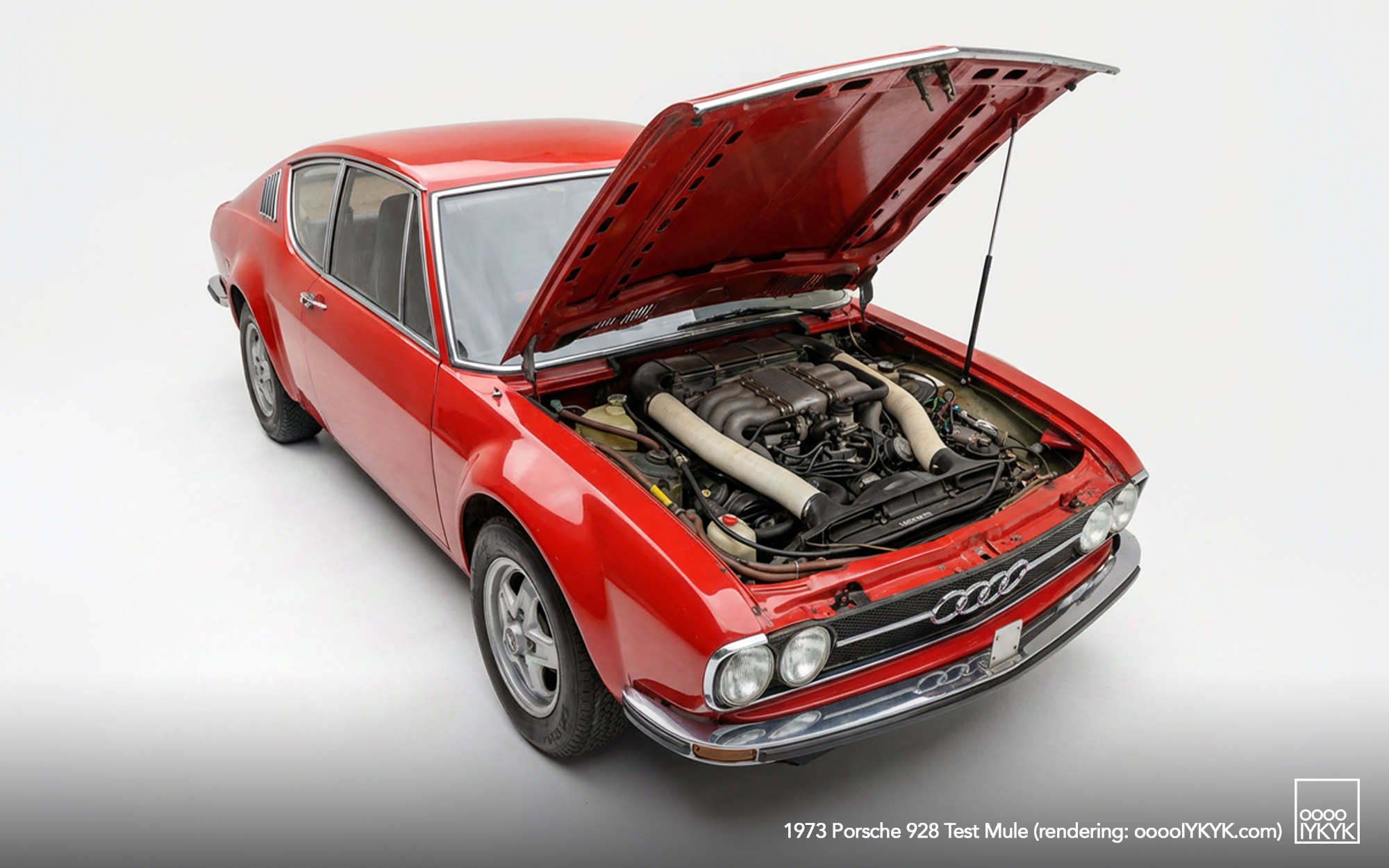
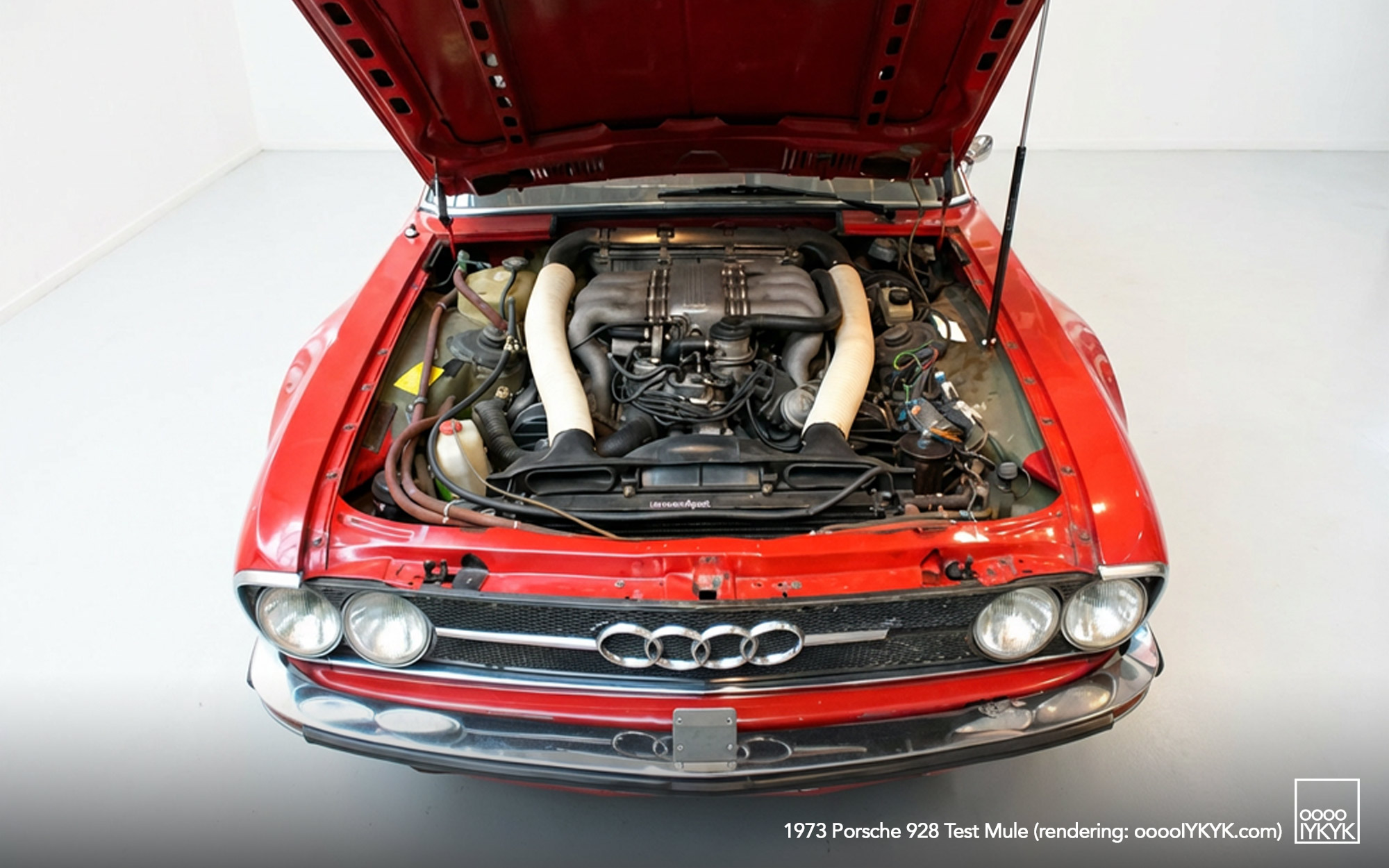
Engine: Porsche V8 development engines (4.5–5.0 liters)
Power output: Approximately 240–350 hp depending on configuration
RELATED
Concept / Prototype Cars: Porsche 928 K-series and W-series prototypes, Porsche “Munga” chassis mule
Road Cars: Audi 100 Coupé S (C1), Porsche 928
Race Cars: Porsche 908/3 (gearbox used in Munga mule)
BACKGROUND
In the early 1970s Porsche began work on what would become one of the most radical departures in its history: the Porsche 928. Unlike the company’s traditional rear-engined sports cars such as the 911, the new model would be a front-engined grand touring car powered by a V8 and paired with a rear-mounted transaxle for balanced weight distribution.
Because Porsche had never previously built a car with this configuration, engineers required a series of experimental development vehicles a.k.a. test mules. These vehicles allowed the company to evaluate engine, drivetrain and chassis architecture under real driving conditions before the final body design of the 928 was completed.
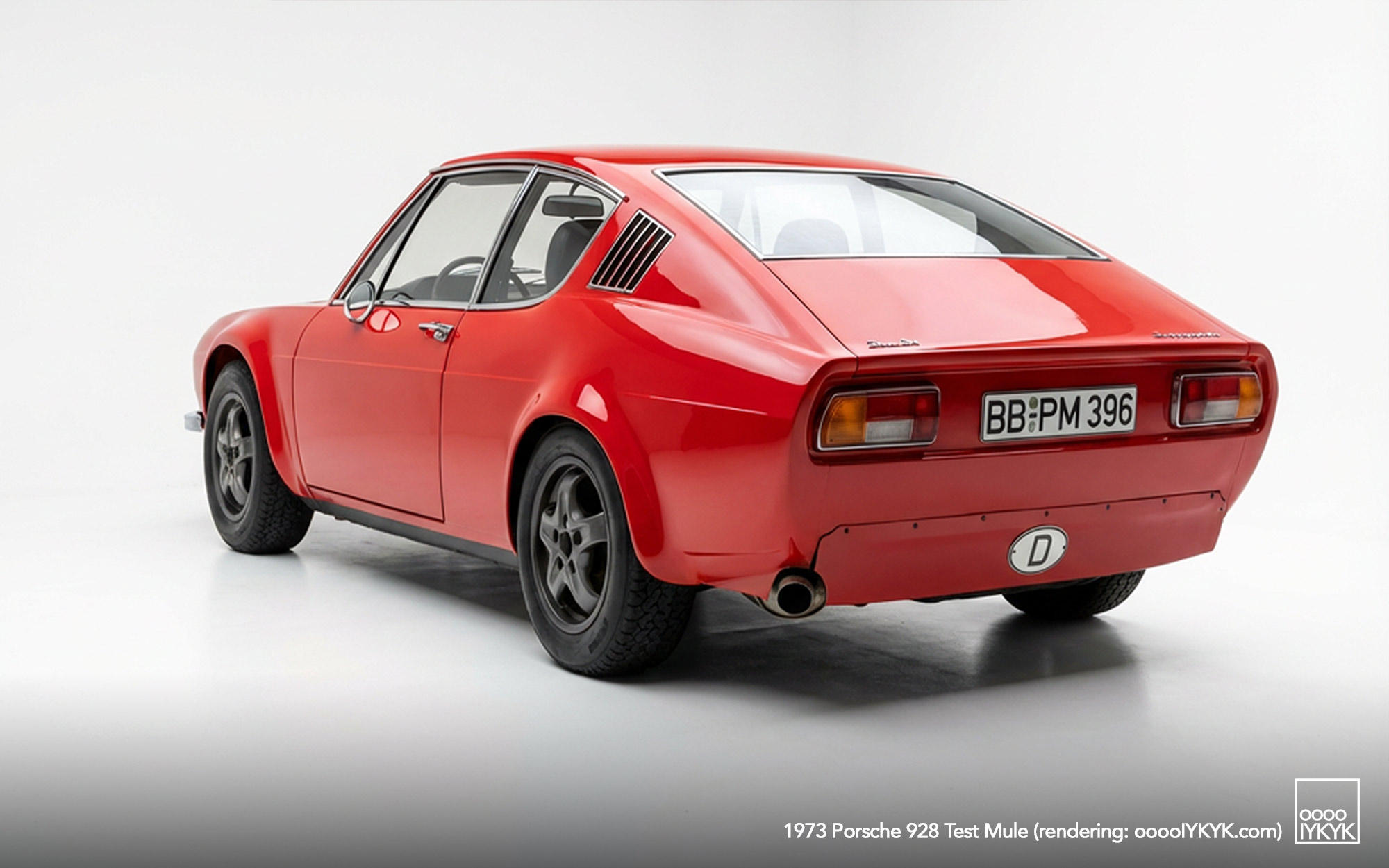
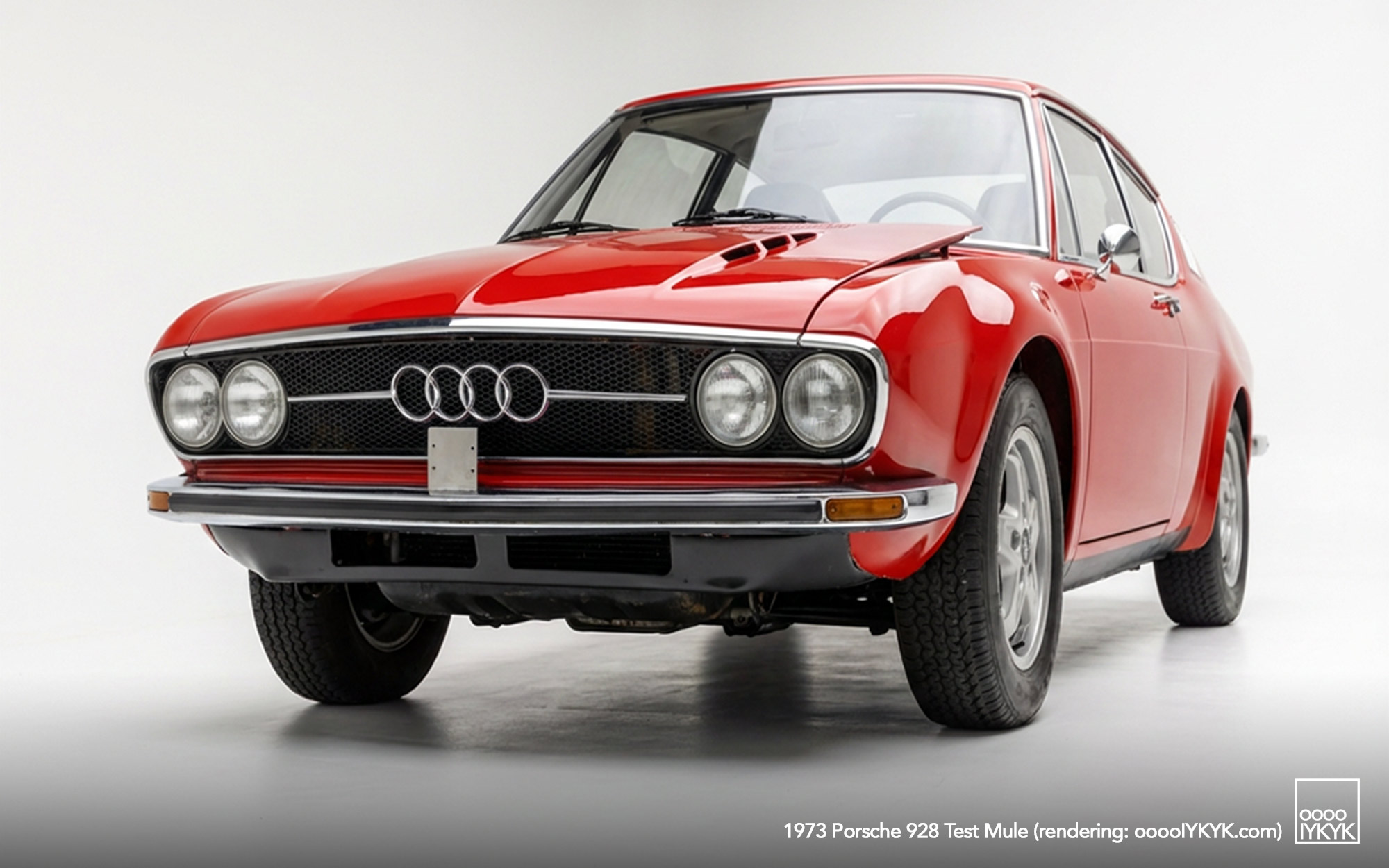
Among the most unusual of these development vehicles were several prototypes built using the body shell of the Audi 100 Coupé S. The elegant fastback coupe from Audi’s first-generation C1 platform provided a convenient disguise for Porsche’s experimental drivetrain and suspension systems. Alternatively, the Porsche engine and drivetrain in the Audi 100 Coupé S (C1) gave that car the muscle car presence gave the fastback body really seemed to hark.
DEVELOPMENT PROGRAM
The Audi-bodied prototypes were part of a larger early development sequence for the 928 that began around 1972. Porsche initially used a Mercedes-Benz SL as a drivetrain test vehicle, followed by an Opel Admiral sedan that was fitted with experimental chassis components. Only later did engineers turn to the Audi 100 Coupé S as a suitable platform for further testing.
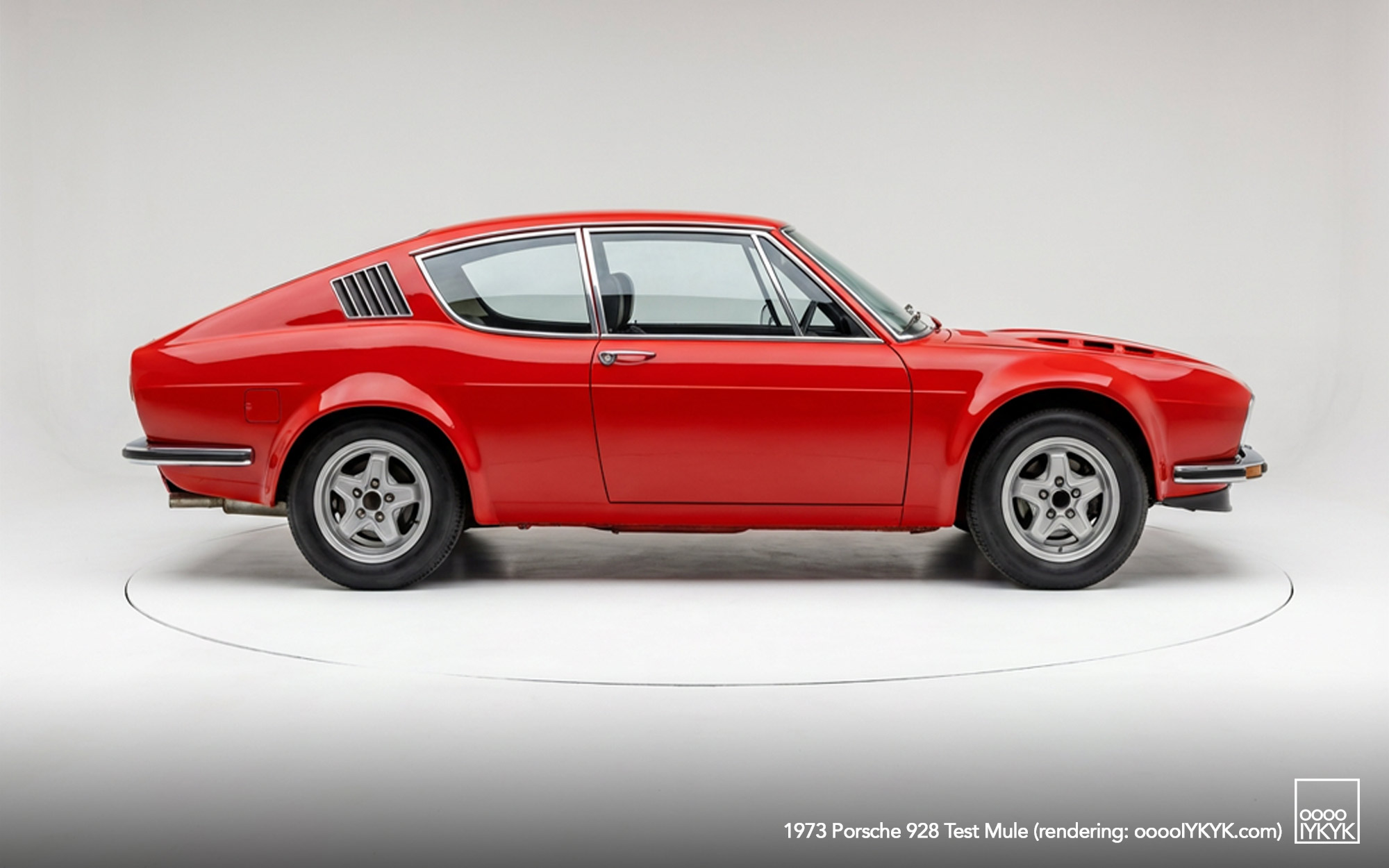
The first Audi-based mule, known internally as V3, entered testing in September 1973. Engineers modified the Audi body extensively to accommodate the wider track and new drivetrain layout of the developing 928. Wheel housings were enlarged, suspension mounting points were relocated and pronounced fender extensions were added to house wider wheels and tires.
The V3 vehicle was used to test the complete drivetrain unit of the early 928 development program. It also participated in demanding endurance tests, including two long-distance development runs across North Africa as well as a mountain testing program on Mont Ventoux in southern France. By early 1975 this prototype was reportedly converted to use an automatic transmission for additional drivetrain testing.
THE WIDENED PROTOTYPES
Two additional Audi-based prototypes followed the V3 test vehicle.
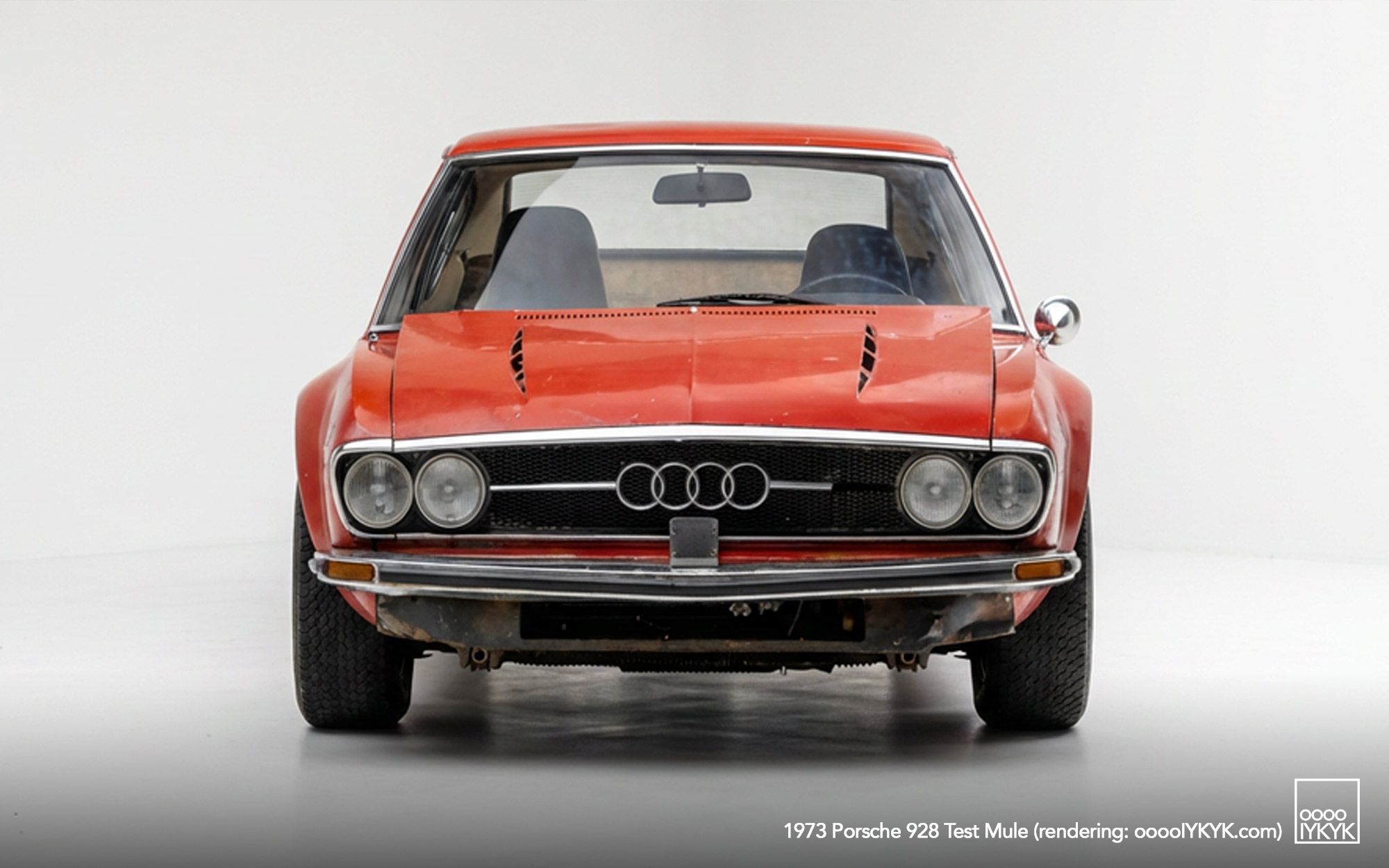
The V4 prototype represented a more advanced development mule. Instead of simply adding wider fenders, Porsche engineers cut the Audi body shell longitudinally and widened the entire car by approximately 4.3 inches. Beneath the modified bodywork was a chassis closely resembling the upcoming Porsche 928.
This vehicle reportedly featured a five-liter Porsche V8 with Bosch K-Jetronic fuel injection paired with a five-speed rear transaxle. Testing began around July 1974 and focused on evaluating the behavior of the new chassis architecture and drivetrain under real-world conditions.
The V4 prototype is believed to have survived for many years before reportedly being destroyed in a warehouse fire at Prototyp Hamburg in 2011.
The third Audi prototype, designated V5, was mechanically similar to V4 and served primarily as a chassis test vehicle. It was used toward the end of 1974 to evaluate the production rear axle design that would eventually appear in the 928, though the prototype reportedly lacked the later control link used in the Weissach rear suspension system.
BODY MODIFICATIONS
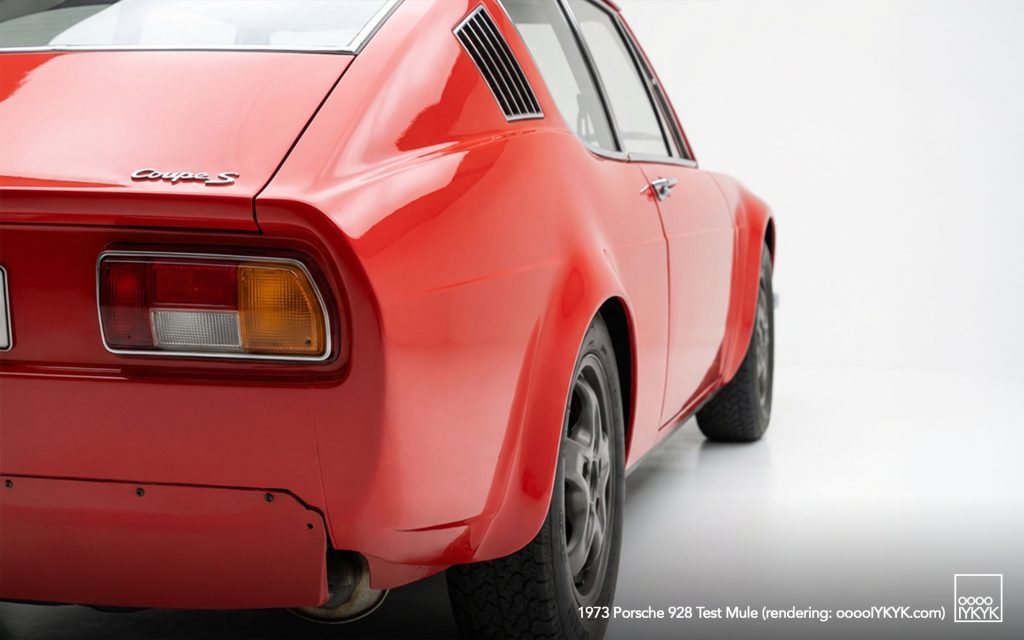
Although the vehicles retained the recognizable silhouette of the Audi 100 Coupé S, the body shells were heavily modified to accommodate the Porsche drivetrain and wider chassis.
Some prototypes used extremely wide bolt-on fender extensions to cover the wider track of the new suspension system. Others were structurally widened through major alterations to the body shell itself, requiring custom glass panels and significant structural reinforcement.
Compared with a standard Audi 100 Coupé S, the Porsche development cars appeared dramatically wider and more aggressive. The modifications allowed engineers to package the large V8 engine, wider suspension components and rear transaxle system beneath the relatively discreet Audi body.
The choice of the Audi coupe body also served a practical purpose. By disguising the drivetrain beneath an unrelated production car, Porsche engineers could conduct road testing without attracting the attention of journalists or rival manufacturers.
THE “MUNGA” CHASSIS MULE
Alongside the Audi-bodied prototypes, Porsche also constructed an unusual experimental vehicle known internally as “Munga.” The name referenced the Auto Union DKW Munga off-road vehicle used by the German military in the 1950s.
This prototype consisted of a bare chassis platform used primarily for engine testing. It reportedly featured a five-liter carbureted V8 paired with a racing gearbox derived from the Porsche 908/3 prototype racer. The lightweight and open structure made the vehicle suitable for drivetrain experimentation on the grounds around Weissach.
TESTING AND DEVELOPMENT
The various development mules used during the early 928 program accumulated enormous mileage during testing. Combined testing of mules and later dedicated prototypes totaled roughly 600,000 miles of real-world driving, with a similar distance achieved through accelerated endurance testing.
These tests took place across a wide range of environments including high-speed proving grounds, mountain roads and desert conditions. Such testing helped engineers refine the unusual front-engine transaxle layout that would ultimately define the Porsche 928 when it debuted at the Geneva Motor Show in 1977.
RELEVANCE TO AUDI
Although the prototypes were created solely for Porsche’s development program, they represent an unusual early intersection between Audi and Porsche engineering.
The Audi 100 Coupé S body shell served as a discreet outer skin for a radically different drivetrain architecture, demonstrating how the elegant fastback shape could conceal the much larger mechanical components of a high-performance grand touring car.
In the 1970s, Porsche and Audi were partnered together for distribution. “Porsche + Audi” branding was used to associate a then start-up Audi with the more established Porsche within the dealer network. Though the name appeared in sales literature, ads and even on a few racecars, none of that is known to be coordinated with or influenced by this project.
In later decades Audi and Porsche would become closely linked through the Volkswagen Group. Audi produced the Porsche 924 at its Neckarsulm facility beginning in the mid-1970s, while modern collaborations include shared vehicle platforms such as the Audi Q5 and Porsche Macan as well as the electric Audi e-tron GT and Porsche Taycan.
Seen in hindsight, the Audi-bodied 928 test mules represents an obscure, fascinating and early chapter in the shared technical history of the two brands.
SURVIVING VEHICLES
The exact number of surviving Audi-bodied prototypes remains uncertain. Some reports suggest that as many as two examples may remain in Porsche’s archival storage facilities, while others indicate that most of the vehicles were dismantled or destroyed after development concluded. One of the Audi-bodied cars is known to have been sold by Porsche to a prominent collector in Florida though its current whereabouts or fate are unknown.
Because the prototypes were never intended for public release and documentation of the test program was limited, much of their history remains pieced together from archival photographs, engineer recollections and later research into Porsche’s development archives. The images in this story were created using AI tools.
REFERENCES
PHOTO GALLERY