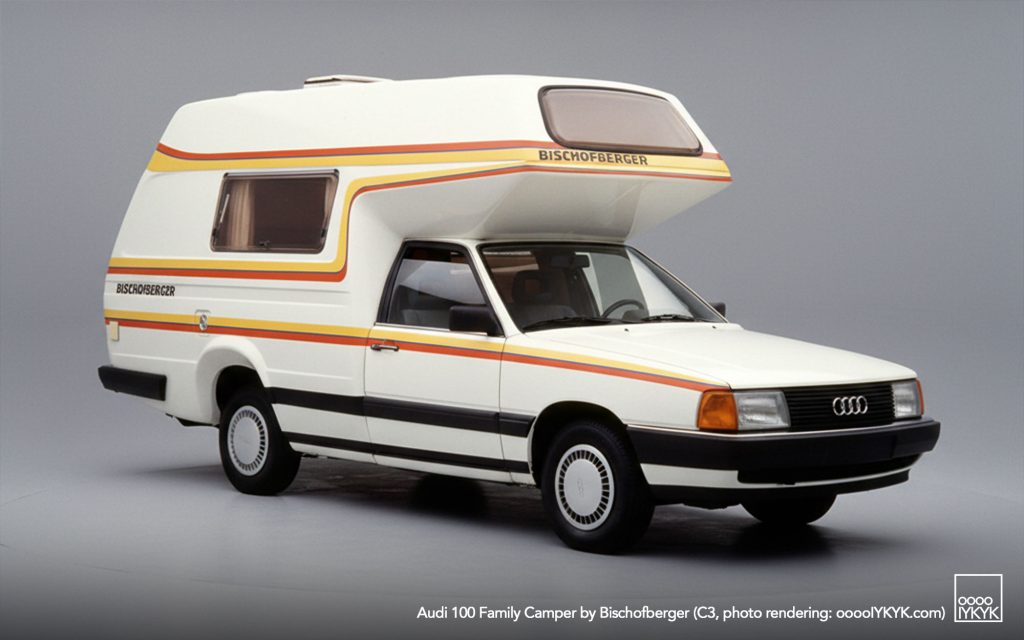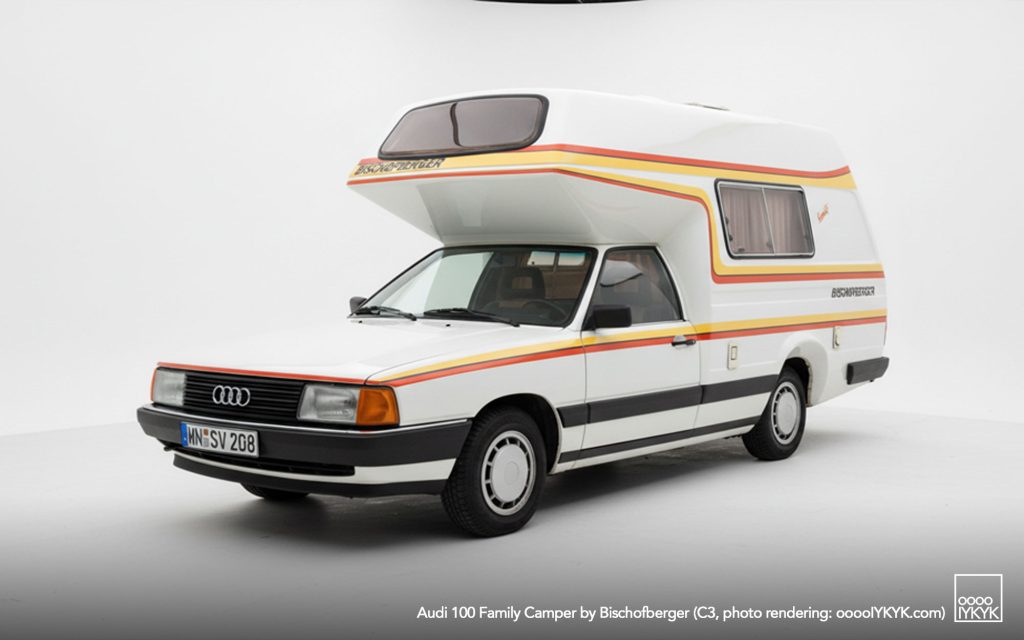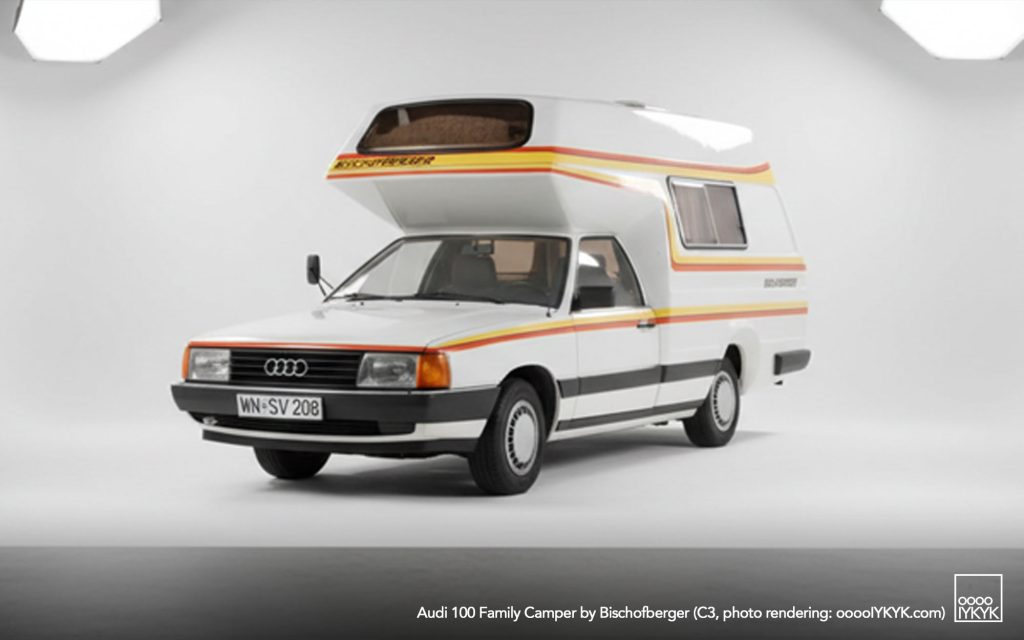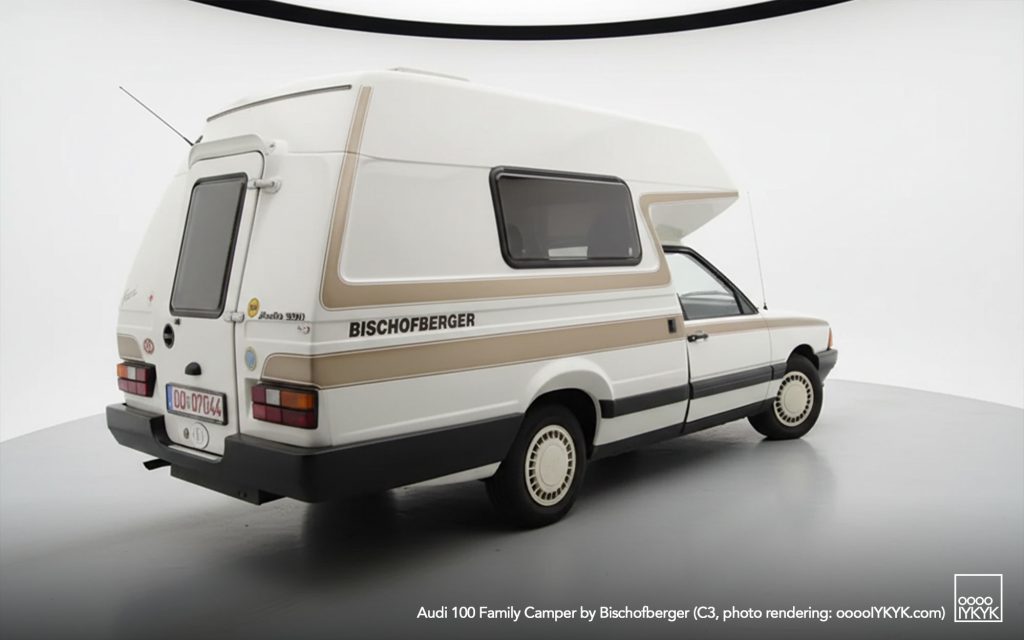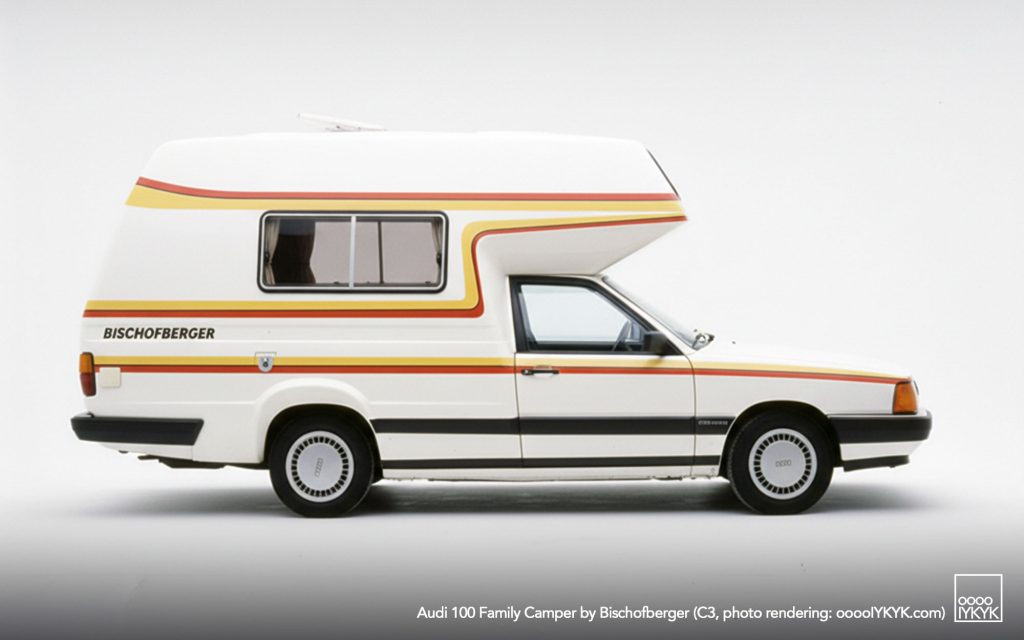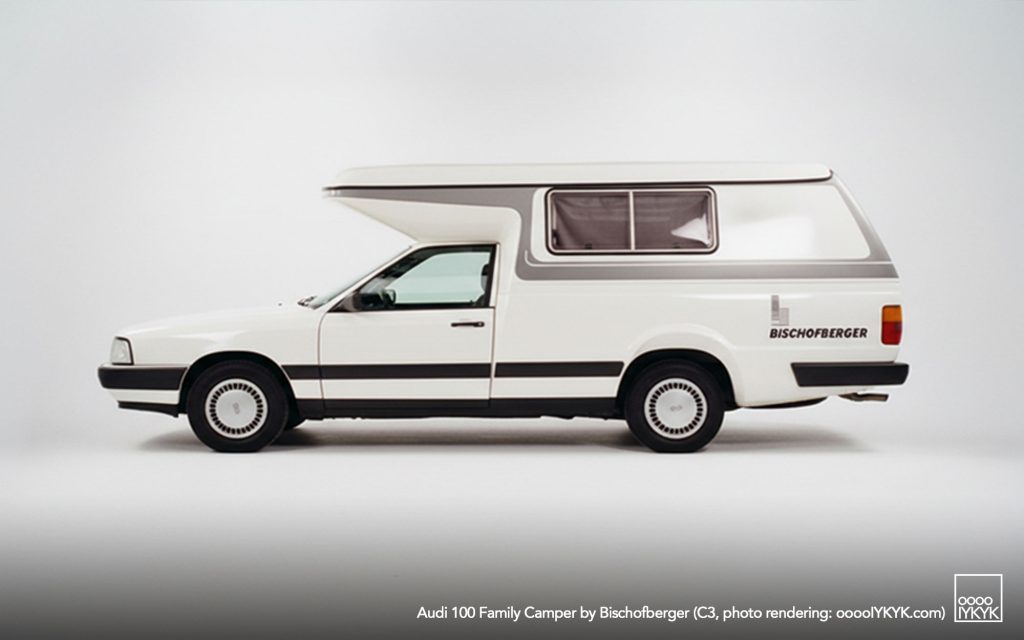

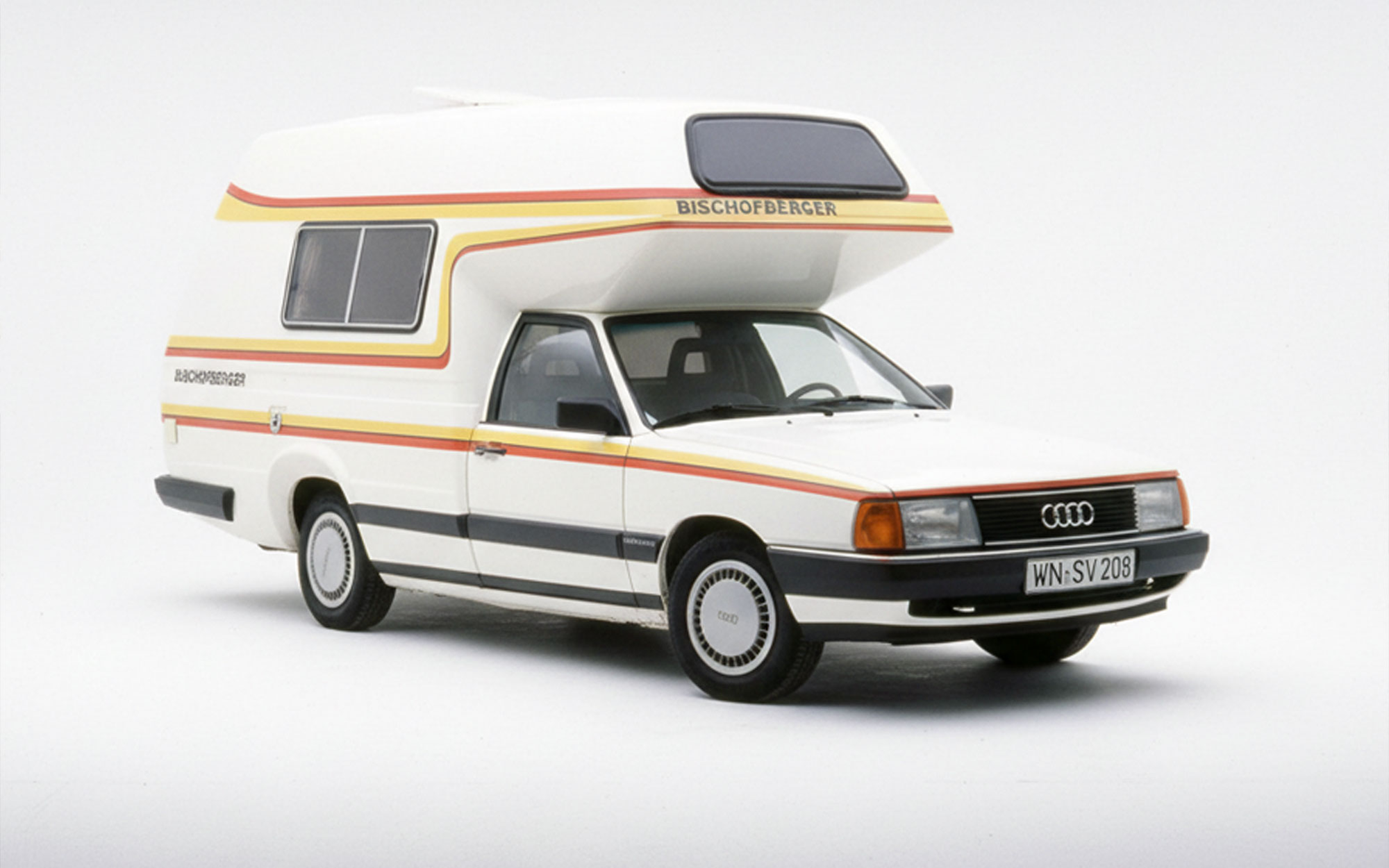

What: 100 Family by Bischofberger
Model Family: 100
Market / Zone: EU
Assembly Location: Backnang, Germany
Debut:
Year: 1983-1990
Number Produced: unknown
Model / Generation Code(s): Type 44
Chassis / Matrix: C3
SUMMARY
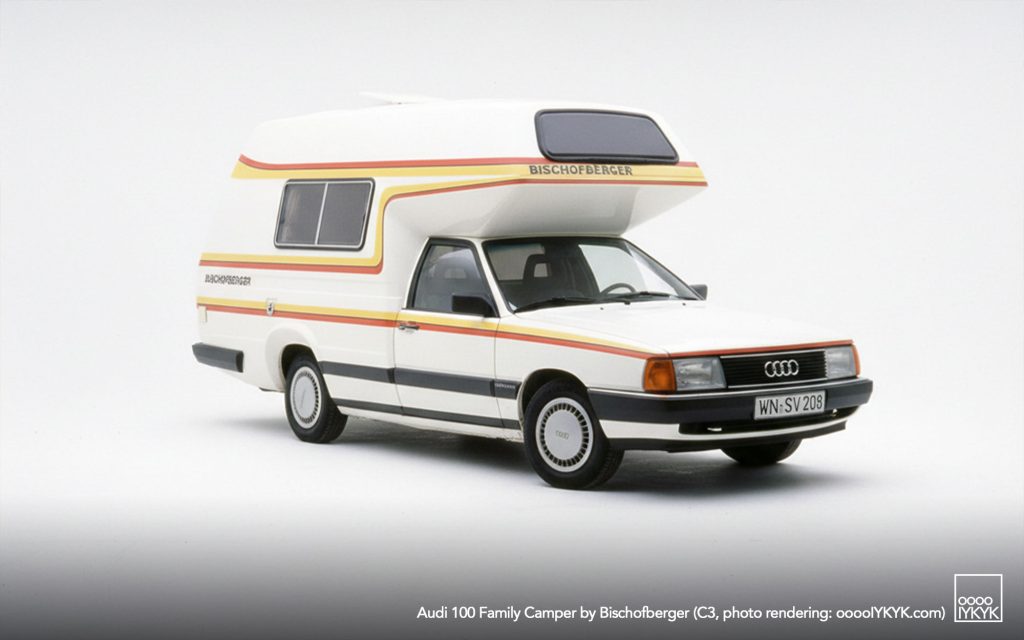
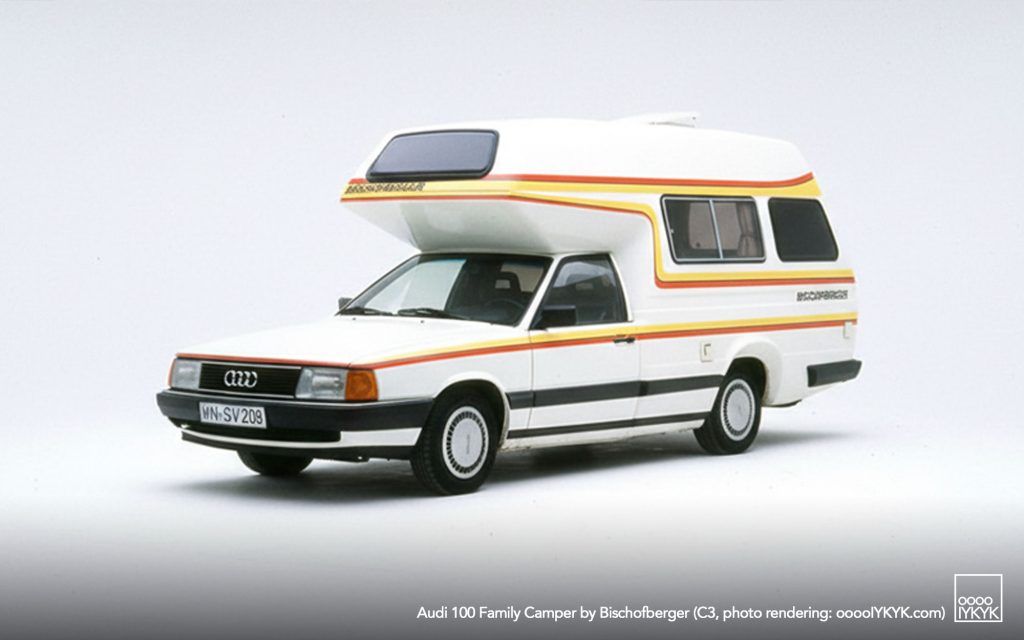
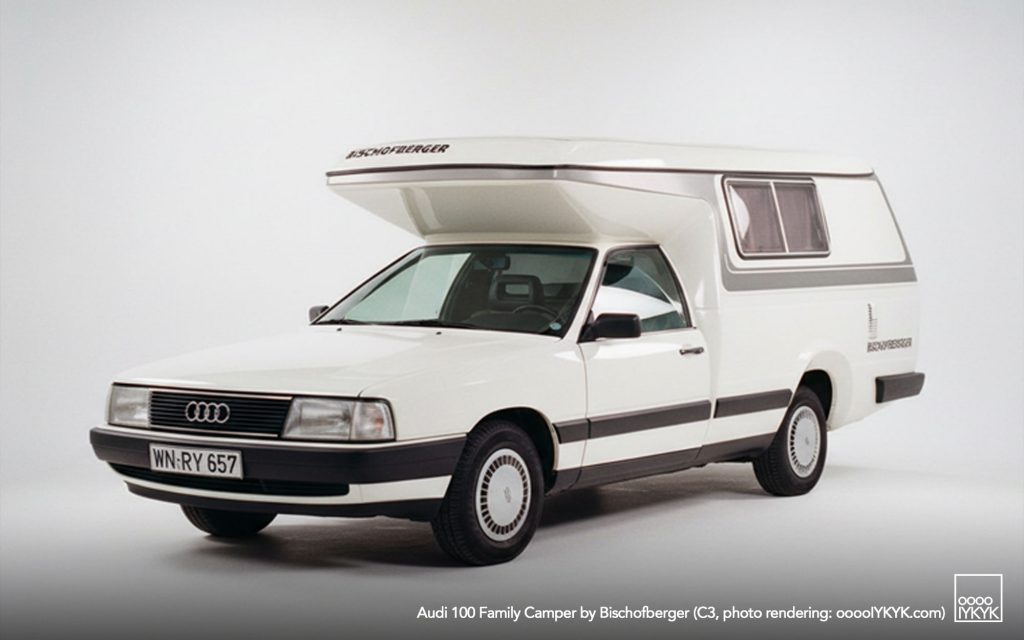
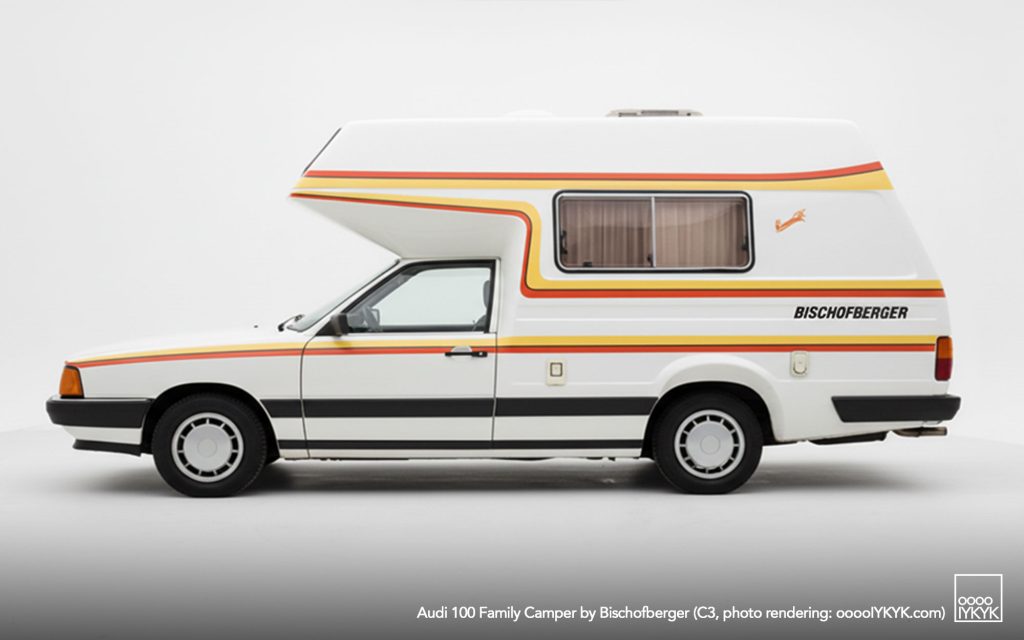
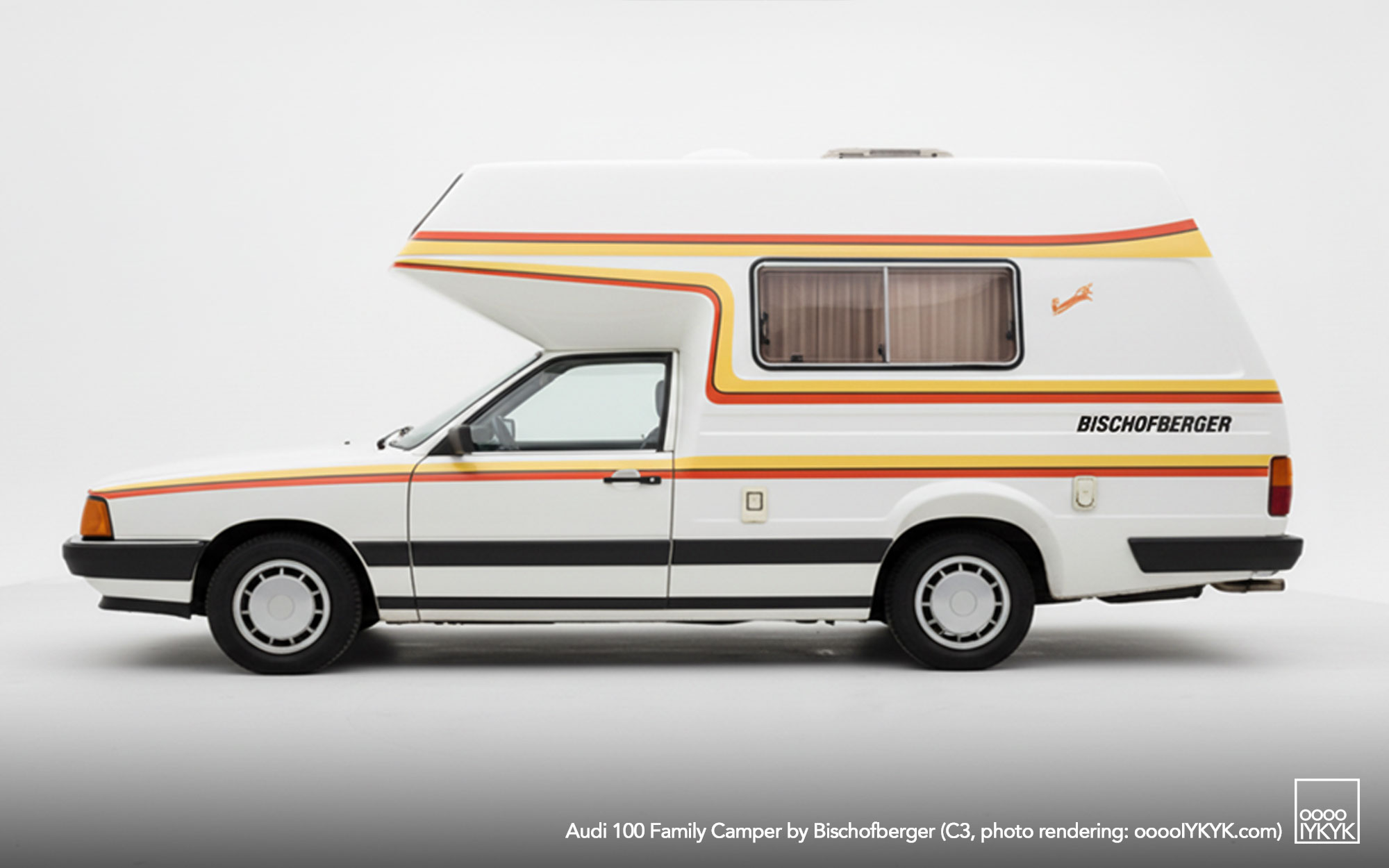
The Bischofberger Family (Audi 100 C3, Type 44) is a limited-production motorhome conversion based on the third-generation Audi 100, produced between approximately 1983 and 1986 by Bischofberger Motorcaravan GmbH & Co.. Building on the earlier Audi 100 C2-based Family, the C3 iteration refined the concept with improved aerodynamics, broader factory involvement, and the introduction of a fixed high-roof option. It became the most common and best-known version of the Bischofberger Family range.
BACKGROUND & DEVELOPMENT
Following the experimental and highly bespoke Audi 100 C2 Family conversions, Helmut Bischofberger transitioned the concept to the new Audi 100 C3 (Type 44), introduced in 1982. The C3’s lighter construction, improved rigidity, and class-leading aerodynamics made it a more suitable long-distance platform for a sedan-based camper.
Unlike the earlier C2 conversions, which were carried out entirely after delivery, some C3-based Family vehicles could be modified in close coordination with Audi, with conversion work reportedly performed directly at or in cooperation with the factory. This step simplified homologation and approval, particularly for the newly introduced fixed high-roof configuration.
By the mid-1980s, the Family had evolved from an engineering curiosity into a small-series, cataloged product, albeit one that remained expensive and exclusive.
DESIGN & CONSTRUCTION
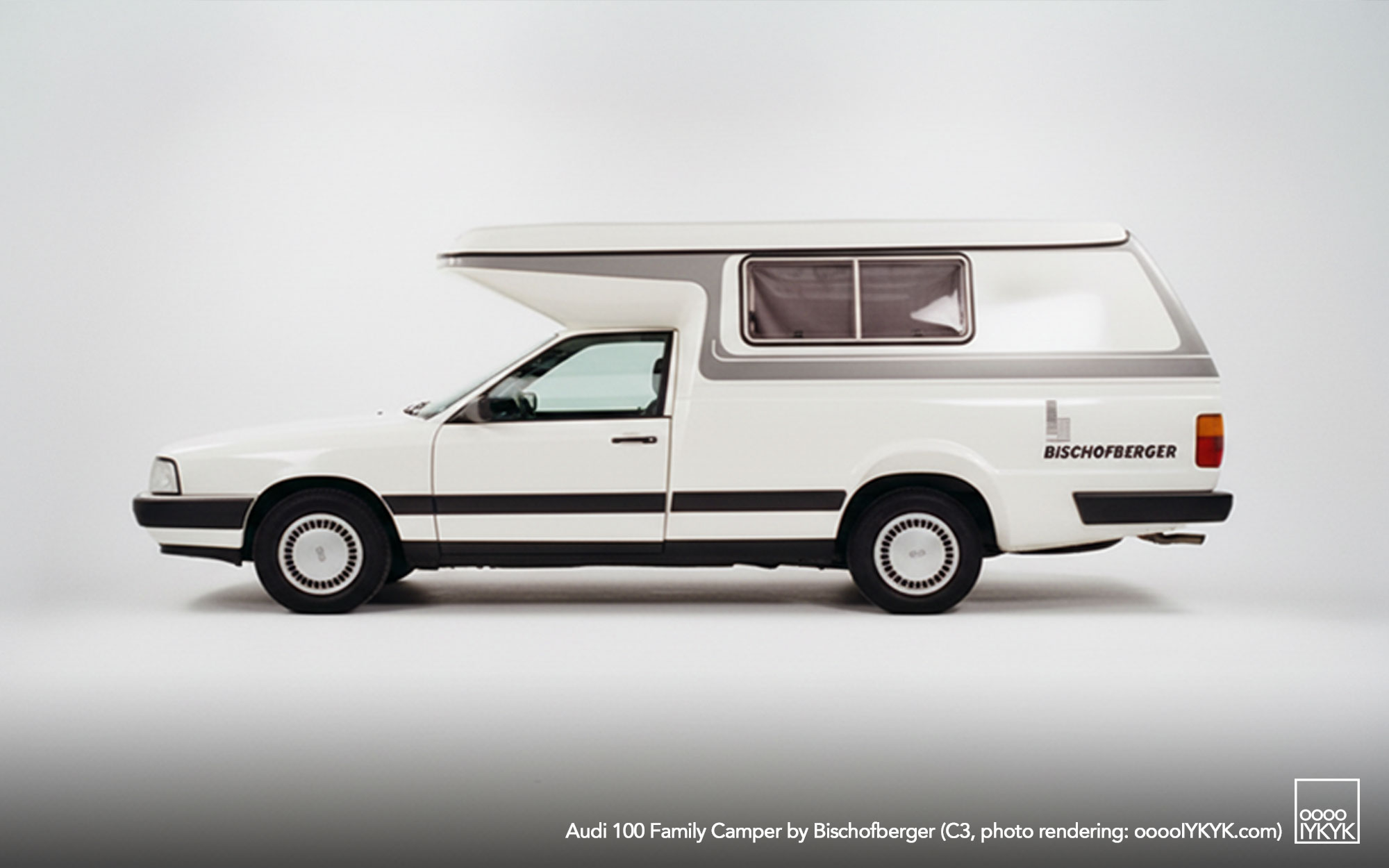
As with earlier versions, the Audi 100 C3 Family conversion involved removing the steel body rearward of the B-pillar while retaining the original floorpan and wheelbase. A tubular steel substructure was installed to replace the removed load-bearing elements, providing the rigidity necessary to support the motorhome body.
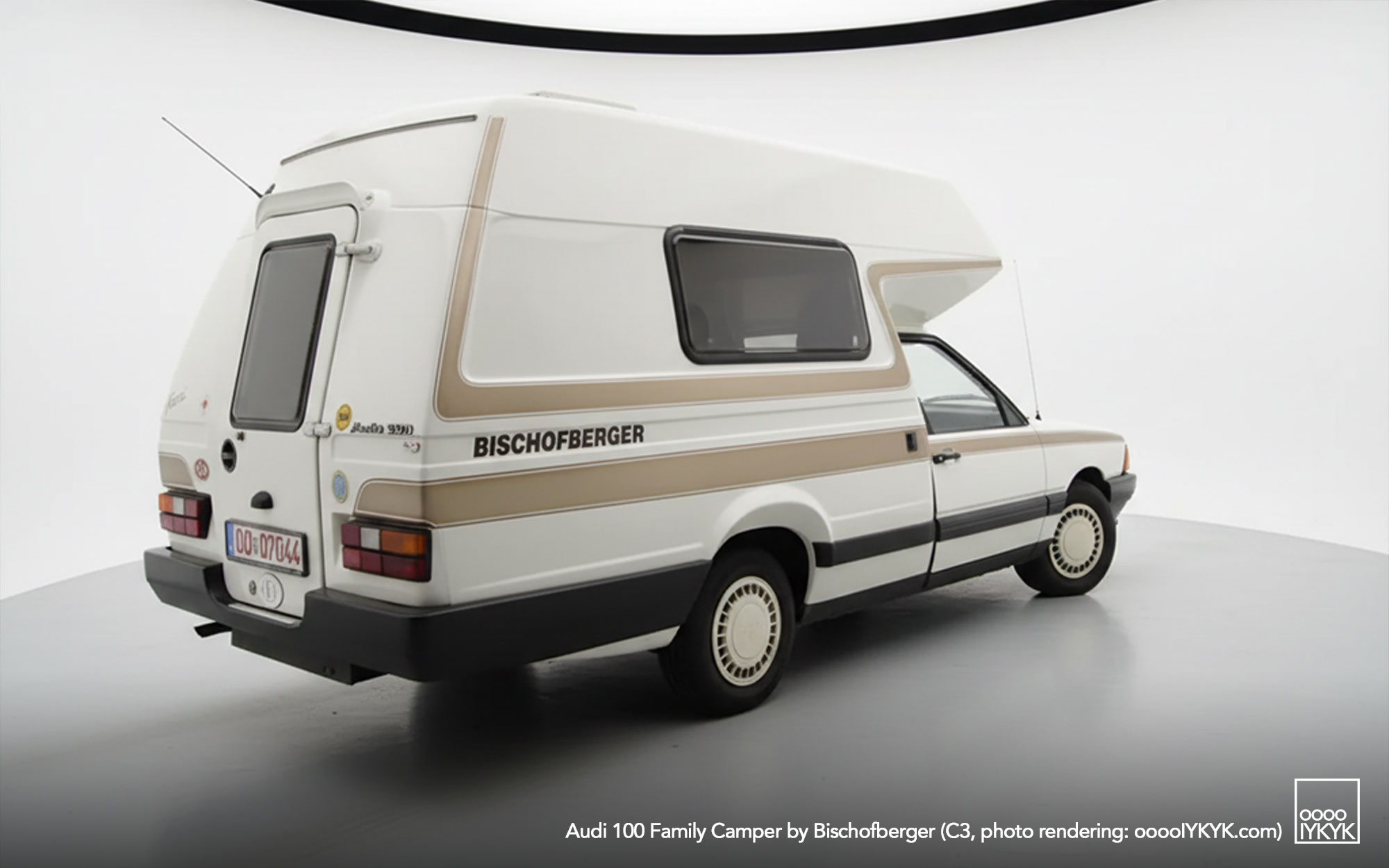
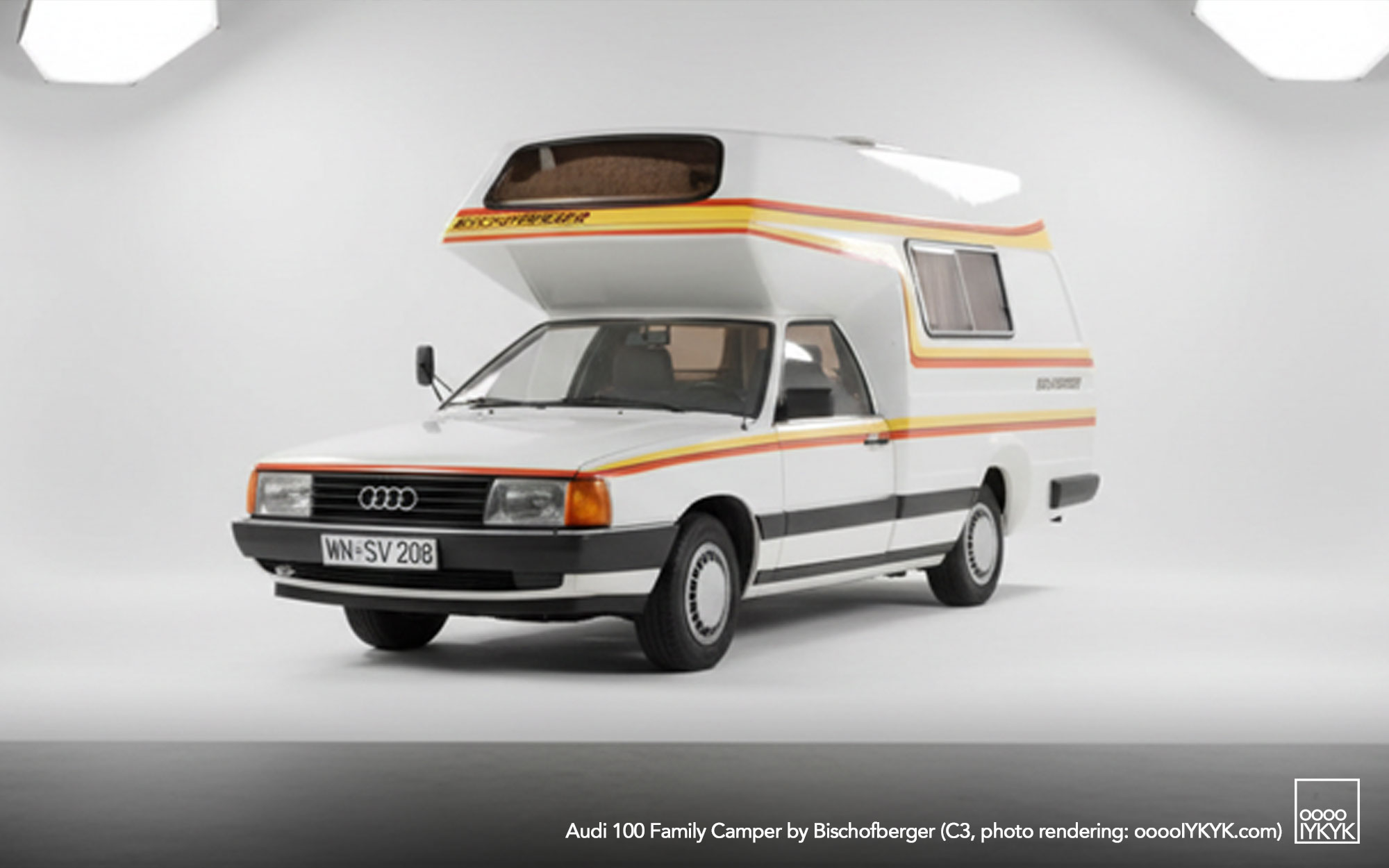
The rear structure itself was molded from glass-reinforced plastic (GRP), with proportions maximized for interior width and height. The design retained visual cues inspired by the Volkswagen T3 Transporter while integrating more smoothly with the C3’s aerodynamic front end.
The C3 generation introduced two clearly defined roof variants:
- Folding roof, offering reduced overall height and an upper sleeping berth when deployed.
- High roof, unique to the C3 and later cars, featuring a fixed elevated structure with a pronounced alcove above the original Audi roofline.
The high-roof option significantly improved standing room and interior volume, making the C3 Family more practical for extended travel.
CHASSIS & MECHANICALS
Mechanically, the Audi 100 C3 Family largely retained standard Audi components. The most commonly documented configuration used the 2.1-liter inline five-cylinder petrol engine, producing 100 kW (136 hp), paired with a three-speed automatic transmission driving the front wheels.
Despite its camper body, the vehicle delivered performance figures well beyond conventional motorhomes of the era. Contemporary road tests and owner accounts cite a top speed of up to 180 km/h and relaxed cruising at highway speeds.
To accommodate the increased mass, which approached or exceeded two metric tons depending on specification, brakes, springs, and tires were reinforced. The chassis layout otherwise remained close to series production.
INTERIOR & EQUIPMENT
The Audi 100 C3 Family offered a fully equipped motorhome interior designed for three to four occupants. Standard equipment typically included:
- Two double sleeping areas (lower and upper)
- Refrigerator
- Two-burner gas stove
- Sink with fresh water and waste tanks
- Truma (Trumatic) heater
- Folding dining table
- Integrated storage and full insulation
Interior layouts varied between individual vehicles, reflecting the hand-built nature of the conversions. Owners and historians frequently note that no two Bischofberger Family campers are exactly alike.
PRODUCTION & PRICING
Production numbers for the Audi 100 C3 Family are estimated at fewer than 40 units, making it the most numerous—but still extremely rare—variant of the Family line.
Pricing was high even by premium motorhome standards:
- New price (1984): 22,450 DM (folding roof) / 23,950 DM (high roof) for the conversion
- Complete vehicle price: approximately 55,000 DM (1984)
- Other sources cite factory-associated pricing of 45,365 DM (folding roof) or 46,865 DM (high roof), depending on engine and specification
Some high-roof examples were reportedly delivered with lower-output 75 hp engines, reflecting homologation or cost considerations.
TECHNICAL SPECIFICATIONS
- Engine: Inline five-cylinder (I5), 2 valves per cylinder
- Displacement: 2,144 cm³
- Output: 100 kW (136 hp) at 5,700 rpm
- Torque: 180 Nm at 4,800 rpm
- Transmission: 3-speed automatic
- Drive: Front-wheel drive
- Length / Width / Height: 5,727 / 1,850 / 1,860 mm
- Curb weight: approx. 1,540 kg (empty)
- 0–100 km/h: approx. 16.0 seconds
- Top speed: up to 180 km/h
- Fuel consumption: approx. 12.0 L/100 km
- Construction period: 1983–1986
LEGACY
The Audi 100 C3 Bischofberger Family represents the most recognizable expression of Helmut Bischofberger’s vision: a true motorhome disguised as a premium sedan. Its blend of long-distance comfort, surprising performance, and unconventional engineering secured its reputation as one of the most unusual Audi-based vehicles ever offered.
Today, surviving examples are sought after by collectors of rare campers and Audi enthusiasts alike. The C3 Family stands as a reminder of an era when small, independent builders could radically reinterpret a mainstream executive car—and do so with both technical credibility and audacity.
SOURCES
Promobil.de
Audi quattrology
Langzeitauto.de
AutoZeitung.de
Autocult-Models.de
EscalAuto.Wordpress.com
AudiStory.com
PHOTO GALLERY