
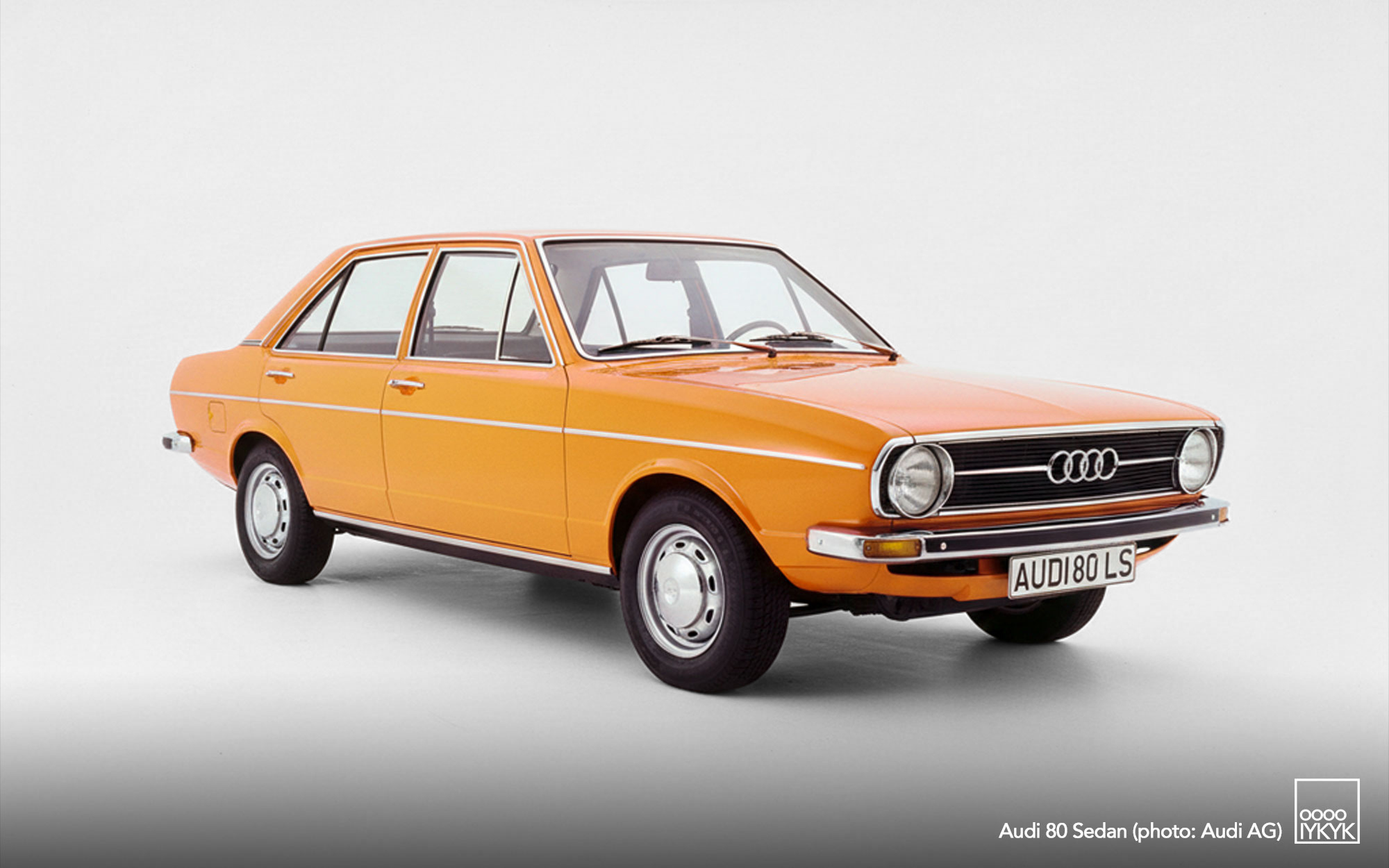

/ Eras / Audi Postwar Era / Audi 80 / 80 (B1, type 80)
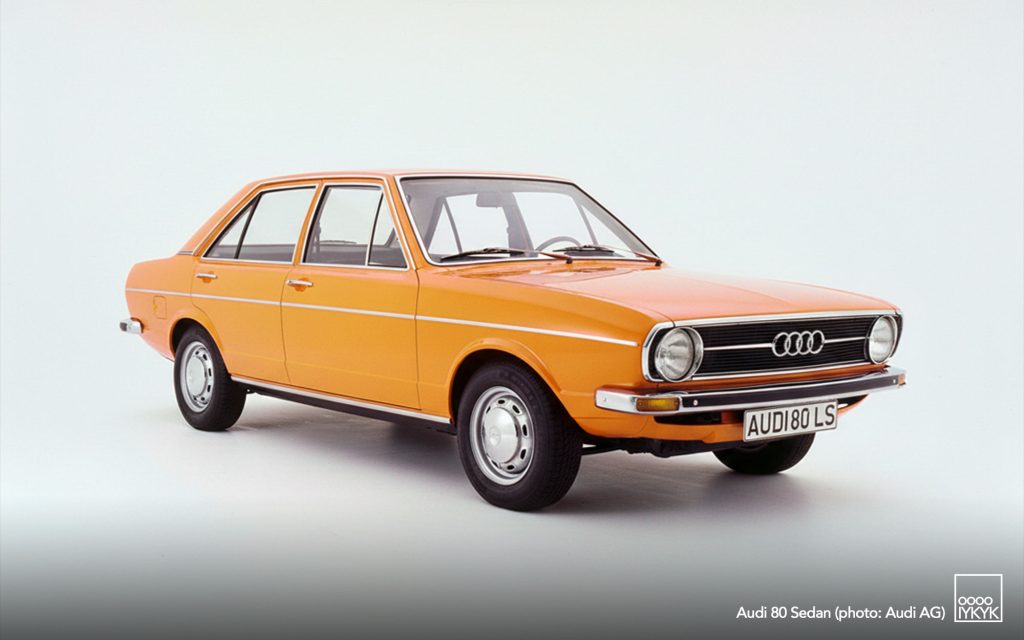
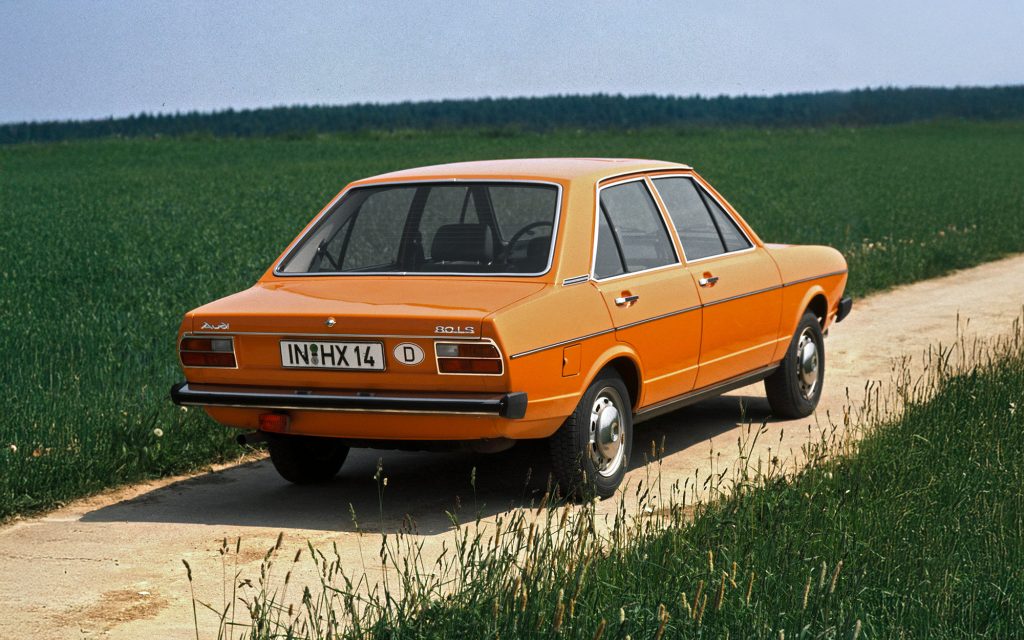
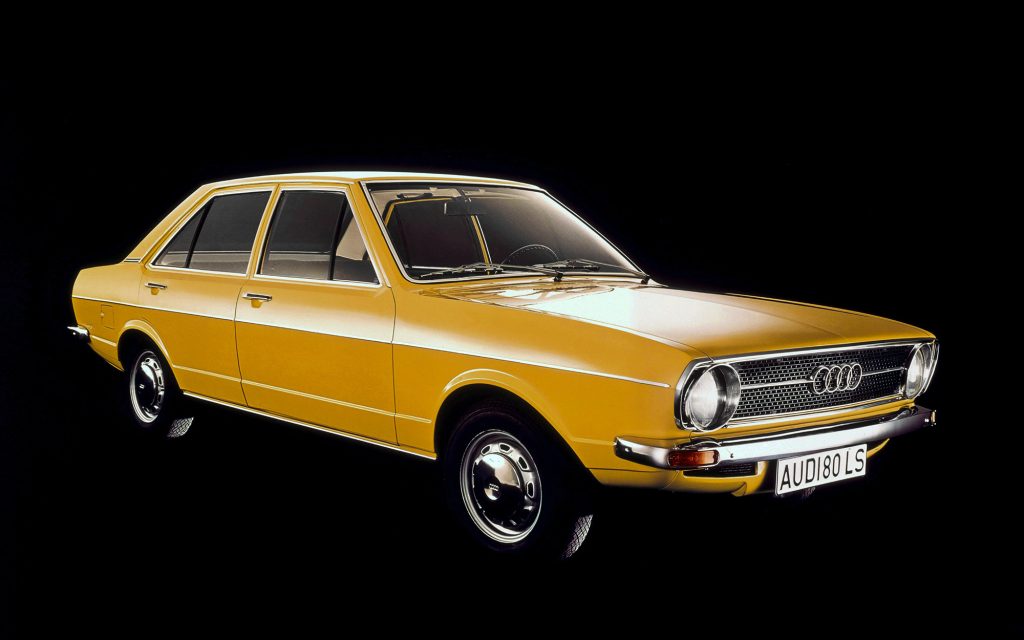
What: 80 4-Door Sedan (B1)
Model Family: 80
Market / Zone: EU
Production Location: Ingolstadt, West Germany
Debut: 1972 in Ingolstadt, aligned with the 1972 Summer Olympics in Münich
Year: 1972, 1973, 1974, 1975, 1976
Number Produced:
Model / Generation Code(s): Type 80
Chassis / Matrix: B1
Layout: Front-engine, front-wheel drive
Engine(s): 1.3l 4-cylinder, 1.5l 4-cylinder, 1.6l 4-cylinder
Transmission(s): 4-speed Manual, 3-speed Automatic
Wheelbase: 2,470 mm (97.2 in)
Length: approx. 4,180 mm (164.6 in)
Curb weight: from approx. 835 kg (1,841 lb)
Designer:
Predecessor: Audi 60 / Audi 75 (type F103)
Successor: Audi 80 (B1.5, type 82)
OVERVIEW
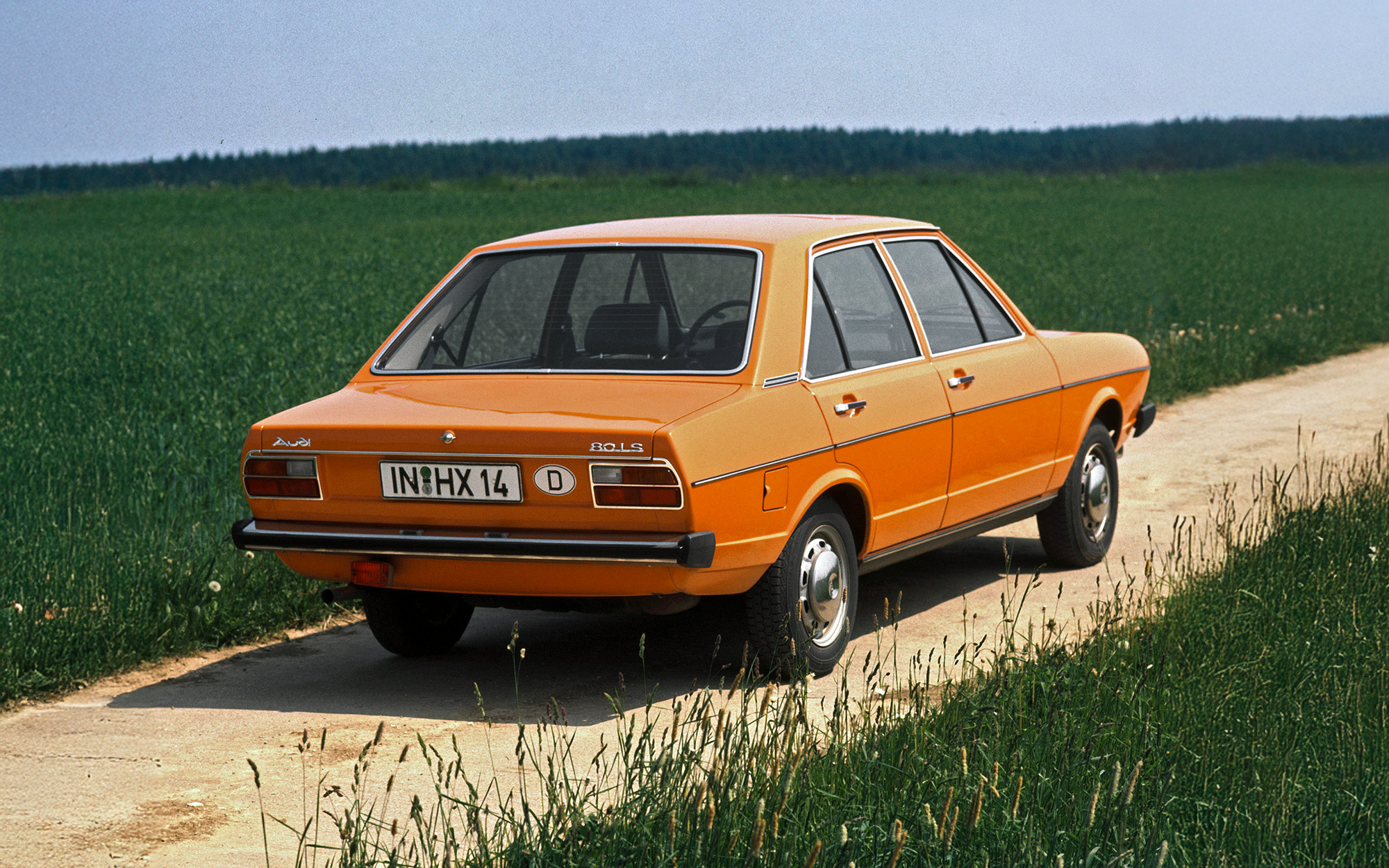
The Audi 80 (B1) four-door sedan, produced from 1972 to 1976, marked Audi’s entry into the modern compact-sedan segment and laid the foundation for what would become the brand’s long-running B-series. Introduced in 1972, the B1 combined lightweight engineering, front-wheel drive, and newly developed engines to create a practical yet technically advanced family car.
Positioned below the Audi 100, the four-door sedan broadened the appeal of the Audi 80 line, offering increased practicality and rear-seat access while retaining the model’s emphasis on efficiency and dynamic handling. The Audi 80 was named European Car of the Year for 1973, a significant milestone that elevated Audi’s reputation across international markets.
DEVELOPMENT & CONCEPT
Development of the Audi 80 was led by Ludwig Kraus, then Head of Technical Development at Audi and Volkswagen AG. Kraus envisioned a vehicle that was “modern, but not trendy”, prioritizing long-term relevance, efficiency, and structural integrity.
Drawing on principles more commonly associated with motorsport engineering, Kraus directed his team to minimize mass wherever possible without compromising safety or durability. While the four-door sedan was slightly heavier than the two-door variant due to its additional structure and doors, it remained among the lightest cars in its class at launch.
The Audi 80 B1 also became a pioneer of modular vehicle design, with technical solutions and components that would later be shared widely across the Volkswagen Group.
CHASSIS & SUSPENSION
The Audi 80 B1 sedan introduced several advanced engineering solutions for a mass-produced compact car of its era. The front suspension used MacPherson struts with lower wishbones, while the rear employed a torsion crank axle with spring dampers. Rack-and-pinion steering incorporated a negative steering roll radius, improving vehicle stability under braking.
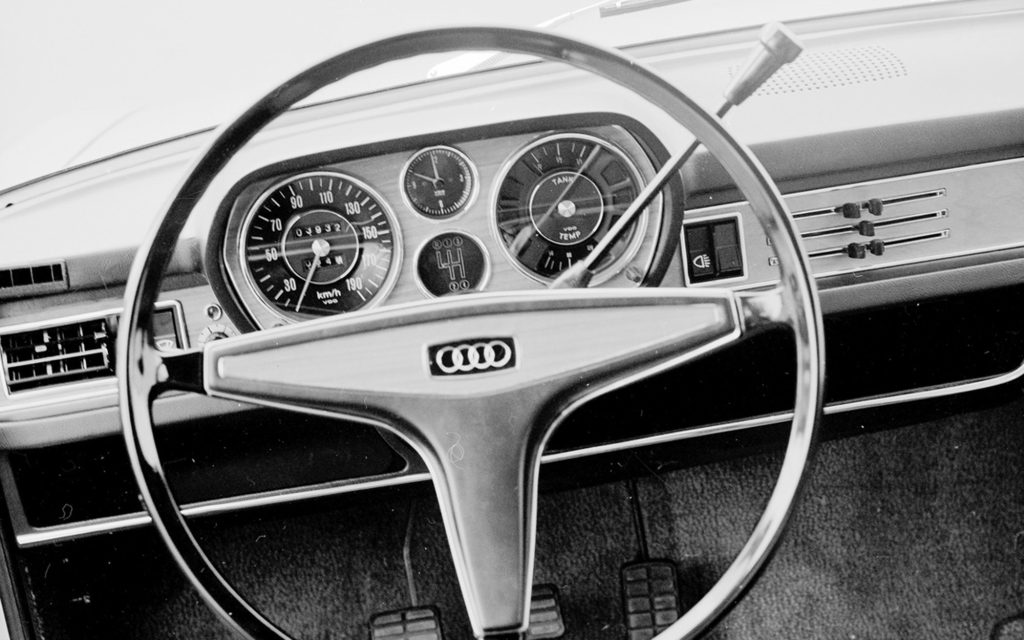
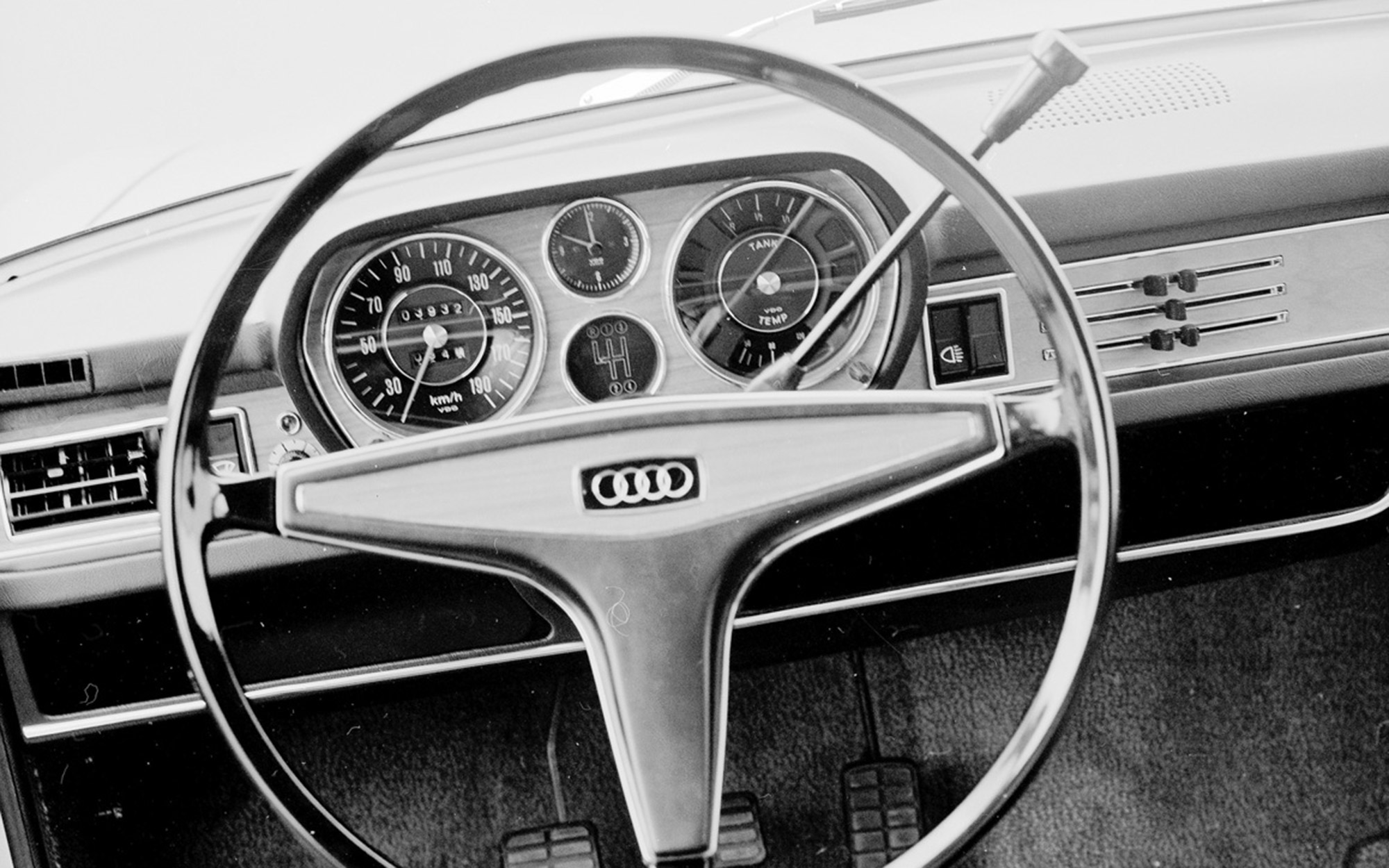
The braking system featured diagonally split hydraulic circuits, enhancing safety in the event of partial system failure. The longitudinally mounted engine sat ahead of the front axle, paired with a four-speed manual transmission positioned behind it. This layout became a defining characteristic of Audi’s front-wheel-drive architecture for decades.
ENGINES & POWERTRAIN
At launch, the Audi 80 B1 sedan was offered with a range of inline four-cylinder gasoline engines from the newly developed EA827 engine family. These engines were engineered under the direction of Franz Hauk and incorporated several features that were advanced for the segment at the time.
Key characteristics included a single overhead camshaft, toothed-belt camshaft drive, and maintenance-free hydraulic tappets. Engine displacements ranged from 1.3 to 1.6 liters, with power outputs between 40 kW (55 PS) and 74 kW (100 PS). The balance of efficiency and performance proved especially appealing during the fuel-conscious period following the 1973 oil crisis.
MARKET RECEPTION & PRODUCTION
The Audi 80 was unveiled to the press in July 1972 and introduced to dealerships later that year. Its launch coincided with rising fuel prices, and the model quickly gained traction among buyers seeking efficient, well-engineered sedans.
The four-door sedan was particularly popular with families and fleet customers. Demand soon exceeded production capacity at Audi’s Ingolstadt facility, leading to supplemental manufacturing at Volkswagen plants in Wolfsburg and Emden.
By the end of B1 production in the summer of 1978, more than one million Audi 80 B1 units had been produced across all body styles. In the United States and select export markets, the model was sold under the Audi Fox name.
LEGACY
The Audi 80 B1 sedan occupies a foundational position in Audi’s modern history. It established the B-series, demonstrated the commercial viability of Audi’s engineering-led philosophy, and helped position the brand as a credible competitor in the compact and mid-size sedan segments.
Reflecting on the model’s significance, Oliver Hoffmann, Member of the Board of Management of Audi AG for Technical Development, stated that the original Audi 80 clearly demonstrates that “Vorsprung durch Technik is a tradition at Audi.”
The Audi 80 line continued through four generations before being replaced in 1994/95 by the Audi A4 (B5), which carried forward the conceptual and technical foundations first established by the B1 sedan.
REFERENCES
PHOTO GALLERY