

/ Eras / Audi Postwar Era / Audi Fox / Fox (B1.5, type 82)
What: Fox GTI 2-Door Sedan (B1.5)
Era: Audi Postwar
Model Family: Fox / 80 B1.5 (B1 facelift)
Market / Zone: USA
Body Style: 2-door sedan
Production Location: Ingolstadt, West Germany
Debut:
Year: 1978, 1979
Number Produced:
Model / Generation Code(s): Type 82
Chassis / Matrix: B1.5
Layout: Front-engine, front-wheel drive
ENGINE:
Type: Inline-4, water-cooled
Displacement: 1,588 cc (1.6L)
Fuel System: Bosch CIS fuel injection
Power: 78 hp @ 5,500 rpm (76 hp California)
Compression Ratio: 8.0:1
DRIVETRAIN:
Layout: Front-engine, front-wheel drive
Transmission: 4-speed manual (standard), 3-speed automatic (optional)
CHASSIS:
Front Suspension: MacPherson struts with coil springs and stabilizer bar
Rear Suspension: Torsion crank axle with Panhard rod
Steering: Rack and pinion
Brakes: Front discs, rear drums
WHEELS & TIRES:
Wheels: 13-inch (5Jx13)
Tires: 155SR13 radial
DIMENSIONS:
Wheelbase: 97.2 in
Length: 173.8 in
Width: 64.8 in
Height: 53.6 in
PERFORMANCE:
0–50 mph: 8.1 seconds
Top Speed: 103 mph
FUEL ECONOMY (EPA):
Highway: 37 mpg
City: 23 mpg
OVERVIEW
The Audi Fox GTI represents a uniquely American-market interpretation of the European Audi 80 GTE, arriving at a time when Audi’s identity in the United States was still being established. Introduced for the 1978 model year and carried into 1979, the Fox GTI translated the spirit of the GTE into a format shaped by emissions-era constraints and market realities, emphasizing design, driver engagement, and brand positioning over outright performance.
Based on the facelifted B1 (a.k.a. “B1.5”) Audi Fox—the U.S. counterpart to the Audi 80—the GTI package blended visual aggression, driver-focused interior enhancements, and incremental chassis tuning into an otherwise practical compact sedan. It was, as period marketing described, “the Fox of a different stripe,” signaling a shift toward enthusiast-oriented branding within Audi’s entry-level offering.
Audi of America positioned the Fox GTI as a bridge between economy and sport, combining the Fox’s inherent efficiency and engineering pedigree with visual and tactile upgrades intended to appeal to a growing base of enthusiast buyers.
DEVELOPMENT & POSITIONING
The Audi Fox GTI is best understood not as a standalone performance model, but as a U.S.-market interpretation of the European Audi 80 GTE, adapted for a regulatory and brand environment that limited outright performance but still demanded enthusiast appeal.
In Europe, the Audi 80 GTE represented a more fully realized sporting variant, pairing fuel injection with increased output and a clearer performance brief. For the United States, however, emissions constraints and market positioning led Audi to take a different approach. Rather than replicate the GTE outright, Audi of America distilled its identity into a package that emphasized appearance, driver interface, and chassis character over power gains.
The use of the GTI designation on an Audi further underscores the fluidity of Volkswagen Group branding for the American market in the late 1970s. At the time, Audi was still being established in the U.S. market and Volkswagen was actively leveraging shared concepts and nomenclature across brands to build credibility and awareness. Applying the GTI badge to the Fox—years before the Rabbit GTI would cement its meaning—was part of that broader effort. So too was selling it in dealership environments wearing or representing it in catalogues printed also with the “Porsche + Audi” branding.
This kind of cross-brand branding pollination, while notable today, was not unusual in the period. Volkswagen Group was still defining the boundaries between its marques and also Porsche that was separate at the time yet sold through the same distribution channel. Audi in particular benefited from this overlap as it worked to establish itself as a technically credible, premium-leaning alternative in a crowded market.
In that context, the Fox GTI stands as a transitional product—a bridge between the European GTE concept and the later, more clearly defined GTI identity, as well as an early example of Audi’s effort to inject enthusiast appeal into its U.S. lineup during the pre-quattro era.
The Fox GTI, and even the more powerful European market 80 GTE, were high-performance offerings typical of Audi in this era just prior to the arrival of turbocharging and quattro all-wheel drive. Just a few years later it was probably seen as mild and boring, but in its time it represented Audi of America’s leading edge of performance.
DESIGN & FEATURES
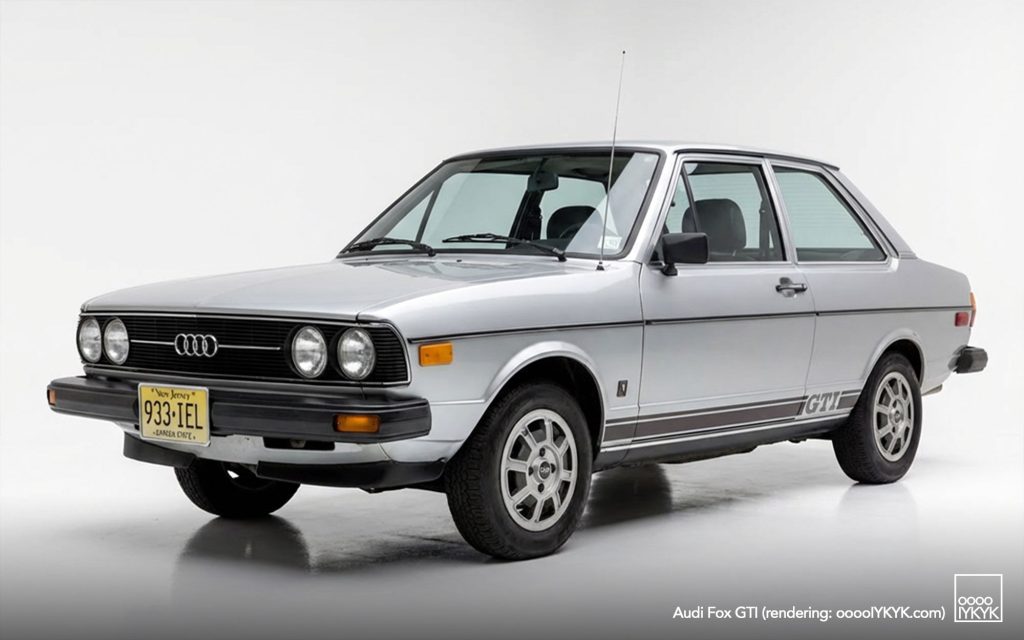
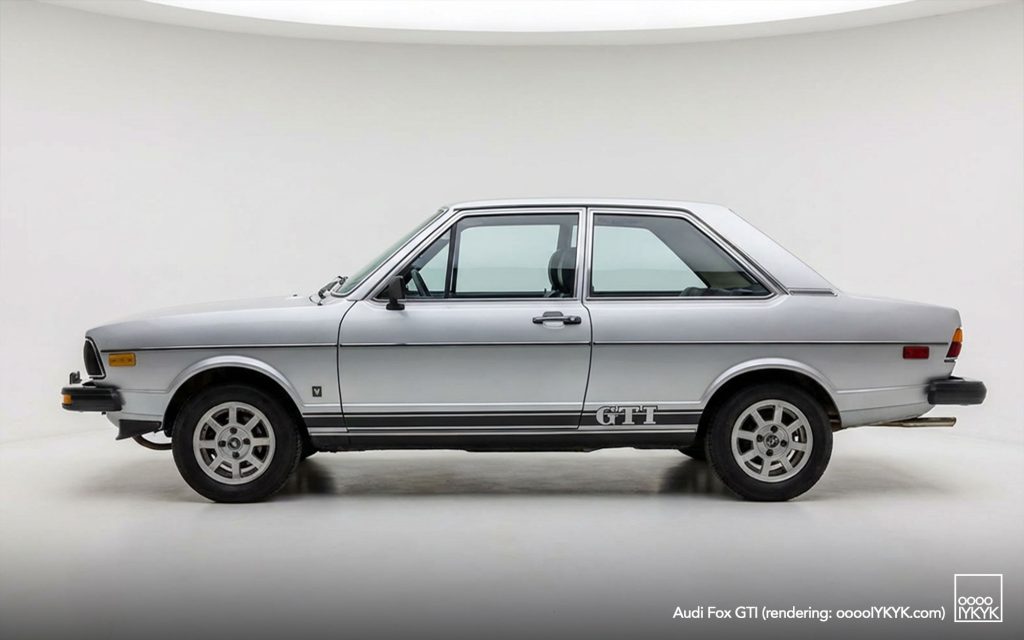
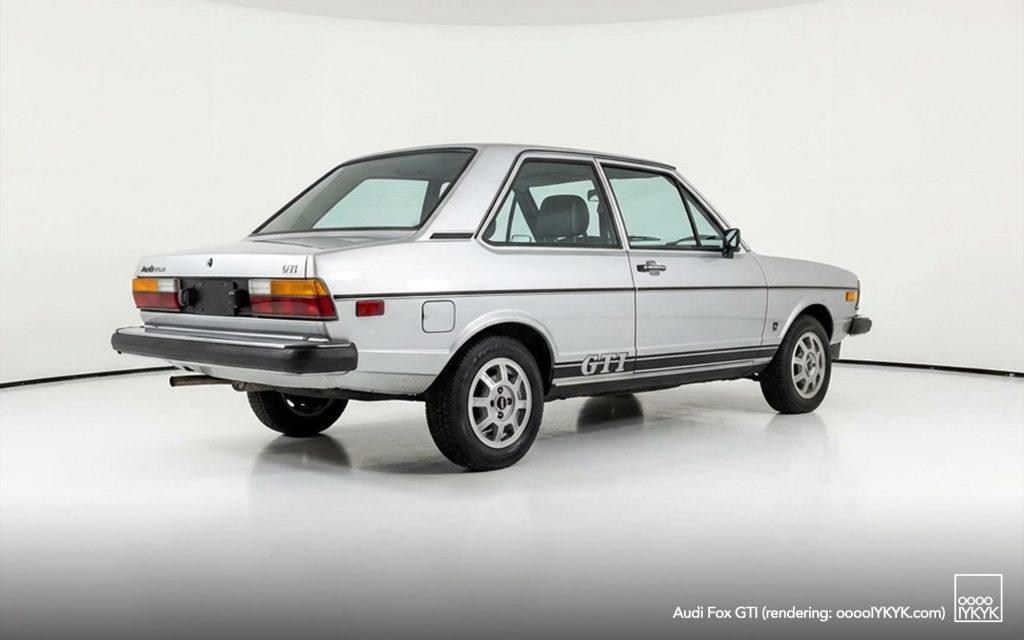
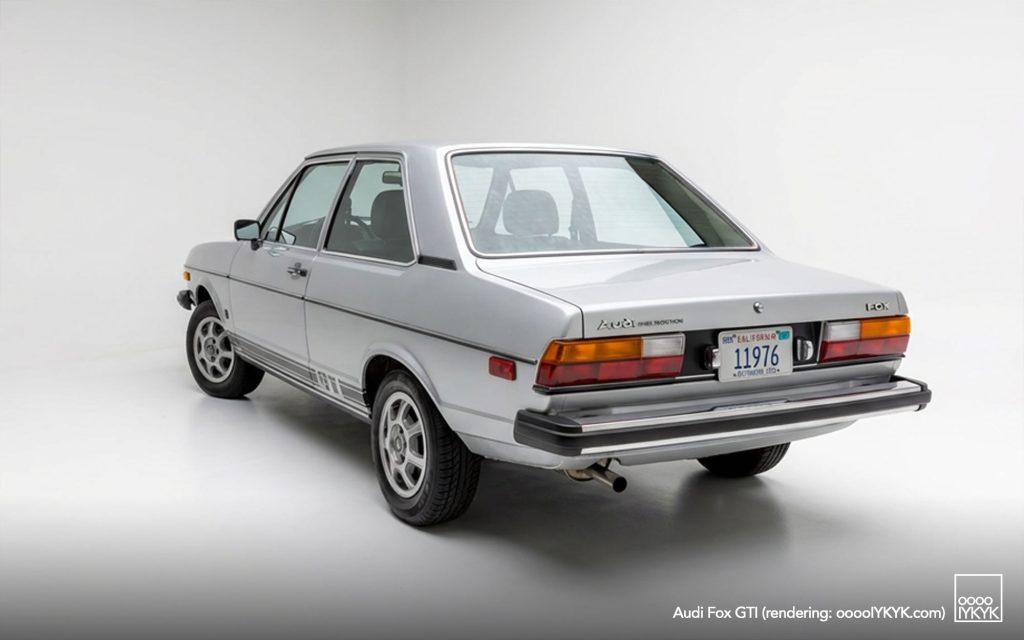
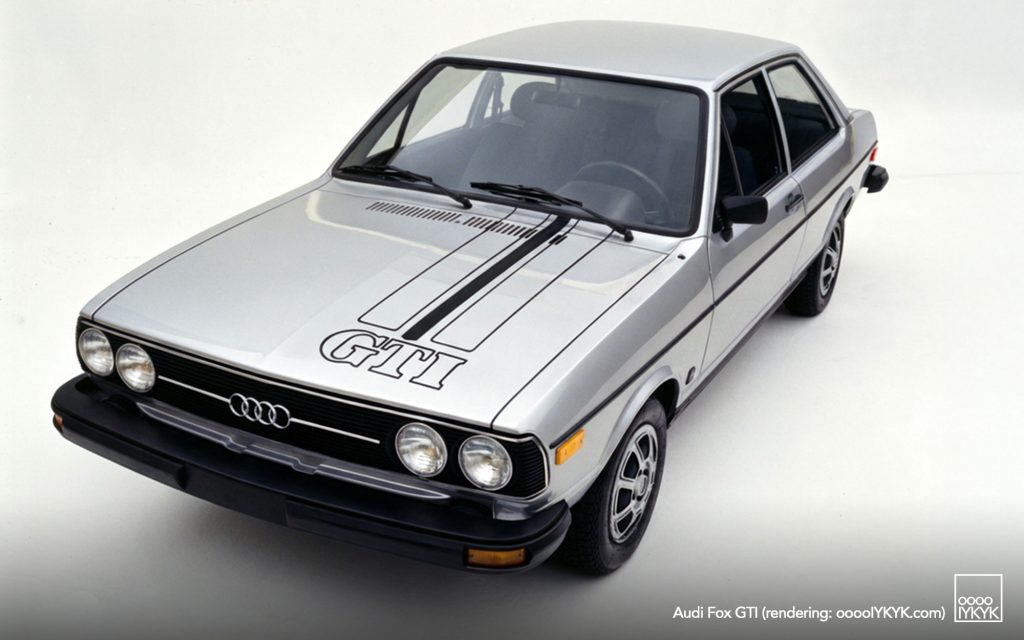
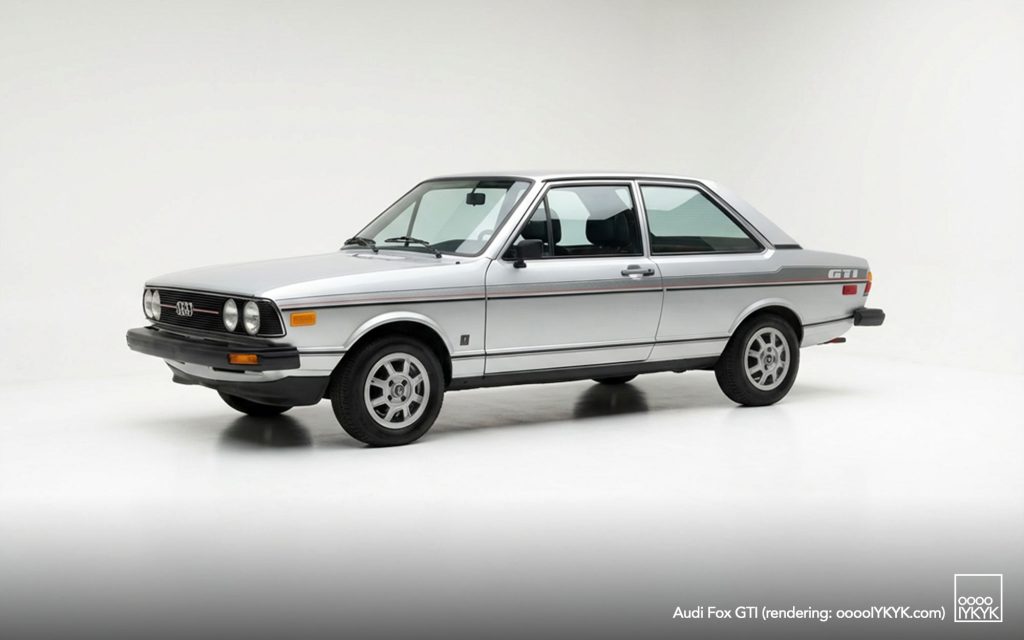
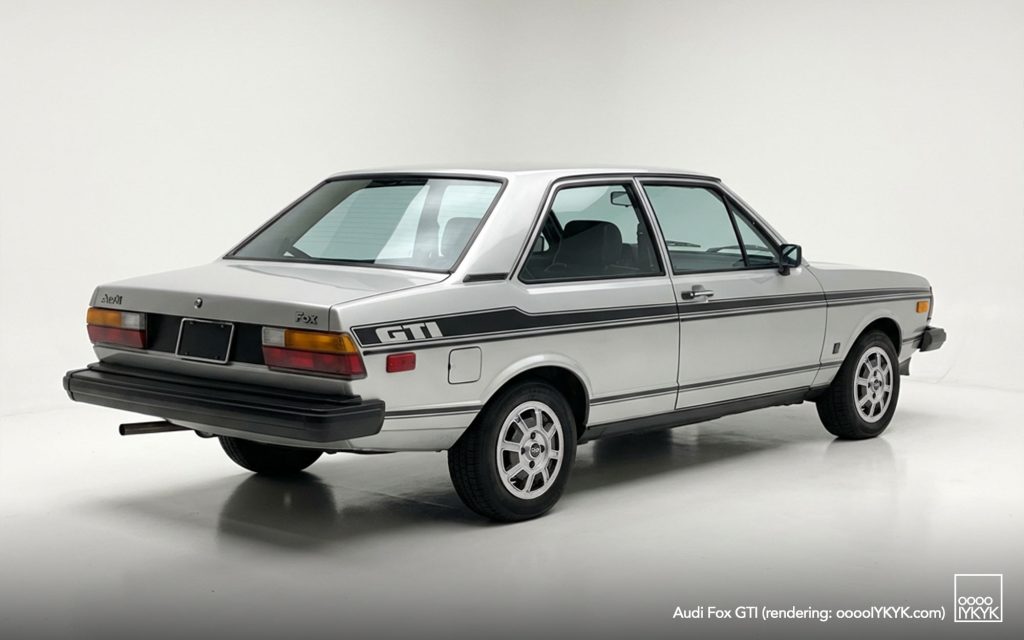
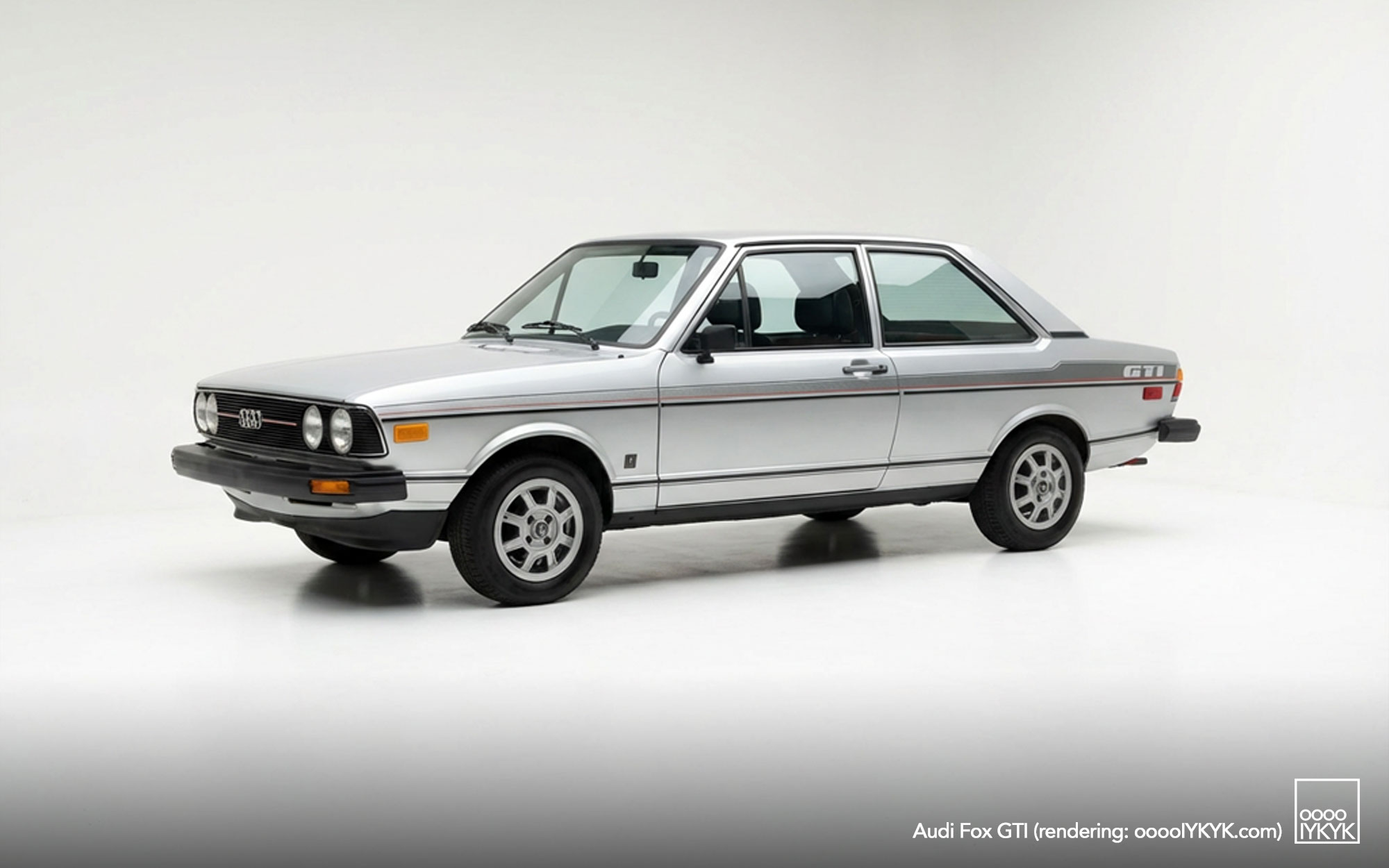
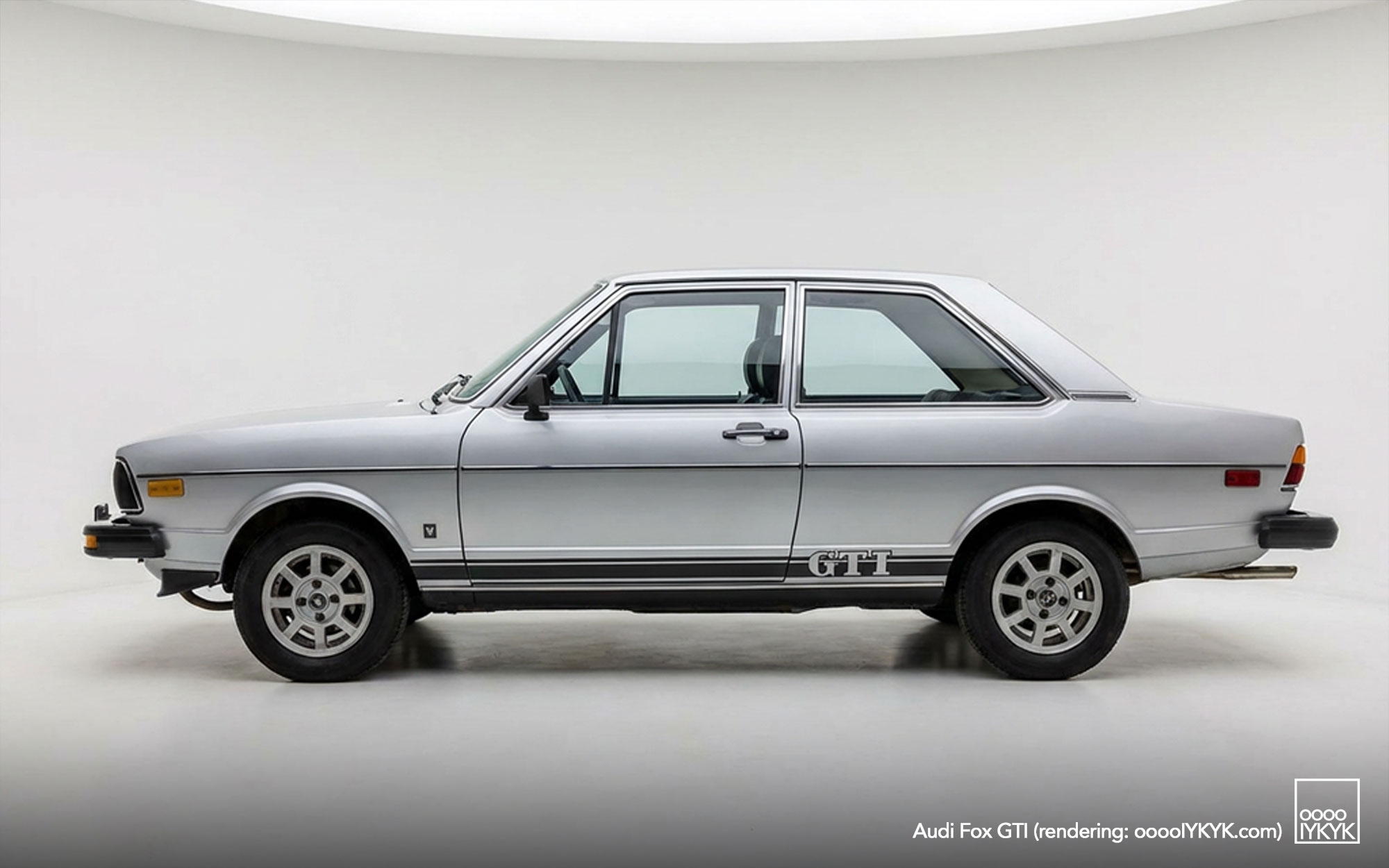
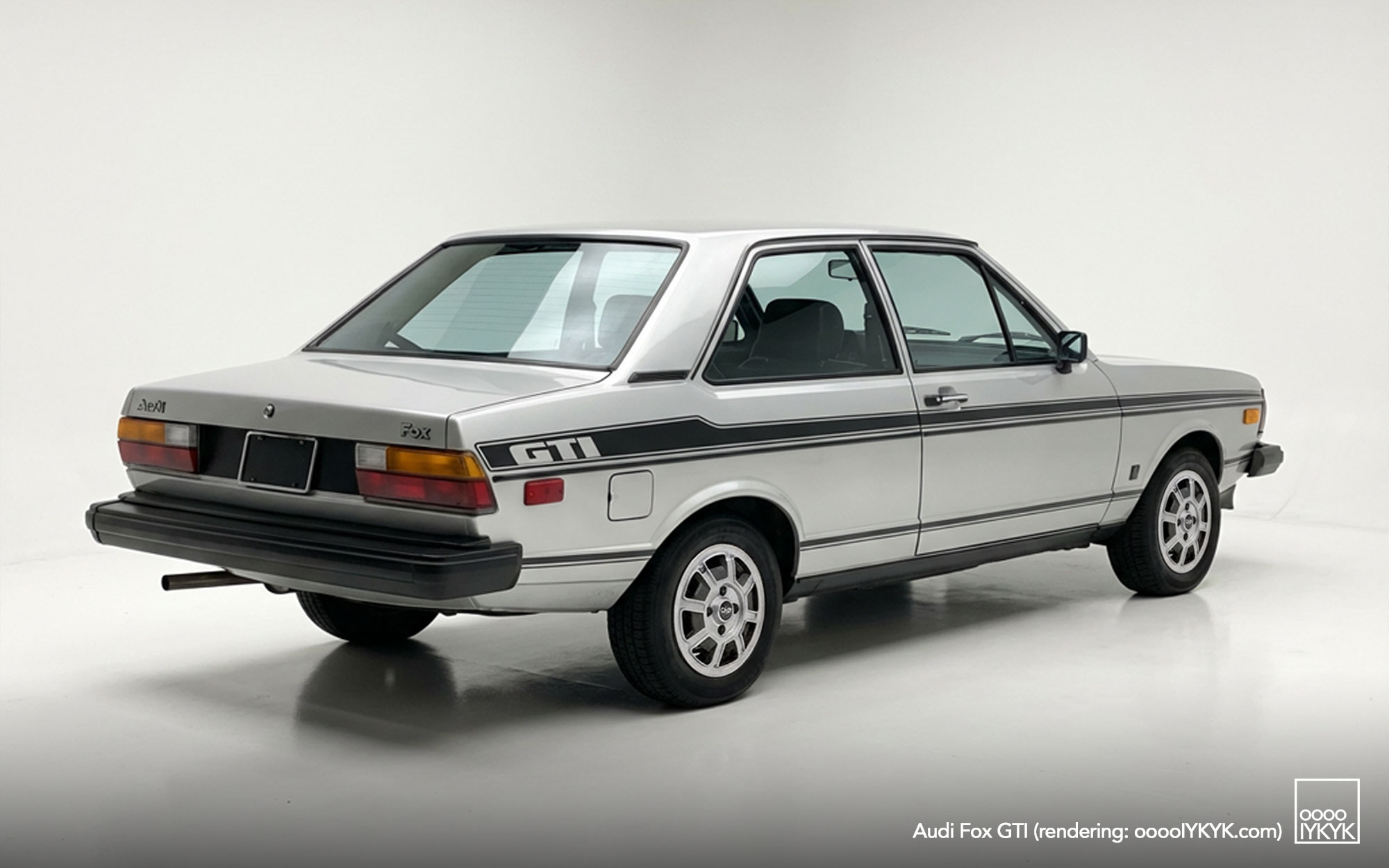
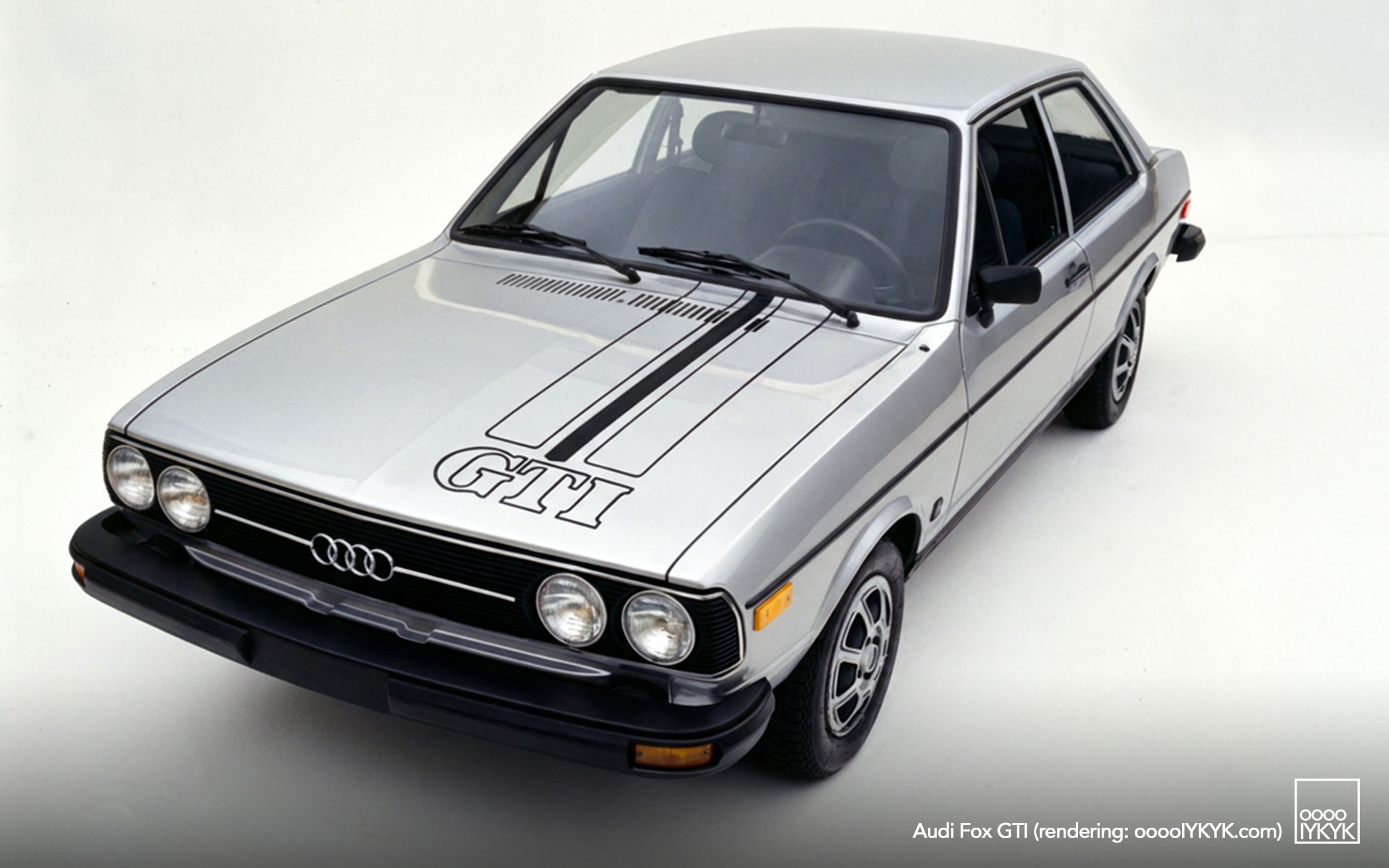
Visually, the Fox GTI distinguished itself immediately from standard Fox models. The most defining element was its black GTI striping with metallic accent, running the length of the body and terminating in bold “GTI” script on the rear quarter. This morphed over time from the upper pinstripe area as seen in the U.S. literature of the period (see below) to a lower rocker panel placement more similar to Volkswagen’s Rabbit GTI stripe placement as seen on the example Car and Driver tested in their June 1978 issue.
Additional exterior enhancements included matte black window trim and moldings, alloy wheels, a front spoiler, and silver paint as the signature launch color.
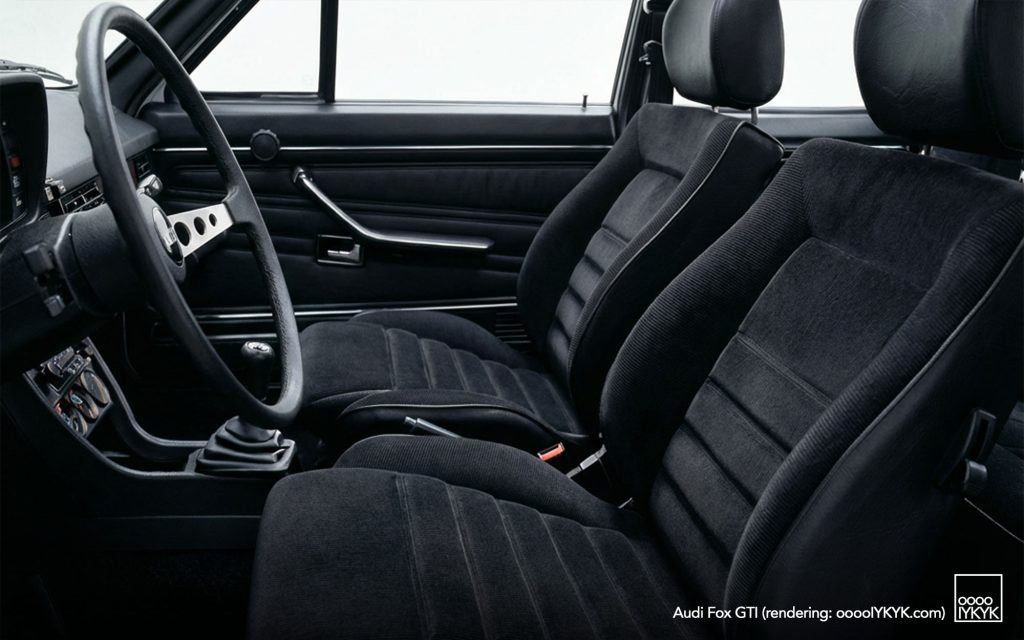
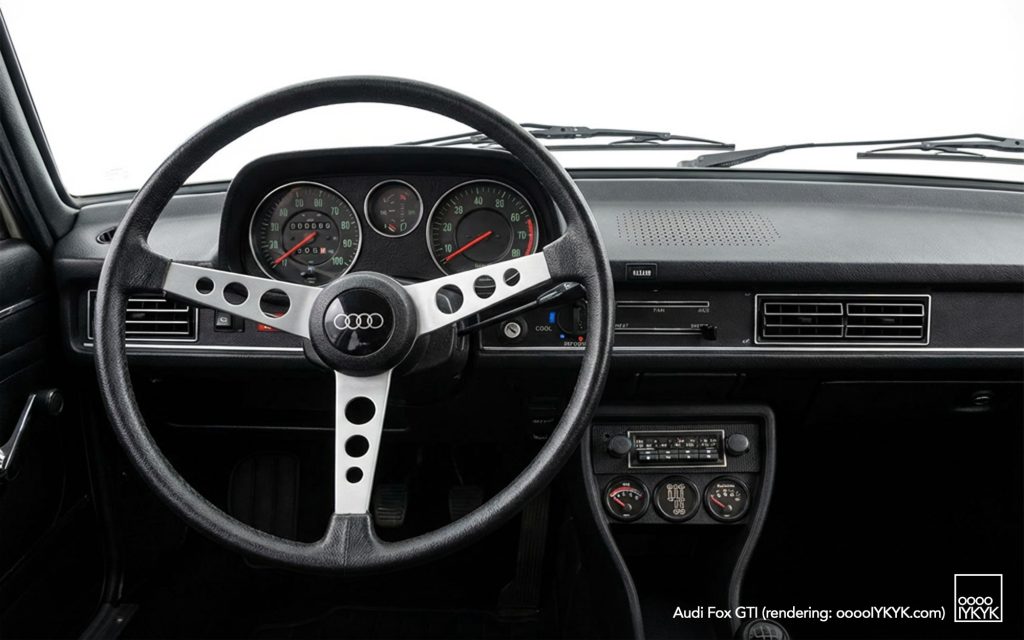
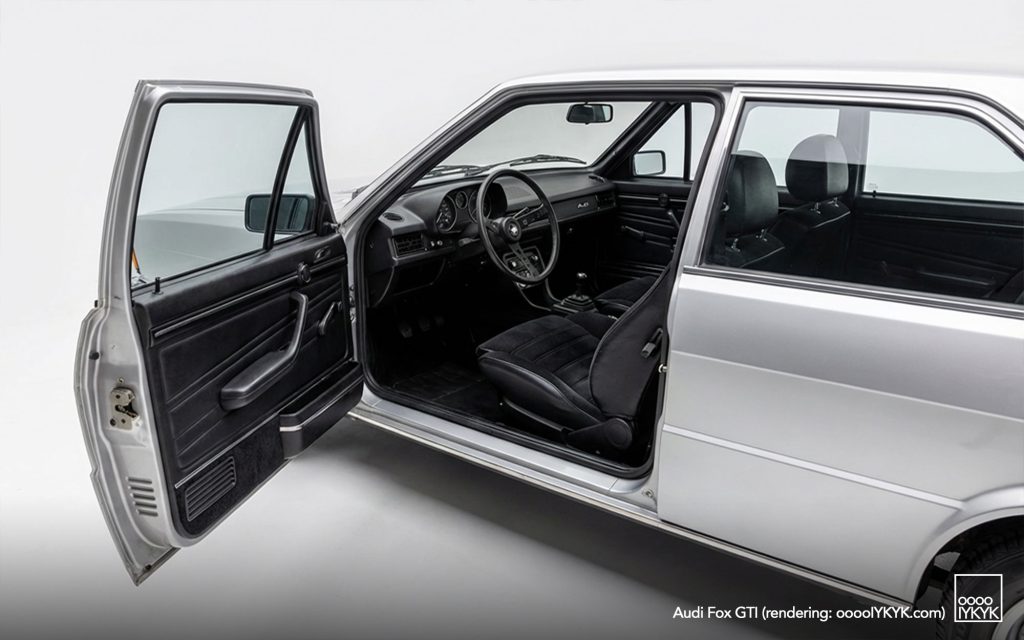
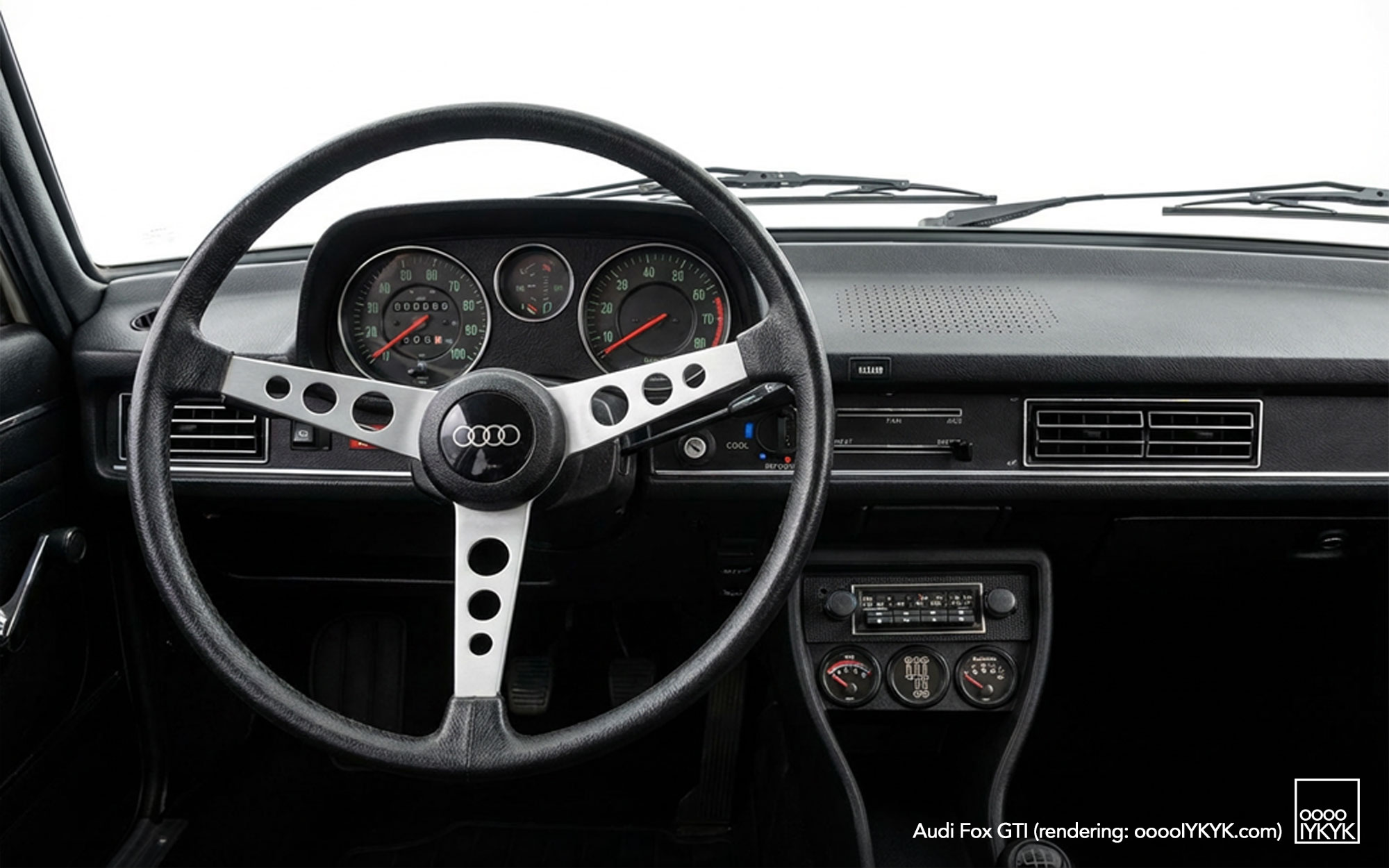
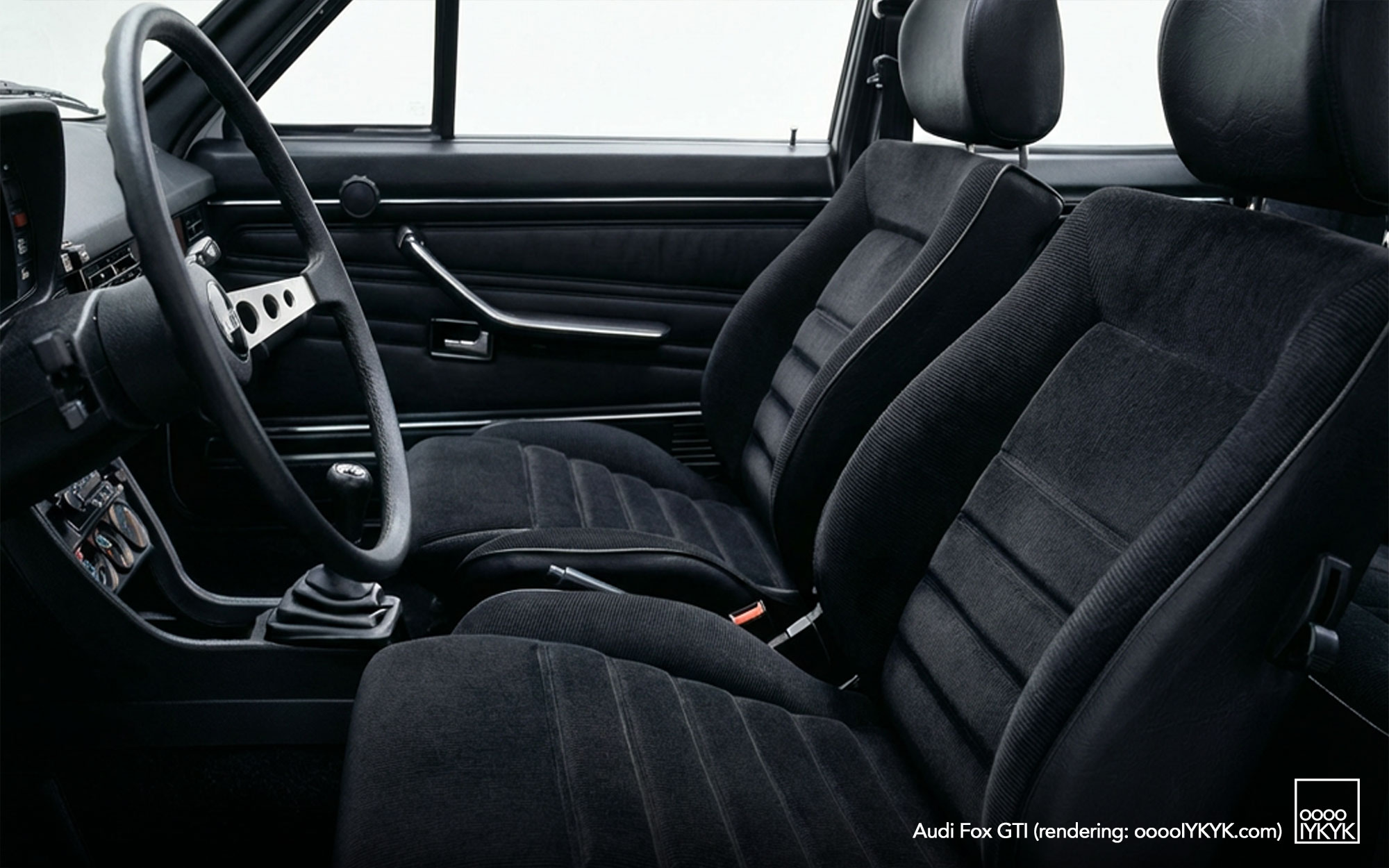
Inside, the GTI package introduced a more driver-focused cabin environment. Specially designed sport seats provided improved lateral support, while corduroy upholstery offered comfort across varying temperatures. A unique 3-spoke sport steering wheel, tachometer, and auxiliary gauges—including a voltmeter, oil temperature gauge, and quartz clock—further emphasized the car’s sporting intent.
The result was a cabin that felt notably more purposeful than the standard Fox, aligning with Audi’s emphasis on driver engagement.
ENGINEERING & DRIVING CHARACTER.
Mechanically, the Fox GTI retained the underlying engineering architecture of the B1 platform, highlighted by Audi’s longitudinal front-engine, front-wheel-drive layout.
The 1.6-liter inline-four engine utilized Bosch CIS (Continuous Injection System) fuel injection, delivering modest output but improved efficiency and drivability compared to carbureted alternatives.
Audi emphasized handling and stability as key differentiators. Period materials highlighted several engineering attributes:
- Front-wheel drive layout for improved traction and directional stability
- Negative steering roll radius, designed to maintain control in the event of a front tire failure
- Rack-and-pinion steering for precise response
- Lightweight torsion crank rear axle, improving ride and handling balance
While not a high-performance car by modern standards, the Fox GTI delivered what Audi described as “spirited” driving characteristics, prioritizing control, predictability, and real-world usability.
GTI DESIGNATION & BRAND CONTEXT
The GTI designation traces its origins to the Italian phrase Gran Turismo Iniezione, translating to “Grand Touring Injection.” The terminology reflected a key technological shift of the era—the adoption of fuel injection as a performance and efficiency advantage over traditional carburetion.
Within the Volkswagen Group, this naming convention carried clear parallels across brands. In Germany, the equivalent designation became GTE, derived from Einspritzung, the German word for fuel injection. Audi’s European-market Audi 80 GTE followed this logic directly, as did earlier applications of fuel injection across the German market. For example, a notable parallel can be seen at Porsche, where the 911 E adopted mechanical fuel injection, with the “E” similarly denoting Einspritzung.
In this context, the use of the GTI badge on the Audi Fox was both technically appropriate and strategically aligned. The car’s Bosch CIS fuel injection system provided the foundation for the designation, even if outright performance gains were modest by later standards.
At the same time, the late 1970s represented a period of fluid brand identity within the Volkswagen Group. The application of GTI to an Audi product reflects a time when cross-brand naming overlap was not only accepted, but leveraged as Volkswagen worked to establish Audi in the U.S. market. Such overlap would become far less common in later decades as brand identities solidified.
The meaning of GTI would soon evolve dramatically. With the arrival and rapid success of the Volkswagen Golf—marketed in the U.S. as the Rabbit—the Golf GTI came to literally define the designation, transforming it from a technical descriptor into a cultural shorthand for the hot hatchback. From that point forward, GTI became less about fuel injection and more about a specific formula: compact size, practical hatchback design, and accessible performance.
In that light, the Audi Fox GTI occupies a unique position. Neither it, nor its European Audi 80 counterpart, nor its successor in the U.S. market—the Audi 4000—fit the hatchback mold that would come to define GTI. Instead, they represent an earlier interpretation of the acronym, rooted in engineering terminology rather than lifestyle identity.
As GTI grew into one of the most recognizable performance designations in the industry, Volkswagen also moved to protect the name aggressively. Competing manufacturers adopted similar nomenclature, most notably Peugeot with its GTi models, forced to use a lowercase “i” in part to differentiate and avoid direct conflict with Volkswagen’s trademark claims.
Today, GTI is inseparable from Volkswagen and the hot hatch segment it helped define. The Audi Fox GTI, however, stands as a reminder of a brief moment when the designation was still evolving—a technically grounded label, shared across brands, before it became a cultural icon.
MARKET CONTEXT & LEGACY
The Audi Fox GTI occupies a unique place in brand history. Rather than serving as a true performance benchmark, the Fox GTI was an early exploration of the GTI identity in the U.S.—one rooted in styling, driver engagement, and brand positioning rather than outright speed. It marks the only time the “GTI” moniker was ever affixed to an Audi.
Production numbers were limited, particularly for the final 1979 model year, reinforcing its rarity today. Contemporary marketing acknowledged this scarcity, noting that only a finite number of GTI-equipped Foxes would be produced.
In retrospect, the Fox GTI can be seen as a conceptual precursor to later Audi Sport models in the U.S.—a vehicle that hinted at enthusiast intent during a period when regulatory and market conditions constrained performance.
SALES CATALOGUE
PHOTO GALLERY