

/ Eras / Audi Postwar Era/ Audi 100 / 100 (C2, type 43)
What: 100 2-Door Sedan (C2)
Model Family: 100
Market / Zone: EU
Production Location: Ingolstadt, Germany & Neckarsulm, Germany
Debut: Luxembourg, 1976
Year: 1977, 1978, 1979, 1980, 1981, 1982
Number Produced: 887,647 (source: Wikipedia)
Model / Generation Code(s): Type 43
Chassis / Matrix: C2
Engine(s): 1.6l 4-cylinder, 1.9l 5-cylinder, 2.0l 4-cylinder, 2.1l 5-cylinder, 2.1l 5-cylinder turbo, 2.0l 5-cylinder diesel, 2.0l 5-cylinder turbo diesel
Transmission(s): 5-speed Manual, 3-speed Automatic
Designer: Ludwig Kraus
Predecessor: Audi 100 (C1)
Successor: Audi 100 (C3, type 44)
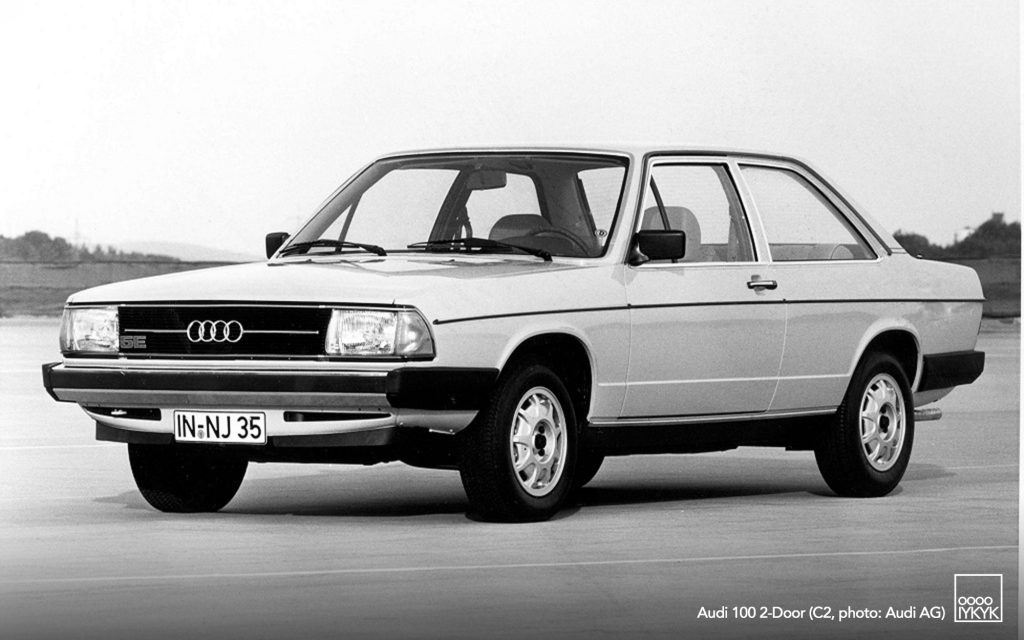
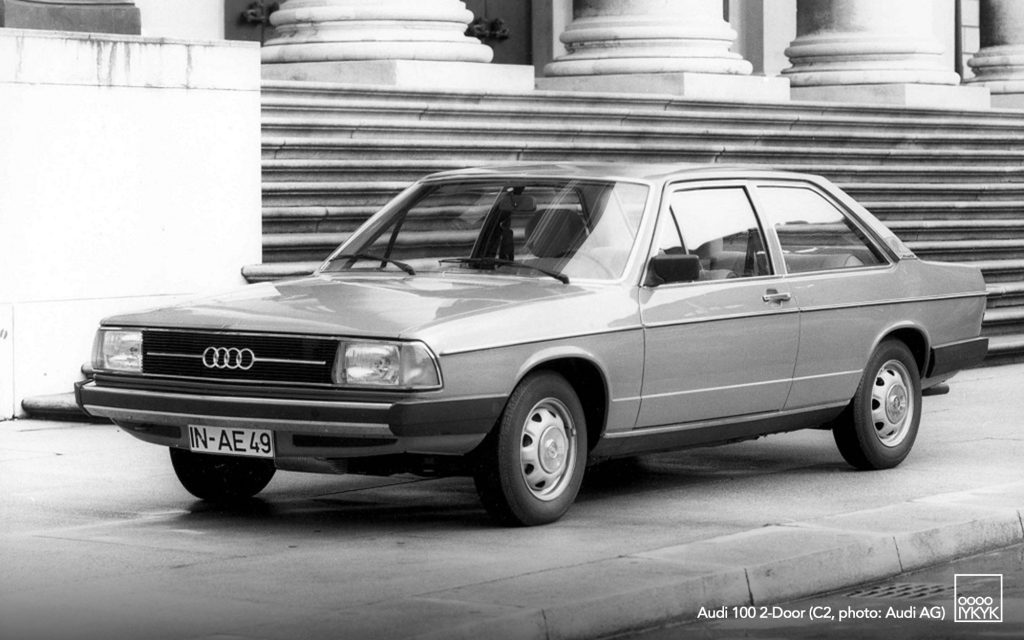
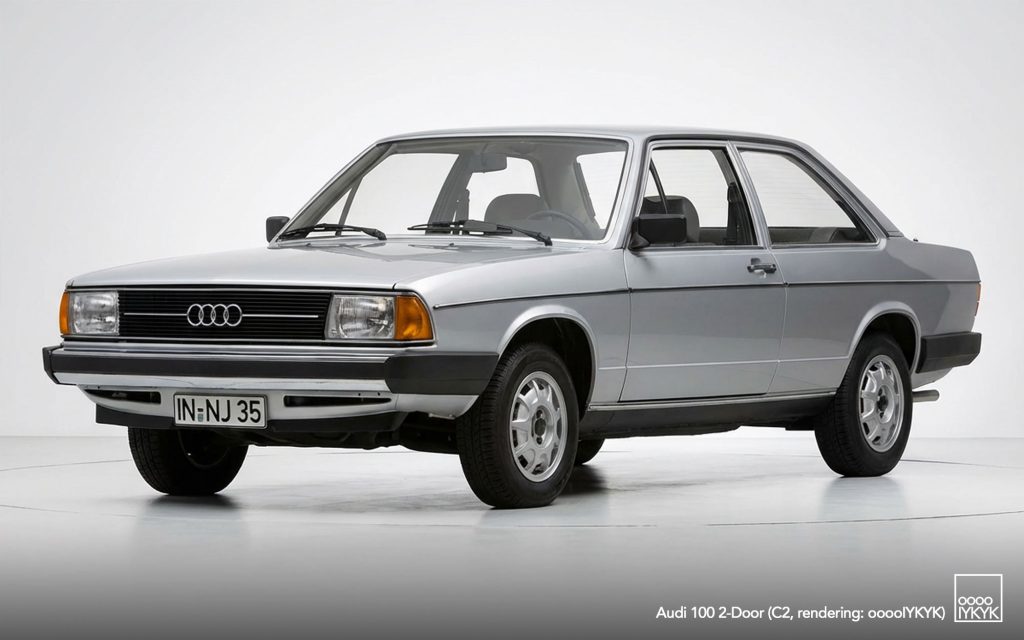
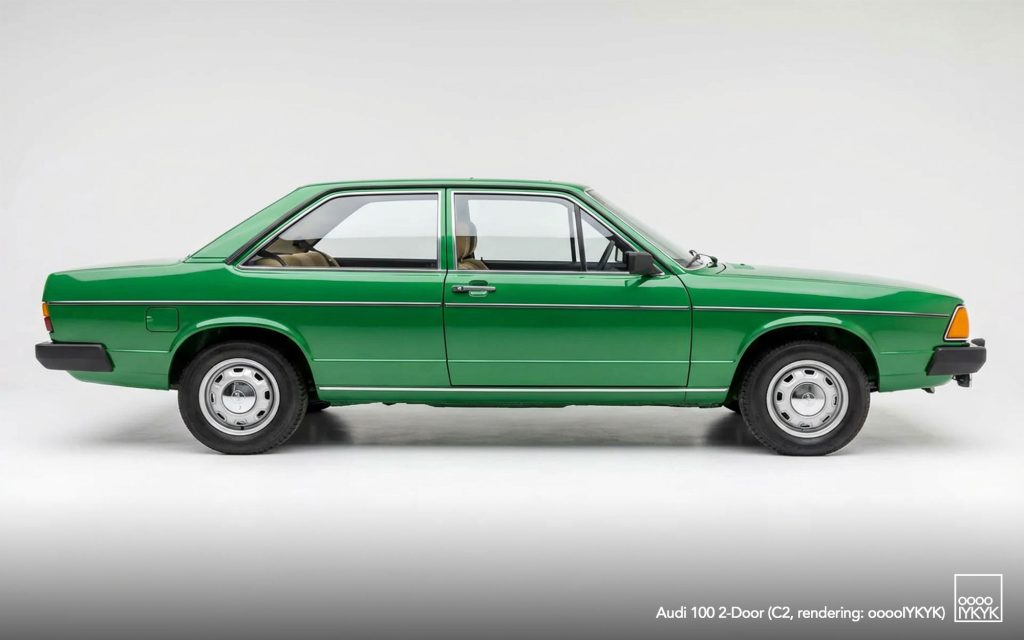
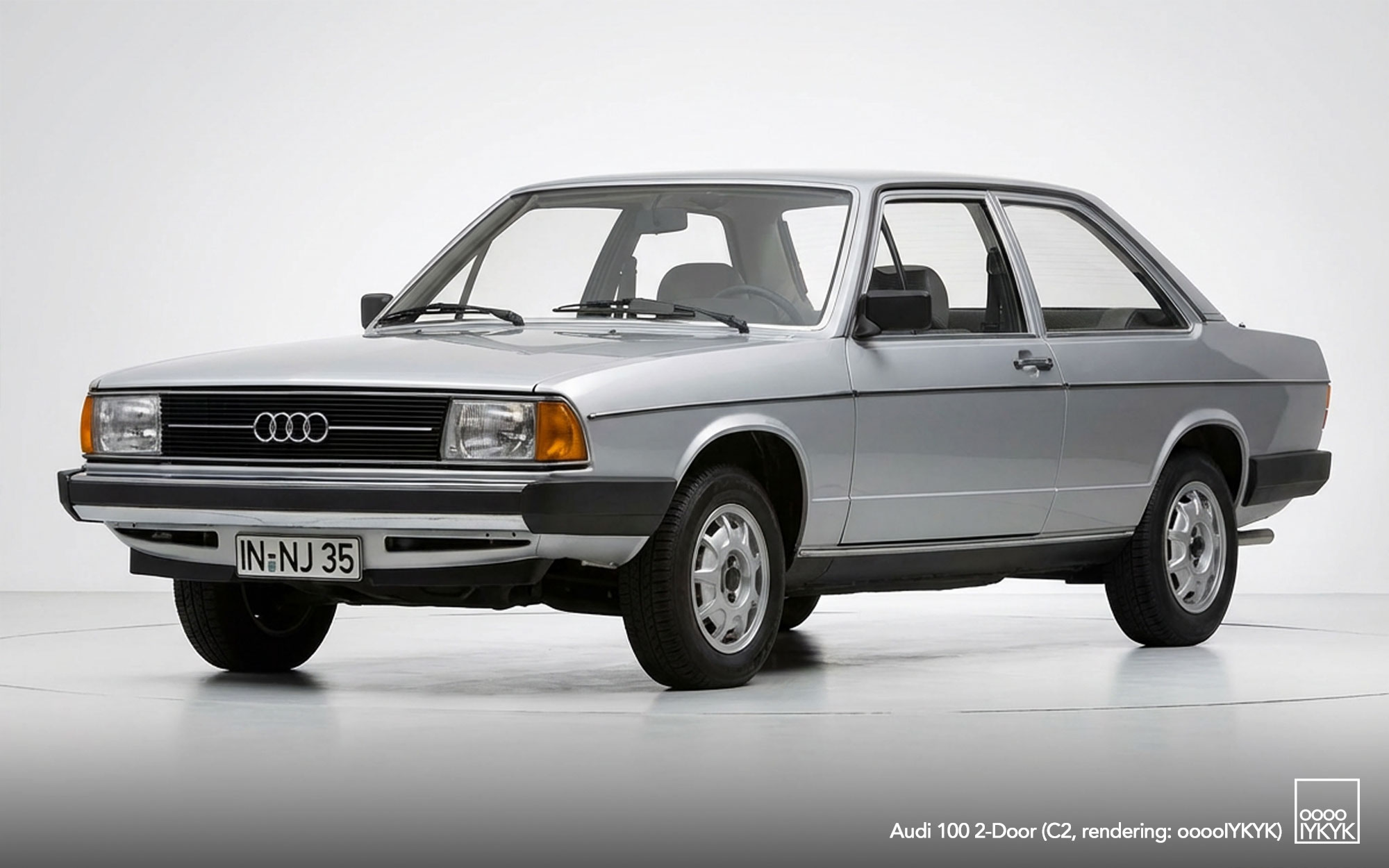
The Audi 100 (C2) two-door sedan is a rare body style of the second-generation Audi 100, produced primarily for the German and select European markets between 1977 and 1981. Introduced several months after the launch of the C2 four-door sedan, the two-door variant represented the final era in which Audi offered a large two-door notchback sedan—an increasingly uncommon configuration by the late 1970s. Unlike the earlier Audi 100 Coupé S (C1) or later Audi Coupé (B2), the two-door C2 was not a coupé in either styling or intent, but simply a two-door version of the standard sedan body.
BACKGROUND AND POSITION WITHIN THE RANGE
When the first-generation Audi 100 (C1) debuted in 1968, two-door sedans of this size remained common in Europe. Customers often perceived two-door sedans as slightly more affordable, somewhat more youthful, or modestly sportier alternatives to their four-door counterparts. By the mid-1970s, however, consumer preferences were shifting rapidly toward four-door vehicles, particularly in the emerging premium segments that Audi increasingly sought to occupy.
With the launch of the C2-generation Audi 100 in August 1976, Audi initially focused on the mainstream four-door sedan. The two-door C2 followed in February 1977, filling a diminishing but still present market niche, primarily in Germany and surrounding European markets.
DESIGN AND BODY STYLE
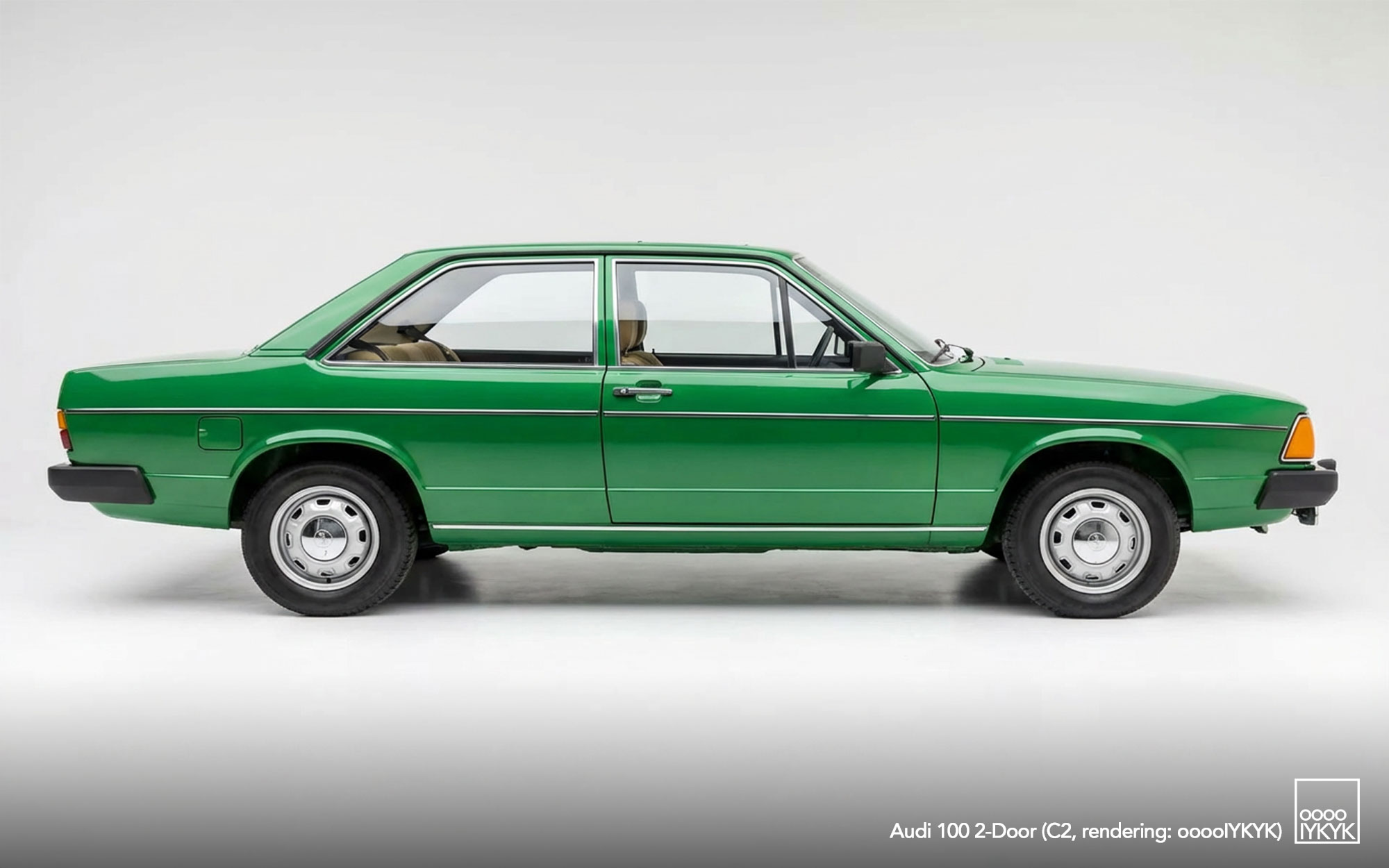
The Audi 100 (C2) two-door sedan shared its overall proportions, interior layout, and mechanical components with the four-door version. Its differences were limited to:
• Two longer front doors replacing the four shorter doors
• A slight alteration of the B-pillar and window framing
• Minor changes to interior trim to accommodate the altered door structure
Unlike Audi’s coupés of the period, the two-door C2 maintained the same upright notchback profile as the four-door sedan. It lacked a fastback or sloping rear roofline, distinguishing it clearly from the Audi 100 Coupé S (C1) and the Audi Coupé (B2) that later underpinned the quattro. For this reason, calling the two-door 100 a “coupé” is not technically correct; it adhered to the design conventions of conventional two-door sedans rather than sporting coupés.
ENGINE OPTIONS
Engine availability for the two-door sedan generally mirrored that of lower and mid-range four-door C2 models. This typically included:
Inline-four petrol engines:
1.6 L I4, 85 PS (63 kW)
2.0 L I4, 115 PS (85 kW) in early production
Inline-five petrol engines (depending on market):
2.1 L I5, 100 PS (74 kW), carbureted
2.1 L I5, 115 PS (85 kW), carbureted
The fuel-injected 5E (136 PS) and turbocharged engines associated with higher-end C2 models were generally not marketed in two-door form, reflecting the model’s positioning as a simpler, more affordable variant.
Both manual and automatic transmissions were available depending on engine choice and market.
MARKET RECEPTION AND RARITY
By the late 1970s, demand for large two-door sedans had largely disappeared in Europe. Customers who wanted a sporty Audi tended to choose the Audi 80 GT or Coupé (B2), while those wanting practicality, comfort, or executive form gravitated toward four-door models or—after 1977—the Audi 100 Avant liftback.
As a result, production numbers of the Audi 100 (C2) two-door were low. Precise figures have not been published by Audi, but surviving examples are rare, and contemporary advertisements show limited regional distribution.
The two-door was discontinued before the end of the C2 production cycle, and its successor, the Audi 100 (C3) introduced in 1982, did not include a two-door sedan at all—ending the era of large two-door Audi saloons.
LEGACY
The C2 two-door sedan serves today as a transitional model reflecting changing automotive tastes. It bridges the earlier era, represented by the C1, when two-door sedans were still viable mainstream offerings, and the later era, beginning with the C3, when Audi fully embraced the four-door executive format and relegated sport-oriented models to dedicated coupé platforms.
Surviving examples are now uncommon, often prized by collectors for their rarity and for representing an unusually overlooked body style within Audi’s history. The two-door C2 also stands as one of the last large two-door saloons offered by a German manufacturer outside explicitly premium coupé models.
PHOTO GALLERY