

/ Eras / Auto Union Postwar / 1000
MODEL DETAILS
What: Auto Union 1000 SP Coupé
Era: Auto Union Postwar Automobiles
Manufacturer: Auto Union GmbH (West Germany)
Model Family: 1000
Market / Zone: West Germany; export markets
Model Years: 1958, 1959, 1960, 1961, 1962, 1963, 1964, 1965
Production Span: 1958–1965
Number Produced: ~5,004
Model / Generation Code(s):
Chassis / Matrix:
TECHNICAL DETAILS
Body Style(s): 2-door coupé; 2+2 seating
Drivetrain Configuration: longitudinal front engine, front-wheel drive
Engine(s): 981 cc inline 3-cylinder, two-stroke, 74.0 × 76.0 mm, compression ratio 8.0:1
Engine Structure: ported two-stroke; cast iron cylinder head and block; Bing carburetor; water cooled
Transmission(s): 4-speed manual with freewheel; spiral bevel final drive (3.87)
Power Output: 41 kW (55 PS / 54 hp) @ 4,500 rpm
Torque: 47.9 Nm @ 3,000 rpm
Steering: rack and pinion
Brakes: hydraulic drum brakes; single braking circuit
Fuel Tank Capacity: 50.0 L (13.2 US gal / 11.0 Imp gal)
Wheelbase: 2,340 mm (92.5 in)
Front Track: 1,290 mm (50.8 in)
Rear Track: 1,351 mm (53.2 in)
Length: 4,140 mm (163.0 in)
Width: 1,422 mm (56.0 in)
Height: 1,092 mm (43.0 in)
Ground Clearance: 200 mm (7.9 in)
Turning Circle: 11.8 m (39 ft)
Kerb Weight: 874 kg (1,924 lb)
Top Speed: 132 km/h (82 mph)
0–100 km/h: 24.2 seconds
Fuel Consumption (test): 24.9 mpg (11.3 L/100 km)
CHASSIS DETAILS
Construction: separate chassis with steel bodywork
Front Suspension: independent; lower wishbones; upper transverse semi-elliptic spring
Rear Suspension: dead axle; transverse semi-elliptic spring; telescopic dampers
OTHER DETAILS
Predecessor: DKW 3-6 Coupé
Successor: Audi 100 Coupé S
Platform Mates: Auto Union 1000; Auto Union 1000 Universal; Auto Union 1000 SP Roadster
Concept Cars:
Assembly Location(s): Düsseldorf; Ingolstadt
Designer(s): Josef Dienst with input from director William Werner
Homologations:
WHEEL / TIRE DETAILS
Wheel Diameter(s): 15 in
Tire Size(s): 155 × 15
Bolt Pattern:
Offset:
SUMMARY
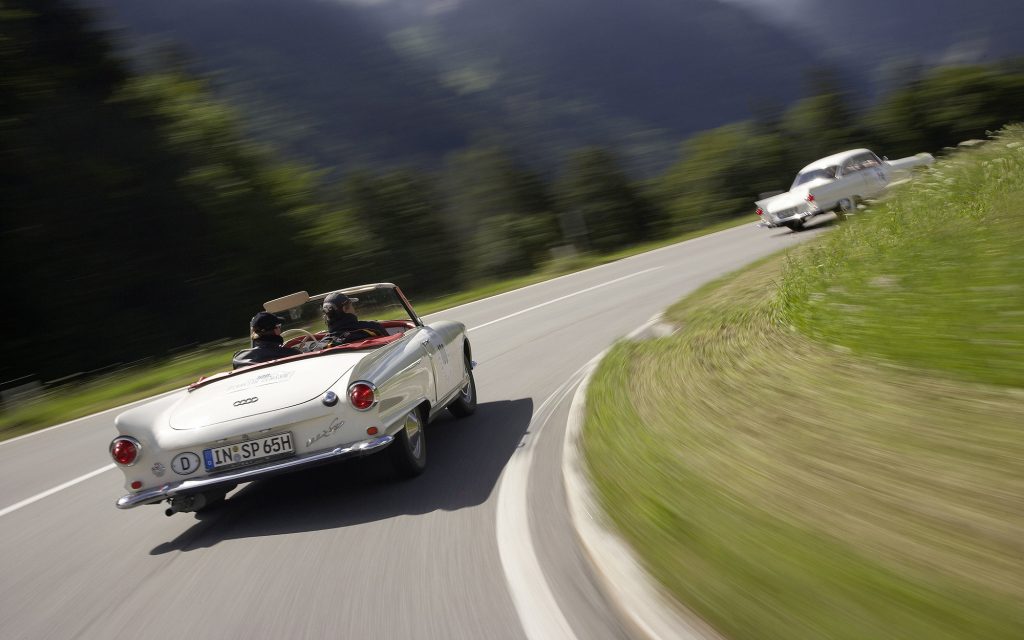
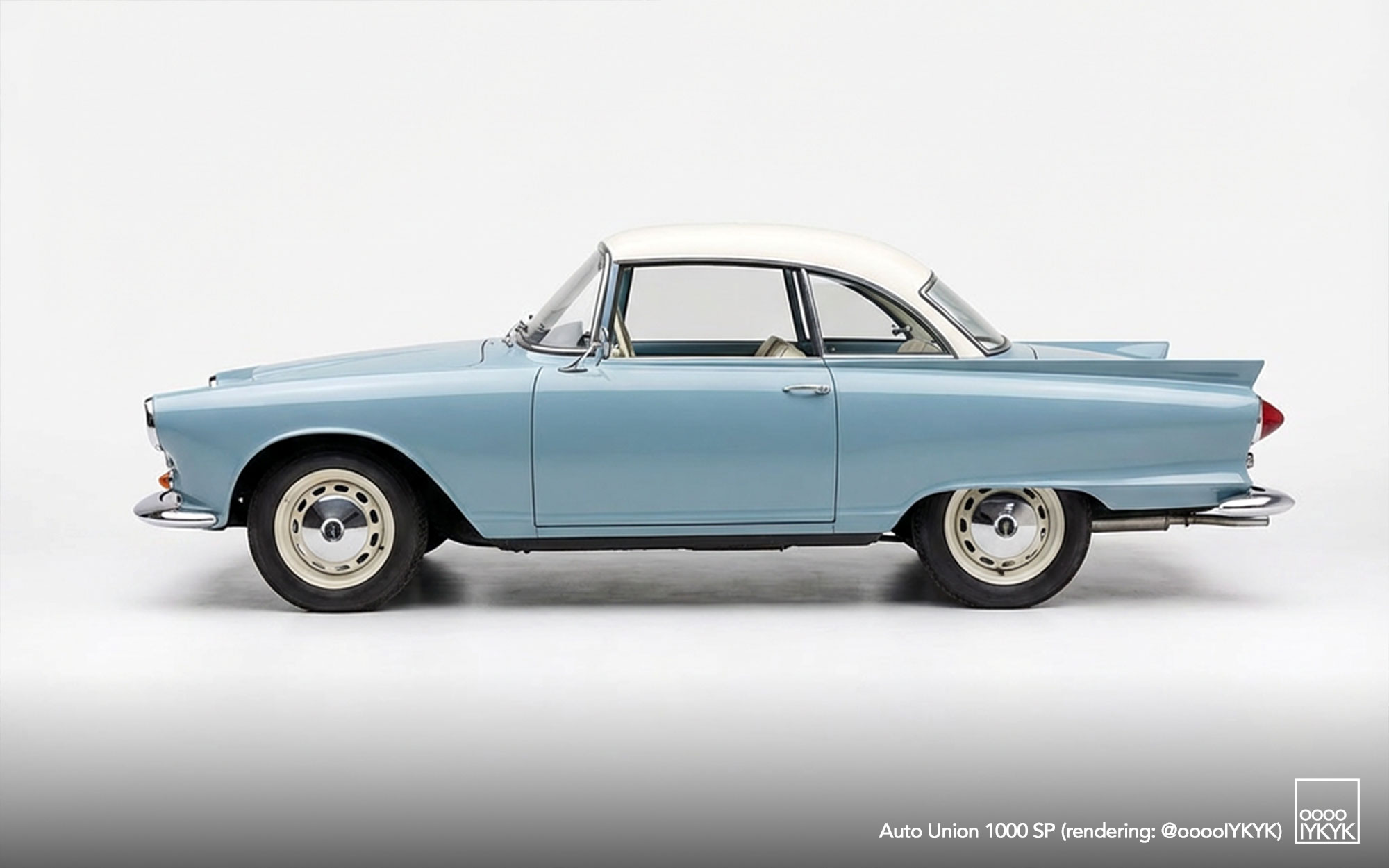
The Auto Union 1000 SP was a two-seat sports coupé and roadster produced by German automaker Auto Union between 1958 and 1965. Distinguished by its tailfin styling reminiscent of the Ford Thunderbird, it represented one of the last pre-Audi models built under the Auto Union name.
DESIGN & POSITIONING
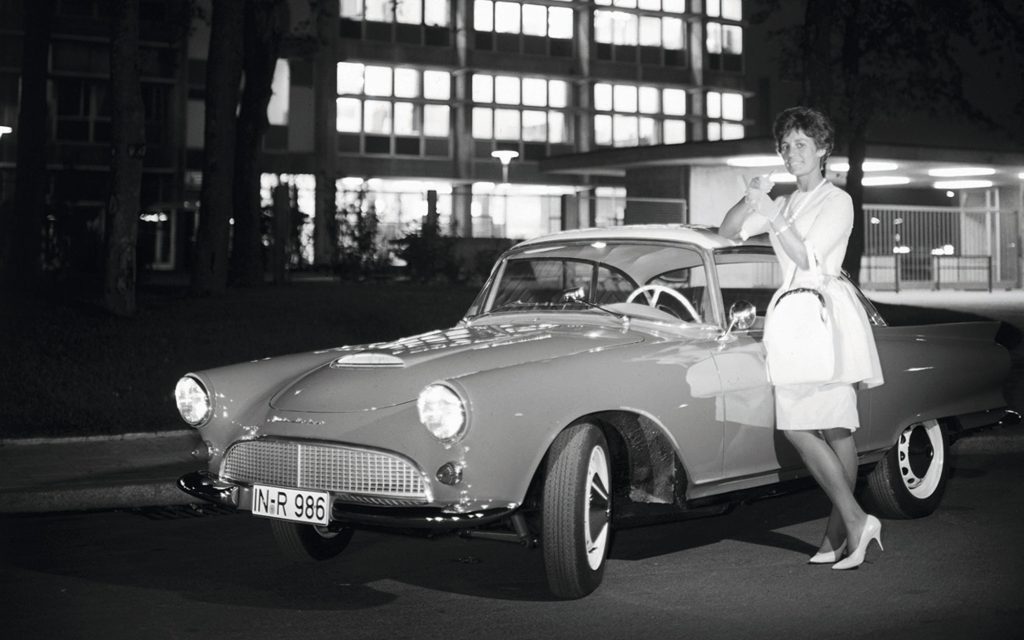
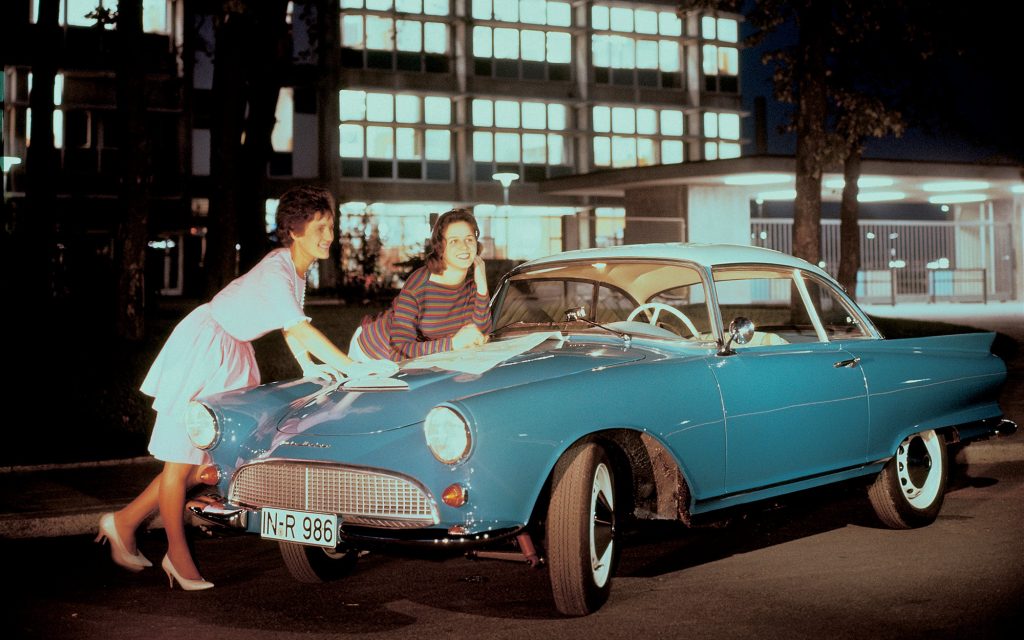
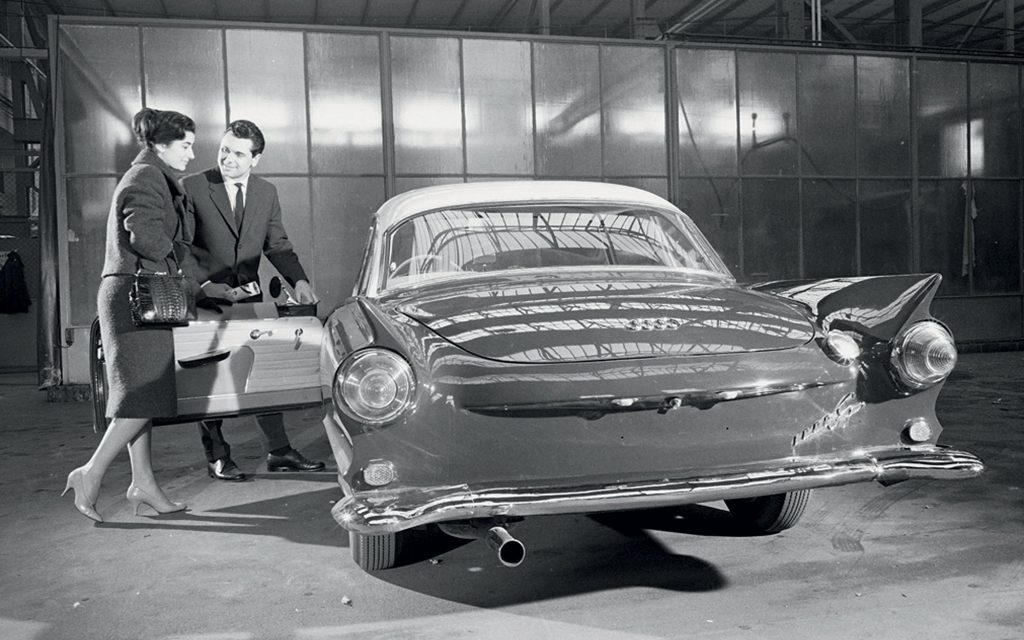
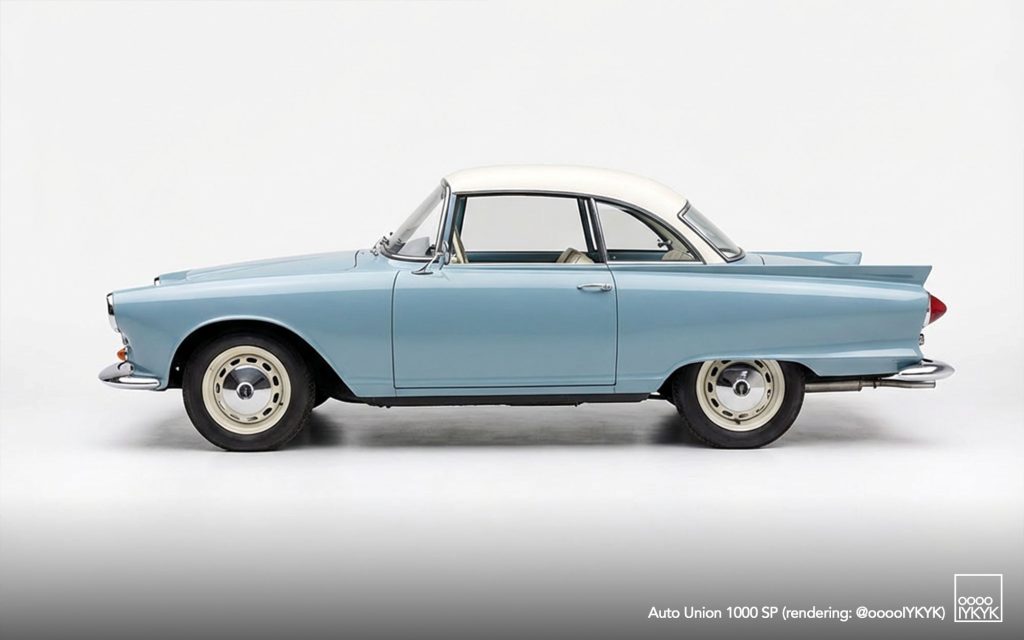
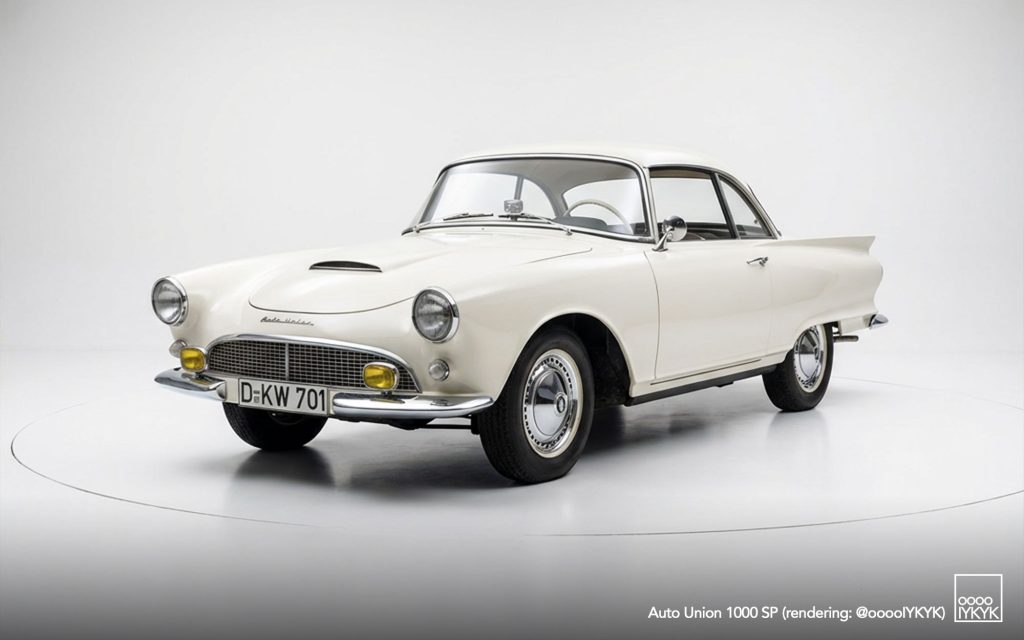
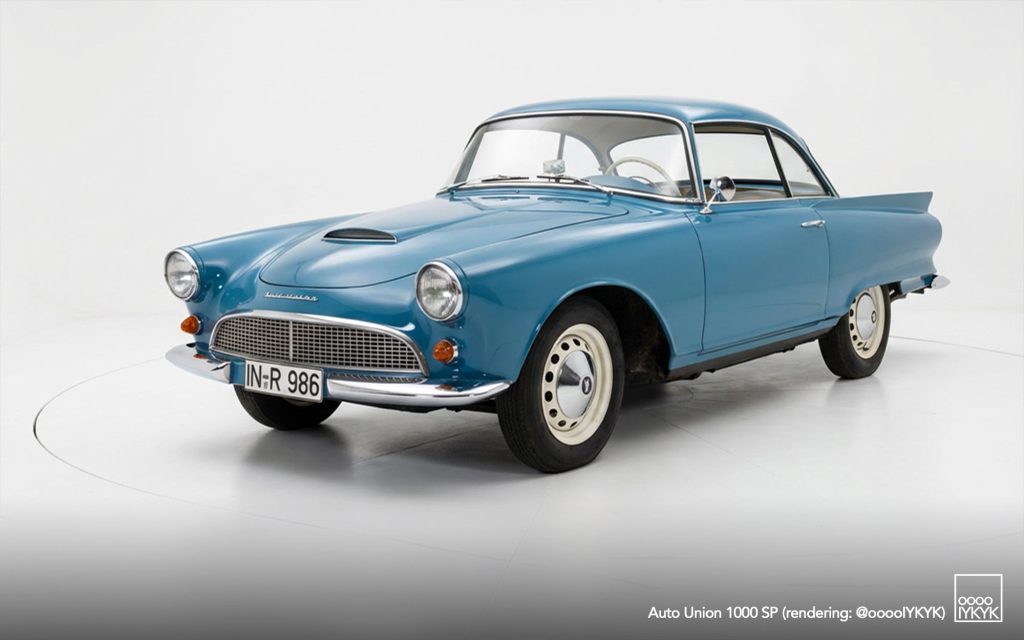
Introduced shortly after the Auto Union 1000 saloon, the 1000 SP Coupé was conceived as the image leader of the 1000 range. While sharing wheelbase and track dimensions with the sedan, the coupé body was approximately three inches shorter overall, with dramatically longer doors that opened nearly 90 degrees for improved access. The rear seats were minimal and functioned more as a padded parcel shelf than true passenger accommodations, reinforcing its grand touring intent.
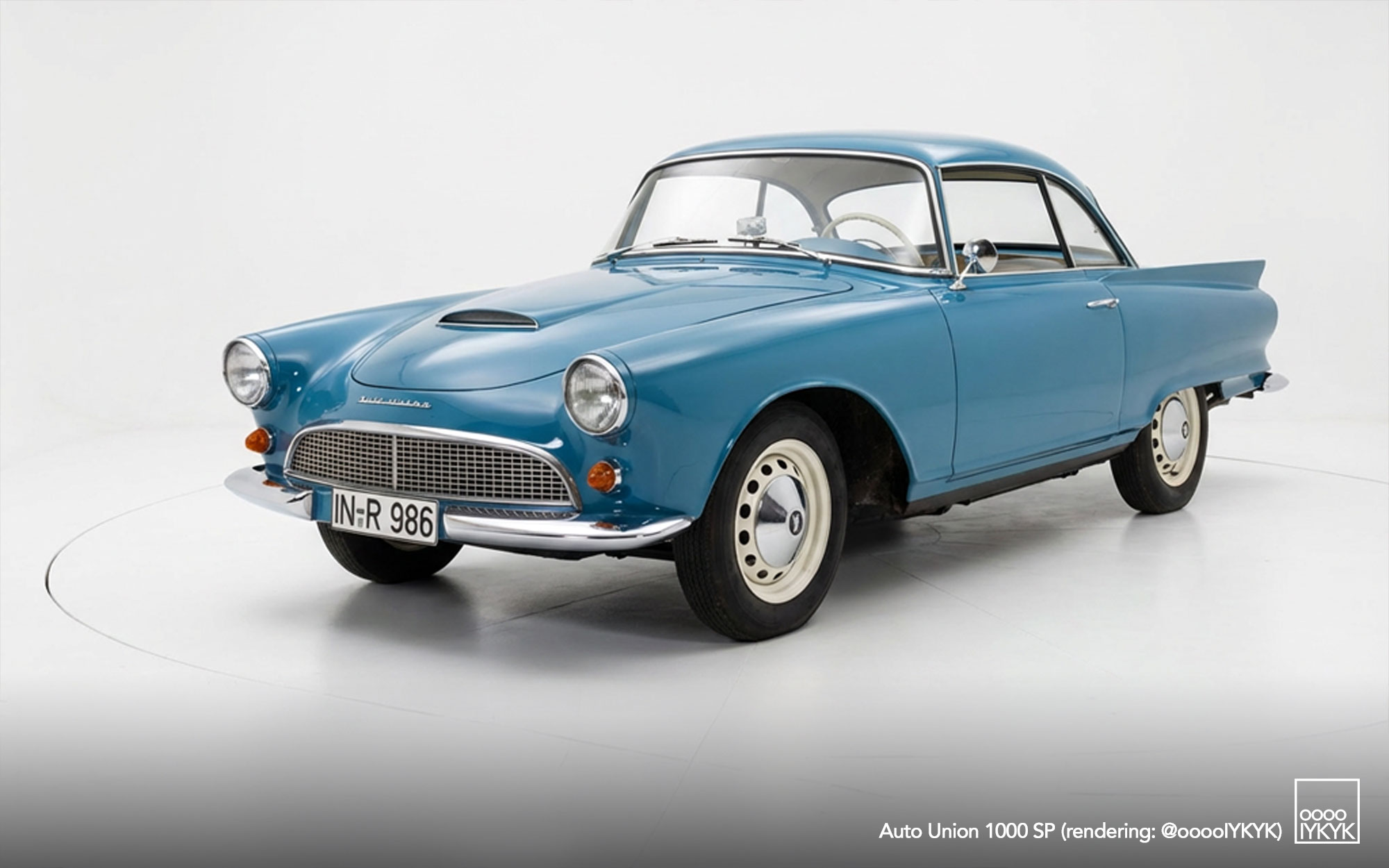
Styling drew heavily from contemporary American influence, particularly the Ford Thunderbird. Prominent tailfins, a low roofline and restrained chrome detailing gave the SP a distinctly late-1950s character that set it apart from the more conservative 1000 sedan.
ENGINEERING & PERFORMANCE
Without conventional valve timing, extracting additional performance from the two-stroke three-cylinder engine required careful alteration of cylinder porting and an increased compression ratio of 8.0:1. These changes produced 55 PS at 4,500 rpm and peak torque of 47.9 Nm at 3,000 rpm, notably higher in the rev range than the saloon’s torque peak at 2,250 rpm. This resulted in a slightly less tractable but more performance-focused driving character.
The four-speed gearbox incorporated Auto Union’s characteristic freewheel mechanism, which reduced engine braking during overrun. When reverse gear was selected, the system automatically locked out the freewheel, providing engine braking while maneuvering backward.
CHASSIS & DRIVING CHARACTER
The SP retained the separate chassis construction of the 1000 range, with steel bodywork mounted atop. Front suspension consisted of independent lower wishbones with an upper transverse semi-elliptic spring, while the rear utilized a dead axle with a transverse semi-elliptic spring and telescopic dampers. Steering was rack and pinion, and braking was handled by hydraulic drums in a single-circuit system.
With a kerb weight of 874 kg and a top speed of approximately 132 km/h, performance was modest by sports car standards. Acceleration to 100 km/h required 24.2 seconds. However, the combination of light weight, front-wheel drive traction and responsive steering gave the car a distinctive and balanced feel for its class.
MARKET IMPACT & LEGACY
Although it never achieved recognition as a serious competition sports car, the 1000 SP quickly became a fashionable accessory in West Germany and export markets. Its styling presence and mechanical distinctiveness ensured it stood apart from both domestic competitors and more conservative German offerings of the period.
Today, the Auto Union 1000 SP Coupé stands as one of the most recognizable products of the Auto Union two-stroke era and represents a symbolic bridge between DKW heritage and the eventual revival of the Audi marque under Volkswagen ownership.
REFERENCES
- Auto Union 1000, Wikipedia
- Auto Union 1000 SP, Wikipedia
- The Audi File, by Eric Dymock
- Audi Tradition via Audi.com
PHOTO GALLERY