

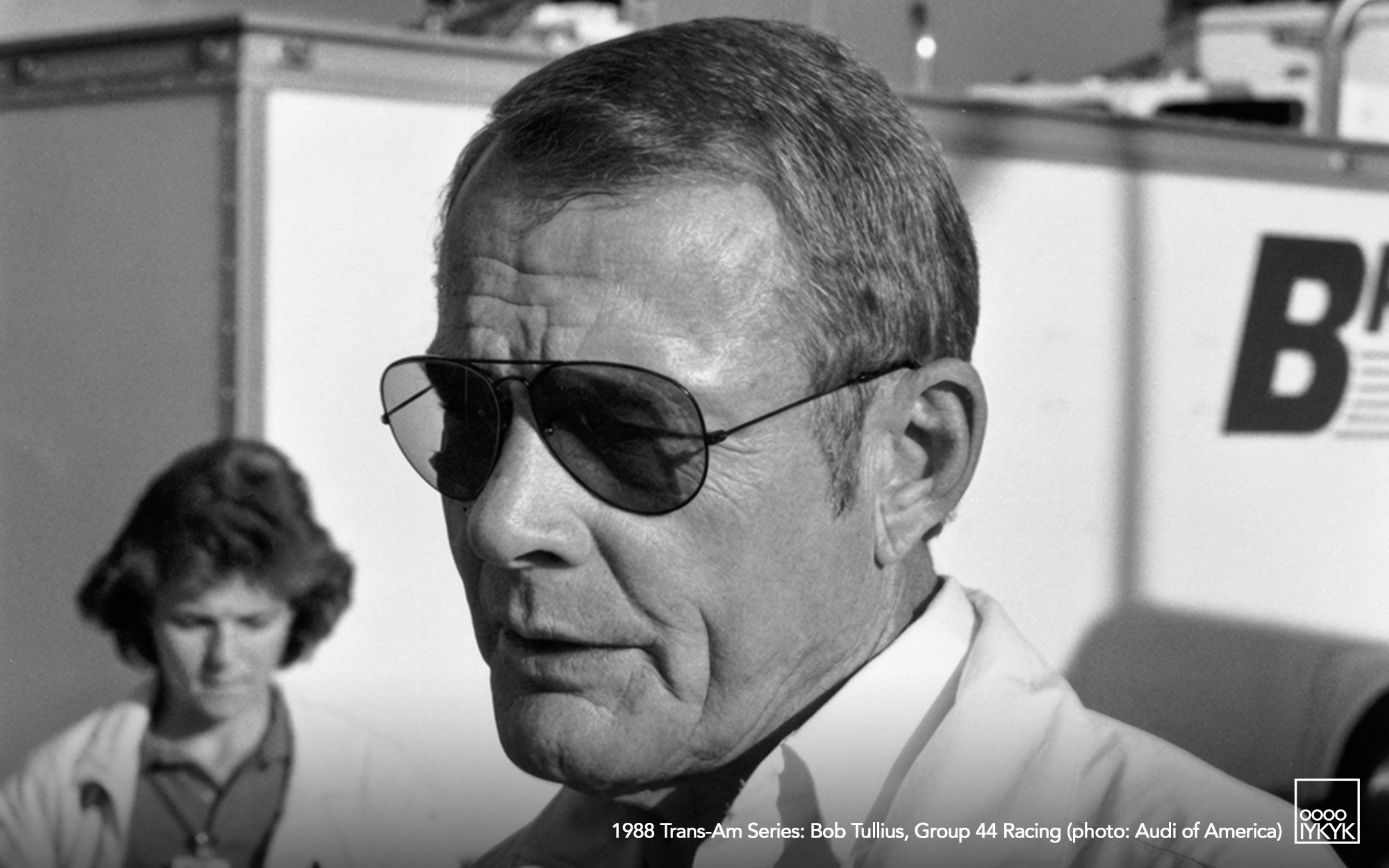

Robert Charles “Bob” Tullius (December 7, 1930 – March 16, 2026)
Born: December 7, 1930 — Rochester, New York, USA
Died: March 16, 2026 — Port Orange, Florida, USA
Nationality: American
Occupation: Racing driver, team owner, motorsport executive
Known for: Founder of Group 44, pioneer of modern motorsport marketing, Jaguar and Audi competition programs
Active years: 1961–1988 (driver), 1965–1990 (Group 44)
OVERVIEW
Bob Tullius was an American racing driver, team owner, and motorsport innovator best known as the founder of Group 44, one of the most successful and professionally run privateer teams in North American road racing history. Over a 25-year period, Group 44 amassed more than 300 race wins and 14 national championships across SCCA, IMSA, and Trans-Am competition.
While widely associated with Jaguar’s return to international sports car racing in the 1980s, Tullius also played a pivotal role in Audi’s transition from rally dominance to circuit racing in the United States. His leadership of Audi’s 1988 Trans-Am program remains one of the most significant and influential seasons in the marque’s motorsport history.
GROUP 44
Founded in 1965 by Tullius alongside Brian Fuerstenau and Dick Gilmartin, Group 44 was conceived as more than a racing team. It combined competition, engineering, and marketing into a unified operation—decades ahead of what would become standard practice in professional motorsport.
The team became known for its immaculate presentation, corporate partnerships, and distinctive white-and-green livery. Its success with British Leyland brands—particularly Triumph, MG, and Jaguar—established Group 44 as a dominant force in American sports car racing.
Among its most notable achievements was the return of Jaguar to the 24 Hours of Le Mans in 1984 after a 27-year absence, culminating in a GTP class victory in 1985.
ASSOCIATION WITH AUDI
TRANS-AM PROGRAM (1988)
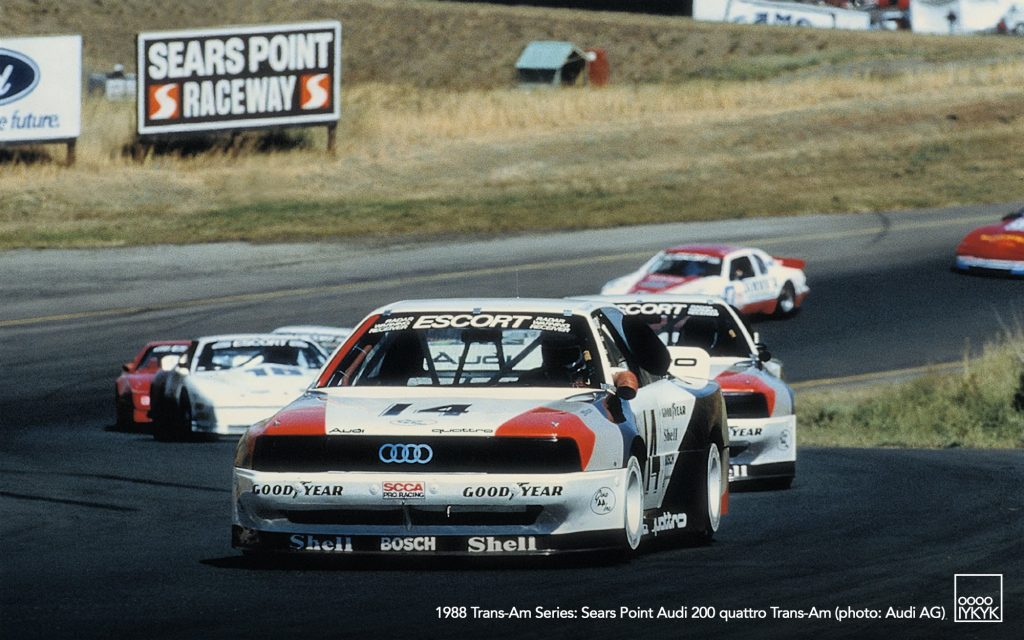
Following the conclusion of its Jaguar partnership, Group 44 was selected by Audi to lead its entry into the SCCA Trans-Am Series. The program marked Audi’s first major factory-backed circuit racing effort in North America.
The team developed and campaigned the Audi 200 quattro Trans-Am, a production-based sedan powered by a turbocharged inline-five engine and equipped with Audi’s quattro all-wheel-drive system.
Driven primarily by Hurley Haywood, with support from Hans-Joachim Stuck and Walter Röhrl, the Group 44-run Audi program delivered immediate and overwhelming success:
Wins: 8 of 13 races
Drivers’ Champion: Hurley Haywood (1988)
Manufacturers’ Champion: Audi
The dominance of the quattro-equipped Audi 200 was so pronounced that it prompted regulatory changes within the series, including restrictions that ultimately led to the banning of all-wheel-drive and non-American engines in Trans-Am competition.
This campaign not only secured Audi’s only Trans-Am manufacturers’ title but also played a key role in reshaping the brand’s image in the United States during a critical period.
TECHNICAL AND STRATEGIC SIGNIFICANCE
Tullius’ Group 44 provided more than operational support. The team’s experience in vehicle development, race strategy, and professional presentation enabled Audi to rapidly transition from rally success to circuit racing credibility.
Audi’s decision to partner with Tullius reflected his reputation for delivering competitive results while maintaining a highly polished, sponsor-driven program—an approach that aligned with Audi’s broader marketing and brand objectives in North America.
DRIVING CAREER
In addition to his role as team owner, Tullius maintained an extensive driving career spanning more than two decades. He competed in over 250 races, achieving numerous overall and class victories across multiple disciplines.
His versatility included entries in Trans-Am, IMSA GTP, NASCAR Grand American, and endurance racing at Le Mans and Daytona. His final professional victory came at the 1986 3 Hours of Daytona in the Jaguar XJR-7.
LEGACY AND INFLUENCE
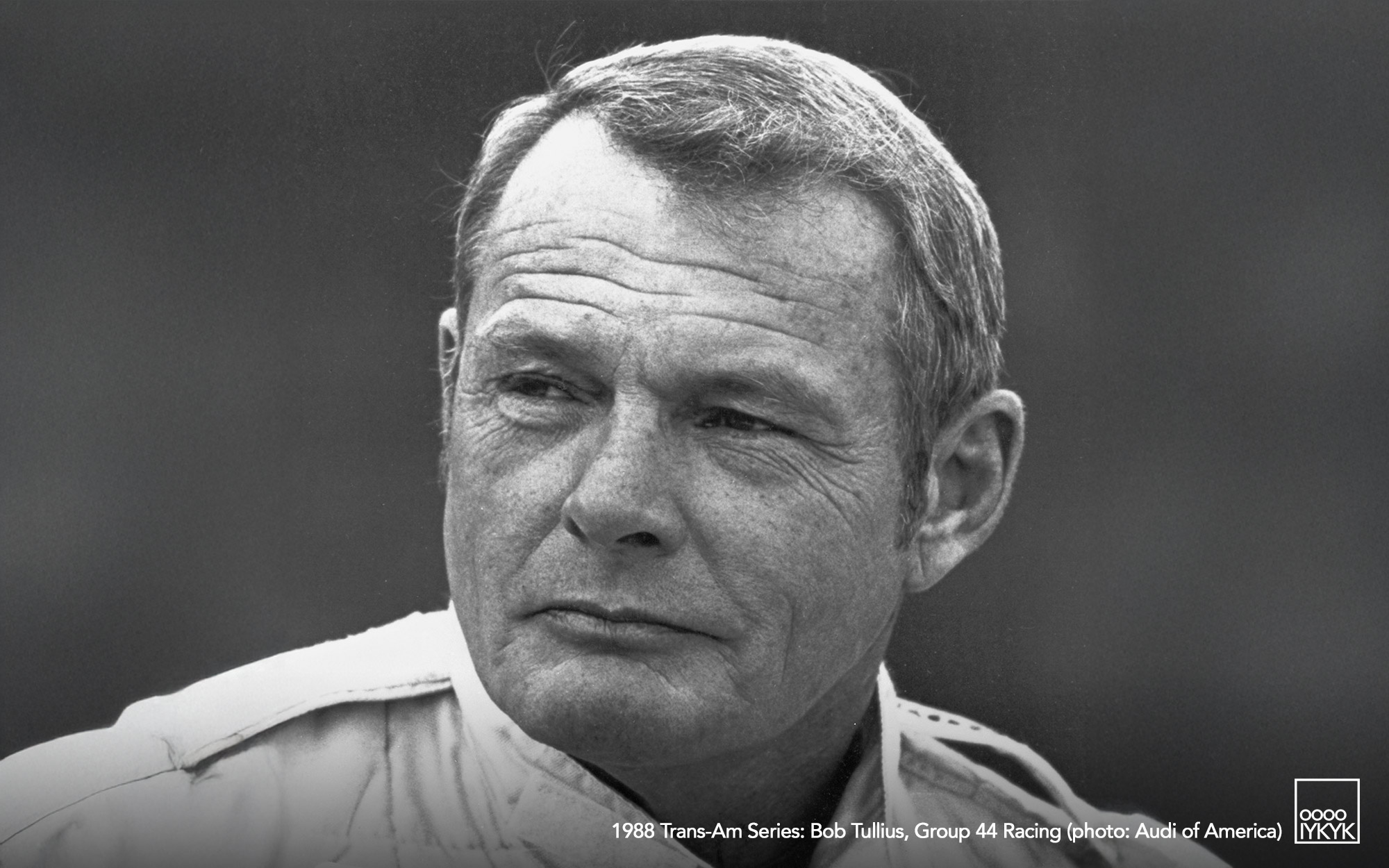
Bob Tullius is widely regarded as a pioneer of modern motorsport team operations. His emphasis on branding, sponsor integration, and media engagement established a template that would later be adopted across professional racing.
Through Group 44, he demonstrated that success in motorsport extended beyond engineering and driving talent to include presentation, storytelling, and commercial partnerships.
His work with Audi in 1988 remains a defining moment in the brand’s motorsport history—bridging the gap between its rally-era dominance and its later successes in touring car and endurance racing.
HONORS AND RECOGNITION
Sebring Hall of Fame — 2014
SCCA Hall of Fame — 2015
British Sports Car Hall of Fame — 2017
Motorsports Hall of Fame of America — 2018
IMSA Hall of Fame — 2025
PERSONAL LIFE
Outside of motorsport, Tullius was an accomplished aviator and collector of historic aircraft. His Group 44 hangar at Sebring became a destination for enthusiasts, housing both race cars and a diverse collection of vintage aircraft.
He was also an active supporter of animal welfare organizations, personally fostering numerous cats and supporting humane societies throughout his life.
He is survived by his daughter, daughter-in-law, eight grandchildren, and three great-grandchildren. He was preceded in death by his son, Russel.
A celebration of life will be announced at a later date, with the family requesting that donations be made to the Humane Society in his name.