

5-cylinder
Noun
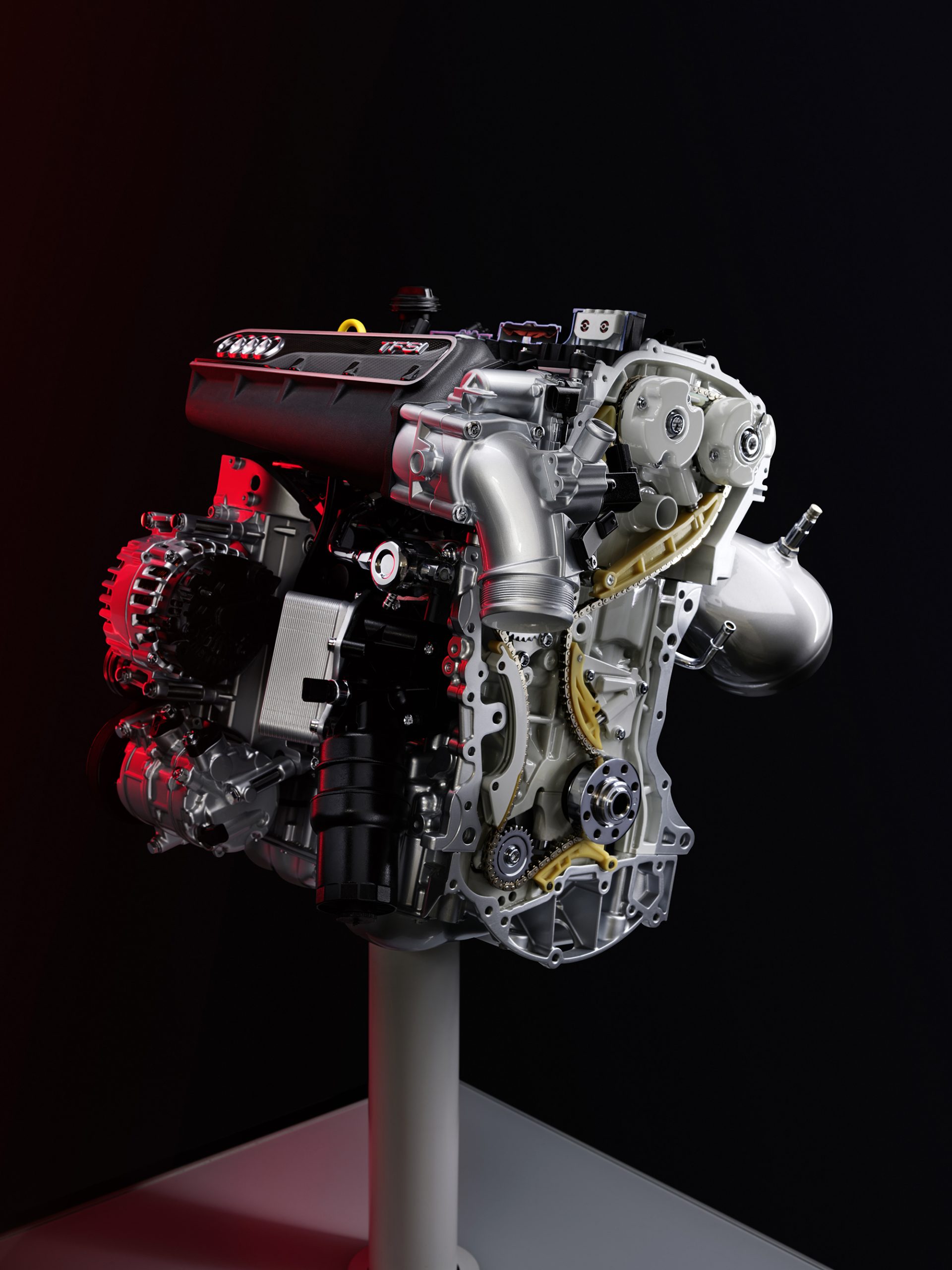
A five-cylinder engine is an internal combustion engine with five cylinders arranged in a line (inline-five) or, more rarely, in other configurations. It combines characteristics of both four- and six-cylinder engines, offering smoother operation and more torque than a four-cylinder while remaining more compact and lighter than a six-cylinder. Five-cylinder engines are known for their distinctive 1-2-4-5-3 firing order, which produces a unique sound and contributes to their enthusiast appeal. They have been used in passenger cars, commercial vehicles, and motorsport applications, with notable development and long-term refinement by manufacturers such as Audi and Volvo.
SYNONYMS + SLANG
- Inline 5
- Five Pot (slang)
ARCHIVE TAG
DETAILED HISTORY
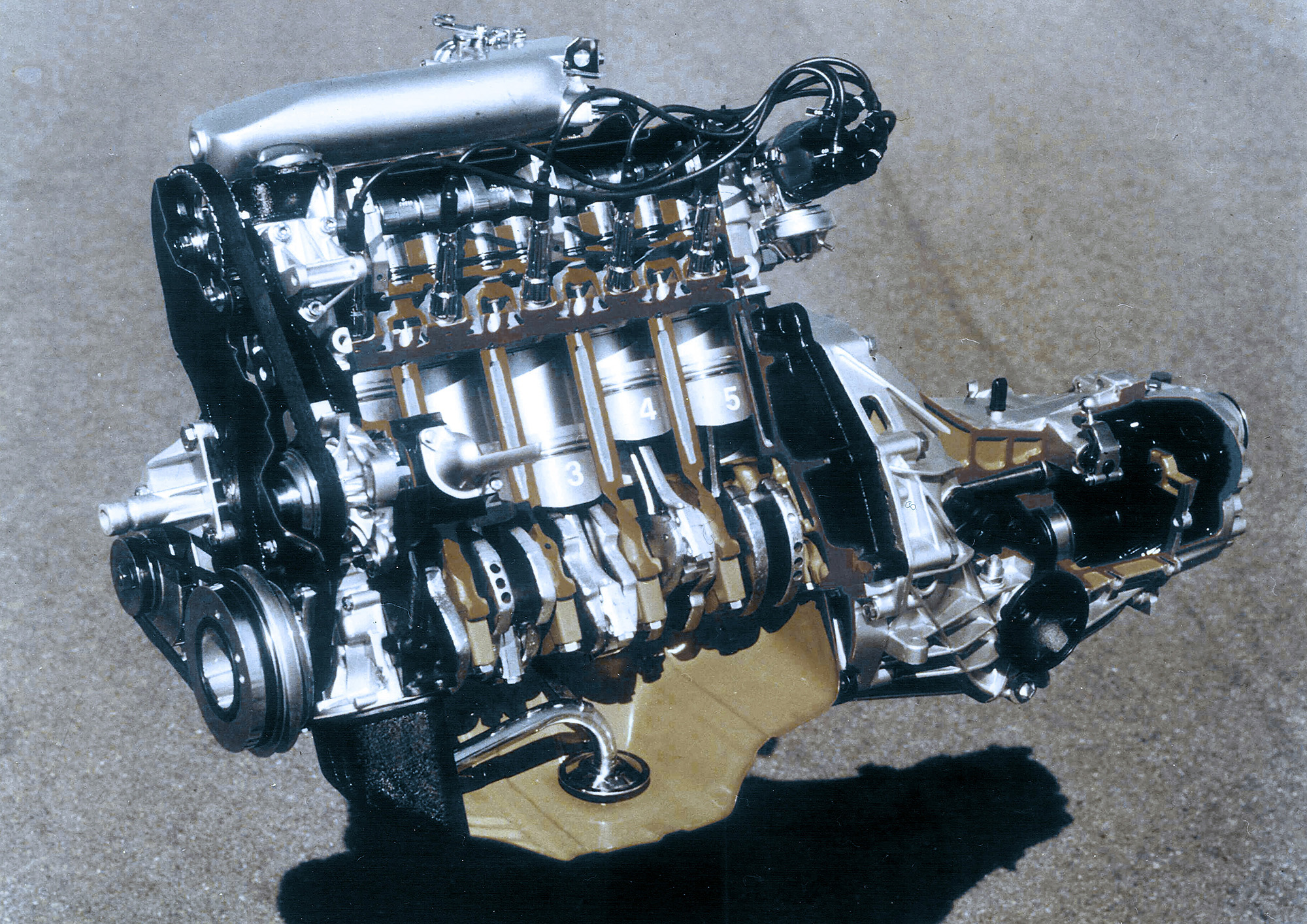
The Audi five-cylinder engine is a family of inline five-cylinder petrol and diesel engines developed by Audi and used in both production vehicles and motorsport since 1976. Closely associated with the brand’s technical identity and “Vorsprung durch Technik” philosophy, these engines have powered everything from executive sedans to Group B rally cars and modern RS models. They are noted for their distinctive 1–2–4–5–3 firing order, characteristic sound, and long history of technical evolution from mechanically simple, naturally aspirated units to high-output turbocharged and direct-injection designs.
ORIGINS AND DEVELOPMENT
The introduction of the first Audi 100 in 1968 secured the continued existence of the Audi brand in the post-war era. Its successor, the Audi 100 Type 43 (C2), was conceived to be positioned higher in the market. Audi engineers concluded that the four-cylinder engines then available, derived from the EA 827 family and used widely in vehicles such as the Volkswagen Golf and Passat and the Audi 80 and 100, would not be sufficient for this more upscale positioning.
During the early 1970s, Audi evaluated several engine concepts, including inline five- and six-cylinder designs as well as a V6. The inline six-cylinder was rejected due to packaging concerns and the risk of excessive front-axle weight in a front-wheel-drive chassis. A V6 would have required significant investment in new production tooling and was therefore ruled out on cost grounds.
The inline five-cylinder emerged as the optimal solution. It could be integrated into existing engine production lines and was closely based on the young EA 827 four-cylinder engine family, scaled and adapted to accommodate an additional cylinder. This approach minimized investment while delivering performance and refinement beyond what was possible with contemporary four-cylinder units.
FIRST PRODUCTION APPLICATIONS
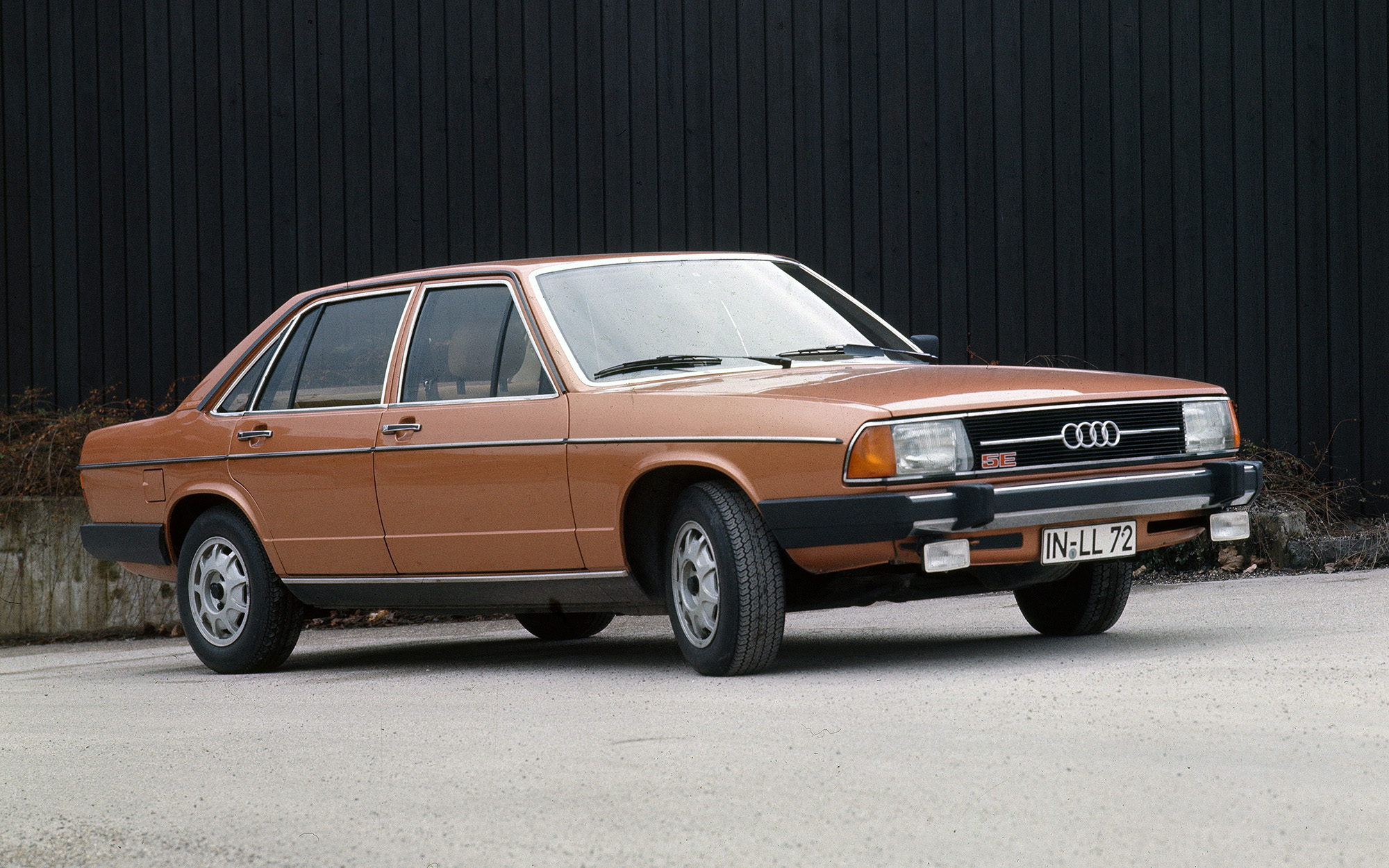
The first Audi five-cylinder petrol engine debuted in the Audi 100 Type 43 in 1976, unveiled in Luxembourg. Deliveries of the Audi 100 5E began in March 1977. This engine featured:
- Displacement: 2,144 cc
- Configuration: inline five, petrol
- Fuel system: Bosch K-Jetronic mechanical fuel injection
- Output: 100 kW (136 PS / 136 hp)
This engine delivered “six-cylinder power with four-cylinder economy,” and helped position the new Audi 100 higher in the executive segment. Its distinctive sound and smoothness quickly became part of the car’s appeal.
Audi soon expanded the five-cylinder family beyond petrol units. In 1978, the brand introduced its first five-cylinder diesel, a naturally aspirated 2.0-litre engine producing 51 kW (70 PS). This engine gained early publicity through a world endurance run that demonstrated both its efficiency and durability.
TURBOCHARGING AND PERFORMANCE GROWTH
In September 1979, Audi introduced the first turbocharged five-cylinder petrol engine in the Audi 200 5T. Key data for this engine included:
- Displacement: 2.1 litres
- Output: 125 kW (170 PS)
- Torque: 265 Nm
This was a pioneering application of turbocharging in a high-performance road-going executive car from a German manufacturer. It significantly expanded the performance envelope of the five-cylinder concept and laid the groundwork for even more powerful applications.
The five-cylinder reached a new level of prominence in 1980 with the launch of the original Audi quattro. In this application, the turbocharged, intercooler-equipped five-cylinder engine produced:
- Output: 147 kW (200 PS)
- Drivetrain: combined with permanent quattro all-wheel drive
This package became a hallmark of Audi’s engineering identity in both motorsport and series production.
MOTORSPORT AND GROUP B
The five-cylinder engine achieved legendary status in motorsport, particularly in rallying and North American touring car racing.
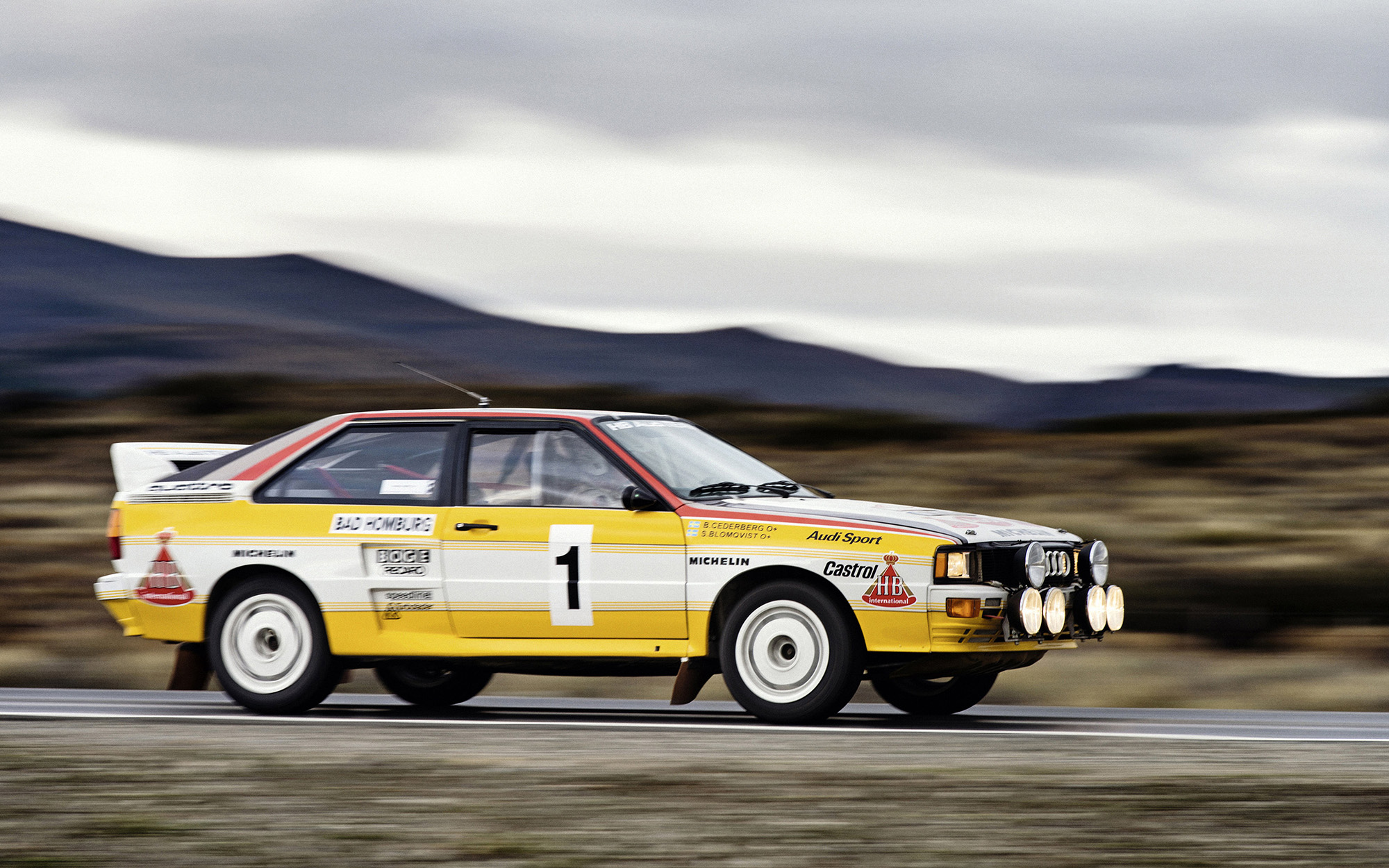
In the World Rally Championship (WRC), the turbocharged five-cylinder powered the original Audi quattro to major success. Audi won the manufacturers’ title in 1982, and Finnish driver Hannu Mikkola secured the drivers’ championship in 1983 using quattro-based machinery.
In 1983, Audi introduced the Sport quattro, a shorter and wider development of the quattro with a newly designed four-valve-per-cylinder, light-alloy five-cylinder engine. Key figures for the road-going Sport quattro were:
- Output: 225 kW (306 PS)
- Status: at the time, the most powerful car ever offered by a German manufacturer for road use
The Sport quattro formed the basis for a new Group B rally car in which the four-valve five-cylinder produced approximately 331 kW (450 PS) in competition trim. It debuted in the penultimate round of the 1984 WRC, the Ivory Coast Rally. Over the remainder of the Group B era, Audi deployed both the Sport quattro and the evolved quattro A2. Swedish driver Stig Blomqvist campaigned the 265 kW (360 PS) Audi quattro A2 and won the 1984 drivers’ title, with Audi again taking the manufacturers’ championship.
Even after Audi’s withdrawal from WRC Group B in 1986, the five-cylinder engine continued to feature in high-profile competition:
- Pikes Peak 1987: Walter Röhrl won the famous hill climb in the Audi Sport quattro S1 (E2), developing around 440 kW (598 PS).
- Trans-Am 1988: In the Audi 200 quattro Trans-Am, Audi used a turbocharged 2.1-litre five-cylinder with a two-valve cylinder head, producing about 375 kW (510 PS). American driver Hurley Haywood won the Trans-Am series that year.
- IMSA GTO 1989: Audi’s IMSA GTO car used a highly developed five-cylinder turbo engine producing around 530 kW (720 PS) from slightly over two litres of displacement, making it one of the most extreme touring car engines of its day.
DIESEL AND TDI DEVELOPMENT
Audi continued to evolve its five-cylinder diesel technology alongside the petrol units. A key milestone was the introduction of the Audi 100 TDI at the 1989 International Motor Show (IAA) in Frankfurt. This model featured:
- Engine: direct-injection, turbocharged five-cylinder diesel
- Displacement: 2.5 litres
- Output: 88 kW (120 PS)
- Technology: fully electronic engine management
This five-cylinder TDI represented an important step in the development of modern diesel technology, combining direct injection, turbocharging, and sophisticated electronic control.
HIGH-PERFORMANCE ROAD CARS
Throughout the 1980s and early 1990s, Audi broadened the five-cylinder engine’s role in high-performance road cars. Notable models included:
- Sport quattro (306 PS) – homologation special for Group B, as noted above
- Audi 200 quattro 20V – utilizing a four-valve turbocharged five-cylinder with significant performance gains over earlier engines
- Audi S2 – a performance coupé and later Avant using 20-valve turbocharged five-cylinder engines
- Audi S4 and S6 (C4) – performance saloons and Avants with turbocharged five-cylinder powertrains
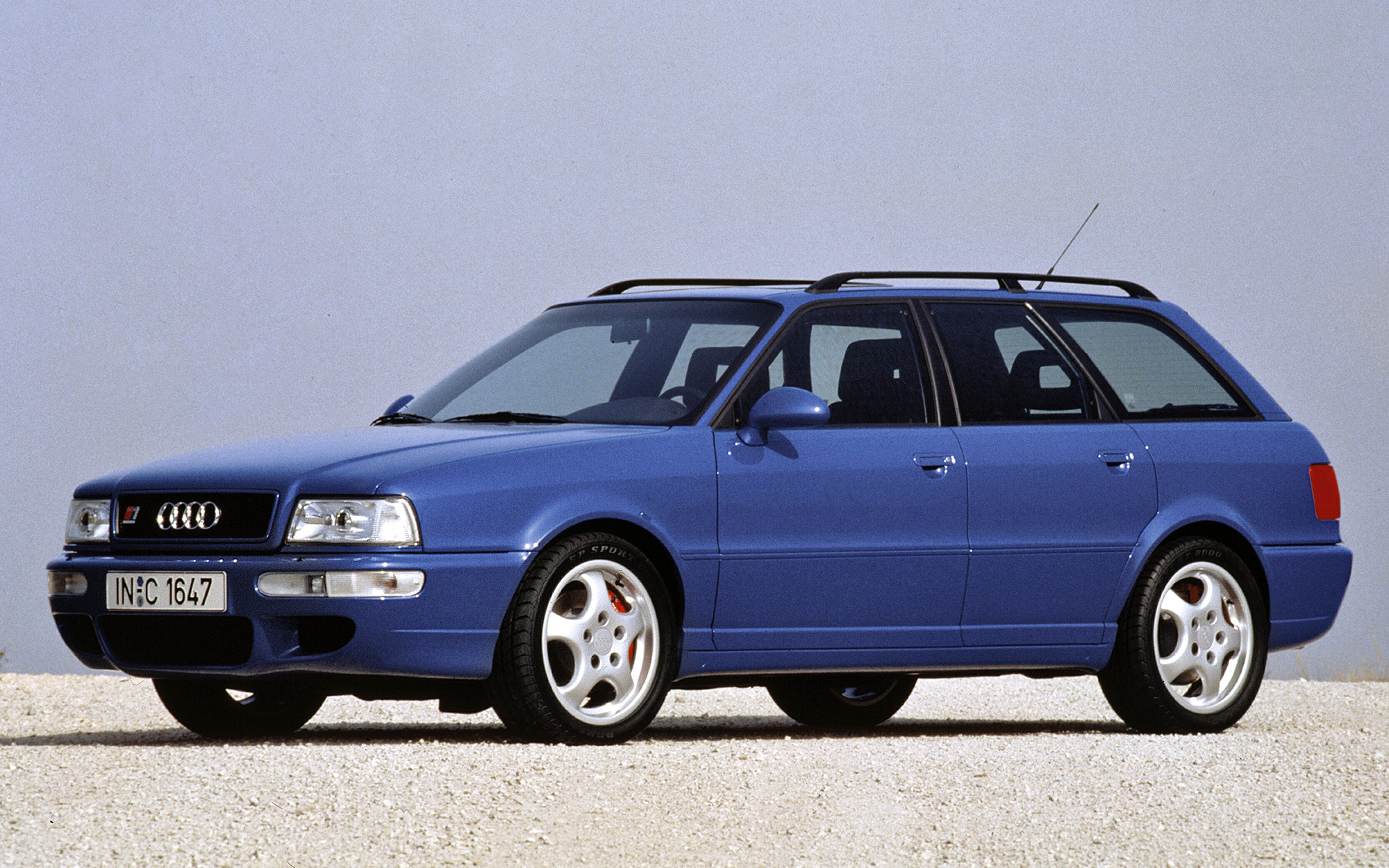
- Audi Avant RS2 (1994) – developed in cooperation with Porsche, producing 232 kW (315 PS). This car is often regarded as the founding model of the modern RS and “super estate” category.
These models cemented the five-cylinder’s reputation as a compact, high-output engine capable of delivering performance on par with larger six- and eight-cylinder engines.
PHASE-OUT OF THE FIRST GENERATION
With the introduction of the Audi A4 (B5) and Audi A6 (C5) in the mid-1990s, Audi began transitioning from inline five-cylinder engines to more modern V6 units in its mainstream product lines. The first generation of Audi five-cylinder engines remained in production until the late 1990s.
The last production applications included:
- 2.5 TDI five-cylinder in the Audi A6
- 2.2-litre 20V turbo petrol five-cylinder in the Audi S6
Both were phased out by approximately 1997, marking the end of continuous five-cylinder engine use in Audi’s larger series models for a period.
COMEBACK IN THE TT RS AND RS MODELS
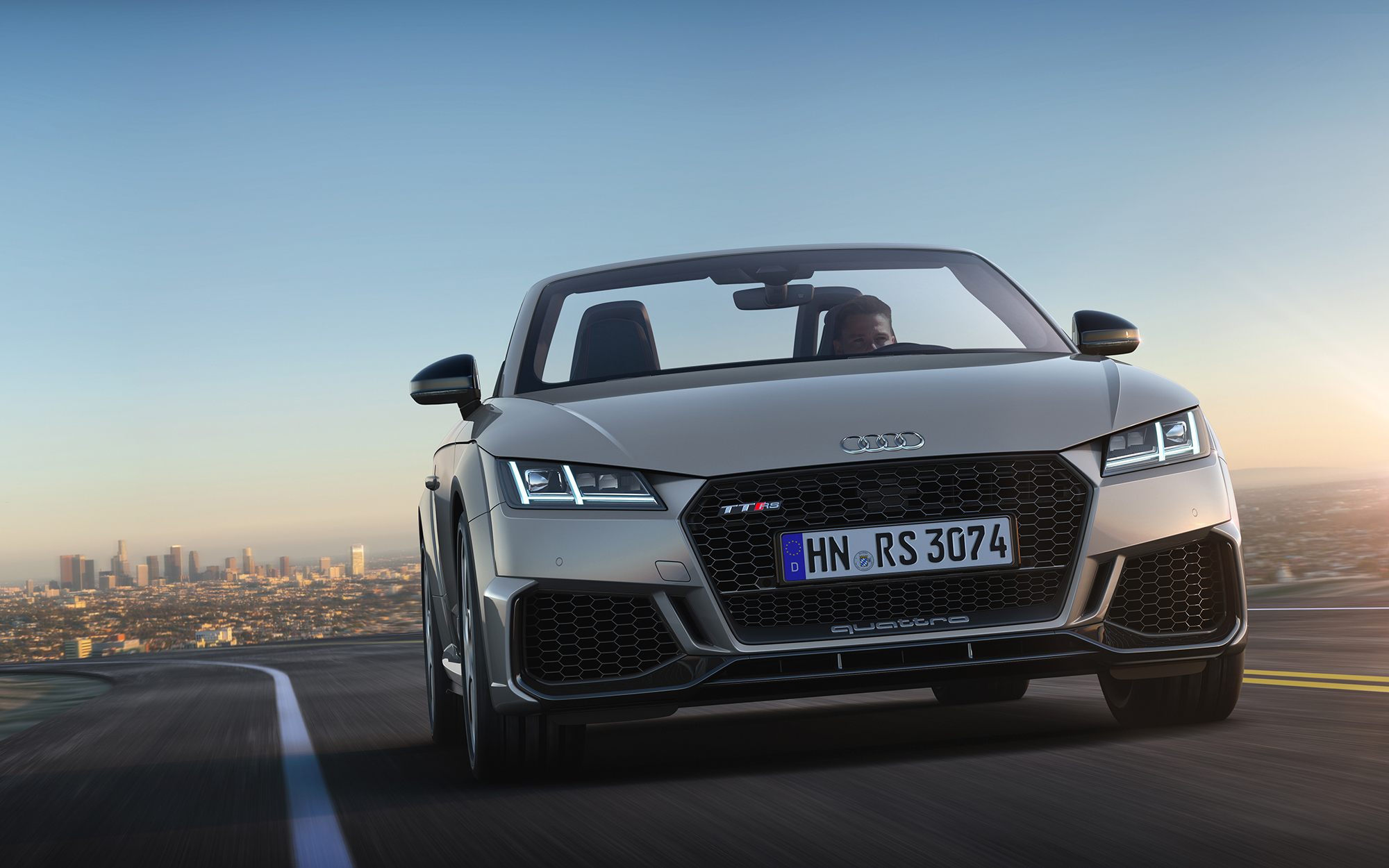
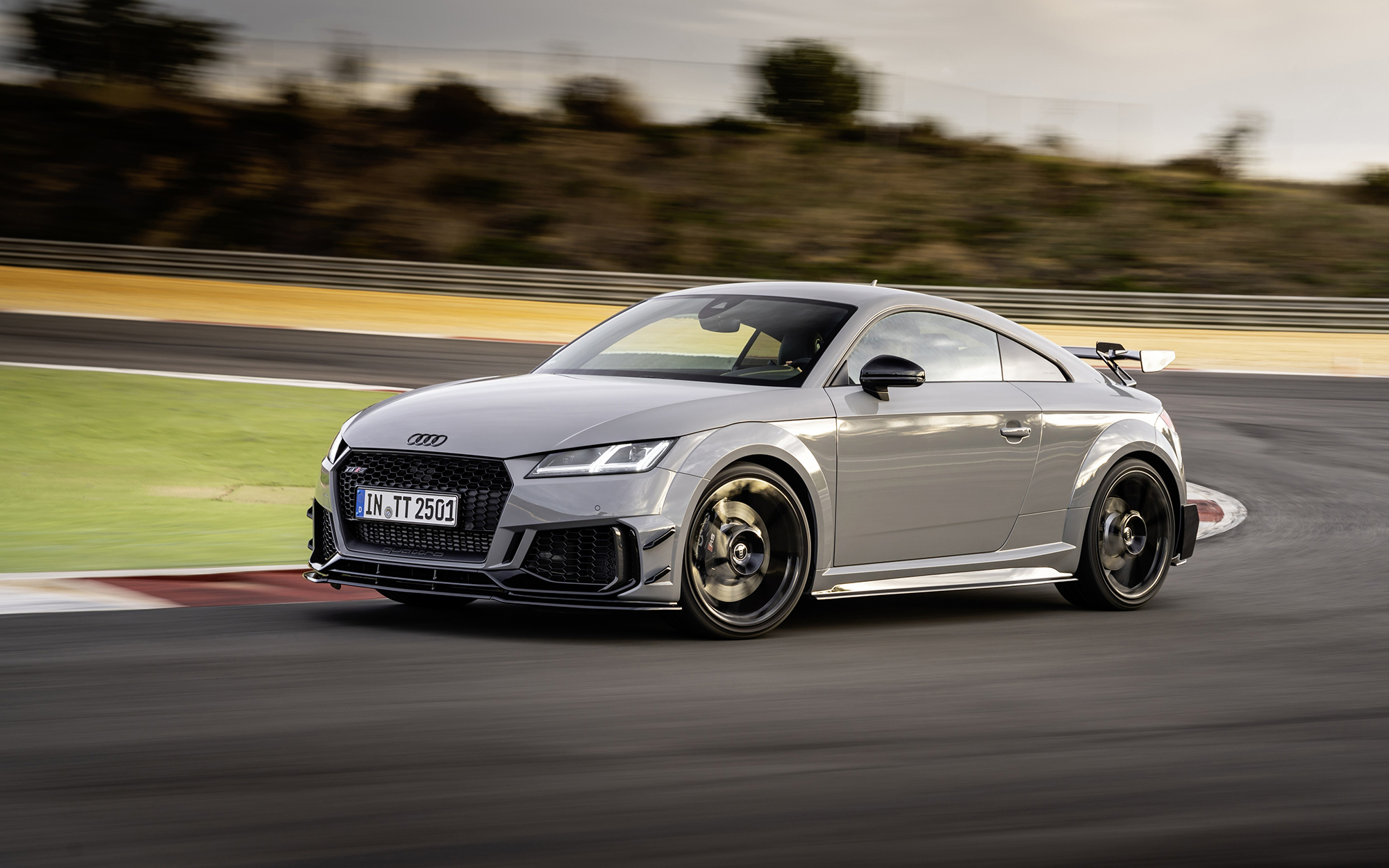
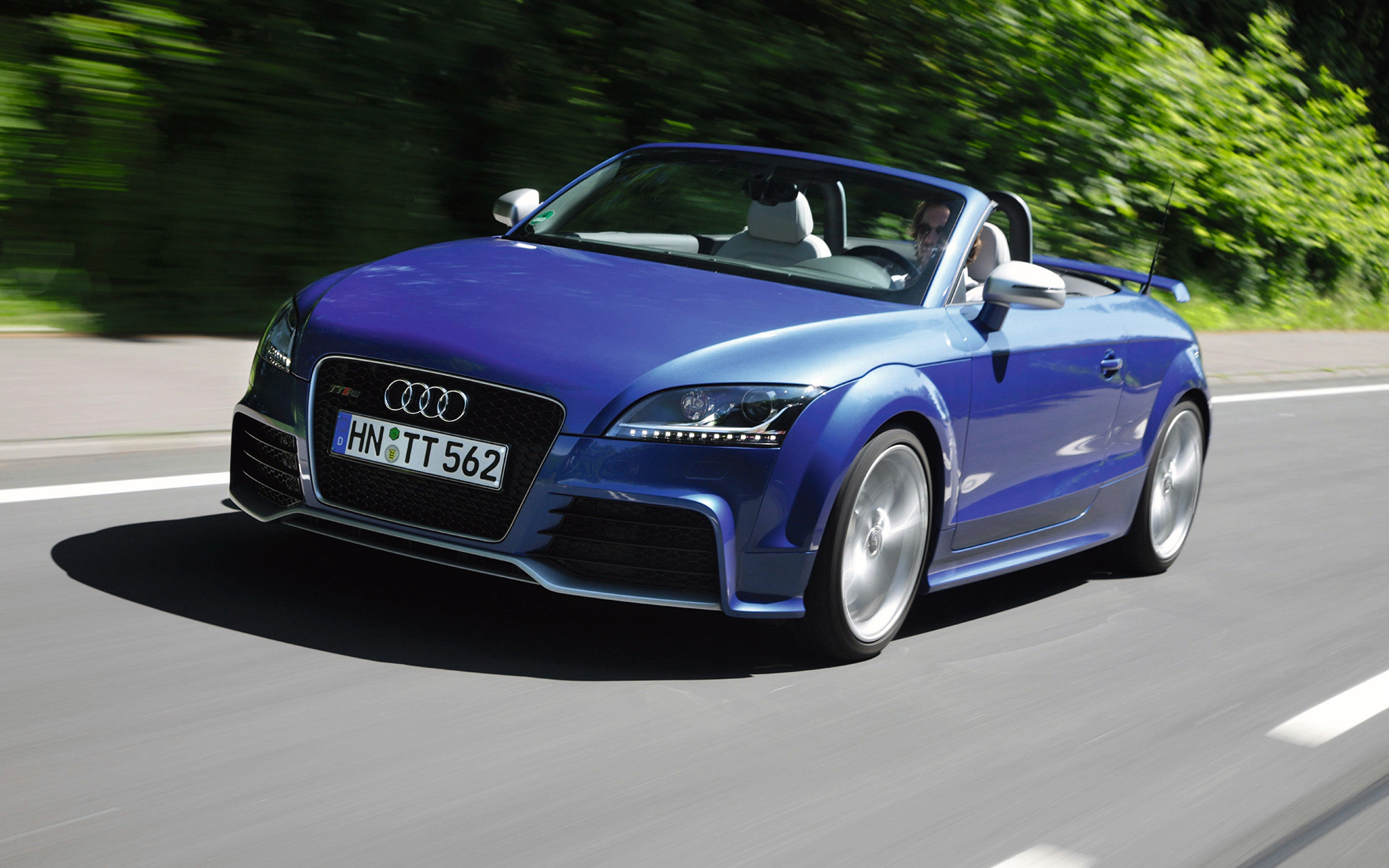
The Audi five-cylinder made a significant comeback in 2009, thirty years after the debut of the first turbocharged five-cylinder petrol engine. The new generation appeared in the Audi TT RS, developed by quattro GmbH (now Audi Sport):
- Displacement: 2.5 litres
- Output: 250 kW (340 PS) in early TT RS and RS 3 applications
- Technology: turbocharging and direct petrol injection
- Later development: TT RS plus (2012) with 265 kW (360 PS)
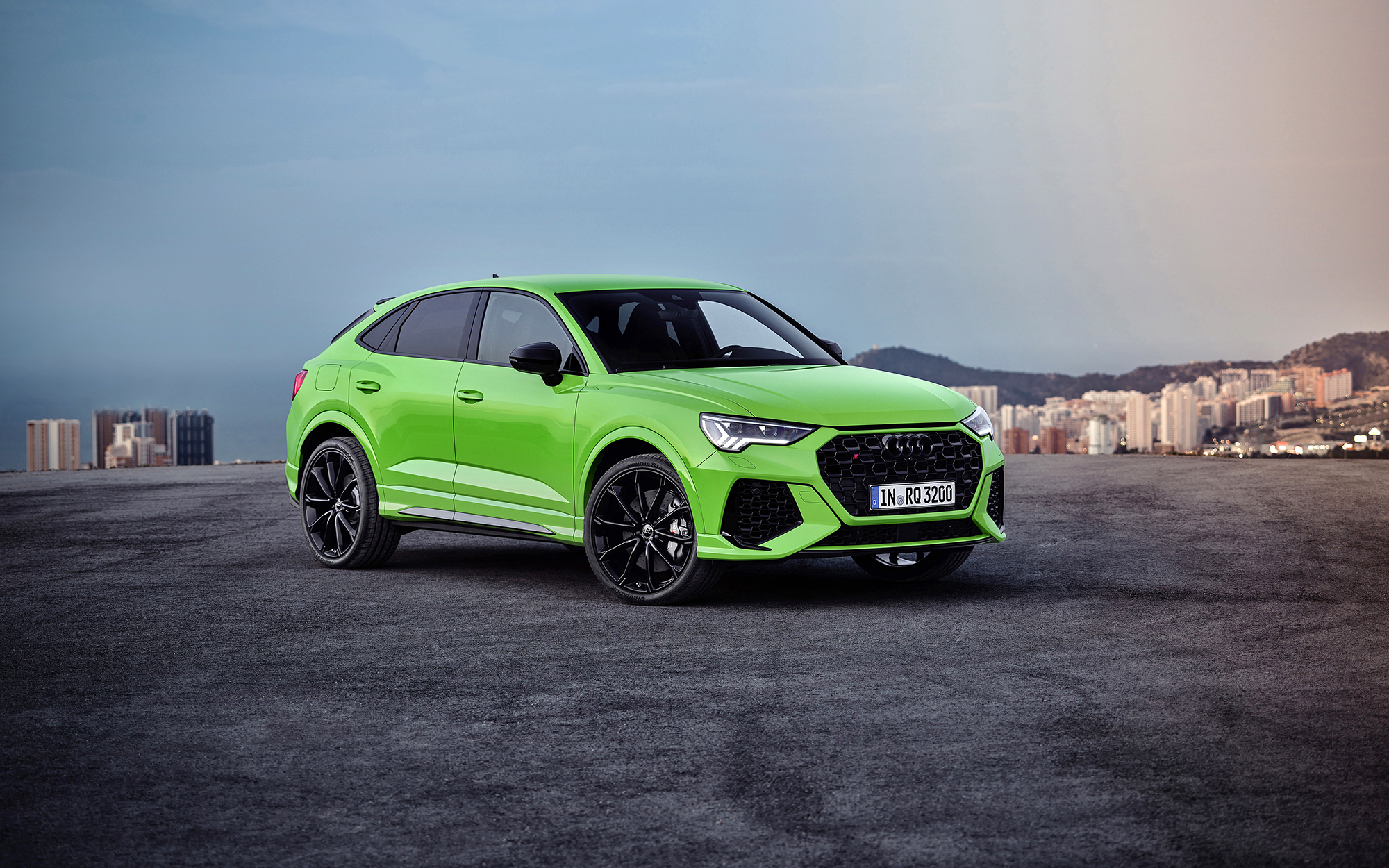
The same 2.5-litre engine architecture powered the RS 3 Sportback and, from 2013, the RS Q3, opening a new segment for compact high-performance SUVs.
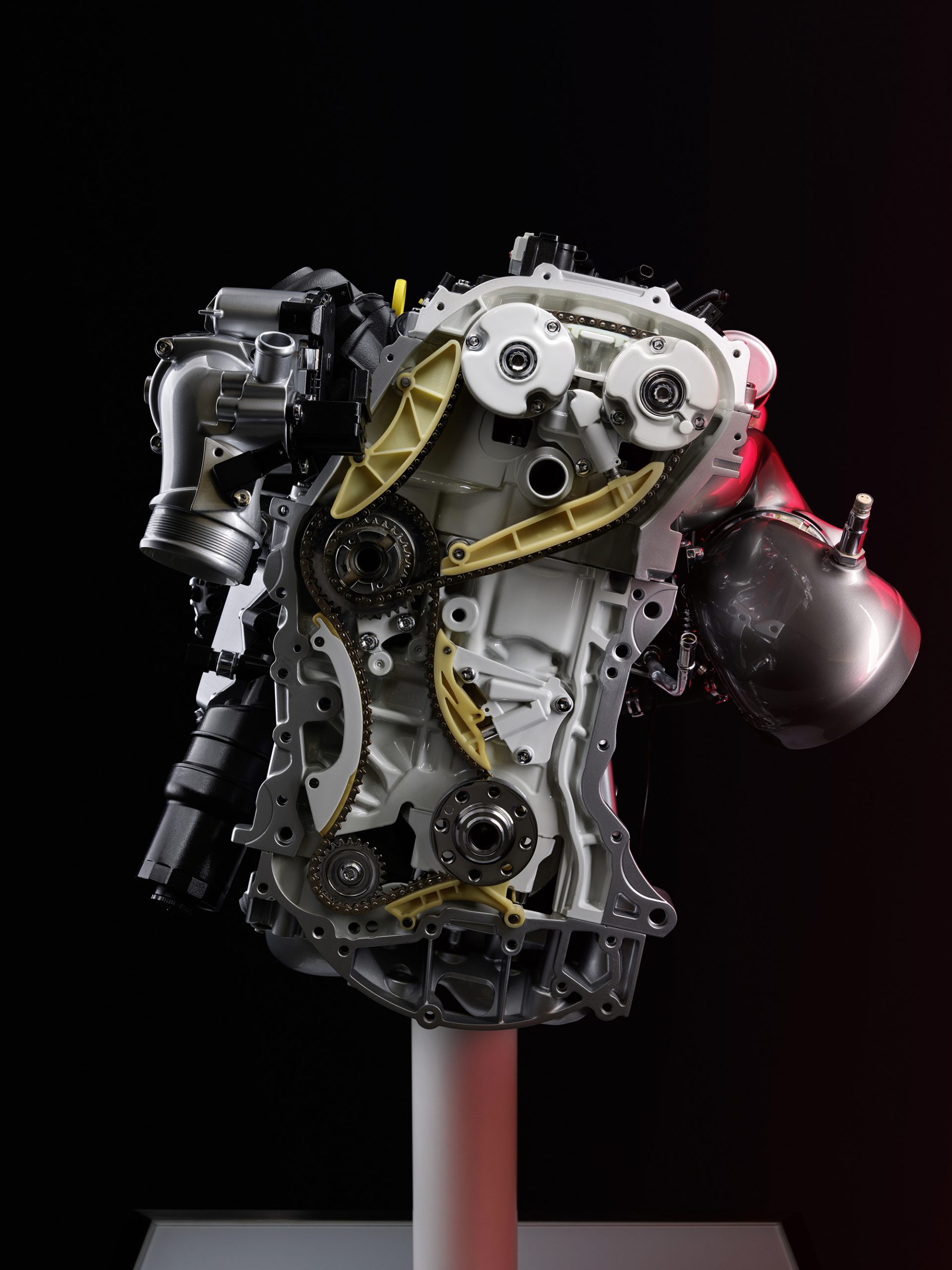
In 2016, Audi introduced a substantially revised version of this engine, known internally as the EA855 Evo. Focus areas included lightweight construction, reduced internal friction, and improved power delivery. With a displacement of 2,480 cc, this engine produced:
- 294 kW (400 PS)
- 480 Nm of torque (in early EA855 Evo applications)
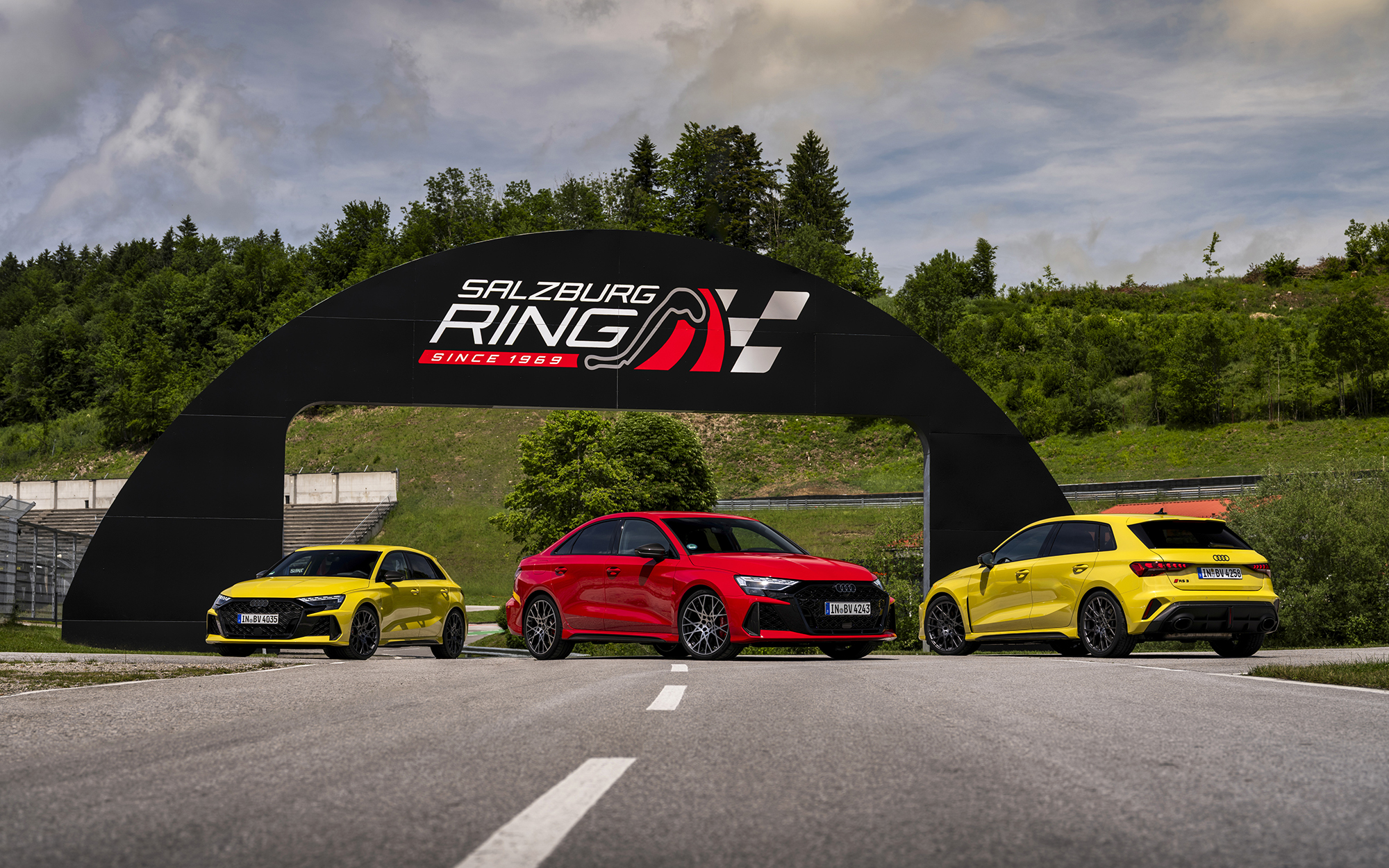
MODERN 2.5 TFSI IN THE AUDI RS 3
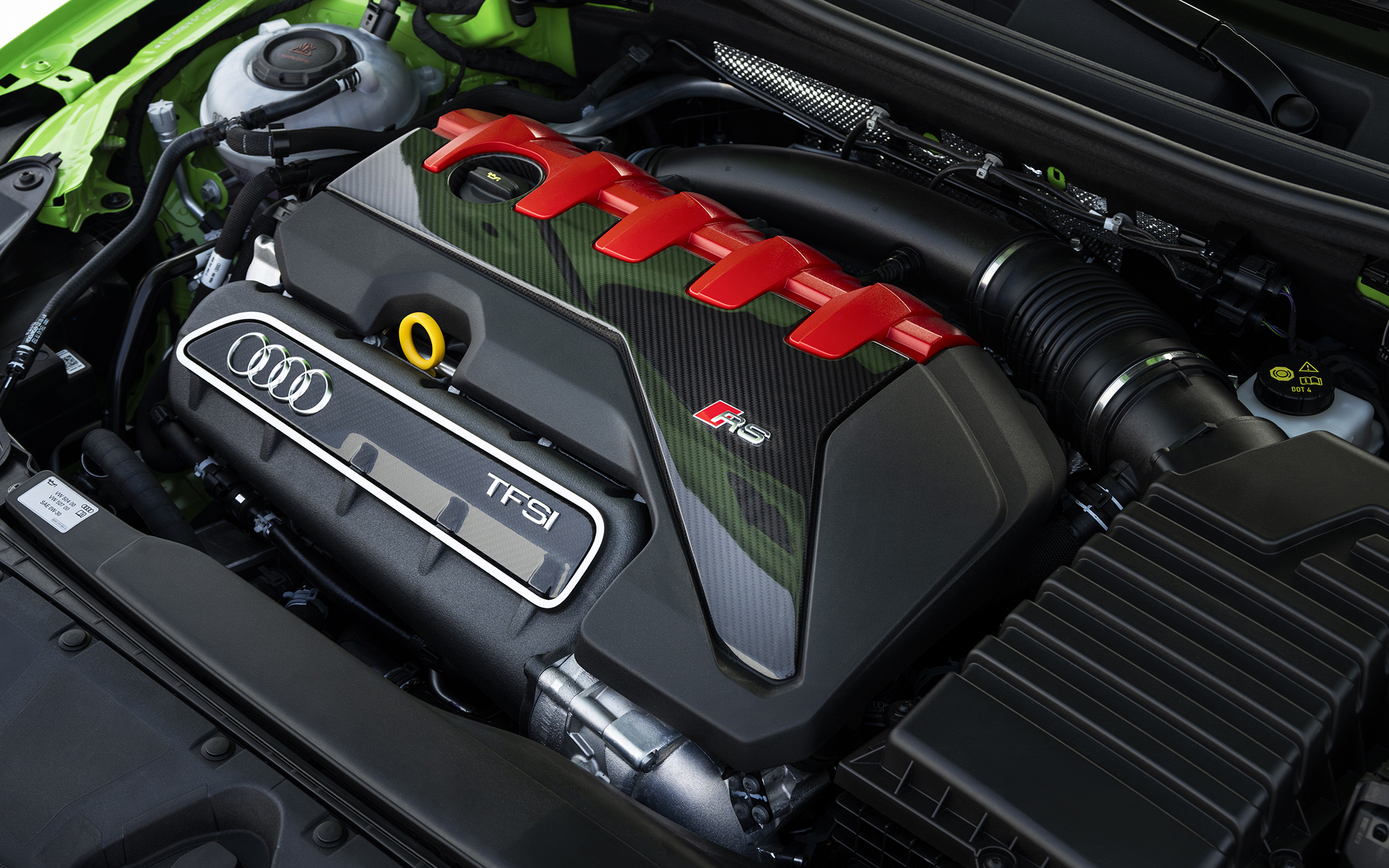
Since 2021, the latest generation Audi RS 3 has been equipped with a further-developed 2.5 TFSI five-cylinder, often referred to as EA855 Evo Sport. In this application:
- Output: 294 kW (400 PS)
- Torque: 500 Nm, available between 2,250 and 5,600 rpm
- 0–100 km/h: 3.8 seconds
- Top speed: electronically limited to 250 km/h, with optional increases to 280 km/h or up to 290 km/h when specified with the RS dynamic package and ceramic brakes
A revised engine control unit enables faster coordination between engine and drivetrain systems, enhancing driving dynamics and responsiveness.
SOUND CHARACTERISTICS
The five-cylinder engine is renowned for its distinctive sound, which plays a major role in its cult status among enthusiasts. The key factors behind this acoustic signature are:
- Firing order: 1–2–4–5–3
- Crankshaft rotation interval: 144 degrees between ignition events
This pattern alternates between adjacent and more widely spaced cylinders, creating an irregular but harmonious rhythm not found in four- or six-cylinder engines. The geometry of the exhaust manifold and the differing exhaust gas path lengths between valves and turbocharger further shape the sound.
In modern RS models, Audi uses fully variable exhaust flap control to modulate the sound. Depending on the selected drive mode (e.g., dynamic, RS Performance, RS Torque Rear), the exhaust flaps open earlier and more widely, increasing the emotional intensity. An optional RS sports exhaust system amplifies this effect.
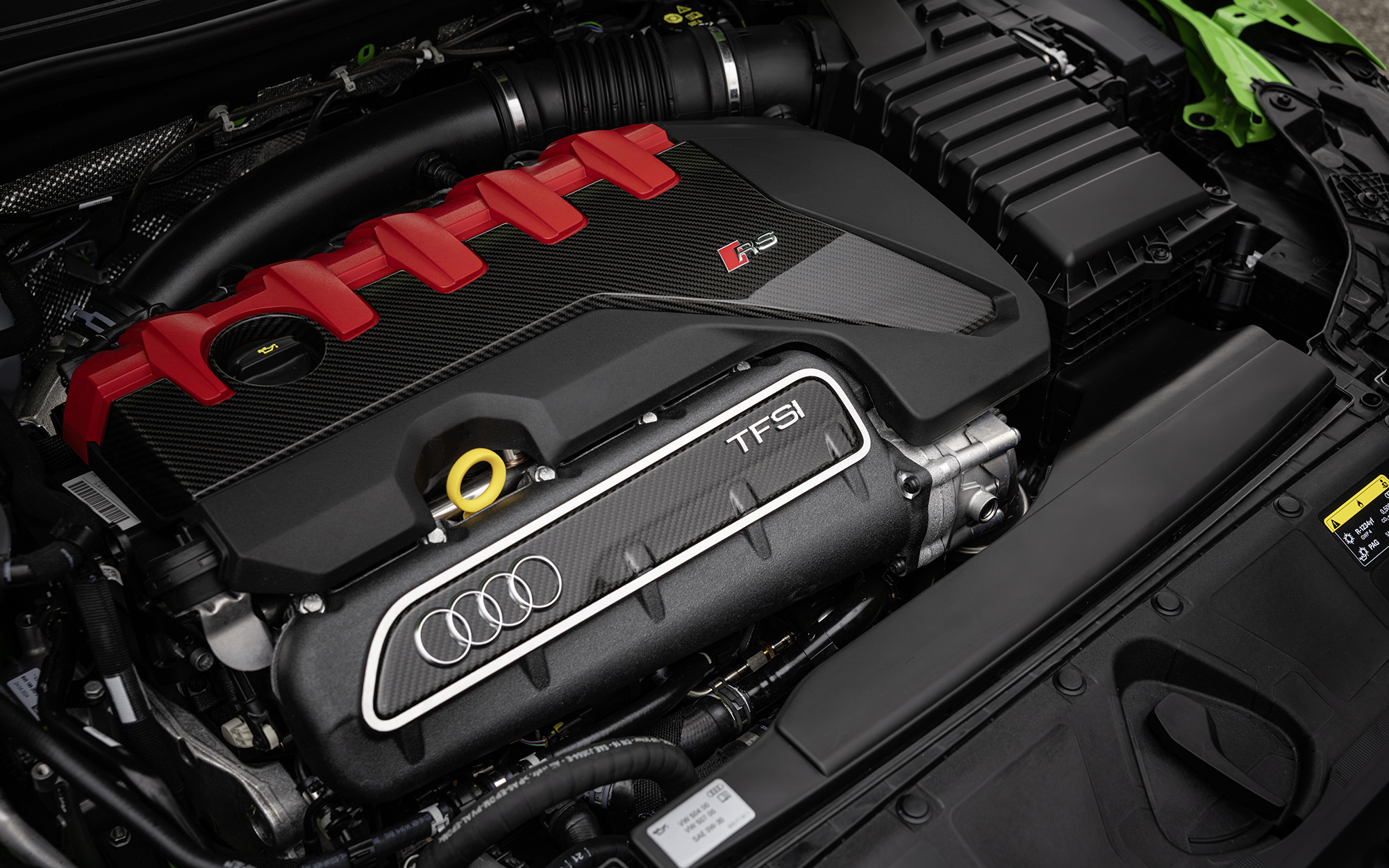
TECHNOLOGY AND DESIGN FEATURES OF THE 2.5 TFSI
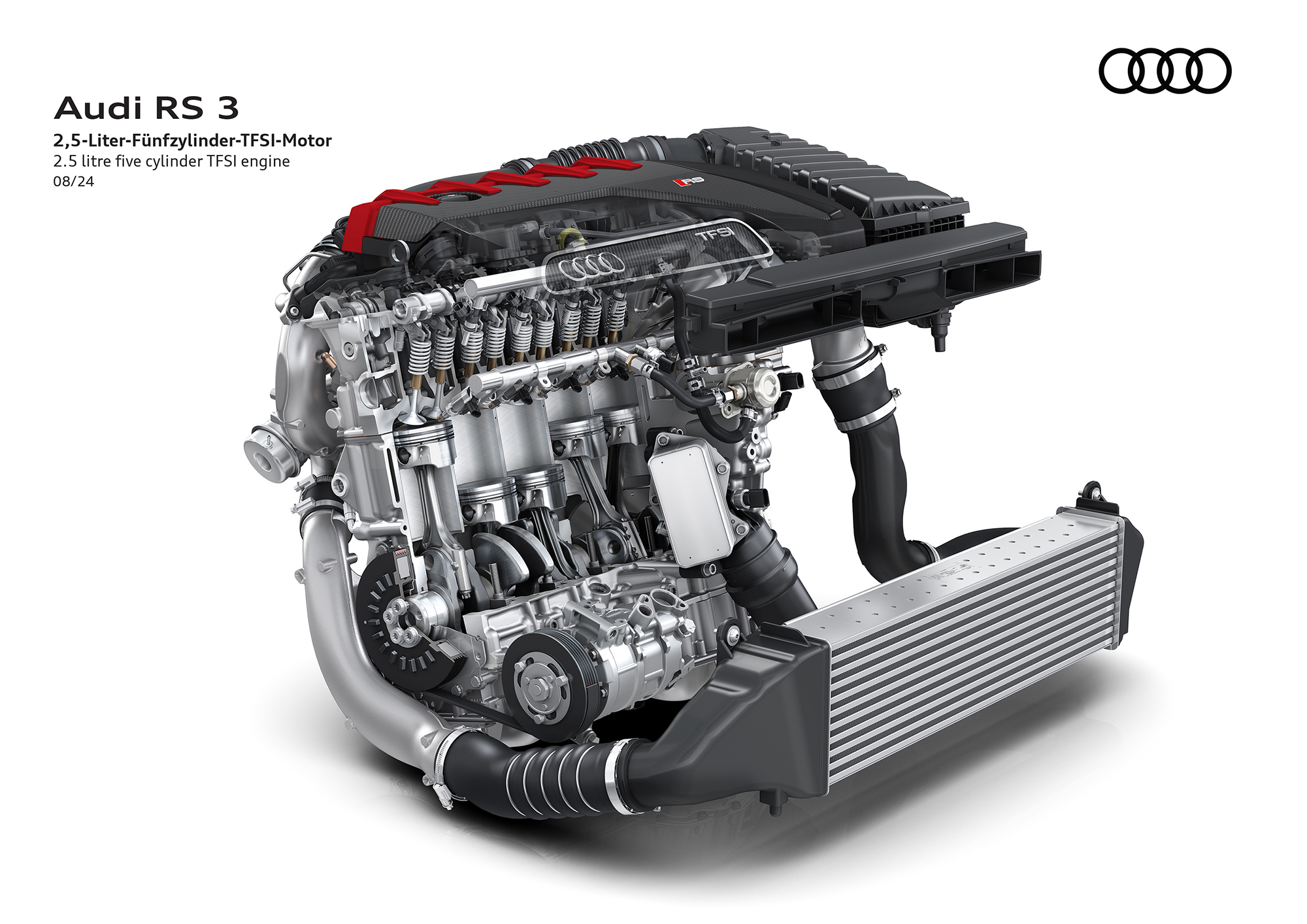
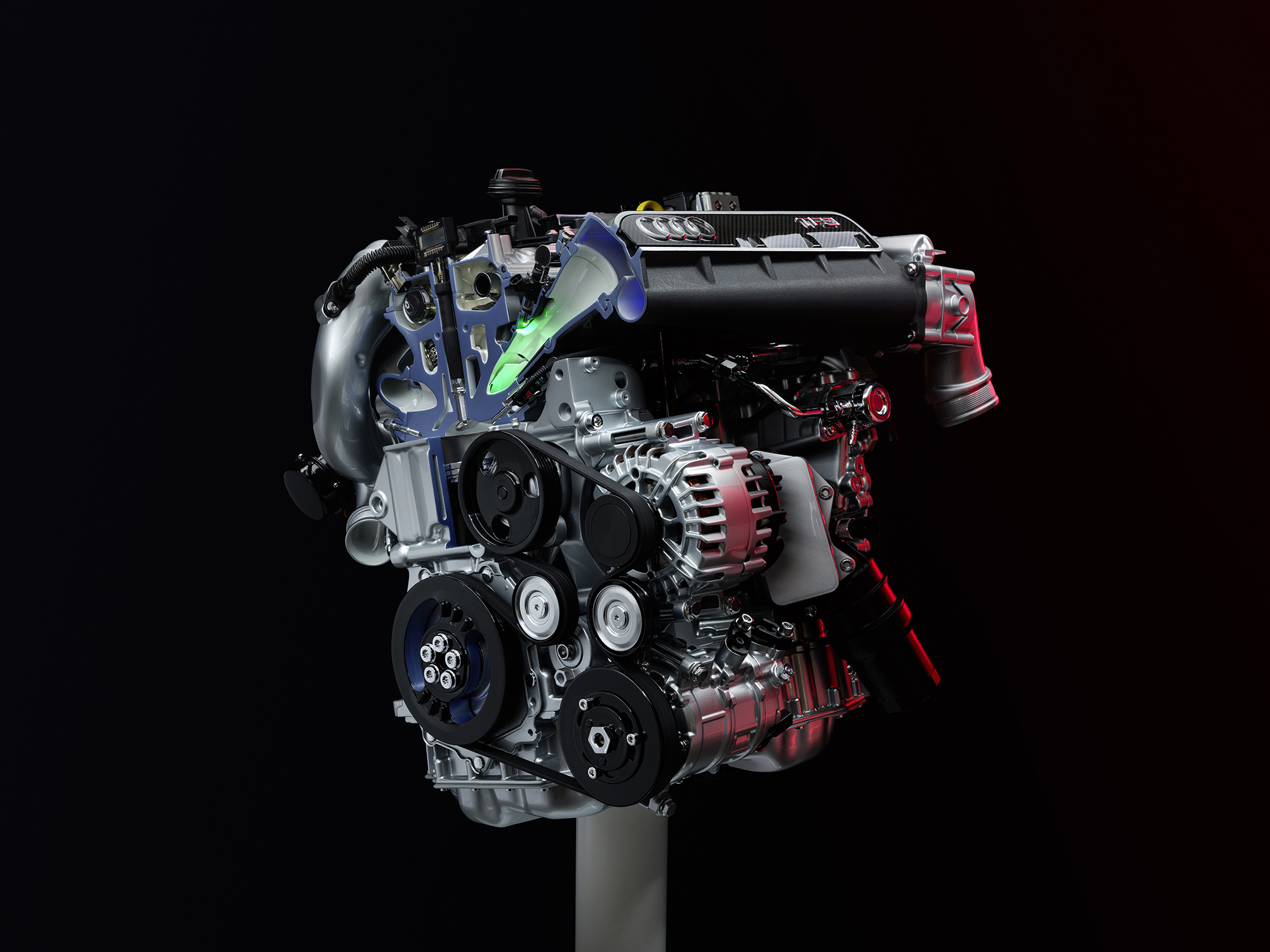
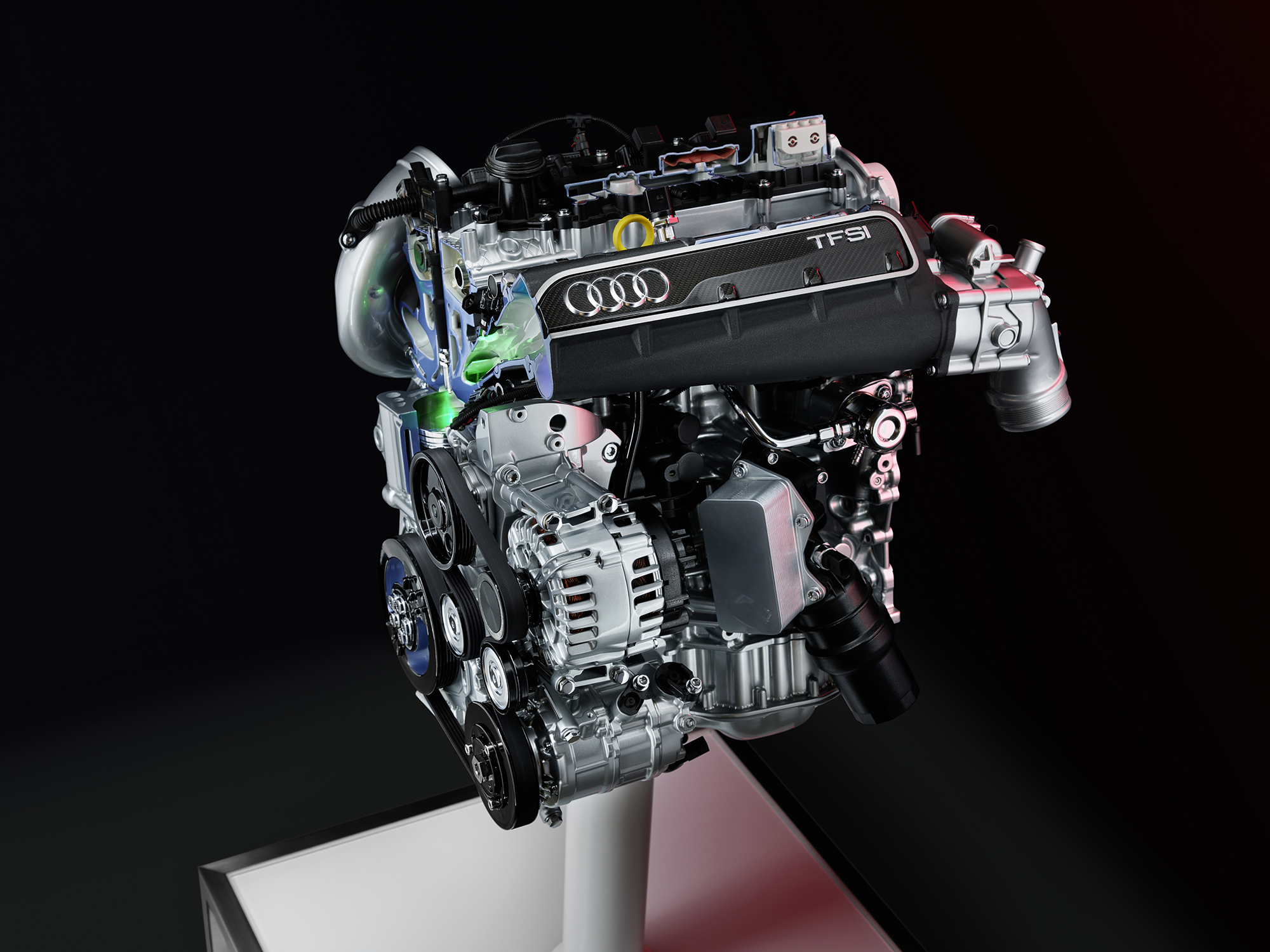
The current 2.5 TFSI embodies Audi’s most advanced five-cylinder technology. Key features include:
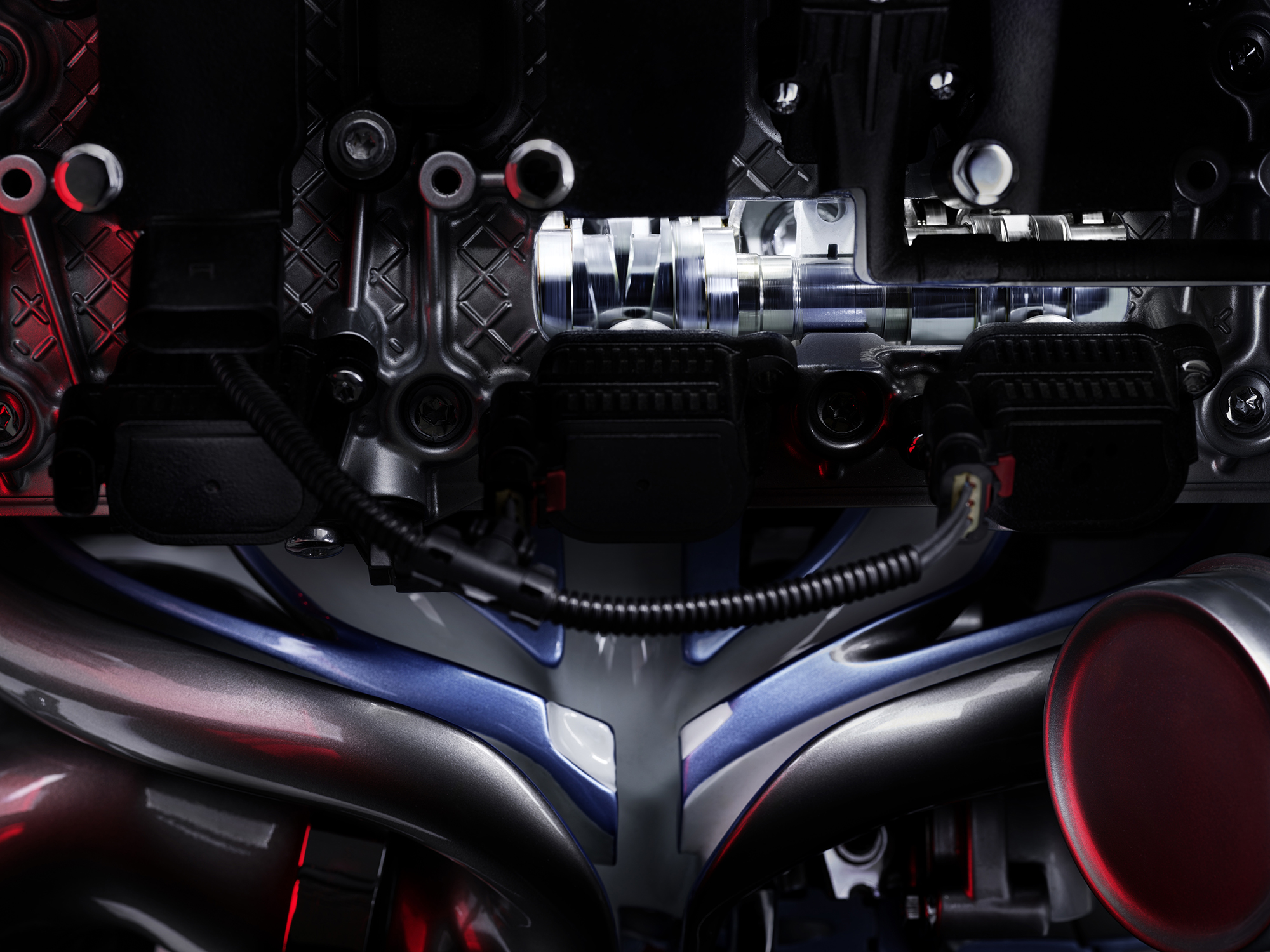
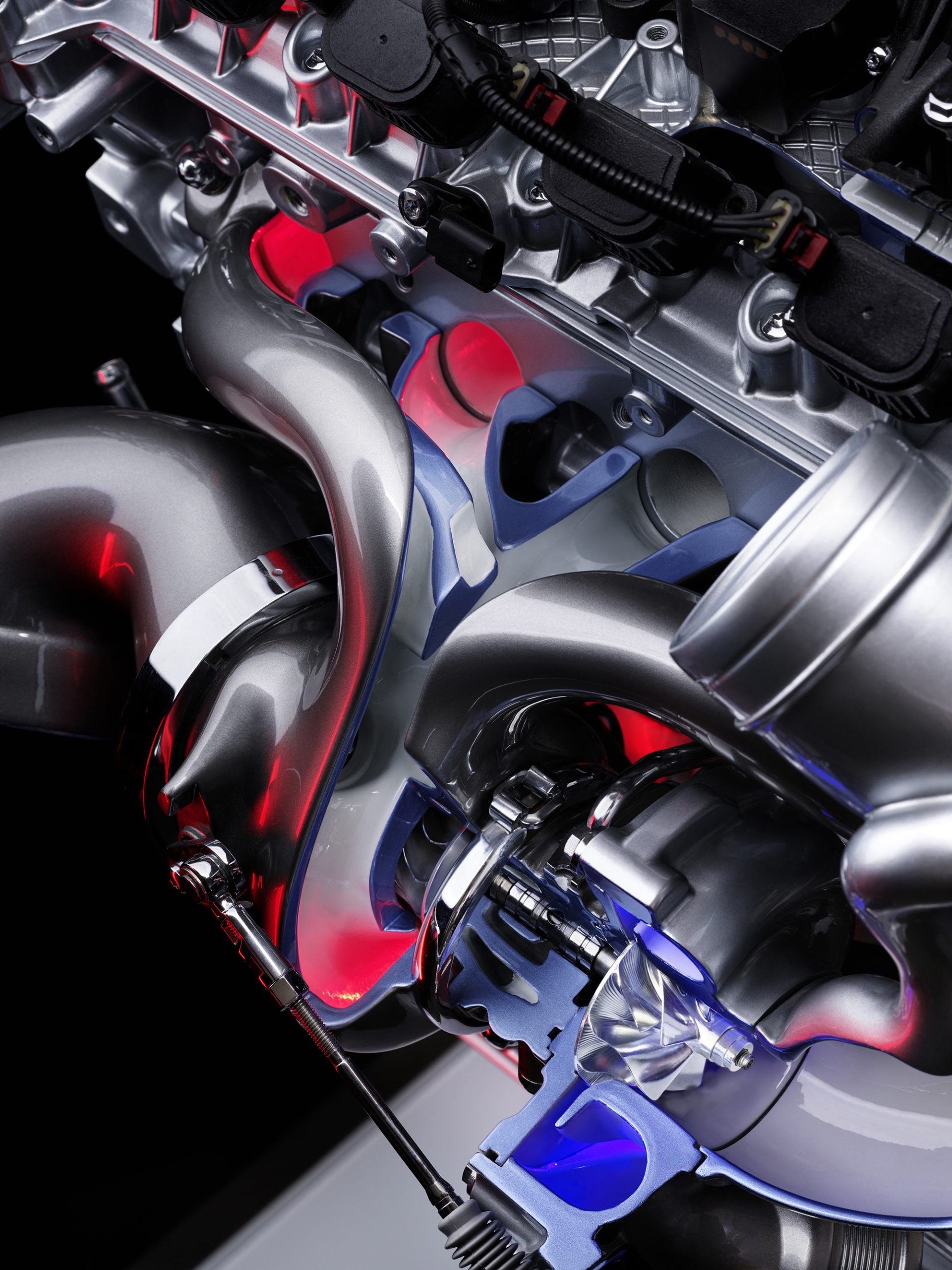
- Turbocharging and direct injection (TFSI) with dual injection: both into the intake manifold and directly into the combustion chamber
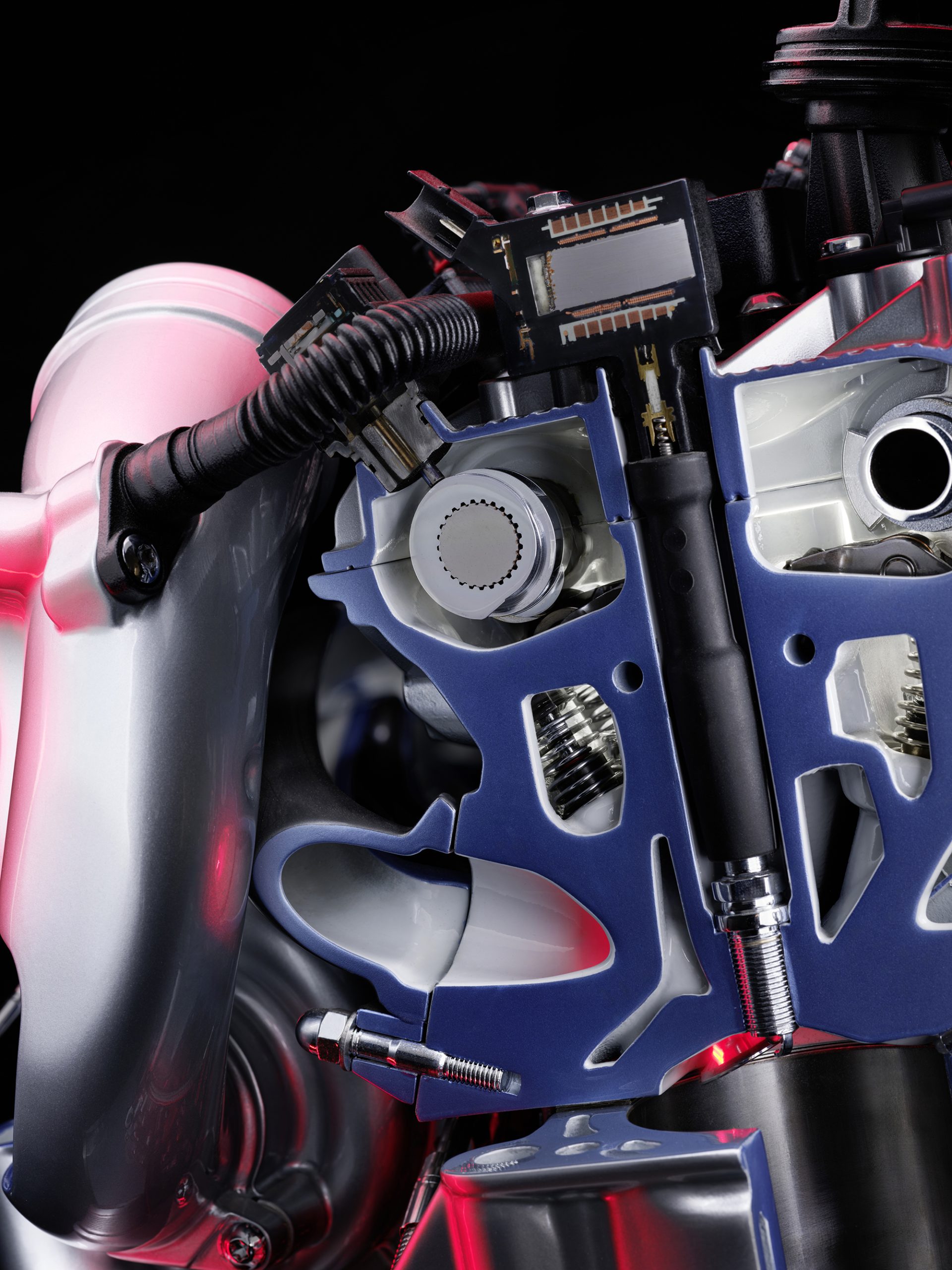
- Audi valvelift system on the exhaust side, providing two-stage variable valve lift for optimized efficiency at low load and improved responsiveness and mid-range power at high load
- High fuel pressure: up to 250 bar
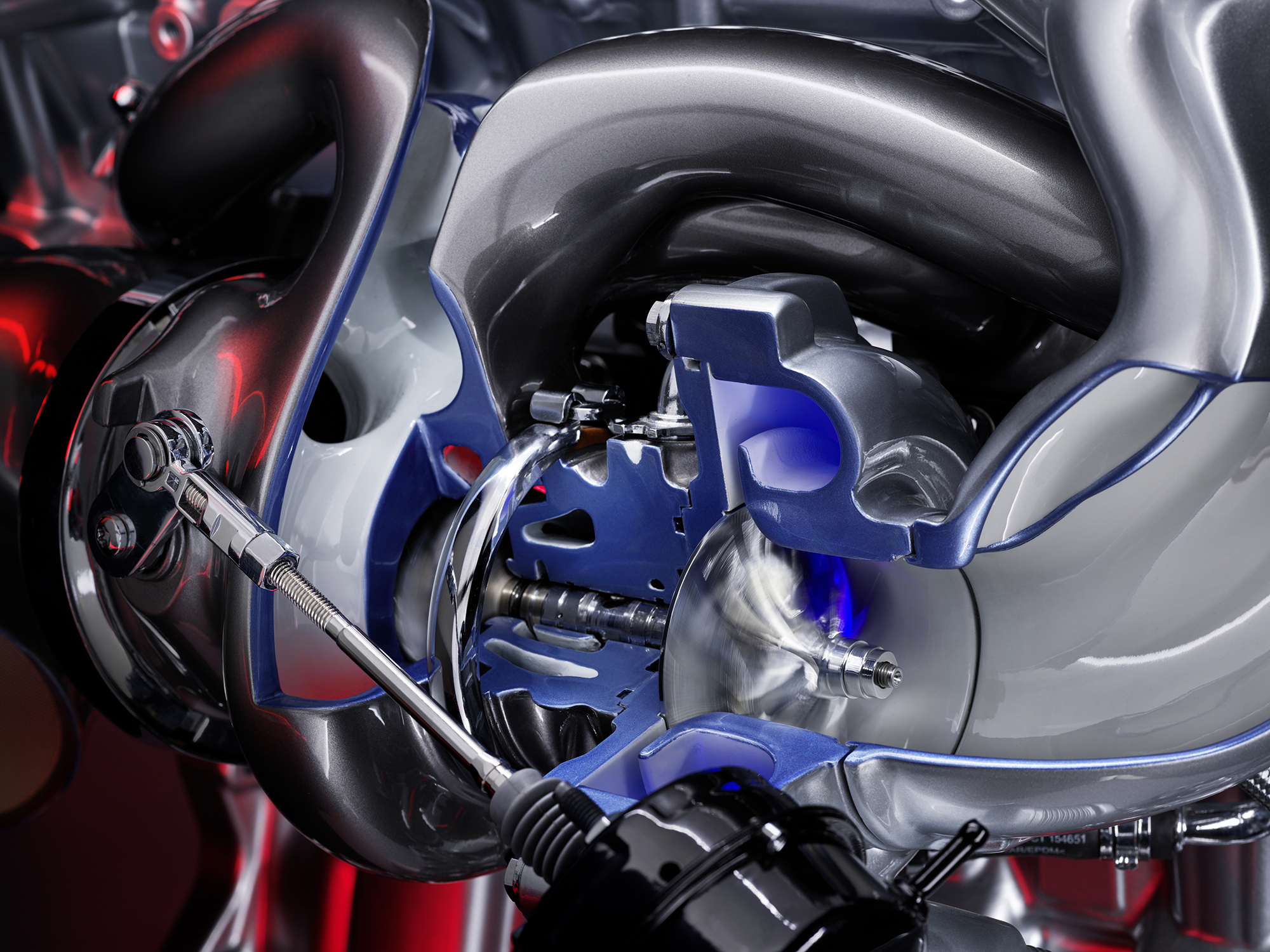
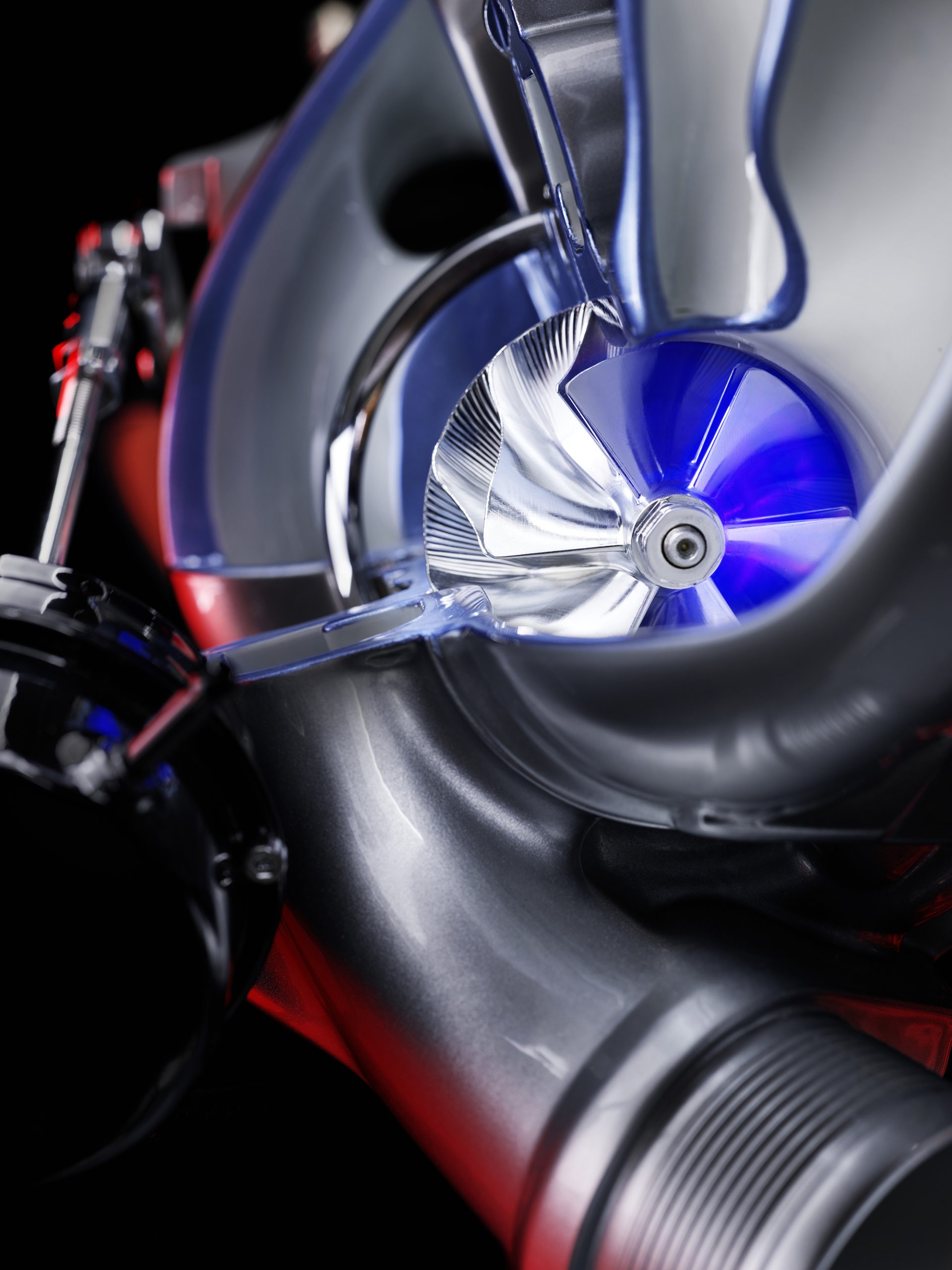
- Large turbocharger: generating approximately 1.5 bar relative (2.5 bar absolute) boost pressure
The engine is a long-stroke design (bore 82.5 mm, stroke 92.8 mm), optimized for strong torque delivery across a wide rev range.
Lightweight construction is central to the EA855 Evo:
- Aluminium crankcase, significantly lighter than prior grey-cast-iron blocks
- Hollow-bored crankshaft, reducing rotating mass and improving response
- Magnesium oil pan top section and aluminium belt pulleys
- Overall engine weight: around 160 kg
- Overall length: less than 50 cm, enabling transverse installation in compact models
Internal friction and wear are reduced through:
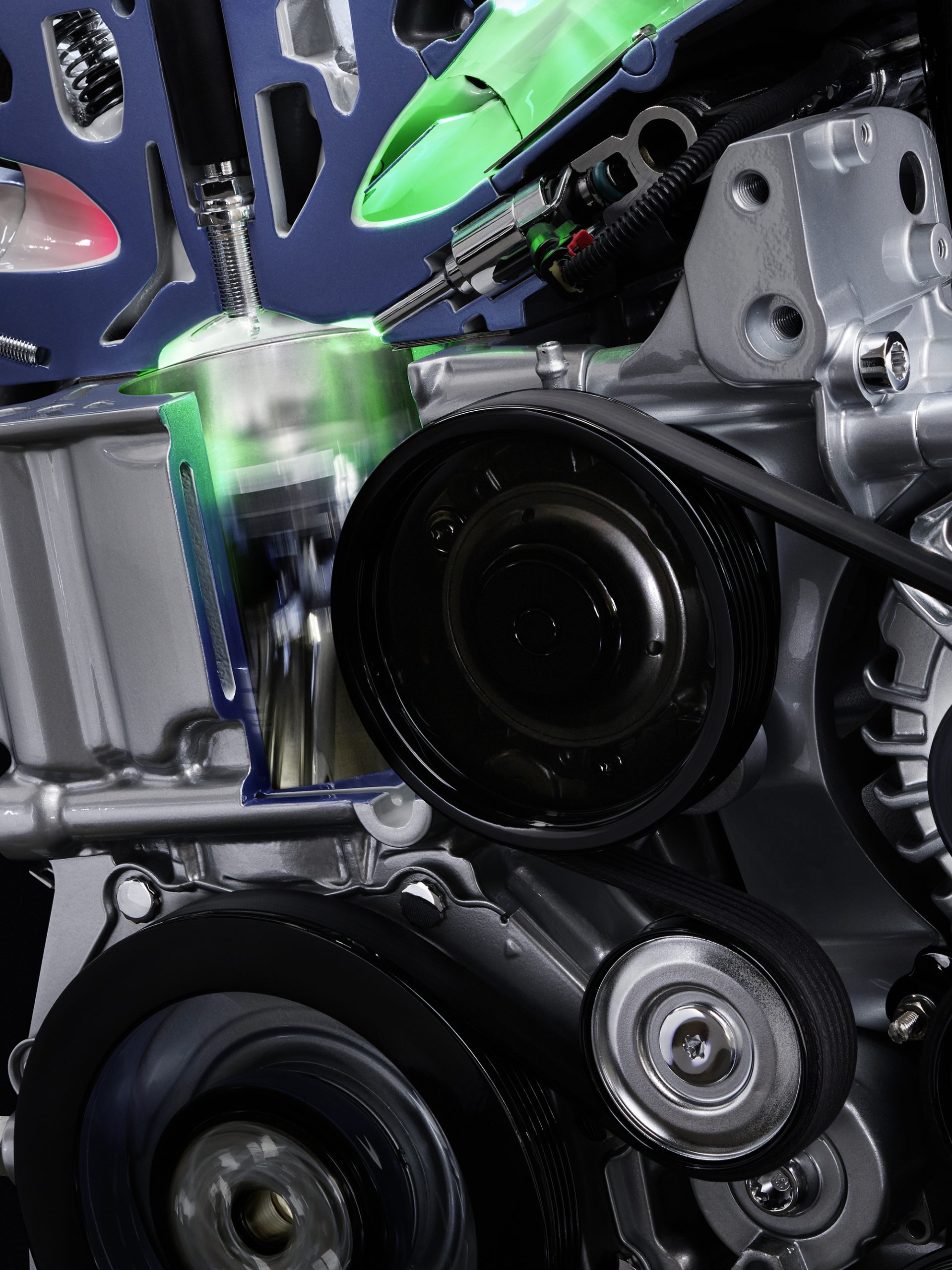
- Plasma-coated cylinder liners
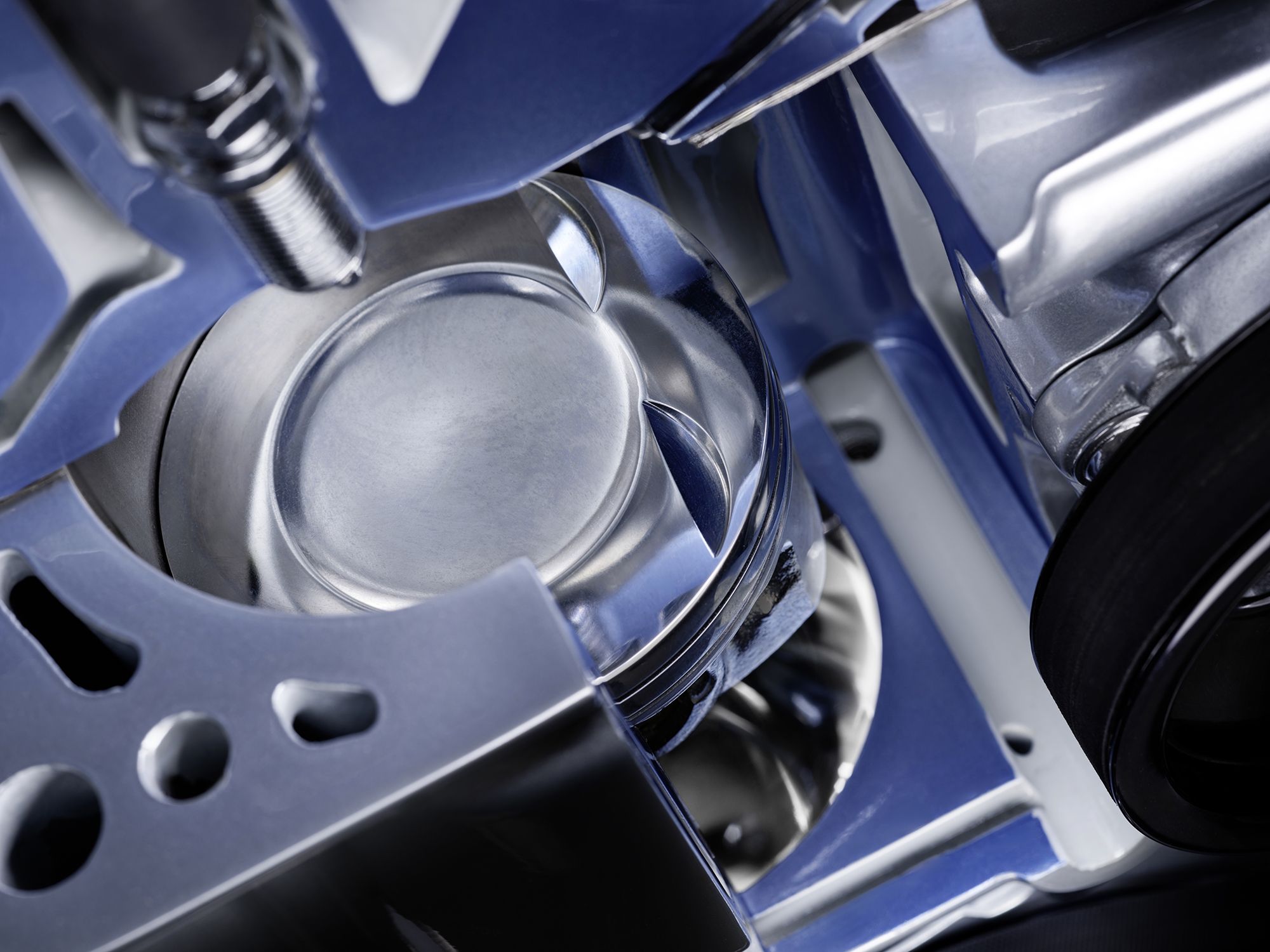
- Special oil channels in the piston bases for improved cooling
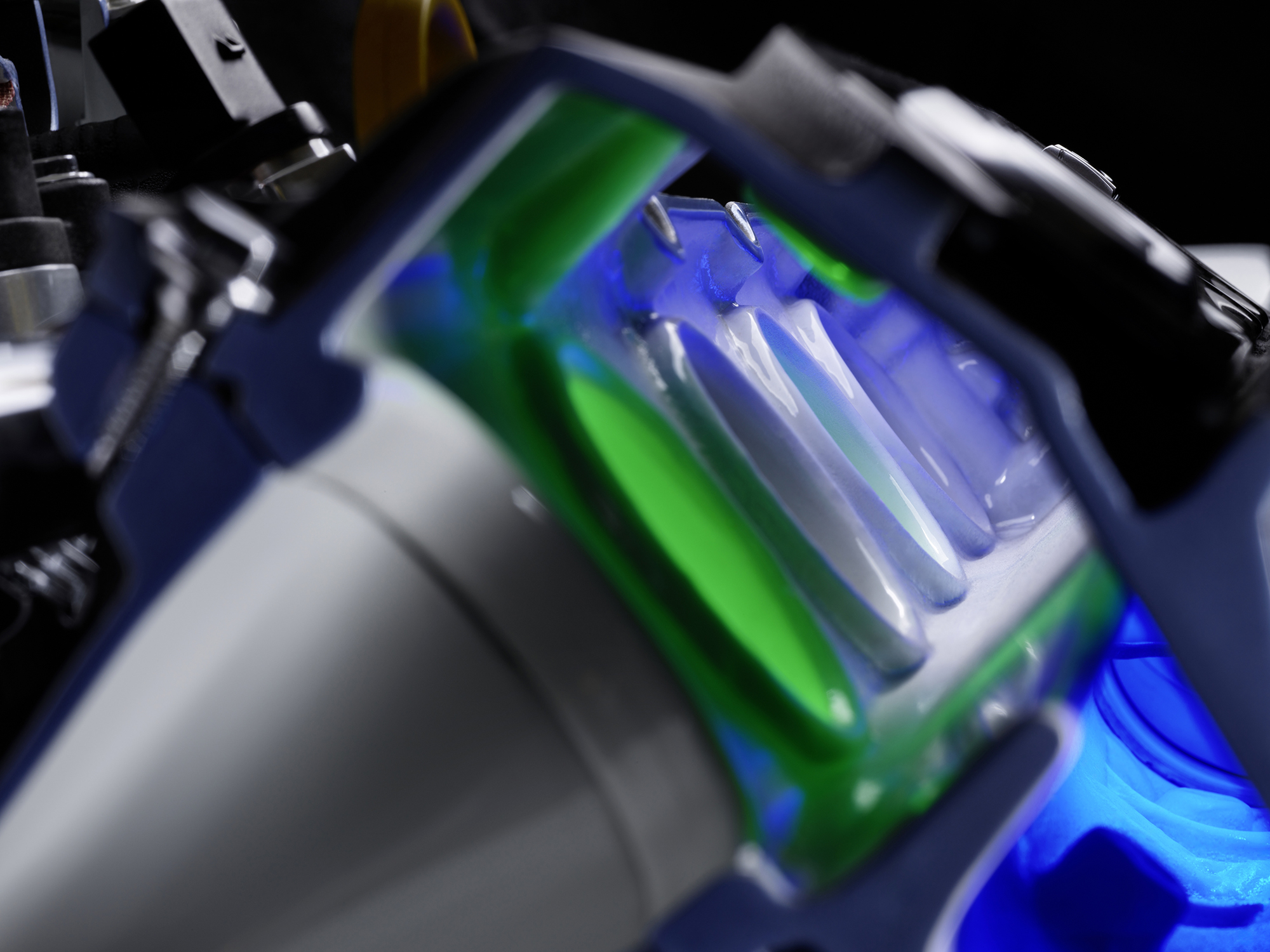
- An innovative thermal management system with a switchable coolant pump that shortens warm-up time and reduces friction after cold start
- A demand-controlled aluminium oil pump that adjusts oil pressure based on engine requirements
Together, these measures provide excellent performance with relatively efficient fuel consumption for the power level.
MANUFACTURING AND ASSEMBLY
Modern Audi five-cylinder engines are built at the Győr plant in Hungary, in a dedicated assembly area known as the Bock assembly. This facility covers more than 1,000 square metres and emphasizes manual assembly by skilled technicians rather than extensive use of robots.
Key aspects of the assembly process include:
- Construction begins with the aluminium crankcase, onto which the crankshaft, bearing shells, and pistons with connecting rods are installed.
- A torque and rotation check ensures proper assembly and smooth crankshaft operation.
- The magnesium upper section and aluminium lower section of the oil pan are fitted, followed by critical components such as injectors, sensors, and the timing chain.
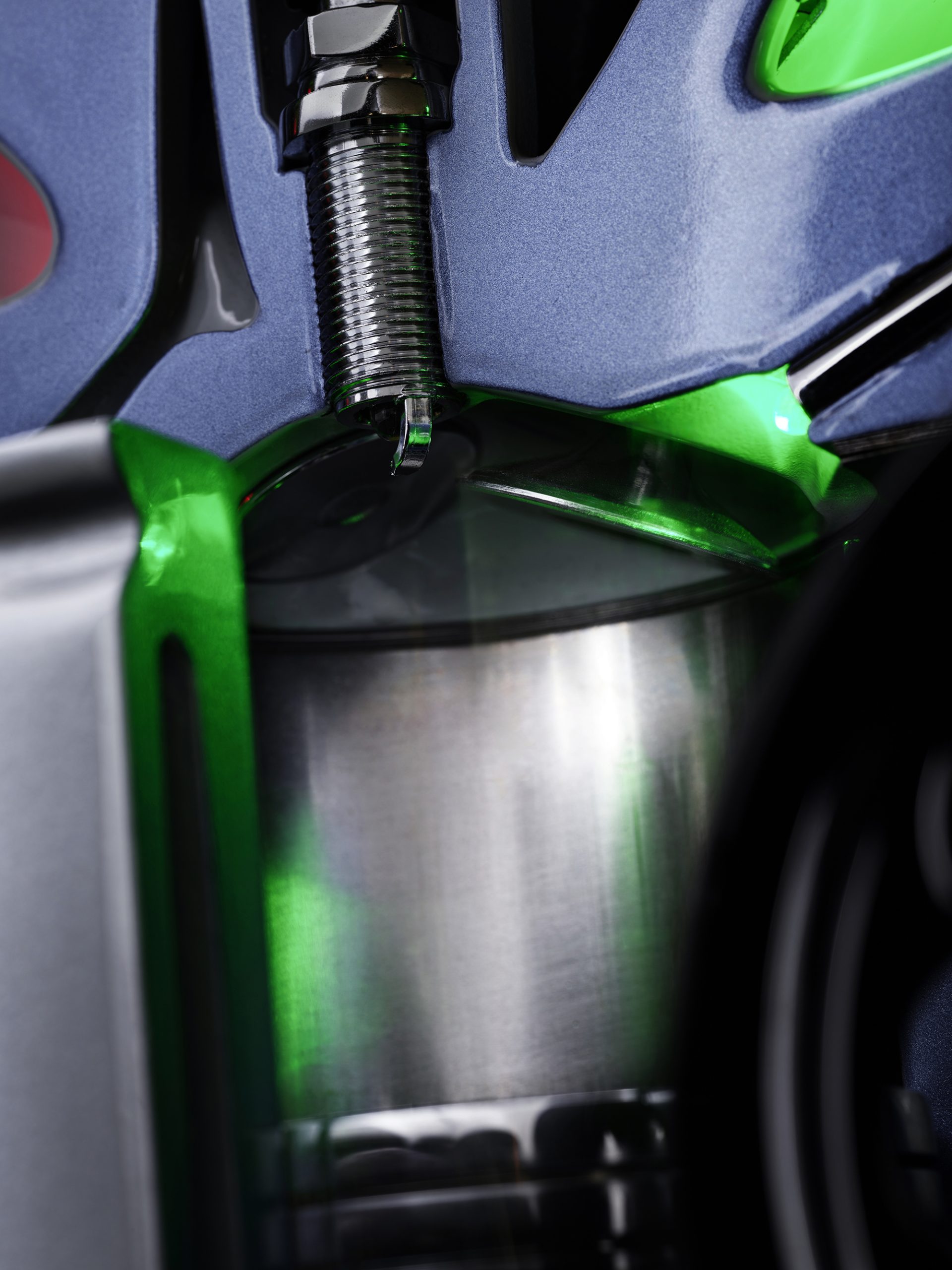
- The cylinder head is bolted on and fitted with spark plugs, followed by the intake manifold and the large turbocharger.
- Final steps include installation of the engine wiring harness and dual-mass flywheel, which reduces vibration between engine and seven-speed S tronic transmission.
Each engine undergoes comprehensive mechanical and electronic testing, including:
- Cold test: with operating fluids, checking for functionality and leaks without full combustion operation
- Hot test: initial start-up under load to verify performance and durability parameters
Once tests are successfully completed, engines are transported by rail from Győr to Ingolstadt, where they are installed in vehicles such as the Audi RS 3 in the so-called “marriage” process that joins powertrain and body.
SIGNIFICANCE AND LEGACY
Since its debut in 1976, the Audi five-cylinder engine has become a core element of the brand’s technical identity. Over five decades, it has:
- Enabled Audi to move decisively upmarket with the Audi 100 (C2)
- Powered iconic competition cars in rallying, hill climbs, and touring car racing
- Served as the heart of numerous performance road cars, from the original quattro and Sport quattro to the RS2 Avant, S and RS models, and modern compact RS vehicles
- Demonstrated continuous technical evolution, from early K-Jetronic fuel injection to modern TFSI systems with dual injection and advanced valvetrain control
Today’s 2.5 TFSI continues this tradition with high specific output, compact dimensions, and a distinctive sound that remains closely associated with Audi’s sporting and technological image.
5-CYLINDER ENGINE CODES
EARLY PETROL (C2 / B2 / UR-quattro era)
• WC – 2.1 L carbureted I5 (C2 Audi 100)
• WB – 2.1 L carbureted I5 (C2 Audi 100)
• WN – 2.1 L fuel-injected I5 (100 kW / 136 PS), Audi 100 5E
• WX – 2.1 L turbo, early quattro & Audi 200 (147 kW / 200 PS)
• WR – 2.1 L turbo, Audi quattro (200 PS)
20V TURBO (late 1980s–1990s performance models)
• 3B – 2.2 L 20V turbo (162 kW / 220 PS), original Audi S2
• 7A – 2.3 L naturally aspirated 20V (Audi 90 / Coupe 20V)
• ABY – 2.2 L 20V turbo (169 kW / 230 PS), updated S2
• ADU – 2.2 L 20V turbo (315 PS), Audi RS2 Avant (co-developed with Porsche)
• AAN – 2.2 L 20V turbo (169 kW / 230 PS), Audi S4/S6 C4
EARLY DIESEL (C2 / C3 / C4 era)
• CN – 2.0 L diesel, naturally aspirated I5 (C2 Audi 100)
• CY – 2.0 L diesel, early TDI development
• D4 – 2.4 L diesel (C3 Audi 100)
• AAS – 2.5 L TDI (C4 Audi 100/A6)
• ACZ – 2.5 L naturally aspirated diesel
• AAT – 2.5 L TDI (120 PS), Audi 100/A6 C4
• ABP – 2.5 L TDI variant
• AKE – early V6 TDI successor (included only for timeline context, no longer I5)
MODERN TFSI (EA855 / EA855 EVO / EA855 EVO II)
• CEPA – 2.5 TFSI (TT RS Mk1, 250 kW / 340 PS)
• CEPB – 2.5 TFSI (slightly updated version of CEPA)
• DAZA – 2.5 TFSI (TT RS Mk2, RS 3 8V.2)
• DAZB – 2.5 TFSI (updated calibration/export variants)
• DNWA – 2.5 TFSI (RS Q3, RS Q3 Sportback)
• DNWC – 2.5 TFSI (new RS Q3 variants)
• DNUE / DNUB / DNFA – 2.5 TFSI (various market versions of EA855 Evo)
• DYRA – 2.5 TFSI (newest RS 3 EA855 Evo Sport, 400 PS / 500 Nm)
NOTES:
• This list includes the major and historically significant engine codes used broadly across production.
• Motorsport-only codes (e.g., Group B prototypes) are typically undocumented or non-standard and are therefore excluded.
• Some codes appear in multiple markets with slight variations; the most widely referenced versions are included here.
PHOTO GALLERY
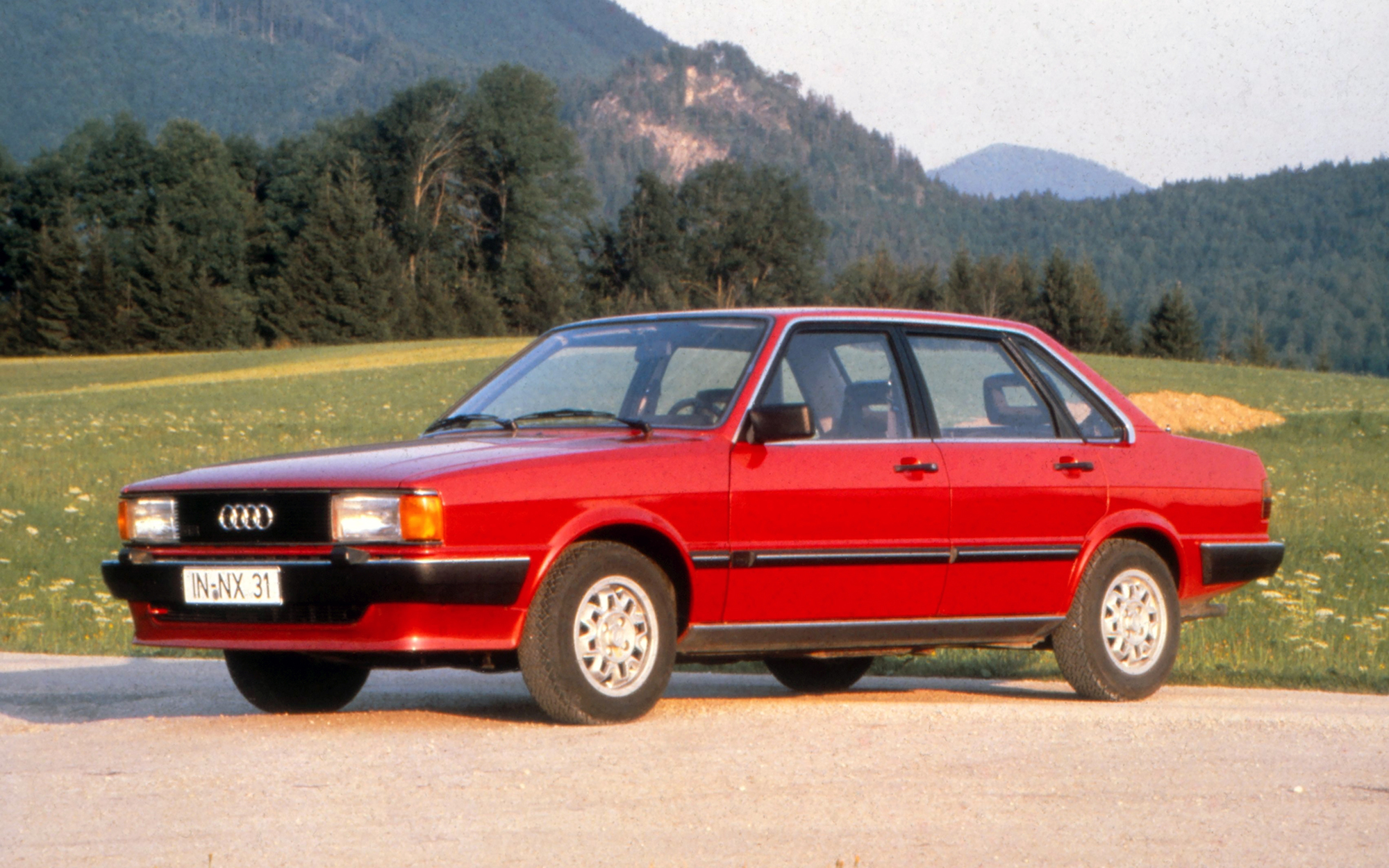
In April 1978, the five-cylinder carbureted version with an output of 85 kW (115 hp) replaces the basic twoliter four-cylinder version in the Audi 100 (C2). The new 1.9-liter unit produces maximum power at 5,400 revs and delivers 154 newton meters (113.58 lb-ft) of torque to the crankshaft at 3,700 rpm. The engine is used in the Audi 100 5 (C2), the Audi 80 CD (B2), the Audi Coupé GT 5S (B2) and in the Audi 100 (C3).
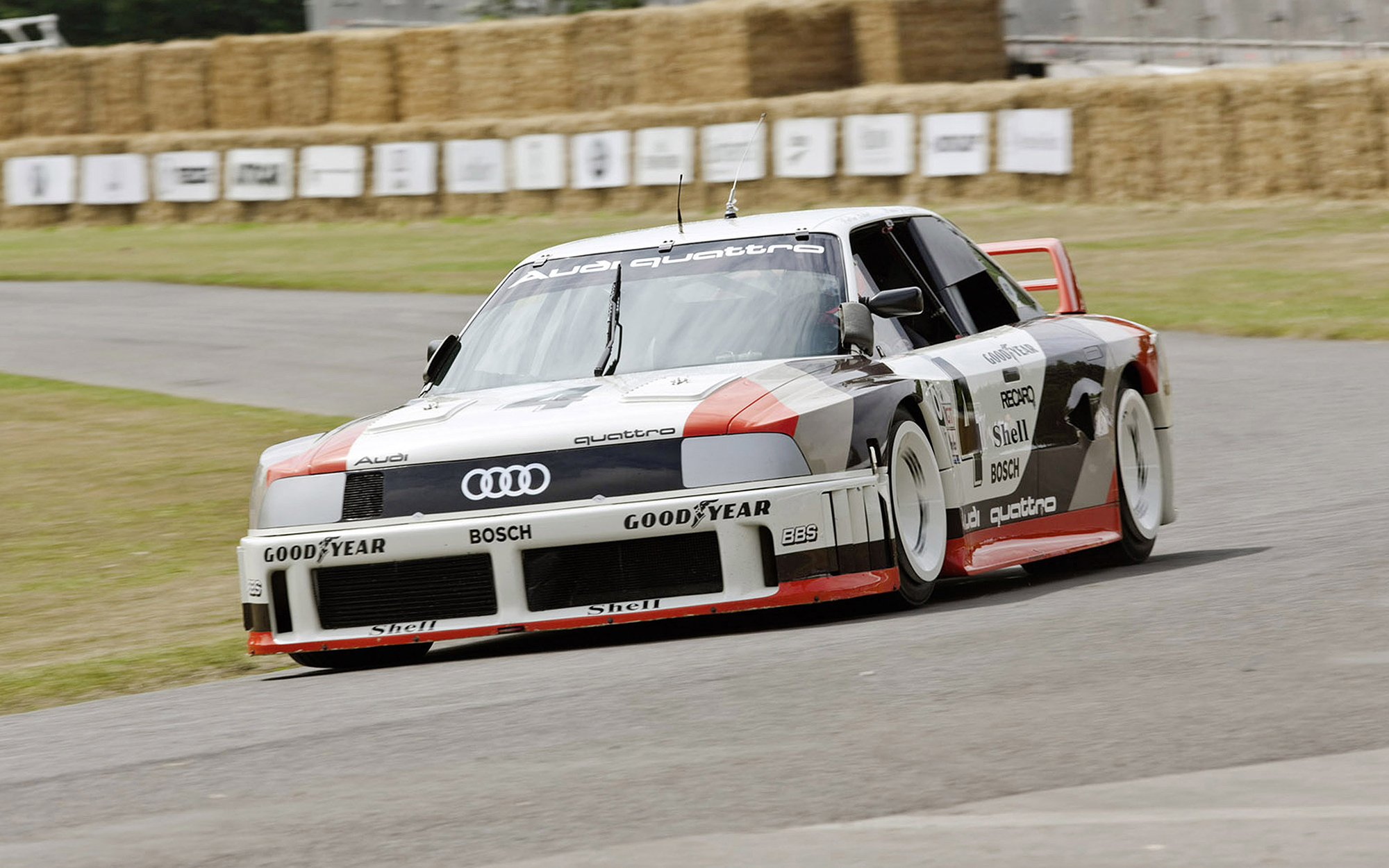
At the 1989 IMSA GTO in the USA, the Audi 90 quattro competes in its races with the most powerful fivecylinder works engine. The turbocharged aluminum engine is a 2.2-liter high-performance unit specially designed for racing. It develops 530 kW (720 hp) at 7,500 revolutions per minute and delivers 720 newton meters (531.04 lb-ft) of torque at 6,000 rpm. Overall, the Audi 90 quattro IMSA GTO wins seven races in the American touring car series in the 1989 season.
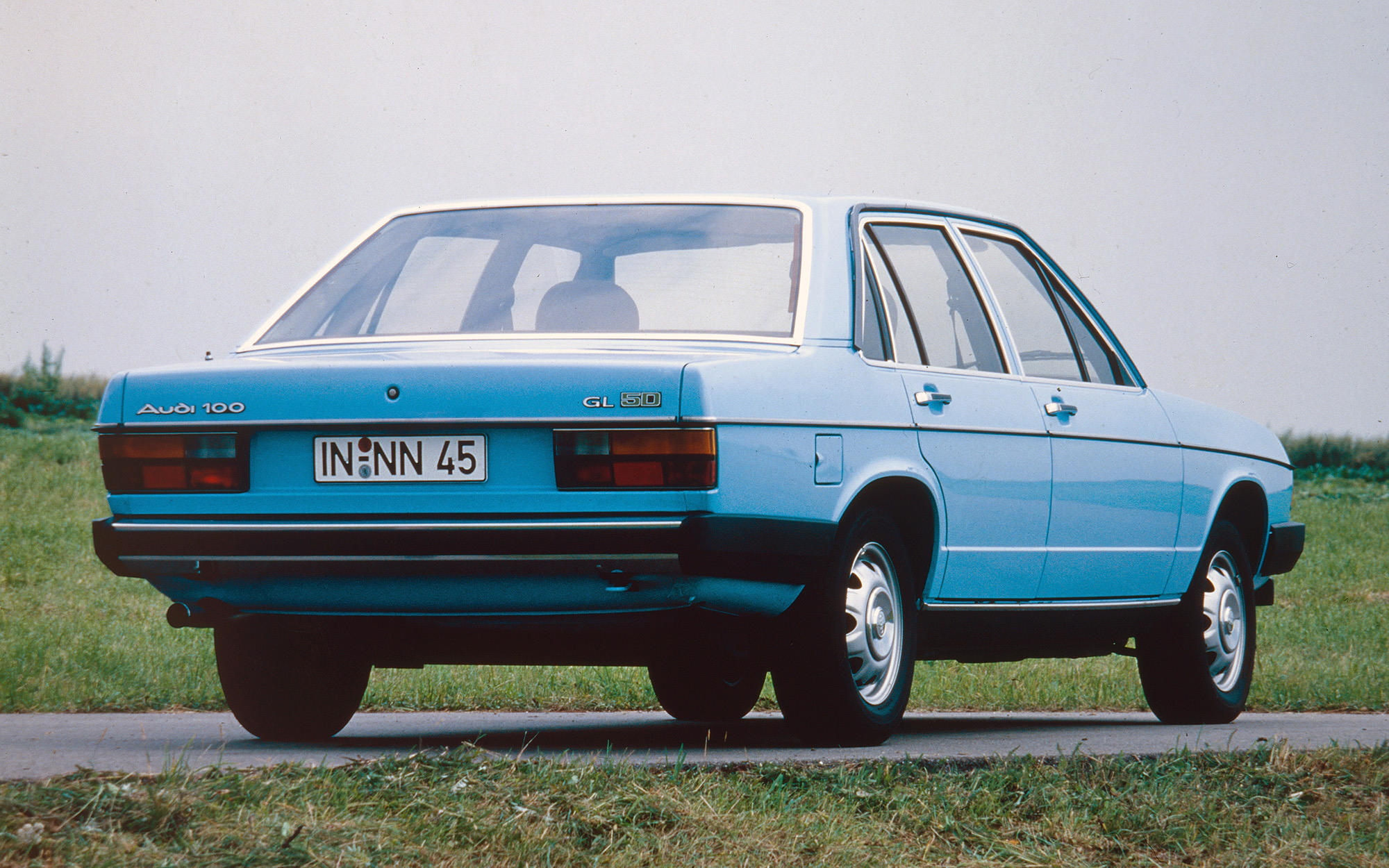
In 1978, Audi presents its first diesel model for the Audi 100 (C2). The five-cylinder naturally aspirated engine with a displacement of two liters develops 51 kW (70 hp) and 123 newton meters (90.72 lb-ft) of torque. It also powers the next-generation C3, propelling both the sedans and the Avant versions. From 1984, there is a turbocharged engine with an output of 64 kW (87 hp) and 172 newton meters (126.86 lb-ft) of torque.
In August 1976, Audi introduces the second-generation Audi 100 (C2) in Luxembourg. For the first time, power is provided by a five-cylinder gasoline engine in a model from the brand with the four rings. The fuel-injected engine with a displacement of 2,144 cc develops 110 kW (136 hp) at 5,700 revolutions per minute. The maximum torque of 185 newton meters (136.45 lb-ft) is available at 4,200 rpm. The market launch of the Audi 100 (C2) follows in March 1977. From September 1979, the five-cylinder engine is also available in the Audi 200; from August 1982, it is fitted in the successor to the C2, the Audi 100 C3.
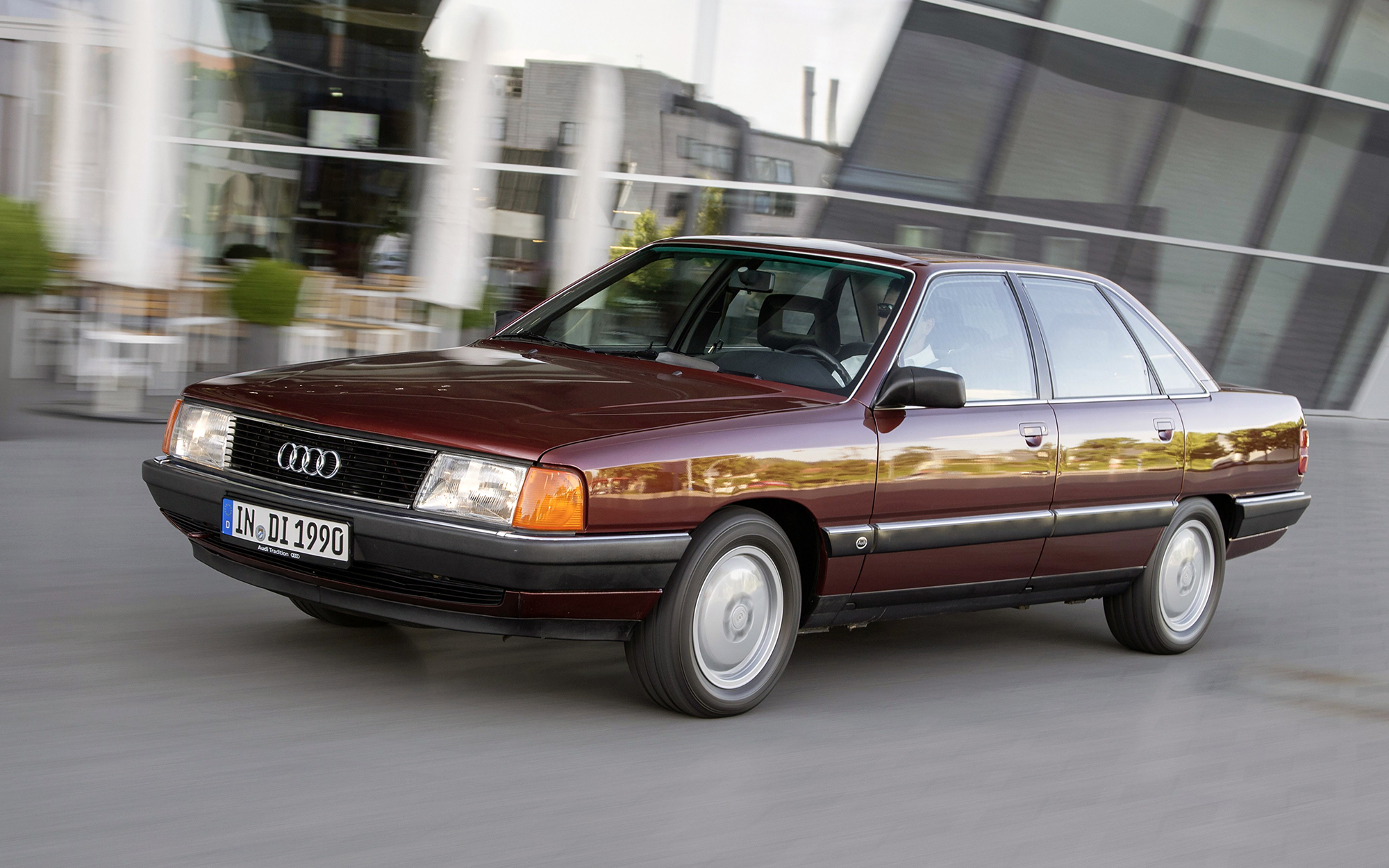
Audi presents another milestone in the automotive history in 1989 at the International Motor Show in Frankfurt am Main: the Audi 100 TDI. The first fivecylinder turbocharged diesel with direct injection for a production car produces 88 kW (120 hp) from a displacement of 2.5 liters and delivers 265 newton meters (195.45 lb-ft) of torque to the crankshaft. It is used in the C3 and in the C4 – from 1994 with an output of 103 kW (140 hp) and 290 newton meters (213.89 lb-ft) of torque.
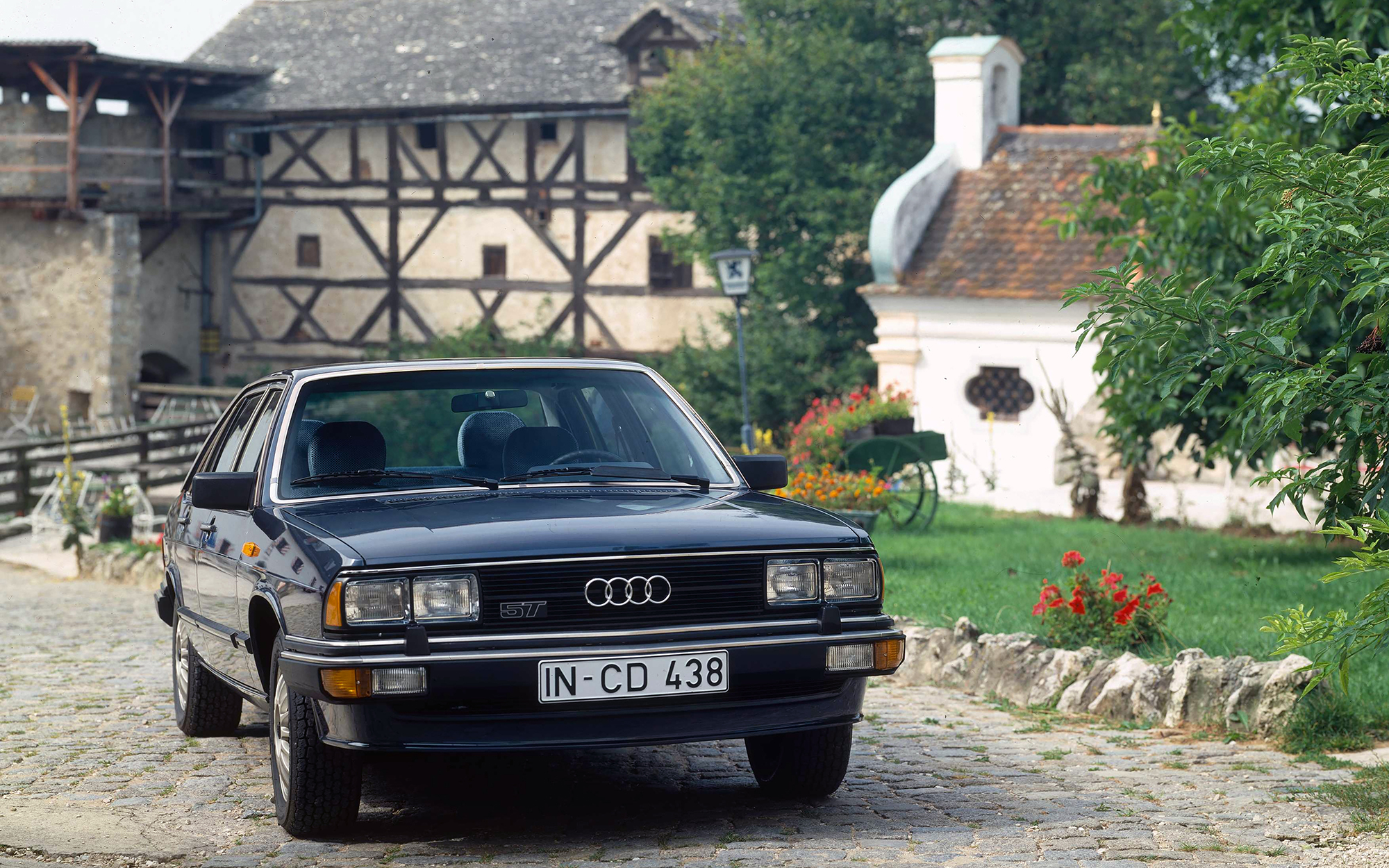
In 1980, the Audi 200 5T (C2) comes on to the market, which is powered by the first turbocharged gasoline engine from the brand with the four rings. From a displacement of 2,144 cc, the five-cylinder unit produces 125 kW (170 hp) at 5,300 revolutions per minute and 265 newton meters (195.45 lb-ft) of torque at 3,300 rpm. The Audi 200 5T (C2) is the first Audi in the luxury class and features the lavish equipment of the Audi 100 CD as standard.
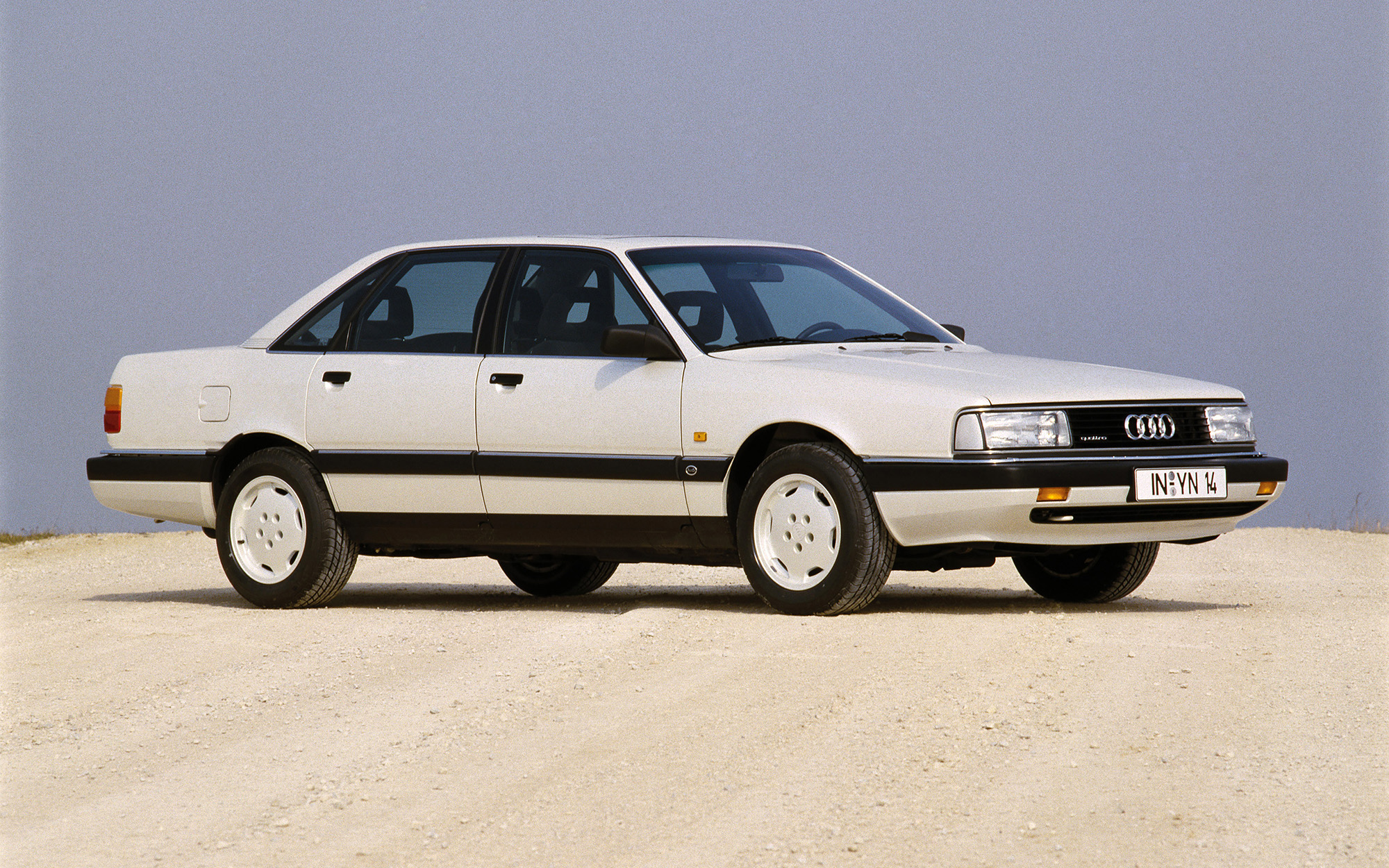
With two catalytic converters, four-valve technology, a closed tank venting system and a diagnostic system, this powerplant offers a very high standard of emissions control and technology. It is first available in the Audi 200 quattro 20V (C3), then in the Audi quattro 20V (B2) a year later and in the Audi S2 Coupe (B3) in 1990. The five-cylinder turbocharged engine has a displacement of 2,226 cc and delivers 162 kW (220 hp) at 5,700 revolutions per minute and 309 newton meters (227.91 lb-ft) of torque at 1,950 rpm.
In 1994, the most powerful five-cylinder production engine built by Audi to date goes into action in the Audi Avant RS 2 (B4). With turbocharging, fuel injection and standard-fit emissions control, it produces 232 kW (315 hp) at 6,500 revolutions per minute from a displacement of 2,226 cc and delivers 410 newton meters (302.40 lb-ft) of torque at 3,000 rpm.
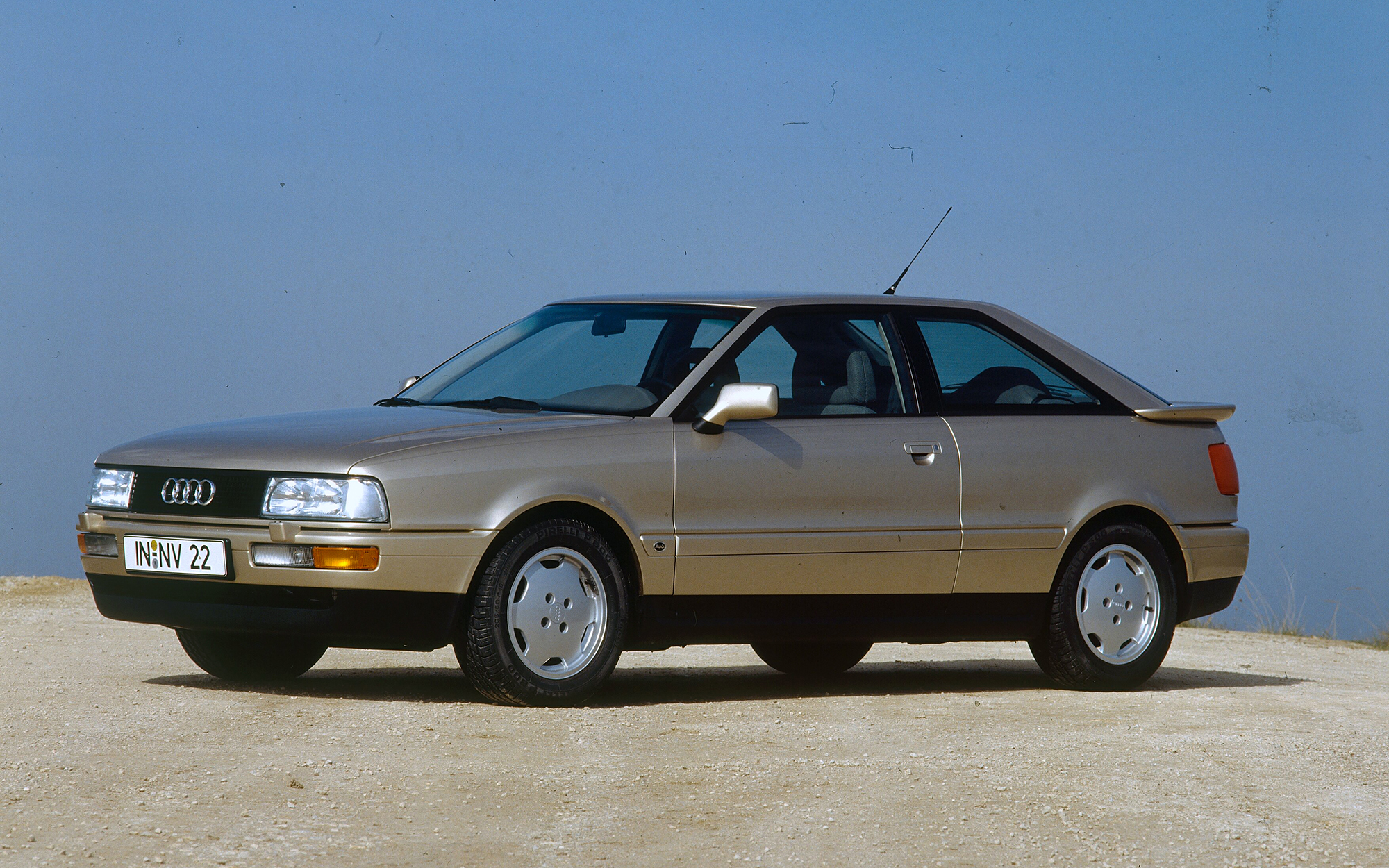
In 1984, a completely new development appears. Audi is the first manufacturer to optimize the five-cylinder engine with a fully electronic map-controlled ignition system and a catalytic converter as standard. From 2,309 cc, it produces 100 kW (136 hp) at 5,600 rpm and 188 newton meters (138.66 lb-ft) of torque at 3,500 revolutions per minute. The most widely used five-cylinder engine from Audi is found in the Audi 100 2.3E (C3), the Audi Coupe 2.3E (B3) and in the Audi 90 2.3 E (B3). From 1990, it also powers the Audi 100 2.3E (C4) and a year later the Audi 80 2.3E (B4) and the Audi Cabriolet 2.3E. Here, it delivers 98 kW (133 hp) at 5,600 revolutions per minute and 186 newton meters (137.19 lb-ft) at 4,000 rpm.
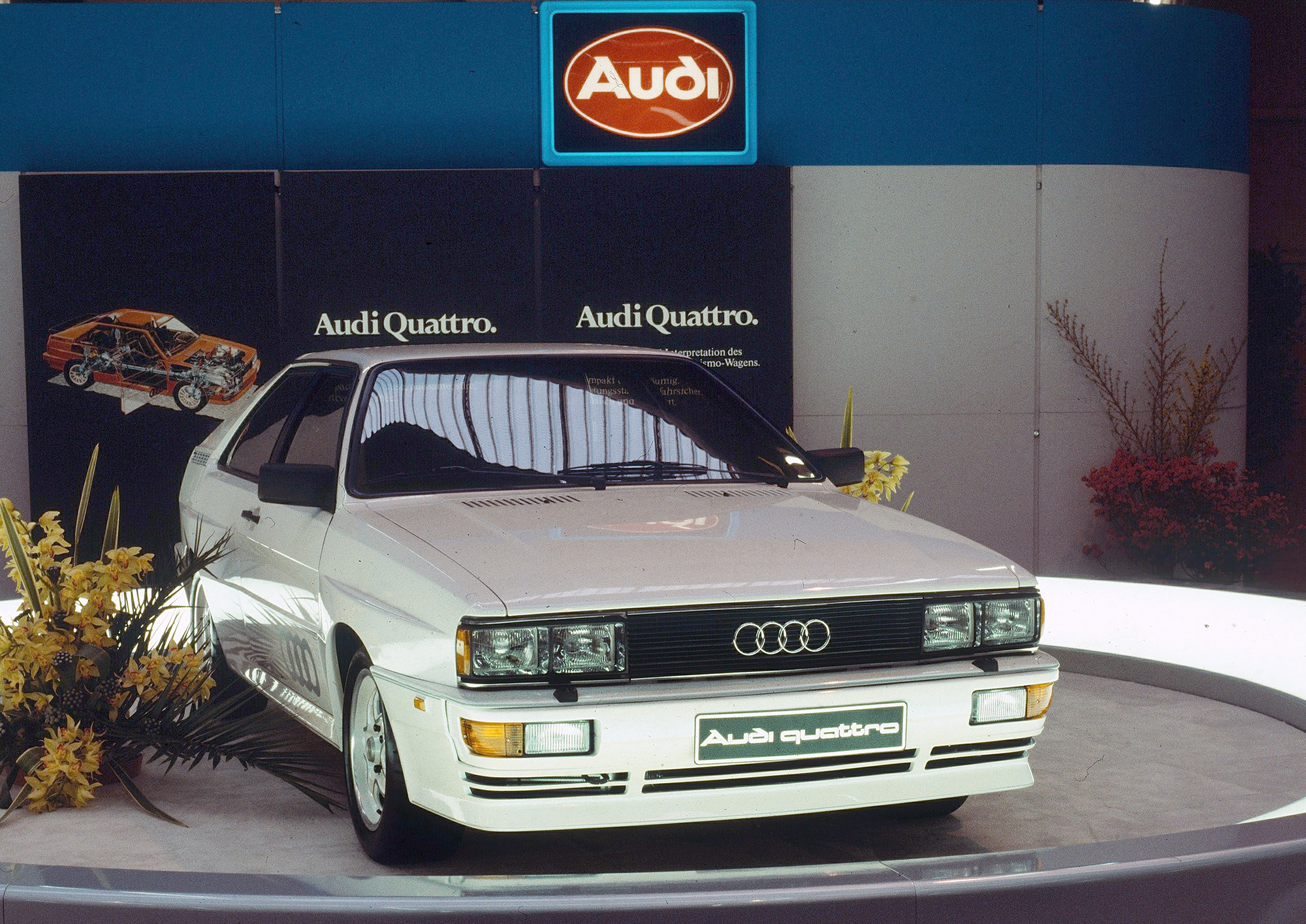
In 1980 at the Geneva Motor Show, Audi unveils the Audi quattro (B2), known as the “Ur-quattro” from the mid-1990s. It uses the powerplant from the Audi 200 5T (C2), but features an intercooler. As a result, the turbocharged engine achieves a higher output of 147 kW (200 hp) at 5,500 revolutions per minute and 285 newton meters (210.21 lb-ft) of torque at 3,500 rpm. The body of the Audi quattro is based on the Audi Coupe (B2), which in turn is based on the Audi 80. Flared fenders, bulkier bumpers and sills as well as a larger rear spoiler distinguish the Audi quattro from the Coupe.
In the 1983 Corsica Rally, Audi competes for the first time with the Audi quattro A2, Group B. Its 2.1-liter turbocharged five-cylinder inline engine produces 265 kW (360 hp) at 6,500 revolutions per minute and delivers 450 newton meters (331.90 lb-ft) of torque at 4,000 rpm. At the end of the season, the Finn Hannu Mikkola wins the drivers’ title in this car. One year later, the Swede Stig Blomqvist replicates this success: he becomes world rally champion, while Audi wins the manufacturers’ world rally championship for the second time after 1982.
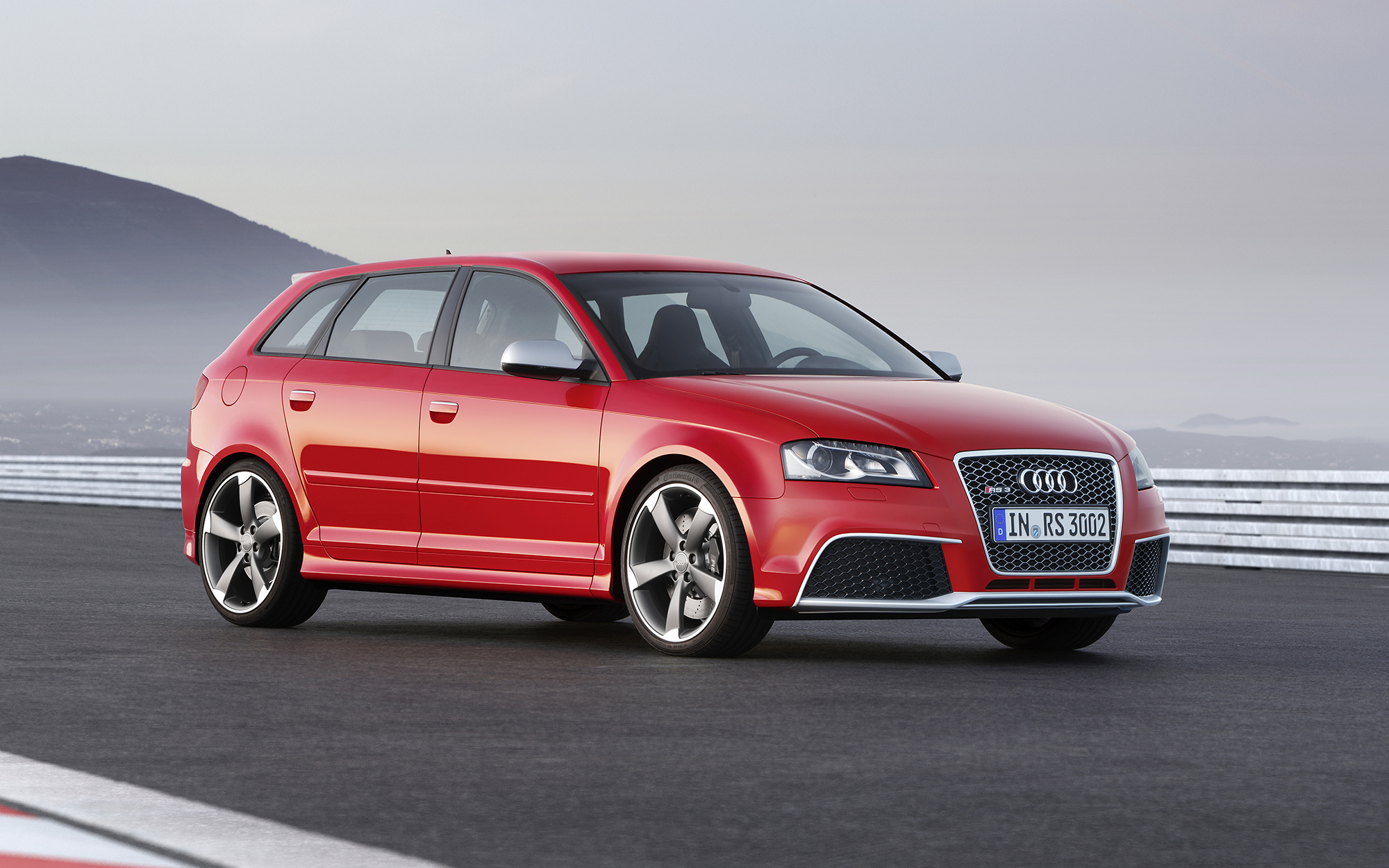
30 years after the first five-cylinder turbocharged gasoline engine was presented, Audi once again introduces a model with a five-cylinder gasoline engine and turbocharger at the Geneva Motor Show: the TT RS. The powerplant delivers 250 kW (340 hp) at 6,500 revolutions per minute from 2,480 cc and 450 newton meters (331.90 lb-ft) at 5,300 rpm. From 2011, this engine is also used in the RS 3 Sportback and from 2014 in the updated RS Q3. In the 2012 TT RS plus, the engine produces 265 kW (360 hp) at 6,700 revolutions per minute and develops 465 newton meters (342.97 lb-ft) of torque at 5,400 rpm.
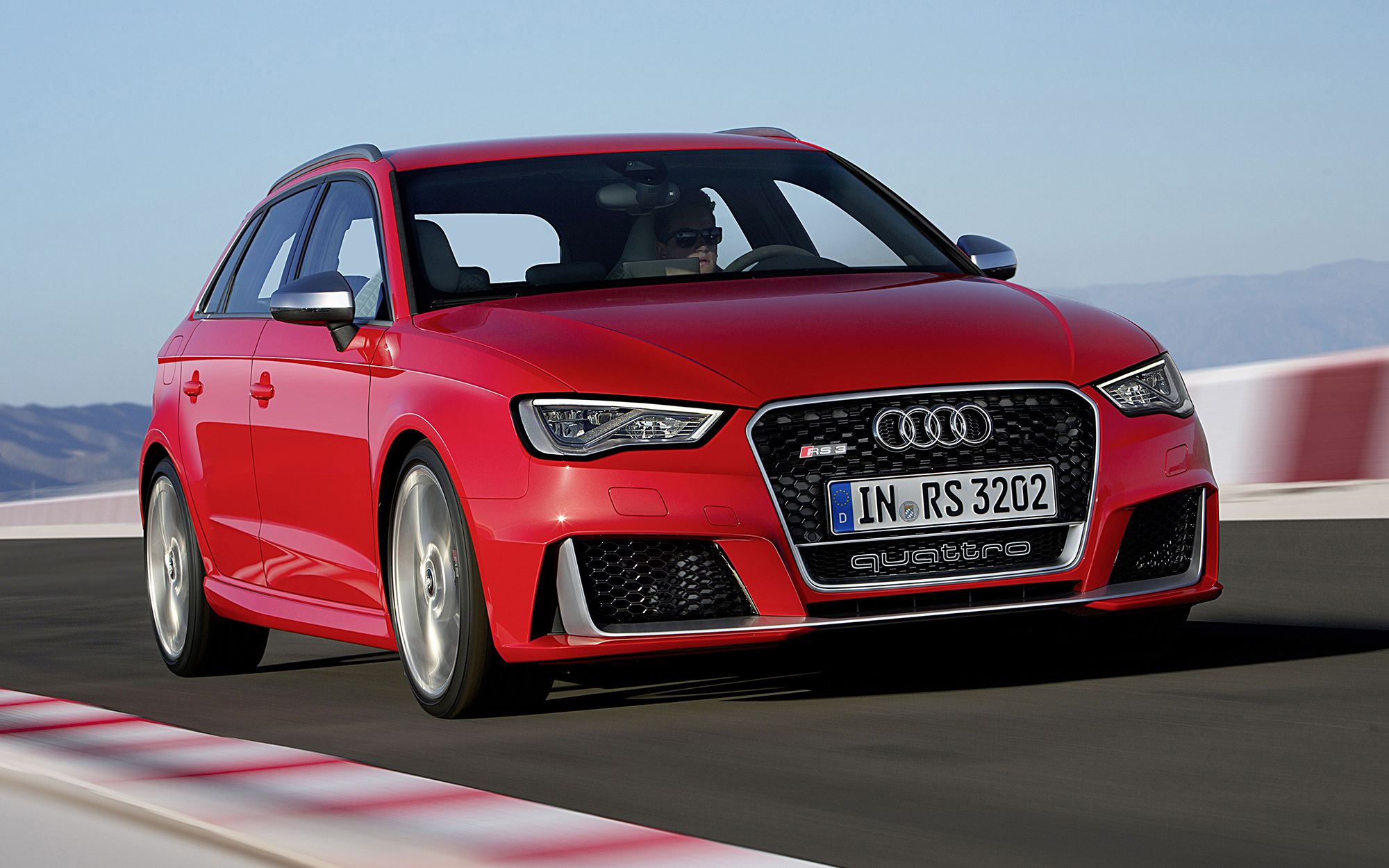
In the summer of 2015, the second-generation RS 3 Sportback* appears – the most powerful car in the premium compact segment with an output of 270 kW (367 hp). The combination of turbocharging and direct injection permits a high compression ratio of 10:1 and correspondingly good efficiency. The five-cylinder inline engine delivers a maximum of 465 newton meters (342.97 lb-ft) to the crankshaft. This torque is available from as low as 1,625 revolutions per minute and remains constant up to 5,550 rpm. Since spring 2016, Audi has been using the optimized version of the powerplant in the Audi RS Q3 performance* too.
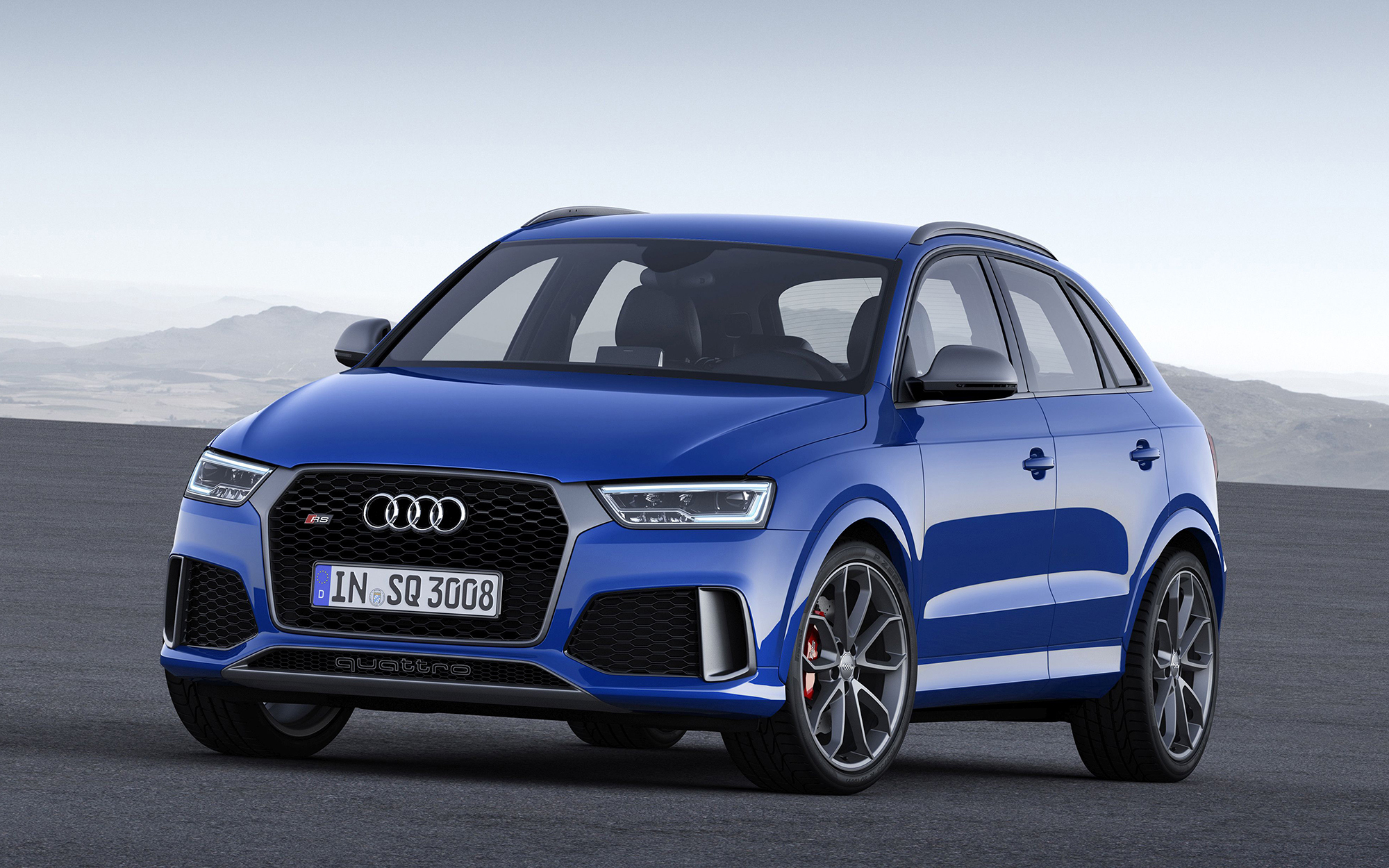
In the summer of 2015, the second-generation RS 3 Sportback* appears – the most powerful car in the premium compact segment with an output of 270 kW (367 hp). The combination of turbocharging and direct injection permits a high compression ratio of 10:1 and correspondingly good efficiency. The five-cylinder inline engine delivers a maximum of 465 newton meters (342.97 lb-ft) to the crankshaft. This torque is available from as low as 1,625 revolutions per minute and remains constant up to 5,550 rpm. Since spring 2016, Audi has been using the optimized version of the powerplant in the Audi RS Q3 performance* too.
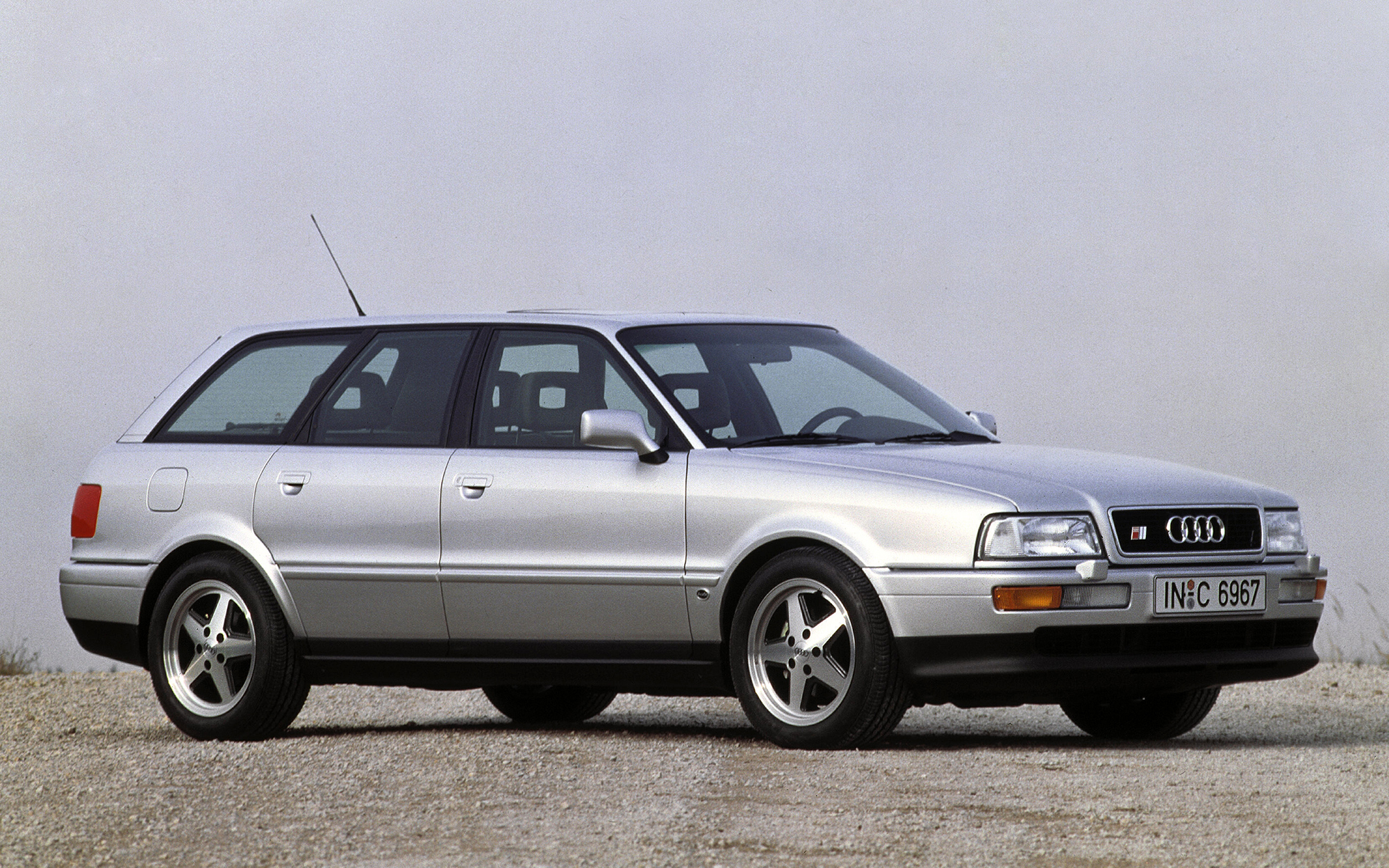
In the 1991 Audi S4, the Sport version of the Audi 100 (C4), a turbocharged 2.2-liter 20-valve five-cylinder inline engine is at work. It develops 169 kW (230 hp) at 5,900 rpm. Thanks to a brief increase in boost pressure, a peak torque of 350 newton meters (258.15) is achieved at 1,950 revolutions per minute. The engine also powers the Audi S2 Avant (B4) and the Audi S2 Coupé (B3). In 1994, the Audi S4 becomes known as the Audi S6.
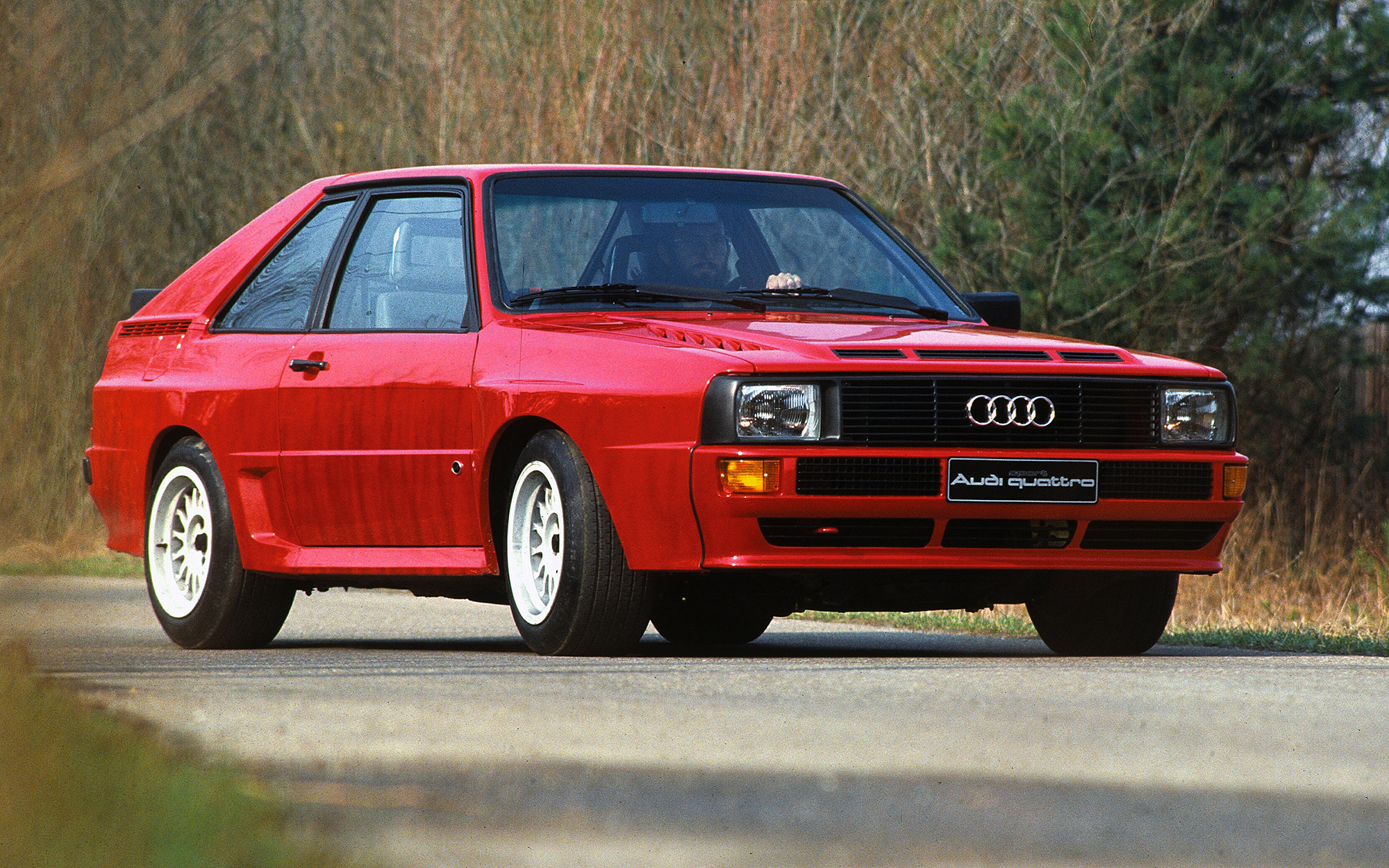
In September 1983, Audi presents the Audi Sport quattro (B2) at the International Motor Show in Frankfurt am Main. It is powered by a 2.1-liter highperformance engine with four-valve technology that produces 225 kW (306 hp) at 6,700 revolutions per minute. The maximum torque of 350 newton meters (258.15 lb-ft) is available at 3,700 rpm. Delivery commences in May 1984. The Audi Sport quattro (B2) is a special series limited to 214 vehicles, produced to meet homologation requirements for rallying. The rules stipulate that displacement must be limited to a maximum of 2,133 cc.
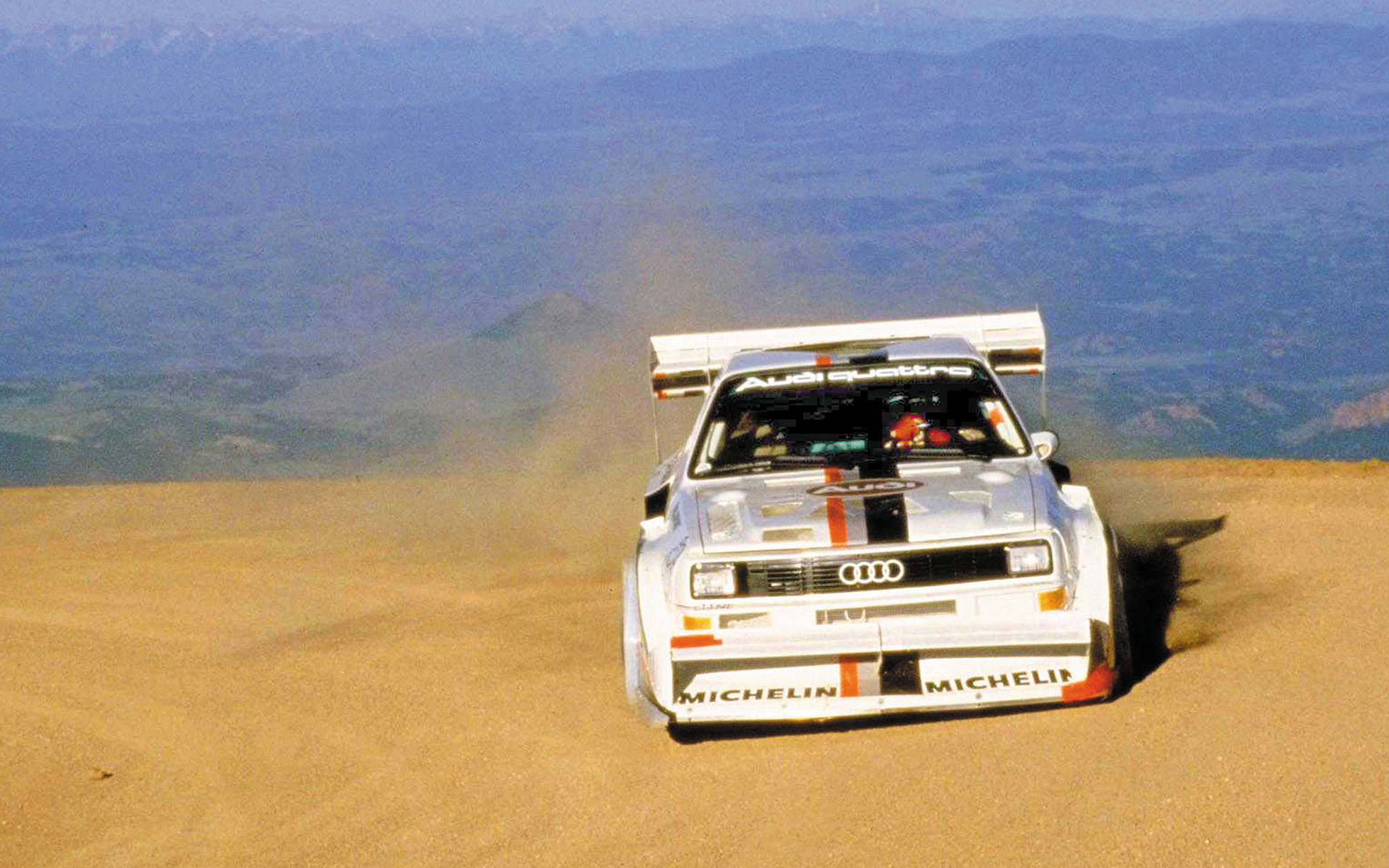
In 1987, Walter Röhrl wins the legendary Pikes Peak Hill Climb (USA) in the Audi Sport quattro S1 (E2), setting a new record. In 10 minutes and 47.85 seconds he conquers the almost 20-kilometer-long (12.43 mi) course with 156 bends and a difference in altitude of 1,439 meters (4721.13 ft). The 2.1-liter five-cylinder engine in the Audi Sport quattro S1 (E2) delivers 440 kW (598 hp) at 8,000 revolutions per minute and produces 590 newton meters (435.16 lb-ft) of torque at 5,500 rpm.
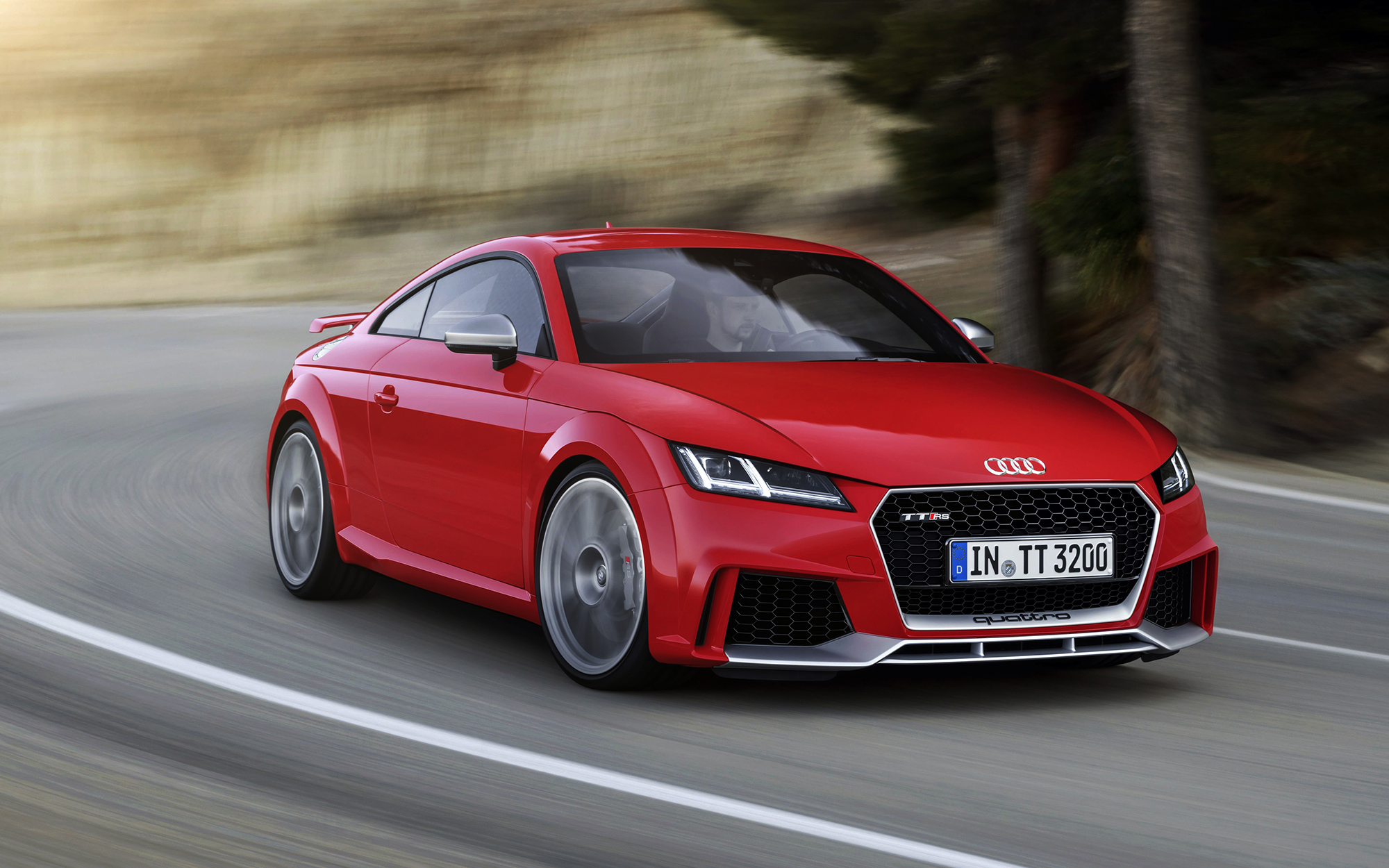
At the Beijing Motor Show in 2016, Audi presents the new TT RS Coupe* and the new TT RS Roadster*. The five-cylinder unit has been enhanced in every area – with lightweight construction measures, reduced internal friction, increased power delivery. From an unchanged displacement of 2,480 cc, the turbocharged engine gains a good 17 percent increase in performance. With an output of 294 kW (400 hp) it is more potent than ever before. The maximum torque of 480 newton meters (354.03 lb-ft) is available between 1,700 and 5,850 revolutions per minute. It ensures outstanding pulling power, which accompanies the unmistakable five-cylinder sound.
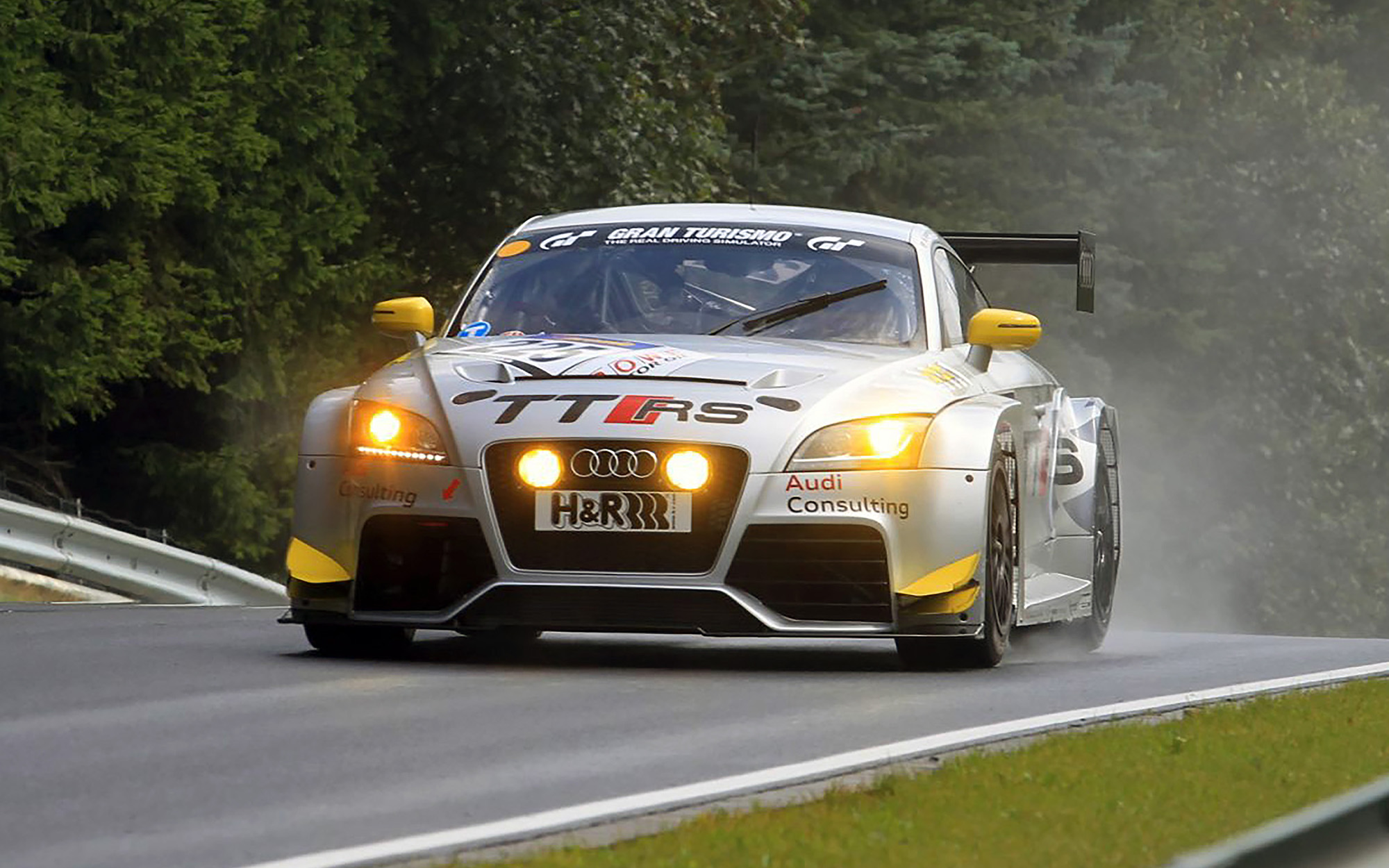
In 2010, Audi starts its motorsport activities with the TT RS. The racing car developed for endurance racing is powered by the five-cylinder engine from the production model. Following improvements to the intercooler and exhaust system, the powerplant delivers 280 kW (380 hp) at 5,800 revolutions per minute. The maximum torque of 500 newton meters (368.78 lb-ft) develops at 2,500 rpm. In the VLN Endurance Championship of 2010 and 2011, the frontwheel-drive racing car notches up several victories in the SP4T class up to 2.5 liters’ capacity. In August 2011, it clinches overall victory in the 6-hour race on the Nürburgring. Audi achieves further success with the
TT RS in the 24-hour race in the Eifel in 2011, where it takes class victory.
30 years after the first five-cylinder turbocharged gasoline engine was presented, Audi once again introduces a model with a five-cylinder gasoline engine and turbocharger at the Geneva Motor Show: the TT RS. The powerplant delivers 250 kW (340 hp) at 6,500 revolutions per minute from 2,480 cc and 450 newton meters (331.90 lb-ft) at 5,300 rpm. From 2011, this engine is also used in the RS 3 Sportback and from 2014 in the updated RS Q3. In the 2012 TT RS plus, the engine produces 265 kW (360 hp) at 6,700 revolutions per minute and develops 465 newton meters (342.97 lb-ft) of torque at 5,400 rpm.