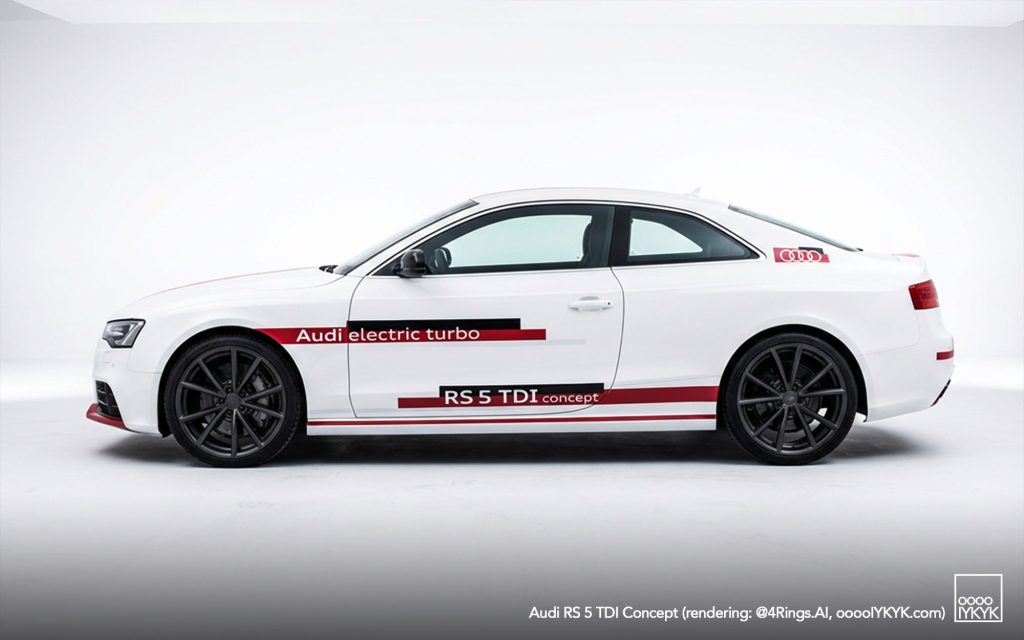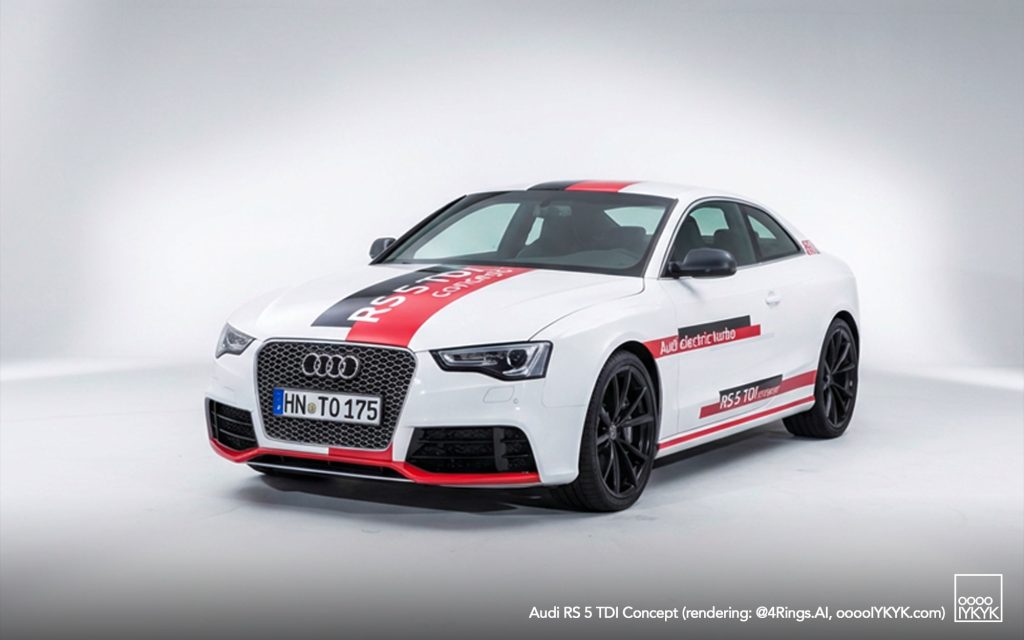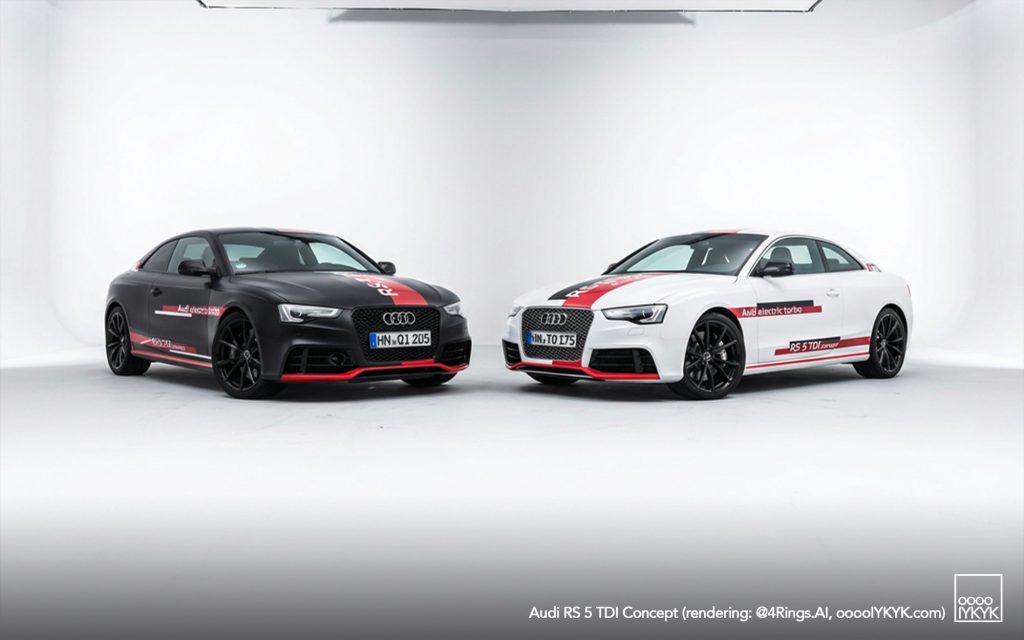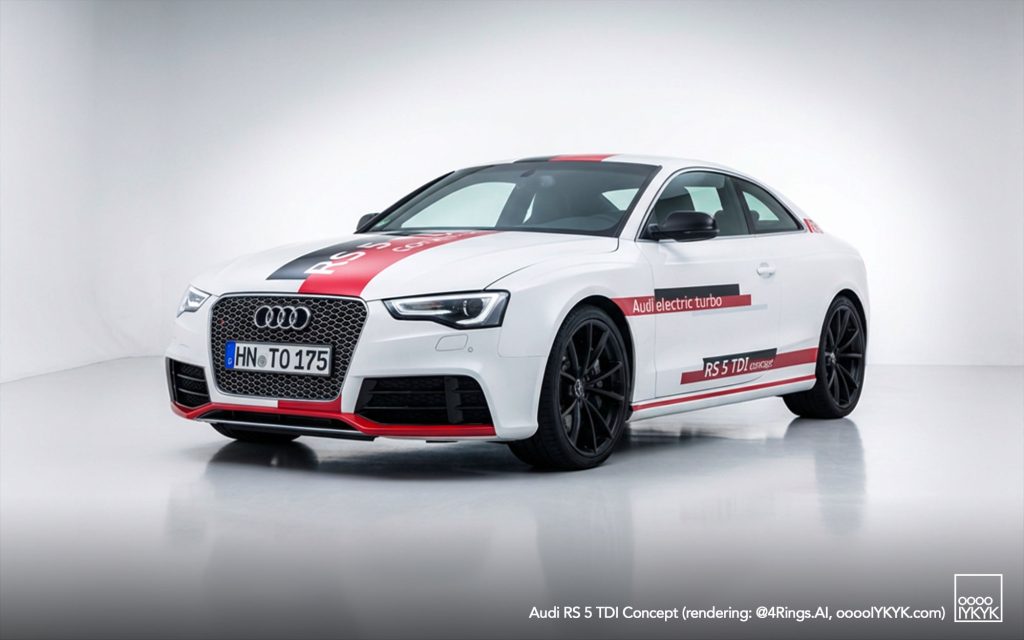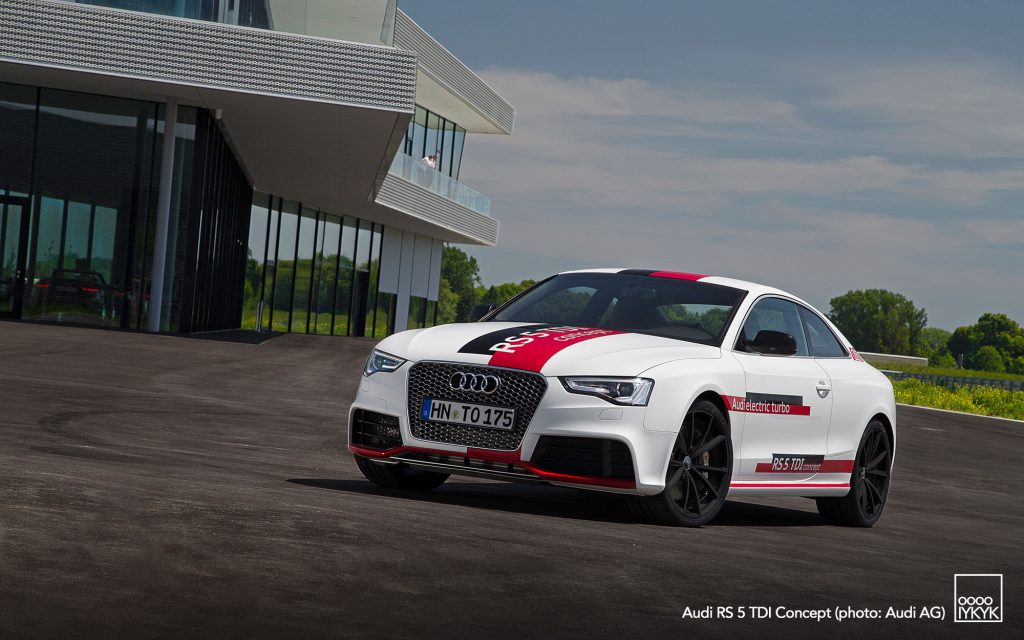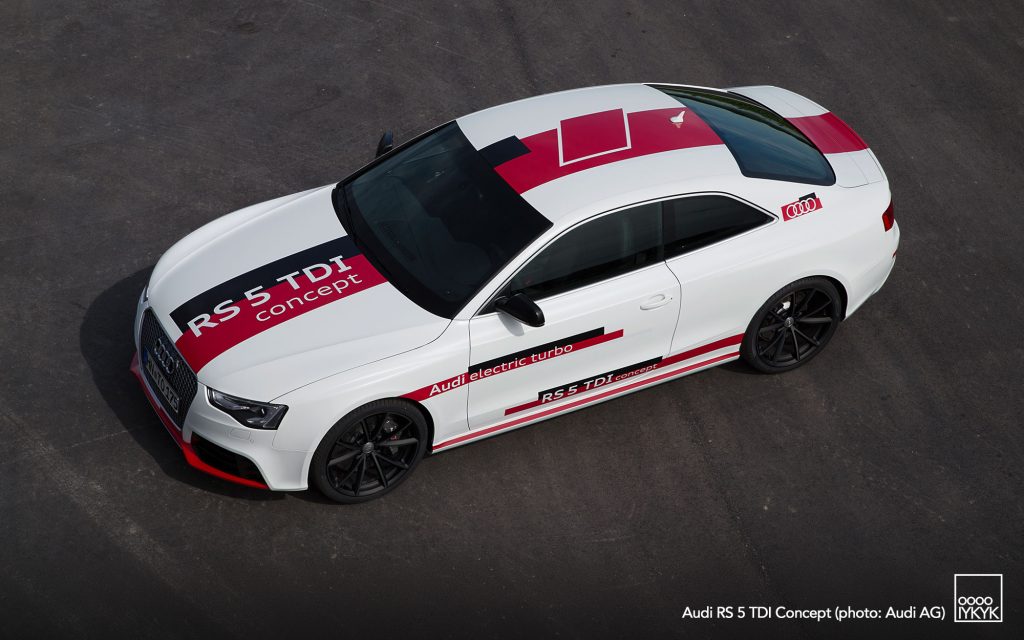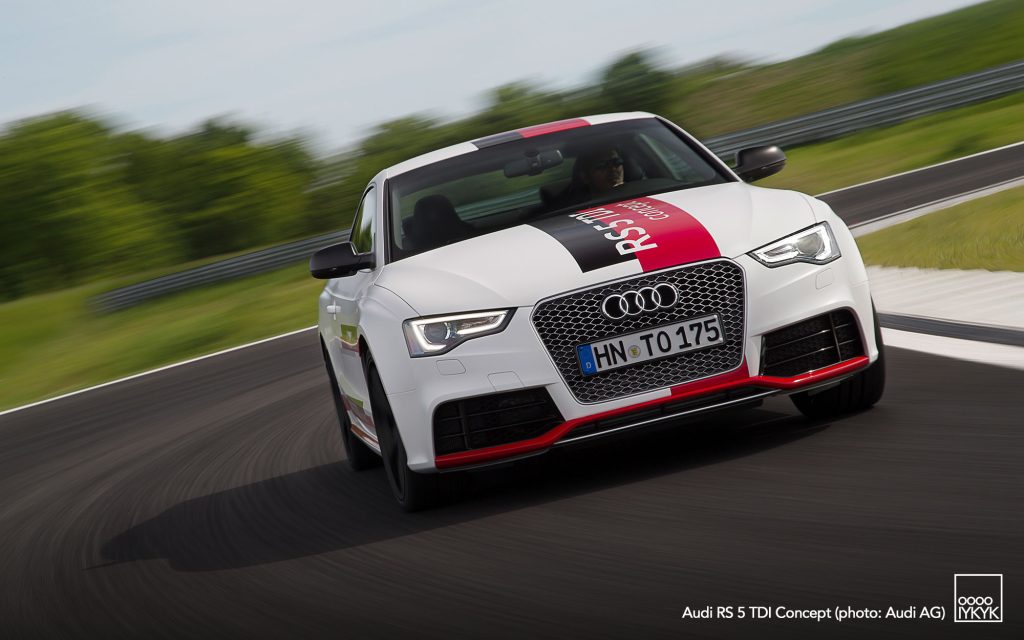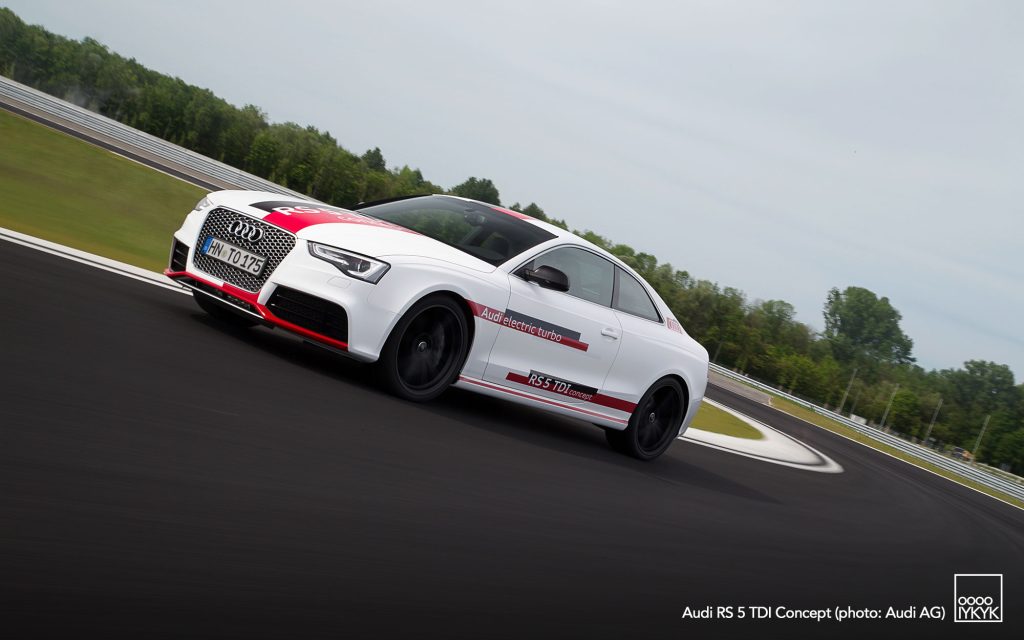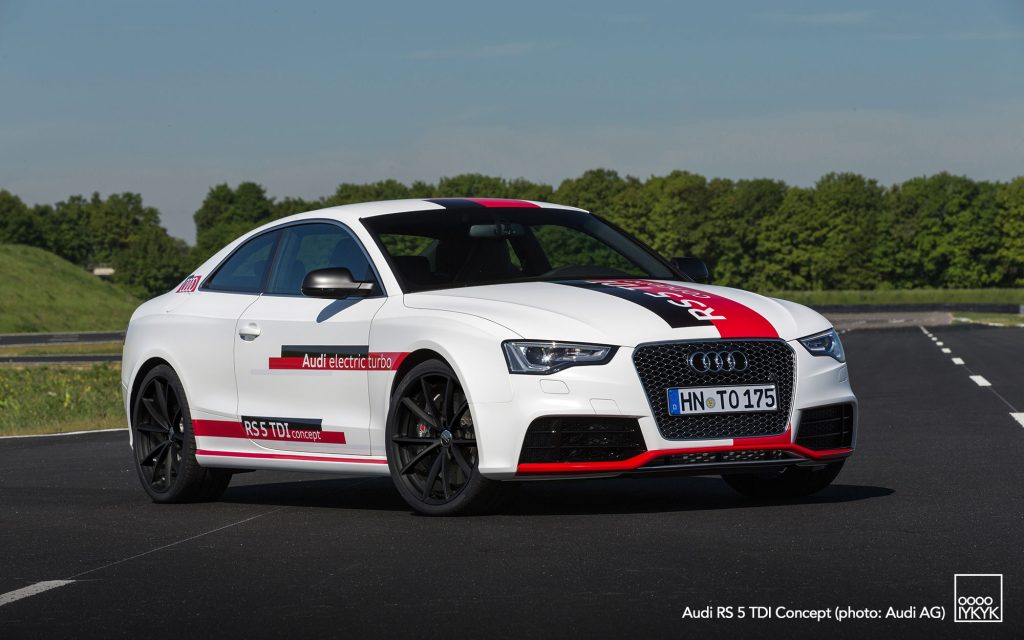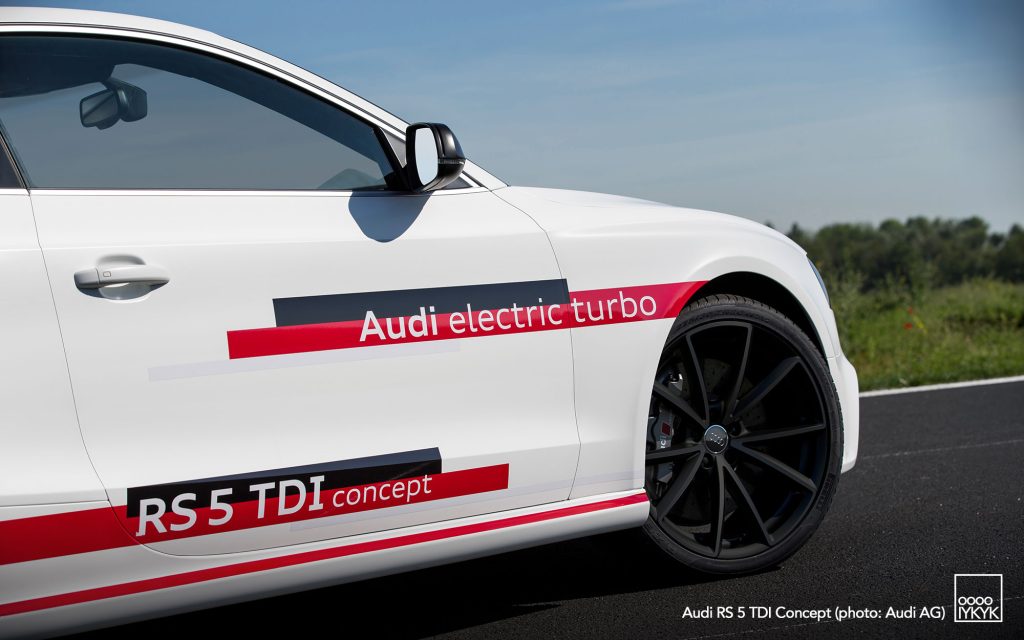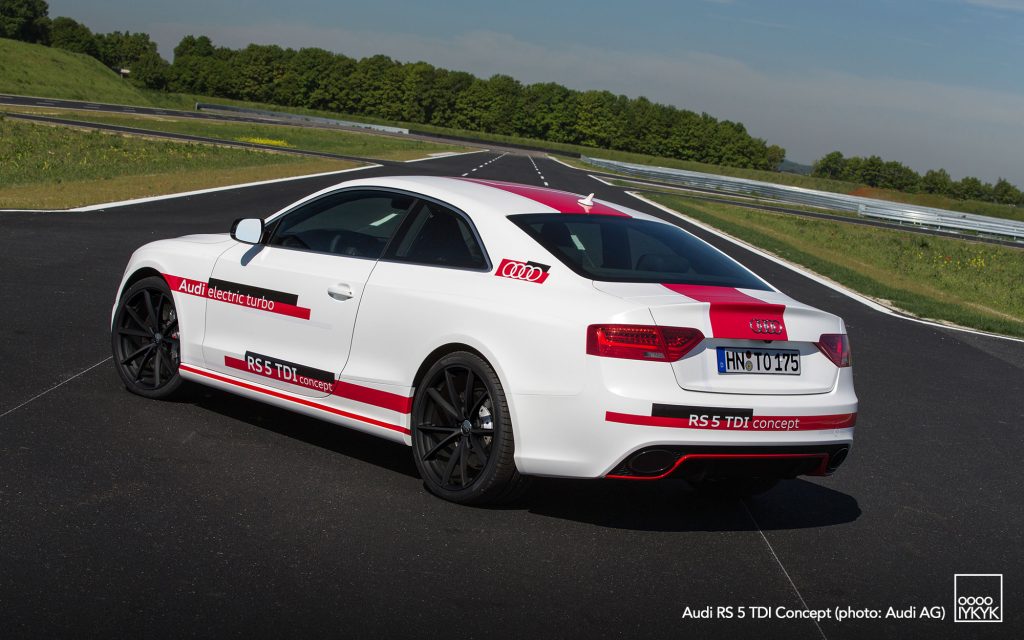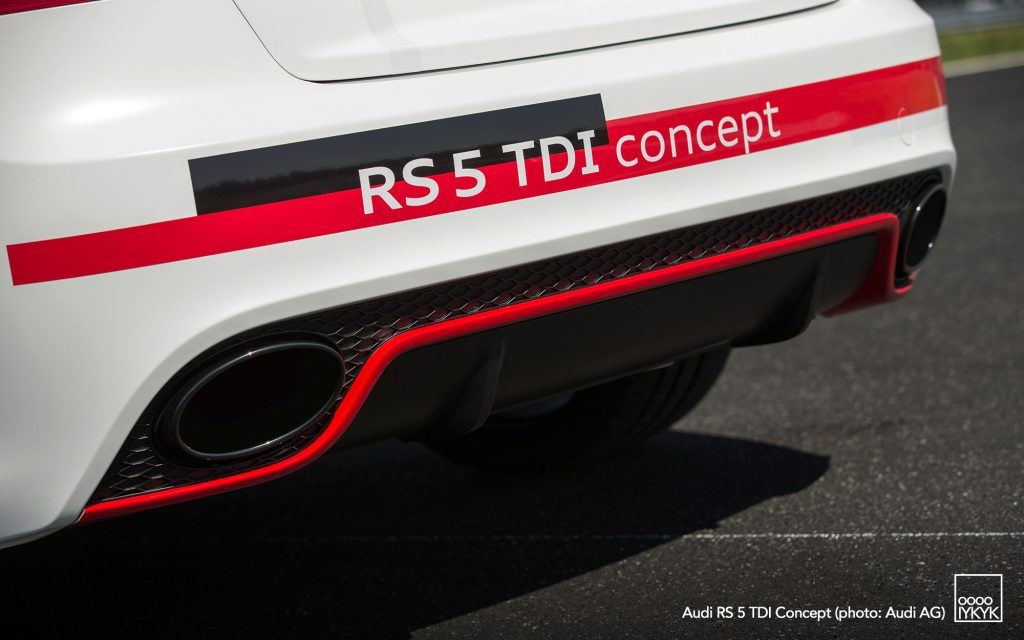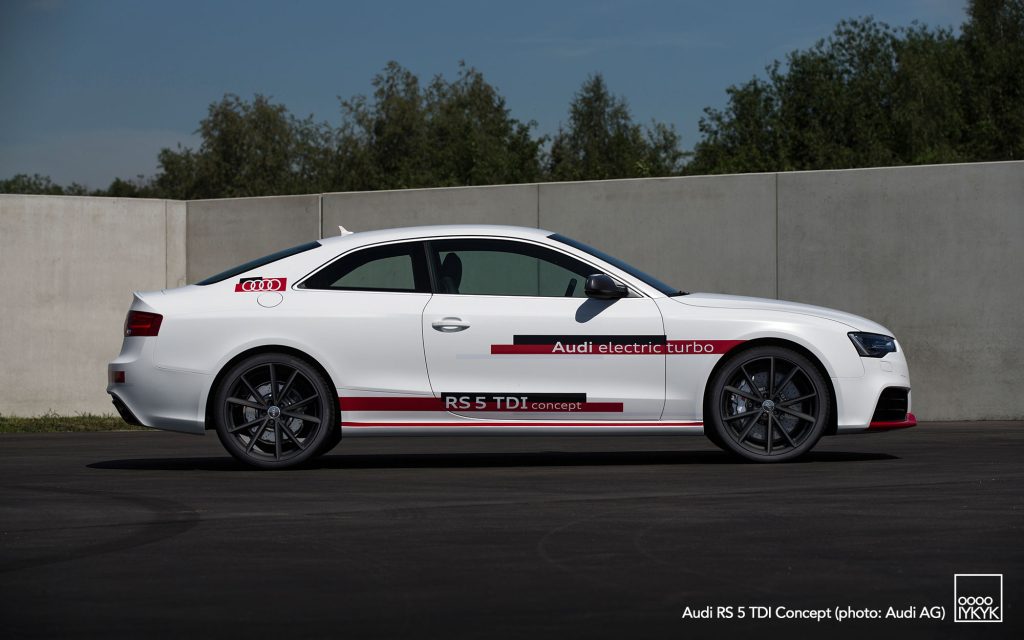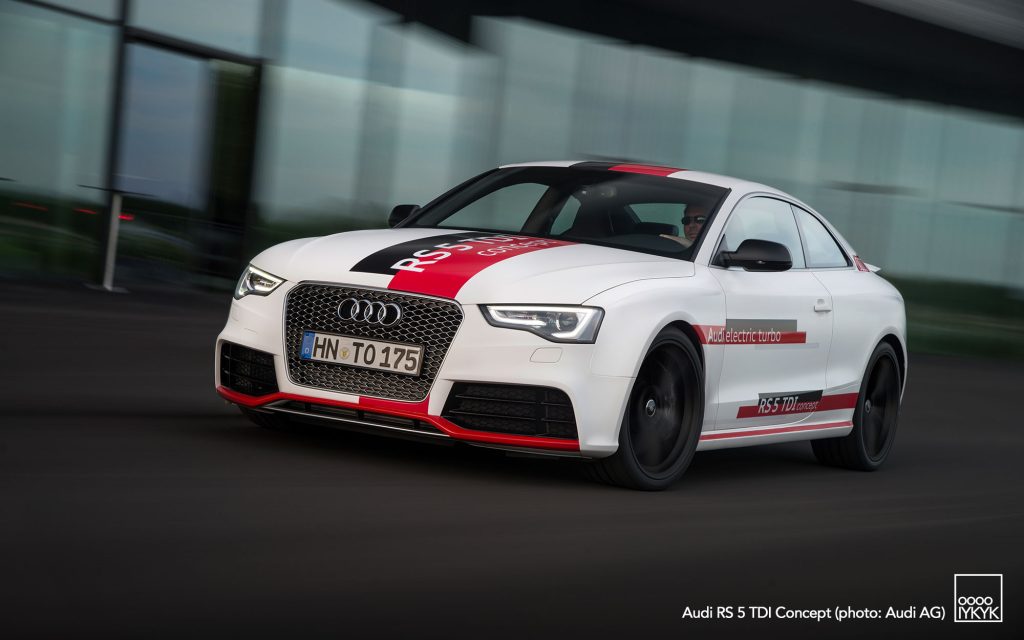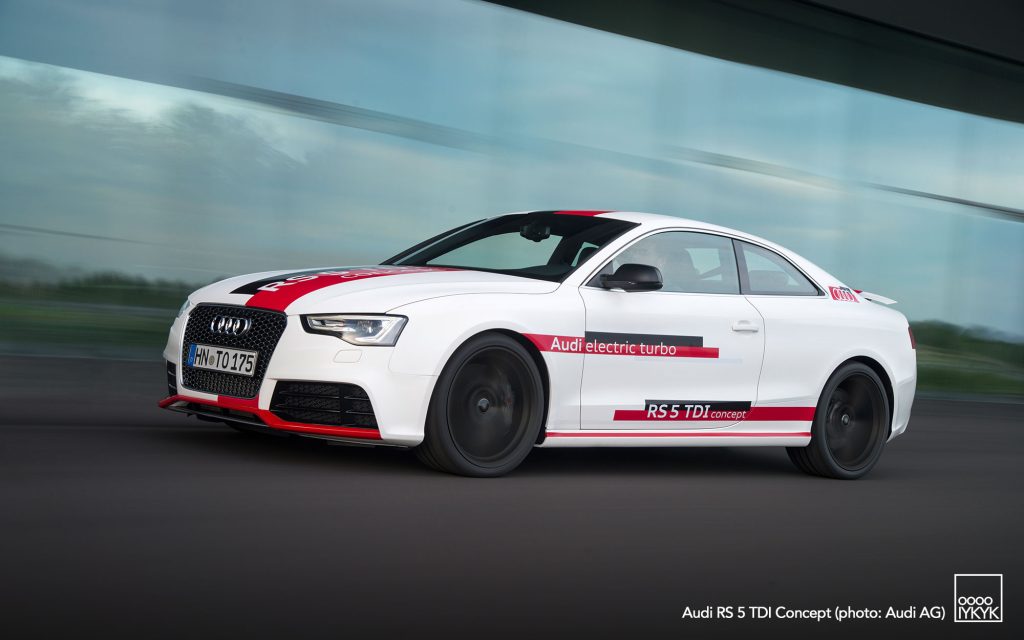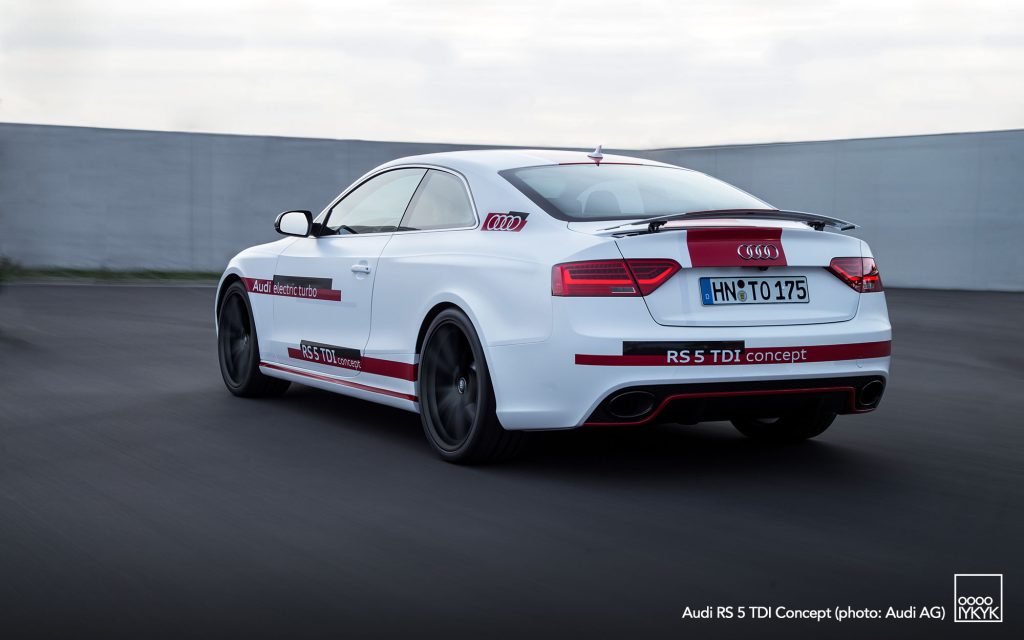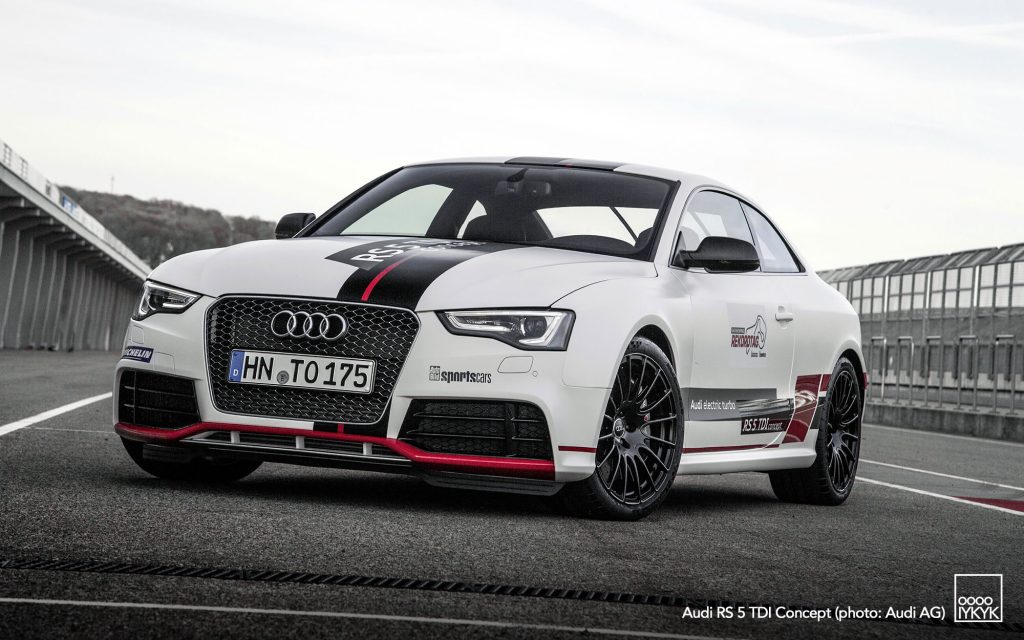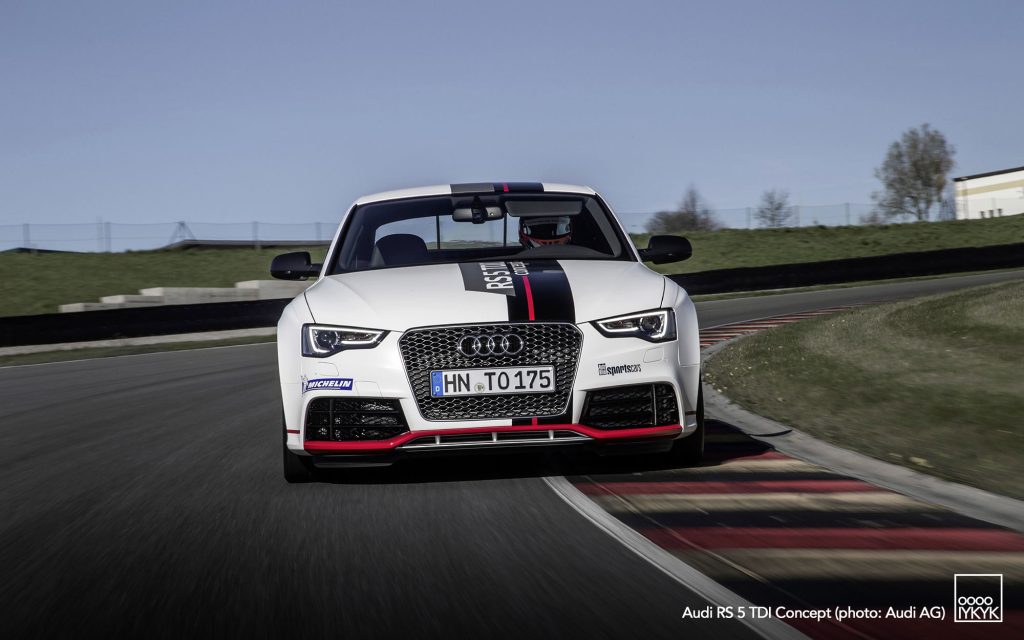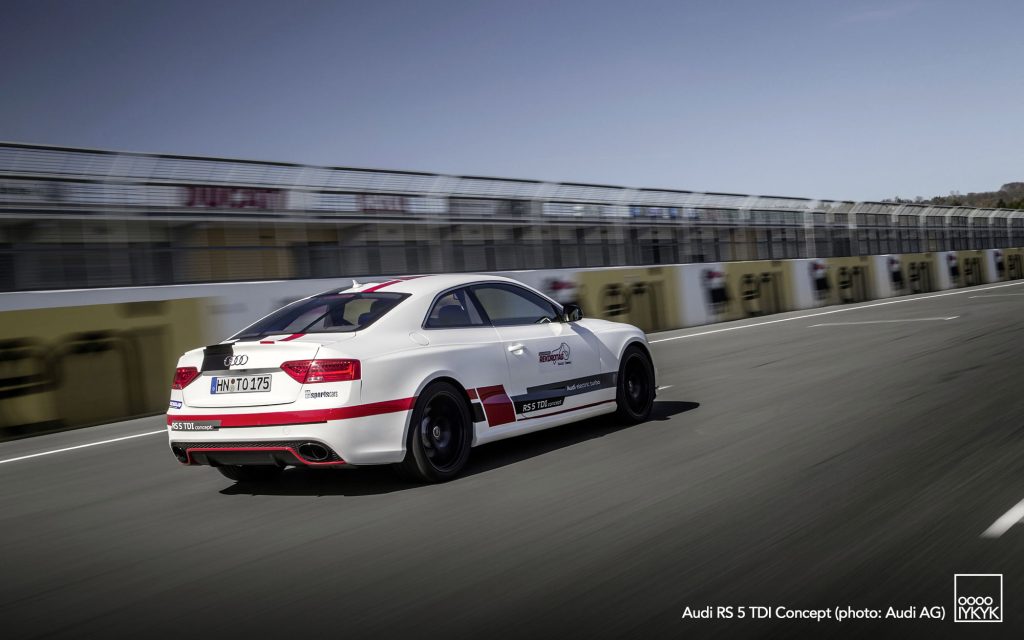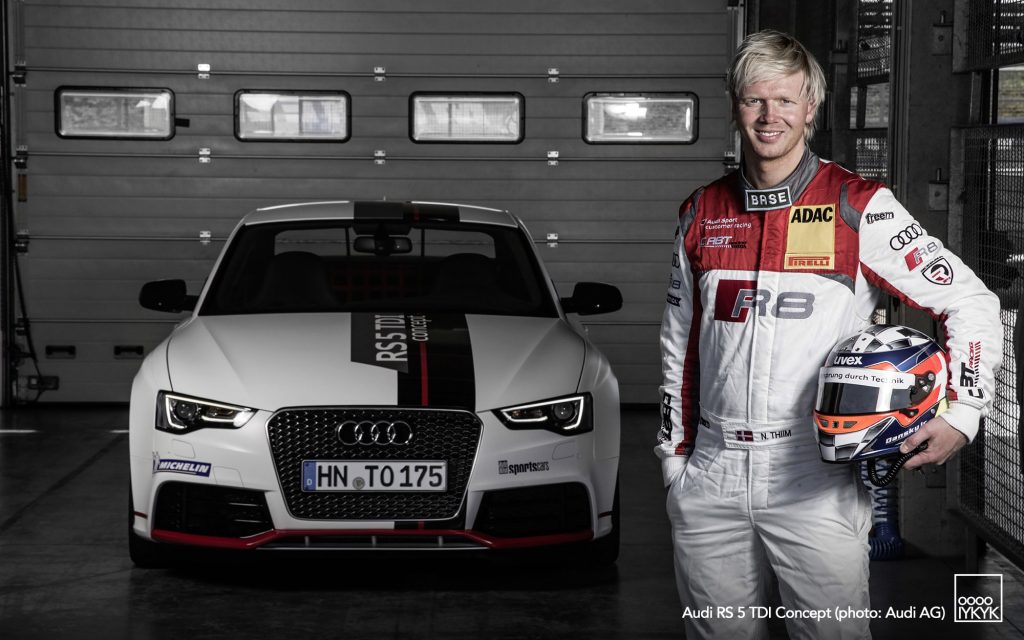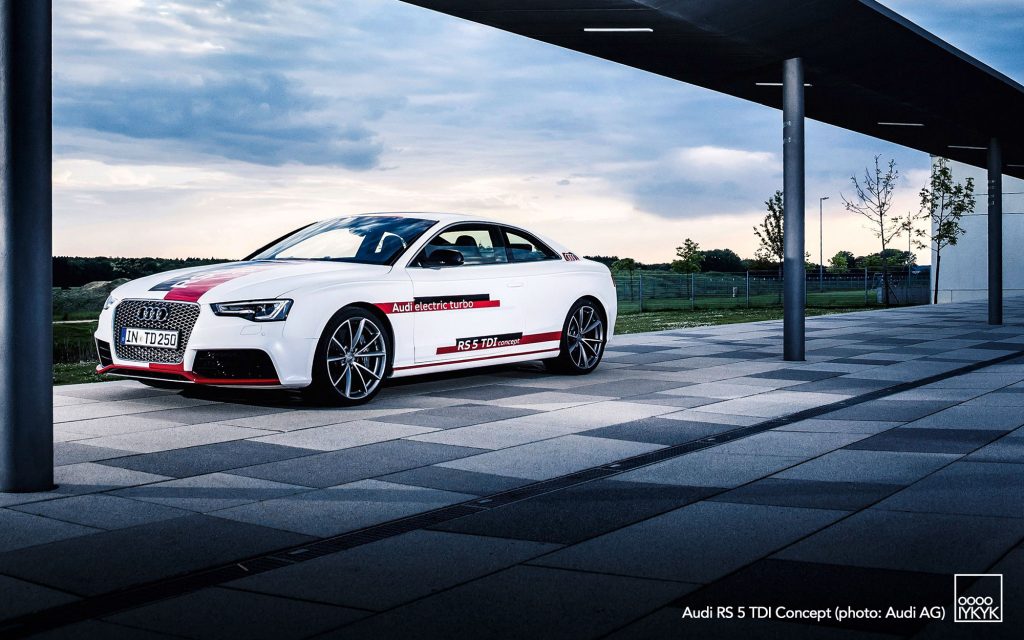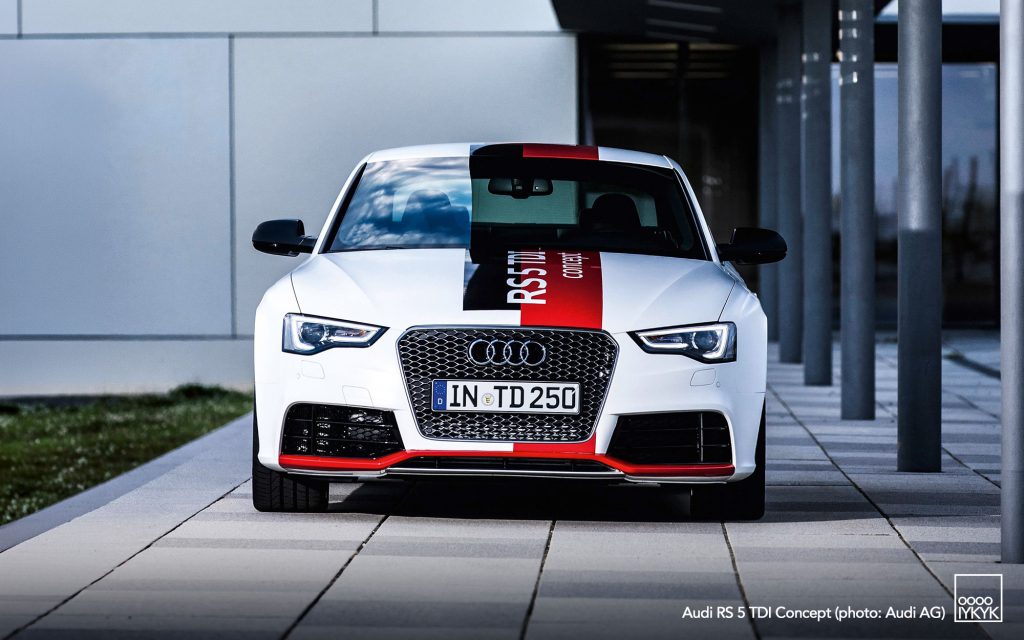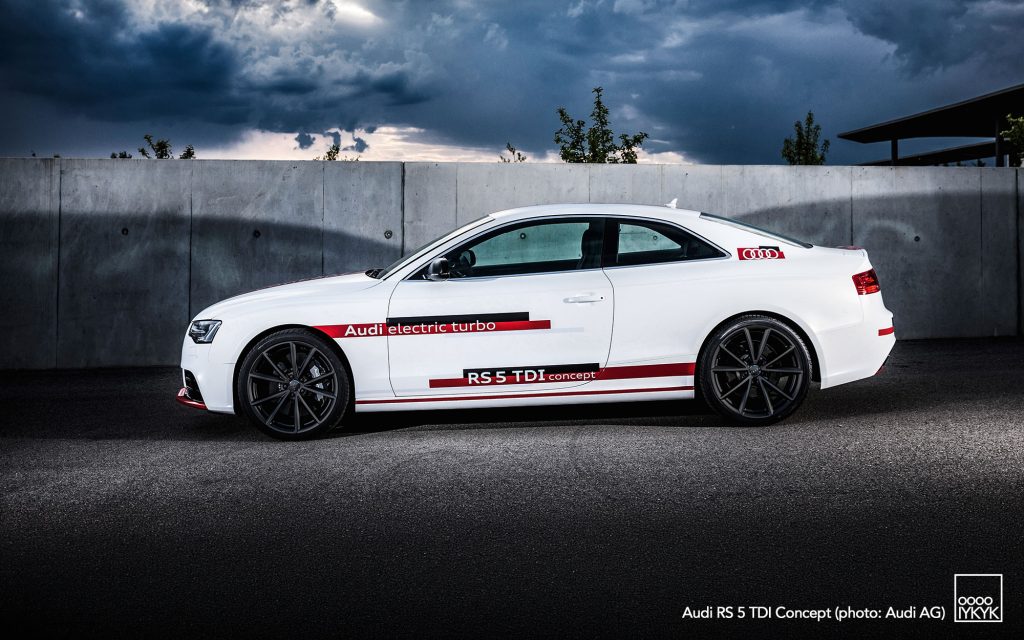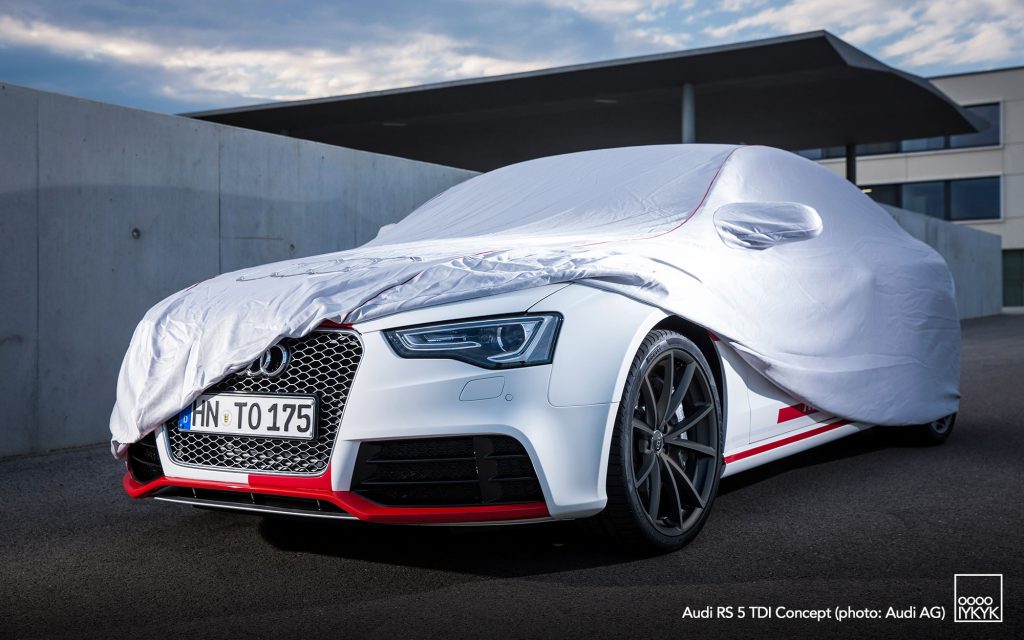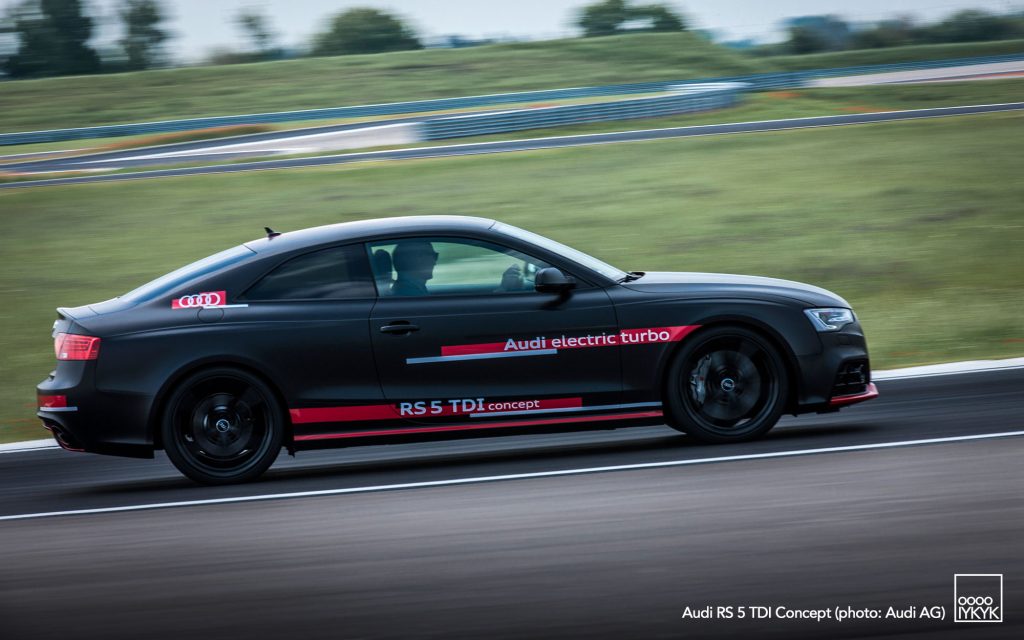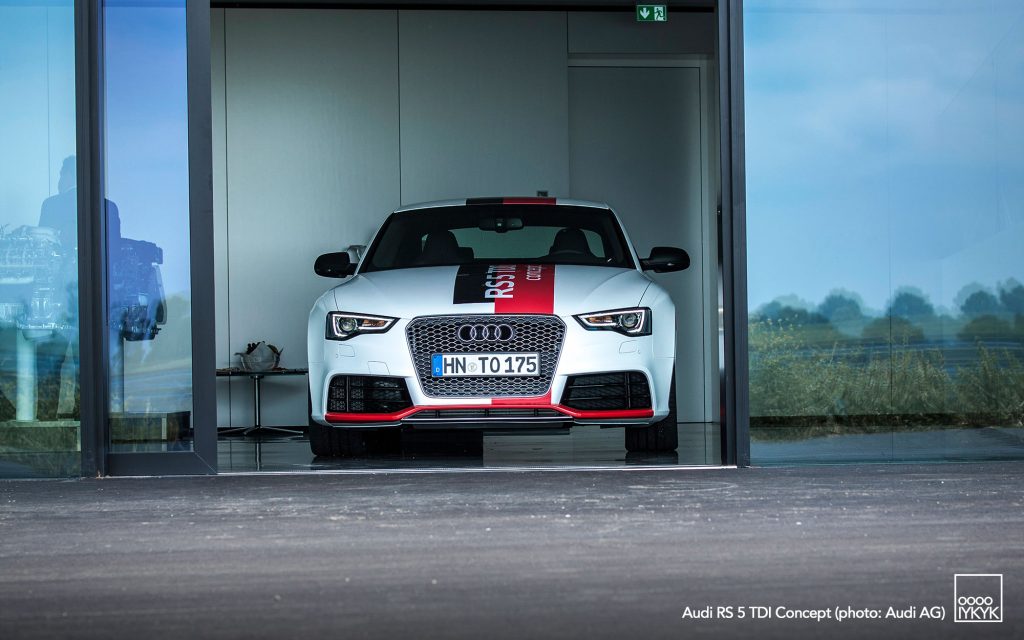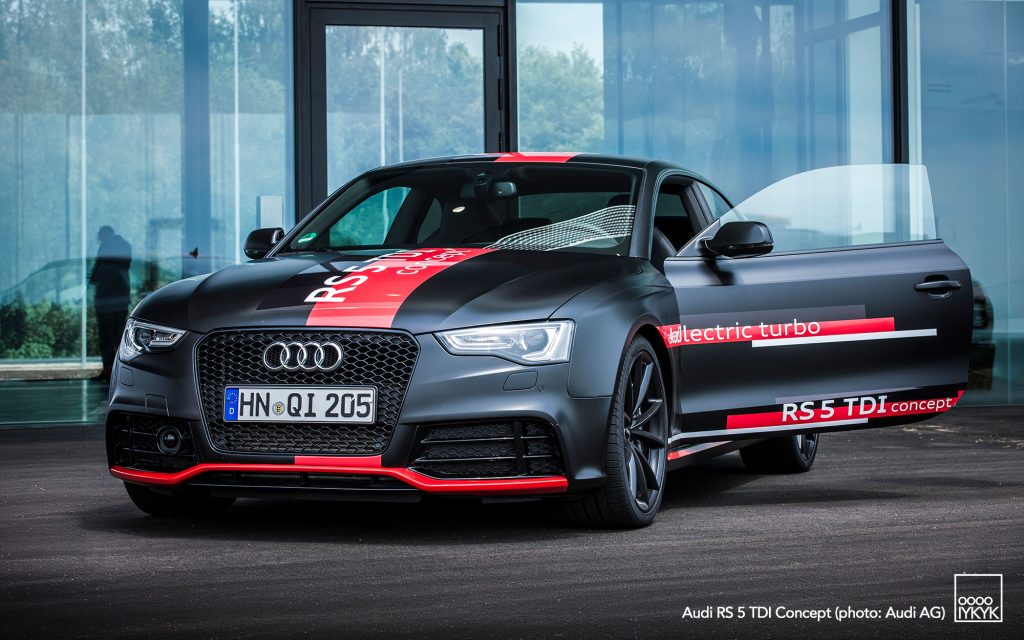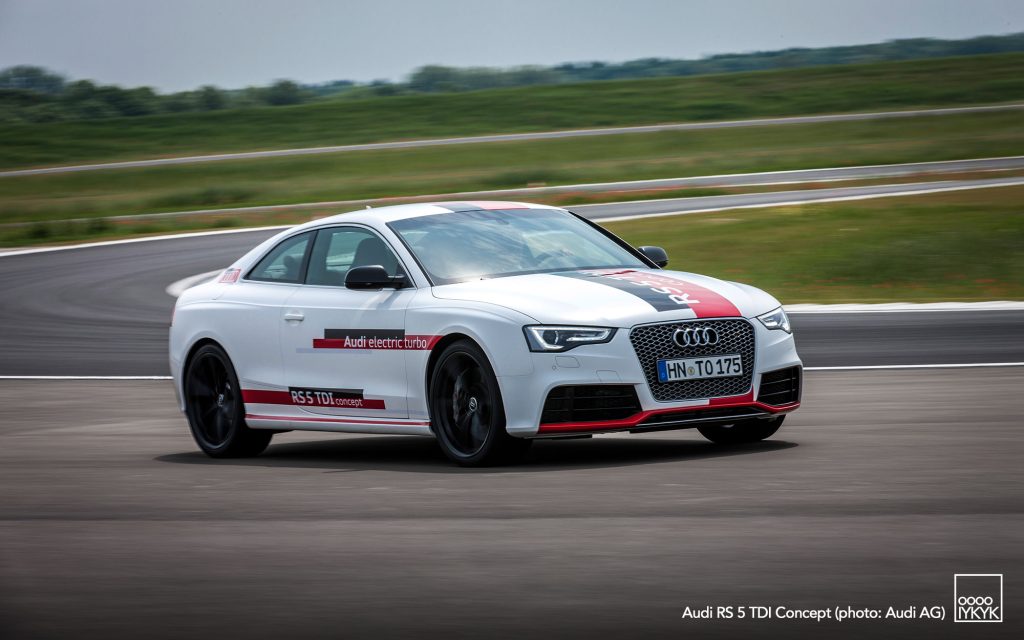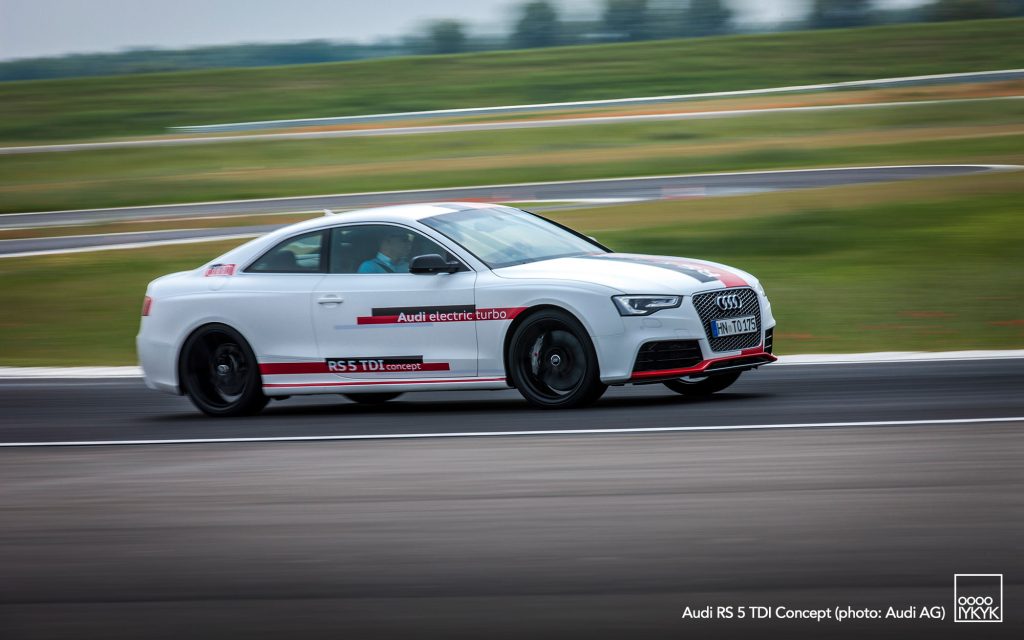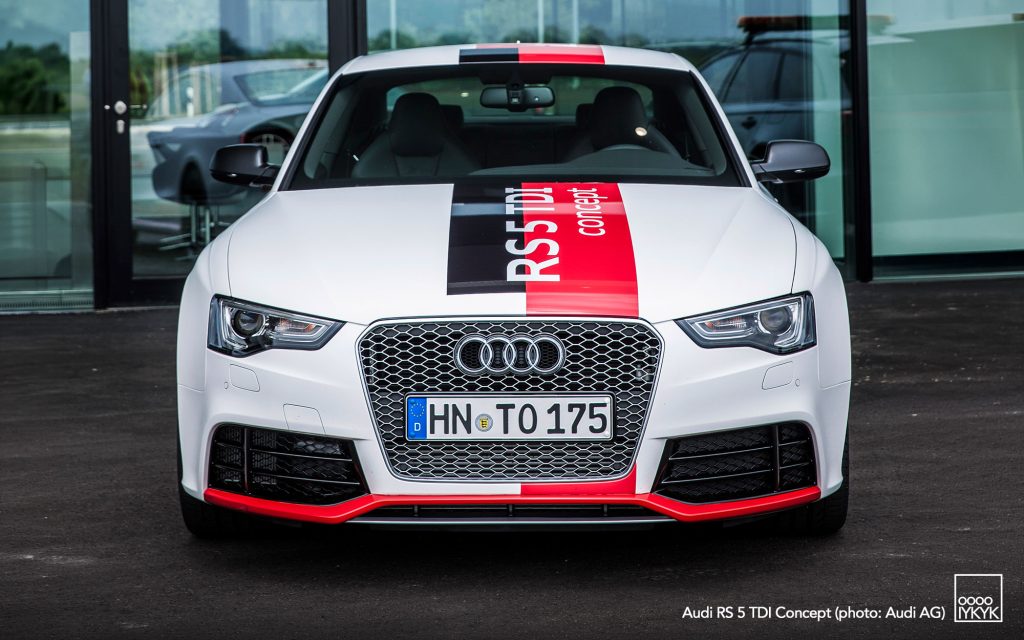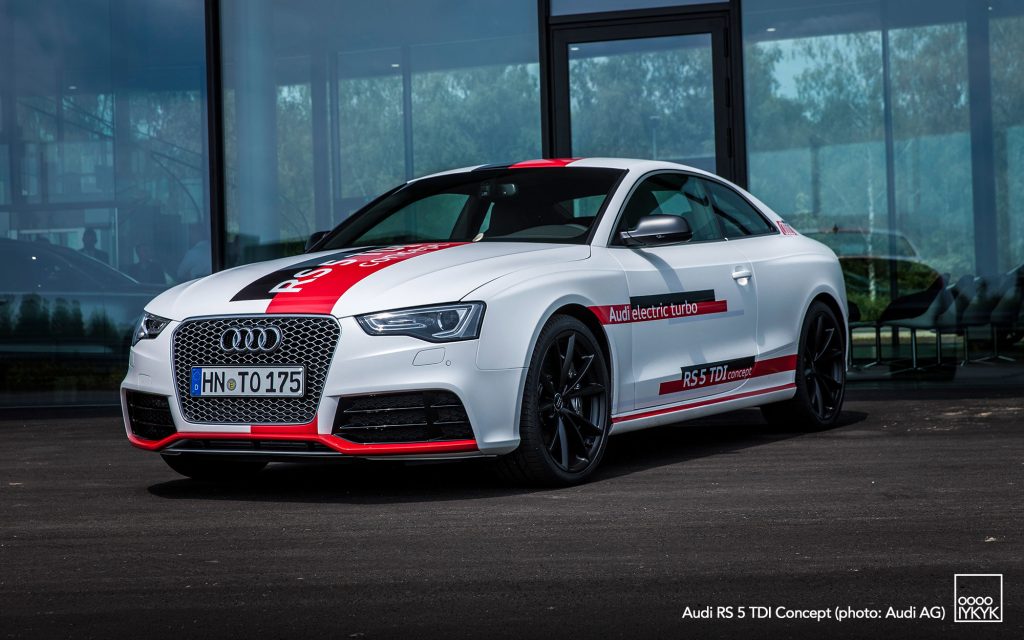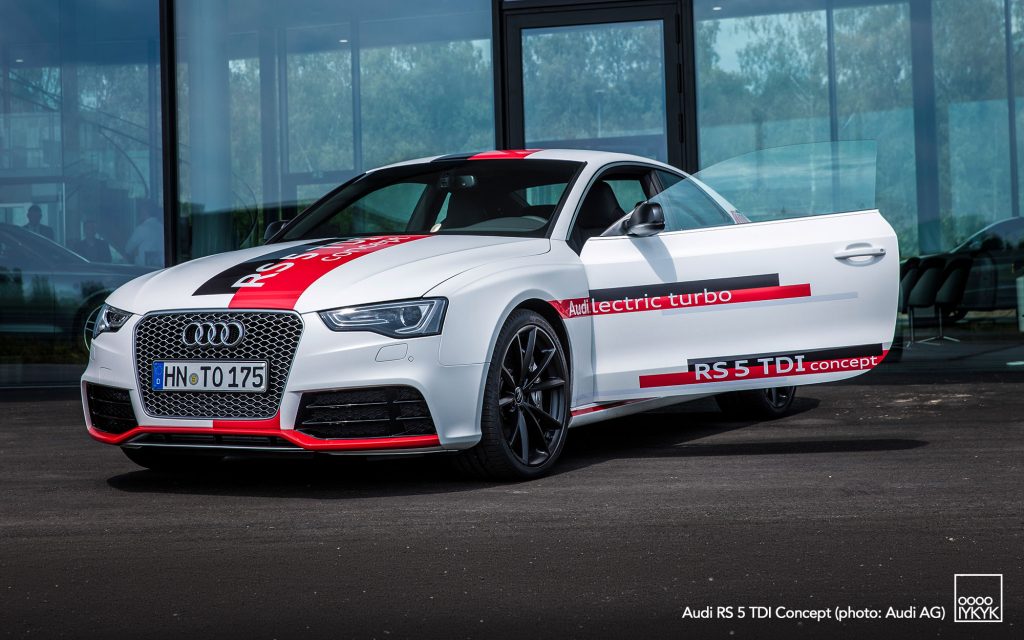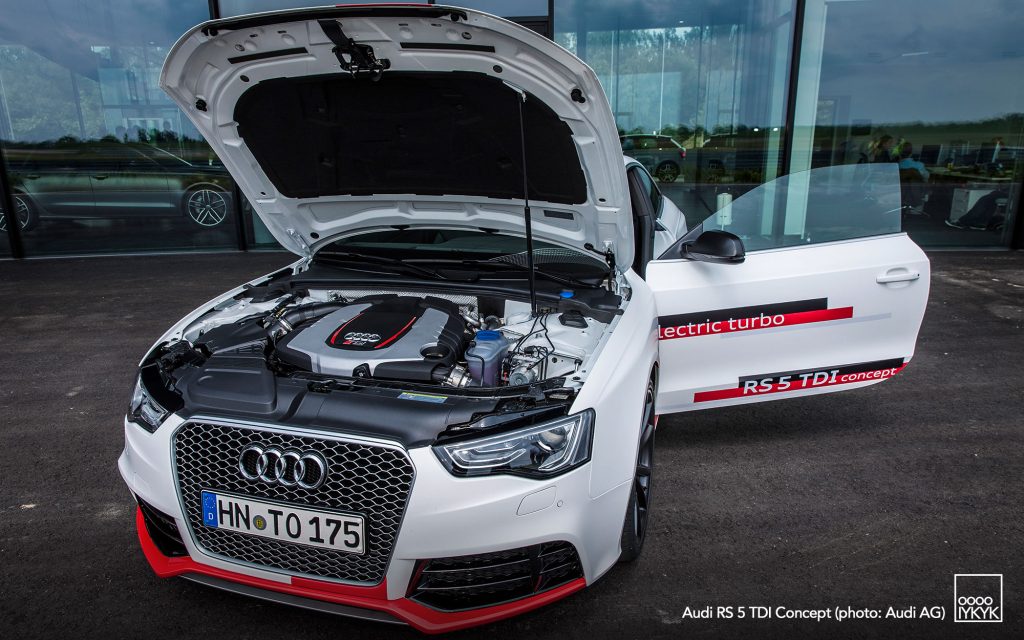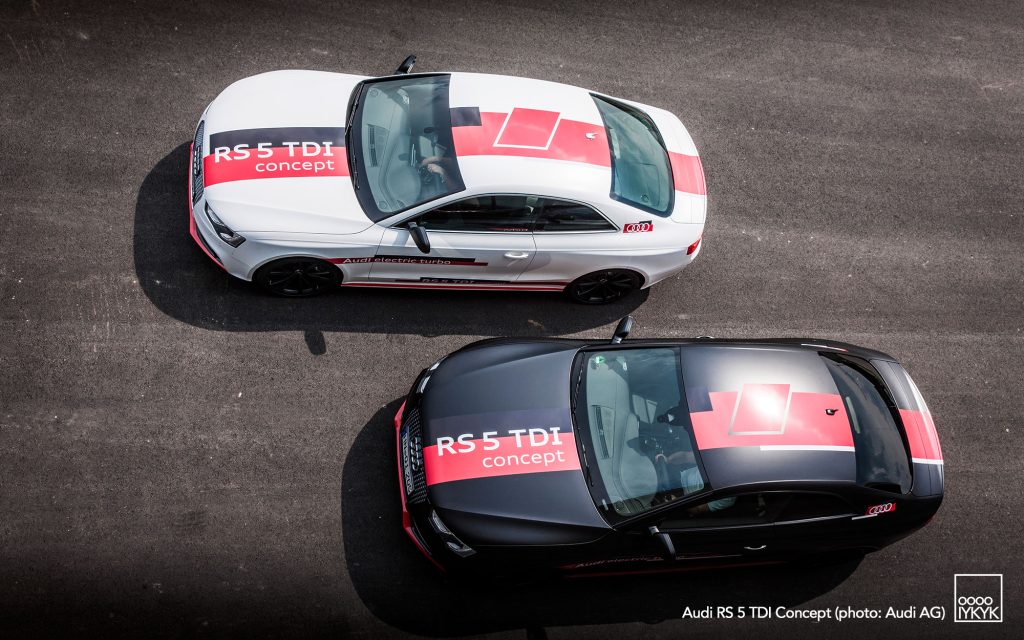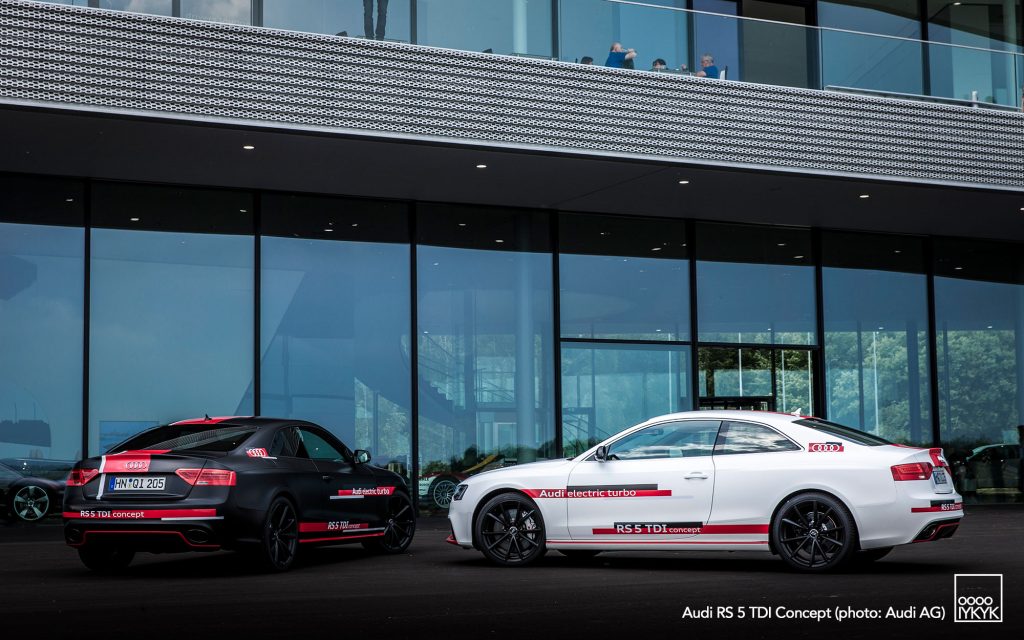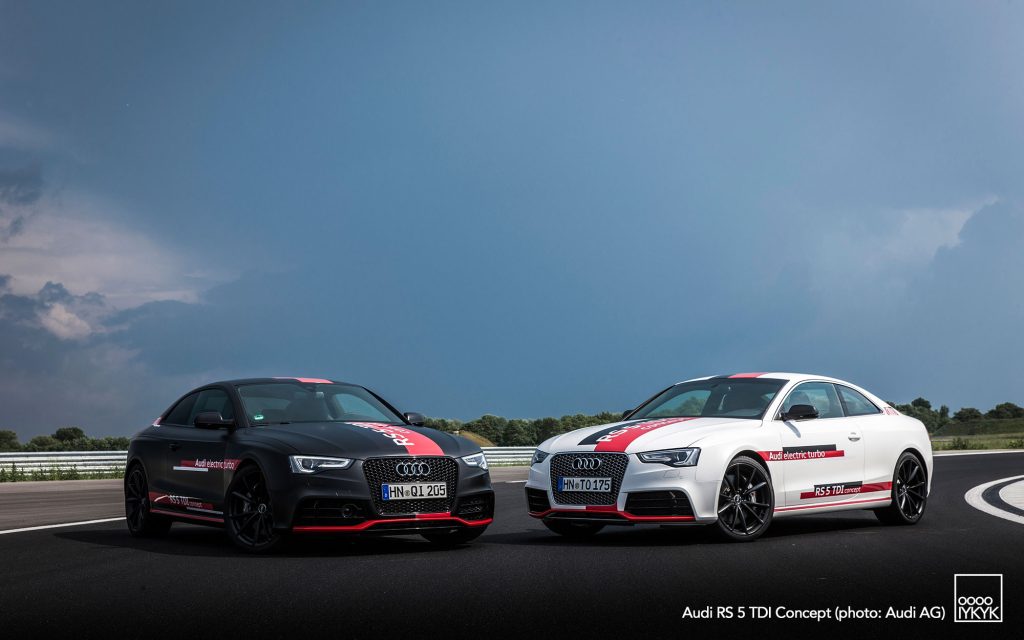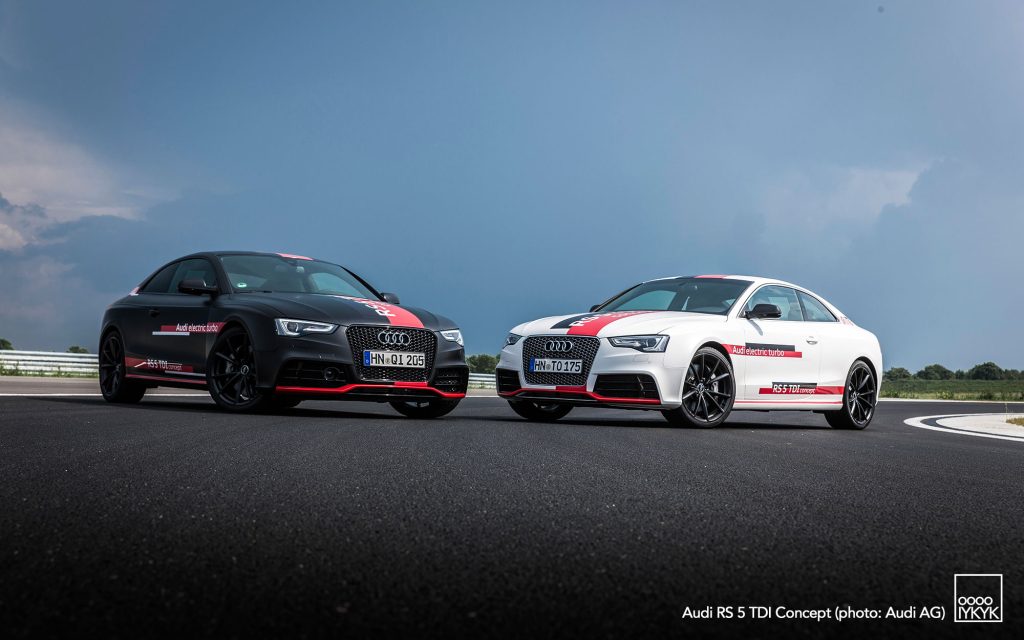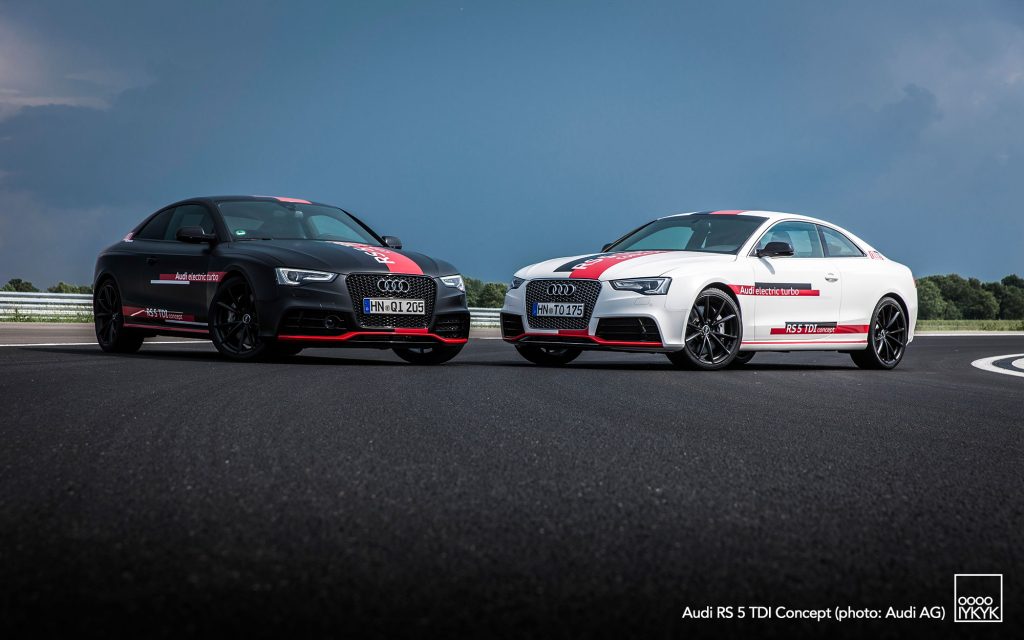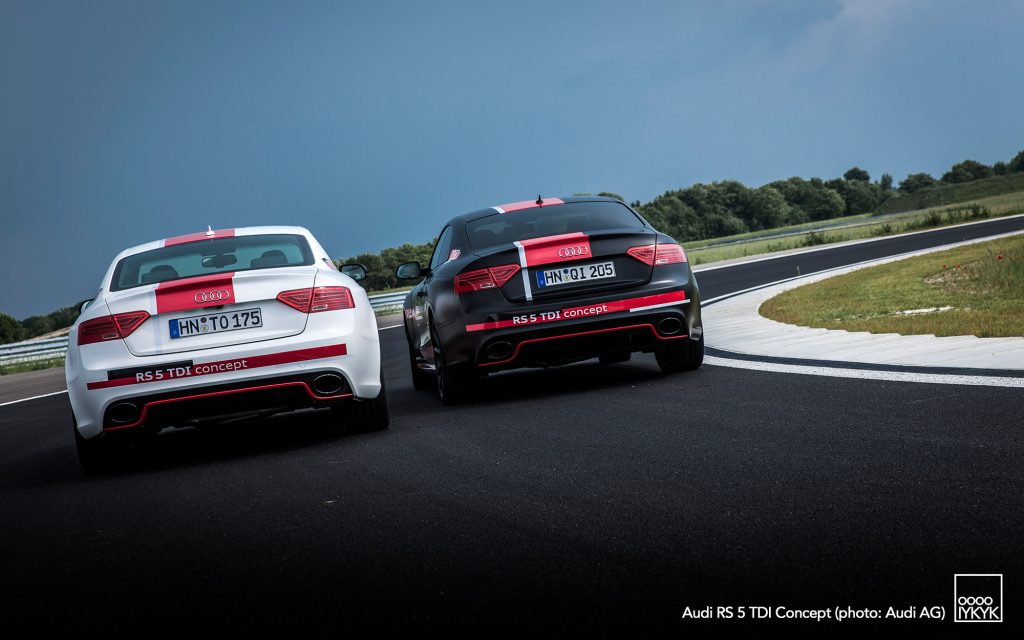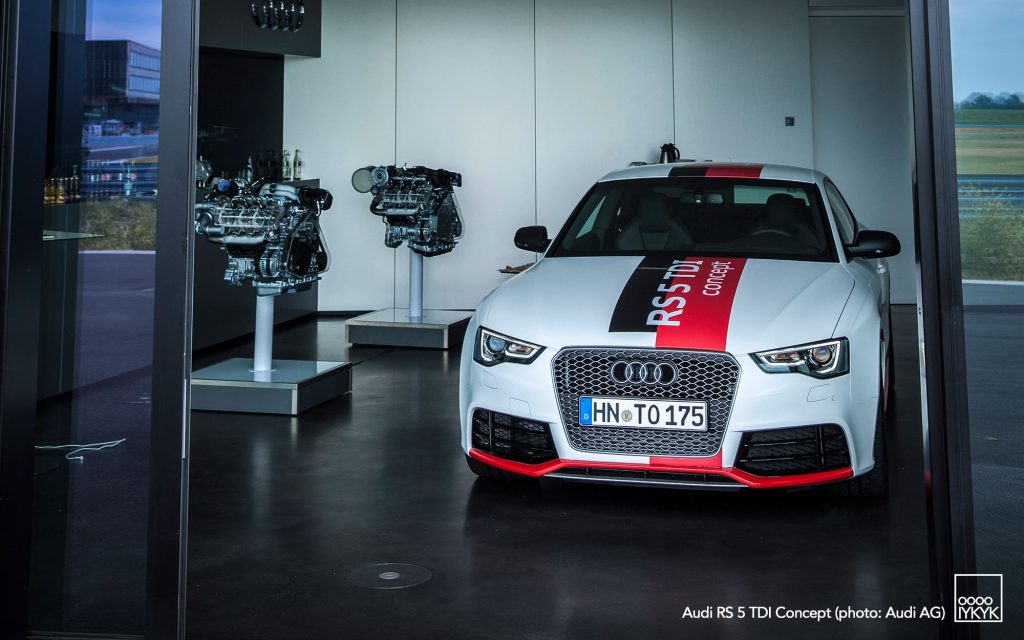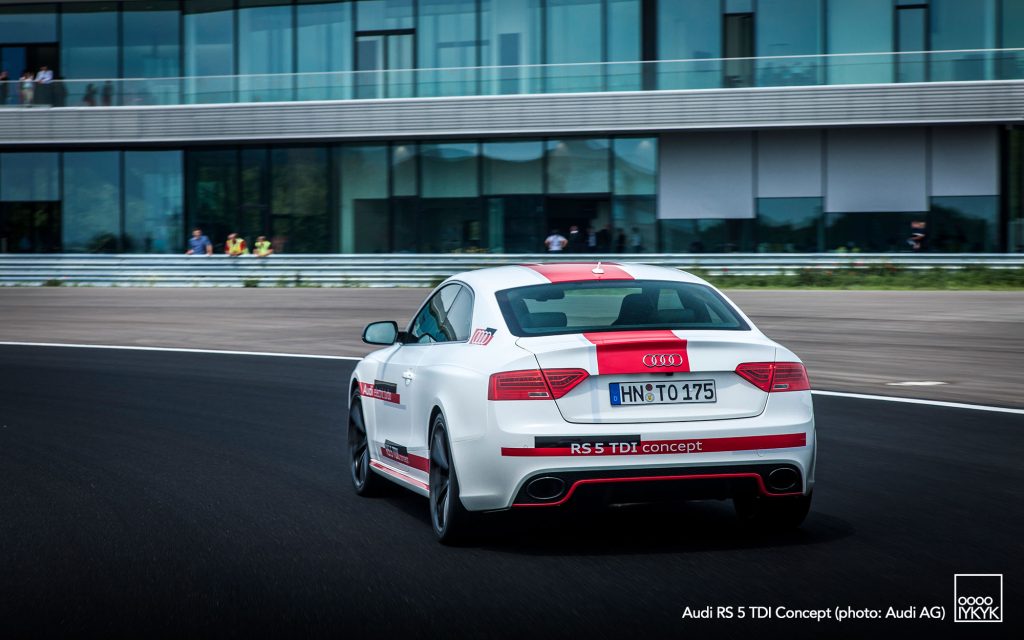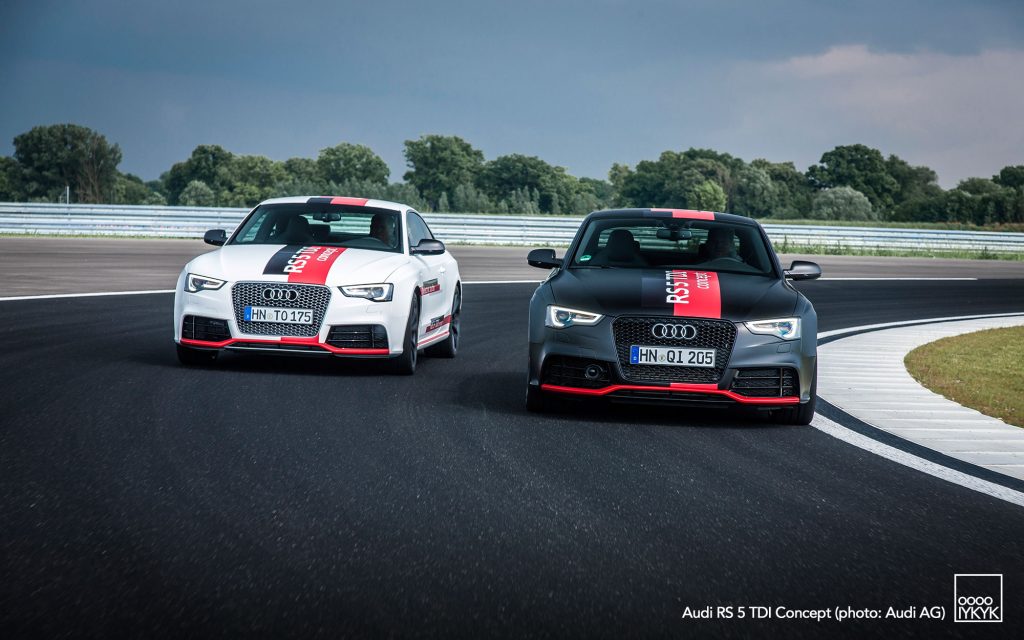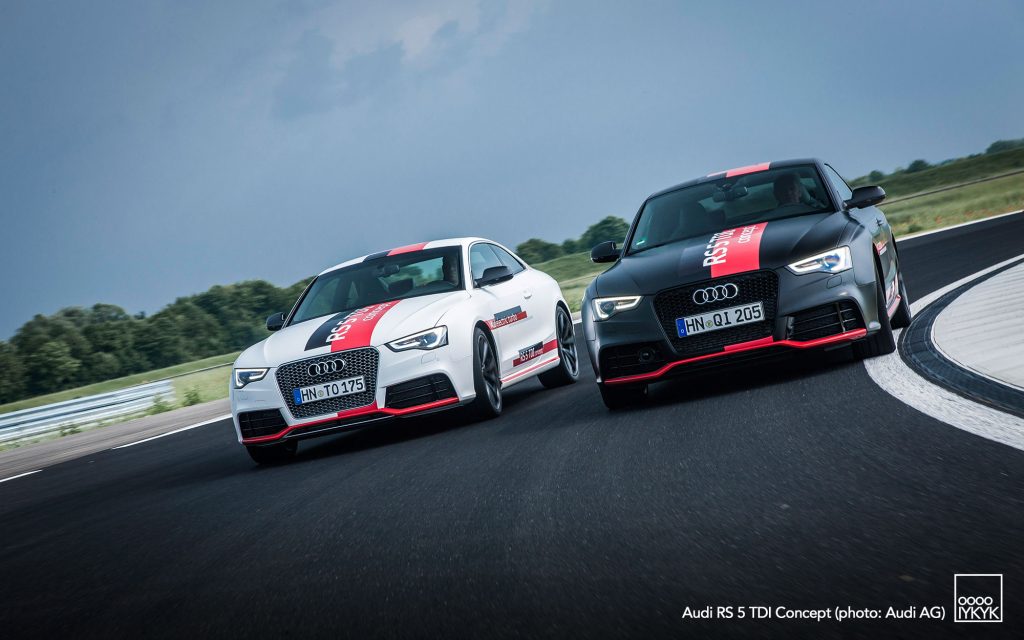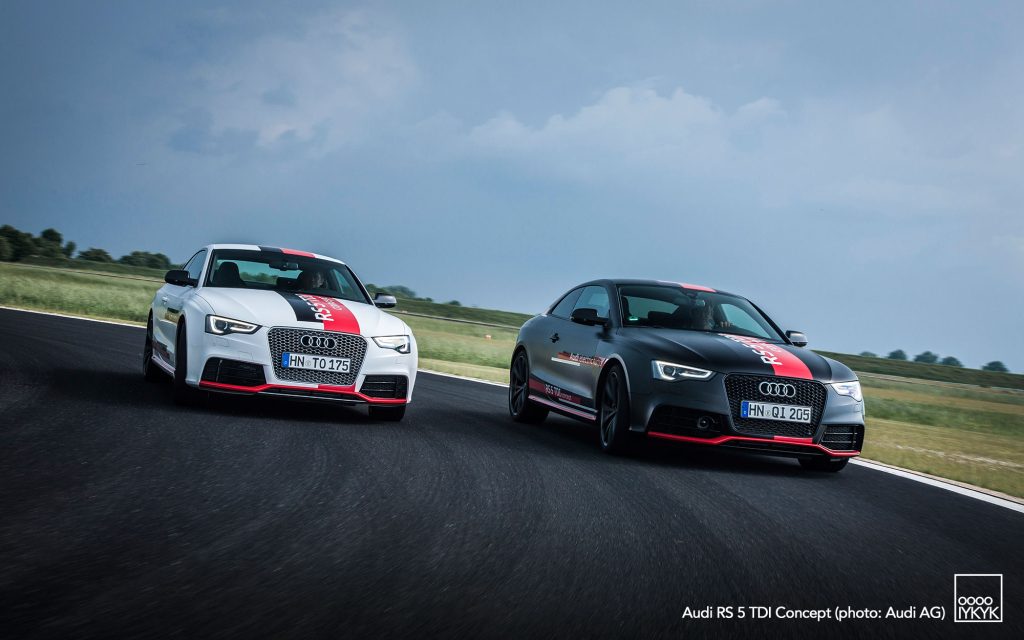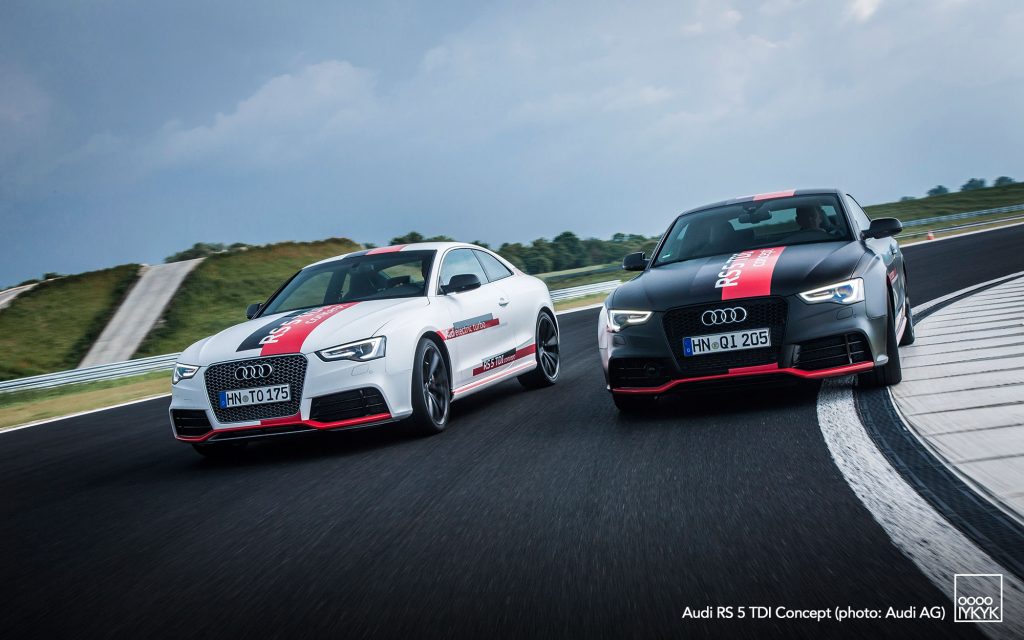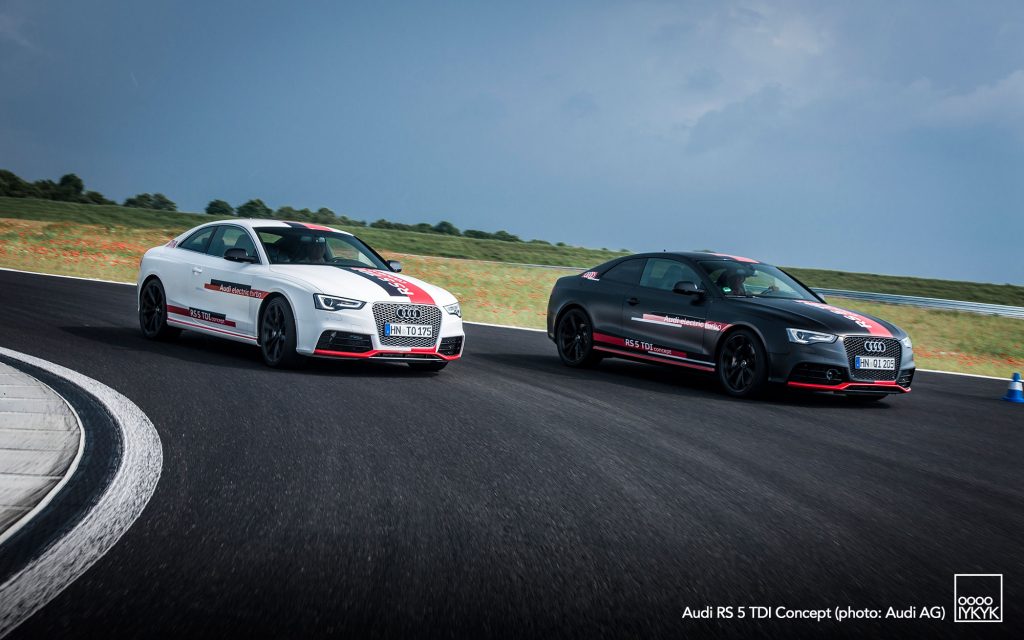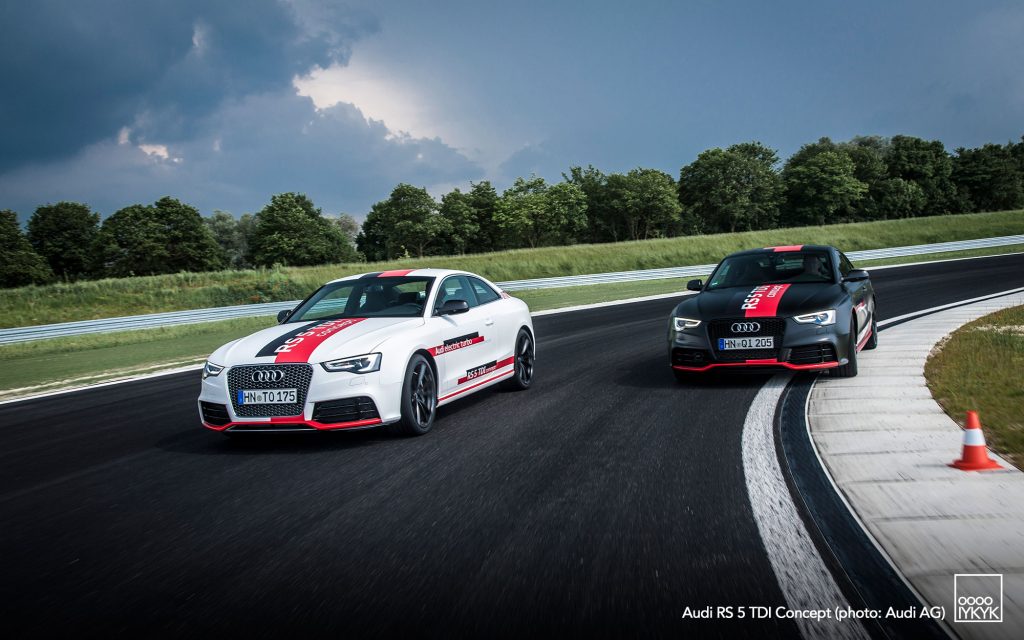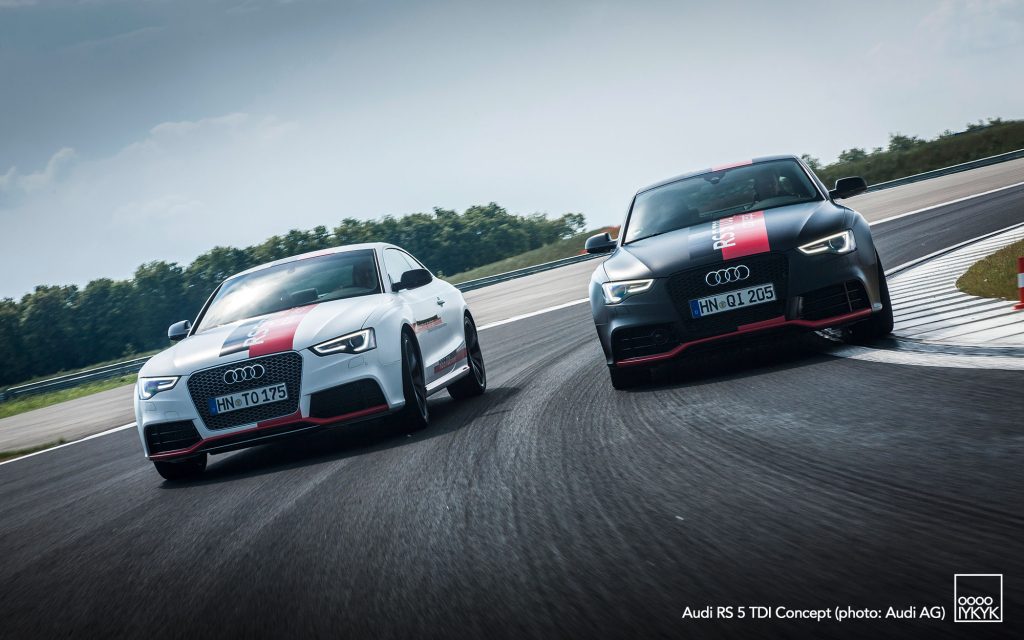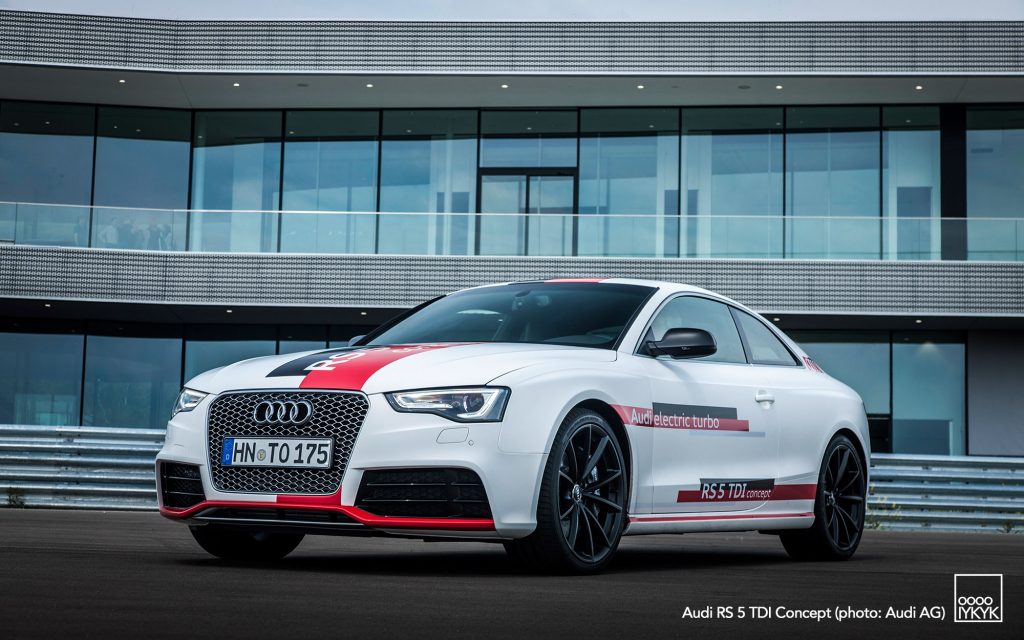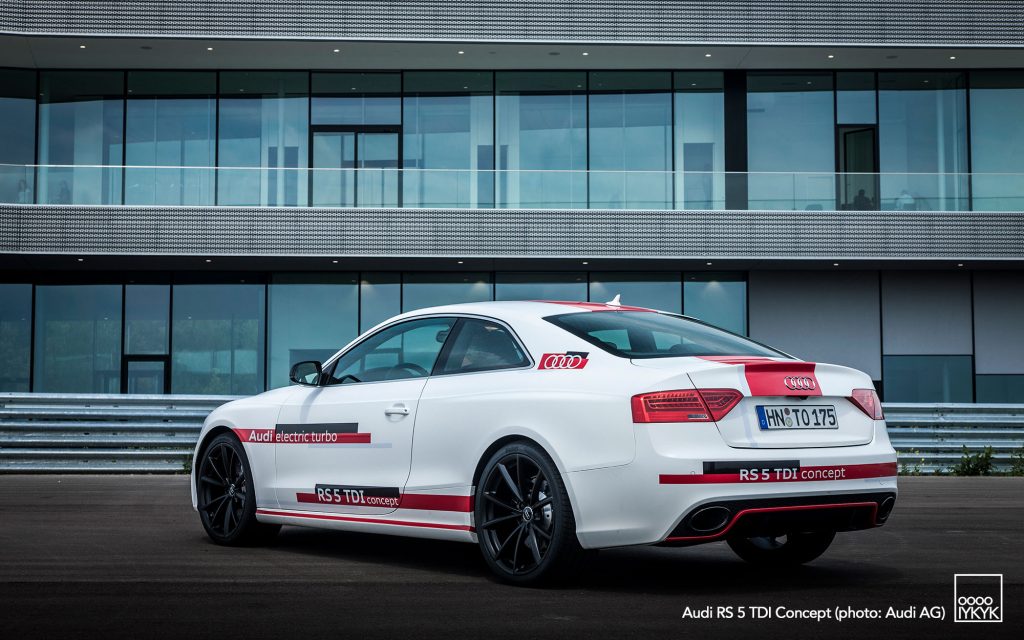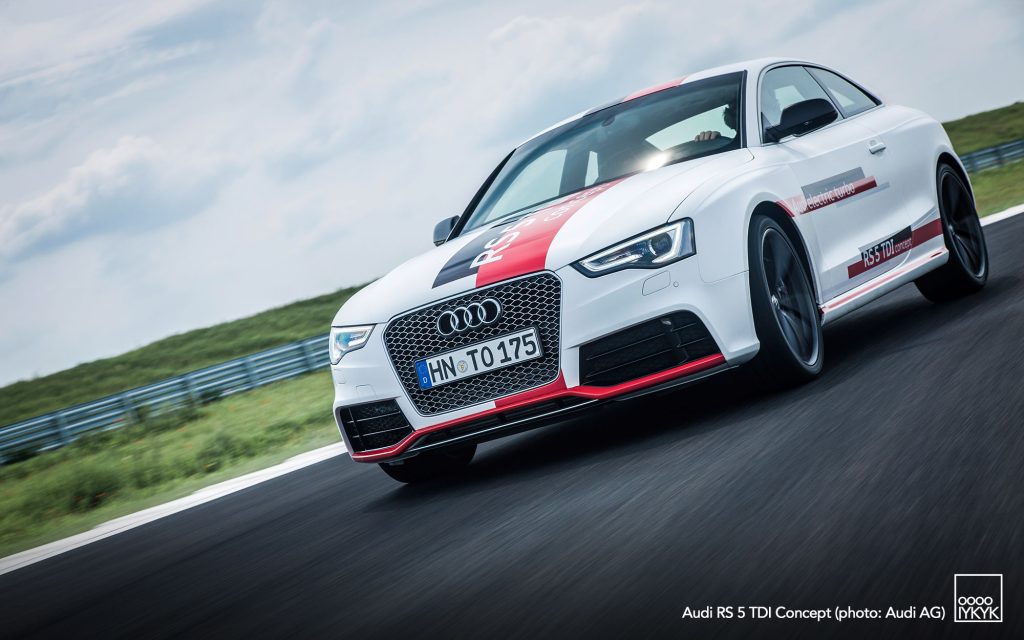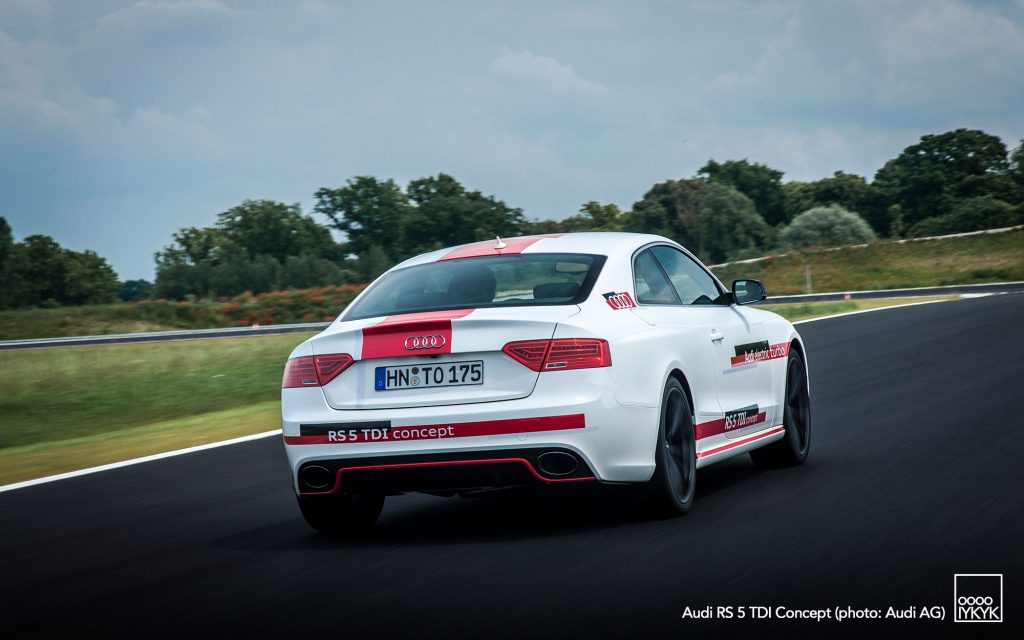

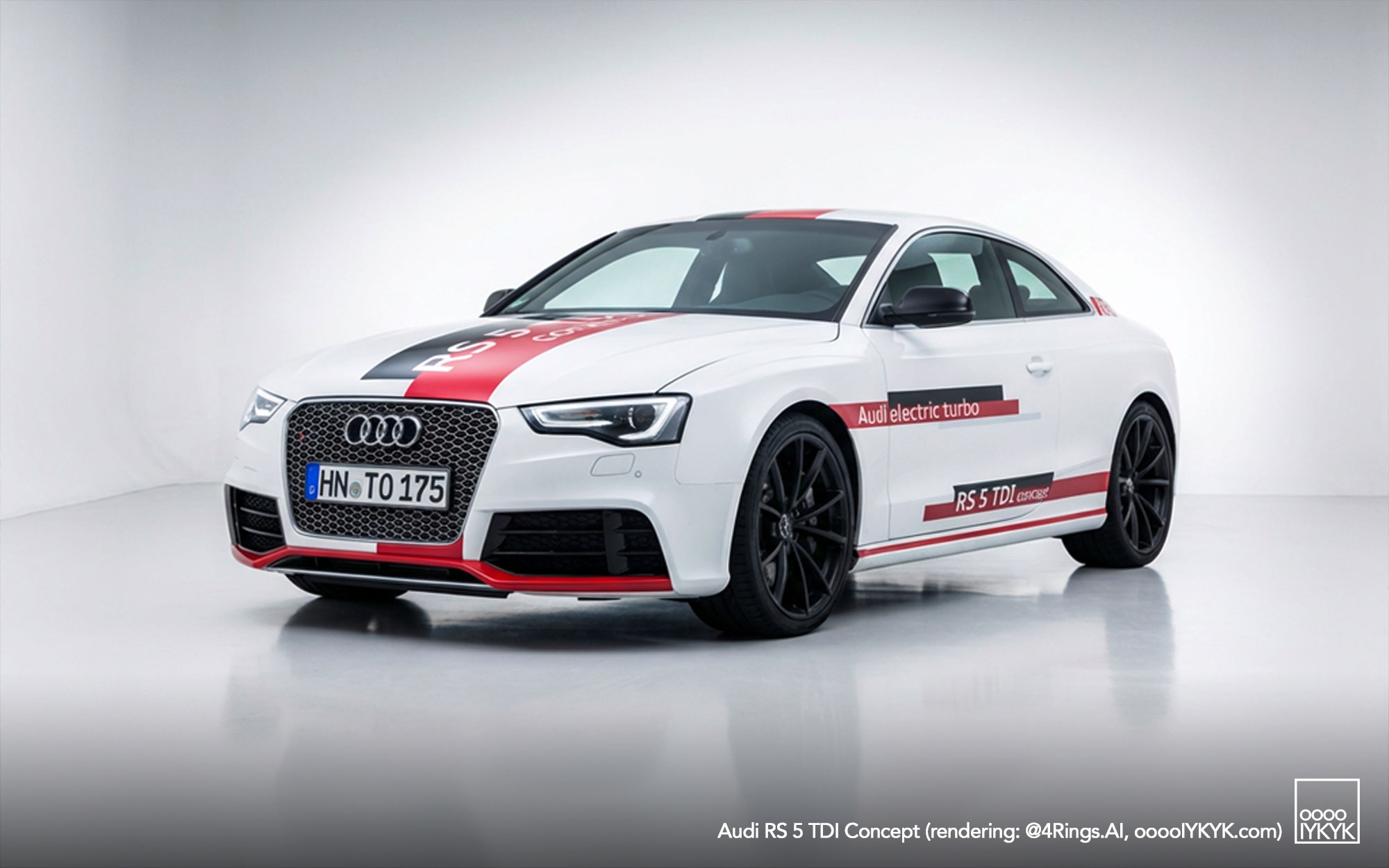

What: Audi RS 5 TDI Concept
Model Family: RS 5
Production: Prototype (2014)
Assembly: Neuburg an der Donau, Germany (development vehicle)
Class: High-performance coupe prototype
Body style: 2-door coupe
Layout: Front-engine, all-wheel drive
Debuted: N/A
Year: 2017
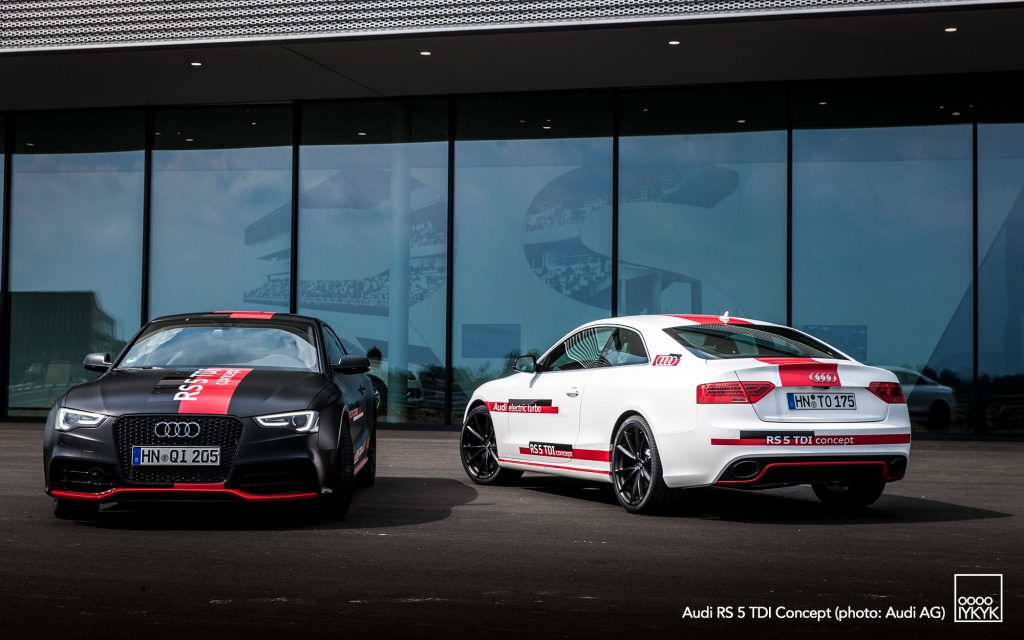
Registration Plate(s): HN TO 175 (white), HN QI 205 (black)
Number Produced: 2
Status: Believed to Be Maintained by Audi Tradition
Model / Generation Code(s): B8.5 / type 8T
Chassis / Matrix: MLB
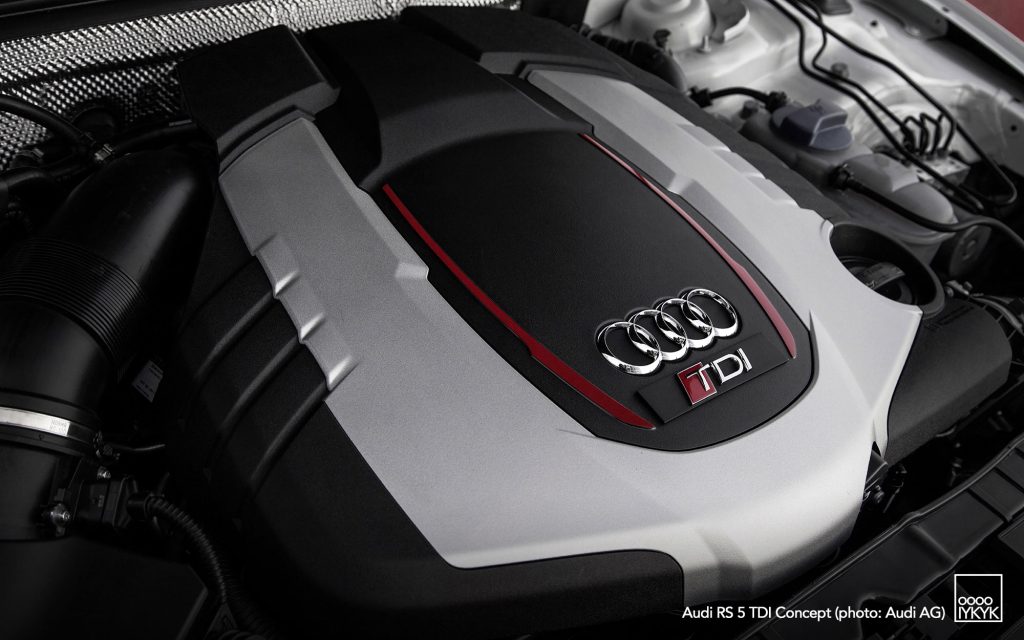
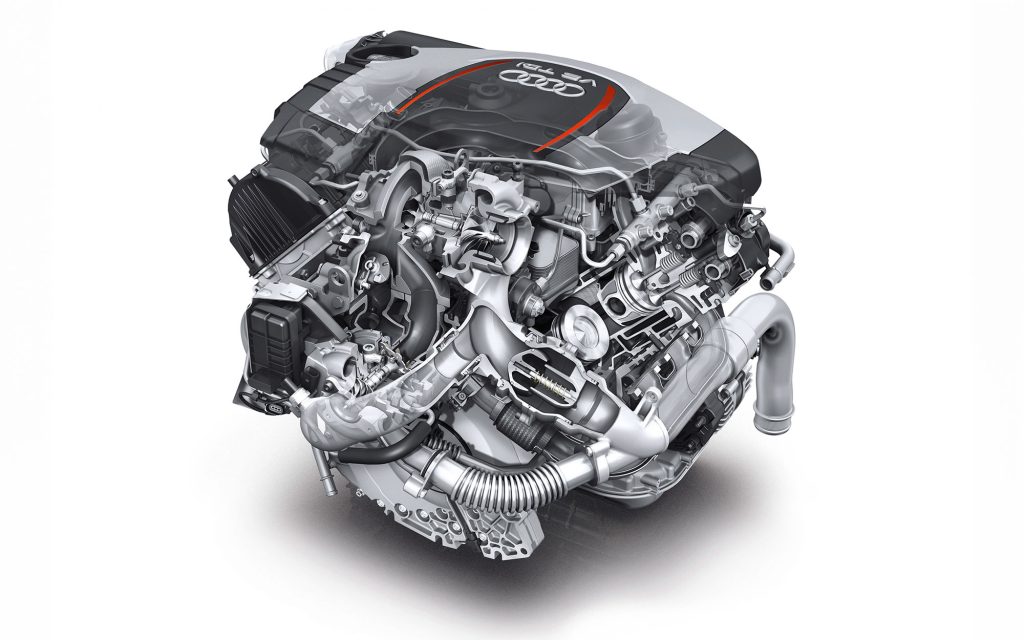
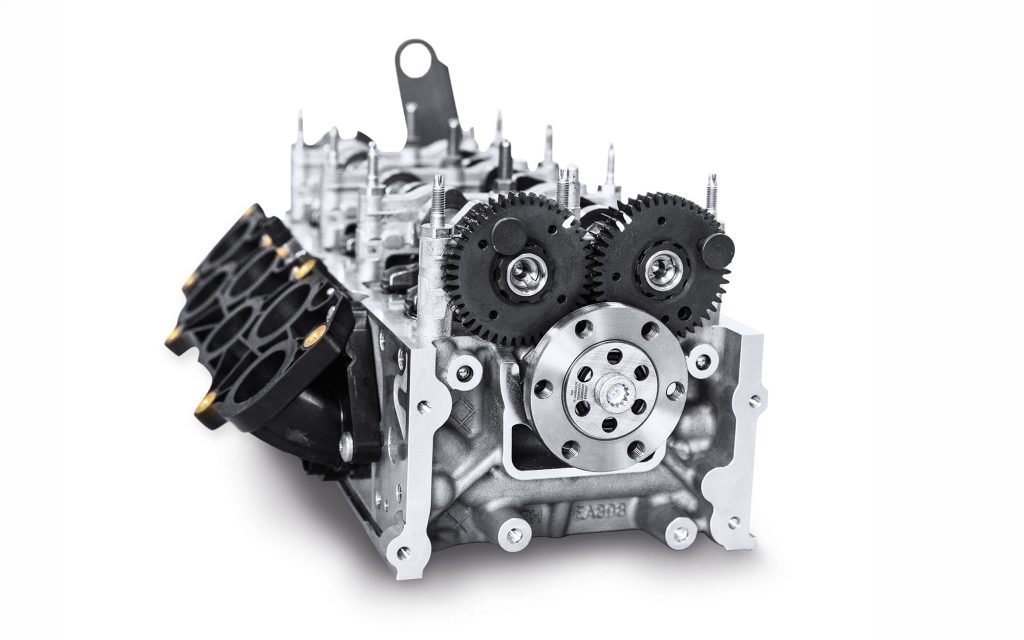
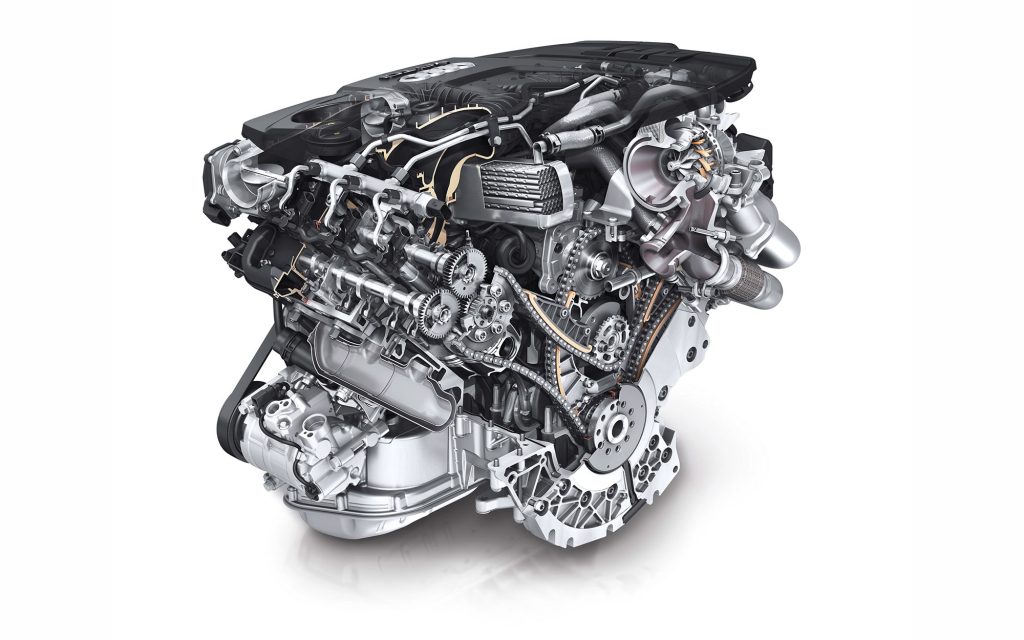
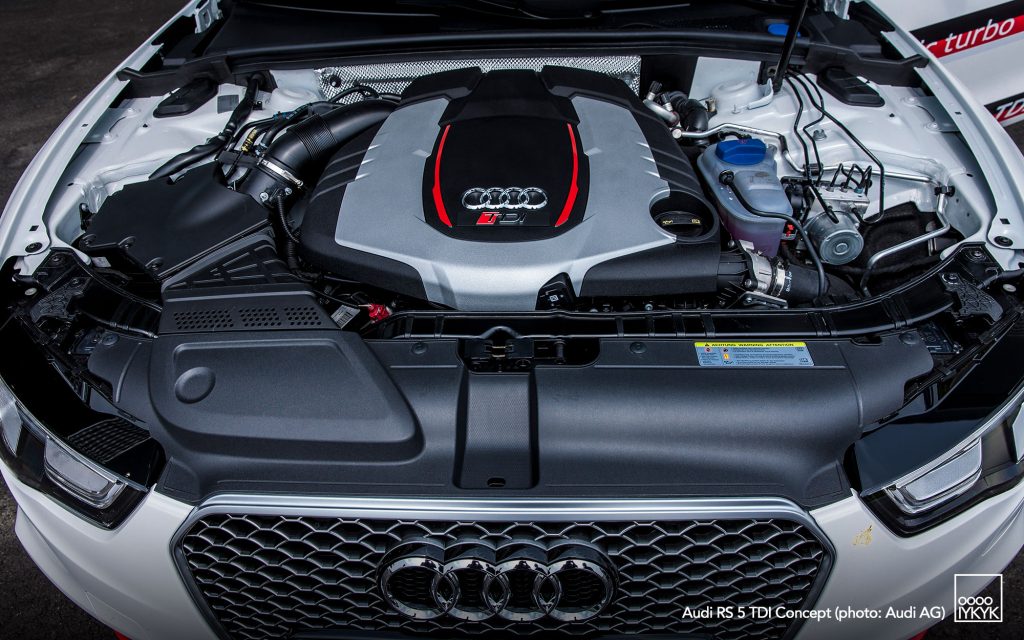
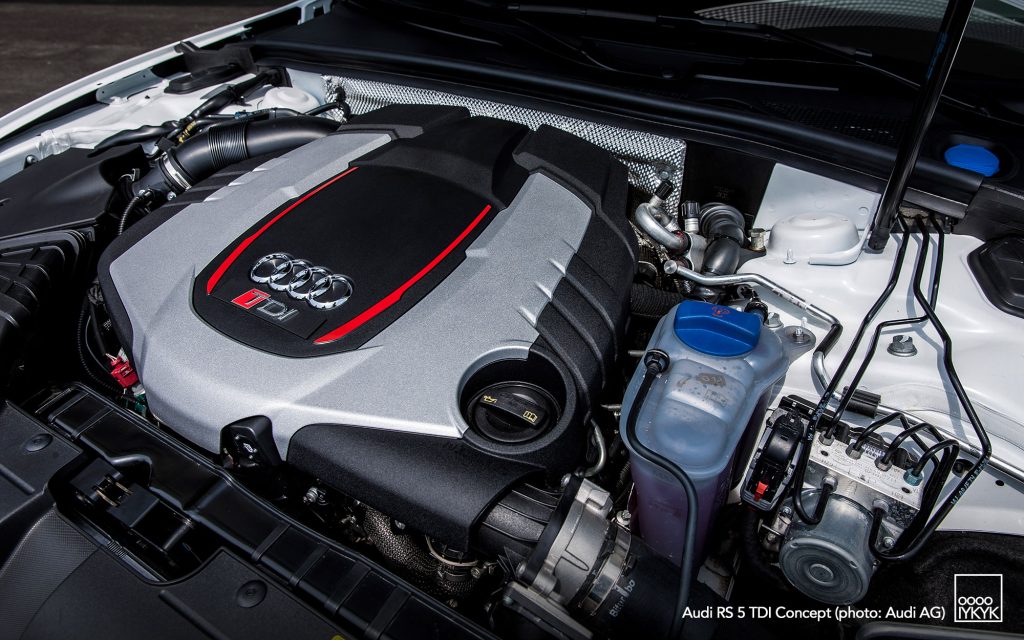
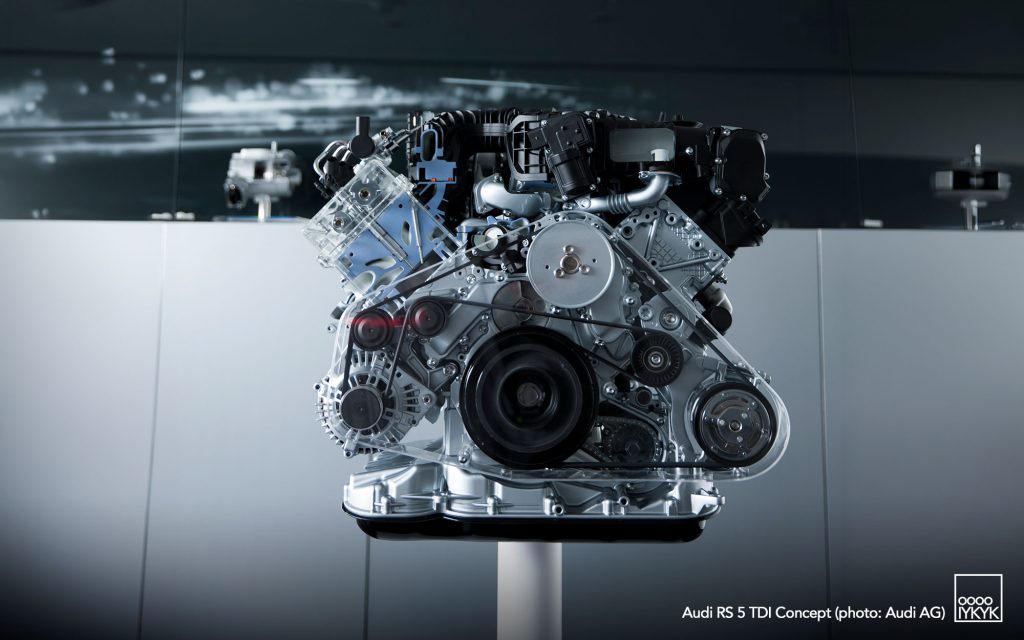
Engine: 3.0-liter V6 TDI with twin turbochargers and electric compressor
Transmission: 8-speed Tiptronic
Drivetrain: quattro permanent all-wheel drive
Power output: 385 hp (287 kW)
Torque: 553 lb-ft (750 N·m)
Weight: unknown
Acceleration (0-100 km / 62 mph: 4.0 seconds
Top Speed: > 280 km/h (173.98)
Length: 4649 (15.25)
Body style: 2-Door Hypercar
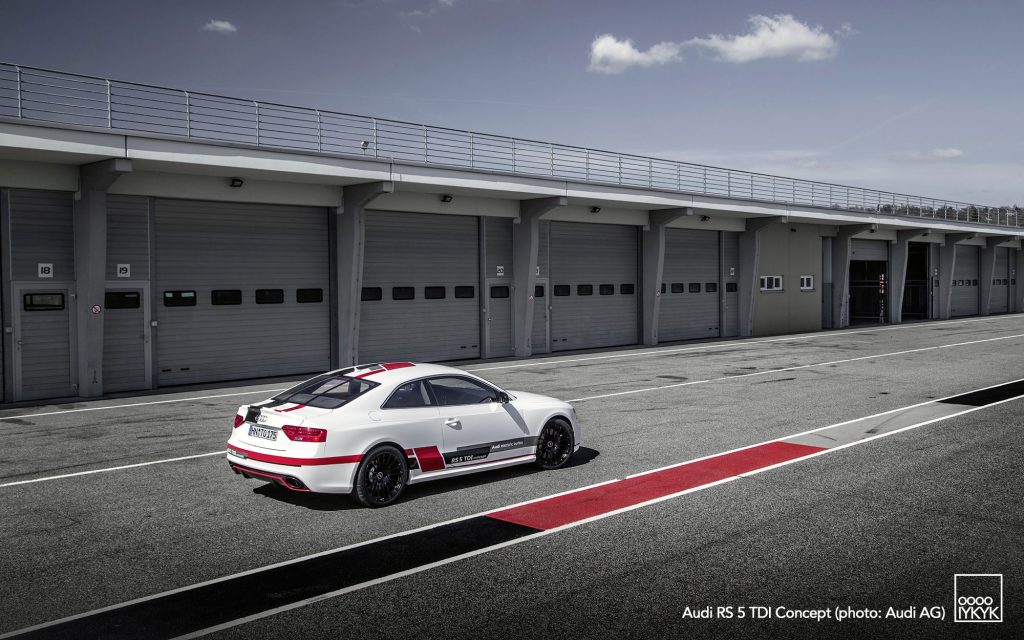
Exterior Paint Color: White / Black
Wheels: 9J x 20 cast aluminum wheels
Tires: 275/30 R20 97Y XL
RELATED
Concept Cars:
Road Cars: RS 5 Coupé (B8.5)
Race Cars:
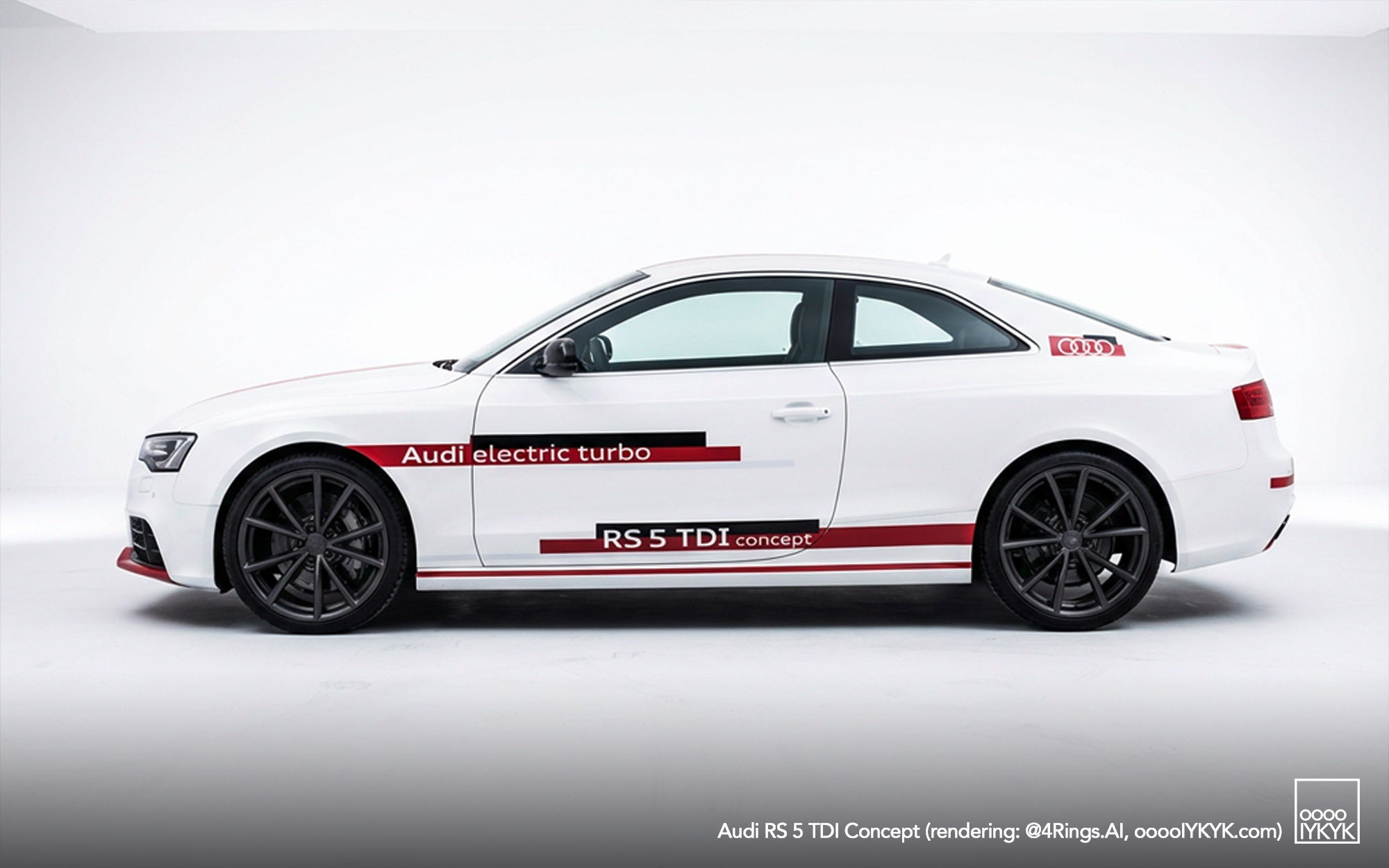
OVERVIEW
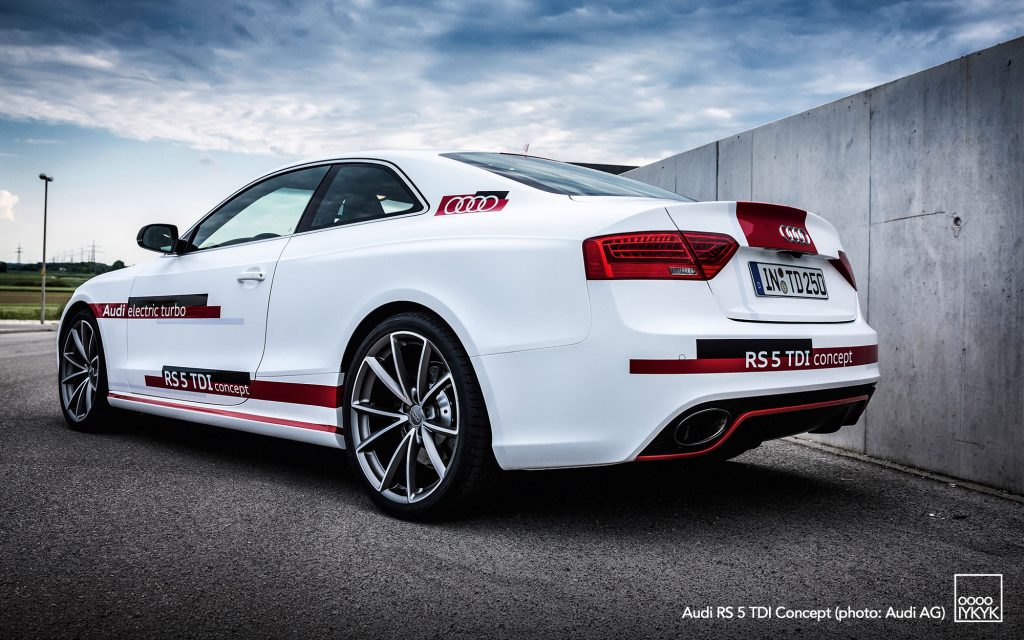
The Audi RS 5 TDI Prototype was an experimental high-performance diesel coupe developed in 2017 to demonstrate the sporting potential of Audi’s latest V6 TDI technology. Based on the second-generation RS 5 (B9), the prototype combined traditional turbocharging with a 48-volt electric compressor, showcasing a new approach to eliminating turbo lag and enhancing throttle response.
Although never approved for series production in RS 5 form, the project previewed powertrain technologies that later appeared in other Audi models and highlighted Audi’s efforts to broaden the performance envelope of modern diesel engines.
DEVELOPMENT & CONCEPT
Audi engineers developed the RS 5 TDI as a proof-of-concept vehicle to explore whether diesel powertrains could meet the responsiveness and performance expectations associated with the RS badge. The prototype was evaluated at Audi’s Neuburg an der Donau handling facility, where it demonstrated acceleration and midrange performance comparable to high-output gasoline engines.
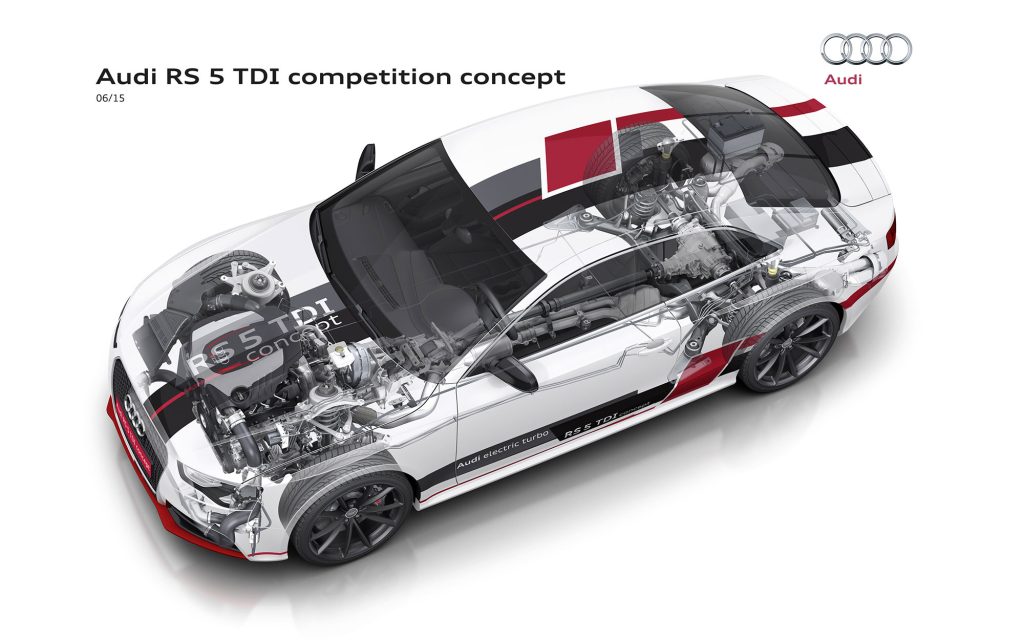
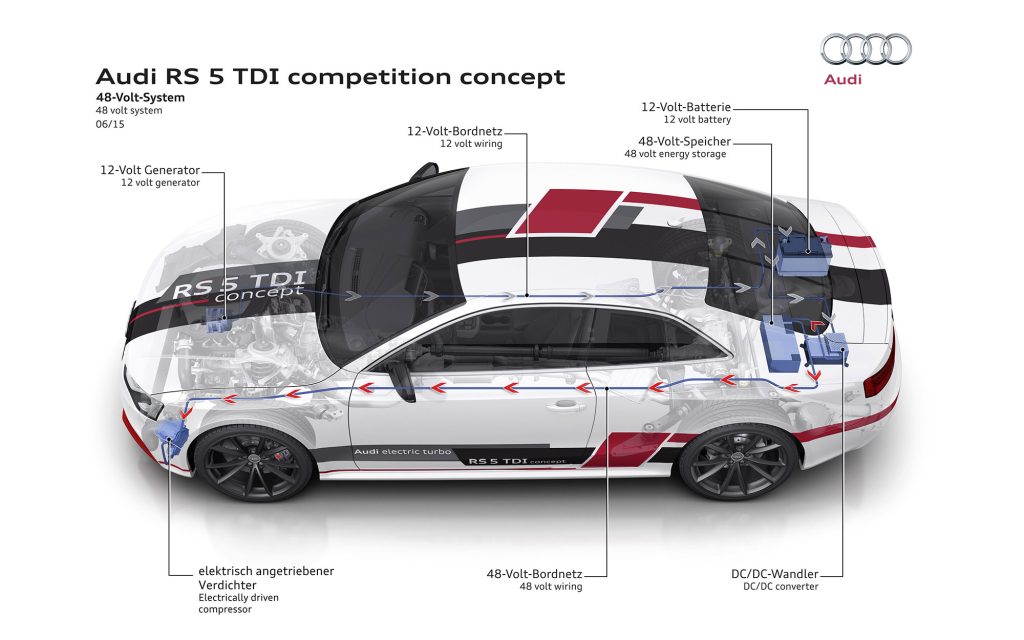
The project also served as a testbed for a new 48-volt electrical architecture, enabling advanced components such as an electrically driven compressor.
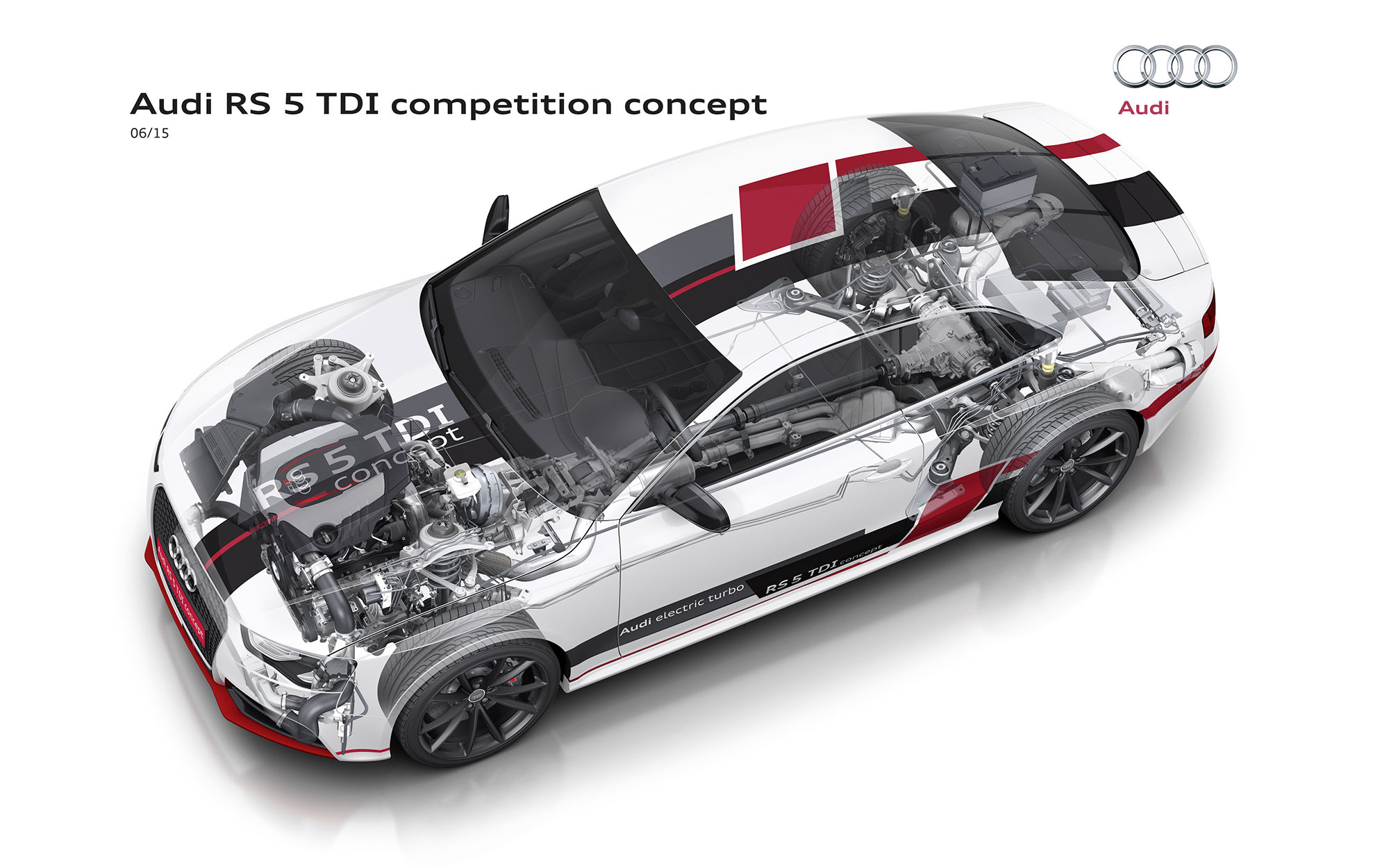
POWERTRAIN & TECHNOLOGY
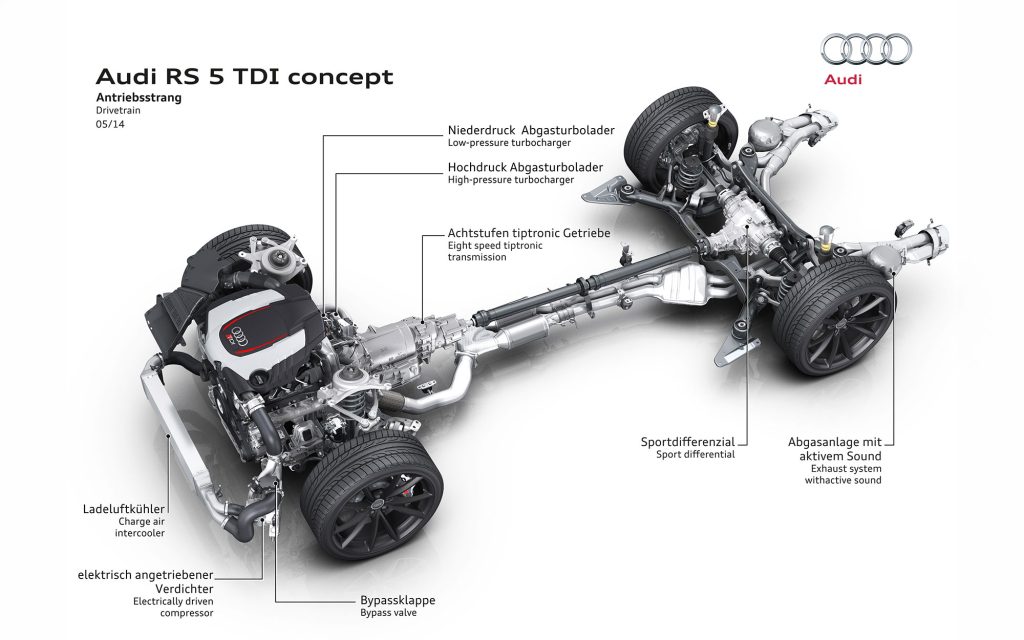
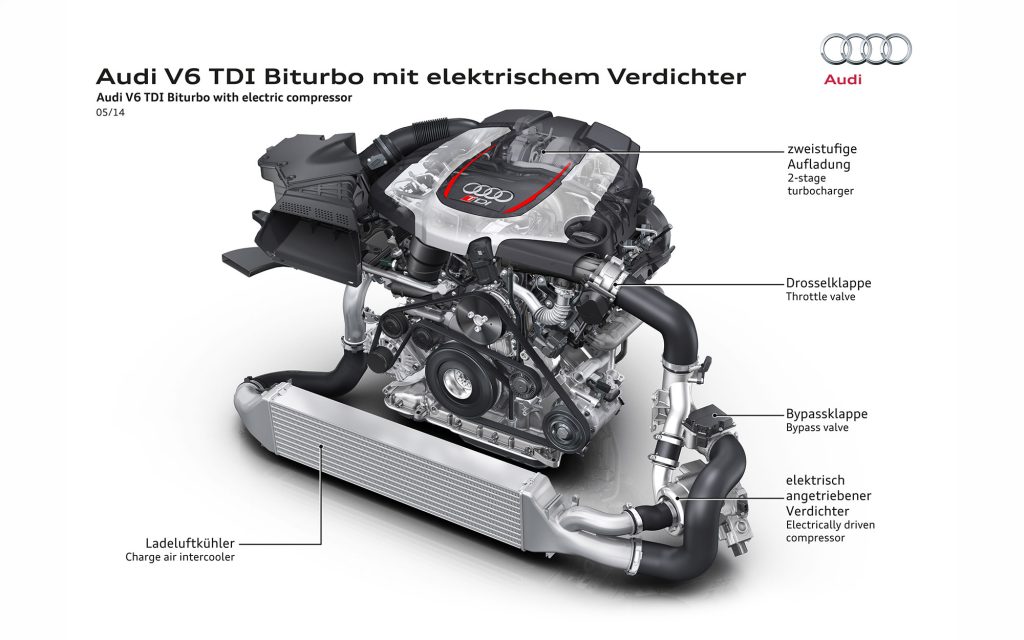
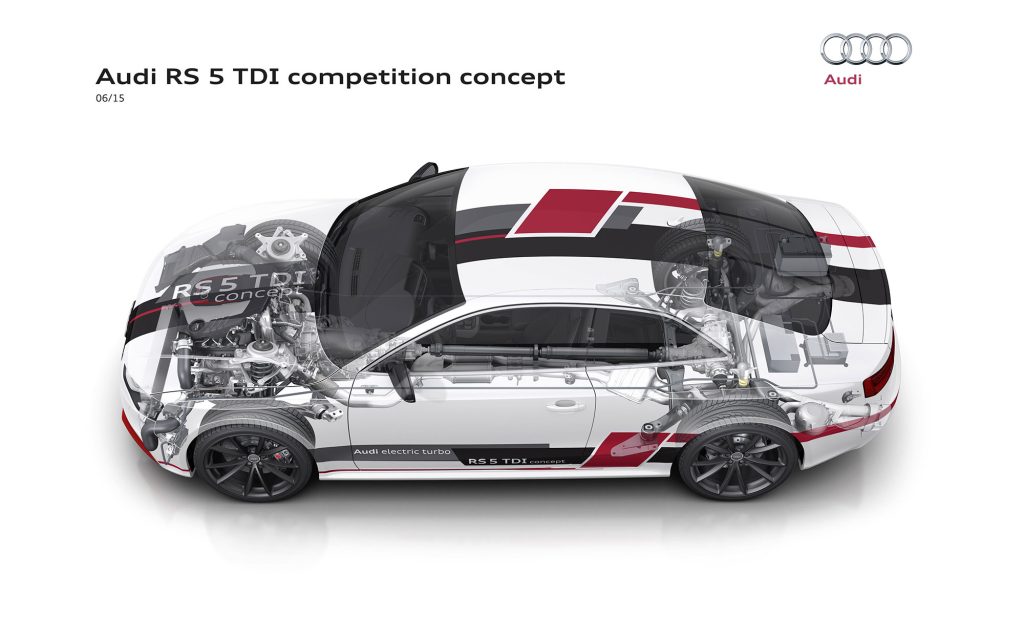
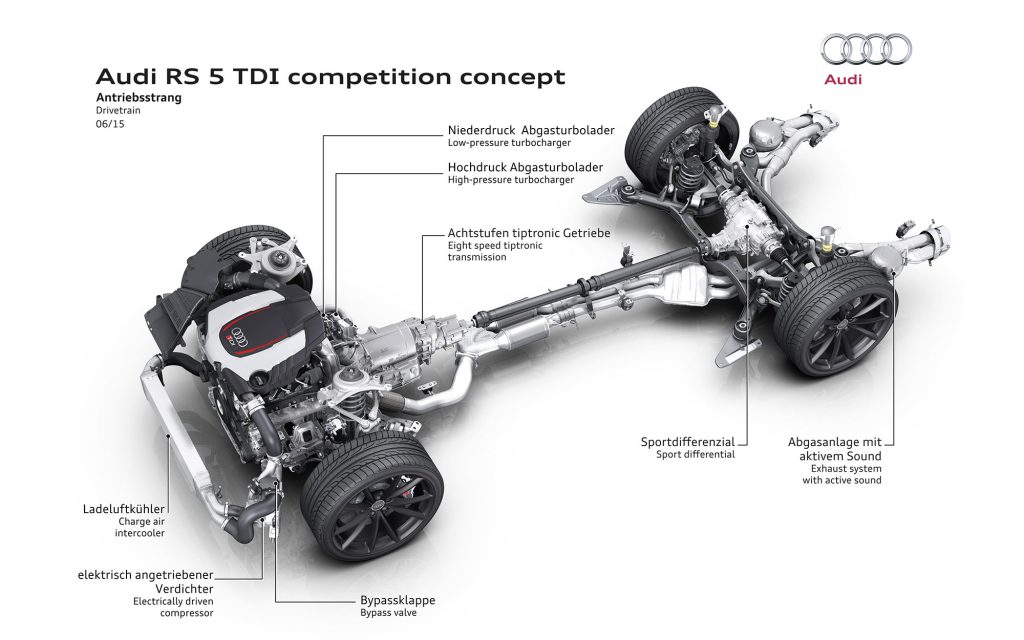
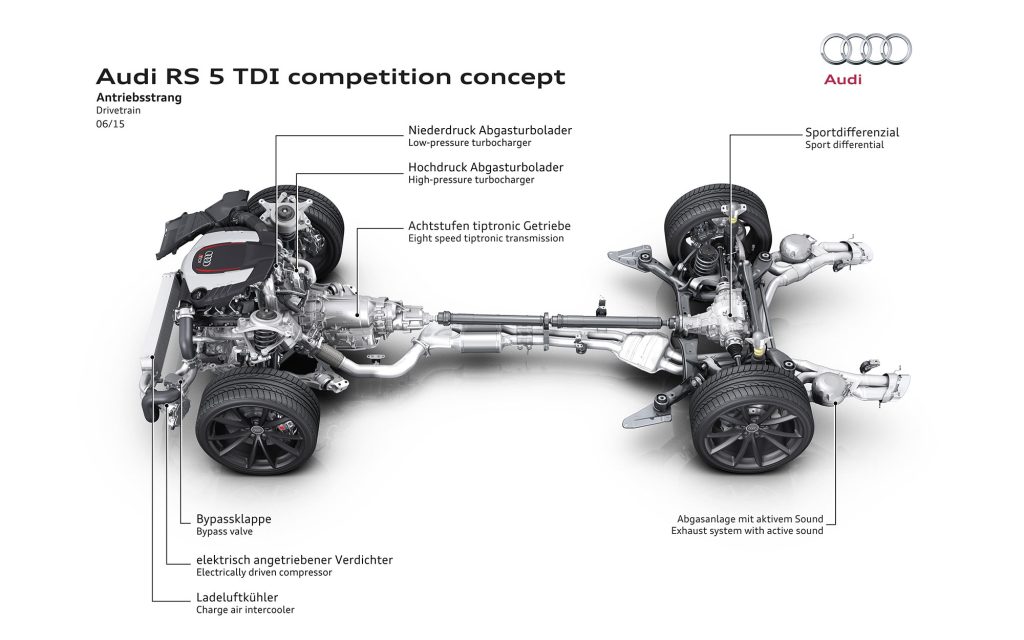
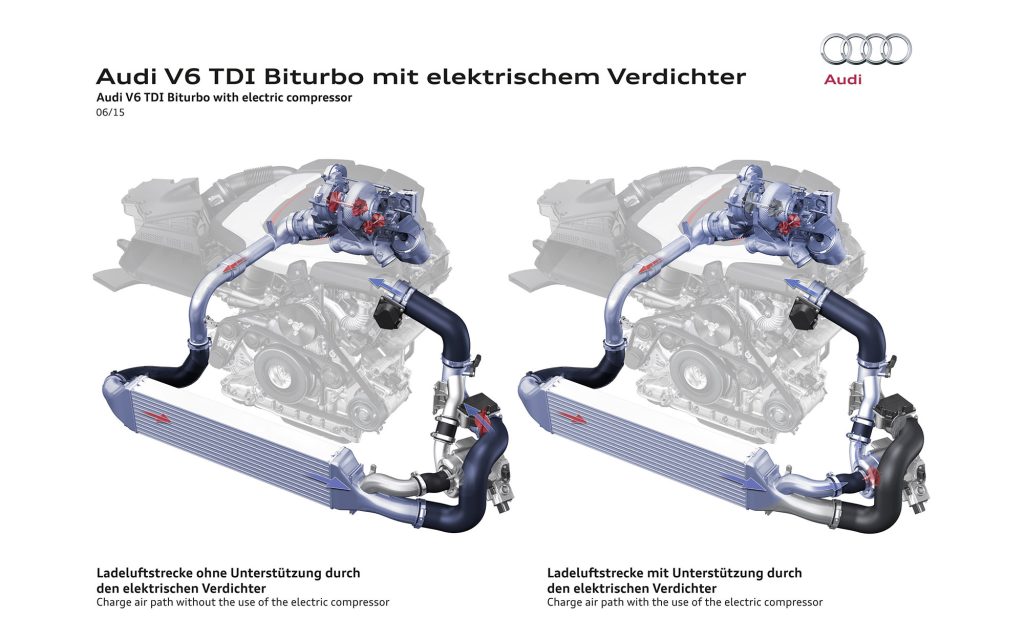
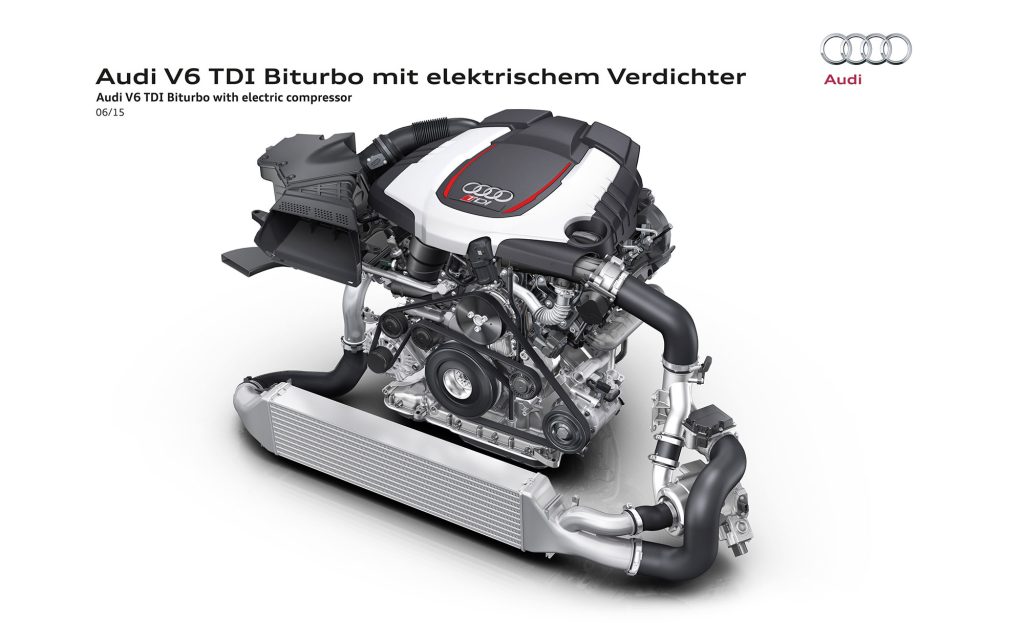
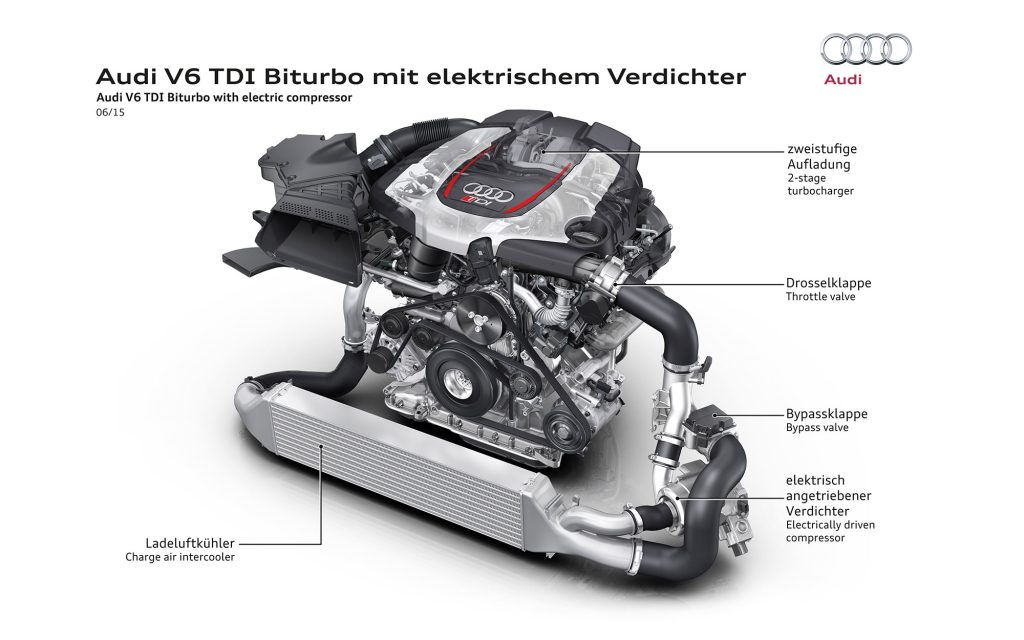
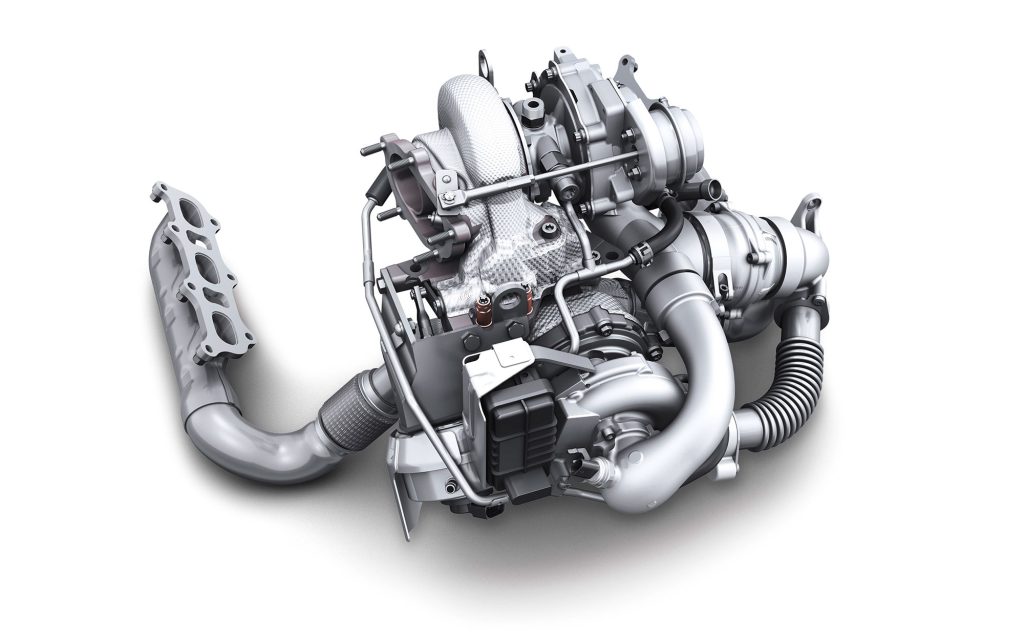
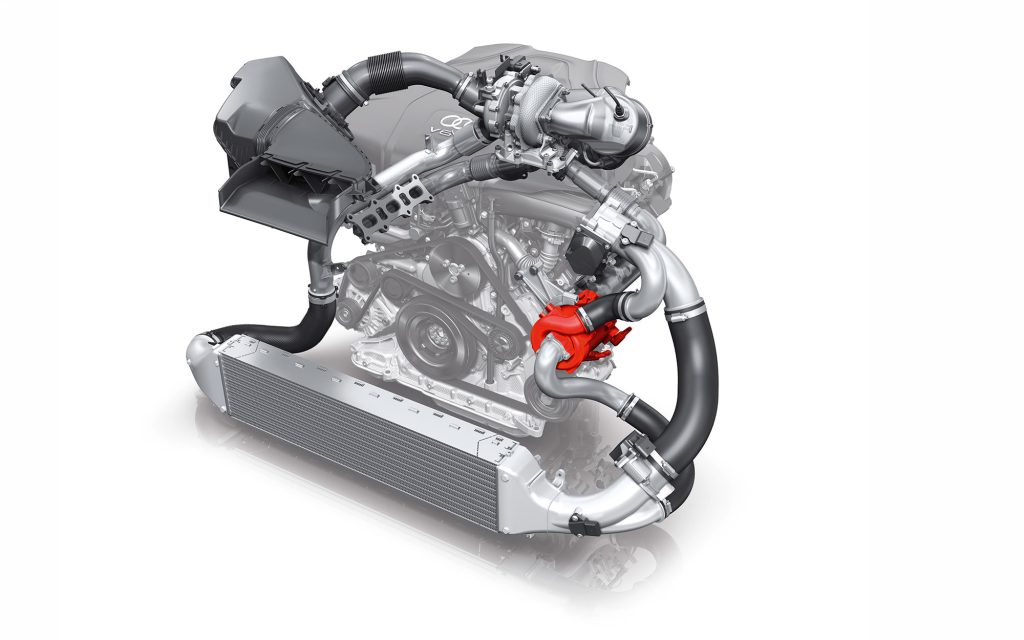
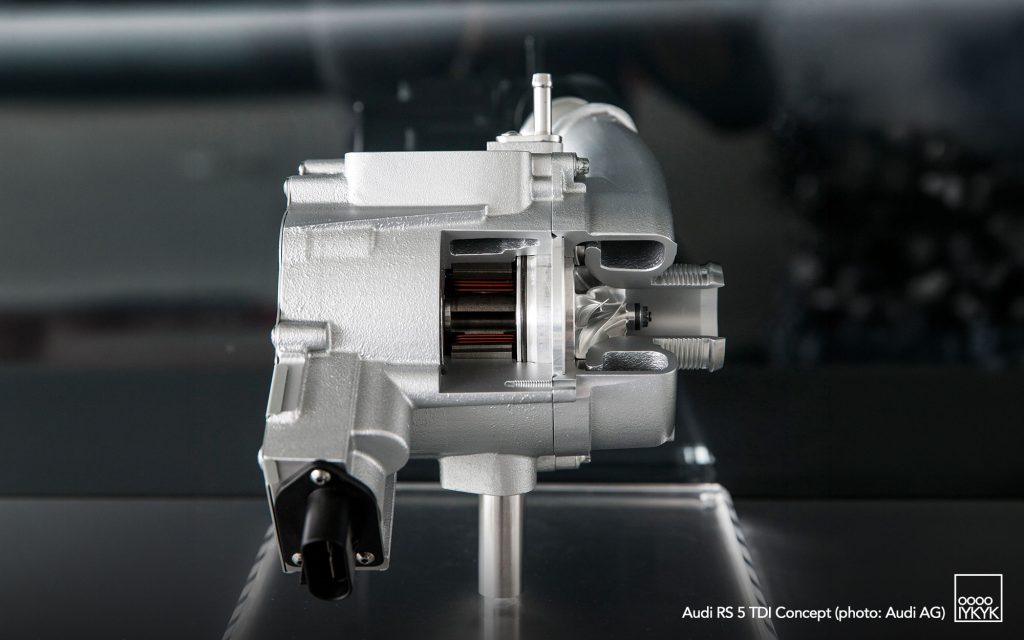
At the heart of the RS 5 TDI Prototype was a 2,967 cc V6 TDI engine equipped with sequential twin turbochargers and a Valeo-supplied electric compressor. The electric compressor, powered by a separate 48-volt electrical system, could spool up to high speeds in fractions of a second, delivering boost pressure before the exhaust-driven turbochargers reached full output.
Key specifications included:
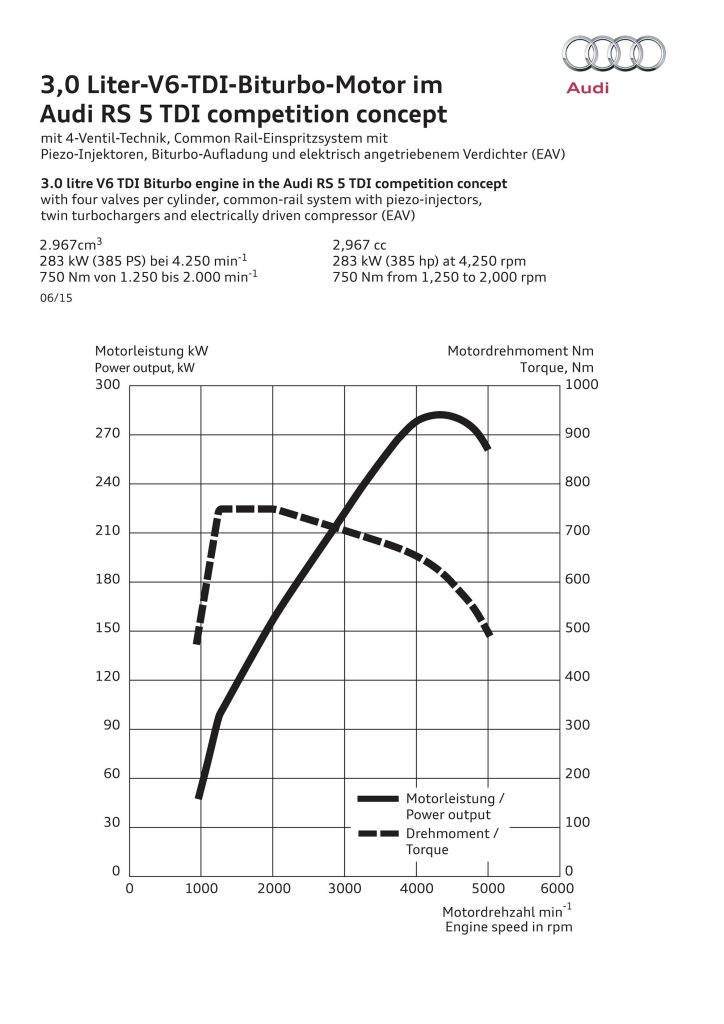
- Maximum power: 385 hp (287 kW) at 4,200 rpm
- Peak torque: 553 lb-ft (750 N·m) from 1,250–2,000 rpm
- Maximum engine speed: approx. 5,500 rpm
The electric compressor improved low-speed response, while the turbochargers provided sustained high-end power. This configuration aimed to combine the torque advantages of diesel with the responsiveness more typical of gasoline performance engines.
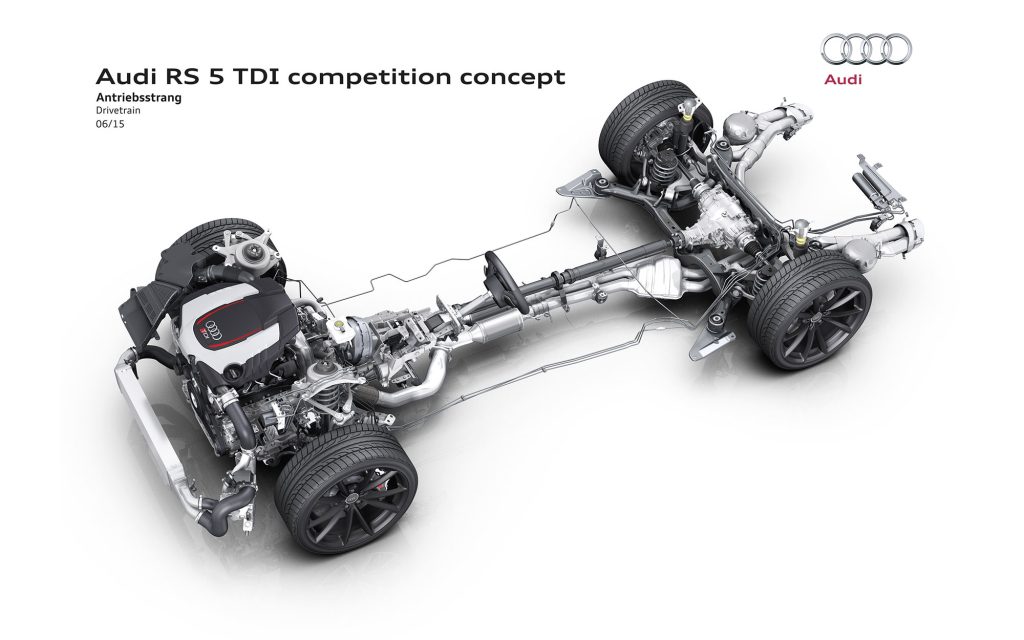
Because the torque output exceeded the capacity of Audi’s dual-clutch transmission, the prototype used a ZF 8-speed Tiptronic automatic transmission paired with Audi’s quattro all-wheel-drive system.
PERFORMANCE
Audi estimated the RS 5 TDI Prototype could accelerate from 0 to 60 mph (0–97 km/h) in approximately four seconds, with a top speed of 174 mph (280 km/h). Midrange acceleration was a particular strength, with the broad torque band providing strong in-gear performance.
Despite its higher output, the prototype was projected to achieve improved fuel efficiency compared with earlier versions of the 3.0-liter V6 TDI, reflecting the engine’s advanced combustion and boost control systems.
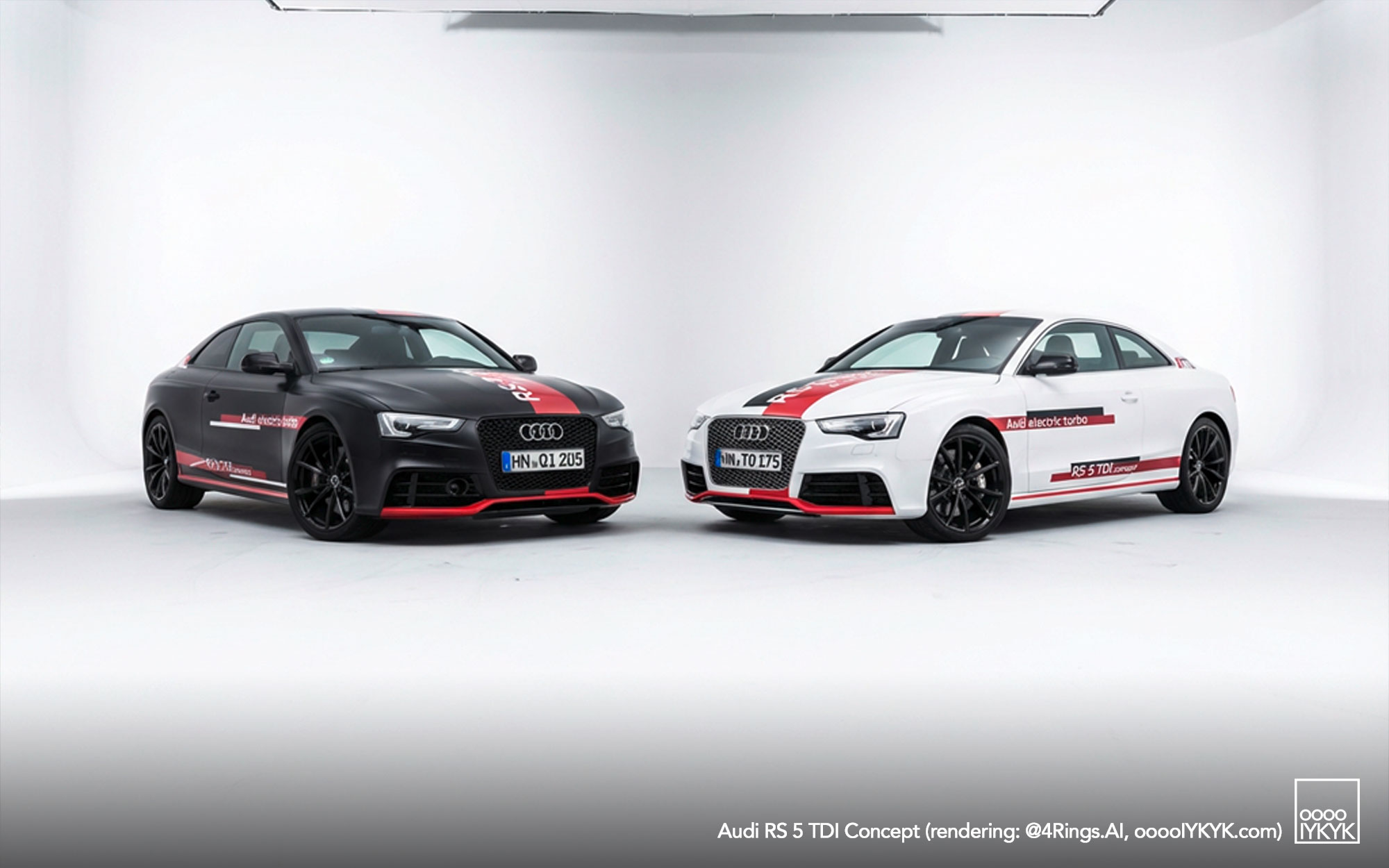
CHASSIS & DYNAMICS
The prototype retained the RS 5’s performance chassis, including adaptive suspension and a sport rear differential that allowed for torque vectoring across the rear axle. Audi engineers reported that the additional diesel hardware did not significantly increase overall vehicle weight compared with the gasoline-powered RS 5.
Handling characteristics remained aligned with RS performance standards, with precise turn-in and the ability to induce controlled oversteer under power.
SOUND ENGINEERING
To address the traditionally subdued acoustic character of diesel engines, the prototype incorporated an active sound system with speakers positioned near the exhaust outlets. This system generated a deeper, sport-oriented exhaust note to better match the vehicle’s performance image.
LEGACY
While the RS 5 TDI Prototype itself did not enter production, its powertrain technology influenced later Audi models, particularly larger vehicles that adopted electric compressor systems and 48-volt electrical architectures. The project demonstrated that diesel engines could achieve high levels of responsiveness and performance, narrowing the experiential gap between diesel and gasoline powertrains.
The RS 5 TDI remains a notable example of Audi’s experimental approach during a period of rapid evolution in both performance engineering and vehicle electrification.
REFERENCES
Car and Driver, “2017 Audi RS5 TDI Diesel Prototype Driven”
DETAILED SPECS
| Engine / electronics | |
| Engine type | V6 engine with 90° V angle |
| Valve gear / number of valves per cylinder | 4 valves per cylinder |
| Displacement in cc / bore x stroke in mm / compression | 2967 ccm / 83.0 x 91.4 mm / 15.5:1 |
| Max. power output in kW (hp) / at rpm | 283 (385) / 4200 1/min |
| Max. torque in Nm (lb-ft) / at rpm | 750 Nm / 1250 to 2000 1/min |
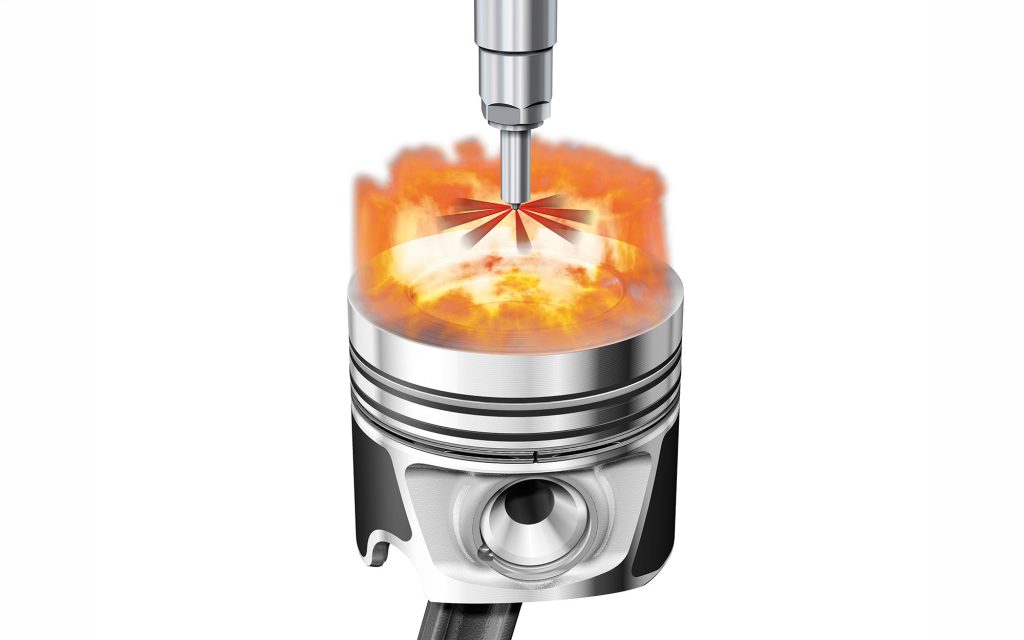
| Mixture preparation | Common rail injection system, 2500 bar |
| On-board supply system | 12 V, additional separate 48 V supply system for the e-turbo |
| Drivetrain / transmission | |
| Drive type | quattro permanent all-wheel drive |
| Clutch | Hydraulic torque converter with lock-up clutch |
| Transmission type | 8-speed tiptronic |
| Gear ratio in 1st gear / 2nd gear | 4.714 / 3.143 |
| Gear ratio in 3rd gear / 4th gear | 2.106 / 1.667 |
| Gear ratio in 5th gear / 6th gear | 1.285 / 1.000 |
| Gear ratio in 7th gear / 8th gear | 0.839 / 0.667 |
| Reverse gear / final drive ratio | 3.317 / 2.375 |
| Suspension / steering / brakes | |
| Front suspension | Five-link front suspension, upper and lower wishbones, solid anti-roll bar |
| Rear suspension | Independent-wheel, trapezoidal-link rear suspension with resiliently mounted subframe, anti-roll bar |
| Steering / steering ratio / turning circle in meters (D102) (feet) | Maintenance-free rack-and-pinion steering, EPS / 16.3 / 11.4 (37.40) |
| Brake system | Dual-circuit brake system with diagonal split, ABS/EBD and ESP with brake assist; tandem brake booster; front: ventilated disks / rear: ventilated disks |
| Wheels / tires | 9J x 20 cast aluminum wheels / 275/30 R20 97Y XL tires |
| Performance / consumption / acoustics | |
| Top speed in km/h (mph) | > 280 km/h (173.98) |
| Acceleration, 0-100 km/h (0-62.14 mph) in sec | ca. 4.0 |
| Capacities | |
| Engine oil capacity (including filter) in liters | 9,7 |
| Fuel tank capacity in liters | 61 |
| Body / dimensions | |
| Body type / number of doors / seats | Coupé / 2 / 4 |
| Drag coefficient Cd / frontal area A in m2 (square feet) | 0.32 / 2.18 (23.47) |
| Length (L103) / width excluding mirrors (W103) / height (H101-M) in mm (feet) | 4649 (15.25) / 1860 (6.10) / 136 |
PHOTO GALLERY