
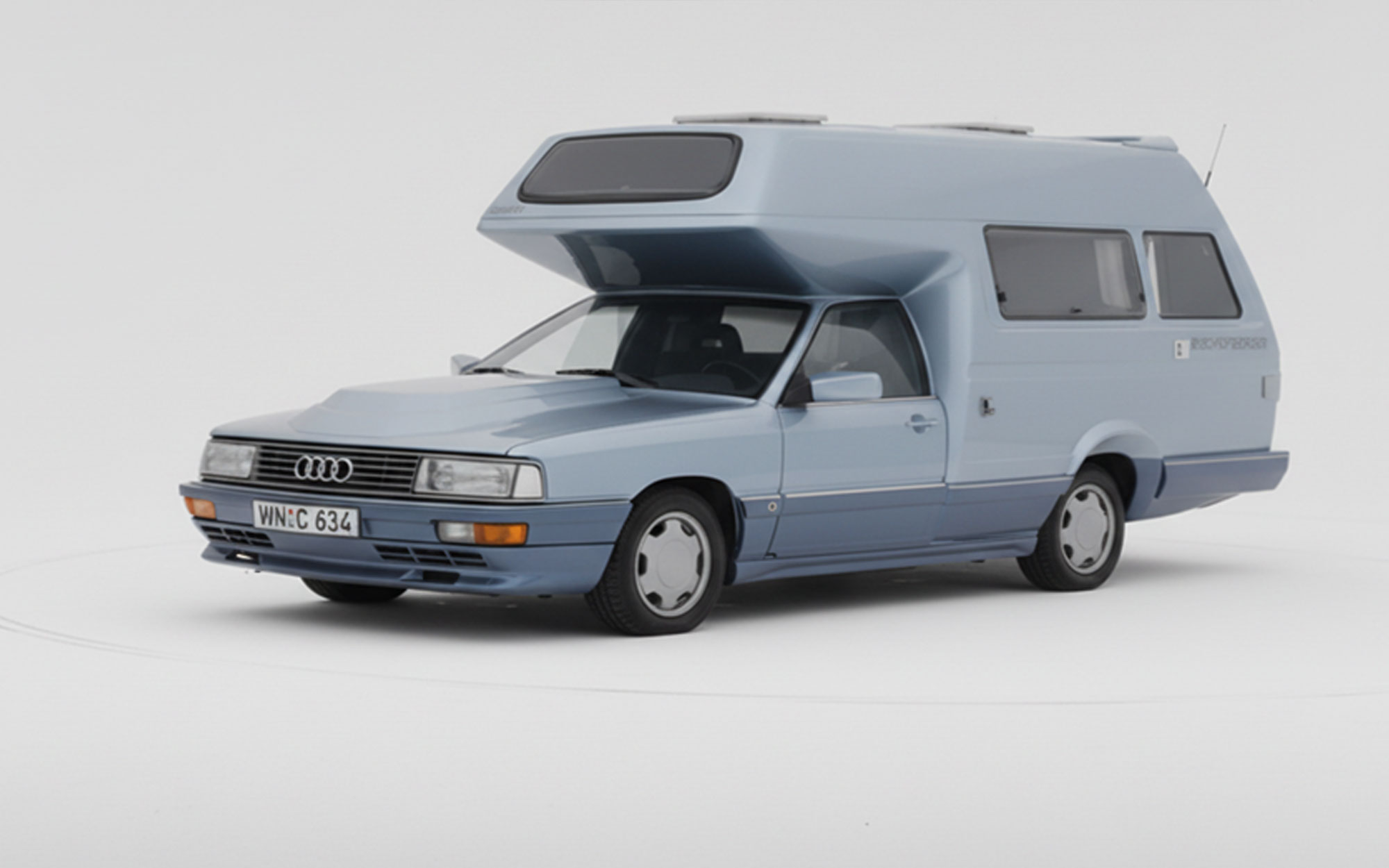

What: 200 Condor by Bischofberger
Model Family: 200
Market / Zone: EU
Assembly Location: Backnang, Germany
Debut:
Year: 1987
Number Produced: unknown
Model / Generation Code(s): Type 44
Chassis / Matrix: C3
SUMMARY
The Bischofberger Condor is a one-off, high-performance motorhome conversion based on the Audi 200 C3 (Type 44), developed in 1987 by Bischofberger Motorcaravan GmbH & Co.. Conceived as the ultimate evolution of the Bischofberger Family concept, the Condor combined a fully equipped camper body with the turbocharged performance of the Audi 200, earning period descriptions as the fastest motorhome in the world. It was the final Audi-based camper built by the company before production ceased in 1989.
BACKGROUND & CONCEPT
After establishing the sedan-based camper idea with the Audi 100 Family (C2 and C3), Helmut Bischofberger pushed the concept to its logical extreme by selecting the more powerful Audi 200 as a base. The Audi 200, positioned above the Audi 100 in the model hierarchy, offered turbocharged five-cylinder power and higher cruising capability—key attributes for Bischofberger’s vision of a motorhome that could travel as quickly and comfortably as a premium executive car.
The resulting project was named Condor, signaling both performance and exclusivity. Unlike the Family, which was produced in small numbers, the Condor remained a one-off and unique piece, reflecting both its cost and its role as a technological showcase rather than a commercial product.
DESIGN & CONSTRUCTION
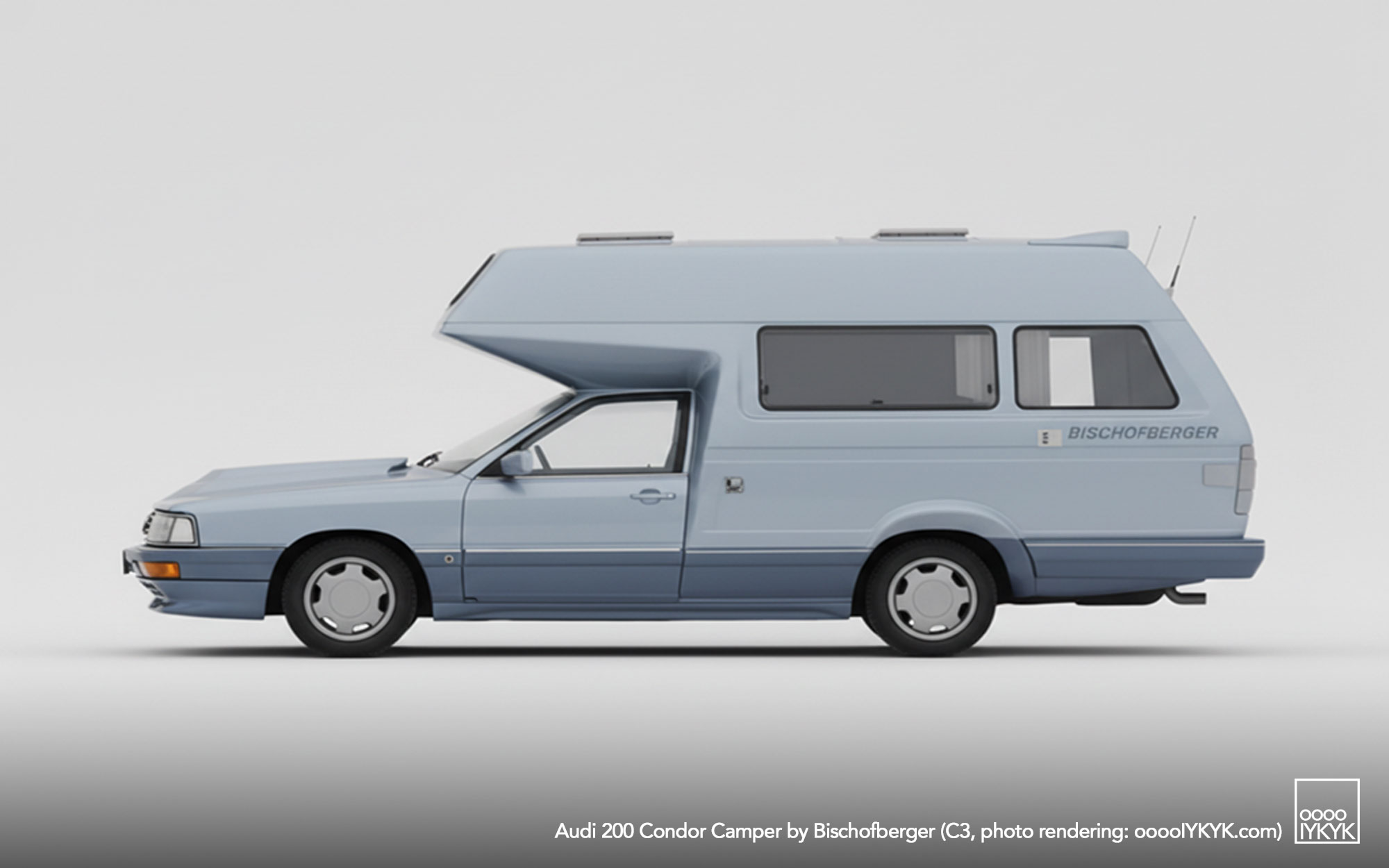
The Condor followed the same fundamental construction principles as the Family models. The Audi 200’s steel body was removed rearward of the B-pillar while retaining the original floorpan and wheelbase. A tubular steel frame replaced the removed structural elements and served as the foundation for a custom glass-reinforced plastic (GRP) motorhome body.
The camper structure was designed to maximize interior usability while maintaining a relatively low overall height for stability and high-speed capability. Compared with the Audi 100 Family, the Condor’s body was more compact in appearance, reflecting its one-off nature and performance-oriented brief.
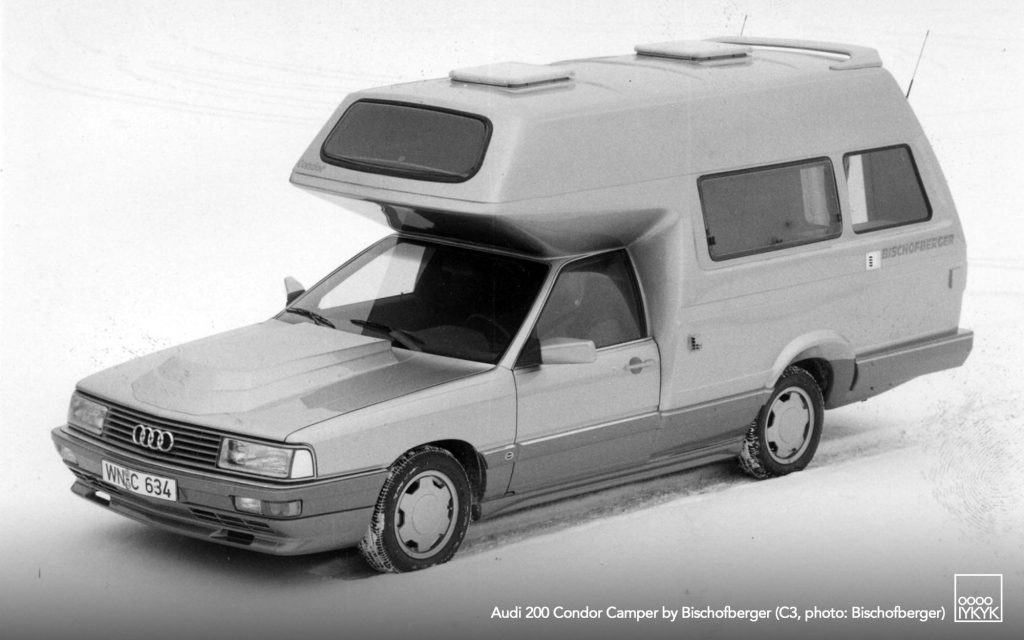
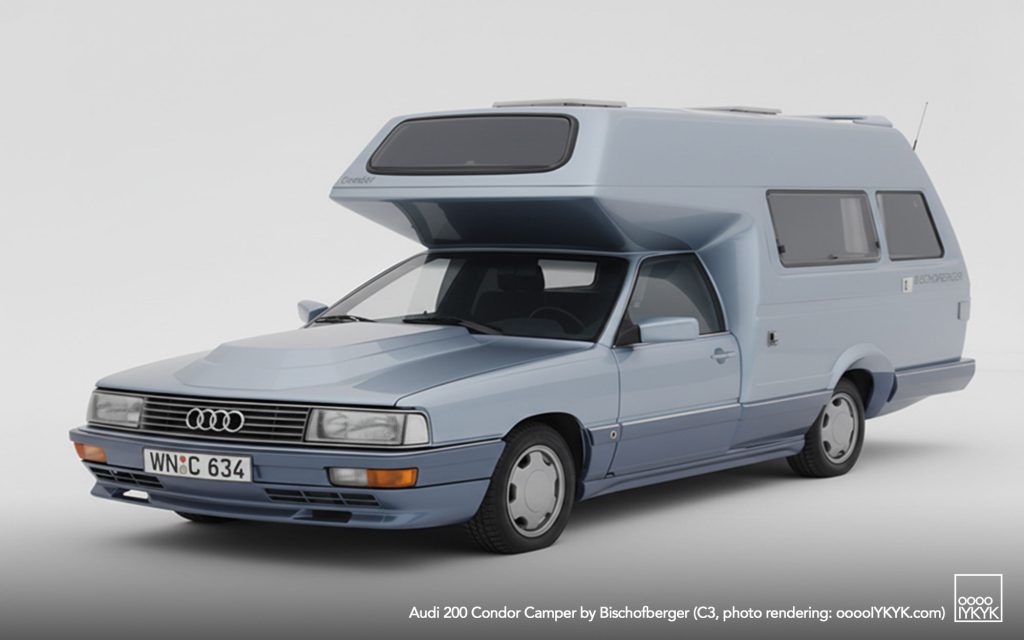
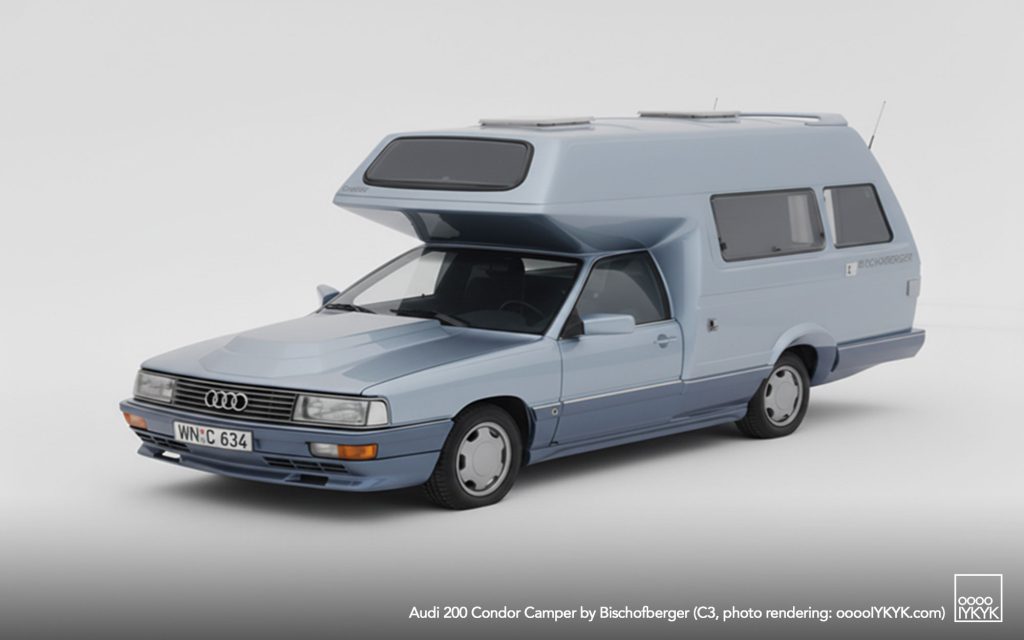
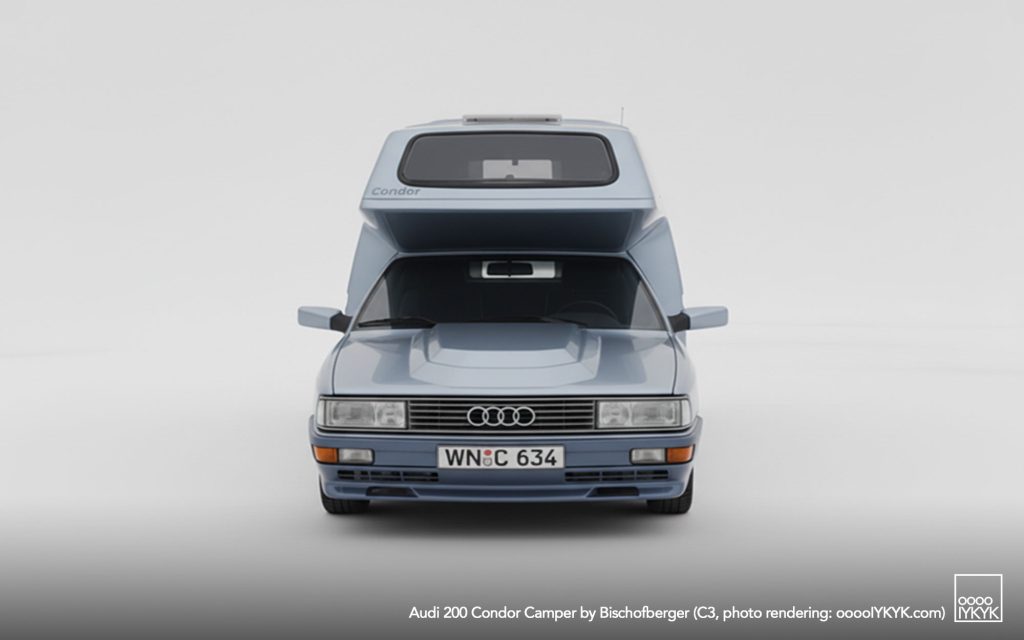
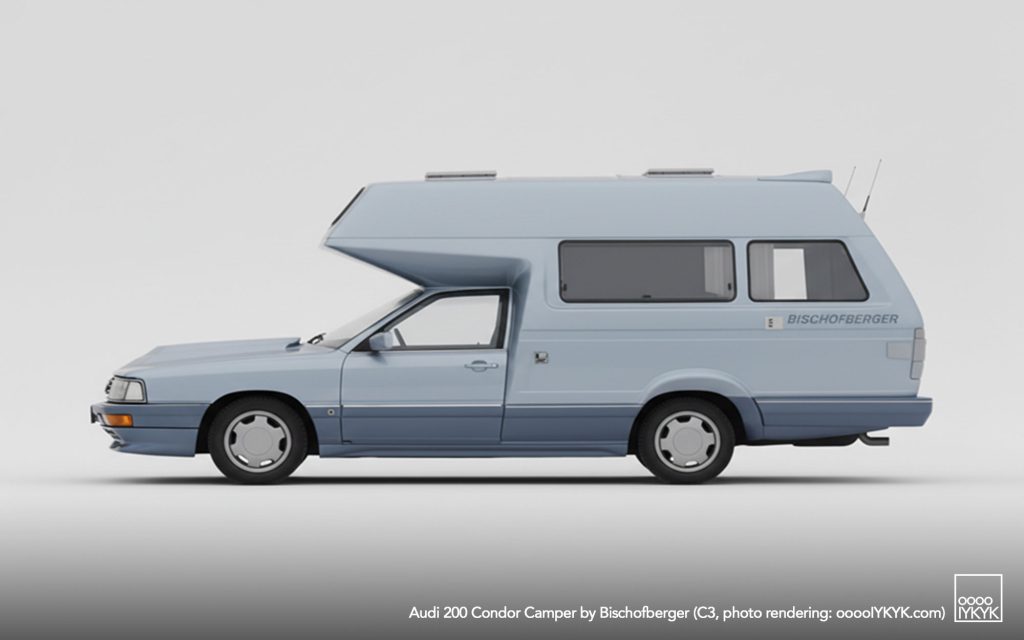
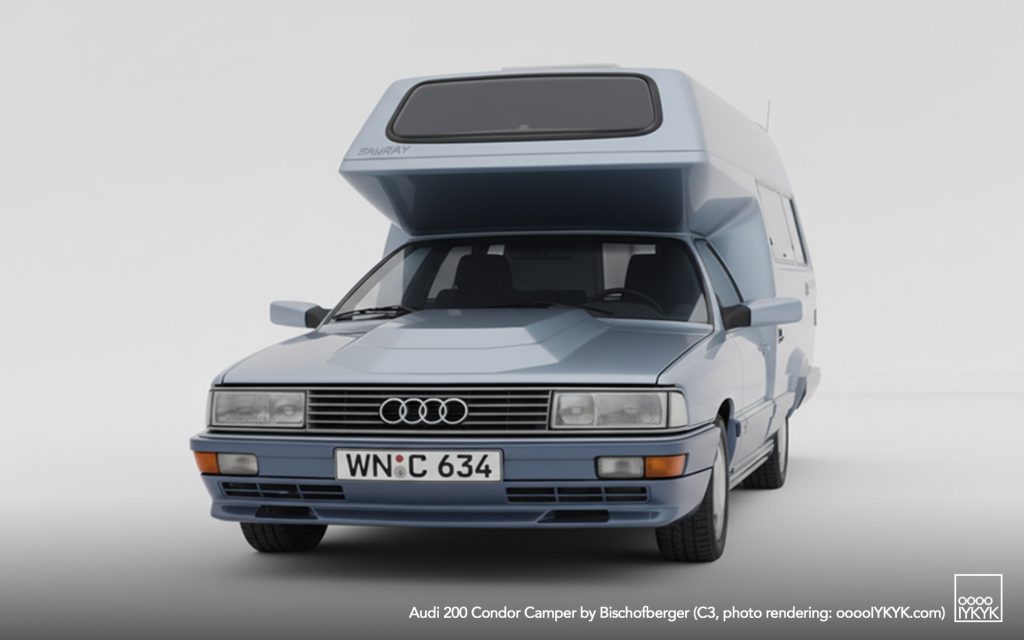
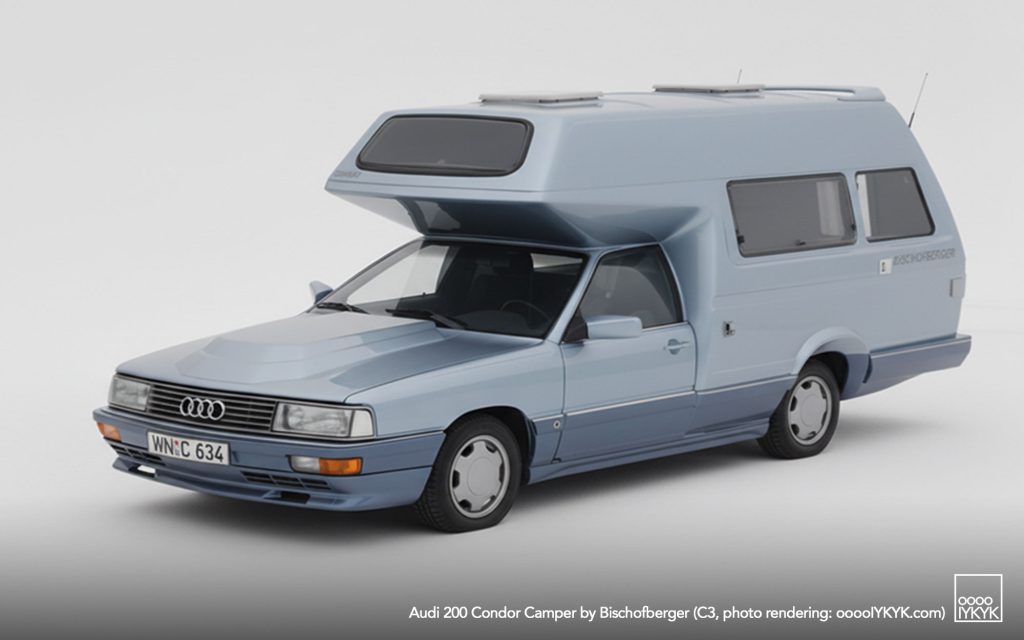
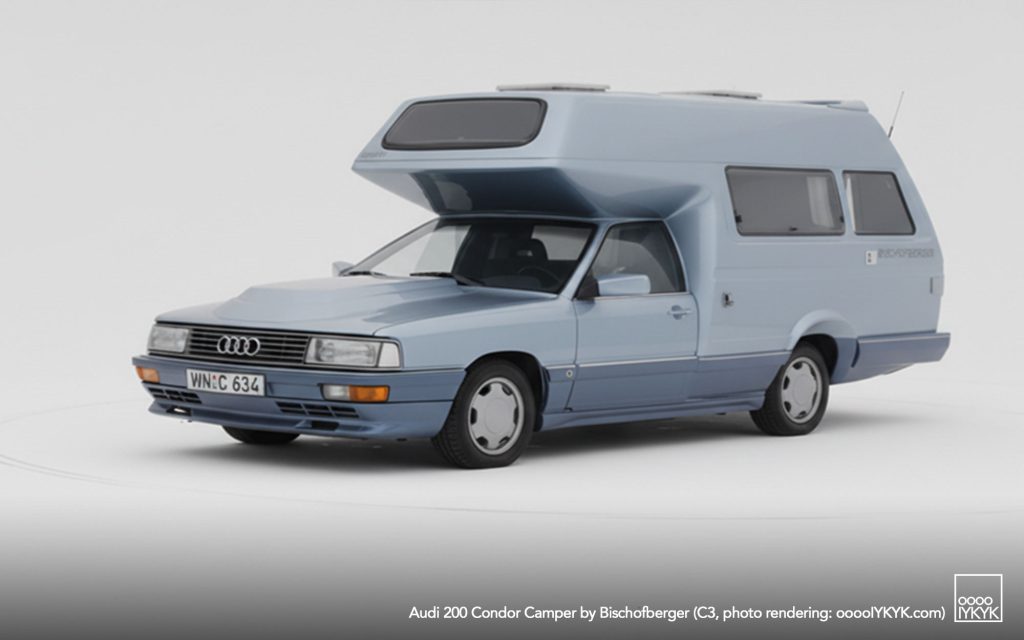
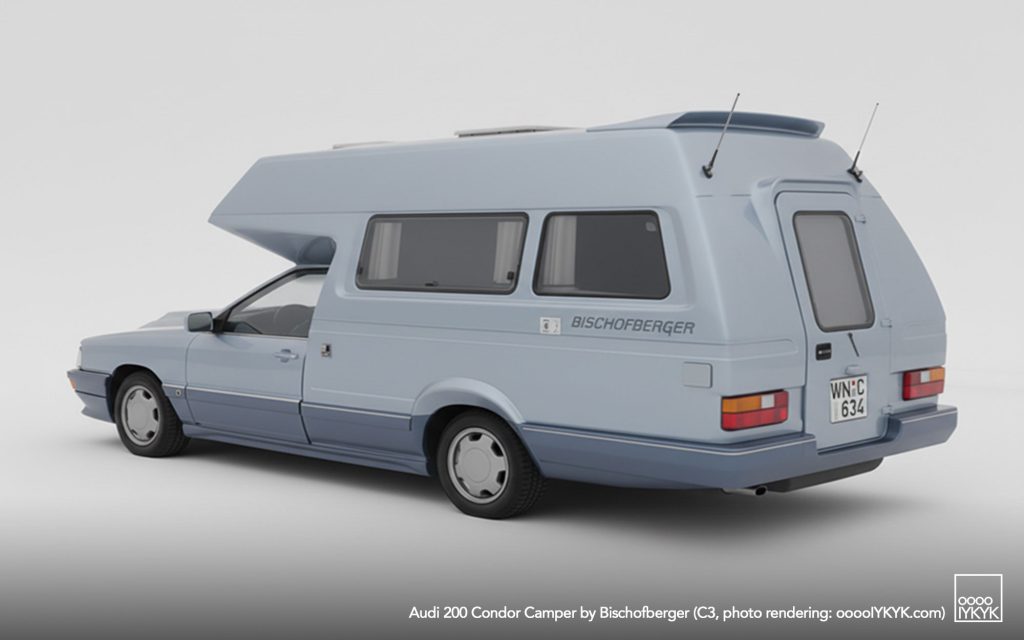
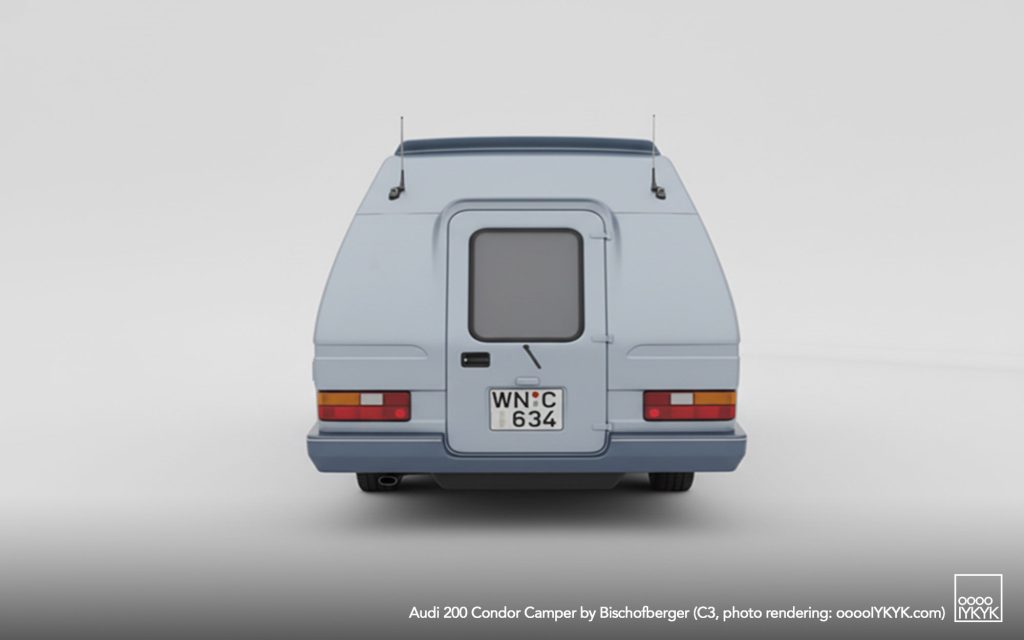
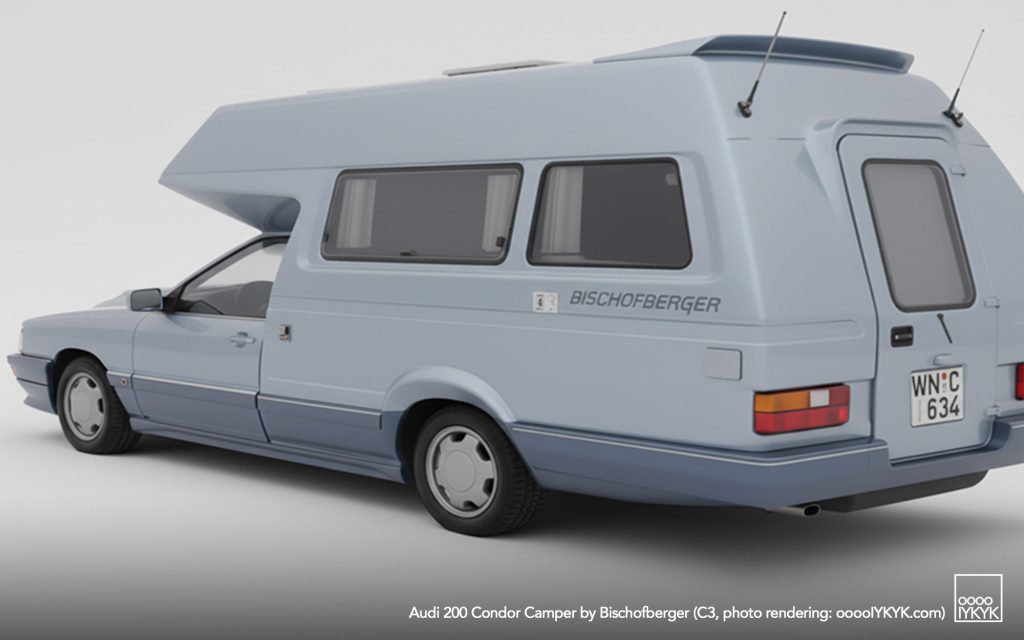
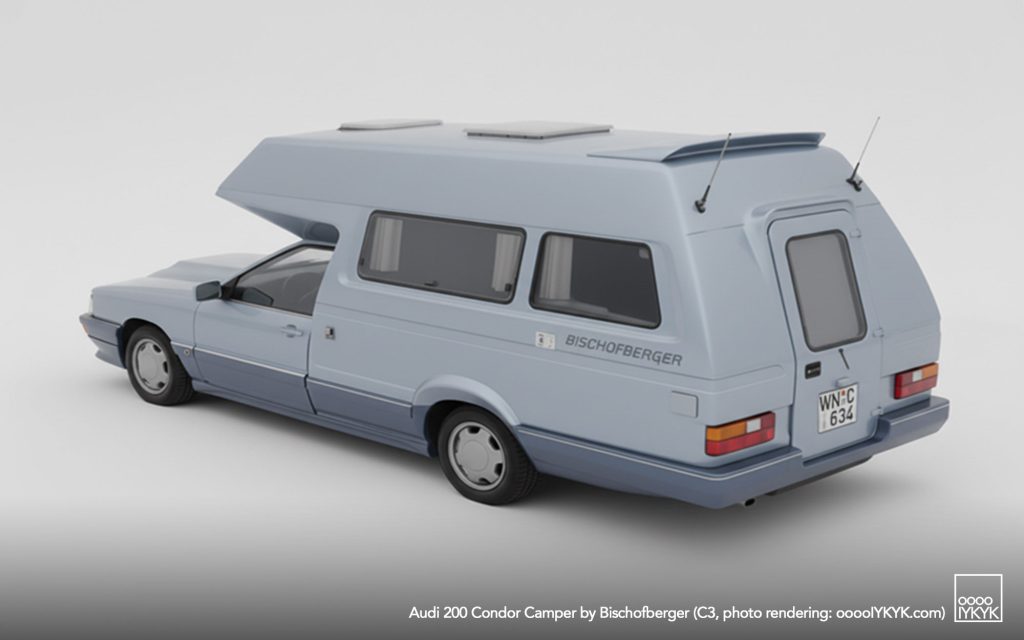
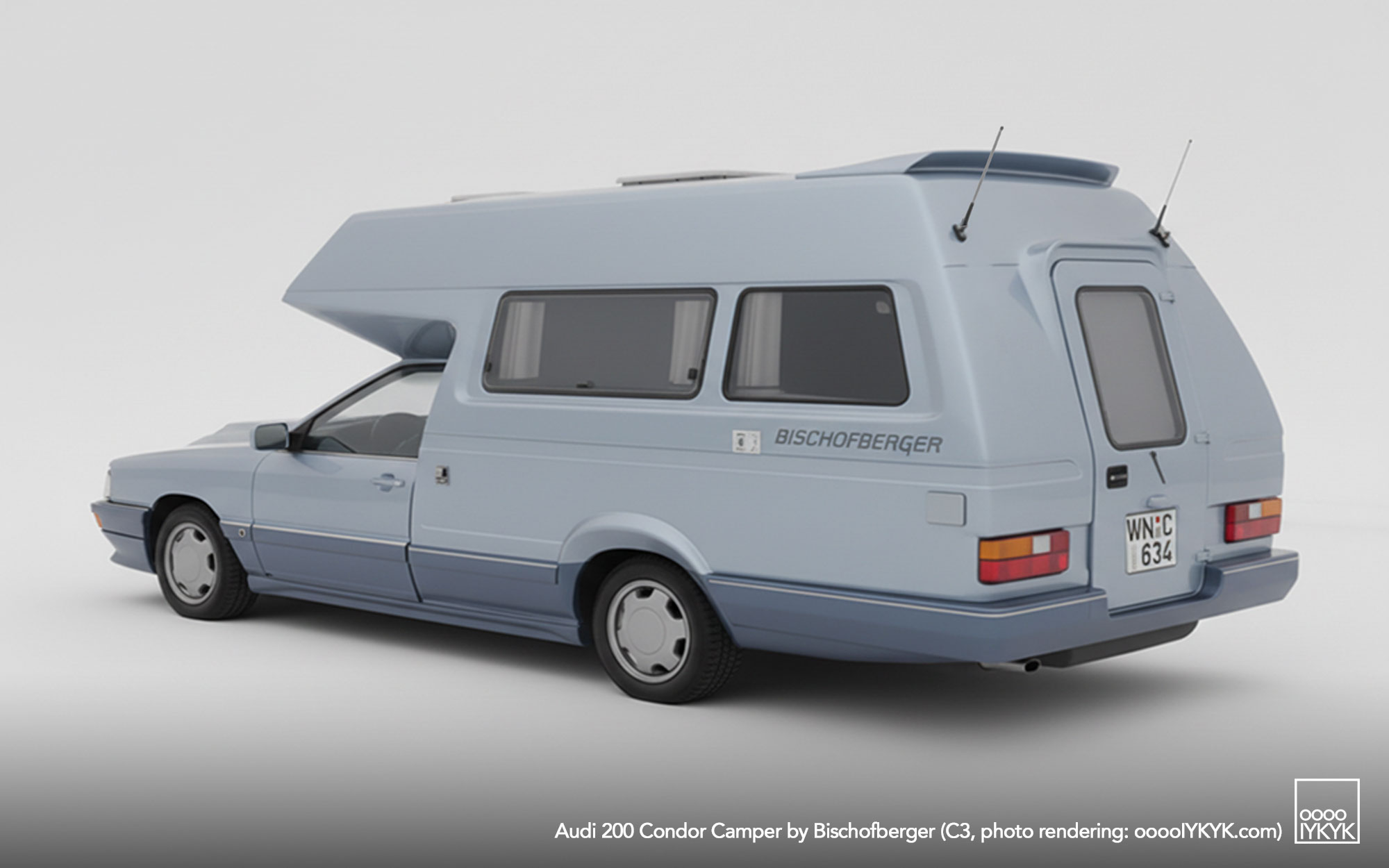
Other notable cues can be seen in photos. These included a more aggressively designed front bumper beyond that of the stock Audi 200, a slight roof spoiler at the top rear of the vehicle, and a bulge added to the hood that’s quite aggressive though even though the purpose isn’t entirely clear.
Early press photos of the car depict it in black and white. More recent photos of the car as it’s turned up over the years seem to confirm it was a two-tone blue color. Those early photos of the car show it having labels like “Condor” on the front and “Bischofberger” on the sides. More recent images of the car show no text labels and instead RV-like stripes on the rear and sides. AI renderings created for this page have been made with an attempt to replicate the two-tone blue color, though with the earlier text labels and no stripes.
CHASSIS & POWERTRAIN
What set the Condor apart decisively was its drivetrain. The base vehicle was an Audi 200 Turbo equipped with a turbocharged inline five-cylinder petrol engine, displacing 2.1 liters and producing approximately 182 hp and 252 Nm of torque. Power was transmitted through a five-speed manual transmission driving the front wheels.
Despite its camper conversion, the Condor reportedly achieved a top speed of approximately 200 km/h, with some contemporary sources and enthusiasts citing figures as high as 220 km/h. These numbers placed it far beyond conventional motorhomes of the 1980s and even ahead of the already quick Audi 100 Family.
INTERIOR & EQUIPMENT
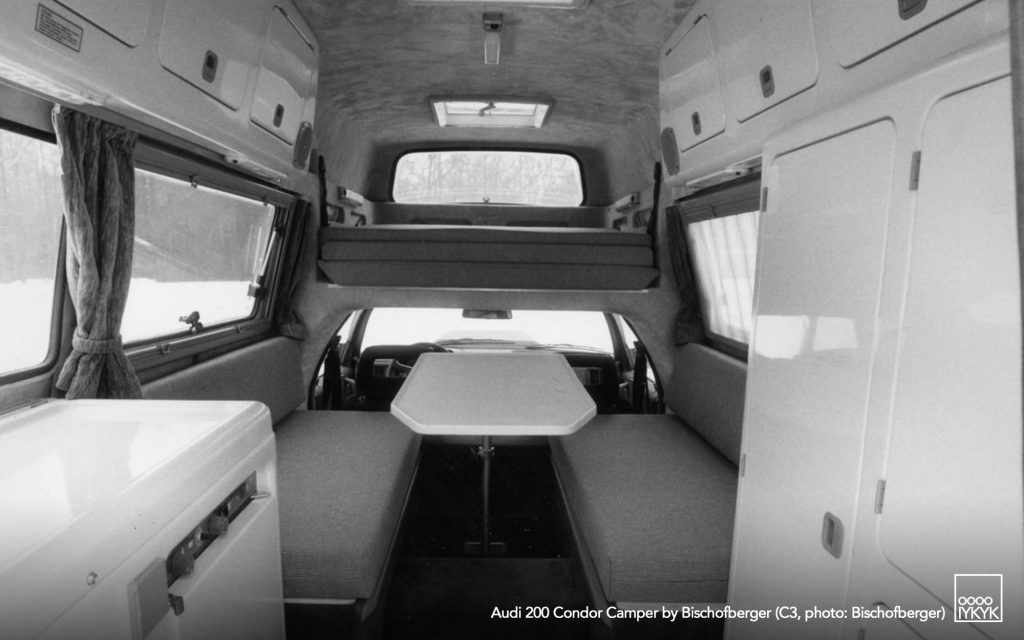
The living compartment of the Bischofberger Condor was fully equipped to motorhome standards of the period. Features included:
- Double sleeping accommodation
- Refrigerator
- Two-burner gas stove
- Sink with fresh water supply (approximately 30 liters) and waste tank
- Truma (Trumatic) heating system
- Built-in storage and seating
As with other Bischofberger conversions, the interior was hand-built and tailored, emphasizing usability and quality rather than mass-production uniformity.
DIMENSIONS & TECHNICAL DATA
- Base vehicle: Audi 200 C3 (Type 44)
- Engine: Turbocharged inline five-cylinder petrol
- Displacement: 2.1 liters
- Output: approx. 182 hp
- Torque: approx. 252 Nm
- Transmission: 5-speed manual
- Drive: Front-wheel drive
- Top speed: approx. 200 km/h (some sources cite up to 220 km/h)
- Length: approx. 4.90 m
- Width: approx. 1.90 m
- Height: approx. 1.80 m
- Wheelbase: approx. 2.69 m
PRODUCTION & PRICING
Only one Bischofberger Condor is known to have been built. The cost of the conversion alone was approximately 49,900 Deutsche Mark in 1987, excluding the price of the base Audi 200 Turbo. This positioned the Condor well above the already expensive Audi 100 Family and effectively limited it to showcase status.
For comparison, period pricing lists cited:
- Audi 100 Family conversion: approx. 37,900 DM (plus base vehicle)
- Audi 200 Condor conversion: approx. 49,900 DM (plus base vehicle)
LEGACY
The Bischofberger Condor stands as the most extreme and ambitious expression of Helmut Bischofberger’s sedan-based motorhome philosophy. By pairing a fully functional camper with turbocharged Audi 200 performance, it redefined what a motorhome could be in terms of speed and road behavior.
Today, the Condor boasts a high-degree of status among Audi enthusiasts and classic camper historians. As the final Audi-based project completed by Bischofberger Motorcaravan GmbH & Co., it represents both the peak and the conclusion of a brief but remarkably inventive chapter in German automotive history.
PHOTO GALLERY