

/ Eras / Audi Postwar Era / 80 (B3, type 89)
What: 80 Sedan (B3)
Model Family: 80
Market / Zone: EU
Production Location: Ingolstadt, Germany
Auto Show Debut: 1986 Frankfurt IAA
Year: 1987, 1988, 1989, 1990, 1991, 1992
Number Produced: 1,438,475 (via Wikipedia)
Model / Generation Code(s): Type 89
Chassis / Matrix: B3
Engine(s): 1.4l 4-cylinder, 1.6l 4-cylinder, 1.8l 4-cylinder, 2.0l 4-cylinder, 2.0l 4-cylinder 16-valve, 1.6l 4-cylinder diesel, 1.6l 4-cylinder turbo diesel, 1.9l 4-cylinder diesel
Transmission(s): 5-speed Manual, 3-speed Automatic
Designer: J Mays under Hartmut Warkuß
Predecessor: Audi 80 (B2)
Successor: Audi 80 (B3)
WHEEL / TIRE DETAILS
Wheel Size(s):
Tire Size(s):
Bolt Pattern: 4x108mm
Offset:
SUMMARY
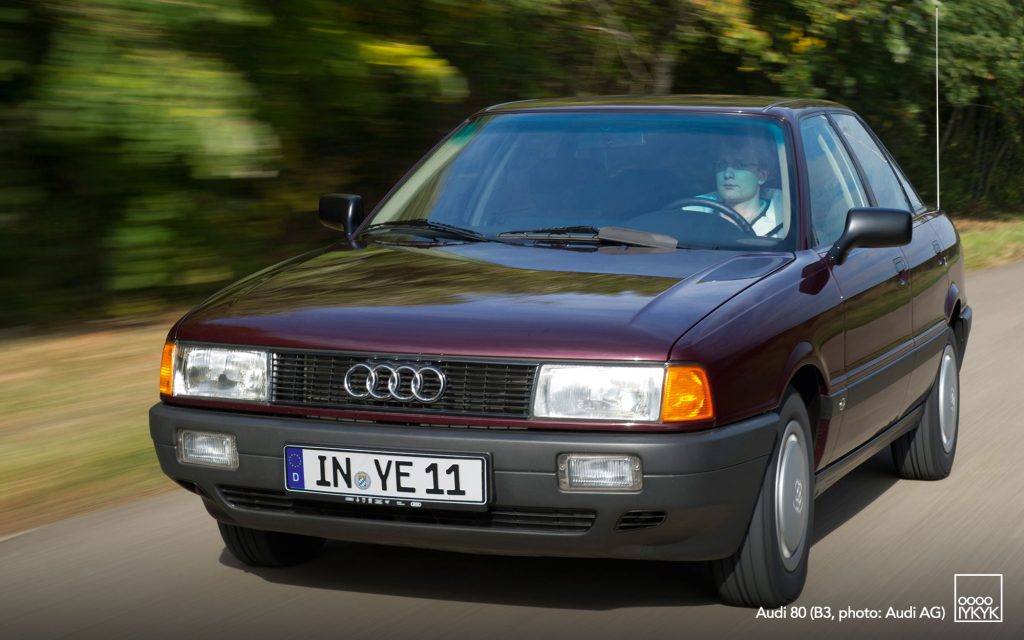
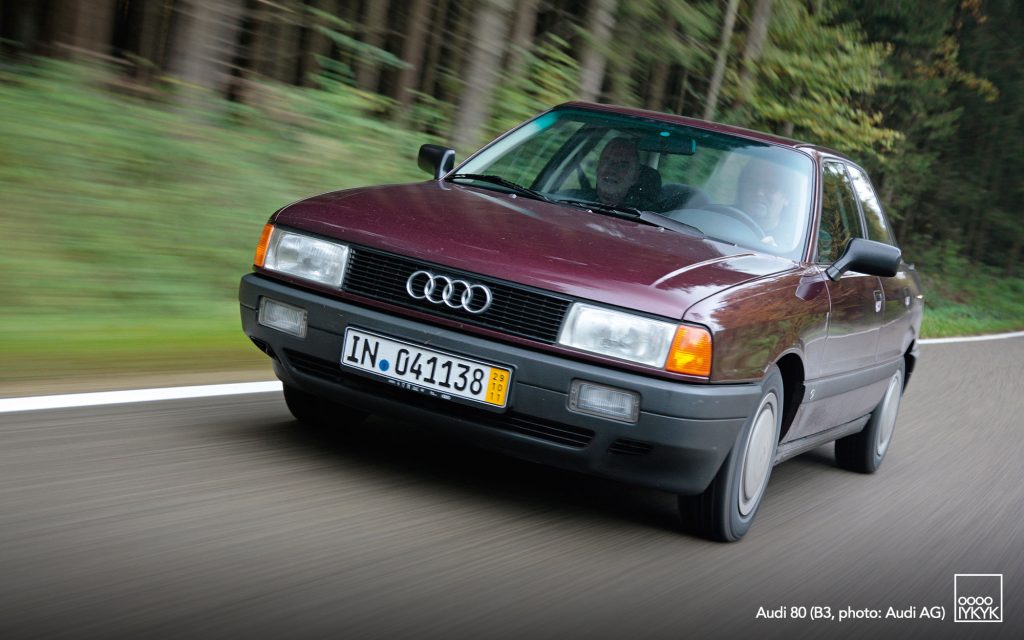
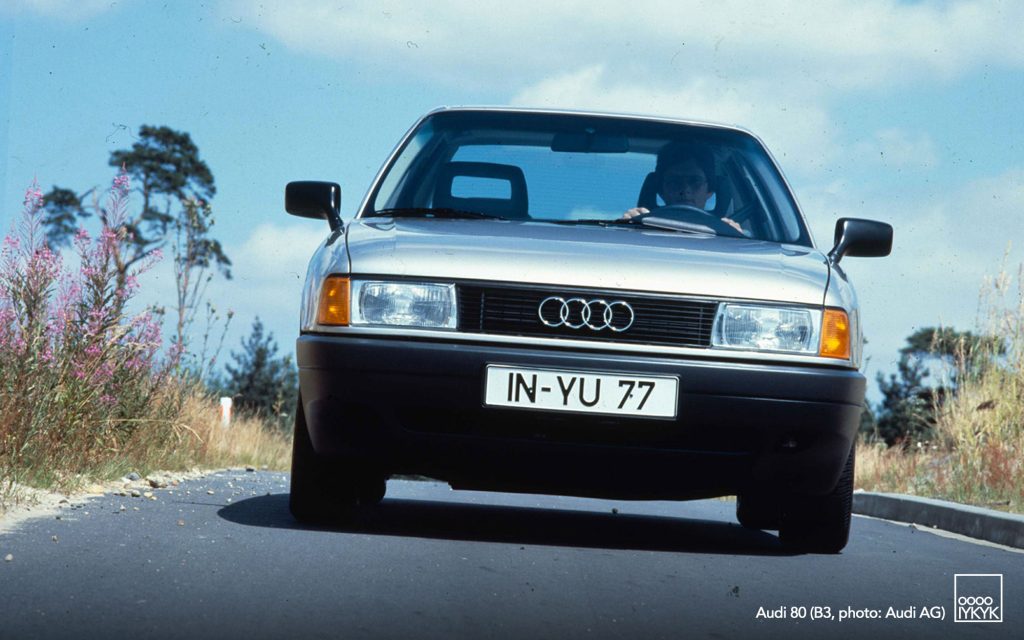
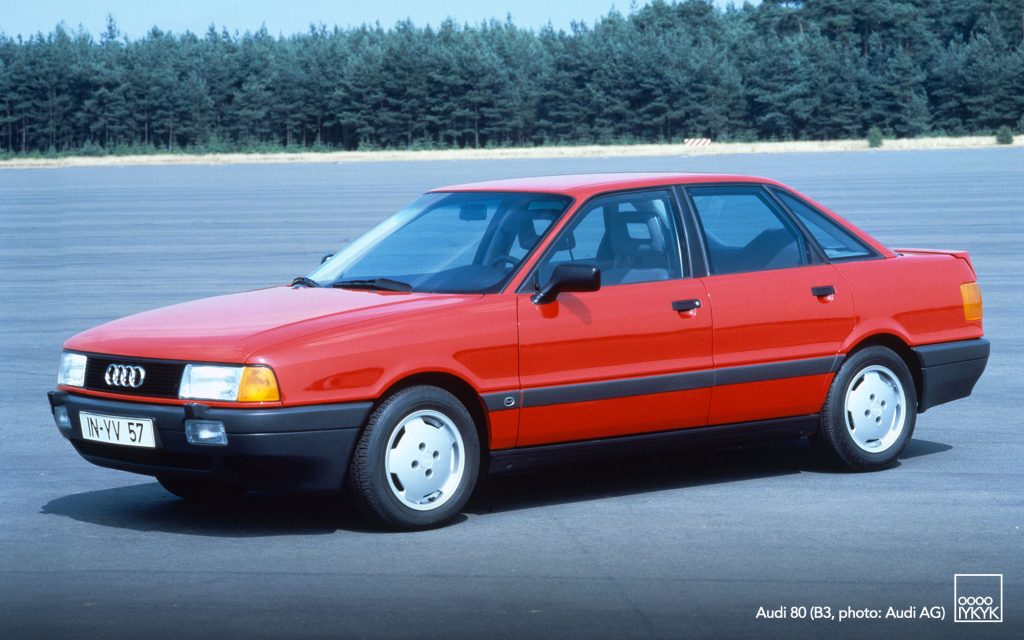
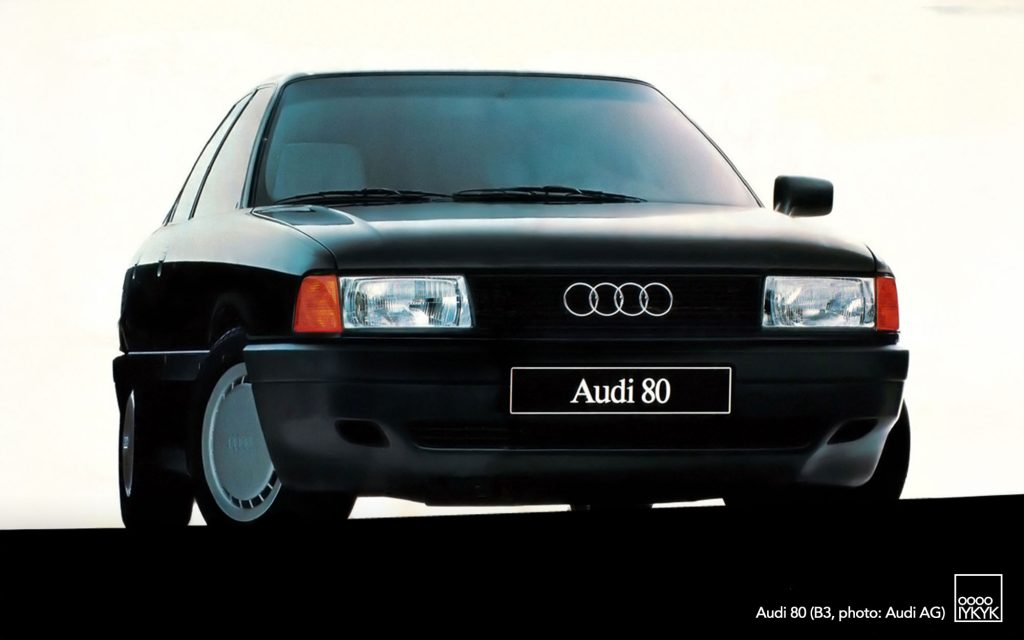
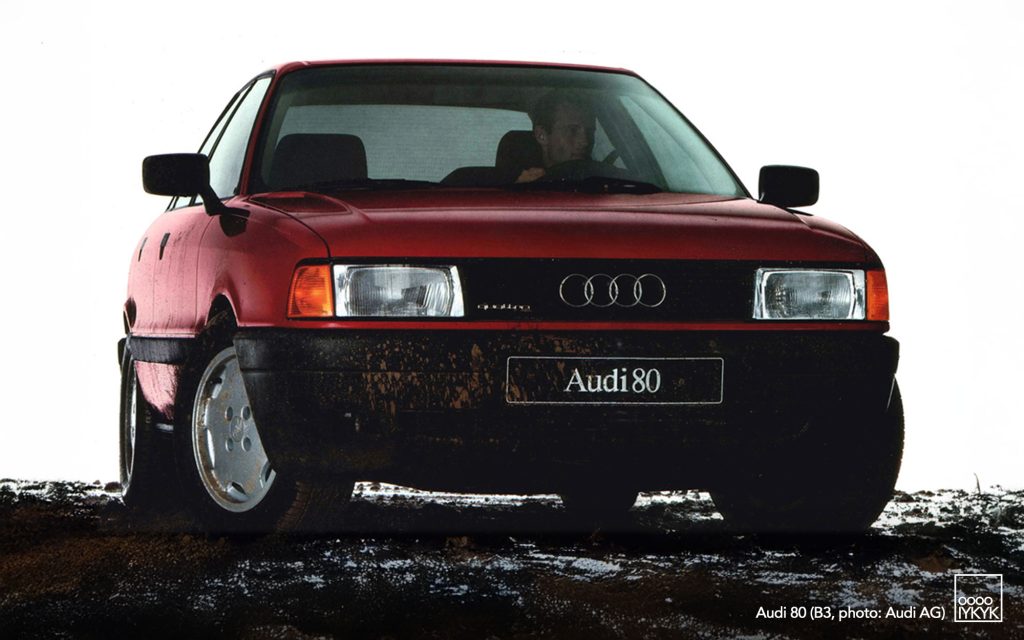
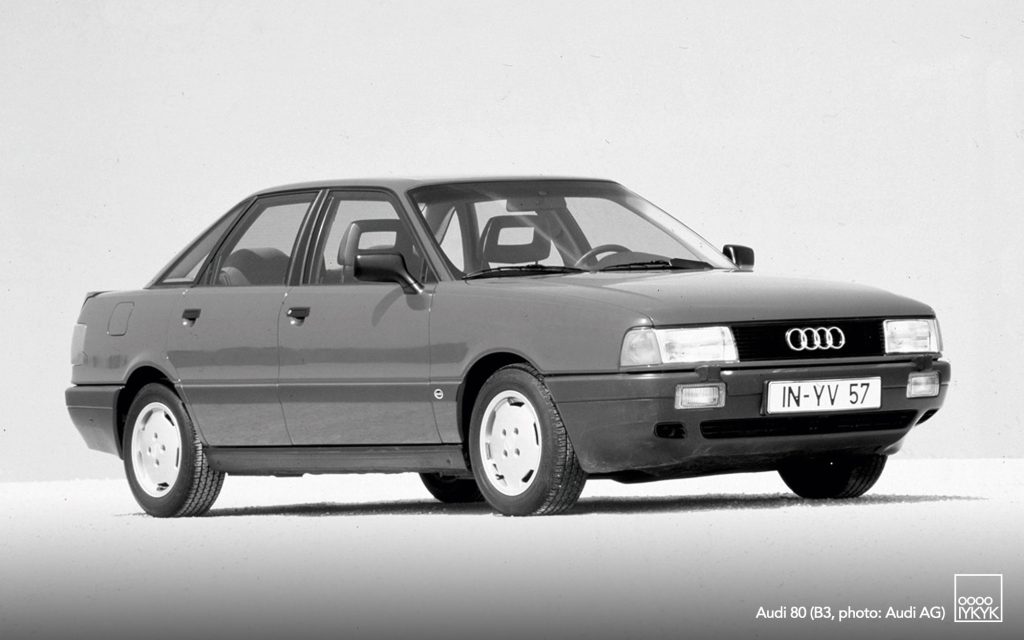
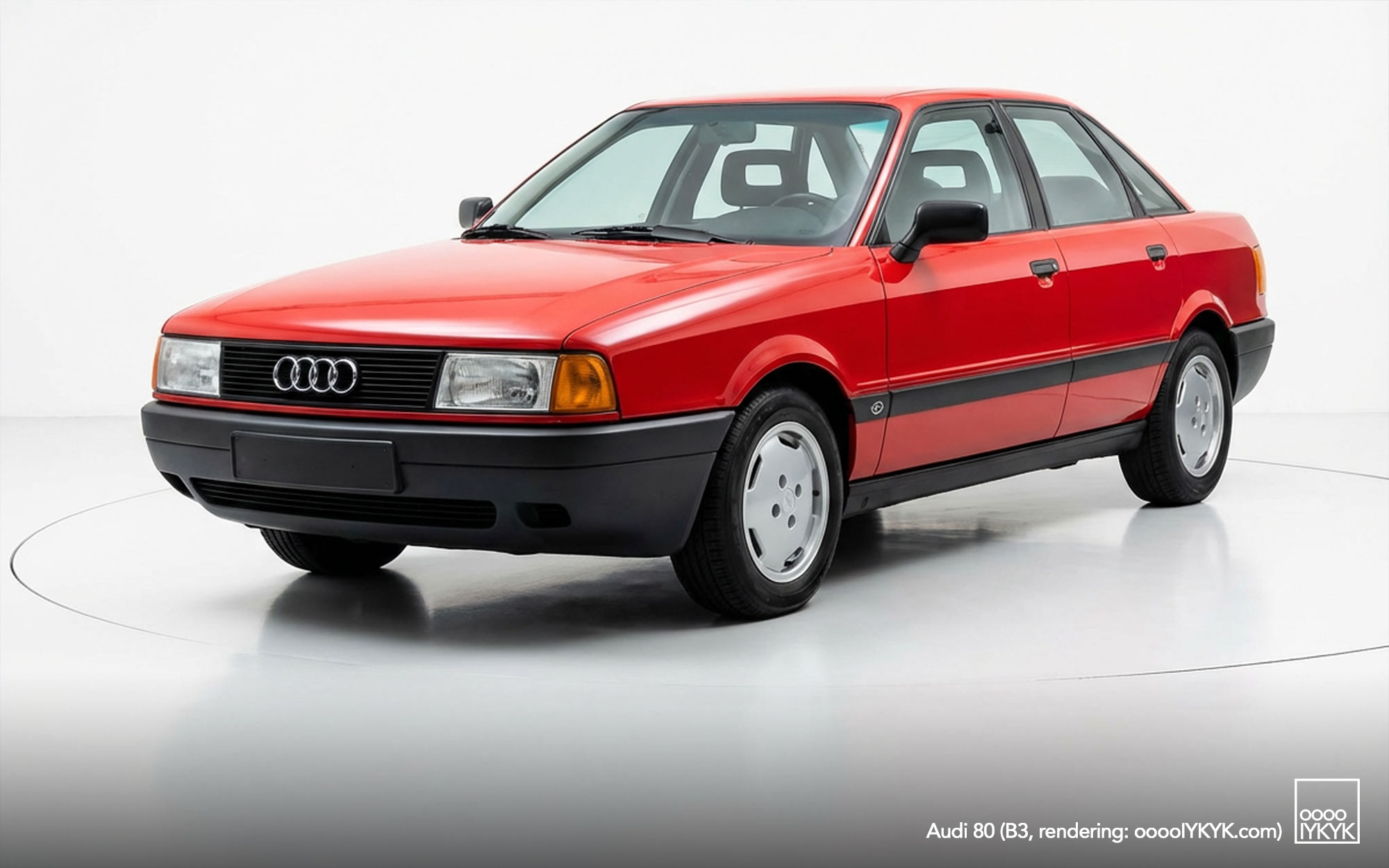
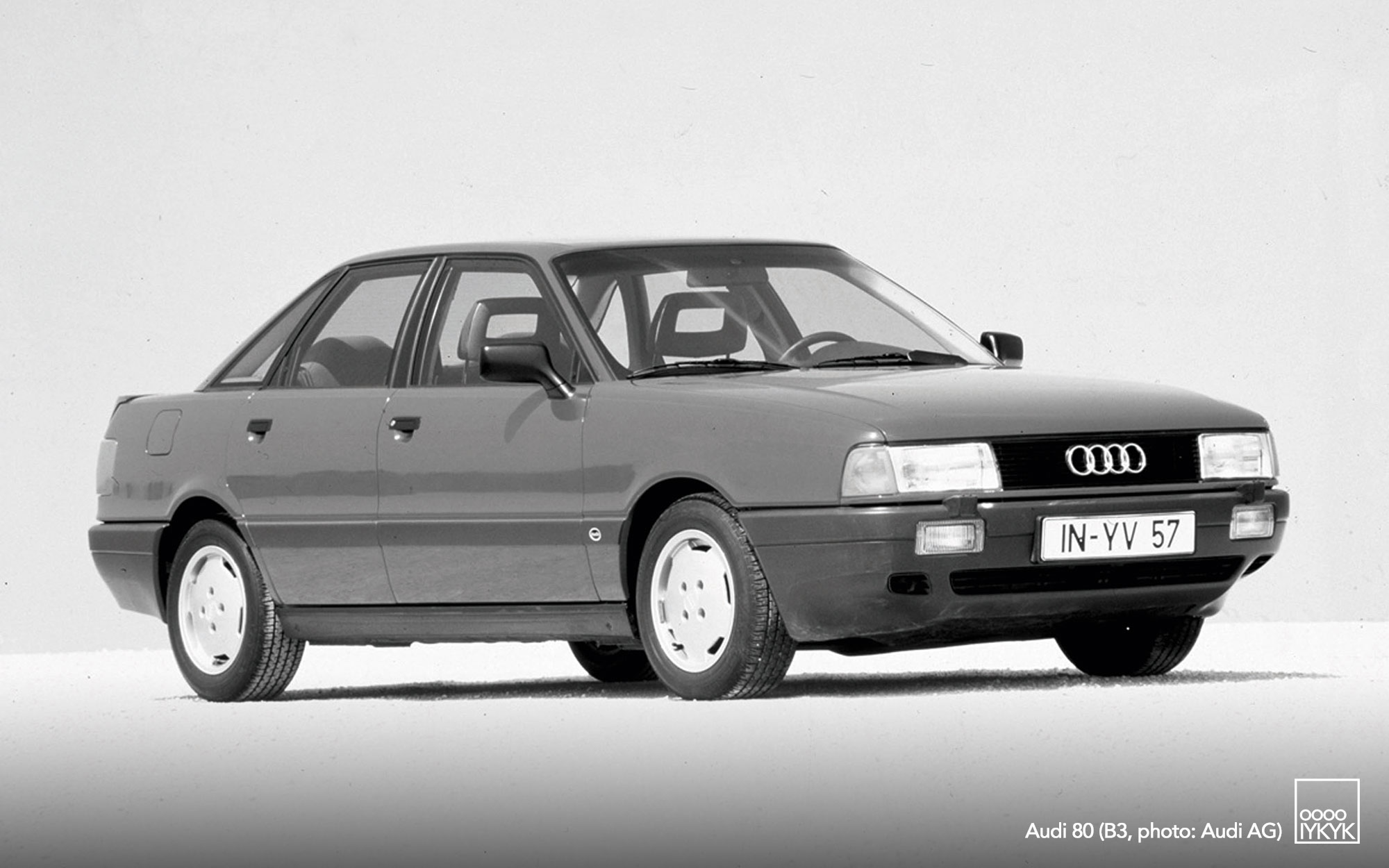
The Audi 80 (B3), internal designation Typ 89 and later Typ 8A, is the third generation of the Audi 80 compact executive sedan. Produced from 1986 to 1991 (and closely related variants through the mid-1990s), it marked a major technological and design shift for Audi, introducing a fully galvanized bodyshell, improved aerodynamics and a revised platform that separated the model from its long-running mechanical association with the Volkswagen Passat. Revealed at the 1986 International Motor Show (IAA) in Frankfurt, the B3 became one of Audi’s most influential models of the late 1980s, selling 1,287,799 units during its production run.
BACKGROUND & DEVELOPMENT
The B3 generation represented a clean-sheet redesign. Departing from the shared Audi–Volkswagen platforms used since the 1970s, Audi retained its longitudinal engine layout while the corresponding third-generation Passat transitioned to a transverse engine configuration. The result was a more premium, structurally refined platform focused on noise reduction, safety, and stability. Production preparation included extensive upgrades at Audi’s Ingolstadt facility, including construction of a new paint shop to support the fully galvanized body panels.
Aerodynamics played a central role in the B3’s development. With a drag coefficient of 0.29, the new Audi 80 achieved better wind-cheating performance than even the previous aerodynamic benchmark in Audi’s lineup, the C3-generation Audi 100. The fully zinc-coated body was engineered for long-term corrosion resistance, which became a hallmark of the model.
DESIGN & FEATURES
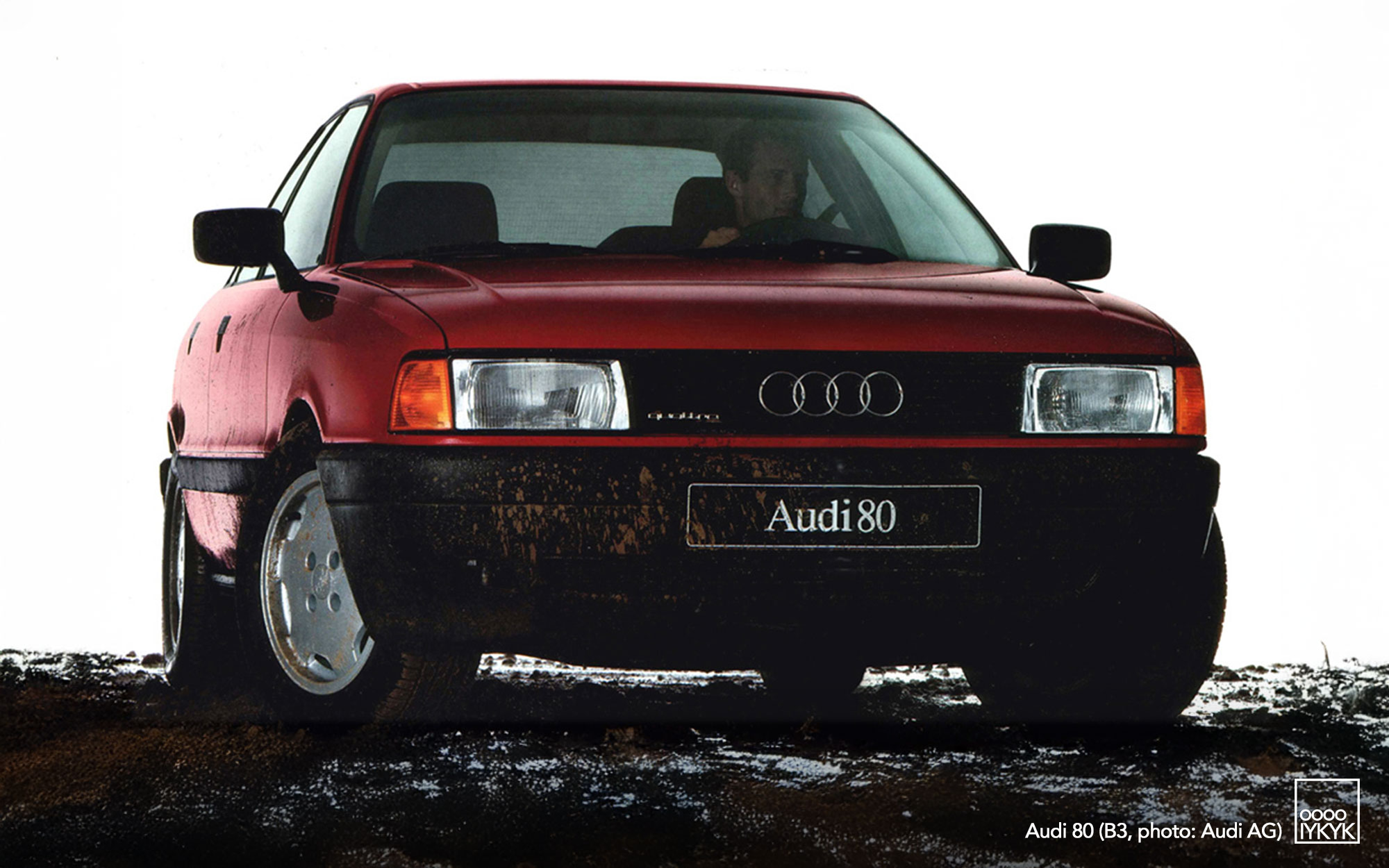
The B3 introduced a smoother, more aerodynamic exterior treatment compared to its angular B2 predecessor. The design incorporated integrated bumpers, flush glazing and simplified body lines, contributing both to improved efficiency and a more modern appearance. Unlike the previous generation, which was offered with numerous regional name variations, the B3 was marketed globally as either the Audi 80 or the more upscale Audi 90, depending on equipment and engine choices.
The interior featured improved materials, ergonomic controls, and advances in passive safety. Beginning in 1991, the model adopted Audi’s procon-ten safety system, a mechanical cable-based pre-airbag technology that tightened seatbelts and pulled the steering wheel away from the driver in a frontal collision.
ENGINE & DRIVETRAIN OPTIONS
At launch, the A80 B3 offered a range of inline four-cylinder petrol and diesel engines, many featuring fuel injection and Audi’s five-valve-per-cylinder technology on higher-performance units. Naturally aspirated and turbocharged diesels were available from the outset. The most powerful early B3 engine was a 1.8-litre 16-valve unit producing 137 hp, while broader performance options were initially reserved for the Audi 90 introduced in 1987.
The Audi 90 served as the premium derivative of the lineup, equipped with 10-valve and later 20-valve inline five-cylinder engines. The 90 featured upgraded equipment, additional exterior detailing, and enhanced lighting. High-performance 20-valve five-cylinder engines were offered from 1989 to 1991, with outputs of 170 PS in both front-wheel-drive and quattro variants.
From the beginning of sales, many B3 engines were available with Audi’s quattro permanent all-wheel drive, using a centre differential-based system well established in the brand’s performance and rally heritage.
MODEL VARIANTS & RELATED VEHICLES
The B3 sedan remained the core of the range, offered in multiple trim levels and numerous regional configurations. In 1987, the Audi 90 returned as the more luxurious counterpart, distinguished by additional high-beam lamps, brightwork exterior trim, upgraded interiors and standard fog lamps. Several markets also received Sport versions with satin black exterior details, lowered suspension, larger brakes and Speedline wheels.
The platform supported several derivative models:
- Audi Coupé (Typ 8B): Introduced in October 1988, replacing the earlier B2-based Coupé. It featured unique three-door liftback bodywork and shared mechanicals with the 80/90.
- Audi Cabriolet: Planned from the outset of the B3 program, the convertible did not reach production until May 1991. It remained in production until 2000, receiving updates aligned with the later B4-generation 80.
While these models extended well beyond the B3 sedan’s production window, they originated from the same engineering program and shared core chassis elements.
PERFORMANCE & SAFETY
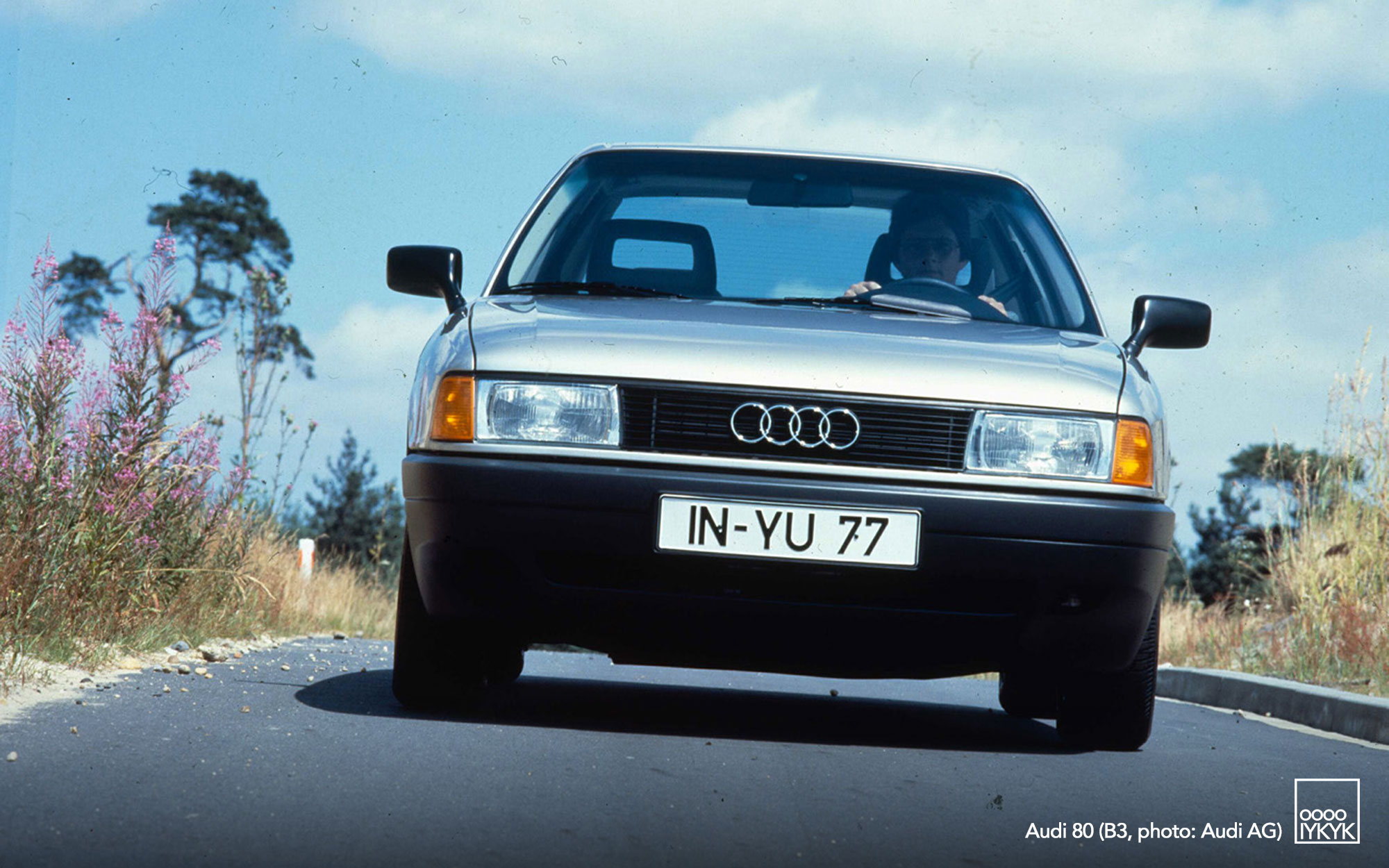
The B3 generation emphasized structural rigidity and safety advancements. The fully galvanized chassis greatly improved corrosion resistance, while careful attention to weight distribution and aerodynamics supported refined handling. The introduction of procon-ten enhanced occupant safety prior to widespread airbag adoption, tightening belts and repositioning the steering wheel through a mechanical linkage activated during a frontal impact.
PRODUCTION & MARKET IMPACT
The Audi 80 B3 entered European markets in late 1986 for the 1987 model year and reached global markets within the following year. Production continued through 1991 before transitioning to the updated B4-generation Audi 80. Its total production of 1,287,799 units reflects the model’s commercial success during a period of substantial growth for Audi.
LEGACY
The B3 played a pivotal role in Audi’s transformation into a premium brand. With its corrosion-proof body, aerodynamic efficiency, structural rigidity and expanding range of advanced engines and drivetrain systems, the model established many of the technical and design principles that would define Audi throughout the 1990s. Its influence extended into the Coupé and Cabriolet ranges, and its innovations, particularly in safety and body engineering, helped position Audi as a leader in compact executive vehicles.
PHOTO GALLERY