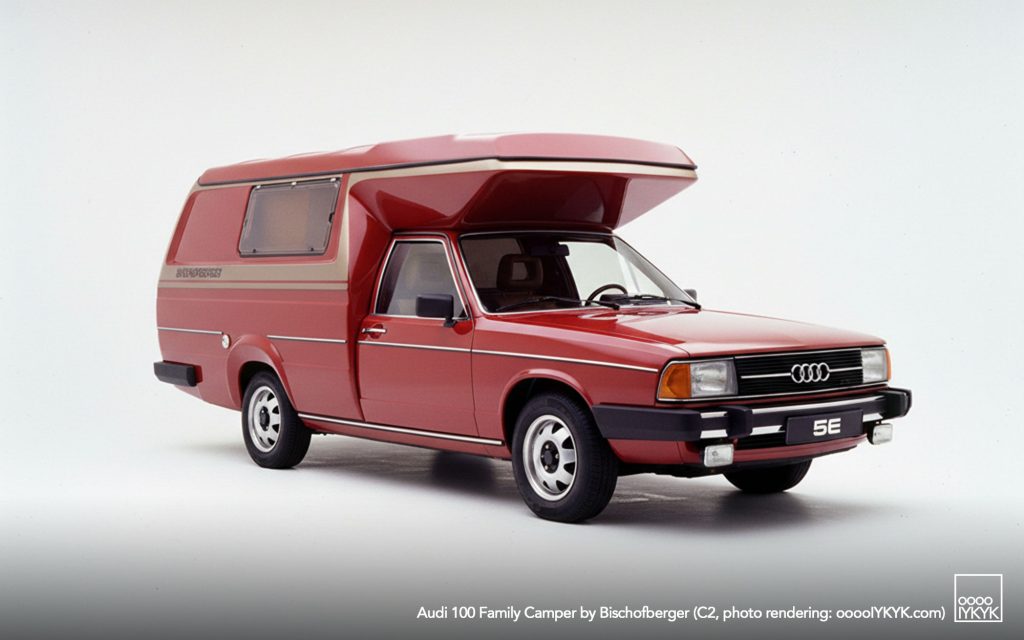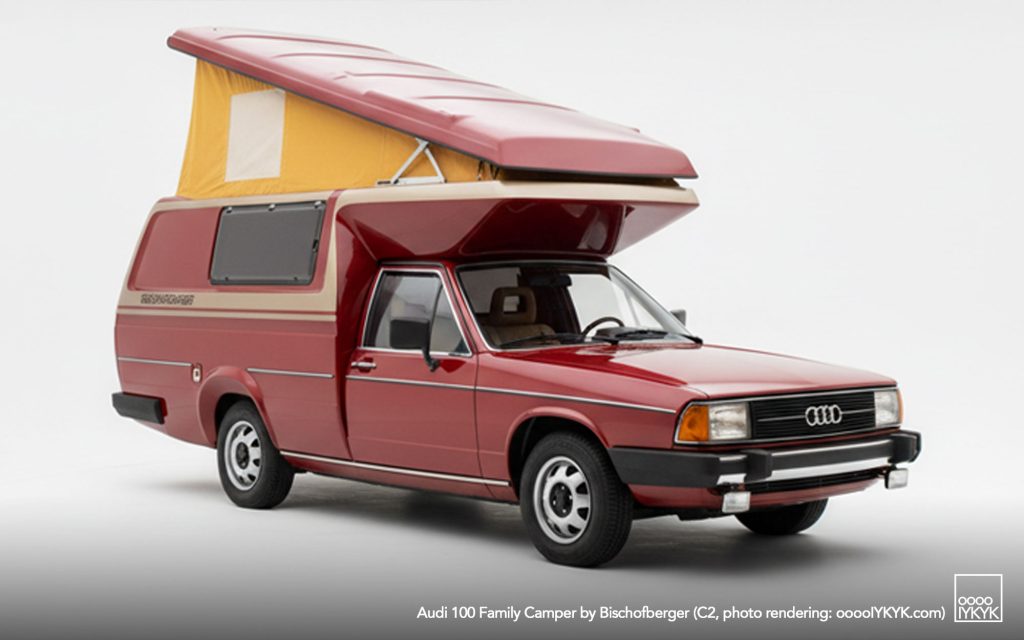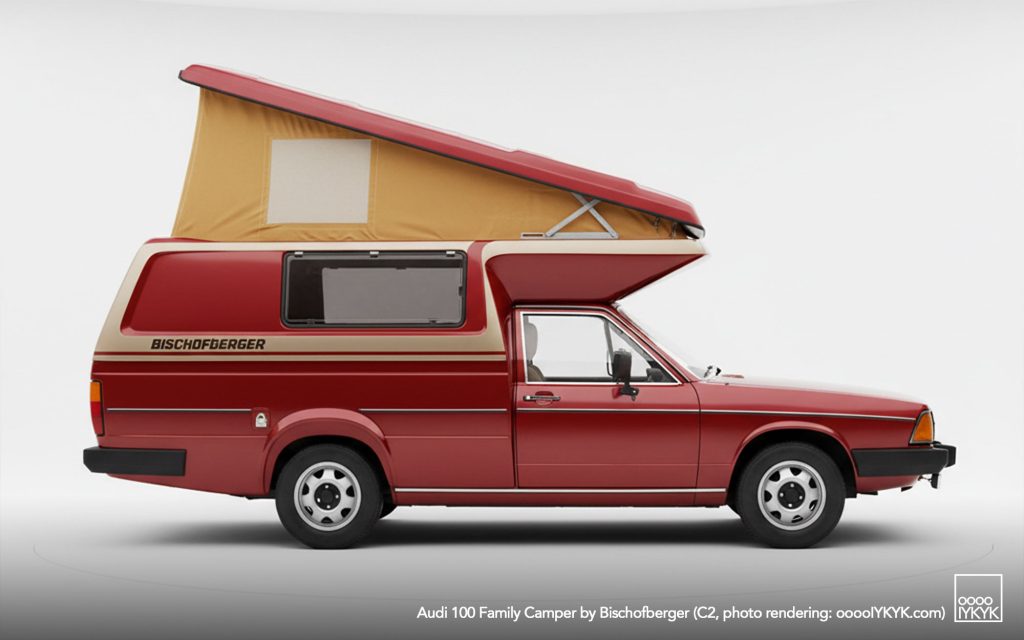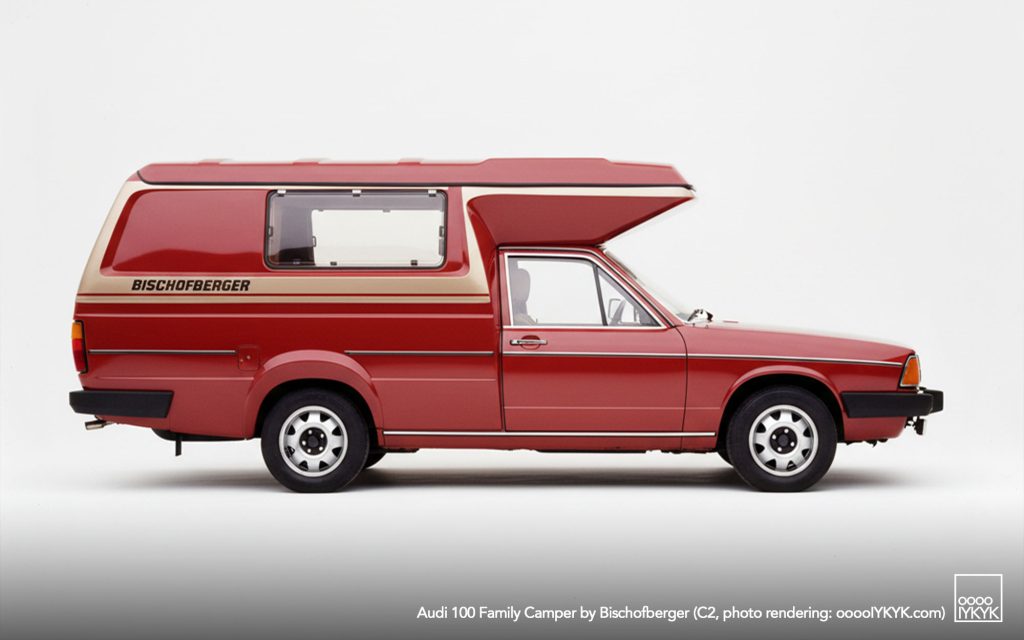


What: 100 Family by Bischofberger
Model Family: 100
Market / Zone: EU
Assembly Location: Backnang, Germany
Debut:
Year: 1982
Number Produced: unknown
Model / Generation Code(s): Type 43
Chassis / Matrix: C2
Engine(s): 1.6l 4-cylinder, 1.9l 5-cylinder, 2.0l 4-cylinder, 2.1l 5-cylinder, 2.1l 5-cylinder turbo, 2.0l 5-cylinder diesel, 2.0l 5-cylinder turbo diesel
Transmission(s): 5-speed Manual, 3-speed Automatic
Predecessor:
Successor: 100 Family (C3, type 44)
SUMMARY
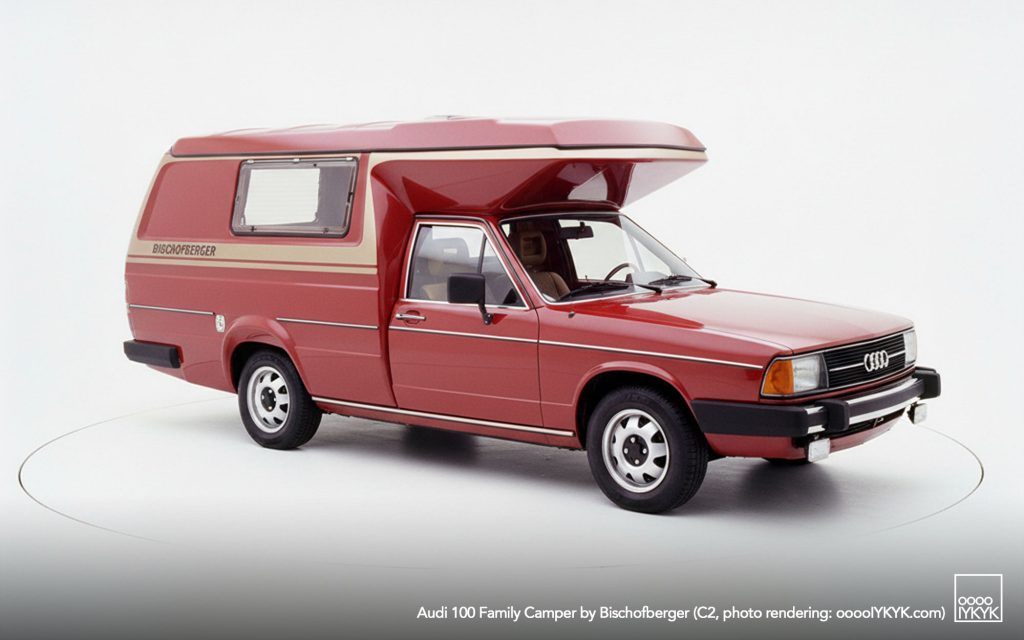
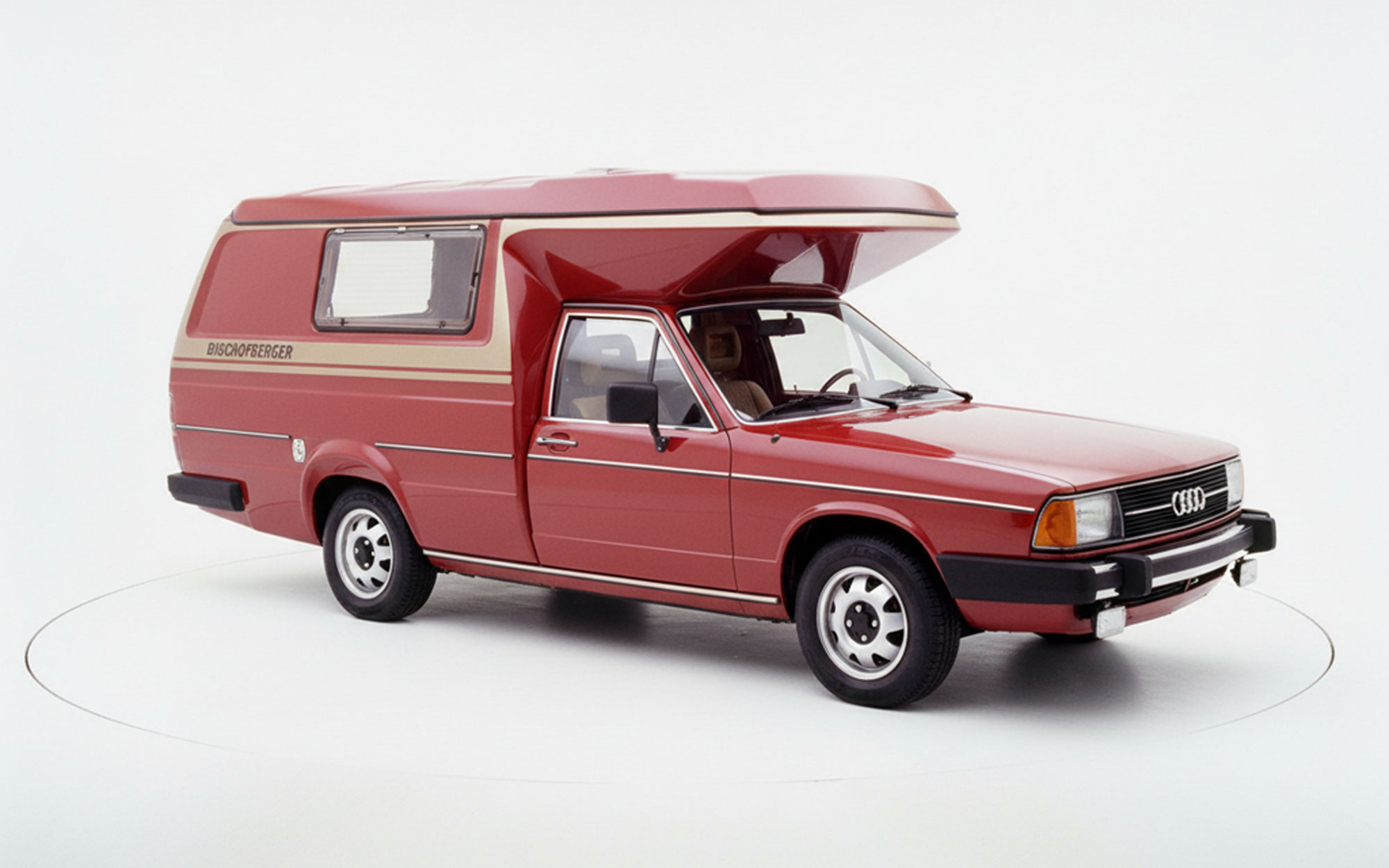
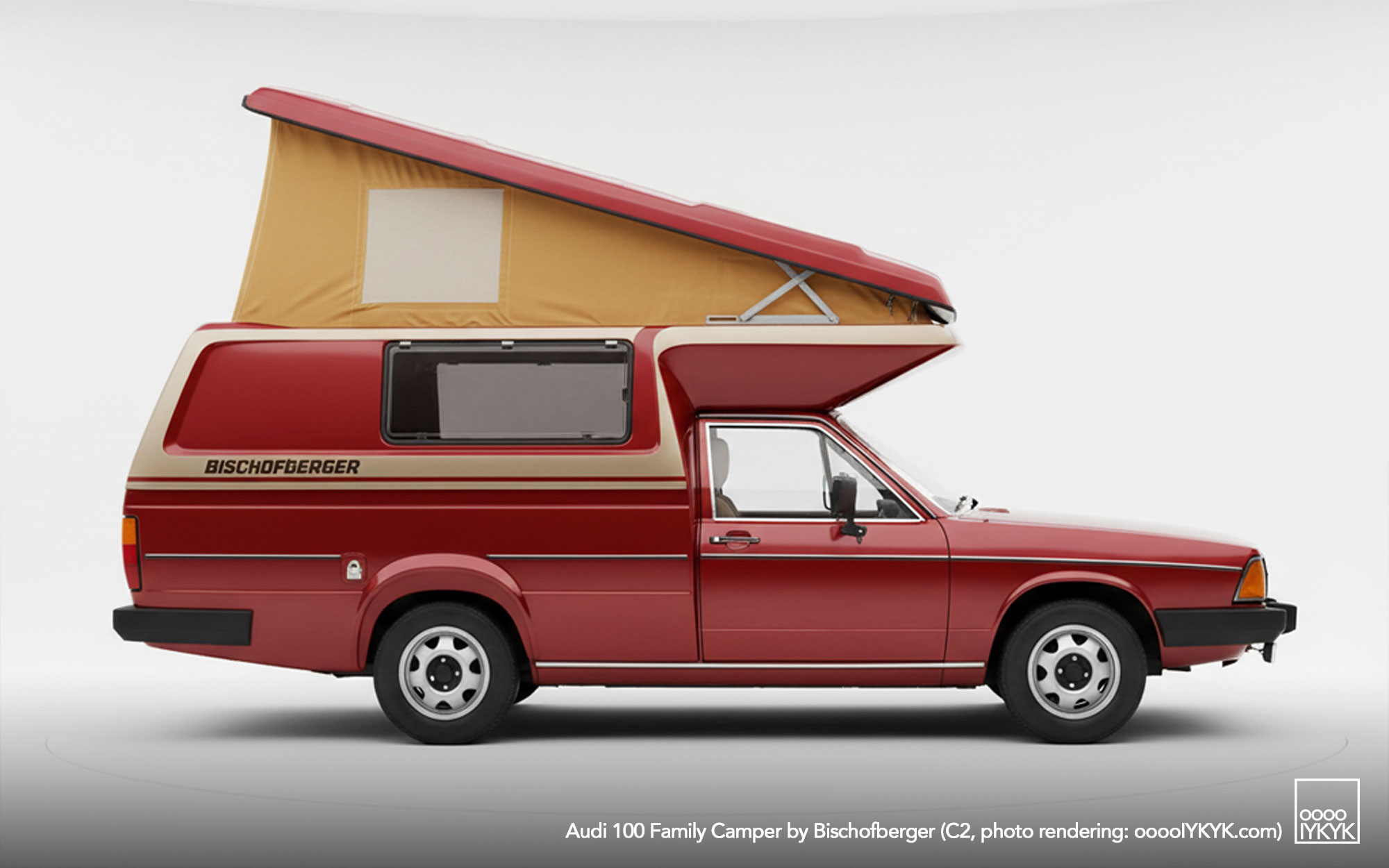
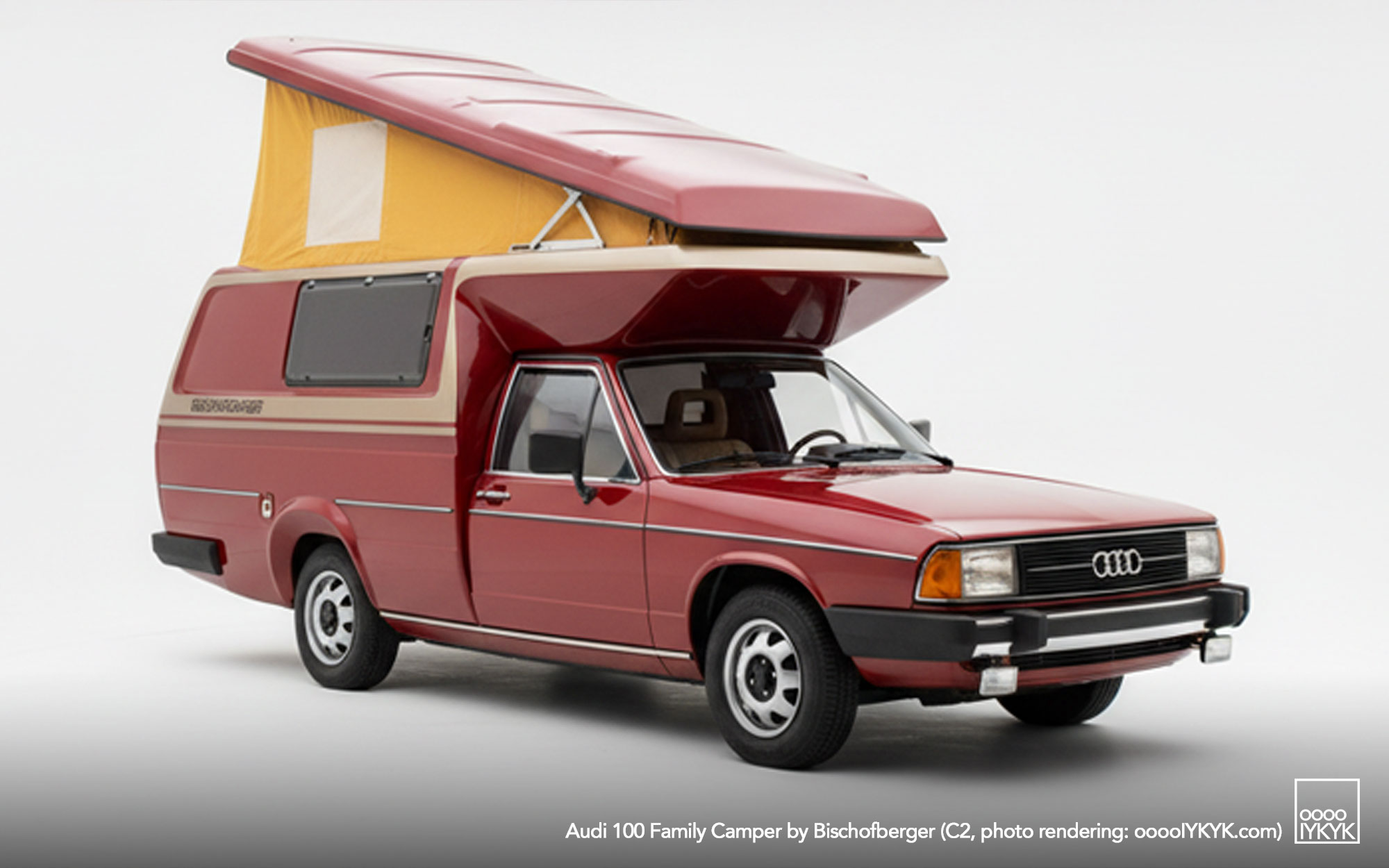
The Bischofberger Family is a rare motorhome conversion based on the Audi 100 C2 (Type 43), developed in the early 1980s by Helmut Bischofberger and produced by Bischofberger Motorcaravan GmbH & Co. in Backnang, Baden-Württemberg, Germany. Conceived as “a new motor home concept,” the Family combined the road manners and performance of a passenger car with the living space and amenities of a compact camper, earning a reputation as one of the fastest German motorhomes of its era.
BACKGROUND & DEVELOPMENT
In the late 1970s and early 1980s, Helmut Bischofberger—an experienced Volkswagen and Audi dealer with a background in commercial motorhome construction—sought to create a camper that avoided the compromises of traditional vans. His goal was to retain the comfort, speed, and efficiency of a sedan while providing genuine overnight accommodation for a small family.
The Audi 100 C2 was selected as the base due to its wide track, stable chassis, and availability of powerful engines, including the five-cylinder petrol units. Bischofberger marketed the concept under the name “Family,” accompanied by the slogan: “Spaciousness and usable area like a camper combined with the advantages of a passenger car.”
The first Audi-based Family conversions appeared from 1982 onward. Early examples were built on used Audi 100 Type 43 vehicles and were reportedly demonstrated in Ingolstadt. Later, Audi internally supported evaluation and approval by providing access to newer-generation platforms for testing, an unusual level of cooperation for such a radical aftermarket conversion.
DESIGN & CONSTRUCTION
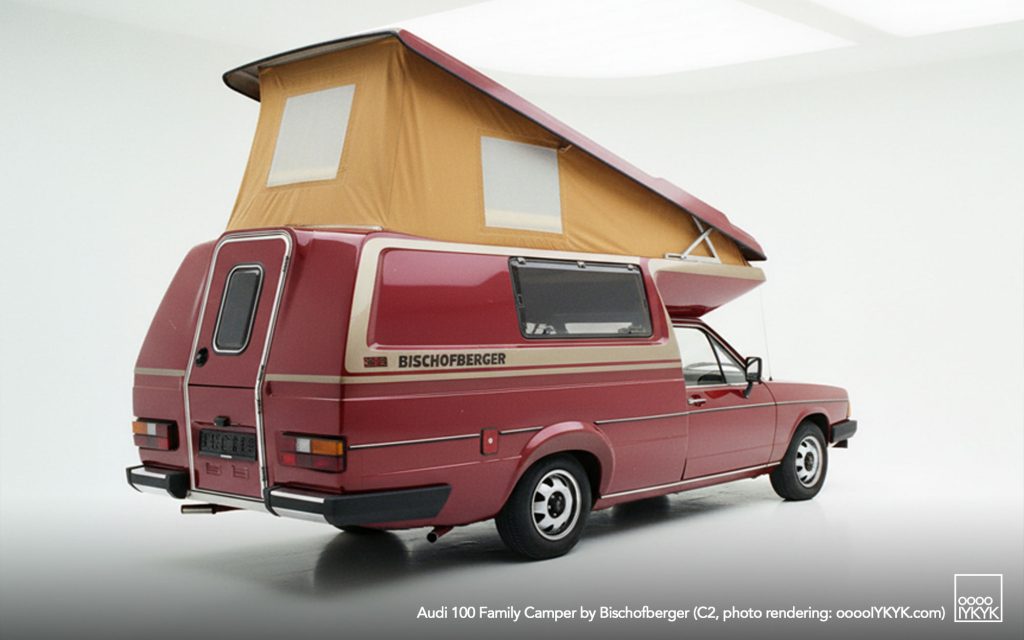
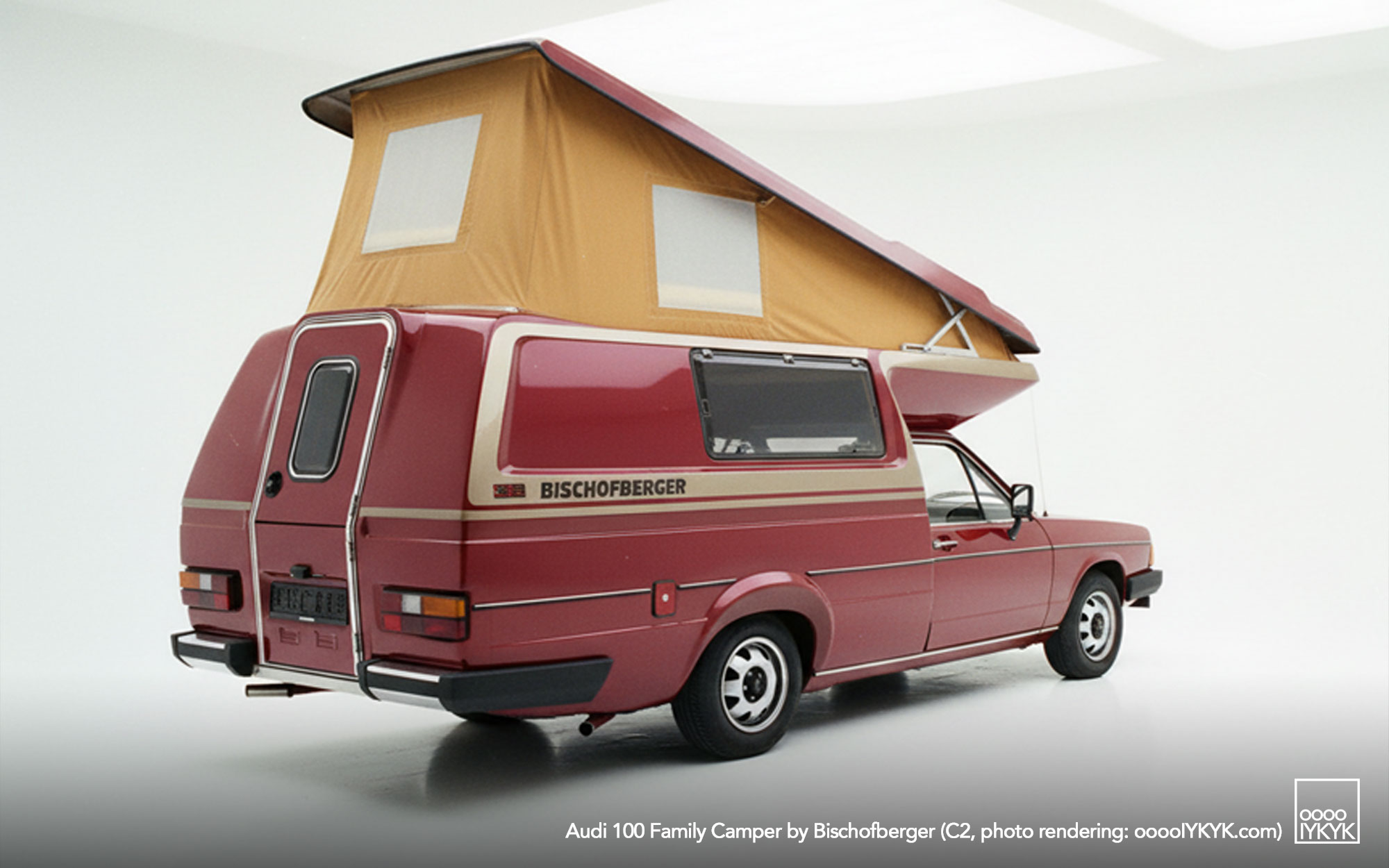
The conversion process involved extensive structural modification. From the B-pillar rearward, the original steel body of the Audi 100 was removed, leaving the floorpan and chassis intact. A tubular steel frame was installed to restore structural rigidity before a custom glass-reinforced plastic (GRP) motorhome body was mounted.
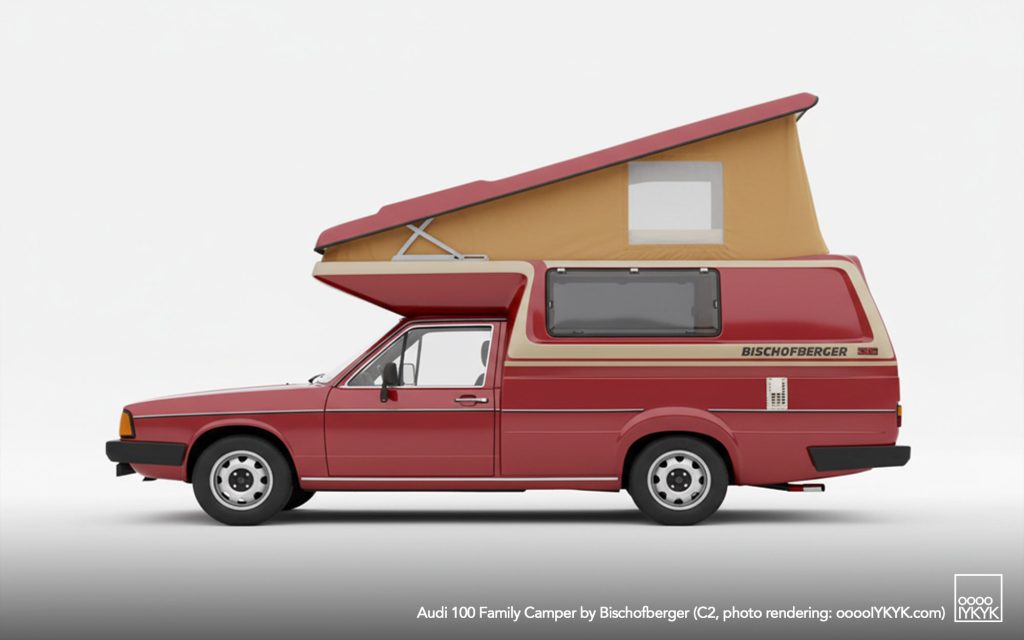
The GRP superstructure was designed and manufactured specifically for Bischofberger Motorcaravan, with proportions pushed to the maximum allowable width and height to create usable interior volume for up to four occupants. The visual form of the rear body was influenced by the Volkswagen T3 Transporter, creating a recognizable camper silhouette while remaining integrated with the Audi sedan front end.
Two roof configurations were offered:
- Folding roof, which kept overall vehicle height relatively low while providing standing room and an upper sleeping berth when deployed.
- High roof, introduced later and more commonly associated with Audi 100 C3-based cars, featuring a fixed elevated structure with a pronounced alcove above the original roofline.
The wheelbase of the Audi 100 remained unchanged, but the camper body extended rearward in a cantilevered design to maximize interior space without altering suspension geometry.
CHASSIS & MECHANICALS
Mechanically, the Bischofberger Family remained largely standard Audi. Engines and transmissions were typically retained in factory specification, including the five-cylinder petrol engines producing up to 136 hp in CS trim. This allowed cruising speeds of approximately 120 km/h and, in favorable conditions, top speeds reported as high as 180 km/h—exceptional for a motorhome of the period.
To cope with the increased mass, which exceeded two metric tons in completed form, selected components were reinforced. These included brakes, springs, tires, and in some cases the rear axle. Despite these measures, payload capacity was limited, reportedly as low as 200 kg depending on configuration.
INTERIOR & EQUIPMENT
The interior was fully equipped by the standards of early 1980s compact motorhomes. Typical features included:
- Two double sleeping areas (lower and upper)
- Refrigerator
- Two-burner gas stove
- Sink with fresh water and waste tanks (approximately 20 liters)
- Truma (Trumatic) heater
- Folding table and built-in storage
- Full insulation
Layouts and component placement varied between individual vehicles, as the Family was largely hand-built and continuously refined during production. As a result, no two examples are exactly alike.
PRODUCTION & VARIANTS
Production of the Bischofberger Family remained extremely limited. Estimates suggest approximately 30 to 40 vehicles were built across all Family generations and bases, including Audi 100 C2, Audi 100 C3, Audi 200, and Volkswagen Caddy variants. Audi 100-based conversions represented the most technically ambitious versions.
The cost of converting an Audi 100 C2 was substantial. Contemporary price lists indicate a conversion price of approximately 22,450 Deutsche Mark, on top of the base vehicle cost. Completed vehicles could approach 55,000 Deutsche Mark, comparable to full-size alcove motorhomes of the time.
Bischofberger Motorcaravan GmbH & Co. ceased camper production around 1990, bringing the Family project to an end.
REPUTATION & LEGACY
The Bischofberger Family occupies a unique niche in German automotive and camper history. It is remembered as an audacious blend of executive sedan and motorhome, prioritizing speed, road comfort, and unconventional design over conventional camper norms. Its creator’s willingness to cut and re-engineer a premium sedan platform—reportedly without seeking extensive corporate approval—has contributed to its enduring cult status.
Today, surviving examples are rare collector vehicles, admired for their ingenuity, craftsmanship, and sheer improbability. The Family remains closely associated with the engineering culture of Audi in the late 20th century and stands as a testament to independent innovation at the fringes of the automotive mainstream.
SOURCES
Promobil.de
Audi quattrology
Langzeitauto.de
AutoZeitung.de
Autocult-Models.de
EscalAuto.Wordpress.com
AudiStory.com
PHOTO GALLERY