

/ Eras / Audi Postwar Era/ Audi 100 / 100 (C2, type 43)
What: 100 Sedan (C2)
Model Family: 100
Market / Zone: EU
Production Location: Ingolstadt, Germany & Neckarsulm, Germany
Debut: Luxembourg, 1976
Year: 1976, 1977, 1978, 1979, 1980, 1981, 1982
Number Produced: 887,647 (source: Wikipedia)
Model / Generation Code(s): Type 43
Chassis / Matrix: C2
Engine(s): 1.6l 4-cylinder, 1.9l 5-cylinder, 2.0l 4-cylinder, 2.1l 5-cylinder, 2.1l 5-cylinder turbo, 2.0l 5-cylinder diesel, 2.0l 5-cylinder turbo diesel
Transmission(s): 5-speed Manual, 3-speed Automatic
Designer: Ludwig Kraus
Predecessor: Audi 100 (C1)
Successor: Audi 100 (C3, type 44)
SUMMARY
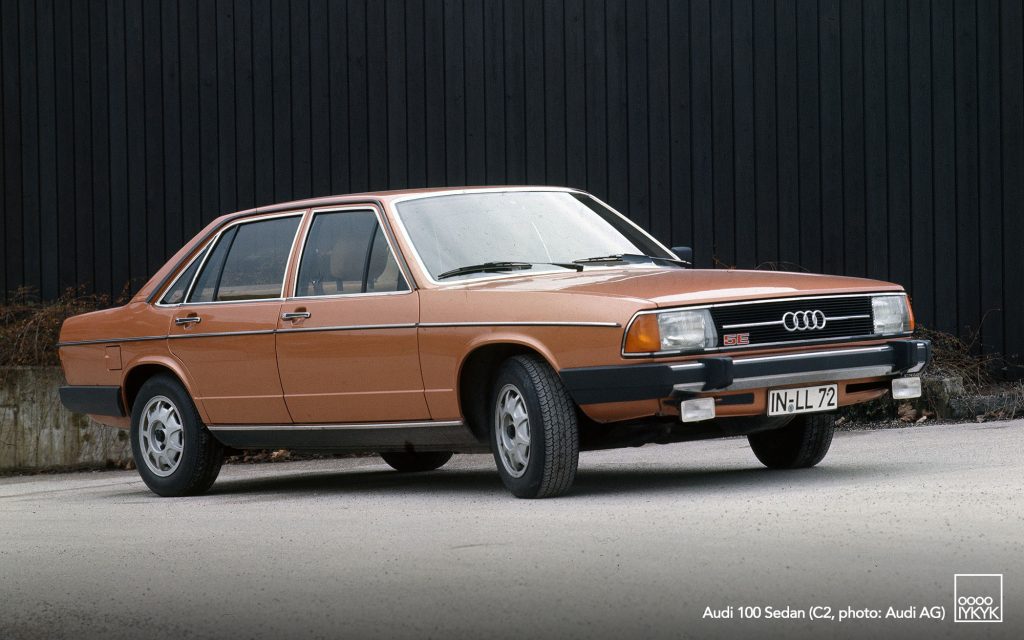
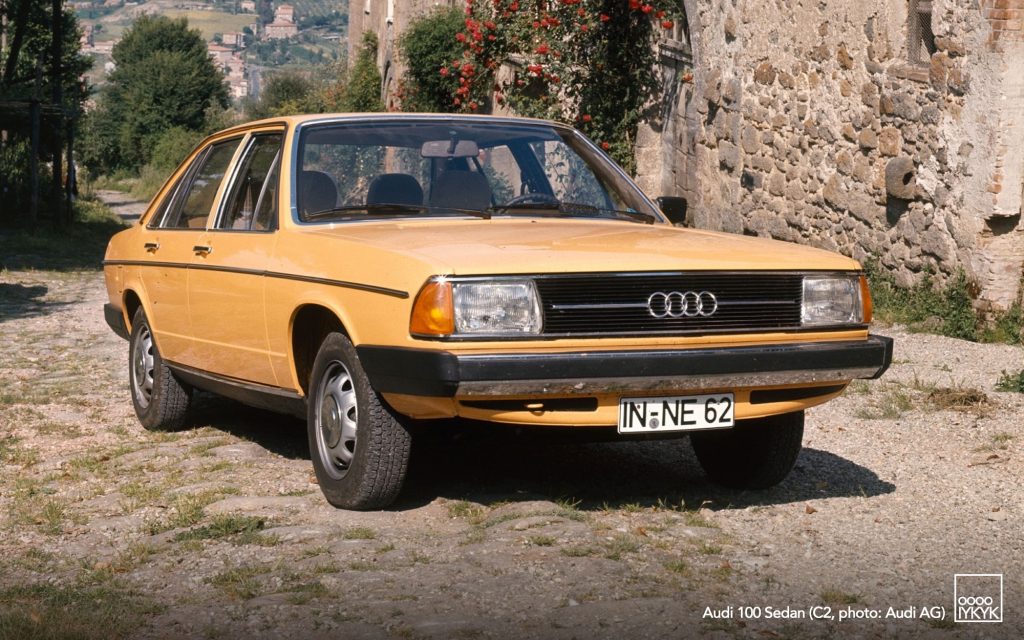
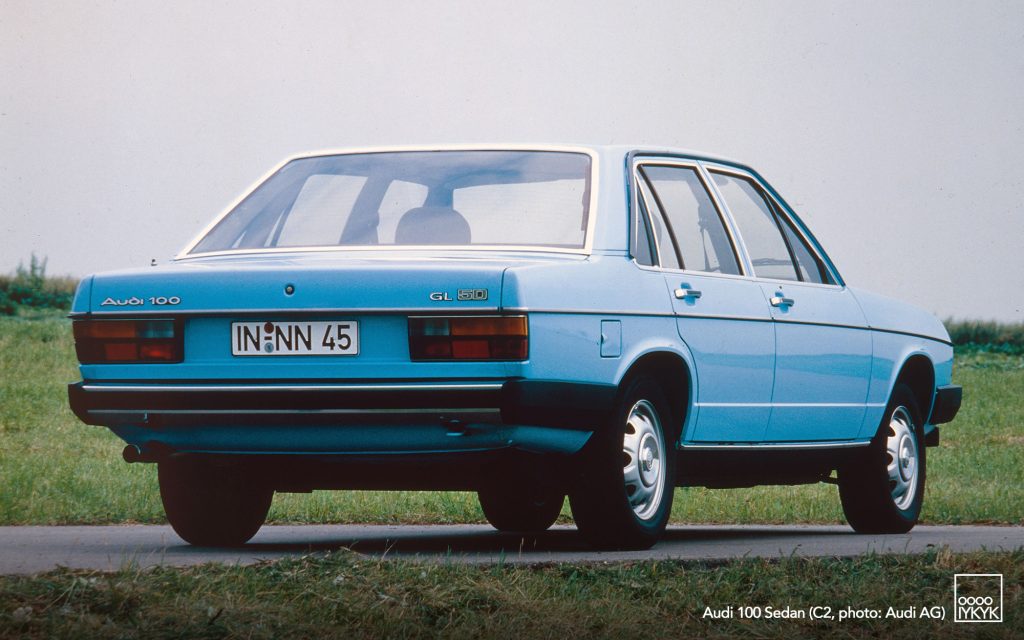
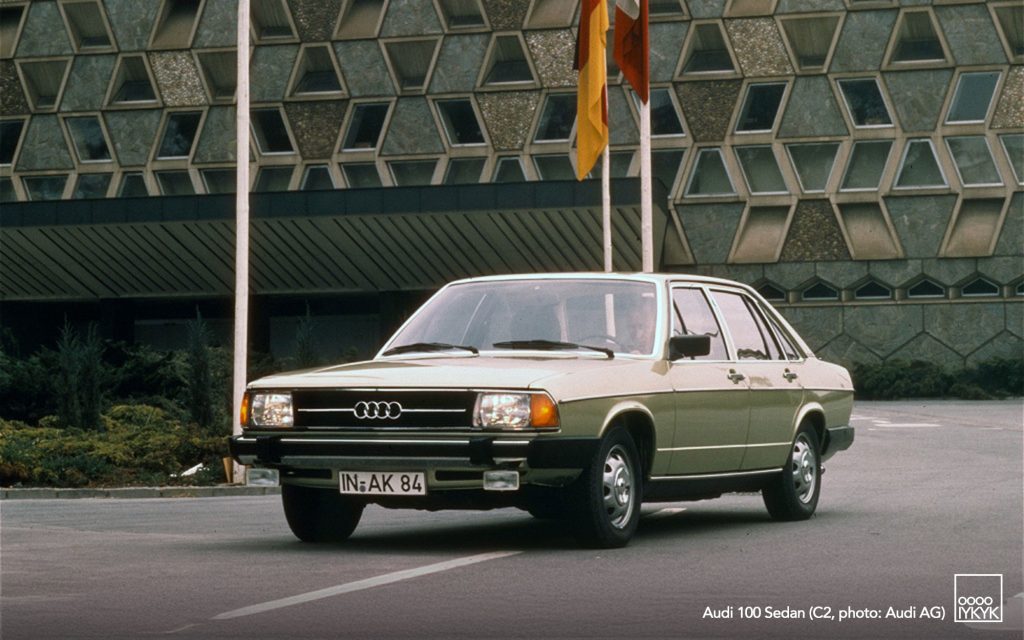
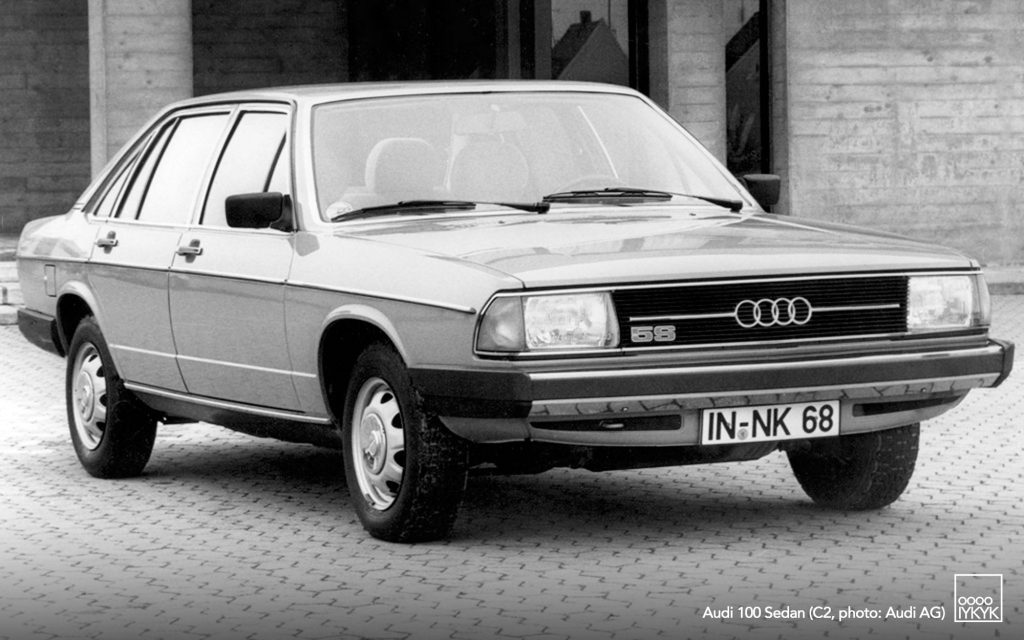
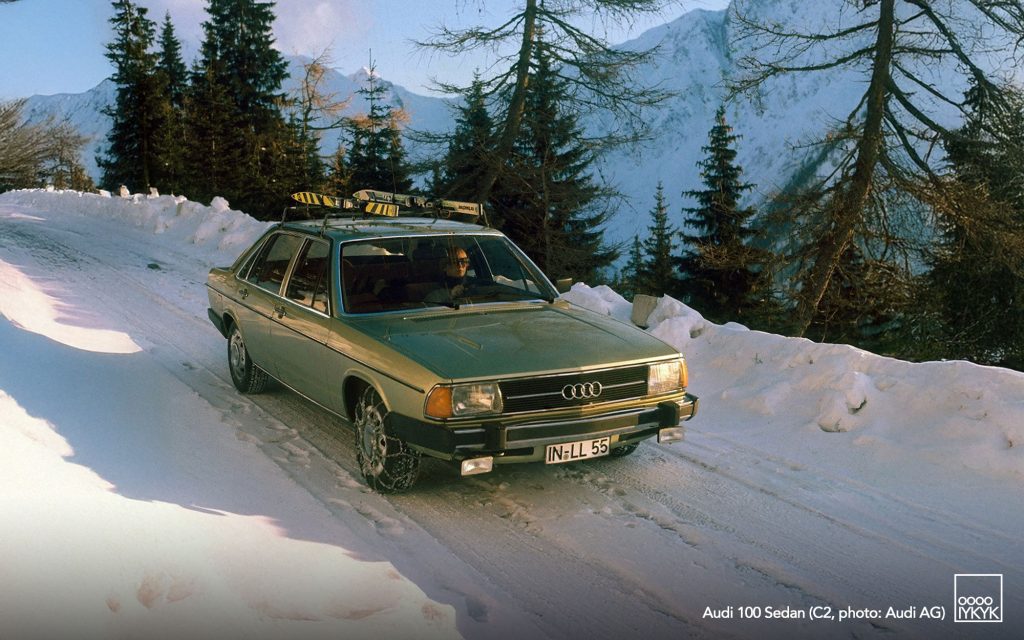
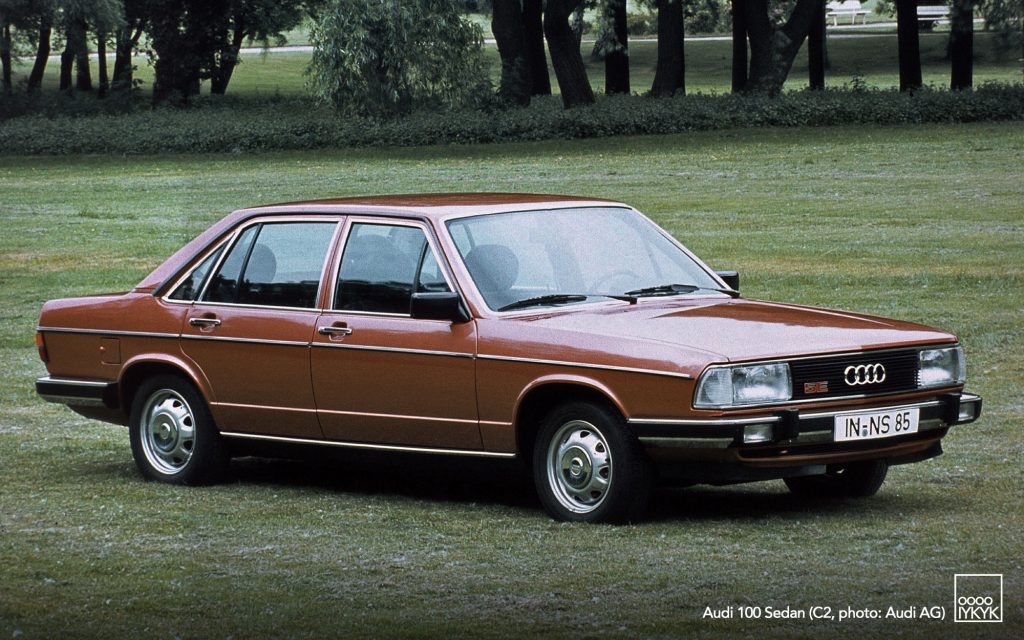
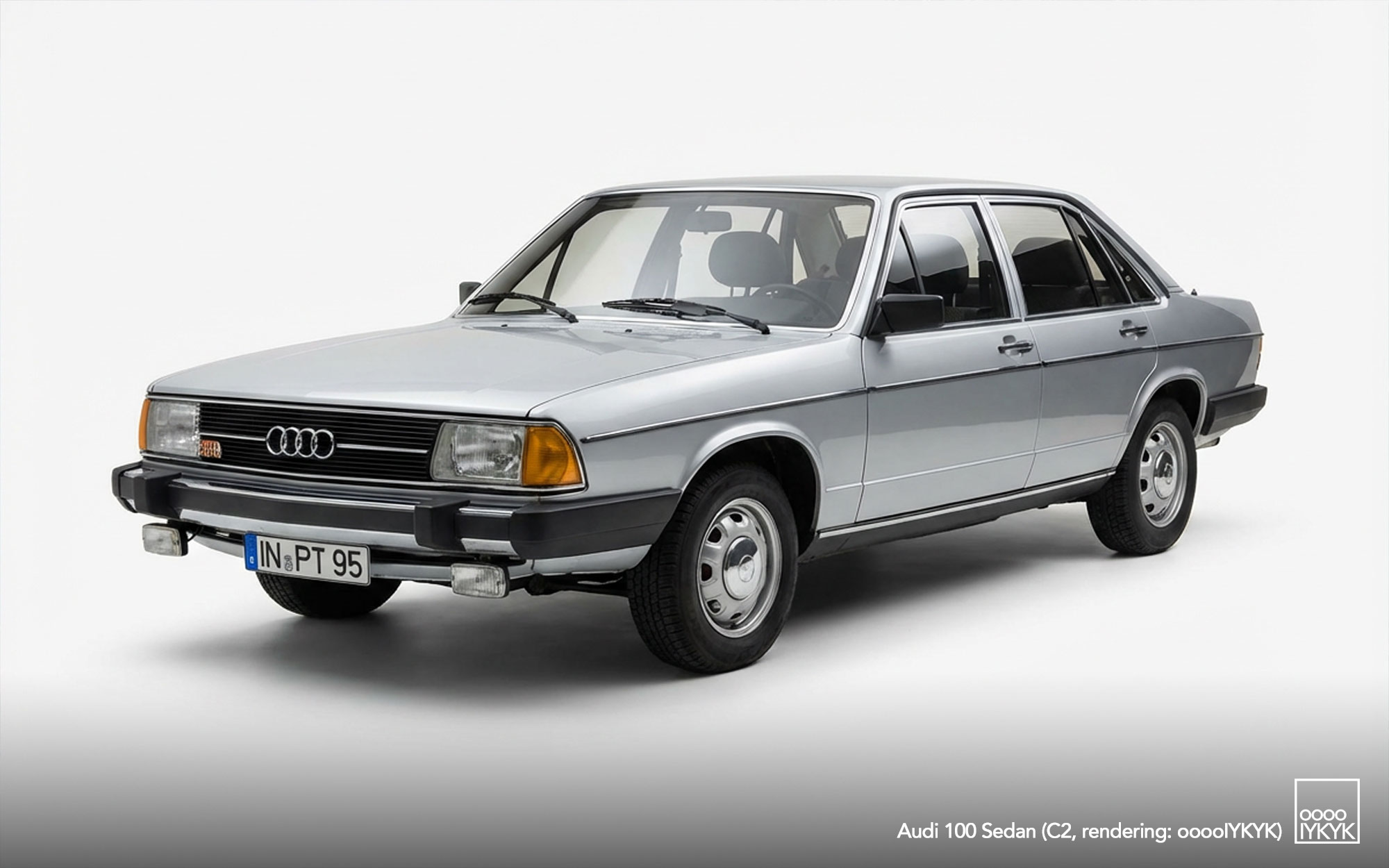
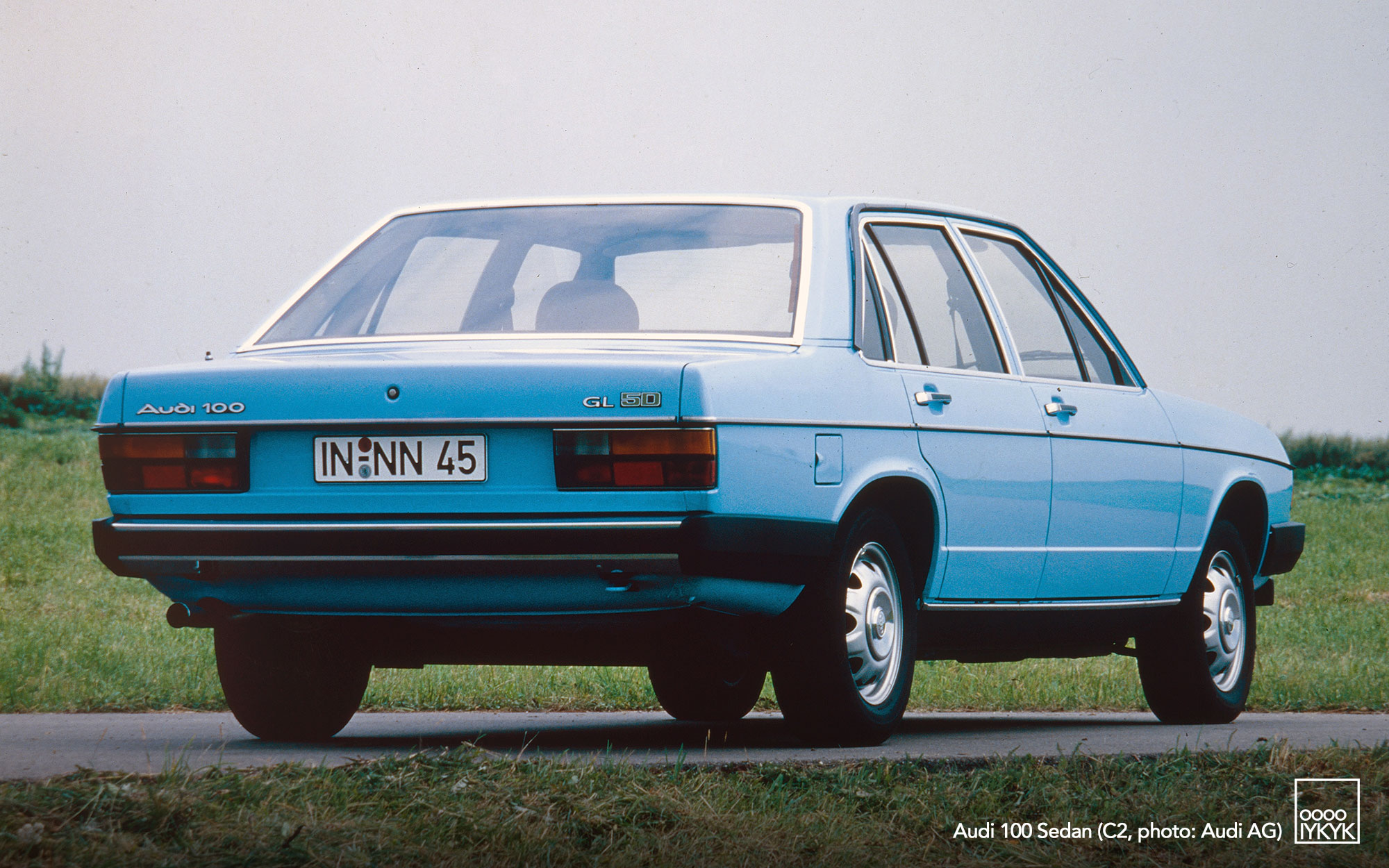
The Audi 100 (C2) sedan is the second generation of the Audi 100 executive car series, produced by Audi, part of the Volkswagen Group, between 1976 and 1982. Introduced on 6 August 1976 in Luxembourg, the C2 represented a significant step in Audi’s move upmarket, emphasizing improved safety, comfort, and weight efficiency. Available as both two-door and four-door sedans for European markets, the C2 replaced the original 1968–1976 Audi 100 (C1) while retaining its position as Audi’s primary large family car. Although the C2 generation later encompassed the Audi 100 Avant hatchback and the more luxurious Audi 200, the sedan remained the core body style and the most widely produced variant of the range.
DEVELOPMENT
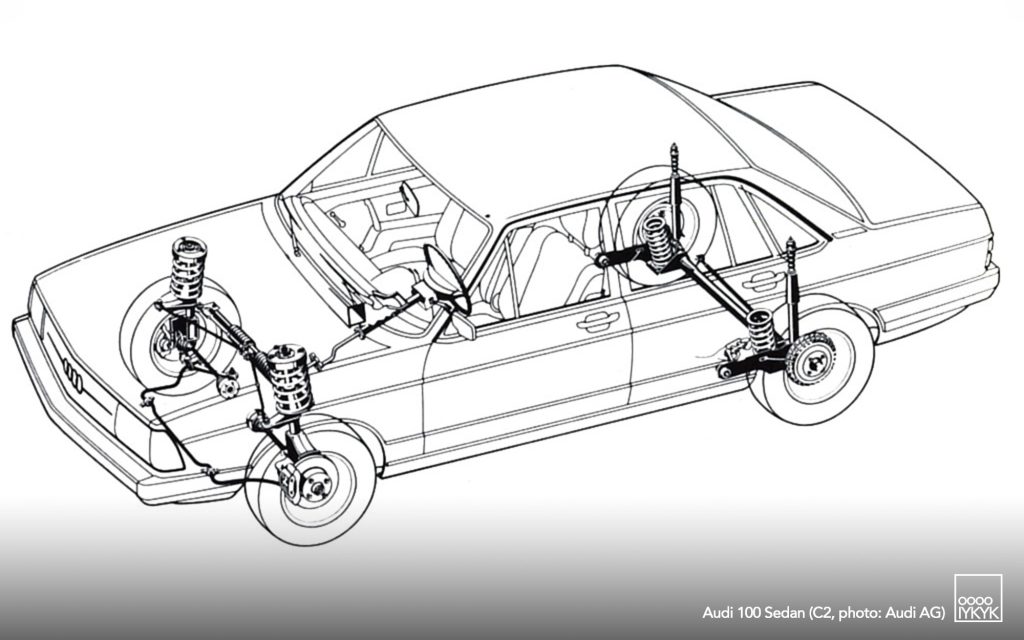
Development of the C2 took place in Ingolstadt under a brief to create a “globally deployable vehicle family with a wide range of variants.” Audi sought to move the model series into a more premium segment, prioritizing structural safety, improved interior comfort, and long-distance refinement. Despite appearing substantially larger due to increased glass area and smoother proportions, the C2 sedan grew only modestly compared with its predecessor: approximately 4 cm longer and wider, and 3 cm lower. Audi employed systematic lightweight construction methods, allowing the C2 to weigh as much as 200 kg less than similarly sized competitors.
At launch, the sedan was offered with two inline-four engines: a 1.6-litre carbureted unit (85 PS) and a 2.0-litre carbureted engine (115 PS). These were paired with a four-speed manual transmission or, optionally, a three-stage torque-converter automatic.
DESIGN AND BODY STYLES
Sedan Variants
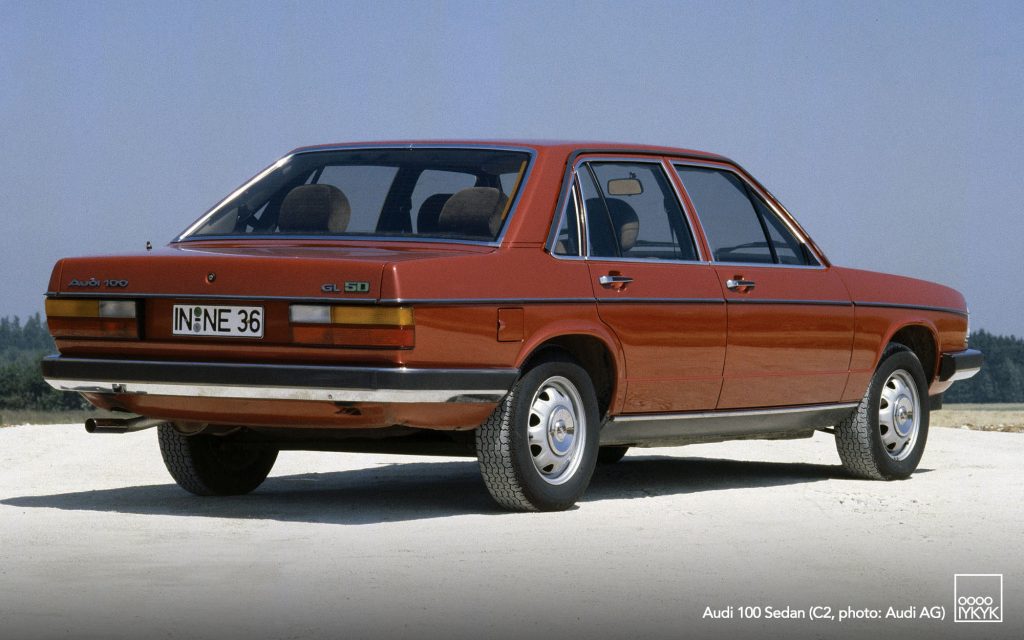
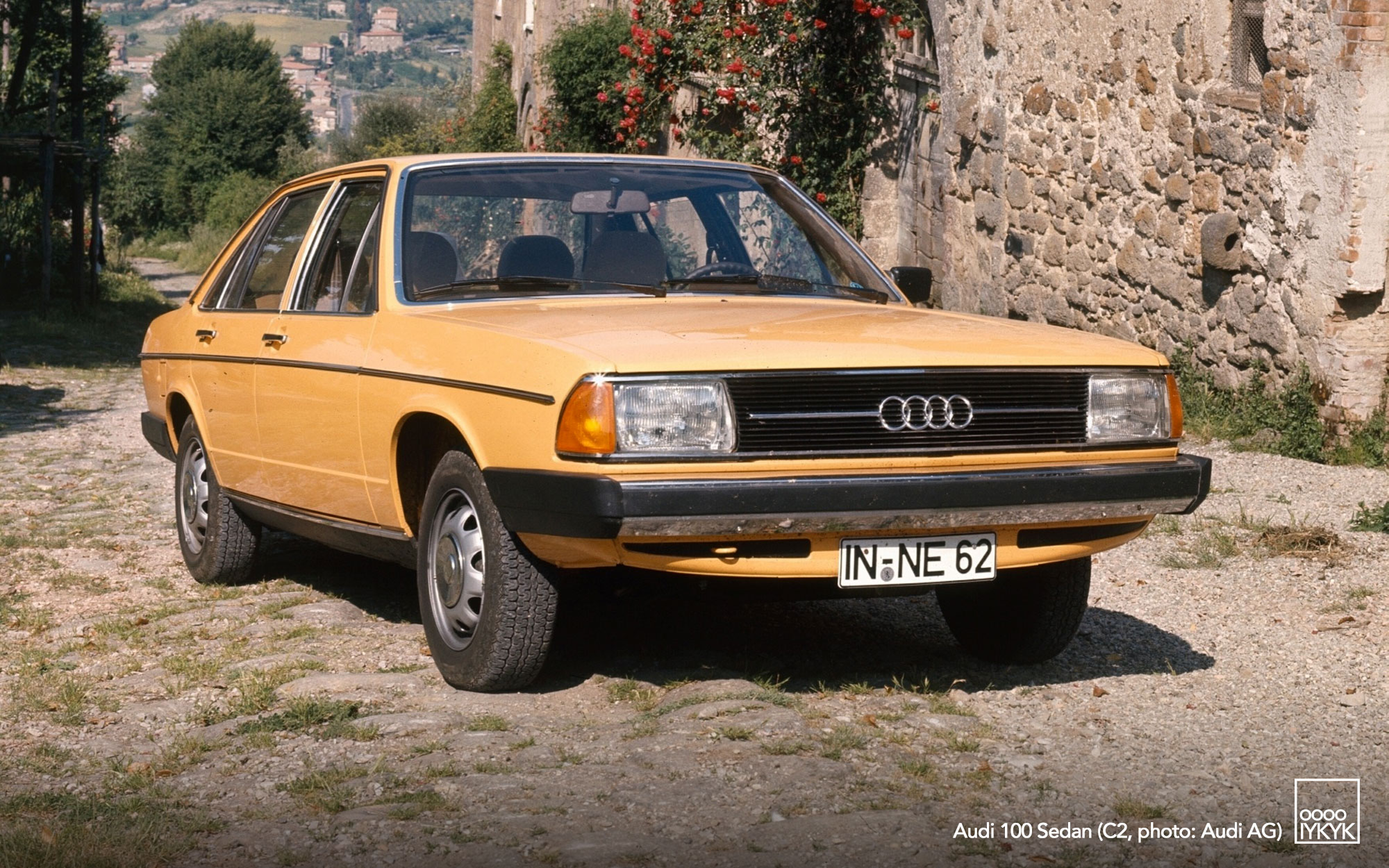
The C2 sedan was offered in two configurations: a four-door sedan, which was the principal body style throughout production, and a two-door sedan introduced in February 1977 for the German market. Demand for large two-door sedans was declining by the late 1970s, and production numbers for this variant were low.
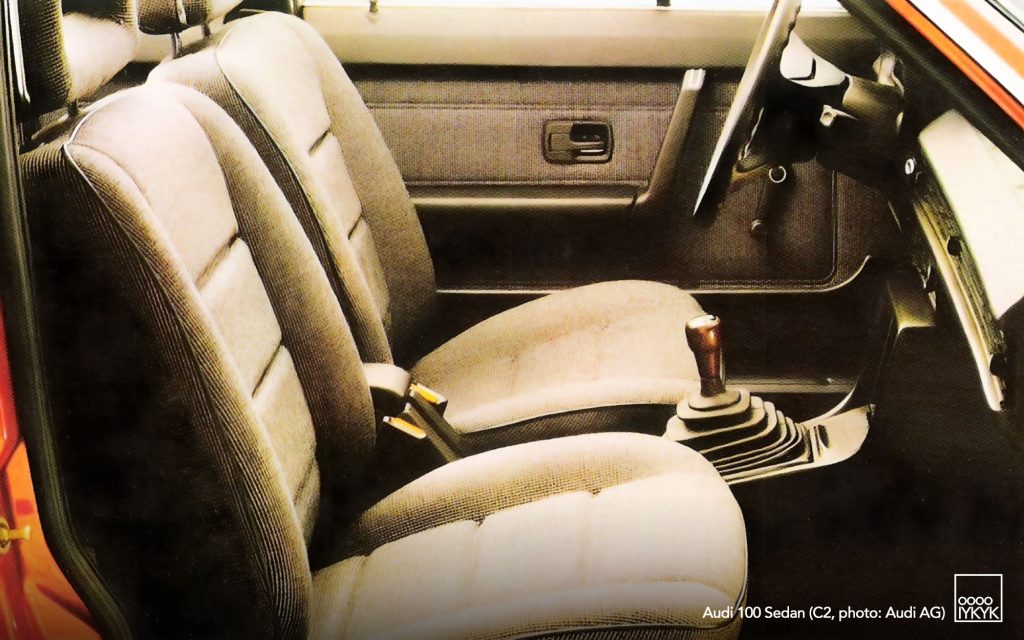
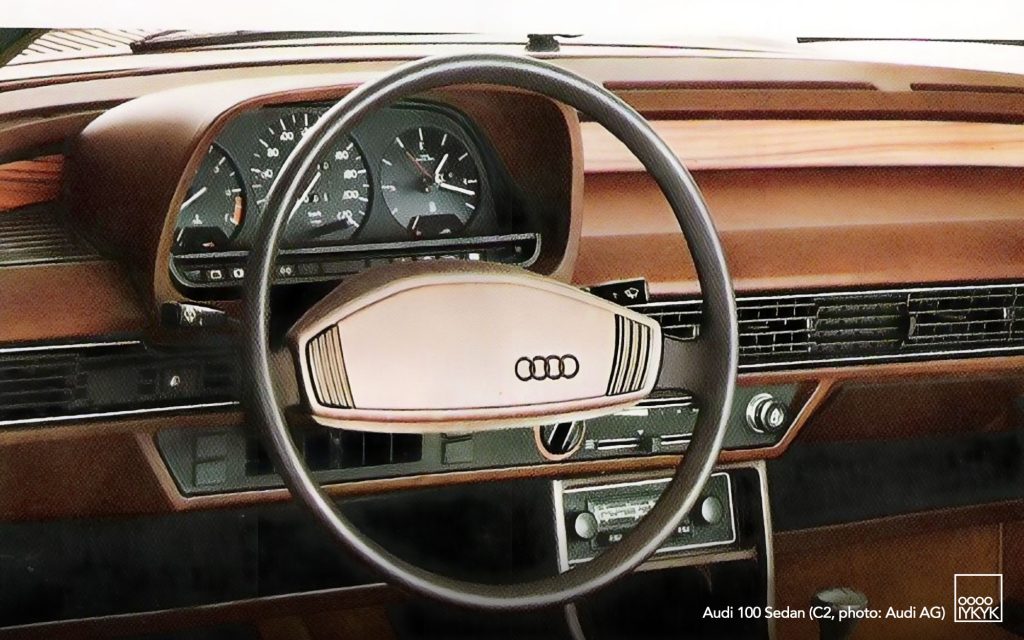
Both versions featured clean, angular styling developed under Audi’s evolving aerodynamic and design philosophy. Larger glass surfaces and a subdued shoulder line contributed to the C2’s more modern appearance, while the cabin emphasized ergonomics and visibility. Although additional body styles such as the Audi 100 Avant five-door liftback (from September 1977) and the Audi 200 luxury sedan (from 1979) shared the same Type 43 platform, they were marketed as distinct models.
ENGINES AND TECHNICAL FEATURES
The Audi 100 C2 sedan was offered with a range of inline-four and inline-five engines during its production. European-market petrol and diesel sedan engines included:
Inline-four engines (petrol):
1.6 L I4, 85 PS (63 kW), carbureted (1976–1982)
2.0 L I4, 115 PS (85 kW), carbureted (1976–1978)
Inline-five engines (petrol):
2.1 L I5, 100 PS (74 kW), carbureted (1980–1982)
2.1 L I5, 115 PS (85 kW), carbureted (1978–1982)
2.1 L I5 5E, 136 PS (100 kW), fuel injection (1977–1982)
The 5E five-cylinder engine was a technical centerpiece of the model line, noted for its distinctive sound—likened in period literature to that of an eight-cylinder engine—and for its strong performance. In sedan form, it enabled 0–100 km/h in approximately 9.5 seconds and a top speed of 190 km/h.
Diesel engine:
2.0 L I5 diesel, 70 PS (51 kW), introduced in 1978
All sedan engines were available with a four-speed manual gearbox, while selected versions, including the 5E, could be ordered with a three-speed automatic transmission.
POSITION IN THE MARKET
At the time of its introduction, the C2 sedan placed Audi more firmly into the European executive-car class, competing with models such as the Mercedes-Benz W123 and BMW E12. The sedan’s improved refinement and more sophisticated engineering—particularly with the introduction of the inline-five—strengthened Audi’s reputation for technical innovation.
The C2 also benefited from expanded production capacity at the former NSU plant in Neckarsulm, which built many C2s alongside Ingolstadt. The model effectively served as the de facto successor to the NSU Ro 80 after that car’s discontinuation in 1977.
On 30 September 1977, the Audi 100 became the first Audi model line to surpass 1 million units produced. The milestone vehicle was an Audi 100 Avant built in Neckarsulm, highlighting the model family’s rapid commercial success. Total global production of the C2 series—sedan, Avant, and Audi 200—amounted to roughly 850,000 units, of which the sedan comprised the majority.
TRIM LEVELS
European sedan trim levels typically included:
Audi 100 – base models with four-cylinder engines
Audi 100 GLS – upgraded equipment, available with four- or five-cylinder engines
Audi 100 GL 5E – high-specification sedan featuring the 2.1-litre fuel-injected five-cylinder
Available equipment included power-assisted steering, automatic transmission, sunroof, central locking, upgraded upholstery, and enhanced sound insulation.
AUDI 200 AND INTERNATIONAL VARIANTS (CONTEXT)
Although not part of the Audi 100 sedan range, the Audi 200, introduced in 1979, shared the same Type 43 platform and many design elements. Equipped exclusively with fuel-injected five-cylinder engines, both naturally aspirated and turbocharged, the 200 served as the premium extension of the architecture.
In North America, the C2 was sold as the Audi 5000, fitted with market-specific bumpers, emissions controls, and equipment. These models are not directly equivalent to European-market Audi 100 sedans but share common engineering roots.
LEGACY
Produced from 1976 to 1982, the Audi 100 C2 sedan played a pivotal role in establishing Audi as a credible competitor in the European executive-car segment. The introduction of the inline-five engine became an Audi hallmark, influencing later models such as the Audi 100 C3, the Audi 200 Turbo, and the quattro family.
The C2’s blend of weight-efficient engineering, safety innovations, and refined driving manners helped define Audi’s brand identity as it entered the 1980s, laying the foundation for the company’s subsequent technological advancements.
PHOTO GALLERY