

/ Eras / Audi Postwar Era/ Audi 100 / 100 (C1.5) / Audi 100 Coupé S (C1.5)
What: 100 Coupé S
Model Family: 100
Market / Zone: EU
Production Location: Ingolstadt, West Germany
Debut: unknown
Year: 1974, 1975, 1976
Number Produced: 30,687 total F105 production (source: Wikipedia)
Model / Generation Code(s): F105
Chassis / Matrix: C1.5
Engine(s): 1.9L inline-four
Transmission(s): 4-speed manual, optional 3-speed automatic
Designer: Ruprecht Neuner (source: Wikipedia), Hartmut Warkuss
Predecessor: Audi 100 Coupé S (C1)
Successor: Audi 100 2-Door (C2)
TECHNICAL DETAILS
Engine Type: Inline 4-cylinder, carbureted
Displacement: 1,871 cc
Power Output: 112 hp
Drivetrain: Front-wheel drive
Transmission: 4-speed manual / optional 3-speed automatic
Wheelbase: 2,560 mm
Length: approx. 4,398 mm
Width: approx. 1,750 mm
Brakes: Front discs, rear drums
Character: Grand touring coupé focused on comfort, safety and stability
MARKET VARIANTS
The facelifted Coupé S continued with a similar market footprint but with slightly reduced availability toward the end of production.
Europe (Primary Market 🇪🇺)
Primary and dominant market, with full availability of facelifted specification.
United Kingdom 🇬🇧
Limited right-hand-drive production continued, though in smaller numbers than earlier cars.
Export Markets
Presence in non-European markets declined toward the end of production, with the model increasingly focused on core European buyers.
COLOR & TRIM MATRIX (1974-1976)
The facelifted cars introduced a more mid-1970s palette, reflecting changing design trends.
Exterior Colors (Typical Late Range)
- Alpine White
- Inari Silver Metallic
- Atlas Beige Metallic
- Mexico Beige
- Bahia Red (continued)
- Dark Green tones
- Blue Metallic variants
Interior Trim Options
- Black vinyl
- Brown vinyl
- Beige vinyl
- Updated cloth materials (market dependent)
Interior Details
- Refined dashboard finishes
- Continued use of wood trim accents
- Improved material quality and finish consistency
OPTION PACKAGES & FEATURES
The option structure remained broadly consistent, with continued emphasis on comfort and usability.
Factory Options
- Sliding steel sunroof
- 3-speed automatic transmission
- Heated rear window
- Radio systems (updated units)
- Additional interior comfort features depending on market
Standard Equipment Highlights
- Full instrumentation including tachometer
- Reclining front seats
- Stable braking system with front discs
- Balanced suspension tuning for long-distance comfort
MODEL OVERVIEW
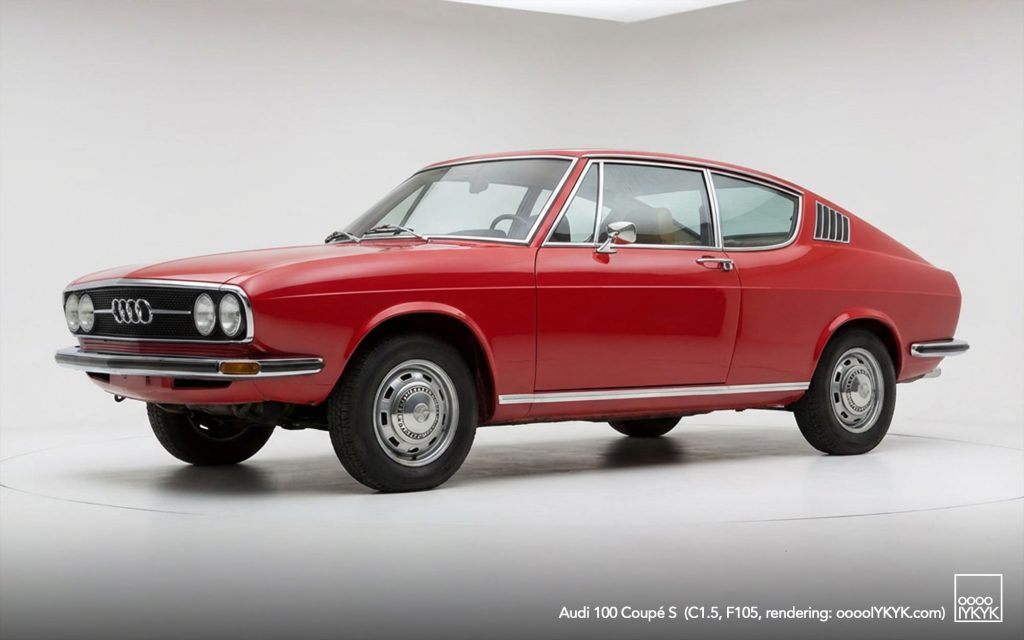
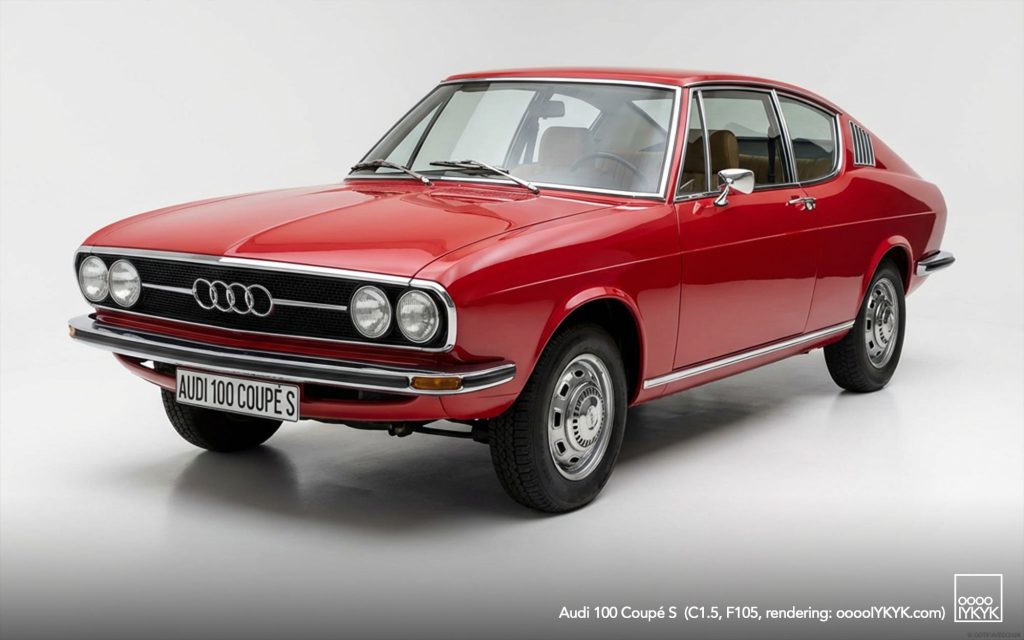
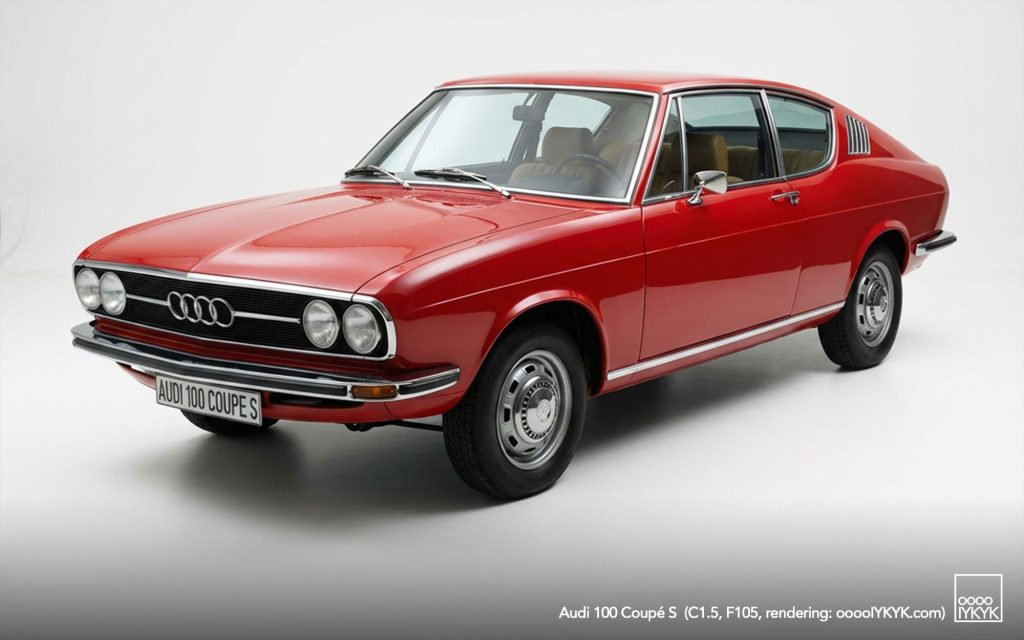
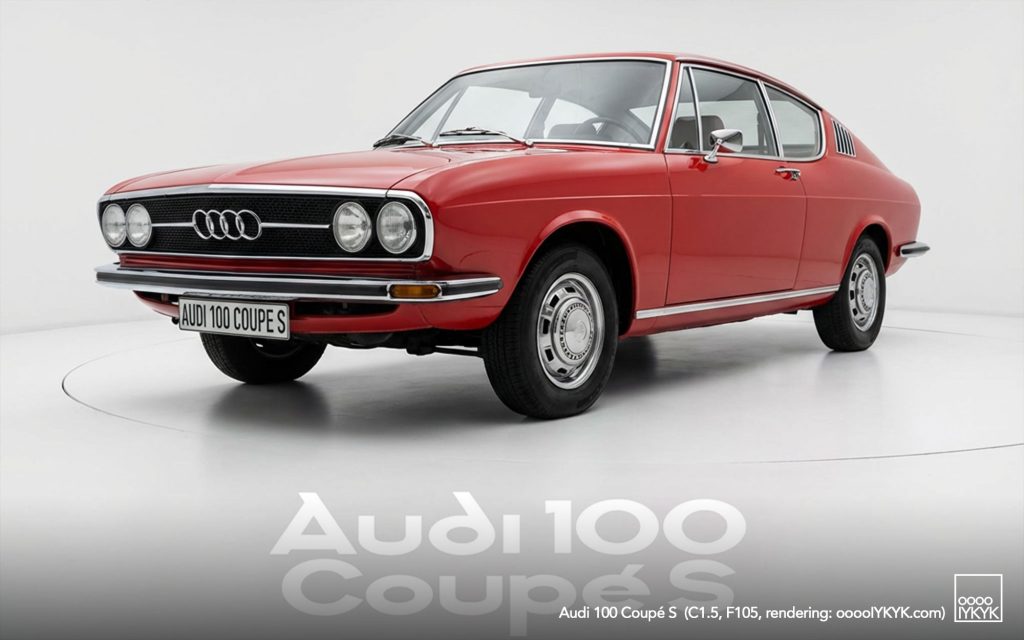
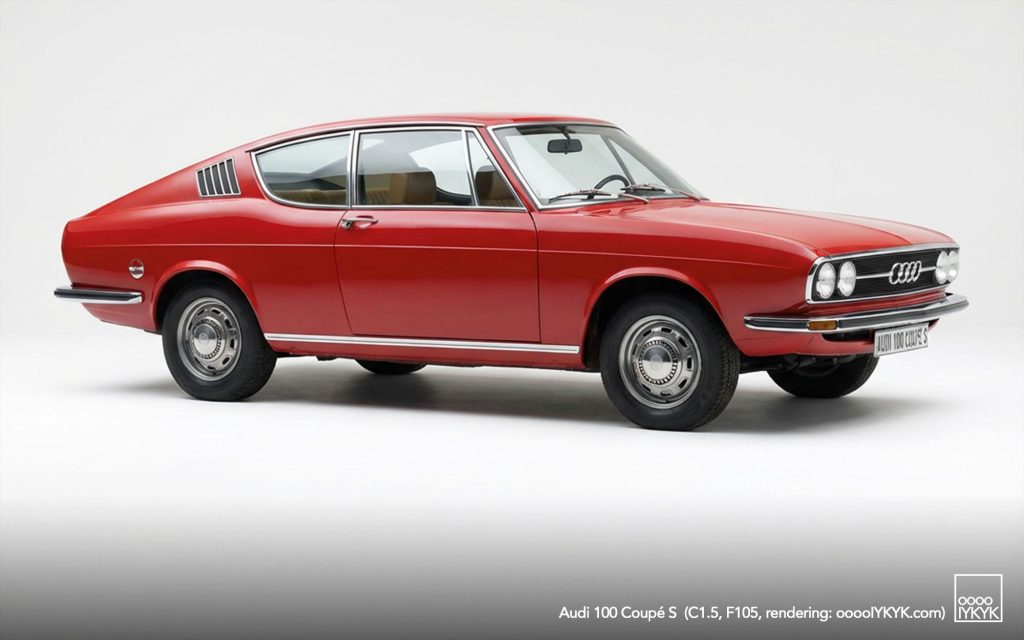
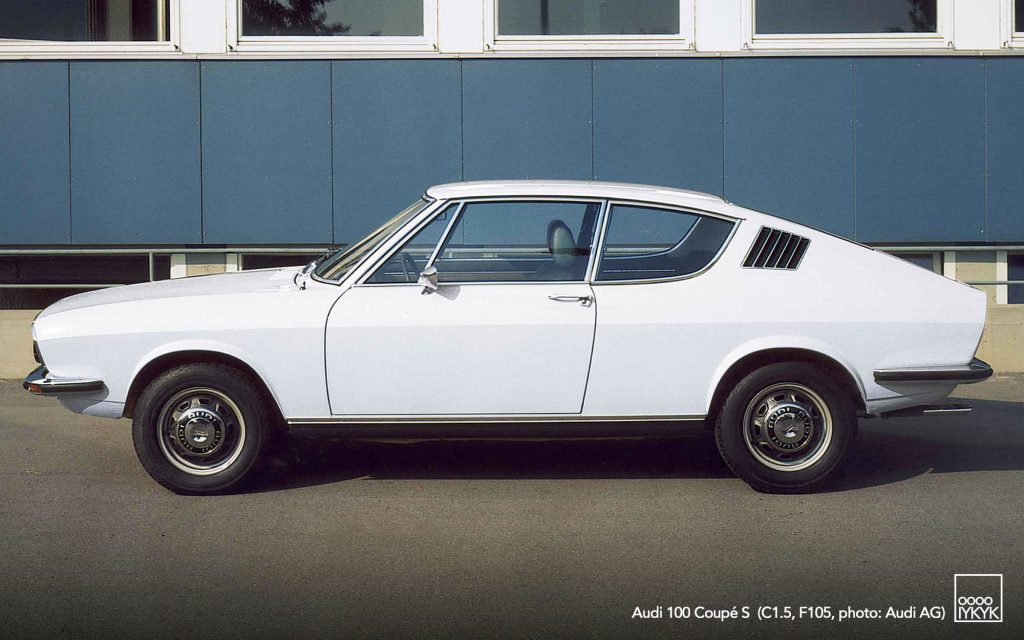
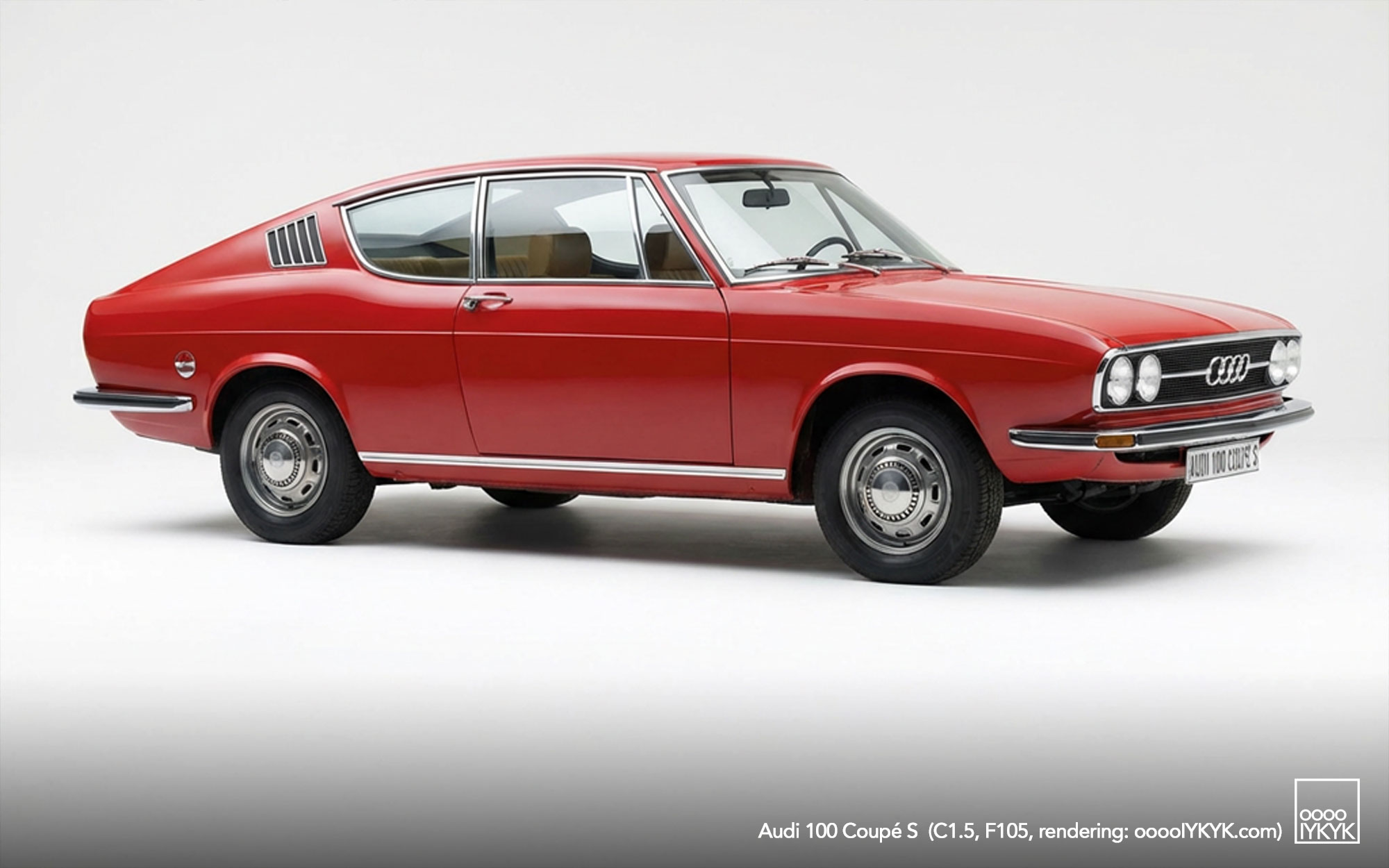
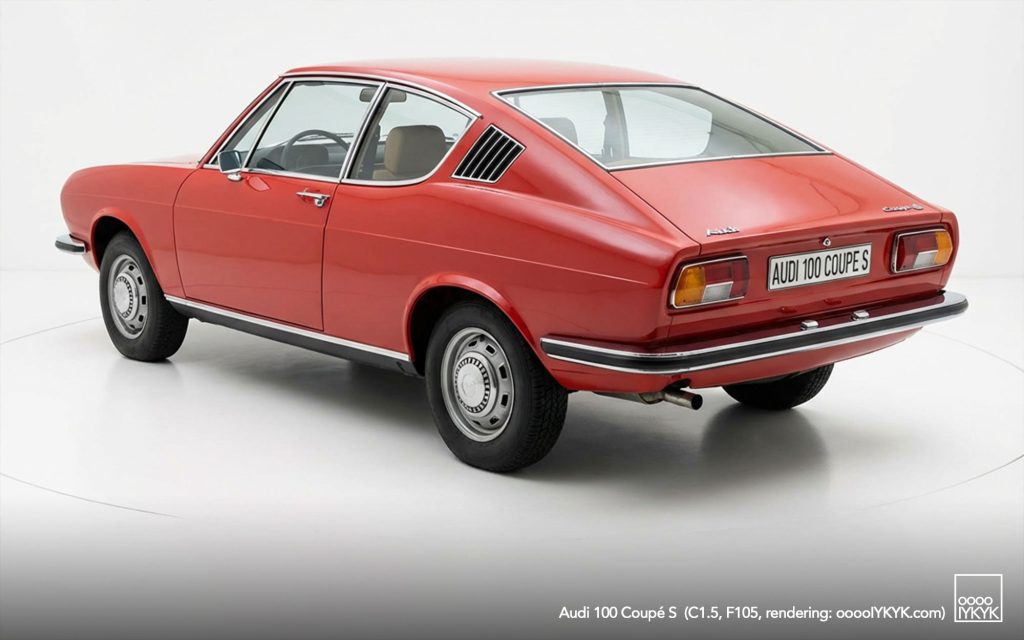
The facelifted Audi 100 Coupé S represents the final evolution of Audi’s early grand touring coupe, introduced alongside the broader 1974 update to the Audi 100 range. Rather than redefining the car, Audi refined it—subtly modernizing its appearance while preserving the core design that had made it distinctive.
In this archive, we refer to the updated Audi 100 Coupé S (F105) as the “C1.5”. The “.5” designator for later updated version or product improvement is terminology adopted by the ownership community over the years to denote a mid-lifecycle freshening. While “C1” is official terminology by Audi, “C1.5” is not and instead utilizes community vernacular to indicate the more specific reference.
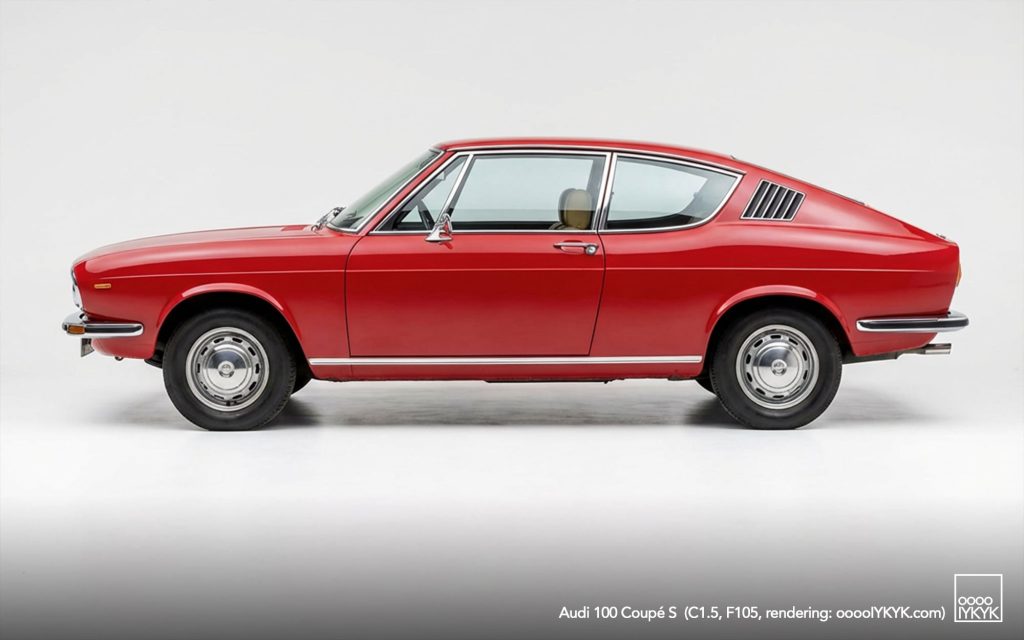
Externally, the updates were restrained but easy to spot for the trained eye. A more squared-off grille, revised front-end detailing and updated rear light graphics aligned the Coupé S with the newer Audi family look. The underlying proportions—long hood, airy greenhouse and fastback tail—remained unchanged, ensuring continuity with the original concept.
By the mid-1970s, the Coupé S had settled into a more mature role within the lineup. Audi’s messaging emphasized comfort, safety and long-distance capability, describing the car as a refined sporting coupe rather than an outright performance machine. It was positioned as a “comfortable sports limousine,” reflecting both its capabilities and its audience.
Inside, the layout carried over with minor refinements. The cabin continued to offer supportive seating, full instrumentation and practical usability for four occupants. The emphasis had shifted slightly toward refinement, aligning with the expectations of buyers in this segment during the later phase of the model’s lifecycle.
Mechanically, the C1.5 retained the 1.9-liter inline-four in its 112 hp specification. While less powerful than the original launch version, it remained well-suited to the car’s grand touring purpose, delivering smooth, consistent performance. Transmission options remained unchanged, with both manual and automatic configurations available.
Chassis characteristics also carried forward. Front-wheel drive, balanced suspension tuning and stable braking behavior defined the driving experience. Audi continued to highlight the car’s predictable handling and secure road manners, reinforcing its identity as a capable long-distance GT.
Production ended in 1976, closing the chapter on the Audi 100 Coupé S after approximately six years. With just over 30,000 units of the F105 built over both C1 and C1.5 iterations, the model remained relatively rare even in period.
The facelifted cars represent the final expression of the original concept. Where the early C1 introduced the idea, the C1.5 subtly evolved it—bridging the gap between Audi’s postwar rebuilding phase and the more performance-oriented identity that would emerge later in the decade.
PHOTO GALLERY