


/ Eras / Audi Postwar Era / Audi 80 / 80 (B1, type 80)
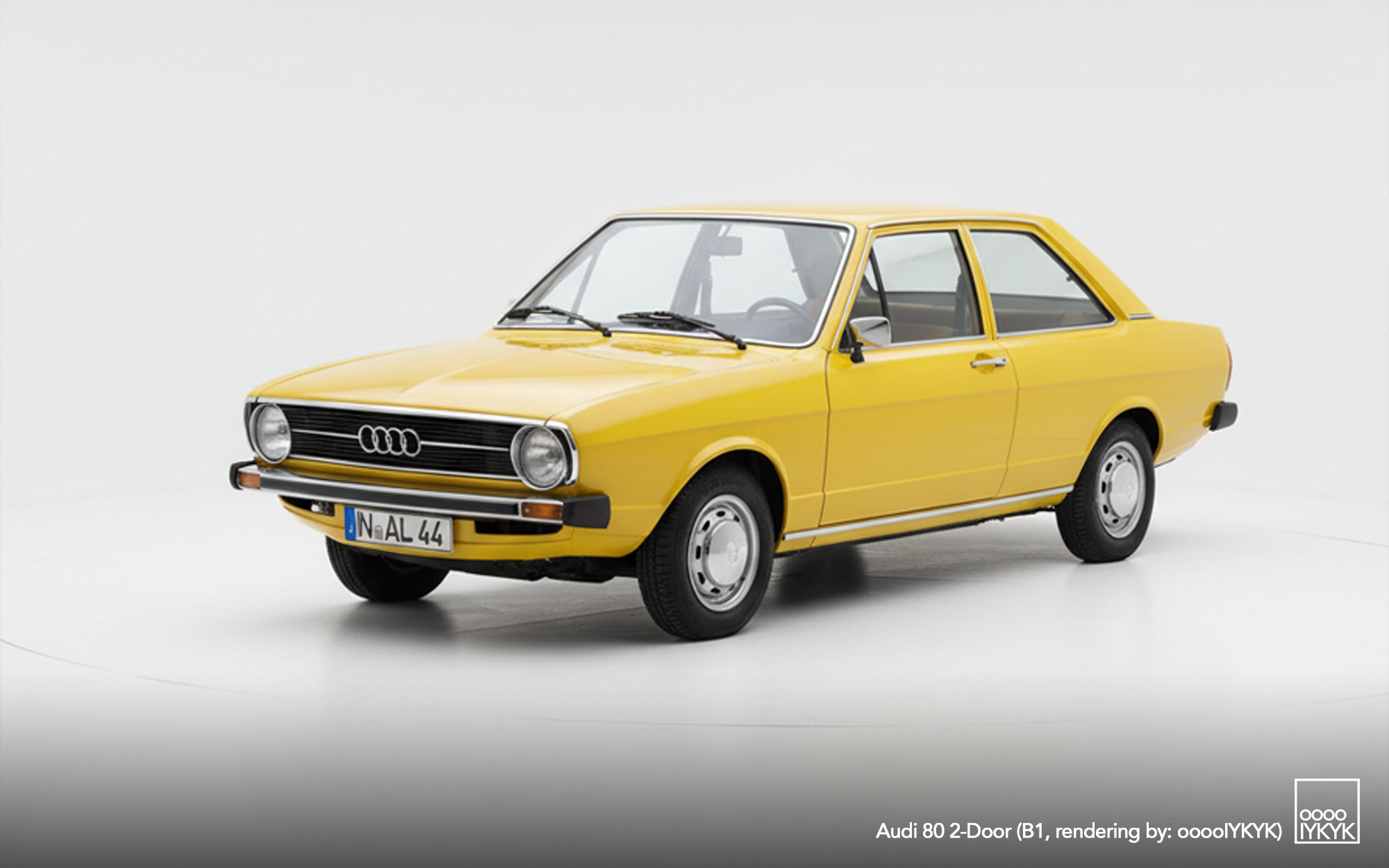
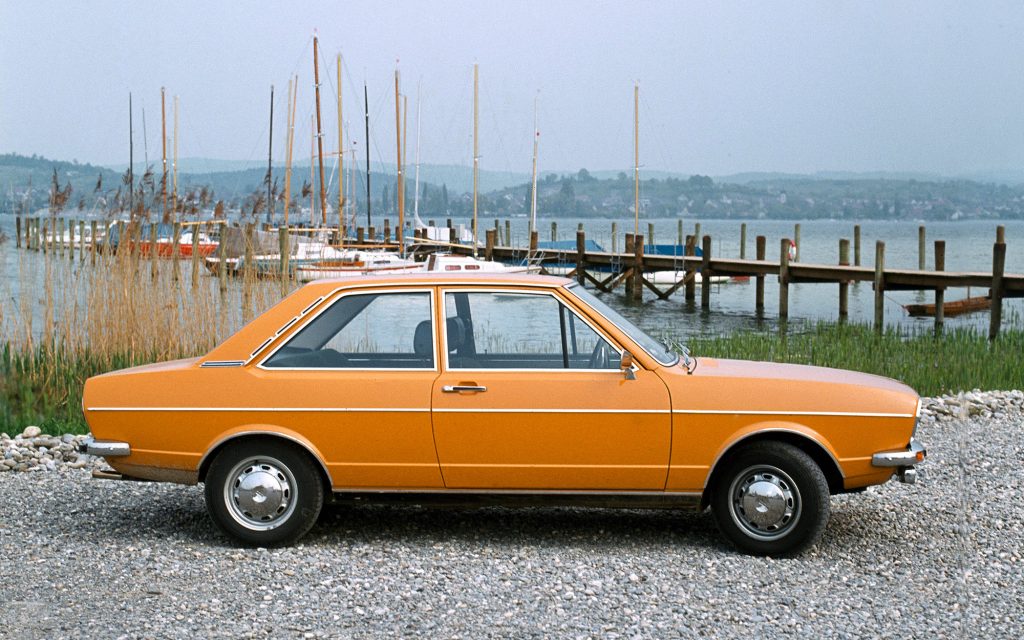
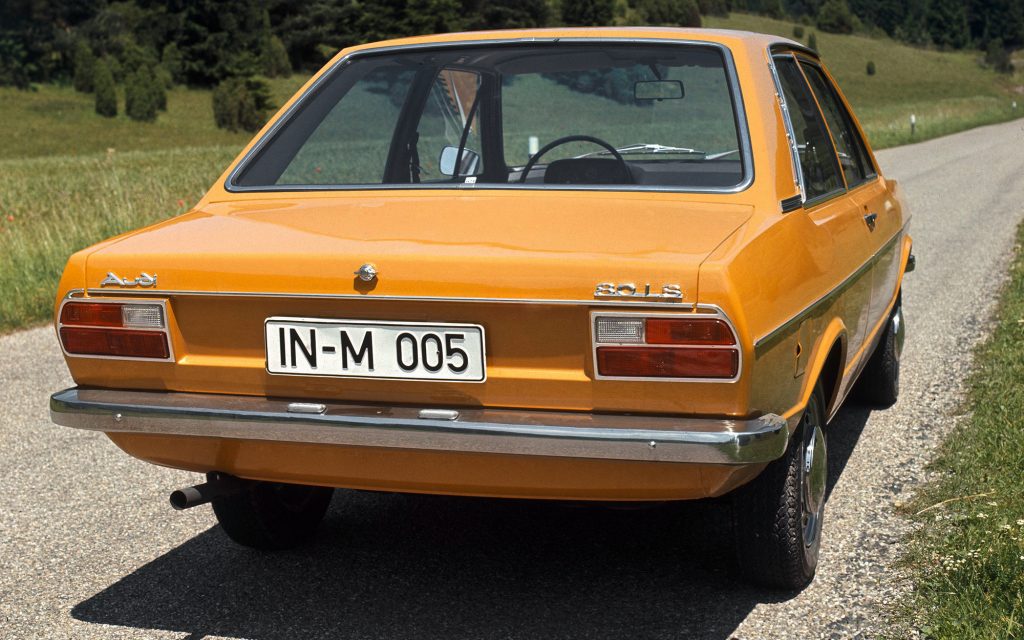
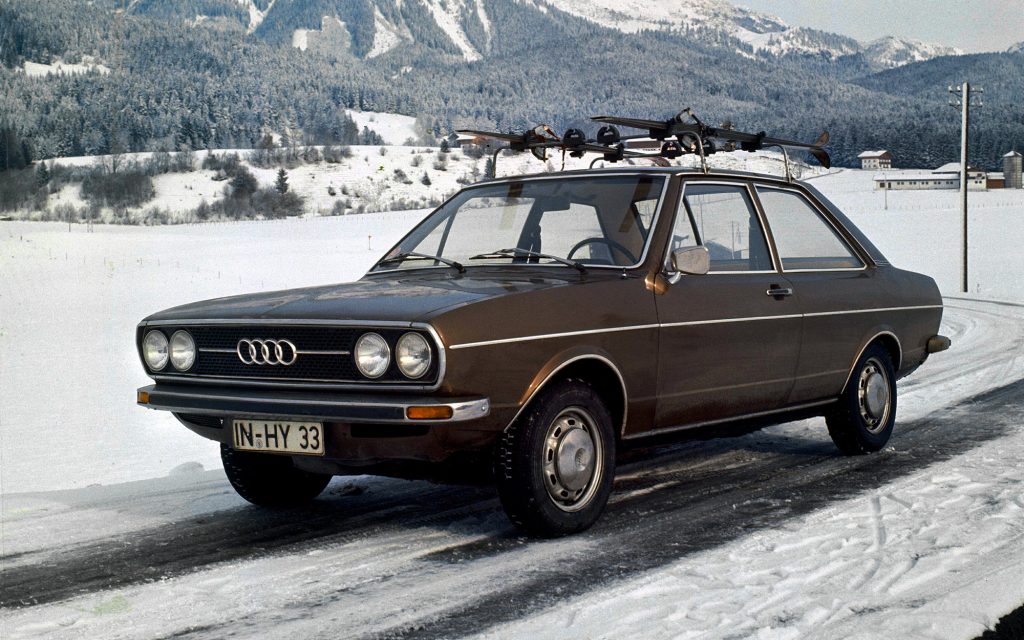
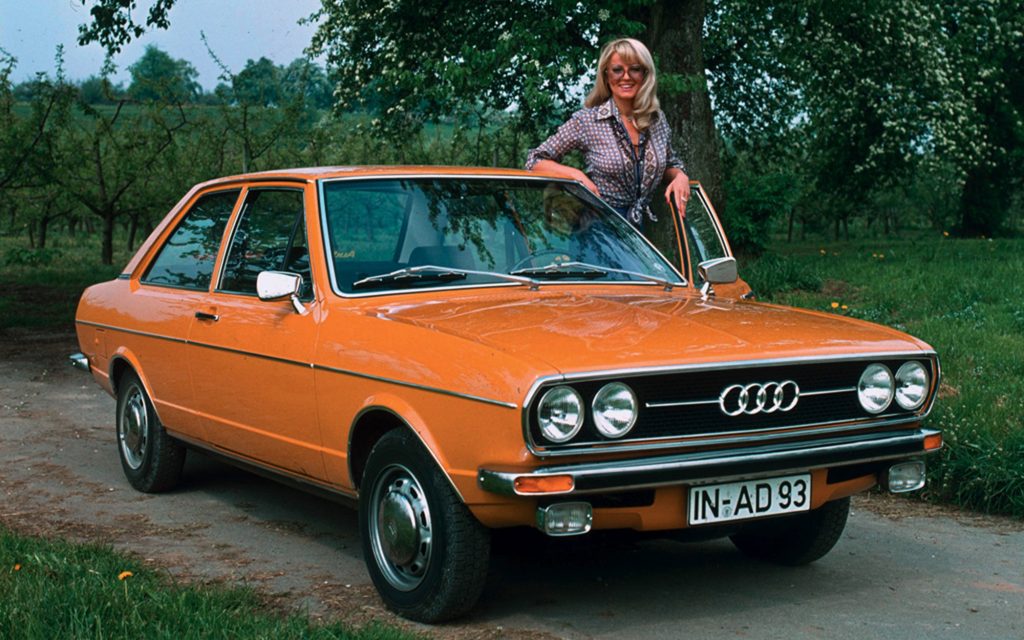
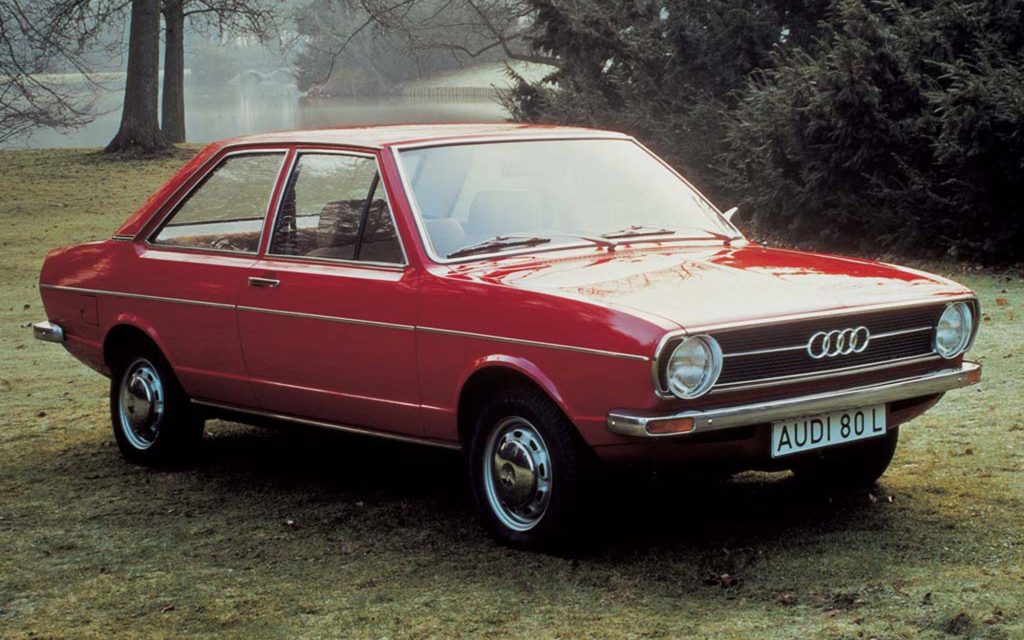
What: 80 2-Door Sedan (B1)
Model Family: 80
Market / Zone: EU
Production Location: Ingolstadt, West Germany
Debut: 1972 in Ingolstadt, aligned with the 1972 Summer Olympics in Münich
Year: 1972, 1973, 1974, 1975, 1976
Number Produced:
Model / Generation Code(s): Type 80
Chassis / Matrix: B1
Layout: Front-engine, front-wheel drive
Engine(s): 1.3l 4-cylinder, 1.5l 4-cylinder, 1.6l 4-cylinder
Transmission(s): 4-speed Manual, 3-speed Automatic
Wheelbase: 2,470 mm (97.2 in)
Length: approx. 4,180 mm (164.6 in)
Curb weight: from approx. 835 kg (1,841 lb)
Designer:
Predecessor: Audi 60 / Audi 75 (type F103)
Successor: Audi 80 (B1.5, type 82)
OVERVIEW
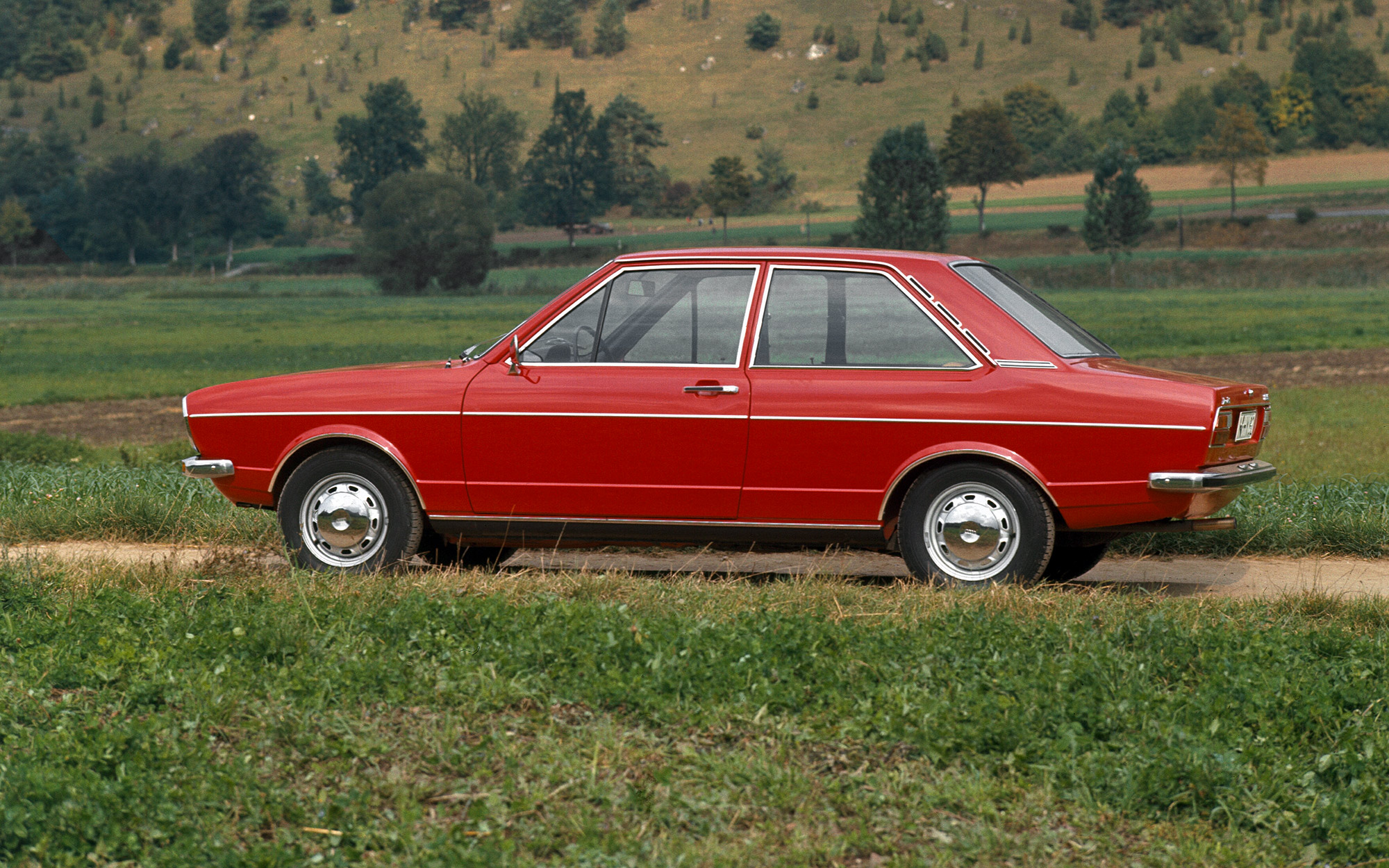
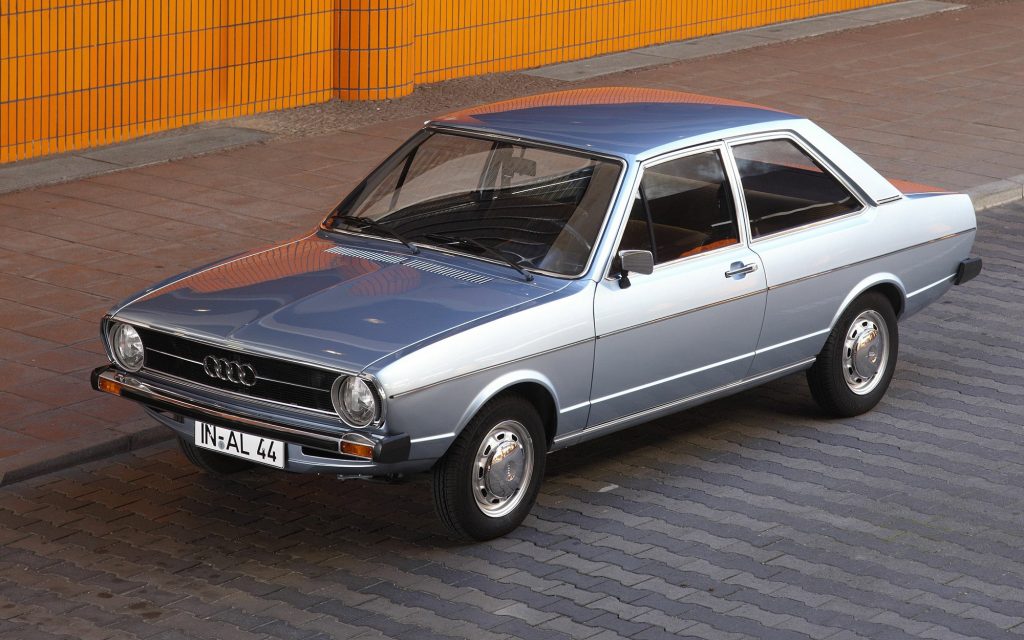
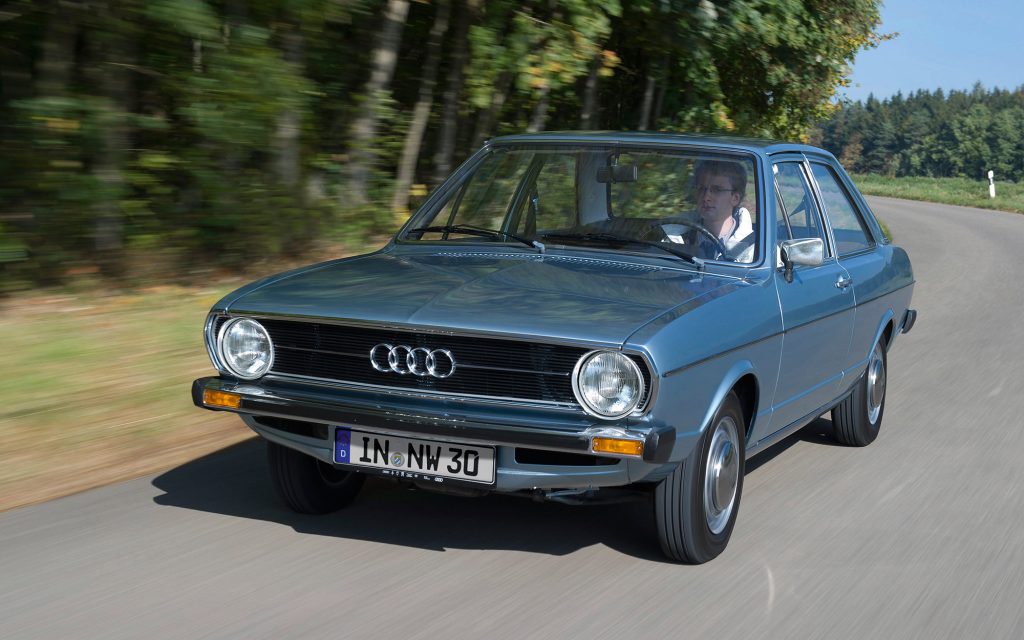
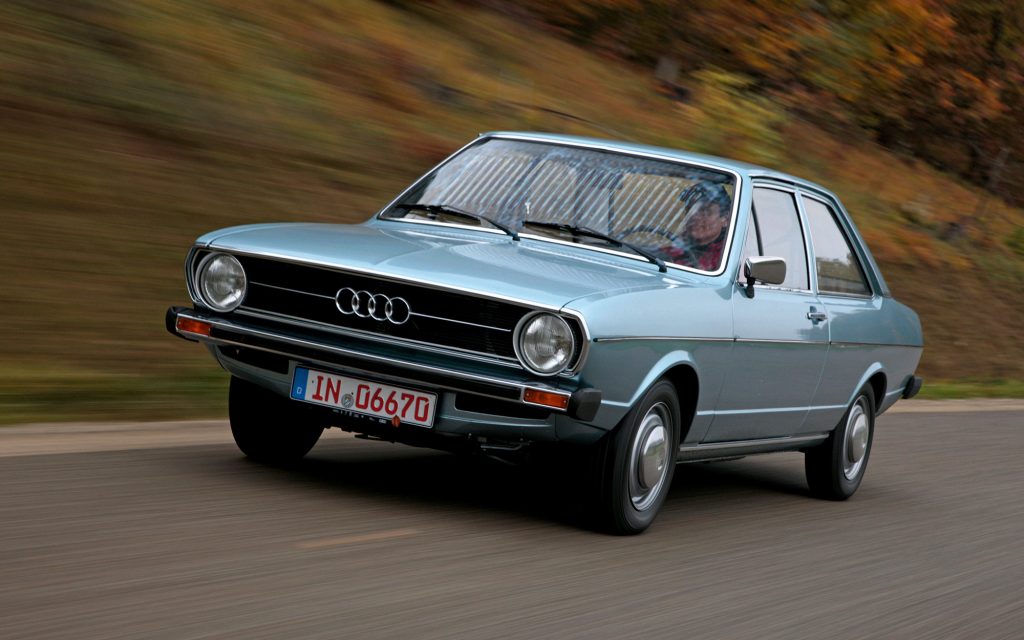
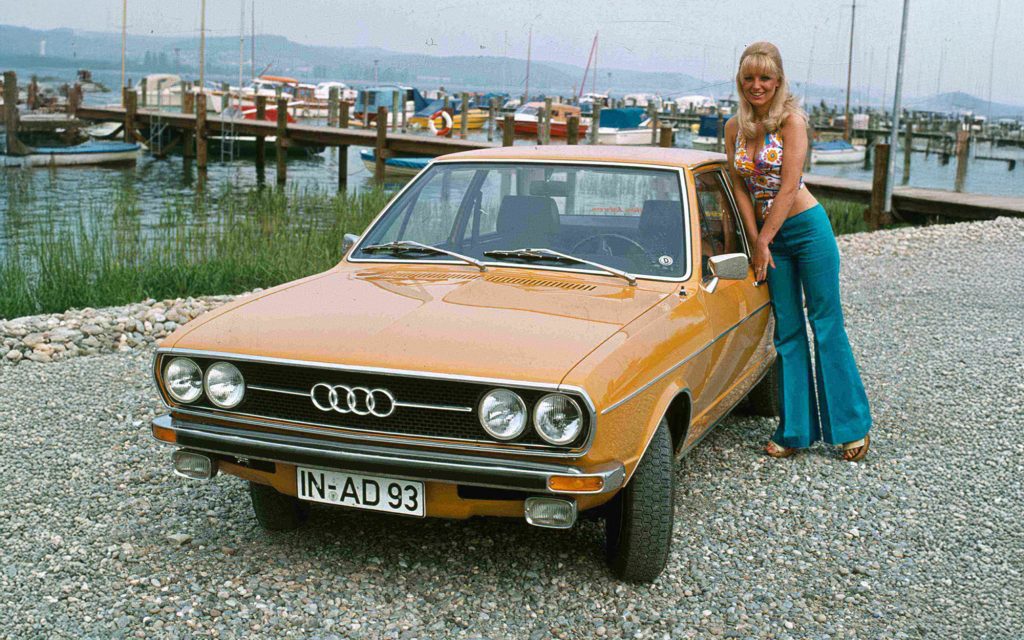
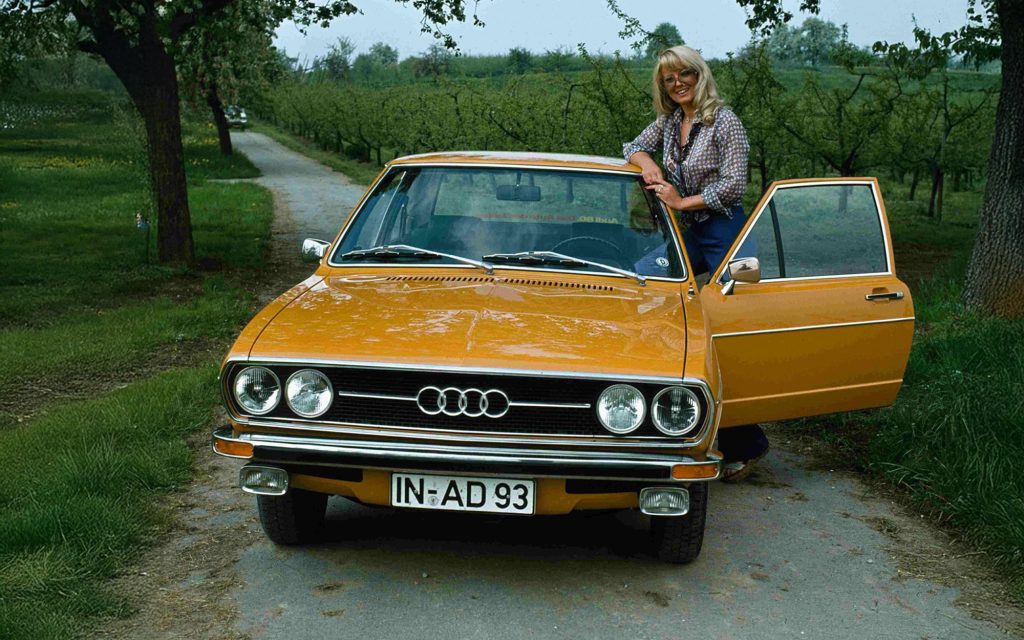
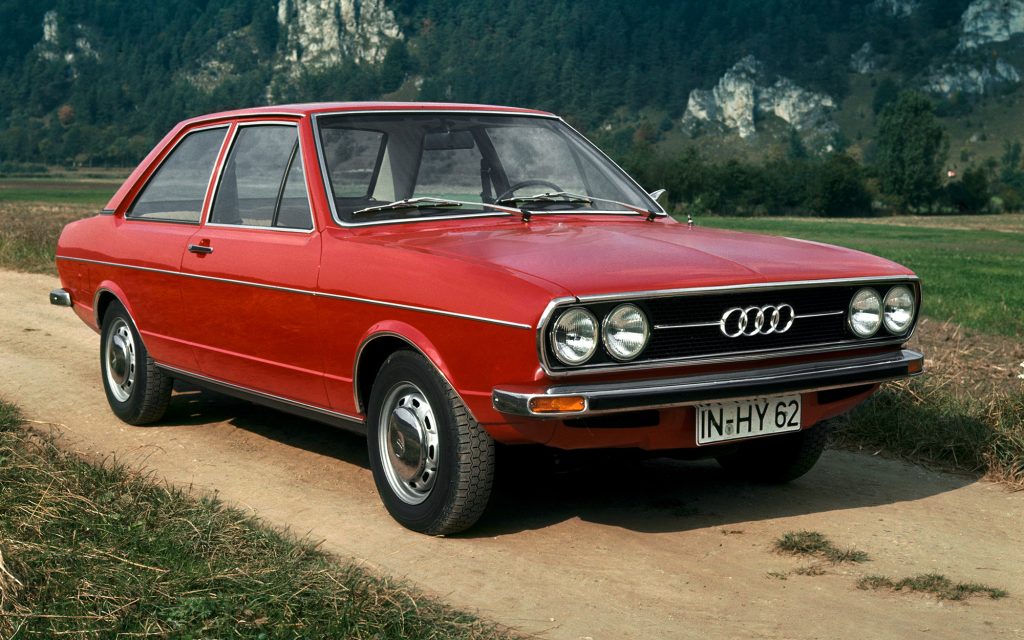
The Audi 80 (B1) two-door sedan, produced from 1972 to 1976, represents the earliest and lightest expression of Audi’s first modern compact sedan. Introduced in 1972, the B1 established what became known internally as the B-series, forming the foundation for Audi’s mid-size product line that would later evolve into the Audi A4.
Conceived as a “modern, but not trendy” family car, the two-door Audi 80 emphasized lightweight engineering, efficiency, and advanced mechanical design. Its debut coincided with a period of economic uncertainty and the onset of the 1973 oil crisis, conditions under which its low fuel consumption and agile handling proved particularly well-suited.
The Audi 80 B1 was awarded European Car of the Year for 1973, marking a major turning point for Audi and establishing the model as the brand’s first true million-seller.
DEVELOPMENT & DESIGN PHILOSOPHY
Development of the Audi 80 began in the late 1960s under the direction of Ludwig Kraus, then Head of Technical Development at Audi and Volkswagen AG. Kraus applied race-engineering principles to a mass-production car, tasking his team with scrutinizing every component for weight savings without compromising durability or safety.
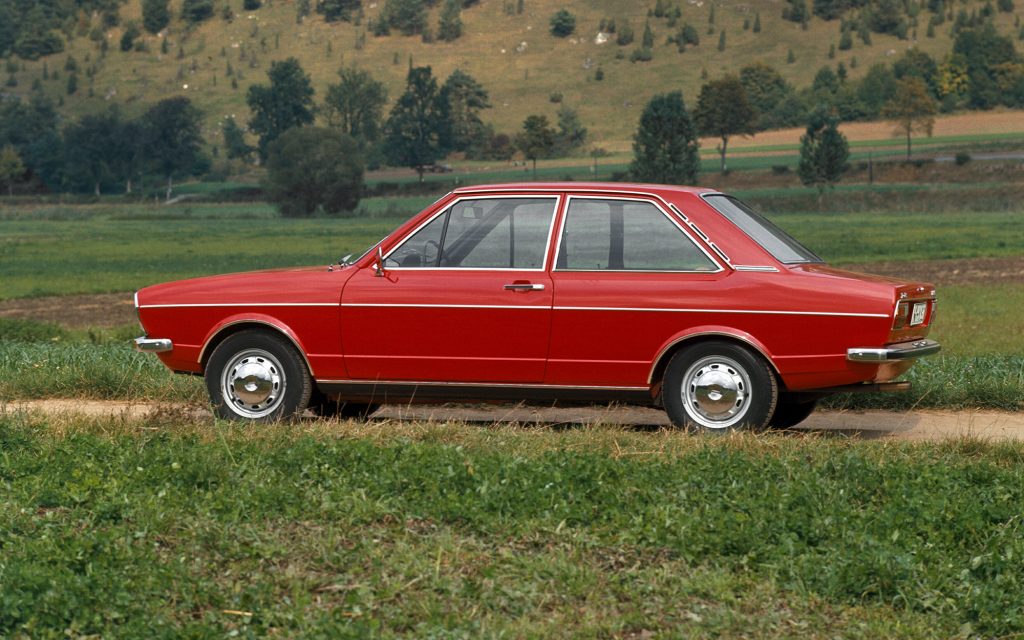
The two-door body style played a central role in this philosophy. With fewer structural reinforcements than later four-door variants, the two-door Audi 80 achieved an exceptionally low curb weight—as little as 835 kg—contributing directly to its dynamic character and efficiency.
Styling followed the restrained “New Objectivity” design language of the early 1970s, emphasizing clean surfaces, strong proportions, and functional clarity. Exterior design work was influenced by Hartmut Warkuss, who would later become Head of Audi Design and leave a lasting mark on subsequent B-, C-, and D-series models.
BODY STYLE & DIMENSIONS
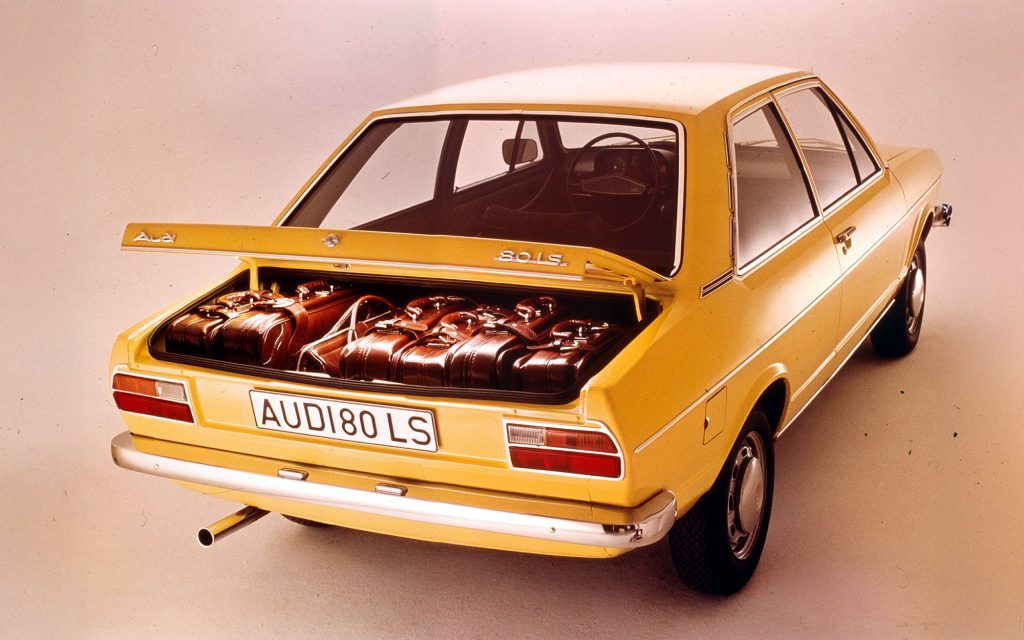
The two-door Audi 80 B1 was offered exclusively as a compact sedan, positioned below the Audi 100 in the brand’s lineup. Its relatively short length and tight overhangs gave it a purposeful stance, while the long wheelbase for its class improved interior packaging and ride stability.
Compared to later B-series Audis, the early two-door B1 is distinguished by its minimalist exterior detailing and lighter overall construction. This article covers only the pre-facelift configuration produced between 1972 and 1976, excluding the revised front and rear styling introduced later in the model cycle.
CHASSIS & ENGINEERING
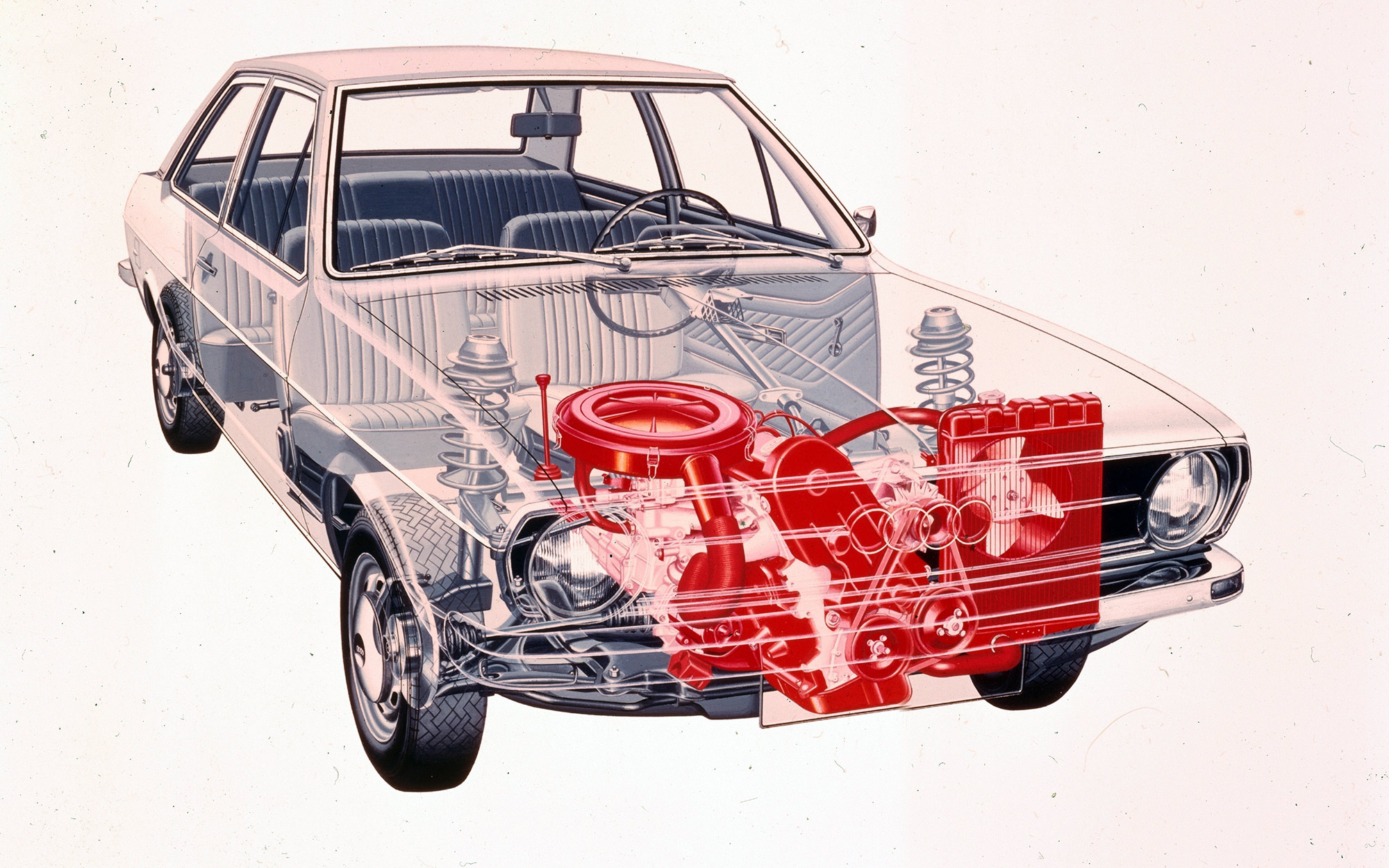
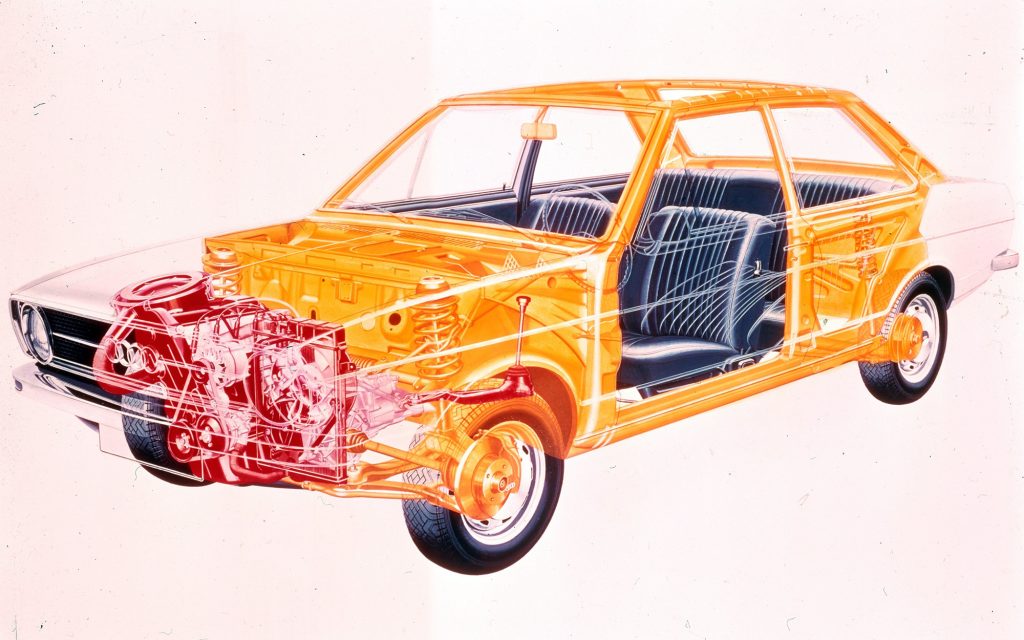
The Audi 80 B1 introduced several engineering solutions that were advanced for its class at the time:
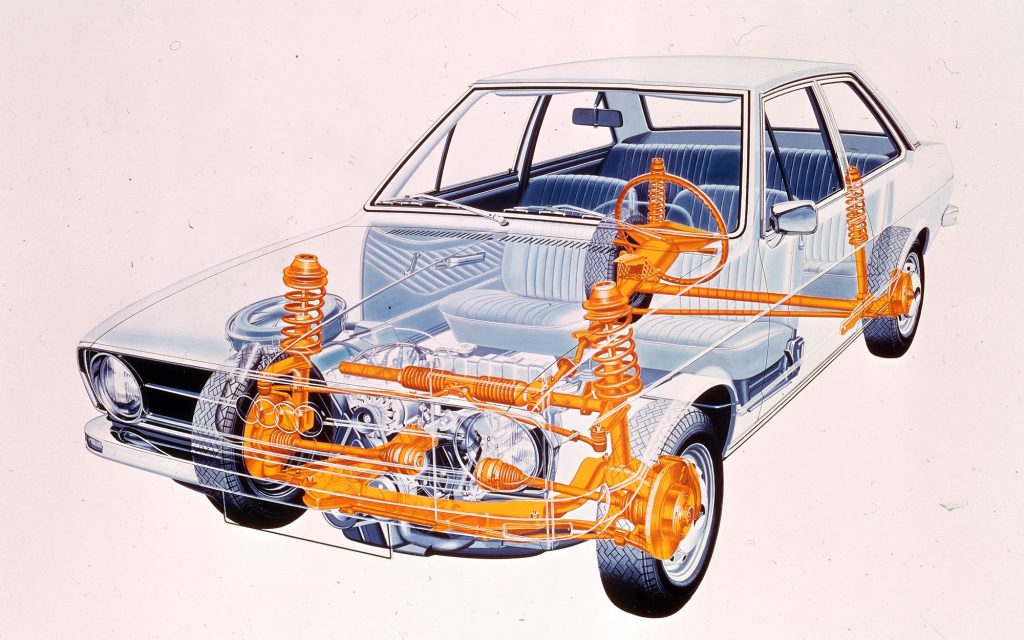
- Front suspension: MacPherson struts with wishbones
- Rear suspension: Torsion crank axle with spring dampers
- Steering: Rack-and-pinion with negative steering roll radius, a first for a European mass-produced vehicle
- Brakes: Diagonally split hydraulic system for improved safety
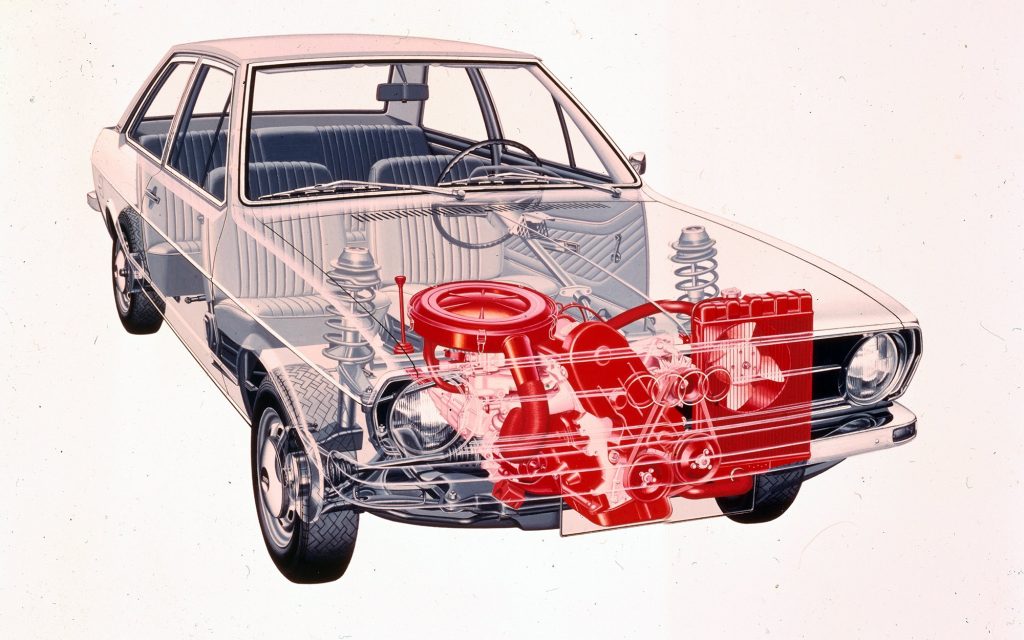
The longitudinally mounted engine sat ahead of the front axle, paired with a four-speed manual transmission mounted behind it. This layout would become a defining characteristic of Audi’s front-wheel-drive platforms for decades.
ENGINES & POWERTRAIN
At launch, the two-door Audi 80 B1 was available with a range of inline four-cylinder petrol engines from the newly developed EA827 engine family, engineered by Franz Hauk and his team.
Key features of the EA827 included:
- Single overhead camshaft (SOHC)
- Toothed-belt camshaft drive
- Hydraulic tappets requiring no routine valve adjustment
Engine displacements ranged from 1.3 to 1.6 liters, with outputs between 40 kW (55 PS) and 74 kW (100 PS). These engines combined strong mid-range torque with low fuel consumption, reinforcing the Audi 80’s reputation as both economical and engaging to drive.
MARKET RECEPTION & IMPACT
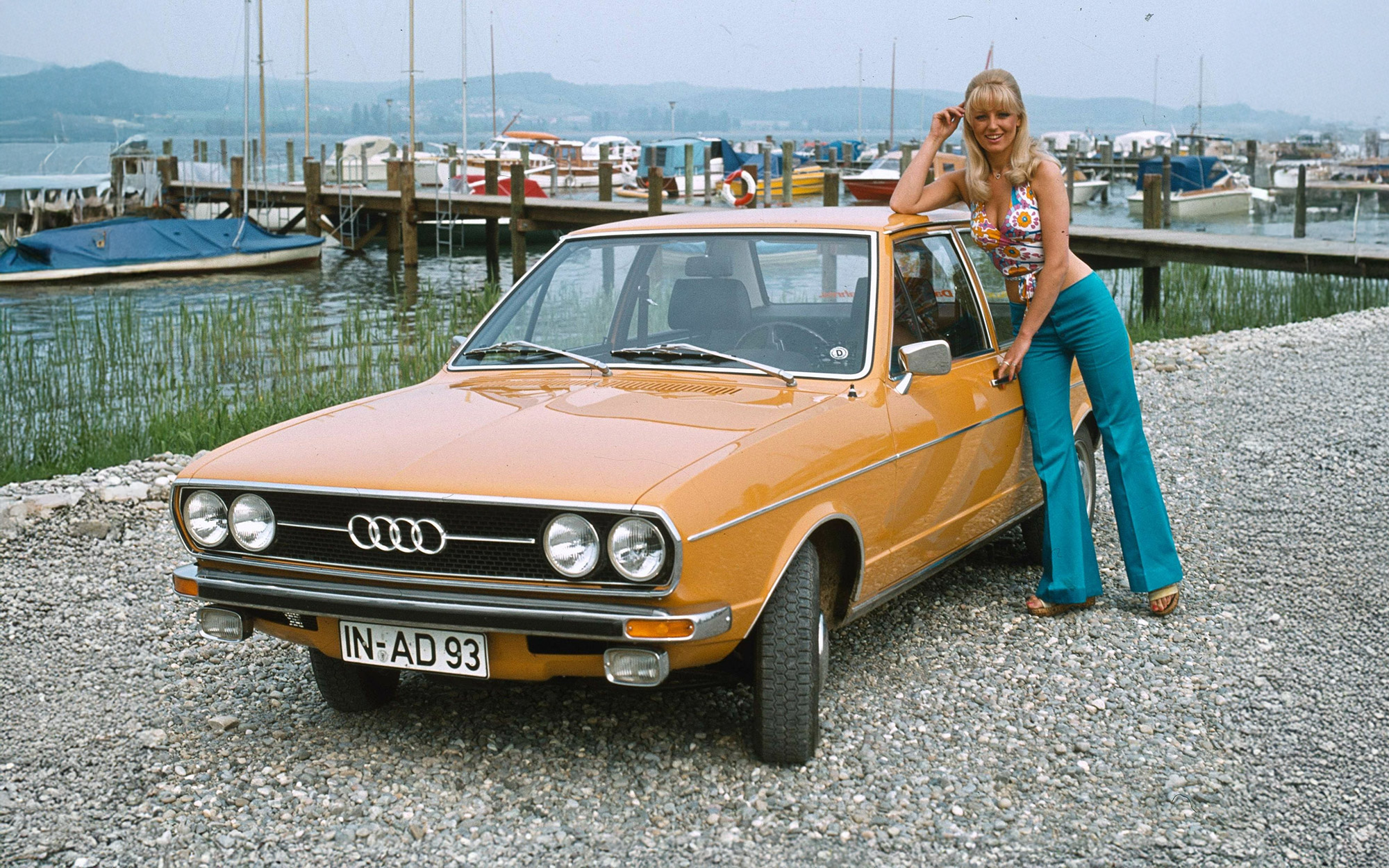
The Audi 80 B1 two-door was introduced to the press in July 1972 and reached dealerships later that year. Its timing proved fortuitous: as fuel prices rose sharply in 1973, demand surged for efficient, lightweight family sedans.
The model’s success exceeded Audi’s initial production capacity at Ingolstadt, prompting supplemental manufacturing at Volkswagen plants in Wolfsburg and Emden. By the end of the B1 production run, over one million examples of the Audi 80 had been built across all body styles, establishing Audi as a serious contender in the mid-size segment.
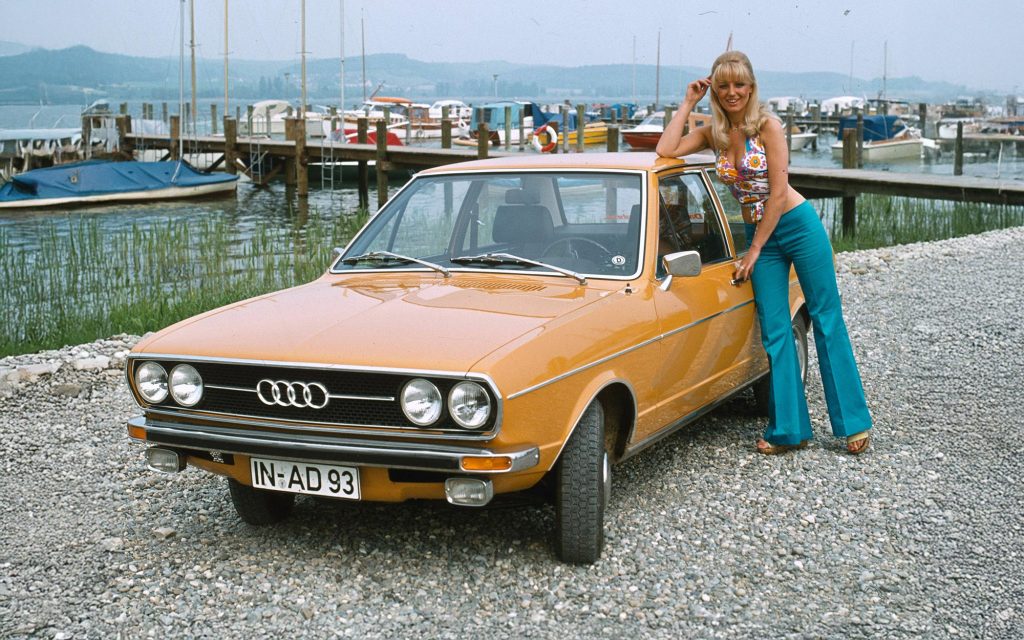
In several export markets, including the United States, the B1 platform was sold under the Audi Fox nameplate.
LEGACY
The Audi 80 B1 two-door occupies a pivotal place in Audi history. It inaugurated the B-series, introduced modular engine design principles that spread throughout the Volkswagen Group, and demonstrated that technical innovation and efficiency could coexist in a mass-market sedan.
Reflecting on the model decades later, Oliver Hoffmann, Member of the Board of Management for Technical Development at Audi AG, noted that the original Audi 80 exemplifies how “Vorsprung durch Technik is a tradition at Audi.”
The principles established by the 1972–1976 two-door Audi 80 would carry forward through four generations of Audi 80 models before the line evolved into the Audi A4, which remains in production today.
REFERENCES
PHOTO GALLERY
photos: Audi AG