

MODEL DETAILS
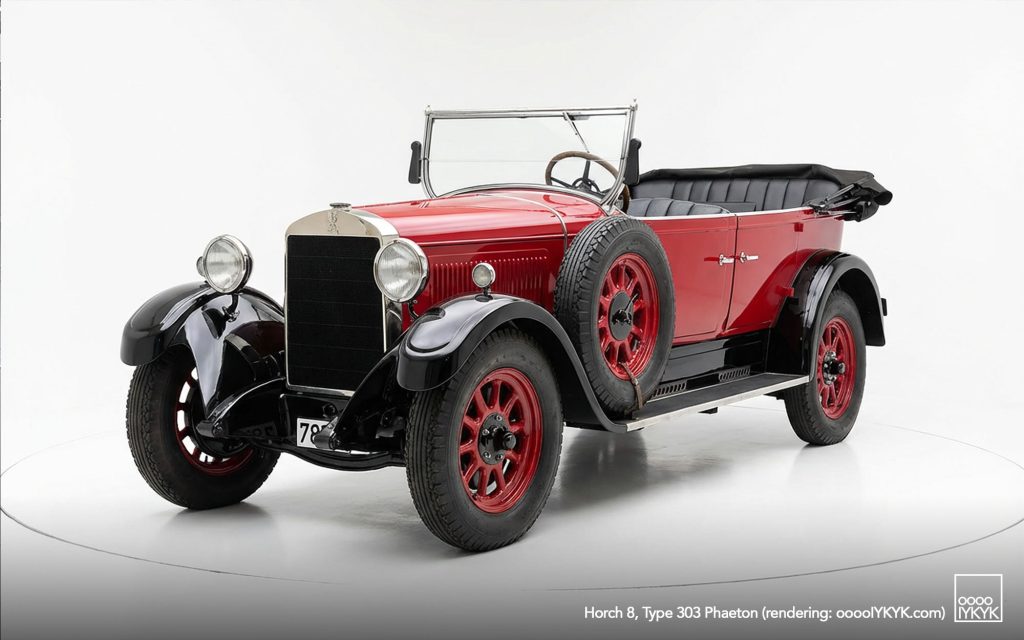
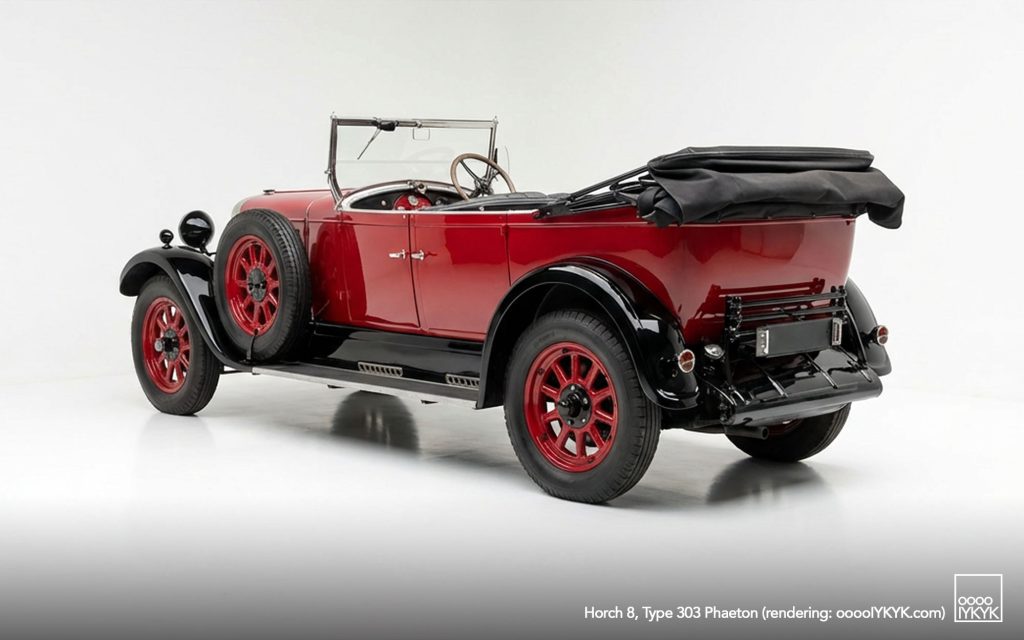
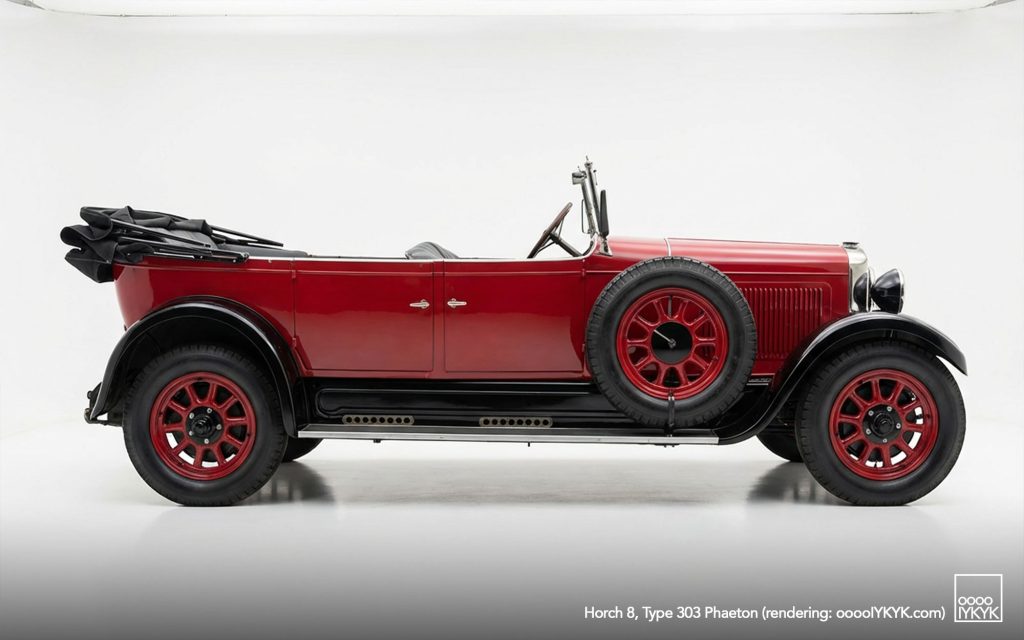
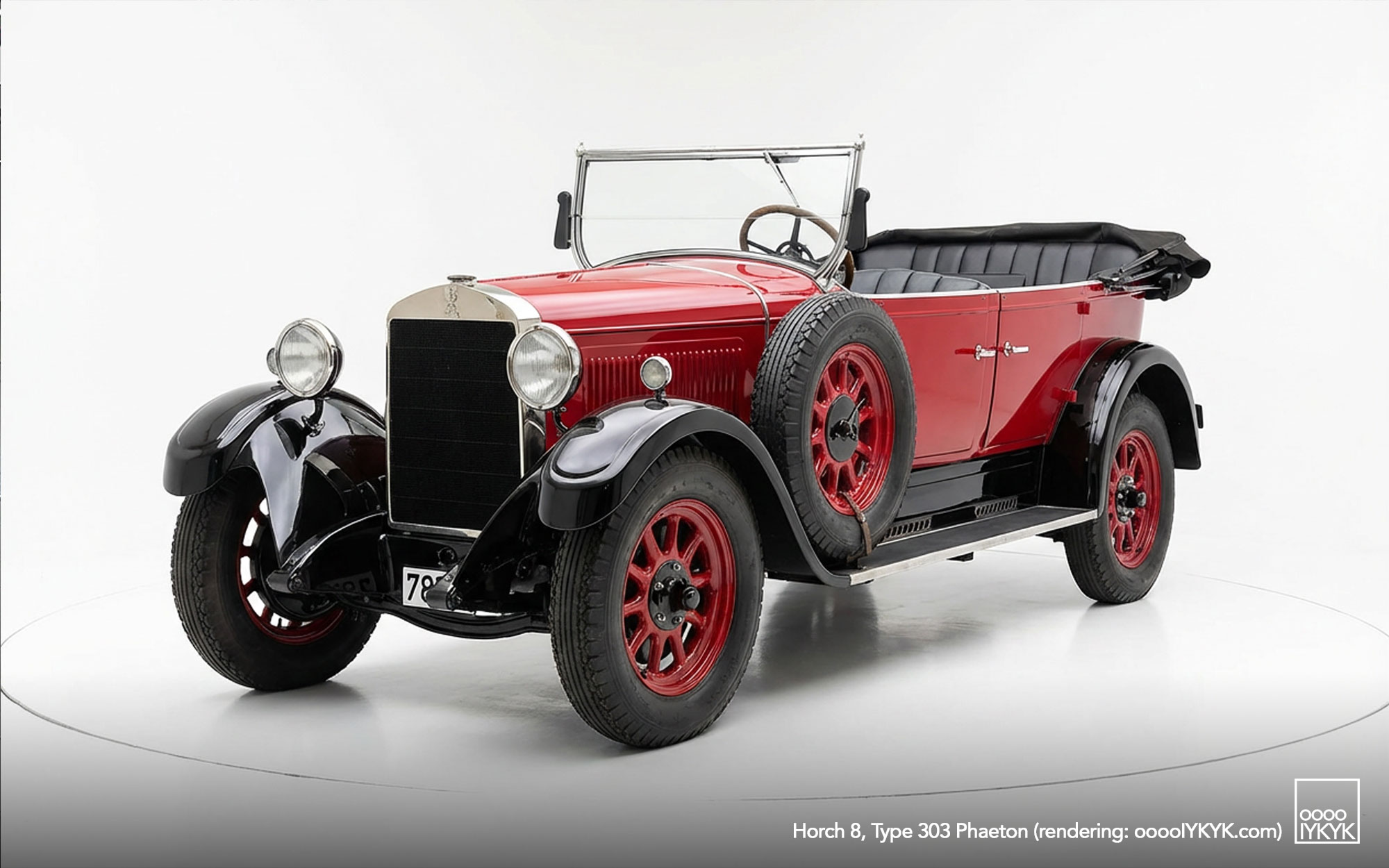
What: Horch 8, Type 303 Phaeton
Brand / Era: Horch
Model Family: Type 303
Market / Zone: Germany
Year: 1926, 1927
Number Produced:
Model / Generation Code(s): Type 303
Chassis / Matrix:
Engine: 8-cylinder, in-line
Displacement: 3.2-liters
Fuel Type(s):
Horsepower: 60 hp
Peak Torque:
Top Speed: 30 km/h, 18.6 mph
SUMMARY
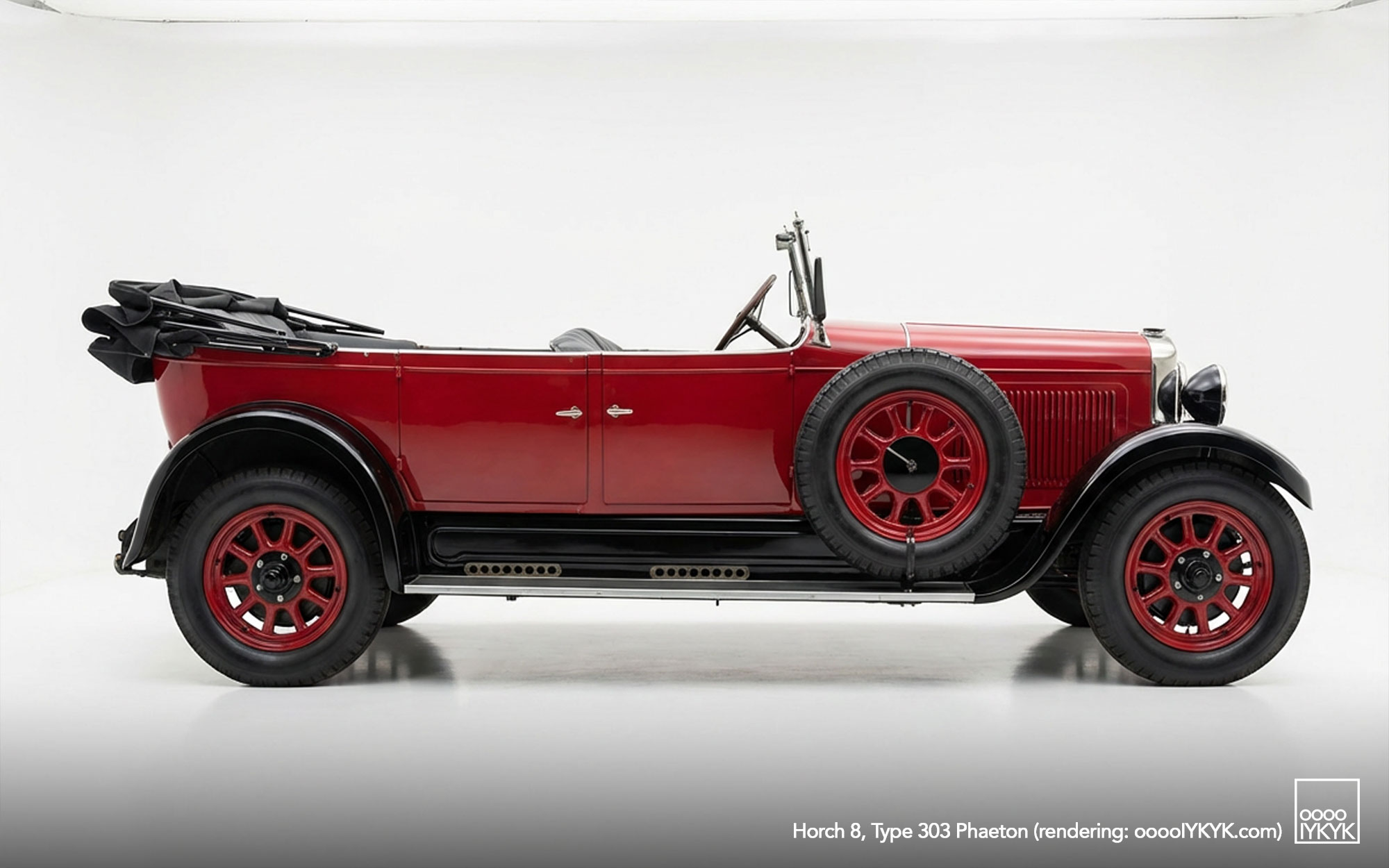
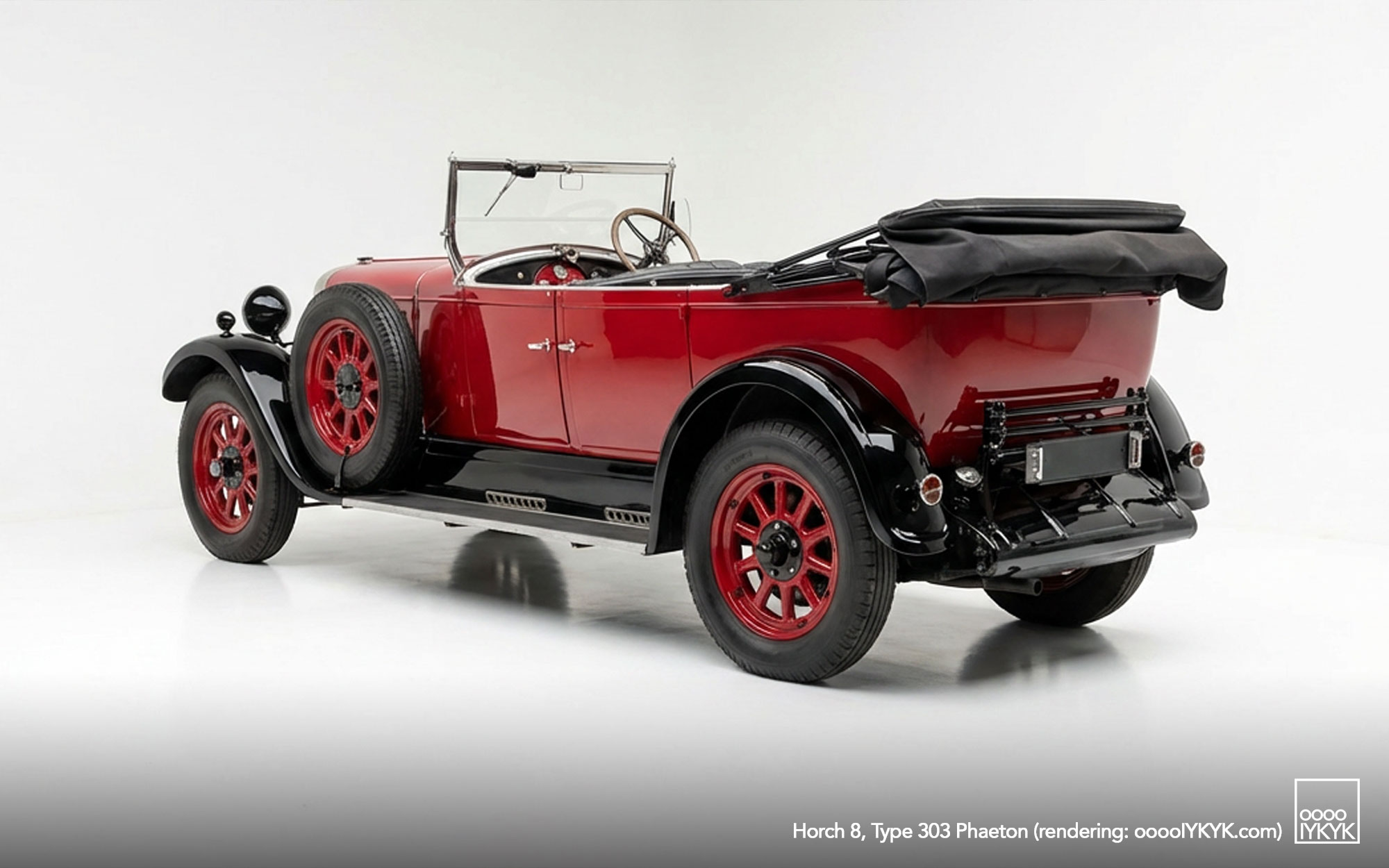
The Horch 8 Type 303 is a luxury automobile introduced in 1926 by Horchwerke AG of Zwickau. It holds a significant place in German automotive history as the first German production car equipped with an eight-cylinder engine. Among its various body styles, the Phaeton, an open-top touring configuration, is one of the most iconic. A notable red Horch 8 Type 303 Phaeton is preserved today at Audi museum mobile in Ingolstadt, where it serves as a representative example of Horch’s engineering ambition and craftsmanship during the late 1920s.
INTRODUCTION AND DEVELOPMENT
The Horch 8 Type 303 made its public debut at the Berlin Motor Show in October 1926. Developed during a period of rapid luxury-car growth in Europe, the model signaled Horch’s intention to compete with leading international marques such as Cadillac, Packard, and Hispano-Suiza. It introduced advanced engineering techniques that were exceptional in the German market at the time.
The hallmark of the Type 303 was its inline eight-cylinder engine, designed by Paul Daimler, son of automobile pioneer Gottlieb Daimler. This engine placed Horch at the forefront of domestic luxury automobiles and helped establish the brand as Germany’s premier manufacturer of high-performance touring cars during the interwar period.
ENGINEERING AND TECHNICAL FEATURES
The Type 303’s eight-cylinder engine had a displacement of 3.2 liters and produced 60 hp, an impressive figure for German series production in 1926. The design incorporated several advanced features:
- Twin overhead camshafts, driven by a vertical shaft
- Paired cast cylinders, a technique that simplified manufacturing while improving durability
- Five crankshaft bearings for improved smoothness and longevity
- Long-stroke architecture with a comparatively small bore, providing strong low-speed torque and refined running characteristics
The model was produced in both 303 (long wheelbase) and 304 (short wheelbase) versions.
The early success of the engine led to rapid development. In 1927, the engine was enlarged by increasing the bore by 2.5 mm, resulting in 3.4 liters of displacement and 65 hp in the successor models Horch 305 and 306 (13/65 hp). The ultimate evolution arrived in 1928 with the Horch 350 16/80 hp, featuring a four-liter version of the same twin-camshaft engine architecture with an enlarged 73 mm bore and unchanged 118 mm stroke, delivering 80 hp.
Between 1926 and 1931, a total of 8,490 eight-cylinder twin-cam engines were produced, making the series one of Horch’s most successful early luxury platforms.
PHAETON BODY STYLE
The Phaeton body style of the Type 303 was an open-top touring design, intended for sophisticated long-distance motoring and formal occasions. Typically configured as a four-door, four- or five-seat vehicle with a folding fabric roof, the Phaeton emphasized elegance, visibility, and social presence.
Characteristics of the Type 303 Phaeton included:
- High, upright windshield to provide comfort for occupants in the open-air cabin
- Detachable or folding side weather panels instead of fixed windows
- Spacious rear seating area, suitable for chauffeur-driven use
- Flowing fender lines characteristic of mid-1920s luxury automobiles
The Phaeton was particularly suited to demonstrating the refinement of the new eight-cylinder engine. Its open body made the smoothness and quiet operation of the long-stroke inline-eight especially noticeable—an important prestige factor at a time when multi-cylinder cars symbolized modernity and luxury.
A restored red Horch 8 Type 303 Phaeton displayed at Audi museum mobile exemplifies this combination of mechanical sophistication and coachbuilt elegance. The car is frequently used in exhibitions highlighting the origins of the Horch brand and the technological lineage that eventually contributed to the formation of Auto Union and, later, modern Audi.
MARKET POSITION AND PRODUCTION
The Horch 8 Type 303 competed in the upper echelon of the luxury market and was priced accordingly. It attracted affluent buyers seeking performance, refinement, and status, particularly in Germany and Central Europe. Although production numbers were far lower than mid-market vehicles, the 303 and its immediate successors established Horch as a leader in high-cylinder-count engineering.
Across the eight-cylinder series—from the original 303/304 to the 305/306 and the four-liter 350—Horch manufactured 8,490 engines before ending production in 1931. These vehicles significantly contributed to Horch’s reputation as the premier German manufacturer of luxury cars during the Weimar Republic.
LEGACY
The Horch 8 Type 303 is remembered today as a landmark of German automotive engineering. Its introduction of the first German production eight-cylinder engine demonstrated Horch’s technical ambition and heralded a period of innovation that would influence later Horch, Audi, and Auto Union models.
The Phaeton variant, in particular, represents the elegance and prestige associated with Horch during the 1920s. Surviving examples, such as the one displayed at Audi museum mobile, continue to illustrate the brand’s role in shaping luxury motoring and engineering sophistication in the early 20th century.
PHOTO GALLERY