


ooooIYKYK, ISSUE #oo44, SUBSCRIBE TO THIS NEWSLETTER ON SUBSTACK.
For car enthusiasts, and specifically Audi enthusiasts, the world feels a bit upside down.
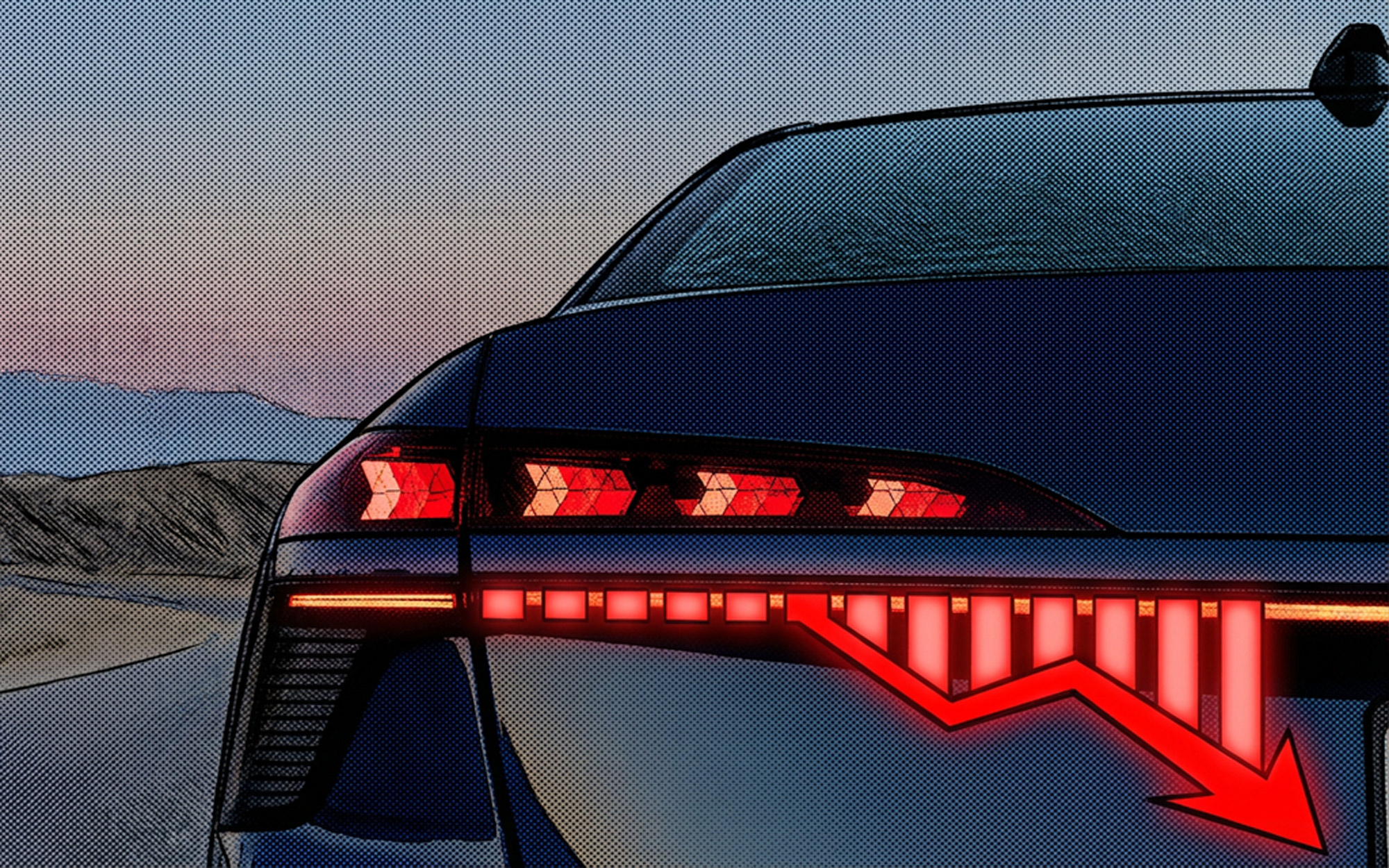
Audi of America recently posted its Q1 2026 sales tallies, and the numbers weren’t good. Outside of single-digit growth for the A3, A5 and A6, most models posted double-digit declines. The net drop was 30%—following a 16% decline over the entirety of 2025. That’s a troubling trajectory.
There are a lot of reasons, but three stand out: tariffs, aging product and EV pushback.
TARIFFS
Before 2017, U.S. automotive tariffs were low and predictable. Passenger cars carried a 2.5% duty, while light trucks were hit with the long-standing 25% “chicken tax.” Combined with NAFTA-era trade, Audi and other global brands could plan and produce with consistency.
That changed. Tariffs became a central policy tool under the Trump administration. By the mid-2020s, 25% tariffs on imported cars and parts had substantially increased costs for European automakers.
Today’s tariff landscape remains layered. Even when vehicle-specific duties shift, tariffs on materials and components continue to push costs higher. Those costs don’t disappear—they land in the sticker price. For a brand like Audi, already balancing electrification, that pressure adds up fast.
A 2026 Supreme Court ruling struck down tariffs imposed under the International Emergency Economic Powers Act (IEEPA), but left others—especially Section 232—untouched. Cars and parts from Germany still effectively face 25%. Call it a chicken tax for everybody.
AGING MODELS
This one is more self-inflicted.
Modern cars are increasingly defined by software. What used to be a mix of supplier systems is now centralized, in-house architecture. Volkswagen Group bet big on that shift with CARIAD, and when that effort stumbled, it doubled down with Rivian.
Progress is coming, but the delay pushed key Audi products back by roughly four years. In this business, that’s a lifetime.
Relief is on the way. A wave of new product is coming—Q3, RS 5, likely RS Q5, plus core volume models like Q7 and Q9 and their S and RS variants. For Audi of America, they can’t arrive soon enough.
EV PUSHBACK
This is where things get complicated.
Enthusiasts—both buyers and engineers—often resist EVs. Governments and global policy are pushing hard in the opposite direction. The result is a disconnect between what’s being built and what’s being bought.
Volkswagen Group moved aggressively into EVs. The market hasn’t followed. Audi’s U.S. numbers reflect that: e-tron GT down 75%, Q4 e-tron down 99%, Q6 e-tron down 90% in Q1. Yes, some of that is due to paused shipments, but the trend is still pretty obvious.
At the same time, the broader equation keeps shifting. Fuel prices are rising—filling my SQ8 can hit $100 nowadays. EVs help offset that, but electricity costs are climbing too, driven in part by demand from AI infrastructure. The advantage isn’t as clear-cut as it once was.
That said, slowing EV momentum may be poorly timed. If fuel prices stay high, consumer sentiment could swing back towards electric. Most consumers care less about ideology and/or driving purity and more about cost of ownership.
Volkswagen pausing ID.4 production in Chattanooga adds another variable. What replaces it is still unclear, but an internal combustion Q3 built in the U.S. would make a lot of sense.
WE NEED TO STOP HATING
It’s also gotten harder to be an enthusiast.
Audi of America stepped back from core enthusiast programs—customer racing, driving experience, European delivery, financial support of Audi Club. The shift has been noticeable, and for many, frustrating. It’s tough to stay engaged with a brand that has felt increasingly distant.
And yes, there are valid reasons to be frustrated. But frustration alone doesn’t fix the problem.
Leadership in Germany is already signaling a shift back toward enthusiast-focused thinking. Much of the U.S. leadership tied to those non-enthusiast decisions has also moved on. The reset may already be underway.
Reactions to models like the SQ9 or RS Q5 show the tension. Enthusiasts may not want SUVs, but those vehicles pay the bills. Without them, there is no reinvestment in enthusiast cars. Porsche proved that years ago with the Cayenne.
In the meantime, reality is simple: the brand won’t return to form without buyers. So here’s the uncomfortable part for the most vocal amongst us.
We need to buy cars.
That’s not easy right now. Prices are high. Enthusiasts feel overlooked. But brands don’t recover on goodwill alone, and Audi can’t rely solely on casual buyers to reverse a 30% decline.
It needs its core.
If you’re reading this, you’re likely part of that family. And right now, looking at those sales numbers, the one thing that seems most clear is that the brand could really stand to have its family show up.
NEXT UP THIS WEEK’S NEWS & FEATURES
CURATED PODCASTS & VIDEO CONTENT
The OnlyFans Car Collector | Key by Cars & Bids
Swapping a 4.0 TFSI V8Into my B8 Audi A4 – Episode 1 | Fink Films
ooooIYKYK AUDI ARCHIVE UPDATES
This story is the basis of an issue of the ooooIYKYK Newsletter on Substack. If you’ve got too much going on in your life and don’t want to keep coming back to this website just to check in and see what I’m writing about, signing up to the ooooIYKYK Newsletter is an excellent way to get this content coming directly to you in your inbox. Subscribe at Substack via the link below, and consider becoming an optionally paying subscriber if you want to help support the viability of this title.Subscribe to the ooooIYKYK Newsletter on Substack HERE.