

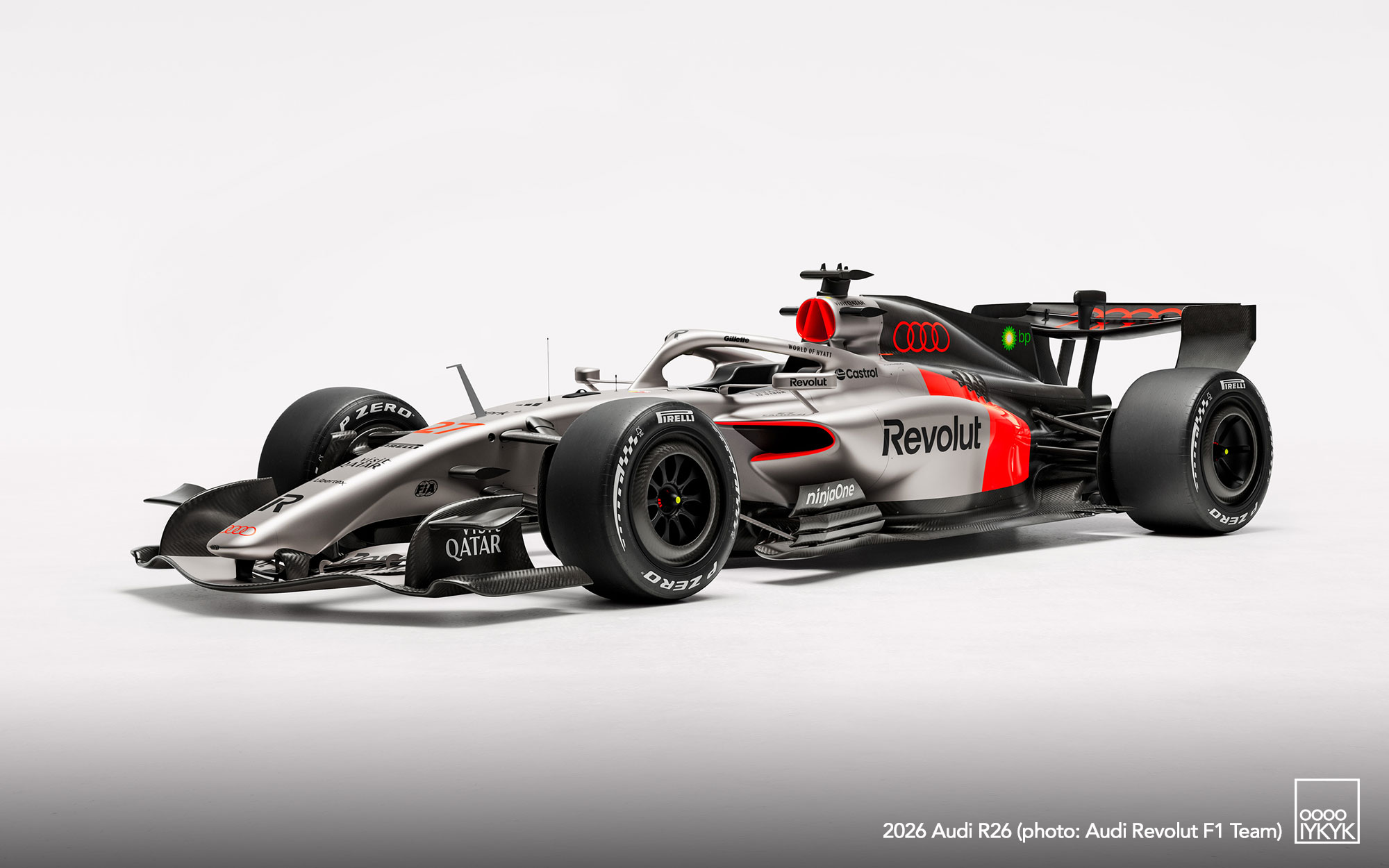

/Eras/Audi Sport Competition Cars R Era /Audi R26
MODEL DETAILS
What: Audi R26 F1
Series: Formula 1
Class: FIA Formula 1
Era: Audi Sport & Competition R Era
Model Family: N/A
Market / Zone: Global
Season: 2026
Model / Generation Code(s): R26
Chassis / Matrix: N/A
Related: Audi R26 Concept
SUMMARY
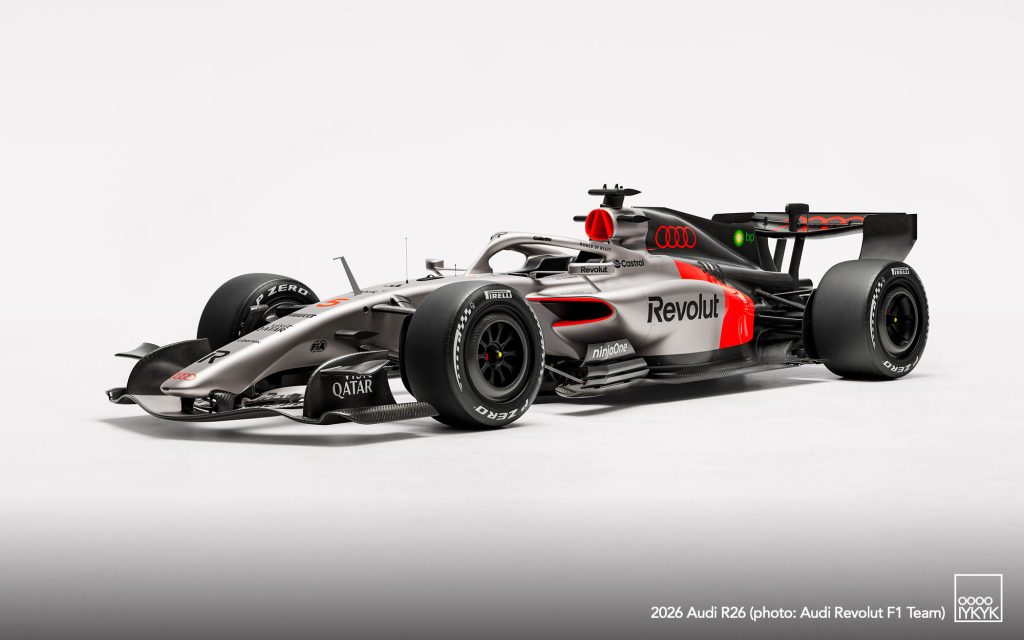
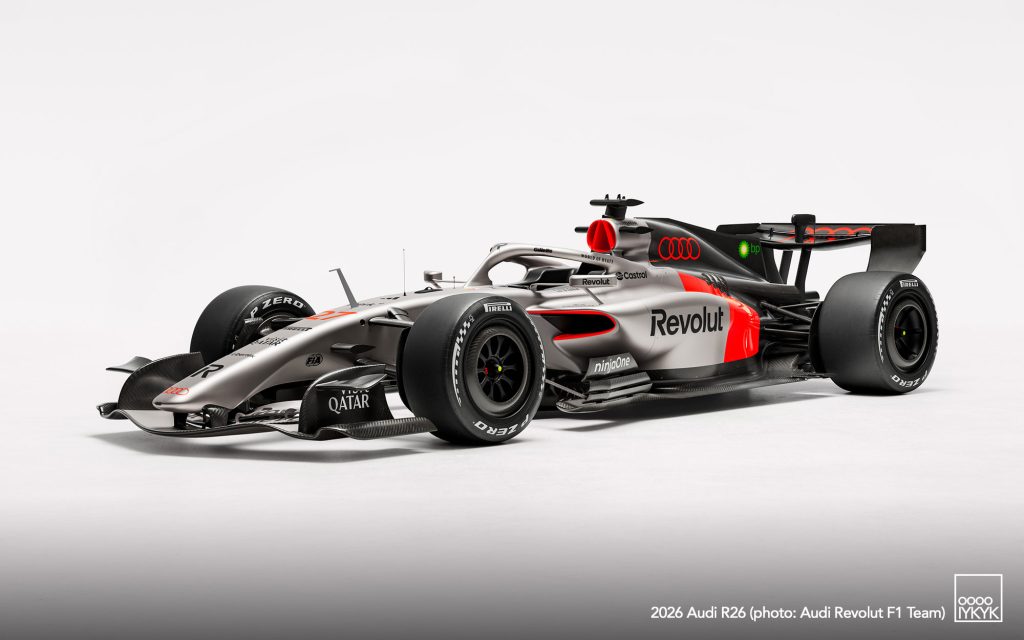
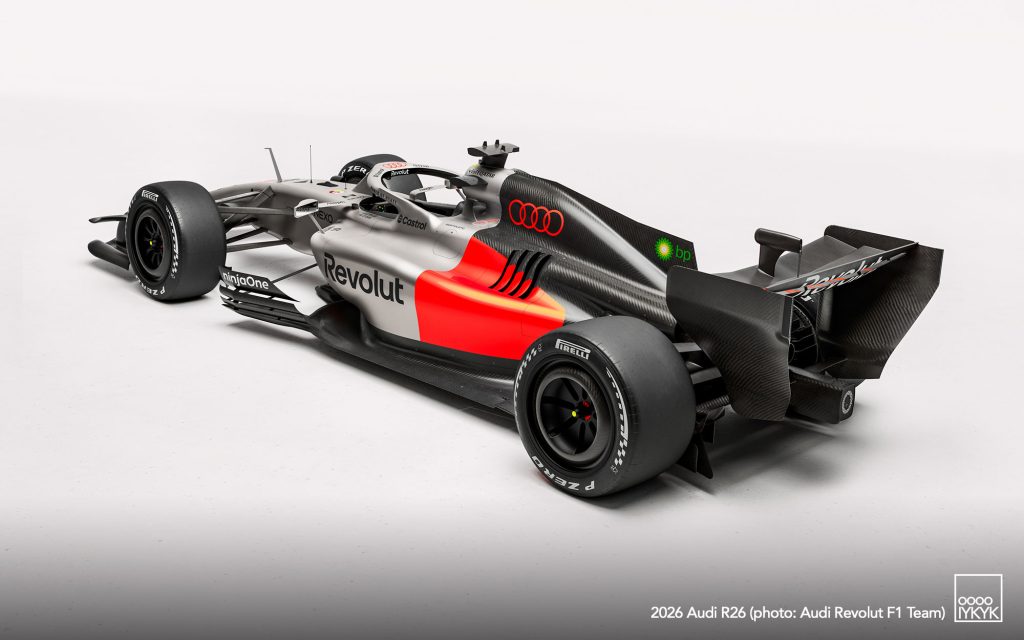
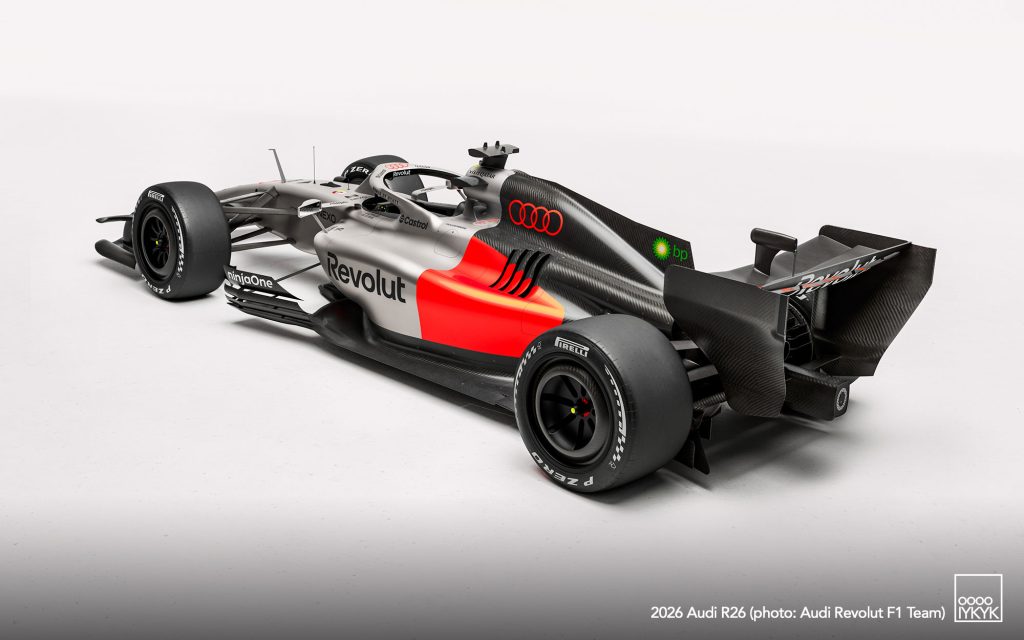
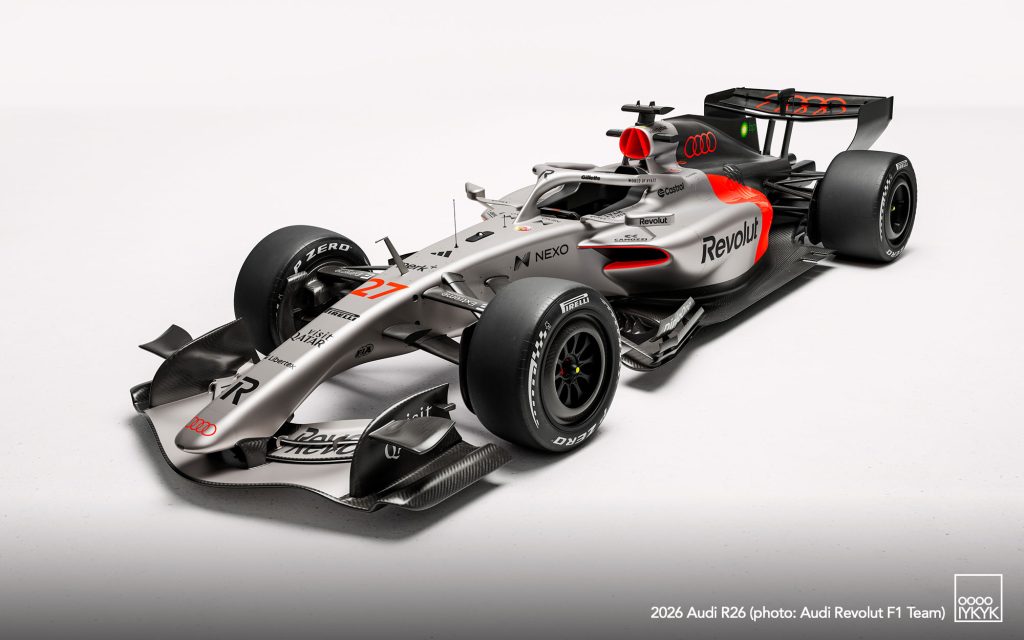
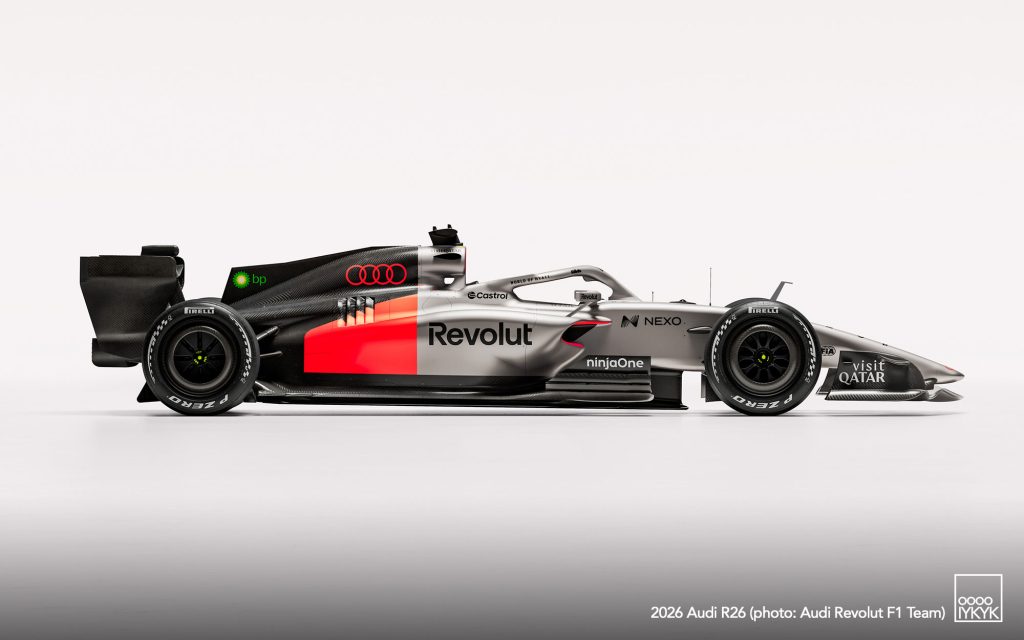
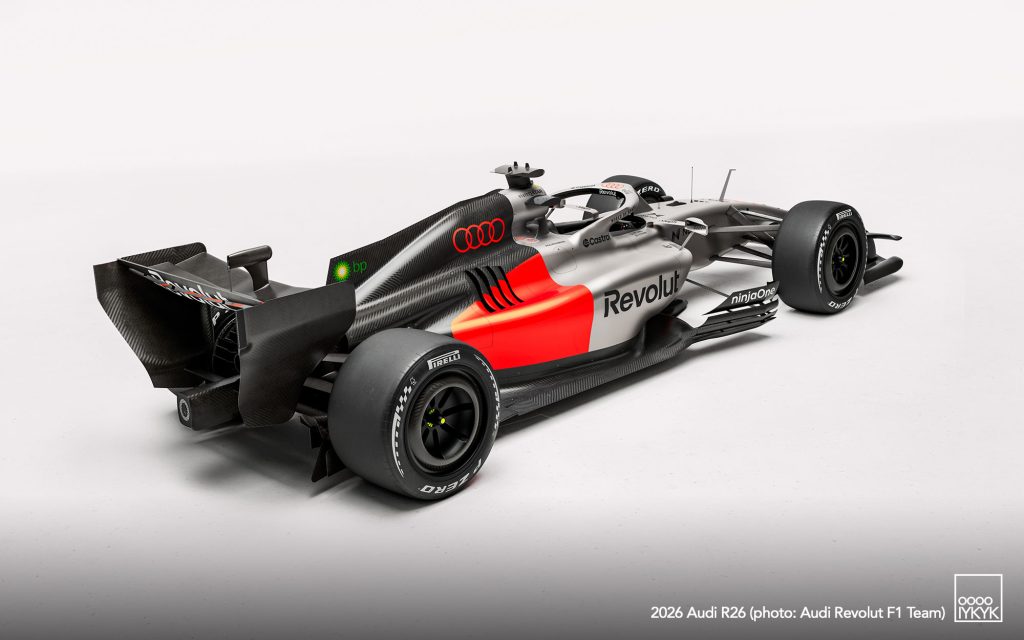
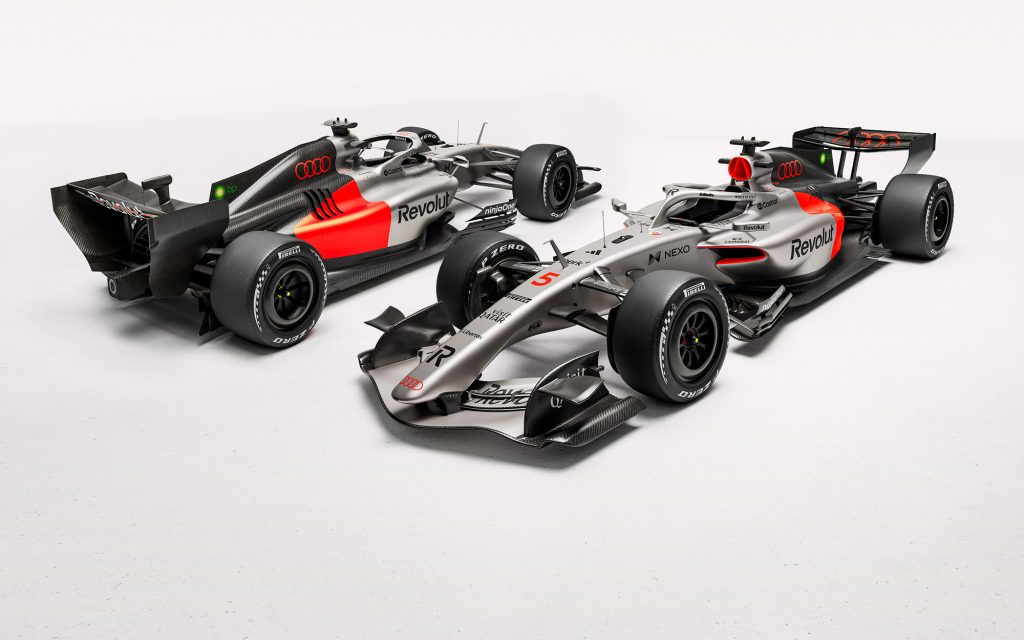
The Audi R26 is a Formula One car developed by the Audi factory team for the 2026 FIA Formula One World Championship season. It is the first Grand Prix car built entirely under Audi’s works Formula One program and the first to comply with the sport’s sweeping 2026 technical regulations, which introduced major changes to aerodynamics, vehicle weight and hybrid power unit architecture. The R26 represents Audi’s entry into Formula One as a full constructor, combining chassis operations in Switzerland with German-developed powertrain technology.
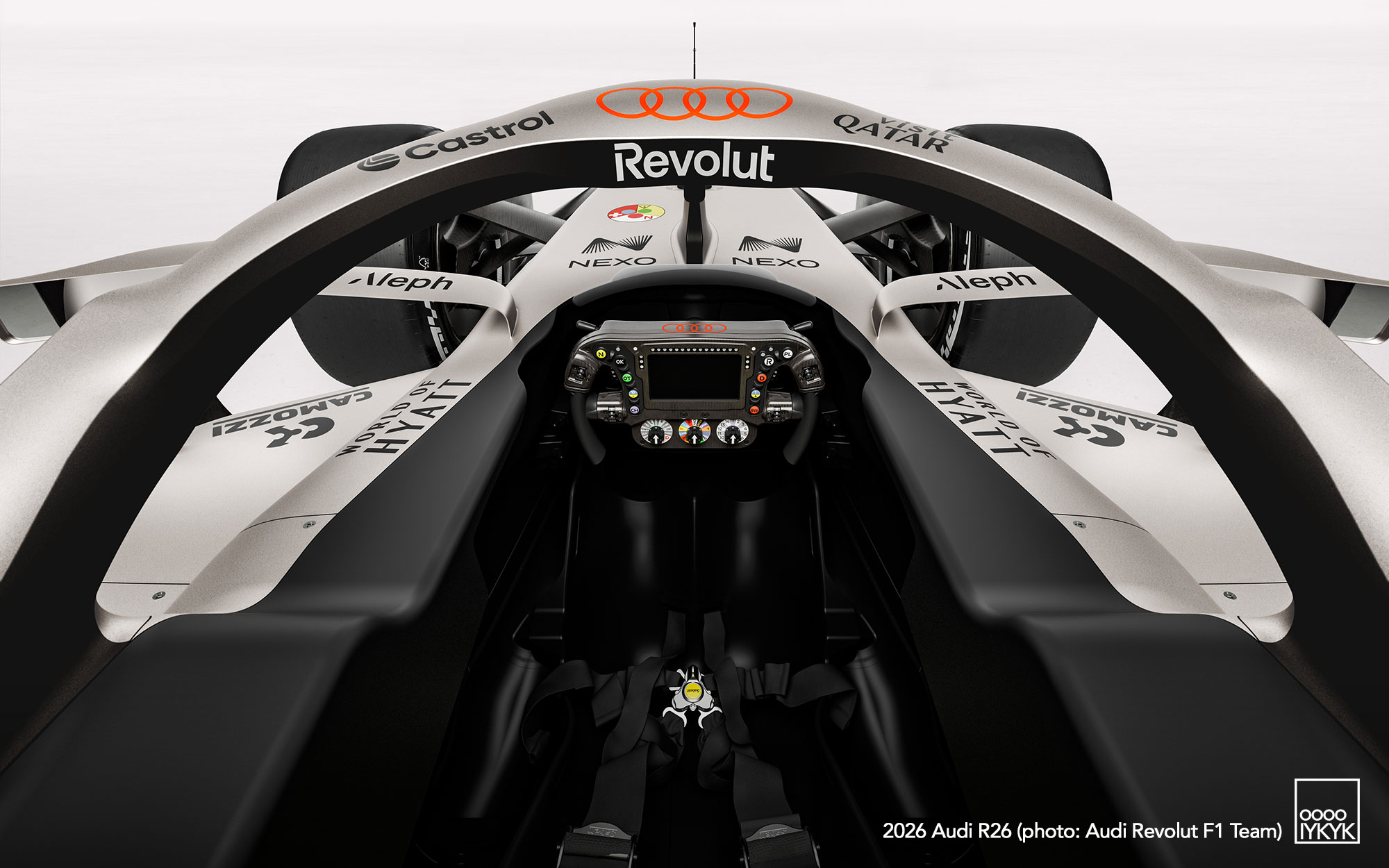
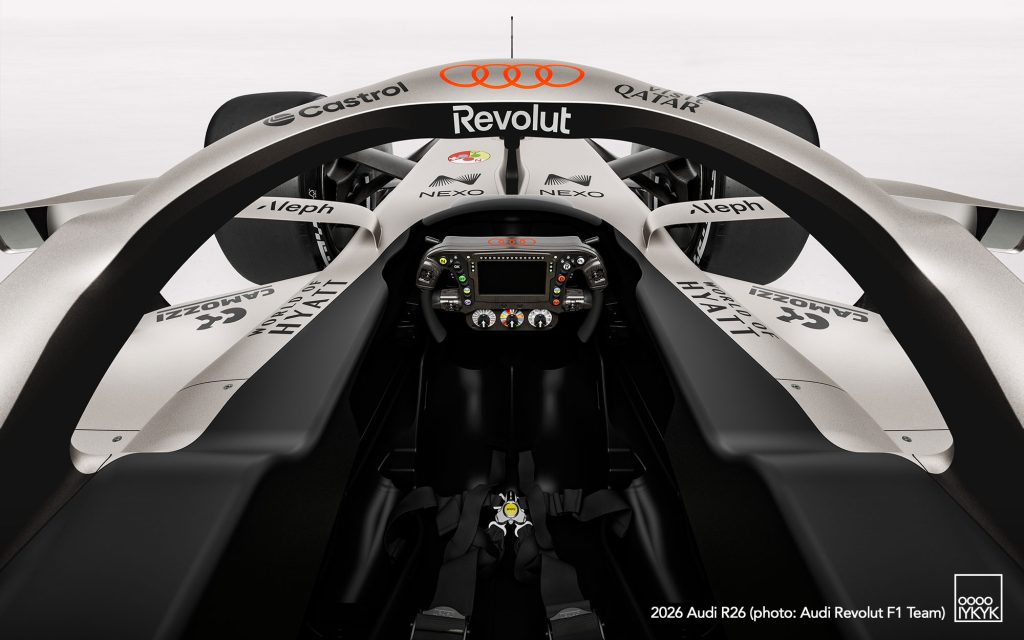
The car is built around a moulded carbon-fibre composite survival cell incorporating an ATL fuel cell bladder. Safety provisions include an intrusion-protected monocoque, front, side and rear impact-absorbing crash structures, a principal roll structure and the halo secondary roll structure. For 2026, FIA safety standards were further strengthened, including more demanding roll hoop load tests and revised front impact structures designed to better manage secondary collisions. The cockpit houses a bespoke carbon-fibre seat and a Sabelt six-point safety harness.
DESIGN & AERODYNAMICS
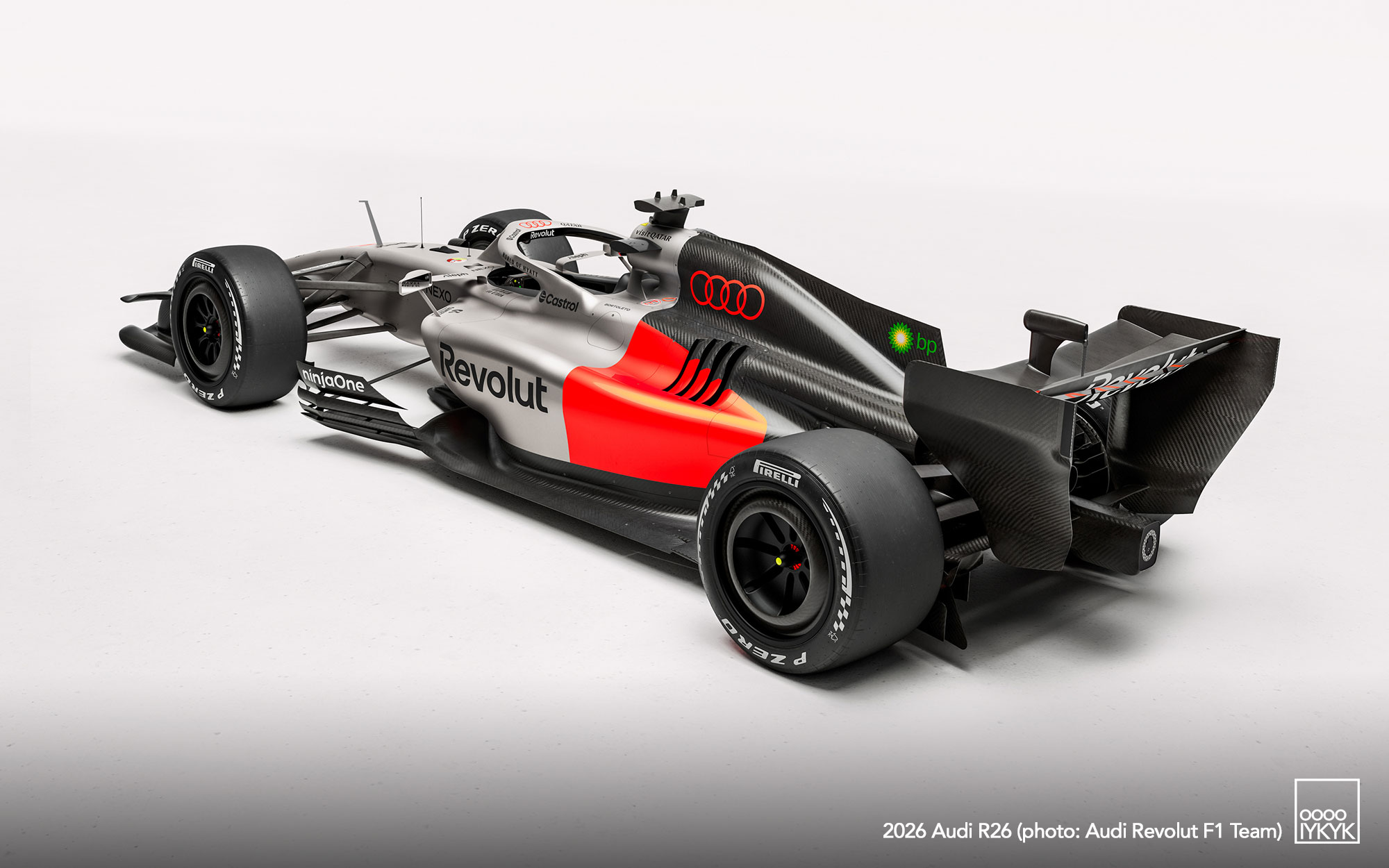
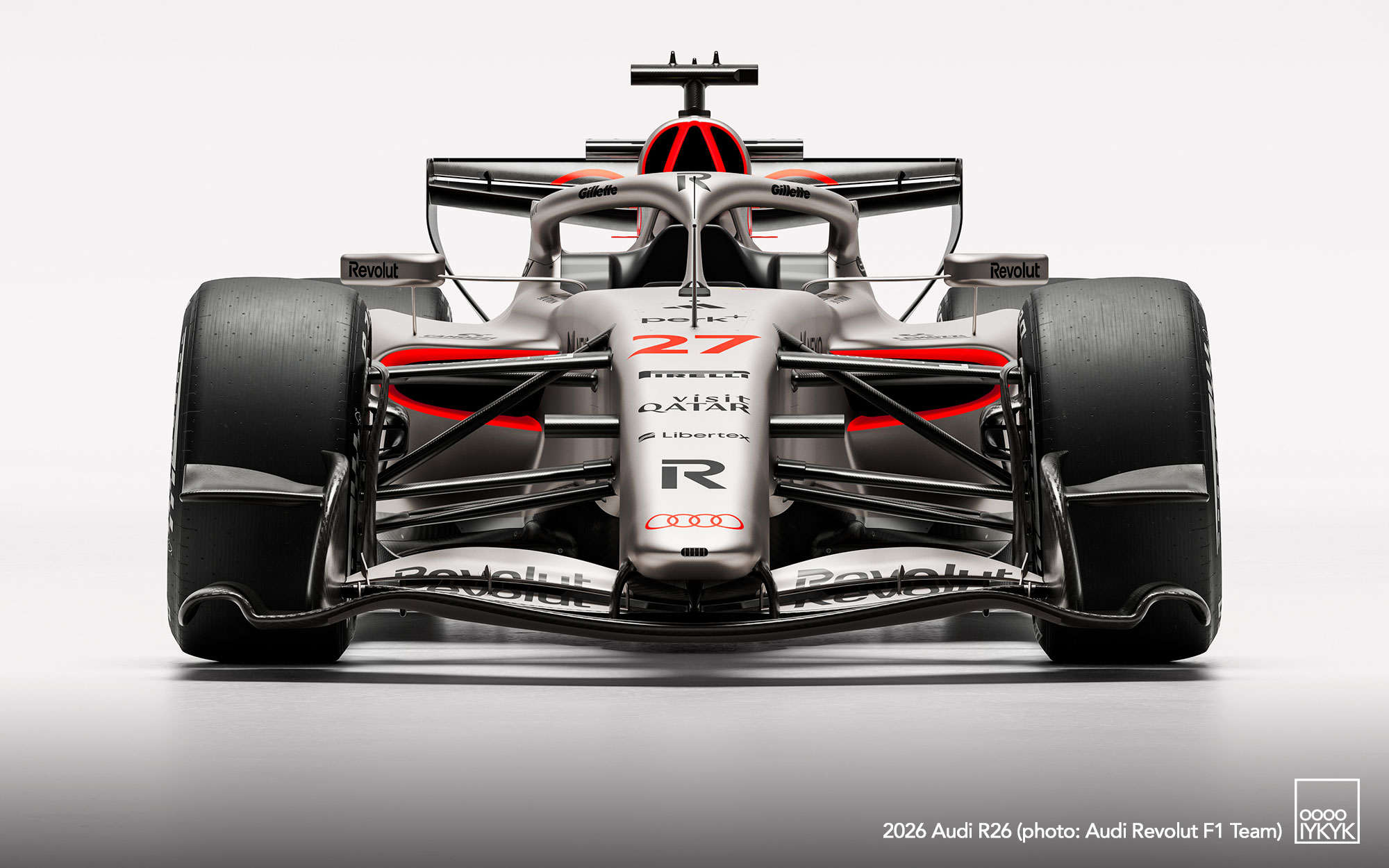
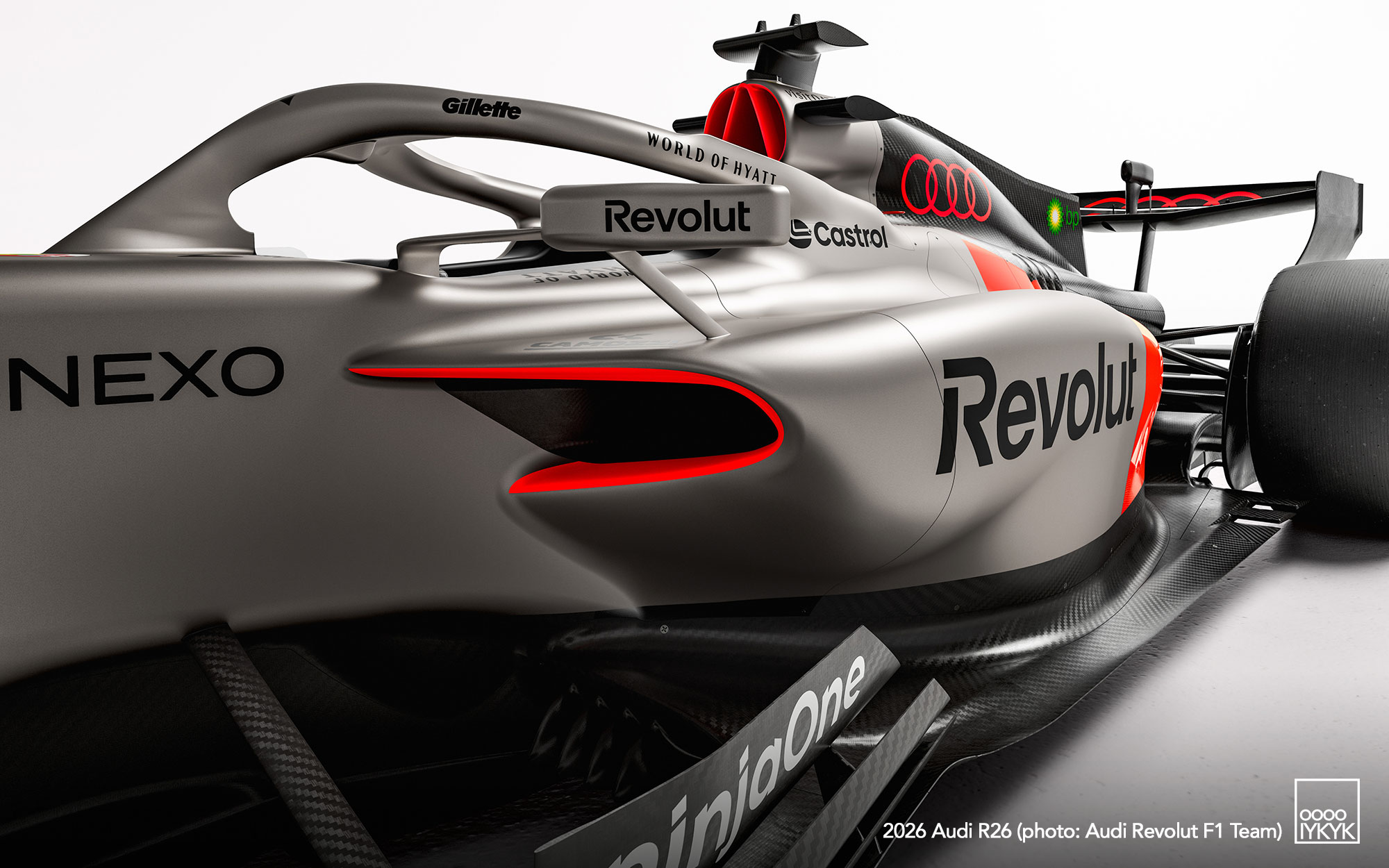
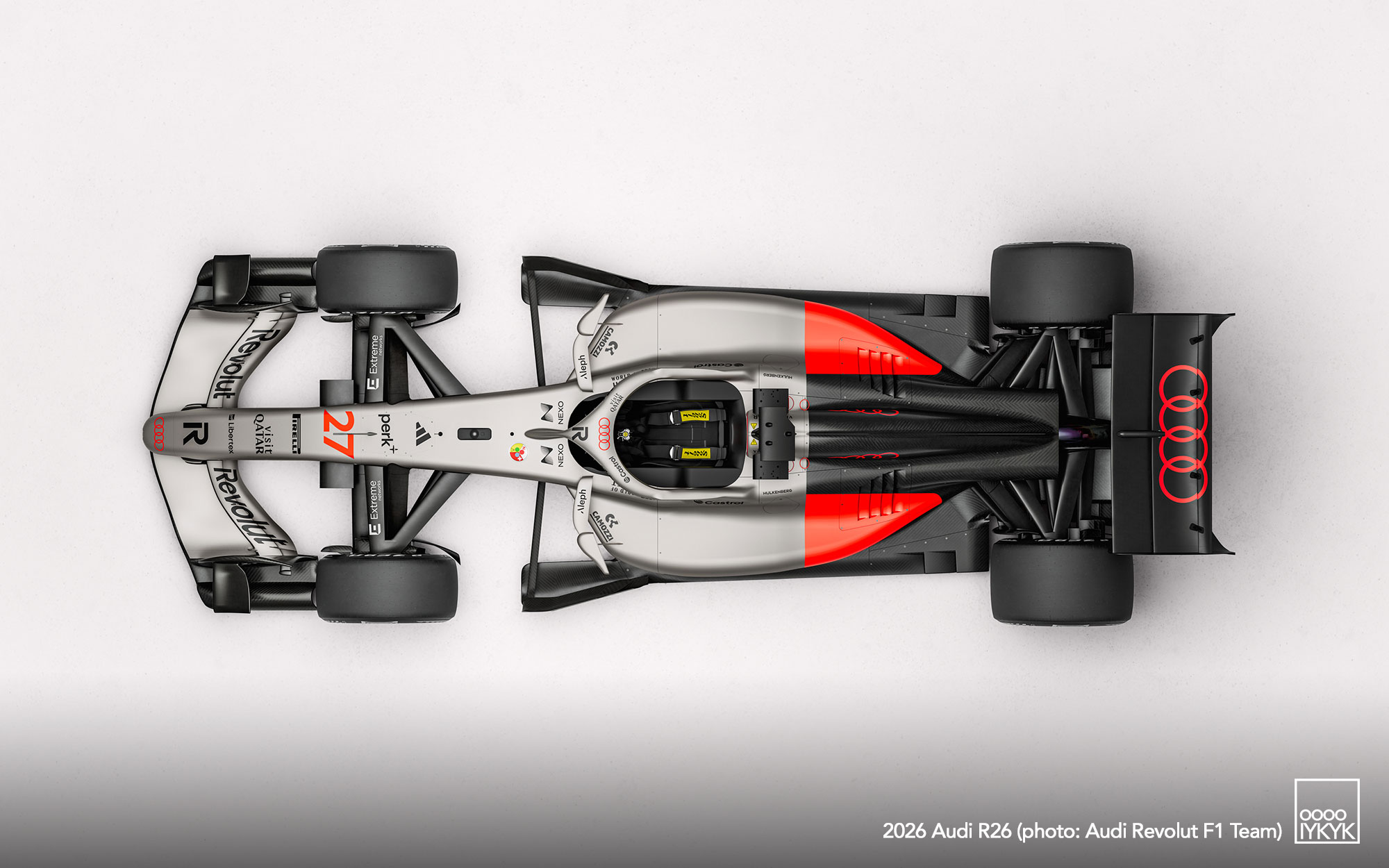
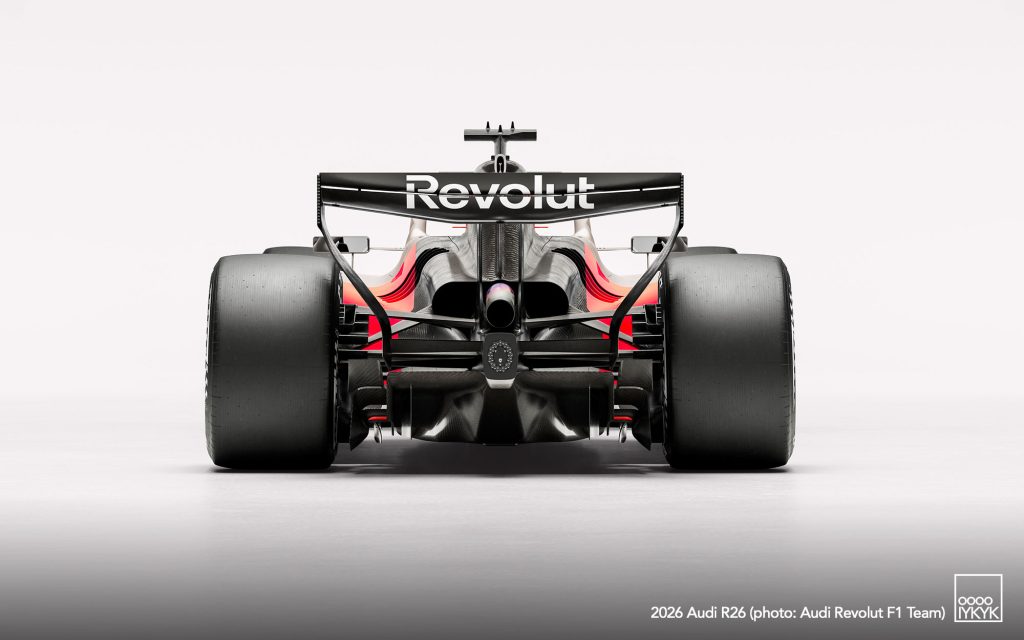
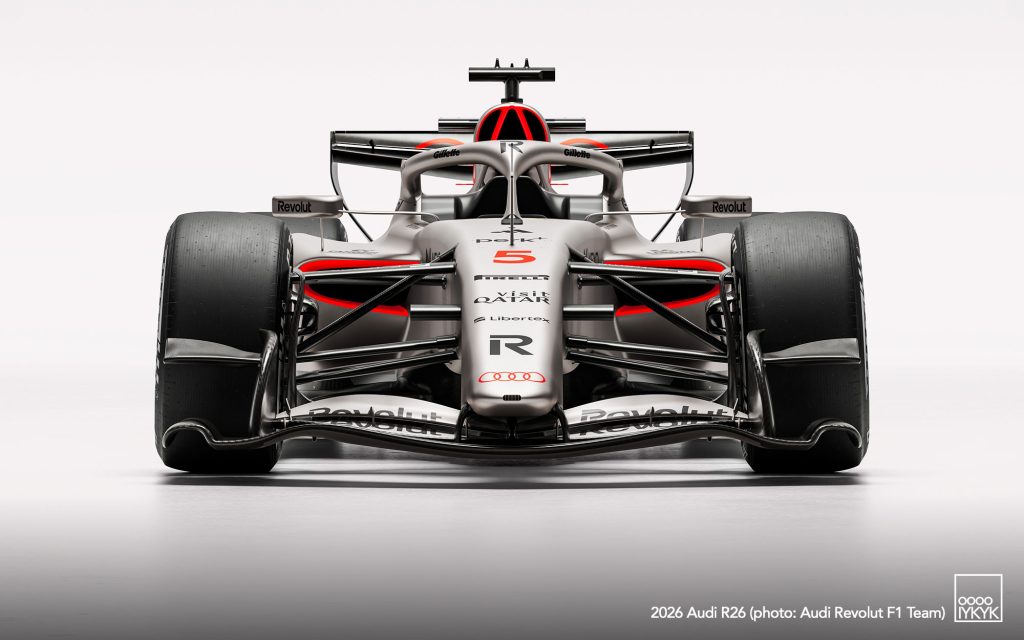
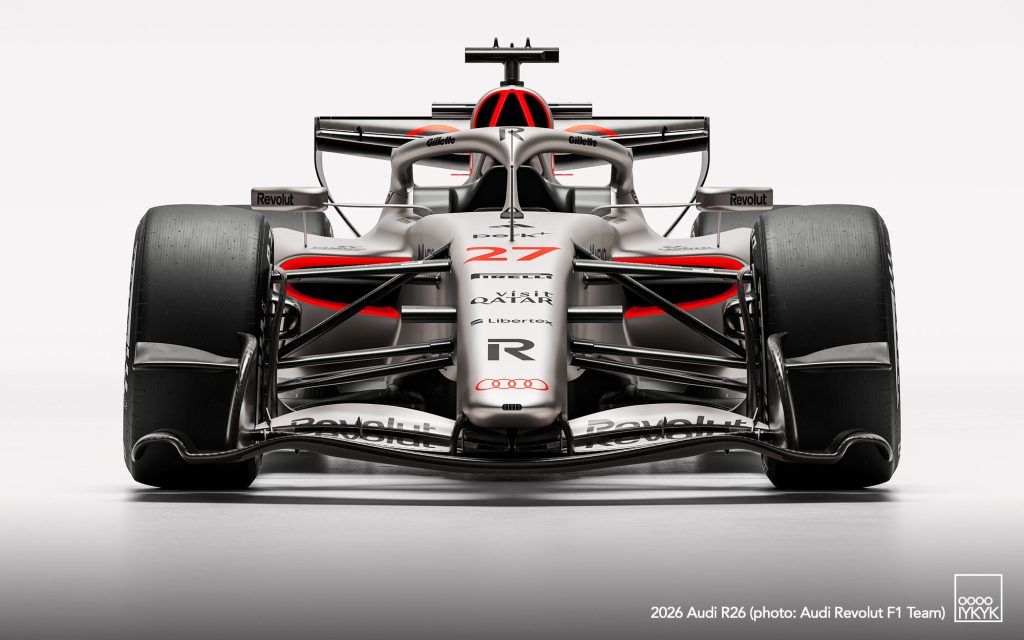
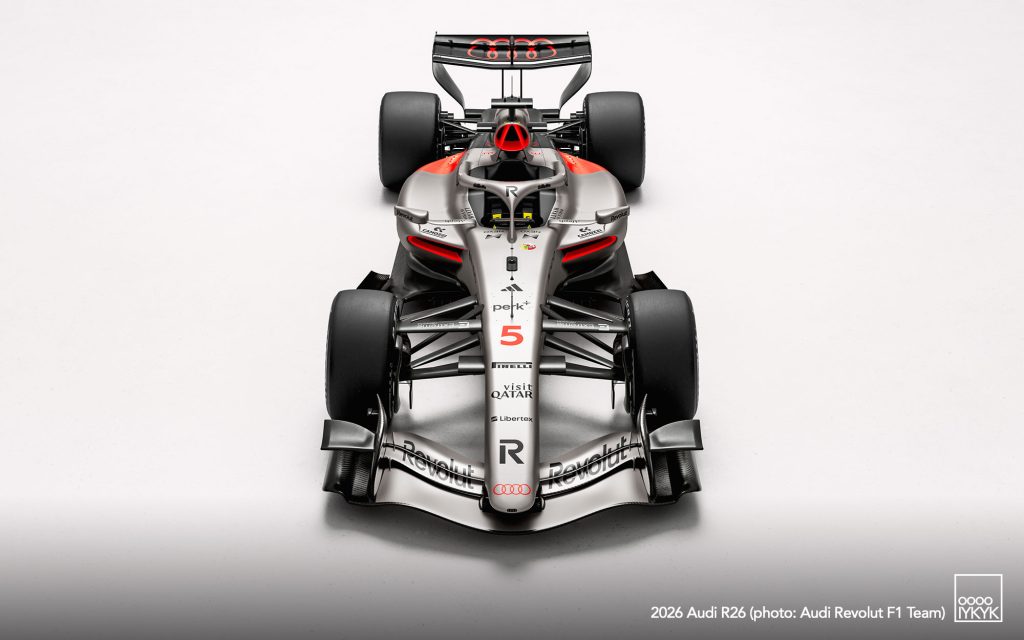
The R26 was designed under Formula One’s new 2026 chassis philosophy, which aims to produce lighter, more agile cars that can follow each other more closely. Ground-effect Venturi tunnels used from 2022 to 2025 were eliminated in favor of a flatter floor concept with a larger diffuser, reducing peak downforce and sensitivity to turbulent air. Simplified front wings with fewer elements and revised endplate geometry are intended to limit outwash, while the rear beam wing was removed.
A key feature of the 2026 rules is the introduction of active aerodynamics. The R26 uses moveable front and rear wing elements that switch between high-downforce “corner mode” and low-drag “straight mode.” Unlike the previous Drag Reduction System (DRS), these systems are available throughout the lap in designated operating states and are electronically managed to maintain aerodynamic balance.
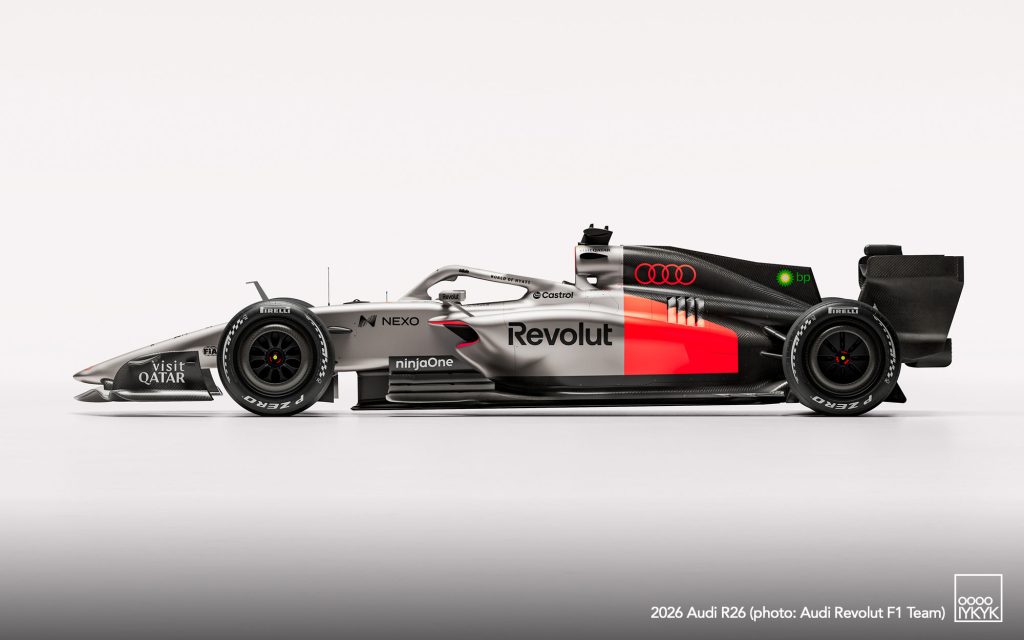
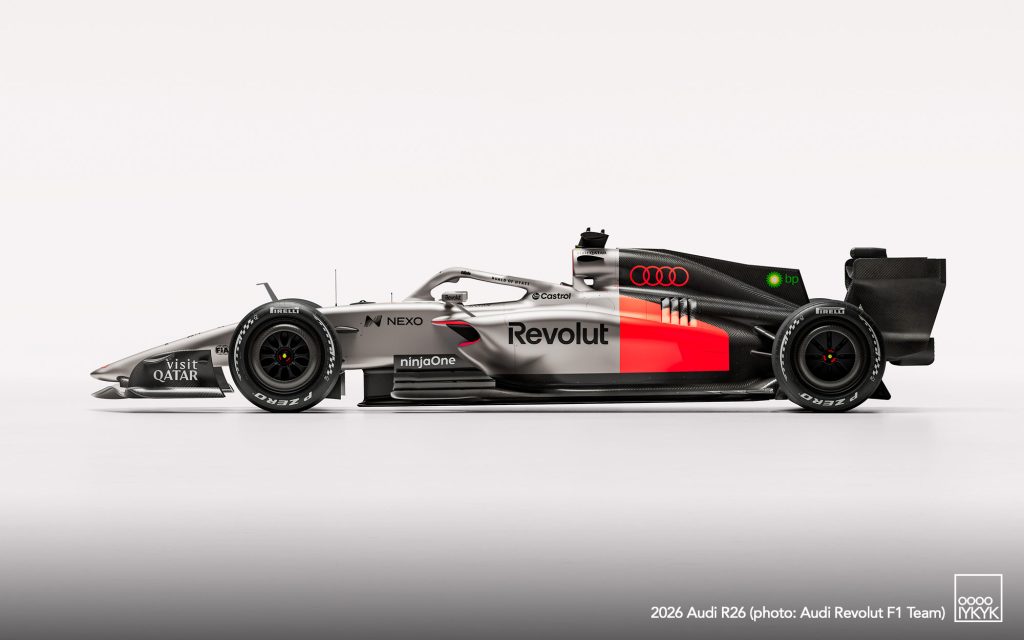
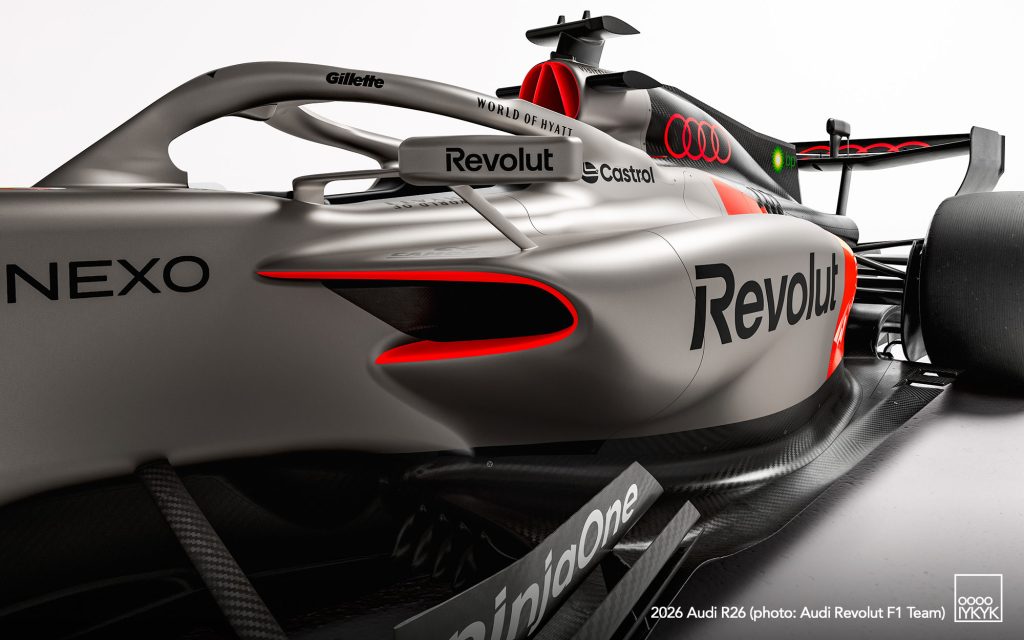
Bodywork components including the front wing, nose, sidepods, engine cover, floor and rear wing are manufactured from carbon-fibre composite. The overall shape reflects the regulation-driven reduction in car dimensions, including a shorter wheelbase and narrower floor compared with the previous generation.
CHASSIS & RUNNING GEAR
Front and rear suspension both use carbon-fibre double wishbones with pushrod-actuated inboard torsion springs, rockers and Öhlins damper units. Braking is handled by carbon self-ventilating Brembo discs with monobloc calipers, while an electronic brake-by-wire system controls rear brake balance. Steering is via a power-assisted rack-and-pinion system operated through a customised carbon-fibre steering wheel.
The R26 runs on 18-inch APP Tech magnesium wheels fitted with Pirelli tyres, which are narrower than those used under the previous regulations in support of reduced drag and lower vehicle mass.
Electronics are FIA-specified, including the standard ECU. Drivers manage multiple hybrid deployment and recharge modes during a race, including standard energy recovery, a defensive “boost” function and an additional overtaking energy deployment mode when running close to another car.
CAR SPECIFICATIONS
Survival Cell: Audi Revolut F1 Team moulded carbon-fibre composite structure with ATL fuel cell bladder
Safety Structures: Intrusion-protected monocoque, front, side and rear impact structures, roll hoop, halo
Cockpit: Bespoke carbon-fibre seat, Sabelt six-point harness
Bodywork: Carbon-fibre composite aerodynamic components with active front and rear wings
Front Suspension: Double wishbone, pushrod, inboard torsion springs, rockers, Öhlins dampers
Rear Suspension: Double wishbone, pushrod, inboard torsion springs, rockers, Öhlins dampers
Brake System: Brembo carbon discs, monobloc calipers, rear brake-by-wire
Steering System: Power-assisted rack and pinion
Electronics: FIA-approved electronics with standard ECU
Power Unit: AFR 26 Hybrid
Energy Recovery System: MGU-K based hybrid system
Gearbox: Audi Revolute F1 Team carbon-fibre case, 8 forward gears + reverse
Gear Selection: Sequential semi-automatic
Clutch: Carbon composite
Wheels: 18-inch APP Tech magnesium
Tires: Pirelli
DIMENSIONS & WEIGHT
Overall Length: 5,440 mm
Overall Width: 1,900 mm
Overall Height: 980 mm
Wheelbase: up to 3,400 mm
Minimum Weight: 768 kg (FIA regulation target for 2026 cars)
POWER UNIT
The R26 is powered by the Audi AFR 26 Hybrid power unit, developed at Audi’s Neuburg an der Donau facility in Germany. It conforms to the 2026 Formula One regulations, which retain a 1.6-litre turbocharged V6 but dramatically increase the electrical contribution to overall performance while eliminating the MGU-H.
Configuration: 90° V6
Displacement: 1,600 cc
Bore × Stroke: 80 mm × 53 mm
Valves: 4 per cylinder
Turbocharging: Single turbine and compressor
Fuel Energy Flow Limit: 3,000 MJ/h
Fuel Injection: 350-bar direct injection
Fuel Type: Advanced sustainable fuel (developed with bp)
Under the 2026 rules, power output is split roughly evenly between internal combustion and electric systems, making the hybrid system a central performance factor.
ENERGY RECOVERY SYSTEM
Architecture: Hybrid ERS with MGU-K (MGU-H deleted under 2026 rules)
Energy Store: Lithium-ion battery, minimum 35 kg
Maximum Energy Deployment: 4 MJ per lap
MGU-K Maximum Power: 350 kW (470 hp)
MGU-K Maximum Speed: 60,000 rpm
The ERS is capable of recovering significantly more energy per lap than previous systems. Drivers can deploy electrical energy tactically using standard deployment, defensive boost and an additional overtaking mode when running within range of another car.
DEVELOPMENT & OPERATIONS
Audi began developing its Formula One powertrain program in 2022 at Neuburg an der Donau, which serves as the company’s dedicated F1 power unit center. The site is responsible for the internal combustion engine, ERS, control electronics and gearbox, forming a fully integrated powertrain program. Extensive use of simulation and test-bench running supported development prior to the first permitted on-track tests in 2026.
Chassis design and assembly of the R26 take place at the team’s main Formula One factory in Hinwil, Switzerland, which also coordinates race operations. A technology center in Bicester, United Kingdom, supports recruitment and engineering collaboration within the British motorsport sector. The three locations operate as an integrated factory-team structure, aligning chassis and power unit development under the 2026 ruleset.
FORMULA ONE DEBUT
The Audi works team is scheduled to debut the R26 during pre-season testing ahead of the 2026 Formula One World Championship, with initial closed running followed by official tests in Spain and Bahrain before the season-opening Australian Grand Prix. The R26 marks Audi’s first full factory entry into modern Formula One and its introduction into the sport’s new hybrid and sustainability-focused era.
PHOTO GALLERY
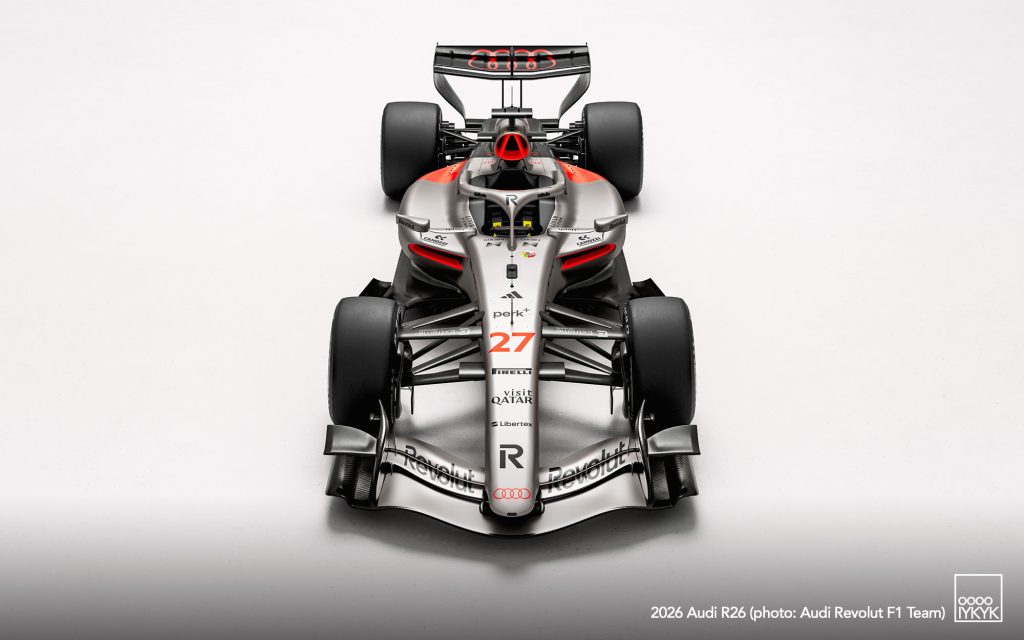
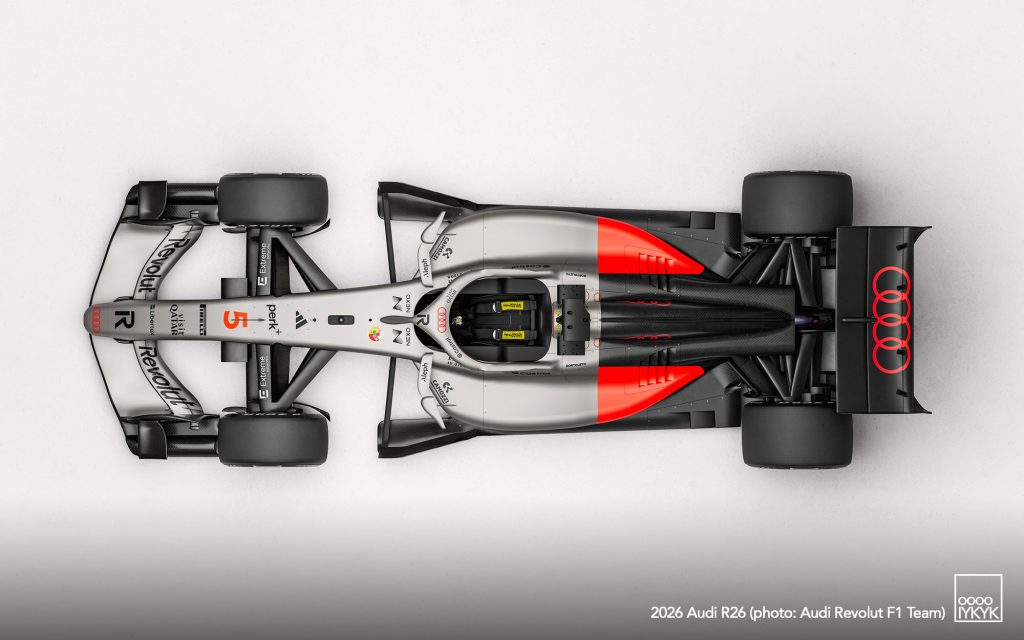
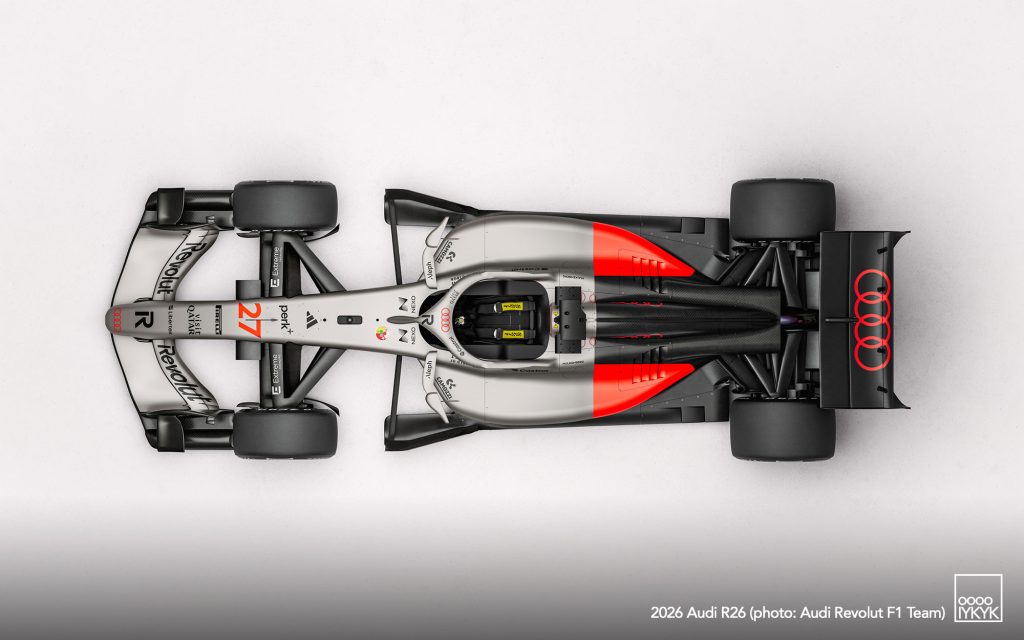
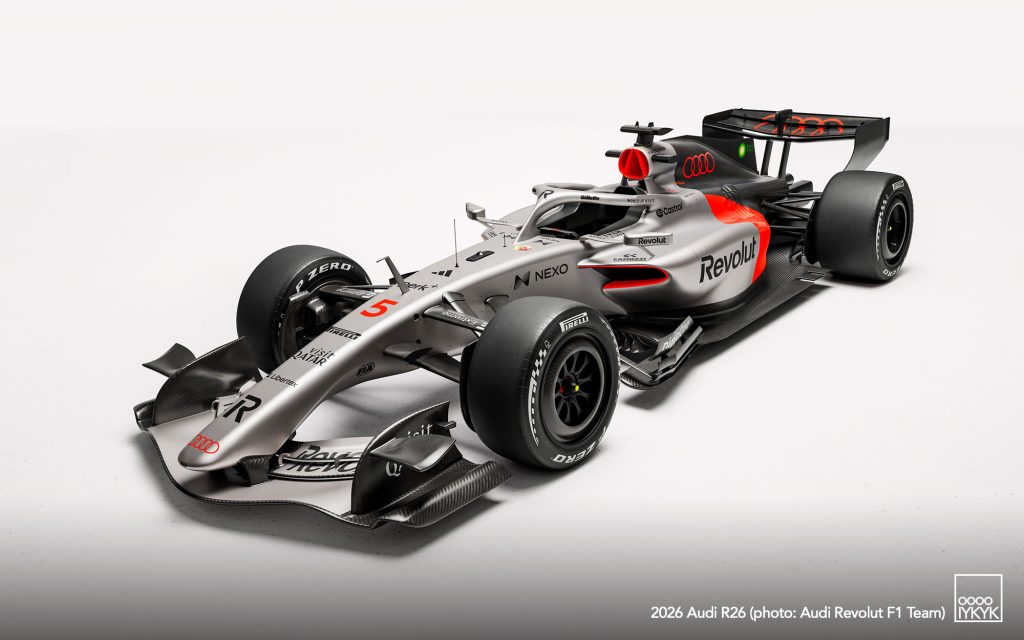
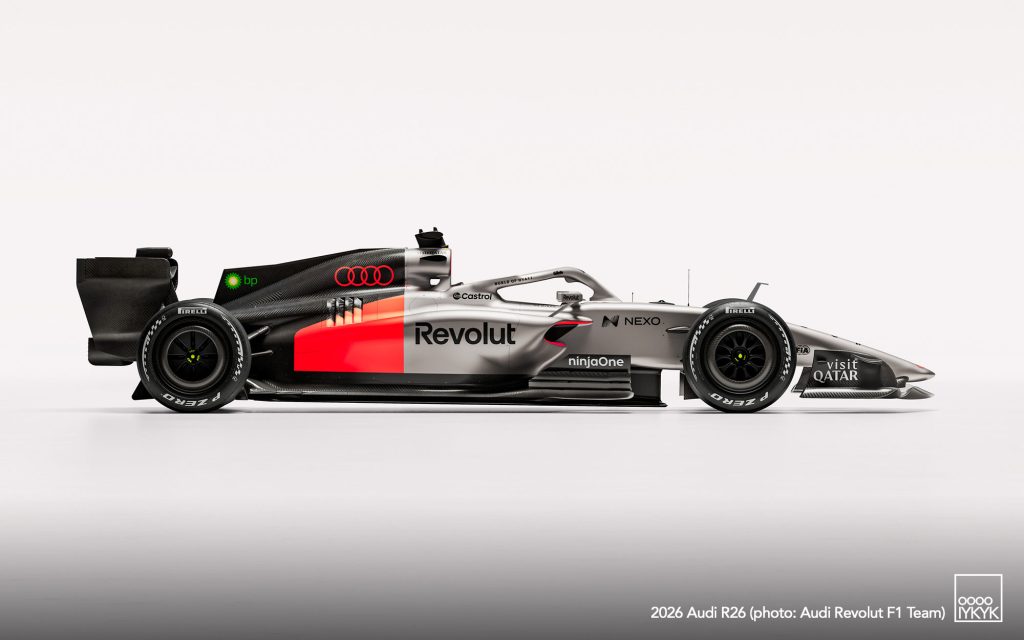
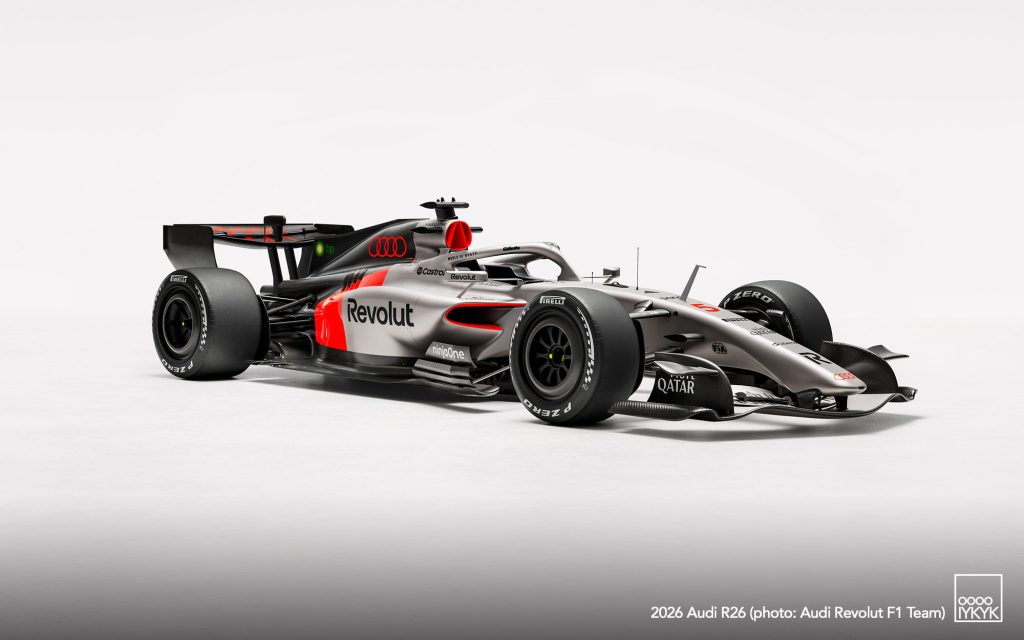
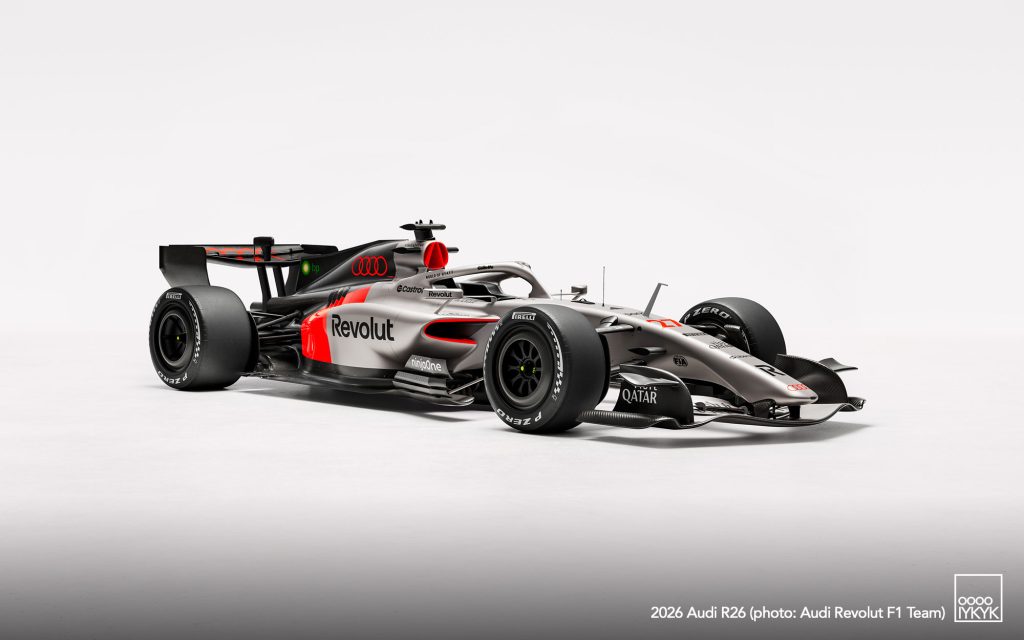
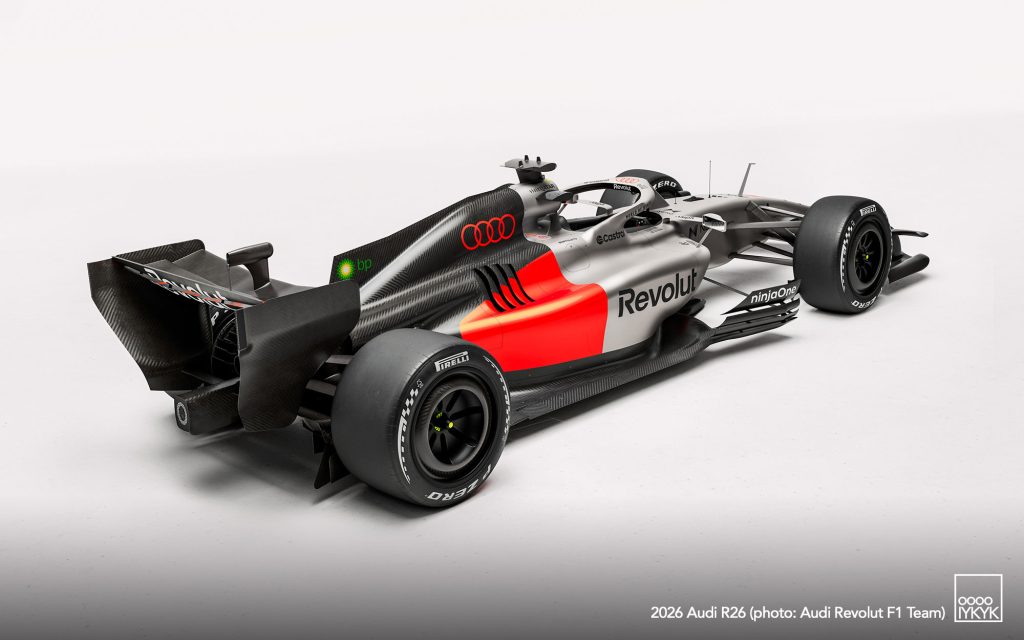
CAR SPECIFICATIONS
| Survival cell | Audi Revolut F1 Team moulded carbon fibre composite structure incorporating ATL fuel cell bladder |
| Safety Structures | Intrusion protected monocoque, impact absorbing front, side and rear structures, principal roll structure (roll hoop), secondary roll structure (halo) |
| Cockpit | Bespoke carbon fibre composite seat, Sabelt 6-point safety harness |
| Bodywork | Key bodywork components made from carbon fibre composite such as front wing, nose, sidepods, engine cover, floor and rear wing |
| Front Suspension | Carbon fibre double wishbone, pushrod-activated inboard torsion springs, rockers and Öhlins damper units |
| Rear Suspension | Carbon fibre double wishbone, pushrod-activated inboard torsion springs, rockers and Öhlins damper units |
| Brake System | Carbon self-ventilating Brembo brake discs (front and rear) and electronic control hydraulic system for the rear brakes (Brake by Wire). Brembo monobloc calipers in nickel-plated aluminum alloy machined from solid (front and rear). Brembo tandem master cylinder (with action on front and rear). |
| Steering System | Power-assisted rack and pinion, customised carbon fibre steering wheel |
| Electronics | FIA approved electronics, electrical system including FIA standard ECU |
| Power Unit | AFR 26 Hybrid |
| Energy Recovery System | AFR 26 Hybrid. Energy recovery system via electrical Motor Generator Unit MGU-K |
| Gearbox | Audi Revolute F1 Team carbon fibre maincase with cassette containing eight forward speeds and one reverse |
| Gear Selection | Sequential, semi-automatic |
| Clutch | Carbon composite |
| Wheels | 18” APP Tech magnesium wheels |
| Tyres | Pirelli |
DIMENSIONS
| Overall Length | 5440mm |
| Overall Width | 1,900 mm |
| Overall Height | 980 mm |
| Wheelbase | ≤3,400 mm |
| Weight | 770kg |
AUDI POWER UNIT
| Configuration | 90° V6 |
| Displacement | 1,600 cc |
| Bore | 80 mm |
| Stroke | 53 mm |
| Valves | 4 per cylinder |
| Turbo Charging | Single turbine and compressor |
| Max Fuel Energy Flow | 3000 MJ/h |
| Injection | 350 bar – direct |
AUDI ENERGY RECOVERY SYSTEM
| Architecture | Hybrid energy recovery system via electrical Motor Generator Unit, MGU-K |
| Energy Store | Lithium-Ion battery, ≥35kg |
| Max Energy Deployment | 4 MJ |
| MGU-K Max Power | 350 kW (470hp) |
| MGU-K Max RPM | 60,000 rpm |