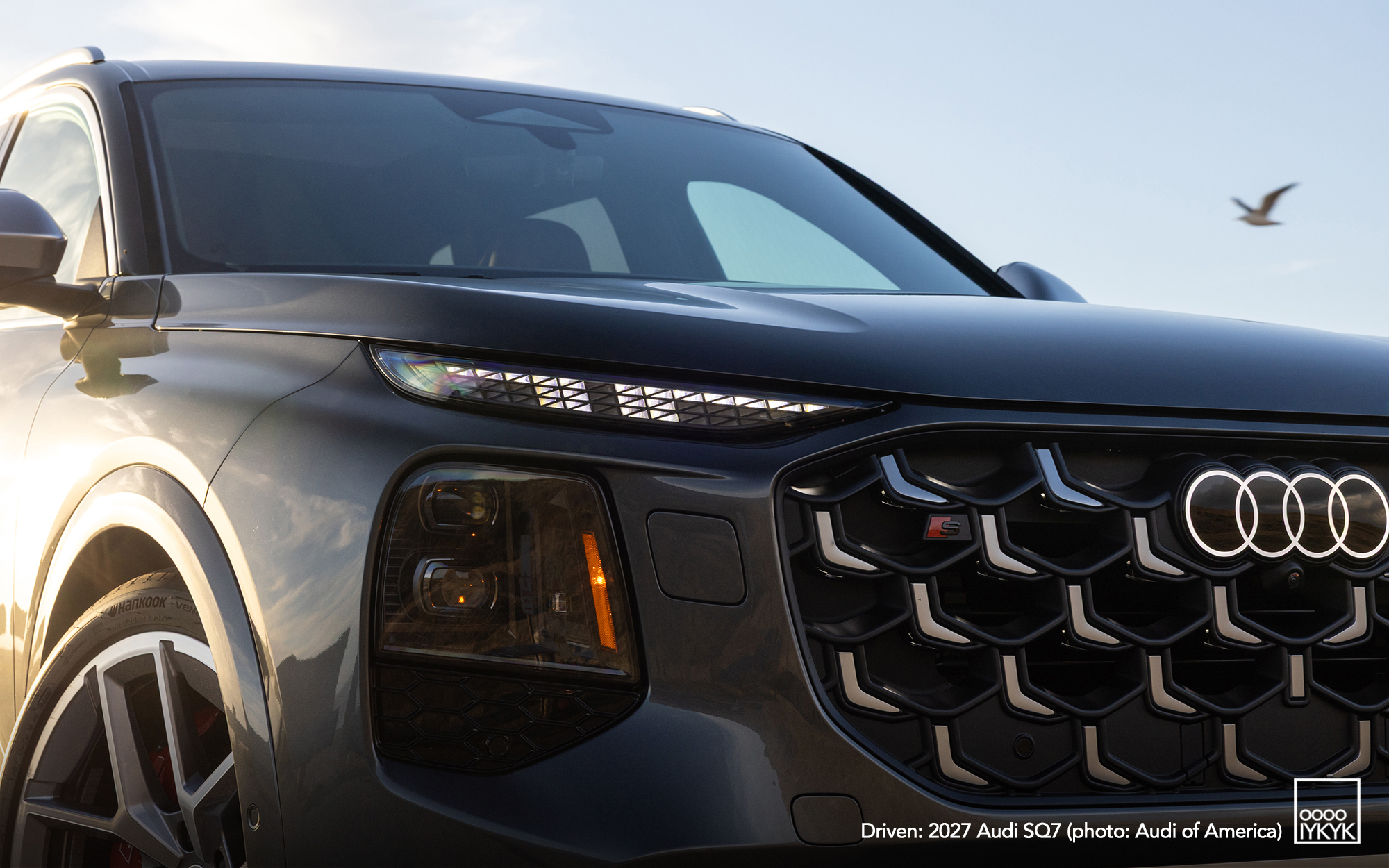

by: Denis Podmarkov, contributing writer
Healdsburg, Calif. — When Audi first dipped a toe into the SUV waters, it did so with a concept called the Pikes Peak quattro. Paying tribute to the iconic American hill climb seemed fitting given the American roots of the SUV. Those roots run even deeper when you consider where we are today. As Europe moves toward EVs, Audi has developed a big new combustion-powered SUV with a lineup tailored to the American market.
The formula is simple – a next-generation version of Audi’s Q7 and SQ7 based on the latest iteration of the brand’s luxury platform with longitudinally-oriented drivetrain known as Premium Platform Consumption (PPC). While Europe gets a Q7 TDI with mild-hybrid tech, the U.S. gets two engines with familiar RS credentials. The Q7 uses a 2.9 TFSI twin-turbo V6 familiar from the B9 RS 5, while the SQ7’s 4.0 TFSI twin-turbo V8 matches the original RS Q8 at 591 hp and 590 lb-ft. Audi of America is leaning into the kind of performance that owners of earlier Q7s and SQ7s could only dream of. Add in improved driver assistance, Matrix LED headlights and available captain’s chairs, and you get a sense of how seriously Audi takes this segment.
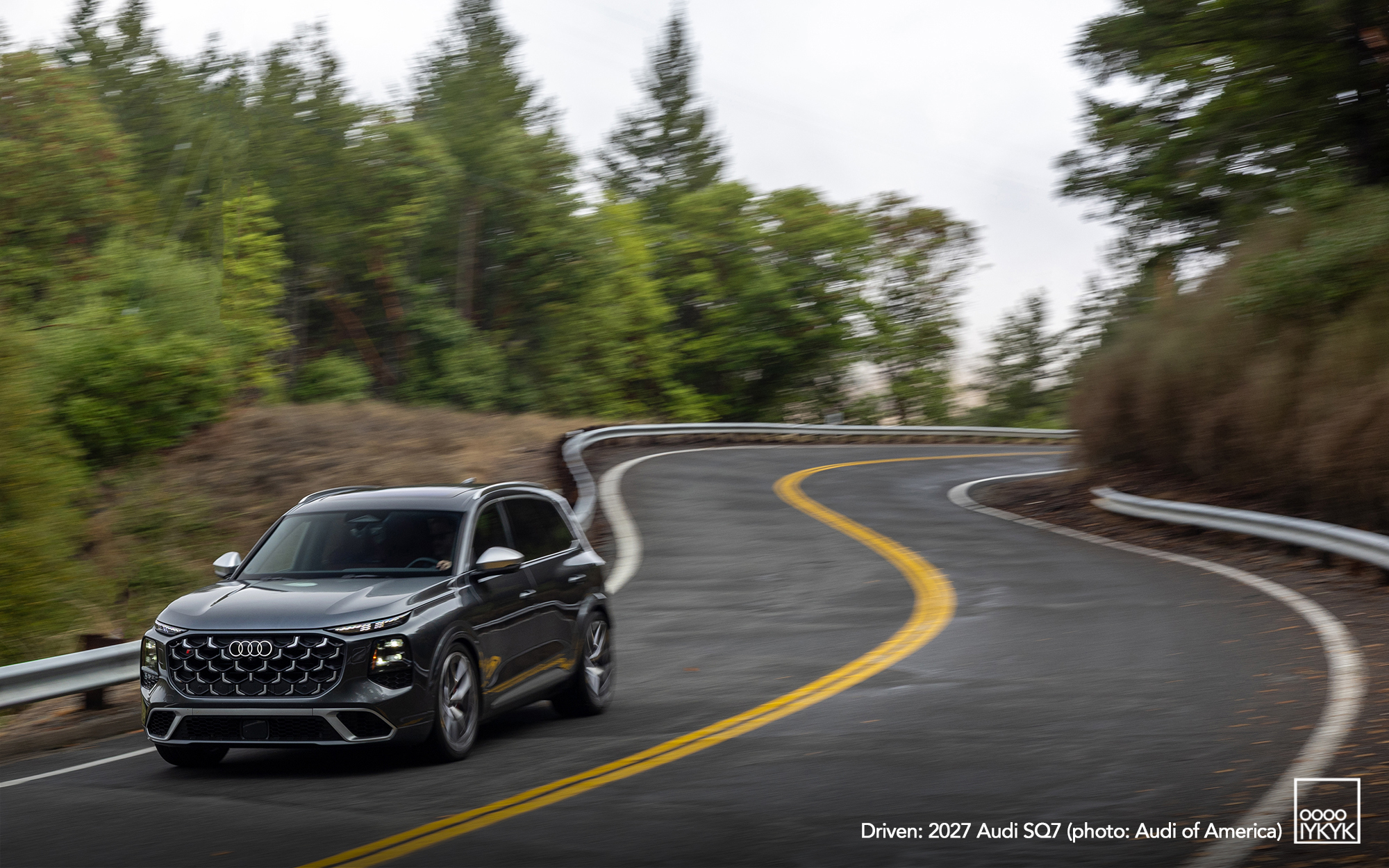
After a few days behind the wheel of the new Q7 and SQ7, I came away with a simple conclusion. These new models are good. Like, really good. We’ll get to the rest of the specs in a bit, but the Q7 might be the move for your next family hauler. For an idea of what Audi has in mind, look to its recent TV spot, which follows Michèle Mouton and her family on a road trip up Pikes Peak.
A long way from Colorado, the winding roads around Healdsburg, in California wine country, gave me plenty of room to get a feel for both SUVs. Most owners are more likely to be on a Costco run than a hill climb, but those roads made sense given the theme of the launch. Audi of America calls the campaign Performance Runs in the Family, and the idea is that the same SUV can handle a Costco run, a family road trip up Pikes Peak or a spirited weekend drive through wine country.
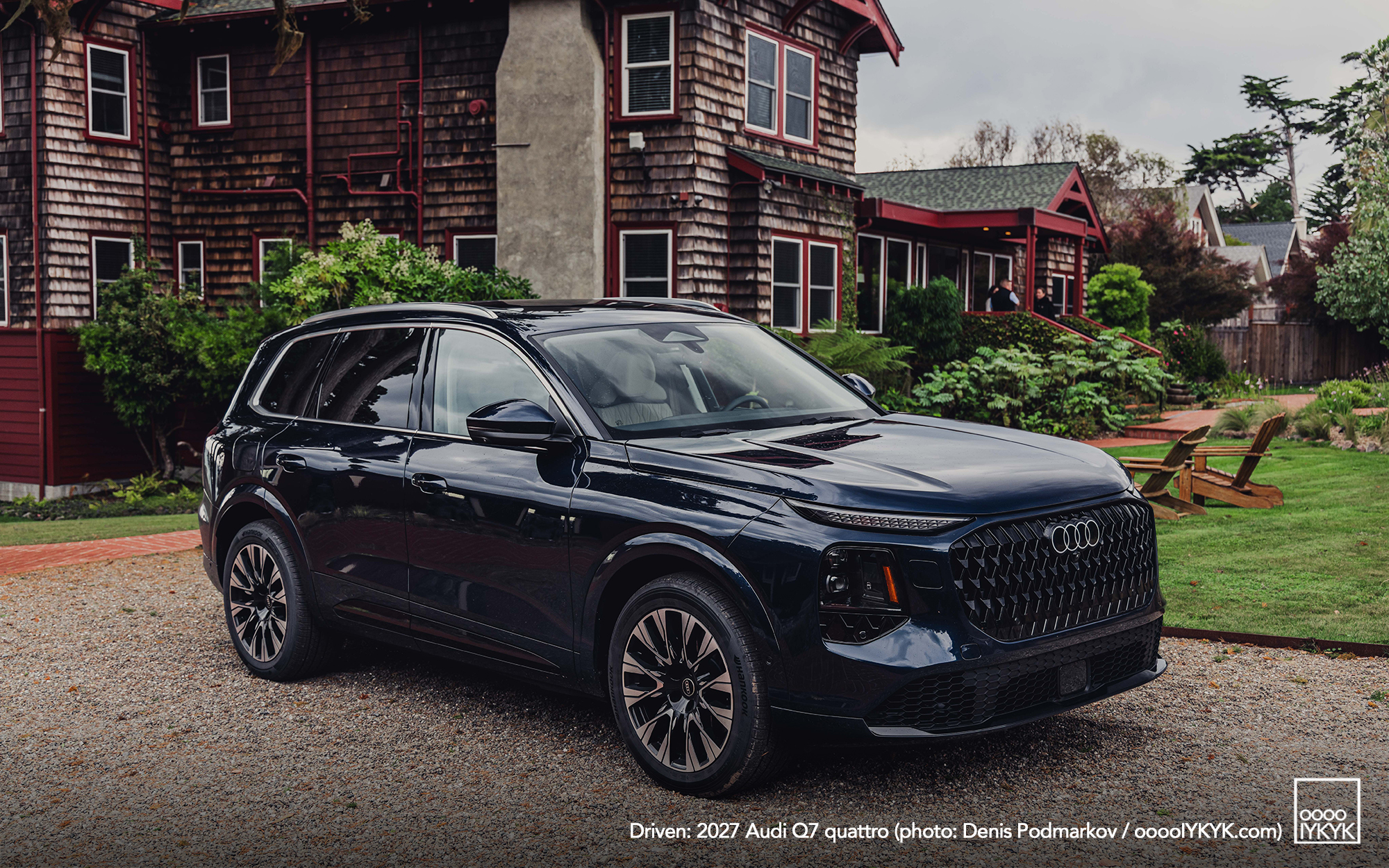
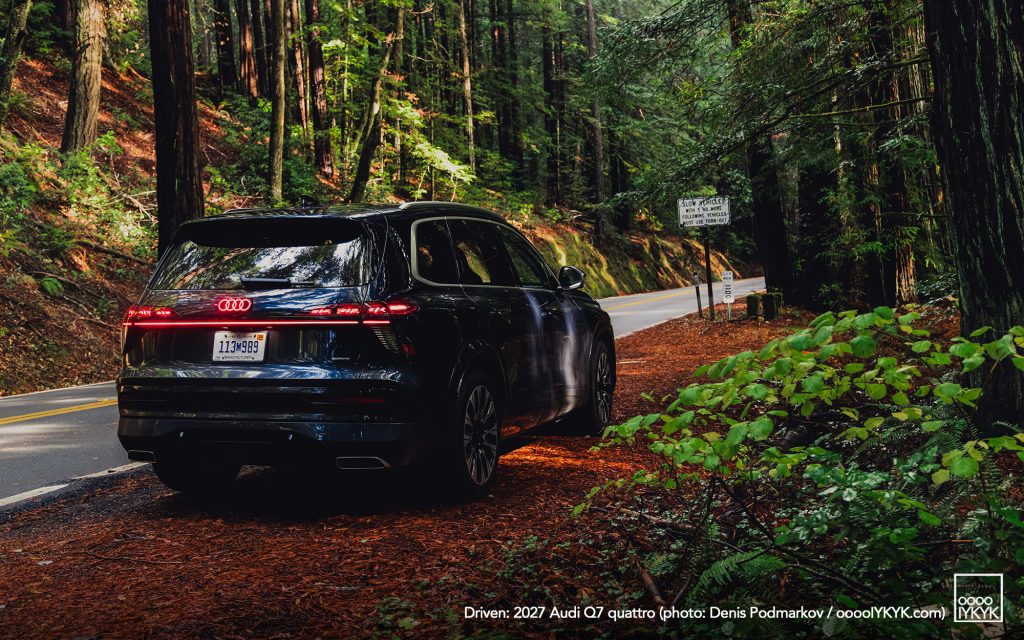
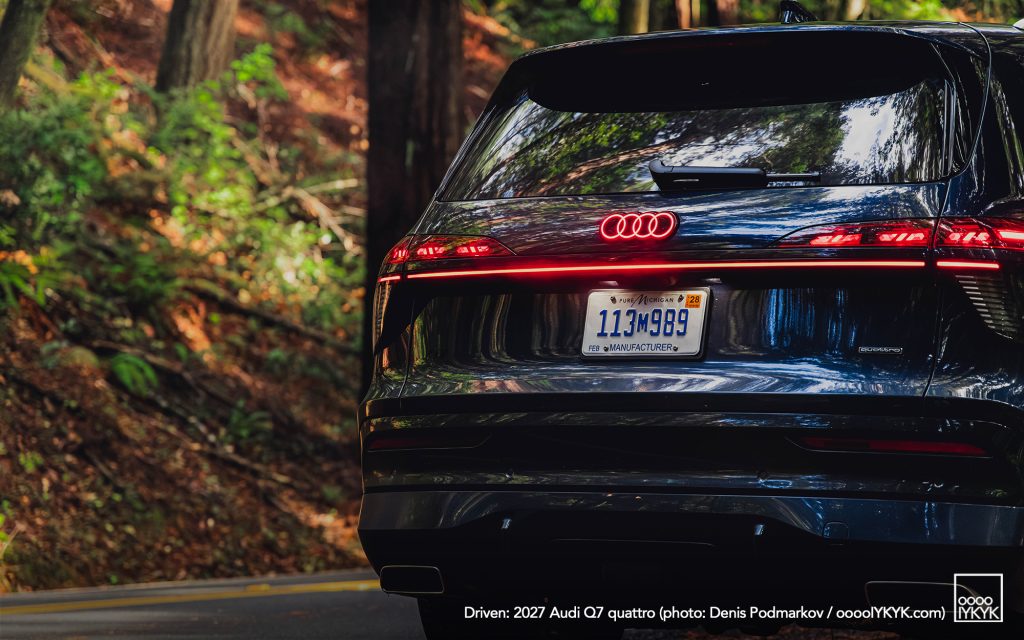
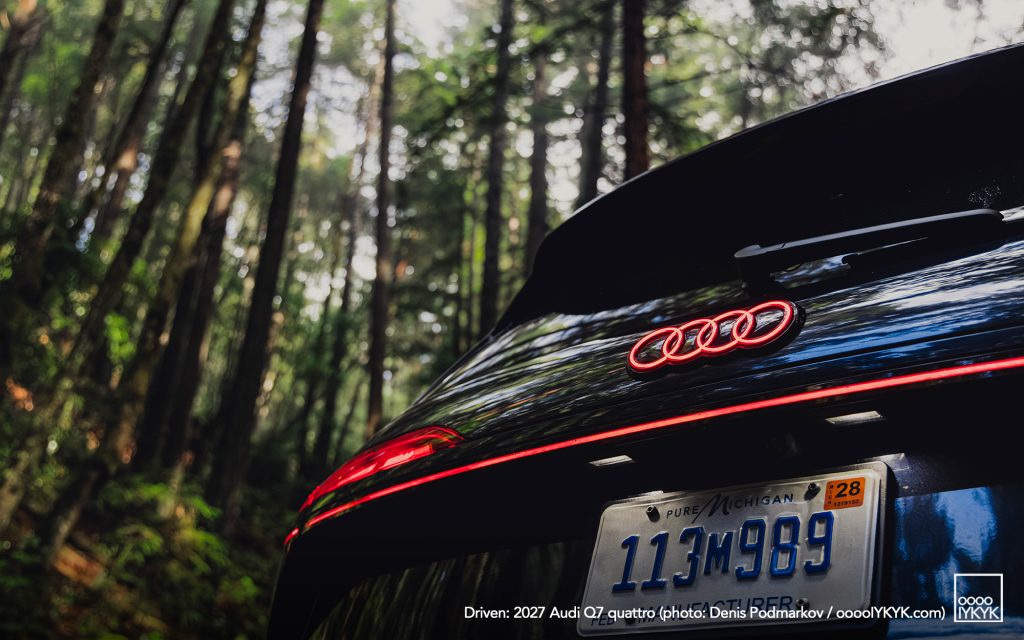
THE NEW AUDI Q7.
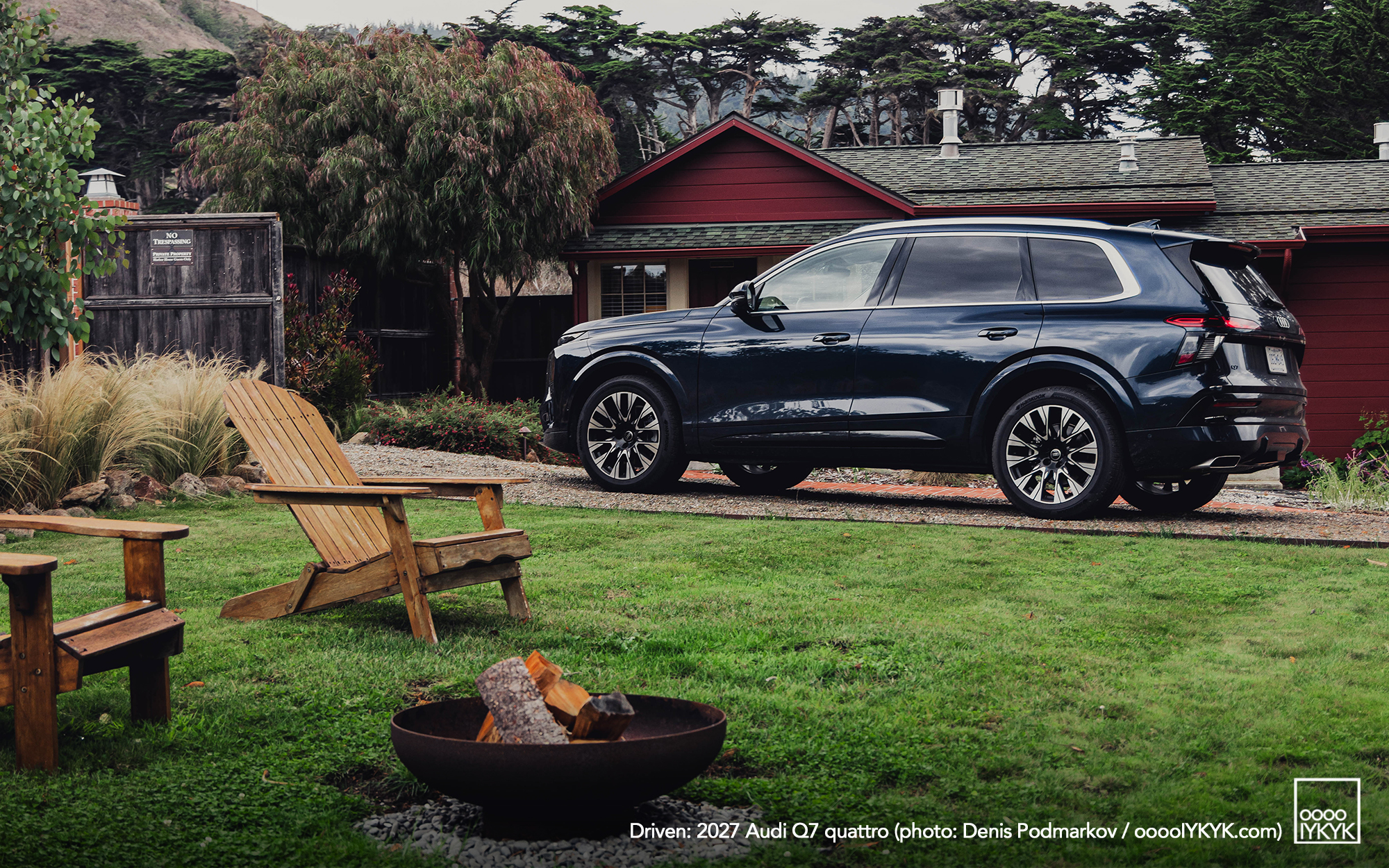
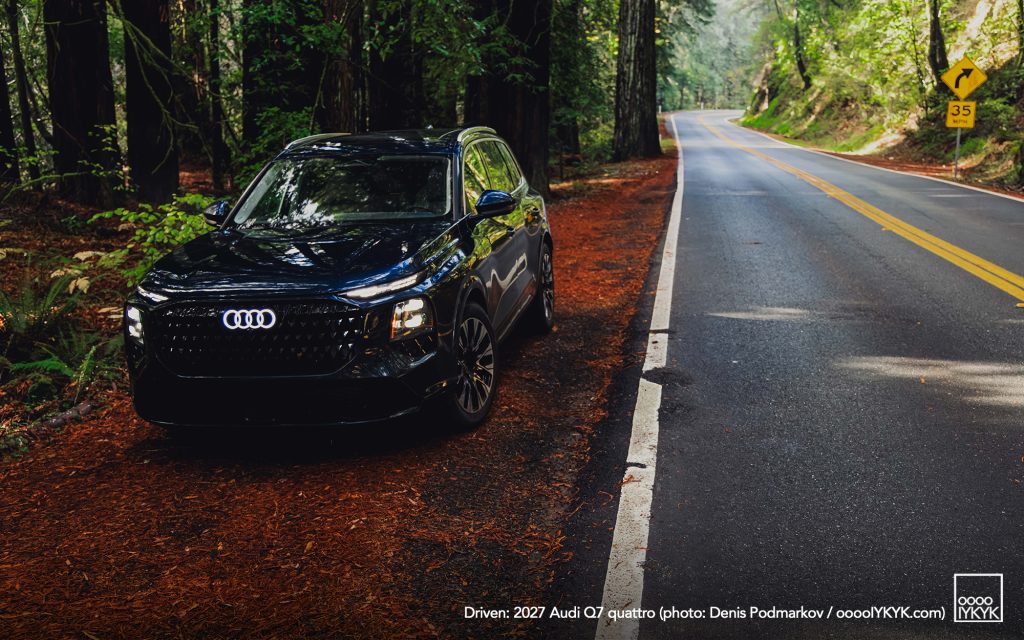
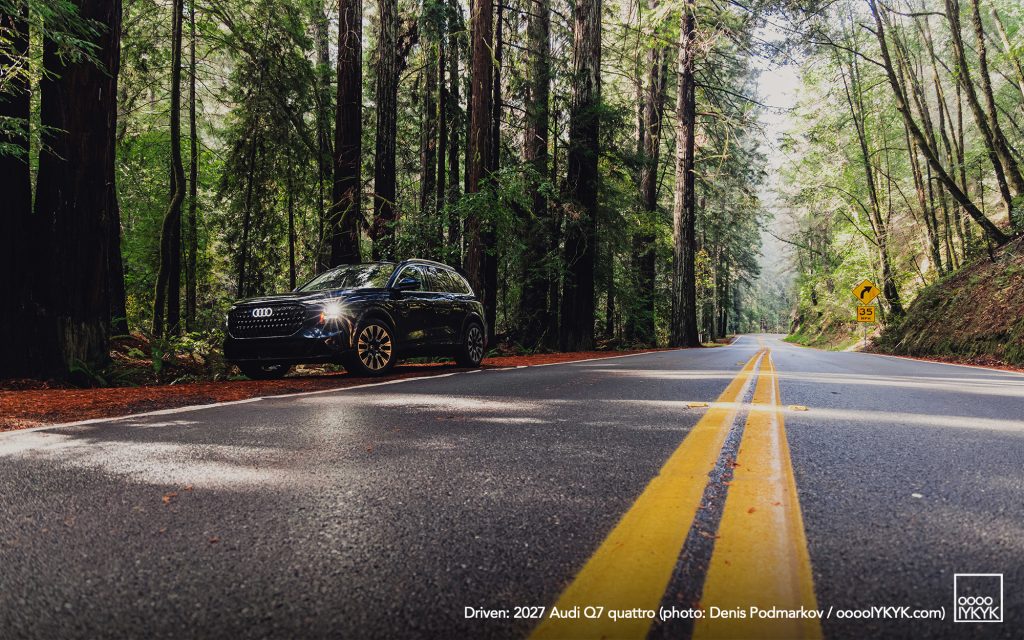
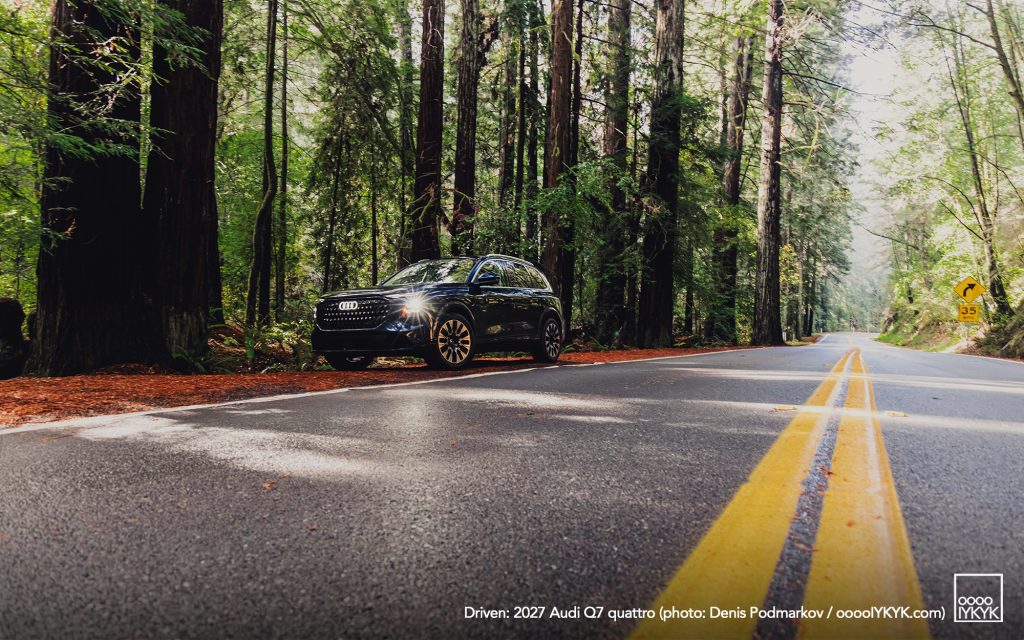
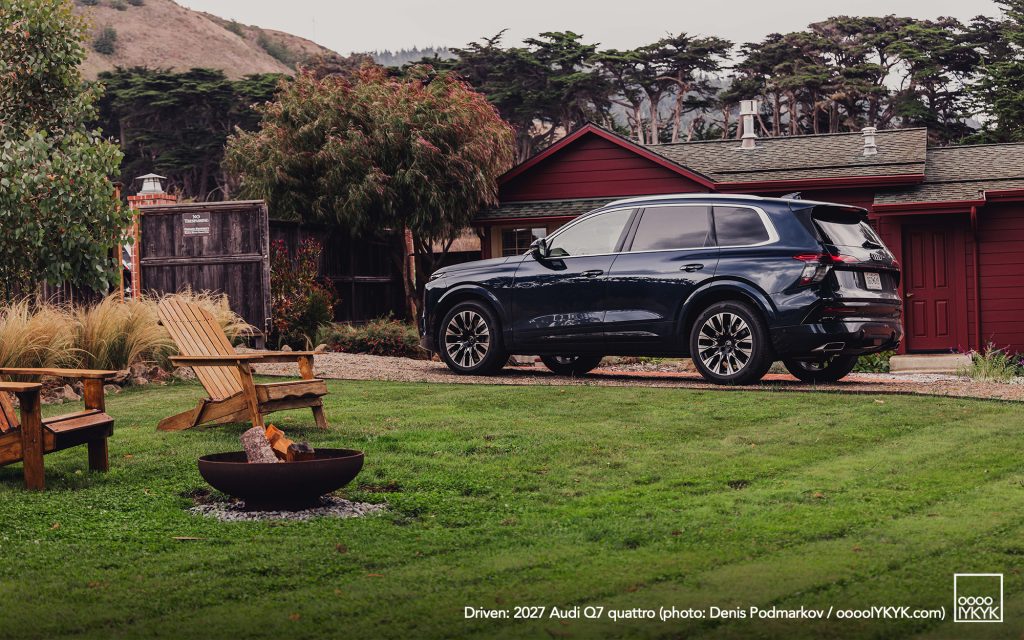
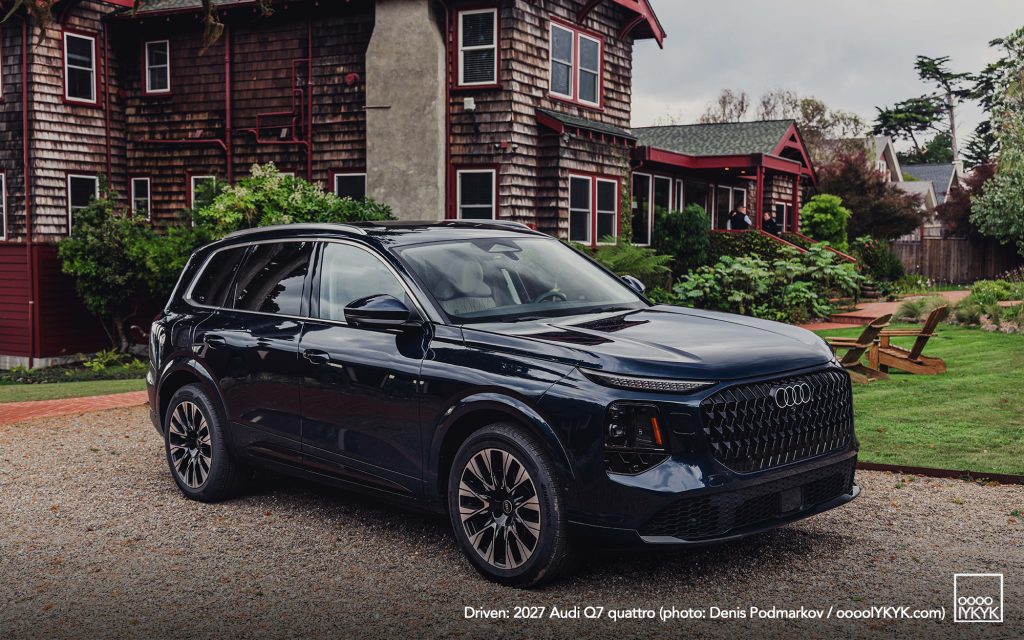
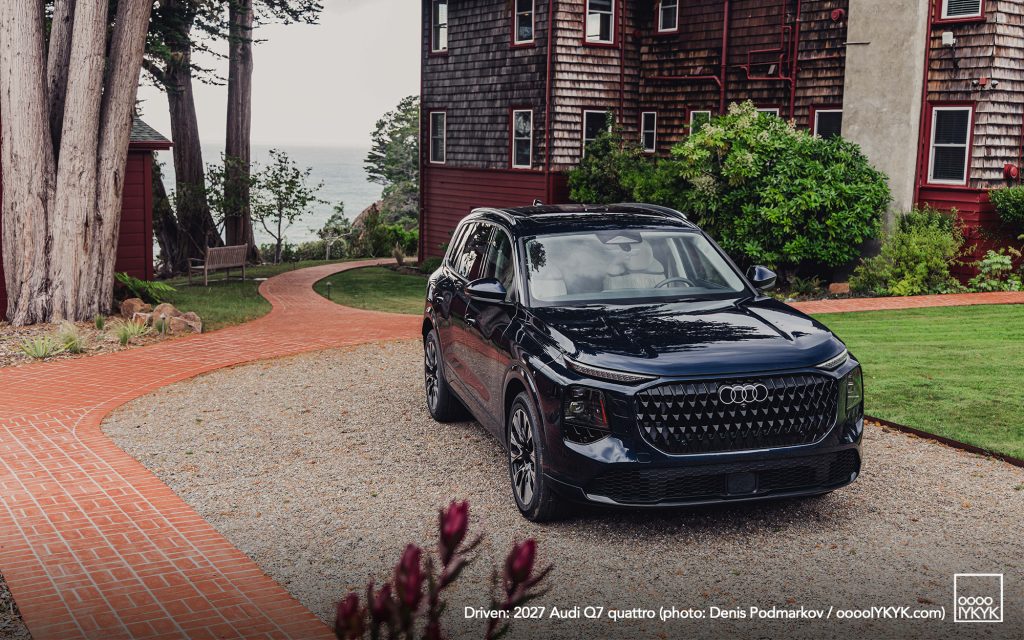
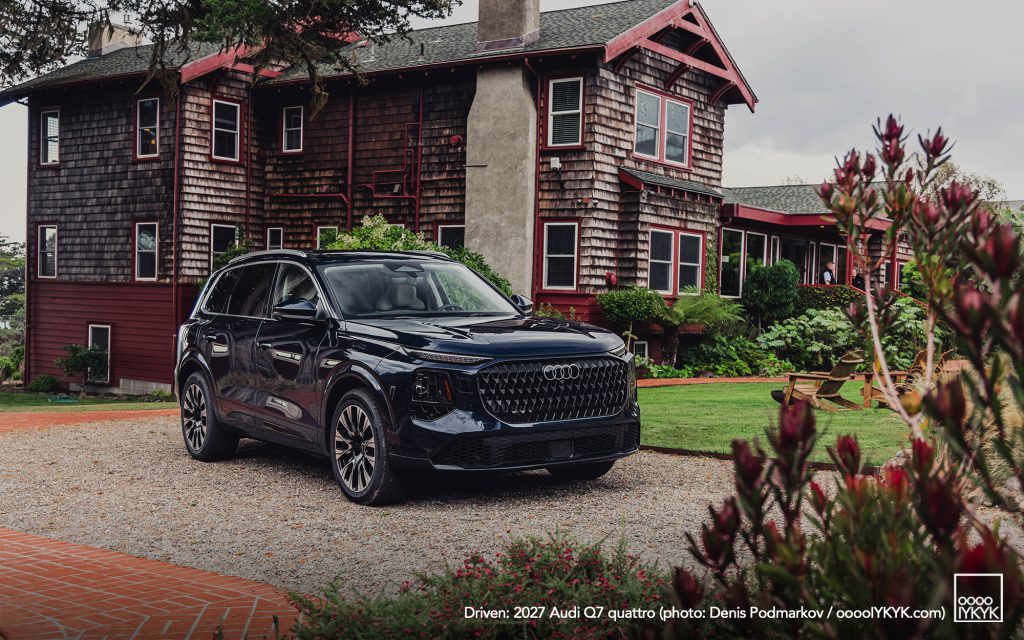
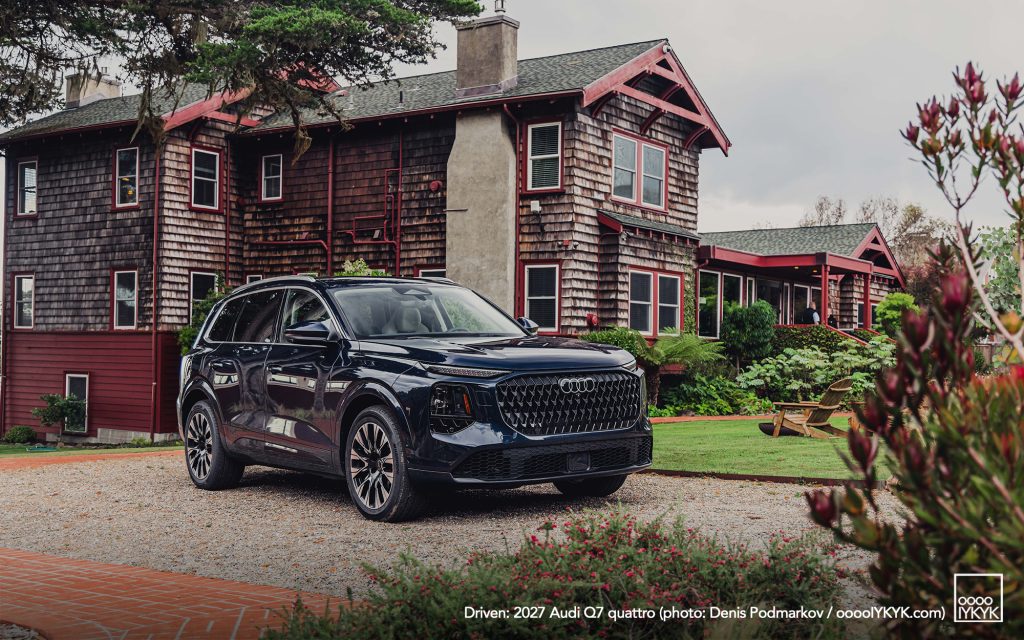
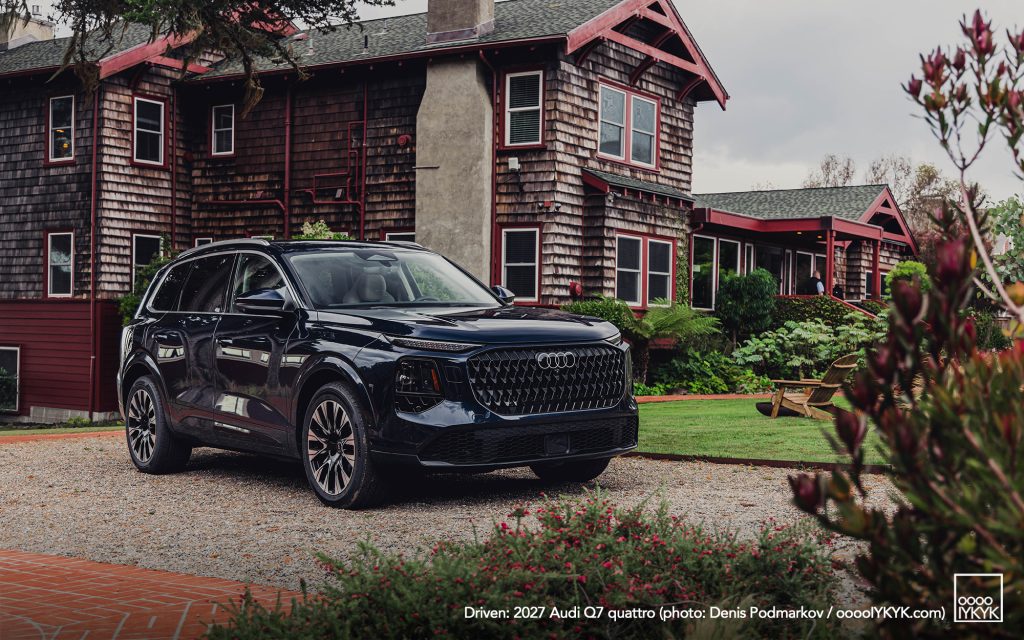
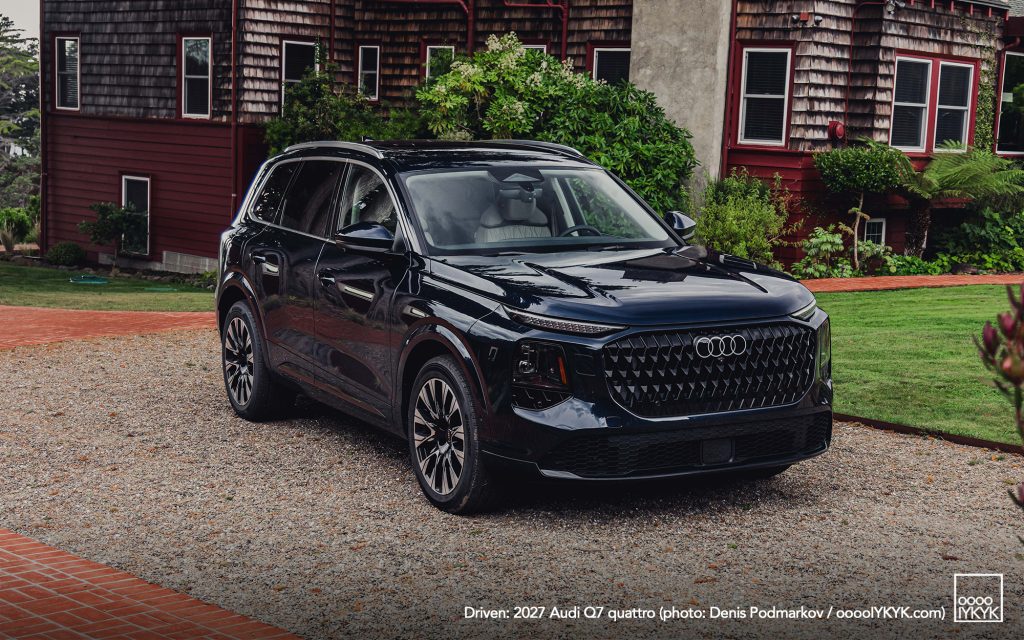
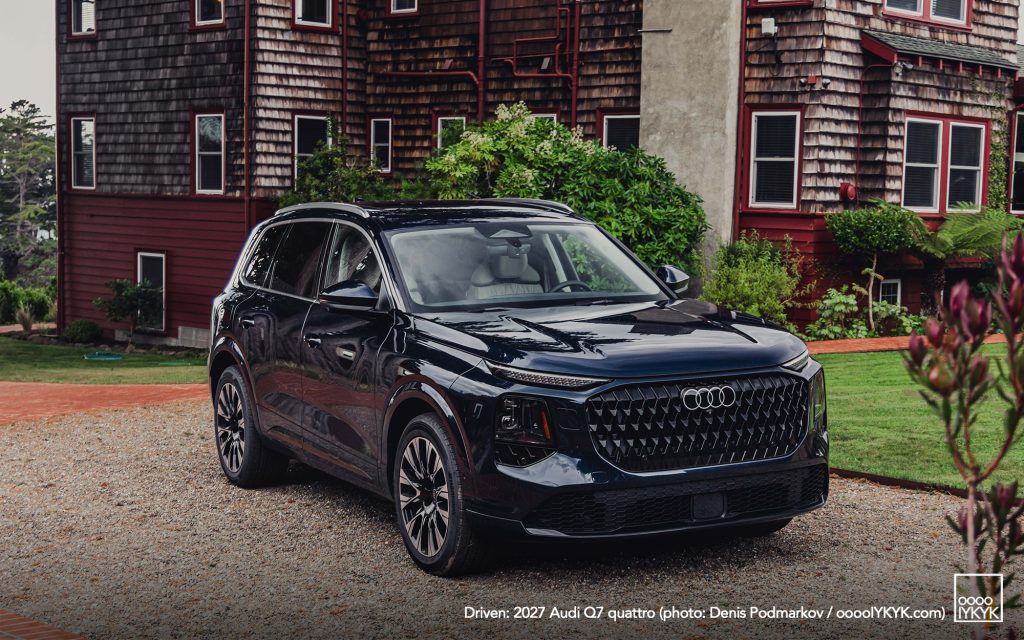
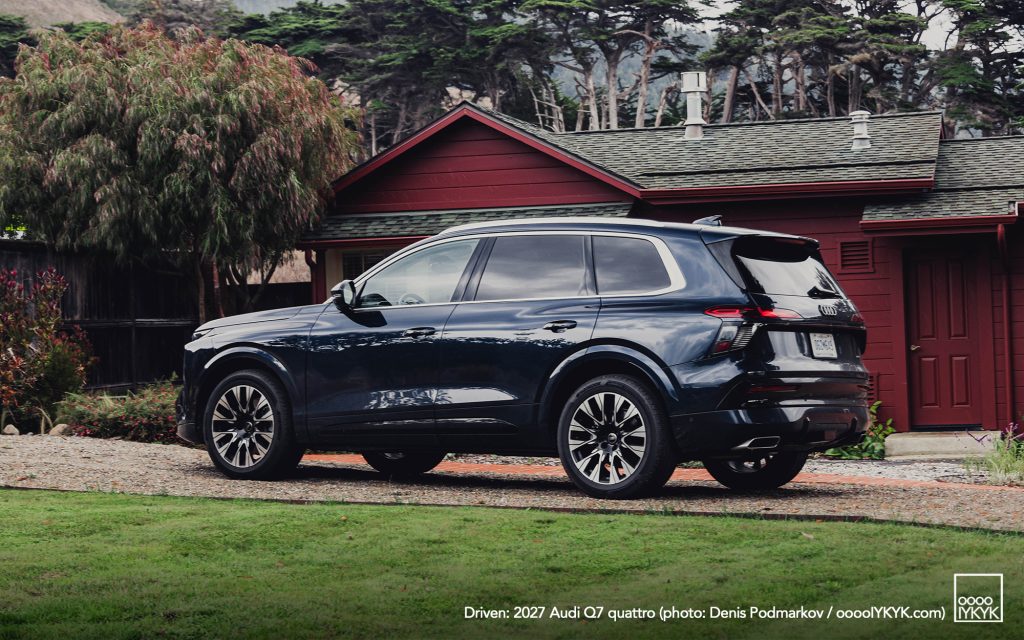
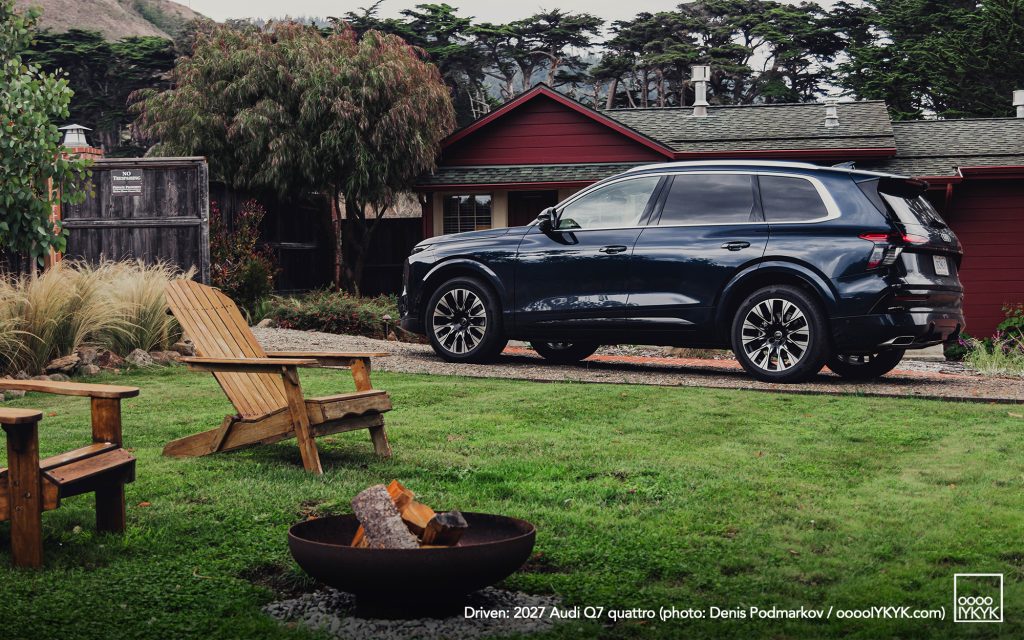
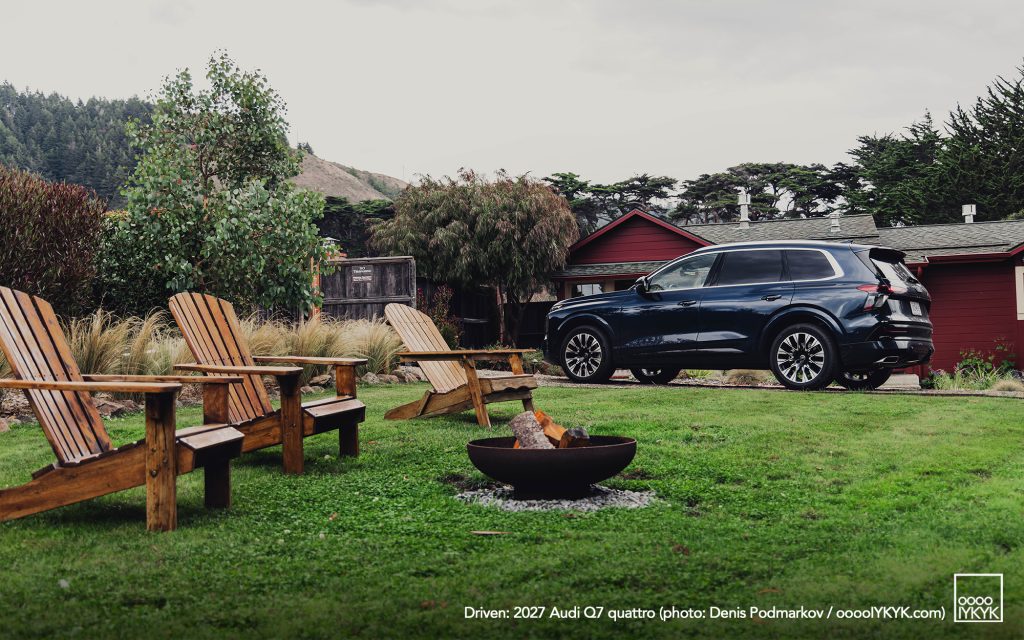
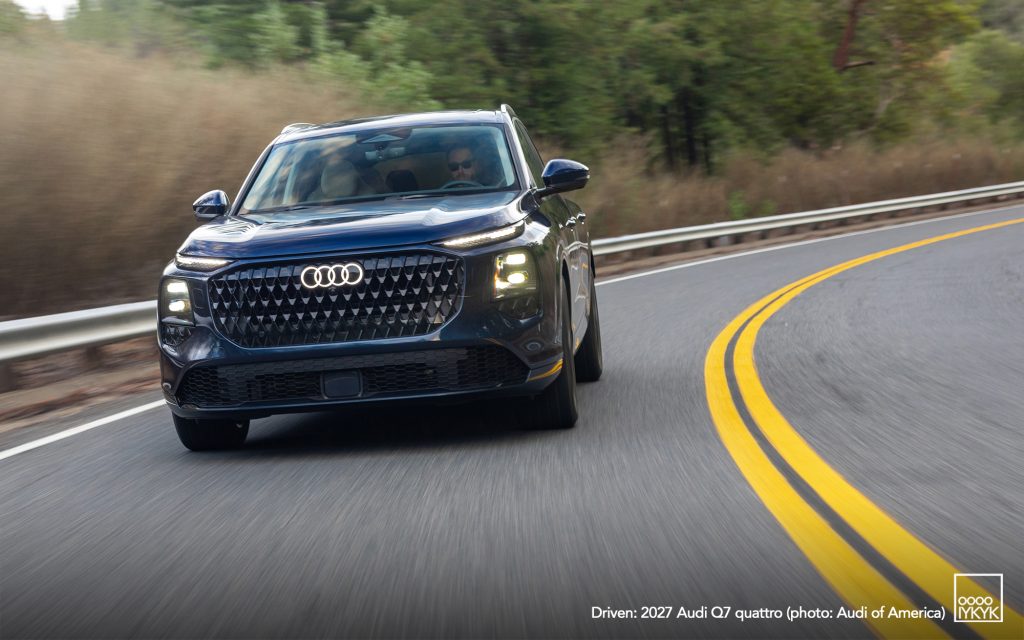
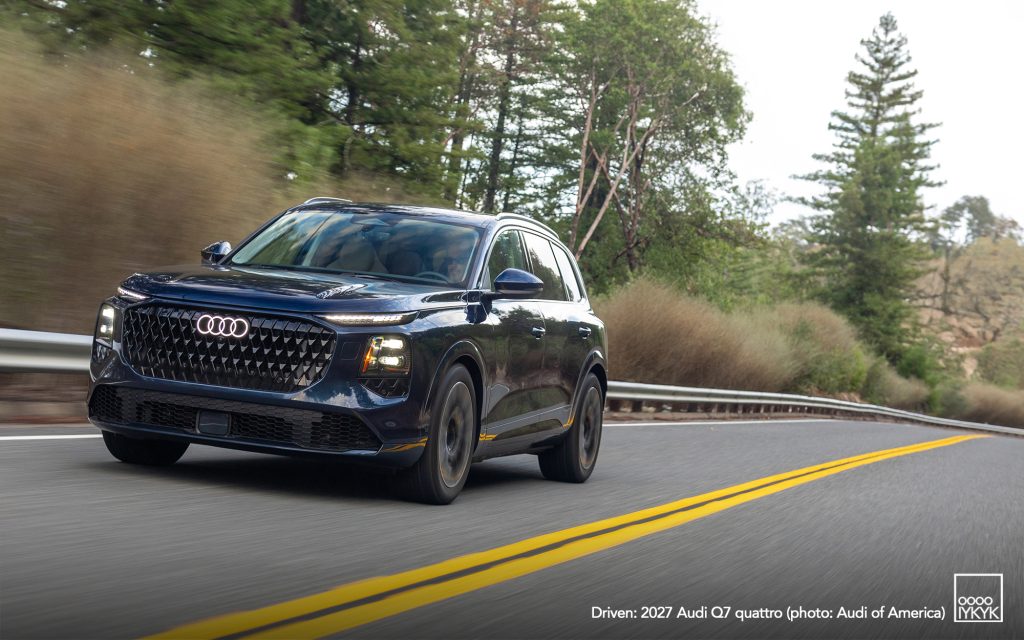
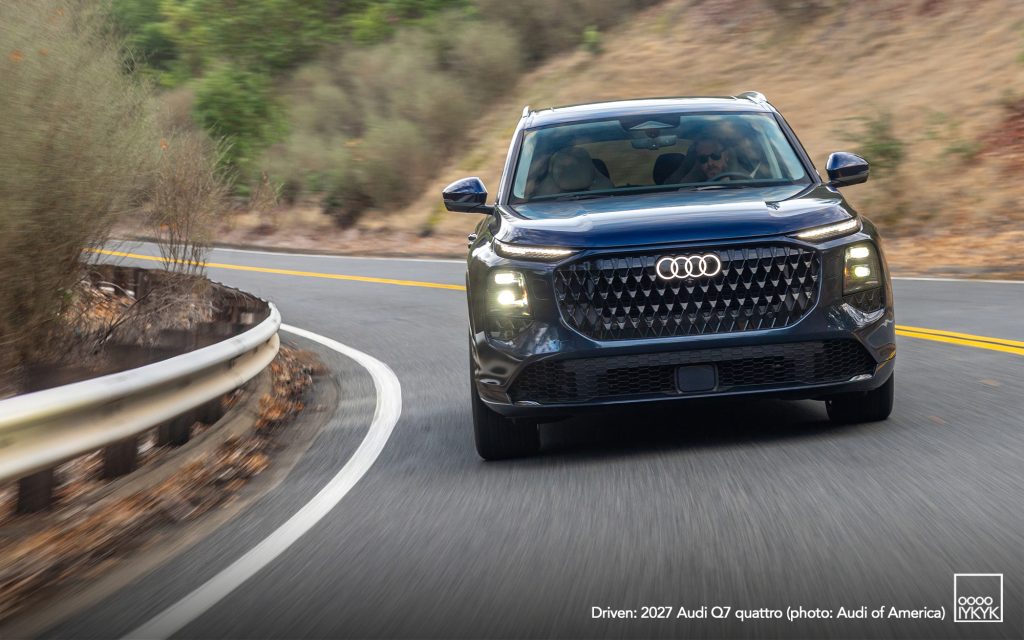
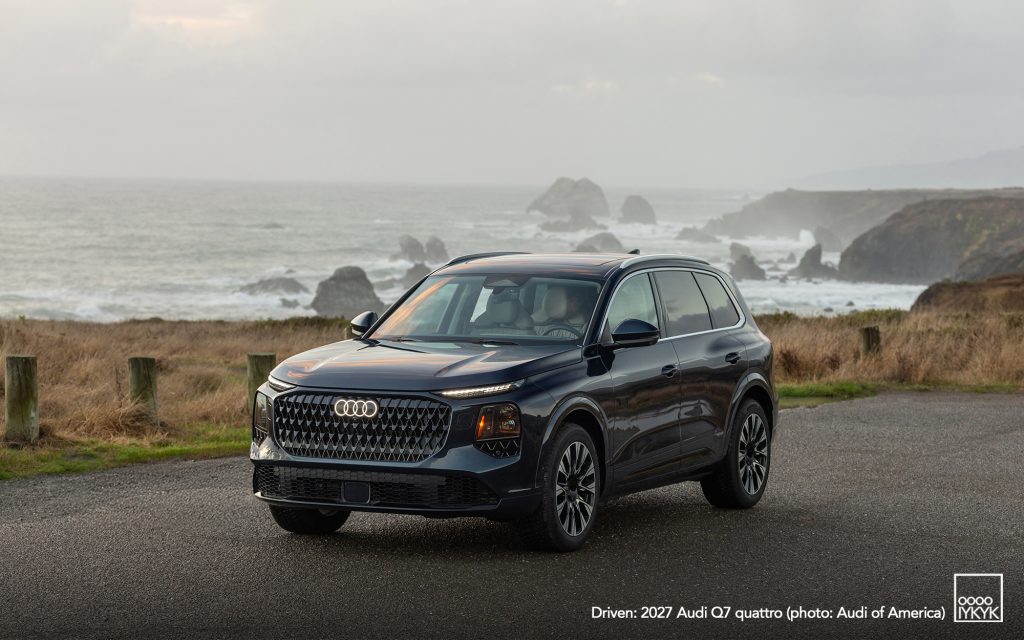
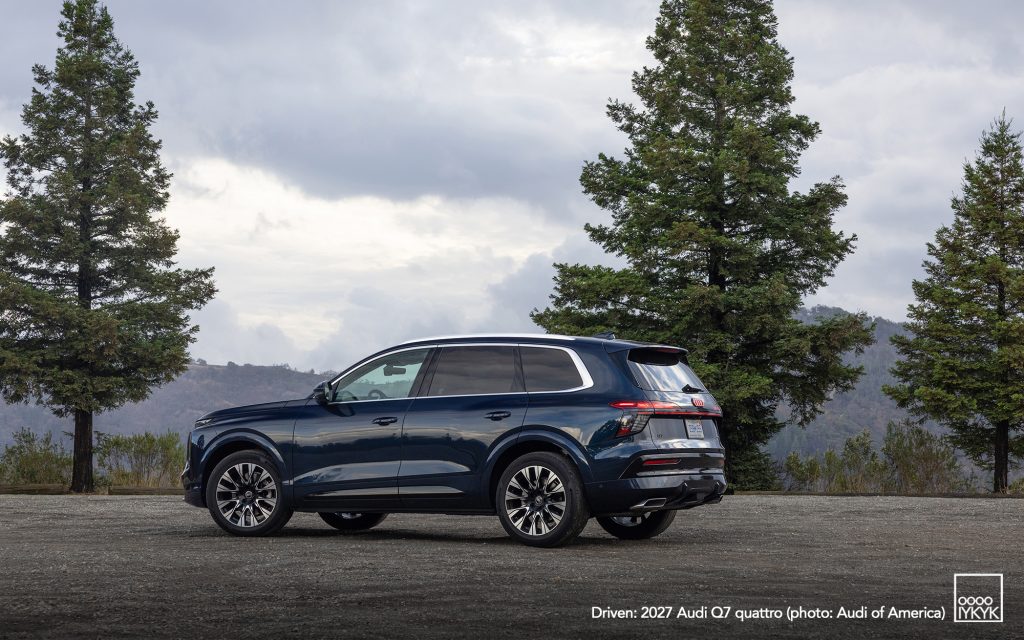
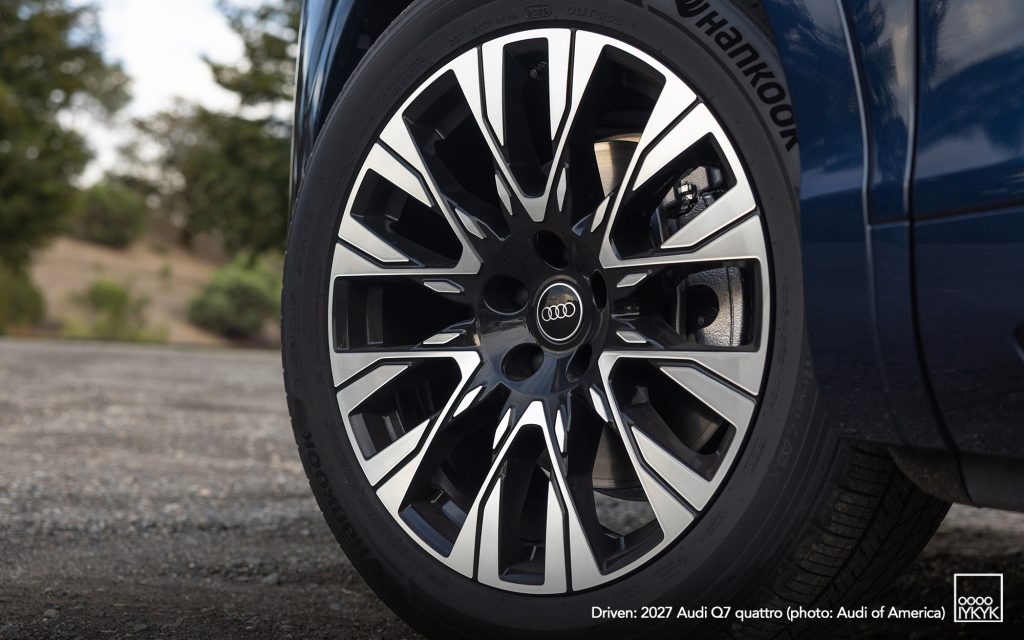
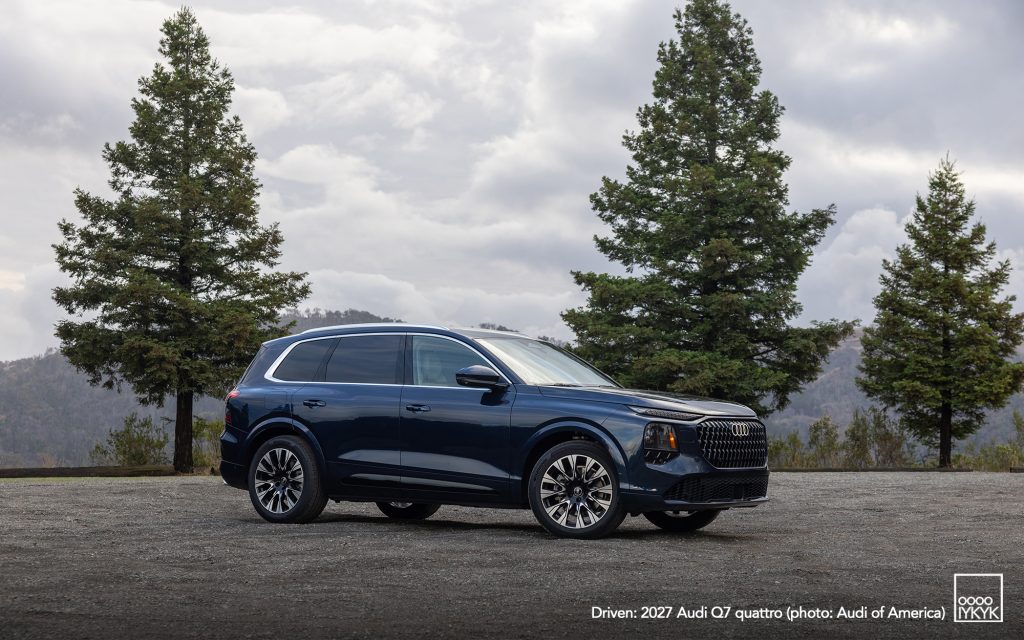
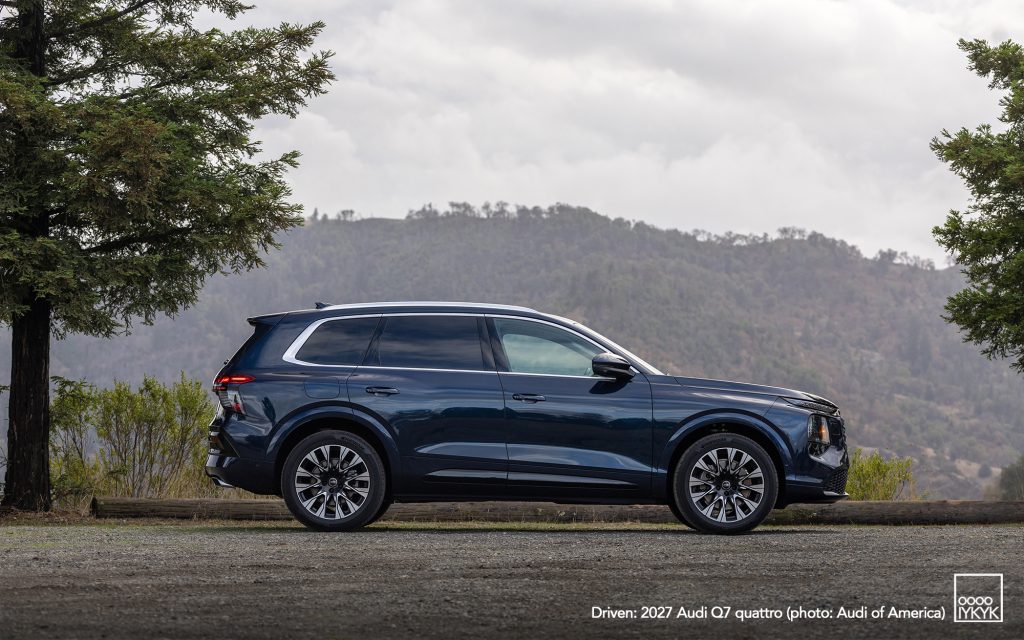
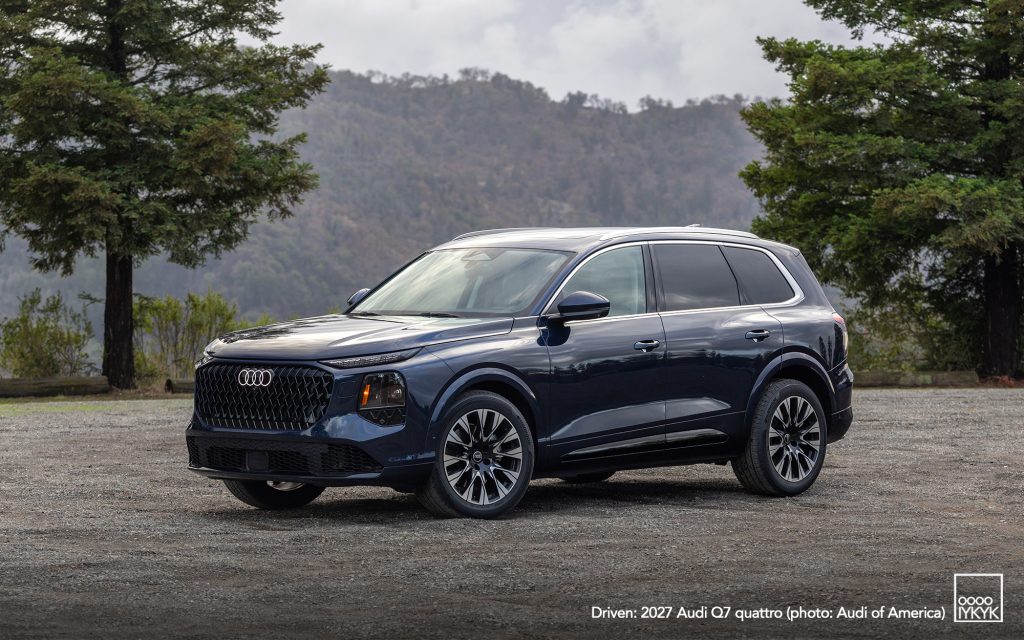
First up was a Q7 Prestige finished in Waitomo Blue Metallic over a Stone Beige interior. It came with second-row captain’s chairs, 21-inch six-spoke aero wheels with 285/45 R21 all-season run-flat tires, adaptive air suspension, all-wheel steering and a Bang & Olufsen 4D sound system. As tested, it came to $90,140.
The Q7 starts at $70,900, putting it in familiar territory alongside the BMW X5 and Mercedes-Benz GLE. Audi has kept pricing competitive while adding power, technology and standard equipment. According to Audi, a comparably equipped 2027 Q7 costs just $1,400 more than the outgoing Q7 55 TFSI.
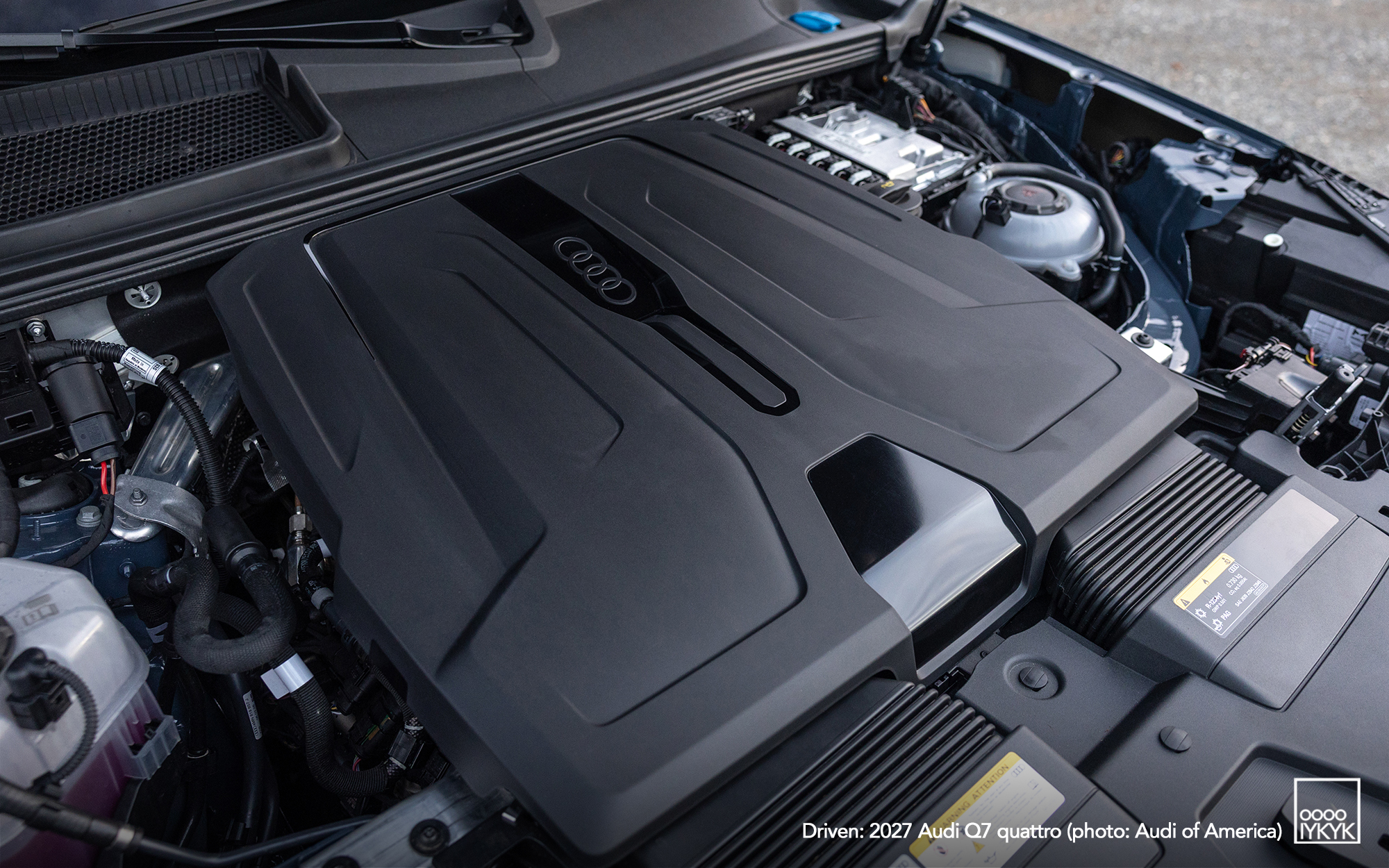
Then there’s the engine.
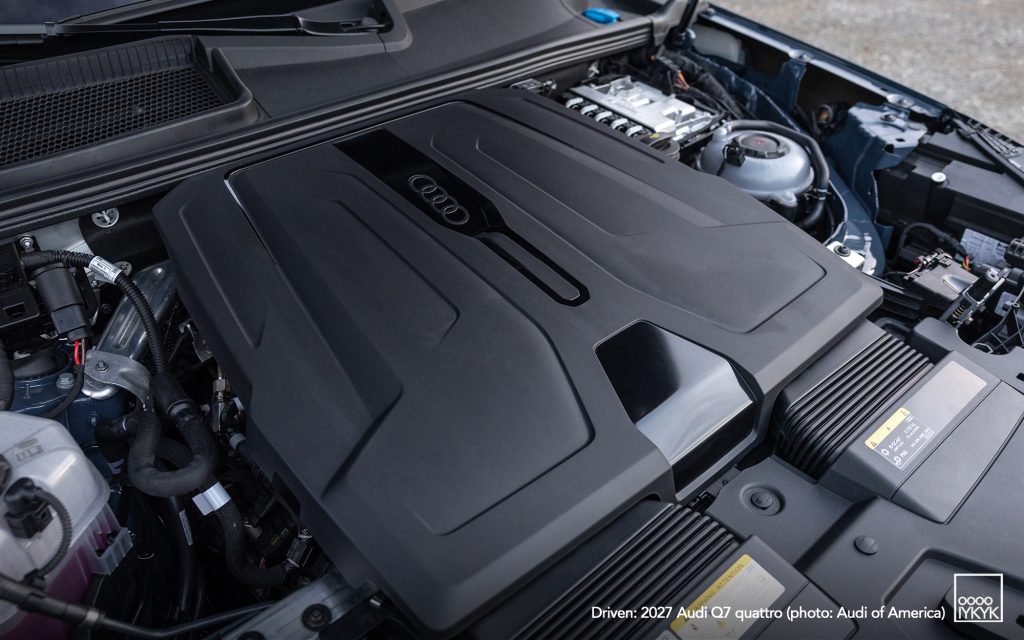
The new Q7 is quick. Like, 0–60 mph in 4.8 seconds quick, by Audi’s estimate. Its 2.9-liter twin-turbo V6 is familiar from the B9-generation RS 5. In the Q7, it makes 429 hp and 442 lb-ft of torque, giving up 15 hp to the RS 5 while matching its peak torque.
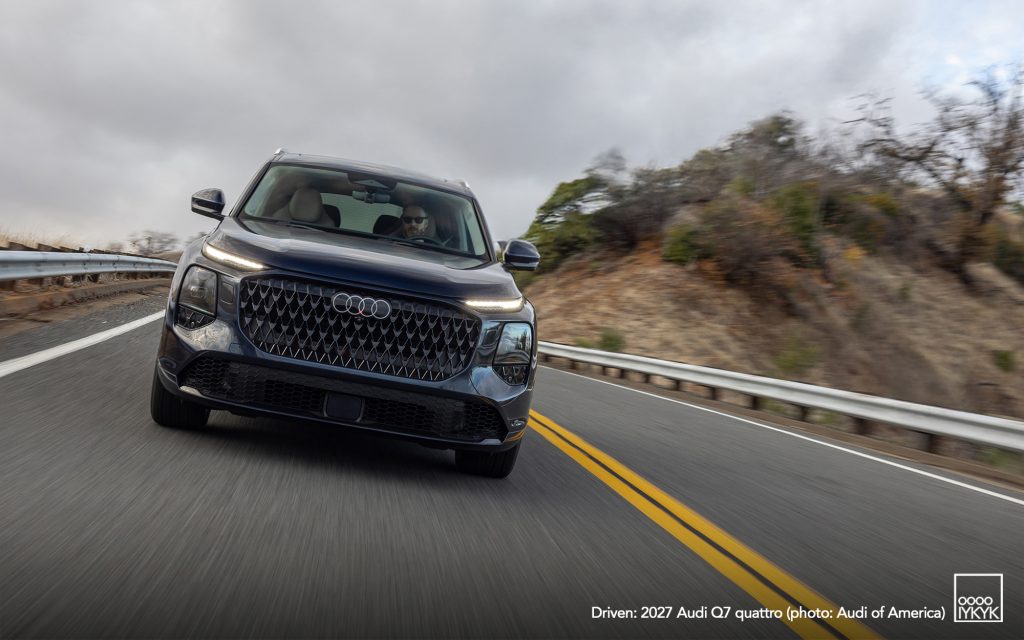
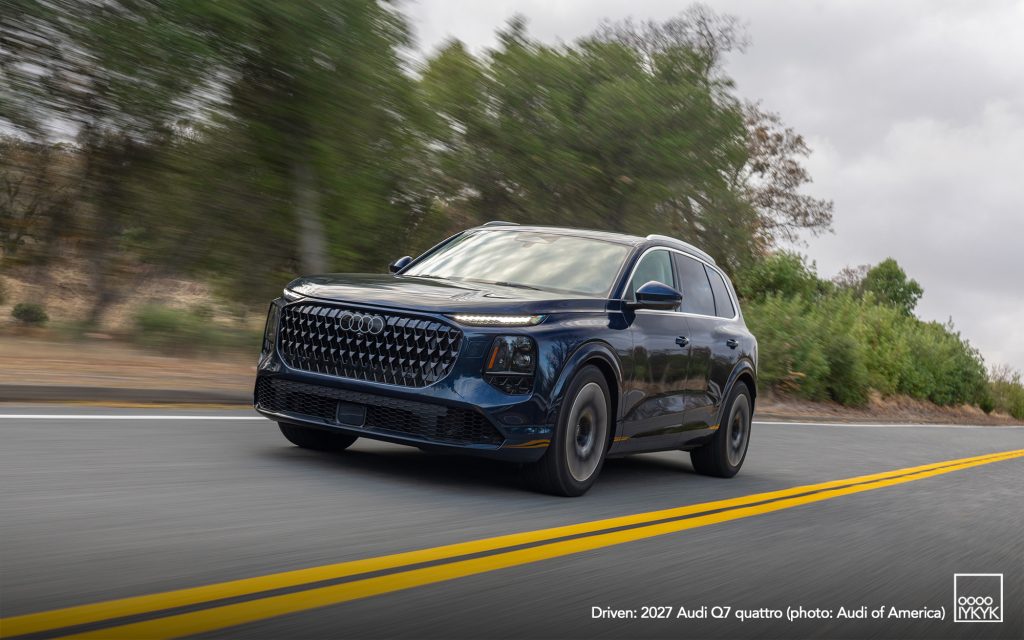
Of course, one of the first things we tried was launch control. Let’s just say it turns heads and shoves them back into the headrests. The V6 pulls with the urgency I’d expect from an S model. The Q7 feels nimble, too. With adaptive air suspension and all-wheel steering, our Prestige stayed planted through the winding roads and switchbacks of Northern California.
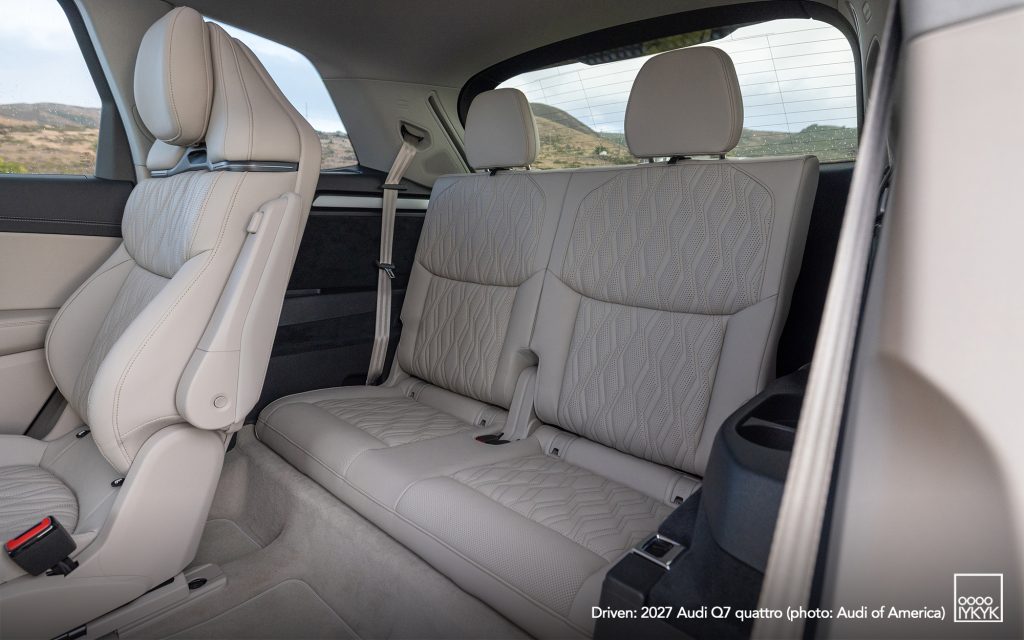
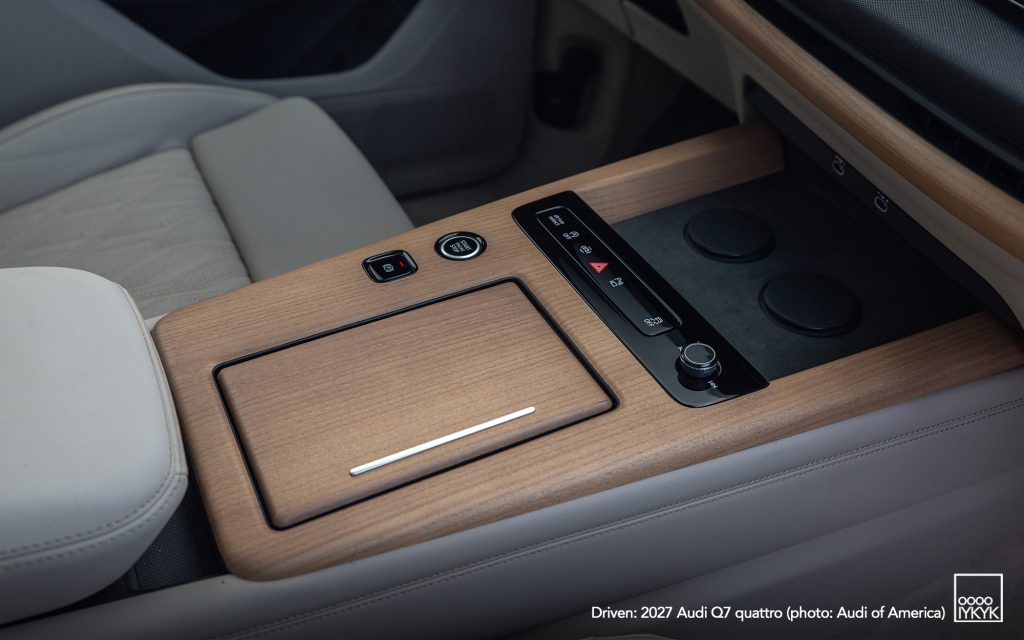
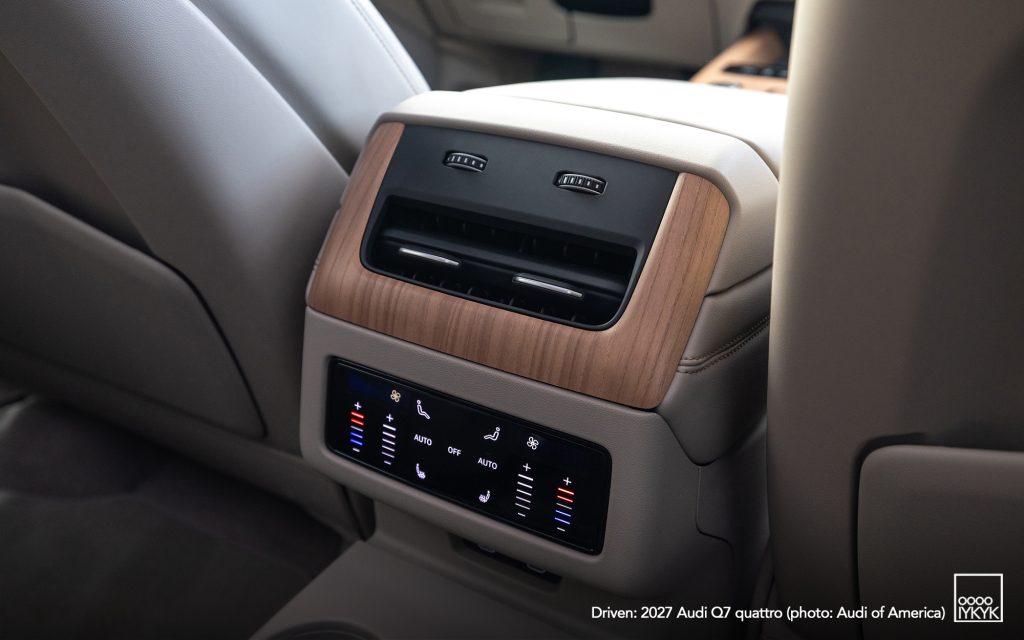
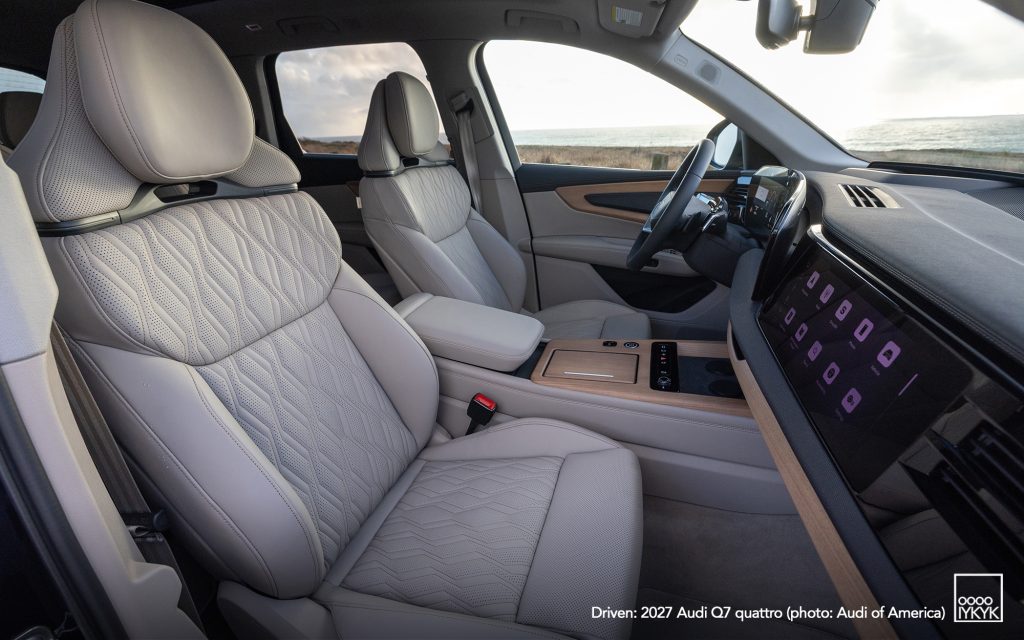
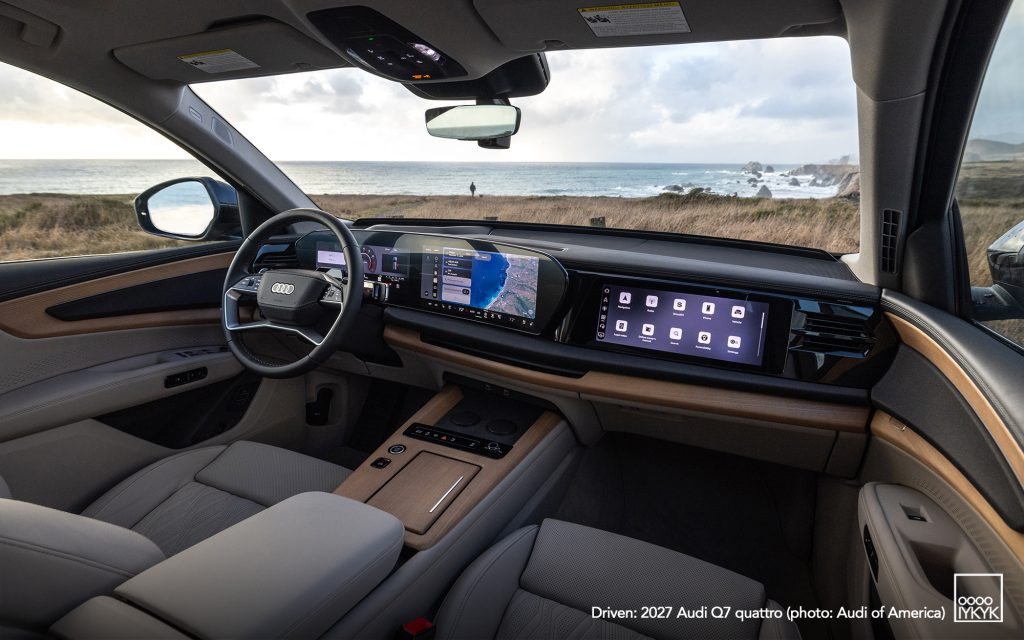
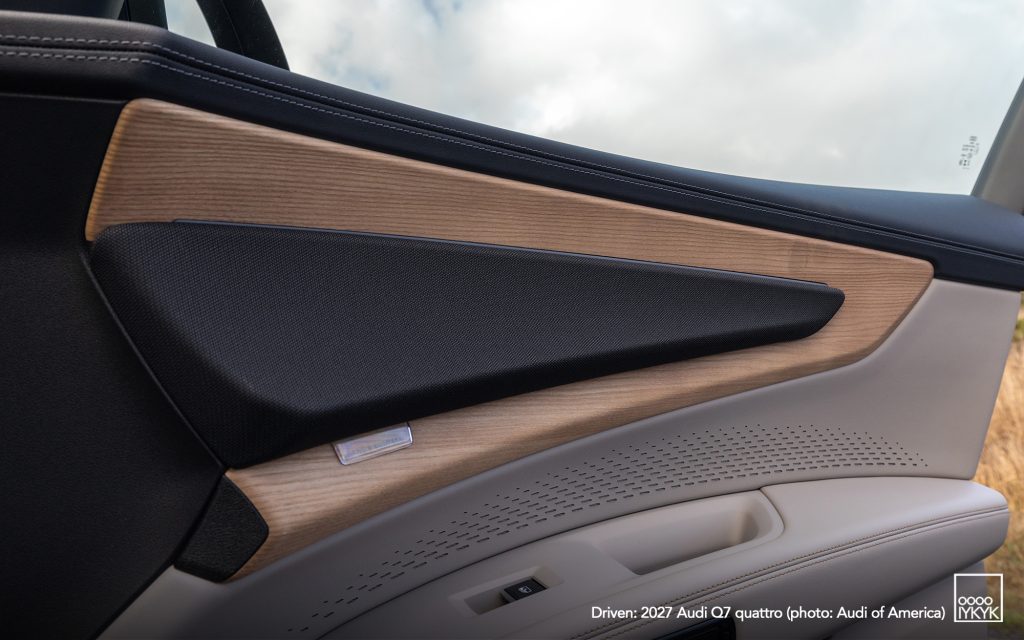
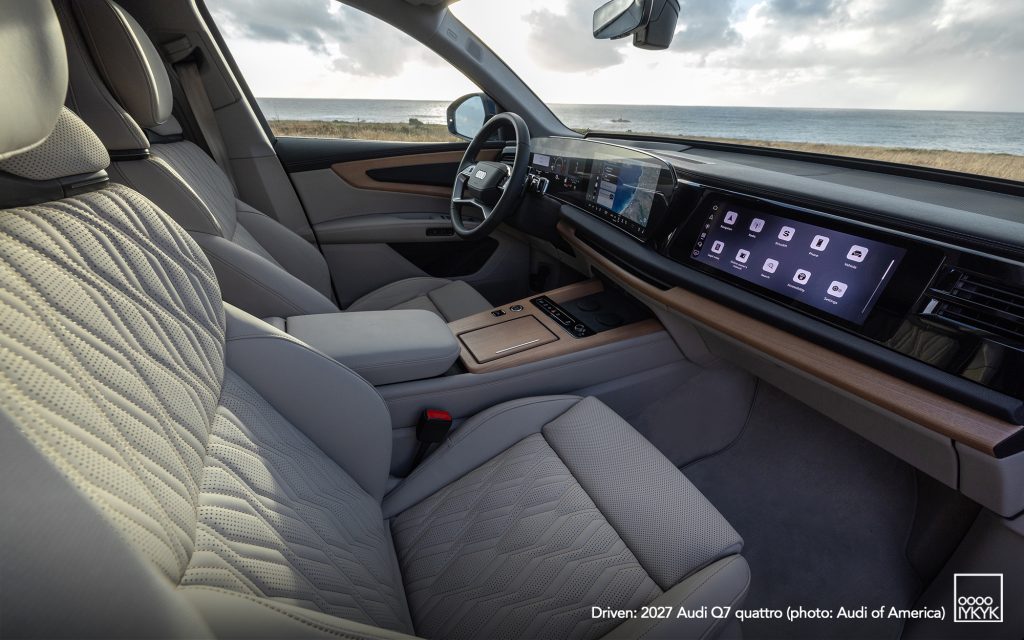
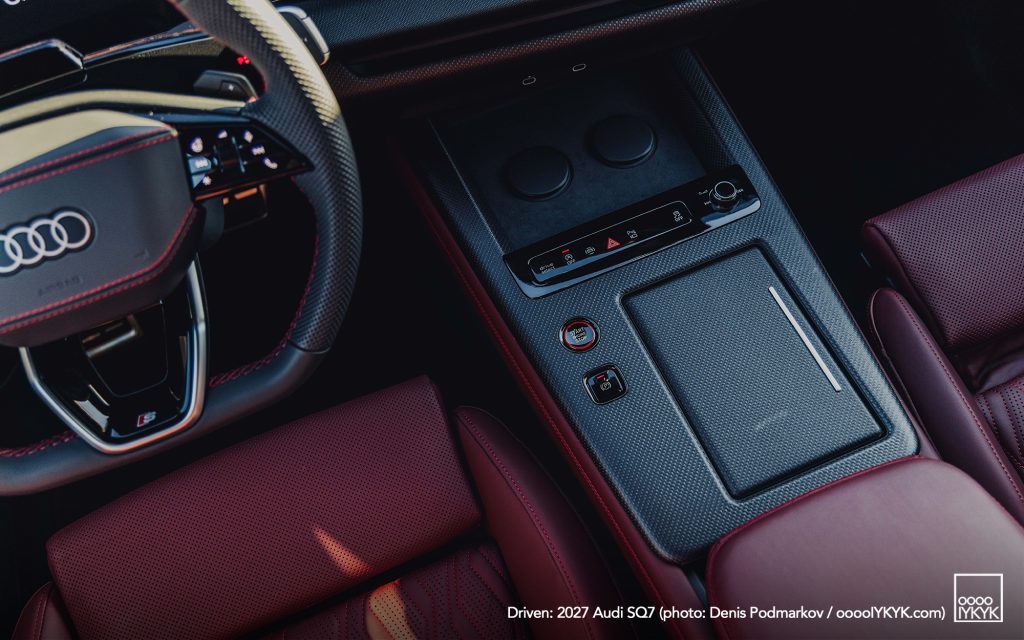
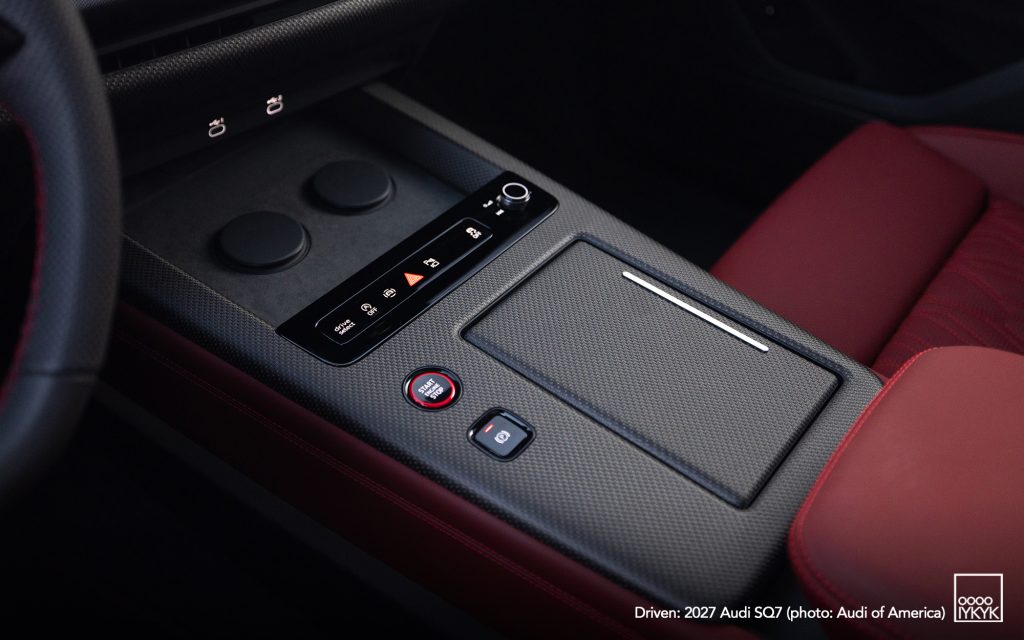
There’s also a little more room inside. The overall footprint and proportions are close to those of the outgoing Q7, while a redesigned roofline and a more upright D-pillar free up space, particularly in the third row. And remember all that piano-black trim? Much of it has given way to materials such as open-pore wood. It’s a welcome change if you’re tired of wiping fingerprints off the center console.
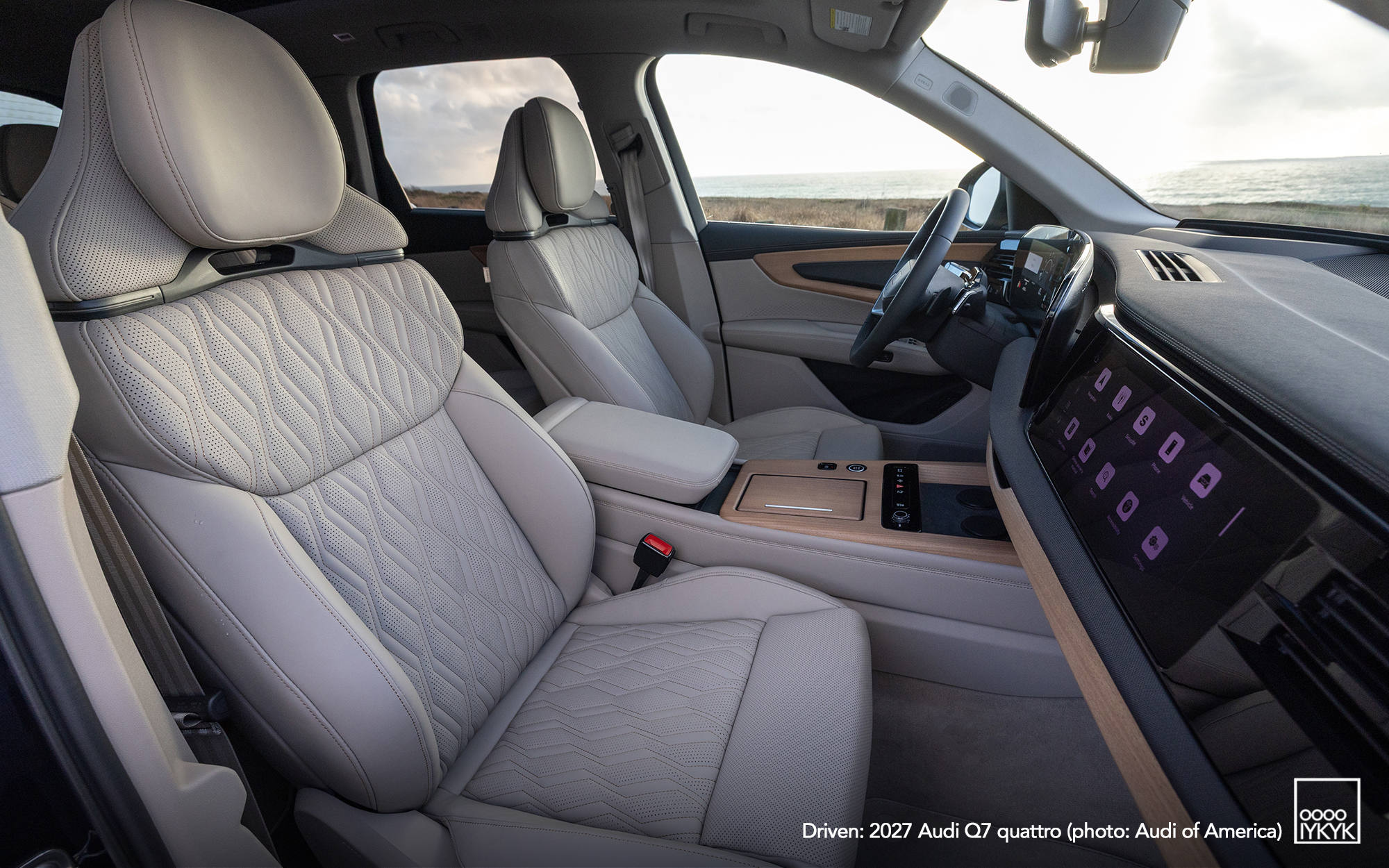
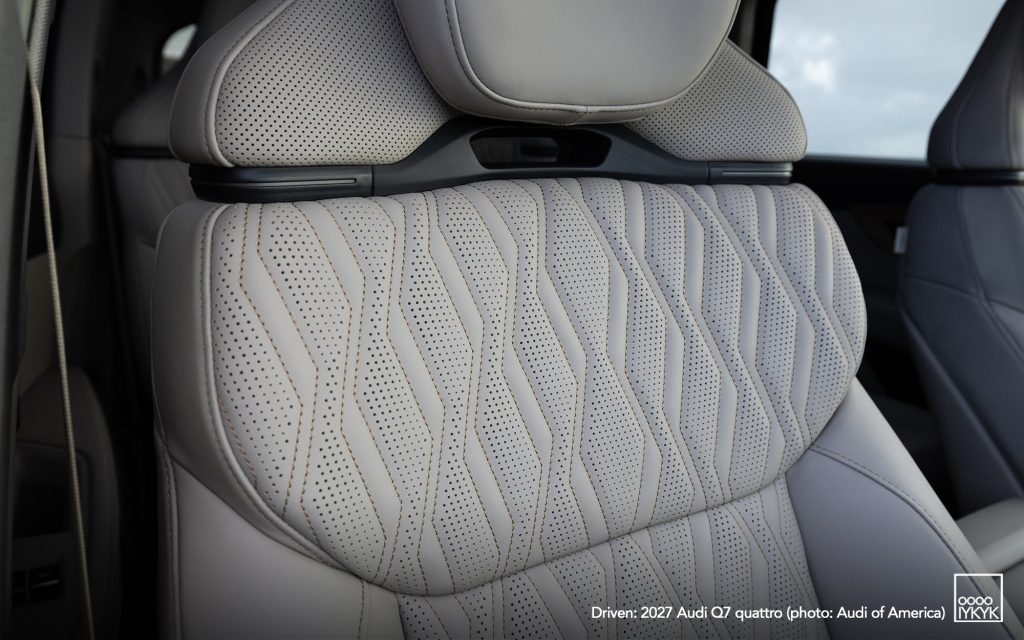
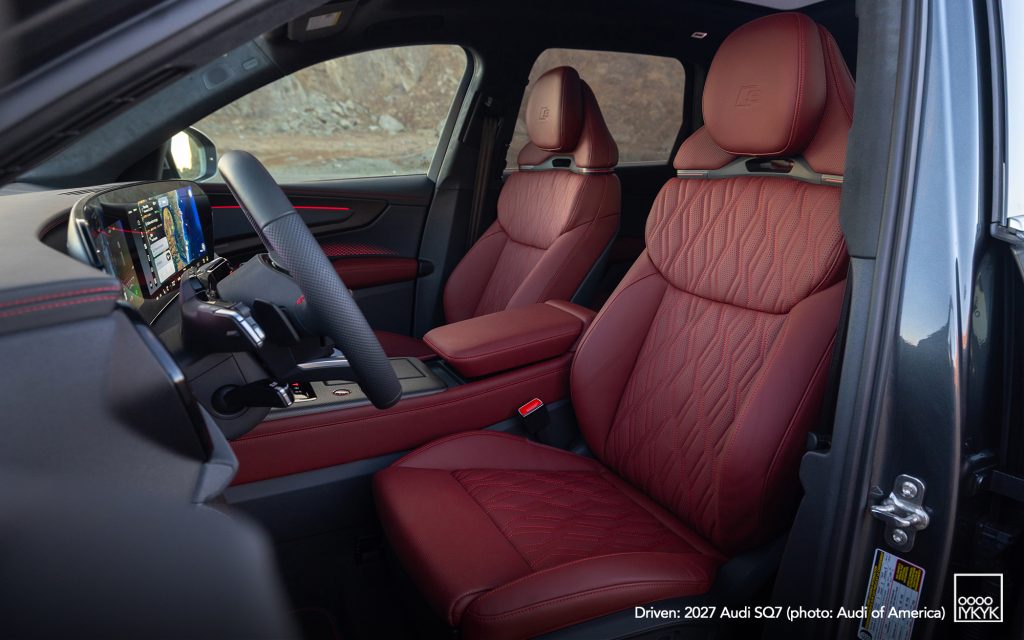
Our Prestige had sport seats plus up front with adjustable side bolsters, ventilation and massage. Switch on the seat heaters and your elbows get some warmth, too, thanks to the heated door and center armrests.
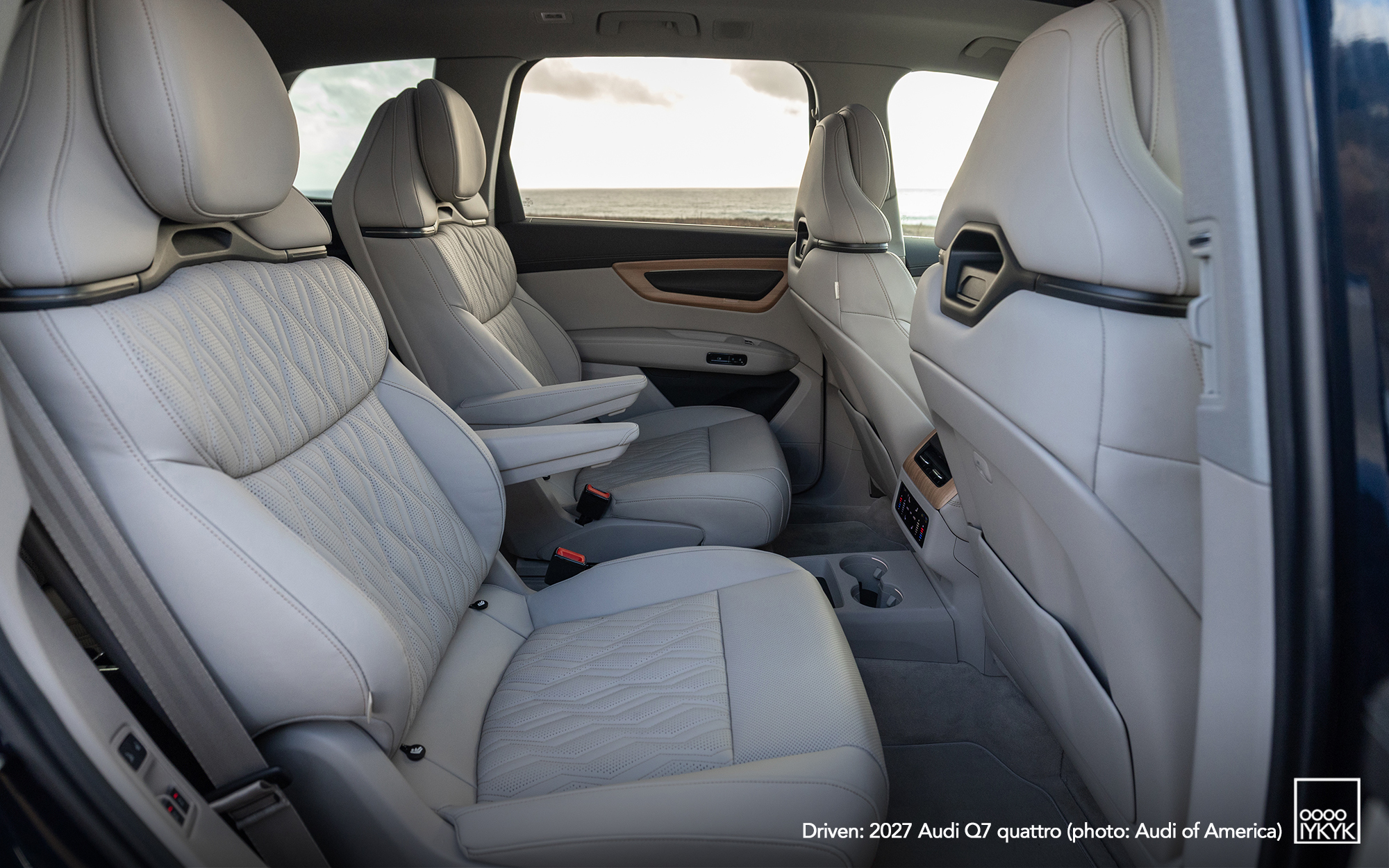
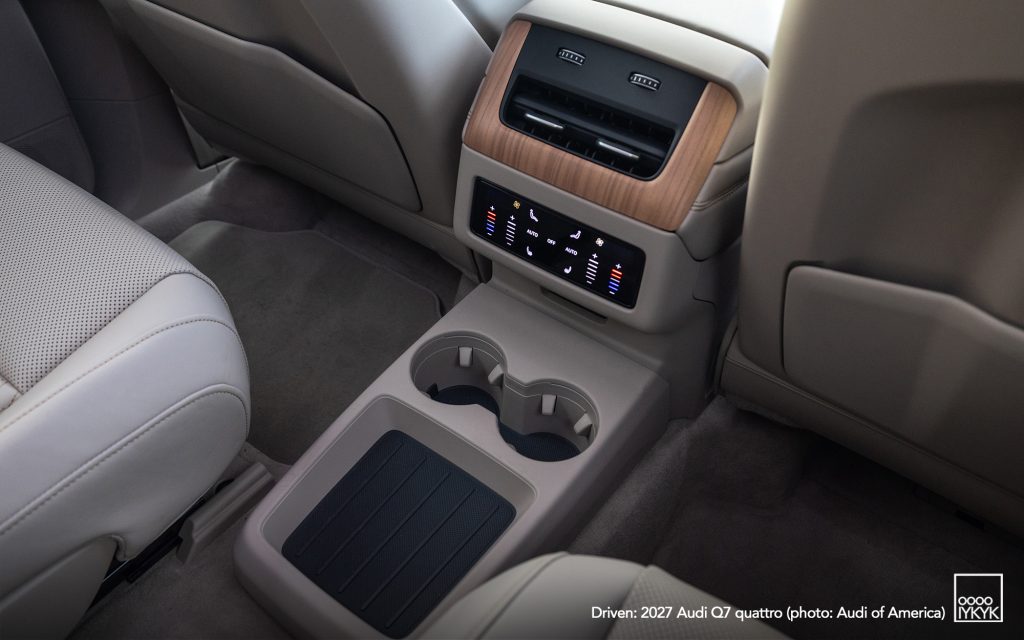
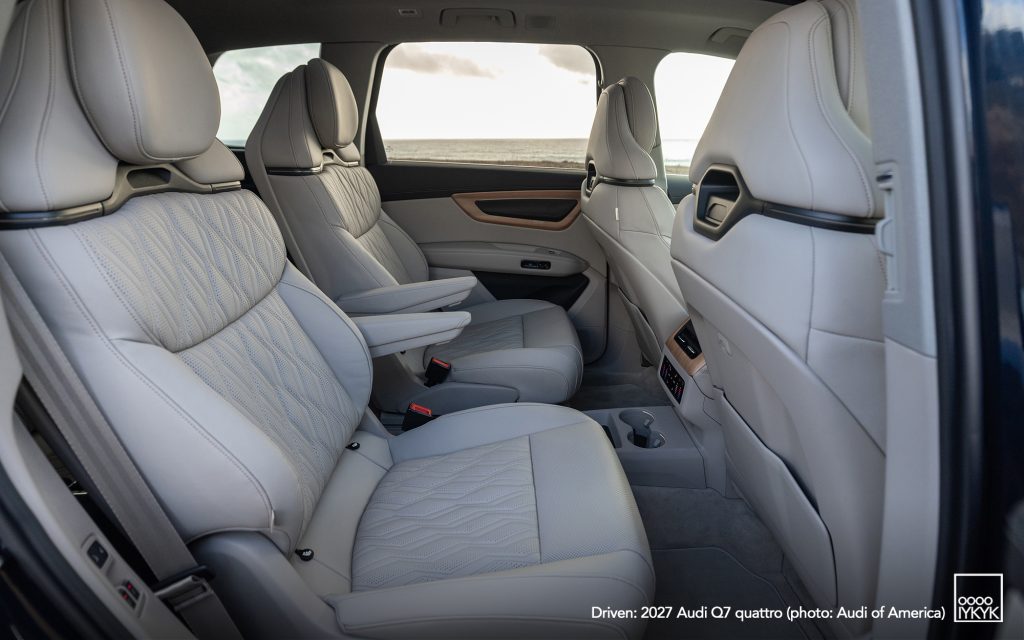
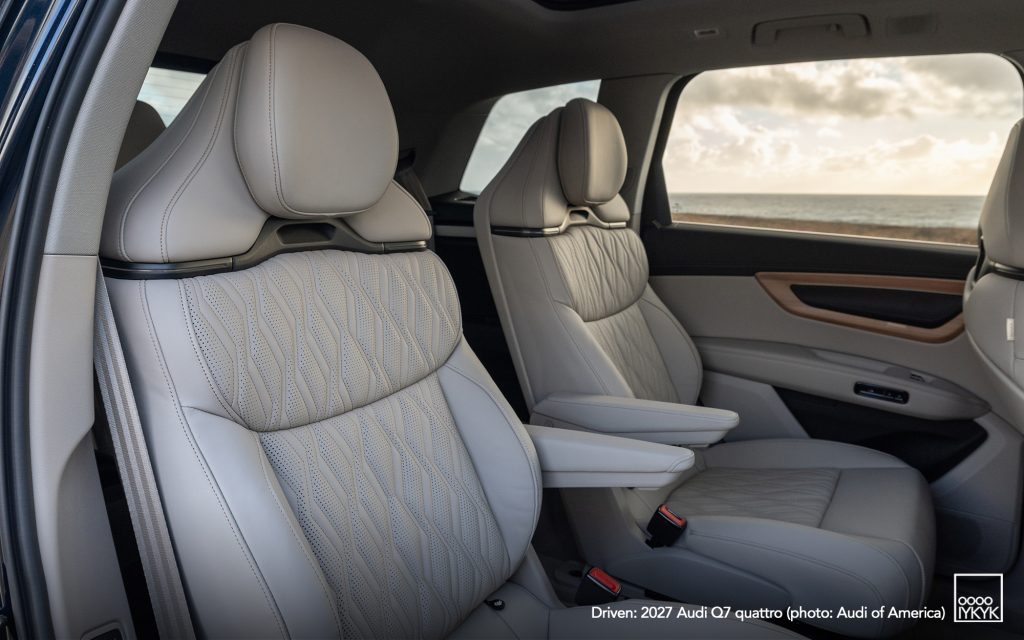
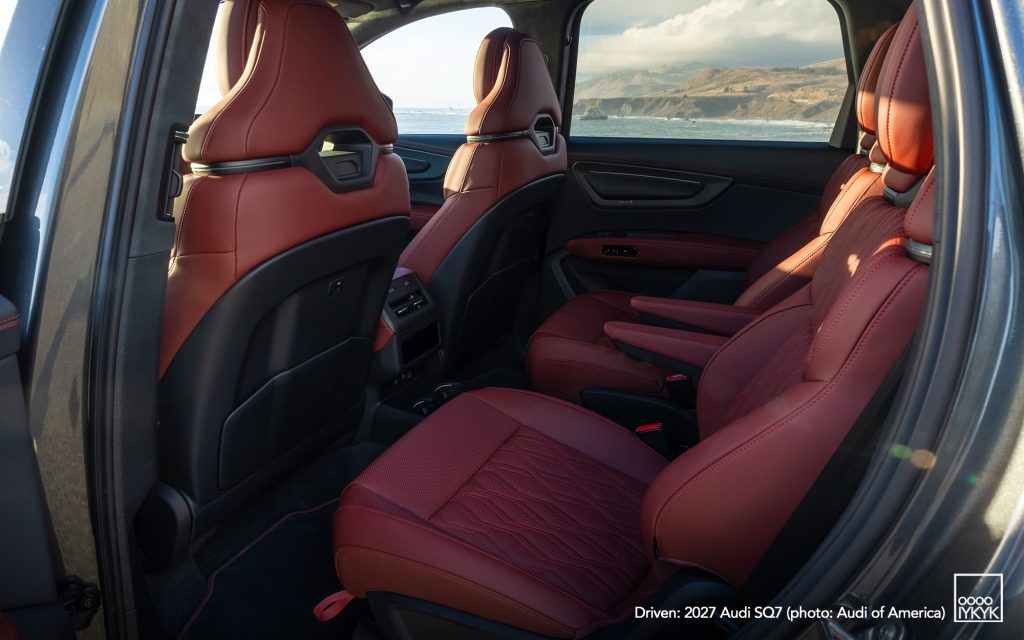
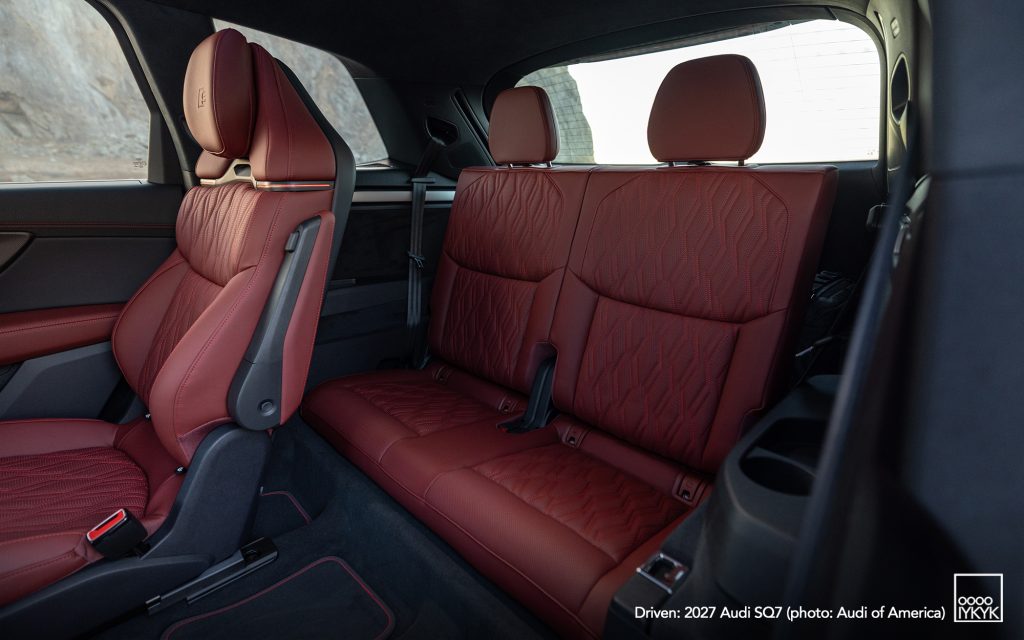
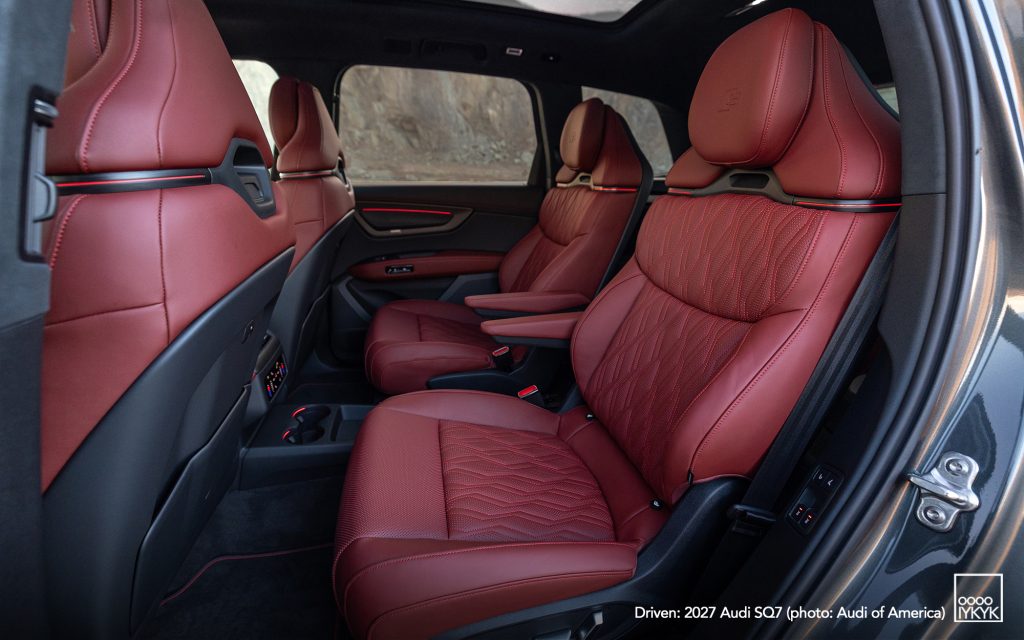
For $450, buyers can swap the standard second-row bench for two captain’s chairs with individual armrests. The redesigned bench has more evenly sized seating positions, and Audi says it can accommodate three child seats side by side. Farther aft, the standard third row is a good spot for kids. Adults can fit back there, though I wouldn’t volunteer for a long road trip.
Buttons throughout the cabin handle seat adjustments, including folding the third row. The power-operated second-row seats tilt forward to make it easier to get back there. The outboard second-row seats and the third-row seats in our Prestige were heated.
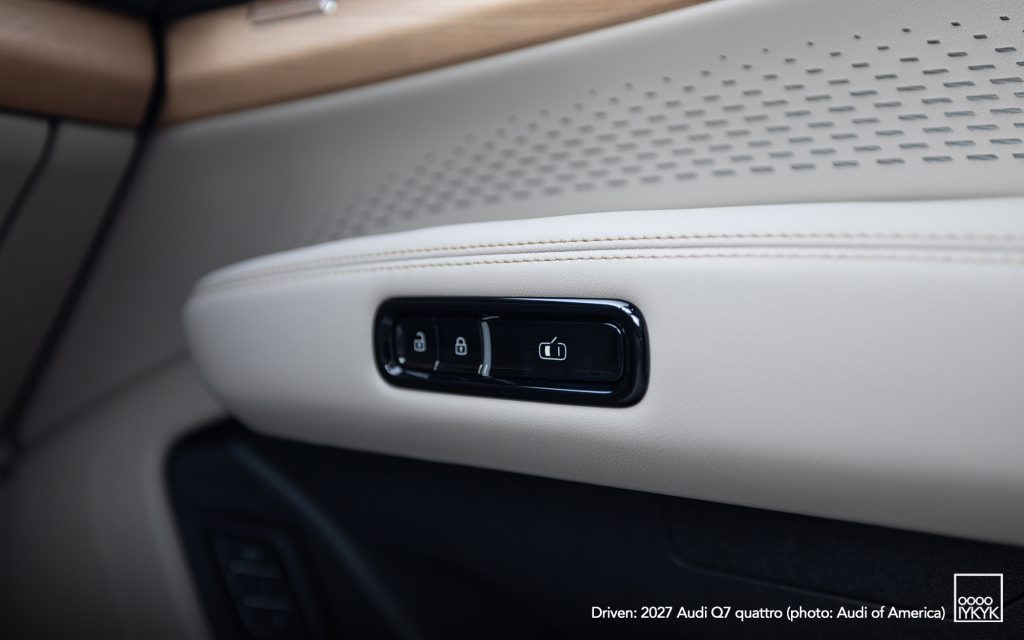
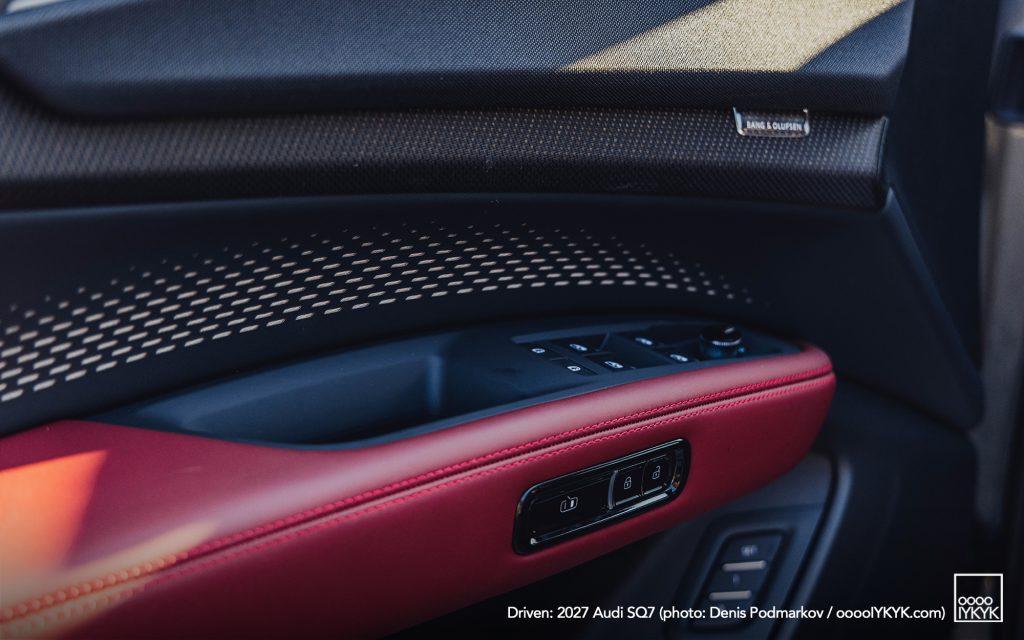
Getting out takes a little practice. You press a button to release the door in place of pulling a conventional interior handle. The optional Luxury package adds power-opening and power-closing doors, a feature also offered on the new Q9. Sensors help detect nearby obstacles. We spent some time figuring out how close to stand for the doors to operate. Personally, I prefer to close my own.
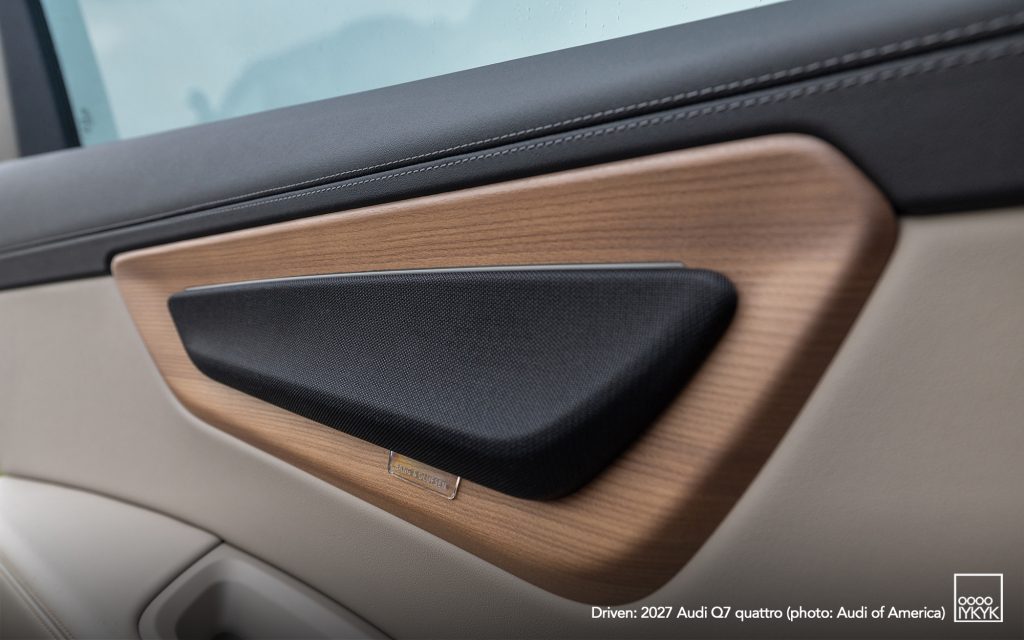
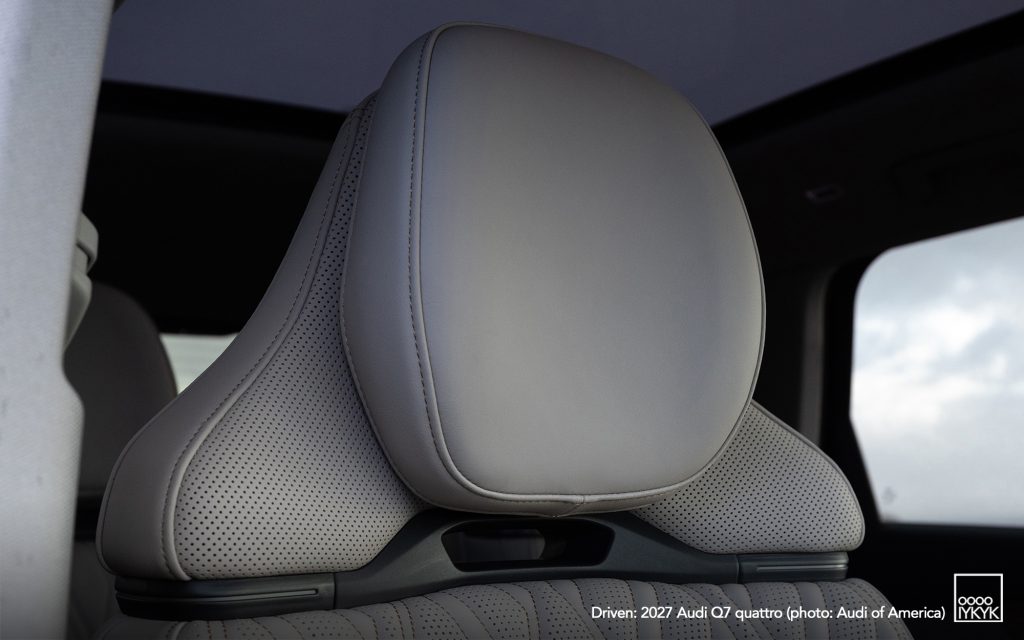
The Q7 and SQ7 also pick up some of the flagship Q9’s cabin technology. The optional Bang & Olufsen 4D Premium sound system, a first for the Q7 and SQ7, has 22 speakers and up to 1,360 watts of power. Speakers in the front headrests bring the sound closer, and actuators in the front seats let you feel the bass, almost as if you’re sitting on a subwoofer. You can dial back the vibration or switch it off entirely.
The headrest speakers have another trick. They can play phone calls or navigation prompts while music continues through the rest of the cabin. Your family can keep listening to the playlist while you circle back on Monday in your Teams call.
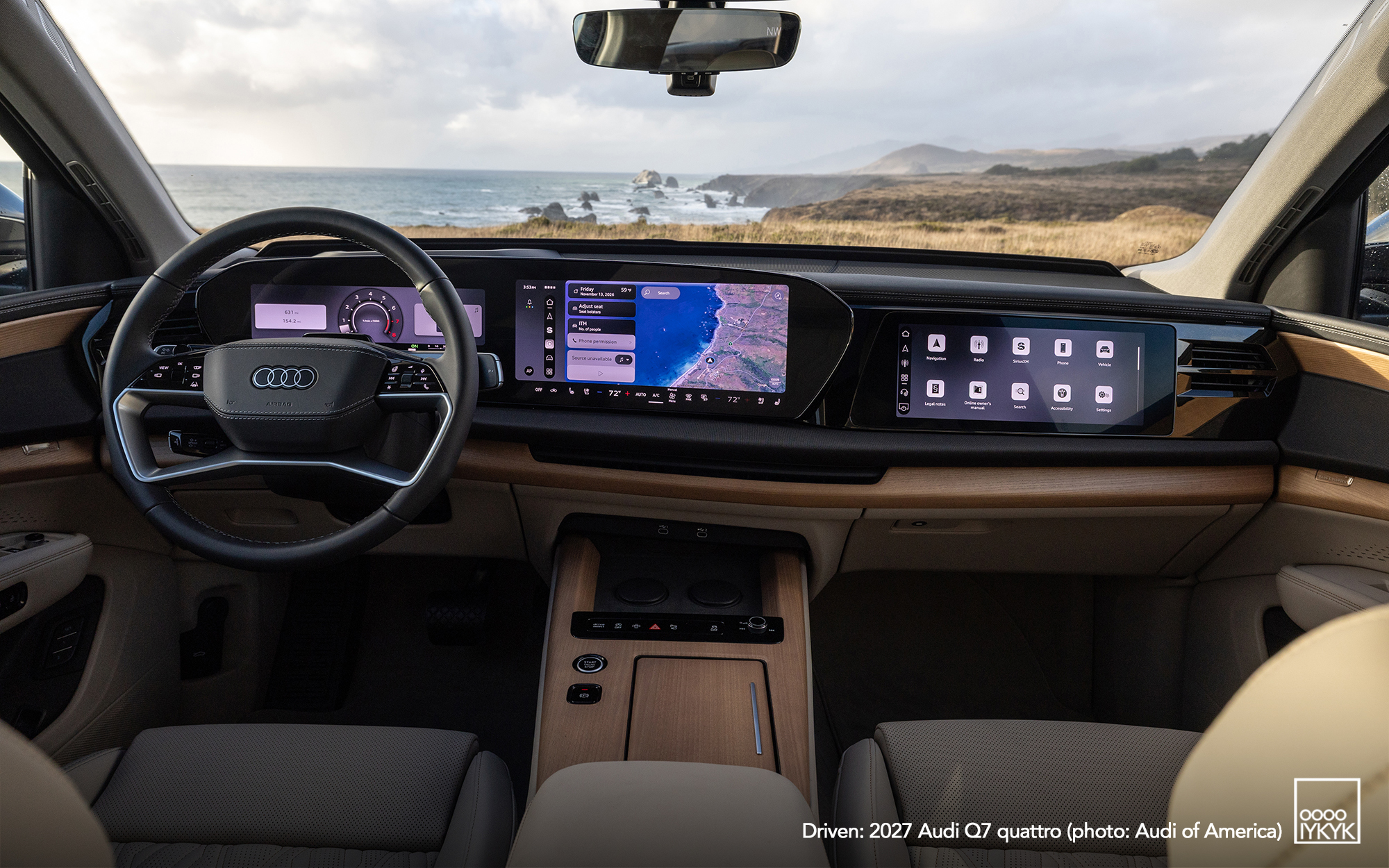
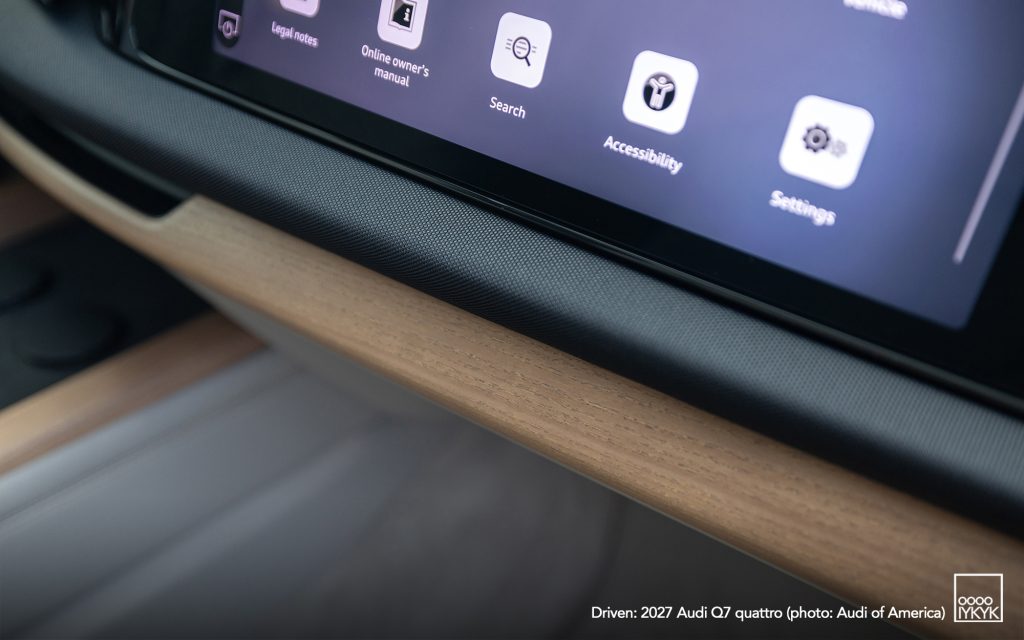
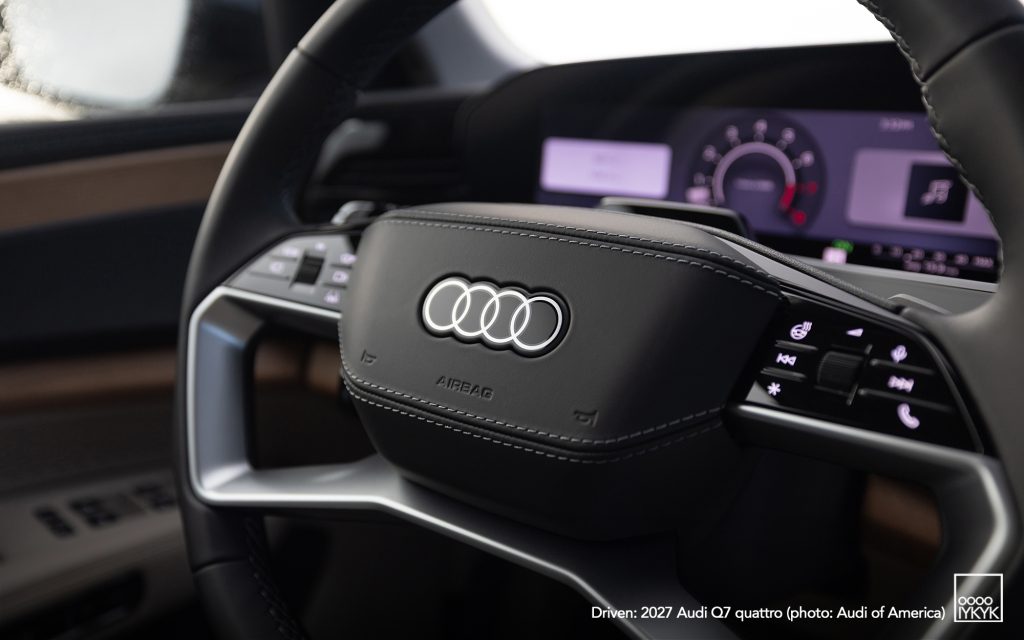
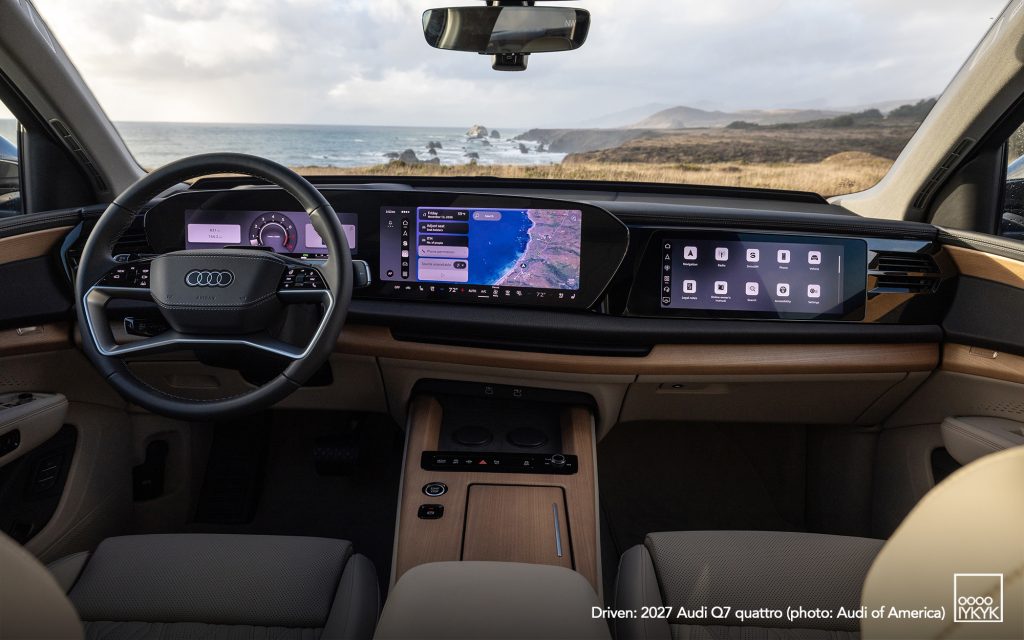
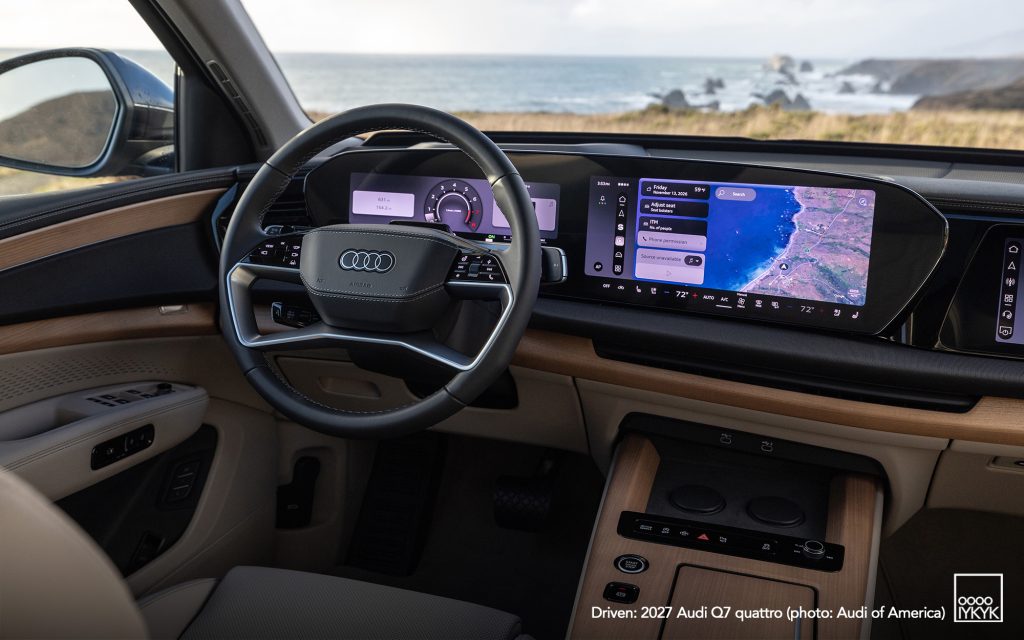
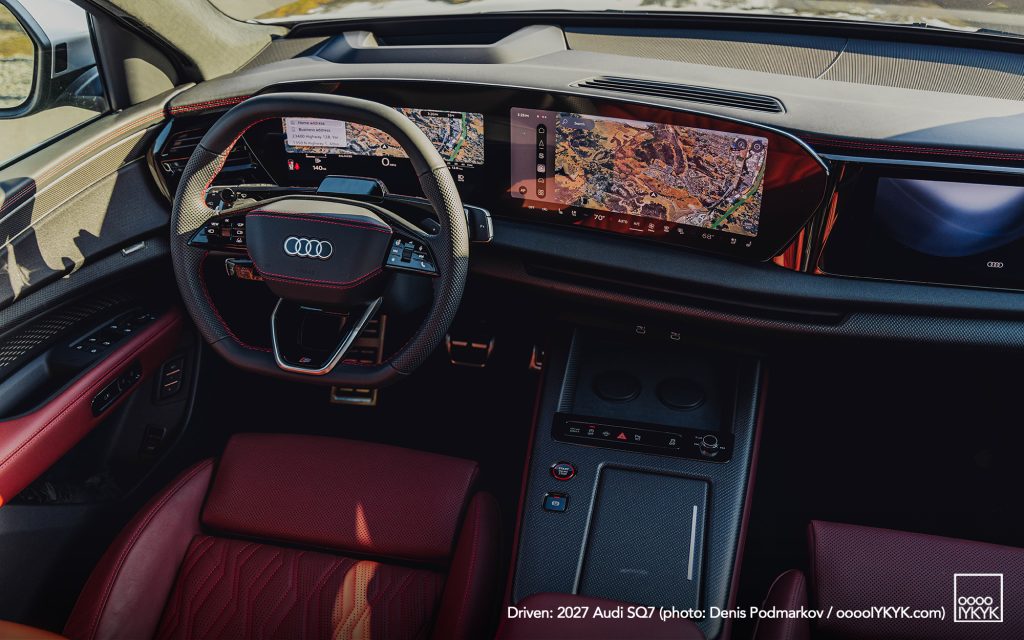
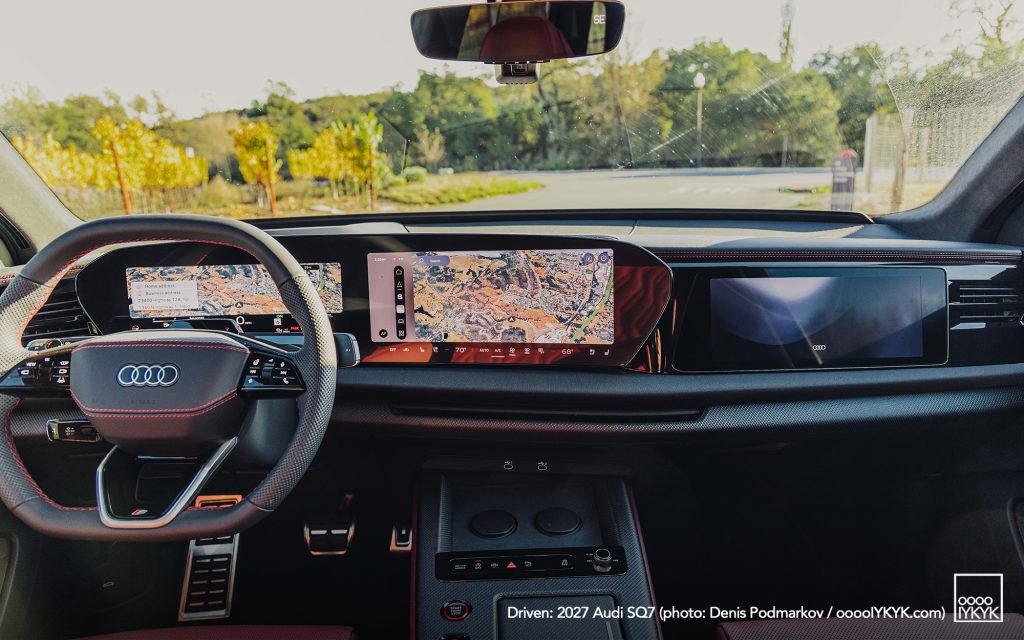
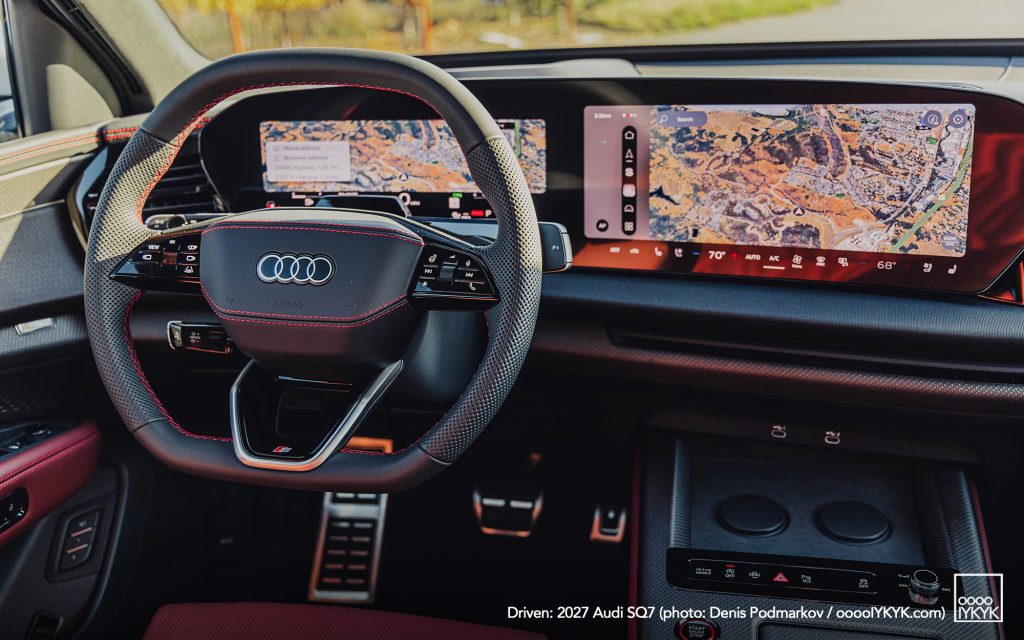
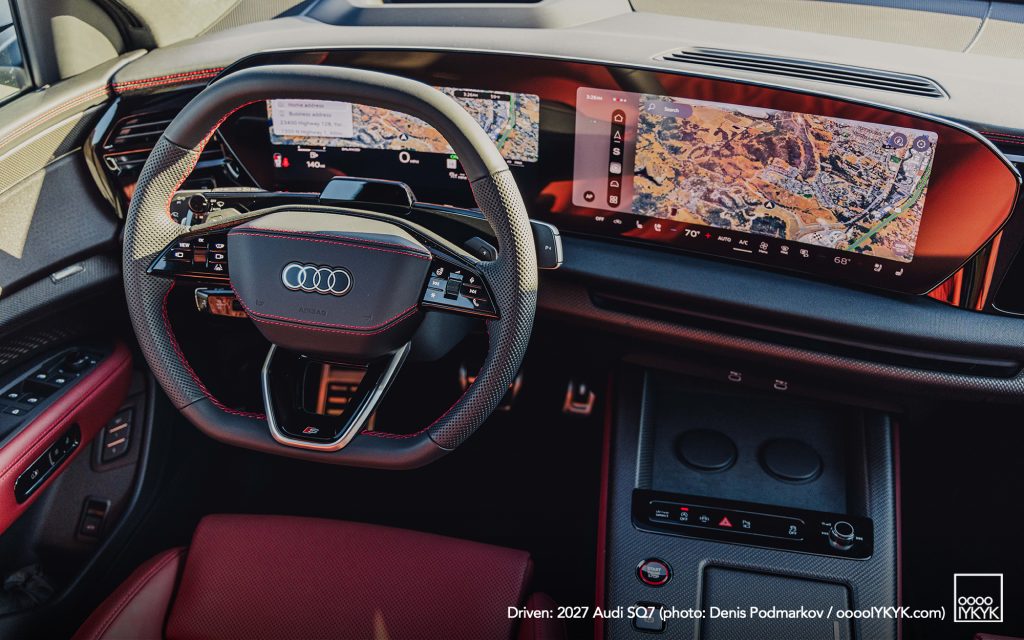
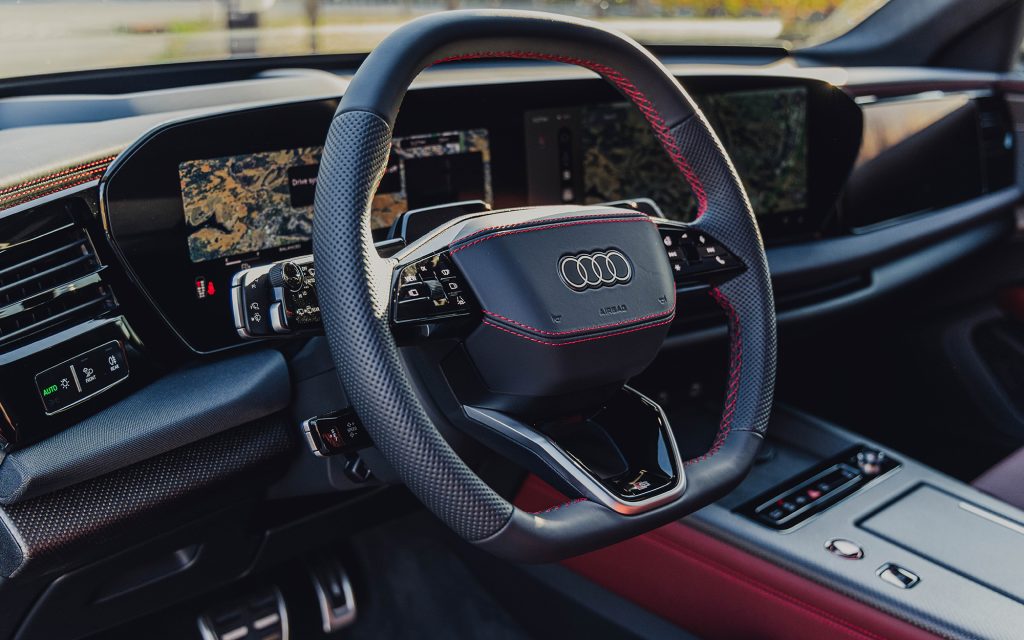
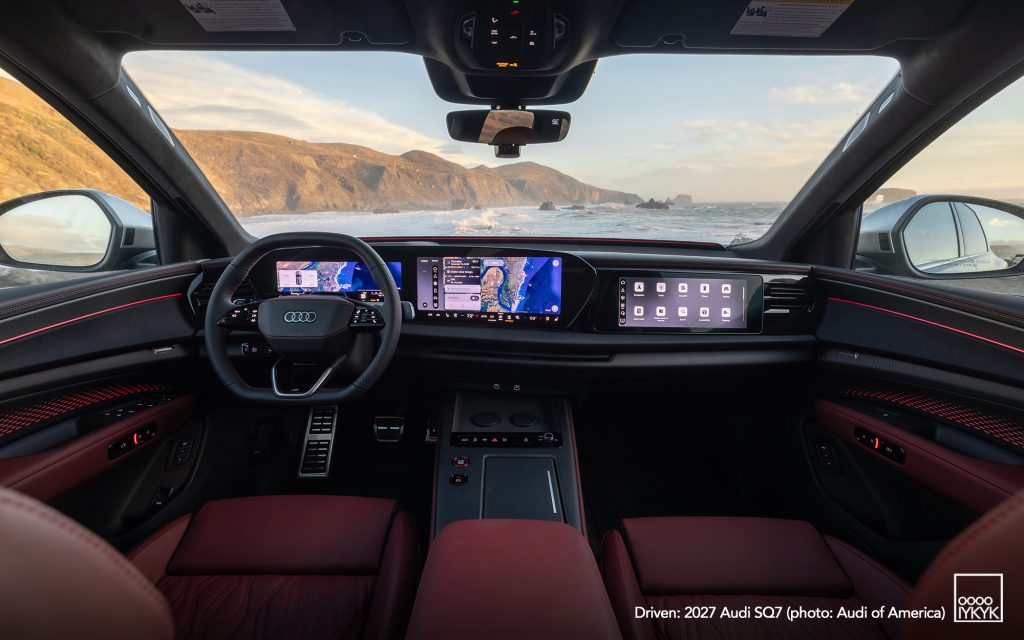
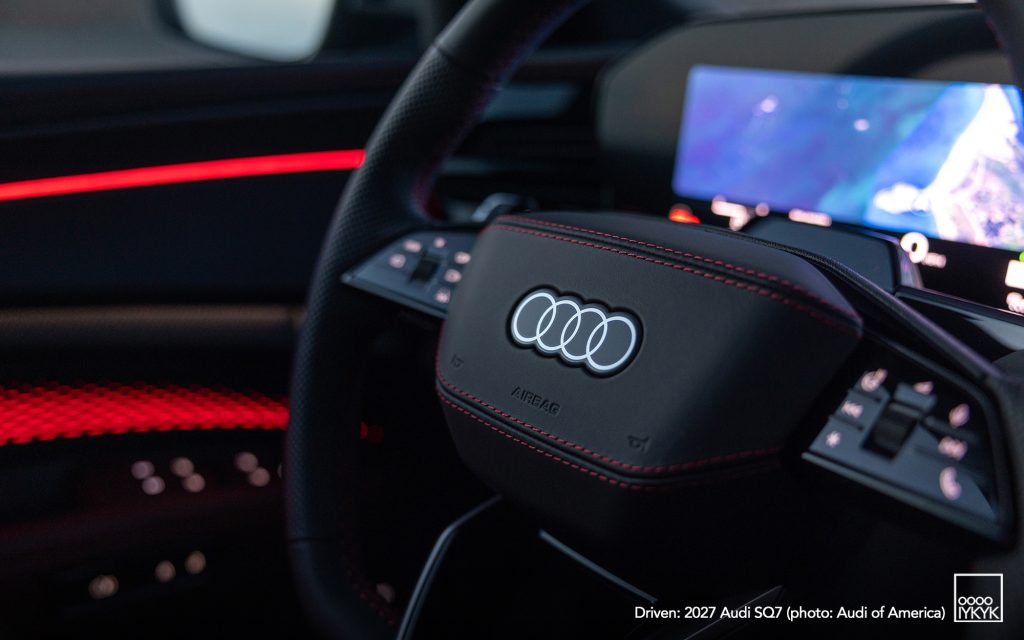
A 12.3-inch front passenger display comes standard alongside the 14.5-inch central MMI display and 11.9-inch Audi virtual cockpit. Together they make up what Audi calls its Digital Stage. We used the passenger screen to see how many curves were coming up and to change the music without interrupting the driver’s display. Michèle didn’t bring her history-making co-driver Fabrizia Pons along for the commercial. Had she done so, that extra screen might have made Fabrizia’s job a little easier.
Three screens across the dash seemed like a lot at first. After about 10 minutes behind the wheel, I’d mostly forgotten the passenger screen was there. It blends into the dash, and a dynamic privacy mode limits what the driver can see on it. Passengers can follow lyrics or watch supported music videos in the native Spotify app. Compatible AirConsole games use smartphones as controllers, so the Xbox can stay home.
On select highways, adaptive cruise assist plus allows hands-free driving at speeds up to 85 mph. The Level 2 system manages steering, acceleration and braking, keeps the Q7 centered in its lane and maintains a following gap. It can also carry out driver-initiated lane changes. It took us a few tries to engage the system on the highway. Once it was active, it handled much of the workload, with the driver still responsible for watching the road and being ready to take over.
The awkward part was figuring out what to do with my hands. Paying attention to the road with my hands off the wheel felt strange at first. After some time on the freeway, I found I didn’t mind it. I was happy to do the driving myself once the road started to wind again. Adaptive cruise assist plus comes standard on the Q7 Premium Plus, Q7 Prestige and SQ7.
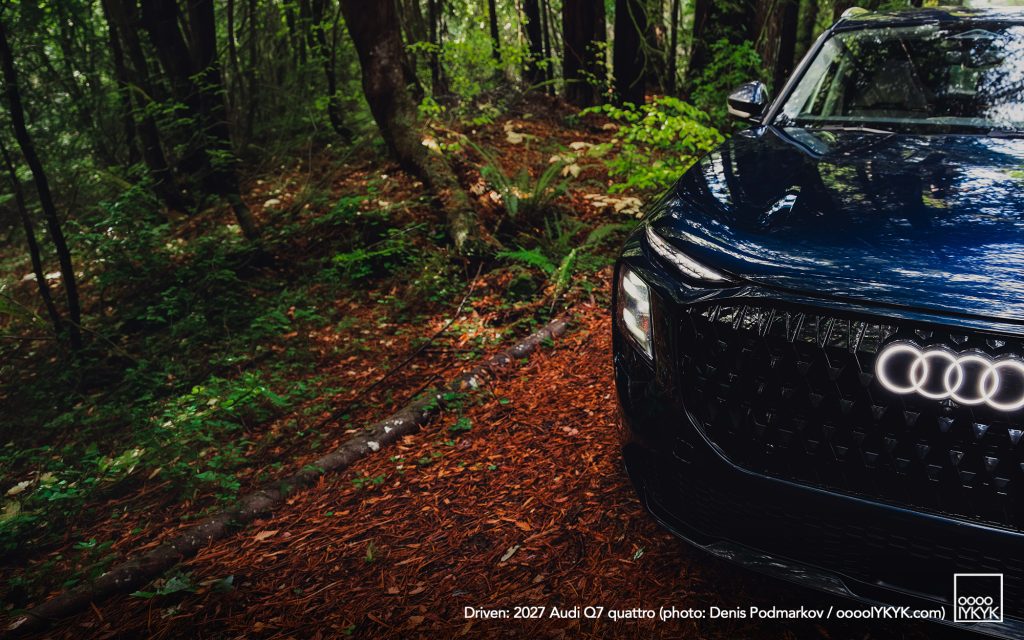
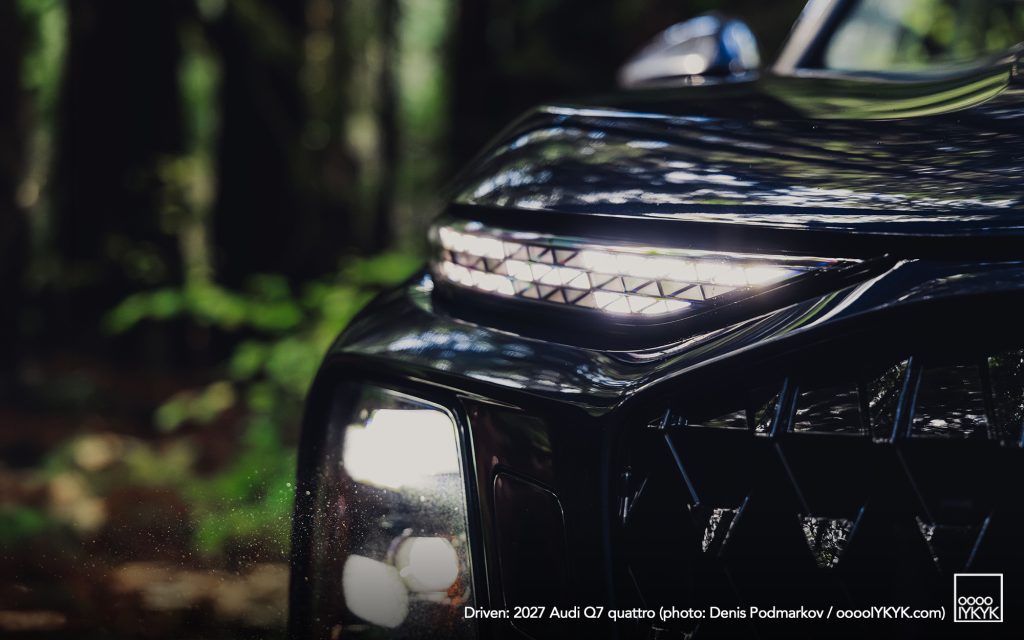
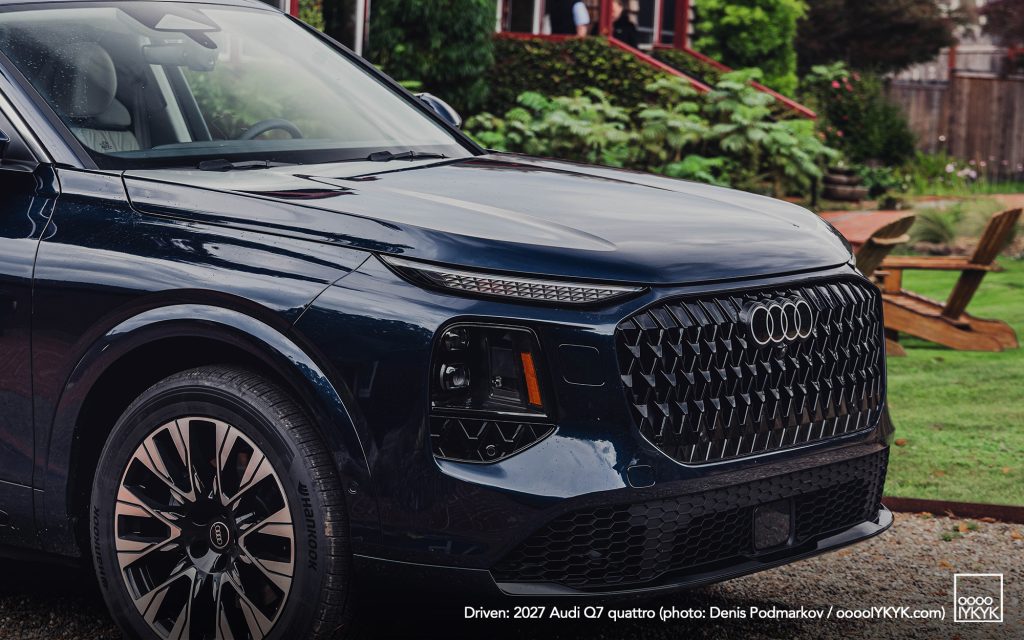
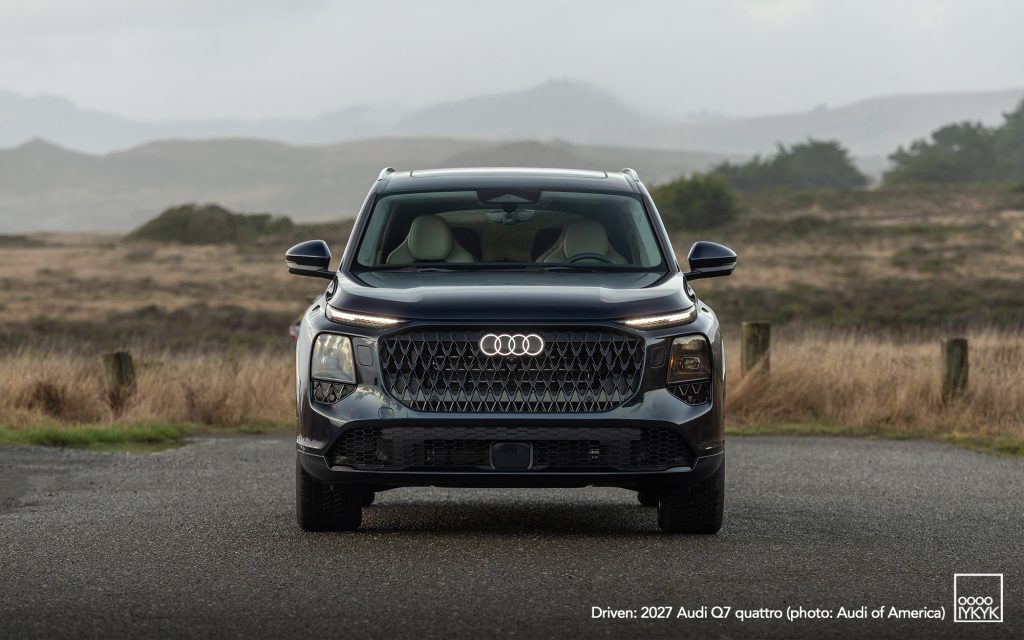
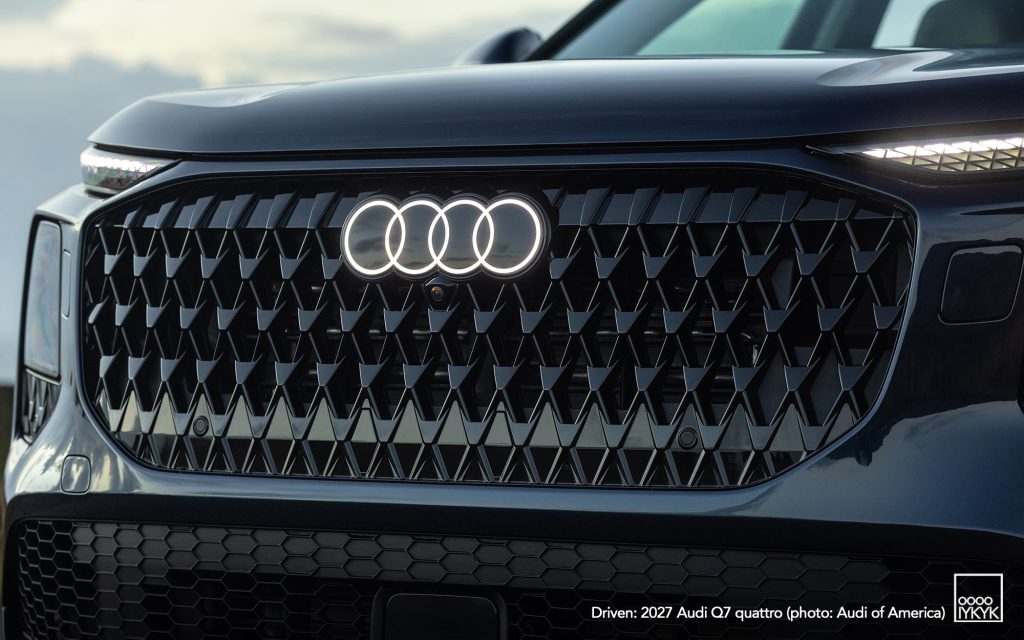
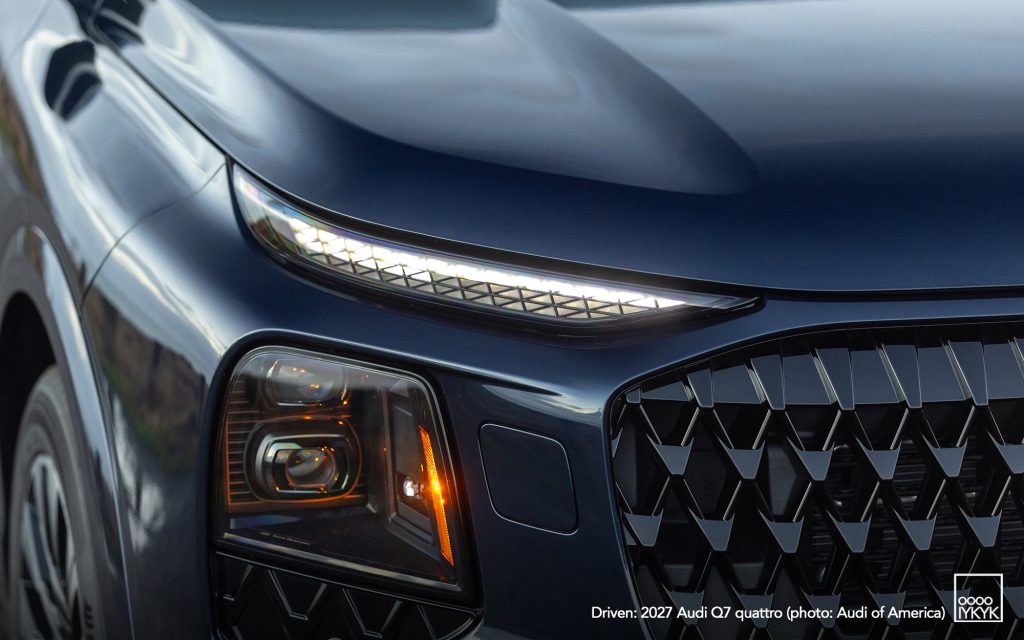
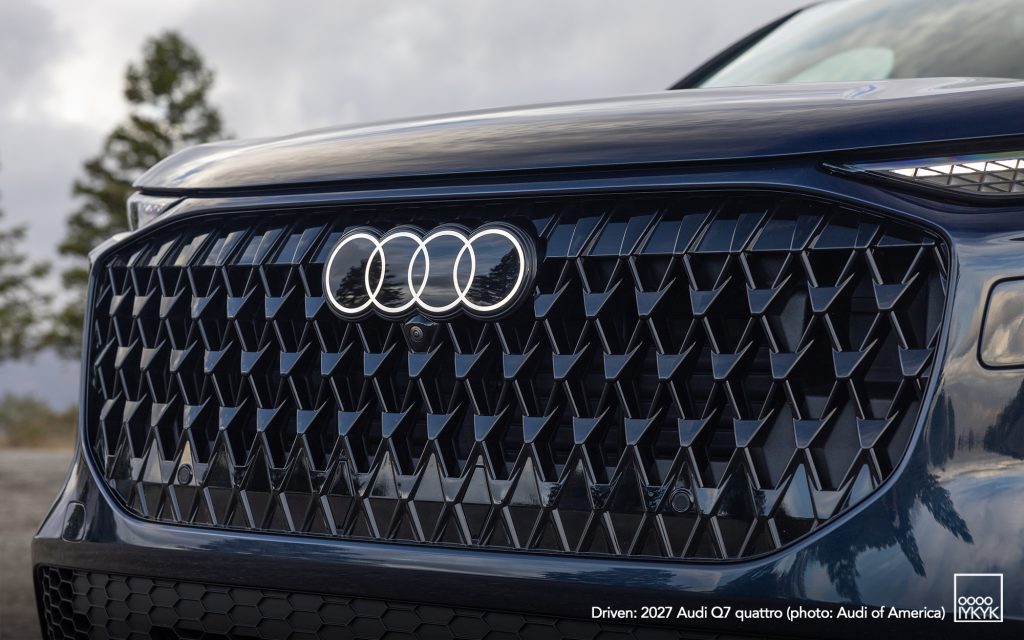
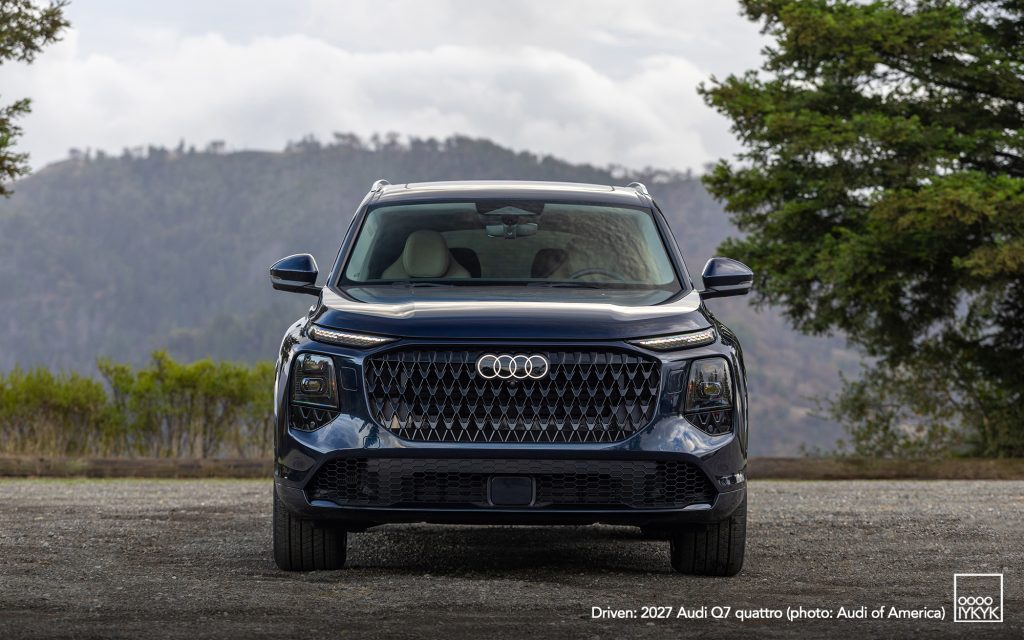
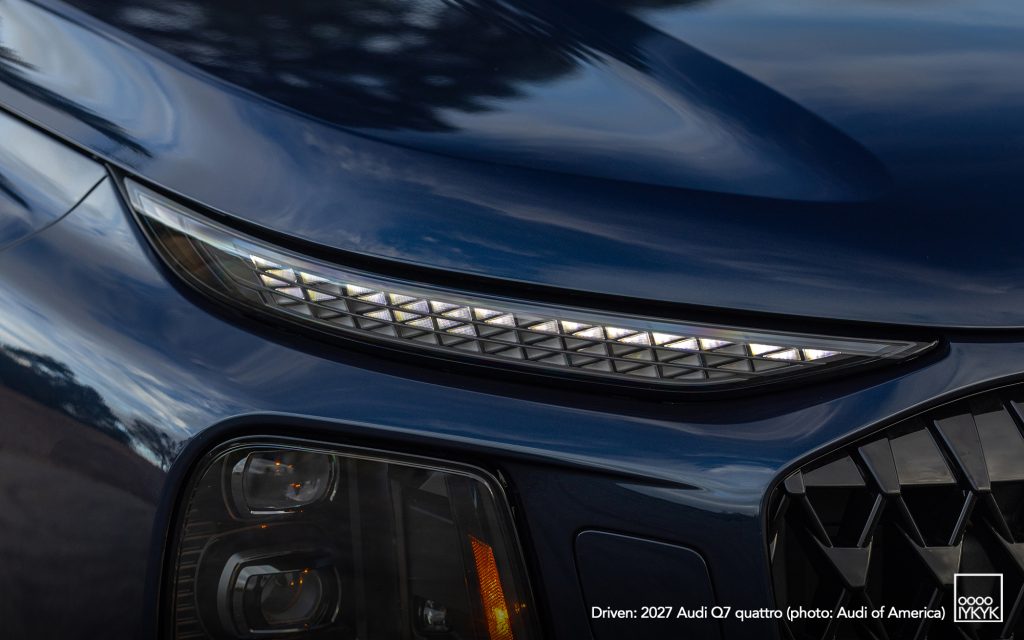
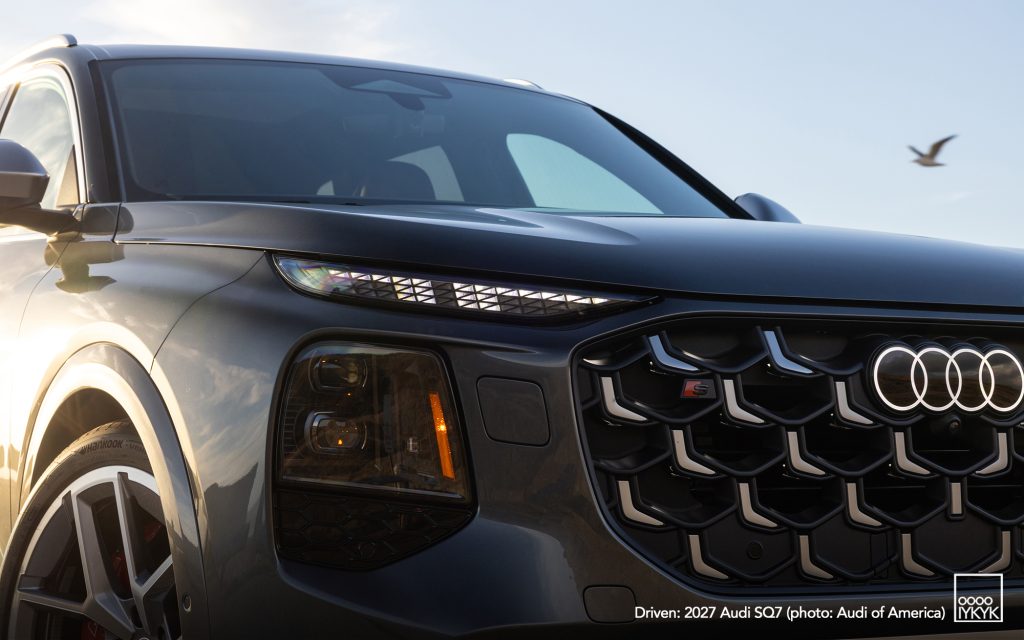
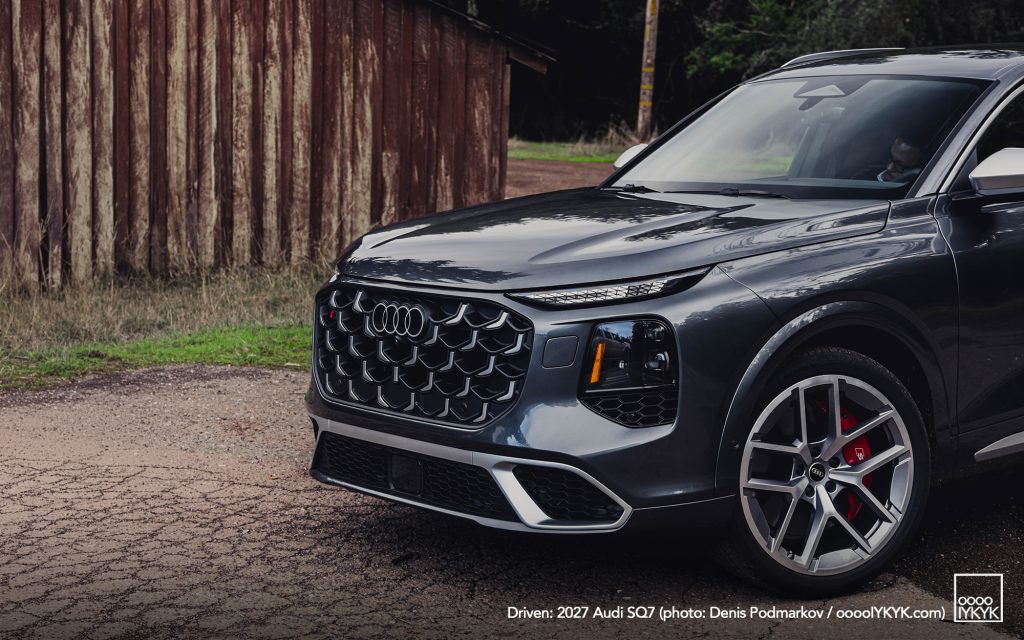
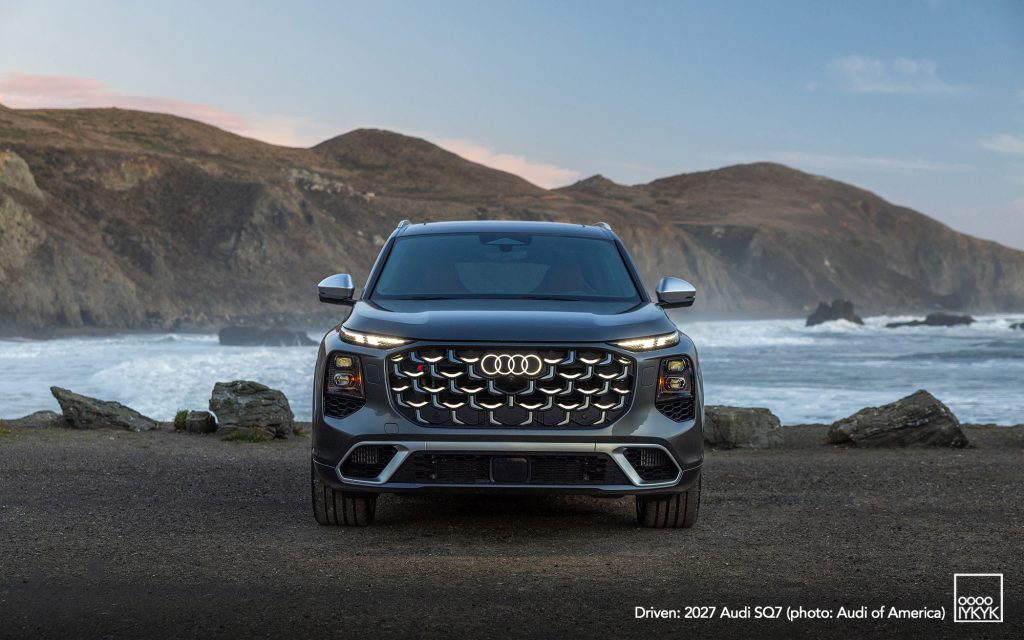
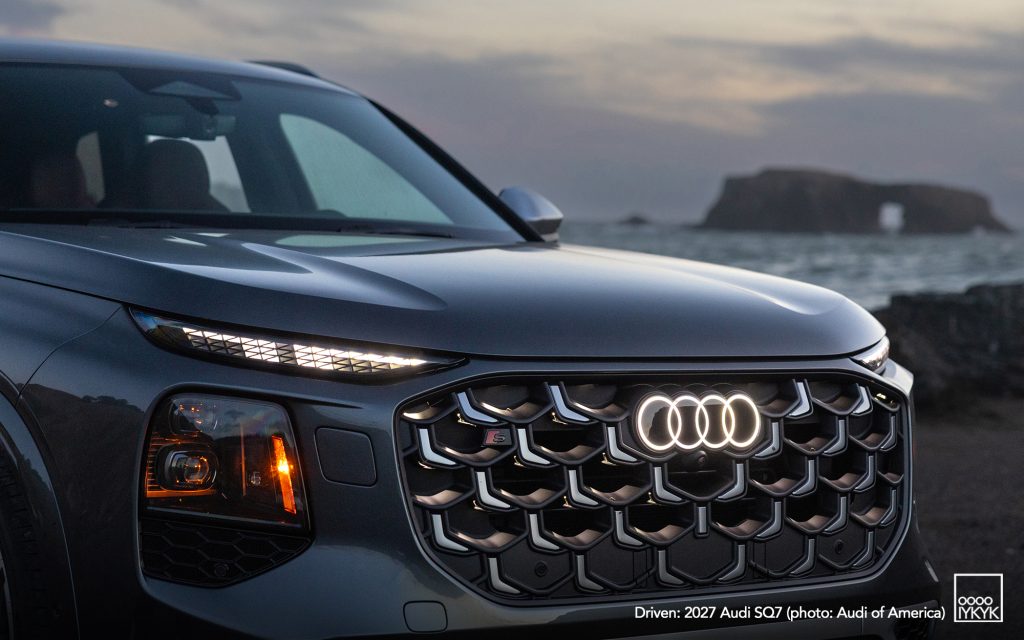
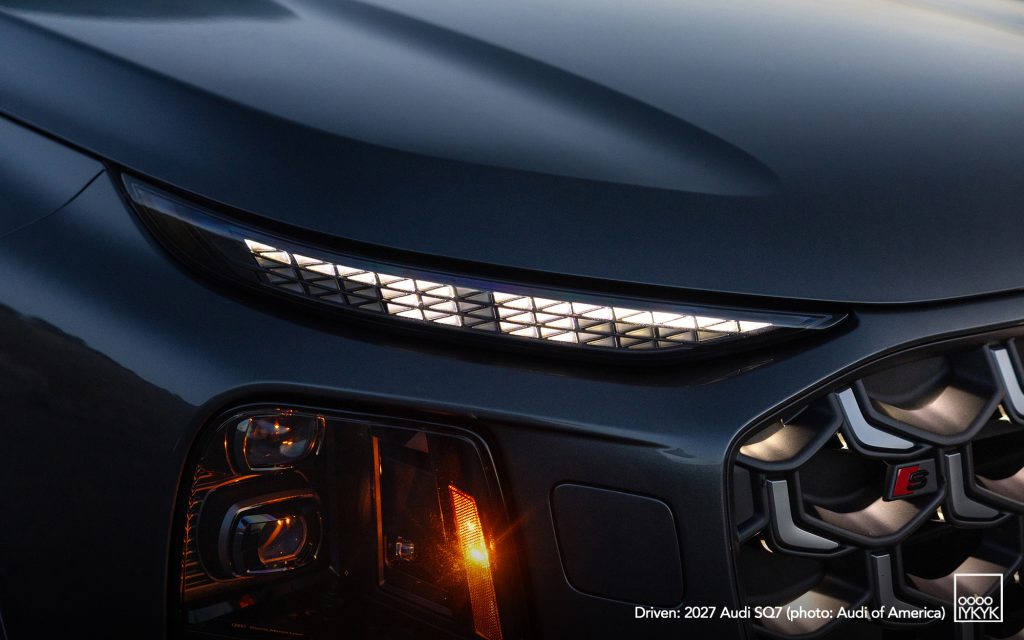
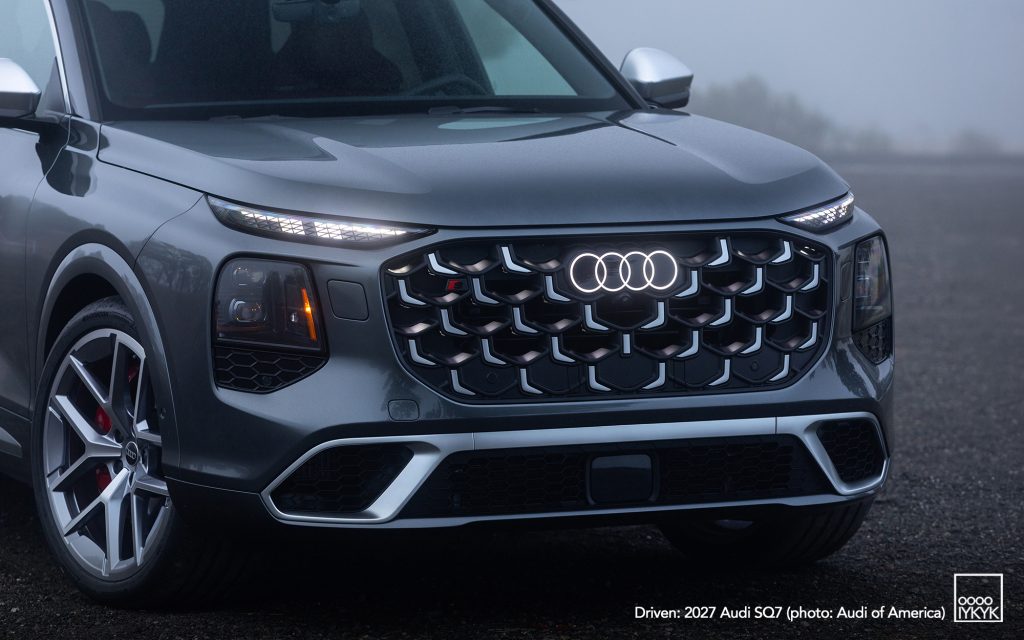
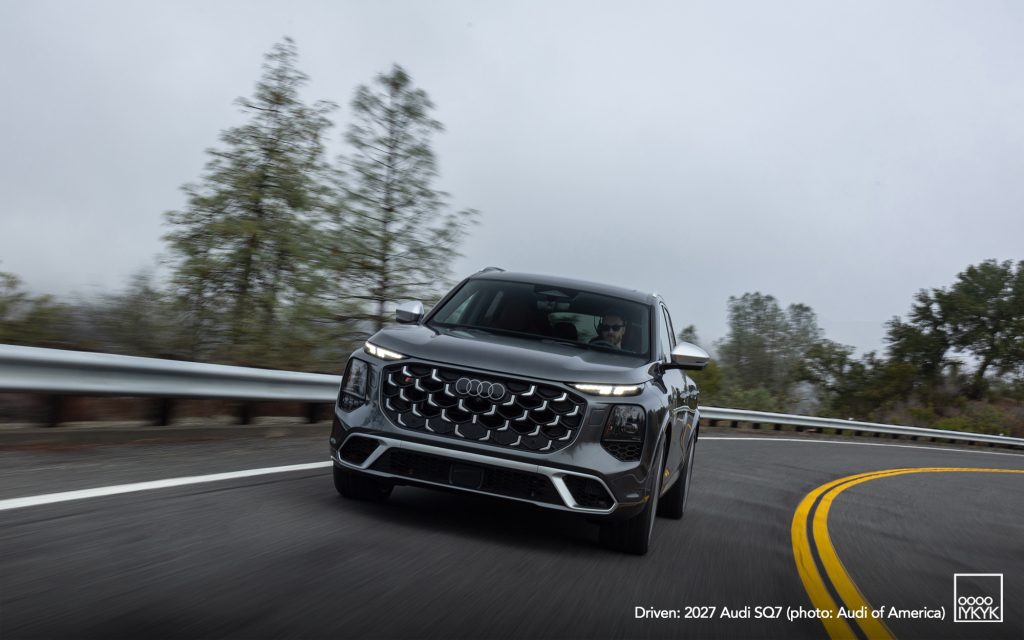
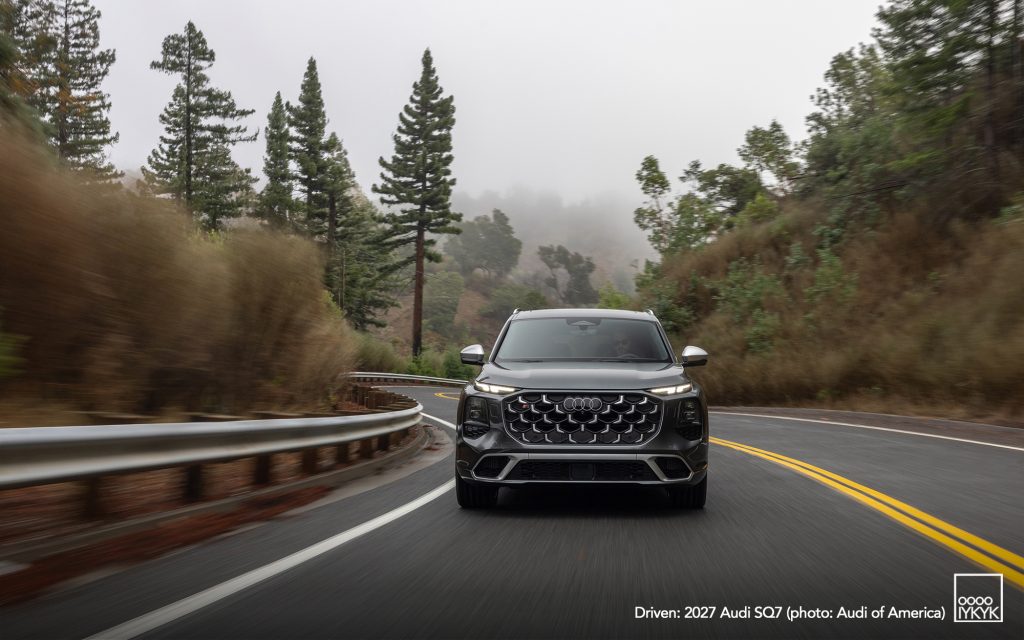
The Q7 and SQ7 join the Q9 in bringing Digital Matrix LED headlights with adaptive driving beam functionality to the U.S. Audi has offered versions of this technology overseas for years. The new system uses micro-LEDs to direct light precisely, illuminating the road ahead while reducing glare for other road users.
The turn signals can now project onto the pavement. Yes, the pavement. With the available advanced turn signals, a projected indicator flashes in sync with the conventional signal, giving cyclists, pedestrians and other drivers another cue that you’re about to turn.
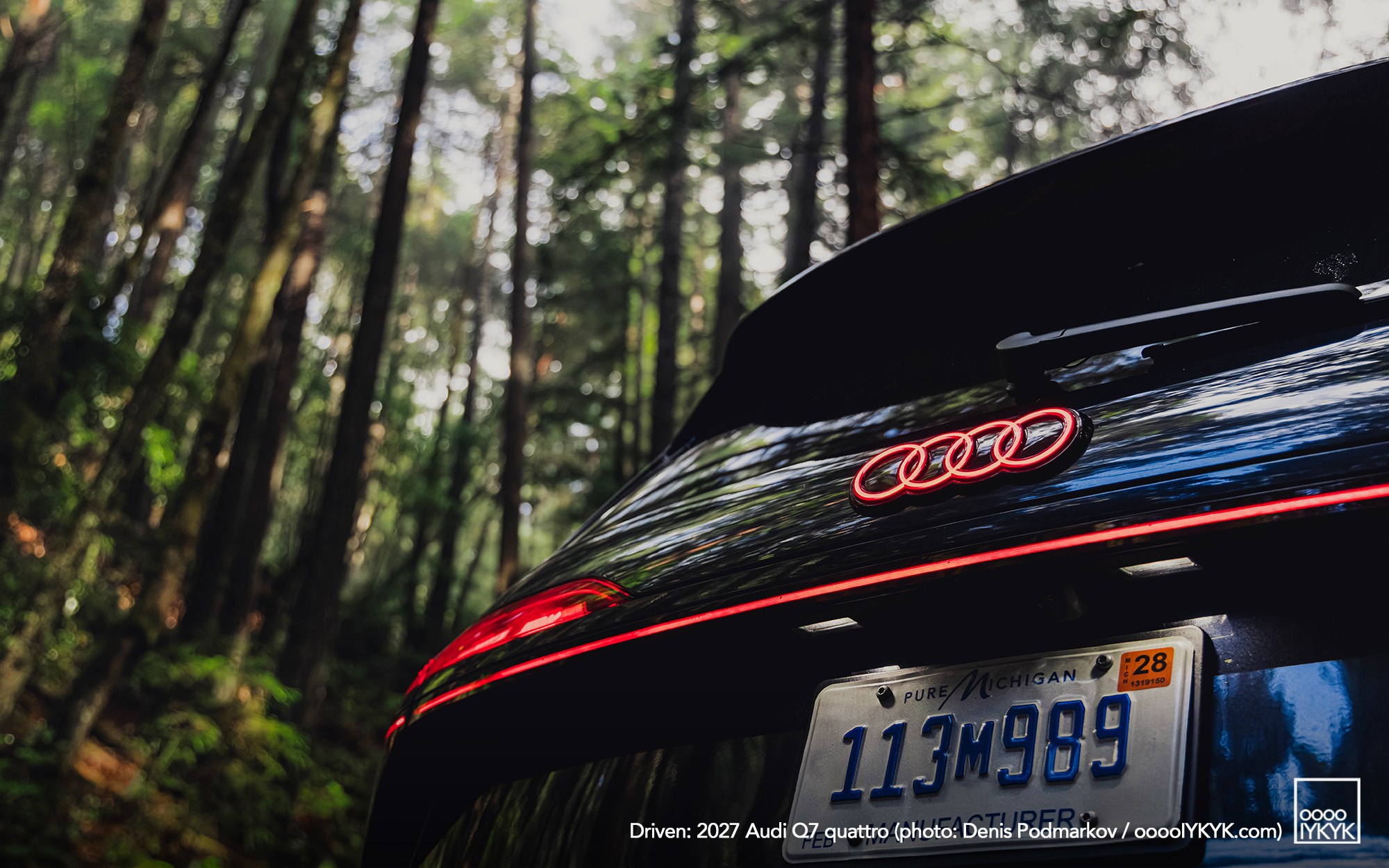
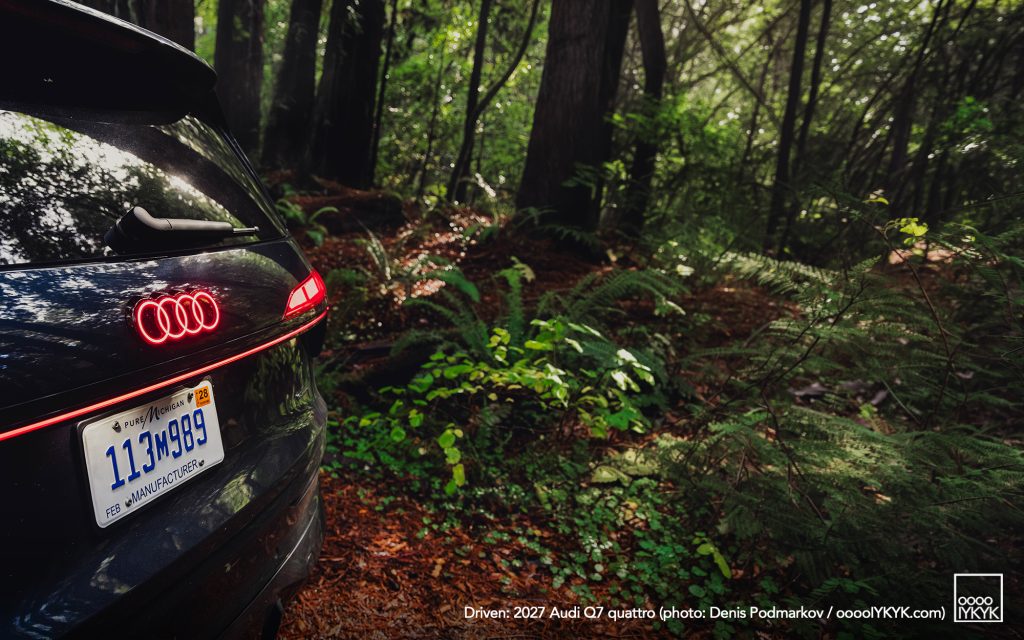
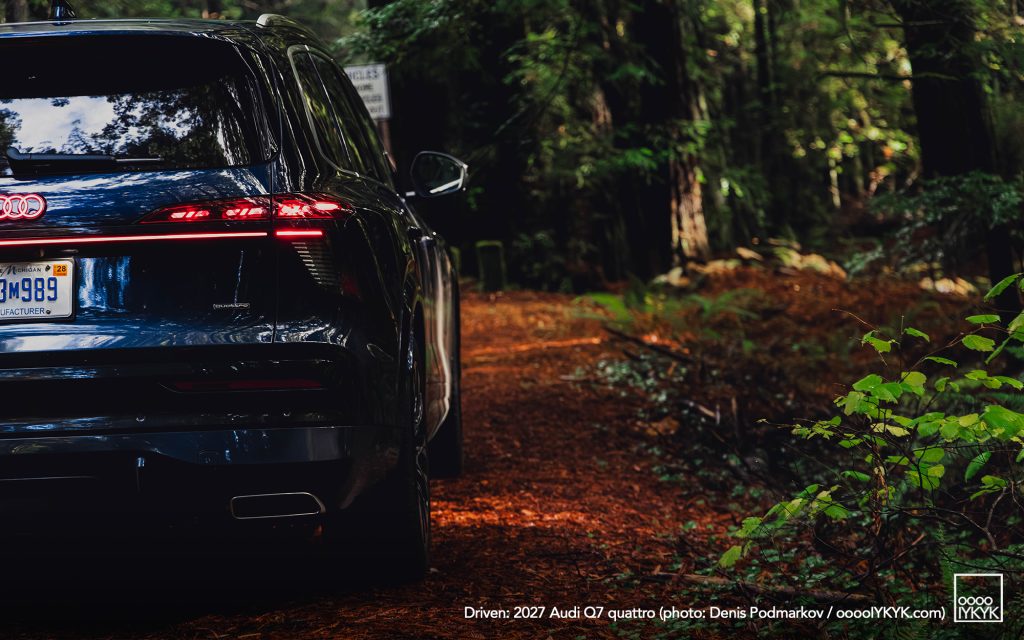
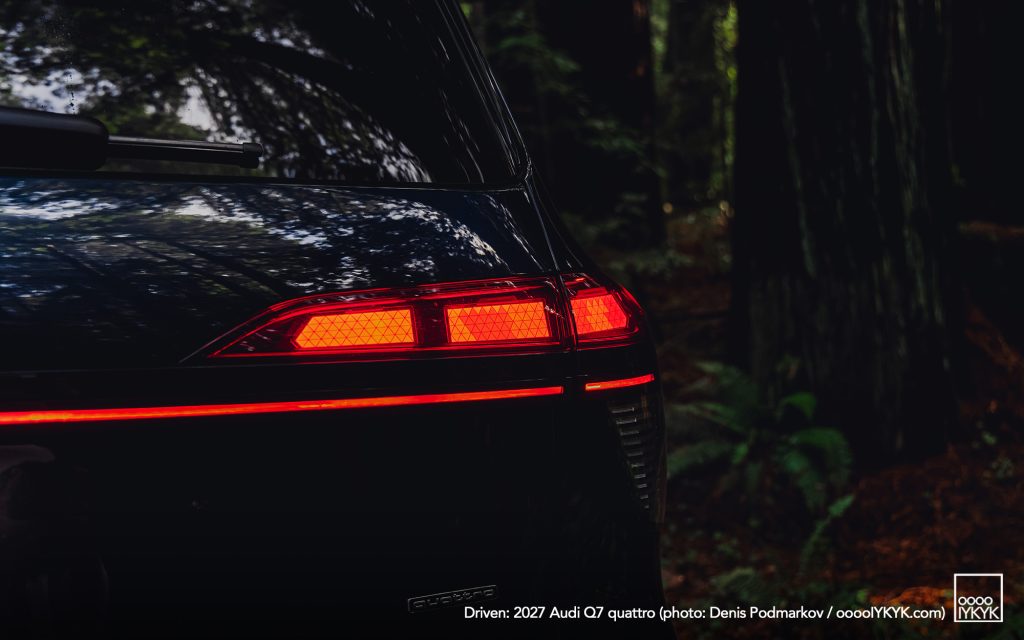
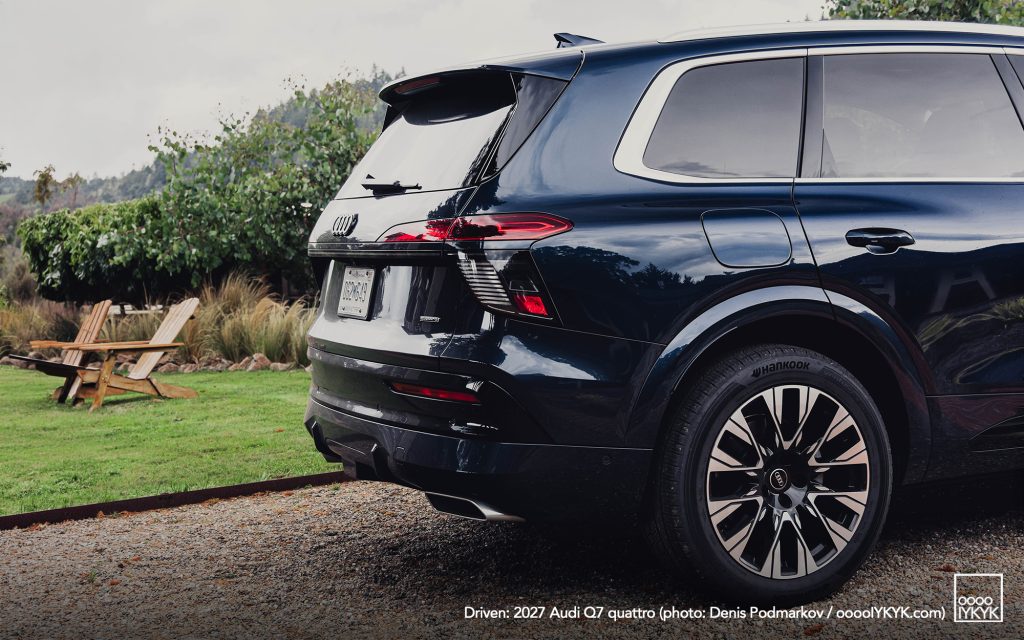
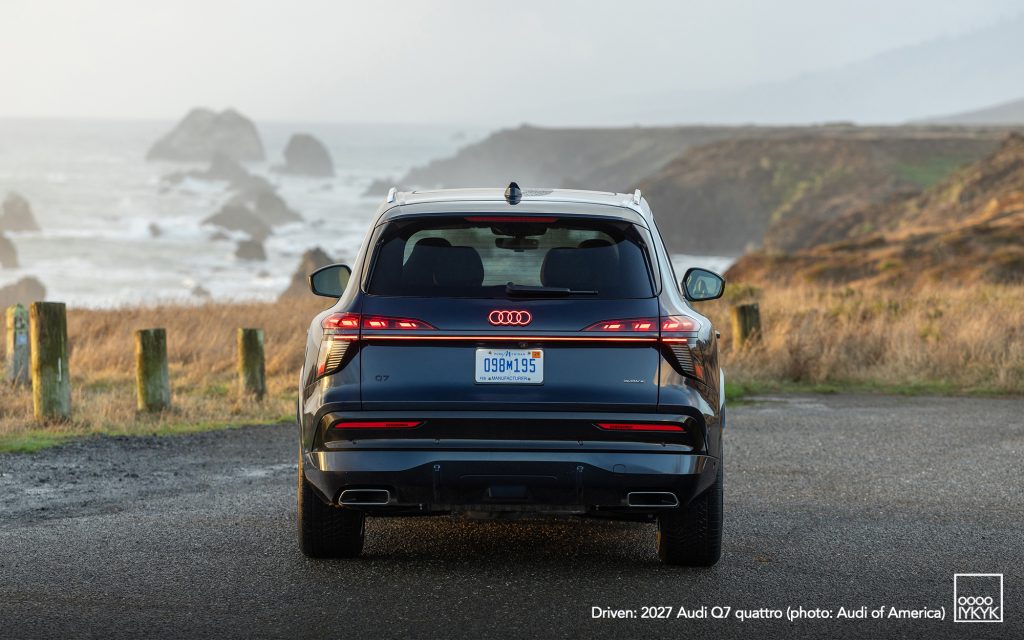
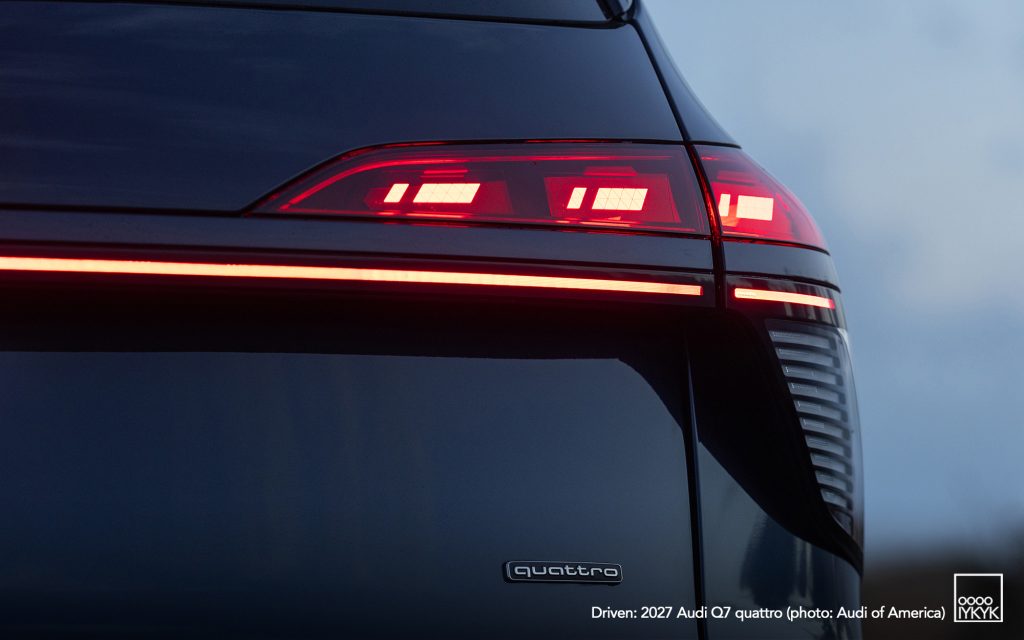
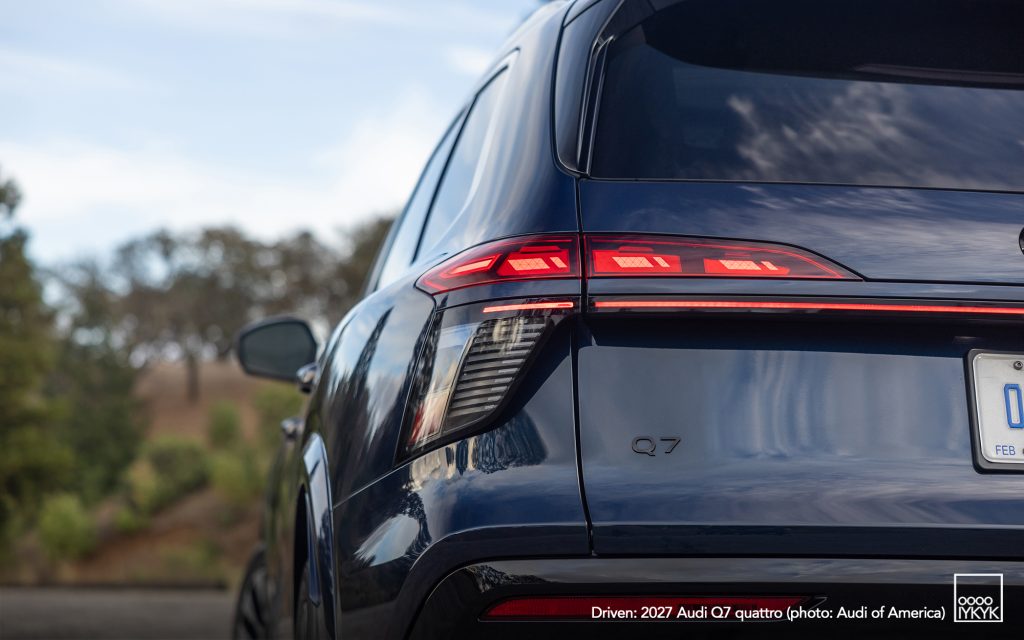
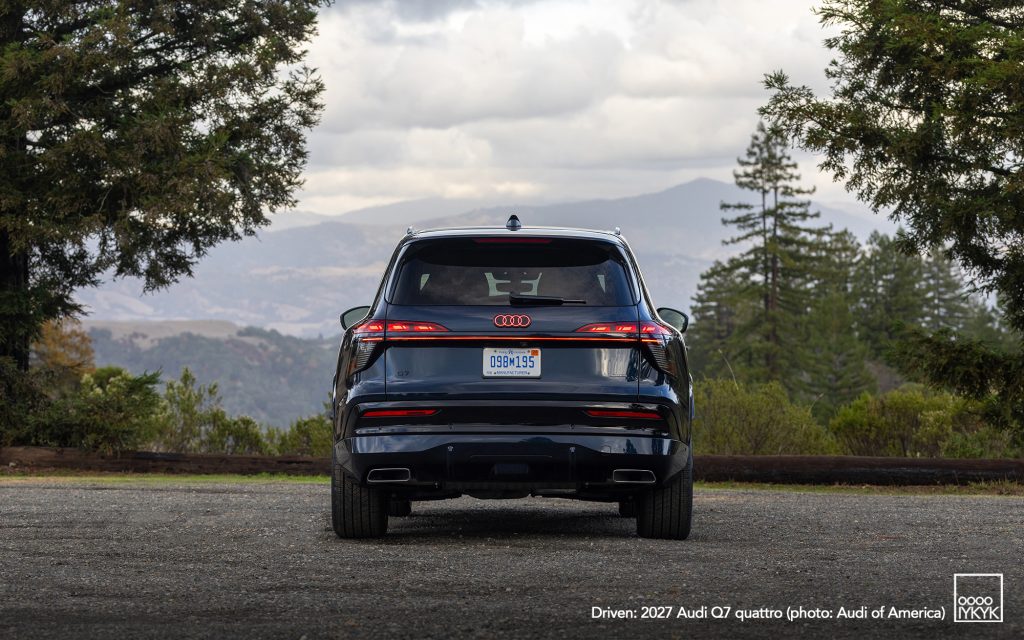
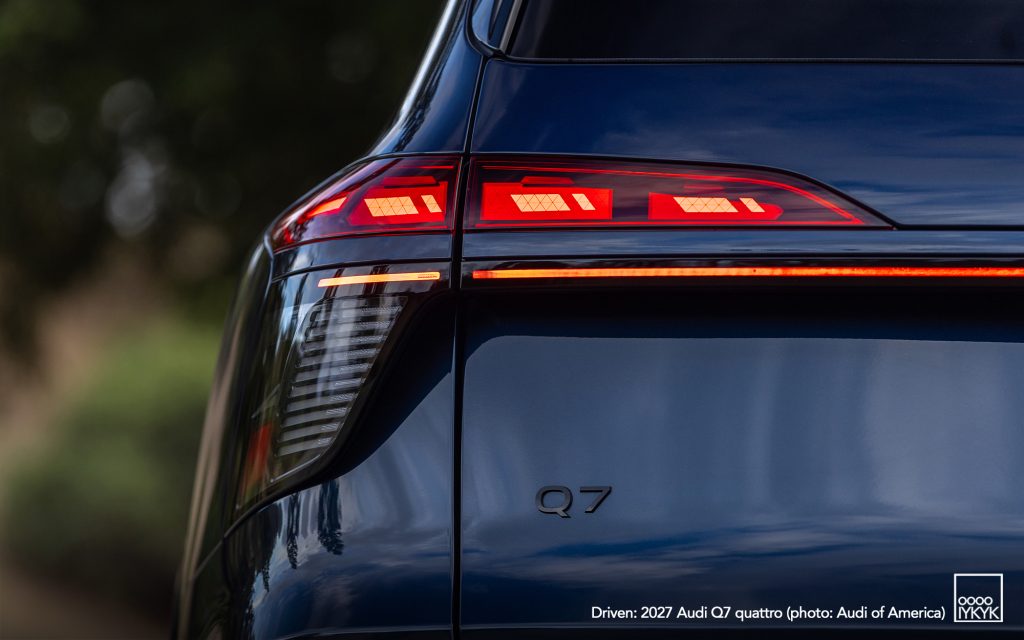
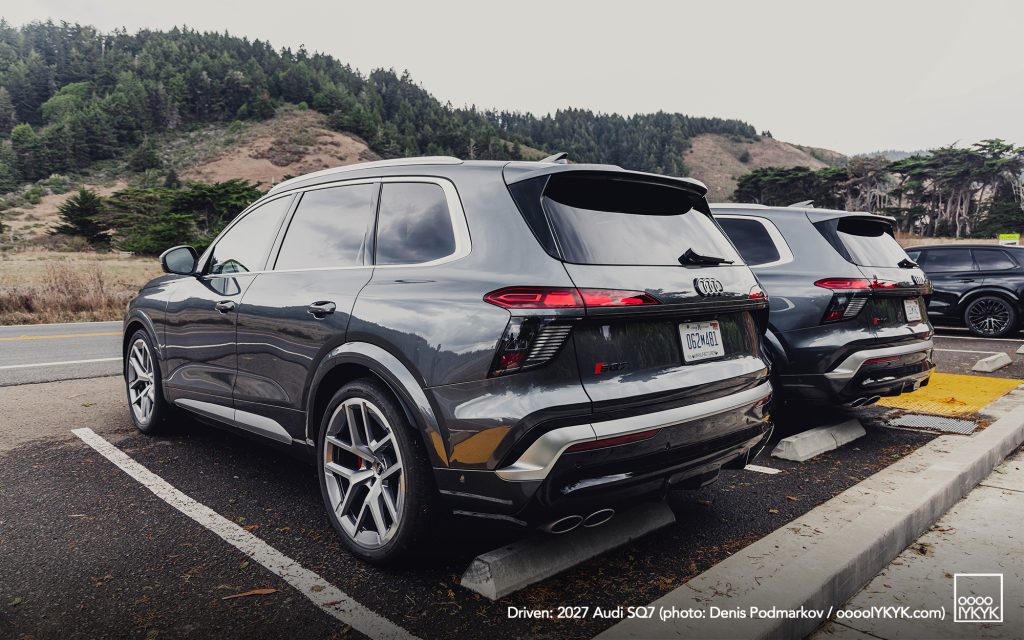
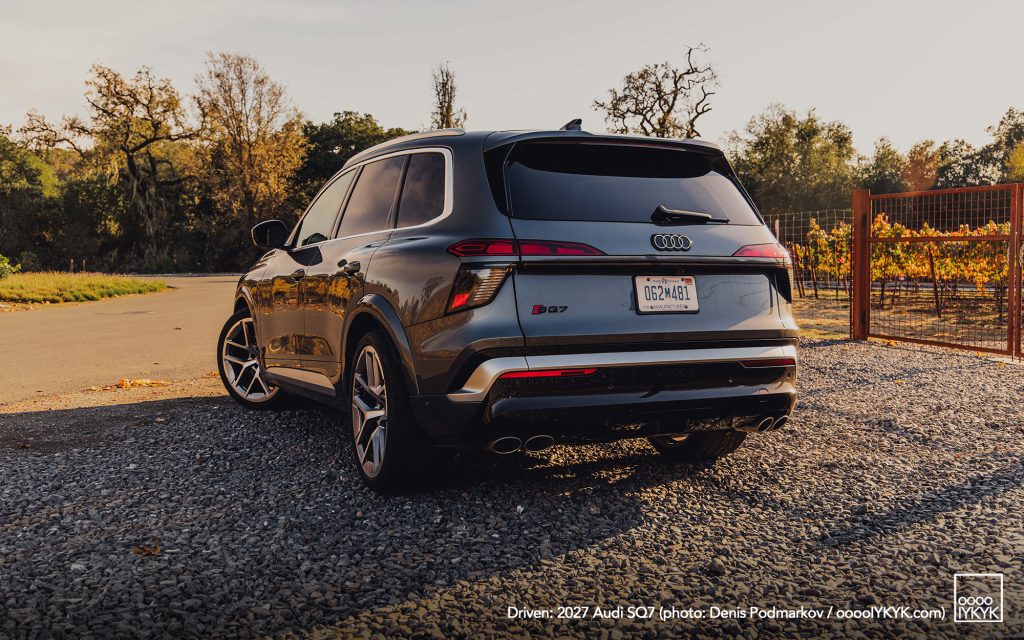
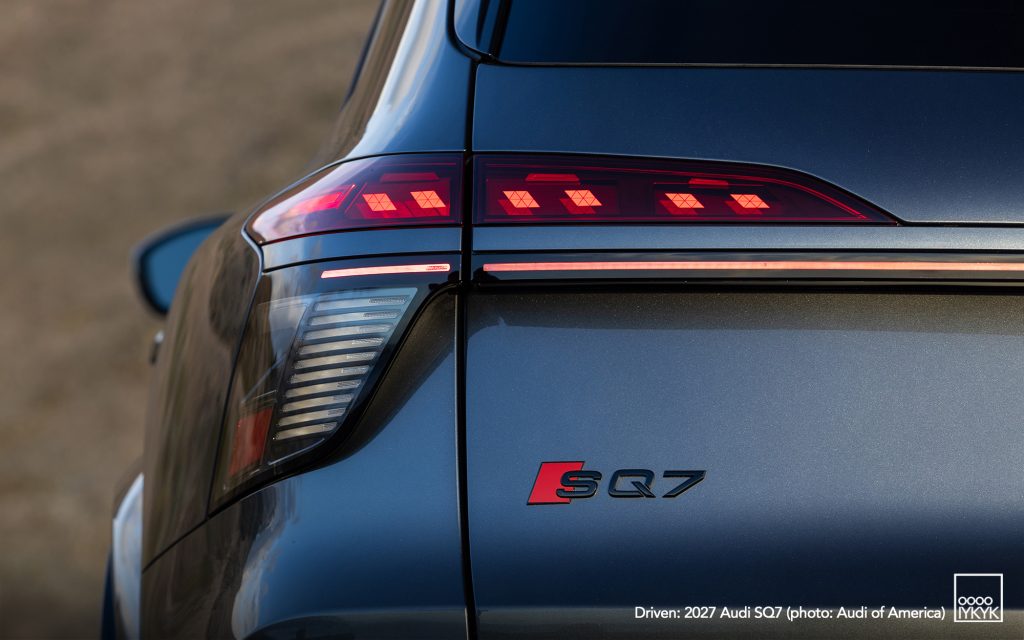
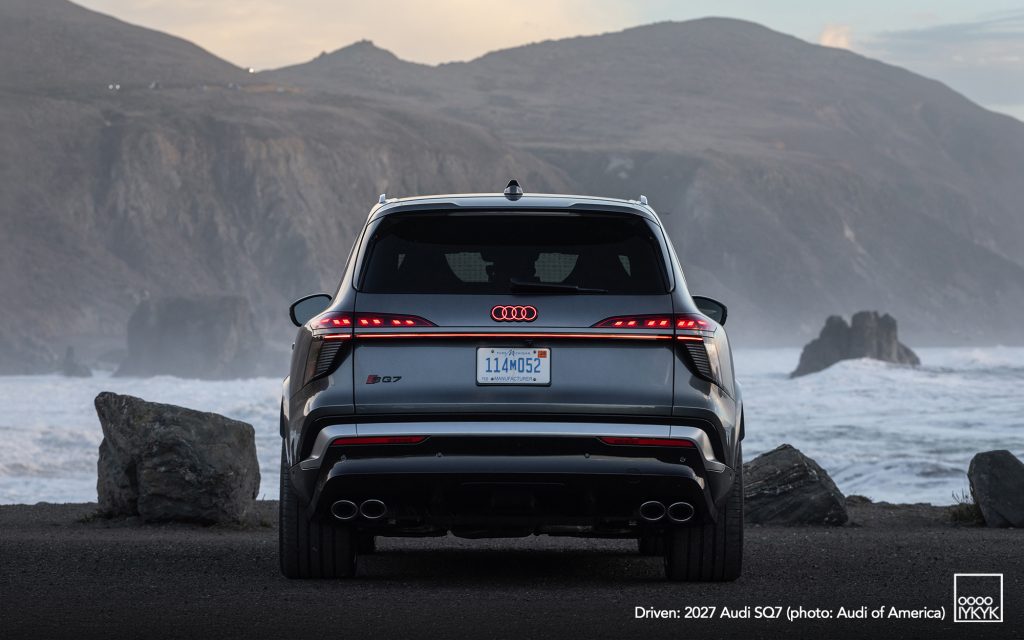
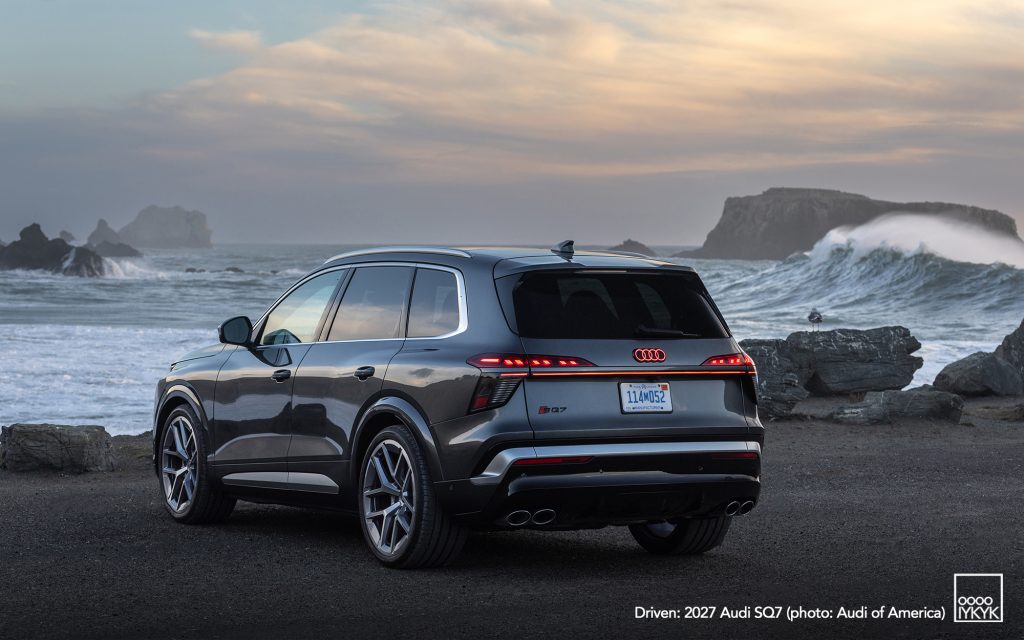
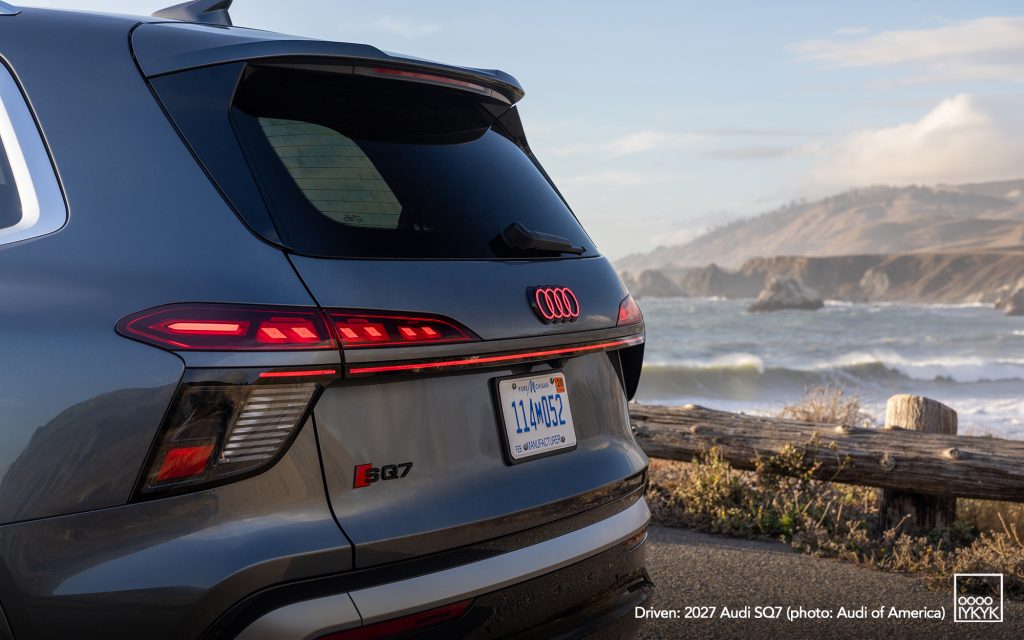
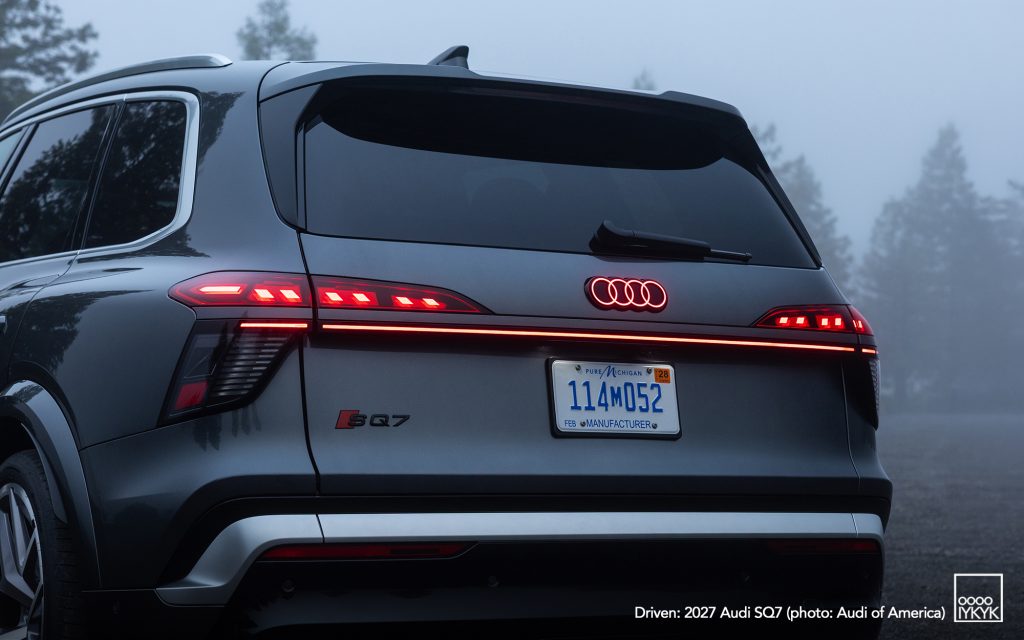
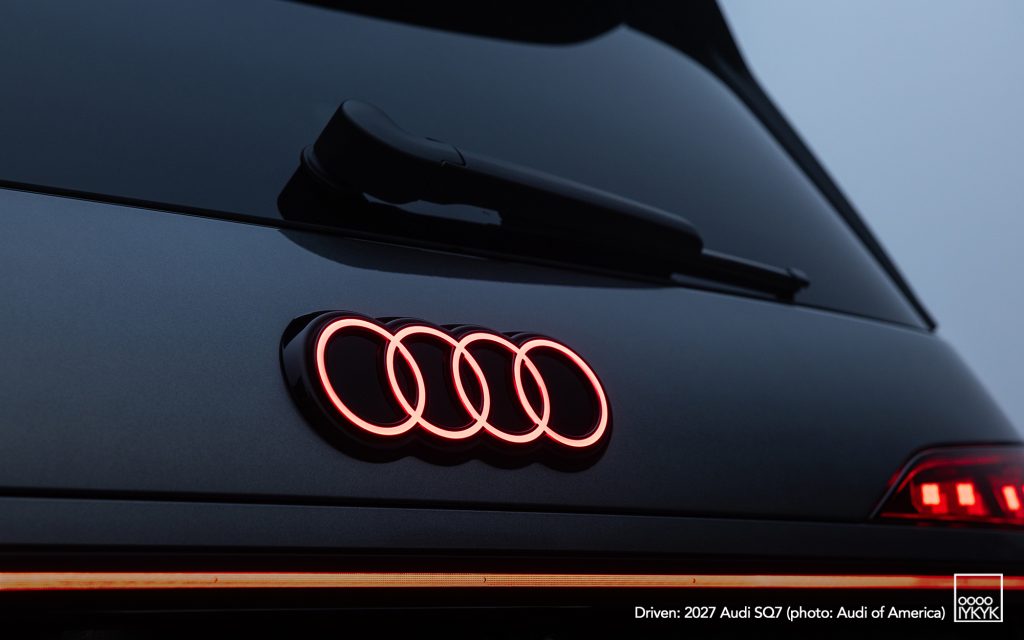
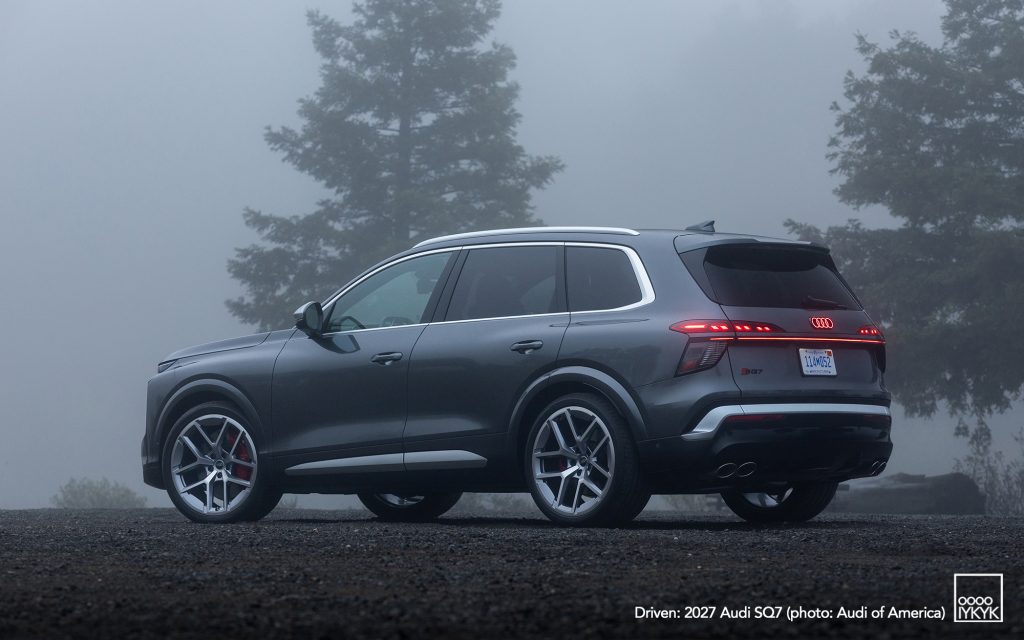
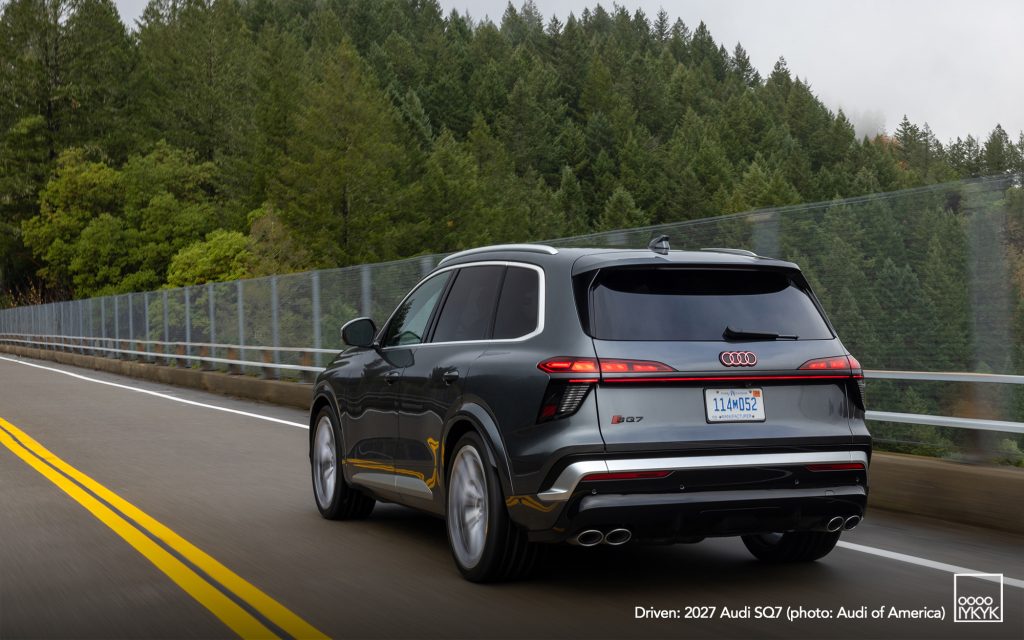
At the rear, third-generation digital OLED taillights offer customizable signatures and can display warnings. The panels can illuminate more prominently if a vehicle approaches too closely while the Q7 is stopped, and they can display graphics in certain traffic situations or during an automated parking maneuver. The common idea is to make it easier for people outside the Q7 to see what it’s about to do.
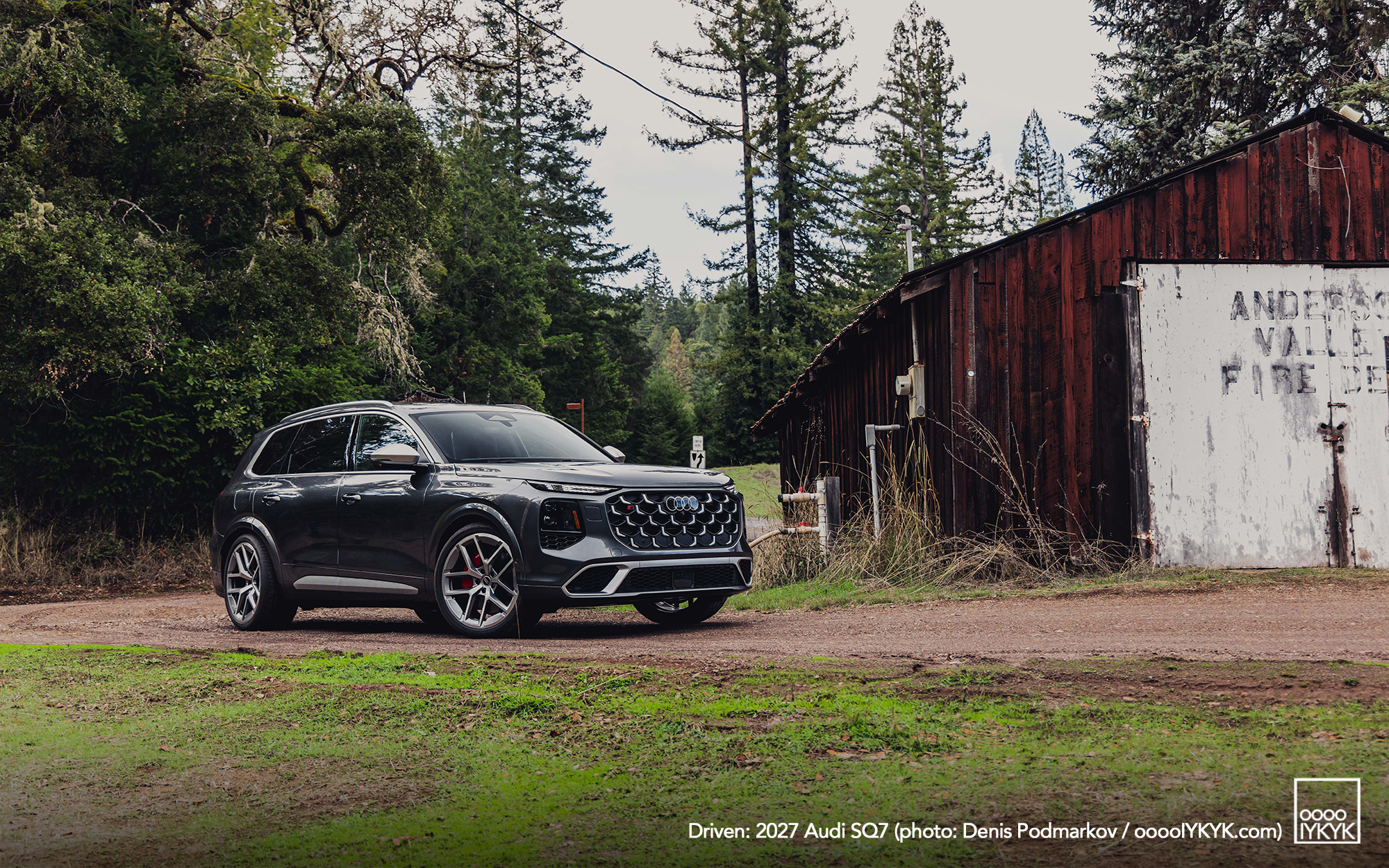
THE NEW AUDI SQ7
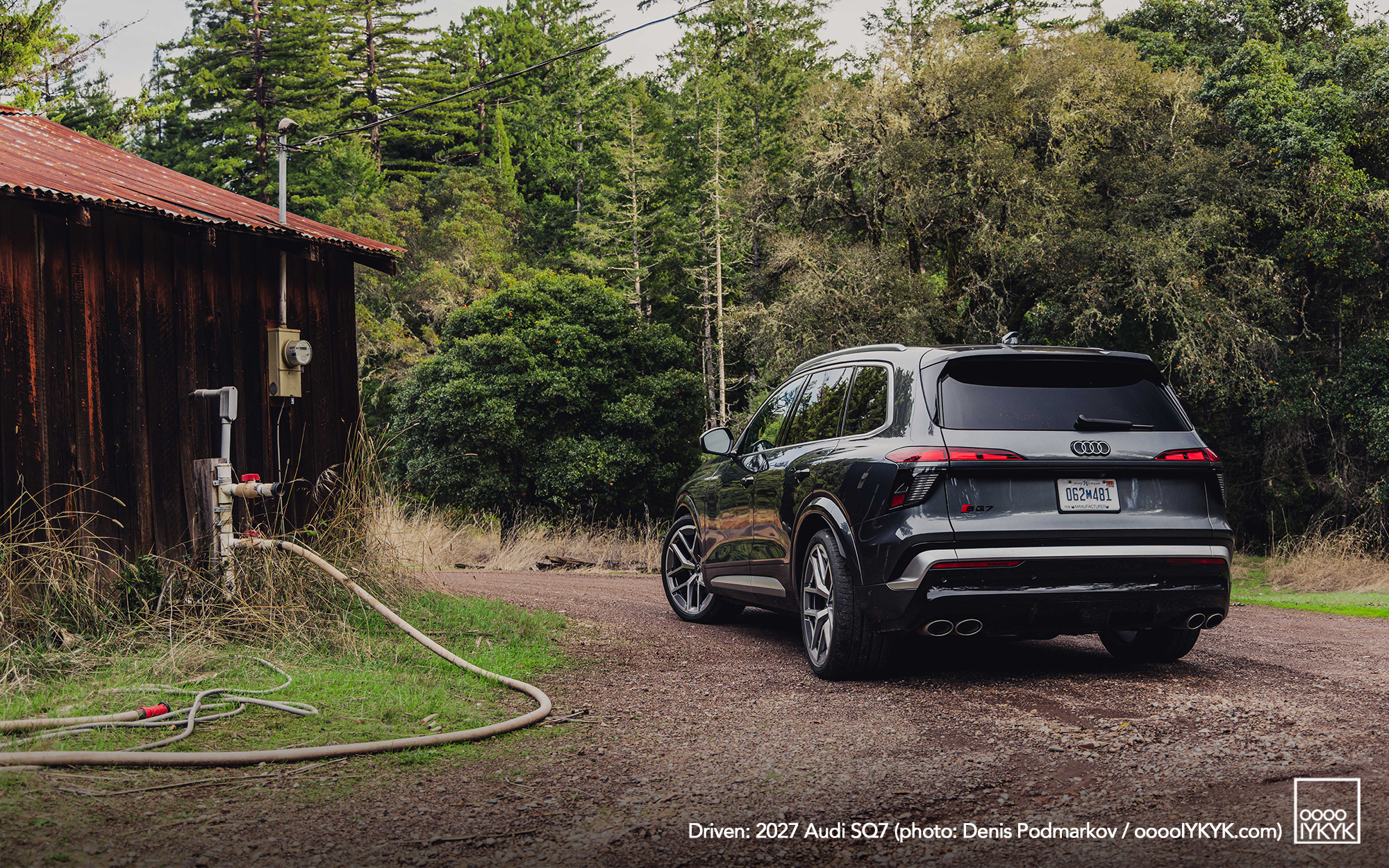
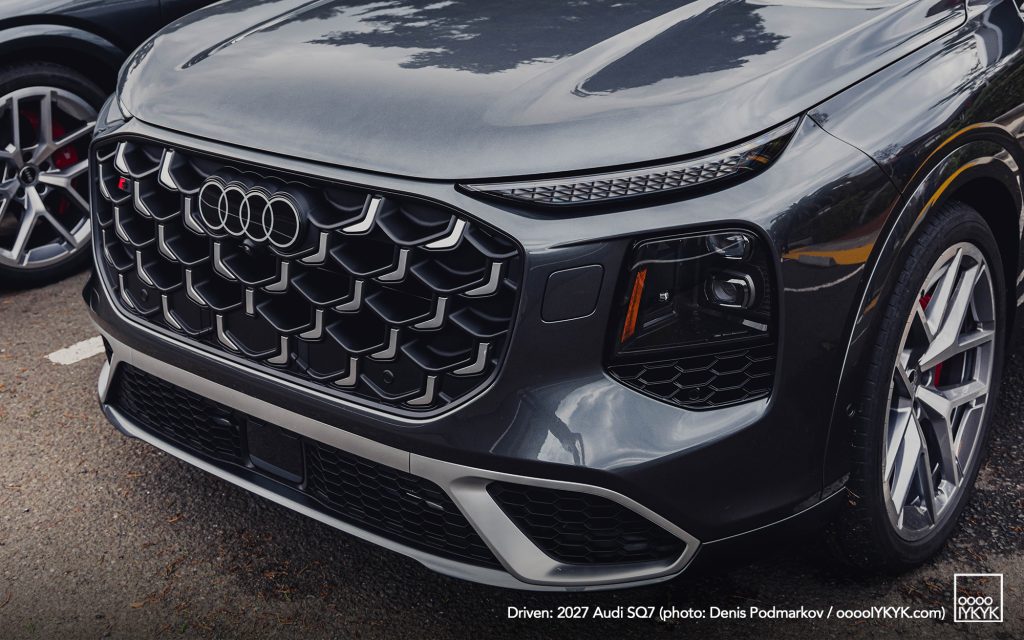
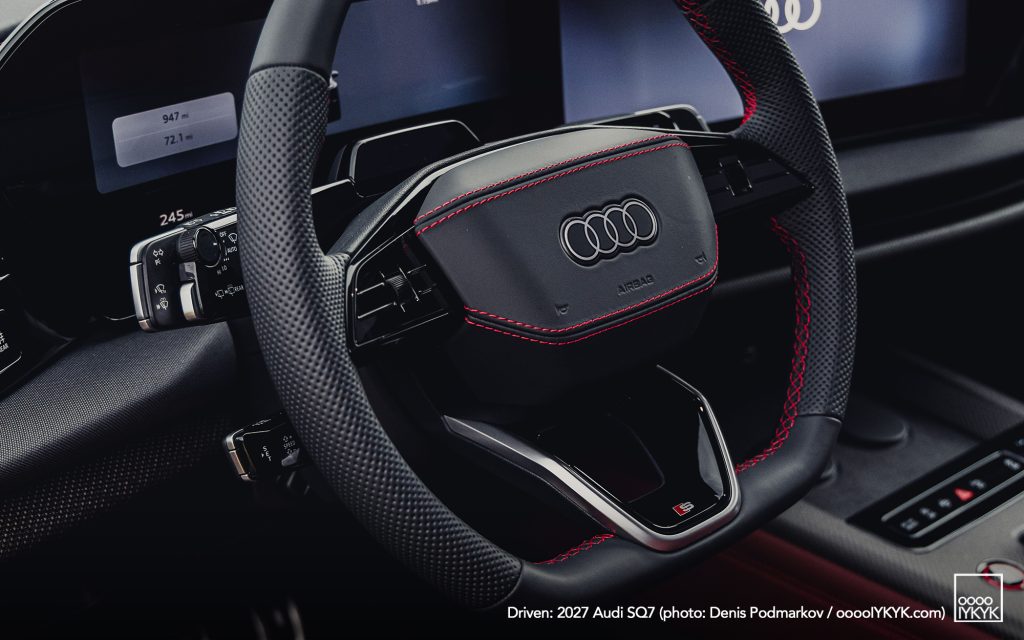
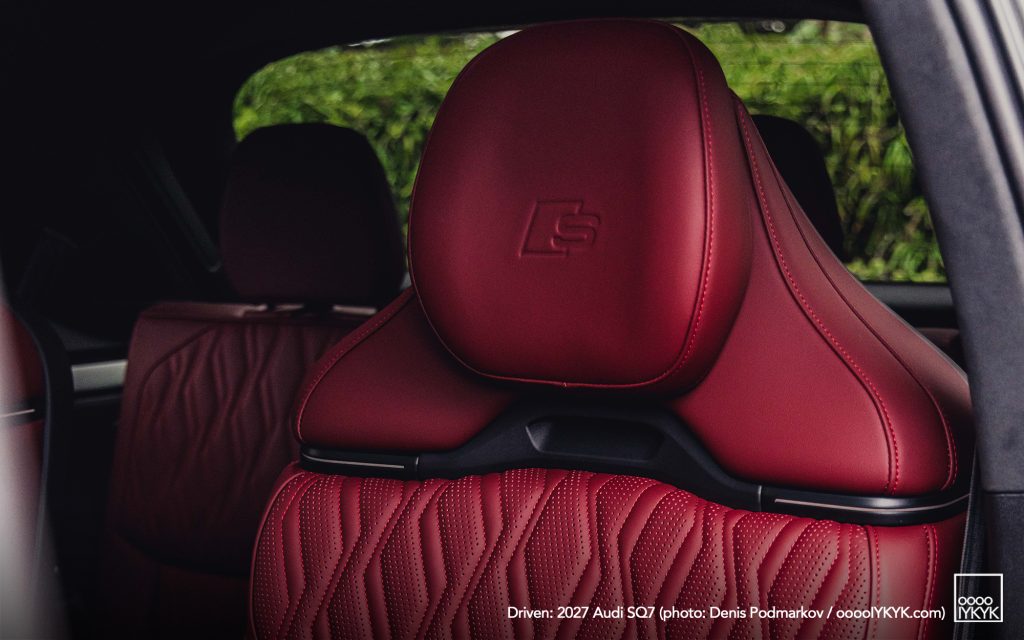
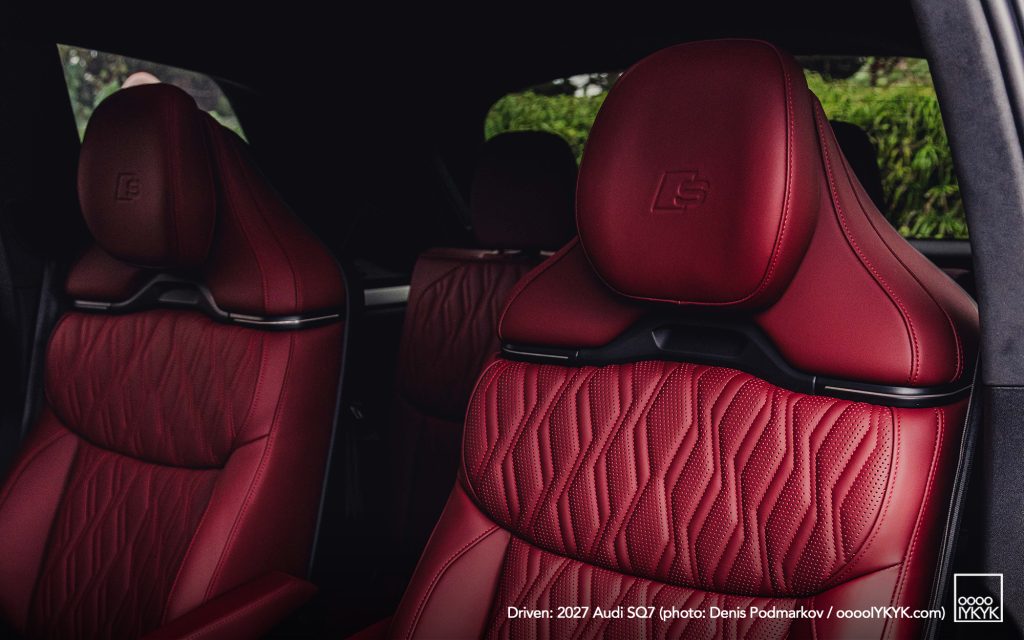
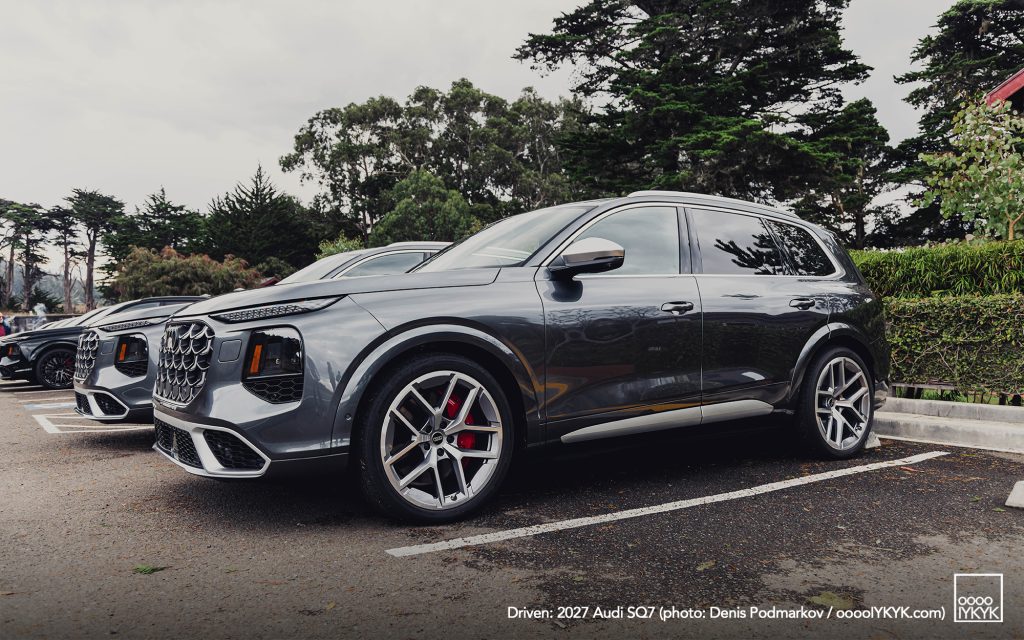
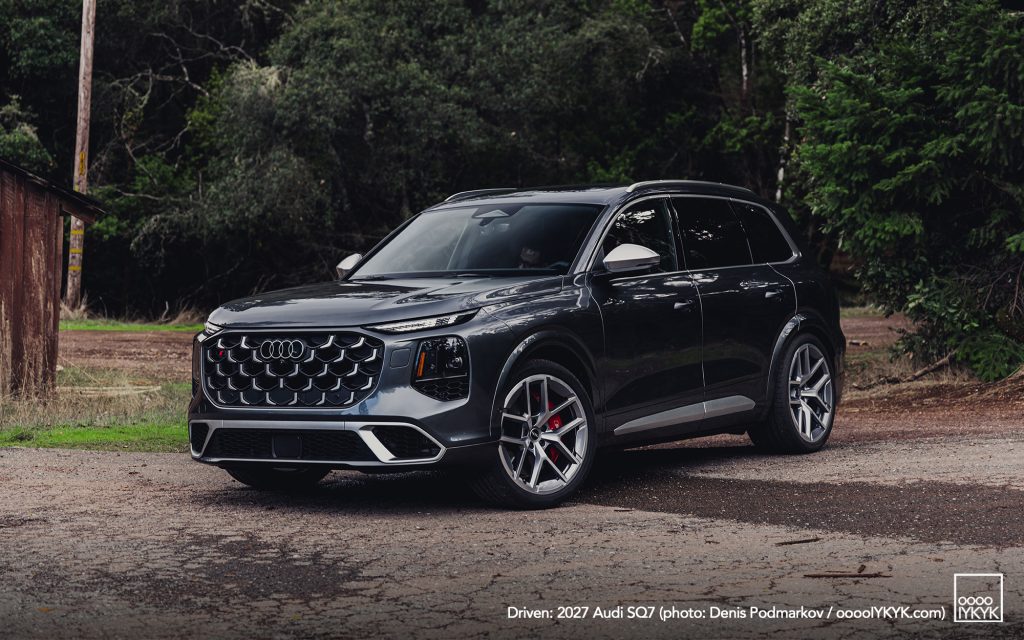
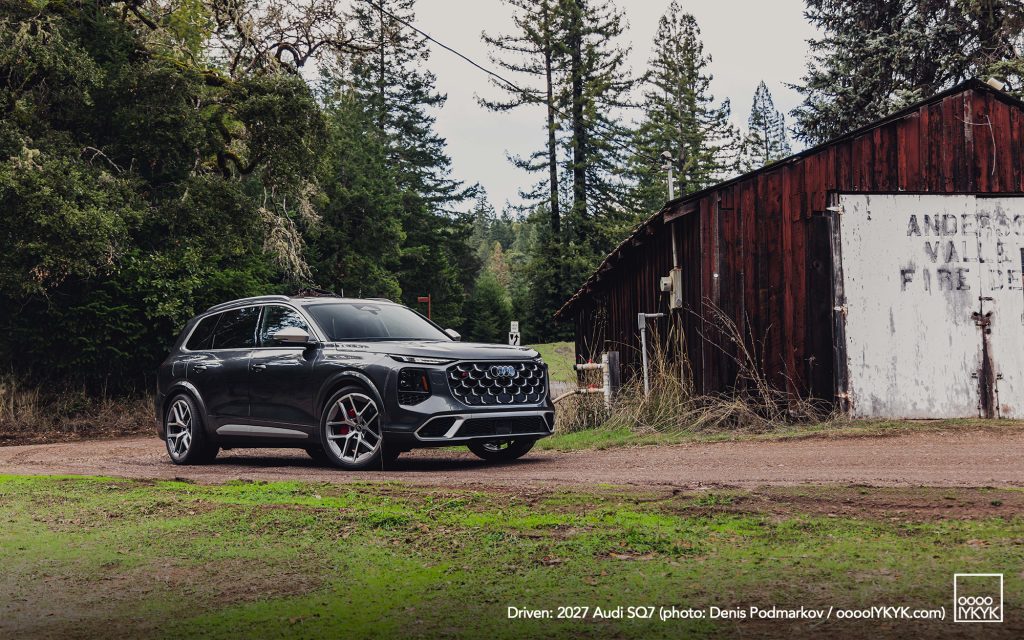
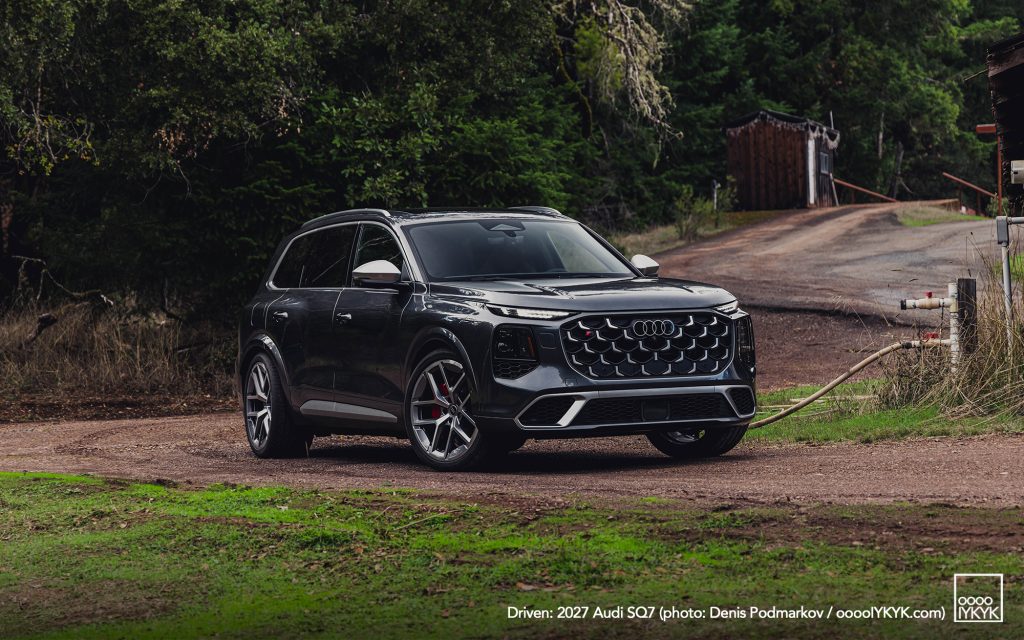
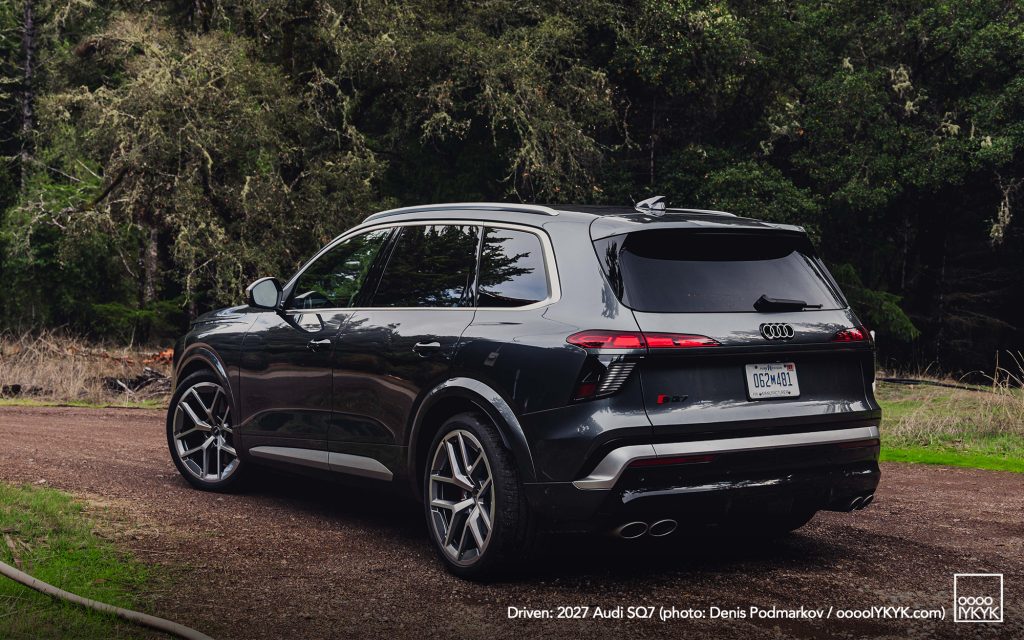
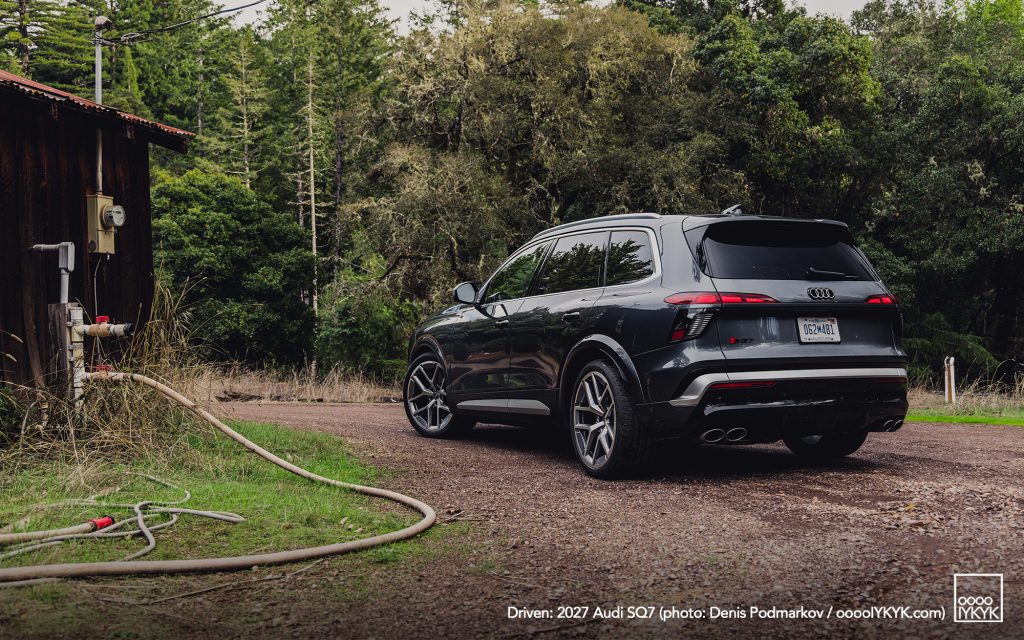
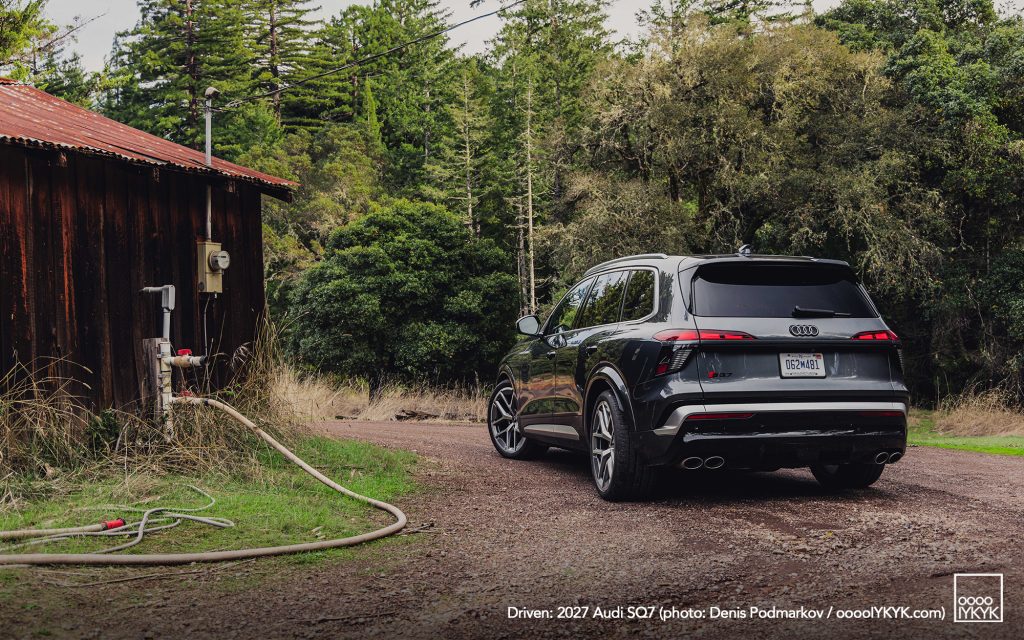
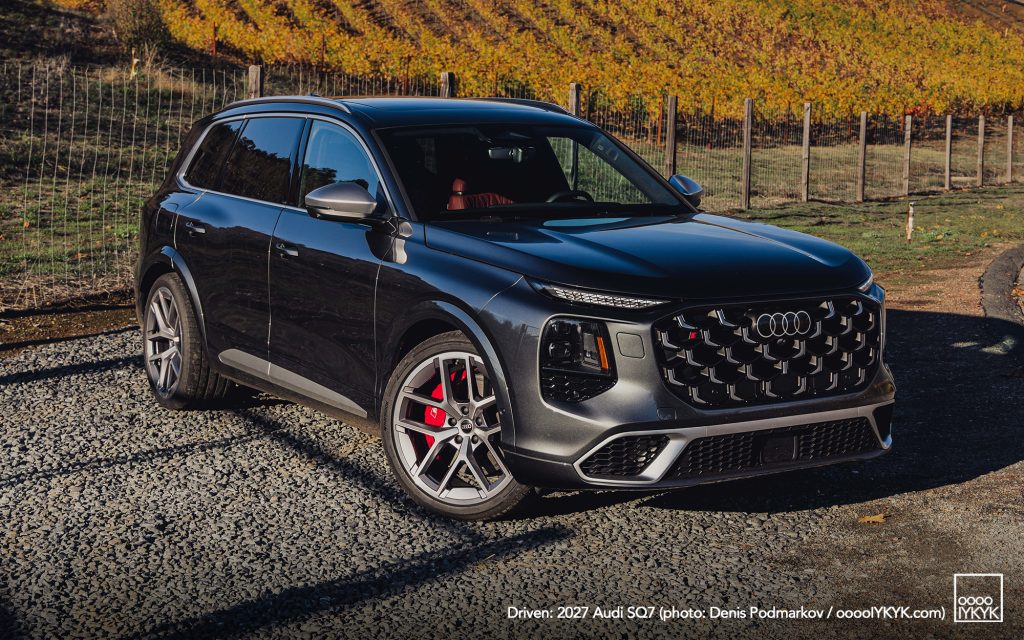
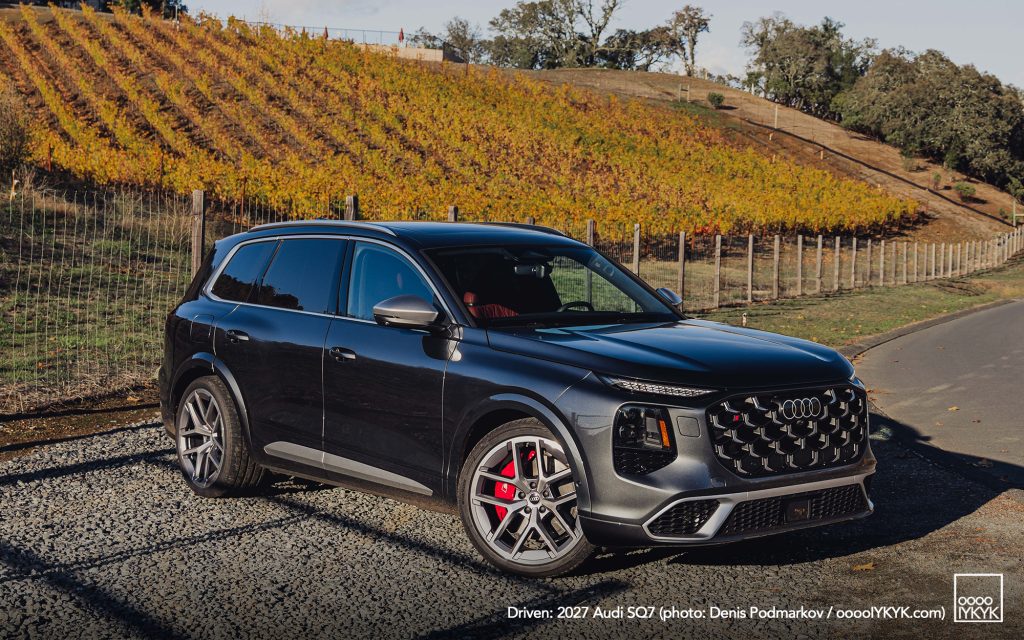
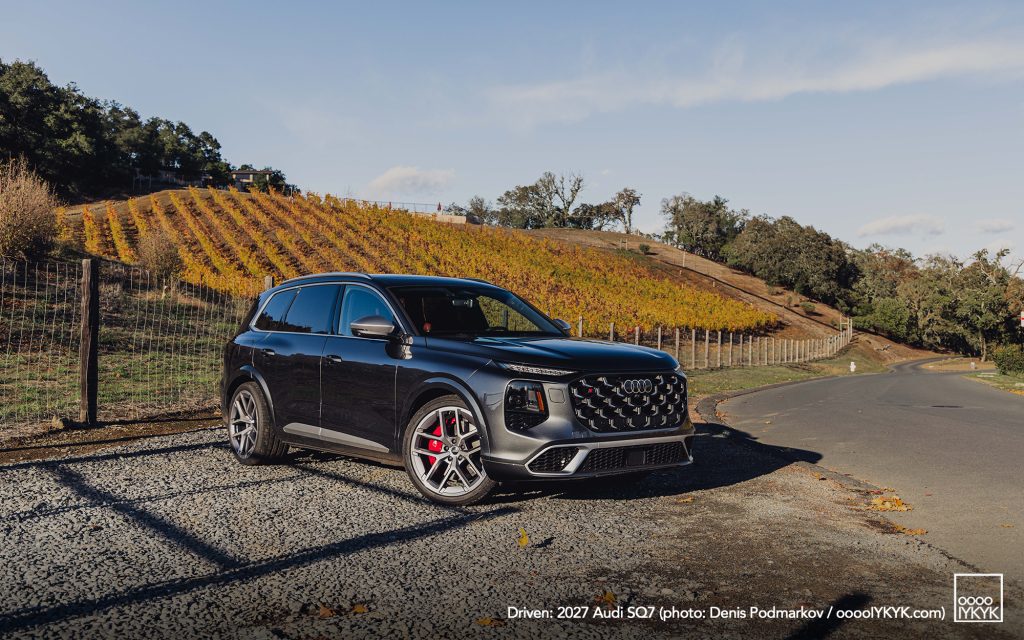
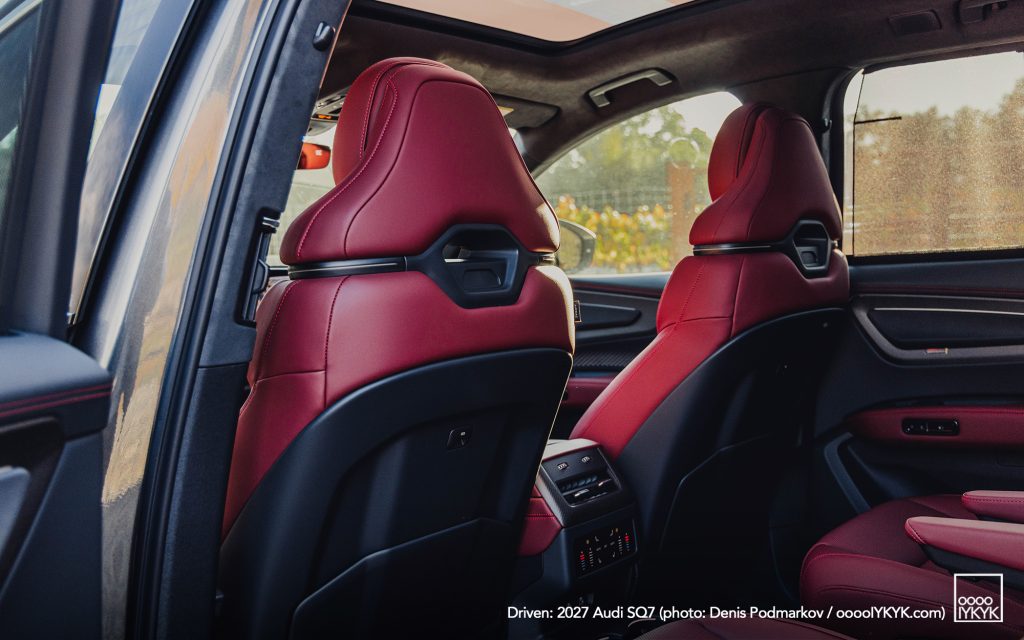
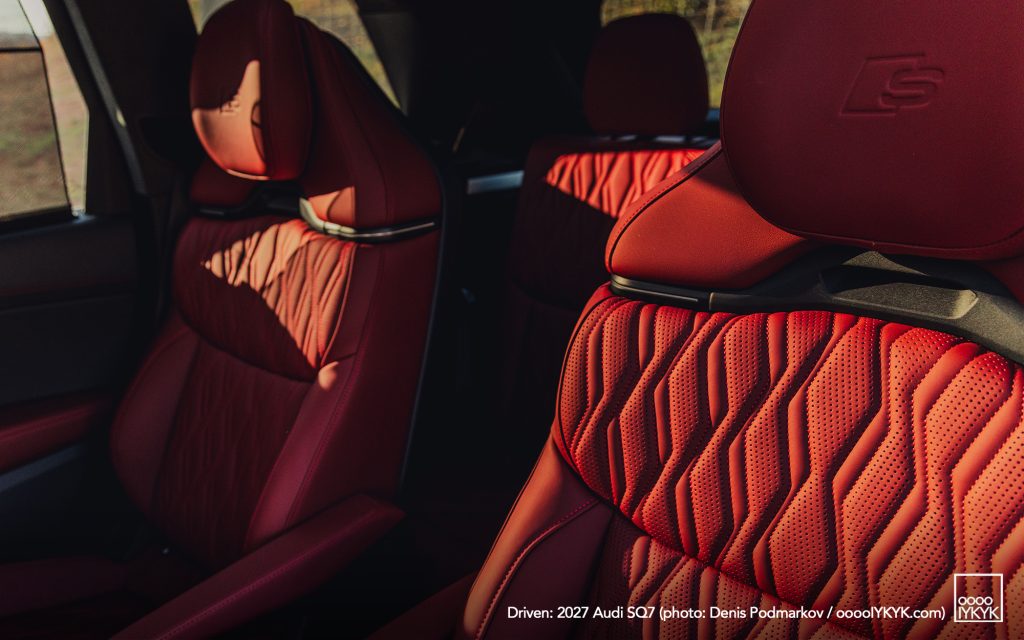
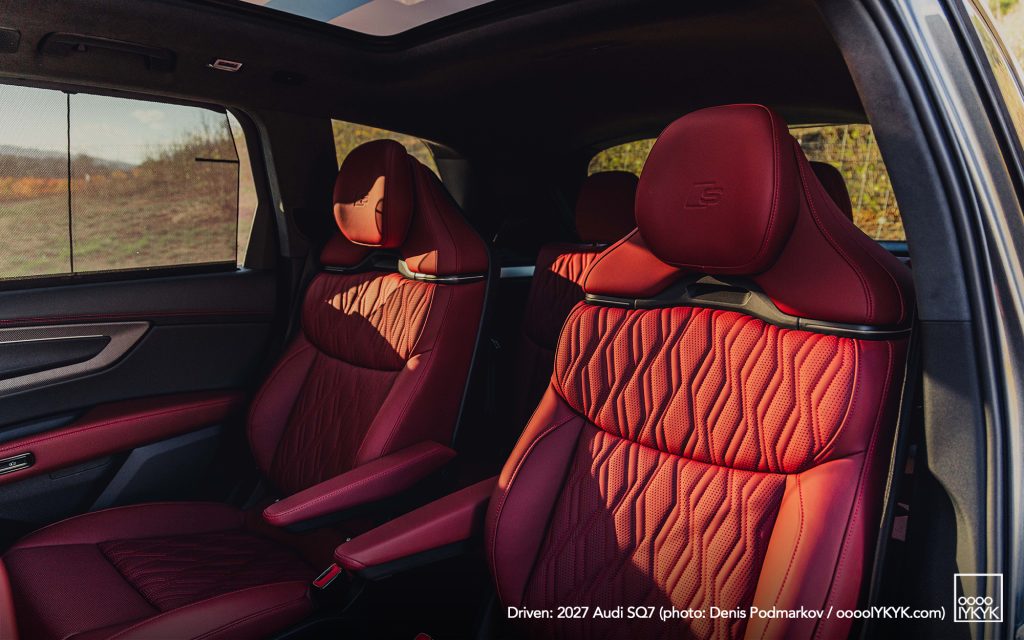
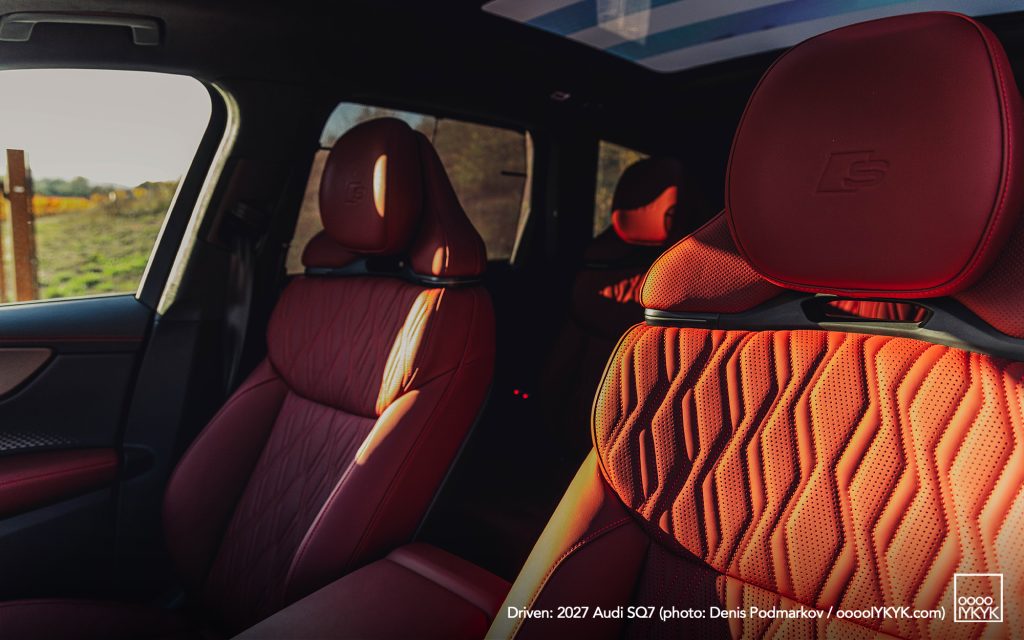
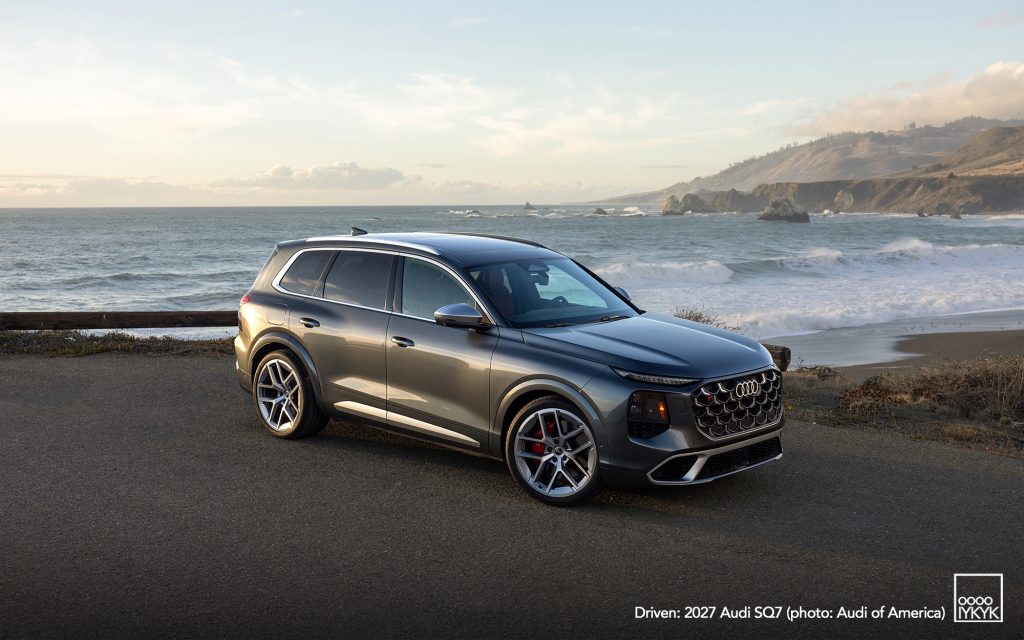
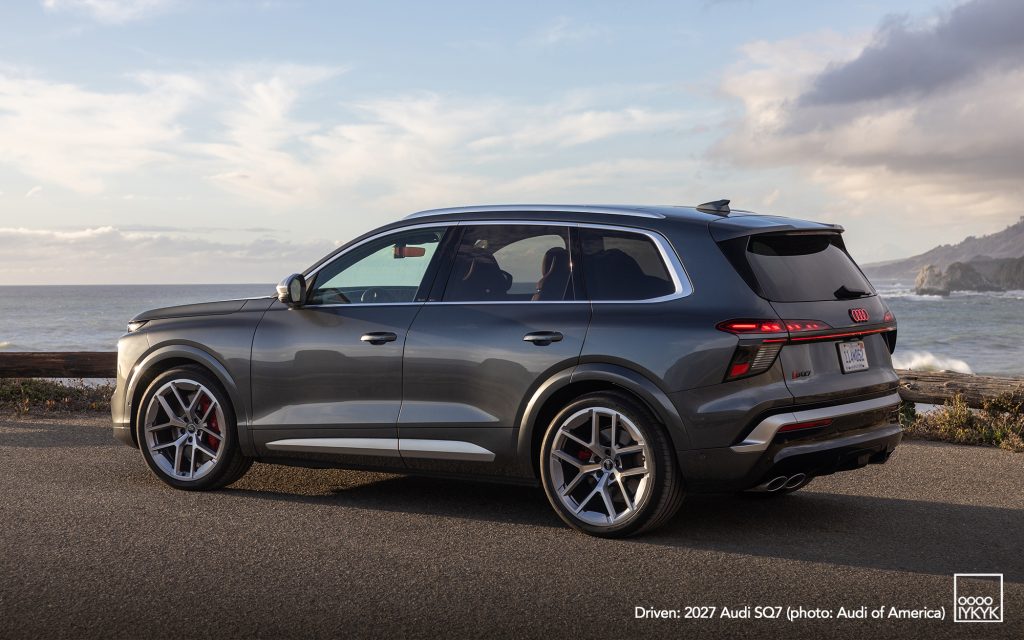
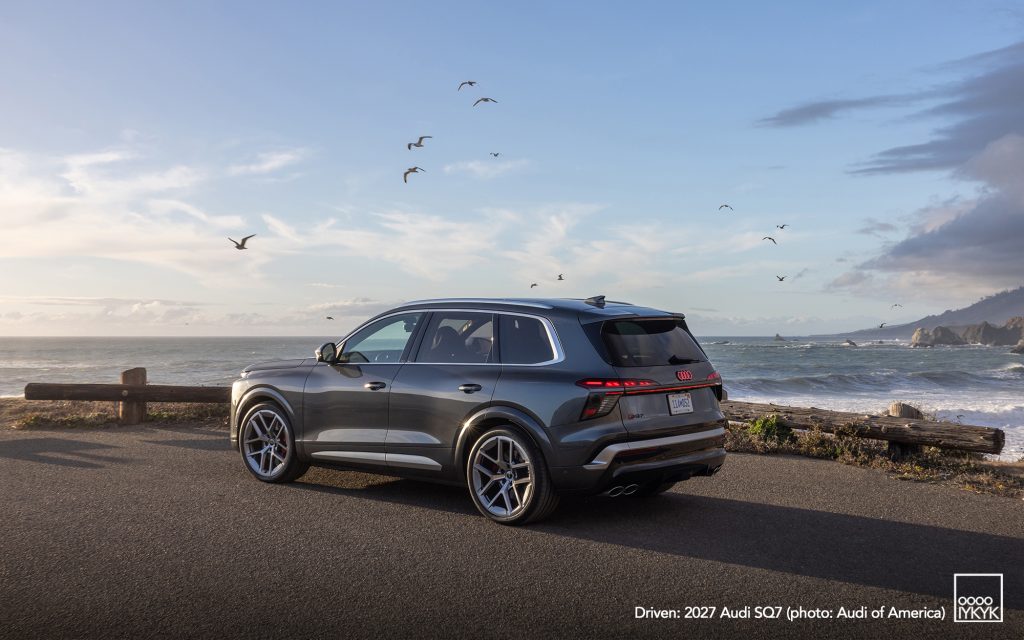
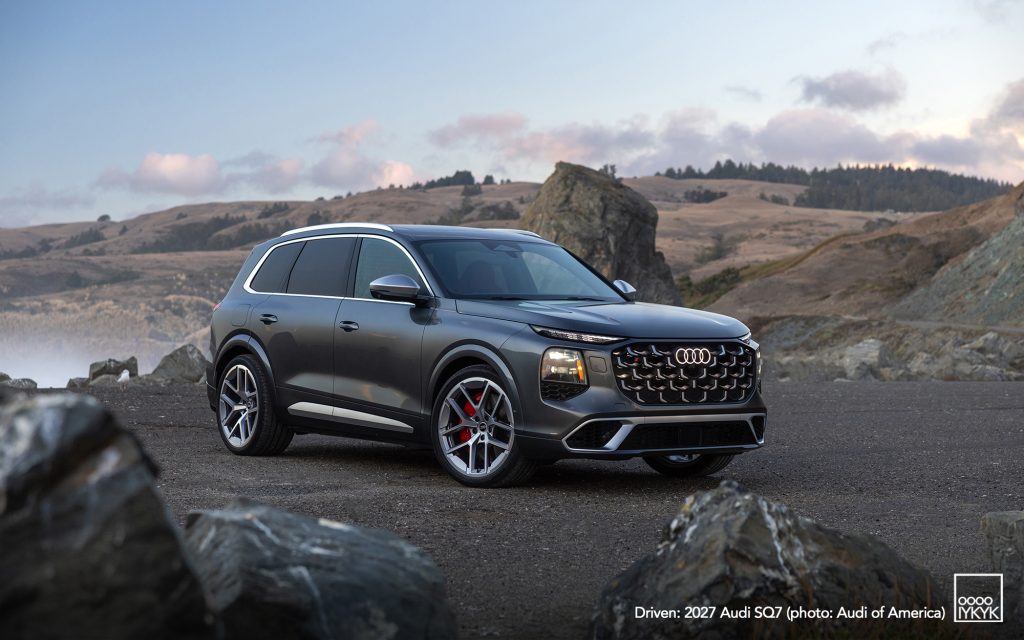
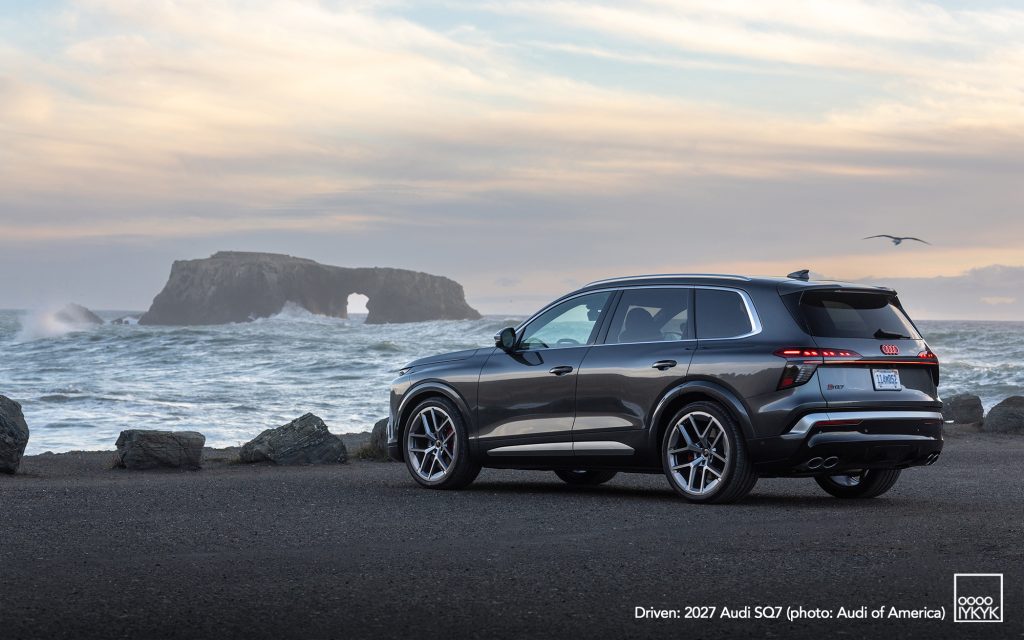
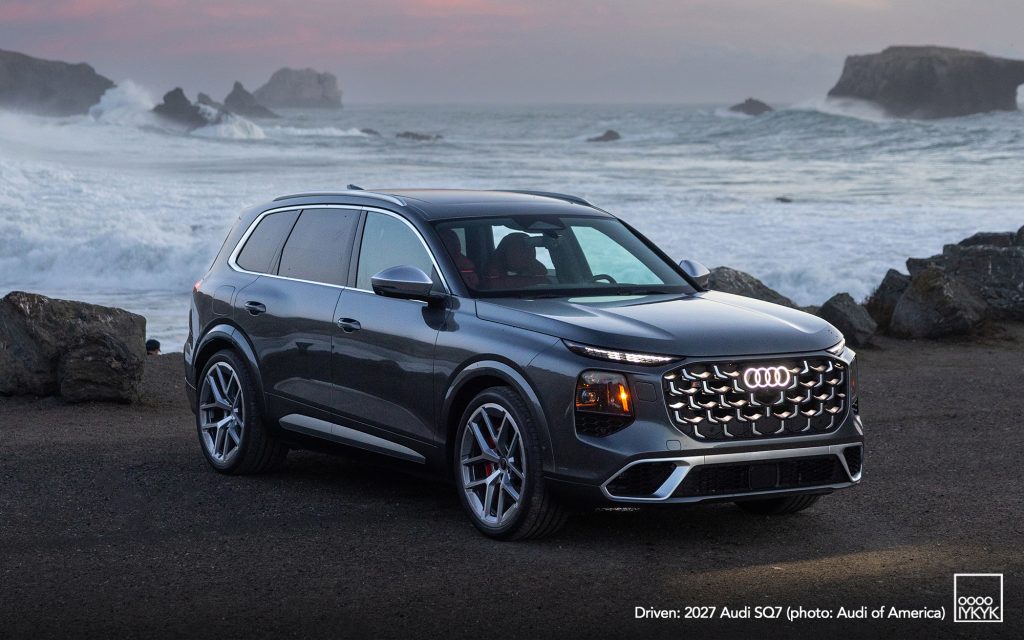
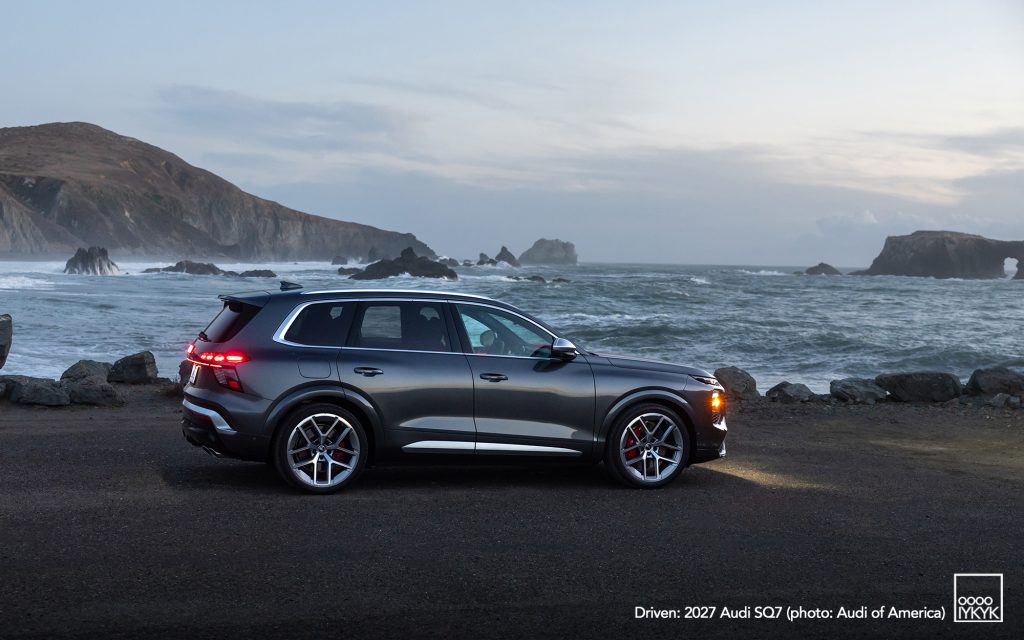
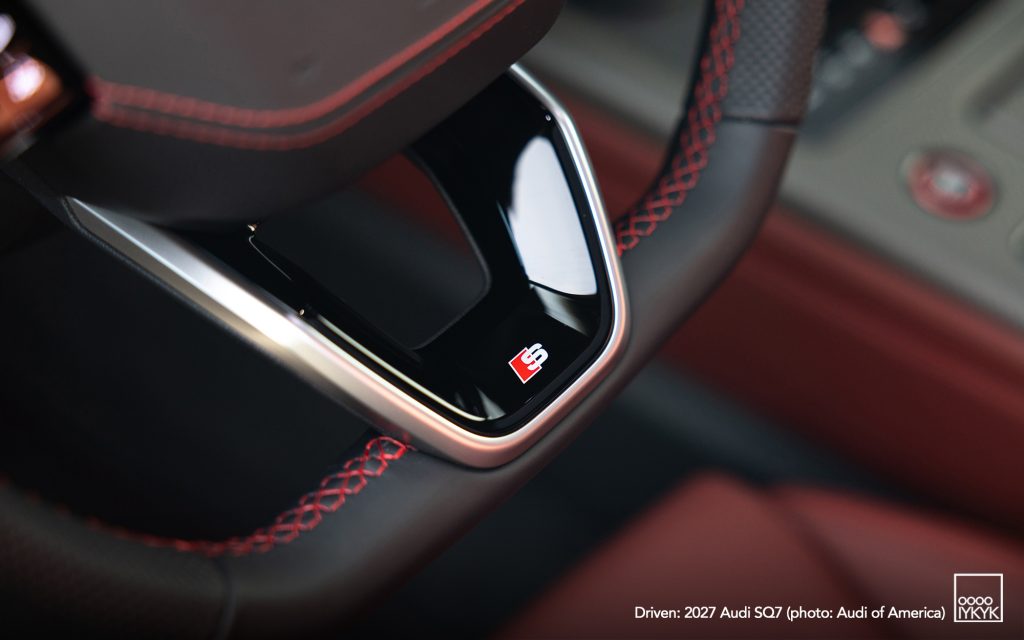
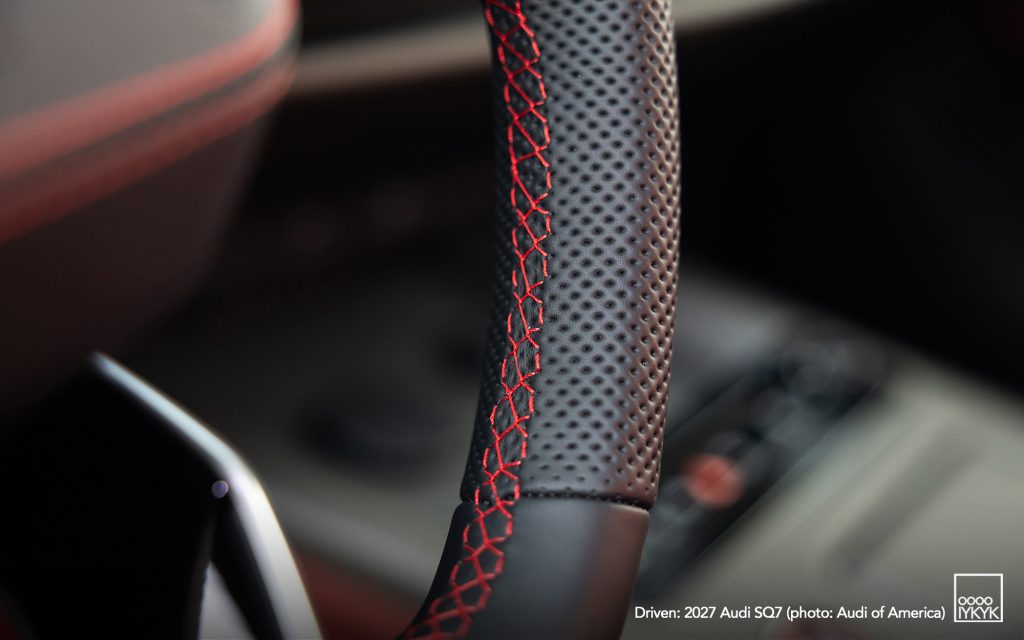
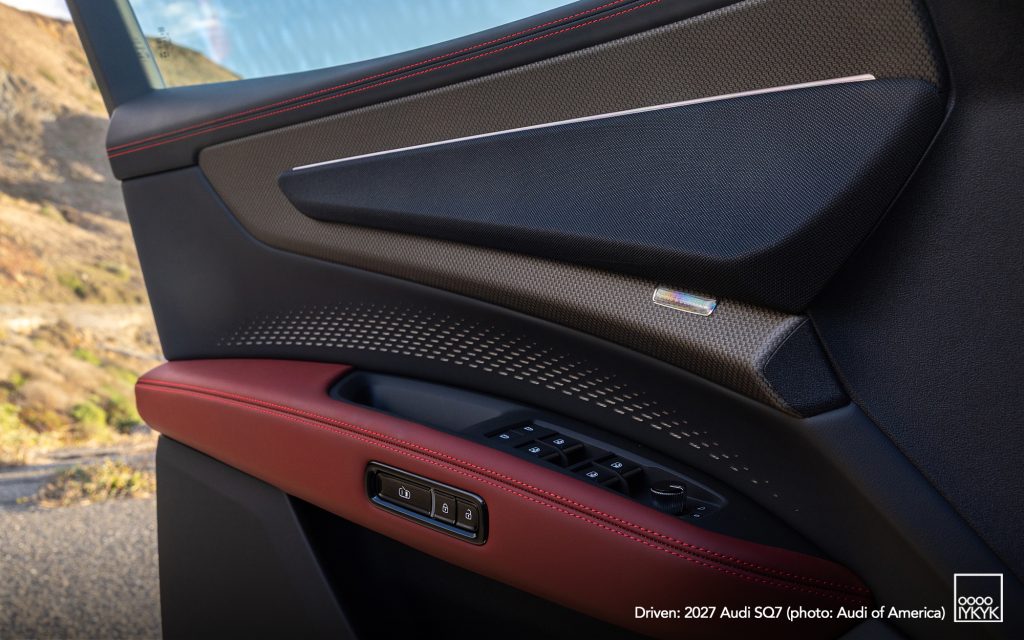
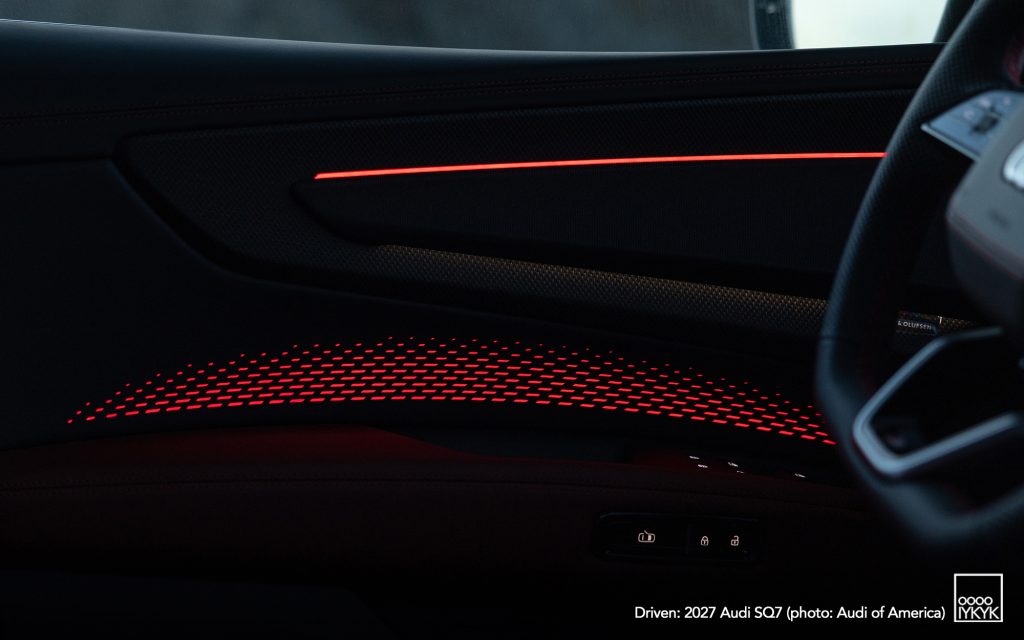
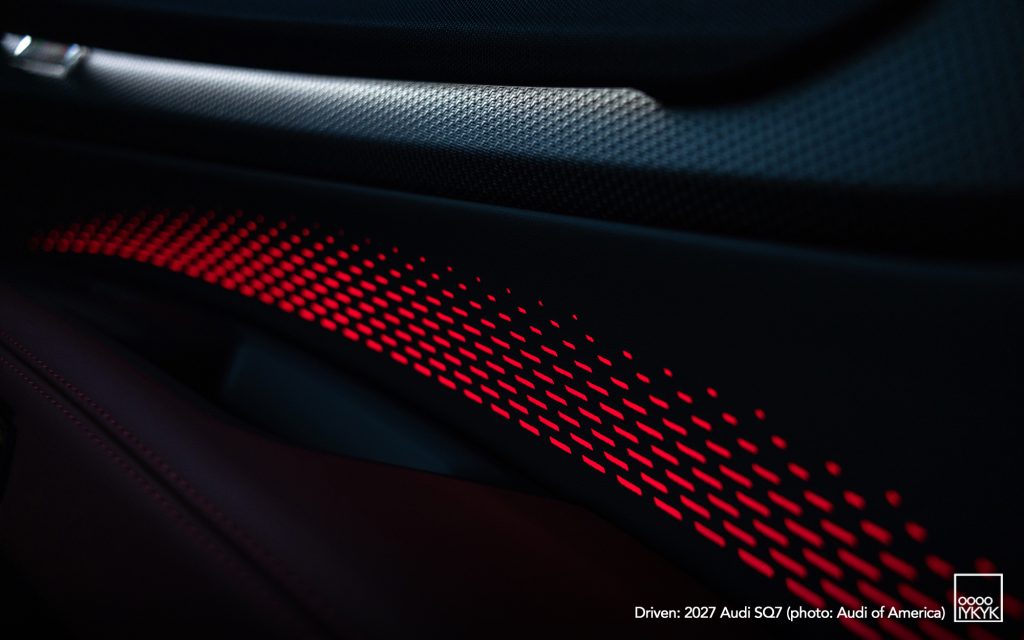
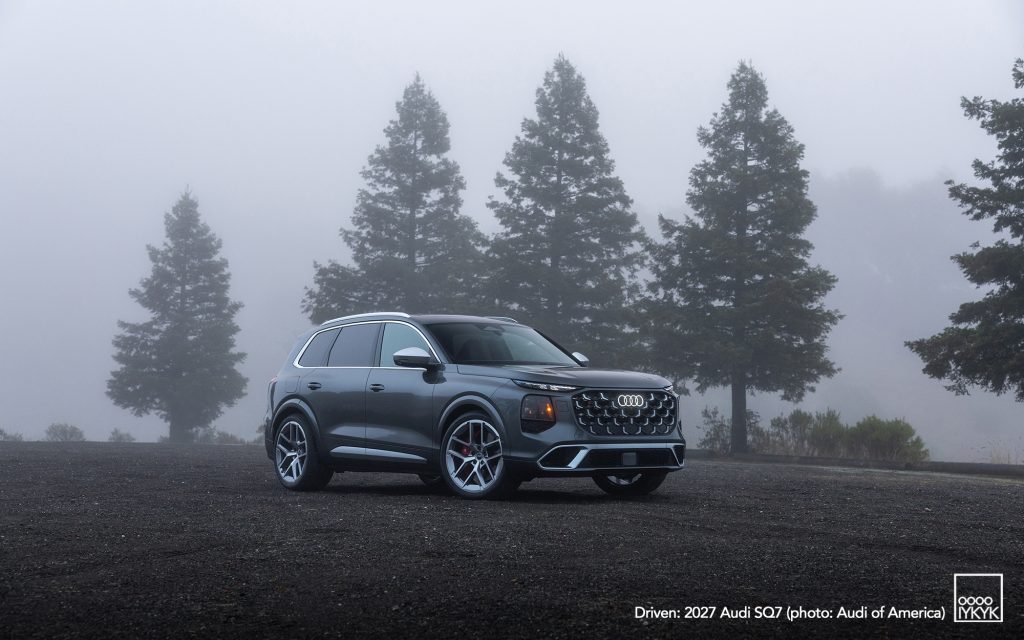
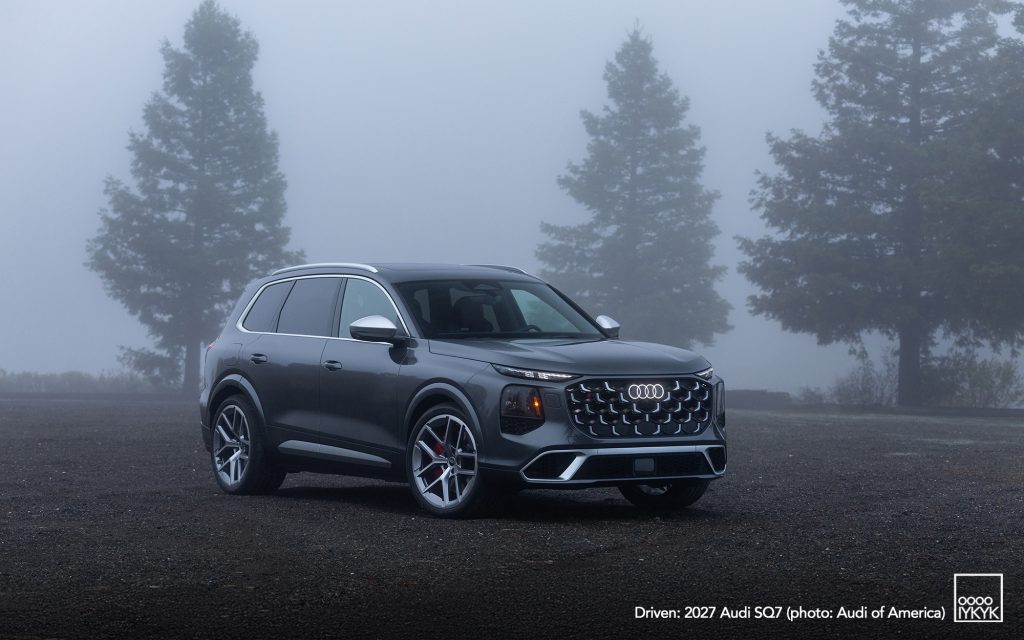
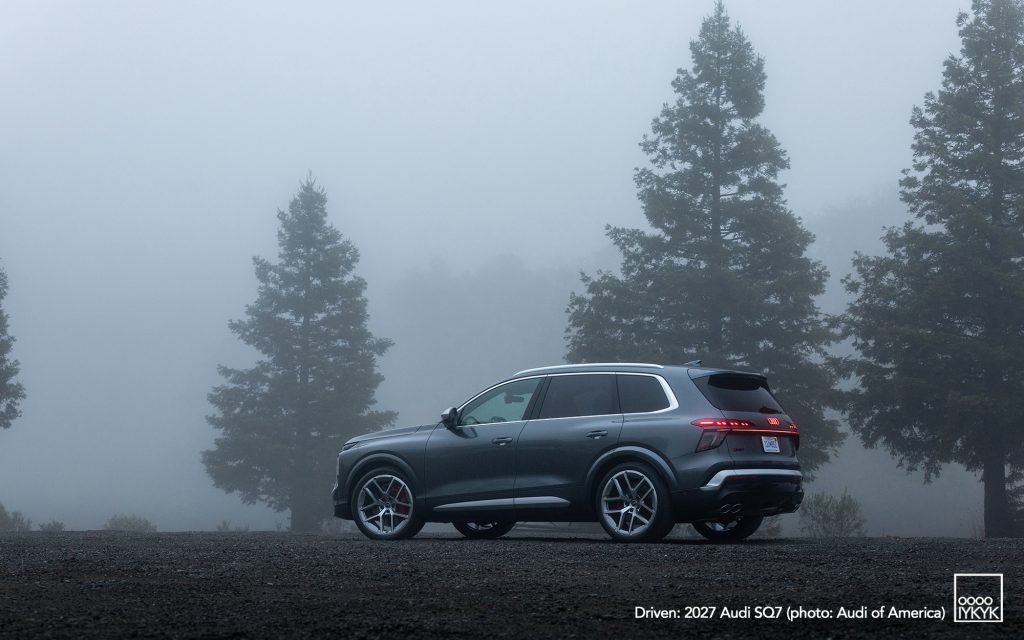
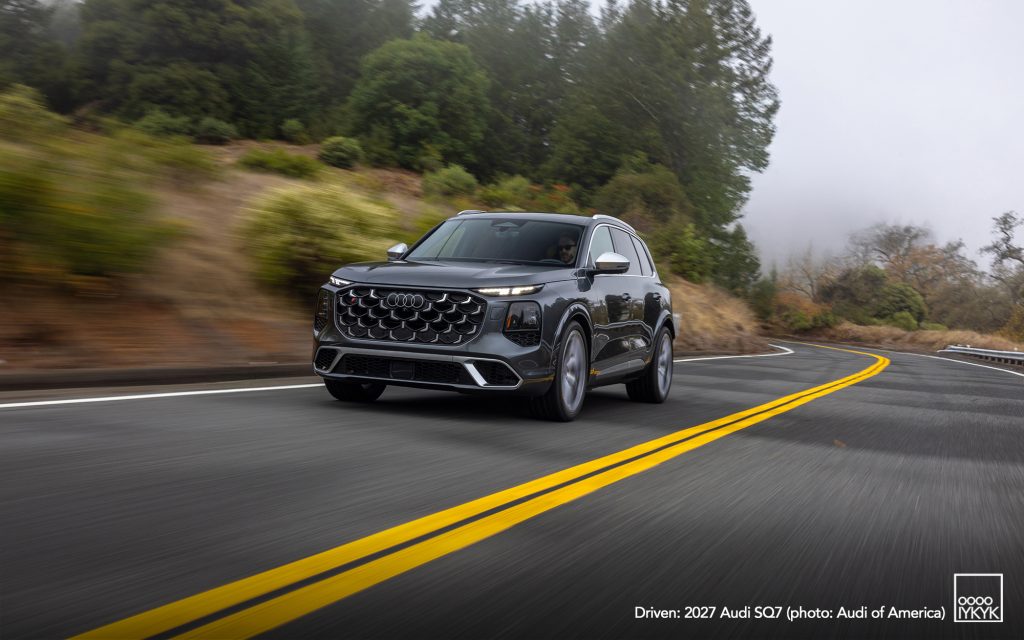
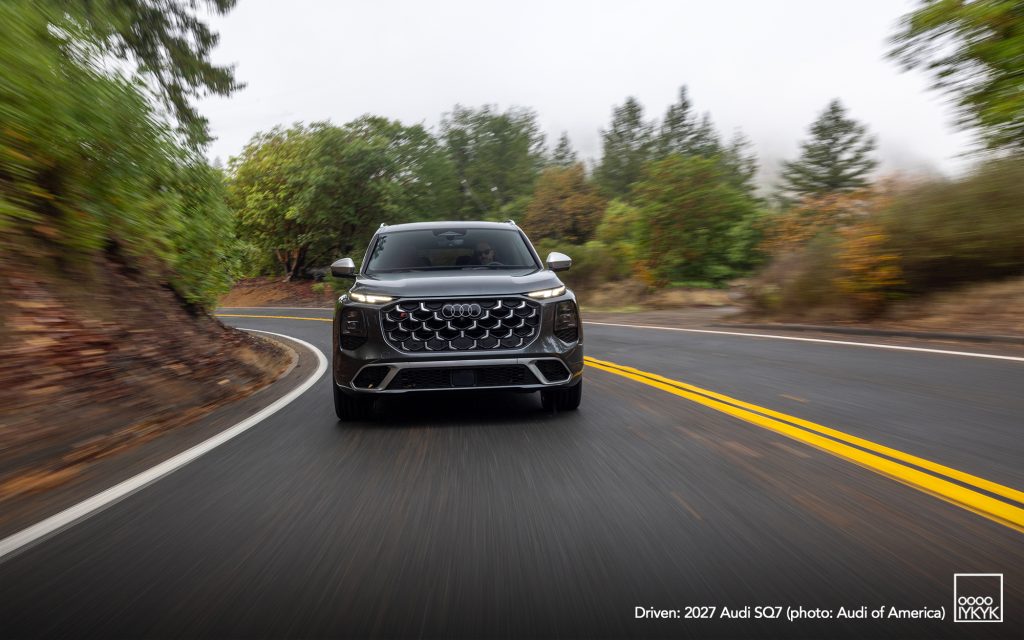
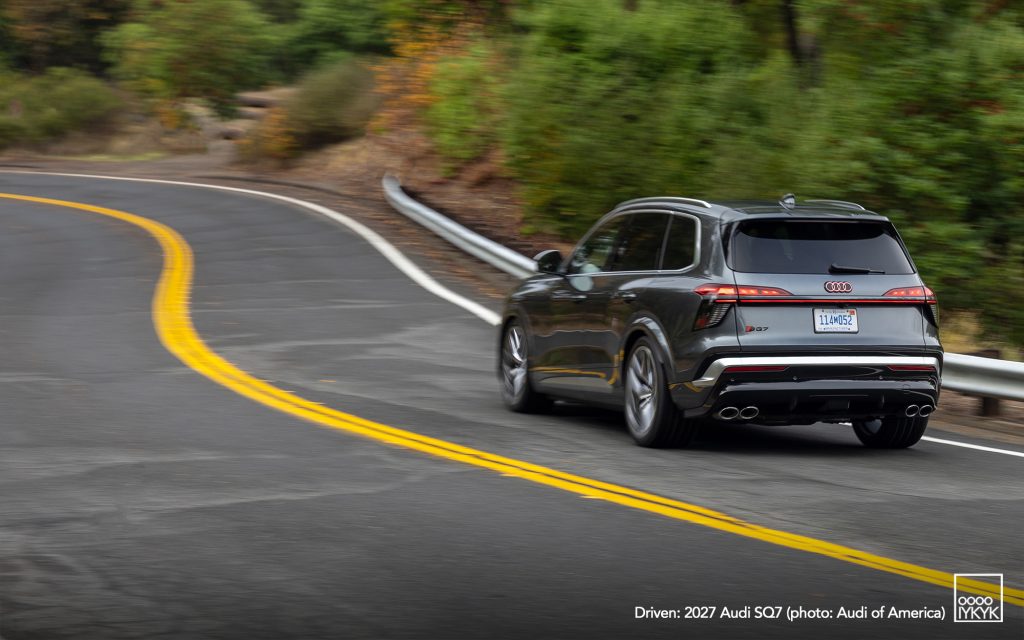
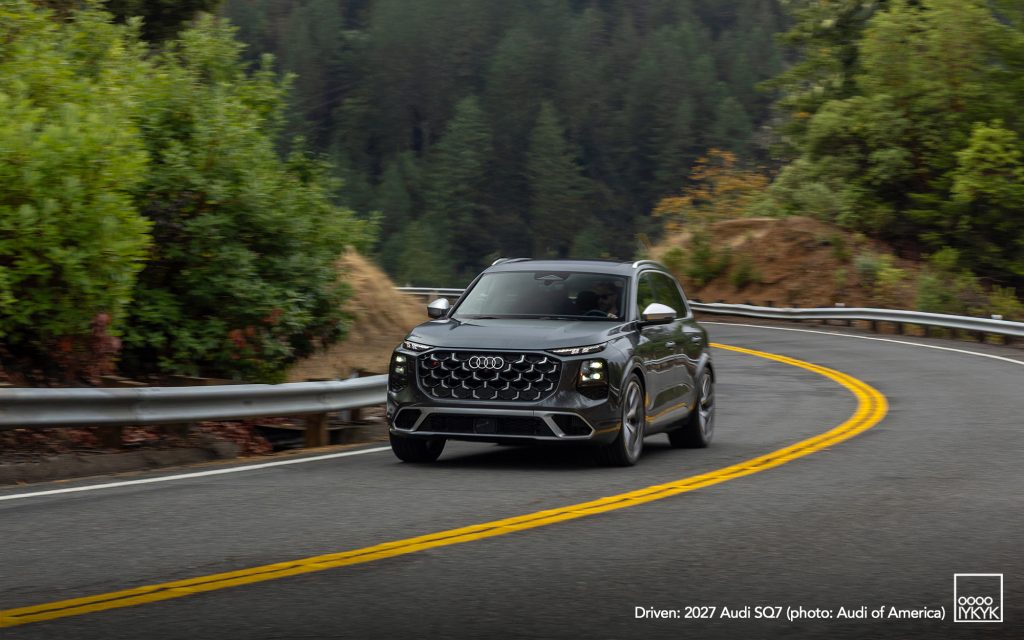
Our SQ7 came in Daytona Gray Pearl Effect over Arras Red leather, a familiar combination that feels like a throwback to earlier Audi S and RS models.
For 2027, Audi has dropped the Premium Plus and Prestige trims in favor of a single SQ7 model, with additional luxury and performance features available through option packages. The SQ7 starts at $98,700. Ours had 23-inch wheels, sport adaptive air suspension, Digital Matrix LED headlights, the Bang & Olufsen 4D sound system and a few other options that brought the total to $115,790.
The $12,300 Audi exclusive design package goes bolder still, with Baikal Blue and Neodymium Gold Fine Nappa leather, Tamarind Brown contrast stitching, Neodymium Gold seat belts and leather door inserts. We’re glad to see Audi exclusive on the SQ7’s options list.
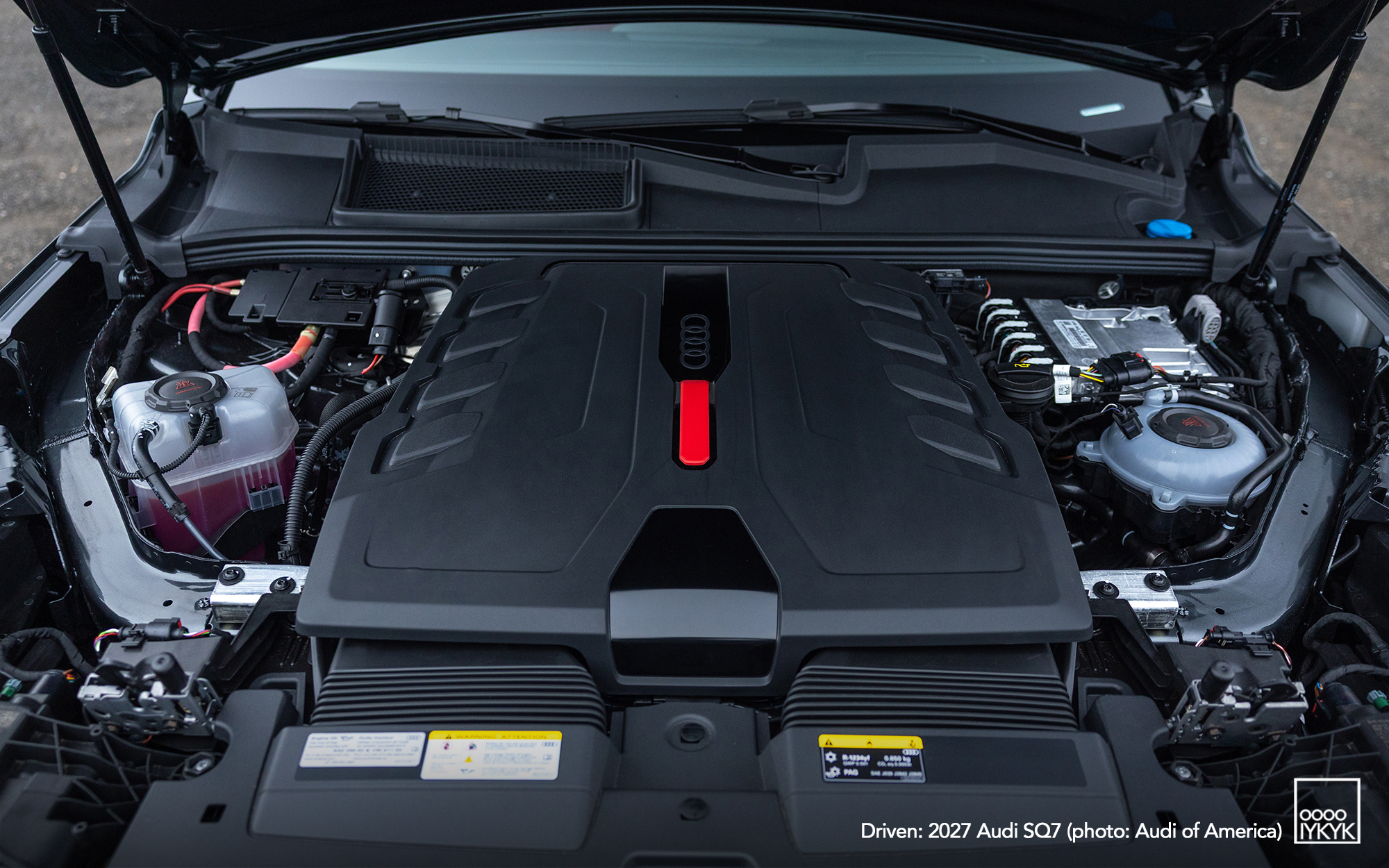
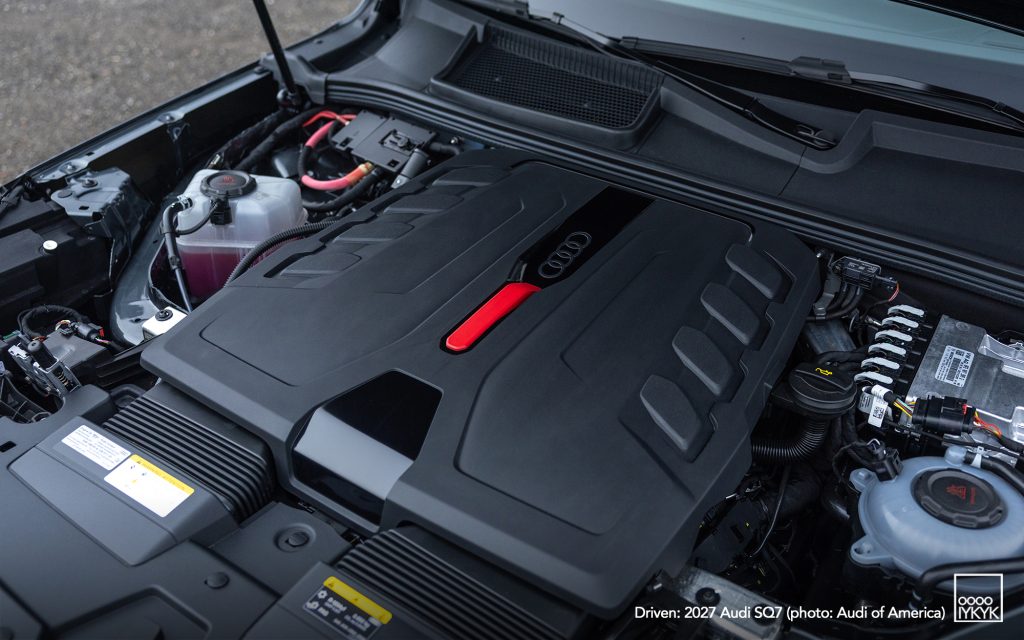
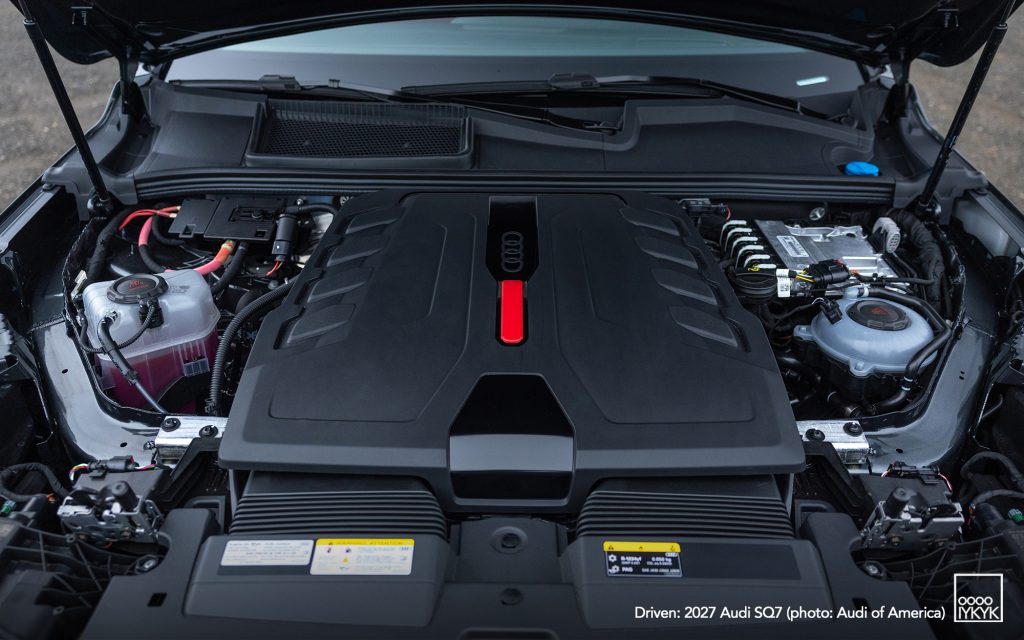
The biggest difference is under the hood. The Q7’s V6 is already plenty quick, and the SQ7 takes another step with its 4.0-liter twin-turbo V8. Output rises from 500 hp and 568 lb-ft to 591 hp and 590 lb-ft, matching the original RS Q8.
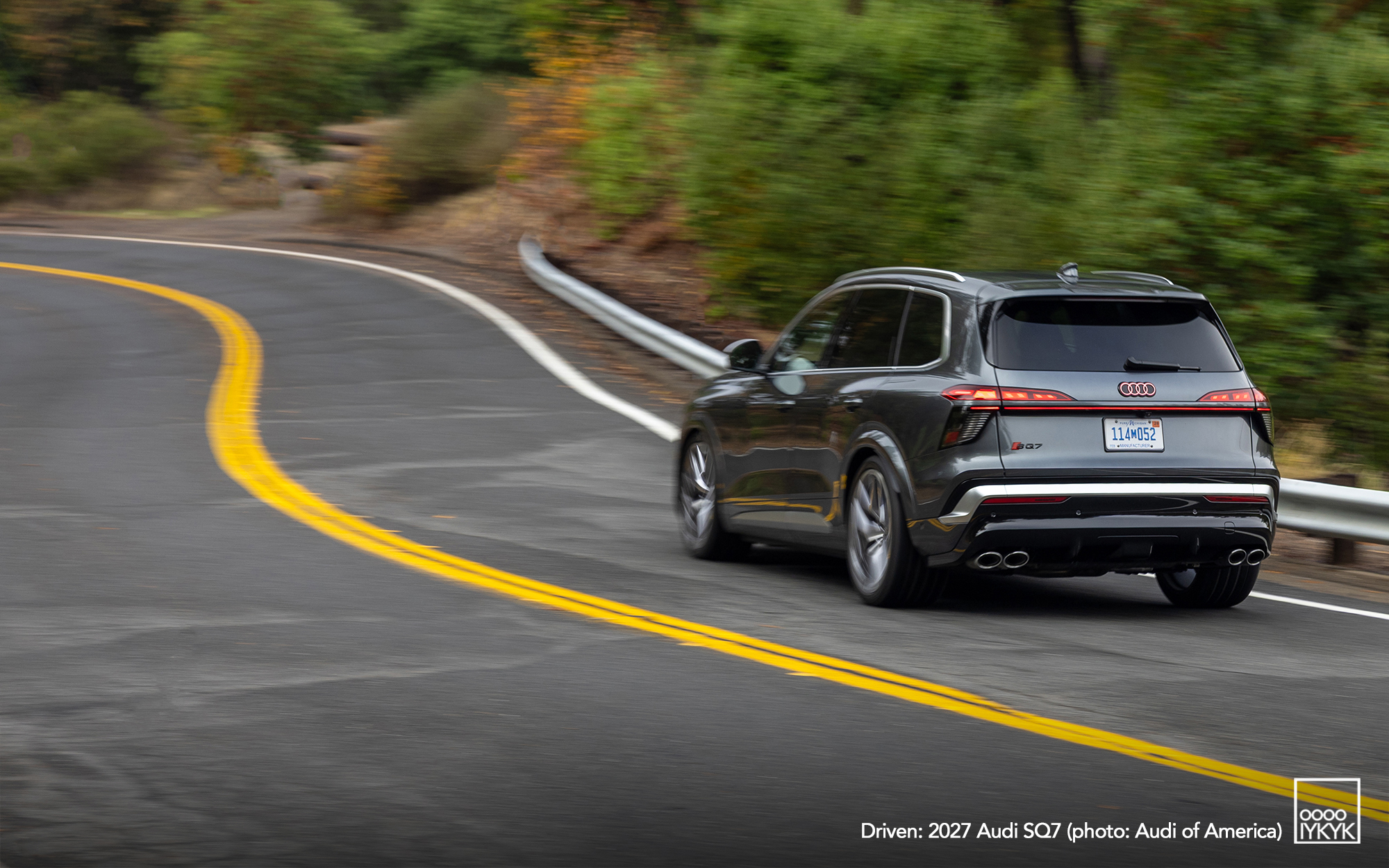
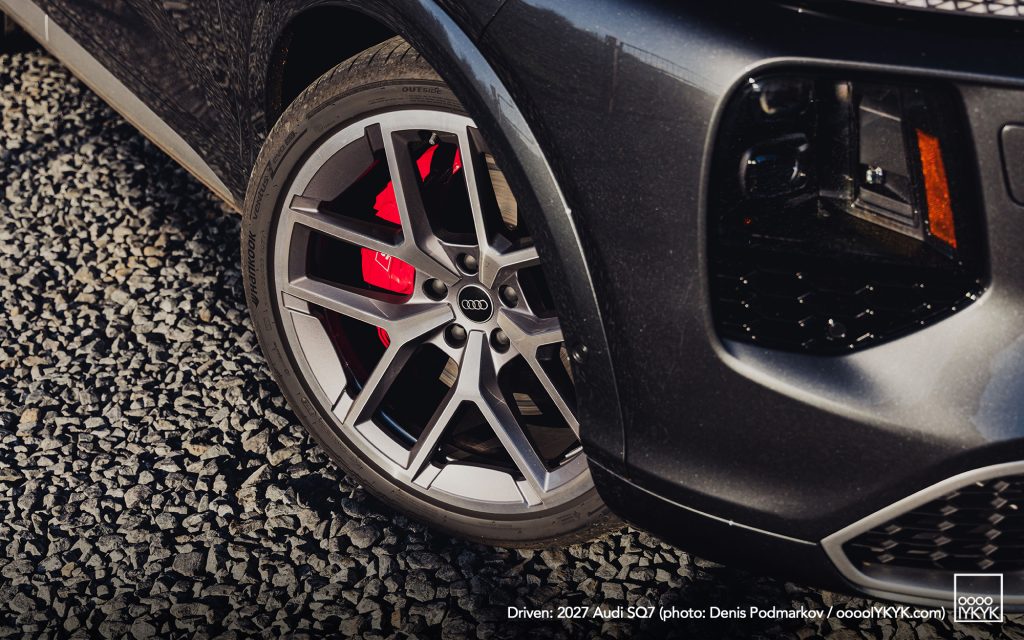
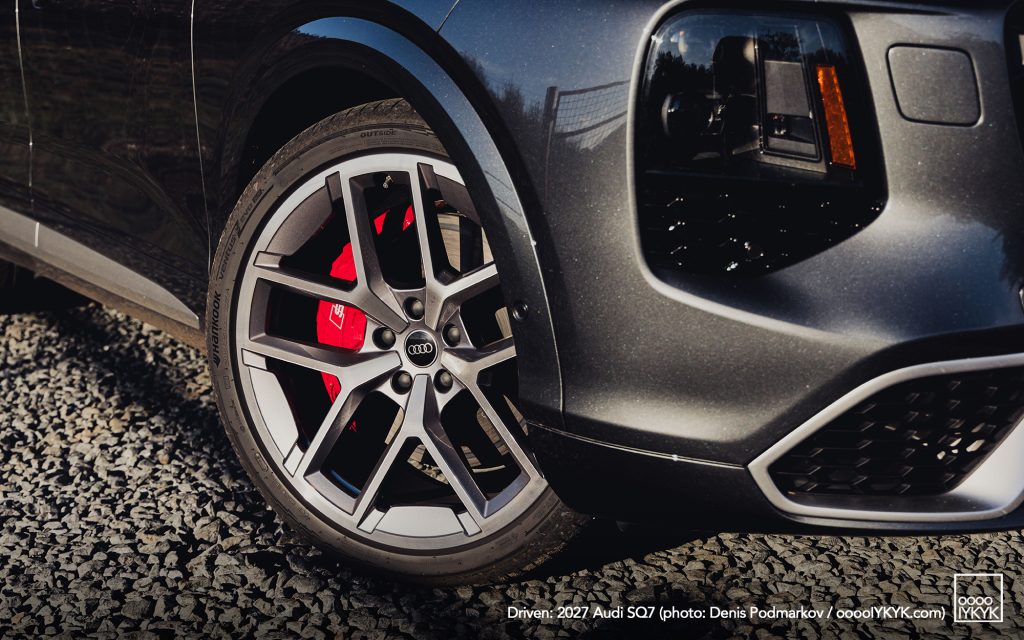
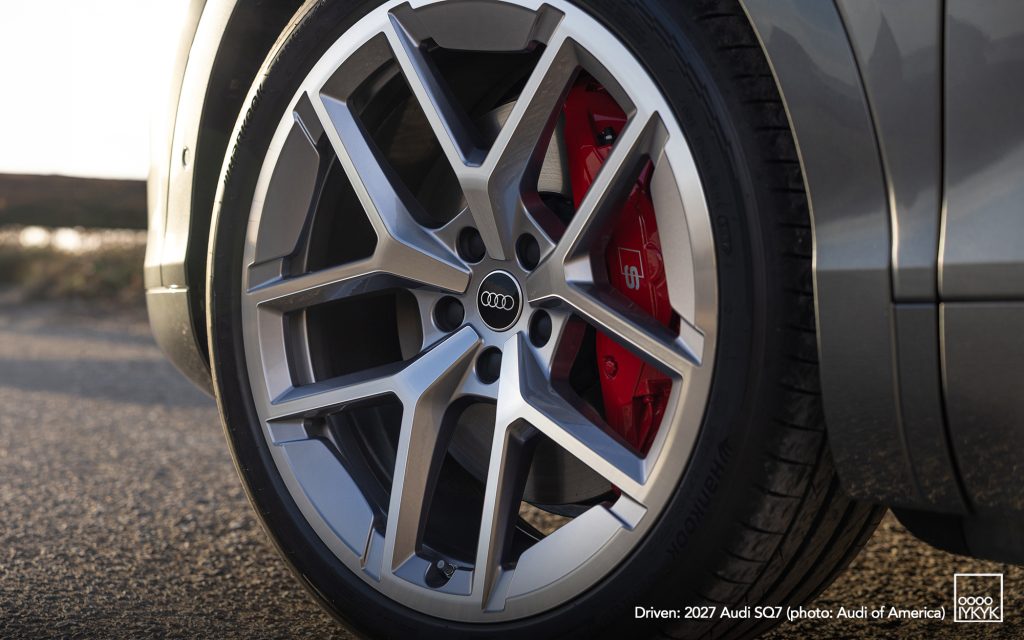
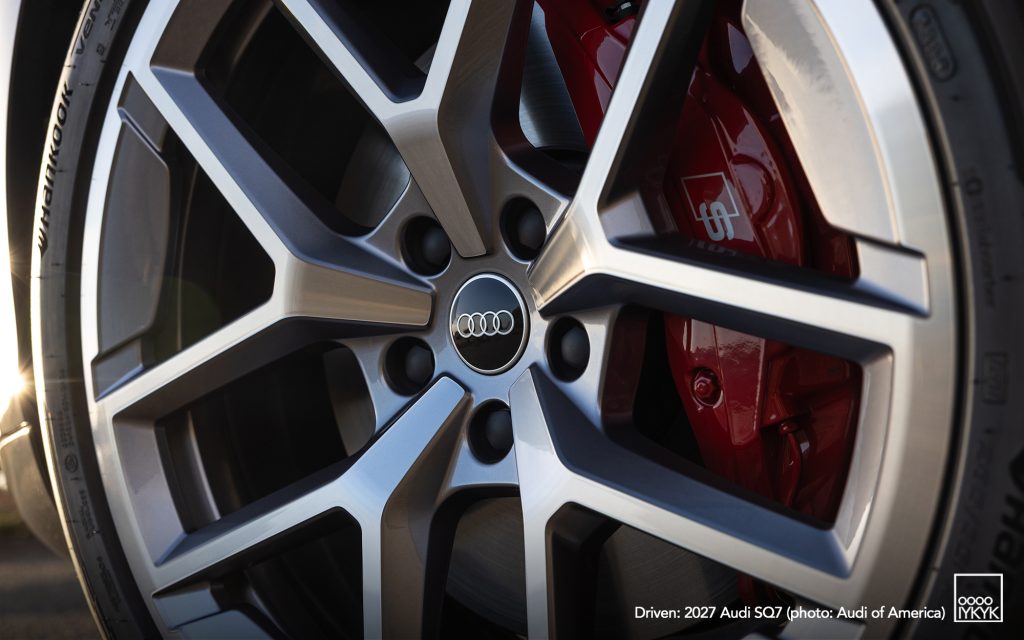
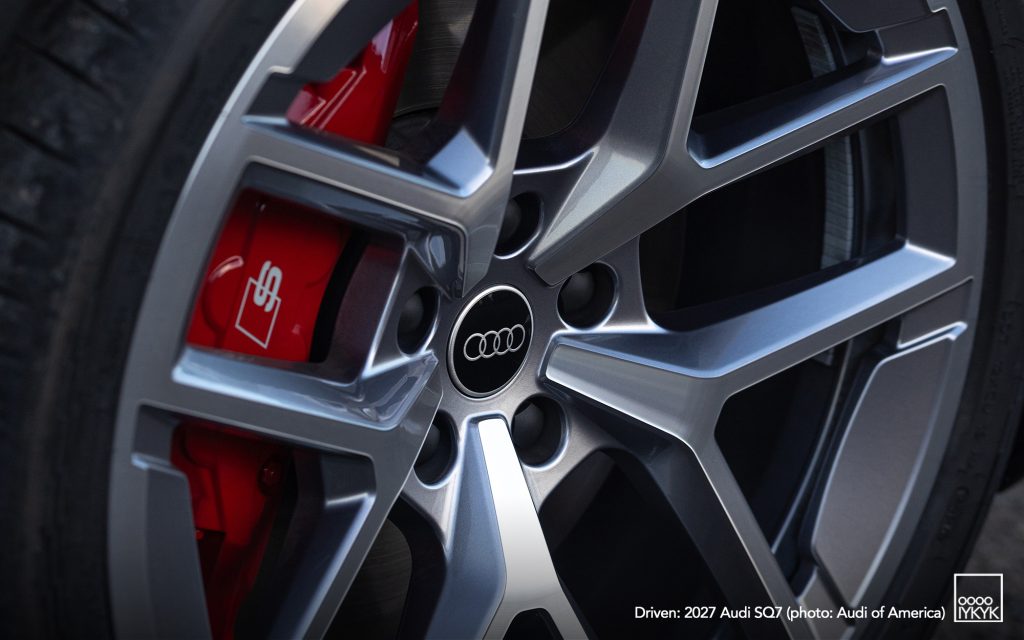
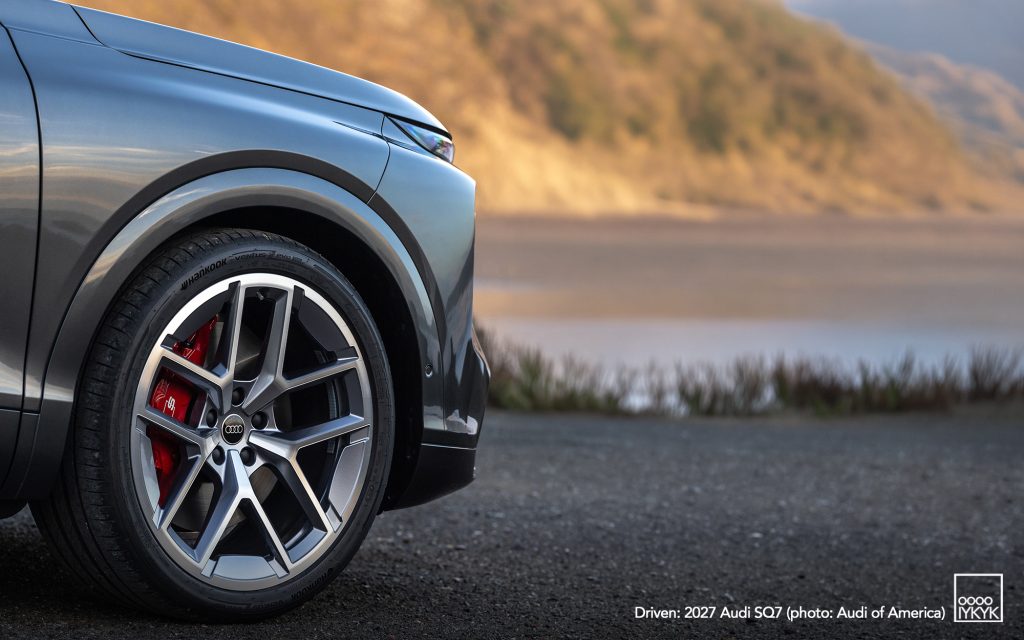
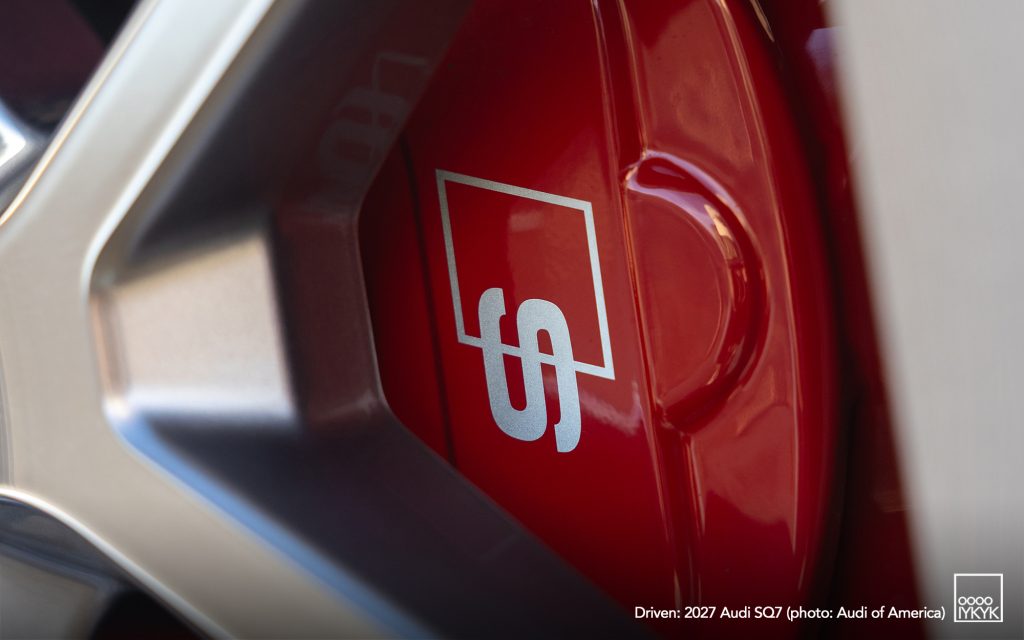
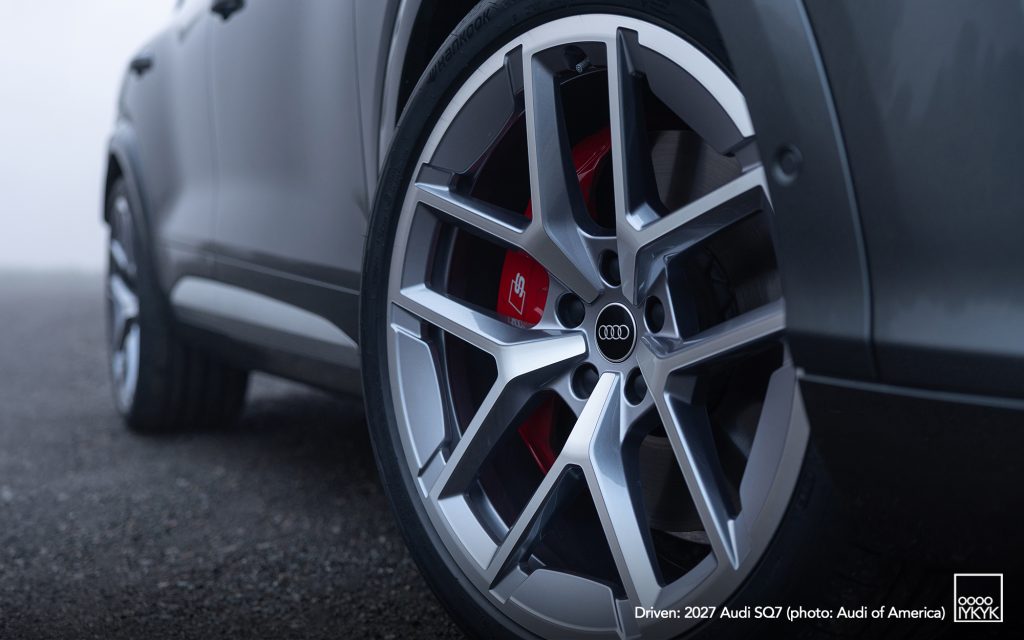
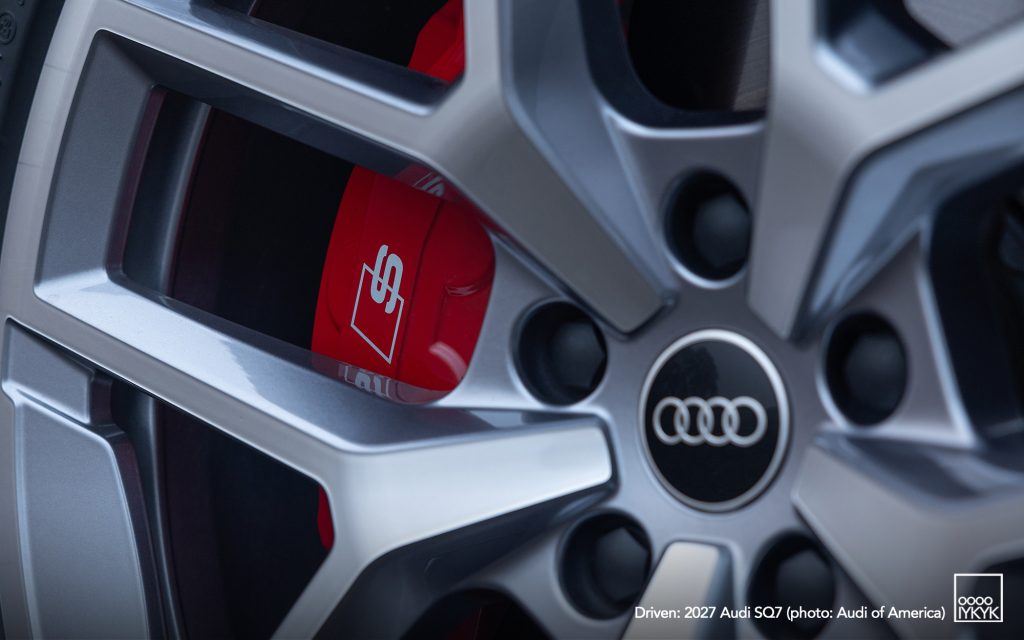
The SQ7 also gets standard adaptive air suspension, all-wheel steering, larger brakes and a new rear-biased quattro system. Our test car had the $1,200 S sport package, which adds red brake calipers and sport adaptive air suspension. It lowers the ride height by 30 mm, giving the SQ7 a more planted stance.
A few people asked us about the sport differential. The new SQ7 uses an electronically controlled locking rear differential and selective braking. An electromechanical clutch manages torque between the axles, allowing the system to send almost all available torque to the rear under spirited driving. The rear differential lock and selective braking help manage traction and cornering stability. The traditional Audi sport differential actively varies torque between the rear wheels and can send more to the outside wheel to help rotate the car through a corner.
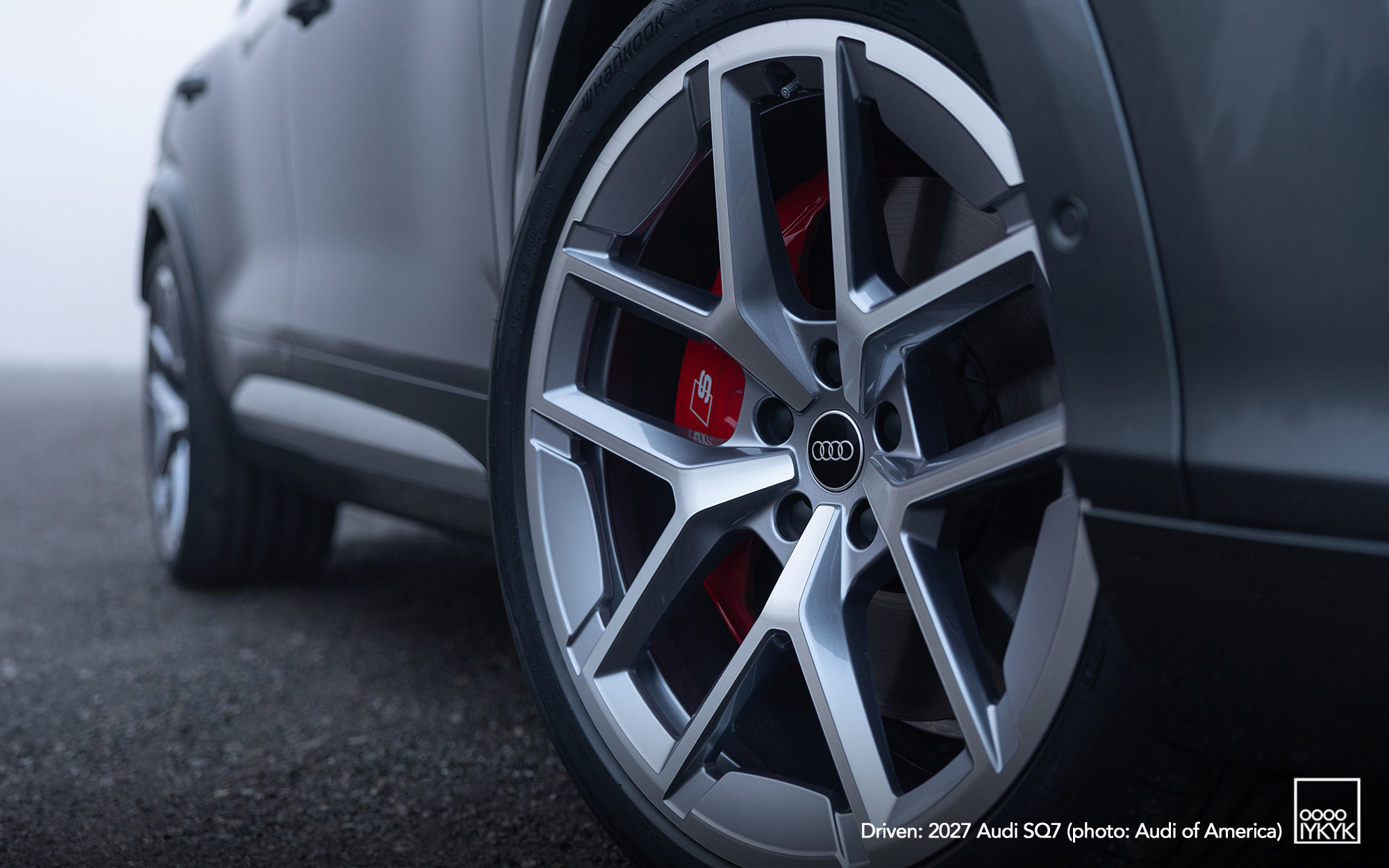
The wheels are staggered, too. The standard setup pairs 22 × 10-inch front wheels with 285/40 R22 tires and 22 × 11-inch rear wheels with 305/35 R22 tires. Our test car’s optional 23-inch setup used 23 × 10-inch front wheels with 285/35 R23 tires and 23 × 11.5-inch rear wheels with 315/30 R23 tires. The black Multispoke S design is one of the available 23-inch options.
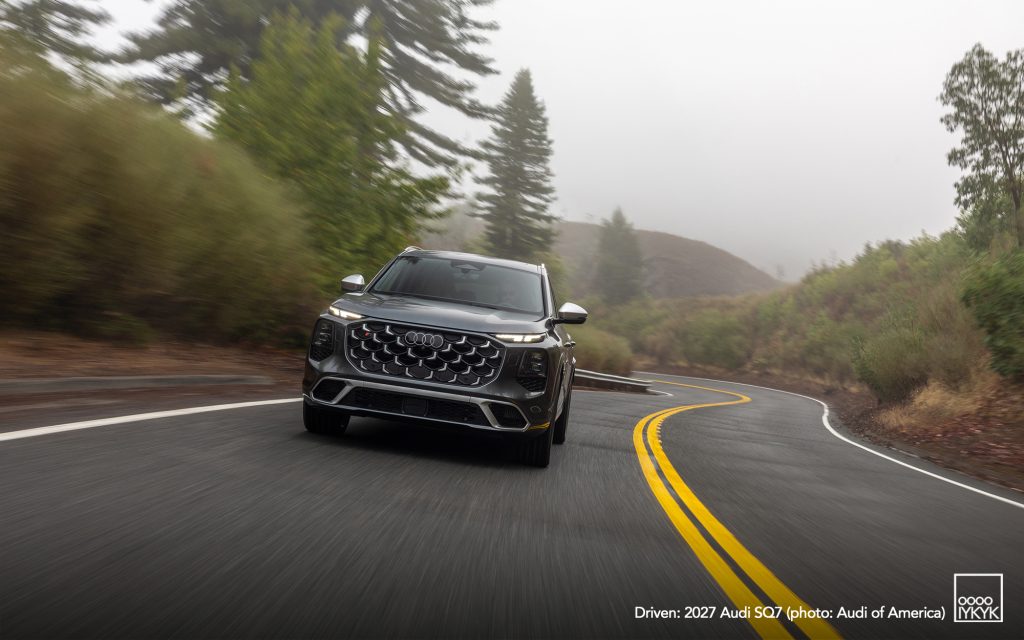
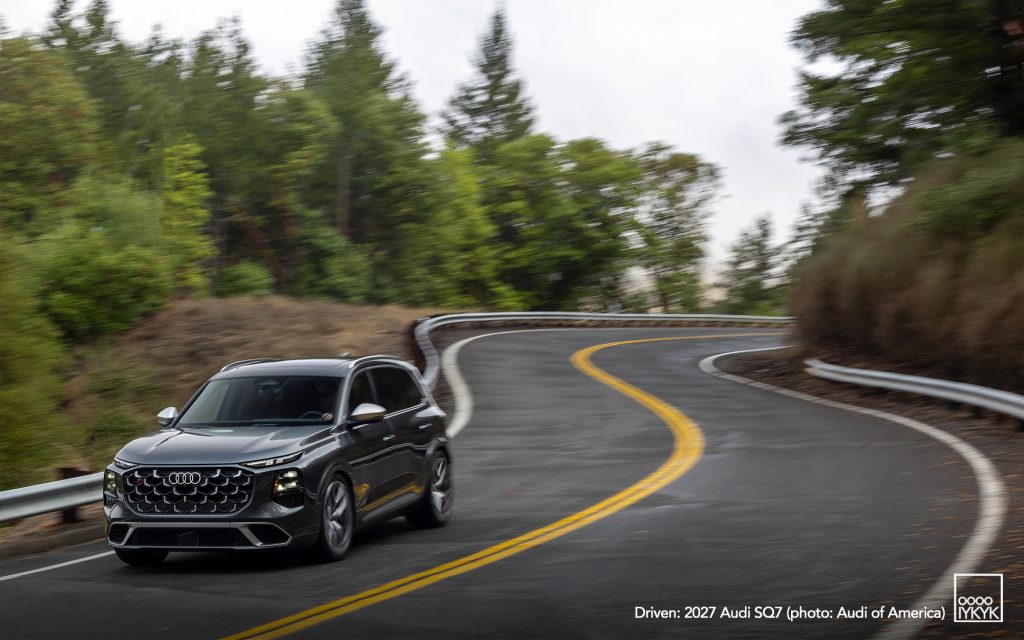
The chassis changes make themselves felt in the corners. With the wider rear tires, all-wheel steering and the sport suspension on our test car, the SQ7 stayed composed as the road tightened up. From behind the wheel, it felt more like an RS 6.
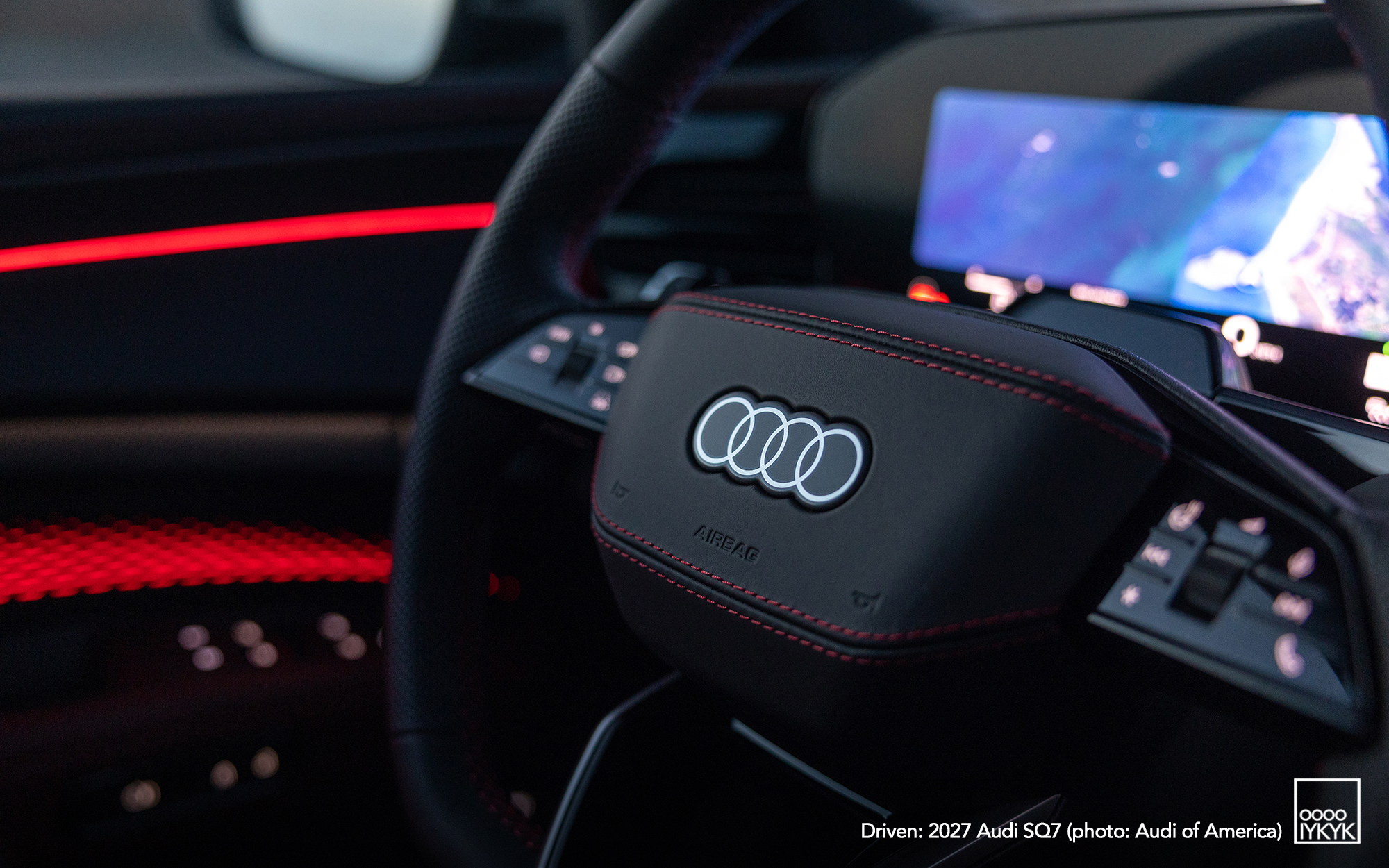
Then there’s the acceleration. Audi puts the SQ7’s 0–60 mph time at 3.7 seconds, 1.1 seconds quicker than the new Q7 and 0.3 seconds quicker than the outgoing SQ7. It matches the standard RS Q8 and is just a tenth behind the last R8 V10 performance RWD Coupe. That’s supercar territory for something with three rows of seats.
The V8 kept inviting me to let the revs climb, and the wider rear tires felt up to the task. The harder I pushed through the corners, the more the SQ7 seemed to have in reserve. The brakes stayed consistent, and the chassis remained settled.
Then you switch back to Comfort mode and have a quiet, comfortable cruiser for the drive home. Once you’re back on a supported highway, adaptive cruise assist plus can take some of the work out of that part of the trip, too.
DEBRIEF
I think Audi has set a new bar for performance in the three-row SUV category, especially at these prices. A big part of the appeal is how much equipment comes standard on both models.
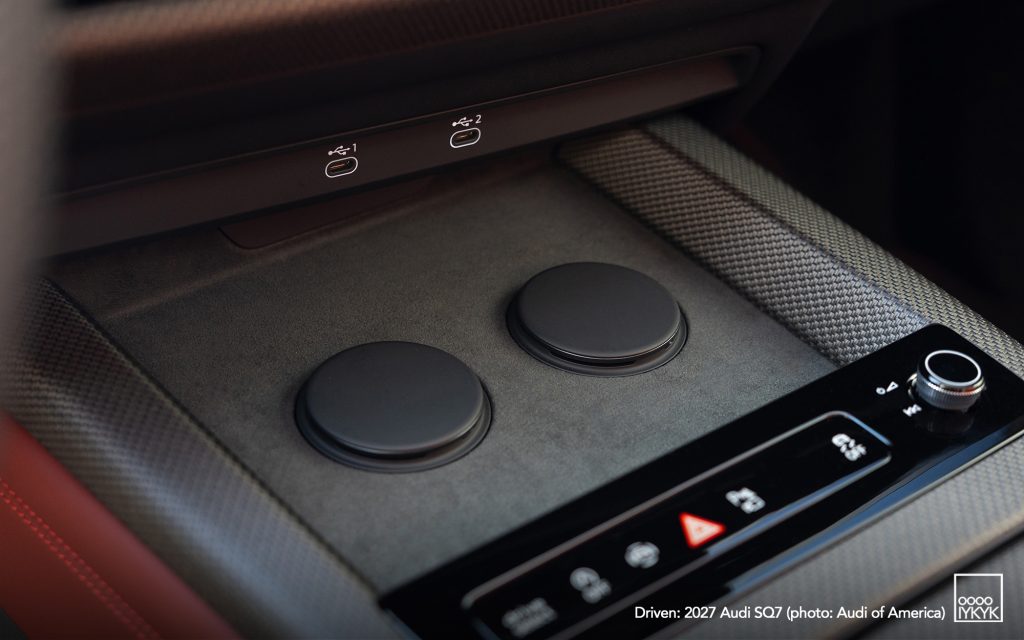
Starting at $70,900, the Q7 comes with a 429-hp twin-turbo V6, quattro all-wheel drive, 20-inch wheels, leather seating, heated front seats, a panoramic sunroof and three digital displays. It seats seven and includes power-adjustable second-row seats, a power-folding third row, three-zone climate control, dual wireless phone chargers and surround-view cameras. That’s a lot of car right out of the box.
Move up to Premium Plus and you get hands-free highway driving, a Bang & Olufsen 3D sound system, ventilated front seats, heated outboard second-row seats, a heated steering wheel and soft-close doors. Prestige adds adaptive air suspension, all-wheel steering, Digital Matrix LED headlights, OLED taillights, massaging front seats, heated third-row seats and a panoramic sunroof with variable light control.
The SQ7 starts at $98,700 in a single trim. Standard equipment includes the 591-hp twin-turbo V8, adaptive air suspension, all-wheel steering, staggered 22-inch wheels, Fine Nappa leather, heated and ventilated front seats with massage, heated outboard second-row seats, soft-close doors, hands-free highway driving and a Bang & Olufsen 3D sound system. From there, you can add the 4D sound system, Digital Matrix LED headlights, the S sport package with sport adaptive air suspension and red brake calipers, or the Luxury package with automatic doors.
The new SQ7 starts $1,100 below the outgoing SQ7 Prestige while matching the peak output of the original RS Q8. Our test SQ7 came to $115,790 with options. The list gives you plenty of ways to spend more, but the standard equipment makes a good case for stopping at the base price.
Both U.S.-spec SUVs use gasoline engines without mild-hybrid assistance. In Europe, the Q7 TDI gets Audi’s MHEV plus system. The new Q7 weighs 166 lb more than the outgoing Q7 55 TFSI and is rated at 16 mpg city, 23 mpg highway and 19 mpg combined. That’s down 2 mpg in the city and 1 mpg combined, with highway mileage unchanged. The SQ7 gains 1 mpg in both the city and combined ratings, reaching 15 mpg city and 17 mpg combined. Its highway rating holds at 20 mpg.
Then there’s towing. If your family road trip involves taking Michèle Mouton’s 1985 Sport quattro S1 back to Pikes Peak, you’ll want to account for the car, the trailer and the gear that goes with them. Both the Q7 and SQ7 are rated to tow up to 7,700 lb when properly equipped.
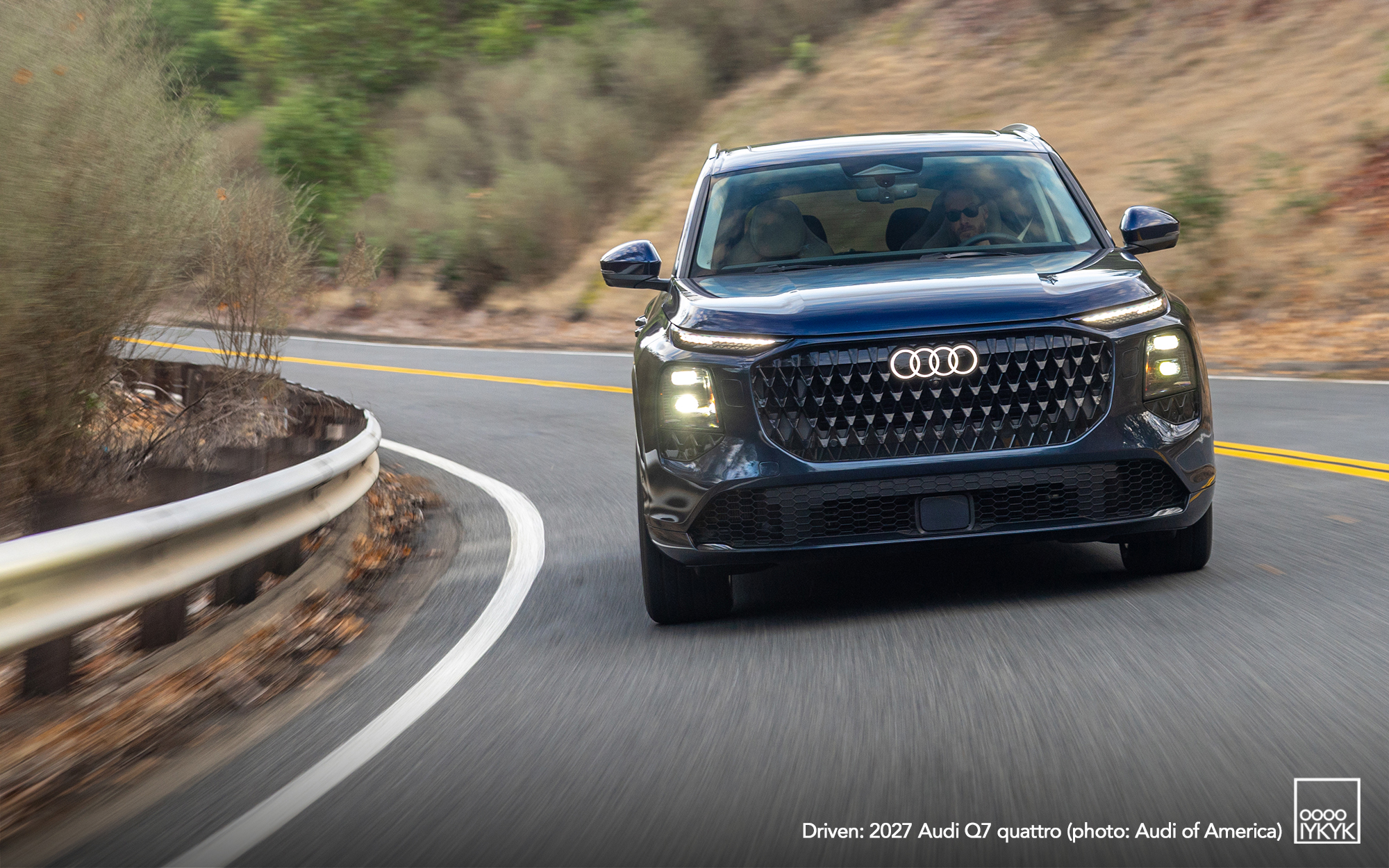
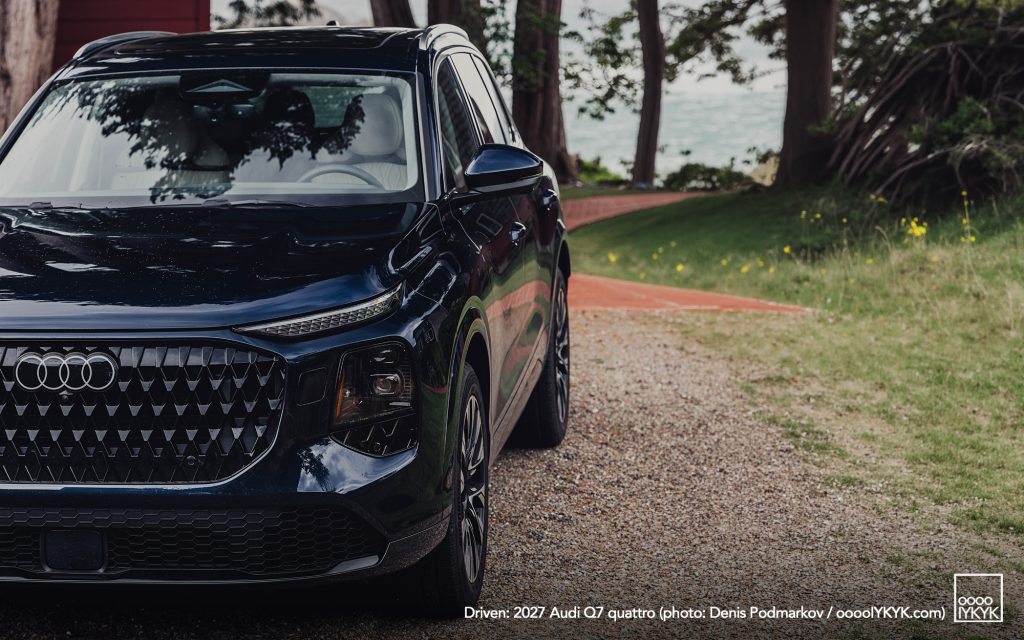
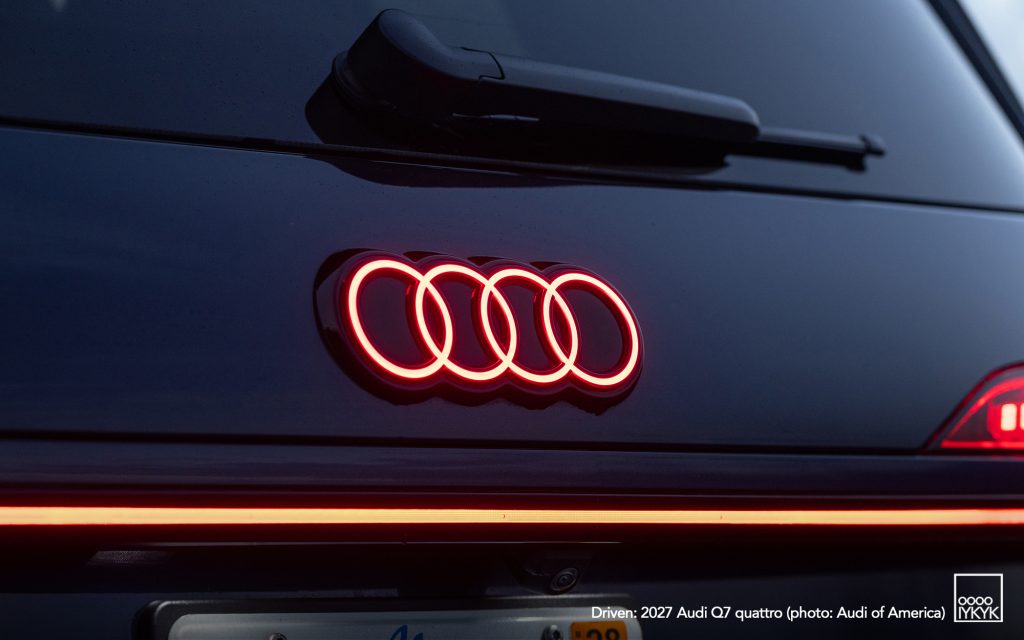
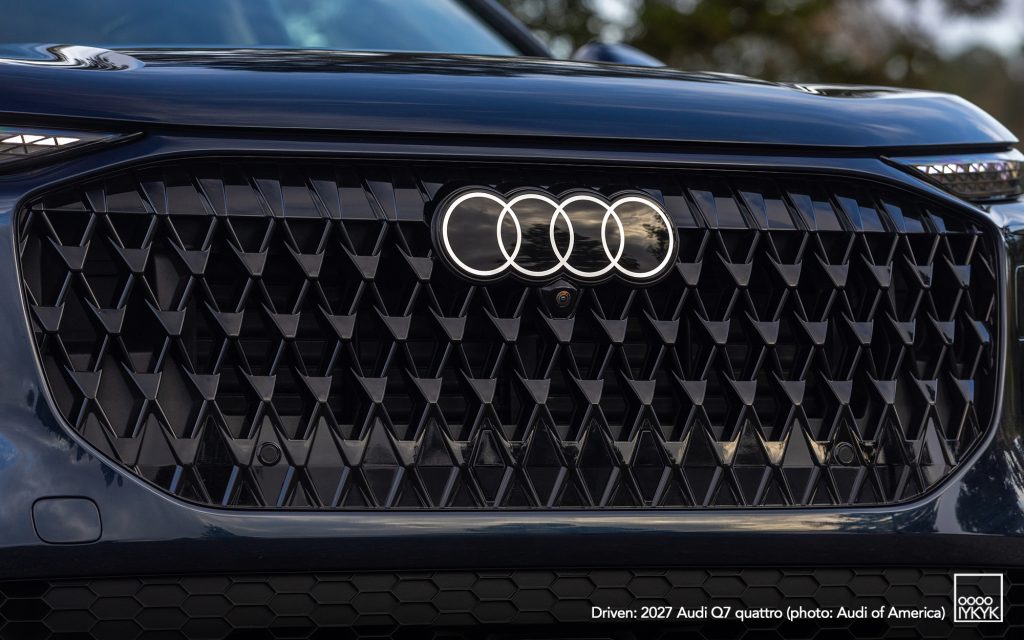
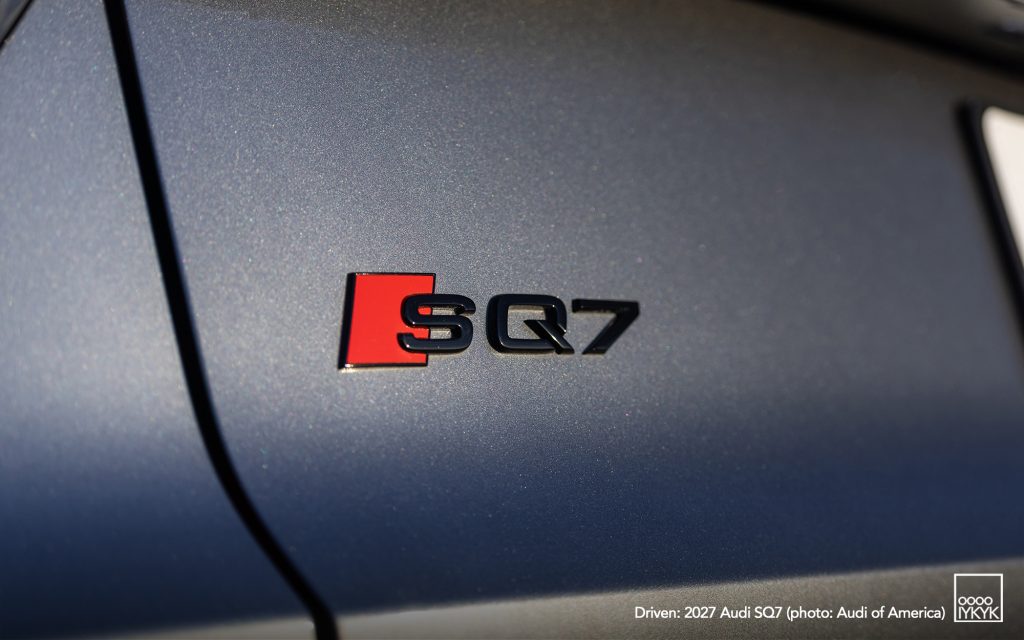
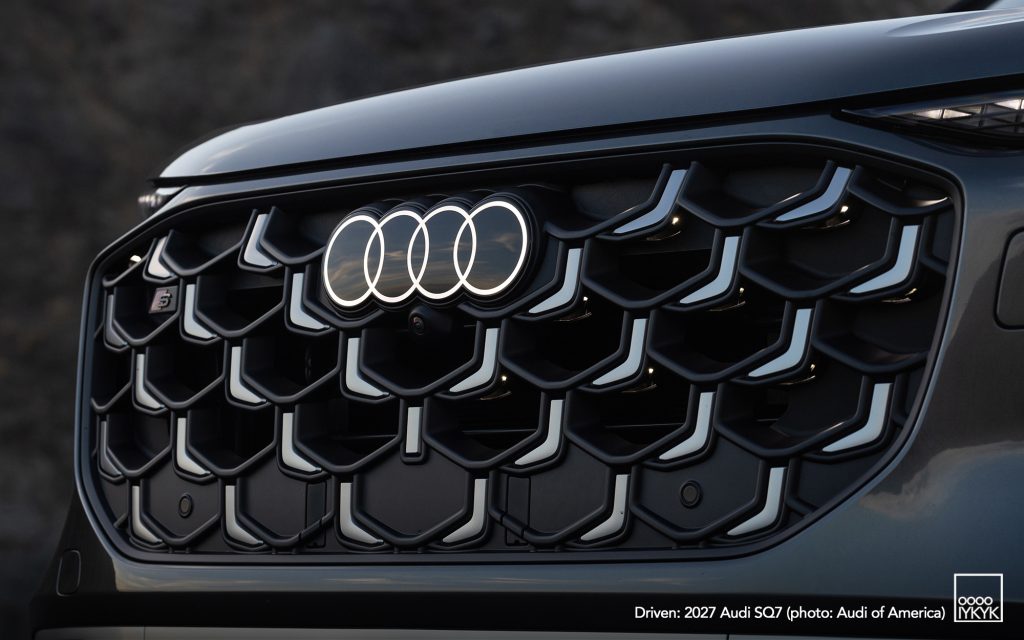
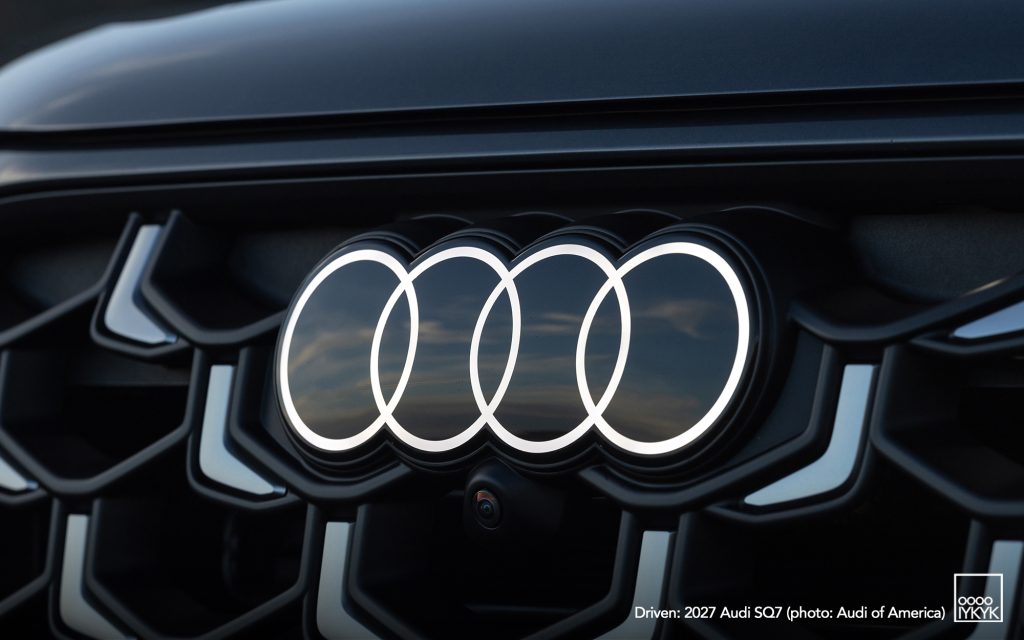
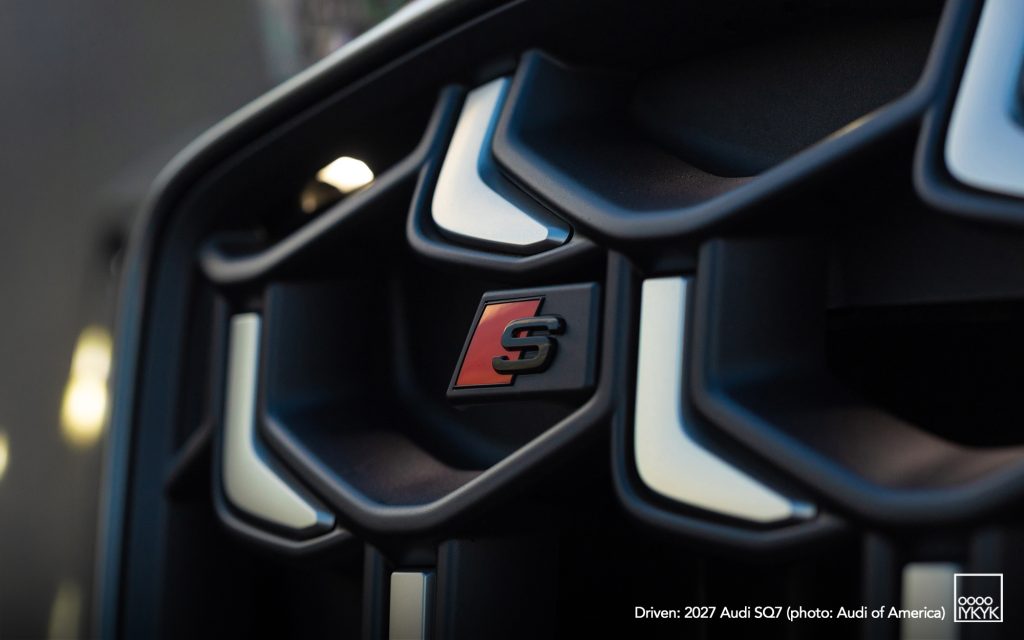
Which brings me back to where I started. The Q7 and SQ7 are really good. Like, really good. Some enthusiasts may take a while to warm to the new badge font or the split headlights. On power, equipment and price, both make a strong case.
For Mouton, her kids and her grandkids in the commercial, the SQ7 was the choice. Of course it was. I suspect plenty of Audi enthusiasts who want the V8 and the sharper chassis will make the same call. The Q7 makes a strong case of its own, especially with the Prestige equipment we sampled in Healdsburg. Its V6 pulls hard, and with adaptive air suspension and all-wheel steering, it’s the one I think most three-row SUV buyers would be happy taking home.
Q7 PHOTO GALLERY
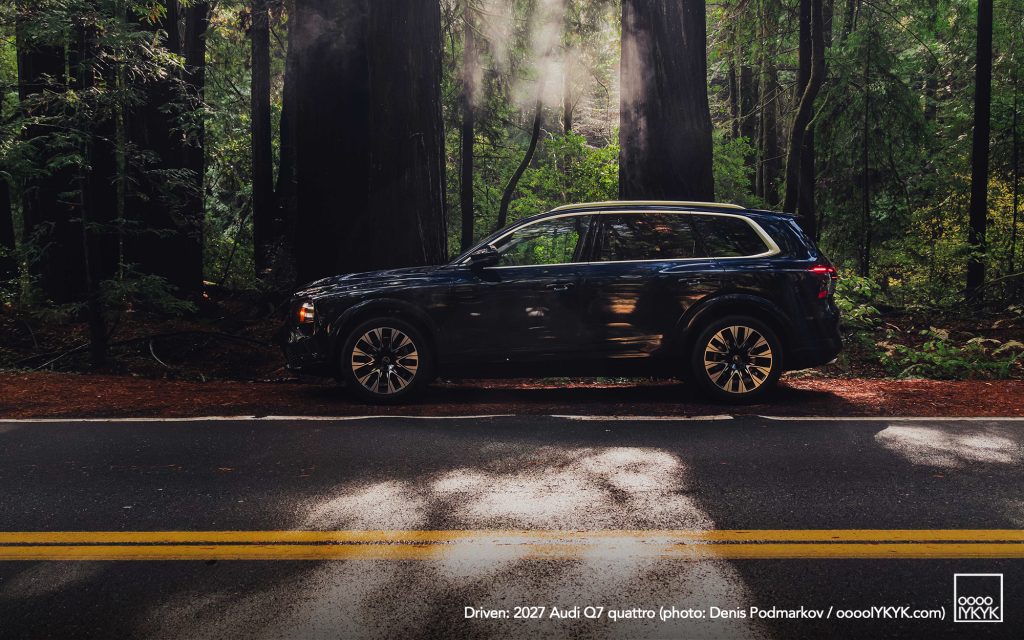
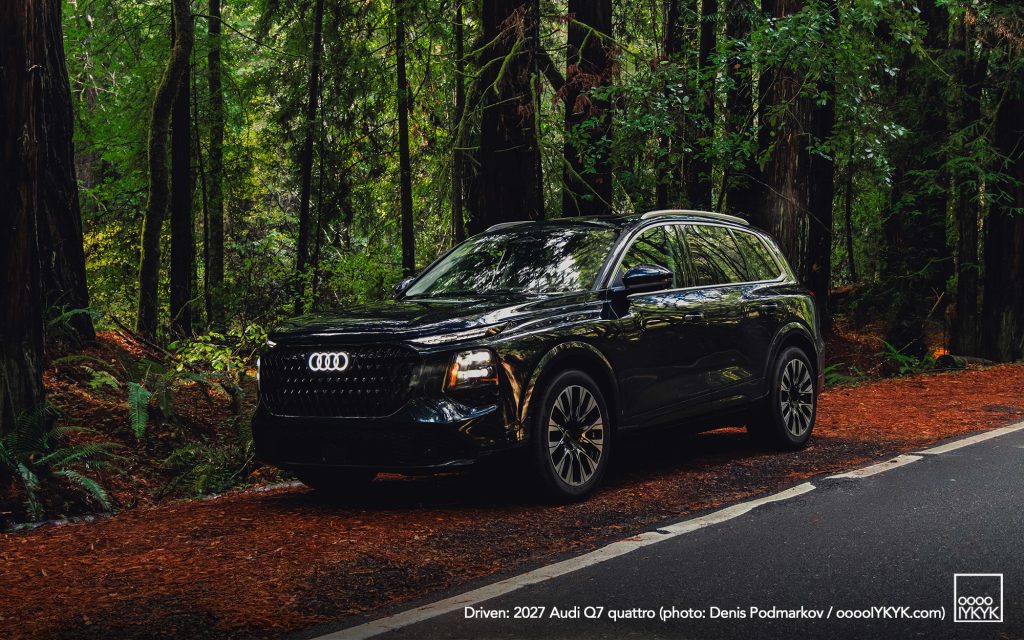
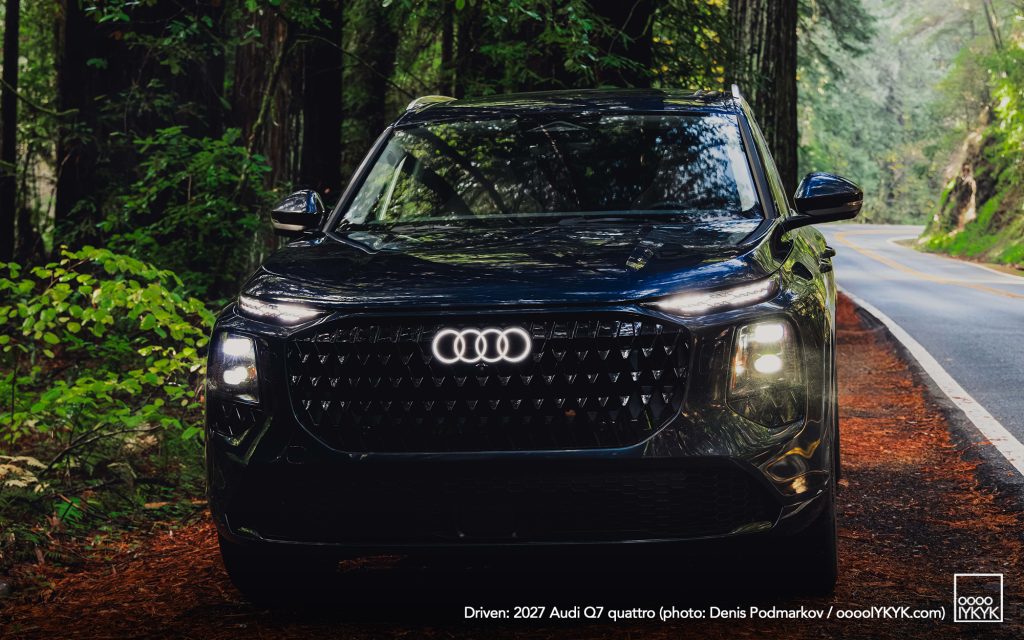
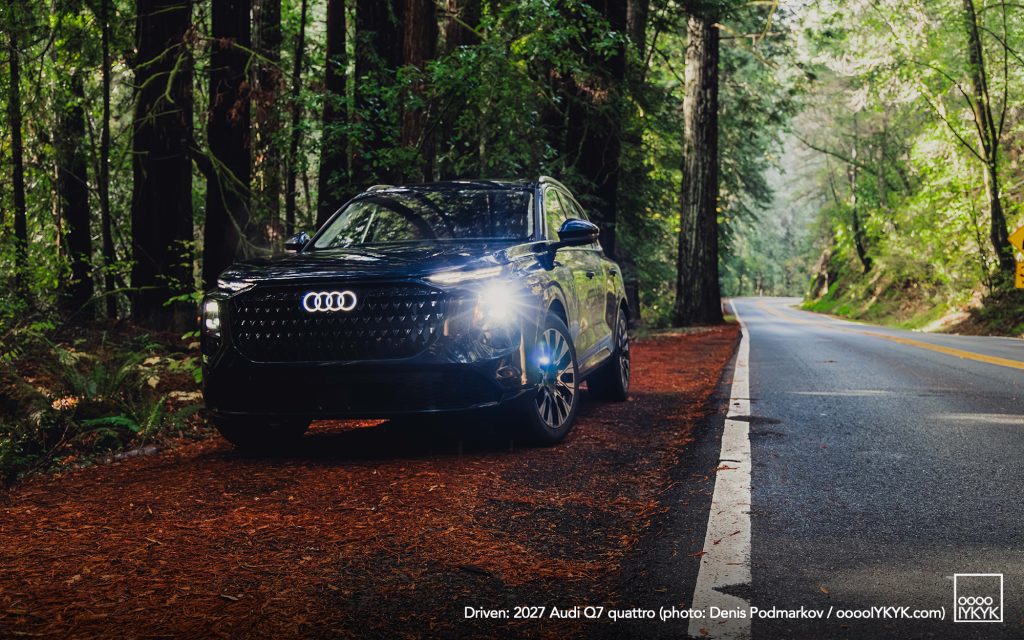
SQ7 PHOTO GALLERY
TECHNICAL SPECIFICATIONS
| Specification | 2027 Audi Q7 quattro | 2027 Audi SQ7 |
|---|---|---|
| Engine | 2.9-liter twin-turbo TFSI V6 | 4.0-liter twin-turbo TFSI V8 |
| Displacement | 2,894 cc | 3,996 cc |
| Peak power | 429 hp at 5,500–6,800 rpm | 591 hp at 6,000 rpm |
| Peak torque | 442 lb-ft at 2,000–4,500 rpm | 590 lb-ft at 2,400–4,500 rpm |
| Transmission | Eight-speed Tiptronic | Eight-speed Tiptronic |
| All-wheel drive | Permanent quattro with a preloaded limited-slip center differential | S-specific rear-biased quattro |
| 0–60 mph, Audi estimate | 4.8 sec | 3.7 sec |
| Governed top speed | 130 mph | 130 mph with all-season tires, 155 mph with summer tires |
| EPA city / highway / combined | 16 / 23 / 19 mpg | 15 / 20 / 17 mpg |
| Fuel | Premium gasoline, 21.1-gal tank | Premium gasoline, 21.1-gal tank |
| Suspension | Five-link front and rear, available adaptive air suspension | Five-link front and rear, standard adaptive air suspension, available sport adaptive air suspension |
| Brake rotor diameter, front / rear | 375 / 350 mm | 420 / 380 mm |
| Standard tires | 275/50 R20 front and rear | 285/40 R22 front, 305/35 R22 rear |
| Available tires | 285/45 R21 or 285/40 R22, same size at both axles | 285/35 R23 front, 315/30 R23 rear |
| Length / wheelbase / height | 199.1 / 117.9 / 71.2 in. | 199.4 / 118.0 / 70.8 in. |
| Curb weight | 5,137 lb | 5,467 lb |
| Maximum towing, properly equipped | 7,700 lb | 7,700 lb |
| Seating | Seven standard, six with second-row captain’s chairs | Seven standard, six with second-row captain’s chairs |
U.S. ORDERING SUMMARY
| Model and trim | Base MSRP | With $1,395 destination | Equipment highlights | Selected packages and options |
|---|---|---|---|---|
| Q7 Premium | $70,900 | $72,295 | Heated front seats, panoramic roof, surround-view cameras, power-folding third row | Convenience $900, Black Optic $650, captain’s chairs $450, trailer hitch $850 |
| Q7 Premium Plus | $75,300 | $76,695 | Adds ventilated front seats, heated outboard second-row seats, Bang & Olufsen 3D audio, dashcam, soft-close doors, and hands-free highway assistance on supported roads | Vision $1,600, Executive $2,600, Black Optic $1,750, 21-inch wheel upgrades $1,000 or $1,750, captain’s chairs $450, trailer hitch $850 |
| Q7 Prestige | $84,900 | $86,295 | Adds adaptive air suspension, rear-wheel steering, massaging front seats, heated third-row seats, head-up display, and Digital Matrix LED headlights | Luxury $4,000, Launch Edition $4,850, Black Optic $1,750, Bang & Olufsen 4D audio $950, captain’s chairs $450, trailer hitch $850 |
| SQ7 | $98,700 | $100,095 | Single trim with adaptive air suspension, all-wheel steering, massaging front seats, and staggered 22-inch wheels | S Sport $1,200, Vision $1,600, Executive $2,900, Luxury $4,650, Black Optic $1,000, 23-inch Wheel or 23-inch Black Optic Wheel $2,500 each, Audi exclusive Design $12,300, Bang & Olufsen 4D audio $950, captain’s chairs $450, trailer hitch $850 |
Package prices are individual MSRP figures. Some options may require another package or be mutually exclusive.